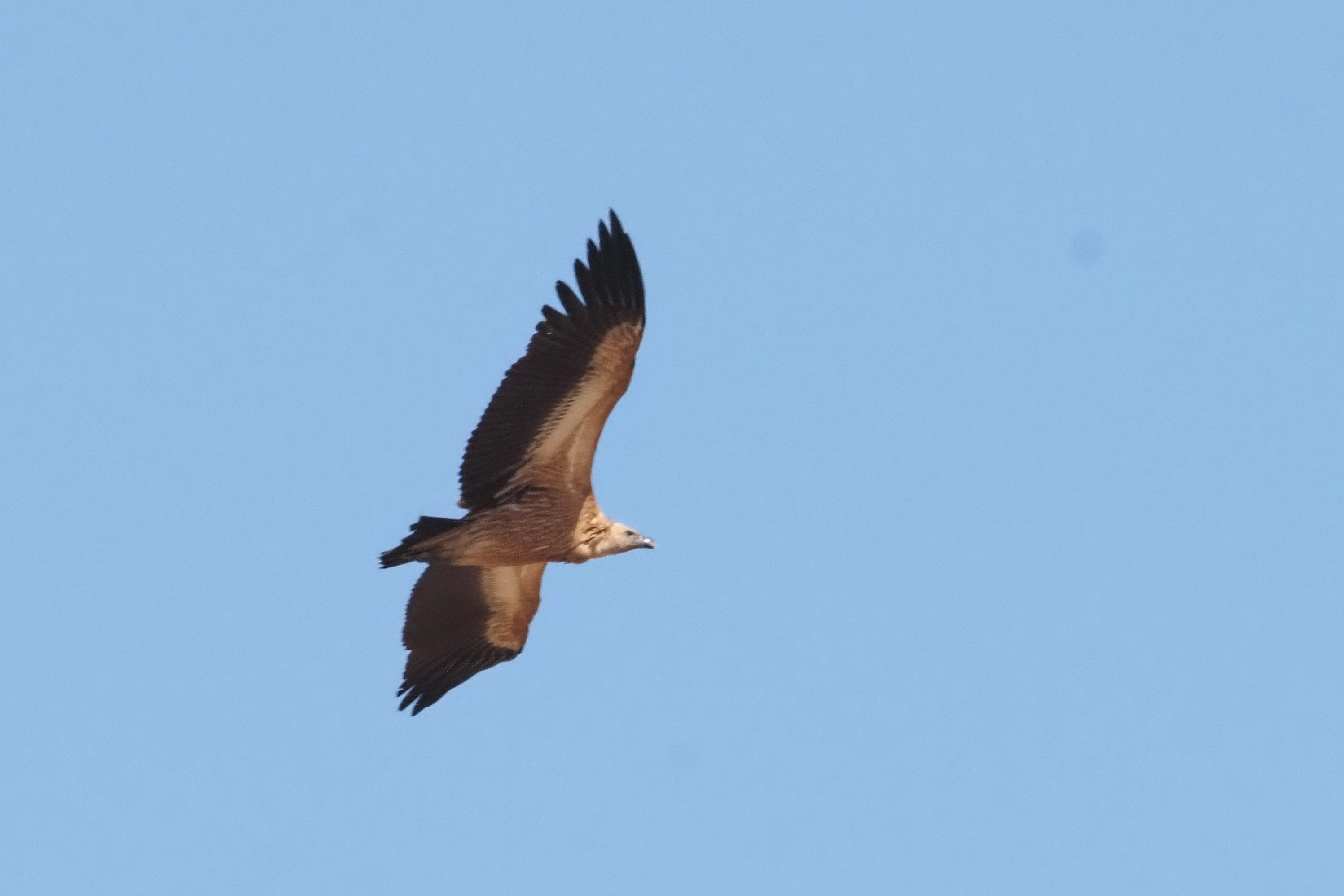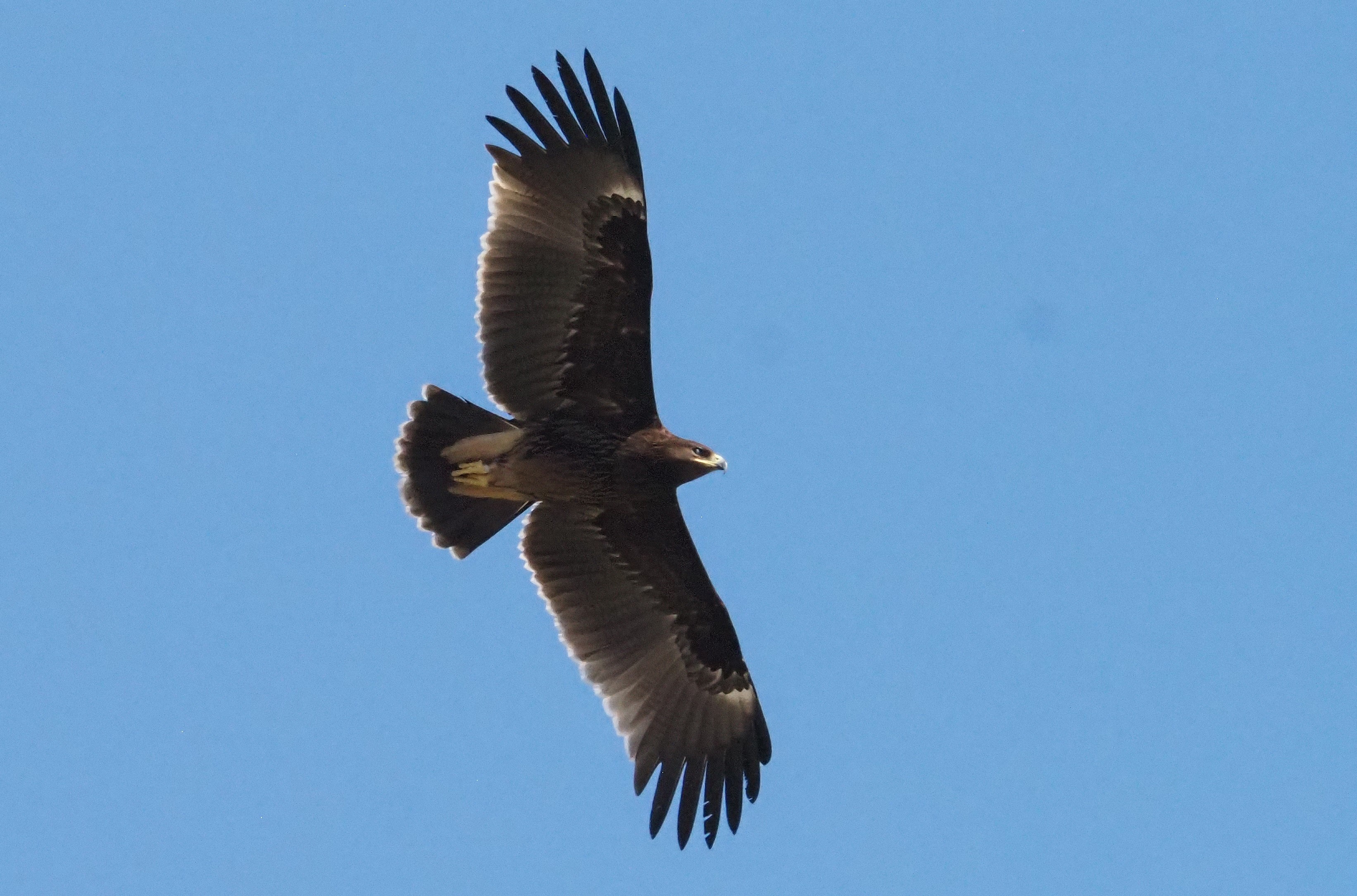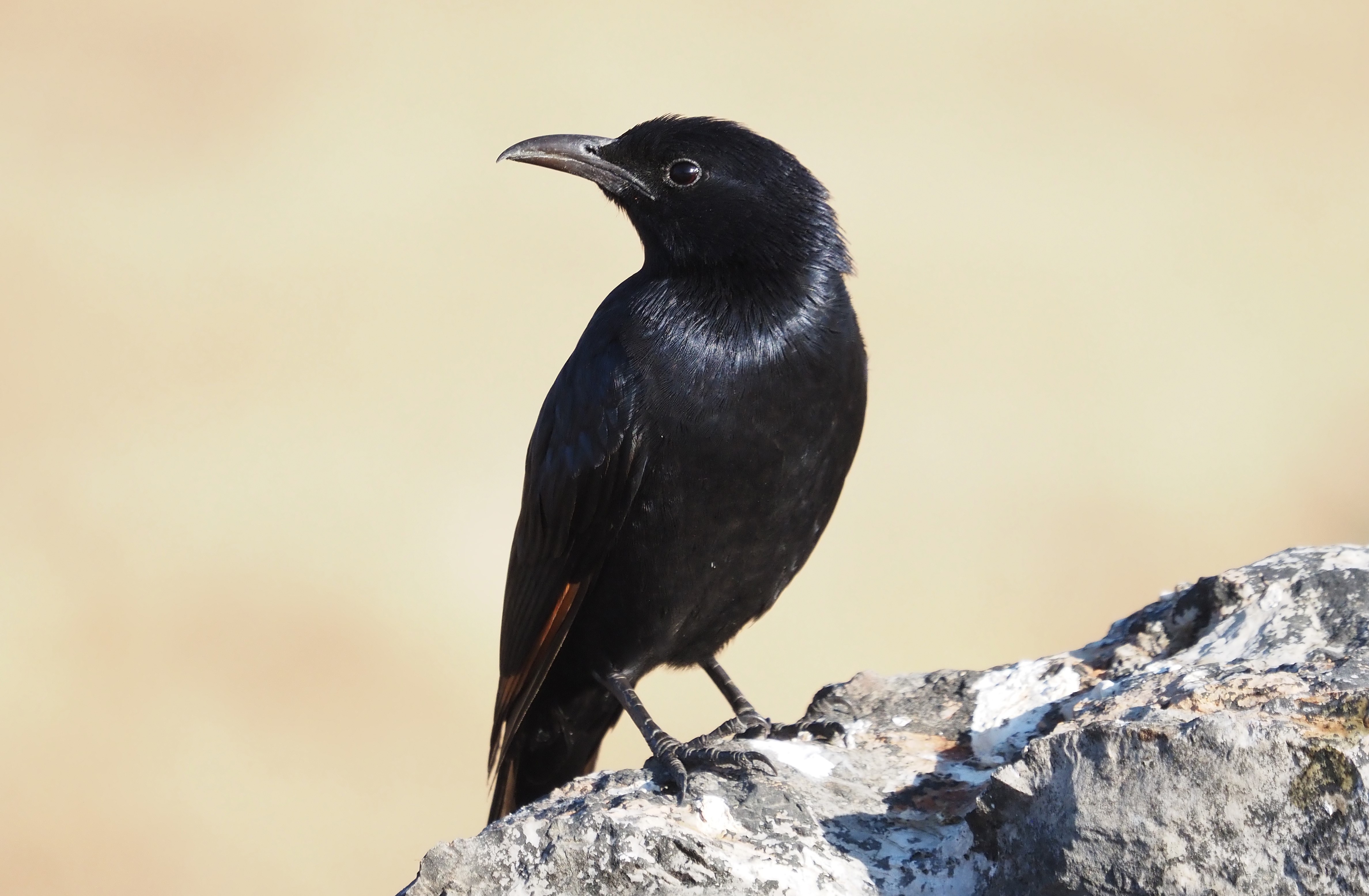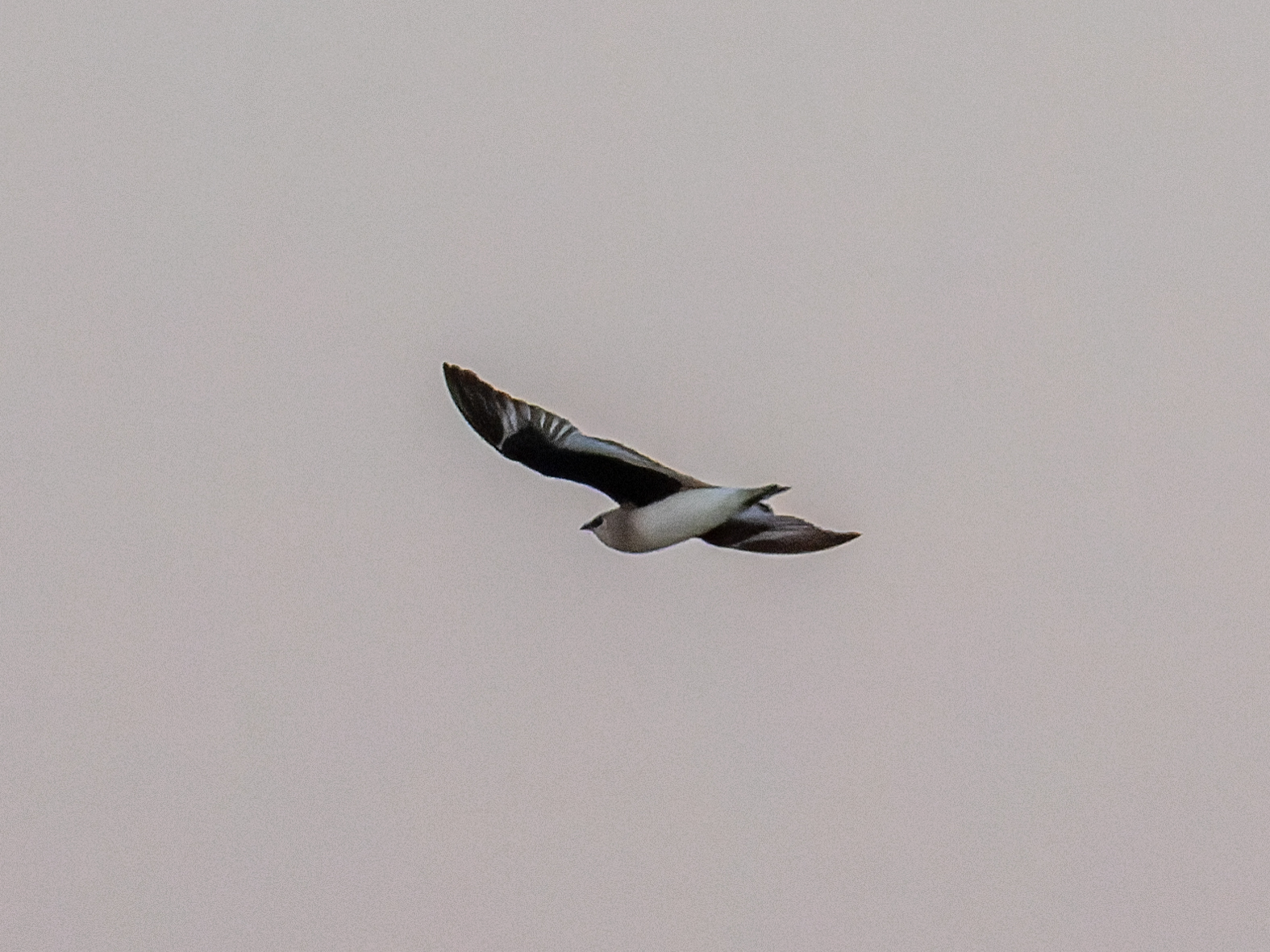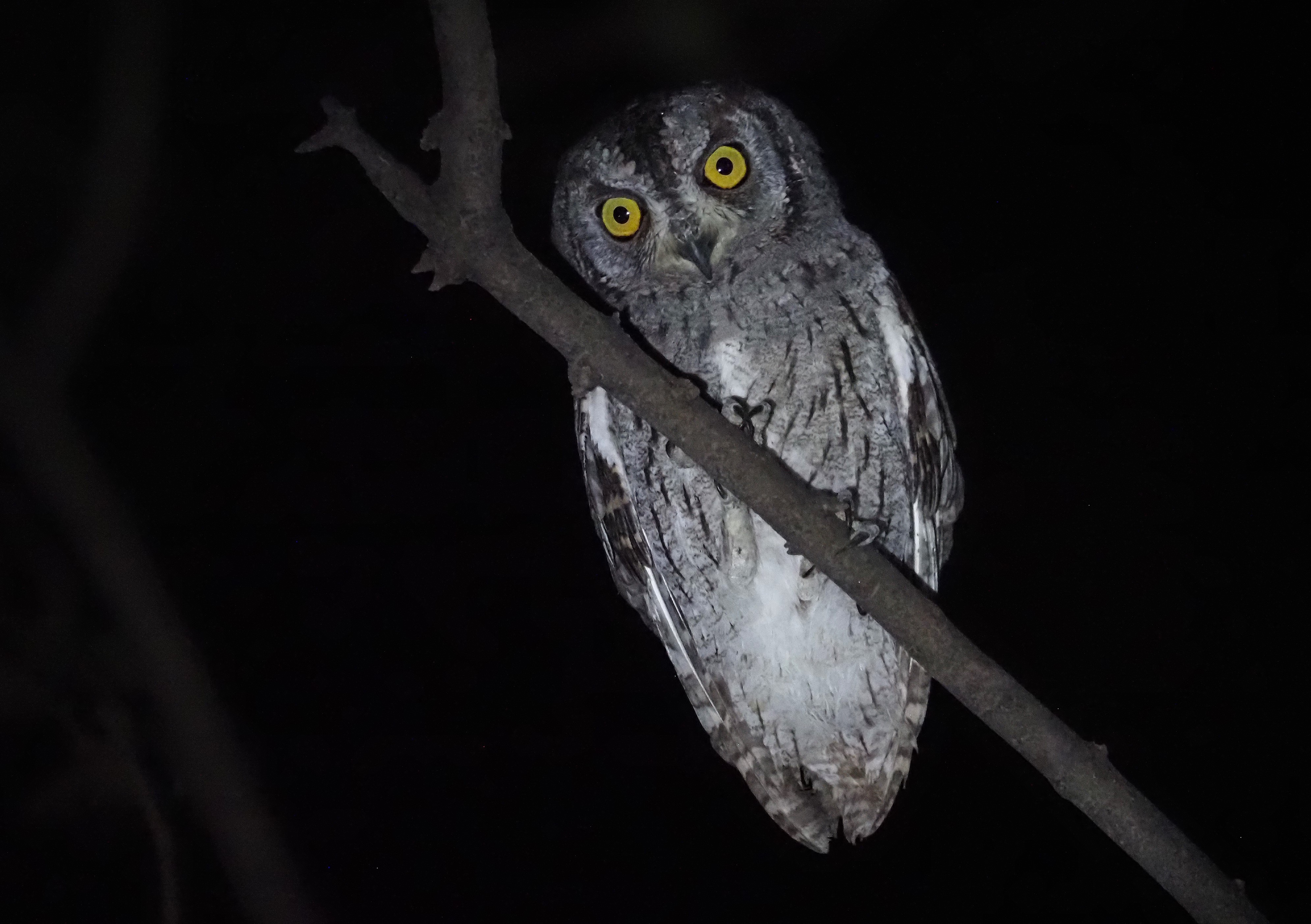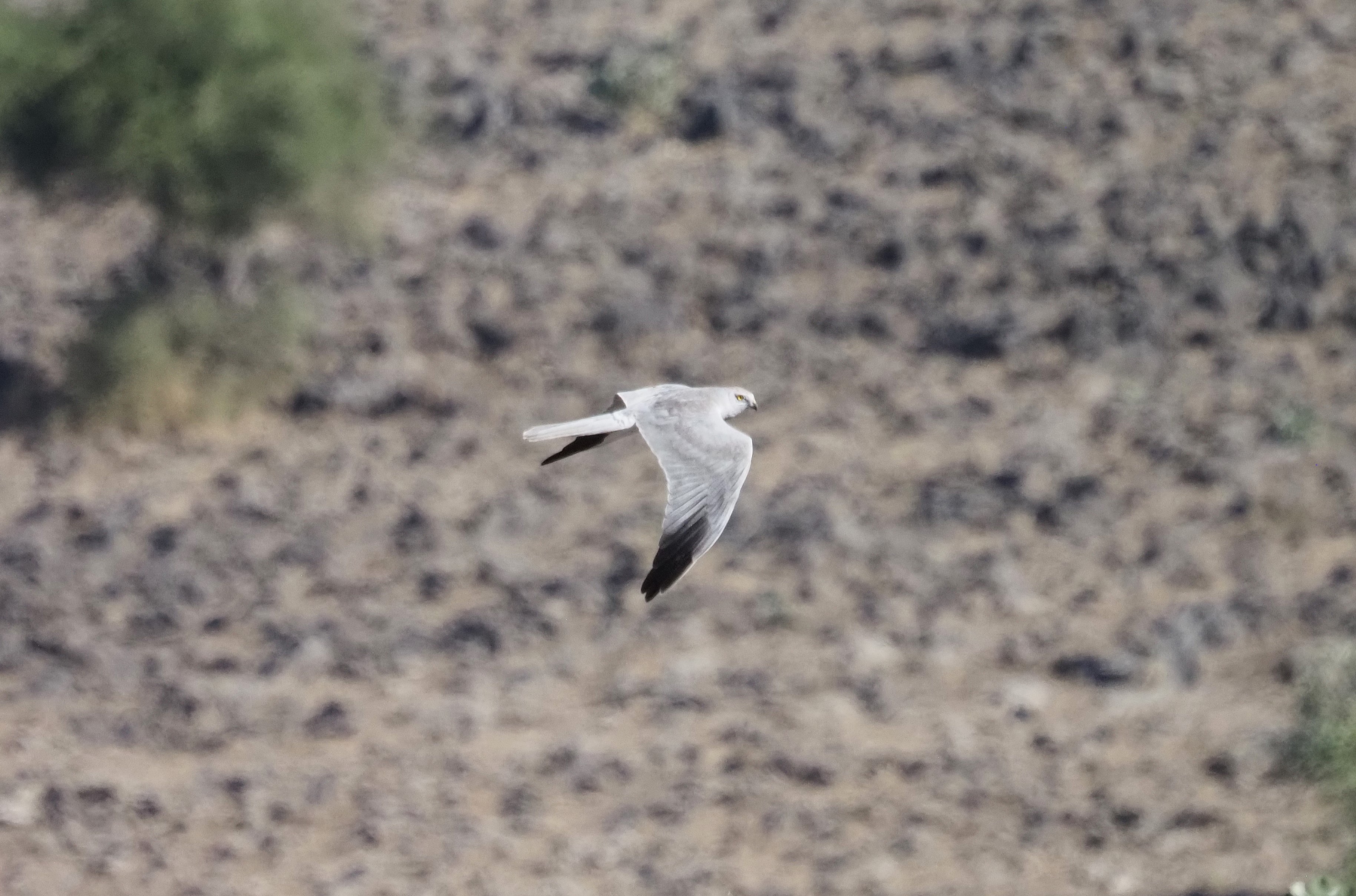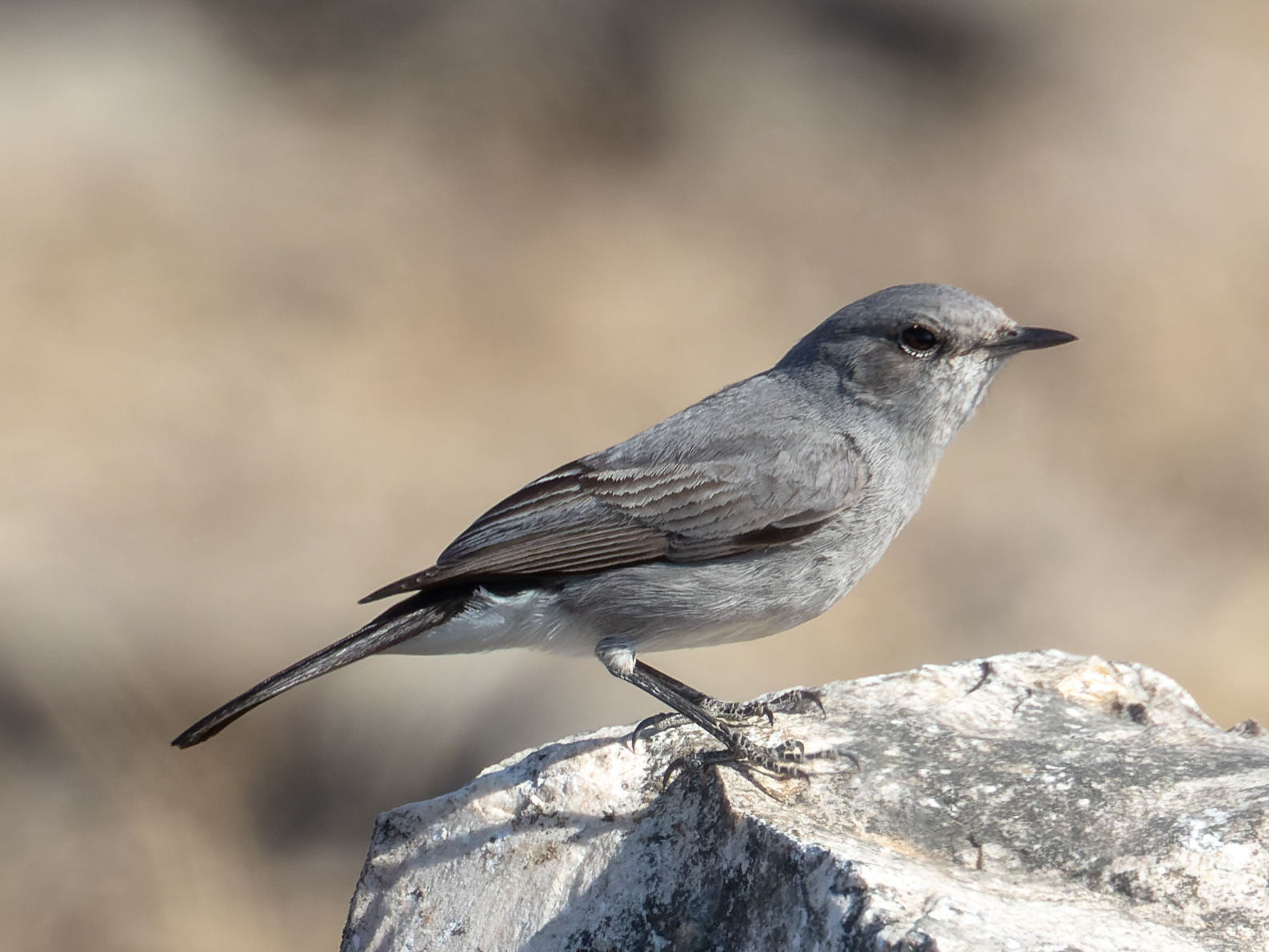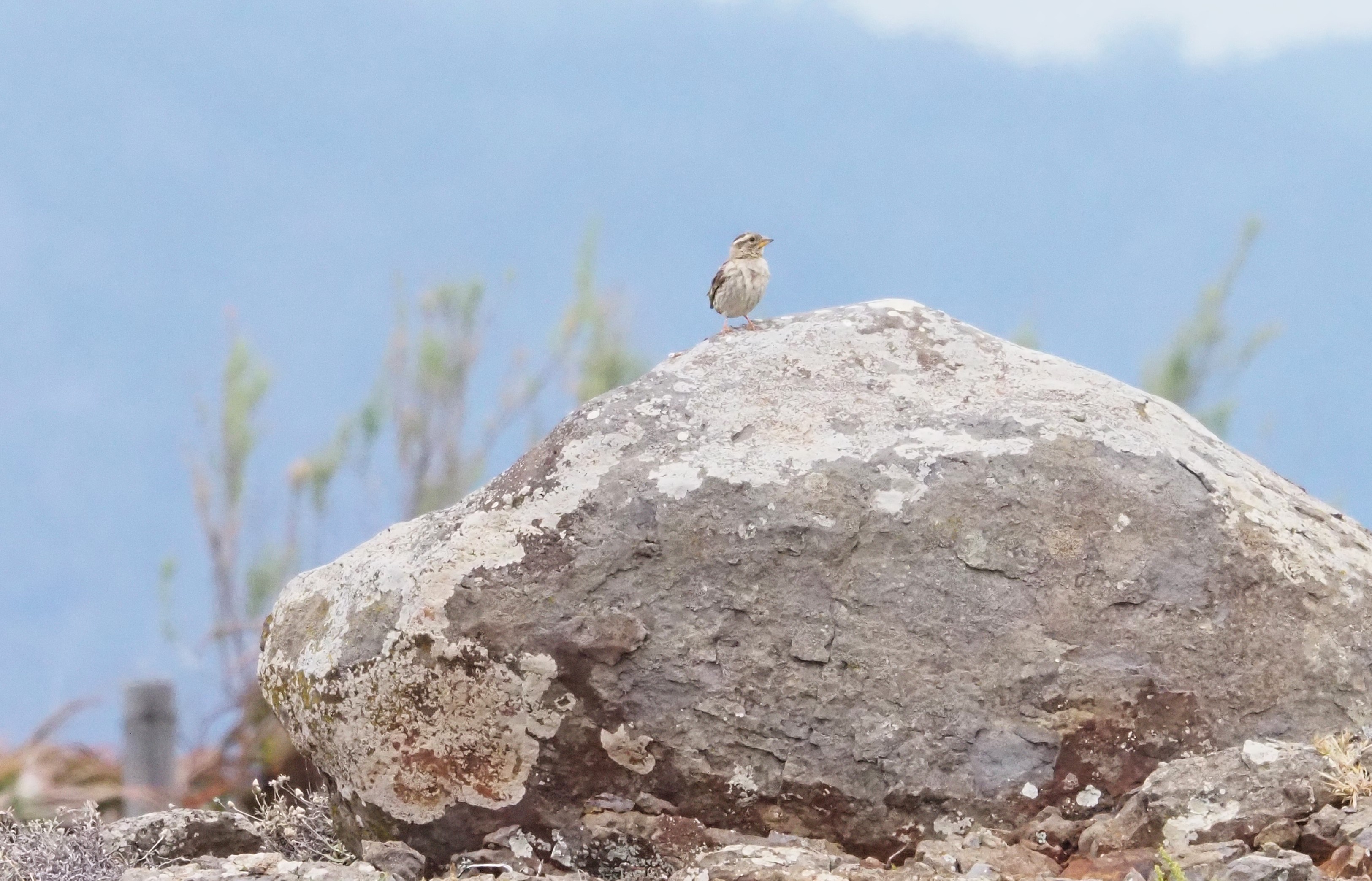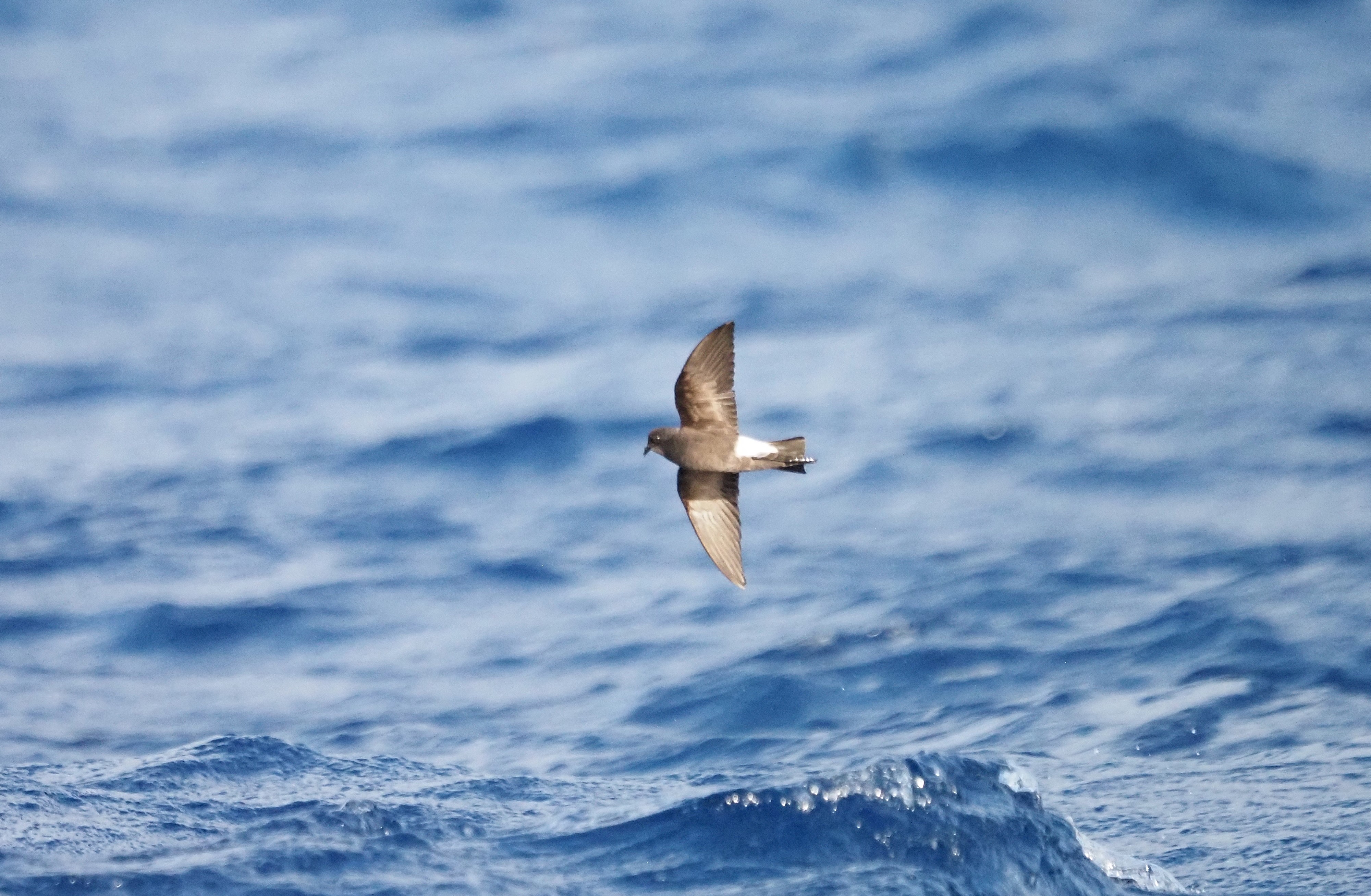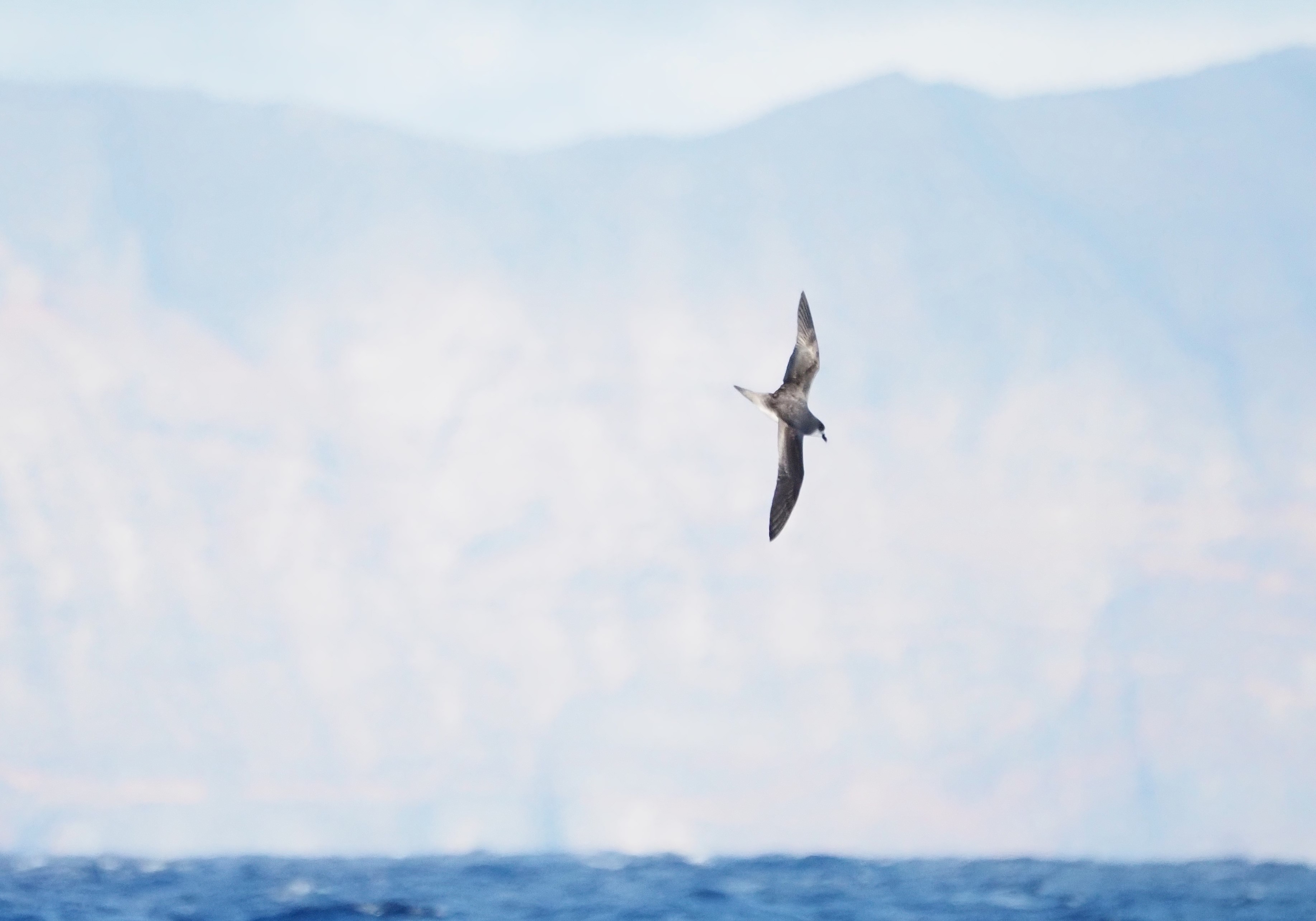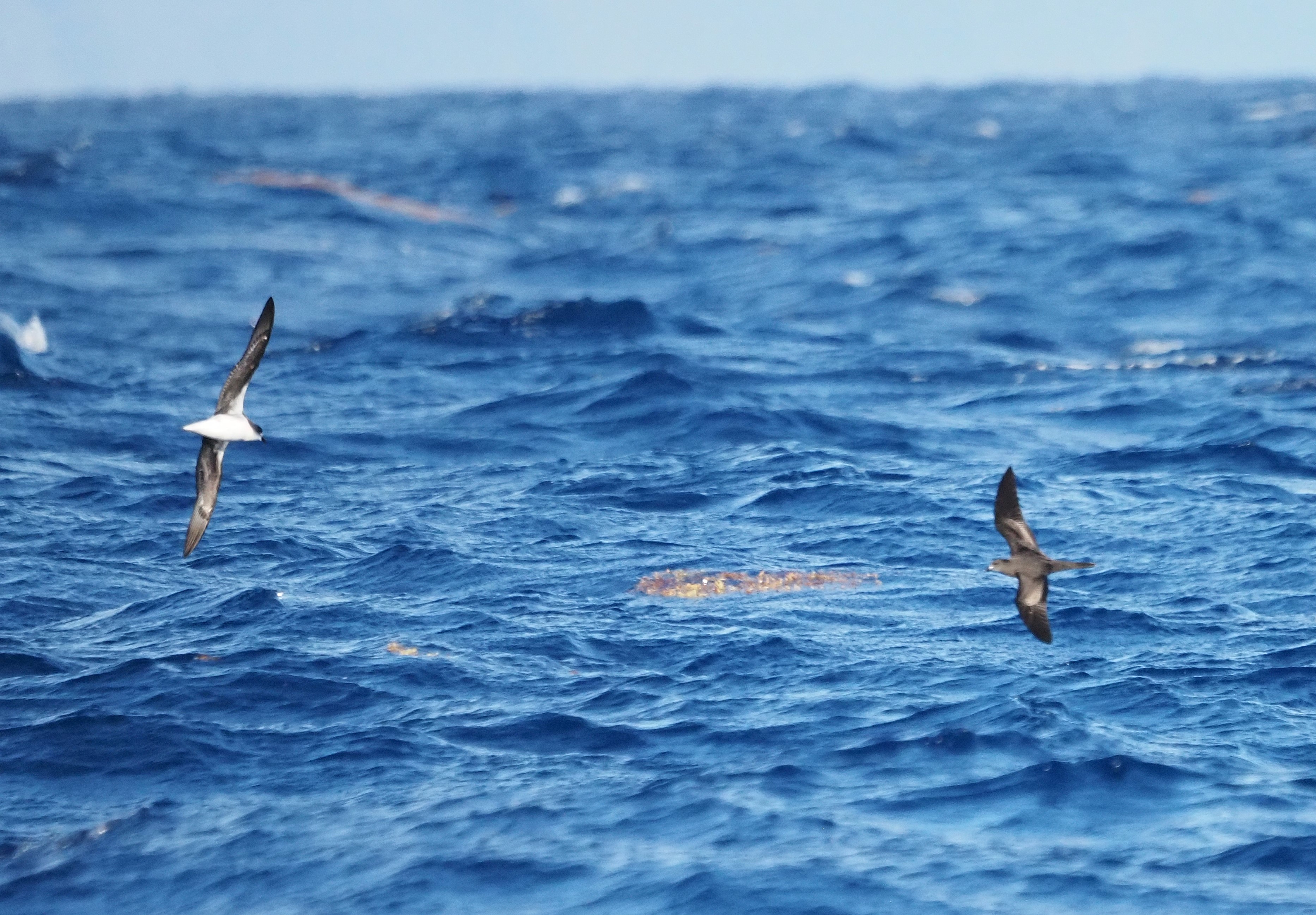
Welcome to the official blog site of Barcelona Birding Point, your new birding & wildwatching travel agency. Here you will find trip reports, detailed information about some of our tours, tips on conservation and more.
Resum: Aquesta és la crònica de viatge del nostre 11è tour al Marroc. Ha estat una edició marcada pel mal temps al Gran Atlas, el que va obligar a inventir-hi força més temps del que és habitual per tal d’assolir les espècies més característiques d’aquest hàbitat. Això va suposar visitar menys zones humides i una llista un xic més curta del que és habitual però que encara va poder sumar espècies força escasses al país com xarxet alablau i polla pintada. El desert i les zones d’estepes en alçada van ser tant excepcionals com sempre!
Tot i els símptomes cada cop més evidents desenvolupame, el Marroc conserva tot el seu exotisme i és una gran destinació ornitològica de primer ordre amb un gran canvi de paisatge, cultura i una gran riquesa d’ocells a tant poca distancia d’Europa!
Totes les imatges en aquest trip report són obra d’en Sergi Sales. Tots els drets reservats.
Dia 1
Després d’un bon esmorzar comença la trobada dels diversos membres de l’expedició, amb nacionalitats variades. Fetes les presentacions i explicacions, comencem la primera jornada de viatge.
Els sits del Sàhara venen a visitar-nos tot movent-se per sota les taules de l’hotel a cerca de restes de menjar i encara als jardins de l’hotel s’escolten els sorollosos bulbuls comuns i els xisclets dels falciots pàl·lids.
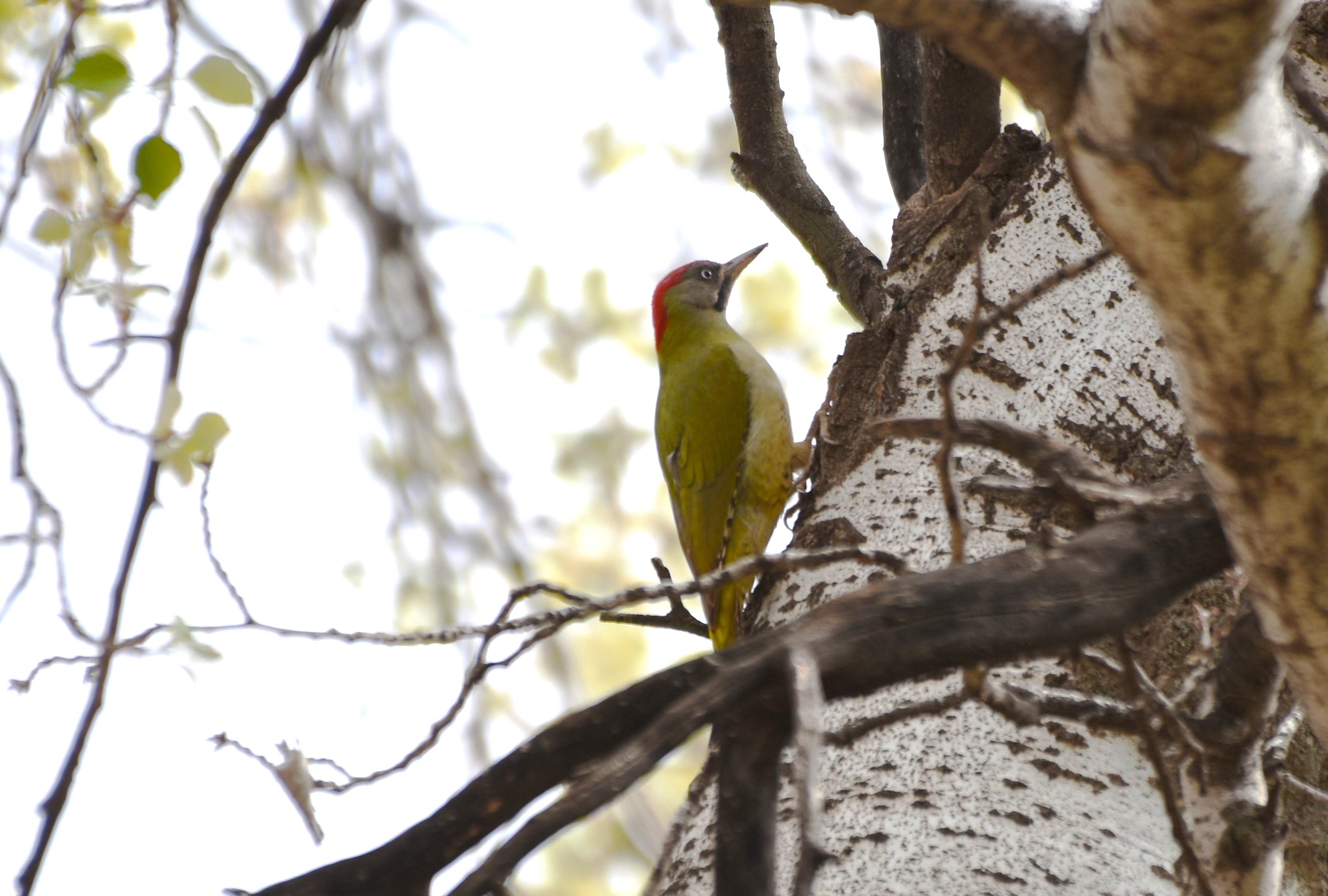
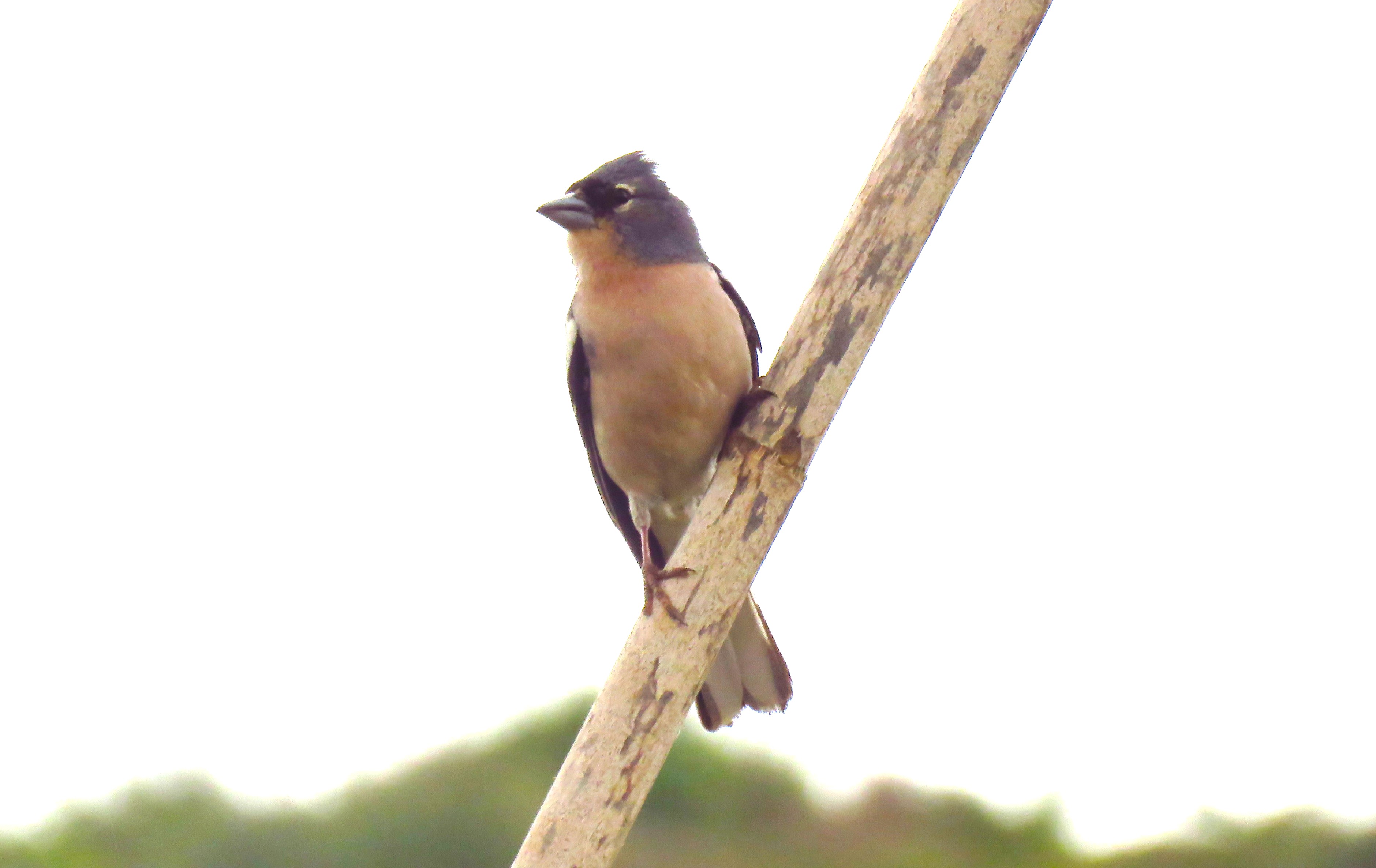
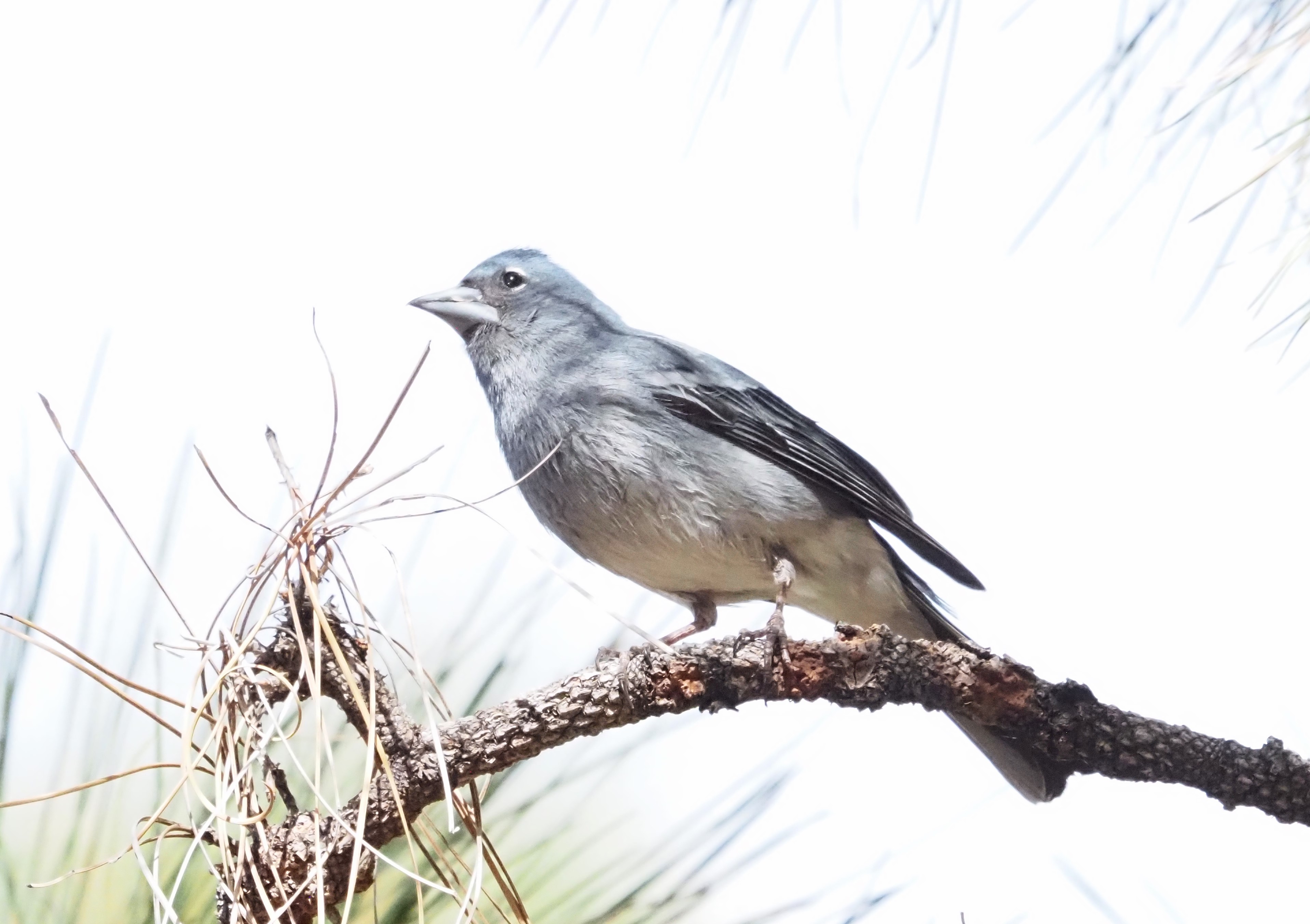
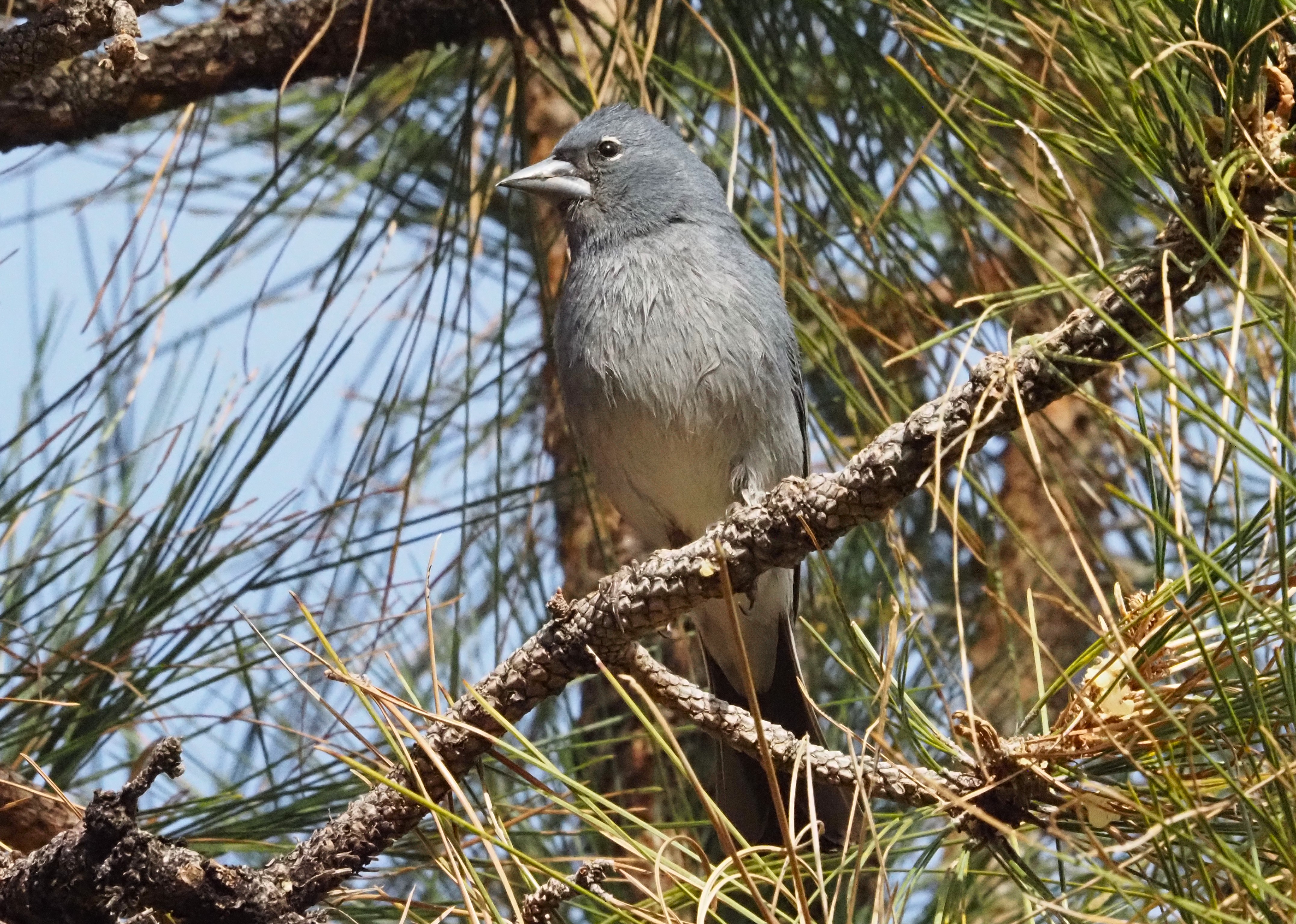
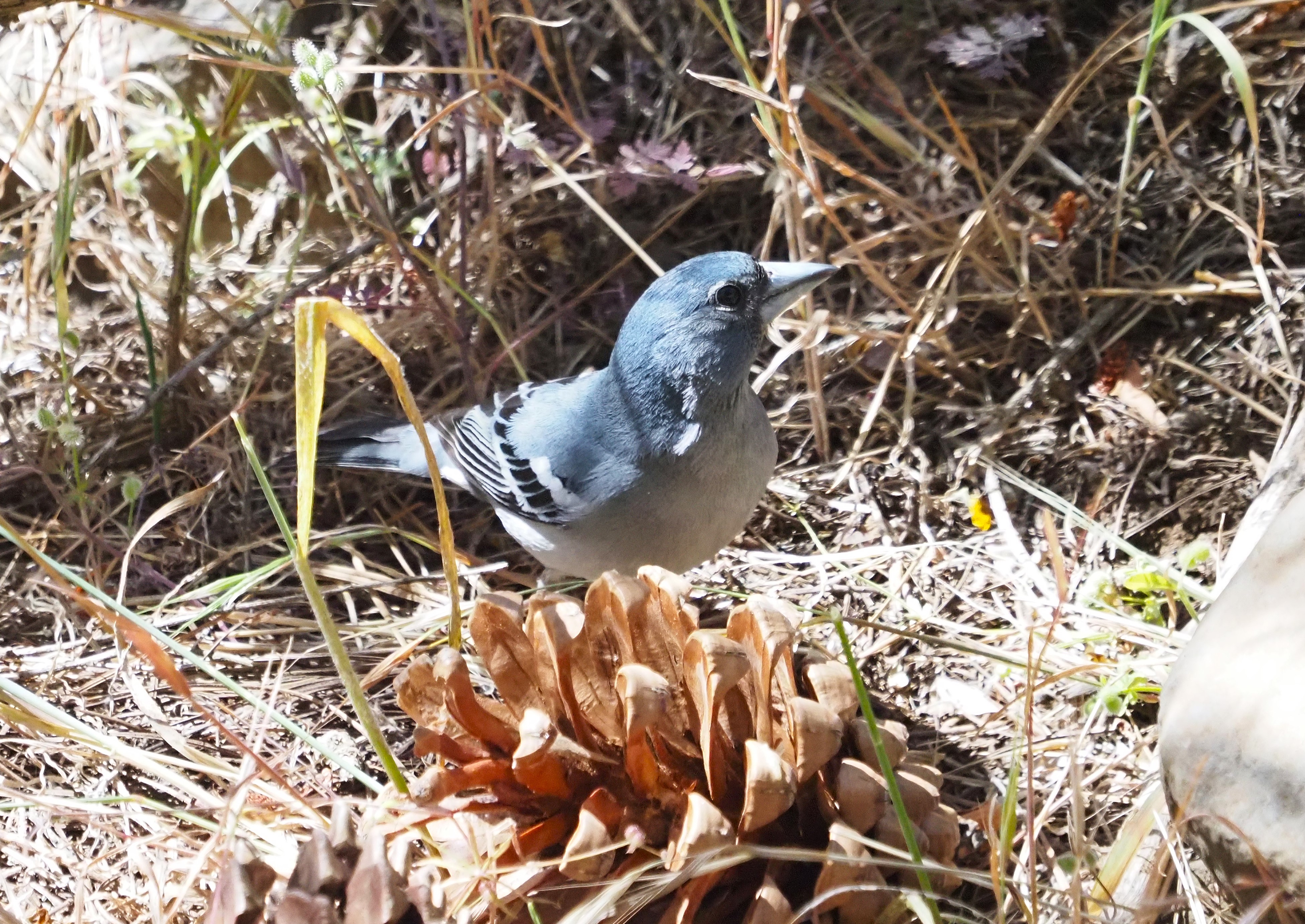
Ens desplacem uns pocs quilòmetres, fins a una zona amb arbres grans i madurs a on no triguem en detectar uns dels primers targets del tour, el picot verd del Magrib, espècie endèmica de les zones arbrades d’aquesta regió; fins a 4 exs. es deixen observar a plaer. A la zona també són abundants els pinsans africans (espècie separada del pinsà comú tot just fa un any), mallerengues blaves africanes i la raça del nord d’Àfrica de picot garser gros.
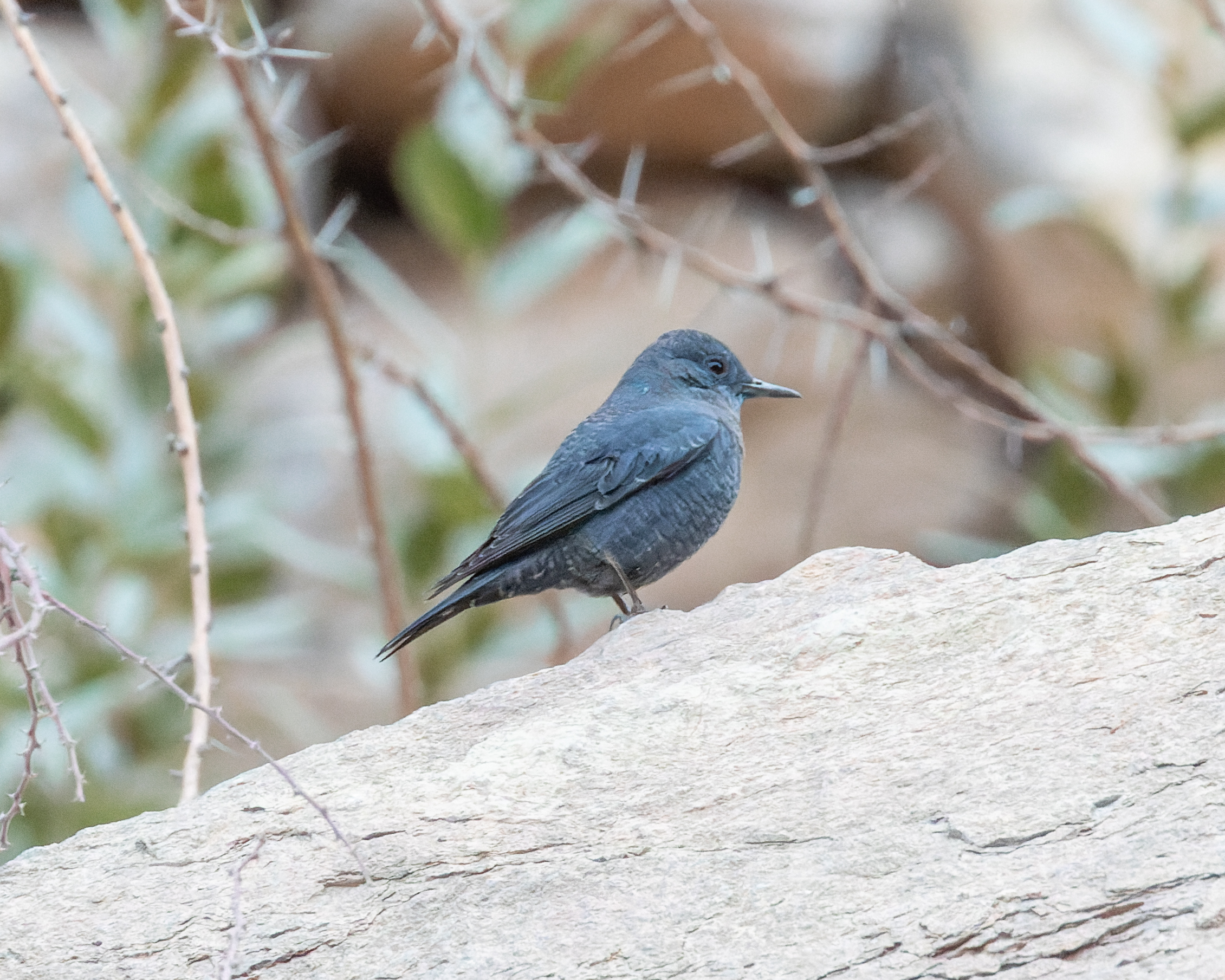
Satisfets per aquesta primera parada, decidim començar la pujada cap a les zones altes de l’Atles a la cerca de la especialitats allà presents. Però tot són entrebancs. La pista està deteriorada pels forts terratrèmols del 2024 que tan mal van provocar en aquesta regió, però per fer-ho més difícil comença un xàfec intens, que poc després es converteix en calamarsa que, a mesura que pugem, es transforma en aiguaneu. A mig camí fem un intent amb poques esperances per mirar de contactar amb la tallareta de l’Atles, però deu estar ben amagada amb aquestes condicions meteorològiques. Un petita escletxa s’obre al cel i una roca al marge de la carretera descobrim la primera merla blava del viatge, aturant-se als pocs segons un meravellós mascle de cotxa diademada i un mascle de sit negre. 3 espècies aturdes en menys d’un metre de distància l’una de l’altra. Això ens anima a seguir l’ascensió però quan només ens quedaven 5 quilòmetres, la neu començar a agafar a l’asfalt i es perd la referència de l’asfalt i línies de la carretera. Amb la visilibilitat força limitada, decidim amb bon criteri avortar la missió i tornar cap avall. Afortunadament, un excel·lent restaurant ens ajuda a passar el mal tràngol tot gaudint del primer tagin del viatge. Tot això a temperatures extremadament baixes, per sota de 5ºC positius!!!
La jornada l’acabem a les zones planes més properes a Marràqueix, a on tot i el fred i el vent podem gaudir de les primeres garses del Magrib, aligot rogenc, terreroles comunes i excel·lents observacions d’un torlit.
Dia 2
Canvi de plans per poder adaptar-nos a la meteorologia i mirar de no perdre cap dels objectius del viatge. Tornem a emprendre la pujada cap les pistes d’esquí. Avui el temps pinta molt millor, tot i la gran quantitat de neu acumulada i el fred.
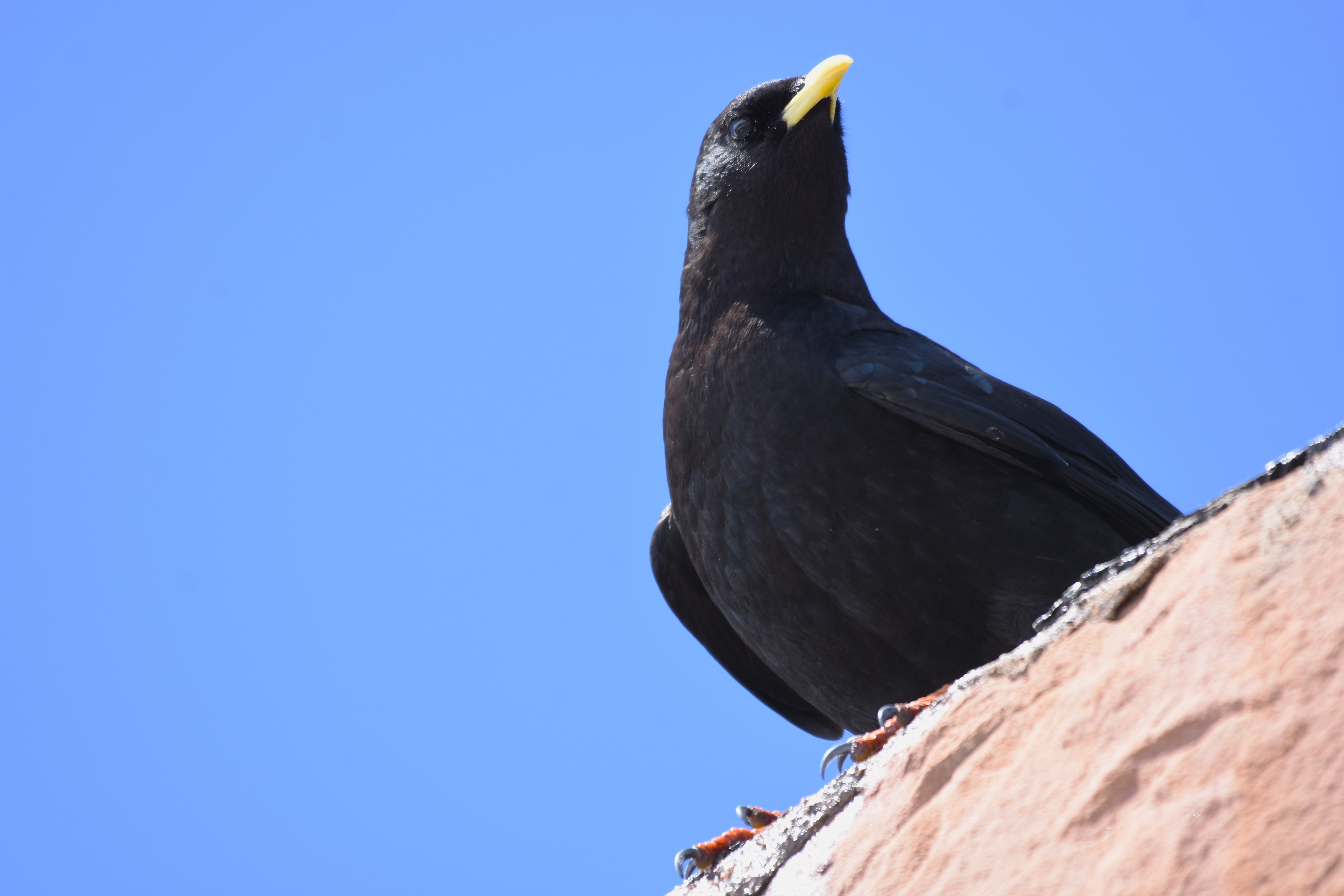
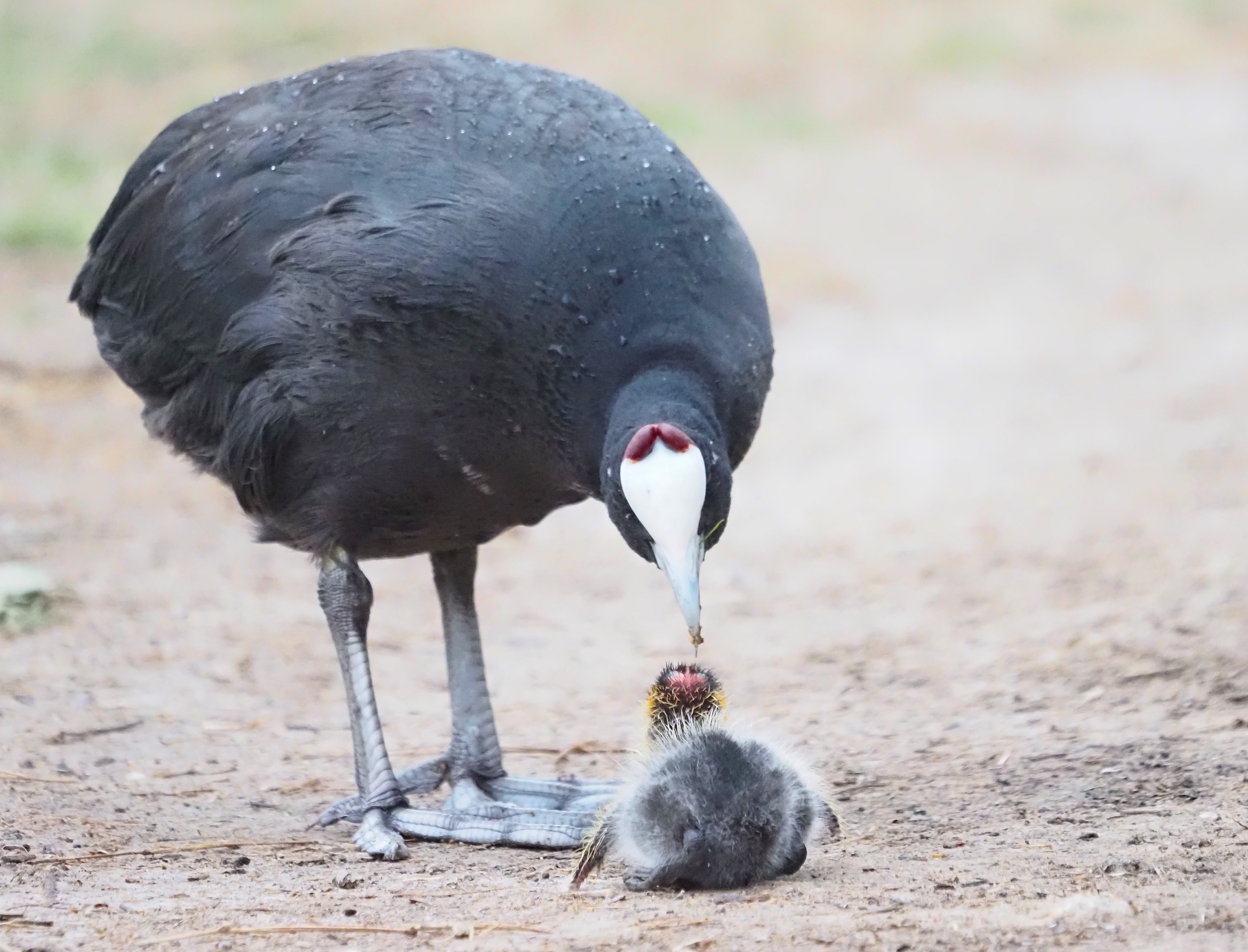
A una cota força més baixa de l’habitual veiem un estol gran d’aloses banyudes de l’Atles, i tot gaudint d’aquests ocells, veiem una parella de còlits negres i un parell d’amagadises merles de pit blanc. Un cop arribat a la zona de les pistes d’esquí, al llac d’alta muntanya hi han les habituals fotges comunes i un parell de merles d’aigua. Al voltant, més aloses banyudes acompanyades de cogullades fosques. Grans grup de gralles, a 1era hora majoritàriament de bec vermell que al llarg del matí es van substituint per gralles de bec groc. També veiem un bon nombre de pardals roquers, especialment prop dels habitatges. Només es resisteix el pinsà ala-roig de l’Atles. Cercant aquesta especialitat ens trobem amb diversos grups d’ornitòlegs de Bèlgica, Regne Unit, Països Baixos… tots ells amb resultat negatiu, alguns amb 3 dies seguits buscant-los sense resultat. Tot i això no deixem d’intentar-ho fins que al final l’esforç té premi quan alguns de nosaltres detectem uns exemplars de pinsans ala-roig que es deixen veure extremadament a prop. Objectiu assolit!!
Més que satisfets iniciem un llarg transfer cap la zona del Souss Massa. En ruta, tot travessant encisadors paisatges, anem veient diverses espècies com el falciot cuablanc petit, ballesters i pardals de passa en una colònia mixta en un dels peatges de l’autopista. Una vegada caiguda la nit ens creuen la carretera torlits, un mussol comú i un fugaç mussol banyut.
Alosa banyuda de l’Atles (Eremophila alpestris atlas)Gralla de bec groc (Pyrrhocorax graculus).Pinsà ala-roig de l’Atles (Rhodopechys sanguineus alienus).Una segona imatge del pinsà rosat de l’Atles, en aquest cas deixant veure el rosat de les primàries.
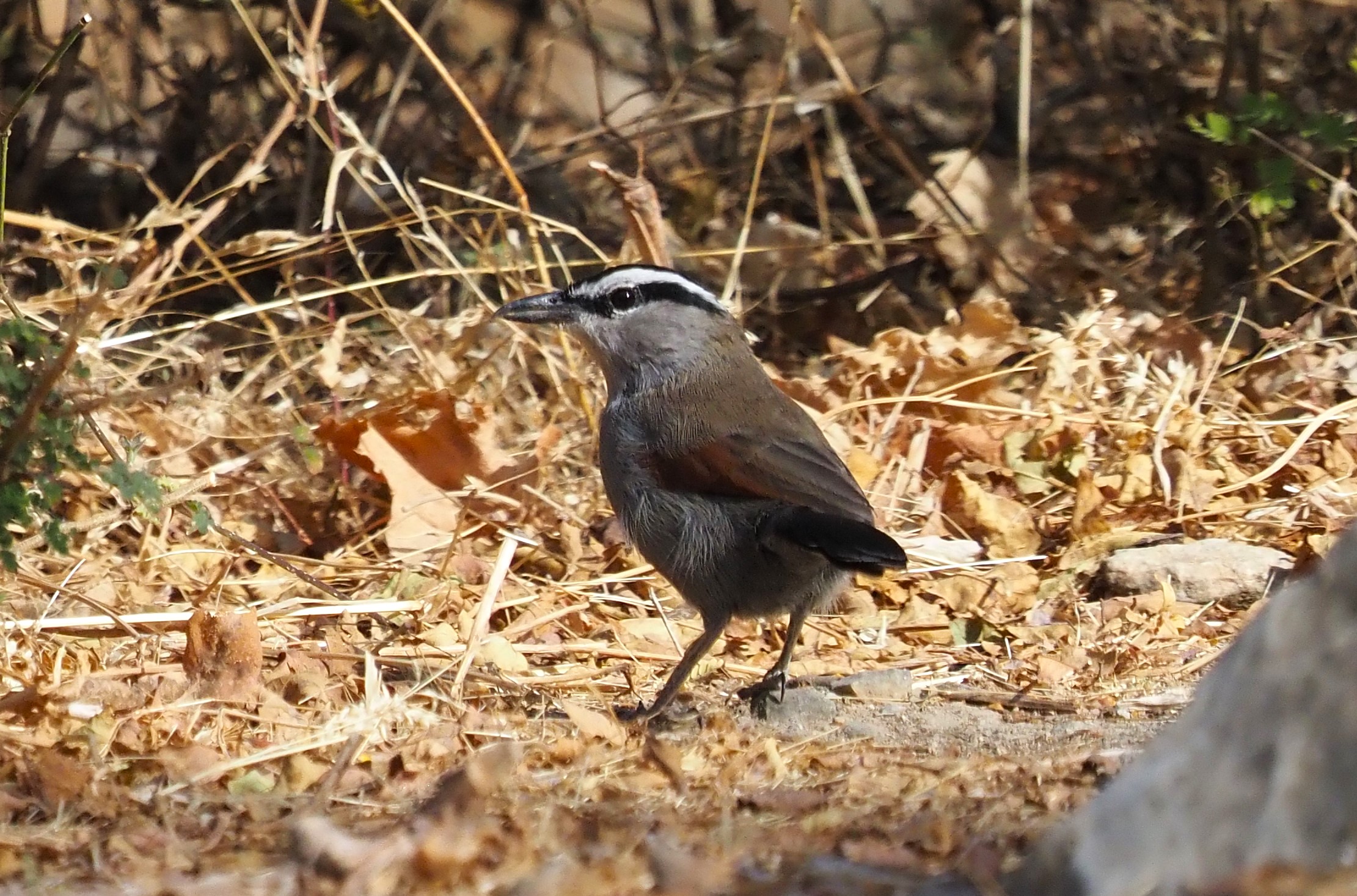
Un dels principals targets d’aquesta zona és la txagra de coroneta negra per això abans d’esmorzar sortim a una zona mixte de conreus locals amb zones arbustives tot aprofitant les hores de menys calor i més activitat. Als pocs minuts contactem amb la característica veu d’aquesta espècie alhora que un bon nombre de busquetes brunes i diverses espècies de passeriformes migrants . Les guatlles canten molt ben a prop però com sempre sembla que es tornin invisibles. Les cotxes diademades es deixen observar a distàncies ridícules.
Després d’aquesta fantàstica sortida a primera hora, tornem a l’allotjament per gaudir d’excel·lent esmorzar!!
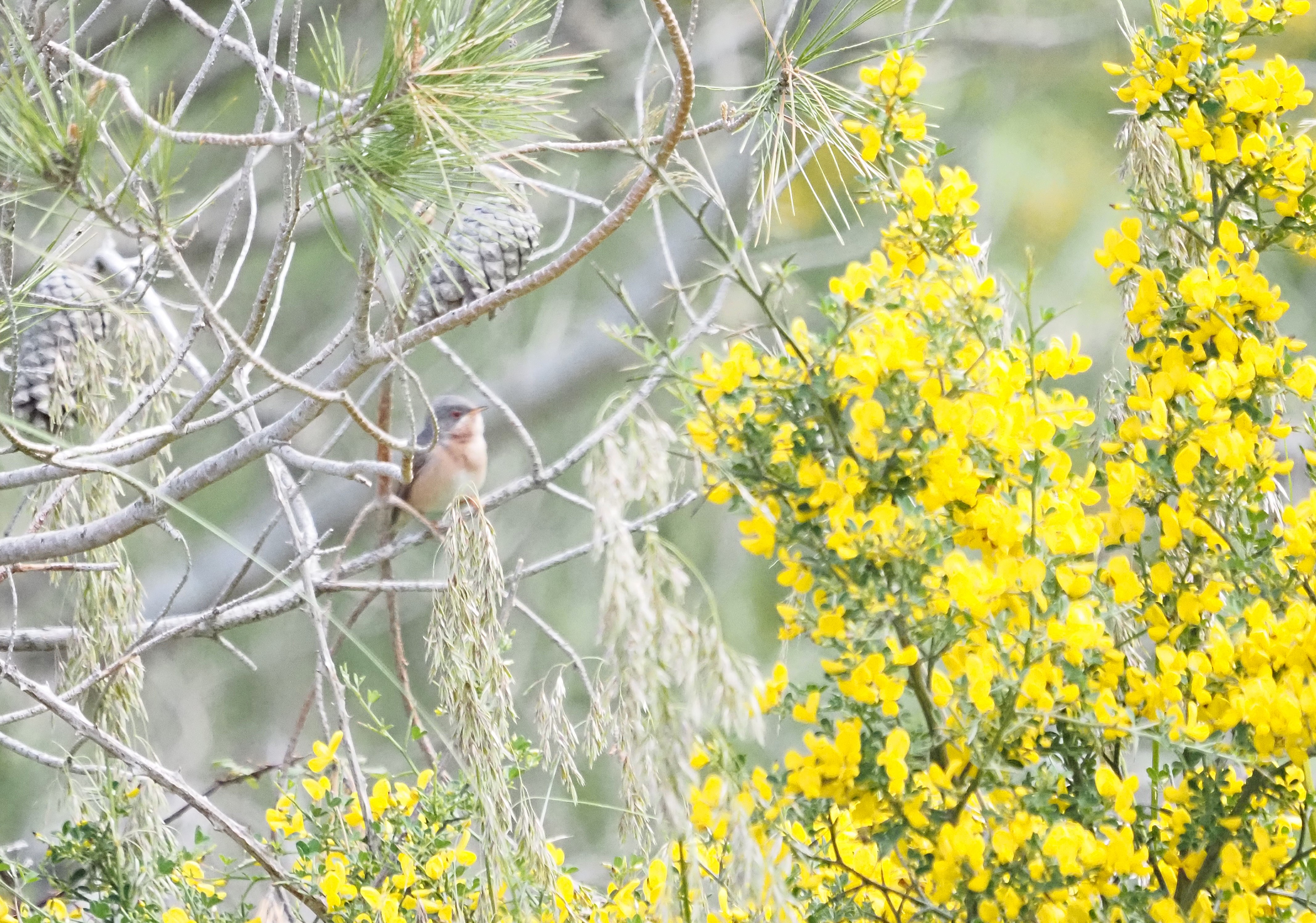
Tot travessant camps de conreus ens dirigim cap els punts d’aigua que li donen fama aquest parc nacional. A pocs km del poble trobem un elani comú que es decideix a fer tot una exhibició de vols, picats i aturades. La verdor dels camps afavoreix la presència de diferents migrants com mosquiters de passa, tallarol de garriga occidental, tallarol emmascarat occidental, piula dels arbres i capsigranys.
La primera parada ens aportar un nou reguitzell d’espècies de limícoles i anàtides noves per la nostra creixent llistat del viatge alhora que trobem les primeres orenetes de ribera africanes, movent-se per sobre de la vegetació de ribera del riu amb un grup amb altres espècies d’hirundínids.
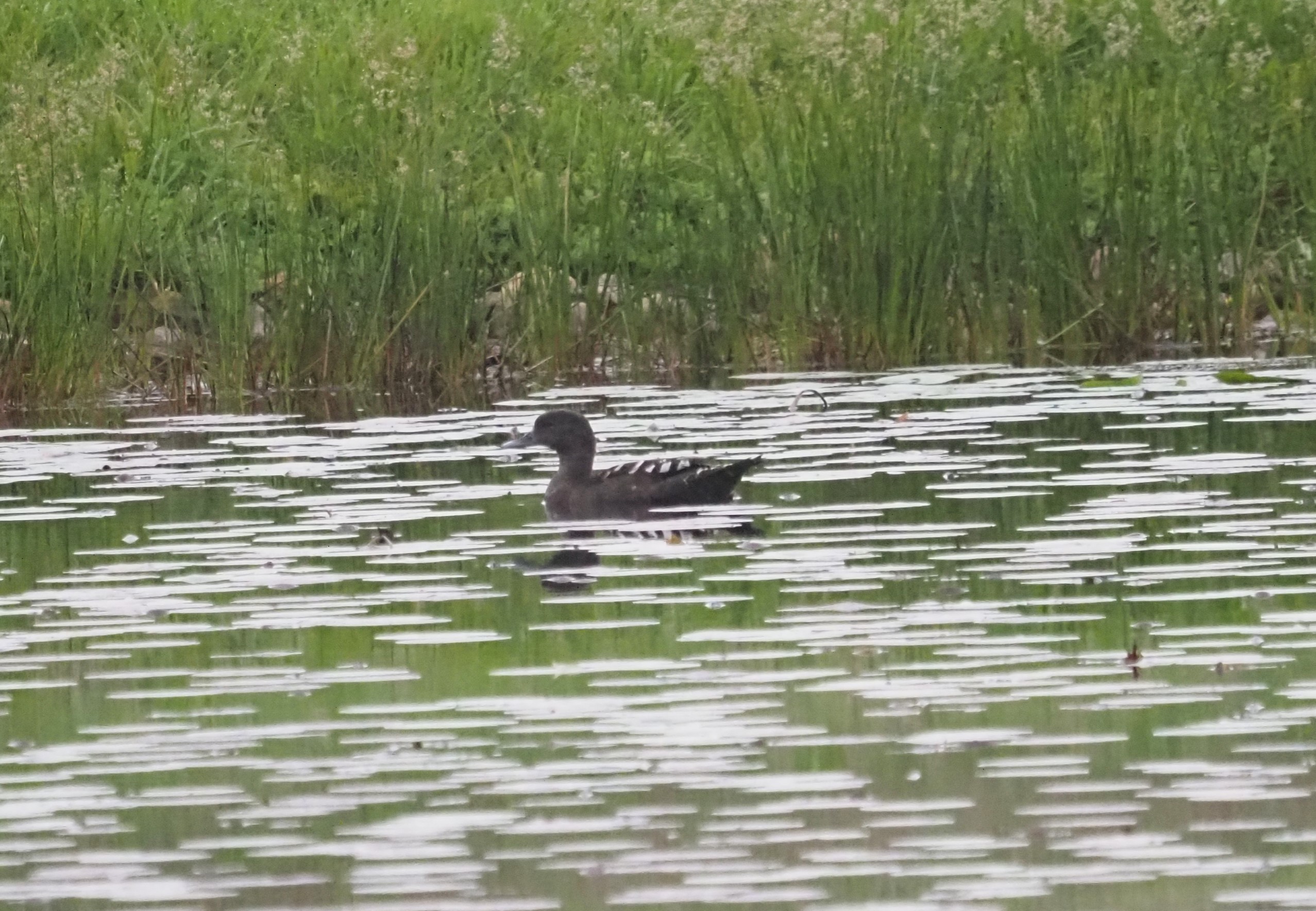
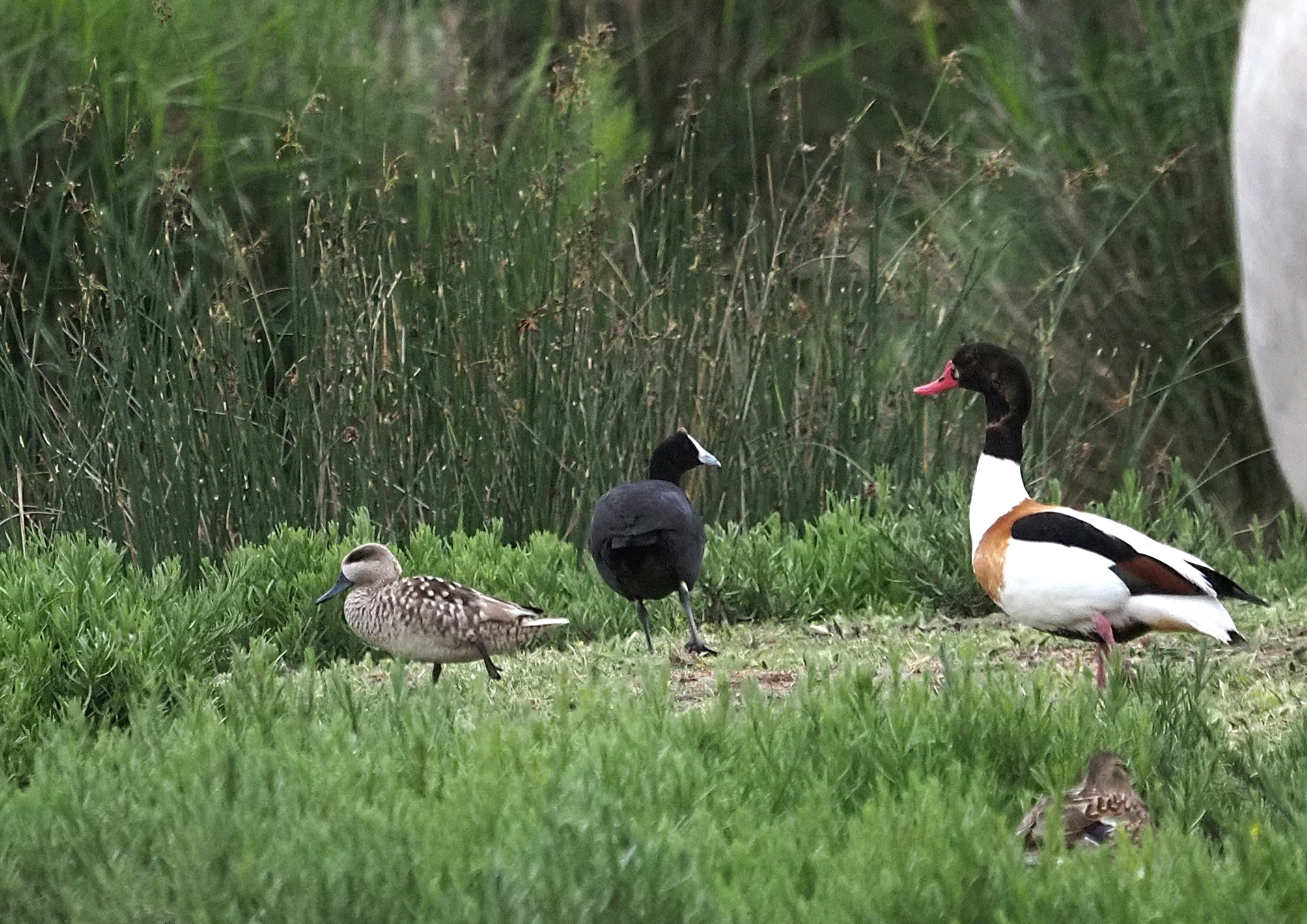
Arribem al parc de Sous Massa on emprenem el llarg i assolellat camí que segueix paral·lel, però a certa distància, l’estuari del riu. Aquí van apareixen ànecs, limícoles, flamencs, capons…i diversos grups d’ornitòlegs alguns del qual diuen haver vist una de les rareses que corren aquell dies per allà; els xarxets alablaus. Després de buscar-los al llarg d’una bona estona, finalment es deixen observar dormint entre ànecs cullerots, el mascle per gaudi dels membres del nostre grup es va decidir a nedar i exhibir els seu plomatge.
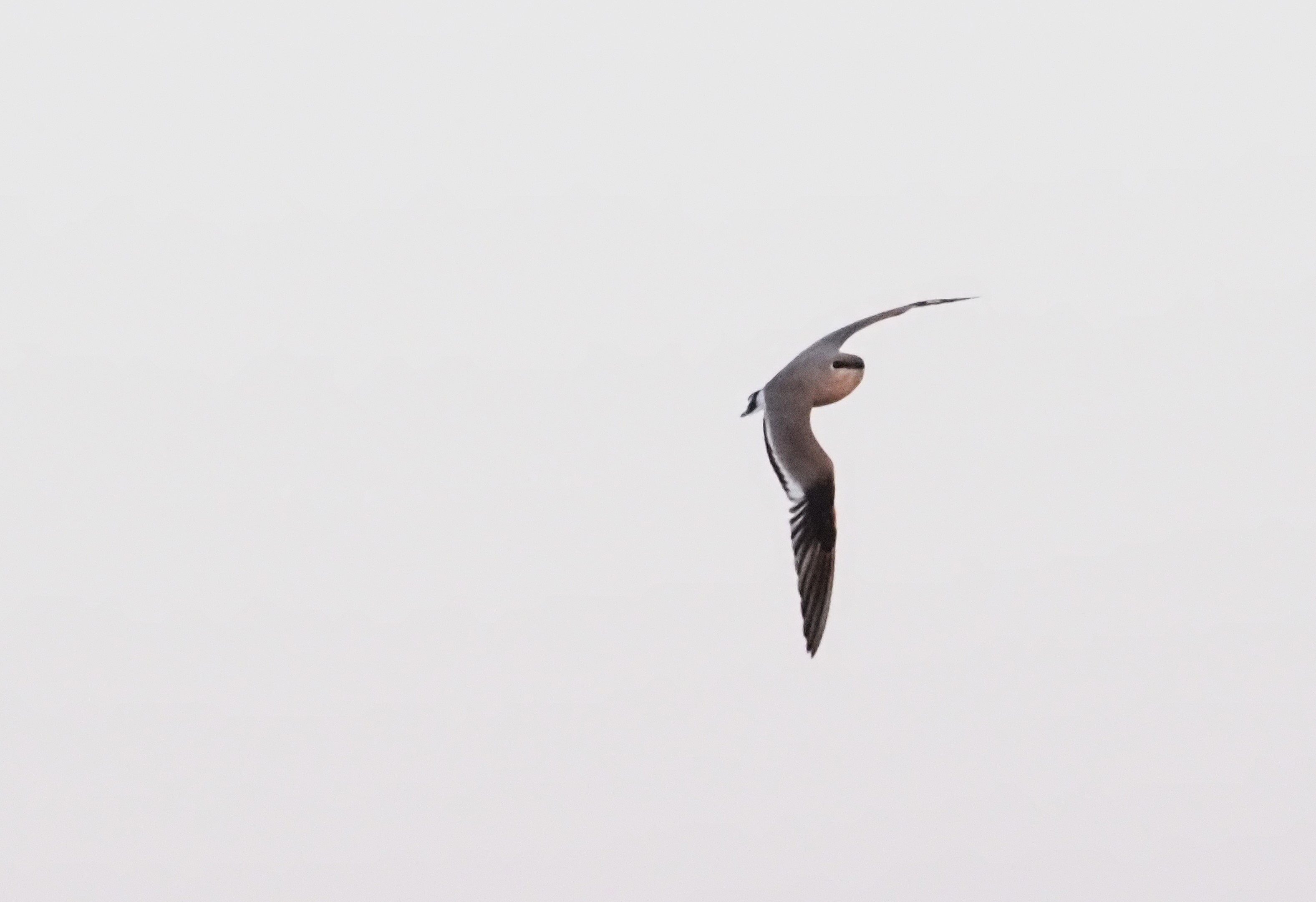
Per fer el pícnic decidim visitar una de les impressionants platges des d’on podrem fer sea-watching. Aquí hi trobem un bon pas de mascarells, entre els quals van apareixent algun paràsit boreal i paràsit cuapunxegut. El fet d’estar en plena època de migració ens va donar l’oportunitat de gaudir de l’espectacle en directe de grups de becplaners tornat cap al Nord i grups de limícoles com pigres grisos migrant cap al Nord tot seguint la línia de la costa. Tot i així es resisteixen els ibis ermitants, fins que al final del dia 3 exemplars, un d’ells radiomarcat, es deixen veure a tocar dels penya-segats on restaran a passar la nit.
Dia 4
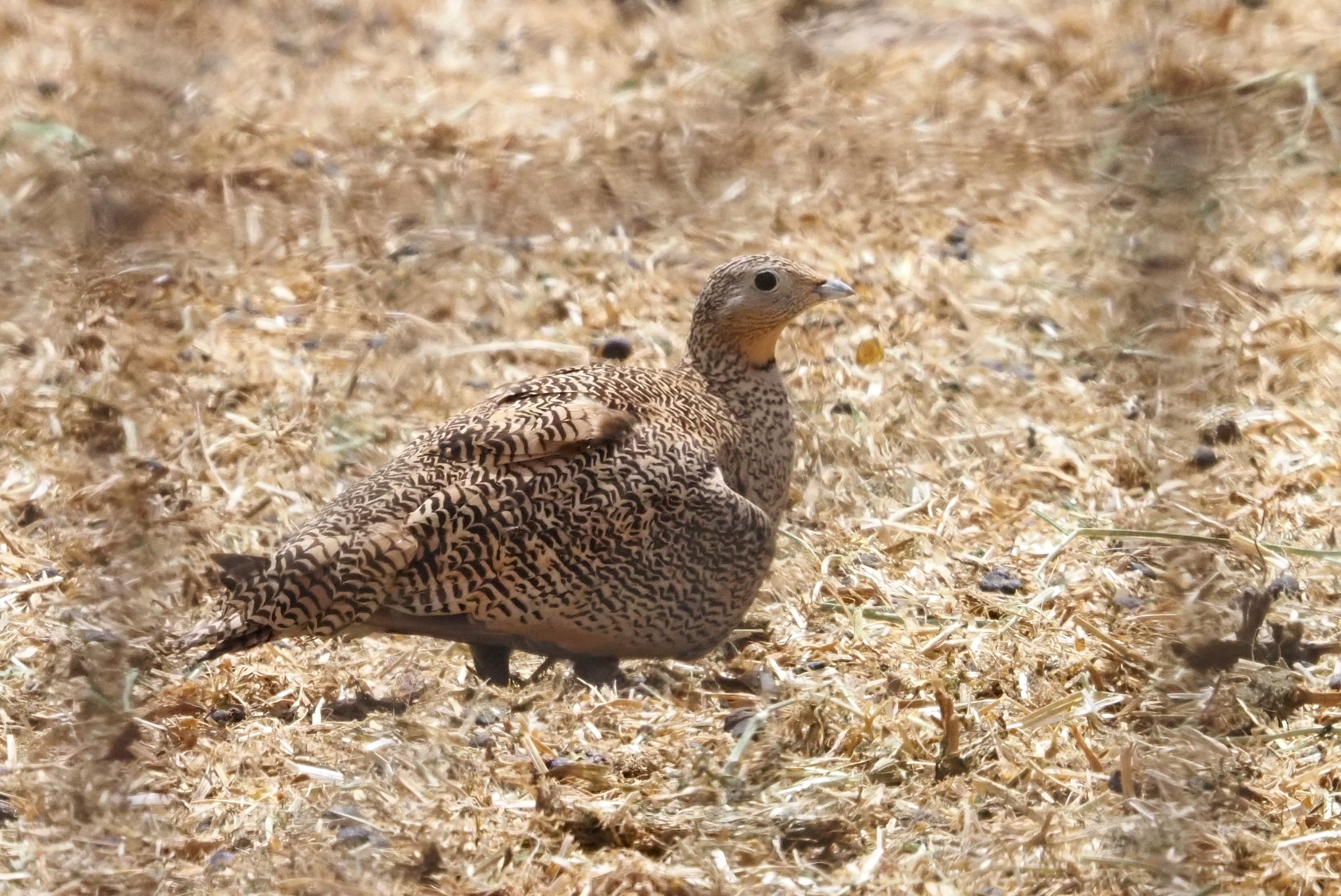
Repetim l’estratègia del dia anterior, visitant abans de l’esmorzar sectors propers al nostre allotjament, a on es deixen observar a plaer perdius nord-africanes, mussols comuns de la raça nord-africana i les aquí abundants garses del Magreb.
Desprès d’esmorzar comencem a emprendre el llarg trànsfer cap l’interior tot veient en ruta alguns rapinyaires (menys que anys anteriors) i fent aturades en alguns ponts i gorges on veiem les primeres àguiles cuabarrades del viatge. Tot just abans d’arribar a Ouarzazate ens aturem per escanejar un petit punt aigua que travessa el desert rocallós. Aquí veiem còlits negres, les primeres terreroles del desert i una sorprenent polla pintada que es va deixar fotografiar i veure a plaer. Una darrera aturada en un lluents d’aigua amb corriols petits, ànecs canyelles i les primeres cogulladesdel Maghrib amb un bec llarg i mida considerable.
Cau la nit i arribem a l’allotjament a les impressionants Gorges del Dades.
Demà ens espera la visita al mític Boumalne Track!!
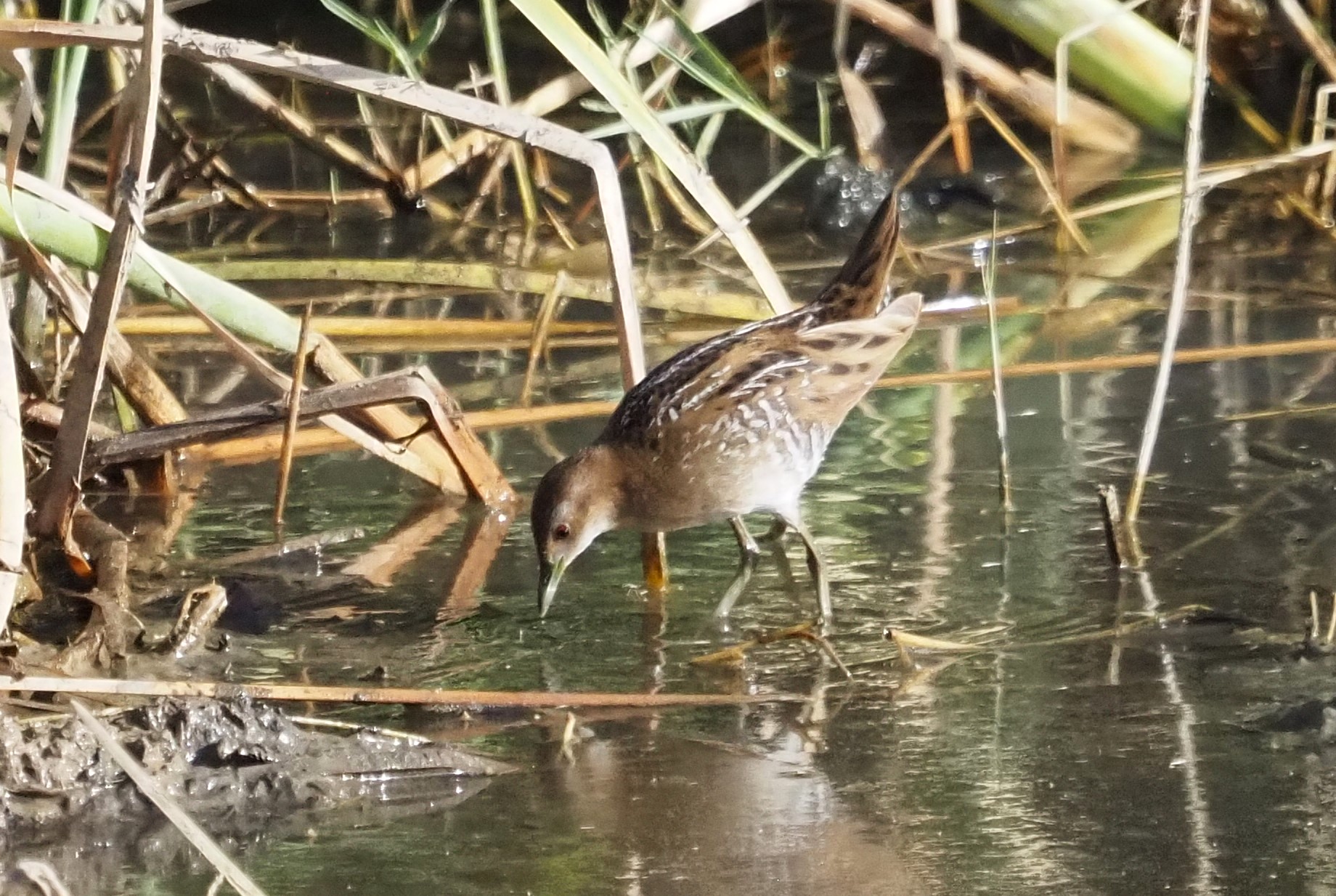
Perdius nord-africanes (Alectoris barbara)Spotted Crake (Porzana porzana) in a small stream in the Anti Atlas.
Dia 5
Sortim a fer l’entramat de pistes de terra del Tagdilt track , segurament el lloc amb més diversitat de còlits i al·làudids del Paleàrctic Occidental.
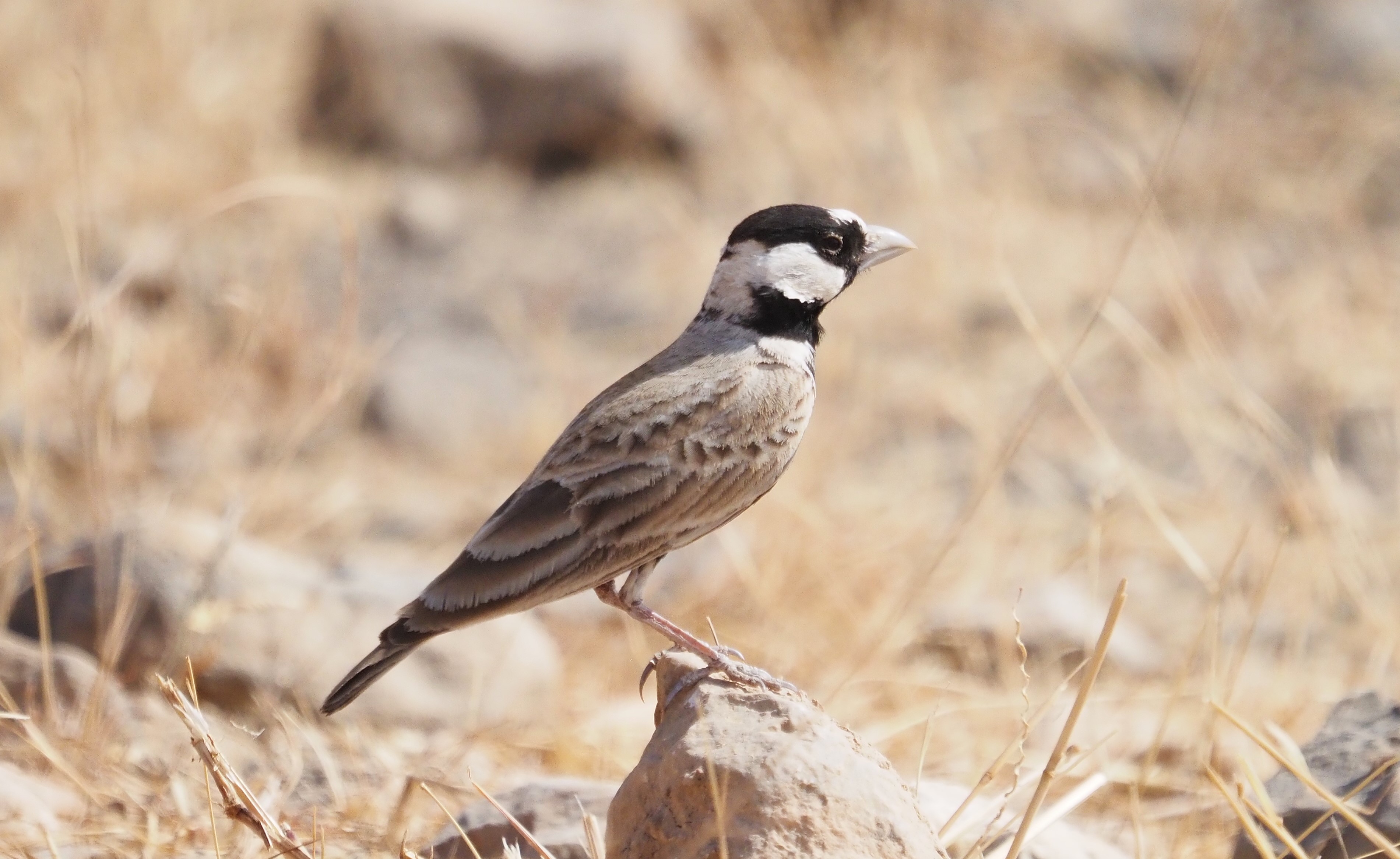
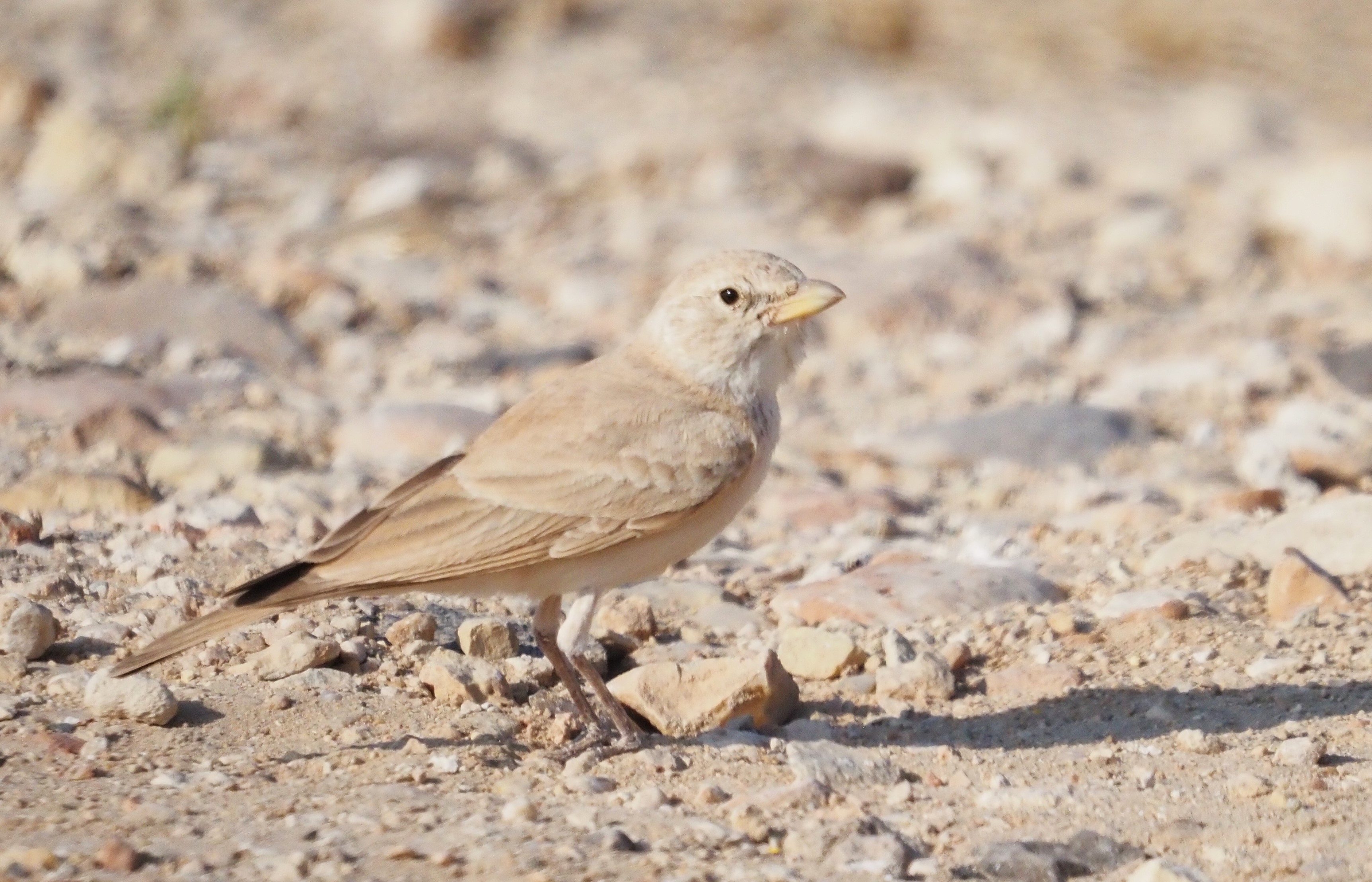
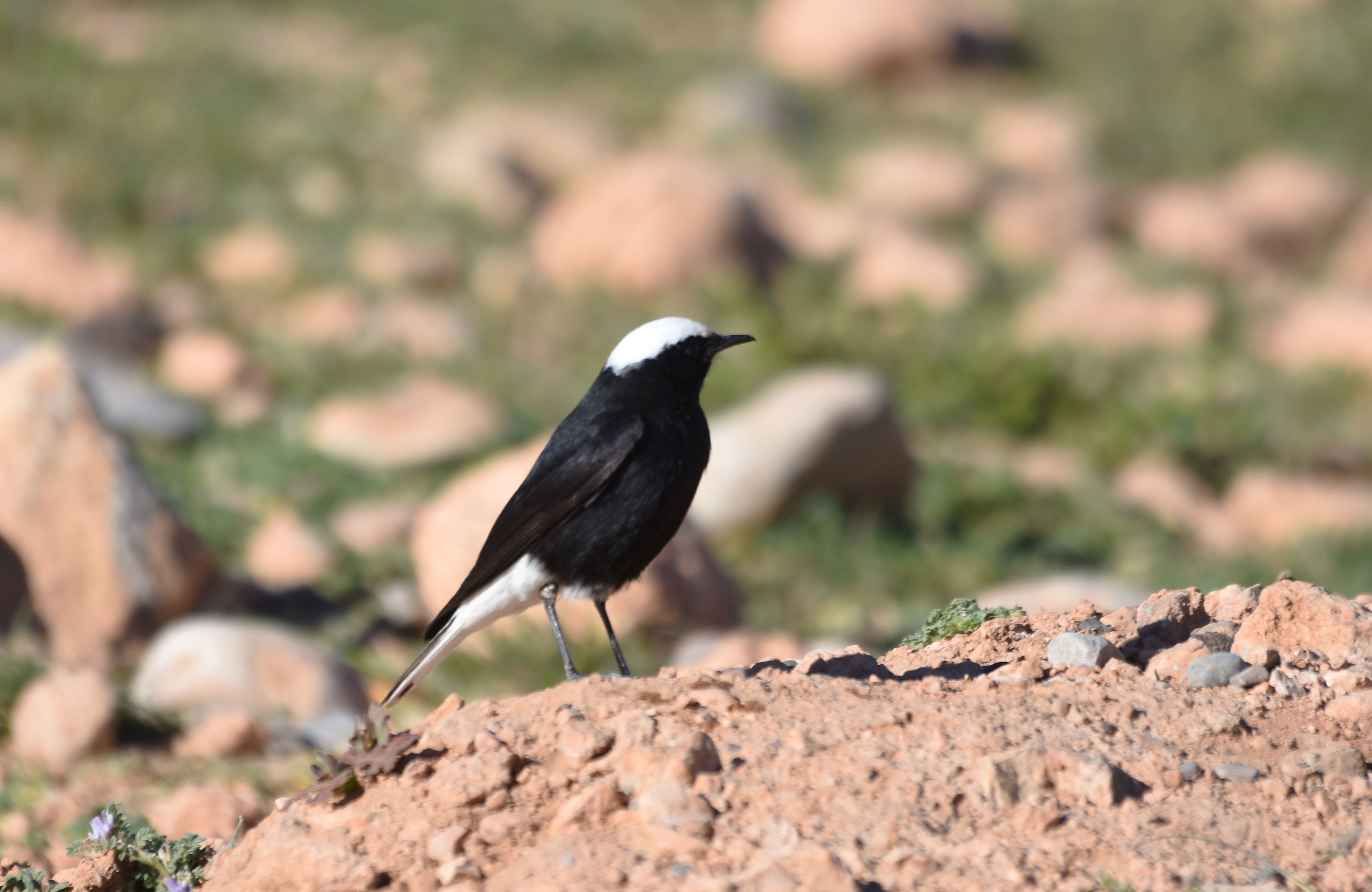
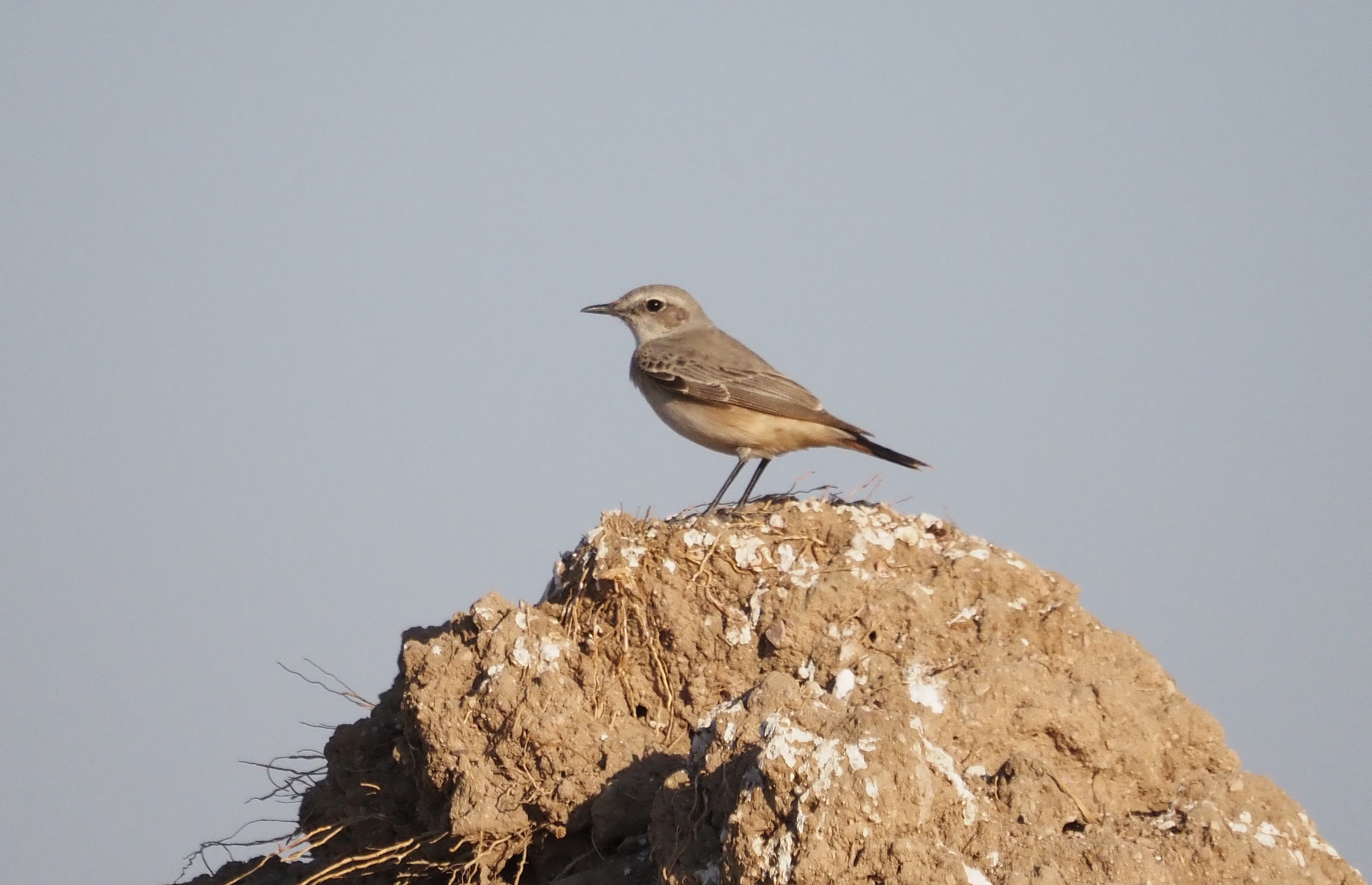
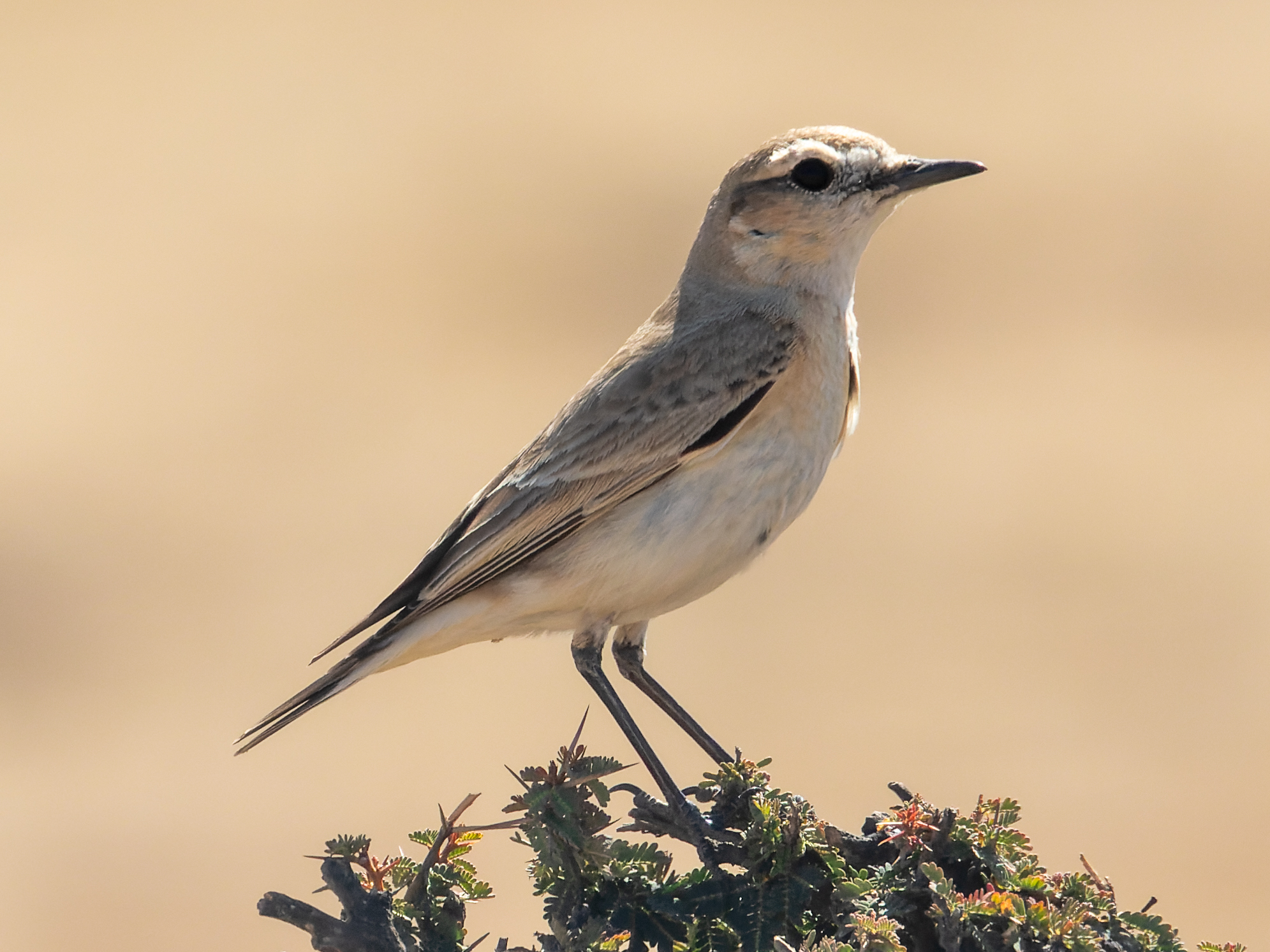
No triguem a trobar el 1er còlit de coroneta blanca, un ocell espectacular! Realment en aquest primer sector la diversitat d’ocells no es correspon amb la bellesa del paisatge, tones i tones de plàstics embruten les visualitzacions sobretot dels còlits de carpó roig, els quals ja estan en plena fase reproductora. Però sens dubte el còlit del desert és el més comú dels còlits nidificants allà. Uns quants còlits grisos i rossos en migració completen el llarg llistat de membres d’aquesta família. Sembla que enguany és d’aquestes temporades en les quals detectar les calàndries bec-grosses es feina complicada. Tornem a coincidir amb el grup d’ornitòlegs belgues amb els que vàrem prospectar l’alt Atlas. Intercanviem informació ja tots dos grups havíem començant el mateix itinerari però pels extrem oposats. Entrem en zona d’hàbitat menys deteriorat on es veuen abundants les terreroles del desert i cuabarrades. Entre les cogullades fosques que travessen les pistes, acabem veient la primera alosa puput del tour (a les zones desèrtiques és molt més abundant), tot observant aquest increïble alaúdid en creua un nombrós grup de corredors saharians. Tot tornant i escanejant entre els residus, veiem un grupet de aloses del Sàhara, similars a les aloses banyudes però més petites i perfectament adaptades a aquestes ambients tant secs.
Còlit de coroneta blanca (Oenanthe leucopygia)Còlit de carpó roig (Oenanthe moesta).Alosa del Sàhara (Eremophila bilopha)
Puja ràpidament la temperatura i després de refrescar-nos ens dirigim cap les gorges on ens esperen altres dels objectius del tour.
Amb l’ajuda d’un improvisat guia local ens localitza explorarem aquest sector. Desprès d’un ràpid pícnic ens duu cap un dels sectors controlats ensenyant-nos pel camí un escurçó cornut. De sobte un falcó llaner es deixar veure a molt curta distància intentant caçar una terrerola del desert.
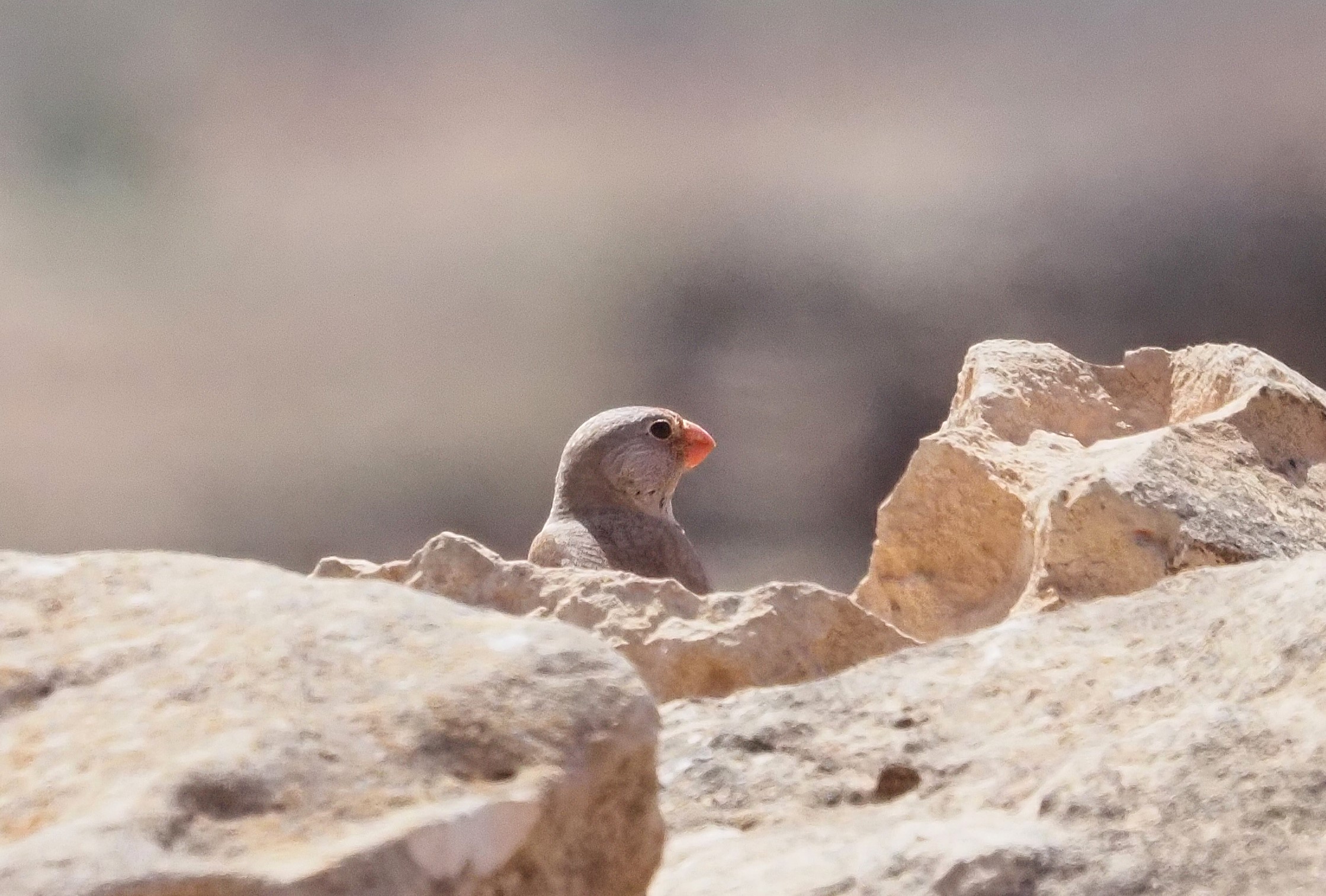
Finalment arribem a una petita cova on està un niu de duc del desert, amb 3 polls. Sembla que enguany s’han intercanviat els territoris entre ducs, falcons i l’aligot rogenc, els quals sobrevolen diverses vegades la zona. Aquí mateix trobem una parella de pinsans trompeters. Una mica més enllà veiem fugaçment un còlit de Núbia, però després d’una estona caminant per aquells barrancs, una parella es deixa veure en bones condicions.
Més que satisfets tornem al lloc del matí per tal de tornar a cercar la calàndria bec-grossa, aquesta vegada amb més èxit ja que ràpidament un petit grup es deixa veure a curta distància abans de desaparèixer entre la vegetació…
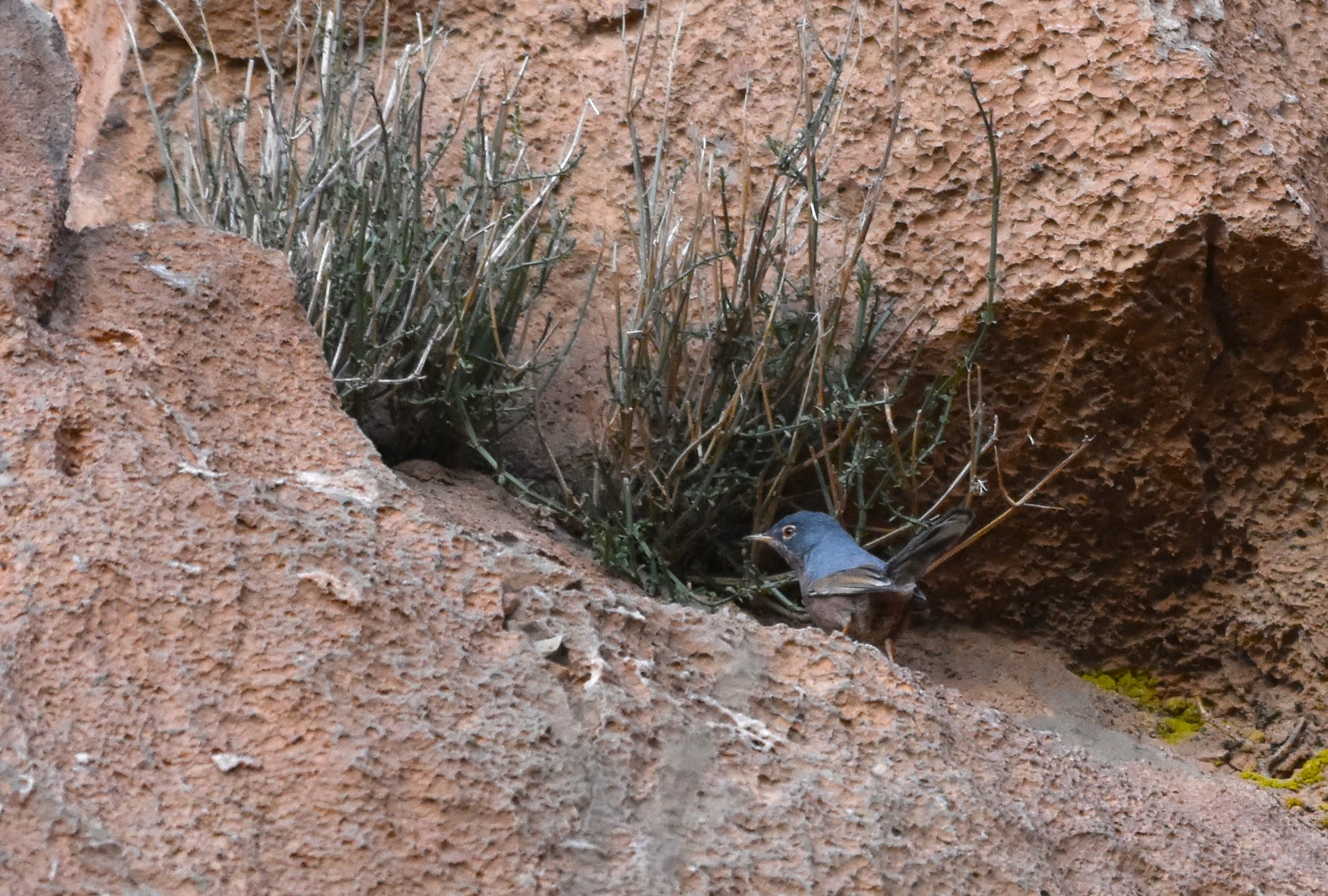
Aprofitem les darreres llums per visitar les impressionants gorges de Dades i fer un intent per recuperar la darrera espècie que havíem perdut per la nevada a l’Atlas, i als pocs minuts d’aturar el vehicle detectem el reclam de la tallareta de l’Atles , en concret un mascle que després es va deixar escoltar i veure força bé, una gran alegria pel grup.
Al pàrquing de l’hospedatge ens sorprèn un adult d’àguila cuabarrada passant per sobre dels nostres caps amb una gran branca al bec, no triga en aturar-se i mostrar-nos on està el niu! Tot això ornamentat pels cants de merles blaves i còlits negres.
Tallareta de l’Atlas (Curruca deserticola).
Dia 6
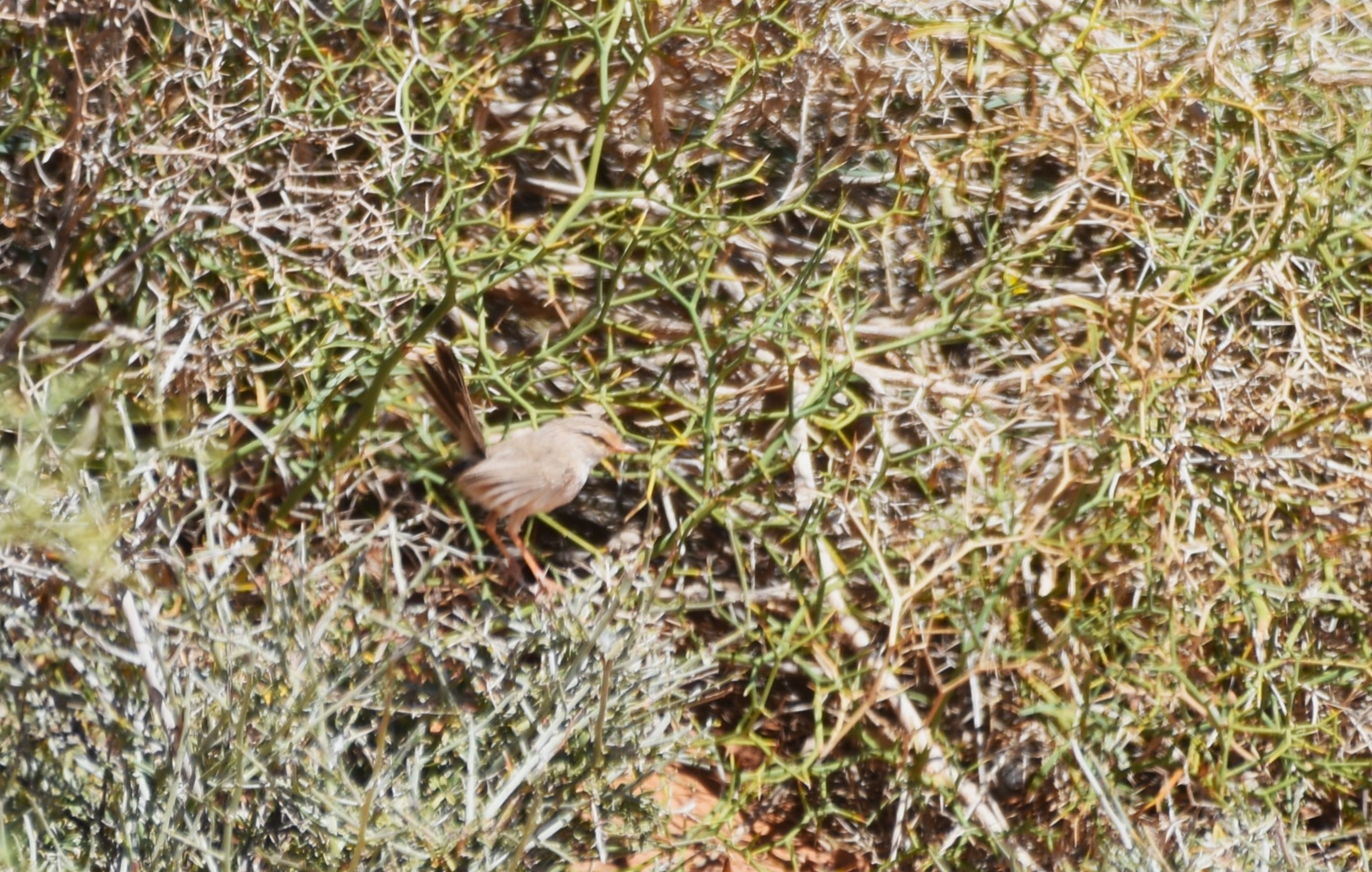
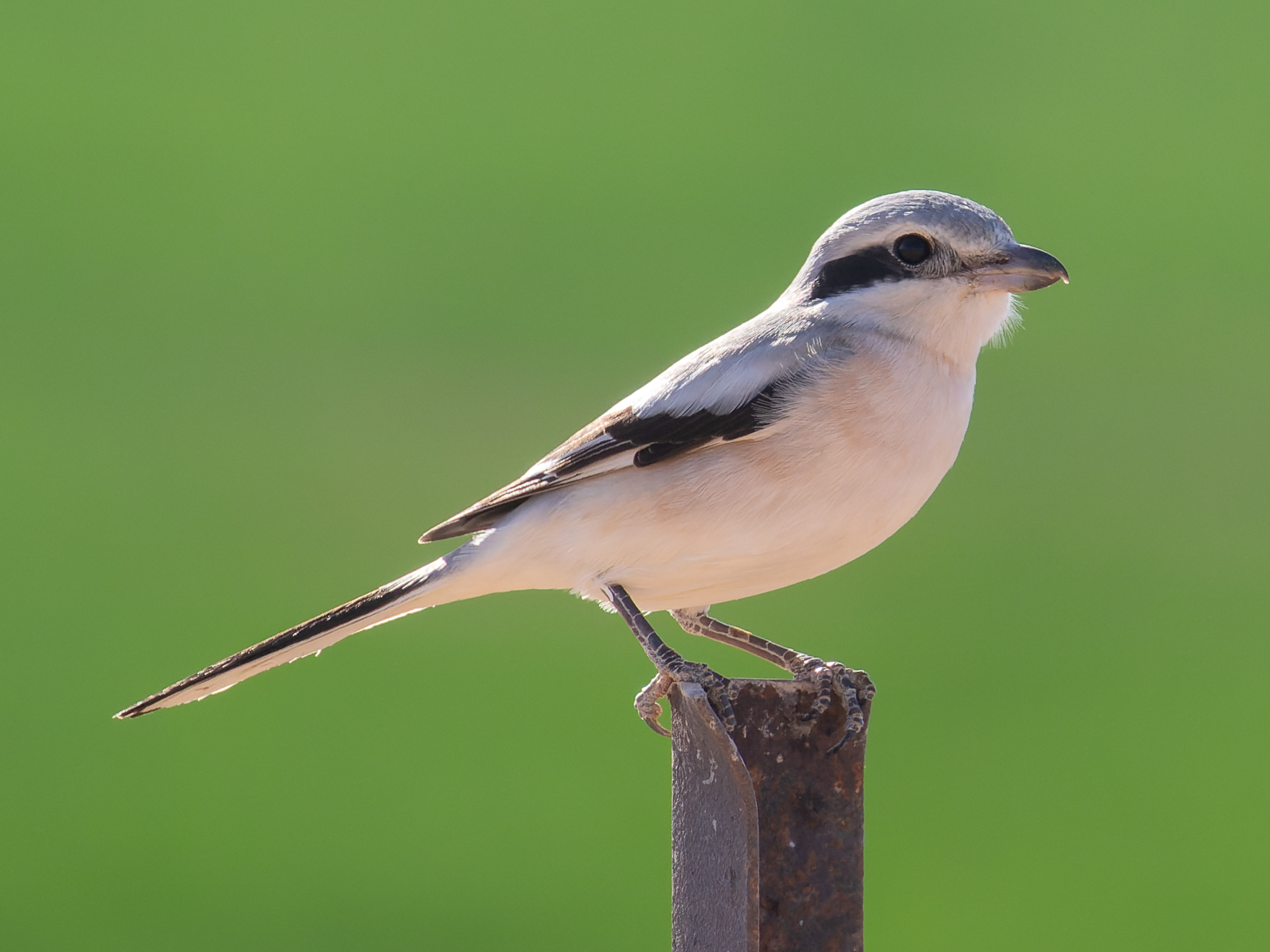
Trànsfer llarg cap les dunes del desert del Sàhara, fent una parada a un parell de punts amb hàbitat perfecte per un petit i complicat ocell, la prínia del desert. Després de caminar entre zones sorrenques envoltats de ramats de cabres i veient un seguit de botxins septentrionals amb la seva complexa taxonomia, escoltem les seves veus i comencem carreres i aturades tot seguint un grupet que puja a matolls i corre per la sorra com si s’acabés el món. Finalment, tots els participants tenen molt bones observacions d’aquesta esquerpa espècie!
En ple Ramada no és fàcil trobar llocs per menjar però el nostre grup no té problemes i optimitzem el temps aturar-nos a mig camí entre Boulmane i Merzouga. Després de dinar, un seguit de parades en ruta van ser poc productives així que decidim anar directes a Merzouga i aprofitar l’increïble paisatge que han generat les pluges d’aquest passat hivern tornant a omplir d’aigua la seva famosa llacuna (feia 5 anys que no tenia aigua) i a on podem gaudir de flamencs i d’altres aus aquàtiques al ben mig del desert. Es increïble com els ocells s’adapten a les condicions puntuals de la zona, havent-hi gran nombre de parelles nidificants d’ànecs canyelles, cama-llargues, corriols petits i camanegres. A més de sorprenents migrants com un cabussó collnegre o àguila pescadora. Força lluny i molt amagadissos pels vent, però veiem bé un grupet de xarxets marbrencs.
Prínia del desert (Scotocerca inquieta).
Dia 7
Ben aviat venen a buscar-nos els guies locals amb els vehicles 4×4 perfectament adaptats a conduir per les dunes i sorres del desert. La primera aturada és al lloc que visiten per veure amb les primeres llums les gangues pigallades i coronades. No triguem gaire en observar totes dues espècies fent ràpides visites a l’abeurador.
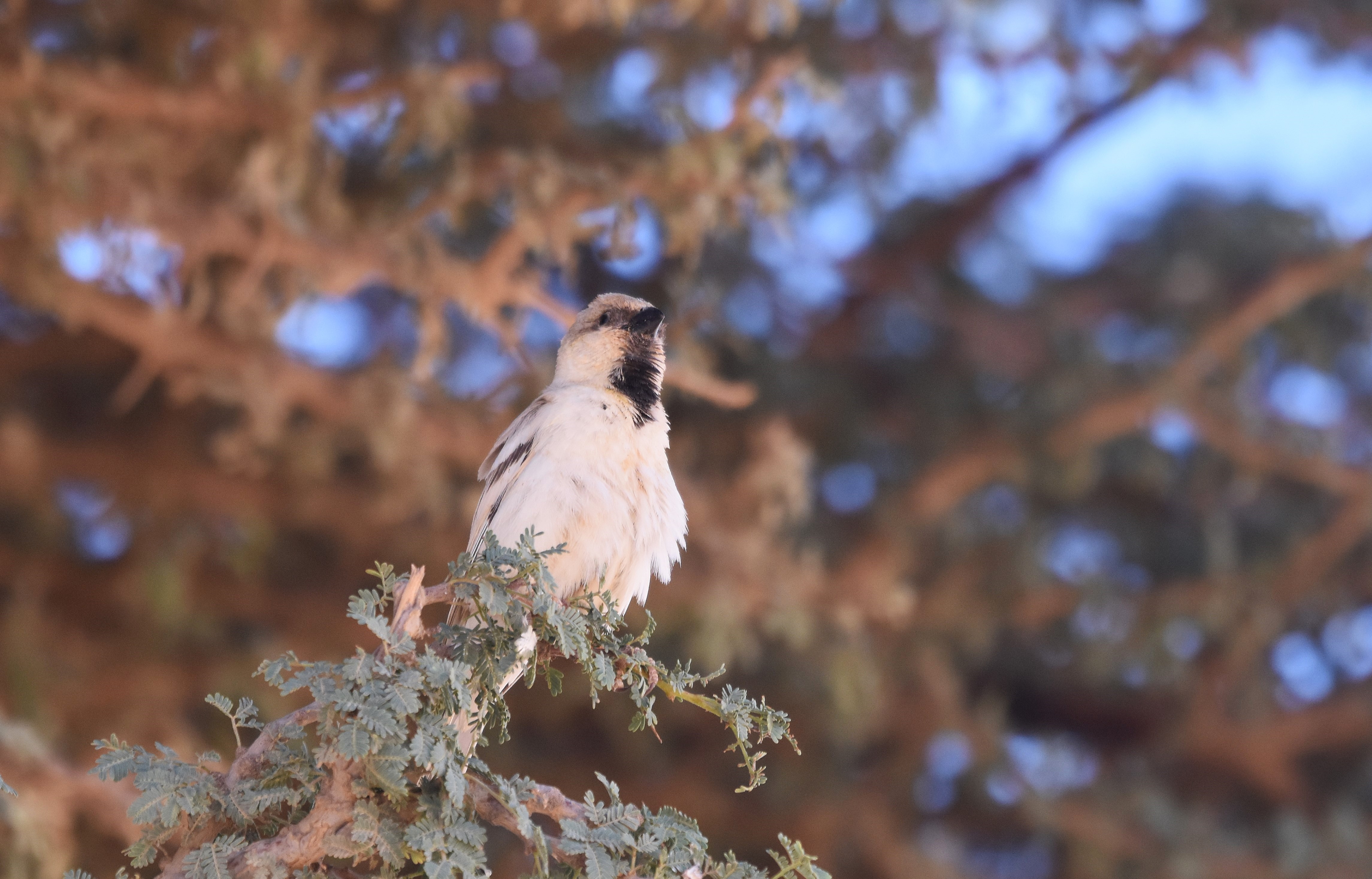
D’aquí ens desplacem a una acàcia on nia una parella de pardal del desert. Malauradament no tenim èxit en aquest primer intent; sembla que és l’hora on han anat a cercar l’esmorzar.
Aprofitem per anar acompanyat d’un pastor local a la zona on descansen de dia els enganyapastors d’Egipte. Sembla que hem tingut sort i avui té un ocell localitzat, increïble feina per trobar un mestre del camuflatge com és aquesta espècie. Després de gaudir d’aquesta gran enganyapastors, tornem a l’arbre del pardal del desert i ara sí que estan allà: un mascle super esverat exhibint-se amb dues femelles construint un niu comunitari absolutament ignorant la nostra presència.
Iniciem la cerca de la tallareta del desert africana de la qual es veu i escolta un exemplar. Malauradament no tothom arriba a veure-la i llavors arriba un forta ventada amb tempesta de sorra fet que complica assolir millors observacions així que decidim avortar la missió a l’espera de que millorin les condicions , però malauradament això no passarà… Una llàstima perquè a pesar del vent es veuen força migrants com cotxes cua-roges, àguiles calçades, mosquiters, tallarols, còlits, capsigranys…..
Finalment les condicions empitjoren i decidim prendre una tarda lliure i agafar forces per fer un segon intent a l’endemà.
Gangues coronades i pigallades bebent aigua.Enganyapastors d’Egipte (Caprimulgus aegiptiacus)Pardal del desert (Passer simplex).
Dia 8
De bon matí fem un tombet al voltant de l’allotjament per trobar tordenc lleonat que un any més no falla en aquesta localització. Després visitem una zona amb bones condicions per la tallareta del desert però sense sort, encara que gaudim de diferents migrants i d’una de les grans sorpreses del viatge, un fennec que creua corrents dues vegades davant el grup.
Encara estorats per l’observació de la guineu orelluda, decidim tornar a la zona on vàrem veure ahir la tallareta, no sense trobar per enèsima vegada al grup d’ornitòlegs belgues (no serà la darrera trobada, encara havíem de tornar a coincidir als caixers locals per treure diners!!) . Tot voltant per l’entorn veiem un niu de les comunes aloses puputs, fet al capdamunt dels matolls alts per tal de poder vigilar tot el que es pugui apropar.
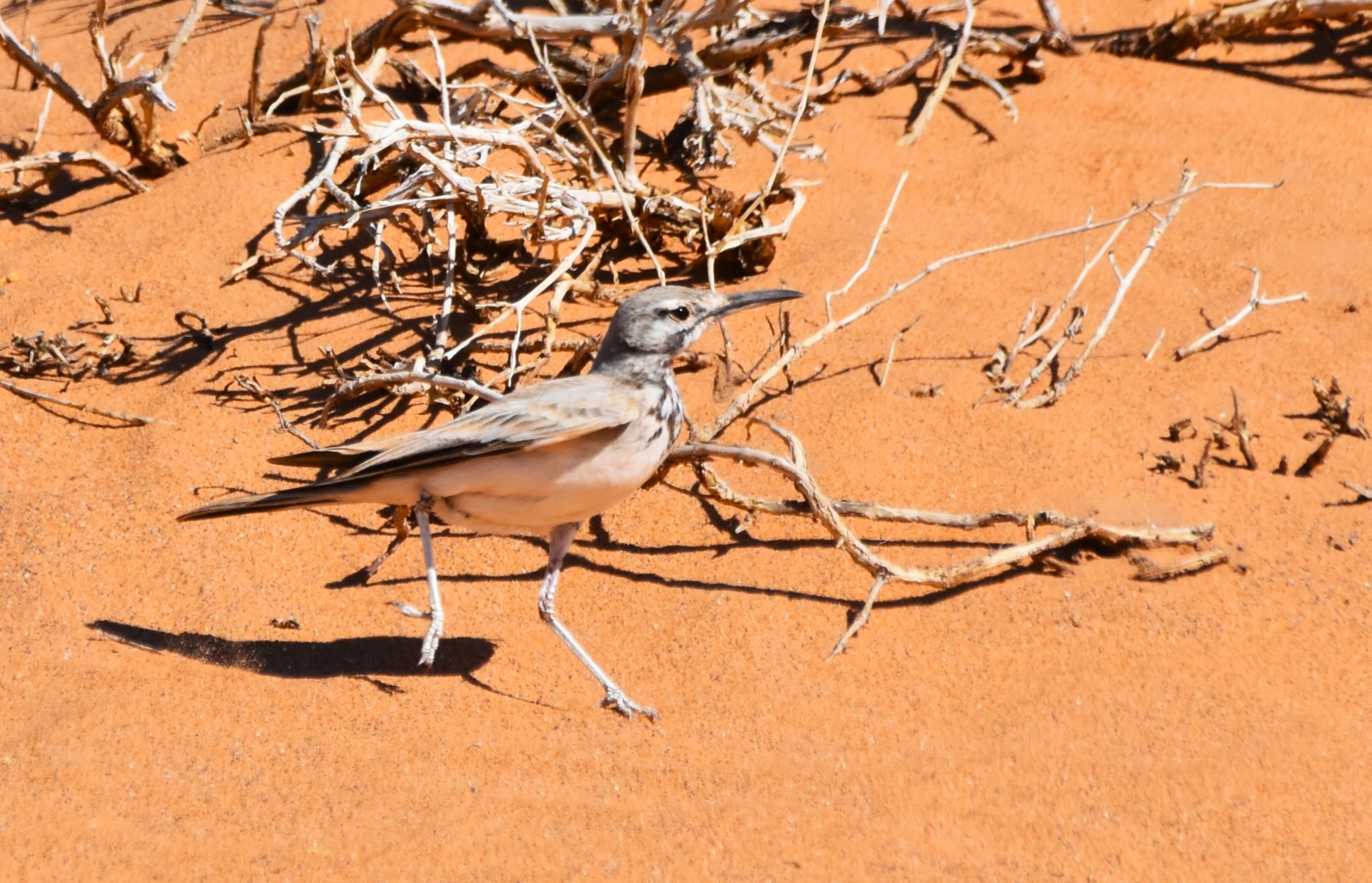
Anem a visitar la mítica estació d’anellament del Cafe Yasmine, sense poder accedir pels camins habituals ja que estan completament anegats d’aigua, increïbles paisatges amb desenes de migrants aprofitant unes poques comunes condicions d’humitat i verdor. Per exemple un gran grup de perdius de mar sobrevolen la zona diverses vegades. Enguany son especialment comunes les boscarles dels joncs, barrejant-se els seus cants amb les bosquetes brunes. En ruta veiem alguns grups de gangues, corredors saharians i alguns còlits de Seebohm, encara migrant lluny dels territoris de cria.
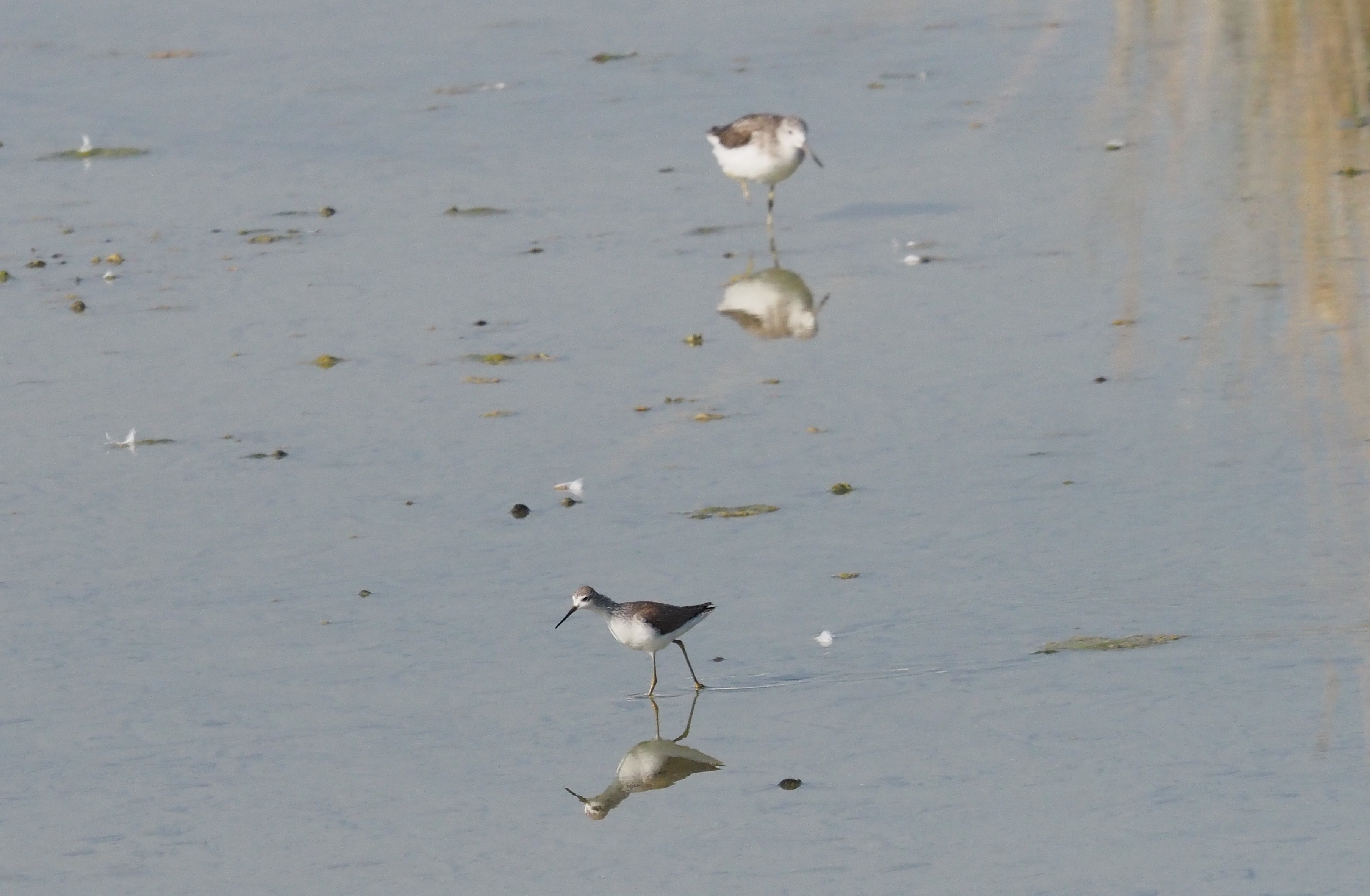
Tornem a repetir visita la llac de Merzouga, veient alguns de les espècies vistes el dia anterior afegint a la llista alguns limícoles (valona, territ variant, menut, gamba roja i verda) i uns inesperats grassets de muntanya.
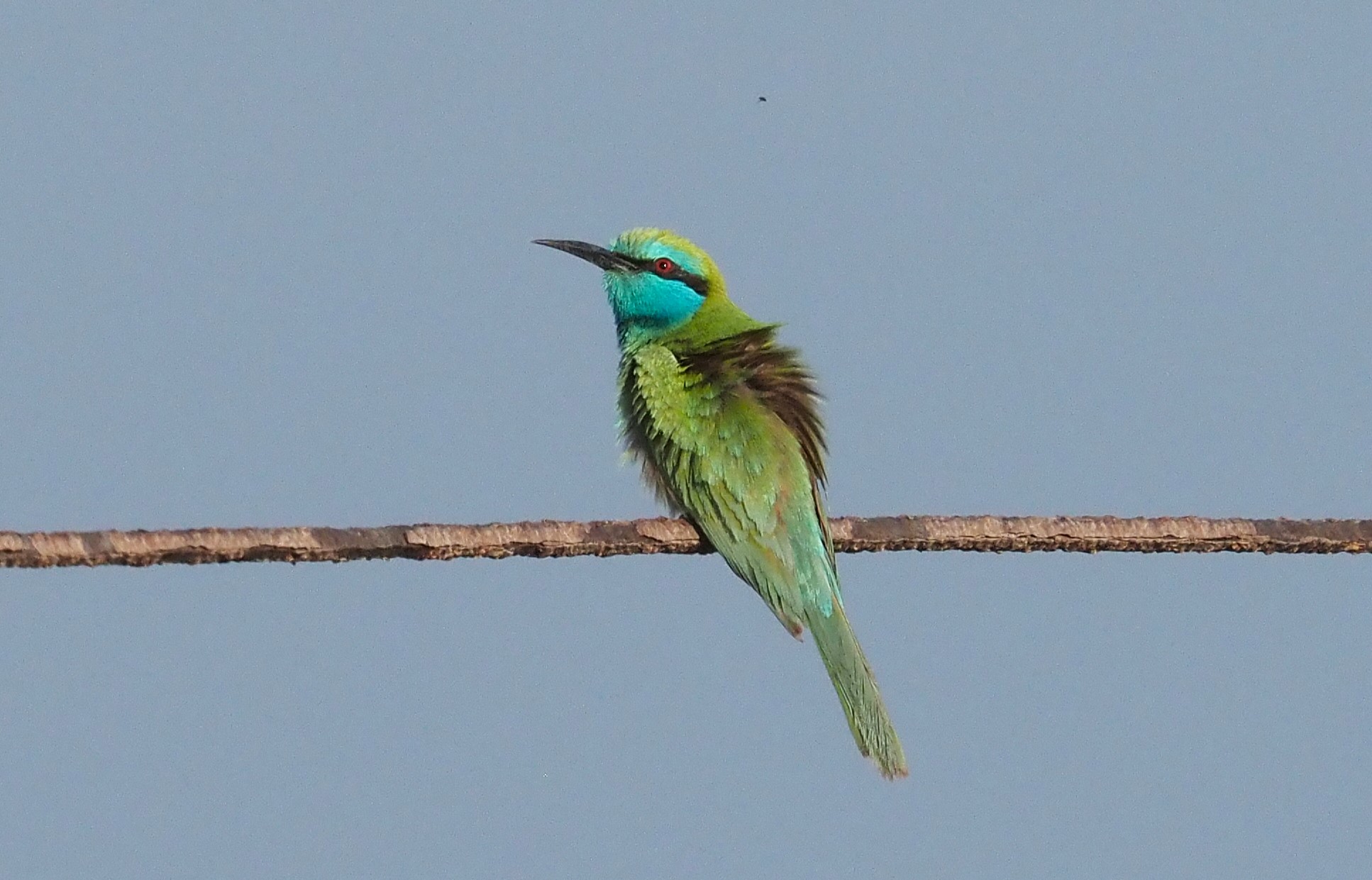
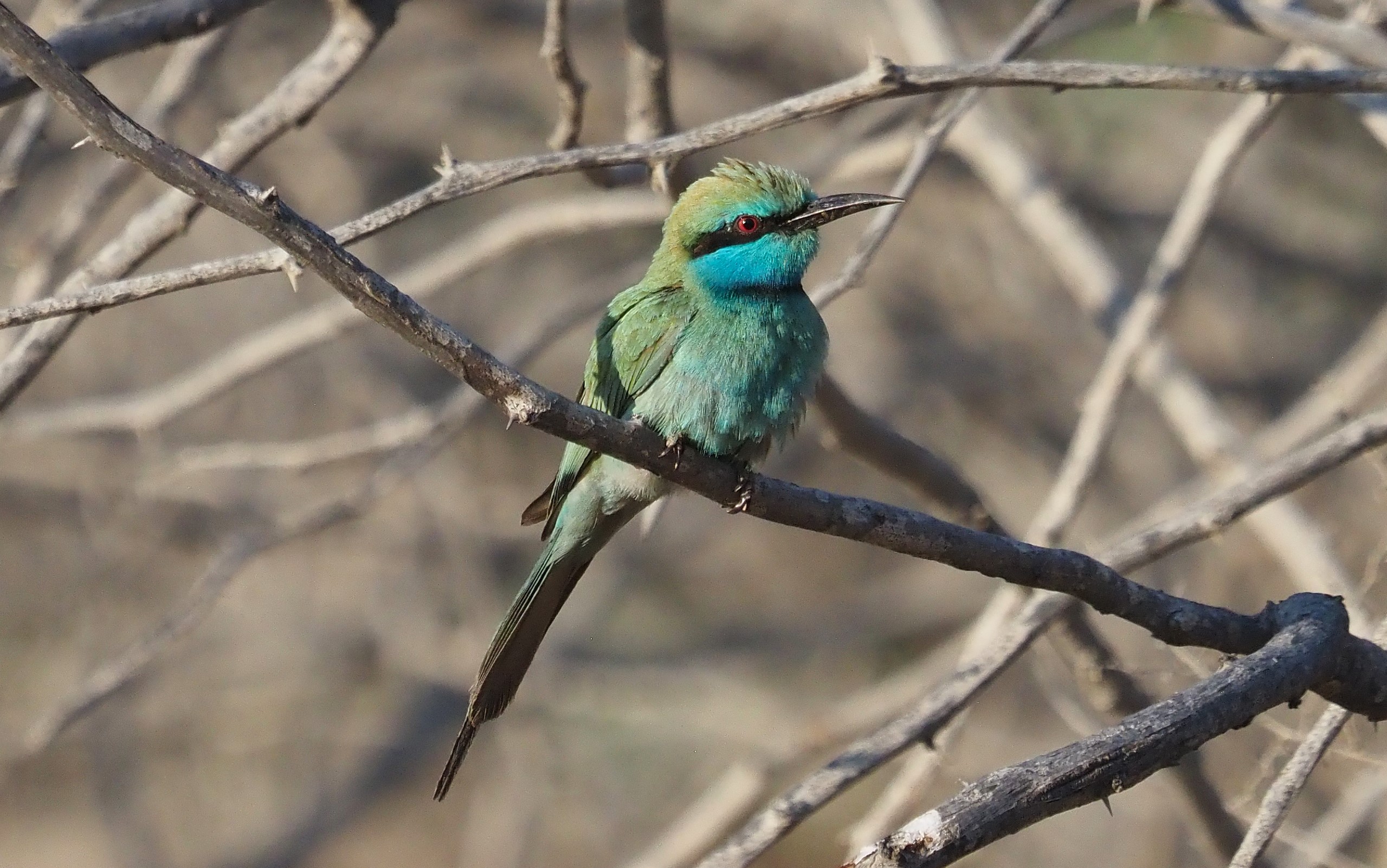
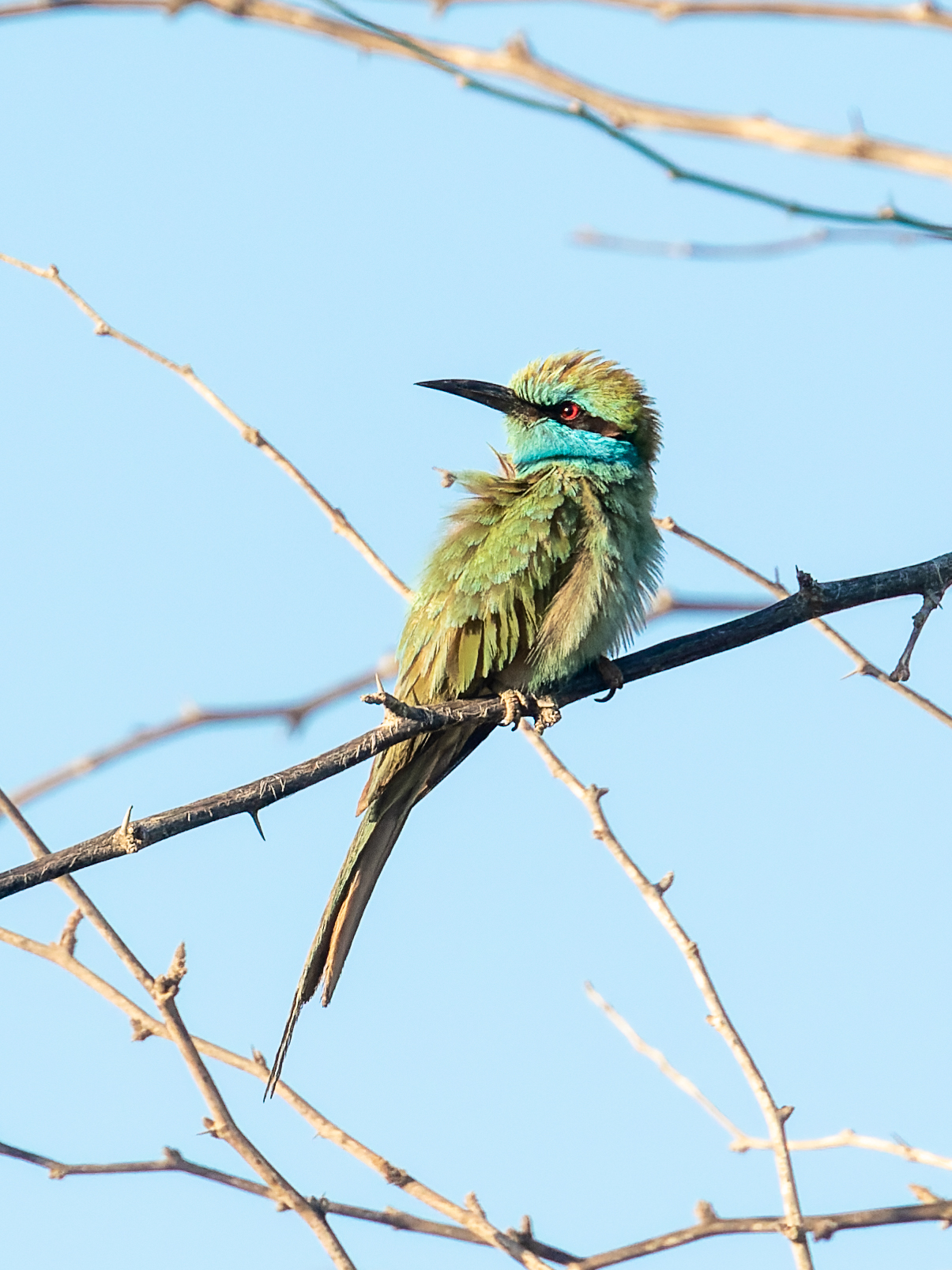
La zona de palmeres d’Igrane a més d’un petit oasis d’aigua i ombra, ens permet veure en seguit de passeriformes migrants alhora que grups mixtes d’abellerols comuns i de Pèrsia.
Torden lleonat (Argya fulva)Fennec (Vulpes zerda) a la carreraAfrican Desert Warbler (Curruca deserti).Alosa puput (Alaemon alaudipes).
Dia 9
Comencem la tornada cap a Marràqueix fent un viatge xino-xano, tot fent parades a zones on es veuen ocells, com antigues rambles on es concentren bastants còlits de diferents espècies (del desert, de Seebohm, rossos..), aloses puputs, terreroles rogenques… Finalment podem veure entre els tallarols de garriga migrants algunss tallarols trencamates. Tot travessant un petit poblat veiem un grup d’abellerols de Pèrsia fent els nius a una zona sorrenca.
Continuem conduint cap el proper hospedatge aturant-nos al famós pantà d’Al-Mansour on sumem un seguit d’espècies com currocs, orenetes de ribera…però els forts vents fa que decidim arranjar el lloc per dormir i descansar per la darrer dia.
Dia 10
Ara sí arriba el darrer dia del viatge. Alhora que esmorzem podem sentir vàries bosquetes brunes defensant territori als jardins del lodge, puputs arreu, alguns migrants com piules dels arbres i tallarols, grups de l’abundant oreneta cua-rogenca en aquest sector…un bon comiat.
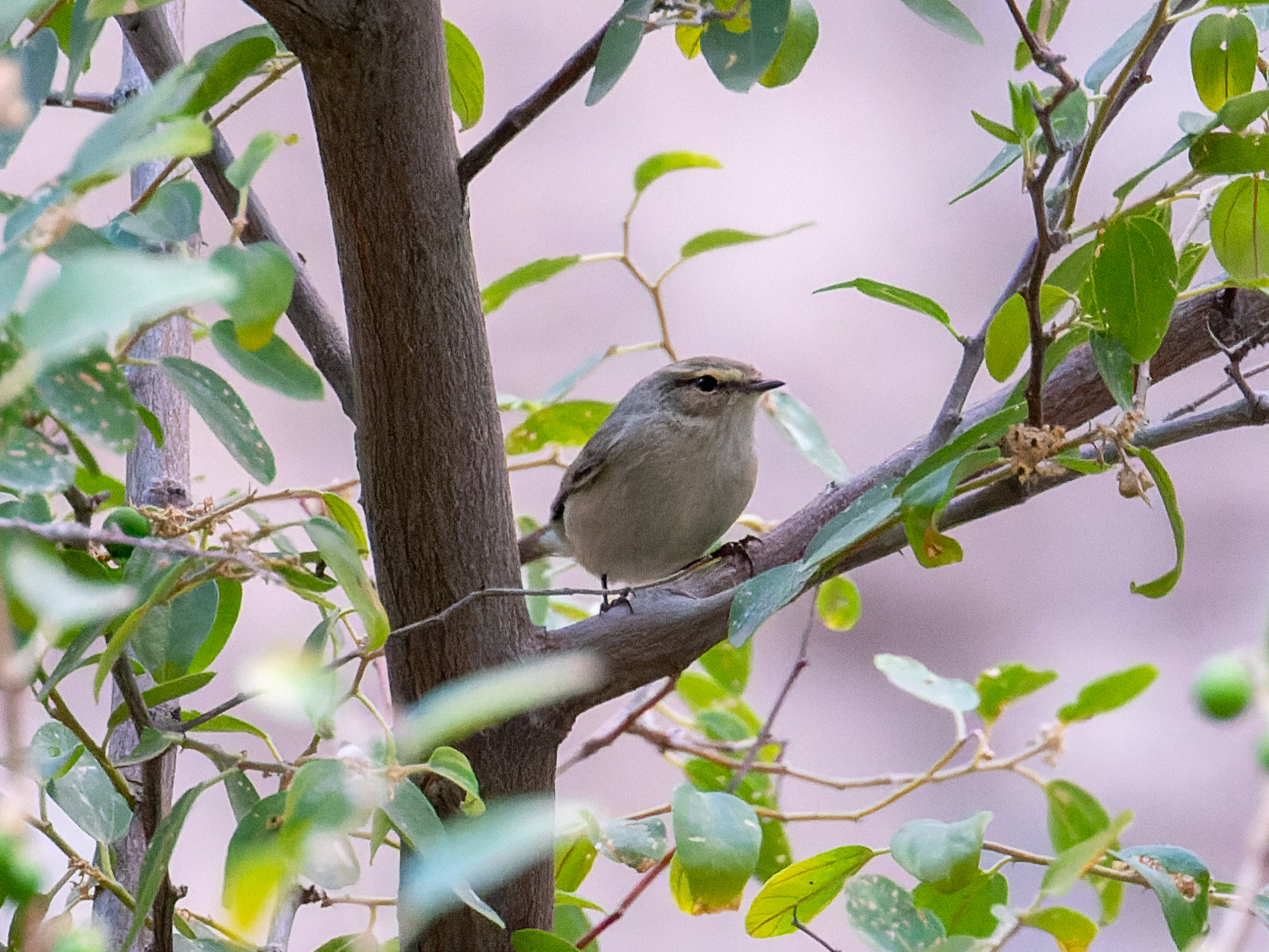
En ruta ens aturem a la llera d’un petit riu on es veia algun ràl·lid, no vàrem tenir sort però en canvi sí que vàrem tindre l’espectacle d’un dia de migració de passeriformes impressionant, en un sol arbre hi havia més de 10 exemplars de 7 espècies diferents: tallarols de garriga, emmascarats, tallaretes; mosquiter de passa, comuns, pàl·lids i alguns confiats mosquiters ibèrics. Prop de l’aigua hi havien desenes les boscarles de canyar i dels joncs que es movien entre els canyissars. També l’únic mastegatatxes del tour. Llàstima no poder tindre més temps per mirar cadascun dels racons de la zona, migració en viu!!!
Creuant l’Atles van sortint còlits, gralles de bec vermell i altres espècies típiques d’aquests hàbitat, entre la boira i baixes temperatures.
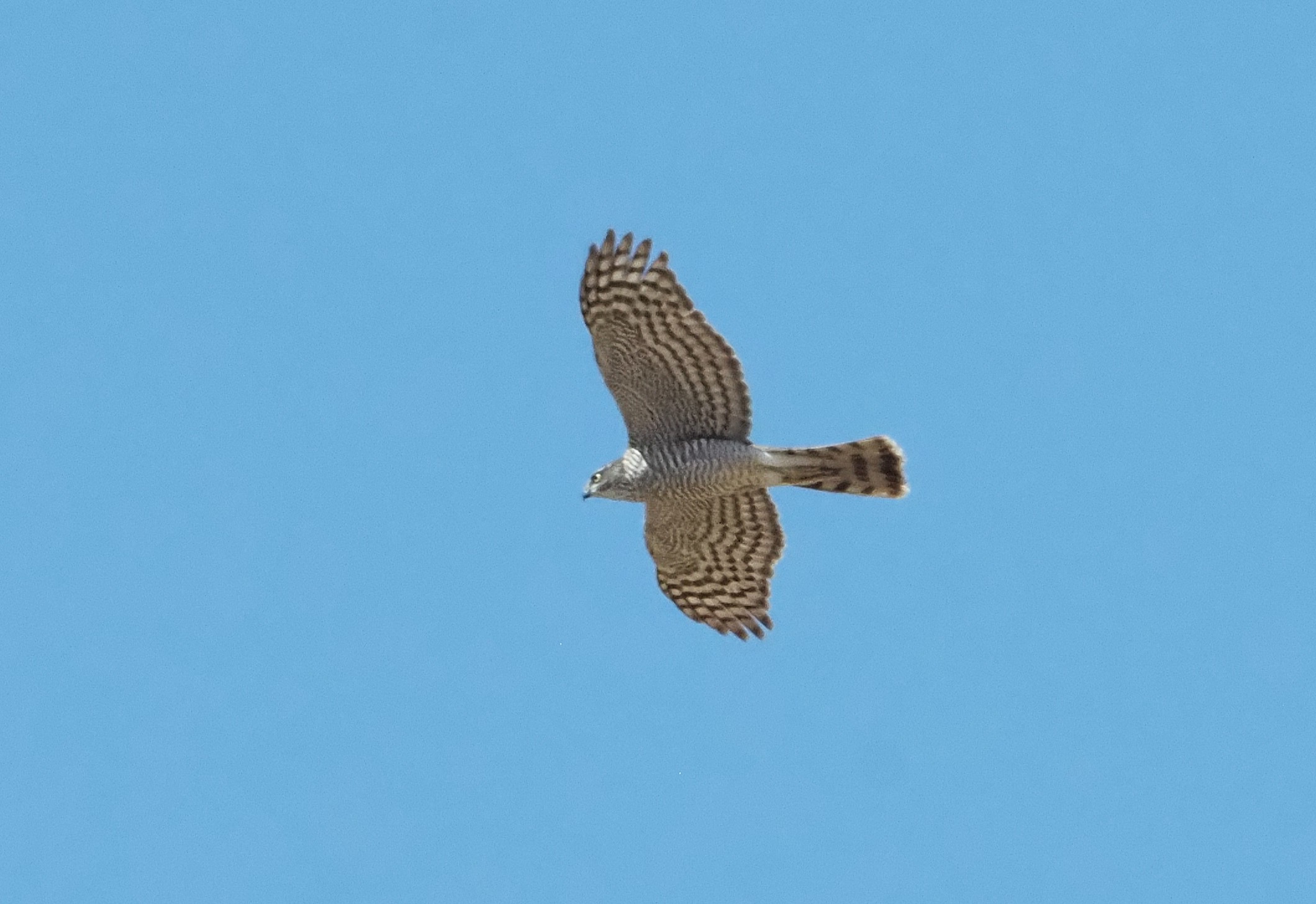
La darrera aturada és a l’únic hàbitat que no havíem pogut treballar, boscos de coníferes. Escoltem i en algun cas veiem ocells típics d’aquí, mallerenga petita, trencapinyes, esparvercomú i un astor fent vols nupcials.
Darrera aturada i ja encarem com el punt final del viatge.
Tour on han sortit pràcticament totes les espècies objectiu, amb menys rapinyaires que en edicions anteriors però en canvi amb dies de migració de passeriformes com feia anys que no es veia, especialment als sectors que de forma anormal mantenien aigua i més verdor del que es veia els altres anys.
The tour started in the Pyrenees with the first morning hampered by snow, low cloud and mist at higher altitudes before clearing to much clearer and milder weather. The weather in the lowlands/plains was very kind with warmer conditions and only very light winds. The bad weather in the first day affected a bit the tour, with a couple of locations performing clearly below average, especially those involving boreal forests. The lack of snow in the top of the mountains during January and February meant no chances for us to connect with Snow Finches. In the steppes, Dupont’s Larks performed very well for us, and once we connected with the major targets in the plains we even had time for a couple of hours of birdwatching at Ebro Delta, a coastal heaven of birds that is normally out of bounds in this itinerary..
DAY 1.
After collecting all 6 tour participants from around the airport in Barcelona we headed through drizzly rain towards the Pyrenees. After 90 minutes of drive, we arrived to the area to explore, and we had a short coffee stop before attempting to drive a lane higher into the mountains through increasingly heavy snow. Around 1500m the road had become quite difficult, so we parked safely and explored the area.
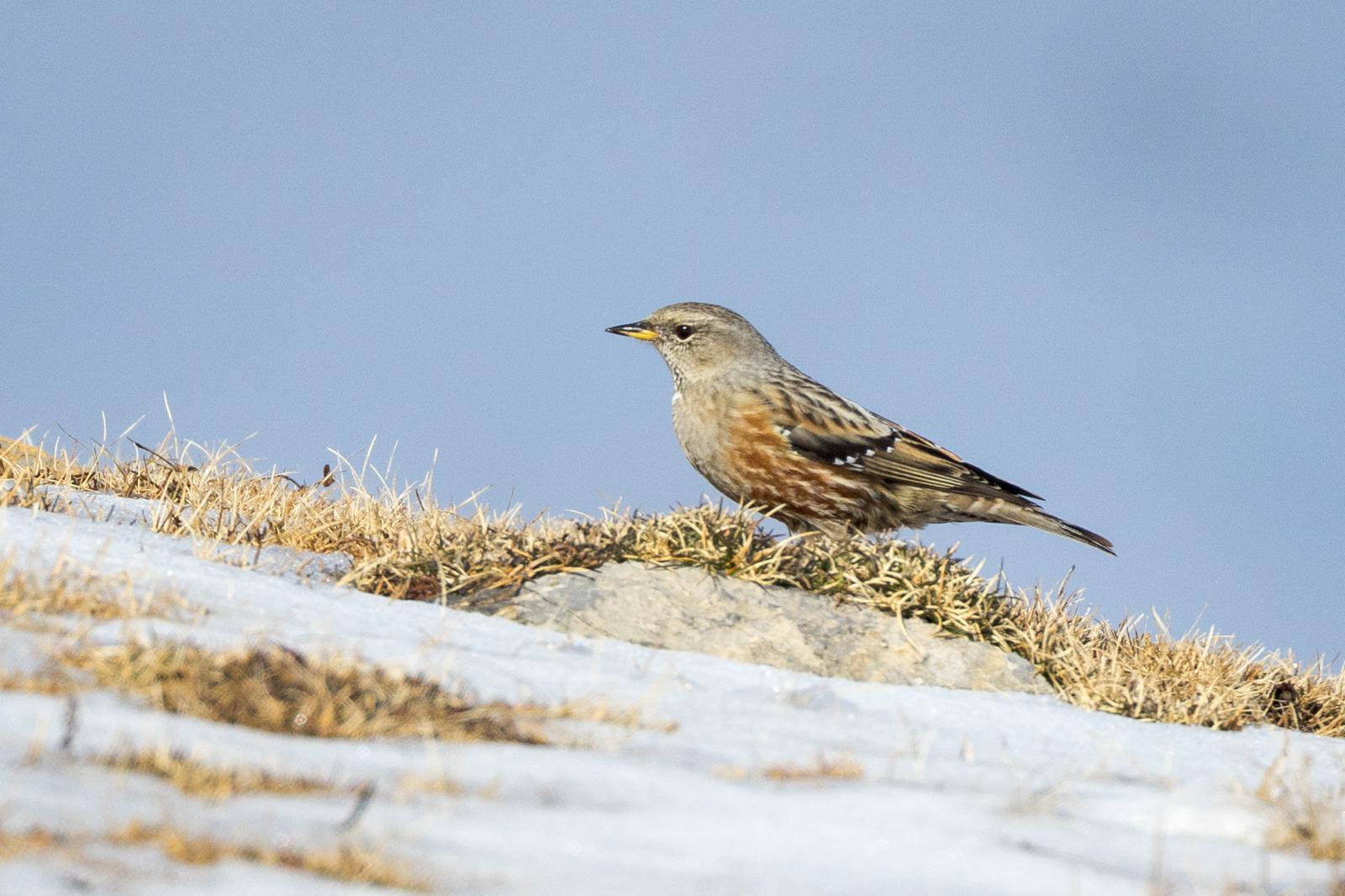
Almost immediately the group found an Alpine Accentor sheltering and feeding on the screen by the roadside! Everyone enjoyed good views despite the weather, before it moved off further up the slope, here we also saw and heard our first European Crested Tits, Coal Tit, Firecrest, and Mistle Thrush of the trip along with several Red-billed Chough.
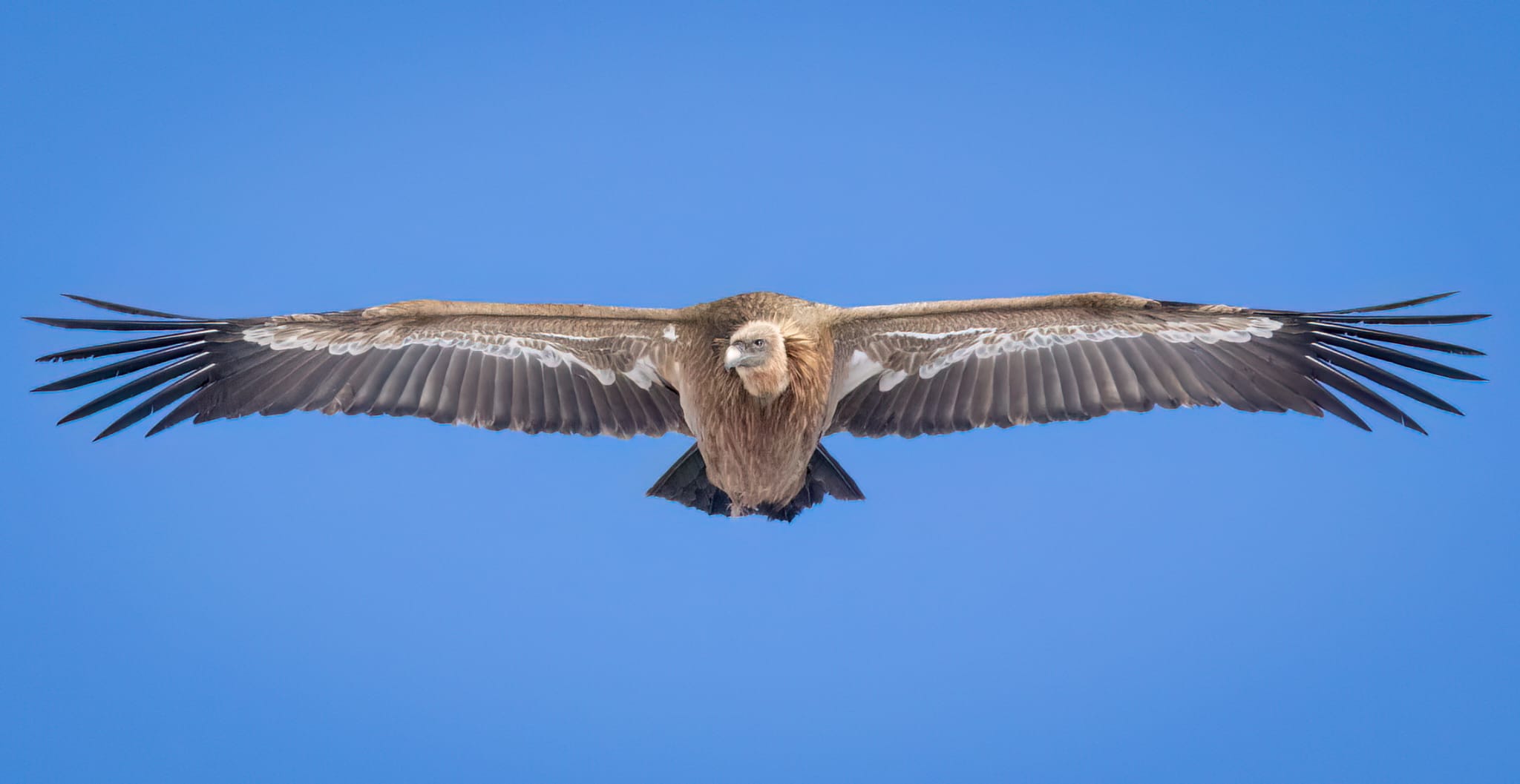
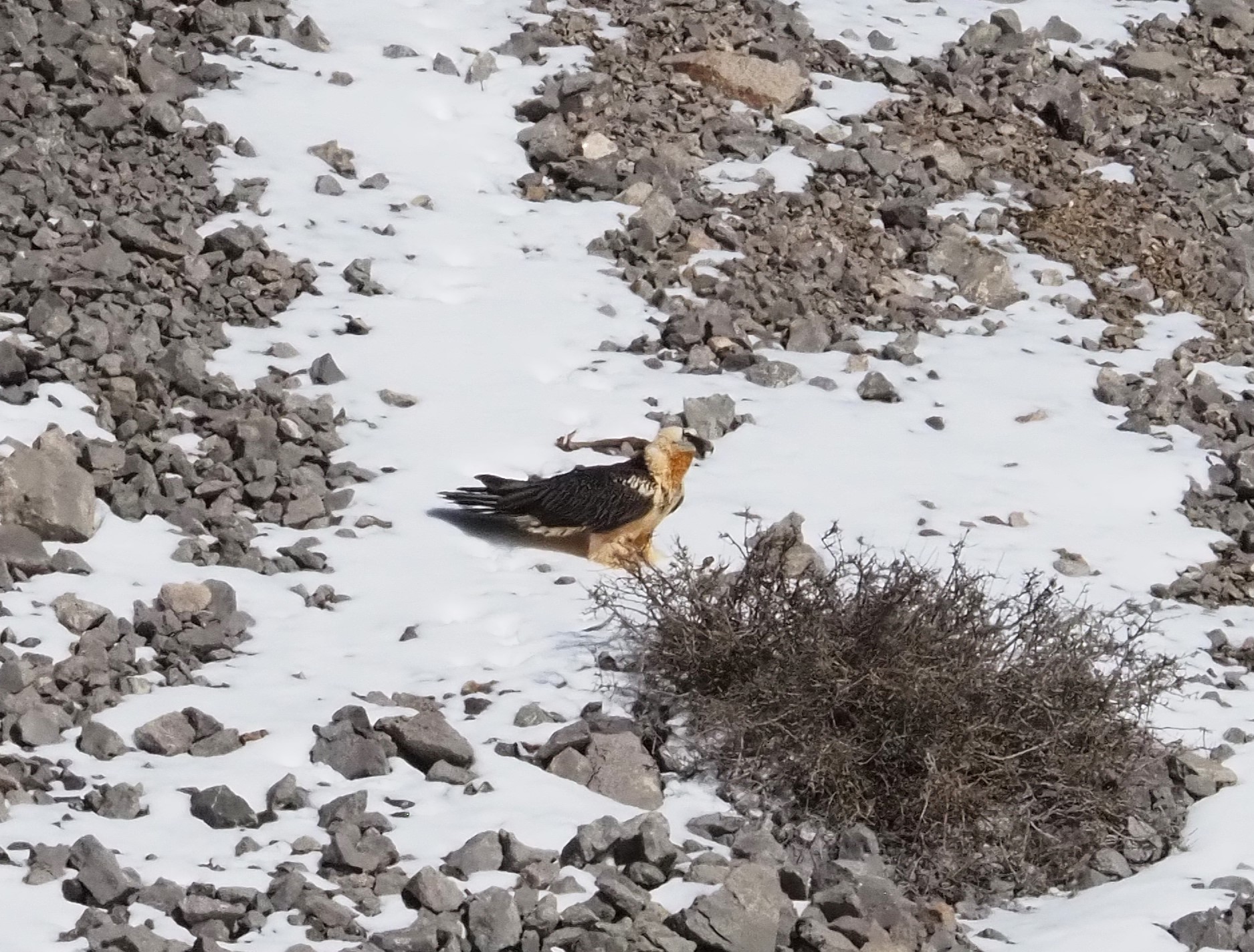
After a walk up the road a few hundred metres the weather began to improve, and as we headed back to the minibus the first of several Eurasian Griffon Vulture began to appear overhead. Whilst enjoying views of these one of the group (Jonny R) shouted out….. ”LAMMERGEIER!!” and an adult bird passed directly overhead giving great views as it glided down across the valley – what a start to the trip!
Alpine Accentor (Prunella collaris) feeding in the slope. Image by Carles Oliver.Full adult Lammergeier (Gypaetos barbatus). Image by Carles Oliver
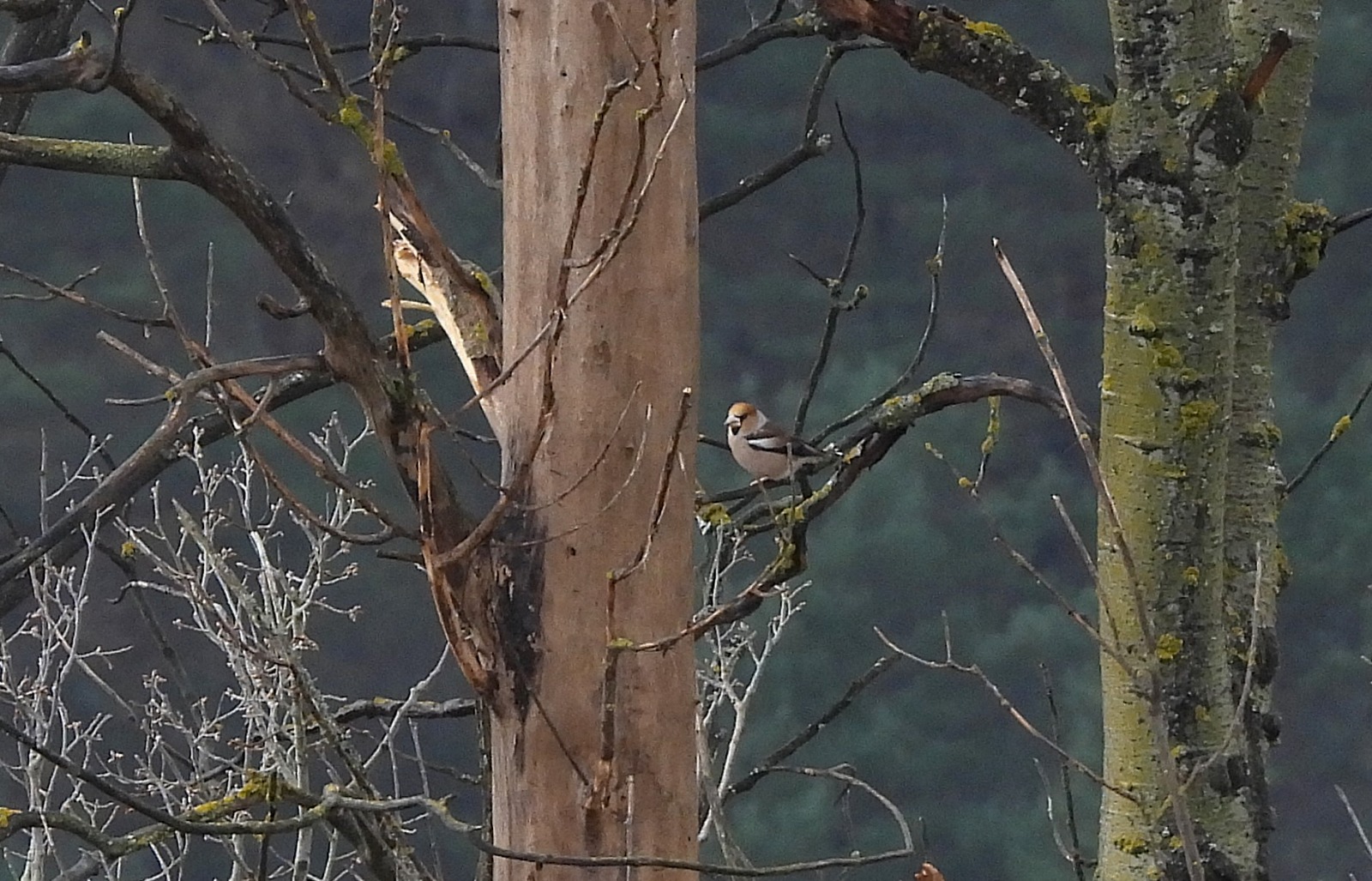
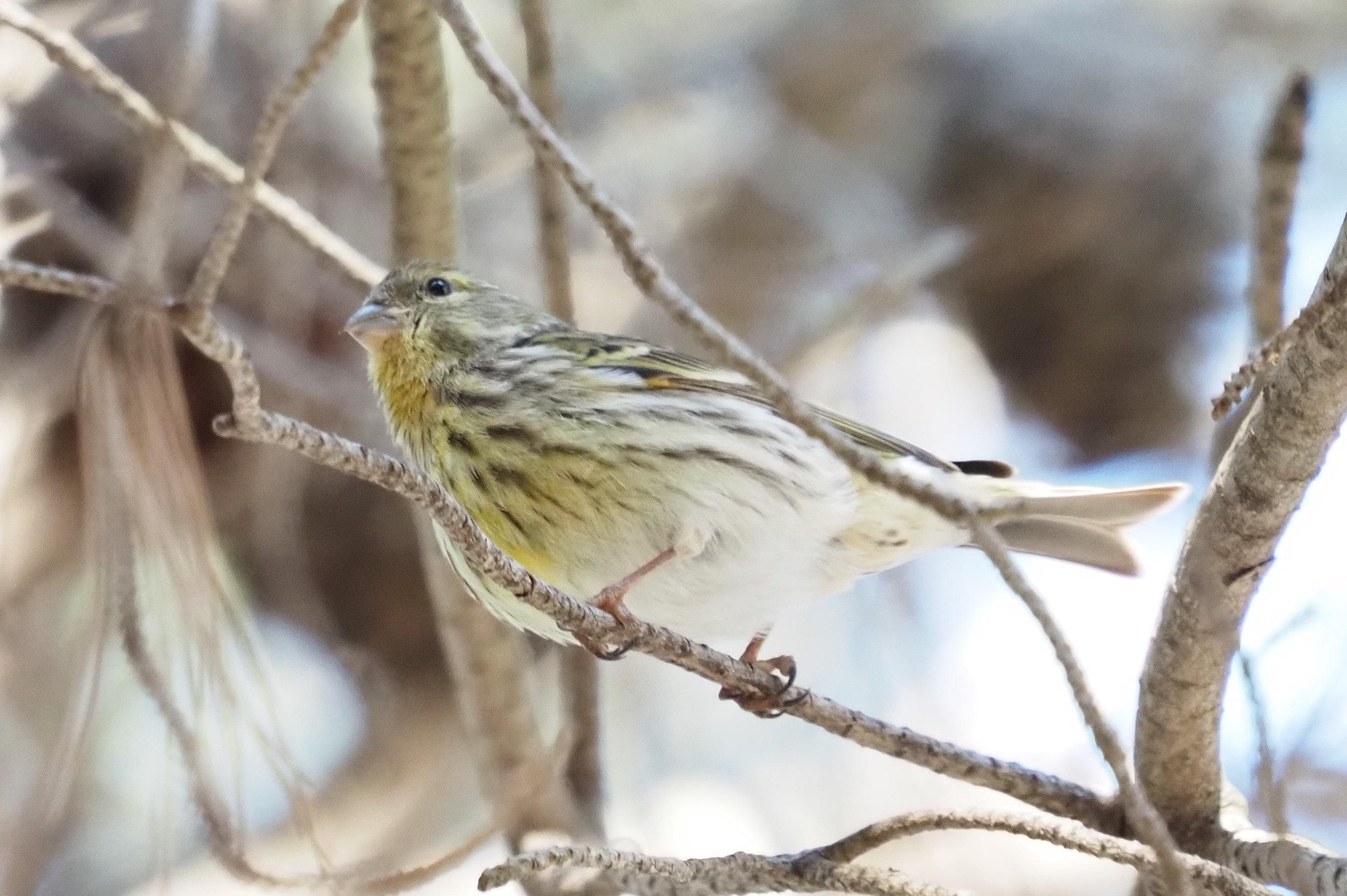
After this excitement we decided to slowly head down the mountain, the weather continued to improve and before we had travelled far we had to stop – 2 Lammergeier were circling and showing well above us! An adult-type bird and a younger 3rd year type bird gave a superb show before drifting away. We then stopped around in the valley where the terraced fields and trees provided lots of birds including Rock Bunting, Hawfinch, Black Redstart, European Stonechat, European Serin, Meadow Pipit and some of the commoner Finches and Tits as well as an unexpected Cattle Egret – not something normally seen at this altitude! We could also hear Iberian Green Woodpecker calling here.
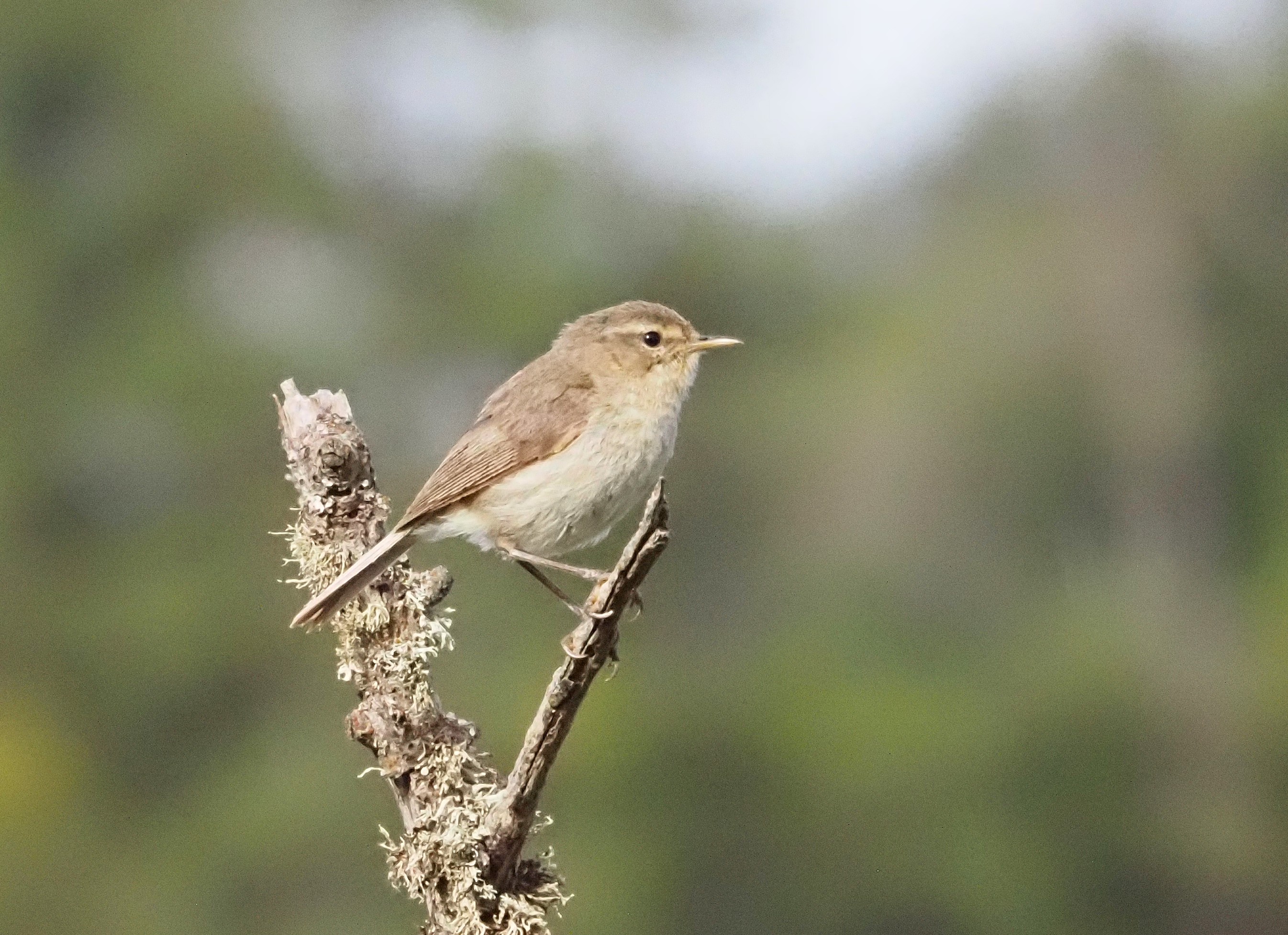
During our urban lunch stop and whilst there saw White-throated Dipper, Common Chiffchaff and Grey Wagtail on the stream through the village and a Common Buzzard passed overhead.
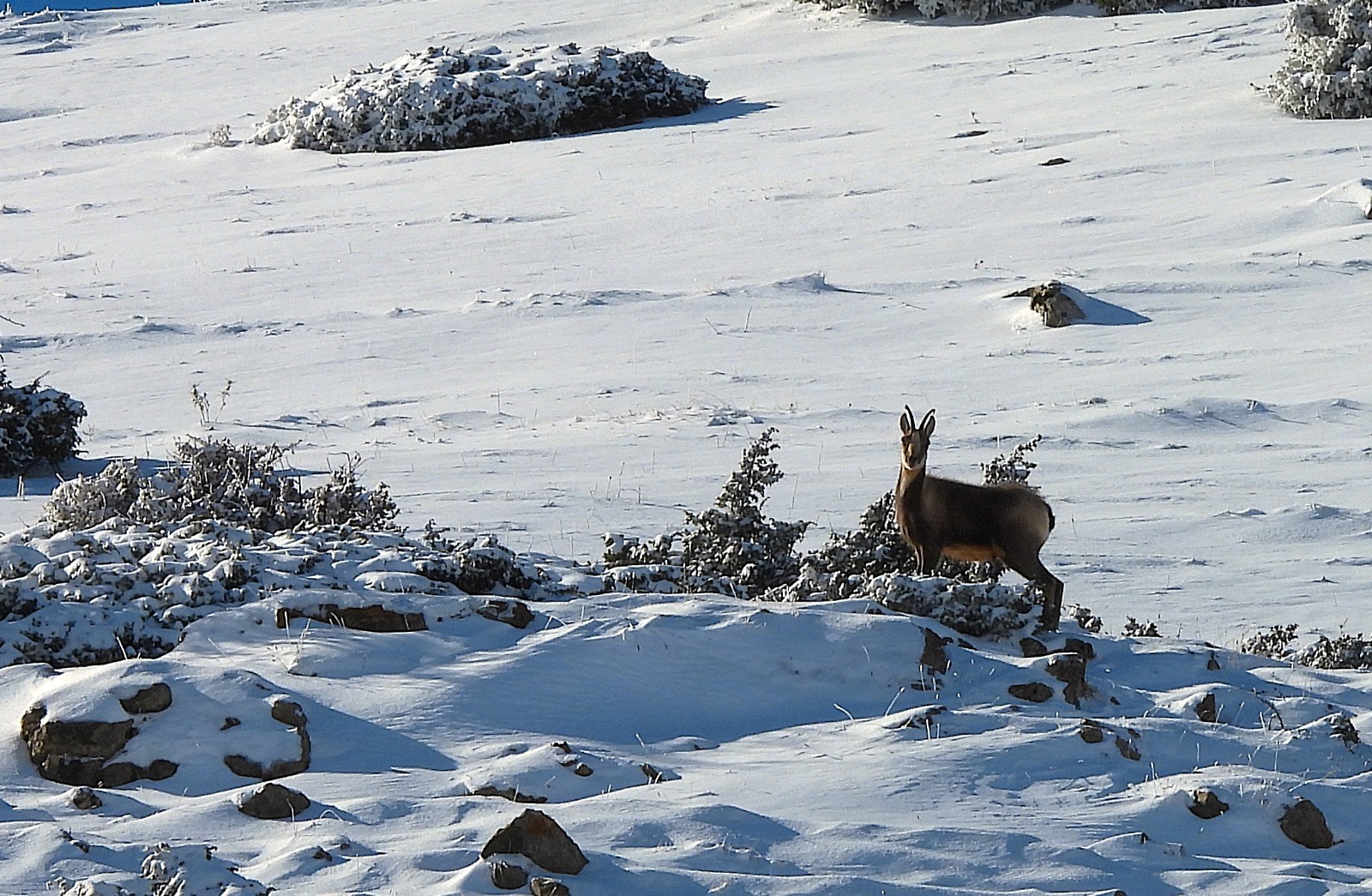
In the afternoon we drove another scenic lane up into the mountains where we enjoyed more fantastic views of 20+ Eurasian Griffons as well as 2 Golden Eagles, Red-billed Choughs and even Magpie which seemed out of place at this altitude. A small group of feeding birds included Fieldfare, Yellowhammer, Chaffinch and Goldfinch. This site also produced our first Pyrenean Chamois of the trip. We again descended into lower meadows and fields and walked a small hill that provided our first Iberian Grey Shrike as well as Eurasian Tree Sparrows, Crested Lark, Firecrests, Crested Tits, Black Redstarts, Yellowhammer, Goldcrest and Corn Buntings. Our last stop before reaching the accommodation for the evening produced lovely views of 8 Rock Sparrows on wires by the roadside – but the day was not finished there because our fabulous accommodation and host has a feeding station in the garden, and as the light faded we were treated to amazing views of up to 3 Beech Martins!! A quite amazing end to fantastic first day.
Hawfinch (Coccothraustes coccothraustes). Image by Justin Williams.Rock Bunting (Emberiza cia). Image by Carles Oliver.European Crested Tit (Lophophanes cristatus). Image by Jo Simon.Eurasian Griffon (Gyps fulvus). Image by Jo Simon.Beech Martin (Martes foina). Image by Stephen Davis.
Day 2.
In some ways a slightly frustrating day with numerous stops and effort failing to locate any Citril Finch, Black Woodpecker or White-winged Snowfinch, but this aside we enjoyed a fantastic variety of birds as we tried several areas including trips into France and then Andorra!
In the lower altitudes we came across a fantastic mixed flock of finch and other small birds including Common Crossbills, (c20) giving great views along the road, as well as Brambling, Siskin, Bullfinch, Short-toed Treecreeper, Great Spotted Woodpecker, Long-tailed Tit, Rock Bunting and Chaffinch, again we could hear Iberian Green Woodpecker calling but they remained invisible…..also in these areas Red Kites became more frequent. Here we also came across our only Red Squirrel of the trip.
In the high mountain passes we enjoyed yet more incredible views of Eurasian Griffons and Common Raven, and as we entered Andorra, our first stop around the town produced a decent number of Alpine Chough hanging about around the shops and houses.
As we had time left in the day, we retraced our steps and returned to summit the lane at Coll de Pal – we had to stop quite soon on the way up due to an adult Lammergeier showing incredibly well by the van!! This bird gave us our best views yet and even landed on the scree a few hundred yards away – a definite highlight of the whole trip!!
Onwards to the summit of the pass in bright sunshine, and we were rewarded at the top when we located a group of 4 Alpine Accentors feeding down to a few metres away, scuttling and shuffling in the snow and short turf – superb!
We then took the 90 min transfer to Lleida where we would be based for 2 nights.
Common Crossbill (Loxia curvirostra). Image by Jonathan Kennedy.Alpine Choughs (Pyrrhocora graculus) in Andorra. Image by Justin Williams.That afternoon we got impressive views on Lammergeier. Image by Carles Oliver.Lammergeier about to land for us. Image by Carles Oliver.Lammergeier on the ground. Image by Carles Oliver.Pyrenean Chamois (Rupicabra pyrenaica). Image by Justin Williams.Alpine Accentor (Prunella collaris). Image by Stephen Davis.
Day 3.
The day began with a short trip to our first site and roadside White Storks but even this was interrupted by one of the group skilfully spotting a Stone Curlew by the road!
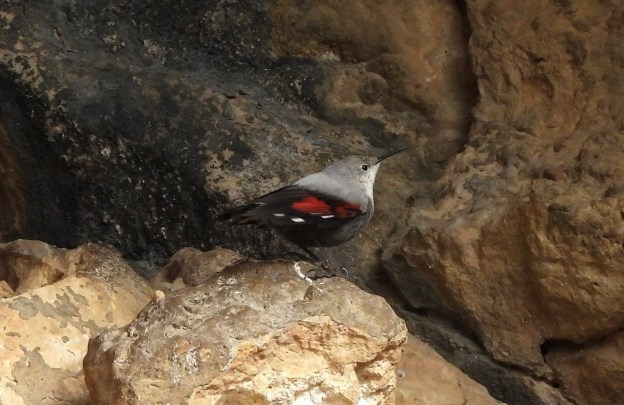
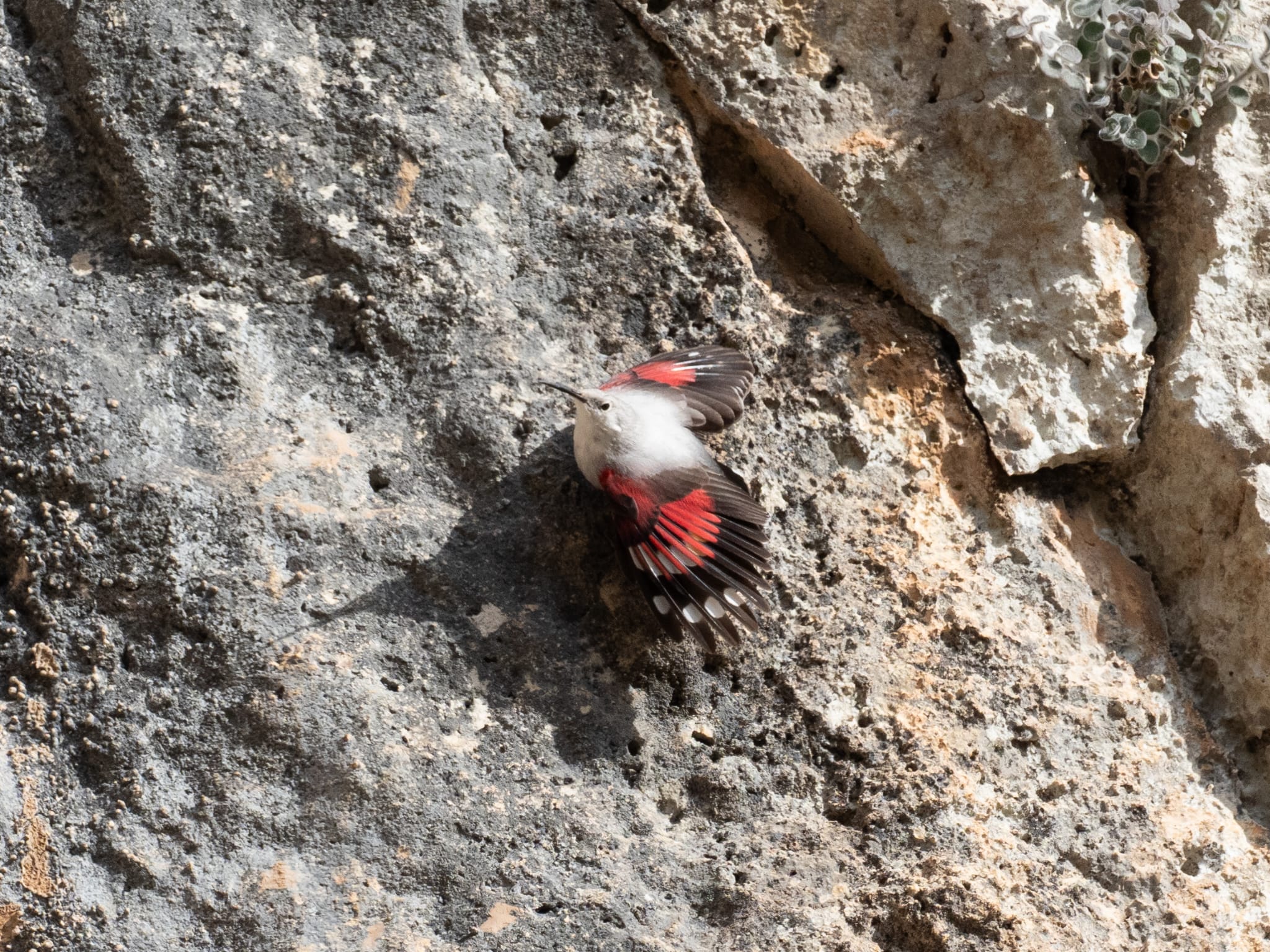
We were shortly at our first stop, a spectacular dam and gorge with a river and mixed scrub, we quickly began adding birds such as Rock Sparrow, Blue Rock Thrush, Crag Martins (which breed in the tunnel), Blackcap, Kestrel, Song Thrush, Short-toed Treecreeper, Common Kingfisher, Cettis and Sardinian Warblers, Firecrest, Rock Buntings and several Eurasian Griffons. Around 2 hours had now passed and things were starting to get a bit tense…..and then WALLCREEPER!! A bird was located towards the dam and 3 of the group were in the right spot to see it straight away, whilst the rest hurried towards the bird, they found a second Wallcreeper! This bird gave everyone much better views for a few minutes, and everyone could relax, especially Carles!
As we left the gorge a short stop provided Cirl Buntings, 2 Peregrines, Hawfinch and a large flock of Corn Bunting, and as we stopped for coffee, Spotless Starlings.
Stone Curlew (Burhinus oedicnemus). Image by Stephen Davis.Wallcreeper (Tichodroma muraria). Image by Justin Williams.Wallcreeper (Tichodroma muraria). Image by Jonathan Kennedy.Wallcreeper (Tichodroma muraria). Image by Justin Williams.Wallcreeper Argonauts! Image by Jo Symon.
We then moved on towards our next site with a couple of stops, the first providing many Cattle Egrets, White Storks and our first Great Egret, the second 2 Golden Eagles, Lapwing, Raven,Thekla Larks and a ringtail Hen Harrier as well as a roadside Little Owl.
We then stopped beside a spectacular roadside cliff face for our lunchtime picnic and immediately located our 3rdWallcreeper of the day!! Although a little more distant this bird gave good telescope views, but we were distracted from this by 2-3 Black Wheatears which were also showing well here along with a Blue Rock Thrush!
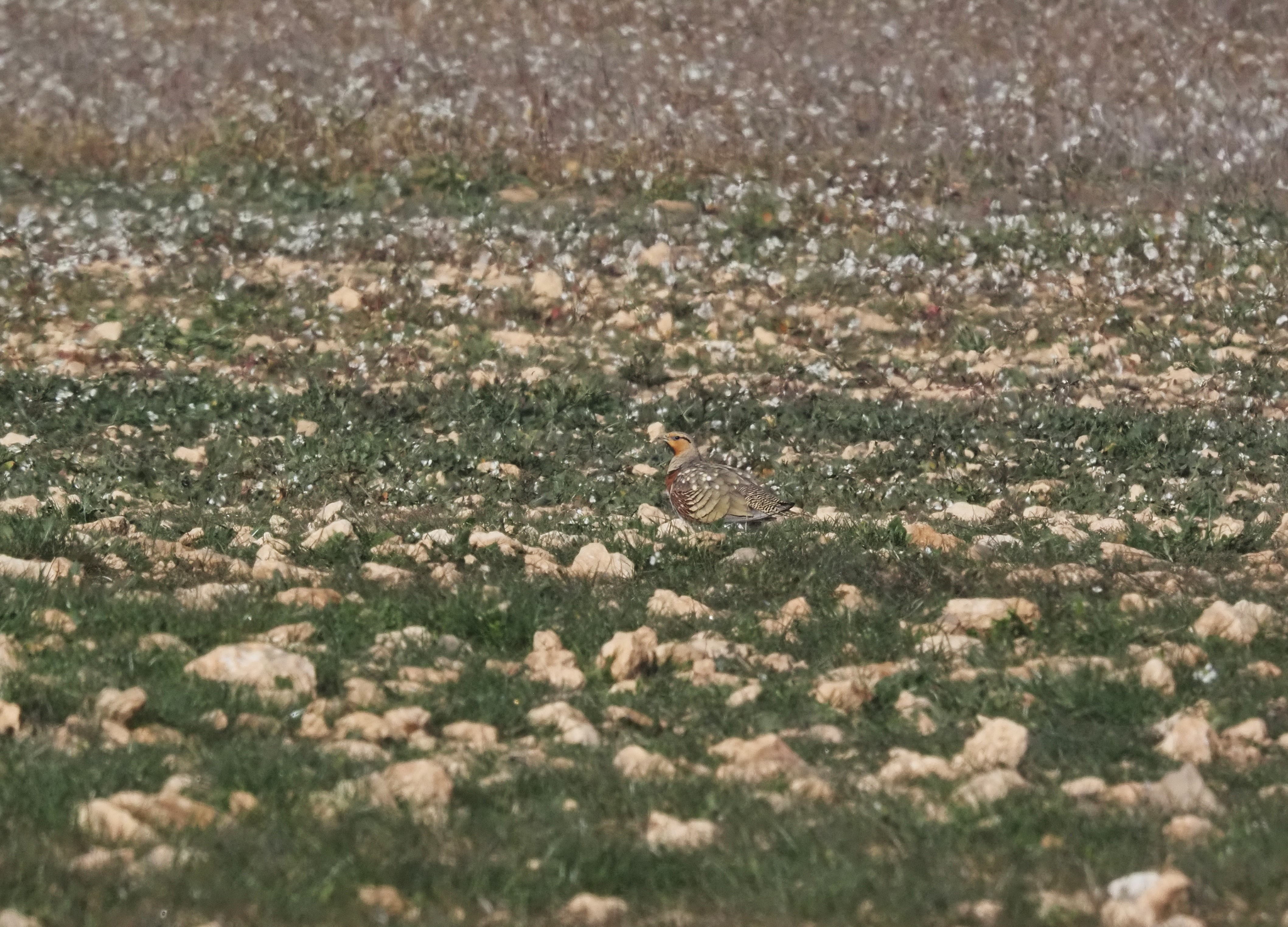
We were now into an area of plains and mixed arable land that is rapidly changing due to increased irrigation, but some areas still held many birds and we were quickly seeing Calandra Larks along with Thekla and Crested Larks and after walking a while we saw a distant Iberian Grey Shrike, Peregrine, and then located a single summer plumaged Pin-tailed Sandgrouse, a little distant, but again telescope views were good. As we left the site, we had excellent views of another Iberian Grey Shrike which really showed the difference between this and its northern counterpart.
We then called at a small roadside wetland and began adding a few species such as Coot Shoveler, Common Pochard, Common Snipe, Reed Bunting and Great Egret, as well as a rather unexpected, and slightly questionable, African Sacred Ibis! This bird has been in the area a while, and presumably originates from a ‘feral’ population in nearby France, Italy or Germany… Either way it made at least one of the group very happy!
Our last stop was to close by, and before we had even parked the van our main target was located – a male Eagle Owl! Perched in the ruins of an huge ancient building, this guy sat and watched us as we quietly watched him before starting to sing….amazing!
Whilst Serins and Sardinian Warblers twittered and scratched nearby, the Eagle Owl sat watch, his deep hoot echoing occasionally, until he finally flew low across to a nearby rock face….what an end to a truly fantastic days birding!!
Little Owl (Athene noctua) on its roof. Image by Justing Williams.Spotless Starling (Sturnus unicolor). Image by Justin Williams.Pin-tailed Sandgrouse (Pterocles alchata) male. Image by Carles Oliver.Iberian Grey Shrike (Lanius meridionalis) posed nicely for the group. Image by Carles Oliver.African Sacred Ibis (Therskiornis aethiopicus) moving along with Western Cattle Egrets. Image by Carles Oliver.Eurasian Eagle Owl (Bubo bubo) watching us. Image by Carles Oliver.
Day 4.
The day began with a short transfer after breakfast, interrupted by a large flock of migrating Common Cranes. These birds had presumably roosted nearby in the large open arable fields and were continuing their northward journey. We then entered an area of mixed arable/farmed/wild fields with big skies and tremendous views, misty fog didn’t help our search, but we quite quickly located 5 Great Bustards, all males, slowly wandering across their chosen field. Views were not brilliant, but very atmospheric! Here we were surrounded by Calandra Larks, Corn Buntings and our first Lesser Short-toed Larks as well as a Zitting Cisticola, Stonechats and Sardinian Warbler.
We then took a short coffee stop as the mist cleared and visited a small wetland with more Larks and many Linnets, Corn Buntings and Chaffinch before having second, clearer but distant views of the Great Bustards. With this under our belts we collected lunch and moved on.
We soon arrived at Lomaza (only briefly distracted by a large flock of migrating White Storks) and began to look at various larks…. A lot! A landscape of low spiky grass, thistle and huge skies stretched all around us. Quickly we were seeing many Calandra, Thekla and Lesser Short-toed (or ‘Mediterranean’) Larks, with their songs all around us, including much mimicry from the Calandra – quite a soundscape!
After c45mins, suddenly, the song we were searching for, and quickly some views of our quarry…DUPONT’S LARK! At least 2 birds, a pair, were making short, darting runs between bits of spiky tussocks grass until, amazingly, the male climbed a short way into a tussock and sat in full view singing…..a fantastic bit of good fortune and handshakes all round!
With the pressure off we all enjoyed the experience and incredible scenery of this beautiful, wild landscape.
The weather was warm now, and we stopped near Belchite to admire some ruins complete with Crag Martins, Serins and Black Redstart before moving onto a high plateau.
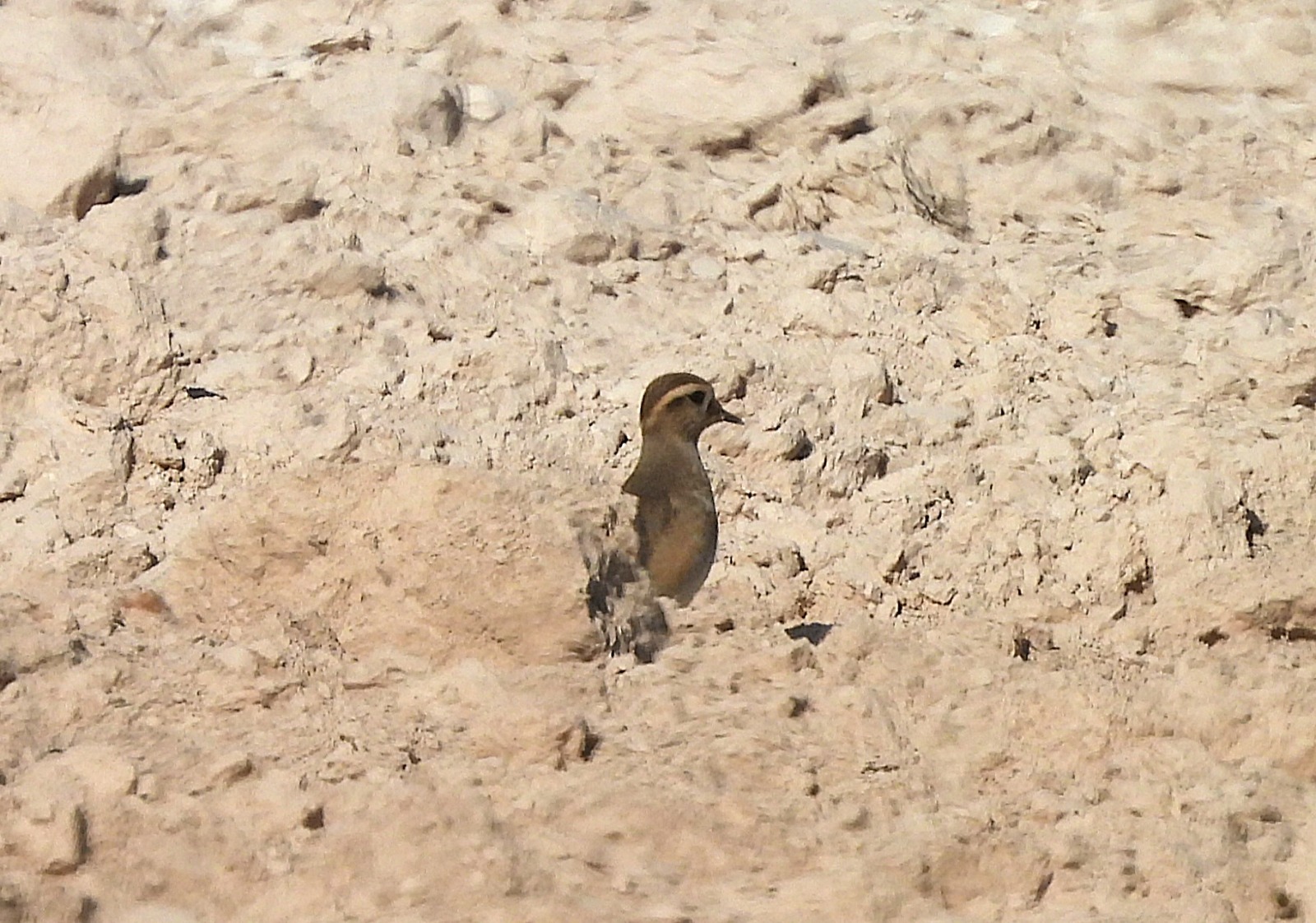
Slowly driving and scanning the fields we came across an unexpected flock of Dotterel, with around 25-30 birds present and showing well, whilst above a Golden eagle soared past. Again we were seeing lots of Calandra Lark with birds still in large winter flocks, Stonechats by the road, Red-legged Partridge, 2 Red Fox, but no sandgrouse….much scanning and scoping eventually led to one of the group picking out a small flock in the far distance, we drove nearer and saw up to 16 Black-Bellied Sandgrouse, good scope views of the birds moving about their chosen field as well as in flight when they are really impressive, a fantastic end to another brilliant day!
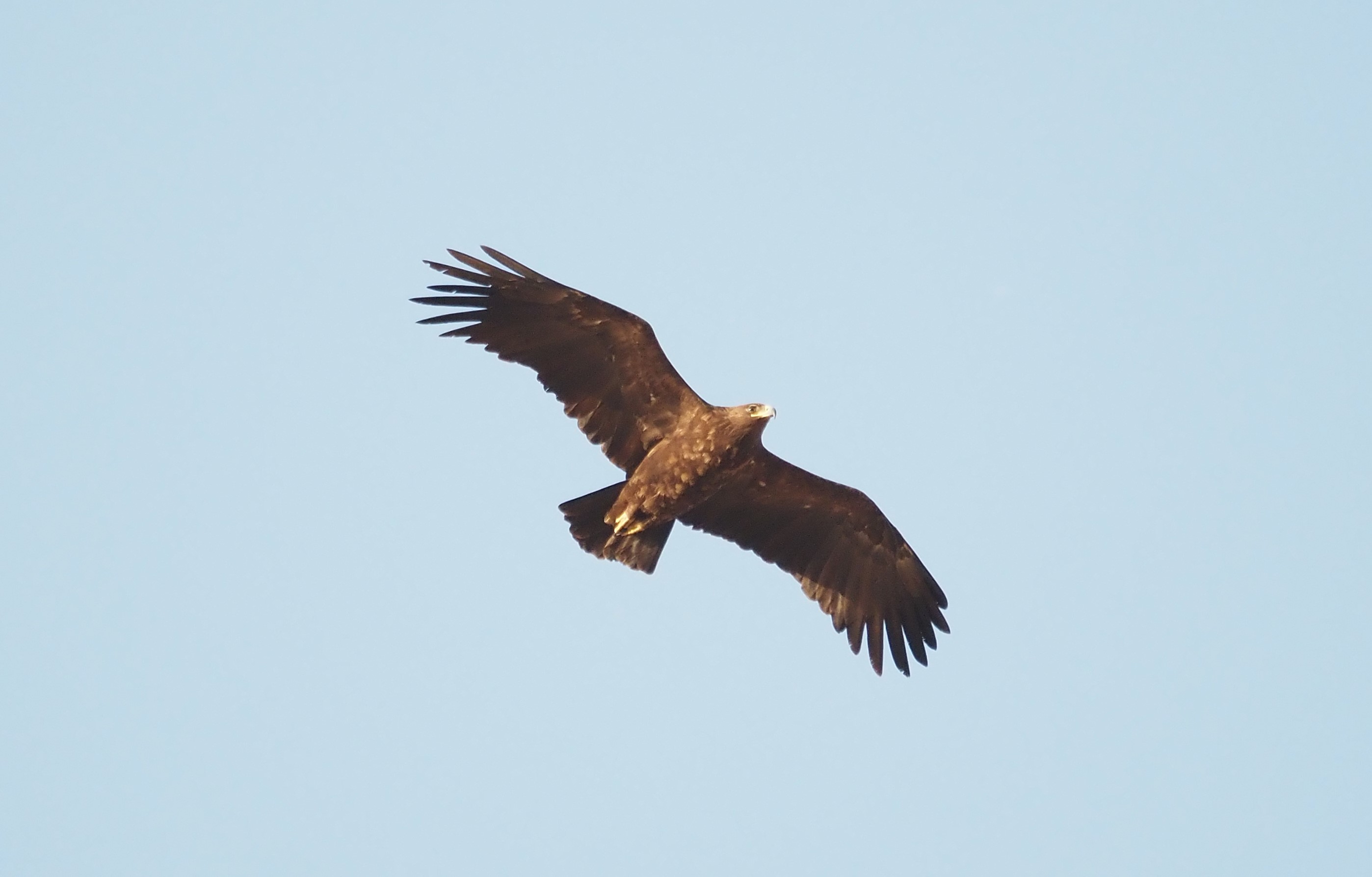
Great Bustards (Otis tarda) in dense fog. Image by Carles Oliver.Dupont’s Lark (Chersophilus duponti): shaking wings as preparing to leave its resting site (up), male singing from to top of a tussock (below). Image by Carles Oliver.Eurasian Dotterel (Charadrius morinellus), one of 25+ birds resting in a plugged field. Image by Justin Williams.European Serin (Serinus serinus) female in a short stop around Belchite. Image by Carles Oliver.Golden Eagle (Aquila chrysaetos), one of many seen during the trip. Image by Carles OliverCorn Bunting (Emberiza calandra) acting like being spring. The area around Lleida has the largest density in Europe. Image by Carles Oliver.
Day 5.
We awoke to fairly torrential constant rain, and with the forecast not looking good we made the decision to change our plans and head for the Ebro Delta.
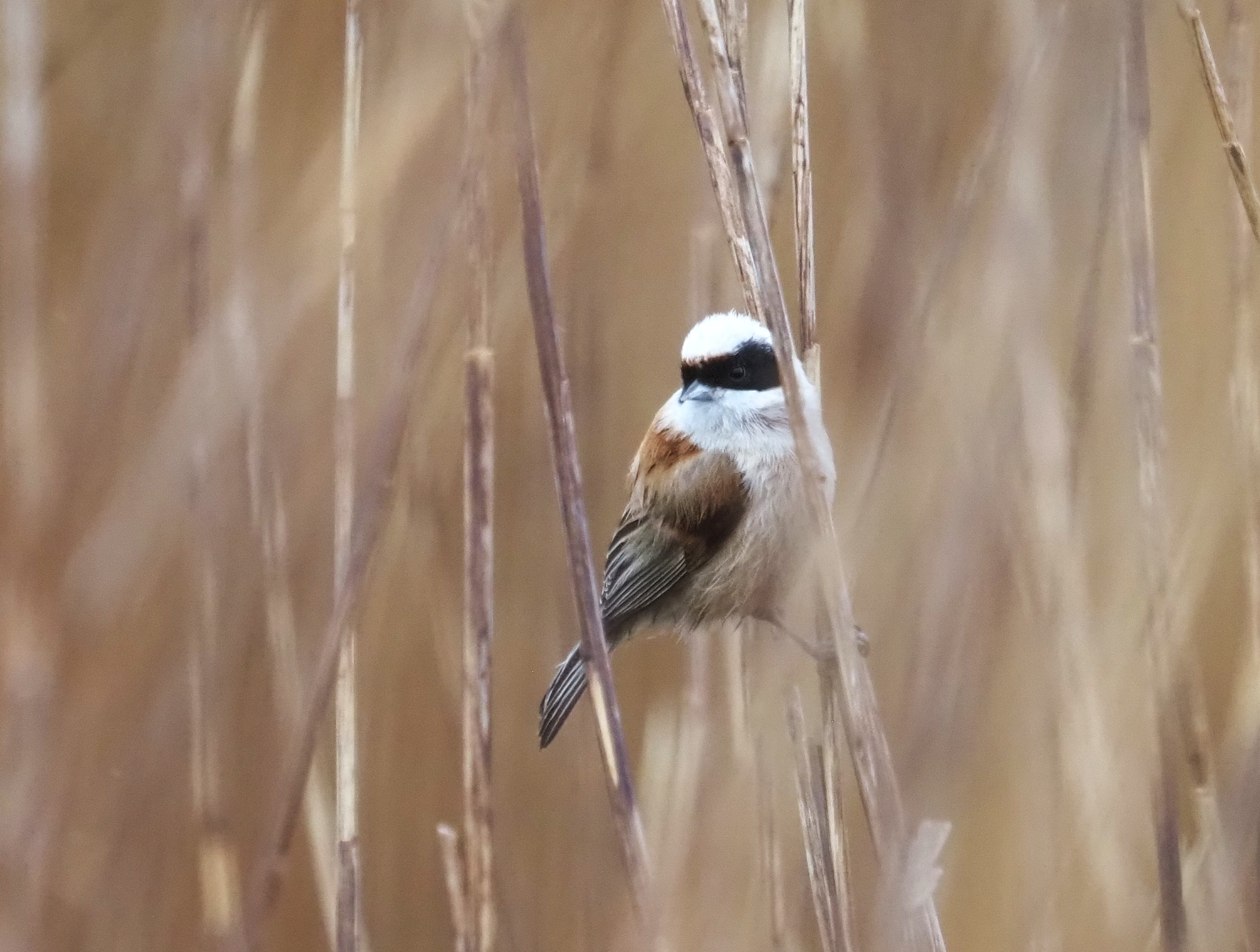
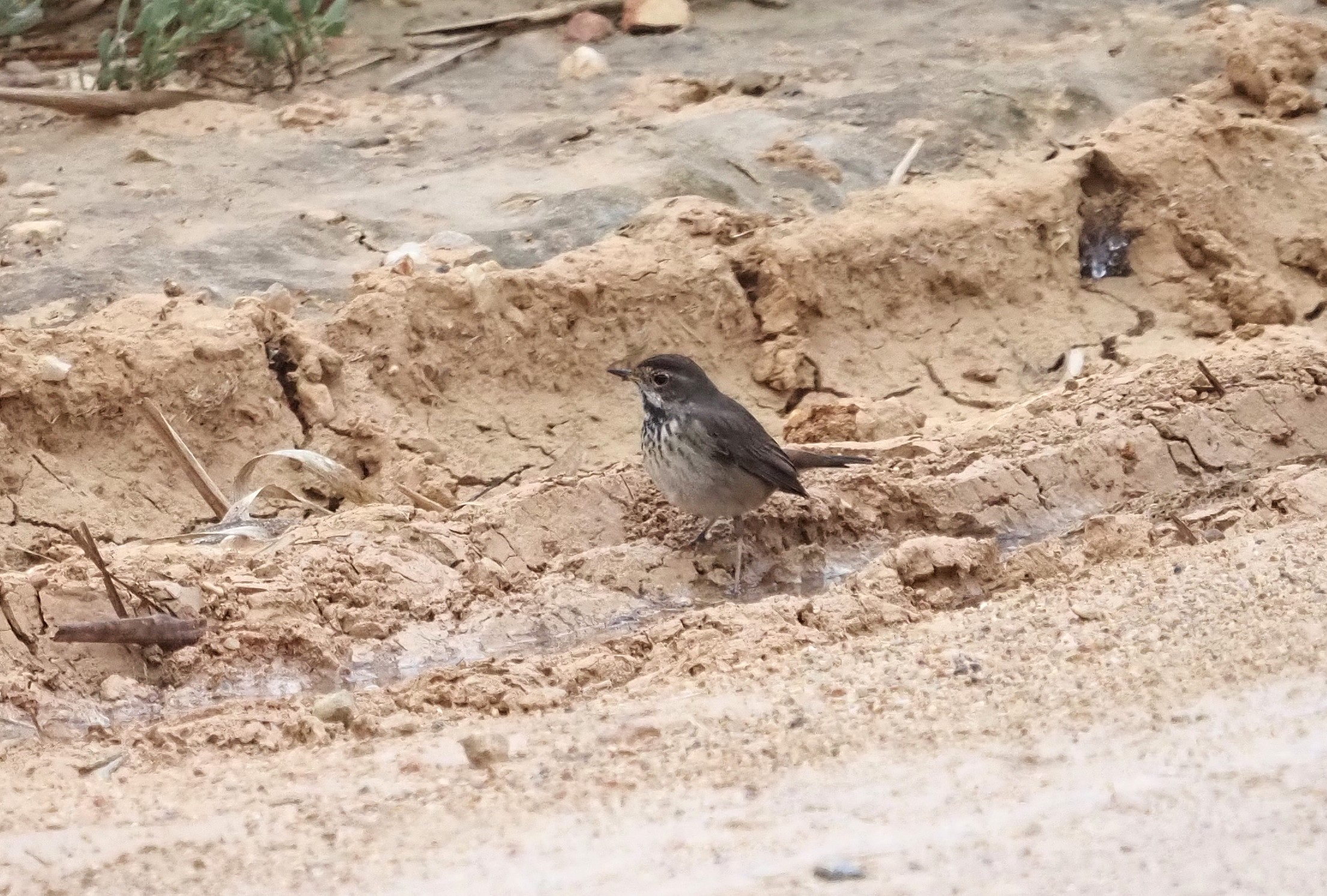
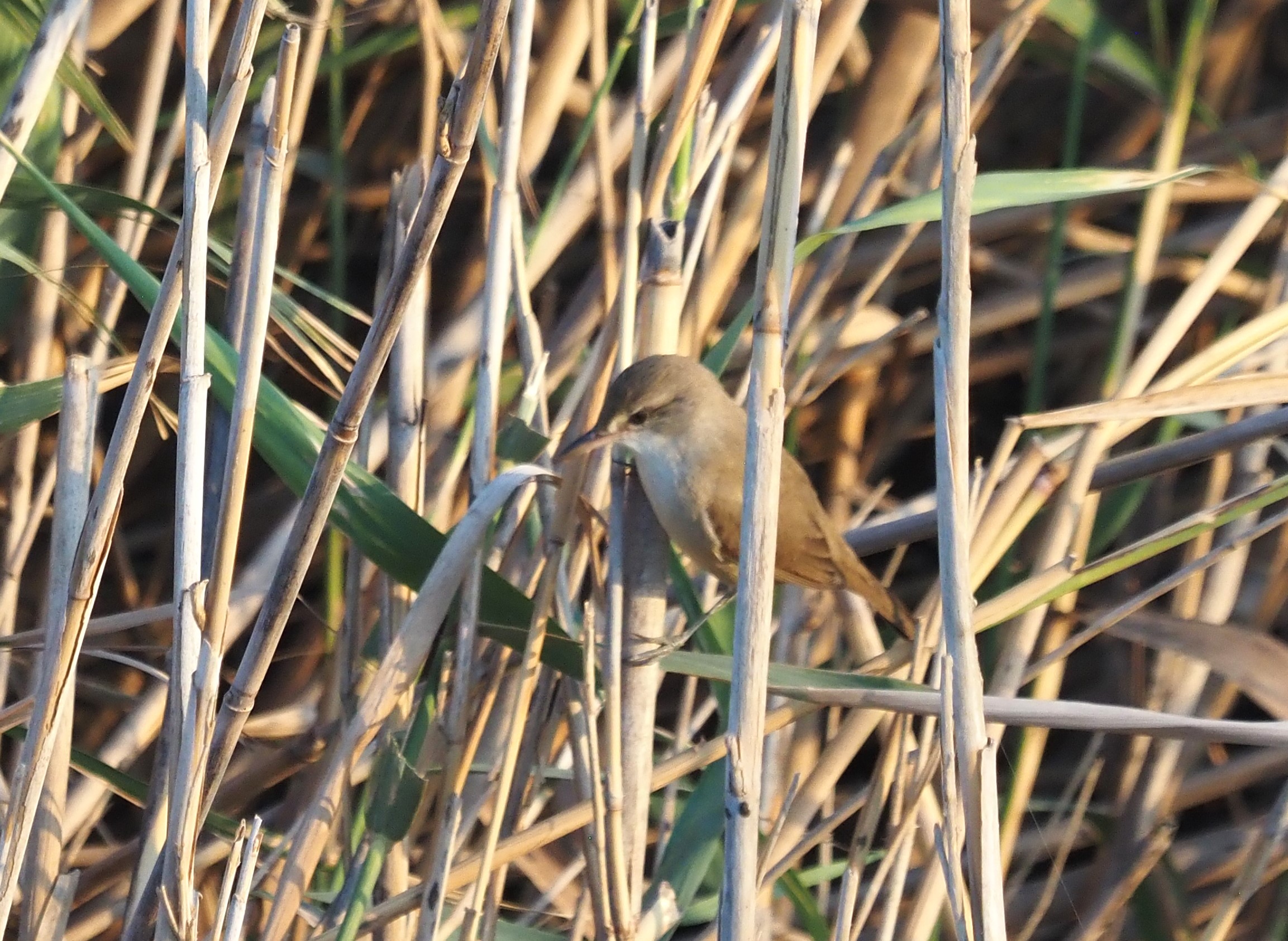
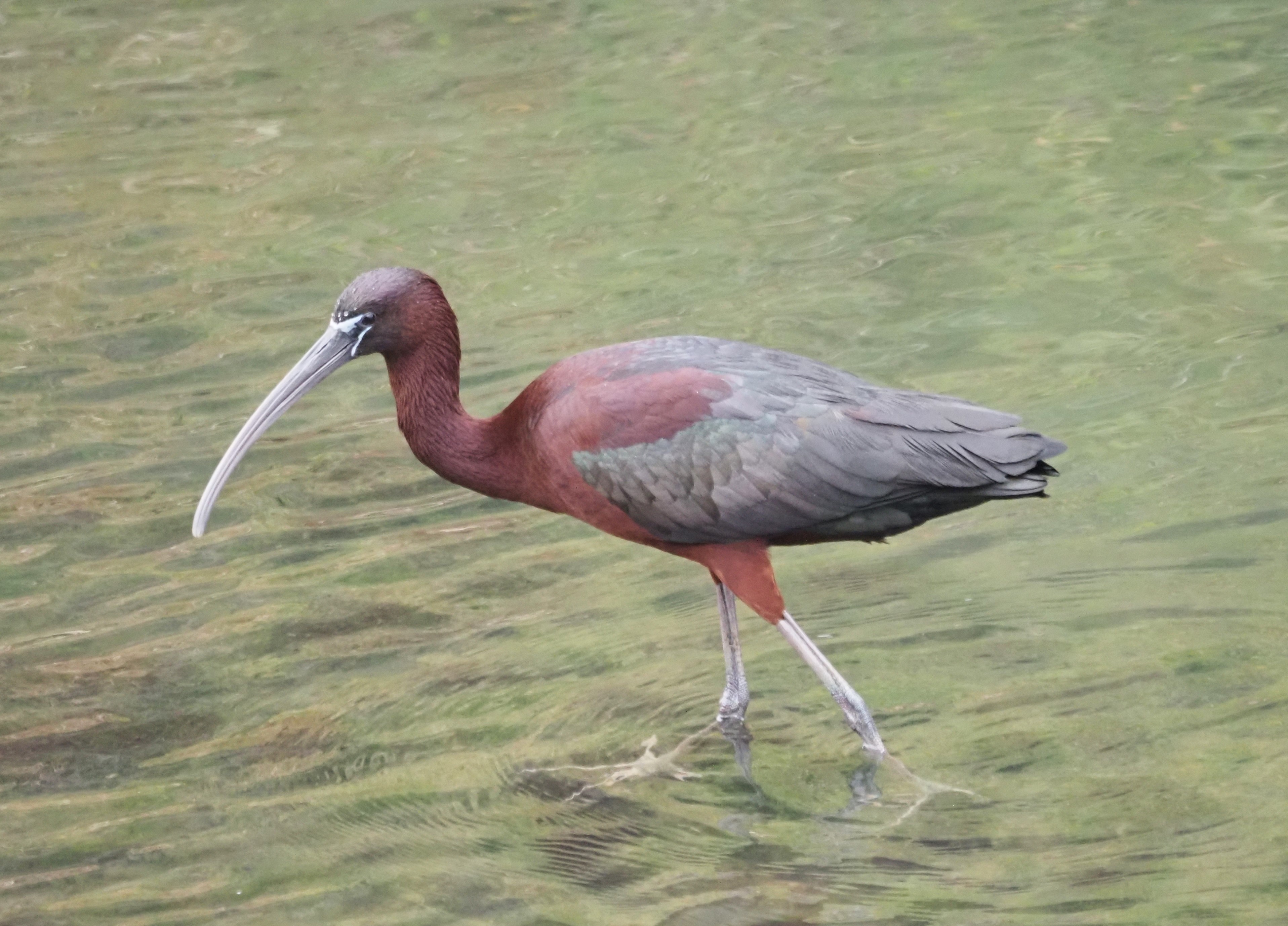
This journey was briefly interrupted with a stop when we spotted 4 Spanish Ibex on a high hill beside the road. Once we arrived at the Ebro we rapidly began adding birds to the trip list, the total change in habitat was exciting and we added many species during the morning including exciting birds such as Moustached Warbler which showed quite well a few times, Penduline Tit, Western Swamphen, Bluethroat, Greater Flamingo, Glossy Ibis, Slender-billed Gull, Caspian Tern, Black-necked Grebe, Red-crested Pochard, and Osprey as well a variety of waders and other wetland birds.
Too soon we had to leave and head for Barcelona, and the airport, but still we made time for 2 quick stops – the first giving us great views of Iberian Green Woodpecker (finally!) and Monk Parakeets. The second stop was at the beach right by the airport where we had fantastic views of AudouinsGull and also passing Atlantic Gannets and Sandwich Terns….a fitting end to a really enjoyable trip with a great group!
Western Swamphen (Porphyrio porphyrio) under the rain. Image by Carles Oliver.Penduline Tit (Remiz pendulinus) showed well under the rain. Image by Carles Oliver.Bluethroat (Luscinia svecica) in the path for us. Image by Carles Oliver.Iberian Green Woodpeckers (Picus sharpei). Image by Jo Symon.Another shot on Iberian Green Woodpecker. Image by Justin Williams. Our group almost complete. Image by Daf Edwards.
Tour leader: Carles Oliver, Sergi Sales, Ramiro Aibar & Daniel Rey
Images by Pete Sutton (tour participant) and Carles Oliver & Sergi Sales (tour leaders). All rights reserved.
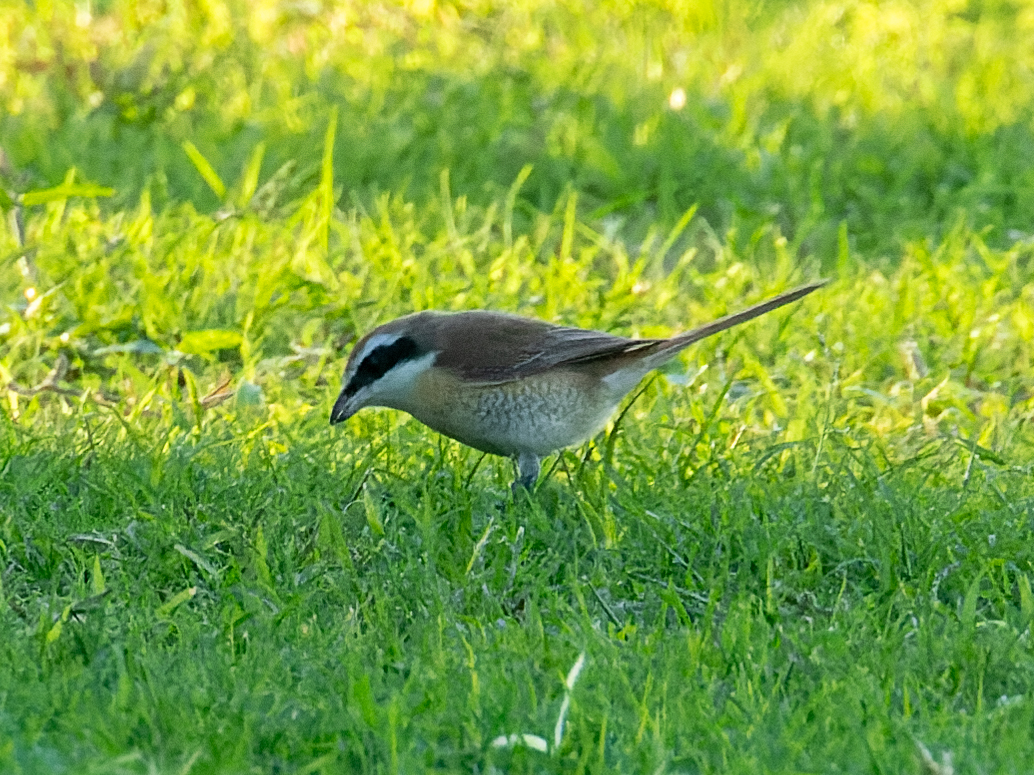
Overview: 9th issue of our classic itinerary in Oman. This year we were surprised with the many sights on Hypocolius, one of the main targets for many birdwatchers visiting the region and normally very restricted. This time, we saw a minimum of 5 birds in 4 different locations! We also scored an amazing number of 6 species of Owls in this issue (Desert, Arabian Eagle, Pallid Scops, Arabian Scops, Little and Omani!). But also had shades as we were not lucky with Socotra Cormorants, and this time we couldn’t contact with this very restricted bird. Beyond the regular specialties it was very satisfying to self-find rarities within the tour, as we found Brown Shrike and (Joe) found Pacific Swift. We also had time to tick Eyebrowed Thrush and even nice views on Syke’s Nightjars! Here we have to thank our clients for their wonderful flexibility, that allowed a slight modification in our average route in order to catch up with the last species and even allowed us to add one day more to the itinerary!
Day 0. Due to the flight combination and other, this issue has been one day longer. Eventually, this extra time gave us more time to explore some spots in the North, with interesting results.
Most of the group assembled at Muscat Airport after a nocturnal flight. Once living the airport, we went to our accommodation, where another guest was waiting for us and where enjoyed a wonderful breakfast. A last client landed a few hours later and join us one hour after we ended the breakfast. After our nocturnal flight, a good amount of coffee was necessary to face the day.
This time, the first contact with the Omani birdlife was a few meters away from the accommodation. We got Red-wattled Lapwings, Great & Little Egrets, Indian Silverbills and Purple Sunbirds but also the first Citrine Wagtail & Little Stint of the trip and really good looks on Clamorous Reed Warblers. A couple of Place Crag Martins were flying around and several Pallid Swifts were hunting further away. Derek had a distant Osprey being harassed by several House Crows. Much closer, a small flock of Grey Francolins came out the vegetation for our enjoyment. Still, the main attraction of this very first stop was a pair of Arabian Bee-eaters and 1 Daurian Shrike.
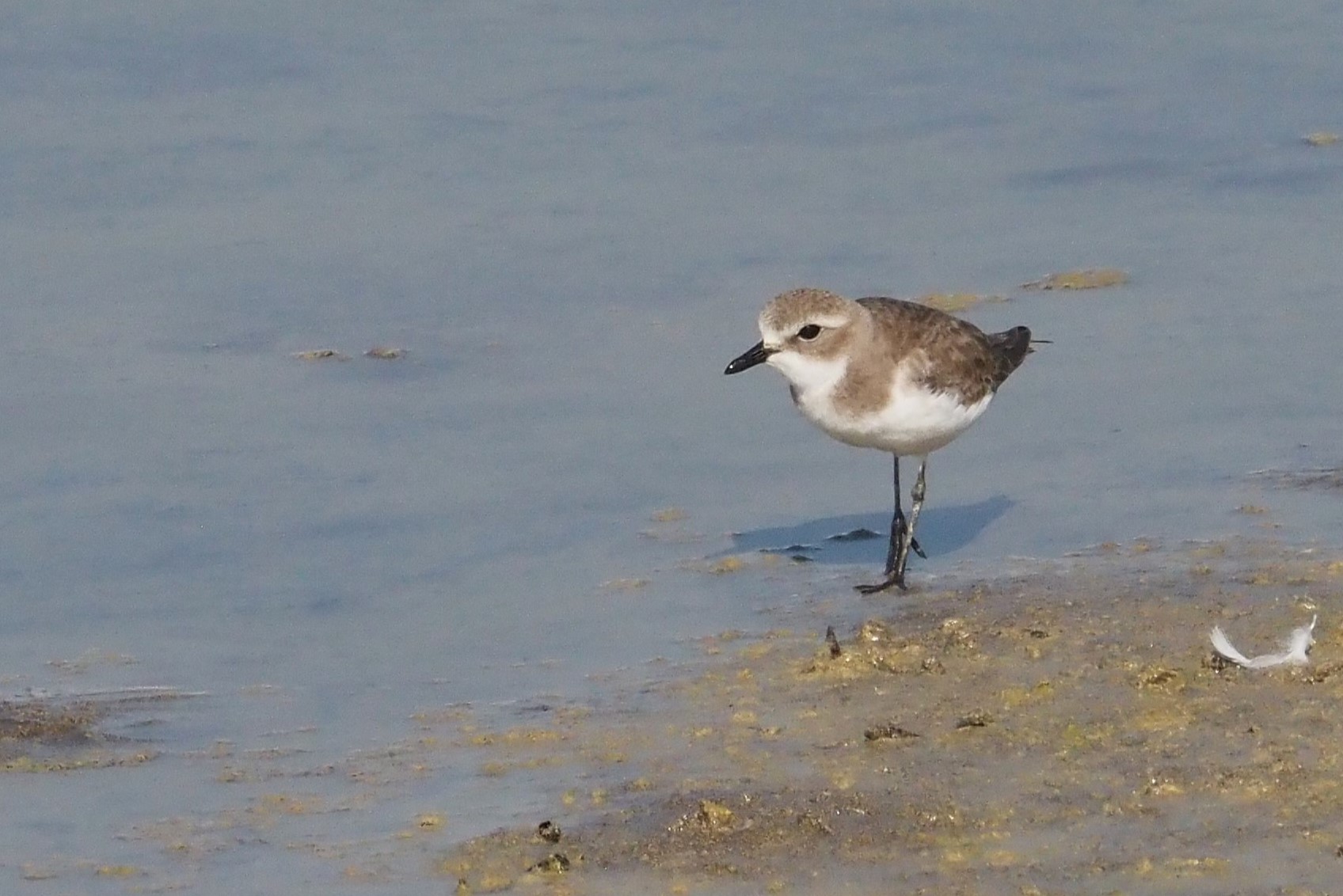
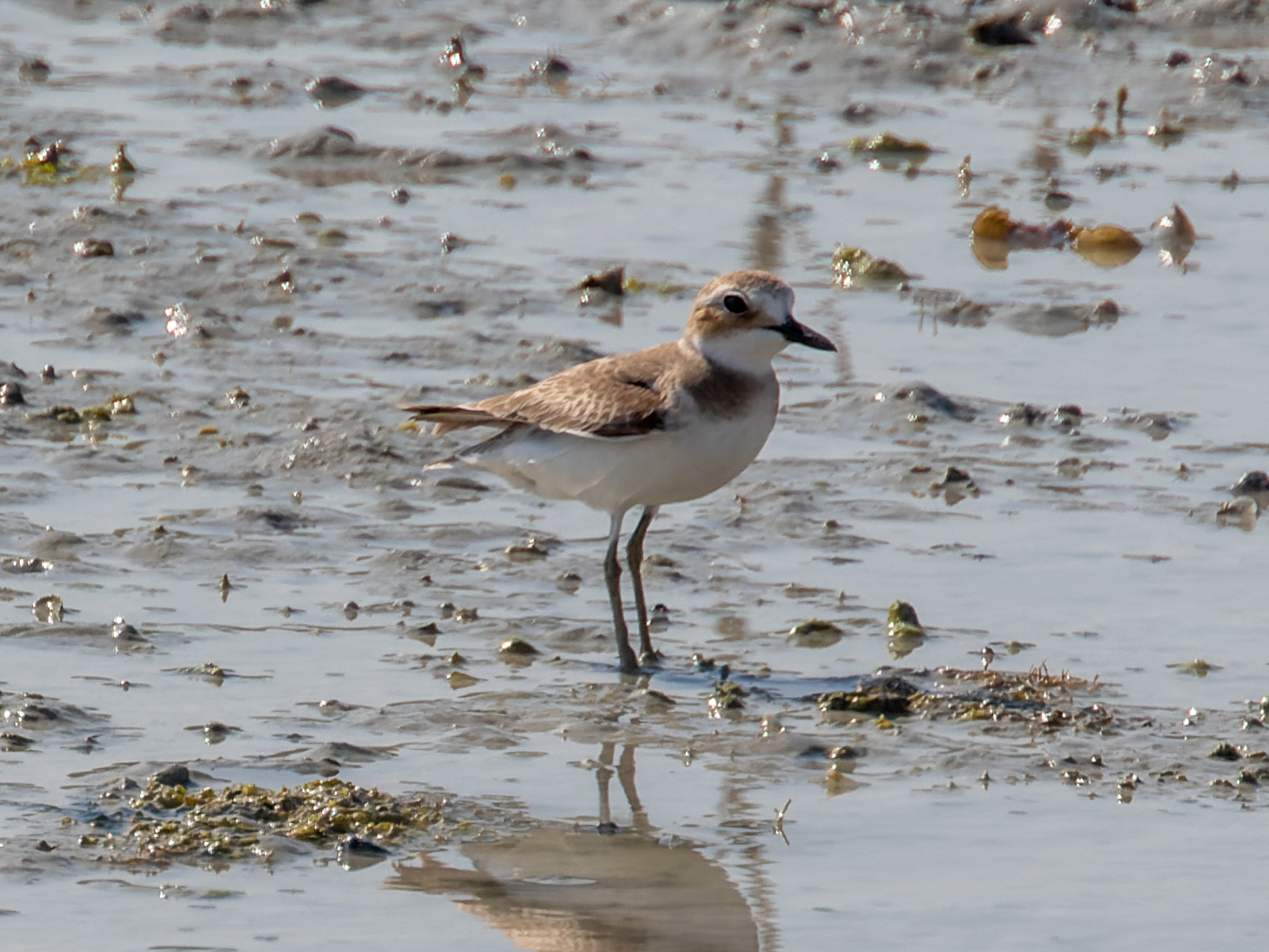
Living the accommodation, we drove a short distance to the Muscat River. Here we a very large array of waders, gulls and terns. Of course, most eyes concentrated firs in working the differences between Tibetan Sand Plovers and Greater Sand Plovers. A nie flock of Tibetan Sand Plovers were feeding along with Kentish Plovers, providing very good looks, while at least 2 Greater Sand Plovers were moving not far from some 1st winter Eurasian Oystercatchers. Sooty Gulls were roosting on the beach and, well inside the sea, tens and tens and tens of Red-necked Phalaropes were feeding and caught the eye of Miquel, who pointed them out.
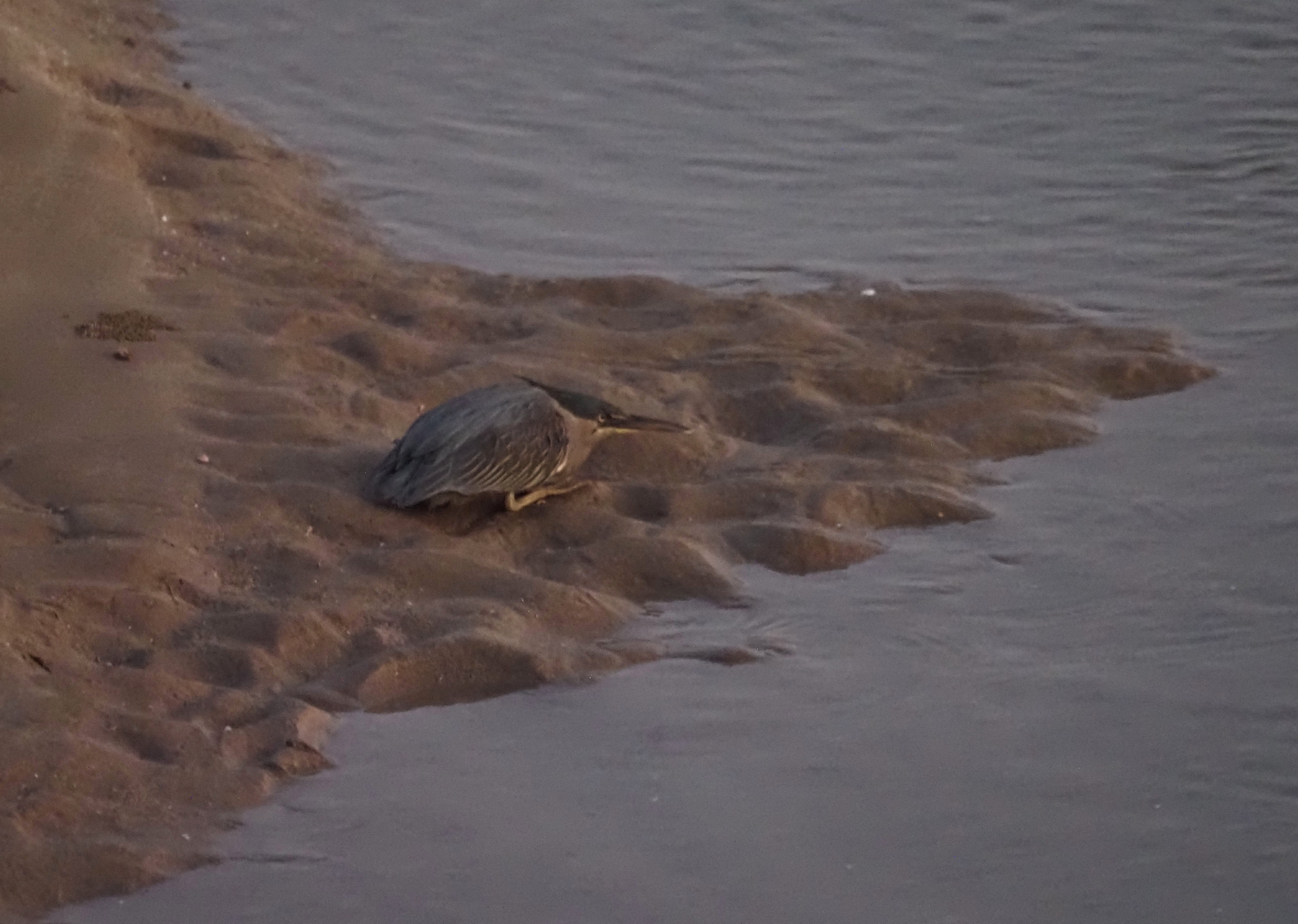
A couple of Marsh Sandpipers were feeding in the river bed, and their typical short runs mixed with the movements of the many Dunlins, Common Ringed Plovers, Ruffs, Greenshanks, Eurasian Curlews and Common Redshanks. A small flock of gulls were resting in the river, and saw some Black-headed Gulls along with the more common Slender-billed’s. A few Little Terns were also resting, and along with them we saw many Sandwich Terns, 1 Caspian Tern, 3 Whiskered Terns plus 1 Gull-billed. A few Western Reed Egrets were also seen, but when it comes to Herons we only had eyes for a very close Striated Heron fishing only a few meters away from the group, at least until we found the first Indian Pond Heron for the trip! Some Eurasian Teals were also feeding here and we were surprised to find a Eurasian Wigeon feeding along with them. A large flock of Black-tailed Godwits and a nice Desert Wheatear was feeding along the river bank. Systematically checking the Snipes we were lucky to find a Pin-tailed Snipe, and everybody in the group enjoyed great views in the scope while comparing the bird with the Common Snipes around.
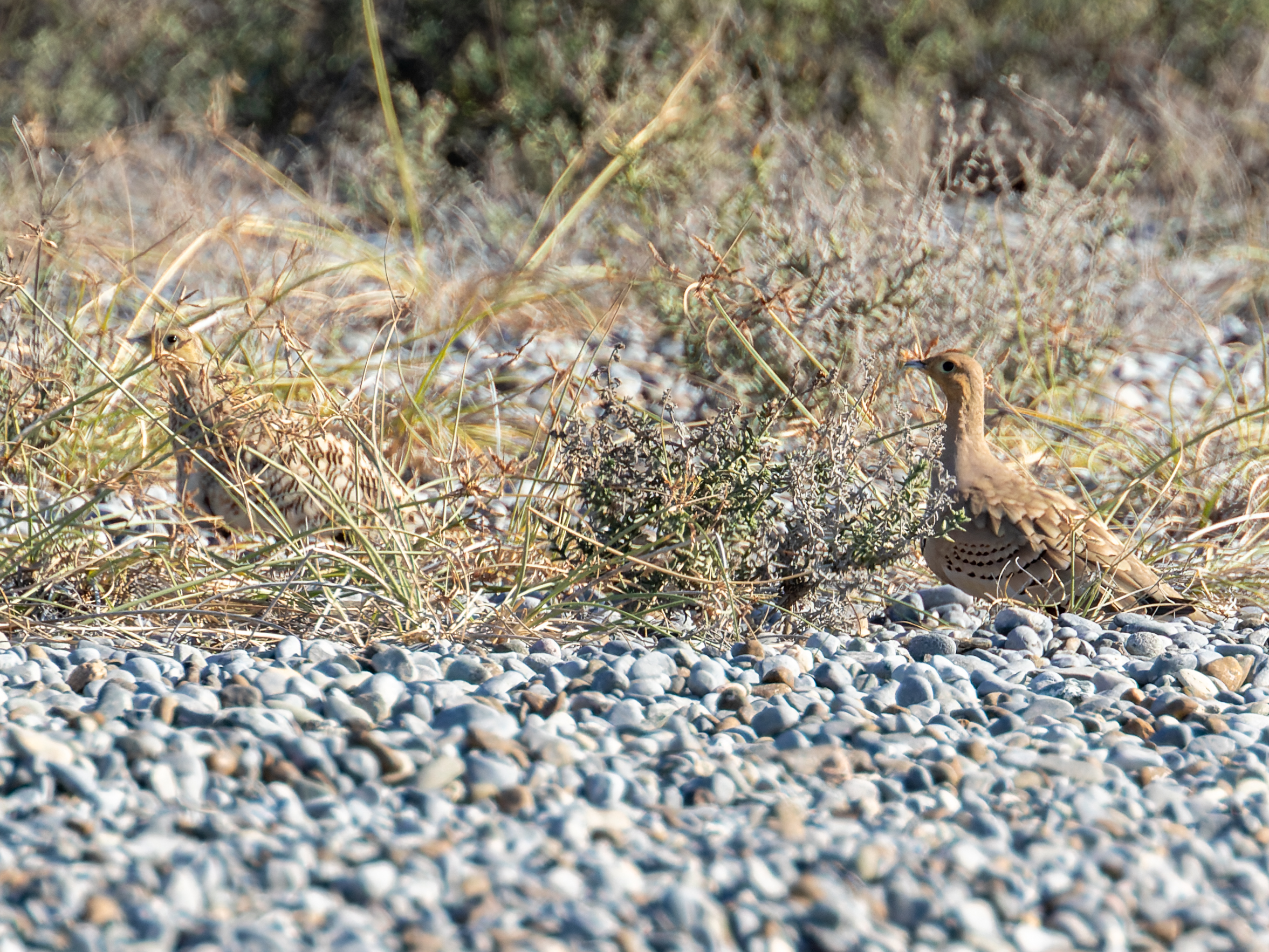
But all was interrupted by a flock of Chestnut-bellied Sandgrouses that landed 150 metres away from the river bed. We fastly approach them, getting nice views on the birds while moving on the ground!
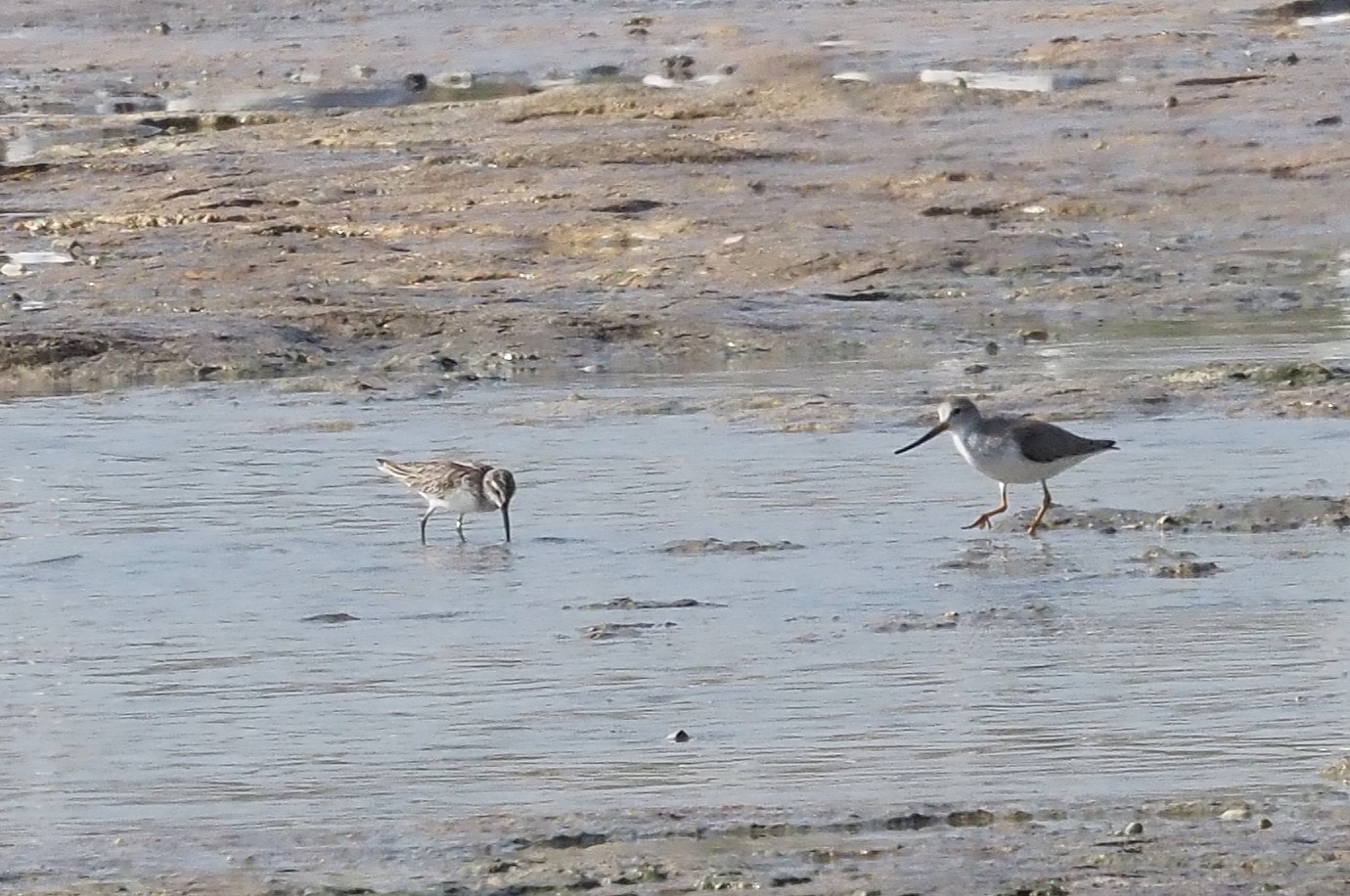
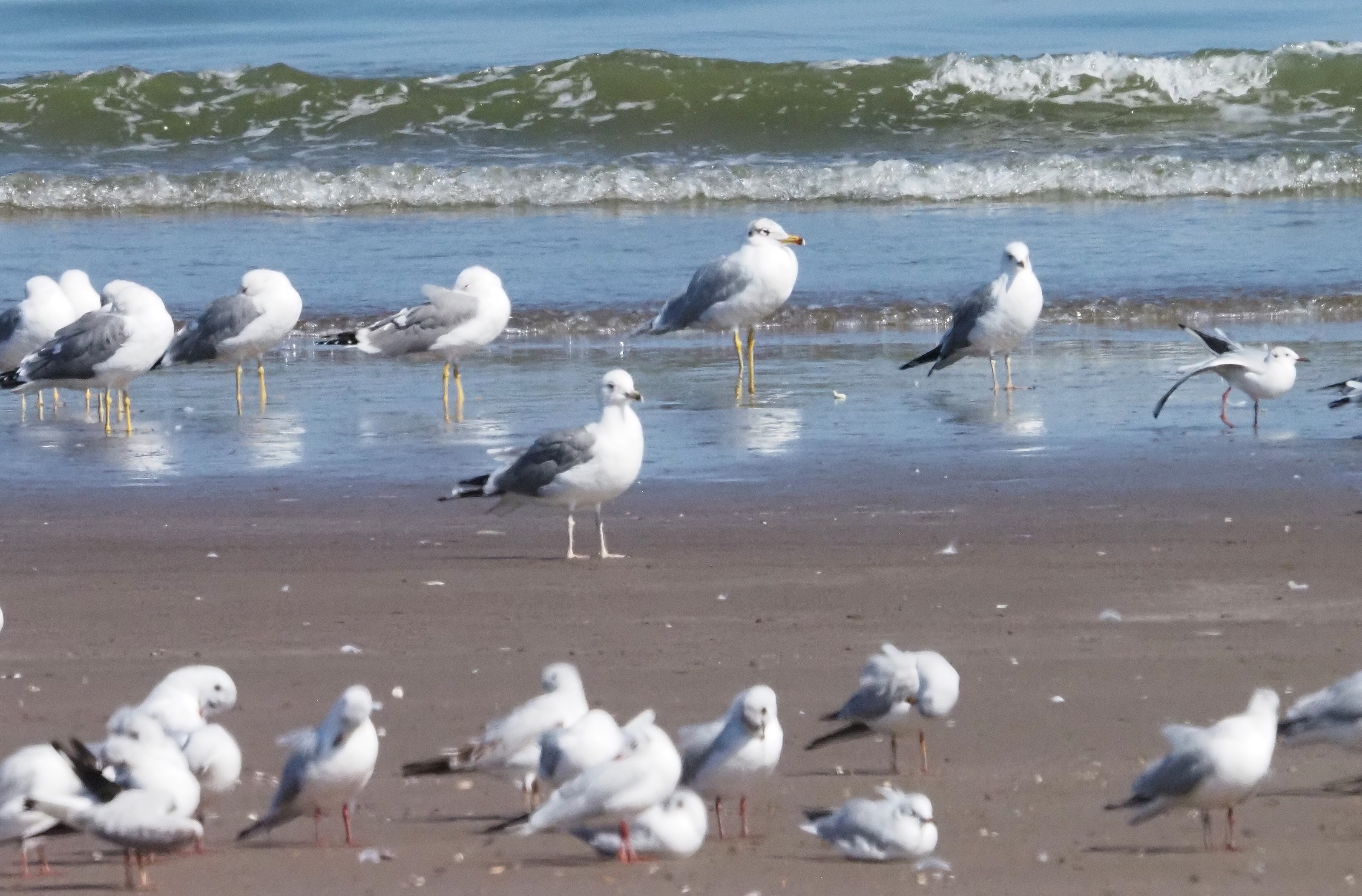
After a coffee stop we moved to a couple of beaches were gulls tend to accumulate. We were lucky at the first spot, and we found 2 gorgeous Palla’s Gulls standing up in the middle of a flock of Steppe, Heuglin’s and a few Caspian Gulls. Closeby, a couple of small river mouths provided some birding including further views on Temminck’s Stints and the first Little Grebe for the trip.
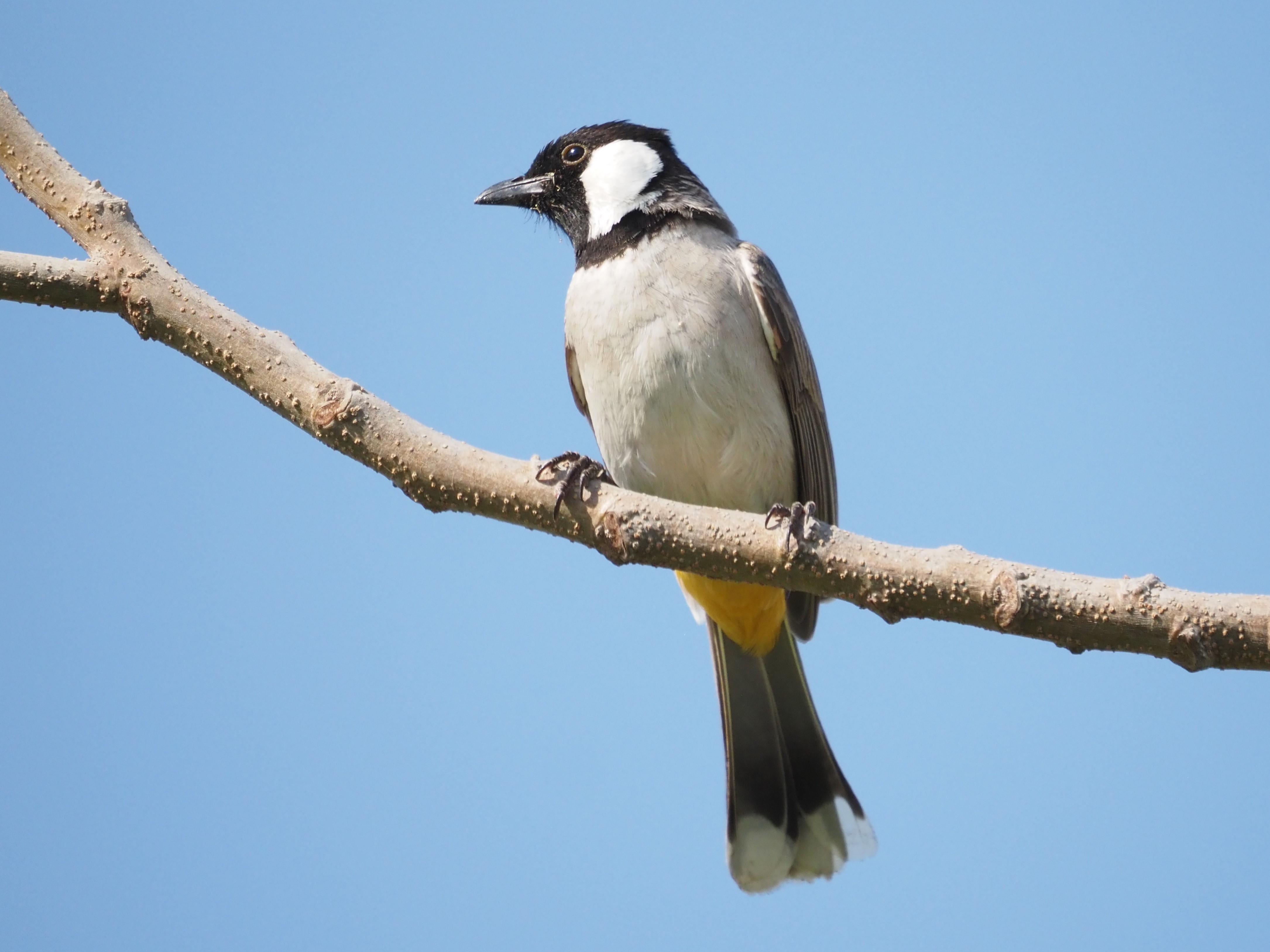
After lunch we went to Al Qurm Park. This is a phenomenal spot for a number of birds, and here we got nice views on White-eared & Red-vented Bulbuls but also Marsh Harrier, Citrine Wagtail, Arabian Green Bee-eaters, Daurian Shrike and a flock of Pacific Golden Plovers including a lovely bird in summer plumage. At dusk, hundreds of people gathered to attend a local festival and it made impossible to see any birds.
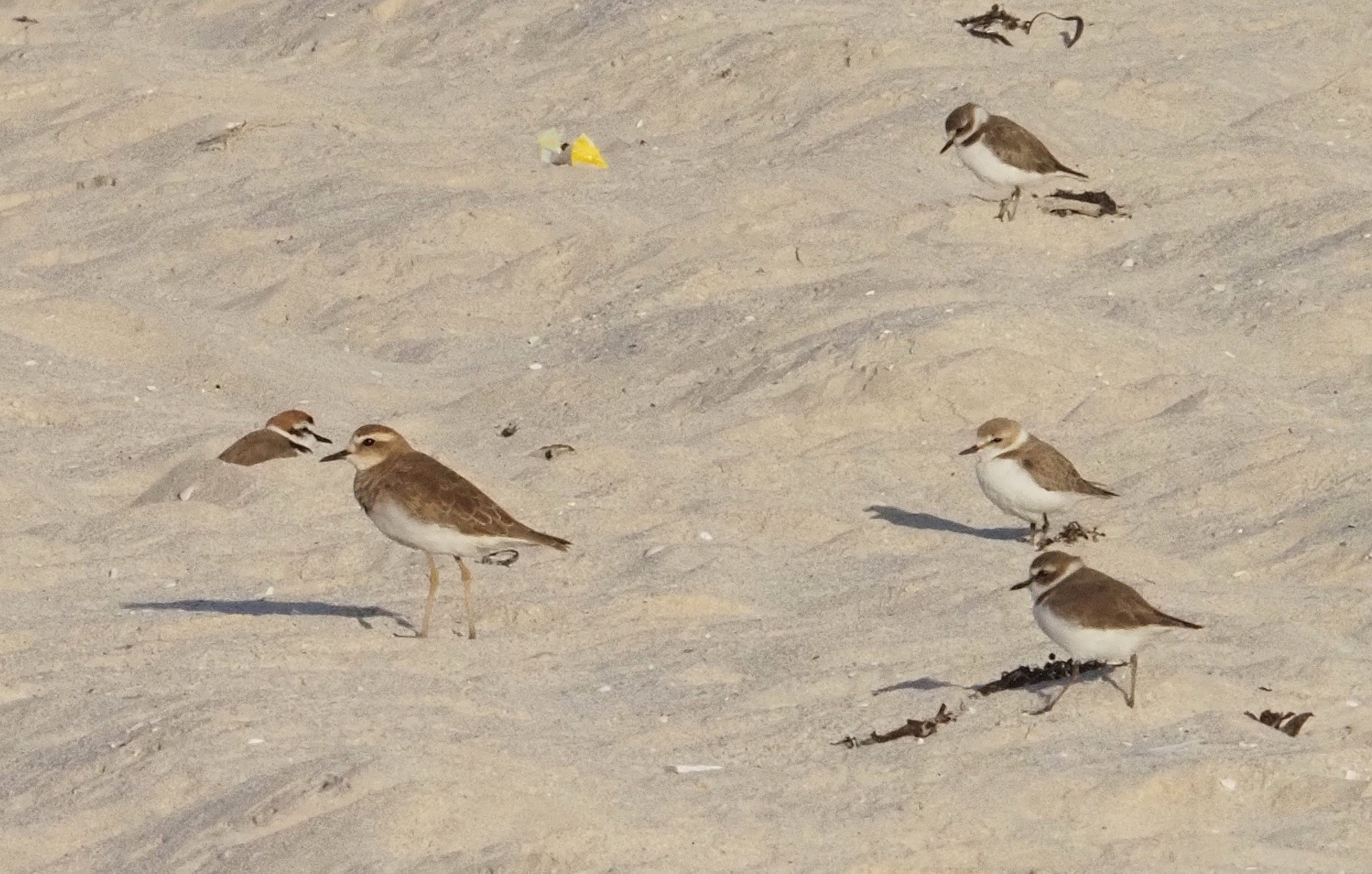
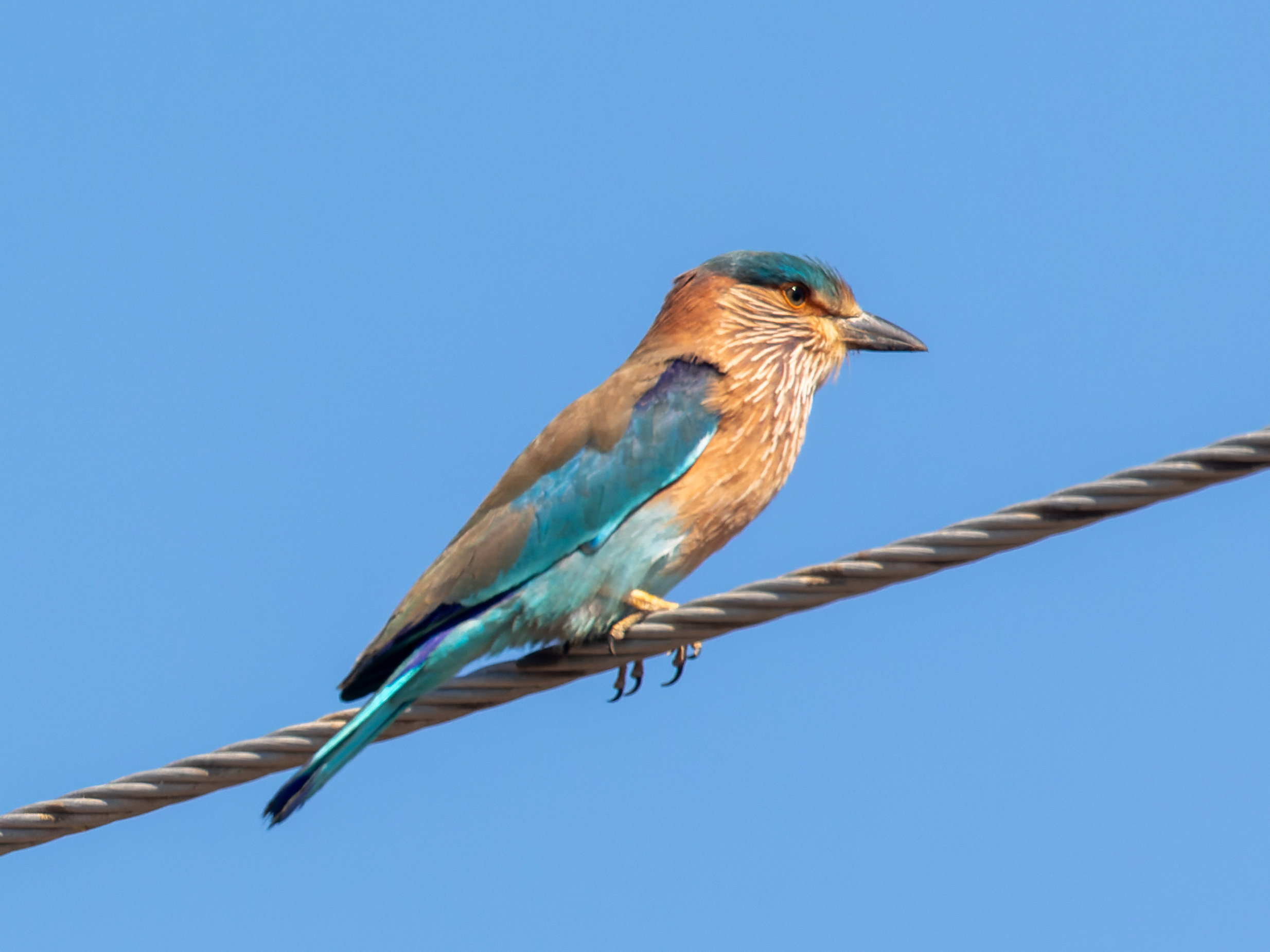
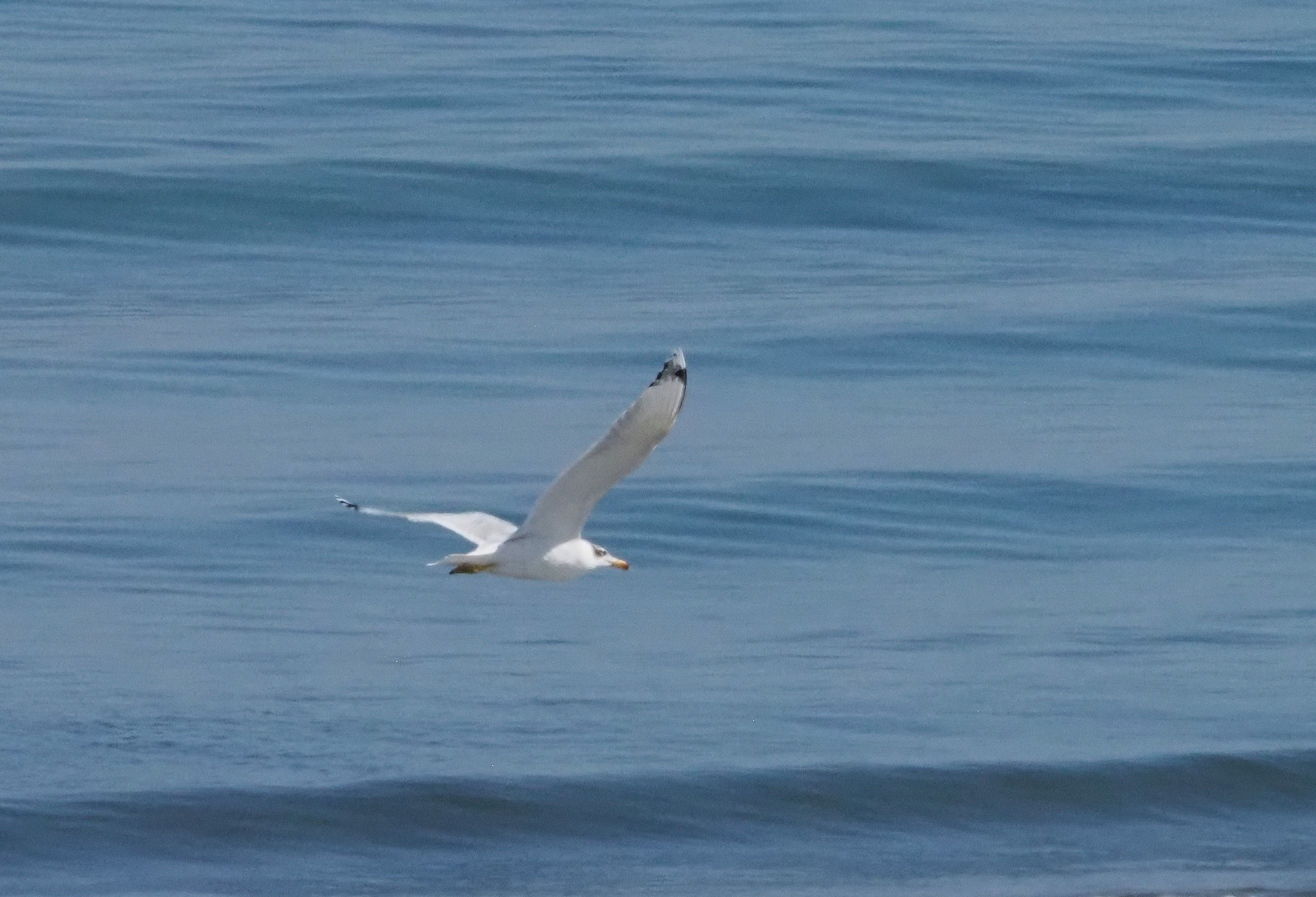
Striated Heron (Butorides striata) at Muscat River. Image by Pete Sutton.Marsh Sandpiper (Tringa stagnatilis). Image by Pete Sutton.Chestnut-bellied Sandgrouses (Pterocles exustus) in Muscat. Image by Pete Sutton.Chestnut-bellied Sandgrouse (Pterocles exustus) in flight. Image by tour leader Carles Oliver.Indian Roller (Coracias benghalensis) in Muscat. Image by Pete Sutton.Palla’s Gull (Ichthyaetus ichthyaetus) -centre top- along with Heughlin’s, Steppe & Slender-billed Gulls in Muscat.Palla’s Gull in flight. Please pair attention to the wing tip. Unmistakable! Image by Carles OliverLovely flock of Pacific Golden Plovers (Pluvialis fulva) including a wonderful summer plumage bird! Image by tour leader Carles Oliver.Arabian Green Bee-eater (Merops cyanophrys). Image by Pete Sutton.
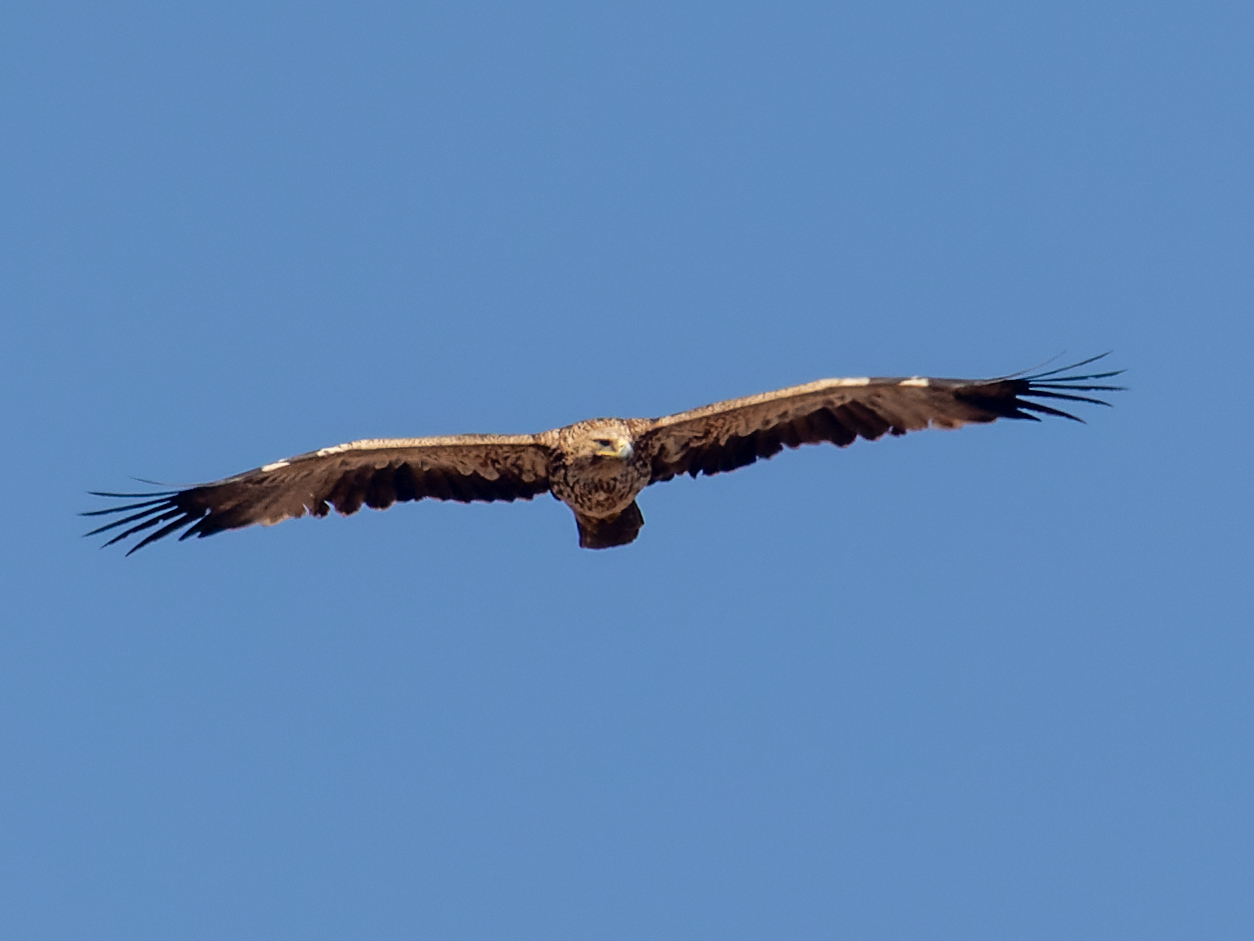
Day 1. After enjoying the breakfast at our accommodation in Muscat, we drove the short distance from the coast to one of our very nice locations in the upper thorn bush. But before arriving we had a fast stop in the road. There, the sky was showing us not only the first Eastern Imperial Eagles of the trip, but also several Steppe Eagles that, even if far away, were very welcome by the group. Once arrived to the proper place, it looked like clearly lower than in many previous visits. No sign of the normally common Purple Sunbirds and small flocks of Indian Silverbills were the only evident birdlife. We had a walk around the area, and we fastly had the first Lesser Whitethroats of the trip. Flying above our heads, we had he first Egyptian Vultures of the trip.
Despite being a large group, we kept together, and this was essential when a flock of 7 Lichtenstein’s Sandgrouses flew off right in front of us, calling and moving away from us really fast in search of a more quiet place where to keep feeding. Happy with this nice encounter we kept searching the area. A few minutes later, Sergi called us as he and William had an owl moving in the trees. It was clear that had to be a Pallid Scops Owl. We place everybody in one place, and for the surprise of everybody, the Owl just came out of a bush and flew in the middle of the people, providing really nice flight views. We tried to find the bird once perched in the trees, but was not possible.
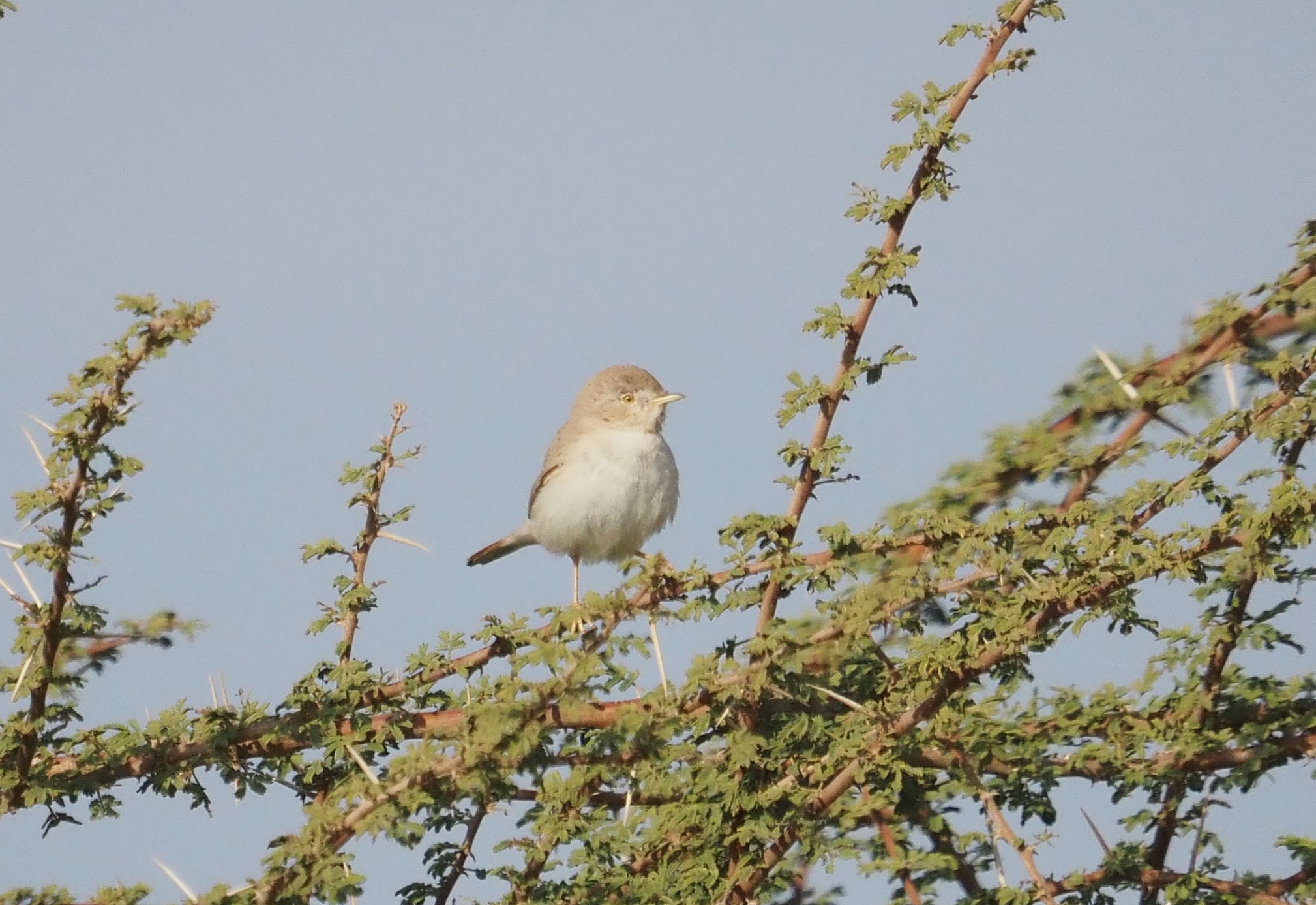
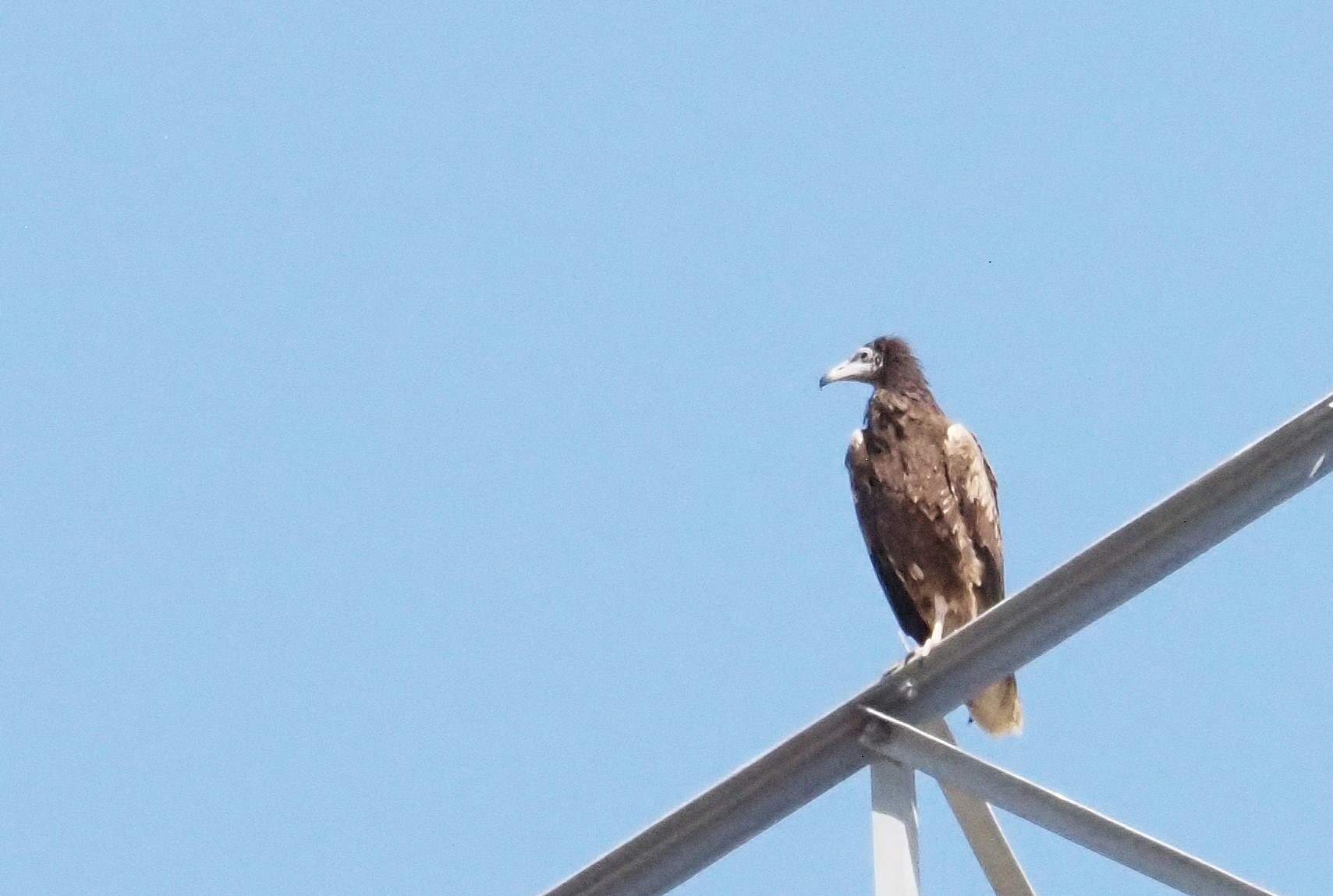
A few meters away we found the firsts Asian Desert Warblers of the trip, and as it is usual in this species, it allowed very nice shots. A bit beyond, a Persian Wheatear produced nice views before we decided to come back. After this we decided to go back to the vehicles, but at the moment to get inside Joe told me that we a Babbler-like bird moving down the valley. We took the cars and drove a bit down, and guess what, after a short walk we had a nice flock of 4 Arabian Babblers moving in front of us. In the bush beside, a nice Menétriés’s Warbler was showing well and in the way back to our vehicles we still had a wonderful Lappet-faced Vulture flying really low above us!
From here we just covered a short distance to arrive into a local restaurant where we had a very nice meal and 1 Lanner Falcon moving around the town!
In the afternoon we moved to a place for Omani Owl. Getting in the gorge we had nice views on Hume’s Wheatears and Long-billed Pipit + a couple of Striolated Buntings singing in the gorge and that proved to be as hard to see as usual! We waited until dark and moved a bit along the gorge, but our first chance for Omani Owl was totally unsuccessful, and only a Little Owl came out of the shadows.. After a couple of hours we came down to the accommodation.
Lappet-faced Vulture (Torgos tracheliotos). Image by Pete Sutton.Arabian Babbler (Argya squamiceps). Image by Pete Sutton.Asian Desert Warbler (Curruca nana). Image by Pete Sutton.Egyptian Vulture (Neophron percnopterus). Image by Carles OliverHume’s Wheatear (Oenanthe albonigra). Image by Pete Sutton.
Day 2. After breakfast we went to the Alsab Lagoons, a nice wetland around the International Muscat Airport. Here, we had a nice walk and enjoyed a good variety of birds including Tufted Ducks, 2 Purple Herons, Arabian Bee-eaters, Grey Francolins and the only 1 Ferruginous Duck of the trip. Here we were surprised to find 3 Arabian Babblers that provided very good views.
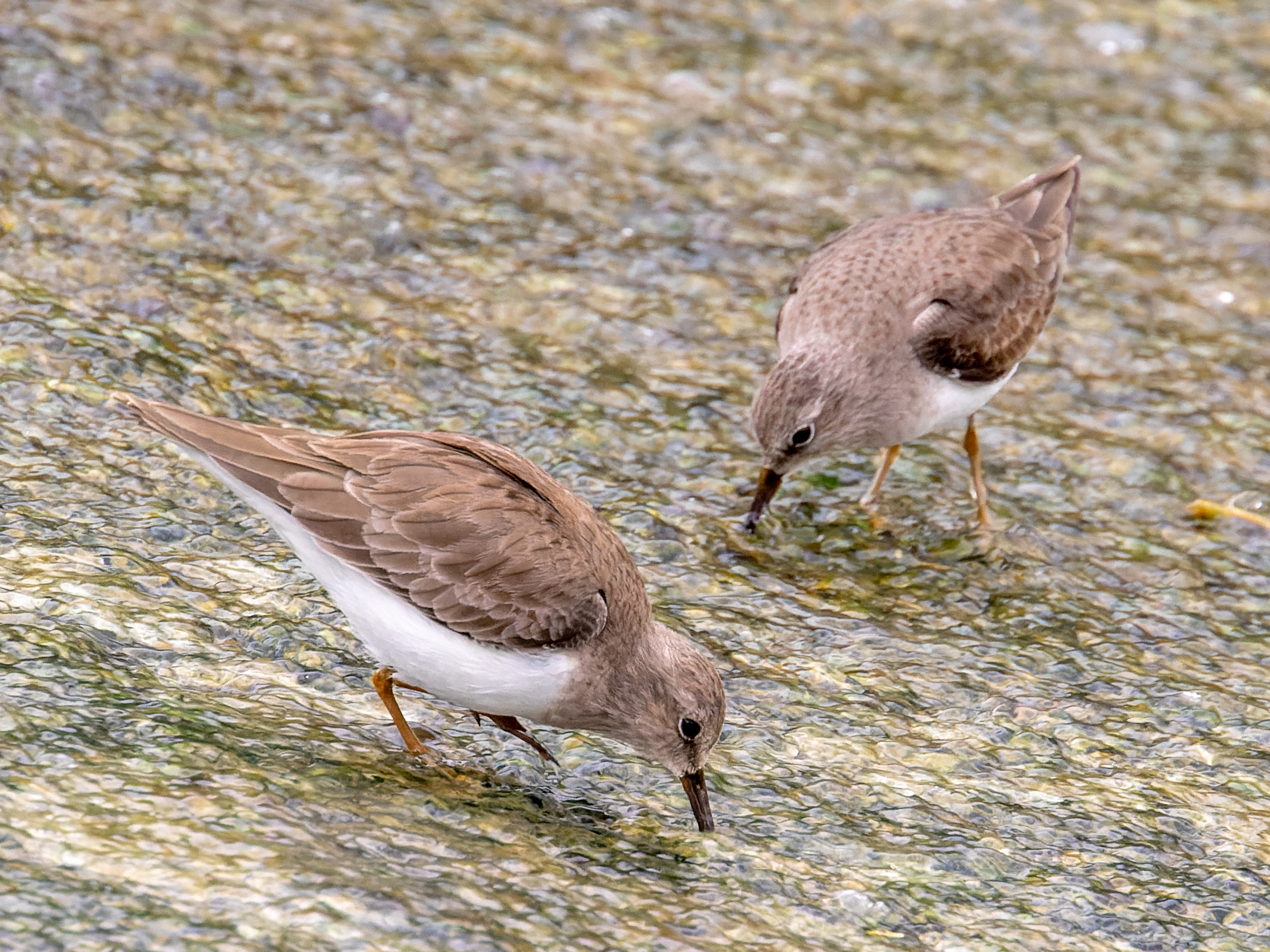
Beyond a nice variety of waders and ducks, we had a couple of Grey-headed Swamphens sights, one of them providing amazing views as it was feeding totally out of cover and only a few metres away from us. In the same place we also got nice looks on Bluethroat, Clamorous Reed Warbler and Temminck’s Stints.
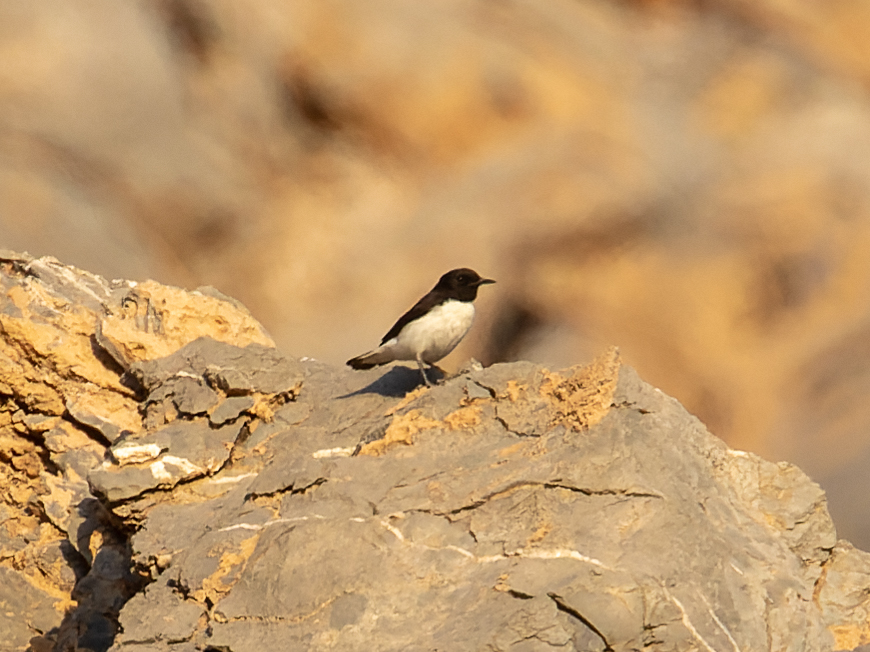
Back to the vehicles, we went inland, and after about 50 minutes of driving we arrived into to a small plain with some large trees. Here we parked, and only a few seconds later we were enjoying the first Plain Leaf Warbler of the trip. Scanning the trees around we also got good views on Lesser Whitethroat, Black Redstarts and at least 2 showy Eastern Orphean Warblers. A bit beyond, we got Persian Wheatear and the rocky slopes around had at least 3 Hume’s Wheatear and 1 Blue Rock Thrush.
Happy with this set of birds we went to a restaurant nearby and after lunch we went to check in at our accommodation. In the evening we moved again into the mountains, but this time our goal was one of the most impressive gorges in the country. Here, we still had a couple of hours of light to enjoy Egyptian Vultures and more Blue Rock Thrushes, Hume’s Wheatears and Plain Leaf Warblers before the night arrived.
It was already dark and when we listened an Omani Owl singing at the opposite side of the gorge. We scanned long and at the end we found a medium size Owl perched in the rocks. Unfortunately it was very far and we couldn’t be certain.. Only a few minutes later an Owl flew over the group, and a couple of us had nice views on what it looked to be an Omani Owl!!
We still searched around, also using the thermal technology that Bud was bringing with him. Still, we could not relocate the bird, and the mystery of that Owl flying above us will probably never been disclosed..
Grey-headed Swamphen (Porphyrio poliocephalus). Image by Pete Sutton.Extremelly obliging Temminck’s Stint (Calidris temminckii) in Muscat. Images by Pete Sutton.Blue Rock Thrush (Monticola solitarius). Image by Pete SuttonPlain Leaf Warbler (Phylloscopus neglectus). Image by Pete Sutton.
Day 3. After a not very sophisticated breakfast we moved South. This day we faced a massive, 800+ km long transfer! It looks like crazy, but the transfer was way faster than one can imagine!!
Our first about midday, already mid way down the way to Salalah. There, in small oasis, we had the first of many sights on Hypocolius during the trip. A nice female that was a bit reluctant to show but still provided good views.
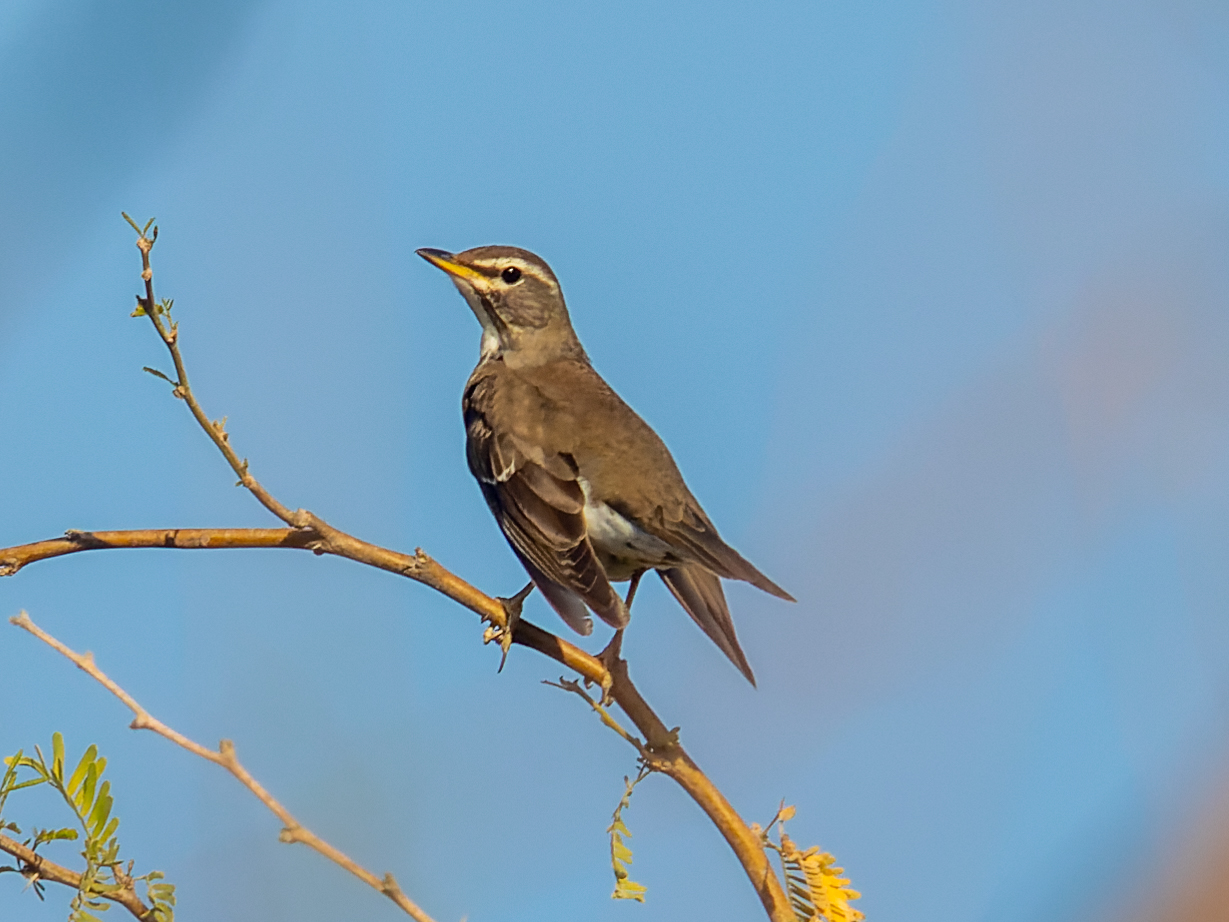
Our second stop was further South, in Qitbit. There, while having lunch, we had a fast walk around to try to find some of the specialities that had been reported in the area during the last weeks, and our efforts had a wonderful reward in the way of 2 Eyebrowed Thrushes popping up in front of us. Ramiro put us in the way to them but we discovered that the Thrushes were highly restless. After a couple of runs, everybody had very nice views on them. Beyond them, here we only got 1 Ménétries’s Warbler, some Siberian Chiffchaffs and Brown-necked Ravens.
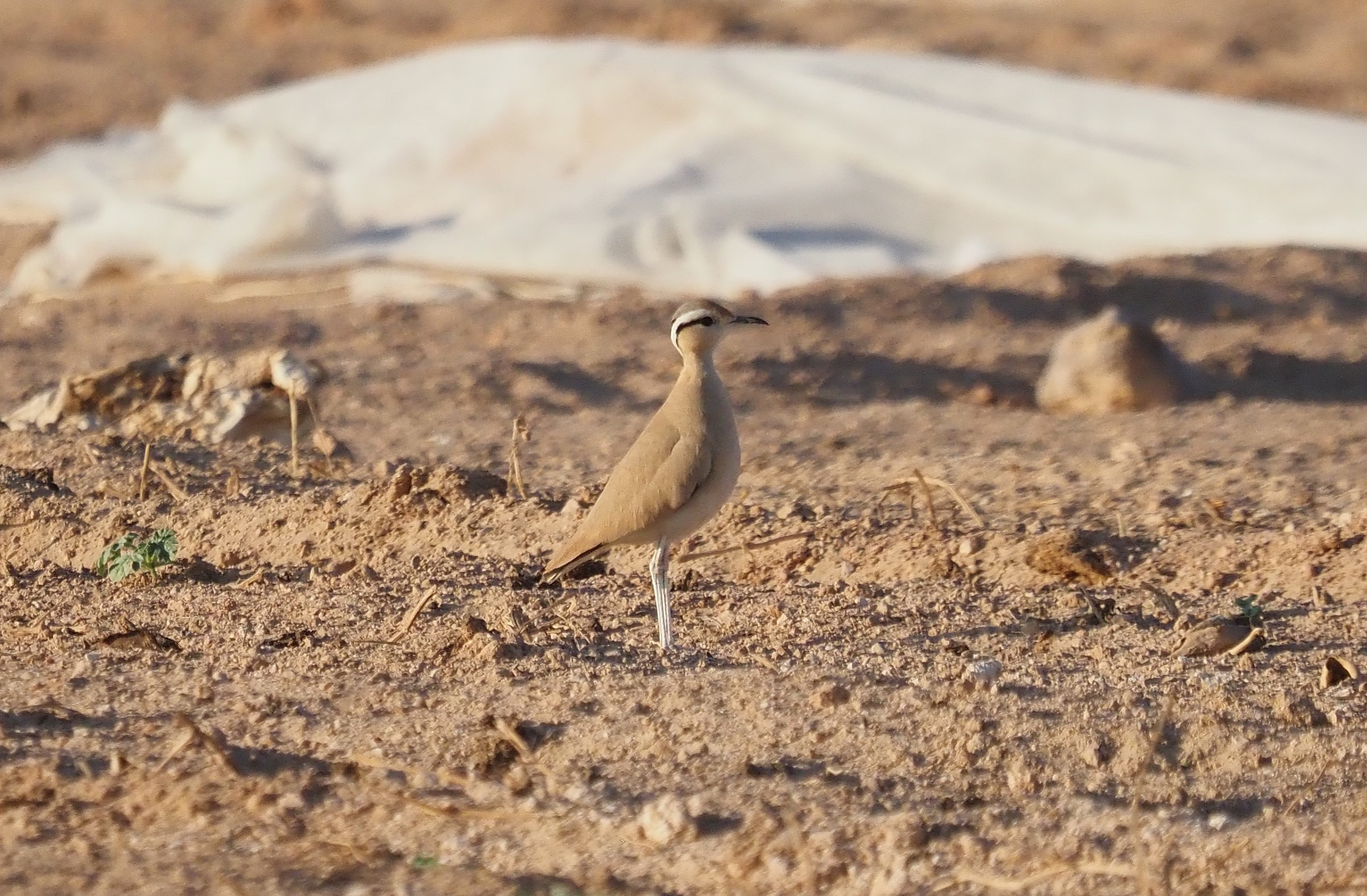
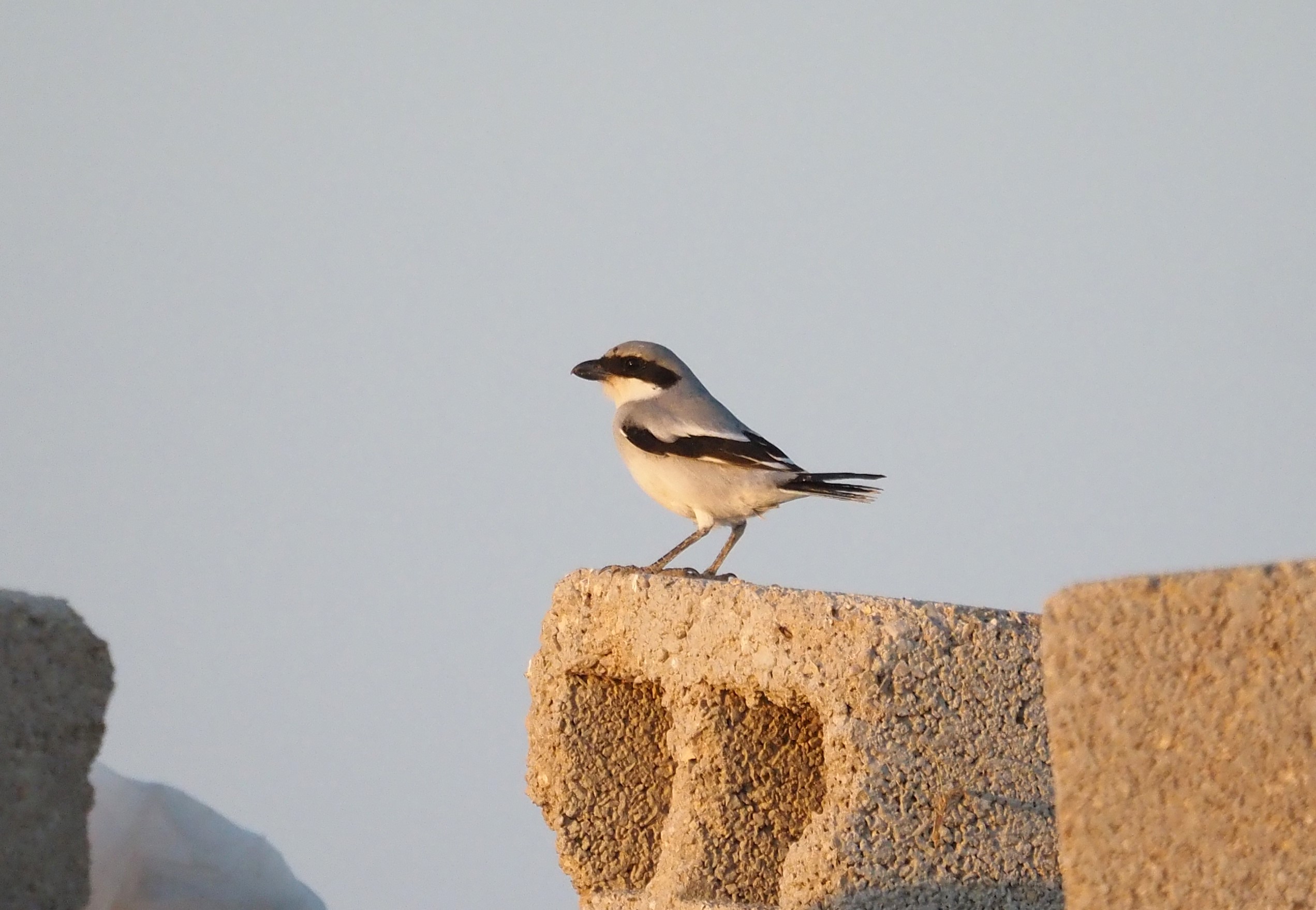
From here we drove some miles South to the main birding stop of the day, some extensive farms in the middle of the desert. These locations are famous due to the quality of its birdlife, and because they can attract any single bird moving tens of miles around them. A fast scout in the very first field produced tens of Cream-coloured Coursers and Greater Hoopoe Larks. Along with them, small flocks of Crested and Black-crowned Sparrow Larks. All together along with several Isabelline & Desert Wheatears. At least 5 Marsh Harriers were patrolling the area, and here we also got the only one Montagu’s Harrier of the whole trip. Here and there we found small contingents of Tawny Pipits, and a couple of Levant Grey Shrikes kept an eye in what it was moving around.
Far inside there is another wonderful place where we found several Common Kestrels but also 1 Northern Wheatear (first and last of the trip), a Persian Wheatear (first ever for me in this location), and a bunch of Namaqua Doves. A small flock of Chestnut-bellied Sandgrouses flew from one of the sides of the main field, but unfortunately not everybody saw them.
Back to the main road, we still had time for a coffee stop before driving the last part of our long transfer and arrive to our accommodation for before dinner.
Grey Hycopolius (Hypocolius ampelinus). The first of many contacts with this interesting species was this lovely female type. Image by Pete Sutton.Brown-necked Ravens (Corvus ruficollis). Image by Carles Oliver.Steppe Grey Shrike (Lanius excubitor pallidirostris). Image by Pete Sutton.Desert Wheatear (Oenanthe deserti) always a superb bird. Image by Pete Sutton.Persian Wheatear (Oenanthe chrysopygia), a scarce species South of the Empty Quarte. Image by Carles Oliver.Greater Hoopoe Lark (Alaemon alaudipes) was seen in numbers along the tour. Image by Carles Oliver.Cream-coloured Courser (Cursorius cursor). At least 50 of them were seen! Image by Carles Oliver
Day 4. While having breakfast nobody thought that we were about the experienced what some of the clients defined as “one of the best wildlife days in my life”. Yes, it was an intense day.
The first stop of the day was to explore Aïn Hamran. This is probably one of the best locations in Oman, and it is always amazing to birdwatch in this open woodland following a small stream (aïn). This is the lowest part of the wooded slopes that, on its highest end, connects with large cliffs.
Even from the car park we connected with the first species living in the area: Palestine Sunbird, African Silverbills and the very common Cinnamon-breasted Bunting were all seen here. A short walk around produced the first of many Arabian Warbler and Black-crowned Tchagra along with the first Turkestan Shrike of the trip. Rüppell’s Weavers, Abyssian White-eyes and African Paradise Flycatchers seemed to be everywhere, and among the waves of Laughing Doves singing we could heard Arabian Partridges calling in the slopes.
We walked down the aïn to scan some proper trees for the main target in the area. Suddenly, two Arabian Grosbeaks appeared in the top of one of the trees just to disappear as fast as they came! Virtually nobody saw the birds so we started scanning the trees when suddenly the pair of Grosbeaks flew off the trees. We followed the birds, distracted by the many Arabian Warblers and the Tchagras. We found just at the moment that Short-toed Eagle was flying above us. A few tour participants connected with the birds, but for our desperation they flew off again. After 10 eternal minutes it was Ramiro who found one of the Grosbeaks in the top of a dead tree, but very far away. And again, they flew off!
At this point almost everybody have had something in these little fellas, but no everybody. We dispersed around, Blackstart and Long-billed Pipits were enjoyed but the Grosbeaks were gone. Finally we went back to the place where we first saw the birds, and this time it was Dani who found them in the top of a tree. A very nice view for everyone, finally!
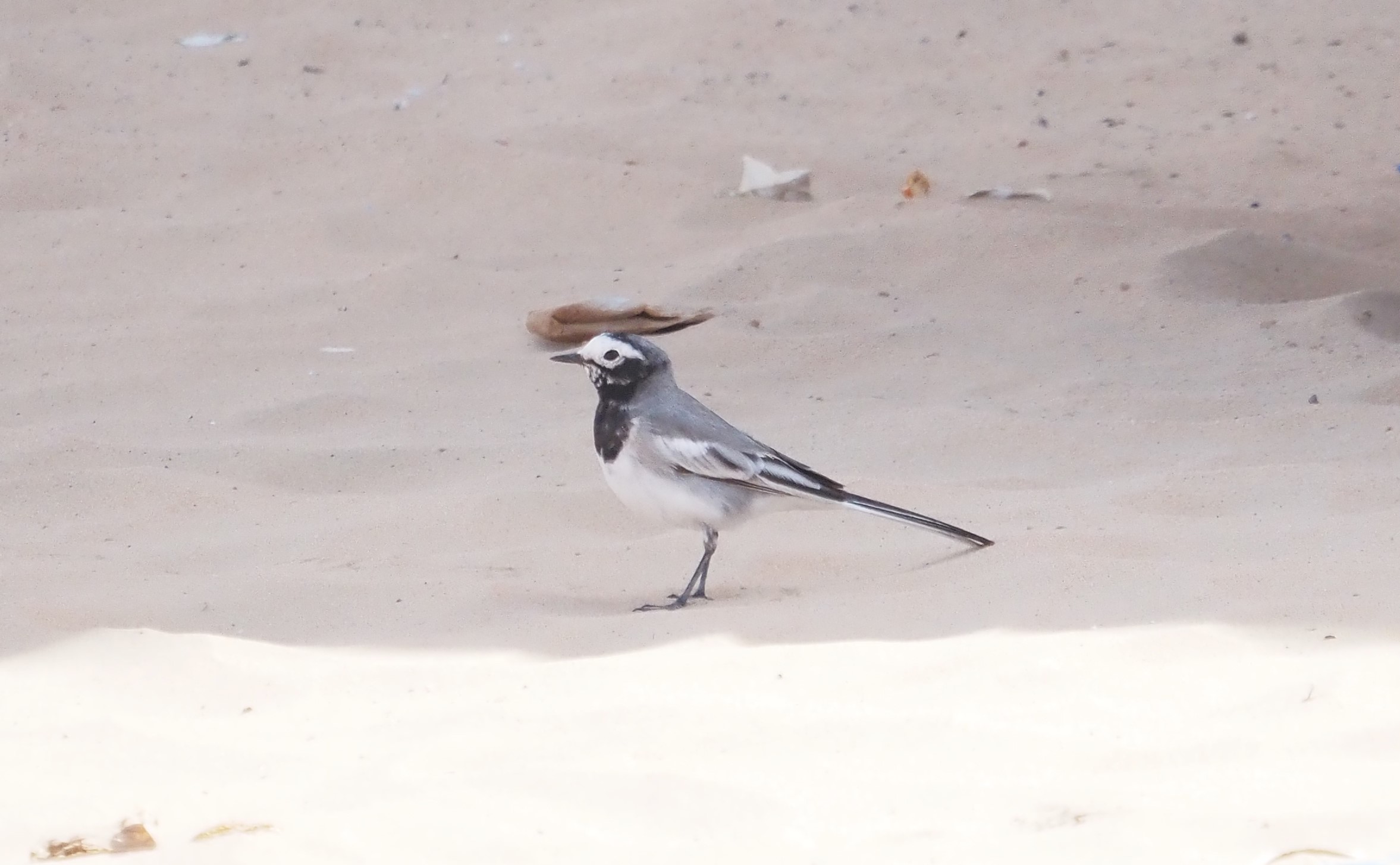
Exploring around the stream we got excellent views on Citrine, Grey, Yellow & White Wagtails, Common & Green Sandpipers, Temminck’s Stint and Moorhen. A Eurasian Sparrowhawk flew over just at the moment that a Namaqua Dove came to drink water. Flocks of Tristam’s Starlings were now more present that early in the morning and they were mixing in the fig trees with the very common White-spectacled Bulbuls and small flocks of White-eyes and Palestine Sunbirds. A detailed scan of the tangles allowed us to get some Clamorous Reed Warblers but also Eastern Olivaceous Warbler and Graceful Prinias. A pair of Arabian Bee-eaters were also very welcome by the group.
We decided to have an early lunch at Aïn Hanram, and this extra time allowed to enjoy very close views on the African Paradise Flycatchers and finally got good views on the Red-breasted Flycatcher that had been calling around us..
Turkestan Shrike (Lanius phoenicuroides). Image by Pete Sutton.Arabian Warbler (Curruca leucomelaena). Image by Pete Sutton.Arabian Black-crowned Tchagra (Tchagra senegalus percivali). Image by Pete Sutton.A couple of images on Arabian Grosbeak (Rhynchostruthus percivali), a must for anyone birding in Oman. Images by Carles Oliver.This Red-breasted Flycatcher (Ficedula parva) was very skulky! Image by Pete Sutton.African Silverbill (Euodice cantans)Graceful Prinia (Prinia gracilis). Image Pete Sutton.The delicate beauty of Namaqua Doves (Oena capensis). Image by Carles OliverA very spectacular white-tailed African Paradise Flycatcher (Tersiphone viridis). Image by Pete Sutton.Citrine Wagtail (Motacilla citreola) supershot! Image by Pete Sutton.Grey Wagtails (Motacilla cinerea) nest along the Omani streams. Image by Pete Sutton.
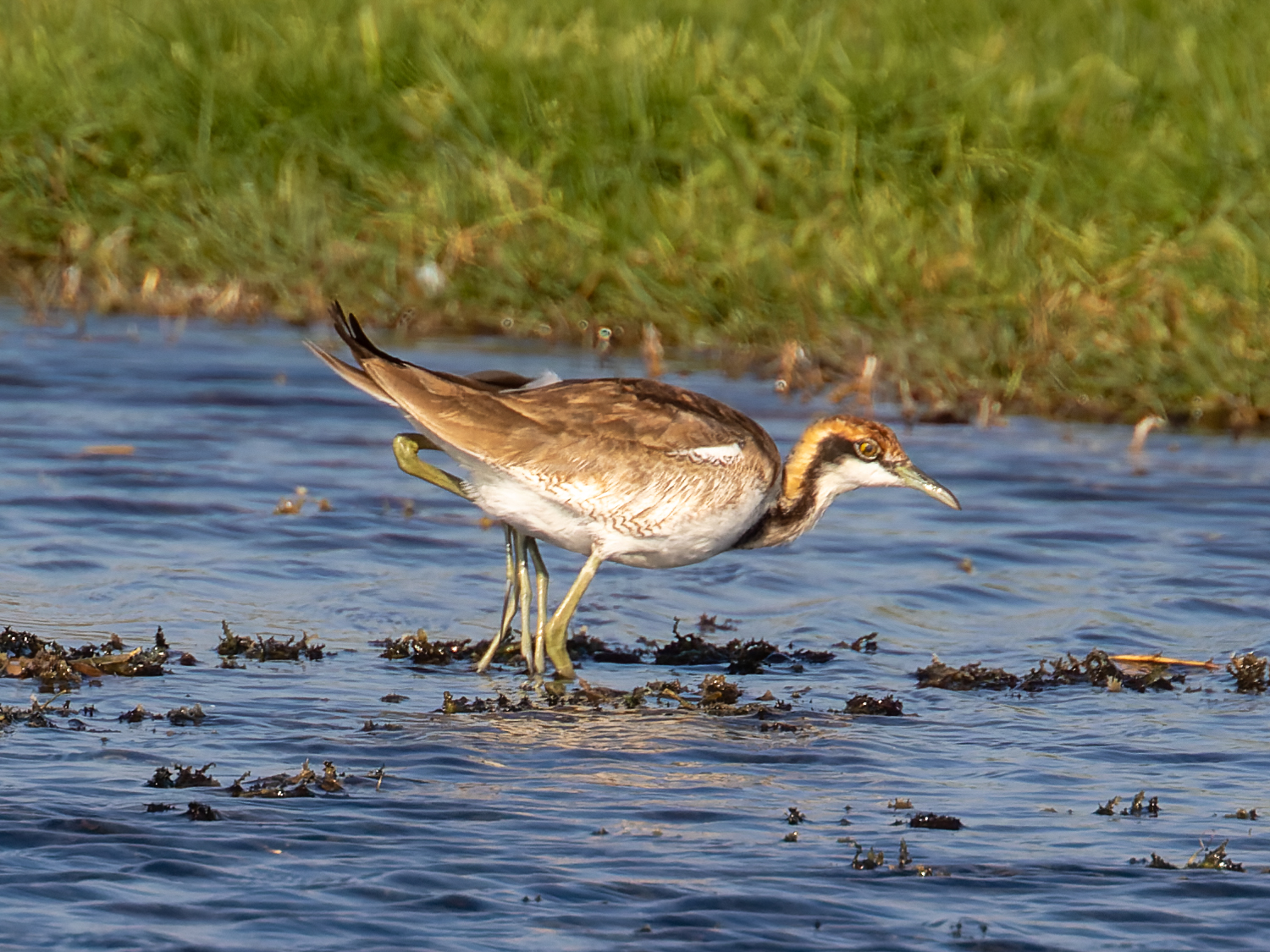
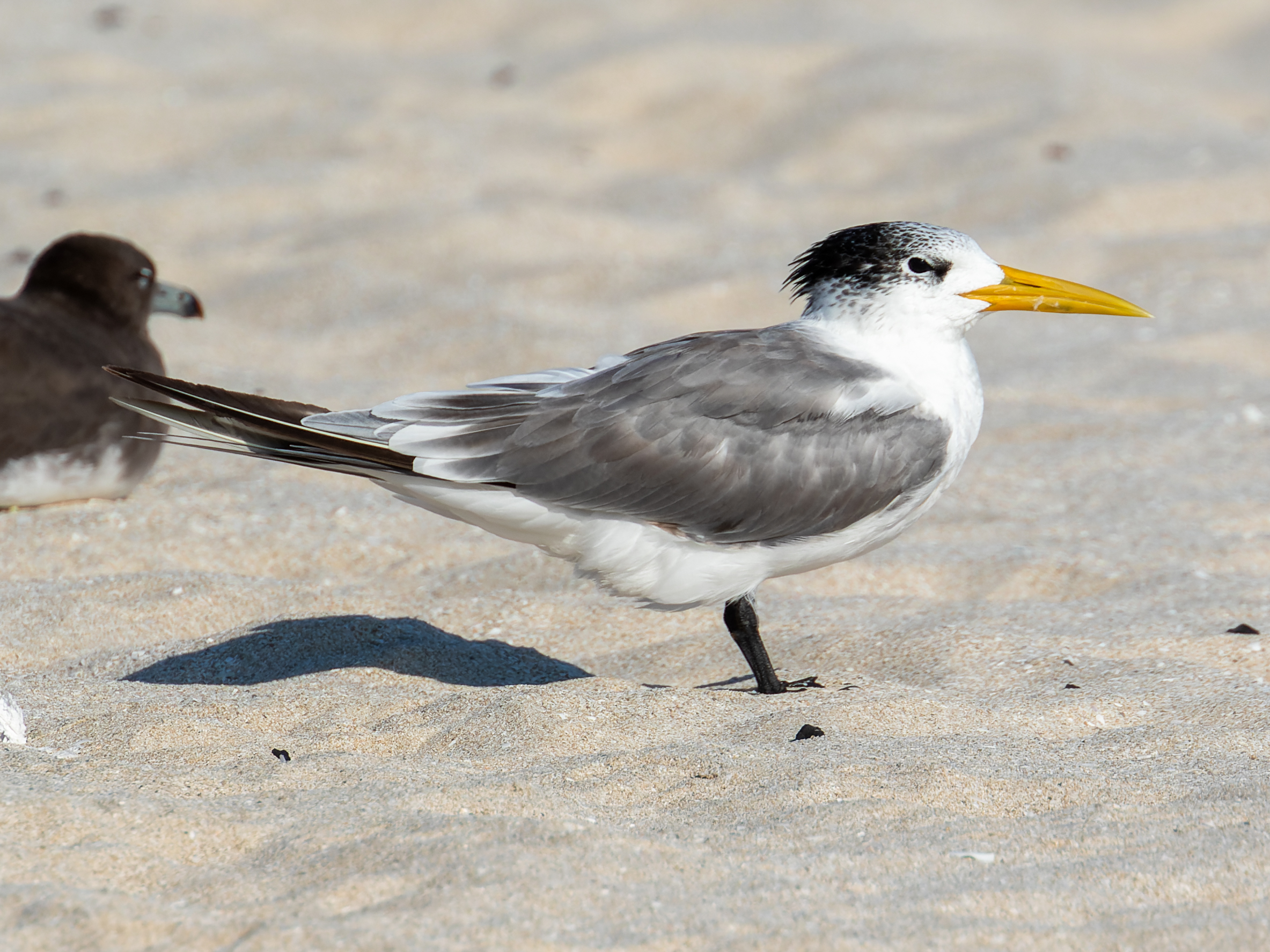
Well, what a place! But it was time to leave. We drove down to the coast to explore a one of the many river mouths around Salalah. After a very short drive, we were birdwatching for a while at East Khawr. Here, we were glad to see large flocks of hundreds of Glossy Ibises but also good numbers of Tufted Ducks (for the Omani starndards), Greater Flamingoes, Whiskered Terns, Black-tailed Godwits, Indian Pond Herons and Citrine Wagtails. Pheasant-tailed Jacana, Middle Egret, Spotted Redshank (3), Little Ringed Plover and Cotton Pygmy Goose were all three new for the trip, and all they three provided good scope views. A couple of distant Greater Spotted Eagles & 1 Booted Eagle were guarding the area. In the beach, we enjoyed a large flock of Heuglin’s Gulls with some Steppe Gulls in the middle. This flock allowed close views on all of them, but also on Sooty Gulls, Greater Crested, Sandwich, Gull-billed and Lesser Crested Terns and a few Black-headed Gulls were also noted along with the much common Slender-billeds’. Sleeping along with Little Stints, Ruff and Dunlins there was a small flock of White-winged Black Terns that flew a couple of times around us.
From here we drove South to another river mouth. The afternoon was still sunny and ir our way had a couple of Steppe Eagles soaring above the highway. Once arrived to this second river mouth, we enjoyed a good number of both Tibetan & Greater Sand Plovers along with 70 Cattle Egrets, 1 Turkestan Shrike in the dunes, 1 Osprey having a prey in the reedbeds and a myriad of waders including Little Stint, Bar-tailed Godwit, Kentish & Common Ringed Plovers, Dunlins and 1 Citrine Wagtail. Not happy with this we still decided to visit a third place. It was still early afternoon so we got lots of time. Getting in this 3rd river mouth was a nice experience. At first, we were delighted with the many Black-crowned Sparrow Larks along with a couple of flocks of Richard’s Pipits along with other species. But suddenly something crossed the road in front first vehicle: a large snake!
After a fast acceleration we stopped just by the snake, that seeked for shelter under a medium size concrete block. It was a large, dark snake. It couldn’t be many options. We saw that the snake was actually under the block, not far from the surface, and in a rather risky movement we decided to move the block up. Our hope was to make move the snake so everybody in the group could see it and, hopefully, identify it!
We moved out the block, with everybody standing behind it so the snake had plenty of room to run and escape. As expected, it took the snake some seconds before it moved. Unfortunately Dani could not wait that long and stood almost in the way out, so when the large snake (2+ meters long) came out, Dani had to perform an Olympic jump to get out of its way!! After a couple of seconds we could all see that we were actually facing a Cobra, an Arabian Cobra to be clear. The Cobra run around, and a couple of times stood up in the typical way of, well, how Cobras do. It almost opened the collar before disappearing in the grass. We are all really impressed about how fast this snake was able to move. Amazing!!
Pheasant-tailed Jacana (Hydrophasianus chirurgus). Image by Pete Sutton.Great Crested Tern (Thalasseus bergii). Image by Pete Sutton.Glossy Ibises (Plegadis falcinellus). Image by Pete Sutton.Black-crowned Sparrow-Lark (Eremopterix nigriceps). Image by Pete Sutton.Arabian Cobra (Naja arabica) by Pete Sutton.
Well, still over excited about the Cobra, we finally arrived to the our third river mouth that afternoon. We were close to the sunset, and the river mouth full of activity with 12 Spoonbills, Clamorous Reed Warbler, White-winged Black & Gull-billed Terns and a nice variety of other birds. Here Sergi found a nice Yellow Bittern and we all enjoyed this tiny beauty before a small flock of Rose-coloured Starling emerged to stop at the top of a dead tree. As the Golden Hour was getting pass to sunset, a large flock of Swallows arrived to the reedbed. We counted about a dozen Barn Swallows along with 6 Pale Crack Martins and 1 Sand Martin. We kept an eye around and, suddenly, a lovely Small Pratincole just emerged from the nothing. We got amazing views on it, but at some point there two Small Pratincoles, and later three of them that were flying even among us!! This was an amazing moment, and it was ranked as one of the birds of trip. Tiny contingents of Rose-coloured Starlings were still flying around, moving along with Common Mynas to their roosting places, and we were about to leave when Joe just found an European Red-rumped Swallow! It was actually a new bird for our trips in Oman. Amazing tick!!
The light was almost gone but the day was not done yet! Back to the vehicles, still in magic after the Pratincoles and so and on, we moved into the hillsides. Our goal was to explore a large Aïn during the night, hoping for some Owls..
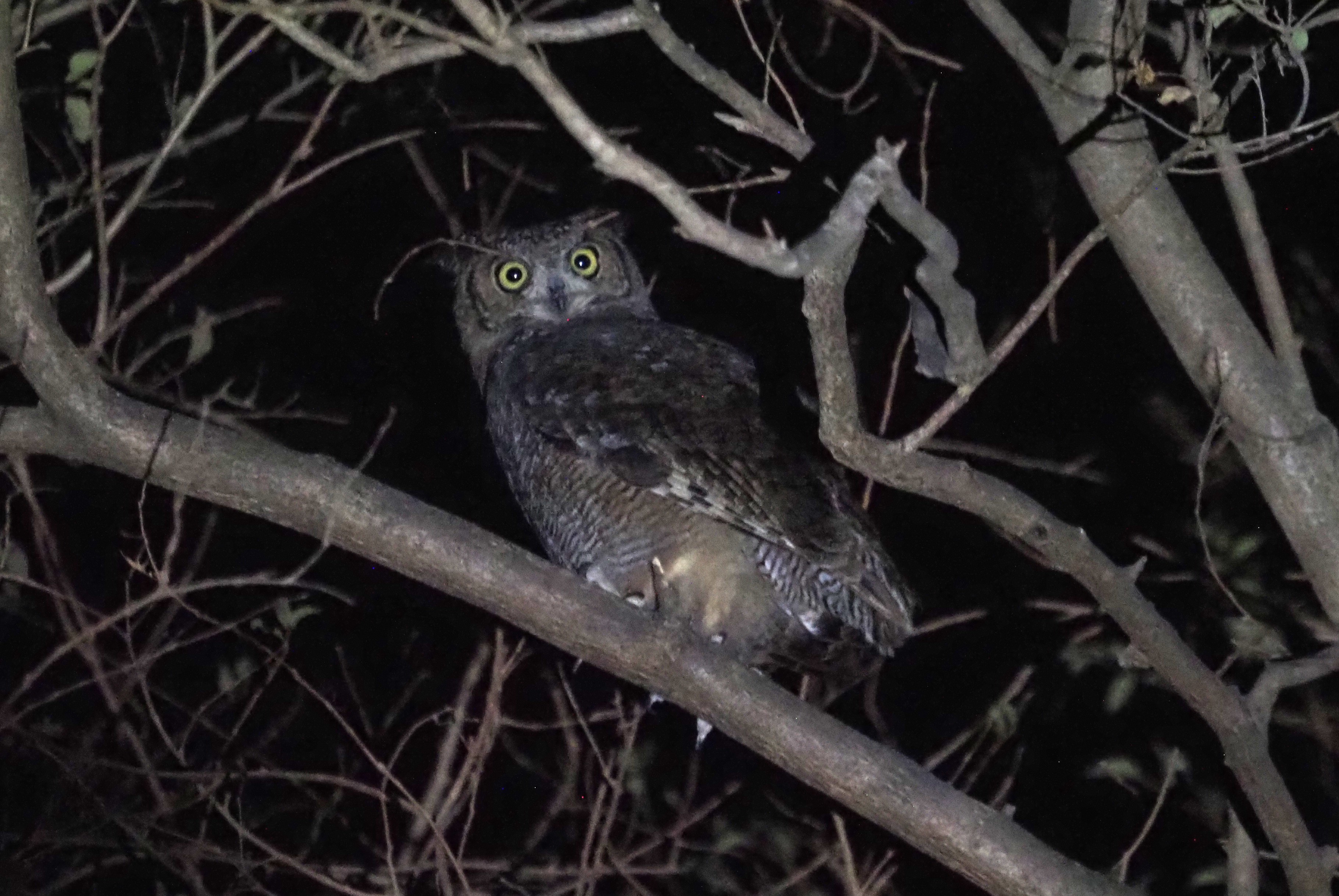
We arrived to the selected place just after dark. It didn’t take long before we heard some Arabian Scops Owls singing in the slopes. Here we also heard a Night Heron. After a couple of trials, we finally got close enough to one of them, and in a few minutes the whole group was enjoying amazing views on 1 Arabian Scops Owl. Not happy only with this we moved a bit into not a very promising place, but after a couple of minutes we could heard 1 Arabian Eagle Owl singing up in the slope. It took us some effort, but we finally got very nice scope views on Arabian Eagle Owl, singing its heart out while a second bird was replaying it at the other side of a small quarry-like place.
The group could not be more happy, and after enjoying such a good views we decided to go back to the accommodation. We were all just commented the many, many wonderful species of the day when suddenly a pack of 7 Arabian Wolves just crossed the road in front of us. Again, a bit of speed was necessary to catch up with us, but only 10 seconds after they crossed we were out with the lights, and everyone in the group had very nice views on these rather small Wolves as they were moving around and jumping the vegetation. A couple of them stood longer than the rest, looking at us only 100 metres away, and this is for sure of the most incredible sights of the trip!
Still not believing how well we saw these Wolves, we just came back to the accommodation. What-a-day!!
Yellow Bittern (Botaurus sinensis). Image by Pete Sutton.Clamorous Reed Warbler (Acrocephalus stentoreous). Image by Carles Oliver.Small Pratincole (Glareola lacteus), frontal image by Carles Oliver.More on the Small Pratincoles (Glareola lacteus) at sunset. It was delicious to see them flying around us. Image by Pete Sutton.Small Pratincole in a hard vent with the last light. Image Carles OliverArabian Scops Owls(Otus pamelae) were as wonderful as always! Image by Carles Oliver.
Day 5. About to start another day, and we were all intriguing about what was Oman having for us that day? After breakfast we drove up in the high plateau, where a number of goodies were waiting for us. But even before leaving Salalah we got a nice surprise; a flock of Alpine Swifts flying low above the motorway!
This plateau stands between 700 and 900 metres above sea level, and runs parallel to the Dhofar coast. As soon as arrived to the highlands, we started to have nice birds. Tree Pipits and Cinnamon-breasted Buntings were moving in small flocks and Fan-tailed Ravens were all around the sky, often joined by Tristam’s Starlings. Up in the sky, we got nice views on Steppe Eagles, and a few Eastern Imperial Eagles were not high up but on the posts along the road or even feeding on the ground! They provided great views that everybody enjoyed very much. A nice Siberian Stonechat was also a nice pick up, and again provided really close views for the enjoyment of the photographers in the group. Following the lane, we noted a couple of Booted Eagles circling right before a superb male Pallid Harrier showed up flying really low on the slopes. A Short-toed Eagle took over, providing good views. Now, there were 3 Eastern Imperial Eagles going West, and a small flock of Steppe Eagles was circling. At this point, 4 Eurasian Griffons appeared soaring low above our convoy.. We were not even arrived to the first proper stop of the morning when another Pallid Harrier was noted hunting in the plateau. We enjoyed good views again, and could compare this bird with a close Steppe Eagle.
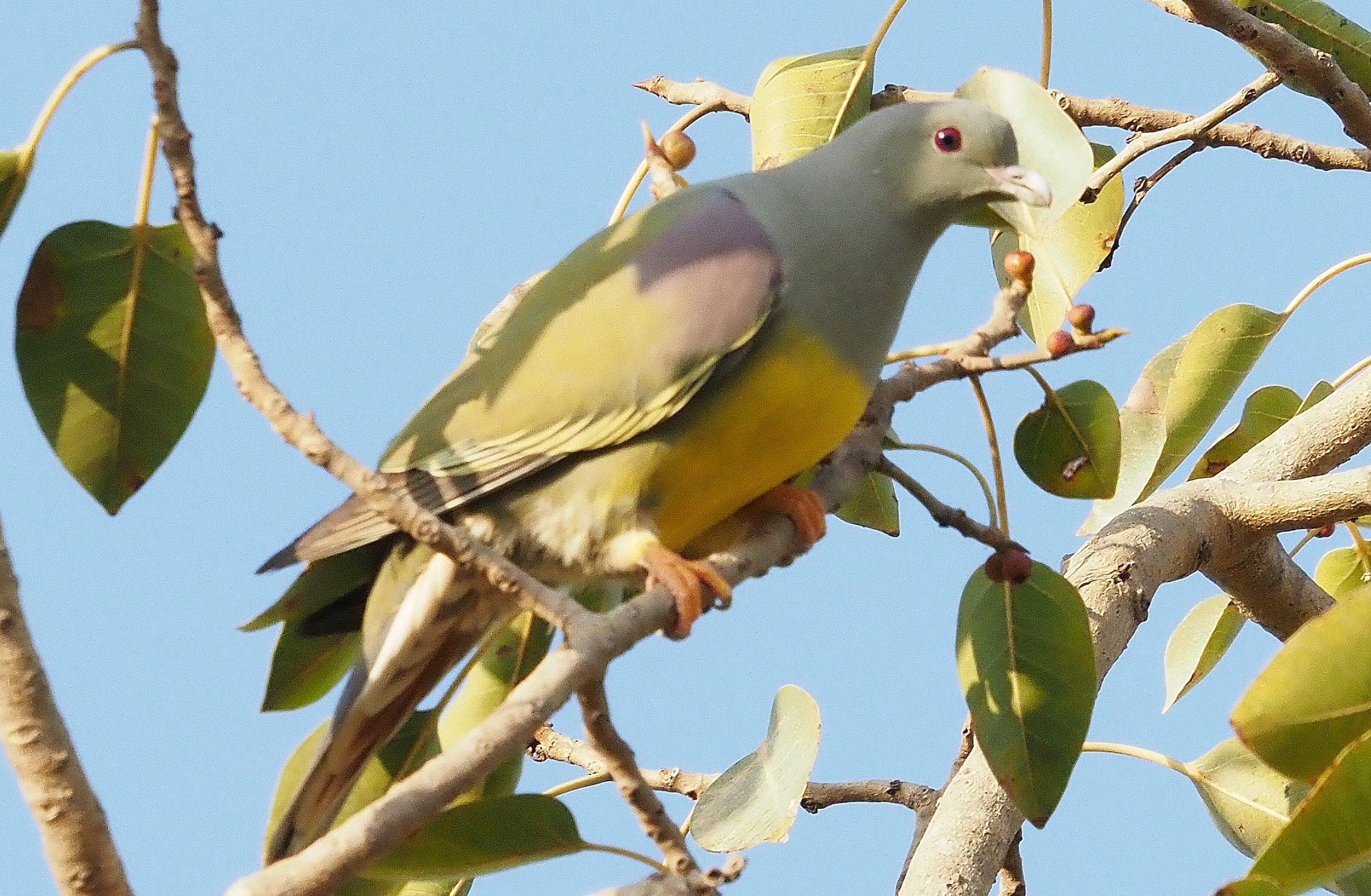
Still amazed, we got out of the cars to scan a proper place for Yemen Serin. This location can look like not very interesting at first glance, but it is a very interesting spot! Blackstarts and Crested Larks are easy to see along the access lane, and as soon as we walked around we got a small flock of Tree Pipits moving away from us. 4 Bruce’s Green Pigeons flew off from a large fig tree, providing good flight views. We walked around. Both Richard’s and Long-billed Pipits were noticed, and we were pointing a typical bufh for Yemen Serins when Sergi called out two of these scarce finches coming to that same bush! After a short stop in the bush, the birds came down to feed on the ground along with the very common Cinnamon-breasted Buntings. It didn’t take long before everyone in the group was enjoying these small birds. A small walk around came after this. A Namaqua Dove was displaying in the sky, a gorgeous Bonelli’s Eagle was coming out from a sinkhole and we were all enjoying the bird when Joe found a Swift in the sky that turned out to be a Pacific Swift flying high up along with Pale Crack Martins.. Couldn’t not believe my eyes! The bird was high and was not easy to track, but most of the group got its eyes on the bird, even if shortly, before it vanished in the blue sky! Cracking spot! There are less than 10 records of Pacific Swift in Oman!!!
Siberian Stonechat (Saxicola maurus). Image by Pete Sutton.Pallid Harrier (Circus macrourus) flying parallel to our convoi. Image by Carles OliverLovely young Steppe Eagle (Aquila nipalensis). Image by Pete Sutton. Eastern Imperial Eagle (Aquila heliaca). Image by Carles OliverObliging Blackstart (Oenanthe melanura). Image by Pete Sutton.Yemen Serins (Crithagra menachensis) showed very well. Image by Carles Oliver.Few places on Earth can provide views on Bonelli’s Eagles (Aquila fasciata) as Dhofar does. Image by Carles Oliver.Probably not the best image on a Pacific Swift (Apus pacifica) ever, but it works. Image by Carles Oliver.
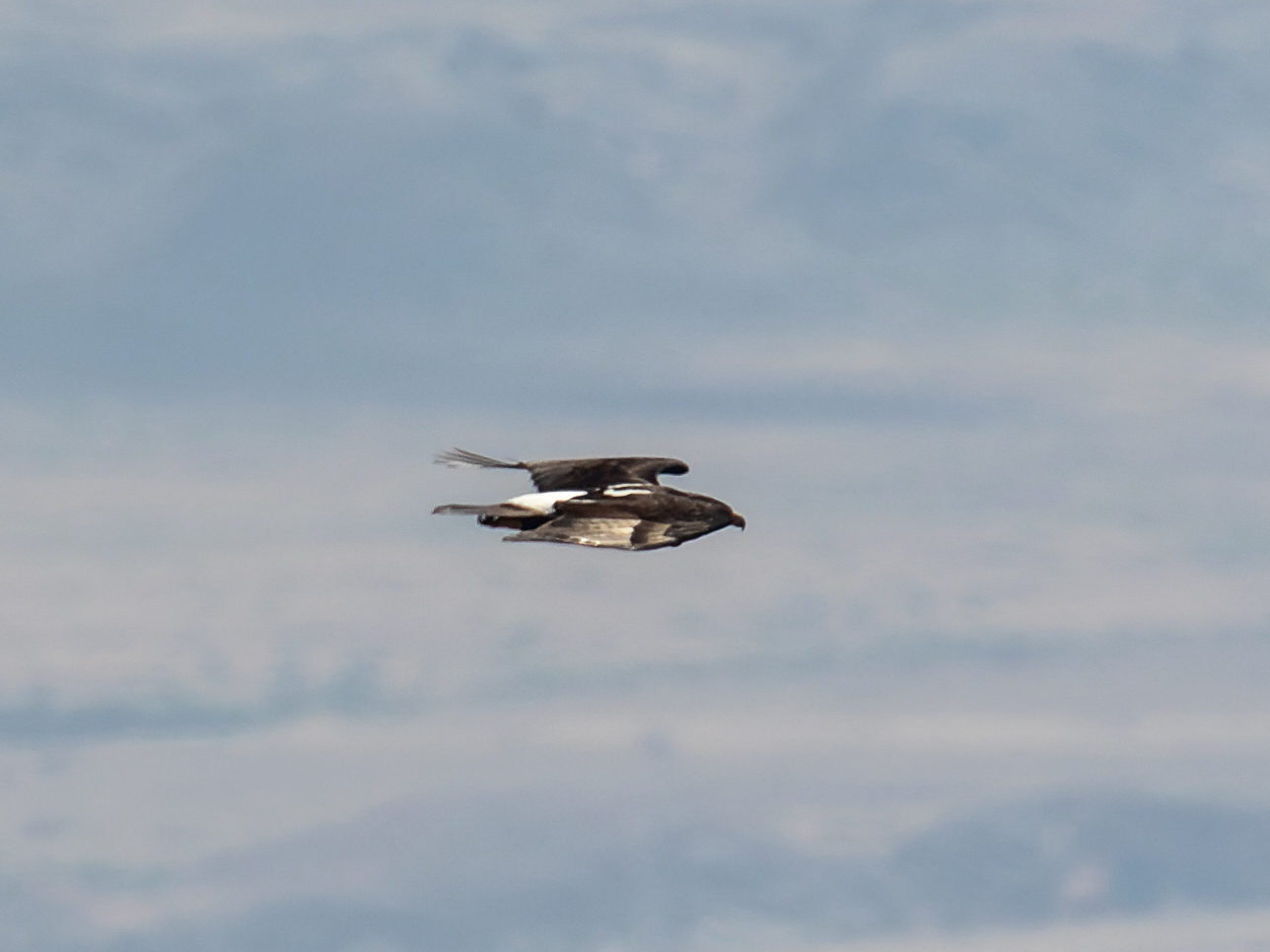
From here we kept going higher. The vegetation becomes slightly thicker and soon we were enjoying the first of many Arabian Wheatears along with the commoner Isabelline and Desert Wheatears. After some nice shots, we drove to one of the impressive locations along our itinerary. Here, the plateau abruptly ends in a massive cliffs that goes down for over some hundreds of metres before in transforms into a complex myriad of valleys that led to the close Arabian Sea. It only took us a couple of minutes to have a pair of Verreaux’s Eagles passing by, providing great views. The Eagles stop in the top of some distant rocks, but not for long. Fan-tailed Ravens were not happy with its new neighbours so they moved them out the cliffs. During the next minutes, we got a number of sights on the Eagle moving always along the edge of the cliffs. The cliffs were also having a some Arabian Wheatears and we were also pleased to add Rock Hyrax to the trip list as we had some nice scope views. Before leaving the area, we had long scope views on the pair of Verreaux’s Eagles on the top of the cliffs, and a light form Booted Eagle soared above them as we started moving back to the vehicles.
Moving a bit lower, we had a stop in an open area where enjoyed our succulent packed lunches. Here, we had a full adult Eastern Imperial Eagle, a couple of Long-billed Pipits, a flock of White Storks moving in the distance, the first Arabian Sunbird of the trip and a EurasianWryneck that, unfortunately we could not add to the list trip as it was only seen by 1 of the tour leaders..
Arabian Wheatear (Oenanthe lugentoides). A cracker! Image by Pete Sutton. Isabelline Wheatear (Oenanthe isabellina). Image by Pete Sutton.Verreaux’s Eagles (Aquila verreauxii) provided us with a full set of acrobatic flights! Image by Pete Sutton.This impressive Eastern Imperial Eagle (Aquila heliaca) was soaring above our lunch spot. Image by Pete Sutton.A drake Palestine Sunbird (Cinnyris osea). Image by Pete Sutton.
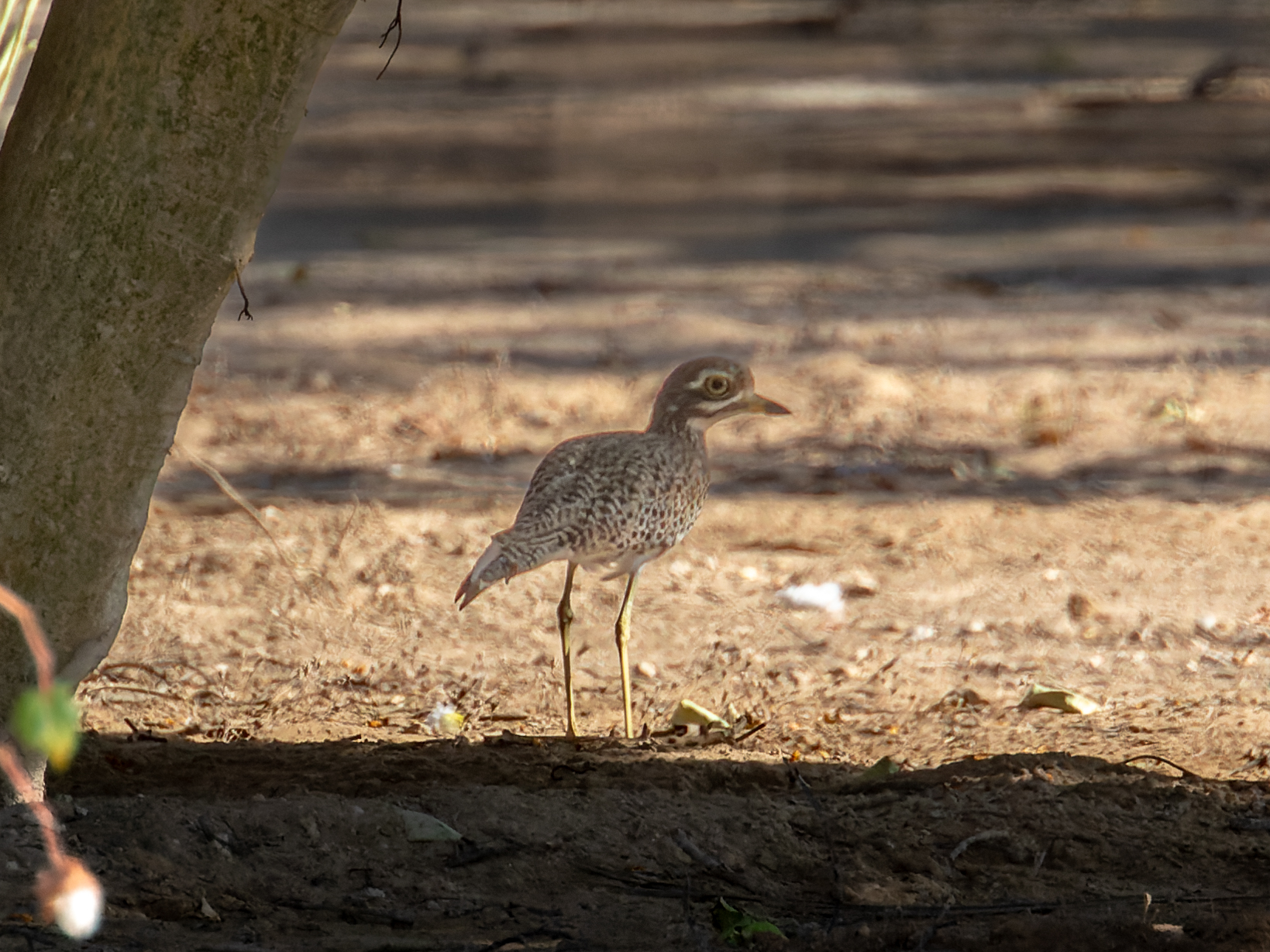
Back to the coast, we had a fast stop to look for Spotted Thick-knee. It didn’t take long before we got 1 bird, but it was hard to direct everybody on it. Meanwhile, we were distracted by the Arabian Sunbirds feeding around, and also by the Alexandrine Parakeets moving in the palm trees, with some individuals showing really well. A Whiskered Tern and more Booted Eagles were noted here.
Our next stop was to explore one of the largest urban parks in Salalah. Here, the main attraction was to have good views on the large flock of Yellow-throated Sparrows overwintering in the gardens. About 35 of these birds were resting on the trees or feeding on the ground and, along with them, some very attractive Scaly-breasted Munias were also noted. This a scaped species, but was celebrated for some in the group. The park also provided good views on Rüppell’s Weavers, Yellow Wagtails and Tree Pipits, but also on some Arabian Sunbirds and on 1 Eastern Orphean Warbler.
We still had time to scan a proper wetland. This time we went to West Kwar, where we had a very good array of Gulls, Terns and Ducks. 7 Ospreys were on the beach along with Whimbrels, Oystercatchers, Greater Sand Plovers and so on. This is a hot spot for Terek’s Sandpipers, and we saw well above a dozen of them feeding in the tidal plains. Garganey and African Sacred Ibis were new for the trip, and we also had distant views on Citrine Wagtails,Marsh Sandpipers and Palla’s Gull.
The last stop of the day was to explore one of the urban farms in Salalah. These large crops, mainly devoted to the production of cereals, can host large numbers of birds. Unfortunately we were a bit late and our list was not very long. We briefly saw a couple of Singing Bush Larks but never got great views. Isabelline Shrike and Crested Larks were seen, and Wood Sandpiper (3) was new for the trip, but out of that we only got regular species. From here we just went to the accommodation for dinner.
Palestine Sunbird (Cinnyris osea) close up. Image by Carlest Oliver.Spotted Thick-knee (Burhinus capensis). Image by Pete Sutton.Terek’s Sandpiper (Xenus cinereus) feeding around Salalah. Image by Carles Oliver.Tibetan Sand Plover (Anarhynchus atrifrons). Image by Pete Sutton.Scaly-breasted Munia (Lonchura punctulata) in Salalah. Image by Pete Sutton.Yellow-throated Sparrow (Gymnoris xanthocollis). Image by Carles Oliver.
Day 6. After an early breakfast and we drove North to the harbour where our boat was waiting for us. Even before arriving to the harbour, we started enjoying good birds. A small flock of Abdim’s Storks were feeding along with Heuglin’s Gulls, providing really close views.
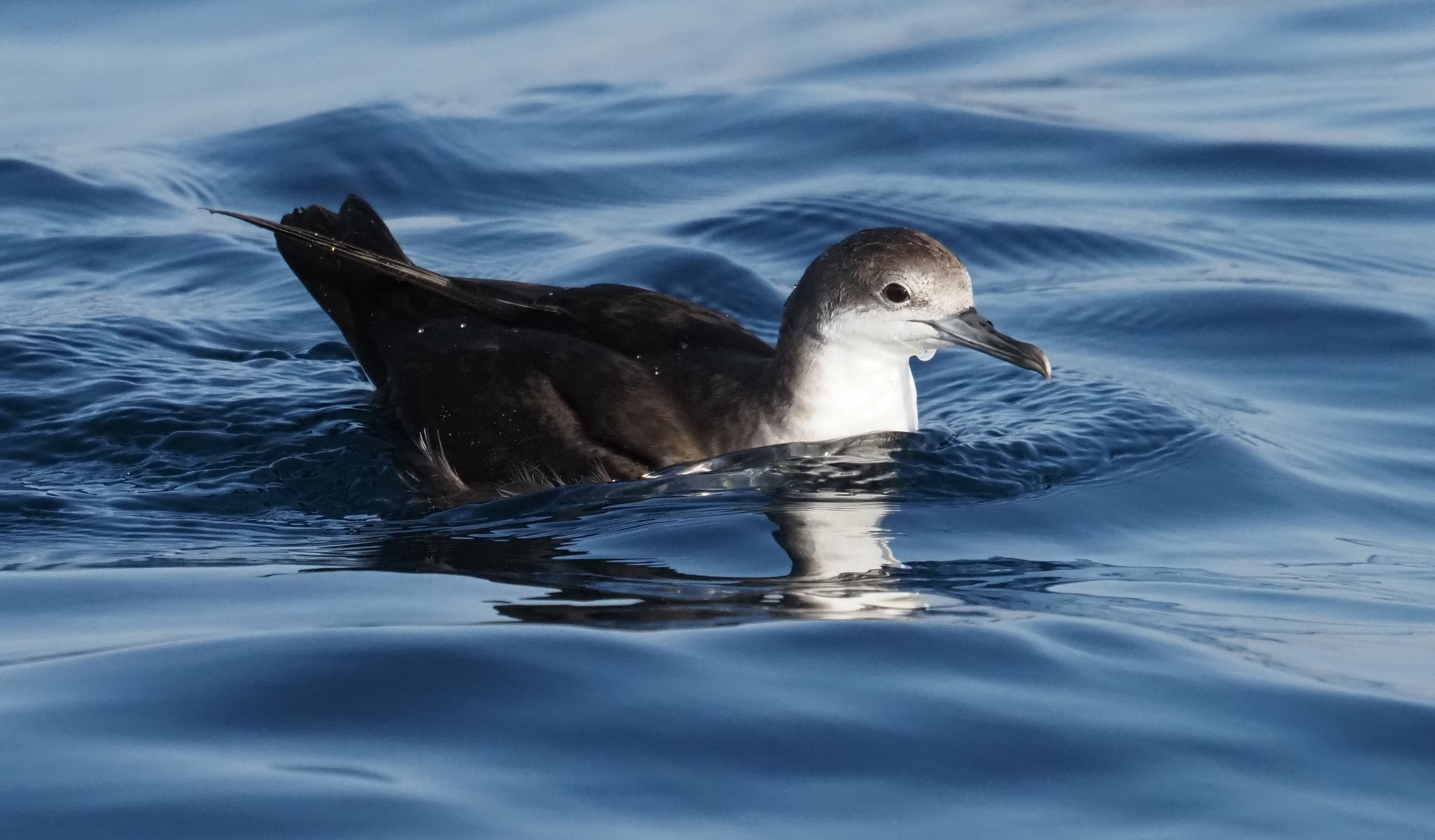
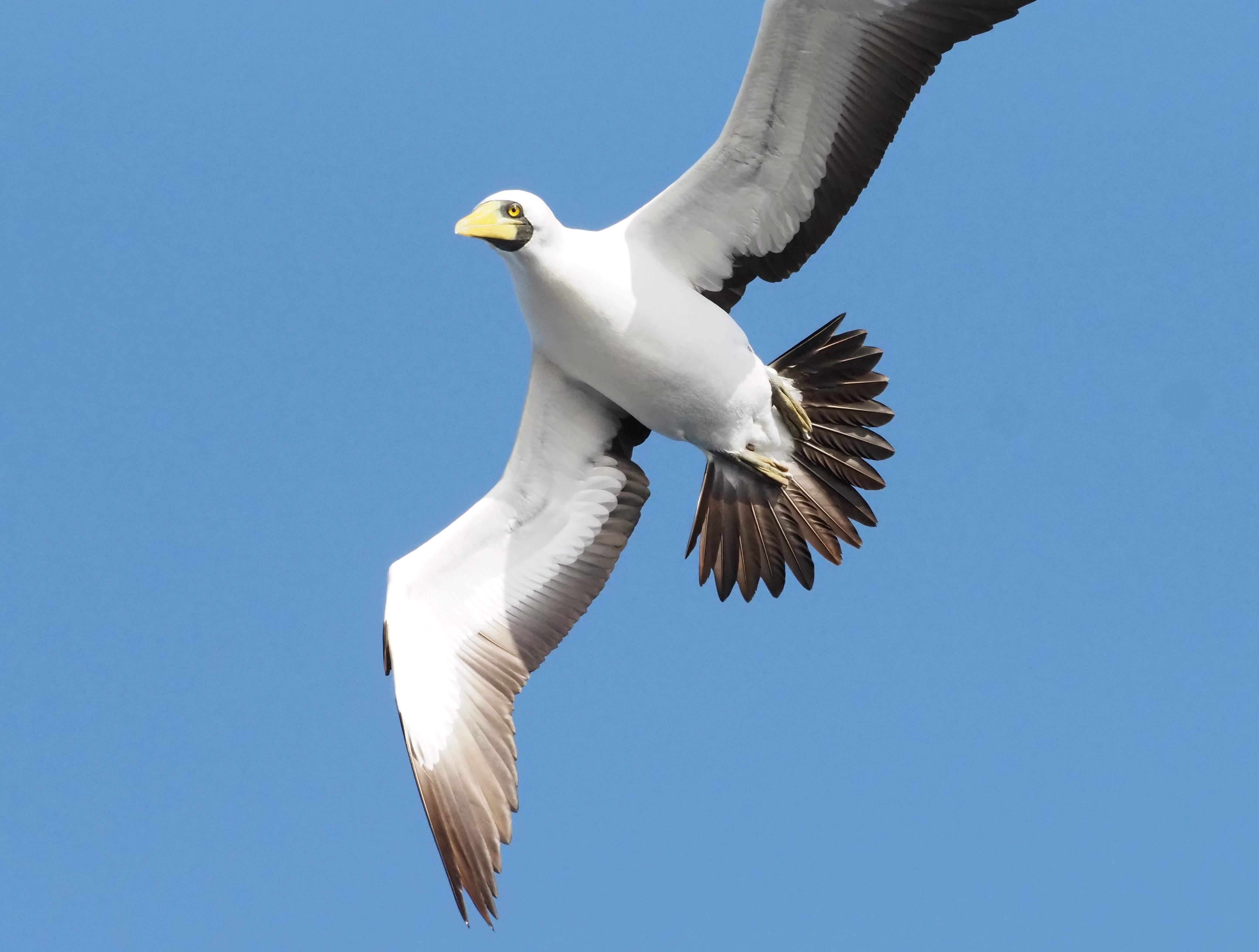
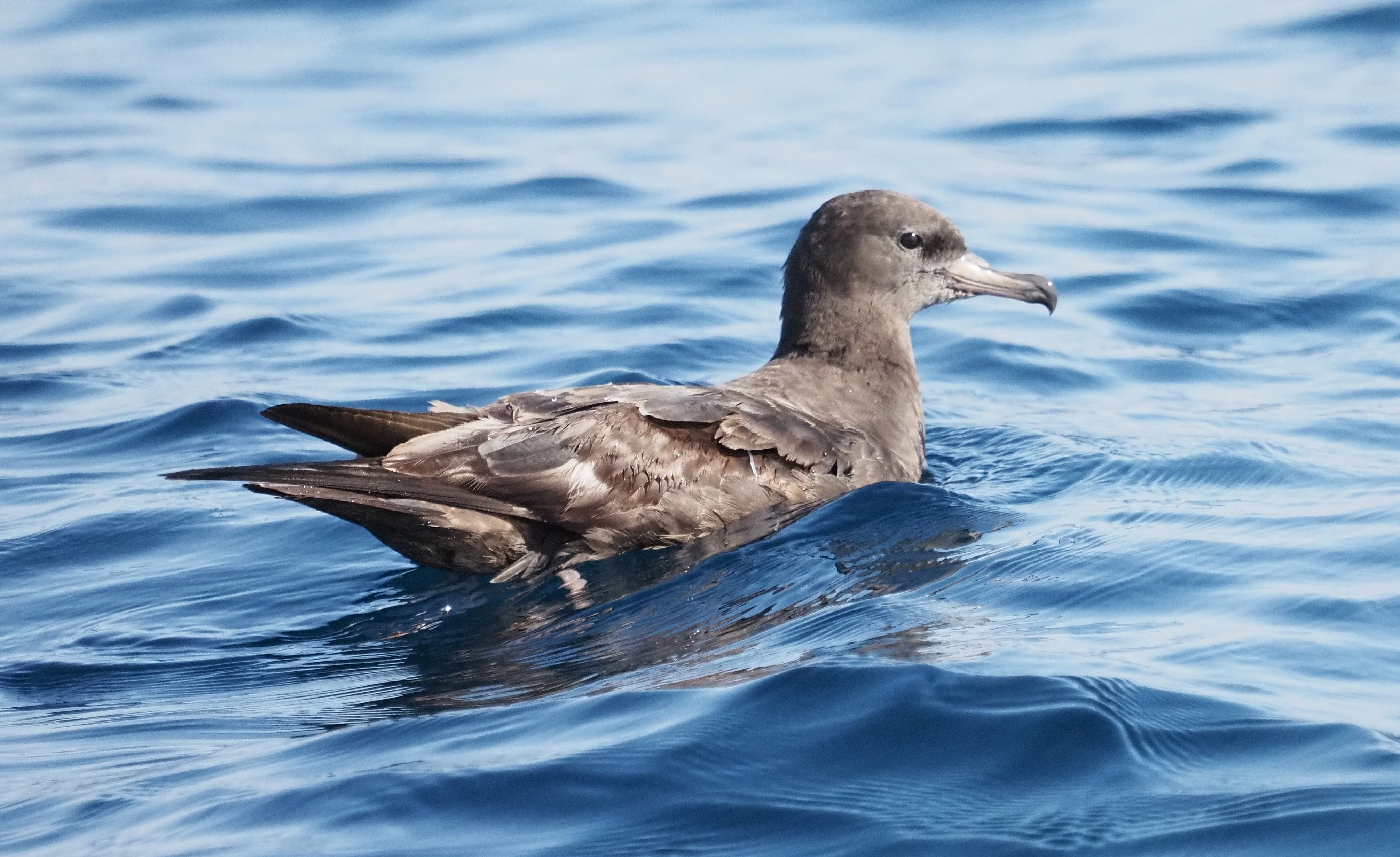
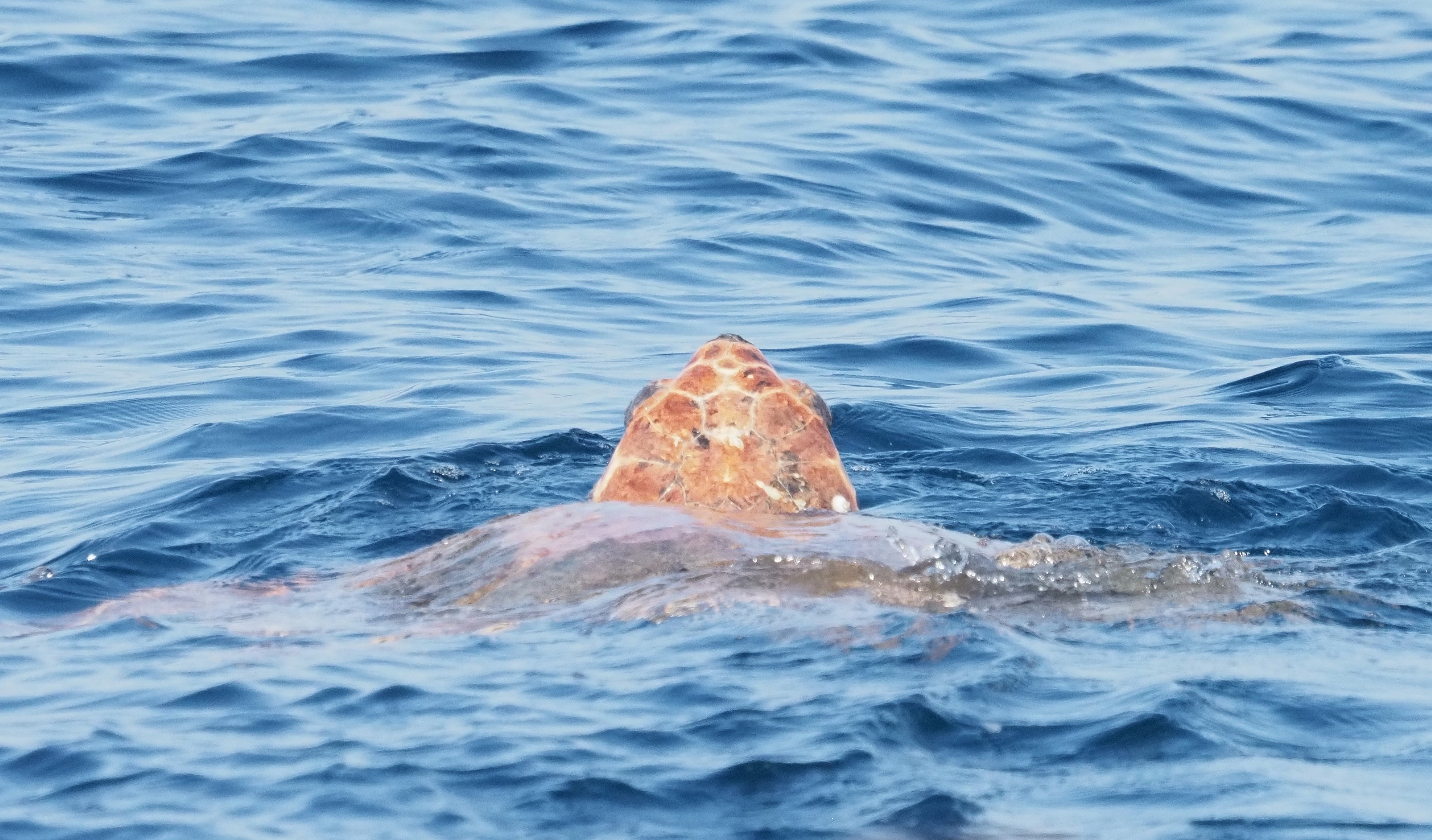
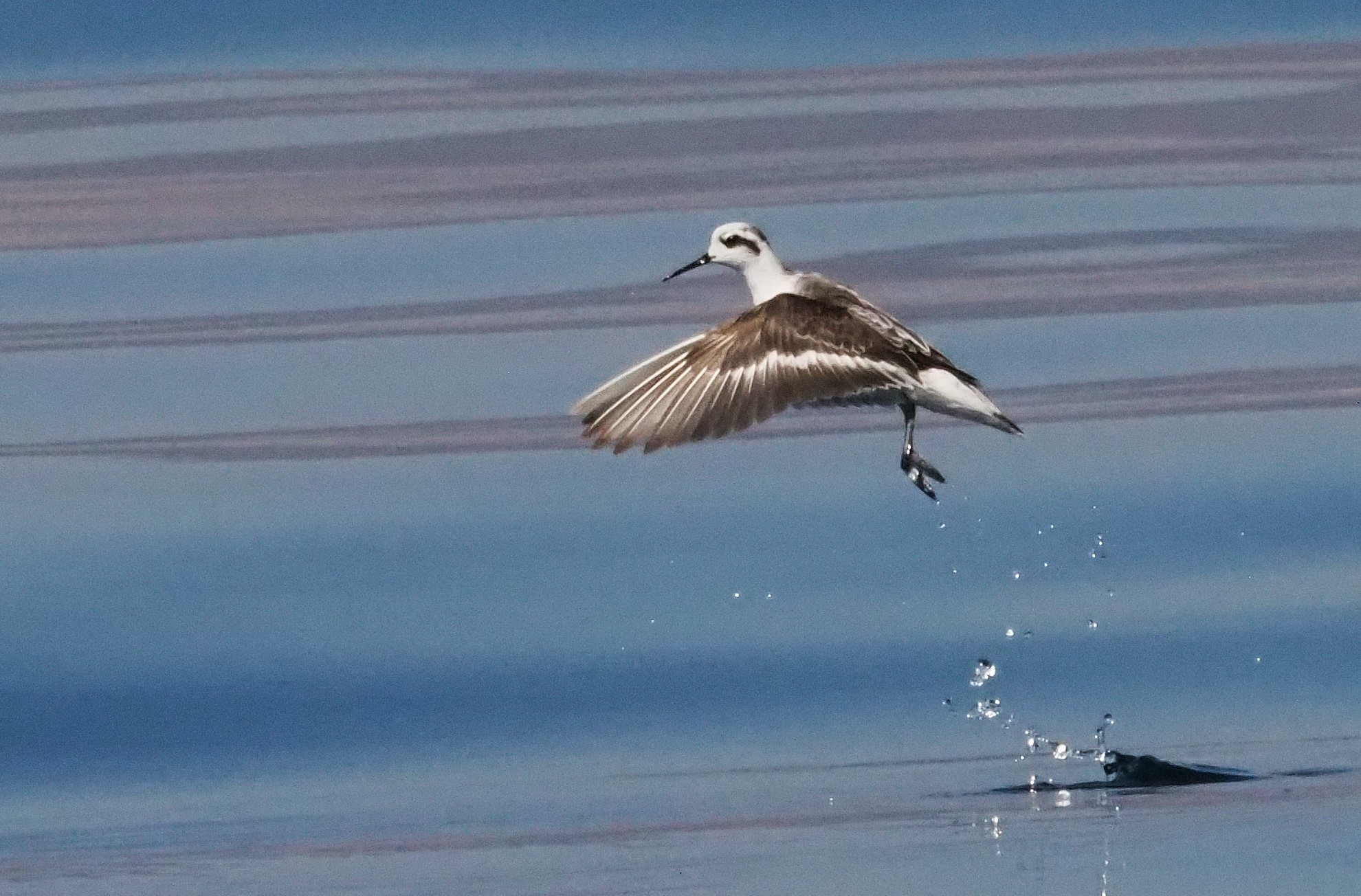
Once in the sea, we had to come back (believe or not, but the main guide forgot both the bins and the camera.. Well, back to the boat we left the harbour surrounded by Olive See Turtles. Around the docks we got Western Reef Egrets but also Striolated & Night Herons. Once on the sea, we started having good birds. A few Persian Shearwaters were soon flying around our boat, and after a few miles a couple of them stopped on the water, at close range, allowing really nice shots. Some Common Terns were moving around, and we were checking them when a very distant Jouanin’s Petrel just showed out, moving South to North and showing its unmistakable shape and flight pattern. Fastly, we tried to put everybody on the bird, that was distant. We moved a bit faster, trying to get closer to the bird, but we lost it before we could be close enough. Despite this, most of the tour participants got the bird, even if only provided distant views. We were still trying to find another Jouanin’s Petrel when Sean found a very nice Flesh-footed Shearwater approaching us from behind. This bird, that is becoming more and more common in Southern Oman, landed around our boat, joined by a couple of Persian Shearwaters. Small parties of Red-necked Phalaropes were moving around us, but was not until we started moving back to the continent when we got some of them close on the water. While enjoying them, Ramiro noticed a Masked Booby moving low above the sea surface. During the coming minutes, we got a few of them, ending with a superb bird landed on the water and allowing us close views and very good shots. This was it, or it was supposed to be it. But it was not, because when we were almost arriving to the coast, a superb Swinhoe’s Storm Petrel just appeared from our right, moving South at full speed. With a bit of effort, we got everybody on the bird and we got some record shots before the bird went away. What a phenomenal way to end our pelagic!
Abdim’s Storks (Ciconia abdimii). Image by Carles Oliver.Persian Shearwater (Puffinus persicus) taking off. Image by Pete Sutton.Persian Shearwater (Puffinus persicus) beside us. Image by Carles Oliver.Flesh-footed Shearwater (Ardenna carneipes). Image by Carles Oliver,Masked Booby (Sula dactylatra). Image by Carles Oliver. Red-necked Phalarope (Phalaropus lobatus) taking off close to our boat. Image by Carles Oliver.Swimhoe’s Storm Petrel (Hydrobates monorhis). Image by Sergi Sales.
Back on the ground, we had a coffee stop to recover from the emotions of the sea, and once recovered we went a nearby urban park. The plan was to enjoy our sandwiches and to have a couple of birds. But it turned up to be a bit more than that.. Just getting inside we got one European Roller perched in the large bush along the main path. The park had some large trees and several lines of smaller trees and bush, with extensive grass in the middle. In the grass, we had a putative Eastern Yellow Wagtail calling and showing really well. Walking around, we found not only Isabelline & Turkestan Shrikes, Lesser Whitethroats and Arabian Sunbirds, and Asian Koel was new for the trip. Soaring above the park we had Osprey, Eastern Imperial Eagle and a few Abdim’s Storks..
From here we drove back to our accommodation to have a midday break and, once fresh, we met again to keep exploring the Dhofar. But our convoy was stop by Joe, who found a wonderful Grey-headed Kingfisher in a scaffolding nearby the accommodation. Once we all saw the bird, we moved out the accommodation but we had to another stop before leaving the city due to a small flock of Rose-coloured Starling that, appearing from nowhere, lined in a wire for us!
From here we drove South. Our transfer was interrupted by the first Brown Bobby of the trip, that was flying North not far from the shore. It was evident that it was a nice movement of seabirds so we directly went up into a lookout for these birds. Soon we had a number of Brown Bobbies flying around but also perched on the boies. Common, Lesser Crested & Greater Crested Terns were on their tens and in one of these mixed flocks we got at least 6 White-cheeked Terns fishing and showing well their grey rumps and a well defined underwing dark frame. This was our last ballot for Socotra Cormorant and, unfortunately, we were unable to find any single of these small Cormorants..
A last scan into a small pond produced at least 4 Red-knobbed Coots feeding along with Eurasian Coots, and its beautiful blueish-tipped bills were admired while some Whiskered Terns and 1 Purple Heron were fishing in the pond along with the much commoner Western Reef Egrets.
When the dark was to come, we had a short drive into a wady, and when the light went off the calls of the legendary Desert Owl came from the end of the wady. It didn’t take long to us to enjoy amazing views on the bird as it was moving and singing in a nearby slope. We could enjoy the bird as long as we wanted and when the tour participants started to pair more attention to the amazing sky than to the owl we realized that it was time to go back to the hotel. An absolute marvel and a great way to end another superb day!
Eastern Imperial Eagles (Aquila heliaca) soaring above Mirbat. Image by Carles Oliver.This very urban Grey-headed Kingfisher (Halcyon leucocephala) was a very nice pick up! Image by Carles Oliver.Rose-coloured Starling (Pastor roseus). Image by Pete Sutton.Desert Owl (Strix hadorami). Image by Carles Oliver
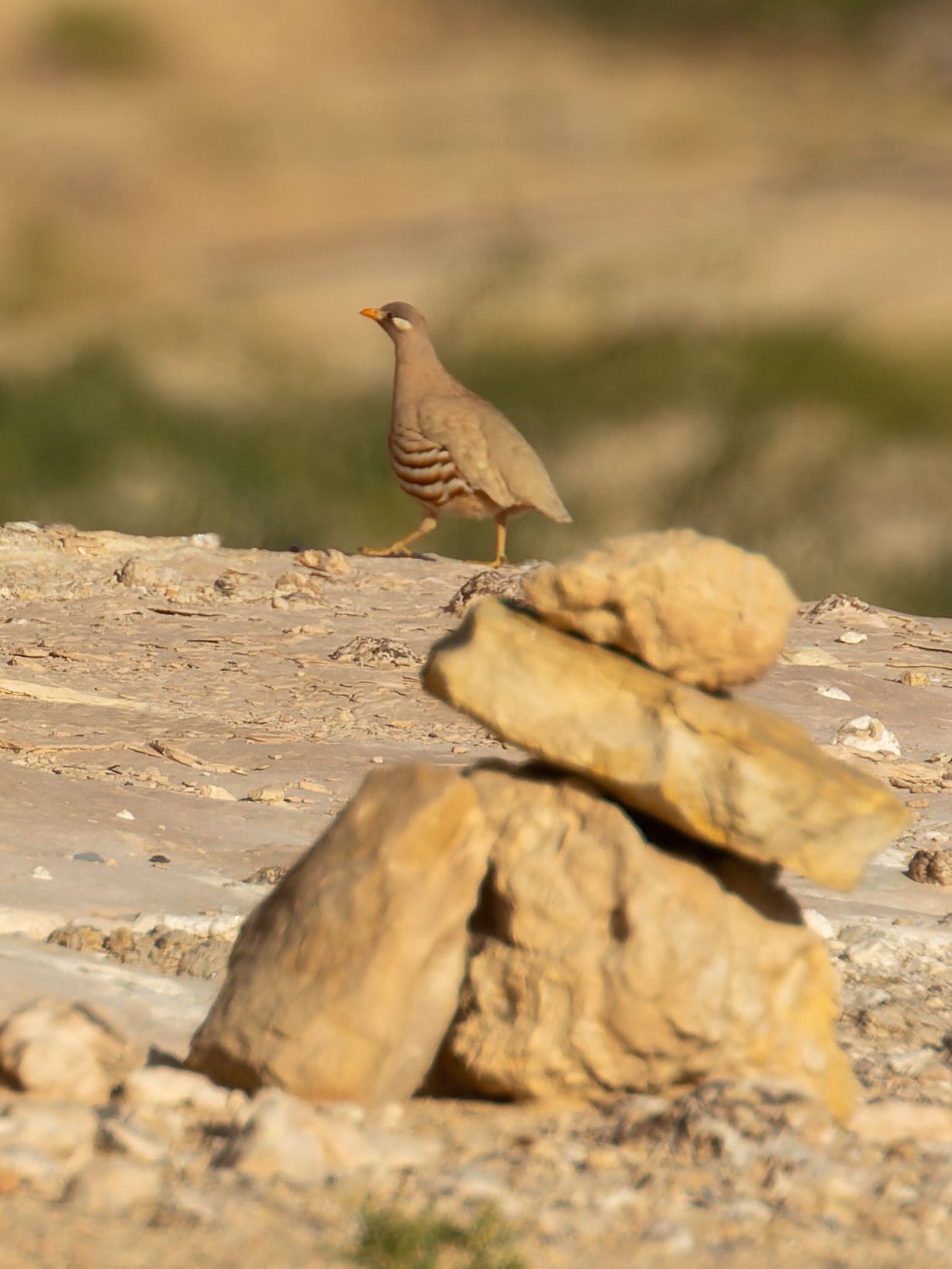
Day 7. Leaving Salalah behind, we headed to the desert, where we were planning to spend the day. Our first stop was at Mudday, a very well known place for Hypocolius in Oman. Just arrived, we got nice views on 2 Nile Valley Sunbirds feeding in the palm trees and a very short walk around produced a nice male Hypocolius in flight. It was early in the morning, and the ambient was still pretty fresh. Walking around the area, Dani found a couple of Sand Partridges moving along a small cliff, and the whole group had nice views on both the male and the female.
Glad with this small introduction to the place, we came back to the vehicles and went the road back to go to one of the places where the Sandgrouses come to drink water. Once arrived, we had problems to access (it was too much water and we decided not to risk the cars!), and we finally approach the place by foot. We wait for long, but we got very little action. At the end, we were almost to leave when 2 Chestnut-bellied Sandgrouses flew above our group. Our attention was then diverted by a 2 birds fighting in the sky; a male Hooded Wheatear and 1 Arabian Bee-eater were having a dog fight right behind us! At the end, we had very nice looks on both birds. Happy with this, we were about to leave when suddenly a flock of Crowned Sandgrouses appeared in front of us, and stopped only 100 metres away from the group. We had very looks on the birds, that finally decided to fly away.. In the way back to the vehicles we still had 2 more Hypocolius (!), Bluethroat and Green Sandpiper. Back to Mudday, we had some extra time enjoying more Hypocolius but also African Silverbills, Nile Valley Sunbird, Isabelline Shrike, Blackstarts and our only confirmed African Collared Dove of the trip!
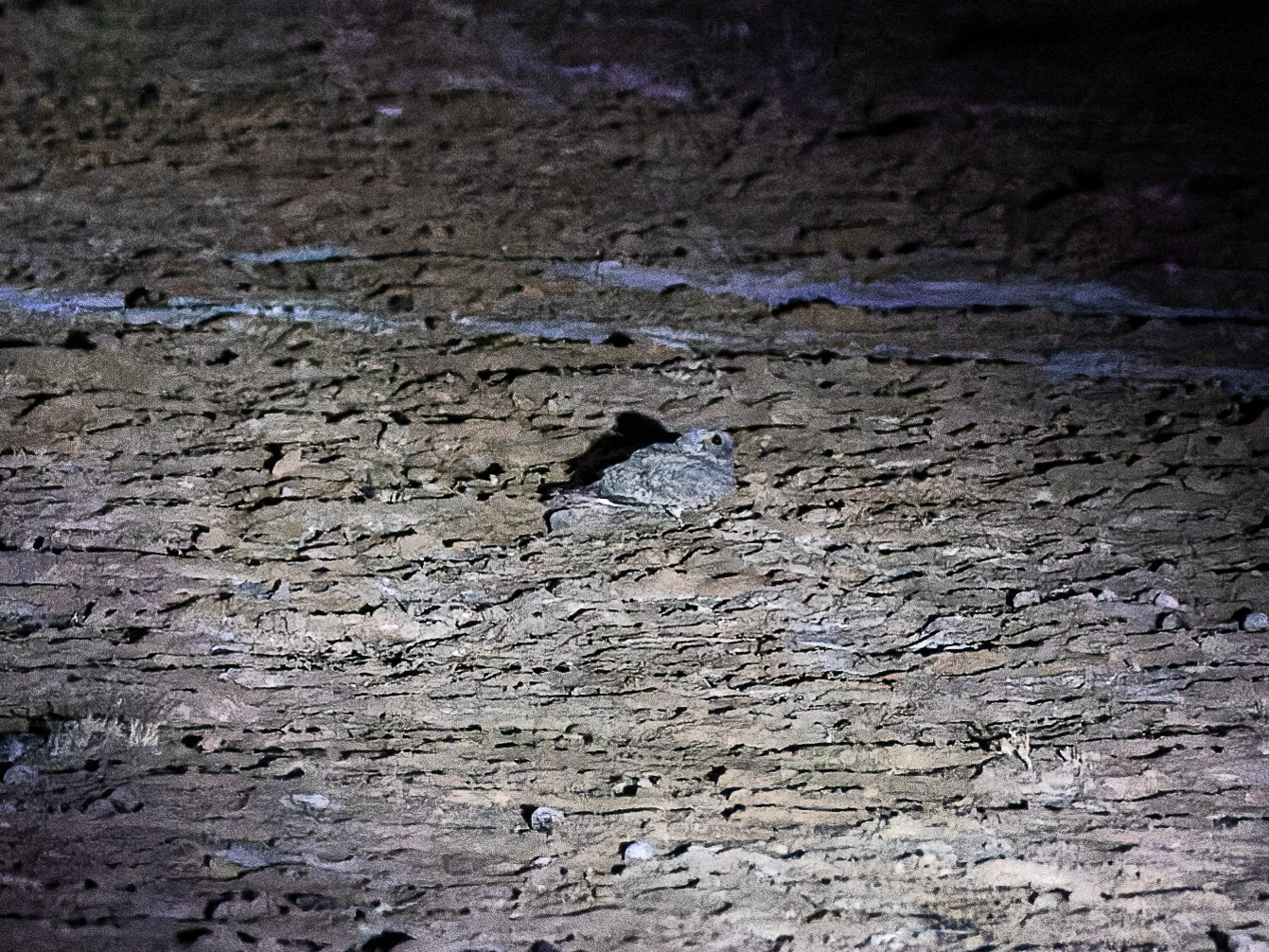
From here we drove North, and arrived to Qitbit in mid afternoon. After a break, we meet again to go North. It had been reports of Syke’s Nightjars in an oasis close by and we drove there in a lovely late afternoon light, arriving to the place about sunset. A short walk around produced a Red-throated Pipits and 2 Water Pipits (not in the list as they only flew off and we only got poor flight views). We only had to wait a few minutes to dark mantle to cover desert and see the first Nightjar moving around. For our surprise, it was a Syke’s Nightjar! Yes, we had excellent, long views on the bird flying around and suddenly a second Syke’s joined the first! Behind, a Egyptian Nightjar was also moving, and we could compare the sizes, coloration marks and behaviour of both species. Syke’s appeared always clearly smaller and more compact than the Egyptain, with shorter wings and tail, and showing (the male) the nice white pannels at the end of the undertail. What a sight! One of the Syke’s Nightjars sat down in front of us a couple of times, producing a big excitement in our group! After several minutes of observation, we decided to go back to our modest accommodation, where we enjoyed a surprisingly good dinner! A really good day, again!
Arabian Gazelle (Gazella arabica). Image by Pete Sutton.Sand Partridge (Ammoperdix heyi). Image by Pete Sutton.Crowned Sandgrouses (Pterocles coronata) attending a water hole. Image be Carles Oliver.Hypocolius (Hypocolius ampelinus) at Qitbit. Image by Carles Oliver.Eyebrowed Thrush (Turdus obscurus). Image by Pete Sutton.Syke’s Nightjar (Caprimulgus mahrattensis). Image by Pete Sutton.
Day 8. Early morning start, and we had a walk in the garden around our accommodation, where Eyebrowed Thrush & Hypocolius were, again, seen and photographed. After a surprisingly good breakfast we moved to an oasis close by. Here, we were hoping for some Sandgrouse action. And yes, we had to wait a bit but finally a couple of small flocks of Chestnut-bellied Sandgrouses flew above the small puddle in the middle of the desert. But there were only a few Sandgrouses.. A old female Western Marsh Harrier didn’t help us as it was flying around the puddle.. Finally, our patience paid off and 2 small flocks of Spotted Sandgrouses appeared from nowhere and flew really close from our group. Only a pair minutes later, a small flock of Chestnut-bellieds landed around the puddle, but our presence was a bit too much for them, and seemed very reluctant to come to drink. Happy after the sightings, we decided to go away and to allow the Sandgrouses to drink water in peace..
From here we drove North, with no remarkable birding stops out of a Desert Lark. The plan was to arrive at our destination right at the Golden Hour so we could have some birding in the “gardens” around our accommodation. And it worked. As we arrived to the tiny garden, an interesting Shrike moved down from a palm tree. Once the cars were parked, we had a stroll with very poor action out of a Clamorous Reed Warbler and Common Sandpiper. The interesting Shrike was moving around.. Finally we re found the Shrike up again in a palm tree. It was a bit distant but at first glance it looked like a very dark Shrike. Unfortunately it flew off. With clear suspects of what bird was, we followed the bird, tracking it through the different patches of trees into a large, walled garden. There, we finally had a nice view of a beautiful Brown Shrike. A very good bird for our list! Everybody enjoyed the bird in different sites, including wonderful views on the grass along with a Eurasian Hoopoe.
From here we just went to our accommodation.
Desert Lark (Ammomanes deserti). Image by Pete Sutton.Brown Shrike (Lanius cristatus). There are only 6 accepted records of the species in the country. Image by Pete Sutton.
Day 9. We arrived to the first stop of the morning at about nice in the morning, after having a nice breakfast and some drive. Here, an immense tidal plain was full of waders. Both Tibetan & Greater Sand Plovers were common, and along with them we saw several Dunlins, Little Stints, Grey Plovers, Bar-tailed Godwits, Eurasian Curlews, Eurasian Oystercatchers, Common Redshanks, Greenshanks and Ruddy Turnstones but also good numbers of Gull-billed Terns and Western Reef Egrets. Terek’s Sandpipers were also common, and they were easy to pick running up and down the mud. The first Crab Plovers of the trip were seen here, but unfortunately they were really far away.
A carefully scanning of the muddy flat land provided soon scarcer species, including Sanderling but also 5 Broad-billed Sandpipers. Even if far away, we all had good scope views before at least 2 birds moved closer and allowed some shots and a detailed views of their plomages. As Broad-billed’s moved we also did so, and we placed outselves right in front a patch of mangroves. Here we had nice views in Common Kingfisher, Striated Herons and Clamorous Reed Warbler. A Marsh Harrier and a Caspian Tern were patrolling the area, trying to get some preys. Suddenly, a small flock of Indian White-eyes appeared in the outer branched of the mangroves. There were at least 3 birds, and everybody in the group enjoyed good scope views on them, showing its electric yellow upperparts, the large white eye ring and the very contrasted, grey underneath.
Very happy for these sightings, we moved to a second location. Only arrived, we saw several Crab Plover far closer that in the previous place. In here, the tidal flatlands are narrower, allowing closer views on these magnificent waders. Some of them were moving alone, but many times we saw the typical couple of birds; a youngster begging for food to an adult. A few Curlew Sandpipers were feeding around among the far more numerous Dunlins, and Kentish Plover were seen in numbers. We spent some time scanning the waders until Sergi found a Great Knot feeding mid way out in the flat lands. Almost everybody in the group had nice scope views, but unfortunately something happened and hundreds of waders decided to move, flying away in large flocks. We never relocated the Great Knot, that looked like moving really far away from its original location.
From here we moved to a different place to enjoy our packed lunch. Once over, the sandwiches were surprising, and while having lunch we had really close views on Great Crested Terns, Western Reef Egrets, Heuglin’s Gulls, Black-headed Gull and a couple of Caspian Gulls. In the sea, large flocks of Slender-billed Gulls were feeding, very excited with the small fishing boats around, and Lesser Crested, Sandwich and Little Terns were all noted.
This was the very of the trip. From here, we drove back to Muscat, where we enjoyed a very nice last dinner and group disolved as we all had different flights, but hoping to meet again in the future to have another birding adventure.
From our side, only to say that it has been (another) great trip in Oman, and we are already looking forward the 2026 issue. Very last vacancies available!
Broad-billed Sandpiper (Calidris falcinellus). Image by Pete Sutton.Crab Plovers (Dromas ardeola) showed well, but a bit far away. Image by Carles Oliver.Greater Sand Plover (Anarhynchus leschenaultii). Image by Pete Sutton.Fiddler Crabs (Minuca sp.). Image by Pete Sutton.Great Crested Tern (Thalasseus bergii). Image by Carles Oliver.Western Reef Egret (Egretta gularis). Image by Carles Oliver.Great time, tons of laughs & great birds despite being the largest group ever in this destination for us. Image by Dani Rey.
Resum: Hongria presenta una combinació entre increïbles boscos, zones d’aiguamoll i grans planures de secà, anomenades putsza. Aquest país és un dels pocs llocs on pots veure tots els picots d’Europa, excepte el tridàctil, alhora que bones poblacions de piocs salvatges amb un bon assortit de rapinyaires.
Dia 1
Fent escala a Viena, arribem al petit aeroport de Budapest al migdia amb temps per poder fer una primera visita a les zones de putsza al Sud de la capital.
Tot just trepitjar les primeres planúries no ens és gens difícil, als marges dels camins, veure un bon nombre d’escorxadors i trenques. Els primers encara alimentant pollets volanders.
Estols d’oques comunes comencen a desplaçar-se a les zones de joca al igual que grans grups de cornelles emmantellades barrejades amb graules.
En aquesta zona son freqüents els grups familiars de gaig blau. No tardem gaire en veure el majestuós vol de l’au més pesada amb capacitat per poder volar; el pioc salvatge, i tot voltant per la zona veiem altres grups que com per art de màgia desapareixen de l’horitzó de forma miraculosa. Entre les escenes màgiques que restaran a la nostra memòria està la del vol d’un nombrós grup de piocs sobre la nostra posició amb el seu majestuós vol.
D’aquí ens desplacem al nostre allotjament per acabar aquesta llarga jornada degustant les primeres viandes de la famosa cuina hongaresa.
Trenca (Lanius minor), espècie molt comú a les estepes hongareses. Lesser Grey Shrike.Escorxador (Lanius collurio), una espècie encara més comú que l’anterior. Red-backed Shrike.Pioc salvatge (Otis tarda) en vol al vespre. Great Bustard.
Dia 2
Acompanyats de bons amics hongaresos visitem la famosa reserva de putsza al Sud de la capital. Una vegada près el cafè recuperador fem un tomb pel poble a la cerca del picot garser siriac, ocell que sovint es veu en zones humanitzades. No triguem a detectar les veus d’aquest ocell i finalment una parella es deixa veure al voltant d’una zona enjardinada. La migració dels petits ocells ja és present, com a confirma la visualització en el mateix jardí d’un mosquiter xiulaire i les veus de diversos tallarols xerraires.
Travessem zones obertes tot esperant que l’augment de la temperatura activi als gran rapinyaires. Repetim forces espècies vistes el dia anterior, amb les primeres observacions de llunyanes d’àguiles imperials orientals. Finalment es fan tèrmiques on s’agrupen diverses àguiles imperials i les primeres majestuoses àguiles marines.
Sobrevolen els espais pasturats pels búfals alliberats dins el marc dels projectes de gestió d’hàbitats per les espècies estepàries, cigonyes blanques i negres. Ens dirigim ara a un racó diferent, a on fem espera d’un dels gran targets del viatge, el falcó sacre. Tot veient una de les seves preses favorites, els suslic, esperem fins que un exemplar de falcó apareix tot lluitant amb un dels omnipresents xoriguers comuns. Posteriorment, un altre exemplar en del·laïta amb vols de cacera a més curta distància.
Una vegada assolits els principals objectius de la regió, visitem alguna de les grans zones humides bàsicament emprades com a piscifactories de peix d’aigua dolça, sobretot carpa i peix gat. Aquí hi trobem un bon ventall d’aus aquàtiques alhora que els primers corbs marins pigmeus del viatge i morell xocolaters, alguns encara en grups familiars. Dos exemplars de les escasses perdius de mar en aquesta zona es llueixen davant nostre i alhora que tafaners joves de mallerengues de bigotis es deixen veure en els canyissars que envolten les basses.
Arribat al migdia visitem un restaurant especialitzat en cuina local, una gran cloenda per un agran jornada.
Posteriorment marxem cap el nord-est ja que ens espera un llarg trànsfert on van sortint noves espècies pel tour com un grapat de falcons cama-rojos.
Cigonyes blanca i negra (dreta) sobrevolant les estepes hongareses. White and Black Storks.Àguila marina (Hieraaetus albicilla). White-tailed Eagle Falcó sagrat (Falco cherrug), un dels rapinyaires més amenaçats a Europa. Saker Falcon.Àguila imperial oriental (Aquila heliaca). Eastern Imperial Eagle
Avui l’objectiu és visitar el mític conjunt de zones humides i putsza de la regió d’Hortobagy. Un organitzat sistema de piscifactories de peix d’aigua dolça permet visitar caminant diverses basses amb diferents cobertures de canyissar on per exemple són abundants un seguit de passeriformes de canyissar com els boscarlers comuns, les boscarles de canyar o les mallerengues de bigotis. En aquestes dates les zones més somes estan pràcticament seques però allà on resta una mica d’aigua, es concentren un bon nombre d’ardèids, bec-planers i limícoles. Des d’una de les torres d’observació es veu l’increïble paisatge que genera una gran zona humida envaïda per florits nenúfars grocs. Entre ells s’amaguen morells xocolaters, cabussons i centenars de corb marins pigmeus.
Després d’un excel·lent dinar en un clàssic restaurant d’Hortobagy, visitem zones inundades on centenars d’oques es concentraven en les pastures properes. En una d’ells, entre grups de fumarells carablancs, vam poder trobar alguns fumarells alablancs.
Decidim acabar la jornada visitant zones d’estepes on gaudim d’una espectacular tarda amb grups familiars de gaig blau, falcons cama-rojos, piocs salvatges, trenques i escorxadors alhora que rapinyaires com àguila imperial oriental o arpella cendrosa.
Corb marí pigmeu (Micracarbo pygameus), una espècie habitual a Hongria. Pygmy Cormorant.Picot verd europeu (Picus viridis) jove. European Green WoodpeckerFemella (esq) i mascle (dreta) de falcó cama-roig (Falco vespertinus). Red-footed Falcon
Dia 4
Avui l’objectiu serà visitar els majestuosos boscos caduficolis per intentar sumar un bon nombre de picots i altres ocells forestals
Comencem a la cerca d’una de les espècies que interessen al tour: les mallerengues capnegres. Un cop ens endinsem en zones de coníferes no triguem en detectar, dins de grans grups mixtes (reietons, mallerengues, raspinell pirinenc..), els primers exemplars d’aquesta espècie.
Un excitat picot negre eurosiberià ens acomiada de la zona. D’aquí conduim fins a un altre bosc a la cerca del més localitzat dels picots, el picot garser dorsblanc.
Als pocs minuts s’escolta el típic reclam del picot cendrós, finalment deixant-se veure després d’una breu disputa amb un picot verd europeu. Sembla que li agrada recuperar energia al sol, ja que resta immòbil una bona estona a la capçada d’un arbre per fortuna per nosaltres.
Arbres madurs fan que el picoteig de picot sigui constant i ens fa amena l’espera fins que surti l’estrella del dia. Picots garsers mitjans, grossos i petits són abundants alhora que grups mixtes de passeriformes on apareixen grups nombrosos de mallerengues cuallargues de les races de cap blanc, un ocell d’aspecte tant delicat com espectacular. Finalment dues no massa llunyanes parelles de picot garser dorsblanc es van deixar veure i escoltar a plaer.
En una breu passejada pel mateix bosc, 8 espècies de picots! no està gens malament.
Visitem zones obertes a la cerca de petits migrants on a més de durbecs, cotxes fumades….apareix un inquieta busqueta icterina.
Dinem a peu de rierol on ens visita una família de cueretes torrenteres i al refugi d’una bona ombra.
Posteriorment visitem un espai obert, un mosaic de pastures, camps i fruiters. Els arbres i arbustos estaven plens de fruites i baies fet que atreia petits migrants, especialment tallarols de casquet, xerraires, verderoles… Vista fugaç i veus de tallarol esparverenc, el qual no es deixa veure de forma òptima. Escanejant el cel va sorprendre una fase pàl·lida d’àguila calçada, espècie rara en aquesta àrea.
Afortunadament a hores d’ara ja hem assolit els principals objectius del tour, per tant, el que fem és intentar millorar observacions d’algunes de les espècies i/o fotografiar-les.
Comencem visitant zones periurbanes a la cerca de picot garser siríac i sobretot picot verd europeu, dels quals no tardem en detectar, especialment el picot verd dels quals un jove s’acaba aturant a un pal de formigó donant observacions a plaer. Aquest mosaic d’hàbitats fa que siguin abundants els fringíl·lids i migrants com el tallarol gros.
Una vegada comencen a pujar les temperatures ens desplacem cap als sectors on nidifiquen les àguiles pomerànies, el darrer dels targets que ens quedava per assolir. Als pocs minuts es deixa veure un exemplar que veiem aturar a una vall arbrada. Posteriorment es veuen altres vegades fins dos exemplars. La zona sembla bona per rapinyaires ja que també es deixen veure aligots vespers i altres aus planejadores.
Amb les temperatures de mig matí decidim visitar zones boscoses on segur que es manté més activitat que en zones obertes. Una passejada per un madur bosc caducifoli ens permet gaudir de bones observacions de varis picots garsers mitjans, grossos,petits i grups mixtes de mallerengues.
Nou dinar en restaurants de cuina típica hongaresa per tancar una altre gran matí ornitològic.
Decidim visitar zones boscoses amb arbres grans per cercar el picot negre, el pícid que pitjor havíem observat en aquest viatge. Vàrem escollir bé el lloc de prospecció perquè en pocs minuts ja escoltàvem un picot a curta distancia, el qual ens va acompanyar una bona estona fent volades ràpides a curs distància, mostrant la gran habilitat que tenen per aturar-se a la banda “equivocada dels arbres”.
Una bones copes de casolana palinka per tancar el darrer sopar del viatge.
Picot garser mitjà (Dendrocopos medius). Middle Spotted Woodpecker.
Dia 6
Aquest matí només disposem d’un parell d’hores de birding abans de desplaçar-nos cap a l’aeroport. Per això decidim de fer un tomb tot resseguint un torrent a tocar de l’hospedatge per tal de mirar algun picot més.
Cercant entre els grans arbres veiem un bon ventall d’espècies forestals, entre elles diversos grups mixten a on destaquen mallerengues cuallargues de cap blanc i 4 espècies de pícids destacant uns quants picots verds europeus; a les zones obertes veiem cotxes fumades i papamosques grisos, però sobretot destaca el nombre de mosquiters xiulaires que veiem en aquesta passejada.
Un relaxat i gran final per un extraordinari tour a un país molt recomanable per viatjar per qualsevol ornitòleg.
Llista d’aus observades al llarg del tour:
Faisà — Phaisanus colchinus — Common Pheasant
Cigne mut — Cygnus olor — Mute Swan
Oca comuna — Anser anser — Greylag Goose
Ànec griset — Marecca strepera — Gadwall
Xarxet comú — Anas crecca — Eurasian Teal
Ànec coll-verd — Anas platyrhynchos — Mallard
Xarrasclet — Spatula querquedula — Garganey
Xibec — Netta rufina — Red-crested Pochard
Morell de cap roig — Aythya ferina — Common Pochard
All images in this trip report by Carles Oliver. All rights reserved.
Overview: This tour explores the Western Cape province, a very interesting part of South Africa hosting very interesting endemics, including some only living in this small area of the country and are not to be found anywhere else. This was our 3rd tour exploring the Cape Town province, and despite the weather was not as good as it could be, we got a wonderful array of species including good views not only in the very sought-after endemics but also in some very interesting species at the continent level including Buff-spotted Flufftail, Marsh Owl, Quailfinch, Spectacled Petrel, Secretary Bird and Verreaux’s Eagle. Yes, the weather was a bit challenging, with a couple of days of very low temperatures and extremely strong winds. The weather conditions were neither in our side during the offshore, and we had an extremely quiet day, with nearly no wind. Still, we got a very long list of species, even if some major road works made impossible to explore one of the largest wetlands along the itinerary.
Day 1. Arrived to Cape Town from our connexion flight via Dubai, and we got our first birds of the trip in the parking lot of the airport, where we had both Cape Canary & Cape White-eye in the very first bush that we saw.
It was a lovely evening, and the short transfer to the our accommodation not only provided the group with the first views on the majestic Table Mountain NP, but also with flocks of Western Cattle Egrets and Hadada Ibises. We even got a House Crow, a very uncommon bird in the area! Once in our lodge, we still had a few minutes of birding overlooking a close estuary. There, we got several Egyptian Geese, Brown-hooded & Hartlaub’s Gulls but also Black-necked Stilts, Pied Kingfishers, Common Greenshanks, some magnificent Blacksmith Plovers and the first African Spoonbills, Cape Teals & African Oystercatchers of the tour, plus the only one Black-crowned Night Heron of the trip!
Day 2. After a nice breakfast, we left the accommodation, ready to have the first serious birding of the trip. This first day was devoted to explore a small area of the coast East of Cape Town. A 45 minutes transfer was necessary to reach the first location of the day. There, in a very impressive coastal fynbos (South African Mediterranean scrub land) we had a lovely short walk with a long and interesting list of species including several endemics. White-necked Ravens were flying over the closer houses along with a couple of Rock Kestrels. Down in the scrubs, the explosive song of Cape Grassbirds was the opening for a very interesting list of species. Soon, we had our first family groups of Piping & Red-headed Cisticolas along with Cape Buntings, Cape Wagtail, Cape Robin Chats, Cape Canaries, Olive Thrushes, Yellow Bishop and the extemelly common Southern Double-banded Sunbird and the firsts Rock Martins of the trip. Only a few metres of walk were necessary to have the first Cape Sugarbird, with a very impressive male singing only a few yards away from us. Its rather weird song didn’t distracted us from scanning from new species, and we found a very close Cape Rock Thrush looking for preys in a nearby meadow.
A bit more of walk was required to find the first Orange-breasted Sunbirds of the trip. Here the slope becomes steeper, and impressive rocky outcrops emerge to create a number of solid rock walls higher in the slope. Those fingers and the rocky tongues between them are the habitat for a very special species, and the main reason for us to visit this location. We had some hard scanning in the slopes, trying to locate this very sought-after species. After some minutes, we got nothing but suddenly Ann got a bird. A kind of “dark Mistle Thrush with its tail up” she came to described. No doubt, she had a Cape Rockjumper! Following her indications, it only took us half minute to point the scope on the bird: A wonderful male Cape Rockjumper only for ous eyes! It was mid way up the slope, but it provided long and excellent views on the scope as it kept exploring the rocky, low vegetated mountain. At some point the bird moved down the slope, and our hearts beated hard, facing the perspective of a close view. But it never happened. Soon, the Rockjumper went back up and we kept enjoying the bird whilst scanning for a possible female that never showed out. A couple of Cape Siskins flew higher in the slopes, providing a first (although poor) view for our guests. This small beauty is an endemic species of the coastal scrubland East of Cape Town, and a very important species for the trip! Other very interesting species here included the rarely seen Victorin’s Warbler and the first of many Karoo Prinias, White-rumped Swifts and Familiar Chats.
Cape Sugarbird (Promerops cafer)White-necked Raven (Corvus albicollis)Cape Rock Thrush (Monticola rupestris), a endemic with a really small range.Cape Buntings (Emberiza capensis) are always so obliging!Orange-breasted Sunbird, a superb sunbird with a very small range.Proteas are such a fancy plants!Red-headed Cisticola (Cisticola subruficapilla)Cape Rockjumper (Chaetops frenatus) showing well in the scope and with a poor but clear image. Orange-breasted Sunbird (Anthobaphes violacea) is likely to stop in the many boulders within its habitat.Amazing views on this stunning male Cape Sugarbird as we were leaving our first stop.
After such a phenomenal first stop of our trip, we drove down from the mountains to enjoy a very nice coffee stop and (probably) the most beautiful muffins in the area! Close by, a very attractive botanical garden was waiting for us. A 30′ short walk around there was enough to discover a very nice selection of birds. Swee Waxbills were probably the most sought-after species at this spot. One pair of this little jewels were having a bath as we arrived, and we got amazing views on them. Along with this tiny birds, the walk around the garden offered us very nice looks in Fiscal Flycatchers, Amethyst Sunbirds, obliging Cape Batis and Forest Canary. Cape Bulbuls were everywhere and we had the first glimpse on Sombre Greenbuls. Here we also got the first Streaky-headed Seedeasters, Brimstone Canaries & Pin-tailed Whydahs of the trip, and a couple of Black Sawwings. Soaring higher in the sky, we got Greater Striped Swallows and White-rumped Swifts but also the first 3 Jackal Buzzard of the trip and 1 African Black Swift.
From here, a very short drive lead us to a colony of African Penguins. It is always surprising to see these wonderful birds evolving in the shallow water or simply resting in the white sand. This colony is right in the middle of a town. Do you imagine to have a short walk along the coast right next to your house when a dozen of penguins just get out of the wader to colonise that beach? This is exactly what it happened in this place, and I would pay to see the faces of the neighbours back in those days! So, now the colony has dozens of nests and a healthy population of this endangered species. We got amazing views, and also got good views on African Oystercatcher, Greater Crested Tern and a surprisingly close Bank Cormorant.
The always impressive Swee Waxbill (Coccopygia melanotis)We had really close views on Cape Batis (Batis capensis)Fynbos in full bossom.This African Black Oystercatcher (Haematopus moquini) decided to have a bath right in front of us.Colony of Cape Cormorants. Please note the White-breasted Cormorant in the top and some Crowned Cormorants in the left side. African Penguins (Spheniscus demersus) arriving to the shore.African Penguins drying out right after getting out of the ocean. African Penguin enjoying the life!
From here, we drove back to Cape Town to have some time in the famous Strandfrontein Wetlands. This is a large wetland with a number of large lagoons and interesting channels. The area was not as fulfilled with waterfowl as in previous trips, but still produced a nice list of birds. Along with interesting flocks of Greater & Lesser Flamingoes and Cape Teals, we also had the firsts flocks of Spur-winged Geese. Cape Shovelers and Red-billed Ducks were also common. A single Southern Pochard was seen in flight, and a few Black-necked & Little Grebes were seen in one of the larger ponds. A small flock of 7 Fulvous Whistling Ducks had been in the place for weeks (a local rarity) and was spending the afternoon feeding along with Red-knobbed. Here we also got the first Cape Sparrows of the trip, just when a Black Crake crossed the road as a ghost!
In the channels we got good views on both Little Rush and Lesser Swamp Warblers and Levaillant’s Cisticola showed well despite the strong wind. An African Marsh Harrier was crossing the sky just went a Burchell’s Coucal was heard calling in a thicket nearby. In our way out, we had a short stop to watch the first Cape Spurfowls of the trip.
From here we went back to our accommodation to enjoy a nice evening meal before having a nice rest.
Cape Teal (Anas capensis) is, by far, my favourite duck in this region.Cape Shoveler (Spatula smithii), a common duck around Cape Town.Fulvous Whistling Ducks (Dendrocygna viduata) are a scarcity in the Southern tip of Africa.Lesser (left) & Greater (right) Flamingoes feeding side by side.
Day 3. An early start was necessary to connect with our boat, leaving the harbour right after sunset. Whilst waiting for the boat to be ready, we got nice views on a Black-headed Heron roosting in the harbour and a Peregrine Falcon flying high over the bay.
It was a sunny and quiet day. Unfortunately we had a day with almost no wind, and this affected seriously the amount and diversity of sea birds during the offshore. Still, got a number of goodies, and we were really lucky to see 4 Humpback Whales in a superb manner. They jumped out of the sea several times not far from us, and one of them was splashing its fin against the water, creating a impressive sound all around the bay.
While enjoying the whales we also got the first parties of African Penguins and Brown Fur Seals leaving the security of their colonies to explore their hunting areas. Several flocks of Common Terns and Greater Crested Terns were also seen here.
Soon, we were outside the bay, and after enjoying a stop right by the Cape of Good Hope, we kept going South. Soon, we got the first Shy Albatrosses of the trip, along with some White-chinned Petrels and Subantarctic Skuas.
The sea was extremely plain and we only got the first flocks of seabirds around a large trawler. Here we got tens of Sooty Shearwaters but also Black-browed Albatrosses and we were also lucky to find a few Great Shearwaters,1 Sabine’s Gull flying quite high and a superb Northern Giant Petrel that was following the ship. Here, the only Arctic Tern of the trip was seen as well. A second trawler was not far away from us, and it was mandatory to take a look. We approached this second vessel from the back, and we were lucky find some good birds there. First it was the only one Indian Yellow-nosed Albatross of the day, this is a quite common species, but the conditions were probably too calm for them to move. A few minutes later we also found a nice Spectacled Petrel moving along with the many White-chinned’s, and at least 4 Cape Petrels. A few Cape Gannets were fishing here, providing good views to the group. Several Shy & Black-broweds Albatrosses were sitting on the water, and we enjoyed long views on these amazing beasts. We still had some time here, but we only had a small flock of 4 Sabine’s Gulls as an interesting sighting.
In the way back to the harbour we still had time to enjoy on a variety of Cormorants, including Crowned Cormorants, large flocks of Cape Cormorants and also a small colony of the critically endangered Bank Cormorant that was sharing a large granite outcrop with a Brown Fur Seals colony.
While crossing the bay we enjoyed several Humpback Whales! White-chinned Petrels (Procellaria aequinoctialis) are common around Cape Town.Brown Fur Seal.Shy Albatross (Thalassarche cauta)Northern Giant Petrel approaching the trawler. Northern Giant Petrel (Macronetes halli)Immature Black-browed Albatross (Thalassarche melanophris)Shy Albatross (Thalassarche cauta)Subantarctic or Brown Skua (Stercorarius antarcticus)Cape Gannet (Morus capensis)Full adult Shy AlbatrossSabine’s Gull (Xema sabini)Great Shearwater (Puffinus griseus)Brown Fur Seal enjoying a sun bath.Critically endangered Bank Cormorants (Phalacrocorax neglectus) sitting on its nests.
After a nice lunch in the bay, we drove to a nearby lagoon. A short walk there produced Red-knobbed Coots but also Little Grebes and the first views of Black-winged Kite, Fork-tailed Drongo, African Darter, Whiskered Tern, White-throated Swallow and Alpine Swift. From here we just when back to our accommodation for an early end of the day.
Day 4. Leaving our accommodation, we went to the Table Mountain slopes before leaving Cape Town. Our first stop of the day was devoted to explore a small stream surrounded by interesting woodlands. Just leaving the vehicle we got a couple of Black Goshawks flying over area. A short walk here produced really good looks on scaped Bronze Mannikins, Sombre Greenbuls, Rameron Pigeons and Levaillant’s Cisticolas. Here we also got really good views on Little Rush Warblers but the main target of the stop was living low in the rank vegetation. After some wait in a quiet spot, a wonderful Buff-spotted Flufftail came out of the dense vegetation a walk right in front of me, only a couple of metres away from us! Unfortunately, not everybody in the group got to see the bird so we decided to go for a walk and, after a while, we came back to same spot to try the bird again. And we were double lucky that day since the Flufftail came out again for another short walk and this time we all enjoyed great views on the bird walking on the mud and even jumping on a log!
From here we went to the famous Kristenbosch National Botanical Garden. This is a well known birding spot in Cape Town and host a good variety of birdlife along with an impressive selection of the rich flora of the region. Unfortunately we went to visit the place on Sunday, mid morning, and the garden was really crowd. Still, we got a nice set of species including Cape Batis, Forest Canary & Forest Buzzard. The more dense areas were good to see species of the tangles including Lemon Dove, African Dusky Flycatcher, Cardinal Woodpecker and African Paradise Flycatcher. Here we also got good views on Southern Boubou and we heard some of the few Common Chaffinches still living the area after they were introduced by the British 150 years ago. Our walk around produced also good views on Cape White-eyes, African Harrier-Hawk and really good views on a roosting Spotted Eagle Owl.
Little Rush Warbler (Bradypterus baboecala), a shy inhabitant of the rank vegetation.Levaillant’s Cisticola (Cisticola tinniens), a common inhabitant of moist vegetation and wetlands.Average leave photobombed by a Buff-spotted Flufftail (Sarothrura elegans)Olive Woodpecker (Dendropicos griseocephalus) working hard for food.Dusky African Flycatcher (Muscicapa adusta ), is a fairly common bird in a variety of woodlands.Spotted Eagle Owl (Bubo africanus) roosting in the Botanical Garden.Fork-tailed Drongo (Dricurus assimilus)
After leaving the botanical garden it was time to leave the city and go North. Before having a short stop for lunch we had a stop on Birkenhead Drive Wetland. By then the weather was turning, and the sunny day was already becoming cloudy, and windy. Here we got 2 Maccoa Ducks and 1 White-backed Duck but also Common Greenshanks along with commoner species including a couple of Yellow-billed Kites, Southern Fiscals and the firsts Southern Masked Weaver & Southern Red Bishops of trip nesting in the reedbeds.
We kept moving North in our way to the West Coast National Park. But before arriving we had a stop by the highway. Here we got a gorgeous Black-winged Kite hunting really close to us, the first views on Southern Grey Sparrows, 3 Bokmakierie, Grey-backed Cisticolas, 4 Pied Starlings, 1 Jackal Buzzard and a wonderful Grey-winged Francolin showing in the top of some rocks. Here, we also got a singing Common Quail. Once inside the West Coast National Park the weather deteriorated really fast, and fastly became a windy, cold afternoon. We also got some rain and birding was really low. We had a short walk exploring the fabulous coastal scrub lands typical of this protected site, but bird activity was poor and we only got 1 Chestnut-vented Warbler, 1 Karoo Larks, a distant Black Harrier, 2 White-backed Mousebirds 1 Cape Longclaw deep inside the thickets. A bit disappointed for the low bird activity we decided to have a short drive. We got lucky with close views in a couple of Grey-winged Francolins. It was becoming really windy, and the light was not good to try to spot small birds in the thickets, so we tried a walk through the marshes to one of the outlooks. Despite the bad weather here we got good views on Kittlitz’s Plovers, Little Stints, Black-winged Stilts, Curlew Sandpipers, 1 Marsh Sandpiper and the bell ringed for us and we got to see the White-rumped Sandpiper that had been hanging around the area!
Once in the outlook, we got a nice selection of waders including Bar-tailed Godwits, Grey Plovers, Sanderlings, Lesser Flamingoes, African Oystercatchers, Common Ringed Plovers, 1 Sandwitch Tern and several Black-headed Herons. The weather became really bad at some point, and we decided to go to our accommodation to have some rest and a good dinner.
Black-winged Kite (Elanus caeruleus) with a prey. Chestnut-vented Warbler (Curruca subcoerulea), a common inhabitant in the coastal scrubs.Cape Spurfowl (Ptermistis capensis), an extremely common around Capte Town.
Day 5. This morning as windy as it was the evening before, but we had a promising sun shining in the sky. Windy. In the morning we went back to the West Coast National Park, but the wing was so strong that we had difficulties to get out of the vehicle. Our first drive produced nice views on a Southern Black Korhaan displaying. We got long views son the bird, and while enjoying the view we were surprised by two other males flying around. A bit further, another gorgeous Black Korhaan was standing right in the lane, providing stunning views! It was sunny, but windy, and the Cape Berg Adders felt comfortable in this weather. During the morning we 4 of them crossing the road or taking advantage of the warm tarmac.
We drove to the Northern area of the parc, hoping for some shelter against the wind. And we were lucky. In that area we had a nice walk in an nice area of scrubs. Here, Karoo Bush Robins and Karoo Prinias looked like being everywhere, and we also had really good views on one singing White-throated Canary and some restless Malachite Sunbirds. Walking down to an outlook dominating the bay, we also got great views on some White-fronted Plovers. Unfortunately, the outlook was not sheltered against the wind, and birdwatching from there was a bit uncomfortable. Still, we managed a good selection of bird including a couple of Caspian Terns and 1 Subantarctic Tern in summer plumage along with several Common Terns, always a treat!
Back to the vehicle, the wind became even stronger, making any birding quite hard. A couple of Black Harriers scouting the scrubs was the best sight in our way out to the West Coast National Park. The wind kept extremely strong all along the afternoon. Still, our transfer to Ceres produced a number of interesting birds, including the first Red-capped Larks, Capped Wheatears & African Pipits for the trip.
A few miles inland, we stopped in the highway itself. In the distance, a pair of Blue Cranes were walking in a field. Along with them, a very young Blue Crane was walking with them, picking on the ground and the grass, and struggling to follow their parents as they were looking for food in the meadow. This was a wonderful and highly unexpected view and in fact it came to end our day. When arriving to our accommodation the wind was still really strong, and we decided to spare the rest of the afternoon resting a bit.
African Pipit (Anthus cinnamomeus)Two different close ups on Black Koorhans (Afrotis afraoides).White-throated Canary (Crithagra leucoptera), a scarce inhabitant in coastal thickets.White-fronted Plover (Charadrius marginatus)Cape Berg Adder (Bitis atropos) offered us impressive views!Cape Weaver (Ploceus capensis) displaying in our lunch stop.
Day 6. After a couple of days with strong winds and sparse rain, the sun raised in a quiet ambient. When we left our accommodation it was a splendid morning with a mild temperature. We covered the short distance to the karoo enjoying the voluptuous landscape along the road, but also some good birds including the first White-faced Whistling Ducks of the tour, Red-billed Ducks and the only small flock of Blue-billed Teals of the trip! A small herd of Red Hartebeests crossed the road, followed soon after by a couple of Steenboks and a Cape Grey Mongoose.
Our first proper stop was just by road. Even if we had some traffic (and its associated dust), the birding was superb. Here, a rocky outcrop is broken by a small stream, being the perfect place to get a good array of species. Small parties of Lark-like Buntings were moving everywhere and in only 5 minutes we got a fabulous list of birds including Layard’s Warbler, Common (African) Reed Warbler, Common Waxbills, Cape Penduline Tit singing from the top of small bush along the stream but also Long-billed Crombec (also referred as Cape Crombec), the first Hamerkop of the trip, several Karoo Prinias and Grey-backed Cisticolas, 2 Mountain Chats, 7 Black-headed Canaries moving on the ground and in the lower flowers, and even a Karoo Thrush. But the very best was probably a nice Verreaux’s Eagle showing up in the sky for a couple of minutes. Even if it was not really close, it was a wonderful sight!
From here we drove deeper in the karoo and a second stop produced an even longer list, with really good looks on Fairy Flycatchers, Karoo Emeromela, Nicholson’s Pipit, 1 Fiscal Flycatcher, Sickle-winged Chats, the first Pale-Chanting Goshawk of the trip, 1 Booted Eagle, 1 Karoo Chat, restless Malachite Sunbirds, several Cape Buntings and Karoo Scrub Robins, 1 singing African Hoopoe and the only 2 Dusky Sunbirds of the trip! Still, and despite our efforts, we failed to find any Cinnamon-breasted Warbler..
From here we had some drive through the wonderful karoo landscape, with stops to enjoy both Karoo & Sickle-winged Chats but also Thick-billed & Karoo Larks. We arrived to an outlook from where we a large lagoon could be seen. Several Southern Shelducks were feeding there along with other waterfowl but also Greater Flamingoes, Whiskered Terns, 4 Marsh Sandpipers, Ruffs and other waders. A small flock of European Bee-eaters move on, calling around us, even if we never saw them. The bush around was also well alive, with several chats moving around and also our only one Karoo Long-billed Lark and 1 Common Ostrich. Suddenly, a Greater Kestrel showed up in the sky, moving a couple of Yellow Canaries and 1 Barn Swallow.
Our final stop in the karoo was devoted to new rocky outcrop. Here we got excellent views on both Namaqua & Rufous-eared Warblers as they were very active in the scrubs but also our first Mountain Wheatear (also referred as Mountain Chat), 1 Ant-eating Chat and 4 very approachable Spike-heeled Larks. In the way back, 4 Pale-chanting Goshawks had been working in a remarkable spectacle just for us. A young bird was trying to compete for the hunting territory of a pair of these birds of prey, and along 15 minutes we had very close views on an air battle, with these acrobats fighting hard to keep their opponents out of its territory. It was a great way to end our morning exploration!
Back to our accommodation and after enjoying a midday break, we went to explore a nearby open lands. Very little was seen out of some Little Swifts, African StonechatsBanded Martins and passing Purple Heron. But right before dinner we had superb views on 2 Spotted Eagle Owls singing from the top of our own accommodation! What a way to end our day!
Steenbok (Raphicerus campestris) in the karoo.The always impressive Verreaux’s Eagle (Aquila verreauxii)Large-billed Lark Rufous-eared Warbler (Malcorus pectoralis) showed superbly for our group!Spike-heeled Lark (Chersomanes albofasciata) provided intimate views!Great to see the complex design of this 2nd year Pale Chanting Goshawk (Melierax canorus)Full adult Pale Chanting Goshawk Typical karoo habitatFairy Flycatcher (Stenostira scita), a restless species that favours large and dense bushA small flock of Black-headed Canaries (Serinus alario) up in the slopes.
Day 7. After a succulent breakfast, we kept exploring the area around Ceres, but this time we headed to the slopes. Here, we walked up a famous lane in the hope to contact with another endemic; the Ground Woodpecker. The short walk was great and we managed to have good views on Cape Siskins, Orange-breasted Sunbirds and Booted Eagles. Still, we only heard a distant Ground Woodpecker and we failed to see this key species.
A second stop was made in a mountain pass West of Ceres. Here we did have a number of minor stops, hoping to find the rather scarce Protea Seedeater (or Protea Canary), after a number of non productive stops we finally found one of them perched close to other Canaries! It was already midday and quite warm, and this final victory came along with really good views on a pair of Klipspringers resting on the boulders close to the lane.
From here we started the transfer to Bontebok National Park. In our way, apart from a lovely lunch, we enjoyed with the several Common Ostriches and crossing some nice habitat we picked up small concentrations of Blue Cranes and also a nice Common Buzzard (from the vulpinus race and often referred as a separate species; Steppe Buzzard).
Klipspringer (Oreotragus oreotragus) Small flocks of Blue Cranes were feeding along our way
We arrived to Bontebok National Park during the afternoon, a good couple of hours before sunset. Almost immediately we got Crowned Lapwings and Cape Crows, two species that were escaping from us during the previous days. A game drive around the park produced soon small herds of stunning Bonteboks but also some scarce Mountain Zebras and Red Hartebeest. Bokmakieries looked like being everywhere in the thickets, but the very first amazing sight of the afternoon was an obliging juvenile Montagu’s Harrier that we found only a few meters away from our van! Personally, it has been the closer views on this species ever and one of the highlights of the tour!
As the afternoon advanced, Cape Clapper Larks started showing off and displaying all around us. Here we also picked up the first Cloud Cisticolas of the trip. The extensive grasslands of the park host a thriving population of Denham’s Bustards, and soon we enjoyed excellent views in these giants, with one male displaying and up to 5 birds flying at close range. In one of these nice stops to enjoy the Bustards, we got 2 Quailfinches moving out from the lane. As always with this species, it was a fast view, but soon after we got 2 more Qualfinches flying really close to us, providing proper looks! Same birds? Hard to know. We started moving out, but we had to stop because of the many Cape Robin-Chats, White-backed Mousebirds and Pin-tailed Whydahs along the way. Here, a couple of Spotted Thick-knees crossed the lane, and a bit beyond two Black Harriers provided good looks as well. But the best was still to come, in our way back, a Black-winged Kite was harassing a bird, and what was our surprise when we saw that the Kite was actually harassing a Marsh Owl! We were lucky, and a minor track lead us right by where the action was going on. And yes, a pair of amazing Marsh Owls were patrolling its territory right in front us. Unfortunately they were not as close as they were only one minute ago, but we all still had a great views in these incredible creatures. Marsh Owls are extremely scarce in Western Cape, with only a handful of known territories, and they are actually a description species for the area!
Back to the vehicles, we just drove to the gate of the National Park, but before leaving we found a nest of Black-winged Kites. The nest was so close and low that it was possible to see the chicks on the nest even without bins. Cleverly, we decided to keep going immediately and to do not disturb them. From here we just went to our accommodation to enjoy a wonderful dinner and rest.
Young Montagu’s Harrier (Circus pygargus), a nice way to start time in Bontebok National Park.Cape Clapper Lark (Corypha apiata), a common lark moisty grasslands.A taste of the great views that we had on Denham’s Bustards.Bontebok (Damaliscus pygargus), for me, the most beautiful antelope in Africa.A pair of Spotted Thick-knee (Burhinus capensis) was a rather unexpected sight Red Hartebeest (Alcephalus busephalus caama) in golden hourMarsh Owl (Asio capensis) came out from its day roosting place just in time!
Day 8. The day started foggy and rainy in our accommodation, and our pre-breakfast walk produced little out of a distant Red-chested Cuckoo, 1 Tambourine Dove, Bar-throated Apalises and Rameron Pigeons. After breakfast, we drove South in the way to have some birding in the well known Agulhas Plains, half way down to De Hoop Nature Reseve.
Agulhas Plains was as great as always. The rain vanished and with the sun and the mild temperatures came the birds. The area was full of Red-capped Larks, African Pipits, Capped Wheatears, African Stonechats and Red-billed Queleas. Large-billed Larks were singing along the fences. We were also lucky to get at least 3 Agulhas Long-billed Larks and a minimum of 5 Cape Vultures, an endangered species with only a couple of colonies in the Western Cape. Here we also got good numbers of Blue Cranes feeding in the harvested areas along with the firsts Zitting Cisticolas of the trip. Pearl-breasted Swallows were patrolling the streams, and small flocks of the tiny Grey-backed Sparrow Larks were also enjoyed. Once closer to the nature reserve we started enjoying the first mammals, with small herds of Springboks and Elands roaming the slopes while the first Denham’s Bustards of the day became evident.
Rameron Pigeon (Columba arquatix), a common beauty in many parts of Africa.Sombre Greenbuls (Andropadus importunus) are far easier to hear than to seeAfrican Black Duck (Anas sparsa), often a shy species.The very impressive landscape in our accommodation.Capped Wheatear (Oenanthe pileata), a common inhabitant of extensive farmingLarge-billed Lark (Galerida magnirostris) close upPin-tailed Whydah (Vidua macroura) is not scarce at allWe were lucky to have amazing views on Agulhas Long-billed Lark (Certhilauda brevirostris)Blue Crane (Anthropoides paradiseus), what a smart creatures they are!Southern Red Bishop (Euplectes orix) a fairly common bird in the open lands.Cape Vulture (Gyps cropotheres) has become really scarce in the Western Cape province.
The Hoop Nature Reserve is an excellent place to enjoy wildlife, and our time in the reserve included close views on Bonteboks, Mountain Zebras, Grey Rheboks and Yellow Mongoose. In terms of birdlife, African Fish Eagle, Plain-backed Pipit, Speckled Mousebird and Great Crested Grebe were all new for the trip,
Back to the plains, we had further and closer views on Denham’s Bustard (yes, I love them!) and we were surprised to see a Common Quail running the lane right in front off our van! A bit beyond, a small pond and the meadows around produced Grey-winged Francolin, Three-banded Plover, 2 Spotted Thick-knee and, of course, Blacksmith Plovers.
Back to the accommodation, we got a Fiery-necked Nightjar in the way to dinner. The bird was sitting on the dart road. After dinner, we tried to relocate the bird but, despite at least two males were singing around, we never saw it again..
Bokmakeire (Telophorus zeylonus), a superb bird all along!Mountain Zebra (Equus zebra)Yellow Mongoose (Cynictis penicillata)Denham’s Bustard (Neotis denhami) displaying.Black Harrier (Circus maurus), the master of the coastal fynbos
Day 9. Last day of the trip. During the night we got some rain, and our pre-breakfast walk was a bit muddy, but productive. In the garden of the accommodation we got nice views on the only Grey-hooded Kingfisher of the trip. Greater Double-collared Sunbirds were common around the accommodation, along with commoner species including Sombre Greenbuls, Bar-throated Apalis, Cape Sugarbird, Jackal Buzzard and Cape Batis. To find the singing Klaa’s Cuckoo was a bit more difficult, but at end everybody in the group enjoyed good views.
After breakfast we decided a last minute visit to the Bontebok National Park. We only had one hour but we were regarded not only with the best views on Grey-winged Francolins of the trip but also with a very nice Secretary Bird hunting in the grasslands. Even if the bird was never close, it was a great way to end the trip. This was one of the main targets for some of our guests, and until that moment it was escaping from us!
In our way back to Cape Town, our planning still included a visit into a coastal tidal plain, but some major works in the highway 2 produced long queues and we finally decided to head directly to the airport, ending a wonderful 3rd issue of our special birding trip around Cape Town.
Very, very looking forward coming back in 2025! Join us. Please contact us info@barcelonabirdingpoint.com
This Klaa’s Cuckoo (Chrysococcyx klaas) was singing around our accommodation
Southern Masked Weaver (Ploceus velatus) Greater Double-banded Sunbirds (Cinnyris afer) were moving along with Cape Sugarbirds. Suprisingly, we only had 1 Brown-hooded Kingfisher (Alcyon albiventris) during the trip. Grey-winged Francolin (Scleroptila afra) in our way out of Bontebok NP.
List of birds seen during the trip
Common Ostrich (Struthio camelus)
Egyptian Goose (Alopochen aegyptiacus)
Spur-winged Goose (Plectropterus gambensis)
South African Shelduck (Tadorna cana)
White-faced Whistling Duck (Dendrocygna viduata)
Fulvous Whistling Duck (Dendrocygna tricolor)
Maccoa Duck (Oxyura maccoa)
Cape Shoveler (Spatula smithii)
Blue-billed Teal (Spatula hottentota)
Red-billed Duck (Anas erythrorhyncha)
African Black Duck (Anas sparsa)
Yellow-billed Duck (Anas undulata)
Cape Teal (Anas capensis)
White-backed Duck (Thalassornis leuconotus)
Southern Pochard (Aythya erythrophthalma)
Helmeted Guineafowl (Numida meleagris)
Cape Spurfowl (Ptermistis capensis)
Grey-winged Francolin (Scleroptila afra)
Common Quail (Coturnix coturnix)
Fiery-necked Nightjar (Caprimulgus pectoralis)
Little Swift (Apus affinis)
White-rumped Swift (Apus caffer)
African Black Swift (Apus barbatus)
Alpine Swift (Apus melba)
Denham’s Bustard (Neotis denhami)
Southern Black Korhaan (Eupodotis vigorsii)
Burchell’s Coucal (Centropus burchellii) — heard only
Red-chested Cuckoo (Cuculus solitarius)
Klaas’s Cuckoo (Chrysococcyx caprius)
Speckled Pigeon (Colunba guinea)
Rameron Pigeon (Columba arquatix)
Feral Pigeon (Columba livia spp)
Namaqua Dove (Oena capensis)
Ring-necked Dove (Streptopelia capicola)
Red-eyed Dove (Streptopelia semitorquata)
Laughing Dove (Streptopelia senegalensis)
Lemon Dove (Aplopelia larvata)
Buff-spotted Flufftail (Sarothrura elegans)
Black Crake (Amaurornis flavirostris)
Red-knobbed Coot (Fulica cristata)
Eurasian Moorhen (Gallinula chloropus)
Blue Crane (Anthropoides paradisea)
Little Grebe (Tachybaptus ruficollis)
Black-necked Grebe (Podiceps nigricollis)
Great Crested Grebe (Podiceps cristatus)
Greater Flamingo (Phoenicopterus ruber)
Lesser Flamingo (Phoeniconaias minor)
Spotted Thick-knee (Burhinus capensis)
African Black Oystercatcher (Haematopus moquini)
Black-winged Stilt (Himantopus himantopus)
Pied Avocet (Recurvirostra avosetta)
Grey Plover (Pluvialis squatarola)
Crowned Lapwing (Vanellus coronatus)
Blacksmith Lapwing (Vanellus arnatus)
Common Ringed Plover (Charadrius hiaticula)
White-fronted Plover (Charadrius marginatus)
Kittlitz’s Plover (Charadrius pecuarius)
Three-banded Plover (Charadrius tricollaris)
Common Greenshank (Tringa nebularia)
Marsh Sandpiper (Tringa stagnatilis)
Bar-tailed Godwit (Limosa lapponica)
Common Whimbrel (Numenius phaeopus)
Eurasian Curlew (Numenius arquata)
Ruddy Turnstone (Arenaria interpres)
Sanderling (Calidris alba)
Little Stint (Calidris minuta)
Curlew Sandpiper (Calidris ferruginea)
White-rumped Sandpiper (Calidris fuscicollis)
Grey-headed Gull (Chroicocephalus cirrocephalus)
Hartlaub’s Gull (Chroicocephalus hartlaubii)
Cape Gull (Larus dominicanus vetula)
Sabine’s Gull (Xenus sabini)
Caspian Tern (Hyproprogne caspia)
Great Crested Tern (Thalasseus bergii)
Sandwich Tern (Thalasseus sandvicensis)
Arctic Tern (Sterna paradisaea)
Common Tern (Sterna hirundo)
Antarctic Tern (Sterna vitatta)
Whiskered Tern (Chlidonias hybridus)
Subantarctic Skua (Stercorarius antarcticus)
African Penguin (Spheniscus demersus)
Shy Albatross (Thalassarche cauta)
Black-browed Albatross (Thalassarche melanorphys)
Indian Yellow-nosed Albatross (Thalassarche carteri)
Northern Giant Petrel (Macronetes galli)
Cape Petrel (Daption capense)
White-chinned Petrel (Procellaria aequinoctialis)
Spectacled Petrel (Procellaria conspicillata)
Great Shearwater (Ardenna gravis)
Sooty Shearwater (Ardenna grisea)
Cape Gannet (Morus capensis)
African Darter (Anhinga rufa)
Long-tailed Cormorant (Microcarbo africanus)
Crowned Cormorant (Microcarbo coronatus)
White-breasted Cormorant (Phalacrocorax lucidus)
Bank Cormorant (Phalacrocorax neglectus)
Cape Cormorant (Phalacrocorax capensis)
Great White Pelican (Pelecanus onocratus)
African Sacred Ibis (Threskiornis aethiopicus)
Hadada Ibis (Bostrychia hagedash)
Glossy Ibis (Plegadis falcinellus)
African Spoonbill (Platalea alba)
Black-crowned Night Heron (Nycticorax nycticorax)
Western Cattle Egret (Bubulcus)
Little Egret (Egretta garzetta)
Purple Heron (Ardea purpurea)
Grey Heron (Ardea cinerea)
Black-headed Heron (Ardea melanocephala)
Hamerkop (Scopus umbretta)
Secretary Bird (Sagittarius serpentarius)
Yellow-billed Kite (Milvus aegyptius)
Black-shouldered Kite (Elanus caeruleus)
African Fish Eagle (Haliaeetus vocifer)
Cape Vulture (Gyps coprotheres)
African Marsh Harrier (Circus ranivorus)
Black Harrier (Circus maurus)
Montagu’s Harrier (Circus pygargus)
Southern Pale Chanting Goshawk (Melierax canorus)
Black Goshawk (Accipiter melanoleucus)
African Harrier-Hawk (Polyboroides typus)
Common (Steppe) Buzzard (Buteo buteo vulpinus)
Forest Buzzard (Buteo trizonatus)
Jackal Buzzard (Buteo rufofuscus)
Verreaux’s Eagle (Aquila verreauxii)
Booted Eagle (Aquila pennata)
Marsh Owl (Asio capensis)
Spotted Eagle Owl (Bubo africanus)
Speckled Mousebird (Colius striatus)
White-backed Mousebird (Colius colius)
African Hoopoe (Upupa africana) — heard only
Pied Kingfisher (Ceryle rudis)
Brown-hooded Kingfisher (Halcyon albiventris)
Ground Woodpecker (Geocolaptes olivaceus) — heard only
Tour leader: Carles Oliver (Barcelona to Lisbon) & Sergi Sales (Sofia to Cyprus)
All images by Carles Oliver. All rights reserved.
Overview: Our very first Southern Europe Odyssey has been a very funny and brave adventure. Visiting 5 European countries and 9 islands (3 in the Mediterranean; 6 in the Atlantic Ocean), we have enjoyed a very long list of European and Macaronesian endemics and specialities. The tour has been divided in different sections so our guests could join the part they were most interested about. Very looking forward to go on again with this crazy adventure!
Day 1. From Barcelona to Picos de Europa. Our Odyssey through South Europe, an ambitious program visiting 5 countries and 9 islands started in a very epic way; a 3:00am pick up to try to catch up with some nocturnal birds. Very close from the Barcelona airport we had a first stop. It is a small area of farming with some lines of trees, some of them with several holes. Here we started looking for European Scops Owl. It was clearly colder than expected. During the previous weeks we had low temperatures clearly below average in Catalonia, with strong snow falls up in the Pyrenees. That morning, the temperatura drop to only 7ºC!
Along the next half an hour we tried to have any view on the Scops Owls living in the area, but little success. We heard them as we heard Little Owl and Western Barn Owl but we no success to see any of them. But the situation turned on when a close a Scops Owl suddenly came to us from the inside the canopies and landed only by the path, 150 centimetres high! We all had excellent views on the bird and a couple of shots before the bird came back deep inside the vegetation. Still excited about such good looks, we heard a second bird calling down the path,, very low in the trees and only a few meters away from us. A few second after that we got the bird singing in the torch, allowing not only really good views but also a number of shots! Very happy for this success we drove up the valley to try a second bird. By the time we arrived the raising was in the sky, and the first Nightingales were singing. It was still cold and a bit early in the season so I was not very sure that the whole thing could work. But it did, and at the second attempt a very nice Red-necked Nightjar emerged from the shadows and flew directly above the group to show the large white markings in the tail and a wings, and the lovely orangish coloration in the underwing coverts. The bird was singing, probably right arrived from Africa and busy to mark its territory!
Eurasian Scops Owl (Otus scops) was a major target for many in the group, and we enjoyed great views next to Barcelona. Image by tour leader Carles Oliver.
Very happy with this excellent sight, we drove West, living behind Barcelona, that was only about to wake up in another busy day. It was about 6:30 when we stop in a quiet service station to have some breakfast. A selection of coffees, orange juices and potato omelette was served and we had some time for relax after the early start. Here the group had also the chance to meet Sergi Sales, the leader for the Eastern part of the Odyssey as he was on his way to lead a day trip out of Barcelona with a birder from Japan.
From here we kept going West for about 30 miles, and our first birding stop with daylight was devoted to a lovely patch of traditional farming. Here, the Catalan Government is taking efforts to manage the habitat and preserve some spots for the very endangered Little Bustard. At the first stop of the van, we got excellent scope views on a displaying Little Bustard, and during the next 90 minutes we had 6 different males chasing each other or simply singing from their lekking positions. A Montagu’s Harrier female was also one of the first birds for us, but even before that we got a distant male Red-footed Falcon sitting down on some dead branches. Certainly a very good start for the trip! Several Calandra Larks and Corn Buntings were seen, as White Storks, Stock Dove and Western Jackdaws were. We kept moving through this great habitat, adding good looks on specialities like Stone Curlew and Iberian Grey Shrikes but also migratory birds including Northern Wheatear and the always very nice looking Whinchats. Common Kestrels, Marsh Harriers, Red Kites and Black Kites were all seen, and we also had time for a short visit to a nesting colony of Lesser Kestrels, where we had some nice scope views on the birds. But probably one of the best birds on this location was the nice pair of Great Spotted Cuckoos chasing each other quite high in the sky! A quite unexpected view. Here, we also got the first Short-toed Eagle for the trip.
We could stay there longer, but we were committed with some extra specialties along our long way to Picos de Europa. Our next movement was to visit another area inside the Catalan dry lands. Here we got nice views on both Black Wheatears & Black-eared Wheatears plus Spotless Starling, Thekla Lark and some lovely views on European Turtle Doves. The area was also rich on Finches and Greenfinch, Serin and European Goldfinch were all seen before we stoped by a puddle. Here another singing Common Nightingale was waiting for us, and we got nice views on the first Sardinian Warblers of the trip along with migratory Pied & Spotted Flycatchers. Again, European Turtle Doves were present in the area, joined this time by European Bee-eaters and Griffons flying over our heads. In the water, only a Eurasian Moorhen was seen.
Little Bustard (Tetrax tetrax) landing on its lek spot in the Catalan steppes.Little Bustard (Tetrax tetrax), a species which dramatically decreasing in Western Europe. That morning we were very lucky to have close views on Stone Curlews (Burhinus oedicnemus).One of the two Great Spotted Cuckoos (Clamator glandarius) that flew over us.Iberian Grey Shrike (Lanius meridionalis).Black Wheatear (Oenanthe leucura) showed distant but very well in our stop at Mas de Melons NR.
From here we had some solid drive West, with some comfort stops in the way. Our next birding stop didn’t come until mid afternoon, in the border between The Basque Country and Castille. Here we spent some time in a riverside forest. It was slightly windy and the bird activity was light. Some Greenfinches were feeding in the area along with Eurasian Blackcap. But a short walk around the area fastly put us in contact with our main target here. One Iberian Chiffchaff was singing low in the riparian vegetation and a few moments later we were all enjoying wonderful views on the bird! During about 5 minutes, the bird was singing around us and flickering the winds, showing way better we were expecting. Along the next 20 minutes we saw at least 4 Iberian Chiffchaffs and also got really good looks on Cetti’s Warbler, Eurasian Wren, Eurasian Goldfinches, Great Tits and a family of Short-toed Treecreepers moving in the thick trunks along the Ebro River. Along the banks of the river, a Common Sandpiper completed the list for the place.
From here, we still had to cover one hour of drive to our final destination at the heart of Picos de Europa.
Iberian Chiffchaff (Phylloscopus ibericus), one of the most sought-after species for some of the tour participants!
Day 2. From Picos de Europa to Belchite. After enjoying a great breakfast we drove into the mountains. It looked like a quiet morning, and the towering landscape allowed us to connect with some Griffon Vultures in our way to Fuente Dé cable car. We arrived earlier than expected, and we gather at the access queue. A powerful brise started to blow, and our concerns about the cable car being open that morning started to arise. In the queue we picked up Coal Tit, Goldcrest, Eurasian Nuthatches, Common Chaffinch (the first Chaffinch species of the many to come in this Odyssey) and Black Redstart, all of them new for the trip. The minutes went out, the queue grew at the same rhythm that our concerns did, and our worst thought came truth when the staff attending the cable car confirmed that the cable car was not to be open that day. A last minute change in the weather broadcast made the conditions unsuitable for the cable car to run in a safe way. Devastated by the news, we had a couple of strolls around, hoping to connect with some good birds. It was certainly still a slim chance for cable car to open, so we decided to invest a couple of hours wandering around. Along this time we got nice views on Firecrest, Song Thrush, European Crested Tit, Dunnock, Eurasian Treecreeper, Blue & Great Tits, Linnets, European Stonechats and lovely views in some Rock Buntings. Both Alpine & Red-billed Choughs were seen, even if the first were far up in the sky. A low Egyptian Vulture was one of the final sightings. At the end, the day turned into a grey, windy one. Back to the van, we started driving back Est, expecting to arrive to our next accommodation at the Ebro Valley about sunset.
In the way, several White Storks we had a number of birding stops. Along the rivers, we got ruff views on a speedy Common Kingfisher, but also on the first Long-tailed Tits and Grey Wagtails of the trip. Several Griffons were seen here as well. Back to the road, we crossed a large area of altitudinal plateaus covered with low scrublands. A wonderful habitat for a number of species, and a couple of stops in our way allowed us to connect with a Woodlark singing from a wire, but also with a massive flock of Common Rock Sparrows A bit beyond, another stops was mandatory to enjoy a Golden Eagle passing really close of the van. The bird, a full adult, was circling above the road. Once with the foot on the ground, we found close Cirl Bunting, Western Yellow Wagtail in the fields around and Sonja got a nice Common Cuckoo landing into a large tree right in front of us! The rest of transfer was a bit more quiet, and only a couple of Short-toed Eagles and a hunting Montagu’s Harriers deserve our attention.
But before going to the accommodation we still had a very short stop around the village, and we were lucky enough to find a lovely Little Owl sitting on the top a pile of rocks. The Owl offered really good looks and some photo opportunities despite the poor light, and this final stop was complemented with the very last bird of the day, a nice European Nightjar that was flying around!
European Crested Tit (Lophophanes cristatus), one of the most celebrated birds in our morning at Picos de Europa. Common Rock Sparrow (Petronia petronia). We enjoyed large flocks between Picos & Los Monegros. Short-toed Eagle (Circaetus gallicus) feeding on a Montpellier Snake (Malpolon monspessulanus).
Day 3. Ebro Valley to Ebro Delta. Just arrived to the habitat, we heard a singing Dupont’s Lark not far away from us. Mediterranean Short-toed Larks were very active, but our attention was concentrated in Dupont’s, a scarce and often difficult to see bird. After a fast scanning, I found the bird singing from a tiny tussock, and I tried to put directions so everybody could enjoy. Unfortunately the bird came down to the ground and started running, and most of the tour participants only got partial views on the bird moving around. The Dupont’s vanished in the vegetation and we decided to wait and see if it was reappearing, but after 10 minutes 3 Pint-tailed Sandgrouses crossed the road, flying into a nearby pond. We immediately took our change and approach the pond, trying to get better views on the birds. We could not find them, but then 2 Black-bellied Sandgrouses flew over, provided good looks. Dupont’s Larks were still singing around, but we were still unable to find anything beyond 2 Thekla’s Larks having a bad argument in the steppes. And then Keith appeared and said the magic words: “I found a roosting Nightjar”. We inmediatly moved to into the bushes. He flushed the bird, that got deep inside the bushland. We had to move carefully to don’t disturbed again. Only a few minutes later we got the bird again, an European Nightjar, roosting really deep inside a bush. 1, 2, 3, 4, 5, all clients got to see the bird! But just at the moment to take some shots, the bird flew out, stopping not far. We tried a second a approach, and this time we got nice flight views before it got really deep inside a large bush!
Just back to the van, we decided to try a different strategy to get Dupont’s Lark. We drove through some good habitat, and only 2 minutes later Keith spoiled us again by finding a wonderful Dupont’s Lark walking just beside the vehicle. The bird was only 10 meters away, and all tour participants had good views on the bird as it was moving and feeding among to tussocks of vegetation.
A last stop before leaving this hotspot produced good views in the only Western Orphean Warbler of the trip. Here we also enjoyed European Turtle Dove, migratory Willow Warbler, Woodchat Shrike and fly over Booted Eagle.
Mediterranean Short-toed Lark (Alaudala rufescens) in typical habitat. Dupont’s Lark (Chersophilus duponti) showed really and in different views, despite the rather distant images. European Turtle Dove (Streptopelia turtur) is nesting in good numbers in the grasslands.
It was a sunny day, and in our transfer to Ebro Delta we had a nice lunch stop in one of the many gorges in the area. Here we got lucky again and the whole group enjoyed great views on Western Bonelli’s Warblers but also Peregrine Falcon, Red-rumped Swallows and distant but showy Blue Rock Thrush.
We arrived to Ebro Delta, following the channels and paddyfields covered by hundreds of Glossy Ibises, Whiskered Terns and Herons the many species including Squacco Herons and Purple Herons. A first stop was done in a typical spot for migratory passerines and we got excellent views not only in Willow Warblers but also in 4 Pied Flycatchers, Garden Warbler, Spotted Flycatcher, 1 Melodious Warbler (the only Melodious for the Odyssey), 7+ Eurasian Golden Orioles, Woodchat Shrike, Common Chiffchaff, 3 Common Whitethroats and 1 Common Redstarts. Happy with such array of birds we move to a second spot. Always surrounded by Stilts and Marsh Harriers in our way, we did arrive to a El Violí area, a nice marsh surrounded by lagoons. A relaxed walk around provided a massive list including goodies such as Pied Avocet, 4 Red-crested Pochards, Western Swamphens, Purple Herons, 4 Collared Pratincoles, Penduline Tit, Eurasian Spoonbills, Spotted Redshanks, Great Reed Warblers, good views on 3+ Little Bitterns and migratory Whinchats.
And with the evening shading we just drove the short distance to our accommodation.
Our transfer to Ebro Delta crossed some of the best areas for raptors in Catalonia. Here a gorgeous Golden Eagle (Aquila chrysaetos) seen from a highway. Winchats (Saxicola rubetra) are migratory birds along the Catalan coast. Here a wonderful male! Great Reed Warbler (Acrocephalus arundinaceus) singing his heart out in the reedbeds at Ebro Delta.
Day 4. Ebro Delta – Mallorca. After enjoying a nice breakfast we move to our first stop. It was another sunny day and we went to check the largest lagoon in Ebro Delta. Here, along with the several Common & Whiskered Terns, Swamphens and Audouin’s Gulls we also got really nice views on Caspian Terns and, more importantly, some summer plomaged Mediterranean Gulls that were displaying in an island. This was an important target for some of our guests, and it was really celebrated, especially when some Med Gull decided to come right above us, providing wonderful views to everyone in the group. The stop also provided good scope views on Savi’s Warbler, a scarce nesting bird at Ebro Delta and, more surprisingly, we also got good scope views on 2 Common Reed Buntings. The Reed Buntings nesting here belong to the extremely endangered witherbyi race that has only a few tens of nesting pairs left in Catalonia! Very happy for this very good array of birds, we move North for a last stop in this amazing wetland before heading back to Barcelona.
The last stop was as good as the first one and here, in a swallow water inner bay we got very nice views on 20+ summer plumaged Red Knots joined by 4 drake Curlew Sandpipers! Along with them, Bar-tailed Godwits in summer colours, Eurasian Curlew, Kentish Plover, Eurasian Oystercatcher (the only one for the Odyssey!) and 1 Osprey.
We drove back to Barcelona to take the plane connecting us with Mallorca, but it was still time for a final before leaving Catalonia.. Very close to the airport, we visited a place for the endemic Iberian Green Woodpecker. It didn’t even take us a minute to connect with the bird! Amazingly, one of this woodpeckers just flew parallel to the van for some meters, stopping close to the van and allowing us time to get out of the minivan and connect with it in a very pleasant way. In addition, we also got 2 Hooded Crows, a substantial part of the tiny population recently established around the Catalan capital city. It was too easy! So, we still had time. I asked the people if was fancy to try for Dartford Warbler nearby. No was not an option, and everybody agreed. Ten minutes later we were on place and, guess what, a pair of Dartfords just flew around us to provide some views.. Everybody was happy so now, yes, was time to take a plane and deep into the Mediterranean!
Arrived to Mallorca in the early afternoon, we collected our minibus and drove directly East expecting some goo evening light. That evening, the island was covered with a sheet of light clouds, creating the perfect conditions for some sea watching. We wouldn’t be disappointed and within the next 45 minutes we enjoyed of tens and tens of Scopoli’s Shearwaters passing by our cape, some of them at close range. Along with them, small clocks of Balearic Shearwaters were also in the move to their nesting grounds at Cabrera island. In addition, here we also got the only Northern Gannet of the whole Odyssey and, more importantly 2 Shags, another target species for some of our guests!
Eurasian Penduline Tit (Remiz pendulinus) keeps expanding at Ebro Delta. Mediterranean Gull (Ichthyaetos melanocephala) was really celebrated by some tour participants.Red Knots (Calidris canutus), Curlew Sandpipers (Calidris ferruginea) & Black-bellied Plovers (Pluvialis squatarola) in nice summer colours. Slender-billed Gulls (Larus genei) right in time before we transferred back to Barcelona.
Day 5. Mallorca. Before breakfast we had a short walk exploring the cliffs South from our accommodation. No migrants were found, but we got nice views on a singing Blue Rock Thrush, 2 Pallid Swifts, several Mediterranean Flycatchers and a nice family of Hoopoes. Out in the sea we had distant views on both Scopoli’s & Balearic Shearwaters + a couple of (Mediterranean) Shags. After we enjoyed our delicious breakfast, we went off to meet Jason, our local guide during our full day in the island. Jason is British but his roots in Mallorca are already deep, and this includes his great skills when speaking Catalan in the delicious Mallorcan variation!
It was a very sunny morning and our first movement was to go on with a short walk through some coastal scrubland. Here, it didn’t take long before we contacted with 2 nice Balearic Warblers, and the group enjoyed nice views on this endemic while was moving in an out a bush. Sometimes it came to the top of the bush to sing, but we often had to fight to have proper views on it.
Crossing the island, we headed to Serra de Tramuntana and in the way we caught a migratory Montagu’s Harrier flying very low over the fields. Here, the impressive rocky slopes are home to a good number of specialities. The first to appear were 2 Cinereous Vultures along with 5 Griffon Vultures. Back on the ground, we got nice views on a Tawny Pipit and several Mediterranean Flycatchers. We still had to walk a bit more to see the first Moltoni’s Warbler of the trip, but at the end it provided great views along with 2 other individuals. Back to the van, we still had 3 Common Crossbills passing over us. It was already midday when we left the hills, going this time to the Northern part of the island to explore its main wetland. By the time we arrived to S’Albufera the weather was already cloudy and allowed us to walk inside in a fresh ambient that is uncommon for the season. Some Gull-billed Terns welcomed us to the marshes, and as we walked inside we had time to enjoy the wonderful mixed colony of Squacco Herons, Glossy Ibises, Little Egrets and Night Herons with many birds showing out their best colours! From the hides, we got really good views on Red-knobbed Coots but also 3 Marbled Teals and the firsts Little Ringed Plover and Common Snipe of the tour. Once out, we got excellent views on a family of Red-knobbed Coots feeding their chicks in the path itself only a few yards from us!
To end the day, we had a stop in some farming area. Here we got really good views on Thekla’s Larks but also (Balearic) Woodchat Shrikes and Red-legged Partridges before going back to our accommodation for a well deserved rest.
Mediterranean Flycatcher (Muscicapa tyrrhenica) just by our accommodation. Balearic Warbler (Curruca balerica) fighting to not get in the image!Moltoni’s Warbler (Curruca subalpina) on its typical Mediterranean habitat.Marbled Teal (Marmaronetta angustirostris), Red-knobbed Coot (Fulica cristata) & Common Shelduck (Tadorna tadorna) at S’Albufera.We got lucky and enjoyed some very tender sights on Red-knobbed Coots (Fulica cristata)
Day 6. Mallorca – Tenerife. After enjoying a very nice breakfast, we drove back to Palma, but with a stopover at Salobrar de Campos. Again, we got really few migrants, but excellent views on Kentish Plovers, Black-winged Stilts, Pied Avocets, Greater Flamingoes and a couple of obliging Western Yellow Wagtails.
We landed in Tenerife in the early afternoon and 10′ behind schedule, but we collected the van very quick. At Tenerife Airport, a new Odysseer joined the expedition, and we all left the airport with more energy than ever, heading to the pine woods mid way up to the Teide volcano, the tallest mountain in the Canary Islands.
We had time for a good afternoon stop so we drove up into the slopes of the magnificent Teide (a large volcano that is the highest mountain in the Canary Island). In the way up, we had a pair of Berthelot’s Pipits that showed superbly for the group. But the main stop was in a mature Canary Island Pine forest, where we immediately connected with a nice flock of Atlantic Canaries. Along with them, we got African Blue Tits, Great Spotted Woodpeckers and Common Ravens. It didn’t take long before we got the first Blue Chaffinch, quietly singing while perched in the out for us! We had been tracking their contact calls for some minutes, but was Bud who finally spotted the bird! During the coming 40 minutes we enjoyed several views on Blue Chaffinches, both males and females while feeding on the ground, chasing each other or having more than words with one of the Great Spotted Woodpeckers around.
Totally satisfied after this first stop in the Canary Islands, we just drove to our accommodation to enjoy an extraordinary dinner!
Kentish Plover (Anarhynchus alexandrinus) in Mallorca.Berthelot’s Pipit (Anthus berthelotii) close up.Tenerife Blue Chaffinches (Fringilla teydea) provided great looks in one of the typical places for the species (above & below). Echium wildpretii, a gorgeous endemic plant from the Canary Islands (Teide NP).
Day 7. Tenerife. Early morning breakfast for the group before transfering North of the island to look for the many specialties living in the laurel forest. It is a fresh day and as we park we soon enjoy views on Atlantic Canaries feeding around and the distinctive Canary Island Chiffchaffs being very active. A Common Buzzard soars the sky, and we are surprised by the good activity of Bolle’s Pigeon feeding in the canopies, flying around and flocking in the trees that holds their food. We spent some time enjoying them, but our attention is required in the sky as the very first Common Kestrel in the Canary Islands appears also in the sky. As in many species here, this is a specific race, and in this case it is smaller and duller, with a distinctive tawny tint in the underneath. The Kestrel was still in the sky when a Laurel Pigeon arrives to one of the most popular trees, landing in the middle of the Bolle’s Pigeon, but out of view. As we concentrate our efforts in locating this bird, a second Laurel Pigeon flies into some large Pines, but only Keith manages short views on the bird while it is perched in the outer branches.
We still spent some time in the parking before starting our walk, but we never had any other Laurel showing here. The path we are following goes up the hill and gets inside a very interesting, almost pristine, laurel forest. In our way up, some European Robin (race superbus, considered as a full species in some lists) show up, producing really good looks. A bit beyond we also find the recently split Canary Island Chaffinch while a small flock of Plain Swift is flying around us and a pair of Eurasian Sparrowhawk is soaring the sky. We spent most of the morning in the area, but we could not get any further view on Laurel Pigeons. Instead, some lovely Tenerife Goldcrest (race teneriffae, another serious potential split) provided the group with excellent views!
Back to the van, we drove a short distance to enjoy a typical Canarian meal. We were all happy after the many sightings on Bolle’s Pigeon (35+ birds!) and all the other endemics. We were about to leave Tenerife but we wanted better views on Laurel Pigeon so in the way back a fast stop was done and from here got excellent views on at least 18 Laurel Pigeons! They were very active, flying along the slopes. Two or three times we got scope views on perched Laurel Pigeon and all 4 scopes concentrated on them! By 14:30 we were back to the airport. We had “cleared” the island in less than one day!!
We took a commuter flight to Fuerteventura. But, by the time we arrived there it was already a bit late in the afternoon. Still, a last stop was made by a pond where we had the first Ruddy Shelducks and Laughing Doves of the trip plus good looks on 2 very attractive summer plomaged Dunlins, 1 Little Ringed Plover, 1 Yellow Wagtail, and some Egyptian Vultures, very active despite the strong wind.
Canary Island Chiffchaff (Phylloscopus canariensis) showing the broad eye brow and the long, rather decurved bill. Tenerife Robing (Erithacus rubecula superbus), a serious candidate to become full species.Tens of Bolle’s Pigeons (Columba bollii) were feeding in the wood lands, but always conveniently far..The recently split Canary Islands Chaffinch (Fringilla canariensis) has become a new endemic of the islands. At the end we enjoyed at least 18 Laurel Pigeons (Columba junoniae) feeding and gathering in a gorge.
Day 8. Fuerteventura. It had been a windy night, and when we gathered at the lobby of our accommodation for a pre-breakfast exploration of the desert around, I have to confess that I was a bit worry about the possibilities of get the birds during the day. We drove the short distance to a good location for some desert birds. As we drove in, the first lights of the day revealed some Yellow-legged Gulls in the move. Surprisingly it didn’t take long before we found a wonderful male Houbara Bustard standing up at a short distance from the minibus. we all got great views and we could track a bit the large bird as it was moving in the desert. At some point we lost track, and kept driving a bit beyond only to find a female Houbara Bustard. We stop and decided to walk out of the vehicle so everybody could have a good chance for views and photos.
As we were enjoying the female, we suddenly got the male coming from the opposite side of the track and, for our surprise, started displaying only 100 meters away from us. The display on this species is admirable, as they become a wonderful white ball, starting running up while is converted in a snow ball. We saw the bird displaying for long, and even crossed the small road in the search of the female that was running the opposite slope.
Once we enjoyed very much this splendid moment, we decided to come back to the accommodation and enjoy a well deserved breakfast.
After breakfast we left our accommodation and drove West in the search of proper habitat for the other main target in the island. Even before arrived to the place we had to slow down. A very nice Egyptian Vulture was feeding on the ground along with Common Ravens. A bit beyond, we started scanning the endless rocky desert that host many of the good birds living in the island. Soon, we got 3 Black-bellied Sandgrouses flying into the plain and stopping in the rocky plain. It took us a couple of minutes to figure out where they landed, and a gentle approach allowed us to have very close views on all 3 birds; 2 males and 1 young. A marvellous morning light was on the birds, and the photographers in the group enjoyed this very much. We parked a bit beyond and had a stroll along a wide valley. A small reservoir of water that serves for irrigate some areas around is the best wetland in the island. We got some Black-winged Stilts and 3 Little Ringed Plovers but, unfortunately, nothing else. Small flocks of Sandgrouses were mobile in the area, probably attending the water pond in a place out of view. We got amazing flight views, with several flocks calling as they were crossing the valley at full speed. We counted a minimum of 18 individuals.
A few moments later we got the a nice pair of Fuerteventura Chats moving in the dry river bed. They were a bit far away so we decided to walk down the slope and a few minutes later we were enjoying really nice looks in both, male and female. The male appear to be a bit dirty due to the muddy river bed. Several flocks of Sandgrouses flew over us and 2 Cream-coloured Courser joined them at some point! A further walk through the habitat allowed us to have ruff views on Trumpeter Finches but close views on both 2 Stone Curlews, the Canary Islands race of Great Grey Shrike and Spanish Sparrows. Very distantly, a Barbary Falcon showed out briefly chasing a small bird.
We went back to our accommodation for some lunch. Outside, the wind started to blow in a very serious way and our perspectives for an afternoon birding almost vanishes. Still, we decided to go out and try to catch up with something else. This time we went to the famous Tendaya plains, and we were delighted with our choice from the very beginning. Not even arrived to the habitat we had to spot to admire a flock of extremely close Black-bellied Sandgrouses feeding inside a enclosure for goats. They were feeding along with Collared Doves, a bit grotesque if you want, but equally enjoyable! Only a few yards beyond we made a stop to explore some nice bushland. The Great Grey Shrikes kept down in the habitat, away from the strong wind, but our walk was rewarded with solid views on 3 Spectacled Warblers, 1 migratory Spotted Flycatcher and 4 Barbary Partridges moving a bit far away from us. The area was full of Trumpeter Finches and we all enjoyed great views on these little gems. The surprise of the afternoon was a nice female Eurasian Golden Oriole but the wind started to get really serious. It was probably time to move back. In the extra time, we still had a gorgeous female Houbara Bustard walking along the mini vas, and providing great looks in the wonderful afternoon light.
A superb Houbara Bustard (Chlamydotis undulata) in full display was the best of our pre-breakfast outing in Fuerteventura. Egyptian Vulture (Neophron percnopterus) has in Fuerteventura one of the few non-migratory populations of this species worldwide. Black-bellied Sandgrouse (Pterocles orientalis) melting with the landscape.Fuerteventura Chat (Saxicola dacotiae), endemic from that island and with a fastly decreasing population.Spanish Sparrow (Passer hispanoliensis) We were lucky to enjoy extremely close views on some Black-bellied Sandgrouses (Pterocles orientalis), including this female. Trumpeter Finch (Bucanetes githagineus) close up. Houbara Bustard (Chlamydotis undulata)
Day 9. Fuerteventura – Gran Canaria. We woke up in Fuerteventura in another windy morning. In our way to the airport, we did a couple of stops to try to have some migratory birds, but we really few luck. In our stops we only got 1 European Bee-eater, 2 Dunlins in full summer plumage and 3 Western Yellow Wagtails along with Eurasian Hoopoes,Linnets and some Berthelot’s Pipits.
Once in Gran Canaria, we drove up in the hills with the hope of contacting with the extremely scarce Gran Canaria Blue Chaffinch. With an estimated population of about 50 males left, this is the most endangered songbird in the Macaronesia!
Our way up provided us the best views on Plain Swifts so far in the trip as they were feeding along the lane, showing us their flight capabilities and taking advantage of the strong wind to fly really low over the tarmac. A couple of Canary Island Chaffinch also crossed the road and a Common Kestrel (dacotiae race) was also seen hunting. We arrived to the mature pine forests that serve as a habitat for this extremely endangered species. Right arrived, we had a bird singing a number of times up in the canopy. It was midday, and we were surprised to listen the bird singing. Unfortunately we couldn’t locate the bird, and we hang around some time, convinced that the finch could not be really far away. During this time, we got nice views on the Gran Canaria Chaffinch, and enjoy very much with a pair of Great Spotted Woodpeckers that were attending a nest nearby. Some Atlantic Canaries were also active, feeding in the area so our Chaffinch could not be far away!
We dispersed a bit, and finally was James who found the feeding along with some Canaries. The bird flew off, landing next to Dorothy, who pointed out the bird and anyone in the group could enjoy close views on this extremely scarce bird! Mission accomplished, and in less than 1 hour, so we still had time to go down to the coast and try to contact with the long staying Sudan Golden Sparrows in a urban parc in the capital city of the island. Here we got Ring-necked Parakeets, the long-staying (and ship assisted) Pied Crow, Eurasian Blackcaps and intimate views on Canary Islands Chiffchaffs and Atlantic Canaries. But, unfortunately, we never saw the Sparrows.
From here, we still have a drive to our accommodation, where we had a wonderful dinner in a local restaurant. Well, the clients had a wonderful dinner and the tour leader got his tiramisu stolen by some guests!!!!!!! How is this even possible!?!?
Gran Canaria Blue Chaffinch (Fringilla polatzeki), an extremely endangered endemic songbird.The amazing cliffs of Gran Canaria, a nesting site of Barolo’s Shearwaters. Happy faces after contacting with Gran Canaria Chaffinch!
Day 10. Gran Canaria – Madeira. This was basically a transfer day. With the few time available we tried again the Sudan Golden Sparrows but, as a local birdwatcher told us, they seemed to be vanished from their normal spots.
In the evening we landed in Madeira and we directly went to our accommodation for some rest.
Atlantic Canary (Serinus canaria) in a urban park in Las Palmas.
Day 11. Madeira. Relaxed morning to explore the outskirts of our accommodation and work some of the logistics for the offshores to come. Common Sandpiper, Common Waxbills, Grey Wagtail and Lesser Black-backed Gull was the most interesting birds before we step on the boat.
Once on the ocean, We headed South and soon after we were enjoying the first Cory’s Shearwaters of the trip. The ocean was a bit rough and we had to break through several 3 metres high waves to arrive to the proper birding places. But we were not alone, since several Bulwer’s Petrels were flying around. We counted at least 10 of this very smart sea birds. Along with the common Cory’s Shearwaters we also had a small number of Manx’s since here is one of the Southernmost places where do they nest!
But everything started to pack together when we had our first Pterodroma in the air. At the beginning the bird was a bit far away but we didn’t have to wait long before the bird came closer, confirming what most suspected, we were admiring a Zino’s Petrel, one of the most scarce see birds in this part of the world!!
Nesting high in the central part of the island, Zino’s Petrel main known colony is about 200 pairs! We all got solid views in this majestic bird, and we were surprised to see a 2nd Zino’s Petrel flying a bit more far away off our ship!
In the way to back, we had a good surprise, since a Barolo Shearwater took off along with some Manx Shearwaters. Unfortunately, not everyone in the group could enjoy thi tiny Shearwater.. When arriving to the harbour, a distant Whimbrel was also a nice adding to our trip list.
Cory’s Shearwater (Calonectris diomedea) during our first Madeiran offshore.Bulwer’s Petrels (Bulweria bulwerii) were surprisingly common in our first boat trip.Zino’s Petrel (Pterodroma madeira) flying close to our boat.
Day 12.Madeira. After a nice breakfast, we went to spend the morning looking for the endemics living in the island. A first exploration close to the accommodation produced nice views on the both Madeiran Chaffinch and Madeiran Firecrest plus several Eurasian Blackcaps and a few Common Buzzards and Goldfinches. From here we moved to Funchal, where a nice short walk inside a local garden produced very nice views on the also endemic Trocaz Pigeon. Back to the accommodation, we had a free afternoon before going with our nocturnal walk up to visit the Zino’s Petrel colony.
Walking in the night in the highest mountains in Madeira is always as impressive as the first time. The scenery is abrupt, broken and has the sense of mystery and discovery that everyone is searching when travelling around the world. That night was rather cold, and the squeals of the Petrels arrived to us as distant ecos in the mist.
Madeiran Chaffinch (Fringilla madeirensis), another recent split for our group!Madeira Firecrest (Regulus madeirensis), my closest ever views on a Regulus Warbler!Trocaz Pigeon (Columba trocaz), a very impressive inhabitant of the indigenous forests in Madeira.
Day 13. Madeira. After a late breakfast, we went to the Eastern tip of Madeira, a good place to have a couple of complementary species in the island. As we parked the car, we noticed Spectacled Warblers in the low scrublands. For our surprise, James and Sonja found a nest with a female inside, probably protecting the young birds from the strong and rather cold wind blowing that morning. Both male and female were doing several visits to the nest, feeding the youngs, and both alternate on lying on the young birds.
Our walk around produced a bunch of Atlantic Canaries and good views on Berthelot’s Pipits. Spectacled Warblers were well active all around the slope. We were in search of the small population of Common Rock Sparrows living here, and we were surprised to find a female-type Trumpeter Finch instead! It was at the top of a fence, and it looked like be moving along with the several Atlantic Canaries around! This is a big rarity in Madeira, with only a handful of previous records!
Really happy to have this really good bird in our visit to Madeira, we moved a bit away to scan a slope where we previously heard the Common Rock Sparrows calling. We scanned a bit with poor results, and we were about to leave when Barbara just came to us with a great image of a Common Rock Sparrow sitting on a rock. We parked again the minibus, walked down the slope and soon we were having a nice pair of Rock Sparrows that looked like collecting food for a close nest! This last stop was nicely complemented by a Red-legged Partridge peacefully sitting on a small bare area. Even if not natural to the island, this is always a handsome bird to have.
Happy after this nice morning, we just came back to the accommodation for a nice lunch a good rest before our 2nd offshore.
Spectacled Warbler (Curruca conspicillata), inhabits low scrubland both in the coast and in the top of the highest mountains.Trumpeter Finch (Bucanetes githagineus); third record for Madeira?Common Rock Sparrow (Petronia petronia). As some islands around the Macaronesia, Madeira holds a small population of them.
This time we headed North-East, and the offshore was dominated by good numbers of Bulwer’s Petrels moving around the boat. We also had at least 3 European Storm Petrels feeding along, and we could compare this small species with 2 Wilson’s Stormies that also came along, offering very and several views. To end the afternoon we had rather distant but solid views on 1 Madeiran Storm Petrel that, unfortunately, never came close enough but that we enjoyed very much! In the way back, we had nice flocks of both Manx & Cory’s Shearwaters resting on the sea, providing some very close views..
Cory’s Shearwater (Calonectris diomedea). European Storm Petrel (Hydrobates pelagicus) showing the wide underwing band.Wilson’s Storm Petrel (Oceanites oceanicus) came, at times, very close to the boat!European Storm Petrel (Hydrobates pelagicus)Wilson’s Storm Petrel (Oceanites oceanicus) “walking” the sea.A nice pod of Short-finned Pilot Whales (Globicephala macrorrhynchus) came across our boat. Manx Shearwater (Puffinus puffinus) close up.
Day 14. Morning off. Last offshore. After having a free morning to enjoy the wonderful Madeiran wines, we assembled again in the afternoon, ready for our last offshore in this island. In our way to the harbour we were joined by a small flock of Ruddy Turnstones; 6 of them were feeding at the end of a small stream.
It was clearly less windy than the previous days, and the offshore was again dominated by the good numbers of Cory’s Shearwaters and Bulwer’s Petrels. Soon, we were again enjoying both Wilson’s & European Storm Petrels, but all the eyes turned away from them when a wonderful Desertas Petrel appeared in the sky. Darker and structurally heavier (especially when it comes to the bill) than Zino’s, we all enjoyed several views on this really unknown taxon while riding the waves!
So nice to enjoy a flock of Ruddy Turnstones (Arenaria interpres) in our way to the dock!Wilson’s Storm Petrel (Oceanites oceanicus) in mild afternoon light.Deserta’s Petrel (Pterodroma deserta) with its island as a background.Deserta’s Petrel (Pterodroma deserta) -left- versus Bulwer’s Petrel (Bulweria bulwerii) -right.
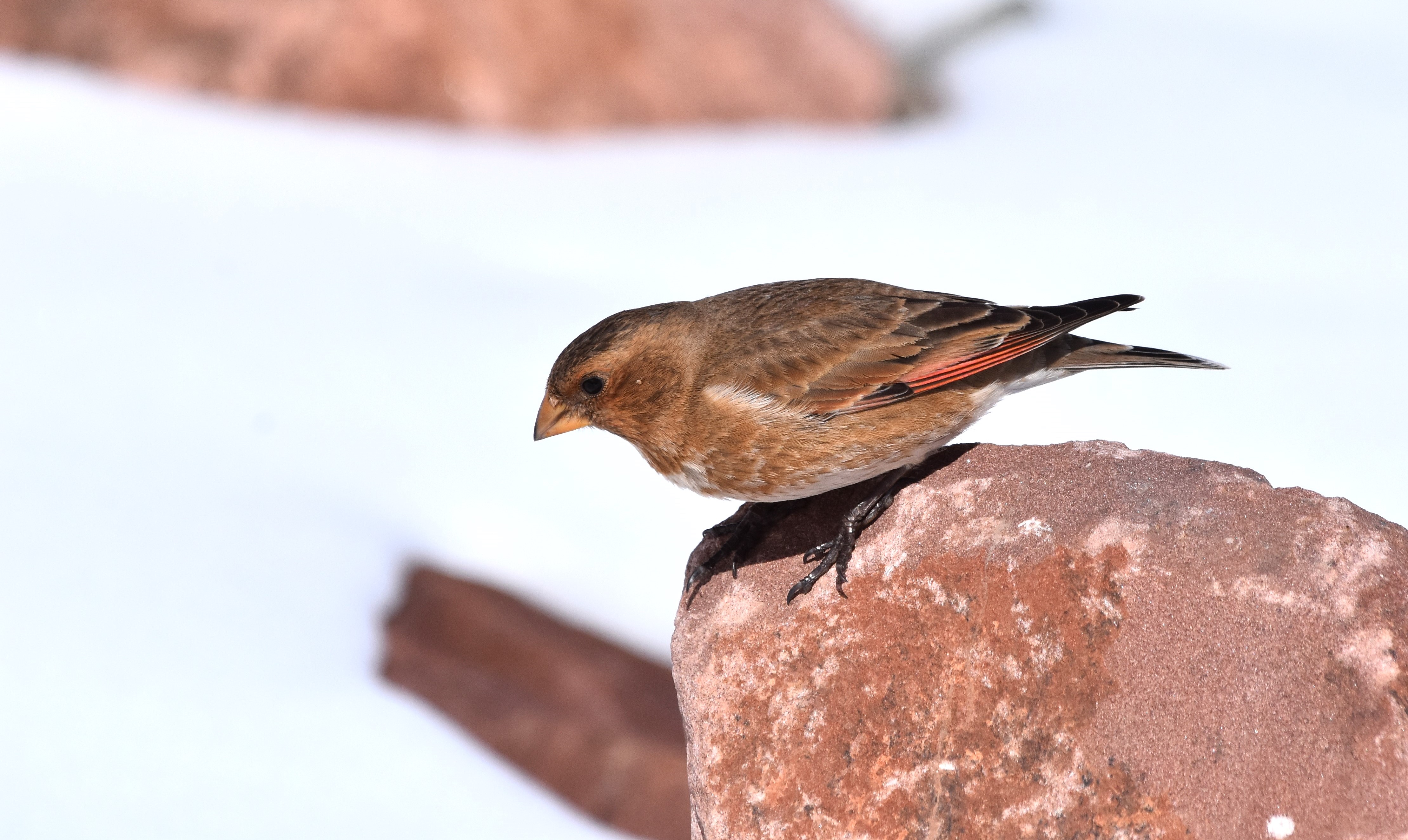
Day 15. Madeira. This day we were supposed to fly to Sao Miguel, but our flight was cancelled. We got the news early in the morning, and some of the tour participants took a guided walk around Funchal, while the rest stayed at the accommodation to enjoy some rest.
After a morning of telephone calls to make sure that our accommodation and minibus were still waiting for us at Ponta Delgada the they after, some of us reassembled again for an afternoon walk. Along the stream next to our accommodation we got a drake Glossy Ibis along with the common Muscovy Ducks. Eurasian Moorhen was also an island tick, and along with these species we got the normal selection of Atlantic Canaries, Common Waxbills, Eurasian Blackcaps and Eurasian Blackbirds. A Grey Wagtail was showing nicely in the stream, and at the far end of it we still got 4 Ruddy Turnstones feeding among the rocks. From here we got a taxi to explore the Westernmost point of the island. A walk around produced again nice views on Rock Sparrows, Berthelot’s Pipits and Spectacled Warblers. Here, 3 Barn Swallows were a new surprise. Our walk around also produced really a pair of Roseate Terns holding a territory in the Northern coast of the island. They were quite far away, but we spent 40 minutes enjoying scope views to make sure that everybody catched the absence of a black rear edge in the wings.
After this we just went back to the accommodation to get ready for a nice evening meal.
A drake Glossy Ibis (Plegadis falcinellus), a description species for Madeira. Without wind, we got several sights on Spectacled Warblers (Curruca conspicillata), like this female.
Day 16. Madeira – Sao Miguel. After our flight was delayed for one day, we finally got out of Madeira, landing in Ponta Delgada during the early afternoon. Before living Madeira we saw again the drake Glossy Ibis in the creek by the hotel, and Dorothée and Sonja had a Western House Martin flying around the airport.
Once in Sao Miguel, we directly moved to one of the strongholds for the endemic and very endangered Azores Bullfinich. In the way we got a good selection of the common birds in this island including several European Robins, Common Buzzards, Grey Wagtails, Common Starlings and Atlantic Canaries (very common here). We also got a few Common Woodpigeons, Eurasian Goldfinches and ruff views on the endemic Azores Chaffinch.
Once at the place we started looking for these small Bullfinches. For about one hour we quietly scanned the vegetation looking for movement, but we only got Goldcrests and Blackcaps singing around us. At some point we started to disperse when suddenly Keith yelled from down the path. We all ran down to find him pointing up in the hillside, where two superb Azores Bullfinches were feeding in a small tree. This was a lifer bird for all, including me, and it was really celebrated considering the few time we got to try to find it!
The birds went away after some minutes of sighting, and we walked down to the van. But we were around the van William saw something flying down inside a small creek. We went to see what it was, and James found the two Bullfinches feeding only a couple of metres away from the group, really low in the vegetation! This was a wonderful view, way better that what we were expecting to have in such a short period of time.
From here we went down to our accommodation, with one stop to have better views on the Azores Chaffinches. There, we got also really got looks on 1 Azores Noctule, the only endemic mammal of the islands, flying in full daylight! Around our accommodation, a shortstop was added to scan a small island. Beyond the small colony of Common Terns, we got to see 9 Cory’s Shearwaters flying really close to the coast in really good light.
Azores Chaffinch (Fringilla moreletti) feeding in an open land. Azores Bullfinch (Pyrrhula murina) Azores Bullfinch (Pyrrhula murina) close up.
Day 17. Sao Miguel – Terceira. Before our connection flight with Terceira, we had time to explore a bit the promenade around Ponta Delgada, where we got 3 Whimbrels and 4 Ruddy Turnstones along with the typical views on some Cory’s Shearwaters moving not especially close to the coast. A second stop was made by the Lagoa Verde, to enjoy further views on Azores Chaffinches, Azorean Common Woodpigeon, Atlantic Canaries, Common Terns, Goldcrests and Little Egrets.
Once arrived to Terceira, we had an afternoon walk around the famous Paúl de Praia Victoria. Nothing of interest was seen beyond Common Waxbills and some pairs of Moorhens and Coots and an escaped Cockatail. At the evening, a further walk produced an interesting Great White Egret (a local rarity) roosting in the lagoon.
Great White Egret (Ardea alba) roosting in Terceira.Azores Common Woodpigeon (Columba palumbus azorica), another splittable race.
Day 18. Terceira. After breakfast we walked down to the harbour, where our boat was waiting for us. That morning we had a bit of rain, but nothing really serious.
Out in the sea, we soon had the first Cory’s Shearwaters but our eyes were looking for something smaller. It didn’t take long before we got the first 2 Barolo’s Shearwaters, and soon after another 3 or 4 birds moving along with Cory’s. The difference of size was just incredible. Other small flocks were seen, with great views and also great photo chances! Beyond the Shearwaters, we had to go further South before we got the main target of the offshore. It was a bit long waiting, with the Ocean being really plain, but suddenly a wonderful Monteiro’s Storm Petrel showed out for us, performing in a great way and allowing us to see its forked tail. What a stunner!
Very glad with this great species, we just went back to Terceira while enjoying more Barolo’s Shearwaters. At the end, no less than 14 Barolo’s were seen, not bad at all!
We were lucky to get lovely views on Monteiro’s Storm Petrel (Oceanodroma monteiroi)Our group back to the harbour in Terceira after enjoying Monteiro’s Storm Petrel.Barolo Shearwaters (Puffinus baroli) were surprisingly common around Terceira.
Day 19. Terceira – Lisbon. This was basically a travel day back to Lisbon, but our midday flight allowed us some local birding before leaving Açores. A short walk from our accommodation gave us access to a very nice farmland. Keith was here the they before, and he was already enjoying the Common Quails. That was our main target for the morning and after some search we finally found the first of them. And then a second and even a third bird, all of them singing from the top of the lovely stone walls that served to mark the limits of the properties. Along with them, waves of Atlantic Canaries, Blackbirds and Blackcaps to say goodbye to these wonderful islands!
Arrived to Lisbon, we just went down the corner of our accommodation, where a very nice local restaurant was waiting for the group. It was another pleasant dinner full of fun and good mod. A perfect way to end the first half of the Odyssey!
Common Quail (Coturnix coturnix) singing from a stone edge.
Day 20. Lisbon – Sofia. Early morning flight connecting Lisbon with Sofia, the capital city of Bulgaria. Our group of guests landed and they immediately met Sergi and their local guide, but all of that will be explained soon..
List of birds seen during the tour
Mute Swan (Cygnus olor)
Ruddy Shelduck (Tadorna ferruginea)
Common Shelduck (Tadorna tadorna)
Greylag Goose (Anser anser)
Marbled Teal (Mamaronetta angustirostris)
Gadwall (Marecca strepera)
Mallard (Anas platyrhynchos)
Northern Pintail (Anas acuta)
Northern Shoveler (Spatula clypeata)
Garganey (Spatula querquedula)
Common Pochard (Aythya ferina)
Ferruginous Duck (Aythya nyroca)
White-headed Duck (Oxyura leucocephala)
Common Quail (Coturnix coturnix)
Red-legged Partridge (Alectoris rufa)
Barbary Partridge (Alectoris barbara)
European Nightjar (Caprimulgus europaeus)
Red-necked Nightjar (Caprimulgus ruficollis)
Common Pheasant (Phaisanus colchinus)
Little Bustard (Tetrax tetrax)
Houbara Bustard (Chlamydotis undulata)
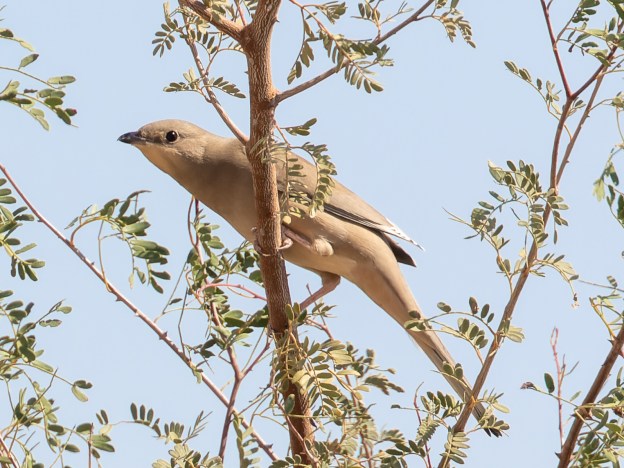
Common Swift (Apus apus)
Plain Swift (Apus unicolor)
Pallid Swift (Apus pallidus)
Alpine Swift (Tachymarpstis melba)
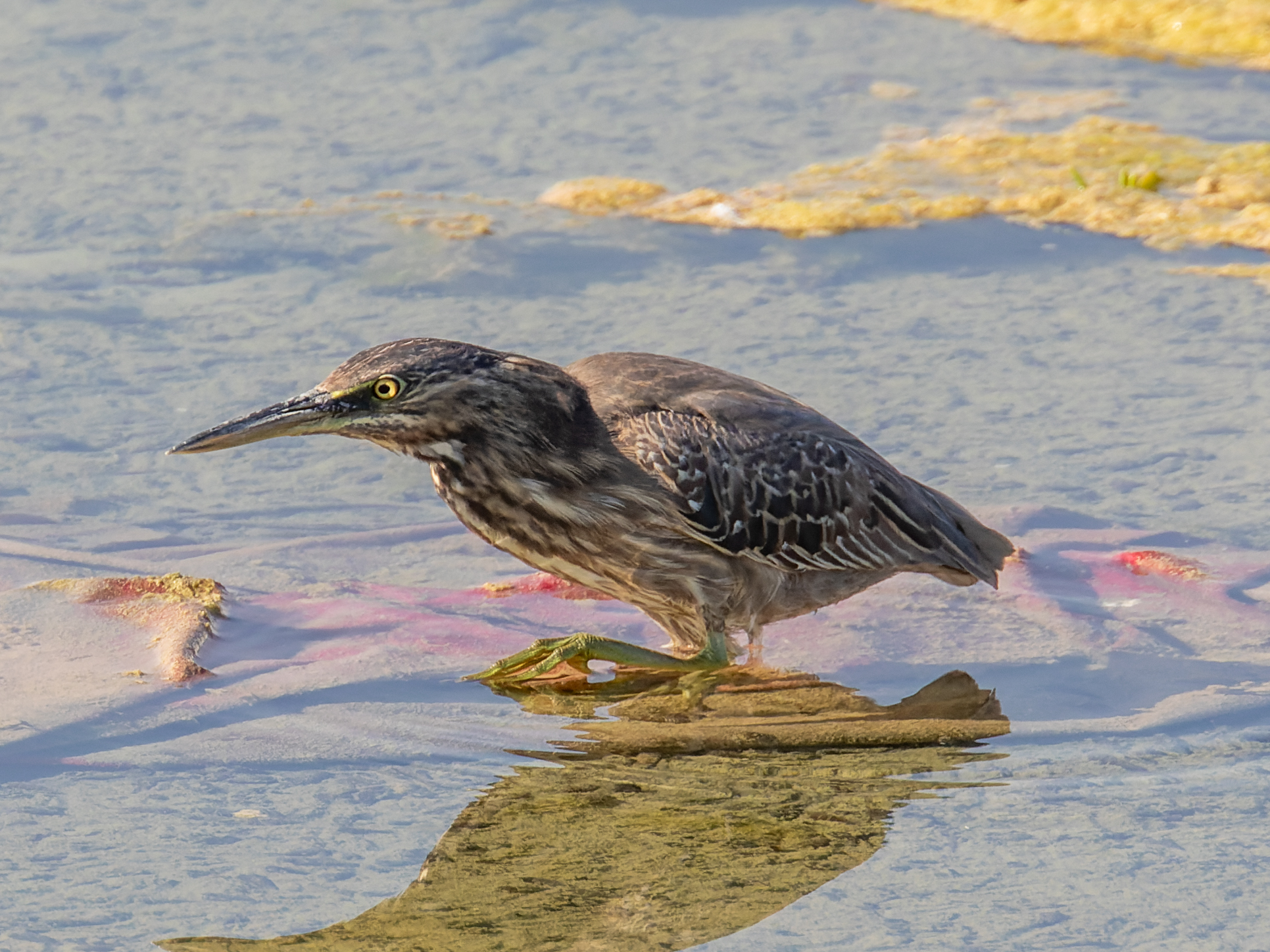
Common Cuckoo (Cuculus canorus)
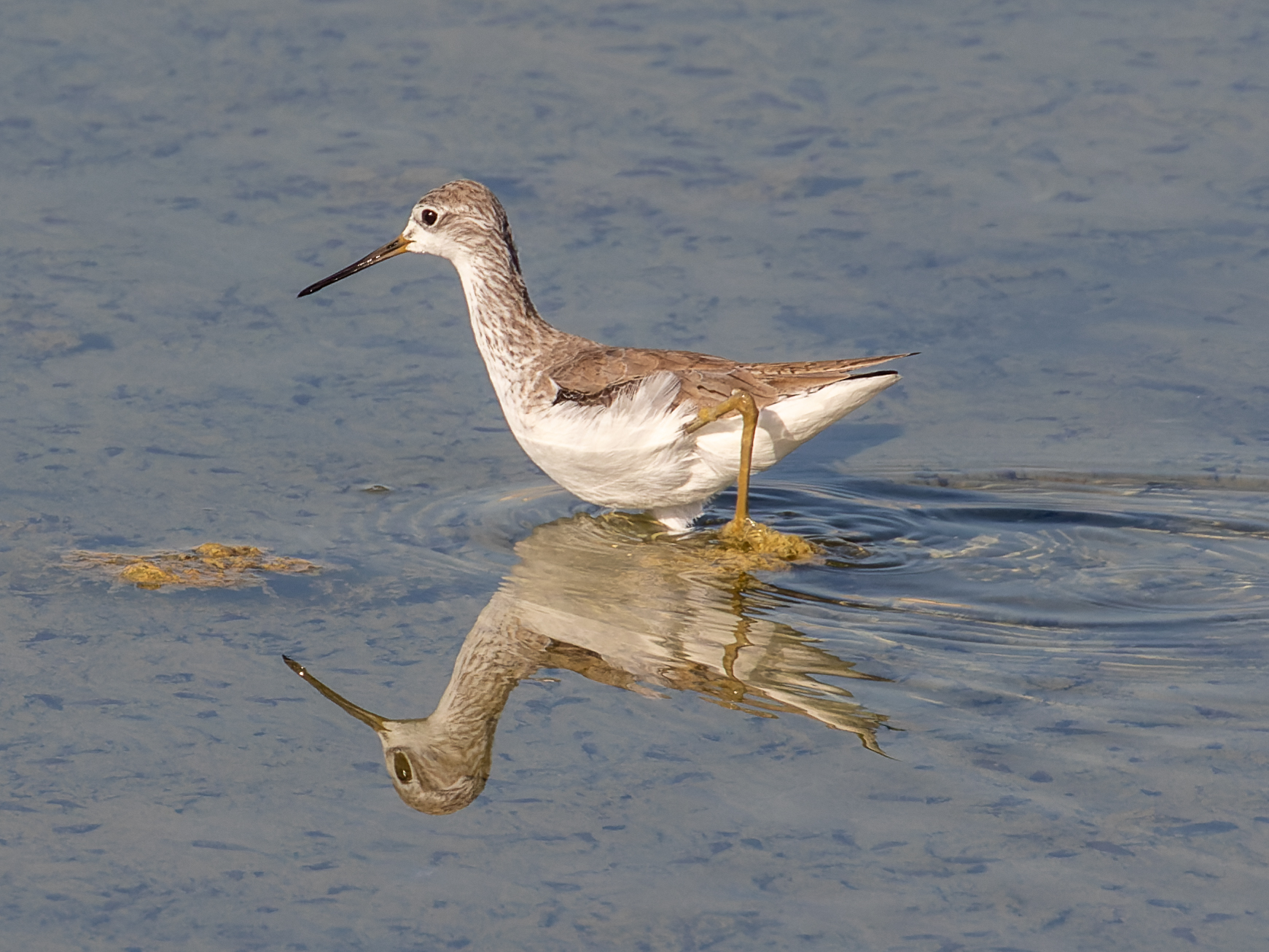
Great Spotted Cuckoo (Clamator glandarius)
Pin-tailed Sandgrouse (Pterocles alchata)
Black-bellied Sandgrouse (Pterocles orientalis)
Feral Pigeon (Columba livia)
Stock Dove (Columba oenas)
Common Wood Pigeon (Columba palumbus)
Trocaz Pigeon (Columba trocaz)
Bolle’s Pigeon (Columba bollii)
Laurel Pigeon (Columba junoniae)
European Turtle Dove (Streptopelia turtur)
Eurasian Collared Dove (Streptopelia decaocto)
Laughing Dove (Streptopelia senegalensis)
Water Rail (Rallus aquaticus) —————————— heard only
Totes les imatges d’aquesta crònica han estat realitzades per Carles Oliver. Tots els drets reservats.
Please, follow this link to find the English version of this trip report.
Resum: El nostre 7è tour al Nord de Finlàndia i Finnmark ha tornat a ser una aventura força exitosa. La variabilitat d’algunes espècies en aquests hàbitats és ben coneguda i molt destacable. Enguany, va sobtar la quasi total absència de trencapinyes al llarg del recorregut, amb només uns quants contactes i tant sols un parell d’observacions. Amb prou feines hi havia cap observació recent de trencapinyes becgròs a la zona! A l’altra banda de l’espectre, vam aconseguir molt bones observacions de totes les espècies de galls i de 5 espècies de mussols malgrat la baixa densitat d’enguay. El sit rústic i el repicatalons petit semblaven trobar-se a tot arreu en determinats moments del viatge, i la cotxa cuablava i el picot de tres dits també es van deixar veure molt bé i fàcil malgrat algunes temperatures força altes al llarg del tour.
Dia 1. Part del nostre grup va aterrar a Oulu amb una mica de retard degut a un excès de trànsit a l’aeroport de Barcelona. A l’aeroport d’Oulu ens vam trobar a un altre participant, però aquí també vam patir un endarreriment derivat d’un problema amb les furgonetes de lloguer. Normalment gaudim d’una petita finestra de pardaleig a la primera tarda del viatge, però enguany el primer pardaleig del tour va ser després de sopar.
El sopar a l’allotjament va ser el primer moment que tot el grup es va trobar i seure junts i tenint una torre d’observació a tocar de l’hotel no vam passar l’oportunitat de, un cop escurades les postres, fer-hi un cop d’ull un cop. Aquesta passejada va servir per tenir un primer contacte amb tot un seguit d’espècies comunes en aquesta part de Finlàndia incloent tord ala-roig, mastegatatxes, papamosques gris, boscarla dels joncs, bec de serra mitjà, xatracs comú i àrtic, gamba roja comuna, xarxet comú, ànec griset, ànec cullerot o ànec cuallarg però també d’altres una mica més escasses o més interessants com pinsà carminat, àguila marina o tètol cuanegre així com els primers xarrasclets del tour.
Dia 2. El primer dia de pardaleig del tour va tenir com a objectiu principal contactar amb algunes de les espècies de mussols que viuen als boscos boreals. Com sempre, vam començar força d’hora al matí, amb respectius esmorzars per emportar. El temps era fresc i les primeres gralles de la bonica raça escandinava no es van fer esperar, alimentant-se amb graules. La primera parada del tour va ser per visitar un niu actiu de gamarús dels Urals i vam tenir la sort de ser allà en el moment que la femella estava al niu. Tot i que l’angle no era el més adient, tothom va poder gaudir de bones observacions incloent vistes de la cara i els ulls amb el telescopi. Caminant pel bosc boreal, aquell primer passeig va produir cotxa cua-roja i la primera mallerenga capnegra del tour mentre un gall de cua furcada cantava a certa distància.
La segona parada la vam fer per comprovar si un niu històric de mussol pirinenc estava actiu enguany. Aquí també vam tenir sort, i fins i tot des de la pista forestal vam veure un pollet de mussol pirinenc que s’estava dret al mateix forat del niu! Els següents deu minuts van ser simplement fantàstics. Amb tot el grup assegut al terra del bosc boreal, vam gaudir d’unes observacions excel·lents d’aquest pollet mentre anava albirant el bosc al voltant seu. Passats uns minuts vam veure que neguitejava i quasi semblava que havia de saltar del niu. Va ser en aquell moment que un reclam va sortir del bosc i fins i tot abans no poguéssim començar a cercar l’ocell, Nick va trobar per tots nosaltres un segon pollet de mussol pirinenc que estava aturat a només uns 3 metres de tot el grup! Els següents minuts van ser simplement inoblidables, gaudint com poques vegades del petit volaltó. Passats uns minuts vam decidir moure’ns enrere. Sense voler-ho, havíem acabat massa a prop de l’ocell!
Encara vam tenir uns quants minuts per gaudir d’aquell màgic racó del bosc boreal abans no vam seguir el nostre itinerari. De camí cap al següent punt, vam trobar dos mascles d’escorxador que se les tenien al llarg de la pista. Aquests van ser els únics escorxadors del viatge, ja que és una espècie força escassa a la zona! No gaire lluny, una zona de conreus ens va permetre observar hortolans. No vam trigar gaire a trobar el primer mascle cantant des d’un arbre, seguit per al menys dos mascles més i un parell d’individus alimentant-se al terra. Altres espècies d’interès a la zona van incloure també verderola, repicatalons, bitxacs rogencs cantant a dojo als marges i la única tallareta comuna del tour mentre els pinsats carminats cantaven una mica més enllà.
De tornada al bosc, vam anar a una zona molt recomanable per al picot de tres dits. Allà, vam gaudir de valent amb els mosquiters xiulaires però també dels tallarols xerraires i els mastegatatxes. Però tot això va quedar en un segon terme, perquè el que segur alguns no oblidarem van ser les fantàstiques observacions de la parella de picots de tres dits movent-se a pocs metres de nosaltres mentre s’apropaven al seu. Realment va ser un privilegi observar aixó de bé la que podem considerar com l’espècie de picot europeu més difícil d’observar!
Després de gaudir d’aquest espectacle vam fer una parada en una zona humida. Aquí vam observar dues parelles nidificants de cabussons orelluts. I tot que no estaven tant a prop com en viatges anteriors, vam poder gaudir de bones observacions al telescopi. Després d’una mica de cafè i de fer un esmorzar per agafar forces vam tornar al bosc boreal. Vam caminar un parell de quilòmetres per zones d’hàbitat idoni fins que tot d’una un mussolet eurasiàtic va reclamar a pocs metres de nosaltres. Després d’això no vam trigar gaire a localitzar l’ocell i gaudir de fantàstiques observacions del mussol més petit del continent. Era el final del matí i el nostre petit mussol anava seguit per una bona corrua d’ocells forestals. Aquest reguitzell de reclams super-excitats incloia lluers, pinsans comuns, mallerenga carbonera,cotxa cua-roja i una verderola. A voltes, semblava que la verderola aixeca més passions que el propi mussolet (!). Coses del directe, suposo. El mussol anava movent-se, constantment destorbat per aquesta petita cohort d’agreujats.
Amb aquesta observació va acabar un matí prou fructífer! Després va tocar dinar i descansar una mica.
Els picots de tres dits (Picoides tridactylus) ens van oferir observacions inoblidables. Vam gaudir d’aquesta espècie fins a tres vegades al llarg del tour! Femella (baix) i mascle (dalt) de picot de tres dits al voltant del seu niu.Els hortolans (Emberiza hortulana) són una espècie força escassa a Finlàndia, però als voltants d’Oulu encara mantenen bones poblacions. Mussol pirinenc (Aegolius funereus) a les portes del seu niu.Vam passar 5 minuts inoblidables amb aquest pollet de mussol pirinenc a pocs metres de nosaltres.El mussolet eurasiàtic (Glaucidium passerinum) també es va portar molt bé!El mussolet despegant!Bona part del grup gaudint del mussol pirinenc.
Després de sopar ens vam desplaçar al Nord del nostre allotjament, a unes de les últimes zones de nidificació de la siseta cendrosa a Finlàndia. Després d’aparcar, vam fer un bon tomb per la zona a on vam poder observar becut, pinsà carminat, corriol gros i els dos únics corriols anellats petits del viatge. Una siseta cendrosa cantava per la zona, però es resistia a deixar-se veure. Va ser l’Aonghus qui la va trobar cantant a dalt de tot d’un fanal a uns 300 metres de distància. Encara vam haver de caminar una mica però al final vam gaudir d’observacions increïbles amb un ocell cantant i fent dispaly al nostre voltant. Mentre exploràvem la zona també vam veure els primers còlits grisos dels tour.
Molt contents d’haver gaudit d’aquesta espècie tant escassa vam tornar cap al nostre allotjament i descansar per poder gaudir d’un altre gran dia!
Enguany hi havien bons números de pinsats carminats al llarg dels primers dies del viatge. Aquí una bonica femella. Siseta cendrosa (Xenus cinereus) volant per sobre nostre mentre cantava en vol.
Dia 3. Abans d’esmorzar a l’allotjament vam aprofitar per visitar una de les famoses torres d’observació al voltant d’Oulu. N’hi han un bon grapat per escollir, però nosaltres vam fer cap a un situada al Sud de la badia Liminganlahti. Aquest cop el número d’ocells no va tant espectacular com en ocasions anteriors però tot i així aquí vam veure bons números de becadell comú i 6 gambes roges pintades a més de batallaires, àguiles marines, els únics 2 cignes muts dels tour, repicatalons cantant i xatracs àrtics. Aquí també vam tenir el privilegi de sentir un bitó cantant.
Un cop esmorzats vam sortir de l’allotjament per dirigir-nos ja cap a Oulu. De camí, vam fer una parada en una altra zona forestal molt bona per picots. Era el final del matí i la temperatura (tot i que sembla difícil de creure) vorejava els 30ºC en el que va ser el dia més càlid en un mes de maig a la història de Finlàndia! En aquesta parada vam veure senyals de picot cendrós però els nostres esforços només ens van reportar un picot negre que ens va passar volant per sobre, aturant-se a dalt de tot d’un arbre per oferir al grup una molt bona observació. També vam veure pinsans borroners de la subespècie nominal amb el seu característic reclam de trompeta, piules dels arbrespicots garsers grossos.
Al llarg d’aquest matí vam tenir les millors observacions de becadell comú (Gallinago gallinago) del tour.Malgrat els 30ºC vam gaudir de bones observacions de picot negre (Dryocopus martius)
Vam fer una parada per dinar i vam arribar a Kuusamo a començaments de la tarda. El temps aquí era molt diferent que el havíem patit a la costa del Bàltic i la temperatura no passava dels 20ºC amb pluges disperses que s’anaven movent per la zona. La nostra primera parada a la zona va ser en un petit senderol per cercars sits. Ja des del lloc a on vam deixar els vehicles podia sentir cantar alguna espècie força interessant. Fet i fet va ser arribar i moldre i en qüestió d’un parell de minuts ja gaudíem de dos repicatalons petits cantant a curta distància i deixant-se veure durant molta estona! Érem a tocar d’un llac i un bon número de gavines menudes anaven passant per sobre nostre, quasi totes a força alçada. Però a uns pocs minuts en cote ens vam plantar en una colònia de cria d’aquestes petites gavines. Aquí no només vam gaudir desenes d’aquestes ocells, també vam observar dues parelles de cabussons grisos i les primeres calàbries agulles en plomatge estival del tour. Una estona d’observació des d’aquest punt privilegiat va produir també mussol emigrant i molt bones observacions de gavià fosc de la subespècie nominal. Altres espècies a la zona van incloure ànec xiulador, ànec cuallarg, xarxet comú, l’omnipresent tord ala-roig i una fantàstica becada cantant en vol i creuant-se amb un becadell comú que també anava fent la seva pròpia exhibició en vol!
Des d’aquí ens vam desplaçar al nostre allotjament per gaudir d’un bon estofat de re i poder descansar una mica!
Podem dir que els repicatalons petits (Emberiza pusilla) es van deixar veure d’allò més bé!Veure una colònia de gavines menudes (Hydrocolaeus minimus) és sempre una experiència fantàstica!Un dels pocs gavians foscos (Larus fuscus fuscus) del viatge!Part del grup gaudint d’un dels repicatalons petit.
Dia 4. Un altre cop comencem ben d’hora, aquest cop per explorar un seguit d’hàbitats ben a prop del nostre allotjament. L’objectiu del matí és contactar amb algunes de les especialitats que viuen al bosc boreal. Només a 300 metres de l’hotel vam trobar el primer petit estol de sits rústics, 3 individus que van sortir volant de la pista i que vam poder observar malgrat la llum encara pobre. Una mica d’exploració més enllà va produir un mascle de gall fer, que malauradament només el van poder gaudir com cal els ocupants del segon vehicle. Una hora i escaig d’exploració va produir ben poca cosa més, amb només un mascle de gall de cua forcada aturat a dalt de tot d’una pícea i una perdiu escandinava a tocar de pista que només van veure des del segon vehicle. Malgrat tot, vam gaudir de les millors vistes de becades mentre una parella s’alimentava a un prat.
Després d’una parada per gaudir d’un bon café ens vam dirigir cap a un dels molts turons de la zona però força abans d’arribar vam haver de parar per gaudir d’una parella de grèvols que es perseguien just al límit del bosc. Ens vam anar movent pel bosc, amb els grèvols força actius; cantant, xisclant i fent aletejos al mig del bosc. Després d’uns quants minuts tothom al grup ja havia tingut bones observacions d’aquesta espècie sovint esquerpa. A més a més, mentre ens movíem pel bosc també vam trobar un altre sit rústic i un parell de gaigs siberians movent-se a les capçades dels arbres. Una mica més enllà, vam tenir el nostre primer intent de contactar amb mussol esparverenc, però aquesta parada “només” va produir un parell de sits rústics, mallerenga capnegre, piula dels arbres i un picot de tres dits breuvement vist per alguns al grup.
Finalment vam arribar a Livaara, una de les parades més típiques per ocells forestals al Nord de Finlàndia. El sol, però, ja estava ben amunt i malauradament feia una mica de calor. Tot i això, vam enfilar el camí i tot just arribats a la zona més interessant del turó vam trobar la nostra primera cotxa cuablava cantant des de dalt de tot d’una pícea. Tots vam poder gaudir força estona d’aquest primer individu. Un segon mascle (tots dos ocells eren segons anys) cantava més enllà i el vam poder veure molt bé amb el telescopi mentre cantava a una cota inferior a la que ens trobàvem. Més enllà d’aquestes fantàstiques cotxes cuablaves, al turó només vam trobar piula dels arbres i papamosques gris com a espècies d’interès.
Després de dinar, la nostra tarda va ser curta i lliure perquè tothom pogués explorar en llibertat els encontorns del nostre allotjament. Valones, cucuts, gambes verdes i calàbries agulles van ser algunes de les espècies observades quasi per tothom.
Aquest gall de cua furcada (Lyrurus tetrix) va ser el millor gall per al grup al voltant de Kuusamo. El resultat més pobre en anys!Mallerenga capnegra (Poecile montanus) viu en boscos de pi i pícees al Nord de Finlàndia.Les becades (Scolopax rusticola) són comunes però sempre difícils d’observar al Nord de Finlàndia.Enguany els sits rústics (Emberiza rustica) semblaven ser a tot arreu però mai vam aconseguir apropar-nos-en.Les cotxes cuablaves (Tarsiger cyanurus) poden ser sorprenentment difícils de trobar. Però no aquest cop!Una mica del fantàstic bosc de pícees al voltant de Kuusamo.
Dia 5. Un nou dia al paradís i un nou inici de jornada ben d’hora, ben d’hora. La primera parada del matí va ser a un lloc molt bo per a perdiu escandinava. En visites anteriors sempre havíem tingut grans observacions d’aquesta espècie aquí però enguany ens vam haver de conformar amb un mascle en vol. Aquí també vam veure els únics trencapinyes comuns aturats del viatge (ha estat un any amb molt pocs trencapinyes al Nord de Finlàndia) i un bonic raspinell pirinenc. De tornada a les furgonetes dos ants van sortir de l’espessor del bosc i es van deixar veure ben bé al llarg d’un minut mentre ens fitaven a una distància prudent.
Era un matí emboirat als turons així que vam decidir de fer un segon tomb per mirar de contactar galls però novament amb poc èxit. Tot amb tot, uns ocells sedosos en vol en mig de la boira va ser el millor de la parada. La última parada del matí va ser per a un ben conegut indret per a gaig siberià. Aquí vam veure les que possiblement hagin estat les meves millors observacions en aquesta espècie en 8 visites a Finlàndia, amb un parell d’exemplars literalment als nostres peus. Aquí també vam veure molt bé mallerenga capnegra, pinsà borroner i reietó. No gaire lluny 3 cotxes cuablaves cantaven però el grup ja estava sadollat d’aquesta espècie i no vam provar de pujar cap turó.
Des d’aquí vam començar el trànsfer al Nord però la nostra típica parada de cafè (i els millors donuts de Lapònia) va ser arruïnada per una punxada que ens va fer perdre una hora. Després de comprar un nou pneumàtic, vam continuar fent via cap al Nord, gaudint de camí unes fantàstiques creps. Des del mateix restaurant vam observar dues calàbries agulles en un sorprenentment tardà plomatge hivernal i la única àguila pescadora de tot el tour.
Raspinell pirinenc (Certhia familiaris)Ant (Alces alces) sortint del forest.Aquest matí vam gaudir com mai del gaig siberià (Perisoreus infaustus)
Arribats a Ivalo, encara vam tenir temps per a una bona estona de pardaleig en un gran raconet de Lapònia. En la nostra primera parada al bosc ja vam trobar una parella de mallerengues de Lapònia, que van fer les delícies del grup i es van deixar fotografiar al llarg de força estona. Aquí també vam veure diversos passerells golanegres. Una petita passejada per allà al voltant va produir també una fantàstica parella d’ocells sedosos mentre s’alimentaven a curta distància. A més a més, un fantàstic picot de tres dits també va aparèixer quasi al mateix temps i tothom va poder gaudir de bones observacions per segon cop al tour. Tot plegat, un meravellós botí per a una horeta i escaig de pardaleig. Malauradament, en aquesta zona, normalment, molt bona per trencapinyes, no en vam veure ni sentir-ne cap…
Un cop tornats als vehicles encara vam haver de tornar fins a la carretera general i aquesta petita estona vam tenir, com és habitual, bones observacions. La temperatura era de 15ºC i estava nuvolat quan un estol de 8 galls de cua furcada mascles van creuar sortir del bosc, aturant-se a pocs metres de nosaltres. Tothom va gaudir d’un moment inoblidable. Una mica més enllà una femella de gall fer s’alimentava al sotabosc però el millor encara havia d’arribar quan l’Alba va trobar una nova femella de gall fer, aquest cop estirada a terra in perfectament camuflada al llit arbustiu. Una autèntica meravella! Després de força estona gaudint dels increïbles detalls del plomatge d’aquesta femella i molt a contracor, vam marxar per digirir-nos, ara sí, al nostre allotjament, sopar, descansar i comentar un altre fantàstic dia!
La molt perllongada observació de les mallerengues de Lapònia (Poecile cinctus) va produïr molt bones imatges!Picot de tres dits (Picoides tridactylus) a pocs metres de la mallerenga de Lapònia i els ocells sedosos. Enguany, els ocell sedosos (Bombycilla graculus) tenia bones densitats al Nord de Lapònia.Gall de cua furcada (Lyrurus tetrix) a prop d’Ivalo. Femella de gall fer (Tetrao urogallus) enllitada al bosc. Una fantàstica troballa de l’Alba.
Dia 6. Després de gaudir d’un bon esmorzar al nostre allotjament vam fer un petit passeig al voltant de l’hotel. Els pinsans dels pins es veuen aquí a les menjadores que tenen al voltant i es poden fer observacions francament bones. També sovintejaven els pinsans mecs, els passarells golanegres i els verdums. A més a més, el petit llac del costat vam veure 3 becs de serra petits incloent dos fantàstics mascles i una parella d’ànecs foscos que estaven niant al voltant del llac.
Dirigint-nos cap al Nord en direcció a la frontera noruega vam fer un seguit de parades per escanejar els nombrosos llacs. A quasi cada parada hi havien becs de serra mitjans, cignes cantaires i morells d’ulls grocs. Les valones nien a les zones de maresma i van gaudir de les primeres cotxes blaves del viatge. Més al Nord encara, una nova parada afegir aligot calçat a la llista del viatge, quan quatre individus volaven l’aparcament. En un riu proper, una merla d’aigua va passar rabent sobre l’aigua…
Al pas fronterer vam fer parada per dinar, el més pintoresc del tour! Escolteu, quanta gent coneixeu que hagi tastat estofat Sami d’ant? Doncs apa, nosaltres sí! Molts ens ho pensarem dues vegades abans de repetir…
El pinsà dels pins (Pinicola enucleator) és sempre una espècie força cobejada als grups. Mascle a dalt i femella a baix.Foto anecdòtica de l’ànec fosc (Melanitta fusca)
Un cop endinsats a Noruega vam continuar fent via al Nord. La propera parada pròpiament dita va ser per explorar la desembocadura d’un torrent al gran fiord de Varanger. Aquí normalment s’hi acumulen limícols i làrids de diverses menes. Aquí vam veure els primers batallaires en plomatge nupcial del tour però també altres limícols com garses de mar, territs variants i territs menuts. Aquí els gavians argentats són comuns junt a gavinots i gavines cendroses. Les primeres gavinetes de tres dits també es banyaven a les vores. Escoltats tota l’estona per aligots calçats, paràsits cuapunxeguts i àguiles marines, vam continuant fent via. Parades obligades van ser per mirar els primers estols d’oques pradenques de la tundra.
En una badia a prop de Vadso vam estar-nos més estona. Ja era ben entrada la tarda i una meravellosa llum banyava la badia. Aquí vam començar per escanejar els ocells que s’alimentaven a les platges. Al costat dels abundants èiders comuns vam trobar gambes roges comunes i tètols cuabarrats en plomatge estival. Però la sorpresa va ser trobar un estol de 4 èiders reials, incloent un mascle de 1r estiu, quasi a l’altre banda de la badia i que tots vam poder gaudir als telescopis.
Un petit passeig per la zona va continuar oferint bones observacions. Una petita bassa propera concentrava fins a 87 escuraflascons bec-fins (!) que s’alimentaven, perseguien i arraulien tot al voltant del llac. Es fa difícil de descriure la bellesa de l’escena, amb tots aquells minúsculs limícols en plomatge nupcial, flirtejant a la llacuna i donant voltes sobre ells mateixos a una velocitat de vertígen per capturar els petits insectes dels que s’alimenten. Tot això en l’ambient net, quasi verge, de la tundra àrtica. I aquell dia encara van estar més de sort: a més a més dels escuraflascons, la bassa també havia atret un petit estol de 40 batallaires, amb alguns mascles lluint les seves plomes nupcials, saltant, esbarallant-se i lluitant en una escena que de ben segur perdurarà anys a la nostra memòria!
Una ràpida ullada a la costa encara va produir més espècies incloent becut i els primers remena-rocs del viatge junt amb corriols grossos. Al mar, mil·lers de gavinetes de tres dits feien via cap a les seves colònies de cria, seguides de prop per paràsits cuapenxeguts i gavinots. Una mirada més detallada va revelar una parella calàbries petites. De tornada als vehicles encara vam poder gaudir de la primera piula gola-roja del viatge.
De tornada als cotxes vam anar afer paradeta a una estació de servei, però al seu darrera hi ha un raconet que sempre és bo per a limícoles, així que només aparcar vaig a treure el nas i quina va ser la meva sorpresa de trobar una siseta cendrosa alimentant-se amb un estol de territs variants en un plomatge nupcial radiant!
Oques pradenques (Anser serrirostris) amb batallaires en un prat de Varanger.Vam gaudir d’observacions fantàstiques a la primera basseta per escuraflascons que vam visitar. Femella a dalt i mascle a baix.Èider (Somateria mollissima). Pocs ànecs són tan elegants al nostre continent! Batallaires (Calidris pugnax) exhibint-se .We were lucky to enjoy some nice Ruff action!Un parell de garses de mar rodejats d’escuraflascons.Aquí també vam veure les primeres piules gola-roges (Anthus cervinus).Vam tenir la sort de trobar aquesta siseta cendrosa (Xenus cinereus) alimentant-se al costat de territs variants (Calidris alpina)!Àguila marina (Hieraaetus albicilla) posant pel grup. Sempre és fantàstic veure així de bé una de les icones de l’Àrtic.
Dia 7. Després de gaudir d’un molt bon esmorzar noruec vam caminar la curta distància que ens separava de la badia de Vardo. Aquí, nombroses gavinetes de tres dits entraven i sortien de les seves colònies dins del poble. Amb ells, xatracs comuns i àrtics. Aquest dia tocava vaixell i illa de Hornoya. El trajecte en vaixell dura amb prou feines deu minuts però van ser prous per guaitar 4 fulmars que ens van passant rabent per sobre. Aquí dalt, els fulmars són de la famosa varietat blava, típica de l’Àrtic. Malauradament no tothom els va poder veure!
Una de les estampes més impressionants de Hornoya es produeix fins i tot abans d’arribar a la illa. En els últims centenars de metres abans d’arrivar el mar està literalment emmantellat amb mil·lers de somorgollaires i gavots. És simplement alucinant veure aquell mar de somorgollaires, una cosa que no he vist mai en cap altre colònia d’aus marines, almenys a l’Atlactic Nord.
Tot i les variacions interanuals, Hornoya acull unes 50.000 parelles de somorgollaires, prop d’un 15% dels quals de la varietat embridada. Amb ells, hi nien unes 30.000 parelles de gavinetes de tres dits, mil·lers de gavots, uns 3.000 frarets, centenars de corbs marins emplomallats i petits números de fulmars que combines amb les petites colònies de somorgollaire de Brünnich (menys de 3.000 parelles).
El passeig per l’illa ens va permetre observar totes aquestes espècies i també altres especialitats com grassets de costa, piules gola-roges, una bonica parella de territs de Temminck, oques de galta blanca, bec de serra grossos i cotxa blava. Al camí de pujada al far el Joan i la Roser van trobar un bonic passerell becgroc.
Els territs foscos s’alimentaven a tocar de l’allotjament (Calidris matitima).Xatrac àrtic (Sterna paradisaea)Primer plà de gavot (Alca torda). L’ocell marí més elegant del continent?Somorgollaire “embridat” a la colònia.Somorgollaire (Uria aalge) preparant-se pel vol.Fraret atlàntic (Fratercula arctica).Somorgollaire de Brünnich (Uria lomvia) -dreta- i somorgollaire comú -esquerra.Fraret atlàntic (Fratercula arctica) tornant a la colònia després d’alimentar-se al mar.La molt bonica gavineta de tres dits (Rissa tridactyla).Grasset de costa (Anthus petrosus litoralis) niant a les parts més baixes de l’illa..
De tornada al continent ens vam dirigir encara més cap al Nord. Malauradament el continent estava cobert d’una espessa boira. Però la boira no ens va impedir gaudir d’una espectacular perdiu escandinava que just acabava de fer un bany de sorra. Quina sort! Allà a on boira obria fèiem una parada per escanejar les badies i les platges: estols de becs de serra grossos, ànecs glacials i ànecs negres s’alimentaven aquí i allà. A voltes hi trobàvem alguna calàbria o ànecs foscos. La boira persistia i ens va donar poques oportunitats per gaudir de passerells àrtics, cotxes blaves i tords ala-rojos. Després de gaudir del pic-nic vam fer cap al Sud, encara txequejant el mar cada cop que la boira ho permetia. Tot mirant un grup d’èiders vam descobrir la primera calàbria de bec pàl·lid del viatge surant al mar. Vam aparcar els cotxes quasi de qualsevol manera per grimpar vessant avall, plantar els telescopis i gaudir d’aquest ocell tant espectacular. L’au era mig quilòmetres de nosaltres, apareixia i desapareixia a la boira i els somorgollaires alablancs volaven darrera seu, amb alguna foca grisa ocasional. Inoblidable!
Molt satisfets d’haver trobar aquesta espècie vam començar a tornar cap a l’allotjament. Però tot just abans d’arribar encara vam tenir una última parada. Una calàbria de bec pàl·lid s’havia anat veient dins una badia de Vardo. I allà hi era, però dormia enmig d’una molt densa boira que amb prou feines ens va deixar apreciar cap detall.
Aquesta perdiu escandinava (Lagopus lagopus) acabava el seu bany de sorra quan la vam trobar.Estol d’ànecs negres (Melanitta nigra) a una badia.La primera calàbria de bec pàl·lid (Gavia adamsii) del viatge va tenir tot els components del Nord més indòmit!Aquests rens (Rangifer tarandus) quasi es podien donar per salvatges. Quasi.
Dia 8. Aquest dia vam tornar a explorar les zones més al Nord de la Península de Varanger. Però abans d’enfilar la carretera vam fer parada obligada a la mateixa badia a on vam acabar el dia anterior. Aquí, en un trencall de la boira, vam gaudir d’inesborrables observacions de calàbria de bec pàl·lid. L’ocell tot just es despertava del sopor “nocturn” quan vam arribar. Amb la calàbria a menys de 40 metres de nosaltres, les observacions van ser simplement increïbles, amb l’au obrint ales i arreglant-se el plomatge a voltes apropant-se, a voltes allunyant-se de nosaltres sense que mai se la veiés molesta pel desplegament òptic al seu voltant. A la platgeta, 3 territs foscos s’alimentaven força a prop, però ningú parava esment…
De tornada a la feina, vam aprofitar que la boira s’enretirava definitavament per fer una parada a la tundra. Aquí vam obtenir excel·lents observacions de sit de Lapònia però batallaires en plena batalla pel domini d’aquell racó de tundra. Amb ells, també nombrosos paràsits cuapunxeguts que lluitaven per fer fora les àguiles marines i els aligots calçats que voleiaven la zona. Els xisclets de les daurades grosses es barrejaven amb els refilets trencats dels territs variants i les esbojarrades frases de les cotxes blaves. Més enllà, una perdiu escandinava s’ho mirava tot amb mandra des d’una petitíssima elevació.
Aquestes delicioses observacions de calàbria de bec pàl·lid van anar més enllà de qualsevol expectació i l’ocell va ser escollit un dels cinc millors del tour!GUAU!Sit de Lapònia (Calcarius lapponicus), Probablement un dels ocells més carismàtics de la tundra Cotxa blava (Luscinia svecica)
Arribats a les zones més altes, vam fer una parada per gaudir del pic-nic. Aquí, vam tenir la sort de trobar un niu de passerells àrtics que va fer les delícies de tothom. Al voltant del mateix llac hi vam veure ànecs glacials, valones, titelles i cotxes blaves a molt curta distància. Més enllà, els paràsits cuallargs ja patrullaven els turons.
Conduint a través la tundra vam veure un bon grapat de perdius escandinaves i una segona bassa ens va permetre veure de ben a prop una parella de calàbries petites que es preparaven per niar allà mateix. Aquí també vam gaudir de batallaires, escuraflascons bec-fins, xarxets comuns, ànecs cullargs, els dos únics morells buixots del tour, piules gola-roges i tètols cuabarrats (nidificant molt escàs a la zona) junt a un bon grapat més d’altres espècies.
Baixant cap a la costa vam fer parada en un lloc interessant per a falcó grifó, però sense resultats. De retruc, vam tornar a veure àguiles marines i aligots calçats. Ja cap al vespre vam tornar cap a les zones de tundra. De camí cap allà les perdius escandinaves anaven volant amunt i avall i vam trobar la única esmerla del tour, un bonic mascle que estava aturat a una petita roca!
Uns minuts més tard ja ens trobàvem en un hàbitat més escaient per a les espècies més “alpines” de Varanger. Bé cal dir que no ens va costar gens de trobar la primera perdiu blanca, que s’estava a dalt d’una petita pedra tot i el fort (i fred) vent que hi bufava. El paisatge era força rocallós i els moviments de l’ocell ens va permetre descobrir també una femella. Aquí també vam veure la primera alosa banyuda del viatge, però va sortir volant, perdent-se amb el fort vent. Vam decidir de moure’ns cap a un racó més arrecerat. De camí, vam tornar a veure territs de Temminck menjant aquí i allà, calàbries i força becs de serra mitjans. La última parada del dia no podia haver estat més profitosa: només arribar, una fantàstica perdiu blanca va començar a cantar a pocs metres de nosaltres i una parella d’aloses banyudes van aparèixer també ben a prop dels vehicles. A uns 300 metres, el Ramiro va albirar quelcom petit i blanc. Així amb alguna excusa vam moure a tot el grup cap allà i, efectivament, allà ens esperava un superb sit blanc lluint la seva blancor a la neu. Com a colofó, les aloses van venir també cap aquí i totes dues espècies van començar a cantar quasi a duo!
Des d’aquí ens vam dirigir cap al nostre allotjament per gaudir d’un molt bon sopar!
Ànec glacial (Clangula hyemalis) mascle encara migrant cap al Nord.Passerell àrtic (Acanthis hornemanni) a prop del seu niu.Calàbria agulla (Gavia arctica) vestit de gala per nosaltres.Somorgollaires alablancs (Cepphus grylle) a tocar de la caixa niuLes observacions de perdiu blanca (Lagopus mutus) van ser inmillorables (Lagopus mutus)Alosa banyuda (Eremophila alpestris) controlant el seu territori.Poques coses es poden comparar a un mascle de sit blanc (Plectrophenax nivalis) en plomatge estival!
Dia 9. Un altre dia assolejat a la tundra Àrtica i el nostre grup ja era fora de l’hotel molt d’hora al matí. Després de tenir un esmorzar un xic massa senzill, ens vam conjurar per dinar d’hora.
La primera parada va ser per gaudir d’una parella de paràsits cuallargs que va oferir-nos una observació excel·lent mentre recorrien el raconet de tundra a tenien pensat fer el niu. Enguany, el número d’aquests elegants ocells estava clarament per sota de la mitjana.
Ens vam arribar a la costa per fer una mica de “seawatching” des d’un punt prominent. Des d’allà vam estar encantats de veure un enorme estol amb centenars de fulmars blaus que es movien al voltant d’un vaixell pesquer. Estol rere estol, els becs de serra grossos continuaven migrant cap al Nord-est, a les seves zones de nidificació a Sibèria. Un gran estol d’ànecs glacials s’alimentava just davant la nostra posició i llavors va saltar la sorpresa quan Mark va trobar un magnífic mascle d’èider reial alimentant-se amb ells! Més enllà, diverses calàbries feien també la seva migració cap a l’Est. Hi vam veure les dues espècies més habituals i també una gran calàbria de bec pàl·lid, la tercera del viatge! Altres espècies d’interés aquí van incloure força somorgollaires alablancs, èiders comuns, bec de serra mitjans i frarets volant tots cap a l’Est. Com a colofó, un fantàstic grifó ens va passar rabent en direcció Oest, talment que només uns quants vam poder gaudir del falcó més poderós!
Abans de dinar encara vam tenir temps de pardalejar a una badia. Allà, entre els estols de les espècies més típiques el Mark va trobar un juvenil de gavina menuda. Aquí també vam veure territs de Temminck i mirant els estols d’èiders vam trobar un mínim de 4 èiders reials, tots tipus femella. Aquest cop i malgrat la boira, tothom en va poder gaudir d’allò més.
Després de menjar unes pizzes prou saboroses en pub local ens vam dirigir cap al Sud, sortint de Varanger i retornant a Finlàndia sense cap parada que reportés res de nou o massa destacable.
Els paràsits cuallargs (Stercorarius longicaudus) eren escassos, segurament degut al col·lapse de les poblacions de talpons.Calàbria petita (Gavia stellata) nia a força basses i llacs de la tundra.Al llarg del matí vam tenir un parell d’encontres fantàstics amb àguiles marines (Hieraaetus albicilla).Mascle d’èider reial (Somateria spectabilis) a l’Oceà Àrtic.Femella d’Èider reial (dalt) i dues d’èider comú.Més imatges d’èider reial.
Dia 10. Bàsicament un dia de trànsfer. El grup es va dividir en dos degut als diferents horaris dels avions, amb el gruix principal del grup llevant-se ben d’hora per a fer un llarg trajecte que ens portaria de tornada a Oulu i un petita part que s’estava a Ivalo per agafar un avió aquell vespre. El gruix del grup vam marxar i vam començar el dia fent una parada a la cerca de mussol esparverenc. Ho havíem provat diverses vegades sense sort, però aquest cop ja vam sentir els reclams del mussol des del pàrking mateix i un parell de minuts després la teníem a poca distància mentre albirava el seu territori dalt estant d’un pi. Vam gaudir d’una bona estona i, fins i tot vam veure el mascle venint i donant-li a la femella un rossegador que ella es va empassar ràpidament.
A més dels mussols, aquells bosquet també tenia una parella de mallerengues de Lapònia que anaven reclamant per la zona. Però encara vam tenir més sort, perquè allà a prop un becadell de Wilson havia estat marcant territori. Ens hi vam apropar i el vam sentir cantar un parell de vegades mentre volava per la zona! A més, aquesta última parada encara va afegir una nova espècie pel viatge; un pòlit cantaire.
De tornada a la furgoneta, vam continuar el nostre trajecte cap al Sud. Tots anàvem cansats i al llarg de les properes dues hores vam estar buscant desesperadament un lloc a on aturar-nos i fer un cafè. A desgrat nostre, vam comprobar com de difícil pot ser de trobar un cafè a Lapònia un diumenge al matí… Finalment vam trobar cafè i fins i tot vam trobar un mussol emigrant que ens va fer un parell de passades força espectaculars a la carretera abans no vam arribar a l’aeroport!
I fins aquí arriba la crònica del nostre 7è tour per terres del Nord de Finlàndia i Finnmark. Un indret fascinant al que ja tinc ganes de tornar al 2025. De ben segur que serà tant i tant bo com la resta d’edicions!
Finalment i després d’uns quants intents, vam aconsguir unes ben merescudes observacions de mussol esparverenc (Surnia ulula).Mussol esparverenc en acció!Aquest mussol emigrant (Asio flammeus) va ser la última especialitat del viatge.
Llista dels ocells vistos al llarg del tour
Cigne cantaire – Whooper Swan (Cygnus cygnus)
Cigne mut – Mute Swan (Cygnus olor)
Ànec blanc – Common Shelduck (Tadorna tadorna)
Oca comuna – Greylag Goose (Anser anser)
Oca pradenca de la tundra – Tundra Bean Goose (Anser serrirostris)
Oca de bec curt – Pink-footed Goose (Anser brachyrhynchus)
Oca de galta blanca – Barnacle Goose (Branta leucopsis)
All images in this trip report by Carles Oliver. All rights reserved.
Overview: Our 7th tour in Northern Finland & Finnmark was again a very successful adventure, despite some notorious absences. One of the most noticeable things during the trip was the almost total absence of Crossbills, with extremely few contacts and only a couple of proper sights. Parrot Crossbills seemed disappeared, with no records at all in the area. We got excellent views on all the Grouses during the trip, plus 5 species of Owls despite the low density of them both around Oulu and in Varanger. On the contrary, both Rustic & Little Buntings seemed to be everywhere in some parts of the trip, and Red-flanked Bluetail & Three-toed Woodpecker performed for our group in a very straightforward way.
Day 1. Part of group landed in Oulu with a small delay due to the heavy traffic at Barcelona Airport. We met some of the clients at Oulu Airport, where we got delayed again due to a problem with the delivery of one of the vans. We normally have a small window of birding in this first afternoon of the trip, but those delays smashed that window and the first birding of the tour was done after dinner.
We met the rest of the tour participants at the dinner, and taking advantage of the very late sunset, we had a small walk immediately around the hotel. Here we had a first contact with some common birds in this part of Finland, including Redwing, Pied & Spotted Flycatchers, Sedge Warbler, Red-breasted Merganser, Common & Arctic Terns, Common Redshank, Oystercatcher, Eurasian Teal, Gadwall, Northern Shoveler, Pintails but also other species a bit more scarce in this area such as Common Rosefinch, White-tailed Eagle, Black-tailed Godwits and the very first drake Garganeys of the tour.
Day 2. This day we went out for some owling. As always, a very early start is required so we left our accommodation ready to enjoy the first birding day of the trip, and our packed breakfasts! Small flocks of the distinctive Baltic race of the Western Jackdaw were everywhere, along with some Rooks. Our first stop was to check a nesting hole that was being used by Ural Owl, and we were lucky enough to be there when the female was on the nest. Even if the angle was not easy, everybody had good views on the bird including scope views on the face and the eyes of the bird. Walking in the boreal forest we heard the first Black Grouse of the trip as well as Common Redstart and the first of many Scandinavian Willow Tit.
A second stop in the boreal forest was to check a nesting area of Tengmalm’s Owl. Again, we were very lucky and even from the edge of the woods we saw a lovely chick of Tengmalm’s with its head blocking the aperture of the nest. The next ten minutes were simply magnificent. With the group sitting down on the boreal forest, we had excellent views on this chick while moving its head side to side, observing the trees around. At some point, it became clearly excited, almost about to jump from the nest! Suddenly, a call came from the forest but before we searched for the bird, Nick pointed out second chick of Tengmalm’s Owl that was perched only 3 metres away from us! The views on this 2nd bird were simply amazing, and after a couple of minutes we decided to step back. We found ourselves to be too close!
We still had some minutes to keep enjoying the Tengmalm’s Owls before moving to a different spot. In the way, we got 2 Red-backed Shrikes moving in the road, the only ones of the tour! Our next stop was close by in one of the several farming areas hosting Ortolan Buntings around Oulu. It didn’t take us long before finding the first male singing, followed by at least 2 other males and 2 more birds feeding on the ground. Other interesting birds here included Yellowhammer, Reed Bunting, some drake Whinchats singing in the edges of the fields and Common Whitethroat while Common Rosefinch was singing around.
Back to the forest, we explored a suitable spot for Three-toed Woodpecker. Here, we got nice views on Wood Warblers but also on Lesser Whitethroats and Pied Flycatchers. Still, all of this goes to a second frame, because the main character of the stop were the obliging pair of Eurasian Three-toed Woodpecker attending its nest only a few metres away from us! It was a real privilege to see the often considered as the most difficult species of woodpecker in Europe so close and for so long!
After such a great moment we decided to change a bit of ambient and a fast stop in a small lake produced two nesting pairs of Slavonian Grebes. Unfortunately they were not as close as in previous trips, but offered us good views anyway. Our next stop was to check a proper spot for Eurasian Pygmy Owl. Back in spot with dense spruce forest, it didn’t take long before we got a bird calling deep in the woods, and a couple of minutes later we got the bird moving around us! It was late in the morning, and the Pygmy Owl was followed by a cohort of forest birds including several Siskins but also 2 Chaffinches, 1 Great Tit, 1 Common Redstart and 1 Yellowhammer. The Owl was constantly moving around, being disturbed and moved by the smaller birds and the best way to try to locate it was to follow the flock of small birds calling and moving in the canopy.
This was actually the last birding stop of the morning. It was time for an early lunch and a very well deserved break. Since we had some small problems with one of the vans, no serious birding was programmed until after dinner.
Eurasian Three-toed Woodpecker (Picoides tridactylus) provide the group with unforgettable views, and three different sights during the trip!Female (down) & male (up) three-toed Woodpecker around their nesting hole.Ortolan Bunting (Emberiza hortulana) is a scarce nesting species in Finland that keeps some strong spots around Oulu.Tengmalm’s Owl (Aegolius funereus) showing out of the nest.We enjoyed 5 unforgettable minutes with very close views on this Tengmalm’s fledging. Eurasian Pygmy Owl (Glaucidium passerinum) performed really well for our group! Flying Pygmy Owl. Something not that easy to catch!Part of our group enjoying the Tengmalm’s Owl.
After dinner we covered the short distance to the very last spot for nesting Terek’s Sandpipers in Finland. After parking our vans, we had a small walk around enjoying Common Rosefinch, Eurasian Curlew, Common Ringed Plover and the only 2 Little Ringed Plovers of the trip. A Terek’s Sandpiper was singing around but we were unable to connect with the bird. Finally, it was Aonghus who found the bird singing from the top of a distant lamp post. We walked down to the bird, but still took us 10 or 15 minutes to finally enjoy wonderful views, with the bird displaying around us and stopping in the lamp posts around us. In the walk, I got Caspian Tern and Northern Wheatear but I was the only one to notice them. Unfortunately, that was the only Caspian Tern to show out in the whole tour..
Very happy after these great views on Terek’s Sandpipers, we went back to the accommodation to have a very well deserved rest after a wonderful first day of the trip!
This year there were decent numbers of Common Rosefinches during the first days of the trip. Here a lovely female.Terek’s Sandpiper (Xenus cinereus) gave us excellent views after a funny circular walk all around its territory..
Day 3. Before breakfast we visited a birding tower around Oulu. This is a really well known spot for general birding in the area, and in former trips we have got amazing lists here! This time the number of birds was more reduced but still we got good views on Common Snipe, distant Spotted Redshanks (6), but also Ruffs, White-tailed Eagles, the only 2 Mute Swans of the tour, singing Reed Buntings and Arctic Terns. Here we also listened the only Greater Bittern of the tour.
After checking out from our accommodation we started to transfer to Oulu. In the way, we had a stop in the forest to try to get other species of Woodpeckers. It was already late morning, and the temperature (believe or not) was close to 30ºC in the warmest ever day for me in Finland! We got signs of Grey-headed Woodpecker but our efforts were regarded with excellent views on Black Woodpecker superbly perched on the top of a spruce tree. Here we also got nice views on Eurasian Bullfinches (Scandinavian) and Great Spotted Woodpecker.
In we had the best views on Common Snipe of the whole trip. Despite the unusual 30ºC we enjoyed great views on Black Woodpecker!
We had lunch in the way and arrived into Kuusamo in the early afternoon. The weather was clearly different than in the Baltic coast, with temperatures not exceeding the 20ºC and scattered rains in the area. Our first stop in Kuusamo was a very short trail to enjoy one of the most beautiful buntings in the country. Even from the car park it was possible to listen them singing. We were lucky so it was a question of not wasting time, and only a pair of minute after we were having excellent views on 2 Little Buntings singing really close to us and showing superbly for the whole group! We were not far away from a lake, and a number of Little Gulls were flying above us, most of them quite high up. Not a big deal, because from the Bunting place it only took us five minutes to arrive into a Little Gull colony. Here we enjoy these little gems but also got excellent views on two pairs of Red-necked Grebes, and the first drake Black-throated Divers of the trip. A few minutes from this watching point also produced a flying Short-eared Owl, and lovely views on Baltic Gulls (Larus fuscus fuscus). Other species here included Wigeon, Pintail, Eurasian Teal, Redwing and a wonderful Eurasian Woodcock singing in flight and crossing in the sky with a displaying Common Snipe!
After this great stop we just drove back to the accommodation for some dinner and rest.
Some of the gorgeous views on Little Bunting during the trip. What a cracker!To see a bunch of Little Gulls (Hydrocolaeus minimus) at a nesting site is always a beautiful experience!One of the very few Baltic Gulls (Larus fuscus fuscus) of the trip!Part of the group enjoying Little Bunting.
Day 4. Very early start to check some interesting locations around our accommodation. This morning our goal was to connect with some of the very good birds living in the boreal forest. Only 300 metres away from the accommodation we had a first flock of Rustic Buntings, with three individuals showing nicely on the dart road despite the poor light. A bit of driving soon produced a nice male Western Capercaillie, that was only enjoyed by the second vehicle. Along the next hour we had some drive with little reward in terms on Grouses, and we only got a lovely male Black Grouse showing itself at the top of a spruce and a Willow Grouse that was only seen from the second vehicle. During the drive we also got very nice looks on a pair of Eurasian Woodcocks feeding in a meadow.
After a nice coffee stop we drove to one of the many hills in the area, and only arriving to the spot we had a stop to enjoy a pair of Hazel Grouses that were moving along the road. We walked around as the grouses were very active. A male was chasing a female and both were doing flights all around the place. After some fight, everyone in thegroup had good views on the birds moving on the ground. At the same spot, we also got one Rustic Bunting and a couple of Siberian Jays moving in the canopy. A bit further in the road, we also had our first attempt for Northern Hawk Owl, but the stop “only” produced a couple of Rustic Buntings, Willow Tit, Tree Pipit and even a Three-toed Woodpecker that was only seen by me..
Finally, we arrived to the Livaara, one of the most typical places for boreal species in Finland. The sun was already well high, and unfortunately was a bit warm. We walked up to the top, and it didn’t take long before we got our first Red-flanked Bluetail singing from the top of one of the spruces. A second male (2nd year old birds in both cases) were seen further beyond, but the area was quiet and we only got Tree Pipit and Spotted Flycatcher as other species of interest.
Our short afternoon was free so the group could explore the very nice habitat around our accommodation. Wood Sandpiper, Common Cuckoo, Greenshank and Black-throated Diver were some of the species seen by the group.
This Black Grouse (Lyrurus tetrix) was the best Grouse for the group around Kuusamo in the worst morning in that area for years! Scandinavian Willow Tit (Poecile montanus) spruce and pine forest in Northern Finland. Eurasian Woodcock (Scolopax rusticola), a common bird in Northern Finland.Rustic Buntings (Emberiza rustica) seemed to be everywhere this time, but we never got extra close views on them..Normally a difficult species to contact with, this year we got really good looks on Red-flanked Bluetail (Tarsiger cyanurus) at our first attempt.Some of the amazing spruce habitat around Kuusamo.
Day 5. A new day and a new early start. The first stop of the morning was to explore a nice spot for Willow Grouses. In previous trips we have always had very nice looks on them here, but this time we only got flight views as one male was singing around the area. Here we also got two of the very few Common Crossbills of the trip (no records of Parrot Crossbill this spring at all in the whole Northern Finland) and very nice views on Eurasian Treecreeper. When coming back to the vans, we also got 2 Elks (a female and young animal) crossing the road 200 metres away from us. It was a rather foggy morning in the hills so we decided to do some grouse drive, again with very little reward and the only species of interest were some Bohemian Waxwings in flight. Our last stop of the morning was at a well known spot for Siberian Jay. Here we got excellent views on this gorgeous bird as well as nice ScandinavianWillow Tit, Scandinavian Bullfinch and Goldcrest. At least 3 Red-flanked Bluetails were singing around but we never tried to connect with them after the nice views from the day before.
We started our transfer North, and our typical coffee stop was a bit ruined by a plain tire that made us spend one hour and so. After buying a new tire, we kept moving North, enjoying some nice creps as en route lunch. Here, from the lovely cabin by a large lake that serves crep house, we also got the only one Osprey of the trip and 2 Black-throated Divers, surprisingly still in winter plomage.
Eurasian Treecreeper (Certhia familiaris)Moose (Alces alces) out of the woods. That morning we had amazing views on Siberian Jays (Perisoreus infaustus)
Arrived to Ivalo, we still had time for some birding in a great boreal forest location. At our very first stop in the forest, we got excellent and long views on Siberian Tits plus the first proper views on Common Redpolls of the trip. A tiny walk around also produced nice views on a pair of Bohemian Waxwings that were feeding in the spruce, and our second contact with a Three-toed Woodpecker feeding in the forest and showing very well for the whole group! Other good birds here included Common Redstart and Pied Flycatcher. A wonderful reward for one hour of birdwatching. Unfortunately, this spot, normally great for Crossbills, was surprisingly low onthem..
Back to the vehicles, we had a small drive around and in only 45 minutes we discovered that this area was having more activity of Grouses that down in Kuusamo. It was a pleasant afternoon with only 15ºC, and we were surprised by a nice fock of 8 Black Grouses moving in the forest and 2 amazing female Western Capercaillies, one of them feeding around and a second one lying on the undergrowth, a fantastic find by Alba!
Some of the nice & long views on Siberian Tit (Poecile cinctus), one of the main targets for everyone in the group!Eurasian Three-toed Woodpecker (Picoides tridactylus) only a few metres away form Siberiant Tit and Bohemian Waxwing. Bohemian Waxwing (Bombycilla graculus) had good densities in Northern Lapland.Black Grouse (Lyrurus tetrix) around Ivalo. It is difficult to imagine a better sight on a female Capercaillie (Tetrao urogallus). A wonderful spot by tour participant Alba.
Day 6. After enjoying a nice breakfast in our accommodation we had a short walk around. Here we enjoy nice views on Pine Grosbeaks, but in the lake beside we also got 3 Smews including 2 drake males and a lovely pair of Velvet Scoters that were nesting close by.
From here we drove North to the Norwegian border with several stops in the nice lakes and the many marshes around. Red-breasted Merganser was common here along with Whooper Swan and Goldeneye. Wood Sandpiper and Common Redpoll were also noted but the first Bluethroat of the trip was probably the most appreciated bird along these stops. Further North, our last stop before the border produced the first Rough-legged Buzzards of the trip (4) and the only one White-throated Dipper of the trip.
Before getting into Norway, we got the most pintoresc lunch of the trip. Hey there, how many of you have tasted Elk stew in the Sami way?
Pine Grosbeak (Pinicola enucleator) is always one of the most sought-after birds of the trip. Male above; female below.Record shot of Velvet Scoter (Melanitta fusca)
Well, once inside Norway we drove North along the coast. A first proper stop produced the typical gulls in the area along with some summer plomaged Ruffs but also Eurasian Oystercatchers, Dunlins and 1 Little Stint. Escorted all the way by Rough-legged Buzzards, Parasitic Skuas and White-tailed Eagles, but also nice views on our first flocks of Tundra Bean Geese, we did our way North to arrive into a first lovely bay close by Vadso. Here we started scanning the many Common Eiders, and found the firsts Bar-tailed Godwits of the trip along with Common Redshanks and Dunlins. But the best surprise was to find 4 King Eiders, including two bizarre 1st summer males, that gave nice scope views despite the long way.
Nearby, a lovely pond was hosting 87 Red-necked Phalaropes that were feeding and displaying in a lovely afternoon light. There is simply no words to describe the beauty of these tiny waders in full summer plumage spinning in the water or simply chasing each other in the quiet and pristine ambient of that small Arctic pond. And that day we were even luckier! Along with the Phalaropes, the pond was hosting a minimum of 40 Ruffs, with some of the males in full display, battling, jumping and fighting in a scene that gave us excellent memories for the years to come!
A last walk around that pond still produced more species including Eurasian Curlew and Turnstones, and we had a short scan on the sea. Here, as the afternoon was passing by, thousands of Kittiwakes were moving back to their colonies after some hours of fish, closely followed by Parasitic Skuas and Great Black-backed Gulls. A detailed scan in the water produced another pair of Red-throated Divers feeding in the sea. In our way to the vans, we still had time to enjoy the first Red-throated Pipit of the trip.
Back to the cars we went for a comfort stop, but behind the petrol station is always a typical place for waders to be feeding in the afternoon, so I was directly to check and I was very pleased and surprised to find a Terek’s Sandpiper feeding along with a flock of Dunlins!!! This is quite a rarity for Norway and a great self found species for the group!
Tundra Bean Geese (Anser serrirostris) and Ruff lekking in our way to Vadso.We had some quality time in a wonderful Phalarope pond. Female above; male below. Drake Common Eider (Somateria mollissima). Without doubt one of the most attractive ducks in our region!Ruffs (Calidris pugnax) lekking.We were lucky to enjoy some nice Ruff action!A pair of Eurasian Oystercatchers surrounded by Red-necked Phalaropes.Here we enjoyed the first of many Red-throated Pipits (Anthus cervinus).We were lucky to find this Terek’s Sandpiper (Xenus cinereus) feeding along with Dunlins (Calidris alpina)!White-tailed Eagle (Hieraaetus albicilla) posing for us in lovely light. Amazing to see this icon of the Arctic like this!
Day 7. After enjoying a very nice breakfast based on the fish specialties of the Arctic Ocean, we walked the short distance to Vardo harbour. There, several Kittiwakes were moving in and out from the many colonies in buildings and along the docks. Along with them, there were also Arctic & Common Terns. The boat to Hornoya is only a 10 minutes ride but it was enough to give us a nice surprise, as 4 Northern Fulmars flew over the boat. These are the wonderful Arctic variety of the species, famous because of its bluish coloration. Unfortunately not everybody caught them in flight!
One of the most impressive views of Hornoya happens even before your arrive to the island. The last hundreds metres of sea before arriving are literally carpeted with hundreds, thousands of Guillemots and Razorbills. It is simply amazing to see that sea of Guillemots, something that I have never seen in any other seabird colony, not at least in the Northern Atlantic.
Hornoya hosts about 50,000 pairs of Guillemots, about a 15% of them are of the delicate “Bridled” variety. Along with them, 30,000 pairs of Kittiwakes, thousands of Razorbills, about 3,000 Atlantic Puffins, hundreds of Shags and smaller numbers of Northern Fulmars that combines with scattered colonies of Brünnich’s Guillemots (>300 pairs).
After a small walk in the island, we all enjoyed wonderful views not only in all the sea birds, but also on other wonderful side dishes including Red-throated & Scandinavian Rock Pipits, Barnacle Geese, a lovely although distant couple of Temminck’s Stints and Bluethroat. Our path up to the lighthouse also produced a very nice Twite, a very nice pick up by Roser and Joan.
Lovely views on Pectoral Sandpipers (Calidris matitima) in the fog next to our accommodation.Arctic Tern (Sterna paradisaea) Razorbill (Alca torda) close-up. Classiest auk in the continent!A friendly Bridled Guillemot in the colony.Guillemot (Uria aalge) waking up in the fogAtlantic Puffin (Fratercula arctica) close up.Brünnich’s Guillemot (Uria lomvia) -right- and Common Guillemot -left.Atlantic Puffin (Fratercula arctica) coming back to their nest after some fishing.A very handsome Black-legged Kittiwake (Rissa tridactyla). Rock Pipits (Anthus petrosus litoralis) were nesting in the lowest part of the island.
Back to the continent we headed North through a dense fog. Where the fog allowed, we did some stops along the bays, enjoying several flocks of Goosanders, Long-tailed Ducks and Black Scoters along with some Divers and Velvet Scoters. The fog was still intense, and wherever we had an open window, we had a stop to enjoy some birds, normally producing ruff views on Arctic Redpolls, Bluethroats and Redwings. In our way back to our accommodation we had a stop to check some Common Eiders and we were surprised to find a very nice White-billed Diver out in the sea. After leaving the cars out of the lane, we got to the beach to have closer views and everyone in the group got excellent views on this very sought-after species!
Very happy after this great spot, we drove back to the accommodation. Still, right before arriving we had a last stop. A White-billed Diver had been seen in inner bay in Vardo so we stop to check. The bird was still there, but it was sleeping and the fog was very thick so it was difficult to see anything.. Along with the Diver, we also had 3 Black Guillemots and some Purple Sandpipers feeding in the shore.
We found this Willow Grouse (Lagopus lagopus) just finishing a sand bath. Please note the sand hollow left hand of the Grouse.Black Scoter (Melanitta nigra) “pod” in a bay. The first Yellow-billed Diver (Gavia adamsii) of the trip was this distant bird. A wonderful view in the Arctic Ocean with the fog surrounding us.Very nice looking Reindeers (Rangifer tarandus) next-to-sea.
Day 8. This day we moved back North, to explore the uplands in Varanger. But before hitting to road we had a new stop in the bay inside Vardo. Here, without fog, we had amazing views on a wonderful drake White-billed Diver. The bird was just waking up and we could enjoy the bird only 40 metres away from us. The views on this amazing bird were again complemented with 3 Purple Sandpipers, again at very close range.
Back to the continent, we took advantage of the pristine ambient to enjoy the tundra. There we got excellent views on Lapland Buntings & Bluethroats but also lekking Ruffs, several Parasitic Skuas, White-tailed Eagles, Dunlins and European Golden Plovers. Moving North we were caught by the fog, and when crossing the uplands we were surprised by 2 wonderful and very close Willow Grouses that allowed very close views. En route, we had a flock of 6 Pink-footed Geese, the only sight of this species during the trip.
The delicious views on this White-billed Diver ranked high as bird of trip, exceeding the expectations of all our guests!WOW!Probably the most iconic passerine in the tundra, the very attractive Lapland Bunting (Calcarius lapponicus)Bluethroat (Luscinia svecica) showing out
Arrived to the uplands, we had a first stop to enjoy our packed lunches. Here, we found a nest of Arctic Redpolls in the bushy willows around a pond. The same pond was hosting a wonderful pair of Long-tailed Duck and Wood Sandpiper and Meadow Pipit were coming to feed in. Far away, some Long-tailed Skuas were flying here and there.
Driving throught the tundra, we had several Willow Grouses and a second pond produced great views on a nesting pair of Red-throated Divers but also on Ruffs, Red-necked Phalaropes, Teals,Pintails, the only 2 Scaups of the tour, Red-throated Pipits, Bar-tailed Godwit (very scarce nesting bird in the area) and several more.
Back to the coast, we visited a proper place for Gyrfalcon, but we had no luck with them this time. Instead, we got good views on White-tailed Eagles, Rough-legged Buzzards and a nesting colony of Great Cormorants. It was already late in the afternoon, a proper moment to go back to the tundra. In the way up we had a couple of stops to enjoy Willow Grouse and the only one Merlin of the tour, a lovely male perched for us in a small rock!
A few minutes later we were already in the proper habitat for the alpine species living in Varanger. It didn’t take long to find the first of a good number of Rock Ptarmigan nicely showing in the rocky landscapes. After long views despite the strong wind, we also located a couple of females feeding around. The very last of the Grouses to show out in the tour lead us also to contact with the first Horned Larks of the trip! This bird is getting scarcer and scarcer in the area, and becoming a treat to find them. A few more miles in the road produced more Temminck’s Stints but also lovely views on Horned Larks, even closer views on Ptarmigans and the cherry on cake; a wonderful pair of Snow Buntings singing and showing out for the group! In a memorable moment, we had Ptarmigan, Horned Lark and Snow Bunting all of them displaying for us at the same time in the same gorge!
From this wonderful scenery we just drove back to our accommodation to enjoy some nice meal and some rest in one of the very few hotels in the area.
Long-tailed Duck (Clangula hyemalis) still migrating North.Arctic Redpoll (Acanthis hornemanni) around its nest.Drake Black-throated Diver (Gavia arctica), the most elegant bird in the Arctic?Black Guillemot (Cepphus grylle) next to their nest boxOnce again we got excellent views on Rock Ptarmigan (Lagopus mutus). Here a wonderful male.Horned Lark (Eremophila alpestris) overlooking its territory.Another stunner! Male Snow Bunting (Plectrophenax nivalis) only a few metres away from our group!
Day 9. Another sunny day in the Arctic tundra, and our group was out of the hotel very early in the morning. The breakfast was quite not as good as the rest of the days, but we had a good lunch to compensate the rather simple breakfast.
Back to the tundra, we had a stop in the way to enjoy close views on Long-tailed Skuas. Some walk was required, but we got excellent views on a pair of this always amazing birds! This year, the number of LT Skuas was reduced if comparing with previous trips. After checking the ponds we headed to the Northern coast, where we had some quality time on a wonderful seawatching point.
Here, we were delighted to see hundreds of “Blue” Fulmars feeding around a trawler. The ambient was grey and cold but the birding was excellent. Flocks and flocks of Goosanders were moving East. Here, migration still goes on for thousands of birds that will keep moving North East, going to nest in Siberia. A large flock of Long-tailed Ducks was feeding in the sea, and Mark found a magnificent drake King Eider feeding along with them. Out in the sea, we had some Divers moving East. they were mainly Red-throated, but we also got nice views on at least one White-billed Diver; the third for the trip! Other interesting species here included Black Guillemots along with Red-breasted Merganser, Common Eider and Atlantic Puffin. But the very best bird from this very advantage place was a wonderful Gyrfalcon that crossed right in front of our group, moving West. A great spot by Aonghus that almost everybody in the group could see even if it was moving really fast!
Before lunch, we made a stop in a pair of bays. There, along with the typical gulls and ducks for the area, we got a nice juvenile Little Gull. Checking flocks of Common Eiders, we counted a minimum of 4 King Eiders, all of them females-type birds. This time, despite the foggy ambient, everybody had excellent views on the birds.
After enjoying some very nice pizzas from a local pub, we just drove South, back into Finland with no remarkable birding stops during the afternoon.
Long-tailed Skuas (Stercorarius longicaudus) were scarce this year.Red-throated Diver (Gavia stellata) is a common nesting species in Varanger.During this morning we got some impressive views on White-tailed Eagle (Hieraaetus albicilla).Male King Eider (Somateria spectabilis) in the Arctic Ocean. King Eider female & two Common Eiders.1st summer female King EiderFemale King Eider (center) and 4 Common Eiders.
Day 10. Basically a transfer morning. With the group divided due to the different plane timetables, most of the group started the transfer South including an early stop for a very last go on Northern Hawk Owl. Soon after living the van, we heard a Northern Hawk Owl calling inside the forest, and during the next minutes we got excellent views into a pair of this very iconic species of the boreal forest, including the male coming with a mole to feed the female!
Seen the bird, we contacted with the tour participants that stayed longer at the accommodation (they had a flight later in the day) and they also could come to the place and see the bird!
Along with the Owl, a pair of Siberian Tits was moving also in the area. We even got lucky enough to contact with the Wilson’s Snipe that had been courtship in the boj nearby. Not great views anyway but the bird past by twice while singing. Besides, the very last stop of the trip only produced Eurasian Whimbrel.
Back to the van, we had a final transfer including a fight for a morning coffee. It was Sunday morning, and a early morning coffee in Lapland proved to be more difficult to find that most of the boreal specialties! Finally, we got our very well deserved coffee and we arrived to the airport with nice views on a Short-eared Owl as a bonus!
And to here arrives the chronicle of our 7th tour in Northern Finland and Finnmark. Really looking forward to our 2025 issue. Pretty sure that it will be as good as always is!
Finally, we got well deserved views on this amazing owl!Northern Hawk Owl ready to hawk!Short-eared Owl (Asio flammeus) was the very last speciality to show up in the trip.
List of birds seen during the tour
Whooper Swan (Cygnus cygnus)
Mute Swan (Cygnus olor)
Common Shelduck (Tadorna tadorna)
Greylag Goose (Anser anser)
Tundra Bean Goose (Anser serrirostris)
Pink-footed Goose (Anser brachyrhynchus)
Barnacle Goose (Branta leucopsis)
Eurasian Wigeon (Marecca penelope)
Gadwall (Marecca strepera)
Eurasial Teal (Anas crecca)
Mallard (Anas platyrhynchos)
Northern Pintail (Anas acuta)
Northern Shoveler (Spatula clypeata)
Garganey (Spatula querquedula)
Tufted Duck (Aythya fuligula)
Scaup (Aythya marila)
Common Eider (Somateria mollissima)
King Eider (Somateria spectabilis)
Long-tailed Duck (Clangula hyemalis)
Common Scoter (Melanitta nigra)
Velvet Scoter (Melanitta fusca)
Goldeneye (Bucephala clangula)
Smew (Mergellus albellus)
Goosander (Mergus merganser)
Red-breasted Merganser (Mergus serratus)
Common Pheasant (Phaisanus colchinus)
Hazel Grouse (Bonasa bonasia)
Willow Grouse (Lagopus lagopus)
Rock Ptarmigan (Lagopus mutus)
Black Grouse (Lyrurus tetrix)
Western Capercaillie (Tetrao urogallus)
Common Swift (Apus apus)
Common Cuckoo (Cuculus canorus)
Feral Pigeon (Columba livia)
Common Woodpigeon (Columba palumbus)
Common Crane (Grus grus)
Great Crested Grebe (Podiceps cristatus)
Red-necked Grebe (Podiceps grisegena)
Slavonian Grebe (Podiceps auritus)
Corncrake (Crex crex) ———————————– heard only
Eurasian Oystercatcher (Haematopus ostralegus)
Common Ringed Plover (Charadrius hiaticula)
Little Ringed Plover (Charadrius dubius)
European Golden Plover (Pluvialis apricaria)
Northern Lapwing (Vanellus vanellus)
Temminck’s Stint (Calidris temminckii)
Dunlin (Calidris alpina)
Little Stint (Calidris minuta)
Purple Sandpiper (Calidris maritima)
Ruff (Calidris pugnax)
Eurasian Woodcock (Scolopax rusticola)
Common Snipe (Gallinago gallinago)
Wilson’s Snipe (Gallinago delicata) —————— heard only
Bar-tailed Godwit (Limosa lapponica)
Black-tailed Godwit (Limosa limosa)
Eurasian Curlew (Numenius arquata)
Whimbrel (Numenius phaeopus)
Spotted Redshank (Tringa erythropus)
Common Redshank (Tringa totanus)
Greenshank (Tringa nebularia)
Wood Sandpiper (Tringa glareola)
Green Sandpiper (Tringa ochropus)
Terek’s Sandpiper (Xenus cinereus)
Common Sandpiper (Actitis hypoleucos)
Ruddy Turnstone (Arenaria interpres)
Red-necked Phalarope (Phalaropus lobatus)
Little Gull (Hydrocoloeus minutus)
Black-headed Gull (Chroicocephalus ridibundus)
Common Gull (Larus canus)
Great Black-backed Gull (Larus marinus)
Herring Gull (Larus argentatus)
Kittiwake (Rissa trydactyla)
Common Tern (Sterna hirundo)
Arctic Tern (Sterna paradisaea)
Arctic Skua (Stercorarius parasiticus)
Long-tailed Skua (Stercorarius longicaudus)
Guillemot (Uria aalge)
Brünnich’s Guillemot (Uria lomvia)
Razorbill (Alca torda)
Black Guillemot (Cepphus grylie)
Atlantic Puffin (Fratercula arctica)
Red-throated Diver (Gavia stellata)
Black-throated Diver (Gavia arctica)
White-billed Diver (Gavia adamsii)
Northern Fulmar (Fulmarus glaciallis)
Great Cormorant (Phalacrocorax carbo)
Shag (Gulosus aristotelis)
Greater Bittern (Botaurus stellaris) ————- heard only
Osprey (Pandion haliaetos)
Western Marsh Harrier (Circus aeruginosus)
Rough-legged Buzzard (Buteo lagopus)
European Honey Buzzard (Pernis apivorus)
White-tailed Eagle (Haliaetus albicilla)
Short-eared Owl (Asio flammeus)
Tengmalm’s Owl (Aegolius funereus)
Ural Owl (Strix uralensis)
Northern Hawk Owl (Surnia ulula)
Eurasian Pygmy Owl (Glaucidium passerinum)
Great Spotted Woodpecker (Dendrocopos major)
Lesser Spotted Woodpecker (Dryobates minor)
Three-toed Woodpecker (Picoides tridactylus)
Black Woodpecker (Dryocopus martius)
Common Kestrel (Falco tinnunculus)
Merlin (Falco columbarius)
Gyrfalcon (Falco rusticolus)
Red-backed Shrike (Lanius excubitor)
Siberian Jay (Perisoreus infaustus)
Eurasian Magpie (Pica pica)
Western Jackdaw (Coloeus monedula)
Hooded Crow (Corvus cornix)
Common Raven (Corvus corax)
Bohemian Waxbill (Bombycilla garrulus)
Willow Tit (Poecile montanus)
Siberian Tit (Poecile cinctus)
Eurasian Blue Tit (Cyanistes caeruleus)
Great Tit (Parus major)
Eurasian Skylark (Alauda arvensis)
Horned Lark (Eremophila alpestris)
Sand Martin (Riparia riparia)
Barn Swallow (Hirundo rustica)
Western House Martin (Delichon urbicum)
Common Chiffchaff (Phylloscopus collybita)
Willow Warbler (Phylloscopus trochilus)
Wood Warbler (Phylloscopus sibilatrix)
Sedge Warbler (Acrocephalus schoenobaenus)
Garden Warbler (Sylvia borin)
Common Whitethroat (Curruca communis)
Lesser Whitethroat (Curruca curruca)
Goldcrest (Regulus regulus)
Eurasian Wren (Troglodytes troglodytes)
Eurasian Treecreeper (Certhia familiaris)
Common Starling (Sturnus vulgaris)
Fieldfare (Turdus pilaris)
Song Thrush (Turdus philomelos)
Eurasian Redwing (Turdus iliacus)
Mistle Thrush (Turdus viscivorus)
Eurasian Blackbird (Turdus merula)
Eurasian Robin (Erithacus rubecula) —————- heard only
Dia 1. Un cop reunits tots els participants als afores de Barcelona, ens vam encabir als dos minibusos per tal de dirigir-nos cap a Los Monegros. Era un dia força núvol i la pluja, tant necessària a tots els ecosistemes del país, va complir la seva amenaça i va fer acte de presència.
La primera parada la vam fer no gaire lluny de Candasnos, en un ambient plujós i prou fosc. Nombrosos Alaúdids cantaven a la primera zona amb vegetació autènticament estèpica que vam visitar. Un espai d’amb prou feines 20 hectàrees d’on sortien una gran quantitat de terreroles comunes i rogenques cantant en vol. Però un cant sobresortia de la resta. I és que una alosa becuda cantava ben a prop de la pista i només ens van caldre deu segons per trobar-la cantant a ple pulmó a dalt de tot d’un petit timó. L’observació, d’una qualitat que rajava la intimitat, va ser tota una sorpresa. Ni jo mateix esperava que l’ocell ens estigués esperant palplantat a tocar dels vehicles i cantant totalment al descobert!
Malauradament era un dia prou fosc i no tothom va poder contactar amb l’ocell abans que no abandonés la seva talaia, tot començant les seves típiques curses per la zona d’estepa. Vam esperar una bona estona, amb l’ocell encara cantant no gaire més enllà. Uns quants encara el vam albirar, ja fora dels vehicles, aquí i allà mentre s’allunyava entre els matolls, fins que al final el vam perdre de vista i el seu cant ja arribava força desdibuixat.
Vam aprofitar per gaudir de les primeres de moltes observacions de terrerola rogenca, terrerola comuna i calàndria del cap de setmana. L’ambient fresc alimentava una bona activitat d’Alaúdids però es va demostrar desastrós per a un bon número d’altres passeriformes. Vam cobrir la petita distància que ens separava d’un punt a on un estol de xurres s’havia estat alimentant al llarg de la primavera. En arribar, però, es va posar a ploure fort i vam decidir de continuar una mica més endavant.
Vam aturar els vehicles en uns grans camps llaurats per tal d’escanejar al voltant. Aquí vam observar terreroles comunes i torlits. La pluja semblava dornar-nos una treva i les gangues, que sempre es mouen en aquesta zona, no van trigar a aparèixer. Hi havia un grup de tres que es movia al fons d’un dels camps. Amb els telescopis, vam gaudir d’una molt bona observació tot i la poca llum. Xoriguers i gralles niaven en una caseta situada just al centre del camp. I al costat oposat del lloc on érem un botxí ibèric i una parella de còlits rossos es movien per un vessant arbustiu.
Tot d’una, els reclams de les gangues es van arribar, força més a prop del que esperàvem, i és que un mascle tot just ens passava per sobre en aquell precís moment, i a més fent un vol d’exhibició fantàstic: obrint les ales i mantenint-les quietes per semblar més gran mentre planava molt a poc a poc, tot cobrint tot el camp mentre feia uns reclams suaus. Realment una observació d’allò més especial. Això sí, sota una pluja que ara semblava que tornava a agafar força.
En la distància vam veure un parell d’àguiles daurades que, tot i el temps inestable, es movien per començar a caçar.
Aprofitant un altra parada de la pluja, vam visitar un raconet que les xurres estaven fent servir a la primavera. Un trobat que cantava a la zona va fer les delícies del grup mentre esperàvem les protagonistes. Afortunadament no es van fer esperar gaire i uns minuts més tard un estol de 6 xurres va aterrar al camp, però ho va fer a la zona amb la vegetació més alta, fent molt difícil la seva observació.
La pluja no va trigar gaire a tornar a aparèixer i ens vam haver de moure més a l’Oest. Després d’un dinar ràpid vam tombar pels camps inmensos de la zona central de Monegros. Ara la pluja havia desaparescut, però ara era el vent el que ens acompanyava. Recorrent la zona vam observar arpella cendrosa (mascle de 2n any), xoriguers petits i força calàndries i tombant vam anar a petar amb un altra estol de xurres, 8 en aquesta ocasió. Vam volar només per aturar-se un parell de camps més enllà i el grup es va posar en moviment amb la intenció d’apropar-se el més ràpidament possible als Pteròclids amb la mala sort, però, de trobar una esmerla als pocs metres. No la podíem passar per alt així que vam parar telescopi i a gaudir. Des de la mateixa posició, un mussol comú ens observava, encara més enllà. Tot amb tot encara vam arribar a temps de retrobar les xurres, que s’alimentaven tranquilament en un camp llaurat. Al llarg dels propers minuts vam fruir d’una molt bona observació mentre el grup s’anava apropant ben a poc a poc.
Pràcticament el primer ocell de l’OrnitoRepte Monegros va ser aquesta alosa becuda. Imatge del tour líder Carles OliverTrobat (Anthus campestris). Imatge de Lluís Vilamajor.Arpella cendrosa (CIrcus pygargus), mascle de 2n any, a prop de Bujaraloz. Imatge del tour líder Carles Oliver.Xurres (Pterocles orientalis) al vol. Imatge de Lluís Vilamajor.Terrerola comuna (Calandrella brachydactyla) a la vesprada. Imatge del tour líder Carles Oliver.Una bonica calàndria (Melanocorypha calandra) amb el sol ja caigut. Imatge del tour líder Carles Oliver.
D’aquí el grup es va dirigir a l’Est, per tal de passar les últimes hores de la tarda en uns territoris d’alosa becuda. Malauradament, aquesta última parada només va produir observacions de terreroles rogenques i comunes en una molt bona llum de tarda.
Dia 2. Comencem el dia amb un temps serè i tranquil. Després d’esmorzar ens vam dirigir a El Planeron i, al poc temps d’arribar, vam sentir cantar un parell d’aloses becudes. Un primer exemplar caminava pel terra a prop de terreroles i calàndries. Un segon mascle cantava a l’altra banda dels vehicles i, després d’una bona estona de cerca, el vam poder trobar i observar força a plaer. Una mica més enllà cantava un altre mascle, que vam gaudir durant força estona amb els telescopis.
Estols de xurres i gangues volaven a baixa alçada sobre les estepes. De sortida, ens vam aturar a gaudir d’una colònia de xoriguers petits i de les gralles de bec vermell que niaven a la mateixa casa. Des d’aquí mateix, escoltem una altra alosa becuda i força cogullades fosques i per a la nostra sorpresa, trobem el mascle d’alosa becuda que apareix i desapareix cantant sobre un petit arbust. Es tracta de la sisena alosa becuda del matí, i tothom pot tornar a gaudir d’aquesta espècie al telescopi!
Deixant enrere Belchite, ens vam aturar a explorar una zona d’oliveres. Aquí vam gaudir de bones observacions de tórtora comuna, però també de capsigranys i gratapalles. Una àliga calçada marcava el territori contínuament al voltant de l’arbre escollit per a construir el seu niu.
Un petit passeig per la zona va produir algunes bones observacions de tallarol emmascarat, encara que no tothom al grup els va poder veure bé. Aquí també cantaven rossinyols, pinsans, gafarrons i mallerengues i un parell de mastegatatxes i una àguila marcenca van acabar d’afegir interès a la parada. Al migdia vam fer una parada a una petita llacuna. Aquí vam poder veure teixidor, balquers, boscarla de canyar, xibecs, agrons rojos i un parell de rossinyols en migració a més d’un falcó peregrí que sobrevolava la zona.
De la llacuna vam conduir una poca estona fins a una zona arbustiva. A diferència del dia anterior, el dia era calmat i no plovia i era ideal per ocells petits. En un moment estàvem gaudint de tallarols trencamates i còlits rossos però també d’una arpella cendrosa.
Com a última parada del viatge, vam visitar uns penya-segats propers. Aquí vam acabar d’engrandir la llista de l’OrnitoRepte amb bones observacions de còlit negre, merla blava i bosqueta comuna però també de mallerenga cuallarga, xixella mentre el blauet i l’oriol reclamaven en el bosquet de ribera.
Alosa becuda (Chersophilus duponti) cantant des del seu lloc habitual. El segon matí del tour vam veure fins a 6 exemplars diferents. Imatge del tour líder Carles Oliver.Gralla de bec vermell (Pyrrhocorax pyrrhocorax). Imatge de Lluís Vilamajor.Xoriguer petit (Falco naumanii). Imatge de Lluís Vilamajor.Tórtora eurasiàtica (Streptopelia turtur). Imatge de Lluís Vilamajor.Falcó peregrí (Falco peregrinus). Imatge de Lluís Vilamajor.Tallarol trencamates (Curruca conspicillata). Imatge de Lluís Vilamajor.Arpella cendrosa (Circus pygargus). Imatge de Lluís Vilamajor.
Llistat de les espècies observades al llarg del tour:
Overview: Our 5th tour to Extremadura started with extremely low temperatures of only 3ºC in the 2nd morning of the trip. After a long week of massive rains and low temperatures migration was low, and as the temperatures recovered some summer visitors only started to show out in the tour at the end of our week there. Still, we managed to connect with most of them, including Rufous-tailed Rock Thrush and some of the very firsts European Rollers of the season. As always, the most celebrated moments of the tour were our visit to Monfragüe National Park and the good variety of birds in all the plains we visited, including the endangered Little Bustard.
Please mind all rights reserved in all images in this trip report.
Day 1. Meet and greet in an accommodation nearby the Madrid International Airport before starting moving out of the city. This first day we will explore some wetlands South of the city. It is a sunny morning and we cross the light traffic around the city to arrive to the extensive farmlands South of Madrid. Along the road we can see the first of many Spotless Starlings and Black Kites along with a Red Kite and Common Kestrels.
Our first stop is devoted to explore one of the many wetlands in the area known as “La Mancha Húmeda”. It is still sunny, but it is already a bit windy. From a first platform we have close views on some drake White-headed Ducks along with Red-crested Pochard, the commoner Common Pochard, Northern Shoveler and Black-necked Grebes showing a full nesting plomage. A wonderful Purple Heron crossed the lagoon offering great views to the group while a rather distant Savi’s Warbler was singing far away from us, well covered by the rank vegetation. Several Greater Flamingoes are present in the lagoon and an accurate counting on the White-headed Ducks reveals 34+ birds there. Marsh Harriers are really common, and the air is full of their displays and pursuits.
A short walk around reveals Linnet and European Serin but also the first Zitting Cisticola for the group along with Sand Martin and rather distant Eurasian Sparrowhawk and Booted Eagle. From the reeds around us emerges a Western Swamphen just to land a hundred metres further in the reeds. In the way back the our vehicle, we had 50+ Black Kites still migrating North, several White Storks and a male Montagu’s Harrier flying high up in the sky.
From this wetland we just drove some miles inside the farming. It was already midday but the weather was comfortable. Checking some fields we got nice views on a migratory Northern Wheatear, Little Ringed Plovers, Crested Larks, a very distant Spanish Imperial Eagle and a really obliging Eurasian Hoopoe surrounded by the songs of many Calandra Larks and 1 Common Quail.
A bit beyond, the first European Roller of the trip was waiting for us in a wire by the road, and a bit beyond a lovely flock of Lesser Kestrels provided us with excellent views as they were hunting against the wind with the nice adding of a low Cinereous Vulture flying over the group as a wonderful first approach to this magnificent bird.
After a wonderful lunch, we drove West to check a second lagoon. By the time we arrived the weather had changed and a strong wind was blowing in the area. We were unable to see any reed living passerines, and a distant Water Pipit and a Great Reed Warbler singing but only breefly showing were the only addings from that side. Still, we got close views on several White-headed Ducks, 12 Whiskered Terns, an equal number of Black-necked Grebes and a juvenile Lesser Black-backed Gull. Here we also got a good number of Red-crested Pochards, Greylag Geese, 6 Black-winged Stilts, Green & Common Sandpipers and 8 Little Ringed Plovers.
Short after living, the rain arrived, and the transfer to our accommodation had multiple showers with a really strong wind.
White-headed Duck (Oyxura leucocephala) from our visit to La Mancha Húmeda. Image by Peter Sutton.Greater Flamingo (Phoenicopterus roseus). Image by Peter Sutton.Splendid Purple Heron (Ardea purpurea). Image by Peter Sutton.Zitting Cisticola (Cisticola juncidis). Image by Peter Sutton
Day 2. The morning started without wind but with really a very low temperature, and we were only at 4ºC when we did our morning walk around the accommodation. Due to this very temperature, the bird activity was slim. Still, we managed to get really good views on Woodlarks, Woodchat Shrikes and Short-toed Treecreeper. We started moving to the extensive plains around Trujillo, enjoying the first Spanish (formerly Azure-winged) Magpie of the trip, perching along in the fences along the road and flying across.
From our accommodation we covered the short distance to the plains around Trujillo, where we arrived about 9:30am. And we had a wonderful arrival, in the way of a majestic Great Bustard flying right in front of van, crossing the lane and disappearing in the endless grasslands. Our first stop in the was also memorable; a flock of 9 Great Bustards were moving in the fields, with 1 male in full display (the neck down on the back, the tail up and all the white, short feathers erected with the bird becoming a huge snowball moving up and down in the pastures.
Several Calandra Larks and Corn Buntings were singing in the skies or from the fences, and in the sky we counted several Black & Griffon Vultures, but also Booted Eagles and Lesser Kestrels. A bit of scan produced 2 Montagu’s Harriers patrolling the fields, but our attention was soon required again away from the Harriers, since a flock of Pin-tailed Sandgrouses was calling in the sky. Soon, we found 5 birds fastly moving, and we could follow them, providing a good although distant sight. Later, a second flock of 10 more Pin-tailed Sandgrouses was seen flying around. Again, far away.
Back to the woodlands, with Bee-eaters and Woodchat Shrikes all along the way, we had a shortwalk into proper habitat. Not many small birds but the first views of the trip on Sardinian Warbler. Several Spanish Sparrows were moving around, but the proved more difficult to locate here than in other areas around. In the sky, Booted Eagle and Black Kite were again in the move, but here we also got the first Short-toed Eagle of the trip, a gorgeous Black Stork that appeared quite close to us, and the first Spanish Imperial Eagle of the trip. In this case, probably an incomplete adult still showing some young feathers both in the center of the tail and in the inner primaries.
After a gentle stop to enjoy some sandwiches in a small community in the middle of the plains, we kept going with our exploration. The plains were full of Corn Buntings and Zitting Cisticolas, but also Calandra Larks, Black Vultures and we had a number of stops to enjoy Short-toed Snake Eagle and up to 3 Montagu’s Harriers in different places.
The very last stop of the day was devoted to the famous Arrocampo reservoir. Here we had a short walk along the reedbeds. We soon had both Little Egrets & Great White Egrets in this lovely wetland. Some Common Reed Warblers were singing in the place, and got some views on them as they were chasing each other in the reeds. In our way we had close views on European Stonechats, Zitting Cisticolas, Cetti’s Warblers and Western Cattle Egrets. Around one of the observation towers, a large colony of Purple Herons was established, and we counted 19 of them getting in and out or standing in the top of the reeds. Here, a gorgeous Savi’s Warbler was singing not far away from us, and an accurate scan soon revealed this scarce warbler singing from the top of reeds, allowing long and great scope views to all tour participants. Here we also had Western Swamphen, 3 distant Gull-billed Terns flying over the lagoon and calling Water Rail.
When coming back to our van we still had time to time for lovely views on a male Little Bittern plus good views on both Pallid & Alpine Swifts, and the mild afternoon light allowed us to compare shapes and coloration details. At last, 3 Eurasian Spoonbills flew above us, as a final say! From here, we just drove the short distance to our accommodation to enjoy some rest and dinner.
Woodlark (Lullula arborea) around our accommodation. Image by Peter SuttonWoodchat Shrike (Lanius senator) around our accommodation. Image by Peter Sutton.Great Bustard (Otis tarda) doing a pass by our van. Image by tour leader Carles Oliver.One of the many Black (or Cinereous) Vultures of the day. Image by Peter Sutton.European Bee-eater, just arrived from Africa! Image by Peter Sutton.The first Spanish Imperial Eagle was this interesting 4th or 5th year. Image by Peter Sutton.Savi’s Warbler (Locustella luscinioides). Image by Peter Sutton.Flying Little Bittern (Ixobrychus minutus) at Arrocampo. Image by tour participant Gill Griffiths.During the trip we got to the amazing blossom of the very common French Lavender (Lavandula pedunculata).
Day 3. After breakfast, we headed to the wonderful Gredos Mountains, but prior arriving to those escarpments we had a shortstop in a nice dehesa woodland. There we walk through a carpet of wildflowers and surrounded by singing Nightingales and perched Woodchat Shrikes. The area is full of broken poplars and it didn’t take long before we got nice but short views on a Eurasian Wryneck. A couple of Booted Eagles were seen along with Spanish Sparrows, the first views of Azure-winged Magpie for the trip and a pair of Common Rock Sparrows. A distant view on an Iberian Grey Shrike completed a good list before driving up to the mountains.
The morning was sunny and definately warmer than the previous day. By the time we arrived to the mountain pass it was a very pleasant temperature and we fastly got really good looks on Rock Buntings but also Dunnock and a fast moving Firecrest. Eurasian Griffon and Cinereous Vultures were both seen in the sky and our short walk up the hill allow us to connect with the first Black Redstarts of the trip but also with epic views on a wonderful Western Subalpine Warbler, and a Dartford Warbler moving also really close to us. The walk was complemented with nice views on 2 Spanish Ibexes and 1 really distant Blue Rock Thrush flycatching in the very top of the rocky slope. In our way down the slope we also got views in a flying Northern Wheatear and in an impressive female Peregrine Falcon flying really low above the slopes.
From this lovely mountain pass we drove inside the pinewoods, with some Iberian Grey Shrikes here and there in the “piornal” bush land. The pinewoods here host a nice selection of birds, and our next stop allowed us to see some of them. But first, we had some time to go through our picnic lunches while enjoying some mountain sun, or having a shortwalk around.
Once lunched, we invested some time to go through the birds living in the woods. Both Coal & Crested Tits were evident around, as were Common Chaffinch, Serin and Blackcap. Great Spotted Woodpecker and Short-toed Treecreeper were a bit more difficult to see. A pair of Citril Finches flew around us, and it took us a good while before we could put our eyes on them. But after some minutes of search a nice pair went down to the grass and fed for some time not far away from us. Up in the trees, a group of young Crossbills were calling, but it was impossible to locate them for the group..
Back to the mountain pass, we had a shortstop to enjoy a pass by Short-toed Eagle with a hanging snake from its peak, while some in the group had a female Montagu’s Harrier crossing the pass in her way North.
Sawfly Orchid (Ophrys tenthredinifera) during one of our strolls.Subalpine Warbler. Image by Peter Sutton.Citril Finches made us work hard this time. Image by Peter Sutton.Eurasian Crag Martin. Image by Peter Sutton.Rock Buntings provided good looks at Gredos. Image by Peter Sutton.Short-toed Snake Eagle. Image by Peter Sutton.Spanish Festoon (Zerynthia rumina). Image by tour participant Rhodie Blythe.
To end the day, we had a couple of stops in the wonderful Tietar Valley, immediately South of Gredos Mountains. At the first stop we got nice views on Iberian Grey & Woodchat Shrikes. Some Black Vultures were flying in the distance but soon we were distracted by a wonderful Black-winged Kite that went up to the skies to push out a Black Kite. It looks like this bird was holding a territory in the area, and during the next minutes we enjoyed wonderful views on the bird as it was flying above, including some display! The Kite finally got down the skies to stop in the top of tree. During the next minutes it remained there, providing great scope views, but slowly moving into the branches, and we realised that its nest must be in that same tree.
We didn’t want to disturb the bird, so we decided to go to explore a nice stream close by. The plan was to come back again to the place of the Black-winged Kite later, hoping for closer views. The stream, right at the end of a small reservoir had become a slow moving river thanks to the generous rains of the last days. Here, we enjoyed soon lovely views on a number of Common Nightingales singing in lovely afternoon light, and the walk was complemented with nice views on a dark form Booted Eagle feeding on a prey up in the trees. Common Kingfisher, Cetti’s Warbler and Sardinian Warblers were also noted here.
90 minutes later the Black-winged Kite place was still on the same tree and after some extra views we decided to go back to our accommodation to enjoy some fun while having dinner.
Black-winged Kite (Elanus caeruleus) displaying on its territory. Image by Peter Sutton.Iberian Grey Shrike. Image by Peter Sutton.
Day 4. This morning we went to explore the endless ondulate landscape of wonderful grasslands called La Serena. After having breakfast we transfer South with some flocks Black-winged Stilt flocks flying beside the highway in the paddyfields North of Merida. This looked like a very promising spot we had to time for it at the end.
After some delay (thanks to Google maps), we arrived to the plains, and only 2 minutes after arriving we were having a nice flock of Pin-tailed Sandgrouses on the ground, only 50 metres away from the van. These were the closest Sandgrouses I ever had in Extremadura, and all enjoyed good views on the birds. They were so quiet that I was tempted to set up the scope, but the flew away..
From here we drove in the plains, with several Lesser Kestrels all the way down and a number of Calandra Larks also singing here and there. Northern Wheatears could be also seen in the fences and wires; a good sign that the migration was restarting after a very cold week! Soon after, a wonderful Cinereous Vulture provided great views on the ground along with Griffons. Some of the Griffons with their necks and heads still dirty after scavenger a carrion.
The next stop was made in a typical place for Little Bustard. This bird was extremely common all around the grasslands in Extremadura, but now their numbers have decreased dramatically and you can count yourself lucky if you see any of them during the spring. And we got one male.
It was singing really far away. A Montagu’s Harrier distracted us while scanning in the search of the male Little Bustard. It took us some time but finally Ann got the bird singing half a mile away from us, in a lovely flowered hill. We all got nice scope views before the bird flew to the right, beyond a tiny elevation. We still wait a good quarter, and the bird only appeared briefly in the distance before walking down the hill, losing his shape in the ocean of flowers..
We kept exploring this wonderful plains. Our second stop, near to a colony of Lesser Kestrels, produced several of them but also 2 Red-billed Choughs, showy Little Owls, and a calling Great Spotted Cuckoo that we could not find. Some miles later we had a final morning stop. Here, surrounded by Calandra Larks, we got nice views on two Montagu’s Harrier but also Booted Eagle, and 1 very distant Golden Eagle that was sitting on a small rocky outcrop.
From here, we drove up to one of the rocky spines crossing La Serena. We had arranged a nice meal in a wonderful restaurant nearby, and we only got half an hour to explore the castle and around. It was enough.
We didn’t have to walk for long before Sean found a wonderful male Rufous-tailed Rock Thrush at the base of the escarpment. The bird flew off fast, but the views were excellent, but short! Alpine Swifts were flying low and 1 Egyptian Vulture was crossing the sky along with them, only a fraction of time after we found a nice Black Wheatear male at the top of the cliffs. This was a nice and close view, but we were distracted again by a shape in the sky: a Golden Eagle! Back to the rocks, a pair of Black Redstarts were a nice entertainment while waiting for the Black Wheatear to reappear. Instead, we got scope views on a Blue Rock Thrush singing from a distant tip of the cliffs. At last, we got long views on the Black Wheatear, that was singing at times, before going down to enjoy a fabulous lunch!
After lunch, we drove to Merida to try some urban birding. Firstly we walk some parks along the Tagus. Here we had good views on Common Redstart and Pied Flycatcher, and also intimate views on a wonderful female Lesser Spotted Woodpecker that was feeding only a few meters away from us! Glossy Ibises and Cattle Egrets were all the time flying above us from their nesting colonies at the river, and both Little Egret and Black-crowned Night Herons were also noted. Once on the Roman bridge crossing the Tagus, we got great views on Penduline Tit but also a male Little Bittern, 2 Western Swamphens and 2 Common Sandpipers while Pallid & Alpine Swifts were passing around us. Back to our vehicle, 3 nice Spoonbills appeared in the sky to end the stroll. Even if the original plan was to explore some wetlands, this option was not bad at all!
From here, we just drove back to our accommodation.
Cinereous (rigth) & 2 Griffon Vultures resting at La Serena plains. Image by Peter Sutton. Montagu’s Harrier (Circus pygargus). Image by Peter Sutton.Black Wheatear right before lunch. Image by Peter Sutton.In our short walk in Merida we got great views on Lesser Spotted Woodpecker. Image by Peter Sutton.Pernduline Tit. Image by Peter Sutton.
Day 5. Monfragües % Llanos de Cáceres.Early morning start to go and explore some of the best known birding sites in Extremadura. Monfragüe is an extensive National Park protecting some really well preserved habitats including scrublands, oak forests and small gorges. Being Extremadura mostly plain or ondulate, the Griffon Vulture population and the slim Egyptian Vulture population living in the area concentrates in the small rocky outcrops within the park and in other selected places.
But before going into Monfragüe we had some time to enjoy a small spot of Arrocampo and the extensive debesas around it. In the wetlands we had short views on a Western Swamphen but also migratory Sedge Warbler, Whinchat and some other goodies including a Savi’s Warbler singing close (but never seen), Marsh Harriers and lovely Bee-eaters flying around. From here we transferred to park, with several Iberian Magpies, Hoopoes, Woodchat Shrikes and Woodlarks along the way, but also Common Cuckoo, 2 Rock Sparrows and the only 2 Cirl Buntings of the whole tour!
At the first stop inside the National Park we enjoyed lovely views on Griffons and Black Vultures but also other interesting species including 2 Egyptian Vultures, Subalpine Warbler, scopes views on both Blue Rock Thrush & Rock Bunting and 2 Hawfinches passing over. Still, the very best bird was a wonderful Spanish Imperial Eagle soaring above our heads for long. The full adults of this species always surprise me as they look to have a thin, Harrier-like tail. Proportionally, they always look to me more delicate than other species of eagles, and even far more delicate than young Spanish Imperial Eagles.
From here, we drove through the nice slopes with a couple of productive stops. The first, to pick up a singing Western Orphean Warbler than provided excellent views to the group, and the second to have brief views on one of the just arrived Western Black-eared Wheatears and Subalpine Warbler.
A comfort stop allowed Ann to spot a wonderful Giant Peacock Moth (Saturnia pyri) in a window! From here we drove to the famous “Salto del gitano”, where we spent some time monitoring the skies. Many things were to see in here, including 2 nesting pairs of Black Storks that soared around us, providing great looks to everyone. Both Crag Martins and Red-rumped Swallows were also flying around us. One Spanish Eagle & Egyptian Vultures were also seen along with the common Griffons, and a Peregrine Falcon put itself out of the cliffs for our enjoyment. Blue Rock Thrush & Rock Buntings were singing for long in wonderful lights, the first providing really good photo chances!
Monfragües and the habitat around was full of Booted Eagle. Image by Peter Sutton.One of the many Black Storks moving around. Image by Peter Sutton.Western Orphean Warbler in Monfragüe. Image by Peter Sutton.One of the full adults Spanish Imperial Eagles that we saw in Monfragüe. Image by Peter Sutton.Blue Rock Thrush at El Salto del Gitano. Image by Peter Sutton.European Serin by Peter Sutton.Red-rumped Swallow flying around a bridge. Image by Peter Sutton.Giant Peacock Moth, a great pick up! Image by tour leader Carles OliverTongue-orchid (Serapias lingua) was blossoming around our accommodation.
From Monfragüe we drove South in the way to Càceres, with small flocks of Bee-eaters and Spanish Sparrows all along the way. North of Caceres there are also large extensions of plains. Here we got excellent views on a number of Greater Short-toed Larks but also Thekla’s & Calandra Larks. A minimum of 6 Great Bustards were seen in different stops, and the group celebrated the 3 Rollers in the area that, even if distant, they offered great views. Soaring in the sky, we had a number of White Storks but also small flocks of Black-headed Gulls, Black Vultures, 2 Booted Eagles and a distant Spanish Imperial Eagle. To end the day, we had a stop at Trujillo itself, where we had great views on the colony of Lesser Kestrels at the outskirts of the town.
Thekla’s Lark (Galerida theklae). Image by Peter SuttonGreater Short-toed Lark (Calandrella brachydactyla). Image by Peter Sutton.Lesser Kestrel in one of the colonies around Trujillo.
Day 6. Very last morning of the trip before transferring to Madrid. It is another sunny, bright day with no clouds, neither wind. Our first goal is to check the area where we found a Black-winged Kite a couple of days ago and try to get better views. But we are stopped in the way when a Great Spotted Cuckoo passes right in front of or van. We all jumped out and looked for the bird. It didn’t take long before we contact with the Great Spotted Cuckoo. The area is full of Azure-winged Magpies, and there are actually not one but two Great Spotted Cuckoos. We enjoyed 10 minutes of sighting on the birds, that are actually trying to parasite the Magpies. Several persecutions are seen, with the Magpies trying all the time to disturb the Cuckoos. Here we also see a pair of Common Cuckoo, and all the action goes on in a tiny patch of pines (here the vegetation is dominated by Oaks). A small flock of Bee-eaters is also present and a distant Eurasian Golden Oriole is heard calling in the distance. The views on the Cuckoos are long while it is perched in the pines, and we are all surprised to see the birds mating while the Magpies try to pull them out.
Here we also tried to find the Oriole (first of the year!), but instead we got a flying Lesser Spotted Woodpecker and a singing Willow Warbler.
Once arrived to the Black-winged Kite place, we got hunting but also resting in different tree along the valley, but only when we were leaving is when we got close views on the bird as it was closed to the road. From here we moved South ready to explore our last plains before driving back to Madrid. In the way, another stop was made to see an European Turtle Dove sitting in the wires with both Booted Eagle and Cinereous Vulture circling in the sky at close range.
The morning had gone fast, and we only had one hour the explore near Talavera before going for lunch. But in the plains, one hour is plenty of time when being in the proper patch of habitat!
Once in the plains, we got distant views on Griffons Vultures and some Kites. Moving around the area, it didn’t take long before we got close views on Great Bustards. As always, here you get closer views than in Extremadura. We got 8 individuals that were resting in the fields when we arrived. At the same a time, a very close Cinereous Vulture came to say hi to the group, providing excellent views to all of us. It was not alone, since we also got wonderful views on a young Spanish Imperial Eagle right before a distant Collared Pratincole marked the end of the trip.
Happy with this very successful morning, we just went to enjoy a nice lunch before transferring back to Madrid.
Iberian Magpies looked like less common than in previous years. Image by tour leader Carles OliverFlying Great Spotted Cuckoo. Image by tour leader Carles Oliver.Black-winged Kite scaping the photo from beside the van… Image by tour leader Carles Oliver.Best views on Black Vulture came from the impressive landscapes around Talavera. Habitats sadly overlooked. Image by Peter Sutton.Best views on Spanish Imperial Eagle were made in drylands around Talavera. Image by Carles OliverGreat Spotted Cuckoo by Peter Sutton.Great Bustard in the midday sunshine. Image by Peter Sutton.