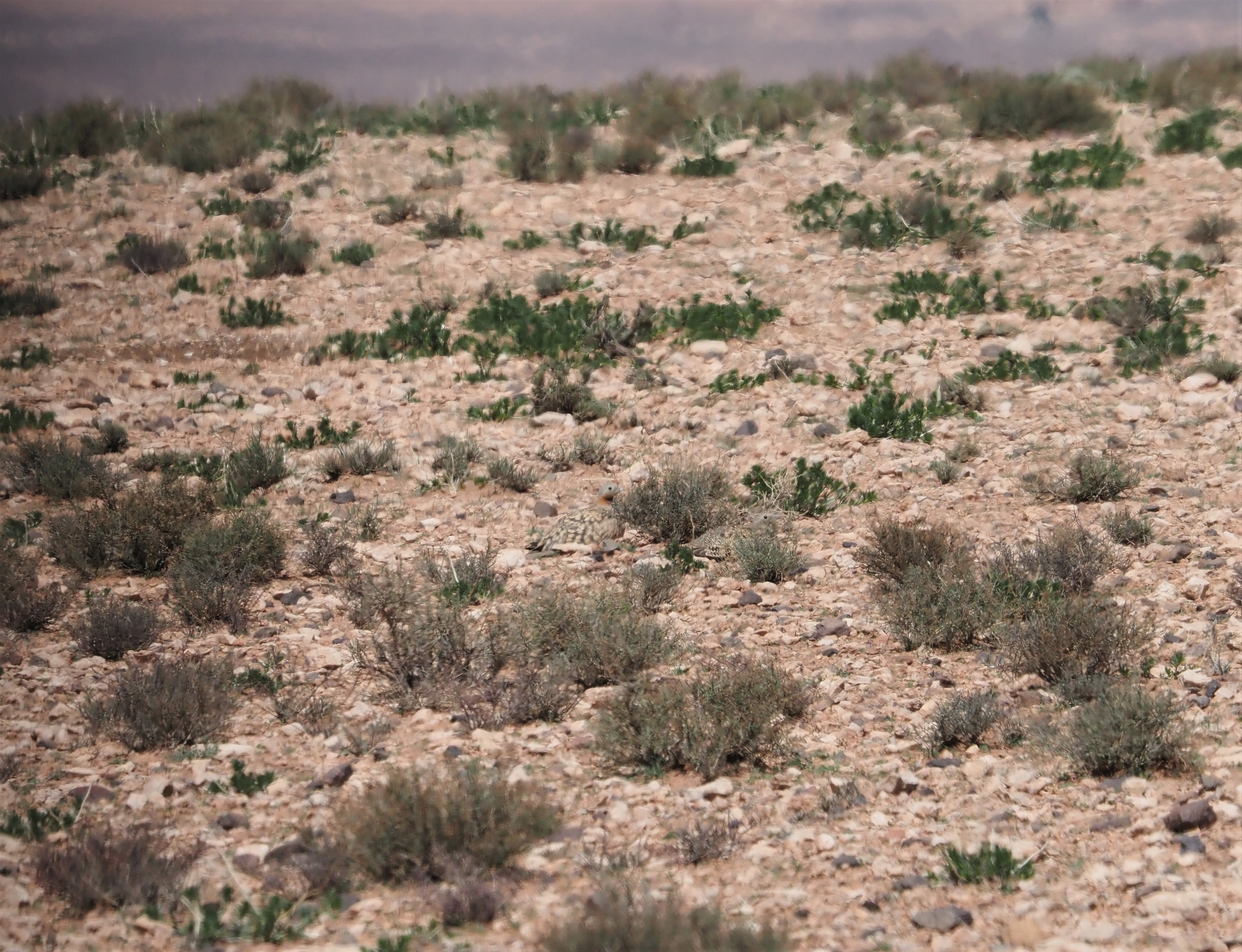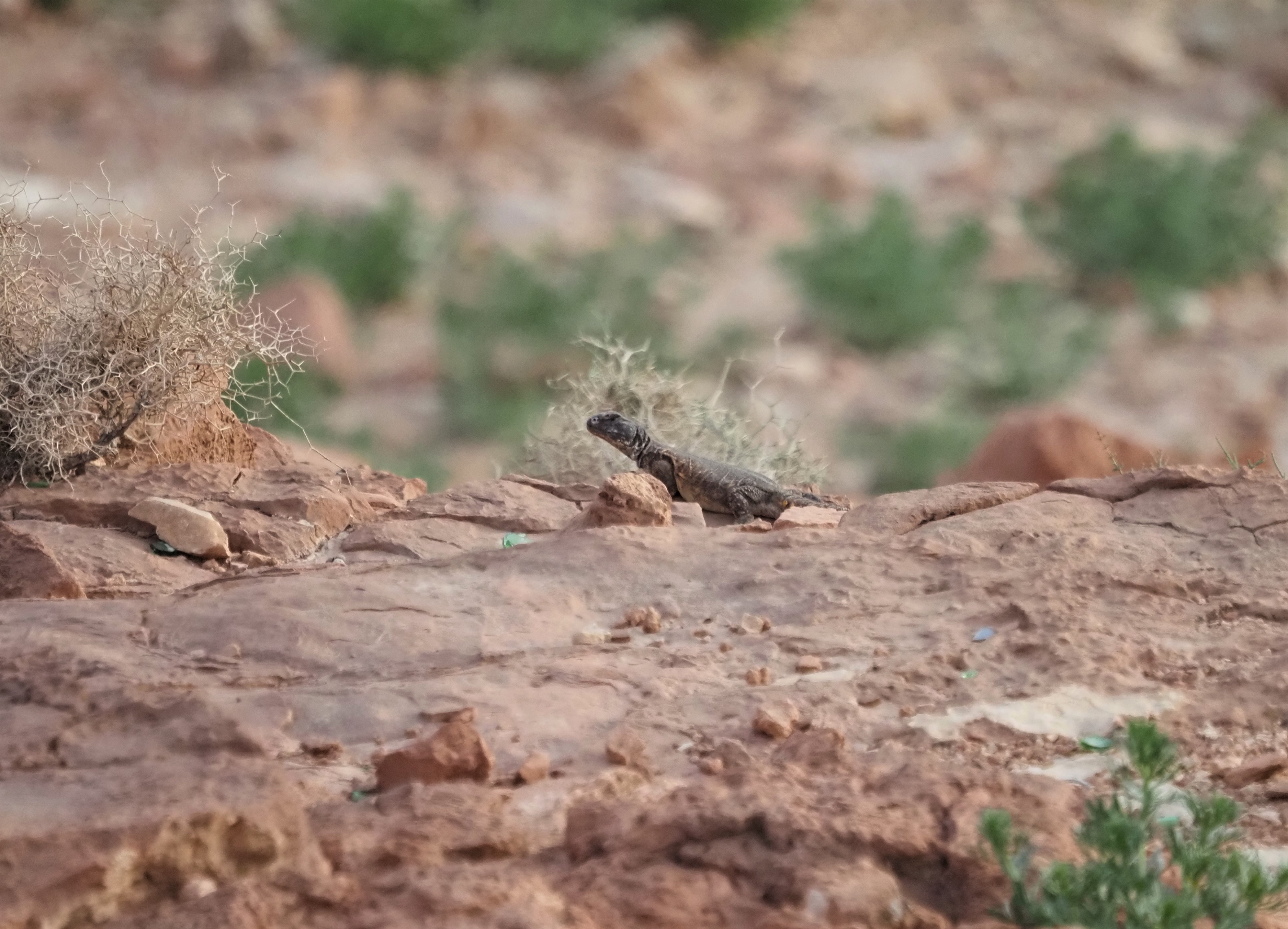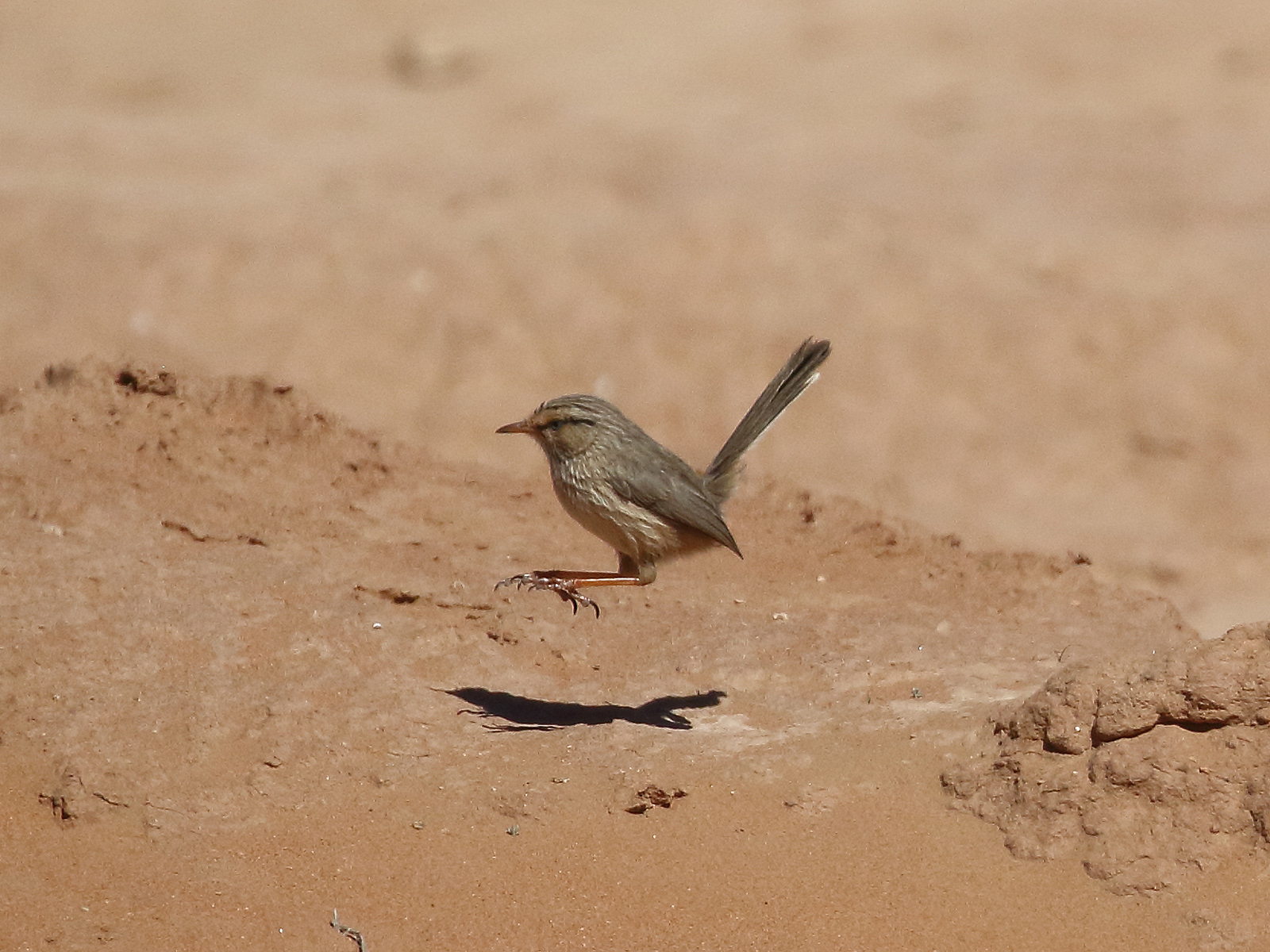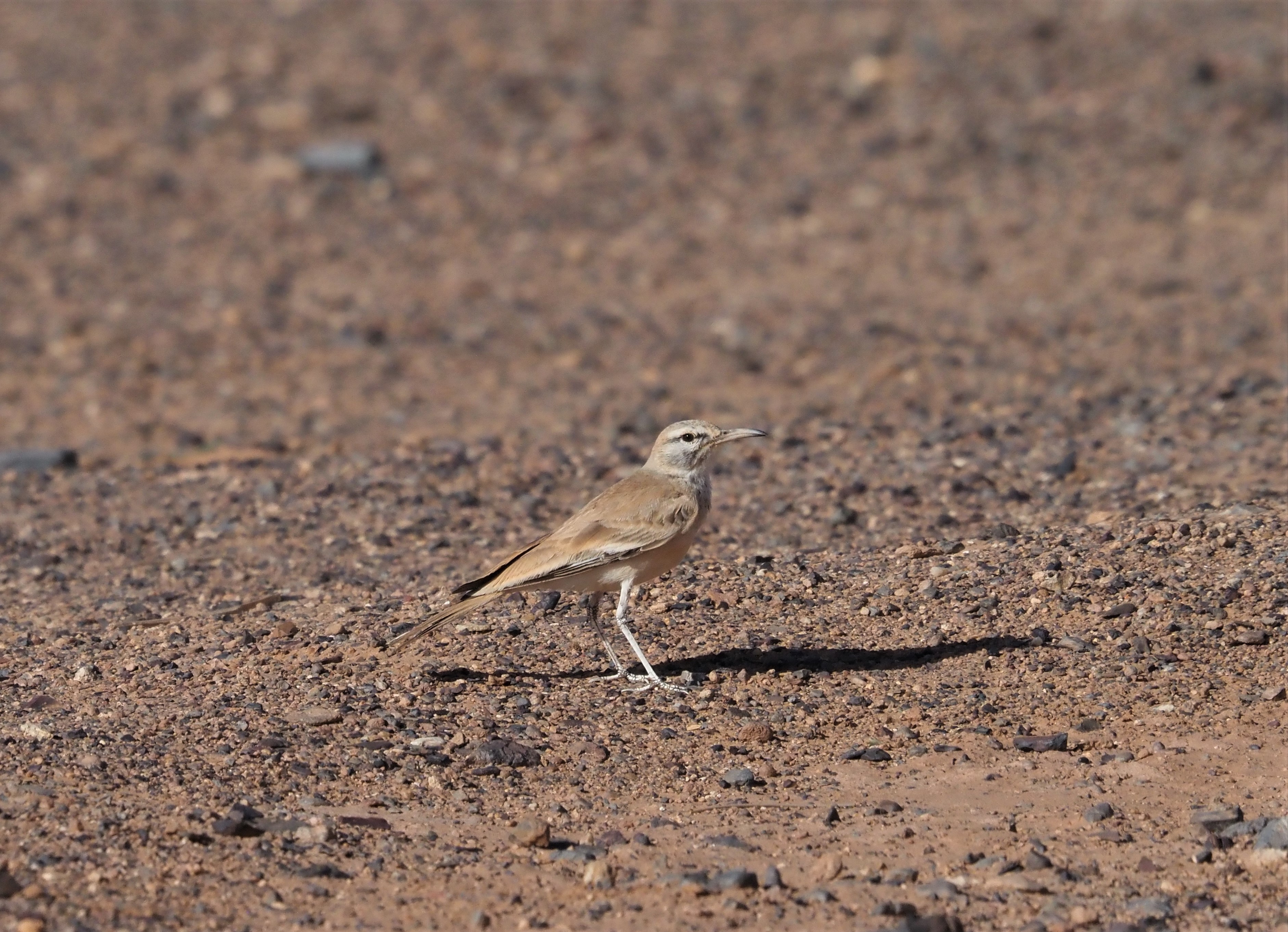
Arxiu de la categoria: Desert Sparrow

Marroc Birding Tour 2026, crònica del viatge

  • Dates: Del 12 al 22 de març, 2026
  • Participants: 8
  • Número d’espècies observades: 191
  • Tour líder: Carles Oliver

El nostre 12è tour al Marroc ens ha permès gaudir, un cop més, de les moltes especialitats d’aquest país. Enguany hem gaudir immillorables observacions en un bon ventall d’espècies clau, amb observacions de molt a prop d’espècies com calàndria bec-grossa, pinsà rosat de l’Atlas, picot verd del Magreb, ibis ermità o corredor saharià. Tot amb tot, la migració ha estat força més modesta que el que ens té acostumat aquest tour. El fred al llarg dels primers dies del tour i el fort vent a Merzouga s’han traduït en una migració escassa en nombres d’exemplars i amb ventall força limitat. Malgrat això, cal destacar l’influx de còlit isabelí, una espècie rara al Marroc i de la que hem vist un mínim de 7 exemplars al llarg del present tour! En total, al tour hem acabat gaudint de 9 espècies de còlit, màxim històric per aquest tour!!
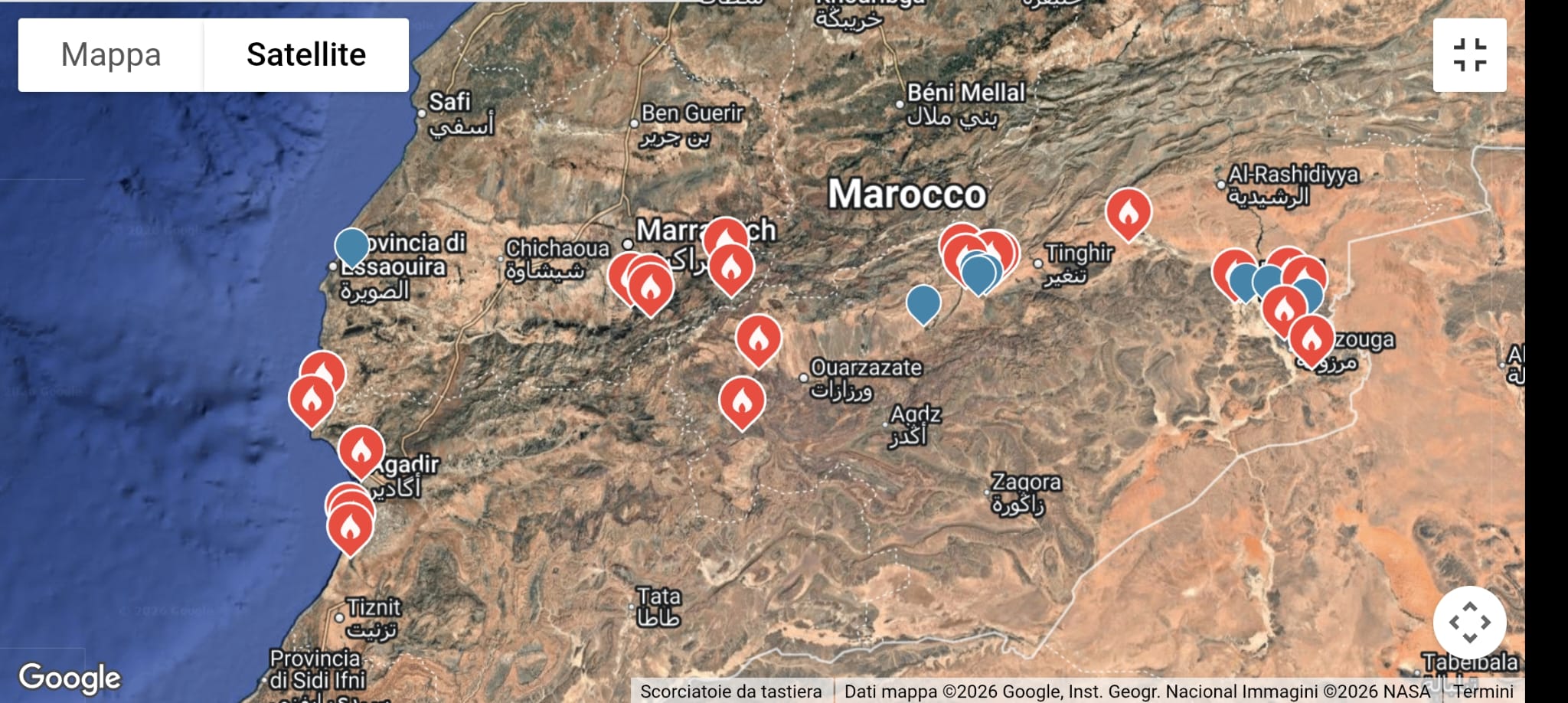
El nostre itinerari segons eBird.

Dia 0. Aterrem a primera hora de la tarda a Marràqueix provinents de Barcelona i ens posem mans a l’obra. Fa una tarda assolejada i mentre acabem d’arranjar el tema furgoneta gaudim dels primers sits de vila i dels primers falciots cuablancs del viatge. Un cop dins la furgoneta, deixem enrere Marrakech per anar enfilant el camí de l’Atlas. Ens arribem fins a Asni a on veiem a plaer el picot verd del Magreb i la raça africana de picot garser gros. També mallerenga blava africana, pinsà africà, gratapalles i els primers bulbuls comuns del viatge. També sentim cargolet, rossinyol bord i tallarol de casquet i albirem breument un xoriguer petit des de la furgoneta, però ja tard i decideim tornar cap a Marràqueix, a on gaudim d’un gran sopar abans d’entrar a les nostres habitacions!
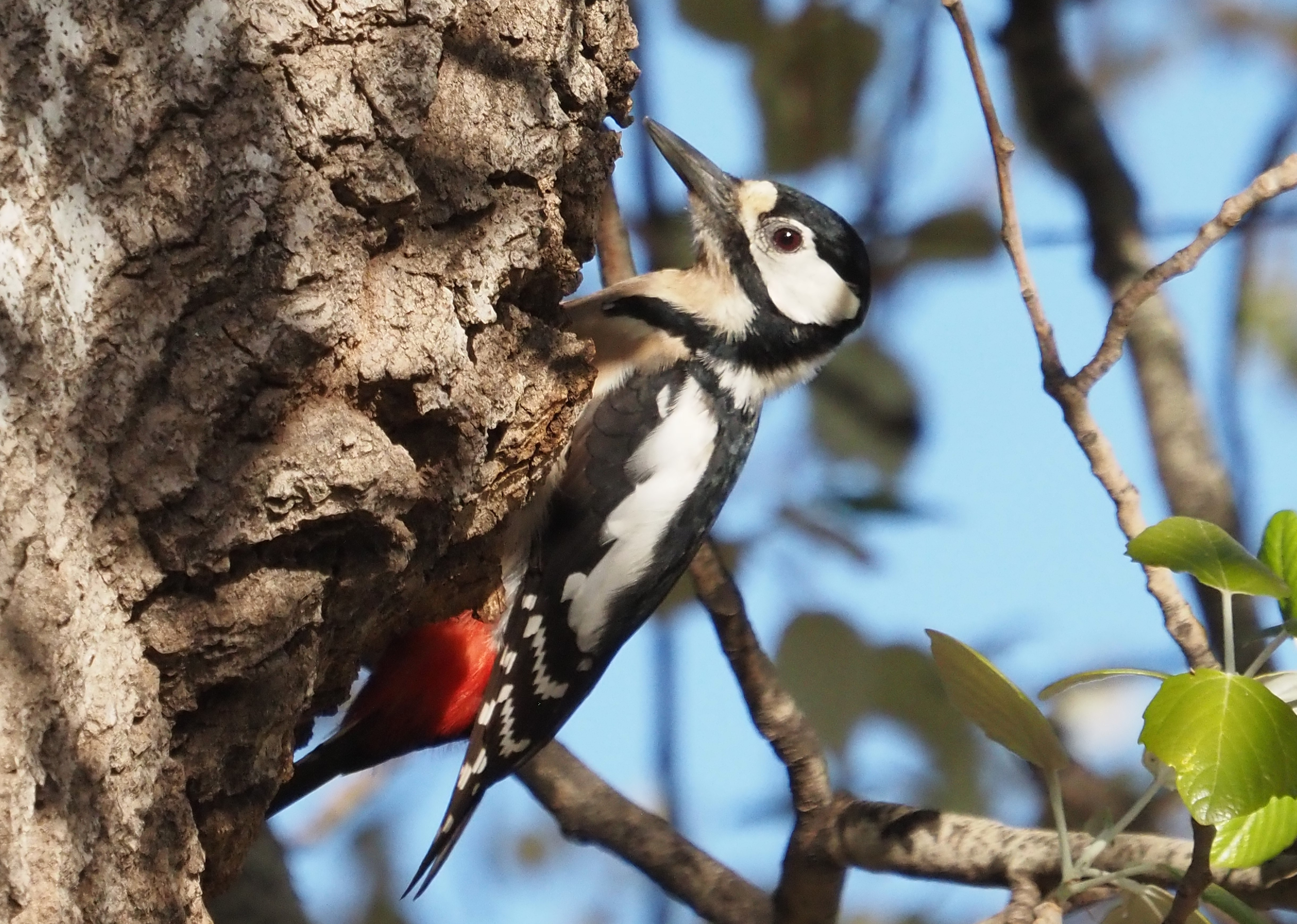
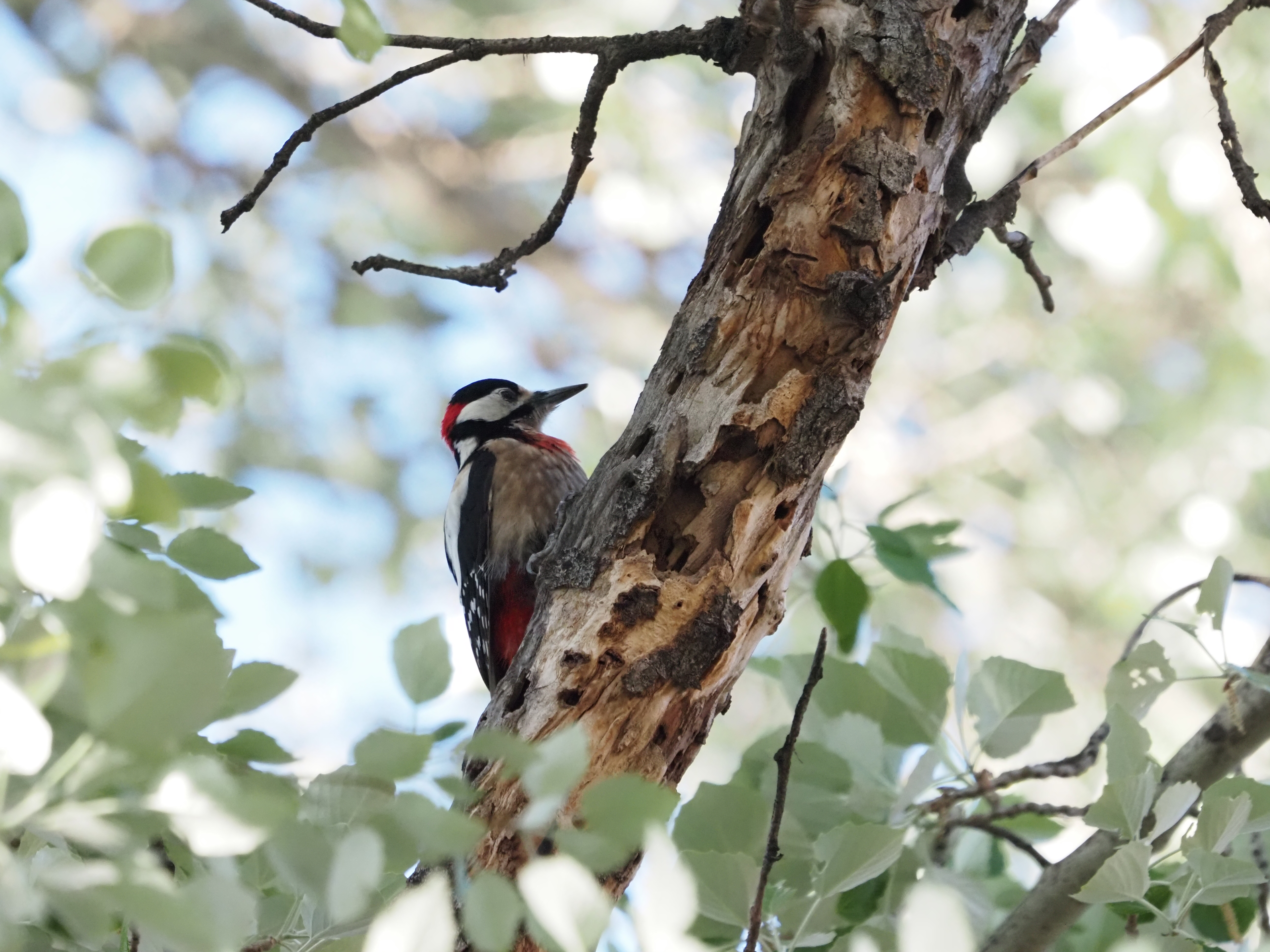
Picot garser gros (Dendrocopos major atlas), un habitant escàs dels boscos madurs de l’Atlas.
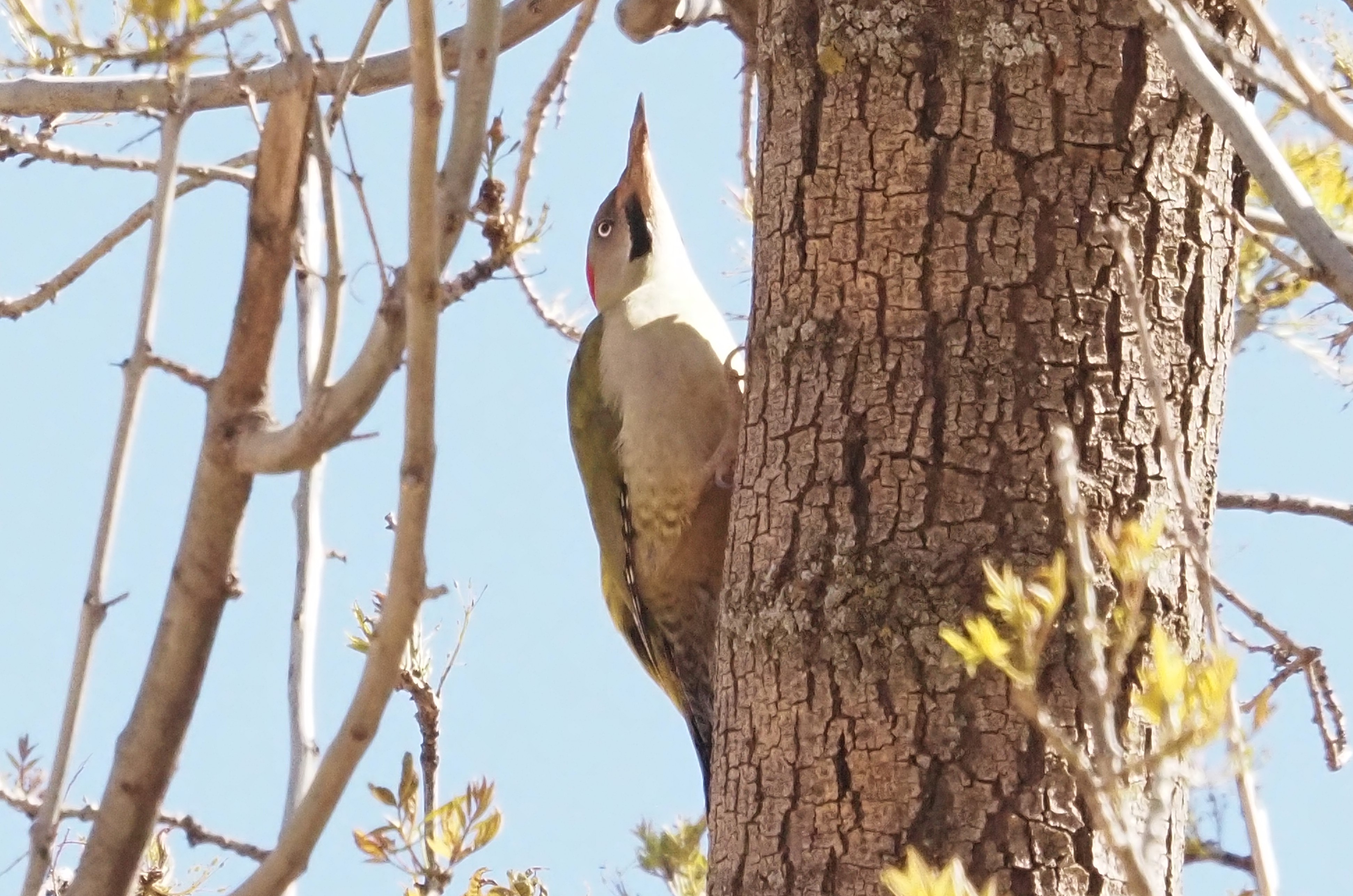
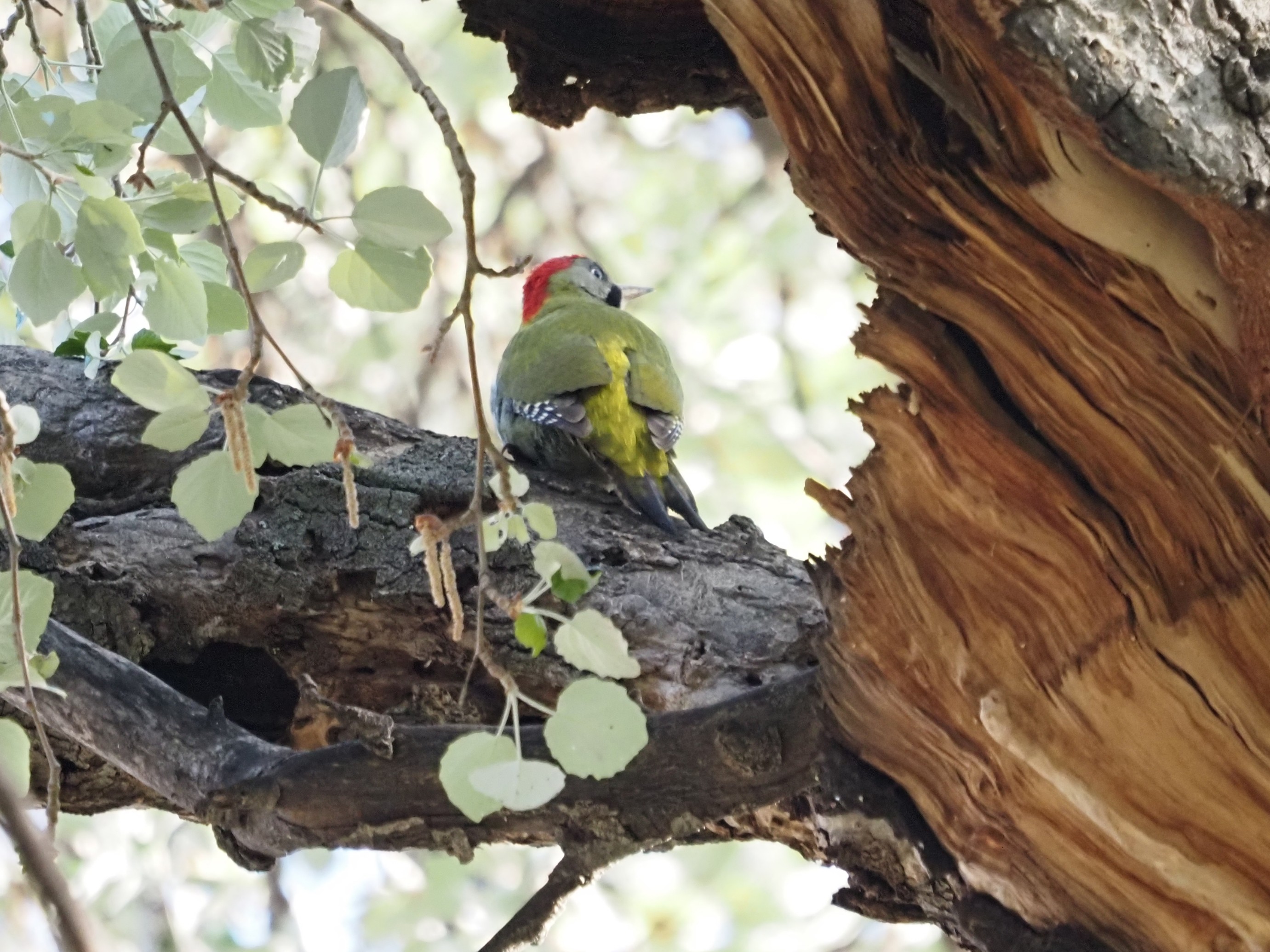
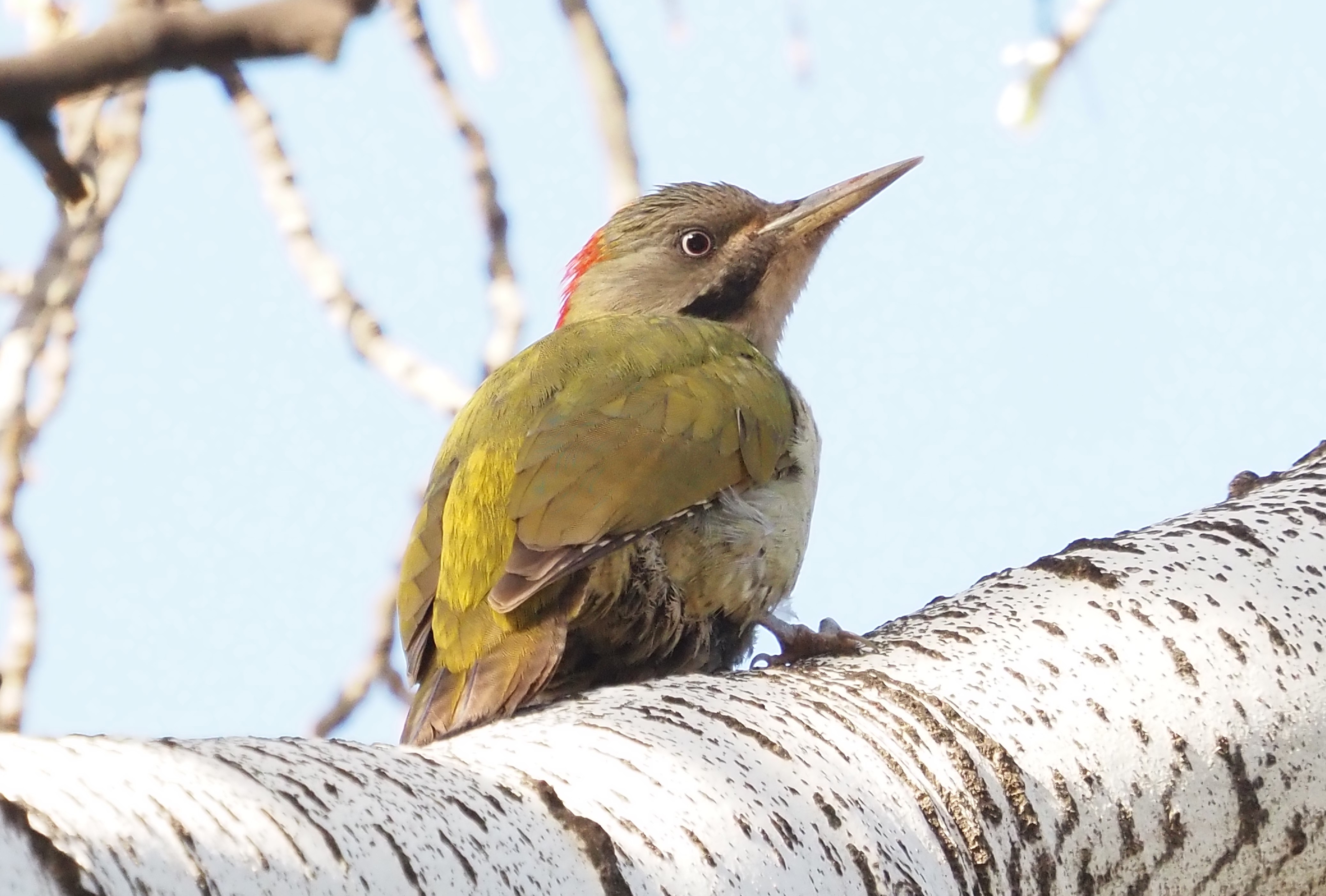
Picot verd del Magreb (Picus vaillantii). El picot més comú al Marroc.
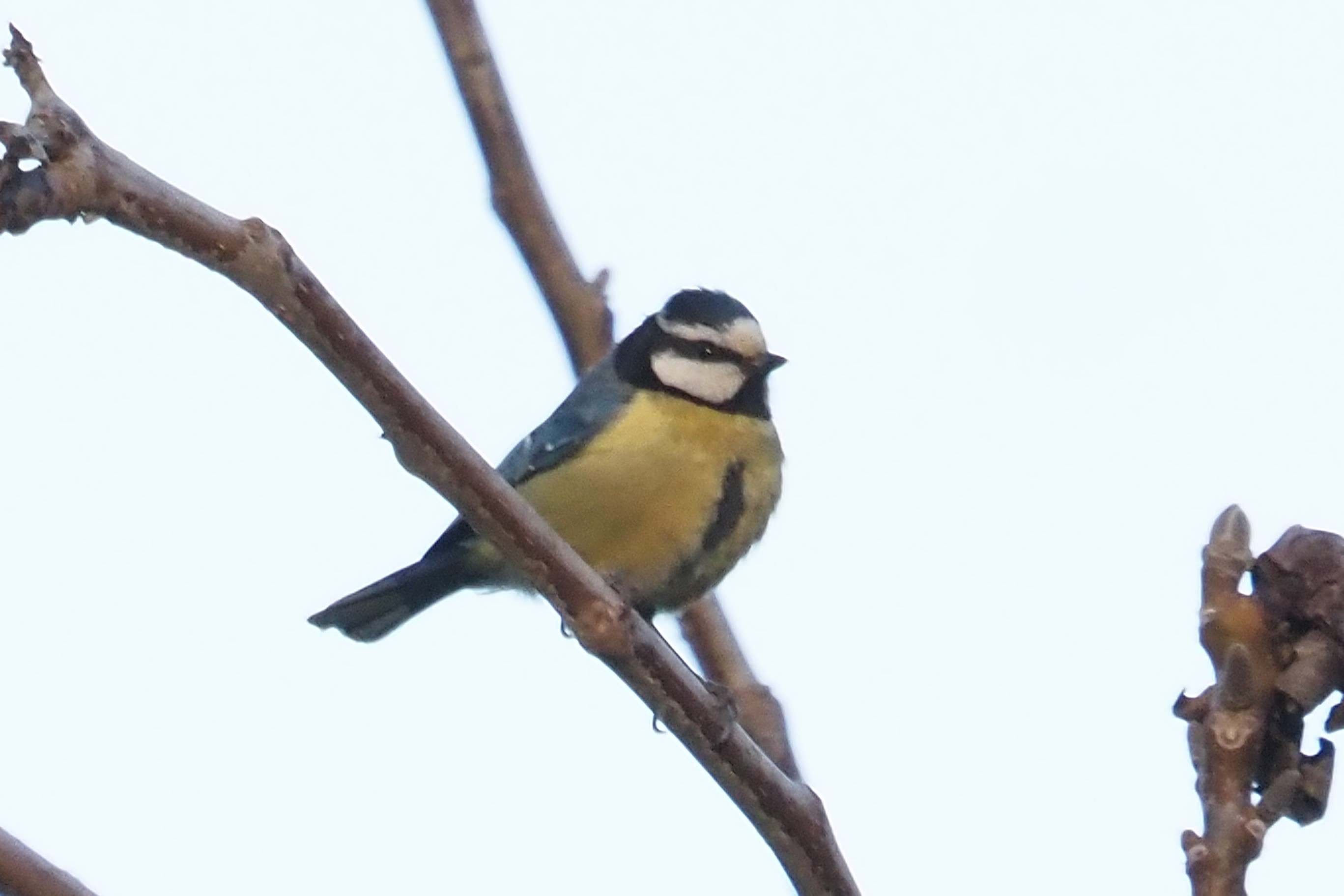
Mallerenga blava africana (Cyanistes teneriffae) ja quasi sense llum!

Dia 1. Sortida de bon matí de Marràqueix gaudint dels molt abundants falciots pàl·lids. La primera parada del tour la fem a 1500 metres per gaudir de tallareta de l’Atlas. Aquí també veiem sit negre, tallarol capnegre i primera cotxa diademada del tour, una de les espècies més esperades! Aquí trobem un primer mussol comú, en el que esdevé un festival de mussols comuns al llarg de la pista que anem fent amb la furgoneta. A mesura que guanyem alçada en veiem fins a 5, alguns de molt, molt a prop! En succesives parades trobem un altre picot verd del Magreb, més sit negres, gratapalles i esquirols terrestres del Magreb.

La següent parada la fem a 2300 metres, en un petita avetosa. Aquí gaudim de bruels, mallarengues petites de l’Atlas, grives i picot garser gros. També alguns pinsans mecs i la sempre interessant raça africana de durbec (un etern candidat a esdevenir una espècie per ella mateixa) a més de nombrosos lluers i un esparver comú. Arribem a Oukaïmeden, a on veiem força aloses banyudes, algunes molt a prop. Triguem amb prou feines un minutet a trobar els primers pinsans rosats de l’Atlas, però marxen en vol. Uns minuts després, però, retrobem un grup de 5 que es deixen veure a distàncies francament ridícules. El dia és assolejat i l’ambient, fresc. Això ens permet gaudir d’un bon reguitzell d’espècies com gralles de bec groc i vermell, grasset de muntanya i cotxes fumades. I, mentre gaudim del nostre picnic a la vora d’un rierol de muntanya, hi veiem merla d’aigua, còlit negre, pardal roquer (molt comuns enguany), cotxes fumades i el primer aligot rogenc del viatge.

De baixada tornem a fer parada a l’avetosa, però l’activitat ha baixat força. El més destacat, però, és una parella de perdius africanes que surten volant d’un vessant per perdre’s muntanya avall. Arribats al nostre hotel a la vall d’Ourika guadim d’allò més del seu solàrium, des d’on veiem oreneta cua-rogenca, bulbuls comuns, gafarrons, un fantàstic mascle de cotxa diademada, capsigrany i força pinsans africans, però també cogullada comuna, cruixidell i trist. Després de sopar encara ens queden forces per fer una petita sortida nocturna, però sense cap resultat positiu, malauradament.
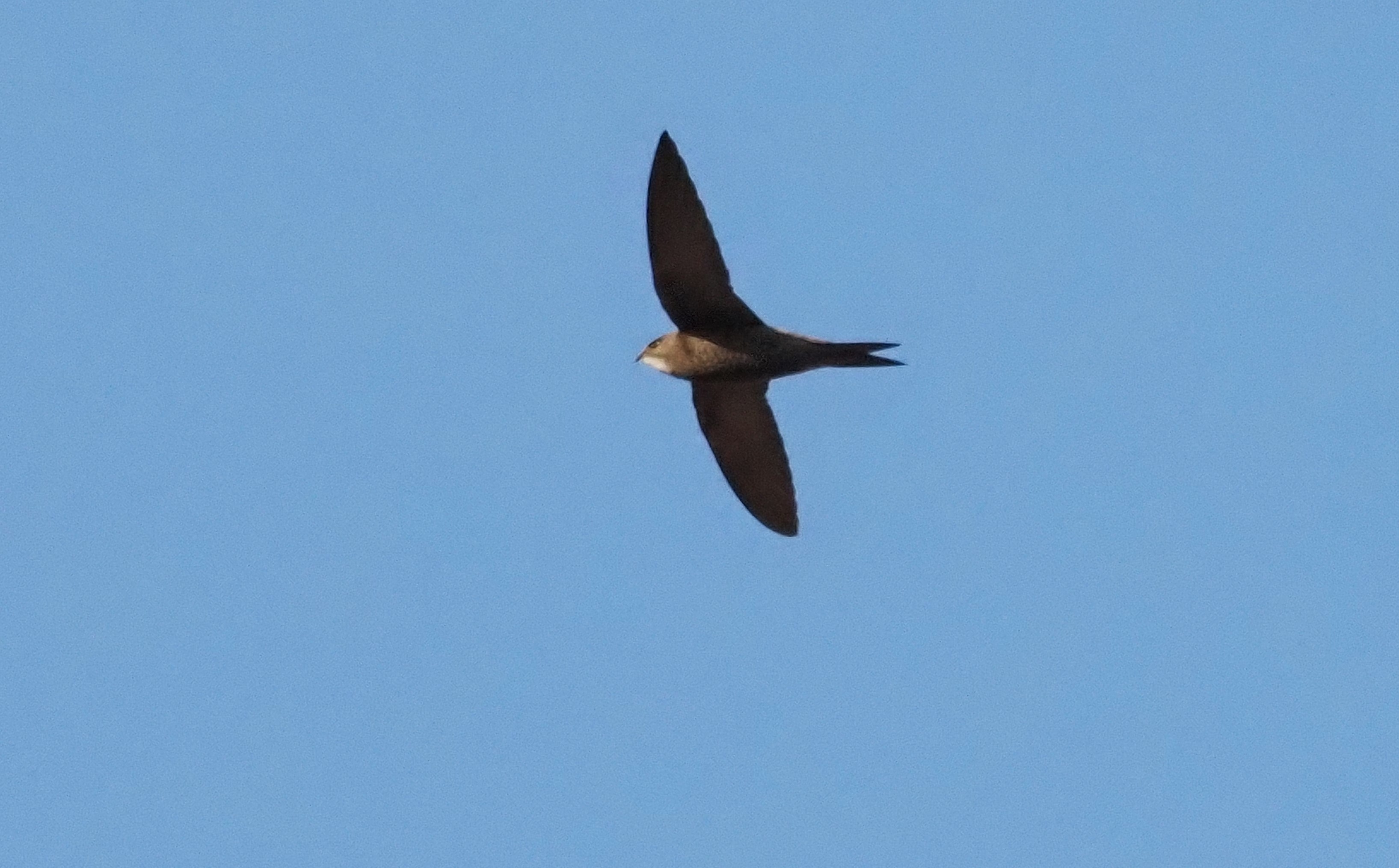
Un dels centenars de falciots pàl·lids (Apus pallidus) que decoraven el cel de Marraqueix.
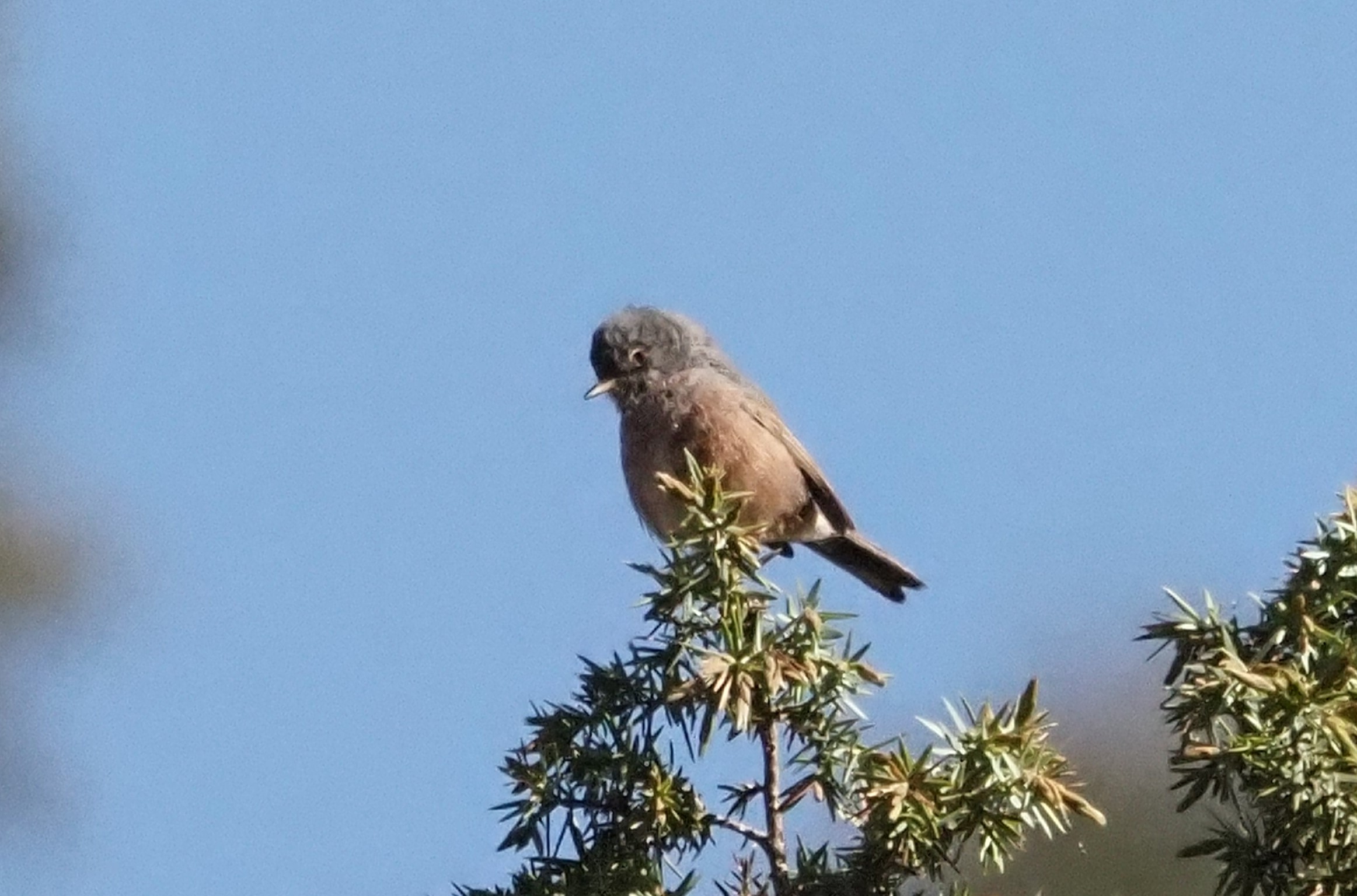
Tallareta de l’Atlas (Curruca deserticola) lluint-se dalt de tot un juníper.
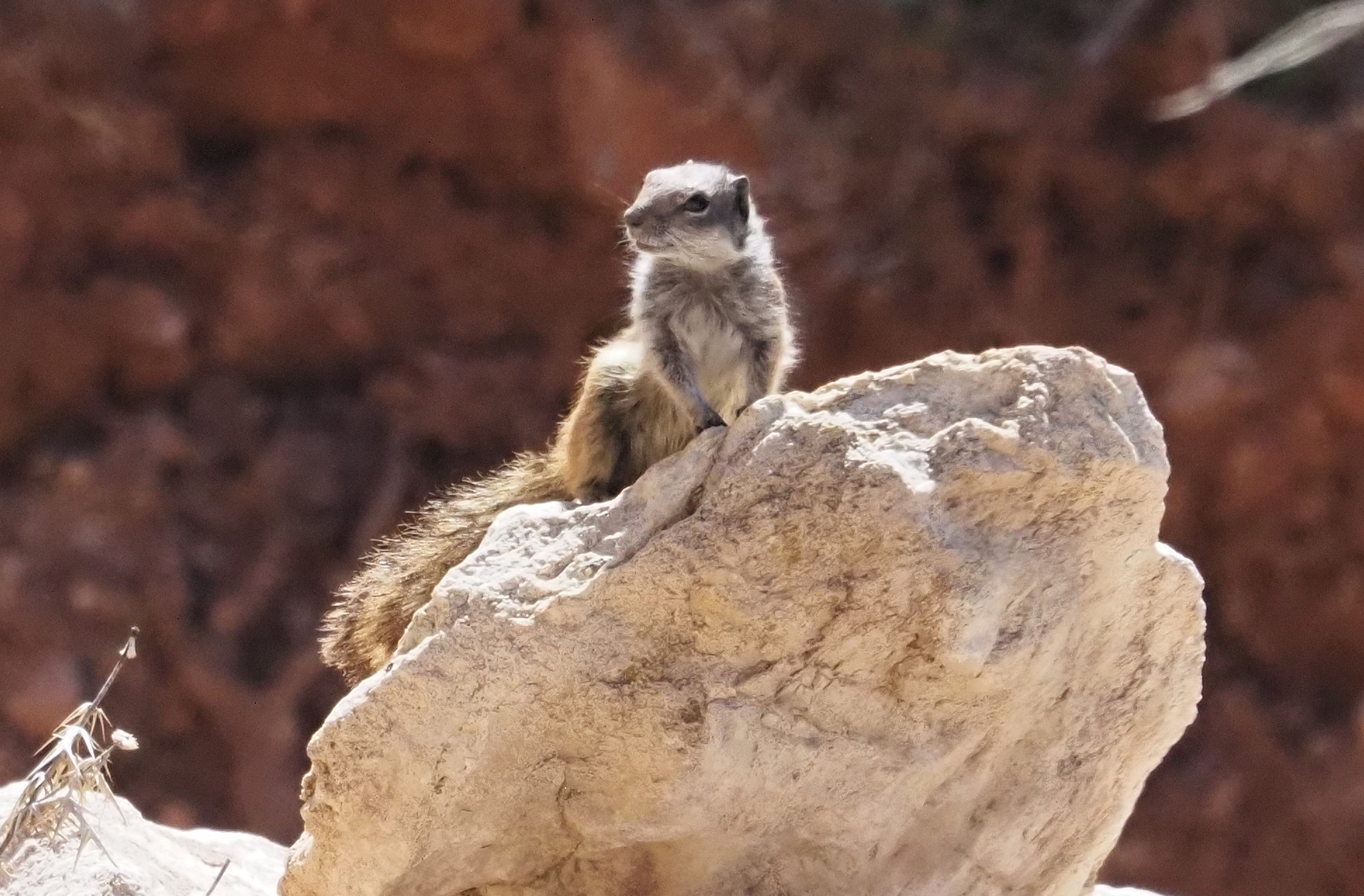
Els esquirols terrestres de Barbaria (Atlantoxerus getulus) estaven ben actius aquell matí.

Un altre picot verd del Magreb a tocar de la carretera.
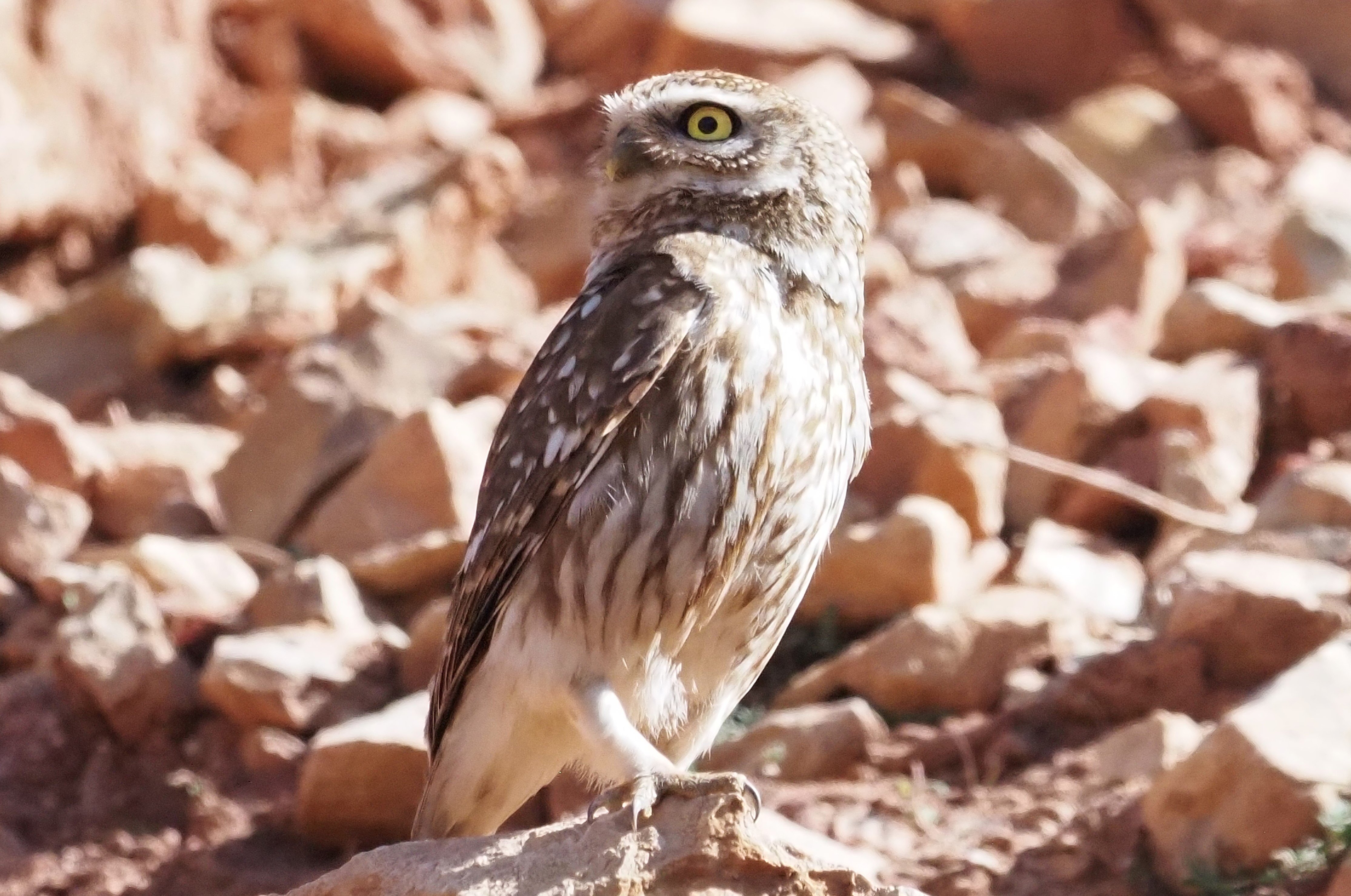
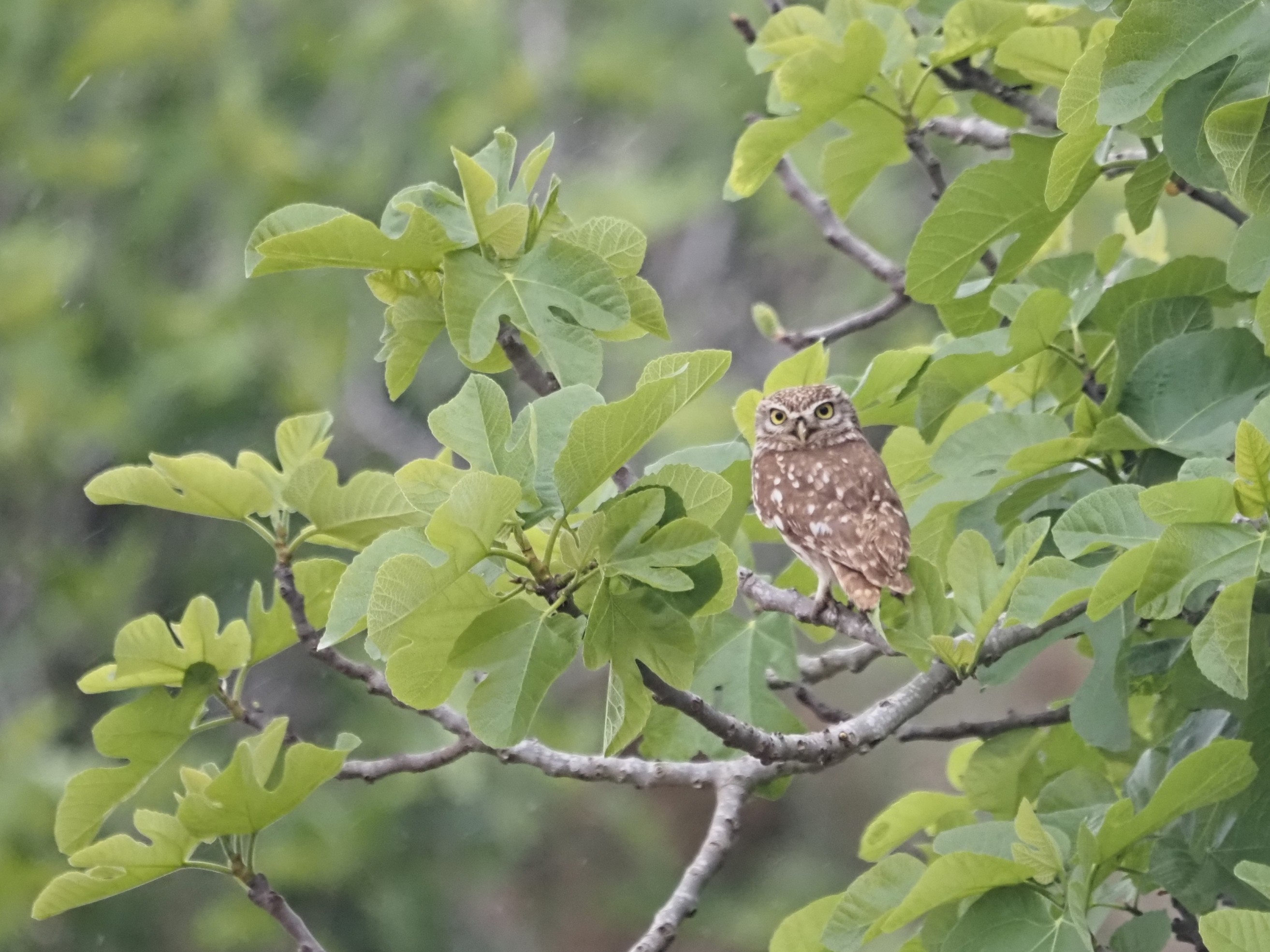
Els mussols comuns (Athene noctua) ens van acompanyar al llarg del trajecte matinal.
Pinsà africà (Fringilla spodiogenys), una espècie recentment separada del seu parent europeu.
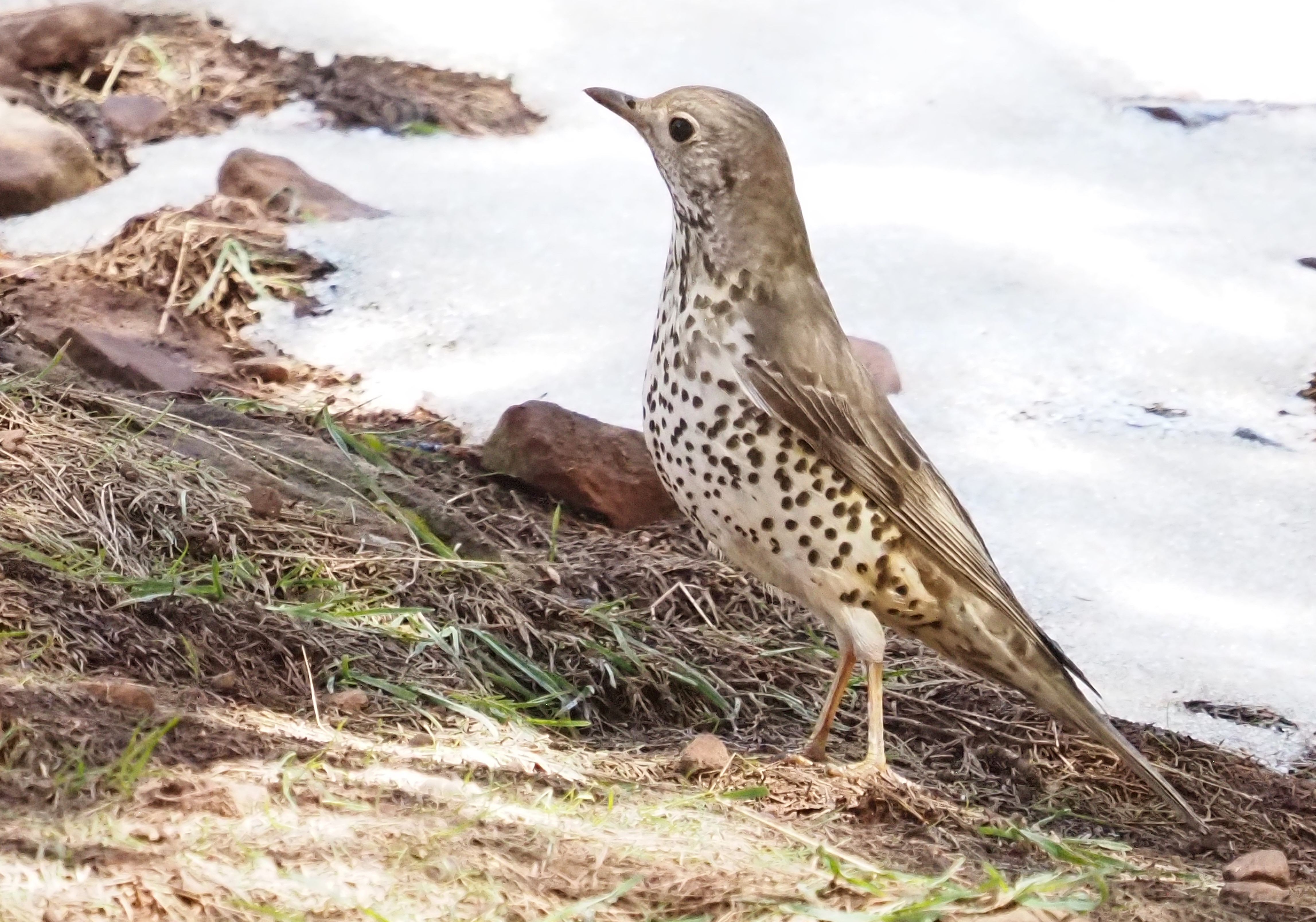
La griva (Turdus viscivorus deichleri) africana, d’aparença més delicada que la nostra.
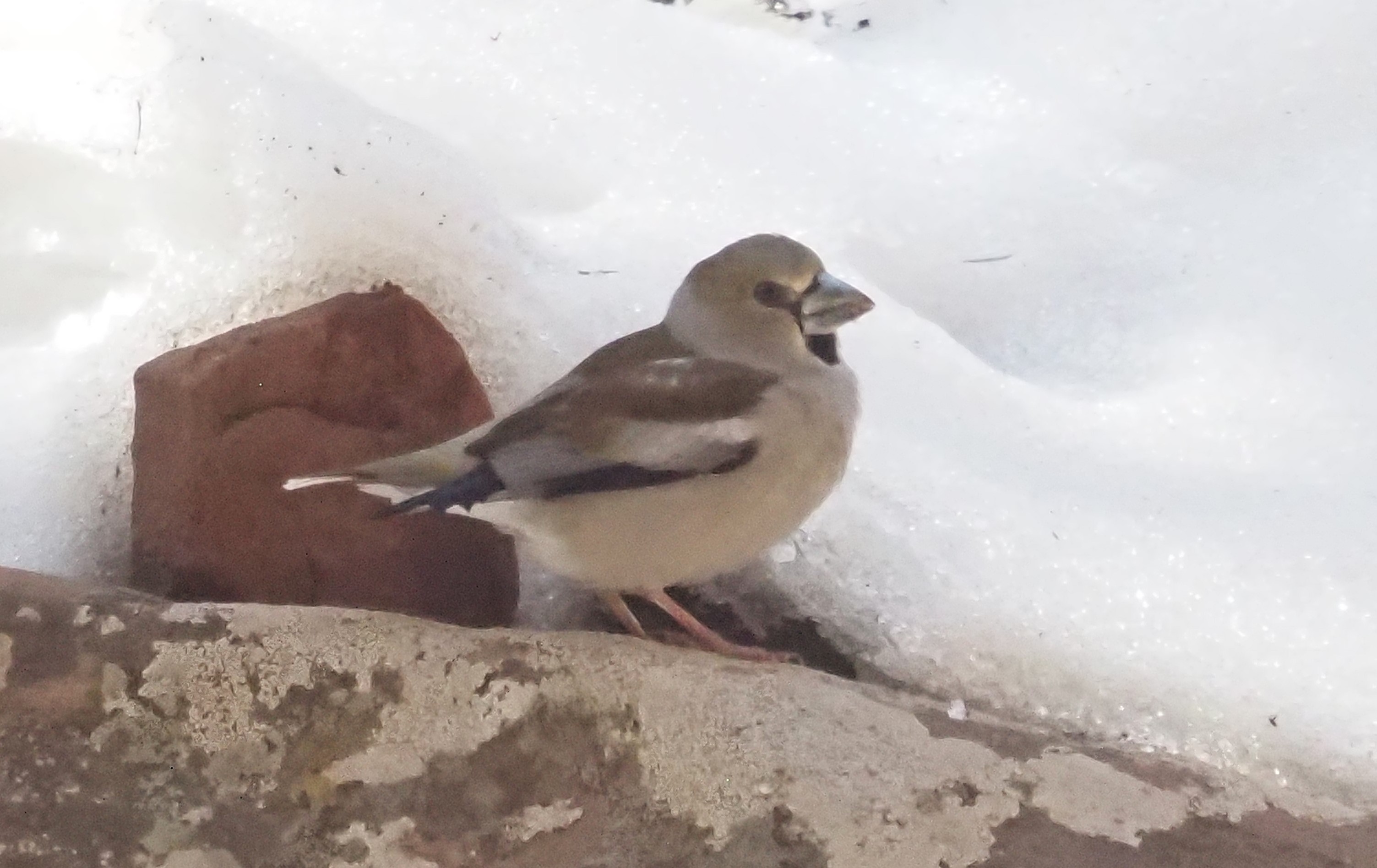
La molt distintiva raça africana de durbec (Coccothraustes coccothraustes buvryii) es va deixar veure sorprenentment bé.
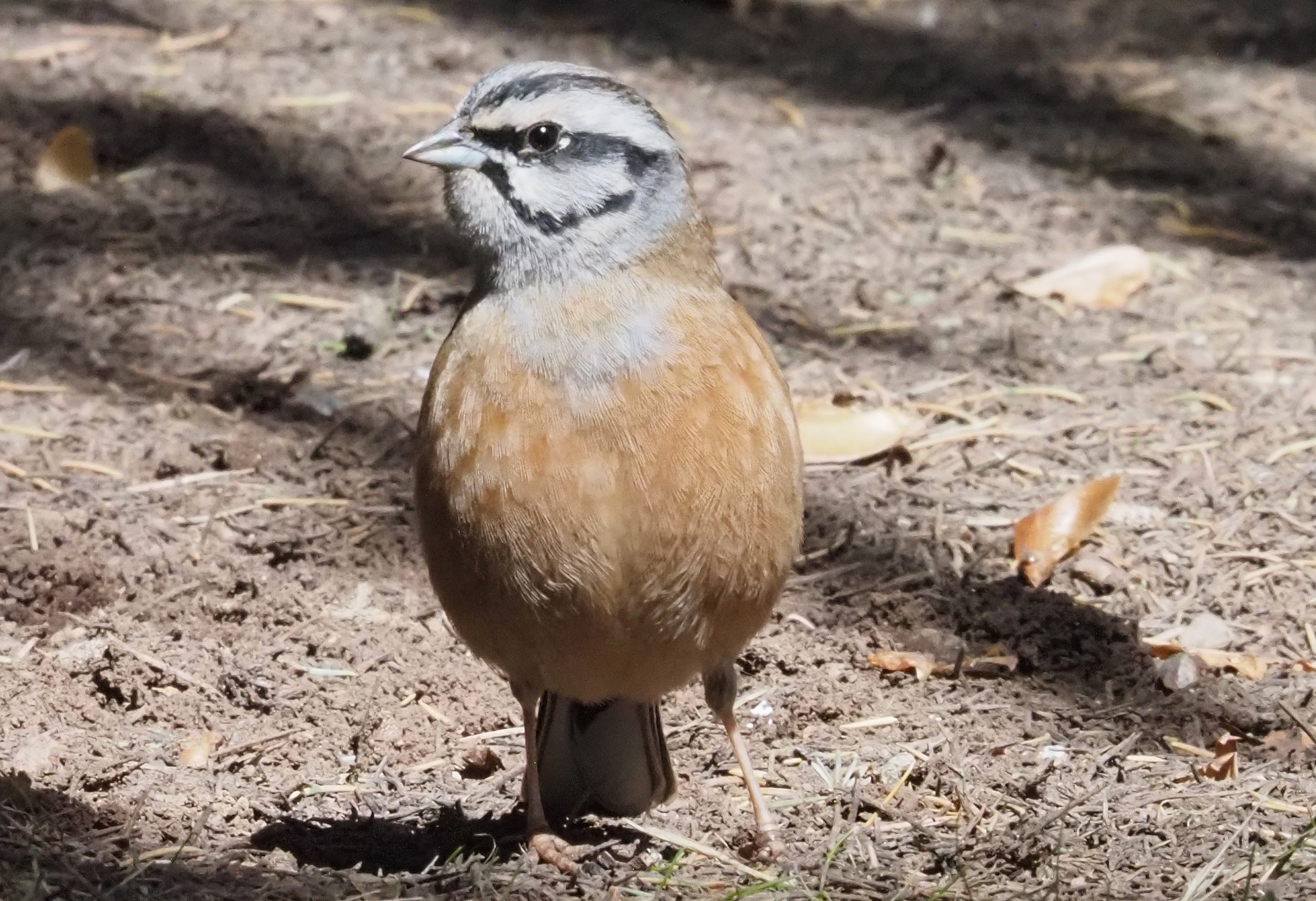
Com moltes espècies a l’alta muntanya, els sits negres (Emberiza cia) també es van deixar estimar.
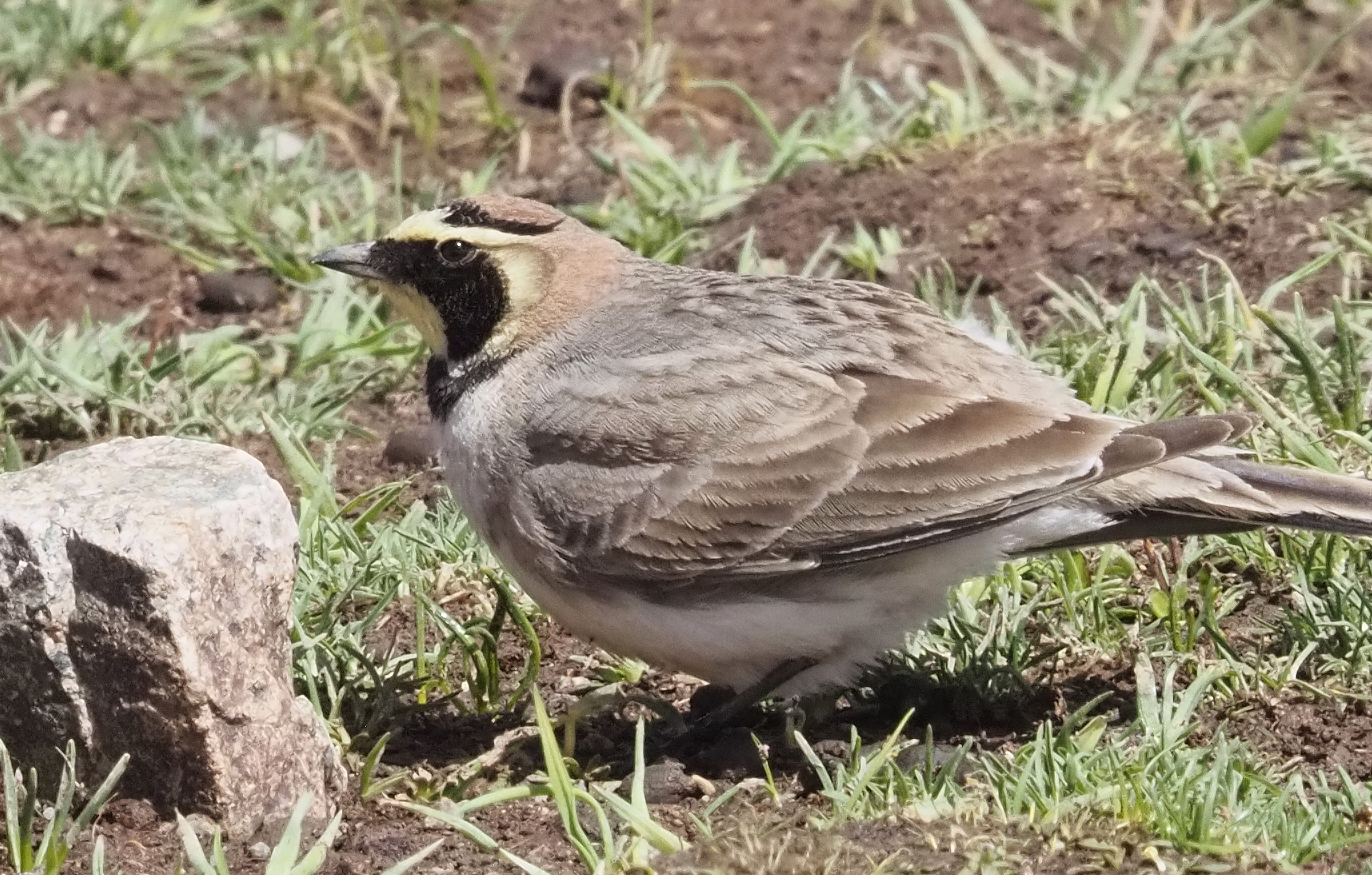
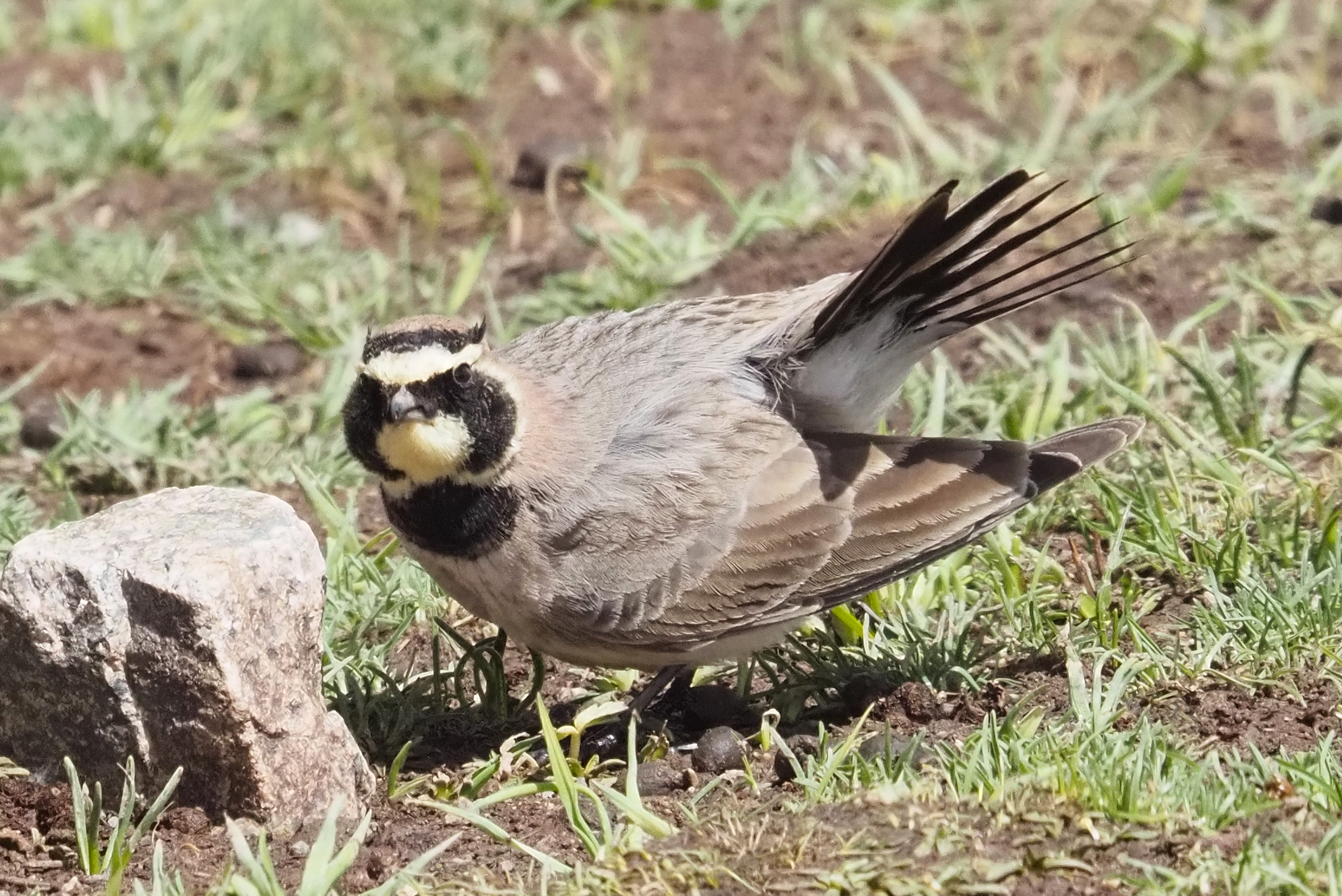
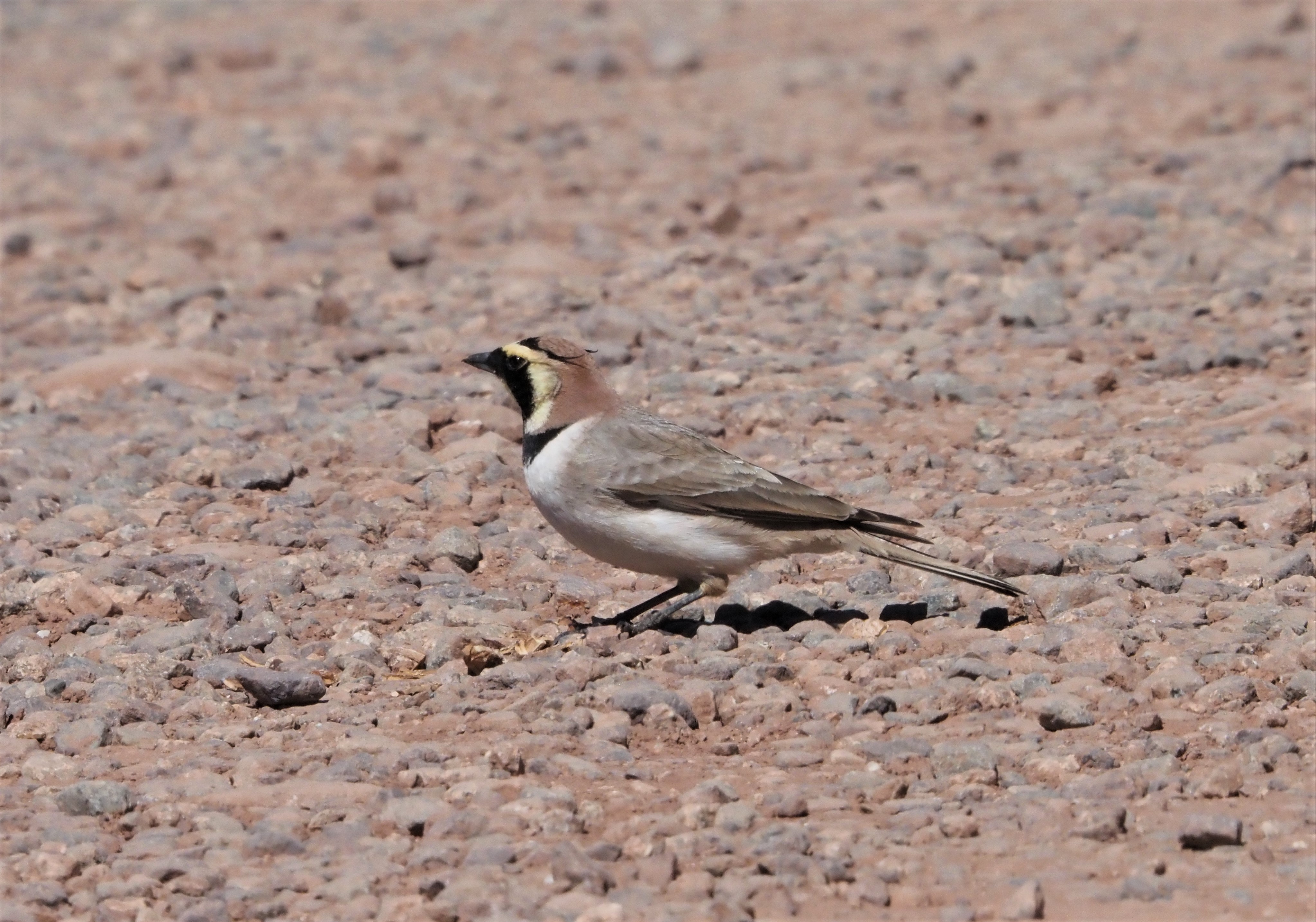
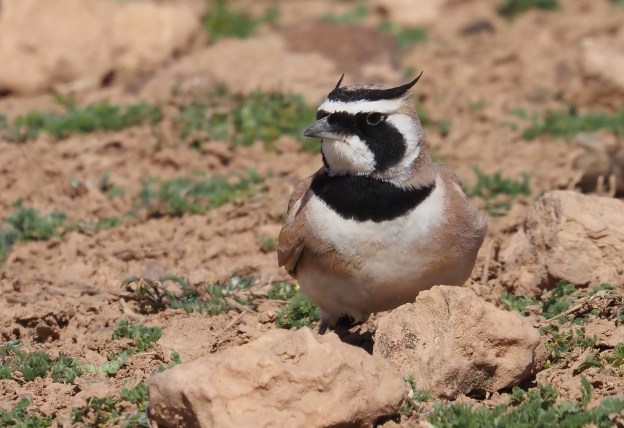
Només arribar a un dels millors racons d’Oukaïmeden vam trobar un estol d’aloses banyudes (Eremophila alpestris atlas).
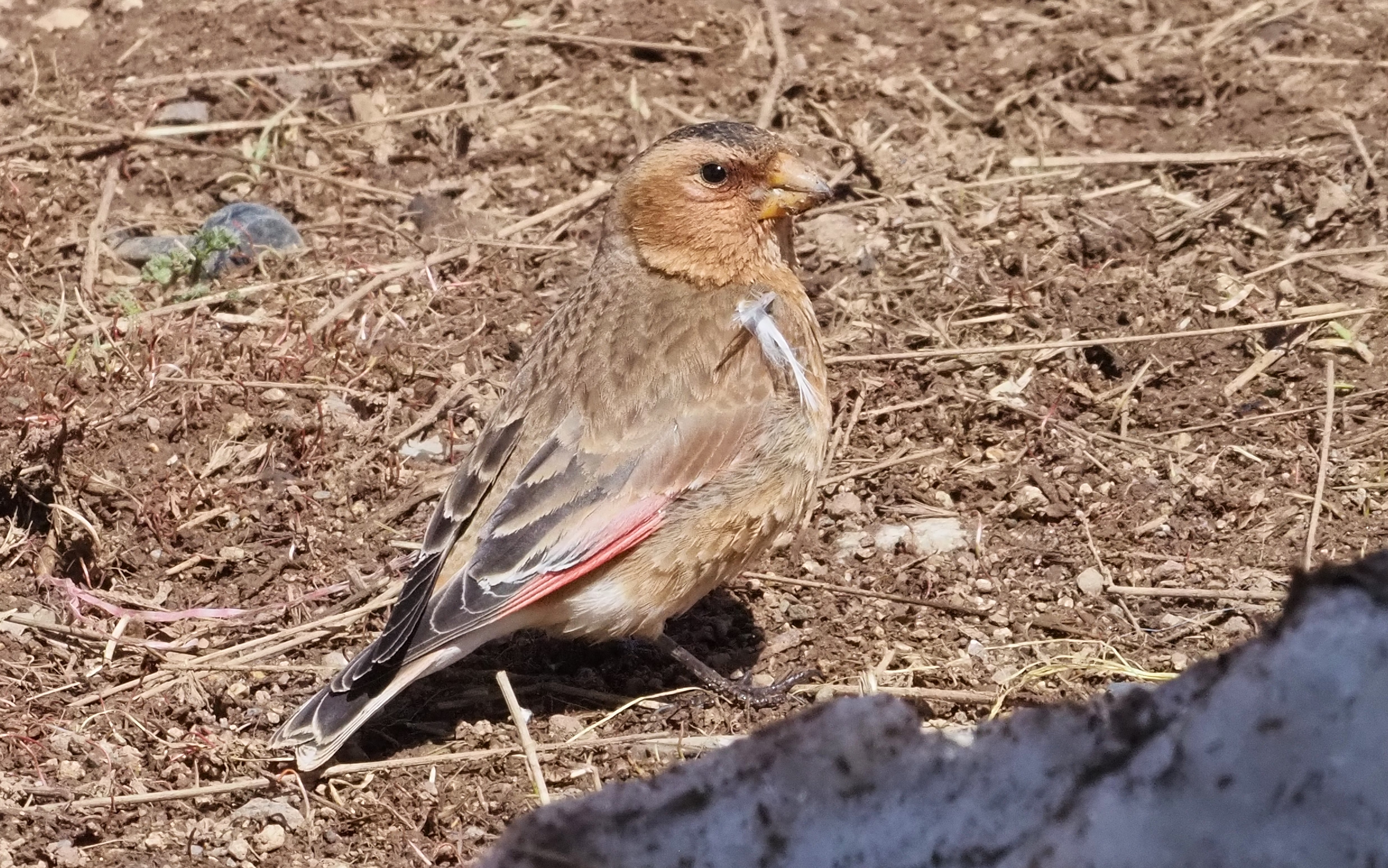
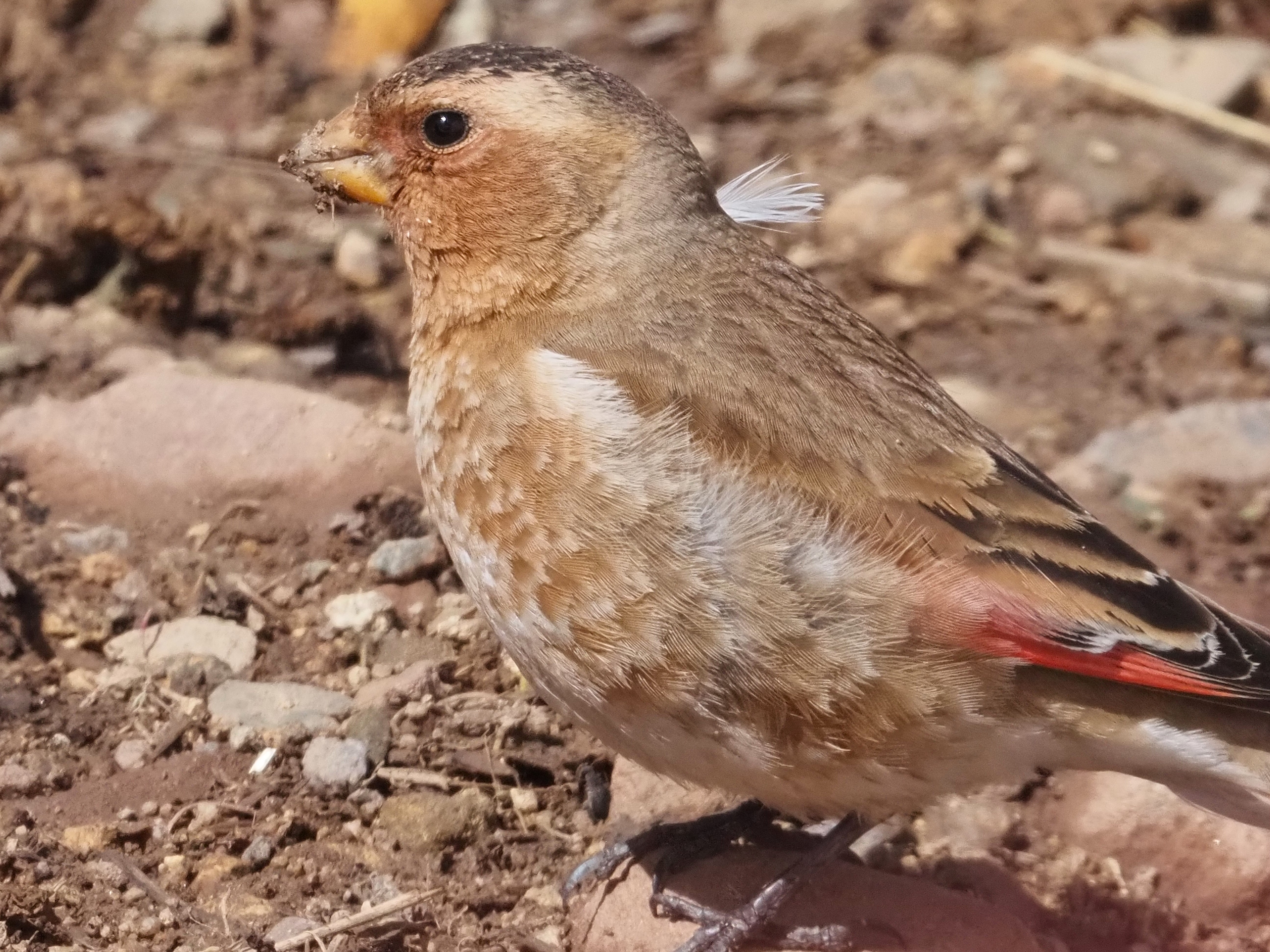
I uns metres més enllà, uns quants pinsans rosats de l’Atlas (Rhodopechys sanguineus) van fer les delícies del grup.
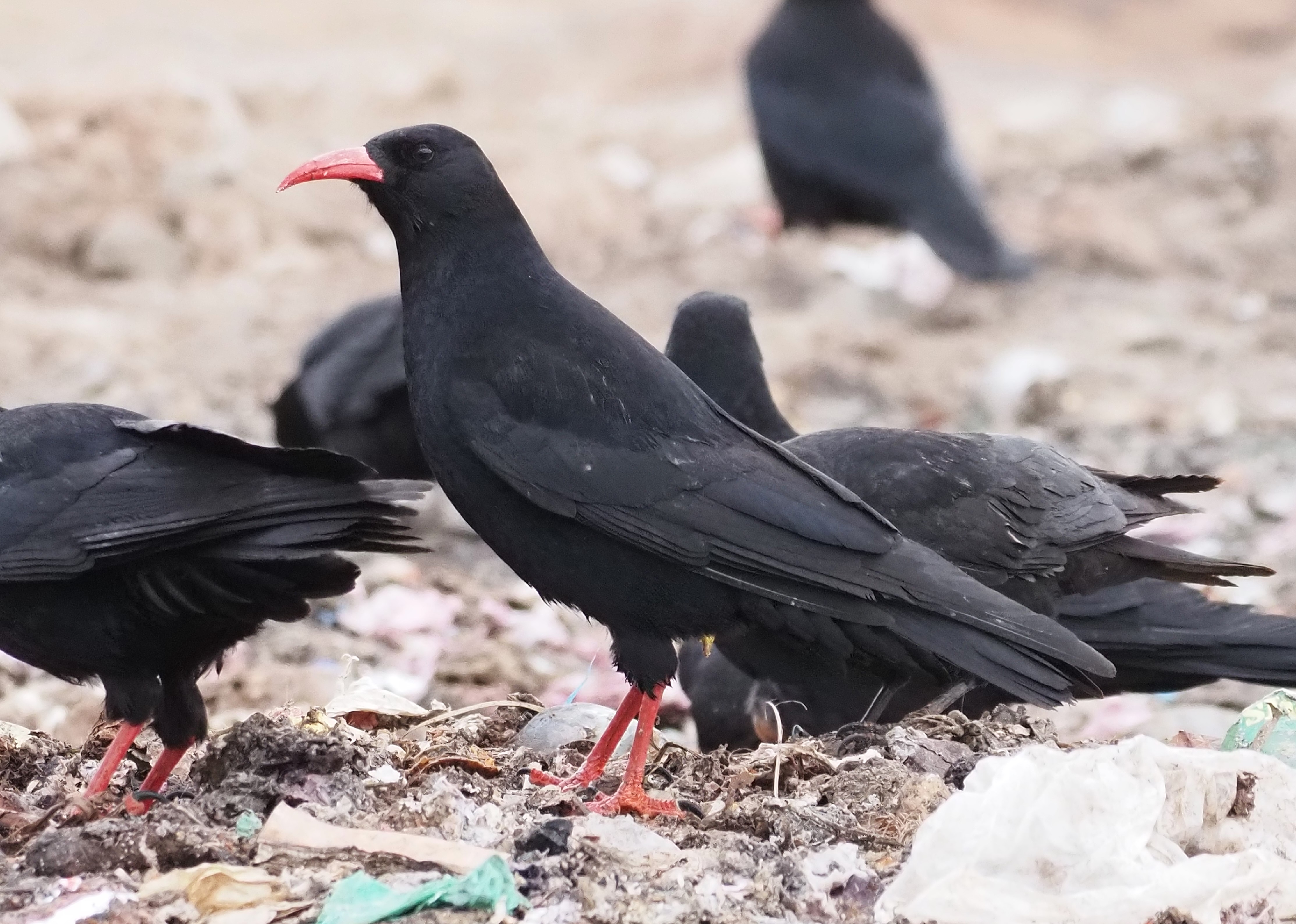
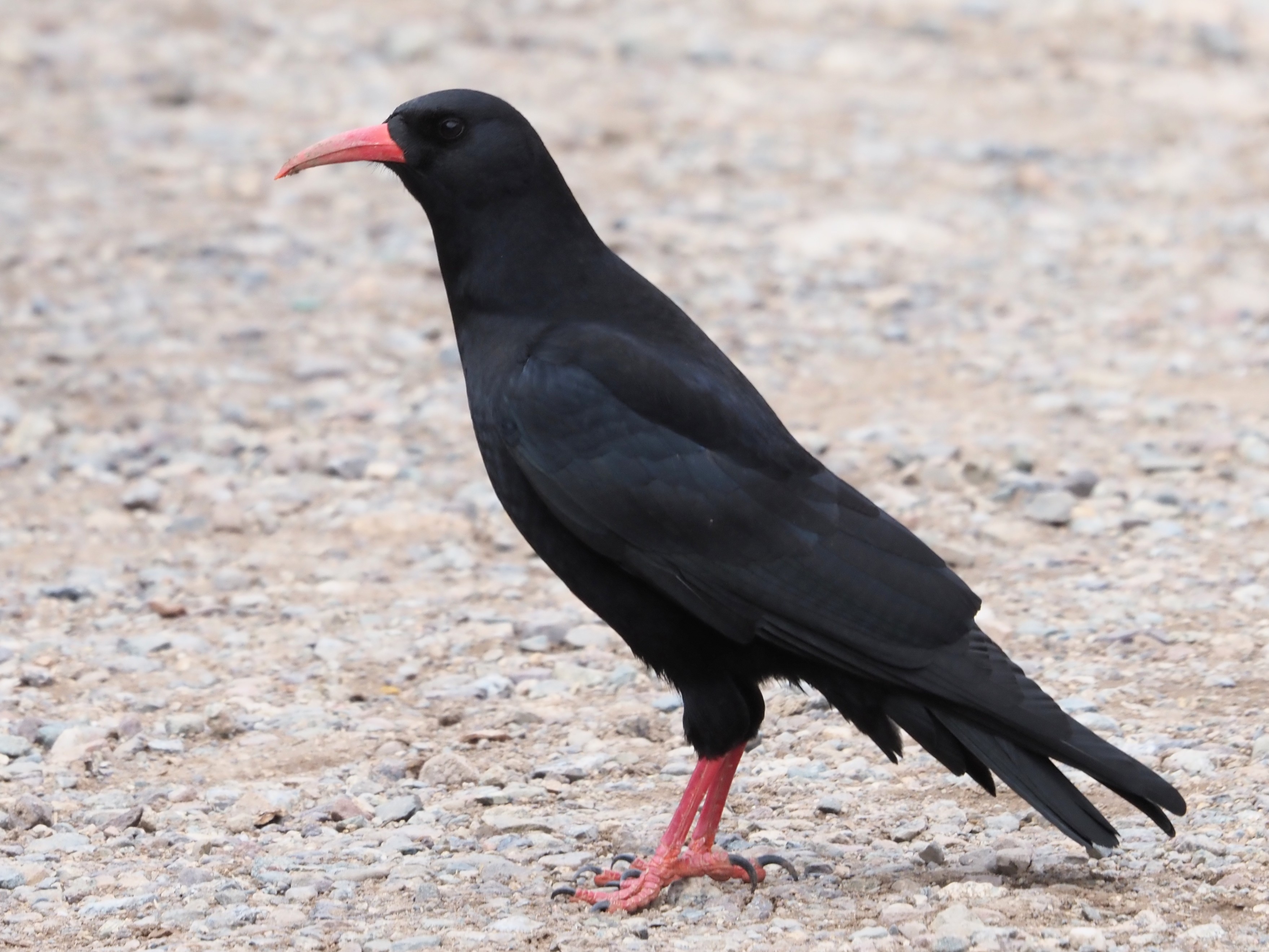
Gralles de bec vermell (Pyrrhocorax pyrrhocorax) i bec groc (Pyrrhocorax graculus), alimentant-se molt a prop les unes de les altres, però en ambients ben diferents..

Dia 2. Després de gaudir d’un bon esmorzar ens posem de camí a Tamri, un estuari a la costa atlàntica, llar de la única població salvatge d’ibis ermità de tot el Paleàrtic. La primera parada ornitològica del dia la fem en una plantació d’arbres d’argan, a on fem un passeig i veiem tallarol enmascarat a plaer a més de cotxa diademada, mosquiter de passa i pinsans africans. Arribats a Tamri, no triguem a meravellar-nos amb els estols d’ibis ermità. En veiem més de 70 ibis, alguns alimentant-se a terra força a prop. Aquí també gaudim d’onades de gavians amb força gavià fosc i gavines corses. Aquí també veiem els primers botxins septentrionals (raça algeriensis) del tour, a més de còlit ros, cogullada fosca, un parell de falciot negres amb molts falciots pàl·lids.

D’aquí anem al cap Tamri. En arribar, aixequem un pòlit cantaire que devia estar descansant a la vora dels penya-segats. Fa una mica de vent i l’observació no és fàcil. Tot amb tot, veiem un mínim de 50 mascarells atlàntics en migració cap al Nord abans de desistir a causa del vent. La última parada del dia la fem a la desembocadura del Riu Souss. Aquí gaudim d’un petit bany d’espècies: Hi ha un estol força nombrós de batallaires, tètols cuanegres i uns quants tètols cuabarrats. Una desena de currocs ens passen per sobre, fent els seus característics reclams. Tot mirant els llims del voltant del riu trobem becuts, corriols anellats grossos, cames llargues, pigres grisos, territs variants, gambes roges comunes, ànecs blancs i els conspicus flamencs. També hi han valones, 5 territs grossos i una única gavina capblanca, que en algun moment vola amb gavines capnegres. Al bell mig, hi apareix un inmadur de gavina menuda, una espècie escassa a la zona. Però a tots se’ns en van els ulls a les espectaculars garses del Magreb que tomben pel lloc. Una autèntica meravella d’ocell que, com acostuma a passar, roba el cor a tot el grup. A la zona també veiem la primera tórtora del Senegal del viatge.
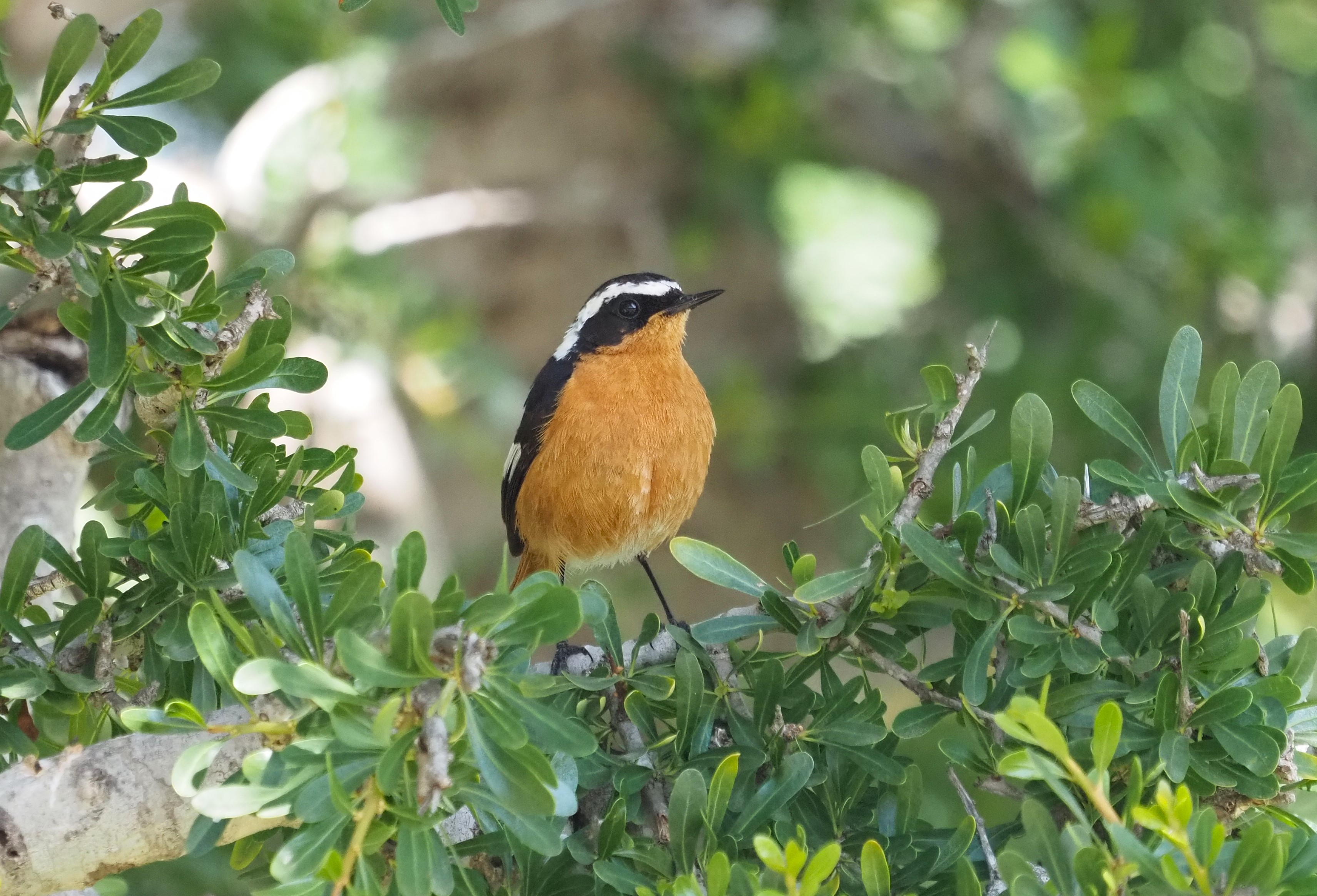
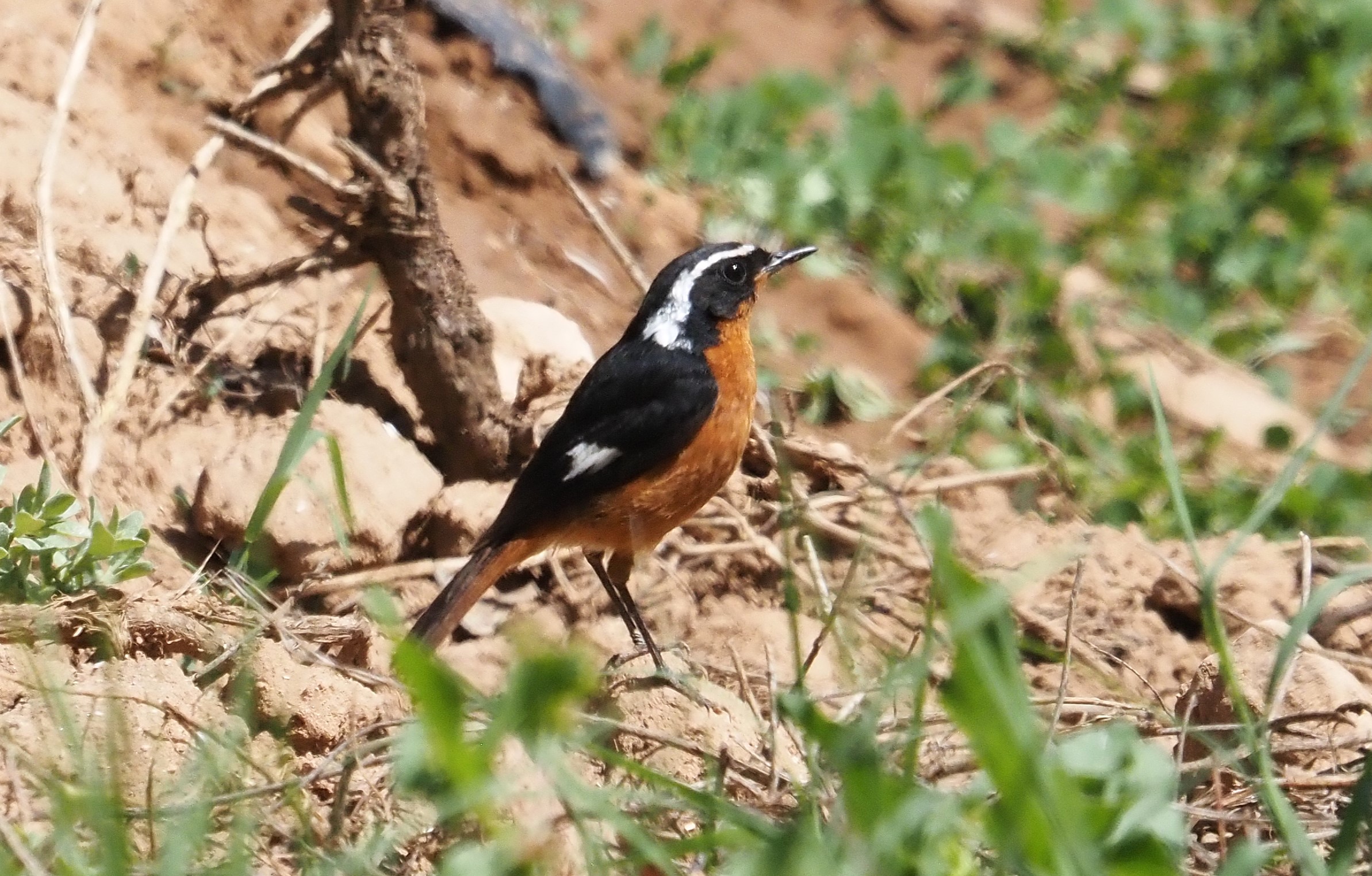
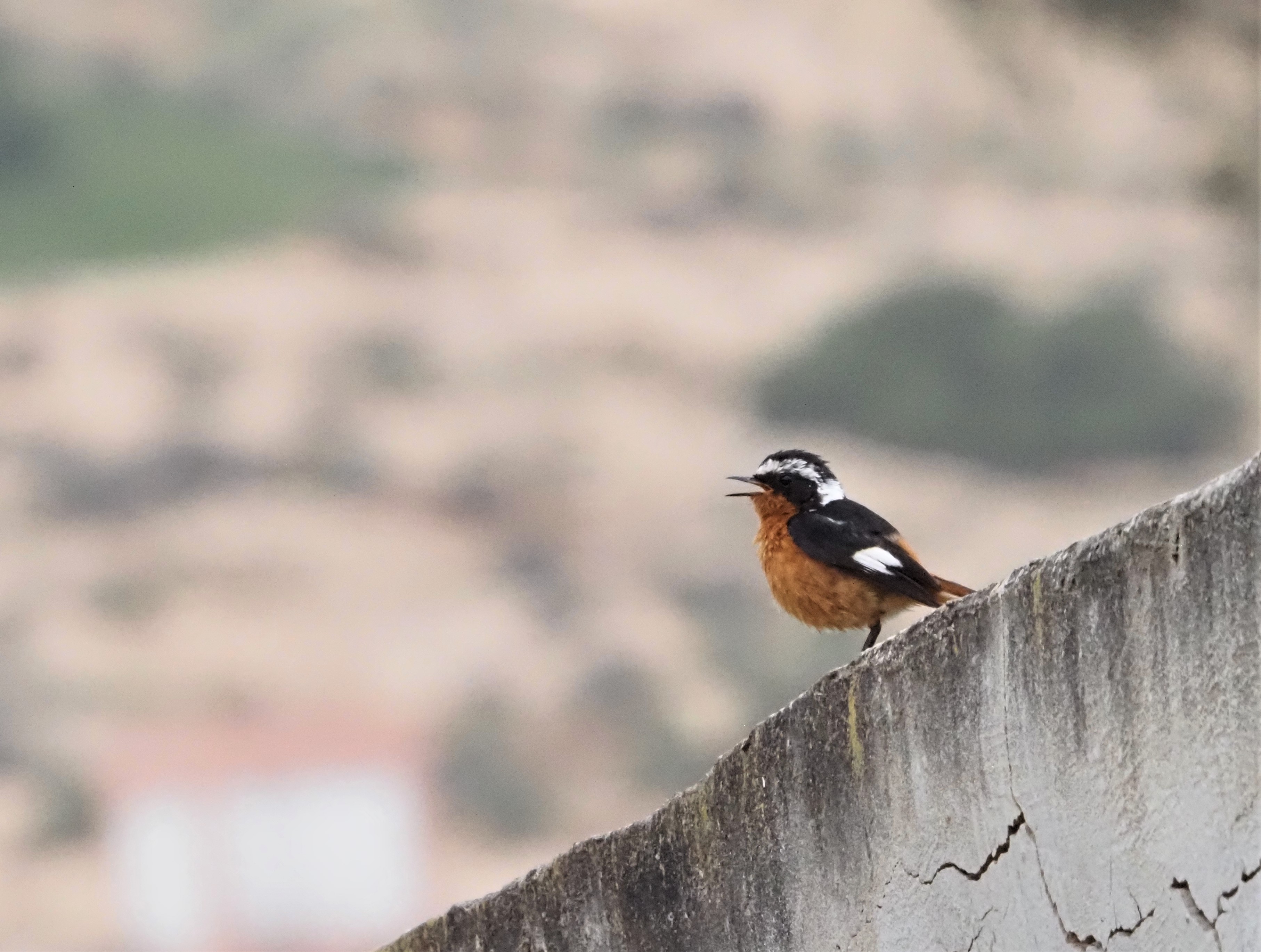
Cotxa diamemada (Phoenicurus moussieri) és un habitant comú en diferents ambients.
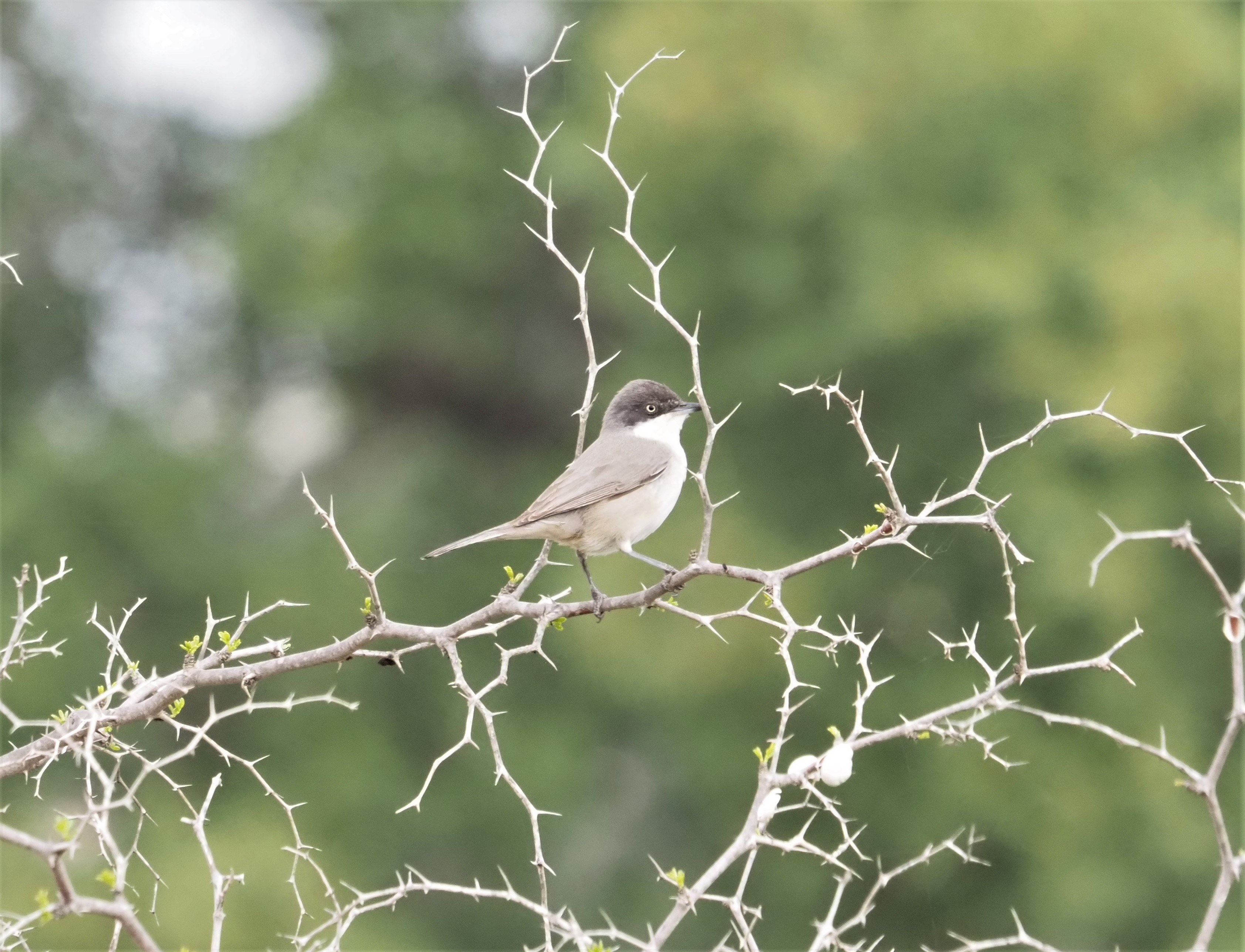
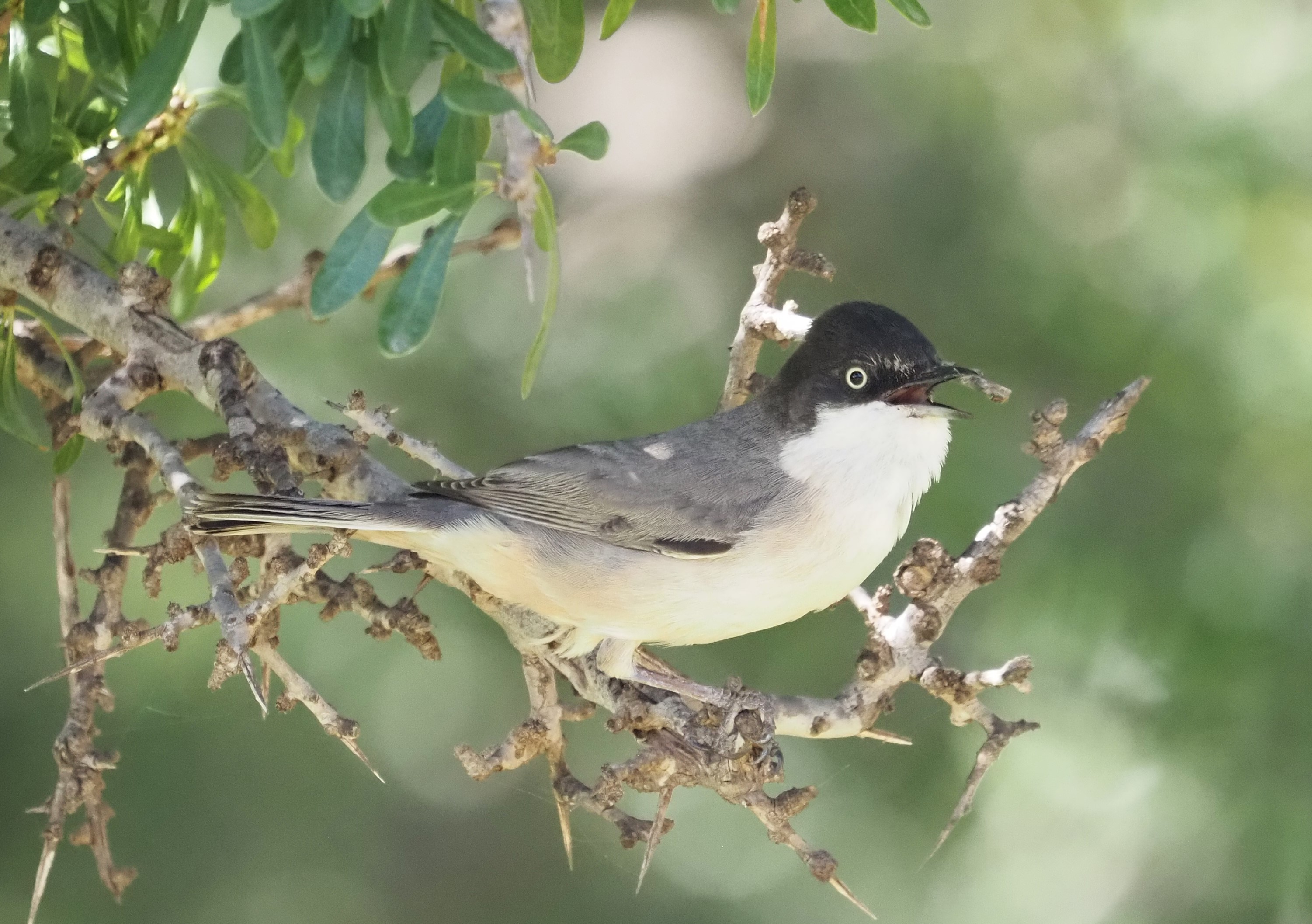
En aquesta parada vam gaudir d’observacions icòniques de tallarol enmascarat (Curruca hortensis).
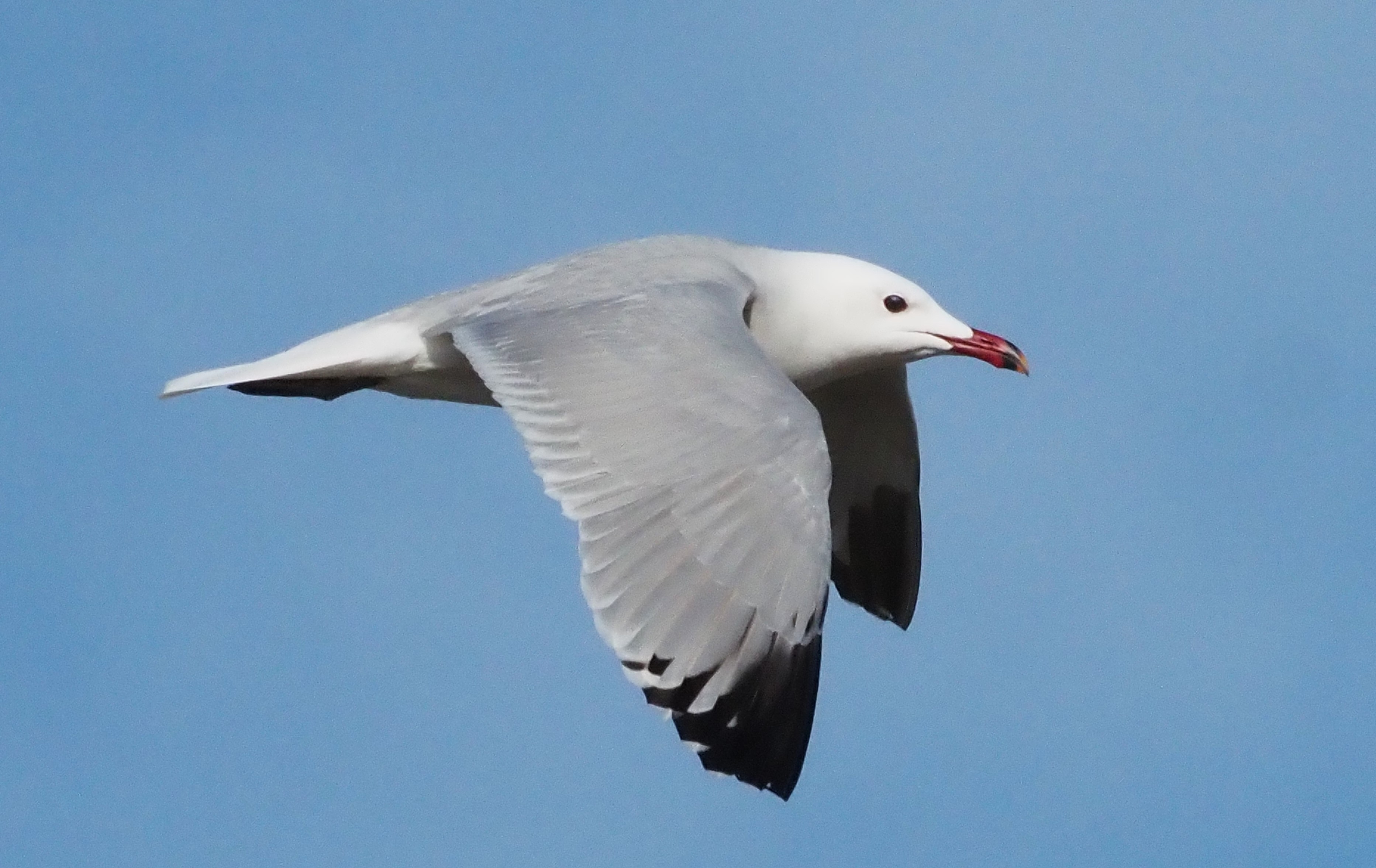
Una de les moltes gavines corses (Ichthyaetus audouinii) que volaven per Tamri.
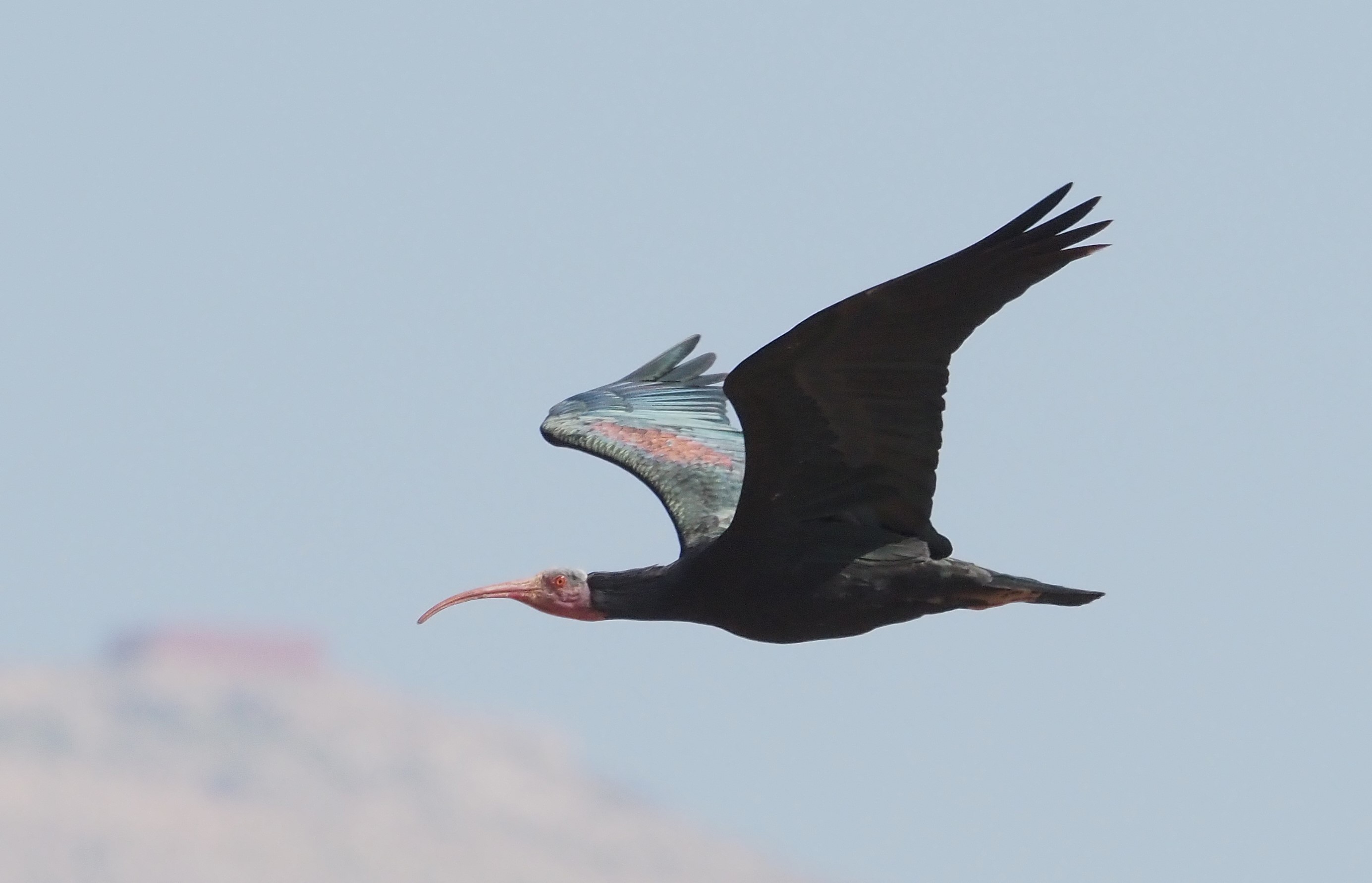
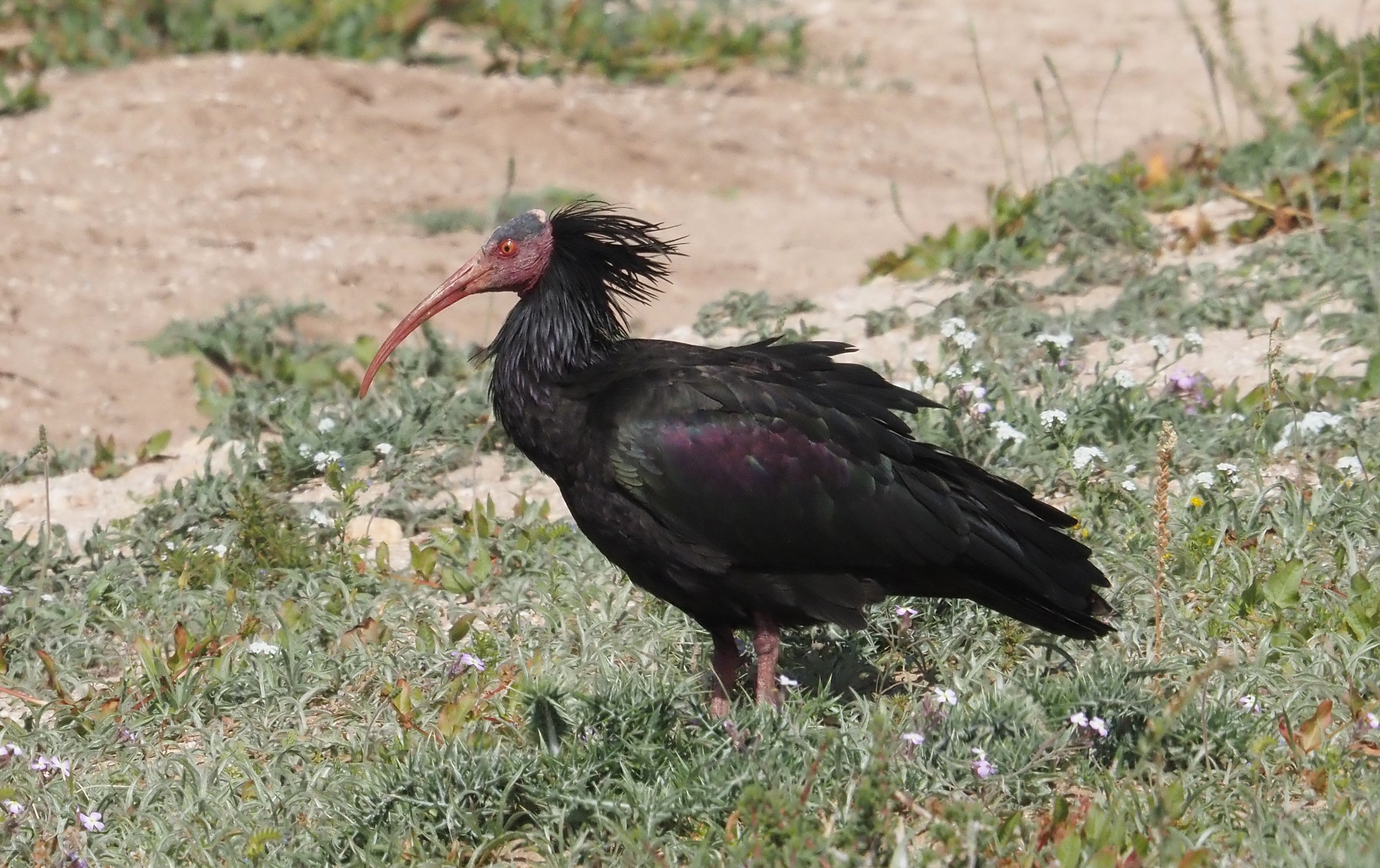
L’ibis ermità (Geronthicus eremita), sempre un espectacle d’observar!
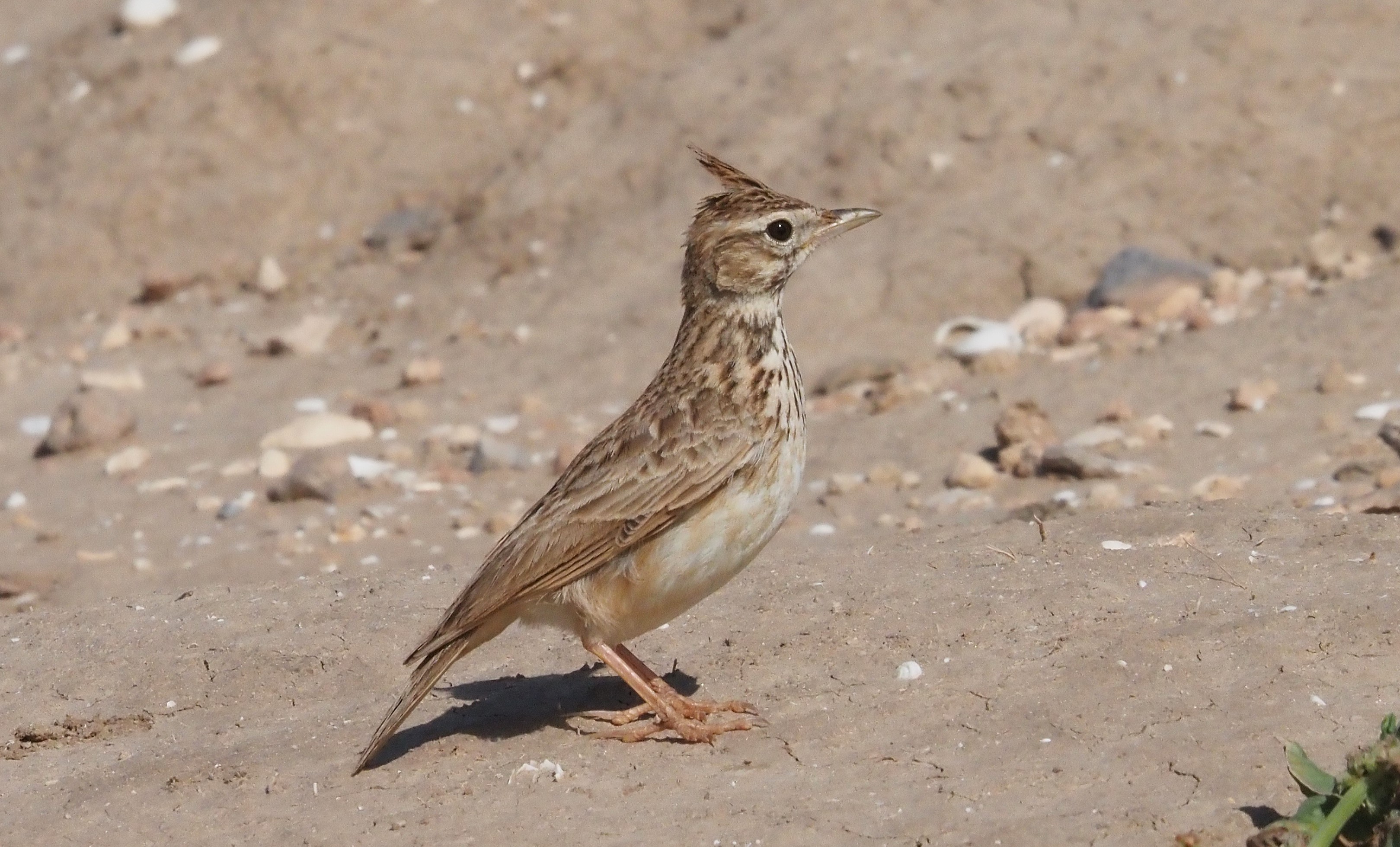
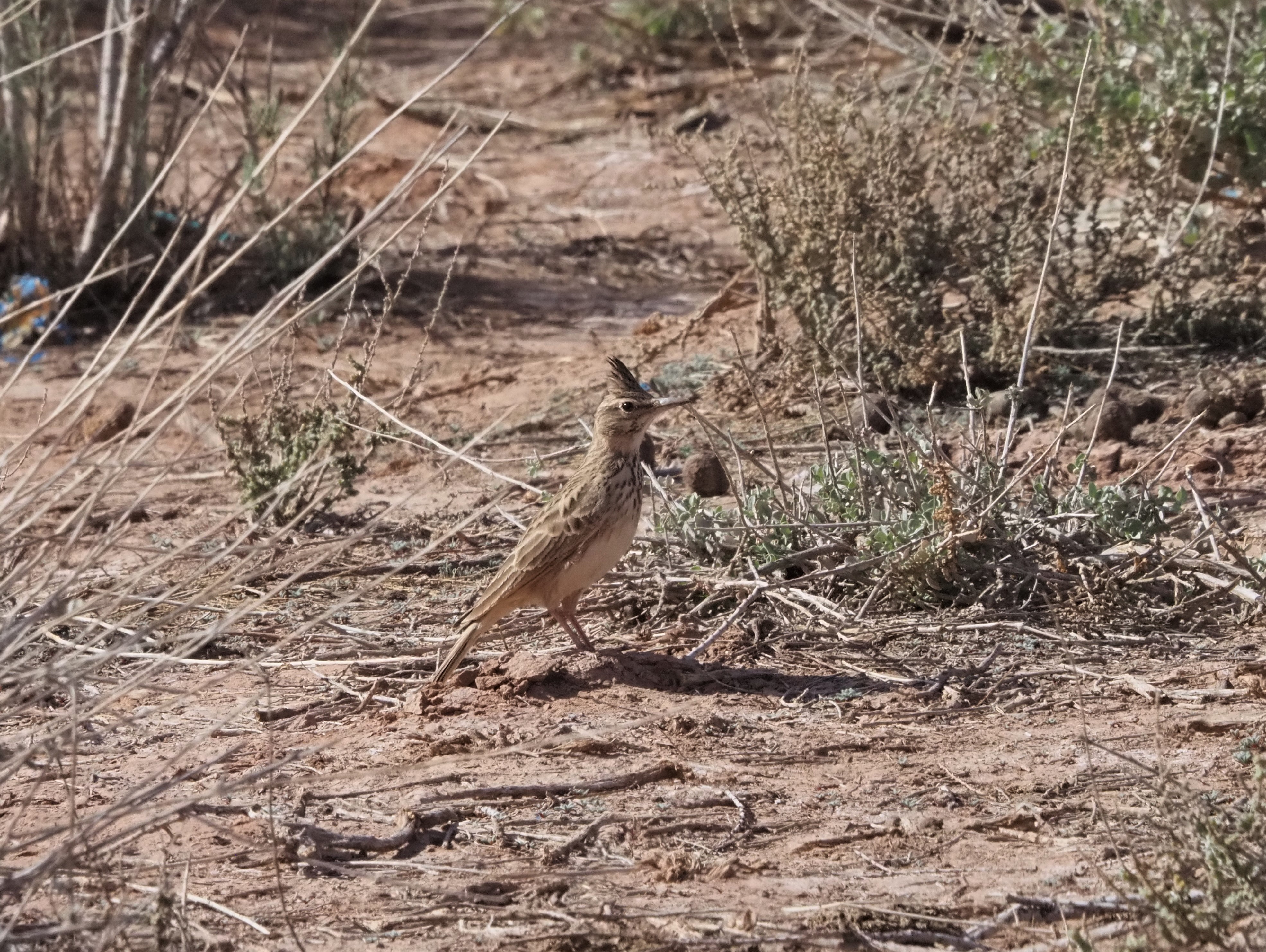
Thekla Lark (Galerida theklae) in the coastal scrubland around Tamri.
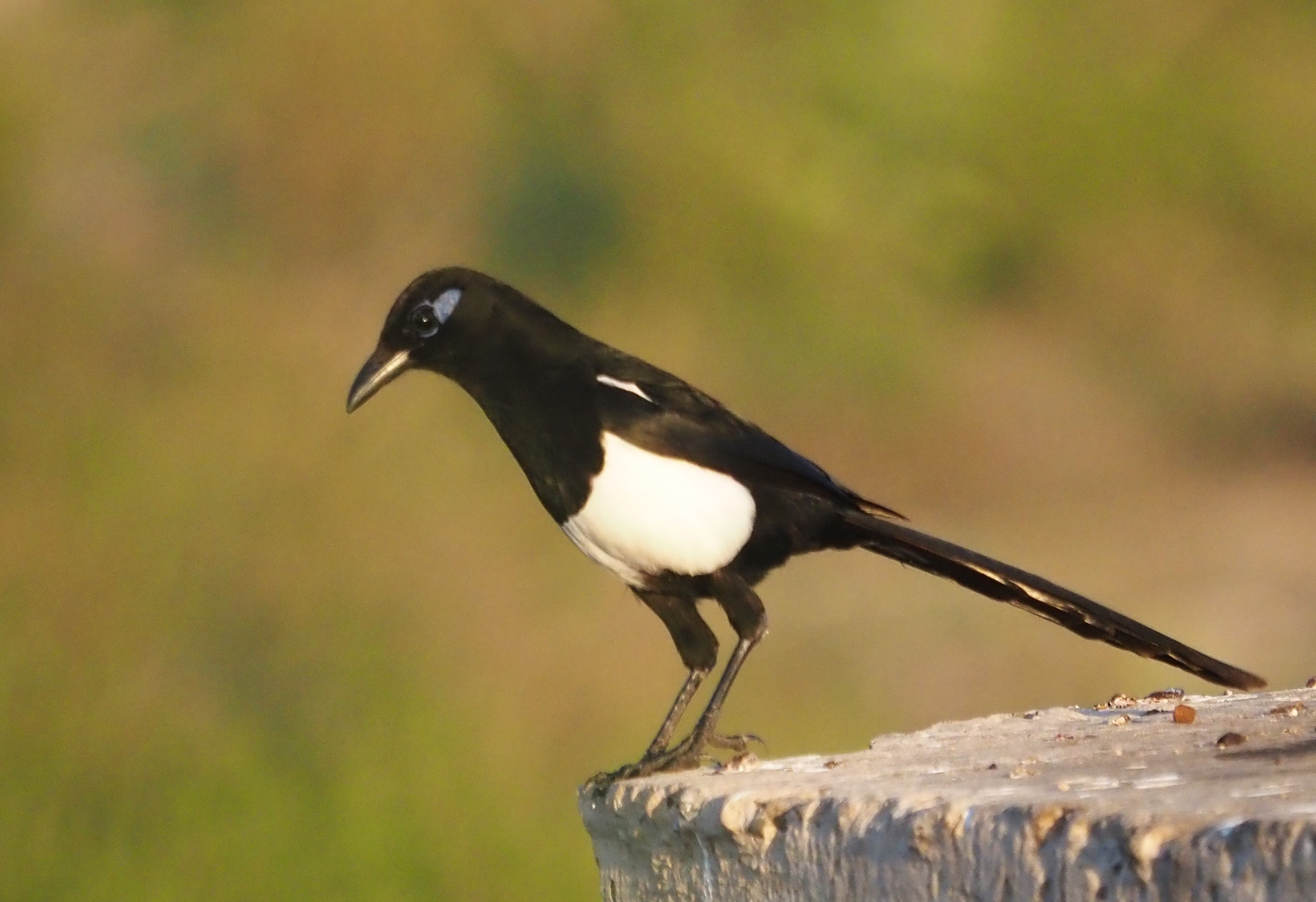
Garsa del Magreb (Pica mauretanica)
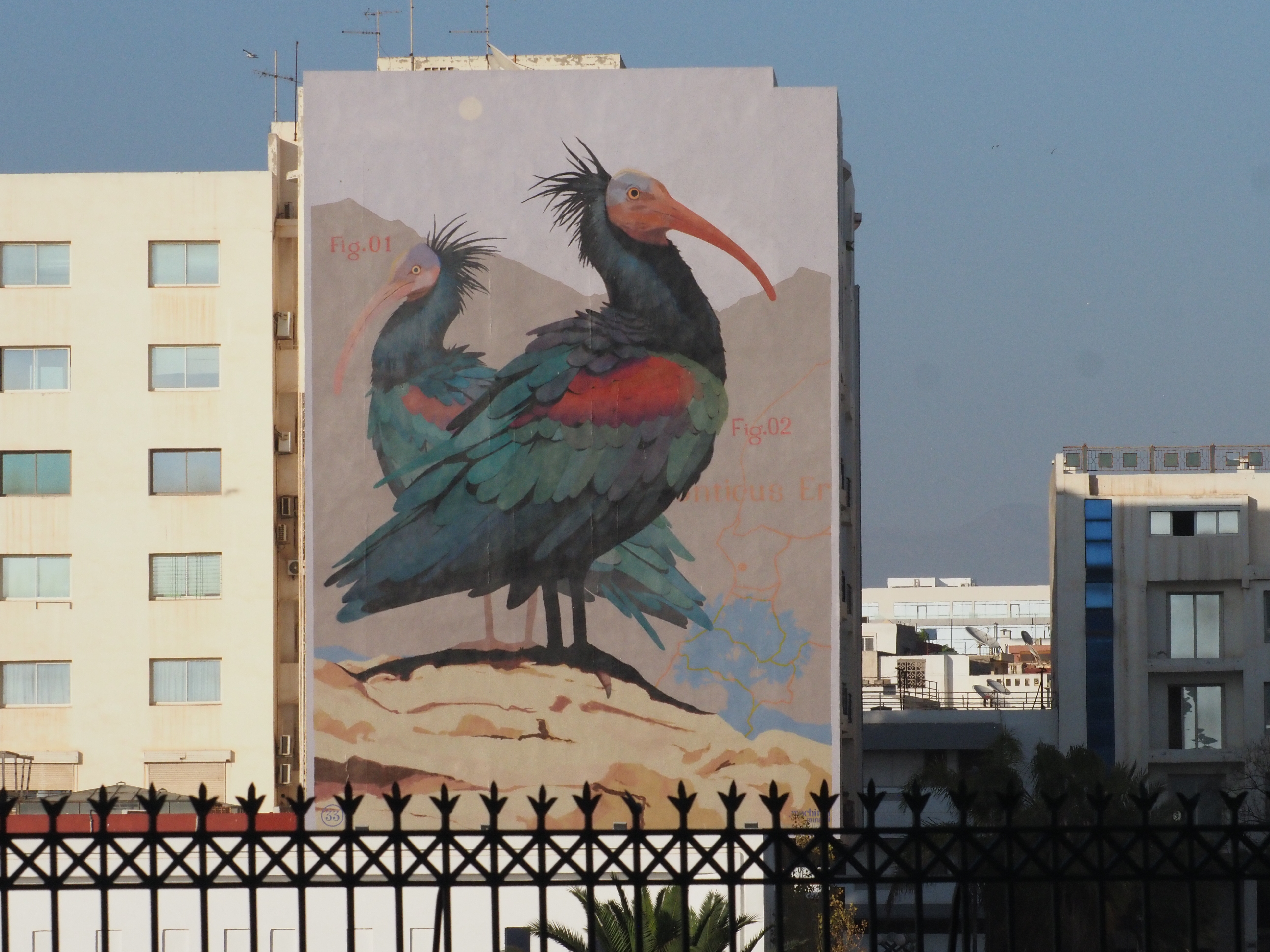
Mural dedicat als ibis ermitans a la ciutat d’Agadir.
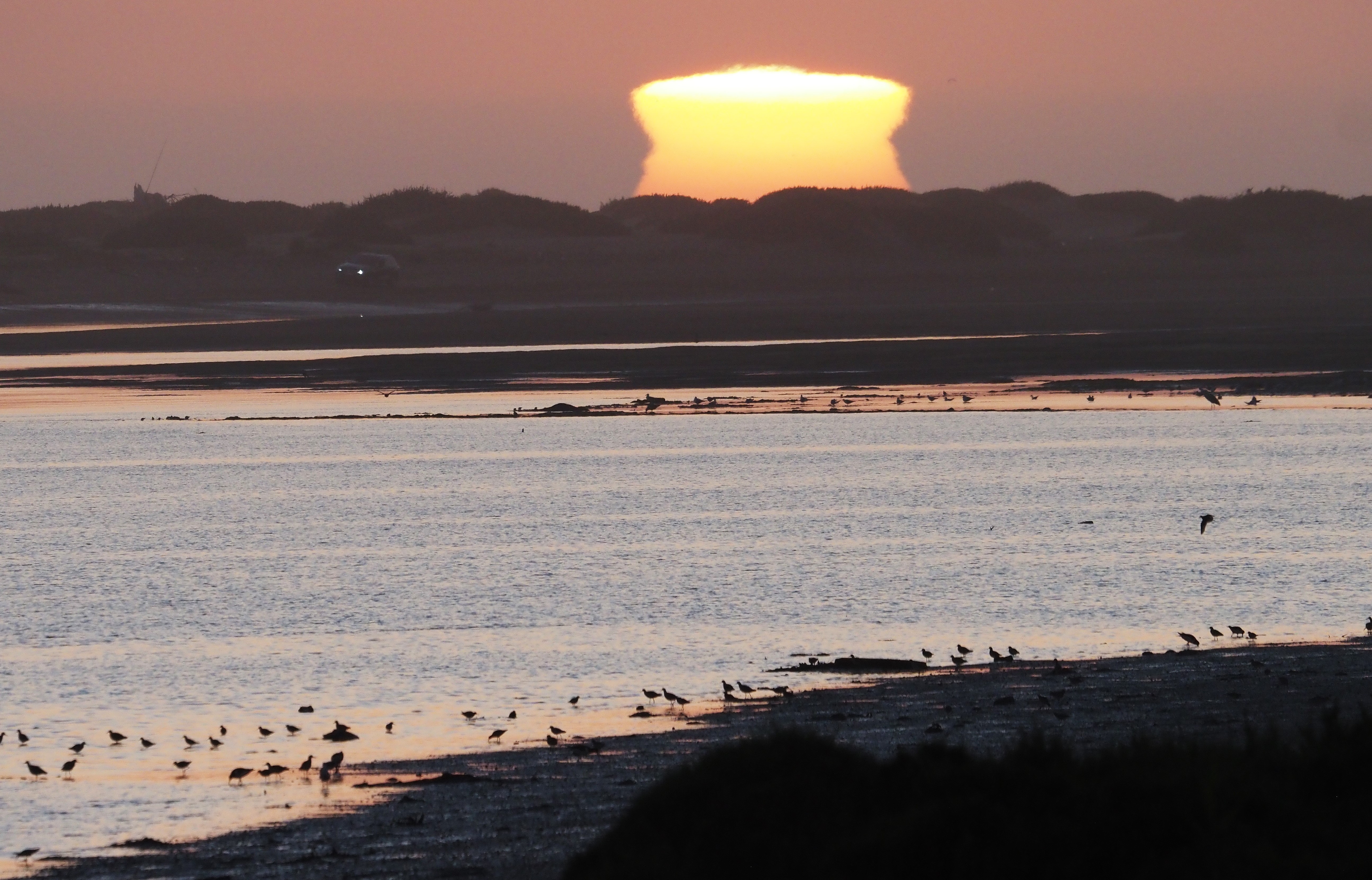
Capvespre a l’Estuari del Riu Souss, amb un bon grapat de gambes i batallaires en primer plànol.

Dia 3. A escassos metres del nostre allotjament vam sentir cantar el primer txagra de coroneta negra. Al poc de sentir-ho, el trobem a dalt d’una palmera i al llarg dels minuts següents el seguim mentre baixa a alimentar-se als conreus curosament endreçats, i mentre tomba a les feixes de vegetació més densa, des d’on deixa anar el seu característic cant. És un matí ben núvol i, en sortir de l’hotel ens ha sorprés sentir el cant d’un boscarler pintat gros. Hi han diferents espècies en migració i el reclam de les piules dels arbres es deixen caure des del cel. Ens aproprem, no sense alguna aventura, al gran arbust des d’on ens arriba el cant monòton del boscarler. Però és devades. És en aquell moment quan sentim la txagra. L’observem força bé i, a més a més, veiem tota una corrua de mosquiters comuns, amb com a mínim un mosquiter ibèric entremig, ben camuflat.

Refent els cinquanta metres que ens separen de l’hotel, ens preparem per gaudir d’un bon esmorzar. A fora amenaça pluja, però quedarà en res. Després d’esmorzar, explorem una mica al llarg del Riu Massa. No puc evitar d’aturar-me a llocs que fa només cinc anys eren un paradís ornitològic. Avui dia, però, aquests meandres del Riu Massa estan totalment secs, i la sorra del llit del riu perd terreny davant l’evident acumulació de brossa. És una visió poc plaent i ni tan sols la primera buscarla bruna del viatge fa que aquesta parada tingui glamour. N’hi han unes quantes que canten a la zona, però un cop ben vista una d’elles, decidim continuar endavant. Una mica més endavant ja trobem aigua i hem de parar la furgoneta en sec ja que dos xarxets marbrencs ens passen volant, rabent, riu amunt. Fem una bona inspecció al riu, però només trobem un pit-roig en migració. A la següent parada el riu no està gaire més atractiu, però als camps del voltant veiem unes quantes piules dels arbres, tallarols de garriga, cueretes grogues, una àguila pescadora i 8 agrons rojos en formació migrant riu avall. Però l’espècie que més gaudim és la guatlla. Als camps en canten unes quantes i el Xavi comenta que és un ocell que li faria molta il·lusió veure. I després d’uns quants intents frustrats, un treballador del camp aixeca un preciós mascle de guatlla, que ens passa pel davant. L’observació és prou llarga que em dona temps d’agafar els binocles i prou a prop com per apreciar-hi alguns dels detalls del plomatge. Un goig i, sens dubte, una de les observacions destacades del dia!

D’aquí anem a fer una última parada de matí. Uns quants participants arrosseguen problemes estomacals i decidim de fer un matí curt i per poder anar recuperant-nos. En un últim pont tornem a gaudir de cotxa diodemada i tallarol de garriga i aquí també veiem cueretes grogues, corriol anellat petit i un jove d’àguila cuabarrada que passa per sobre nostre amb força presa. Al riu hi han espècies habituals com cabusset, martinet comú, fotja comuna i polla d’aigua. Tot repassant les nombroses orenetes que volen riu amunt, trobem una oreneta de ribera africana barrejada amb orenetes de ribera comunes. Està lluny, però tenim la sort que decideix aturar-se en un arbre mort a tocar de l’aigua. Amb el telescopi en gaudim de bones observacions. De sobte, una segona oreneta de ribera africana s’atura al mateix arbre. I una tercera! Estem de sort, perquè enguany sembla que hi han poquetes. Un cop tothom ha gaudit de bones observacions al telescopi i hem fet les fotos de rigor, decidim tornar per gaudir d’un relaxat dinar al nostre allotjament.

Però abans de tornar fem deu minutets a la zona de dunes que tenim més a prop. Parada obligada perquè aquí sempre hi alguna cosa a veure (malgrat les extensions cada cop més grans de conreus intensius…). Un parell de terreroles comunes ens fan parar el cotxe i sentim un tallarol trencamates cantant ben a tocar. Sortim, i gaudim de molt bones observacions dels tallarols i també dels botxins septentrionals (raça algeriensis) que estan al seu costat. Fet! A dinar!
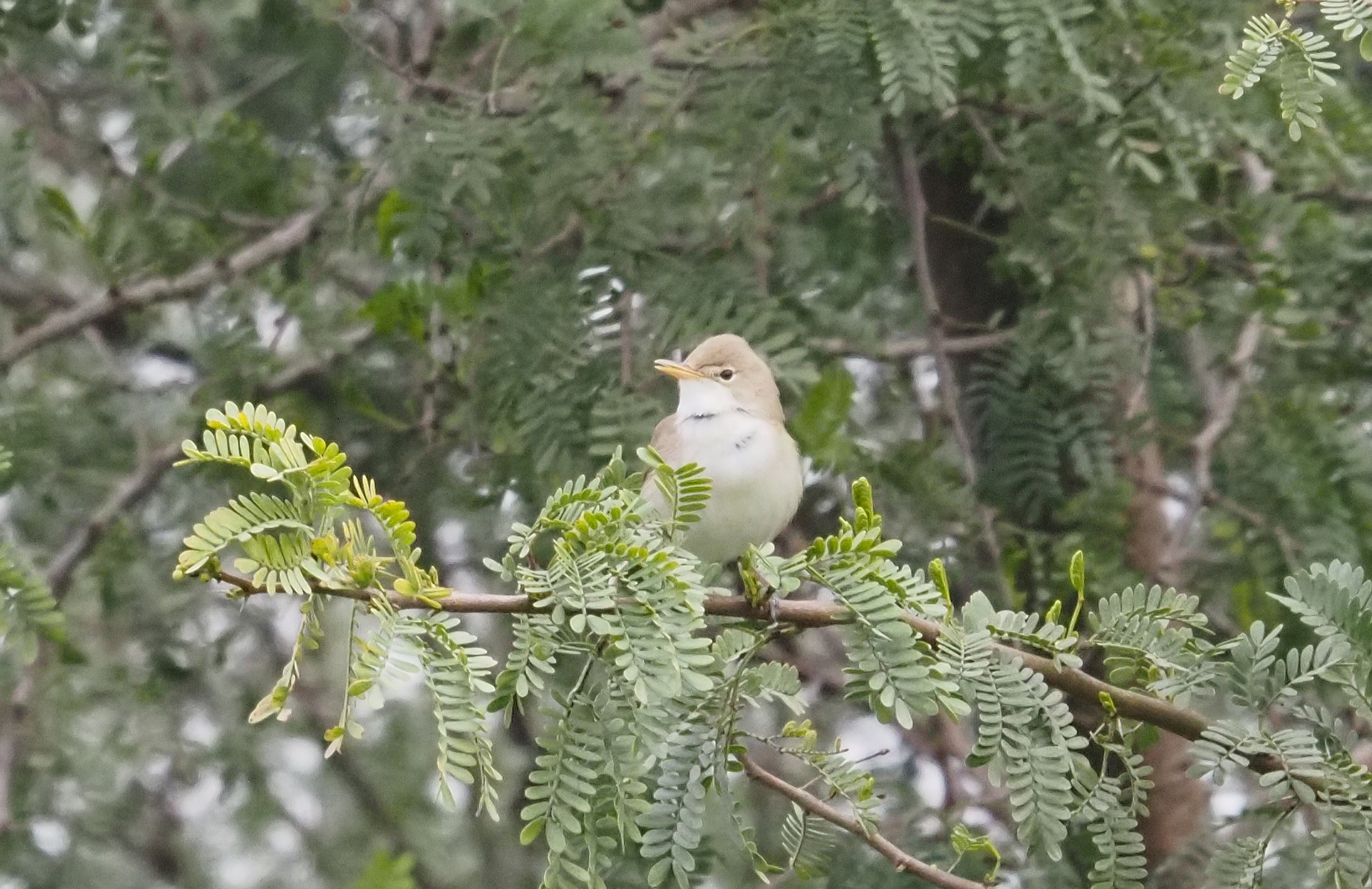
La txagra de coroneta negra (Tchagra senegalus) no va fallar i la vam poder veure a plaer.
Bosqueta bruna (Iduna opaca), també coneguda com a bosqueta pàl·lida occidental acabada d’arribar al seu territori de cria.
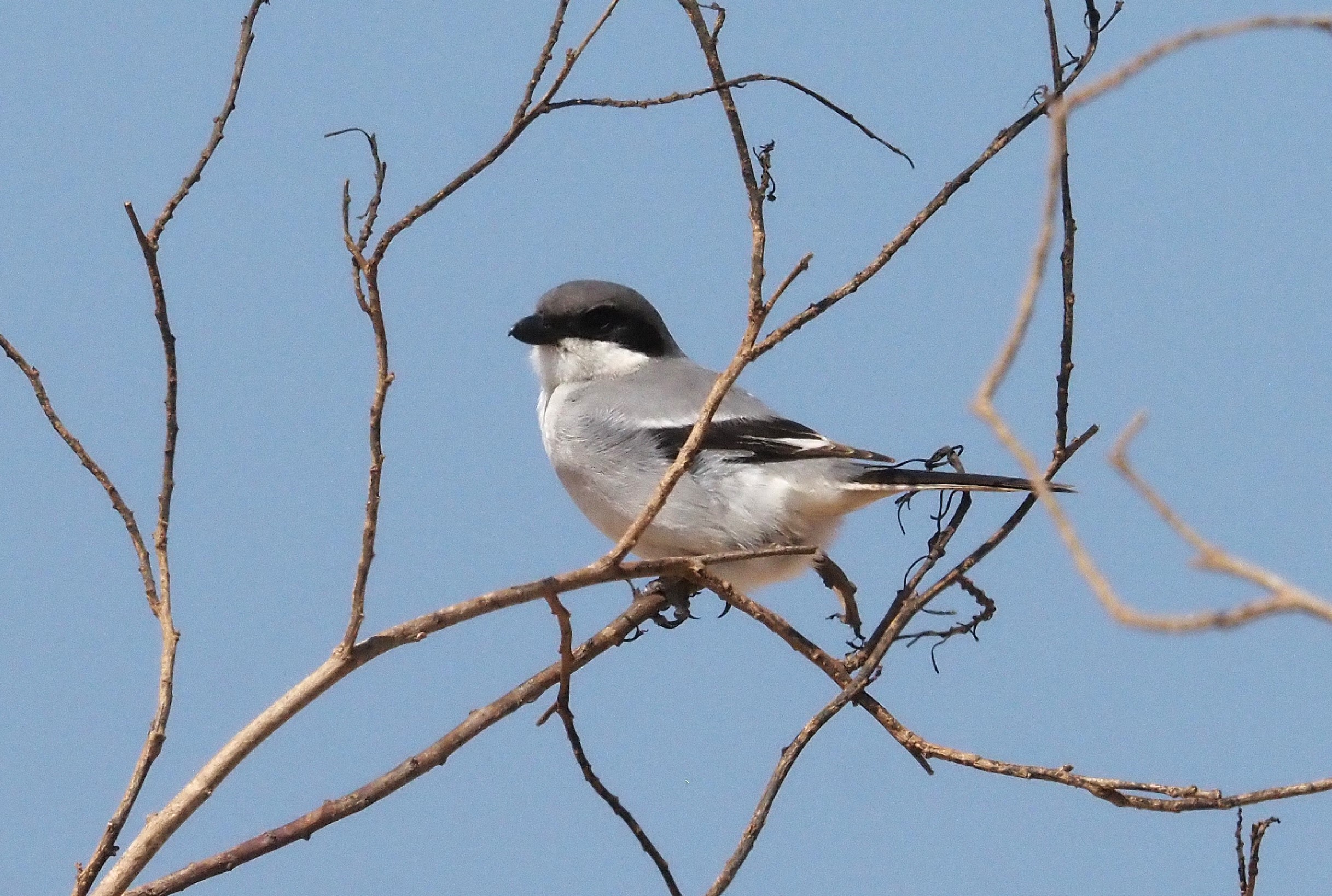
Botxí septentrional (Lanius excubitor algeriensis), la raça més comuna al Marroc.
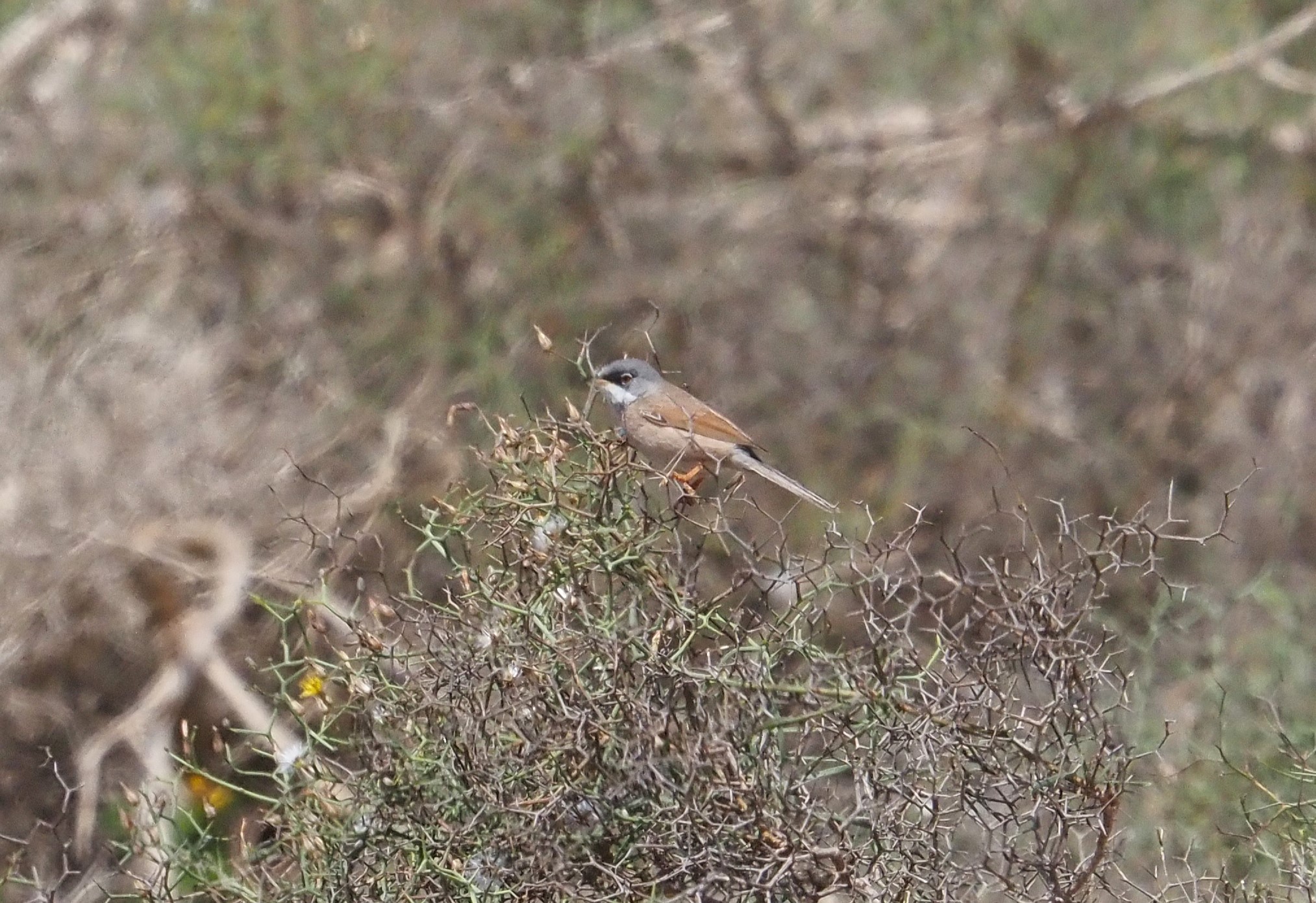
Tallarol trencamates (Curruca conspicillata) just abans de dinar.

Un cop ben dinats i descansats sortim a explorar una mica més. El sol s’ha imposat ja fa estona i ens dirigim a la desembocadura del Riu Massa. Aquí caminem al llarg d’un parell de quilòmetres gaudint de les moltíssimes eufòrbies i de les molt comunes cotxes diademades i dels primers cants de rossinyol comú de l’any. Al riu veiem àguila pescadora, agró blanc, xarxet comú i algun estol de batallaire, però la majoria d’ocells estan força lluny… Com a nota més destacada, un estol de 4 ibis ermitans ens sobrevolen quan ja anem de tornada cap al vehicle.

Com a última parada, ens dirigim a la costa, però la migració no sembla massa activa al mar. Per sobre noestre uns passa un estol de 27 bec-planers en migració cap al Nord. A l’estepa que voreja la platja, trobem un parell de torlits preparant-se per encetar el seu dia a mesura que cau la llum i, ja dins la furgoneta, un parell de mussols comuns i uns quants botxins septentrionals són pràcticament l’últim ocell de la jornada.
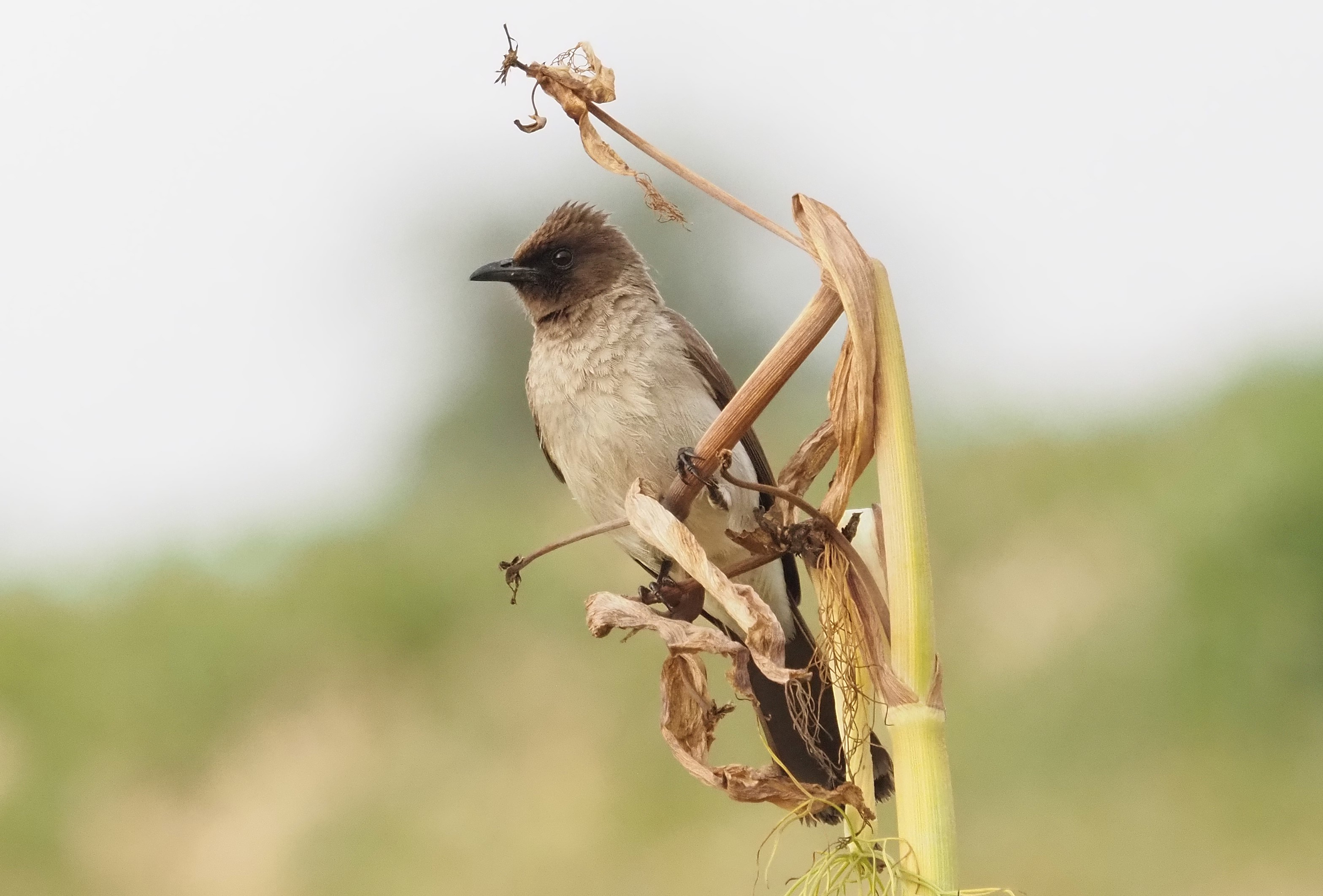
Bulbul comú (Pycnonotus barbatus), que són virtualment a tot arreu.
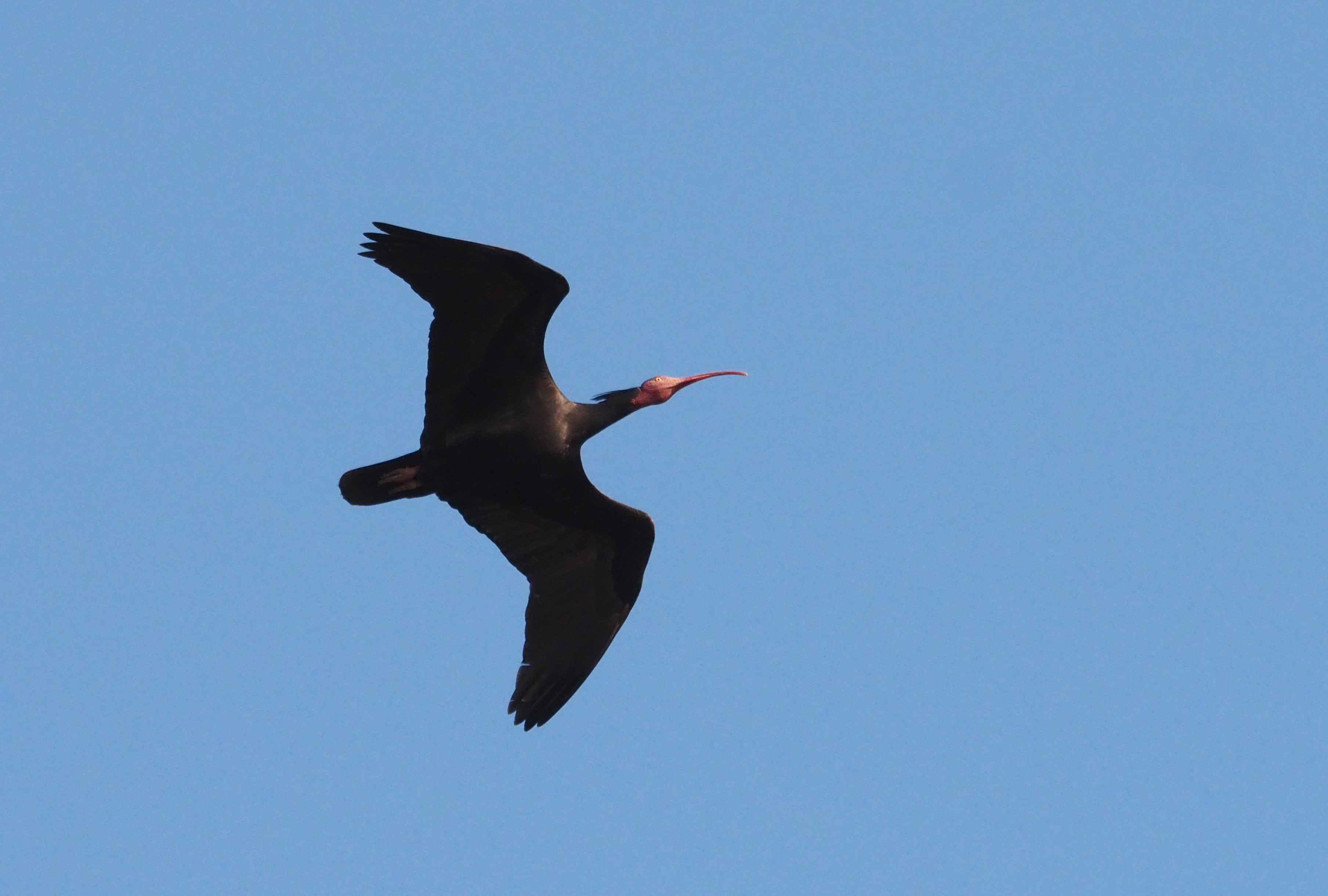
Al Riu Massa vam gaudir de bones observacions d’ibis ermitans.
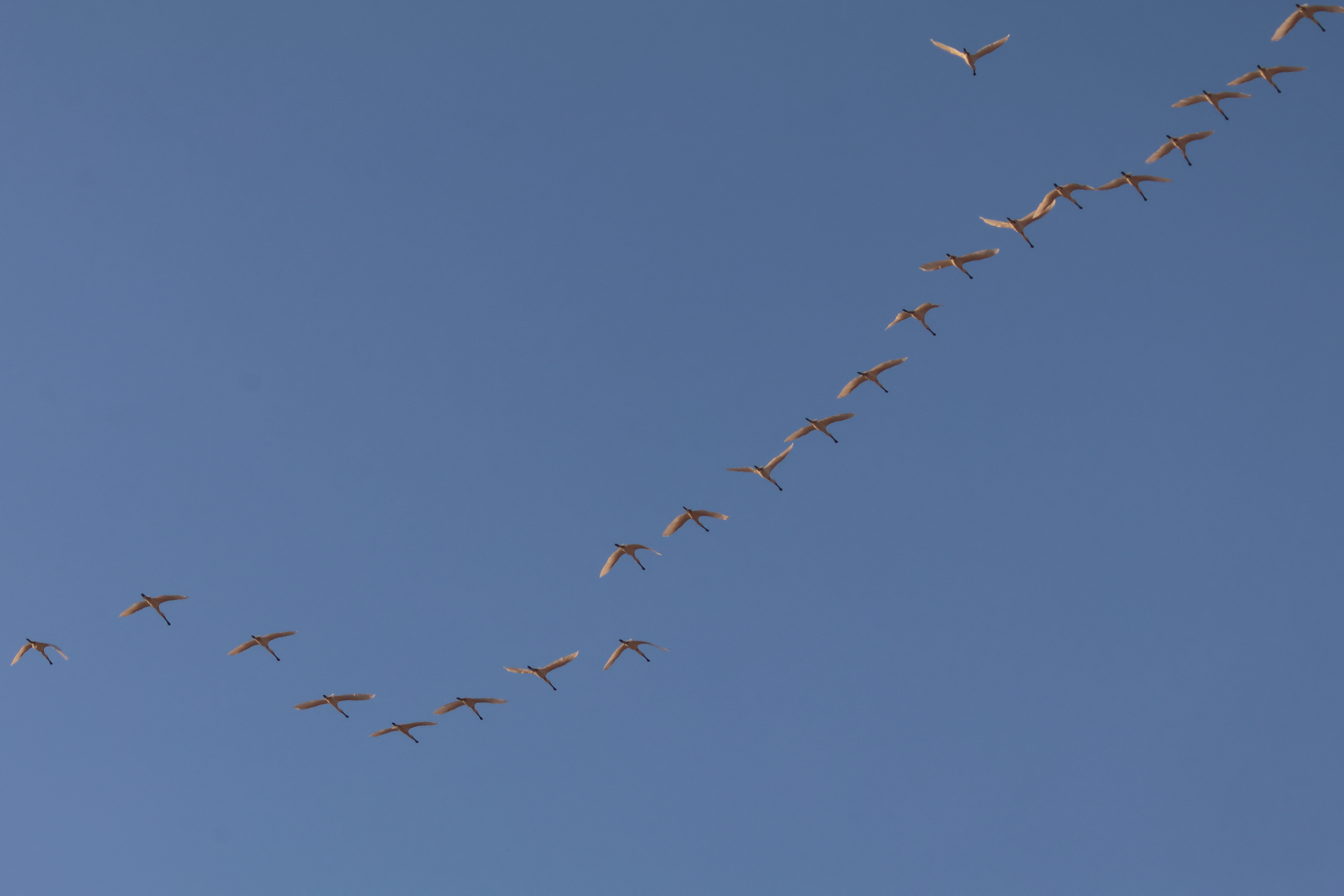
Estol de bec-planers en migració cap al Nord. Imatge, Joan Oliver Manem.
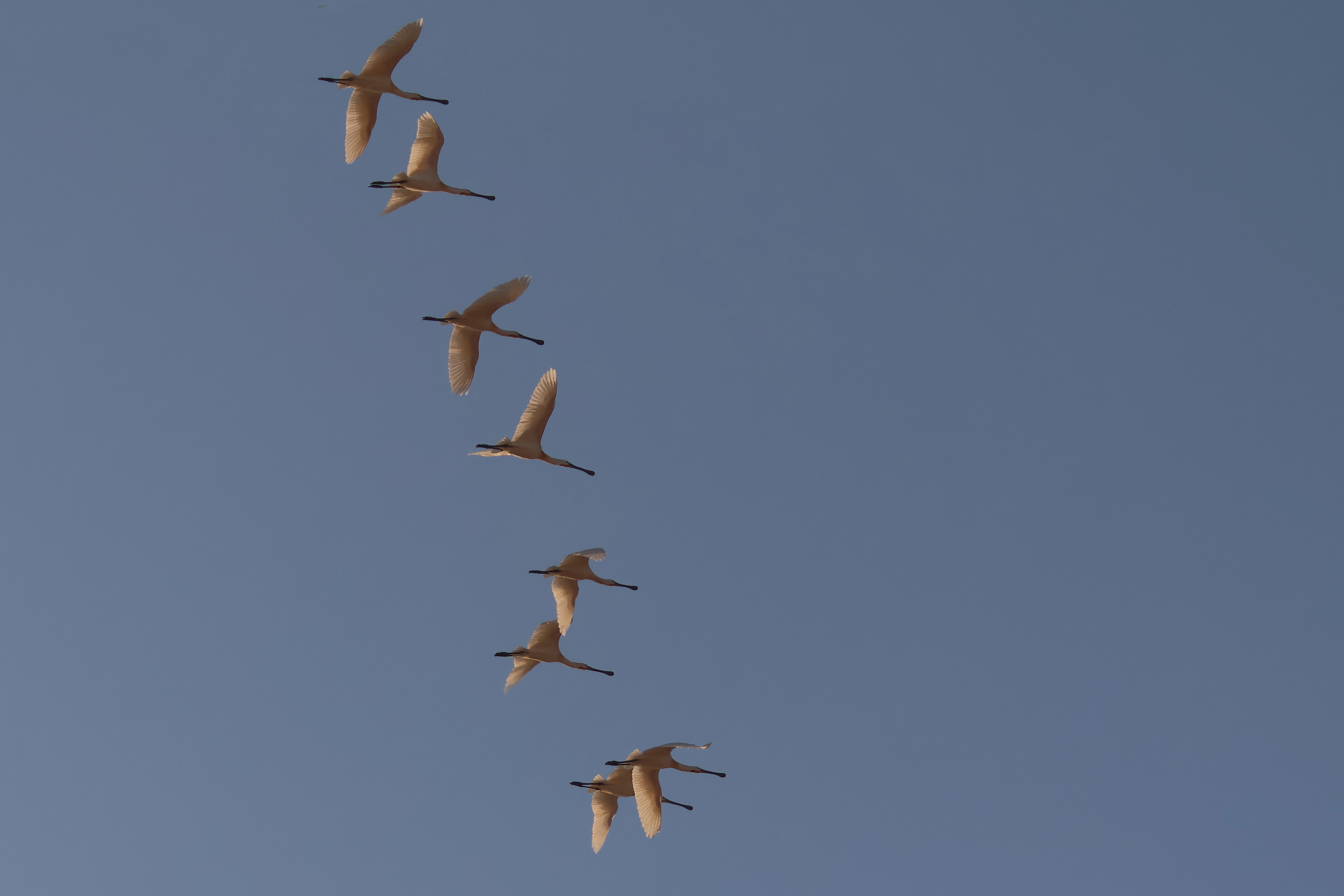
Detall de l’estol de bec-planers en migració al llarg de la costa del Souss-Massa. Imatge, Joan Oliver Manem.
Una altra fantàstica cotxa diademada (Phoenicurus mousseri).
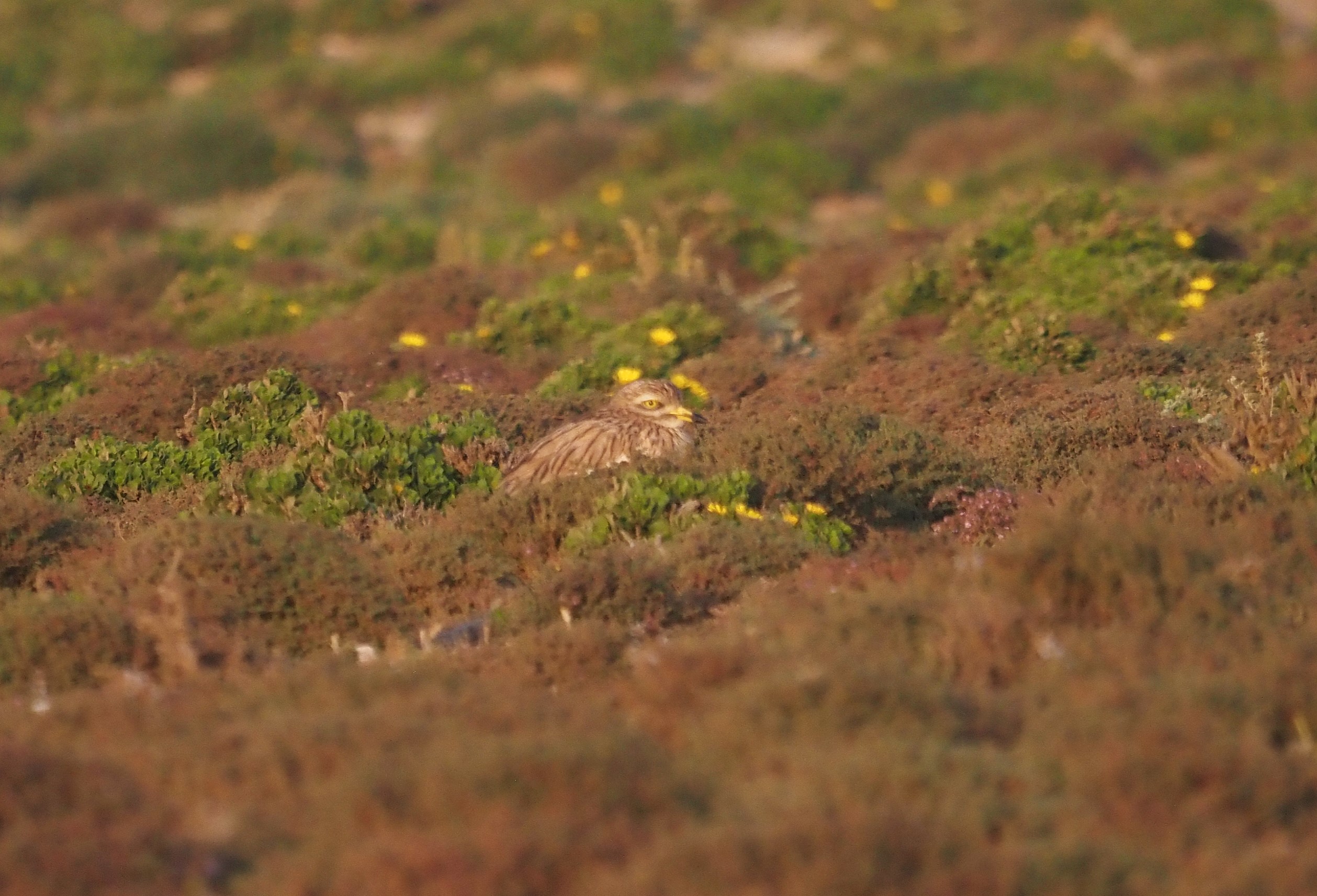
Un dels 3 torlits (Burhinus oedicnemus) que vam veure al vespre.
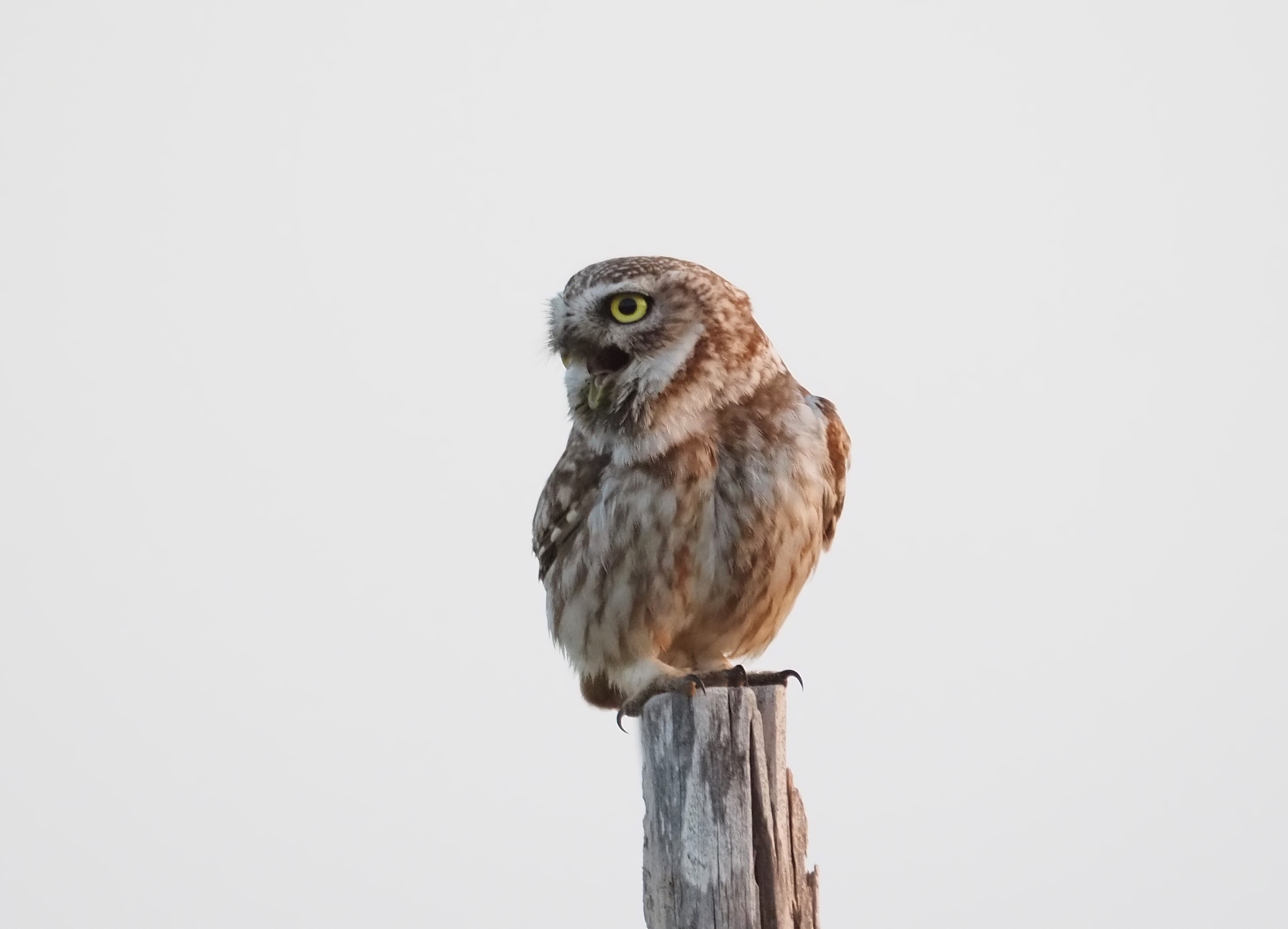
Mussol comú (Athene noctua) marcant el seu territori a pocs metres de nosaltres.

Dia 4. Ens llevem al nostre allotjament en un altre matí fresc a la costa atlàntica. Aquest dia enfilem cap a l’interior, tot creuant l’AntiAtlas, però abans gaudim d’unes poques observacions d’ocells comuns al voltant de l’allotjament i d’Agadir, com sits de vila i garses del Magreb. De camí, uns quants estols de pardals de passa creuen la carretera, però no veiem cap que estigui més o menys a prop.

El matí el dediquem a fer quilòmetres, fins que un esparver d’espatlles negres apareix del no res i ens fa aturar-nos en un punt indeterminat de l’Anti Atlas. Sortim de la furgoneta i tots podem gaudir de bones observacions de l’elani abans no marxi volant, ben lluny de nosaltres… Aquí també veiem algun capsigrany i cogullades comunes.

La primera parada per mirar ocells és, de fet, el lloc a on dinem els nostres apetitosos picnics. Aquí, en un petit embassament rodejat d’un bosquet, gaudim d’un primer tast de la migració en aquest país. Aquí veiem 3 mosquiters de passa, cotxa cua-roja, tallarol enmascarat, 2 tallarols de garriga i 1 mosquiter pàl·lid mentre un mosquiter ibèric no para de reclamar per la zona. A l’aigua, contem una trentena d’ànecs canyella a més d’un parell de flamencs, un grapat d’ànecs cullerots, un griset i, sorpresa, una parella de fotges banyudes que tot just comencen a desenvolupar les “banyes”. Altres espècies interessants aquí inclouen roquerol, pinsà africà i el primer corriol anellat petit del viatge.

El paisatge ha anat canviant progressivament a mesura que ens allunyàvem de la costa i un mar de turons i petits escarpaments van deixant pas a planes cobertes de vegetació estepària que cada cop volen ser més i més extenses. Al Nord, el Gran Atlas ens vigila, i la gran quantitat de neu dels seus cims projecta la seva frescor en l’ambient.

La següent parada la fem a la tarda per explorar un rierol que trenca el paisatge de de planes i escarpaments semi-desèrtics. Aquí, el curs d’aigua i els conreus d’ametllers que el voregen acostumen a ser un iman per als ocells migradors. Aquí, un passeig per la zona produeix mosquiters pàl·ids i de passa, cotxes cua-roges, cueretes grogues, dos capsigranys, un inesperat becadell comú i un petit estol de 7 piules dels arbres que es deixen veure prou bé. També hi destaca una titella solitària i els reclams de boscarles dels joncs al riu, que no es deixen veure. Aquí veiem la que serà la darrera cotxa diademada del viatge en uns quants dies, un mascle de martinet menut i, quan estem a punt de marxar, una magnífica parella d’àguiles cuabarrades que apareixen del no res per revisar el riu en buscar de preses potencials…

Continuem fent carretera i ja ben entrats en la tarda ens aturem en un parell de revolts que acostumen a ser profitosos. Aquí trobem la primera alosa del desert del viatge, i tots gaudim de molt bones observacions amb bona llum. Una mica més endavant, també veiem els primers de molts còlits tuaregs del tour. Arribem a l’allotjament entrada la nit. Els útims quilòmetres es fan eterns per alguns de nosaltres, però finalment podem arribar i gaudir d’un bon sopar i un bon descans en el nostre petit allotjament a Boumalne Dades…
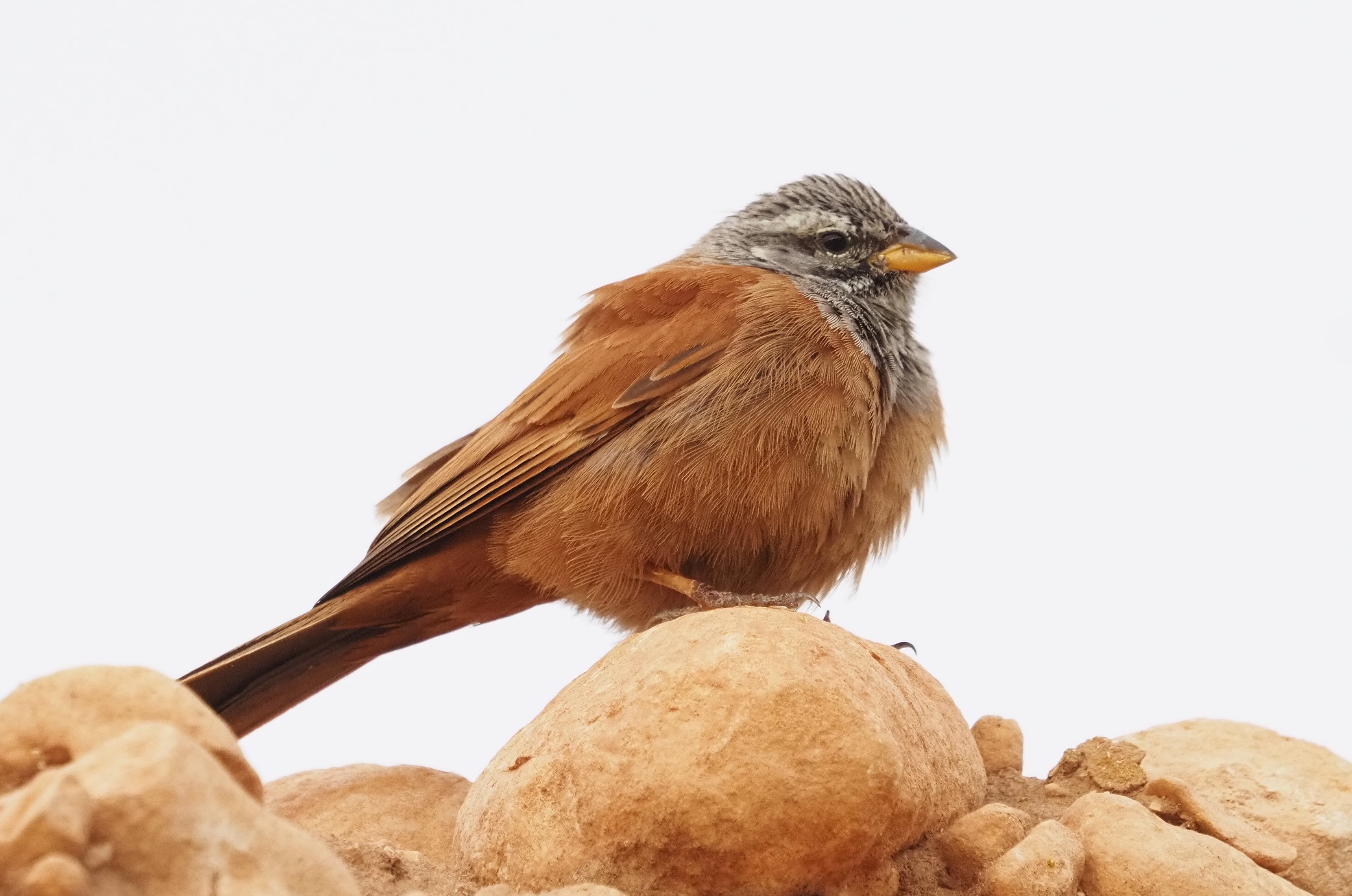
Sit de vila (Emberiza sahari) a tocar del nostre allotjament.
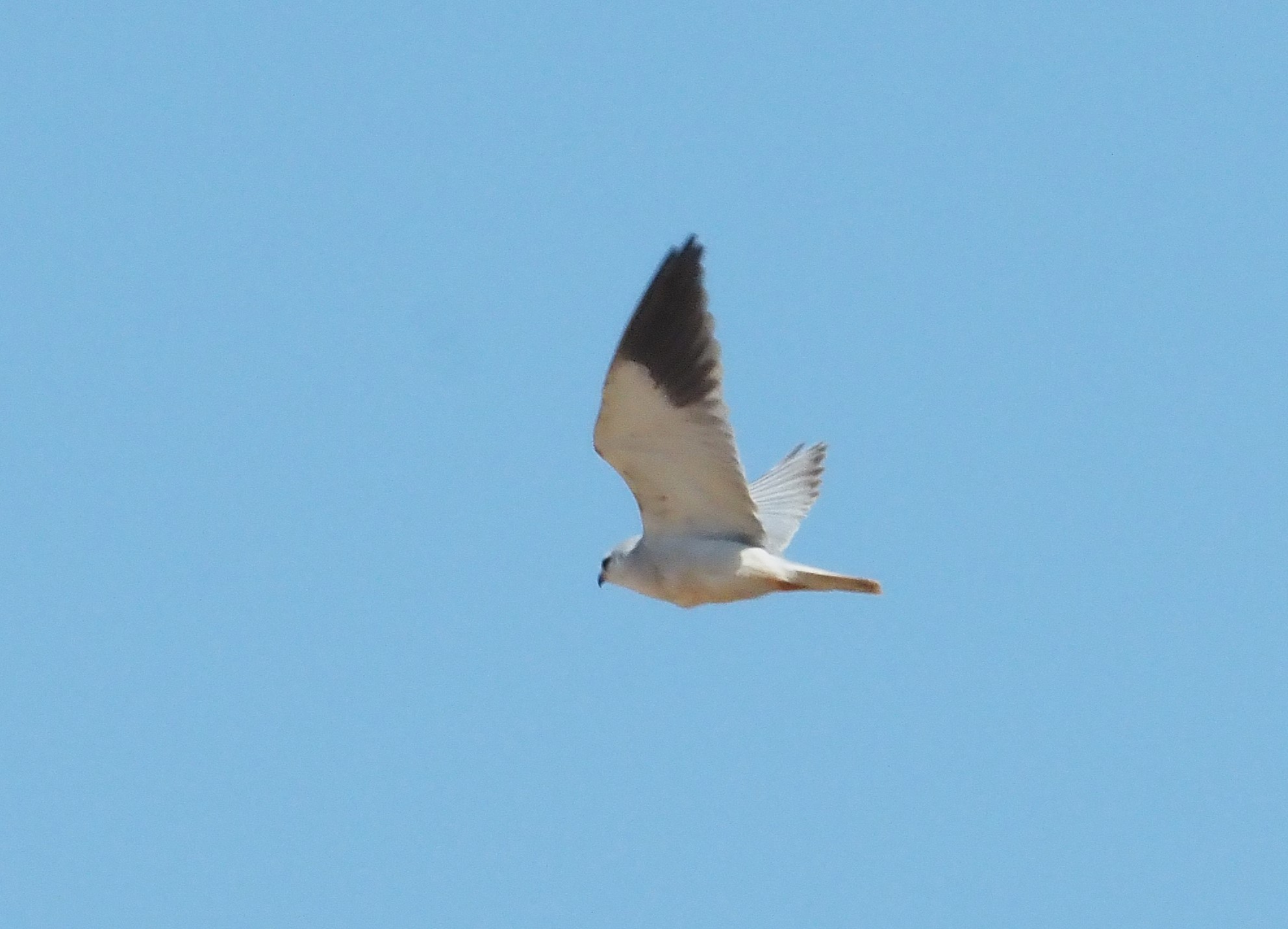
Elani comú (Elanus caeruleus) en vol abans no marxés per no tornar mai més…
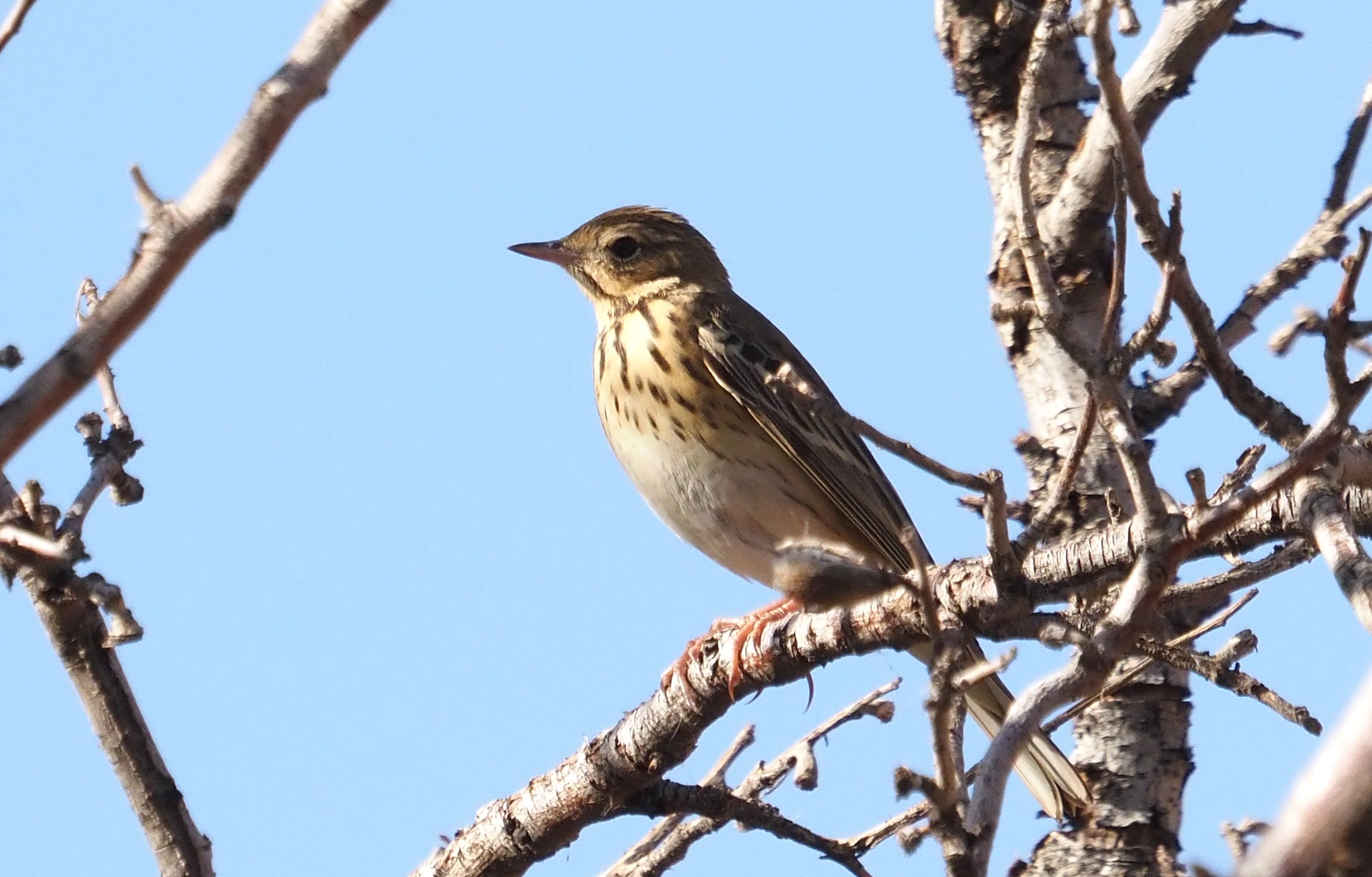
Les piules dels arbres (Anthus trivialis), sovint esmunyedisses, es van deixar veure prou bé.
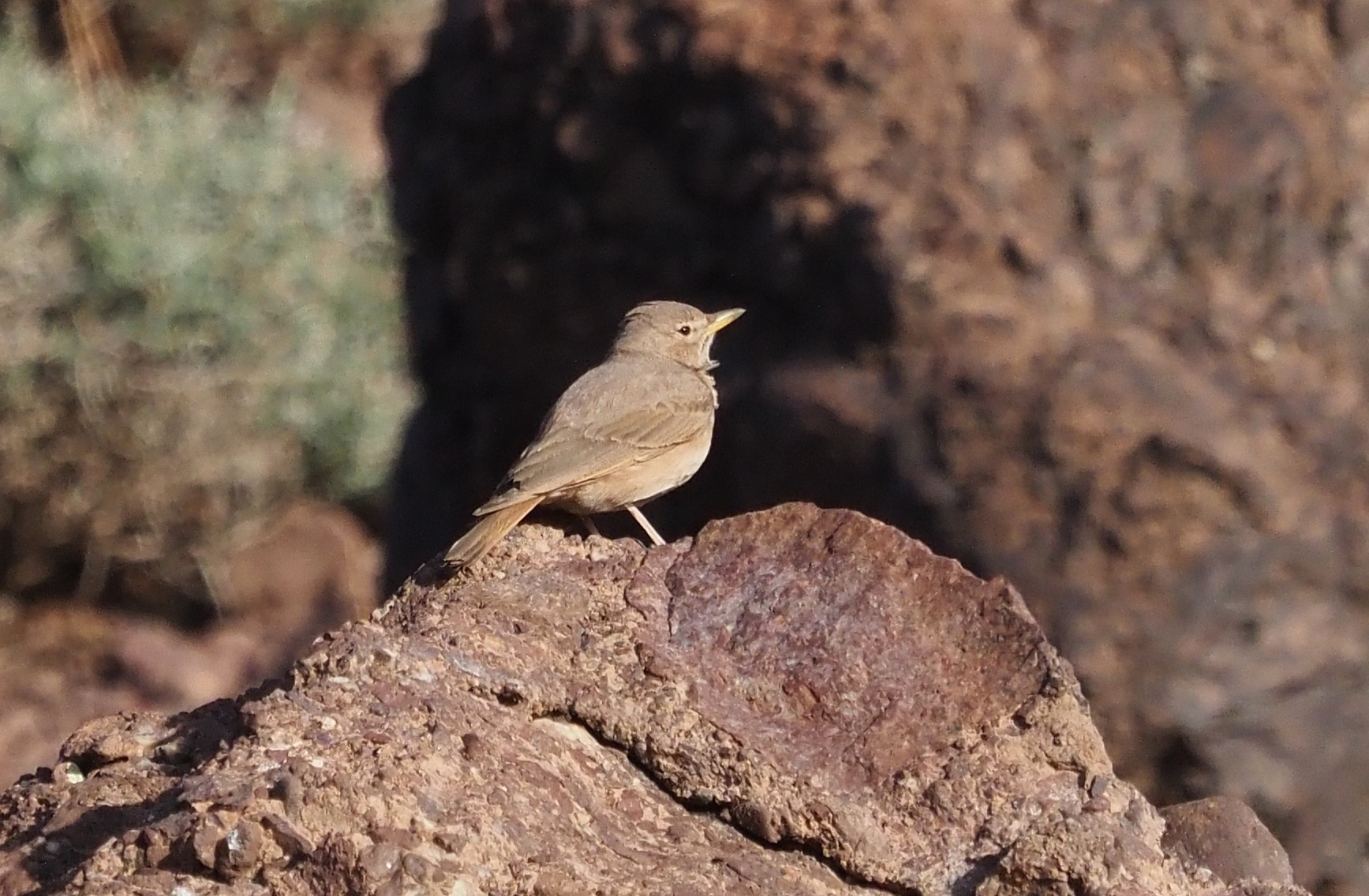
Alosa del desert (Ammomanes deserti), una de les meves aloses preferides al Paleàrtic.

Dia 5. De bon matí ens llevem i cobrim la poca distància que ens separa de la famosa plana que s’estén inmediatament a l’Est i al Sud de Boumalne Dades. Aquí, no triguem a observar els primers còlits d’una de les set espècies que veurem al llarg del dia. El primer còlit és un mascle de còlit cua-roig, seguit un moment després d’una femella de la mateixa espècie. Aquí també veiem còlits tuaregs i del desert, força comuns als seus respectius hàbitats al llarg de la plana. Una mica més endavant trobem una parella de terrerola cuabarrada, una espècie escassa en aquesta zona que s’alimenta a prop de cogullades fosques. Una mica més endavant trobem una parella de pinsà trompeter i els observem a plaer a pocs metres de nosaltres. Però no aquí no val a badar, perquè uns segons més tard apareix davant nostre un petit estol de calàndries becgrosses escortant unes quantes cogullades fosques. Les cogullades són força més comunes però les bandes blanques a les ales de les calàndries no deixen espai per al dubte. Ens movilitzem i ens aproper ràpidament cap al sector a un l’estol s’ha deixat caure. No triguem a relocalitzar les calàndries becgrosses i les observem a plaer al llarg de cinc minuts, fins que l’estol decideix de moure’s una mica més enllà. Hi ha força activitat a tota la zona i una mica més endavant veiem una altra parella d’alàudids, però aquest cop es tracta de terreroles del desert. Tornem a la furgoneta, però no sense abans fer aturar el minibus d’un altre grup d’ornitòlegs d’on es mouen les calàndries. El grup, britànic, ens ho agraeix profundament, aturen el vehicle i surten tots cap a la zona en qüestió. Un parell de minuts més tard fan polzes amunt en la distància. Ja les han trobat!

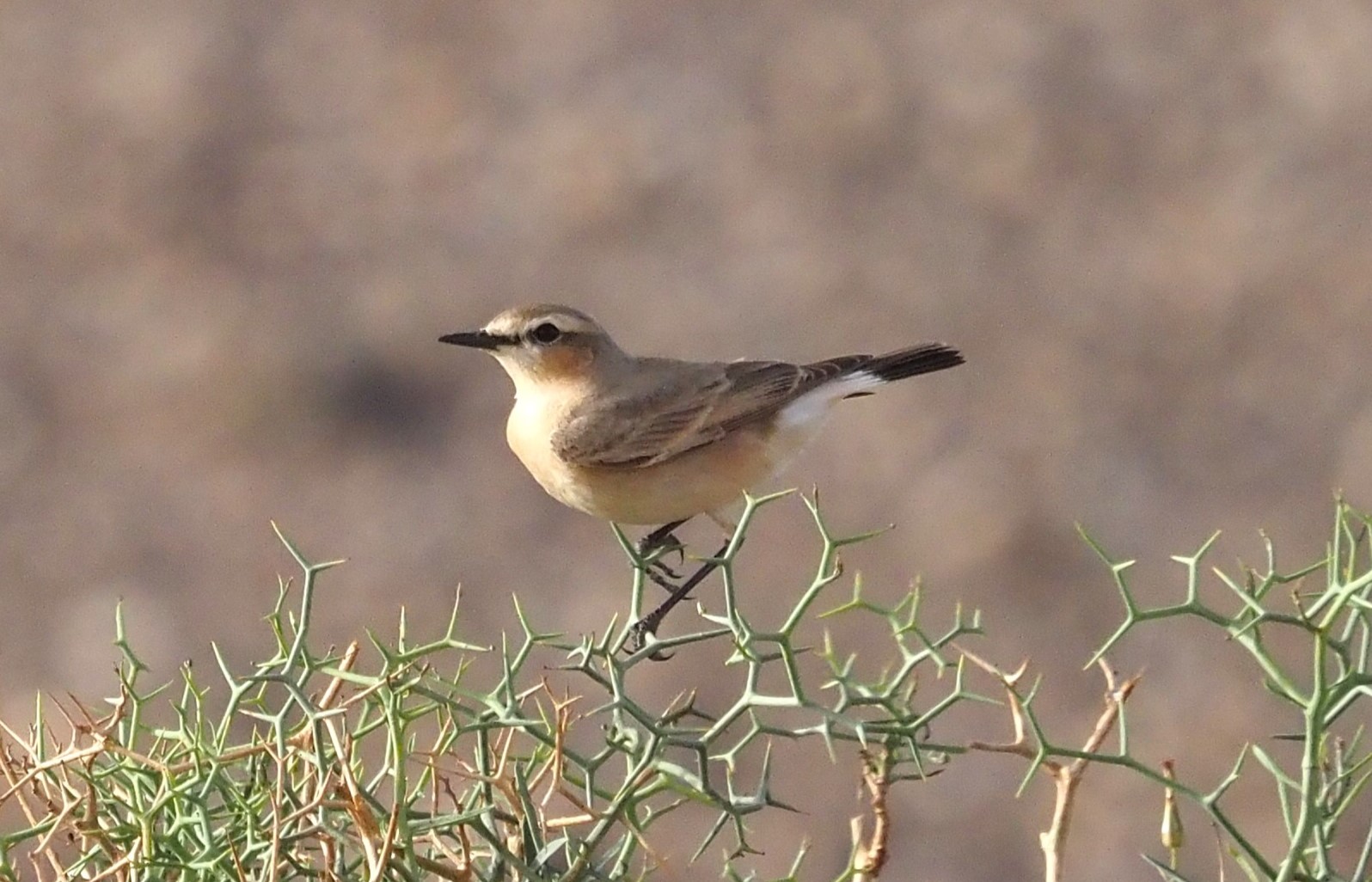
Però abans de poder sortir ens hem d’aturar perquè el primer còlit isabelí del viatge acaba de creuar per davant de la furgoneta. Sortim i caminem una mica per poder observar-lo bé, just en el moment que un aufrany voleja per sobre la plana. Val a dir que els còlits isabelins són força rars al Marroc, però enguany hi ha hagut un fort influx i semblen ser a tot arreu!!

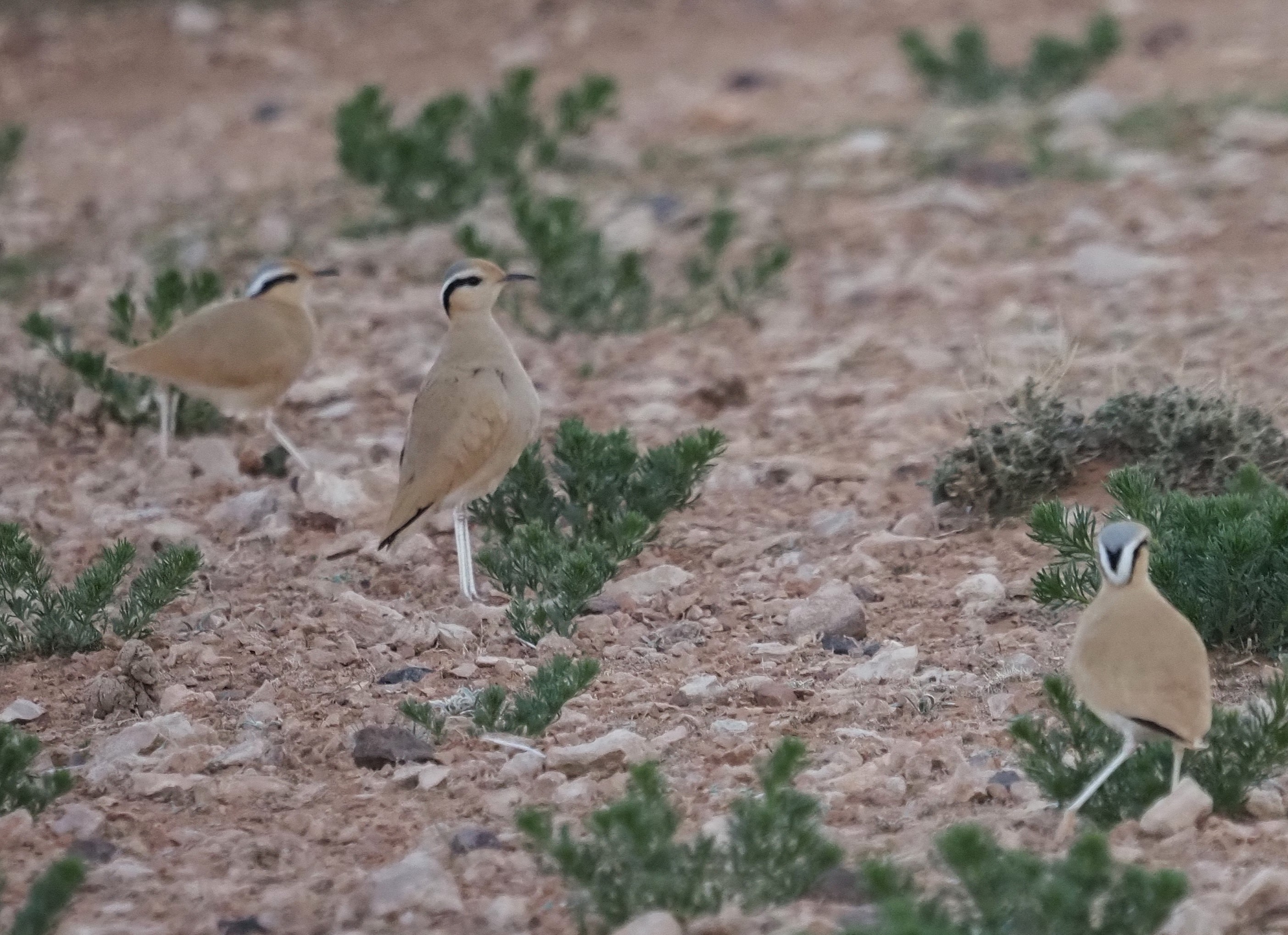
La segona parada del matí la fem a una petita depressió que, depenent de les pluges de la setmana, pot esdevenir una petita llacuna. En aquesta ocasió la trobem seca, però tot i així continua reportant bones observacions. Només arribar veiem tres corredors saharians, amb fantàstiques observacions. Força més a prop trobem la primera de moltes aloses de l’Atlas, amb una parella que s’alimenta a molts pocs metres del grup. Tenim diferents còlits a la zona i un escrutini exhaustiu de la zona permet al Jordi de trobar un petit estol de 6 gangues coronades. Les observem força bé, amb els mascles lluint el seu fantàstic disseny facial. De tornada a la carretera, un aligot rogenc ens va fer aturar-nos, mentre un petit estol de terreroles rogenques arribaven tot fent sonar el seu parloteig. Endinsant-nos una mica a l’enorme estepa, vam trobar més terreroles cuabarrades i comunes i un petit passeig va fer-nos descobrir tres gangues comunes que van sortir volant amb direcció Est. Una molt bona observació. Aquí normalment hi han xurres i coronades, però les gangues comunes no són grans fans d’aquest hàbitat…

A continuació vam dirigir-nos al Sud, a on l’estepa deixa pas a un paisatge força més aturonat. La temperatura anava pujant i s’anava fent més reconfortant. Ens vam aturar a tocar d’un petit dipòsit d’aigua a on es concentraven pinsans trompeters i sits de vila. Aquí també vam veure gafarrons i passerells comuns abans de continuar cap al Sud. Però la nostra exploració va acabar en trobar un altre còlit isabelí. Després d’un curt passeig, aquest individu el vam veure força bé abans de decidir anar a dinar.
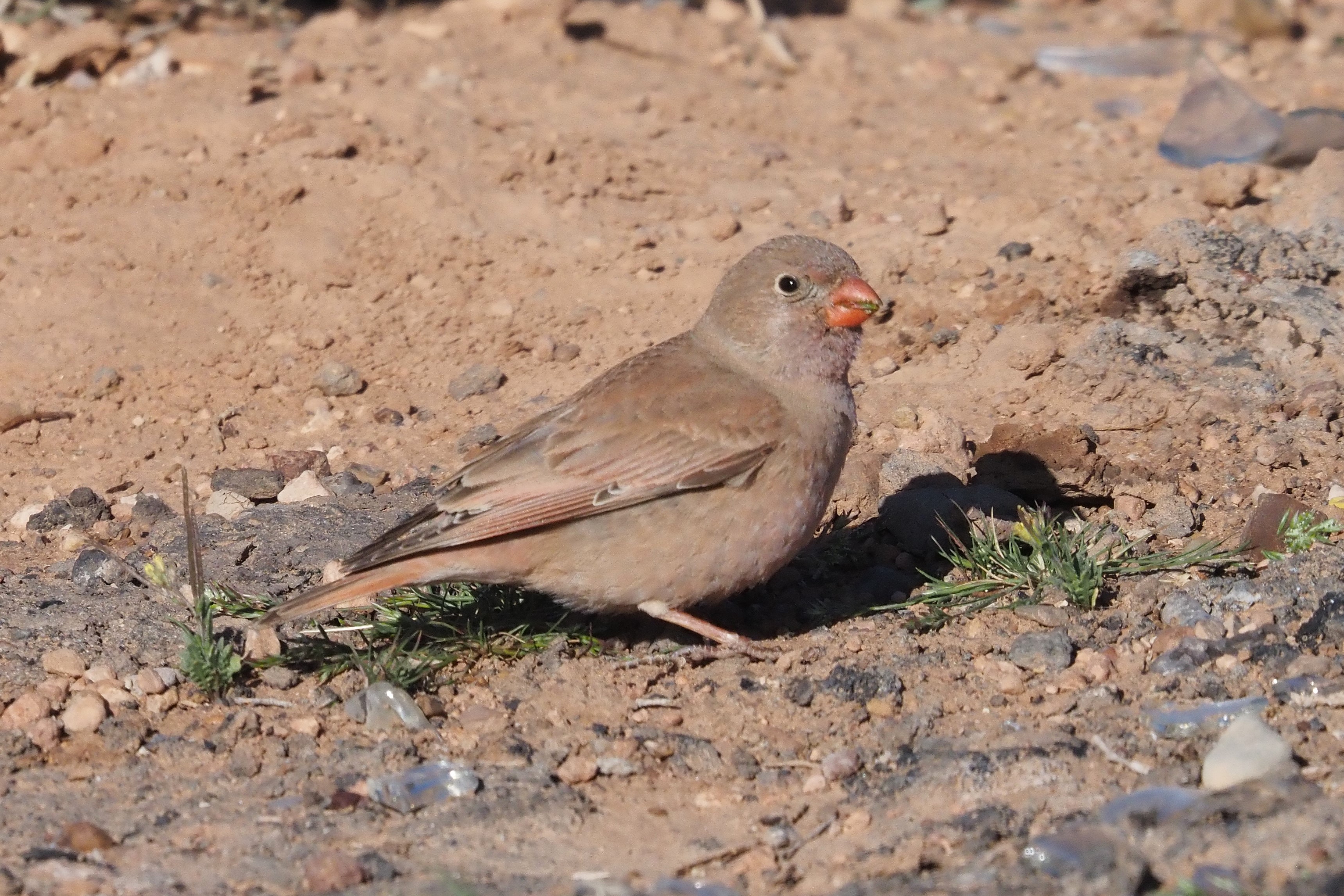
Una molt bonica femella de pinsà trompeter (Bucanetes githagineus).
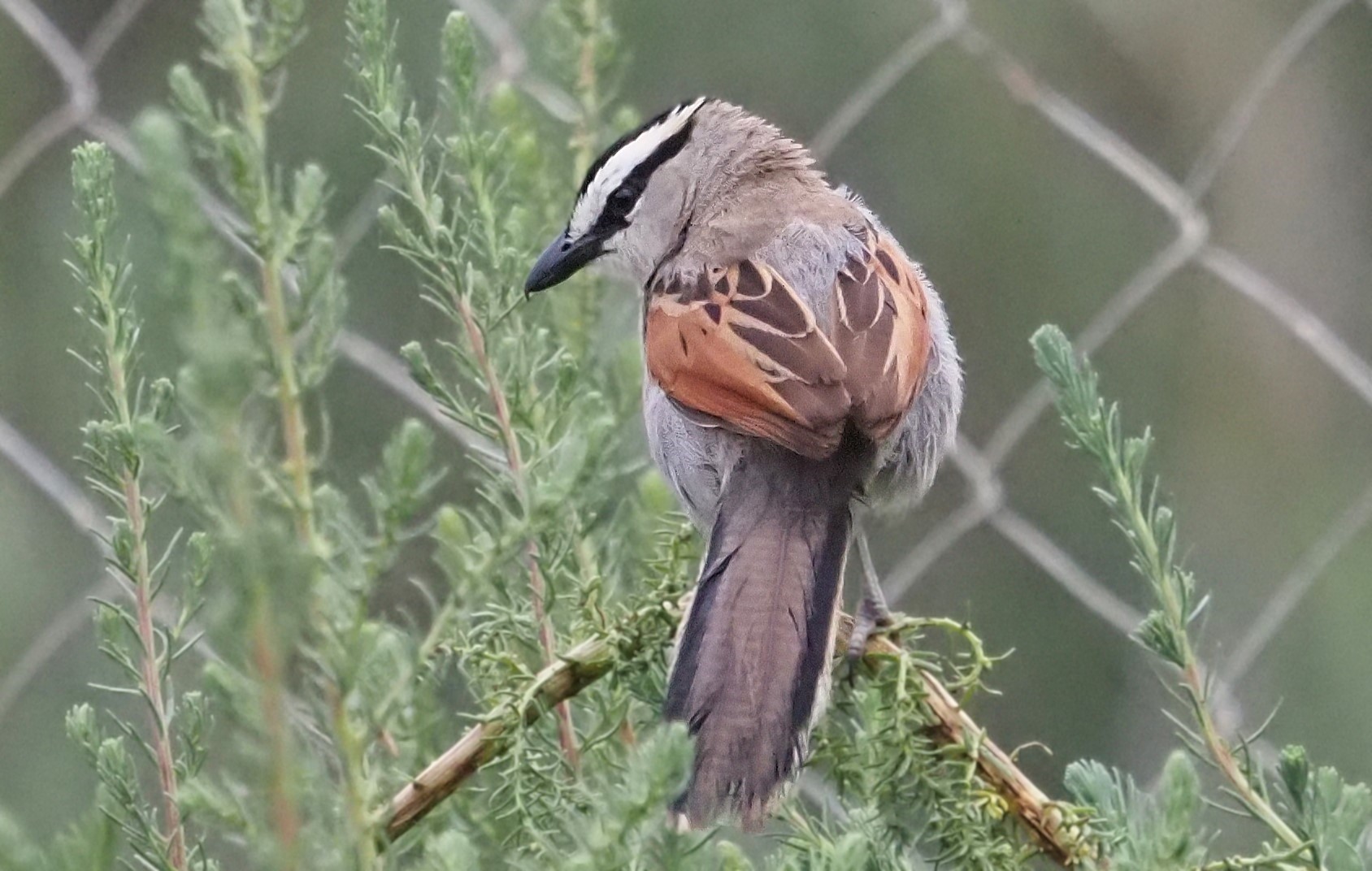
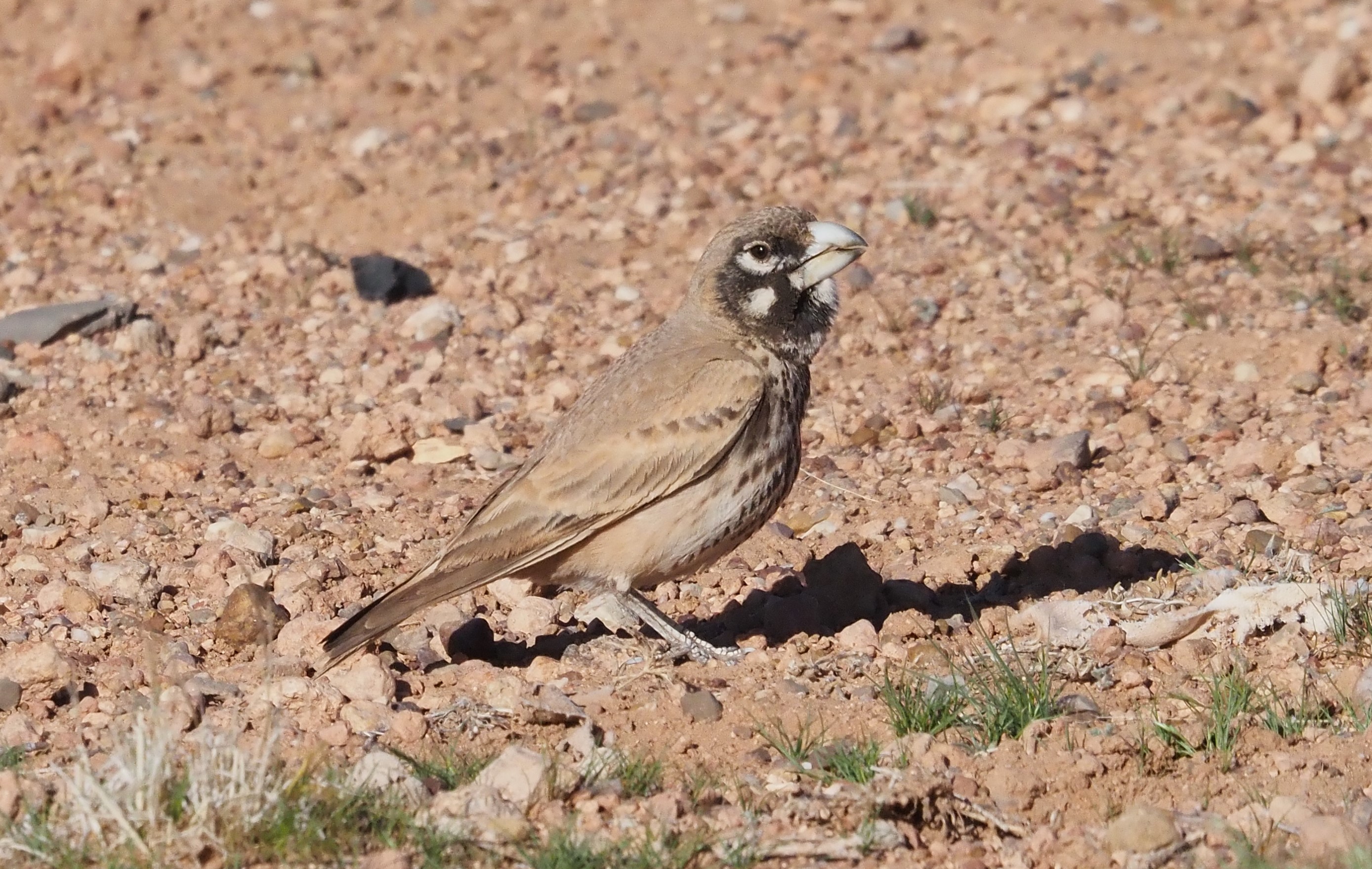
La calàndria becgrossa (Rhamphocoris clotbei) és una d’aquelles meravelles que s’han d’observar sí o sí!
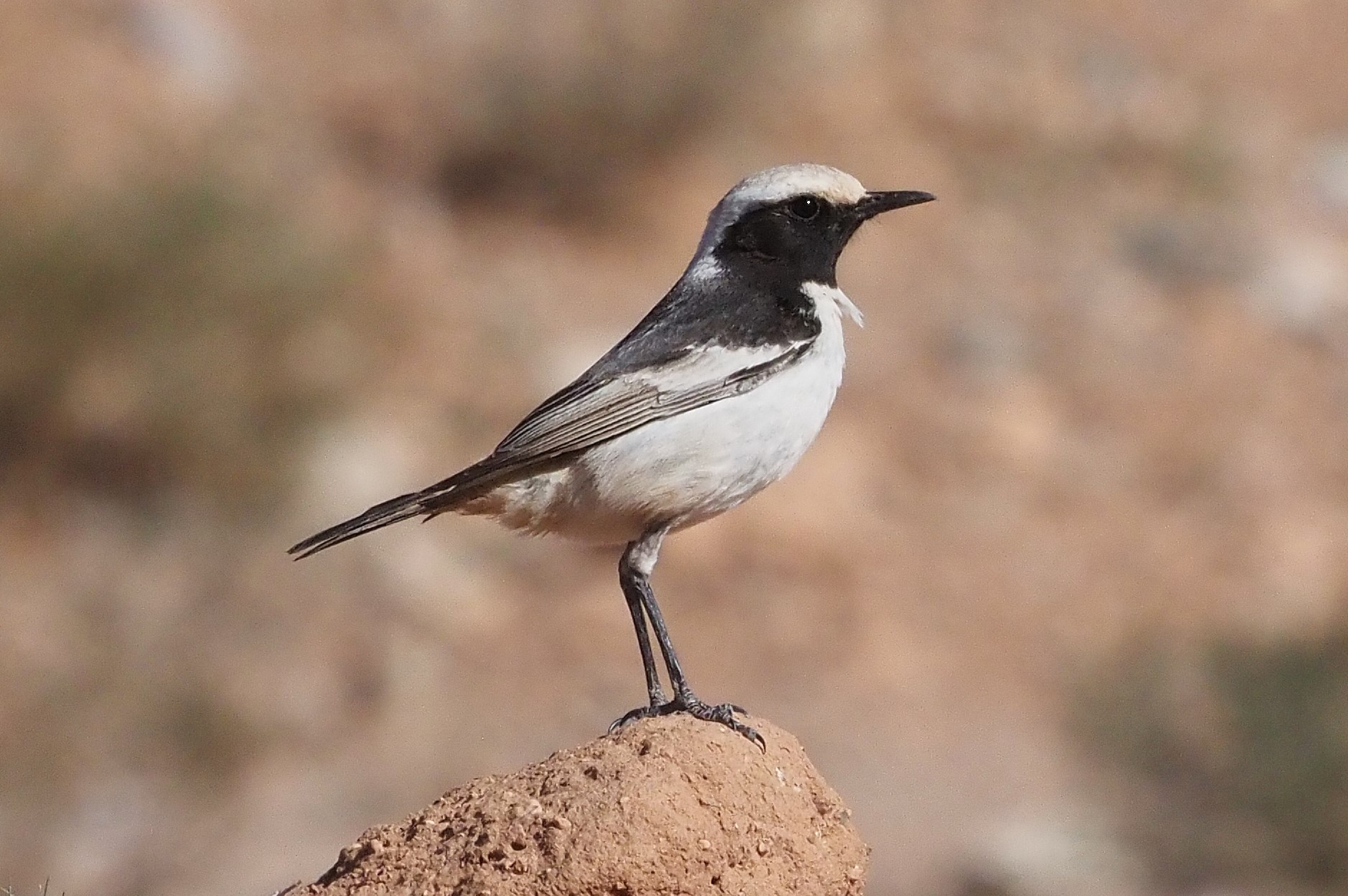
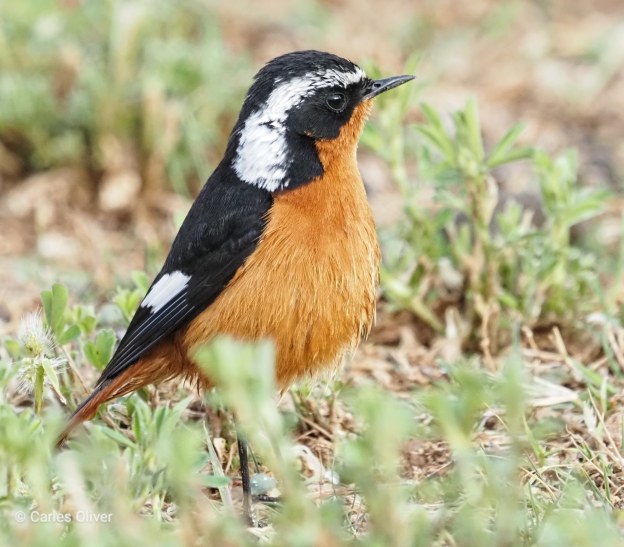
El còlit cua-roig (Oenanthe moesta) ens va fer tota una exhibició!
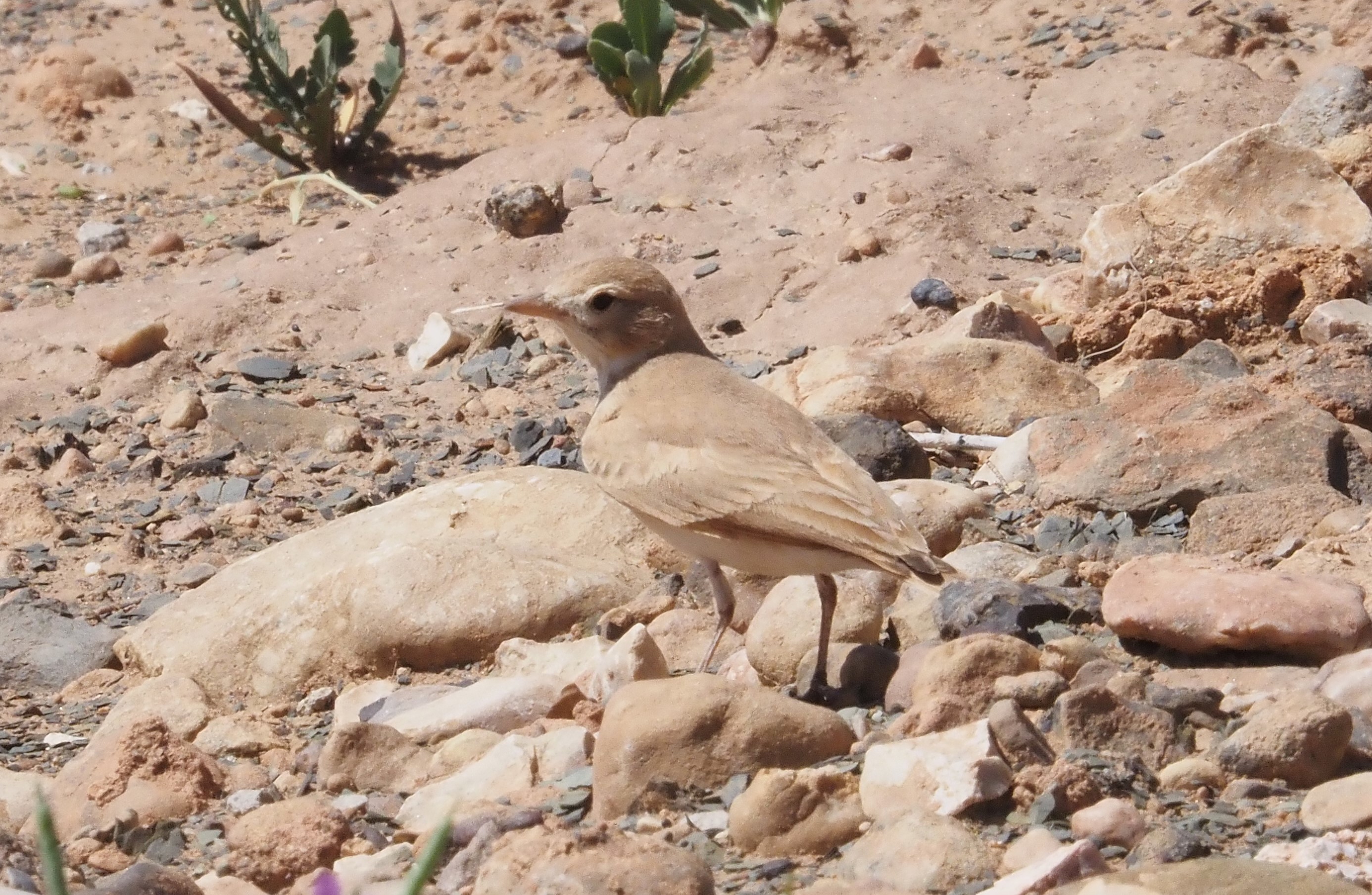
Les bellíssimes aloses del Sàhara (Eremophila bilopha) es van deixar observar de ben a prop.
I encara de més a prop i tot.
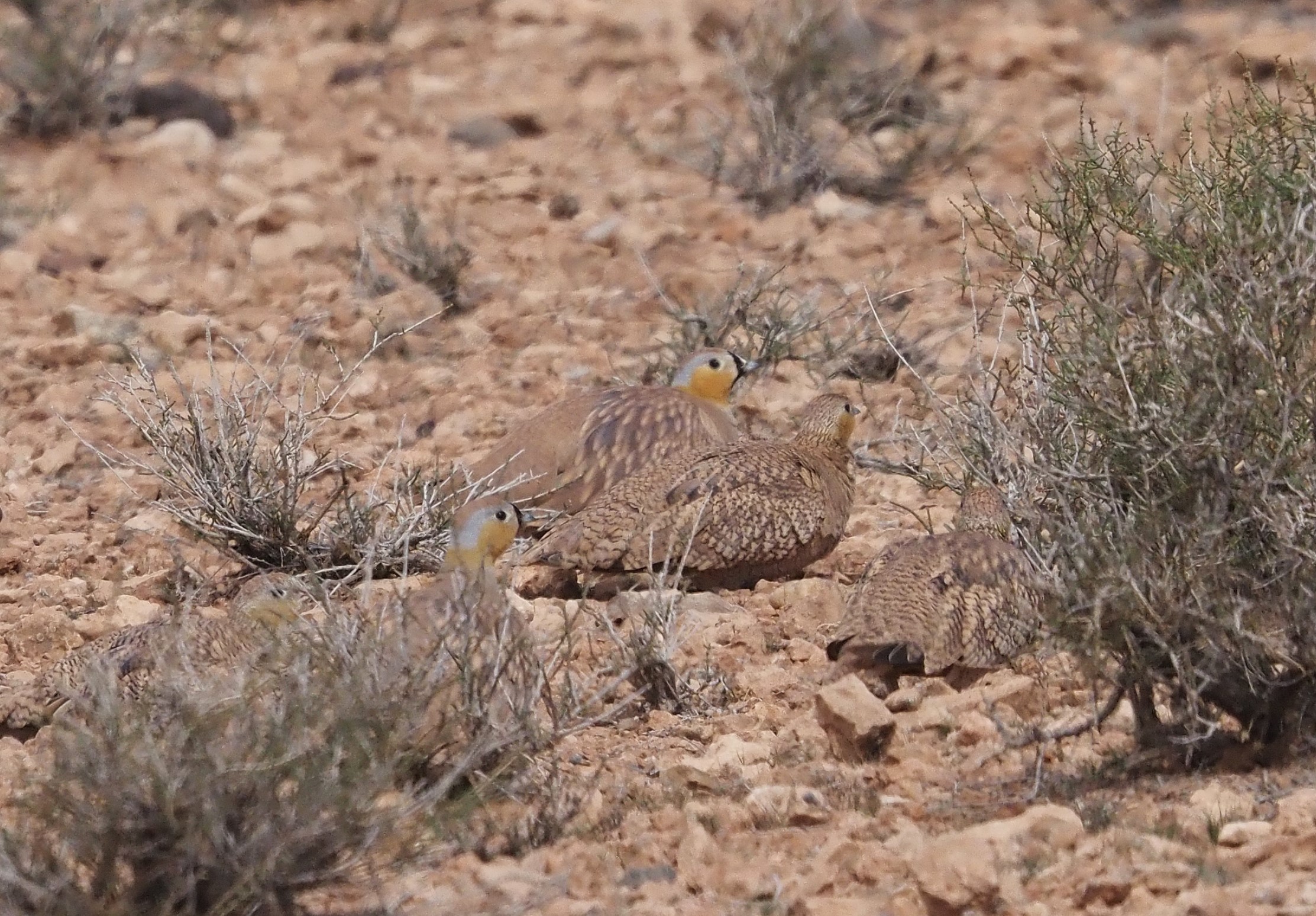
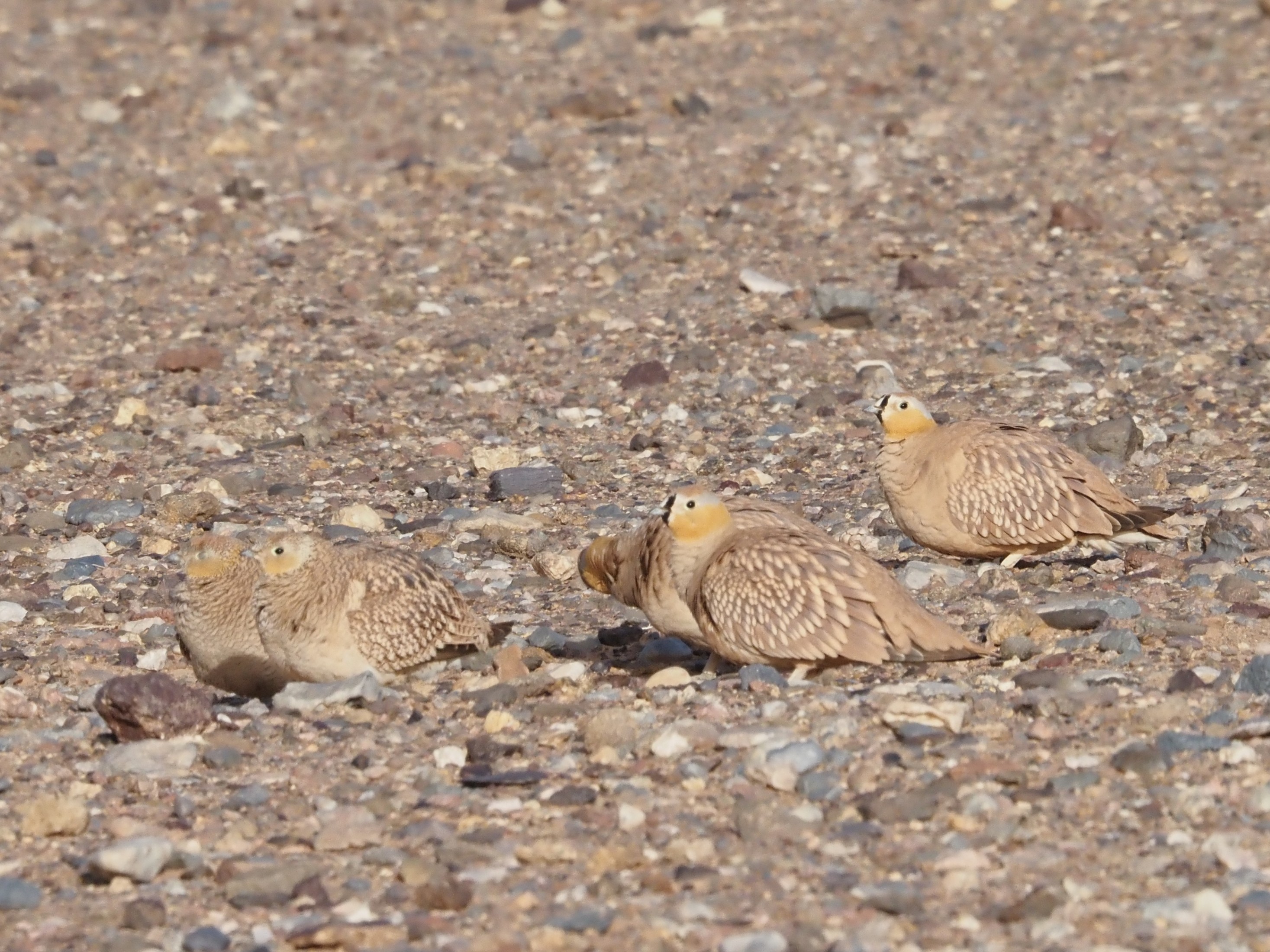
El Jordi va trobar aquest bonic estol de gangues coronades (Pterocles coronata).
Terrerola cuabarrada (Ammomanes cinctura), una de les 8 espècies d’Alàudids observats aquell dia.
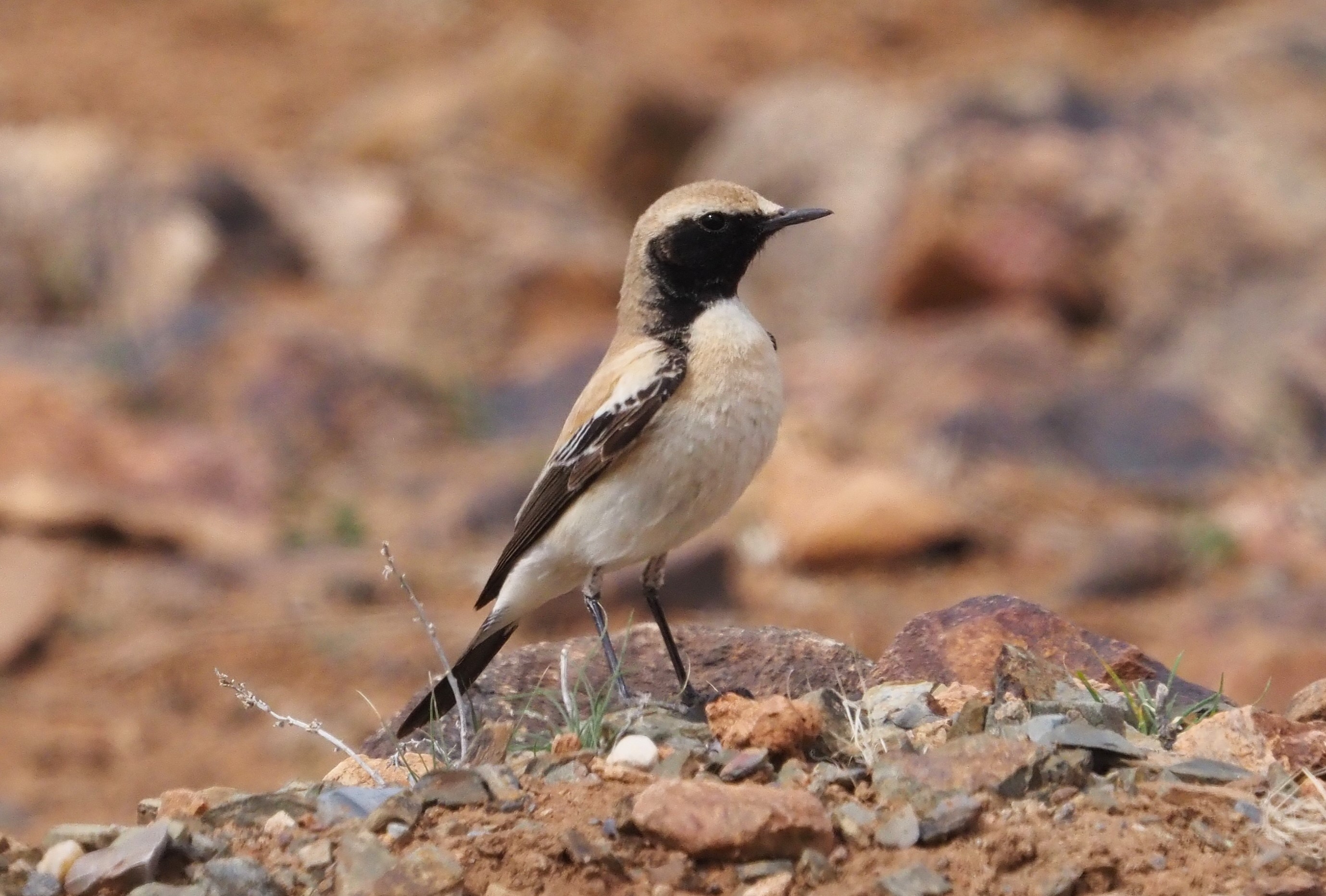
Còlit del desert (Oenanthe deserti), un dels còlits més comuns al Sud del Marroc.
Aquest va ser el 2n còlit isabelí del tour. L’influx d’enguany va fer que veiéssim un mínim de 5 d’ells.

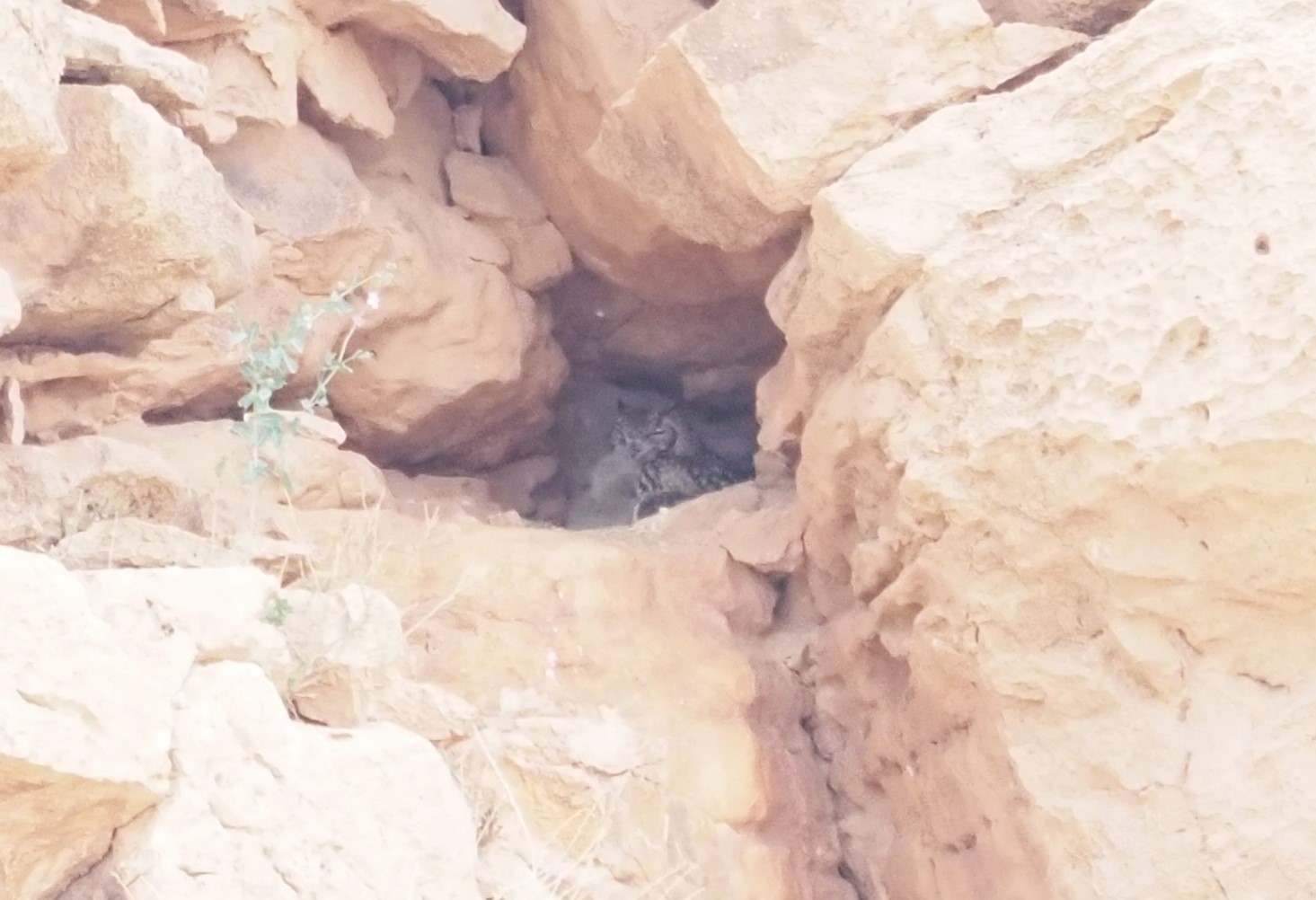
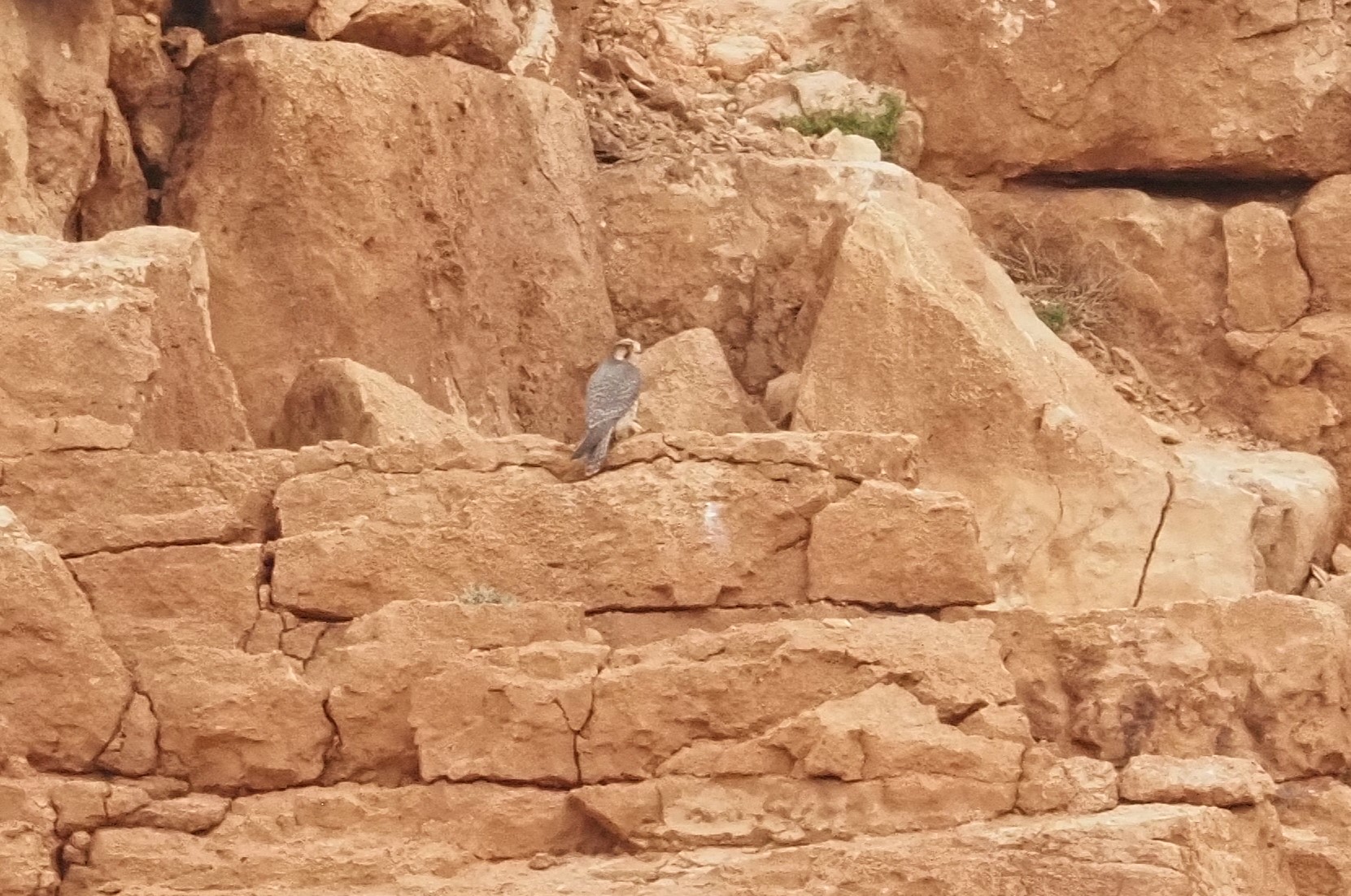
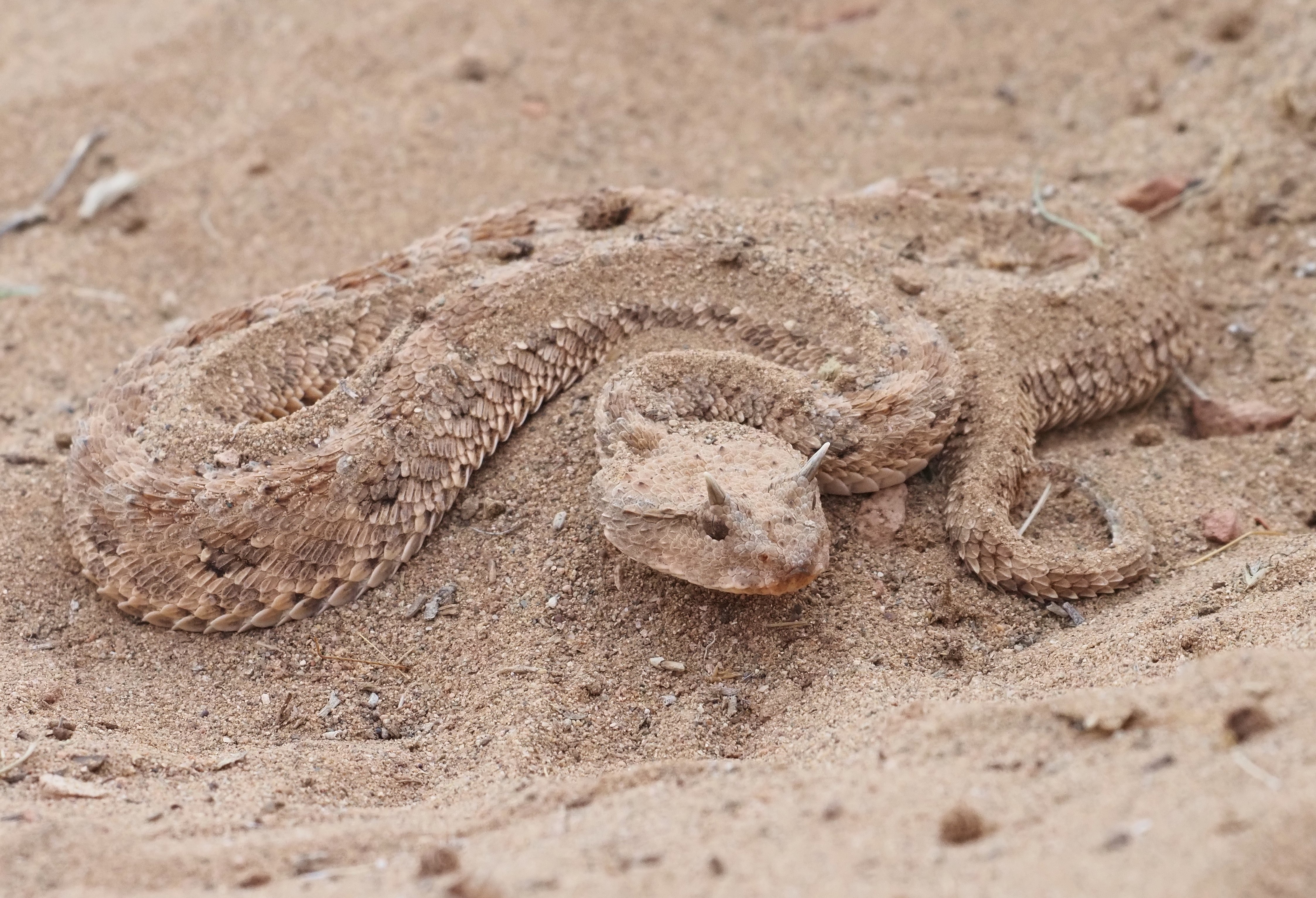
Un cop assaborit el nostre dinar des d’una terrassa panoràmica a Boumalne du Dades, vam tornar a agafar els binocles i aquest cop ens vam dirigir força més enllà de la plana, a una gorja força ben amagada. Aquí, només arribar, vam trobar una femella de còlit del Magrib, seguida d’un esplèndid mascle que vam gaudir d’allò més. Baixant la gorja vam trobar el nostre guia local, que ens va acompanyar per la zona mentre observàvem pinsà trompeter, aligot rogenc al seu niu i un fantàstic falcó llaner que ens va fer una petita exhibició aèria abans d’aterrar a la seva zona preferida del penya-segat. Però probablement el millor moment del nostre passeig va ser el poder veure un duc del desert amb el seu pollet dins el niu. Sempre un autèntic plaer poder observar aquesta espècie. De retruc, el nostre guia ens va ensenyar un escurçó banyut que tenia controlat!

La tarda s’anava ennuvolant ràpidament, i l’ambient es feia cada cop més fred. No teníem massa temps, així que vam decidir tornar a la plana al Sud de Boumalne, a on vam anar a inspeccionar una petita bassa, d’on van sortir 3 xarrasclets i 3 ànecs coll-verds, abans d’acabar la tarda rodejats per corredors saharians, al menys una vintena d’ells, que s’alimentaven al nostre voltant. Al llarg de més de mig hora, els vam anar seguint per la plana, mentre feien petites corredisses darrera dels escarbats que són el seu menjar predilecte. A última hora, 3 xurres van passar volant per sumar la tercera espècie de Pteròclid del dia i tot donant una nota familiar al paisatge amb els seus característics reclams…
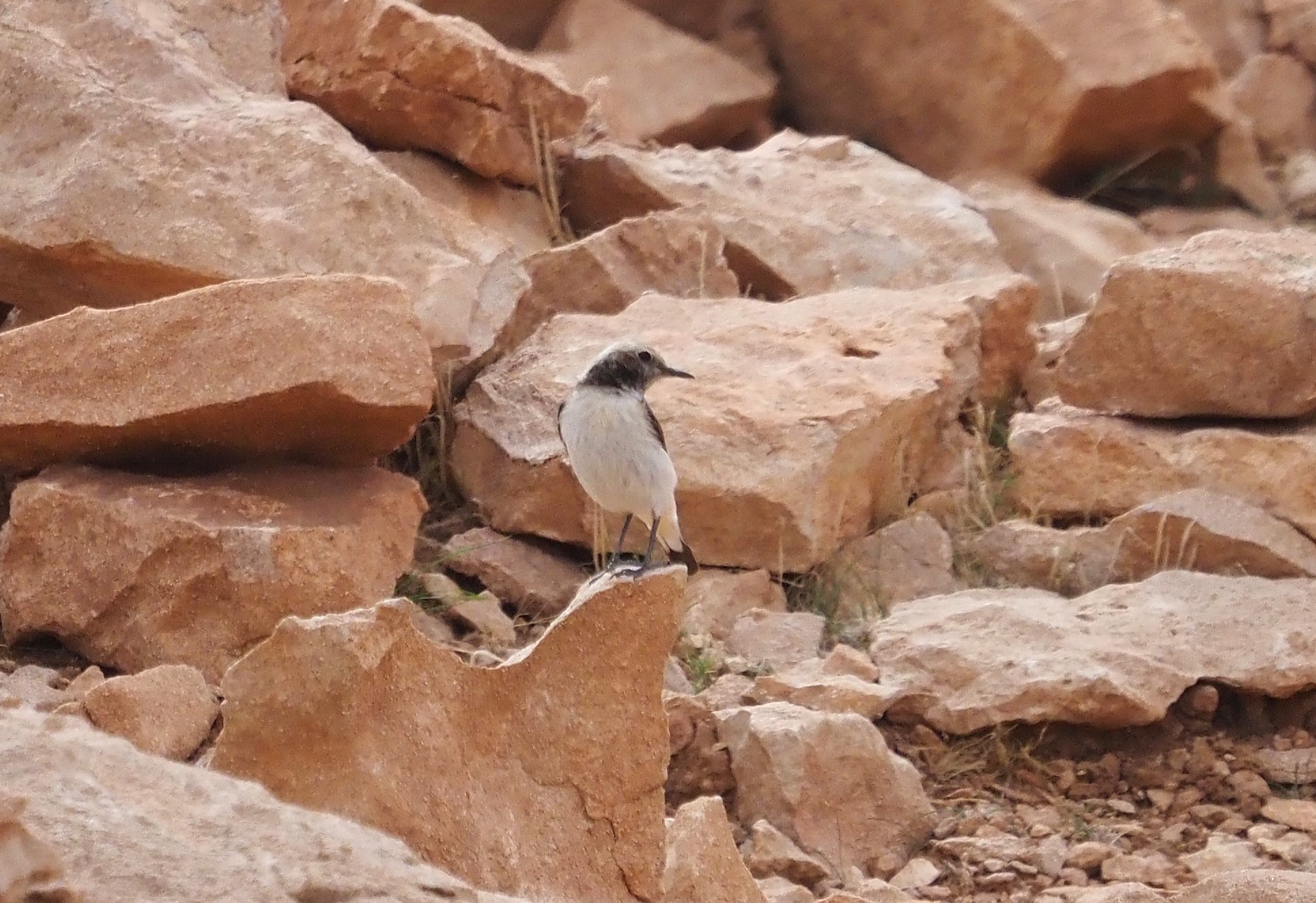
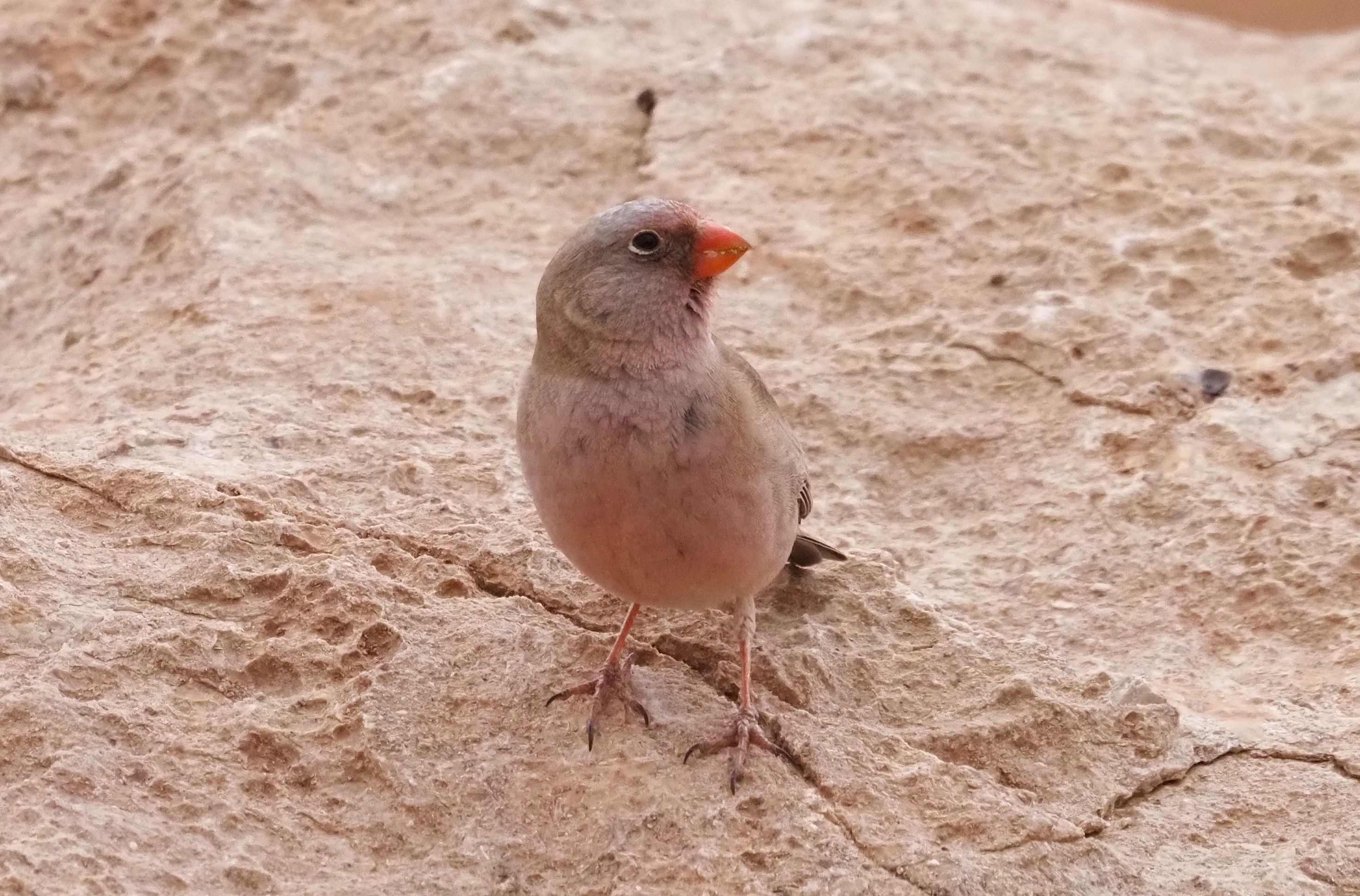
Còlit del Magreb (Oenanthe halophila) femella. El mascle parava ben a prop.
Pinsà trompeter (Bucanetes githagineus), sempre molt refiats a les zones més abruptes.
Aquí es pot distingir el duc del desert (Bubo ascalaphus) amb el pollet.
Falcó llaner (Falco biarmicus) al seu tallat preferit.
Aquest meravellós escurçó banyut (Cerastes cerastes) va fer les delícies de tot el grup.
Malauradament el sol ens va abandonar, però els corredors saharians (Cursorior cursor) estaven per tot arreu!

Dia 6. Després de gaudir d’un bon esmorzar, sortim del nostre allotjament per fer un primer tomb. Abans d’esmorzar, però, alguns membres del nostre grup ja havien gaudit de perdiu africana, aprofitant les generoses terrasses de l’hotel! La nit havia estat freda i plujosa i quan el sol va començar a escalfar, els ocells insectívors van començar a exhibir-se. Des de l’allotjament vam veure merla blava i còlit negre i les perdius encara reclamaven sense que ningú les pogués relocalitzar. Tot baixant la gorja, vam veure cuereta torrentera i una parada en un racó estratègic va produïr les espècies típiques de la zona però també tórtora del Senegal, sit de vila i un espectacular falcó berber que ens va volar al llarg del seu tallat, aturant-se en una posició que ens va permetre observar-lo a plaer amb els telescopis.

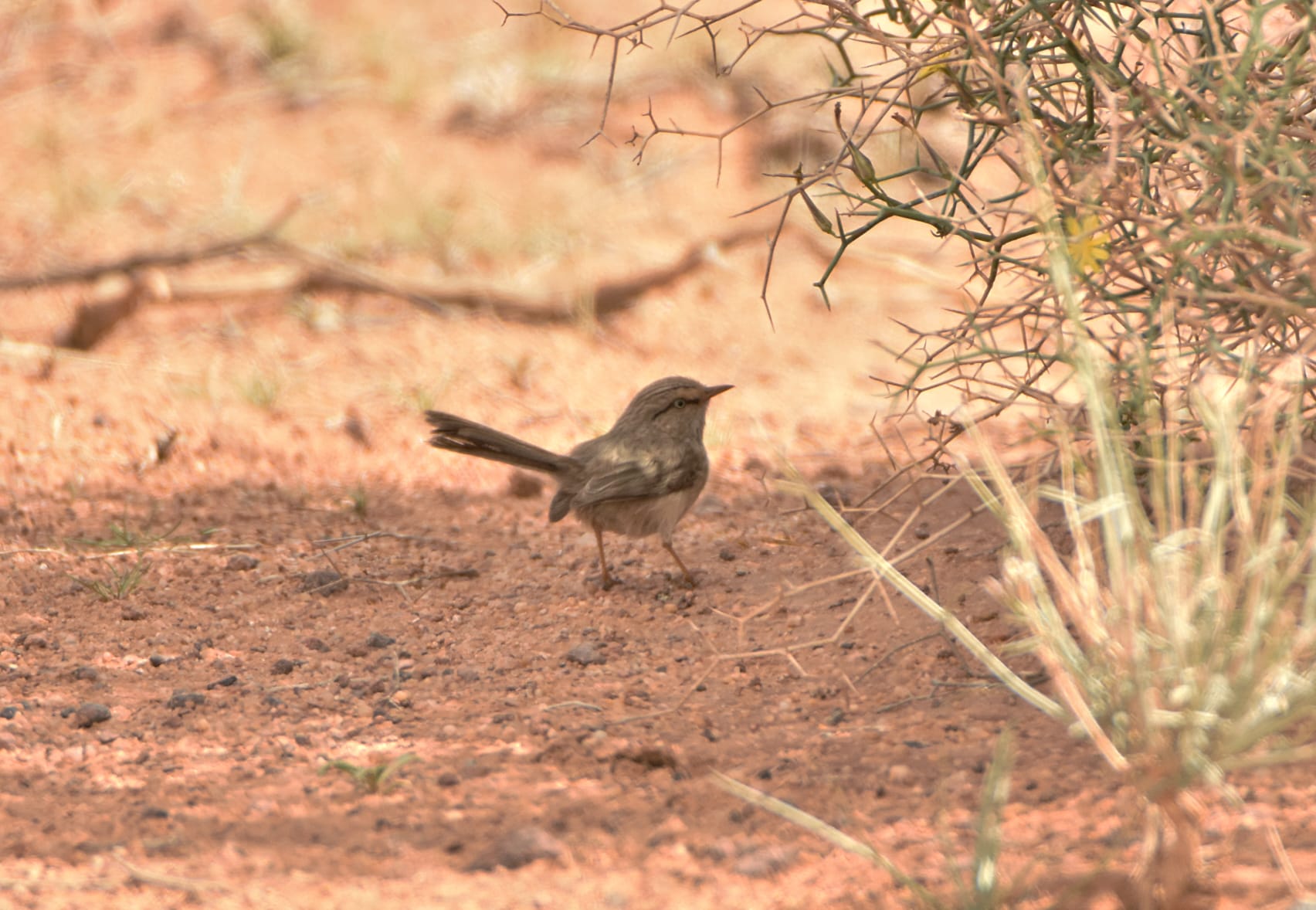
Deixant enrere Boumalne, ens vam desplaçar cap a l’Est, per aturar-nos al cap d’un parell d’hores en un paisatge sensiblement diferent. Aquí ja havíem baixat de cota. Dels 1500 metres sobre el nivell del mar de Boumalne havíem passat a poc de més de 600, i el canvi en la vegetació i la temperatura era més que evident. Aquí, la vegetació és força més esparsa i només trobem formacions arbustives al llarg dels llits dels rius (sense aigua en superfície en un 99% del temps). Aquí, un primer passeig per una zona d’hàbitat adient ens va permetre observar un grapat de còlits del desert i algun còlit ros en migració, així com els primers botxins septentrionals de la raça més pròpia de zones desèrtiques (elegans). Petits estols de terreroles comunes anaven passant en migració cap al Nord i el passeig semblava monòton fins que al Joan li van semblar veure un tordenc alimentant-se. Tots vam anar cap aquella zona i poc després estàvem gaudint de bones observacions de 4 tordencs lleonats. Contents amb aquesta observació, ens vam dirigir cap a una segona zona sota la atenta mirada d’una àguila calçada. Allà vam coincidir amb un petit grup d’ocellaires espanyols. Ens vam disgregar i al cap de poc un d’ells va cridar la resta; l’havia trobat. Vam anar tots en tromba i al llarg dels propers minuts vam estar observant el curiós comportament de la prínia del desert, el motiu per venir a tota aquesta zona, un autèntic sac de nervis mentre s’alimentava al terra i als arbustos del voltant.

Contents amb aquesta observació vam anar a gaudir d’un bon dinar i després de dinar ens vam dirigir cap al Sud. En arribar a la zona de Merzouga el vent es va començar a fer notar. Aquí i allà volaven corbs del desert i, tot i el fort vent, vam fer una parada per gaudir d’una fantàstica alosa puput a tocar de la carretera. Allà al costat, un altre còlit isabelí ens esperava. Aquest, un exemplar adult en un fantàsticament contrastat plomatge nupcial. El vent, però, era ja molt fort, així que vam decidir d’anar directament a l’allotjament i gaudir d’un merescut descans!
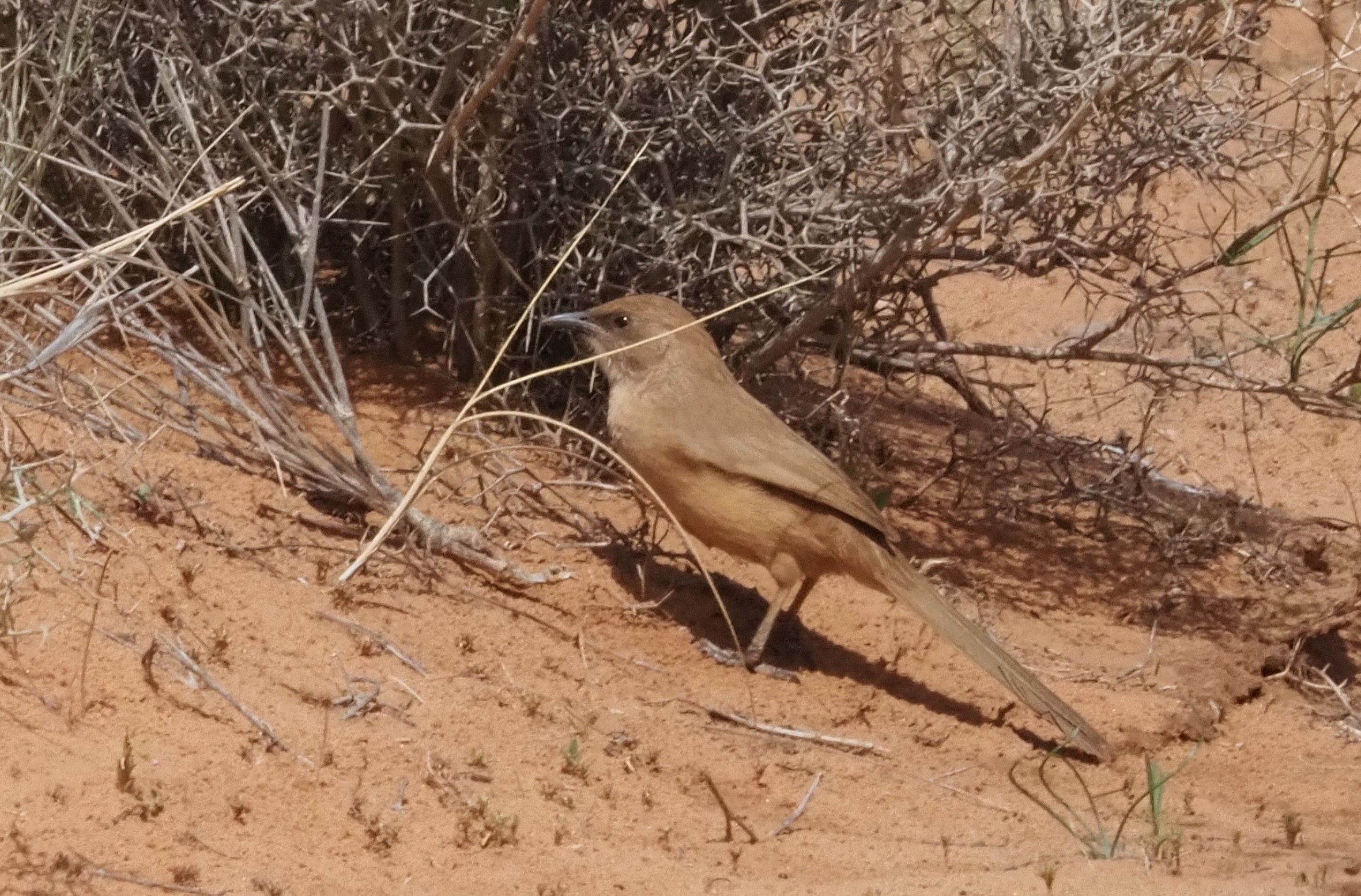
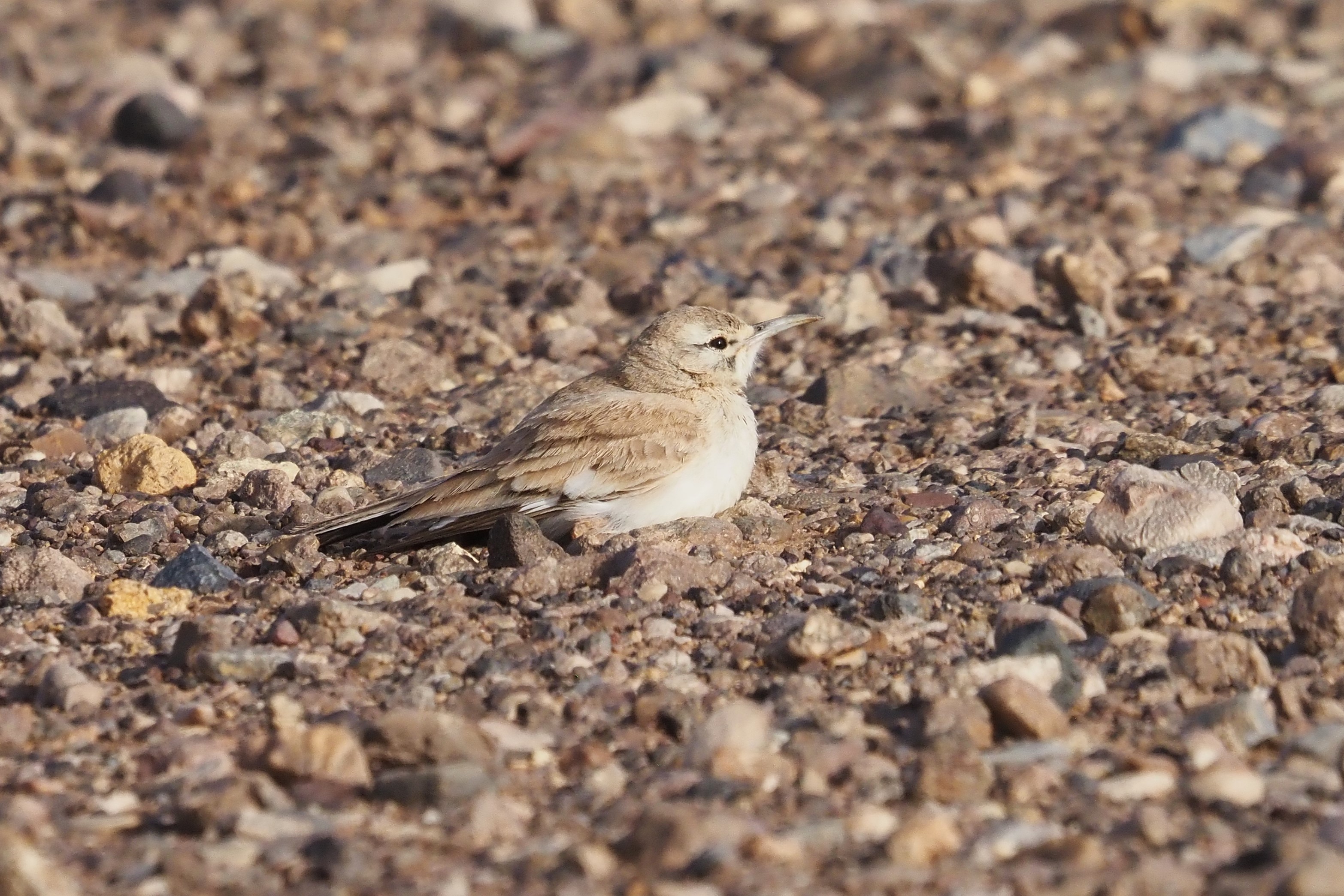
El primer tordenc lleonat (Argyia fulva) del viatge és sempre prou especial.
Alosa puput (Alaemon alaudipes)
La prínia del desert (Scotocerca inquieta) és l’únic representant de la família Scotocercidae. Imatge del Xavi Talavera.
Aquest preciós còlit isabelí (Oenanthe isabellinus) va desafiar el fort vent per deixar que l’observéssim.

Dia 7. Desrpés d’un gran esmorzar ens vam dirigir als 4×4 que ens esperaven fora. El vent que ens va torturar la tarda anterior s’havia esvaït i vam sortir amb ganes de gaudir del desert. La primera parada que vam fer va ser en un punt d’aigua a un acostumen a concentrar-se gangues d’un parell d’espècies. Aquí, mentre esperàvem que les gangues fessin acte de presència vam veure àguila calçada, terreroles comunes i cuabarrades i un bonic estol d’abellerols verds que es va posar bé. Ja abans d’esmorzar alguns havíem fet un tombet i un estol de 16 d’aquests fantàstics abellerols ens havien alegrat el matí, aturats a pocs metres de l’allotjament, segurament acabats d’arribar a la zona tot travessant el Sahara. Al final les van aparéixer per acompanyar un modest grup de gangues coronades que havia estat jugant amb la idea d’apropar-se al toll d’aigua des d’abans de nosaltres arribar al lloc. En total vam calcular unes 25 gangues pigallades i 16 gangues coronades, amb les pigallades aturant-se només uns pocs segons a veure aigua, fet que fer que no tothom pogués gaudir com calia d’aquesta espècie…

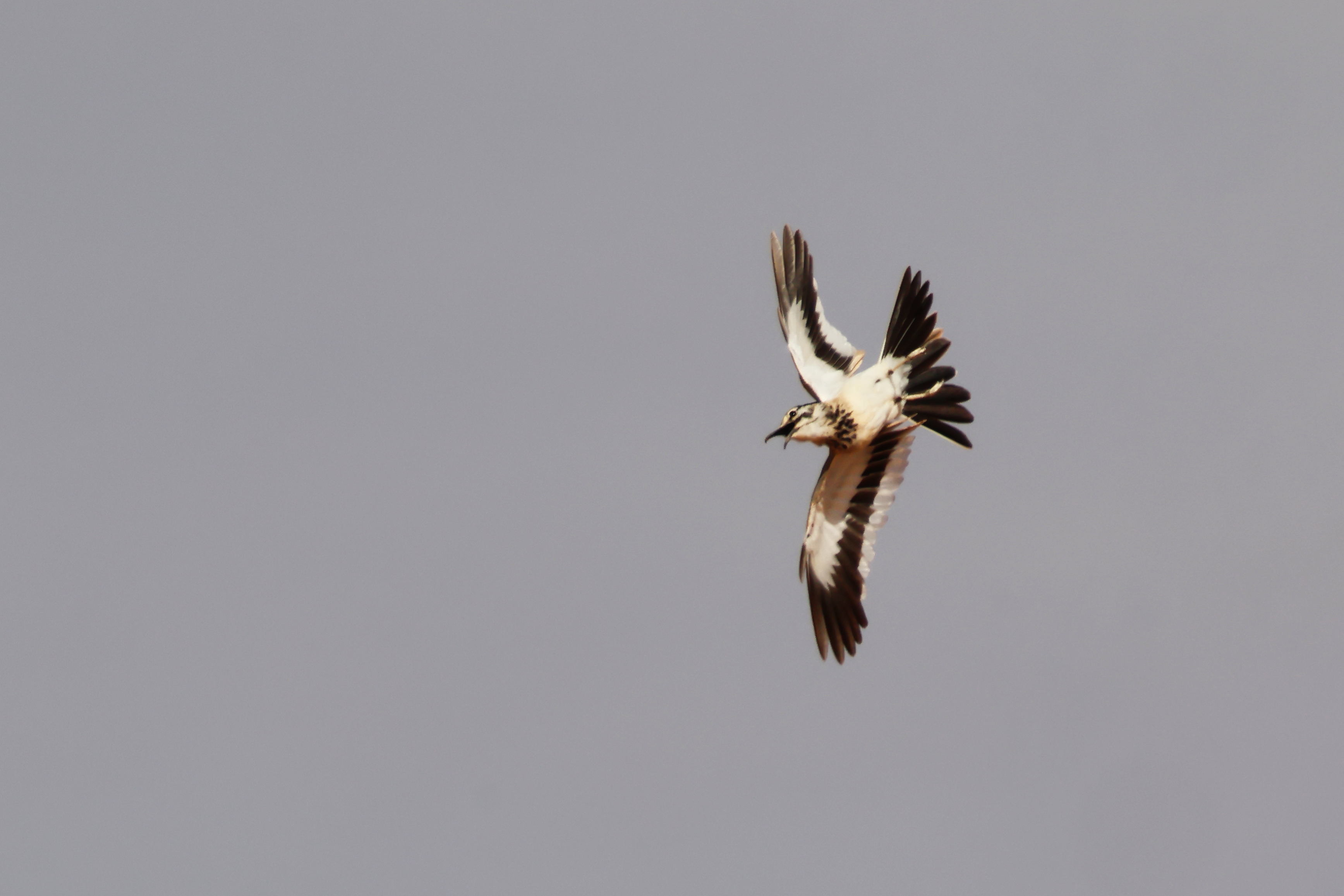
Des d’aquí ens vam moure desert endins. Els nostre vehicles creuaven línies i línies de dunes i llavors una alosa puput va començar a fer el seu vol nupcial a pocs metres d’un dels cotxes. Aquí ens vam obligar a fer una parada per gaudir del cant i l’espectacularitat del vol del mascle, que puja en vertical 30 metres per deixar-se caure a plom mentre refila el seu cant i empra les ales com una mena de paracaigudes sofisticat. Realment una meravella. Allà estant, ens vam adonar que no érem els únics que gaudíem de l’espectacle: un còlit isabelí s’ho mirava tot des de dalt d’una duna.

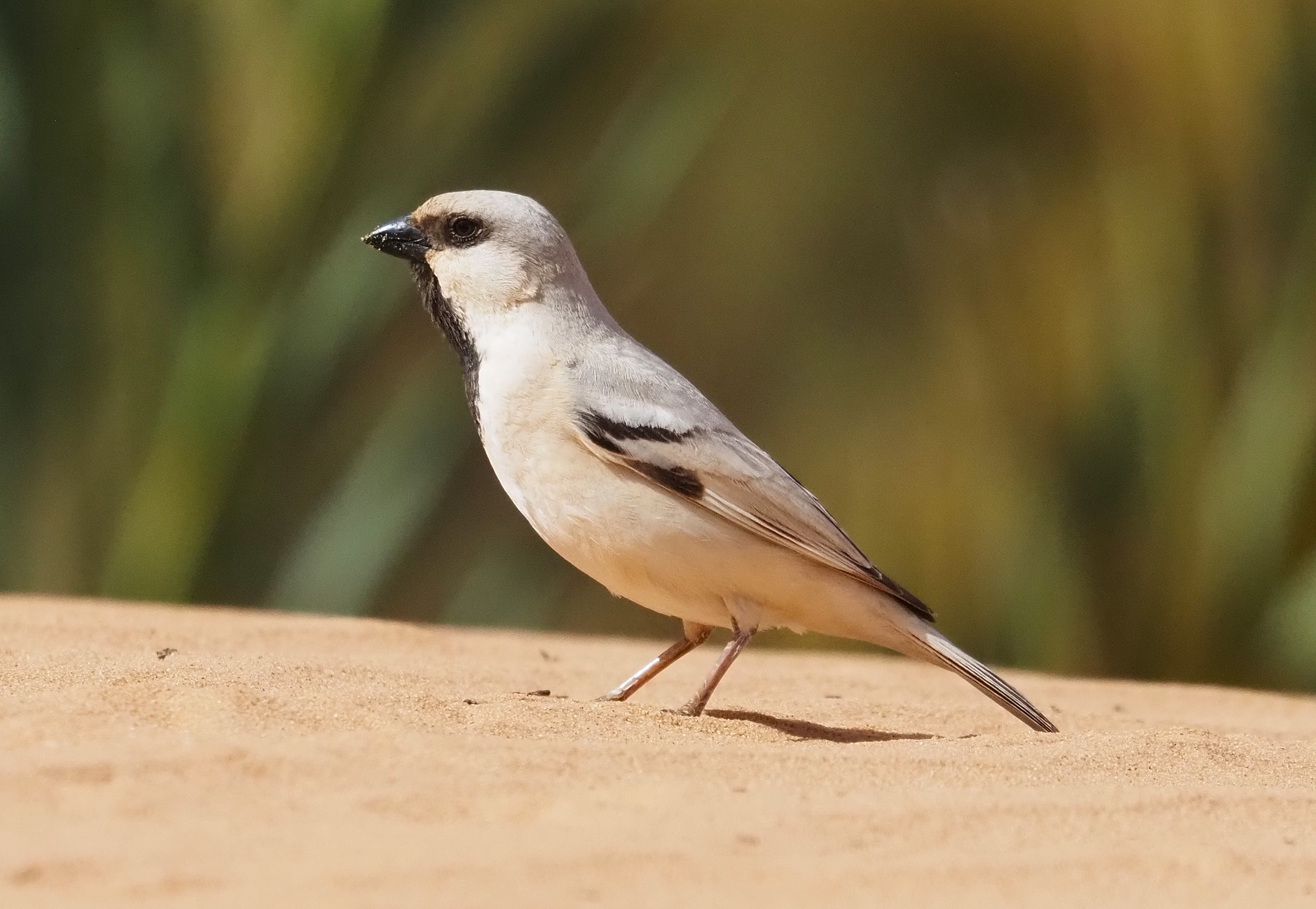
La següent parada va ser en un campament nòmada desert endins. Aquí, només arribar, ja vam trobar tallarol de garriga i cotxa cua-roja. Una munió de pardals es movia per la zona i en pocs segons ja havíem trobat un primer pardal del desert. El motiu de la nostra visita aquí. Els pardals venien a alimentar-se a una zona de tendes a on els hi dispensaven pà. Una parella de pardals del desert anaven i venien, però ràpidament el contatge va pujar fins als 5 individus. Amb ells, vam veure sorpresos que també s’alimentava un còlit tuareg i fins i tot un tordenc lleonat s’hi afegia al banquet!

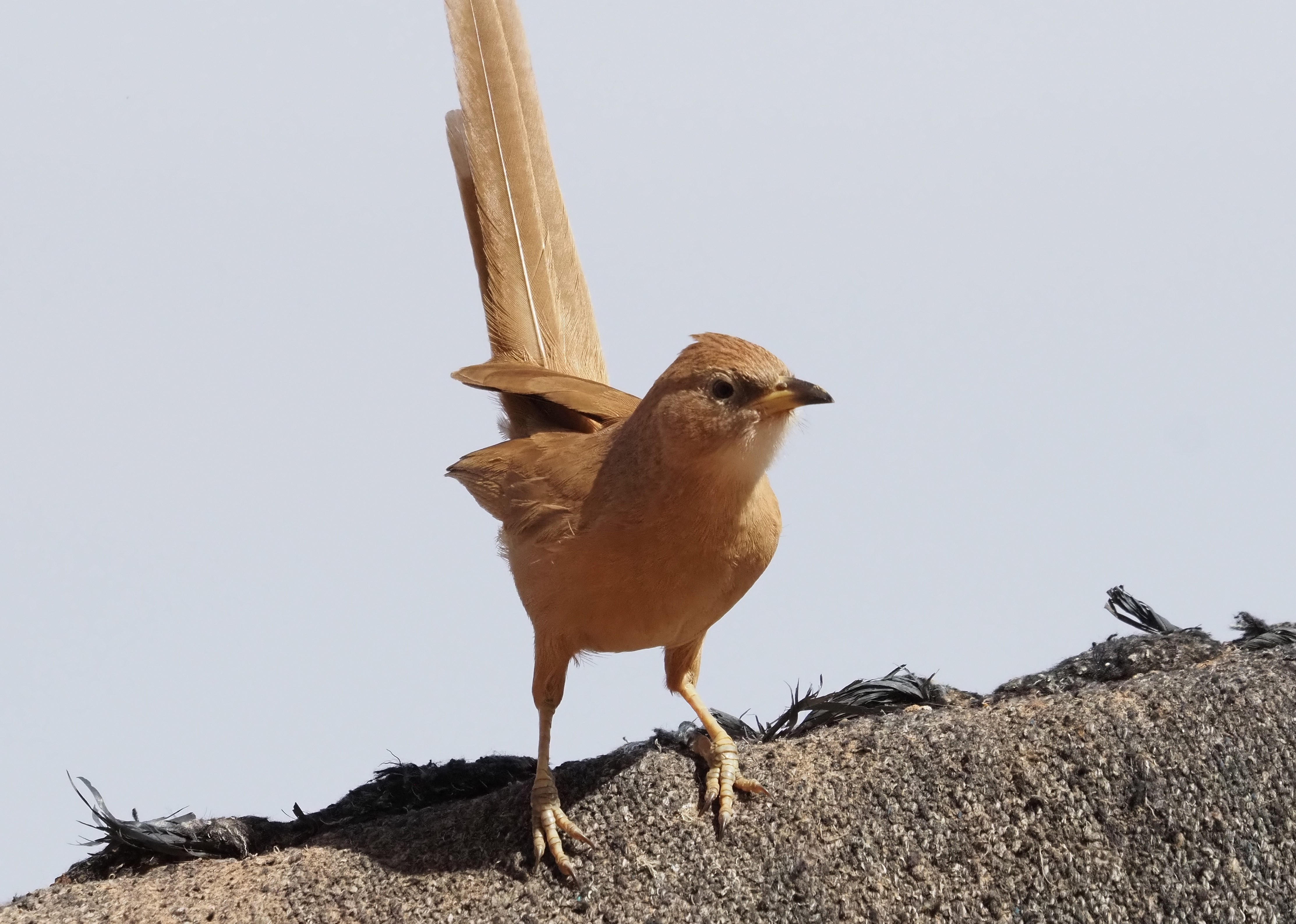
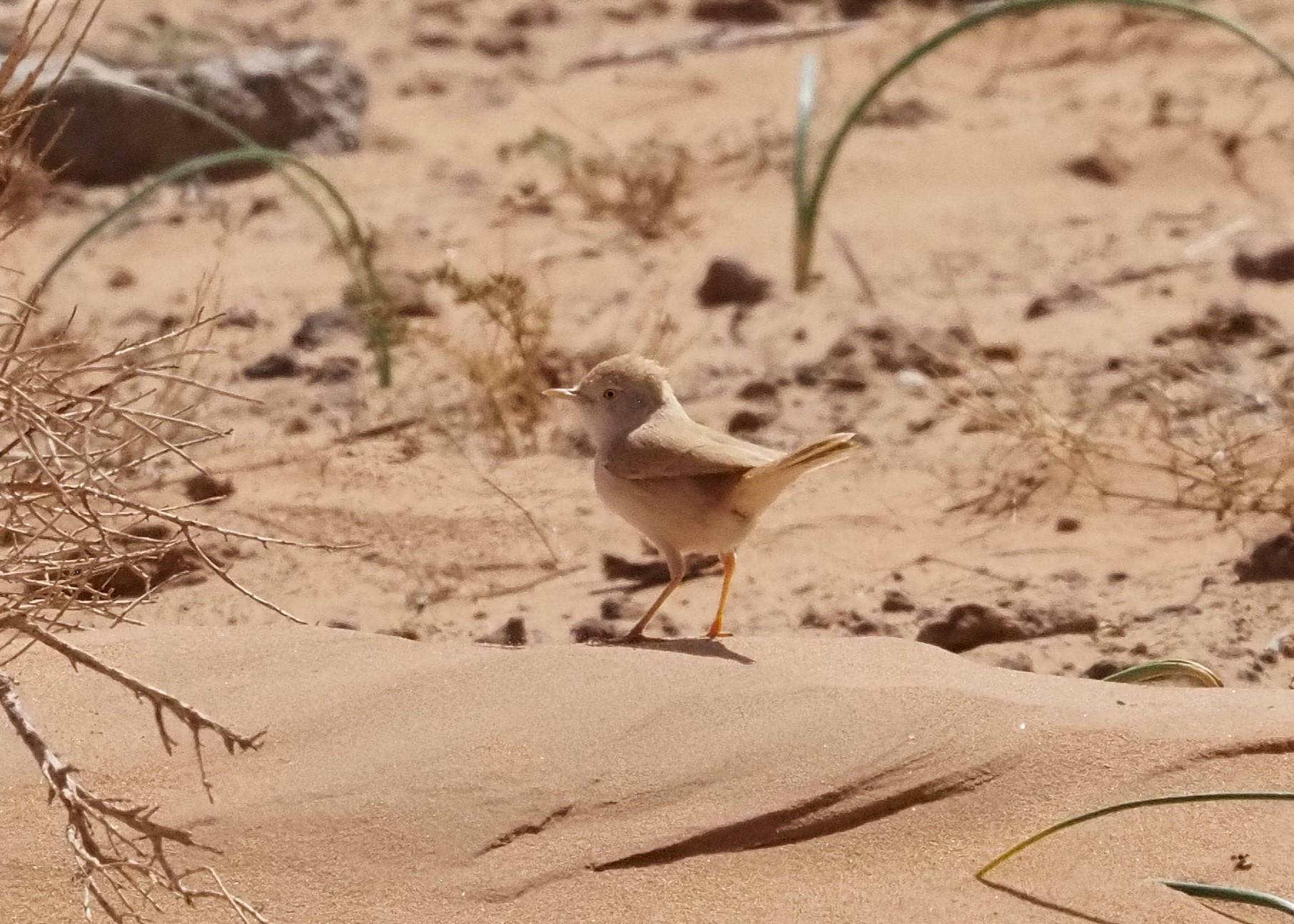
Estols i estols d’abellerols perses anaven passant en alçada. Estava clar que tot just arribaven a la zona! I nosaltres, com ells, també ens movíem. Encara més al Sud, per ser exactes, per visitar un territori de tallareta pàl·lida africana. Al llarg d’una estona vam caminar per una zona de dunes baixes, amb el vent que començava a fer la guitza de debó i la constant companyia d’alguns tallarols de garriga migradors que dificultaven localitzar el tallarol que realment volíem. Van caldre ben bé 20 minuts, però finalment vam localitzar el tallarol gràcies a una bona feina d’equip i tothom va poder gaudir de molt bones observacions d’aquest petit i esmunyedís habitant del desert.

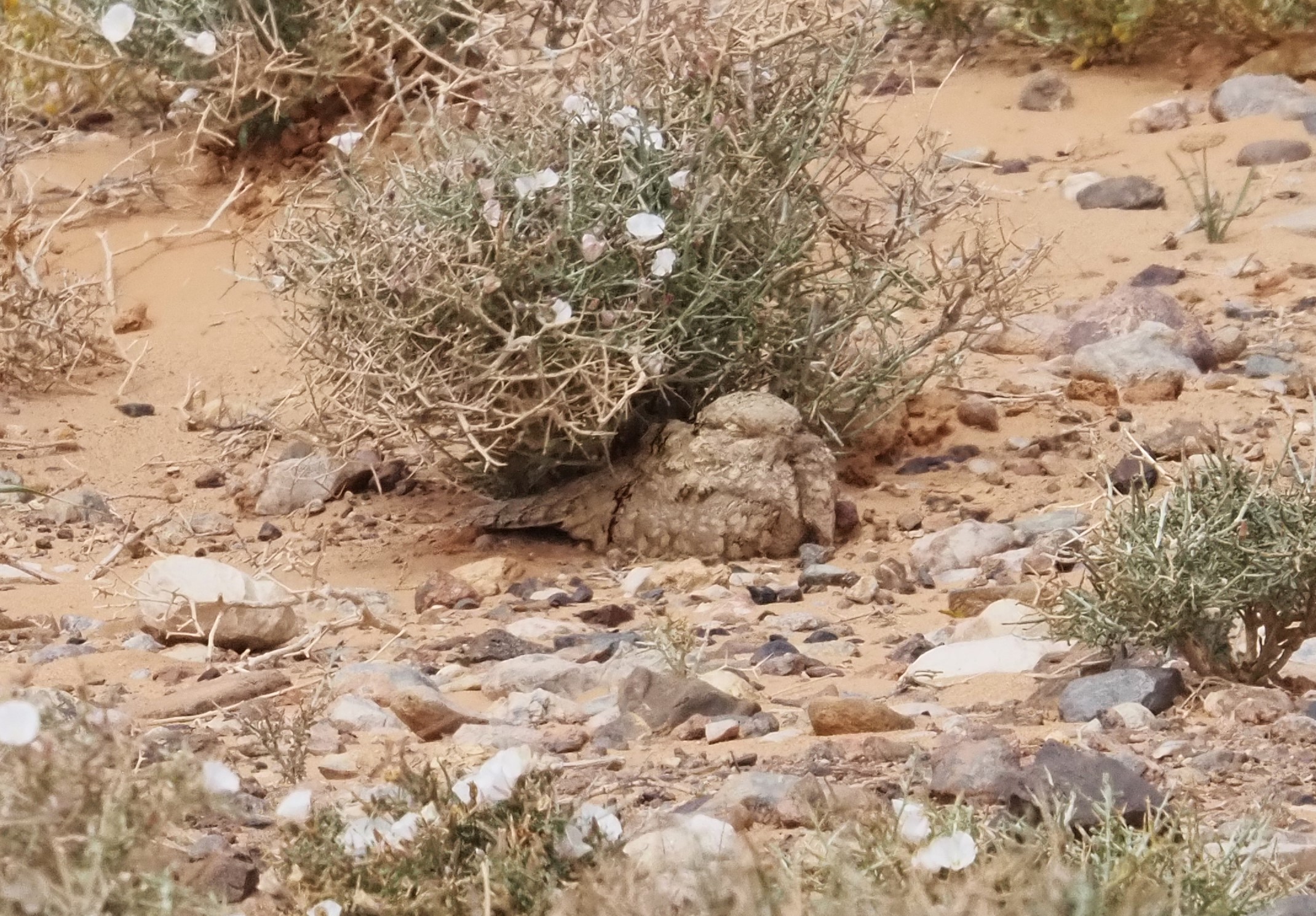
D’aquí ens vam moure cap a la última parada del matí. De camí, des d’un dels vehicles van veure un altre còlit isabelí i, en arribar a lloc, el nostre guia beduí ja ens esperava per fer la seva màgia, aixecar el dit assenyalant un arbust a 70 metres i descobrir-nos un fantàstic enganyapastors egipci. De fet, no hi ha un, però dos d’aquests fantàstics animals que vam poder mirar a plaer al llarg de prou estona. El vent, però, finalment ens va fer migrar a zones més arresserades i, per quan vam arribar al nostre allotjament, el vent ja bufava furiós.

A la tarda, tot i el vent, ens animem a visitar el llac de Merzouga. Aquí trobem menys ocells dels esperats però encara gaudim de 2 corriols camanegres, 6 corriols petits, força ànecs canyella. Una fantàstica cotxa blava i força migració de passeriformes que inclou cueretes grogues d’unes quantes espècies incloent races com italiana, ibèrica i britànica. Mascle de tallarol trencamates i gamba verda.
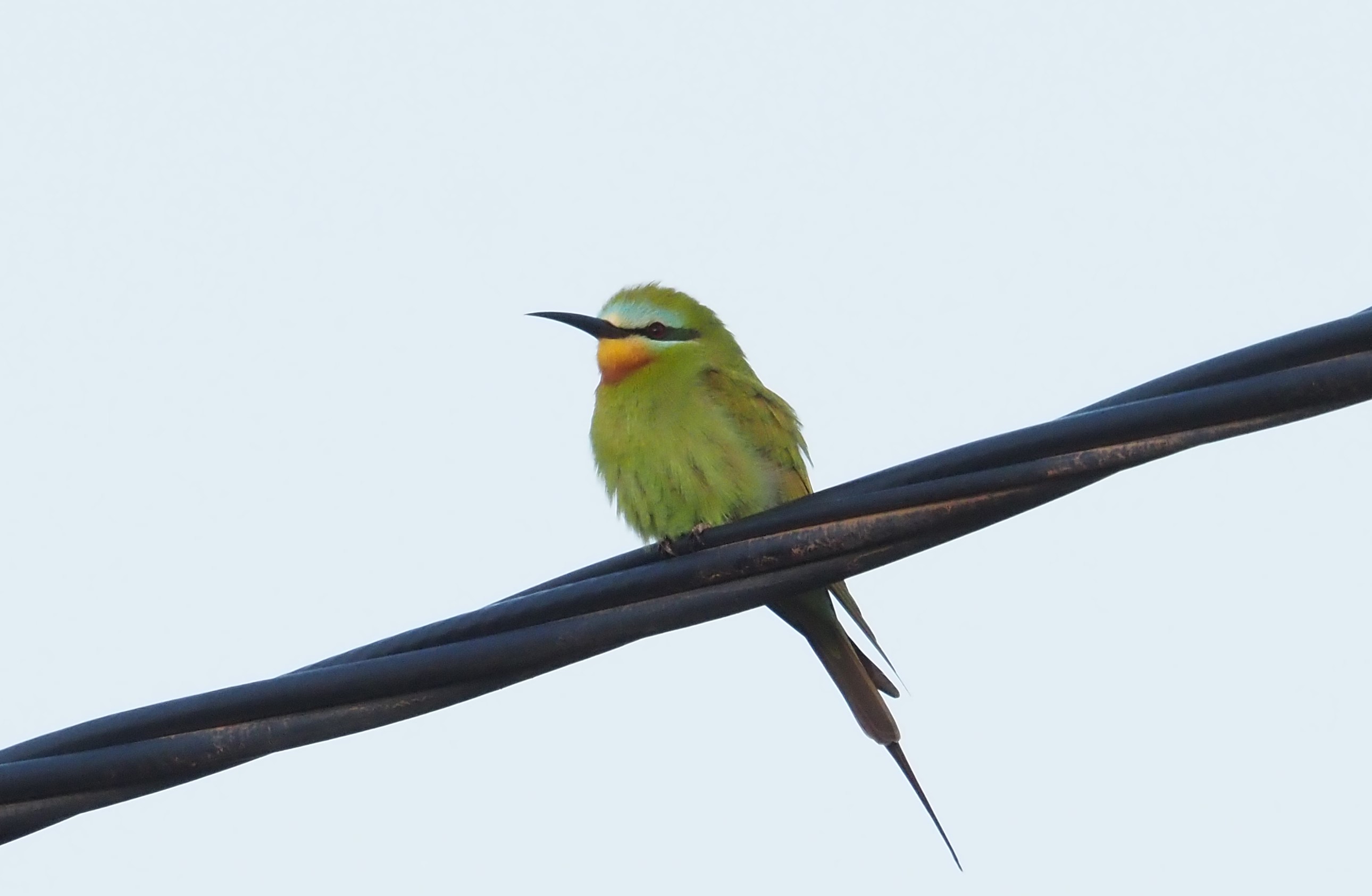
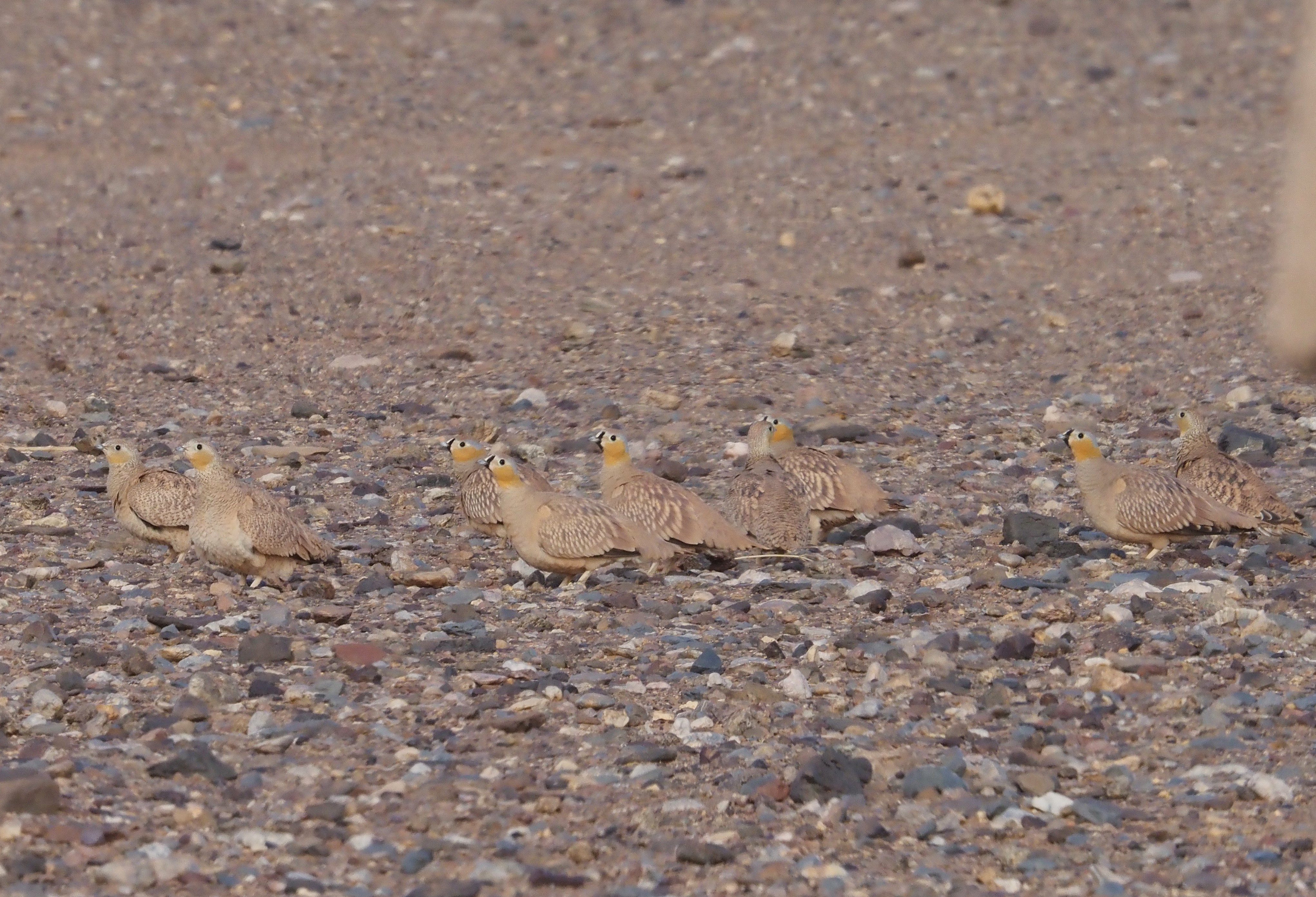
Abellerol persa (Merops persicus) lluint a tocar del nostre allotjament.
Ganga coronades (Pterocles coronata) aproximant-se al punt d’aigua.
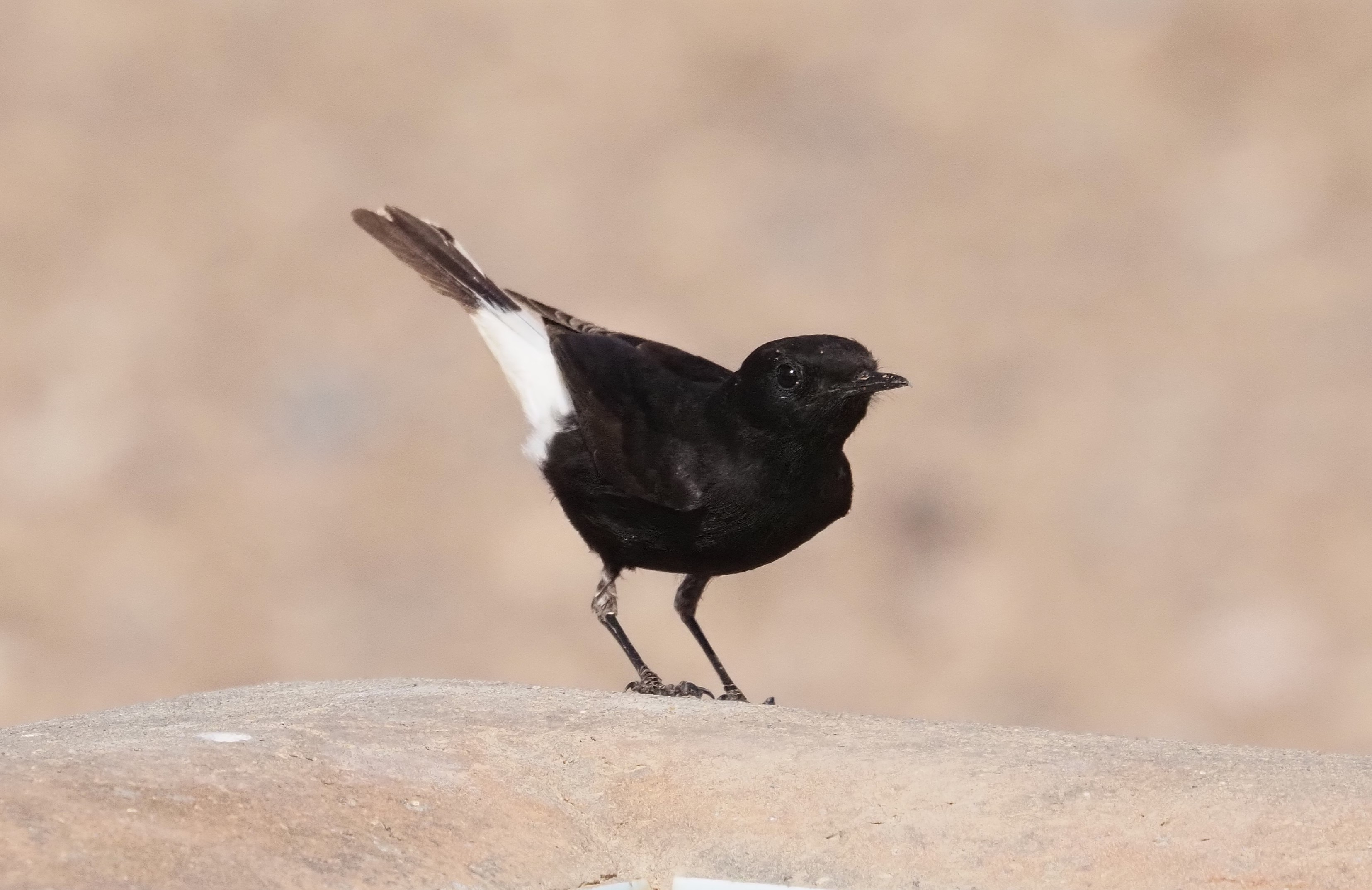
Còlit tuareg (Oenanthe leucopygia) a pocs metres de nosaltres.
Aquesta alosa puput fent vol nupcial a pocs metres del nostre grup va ser un dels moments destacats del matí. Imatge de la Roser Garcia.
Aquest tordenc lleonat (Argyia fulva) va ser una agradable sorpresa.
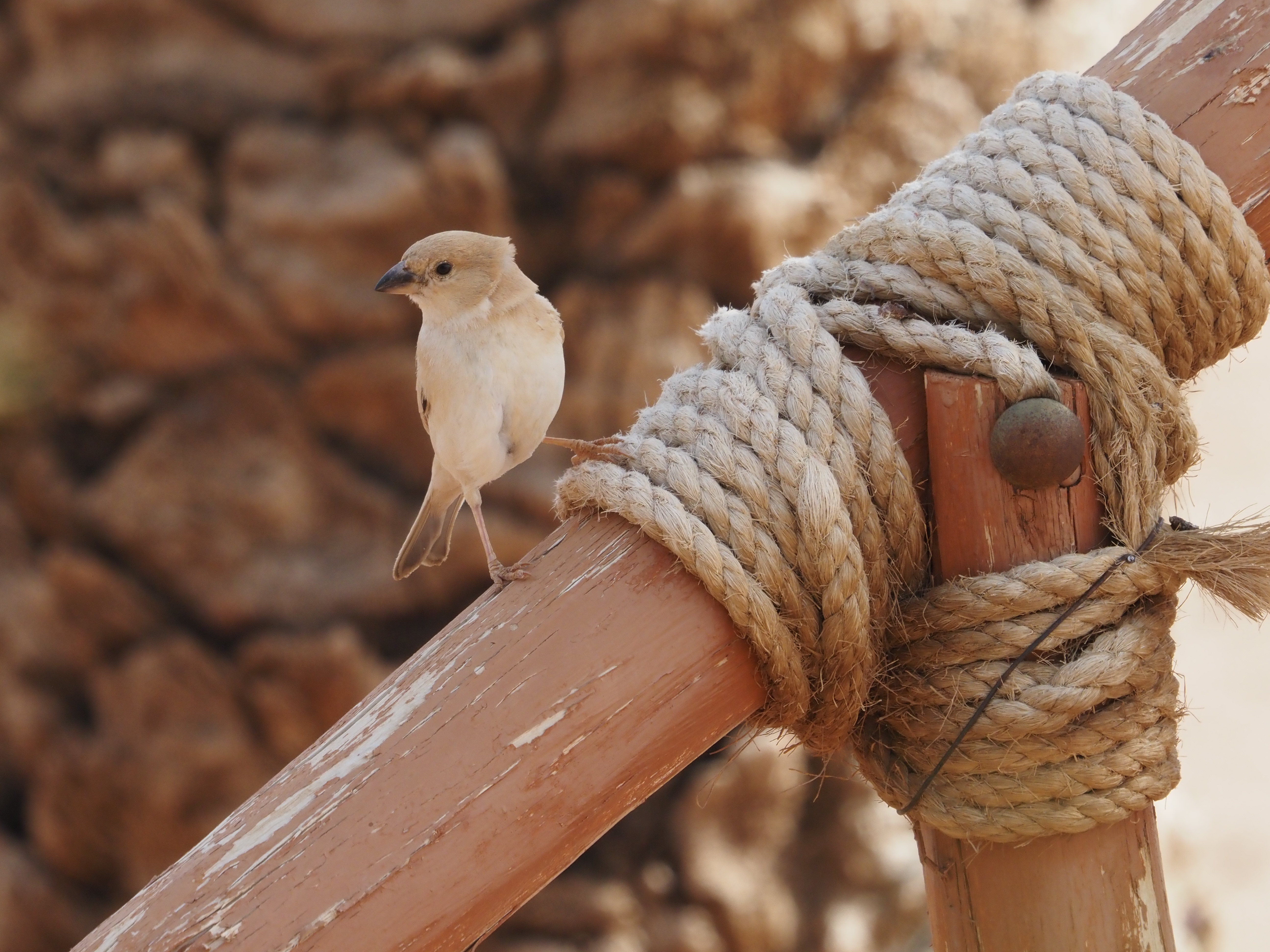
Pardal del desert (Passer simplex), un dels ocells més esperats a cada viatge al Marroc.
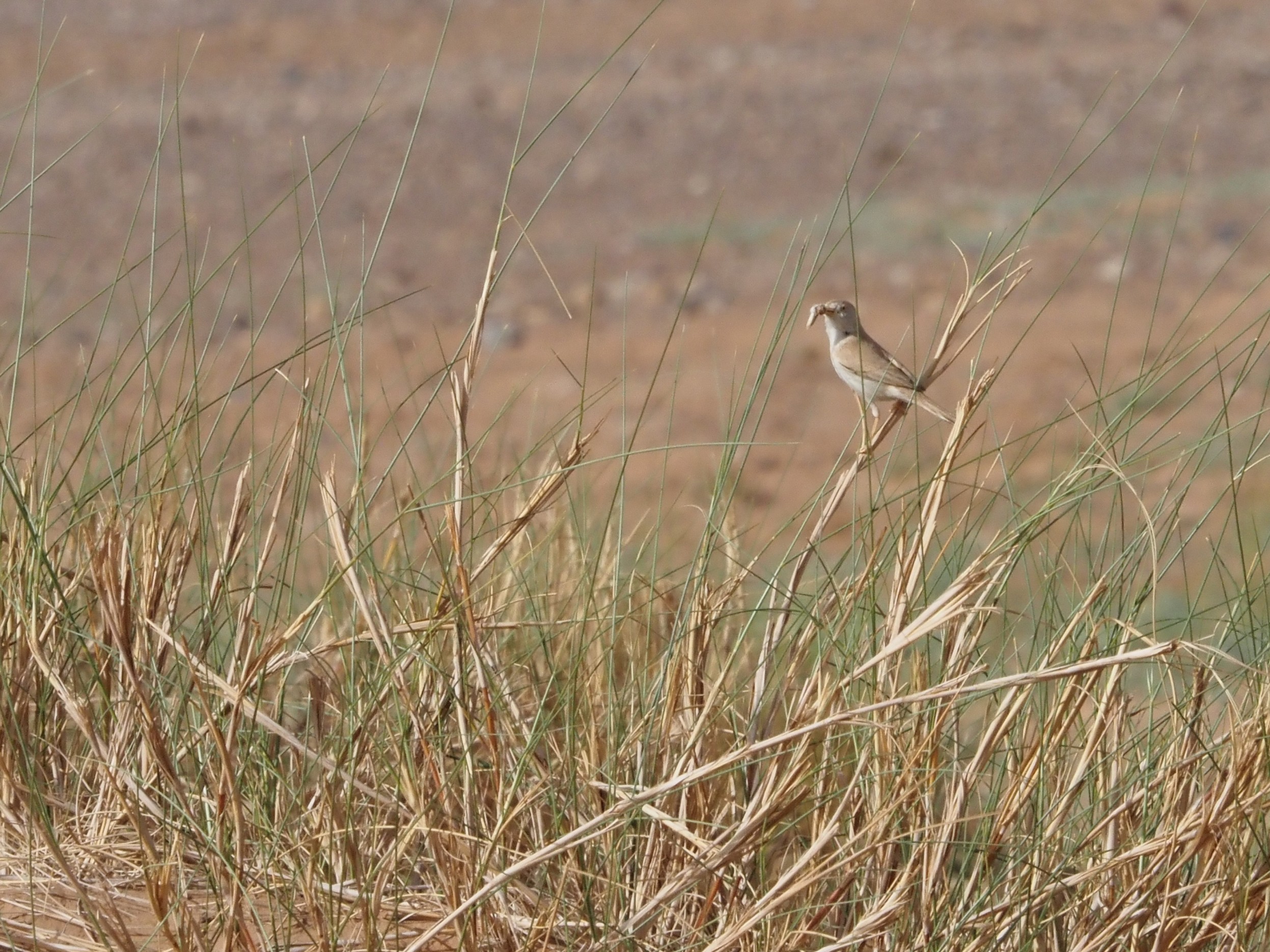
La tallareta pàl·lida del desert (Curruca deserti) no ens va posar fàcil aquest cop.
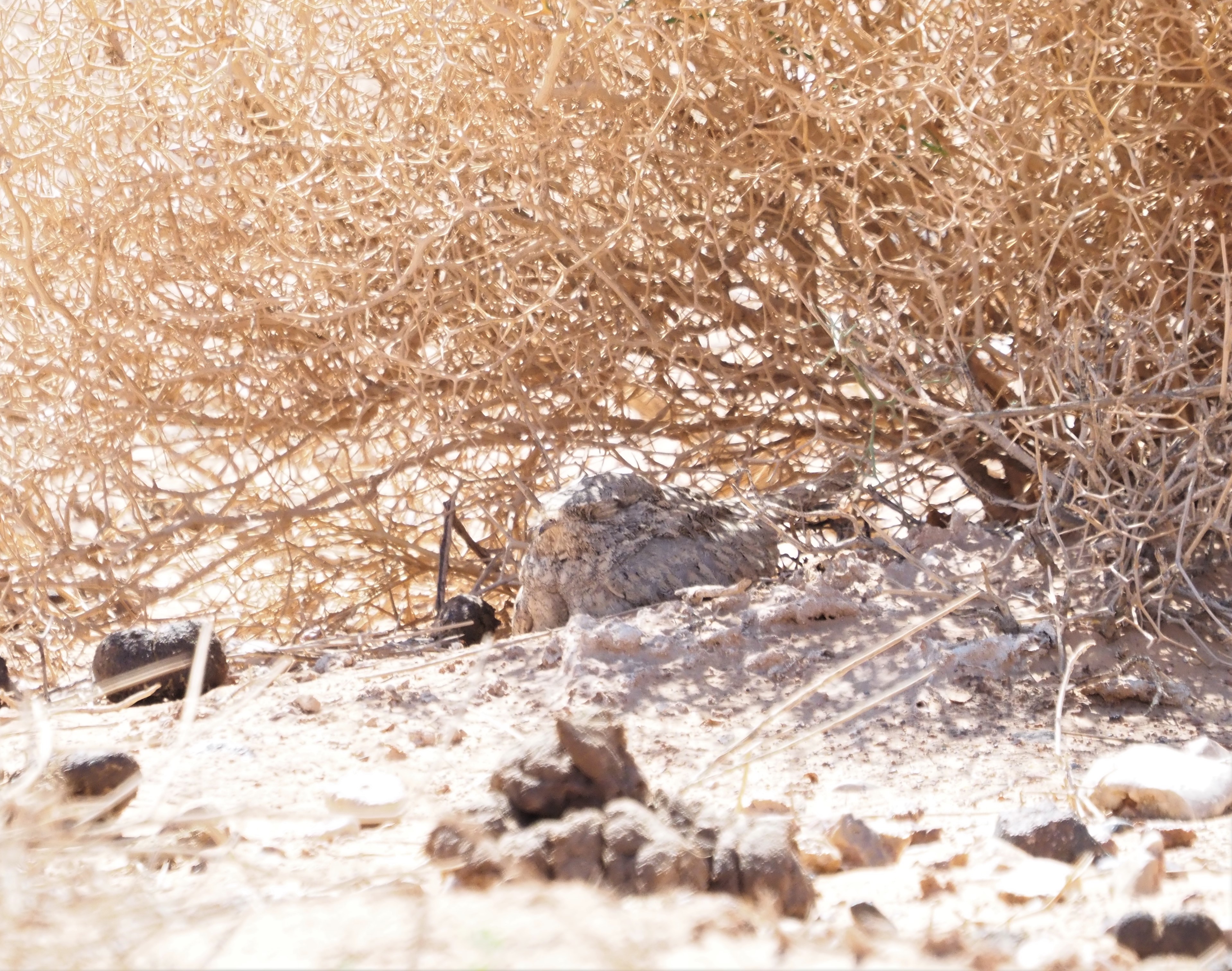
L’enganyapastors egipci (Caprimulgus aeryptiacus) és, quan vol, pràcticament un còdol més!

Dia 8. De bon matí ens apropem al Llac Merzouga a on gaudim d’un temps estable i sense vent. Aquí veiem força boscarla dels joncs, amb un parell d’exemplars especialment visibles. També cal destacar dos currocs en vol i força tallarol de garriga i mosquiter de passa. A l’aigua, un inmens estol de 48 xarxets marbrencs és el més cridaner. També comptem un mínim de 20 morells xocolaters, molt tímids i 2 ànec cuallargs, 2 xarrasclets i 8 morells de cap-roig, totes tres espècies noves per a la llista del tour. Als camps de conreu a prop de la llacuna veiem unes poques tórtores del Senegal, a més de botxí septentrional i puput. Des d’aquí decidim de conduïr cal Sud per tal de visitar un oasis a on veiem piula dels arbres, terrerola cuabarrada, tallareta comuna, mosquiter pàl·lid, cotxa cua-roja i 2 pinsans trompeters. Però aquí el vent ja ha començat i bufarà molt més fort que cap altre dia, amb ràfegues realment fortes i força pols en suspensió.

Després de dinar a l’allotjament anim a refugiar-nos a sotavent d’una petita línia de tallats. De camí, gaudim de bones observacions de corb del desert i, un cop a recer de la cinglera, ens regalem una estona a la fantàstica activitat de cercar fòsils. L’Alba demostra tenir força traça i en una estona recollim uns quants exemplars sota la mirada d’una terrerola del desert que s’està molt de nosaltres…
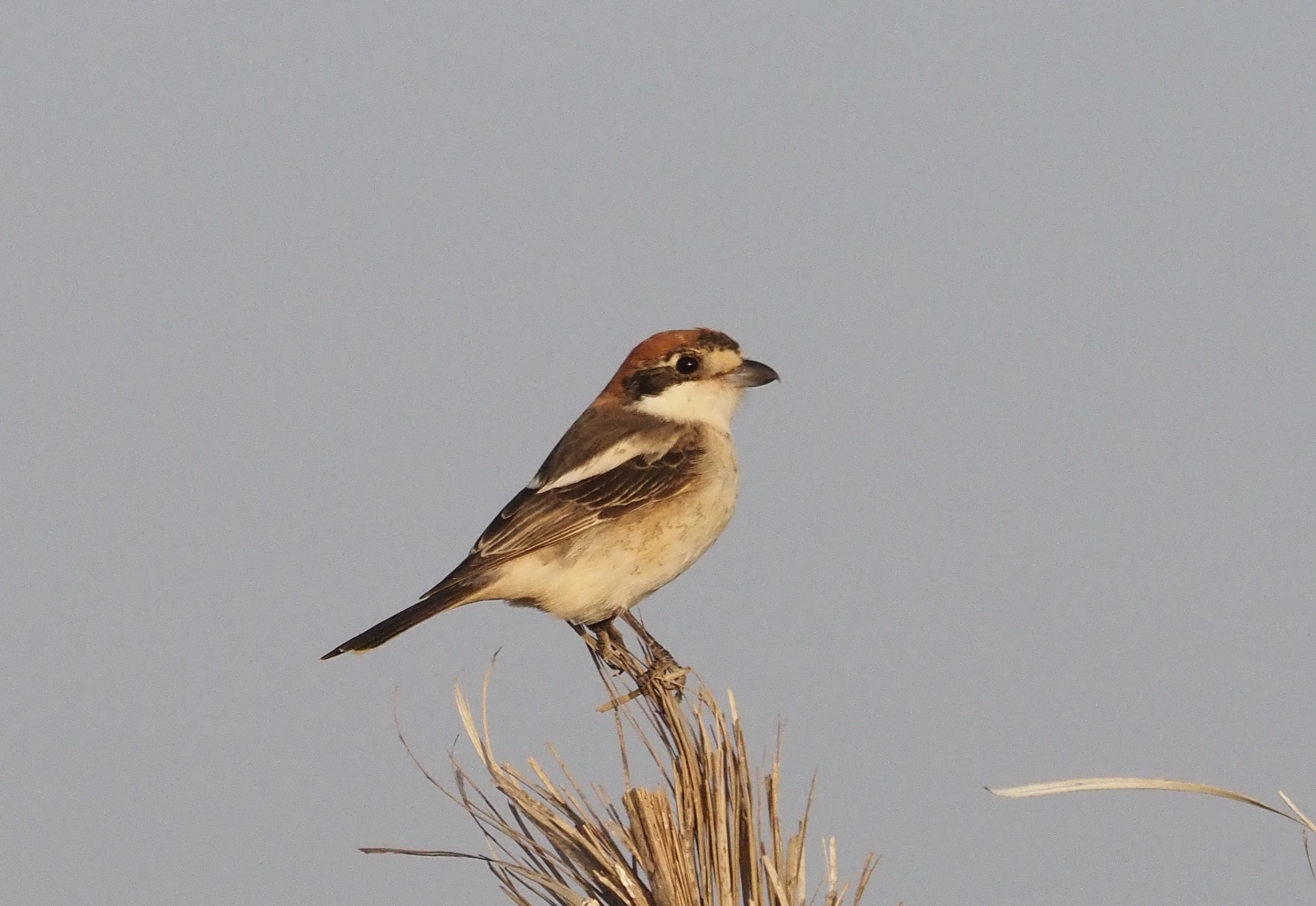
Un dels molts capsigranys (Lanius senator) vistos aquell matí.
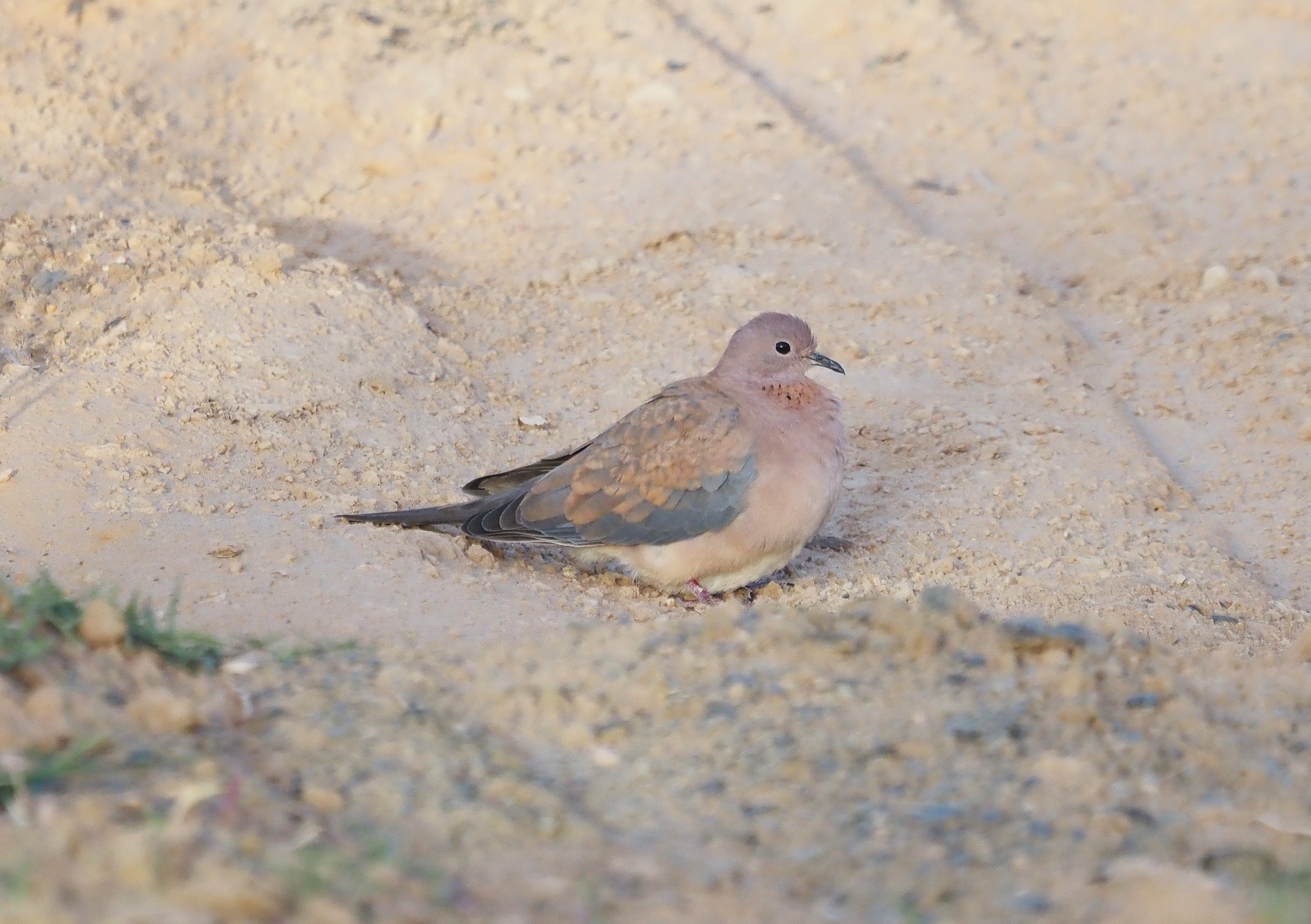
La tórtora del Senegal (Spilopensia senegalensis) també es va deixar veure.
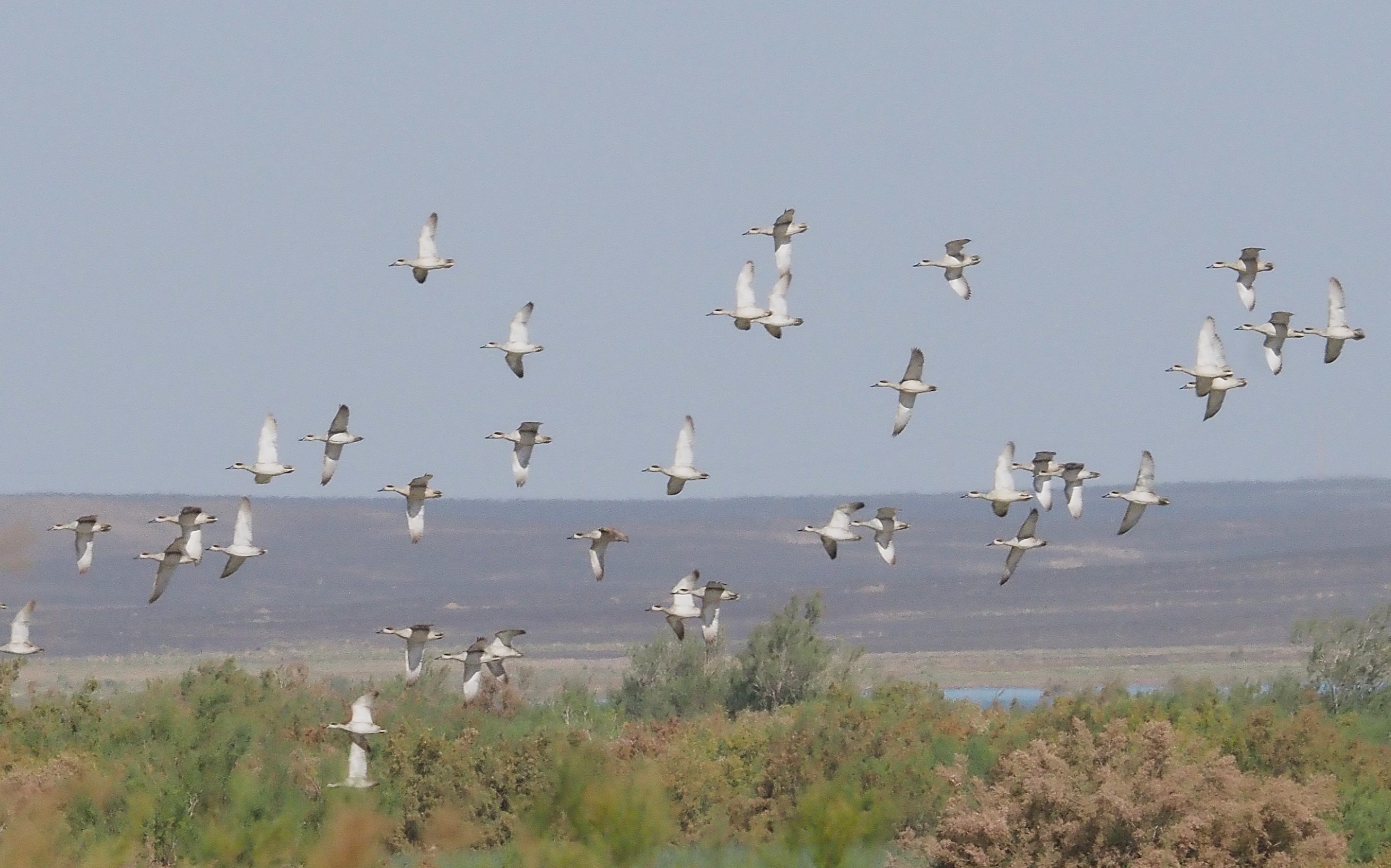
Aquest estol de xarxet marbrenc (Marmaronetta angustirostris) va ser una meravella.
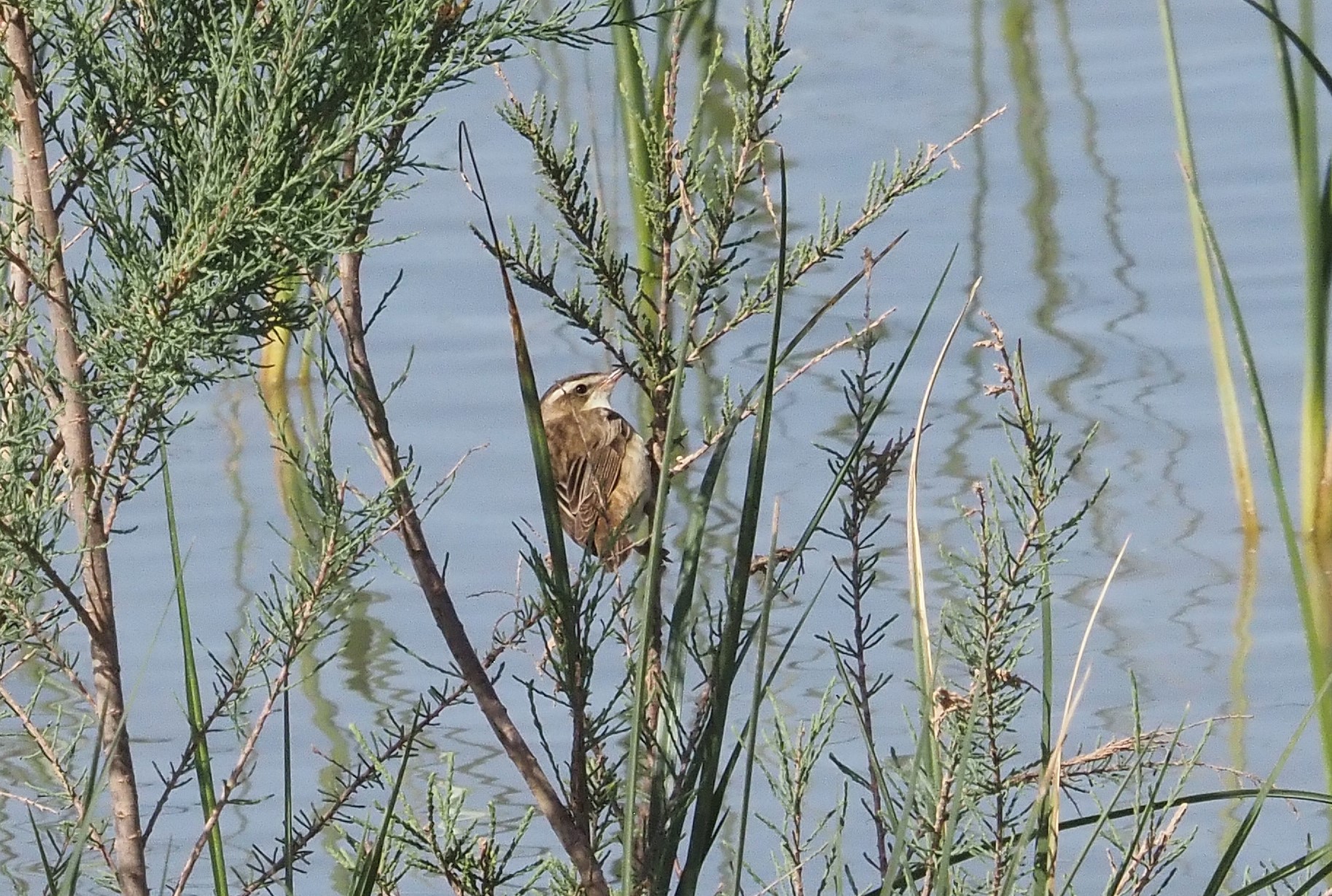
Boscarla dels joncs (Acrocephalus schoenobaenus) deixant-se veure bé.
Terrerola cuabarrada (Ammomanes cinctura).
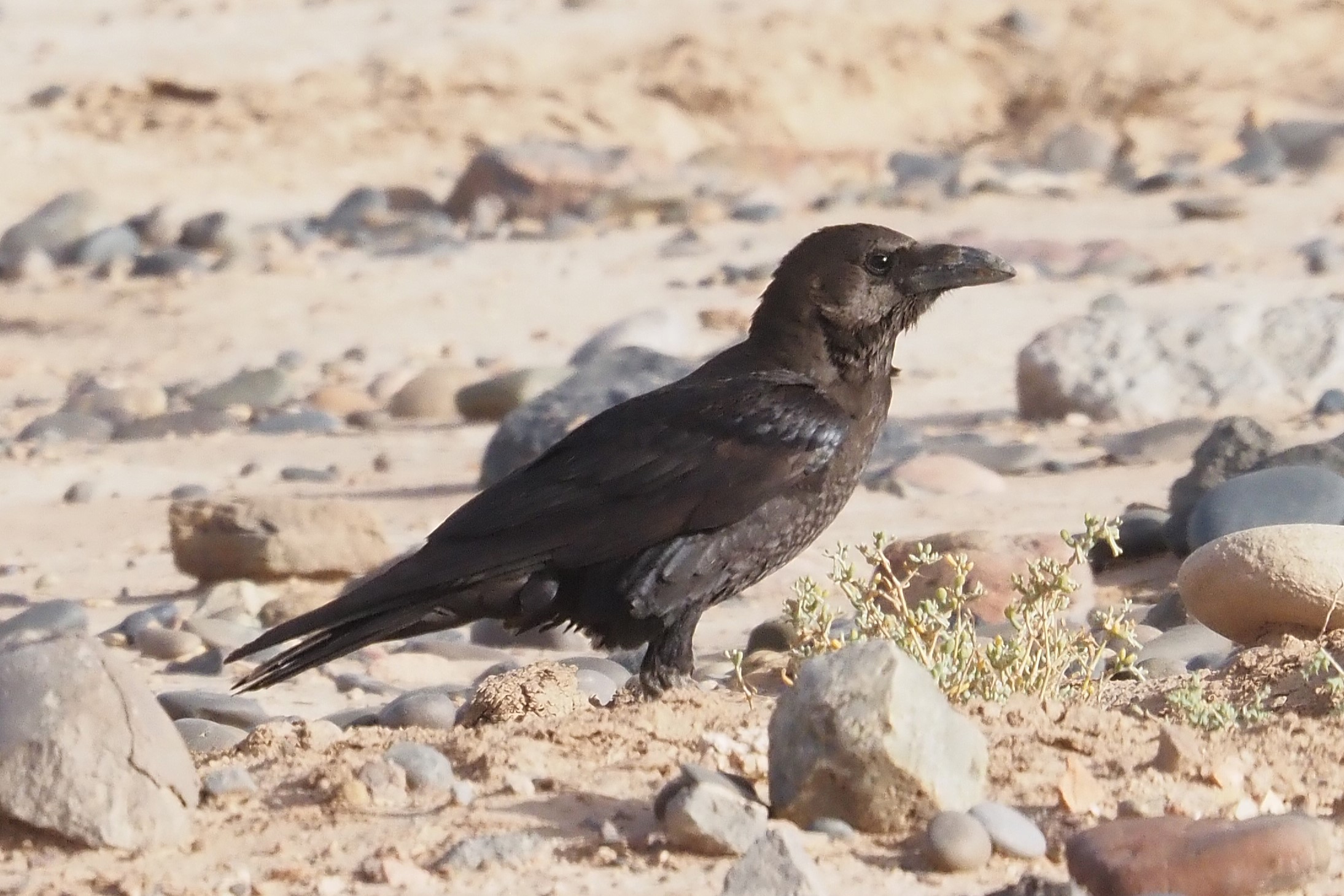
Brown-necked Raven (Corvus ruficollis).
Terrerola del desert (Ammomanes deserti). Una bona distracció en una tarda molt ventosa.
Bona part del grup es va animar a cercar fòsils! Imatge de l’Alba Yagües.

Dia 9. En un altre matí assolejat, deixem Merzouga enrere per començar el camí de tornada. Després de fer una petita parada per a proveïr-nos de souvenirs diversos, ens aturem a Rissani per explorar un hàbitat una mica diferent a tots els que havíem estat observant al llarg del tour. Aquí trobem els omnipresents tallarols de garriga però també un mussol comú i un gafarró. Però la raó que ens porta a aquest racó de món, són les busquetes pàl·lides orientals que hi nien. Aquest matí estem de sort i en poc temps ja estem gaudint de bones observacions d’aquests interessants ocells.

D’aquí fem una mica de quilòmetres i no serà fins després de dinar que no fem la següent parada ornitològica. A tocar de la carretera, trobem un estol d’onze xoriguers petits caçant contra el vent. Efectivament, el vent a tornat a fer acte de presència. De fet, el dia ha esdevingut plujós, amb petits però intensos xàfecs que descarreguen al nostre pas. Mentre gaudim dels xoriguers, el Xavi troba un pardal de passa mascle en un arbust a tocar de carretera. Una mica més enllà, ens endinsem en una gorja al paisatge desèrtic a on trobem un petit estol de pinsans trumpeters, 4 cogullades fosques, terrerola del desert i còlit del desert mentre un falcó llaner ens sobrevola. A l’altre banda de la gorja, un duc del desert ens observa des del seu niu…

El vent continua fent-se més fort i fem una última parada en un pont sobre el riu Dades. Aquí, desenes d’orenetes migren tot seguint el curs del riu. Comptem fins a 68 orenetes cua-rogenques en poc més de deu minuts. Amb les orenetes, petits estols d’abellerols comuns van de camí a l’Atlas i un mascle d’esparver comú s’hi llença sobre ells a tot velocitat. Als camps del voltant, un parell de cotxes cua-roges descansen del llarg viatge de tornada a Europa. D’aquí ja ens dirigim al nostre allotjament, a on gaudim d’un bon sopar i unes quantes anècdotes abans de donar per acabat el dia.
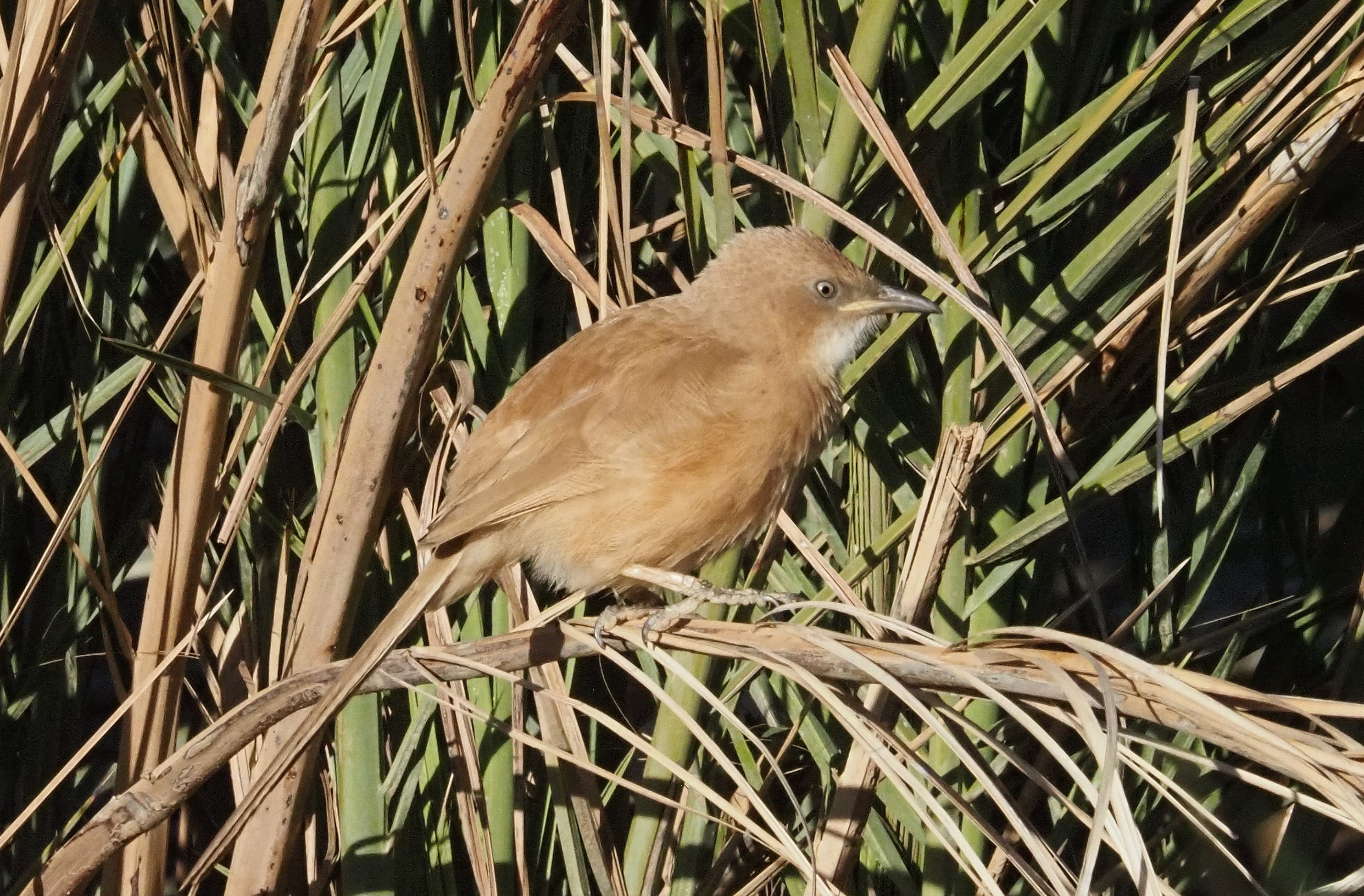
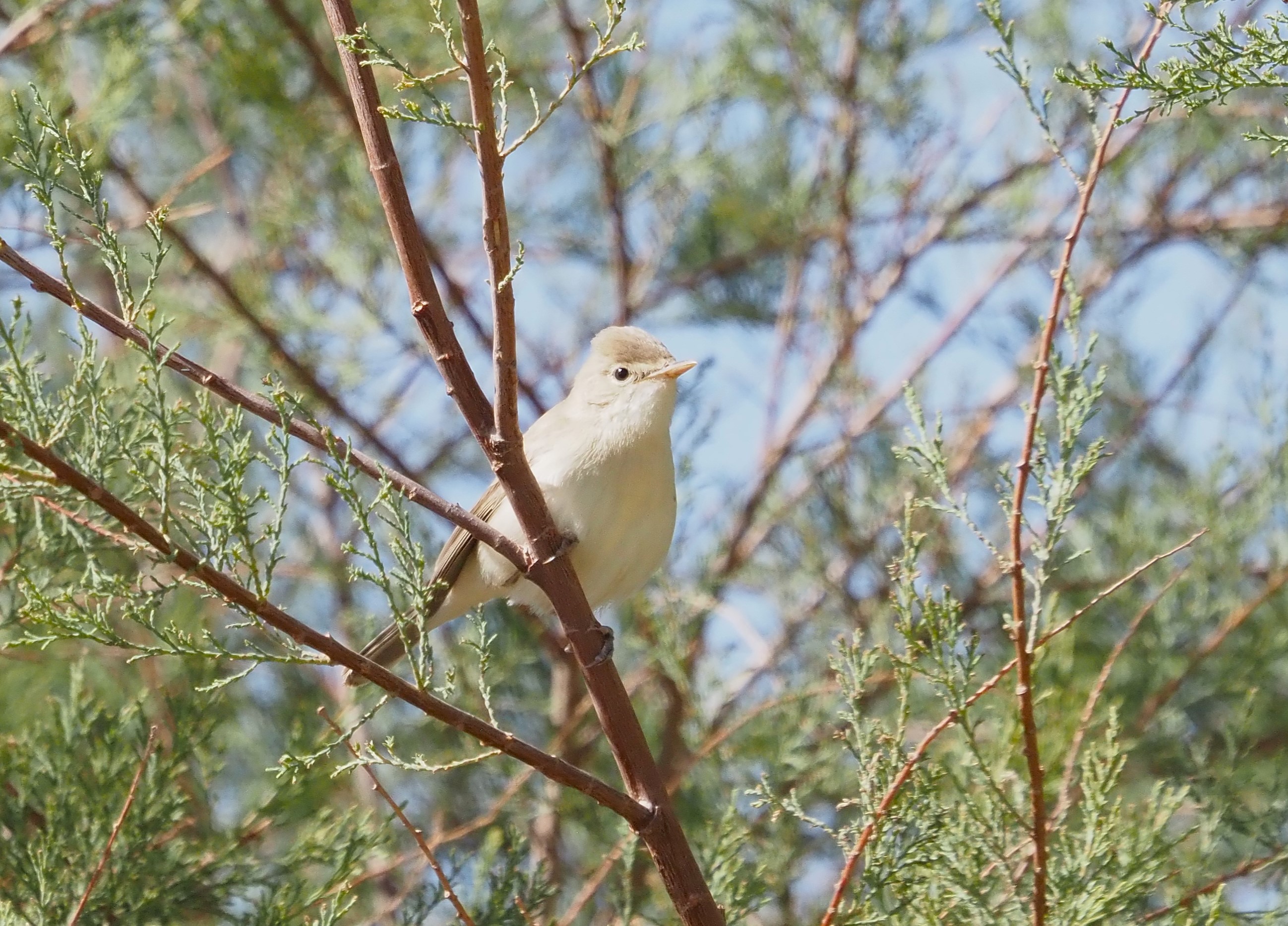
Un tombet abans d’esmorzar va produir fantàstics tordencs lleonats.
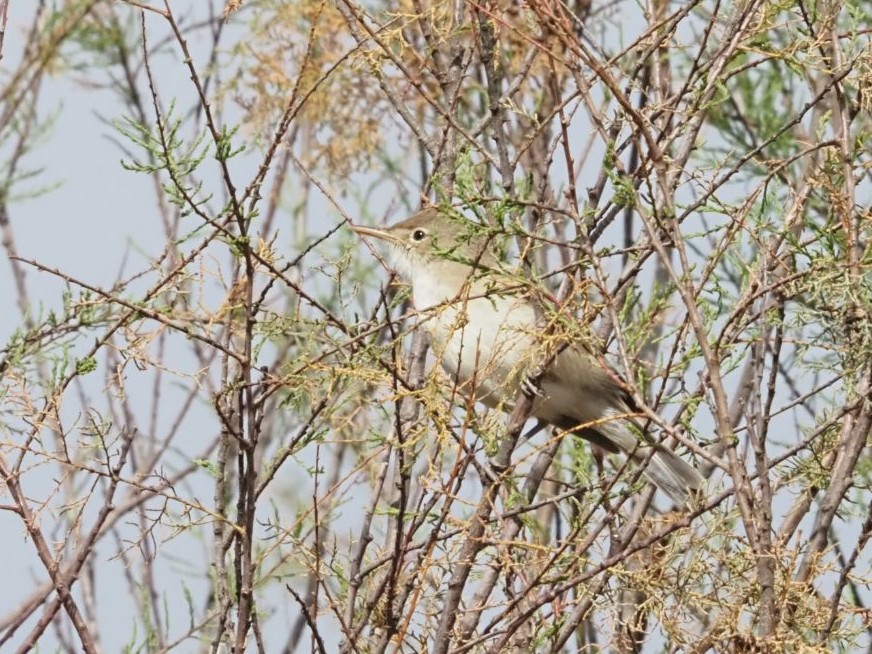
Les bosquetes pàl·lides orientals (Iduna pallida), tot just arribades al desert, es van deixar veure força bé.
Falcó llaner (Falco biarmicus) volant a baixa alçada sobre el nostre grup. Imatge del Joan Oliver Manen.

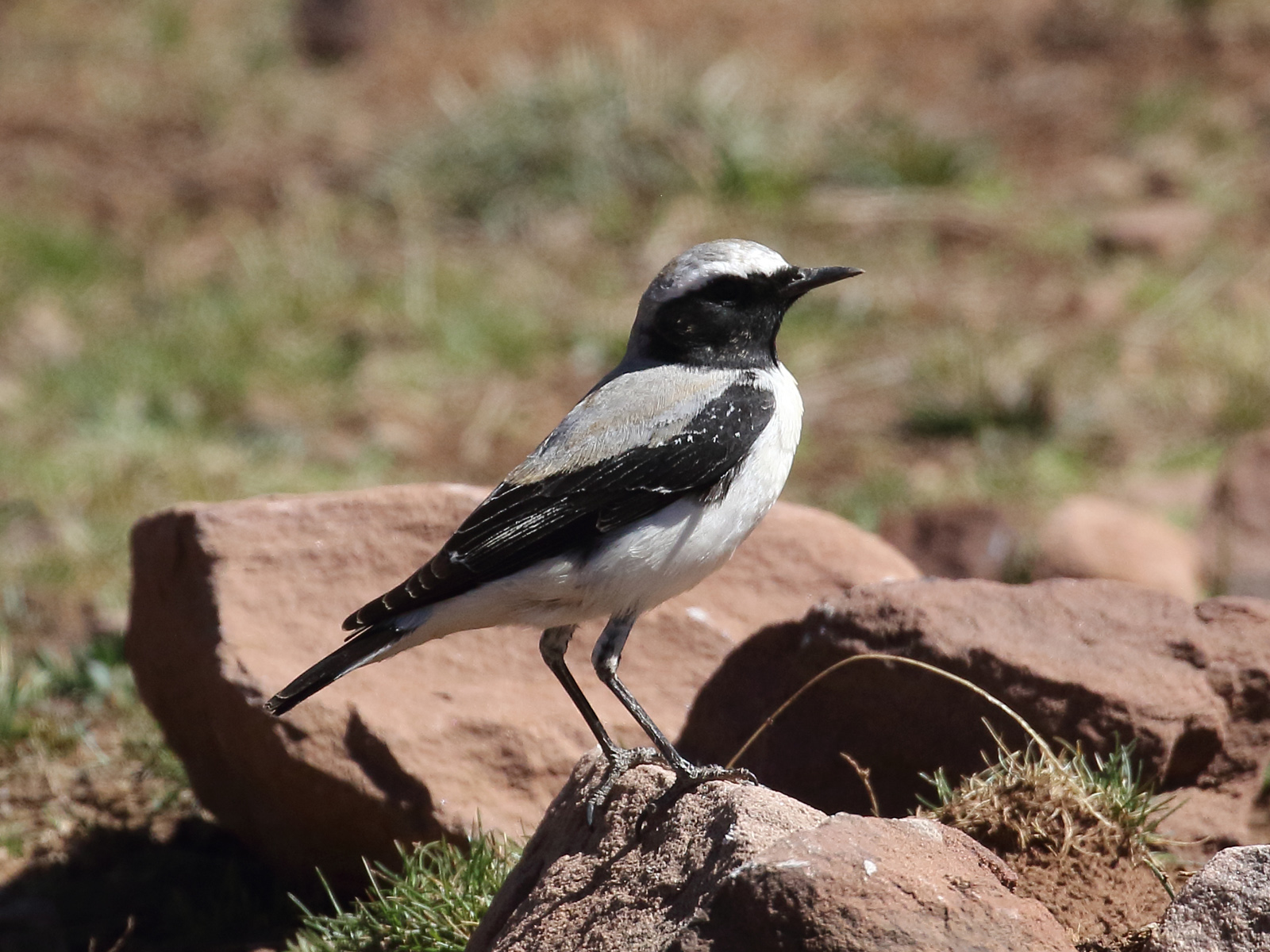
Dia 10. Després de llevar-nos molt d’hora, vam començar a creuar l’Atlas en direcció a Marràqueix. La nostra intenció era de tenir prou temps per pardalejar una mica. Era un matí assolejat i força tranquil. Una parada en una benzinera ens va proporcionar un bon esmorzar i el cafè necessari per enfilar la carretera. A la part més alta vam començar a veure petits grups de pardals roquers i, al coll més alt, una petita parada ens va permetre veure terrerola comuna, gralla de bec vermell i l’Alba va trobar un fantàstic mascle de còlit de l’Atlas. Amb aquest, vam arribar a les 9 espècies de còlits en aquest tour!

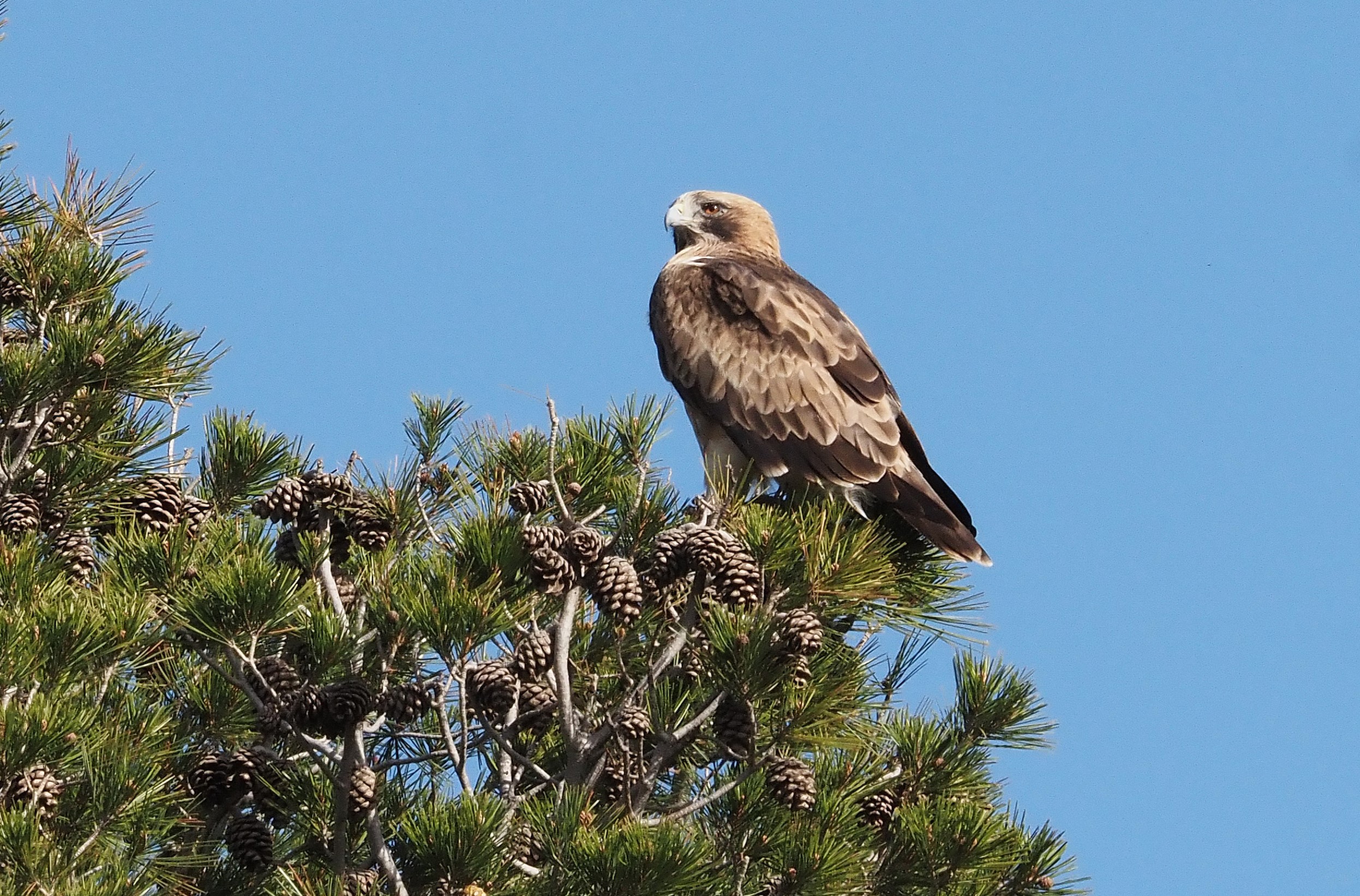
Una mica més enllà, vam començar a veure rapinyaires en migració, bàsicament àguiles calçades. Al final, en vam comptar 11 àguiles calçades, 5 milans negres, 2 àguiles marcenques i un parell d’esparvers comuns. Allà, en aquell coll de muntanya, tot veient els cims nevats de l’Atlas a una banda, però gaudint de la vista de la Vall de l’Ourika per l’altre, vam tancar el nostre tour del 2026 al Marroc. En arribar a Marràqueix encara vam veure alguna garsa del Magreb o alguna parella de falciot cuablanc petit, fins que un sit del Sahara que cantava dins la terminal de l’aeroport ens va desitjar bon viatge, ja amb moltes ganes de tornar al 2027 i retrobar-nos amb tota aquesta fantàstica varietat d’ocells!
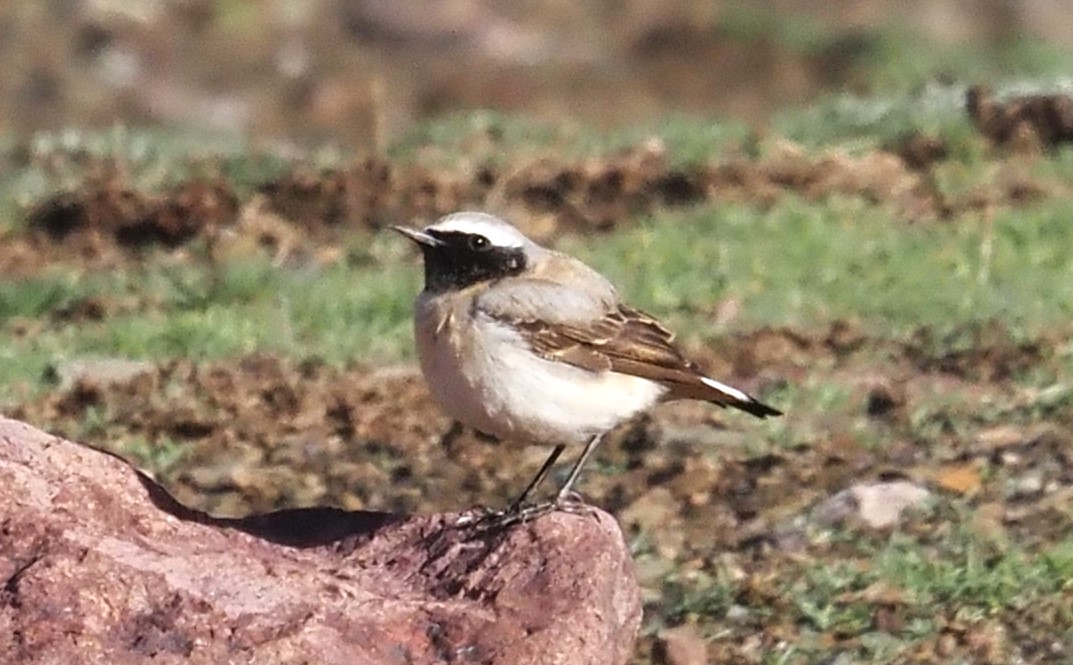
Còlit de l’Atlas (Oenanthe seebohmi). La 9a espècie de còlit del viatge i també una de les més esperades pel grup!
Àguila calçada (Aquila pennata). Probablement un exemplar en migració a través de l’Atlas.

Llistat d’espècies vistes al llarg del tour:

  1. Ànec canyella (Tadorna ferruginea)
  2. Ànec blanc (Tadorna tadorna)
  3. Ànec cullerot comú (Spatula clypeata)
  4. Xarrasclet (Spatula querquedula)
  5. Ànec griset (Marecca strepera)
  6. Ànec collverd (Anas platyrhynchos)
  7. Ànec cuallarg (Anas acuta)
  8. Xarxet comú (Anas crecca)
  9. Xarxet marbrenc (Marmaronetta angustirostris)
  10. Morell cap-roig (Aythya ferina)
  11. Morell xocolater (Aythya nyroca)
  12. Guatlla comuna (Coturnix coturnix)
  13. Perdiu nord-africana (Alectoris barbara)
  14. Colom roquer (Columba livia) -feral-
  15. Tudó (Columba palumbus)
  16. Tòrtora turca (Streptopelia decaocto)
  17. Tòrtora del Senegal (Spilopelia senegalensis)
  18. Ganga comuna (Pterocles alchata)
  19. Ganga pigallada (Pterocles senegallus)
  20. Ganga coronada (Pterocles coronatus)
  21. Xurra (Pterocles orientalis)
  22. Enganyapastors egipci (Caprimulgus aegyptius)
  23. Falciot negre (Apus apus)
  24. Falciot pàl·lid (Apus pallidus)
  25. Falciot cuablanc petit (Apus affinis)
  26. Polla d’aigua comuna (Gallinula chloropus)
  27. Fotja comuna (Fulica atra)
  28. Fotja banyuda (Fulica cristata)
  29. Torlit comú (Burhinus oedicnemus)
  30. Cames-llargues comú (Himantopus himantopus)
  31. Becadell comú (Gallinago gallinago)
  32. Corriol anellat gros (Charadrius hiaticula)
  33. Corriol anellat petit (Charadrius dubius)
  34. Corriol camanegre (Charadrius alexandrinus)
  35. Pigre gris (Pluvialis squatarola)
  36. Becut (Numenius arquata)
  37. Pòlit cantaire (Numenius phaeopus)
  38. Tètol cuabarrat (Limosa lapponica)
  39. Tètol cuanegre (Limosa limosa)
  40. Xivitona comuna (Actitis hypoleucos)
  41. Xivita comuna (Tringa ochropus)
  42. Gamba roja comuna (Tringa totanus)
  43. Gamba roja pintada (Tringa erythropus)
  44. Gamba verda (Tringa nebularia)
  45. Batallaire (Calidris pugnax)
  46. Territ gros (Calidris canutus)
  47. Territ de tres dits (Calidris alba)
  48. Territ variant (Calidris alpina)
  49. Corredor del desert (Cursorior cursor)
  50. Gavina menuda (Hydrocoloeus minutus)
  51. Gavina capblanca (Chroicocephalus genei)
  52. Gavina riallera (Chroicocephalus ridibundus)
  53. Gavina capnegre (Ichthyaetus melanocephalus)
  54. Gavina corsa (Ichthyaetus ichthyaetus)
  55. Gavià de potes grogues (Larus michahellis)
  56. Gavià fosc (Larus fuscus)
  57. Curroc comú (Gelochelidon nilotica)
  58. Xatrac becllarg (Thalasseus sandvicensis)
  59. Flamenc rosat (Phoenicopterus roseus)
  60. Cabusset comú (Tachybaptus ruficollis)
  61. Cabussó emplomallat (Podiceps cristatus)
  62. Cigonya blanca (Ciconia ciconia)
  63. Mascarell atlàntic (Morus bassanus)
  64. Corb marí gros (Phalacrocorax carbo)
  65. Capó reial (Plegadis falcinellus)
  66. Ibis ermità (Geronticus eremita)
  67. Becplaner eurasiàtic (Platalea leucorodia)
  68. Martinet menut (Botaurus minutus)
  69. Martinet blanc (Egretta garzetta)
  70. Esplugabous occidental (Bubulcus ibis)
  71. Agró blanc (Ardea alba)
  72. Bernat pescaire (Ardea cinerea)
  73. Agró roig (Ardeu pupurea)
  74. Àguila pescadora (Pandion haliaetos)
  75. Aufrany comú (Neophron percnopterus)
  76. Elani comú (Elanus caeruleus)
  77. Àguila marcenca (Circaetus gallicus)
  78. Àguila calçada comuna (Aquila pennata)
  79. Àguila cuabarrada (Aquila fasciata)
  80. Esparver comú (Accipiter nisus)
  81. Arpella comuna (Circus aeruginosus)
  82. Milà negre (Milvus migrans)
  83. Aligot rogenc (Buteo rufinus cirtensis)
  84. Duc del desert (Bubo ascalaphus)
  85. Mussol comú (Athene noctua)
  86. Puput eurasiàtica (Upupa epops)
  87. Abellerol persa (Merops persicus)
  88. Abellerol eurasiàtic (Merops apiaster)
  89. Picot garser gros (Dendrocopos major)
  90. Picot verd del Maghreb (Picus vailantii)
  91. Xoriguer petit (Falco naumanii)
  92. Xoriguer comú (Falco tinnunculus)
  93. Falcó llaner (Falco biarmicus)
  94. Falcó berber (Falco (peregrinus) peregrinoides)
  95. Txagra de coroneta negra (Tchagra senegalus)
  96. Botxí septentrional (Lanius excubitor)
  97. Capsigrany comú (Lanius senator)
  98. Garsa del Magreb (Pica mauretanica)
  99. Gralla de bec vermell (Pyrrhocorax pyrrhocorax)
  100. Gralla de bec groc (Pyrrhocorax graculus)
  101. Corb del desert (Corvus ruficollis)
  102. Corb comú (Corvus corax)
  103. Mallerenga petita (Periparus ater)
  104. Mallerenga carbonera (Parus major)
  105. Mallerenga blava africana (Cyanistes teneriffae)
  106. Alosa puput grossa (Alaemon alaudipes)
  107. Calàndria becgrossa (Ramphocoris clotbey)
  108. Terrerola cuabarrada (Ammomanes cinctura)
  109. Terrerola del desert (Ammomanes deserti)
  110. Cogullada fosca (Galerida theklae)
  111. Cogullada del Magreb (Galerida macrorhyncha)
  112. Cogullada comuna (Galerida cristata)
  113. Alosa banyuda (Eremophila alpestris)
  114. Alosa del Sàhara (Eremophila bilopha)
  115. Terrerola comuna (Calandrella brachydactyla)
  116. Terrerola rogenca (Alaudala rufescens)
  117. Oreneta de ribera africana (Riparia paludicola)
  118. Oreneta de ribera comuna (Riparia riparia)
  119. Roquerol eurasiàtic (Ptyonoprogne rupestris)
  120. Oreneta comuna (Hirundo rustica)
  121. Oreneta cuablanca comuna (Delichon urbicum)
  122. Oreneta cua-rogenca europea (Cecropis rufula)
  123. Bulbul comú (Pycnonotus barbatus)
  124. Trist (Cisticola juncidis)
  125. Busqueta bruna (Iduna opaca)
  126. Busqueta pàl·lida oriental (Iduna pallida)
  127. Boscarla dels joncs (Acrocephalus schoenobaenus)
  128. Boscarler pintat gros (Locustella naevia) — només sentit
  129. Mosquiter pàl·lid occidental (Phylloscopus bonelli)
  130. Mosquiter de passa (Phylloscopus troquilus)
  131. Mosquiter comú (Phylloscopus collybita)
  132. Mosquiter ibèric (Phylloscopus ibericus)
  133. Prínia del desert (Scotocerca inquieta)
  134. Rossinyol bord (Cettia cetti)
  135. Tallarol de casquet (Sylvia atricapilla)
  136. Tallarol emmascarat occidental (Curruca hortensis)
  137. Tallareta del desert africana (Curruca deserti)
  138. Tallarol de garriga occidental (Curruca iberiae)
  139. Tallarol de l’Atlas (Curruca deserticola)
  140. Tallarol capnegre (Curruca melanocephala)
  141. Tallarol trencamates (Curruca conspicillata)
  142. Tallareta comuna (Curruca communis)
  143. Tordenc lleonat (Argya fulva)
  144. Bruel (Regulus ignacapillus)
  145. Cargolet eurasiàtic (Troglodytes troglodytes)
  146. Merla d’aigua (Cinclus cinclus)
  147. Raspinell comú (Certhia brachydactyla)
  148. Estornell negre (Sturnus unicolor)
  149. Griva comuna (Turdus viscivorus)
  150. Merla comuna (Turdus merula)
  151. Pit-roig (Erithacus rubecula)
  152. Rossinyol comú (Luscinia megarhynchos) — només sentit
  153. Cotxa diademada (Phoenicurus moussieri)
  154. Cotxa cua-roja (Phoenicurus phoenicurus)
  155. Cotxa fumada (Phoenicurus ochruros)
  156. Merla blava (Monticola solitarius)
  157. Bitxac europeu (Saxicola rubicola)
  158. Còlit gris (Oenanthe oenanthe)
  159. Còlit de l’Atlas (Oenanthe seebohmi)
  160. Còlit isabelí (Oenanthe isabellinus)
  161. Còlit del desert (Oenanthe deserti)
  162. Còlit ros occidental (Oenanthe hispanica)
  163. Còlit de carpó roig (Oenanthe moesta)
  164. Còlit negre (Oenanthe leucura)
  165. Còlit tuareg (Oenanthe leucopyga)
  166. Còlit de Núbia (Oenanthe lugens)
  167. Pardal comú (Passer domesticus)
  168. Pardal de passa (Passer hispanoliensis)
  169. Pardal del desert (Passer simplex)
  170. Pardal roquer (Petronia petronia)
  171. Cuereta torrentera (Motacilla cinerea)
  172. Cuereta groga (Motacilla flava)
  173. Cuereta blanca (Motacilla alba)
  174. Titella (Anthus pratensis)
  175. Piula dels arbres (Anthus trivialis)
  176. Grasset de muntanya (Anthus spinolleta)
  177. Pinsà comú (Fringilla coelebs)
  178. Pinsà africà (Fringilla spodiogenys)
  179. Pinsà mec (Fringilla montifringilla)
  180. Pinsà ala-roig de l’Atlas (Rhodopechys sanguineus alienus)
  181. Pinsà trompeter (Bucanetes githagineus)
  182. Verdum eurasiàtic (Chloris chloris)
  183. Passerell europeu (Linaria cannabina)
  184. Cadernera europea (Carduelis carduelis)
  185. Gafarró europeu (Serinus serinus)
  186. Lluer eurasiàtic (Spinus spinus)
  187. Durbec (Coccothraustes coccothraustes)
  188. Cruixidell (Emberiza calandra)
  189. Sit negre (Emberiza cia)
  190. Gratapalles (Emberiza cirlus)
  191. Sit del Sàhara (Emberiza sahari)
Morocco 2023 birding tour trip report

  • Dates: March 14th to 25th, 2023
  • Number of participants: 9
  • Tour leaders: Carles Oliver & Sergi Sales
  • Species of birds: 196

Overview: 10th issue of our tour exploring Morocco in early spring. Arranged with the group months in advance, the tour was for 1 day in order to look for Dupont’s Lark. Our group enjoyed very stable weather all the tour long, with only an afternoon of strong wind that made difficult to find many birds. Temperatures were mild when not cool, making the birdwatching very pleasant during almost all the days. The severe drought affecting the whole Morocco had, anyway, a strong impact in our tour since most of the wetlands visited during the trip were dry or had a very low level of water. The poor water management along with the severe droughts and the over exploted subsoil waters put in a high risk the survival of most of the wetlands in this part of the world. However, we got excellent numbers of steppe birds during the trip, with more Thick-billed & Desert Larks than in any previous tour! Numbers of migratory birds were acceptable and far better than the tour in 2022, when we had almost none of them for 10 days. The excellent views on Dupont’s Lark rank high in the memories of the trip, along with the very enjoyable sights in most desert specialists.

Day 1. After a coordinated arrival to our accommodation in Marrakech, the whole group met for breakfast early in the morning. After enjoying the coffee, tea and some fruits and eggs, we left to explore the Atlas mountains. It was a very sunny day and warm day in Marrakech and before leaving we enjoyed a stop to see the hundreds of Pallid Swifts around, the fast wing beats of the Little Swifts and some urban birds including Eurasian Blackbird, Common Woodpigeon and Red-rumped Swallow.

After negotiating the traffic in Marrakech, a short transfer led us to the first proper stop of the trip. There, a line of mature trees are the perfect nesting habitat for Woodpeckers. A pair of minutes after the group was enjoying the firsts African Blue Tits of the tour, that were to join an interesting selection of birds seen during the transfer including Cetti’s Warbler, Moroccan & Grey Wagtails, African Chaffinches, European Serins, White Wagtails and Lesser Kestrels. A short walk along the tree line produced also Great Tit, Blackcaps and Little Swifts and soon after a Levaillant’s Green Woodpecker flew off from the trees to feed in the almond orchads around. During the next 15 minutes the group enjoyed non-stop views on the female woodpecker while looking for ants in the red soil. The only one Eurasian Wren of trip was heard around, and a lovely Atlas Great Spotted Woodpecker performed really well for us. Before going back to the van, a Short-toed Treecreeper appeared as well. The form living in Morocco, under the mauretanica race, is always a very interesting bird to see, as it likely to be split and be a species in its own. Other birds here included Song Thrush, Grey Heron and the very first Short-toed Snake Eagle of the tour!

Back to the road, we started the transfer up to the top of the Atlas. Along the way we had a lovely stop to enjoy another Maghreb endemic, the Tristam’s Warbler. Scanning a lovely slope full of junipers, it didn’t take us long to locate some of them, and after some time waiting one male came down the slope and showed really well. Here we also got the very first of many Moussier’s Redstarts and lovely views on Rock Buntings plus a very distant Booted Eagle.

Lesser Kestrel (Falco naumanni) in our way up to the Atlas. Image by tour participant Mark Newsome.

Levaillant’s Woodpecker (Picus vaillantii), the only endemic woodpecker in Northern Africa. Image by tour leader Carles Oliver
African Blue Tit (Cyanistes teneriffeae) favours decideous trees. Image by Carles Oliver
Short-toed Treecreeper (Certhia brachydactyla), the local race is a good candidate to become a full species. Image by Carles Oliver
Tristam’s Warbler (Curruca deserticola), a specialist of mountain scrublands in the Atlas. Image by Carles Oliver

As we were winning altitude, the landscape changed from the junipers to the Spanish Firs first and then to the high mountain grasslands. There, it was already possible to enjoy large flocks of both Alpine & Red-billed Choughs, and the whole Oukaïmeden was flooded with their characteristic calls. Once parked, a stroll aorund produced several Black Redstarts, Common Rock Sparrows and a pair of Grey Wagtails. The area was really full of locals that have come up in the mountains to enjoy the snow, and we had to go a bit away from them to contact with a first flock of African Crimson-winged Finches! First we found 5, then 7, 11, 15 and so on!! Perched in the buildings and feeding on the ground, this endemics bird to the Atlas provided the group with great views!

Happy with this great views we went for dinner in a restaurant nearby, and better views on both Choughs were done while waited to be served. After lunch, a second stroll around produced not only great views on Mistle Thrush, Thekla Lark, Rock Sparrow and obliging Atlas Horned Larks but also a rather unexpected male Seebohm’s Wheatear (also refered as Atlas Wheatear) feeding in the grasslands! This bird was really celebrated in the group, that was well aware that the fenology of the species (arriving to the Atlas by the end of March after spending the winter in the Southern part of the Sahel) makes the species often difficult to find in this tour.

Atlas Wheatear (Oenanthe seebohmi), another specialty living in the the Atlas grasslands. Image by Mark Newsome.
Firecrest (Regulus ignicapilla) on Spanish Fir showing out its name! Image by Mark Newsome.
Red-billed Chough (Pyrrhocorax pyrrhocorax), a common bird around Oukaïmeden. Image by Carles Oliver
The atlas race of Horned Lark (Eremophila alpestris) is only living in the Atlas high mountain grasslands. Image by Carles Oliver
African Crimson-winged Finch (Rhodopechys alienus), another Atlas endemic. Image by Carles Oliver
Here showing the crimson wings. Image by Carles Oliver

Day 2. The day started with a pre dawn walk in the streets of Marrakech. Our goal was to locate the endemic Maghreb Owl, that is having a small population in different gardens of the city. We couldn’t be more lucky when, after only 15 minutes of search, our efforts were granted with a wonderful Maghreb Owl sitting in a small tree! During the next minutes, we all enjoyed great views on it before it flew off, back to the gardens!

After breakfast, transfer to Agadir. Once leaving behind the massive plains around Marrakech, we had a stop near the coast immediately South of Essaouira to enjoy the birds living in the famous Argan trees, a evergreen species that produces a really appreciated seed used in cosmetic industries, lotions and so.

Maghreb Owl (Strix mauretanica) was one of the most celebrated birds of the trip! Image by Carles Oliver

The day was warm but the Atlantic never stop to send fog inland, and during most of the day the ambient was a bit misty. Soon after stopping we had Western Orphean Warblers singing and displaying around, some of them being really obliging! African Chaffinches were common there and with some patience we also found Western Bonelli’s Warbler, European Bee-eater, Common Redstart and Woodchat Shrike. Neil enjoyed the stop so much that decided to stay a bit longer than expected… Nothing serious, only a rather long stroll

From here our next stop was to explore the sandy plains around one largest colony of Northern Bald Ibis. There we has an interesting set of species including some good flocks of Greater Short-toed Larks, Spectacled Warbler, Thekla Lark and a distant Barbary Falcon that was enjoying a prey on the ground. A bit of sea watching was made as we were waiting for the Ibises to appear, adding Audouin’s Gull and Lesser Black-backed Gull to our list. There, Mark was lucky enough to have 1 Atlantic Puffin flying North! Some Northern Bald Ibises were flying up and down but always distant.

After about one hour waiting in the area, we finally were rewarded with a nice flock of 8 Northern Bald Ibis landing in the plains only 200 metres away from us. Our group enjoyed great views on them while they were preening and feeding a bit around. Excellent views that were really celebrated by the group. When leaving, we got a flock of migrating Wheatears feeding next to the road: 1 Western Black-eared male, 1 Seebohm’s male, and 2 Northern Wheatears!

After some lunch rest, we drove the short distance to the small Tamri Estuary, were we had the firsts Ruddy Shelducks of the trip along with 20+ Kentish Plovers, Moroccan Wagtail, Audouin’s Gulls and several Western Yellow Wagtail plus Ringed Plovers, Subalpine Warblers, Red-rumped Swallows, Grey Heron, Little Ringed Plovers, 4 Ruffs and 20+ Northern Bald Ibis in flight!

Western Orphean Warbler (Curruca hortensis) favours orchads and tall, sparse maquis. Image by Carles Oliver
Northern Bald Ibises (Geronthicus eremita) taking care of their plomage. Image by Carles Oliver
Maghreb Magpie (Pica mauretanica), a common endemic along the Moroccan Atlantic coast. Image by Carles Oliver

Going South, we negotiated the always challenging traffic in Agadir to explore the Souss Estuary, one of the best brackish wetlands in this part of Morocco. Here we had a good selection of waders but always with little numbers if compared with previous years. Some noted species included Eurasian Whimbrel, Black-winged Stilts, Osprey, Grey Plovers, Ringed & Kentish Plovers, Common Redshanks, Greenshanks, both Black-tailed & Bar-tailed Godwits, Whimbrel, 6 Red Knots as well as Pied Avocets and Oystercatchers. Here the group also enjoyed close views on the beautiful Maghreb Magpies and flocks of tern including several Sandwich Terns and very vocal Gull-billed Terns along with a solitary Common Tern.

From here we drove a last transfer to our accommodation in the Souss-Massa National Park, where we had a fly over Stone Curlew some miles before arriving to our hotel.

Day 3. The cloudy morning provided us with a very comfortable temperature. This day was devoted to explore the Massa River and nearby areas. After breakfast, we only had to walk a few meters to contact with the first of many Black-crowned Tchagras, wonderful bird that was calling and showing out nearby our van. A short drive of only 5 minutes allowed the group to explore a pair of corners with excellent birding. The numbers of migratory warblers were good all along the river, and in the next 90 minutes we got a good array of warblers including Sardinian, Western Subalpine, Western Orphean, Cetti’s, Zitting Cisticola, Iberian Chiffchaff, Willow Warbler, Western Bonelli’s plus first views on Western Olivaceous Warbler singing and calling in the tamarisks. Moussier’s Redstarts were a common view around while the bush were full of migratory warblers. Flocks of Spanish Sparrows were flying around, and some provided close views along with really obliging Cirl Buntings, African Chaffinches and European Stonechats. Another wonderful spot was a Little Owl perched low in a small bush.

Black-crowned Tchagra (Tchagra senegalensis) holds good densities along the Massa River. Image by Carles Oliver
Sardinian Warbler (Sylvia melanocephala), a common view around Marrakech and the Atlantic coast. Image by Mark Newsome.
Moussier’s Redstart (Phoenicurus moussieri), one of the most atractive birds in the area. Image by Carles Oliver
The African Chaffinch (Fringilla coelebs africana) is a very distinctive form, and an eternal candidate to become a full species. Image by Carles Oliver

Up in the air there were small flocks of Little Swifts but also Common & Pallid Swifts while some European Bee-eaters were flying around. In the ponds, the waterfowl was scarce due to the low level of water, but our first stops still produced Common Kingfisher, Glossy Ibis, a lovely Purple Heron and a roosting flock of Night Herons. Tree Pipits, Common Quail and Melodious Warbler were all heard, and we got some views in all of them, out of the Quail.. In one of this ponds, we had the first Brown-throated Martin of the day, all the whole group enjoyed close views on this tiny swallow while hunting insects around. This is a decreasing species in Morocco, currently with only a few colonies left, mainly in the wetlands along the Atlantic coast.

The very last pond before lunch produced not only warblers also Eurasian Teals, Wood & Green Sandpipers and Little Ringed Plovers.

After lunch the clouds disapeared and the lovely blue sky was back. We went to explore the Massa River mouth. En route, we had Black-winged Kite & Western Marsh Harrier + Tawny Pipit and Greater Short-toed Larks. Once in the area, we were surprised by the few birdlife there. Here we only had distant views Eurasian Spoonbills, Ruddy Shelducks, Northern Shovelers, Kentish Plovers, Greenshanks while the scrublands around had a few migratory warblers and small floks of Common Linnets and European Serins.

Back to our vehicles, the rest of the afternoon was devoted to sea watching in nearby coastal cliffs. Despite the rather misty ambient and the hard light with the sun placed above the sea we got a fine selection of sea birds including several Arctic Skuas moving South (!) as well as small numbers of Balearic, Cory’s & Manx Shearwaters mainly moving North. Large flocks of Oystercatchers were migrating along the coast and, as the afternoon went on, the group was able to catch up with some other sea birds including Pomarine & Great Skuas and some Razorbills, all of them moving back North to their nesting grounds in Europe.

Day 4. This day we left Agadir in a very cloudy ambient that was to be with us until we crossed the Anti Atlas. Beyond there we enjoyed the sun in the Ouarzazate basin, but also the very windy conditions. A first stop was done en route to enjoy a pair of Black-winged Kites by the road. Our group was lucky enough to enjoy some mating, with the mail very nervous and flying all the time from a prominent perch to the female and back. Both individuals were really excited, even with some calls in a species that is really silent in average. The whole scene was ideal to capture some shots of the bird, and it was one of the best raptor experiences along the trip in a country that is having every time less and less birds of prey in its skies due to direct prosecution.

Along with the Black-winged Kites, we also enjoyed here some Crested Larks but also flocks of Spanish Sparrows, Eurasian Blackcaps, Corn Bunting and another singing Melodious Warbler that only gave us partial views..

Western Bonelli’s Warbler (Phylloscopus bonelli), a common migratory bird. Image by Carles Oliver
A mating pair of Black-winged Kites (Elanus caeruleus) was a nice surprise during one of the transfers. Image by Carles Oliver
Black-winged Kite (Elanus caeruleus) ready to land. Image by Carles Oliver
Desert Larks (Ammomanes deserti) were this year as common as ever. Image by Carles Oliver

Back in the road we had a pair of additional stops in the road to enjoy the firsts of many Trumpeter Finches and Desert Larks before arriving to the large barrage immediately South of Ouarzazate. There, we spent a pair of really productive hours before the final drive to Boulmane du Dades, but even before arriving to the wetland, in a stop to buy some cold drinks in Ouarzazate we had a first flock of hundreds of Black Kites with several Booted & Short-toed Eagles moving along with them! It was great to see all these birds moving above the city centre as they were flying South to look for some sheltered place to spend the night around the dump.

The dump around Ouarzazate covers a large area, has several access points, and to explore it is always challenging. Just arriving we founds a flock of 8 Blue-cheeked Bee-eaters feeding by the access road, and their flights and calls delighted the group for quite long. In that same place, the firsts Maghreb Larks of the trip showed up, providing the group with great views with its typical tame behaviour. Sand Martin, Western Black-eared Wheatear, Desert Lark, Willow Warbler and European Bee-eater were all noted as we moved on and lovely migratory flock of Kentish Plovers resting in the desert delighted us with excellent views before we could reach the proper place to scan for waterfowl. Yes, a small detour was necessary to arrive, and some tamarisks still remember the underneath of our van, but we arrived!

Unfortunately was windy, and the waterfowl was inside the reedbeds. Meadow Pipit, Great Crested Grebe, Yellow Wagtail and Eurasian Coots were noted. At least 2 Montagu’s Harrier, including one male, were seen flying above the reeds along with several Marsh Harriers. It was a bit disappointing but after some wait, a Marsh Harrier flew really low over the reeds and a massive flock of 60+ Marbled Teals appeared in the sky, flying along the reeds and giving good scope looks to the group! After such a wonderful sight, we waited some more time, and smaller flocks of Marbled Teals were again seen moving up and down, but after some time it was clear that we were not going to have a better/closer view on the birds, so we decided to leave towards our accommodation for an evening meal and some rest.

Booted Eagle (Aquila pennata) over Ouarzazate. Image by Mark Newsome.
Blue-cheecked Bee-eater (Merops persicus), a wonderful beauty! Image by Mark Newsome.
Maghreb Larks (Galerida macrorhyncha) are common in farmlands around the desert like ambients. Image by Carles Oliver
Kentish Plovers (Charadrius alexandrinus) chose the desert to do a break on their migration. Image by Carles Oliver

Day 5. A bit windy but sunny day in the endless plains inmediatly South of Boulmane du Dades. This day we were concentrated in locating the many goodies living in the wonderful steppe lands East and South from Boulmane du Dades.

The morning was a bit windy but the firsts stops exploring the steppe lands produced soon good birds including Thekla’s & Greater Short-toed Larks, the first Desert Wheatears of the tour along with the much scarcer Red-rumped Wheatear and the always wonderful Temminck’s Lark. A short walk around the rubbish dump produced one of the main targets of the day, 3 wonderful Thick-billed Larks that were feeding around along with Temminck’s. We could enjoy at least two of them for quite long, and the group was really delighted to enjoy such a great birding, even if the habitat around was not as pristine as one could expect, and definately more smelly than an average patch of steppe.. Despite the poor environment, here we also had White & Western Yellow Wagtails, Little Ringed Plover and Meadow & Tawny Pipits.

From here had a pair more of stops where we had Atlas Buzzard (the status of the cirtensis form, formerly treated as a Long-legged Buzzard race, is under discussion), several Black Kites, Marsh Harriers and 1 Montagu’s Harrier. We also enjoyed really close views on Temminck’s Larks and obliging Desert Wheatears.

The temperature raised up, and our jackets were a bit less essential. Beyond the plain, a number of small canyons lead to the mountainous areas South of the Draa River. A stop in one of the many villages there produced close and long views on Trumpeter Finches along with European Serins, Linnets and Algerian Shrike.

Back to the plains, we went to some farm lands. This is a typical place for Larks to concentrate but this time the area looked like empty. Still, a short walk around produced 3 wonderful Thick-billed Larks feeding around. The trees around had also Woodchat Shrike, Tree Pipit, Western Bonelli’s Warbler, Common Whitethroat and Western Subalpine Warbler. From here, a short drive led us to a large, open plain in the middle of the steppes. This is a typical place for Cream-coloured Coursers, and soon we located the first of them. After some cautious approach we all enjoyed wonderful views on them, and finally we counted a minimum of 12 moving around them. When leaving, a pair of Black-bellied Sandgrouses showed up in front of us, and we had enough time to go out and enjoy lovely scope views on both of them!

Female Red-rumped Wheatear (Oenanthe moesta). Image by Carles Oliver
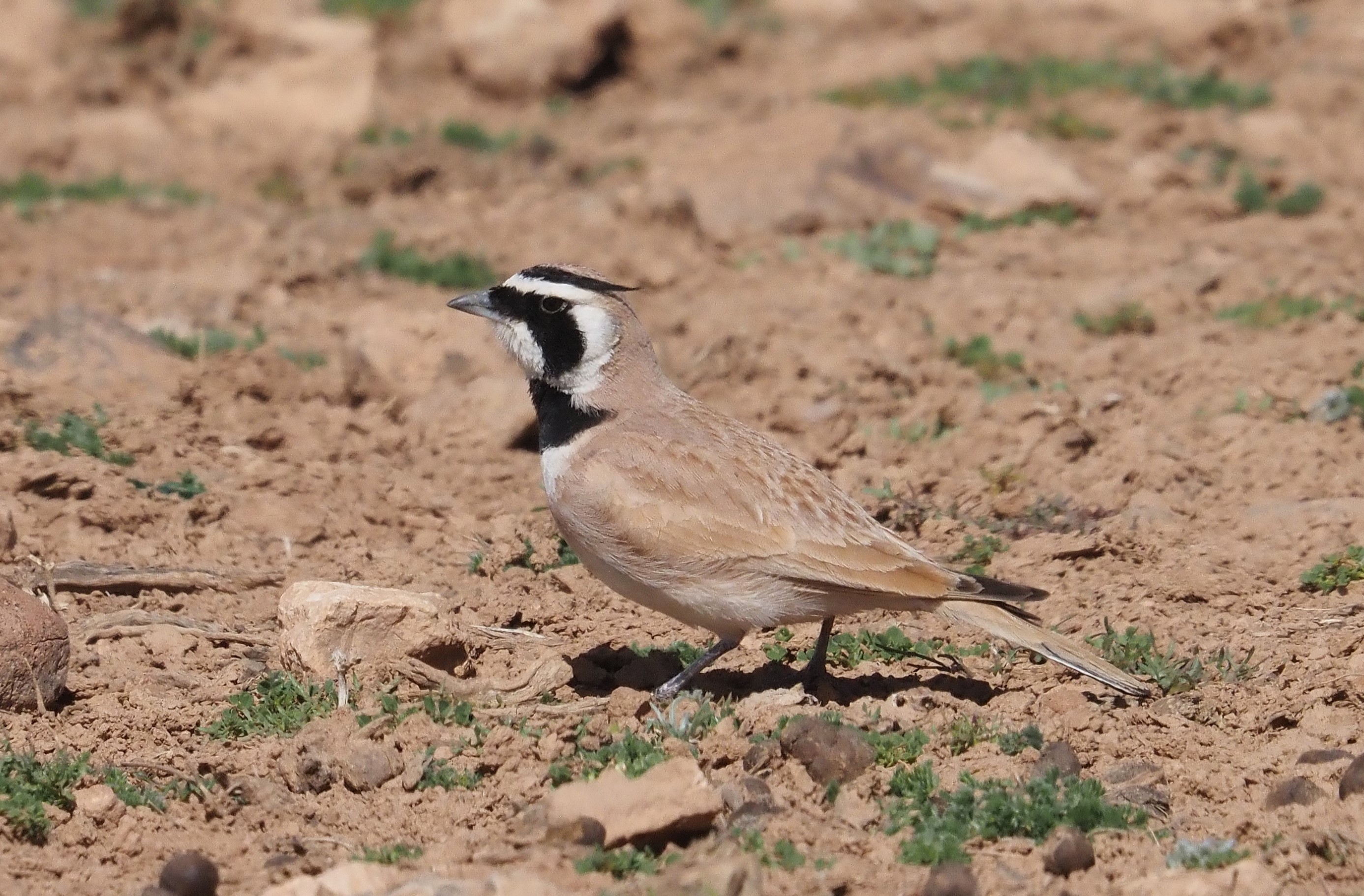
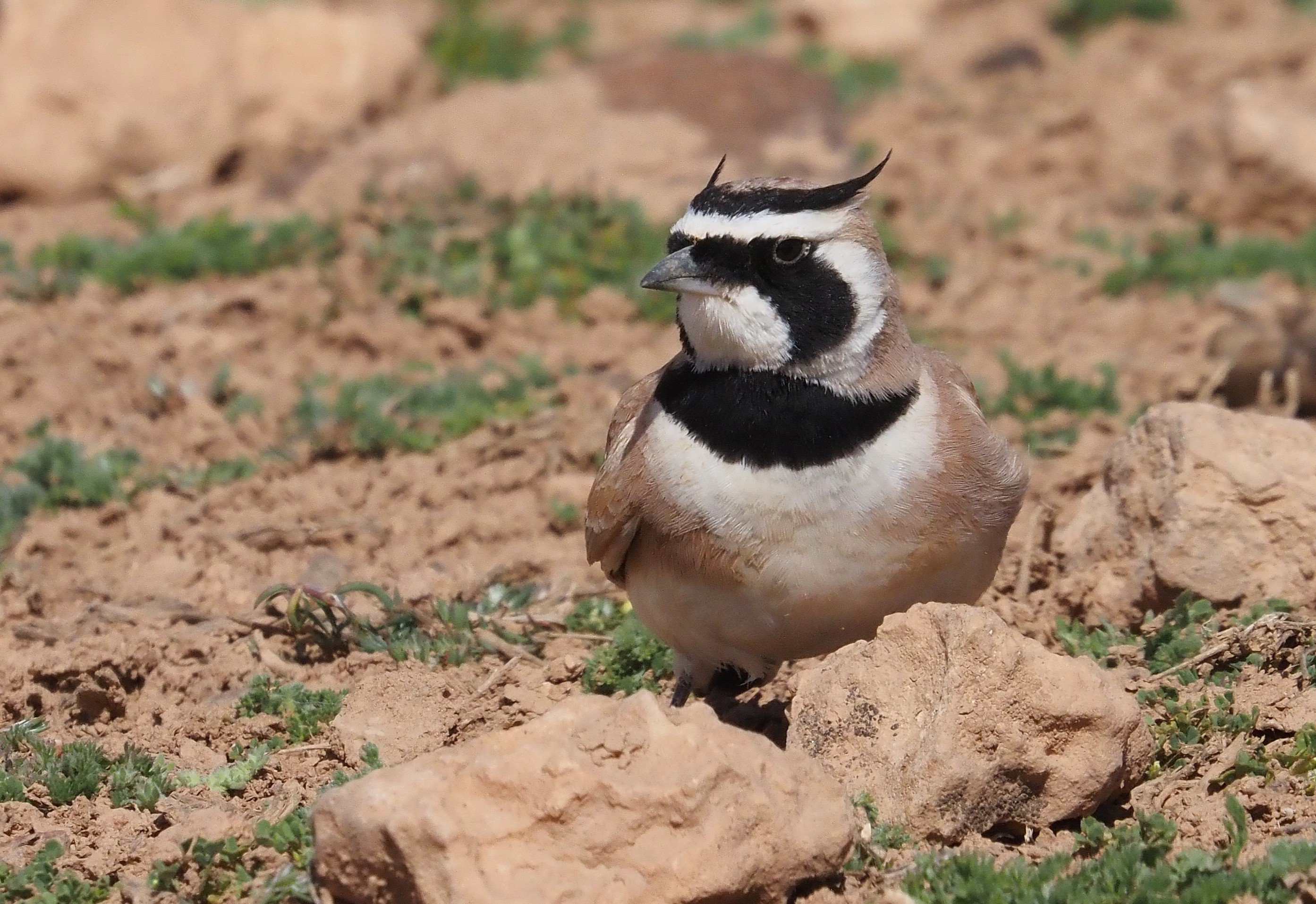
Nothing can compare to the delicate facial & breast pattern on Temminck’s Larks (Eremophila bilopha). Image by Carles Oliver
Even with all that rubbish, Thick-billed Lark (Ramphocorys clotbei) keeps being wonderful! Image by Carles Oliver
Our secret corner worked once more, and this time provided our group with great views on Thick-billed Larks! Image by Carles Oliver
Cream-coloured Coursers (Cursorior cursor) were just arriving to their nesting grounds. Image by Carles Oliver
It took us some time to locate the female Black-bellied Sandgrouse (Pterocles orientalis)! Image by Carles Oliver

Back to our accommodation, we enjoyed a nice lunch and some rest before going to explore a different location. The ondulations around Boulmane produces a number of canyons and we spent some time exploring of them. It didn’t take long before we got the firsts specialties, and Desert Wheatears, Trumpeter Finches and Desert Larks showed really well before enjoying a nice pair of the very scarce and elusive Maghreb Wheatear while moving in the barren slope. This is another Maghreb endemic, only known form a thin stripe crossing Morocco, Algeria & Tunisia and formerly considered conspecific with Mourning Wheatear, a Levant specialty. Atlas Buzzard and Common Kestrels were also noted here, and we also had some views on a roosting Pharaon Eagle Owl that, unfortunately, was really deep inside a hole and never came out enough to provide the group with a full view.

The last stop of the day was quite a change of ambient. Driving up the very scenic Gorge du Dades, with its many wonderful Kashbahs and colourful dressed women, we arrived to a small cliff. Just arrived we had a fast and interesting bird spectacle in front us: 2 Peregrine Falcons being moved by a much smaller, longer tailed, Barbary Falcon! The Peregrines looked like the owners of the cliff at the moment, as we even saw the pair passing food to each other. The Barbary Falcon, higher at all times, disappeared beyond the cliff. We waited for some time to have better views on the Barbary Falcon, and a showy Blue Rock Thrush and some Booted Eagles moving up the valley helped us to have a good entertainment. The Barbary Falcon showed a pair of times more in the sky, and we decided to end the afternoon soon enough to have some rest in the accommodation before dinner.

Spinny-tailed Lizzard (Uromastyx acanthinura). Image by Carles Oliver

Day 6. A transtional day between the high plateaus around Boulmane du Dades and the sandy deserts around Merzouga. The morning was sunny but fresh, with a cold air coming down from the Atlas that made our first stop really comfortable. The first stop in the morning was to look for the rather scarce Saharan Scrub Warbler, an endemic form of the Levant Scrub Warbler living in the sparse bushlands along wadis but also up in the slopes in the Northern slope of the Atlas mountains.

Our short walk produced almost immediately the first Bar-tailed Larks of the trip as well as confiding Mediterranean Short-toed Larks. Walking along the wadi we had a good set of the typical species living in this kind of habitats including Spectacled Warbler, Trumpeter Finches and Deser Wheatear plus migratory species such as Western Subalpine Warbler and Northern Wheatear. After a good while scanning the area we were starting to think about going somewhere else when Rob found 2 Scrub Warblers feeding at close range from us.

The birds, as typical on them, where feeding really low in the base of the small scrubs, making very difficult to see them for longer than a pair of seconds. Jumping from bush to bush, the Scrub Warblers moved really fast along the wadi, covering a lot of ground, flying from bush to bush but also “running” in the sand like tiny Babblers and typically standing by the base of a bush, tail-ups, before disappearing inside the grass.

After enjoying the Scrub Warblers for 20 minutes we started to come to the van, but we still had a pair of sights: First, a Cream-coloured Courser that flew over us while calling and secondly, a pair of Bar-tailed Larks showing quite close, as tame as ever.

Saharan Scrub Warbler (Scotocerca inquieta saharae) frozen in a jump. A great shot by Mark Newsome.
Trumpeter Finch (Bucanetes githagineus) feeding on seeds. Image by Mark Newsome.
Desert Wheatear males (Oenanthe deserti) can be really tame. Image by Carles Oliver

From here we drove into a close restaurant and enjoy some shade. After lunch, we covered the short distance to our next accommodation with a number of stops in the way. Desert Grey Shrike was added to our list, as well as Brown-necked Raven. A longer stop to explore another wadi produced good views on the common list of migratory species including Willow, Western Subalpine & Western Bonelli’s Warblers, but also Black-eared Wheatear & Western Orphean Warbler.

The last stop of the day was devoted to the typical habitat of Greater Hoopoe Lark, and it didn’t take long before having the first sight for trip of this really appreciated species: 2 individuals, one of them singing and displaying in flight. A great sight to end another wonderful day!

Day 7. This day was devoted to explore the desert around Merzouga. This is a quite well known place for the many desert specialties living around. It was a sunny and pleasant day all through, with a fresh brise during most of the day.

Our first stop was around a water hole where we did stop to look for Sandgrouses coming to drink water from several kilometers away. We didn’t have to wait long since even before our arrival some flocks of Crowned Sandgrouses were already on the ground, waiting for the best moment to approach the water. After some waiting, we id enjoy several flocks of both Crowned and Spotted Sandgrouses coming to the plain around the small pond, and soon their calls and wing beats filled up the ambient. This was a wonderful moment, and all the tour participants were really happy to see 80+ Crowned & 40+ Spotted Sandgrouses coming to drink water! We left the area with still more Sandgrouses coming to drink water, but we had to move to our next stop, a nomadic camp nearby where a pair of Desert Sparrow was nesting.

It was time for us to enjoy some tea, and our patience in the camp was rewarded with amazing views on a Desert Sparrow male that was feeding right the tents! The bird was really tame and allowed excellent images. Here, a Greater Hoopoe Lark also appeared, and provided the group with the best views on this species along the trip. White-crowned Black Wheatear, Common Redstart and Brown-necked Raven were also noted here.

Leaving this sandy patch of the desert, we drove North into a large wady where a nomad was waiting for us. His expertise was needed to find the next target of the trip, and after a short walk in the wady he brought directly to one Egyptian Nightjar that was roosting in the wadi. Respecting a good distance from the bird, we all enjoyed a wonderful view in this magnificent bird! A further walk around the dunes was also productive and Greater Hoopoe Larks and Desert Wheatears showed well, but the very best of the walk was to find a nice African Desert Warbler doing its way around the sparse vegetation of the wadi! This is again a desert specialist, and one of the most tricky birds to find in Morocco!

Crowned Sandgrouses (Pterocles coronata) around a water hole. Image by tour leader Carles Oliver
Spotted Sandgrouses (Pterocles senegallus) have been outnumbered by Crowneds in recent years. Image by Carles Oliver
White-crowned Wheatears (Oenanthe leucopygia) are urban birds in the desert. Image by Carles Oliver
Desert Sparrow (Passer ) favoured us with really close views. Image by Mark Newsome
Greater Hoopoe Lark (Alaemon alaudipes), the commoner lark around Merzouga. Image by Carles Oliver
Egyptian Nightjar (Caprimulgus aegyptiacus). Image by Carles Oliver
African Desert Warbler (Curruca deserti) inhabits along the wadi scrublands. Image by Carles Oliver

Happy after such a great views we went for some rest and lunch in a close accommodation. But in our way we had to do another stop: During the morning we had several flocks of Black Kites migrating North over the desert along with some Western Marsh Harriers, but one of these flocks was joined by a lovely Egyptian Vulture, the only one for the trip!

Our picnic was really tasty and, walking around the accommodation we enjoy it not only Western Subalpine Warblers & other common migratory birds but also Woodchat Shrike, Spanish Sparrow, Blue-cheeked Bee-eaters and a really tame Eastern Olivaceous Warbler (Iduna pallida reiseri) that posed really well for all the tour participants!

After lunch we tried to improve our rather scarce list of raptors but we were unlucky and the very last stop of the day was devoted to explore a small crop area with some water. Here we had several Western Yellow Wagtails of different races (nominal, Spanish, Italian & British) but also Maghreb Larks, Eurasian Crag Martin, Red-rumped Swallow, Little Ringed Plover, Wood Sandpiper, Northern Grey Shrike, Meadow Pipit, Greater Short-toed Lark and Ruddy Shelduck to name a few!

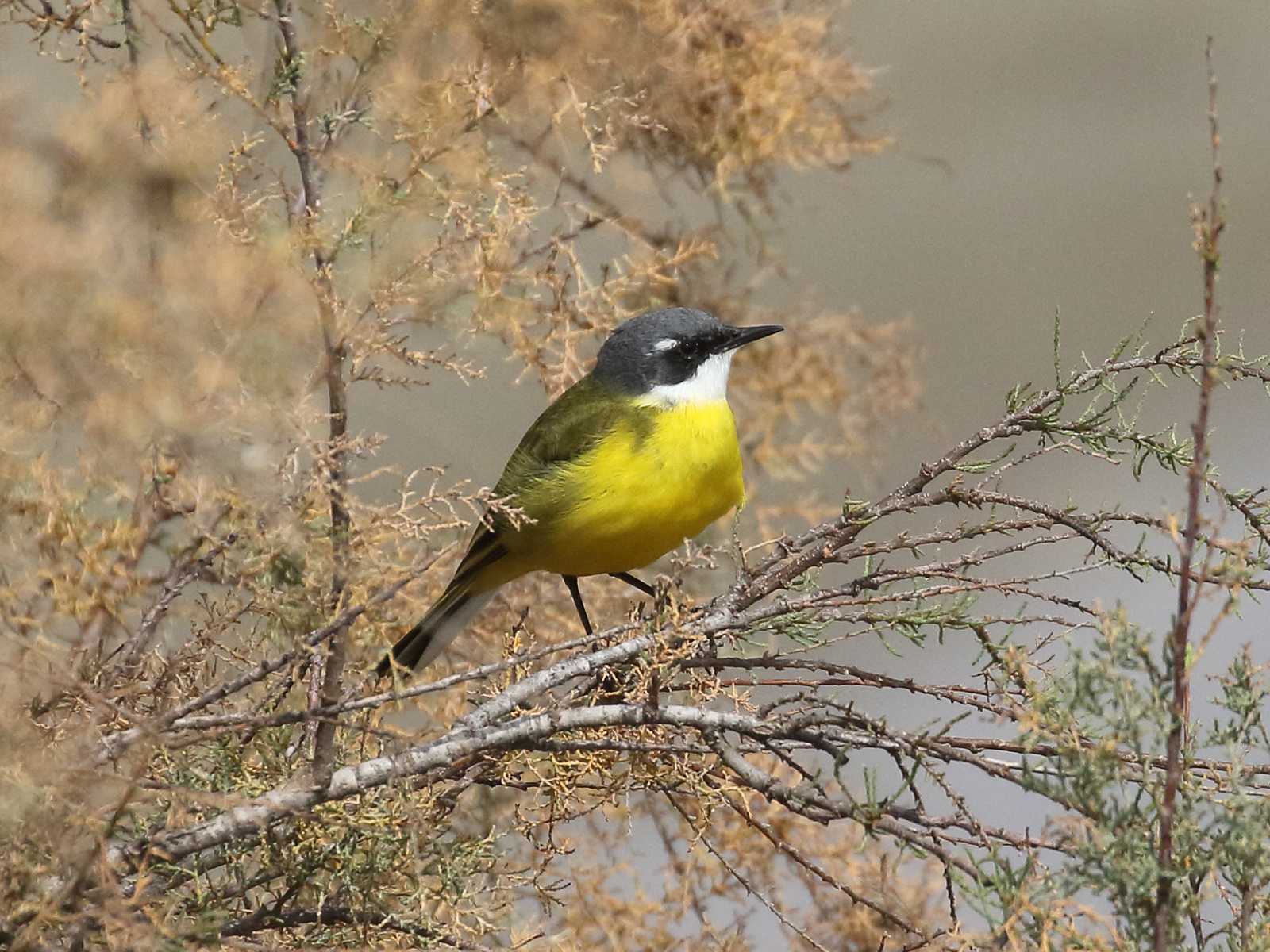
Western Yellow Wagtail (Motacilla flava). Image by Mark Newsome
Eastern Olivaceous Warbler (Iduna pallida reiseri), often refered as Saharan Olivaceous Warbler. Image by Mark Newsome.
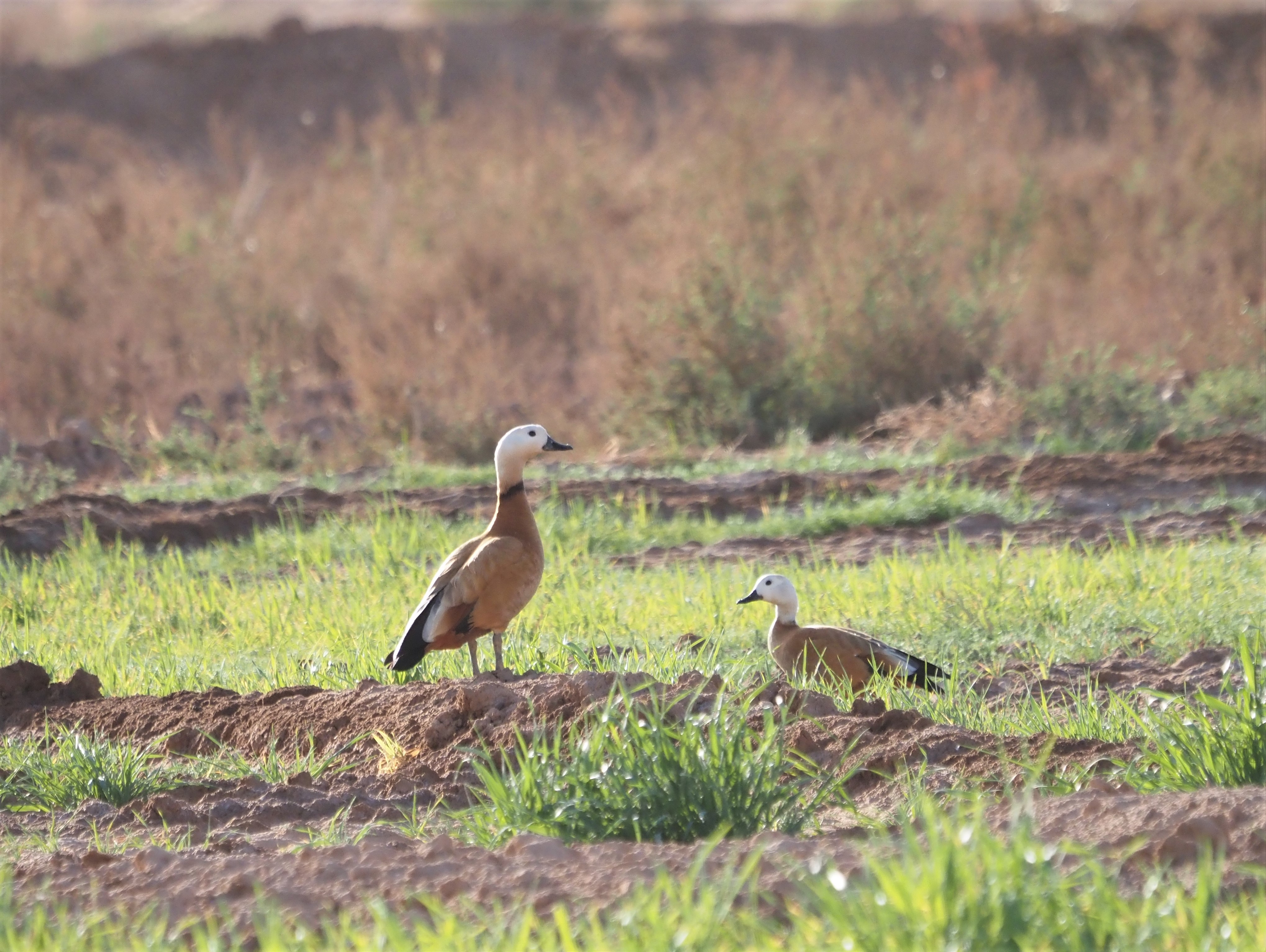
Ruddy Shelducks (Tadorna ferruginea) nest in good numbers in paddy fields. Image by Carles Oliver

Day 8. Due to the long drought and the terrible water management in the areas, the once famous and extremelly famous Merzouga lake is now gone. With the lake gone, this morning we explored a pair of corners in search of a good migratory action.

Firstly we explored the grounds of a nearby hotel, where we got more common migratory birds plus Western Orphean Warbler, Eastern Olivaceous Warbler, Common Whitethroat, European Bee-eater and Woodchat Shrike. From here we drove the short distance to the major palm grove in the area, where we had double figures of Common Whitethroat and Willow Warblers while Garden Warbler, European Turtle Dove and Bluethroat were added to the list. Here we enjoyed also great views on a family group of Fulvous Babbler, including an aberrant individual! This species, anyway, was already seen for some of the tour participants in a pre-dawn walk around our accommodation and shortly the day before in the desert!

In the afternoon the group agreed to do a good exploration some tens of kilometers South from Merzouga. This area, not really explored by most birdwatchers, provided us with a quite pristine landscapes, as it once was Merzouga, along with excellent numbers of Desert, Bar-tailed & Greater Hoopoe Larks. Here Carmine found a lovely flock of 8 Crowned Sandgrouses that provided the group with gorgeous views and good photo chances!

Western Subalpine Warbler (Curruca iberiae), the commnest bush warbler in migration in Morocco. Image by Mark Newsome.
This year there were excellent numbers of Fulvous Babblers (Turdoides fulva) around Merzouga. Image by Mark Newsome
Migratory Locust (Locusta migratoria). Image by Mark Newsome
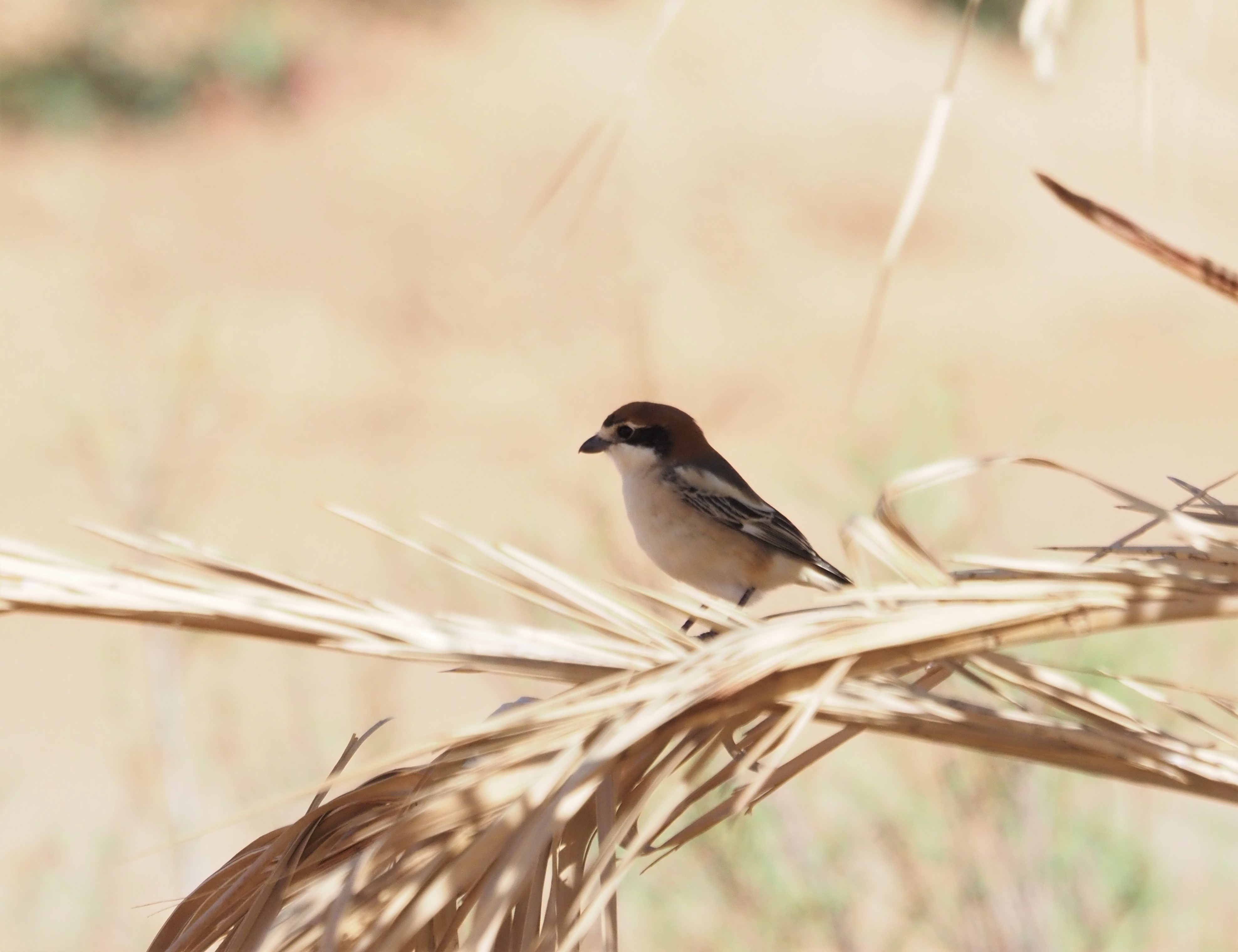
Woodchat Shrike (Lanius senator) hunting from a palm shade. Image by Carles Oliver
European Turtle Dove (Streptopelia turtur), a jewel declining all around the continent. Image by Carles Oliver
Bar-tailed Lark (Ammomanes cinctura) was extremelly common South of Merzouga. Image by Carles Oliver
Crowned Sandgrouse shows similar habits to those seen from Lichtenstein’s Sandgrouses. Image by Carles Oliver

Day 9. Transition day from Merzouga to the endless steppe land around Saïda, home of the shy and always challenging Dupont’s Lark! Before leaving the desert, we had a pair of stops. After breakfast we covered a short distance to explore the grounds of another accommodation. Here we didn’t have a lot of time as the owners were not happy with our visit and we were invited to immediatly leave the gardens. A real pity since within 5 minutes we already had enjoyed some good sights including obliging Common Nightingale, Eurasian Hoopoe and Dylan found the 1st Eurasian Wryneck of the trip! Unfortunately it was no chance to try a dialogue with the owners and we left what can be considered as the less welcoming ksar in Southern Morocco!

Around Erfoud we still have a last stop before our long drive North. Our search of a proper pond finally was successful and we found a small pond (we could not consider it as a “proper” one) where we got the only 3 Sedge Warblers of trip along with Eurasian Reed Warbler, Eastern Olivaceous Warbler, Western Bonelli’s Warbler, Bluethroat and, nearby, another Wryneck.

After some driving a lunch stop, we arrive to Zaïda in a windy afternoon. Birding was extremelly poor and we only got some distant Temminck’s Larks, a pair of Desert Wheatears and 1 Black-eared Wheatear. But swords were up for the next morning and try to find the famous “ghost bird”!

Moroccan Wagtail (Motacilla subpersonata), another Maghreb endemic. Image by Carles Oliver
Male Bluethroat (Luscinia svecica) hiding in dry tamarisks. Image by Carles Oliver
Record shot of an Eurasian Wryneck (Jynx torquilla) in the desert dunes. Image by Carles Oliver
Desert Wheatear (Onenanthe deserti). Image by Mark Newsome.

Day 10. After a nice breakfast we covered the few miles from our accommodation to the place where I saw Dupont’s Larks in 2022. We arrived to place, that was free of wind and had a really pleasant temperature. Bird activity was intense and it didn’t take long before we built a good list including several Mediterranean Short-toed Larks, Thekla Larks, Desert & Red-rumped Wheatears, Trumpeter Finches and a good number of Temminck’s Larks. Driving only 150 metres away from where we got the bird in 2022, Mark found a rather large lark running about 50 metres away from the van, not far from a pair of Desert Wheatears. The bird disappeared behind some bush and, after some wait, a lovely Dupont’s Lark appeared in front of us! The bird was quite far away so we all jumped out of the vans to allow everybody to get good views on the bird, that was feeding in the area for some time before climbing in a bush and sing for some time to replay a distant male. After a pair of minutes, the bird flew off, singing in flight, and flying a long distance away, disappearing beyond the small ondulations of the terrain!

All the tour participants were really excited as the confidence about finding this very difficult bird is always low! We the best was still to come. Decided to get better views, we moved a bit away to check another corner. No birds were listened there so we decided to come back to the area where we first seen the Dupont’s Lark. In the way, 2 Cream-coloured Coursers, Thick-billed Larks & some Black-bellied Sandgrouses were all seen! Back to place we were enjoying some Mediterranean Short-toed Larks displaying ten metres away from the van when a gorgeous Dupont’s Lark just appeared only a few metres to our left! The bird was really relaxed and was feeding around the tussocks of grass. The excitement inside the vehicles was huge, hundreds of images were taken and most of the tour participants decided to go out to enjoy this incredible sight from even closer (but never leaving the road!).

Common Whitethroat (Curruca communis) from our pre-dawn walk. Image by tour leader Sergi Sales.

Black-bellied Sandgrouses (Pterocles orientalis) around Saïda. Image by Mark Newsome.

Dupont’s Lark (Chersophilus duponti) offered unforgettable views to all the tour participants! Image by Carles Oliver
Mediterranean Short-toed Lark (Alaudala rufescens) displaying. Image by Carles Oliver

Extremelly happy after such a great views, we started the long transfer to Ouarzazate, where we had the last overnight of the tour. In the way, we still have time to stop and enjoy amazing views on a hatching female Lanner Falcon plus some other goodies including Fat Sand Rat, Desert Larks, Atlas Buzzard and a female Maghreb Wheatear.

At dust, a short stop in a river produced some nice views on Grey Wagtail, Booted Eagle and Cetti’s Warbler before a Barbary Falcon appeared in a fast raid to try to catch one of the Cattle Egrets around. A really nice way to end the day!

The impressive broken terrain South of Boulmane du Dades offers good habitat to a variety of species. Image by Carles Oliver

Day 11. Last day of this tour, one day longer than usual to include Dupont’s Lark in the itinerary. Before driving back to Marrakech by crossing the Atlas, we decided to have another go to the massive barrage South of Boulmane du Dades. This time the weather was clearly better, a calm, sunny and promising morning that was not really productive. A series of stops in the massive dump produced good views on migratory Black Storks and large flocks of Black Kites but little numbers of ducks in the lake.

But, when leaving one of the spots, Carmine found a pair of gorgeous Thick-billed Larks right next to the van that displayed long for us! Leaving the dump behind us, we still enjoyed close views on Little Ringed Plover by the road, and the very last birding stop still produced Little Swift, Common Nightingale, Melodious Warbler, Black-eared Wheatear and a singing Wryneck before we crossed the Atlas back to Marrakech, where we did arrive at mid afternoon, in time for everybody to reach their flights.

Black Kites (Milvus migrans) leaving their roosting place to cross the Atlas. Image by Carles Oliver
The last day we got quite impressive views on Thick-billed Larks. Images by Carles Oliver
Little Ringed Plover (Charadrius dubius) in flight. Image by Mark Newsome.
Black-eared Wheatear (Oenanthe hispanica) in a typical migratory spot. Image by Carles Oliver

List of birds during the tour:

  1. Barbary Partridge (Alectoris barbara)
  2. Common Quail (Coturnix coturnix) – heard only
  3. Helmeted Guineafowl (Numida meleagris)
  4. Ruddy Shelduck (Tadorna ferruginea)
  5. Common Shelduck (Tadorna tadorna)
  6. Northern Shoveler (Spatula clypeata)
  7. Gadwall (Mareca strepera)
  8. Mallard (Anas platythynchos)
  9. Eurasian Teal (Anas crecca)
  10. Marbled Teal (Marmaronetta angustirostris)
  11. Egyptian Nightjar (Caprimulgus aegyptius)
  12. Little Swift (Apus affinis)
  13. Common Swift (Apus apus)
  14. Pallid Swift (Apus pallidus)
  15. Common Cuckoo (Cuculus canorus) -heard only
  16. Black-bellied Sandgrouse (Pterocles orientalis)
  17. Crowned Sandgrouse (Pterocles coronatus)
  18. Spotted Sandgrouse (Pterocles senegallus)
  19. Feral Pigeon (Columba livia sp)
  20. Common Woodpigeon (Columba palumbus)
  21. European Turtle Dove (Streptopelia turtur)
  22. Laughing Dove (Streptopelia senegalensis)
  23. Eurasian Collared Dove (Streptopelia decaocto)
  24. Eurasian Moorhen (Gallinula chloropus)
  25. Euriasian Coot (Fulica atra)
  26. Great Crested Grebe (Podiceps cristatus)
  27. Little Grebe (Tachybaptus ruficollis)
  28. Greater Flamingo (Phoenicopterus roseus)
  29. Eurasian Oystercatcher (Haematopus ostralegus)
  30. Pied Avocet (Recurvirostra avosetta)
  31. Black-winged Stilt (Himantopus himantopus)
  32. Stone Curlew (Burhinus oedicnemus)
  33. Cream-coloured Courser (Cursorior cursor)
  34. Common Ringed Plover (Charadrius hiaticula)
  35. Little Ringed Plover (Charadrius dubius)
  36. Kentish Plover (Charadrius alexandrinus)
  37. Grey Plover (Pluvialis squatarola)
  38. Red Knot (Calidris canutus)
  39. Dunlin (Calidris alpina)
  40. Bar-tailed Godwit (Limosa lapponica)
  41. Black-tailed Godwit (Limosa limosa)
  42. Eurasian Curlew (Numenius arquata)
  43. Eurasian Whimbrel (Numenius phaeopus)
  44. Common Redshank (Tringa totanus)
  45. Spotted Redshank (Tringa erythropus)
  46. Greenshank (Tringa nebularia)
  47. Wood Sandpiper (Tringa glareola)
  48. Green Sandpiper (Tringa ochropus)
  49. Common Sandpiper (Actitis hypoleucos)
  50. Ruff (Philomachus pugnax)
  51. Black-headed Gull (Chroicocephalus ridibundus)
  52. Audouin’s Gull (Ichtyaetus audouinii)
  53. Yellow-legged Gull (Larus michahellis)
  54. Lesser Black-backed Gull (Larus fuscus)
  55. Mediterranean Gull (Larus melanocephalus)
  56. Common Tern (Sterna hirundo)
  57. Sandwich’s Tern (Thalasseus sandvicensis)
  58. Gull-billed Tern (Gelochelidon nilotica)
  59. Arctic Skua (Stercorarius parasiticus)
  60. Pomarine Skua (Stercorarius pomarinus)
  61. Great Skua (Stercorarius skua)
  62. Atlantic Puffin (Fratercula arctica)
  63. Razorbill (Alca torda)
  64. Cory’s Shearwater (Calonectris borealis)
  65. Manx Shearwater (Puffinus puffinus)
  66. Balearic Shearwater (Puffinus mauretanicus)
  67. White Stork (Ciconia ciconia)
  68. Black Stork (Ciconia nigra)
  69. Atlantic Gannet (Morus bassanus)
  70. Great Cormorant (Phalacrocorax carbo)
  71. Black-crowned Night Heron (Nycticorax nycticorax)
  72. Western Cattle Egret (Bubulcus ibis)
  73. Little Egret (Egretta garzetta)
  74. Grey Heron (Ardea cinerea)
  75. Purple Heron (Ardea purpurea)
  76. Glossy Ibis (Plegadis falcinellus)
  77. Northern Bald Ibis (Geronticus eremita)
  78. Eurasian Spoonbill (Platalea leucorodia)
  79. Osprey (Pandion haliaetos)
  80. Egyptian Vulture (Neophron percnopterus)
  81. Short-toed Snake Eagle (Circaetus gallicus)
  82. Booted Eagle (Aquila pennata)
  83. Black Kite (Milvus migrans)
  84. Montagu’s Harrier (Circus pygargus)
  85. Western Marsh Harrier (Circus aeruginosus)
  86. Eurasian Sparrowhawk (Accipiter nisus)
  87. Atlas/North African Buzzard (Buteo buteo cirtensis)
  88. Black-winged Kite (Elanus caeruleus)
  89. Pharaon Eagle Owl (Bubo ascalaphus)
  90. Maghreb Owl (Strix mauritanica)
  91. Little Owl (Athene noctua)
  92. Eurasian Scops Owl (Otus scops) – heard only
  93. Eurasian Hoopoe (Upupa epops)
  94. Blue-checkeed Bee-eater (Merops persicus)
  95. European Bee-eater (Merops apiaster)
  96. Common Kingfisher (Alcedo atthis)
  97. Great Spotted Woodpecker (Dendrocopos major)
  98. Levaillant’s Green Woodpecker (Picus vaillantii)
  99. Eurasian Wryneck (Jynx torquilla)
  100. Greater Short-toed Lark (Calandrella brachydactyla)
  101. Mediterranean Short-toed Lark (Alaudala rufescens)
  102. Crested Lark (Galerida cristata)
  103. Maghreb Lark (Galerida macrorrhyncha)
  104. Thekla Lark (Galerida theklae)
  105. Desert Lark (Ammomanes deserti)
  106. Bar-tailed Lark (Ammomanes cinctura)
  107. Atlas Shore Lark (Eremophila alpestris atlas)
  108. Temmick’s Lark (Eremophila bilopha)
  109. Thick-billed Lark (Rhamphocoris clotbei)
  110. Dupont’s Lark (Chersophilus duponti)
  111. Greater Hoopoe Lark (Alaemon alaudipes)
  112. Eurasian Crag Martin (Ptyonoprogne rupestris)
  113. Sand Martin (Riparia riparia)
  114. Brown-throated Martin (Riparia paludicola)
  115. Barn Swallow (Hirundo rustica)
  116. Red-rumped Swallow (Cecropis daurica)
  117. Western House Martin (Delichon urbicum)
  118. Tree Pipit (Anthus trivialis)
  119. Meadow Pipit (Anthus pratensis)
  120. Tawny Pipit (Anthus campestris)
  121. White Wagtail (Motacilla alba)
  122. Moroccan Wagtail (Motacilla subpersonata)
  123. Grey Wagtail (Motacilla cinerea)
  124. Western Yellow Wagtail (Motacilla flava)
  125. White-throated Dipper (Cinclus cinclus)
  126. Eurasian Robin (Erithacus rubecula)
  127. Common Nightingale (Luscinia megarhynchos)
  128. Bluethroat (Luscinia svecica)
  129. Common Redstart (Phoenicurus phoenicurus)
  130. Black Redstart (Phoenicurus ochruros)
  131. Moussier’s Redstart (Phoenicurus moussieri)
  132. Northern Wheatear (Oenanthe oenanthe)
  133. Seebohm’s Wheatear (Oenanthe seebohmi)
  134. Western Black-eared Wheatear (Oenanthe hispanica)
  135. Maghreb Wheatear (Oenanthe halophila)
  136. Black Wheatear (Oenanthe leucura)
  137. White-crowned Black Wheatear (Oenanthe leucopyga)
  138. Desert Wheatear (Oenanthe deserti)
  139. Red-rumped Wheatear (Oenanthe moesta)
  140. European Stonechat (Saxicola rubicola)
  141. Song Thrush (Turdus philomelos)
  142. Mistle Thrush (Turdus viscivorus)
  143. European Blackbird (Turdus merula)
  144. Blue Rock Thrush (Monticola solitarius)
  145. Saharan Scrub Warbler (Scotocerca inquieta saharae)
  146. Eurasian Blackcap (Sylvia atricapilla)
  147. Garden Warbler (Sylvia borin)
  148. Common Whitethroat (Curruca communis)
  149. Western Orphean Warbler (Curruca hortensis)
  150. Sardinian Warbler (Curruca melanocephala)
  151. Spectacled Warbler (Curruca conspicillata)
  152. Western Subalpine Warbler (Curruca inornata)
  153. Tristam’s Warbler (Curruca deserticola)
  154. African Desert Warbler (Curruca deserti)
  155. Eurasian Reed Warbler (Acrocephalus scirpaceus)
  156. Sedge Warbler (Acrocephalus schoenibaenus)
  157. Zitting Cisticola (Cisticola juncidis)
  158. Cetti’s Warbler (Cettia cetti)
  159. Melodious Warbler (Hyppolais polyglotta)
  160. Isabelline / Western Olivaceous Warbler (Iduna opaca)
  161. Eastern Olivaceous Warbler (Iduna pallida reiseri)
  162. Common Chiffchaff (Phylloscopus collybita)
  163. Iberian Chiffchaff (Phylloscopus ibericus)
  164. Willow Warbler (Phylloscopus trochilus)
  165. Western Bonelli’s Warbler (Phylloscopus bonellis)
  166. Firecrest (Regulus ignicapillus)
  167. Eurasian Wren (Troglodytes troglodytes) – heard only
  168. African Blue Tit (Cyanistes teneriffae)
  169. Great Tit (Parus major)
  170. Coal Tit (Periparus ater atlas)
  171. Short-toed Treecreeper (Certhia brachydactyla mauritanica)
  172. Great Grey Shrike (Lanius excubitor) algeriensis & elegans races
  173. Woodchat Shrike (Lanius senator)
  174. Black-crowned Tchagra (Tchagra senegalensis)
  175. Common Bulbul (Pycnonotus barbatus)
  176. Fulvous Babbler (Turdoides fulva)
  177. African Magpie (Pica mauretanica)
  178. Common Raven (Corvus corax)
  179. Brown-necked Raven (Corvus ruficollis)
  180. Spotless Starling (Sturnus unicolor)
  181. House Sparrow (Passer domesticus)
  182. Spanish Sparrow (Passer hispanoliensis)
  183. Desert Sparrow (Passer simplex)
  184. Common Rock Sparrow (Petronia petronia)
  185. African Chaffinch (Fringilla coelebs africana)
  186. European Serin (Serinus serinus)
  187. Eurasian Greenfinch (Chloris chloris)
  188. Eurasian Goldfinch (Carduelis carduelis)
  189. Eurasian Siskin (Spinus spinus) – heard only
  190. Common Linnet (Liniaria cannabina)
  191. Trumpeter Finch (Bucanetes githagineus)
  192. African Crimson-winged Finch (Rhodopechys alienus)
  193. Cirl Bunting (Emberiza cirlus)
  194. Rock Bunting (Emberiza cia)
  195. House Bunting (Emberiza sahari)
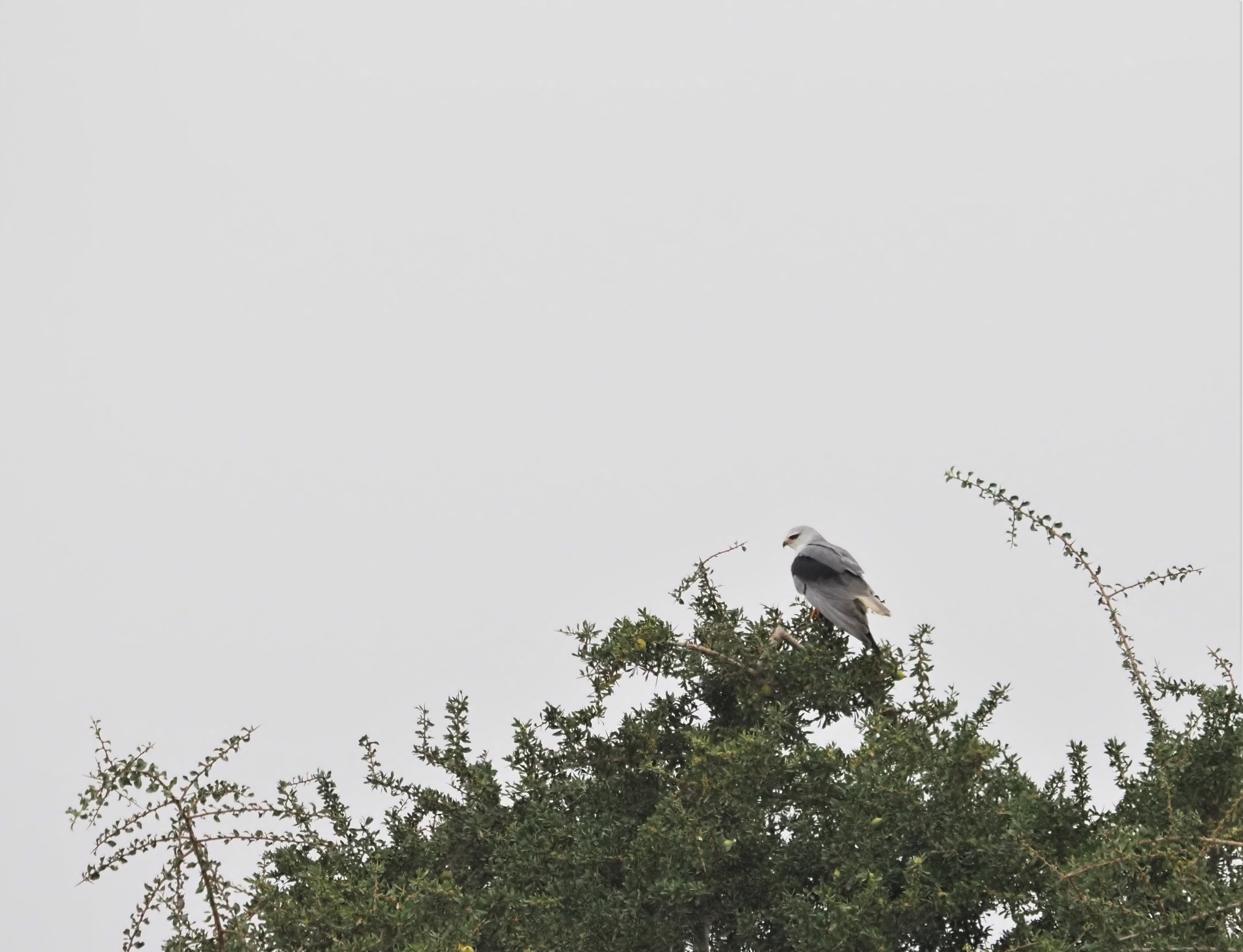
  196. Corn Bunting (Emberiza calandra)

Morocco Birding Tour 2022 Trip Report

  • Dates: March 12th to March 25th, 2022
  • Number of participants: 6
  • Species seen: 190

All images in this trip report by Carles Oliver. All rights reserved.

Overview. Our 8th tour to Morocco explored again one of the most popular routes in Southern Morocco. Combining excellent mountain birding in the Atlas with the stunning variety of birdlife living in the transitional plains between the mountains and the Sahara, this tour embraces a good array of habitats that provides excellent chances for all the main specialties living in the area. This year, the tour was marked by an unusual cloudy weather and very cold temperatures. During our stay in Agadir, we had general rains in the area, and the snow was appearing a pair of times during the tour. This situation was translated in a poor bird migration, with several trans-Saharan migratory species showing very thin numbers, when not being totally absent from our trip list. Despite the general unusual weather, we got excellent views on all specialties out of Thick-billed Lark. The tour had also a pair of very interesting birds, as males Little Crake and Pallid Harrier were seen both around Ouarzazate.

Day 1: Early breakfast in our hotel in Marrakech before going out and enjoy a sunny but rather fresh day. All tour participants were arriving along the day before in a number of afternoon flights, and we all met for an evening meal.

Before getting to the van we had some nice looks to the Marrakech urban birdlife. A number of Pallid Swifts were flying low, and we got good views on the colour and structure. On the same hotel, two House Buntings were singing their heart out while Sardinian Warblers, Common Bulbuls, Spotless Starlings and Eurasian Greenfinches were also noted.

Maghreb Magpie (Pica mauretanica) showing out its smart blue facial markings

In our way out of Marrakech we had first views on Maghreb Magpies, a recent split from Eurasian Magpies, on the wires or feeding on the ground, often along with Cattle Egrets. Our first stop was to explore a lovely valley in the Atlas. Here, small patches of riverside forests are surrounded by the wallnut orchards while the slopes around are fittered with Juniper srublands. Soon after living the van we had our first Levaillant’s Woodpecker (aka Atlas Green Woodpecker) nicely showing. We could all have excellent views while the bird was slowy moving in the branches of tree, in an interesting warbler-like behaviour. 2 African Blue Tits appeared as well in the same place, and a showy Eurasian Wren was a nice adding. Great Tit was calling in the distance, and European Serins were moving all around. A bit more of time in this wonderful location allowed us to have 3 Little Swifts, our first Moroccan Wagtail, Great Spotted Woodpecker and lovely views on a male Cirl Bunting.

The North African race of Great Spotted Woodpeckers are quite disctintive, showing a darkish tint in the breast and extensive red in the vental area
Levaillant’s Green Woodpecker, the first of many specialities showing in the tour
African Chaffinches are close to the races living in the Canaries but still considered conspecific with the European races

We move on from this wonderful corner to go up in the hillsides. As normal, we had some good roadside birding, and Lesser Kestrels and Eurasian Sparrowhawk were noted while moving up. Once arrived to a typical habitat we had a second stop, successful again. Soon after we got out of the van a wonderful Tristam’s Warbler was moving really close while feeding in the Junipers. Another bird was singing up in the slope and provided good looks while showing on the top of a bush. Around the area we also had two Atlas Coal Tits (a potential split) and a wonderful Rock Bunting calling while doing its way in a barren slope. However, the suprise of the stop was to see 3+ Ring Ouzels (torquatus race) moving in the scrublands and on the ground while looking for berries.

Back to the lane, we kept doing our way up until a large flock of Red-billed Choughs came to us in a wonderful aerial spectacle. The birds were not only playing with the wind in the slopes, but also harrasing an Atlas Buzzard (still considered a race of Long-legged Buzzard, but who knows for how long). A fast stop by the road was required, and happily all the tour participants could connect with this amazing bird of prey, clearly smaller and short-winged than nominals Long-leggeds. But we were still luckier when a Barbary Falcon joined the show for a while, and offered nice views while flying quite lower than the Choughs themselves!

Tristam’s Warblers look for slopes rich in junipers to nest
In our way to Oukaimeden we had the chance to enjoy superb views on cirtensis Long-legged Buzzard (aka Atlas Buzzard)

Happy after such a wonderful road side stop, we kept our way to arrive to Oukaïmeden. Once in the area, we did a short walk in the plain and we fast had a flock of 6 Rock Sparrows that gave us nice views. Black Redstarts and Black Wheatears were around, and we were lucky enough to see White-throated Dipper in the stream and 1 Alpine Accentor that flew along right in front of us, but the main attractions of the place kept elusive for us.

We decided to do a lunch stop, and enjoy the good food up in the mountains. After lunch we went for a second shot in the plains and we were definately luckier, since a female African Crimson-winged Finch appeared sitting on a wire and, after a bit of walk, we all enjoyed excellent views on the bird! It was certainly strange to have a single individual here, contrasting with flocks that we normally find but never mind. We really took that!

A last stop was required before stating going down to Marrakech. In a small corner of the plain (a typical place for them to be) we found 12+ Atlas Horned Lark, a very distictive, resident race of Horned Larks, and again a good candidate for a future split.

Out of mountains, we still decided to go for a final stop before going back to our accommodation. The Southern part of Marrakech has lovely fields and a good array of birdlife living on them. Here we had a stop to and we were granted with a lovely flock of European Serins, Spanish Sparrows, Corn Buntings, Crested Larks, Zitting Cisticolas, European Stonechats plus the views on species such as Moussier’s Redstart and Woodchat Shrike. But the main character and the authentical reason of our stop was to look for Barbary Partridges, and we were lucky enough to find 3+ of them doing their way in the fields, and trying to disapear in the open terrain.

Atlas Horned Laks are endemic of the Atlas high plateaus and slopes, overwintering in the same mountains but at lower altitudes
This year we struggled to find this female African Crimson-winged Finch!
While searching for the high mountain species we had the chance to enjoy some obliging Red-billed Choughs

Day 2. Transfer day from Marrakech to the Agadir area. A transfer was more complicated due to the difficult traffic around Agadir. Our first stop was in Essaouira, where we enjoined some good birds South of the city. Here we had first views on Ruddy Shelducks but also Pied Avocets, Black-winged Stilts, 2 Green Sandpipers, Wood Sandpiper, 1 Ruff, 14 Eurasian Spoonbills, Greater Flamingoes, Common Redshanks, 3 Little Ringed Plovers and 1 Common Snipe. Some other species, although more distant, included 3 Audouin’s Gulls + 1 Mediterranean Gull and 3 Sandwich Terns roosting along with large numbers of Yellow-legged Gulls (probably coming from the Mogador Island colony) and a single Lesser Black-backed Gull.

Our journey kept to the South, following the wonderful coastal route that, crossing slopes fittered with Argan trees, arrives to the Tamri Estuary. Here we had a walk and soon we had good views on Northern Bald Ibis flying above us. The walk goes along the coastal dunes, with many Lesser Black-backed Gulls moving up in down along the coast. A scan into a flock of gulls roosting in the beach produced to less than 40 Audouin’s Gulls and some nice-looking Kentish Plovers. But the main attraction was still to come when a Northern Bald Ibis just landed a few metres away from us, and started to look for food in the sand. Digging its bill in the dunes, the bird showed really suggessful and got warms and some small insects. After 20 minutes of wonderful sighting, joined by two pairs of Moussier’s Redstart, we did a last stop further South, in the Cape Tamri.

Northern Bald Ibis, with only three colonies in Morocco, is one of the most endangered birds in the region

This location proved in other issues to be excellent for seawatching, but this time all the birds were seen really far away, and the counts were not above 25 Northern Gannets moving North and some Sandwich Terns moving around. The stop was complemented with great views on tame Thekla Larks moving around the rocky outcrops and 2 Algerian Shrikes (the race of Great Grey Shrike living in Northern Morocco and along the Atlantic coast).

We started moving to our accommodation, with a last stop in mind, but our changes of this last birding stop vanished into a large traffic jump due to road works.

Day 3. Our day in the Souss-Massa National Park started with a pair of short walks to catch up with some specialties around. The weather was clearly changing, with a massive low pressure system coming from the Atlantic Ocean and threatening with strong rains and lower temperatures. Still, we managed a pair of successful stops in the morning.

Our first stop was to explore a small corner of the Massa River. In the past, this area showed a wonderful variety of birdlife, including several migratory birds. But this year the water level (like in many other corners along the Massa River) was really low, and the migratory birds almost absent. A short stroll rapidly produced good views on Cetti’s Warbler and African Chaffinches. Several Common Chiffchaffs were moving around, and a obliging pair of Moussier’s Redstart provided great views. In the distance, a Black-winged Kite was whovering above the farming around the river. After some scanning, we were able to locate a wonderful Black-crowned Tchagra moving in the lash vegetation, and with some patience we all enjoyed great and close views on it!

Black-winged Kite next to our accommodation!
This issue again provided excellent views on Black-crowned Tchagra, despite the weather
Little Owl in a fig tree was a rather unexpected sight

The clouds were already coming, and temperature was getting down (collapsing!), but we managed a second stop before the heavy rain arrived. In a small patch of reeds and tamarisks we found the first Western Olivaceous Warbler (aka Isabelline Warbler) of the trip moving in the vegetation and going on with what it sounded like a subsong. 3 Eurasian Spoonbills were feeding in a small pond along with 1 Common Sandpiper and 1 Little Ringed Plover. Some Little & Pallid Swifts flew above us, providing good looks while we moving away from the river to have a short exploration of the fields around. A flock of 35 Eurasian Siskins was quite a surprise so far South, but little more could be added out of 1 Meadow Pipit and Moussier’s Redstarts. It started to rain heavily so we decided to go back to our accommodation. In our way back, a Little Owl was a nice find!

The heavy rain tied us to ous hotel until mid-afternoon, when the rain stopped and we could go out. There were still some clouds, but had to move! Another potentially good corner in the river Massa was also rather quiet, but we still had 4 Plain Martins flying around, brief views on 1 Bluethroat, Maghreb Magpies, a distant Western Swamphen, 1 Purple Heron and a small flock of Pied Avocets feeding nearby the bridge. Beyond this point, the area become more bushy, with formidable formations of euphorbias. Here we did a second stop, and we were granted with 3 Western Black-eared Wheatears, European Bee-eaters, Sardinian Warblers, 2 Eurasian Hoopoes, 2 Cirl Buntings at close range and 1 Great Spotted Cuckoo! We were all quite satisfied with this, and we drove back to the hotel for an early dinner. After dinner, more birds!

A short walk from our accommodation, and a bit of luck, provided great views on 1 Red-necked Nightjar calling, flying and briefly stopping around us in a great sight that, for our clients, ranked among one of the 10 better birds of the trip!!!

This stunning and wet male Moussier’s Redstart was extremely tame with our group
Western Olivaceous Warblers nest along the River Massa
Female Cirl Bunting around our accommodation
Superb Spanish Sparrows were feeding at the hotel grounds

Day 4. Transfer day between Agadir and Ouarzazate. The morning was again really cold (only 10ºC!!) and with some rain. Despite the bad weather we did stop in the Massa River, and we had a good hearing on 3 Black-crowned Tchagras singing while a flock of Glossy Ibis was feeding around. A second morning stop in the Souss River estuary was way more productive. Here we got a really good selection of waders feeding in the mudflats along with several Eurasian Spoonbills, some Greater Flamingoes, Mediterranean Gulls and a Lesser Kestrel hunting dragonflies!

It was quite a surprise the good number of Black-tailed Godwits in the estuary feeding along with several Black-winged Stilts and Pied Avocets. A minimum of 48 Ruffs were also counted, and 27 Curlew Sandpipers. 3 Spotted Redshanks were also noted along with many Common Redshanks, Grey Plovers, Eurasian Whimbrels and some Wood Sandpipers. A careful scanning revealed also 1 Temminck’s Stint, 2 Red Knots, 4 Eurasian Curlews, 4 Bar-tailed Godwits and a flock of 7 Little Stints. Surprisingly we only counted 4 Common Ringed Plovers in the whole estuary!

Stilts, Black-tailed Godwits, Ruffs + Common & Spotted Redshanks feeding in Souss River
A lovely view of the Souss River

A short walk along the more vegetated areas produced some Yellow Wagtails and short views on a (white-spotted) Bluethroat.

After this pleasant stop we went on with our transfer along the Anti Atlas. The roads between Agadir & Ouarzazate goes along one of the best areas for birds of prey in Morocco. With the Tawny Eagle and Chanting Goshawks both gone for long, the area remains as an interesting hot-spot for birds of prey such as Black-winged Kite. Along the road, we counted up to 4 Black-winged Kites, but also Black Kites, our first Short-toed Snake Eagle and 1 Barbary Falcon.

House Bunting in a terrace

One of the best stops on this road birding provided excellent views on a Great Spotted Cuckoo singing from the top of an Argan Tree. Some tens of miles away from the cuckoo, another stop was mandatory when we found 4 obliging Cream-coloured Coursers and 2 Desert Larks just by the tarmac!

This was the 2nd Great Spotted Cuckoo of the tour. Just by the highway
This year Cream-coloured Coursers seem to be everywhere!

In the afternoon we were already close to Ouarzazate, when we crossed one of the many streams coming down from the Atlas. There, roosting in the reedbeds, there were several Little Egrets and 4 Black-crowneds Night Herons. A stop was, obviously, mandatory!

The vegetation along the stream was full of Sedge Warblers that were feeding along with 1 or 2 Eurasian Reed Warblers while the first Willow Warbler of the trip was moving in a tall grass right beyond. We were really enjoying the views on these little fellas just when 1 male Little Crake decided to walk out of the vegetation, showing himself in a superb afternoon light! The bird was there for 10 minutes, in what it was a lifer bird of more than the half of the group! Then somebody advaced about a bird of prey coming from the right, and we all had the time enjoy a superb Bonelli’s Eagle diving right beyonf the stream, tallons in the front of, probably trying to catch a prey!

Everybody was really excited, and the Little Crake was still in the out, but a Eurasian Wryneck just called in our back. Time to move to the small Almond plantation and try to find the Wryneck. We moved slowly in the fields with scatered large Almond trees, when a small bird just flew off from the grass and landed low in small bush: 1 Common Grasshoper Warbler! It took me 10 minutes to put everyone in the bird, but we did it!!!

Back to the Wryneck operation, we moved around the area and found a lovely European Turtle Dove sitting on a tree. A tour participant found a Woodchat Shrike in a large shrub and we all admired it but, by the time my bins came back to the tree where the Turtle Dove was, it was turned into the Wryneck that we had been looking for!! What a wonderful stop!!

And this is how a road birding day can turn out in a absolutely great birding day!

Male Little Crake in a small stream around Ouarzazate
Surprisingly, this was our only European Turtle Dove of the tour!

Day 5. Early morning start to explore the massive reservoir inmediatly South of Ouarzazate. Weather was still cloudy, and temperatures were far lower than expected. Still, we enjoyed another great day. Instead of heading directly to the reservoir, we drove a bit around the semi desert to try to find some specialties. There we had first views on Desert & White-crowned Black Wheatears but also a pair of Trumpeter Finches and 1 Spectacled Warbler. It was clear that it was some migration, since it was a flock after a flock of Greater Short-toed Larks moving North, and we got 17 Black Storks that seemed to be roosting in a distant plateau East of the reservoir.

Once in the lake, we had good views on both Maghreb & Thekla’s Larks. The shores were full with Ruddy Shelducks and the songs of migratory Sedge Warblers were all over. A distant Water Rail was also noted, while a large flock og 400+ White Storks were roosting in the reeds. On waders, it was low. We only had some Little Ringed Plovers, some Ruffs, Green Sandpipers, 2 Greenshanks and 3 Black-tailed Godwits.

Maghreb Lark (Galerida macrorrhyncha), a recent split from Crested Lark
One of the only 3 Alpine Swifts during the tour

A bit beyond we reached a view point over the reservoir and we soon had excellent but distant views over the many Marbled Teals around. We counted a minimum of 80 of them and, along with this really scarce duck, we enjoyed a good array of other ducks including Gadwalls, Northern Shovelers and Eurasian Teals, but also 1 female Eurasian Wigeon, 2 Tufted Ducks, 12 Common Pochards, 5 Garganeys and 2 Northern Pintails. In the lagoon we also got the only Great Crested Grebes of the trip while 2 Alpine Swifts flew over.

After some time scanning the lagoon we started to move. It was still cold and cloudy but it was evident that a good raptor migration was going on. Hundreds of distant Black Kites were cincling and moving North, 1 female Western Marsh Harrier was seen flying low and inmediatly after we got one of the surprises of the trip, a male Pallid Harrier that showed briefly while flying towards the Atlas! Unfotunately not everyone in the group got a proper view on this very scarce bird of prey!!

It was already late in the morning so we started moving East to arrive to our accommodation in Boulmane du Dades for an early lunch. The ambient here was even colder that it was in the morning, and we had lunch by the fire!

During the afternoon we had a first contact with the extensive steppe land inmediatly South of Boulmane. The light was poor and the temperature was only 6ºC, extremelly low for Morocco in this season. Still, it didn’t take long to have first views on Temminck’s Larks, and a proper stroll around produced a pair of Greater Hoopoe Larks, 1 Long-legged Buzzard, 1 Barbary Falcon a flock of 6 Cream-coloured Coursers and some Desert Wheatears.

Part of our group enjoying the plains!
Barbary Falcon in its scouting point
There were still few numbers of Desert Wheatears in Boulmane and nearby areas

Day 6. Full day enjoying the steppes and gorges around Boulmane. In the morning we had some stops in the plains, adding great views on Trumpeter Finches and Red-rumped Wheatears to our list. We were only 3ºC but the birding was still great, with several Temminck’s Larks around and migratory Greater Short-toed Larks feeding around. A short visit to proper fields around produced 8 Black-bellied Sansgrouses and, for our surprised, they were joined by 1 Pin-tailed Sandgrouse!

We were in a small lowland in the way to the Atlas, and a further exploration of the areas produced excellent views on Little Owls!

Our last stop of the morning was even better. A small corner in the plains that is normally a good place for Larks was having more than ever: 15+ Cream-coloured Coursers, 10+ Greater Hoopoe Larks, Mediterranean Short-toed Larks, Thekla’s Larks and Greater Short-toed Larks were all seen and enjoyed. A Tawny Pipit showed briefly and some bush around produced 2 Willow Warblers, 1 Tree Pipit, Linnets and 4 species of Wheatears (Northern, White-crowned Black, Red-rumped & Desert!).

Trumpeter Finch is, un many locations, the only one Finch around
Temminck’s Lark, always a treat
Little Owl in the plains South of Boulmane. Please note the light brown coloration

In the afternoon the sun finally appeared, and temperature rose. We basically spent the afternoon in a pretty gorge close to Boulmane. There, we enjoyed great views on a roosting Pharaon Eagle Owl, but also a pair of Lanner Falcons, Black Wheatear, Desert Larks, a flyby Red-rumped Swallow and stunning views on a Maghreb Wheatear, one of the most sought-after birds of the country!

We enjoyed great views on a pair of Lanner Falcons
Pharaon Eagle Owl inside its daytime hollow
Maghreb Wheatear, one of two endèmic Wheatears in the region
An old Kashba, the Southern Morocco fancy castles made on clay

Day 7. In the morning we had another walk to explore a different corner in the plains, hoping to connect with Thick-billed Lark. It was no way to find this species but we enjoyed good views on Black-bellied Sandgrouses feeding on the ground and a good set of other larks.

After our en-route lunch we spent some time in a well-known spot in the desert, where we looked for the scarce and unobtrusive Saharan Scrub Warbler. The walk produced Woodchat Shrike, Tawny Pipit, Thekla Lark, Spectacled Warbler and the first Bar-tailed Lark of the trip. After some time looking for the famous Scotocerca, we were about to quit from our day quesy when one of the tour participants advaced us about a bird moving low in the scrubs. It took us about 25 minutes to put everybody in the bird but eventually there they were: A handsome pair of Saharan Scrub Warbler!

Saharan Scrub Warbler lives in low density in desert Scrub lands and barren slopes
Black-bellied Sandgrouses blind perfectly with the stony plains
This year Greater Hoopoe Larks were really common around Boulmane du Dades

After this great sight we just drove to our accommodation down in the desert, with some road birding sights including Booted Eagle and Brown-necked Raven.

Day 8. Our day started in the desert by checking some great places for migratory song birds. Unfortunately, the extremely low temperatures of the last days was affecting the bird migration. Along the morning the number and variety of birds was extremely low. We still had good views on Western Subalpine Warblers, Western Bonelli’s Warblers, Common Redstarts, Eurasian Hoopoes, Willow Warblers and 3 Woodchat Shrikes. 1 Western Black-eared Wheatear was an unexpected sight, and we also enjoyed good views on Bar-tailed & Maghreb Larks.

But the bird of the day was the African Desert Warbler that we found nesting close to one of the main roads in the area, and that was providing really good looks!

Western Bonelli’s Warblers are a common view along the tour
African Desert Warbler in typical nesting site

Day 9. Early morning start to enjoy the birds of the desert. Our first stop was to visit a water hole in the dunes, and our efforts here were granted with great views on 80+ Crowned Sandgrouses and 40+ Spotted Sandgrouses that came down to drink water early in the morning. The images of these Sandgrouses drinking water is something that our clients will never forget!

A short drive for a coffee stop gave us access to one of the few Desert Sparrows left in the area, and we all again enjoyed really good views on a species that is becoming more and more scarce due to the concurrence of House Sparrows in the area. The morning ended with a last stop, this time to see 2 Egyptian Nightjars roosting in the dunes! Another amazing sight!!

During the afternoon, our clients had a free time to explore by their own the dunes and the bushland around the accommodation.

This year Crowned Sandgrouses were surprisingly common in Merzouga
Spotted Sandgrouses on their to the water hole
Egyptian Nightjar blinding in a wady
The impressive sand dunes around Merzouga
Once and again we got amazing views on Desert Sparrows

Day 10. Transfer day from the desert to Marrakech. But in the morning we still had time to explore the extensive palm groves near Merzouga. There we were lucky enough to find a gorgeous Fulvous Babbler! Other good birds in the area included Common Redstart and Maghreb Lark.

Fulvous Babbler, a typical bird of palm groves
Atlas Wheatear inhabits the Atlas high mountain grasslands

The roads in Morocco have improved a lot and only some hours after we were already in the Atlas alpine meadows, were we had another productive stop, adding Atlas Wheatear (a recent split from Northern Wheatear, a short-migratoy species that nests in the Atlas high plateaus and overwinters in the Sahel plains). Here, we also got 3 Booted Eagles migrating North and the only Water Pipit of the trip!

A pair of hours later we were arriving to Marrakech after crossing the Atlas, and a rather massive snowfall that was ending our 8th tour to Morocco, and the one with the most weird weather!!!

In 2023 we will come, same dates. Join for excellent birding and good fun!!

List of bird seen during the tour:

  • 1. Barbary Partridge (Alectoris barbara)
  • 2. Mallard (Anas platyrhynchos)
  • 3. Gadwall (Anas strepera)
  • 4. Eurasian Wigeon (Anas penelope)
  • 5. Pintail (Anas acuta)
  • 6. Eurasian Teal (Anas crecca)
  • 7. Garganey (Spatula querquedula)
  • 8. Marbled Teal (Marmaronetta angustirostris)
  • 9. Northern Shoverler (Spatula clypeata)
  • 10. Common Pochard (Aythya ferina)
  • 11. Tutfed Duck (Aythya fuligula)
  • 12. Common Swift (Apus apus)
  • 13. Pallid Swift (Apus pallidus)
  • 14. Little Swift (Apus affinis)
  • 15. Pin-tailed Sandgrouse (Pterocles alchata)
  • 16. Black-bellied Sandgrouse (Pterocles orientalis)
  • 17. Crowned Sandgrouse (Pterocles coronata)
  • 18. Spotted Sandgrouse (Pterocles senegallus)
  • 19. Feral Dove (Columba livia)
  • 20. Common Wood Pigeon (Columba palumbus)
  • 21. Stock Dove (Columba oenas)
  • 22. Eurasian Collared Dove (Streptopelia decaocto)
  • 23. Laughing Dove (Streptopelia senegalensis)
  • 24. European Turtle Dove (Streptopelia turtur)
  • 25. Western Swamphen (Porphyrio porphyrio)
  • 26. Common Moorhen (Gallinula chloropus)
  • 27. Eurasian Coot (Fulica atra)
  • 28. Little Crake (Zapornia parva)
  • 29. Little Grebe (Tachybaptus ruficollis)
  • 30. Great Crested Grebe (Podiceps cristatus)
  • 31. Greater Flamingo (Phoenicopterus roseus)
  • 32. Eurasian Stone Curlew (Burhinus oedicnemus)
  • 33. Cream-coloured Courser (Cursorior cursor)
  • 34. Eurasian Oystercatcher (Haematopus ostralegus)
  • 35. Black-winged Stilt (Himantopus himantopus)
  • 36. Pied Avocet (Revurvirostra avosetta)
  • 37. Grey Plover (Pluvialis squatarola)
  • 38. Common Ringed Plover (Charadrius hiaticula)
  • 39. Little Ringed Plover (Charadrius dubius)
  • 40. Kentish Plover (Charadrius alexandrinus)
  • 41. Black-tailed Godwit (Limosa limosa)
  • 42. Bar-tailed Godwit (Limosa lapponica)
  • 43. Eurasian Whimbrel (Numenius phaeopus)
  • 44. Eurasian Curlew (Numenius arquata)
  • 45. Spotted Redshank (Tringa erythropus)
  • 46. Common Redshank (Tringa totanus)
  • 47. Greenshank (Tringa nebularia)
  • 48. Green Sandpiper (Tringa ochropus)
  • 49. Wood Sandpiper (Tringa glareola)
  • 50. Common Sandpiper (Actitis hypoleucos)
  • 51. Ruddy Turnstone (Arenaria interpres)
  • 52. Sanderling (Calidris alba)
  • 53. Little Stint (Calidris minuta)
  • 54. Temminck’s Stint (Calidris temminckii)
  • 55. Dunlin (Calidris alpina)
  • 56. Curlew Sandpiper (Calidris ferruginea)
  • 57. Red Knot (Calidris canutus)
  • 58. Ruff (Calidris pugnax)
  • 59. Black-headed Gull (Chroicocephalus ridibundus)
  • 60. Lesser Black-backed Gull (Larus fuscus)
  • 61. Yellow-legged Gull (Larus michahellis)
  • 62. Mediterranean Gull (Larus melanocephalus)
  • 63. Audouin’s Gull (Ichthyaetus audouinii)
  • 64. Sandwich Tern (Thalasseus sandvicensis)
  • 65. Gull-billed Tern (Gelochelidon nilotica)
  • 66. Cory’s Shearwater (Calonectris diomedea)
  • 67. White Stork (Ciconia ciconia)
  • 68. Black Stork (Ciconia nigra)
  • 69. Atlantic Gannet (Morus bassanus)
  • 70. Great Cormorant (Phalacrocorax carbo)
  • 71. Glossy Ibis (Plegadis falcinellus)
  • 72. Eurasian Spoonbill (Platalea leucorodia)
  • 73. Little Bittern (Ixobrychus minutus)
  • 74. Western Cattle Egret (Bubulcus ibis)
  • 75. Black-crowned Night Heron (Nycticorax nycticorax)
  • 76. Purple Heron (Ardea purpurea)
  • 77. Grey Heron (Ardea cinerea)
  • 78. Little Egret (Egretta garzetta)
  • 79. Great White Heron (Agrodiaetus albus)
  • 80. Western Osprey (Pandion haliaetos)
  • 81. Bonelli’s Eagle (Aquila fasciata)
  • 82. Booted Eagle (Aquila pennata)
  • 83. Short-toed Snake Eagle (Circaetus gallicus)
  • 84. Western Marsh Harrier (Circus aeruginosus)
  • 85. Pallid Harrier (Circus macrourus)
  • 86. Long-legged Buzzard, aka Atlas Buzzard (Buteo rufinus cirtensis)
  • 87. Eurasian Sparrowhawk (Accipiter nisus)
  • 88. Little Owl (Athene noctua)
  • 89. Pharaon Eagle Owl (Bubo ascalaphus)
  • 90. Egyptian Nightjar (Caprimulgus aegiptius)
  • 91. Red-necked Nightjar (Caprimulgus ruficollis)
  • 92. Eurasian Hoopoe (Upupa epops)
  • 93. Common Kingfisher (Alcedo atthis)
  • 94. European Bee-eater (Merops apiaster)
  • 95. Atlas Woodpecker (Picus vallantii)
  • 96. Great Spotted Woodpecker (Dendrocopos major)
  • 97. Eurasian Wryneck (Jynx torquilla)
  • 98. Common Kestrel (Falco tinnunculus)
  • 99. Lesser Kestrel (Falco naumanii)
  • 100. Barbary Falcon (Falco peregrinoides)
  • 101. Lanner Falcon (Falco biarmicus)
  • 102. Black-crowned Tchagra (Tchagra senegalensis)
  • 103. Algerian Shrike (Lanius excubitor algeriensis)
  • 103b. Desert Grey Shrike (Lanius excubitor elegans)
  • 104. Woodchat Shrike (Lanius senator)
  • 105. Brown-necked Raven (Corvus ruficollis)
  • 106. Common Raven (Corvus corax)
  • 107. Red-billed Chough (Pyrrhocorax pyrrhocorax)
  • 108. Magherb Magpie (Pica mauretanica)
  • 109. Eurasian Jay (Garrulus glandarius)
  • 110. Fulvous Babbler (Argya fulva)
  • 111. Greater Hoopoe-Lark (Alaemon alaudipes)
  • 112. Crested Lark (Galerida cristata)
  • 113. Maghreb Lark (Galerida macrorrhyncha)
  • 114. Thekla’s Lark (Galerida theklae)
  • 115. Temminck’s Lark (Eremolauda temminckii)
  • 116. Atlas Horned Lark (Eremophila alpestris atlas)
  • 117. Mediterranean Short-toed Lark (Alaudala rufescens)
  • 118. Greater Short-toed Lark (Calandrella brachydactyla)
  • 119. Desert Lark (Ammomanes deserti)
  • 120. Bar-tailed Lark (Ammomanes cinctura)
  • 121. Barn Swallow (Hirundo rustica)
  • 122. Western House Martin (Delichon urbicum)
  • 123. Red-rumped Swallow (Cecropis daurica)
  • 124. Sand Martin (Riparia riparia)
  • 125. Plain Martin (Riparia paludicola)
  • 126. Eurasian Crag Martin (Ptrynoprogne rupestris)
  • 127. Zitting Cisticola (Cisticola juncidis)
  • 128. Common Chiffchaff (Phylloscopus collybita)
  • 129. Willow Warbler (Phylloscopus troquilus)
  • 130. Western Bonelli’s Warbler (Phylloscopus bonelli)
  • 131. Firecrest (Regulus ignacapilla)
  • 131. Western Olivaceous Warbler (Iduna opaca)
  • 133. Eurasian Reed Warbler (Acrocephalus scirpaceus)
  • 134. Sedge Warbler (Acrocephalus schoenibaenus)
  • 135. Saharan Scrub Warbler (Scotocerca saharae)
  • 136. African Desert Warbler (Curruca deserti)
  • 137. Western Orphean Warbler (Curruca hortensis)
  • 138. Sardinian Warbler (Curruca melanocephala)
  • 139. Western Subalpine Warbler (Curruca iberiae)
  • 140. Tristam’s Warbler (Curruca deserticola)
  • 141. Song Thrush (Turdus philomelos)
  • 142. Mistle Thrush (Turdus viscivorus)
  • 143. Eurasian Blackbird (Turdus merula)
  • 144. Ring Ouzel (Turdus torquatus)
  • 145. Blue Rock Thrush (Monticola solitarius)
  • 146. Bluethroat (Luscinia svecica)
  • 147. European Robin (Erithacus rubecula)
  • 148. Black Redstart (Phoenicurus ochruros)
  • 149. Common Redstart (Phoenicurus phoenicurus)
  • 150. Moussier’s Redstart (Phoenicurus moussieri)
  • 151. European Stonechat (Saxicola torquatus)
  • 152. Northern Wheatear (Oenanthe oenanthe)
  • 153. Atlas Wheatear (Oenanthe seebohmi)
  • 154. Desert Wheatear (Onenanthe deserti)
  • 155. Maghreb Wheatear (Oenanthe halophila)
  • 156. Western Black-eared Wheatear (Oenanthe hispanica)
  • 157. Red-rumped Wheatear (Oenanthe moesta)
  • 158. Black Wheatear (Oenanthe leucura)
  • 159. White-crowned Black Wheatear (Oenanthe leucopyga)
  • 160. House Sparrow (Passer domesticus)
  • 161. Spanish Sparrow (Passer hispanoliensis)
  • 162. Common Rock Sparrow (Petronia petronia)
  • 163. Dipper (Cinclus cinclus)
  • 164. Spotless Starling (Sturnus unicolor)
  • 165. Eurasian Wren (Troglodytes troglodytes)
  • 166. Alpine Accentor (Prunella collaris)
  • 167. Great Tit (Parus major)
  • 168. African Blue Tit (Cyanistes teneriffae)
  • 169. Atlas Coal Tit (Periparus ater atlas)
  • 170. Short-toed Treecreeper (Certhia brachydactyla mauretanica)
  • 171. Eurasian Nuthatch (Sitta europaeus)
  • 172. Gray Wagtail (Motacilla cinerea)
  • 173. White Wagtail (Motacilla alba)
  • 174. Moroccan Wagtail (Motacilla subpersonata)
  • 175. Yellow Wagtail (Motacilla flava)
  • 176. Tawny Pipit (Anthus campestris)
  • 177. Meadow Pipit (Anthus pratensis)
  • 178. Tree Pipit (Anthus trivialis)
  • 179. Water Pipit (Anthus spinolleta)
  • 180. Eurasian Goldfinch (Carduelis carduelis)
  • 181. Eurasian Siskin (Carduelis spinus)
  • 182. Eurasian Greenfinch (Chloris chloris)
  • 183. Linnet (Liniaria cannabina)
  • 184. African Chaffinch (Fringilla coelebs africana)
  • 184b. Common Chaffinch (Fringilla coelebs)
  • 185. European Serin (Serinus serinus)
  • 186. African Crimson-winged Finch (Rhodopechys alienus)
  • 187. Corn Bunting (Emberiza calandra)
  • 188. Rock Bunting (Emberiza cia)
  • 189. House Bunting (Emberiza sahari)
  • 190. Cirl Bunting (Emberiza cirlus)

List of mammals seen during the tour:

  • 1. Barbary Ground Squirrel (Atlantoxerus getulus)
  • 2. Fat Sand Rat (Psammomys obesus)
Female Desert Sparrow

Thanks for arriving until down here! And, remember, in 2023 we will be back to enjoy the Moroccan birdlife!