Arxiu d'etiquetes: King Eider

Crònica de viatge: Finlàndia i Finnmark 2024

  • Dates: Del 31 de maig al 9 de juny, 2024
  • Participants: 10
  • Número d’espècies vistes: 170
  • Tour líders: Carles Oliver & Ramiro Aibar

Totes les imatges d’aquesta crònica han estat realitzades per Carles Oliver. Tots els drets reservats.

Please, follow this link to find the English version of this trip report.

Resum: El nostre 7è tour al Nord de Finlàndia i Finnmark ha tornat a ser una aventura força exitosa. La variabilitat d’algunes espècies en aquests hàbitats és ben coneguda i molt destacable. Enguany, va sobtar la quasi total absència de trencapinyes al llarg del recorregut, amb només uns quants contactes i tant sols un parell d’observacions. Amb prou feines hi havia cap observació recent de trencapinyes becgròs a la zona! A l’altra banda de l’espectre, vam aconseguir molt bones observacions de totes les espècies de galls i de 5 espècies de mussols malgrat la baixa densitat d’enguay. El sit rústic i el repicatalons petit semblaven trobar-se a tot arreu en determinats moments del viatge, i la cotxa cuablava i el picot de tres dits també es van deixar veure molt bé i fàcil malgrat algunes temperatures força altes al llarg del tour.

Dia 1. Part del nostre grup va aterrar a Oulu amb una mica de retard degut a un excès de trànsit a l’aeroport de Barcelona. A l’aeroport d’Oulu ens vam trobar a un altre participant, però aquí també vam patir un endarreriment derivat d’un problema amb les furgonetes de lloguer. Normalment gaudim d’una petita finestra de pardaleig a la primera tarda del viatge, però enguany el primer pardaleig del tour va ser després de sopar.

El sopar a l’allotjament va ser el primer moment que tot el grup es va trobar i seure junts i tenint una torre d’observació a tocar de l’hotel no vam passar l’oportunitat de, un cop escurades les postres, fer-hi un cop d’ull un cop. Aquesta passejada va servir per tenir un primer contacte amb tot un seguit d’espècies comunes en aquesta part de Finlàndia incloent tord ala-roig, mastegatatxes, papamosques gris, boscarla dels joncs, bec de serra mitjà, xatracs comú i àrtic, gamba roja comuna, xarxet comú, ànec griset, ànec cullerot o ànec cuallarg però també d’altres una mica més escasses o més interessants com pinsà carminat, àguila marina o tètol cuanegre així com els primers xarrasclets del tour.

Dia 2. El primer dia de pardaleig del tour va tenir com a objectiu principal contactar amb algunes de les espècies de mussols que viuen als boscos boreals. Com sempre, vam començar força d’hora al matí, amb respectius esmorzars per emportar. El temps era fresc i les primeres gralles de la bonica raça escandinava no es van fer esperar, alimentant-se amb graules. La primera parada del tour va ser per visitar un niu actiu de gamarús dels Urals i vam tenir la sort de ser allà en el moment que la femella estava al niu. Tot i que l’angle no era el més adient, tothom va poder gaudir de bones observacions incloent vistes de la cara i els ulls amb el telescopi. Caminant pel bosc boreal, aquell primer passeig va produir cotxa cua-roja i la primera mallerenga capnegra del tour mentre un gall de cua furcada cantava a certa distància.

La segona parada la vam fer per comprovar si un niu històric de mussol pirinenc estava actiu enguany. Aquí també vam tenir sort, i fins i tot des de la pista forestal vam veure un pollet de mussol pirinenc que s’estava dret al mateix forat del niu! Els següents deu minuts van ser simplement fantàstics. Amb tot el grup assegut al terra del bosc boreal, vam gaudir d’unes observacions excel·lents d’aquest pollet mentre anava albirant el bosc al voltant seu. Passats uns minuts vam veure que neguitejava i quasi semblava que havia de saltar del niu. Va ser en aquell moment que un reclam va sortir del bosc i fins i tot abans no poguéssim començar a cercar l’ocell, Nick va trobar per tots nosaltres un segon pollet de mussol pirinenc que estava aturat a només uns 3 metres de tot el grup! Els següents minuts van ser simplement inoblidables, gaudint com poques vegades del petit volaltó. Passats uns minuts vam decidir moure’ns enrere. Sense voler-ho, havíem acabat massa a prop de l’ocell!

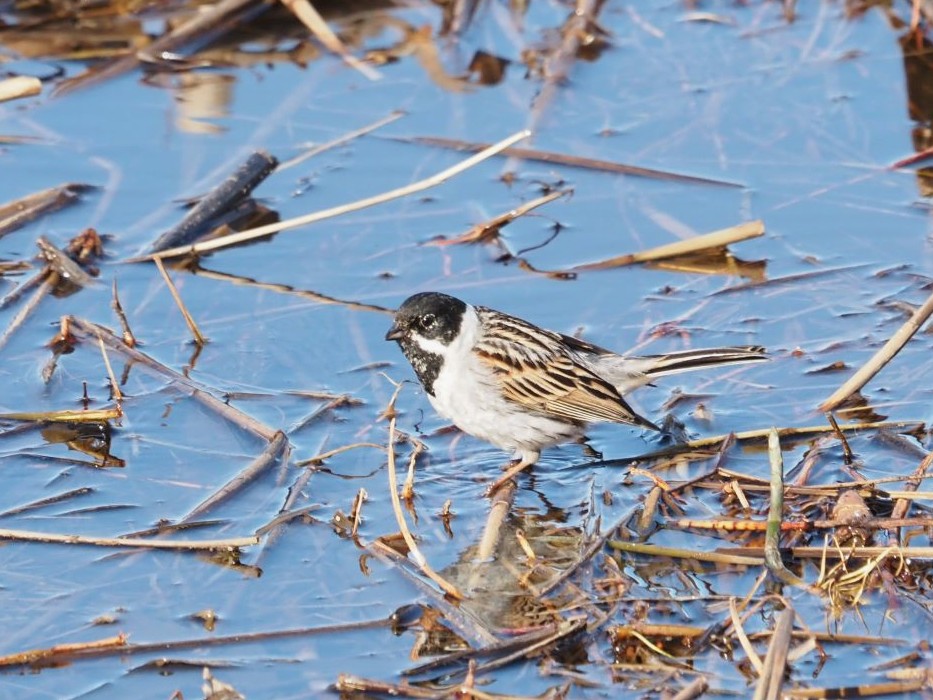
Encara vam tenir uns quants minuts per gaudir d’aquell màgic racó del bosc boreal abans no vam seguir el nostre itinerari. De camí cap al següent punt, vam trobar dos mascles d’escorxador que se les tenien al llarg de la pista. Aquests van ser els únics escorxadors del viatge, ja que és una espècie força escassa a la zona! No gaire lluny, una zona de conreus ens va permetre observar hortolans. No vam trigar gaire a trobar el primer mascle cantant des d’un arbre, seguit per al menys dos mascles més i un parell d’individus alimentant-se al terra. Altres espècies d’interès a la zona van incloure també verderola, repicatalons, bitxacs rogencs cantant a dojo als marges i la única tallareta comuna del tour mentre els pinsats carminats cantaven una mica més enllà.

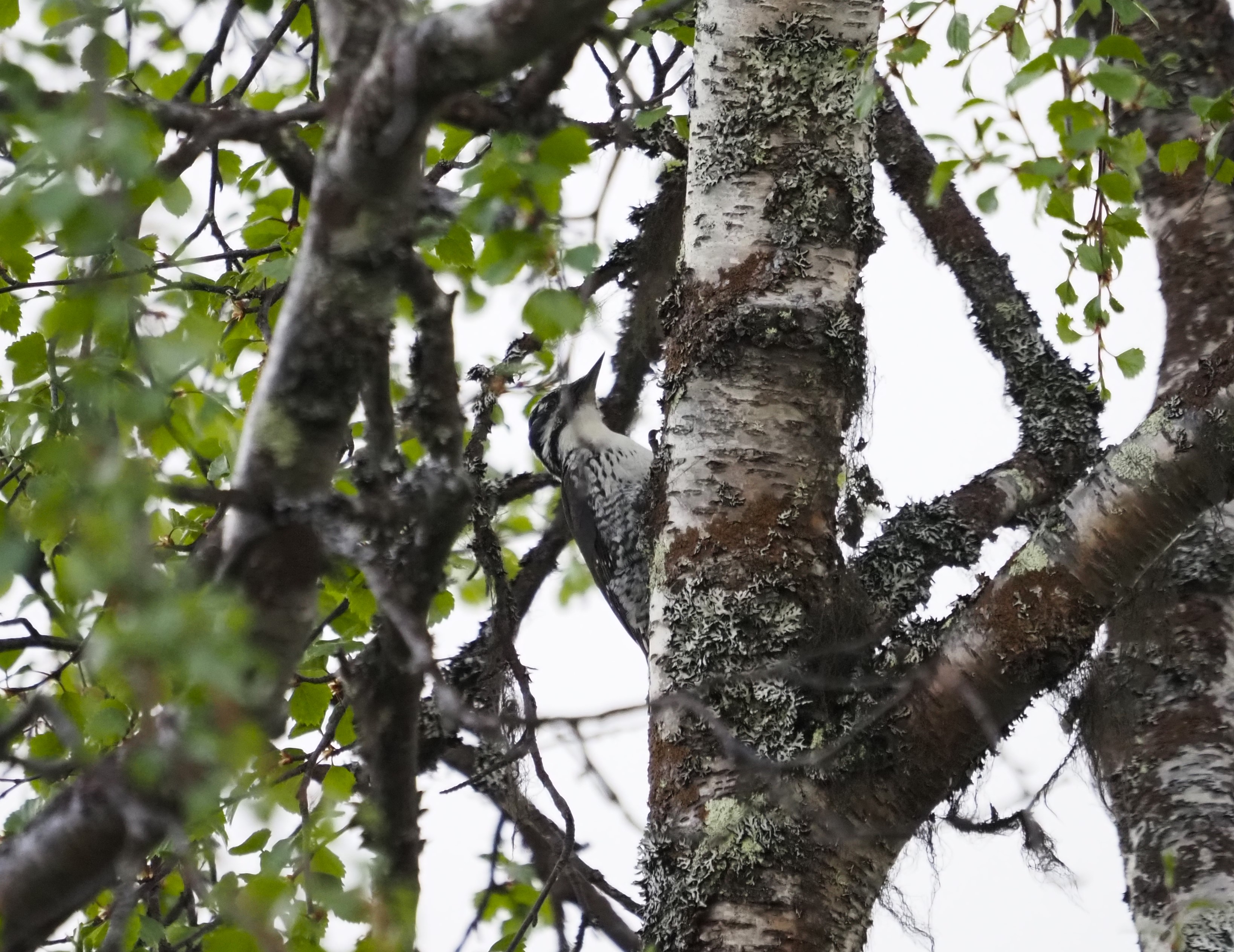
De tornada al bosc, vam anar a una zona molt recomanable per al picot de tres dits. Allà, vam gaudir de valent amb els mosquiters xiulaires però també dels tallarols xerraires i els mastegatatxes. Però tot això va quedar en un segon terme, perquè el que segur alguns no oblidarem van ser les fantàstiques observacions de la parella de picots de tres dits movent-se a pocs metres de nosaltres mentre s’apropaven al seu. Realment va ser un privilegi observar aixó de bé la que podem considerar com l’espècie de picot europeu més difícil d’observar!

Després de gaudir d’aquest espectacle vam fer una parada en una zona humida. Aquí vam observar dues parelles nidificants de cabussons orelluts. I tot que no estaven tant a prop com en viatges anteriors, vam poder gaudir de bones observacions al telescopi. Després d’una mica de cafè i de fer un esmorzar per agafar forces vam tornar al bosc boreal. Vam caminar un parell de quilòmetres per zones d’hàbitat idoni fins que tot d’una un mussolet eurasiàtic va reclamar a pocs metres de nosaltres. Després d’això no vam trigar gaire a localitzar l’ocell i gaudir de fantàstiques observacions del mussol més petit del continent. Era el final del matí i el nostre petit mussol anava seguit per una bona corrua d’ocells forestals. Aquest reguitzell de reclams super-excitats incloia lluers, pinsans comuns, mallerenga carbonera, cotxa cua-roja i una verderola. A voltes, semblava que la verderola aixeca més passions que el propi mussolet (!). Coses del directe, suposo. El mussol anava movent-se, constantment destorbat per aquesta petita cohort d’agreujats.

Amb aquesta observació va acabar un matí prou fructífer! Després va tocar dinar i descansar una mica.

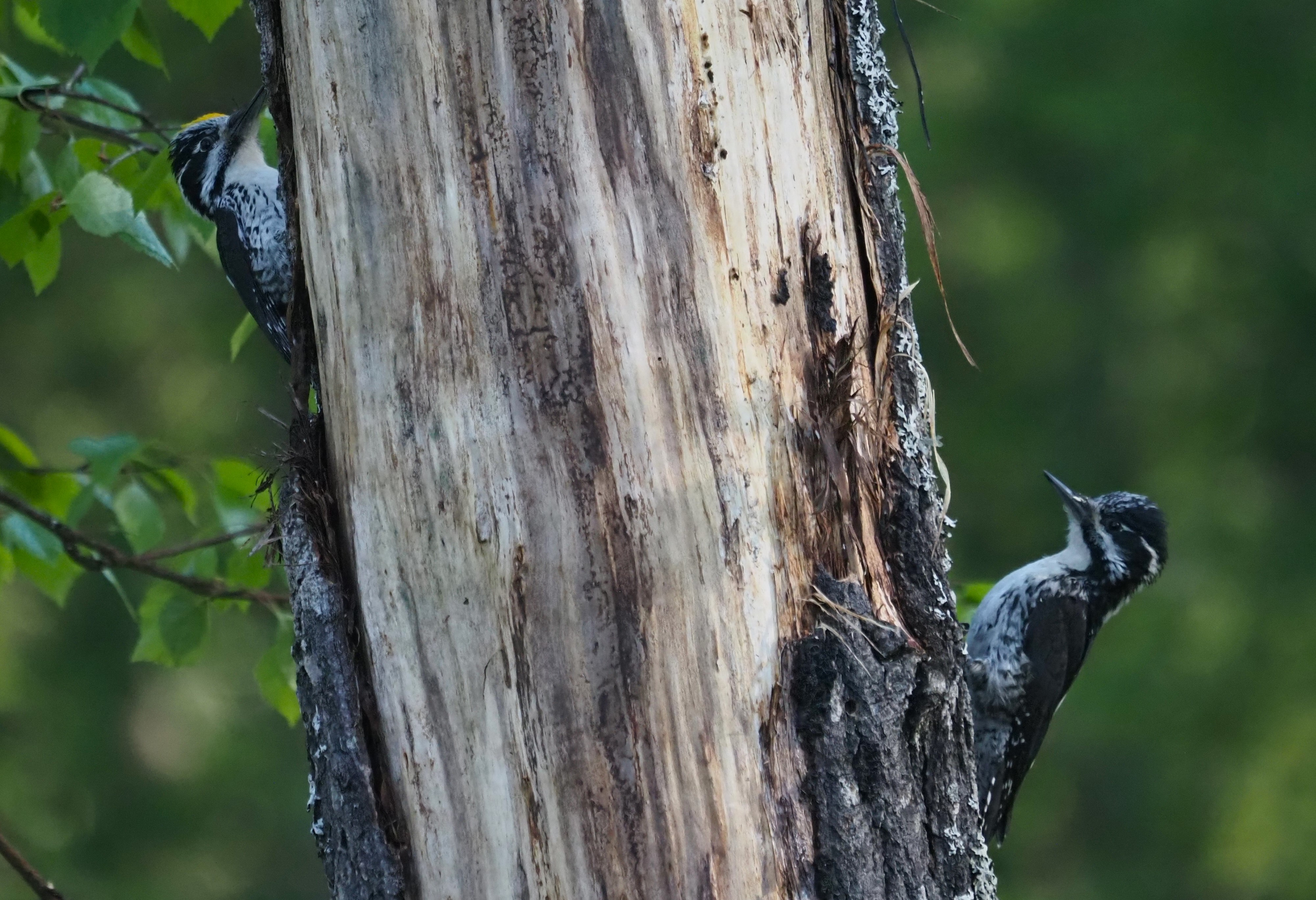
Els picots de tres dits (Picoides tridactylus) ens van oferir observacions inoblidables. Vam gaudir d’aquesta espècie fins a tres vegades al llarg del tour!
Femella (baix) i mascle (dalt) de picot de tres dits al voltant del seu niu.
Els hortolans (Emberiza hortulana) són una espècie força escassa a Finlàndia, però als voltants d’Oulu encara mantenen bones poblacions.
Mussol pirinenc (Aegolius funereus) a les portes del seu niu.
Vam passar 5 minuts inoblidables amb aquest pollet de mussol pirinenc a pocs metres de nosaltres.
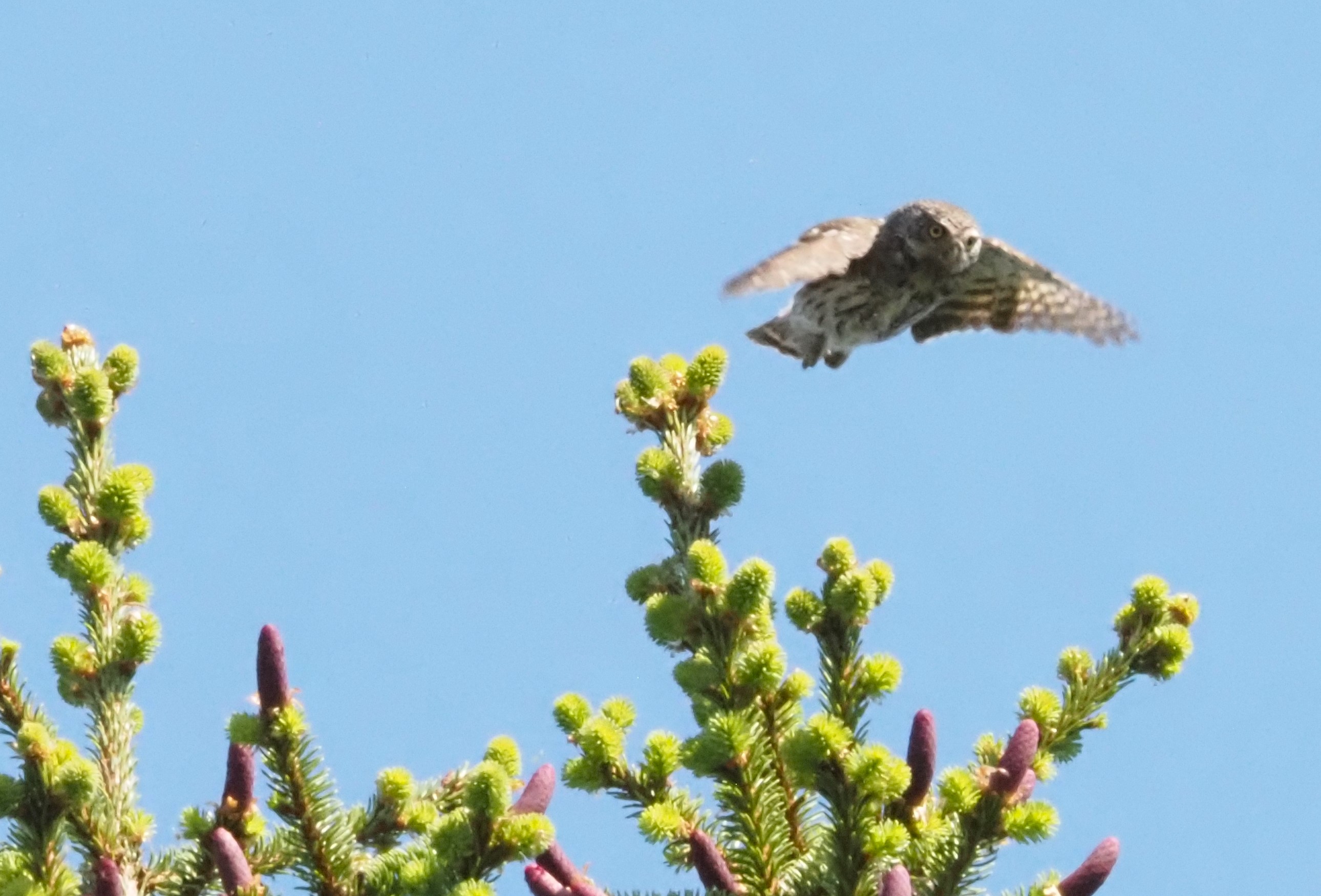
El mussolet eurasiàtic (Glaucidium passerinum) també es va portar molt bé!
El mussolet despegant!
Bona part del grup gaudint del mussol pirinenc.

Després de sopar ens vam desplaçar al Nord del nostre allotjament, a unes de les últimes zones de nidificació de la siseta cendrosa a Finlàndia. Després d’aparcar, vam fer un bon tomb per la zona a on vam poder observar becut, pinsà carminat, corriol gros i els dos únics corriols anellats petits del viatge. Una siseta cendrosa cantava per la zona, però es resistia a deixar-se veure. Va ser l’Aonghus qui la va trobar cantant a dalt de tot d’un fanal a uns 300 metres de distància. Encara vam haver de caminar una mica però al final vam gaudir d’observacions increïbles amb un ocell cantant i fent dispaly al nostre voltant. Mentre exploràvem la zona també vam veure els primers còlits grisos dels tour.

Molt contents d’haver gaudit d’aquesta espècie tant escassa vam tornar cap al nostre allotjament i descansar per poder gaudir d’un altre gran dia!

Enguany hi havien bons números de pinsats carminats al llarg dels primers dies del viatge. Aquí una bonica femella.
Siseta cendrosa (Xenus cinereus) volant per sobre nostre mentre cantava en vol.

Dia 3. Abans d’esmorzar a l’allotjament vam aprofitar per visitar una de les famoses torres d’observació al voltant d’Oulu. N’hi han un bon grapat per escollir, però nosaltres vam fer cap a un situada al Sud de la badia Liminganlahti. Aquest cop el número d’ocells no va tant espectacular com en ocasions anteriors però tot i així aquí vam veure bons números de becadell comú i 6 gambes roges pintades a més de batallaires, àguiles marines, els únics 2 cignes muts dels tour, repicatalons cantant i xatracs àrtics. Aquí també vam tenir el privilegi de sentir un bitó cantant.

Un cop esmorzats vam sortir de l’allotjament per dirigir-nos ja cap a Oulu. De camí, vam fer una parada en una altra zona forestal molt bona per picots. Era el final del matí i la temperatura (tot i que sembla difícil de creure) vorejava els 30ºC en el que va ser el dia més càlid en un mes de maig a la història de Finlàndia! En aquesta parada vam veure senyals de picot cendrós però els nostres esforços només ens van reportar un picot negre que ens va passar volant per sobre, aturant-se a dalt de tot d’un arbre per oferir al grup una molt bona observació. També vam veure pinsans borroners de la subespècie nominal amb el seu característic reclam de trompeta, piules dels arbres picots garsers grossos.

Al llarg d’aquest matí vam tenir les millors observacions de becadell comú (Gallinago gallinago) del tour.
Malgrat els 30ºC vam gaudir de bones observacions de picot negre (Dryocopus martius)

Vam fer una parada per dinar i vam arribar a Kuusamo a començaments de la tarda. El temps aquí era molt diferent que el havíem patit a la costa del Bàltic i la temperatura no passava dels 20ºC amb pluges disperses que s’anaven movent per la zona. La nostra primera parada a la zona va ser en un petit senderol per cercars sits. Ja des del lloc a on vam deixar els vehicles podia sentir cantar alguna espècie força interessant. Fet i fet va ser arribar i moldre i en qüestió d’un parell de minuts ja gaudíem de dos repicatalons petits cantant a curta distància i deixant-se veure durant molta estona! Érem a tocar d’un llac i un bon número de gavines menudes anaven passant per sobre nostre, quasi totes a força alçada. Però a uns pocs minuts en cote ens vam plantar en una colònia de cria d’aquestes petites gavines. Aquí no només vam gaudir desenes d’aquestes ocells, també vam observar dues parelles de cabussons grisos i les primeres calàbries agulles en plomatge estival del tour. Una estona d’observació des d’aquest punt privilegiat va produir també mussol emigrant i molt bones observacions de gavià fosc de la subespècie nominal. Altres espècies a la zona van incloure ànec xiulador, ànec cuallarg, xarxet comú, l’omnipresent tord ala-roig i una fantàstica becada cantant en vol i creuant-se amb un becadell comú que també anava fent la seva pròpia exhibició en vol!

Des d’aquí ens vam desplaçar al nostre allotjament per gaudir d’un bon estofat de re i poder descansar una mica!
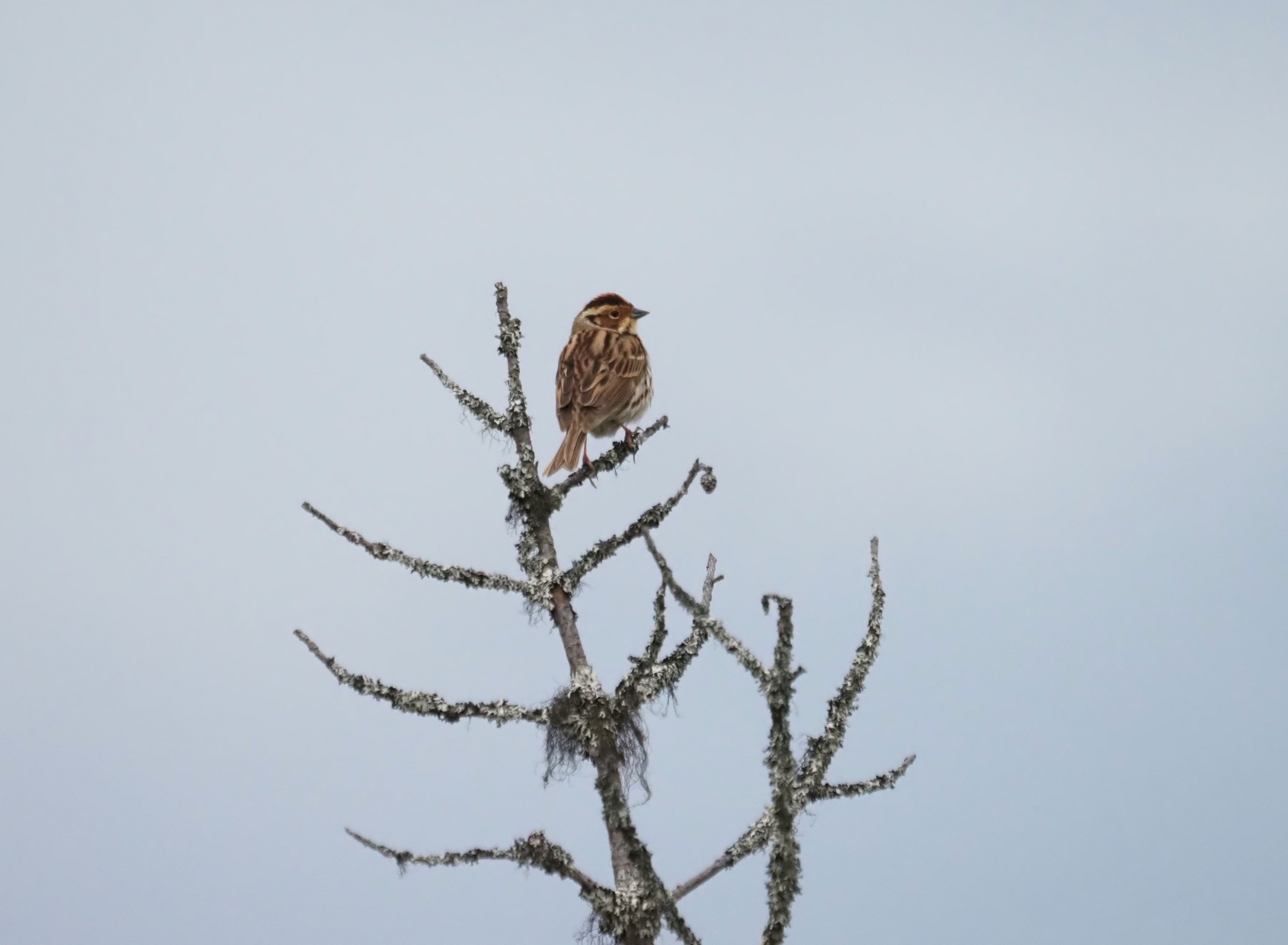
Podem dir que els repicatalons petits (Emberiza pusilla) es van deixar veure d’allò més bé!
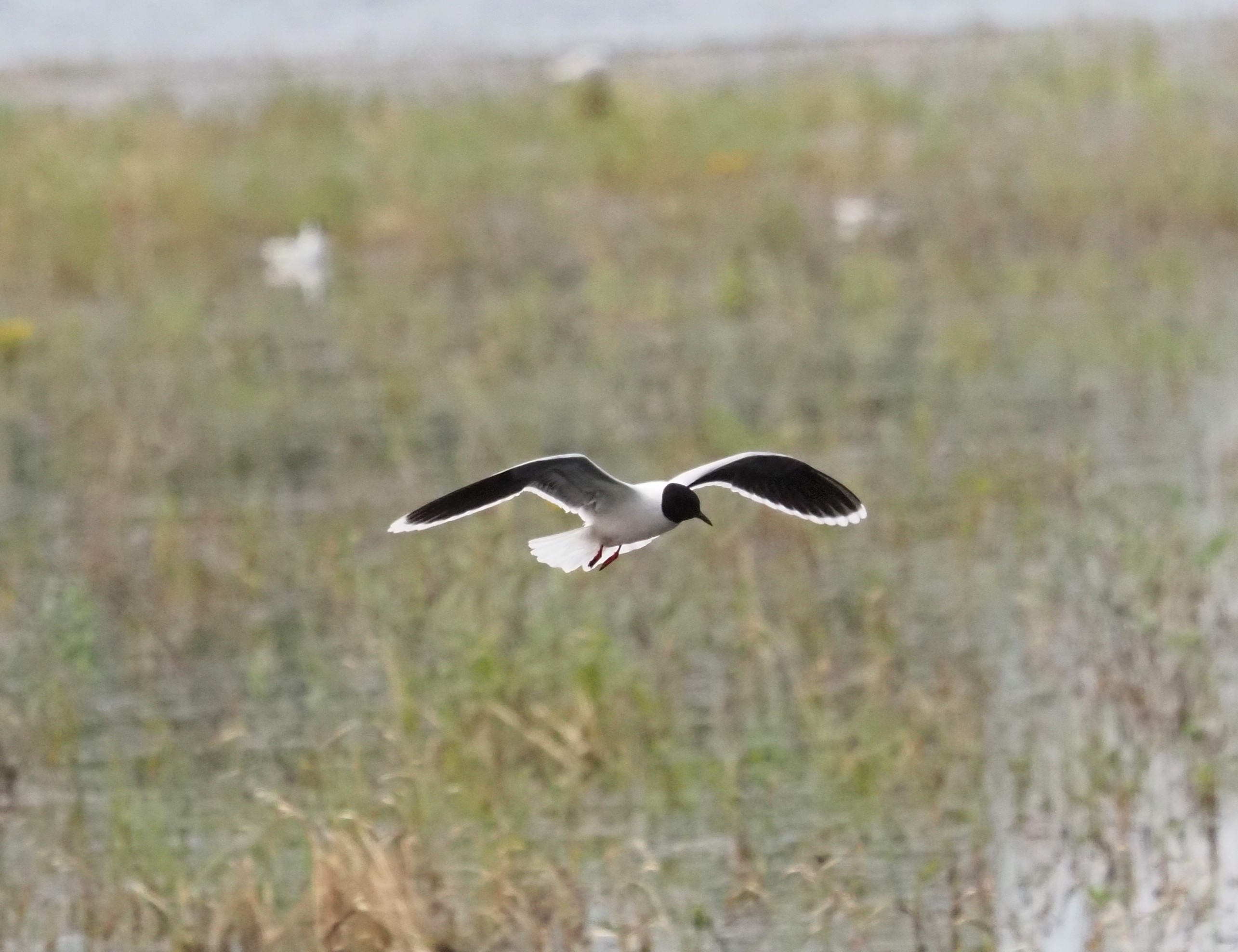
Veure una colònia de gavines menudes (Hydrocolaeus minimus) és sempre una experiència fantàstica!
Un dels pocs gavians foscos (Larus fuscus fuscus) del viatge!
Part del grup gaudint d’un dels repicatalons petit.

Dia 4. Un altre cop comencem ben d’hora, aquest cop per explorar un seguit d’hàbitats ben a prop del nostre allotjament. L’objectiu del matí és contactar amb algunes de les especialitats que viuen al bosc boreal. Només a 300 metres de l’hotel vam trobar el primer petit estol de sits rústics, 3 individus que van sortir volant de la pista i que vam poder observar malgrat la llum encara pobre. Una mica d’exploració més enllà va produir un mascle de gall fer, que malauradament només el van poder gaudir com cal els ocupants del segon vehicle. Una hora i escaig d’exploració va produir ben poca cosa més, amb només un mascle de gall de cua forcada aturat a dalt de tot d’una pícea i una perdiu escandinava a tocar de pista que només van veure des del segon vehicle. Malgrat tot, vam gaudir de les millors vistes de becades mentre una parella s’alimentava a un prat.

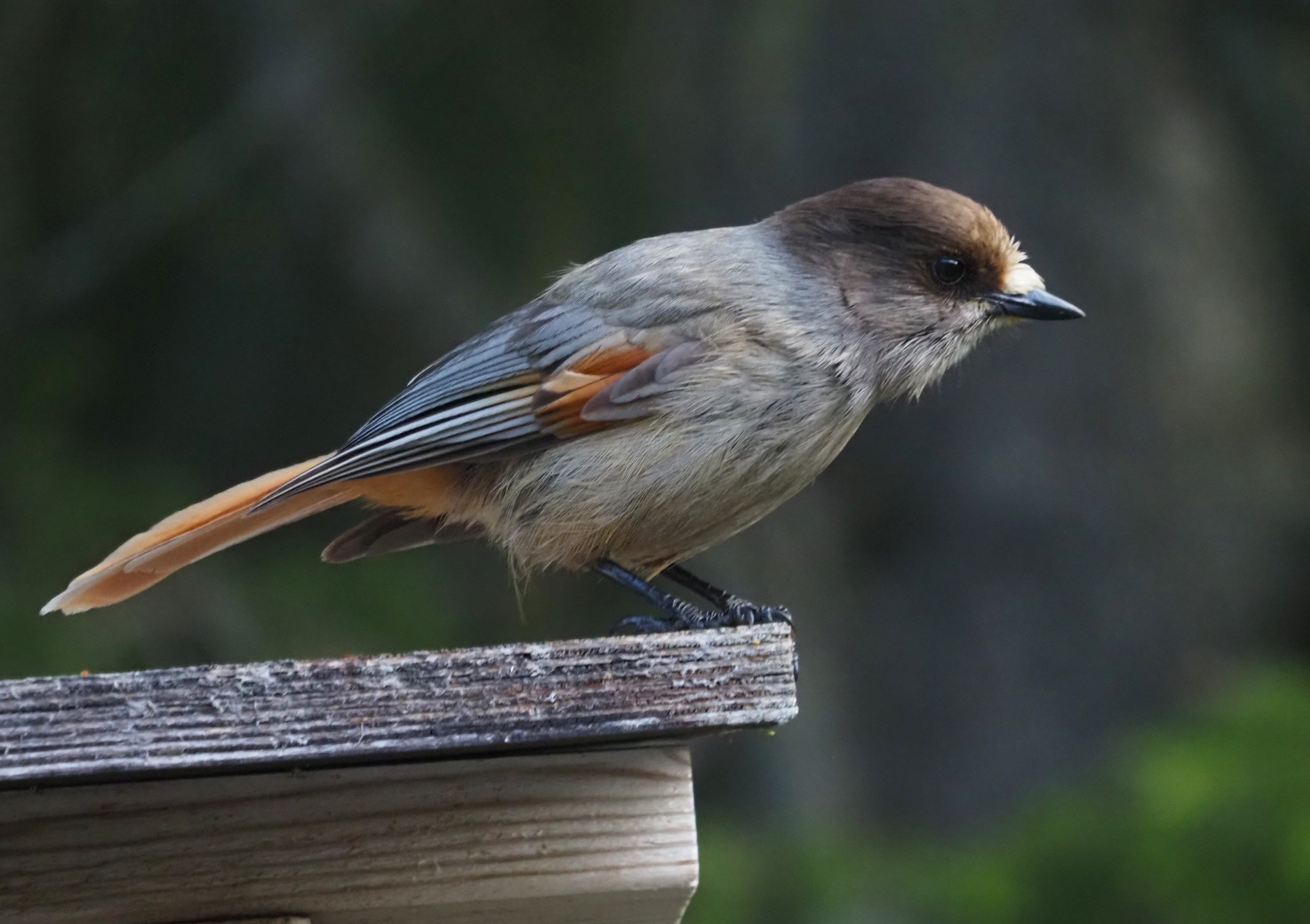
Després d’una parada per gaudir d’un bon café ens vam dirigir cap a un dels molts turons de la zona però força abans d’arribar vam haver de parar per gaudir d’una parella de grèvols que es perseguien just al límit del bosc. Ens vam anar movent pel bosc, amb els grèvols força actius; cantant, xisclant i fent aletejos al mig del bosc. Després d’uns quants minuts tothom al grup ja havia tingut bones observacions d’aquesta espècie sovint esquerpa. A més a més, mentre ens movíem pel bosc també vam trobar un altre sit rústic i un parell de gaigs siberians movent-se a les capçades dels arbres. Una mica més enllà, vam tenir el nostre primer intent de contactar amb mussol esparverenc, però aquesta parada “només” va produir un parell de sits rústics, mallerenga capnegre, piula dels arbres i un picot de tres dits breuvement vist per alguns al grup.

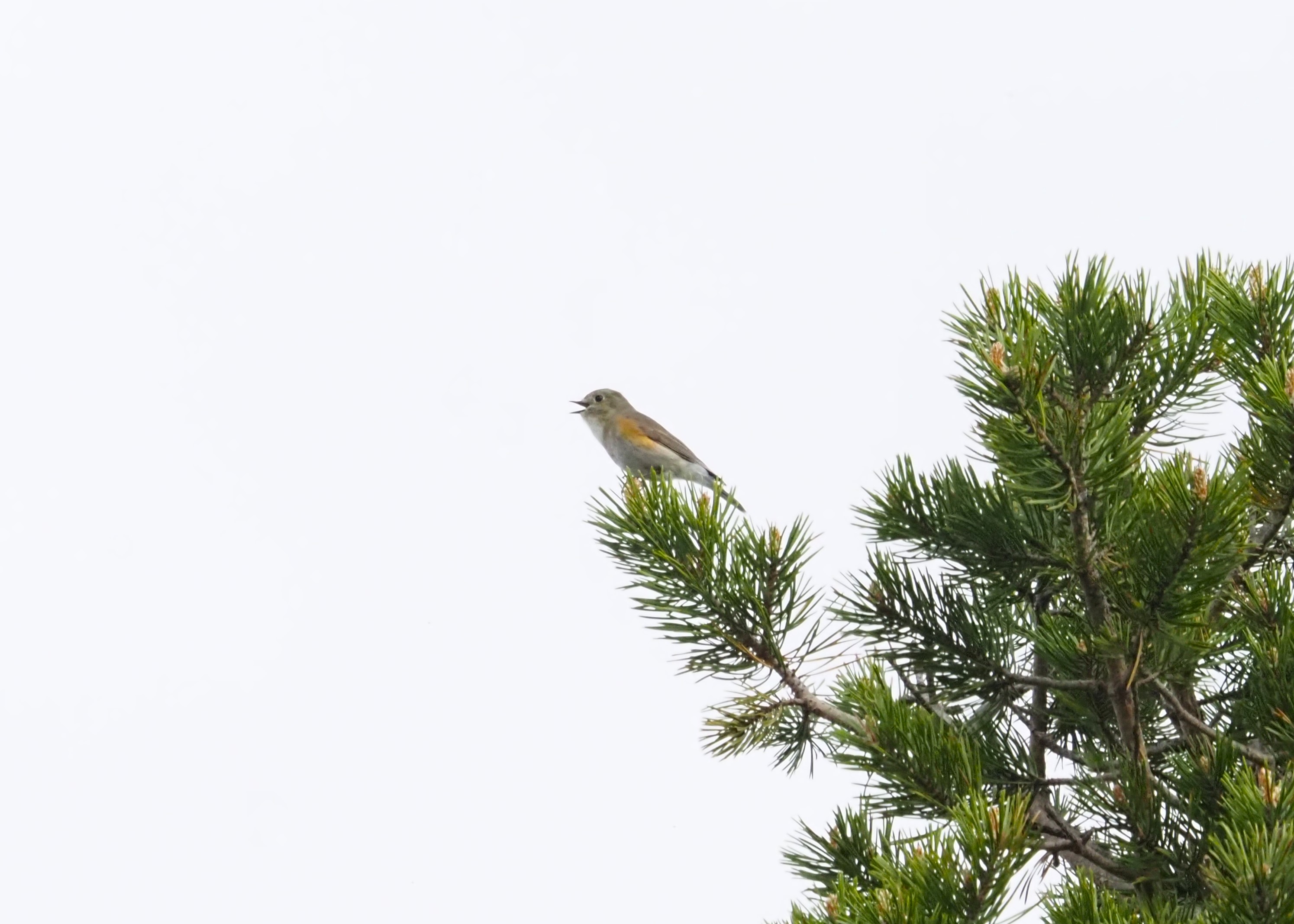
Finalment vam arribar a Livaara, una de les parades més típiques per ocells forestals al Nord de Finlàndia. El sol, però, ja estava ben amunt i malauradament feia una mica de calor. Tot i això, vam enfilar el camí i tot just arribats a la zona més interessant del turó vam trobar la nostra primera cotxa cuablava cantant des de dalt de tot d’una pícea. Tots vam poder gaudir força estona d’aquest primer individu. Un segon mascle (tots dos ocells eren segons anys) cantava més enllà i el vam poder veure molt bé amb el telescopi mentre cantava a una cota inferior a la que ens trobàvem. Més enllà d’aquestes fantàstiques cotxes cuablaves, al turó només vam trobar piula dels arbres i papamosques gris com a espècies d’interès.

Després de dinar, la nostra tarda va ser curta i lliure perquè tothom pogués explorar en llibertat els encontorns del nostre allotjament. Valones, cucuts, gambes verdes i calàbries agulles van ser algunes de les espècies observades quasi per tothom.
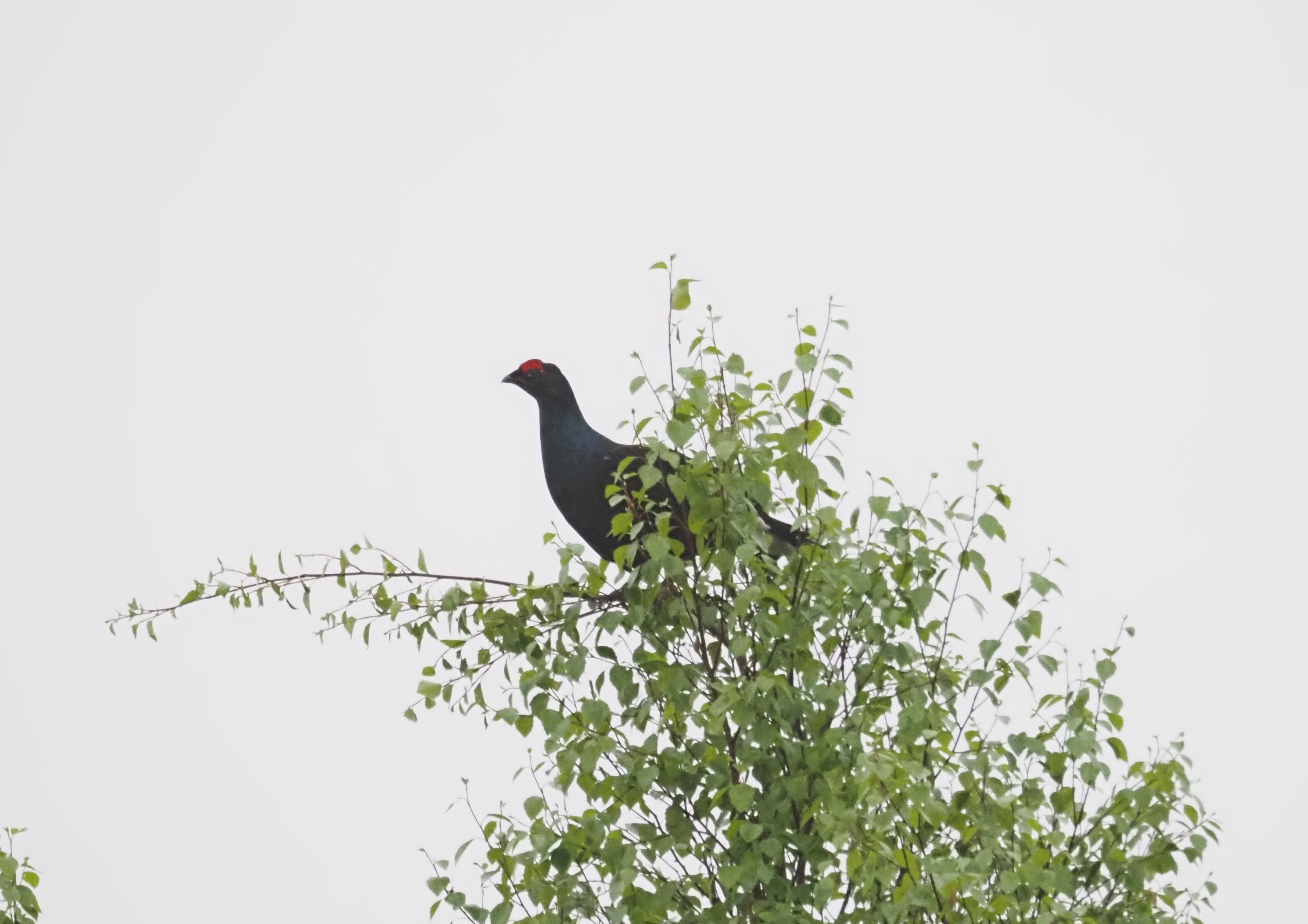
Aquest gall de cua furcada (Lyrurus tetrix) va ser el millor gall per al grup al voltant de Kuusamo. El resultat més pobre en anys!
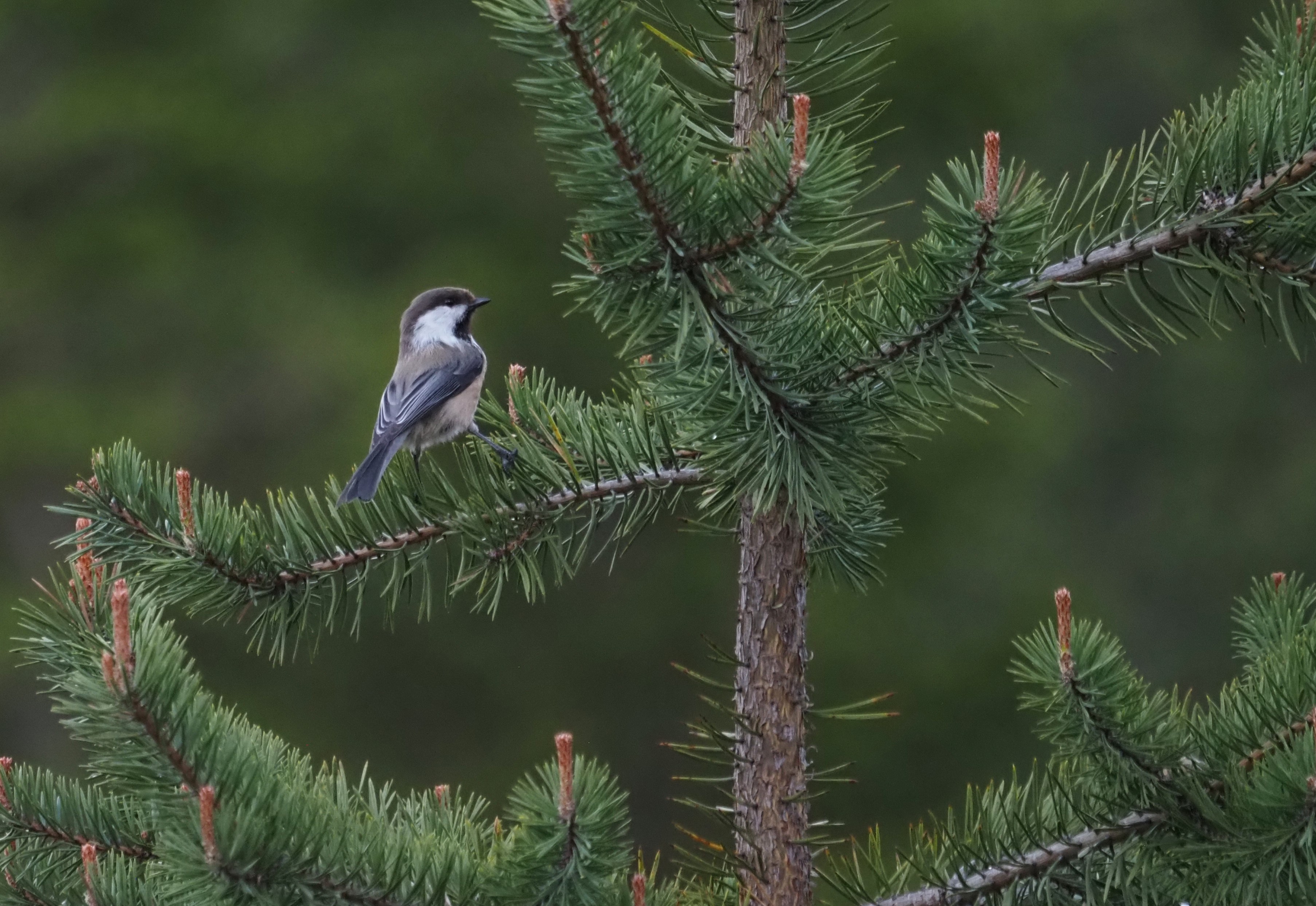
Mallerenga capnegra (Poecile montanus) viu en boscos de pi i pícees al Nord de Finlàndia.
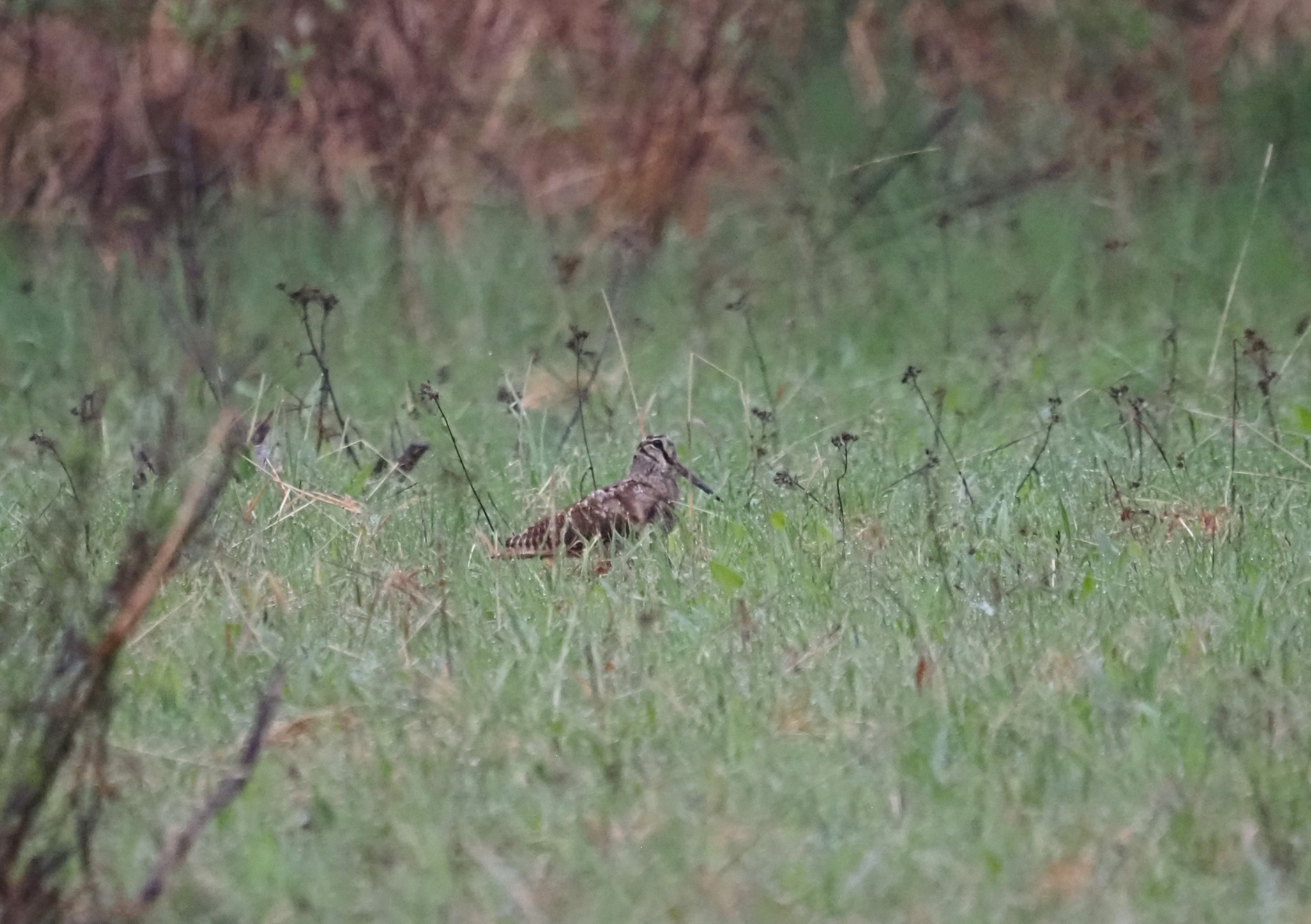
Les becades (Scolopax rusticola) són comunes però sempre difícils d’observar al Nord de Finlàndia.
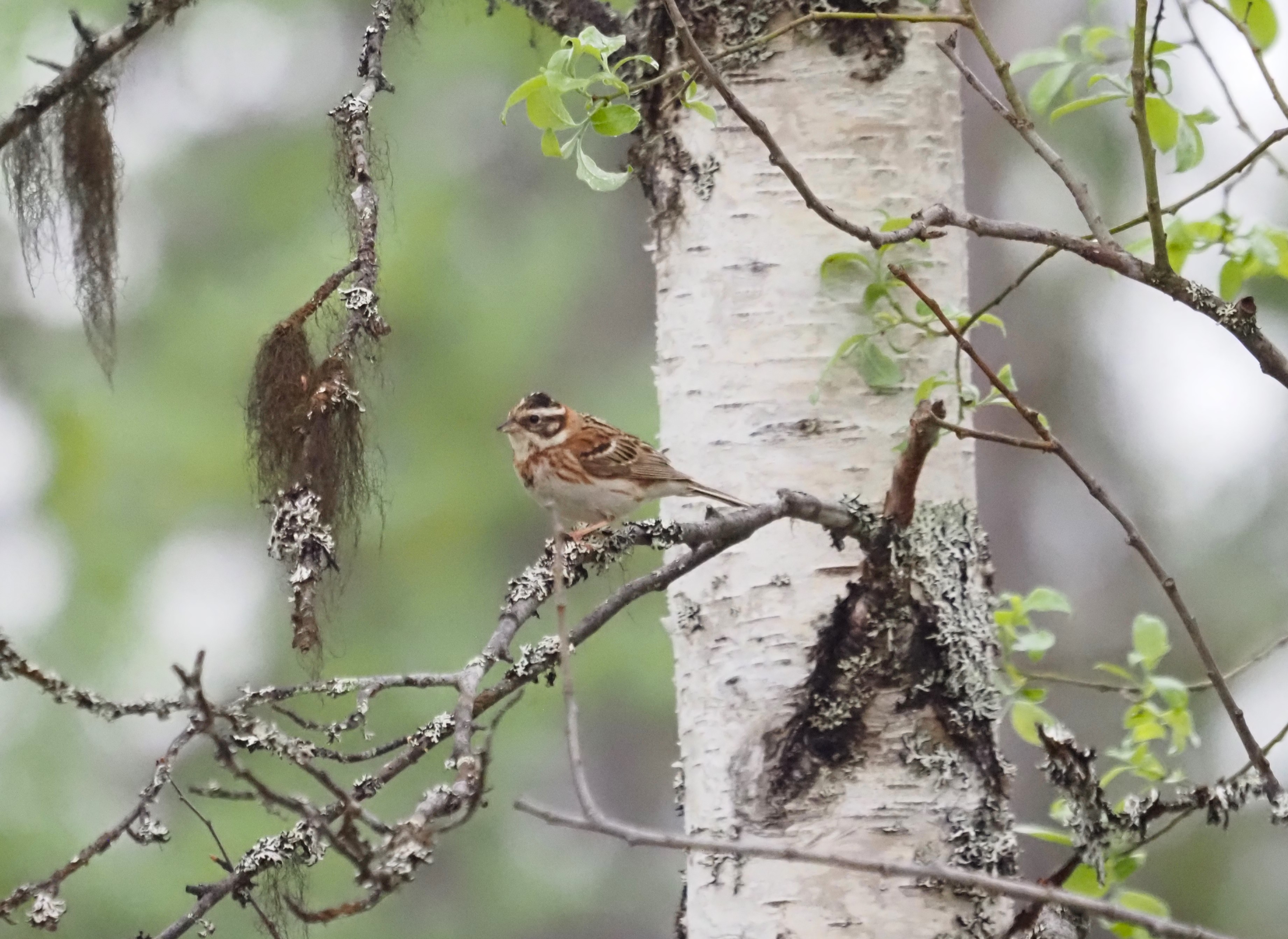
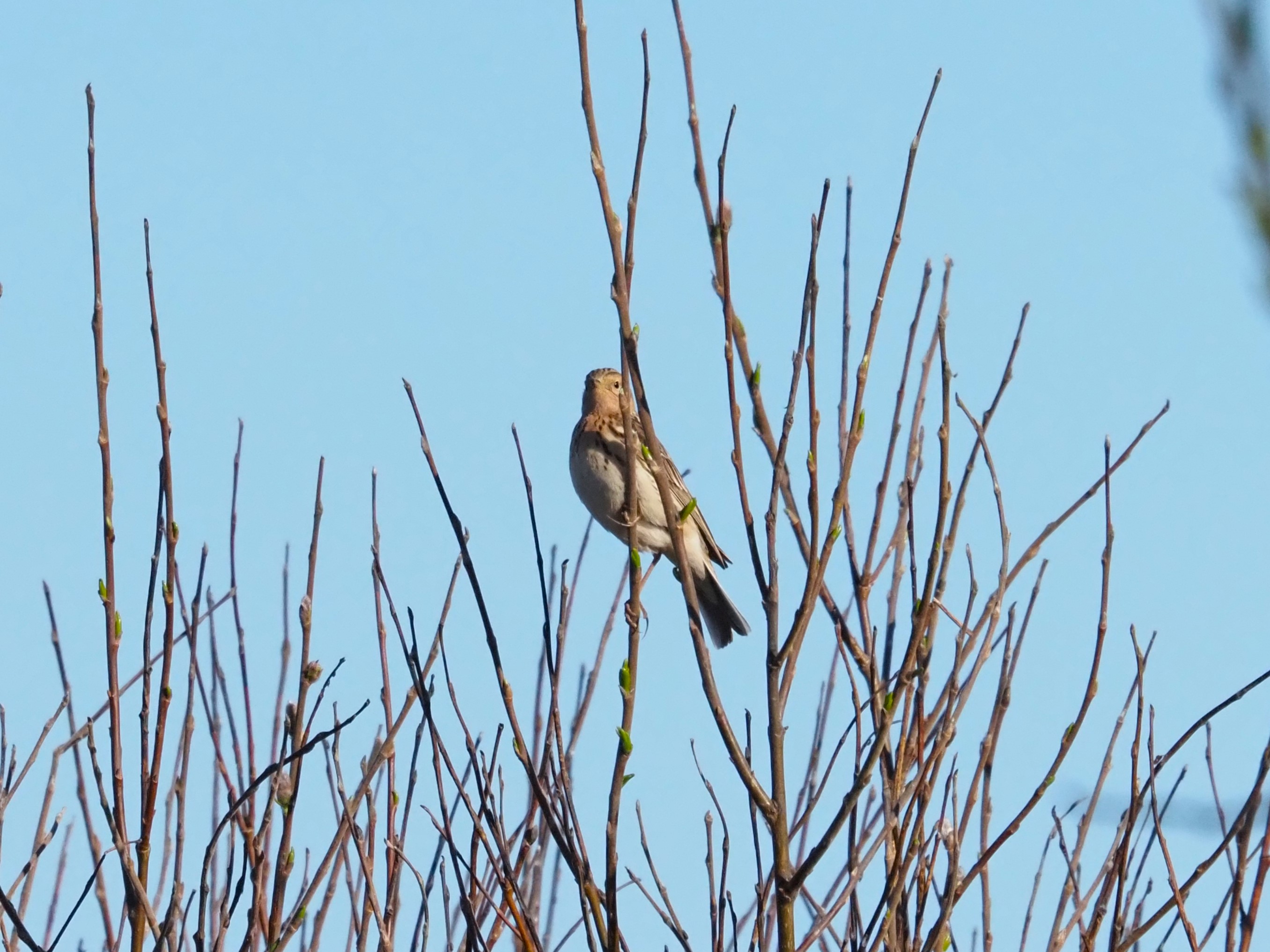
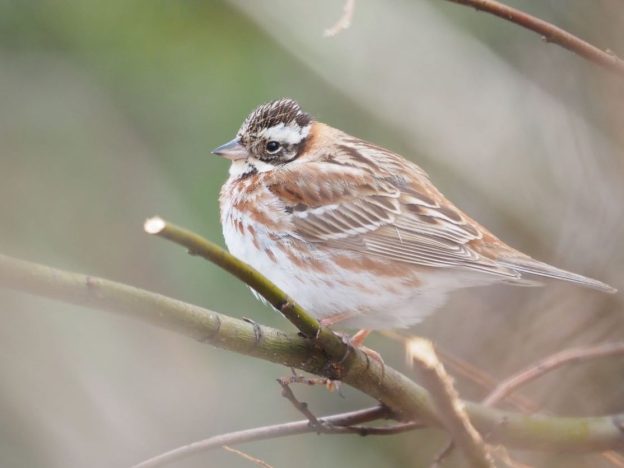
Enguany els sits rústics (Emberiza rustica) semblaven ser a tot arreu però mai vam aconseguir apropar-nos-en.
Les cotxes cuablaves (Tarsiger cyanurus) poden ser sorprenentment difícils de trobar. Però no aquest cop!
Una mica del fantàstic bosc de pícees al voltant de Kuusamo.

Dia 5. Un nou dia al paradís i un nou inici de jornada ben d’hora, ben d’hora. La primera parada del matí va ser a un lloc molt bo per a perdiu escandinava. En visites anteriors sempre havíem tingut grans observacions d’aquesta espècie aquí però enguany ens vam haver de conformar amb un mascle en vol. Aquí també vam veure els únics trencapinyes comuns aturats del viatge (ha estat un any amb molt pocs trencapinyes al Nord de Finlàndia) i un bonic raspinell pirinenc. De tornada a les furgonetes dos ants van sortir de l’espessor del bosc i es van deixar veure ben bé al llarg d’un minut mentre ens fitaven a una distància prudent.

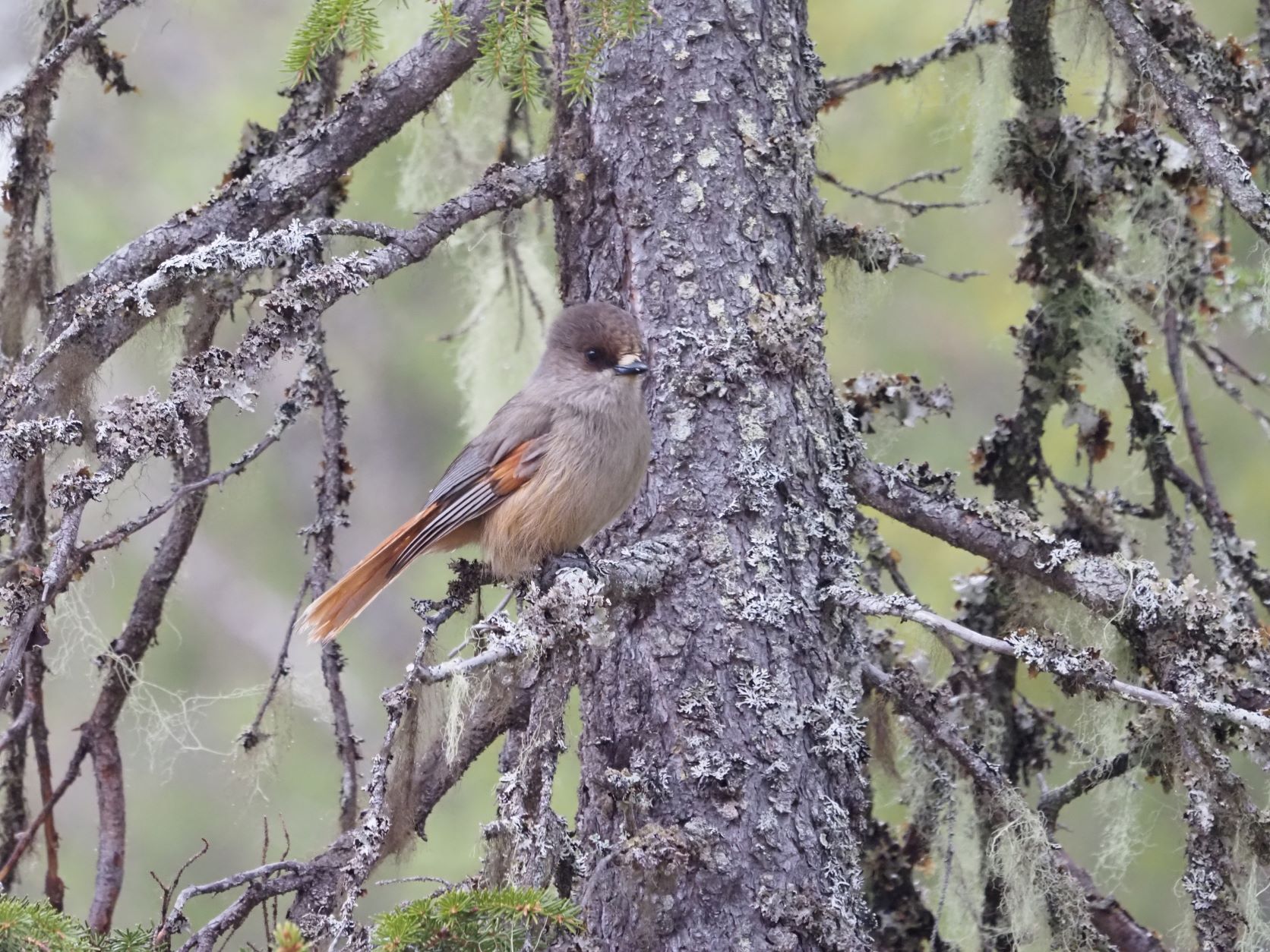
Era un matí emboirat als turons així que vam decidir de fer un segon tomb per mirar de contactar galls però novament amb poc èxit. Tot amb tot, uns ocells sedosos en vol en mig de la boira va ser el millor de la parada. La última parada del matí va ser per a un ben conegut indret per a gaig siberià. Aquí vam veure les que possiblement hagin estat les meves millors observacions en aquesta espècie en 8 visites a Finlàndia, amb un parell d’exemplars literalment als nostres peus. Aquí també vam veure molt bé mallerenga capnegra, pinsà borroner i reietó. No gaire lluny 3 cotxes cuablaves cantaven però el grup ja estava sadollat d’aquesta espècie i no vam provar de pujar cap turó.

Des d’aquí vam començar el trànsfer al Nord però la nostra típica parada de cafè (i els millors donuts de Lapònia) va ser arruïnada per una punxada que ens va fer perdre una hora. Després de comprar un nou pneumàtic, vam continuar fent via cap al Nord, gaudint de camí unes fantàstiques creps. Des del mateix restaurant vam observar dues calàbries agulles en un sorprenentment tardà plomatge hivernal i la única àguila pescadora de tot el tour.

Raspinell pirinenc (Certhia familiaris)
Ant (Alces alces) sortint del forest.
Aquest matí vam gaudir com mai del gaig siberià (Perisoreus infaustus)

Arribats a Ivalo, encara vam tenir temps per a una bona estona de pardaleig en un gran raconet de Lapònia. En la nostra primera parada al bosc ja vam trobar una parella de mallerengues de Lapònia, que van fer les delícies del grup i es van deixar fotografiar al llarg de força estona. Aquí també vam veure diversos passerells golanegres. Una petita passejada per allà al voltant va produir també una fantàstica parella d’ocells sedosos mentre s’alimentaven a curta distància. A més a més, un fantàstic picot de tres dits també va aparèixer quasi al mateix temps i tothom va poder gaudir de bones observacions per segon cop al tour. Tot plegat, un meravellós botí per a una horeta i escaig de pardaleig. Malauradament, en aquesta zona, normalment, molt bona per trencapinyes, no en vam veure ni sentir-ne cap…

Un cop tornats als vehicles encara vam haver de tornar fins a la carretera general i aquesta petita estona vam tenir, com és habitual, bones observacions. La temperatura era de 15ºC i estava nuvolat quan un estol de 8 galls de cua furcada mascles van creuar sortir del bosc, aturant-se a pocs metres de nosaltres. Tothom va gaudir d’un moment inoblidable. Una mica més enllà una femella de gall fer s’alimentava al sotabosc però el millor encara havia d’arribar quan l’Alba va trobar una nova femella de gall fer, aquest cop estirada a terra in perfectament camuflada al llit arbustiu. Una autèntica meravella! Després de força estona gaudint dels increïbles detalls del plomatge d’aquesta femella i molt a contracor, vam marxar per digirir-nos, ara sí, al nostre allotjament, sopar, descansar i comentar un altre fantàstic dia!

La molt perllongada observació de les mallerengues de Lapònia (Poecile cinctus) va produïr molt bones imatges!
Picot de tres dits (Picoides tridactylus) a pocs metres de la mallerenga de Lapònia i els ocells sedosos.
Enguany, els ocell sedosos (Bombycilla graculus) tenia bones densitats al Nord de Lapònia.
Gall de cua furcada (Lyrurus tetrix) a prop d’Ivalo.
Femella de gall fer (Tetrao urogallus) enllitada al bosc. Una fantàstica troballa de l’Alba.

Dia 6. Després de gaudir d’un bon esmorzar al nostre allotjament vam fer un petit passeig al voltant de l’hotel. Els pinsans dels pins es veuen aquí a les menjadores que tenen al voltant i es poden fer observacions francament bones. També sovintejaven els pinsans mecs, els passarells golanegres i els verdums. A més a més, el petit llac del costat vam veure 3 becs de serra petits incloent dos fantàstics mascles i una parella d’ànecs foscos que estaven niant al voltant del llac.

Dirigint-nos cap al Nord en direcció a la frontera noruega vam fer un seguit de parades per escanejar els nombrosos llacs. A quasi cada parada hi havien becs de serra mitjans, cignes cantaires i morells d’ulls grocs. Les valones nien a les zones de maresma i van gaudir de les primeres cotxes blaves del viatge. Més al Nord encara, una nova parada afegir aligot calçat a la llista del viatge, quan quatre individus volaven l’aparcament. En un riu proper, una merla d’aigua va passar rabent sobre l’aigua…

Al pas fronterer vam fer parada per dinar, el més pintoresc del tour! Escolteu, quanta gent coneixeu que hagi tastat estofat Sami d’ant? Doncs apa, nosaltres sí! Molts ens ho pensarem dues vegades abans de repetir…
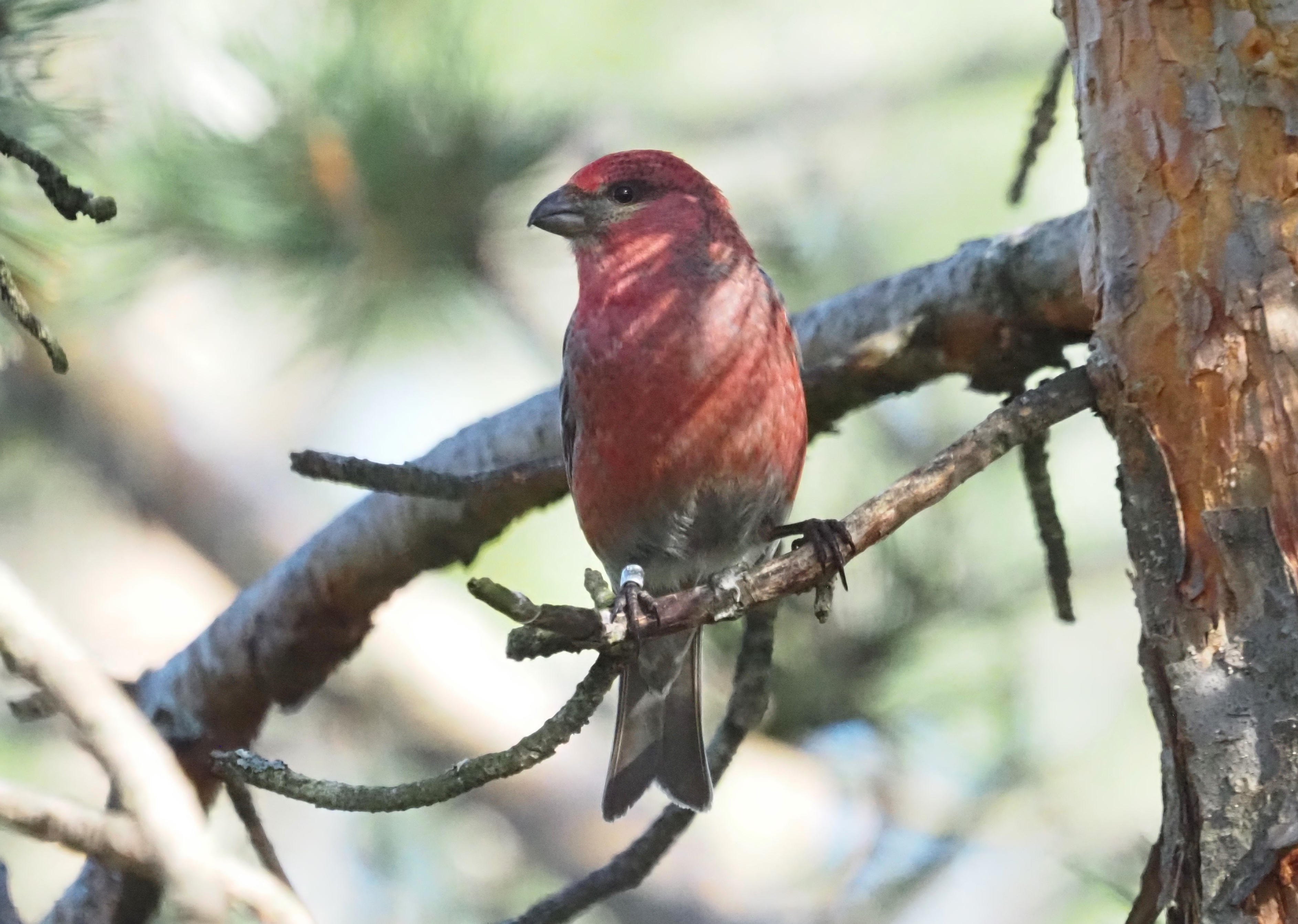
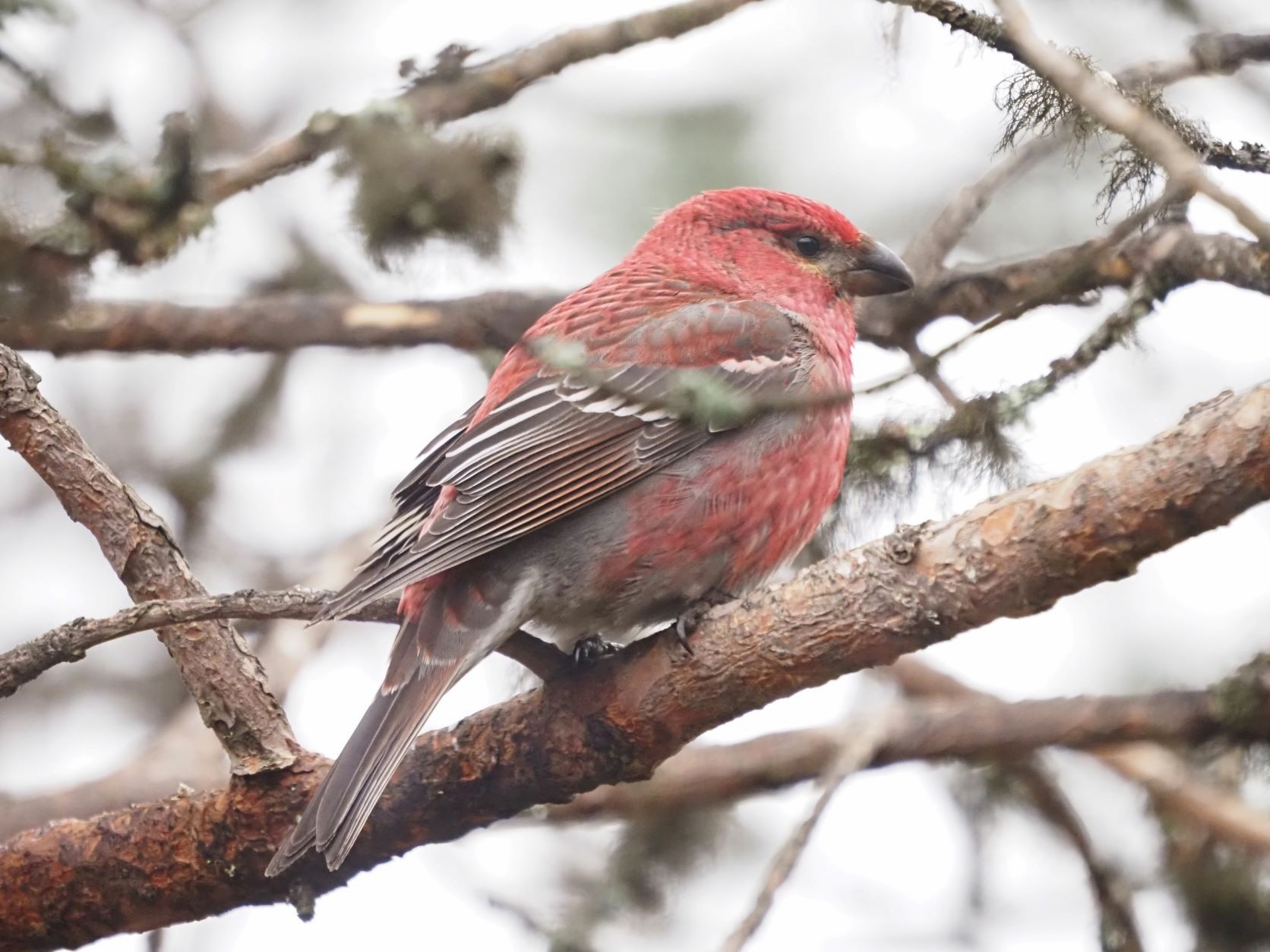
El pinsà dels pins (Pinicola enucleator) és sempre una espècie força cobejada als grups. Mascle a dalt i femella a baix.
Foto anecdòtica de l’ànec fosc (Melanitta fusca)

Un cop endinsats a Noruega vam continuar fent via al Nord. La propera parada pròpiament dita va ser per explorar la desembocadura d’un torrent al gran fiord de Varanger. Aquí normalment s’hi acumulen limícols i làrids de diverses menes. Aquí vam veure els primers batallaires en plomatge nupcial del tour però també altres limícols com garses de mar, territs variants i territs menuts. Aquí els gavians argentats són comuns junt a gavinots i gavines cendroses. Les primeres gavinetes de tres dits també es banyaven a les vores. Escoltats tota l’estona per aligots calçats, paràsits cuapunxeguts i àguiles marines, vam continuant fent via. Parades obligades van ser per mirar els primers estols d’oques pradenques de la tundra.

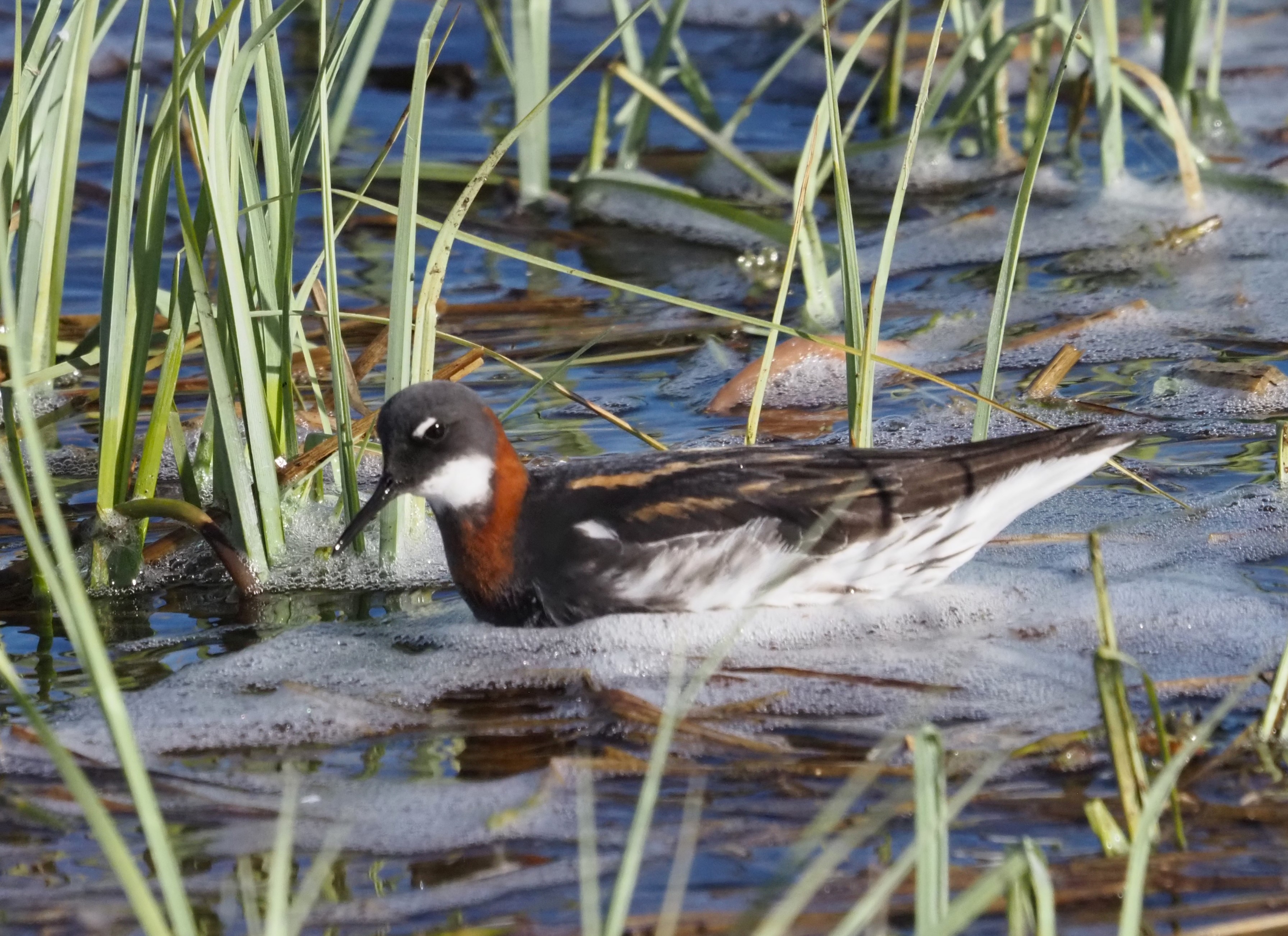
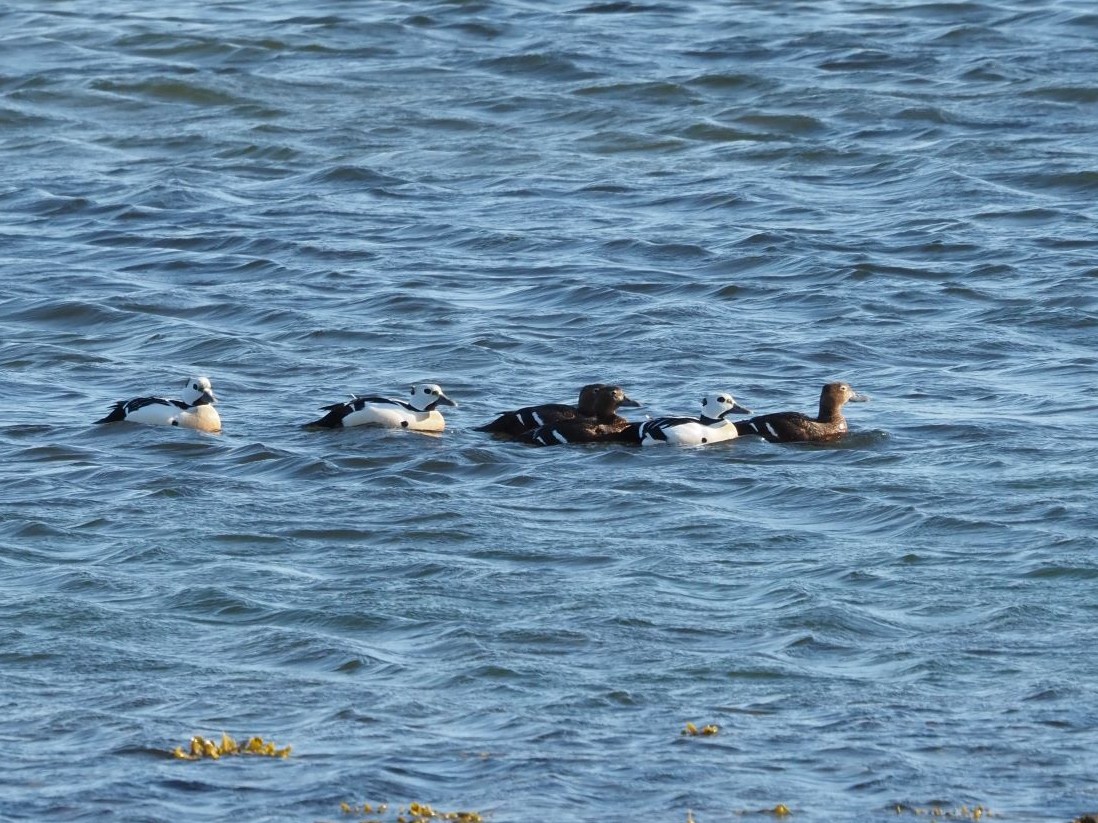
En una badia a prop de Vadso vam estar-nos més estona. Ja era ben entrada la tarda i una meravellosa llum banyava la badia. Aquí vam començar per escanejar els ocells que s’alimentaven a les platges. Al costat dels abundants èiders comuns vam trobar gambes roges comunes i tètols cuabarrats en plomatge estival. Però la sorpresa va ser trobar un estol de 4 èiders reials, incloent un mascle de 1r estiu, quasi a l’altre banda de la badia i que tots vam poder gaudir als telescopis.

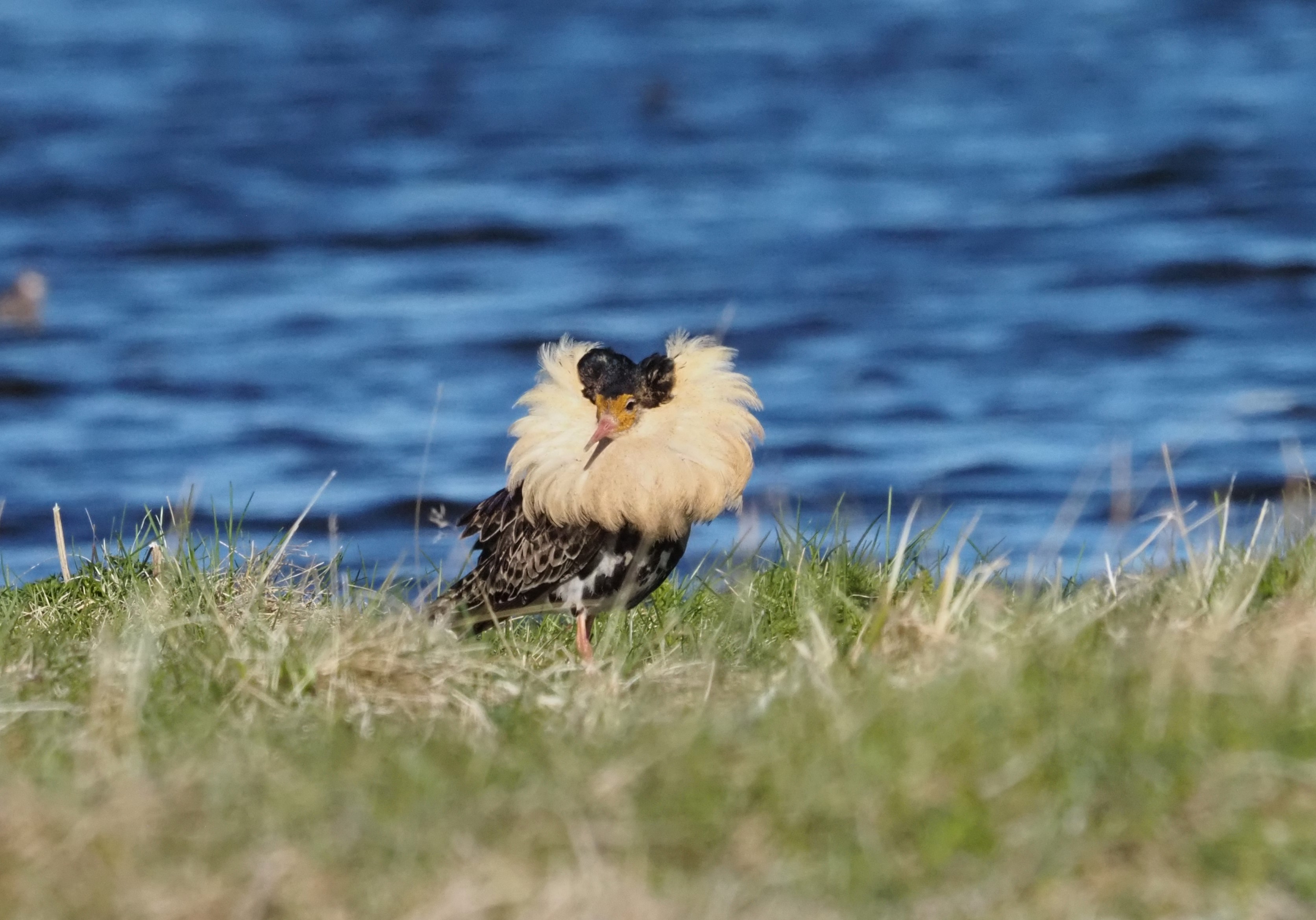
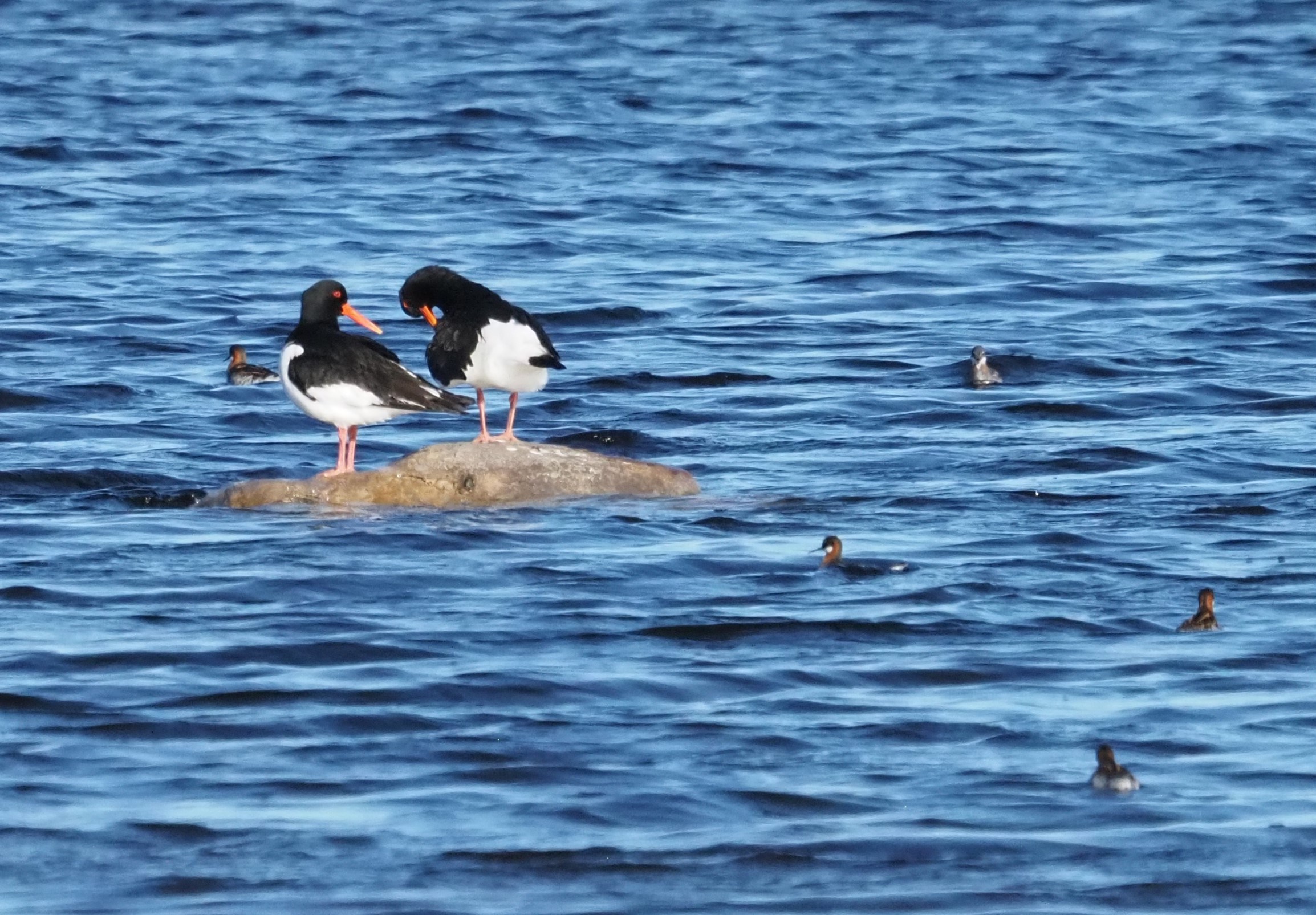
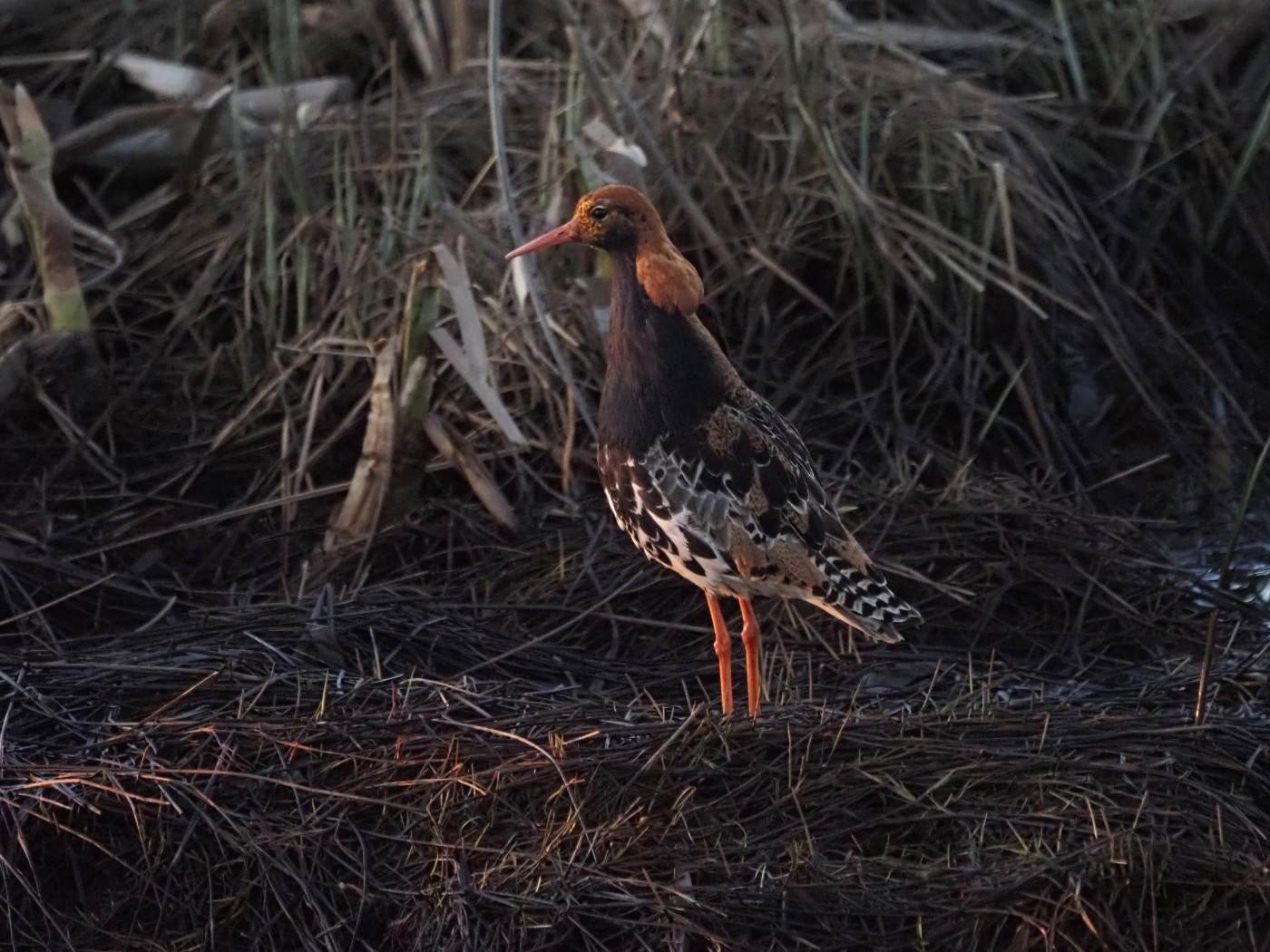
Un petit passeig per la zona va continuar oferint bones observacions. Una petita bassa propera concentrava fins a 87 escuraflascons bec-fins (!) que s’alimentaven, perseguien i arraulien tot al voltant del llac. Es fa difícil de descriure la bellesa de l’escena, amb tots aquells minúsculs limícols en plomatge nupcial, flirtejant a la llacuna i donant voltes sobre ells mateixos a una velocitat de vertígen per capturar els petits insectes dels que s’alimenten. Tot això en l’ambient net, quasi verge, de la tundra àrtica. I aquell dia encara van estar més de sort: a més a més dels escuraflascons, la bassa també havia atret un petit estol de 40 batallaires, amb alguns mascles lluint les seves plomes nupcials, saltant, esbarallant-se i lluitant en una escena que de ben segur perdurarà anys a la nostra memòria!

Una ràpida ullada a la costa encara va produir més espècies incloent becut i els primers remena-rocs del viatge junt amb corriols grossos. Al mar, mil·lers de gavinetes de tres dits feien via cap a les seves colònies de cria, seguides de prop per paràsits cuapenxeguts i gavinots. Una mirada més detallada va revelar una parella calàbries petites. De tornada als vehicles encara vam poder gaudir de la primera piula gola-roja del viatge.

De tornada als cotxes vam anar afer paradeta a una estació de servei, però al seu darrera hi ha un raconet que sempre és bo per a limícoles, així que només aparcar vaig a treure el nas i quina va ser la meva sorpresa de trobar una siseta cendrosa alimentant-se amb un estol de territs variants en un plomatge nupcial radiant!

Oques pradenques (Anser serrirostris) amb batallaires en un prat de Varanger.
Vam gaudir d’observacions fantàstiques a la primera basseta per escuraflascons que vam visitar. Femella a dalt i mascle a baix.
Èider (Somateria mollissima). Pocs ànecs són tan elegants al nostre continent!
Batallaires (Calidris pugnax) exhibint-se .
We were lucky to enjoy some nice Ruff action!
Un parell de garses de mar rodejats d’escuraflascons.
Aquí també vam veure les primeres piules gola-roges (Anthus cervinus).
Vam tenir la sort de trobar aquesta siseta cendrosa (Xenus cinereus) alimentant-se al costat de territs variants (Calidris alpina)!
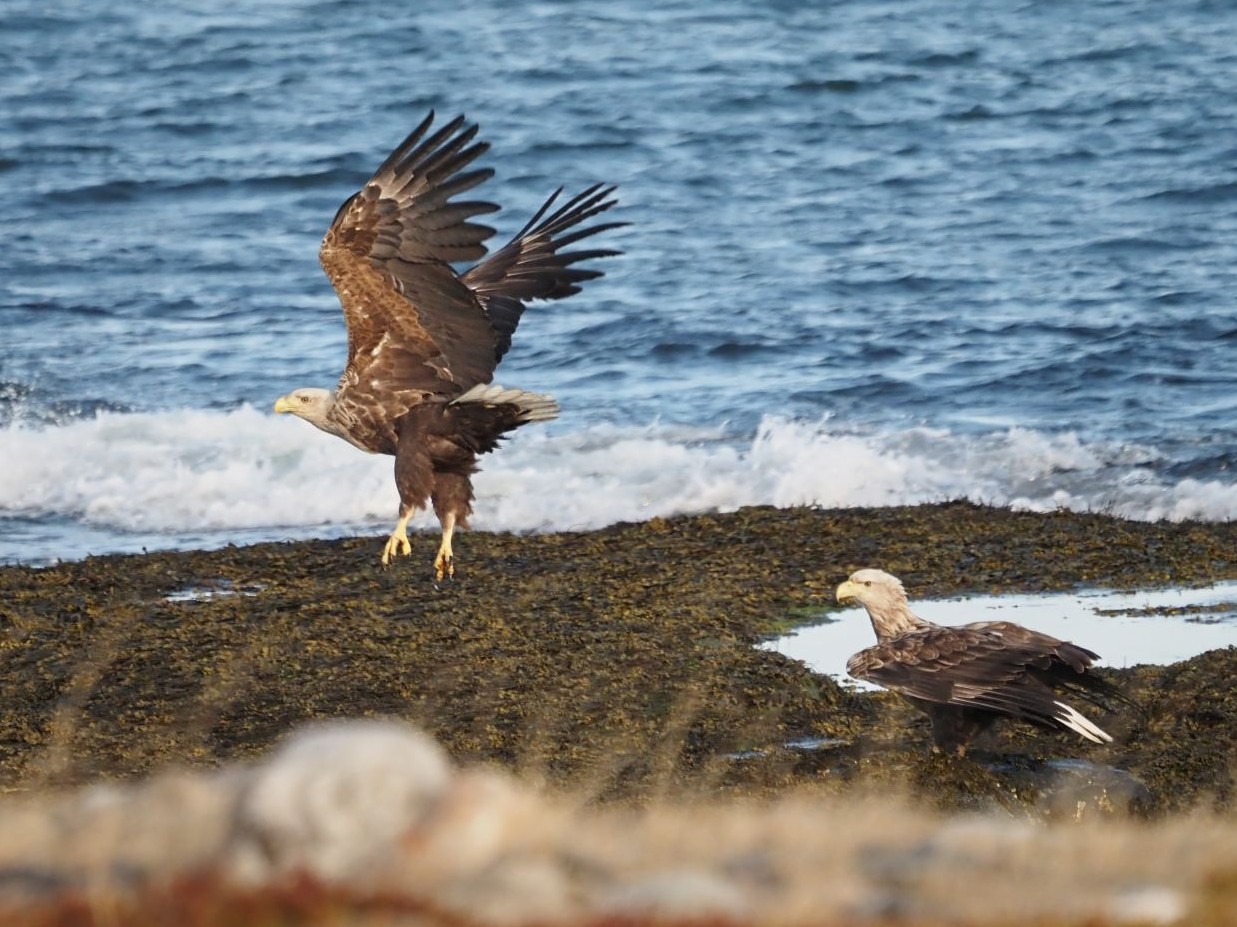
Àguila marina (Hieraaetus albicilla) posant pel grup. Sempre és fantàstic veure així de bé una de les icones de l’Àrtic.

Dia 7. Després de gaudir d’un molt bon esmorzar noruec vam caminar la curta distància que ens separava de la badia de Vardo. Aquí, nombroses gavinetes de tres dits entraven i sortien de les seves colònies dins del poble. Amb ells, xatracs comuns i àrtics. Aquest dia tocava vaixell i illa de Hornoya. El trajecte en vaixell dura amb prou feines deu minuts però van ser prous per guaitar 4 fulmars que ens van passant rabent per sobre. Aquí dalt, els fulmars són de la famosa varietat blava, típica de l’Àrtic. Malauradament no tothom els va poder veure!

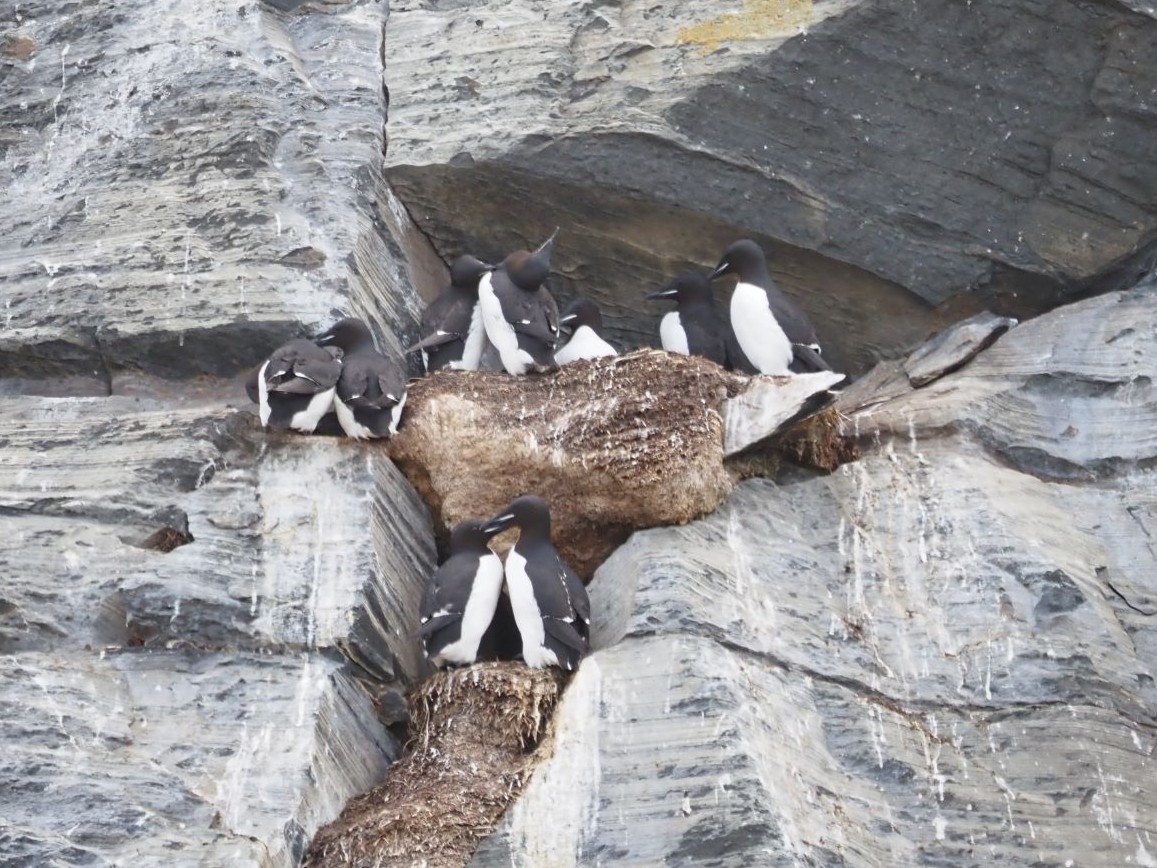
Una de les estampes més impressionants de Hornoya es produeix fins i tot abans d’arribar a la illa. En els últims centenars de metres abans d’arrivar el mar està literalment emmantellat amb mil·lers de somorgollaires i gavots. És simplement alucinant veure aquell mar de somorgollaires, una cosa que no he vist mai en cap altre colònia d’aus marines, almenys a l’Atlactic Nord.

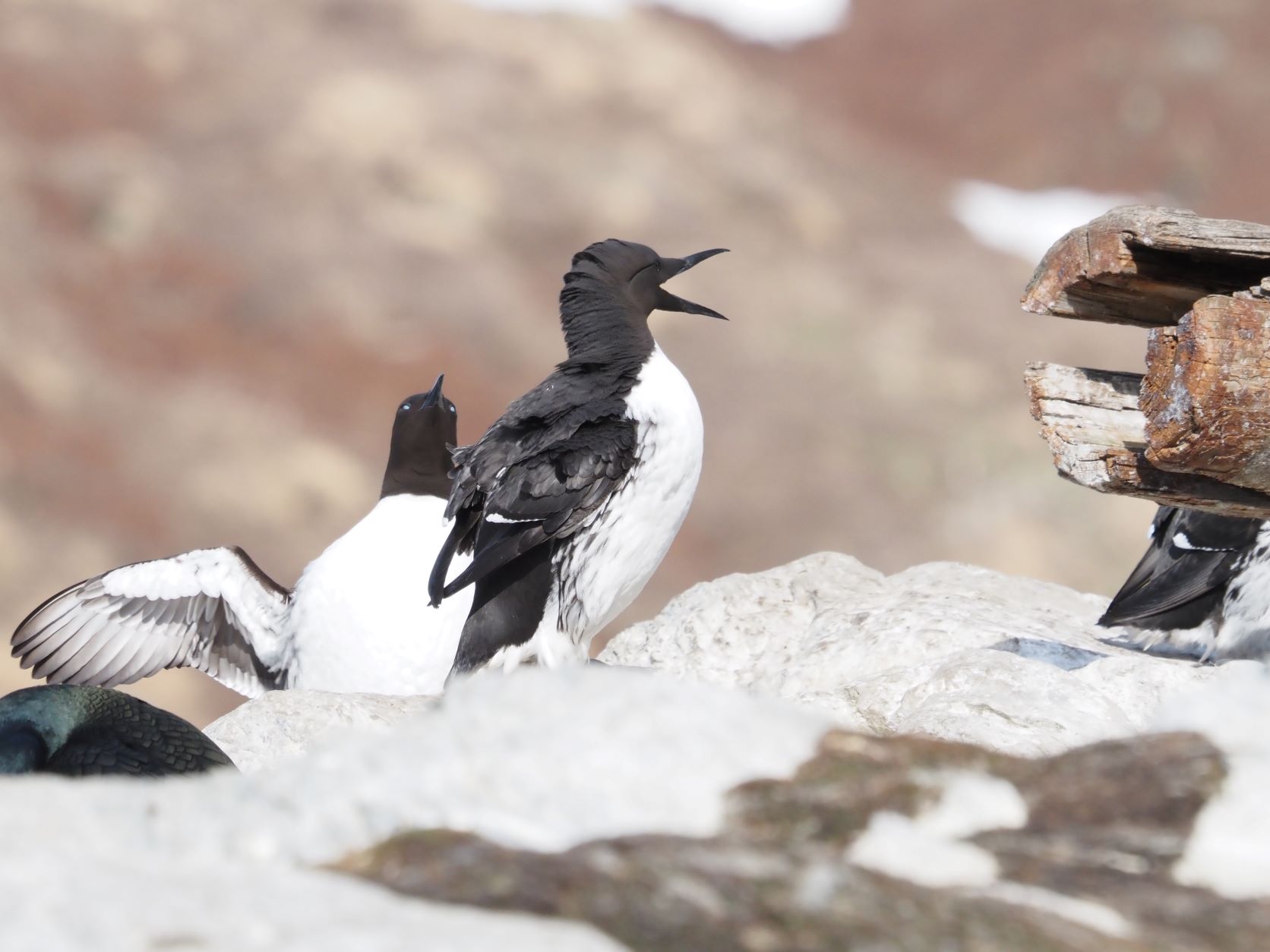
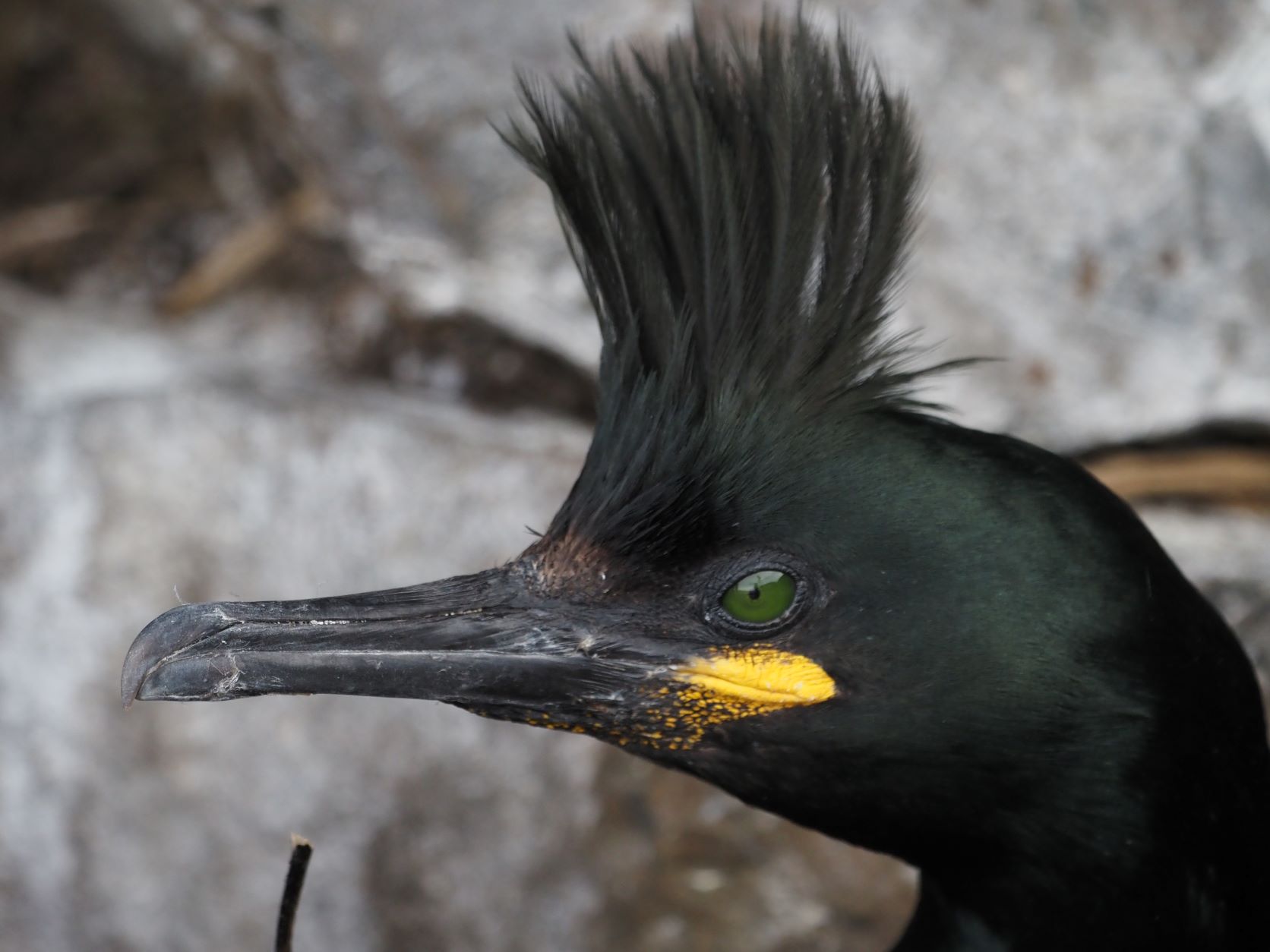
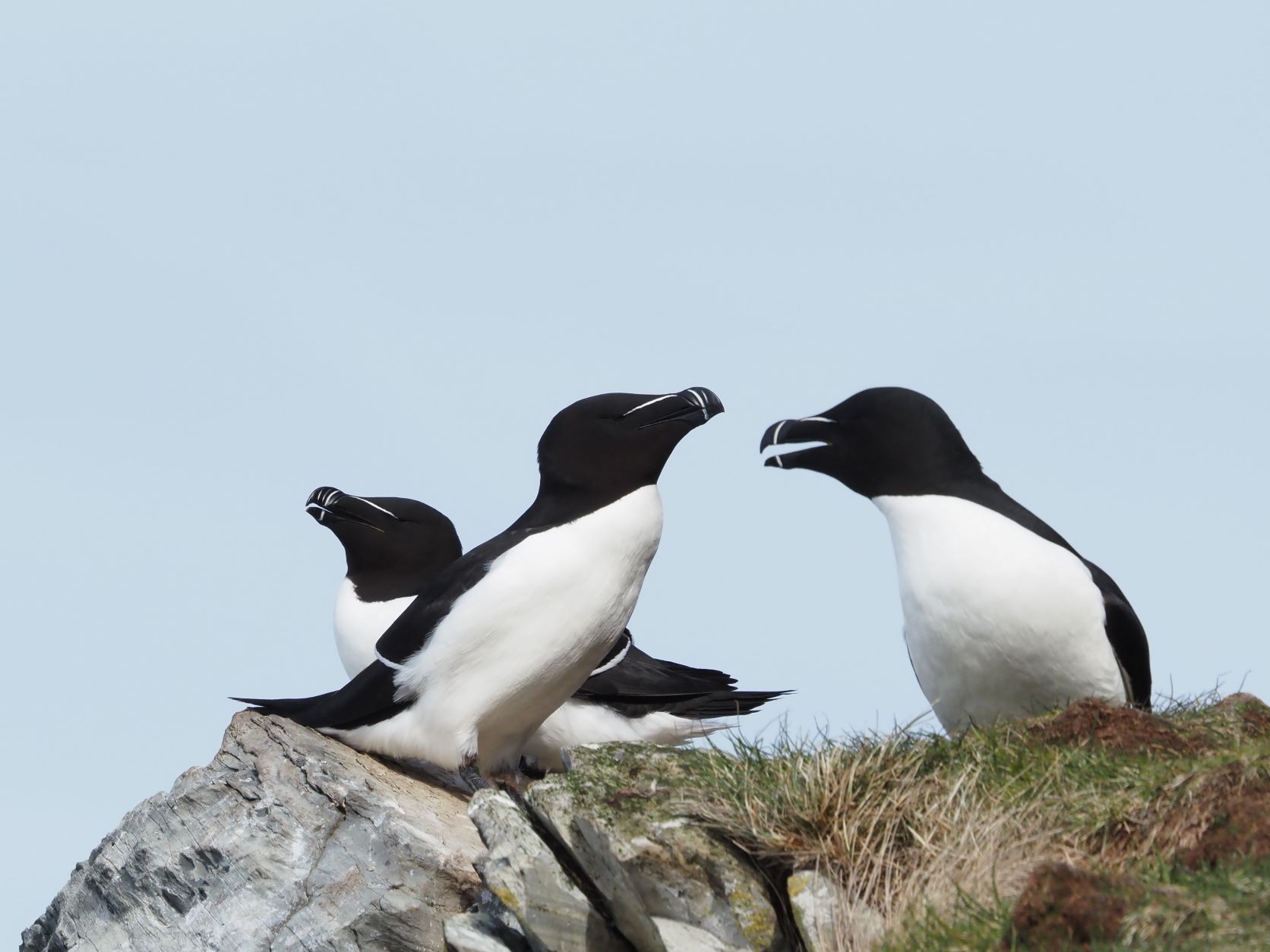
Tot i les variacions interanuals, Hornoya acull unes 50.000 parelles de somorgollaires, prop d’un 15% dels quals de la varietat embridada. Amb ells, hi nien unes 30.000 parelles de gavinetes de tres dits, mil·lers de gavots, uns 3.000 frarets, centenars de corbs marins emplomallats i petits números de fulmars que combines amb les petites colònies de somorgollaire de Brünnich (menys de 3.000 parelles).

El passeig per l’illa ens va permetre observar totes aquestes espècies i també altres especialitats com grassets de costa, piules gola-roges, una bonica parella de territs de Temminck, oques de galta blanca, bec de serra grossos i cotxa blava. Al camí de pujada al far el Joan i la Roser van trobar un bonic passerell becgroc.
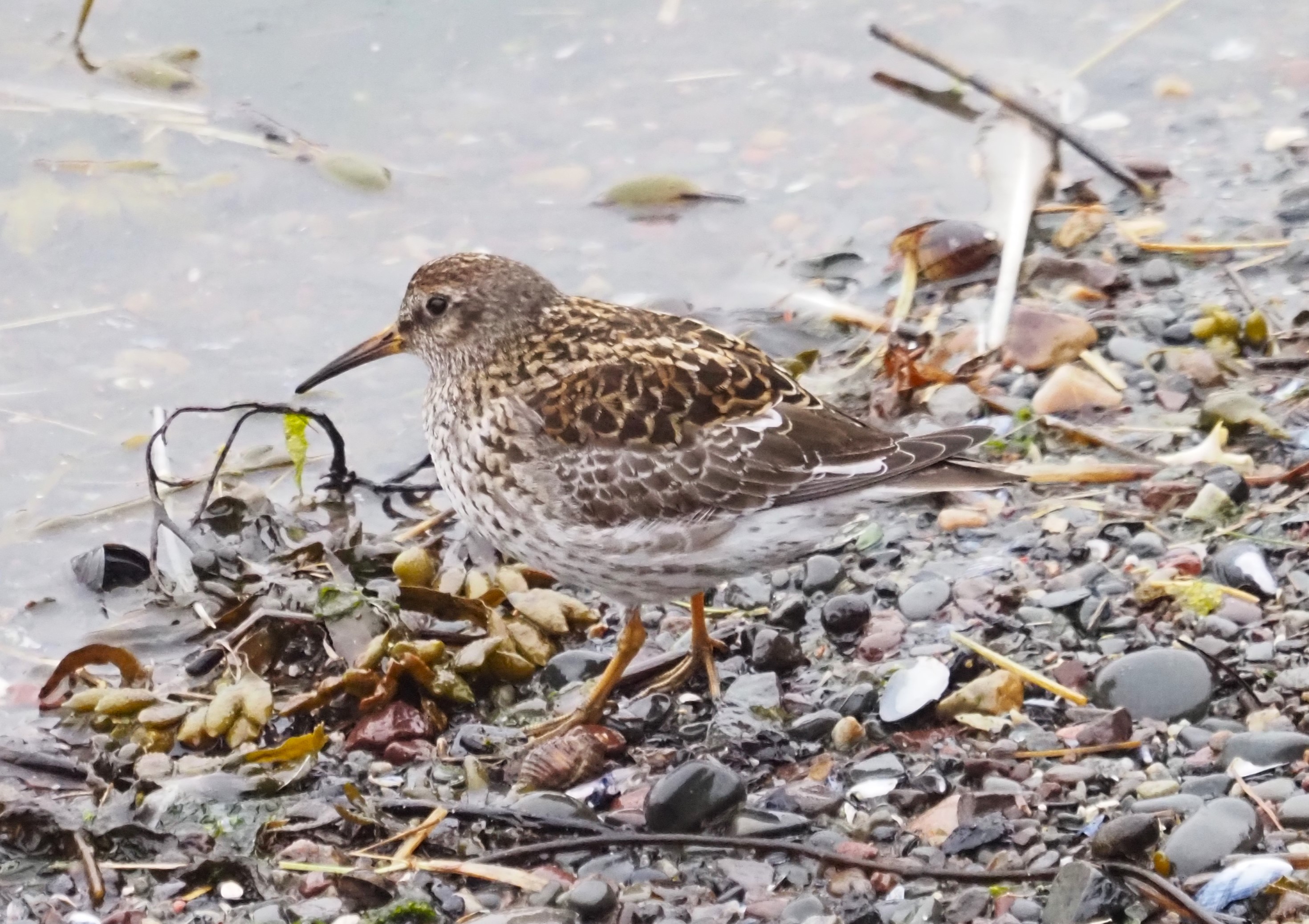
Els territs foscos s’alimentaven a tocar de l’allotjament (Calidris matitima).
Xatrac àrtic (Sterna paradisaea)
Primer plà de gavot (Alca torda). L’ocell marí més elegant del continent?
Somorgollaire “embridat” a la colònia.
Somorgollaire (Uria aalge) preparant-se pel vol.
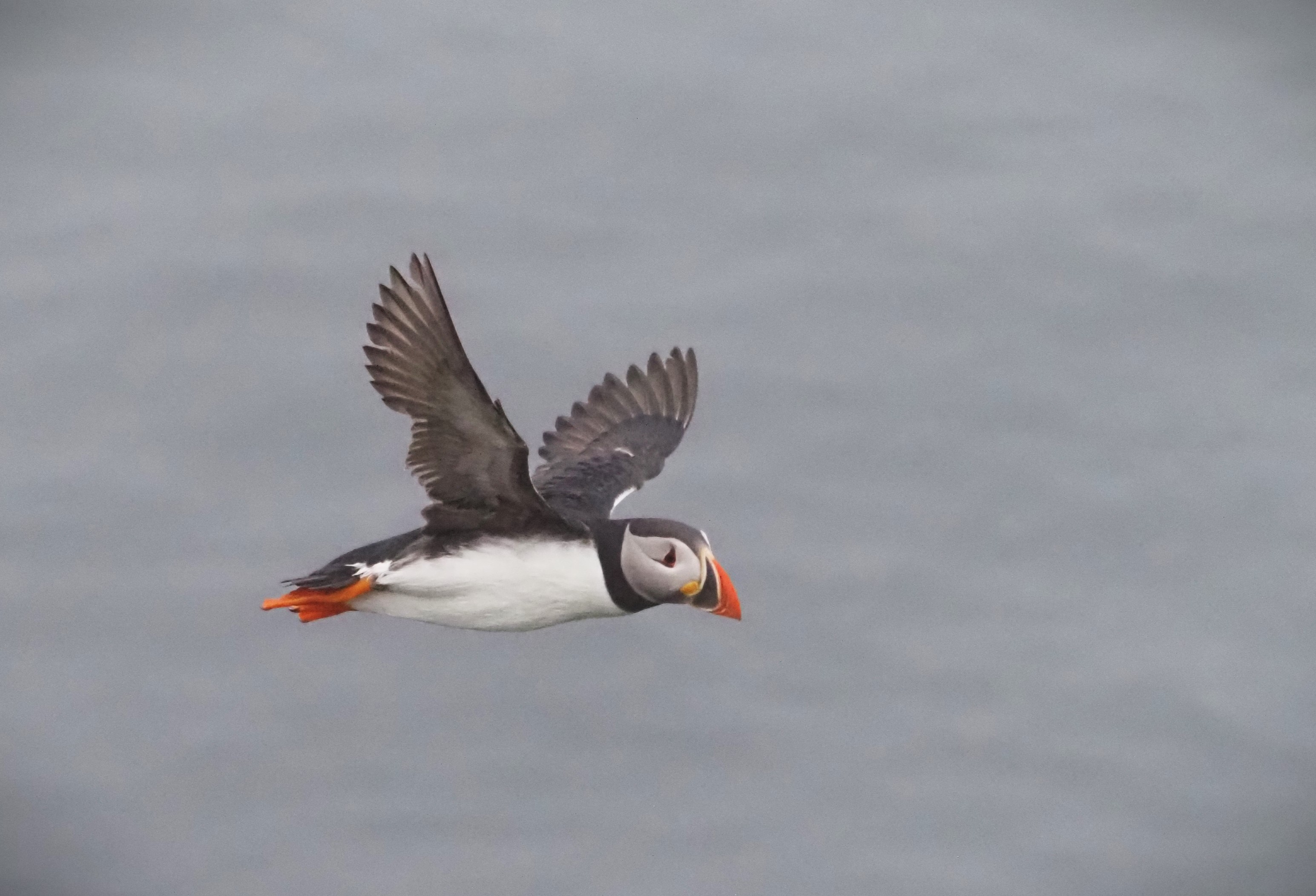
Fraret atlàntic (Fratercula arctica).
Somorgollaire de Brünnich (Uria lomvia) -dreta- i somorgollaire comú -esquerra.
Fraret atlàntic (Fratercula arctica) tornant a la colònia després d’alimentar-se al mar.
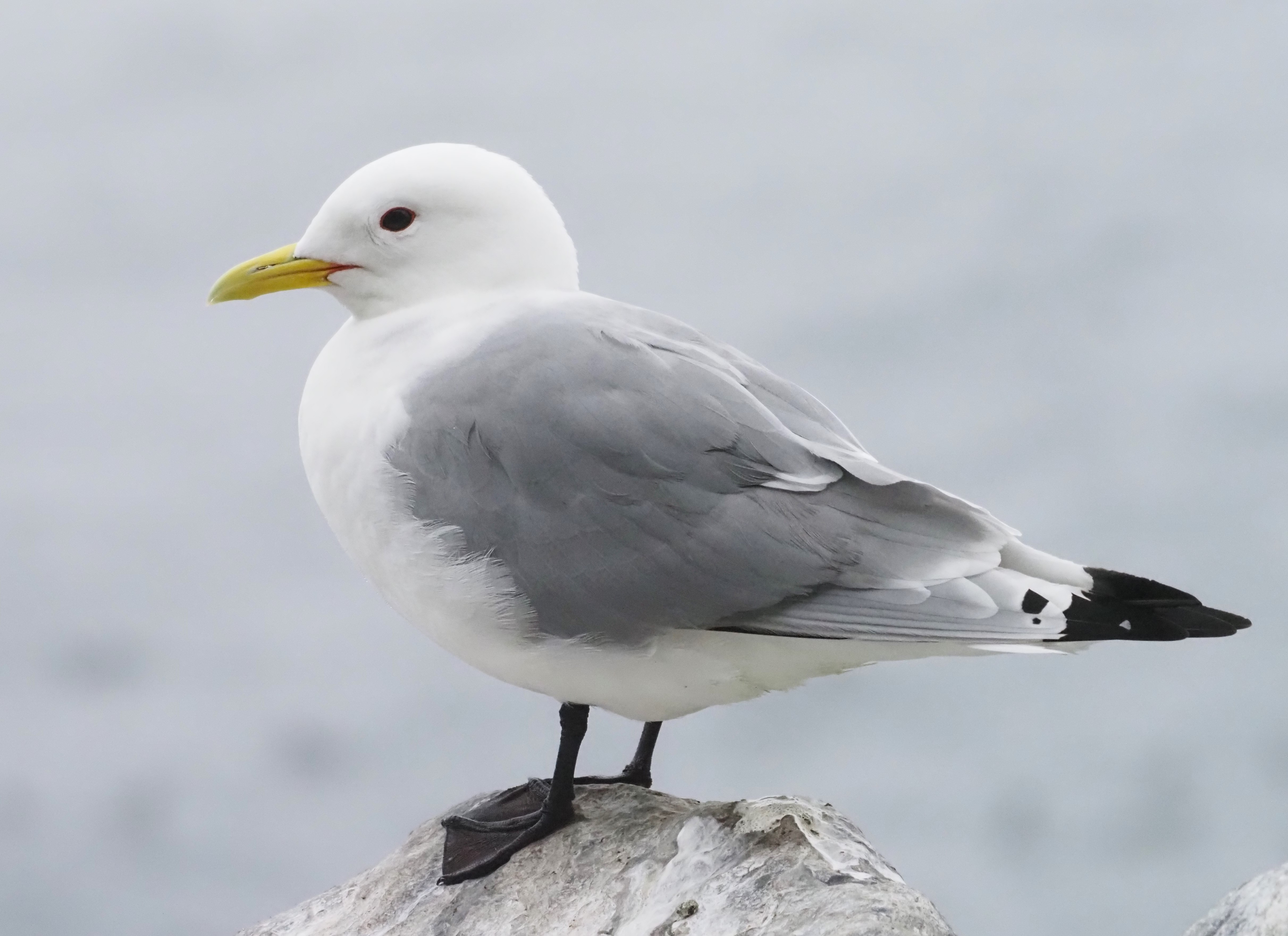
La molt bonica gavineta de tres dits (Rissa tridactyla).
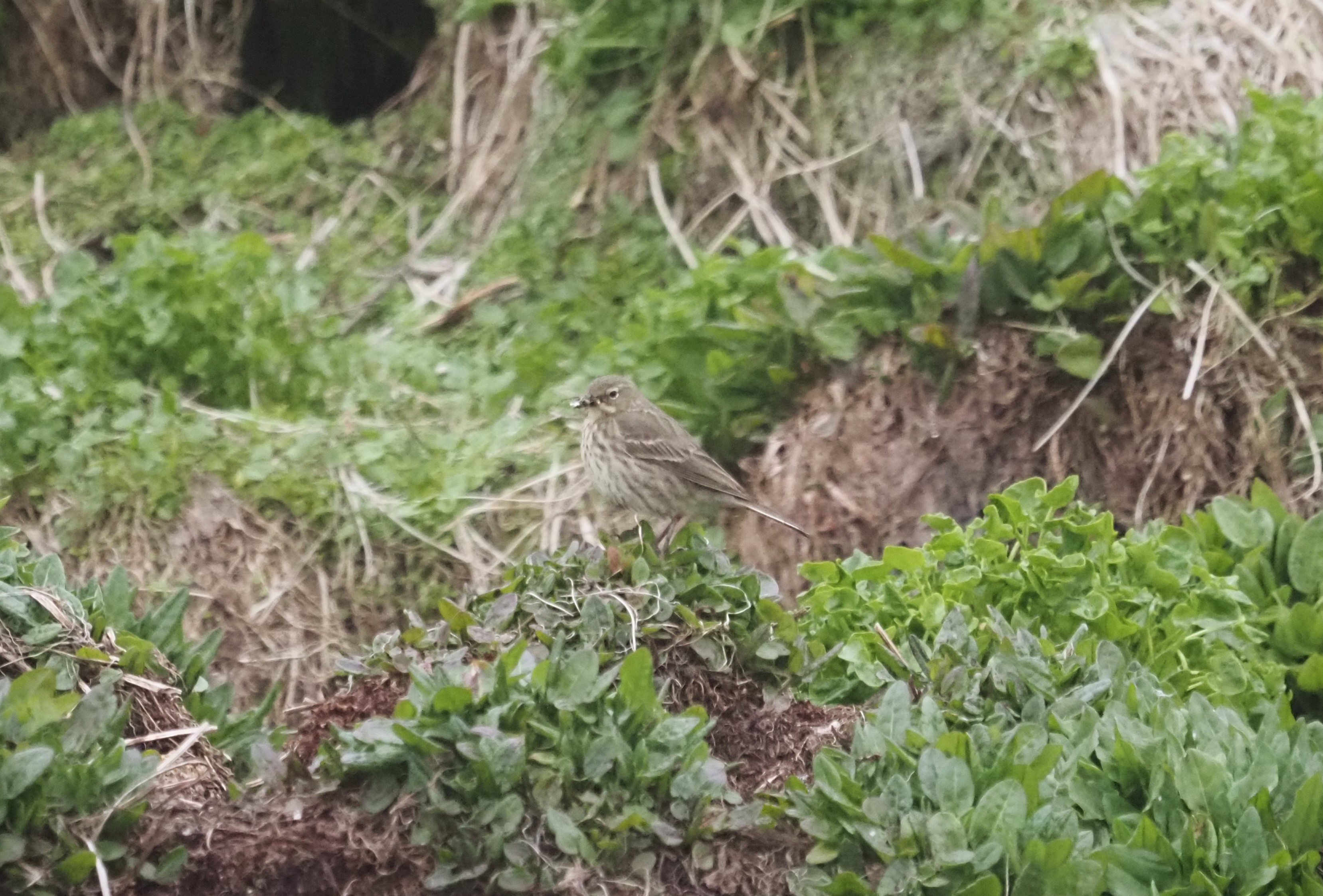
Grasset de costa (Anthus petrosus litoralis) niant a les parts més baixes de l’illa..

De tornada al continent ens vam dirigir encara més cap al Nord. Malauradament el continent estava cobert d’una espessa boira. Però la boira no ens va impedir gaudir d’una espectacular perdiu escandinava que just acabava de fer un bany de sorra. Quina sort! Allà a on boira obria fèiem una parada per escanejar les badies i les platges: estols de becs de serra grossos, ànecs glacials i ànecs negres s’alimentaven aquí i allà. A voltes hi trobàvem alguna calàbria o ànecs foscos. La boira persistia i ens va donar poques oportunitats per gaudir de passerells àrtics, cotxes blaves i tords ala-rojos. Després de gaudir del pic-nic vam fer cap al Sud, encara txequejant el mar cada cop que la boira ho permetia. Tot mirant un grup d’èiders vam descobrir la primera calàbria de bec pàl·lid del viatge surant al mar. Vam aparcar els cotxes quasi de qualsevol manera per grimpar vessant avall, plantar els telescopis i gaudir d’aquest ocell tant espectacular. L’au era mig quilòmetres de nosaltres, apareixia i desapareixia a la boira i els somorgollaires alablancs volaven darrera seu, amb alguna foca grisa ocasional. Inoblidable!

Molt satisfets d’haver trobar aquesta espècie vam començar a tornar cap a l’allotjament. Però tot just abans d’arribar encara vam tenir una última parada. Una calàbria de bec pàl·lid s’havia anat veient dins una badia de Vardo. I allà hi era, però dormia enmig d’una molt densa boira que amb prou feines ens va deixar apreciar cap detall.
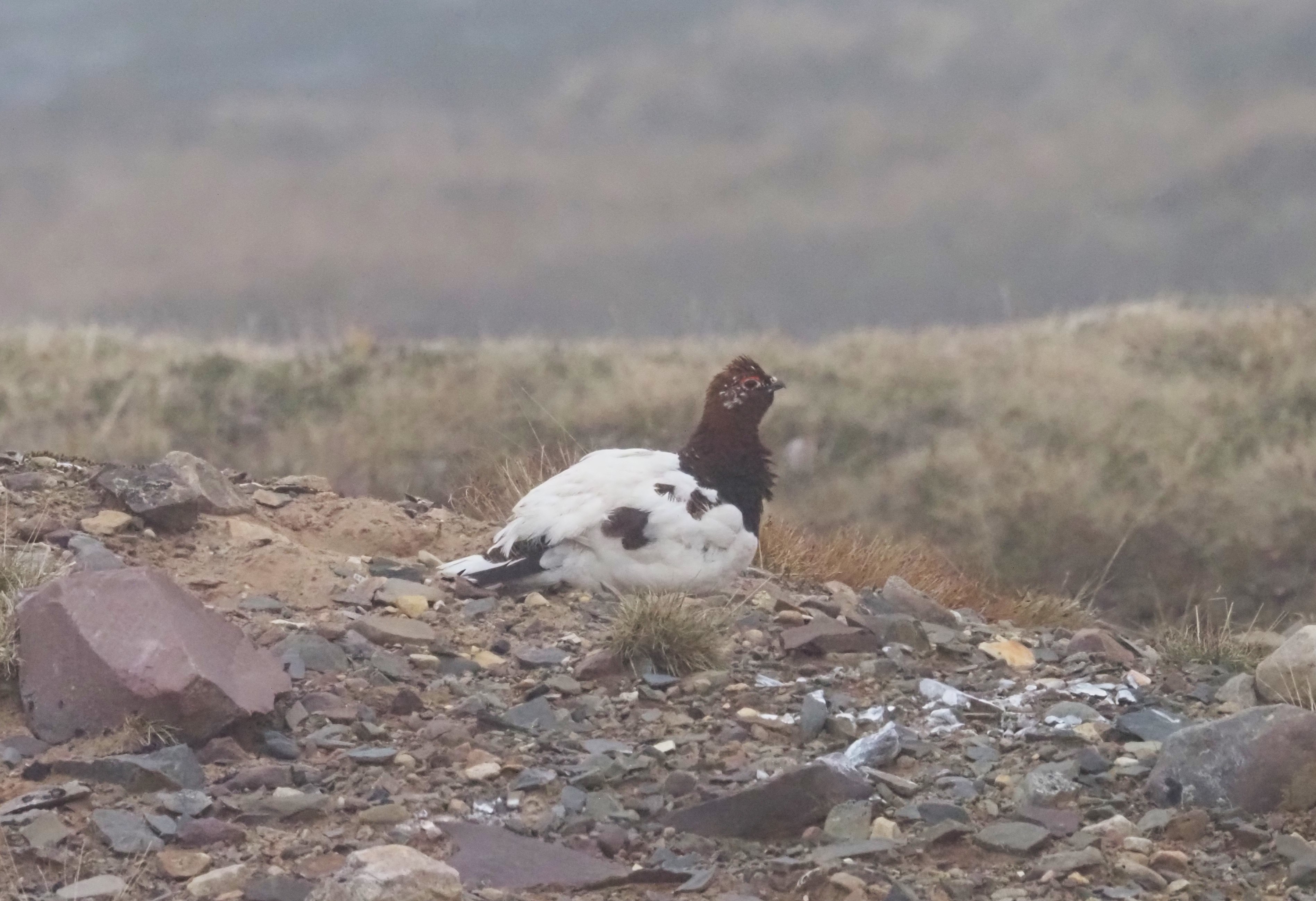
Aquesta perdiu escandinava (Lagopus lagopus) acabava el seu bany de sorra quan la vam trobar.
Estol d’ànecs negres (Melanitta nigra) a una badia.
La primera calàbria de bec pàl·lid (Gavia adamsii) del viatge va tenir tot els components del Nord més indòmit!
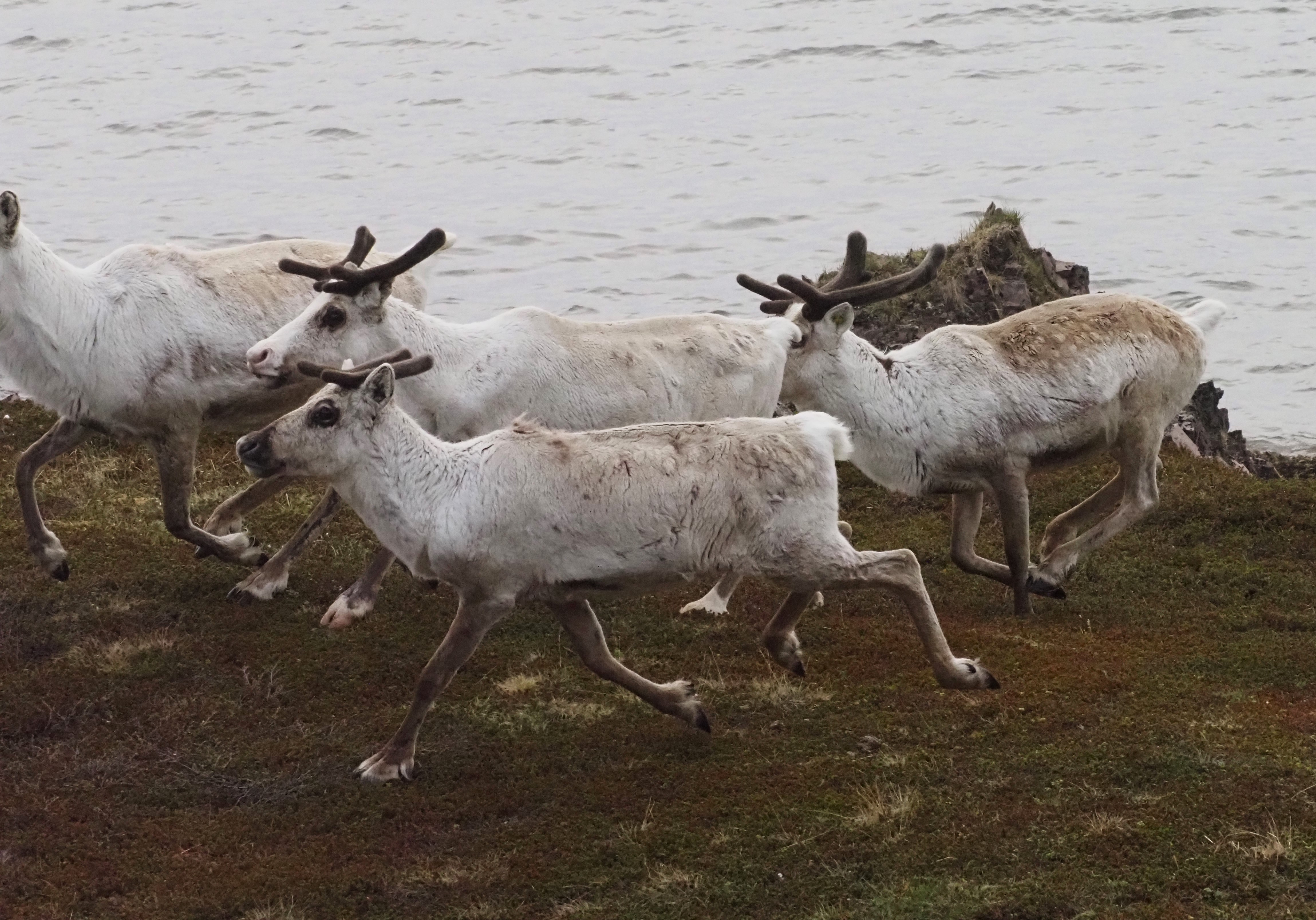
Aquests rens (Rangifer tarandus) quasi es podien donar per salvatges. Quasi.

Dia 8. Aquest dia vam tornar a explorar les zones més al Nord de la Península de Varanger. Però abans d’enfilar la carretera vam fer parada obligada a la mateixa badia a on vam acabar el dia anterior. Aquí, en un trencall de la boira, vam gaudir d’inesborrables observacions de calàbria de bec pàl·lid. L’ocell tot just es despertava del sopor “nocturn” quan vam arribar. Amb la calàbria a menys de 40 metres de nosaltres, les observacions van ser simplement increïbles, amb l’au obrint ales i arreglant-se el plomatge a voltes apropant-se, a voltes allunyant-se de nosaltres sense que mai se la veiés molesta pel desplegament òptic al seu voltant. A la platgeta, 3 territs foscos s’alimentaven força a prop, però ningú parava esment…

De tornada a la feina, vam aprofitar que la boira s’enretirava definitavament per fer una parada a la tundra. Aquí vam obtenir excel·lents observacions de sit de Lapònia però batallaires en plena batalla pel domini d’aquell racó de tundra. Amb ells, també nombrosos paràsits cuapunxeguts que lluitaven per fer fora les àguiles marines i els aligots calçats que voleiaven la zona. Els xisclets de les daurades grosses es barrejaven amb els refilets trencats dels territs variants i les esbojarrades frases de les cotxes blaves. Més enllà, una perdiu escandinava s’ho mirava tot amb mandra des d’una petitíssima elevació.

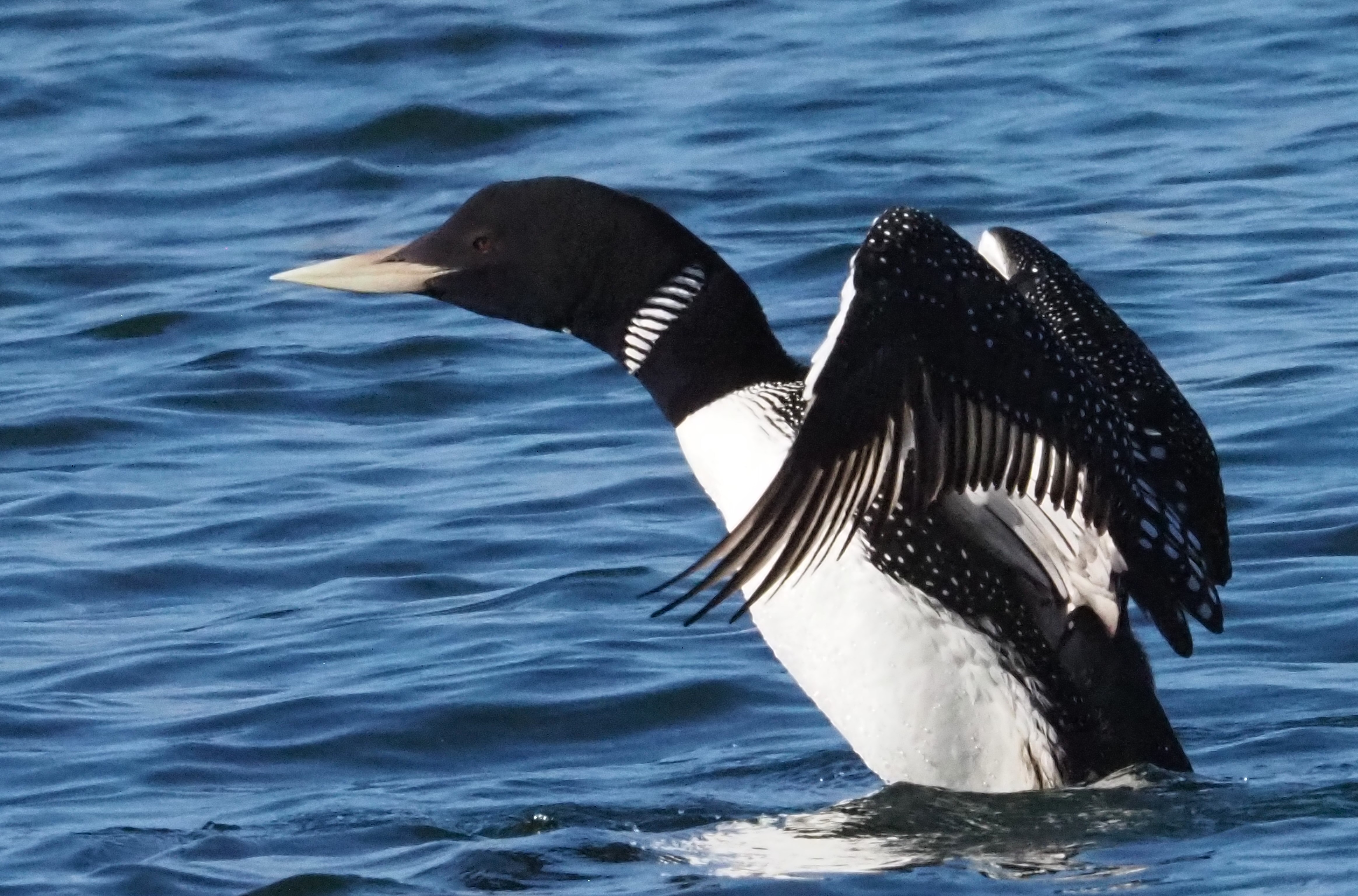
Aquestes delicioses observacions de calàbria de bec pàl·lid van anar més enllà de qualsevol expectació i l’ocell va ser escollit un dels cinc millors del tour!
GUAU!
Sit de Lapònia (Calcarius lapponicus), Probablement un dels ocells més carismàtics de la tundra
Cotxa blava (Luscinia svecica)

Arribats a les zones més altes, vam fer una parada per gaudir del pic-nic. Aquí, vam tenir la sort de trobar un niu de passerells àrtics que va fer les delícies de tothom. Al voltant del mateix llac hi vam veure ànecs glacials, valones, titelles i cotxes blaves a molt curta distància. Més enllà, els paràsits cuallargs ja patrullaven els turons.

Conduint a través la tundra vam veure un bon grapat de perdius escandinaves i una segona bassa ens va permetre veure de ben a prop una parella de calàbries petites que es preparaven per niar allà mateix. Aquí també vam gaudir de batallaires, escuraflascons bec-fins, xarxets comuns, ànecs cullargs, els dos únics morells buixots del tour, piules gola-roges i tètols cuabarrats (nidificant molt escàs a la zona) junt a un bon grapat més d’altres espècies.

Baixant cap a la costa vam fer parada en un lloc interessant per a falcó grifó, però sense resultats. De retruc, vam tornar a veure àguiles marines i aligots calçats. Ja cap al vespre vam tornar cap a les zones de tundra. De camí cap allà les perdius escandinaves anaven volant amunt i avall i vam trobar la única esmerla del tour, un bonic mascle que estava aturat a una petita roca!

Uns minuts més tard ja ens trobàvem en un hàbitat més escaient per a les espècies més “alpines” de Varanger. Bé cal dir que no ens va costar gens de trobar la primera perdiu blanca, que s’estava a dalt d’una petita pedra tot i el fort (i fred) vent que hi bufava. El paisatge era força rocallós i els moviments de l’ocell ens va permetre descobrir també una femella. Aquí també vam veure la primera alosa banyuda del viatge, però va sortir volant, perdent-se amb el fort vent. Vam decidir de moure’ns cap a un racó més arrecerat. De camí, vam tornar a veure territs de Temminck menjant aquí i allà, calàbries i força becs de serra mitjans. La última parada del dia no podia haver estat més profitosa: només arribar, una fantàstica perdiu blanca va començar a cantar a pocs metres de nosaltres i una parella d’aloses banyudes van aparèixer també ben a prop dels vehicles. A uns 300 metres, el Ramiro va albirar quelcom petit i blanc. Així amb alguna excusa vam moure a tot el grup cap allà i, efectivament, allà ens esperava un superb sit blanc lluint la seva blancor a la neu. Com a colofó, les aloses van venir també cap aquí i totes dues espècies van començar a cantar quasi a duo!

Des d’aquí ens vam dirigir cap al nostre allotjament per gaudir d’un molt bon sopar!

Ànec glacial (Clangula hyemalis) mascle encara migrant cap al Nord.
Passerell àrtic (Acanthis hornemanni) a prop del seu niu.
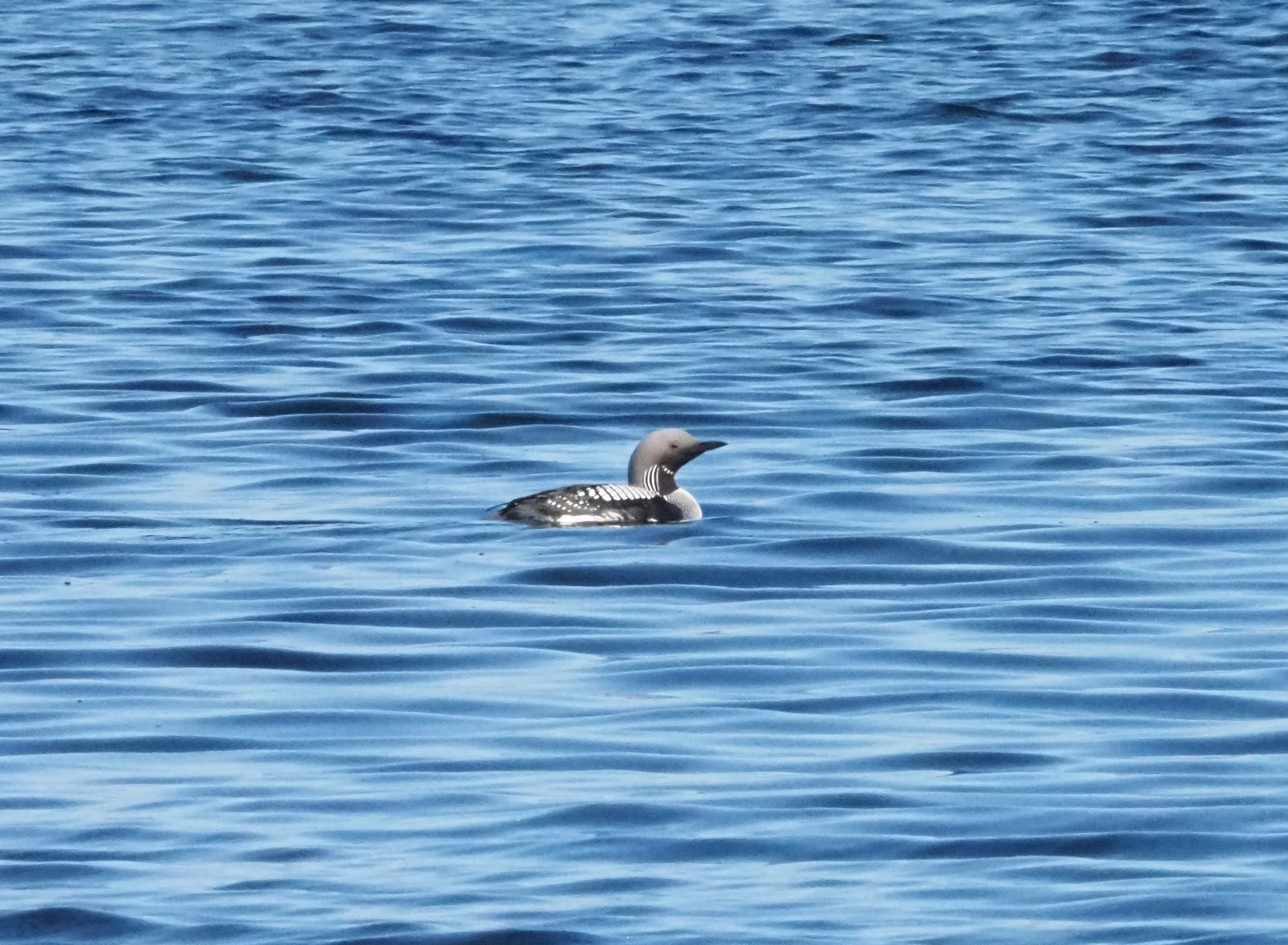
Calàbria agulla (Gavia arctica) vestit de gala per nosaltres.
Somorgollaires alablancs (Cepphus grylle) a tocar de la caixa niu
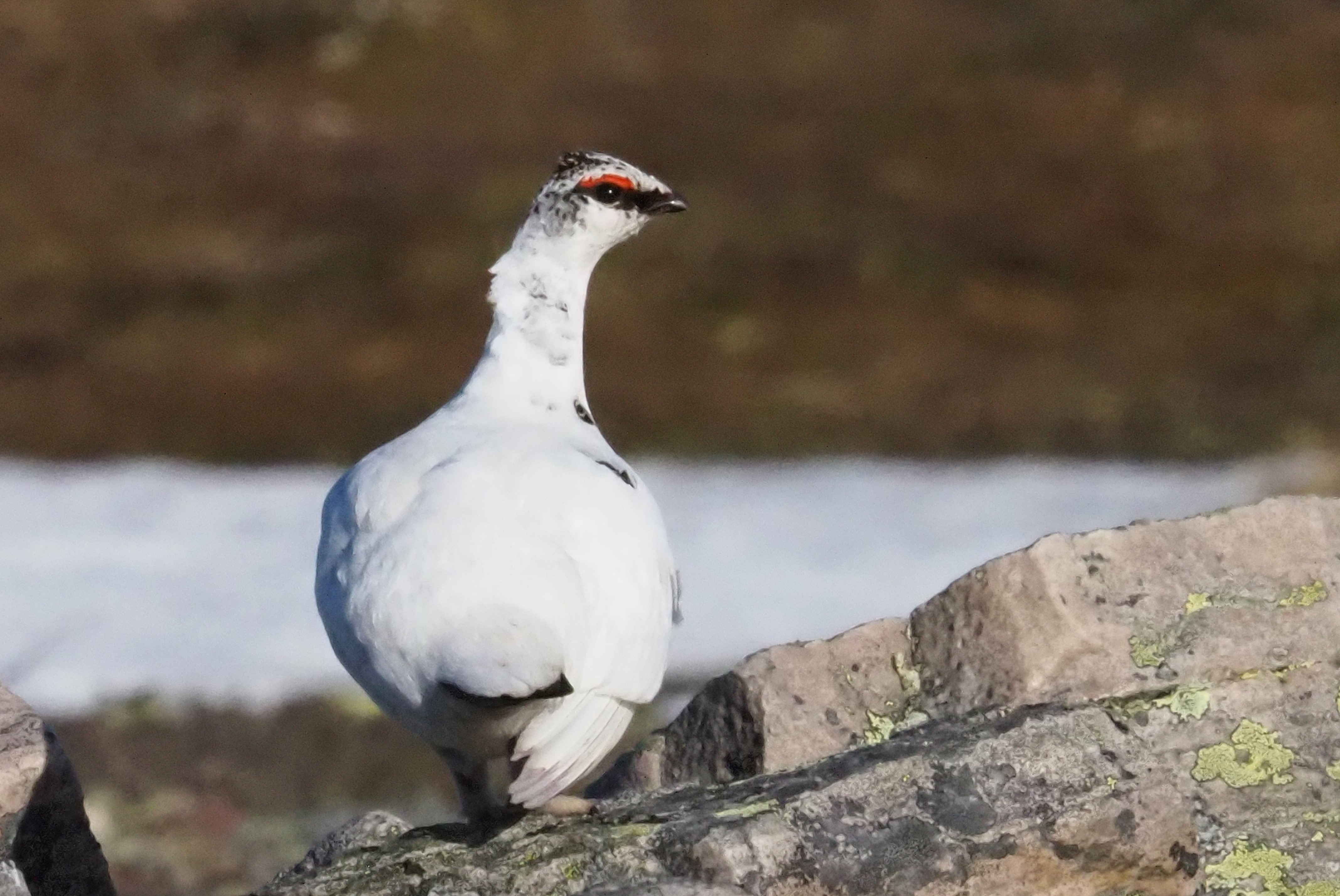
Les observacions de perdiu blanca (Lagopus mutus) van ser inmillorables (Lagopus mutus)
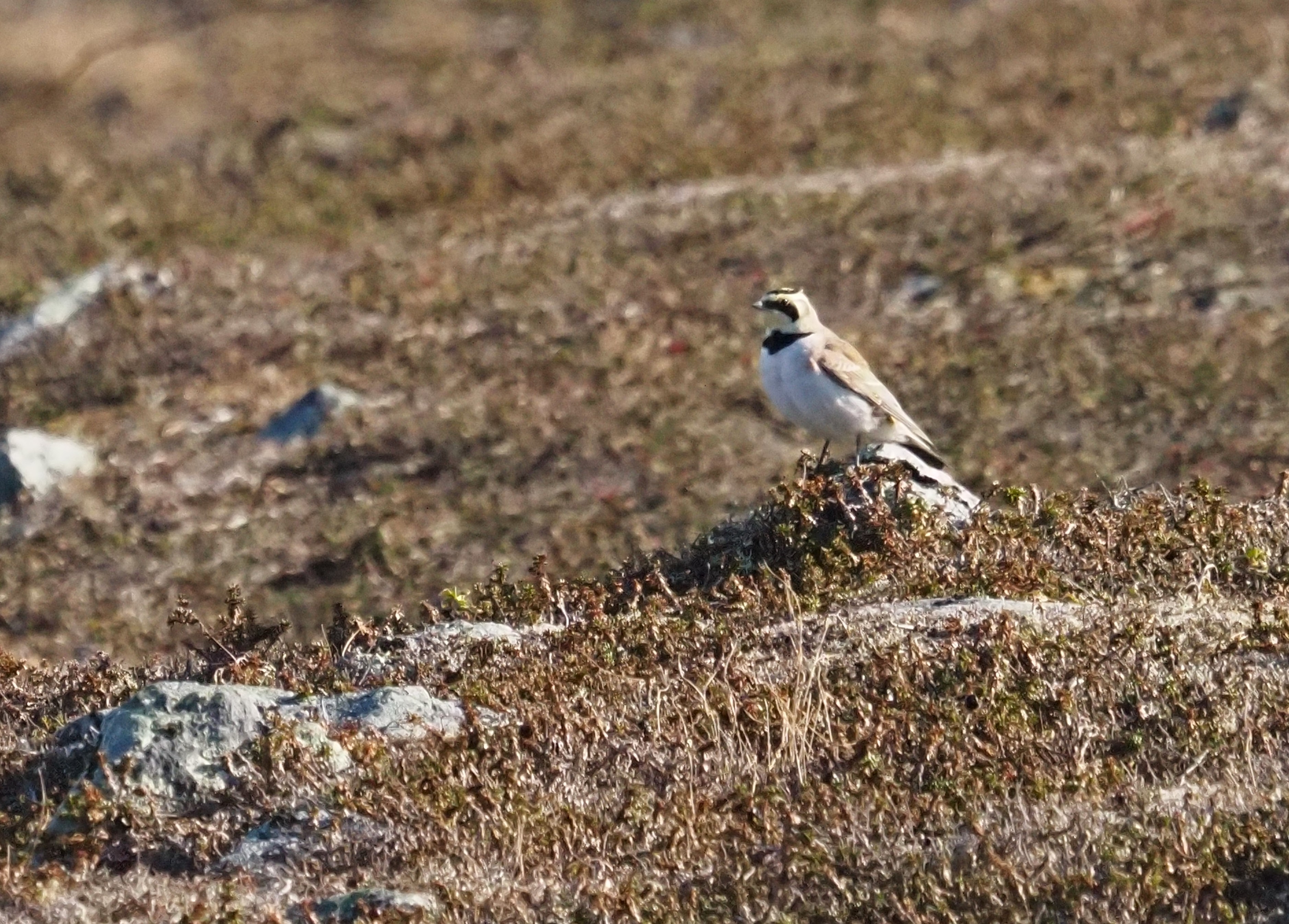
Alosa banyuda (Eremophila alpestris) controlant el seu territori.
Poques coses es poden comparar a un mascle de sit blanc (Plectrophenax nivalis) en plomatge estival!

Dia 9. Un altre dia assolejat a la tundra Àrtica i el nostre grup ja era fora de l’hotel molt d’hora al matí. Després de tenir un esmorzar un xic massa senzill, ens vam conjurar per dinar d’hora.

La primera parada va ser per gaudir d’una parella de paràsits cuallargs que va oferir-nos una observació excel·lent mentre recorrien el raconet de tundra a tenien pensat fer el niu. Enguany, el número d’aquests elegants ocells estava clarament per sota de la mitjana.

Ens vam arribar a la costa per fer una mica de “seawatching” des d’un punt prominent. Des d’allà vam estar encantats de veure un enorme estol amb centenars de fulmars blaus que es movien al voltant d’un vaixell pesquer. Estol rere estol, els becs de serra grossos continuaven migrant cap al Nord-est, a les seves zones de nidificació a Sibèria. Un gran estol d’ànecs glacials s’alimentava just davant la nostra posició i llavors va saltar la sorpresa quan Mark va trobar un magnífic mascle d’èider reial alimentant-se amb ells! Més enllà, diverses calàbries feien també la seva migració cap a l’Est. Hi vam veure les dues espècies més habituals i també una gran calàbria de bec pàl·lid, la tercera del viatge! Altres espècies d’interés aquí van incloure força somorgollaires alablancs, èiders comuns, bec de serra mitjans i frarets volant tots cap a l’Est. Com a colofó, un fantàstic grifó ens va passar rabent en direcció Oest, talment que només uns quants vam poder gaudir del falcó més poderós!

Abans de dinar encara vam tenir temps de pardalejar a una badia. Allà, entre els estols de les espècies més típiques el Mark va trobar un juvenil de gavina menuda. Aquí també vam veure territs de Temminck i mirant els estols d’èiders vam trobar un mínim de 4 èiders reials, tots tipus femella. Aquest cop i malgrat la boira, tothom en va poder gaudir d’allò més.

Després de menjar unes pizzes prou saboroses en pub local ens vam dirigir cap al Sud, sortint de Varanger i retornant a Finlàndia sense cap parada que reportés res de nou o massa destacable.
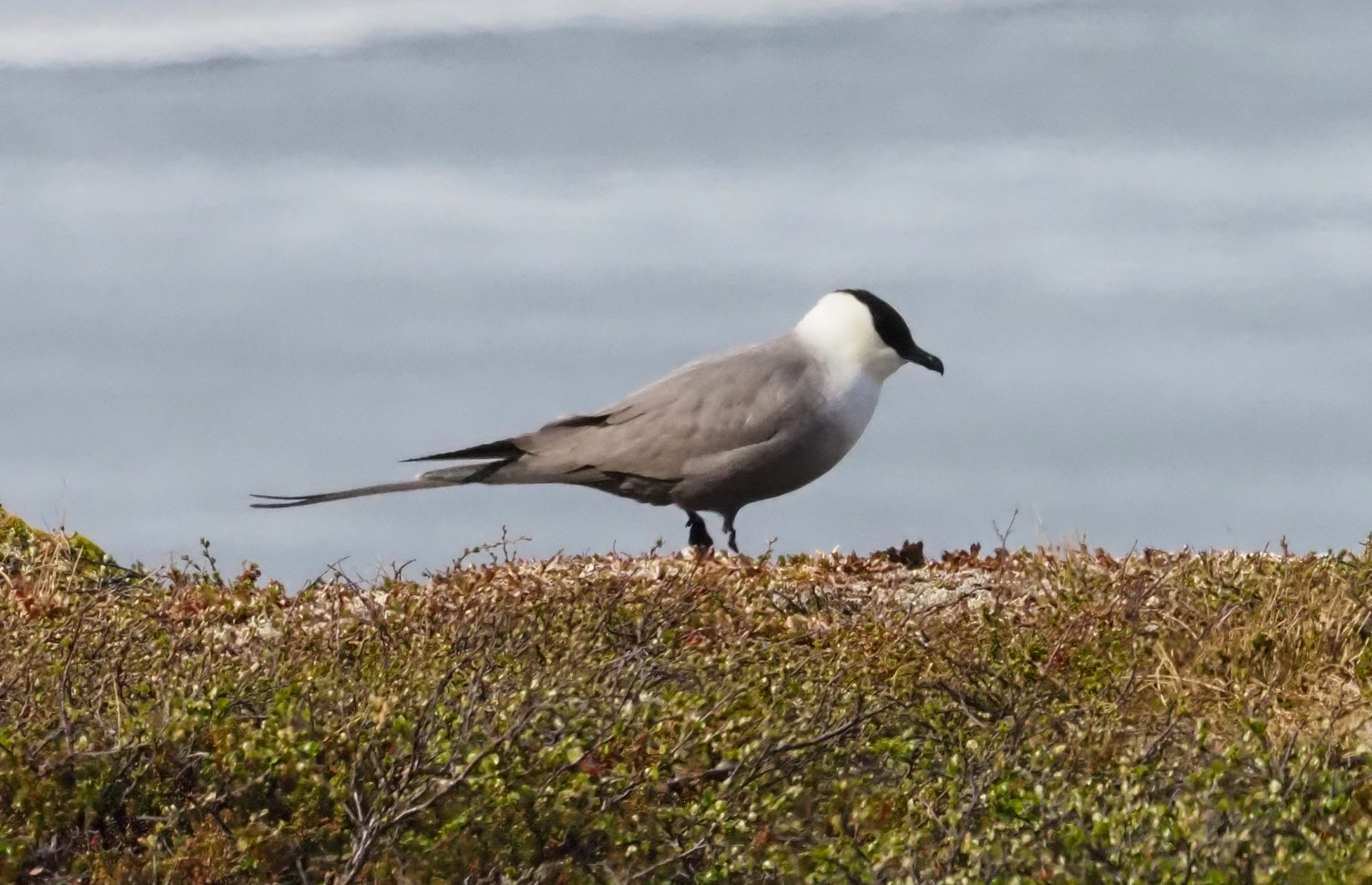
Els paràsits cuallargs (Stercorarius longicaudus) eren escassos, segurament degut al col·lapse de les poblacions de talpons.
Calàbria petita (Gavia stellata) nia a força basses i llacs de la tundra.
Al llarg del matí vam tenir un parell d’encontres fantàstics amb àguiles marines (Hieraaetus albicilla).
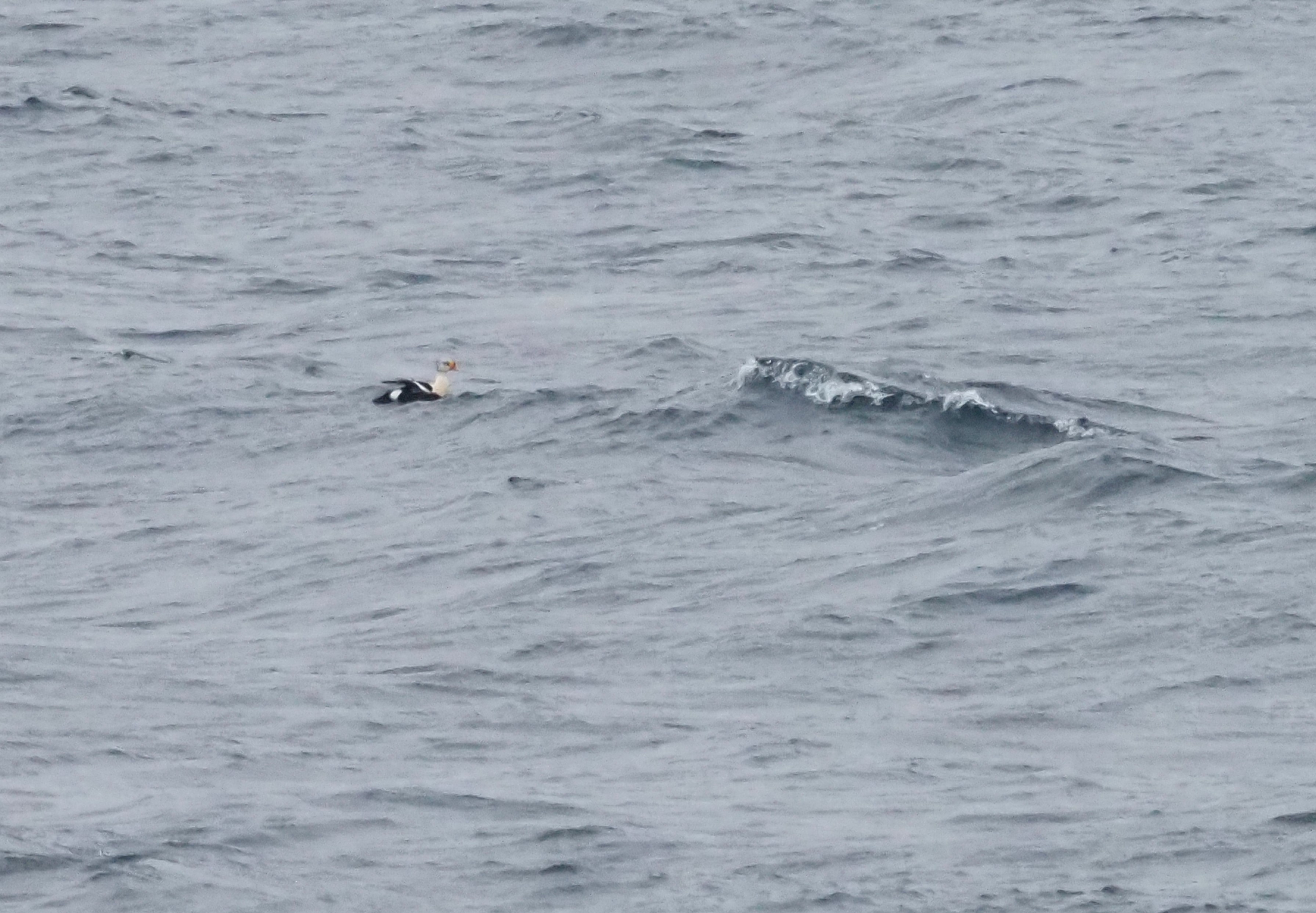
Mascle d’èider reial (Somateria spectabilis) a l’Oceà Àrtic.
Femella d’Èider reial (dalt) i dues d’èider comú.
Més imatges d’èider reial.

Dia 10. Bàsicament un dia de trànsfer. El grup es va dividir en dos degut als diferents horaris dels avions, amb el gruix principal del grup llevant-se ben d’hora per a fer un llarg trajecte que ens portaria de tornada a Oulu i un petita part que s’estava a Ivalo per agafar un avió aquell vespre. El gruix del grup vam marxar i vam començar el dia fent una parada a la cerca de mussol esparverenc. Ho havíem provat diverses vegades sense sort, però aquest cop ja vam sentir els reclams del mussol des del pàrking mateix i un parell de minuts després la teníem a poca distància mentre albirava el seu territori dalt estant d’un pi. Vam gaudir d’una bona estona i, fins i tot vam veure el mascle venint i donant-li a la femella un rossegador que ella es va empassar ràpidament.

A més dels mussols, aquells bosquet també tenia una parella de mallerengues de Lapònia que anaven reclamant per la zona. Però encara vam tenir més sort, perquè allà a prop un becadell de Wilson havia estat marcant territori. Ens hi vam apropar i el vam sentir cantar un parell de vegades mentre volava per la zona! A més, aquesta última parada encara va afegir una nova espècie pel viatge; un pòlit cantaire.

De tornada a la furgoneta, vam continuar el nostre trajecte cap al Sud. Tots anàvem cansats i al llarg de les properes dues hores vam estar buscant desesperadament un lloc a on aturar-nos i fer un cafè. A desgrat nostre, vam comprobar com de difícil pot ser de trobar un cafè a Lapònia un diumenge al matí… Finalment vam trobar cafè i fins i tot vam trobar un mussol emigrant que ens va fer un parell de passades força espectaculars a la carretera abans no vam arribar a l’aeroport!

I fins aquí arriba la crònica del nostre 7è tour per terres del Nord de Finlàndia i Finnmark. Un indret fascinant al que ja tinc ganes de tornar al 2025. De ben segur que serà tant i tant bo com la resta d’edicions!

Finalment i després d’uns quants intents, vam aconsguir unes ben merescudes observacions de mussol esparverenc (Surnia ulula).
Mussol esparverenc en acció!
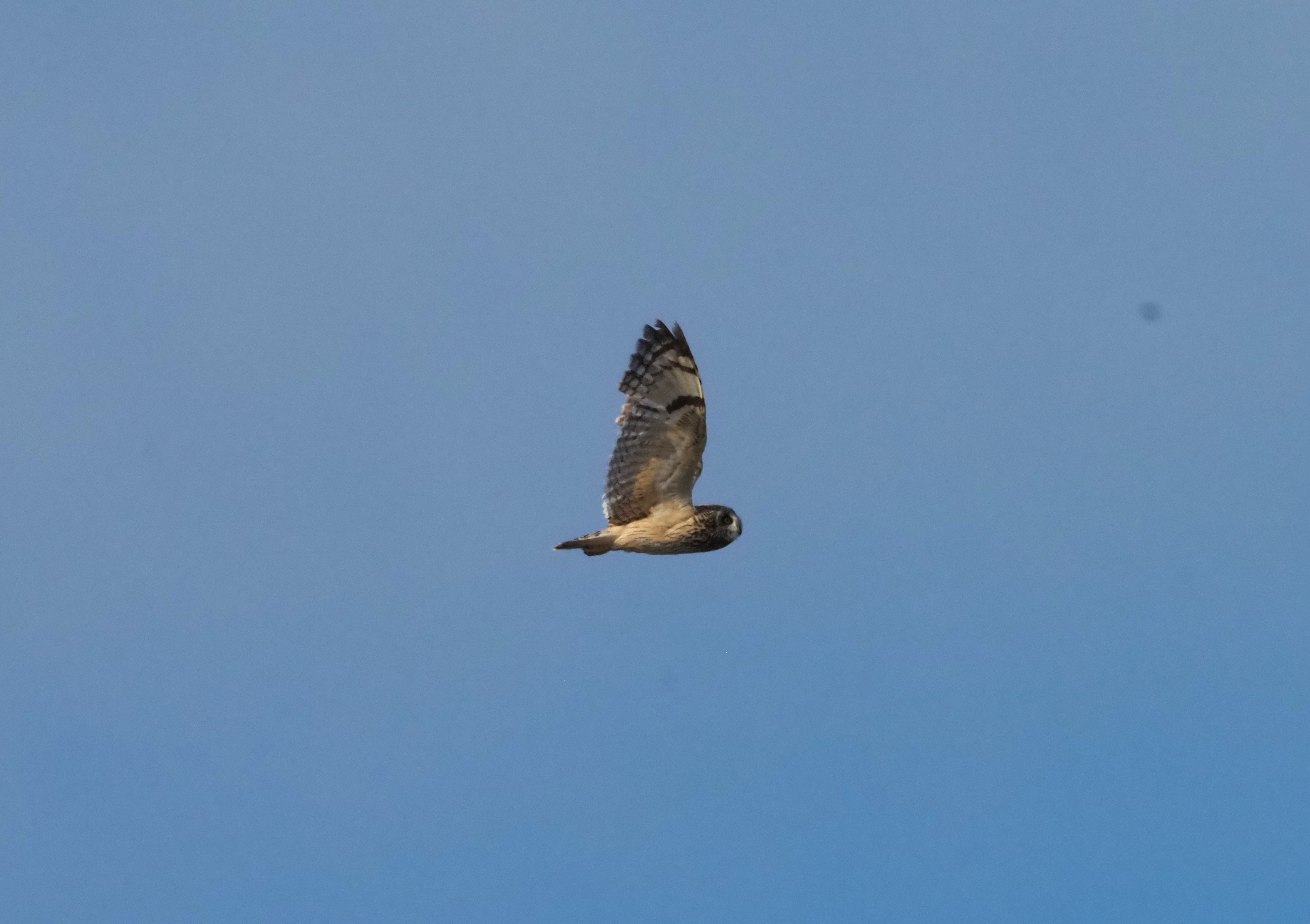
Aquest mussol emigrant (Asio flammeus) va ser la última especialitat del viatge.

Llista dels ocells vistos al llarg del tour

  1. Cigne cantaire – Whooper Swan (Cygnus cygnus)
  2. Cigne mut – Mute Swan (Cygnus olor)
  3. Ànec blanc – Common Shelduck (Tadorna tadorna)
  4. Oca comuna – Greylag Goose (Anser anser)
  5. Oca pradenca de la tundra – Tundra Bean Goose (Anser serrirostris)
  6. Oca de bec curt – Pink-footed Goose (Anser brachyrhynchus)
  7. Oca de galta blanca – Barnacle Goose (Branta leucopsis)
  8. Ànec xiulador – Eurasian Wigeon (Marecca penelope)
  9. Ànec griset – Gadwall (Marecca strepera)
  10. Xarxet comú – Eurasial Teal (Anas crecca)
  11. Ànec coll-verd – Mallard (Anas platyrhynchos)
  12. Ànec cuallarg – Northern Pintail (Anas acuta)
  13. Ànec cullerot – Northern Shoveler (Spatula clypeata)
  14. Xarrasclet – Garganey (Spatula querquedula)
  15. Morell de plomall – Tufted Duck (Aythya fuligula)
  16. Morell buixot – Scaup (Aythya marila)
  17. Èider comú – Common Eider (Somateria mollissima)
  18. Èider reial – King Eider (Somateria spectabilis)
  19. Ànec glacial – Long-tailed Duck (Clangula hyemalis)
  20. Ànec negre – Common Scoter (Melanitta nigra)
  21. Ànec fosc – Velvet Scoter (Melanitta fusca)
  22. Morell d’ulls grocs – Goldeneye (Bucephala clangula)
  23. Bec de serra petit – Smew (Mergellus albellus)
  24. Bec de serra gros – Goosander (Mergus merganser)
  25. Bec de serra mitjà – Red-breasted Merganser (Mergus serratus)
  26. Faisà comú – Common Pheasant (Phaisanus colchinus)
  27. Grèvol – Hazel Grouse (Bonasa bonasia)
  28. Perdiu escandinava – Willow Grouse (Lagopus lagopus)
  29. Perdiu blanca – Rock Ptarmigan (Lagopus mutus)
  30. Gall de cua forcada – Black Grouse (Lyrurus tetrix)
  31. Gall fer – Western Capercaillie (Tetrao urogallus)
  32. Falciot negre – Common Swift (Apus apus)
  33. Cucut comú – Common Cuckoo (Cuculus canorus)
  34. Colom roquer – Feral Pigeon (Columba livia)
  35. Tudó – Common Wood pigeon (Columba palumbus)
  36. Grua europea – Common Crane (Grus grus)
  37. Cabussó emplomallat – Great Crested Grebe (Podiceps cristatus)
  38. Cabussó gris – Red-necked Grebe (Podiceps grisegena)
  39. Cabussó orellut – Slavonian Grebe (Podiceps auritus)
  40. Guatlla maresa – Corncrake (Crex crex) ———————————– només sentit
  41. Garsa de mar – Eurasian Oystercatcher (Haematopus ostralegus)
  42. Corriol gros – Common Ringed Plover (Charadrius hiaticula)
  43. Corriol anellat petit – Little Ringed Plover (Charadrius dubius)
  44. Daurada grossa – European Golden Plover (Pluvialis apricaria)
  45. Fredeluga comuna – Northern Lapwing (Vanellus vanellus)
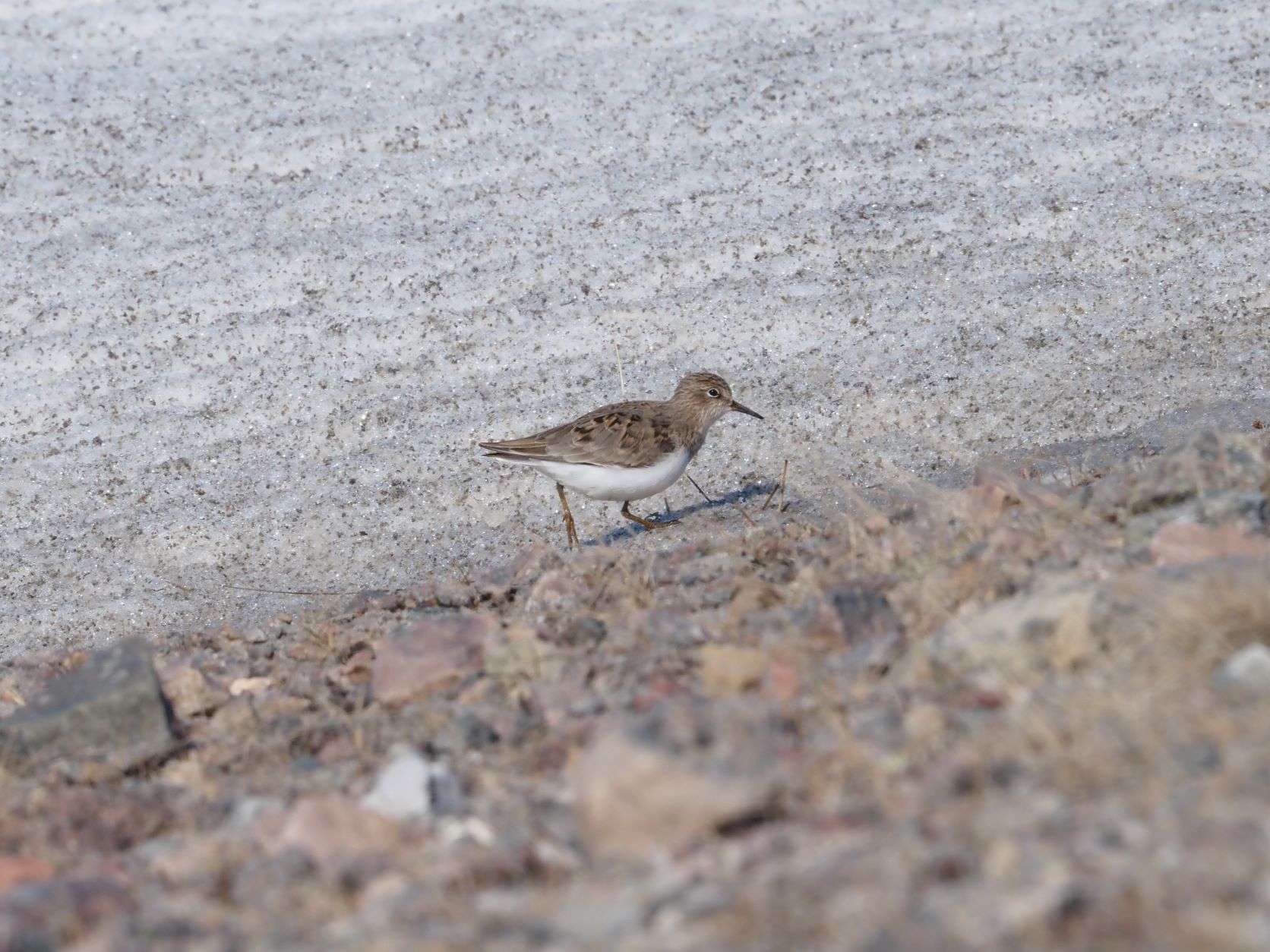
  46. Territ de Temminck – Temminck’s Stint (Calidris temminckii)
  47. Territ variant – Dunlin (Calidris alpina)
  48. Territ menut – Little Stint (Calidris minuta)
  49. Territ fosc – Purple Sandpiper (Calidris maritima)
  50. Batallaire – Ruff (Calidris pugnax)
  51. Becada – Eurasian Woodcock (Scolopax rusticola)
  52. Becadell comú – Common Snipe (Gallinago gallinago)
  53. Becadell de Wilson – Wilson’s Snipe (Gallinago delicata) —————— només sentit
  54. Tètol cuabarrat – Bar-tailed Godwit (Limosa lapponica)
  55. Tètol cuanegre – Black-tailed Godwit (Limosa limosa)
  56. Becut europeu – Eurasian Curlews (Numenius arquata)
  57. Pòlit cantaire – Whimbrel (Numenius phaeopus)
  58. Gamba roja pintada – Spotted Redshank (Tringa erythropus)
  59. Gamba roja comuna – Common Redshank (Tringa totanus)
  60. Gamba verda – Greenshank (Tringa nebularia)
  61. Valona – Wood Sandpiper (Tringa glareola)
  62. Xivita – Green Sandpiper (Tringa ochropus)
  63. Siseta cendrosa – Terek’s Sandpiper (Xenus cinereus)
  64. Xivitona – Common Sandpiper (Actitis hypoleucos)
  65. Remena-rocs – Ruddy Turnstone (Arenaria interpres)
  66. Escuraflascons bec-fí – Red-necked Phalarope (Phalaropus lobatus)
  67. Gavina menuda – Little Gull (Hydrocoloeus minutus)
  68. Gavina riallera – Black-headed Gull (Chroicocephalus ridibundus)
  69. Gavina cendrosa – Common Gull (Larus canus)
  70. Gavinot – Great Black-backed Gull (Larus marinus)
  71. Gavià argentat – Herring Gull (Larus argentatus)
  72. Gavineta de tres dits – Kittiwake (Rissa trydactyla)
  73. Xatrac comú – Common Tern (Sterna hirundo)
  74. Xatrac àrtic – Arctic Tern (Sterna paradisaea)
  75. Paràsit cuapunxegut – Arctic Skua (Stercorarius parasiticus)
  76. Paràsit cuallarg – Long-tailed Skua (Stercorarius longicaudus)
  77. Somorgollaire comú – Guillemot (Uria aalge)
  78. Somorgollaire de Brünnich – Brünnich’s Guillemot (Uria lomvia)
  79. Gavot – Razorbill (Alca torda)
  80. Somorgollaire alablanc – Black Guillemot (Cepphus grylie)
  81. Fraret atlàntic – Atlantic Puffin (Fratercula arctica)
  82. Calàbria petita – Red-throated Diver (Gavia stellata)
  83. Calàbria agulla – Black-throated Diver (Gavia arctica)
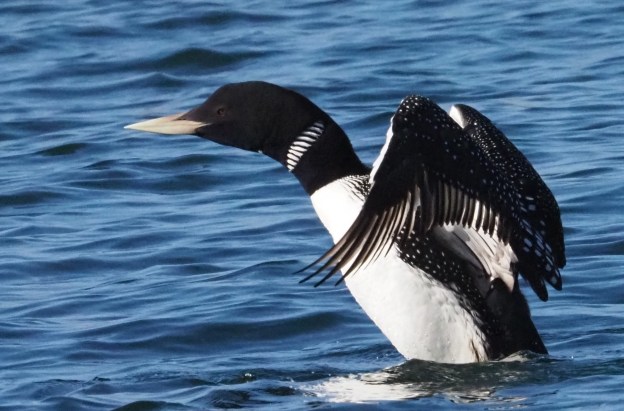
  84. Calàbria de bec pàl·lid – White-billed Diver (Gavia adamsii)
  85. Fulmar – Northern Fulmar (Fulmarus glaciallis)
  86. Corb marí gros – Great Cormorant (Phalacrocorax carbo)
  87. Corb marí emplomallat – Shag (Gulosus aristotelis)
  88. Bitó – Greater Bittern (Botaurus stellaris) ———— només sentit
  89. Àguila pescadora (Pandion haliaetos)
  90. Arpella comuna (Circus aeruginosus)
  91. Aligot calçat (Buteo lagopus)
  92. Aligot vesper (Pernis apivorus)
  93. Àguila marina (Haliaetus albicilla)
  94. Mussol emigrant (Asio flammeus)
  95. Mussol pirinenc (Aegolius funereus)
  96. Gamarús dels Urals (Strix uralensis)
  97. Mussol esparverenc (Surnia ulula)
  98. Mussolet eurasiàtic (Glaucidium passerinum)
  99. Picot garser gros (Dendrocopos major)
  100. Picot garser petit (Dryobates minor)
  101. Picot de tres dits (Picoides tridactylus)
  102. Picot negre (Dryocopus martius)
  103. Xoriguer comú (Falco tinnunculus)
  104. Esmerla (Falco columbarius)
  105. Grifó – Gyrfalcon (Falco rusticolus)
  106. Escorxador – Red-backed Shrike (Lanius excubitor)
  107. Gaig siberià – Siberian Jay (Perisoreus infaustus)
  108. Garsa – Eurasian Magpie (Pica pica)
  109. Gralla occidental – Western Jackdaw (Coloeus monedula)
  110. Cornella negre – Hooded Crow (Corvus cornix)
  111. Corb comú – Common Raven (Corvus corax)
  112. Ocell sedós – Bohemian Waxbill (Bombycilla garrulus)
  113. Mallerenga capnegra – Willow Tit (Poecile montanus)
  114. Mallerenga de Lapònia – Siberian Tit (Poecile cinctus)
  115. Mallerenga blava – Eurasian Blue Tit (Cyanistes caeruleus)
  116. Mallerenga carboera – Great Tit (Parus major)
  117. Alosa comuna – Eurasian Skylark (Alauda arvensis)
  118. Alosa banyuda – Horned Lark (Eremophila alpestris)
  119. Oreneta de ribera – Sand Martin (Riparia riparia)
  120. Oreneta comuna – Barn Swallow (Hirundo rustica)
  121. Oreneta cuablanca – Western House Martin (Delichon urbicum)
  122. Mosquiter comú – Common Chiffchaff (Phylloscopus collybita)
  123. Mosquiter de passa – Willow Warbler (Phylloscopus trochilus)
  124. Mosquiter xiulaire – Wood Warbler (Phylloscopus sibilatrix)
  125. Boscarla dels joncs – Sedge Warbler (Acrocephalus schoenobaenus)
  126. Tallarol gros – Garden Warbler (Sylvia borin)
  127. Tallareta comuna – Common Whitethroat (Curruca communis)
  128. Tallarol xerraire – Lesser Whitethroat (Curruca curruca)
  129. Reietó – Goldcrest (Regulus regulus)
  130. Cargolet – Eurasian Wren (Troglodytes troglodytes)
  131. Raspinell pirinenc – Eurasian Treecreeper (Certhia familiaris)
  132. Estornell comú – Common Starling (Sturnus vulgaris)
  133. Griva cerdana – Fieldfare (Turdus pilaris)
  134. Tord comú – Song Thrush (Turdus philomelos)
  135. Tord ala-roig – Eurasian Redwing (Turdus iliacus)
  136. Griva – Mistle Thrush (Turdus viscivorus)
  137. Merla comuna – Eurasian Blackbird (Turdus merula)
  138. Pit-roig – Eurasian Robin (Erithacus rubecula) —————- només sentit
  139. Cotxa blava (Luscinia svecica)
  140. Cotxa cuablava (Tarsiger cyanurus)
  141. Cotxa cua-roja (Phoenicurus phoenicurus)
  142. Bitxac rogenc (Saxicola rubetra)
  143. Còlit gris (Oenanthe oenanthe)
  144. Papamosques gris (Muscicapa striata)
  145. Mastegatatxes (Ficedula hypoleuca)
  146. Merla d’aigua (Cinclus cinclus)
  147. Pardal comú – House Sparrow (Passer domesticus)
  148. Pardal xarrec – Eurasian Tree Sparrow (Passer montanus)
  149. Pardal de bardissa – Dunnock (Prunella modularis)
  150. Titella – Meadow Pipit (Anthus pratensis)
  151. Piula dels arbres – Tree Pipit (Anthus trivialis)
  152. Piula gola-roja – Red-throated Pipit (Anthus cervinus)
  153. Grasset de costa – Rock Pipit (Anthus petrosus)
  154. Cuereta blanca – White Wagtail (Motacilla alba)
  155. Cuereta groga – Yellow Wagtail (Motacilla flava)
  156. Pinsà comú – Common Chaffinch (Fringilla coelebs)
  157. Pinsà mec – Brambling (Fringilla montifringilla)
  158. Verdum eurasiàtic – Eurasian Greenfinch (Chloris chloris)
  159. Lluer – Eurasian Siskin (Spinus spinus)
  160. Passerell comú – Linnet (Carduelis cannabina)
  161. Passerell golanegre – Common Redpoll (Carduelis flammea)
  162. Passerell àrtic – Arctic Redpoll (Carduelis hornemanni)
  163. Passerell becgroc – Twite (Carduelis flavirostris)
  164. Trencapinyes comú – Common Crossbill (Loxia curvirostra)
  165. Pinsà carminat – Common Rosefinch (Carpodacus erythrinus)
  166. Pinsà borroner – Eurasian Bullfinch (Pyrrhula pyrrhula)
  167. Pinsà dels pins – Pine Grosbeak (Pinicola enucleator)
  168. Sit de Lapònia – Lapland Bunting (Calcarius lapponicus)
  169. Sit blanc – Snow Bunting (Plectrophenax nivalis)
  170. Verderola – Yellowhammer (Emberiza citrinella)
  171. Hortolà – Ortolan Bunting (Emberiza hortulana)
  172. Repicatalons – Reed Bunting (Emberiza schoeniclus)
  173. Sit rústic – Rustic Bunting (Emberiza rustica)
  174. Repicatalons petit – Little Bunting (Emberiza pusilla)

Llista de mamífers vistos al llarg del tour

  1. Llebre europea – European Hare (Leppus leppus)
  2. Llebre àrtica – Mountain Hare (Leppus timidus)
  3. Esquirol europeu – Red Squirrel (Sciurus vulgaris)
  4. Erminy – Stout (Mustela arminea)
  5. Guineu – Red Fox (Vulpes vulpes)
  6. Foca gris – Grey Seal (Halichoerus grypus)
  7. Ant – Moose (Alces alces)
  8. Re – Reindeer (Rangifer tarandus)*
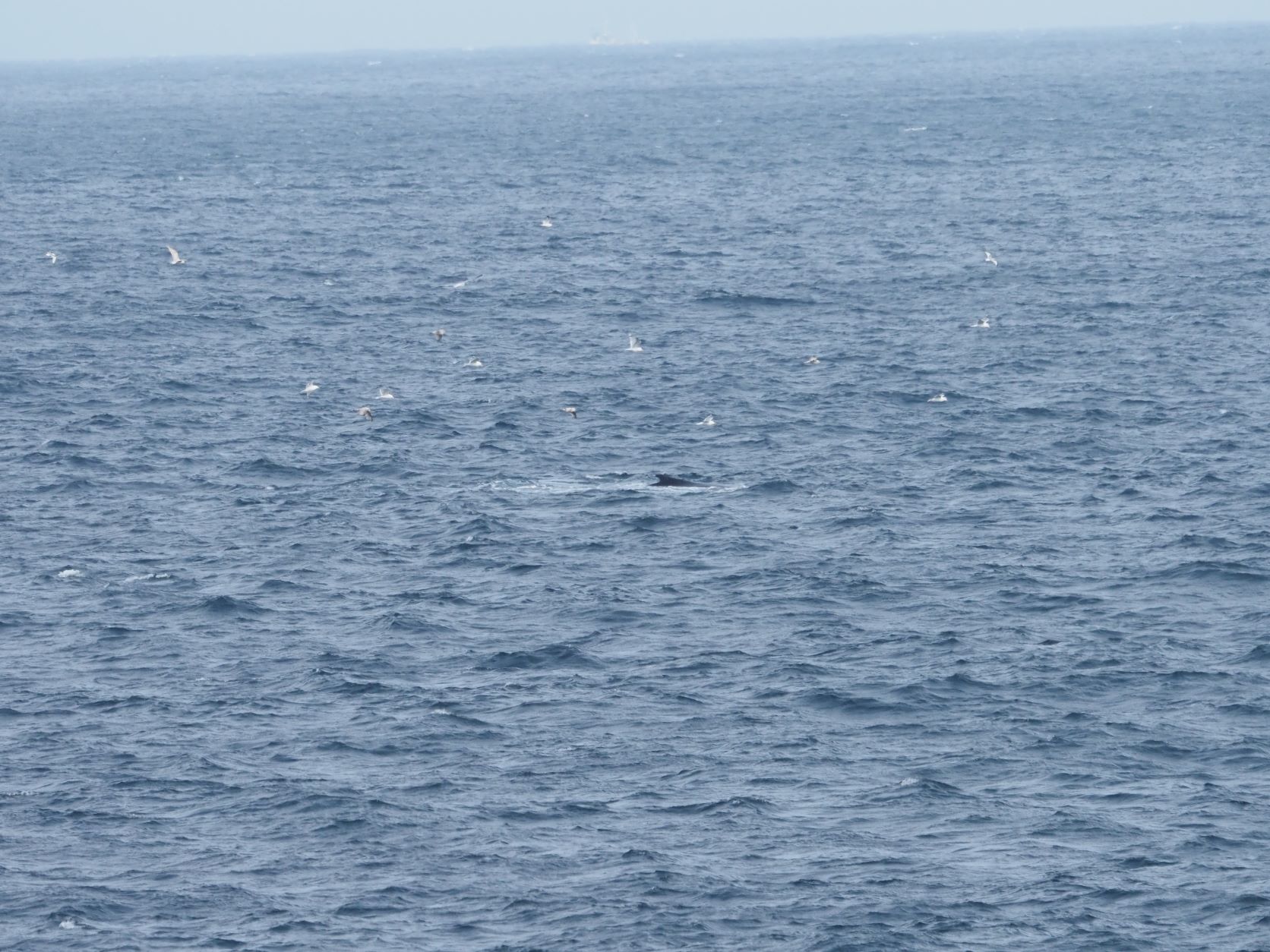
  9. Rorqual comú (Balaenoptera phisalus)
  10. Rorqual d’aleta blanca (Balaenoptera acurostrata)

*Feral

Finland 2024 Birding Trip Report

  • Dates: From May 31st to June 9th, 2024
  • Tour participants: 10
  • Number of species seen: 170
  • Tour leader: Carles Oliver & Ramiro Aibar

All images in this trip report by Carles Oliver. All rights reserved.

Overview: Our 7th tour in Northern Finland & Finnmark was again a very successful adventure, despite some notorious absences. One of the most noticeable things during the trip was the almost total absence of Crossbills, with extremely few contacts and only a couple of proper sights. Parrot Crossbills seemed disappeared, with no records at all in the area. We got excellent views on all the Grouses during the trip, plus 5 species of Owls despite the low density of them both around Oulu and in Varanger. On the contrary, both Rustic & Little Buntings seemed to be everywhere in some parts of the trip, and Red-flanked Bluetail & Three-toed Woodpecker performed for our group in a very straightforward way.

Day 1. Part of group landed in Oulu with a small delay due to the heavy traffic at Barcelona Airport. We met some of the clients at Oulu Airport, where we got delayed again due to a problem with the delivery of one of the vans. We normally have a small window of birding in this first afternoon of the trip, but those delays smashed that window and the first birding of the tour was done after dinner.

We met the rest of the tour participants at the dinner, and taking advantage of the very late sunset, we had a small walk immediately around the hotel. Here we had a first contact with some common birds in this part of Finland, including Redwing, Pied & Spotted Flycatchers, Sedge Warbler, Red-breasted Merganser, Common & Arctic Terns, Common Redshank, Oystercatcher, Eurasian Teal, Gadwall, Northern Shoveler, Pintails but also other species a bit more scarce in this area such as Common Rosefinch, White-tailed Eagle, Black-tailed Godwits and the very first drake Garganeys of the tour.

Day 2. This day we went out for some owling. As always, a very early start is required so we left our accommodation ready to enjoy the first birding day of the trip, and our packed breakfasts! Small flocks of the distinctive Baltic race of the Western Jackdaw were everywhere, along with some Rooks. Our first stop was to check a nesting hole that was being used by Ural Owl, and we were lucky enough to be there when the female was on the nest. Even if the angle was not easy, everybody had good views on the bird including scope views on the face and the eyes of the bird. Walking in the boreal forest we heard the first Black Grouse of the trip as well as Common Redstart and the first of many Scandinavian Willow Tit.

A second stop in the boreal forest was to check a nesting area of Tengmalm’s Owl. Again, we were very lucky and even from the edge of the woods we saw a lovely chick of Tengmalm’s with its head blocking the aperture of the nest. The next ten minutes were simply magnificent. With the group sitting down on the boreal forest, we had excellent views on this chick while moving its head side to side, observing the trees around. At some point, it became clearly excited, almost about to jump from the nest! Suddenly, a call came from the forest but before we searched for the bird, Nick pointed out second chick of Tengmalm’s Owl that was perched only 3 metres away from us! The views on this 2nd bird were simply amazing, and after a couple of minutes we decided to step back. We found ourselves to be too close!

We still had some minutes to keep enjoying the Tengmalm’s Owls before moving to a different spot. In the way, we got 2 Red-backed Shrikes moving in the road, the only ones of the tour! Our next stop was close by in one of the several farming areas hosting Ortolan Buntings around Oulu. It didn’t take us long before finding the first male singing, followed by at least 2 other males and 2 more birds feeding on the ground. Other interesting birds here included Yellowhammer, Reed Bunting, some drake Whinchats singing in the edges of the fields and Common Whitethroat while Common Rosefinch was singing around.

Back to the forest, we explored a suitable spot for Three-toed Woodpecker. Here, we got nice views on Wood Warblers but also on Lesser Whitethroats and Pied Flycatchers. Still, all of this goes to a second frame, because the main character of the stop were the obliging pair of Eurasian Three-toed Woodpecker attending its nest only a few metres away from us! It was a real privilege to see the often considered as the most difficult species of woodpecker in Europe so close and for so long!

After such a great moment we decided to change a bit of ambient and a fast stop in a small lake produced two nesting pairs of Slavonian Grebes. Unfortunately they were not as close as in previous trips, but offered us good views anyway. Our next stop was to check a proper spot for Eurasian Pygmy Owl. Back in spot with dense spruce forest, it didn’t take long before we got a bird calling deep in the woods, and a couple of minutes later we got the bird moving around us! It was late in the morning, and the Pygmy Owl was followed by a cohort of forest birds including several Siskins but also 2 Chaffinches, 1 Great Tit, 1 Common Redstart and 1 Yellowhammer. The Owl was constantly moving around, being disturbed and moved by the smaller birds and the best way to try to locate it was to follow the flock of small birds calling and moving in the canopy.

This was actually the last birding stop of the morning. It was time for an early lunch and a very well deserved break. Since we had some small problems with one of the vans, no serious birding was programmed until after dinner.

Eurasian Three-toed Woodpecker (Picoides tridactylus) provide the group with unforgettable views, and three different sights during the trip!
Female (down) & male (up) three-toed Woodpecker around their nesting hole.
Ortolan Bunting (Emberiza hortulana) is a scarce nesting species in Finland that keeps some strong spots around Oulu.
Tengmalm’s Owl (Aegolius funereus) showing out of the nest.
We enjoyed 5 unforgettable minutes with very close views on this Tengmalm’s fledging.
Eurasian Pygmy Owl (Glaucidium passerinum) performed really well for our group!
Flying Pygmy Owl. Something not that easy to catch!
Part of our group enjoying the Tengmalm’s Owl.

After dinner we covered the short distance to the very last spot for nesting Terek’s Sandpipers in Finland. After parking our vans, we had a small walk around enjoying Common Rosefinch, Eurasian Curlew, Common Ringed Plover and the only 2 Little Ringed Plovers of the trip. A Terek’s Sandpiper was singing around but we were unable to connect with the bird. Finally, it was Aonghus who found the bird singing from the top of a distant lamp post. We walked down to the bird, but still took us 10 or 15 minutes to finally enjoy wonderful views, with the bird displaying around us and stopping in the lamp posts around us. In the walk, I got Caspian Tern and Northern Wheatear but I was the only one to notice them. Unfortunately, that was the only Caspian Tern to show out in the whole tour..

Very happy after these great views on Terek’s Sandpipers, we went back to the accommodation to have a very well deserved rest after a wonderful first day of the trip!

This year there were decent numbers of Common Rosefinches during the first days of the trip. Here a lovely female.
Terek’s Sandpiper (Xenus cinereus) gave us excellent views after a funny circular walk all around its territory..

Day 3. Before breakfast we visited a birding tower around Oulu. This is a really well known spot for general birding in the area, and in former trips we have got amazing lists here! This time the number of birds was more reduced but still we got good views on Common Snipe, distant Spotted Redshanks (6), but also Ruffs, White-tailed Eagles, the only 2 Mute Swans of the tour, singing Reed Buntings and Arctic Terns. Here we also listened the only Greater Bittern of the tour.

After checking out from our accommodation we started to transfer to Oulu. In the way, we had a stop in the forest to try to get other species of Woodpeckers. It was already late morning, and the temperature (believe or not) was close to 30ºC in the warmest ever day for me in Finland! We got signs of Grey-headed Woodpecker but our efforts were regarded with excellent views on Black Woodpecker superbly perched on the top of a spruce tree. Here we also got nice views on Eurasian Bullfinches (Scandinavian) and Great Spotted Woodpecker.

In we had the best views on Common Snipe of the whole trip.
Despite the unusual 30ºC we enjoyed great views on Black Woodpecker!

We had lunch in the way and arrived into Kuusamo in the early afternoon. The weather was clearly different than in the Baltic coast, with temperatures not exceeding the 20ºC and scattered rains in the area. Our first stop in Kuusamo was a very short trail to enjoy one of the most beautiful buntings in the country. Even from the car park it was possible to listen them singing. We were lucky so it was a question of not wasting time, and only a pair of minute after we were having excellent views on 2 Little Buntings singing really close to us and showing superbly for the whole group! We were not far away from a lake, and a number of Little Gulls were flying above us, most of them quite high up. Not a big deal, because from the Bunting place it only took us five minutes to arrive into a Little Gull colony. Here we enjoy these little gems but also got excellent views on two pairs of Red-necked Grebes, and the first drake Black-throated Divers of the trip. A few minutes from this watching point also produced a flying Short-eared Owl, and lovely views on Baltic Gulls (Larus fuscus fuscus). Other species here included Wigeon, Pintail, Eurasian Teal, Redwing and a wonderful Eurasian Woodcock singing in flight and crossing in the sky with a displaying Common Snipe!

After this great stop we just drove back to the accommodation for some dinner and rest.

Some of the gorgeous views on Little Bunting during the trip. What a cracker!
To see a bunch of Little Gulls (Hydrocolaeus minimus) at a nesting site is always a beautiful experience!
One of the very few Baltic Gulls (Larus fuscus fuscus) of the trip!
Part of the group enjoying Little Bunting.

Day 4. Very early start to check some interesting locations around our accommodation. This morning our goal was to connect with some of the very good birds living in the boreal forest. Only 300 metres away from the accommodation we had a first flock of Rustic Buntings, with three individuals showing nicely on the dart road despite the poor light. A bit of driving soon produced a nice male Western Capercaillie, that was only enjoyed by the second vehicle. Along the next hour we had some drive with little reward in terms on Grouses, and we only got a lovely male Black Grouse showing itself at the top of a spruce and a Willow Grouse that was only seen from the second vehicle. During the drive we also got very nice looks on a pair of Eurasian Woodcocks feeding in a meadow.

After a nice coffee stop we drove to one of the many hills in the area, and only arriving to the spot we had a stop to enjoy a pair of Hazel Grouses that were moving along the road. We walked around as the grouses were very active. A male was chasing a female and both were doing flights all around the place. After some fight, everyone in thegroup had good views on the birds moving on the ground. At the same spot, we also got one Rustic Bunting and a couple of Siberian Jays moving in the canopy. A bit further in the road, we also had our first attempt for Northern Hawk Owl, but the stop “only” produced a couple of Rustic Buntings, Willow Tit, Tree Pipit and even a Three-toed Woodpecker that was only seen by me..

Finally, we arrived to the Livaara, one of the most typical places for boreal species in Finland. The sun was already well high, and unfortunately was a bit warm. We walked up to the top, and it didn’t take long before we got our first Red-flanked Bluetail singing from the top of one of the spruces. A second male (2nd year old birds in both cases) were seen further beyond, but the area was quiet and we only got Tree Pipit and Spotted Flycatcher as other species of interest.

Our short afternoon was free so the group could explore the very nice habitat around our accommodation. Wood Sandpiper, Common Cuckoo, Greenshank and Black-throated Diver were some of the species seen by the group.

This Black Grouse (Lyrurus tetrix) was the best Grouse for the group around Kuusamo in the worst morning in that area for years!
Scandinavian Willow Tit (Poecile montanus) spruce and pine forest in Northern Finland.
Eurasian Woodcock (Scolopax rusticola), a common bird in Northern Finland.
Rustic Buntings (Emberiza rustica) seemed to be everywhere this time, but we never got extra close views on them..
Normally a difficult species to contact with, this year we got really good looks on Red-flanked Bluetail (Tarsiger cyanurus) at our first attempt.
Some of the amazing spruce habitat around Kuusamo.

Day 5. A new day and a new early start. The first stop of the morning was to explore a nice spot for Willow Grouses. In previous trips we have always had very nice looks on them here, but this time we only got flight views as one male was singing around the area. Here we also got two of the very few Common Crossbills of the trip (no records of Parrot Crossbill this spring at all in the whole Northern Finland) and very nice views on Eurasian Treecreeper. When coming back to the vans, we also got 2 Elks (a female and young animal) crossing the road 200 metres away from us. It was a rather foggy morning in the hills so we decided to do some grouse drive, again with very little reward and the only species of interest were some Bohemian Waxwings in flight. Our last stop of the morning was at a well known spot for Siberian Jay. Here we got excellent views on this gorgeous bird as well as nice Scandinavian Willow Tit, Scandinavian Bullfinch and Goldcrest. At least 3 Red-flanked Bluetails were singing around but we never tried to connect with them after the nice views from the day before.

We started our transfer North, and our typical coffee stop was a bit ruined by a plain tire that made us spend one hour and so. After buying a new tire, we kept moving North, enjoying some nice creps as en route lunch. Here, from the lovely cabin by a large lake that serves crep house, we also got the only one Osprey of the trip and 2 Black-throated Divers, surprisingly still in winter plomage.

Eurasian Treecreeper (Certhia familiaris)
Moose (Alces alces) out of the woods.
That morning we had amazing views on Siberian Jays (Perisoreus infaustus)

Arrived to Ivalo, we still had time for some birding in a great boreal forest location. At our very first stop in the forest, we got excellent and long views on Siberian Tits plus the first proper views on Common Redpolls of the trip. A tiny walk around also produced nice views on a pair of Bohemian Waxwings that were feeding in the spruce, and our second contact with a Three-toed Woodpecker feeding in the forest and showing very well for the whole group! Other good birds here included Common Redstart and Pied Flycatcher. A wonderful reward for one hour of birdwatching. Unfortunately, this spot, normally great for Crossbills, was surprisingly low on them..

Back to the vehicles, we had a small drive around and in only 45 minutes we discovered that this area was having more activity of Grouses that down in Kuusamo. It was a pleasant afternoon with only 15ºC, and we were surprised by a nice fock of 8 Black Grouses moving in the forest and 2 amazing female Western Capercaillies, one of them feeding around and a second one lying on the undergrowth, a fantastic find by Alba!

Some of the nice & long views on Siberian Tit (Poecile cinctus), one of the main targets for everyone in the group!
Eurasian Three-toed Woodpecker (Picoides tridactylus) only a few metres away form Siberiant Tit and Bohemian Waxwing.
Bohemian Waxwing (Bombycilla graculus) had good densities in Northern Lapland.
Black Grouse (Lyrurus tetrix) around Ivalo.
It is difficult to imagine a better sight on a female Capercaillie (Tetrao urogallus). A wonderful spot by tour participant Alba.

Day 6. After enjoying a nice breakfast in our accommodation we had a short walk around. Here we enjoy nice views on Pine Grosbeaks, but in the lake beside we also got 3 Smews including 2 drake males and a lovely pair of Velvet Scoters that were nesting close by.

From here we drove North to the Norwegian border with several stops in the nice lakes and the many marshes around. Red-breasted Merganser was common here along with Whooper Swan and Goldeneye. Wood Sandpiper and Common Redpoll were also noted but the first Bluethroat of the trip was probably the most appreciated bird along these stops. Further North, our last stop before the border produced the first Rough-legged Buzzards of the trip (4) and the only one White-throated Dipper of the trip.

Before getting into Norway, we got the most pintoresc lunch of the trip. Hey there, how many of you have tasted Elk stew in the Sami way?

Pine Grosbeak (Pinicola enucleator) is always one of the most sought-after birds of the trip. Male above; female below.
Record shot of Velvet Scoter (Melanitta fusca)

Well, once inside Norway we drove North along the coast. A first proper stop produced the typical gulls in the area along with some summer plomaged Ruffs but also Eurasian Oystercatchers, Dunlins and 1 Little Stint. Escorted all the way by Rough-legged Buzzards, Parasitic Skuas and White-tailed Eagles, but also nice views on our first flocks of Tundra Bean Geese, we did our way North to arrive into a first lovely bay close by Vadso. Here we started scanning the many Common Eiders, and found the firsts Bar-tailed Godwits of the trip along with Common Redshanks and Dunlins. But the best surprise was to find 4 King Eiders, including two bizarre 1st summer males, that gave nice scope views despite the long way.

Nearby, a lovely pond was hosting 87 Red-necked Phalaropes that were feeding and displaying in a lovely afternoon light. There is simply no words to describe the beauty of these tiny waders in full summer plumage spinning in the water or simply chasing each other in the quiet and pristine ambient of that small Arctic pond. And that day we were even luckier! Along with the Phalaropes, the pond was hosting a minimum of 40 Ruffs, with some of the males in full display, battling, jumping and fighting in a scene that gave us excellent memories for the years to come!

A last walk around that pond still produced more species including Eurasian Curlew and Turnstones, and we had a short scan on the sea. Here, as the afternoon was passing by, thousands of Kittiwakes were moving back to their colonies after some hours of fish, closely followed by Parasitic Skuas and Great Black-backed Gulls. A detailed scan in the water produced another pair of Red-throated Divers feeding in the sea. In our way to the vans, we still had time to enjoy the first Red-throated Pipit of the trip.

Back to the cars we went for a comfort stop, but behind the petrol station is always a typical place for waders to be feeding in the afternoon, so I was directly to check and I was very pleased and surprised to find a Terek’s Sandpiper feeding along with a flock of Dunlins!!! This is quite a rarity for Norway and a great self found species for the group!

Tundra Bean Geese (Anser serrirostris) and Ruff lekking in our way to Vadso.
We had some quality time in a wonderful Phalarope pond. Female above; male below.
Drake Common Eider (Somateria mollissima). Without doubt one of the most attractive ducks in our region!
Ruffs (Calidris pugnax) lekking.
We were lucky to enjoy some nice Ruff action!
A pair of Eurasian Oystercatchers surrounded by Red-necked Phalaropes.
Here we enjoyed the first of many Red-throated Pipits (Anthus cervinus).
We were lucky to find this Terek’s Sandpiper (Xenus cinereus) feeding along with Dunlins (Calidris alpina)!
White-tailed Eagle (Hieraaetus albicilla) posing for us in lovely light. Amazing to see this icon of the Arctic like this!

Day 7. After enjoying a very nice breakfast based on the fish specialties of the Arctic Ocean, we walked the short distance to Vardo harbour. There, several Kittiwakes were moving in and out from the many colonies in buildings and along the docks. Along with them, there were also Arctic & Common Terns. The boat to Hornoya is only a 10 minutes ride but it was enough to give us a nice surprise, as 4 Northern Fulmars flew over the boat. These are the wonderful Arctic variety of the species, famous because of its bluish coloration. Unfortunately not everybody caught them in flight!

One of the most impressive views of Hornoya happens even before your arrive to the island. The last hundreds metres of sea before arriving are literally carpeted with hundreds, thousands of Guillemots and Razorbills. It is simply amazing to see that sea of Guillemots, something that I have never seen in any other seabird colony, not at least in the Northern Atlantic.

Hornoya hosts about 50,000 pairs of Guillemots, about a 15% of them are of the delicate “Bridled” variety. Along with them, 30,000 pairs of Kittiwakes, thousands of Razorbills, about 3,000 Atlantic Puffins, hundreds of Shags and smaller numbers of Northern Fulmars that combines with scattered colonies of Brünnich’s Guillemots (>300 pairs).

After a small walk in the island, we all enjoyed wonderful views not only in all the sea birds, but also on other wonderful side dishes including Red-throated & Scandinavian Rock Pipits, Barnacle Geese, a lovely although distant couple of Temminck’s Stints and Bluethroat. Our path up to the lighthouse also produced a very nice Twite, a very nice pick up by Roser and Joan.

Lovely views on Pectoral Sandpipers (Calidris matitima) in the fog next to our accommodation.
Arctic Tern (Sterna paradisaea)
Razorbill (Alca torda) close-up. Classiest auk in the continent!
A friendly Bridled Guillemot in the colony.
Guillemot (Uria aalge) waking up in the fog
Atlantic Puffin (Fratercula arctica) close up.
Brünnich’s Guillemot (Uria lomvia) -right- and Common Guillemot -left.
Atlantic Puffin (Fratercula arctica) coming back to their nest after some fishing.
A very handsome Black-legged Kittiwake (Rissa tridactyla).
Rock Pipits (Anthus petrosus litoralis) were nesting in the lowest part of the island.

Back to the continent we headed North through a dense fog. Where the fog allowed, we did some stops along the bays, enjoying several flocks of Goosanders, Long-tailed Ducks and Black Scoters along with some Divers and Velvet Scoters. The fog was still intense, and wherever we had an open window, we had a stop to enjoy some birds, normally producing ruff views on Arctic Redpolls, Bluethroats and Redwings. In our way back to our accommodation we had a stop to check some Common Eiders and we were surprised to find a very nice White-billed Diver out in the sea. After leaving the cars out of the lane, we got to the beach to have closer views and everyone in the group got excellent views on this very sought-after species!

Very happy after this great spot, we drove back to the accommodation. Still, right before arriving we had a last stop. A White-billed Diver had been seen in inner bay in Vardo so we stop to check. The bird was still there, but it was sleeping and the fog was very thick so it was difficult to see anything.. Along with the Diver, we also had 3 Black Guillemots and some Purple Sandpipers feeding in the shore.

We found this Willow Grouse (Lagopus lagopus) just finishing a sand bath. Please note the sand hollow left hand of the Grouse.
Black Scoter (Melanitta nigra) “pod” in a bay.
The first Yellow-billed Diver (Gavia adamsii) of the trip was this distant bird. A wonderful view in the Arctic Ocean with the fog surrounding us.
Very nice looking Reindeers (Rangifer tarandus) next-to-sea.

Day 8. This day we moved back North, to explore the uplands in Varanger. But before hitting to road we had a new stop in the bay inside Vardo. Here, without fog, we had amazing views on a wonderful drake White-billed Diver. The bird was just waking up and we could enjoy the bird only 40 metres away from us. The views on this amazing bird were again complemented with 3 Purple Sandpipers, again at very close range.

Back to the continent, we took advantage of the pristine ambient to enjoy the tundra. There we got excellent views on Lapland Buntings & Bluethroats but also lekking Ruffs, several Parasitic Skuas, White-tailed Eagles, Dunlins and European Golden Plovers. Moving North we were caught by the fog, and when crossing the uplands we were surprised by 2 wonderful and very close Willow Grouses that allowed very close views. En route, we had a flock of 6 Pink-footed Geese, the only sight of this species during the trip.

The delicious views on this White-billed Diver ranked high as bird of trip, exceeding the expectations of all our guests!
WOW!
Probably the most iconic passerine in the tundra, the very attractive Lapland Bunting (Calcarius lapponicus)
Bluethroat (Luscinia svecica) showing out

Arrived to the uplands, we had a first stop to enjoy our packed lunches. Here, we found a nest of Arctic Redpolls in the bushy willows around a pond. The same pond was hosting a wonderful pair of Long-tailed Duck and Wood Sandpiper and Meadow Pipit were coming to feed in. Far away, some Long-tailed Skuas were flying here and there.

Driving throught the tundra, we had several Willow Grouses and a second pond produced great views on a nesting pair of Red-throated Divers but also on Ruffs, Red-necked Phalaropes, Teals, Pintails, the only 2 Scaups of the tour, Red-throated Pipits, Bar-tailed Godwit (very scarce nesting bird in the area) and several more.

Back to the coast, we visited a proper place for Gyrfalcon, but we had no luck with them this time. Instead, we got good views on White-tailed Eagles, Rough-legged Buzzards and a nesting colony of Great Cormorants. It was already late in the afternoon, a proper moment to go back to the tundra. In the way up we had a couple of stops to enjoy Willow Grouse and the only one Merlin of the tour, a lovely male perched for us in a small rock!

A few minutes later we were already in the proper habitat for the alpine species living in Varanger. It didn’t take long to find the first of a good number of Rock Ptarmigan nicely showing in the rocky landscapes. After long views despite the strong wind, we also located a couple of females feeding around. The very last of the Grouses to show out in the tour lead us also to contact with the first Horned Larks of the trip! This bird is getting scarcer and scarcer in the area, and becoming a treat to find them. A few more miles in the road produced more Temminck’s Stints but also lovely views on Horned Larks, even closer views on Ptarmigans and the cherry on cake; a wonderful pair of Snow Buntings singing and showing out for the group! In a memorable moment, we had Ptarmigan, Horned Lark and Snow Bunting all of them displaying for us at the same time in the same gorge!

From this wonderful scenery we just drove back to our accommodation to enjoy some nice meal and some rest in one of the very few hotels in the area.

Long-tailed Duck (Clangula hyemalis) still migrating North.
Arctic Redpoll (Acanthis hornemanni) around its nest.
Drake Black-throated Diver (Gavia arctica), the most elegant bird in the Arctic?
Black Guillemot (Cepphus grylle) next to their nest box
Once again we got excellent views on Rock Ptarmigan (Lagopus mutus). Here a wonderful male.
Horned Lark (Eremophila alpestris) overlooking its territory.
Another stunner! Male Snow Bunting (Plectrophenax nivalis) only a few metres away from our group!

Day 9. Another sunny day in the Arctic tundra, and our group was out of the hotel very early in the morning. The breakfast was quite not as good as the rest of the days, but we had a good lunch to compensate the rather simple breakfast.

Back to the tundra, we had a stop in the way to enjoy close views on Long-tailed Skuas. Some walk was required, but we got excellent views on a pair of this always amazing birds! This year, the number of LT Skuas was reduced if comparing with previous trips. After checking the ponds we headed to the Northern coast, where we had some quality time on a wonderful seawatching point.

Here, we were delighted to see hundreds of “Blue” Fulmars feeding around a trawler. The ambient was grey and cold but the birding was excellent. Flocks and flocks of Goosanders were moving East. Here, migration still goes on for thousands of birds that will keep moving North East, going to nest in Siberia. A large flock of Long-tailed Ducks was feeding in the sea, and Mark found a magnificent drake King Eider feeding along with them. Out in the sea, we had some Divers moving East. they were mainly Red-throated, but we also got nice views on at least one White-billed Diver; the third for the trip! Other interesting species here included Black Guillemots along with Red-breasted Merganser, Common Eider and Atlantic Puffin. But the very best bird from this very advantage place was a wonderful Gyrfalcon that crossed right in front of our group, moving West. A great spot by Aonghus that almost everybody in the group could see even if it was moving really fast!

Before lunch, we made a stop in a pair of bays. There, along with the typical gulls and ducks for the area, we got a nice juvenile Little Gull. Checking flocks of Common Eiders, we counted a minimum of 4 King Eiders, all of them females-type birds. This time, despite the foggy ambient, everybody had excellent views on the birds.

After enjoying some very nice pizzas from a local pub, we just drove South, back into Finland with no remarkable birding stops during the afternoon.

Long-tailed Skuas (Stercorarius longicaudus) were scarce this year.
Red-throated Diver (Gavia stellata) is a common nesting species in Varanger.
During this morning we got some impressive views on White-tailed Eagle (Hieraaetus albicilla).
Male King Eider (Somateria spectabilis) in the Arctic Ocean.
King Eider female & two Common Eiders.
1st summer female King Eider
Female King Eider (center) and 4 Common Eiders.

Day 10. Basically a transfer morning. With the group divided due to the different plane timetables, most of the group started the transfer South including an early stop for a very last go on Northern Hawk Owl. Soon after living the van, we heard a Northern Hawk Owl calling inside the forest, and during the next minutes we got excellent views into a pair of this very iconic species of the boreal forest, including the male coming with a mole to feed the female!

Seen the bird, we contacted with the tour participants that stayed longer at the accommodation (they had a flight later in the day) and they also could come to the place and see the bird!

Along with the Owl, a pair of Siberian Tits was moving also in the area. We even got lucky enough to contact with the Wilson’s Snipe that had been courtship in the boj nearby. Not great views anyway but the bird past by twice while singing. Besides, the very last stop of the trip only produced Eurasian Whimbrel.

Back to the van, we had a final transfer including a fight for a morning coffee. It was Sunday morning, and a early morning coffee in Lapland proved to be more difficult to find that most of the boreal specialties! Finally, we got our very well deserved coffee and we arrived to the airport with nice views on a Short-eared Owl as a bonus!

And to here arrives the chronicle of our 7th tour in Northern Finland and Finnmark. Really looking forward to our 2025 issue. Pretty sure that it will be as good as always is!

Finally, we got well deserved views on this amazing owl!
Northern Hawk Owl ready to hawk!
Short-eared Owl (Asio flammeus) was the very last speciality to show up in the trip.

List of birds seen during the tour

  1. Whooper Swan (Cygnus cygnus)
  2. Mute Swan (Cygnus olor)
  3. Common Shelduck (Tadorna tadorna)
  4. Greylag Goose (Anser anser)
  5. Tundra Bean Goose (Anser serrirostris)
  6. Pink-footed Goose (Anser brachyrhynchus)
  7. Barnacle Goose (Branta leucopsis)
  8. Eurasian Wigeon (Marecca penelope)
  9. Gadwall (Marecca strepera)
  10. Eurasial Teal (Anas crecca)
  11. Mallard (Anas platyrhynchos)
  12. Northern Pintail (Anas acuta)
  13. Northern Shoveler (Spatula clypeata)
  14. Garganey (Spatula querquedula)
  15. Tufted Duck (Aythya fuligula)
  16. Scaup (Aythya marila)
  17. Common Eider (Somateria mollissima)
  18. King Eider (Somateria spectabilis)
  19. Long-tailed Duck (Clangula hyemalis)
  20. Common Scoter (Melanitta nigra)
  21. Velvet Scoter (Melanitta fusca)
  22. Goldeneye (Bucephala clangula)
  23. Smew (Mergellus albellus)
  24. Goosander (Mergus merganser)
  25. Red-breasted Merganser (Mergus serratus)
  26. Common Pheasant (Phaisanus colchinus)
  27. Hazel Grouse (Bonasa bonasia)
  28. Willow Grouse (Lagopus lagopus)
  29. Rock Ptarmigan (Lagopus mutus)
  30. Black Grouse (Lyrurus tetrix)
  31. Western Capercaillie (Tetrao urogallus)
  32. Common Swift (Apus apus)
  33. Common Cuckoo (Cuculus canorus)
  34. Feral Pigeon (Columba livia)
  35. Common Woodpigeon (Columba palumbus)
  36. Common Crane (Grus grus)
  37. Great Crested Grebe (Podiceps cristatus)
  38. Red-necked Grebe (Podiceps grisegena)
  39. Slavonian Grebe (Podiceps auritus)
  40. Corncrake (Crex crex) ———————————– heard only
  41. Eurasian Oystercatcher (Haematopus ostralegus)
  42. Common Ringed Plover (Charadrius hiaticula)
  43. Little Ringed Plover (Charadrius dubius)
  44. European Golden Plover (Pluvialis apricaria)
  45. Northern Lapwing (Vanellus vanellus)
  46. Temminck’s Stint (Calidris temminckii)
  47. Dunlin (Calidris alpina)
  48. Little Stint (Calidris minuta)
  49. Purple Sandpiper (Calidris maritima)
  50. Ruff (Calidris pugnax)
  51. Eurasian Woodcock (Scolopax rusticola)
  52. Common Snipe (Gallinago gallinago)
  53. Wilson’s Snipe (Gallinago delicata) —————— heard only
  54. Bar-tailed Godwit (Limosa lapponica)
  55. Black-tailed Godwit (Limosa limosa)
  56. Eurasian Curlew (Numenius arquata)
  57. Whimbrel (Numenius phaeopus)
  58. Spotted Redshank (Tringa erythropus)
  59. Common Redshank (Tringa totanus)
  60. Greenshank (Tringa nebularia)
  61. Wood Sandpiper (Tringa glareola)
  62. Green Sandpiper (Tringa ochropus)
  63. Terek’s Sandpiper (Xenus cinereus)
  64. Common Sandpiper (Actitis hypoleucos)
  65. Ruddy Turnstone (Arenaria interpres)
  66. Red-necked Phalarope (Phalaropus lobatus)
  67. Little Gull (Hydrocoloeus minutus)
  68. Black-headed Gull (Chroicocephalus ridibundus)
  69. Common Gull (Larus canus)
  70. Great Black-backed Gull (Larus marinus)
  71. Herring Gull (Larus argentatus)
  72. Kittiwake (Rissa trydactyla)
  73. Common Tern (Sterna hirundo)
  74. Arctic Tern (Sterna paradisaea)
  75. Arctic Skua (Stercorarius parasiticus)
  76. Long-tailed Skua (Stercorarius longicaudus)
  77. Guillemot (Uria aalge)
  78. Brünnich’s Guillemot (Uria lomvia)
  79. Razorbill (Alca torda)
  80. Black Guillemot (Cepphus grylie)
  81. Atlantic Puffin (Fratercula arctica)
  82. Red-throated Diver (Gavia stellata)
  83. Black-throated Diver (Gavia arctica)
  84. White-billed Diver (Gavia adamsii)
  85. Northern Fulmar (Fulmarus glaciallis)
  86. Great Cormorant (Phalacrocorax carbo)
  87. Shag (Gulosus aristotelis)
  88. Greater Bittern (Botaurus stellaris) ————- heard only
  89. Osprey (Pandion haliaetos)
  90. Western Marsh Harrier (Circus aeruginosus)
  91. Rough-legged Buzzard (Buteo lagopus)
  92. European Honey Buzzard (Pernis apivorus)
  93. White-tailed Eagle (Haliaetus albicilla)
  94. Short-eared Owl (Asio flammeus)
  95. Tengmalm’s Owl (Aegolius funereus)
  96. Ural Owl (Strix uralensis)
  97. Northern Hawk Owl (Surnia ulula)
  98. Eurasian Pygmy Owl (Glaucidium passerinum)
  99. Great Spotted Woodpecker (Dendrocopos major)
  100. Lesser Spotted Woodpecker (Dryobates minor)
  101. Three-toed Woodpecker (Picoides tridactylus)
  102. Black Woodpecker (Dryocopus martius)
  103. Common Kestrel (Falco tinnunculus)
  104. Merlin (Falco columbarius)
  105. Gyrfalcon (Falco rusticolus)
  106. Red-backed Shrike (Lanius excubitor)
  107. Siberian Jay (Perisoreus infaustus)
  108. Eurasian Magpie (Pica pica)
  109. Western Jackdaw (Coloeus monedula)
  110. Hooded Crow (Corvus cornix)
  111. Common Raven (Corvus corax)
  112. Bohemian Waxbill (Bombycilla garrulus)
  113. Willow Tit (Poecile montanus)
  114. Siberian Tit (Poecile cinctus)
  115. Eurasian Blue Tit (Cyanistes caeruleus)
  116. Great Tit (Parus major)
  117. Eurasian Skylark (Alauda arvensis)
  118. Horned Lark (Eremophila alpestris)
  119. Sand Martin (Riparia riparia)
  120. Barn Swallow (Hirundo rustica)
  121. Western House Martin (Delichon urbicum)
  122. Common Chiffchaff (Phylloscopus collybita)
  123. Willow Warbler (Phylloscopus trochilus)
  124. Wood Warbler (Phylloscopus sibilatrix)
  125. Sedge Warbler (Acrocephalus schoenobaenus)
  126. Garden Warbler (Sylvia borin)
  127. Common Whitethroat (Curruca communis)
  128. Lesser Whitethroat (Curruca curruca)
  129. Goldcrest (Regulus regulus)
  130. Eurasian Wren (Troglodytes troglodytes)
  131. Eurasian Treecreeper (Certhia familiaris)
  132. Common Starling (Sturnus vulgaris)
  133. Fieldfare (Turdus pilaris)
  134. Song Thrush (Turdus philomelos)
  135. Eurasian Redwing (Turdus iliacus)
  136. Mistle Thrush (Turdus viscivorus)
  137. Eurasian Blackbird (Turdus merula)
  138. Eurasian Robin (Erithacus rubecula) —————- heard only
  139. Bluethroat (Luscinia svecica)
  140. Red-flanked Bluetail (Tarsiger cyanurus)
  141. Common Redstart (Phoenicurus phoenicurus)
  142. Whinchat (Saxicola rubetra)
  143. Northern Wheatear (Oenanthe oenanthe)
  144. Spotted Flycatcher (Muscicapa striata)
  145. Pied Flycatcher (Ficedula hypoleuca)
  146. Black-bellied Dipper (Cinclus cinclus)
  147. House Sparrow (Passer domesticus)
  148. Eurasian Tree Sparrow (Passer montanus)
  149. Dunnock (Prunella modularis)
  150. Meadow Pipit (Anthus pratensis)
  151. Tree Pipit (Anthus trivialis)
  152. Red-throated Pipit (Anthus cervinus)
  153. Rock Pipit (Anthus petrosus)
  154. White Wagtail (Motacilla alba)
  155. Yellow Wagtail (Motacilla flava)
  156. Common Chaffinch (Fringilla coelebs)
  157. Brambling (Fringilla montifringilla)
  158. Eurasian Greenfinch (Chloris chloris)
  159. Eurasian Siskin (Spinus spinus)
  160. Linnet (Carduelis cannabina)
  161. Common Redpoll (Carduelis flammea)
  162. Arctic Redpoll (Carduelis hornemanni)
  163. Twite (Carduelis flavirostris)
  164. Common Crossbill (Loxia curvirostra)
  165. Common Rosefinch (Carpodacus erythrinus)
  166. Eurasian Bullfinch (Pyrrhula pyrrhula)
  167. Pine Grosbeak (Pinicola enucleator)
  168. Lapland Bunting (Calcarius lapponicus)
  169. Snow Bunting (Plectrophenax nivalis)
  170. Yellowhammer (Emberiza citrinella)
  171. Ortolan Bunting (Emberiza hortulana)
  172. Reed Bunting (Emberiza schoeniclus)
  173. Rustic Bunting (Emberiza rustica)
  174. Little Bunting (Emberiza pusilla)

List of mammals seen during the tour

  1. European Hare (Leppus leppus)
  2. Mountain Hare (Leppus timidus)
  3. Red Squirrel (Sciurus vulgaris)
  4. Stout (Mustela arminea)
  5. Red Fox (Vulpes vulpes)
  6. Grey Seal (Halichoerus grypus)
  7. Moose (Alces alces)
  8. Reindeer (Rangifer tarandus)*
  9. Fin Whale (Balaenoptera phisalus)
  10. Northern Minke Whale (Balaenoptera acurostrata)

*Feral

Finland & Finnmark Tour 2022 Trip Report

Overview: Our 5th tour exploring Finland was dated a pair of weeks earlier than previous issues. The average temperature was low during the whole trip, and the early dates marked the tour, improving our chances for Grouses and Owls, but also making not possible to connect with some species including Terek’s Sandpiper, Common Rosefinch and Greenish Warbler. However, the early date provided us with better chances for both Steller’s & King Eiders and some interesting migratory species (Marsh Sandpiper, Greater White-fronted Goose, Purple Sandpiper), while the cold ambient was excellent to spot Grouses in the taiga forest. The number of Owls was extremelly high, especially aorund Oulu. Here, we counted a minimum of 20 Short-eared Owls in a single day!

All images in this trip report by tour leader Carles Oliver

  • Dates: 19th to 28th May, 2022
  • Number of participants: 8 +1 tour leader
  • Species along the tour: 171

Day 1. After meeting in Helsinki Airport, the whole group of participants landed in Oulu in the afternoon. The beggining of the tour was delayed as we had to wait for our bus to come, but even from the airport terminal we already had a good sensation about the trip since one of the very first birds to appear was Short-eared Owl flying above the parking of the airport. Other birds noted while waiting included the first of many Yellowhammers and Tree Pipits.

Once in our accommodation we had an early dinner, and after dinner we enjoyed some pre dawn birding in a localy location nearby. There we enjoyed the first displaying Ruffs along with several Wood Sandpipers and Common Snipes. A Greater Bittern was booming in the distance, and Reed Buntings were singing all around. This location, a lovely bay with an extensive bog plain around produced also 6 White-tailed Eagles, Marsh Harriers, Dunlins, 2 Greenshanks, Whooper Swans and hunting Short-eared Owls. Small flocks of Common Cranes were feeding in the fields nearby, the song of Pied Flycatchers emerged from the woodlands close to the sunset, and a male Whinchat joined them for a little while. In our way back to the accommodation European Starlings and Rook were both noted.

Male Ruff (Calidris pugnax) in full summer plumage
Lesser Whitethroat (Curruca curruca) was churring around our accommodation in Oulu

Day 2. A very early start to explore some typical places for some of the wonderful Owls living around Oulu. It was a really cold morning, with temperatures far below the average, arriving to -4ºC! Not far from our accommodation we had the first surprises of the day, as we had several Black Grouses displaying along the lane, some of them in the open fields, others flying away as our van recheaded them. We crossed several good spots a low speed, and we were granted we our firsts Western Capercaillies of the tour, including a wonderful male that showed out for us in the top of a pine.

Soon after we arrived to the first key place, where a Northern Hawk Owl had been hunting the last days. We didn’t have to wait long before the Northern Hawk Owl showed out of the forest, landing in the wires and allowing excellent views. The bird spent some time hunting around and we could all enjoy views of the bird hovering and diving on the grass in search of prey.

Black Grouse (Lyrurus tetrix) was the very first species of Grouse of the trip this year
Great Grey Owl (Strix nebulosa) crossing the lane right in front of our van
Northern Hawk Owl (Surnia ulula) offered consistent but rather distant views

During the morning we counted 20+ Short-eared Owls, that seemed to be everywhere! We always thought that we would be granted with a close view soon or later, but that never happened this time…

A second stop in the morning produced another wonderful moment of our group. A Great Grey Owl was seen standing up in a meadow by the our road, so we had a stop and enjoyed wonderful views on the bird moving in the field and even catching a prey before vanishing into the woods. Even if the stop was short, we again had 2 Short-eared Owls moving in the fields around!

We kept moving into the woodlands, with more Black Grouses here and there and eventually some Eurasian Woodcocks flying around until arriving to one of the several territories of Eurasian Pygmy Owls around Oulu. Coal Tit and Mistle Thrush were added to our list but a nice (pressumed) male stole the show when decided to stop really close to us in a dead branch. For 5 minutes, we all enjoyed great views on this tiny Owlet, and when decided to leave the spot, the Owl was still sitting on his branch, enjoying the very early morning ambient in the forest.

It was already mid morning, so we had a break to enjoy some coffee before going on with some more birding. Lesser Whitethroats were singing around, and the first of many Eurasian Bullfinches and Common Crossbills of the trip were also seen. But the best surprise of the stop was to enjoy more than decent views on a Black Woodpecker that was feeding around the area!

Eurasian Pygmy Owls (Glaucidium passerinum) inhabits spruce and fear forests, sometimes in high densities
Tengmalm’s Owl (Aegolius funereus) in its nest box around Oulu

Back into the boreal forest, we visited a nest box for Tengmalm’s Owl, and we also enjoyed good views on the bird taking out the head from its whole and watching us. From here, a short drive was mandatory to explore one of the typical corners for Ural Owl, and we were again granted with excellent views on a adult of this magnificient Owl! It was one of the tour participants who found the massive Owl roosting in a pine, and we had 15 minutes to admire and take some shots on the bird. Always respecting the distance so the bird was not disturbed.

After such a wonderful morning we drove back to our accommodation to have some rest. After lunch and rest, we visited a pair of places in the afternoon. Before dinner, we visited a corner near Oulu in the search of Terek’s Sandpiper. There, we enjoyed Common Ringed and Little Ringed Plovers, Common Sandpipers, Arctic Terns, Whinchats and singing Skylarks, but no sign of the Terek’s Sandpipers.

The last stop in the afternoon was to explore the large belt of marshes South of Oulu. Here we had a good list of waders, but also enjoyed good views on 1 Marsh Sandpiper along with several Wood Sandpipers and some Common Greenshanks. We had good scope views on the Marsh Sandpiper but not long because it was all the time getting inside the many ditches around.

Reed Bunting (Emberiza schoeniclus)
Wood Sandpiper (Tringa glareola), a very common nesting wader in Northern Finland

After this 2nd stop we drove back the small distance to our accommodation to get an early dinner. After dinner, everybody with still some energy went for a walk inmediatly around our accommodation. A new booming Greater Bittern was listened around as well as a good variety a good selection of waders that included two Spotted Redshanks, Eurasian Oystercatchers and Common Ringed Plovers to name a few. In the distance, we also had a small flock of Barnacle Geese (now nesting in different places along the Baltic See), Great Crested Grebes (the only ones along the trip) and 2+ Great Northern Divers feeding in the bay.

Day 3. Early morning start to explore a pair of spots before our midday transfer to Kuusamo. The first spot was to check a nesting place of Great Grey Owl around Oulu. After some searching in the place, we enjoyed wonderful views not only of the female in the nest but also on the perfectly camouflaged male nearby!

An impressive Great Grey Owl (Strix nebulosa), one of the most impressive sights along the tour!

A second stop was to done North of Oulu, and even before arriving to the location we had excellent views on a pair of Hazel Grouses feeding on the ground, very vocal and moving in the woodlands. Very happy after such a great success, we still scanned around the area looking for other goodies, but Eurasian Robin and Reed Buntings was everything that we could see. After this scanning we went to search for some of the Pallid Harriers nesting around. The different stops along the morning produced Short-eared Owls, White-tailed Eagles, Rough-legged Buzzards, 3 Hen Harriers, several Marsh Harriers and even a Black Kite and 1 Eurasian Hobby (both species pretty scarce in the area), but unfortunately we couldn’t contact with any Pallid Harriers. Special mention required for a lovely pair of Garganeys that were spotted in our final stop that morning.

This one was the first of many Western Capercaillies (Tetrao urogallus)
Mountain Hare (Leppus nitidus)

After lunch we drove to Kuusamo, where we did arrive in the late afternoon. En route, a stop was mandatory to enjoy the first of many females Western Capercaillies along the trip. All the clients enjoyed great views on this gorgeous female! Once in our accommodation, our guests enjoyed some free birding in the lake and forest around the hotel, enjoying good views on the nesting Goldeneyes, Black-throated Divers and Whooper Swans before dinner.

Day 4. Very early start that morning to explore the gorgeous boreal forests around Kuusamo. Before doing some walk in selected areas we had some “game drive” in some areas which are normally great for grouses. In about 30 minutes of drive we got 10+ Capercaillies and 2 Willow Grouses! We changed the area, and in a different lane we still got more Capercaillies (it looked like being everywhere) and 15+ Black Grouses, some of them lekking directly in the tarmac!

Black Grouses (Lyrurus tetrix) lekking in the road

After such a great start, we went to explore one of the most famous corners in the Kuusamo. This hill, with a good spruce forest in the top, is hosting some of the most wanted birds in the region. Unfortunately the rain was going to join us during the rest of the morning, but still we got 2 Bohemian Waxwings moving around and good views on 1 Red-flanked Bluetail while singing. The variety of birds was low, anyway. A further walk under the rain only produced Song Thrush and flocks of Crossbills passing away.

We had to wait until the stopped at mid-morning. Then we tried again the same spot, having good but good views on Parrot Crossbills and amazing views on 2 Siberian Jays that delighted the photographers in the group.

The boreal forests around Kuusamo
Siberian Jay (Perisoreus infaustus) within its amazing habitat

After our early lunch and a good nap, we went out to check out a pair of locations around Kuusamo. Our first stop produced excellent views on Mountain Hares, but also Eurasian Wigeon, Pied Flycatcher and Eurasian Woodcock singing around. But the best birds on this small grassland were a superb pair of Rustic Buntings that came to us, allowing excellent views by everyone in the group! After this stop we went to enjoy a colony of Little Gulls in the area, and we found more birds than ever before, allowing really close views on some pass by birds. Along with them, 4 Red-necked Grebes in full summer plomage were a wonderful way to end our afternoon.

This it turned out to be a good year for Rustic Buntings (Emberiza rustica)
Little Gulls (Hydrocoloeus minutus) have rather mobile nesting colonies in Northern Finland
Arctic Tern (Sterna paradisaea), the equivalent of Long-tailed Skuas for terns!

Day 5. Another really early start. After a wonderful breakfast, our first stop was to explore one of the best corners to enjoy Willow Grouse, and even before getting out of the van we were listening a bird singing around. After a short strall we got excellent views on a male singing from the top of a birch tree. 2 Rustic Buntings were also seen around, and the stop produced also a flock of migratoy Yellow Wagtails, and a male Eurasian (Northern) Bullfinch.

Willow Grouse (Lagopus lagopus) inhabits a wide range of habitats
Red-flanked Bluetail (Tarsiger cyanurus) keeps expanding its still tiny nesting range in Fennoscavia
While searching for forest specialties we were surrounded by some very obliging Siberian Jays (Perisoneus infaustus)
Scandinavian Willow Tit (Poecile montanus) showing the white edges in the wing
This superb Hazel Grouse (Tetrastes bonasia) was one of the birds of the day!
Another superb view on Rustic Bunting (Emberiza rustica)

The second stop of the morning was devoted to have better views on Red-flanked Bluetail, and after some walk, we had wonderful views on a lovely male, but also Common Redstart, another male Rustic Bunting, Northern Goshawk and extremely confiding Siberian Jays!

From here we still visited another area of boreal forest, still searching for Tree-toed Woodpecker. Unfortunately we had no luck with this specialty but we got our first drake Smew, but also Scandinavian Willow Tits. In our way back, another stop was mandatory as we spotted a pair of Hazel Grouses. After some waiting, we all enjoyed amazing views on the male while singing and performing for us at close range!

After a stop and a coffee it was time to go North. From Kuusamo we drove North, getting inside the Northern Circle Pole. After an en route lunch, our last stop of the day was to explore a gorgeous patch of spruce forest really close to Ivalo. In here, one of my favourite spots in Finland, we had a pair of stops but it didn’t take long before we had our first Siberian Tit appearing and showing in front of us! A second stop produced another pair, and along the we had 3 Capercaillies and really close views on Black Grouses (both males and females).

Part of the group enjoying the first drake Smew of the trip
Not many times you can enjoy Hazel Grouse (Tetrastes bonasia) in full sun light
Siberian Tit (Poecile cinctus) was a really desired bird for our group.
We got several superb views on Capercaillies (Tetrao urogallus) around Ivalo
Brambling (Fringilla montifringilla) in full summer plumage
We were granted with really long views on a pair of Pine Grosbeaks (Pinicola enucleator)
We had another displaying Willow Grouse (Lagopus lagopus)
The group enjoying Pine Grosbeaks, one of them also visible in the image

A short walk around, even if it was at mid-afternoon, produced Siberian Jay, Bohemian Waxwing, Siberian Tit and Mealy Redpolls. But the very best birds of the afternoon were a pair of Pine Grosbeaks feeding, and the male even singing extremely close from the path. Our group enjoyed a 20 minutes long view in this amazing, and often extremely hard to find bird! In our way out of the area, we still had to stop again as 2 Willow Grouses were lekking in the dart road, and provided us, again, with unforgettable views!

Day 6. After the previous successful days, we decided to have a slightly later start today. After breakfast, we kept moving North towards to Norwegian border. In our way, we had a pair of stops to enjoy Rough-legged Buzzard and a pair of nesting Peregrine Falcons. Siberian Tit and Great Grey Shrike were other “en route” birds.

Rough-legged Buzzards (Buteo lagopus) reaches its best densities in the North Polar Circle

Once in Norway, we enjoyed excellent views on Rough-legged Buzzards and we had a mandatory stop in the road to enjoy some really close Moose. Keeping our way North, we had a stop in an estuary to look for migratory waders and geese. Here we had the only 2 Greater White-fronted Geese of the trip, and also 2 Tundra Bean Geese. The area was hosting some waders such as Eurasian Whimbrel, Sanderling, Ruddy Turstone, Dunlin in lovely full nesting plomage, Little Stints and the first Temminck’s Stint of the trip: a calling bird that was flying around the hide.

Getting inside Varanger is always a great experience, and soon we were enjoying great views on a number of White-tailed Eagles and Rough-legged Buzzards. A pair of Short-eared Owls were also noted, as well as the first of many Arctic Skuas. Before arriving to our accommodation we had some scanning in the bay around, and we were lucky enough to find 6+ Steller’s Eiders roosting along with Common Eiders, and including 3 drakes! While enjoying the birds, a close Temminck’s Stint feeding along Dunlins was also a nice adding! Happy with the scope views, we had a break and some members of the group decided to try closer views on the birds while exploring the meadows and coastline around our hotel.

A small flock of Steller’s Eiders (Polysticta stelleri) delighted us for most of an afternoon.

In the afternoon, the Steller’s Eiders were moved to the other side of the bay, so we drove and enjoyed excellent views on the birds while swimming and feeding, sometimes getting at close range of our group! Everybody was delighted with these magnificient birds as it was one of the main targets for most of our clients. Along with these beauties, the area produced the first of many Kittiwakes of the tour along with several Dunlins, Ruffs and some drake Bar-tailed Godwits.

Before dinner, we still had time to explore a first patch of tundra. Unfortunately it was windy so the number of birds was low. Still, we had good views on Meadow Pipits and European Golden Plovers but the best bird of the stop was a stunning Bluethroat singing his heart out!

Red-spotted Bluethroats (Luscinia svecica) can be really common in the bushland around the tundra

Day 7. Again a windy day in Varanger. The pre-dawn strall didn’t produce much because of the wind. After breakfast we went North to Vardo, where a small boat brought us to the bird colony in Hornoya. It is quite difficult to put down in words how an experience such as visiting Hornoya is. Tens of thousands of birds nesting, calling, yelling in cliffs. Waves of birds taking off from the roks to the sea: Guillemots (about 20% being “bridled”), Razorbills, Kittiwakes and wonderful Puffins nesting around! Atlanlic Shags a few inches away from you, nesting under rocks on the ground. Broken eggs of Auks on the ground, and the intense smell all around!

But Hornoya is also home for one of the easiest accessible colonies of Brünnich’s Guillemot, and once we were in the island, our first target was to find some of them. Even if not specially common, it didn’t take long before we had some of them nesting in the cliffs. Once located, we had some time enjoying the very close views on the Auks. We also had a confiding flock of Purple Sandpipers that catched our attention while a pair of Razorbills were mating only inches away from us! Rock Pipits were also seen around, catching insects but also exploring broken eggs while Great Black-backed & Herring Gulls were patrolling the area. Black Guillemots were scarce in the island this year, but we still got to see some around.

The impressive colonies of Auks in Hôrnoya
Guillemots (Uria aalge), about 25% of them Bridled, are the commonest Auk in the area
In Hôrnoya it is possible enjoy ridiculous views on Shags (Golosus aristotelis)
Brünnichs Guillemots (Uria lomvia)
Atlantic Puffins (Fratercula arctica) are the less common of the Auks nesting in Hôrnoya
Kittiwakes (Rissa Tridactyla) are everywhere!
Purple Sandpipers (Calidris maritima) in full summer plumage. Flocks of these beauties were still in the move going towards Russia
Razorbill (Alca torda), the most elegant Auk in Europe!
Here Common, Bridled and Brünnich’s Guillemots

In the distance we could the Greylag Geese nesting a close island, but our eye was permanently in the sky, looking for anything interesting to appear. 2 White-tailed Eagles were also patrolling the cliffs, and their movements produced waves of Auks leaving the nesting sites in search of shelter down in the ocean. We never saw any of the eagles catching an Auk, but they didn’t look in a hurry… Even if our main target in the sky never appeared (too early in the season?), we were granted with a pastby Glaucous Gull.

Back in the continent, we spend the afternoon exploring the tundra and the many bays between Hornoya and Hamminberg. The wind was still blowing, but even with it we soon had great views on some males Lapland Buntings. Several Arctic Skuas were also moving in this spot, already chosing the nesting site and being monitored by the White-tailed Eagles around. European Golden Plovers, Rough-legged Buzzard, Red-throated Pipits, Ruffs, Common Snipes, Wood Sandpipers and Common Ringed Plovers were also noted around. Along the bays we had several Long-tailed Ducks, but also Common Eiders, Tundra Bean Goose and large feeding flocks of Goosanders. Black-throated & Red-throated Divers were also seen in different locations.

Lapland Buntings (Calcarius lapponicus) were quite active all along the area
White-tailed Eagles (Haliaeetos albicilla) were a common view along the coast, including some very attractive adults
Small flocks of Tundra Bean Geese (Anser serrirostris) were seen in the typical places

But the best sighting on our way North were 2 impressive Humpback Whales really close to the coast. One of them was splashing its large pectoral fin in the water, and at times we saw both the pectoral and the tail fins out of the water! It looks like this behaviour is not uncommon during the mating season, when females can do it for quite long to keep the attention of the males!

Once arrived to Hamminberg, we enjoyed good views on Atlantic Gannets fishing close to the coast. Large flocks of Goosanders were in the move to the East while both Long-tailed Ducks and Black Guillemots were all around. Still, the strong wind made the sea watching quite unpleasant. In our way back, a nice Pomarine Skua was also noted and provided us with good views!

Humpback Whales (Megaptera novaeangliae) was the 3rd species of whale seen in our tours exploring Finnmark!

Day 8. In the morning we explored a patch of forest were a pair of Northern Hawk Owl was nesting, but unfortunately we couldn’t find it. Still, we got excellent views on Bluethroat while Bohemian Waxwings were moving around. After this stop we moved to center of Varanger, to explore some tundra plateaus. As soon as arrived to the high lands, we had the first Long-tailed Skuas performing for us, chasing each other in long pursuits. They were just arrived, so it means a lot of activity to defend the best corners of the tundra.

A number of stops along the way produced a great list of birds including close ups to Temminck’s Stints, Shore Larks, Lapland Buntings, Bluethroats, Ruffs and 4+ mobile Snow Buntings in shinning summer plomage!

The extremely smart Long-tailed Skuas (Stercorarius longicaudus) within its tundra nesting ground
Temminck’s Stint (Calidris temminckii) in full summer plumage

After this successful start in the tundra, we decided to explore the Northern patch of coast of Varanger. There, Atlantic Gannets were fishing all around along with large numbers of Black Guillemots and Long-tailed Ducks. Great Cormorants and Goosanders were migrating East in good numbers and flocks of Purple Sandpipers were noted doing the same. The dramatic landscapes of the area were also the perfect background for small flocks of Twites moving in the grasslands, and a nice pair of King Eiders (female and 2nd year male) that we found inside a flock of 20+ Common Eiders.

Back to the plateau, we had a pair of stops searching for Rock Ptarmigan before we found a wonderful pair of them. Everybody in the group enjoyed wonderful scope views, and some enjoyed a walk in the snow to have closer views and good shots on the Ptarmigans. In our way to our hotel we still had a last stop, since we found an obliging pair of Red-throated Divers feeding really close to our lane.

2nd calendar-year male King Eider (Somateria spectabilis) along with Common Eiders (Somateria mollisima)
Most of Varanger was still really icy!
Rock Ptarmigans (Lagopus mutus), the male still showing his winter plumage
Red-throated Diver (Gavia stellata) in wonderful afternoon light
Snow Buntings (Plectrophenax nivalis) were scarce and very mobile!

Day 9. Morning stop in the plateaus in our way South to enjoy more views on Rock Ptarmigans, Snow Buntings and Shore Larks. Unfortunately we were a bit too early for Eurasian Dotterels, but the Long-tailed Skua spectacle was a wonderful reward anyway!

Almost in Finland, we had a last stop in Norwegian territory to scan for Gyrfalcons. Under the intense rain and wind we could only find a pair of Peregrine Falcons while pastby Merlin and Ring Ouzel were noted. Back into Finland, and despite the intense rain, we had a pair of stops in our way to the accommodation to admire close Smews and Bohemian Waxwings were noted again along the road.

During the afternoon, we were hit by the rain and the very strong wind. Still, we decided to explore a pair of corners targeting some specialties that had been scaping to us so far. After some driving, we arrived to one secret pool, were we enjoyed 10 minutes of plain weather, with Bluethroats, Reed Buntings, Yellow Wagtails around and confiding Wood Sandpipers. But the very best were 3 Red-necked Phalaropes landing in the pond quite close and offering some great views even under the incipient rain!

This drake Smew (Mergellus albellus) appeared in a smalls pond by the road
Red-necked Phalarope (Phalaropus lobatus) was the very last specialty to appear in the tour, under the heavy rain!

Day 10. Early morning start to enjoy the bird feeders of our accommodation under the rain. Pine Grosbeaks offered great views as so it did the many drake Bramblings and 1 Red Squirrel. In our way to the airport for our morning flight, a very last female Capercaillie showed out as a wonderful way to end our 5th tour exploring Northern Finland and Finnmark!

Pine Grosbeak (Pinicola enucleator)

List of seen bird species during the tour:

  1. Whooper Swan (Cygnus cygnus)
  2. Greylag Goose (Anser anser)
  3. Greater White-fronted Goose (Anser albifrons)
  4. Tundra Bean Goose (Anser serrirostris)
  5. Taiga Bean Goose (Anser fabalis)
  6. Barnacle Goose (Branta leucopsis)
  7. Common Shelduck (Tadorna tadorna)
  8. Eurasian Wigeon (Anas penelope)
  9. Eurasian Teal (Anas crecca)
  10. Mallard (Anas platyrhynchos)
  11. Pintail (Anas acuta)
  12. Gadwall (Mareca strepera)
  13. Garganey (Spatula querquedula)
  14. Northern Shoveler (Spatula clypeata)
  15. Tufted Duck (Aythya fuligula)
  16. Common Goldeneye (Bucephala clangula)
  17. Common Eider (Somateria mollissima)
  18. King Eider (Somateria spectabilis)
  19. Steller’s Eider (Polysticta stelleri)
  20. Long-tailed Duck (Clangula hyemalis)
  21. Common Scoter (Melanitta nigra)
  22. Smew (Merguellus albellus)
  23. Goosander (Mergus merganser)
  24. Red-breasted Merganser (Megur serrator)
  25. Red-throated Diver (Gavia stellata)
  26. Black-throated Diver (Gavia arctica)
  27. Great Northern Diver (Gavia immer)
  28. Great Crested Grebe (Podiceps cristatus)
  29. Red-necked Grebe (Podiceps grisegena)
  30. Greater Bittern (Botaurus stellaris)
  31. Atlantic Gannet (Morus bassanus)
  32. Great Cormorant (Phalacrocorax carbo)
  33. Atlantic Shag (Phalacrocorax aristotelis)
  34. Black Kite (Milvus migrans)
  35. Hen Harrier (Circus cyaneus)
  36. Western Marsh Harrier (Circus aeruginosus)
  37. Northern Goshawk (Accipiter gentilis)
  38. Eurasian Sparrowhawk (Accipiter nisus)
  39. Rough-legged Buzzard (Buteo lagopus)
  40. Western Osprey (Pandion haliaetos)
  41. White-tailed Eagle (Haliaeetus albicilla)
  42. Eurasian Kestrel (Falco tinnunculus)
  43. Eurasian Hobby (Falco subbuteo)
  44. Merlin (Falco columbarius)
  45. Peregrine Falcon (Falco peregrinus)
  46. Hazel Grouse (Tetrastes bonasia)
  47. Willow Grouse (Lagopus lagopus)
  48. Rock Ptarmigan (Lagopus mutus)
  49. Black Grouse (Lyrurus tetrix)
  50. Western Capercaillie (Tetrao urogallus)
  51. Common Crane (Grus grus)
  52. Western Water Rail (Rallus aquaticus)
  53. Eurasian Oystercatcher (Haematopus ostralegus)
  54. Common Ringed Plover (Charadrius hiaticula)
  55. Little Ringed Plover (Charadrius dubius)
  56. Eurasian Golden Plover (Pluvialis apricaria)
  57. Northern Lapwing (Vanellus vanellus)
  58. Temminck’s Stint (Calidris temminckii)
  59. Dunlin (Calidris alpina)
  60. Little Stint (Calidris minuta)
  61. Sanderling (Calidris alba)
  62. Purple Sandpiper (Calidris maritima)
  63. Ruff (Calidris pugnax)
  64. Eurasian Woodcock (Scolopax rusticola)
  65. Common Snipe (Gallinago gallinago)
  66. Jack Snipe (Lymnocriptes minimus)
  67. Bar-tailed Godwit (Limosa lapponica)
  68. Black-tailed Godwit (Limosa limosa)
  69. Eurasian Whimbrel (Numenius phaeopus)
  70. Eurasian Curlew (Numenius arquata)
  71. Spotted Sandpiper (Tringa erythropus)
  72. Common Redshank (Tringa totanus)
  73. Greenshank (Tringa nebularia)
  74. Marsh Sandpiper (Tringa stagnatilis)
  75. Wood Sandpiper (Tringa glareola)
  76. Green Sanspiper (Tringa ochropus)
  77. Common Sandpiper (Actitis hypoleucos)
  78. Ruddy Turstone (Arenaria interpres)
  79. Red-necked Phalarope (Phalaropus lobatus)
  80. Arctic Skua (Stercorarius parasiticus)
  81. Pomarine Skua (Stercorarius pomarinus)
  82. Long-tailed Skua (Stercorarius longicaudus)
  83. Little Gull (Hydrocoloeus minutus)
  84. Black-headed Gull (Chroicocephalus ridibundus)
  85. Common Gull (Larus canus)
  86. Great Black-backed Gull (Larus marinus)
  87. Herring Gull (Larus argentatus)
  88. Lesser Black-backed Gull (Larus fuscus)
  89. Glaucous Gull (Larus hyperboreus)
  90. Kittiwake (Rissa tridactyla)
  91. Common Tern (Sterna hirundo)
  92. Arctic Tern (Sterna paradisaea)
  93. Common Guillemot (Uria aalge)
  94. Brünnich’s Guillemot (Uria lomvia)
  95. Razorbill (Alca torda)
  96. Black Guillemot (Cepphus grylle)
  97. Atlantic Puffin (Fratecula arctica)
  98. Feral Pigeon (Columba livia)
  99. Common Wood Pigeon (Columba palumbus)
  100. Eurasian Collared Dove (Streptopelia decaocto)
  101. Common Cuckoo (Cuculus canorus)
  102. Short-eared Owl (Asio flammeus)
  103. Tengmalm’s Owl (Aegolius funereus)
  104. Great Grey Owl (Strix nebulosa)
  105. Northern Hawk Owl (Surnia ulula)
  106. Ural Owl (Strix uralensis)
  107. Eurasian Pygmy Owl (Glaucidium passerinum)
  108. Common Swift (Apus apus)
  109. Great Spotted Woodpecker (Dendrocopos major)
  110. Black Woodpecker (Dryocopus martius)
  111. Skylark (Alauda arvensis)
  112. Shore Lark (Eremophila alpestris)
  113. Sand Marting (Riparia riparia)
  114. Barn Swallow (Hirundo rustica)
  115. Western House Martin (Delichon urbicum)
  116. Tree Pipit (Anthus trivialis)
  117. Meadow Pipit (Anthus pratensis)
  118. Red-throated Pipit (Anthus cervinus)
  119. Rock Pipit (Anthus petrosus)
  120. White Wagtail (Motacilla alba)
  121. Yellow Wagtail (Motacilla flava thunbergi)
  122. Bohemian Waxwing (Bombycilla garrulus)
  123. Dunnock (Prunella modularis)
  124. Eurasian Robin (Erithacus rubecula)
  125. Bluethroat (Luscinia svecica)
  126. Red-flanked Bluetail (Tarsiger cyanurus)
  127. Common Redstart (Phoenicurus phoenicurus)
  128. Whinchat (Saxicola rubetra)
  129. Northern Wheatear (Oenanthe oenanthe)
  130. Fieldfare (Turdus pilaris)
  131. Song Thrush (Turdus philomelos)
  132. Eurasian Redwing (Turdus iliacus)
  133. Mistle Thrush (Turdus viscivorus)
  134. Eurasian Blackbird (Turdus merula)
  135. Sedge Warbler (Acrocephalus schoenobaenus)
  136. Lesser Whitethroat (Curruca curruca)
  137. Common Chiffchaff (Phylloscopus collybita)
  138. Willow Warbler (Phylloscopus trochilus)
  139. Goldcrest (Regulus regulus)
  140. Spotted Flycatcher (Muscicapa striata)
  141. Pied Flycatcher (Ficedula hypoleuca)
  142. Willow Tit (Poecile montanus)
  143. Siberian Tit (Poecile cinctus)
  144. Coal Tit (Periparus ater)
  145. Eurasian Blue Tit (Cyanisted caeruleus)
  146. Great Tit (Parus major)
  147. Eurasian Treecreeper (Certhia familiaris)
  148. Northern Grey Shrike (Lanius excubitor)
  149. Eurasian Jay (Garrulus glandarius)
  150. Siberian Jay (Perisoreus infaustus)
  151. Eurasian Magpie (Pica pica)
  152. Western Jackdaw (Corvus monedula)
  153. Hooded Crow (Corvus cornix)
  154. Rook (Corvus frugilegus)
  155. Common Raven (Corvus corax)
  156. European Starling (Sturnus vulgaris)
  157. House Sparrow (Passer domesticus)
  158. Common Chaffinch (Fringilla coelebs)
  159. Brambling (Fringilla montifringilla)
  160. European Goldfinch (Carduelis carduelis)
  161. Eurasian Greenfinch (Chloris chloris)
  162. Eurasian Siskin (Spinus spinus)
  163. Mealy Redpoll (Carduelis flammea)
  164. Twite (Carduelis flavirostris)
  165. Common Crossbill (Loxia curvirostra)
  166. Parrot Crossbill (Loxia pytopsittacus)
  167. Eurasian Bullfinch (Pyrrhula pyrrhula)
  168. Pine Grosbeak (Pinicola enucleator)
  169. Yellowhammer (Emberiza citrinella)
  170. Reed Bunting (Emberiza schoeniclus)
  171. Rustic Bunting (Emberiza rustica)
  172. Lapland Bunting (Calcarius lapponicus)
  173. Snow Bunting (Pletrophenax nivalis)

List of seen mammal species during the tour:

  1. European Hare (Leppus leppus)
  2. Mountain Hare (Leppus nitidus)
  3. Muskrat (Ondatra zibethicus)
  4. Red Squirrel (Sciurus vulgaris)
  5. Grey Seal (Halichoerus grypus)
  6. Humpback Whale (Megaptera novaeangliae)
  7. Roe Deer (Capreolus capreolus)
  8. Reindeer (Rangifer tarandus)
  9. Moose (Alces alces)