Arxiu d'etiquetes: birding

Morocco Birding Tour 2025 Trip Report

  • Dates: March 13th to 22nd, 2025
  • Tour Participants: 8
  • Number of species seen: 188
  • Tour leader: Sergi Sales

Overview: 11th issue for the birding tour company Barcelona Birding Point exploring Southern Morocco. The first days of this issue have been conditioned by a heavy snowfall in the High Atlas. There, our group had to invest longer than usual in order to connect with the main specialties living in the highest part of this massive mountain range. This meant less time to explore wetlands, meaning a shorter list of birds. Despite this, the group got a couple of scarcities for the country; Blue-winged Teal (vagrant from North America) & Spotted Crake (a pretty scarce migratory species in Morocco). The desert and the mountain steppes were as wonderful as always! Despite the fast development, Morocco keeps the whole of its exotims, and remains as one of the main birding destinations in the Western Palearctic due to its landscapes, cultural richness and a wide selection of specialties just beside Europe!

All images in this trip report from Sergi Sales. All rights reserved

Day 1

The tour participants meet for breakfast at our accommodation in Marrakech. Some of them arrived just after breakfast, coming from a different accommodation. After this delicious meet and greet we are ready to start the tour!

As usual, several House Buntings are singing in the gardens of the accommodation, joined by some very noisy Common Bulbuls and by the fast flights of the Pallid Swifts living around.

From here we drove a few miles, into a wooded valley. Here we had our first White Storks, Spotless Starlings, European Red-rumped Swallows & Western Cattle Egrets of the trip, but also the Moroccan race of White Wagtail (until recently still considered as a full species, so something interesting to take a look at it..). After a few minutes we found the first speciality of the tour, as a Levaillant’s Green Woodpecker is moving in some large trees. Up to 4 birds are seen during this stop. Here there are several African Chaffinches (a 2024 split from Common Chaffinch), African Blue Tits and the very contrasted race of Great Spotted Woodpecker.

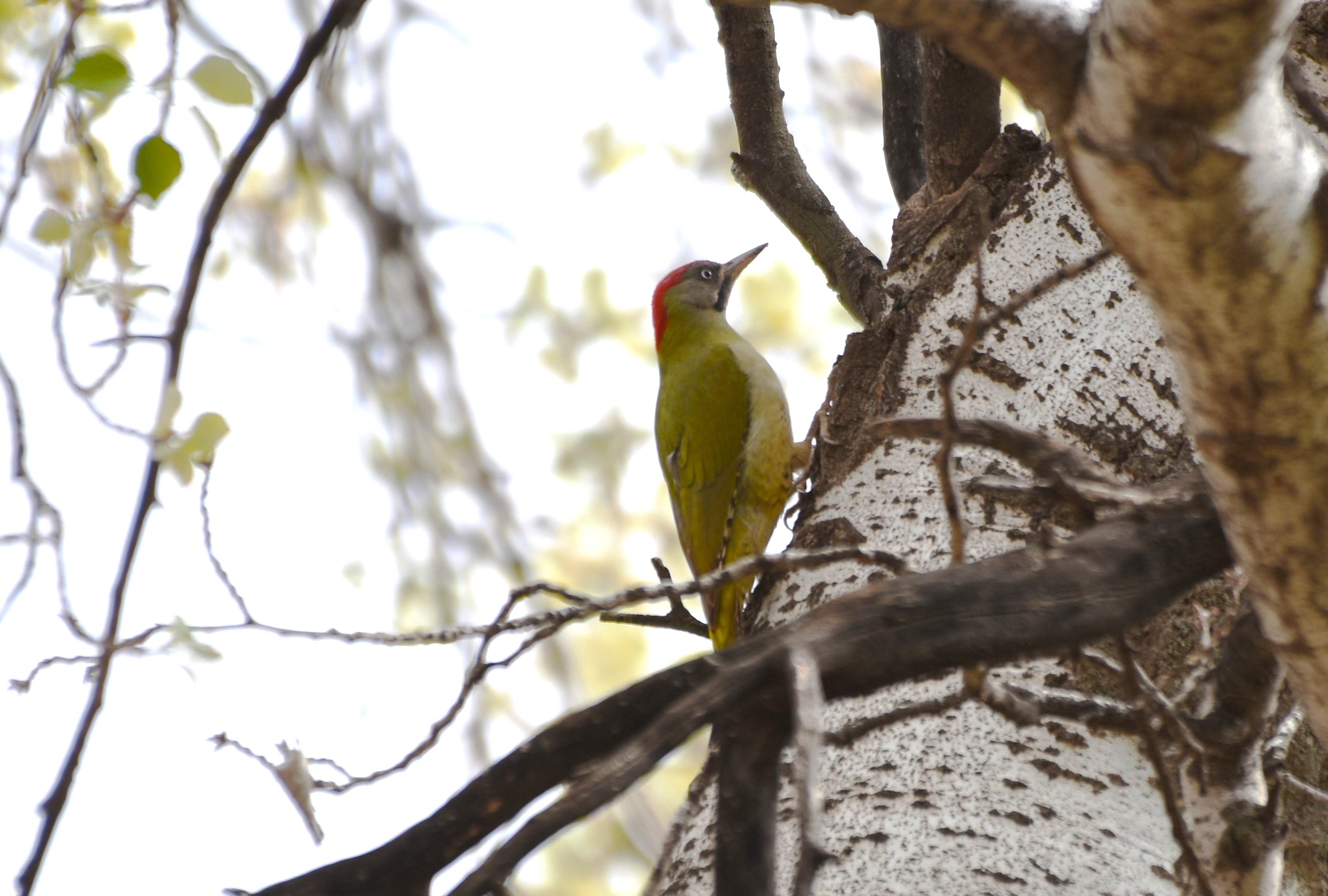
Levaillant’s Woodpecker (Picus vailantii).
African Blue Tit (Cyanistes teneriffeae).
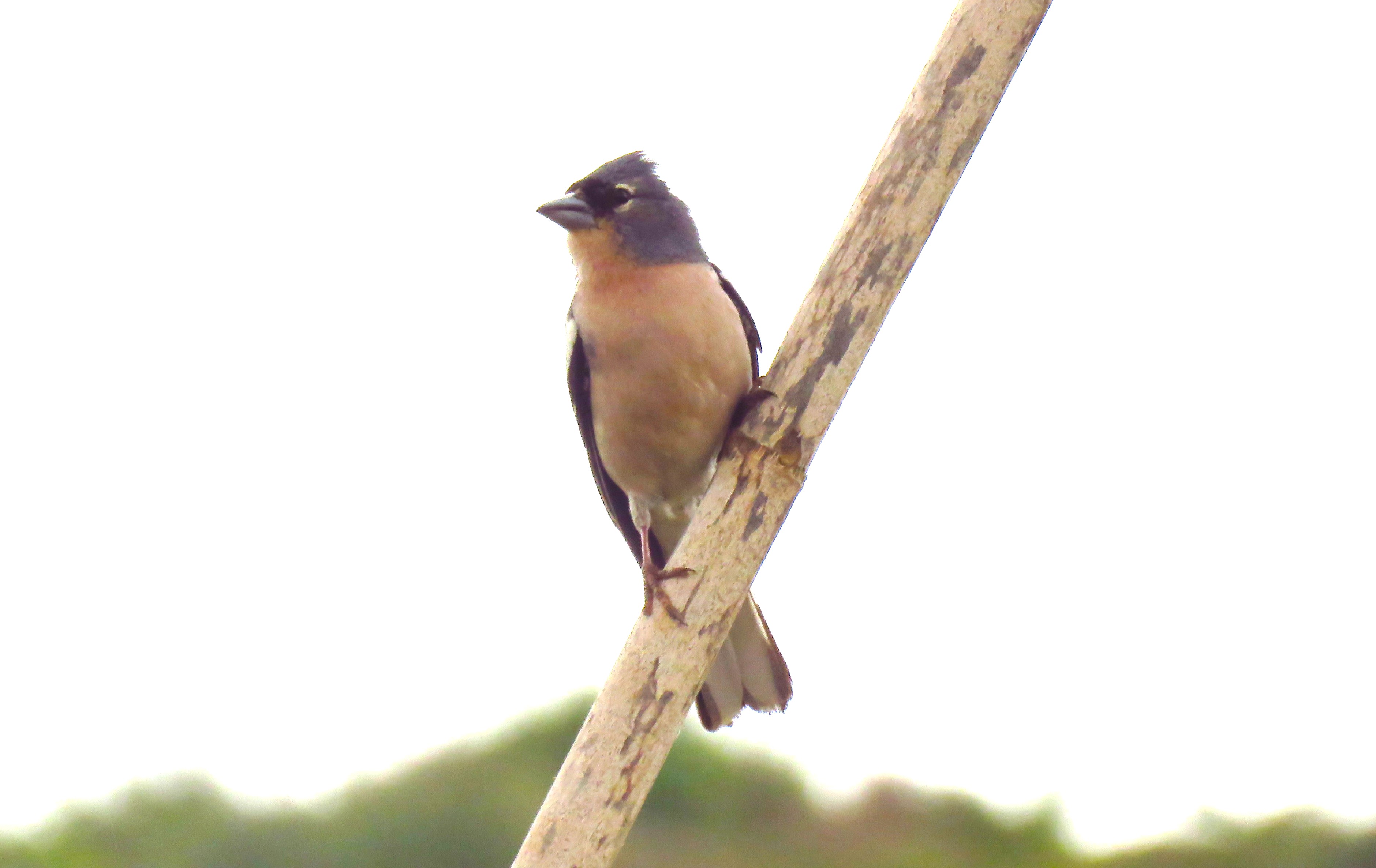
African Chaffinch (Fringilla spodiogenys).

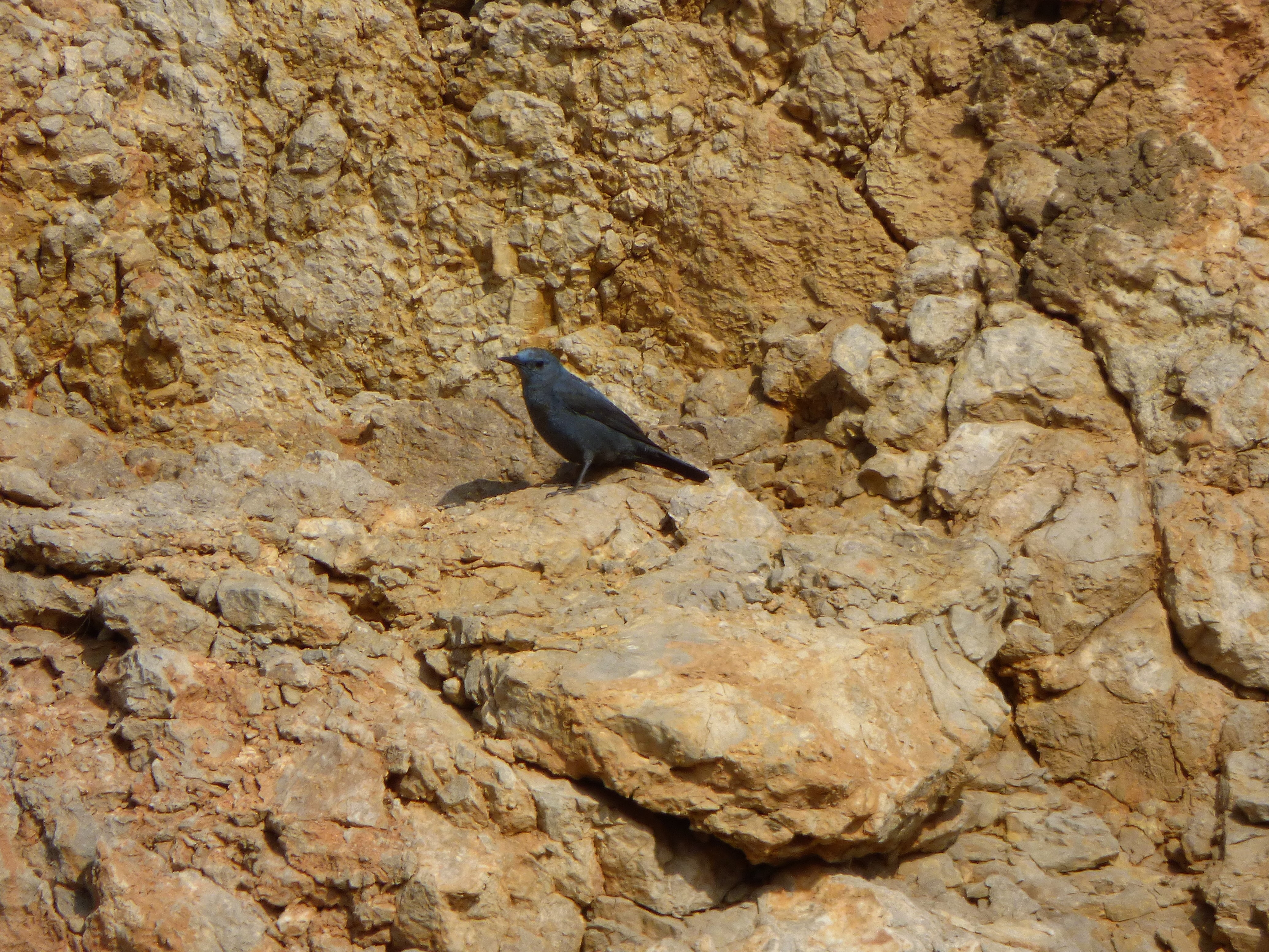
After this very nice first stop, we headed up into the hillsides. But our route became harder than expected. Our track was damaged during the earthquake in late 2023 but now we are also facing some strong rain. As we keep gaining in altitude, the rain becomes icy rain and, later on, snow. Halfway we made a stop in a typical place for Tristam’s Warbler but the weather conditions are far from average.. Still, a small patch of blue sky allows some birding activity, and this is translated in a showy male Blue Rock Thrush, joined by the first Moussier’s Redstart of the trip and a wonderful Rock Bunting. 3 species within a few inches from each other! This very nice sight aims us to follow up the road. There are only 5 miles left to Oukaimeden ski resort, but this is when the snow becomes very strong, reducing the visibility both on the tarmac and in the air. We took advantage of this horrible weather conditions to taste our first tajin of the trip in a road restaurant, and since the weather keep getting worst we decided to quit the upper part of the road and go down to the valley.

The ends in the plains around Marrakech, where despite the cold temperatures (+5ºC) we got the first Moroccan Magpies, Long-legged Buzzards and Greater Short-toed Larks of the trip plus one obliging Stone Curlew.

Day 2

Due to the bad weather the first day we decided a change in the original planning and to go back to the road leading to Oukaïmeden early in the morning, expecting the road to be open. The weather looks very good and we managed to arrive to the ski resort despite the snow and the low temperatures.

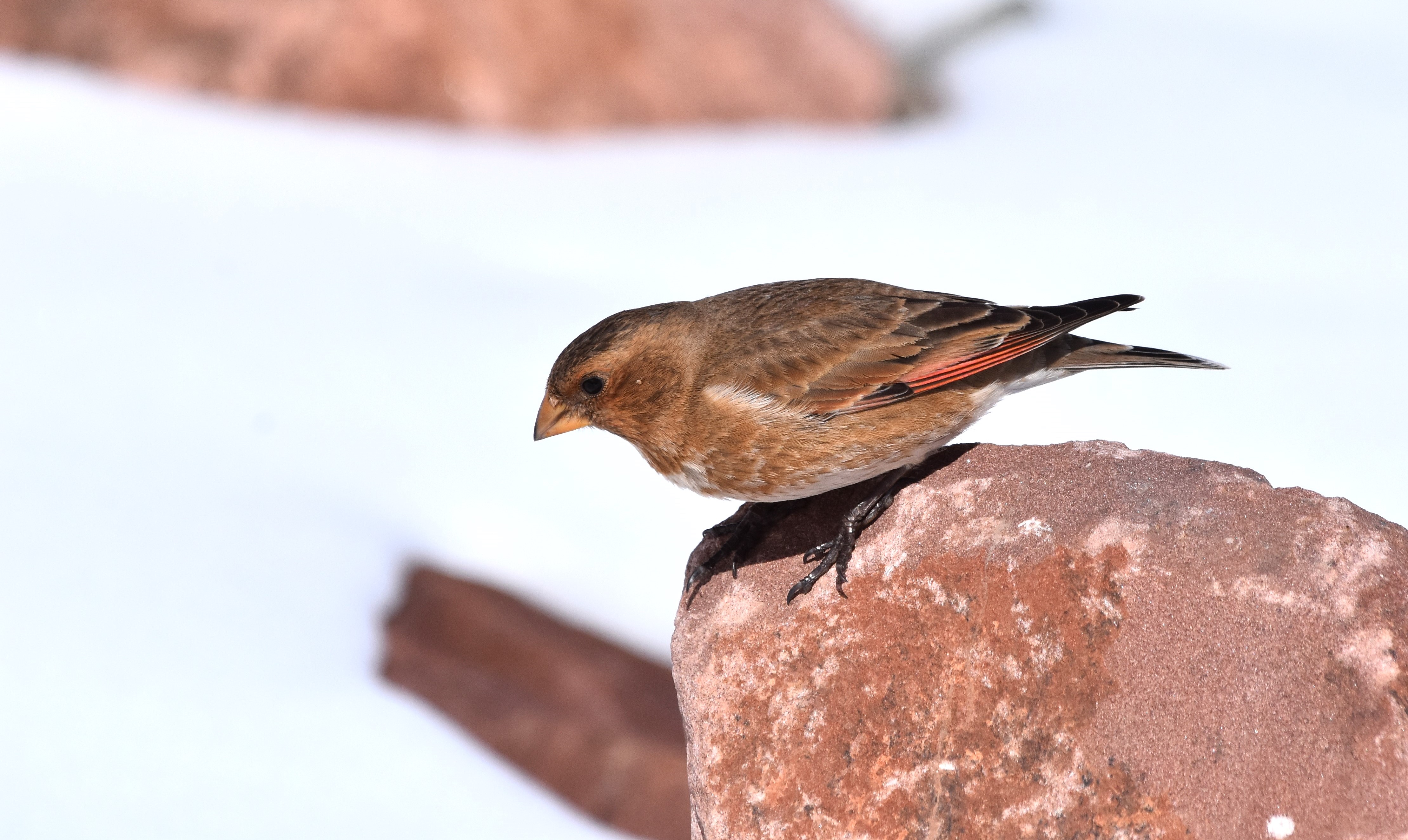
Lower than expected we found a nice flock of Atlas Horned Larks, and while enjoying this species we also discovered one pair of Black Wheatears and a couple of shy Ring Ouzels. At the lake of the ski resort we got Eurasian Coots but also the nesting pair of White-bellied Dippers (this is one of the Southernmost territories of this species!). Around there were more Atlas Horned Larks along with Thekla Larks and the large flocks of Red-billed Choughs that were wondering around all along the morning started to be joined by Alpine Choughs. Around the buildings there were also a good number of Common Rock Sparrows. But no sign of the Crimson-winged Finches. Other small groups of birdwatchers from different nationalities were (British, Belgians, Dutchs,..) also looking for these buggers. We kept looking for them and at the end a small flock of this sought-after species flew right in front of us. Wonderful!

More than satisfied after this in extremis sight we started the long transfer to the Souss Massa National Park. En route, while crossing the breathtaking landscapes of the Atlas mountains, we enjoyed species such as Alpine & Little Swifts and the first Spanish Sparrows of the trip in a mixed colony in the motorway. Once the night arrived, already close to our accommodation, we got Stone Curlews and Little Owls crossing the road plus one very fast Long-eared Owl that not everybody could see.

Atlas Horned Lark (Eremophila alpestris atlas)
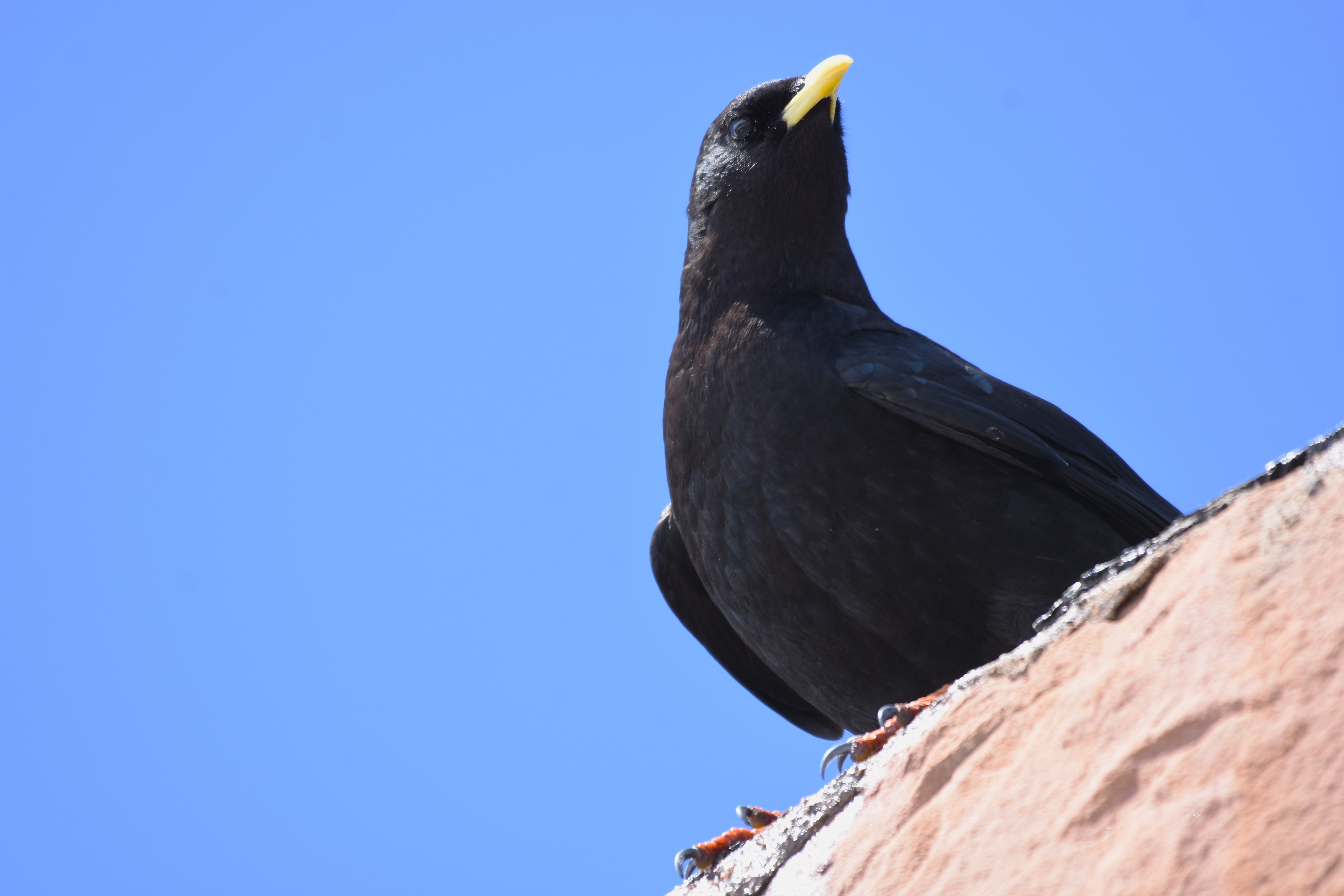
Alpine Chough (Pyrrhocorax graculus).
African Crimson-winged Finch (Rhodopechys sanguineus alienus).
A second view on the African Crimson-winged Finch, this time showing the lovely roseate primaries.

Day 3

There are several reasons to visit the Souss-Massa area, but there is always something special when it comes to try to connect with Black-crowned Tchagras, since this is one of their Northernmost spots in the African continent! So we leave our accommodation for a pre-breakfast walk to explore the mixture of farming and bushland surrounding our privileged location. It didn’t take long to listen the first Tchagra and also a good number of Western Olivaceous Warblers plus a good variety of migratory passerines. Common Quails are singing in the fields around but they are as secretive and shy as usual, and they keep into hide despite our efforts. Moussier’s Redstarts, on the contrary, stand at the opposite side of the spectrum, and show themselves on terrific views!

Happy after this nice stat of the day, we came back to the accommodation to enjoy a wonderful breakfast.

Black-crowned Tchagra (Tchagra senegallus).
Moussier’s Redstart (Phoenicurus moussieri).
Black-winged Kite (Elanus caeruleus)

Back to the fields, we contact with a showy Black-winged Kite in our way to one of the several water ponds along the river. This time we are lucky, and the Kite goes on with great display show. Here, the plentiful crops around are thriving with passage birds including Willow, Western Subalpine & Western Orphean Warblers but also Tree Pipits and Woodchat Shrikes.

Our first pond produces a good array of waders and ducks, and our growing list is complemented with the first flock of Brown-throated Martins flying over the ranking vegetation along with other species of Swallows & Martins.

From here we walk along the Massa River following the way down to its estuary. Along the way we find a number of ducks and waders as well as Greater Flamingoes and Glossy Ibises. We also meet other birdwatchers that have seen the long staying Green-winged Teals. After a long scanning, we finally found them resting along with Northern Shovelers and our efforts were rewarded with good views on the male as it came out of the vegetation for a swim.

At noon, we went to enjoy our picnic boxes in one of the impressive beaches next to the estuary. Here it is possible to enjoy a good seawatching, and we are lucky enough to have a good passage of Atlantic Gannets that they. Along with them we also get a few Great & Arctic Skuas. Migration was intense at that moment, and we got flocks of Eurasian Spoonbills and Grey Plovers moving North along the coastline. Still, our main goal here was to find the critically endangered Northern Bald Ibis, that has along this coast their only three self-sustained colonies in the world. We were about to give up when suddenly 3 Bald Ibis emerged, moving towards the sea cliffs where they would spend that night!

Day 4

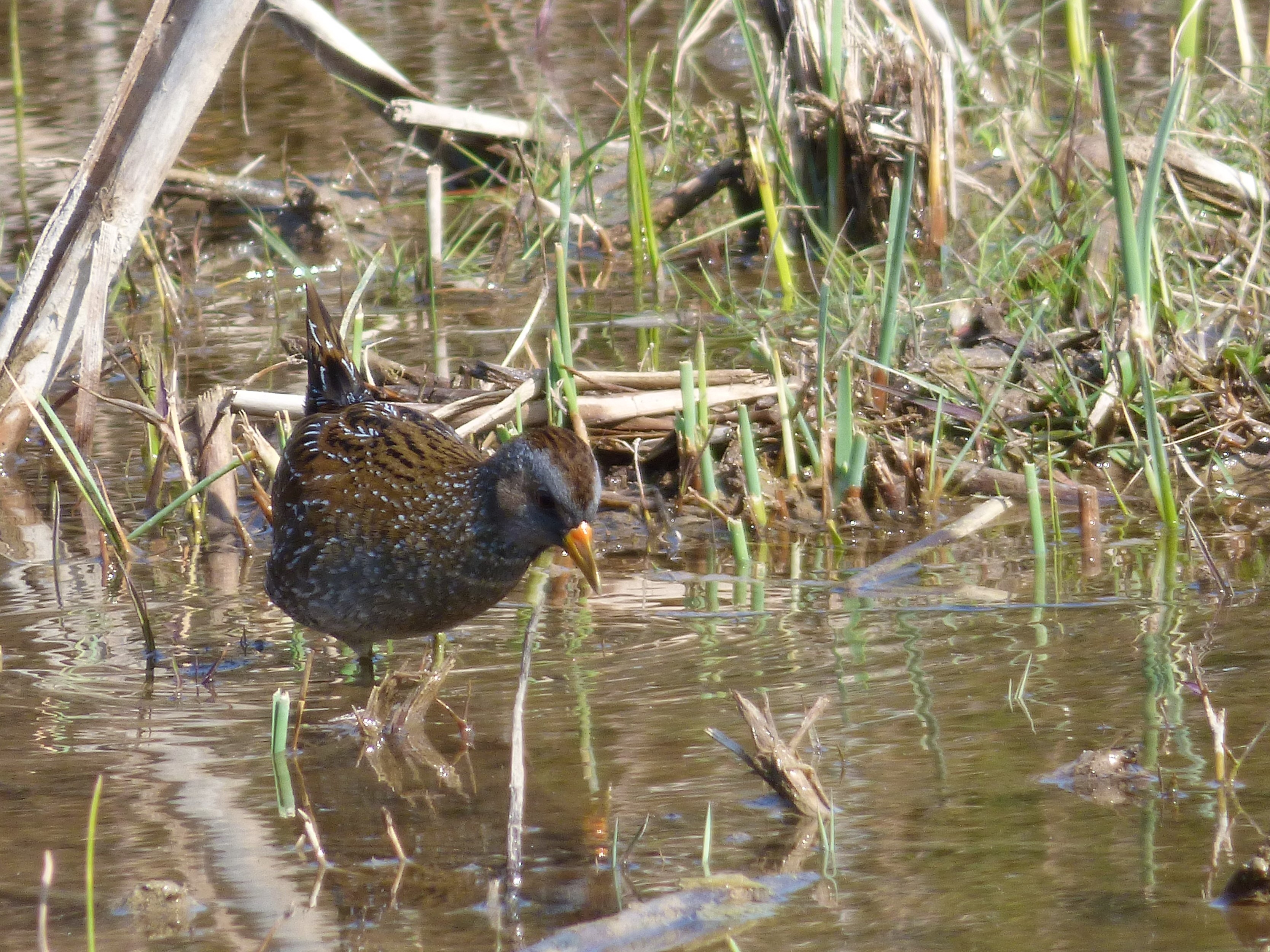
Our pre-breakfast outing produces nice views on Barbary Partridges but also on Little Owl and several Moroccan Magpies. After breakfast we started transfering to Boulmane du Dades; a rather long drive crossing the impressive Anti Atlas landscapes. This is normally a good drive for birds of prey, but this time was rather low. Still, we got the first Bonelli’s Eagles of the trip. Right before crossing Ouarzazate we made a stop in a little pond that had been very good in previous trips, and it didn’t disappoint us neither this year. Here we got Little Ringed Plover, Black Wheatears and Ruddy Shelducks, but also the first Maghreb Larks & Desert Larks of the trip. Still, the best bird in this stop was a Spotted Crake that came out of the rank vegetation giving excellent views to the group.

After this stop we covered the last miles until our accommodation, arriving there about sunset. Tomorrow we will head to the famous Tagdilt Track!

Barbary Partridges (Alectoris barbara)
Spotted Crake (Porzana porzana) in a small stream in the Anti Atlas.

Day 5

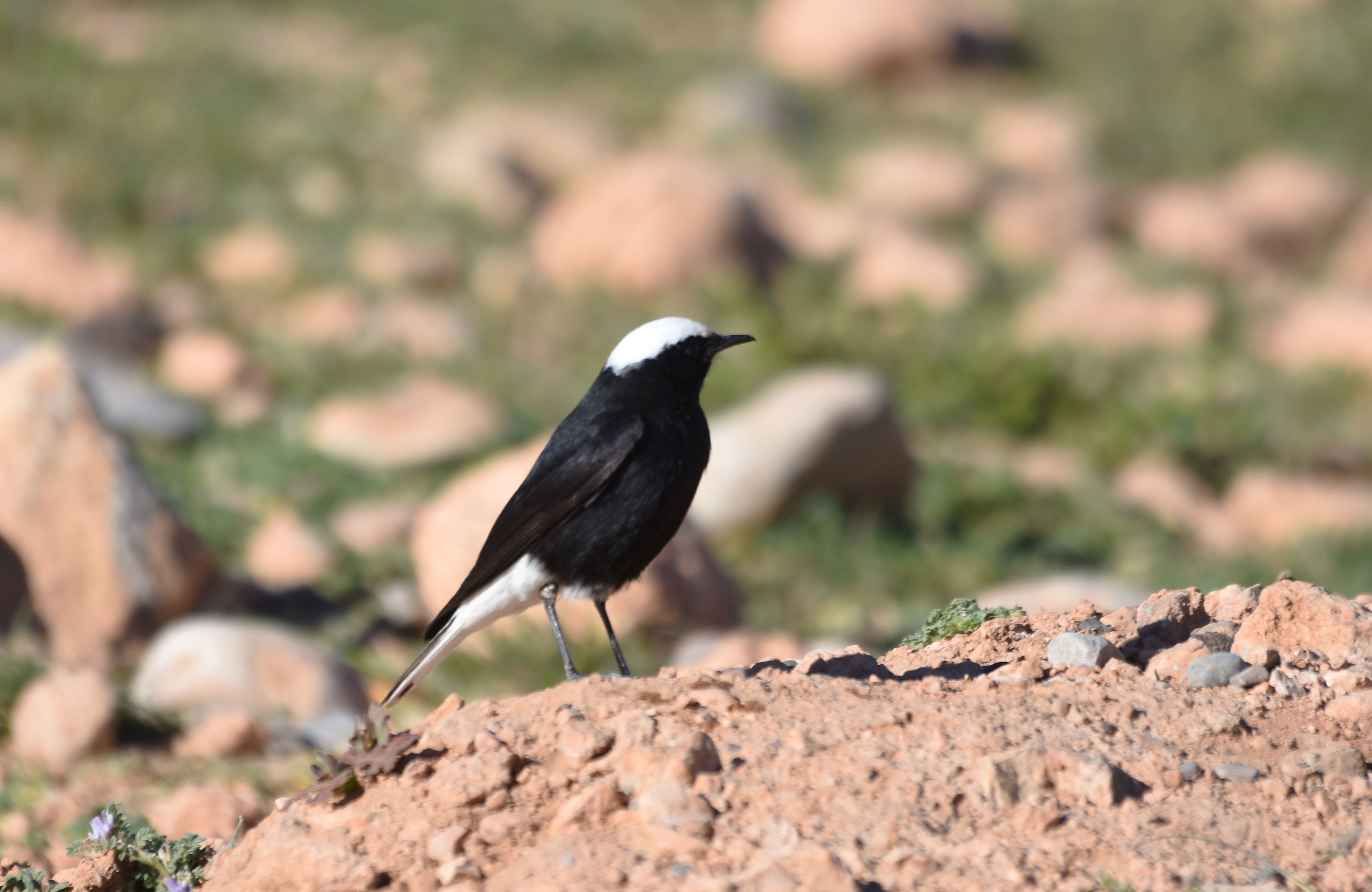
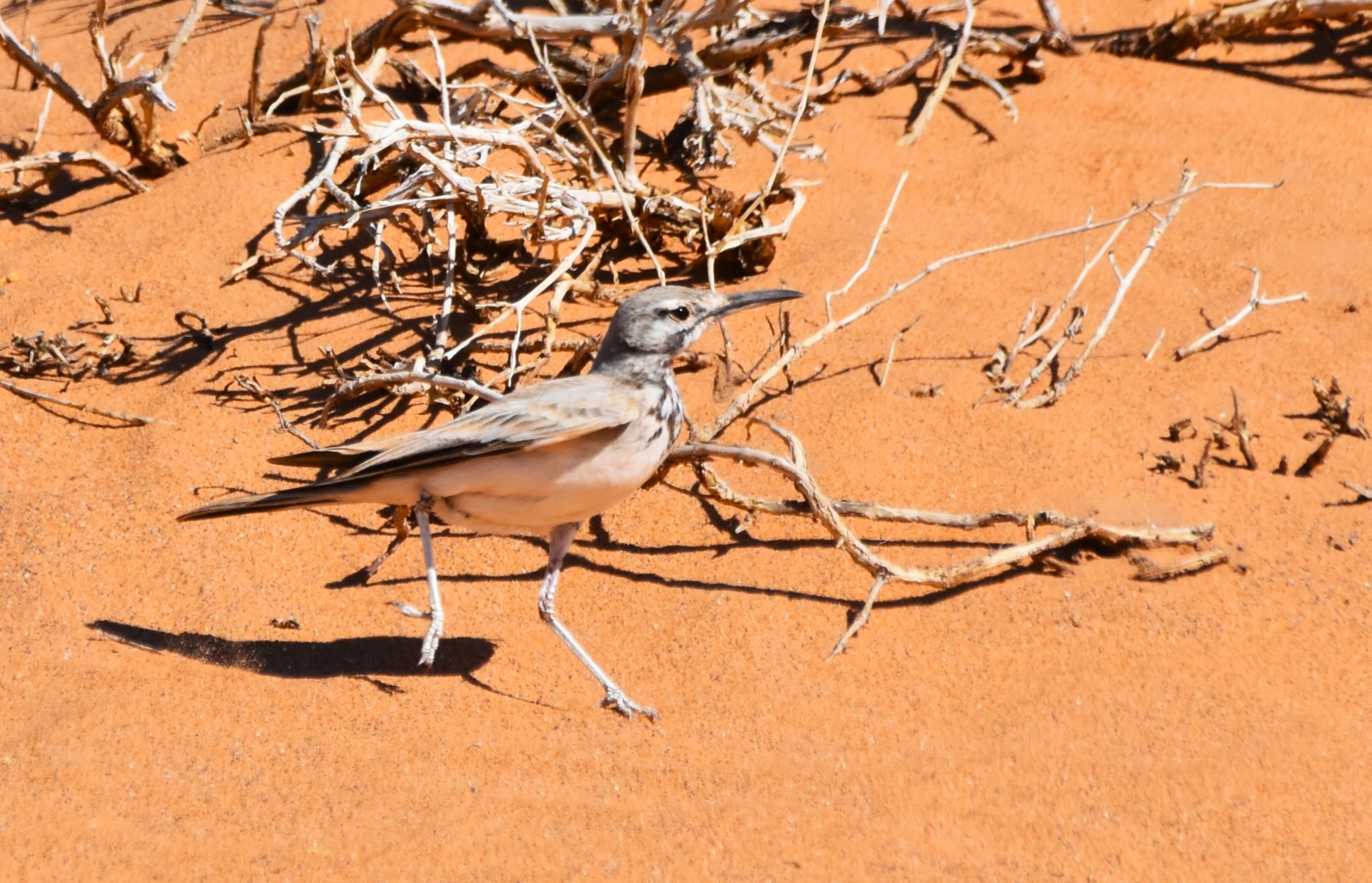
We headed to explore the large seme desert plain known as Tagdilt Track, probably the best location for Larks and Wheatears in the Western Palearctic. It didn’t take long to find the first of many White-crowned Black Wheatear, always a wonderful bird to admire! The area is fulfilled with birds, despite the many plastics around. Here there several pairs of Red-rumped Wheatears, some of them already with their chicks running around. Still, the commoner of the Wheatears around is the Desert Wheatear. Here there are also some migratory species, including both Northern & Western Black-eared Wheatears! It doesn’t look like a good year for Thick-billed Larks, and during the morning we fail to find any of them. Going away from the “rubbish dump” we soon find several Desert Larks and Bar-tailed Larks (usually uncommon here). Among the many Thekla Larks here we found the first Greater Hoopoe Lark of the trip and, while enjoying this beauty a flock of Cream-coloured Courser crosses the track providing great looks! Back to the rubbish dump we found also a small flock of Temminck’s Lark, similar to Horned Lark but smaller and living in dry ambients.

White-crowned Black Wheatear (Oenanthe leucopygia)
Red-rumped Wheatear (Oenanthe moesta).
Temminck’s Lark (Eremophila bilopha)

The temperature climbs up and we go to explore to the gorges around expecting to find also some shade. Just after arriving a Lanner Falcon flew at short distance above the group, trying to catch a Desert Lark.

After a short walk we arrived in front of a small cave and the local guide there showed us a Pharaon Eagle Owl with 3 small chicks. Close by we also get Long-legged Buzzards, that look like nesting around. Trumpeter Finches are flying around and a bit beyond we got a distant Maghreb Wheatear. Unfortunately it is shy and we need an extra walk to get nice views on the pair nesting around. More than satisfied with this stop, we went back to the plains and soon we contact with a Thick-billed Lark that shows out before disappearing in the vegetation..

Pharaon Eagle Owl (Bubo ascalaphus).
Maghreb Wheatear (Oenanthe halophila).
Thick-billed Lark (Ramphocoris clotbei)
Cream-coloured Courser (Cursorior cursor).

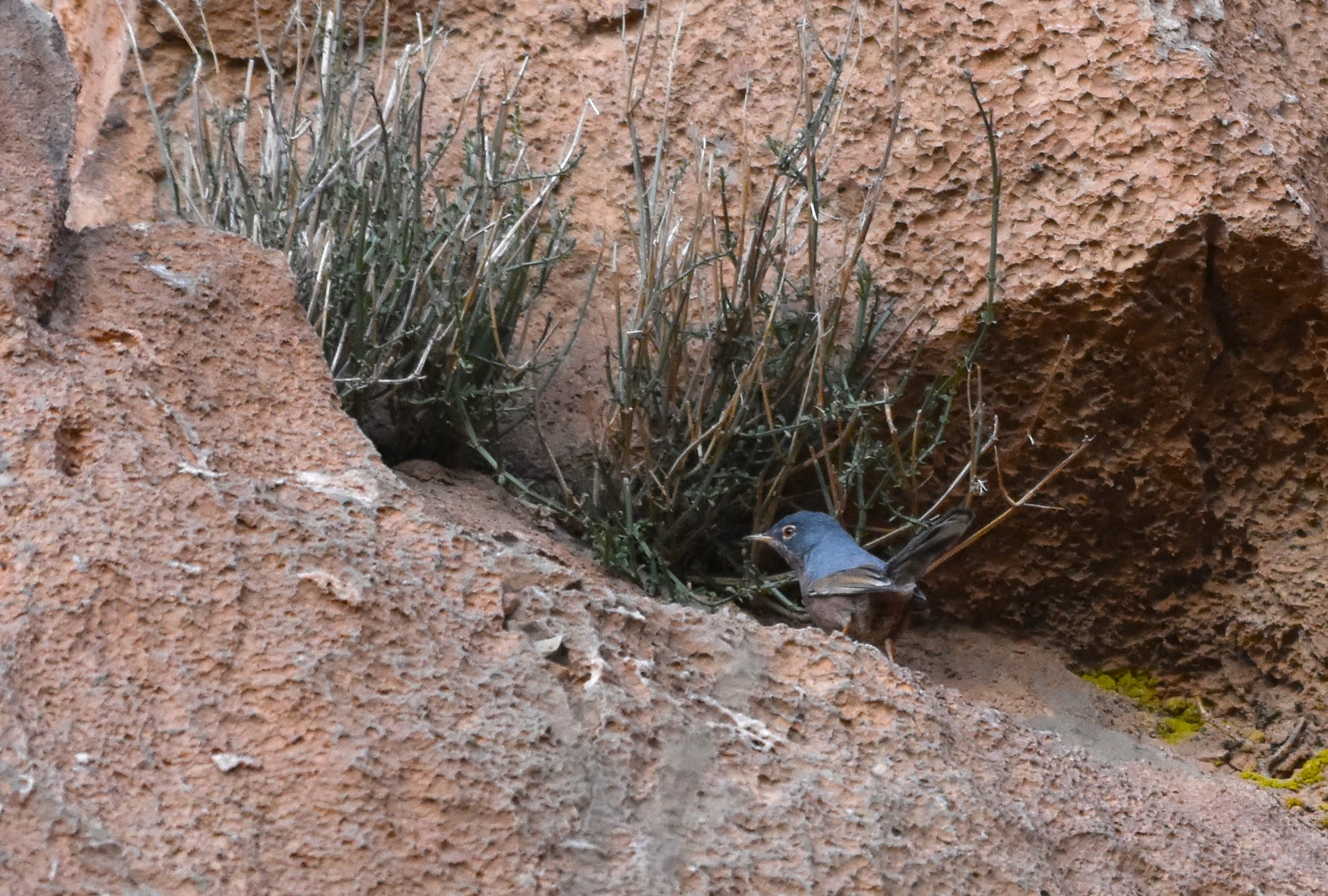
Late in the afternoon we went up into the Dades Gorge to look for Tristam’s Warbler, a species that we couldn’t find during the first day because of the bad weather. A few minutes after arriving to the spot, a male was heart singing and shortly we found the bird, that provided very good looks. Back to the accommodation we still had a final chapter for the day as a Bonelli’s Eagle flew over us at close range bringing a massive branch at the peak to land in the cliffs beyond right by the nest! This is normally a good place for Barbary Falcon, but there is no luck for this bird this year.. We get inside our accommodation, still hearing the songs of Blue Rock Thrushes and Black Wheatears arond it!

Tristam’s Warbler (Curruca deserticola).

Dia 6

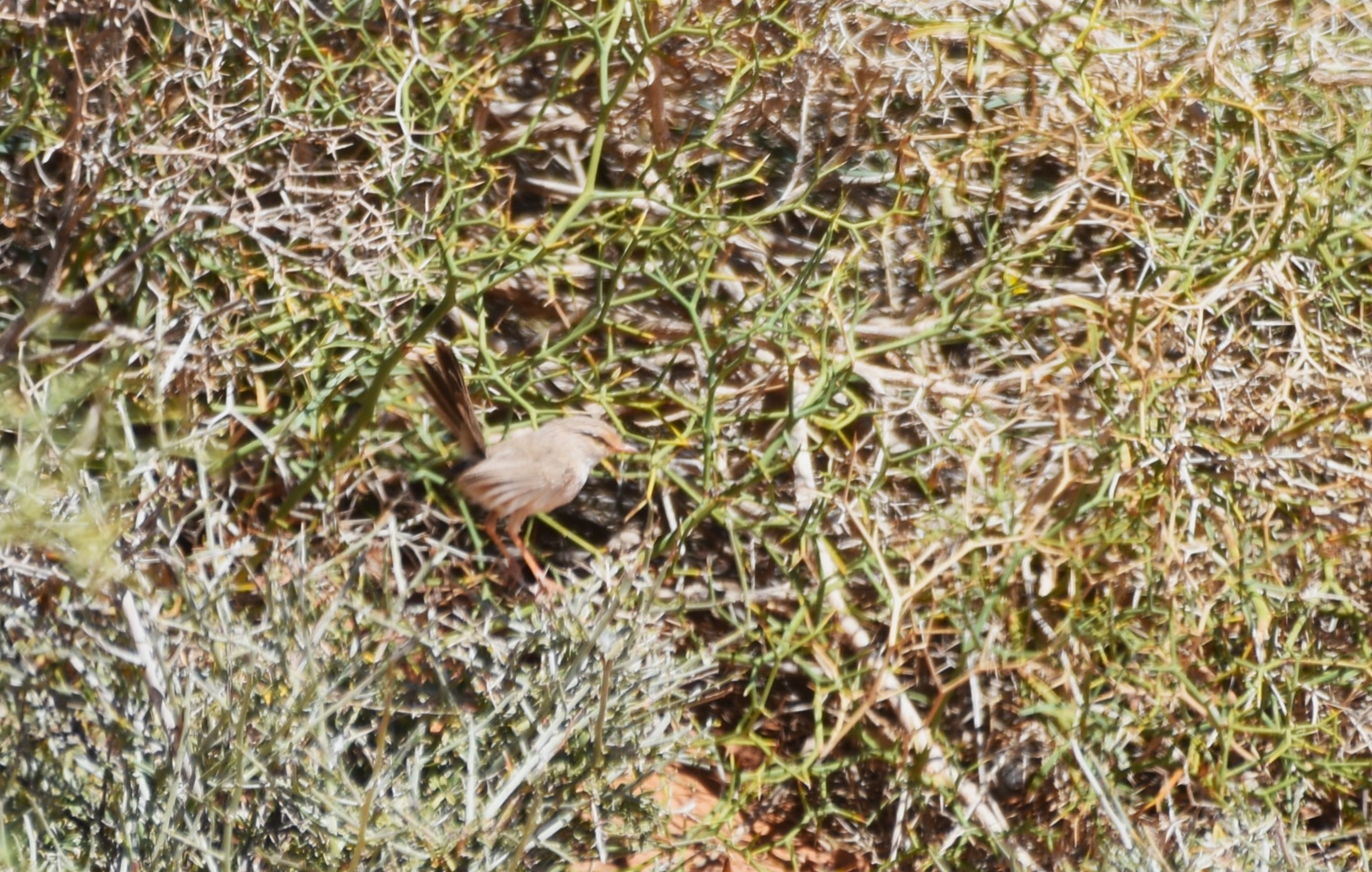
Long trasfer to the first dunes of the Sahara. En route, we went for a stop looking for the often secretive Streaked Bush Warbler (often referred in this area as Saharan Scrub Warbler and a full species regarding some lists). We had some walk in the sandy terrain surrounded by goats and enjoying several Great Grey Shrikes, when we heard the call of the birds and after some running we all got good views on a family group as there were moving on the ground or inside the tiny, spiny bush.

It is almost lunch time so we went into a nearby restaurant to enjoy a very nice set menu lunch. It is Ramadah, but it is not hard to find places like along our way. After lunch we kept moving to Merzouga and after a couple of less productive stops we arrived to the impressive lagoon nearby Merzouga. The lagoon had been dry for 5 years, but the generous rains during the last winter made it happen, and the lagoon looked like amazing. Here we got the typical image of Flamingoes framed with sand dunes that made this place became famous worldwide, but we also enjoyed the good array of nesting birds around: Ruddy Shelducks, Black-winged Stilts + Little Ringed & Kentish Plovers. The lagoon also hosted scarce migratory birds including Black-necked Grebe and Osprey and, most importantly, a shy and very distant flock of Marbled Ducks!

Streaked Scrub Warbler (Scotocerca inquieta saharae).

Day 7

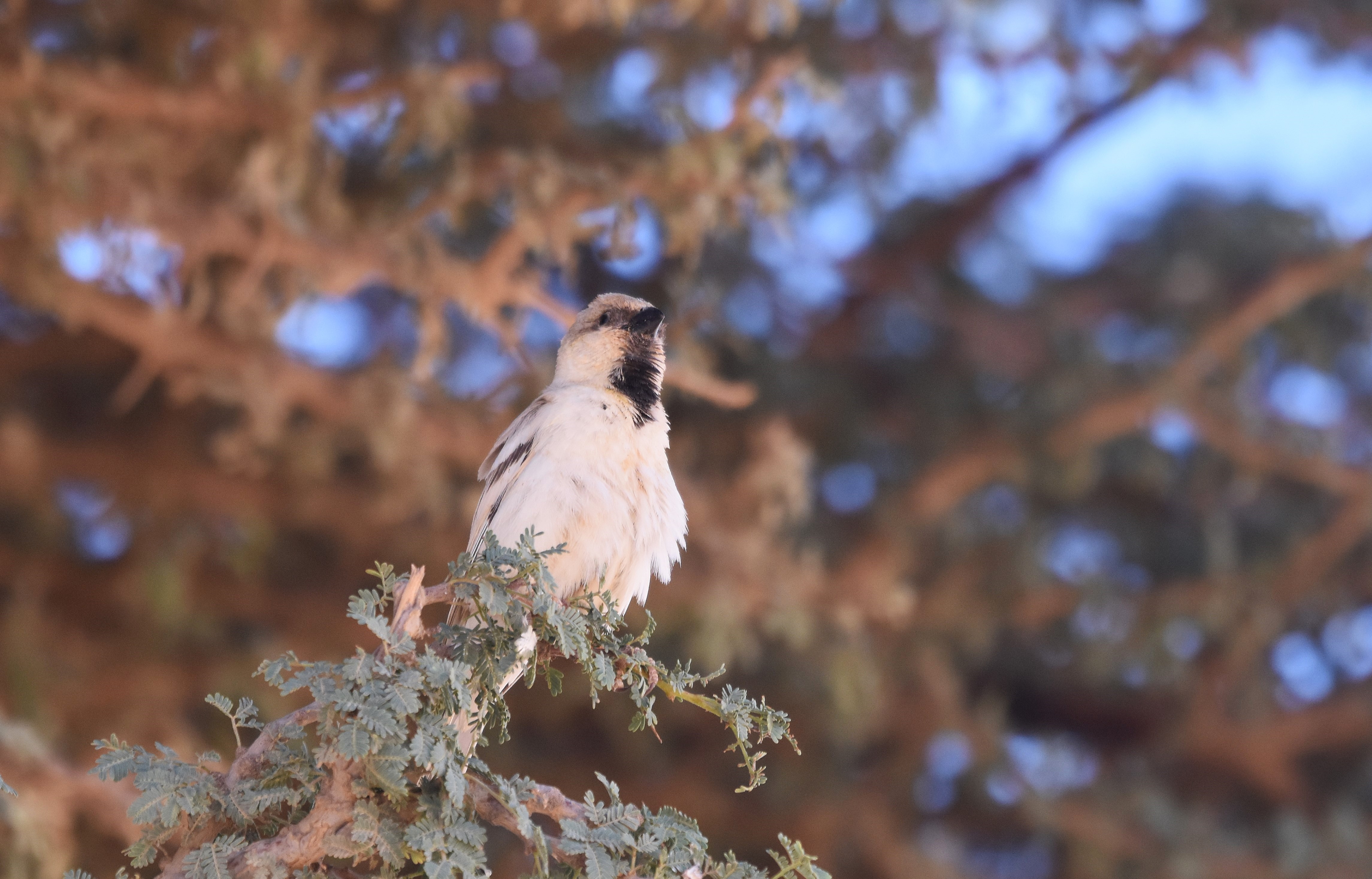
Very early in the morning we met our local guides coming with its full-equiped 4x4s. First stop was to check a drinking pond where Sandgrouses come to drink water early in the morning. Soon, we were enjoying good numbers of both Spotted & Crowned Sandgrouses. For the first time in years, Crowned Sandgrouses were outnumbering the Spotted ones. After enjoy the Sandgrouse spectacle and no majoy delay we moved to our next spot, this time to check a pair of Desert Sparrows nesting nearby. Unfortunately we have no luck with them so, taking advantage of this we decided to move deeper in the desert, where a nomad is waiting for us as he found a Egyptian Nightjar roosting in the desert. After a short walk we arrived where the Nightjar is and we all spent a few minutes watching this absolute treat, always at a safe distance.

Leaving this amazing spot, we went back to the Desert Sparrow territory, and this time we immediately got the eyes on the birds as they were hanging around very close to their nest. We actually saw one male and two females building the nest.

From here we have a bit of a drive as we are going now in search of the African Desert Warbler. After some walk in the dunes we got to see one, but not everybody in the group got to see the bird.. We were decided to be there longer, but a strong wind started to blow in and we decided to give up, so far. A pity, since the place was fulfilled with migratory birds (Common Redstarts, Booted Eagles, W Bonelli’s & W Subalpine Warblers, Woodchat Shrikes,..).

After lunch weather conditions kept degrading so we decided to call it a day and have some spare time in the afternoon, aiming to have better luck the next day.

Spotted and Crowned Sandgrouses drinking water.
Egyptian Nightjar (Caprimulgus aegiptiacus)
Desert Sparrow (Passer simplex).

Day 8

Early in the morning we went for a stroll around the accommodation, a typical place for Fulvous Blabbler. Soon, we got to see one of them, providing really good looks. From here, we moved into a typical place for African Desert Warbler but we failed again. Anyway, this could be the best fail ever, since a Fennec just came out from nowhere, crossing in front of the car and letting us decent views! We could count ourselves lucky to see it, even without trying it!

Still shocked after the last desert jewel, we went for a last go on the Desert Warbler, trying to improve the views that we got the day before. Again, we failed to find the bird but our tenacity is rewarded by finding a nest of Greater Hoopoe Lark, built up in a tussock so they can watch out for predators.

Our way to the famous Cafe Yasmina (where the Catalan Bird Society has a ringing station) is a bit difficult, since the winter rains have made the are become a small lake. Taking advantage of these unusual conditions, tens of migratory birds are feeding around. Here we found the only flock of Collared Pratincoles for the trip, while Sedge Warblers are especially common in the tamarisk around, where they are joined by Western Olivaceous Warblers. En route we also have a few Cream-coloured Coursers and the first Seebohm’s Wheatears of the trip.

The last stop of the day is to have a second visit in the Merzouga lake. Beside the species that we saw in our previous visit, we added Little Stint, Dunlin, Common Redshank, Common Greenshank and Wood Sandpiper along with a rather unexpected Water Pipit. Close by, in a palm orchard, we got some passerines but also a mixed flock of European & Blue-cheeked Bee-eaters.

Torden lleonat (Argya fulva)
Fennec (Vulpes zerda) a la carrera
African Desert Warbler (Curruca deserti).
Alosa puput (Alaemon alaudipes).

Day 9

Transfer day with stops in our way to Ouarzazate. In our stops exploring different wadis (dry desert-like streams) we found a good variety of Wheatears but also Spectacled Warbler along with the commoner Western Subalpine Warbler. We also found a small nesting colony of Blue-cheeked Bee-eaters.

Before arriving to our accommodation in Ouarzazate we went for a visit into the Al-Mansour Barrage, a massive reservoir South of the city. Here we added Gull-billed Tern and Sand Martin to our list before the strong winds made us withdraw back to our accommodation.

 Day 10

Last day of the trip. The birding starts early, as the birds join us while having breakfast. The gardens of the accommodation are hosting some Western Olivaceous Warblers, but also Hoopoes, Tree Pipits and Warblers while several Red-rumped Swallows are flying above us.

En route we made a stop in a stream. The weather was clearly better than in previous days, as the wind was totally stopped. And this spot was fulfilled with migratory passerines. Here we got 10+ birds of 7 species in a single tree: W Subalpines & W Orphean Warblers; Common Whitethroat; Willow & W Bonelli’s Warblers; Common Chiffchaffs and some very tame Iberian Chiffchaffs. The rank vegetation was having tens of Sedge & Common Reed Warblers moving around. Pied Flycatcher was a new species for the tour.

While crossing the Atlas mountains we nice views on Red-billed Choughs, and the last stop of the trip was to explore a conifer woodland. Here we got Coal Tit and Eurasian Sparrowhawk while Common Crossbills are heard calling around. As a final sight, a Eurasian Goshawk was seen displaying above the slopes!

This is the last stop of the trip before arriving to our accommodation back in Marrakech, ending a pretty nice tour despite the challenging weather conditions, with far less birds of prey than in previous editions but enjoying excellent numbers of migratory passerines, especially in those areas still having ponds from the generous winter rains.

List of bird species of the tour:

  1. Ruddy Shelduck (Tadorna ferruginea)
  2. Common Shelduck (Tadorna tadorna)
  3. Blue-winged Teal (Spatula discors)
  4. Northern Shoveler (Spatula clypeata)
  5. Mallard (Anas platyrhynchos)
  6. Pintail (Anas acuta)
  7. Eurasian Teal (Anas crecca)
  8. Marbled Duck (Marmaronetta angustirostris)
  9. Common Quail (Coturnix coturnix) — only heard
  10. Barbary Partridge (Alectoris barbara)
  11. Feral Pigeon (Columba livia)
  12. Common Wood-pigeon (Columba palumbus)
  13. European Turtle Dove (Streptopelia turtur)
  14. Eurasian Collared Dove (Streptopelia decaocto)
  15. Laughing Dove (Spilopelia senegalensis)
  16. Spotted Sandgrouse (Pterocles senegallus)
  17. Crowned Sandgrouse (Pterocles coronatus)
  18. Red-necked Nightjar (Caprimulgus ruficollis) — heard only
  19. Egyptian Nightjar (Caprimulgus aegyptius)
  20. Alpine Swift (Tachymarptis melba)
  21. Common Swift (Apus apus)
  22. Pallid Swift (Apus pallidus)
  23. Little Swift (Apus affinis)
  24. Spotted Crake (Porzana porzana)
  25. Eurasian Moorhen (Gallinula chloropus)
  26. Eurasian Coot (Fulica atra)
  27. Stone Curlew (Burhinus oedicnemus)
  28. Black-winged Stilt (Himantopus himantopus)
  29. Pied Avocet (Recurvirostra avosetta)
  30. Grey Plover (Pluvialis squatarola)
  31. Common Ringed Plover (Charadrius hiaticula)
  32. Little Ringed Plover (Charadrius dubius)
  33. Kentish Plover (Charadrius alexandrinus)
  34. Whimbrel (Numenius phaeopus)
  35. Bar-tailed Godwit (Limosa lapponica)
  36. Black-tailed Godwit (Limosa limosa)
  37. Common Snipe (Gallinago gallinago)
  38. Common Sandpiper (Actitis hypoleucos)
  39. Green Sandpiper (Tringa ochropus)
  40. Wood Sandpiper (Tringa glareola)
  41. Common Redshank (Tringa totanus)
  42. Common Greenshank (Tringa nebularia)
  43. Ruff (Calidris pugnax)
  44. Curlew Sandpiper (Calidris ferruginea)
  45. Sanderling (Calidris alba)
  46. Dunlin (Calidris alpina)
  47. Little Stint (Calidris minuta)
  48. Cream-coloured Courser (Cursorior cursor)
  49. Collared Pratincole (Glareola pratincola)
  50. Arctic Skua (Stercorarius parasiticus)
  51. Great Skua (Stercorarius skua)
  52. Slender-billed Gull (Chroicocephalus genei)
  53. Black-headed Gull (Chroicocephalus ridibundus)
  54. Yellow-legged Gull (Larus michahellis)
  55. Lesser Black-backed Gull (Larus fuscus)
  56. Gull-billed Tern (Gelochelidon nilotica)
  57. Sandwich Tern (Thalasseus sandvicensis)
  58. Greater Flamingo (Phoenicopterus roseus)
  59. Little Grebe (Tachybaptus ruficollis)
  60. Great Crested Grebe (Podiceps cristatus)
  61. Black-necked Grebe (Podiceps nigricollis)
  62. White Stork (Ciconia ciconia)
  63. Atlantic Gannet (Morus bassanus)
  64. Great Cormorant (Phalacrocorax carbo)
  65. Glossy Ibis (Plegadis falcinellus)
  66. Northern Bald Ibis (Geronticus eremita)
  67. Eurasian Spoobill (Platalea leucorodia)
  68. Little Egret (Egretta garzetta)
  69. Squacco Heron (Ardeola ralloides)
  70. Western Cattle Egret (Bubulcus ibis)
  71. Great White Egret (Ardea alba)
  72. Grey Heron (Ardea cinerea)
  73. Osprey (Pandion haliaetos)
  74. Black-winged Kite (Elanus caeruleus)
  75. Short-toed Eagle (Circaetus gallicus)
  76. Booted Eagle (Aquila pennata)
  77. Bonelli’s Eagle (Aquila fasciata)
  78. Eurasian Sparrowhawk (Accipiter nisus)
  79. Eurasian Goshawk (Accipiter gentilis)
  80. Western Marsh Harrier (Circus aeruginosus)
  81. Montagu’s Harrier (Circus pygargus)
  82. Black Kite (Milvus migrans)
  83. Long-legged Buzzard (Buteo rufinus cirtensis)
  84. Pharaon Eagle Owl (Bubo ascalaphus)
  85. Little Owl (Athene noctua)
  86. Hoopoe (Upupa epops)
  87. Blue-cheecked Bee-eater (Merops persicus)
  88. Eurasian Bee-eater (Merops apiaster)
  89. Great Spotted Woodpecker (Dendrocopos major)
  90. Levaillant’s Woodpecker (Picus vailantii)
  91. Lesser Kestrel (Falco naumanii)
  92. Eurasian Kestrel (Falco tinnunculus)
  93. Lanner Falcon (Falco biarmicus)
  94. Black-crowned Tchagra (Tchagra senegalus)
  95. Great Grey Shrike (Lanius excubitor) — Algerian Shrike; Desert Grey Shrike
  96. Woodchat Shrike (Lanius senator)
  97. Moroccan Magpie (Pica mauretanica)
  98. Red-billed Chough (Pyrrhocorax pyrrhocorax)
  99. Alpine Chough (Pyrrhocorax graculus)
  100. Brown-necked Raven (Corvus ruficollis)
  101. Common Raven (Corvus corax)
  102. Coal Tit (Periparus ater atlas)
  103. Great Tit (Parus major)
  104. African Blue Tit (Cyanistes teneriffae)
  105. Greater Hoopoe Lark (Alaemon alaudipes)
  106. Thick-billed Lark (Ramphocoris clotbey)
  107. Bar-tailed Lark (Ammomanes cinctura)
  108. Desert Lark (Ammomanes deserti)
  109. Thekla Lark (Galerida theklae)
  110. Maghreb Lark (Galerida macrorhyncha)
  111. Crested Lark (Galerida cristata)
  112. Horned Lark (Eremophila alpestris)
  113. Temminck’s Lark (Eremophila bilopha)
  114. Greater Short-toed Lark (Calandrella brachydactyla)
  115. Mediterranean Short-toed Lark (Alaudala rufescens)
  116. Zitting Cisticola (Cisticola juncidis)
  117. Western Olivaceous Warbler (Iduna opaca)
  118. Sedge Warbler (Acrocephalus schoenobaenus)
  119. Common Reed Warbler (Acrocephalus scirpaceus)
  120. Brown-throated Martin (Riparia paludicola)
  121. Oreneta de ribera comuna (Riparia riparia)
  122. European Crag Martin (Ptyonoprogne rupestris)
  123. Barn Swallow (Hirundo rustica)
  124. Western House Martin (Delichon urbicum)
  125. European Red-rumped Swallow (Cecropis rufula)
  126. Common Bulbul (Pycnonotus barbatus)
  127. Western Bonelli’s Warbler (Phylloscopus bonelli)
  128. Willow Warbler (Phylloscopus troquilus)
  129. Common Chiffchaff (Phylloscopus collybita)
  130. Iberian Chiffchaff (Phylloscopus ibericus)
  131. Streaked Scrub Warbler (Scotocerca inquieta)
  132. Cetti’s Warbler (Cettia cetti)
  133. Eurasian Blackcap (Sylvia atricapilla)
  134. Western Orphean Warbler (Curruca hortensis)
  135. African Desert Warbler (Curruca deserti)
  136. Western Subalpine Warbler (Curruca iberiae)
  137. Tristam’s Warbler (Curruca deserticola)
  138. Sardinian Warbler (Curruca melanocephala)
  139. Spectacled Warbler (Curruca conspicillata)
  140. Common Whitethroat (Curruca communis)
  141. Rufous Babbler (Argya fulva)
  142. Eurasian Wren (Troglodytes troglodytes)
  143. White-throated Dipper (Cinclus cinclus)
  144. Spotless Starling (Sturnus unicolor)
  145. Mistle Thrush (Turdus viscivorus)
  146. Eurasian Blackbird (Turdus merula)
  147. Ring Ouzel (Turdus torquatus)
  148. Eurasian Robin (Erithacus rubecula)
  149. Common Nightingale (Luscinia megarhynchos)
  150. Pied Flycatcher (Ficedula hypoleuca)
  151. Moussier’s Redstart (Phoenicurus moussieri)
  152. Common Redstart (Phoenicurus phoenicurus)
  153. Black Redstart (Phoenicurus ochruros)
  154. Blue Rock Thrush (Monticola solitarius)
  155. European Stonechat (Saxicola rubicola)
  156. Northern Wheatear (Oenanthe oenanthe)
  157. Seebohm’s Wheatear (Oenanthe seebohmi)
  158. Desert Wheatear (Oenanthe deserti)
  159. Western Black-eared Wheatear (Oenanthe hispanica)
  160. Red-rumped Wheatear (Oenanthe moesta)
  161. Black Wheatear (Oenanthe leucura)
  162. White-crowned Black Wheatear (Oenanthe leucopyga)
  163. Maghreb Wheatear (Oenanthe lugens)
  164. House Sparrow (Passer domesticus)
  165. Spanish Sparrow (Passer hispanoliensis)
  166. Desert Sparrow (Passer simplex)
  167. Common Rock Sparrow (Petronia petronia)
  168. Grey Wagtail (Motacilla cinerea)
  169. Western Yellow Wagtail (Motacilla flava)
  170. White Wagtail (Motacilla alba) — 168a. Moroccan Wagtail (Motacilla alba subpersonata)
  171. Tawny Pipit (Anthus campestris)
  172. Meadow Pipit (Anthus pratensis)
  173. Tree Pipit (Anthus trivialis)
  174. Red-throated Pipit (Anthus cervinus)
  175. Water Pipit (Anthus spinolleta)
  176. African Chaffinch (Fringilla spodiogenys)
  177. Crimson-winged Finch (Rhodopechys sanguineus alienus)
  178. Trumpeter Finch (Bucanetes githagineus)
  179. Eurasian Greenfinch (Chloris chloris)
  180. Common Linnet (Linaria cannabina)
  181. Common Crossbill (Loxia curvirostra) — heard only
  182. Eurasian Goldfinch (Carduelis carduelis)
  183. European Serin (Serinus serinus)
  184. Eurasian Siskin (Spinus spinus)
  185. Corn Bunting (Emberiza calandra)
  186. Rock Bunting (Emberiza cia)
  187. Cirl Bunting (Emberiza cirlus)
  188. House Bunting (Emberiza sahari)

Pyrenees Winter Break 2025

  • Dates: From February 8th to 12th, 2025
  • Tour participants: 6
  • Number of species: 143
  • Tour leader: Carles Oliver

Overview.

The tour started in the Pyrenees with the first morning hampered by snow, low cloud and mist at higher altitudes before clearing to much clearer and milder weather. The weather in the lowlands/plains was very kind with warmer conditions and only very light winds. The bad weather in the first day affected a bit the tour, with a couple of locations performing clearly below average, especially those involving boreal forests. The lack of snow in the top of the mountains during January and February meant no chances for us to connect with Snow Finches. In the steppes, Dupont’s Larks performed very well for us, and once we connected with the major targets in the plains we even had time for a couple of hours of birdwatching at Ebro Delta, a coastal heaven of birds that is normally out of bounds in this itinerary..

DAY 1.

After collecting all 6 tour participants from around the airport in Barcelona we headed through drizzly rain towards the Pyrenees. After 90 minutes of drive, we arrived to the area to explore, and we had a short coffee stop before attempting to drive a lane higher into the mountains through increasingly heavy snow. Around 1500m the road had become quite difficult, so we parked safely and explored the area.

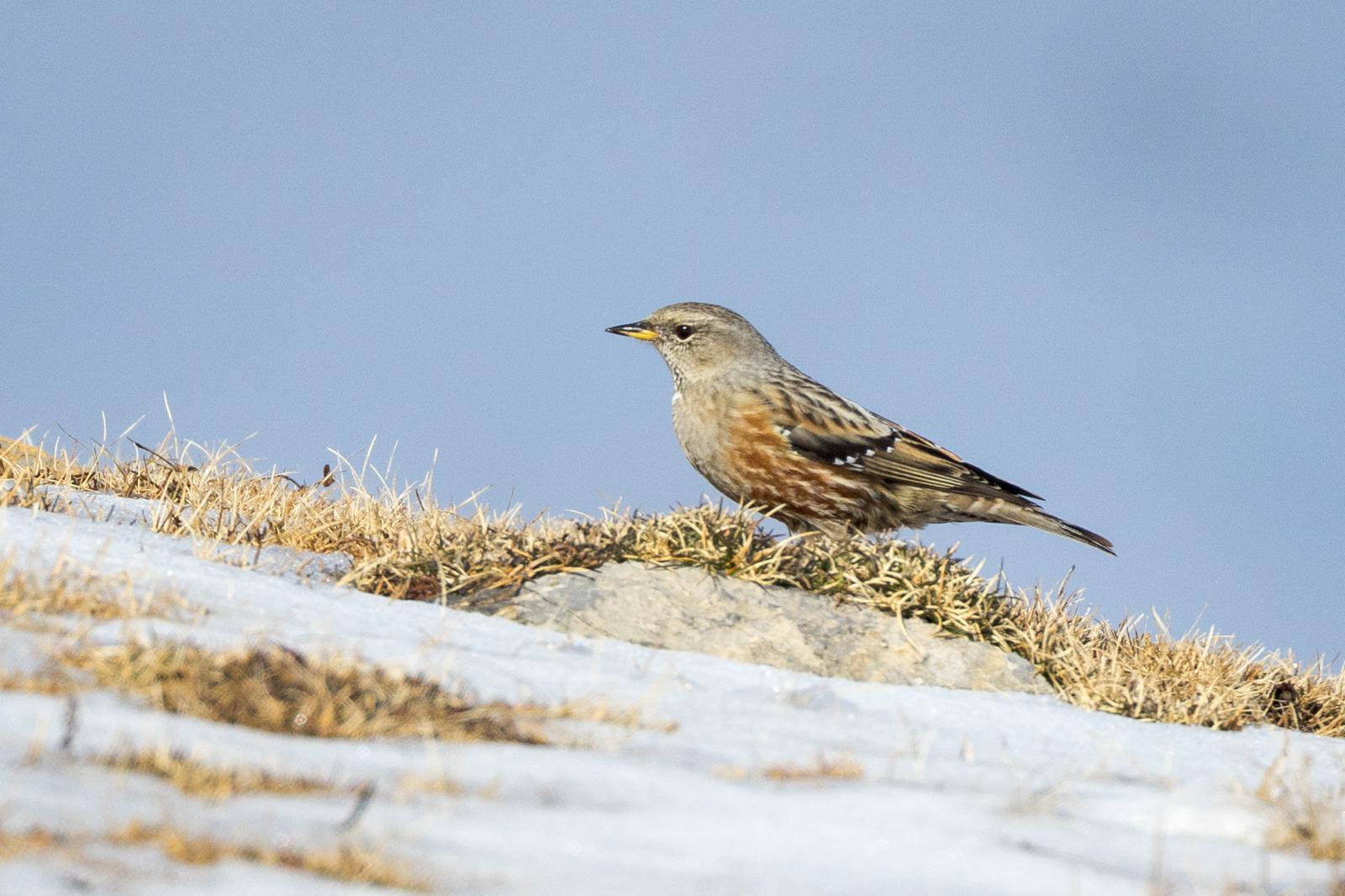
Almost immediately the group found an Alpine Accentor sheltering and feeding on the screen by the roadside! Everyone enjoyed good views despite the weather, before it moved off further up the slope, here we also saw and heard our first European Crested Tits, Coal Tit, Firecrest, and Mistle Thrush of the trip along with several Red-billed Chough.

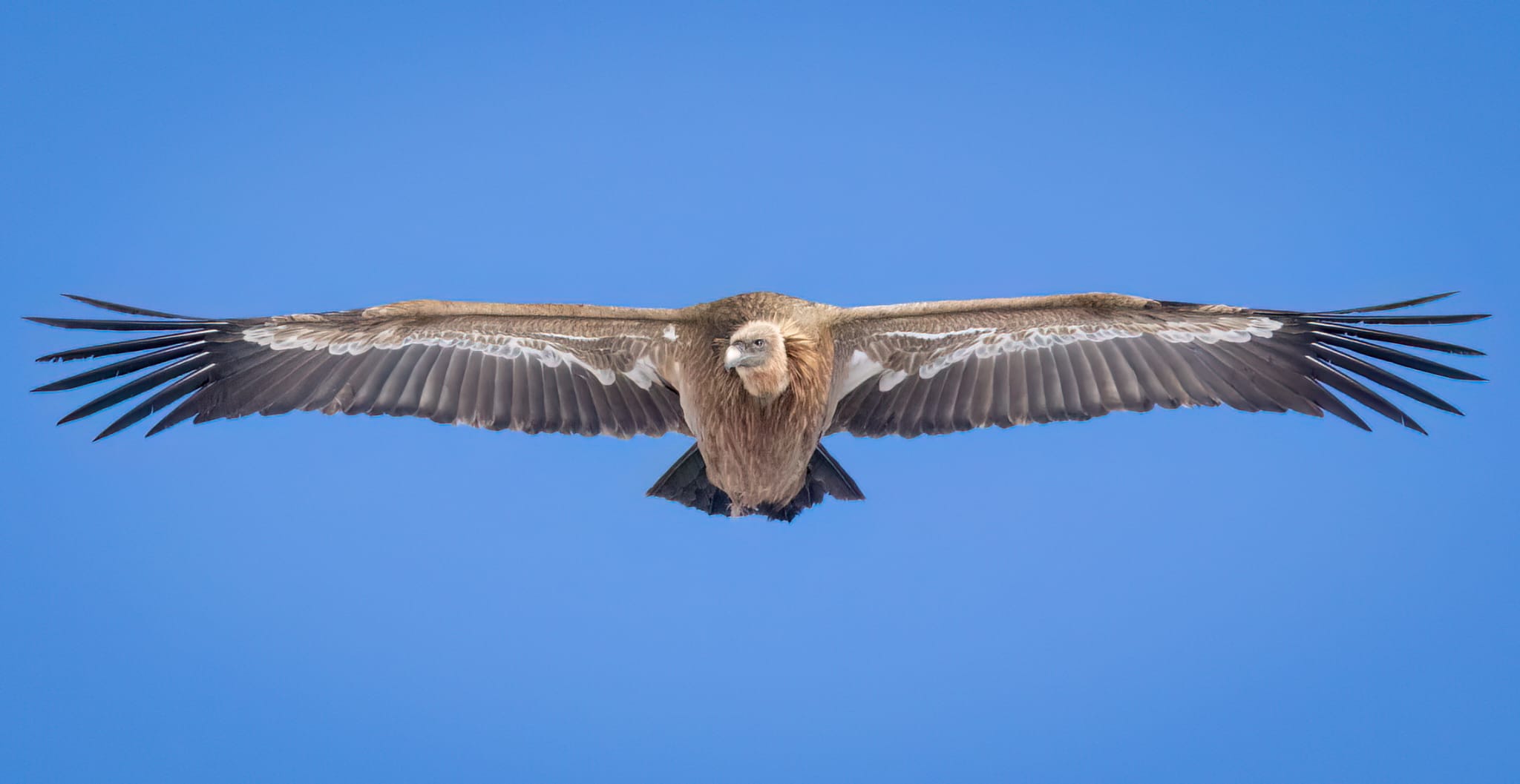
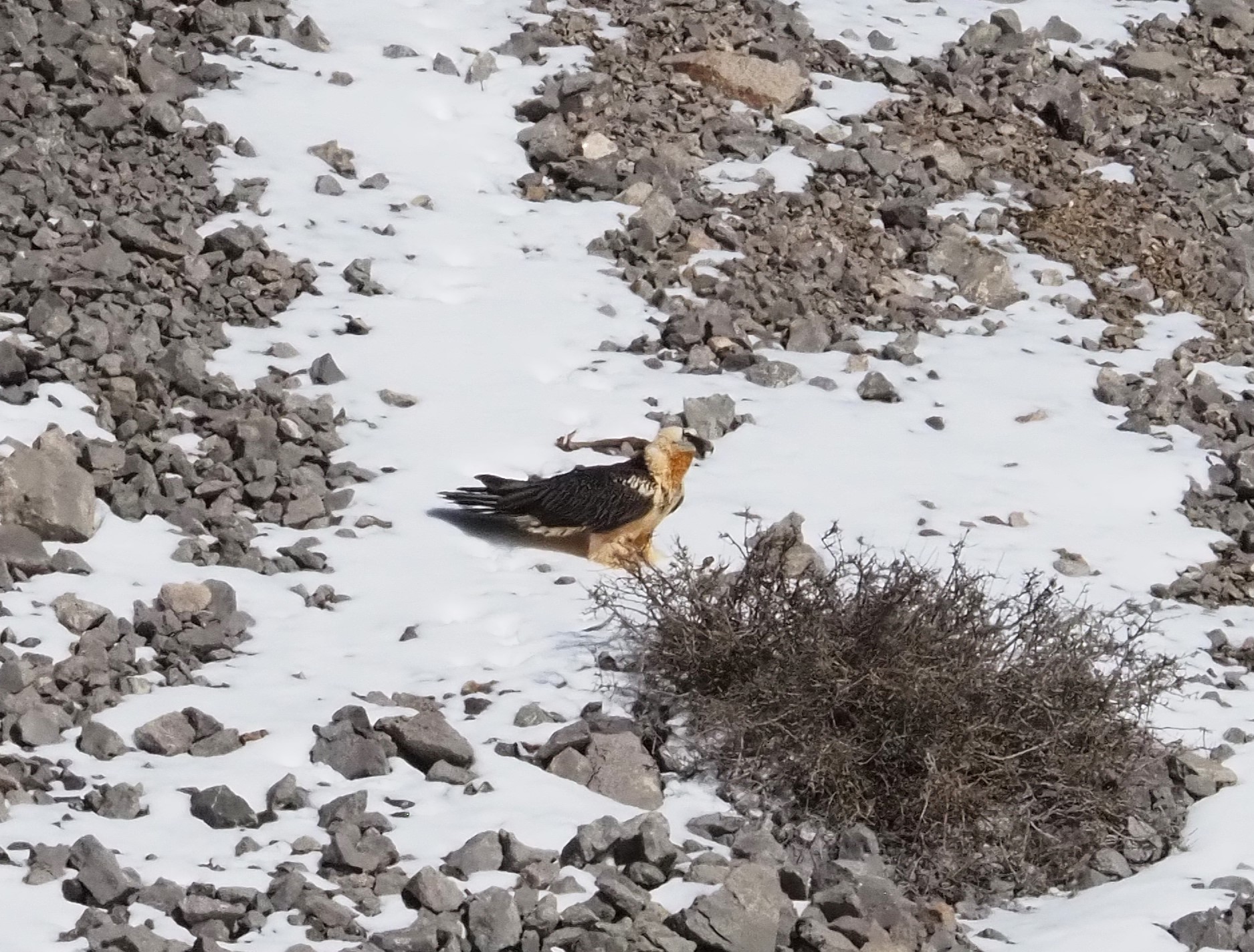
After a walk up the road a few hundred metres the weather began to improve, and as we headed back to the minibus the first of several Eurasian Griffon Vulture began to appear overhead. Whilst enjoying views of these one of the group (Jonny R) shouted out….. ”LAMMERGEIER!!” and an adult bird passed directly overhead giving great views as it glided down across the valley – what a start to the trip!

Alpine Accentor (Prunella collaris) feeding in the slope. Image by Carles Oliver.
Full adult Lammergeier (Gypaetos barbatus). Image by Carles Oliver

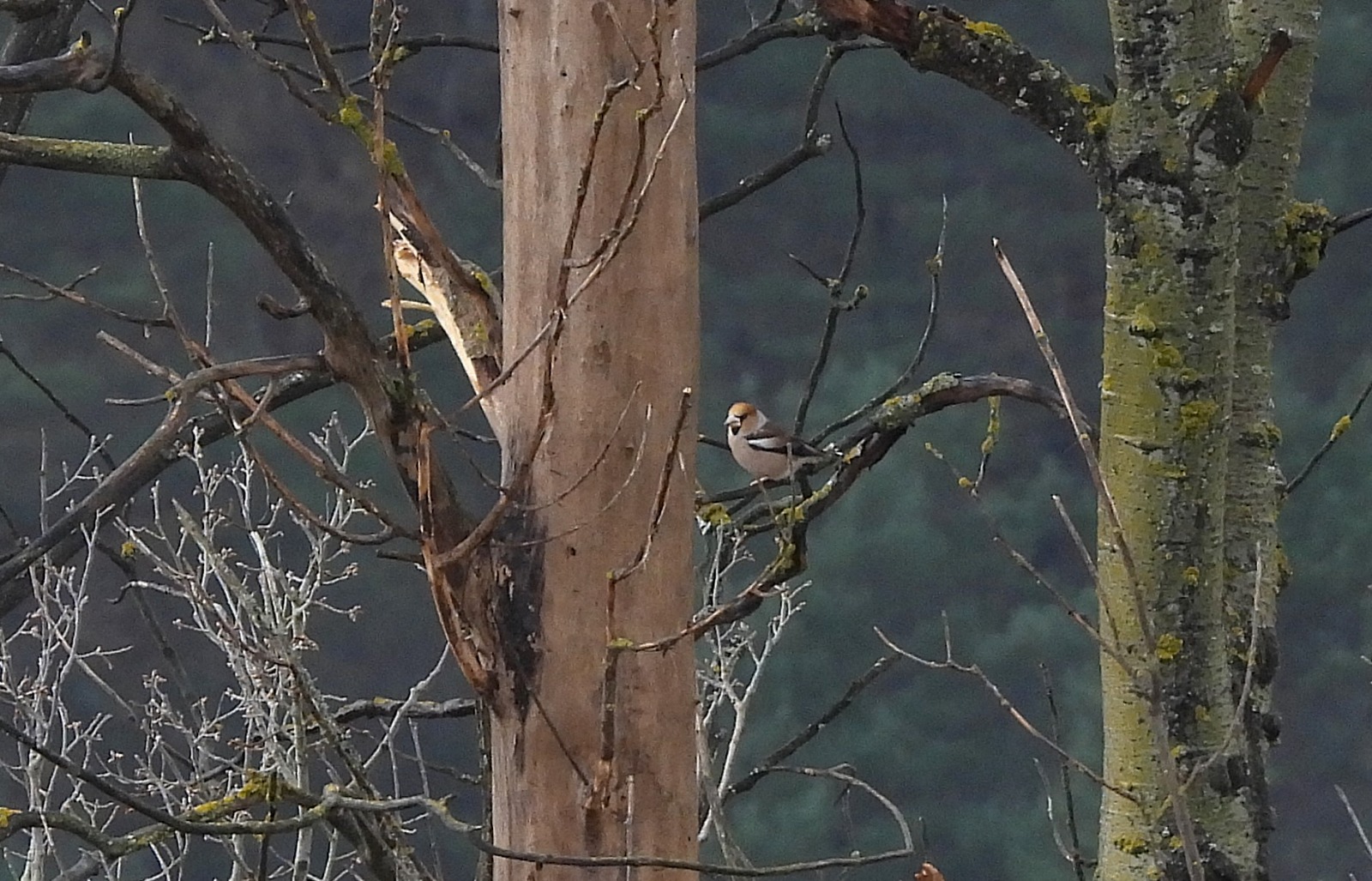
After this excitement we decided to slowly head down the mountain, the weather continued to improve and before we had travelled far we had to stop – 2 Lammergeier were circling and showing well above us! An adult-type bird and a younger 3rd year type bird gave a superb show before drifting away. We then stopped around in the valley where the terraced fields and trees provided lots of birds including Rock Bunting, Hawfinch, Black Redstart, European Stonechat, European Serin, Meadow Pipit and some of the commoner Finches and Tits as well as an unexpected Cattle Egret – not something normally seen at this altitude! We could also hear Iberian Green Woodpecker calling here.

During our urban lunch stop and whilst there saw White-throated Dipper, Common Chiffchaff and Grey Wagtail on the stream through the village and a Common Buzzard passed overhead.

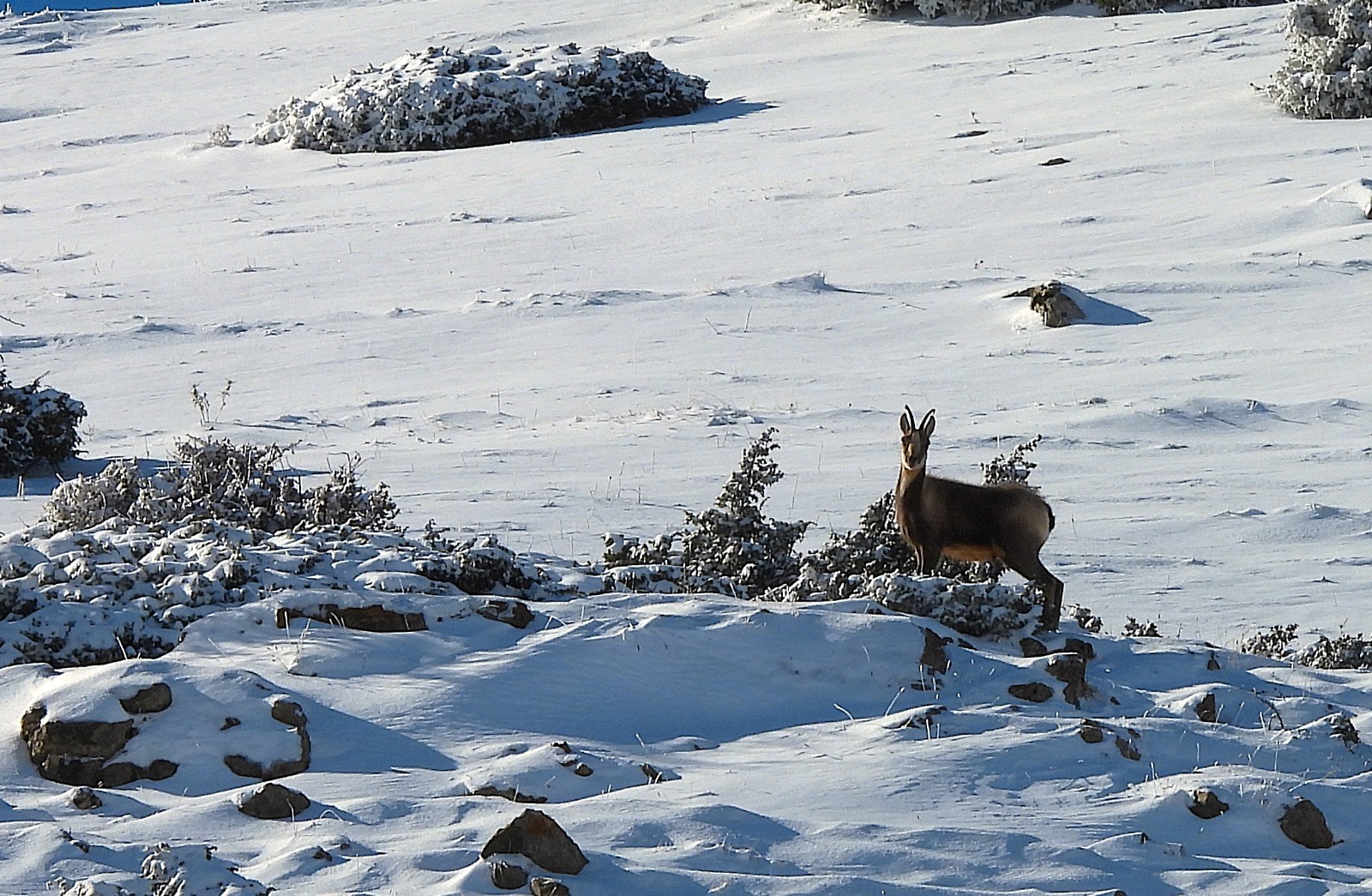
In the afternoon we drove another scenic lane up into the mountains where we enjoyed more fantastic views of 20+ Eurasian Griffons as well as 2 Golden Eagles, Red-billed Choughs and even Magpie which seemed out of place at this altitude. A small group of feeding birds included Fieldfare, Yellowhammer, Chaffinch and Goldfinch. This site also produced our first Pyrenean Chamois of the trip. We again descended into lower meadows and fields and walked a small hill that provided our first Iberian Grey Shrike as well as Eurasian Tree Sparrows, Crested Lark, Firecrests, Crested Tits, Black Redstarts, Yellowhammer, Goldcrest and Corn Buntings. Our last stop before reaching the accommodation for the evening produced lovely views of 8 Rock Sparrows on wires by the roadside – but the day was not finished there because our fabulous accommodation and host has a feeding station in the garden, and as the light faded we were treated to amazing views of up to 3 Beech Martins!! A quite amazing end to fantastic first day.

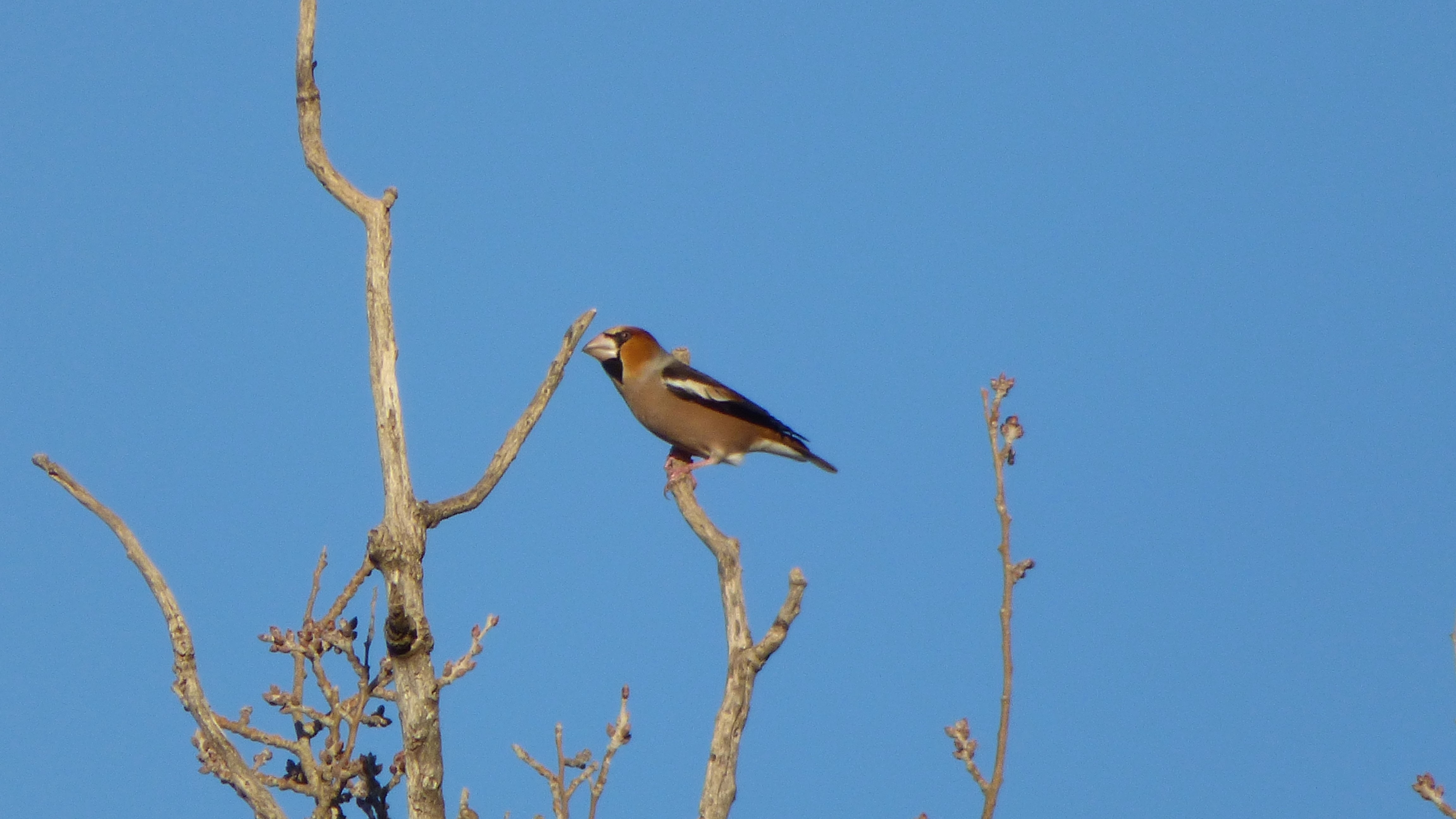
Hawfinch (Coccothraustes coccothraustes). Image by Justin Williams.
Rock Bunting (Emberiza cia). Image by Carles Oliver.
European Crested Tit (Lophophanes cristatus). Image by Jo Simon.
Eurasian Griffon (Gyps fulvus). Image by Jo Simon.
Beech Martin (Martes foina). Image by Stephen Davis.

Day 2.

In some ways a slightly frustrating day with numerous stops and effort failing to locate any Citril Finch, Black Woodpecker or White-winged Snowfinch, but this aside we enjoyed a fantastic variety of birds as we tried several areas including trips into France and then Andorra!

In the lower altitudes we came across a fantastic mixed flock of finch and other small birds including Common Crossbills, (c20) giving great views along the road, as well as Brambling, Siskin, Bullfinch, Short-toed Treecreeper, Great Spotted Woodpecker, Long-tailed Tit, Rock Bunting and Chaffinch, again we could hear Iberian Green Woodpecker calling but they remained invisible…..also in these areas Red Kites became more frequent. Here we also came across our only Red Squirrel of the trip.

In the high mountain passes we enjoyed yet more incredible views of Eurasian Griffons and Common Raven, and as we entered Andorra, our first stop around the town produced a decent number of Alpine Chough hanging about around the shops and houses.

As we had time left in the day, we retraced our steps and returned to summit the lane at Coll de Pal – we had to stop quite soon on the way up due to an adult Lammergeier showing incredibly well by the van!! This bird gave us our best views yet and even landed on the scree a few hundred yards away – a definite highlight of the whole trip!!

Onwards to the summit of the pass in bright sunshine, and we were rewarded at the top when we located a group of 4 Alpine Accentors feeding down to a few metres away, scuttling and shuffling in the snow and short turf – superb!

We then took the 90 min transfer to Lleida where we would be based for 2 nights.

Common Crossbill (Loxia curvirostra). Image by Jonathan Kennedy.
Alpine Choughs (Pyrrhocora graculus) in Andorra. Image by Justin Williams.
That afternoon we got impressive views on Lammergeier. Image by Carles Oliver.
Lammergeier about to land for us. Image by Carles Oliver.
Lammergeier on the ground. Image by Carles Oliver.
Pyrenean Chamois (Rupicabra pyrenaica). Image by Justin Williams.
Alpine Accentor (Prunella collaris). Image by Stephen Davis.

Day 3.

The day began with a short trip to our first site and roadside White Storks but even this was interrupted by one of the group skilfully spotting a Stone Curlew by the road!

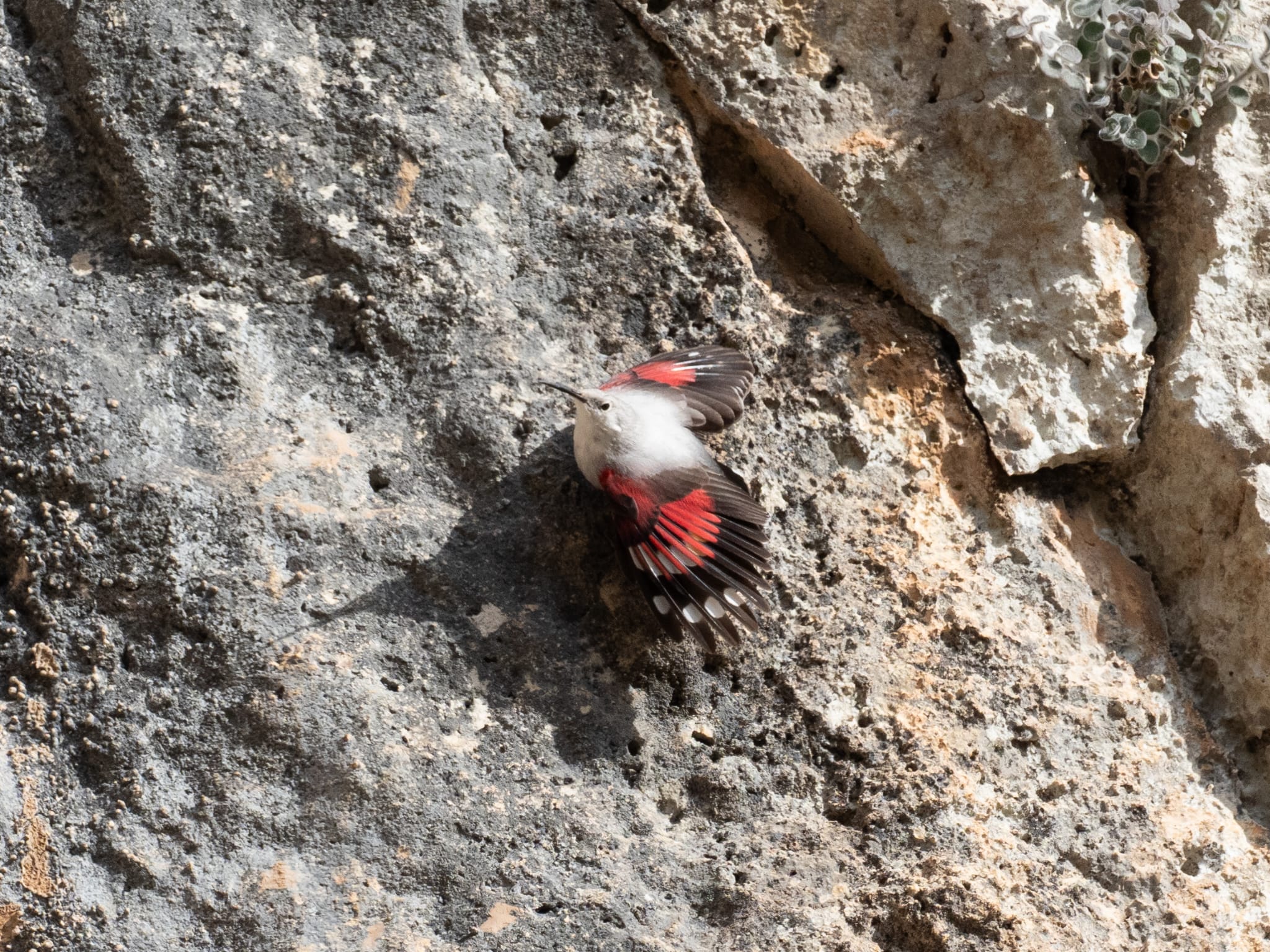
We were shortly at our first stop, a spectacular dam and gorge with a river and mixed scrub, we quickly began adding birds such as Rock Sparrow, Blue Rock Thrush, Crag Martins (which breed in the tunnel), Blackcap, Kestrel, Song Thrush, Short-toed Treecreeper, Common Kingfisher, Cettis and Sardinian Warblers, Firecrest, Rock Buntings and several Eurasian Griffons. Around 2 hours had now passed and things were starting to get a bit tense…..and then WALLCREEPER!! A bird was located towards the dam and 3 of the group were in the right spot to see it straight away, whilst the rest hurried towards the bird, they found a second Wallcreeper! This bird gave everyone much better views for a few minutes, and everyone could relax, especially Carles!

As we left the gorge a short stop provided Cirl Buntings, 2 Peregrines, Hawfinch and a large flock of Corn Bunting, and as we stopped for coffee, Spotless Starlings.

Stone Curlew (Burhinus oedicnemus). Image by Stephen Davis.
Wallcreeper (Tichodroma muraria). Image by Justin Williams.
Wallcreeper (Tichodroma muraria). Image by Jonathan Kennedy.
Wallcreeper (Tichodroma muraria). Image by Justin Williams.
Wallcreeper Argonauts! Image by Jo Symon.

We then moved on towards our next site with a couple of stops, the first providing many Cattle Egrets, White Storks and our first Great Egret, the second 2 Golden Eagles, Lapwing, Raven, Thekla Larks and a ringtail Hen Harrier as well as a roadside Little Owl.

We then stopped beside a spectacular roadside cliff face for our lunchtime picnic and immediately located our 3rd Wallcreeper of the day!! Although a little more distant this bird gave good telescope views, but we were distracted from this by 2-3 Black Wheatears which were also showing well here along with a Blue Rock Thrush!

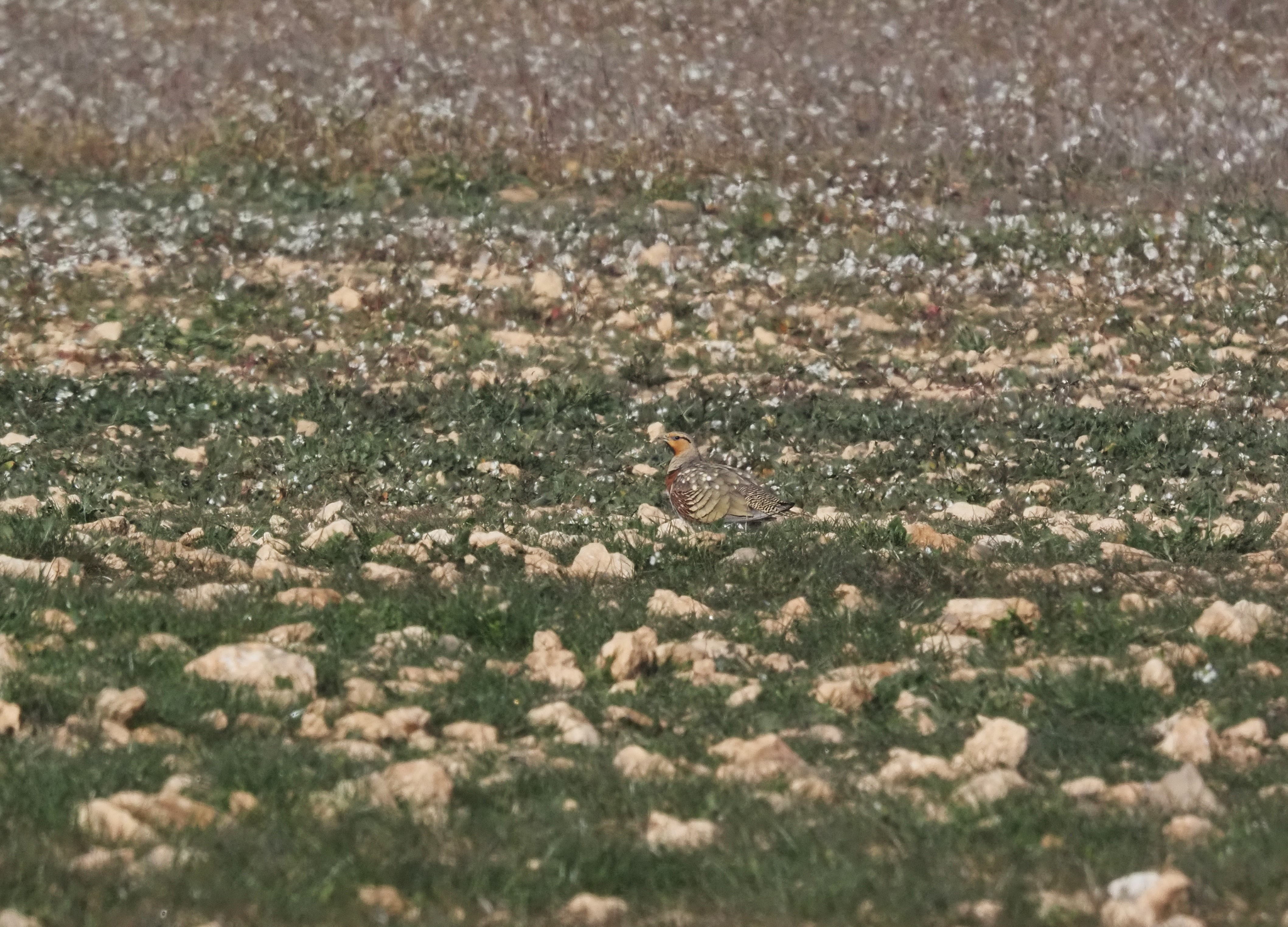
We were now into an area of plains and mixed arable land that is rapidly changing due to increased irrigation, but some areas still held many birds and we were quickly seeing Calandra Larks along with Thekla and Crested Larks and after walking a while we saw a distant Iberian Grey Shrike, Peregrine, and then located a single summer plumaged Pin-tailed Sandgrouse, a little distant, but again telescope views were good. As we left the site, we had excellent views of another Iberian Grey Shrike which really showed the difference between this and its northern counterpart.

We then called at a small roadside wetland and began adding a few species such as Coot Shoveler, Common Pochard, Common Snipe, Reed Bunting and Great Egret, as well as a rather unexpected, and slightly questionable, African Sacred Ibis! This bird has been in the area a while, and presumably originates from a ‘feral’ population in nearby France, Italy or Germany… Either way it made at least one of the group very happy!

Our last stop was to close by, and before we had even parked the van our main target was located – a male Eagle Owl! Perched in the ruins of an huge ancient building, this guy sat and watched us as we quietly watched him before starting to sing….amazing!

Whilst Serins and Sardinian Warblers twittered and scratched nearby, the Eagle Owl sat watch, his deep hoot echoing occasionally, until he finally flew low across to a nearby rock face….what an end to a truly fantastic days birding!!

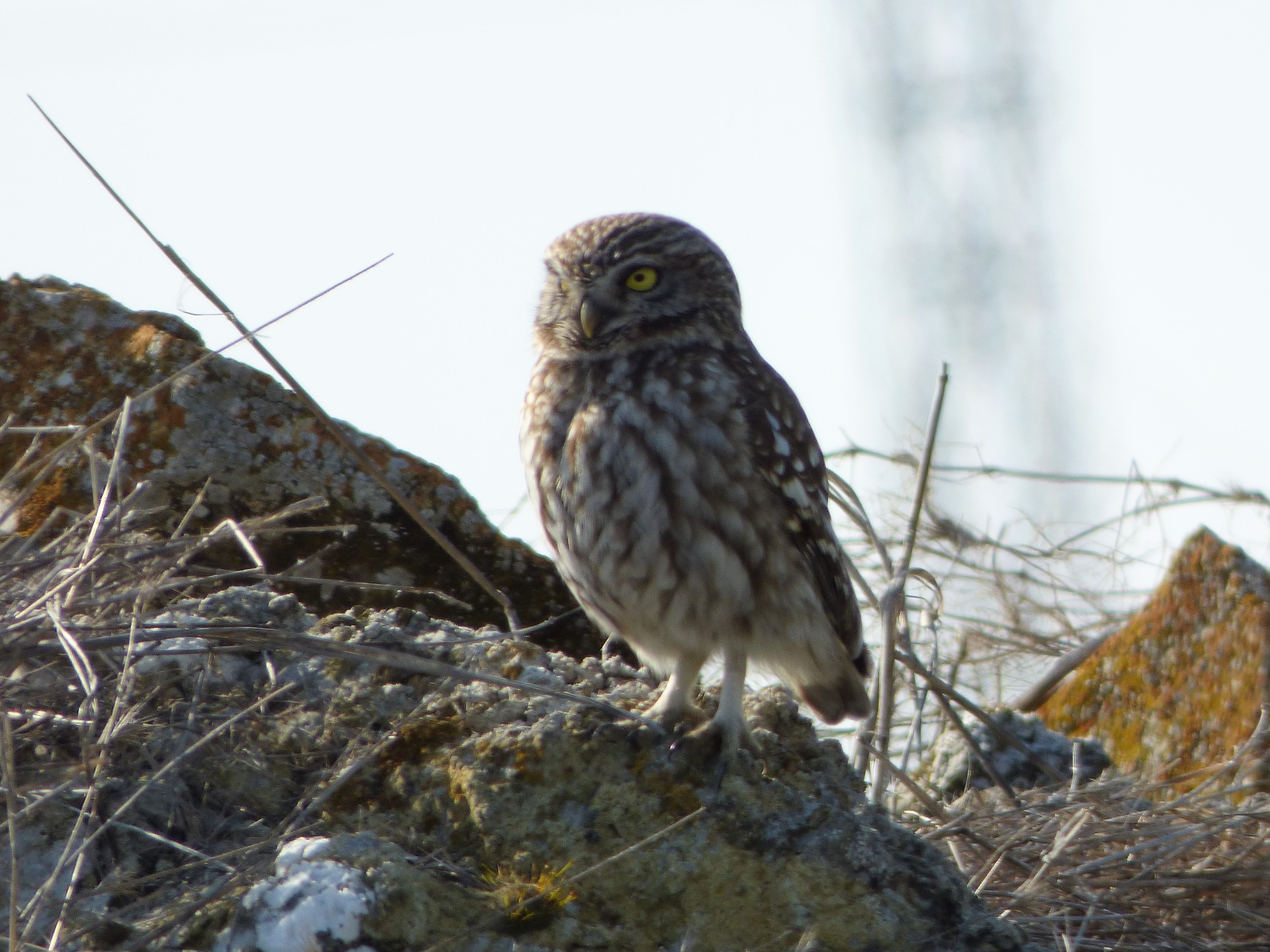
Little Owl (Athene noctua) on its roof. Image by Justing Williams.
Spotless Starling (Sturnus unicolor). Image by Justin Williams.
Pin-tailed Sandgrouse (Pterocles alchata) male. Image by Carles Oliver.
Iberian Grey Shrike (Lanius meridionalis) posed nicely for the group. Image by Carles Oliver.
African Sacred Ibis (Therskiornis aethiopicus) moving along with Western Cattle Egrets. Image by Carles Oliver.
Eurasian Eagle Owl (Bubo bubo) watching us. Image by Carles Oliver.

Day 4.

The day began with a short transfer after breakfast, interrupted by a large flock of migrating Common Cranes. These birds had presumably roosted nearby in the large open arable fields and were continuing their northward journey. We then entered an area of mixed arable/farmed/wild fields with big skies and tremendous views, misty fog didn’t help our search, but we quite quickly located 5 Great Bustards, all males, slowly wandering across their chosen field. Views were not brilliant, but very atmospheric! Here we were surrounded by Calandra Larks, Corn Buntings and our first Lesser Short-toed Larks as well as a Zitting Cisticola, Stonechats and Sardinian Warbler.

We then took a short coffee stop as the mist cleared and visited a small wetland with more Larks and many Linnets, Corn Buntings and Chaffinch before having second, clearer but distant views of the Great Bustards. With this under our belts we collected lunch and moved on.

We soon arrived at Lomaza (only briefly distracted by a large flock of migrating White Storks) and began to look at various larks…. A lot! A landscape of low spiky grass, thistle and huge skies stretched all around us. Quickly we were seeing many Calandra, Thekla and Lesser Short-toed (or ‘Mediterranean’) Larks, with their songs all around us, including much mimicry from the Calandra – quite a soundscape!

After c45mins, suddenly, the song we were searching for, and quickly some views of our quarry…DUPONT’S LARK! At least 2 birds, a pair, were making short, darting runs between bits of spiky tussocks grass until, amazingly, the male climbed a short way into a tussock and sat in full view singing…..a fantastic bit of good fortune and handshakes all round!

With the pressure off we all enjoyed the experience and incredible scenery of this beautiful, wild landscape.

The weather was warm now, and we stopped near Belchite to admire some ruins complete with Crag Martins, Serins and Black Redstart before moving onto a high plateau.

Slowly driving and scanning the fields we came across an unexpected flock of Dotterel, with around 25-30 birds present and showing well, whilst above a Golden eagle soared past. Again we were seeing lots of Calandra Lark with birds still in large winter flocks, Stonechats by the road, Red-legged Partridge, 2 Red Fox, but no sandgrouse….much scanning and scoping eventually led to one of the group picking out a small flock in the far distance, we drove nearer and saw up to 16 Black-Bellied Sandgrouse, good scope views of the birds moving about their chosen field as well as in flight when they are really impressive, a fantastic end to another brilliant day!

Great Bustards (Otis tarda) in dense fog. Image by Carles Oliver.
Dupont’s Lark (Chersophilus duponti): shaking wings as preparing to leave its resting site (up), male singing from to top of a tussock (below). Image by Carles Oliver.
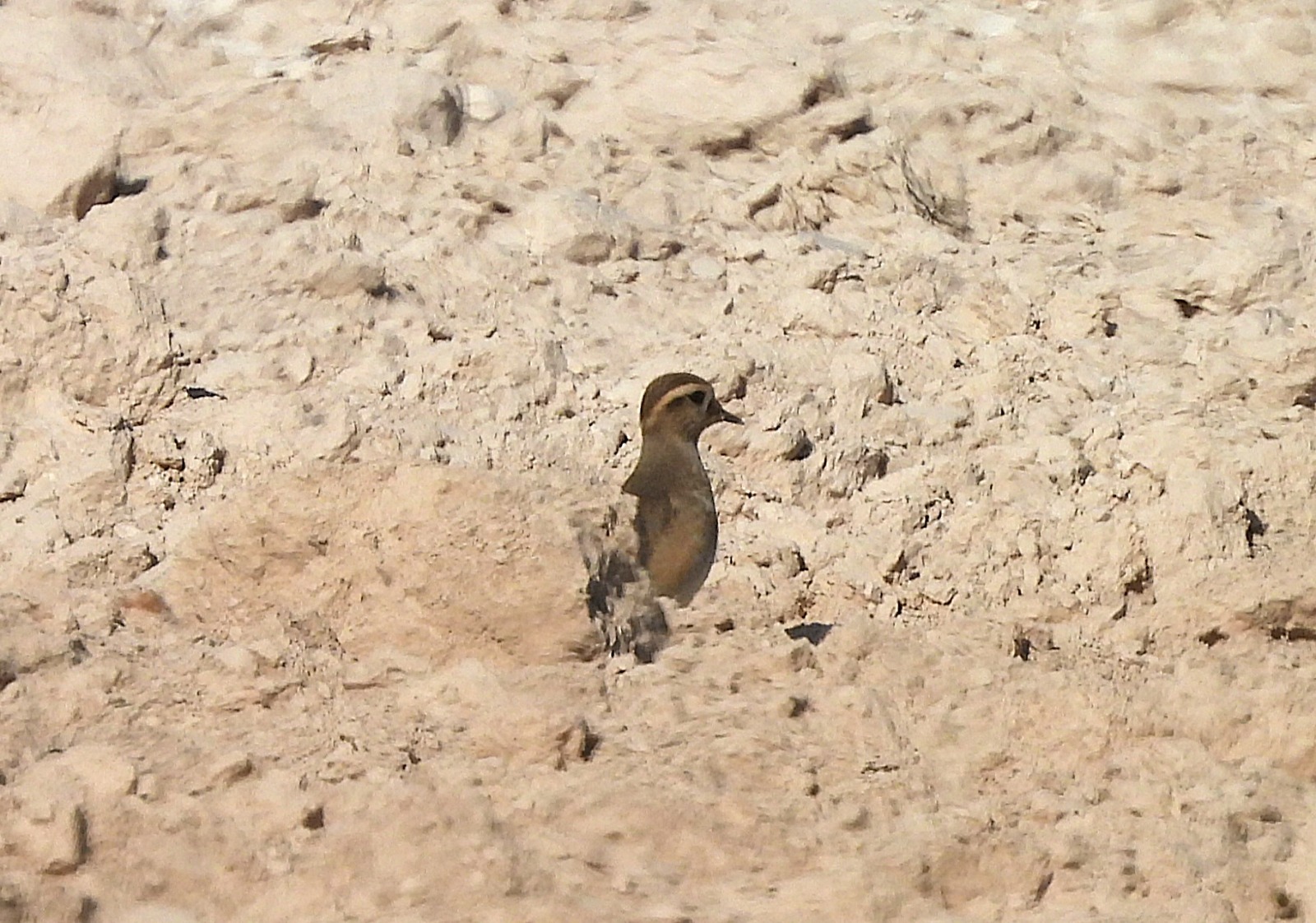
Eurasian Dotterel (Charadrius morinellus), one of 25+ birds resting in a plugged field. Image by Justin Williams.
European Serin (Serinus serinus) female in a short stop around Belchite. Image by Carles Oliver.
Golden Eagle (Aquila chrysaetos), one of many seen during the trip. Image by Carles Oliver
Corn Bunting (Emberiza calandra) acting like being spring. The area around Lleida has the largest density in Europe. Image by Carles Oliver.

Day 5.

We awoke to fairly torrential constant rain, and with the forecast not looking good we made the decision to change our plans and head for the Ebro Delta.

This journey was briefly interrupted with a stop when we spotted 4 Spanish Ibex on a high hill beside the road. Once we arrived at the Ebro we rapidly began adding birds to the trip list, the total change in habitat was exciting and we added many species during the morning including exciting birds such as Moustached Warbler which showed quite well a few times, Penduline Tit, Western Swamphen, Bluethroat, Greater Flamingo, Glossy Ibis, Slender-billed Gull, Caspian Tern, Black-necked Grebe, Red-crested Pochard, and Osprey as well a variety of waders and other wetland birds.

Too soon we had to leave and head for Barcelona, and the airport, but still we made time for 2 quick stops – the first giving us great views of Iberian Green Woodpecker (finally!) and Monk Parakeets. The second stop was at the beach right by the airport where we had fantastic views of Audouins Gull and also passing Atlantic Gannets and Sandwich Terns….a fitting end to a really enjoyable trip with a great group!

Western Swamphen (Porphyrio porphyrio) under the rain. Image by Carles Oliver.
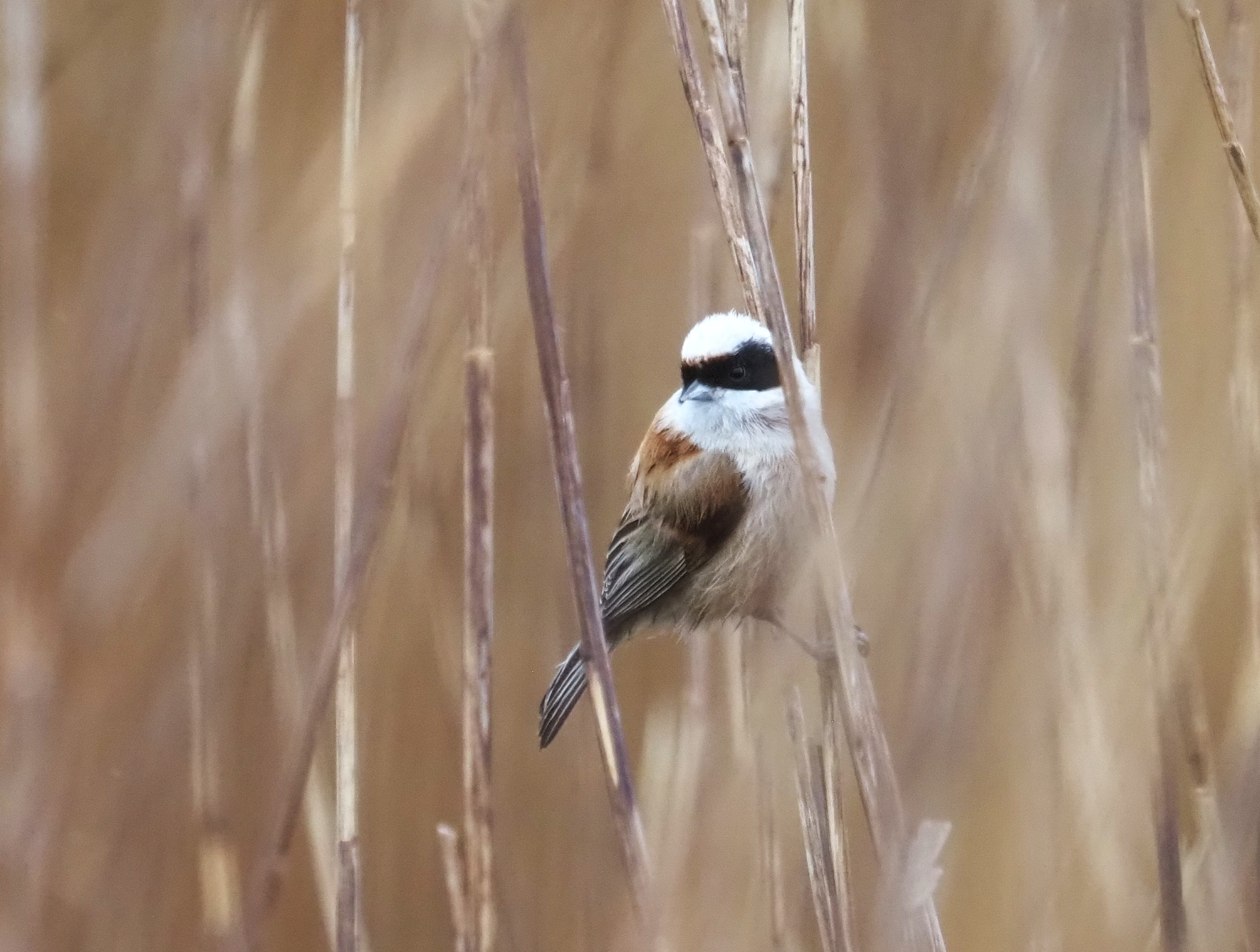
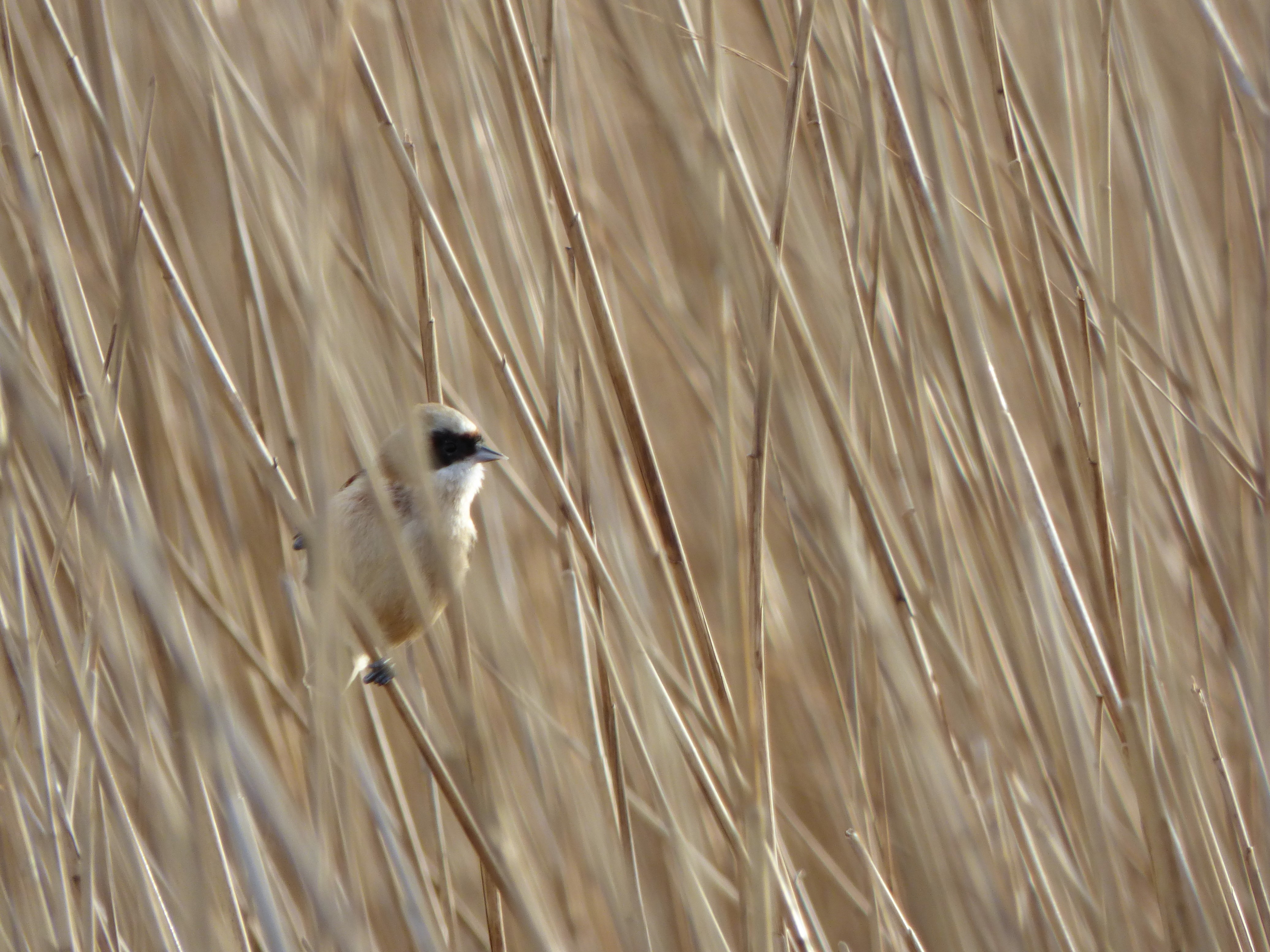
Penduline Tit (Remiz pendulinus) showed well under the rain. Image by Carles Oliver.
Bluethroat (Luscinia svecica) in the path for us. Image by Carles Oliver.
Iberian Green Woodpeckers (Picus sharpei). Image by Jo Symon.
Another shot on Iberian Green Woodpecker. Image by Justin Williams.
Our group almost complete. Image by Daf Edwards.

List of birds seen during the tour

  1. Red-legged Partridge (Alectoris rufa)
  2. Common Shelduck (Tadorna tadorna)
  3. Mallard (Anas platyrhynchos)
  4. Eurasian Teal (Anas crecca)
  5. Northern Shoveler (Spatula clypeata)
  6. Common Pochard (Aythya ferina)
  7. Red-crested Pochard (Netta rufina)
  8. Great Bustard (Otis tarda)
  9. Black-bellied Sandgrouse (Pterocles orientalis)
  10. Pin-tailed Sandgrouse (Pterocles alchata)
  11. Feral Pigeon (Columba livia domestica)
  12. Common Woodpigeon (Columba palumbus)
  13. Eurasian Collared Dove (Streptopelia decaocto)
  14. Water Rail (Rallus aquaticus) — heard only
  15. Eurasian Moorhen (Gallinula chloropus)
  16. Eurasian Coot (Fulica atra)
  17. Western Swamphen (Porphyrio porphyrio)
  18. Common Crane (Grus grus)
  19. Great Crested Grebe (Podiceps cristatus)
  20. Black-necked Grebe (Podiceps nigricollis)
  21. Little Grebe (Tachybaptus ruficollis)
  22. Atlantic Gannet (Morus bassanus)
  23. Greater Flamingo (Phoenicopterus ruber)
  24. Black-winged Stilt (Himantopus himantopus)
  25. Stone Curlew (Burhinus oedicnemus)
  26. Eurasian Dotterel (Eudromias morinellus)
  27. Grey Plover (Pluvialis squatarola)
  28. Northern Lapwing (Vanellus vanellus)
  29. Ruddy Turnstone (Arenaria interpress)
  30. Dunlin (Calidris alpina)
  31. Sanderling (Calidris alba)
  32. Common Snipe (Gallinago gallinago)
  33. Common Redshank (Tringa totanus)
  34. Greenshank (Tringa nebularia)
  35. Green Sandpiper (Tringa ochropus)
  36. Eurasian Curlew (Numenius arquata)
  37. Common Sandpiper (Actitis hypoleuca)
  38. Slender-billed Gull (Chroicocephalus geneni)
  39. Black-headed Gull (Chroicocephalus ridibundus)
  40. Mediterranean Gull (Ichthyaetus melanocephalus)
  41. Audouin’s Gull (Ichthyaetus audouinii)
  42. Yellow-legged Gull (Larus michahellis)
  43. Lesser Black-backed Gull (Larus fuscus)
  44. Caspian Tern (Hydroprogne caspia)
  45. Sandwich Tern (Thalasseus sandvicensis)
  46. White Stork (Ciconia ciconia)
  47. Great Cormorant (Phalacrocorax carbo)
  48. Glossy Ibis (Plegadis falcinellus)
  49. African Sacred Ibis (Threskiornis aethiopica)
  50. Little Egret (Egretta garzetta)
  51. Western Cattle Egret (Ardea ibis)
  52. Great White Egret (Ardea alba)
  53. Grey Heron (Ardea cinerea)
  54. Lammergeier (Gypaetus barbatus)
  55. Eurasian Griffon (Gyps fulvus)
  56. Golden Eagle (Aquila chrysaetos)
  57. Red Kite (Milvus milvus)
  58. Hen Harrier (CIrcus cyaneus)
  59. Western Marsh Harrier (Circus aeruginosus)
  60. Eurasian Sparrowhawk (Accipiter nisus)
  61. Common Buzzard (Buteo buteo)
  62. Osprey (Pandion haliaetos)
  63. Eurasian Eagle Owl (Bubo bubo)
  64. Little Owl (Athene noctua)
  65. Eurasian Hoopoe (Upupa epops)
  66. Common Kingfisher (Alcedo atthis)
  67. Great Spotted Woodpecker (Dendrocopos major)
  68. Iberian Green Woodpecker (Picus sharpei)
  69. Eurasian Kestrel (Falco tinnunculus)
  70. Peregrine Falcon (Falco peregrinus)
  71. Monk Parakeet (Myiopsitta monachus)
  72. Mediterranean Short-toed Lark (Alaudala rufescens)
  73. Eurasian Skylark (Alauda arvensis)
  74. Crested Lark (Galerida cristata)
  75. Thekla’s Lark (Galerida theklae)
  76. Calandra Lark (Melanocorypha calandra)
  77. Dupont’s Lark (Chersophilus duponti)
  78. Crag Martin (Ptyonoprogne rupestris)
  79. Meadow Pipit (Anthus pratensis)
  80. Water Pipit (Anthus spinolleta) — heard only
  81. White Wagtail (Motacilla alba)
  82. Grey Wagtail (Motacilla cinerea)
  83. White-bellied Dipper (Cinclus cinclus)
  84. Dunnock (Prunella modularis) — heard only
  85. Alpine Accentor (Prunella collaris)
  86. European Robin (Erithacus rubecula)
  87. Bluethroat (Luscinia svecica)
  88. Black Redstart (Phoenicurus ochruros)
  89. Black Wheatear (Oenanthe leucura)
  90. European Stonechat (Saxicola rubicola)
  91. Blue Rock Thrush (Monticola solitarius)
  92. Song Thrush (Turdus philomelos)
  93. Redwing (Turdus iliacus) — heard only
  94. Mistle Thrush (Turdus viscivorus)
  95. Fieldfare (Turdus pilaris)
  96. European Blackbird (Turdus merula)
  97. Eurasian Blackcap (Sylvia atricapilla)
  98. Sardinian Warbler (Curruca melanocephala)
  99. Moustached Warbler (Acrocephalus melanopogon)
  100. Zitting Cisticola (Cisticola juncidis)
  101. Cetti’s Warbler (Cettia cetti)
  102. Common Chiffchaff (Phylloscopus collybita)
  103. Goldcrest (Regulus regulus)
  104. Firecrest (Regulus ignicapillus)
  105. Eurasian Wren (Troglodytes troglodytes) — heard only
  106. Eurasian Blue Tit (Cyanistes caeruleus)
  107. European Crested Tit (Lophophanes cristatus)
  108. Great Tit (Parus majors)
  109. Coal Tit (Periparus ater)
  110. Long-tailed Tit (Aegithalos caudatus)
  111. Western Penduline Tit (Remiz pendulinus)
  112. Eurasian Nuthatch (Sitta europaea)
  113. Short-toed Treecreeper (Certhia brachydactyla)
  114. Wallcreeper (Tichodroma muraria)
  115. Iberian Grey Shrike (Lanius meridionalis)
  116. Eurasian Magpie (Pica pica)
  117. Eurasian Jay (Garrulus glandarius)
  118. Western Jackdaw (Coloeus monedula)
  119. Carrion Crow (Corvus corone)
  120. Hooded Crow (Corvus cornix)
  121. Common Raven (Corvus corax)
  122. Alpine Chough (Pyrrhocorax graculus)
  123. Red-billed Chough (Pyrrhocorax pyrrhocorax)
  124. European Starling (Sturnus unicolor)
  125. Spotless Starling (Sturnus vulgaris)
  126. Eurasian Tree Sparrow (Passer montanus)
  127. House Sparrow (Passer domesticus)
  128. Common Rock Sparrow (Petronia petronia)
  129. Common Chaffinch (Fringilla coelebs)
  130. Brambling (Fringilla montifringilla)
  131. European Serin (Serinus serinus)
  132. Eurasian Goldfinch (Carduelis carduelis)
  133. Eurasian Greenfinch (Chloris chloris)
  134. Eurasian Siskin (Spinus spinus)
  135. Linnet (Acanthis cannabina)
  136. Eurasian Bullfinch (Pyrrhula pyrrhula)
  137. Common Crossbill (Loxia curvirostra)
  138. Hawfinch (Coccothraustes coccothraustes)
  139. Yellowhammer (Emberiza citrinella)
  140. Cirl Bunting (Emberiza cirlus)
  141. Rock Bunting (Emberiza cia)
  142. Common Reed Bunting (Emberiza schoneiclus)
  143. Corn Bunting (Emberiza calandra)

List of mammals seen during the tour

  1. Red Squirrel (Sciurus vulgaris)
  2. European Rabbit (Oryctolagus cuniculus)
  3. Roe Deer (Capriolus capriolus)
  4. Pyrenean Chamois (Rupricabra rupricabra)
  5. Spanish Ibex (Cabra hispanica)
  6. Beech Marten (Martes foina)
  7. Red Fox (Vulpes vulpes)

Crònica de viatge: Finlàndia i Finnmark 2024

  • Dates: Del 31 de maig al 9 de juny, 2024
  • Participants: 10
  • Número d’espècies vistes: 170
  • Tour líders: Carles Oliver & Ramiro Aibar

Totes les imatges d’aquesta crònica han estat realitzades per Carles Oliver. Tots els drets reservats.

Please, follow this link to find the English version of this trip report.

Resum: El nostre 7è tour al Nord de Finlàndia i Finnmark ha tornat a ser una aventura força exitosa. La variabilitat d’algunes espècies en aquests hàbitats és ben coneguda i molt destacable. Enguany, va sobtar la quasi total absència de trencapinyes al llarg del recorregut, amb només uns quants contactes i tant sols un parell d’observacions. Amb prou feines hi havia cap observació recent de trencapinyes becgròs a la zona! A l’altra banda de l’espectre, vam aconseguir molt bones observacions de totes les espècies de galls i de 5 espècies de mussols malgrat la baixa densitat d’enguay. El sit rústic i el repicatalons petit semblaven trobar-se a tot arreu en determinats moments del viatge, i la cotxa cuablava i el picot de tres dits també es van deixar veure molt bé i fàcil malgrat algunes temperatures força altes al llarg del tour.

Dia 1. Part del nostre grup va aterrar a Oulu amb una mica de retard degut a un excès de trànsit a l’aeroport de Barcelona. A l’aeroport d’Oulu ens vam trobar a un altre participant, però aquí també vam patir un endarreriment derivat d’un problema amb les furgonetes de lloguer. Normalment gaudim d’una petita finestra de pardaleig a la primera tarda del viatge, però enguany el primer pardaleig del tour va ser després de sopar.

El sopar a l’allotjament va ser el primer moment que tot el grup es va trobar i seure junts i tenint una torre d’observació a tocar de l’hotel no vam passar l’oportunitat de, un cop escurades les postres, fer-hi un cop d’ull un cop. Aquesta passejada va servir per tenir un primer contacte amb tot un seguit d’espècies comunes en aquesta part de Finlàndia incloent tord ala-roig, mastegatatxes, papamosques gris, boscarla dels joncs, bec de serra mitjà, xatracs comú i àrtic, gamba roja comuna, xarxet comú, ànec griset, ànec cullerot o ànec cuallarg però també d’altres una mica més escasses o més interessants com pinsà carminat, àguila marina o tètol cuanegre així com els primers xarrasclets del tour.

Dia 2. El primer dia de pardaleig del tour va tenir com a objectiu principal contactar amb algunes de les espècies de mussols que viuen als boscos boreals. Com sempre, vam començar força d’hora al matí, amb respectius esmorzars per emportar. El temps era fresc i les primeres gralles de la bonica raça escandinava no es van fer esperar, alimentant-se amb graules. La primera parada del tour va ser per visitar un niu actiu de gamarús dels Urals i vam tenir la sort de ser allà en el moment que la femella estava al niu. Tot i que l’angle no era el més adient, tothom va poder gaudir de bones observacions incloent vistes de la cara i els ulls amb el telescopi. Caminant pel bosc boreal, aquell primer passeig va produir cotxa cua-roja i la primera mallerenga capnegra del tour mentre un gall de cua furcada cantava a certa distància.

La segona parada la vam fer per comprovar si un niu històric de mussol pirinenc estava actiu enguany. Aquí també vam tenir sort, i fins i tot des de la pista forestal vam veure un pollet de mussol pirinenc que s’estava dret al mateix forat del niu! Els següents deu minuts van ser simplement fantàstics. Amb tot el grup assegut al terra del bosc boreal, vam gaudir d’unes observacions excel·lents d’aquest pollet mentre anava albirant el bosc al voltant seu. Passats uns minuts vam veure que neguitejava i quasi semblava que havia de saltar del niu. Va ser en aquell moment que un reclam va sortir del bosc i fins i tot abans no poguéssim començar a cercar l’ocell, Nick va trobar per tots nosaltres un segon pollet de mussol pirinenc que estava aturat a només uns 3 metres de tot el grup! Els següents minuts van ser simplement inoblidables, gaudint com poques vegades del petit volaltó. Passats uns minuts vam decidir moure’ns enrere. Sense voler-ho, havíem acabat massa a prop de l’ocell!

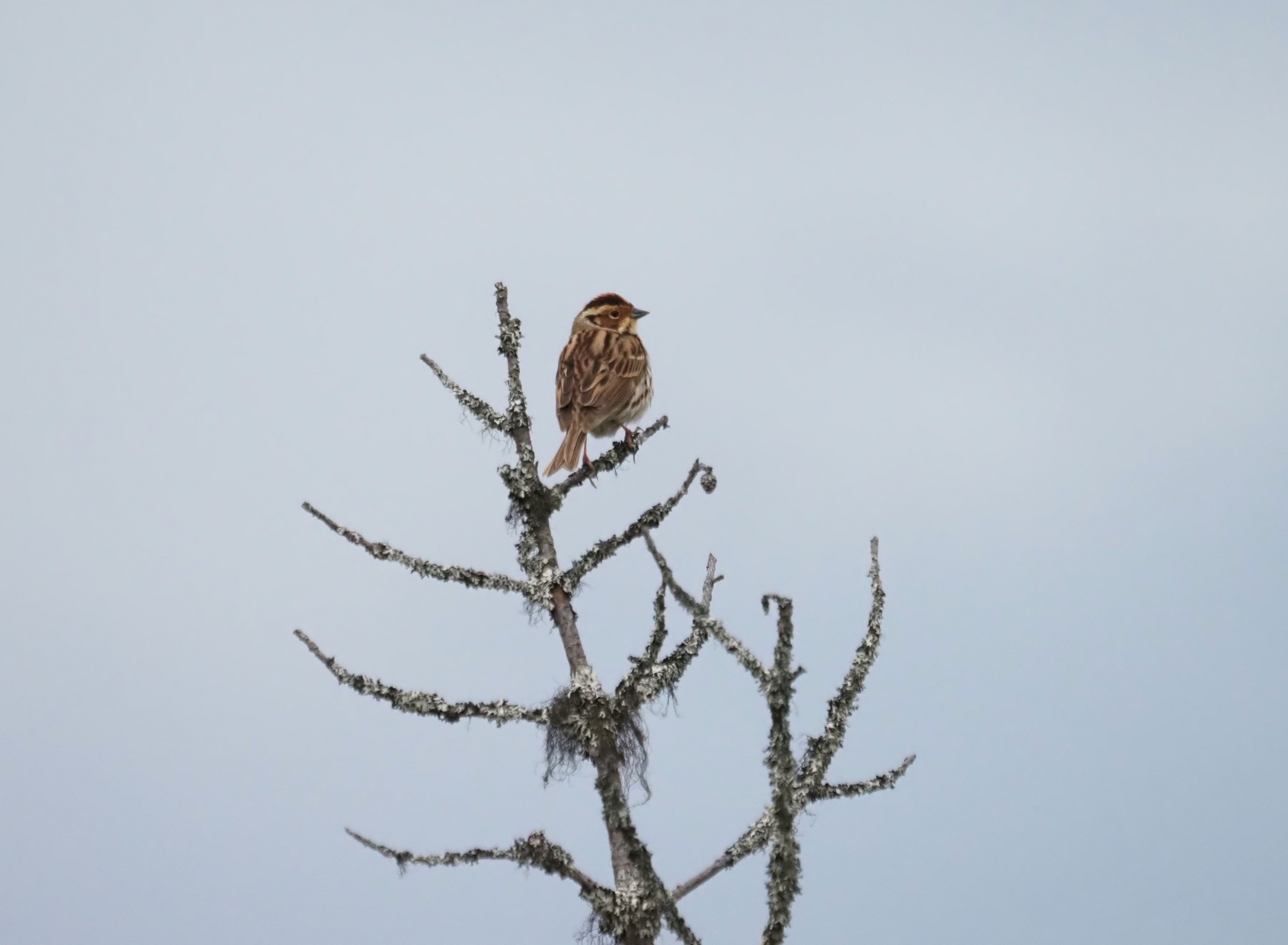
Encara vam tenir uns quants minuts per gaudir d’aquell màgic racó del bosc boreal abans no vam seguir el nostre itinerari. De camí cap al següent punt, vam trobar dos mascles d’escorxador que se les tenien al llarg de la pista. Aquests van ser els únics escorxadors del viatge, ja que és una espècie força escassa a la zona! No gaire lluny, una zona de conreus ens va permetre observar hortolans. No vam trigar gaire a trobar el primer mascle cantant des d’un arbre, seguit per al menys dos mascles més i un parell d’individus alimentant-se al terra. Altres espècies d’interès a la zona van incloure també verderola, repicatalons, bitxacs rogencs cantant a dojo als marges i la única tallareta comuna del tour mentre els pinsats carminats cantaven una mica més enllà.

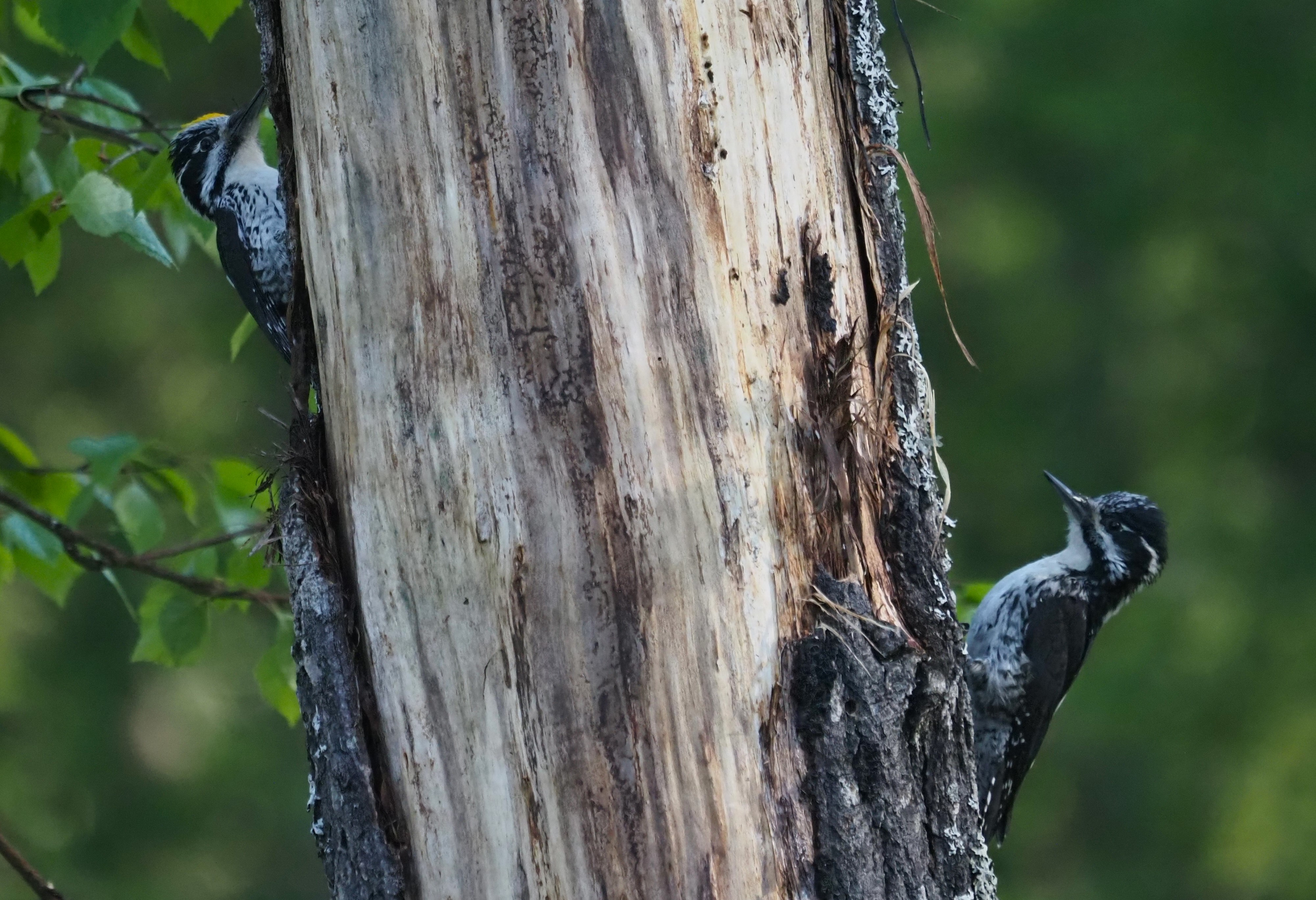
De tornada al bosc, vam anar a una zona molt recomanable per al picot de tres dits. Allà, vam gaudir de valent amb els mosquiters xiulaires però també dels tallarols xerraires i els mastegatatxes. Però tot això va quedar en un segon terme, perquè el que segur alguns no oblidarem van ser les fantàstiques observacions de la parella de picots de tres dits movent-se a pocs metres de nosaltres mentre s’apropaven al seu. Realment va ser un privilegi observar aixó de bé la que podem considerar com l’espècie de picot europeu més difícil d’observar!

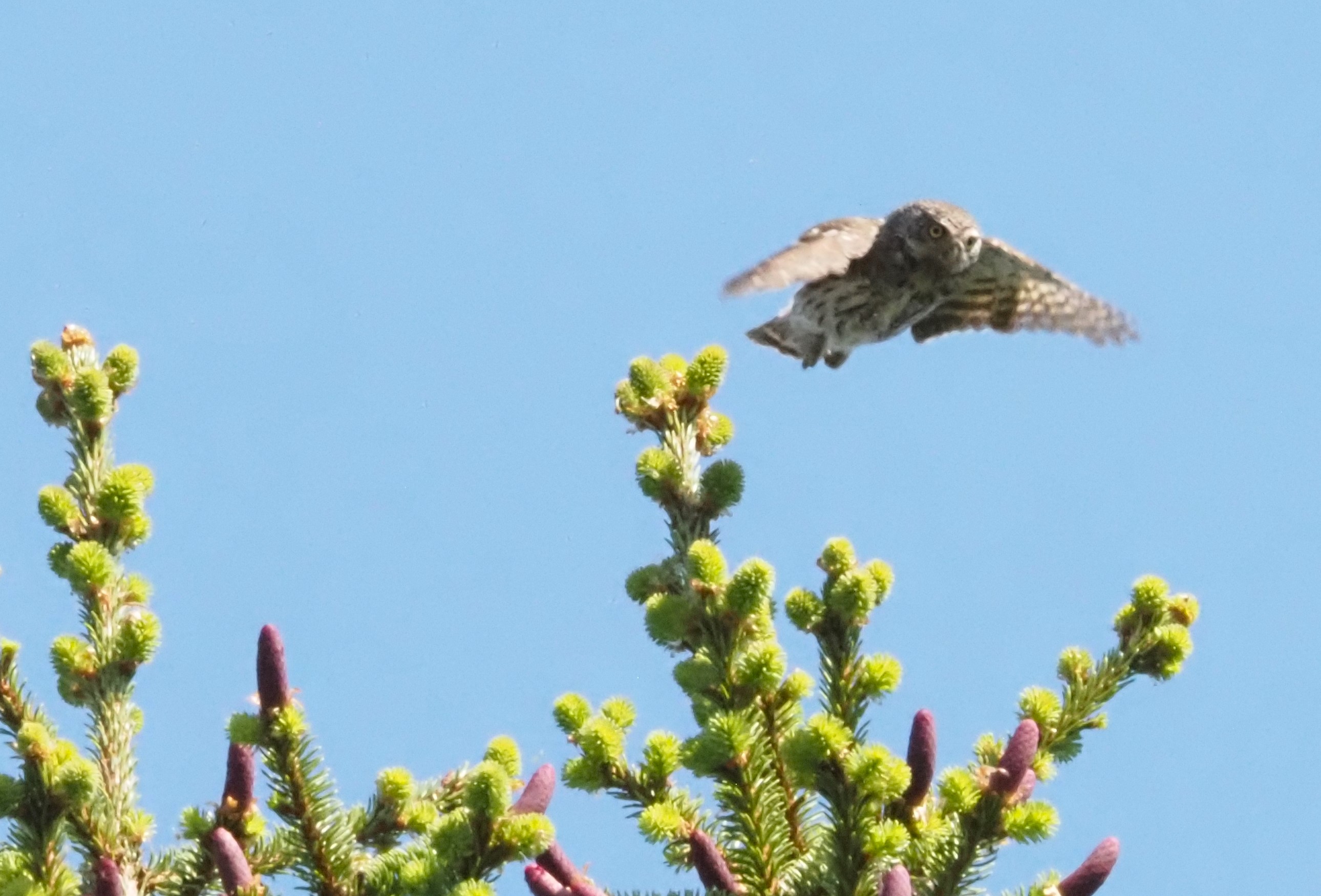
Després de gaudir d’aquest espectacle vam fer una parada en una zona humida. Aquí vam observar dues parelles nidificants de cabussons orelluts. I tot que no estaven tant a prop com en viatges anteriors, vam poder gaudir de bones observacions al telescopi. Després d’una mica de cafè i de fer un esmorzar per agafar forces vam tornar al bosc boreal. Vam caminar un parell de quilòmetres per zones d’hàbitat idoni fins que tot d’una un mussolet eurasiàtic va reclamar a pocs metres de nosaltres. Després d’això no vam trigar gaire a localitzar l’ocell i gaudir de fantàstiques observacions del mussol més petit del continent. Era el final del matí i el nostre petit mussol anava seguit per una bona corrua d’ocells forestals. Aquest reguitzell de reclams super-excitats incloia lluers, pinsans comuns, mallerenga carbonera, cotxa cua-roja i una verderola. A voltes, semblava que la verderola aixeca més passions que el propi mussolet (!). Coses del directe, suposo. El mussol anava movent-se, constantment destorbat per aquesta petita cohort d’agreujats.

Amb aquesta observació va acabar un matí prou fructífer! Després va tocar dinar i descansar una mica.

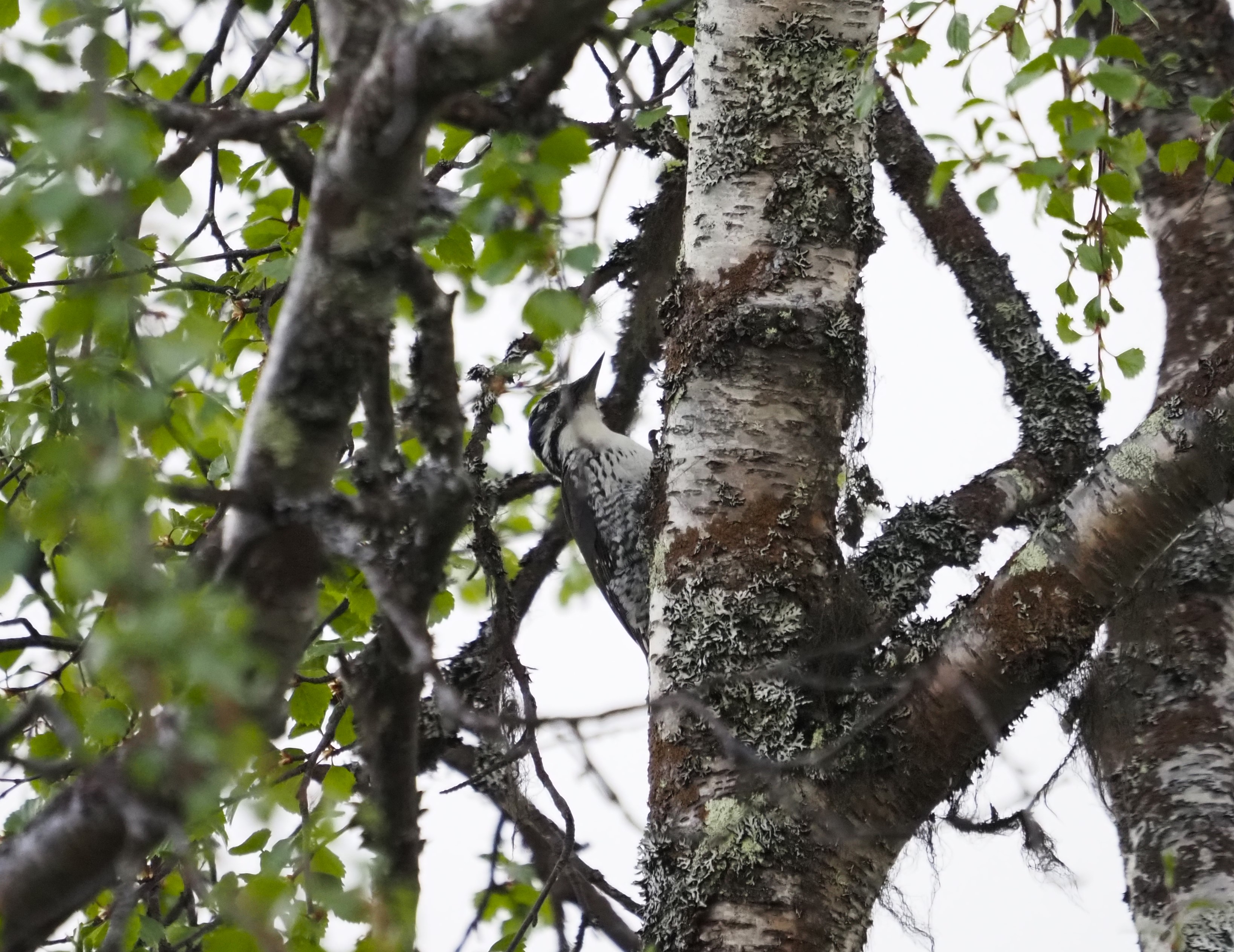
Els picots de tres dits (Picoides tridactylus) ens van oferir observacions inoblidables. Vam gaudir d’aquesta espècie fins a tres vegades al llarg del tour!
Femella (baix) i mascle (dalt) de picot de tres dits al voltant del seu niu.
Els hortolans (Emberiza hortulana) són una espècie força escassa a Finlàndia, però als voltants d’Oulu encara mantenen bones poblacions.
Mussol pirinenc (Aegolius funereus) a les portes del seu niu.
Vam passar 5 minuts inoblidables amb aquest pollet de mussol pirinenc a pocs metres de nosaltres.
El mussolet eurasiàtic (Glaucidium passerinum) també es va portar molt bé!
El mussolet despegant!
Bona part del grup gaudint del mussol pirinenc.

Després de sopar ens vam desplaçar al Nord del nostre allotjament, a unes de les últimes zones de nidificació de la siseta cendrosa a Finlàndia. Després d’aparcar, vam fer un bon tomb per la zona a on vam poder observar becut, pinsà carminat, corriol gros i els dos únics corriols anellats petits del viatge. Una siseta cendrosa cantava per la zona, però es resistia a deixar-se veure. Va ser l’Aonghus qui la va trobar cantant a dalt de tot d’un fanal a uns 300 metres de distància. Encara vam haver de caminar una mica però al final vam gaudir d’observacions increïbles amb un ocell cantant i fent dispaly al nostre voltant. Mentre exploràvem la zona també vam veure els primers còlits grisos dels tour.

Molt contents d’haver gaudit d’aquesta espècie tant escassa vam tornar cap al nostre allotjament i descansar per poder gaudir d’un altre gran dia!

Enguany hi havien bons números de pinsats carminats al llarg dels primers dies del viatge. Aquí una bonica femella.
Siseta cendrosa (Xenus cinereus) volant per sobre nostre mentre cantava en vol.

Dia 3. Abans d’esmorzar a l’allotjament vam aprofitar per visitar una de les famoses torres d’observació al voltant d’Oulu. N’hi han un bon grapat per escollir, però nosaltres vam fer cap a un situada al Sud de la badia Liminganlahti. Aquest cop el número d’ocells no va tant espectacular com en ocasions anteriors però tot i així aquí vam veure bons números de becadell comú i 6 gambes roges pintades a més de batallaires, àguiles marines, els únics 2 cignes muts dels tour, repicatalons cantant i xatracs àrtics. Aquí també vam tenir el privilegi de sentir un bitó cantant.

Un cop esmorzats vam sortir de l’allotjament per dirigir-nos ja cap a Oulu. De camí, vam fer una parada en una altra zona forestal molt bona per picots. Era el final del matí i la temperatura (tot i que sembla difícil de creure) vorejava els 30ºC en el que va ser el dia més càlid en un mes de maig a la història de Finlàndia! En aquesta parada vam veure senyals de picot cendrós però els nostres esforços només ens van reportar un picot negre que ens va passar volant per sobre, aturant-se a dalt de tot d’un arbre per oferir al grup una molt bona observació. També vam veure pinsans borroners de la subespècie nominal amb el seu característic reclam de trompeta, piules dels arbres picots garsers grossos.

Al llarg d’aquest matí vam tenir les millors observacions de becadell comú (Gallinago gallinago) del tour.
Malgrat els 30ºC vam gaudir de bones observacions de picot negre (Dryocopus martius)

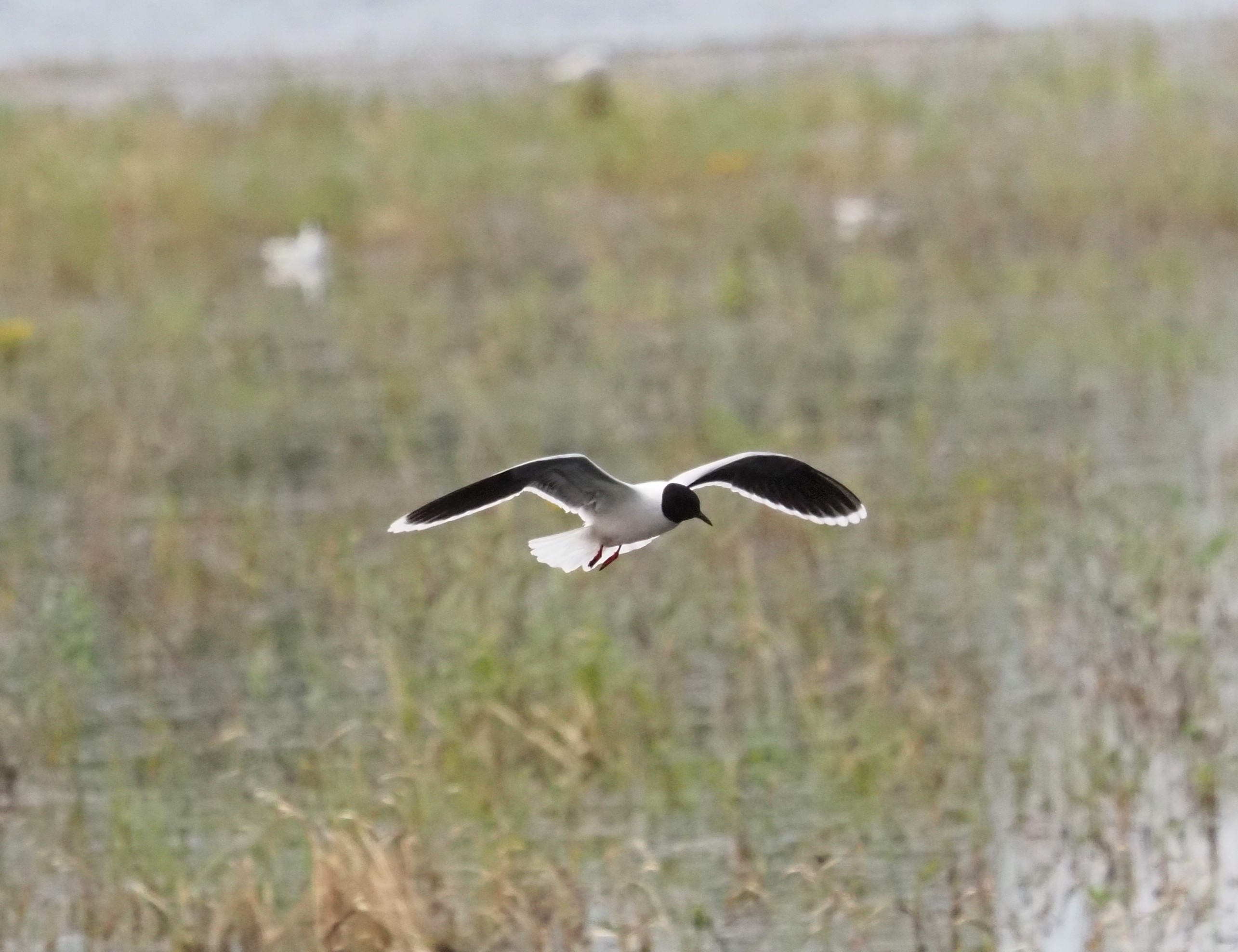
Vam fer una parada per dinar i vam arribar a Kuusamo a començaments de la tarda. El temps aquí era molt diferent que el havíem patit a la costa del Bàltic i la temperatura no passava dels 20ºC amb pluges disperses que s’anaven movent per la zona. La nostra primera parada a la zona va ser en un petit senderol per cercars sits. Ja des del lloc a on vam deixar els vehicles podia sentir cantar alguna espècie força interessant. Fet i fet va ser arribar i moldre i en qüestió d’un parell de minuts ja gaudíem de dos repicatalons petits cantant a curta distància i deixant-se veure durant molta estona! Érem a tocar d’un llac i un bon número de gavines menudes anaven passant per sobre nostre, quasi totes a força alçada. Però a uns pocs minuts en cote ens vam plantar en una colònia de cria d’aquestes petites gavines. Aquí no només vam gaudir desenes d’aquestes ocells, també vam observar dues parelles de cabussons grisos i les primeres calàbries agulles en plomatge estival del tour. Una estona d’observació des d’aquest punt privilegiat va produir també mussol emigrant i molt bones observacions de gavià fosc de la subespècie nominal. Altres espècies a la zona van incloure ànec xiulador, ànec cuallarg, xarxet comú, l’omnipresent tord ala-roig i una fantàstica becada cantant en vol i creuant-se amb un becadell comú que també anava fent la seva pròpia exhibició en vol!

Des d’aquí ens vam desplaçar al nostre allotjament per gaudir d’un bon estofat de re i poder descansar una mica!

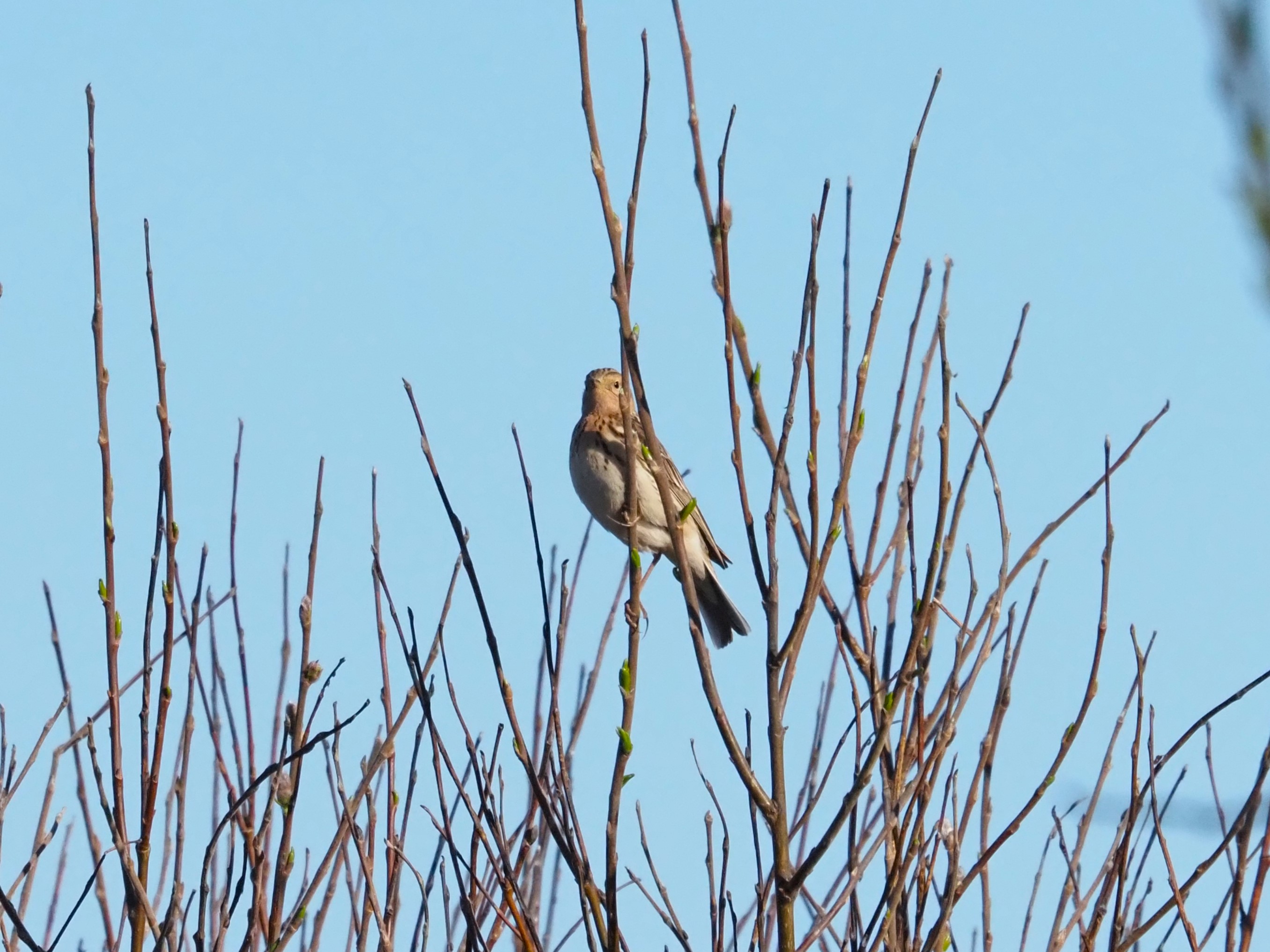
Podem dir que els repicatalons petits (Emberiza pusilla) es van deixar veure d’allò més bé!
Veure una colònia de gavines menudes (Hydrocolaeus minimus) és sempre una experiència fantàstica!
Un dels pocs gavians foscos (Larus fuscus fuscus) del viatge!
Part del grup gaudint d’un dels repicatalons petit.

Dia 4. Un altre cop comencem ben d’hora, aquest cop per explorar un seguit d’hàbitats ben a prop del nostre allotjament. L’objectiu del matí és contactar amb algunes de les especialitats que viuen al bosc boreal. Només a 300 metres de l’hotel vam trobar el primer petit estol de sits rústics, 3 individus que van sortir volant de la pista i que vam poder observar malgrat la llum encara pobre. Una mica d’exploració més enllà va produir un mascle de gall fer, que malauradament només el van poder gaudir com cal els ocupants del segon vehicle. Una hora i escaig d’exploració va produir ben poca cosa més, amb només un mascle de gall de cua forcada aturat a dalt de tot d’una pícea i una perdiu escandinava a tocar de pista que només van veure des del segon vehicle. Malgrat tot, vam gaudir de les millors vistes de becades mentre una parella s’alimentava a un prat.

Després d’una parada per gaudir d’un bon café ens vam dirigir cap a un dels molts turons de la zona però força abans d’arribar vam haver de parar per gaudir d’una parella de grèvols que es perseguien just al límit del bosc. Ens vam anar movent pel bosc, amb els grèvols força actius; cantant, xisclant i fent aletejos al mig del bosc. Després d’uns quants minuts tothom al grup ja havia tingut bones observacions d’aquesta espècie sovint esquerpa. A més a més, mentre ens movíem pel bosc també vam trobar un altre sit rústic i un parell de gaigs siberians movent-se a les capçades dels arbres. Una mica més enllà, vam tenir el nostre primer intent de contactar amb mussol esparverenc, però aquesta parada “només” va produir un parell de sits rústics, mallerenga capnegre, piula dels arbres i un picot de tres dits breuvement vist per alguns al grup.

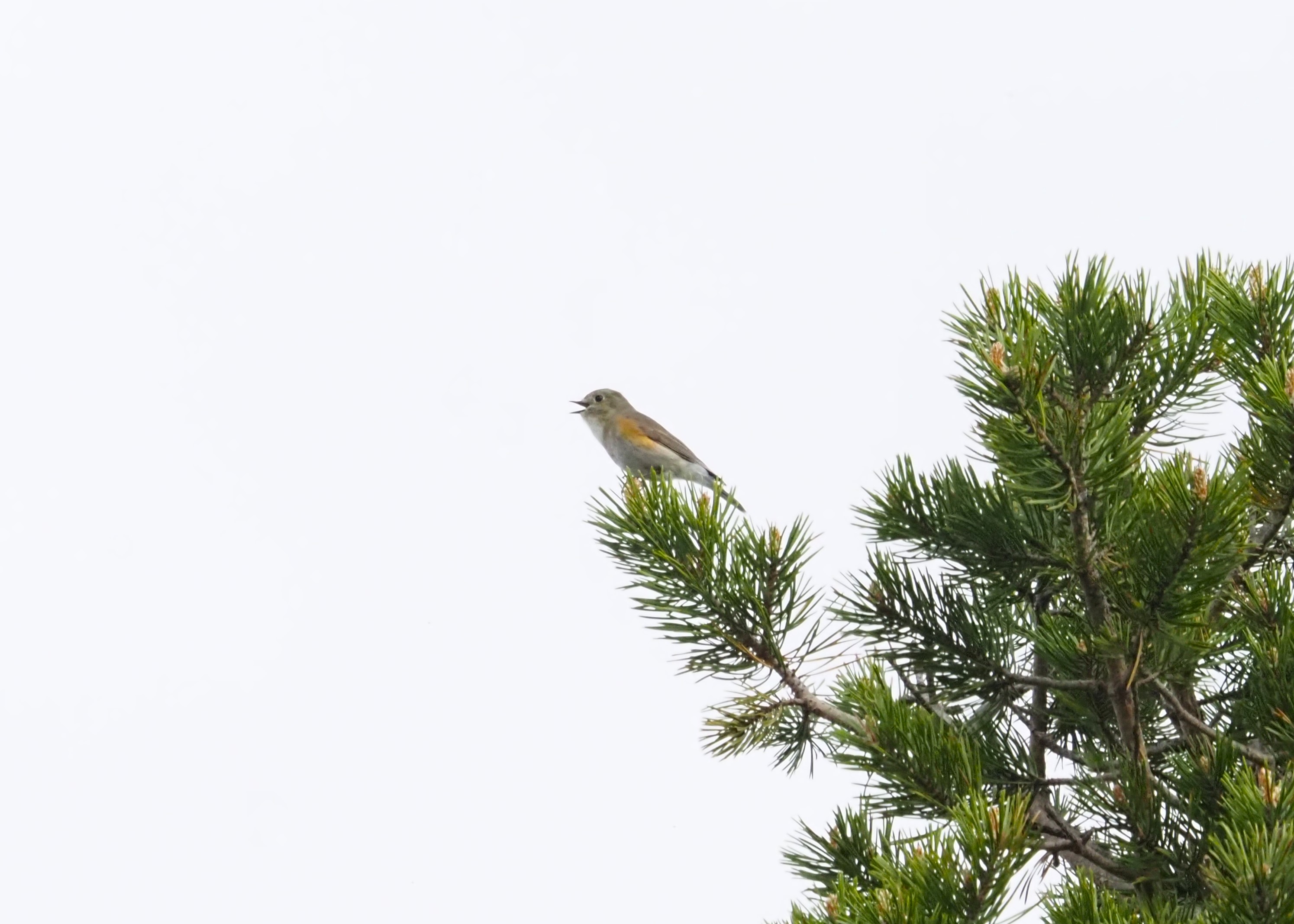
Finalment vam arribar a Livaara, una de les parades més típiques per ocells forestals al Nord de Finlàndia. El sol, però, ja estava ben amunt i malauradament feia una mica de calor. Tot i això, vam enfilar el camí i tot just arribats a la zona més interessant del turó vam trobar la nostra primera cotxa cuablava cantant des de dalt de tot d’una pícea. Tots vam poder gaudir força estona d’aquest primer individu. Un segon mascle (tots dos ocells eren segons anys) cantava més enllà i el vam poder veure molt bé amb el telescopi mentre cantava a una cota inferior a la que ens trobàvem. Més enllà d’aquestes fantàstiques cotxes cuablaves, al turó només vam trobar piula dels arbres i papamosques gris com a espècies d’interès.

Després de dinar, la nostra tarda va ser curta i lliure perquè tothom pogués explorar en llibertat els encontorns del nostre allotjament. Valones, cucuts, gambes verdes i calàbries agulles van ser algunes de les espècies observades quasi per tothom.

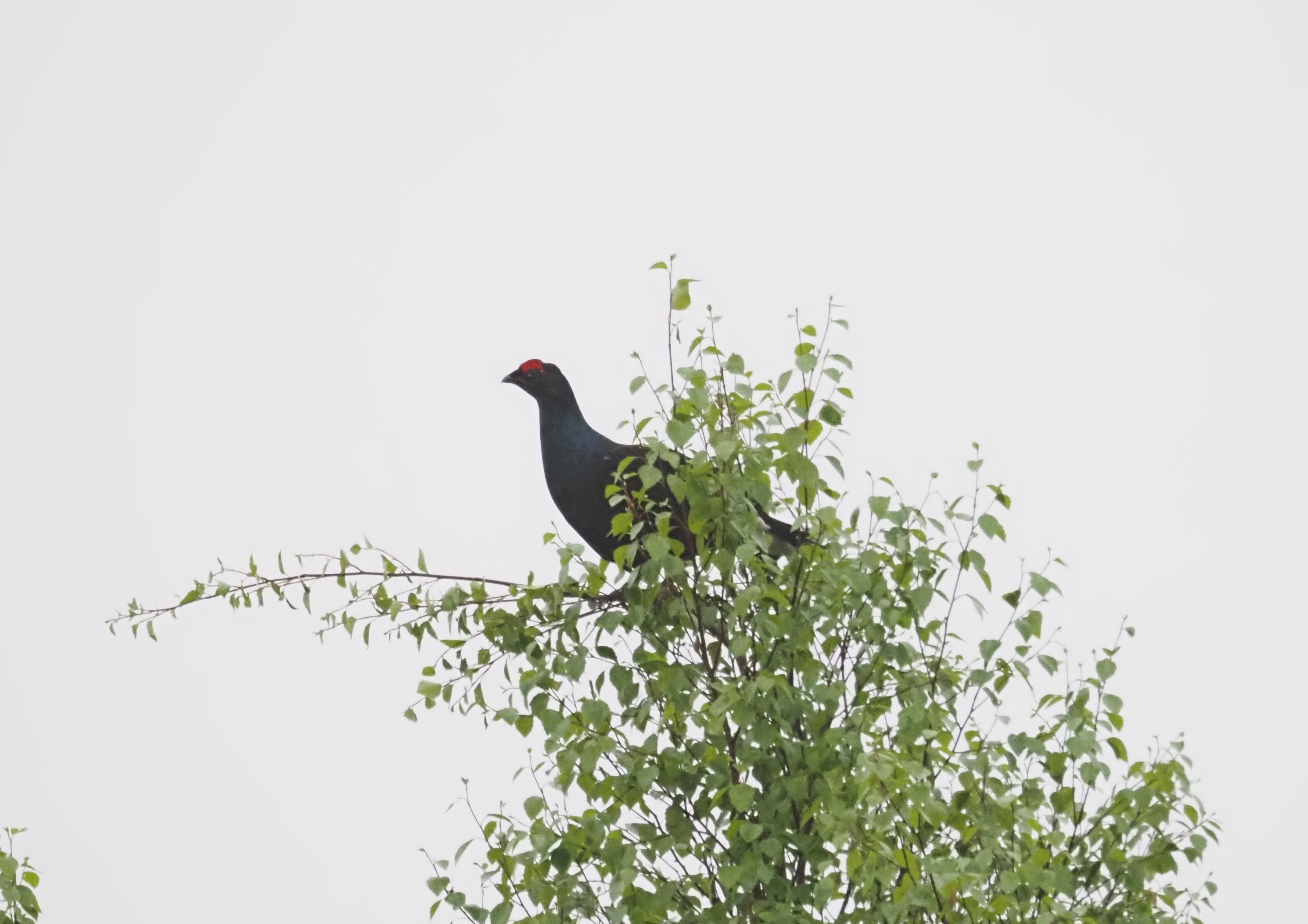
Aquest gall de cua furcada (Lyrurus tetrix) va ser el millor gall per al grup al voltant de Kuusamo. El resultat més pobre en anys!
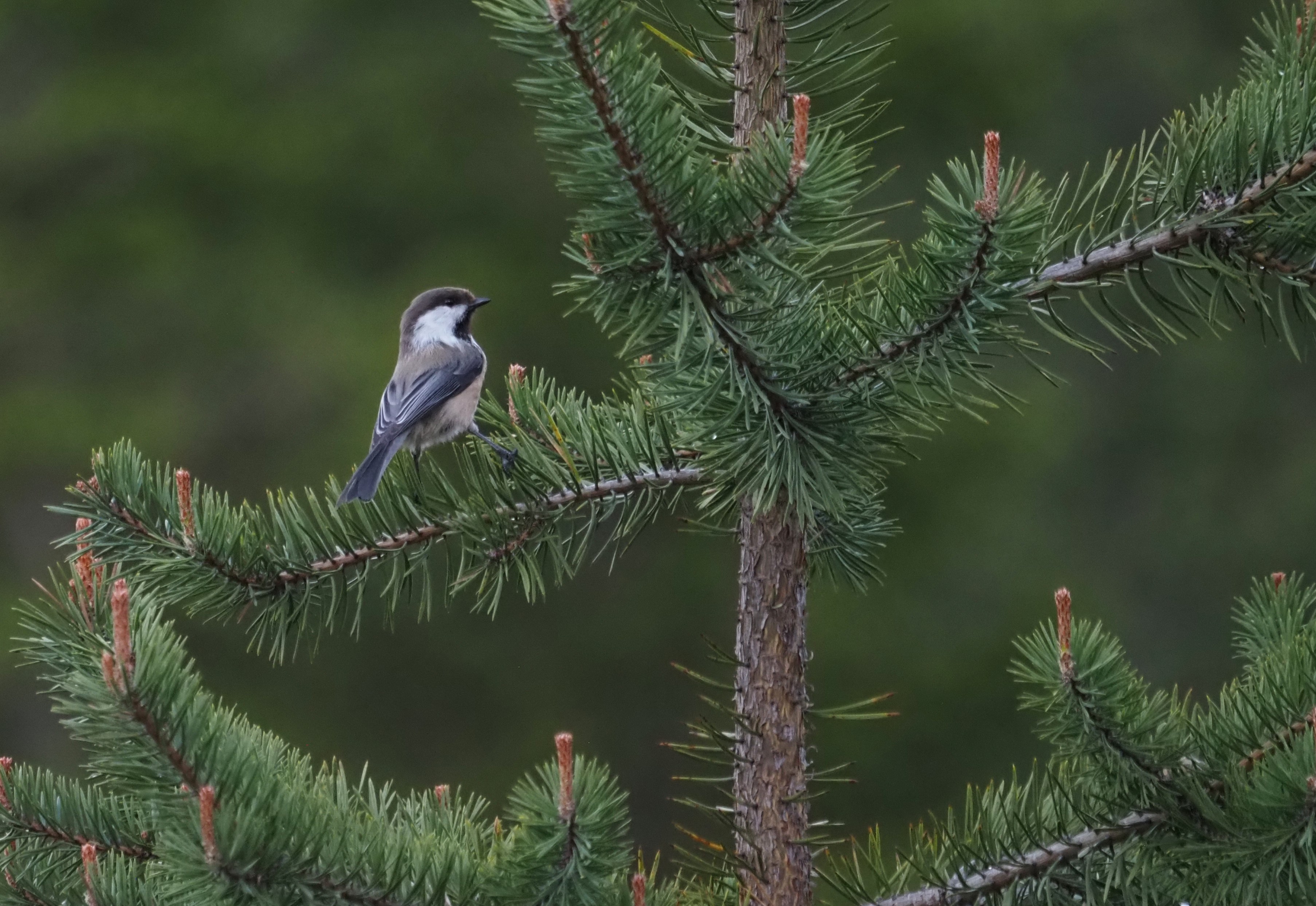
Mallerenga capnegra (Poecile montanus) viu en boscos de pi i pícees al Nord de Finlàndia.
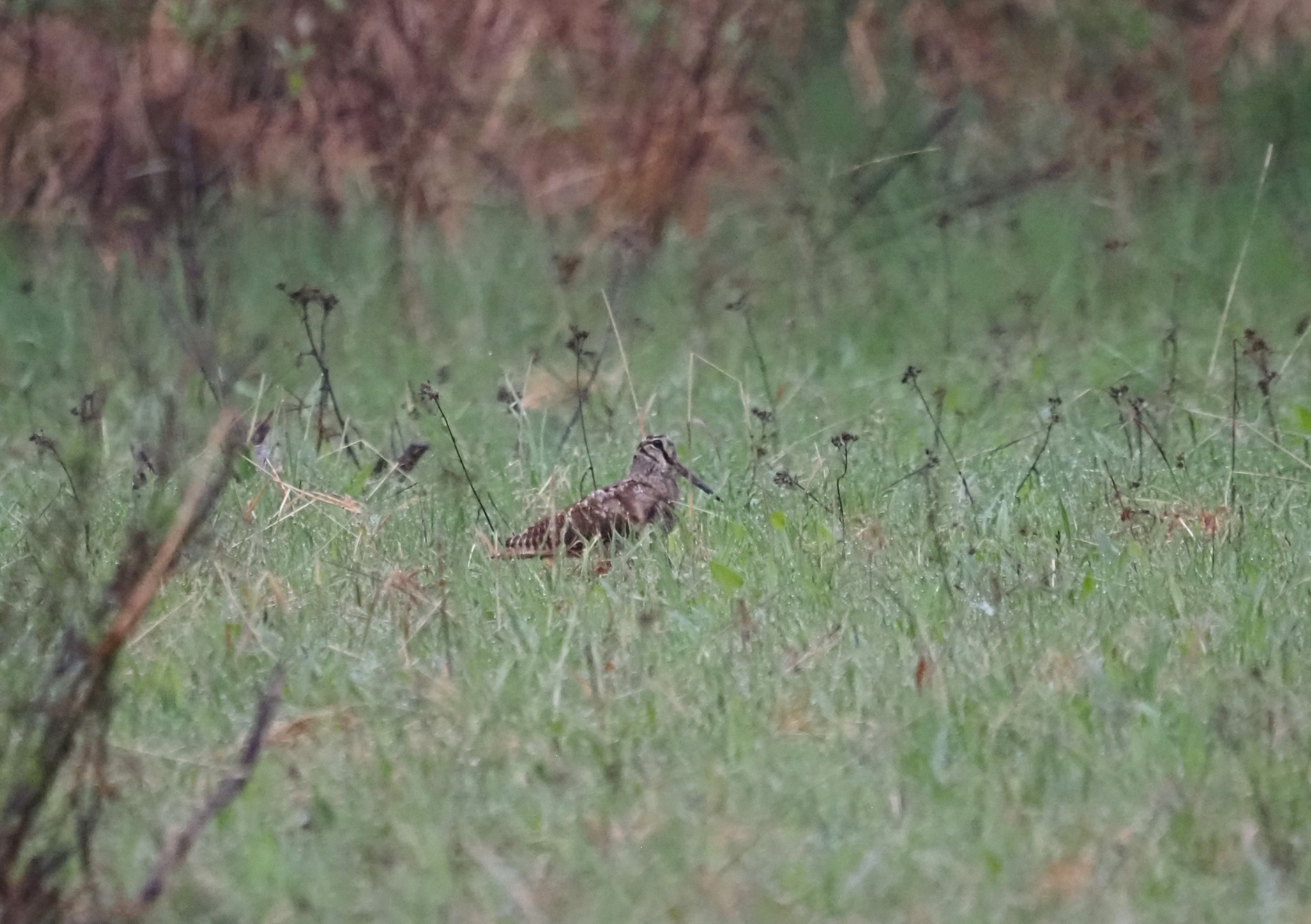
Les becades (Scolopax rusticola) són comunes però sempre difícils d’observar al Nord de Finlàndia.
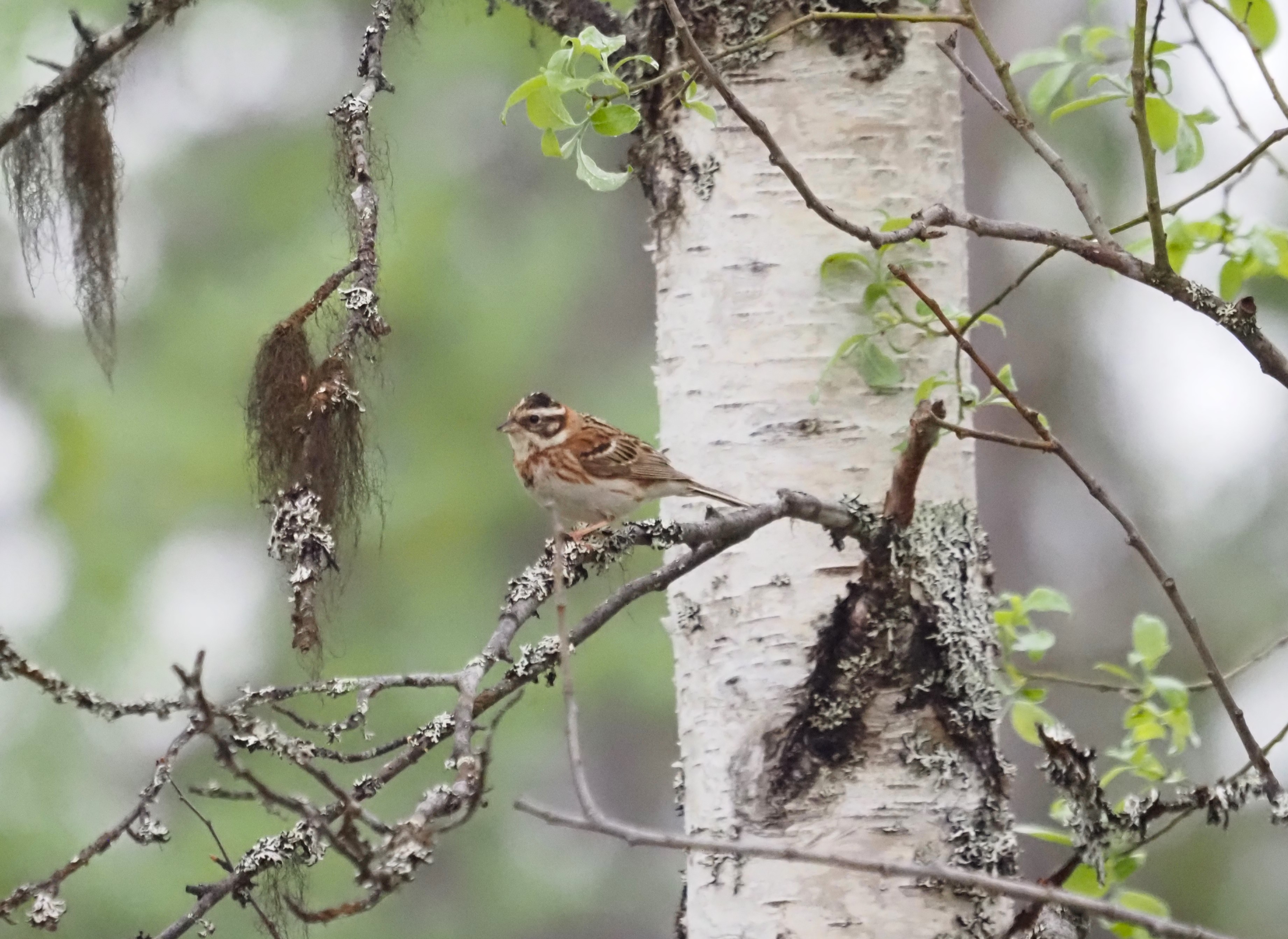
Enguany els sits rústics (Emberiza rustica) semblaven ser a tot arreu però mai vam aconseguir apropar-nos-en.
Les cotxes cuablaves (Tarsiger cyanurus) poden ser sorprenentment difícils de trobar. Però no aquest cop!
Una mica del fantàstic bosc de pícees al voltant de Kuusamo.

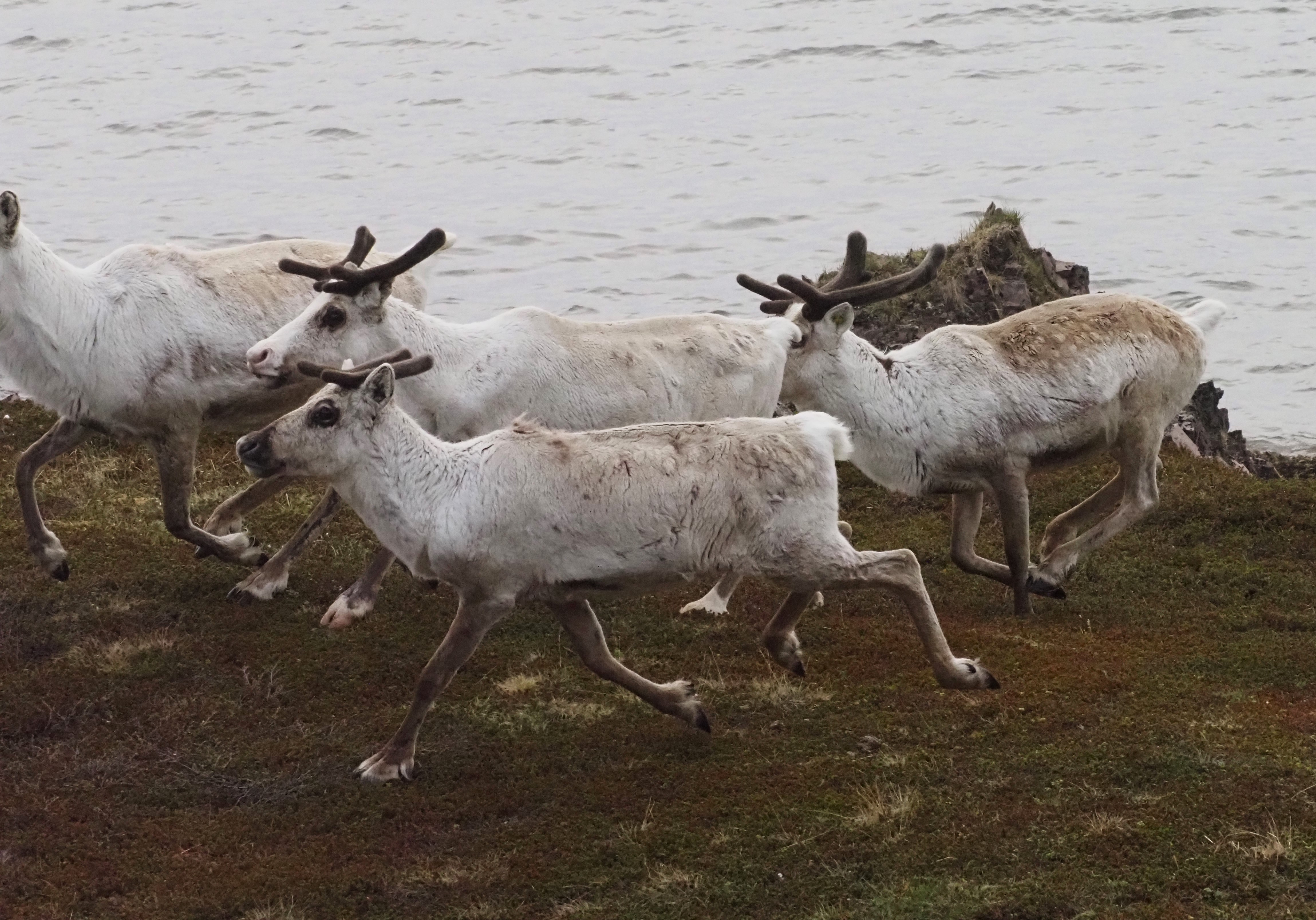
Dia 5. Un nou dia al paradís i un nou inici de jornada ben d’hora, ben d’hora. La primera parada del matí va ser a un lloc molt bo per a perdiu escandinava. En visites anteriors sempre havíem tingut grans observacions d’aquesta espècie aquí però enguany ens vam haver de conformar amb un mascle en vol. Aquí també vam veure els únics trencapinyes comuns aturats del viatge (ha estat un any amb molt pocs trencapinyes al Nord de Finlàndia) i un bonic raspinell pirinenc. De tornada a les furgonetes dos ants van sortir de l’espessor del bosc i es van deixar veure ben bé al llarg d’un minut mentre ens fitaven a una distància prudent.

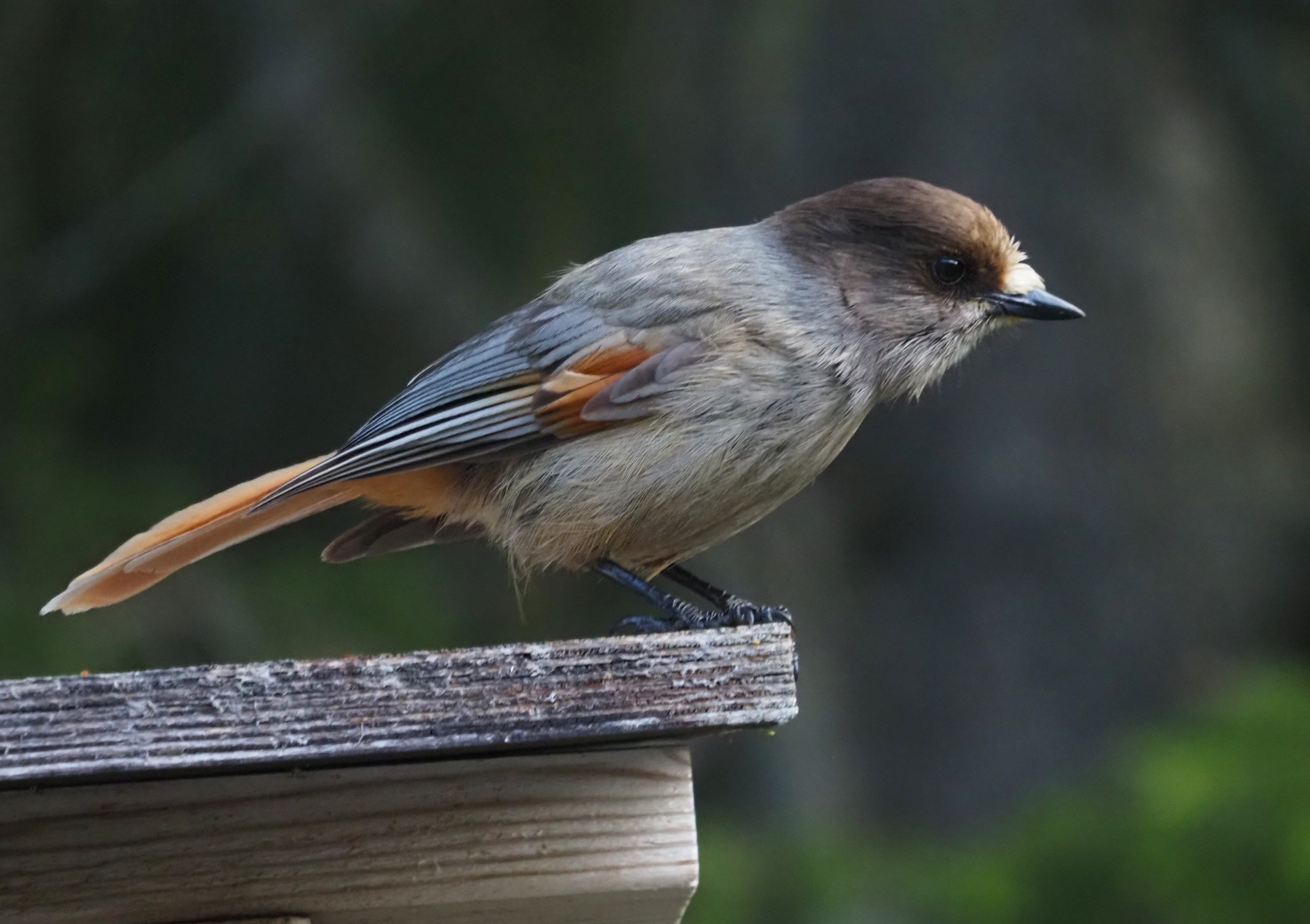
Era un matí emboirat als turons així que vam decidir de fer un segon tomb per mirar de contactar galls però novament amb poc èxit. Tot amb tot, uns ocells sedosos en vol en mig de la boira va ser el millor de la parada. La última parada del matí va ser per a un ben conegut indret per a gaig siberià. Aquí vam veure les que possiblement hagin estat les meves millors observacions en aquesta espècie en 8 visites a Finlàndia, amb un parell d’exemplars literalment als nostres peus. Aquí també vam veure molt bé mallerenga capnegra, pinsà borroner i reietó. No gaire lluny 3 cotxes cuablaves cantaven però el grup ja estava sadollat d’aquesta espècie i no vam provar de pujar cap turó.

Des d’aquí vam començar el trànsfer al Nord però la nostra típica parada de cafè (i els millors donuts de Lapònia) va ser arruïnada per una punxada que ens va fer perdre una hora. Després de comprar un nou pneumàtic, vam continuar fent via cap al Nord, gaudint de camí unes fantàstiques creps. Des del mateix restaurant vam observar dues calàbries agulles en un sorprenentment tardà plomatge hivernal i la única àguila pescadora de tot el tour.

Raspinell pirinenc (Certhia familiaris)
Ant (Alces alces) sortint del forest.
Aquest matí vam gaudir com mai del gaig siberià (Perisoreus infaustus)

Arribats a Ivalo, encara vam tenir temps per a una bona estona de pardaleig en un gran raconet de Lapònia. En la nostra primera parada al bosc ja vam trobar una parella de mallerengues de Lapònia, que van fer les delícies del grup i es van deixar fotografiar al llarg de força estona. Aquí també vam veure diversos passerells golanegres. Una petita passejada per allà al voltant va produir també una fantàstica parella d’ocells sedosos mentre s’alimentaven a curta distància. A més a més, un fantàstic picot de tres dits també va aparèixer quasi al mateix temps i tothom va poder gaudir de bones observacions per segon cop al tour. Tot plegat, un meravellós botí per a una horeta i escaig de pardaleig. Malauradament, en aquesta zona, normalment, molt bona per trencapinyes, no en vam veure ni sentir-ne cap…

Un cop tornats als vehicles encara vam haver de tornar fins a la carretera general i aquesta petita estona vam tenir, com és habitual, bones observacions. La temperatura era de 15ºC i estava nuvolat quan un estol de 8 galls de cua furcada mascles van creuar sortir del bosc, aturant-se a pocs metres de nosaltres. Tothom va gaudir d’un moment inoblidable. Una mica més enllà una femella de gall fer s’alimentava al sotabosc però el millor encara havia d’arribar quan l’Alba va trobar una nova femella de gall fer, aquest cop estirada a terra in perfectament camuflada al llit arbustiu. Una autèntica meravella! Després de força estona gaudint dels increïbles detalls del plomatge d’aquesta femella i molt a contracor, vam marxar per digirir-nos, ara sí, al nostre allotjament, sopar, descansar i comentar un altre fantàstic dia!

La molt perllongada observació de les mallerengues de Lapònia (Poecile cinctus) va produïr molt bones imatges!
Picot de tres dits (Picoides tridactylus) a pocs metres de la mallerenga de Lapònia i els ocells sedosos.
Enguany, els ocell sedosos (Bombycilla graculus) tenia bones densitats al Nord de Lapònia.
Gall de cua furcada (Lyrurus tetrix) a prop d’Ivalo.
Femella de gall fer (Tetrao urogallus) enllitada al bosc. Una fantàstica troballa de l’Alba.

Dia 6. Després de gaudir d’un bon esmorzar al nostre allotjament vam fer un petit passeig al voltant de l’hotel. Els pinsans dels pins es veuen aquí a les menjadores que tenen al voltant i es poden fer observacions francament bones. També sovintejaven els pinsans mecs, els passarells golanegres i els verdums. A més a més, el petit llac del costat vam veure 3 becs de serra petits incloent dos fantàstics mascles i una parella d’ànecs foscos que estaven niant al voltant del llac.

Dirigint-nos cap al Nord en direcció a la frontera noruega vam fer un seguit de parades per escanejar els nombrosos llacs. A quasi cada parada hi havien becs de serra mitjans, cignes cantaires i morells d’ulls grocs. Les valones nien a les zones de maresma i van gaudir de les primeres cotxes blaves del viatge. Més al Nord encara, una nova parada afegir aligot calçat a la llista del viatge, quan quatre individus volaven l’aparcament. En un riu proper, una merla d’aigua va passar rabent sobre l’aigua…

Al pas fronterer vam fer parada per dinar, el més pintoresc del tour! Escolteu, quanta gent coneixeu que hagi tastat estofat Sami d’ant? Doncs apa, nosaltres sí! Molts ens ho pensarem dues vegades abans de repetir…

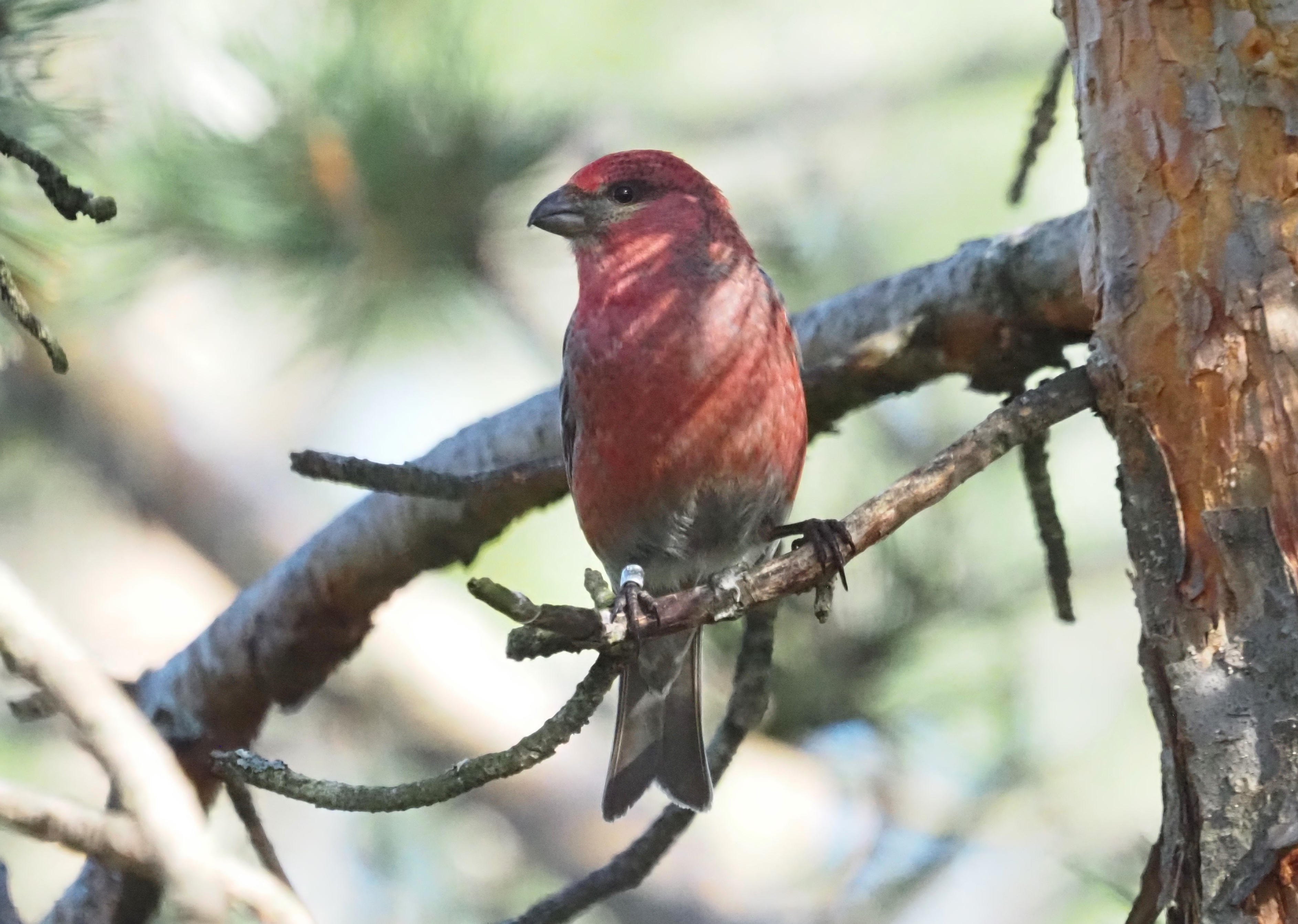
El pinsà dels pins (Pinicola enucleator) és sempre una espècie força cobejada als grups. Mascle a dalt i femella a baix.
Foto anecdòtica de l’ànec fosc (Melanitta fusca)

Un cop endinsats a Noruega vam continuar fent via al Nord. La propera parada pròpiament dita va ser per explorar la desembocadura d’un torrent al gran fiord de Varanger. Aquí normalment s’hi acumulen limícols i làrids de diverses menes. Aquí vam veure els primers batallaires en plomatge nupcial del tour però també altres limícols com garses de mar, territs variants i territs menuts. Aquí els gavians argentats són comuns junt a gavinots i gavines cendroses. Les primeres gavinetes de tres dits també es banyaven a les vores. Escoltats tota l’estona per aligots calçats, paràsits cuapunxeguts i àguiles marines, vam continuant fent via. Parades obligades van ser per mirar els primers estols d’oques pradenques de la tundra.

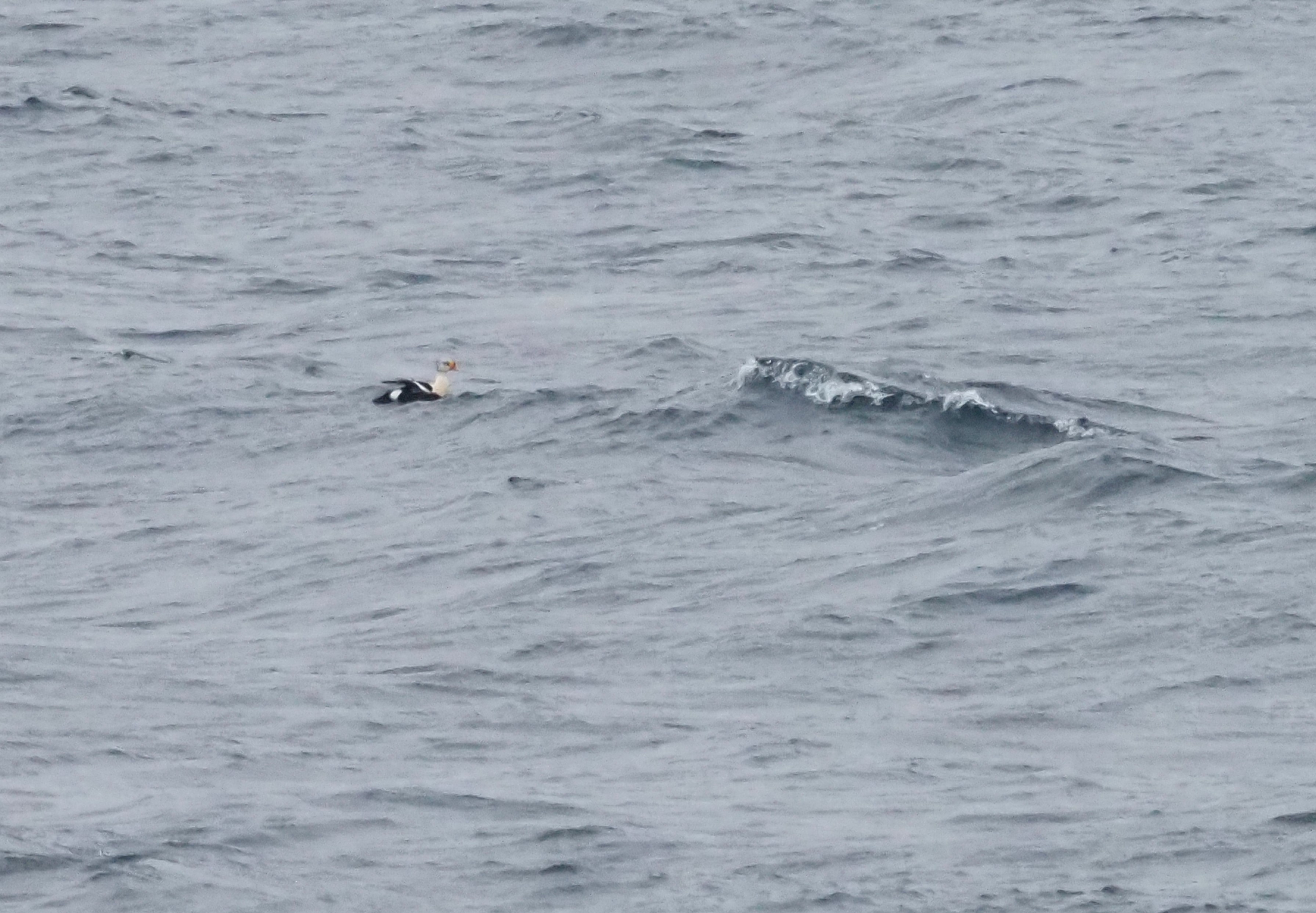
En una badia a prop de Vadso vam estar-nos més estona. Ja era ben entrada la tarda i una meravellosa llum banyava la badia. Aquí vam començar per escanejar els ocells que s’alimentaven a les platges. Al costat dels abundants èiders comuns vam trobar gambes roges comunes i tètols cuabarrats en plomatge estival. Però la sorpresa va ser trobar un estol de 4 èiders reials, incloent un mascle de 1r estiu, quasi a l’altre banda de la badia i que tots vam poder gaudir als telescopis.

Un petit passeig per la zona va continuar oferint bones observacions. Una petita bassa propera concentrava fins a 87 escuraflascons bec-fins (!) que s’alimentaven, perseguien i arraulien tot al voltant del llac. Es fa difícil de descriure la bellesa de l’escena, amb tots aquells minúsculs limícols en plomatge nupcial, flirtejant a la llacuna i donant voltes sobre ells mateixos a una velocitat de vertígen per capturar els petits insectes dels que s’alimenten. Tot això en l’ambient net, quasi verge, de la tundra àrtica. I aquell dia encara van estar més de sort: a més a més dels escuraflascons, la bassa també havia atret un petit estol de 40 batallaires, amb alguns mascles lluint les seves plomes nupcials, saltant, esbarallant-se i lluitant en una escena que de ben segur perdurarà anys a la nostra memòria!

Una ràpida ullada a la costa encara va produir més espècies incloent becut i els primers remena-rocs del viatge junt amb corriols grossos. Al mar, mil·lers de gavinetes de tres dits feien via cap a les seves colònies de cria, seguides de prop per paràsits cuapenxeguts i gavinots. Una mirada més detallada va revelar una parella calàbries petites. De tornada als vehicles encara vam poder gaudir de la primera piula gola-roja del viatge.

De tornada als cotxes vam anar afer paradeta a una estació de servei, però al seu darrera hi ha un raconet que sempre és bo per a limícoles, així que només aparcar vaig a treure el nas i quina va ser la meva sorpresa de trobar una siseta cendrosa alimentant-se amb un estol de territs variants en un plomatge nupcial radiant!

Oques pradenques (Anser serrirostris) amb batallaires en un prat de Varanger.
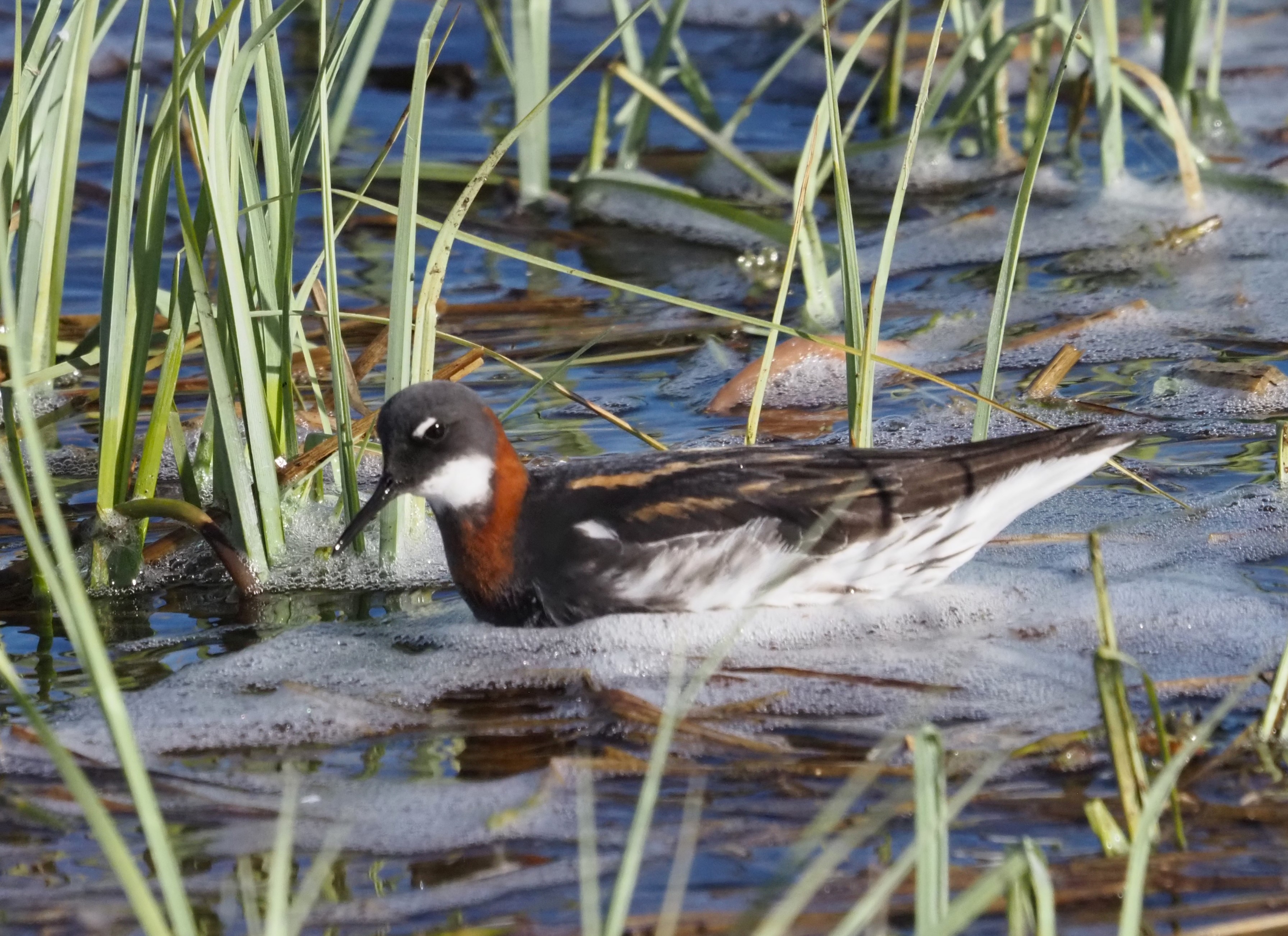
Vam gaudir d’observacions fantàstiques a la primera basseta per escuraflascons que vam visitar. Femella a dalt i mascle a baix.
Èider (Somateria mollissima). Pocs ànecs són tan elegants al nostre continent!
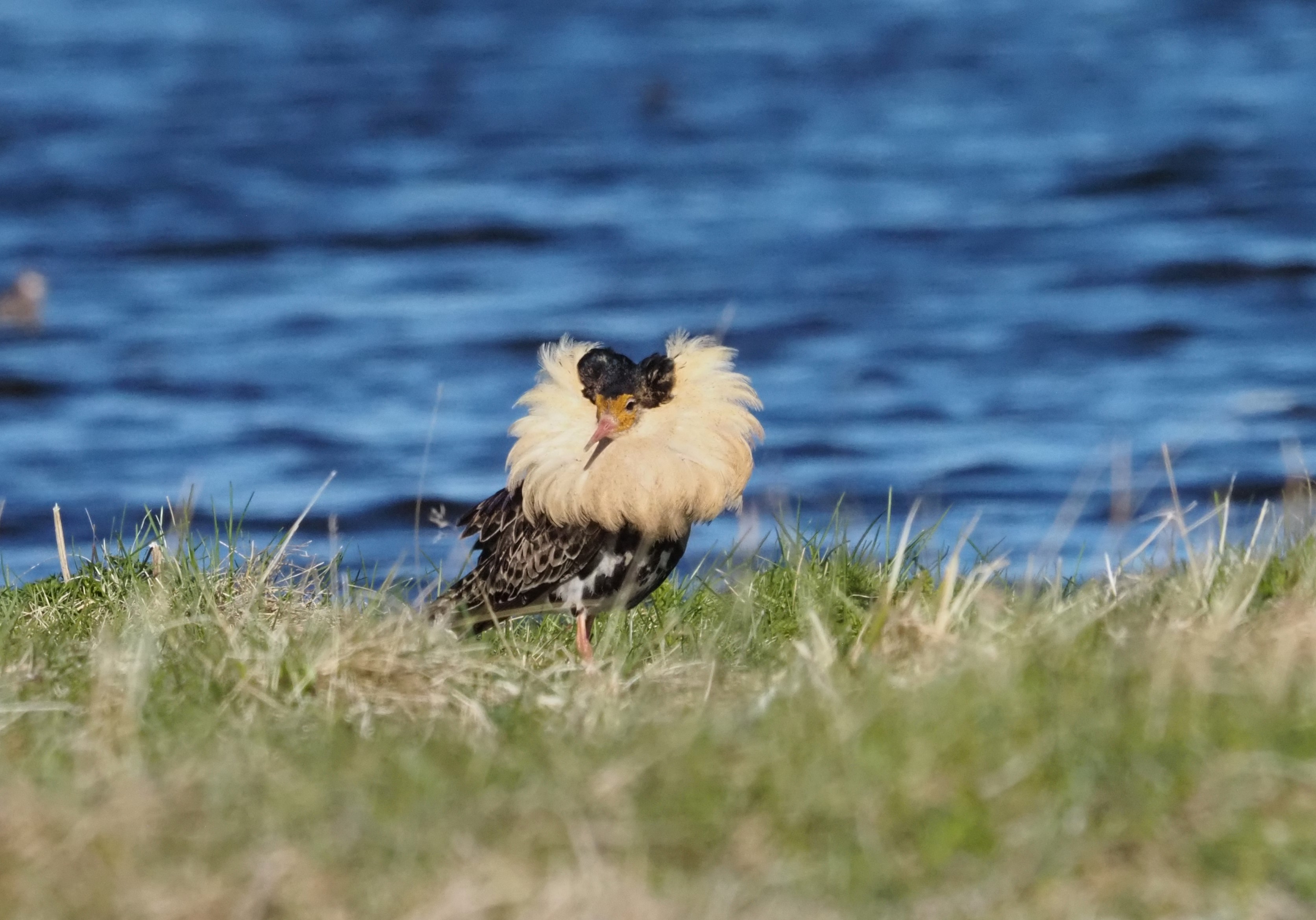
Batallaires (Calidris pugnax) exhibint-se .
We were lucky to enjoy some nice Ruff action!
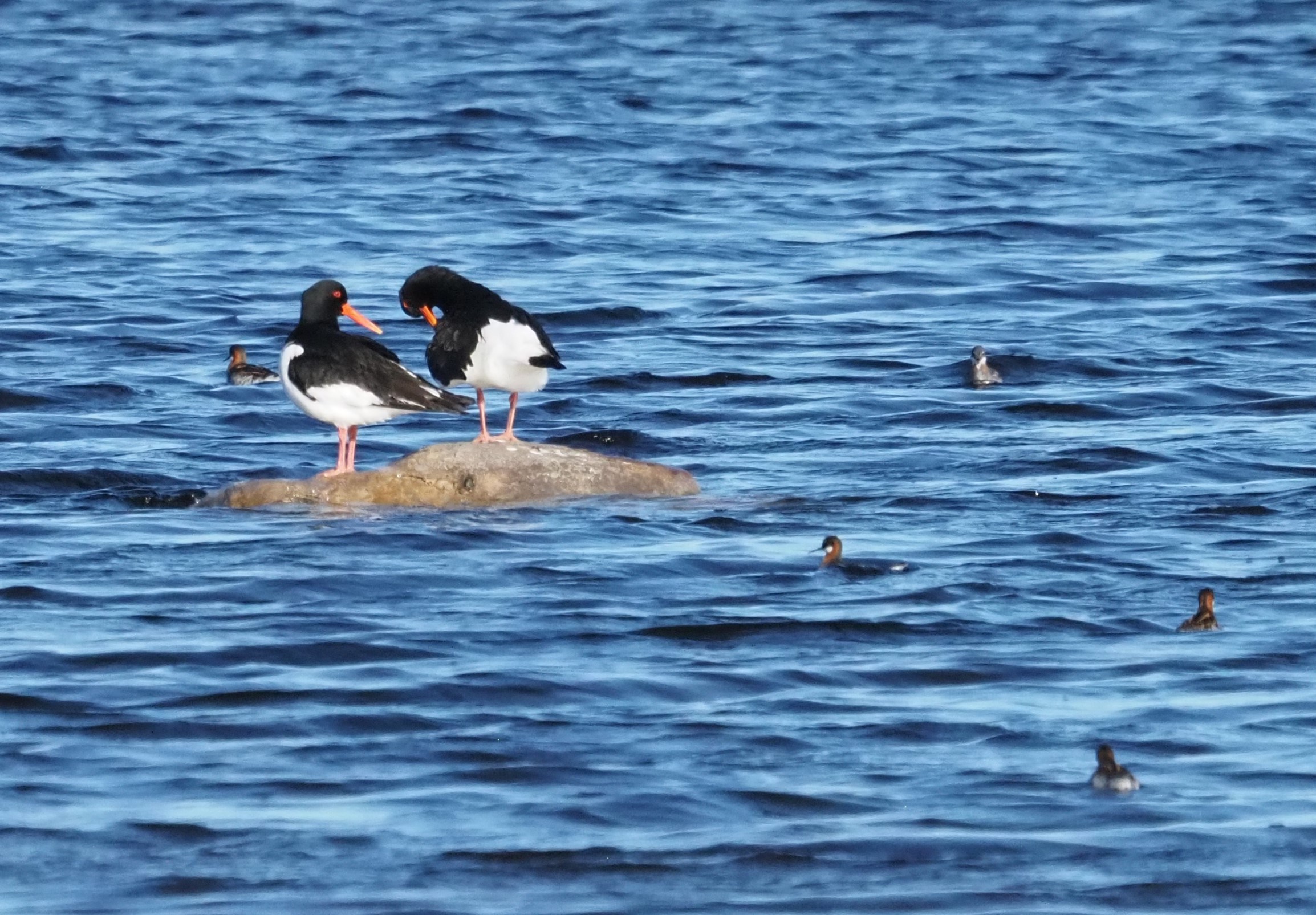
Un parell de garses de mar rodejats d’escuraflascons.
Aquí també vam veure les primeres piules gola-roges (Anthus cervinus).
Vam tenir la sort de trobar aquesta siseta cendrosa (Xenus cinereus) alimentant-se al costat de territs variants (Calidris alpina)!
Àguila marina (Hieraaetus albicilla) posant pel grup. Sempre és fantàstic veure així de bé una de les icones de l’Àrtic.

Dia 7. Després de gaudir d’un molt bon esmorzar noruec vam caminar la curta distància que ens separava de la badia de Vardo. Aquí, nombroses gavinetes de tres dits entraven i sortien de les seves colònies dins del poble. Amb ells, xatracs comuns i àrtics. Aquest dia tocava vaixell i illa de Hornoya. El trajecte en vaixell dura amb prou feines deu minuts però van ser prous per guaitar 4 fulmars que ens van passant rabent per sobre. Aquí dalt, els fulmars són de la famosa varietat blava, típica de l’Àrtic. Malauradament no tothom els va poder veure!

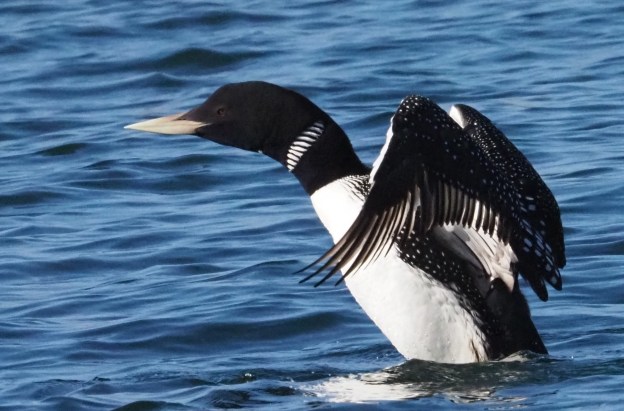
Una de les estampes més impressionants de Hornoya es produeix fins i tot abans d’arribar a la illa. En els últims centenars de metres abans d’arrivar el mar està literalment emmantellat amb mil·lers de somorgollaires i gavots. És simplement alucinant veure aquell mar de somorgollaires, una cosa que no he vist mai en cap altre colònia d’aus marines, almenys a l’Atlactic Nord.

Tot i les variacions interanuals, Hornoya acull unes 50.000 parelles de somorgollaires, prop d’un 15% dels quals de la varietat embridada. Amb ells, hi nien unes 30.000 parelles de gavinetes de tres dits, mil·lers de gavots, uns 3.000 frarets, centenars de corbs marins emplomallats i petits números de fulmars que combines amb les petites colònies de somorgollaire de Brünnich (menys de 3.000 parelles).

El passeig per l’illa ens va permetre observar totes aquestes espècies i també altres especialitats com grassets de costa, piules gola-roges, una bonica parella de territs de Temminck, oques de galta blanca, bec de serra grossos i cotxa blava. Al camí de pujada al far el Joan i la Roser van trobar un bonic passerell becgroc.

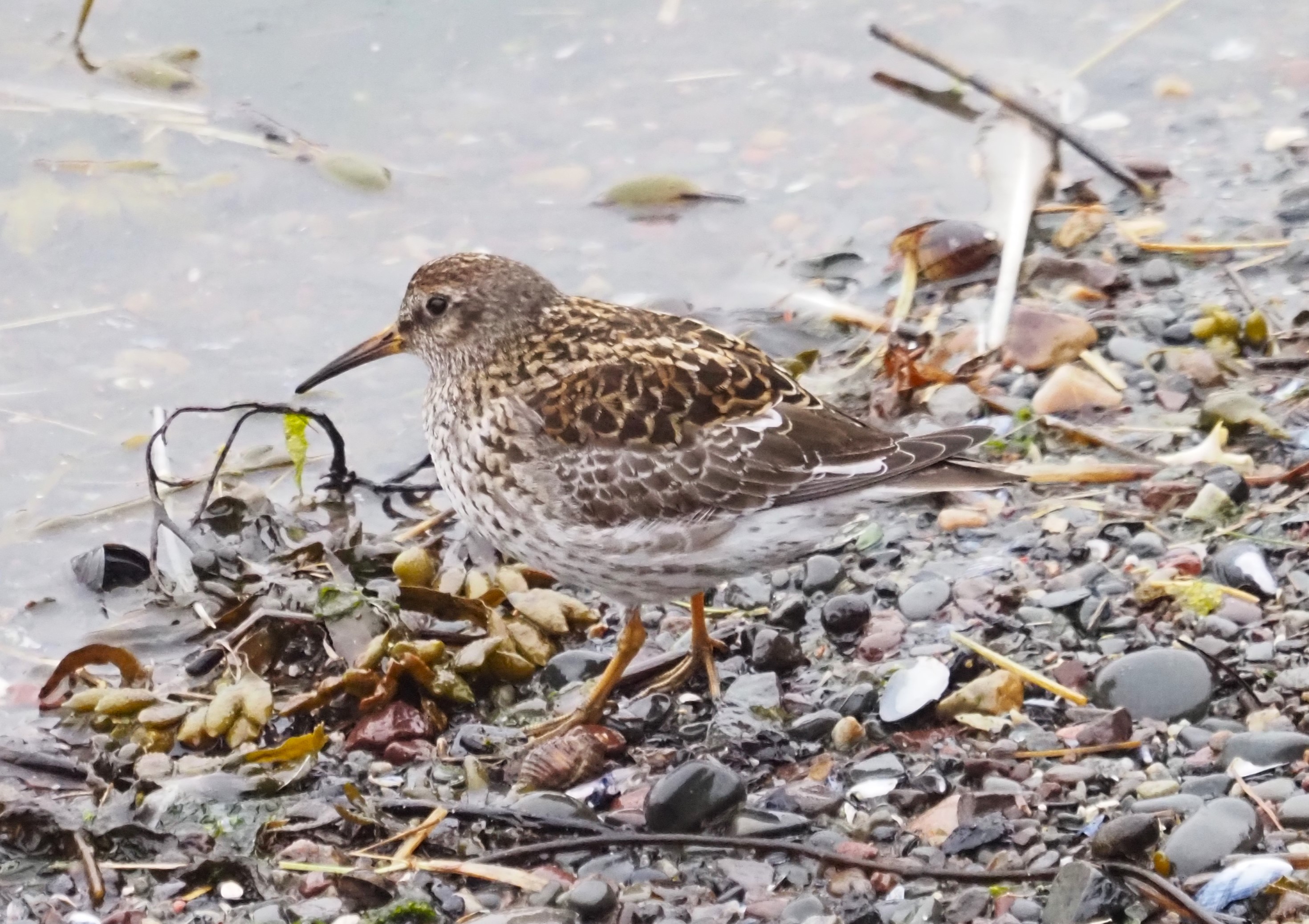
Els territs foscos s’alimentaven a tocar de l’allotjament (Calidris matitima).
Xatrac àrtic (Sterna paradisaea)
Primer plà de gavot (Alca torda). L’ocell marí més elegant del continent?
Somorgollaire “embridat” a la colònia.
Somorgollaire (Uria aalge) preparant-se pel vol.
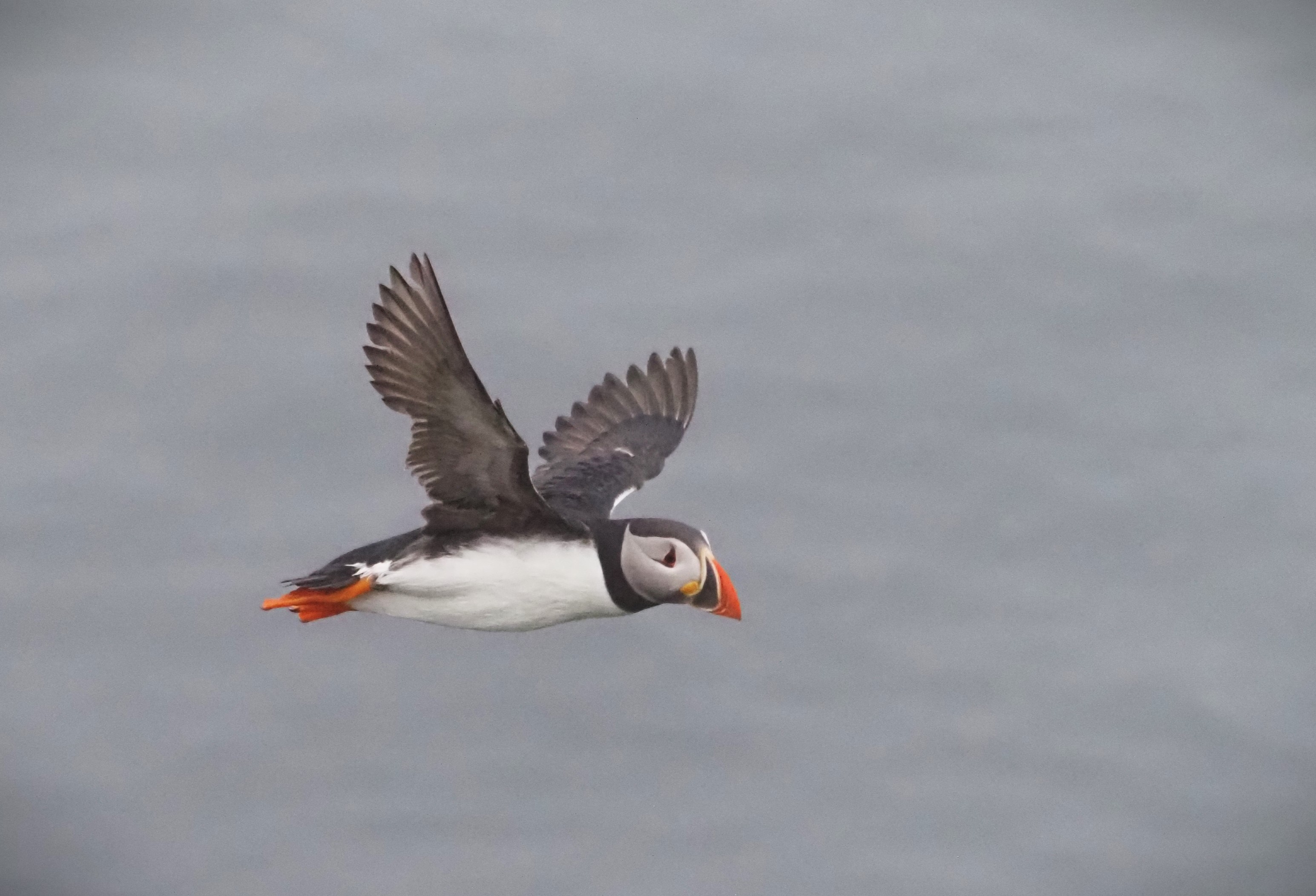
Fraret atlàntic (Fratercula arctica).
Somorgollaire de Brünnich (Uria lomvia) -dreta- i somorgollaire comú -esquerra.
Fraret atlàntic (Fratercula arctica) tornant a la colònia després d’alimentar-se al mar.
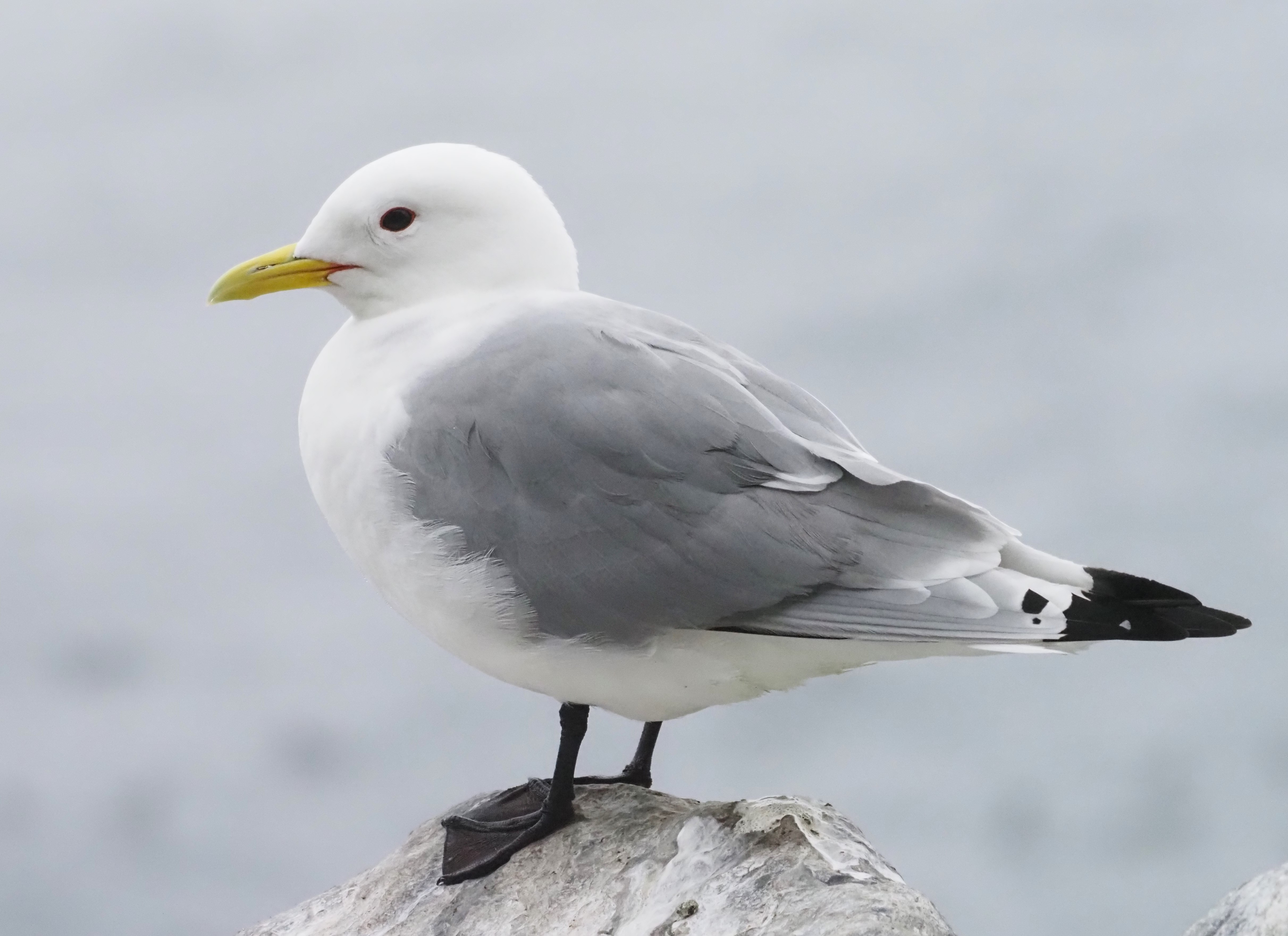
La molt bonica gavineta de tres dits (Rissa tridactyla).
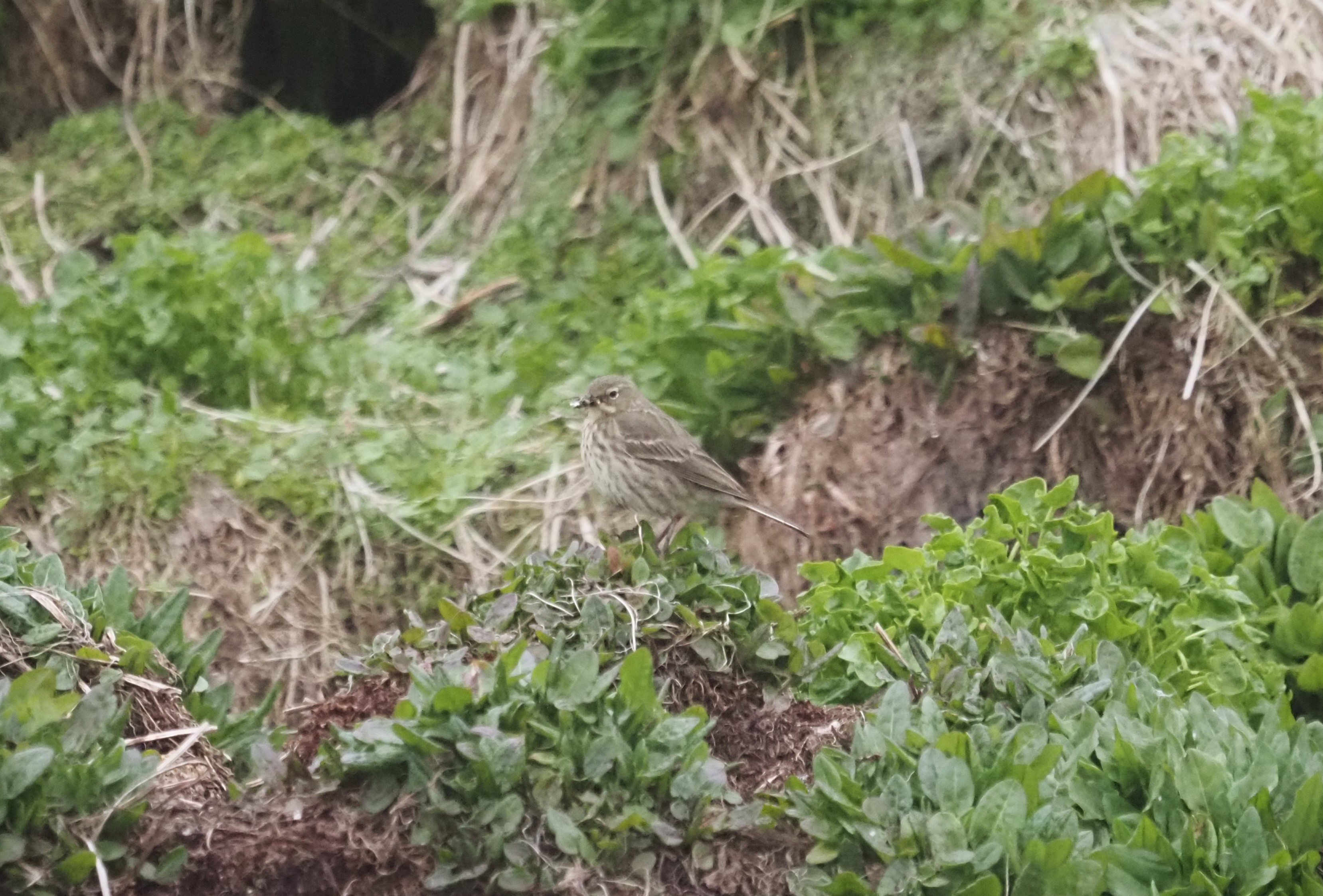
Grasset de costa (Anthus petrosus litoralis) niant a les parts més baixes de l’illa..

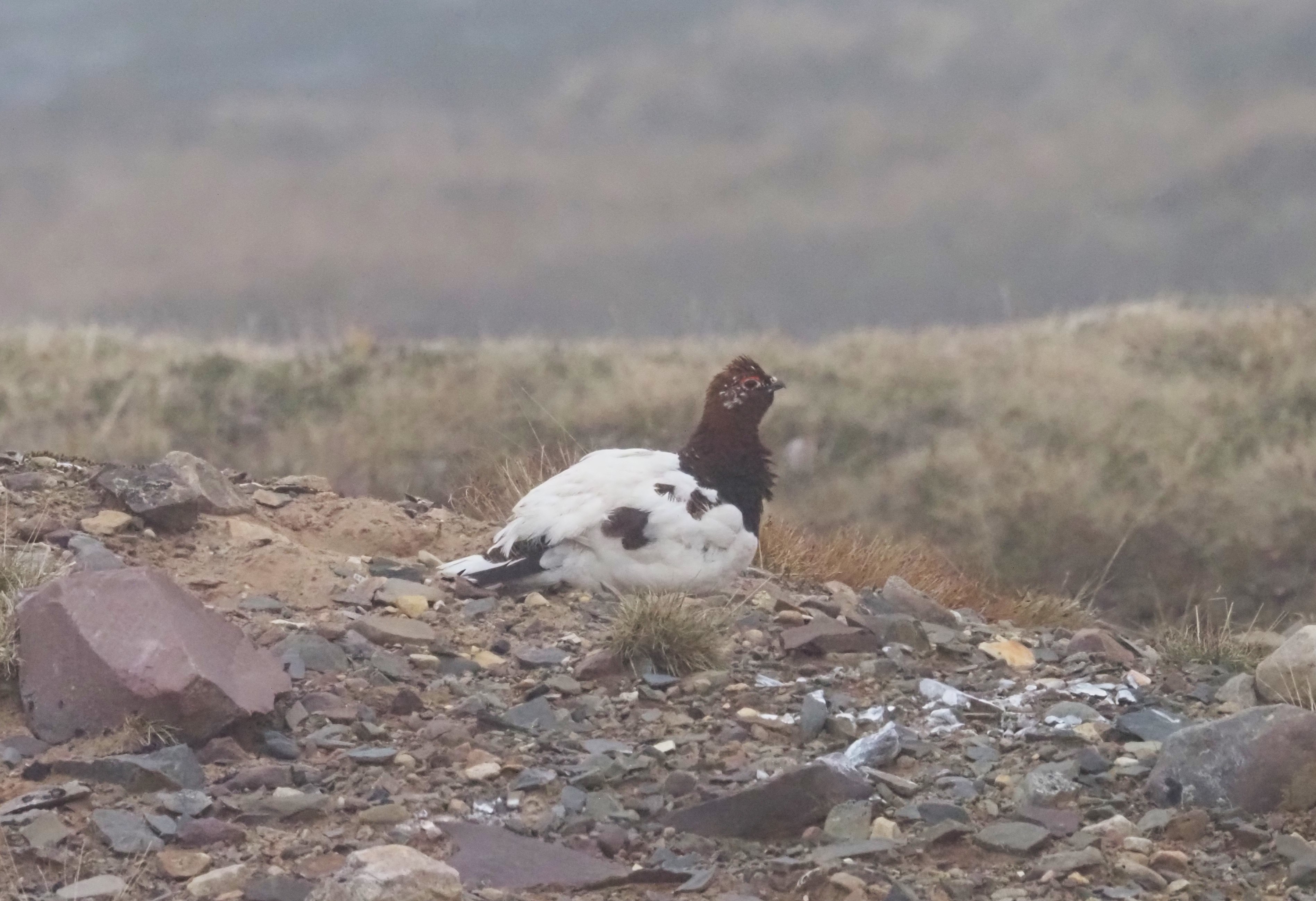
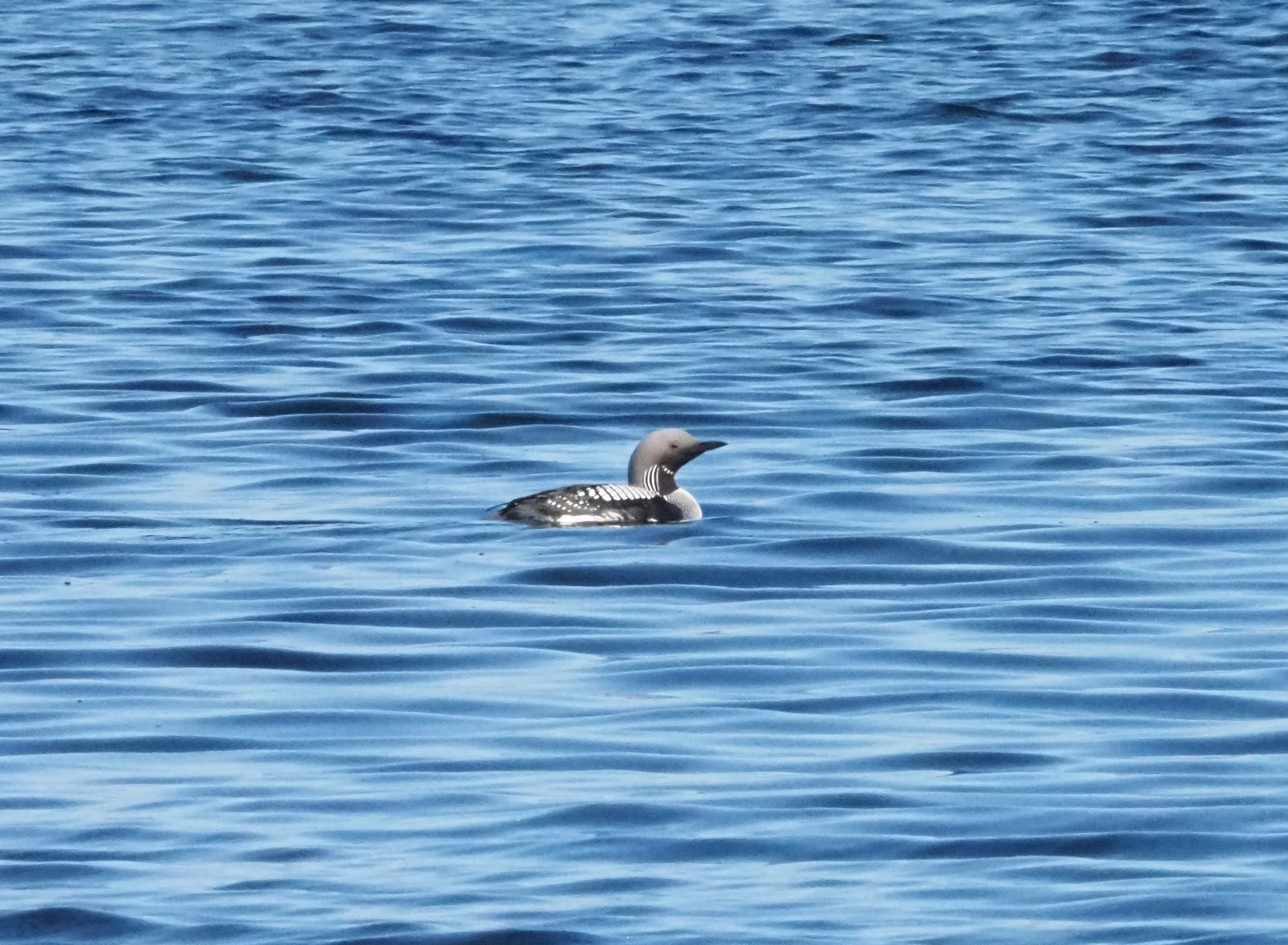
De tornada al continent ens vam dirigir encara més cap al Nord. Malauradament el continent estava cobert d’una espessa boira. Però la boira no ens va impedir gaudir d’una espectacular perdiu escandinava que just acabava de fer un bany de sorra. Quina sort! Allà a on boira obria fèiem una parada per escanejar les badies i les platges: estols de becs de serra grossos, ànecs glacials i ànecs negres s’alimentaven aquí i allà. A voltes hi trobàvem alguna calàbria o ànecs foscos. La boira persistia i ens va donar poques oportunitats per gaudir de passerells àrtics, cotxes blaves i tords ala-rojos. Després de gaudir del pic-nic vam fer cap al Sud, encara txequejant el mar cada cop que la boira ho permetia. Tot mirant un grup d’èiders vam descobrir la primera calàbria de bec pàl·lid del viatge surant al mar. Vam aparcar els cotxes quasi de qualsevol manera per grimpar vessant avall, plantar els telescopis i gaudir d’aquest ocell tant espectacular. L’au era mig quilòmetres de nosaltres, apareixia i desapareixia a la boira i els somorgollaires alablancs volaven darrera seu, amb alguna foca grisa ocasional. Inoblidable!

Molt satisfets d’haver trobar aquesta espècie vam començar a tornar cap a l’allotjament. Però tot just abans d’arribar encara vam tenir una última parada. Una calàbria de bec pàl·lid s’havia anat veient dins una badia de Vardo. I allà hi era, però dormia enmig d’una molt densa boira que amb prou feines ens va deixar apreciar cap detall.

Aquesta perdiu escandinava (Lagopus lagopus) acabava el seu bany de sorra quan la vam trobar.
Estol d’ànecs negres (Melanitta nigra) a una badia.
La primera calàbria de bec pàl·lid (Gavia adamsii) del viatge va tenir tot els components del Nord més indòmit!
Aquests rens (Rangifer tarandus) quasi es podien donar per salvatges. Quasi.

Dia 8. Aquest dia vam tornar a explorar les zones més al Nord de la Península de Varanger. Però abans d’enfilar la carretera vam fer parada obligada a la mateixa badia a on vam acabar el dia anterior. Aquí, en un trencall de la boira, vam gaudir d’inesborrables observacions de calàbria de bec pàl·lid. L’ocell tot just es despertava del sopor “nocturn” quan vam arribar. Amb la calàbria a menys de 40 metres de nosaltres, les observacions van ser simplement increïbles, amb l’au obrint ales i arreglant-se el plomatge a voltes apropant-se, a voltes allunyant-se de nosaltres sense que mai se la veiés molesta pel desplegament òptic al seu voltant. A la platgeta, 3 territs foscos s’alimentaven força a prop, però ningú parava esment…

De tornada a la feina, vam aprofitar que la boira s’enretirava definitavament per fer una parada a la tundra. Aquí vam obtenir excel·lents observacions de sit de Lapònia però batallaires en plena batalla pel domini d’aquell racó de tundra. Amb ells, també nombrosos paràsits cuapunxeguts que lluitaven per fer fora les àguiles marines i els aligots calçats que voleiaven la zona. Els xisclets de les daurades grosses es barrejaven amb els refilets trencats dels territs variants i les esbojarrades frases de les cotxes blaves. Més enllà, una perdiu escandinava s’ho mirava tot amb mandra des d’una petitíssima elevació.

Aquestes delicioses observacions de calàbria de bec pàl·lid van anar més enllà de qualsevol expectació i l’ocell va ser escollit un dels cinc millors del tour!
GUAU!
Sit de Lapònia (Calcarius lapponicus), Probablement un dels ocells més carismàtics de la tundra
Cotxa blava (Luscinia svecica)

Arribats a les zones més altes, vam fer una parada per gaudir del pic-nic. Aquí, vam tenir la sort de trobar un niu de passerells àrtics que va fer les delícies de tothom. Al voltant del mateix llac hi vam veure ànecs glacials, valones, titelles i cotxes blaves a molt curta distància. Més enllà, els paràsits cuallargs ja patrullaven els turons.

Conduint a través la tundra vam veure un bon grapat de perdius escandinaves i una segona bassa ens va permetre veure de ben a prop una parella de calàbries petites que es preparaven per niar allà mateix. Aquí també vam gaudir de batallaires, escuraflascons bec-fins, xarxets comuns, ànecs cullargs, els dos únics morells buixots del tour, piules gola-roges i tètols cuabarrats (nidificant molt escàs a la zona) junt a un bon grapat més d’altres espècies.

Baixant cap a la costa vam fer parada en un lloc interessant per a falcó grifó, però sense resultats. De retruc, vam tornar a veure àguiles marines i aligots calçats. Ja cap al vespre vam tornar cap a les zones de tundra. De camí cap allà les perdius escandinaves anaven volant amunt i avall i vam trobar la única esmerla del tour, un bonic mascle que estava aturat a una petita roca!

Uns minuts més tard ja ens trobàvem en un hàbitat més escaient per a les espècies més “alpines” de Varanger. Bé cal dir que no ens va costar gens de trobar la primera perdiu blanca, que s’estava a dalt d’una petita pedra tot i el fort (i fred) vent que hi bufava. El paisatge era força rocallós i els moviments de l’ocell ens va permetre descobrir també una femella. Aquí també vam veure la primera alosa banyuda del viatge, però va sortir volant, perdent-se amb el fort vent. Vam decidir de moure’ns cap a un racó més arrecerat. De camí, vam tornar a veure territs de Temminck menjant aquí i allà, calàbries i força becs de serra mitjans. La última parada del dia no podia haver estat més profitosa: només arribar, una fantàstica perdiu blanca va començar a cantar a pocs metres de nosaltres i una parella d’aloses banyudes van aparèixer també ben a prop dels vehicles. A uns 300 metres, el Ramiro va albirar quelcom petit i blanc. Així amb alguna excusa vam moure a tot el grup cap allà i, efectivament, allà ens esperava un superb sit blanc lluint la seva blancor a la neu. Com a colofó, les aloses van venir també cap aquí i totes dues espècies van començar a cantar quasi a duo!

Des d’aquí ens vam dirigir cap al nostre allotjament per gaudir d’un molt bon sopar!

Ànec glacial (Clangula hyemalis) mascle encara migrant cap al Nord.
Passerell àrtic (Acanthis hornemanni) a prop del seu niu.
Calàbria agulla (Gavia arctica) vestit de gala per nosaltres.
Somorgollaires alablancs (Cepphus grylle) a tocar de la caixa niu
Les observacions de perdiu blanca (Lagopus mutus) van ser inmillorables (Lagopus mutus)
Alosa banyuda (Eremophila alpestris) controlant el seu territori.
Poques coses es poden comparar a un mascle de sit blanc (Plectrophenax nivalis) en plomatge estival!

Dia 9. Un altre dia assolejat a la tundra Àrtica i el nostre grup ja era fora de l’hotel molt d’hora al matí. Després de tenir un esmorzar un xic massa senzill, ens vam conjurar per dinar d’hora.

La primera parada va ser per gaudir d’una parella de paràsits cuallargs que va oferir-nos una observació excel·lent mentre recorrien el raconet de tundra a tenien pensat fer el niu. Enguany, el número d’aquests elegants ocells estava clarament per sota de la mitjana.

Ens vam arribar a la costa per fer una mica de “seawatching” des d’un punt prominent. Des d’allà vam estar encantats de veure un enorme estol amb centenars de fulmars blaus que es movien al voltant d’un vaixell pesquer. Estol rere estol, els becs de serra grossos continuaven migrant cap al Nord-est, a les seves zones de nidificació a Sibèria. Un gran estol d’ànecs glacials s’alimentava just davant la nostra posició i llavors va saltar la sorpresa quan Mark va trobar un magnífic mascle d’èider reial alimentant-se amb ells! Més enllà, diverses calàbries feien també la seva migració cap a l’Est. Hi vam veure les dues espècies més habituals i també una gran calàbria de bec pàl·lid, la tercera del viatge! Altres espècies d’interés aquí van incloure força somorgollaires alablancs, èiders comuns, bec de serra mitjans i frarets volant tots cap a l’Est. Com a colofó, un fantàstic grifó ens va passar rabent en direcció Oest, talment que només uns quants vam poder gaudir del falcó més poderós!

Abans de dinar encara vam tenir temps de pardalejar a una badia. Allà, entre els estols de les espècies més típiques el Mark va trobar un juvenil de gavina menuda. Aquí també vam veure territs de Temminck i mirant els estols d’èiders vam trobar un mínim de 4 èiders reials, tots tipus femella. Aquest cop i malgrat la boira, tothom en va poder gaudir d’allò més.

Després de menjar unes pizzes prou saboroses en pub local ens vam dirigir cap al Sud, sortint de Varanger i retornant a Finlàndia sense cap parada que reportés res de nou o massa destacable.

Els paràsits cuallargs (Stercorarius longicaudus) eren escassos, segurament degut al col·lapse de les poblacions de talpons.
Calàbria petita (Gavia stellata) nia a força basses i llacs de la tundra.
Al llarg del matí vam tenir un parell d’encontres fantàstics amb àguiles marines (Hieraaetus albicilla).
Mascle d’èider reial (Somateria spectabilis) a l’Oceà Àrtic.
Femella d’Èider reial (dalt) i dues d’èider comú.
Més imatges d’èider reial.

Dia 10. Bàsicament un dia de trànsfer. El grup es va dividir en dos degut als diferents horaris dels avions, amb el gruix principal del grup llevant-se ben d’hora per a fer un llarg trajecte que ens portaria de tornada a Oulu i un petita part que s’estava a Ivalo per agafar un avió aquell vespre. El gruix del grup vam marxar i vam començar el dia fent una parada a la cerca de mussol esparverenc. Ho havíem provat diverses vegades sense sort, però aquest cop ja vam sentir els reclams del mussol des del pàrking mateix i un parell de minuts després la teníem a poca distància mentre albirava el seu territori dalt estant d’un pi. Vam gaudir d’una bona estona i, fins i tot vam veure el mascle venint i donant-li a la femella un rossegador que ella es va empassar ràpidament.

A més dels mussols, aquells bosquet també tenia una parella de mallerengues de Lapònia que anaven reclamant per la zona. Però encara vam tenir més sort, perquè allà a prop un becadell de Wilson havia estat marcant territori. Ens hi vam apropar i el vam sentir cantar un parell de vegades mentre volava per la zona! A més, aquesta última parada encara va afegir una nova espècie pel viatge; un pòlit cantaire.

De tornada a la furgoneta, vam continuar el nostre trajecte cap al Sud. Tots anàvem cansats i al llarg de les properes dues hores vam estar buscant desesperadament un lloc a on aturar-nos i fer un cafè. A desgrat nostre, vam comprobar com de difícil pot ser de trobar un cafè a Lapònia un diumenge al matí… Finalment vam trobar cafè i fins i tot vam trobar un mussol emigrant que ens va fer un parell de passades força espectaculars a la carretera abans no vam arribar a l’aeroport!

I fins aquí arriba la crònica del nostre 7è tour per terres del Nord de Finlàndia i Finnmark. Un indret fascinant al que ja tinc ganes de tornar al 2025. De ben segur que serà tant i tant bo com la resta d’edicions!

Finalment i després d’uns quants intents, vam aconsguir unes ben merescudes observacions de mussol esparverenc (Surnia ulula).
Mussol esparverenc en acció!
Aquest mussol emigrant (Asio flammeus) va ser la última especialitat del viatge.

Llista dels ocells vistos al llarg del tour

  1. Cigne cantaire – Whooper Swan (Cygnus cygnus)
  2. Cigne mut – Mute Swan (Cygnus olor)
  3. Ànec blanc – Common Shelduck (Tadorna tadorna)
  4. Oca comuna – Greylag Goose (Anser anser)
  5. Oca pradenca de la tundra – Tundra Bean Goose (Anser serrirostris)
  6. Oca de bec curt – Pink-footed Goose (Anser brachyrhynchus)
  7. Oca de galta blanca – Barnacle Goose (Branta leucopsis)
  8. Ànec xiulador – Eurasian Wigeon (Marecca penelope)
  9. Ànec griset – Gadwall (Marecca strepera)
  10. Xarxet comú – Eurasial Teal (Anas crecca)
  11. Ànec coll-verd – Mallard (Anas platyrhynchos)
  12. Ànec cuallarg – Northern Pintail (Anas acuta)
  13. Ànec cullerot – Northern Shoveler (Spatula clypeata)
  14. Xarrasclet – Garganey (Spatula querquedula)
  15. Morell de plomall – Tufted Duck (Aythya fuligula)
  16. Morell buixot – Scaup (Aythya marila)
  17. Èider comú – Common Eider (Somateria mollissima)
  18. Èider reial – King Eider (Somateria spectabilis)
  19. Ànec glacial – Long-tailed Duck (Clangula hyemalis)
  20. Ànec negre – Common Scoter (Melanitta nigra)
  21. Ànec fosc – Velvet Scoter (Melanitta fusca)
  22. Morell d’ulls grocs – Goldeneye (Bucephala clangula)
  23. Bec de serra petit – Smew (Mergellus albellus)
  24. Bec de serra gros – Goosander (Mergus merganser)
  25. Bec de serra mitjà – Red-breasted Merganser (Mergus serratus)
  26. Faisà comú – Common Pheasant (Phaisanus colchinus)
  27. Grèvol – Hazel Grouse (Bonasa bonasia)
  28. Perdiu escandinava – Willow Grouse (Lagopus lagopus)
  29. Perdiu blanca – Rock Ptarmigan (Lagopus mutus)
  30. Gall de cua forcada – Black Grouse (Lyrurus tetrix)
  31. Gall fer – Western Capercaillie (Tetrao urogallus)
  32. Falciot negre – Common Swift (Apus apus)
  33. Cucut comú – Common Cuckoo (Cuculus canorus)
  34. Colom roquer – Feral Pigeon (Columba livia)
  35. Tudó – Common Wood pigeon (Columba palumbus)
  36. Grua europea – Common Crane (Grus grus)
  37. Cabussó emplomallat – Great Crested Grebe (Podiceps cristatus)
  38. Cabussó gris – Red-necked Grebe (Podiceps grisegena)
  39. Cabussó orellut – Slavonian Grebe (Podiceps auritus)
  40. Guatlla maresa – Corncrake (Crex crex) ———————————– només sentit
  41. Garsa de mar – Eurasian Oystercatcher (Haematopus ostralegus)
  42. Corriol gros – Common Ringed Plover (Charadrius hiaticula)
  43. Corriol anellat petit – Little Ringed Plover (Charadrius dubius)
  44. Daurada grossa – European Golden Plover (Pluvialis apricaria)
  45. Fredeluga comuna – Northern Lapwing (Vanellus vanellus)
  46. Territ de Temminck – Temminck’s Stint (Calidris temminckii)
  47. Territ variant – Dunlin (Calidris alpina)
  48. Territ menut – Little Stint (Calidris minuta)
  49. Territ fosc – Purple Sandpiper (Calidris maritima)
  50. Batallaire – Ruff (Calidris pugnax)
  51. Becada – Eurasian Woodcock (Scolopax rusticola)
  52. Becadell comú – Common Snipe (Gallinago gallinago)
  53. Becadell de Wilson – Wilson’s Snipe (Gallinago delicata) —————— només sentit
  54. Tètol cuabarrat – Bar-tailed Godwit (Limosa lapponica)
  55. Tètol cuanegre – Black-tailed Godwit (Limosa limosa)
  56. Becut europeu – Eurasian Curlews (Numenius arquata)
  57. Pòlit cantaire – Whimbrel (Numenius phaeopus)
  58. Gamba roja pintada – Spotted Redshank (Tringa erythropus)
  59. Gamba roja comuna – Common Redshank (Tringa totanus)
  60. Gamba verda – Greenshank (Tringa nebularia)
  61. Valona – Wood Sandpiper (Tringa glareola)
  62. Xivita – Green Sandpiper (Tringa ochropus)
  63. Siseta cendrosa – Terek’s Sandpiper (Xenus cinereus)
  64. Xivitona – Common Sandpiper (Actitis hypoleucos)
  65. Remena-rocs – Ruddy Turnstone (Arenaria interpres)
  66. Escuraflascons bec-fí – Red-necked Phalarope (Phalaropus lobatus)
  67. Gavina menuda – Little Gull (Hydrocoloeus minutus)
  68. Gavina riallera – Black-headed Gull (Chroicocephalus ridibundus)
  69. Gavina cendrosa – Common Gull (Larus canus)
  70. Gavinot – Great Black-backed Gull (Larus marinus)
  71. Gavià argentat – Herring Gull (Larus argentatus)
  72. Gavineta de tres dits – Kittiwake (Rissa trydactyla)
  73. Xatrac comú – Common Tern (Sterna hirundo)
  74. Xatrac àrtic – Arctic Tern (Sterna paradisaea)
  75. Paràsit cuapunxegut – Arctic Skua (Stercorarius parasiticus)
  76. Paràsit cuallarg – Long-tailed Skua (Stercorarius longicaudus)
  77. Somorgollaire comú – Guillemot (Uria aalge)
  78. Somorgollaire de Brünnich – Brünnich’s Guillemot (Uria lomvia)
  79. Gavot – Razorbill (Alca torda)
  80. Somorgollaire alablanc – Black Guillemot (Cepphus grylie)
  81. Fraret atlàntic – Atlantic Puffin (Fratercula arctica)
  82. Calàbria petita – Red-throated Diver (Gavia stellata)
  83. Calàbria agulla – Black-throated Diver (Gavia arctica)
  84. Calàbria de bec pàl·lid – White-billed Diver (Gavia adamsii)
  85. Fulmar – Northern Fulmar (Fulmarus glaciallis)
  86. Corb marí gros – Great Cormorant (Phalacrocorax carbo)
  87. Corb marí emplomallat – Shag (Gulosus aristotelis)
  88. Bitó – Greater Bittern (Botaurus stellaris) ———— només sentit
  89. Àguila pescadora (Pandion haliaetos)
  90. Arpella comuna (Circus aeruginosus)
  91. Aligot calçat (Buteo lagopus)
  92. Aligot vesper (Pernis apivorus)
  93. Àguila marina (Haliaetus albicilla)
  94. Mussol emigrant (Asio flammeus)
  95. Mussol pirinenc (Aegolius funereus)
  96. Gamarús dels Urals (Strix uralensis)
  97. Mussol esparverenc (Surnia ulula)
  98. Mussolet eurasiàtic (Glaucidium passerinum)
  99. Picot garser gros (Dendrocopos major)
  100. Picot garser petit (Dryobates minor)
  101. Picot de tres dits (Picoides tridactylus)
  102. Picot negre (Dryocopus martius)
  103. Xoriguer comú (Falco tinnunculus)
  104. Esmerla (Falco columbarius)
  105. Grifó – Gyrfalcon (Falco rusticolus)
  106. Escorxador – Red-backed Shrike (Lanius excubitor)
  107. Gaig siberià – Siberian Jay (Perisoreus infaustus)
  108. Garsa – Eurasian Magpie (Pica pica)
  109. Gralla occidental – Western Jackdaw (Coloeus monedula)
  110. Cornella negre – Hooded Crow (Corvus cornix)
  111. Corb comú – Common Raven (Corvus corax)
  112. Ocell sedós – Bohemian Waxbill (Bombycilla garrulus)
  113. Mallerenga capnegra – Willow Tit (Poecile montanus)
  114. Mallerenga de Lapònia – Siberian Tit (Poecile cinctus)
  115. Mallerenga blava – Eurasian Blue Tit (Cyanistes caeruleus)
  116. Mallerenga carboera – Great Tit (Parus major)
  117. Alosa comuna – Eurasian Skylark (Alauda arvensis)
  118. Alosa banyuda – Horned Lark (Eremophila alpestris)
  119. Oreneta de ribera – Sand Martin (Riparia riparia)
  120. Oreneta comuna – Barn Swallow (Hirundo rustica)
  121. Oreneta cuablanca – Western House Martin (Delichon urbicum)
  122. Mosquiter comú – Common Chiffchaff (Phylloscopus collybita)
  123. Mosquiter de passa – Willow Warbler (Phylloscopus trochilus)
  124. Mosquiter xiulaire – Wood Warbler (Phylloscopus sibilatrix)
  125. Boscarla dels joncs – Sedge Warbler (Acrocephalus schoenobaenus)
  126. Tallarol gros – Garden Warbler (Sylvia borin)
  127. Tallareta comuna – Common Whitethroat (Curruca communis)
  128. Tallarol xerraire – Lesser Whitethroat (Curruca curruca)
  129. Reietó – Goldcrest (Regulus regulus)
  130. Cargolet – Eurasian Wren (Troglodytes troglodytes)
  131. Raspinell pirinenc – Eurasian Treecreeper (Certhia familiaris)
  132. Estornell comú – Common Starling (Sturnus vulgaris)
  133. Griva cerdana – Fieldfare (Turdus pilaris)
  134. Tord comú – Song Thrush (Turdus philomelos)
  135. Tord ala-roig – Eurasian Redwing (Turdus iliacus)
  136. Griva – Mistle Thrush (Turdus viscivorus)
  137. Merla comuna – Eurasian Blackbird (Turdus merula)
  138. Pit-roig – Eurasian Robin (Erithacus rubecula) —————- només sentit
  139. Cotxa blava (Luscinia svecica)
  140. Cotxa cuablava (Tarsiger cyanurus)
  141. Cotxa cua-roja (Phoenicurus phoenicurus)
  142. Bitxac rogenc (Saxicola rubetra)
  143. Còlit gris (Oenanthe oenanthe)
  144. Papamosques gris (Muscicapa striata)
  145. Mastegatatxes (Ficedula hypoleuca)
  146. Merla d’aigua (Cinclus cinclus)
  147. Pardal comú – House Sparrow (Passer domesticus)
  148. Pardal xarrec – Eurasian Tree Sparrow (Passer montanus)
  149. Pardal de bardissa – Dunnock (Prunella modularis)
  150. Titella – Meadow Pipit (Anthus pratensis)
  151. Piula dels arbres – Tree Pipit (Anthus trivialis)
  152. Piula gola-roja – Red-throated Pipit (Anthus cervinus)
  153. Grasset de costa – Rock Pipit (Anthus petrosus)
  154. Cuereta blanca – White Wagtail (Motacilla alba)
  155. Cuereta groga – Yellow Wagtail (Motacilla flava)
  156. Pinsà comú – Common Chaffinch (Fringilla coelebs)
  157. Pinsà mec – Brambling (Fringilla montifringilla)
  158. Verdum eurasiàtic – Eurasian Greenfinch (Chloris chloris)
  159. Lluer – Eurasian Siskin (Spinus spinus)
  160. Passerell comú – Linnet (Carduelis cannabina)
  161. Passerell golanegre – Common Redpoll (Carduelis flammea)
  162. Passerell àrtic – Arctic Redpoll (Carduelis hornemanni)
  163. Passerell becgroc – Twite (Carduelis flavirostris)
  164. Trencapinyes comú – Common Crossbill (Loxia curvirostra)
  165. Pinsà carminat – Common Rosefinch (Carpodacus erythrinus)
  166. Pinsà borroner – Eurasian Bullfinch (Pyrrhula pyrrhula)
  167. Pinsà dels pins – Pine Grosbeak (Pinicola enucleator)
  168. Sit de Lapònia – Lapland Bunting (Calcarius lapponicus)
  169. Sit blanc – Snow Bunting (Plectrophenax nivalis)
  170. Verderola – Yellowhammer (Emberiza citrinella)
  171. Hortolà – Ortolan Bunting (Emberiza hortulana)
  172. Repicatalons – Reed Bunting (Emberiza schoeniclus)
  173. Sit rústic – Rustic Bunting (Emberiza rustica)
  174. Repicatalons petit – Little Bunting (Emberiza pusilla)

Llista de mamífers vistos al llarg del tour

  1. Llebre europea – European Hare (Leppus leppus)
  2. Llebre àrtica – Mountain Hare (Leppus timidus)
  3. Esquirol europeu – Red Squirrel (Sciurus vulgaris)
  4. Erminy – Stout (Mustela arminea)
  5. Guineu – Red Fox (Vulpes vulpes)
  6. Foca gris – Grey Seal (Halichoerus grypus)
  7. Ant – Moose (Alces alces)
  8. Re – Reindeer (Rangifer tarandus)*
  9. Rorqual comú (Balaenoptera phisalus)
  10. Rorqual d’aleta blanca (Balaenoptera acurostrata)

*Feral

Finland 2024 Birding Trip Report

  • Dates: From May 31st to June 9th, 2024
  • Tour participants: 10
  • Number of species seen: 170
  • Tour leader: Carles Oliver & Ramiro Aibar

All images in this trip report by Carles Oliver. All rights reserved.

Overview: Our 7th tour in Northern Finland & Finnmark was again a very successful adventure, despite some notorious absences. One of the most noticeable things during the trip was the almost total absence of Crossbills, with extremely few contacts and only a couple of proper sights. Parrot Crossbills seemed disappeared, with no records at all in the area. We got excellent views on all the Grouses during the trip, plus 5 species of Owls despite the low density of them both around Oulu and in Varanger. On the contrary, both Rustic & Little Buntings seemed to be everywhere in some parts of the trip, and Red-flanked Bluetail & Three-toed Woodpecker performed for our group in a very straightforward way.

Day 1. Part of group landed in Oulu with a small delay due to the heavy traffic at Barcelona Airport. We met some of the clients at Oulu Airport, where we got delayed again due to a problem with the delivery of one of the vans. We normally have a small window of birding in this first afternoon of the trip, but those delays smashed that window and the first birding of the tour was done after dinner.

We met the rest of the tour participants at the dinner, and taking advantage of the very late sunset, we had a small walk immediately around the hotel. Here we had a first contact with some common birds in this part of Finland, including Redwing, Pied & Spotted Flycatchers, Sedge Warbler, Red-breasted Merganser, Common & Arctic Terns, Common Redshank, Oystercatcher, Eurasian Teal, Gadwall, Northern Shoveler, Pintails but also other species a bit more scarce in this area such as Common Rosefinch, White-tailed Eagle, Black-tailed Godwits and the very first drake Garganeys of the tour.

Day 2. This day we went out for some owling. As always, a very early start is required so we left our accommodation ready to enjoy the first birding day of the trip, and our packed breakfasts! Small flocks of the distinctive Baltic race of the Western Jackdaw were everywhere, along with some Rooks. Our first stop was to check a nesting hole that was being used by Ural Owl, and we were lucky enough to be there when the female was on the nest. Even if the angle was not easy, everybody had good views on the bird including scope views on the face and the eyes of the bird. Walking in the boreal forest we heard the first Black Grouse of the trip as well as Common Redstart and the first of many Scandinavian Willow Tit.

A second stop in the boreal forest was to check a nesting area of Tengmalm’s Owl. Again, we were very lucky and even from the edge of the woods we saw a lovely chick of Tengmalm’s with its head blocking the aperture of the nest. The next ten minutes were simply magnificent. With the group sitting down on the boreal forest, we had excellent views on this chick while moving its head side to side, observing the trees around. At some point, it became clearly excited, almost about to jump from the nest! Suddenly, a call came from the forest but before we searched for the bird, Nick pointed out second chick of Tengmalm’s Owl that was perched only 3 metres away from us! The views on this 2nd bird were simply amazing, and after a couple of minutes we decided to step back. We found ourselves to be too close!

We still had some minutes to keep enjoying the Tengmalm’s Owls before moving to a different spot. In the way, we got 2 Red-backed Shrikes moving in the road, the only ones of the tour! Our next stop was close by in one of the several farming areas hosting Ortolan Buntings around Oulu. It didn’t take us long before finding the first male singing, followed by at least 2 other males and 2 more birds feeding on the ground. Other interesting birds here included Yellowhammer, Reed Bunting, some drake Whinchats singing in the edges of the fields and Common Whitethroat while Common Rosefinch was singing around.

Back to the forest, we explored a suitable spot for Three-toed Woodpecker. Here, we got nice views on Wood Warblers but also on Lesser Whitethroats and Pied Flycatchers. Still, all of this goes to a second frame, because the main character of the stop were the obliging pair of Eurasian Three-toed Woodpecker attending its nest only a few metres away from us! It was a real privilege to see the often considered as the most difficult species of woodpecker in Europe so close and for so long!

After such a great moment we decided to change a bit of ambient and a fast stop in a small lake produced two nesting pairs of Slavonian Grebes. Unfortunately they were not as close as in previous trips, but offered us good views anyway. Our next stop was to check a proper spot for Eurasian Pygmy Owl. Back in spot with dense spruce forest, it didn’t take long before we got a bird calling deep in the woods, and a couple of minutes later we got the bird moving around us! It was late in the morning, and the Pygmy Owl was followed by a cohort of forest birds including several Siskins but also 2 Chaffinches, 1 Great Tit, 1 Common Redstart and 1 Yellowhammer. The Owl was constantly moving around, being disturbed and moved by the smaller birds and the best way to try to locate it was to follow the flock of small birds calling and moving in the canopy.

This was actually the last birding stop of the morning. It was time for an early lunch and a very well deserved break. Since we had some small problems with one of the vans, no serious birding was programmed until after dinner.

Eurasian Three-toed Woodpecker (Picoides tridactylus) provide the group with unforgettable views, and three different sights during the trip!
Female (down) & male (up) three-toed Woodpecker around their nesting hole.
Ortolan Bunting (Emberiza hortulana) is a scarce nesting species in Finland that keeps some strong spots around Oulu.
Tengmalm’s Owl (Aegolius funereus) showing out of the nest.
We enjoyed 5 unforgettable minutes with very close views on this Tengmalm’s fledging.
Eurasian Pygmy Owl (Glaucidium passerinum) performed really well for our group!
Flying Pygmy Owl. Something not that easy to catch!
Part of our group enjoying the Tengmalm’s Owl.

After dinner we covered the short distance to the very last spot for nesting Terek’s Sandpipers in Finland. After parking our vans, we had a small walk around enjoying Common Rosefinch, Eurasian Curlew, Common Ringed Plover and the only 2 Little Ringed Plovers of the trip. A Terek’s Sandpiper was singing around but we were unable to connect with the bird. Finally, it was Aonghus who found the bird singing from the top of a distant lamp post. We walked down to the bird, but still took us 10 or 15 minutes to finally enjoy wonderful views, with the bird displaying around us and stopping in the lamp posts around us. In the walk, I got Caspian Tern and Northern Wheatear but I was the only one to notice them. Unfortunately, that was the only Caspian Tern to show out in the whole tour..

Very happy after these great views on Terek’s Sandpipers, we went back to the accommodation to have a very well deserved rest after a wonderful first day of the trip!

This year there were decent numbers of Common Rosefinches during the first days of the trip. Here a lovely female.
Terek’s Sandpiper (Xenus cinereus) gave us excellent views after a funny circular walk all around its territory..

Day 3. Before breakfast we visited a birding tower around Oulu. This is a really well known spot for general birding in the area, and in former trips we have got amazing lists here! This time the number of birds was more reduced but still we got good views on Common Snipe, distant Spotted Redshanks (6), but also Ruffs, White-tailed Eagles, the only 2 Mute Swans of the tour, singing Reed Buntings and Arctic Terns. Here we also listened the only Greater Bittern of the tour.

After checking out from our accommodation we started to transfer to Oulu. In the way, we had a stop in the forest to try to get other species of Woodpeckers. It was already late morning, and the temperature (believe or not) was close to 30ºC in the warmest ever day for me in Finland! We got signs of Grey-headed Woodpecker but our efforts were regarded with excellent views on Black Woodpecker superbly perched on the top of a spruce tree. Here we also got nice views on Eurasian Bullfinches (Scandinavian) and Great Spotted Woodpecker.

In we had the best views on Common Snipe of the whole trip.
Despite the unusual 30ºC we enjoyed great views on Black Woodpecker!

We had lunch in the way and arrived into Kuusamo in the early afternoon. The weather was clearly different than in the Baltic coast, with temperatures not exceeding the 20ºC and scattered rains in the area. Our first stop in Kuusamo was a very short trail to enjoy one of the most beautiful buntings in the country. Even from the car park it was possible to listen them singing. We were lucky so it was a question of not wasting time, and only a pair of minute after we were having excellent views on 2 Little Buntings singing really close to us and showing superbly for the whole group! We were not far away from a lake, and a number of Little Gulls were flying above us, most of them quite high up. Not a big deal, because from the Bunting place it only took us five minutes to arrive into a Little Gull colony. Here we enjoy these little gems but also got excellent views on two pairs of Red-necked Grebes, and the first drake Black-throated Divers of the trip. A few minutes from this watching point also produced a flying Short-eared Owl, and lovely views on Baltic Gulls (Larus fuscus fuscus). Other species here included Wigeon, Pintail, Eurasian Teal, Redwing and a wonderful Eurasian Woodcock singing in flight and crossing in the sky with a displaying Common Snipe!

After this great stop we just drove back to the accommodation for some dinner and rest.

Some of the gorgeous views on Little Bunting during the trip. What a cracker!
To see a bunch of Little Gulls (Hydrocolaeus minimus) at a nesting site is always a beautiful experience!
One of the very few Baltic Gulls (Larus fuscus fuscus) of the trip!
Part of the group enjoying Little Bunting.

Day 4. Very early start to check some interesting locations around our accommodation. This morning our goal was to connect with some of the very good birds living in the boreal forest. Only 300 metres away from the accommodation we had a first flock of Rustic Buntings, with three individuals showing nicely on the dart road despite the poor light. A bit of driving soon produced a nice male Western Capercaillie, that was only enjoyed by the second vehicle. Along the next hour we had some drive with little reward in terms on Grouses, and we only got a lovely male Black Grouse showing itself at the top of a spruce and a Willow Grouse that was only seen from the second vehicle. During the drive we also got very nice looks on a pair of Eurasian Woodcocks feeding in a meadow.

After a nice coffee stop we drove to one of the many hills in the area, and only arriving to the spot we had a stop to enjoy a pair of Hazel Grouses that were moving along the road. We walked around as the grouses were very active. A male was chasing a female and both were doing flights all around the place. After some fight, everyone in thegroup had good views on the birds moving on the ground. At the same spot, we also got one Rustic Bunting and a couple of Siberian Jays moving in the canopy. A bit further in the road, we also had our first attempt for Northern Hawk Owl, but the stop “only” produced a couple of Rustic Buntings, Willow Tit, Tree Pipit and even a Three-toed Woodpecker that was only seen by me..

Finally, we arrived to the Livaara, one of the most typical places for boreal species in Finland. The sun was already well high, and unfortunately was a bit warm. We walked up to the top, and it didn’t take long before we got our first Red-flanked Bluetail singing from the top of one of the spruces. A second male (2nd year old birds in both cases) were seen further beyond, but the area was quiet and we only got Tree Pipit and Spotted Flycatcher as other species of interest.

Our short afternoon was free so the group could explore the very nice habitat around our accommodation. Wood Sandpiper, Common Cuckoo, Greenshank and Black-throated Diver were some of the species seen by the group.

This Black Grouse (Lyrurus tetrix) was the best Grouse for the group around Kuusamo in the worst morning in that area for years!
Scandinavian Willow Tit (Poecile montanus) spruce and pine forest in Northern Finland.
Eurasian Woodcock (Scolopax rusticola), a common bird in Northern Finland.
Rustic Buntings (Emberiza rustica) seemed to be everywhere this time, but we never got extra close views on them..
Normally a difficult species to contact with, this year we got really good looks on Red-flanked Bluetail (Tarsiger cyanurus) at our first attempt.
Some of the amazing spruce habitat around Kuusamo.

Day 5. A new day and a new early start. The first stop of the morning was to explore a nice spot for Willow Grouses. In previous trips we have always had very nice looks on them here, but this time we only got flight views as one male was singing around the area. Here we also got two of the very few Common Crossbills of the trip (no records of Parrot Crossbill this spring at all in the whole Northern Finland) and very nice views on Eurasian Treecreeper. When coming back to the vans, we also got 2 Elks (a female and young animal) crossing the road 200 metres away from us. It was a rather foggy morning in the hills so we decided to do some grouse drive, again with very little reward and the only species of interest were some Bohemian Waxwings in flight. Our last stop of the morning was at a well known spot for Siberian Jay. Here we got excellent views on this gorgeous bird as well as nice Scandinavian Willow Tit, Scandinavian Bullfinch and Goldcrest. At least 3 Red-flanked Bluetails were singing around but we never tried to connect with them after the nice views from the day before.

We started our transfer North, and our typical coffee stop was a bit ruined by a plain tire that made us spend one hour and so. After buying a new tire, we kept moving North, enjoying some nice creps as en route lunch. Here, from the lovely cabin by a large lake that serves crep house, we also got the only one Osprey of the trip and 2 Black-throated Divers, surprisingly still in winter plomage.

Eurasian Treecreeper (Certhia familiaris)
Moose (Alces alces) out of the woods.
That morning we had amazing views on Siberian Jays (Perisoreus infaustus)

Arrived to Ivalo, we still had time for some birding in a great boreal forest location. At our very first stop in the forest, we got excellent and long views on Siberian Tits plus the first proper views on Common Redpolls of the trip. A tiny walk around also produced nice views on a pair of Bohemian Waxwings that were feeding in the spruce, and our second contact with a Three-toed Woodpecker feeding in the forest and showing very well for the whole group! Other good birds here included Common Redstart and Pied Flycatcher. A wonderful reward for one hour of birdwatching. Unfortunately, this spot, normally great for Crossbills, was surprisingly low on them..

Back to the vehicles, we had a small drive around and in only 45 minutes we discovered that this area was having more activity of Grouses that down in Kuusamo. It was a pleasant afternoon with only 15ºC, and we were surprised by a nice fock of 8 Black Grouses moving in the forest and 2 amazing female Western Capercaillies, one of them feeding around and a second one lying on the undergrowth, a fantastic find by Alba!

Some of the nice & long views on Siberian Tit (Poecile cinctus), one of the main targets for everyone in the group!
Eurasian Three-toed Woodpecker (Picoides tridactylus) only a few metres away form Siberiant Tit and Bohemian Waxwing.
Bohemian Waxwing (Bombycilla graculus) had good densities in Northern Lapland.
Black Grouse (Lyrurus tetrix) around Ivalo.
It is difficult to imagine a better sight on a female Capercaillie (Tetrao urogallus). A wonderful spot by tour participant Alba.

Day 6. After enjoying a nice breakfast in our accommodation we had a short walk around. Here we enjoy nice views on Pine Grosbeaks, but in the lake beside we also got 3 Smews including 2 drake males and a lovely pair of Velvet Scoters that were nesting close by.

From here we drove North to the Norwegian border with several stops in the nice lakes and the many marshes around. Red-breasted Merganser was common here along with Whooper Swan and Goldeneye. Wood Sandpiper and Common Redpoll were also noted but the first Bluethroat of the trip was probably the most appreciated bird along these stops. Further North, our last stop before the border produced the first Rough-legged Buzzards of the trip (4) and the only one White-throated Dipper of the trip.

Before getting into Norway, we got the most pintoresc lunch of the trip. Hey there, how many of you have tasted Elk stew in the Sami way?

Pine Grosbeak (Pinicola enucleator) is always one of the most sought-after birds of the trip. Male above; female below.
Record shot of Velvet Scoter (Melanitta fusca)

Well, once inside Norway we drove North along the coast. A first proper stop produced the typical gulls in the area along with some summer plomaged Ruffs but also Eurasian Oystercatchers, Dunlins and 1 Little Stint. Escorted all the way by Rough-legged Buzzards, Parasitic Skuas and White-tailed Eagles, but also nice views on our first flocks of Tundra Bean Geese, we did our way North to arrive into a first lovely bay close by Vadso. Here we started scanning the many Common Eiders, and found the firsts Bar-tailed Godwits of the trip along with Common Redshanks and Dunlins. But the best surprise was to find 4 King Eiders, including two bizarre 1st summer males, that gave nice scope views despite the long way.

Nearby, a lovely pond was hosting 87 Red-necked Phalaropes that were feeding and displaying in a lovely afternoon light. There is simply no words to describe the beauty of these tiny waders in full summer plumage spinning in the water or simply chasing each other in the quiet and pristine ambient of that small Arctic pond. And that day we were even luckier! Along with the Phalaropes, the pond was hosting a minimum of 40 Ruffs, with some of the males in full display, battling, jumping and fighting in a scene that gave us excellent memories for the years to come!

A last walk around that pond still produced more species including Eurasian Curlew and Turnstones, and we had a short scan on the sea. Here, as the afternoon was passing by, thousands of Kittiwakes were moving back to their colonies after some hours of fish, closely followed by Parasitic Skuas and Great Black-backed Gulls. A detailed scan in the water produced another pair of Red-throated Divers feeding in the sea. In our way to the vans, we still had time to enjoy the first Red-throated Pipit of the trip.

Back to the cars we went for a comfort stop, but behind the petrol station is always a typical place for waders to be feeding in the afternoon, so I was directly to check and I was very pleased and surprised to find a Terek’s Sandpiper feeding along with a flock of Dunlins!!! This is quite a rarity for Norway and a great self found species for the group!

Tundra Bean Geese (Anser serrirostris) and Ruff lekking in our way to Vadso.
We had some quality time in a wonderful Phalarope pond. Female above; male below.
Drake Common Eider (Somateria mollissima). Without doubt one of the most attractive ducks in our region!
Ruffs (Calidris pugnax) lekking.
We were lucky to enjoy some nice Ruff action!
A pair of Eurasian Oystercatchers surrounded by Red-necked Phalaropes.
Here we enjoyed the first of many Red-throated Pipits (Anthus cervinus).
We were lucky to find this Terek’s Sandpiper (Xenus cinereus) feeding along with Dunlins (Calidris alpina)!
White-tailed Eagle (Hieraaetus albicilla) posing for us in lovely light. Amazing to see this icon of the Arctic like this!

Day 7. After enjoying a very nice breakfast based on the fish specialties of the Arctic Ocean, we walked the short distance to Vardo harbour. There, several Kittiwakes were moving in and out from the many colonies in buildings and along the docks. Along with them, there were also Arctic & Common Terns. The boat to Hornoya is only a 10 minutes ride but it was enough to give us a nice surprise, as 4 Northern Fulmars flew over the boat. These are the wonderful Arctic variety of the species, famous because of its bluish coloration. Unfortunately not everybody caught them in flight!

One of the most impressive views of Hornoya happens even before your arrive to the island. The last hundreds metres of sea before arriving are literally carpeted with hundreds, thousands of Guillemots and Razorbills. It is simply amazing to see that sea of Guillemots, something that I have never seen in any other seabird colony, not at least in the Northern Atlantic.

Hornoya hosts about 50,000 pairs of Guillemots, about a 15% of them are of the delicate “Bridled” variety. Along with them, 30,000 pairs of Kittiwakes, thousands of Razorbills, about 3,000 Atlantic Puffins, hundreds of Shags and smaller numbers of Northern Fulmars that combines with scattered colonies of Brünnich’s Guillemots (>300 pairs).

After a small walk in the island, we all enjoyed wonderful views not only in all the sea birds, but also on other wonderful side dishes including Red-throated & Scandinavian Rock Pipits, Barnacle Geese, a lovely although distant couple of Temminck’s Stints and Bluethroat. Our path up to the lighthouse also produced a very nice Twite, a very nice pick up by Roser and Joan.

Lovely views on Pectoral Sandpipers (Calidris matitima) in the fog next to our accommodation.
Arctic Tern (Sterna paradisaea)
Razorbill (Alca torda) close-up. Classiest auk in the continent!
A friendly Bridled Guillemot in the colony.
Guillemot (Uria aalge) waking up in the fog
Atlantic Puffin (Fratercula arctica) close up.
Brünnich’s Guillemot (Uria lomvia) -right- and Common Guillemot -left.
Atlantic Puffin (Fratercula arctica) coming back to their nest after some fishing.
A very handsome Black-legged Kittiwake (Rissa tridactyla).
Rock Pipits (Anthus petrosus litoralis) were nesting in the lowest part of the island.

Back to the continent we headed North through a dense fog. Where the fog allowed, we did some stops along the bays, enjoying several flocks of Goosanders, Long-tailed Ducks and Black Scoters along with some Divers and Velvet Scoters. The fog was still intense, and wherever we had an open window, we had a stop to enjoy some birds, normally producing ruff views on Arctic Redpolls, Bluethroats and Redwings. In our way back to our accommodation we had a stop to check some Common Eiders and we were surprised to find a very nice White-billed Diver out in the sea. After leaving the cars out of the lane, we got to the beach to have closer views and everyone in the group got excellent views on this very sought-after species!

Very happy after this great spot, we drove back to the accommodation. Still, right before arriving we had a last stop. A White-billed Diver had been seen in inner bay in Vardo so we stop to check. The bird was still there, but it was sleeping and the fog was very thick so it was difficult to see anything.. Along with the Diver, we also had 3 Black Guillemots and some Purple Sandpipers feeding in the shore.

We found this Willow Grouse (Lagopus lagopus) just finishing a sand bath. Please note the sand hollow left hand of the Grouse.
Black Scoter (Melanitta nigra) “pod” in a bay.
The first Yellow-billed Diver (Gavia adamsii) of the trip was this distant bird. A wonderful view in the Arctic Ocean with the fog surrounding us.
Very nice looking Reindeers (Rangifer tarandus) next-to-sea.

Day 8. This day we moved back North, to explore the uplands in Varanger. But before hitting to road we had a new stop in the bay inside Vardo. Here, without fog, we had amazing views on a wonderful drake White-billed Diver. The bird was just waking up and we could enjoy the bird only 40 metres away from us. The views on this amazing bird were again complemented with 3 Purple Sandpipers, again at very close range.

Back to the continent, we took advantage of the pristine ambient to enjoy the tundra. There we got excellent views on Lapland Buntings & Bluethroats but also lekking Ruffs, several Parasitic Skuas, White-tailed Eagles, Dunlins and European Golden Plovers. Moving North we were caught by the fog, and when crossing the uplands we were surprised by 2 wonderful and very close Willow Grouses that allowed very close views. En route, we had a flock of 6 Pink-footed Geese, the only sight of this species during the trip.

The delicious views on this White-billed Diver ranked high as bird of trip, exceeding the expectations of all our guests!
WOW!
Probably the most iconic passerine in the tundra, the very attractive Lapland Bunting (Calcarius lapponicus)
Bluethroat (Luscinia svecica) showing out

Arrived to the uplands, we had a first stop to enjoy our packed lunches. Here, we found a nest of Arctic Redpolls in the bushy willows around a pond. The same pond was hosting a wonderful pair of Long-tailed Duck and Wood Sandpiper and Meadow Pipit were coming to feed in. Far away, some Long-tailed Skuas were flying here and there.

Driving throught the tundra, we had several Willow Grouses and a second pond produced great views on a nesting pair of Red-throated Divers but also on Ruffs, Red-necked Phalaropes, Teals, Pintails, the only 2 Scaups of the tour, Red-throated Pipits, Bar-tailed Godwit (very scarce nesting bird in the area) and several more.

Back to the coast, we visited a proper place for Gyrfalcon, but we had no luck with them this time. Instead, we got good views on White-tailed Eagles, Rough-legged Buzzards and a nesting colony of Great Cormorants. It was already late in the afternoon, a proper moment to go back to the tundra. In the way up we had a couple of stops to enjoy Willow Grouse and the only one Merlin of the tour, a lovely male perched for us in a small rock!

A few minutes later we were already in the proper habitat for the alpine species living in Varanger. It didn’t take long to find the first of a good number of Rock Ptarmigan nicely showing in the rocky landscapes. After long views despite the strong wind, we also located a couple of females feeding around. The very last of the Grouses to show out in the tour lead us also to contact with the first Horned Larks of the trip! This bird is getting scarcer and scarcer in the area, and becoming a treat to find them. A few more miles in the road produced more Temminck’s Stints but also lovely views on Horned Larks, even closer views on Ptarmigans and the cherry on cake; a wonderful pair of Snow Buntings singing and showing out for the group! In a memorable moment, we had Ptarmigan, Horned Lark and Snow Bunting all of them displaying for us at the same time in the same gorge!

From this wonderful scenery we just drove back to our accommodation to enjoy some nice meal and some rest in one of the very few hotels in the area.

Long-tailed Duck (Clangula hyemalis) still migrating North.
Arctic Redpoll (Acanthis hornemanni) around its nest.
Drake Black-throated Diver (Gavia arctica), the most elegant bird in the Arctic?
Black Guillemot (Cepphus grylle) next to their nest box
Once again we got excellent views on Rock Ptarmigan (Lagopus mutus). Here a wonderful male.
Horned Lark (Eremophila alpestris) overlooking its territory.
Another stunner! Male Snow Bunting (Plectrophenax nivalis) only a few metres away from our group!

Day 9. Another sunny day in the Arctic tundra, and our group was out of the hotel very early in the morning. The breakfast was quite not as good as the rest of the days, but we had a good lunch to compensate the rather simple breakfast.

Back to the tundra, we had a stop in the way to enjoy close views on Long-tailed Skuas. Some walk was required, but we got excellent views on a pair of this always amazing birds! This year, the number of LT Skuas was reduced if comparing with previous trips. After checking the ponds we headed to the Northern coast, where we had some quality time on a wonderful seawatching point.

Here, we were delighted to see hundreds of “Blue” Fulmars feeding around a trawler. The ambient was grey and cold but the birding was excellent. Flocks and flocks of Goosanders were moving East. Here, migration still goes on for thousands of birds that will keep moving North East, going to nest in Siberia. A large flock of Long-tailed Ducks was feeding in the sea, and Mark found a magnificent drake King Eider feeding along with them. Out in the sea, we had some Divers moving East. they were mainly Red-throated, but we also got nice views on at least one White-billed Diver; the third for the trip! Other interesting species here included Black Guillemots along with Red-breasted Merganser, Common Eider and Atlantic Puffin. But the very best bird from this very advantage place was a wonderful Gyrfalcon that crossed right in front of our group, moving West. A great spot by Aonghus that almost everybody in the group could see even if it was moving really fast!

Before lunch, we made a stop in a pair of bays. There, along with the typical gulls and ducks for the area, we got a nice juvenile Little Gull. Checking flocks of Common Eiders, we counted a minimum of 4 King Eiders, all of them females-type birds. This time, despite the foggy ambient, everybody had excellent views on the birds.

After enjoying some very nice pizzas from a local pub, we just drove South, back into Finland with no remarkable birding stops during the afternoon.

Long-tailed Skuas (Stercorarius longicaudus) were scarce this year.
Red-throated Diver (Gavia stellata) is a common nesting species in Varanger.
During this morning we got some impressive views on White-tailed Eagle (Hieraaetus albicilla).
Male King Eider (Somateria spectabilis) in the Arctic Ocean.
King Eider female & two Common Eiders.
1st summer female King Eider
Female King Eider (center) and 4 Common Eiders.

Day 10. Basically a transfer morning. With the group divided due to the different plane timetables, most of the group started the transfer South including an early stop for a very last go on Northern Hawk Owl. Soon after living the van, we heard a Northern Hawk Owl calling inside the forest, and during the next minutes we got excellent views into a pair of this very iconic species of the boreal forest, including the male coming with a mole to feed the female!

Seen the bird, we contacted with the tour participants that stayed longer at the accommodation (they had a flight later in the day) and they also could come to the place and see the bird!

Along with the Owl, a pair of Siberian Tits was moving also in the area. We even got lucky enough to contact with the Wilson’s Snipe that had been courtship in the boj nearby. Not great views anyway but the bird past by twice while singing. Besides, the very last stop of the trip only produced Eurasian Whimbrel.

Back to the van, we had a final transfer including a fight for a morning coffee. It was Sunday morning, and a early morning coffee in Lapland proved to be more difficult to find that most of the boreal specialties! Finally, we got our very well deserved coffee and we arrived to the airport with nice views on a Short-eared Owl as a bonus!

And to here arrives the chronicle of our 7th tour in Northern Finland and Finnmark. Really looking forward to our 2025 issue. Pretty sure that it will be as good as always is!

Finally, we got well deserved views on this amazing owl!
Northern Hawk Owl ready to hawk!
Short-eared Owl (Asio flammeus) was the very last speciality to show up in the trip.

List of birds seen during the tour

  1. Whooper Swan (Cygnus cygnus)
  2. Mute Swan (Cygnus olor)
  3. Common Shelduck (Tadorna tadorna)
  4. Greylag Goose (Anser anser)
  5. Tundra Bean Goose (Anser serrirostris)
  6. Pink-footed Goose (Anser brachyrhynchus)
  7. Barnacle Goose (Branta leucopsis)
  8. Eurasian Wigeon (Marecca penelope)
  9. Gadwall (Marecca strepera)
  10. Eurasial Teal (Anas crecca)
  11. Mallard (Anas platyrhynchos)
  12. Northern Pintail (Anas acuta)
  13. Northern Shoveler (Spatula clypeata)
  14. Garganey (Spatula querquedula)
  15. Tufted Duck (Aythya fuligula)
  16. Scaup (Aythya marila)
  17. Common Eider (Somateria mollissima)
  18. King Eider (Somateria spectabilis)
  19. Long-tailed Duck (Clangula hyemalis)
  20. Common Scoter (Melanitta nigra)
  21. Velvet Scoter (Melanitta fusca)
  22. Goldeneye (Bucephala clangula)
  23. Smew (Mergellus albellus)
  24. Goosander (Mergus merganser)
  25. Red-breasted Merganser (Mergus serratus)
  26. Common Pheasant (Phaisanus colchinus)
  27. Hazel Grouse (Bonasa bonasia)
  28. Willow Grouse (Lagopus lagopus)
  29. Rock Ptarmigan (Lagopus mutus)
  30. Black Grouse (Lyrurus tetrix)
  31. Western Capercaillie (Tetrao urogallus)
  32. Common Swift (Apus apus)
  33. Common Cuckoo (Cuculus canorus)
  34. Feral Pigeon (Columba livia)
  35. Common Woodpigeon (Columba palumbus)
  36. Common Crane (Grus grus)
  37. Great Crested Grebe (Podiceps cristatus)
  38. Red-necked Grebe (Podiceps grisegena)
  39. Slavonian Grebe (Podiceps auritus)
  40. Corncrake (Crex crex) ———————————– heard only
  41. Eurasian Oystercatcher (Haematopus ostralegus)
  42. Common Ringed Plover (Charadrius hiaticula)
  43. Little Ringed Plover (Charadrius dubius)
  44. European Golden Plover (Pluvialis apricaria)
  45. Northern Lapwing (Vanellus vanellus)
  46. Temminck’s Stint (Calidris temminckii)
  47. Dunlin (Calidris alpina)
  48. Little Stint (Calidris minuta)
  49. Purple Sandpiper (Calidris maritima)
  50. Ruff (Calidris pugnax)
  51. Eurasian Woodcock (Scolopax rusticola)
  52. Common Snipe (Gallinago gallinago)
  53. Wilson’s Snipe (Gallinago delicata) —————— heard only
  54. Bar-tailed Godwit (Limosa lapponica)
  55. Black-tailed Godwit (Limosa limosa)
  56. Eurasian Curlew (Numenius arquata)
  57. Whimbrel (Numenius phaeopus)
  58. Spotted Redshank (Tringa erythropus)
  59. Common Redshank (Tringa totanus)
  60. Greenshank (Tringa nebularia)
  61. Wood Sandpiper (Tringa glareola)
  62. Green Sandpiper (Tringa ochropus)
  63. Terek’s Sandpiper (Xenus cinereus)
  64. Common Sandpiper (Actitis hypoleucos)
  65. Ruddy Turnstone (Arenaria interpres)
  66. Red-necked Phalarope (Phalaropus lobatus)
  67. Little Gull (Hydrocoloeus minutus)
  68. Black-headed Gull (Chroicocephalus ridibundus)
  69. Common Gull (Larus canus)
  70. Great Black-backed Gull (Larus marinus)
  71. Herring Gull (Larus argentatus)
  72. Kittiwake (Rissa trydactyla)
  73. Common Tern (Sterna hirundo)
  74. Arctic Tern (Sterna paradisaea)
  75. Arctic Skua (Stercorarius parasiticus)
  76. Long-tailed Skua (Stercorarius longicaudus)
  77. Guillemot (Uria aalge)
  78. Brünnich’s Guillemot (Uria lomvia)
  79. Razorbill (Alca torda)
  80. Black Guillemot (Cepphus grylie)
  81. Atlantic Puffin (Fratercula arctica)
  82. Red-throated Diver (Gavia stellata)
  83. Black-throated Diver (Gavia arctica)
  84. White-billed Diver (Gavia adamsii)
  85. Northern Fulmar (Fulmarus glaciallis)
  86. Great Cormorant (Phalacrocorax carbo)
  87. Shag (Gulosus aristotelis)
  88. Greater Bittern (Botaurus stellaris) ————- heard only
  89. Osprey (Pandion haliaetos)
  90. Western Marsh Harrier (Circus aeruginosus)
  91. Rough-legged Buzzard (Buteo lagopus)
  92. European Honey Buzzard (Pernis apivorus)
  93. White-tailed Eagle (Haliaetus albicilla)
  94. Short-eared Owl (Asio flammeus)
  95. Tengmalm’s Owl (Aegolius funereus)
  96. Ural Owl (Strix uralensis)
  97. Northern Hawk Owl (Surnia ulula)
  98. Eurasian Pygmy Owl (Glaucidium passerinum)
  99. Great Spotted Woodpecker (Dendrocopos major)
  100. Lesser Spotted Woodpecker (Dryobates minor)
  101. Three-toed Woodpecker (Picoides tridactylus)
  102. Black Woodpecker (Dryocopus martius)
  103. Common Kestrel (Falco tinnunculus)
  104. Merlin (Falco columbarius)
  105. Gyrfalcon (Falco rusticolus)
  106. Red-backed Shrike (Lanius excubitor)
  107. Siberian Jay (Perisoreus infaustus)
  108. Eurasian Magpie (Pica pica)
  109. Western Jackdaw (Coloeus monedula)
  110. Hooded Crow (Corvus cornix)
  111. Common Raven (Corvus corax)
  112. Bohemian Waxbill (Bombycilla garrulus)
  113. Willow Tit (Poecile montanus)
  114. Siberian Tit (Poecile cinctus)
  115. Eurasian Blue Tit (Cyanistes caeruleus)
  116. Great Tit (Parus major)
  117. Eurasian Skylark (Alauda arvensis)
  118. Horned Lark (Eremophila alpestris)
  119. Sand Martin (Riparia riparia)
  120. Barn Swallow (Hirundo rustica)
  121. Western House Martin (Delichon urbicum)
  122. Common Chiffchaff (Phylloscopus collybita)
  123. Willow Warbler (Phylloscopus trochilus)
  124. Wood Warbler (Phylloscopus sibilatrix)
  125. Sedge Warbler (Acrocephalus schoenobaenus)
  126. Garden Warbler (Sylvia borin)
  127. Common Whitethroat (Curruca communis)
  128. Lesser Whitethroat (Curruca curruca)
  129. Goldcrest (Regulus regulus)
  130. Eurasian Wren (Troglodytes troglodytes)
  131. Eurasian Treecreeper (Certhia familiaris)
  132. Common Starling (Sturnus vulgaris)
  133. Fieldfare (Turdus pilaris)
  134. Song Thrush (Turdus philomelos)
  135. Eurasian Redwing (Turdus iliacus)
  136. Mistle Thrush (Turdus viscivorus)
  137. Eurasian Blackbird (Turdus merula)
  138. Eurasian Robin (Erithacus rubecula) —————- heard only
  139. Bluethroat (Luscinia svecica)
  140. Red-flanked Bluetail (Tarsiger cyanurus)
  141. Common Redstart (Phoenicurus phoenicurus)
  142. Whinchat (Saxicola rubetra)
  143. Northern Wheatear (Oenanthe oenanthe)
  144. Spotted Flycatcher (Muscicapa striata)
  145. Pied Flycatcher (Ficedula hypoleuca)
  146. Black-bellied Dipper (Cinclus cinclus)
  147. House Sparrow (Passer domesticus)
  148. Eurasian Tree Sparrow (Passer montanus)
  149. Dunnock (Prunella modularis)
  150. Meadow Pipit (Anthus pratensis)
  151. Tree Pipit (Anthus trivialis)
  152. Red-throated Pipit (Anthus cervinus)
  153. Rock Pipit (Anthus petrosus)
  154. White Wagtail (Motacilla alba)
  155. Yellow Wagtail (Motacilla flava)
  156. Common Chaffinch (Fringilla coelebs)
  157. Brambling (Fringilla montifringilla)
  158. Eurasian Greenfinch (Chloris chloris)
  159. Eurasian Siskin (Spinus spinus)
  160. Linnet (Carduelis cannabina)
  161. Common Redpoll (Carduelis flammea)
  162. Arctic Redpoll (Carduelis hornemanni)
  163. Twite (Carduelis flavirostris)
  164. Common Crossbill (Loxia curvirostra)
  165. Common Rosefinch (Carpodacus erythrinus)
  166. Eurasian Bullfinch (Pyrrhula pyrrhula)
  167. Pine Grosbeak (Pinicola enucleator)
  168. Lapland Bunting (Calcarius lapponicus)
  169. Snow Bunting (Plectrophenax nivalis)
  170. Yellowhammer (Emberiza citrinella)
  171. Ortolan Bunting (Emberiza hortulana)
  172. Reed Bunting (Emberiza schoeniclus)
  173. Rustic Bunting (Emberiza rustica)
  174. Little Bunting (Emberiza pusilla)

List of mammals seen during the tour

  1. European Hare (Leppus leppus)
  2. Mountain Hare (Leppus timidus)
  3. Red Squirrel (Sciurus vulgaris)
  4. Stout (Mustela arminea)
  5. Red Fox (Vulpes vulpes)
  6. Grey Seal (Halichoerus grypus)
  7. Moose (Alces alces)
  8. Reindeer (Rangifer tarandus)*
  9. Fin Whale (Balaenoptera phisalus)
  10. Northern Minke Whale (Balaenoptera acurostrata)

*Feral

Ciutat del Cap 2022, crònica del viatge

  • Dates: Del 14 al 21 d’octubre del 2022
  • Participants: 4
  • Nombre d’espècies vistes: 230
  • Tour líder: Sergi Sales

Totes les imatges en aquesta crònica de viatge són obra d’en Joan Barat a menys no s’especifiqui el contrari. Tots els drets estan reservat / All images in this trip report by tour participant Joan Barat unless otherwise specified. All rights reserved.

Resum: Segon tour ornitològic a la província del Western Cape, amb tota la experiència acumulada del nostre primer tour. En aquesta ocasió cal destacar una molt bona diversitat d’Anàtides i d’altres espècies de zones humida. Sembla que la relativa sequera que hi havia a la zona va fer que moltes petites zones humides fossin seques, concentrant les aus en les grans zones humides costaneres. La sortida pelàgica, una experiència gairebé única, va proporcionar una llista més que destacable i sempre és un moment excitant el passar a tocar del Cap de Bona Esparança escortat per estols de pingüins africans i mascarells del Cap per adentrar-se a l’Oceà, a on esperen els albatros i els petrells gegants…

A terra, el tour va aconseguir observacions fantàstiques d’espècies tant destacables com arpella negra o sisó del Cap, però els moments viscuts a tocar d’una parella de saltarroques del Cap van ser, potser, els més intensos. Només els que han provat de trobar aquests esquerps animals saben de la dificultat de connectar amb aquesta espècie quasi llegendària…

Sud-àfrica és la regió d’Àfrica amb major nombre d’espècies endèmiques en part per l’exclusivitat dels hàbitats que allà es troben, ambients àrids, els fynbos i karoo , tots ells els varen poder visitar, observant la majoria d’especialitats a més en l’època més espectacular amb el màxim de floració per a moltes espècies vegetals, tot i no ser un any especialment humit. Això encara es manifesta més amb les diverses visites als majestuosos parcs botànics de la zona on hi ha una gran diversitat d’espècies d’ocells.

El resultat ens reafirma en que el Western Cape és un lloc de visita obligada en
aquestes dates per qualsevol ornitòleg interessat en l’ornitofauna africana i les aus pelàgiques.

Sisó negre meridional / Southern Black Korhaan (Afrotis afra)

Abstract: Second tour to Cape Town, with all the experience acquired from the first tour. This tour enjoyed a wonderful weather all the week long, and very good densities of waterfowl. The province was in the middle of a short drought, and this favoured the ducks and other waterfowl to concentrate along the major coastal wetlands. The offshore, an unique experience, ended with a great list. It is always a formidable moment to overpass the Good Hope Cape escorted by dozens of African Penguins, Cormorants different species and Cape Gannets, while in the open Ocean a good array of Albatrosses and Giant Petrels are awaiting..

On land, our group enjoyed great views on 40+ endemics or near-endemics, being especially great those on Southern Black Korhaan, Blue Crane, Cape Siskin, Black Harrier, Agulhas Long-billed Lark, the striking Orange-breasted Sunbird, the magnificent Cape Sugarbird ,and especially ,the enigmatic and often difficult to find Cape Rockjumper.

Once more, we were delighted by the blossom in Western Cape. Here, a gorgeous variety of unique flora was waiting for us. Both fynbos (mediterranean style scrubland) and karoo (desert-like areas) were full of wonderful proteas and aloes! An spectacle by its own not only in the wild, but also in the many and superb Botanical Gardens around.

Dia 1. El grup surt des de l’aeroport de Barcelona i, després d’una escala a Àmsterdam, arribem a Ciutat del Cap poc abans de mitjanit. Al poc temps d’aterrar ens confirmen que la sortida pelàgica, prevista per l’endemà al matí, s’ajorna en previsió de forts vents i onatge sever. No és una eventualitat estranya, tenint el compte la meteorologia complexe de la zona. Naturalment, teníem un plà alternatiu.

Dia 2. Al matí següent, després d’un bon esmorzar, aprofitem per fer una primera passejada a l’entorn de l’hotel on veiem les primeres especialitat com el pardal del Cap, la cuereta del Cap i zosterop del Cap .

Una petita zona humida propera acull grups familiars de fotges banyudes i colònies actives de teixidors social del Cap i emmascarat .  Una petita illa es converteix es zona de descans pels petits corbs marins africans, alhora que centenars de gavines de Harlaub, de cap-gris i gavià de Liechstentein . Sortejant el tranquil trànsit de Ciutat del Cap, arribem a un complexe d’aiguamolls al Sud de la ciutat on la densitat i diversitat d’ànecs és impressionant. Hi han centenars de xarxets del Cap , amb Ànec cullerot sud-africà però també ànecs bec-groc, bec-vermell i el més escàs Xibec bru. Als pals dins l’aigua descansen grups de Xatrac reial bec-groc . També hi han grans estols de Flamencs amb més d’una quarantena de Flamencs menuts. Un escanejat dels grups d’ànecs ens permet trobar un Ànec arborí bicolor, una espècie rara a Ciutat del Cap que sembla que enguany ha tingut una inusual irrupció en aquest espai.

Encara sense deixar la ciutat, canviem dràsticament d’hàbitat i visitem el Jardí Botànic de Kirstenbosch, impressionant espai amb una bona representació de les comunitats d’ocells presents als Fynbos. Per la gespa ens sorprenen grups familiars de Francolí del Cap acompanyats de Merla olivàcia i Còssifa del Cap .

Fins a 5 espècies de suimangues aprofiten el gran nombre de flors, acompanyats de Llèpols del Cap . Una parella de Duc africà nidifica en un zona pública i alhora que la femella esta covant els ous de la nova niuada, els joves de l’anterior posta estan en plena emancipació. Acabem la jornada gaudint de l’únic Colom ull groc del viatge.

Cape Teals & Cape Shovelers. Dues espècies força comunes a la província del Western Cape.
Xibec bru / Southern Pochard Netta erythrophthalma), una de les espècies més elegants dins del gènere Aythya.
La fotxa banyuda / Red-knobbed Coot (Fulica cristata), una espècie habitual a Ciutat del Cap.
Flamenc nan / Lesser Flamingo (Phoeniconaias minor) en vol
Fredeguga armada / Blacksmith Lapwing (Vanellus armata)
Batis del Cap / Cape Batis (Batis capensis)
Duc africà / Spotted Eagle Owl (Bubo africanus), a common species around the city.
Zosterops del Cap / Cape White-eye (Zosterops virens)
Botxí fiscal meridional / Southern Fiscal (Lanius collaris)
Suimange d’acer / Southern Double-collared Sunbird (Cynniris chalybeus)
Còssifa del Cap / Cape Robin Chat (Cossipha caffra)

Dia 3. Confirmat que podrem fer un dels millors moments del tour, la sortida pelàgica!! Però comencem amb un ensurt ja que el nostres hotel està encerclat per la marató de Cape Town que es celebra aquell mateix dia. Afortunadament vàrem sortir amb molta antelació i finalment vàrem trobar la sortida cap al sud. Entre tant de temps d’espera vam detectar un pinsà comú, espècie introduïda pels britànics. Desprès de les corresponents explicacions pugem a la barca, al propi port es veuen 3 espècies de corbs marins: el corb marí del Cap, el coronat i el gorja blanc, compartint espai amb garses de mar negres africanes. Abans de sortir d’una badia amb la mar ben plana, passem prop de roques on es veuen ossos marins Afro-australians i una petita colònia de corbs marins d’ull groc. A l’aigua hi ha petits grups de pingüins del Cap pescant activament. Una vegada passat l’espectacular Cap de Bona Esperança veiem barques locals pescant barracudes i les primeres aus pelàgiques, en concret ràpides baldrigues de barbeta blanca, estols d’adults de mascarells del Cap i un petit estol de gavinetes de cua-forcada. Arribats a mar obert no es fa esperar el 1er albatros, en concret un parell d’albatros tímids. També ens acompanyen paràsits subantàrtics intentant piratejar els grups de gavines i xatracs.

A partir d’aquí l’objectiu es intentar detectar els gran vaixells pesquers que treballen per la zona, on estols de centenars d’aus marines aprofiten els descart de la pesquera. La presencia de grups d’Albatros, Baldrigues, petrells…ens confirmen que ens estem apropant a un d’ells. Un bon nombre de baldrigues grises i cap-negres acompanyen la barca a curta distancia. També comencen a aparèixer els 1ers ocells de tempesta de Wilson i Europeus. Als Albatros tímids se li sumen un bon nombre d’albatros cellanegre, bec-groc Atlantic i del Pacífic. Els Petrells gegants, tant el del Nord com el del Sud fan varies incursions en els estols d’aus, però sens dubte un dels ocells més espectaculars de la sortida van ser els diversos petrell del Cap.

Bank & Cape Cormorants (Phalacrocorax
Petrell del Cap / Cape Petrel
Baldriga capnegre / Great Shearwater (Puffinus gravis)
Mascarell del Cap / Cape Gannet (Morus capensis)
Baldriga cendrosa / Sooty Shearwater (Puffinus griseus)
Albatros tímid / Shy Albatross (Thalassarche cauta). Imatge del tour líder Sergi Sales.

White-chinned Petrel

Desprès de menjar uns excel·lents sandvitxos i fer les darreres fotografies, tornem cap a port, amb la sorpresa final del salt d’una Iubarta a curtíssima distancia de l’embarcació. Una vegada desembarcats una confiada Llúdriga del Cap  fa les delícies dels observadors.

Aprofitem la curta distancia per visitar la colònia de Pingüins on també trobem els 1ers ocells ratolins comuns, prinia del Karoo  i suimanga d’acer. La darrera aturada d’aquest tant excitant dia la fem a uns espectaculars turons des d’on tenim grans vistes de Ciutat del Cap i veiem els 1ers còlits familiars del tour.

Llúdria del Cap / Cape Clowless Otter (Aonyx capensis) passejant-se per les barques de pesca. Imatge del tour líder Sergi Sales.
Pingüí africà / African Penguin
Còlit familiar / Familiar Chat

Dia 4 . Durant aquesta assoleiada jornada, l’objectiu prioritari va ser el saltaroques del Cap, ocell endèmic i emblemàtic de la zona. Els saltaroques són ocells rupícoles força peculiars. Només existeixen dues espècies en aquest gènere, totes dues endèmiques de Sud-àfrica i que viuen en vessants pedregossos amb més o menys cobertura vegetal. El matí ventós i la coincidència amb varis grups d’ornitòlegs que ens anem trobant sense que hagin pogut trobar-ne cap ens fa témer el pitjor, però finalment vam aconseguir el premi a la perseverança quan una parella d’aquest vistós ocell apareix ben a prop del camí recollint material per fer el niu. L’observació va ser a plaer i, a molt curta distància, amb el mascle sovint atansant-se a només 3 o 4 metres de distància.

Tot i el vent aquesta localització va tornar a ser esplèndida i vàrem anar sumant espècies a la llista destacant-ne el corb becgròs de clatell blanc, la suimanga de pit taronja o el sit del Cap.

Saltarroques del Cap / Cape Rockjumper (Chaetops frenatus) female.
Saltarroques del Cap / Cape Rockjumper (Chaetos frenatus) male. A gorgeous and often elusive bird!
Sit del Cap / Cape Bunting (Emberiza capensis)
Gafarró del Cap / Cape Canary (Serinus canicollis)

Més arrecerats vàrem visitar un petit jardí botànic però en el qual hi havien una gran quantitat i diversitat d’ocells. Bones observacions de batis del Cap, papamosques fosc i fiscal, gafarró gris i estrilda de galta negra i els espectaculars monarques del paradís africà.

A la tarda petit trànsfer fins al West Coast National Park canviant de paisatges mentre travessem grans extensions amb bones densitat de rapinyaires i alàudids. Una espectacular òliba ens va acomiadar la jornada.

Dia 4. Des de la pròpia porta de l’hospedatge podem veure una zona inundada ben plena de limícols, gavines i xatracs. Entre ells corriols front-blanc i pàl-lid. Conduint per les pistes ens creuen els 1ers francolins jugulars, les 3 espècies d’ocells ratolí:  l’ocell ratolí cara roig, el comú i el de dors blanc. El parc es visita per una xarxa de pistes en molt bon estat on no es pot córrer entre d’altres coses per evitar atropellaments de fauna. Magnífics estruços sembla que ens donen la benvinguda al parc. Travessant la zona de Fynbos veiem espècies com l’oreneta perlada, cistícola d’esquena grisa, apalis de collar, terrerola dorsigrisa o la cogullada becgrossa . A les zones amb arbres es deixen veure el gladiador xiulador, la mallerenga bruna i l’estornell bicolor. Increïbles arpelles negres  rastregen la zona a baixa alçada però sense dubte el moment més màgic el generen les parades nupcials dels mascles del sisó negre meridional, alguns d’ells observats a distàncies ridículament curtes.

Arpella negra / Black Harrier (Circus maurus), a superb bird of prey!
Sisó negre meridional / Southern Black Korhaan
Prínia del Karoo / Karoo Prinia (Prinia flavicans)
Terrerola de cap rogenc / Red-capped Lark (Calandrella cinerea)
Suimanga malaquita / Malachite Sunbird (Nectarinia famosa)
Estruç comuna / Common Ostrich (Struthio camelis)
Cogullada bec-grossa / Large-billed Lark (Galerida magnirostris)
Puput africana / African Hoopoe (Upupa africana)
Bar-throated Apalis (Apalis thoracica)

Els Damaliscs es comencen a fer presents però una de les grans sorpreses va ser una rata-talp del Cap creuant amb total tranquil·litat la pista i construint en pocs minuts un cau a la sorra tot ajudants de la seva peculiar cua. Poc després ens trobem un espectacular escurçó bufador, una de les sorpreses més benvingudes del tour!

Posteriorment ens desplacem cap a l’Est creuant immenses extensions de cereal amb un bon ventall de basses on hi ha estols gegants d’oques egípcies i d’Esperons junts amb les primeres grues del Paradís i corriol de triple collar africà. Augmentem la llista d’alàudids sumant la terrerola de cap rogenc i confiats còlits variables.

Dia 5

Des d’un luxós allotjament iniciem una nova jornada per visitar un hàbitat nou, el “karoo”, zones semiàrides per un gran nombre d´endemismes i espècies interessants. Una aturada prop del riu aporta bones observacions d’ànec negre africà, camperol del cap i varies espècies d´orenetes. Fem una breu aturada en zones de rocalloses per cerca amb èxit merla roquera del Cap, gafarró totta i observacions increïblement bones de  estrilda de galta negra .

Posteriorment comencem la ruta que ens endinsa cap les zones de karoo on a pesar del vent i calor veiem espècies tant interessants com la prínia del karoo (karoo prinia), còlit formiguer muntanyenc (Mountain wheater), la prínia de Namaqua (Namaqua warbler) i papamosques follet (Fairy flycatcher).

Gafarró Totta / Cape Siskin (Crithagra totta)
Merla roquera del Cap / Cape Rock Thrush (Monticola rupestris)
Francolí jugular / Grey-winged Francolin (Scleroptila afra)

Cada vegada l’ambient és més sec i amb vegetació més baixa, on van sortint les diverses especialitats de l’espai: còlit alafalçat, còlit del karoo, còlit tractrac, còlit formiguer meriodinal  i la prínia cararoja  i un bon ventall d’alàudids com: l’alosa d’esperons, l’alosa becllarga de Namaqua , la cogullada bec-grossa i l’alosa del karoo . En un dels arbres veiem 3 impressionants astors cantaires pàl·lids i una majestuós àguila marcial. Acabem una gran jornada amb vistes d’una parella de ducs africans.

Dia 6

El primer objectiu del dia és visitar unes petites zones humides molt interessants per la quantitat i diversitat d’espècies que es poden observar. Dins el bon ventall d’ànec destaquen grups de xarxets hotentotsànecs arboris carablancs. Als canyissars estan en plena activitat de construcció de nius els teixidors  i als arbres propers ens sorprèn la presencia d’un astor blanc i negre .

Comencem el transit cap el proper espai a visitar, al Parc Nacional de Bontebok, famós no només per la diversitat d’ocells sinó que també per la població del mamífer que li dóna nom, alhora que manté una petita població de zebra de muntanya. En les primeres visualitzacions des dels punts d’observació ja veiem els primers piocs de Denham. Som a les dates en les que els mascles estan exhibint-se als leks de cria, i podem observar en directe la lenta aproximació d’una femella generant un augment de l’excitació i lluïment del mascle.

Un agradable pic-nic al marge del riu en permet fer l’única observació del viatge d’alció capbrú  i queleas de bec vermell. Les concentracions d’esparver d’espatlles negres soón elevades, guadint d’excel·lent observacions d’aquests rapinyaires. Les zones amb arbres i matolls permeten cercar un bon nombre d’ocells entre els que destaquen els sorollosos apalis gorja negres, acabant la jornada amb noves observacions crepusculars de ducs africans.

Pioc de Denham / Denham’s Bustard (Neotis denhami)
Xarxet hotentot / Blue-billed Teal (Spatula hottentota)
Bisbe vermell meridional / Southern Red Bishop (Euplectes orix)
Grua del paradís / Blue Crane (Anthropoides paradiseus)
Damalisc / Bontebok (Damaliscus pygargus dorcas). Image by tour leader Sergi Sales
Zebra de muntanya / Mountain Zebra (Equus zebra). Image by tour leader Sergi Sales
Bubú rovellat / Southern Boubou (Laniarius ferrugineus)
Esparver d’espatlles negres / Black-winged Kite (Elanius caeruleus)
Ocell secretari / Secretary Bird (Sagittarius serpentarius)

Dia 7

El camí d’accés des de l’allotjament fins al Reserva De Hoop travessa camps amb gran quantitat d’ocells, amb bones observacions d’alàudids, corriols, grues i fredelugues. Destaquen les bones visualitzacions d’alosa bec-llarga d’Aguhlas, terrerola de capell vermell i corriol pecuari.

 Un dels majors atractius d’aquest fantàstic espai natural és la colònia de l’endèmic voltor del cap els quals a pesar de la boira matinera no van tardar en fer acte de presencia. Després de rastrejar les zones boscoses on vàrem detectar espècie com el papamosques fiscal, bulbul verdós costaner, batis del cap o bubú ferruginós, ens apropem a les zones obertes i dunars.

En aquests espais oberts a mes de bones observacions dels impressionants Eland surten especies noves com les piules africanes i llise). Un espectacular escurço bufador va creuar parsimoniosament la pista davant la nostra atònita mirada.

Escurçó bufador / Puff Adder (Bitis arietans). Image by tour leader Sergi Sales

L’arribada al sistema dunar es va convertir en un dels moment màgics del tour, ja es podien veure i escoltar els cops d’aleta de les Iubartes alhora que els bufits de les properes balenes franques.

Però el llarg dia encara ens guardava un altre sorpresa, a una llarga recta s’observa una llarga silueta estesa sobre l’asfalt, després de moments de dubte al apropar-nos descobrim que un caracal estirat al terra menjant un ocell atropellat. Finalment el felí va amargar-se al marge de la carretera d’on durant poc segons va mostrar la seva cara convertint-se en un dels moment inoblidables del viatge.

Alosa bec-llarga d’Agulhas / Agulhas Long-billed Lark (Certhilauda brevides)
Astor blanc-i-negre / Black Sparrowhawk (Accipiter melanoleucos)
Papamosques fiscal / Fiscal Flycatcher (Sigelus sigens)
Voltor del Cap / Cape Vulture (Gyps coprotheres)
Cuaenlairat del Karoo / Karoo Scrub Robin (Cercotrichas coryphoeus)

Dia 8

Darrer dia de viatge que es planteja com a darrera possibilitat per poder cercar alguns dels ocells que ens havien fallat o dels que volem obtindre millors observacions. Però sobretot, matí pensat per observar una de les espècies per escasses, el xatrac de Damara. Per veure’l ens desplacem cap a una zona humida litoral on la gran sorpresa va ser la quantitat i diversitat d’espècies que ens van sortir en la carretera d’accés.  Estols de grues del paradís  amb sisó negre meridional  exhibint-se, sumant un falcó llaner cruspint-se una presa al terra i el sempre espectacular secretari. Acabant-t’ho de rematar dos mascles de vídua de cua d’agulla intentant impressionar amb les danses a una discreta femella.

Vídua de cua d’agulla / Pin-tailed Whydah (Vidua macroura)
Garsa de mar negrea africana / African Oystercatcher (Haematopus moquini)
Tortoreta cuallarga / Namaqua Dove (Oena capensis)
Corriol frontblanc / White-fronted Plover (Charadrius marginatus).
Falciot cuablanc africà / White-rumped Swift (Apus caffer)

La visita a l’estuari es converteix es una bona oportunitat per anar farcint el checklist del tour amb varies espècies de limícoles entre les que destaca l’observació de dues sisetes cendroses  i l’oportunitat de veure simultàniament els corriols grossos, pecuaris i frontblanc.

El rastreig dels grups de gavines i xatracs finalment dona el seu fruit poden observar 4 xatracs de Damara entre xatracs grossos .

Satisfacció per l’enèsim objectiu complert, ara comencem la tornada cap l’aeroport fent aturades a petits zones humides on fem el darrer intent per detectar l’única espècie que se`ns resistia, la malvasia africana, finalment un lluent mascle es va deixar veure per acabar de la millor manera possible un gran tour per la regió de Ciutat del Cap.

El comptatge final va ser de 233 espècies d’ocells vistes, entre elles 46 endèmics i 17 propers a endèmics.

Xoriguer africà / Rock Kestrel (Falco rupicolus)

LLISTA D’AUS OBSERVADES AL LLARG DEL TOUR

  1. Common Ostrich (Strythio camelus)
  2. White-faced Whistling Duck (Dendrocygna viduata)
  3. Fulvous Whistling Duck (Dendrocygna bicolor)
  4. Egyptian Goose (Alopochen aegyptiaca)
  5. South African Shelduck (Tadorna cana)
  6. Spur-winged Goose (Plectropterus gambensis)
  7. Blue-billed Duck (Spatula hottentota)
  8. Cape Shoveler (Spatula smithii)
  9. African Black Duck (Anas sparsa)
  10. Yellow-billed Duck (Anas undulata)
  11. Mallard (Anas platyrhynchos)
  12. Cape Teal (Anas capensis)
  13. Red-billed Duck (Anas erythronicha)
  14. Southern Pochard (Netta erythrophthalma)
  15. Maccoa Duck (Oxyura maccoa)
  16. Helmeted Guineafowl (Numida meleagris)
  17. Grey-winged Francolin (Screloptila afra)
  18. Common Quail (Coturnix coturnix)
  19. Cape Francolin (Pternistis capensis)
  20. Greater Flamingo (Phoenicopterus roseus)
  21. Lesser Flamingo (Phoeniconaias minor)
  22. Little Grebe (Tachybaptus ruficollis)
  23. Great Crested Grebe (Podiceps cristatus)
  24. Black-necked Grebe (Podiceps nigricollis)
  25. Feral Pigeon (Columba livia)
  26. Speckled Pigeon (Columba guinea)
  27. Rameron Pigeon (Columba arquatix)
  28. Red-eye Dove (Streptopelia semitorquata)
  29. Ring-necked Dove (Streptopelia capicola)
  30. Laughing Dove (Streptopelia senegalensis)
  31. Namaqua Dove (Oena capensis)
  32. Denham’s Bustard (Neotis denhami)
  33. Southern Black Korhaan (Eupodotis affra)
  34. Alpine Swift (Apus melba)
  35. African Swift (Apus barbatus)
  36. Little Swift (Apus affinis)
  37. White-rumped Swift (Apus caffer)
  38. African Rail (Rallus caerulescens)
  39. Eurasian Moorhen (Gallinula chloropus)
  40. Red-knobbed Coot (Fulica cristata)
  41. African Swamphen (Porphyrio madagascarensis)
  42. Blue Crane (Anthropoides paradiseus)
  43. Water Thick-knee (Burhinus vermiculatus)
  44. Spotted Thick-knee (Burhinus capensis)
  45. Black-winged Stilt (Himantopus himantopus)
  46. Pied Avocet (Recurvirostra avosetta)
  47. African Oystercatcher (Haematopus moquini)
  48. Grey Plover (Pluvialis squatarola)
  49. Blacksmith Lapwing (Vanellus armata)
  50. Crowned Lapwing (Vanellus coronatus)
  51. Klittlitz’s Plover (Charadrius pecuarius)
  52. White-fronted Plover (Charadrius marginatus)
  53. Chestnut-banded Plover (Charadrius pallidus)
  54. Common Ringed Plover (Charadrius hiaticula)
  55. Three-banded Plover (Charadrius tricollaris)
  56. Whimbrel (Numenius phaeopus)
  57. Bar-tailed Godwit (Limosa lapponica)
  58. Ruff (Calidris pugnax)
  59. Curlew Sandpiper (Calidris ferruginea)
  60. Sanderling (Calidris alba)
  61. Little Stint (Calidris minuta)
  62. Terek’s Sandpiper (Xenus cinereus)
  63. Common Sandpiper (Actitis hypoleucos)
  64. Greenshank (Tringa nebularia)
  65. Subantarctic Skua (Stercorarius antarcticus)
  66. Sabine Gull (Xema sabini)
  67. Grey-headed Gull (Chroicocephalus cirrocephalus)
  68. Hartlaub’s Gull (Chroicocephalus hartlaubii)
  69. Kelp Gull (Larus dominicanus)
  70. Damara Tern (Sternula balaenarum)
  71. Common Tern (Sterna hirundo)
  72. Sandwich Tern (Thalasseus sandvicensis)
  73. Great Crested Tern (Thalasseus bergii)
  74. Caspian Tern (Hydroprogne caspia)
  75. Whiskered Tern (Chlydonias hybridus)
  76. African Penguin (Spheniscus demersus)
  77. Shy Albatross (Thalassarche cauta)
  78. Black-browed Albatross (Thalassarche melanophris)
  79. Atlantic Yellow-nosed Albatross (Thalassarche chlororhynchos)
  80. Indian Yellow-nosed Albatross (Thalassarche carteri)
  81. Wilson’s Petrel (Oceanites oceanicus)
  82. European Storm Petrel (Hydrobates pelagicus)
  83. Southern Giant Petrel (Macronectes giganteus)
  84. Northern Giant Petrel (Macronectes carteri)
  85. Cape Petrel (Daption capensis)
  86. White-chinned Petrel (Procellaria aequinoctalis)
  87. Great Shearwater (Puffinus gravis)
  88. Sooty Shearwater (Ardenna grisea)
  89. Black Stork (Ciconia nigra)
  90. White Stork (Ciconia ciconia)
  91. Cape Gannet (Morus capensis)
  92. African Darter (Anhinga rufa)
  93. Long-tailed Cormorant (Microcarbo africanus)
  94. Crowned Cormorant (Microcarbo coronatus)
  95. White-breasted Cormorant (Phalacrocorax lucidus)
  96. Bank Cormorant (Phalacrocorax neglectus)
  97. Cape Cormorant (Phalacrocorax capensis)
  98. Great White Pelican (Pelecanus onocratus)
  99. Grey Heron (Ardea cinerea)
  100. Black-headed Heron (Ardea melanocephala)
  101. Purple Heron (Ardea purpurea)
  102. Little Egret (Egretta garzetta)
  103. Western Cattle Egret (Bubulcus ibis)
  104. Glossy Ibis (Plegadis falcinellus)
  105. African Sacred Ibis (Threskiornis aethiopicus)
  106. Hadada Ibis (Bostrychia hagedash)
  107. African Spoonbill (Platalea alba)
  108. Secretarybird (Sagittarius serpentarius)
  109. Black-winged Kite (Elanus caeruleus)
  110. African Harrier-Hawk (Polyboroides typus)
  111. Cape Griffon (Gyps cropotheres)
  112. Martial Eagle (Polemaetus bellicosus)
  113. Booted Eagle (Aquila pennata)
  114. Pale Chanting Goshawk (Melierax canorus)
  115. African Marsh Harrier (Circus ranivorus)
  116. Black Harrier (Circus maurus)
  117. Rufous-breasted Sparrowhawk (Accipiter rufiventris)
  118. Black Sparrowhawk (Accipiter melanoleucos)
  119. Yellow-billed Kite (Milvus aegyptius)
  120. African Fish Eagle (Haaliaetus vocifer)
  121. Jackal Buzzard (Buteo rufofuscus)
  122. Western Barn Owl (Tyto alba)
  123. Spotted Eagle Owl (Bubo africanus)
  124. Speckled Mousebird (Colius striatus)
  125. White-backed Mousebird (Colius colius)
  126. Red-faced Mousebird (Urocolius indicus)
  127. African Hoopoe (Upupa africana)
  128. Malachite Kingfisher (Corythornis cristatus)
  129. Brown-hooded Kingfisher (Halcyon albiventris)
  130. Pied Kingfisher (Ceryle rudis)
  131. European Bee-eater (Merops apiaster)
  132. Pied Barbet (Tricholaema leucomelas)
  133. Lesser Honeyguide (Indicator minor)
  134. Rock Kestrel (Falco rupicolus)
  135. Lanner Falcon (Falco biarmicus)
  136. Peregrine Falcon (Falco peregrinus)
  137. Cape Batis (Batis capensis)
  138. Southern Tchagra (Tchagra tchagra)
  139. Southern Boubou (Laniarius ferrugineus)
  140. Bokmakierie (Telophorus zeylonus)
  141. Fork-tailed Drongo (Dricurus adsimilis)
  142. African Paradise-Flycatcher (Tersiphone viridis)
  143. Southern Fiscal (Lanius collaris)
  144. Cape Crow (Corvus capensis)
  145. Pied Crow (Corvus albus)
  146. White-necked Raven (Corvus albicollis)
  147. Cape Rockjumper (Chaetops frenatus)
  148. Fairy Flycatcher (Stenostira scita)
  149. Grey Tit (Melaniparus afer)
  150. Cape Penduline Tit (Anthoscopus minutus)
  151. Spike-heeled Lark (Chersomanes albofasciata)
  152. Karoo Long-billed Lark (Certhilauda subcoronata)
  153. Agulhas Long-billed Lark (Certhilauda brevirostris)
  154. Grey-backed Sparrow-Lark (Eremopteryx verticalis)
  155. Karoo Lark (Calendulauda albescens)
  156. Cape Clapped Lark (Mirafra apiata)
  157. Red-capped Lark (Calandrella cinerea)
  158. Large-billed Lark (Galerida magnirostris)
  159. Cape Grassbird (Sphenoeacus afer)
  160. Namaqua Warbler (Phragmacia substriata)
  161. Bar-throated Apalis (Apalis thoracica)
  162. Karoo Prinia (Prinia muculosa)
  163. Rufous-eared Warbler (Malcorus pectoralis)
  164. Grey-backed Cisticola (Cisticola subruficapilla)
  165. Levaillant’s Cisticola (Cisticola tinniens)
  166. Piping Cisticola (Cisticola fulvicapilla)
  167. Zitting Cisticola (Cisticola juncidis)
  168. Cloud Cisticola (Cisticola textrix)
  169. Common Reed Warbler (Acrocephalus scirpaceus)
  170. Lesser Swamp Warbler (Bradipterus baboelaca)
  171. Plain Martin (Riparia paludicola)
  172. Banded Martin (Neophedina cincta)
  173. Rock Martin (Ptyonoprogne fuligula)
  174. Barn Swallow (Hirundo rustica)
  175. White-throated Swallow (Hirundo albigularis)
  176. Pearl-breasted Swallow (Hirundo dimidiata)
  177. Greater Stripped Swallow (Cecropis cucullata)
  178. Black Saw-wing (Psalidoprocne pristoptera)
  179. Sombre Greenbul (Andropadus importunus)
  180. Cape Bulbul (Pycnonotus capensis)
  181. Cape White-eye (Zosterops capensis)
  182. Common Starling (Sturnus vulgaris)
  183. Red-winged Starling (Onychognathus morio)
  184. African Pied Starling (Lamprotornis bicolor)
  185. Black-bellied Starling (Notopholia corusca)
  186. Olive Thrush (Turdus olivaceus)
  187. African Dusky Flycatcher (Muscicapa adusta)
  188. Fiscal Flycatcher (Melaenornis silens)
  189. Karoo Scrub-Robin (Cercotrychas coryphoeus)
  190. Cape Robin Chat (Cossypha caffra)
  191. Cape Rock Thrush (Monticola rupestris)
  192. African Stonechat (Saxicola torquatus)
  193. Sickle-winged Chat (Emarginata sinuata)
  194. Karoo Chat (Emarginata tractac)
  195. Southern Anteater Chat (Myrmecocichla formicovora)
  196. Mountain Wheatear (Myrmecocichla monticola)
  197. Capped Wheatear (Oenanthe pileata)
  198. Familiar Chat (Oenanthe familiaris)
  199. Cape Sugarbird (Promerops cafer)
  200. Malachite Sunbird (Nectarinia famosa)
  201. Orange-breasted Sunbird (Anthobaphes violacea)
  202. Amethyst Sunbird (Chalcomitra amethystina)
  203. Southern Double-banded Sunbird (Cinnyris chalibaeus)
  204. Greater Double-banded Sunbird (Cinnyris afer)
  205. Cape Weaver (Ploceus capensis)
  206. Southern Masked Weaver (Ploceus venatus)
  207. Red-billed Quelea (Quelea quelea)
  208. Southern Red Bishop (Euplectes orix)
  209. Yellow Bishop (Euplectes capensis)
  210. Swee Waxbill (Coccphygia melanotis)
  211. Common Waxbill (Estrilda astrild)
  212. Pin-tailed Whydah (Vidua macroura)
  213. House Sparrow (Passer domesticus)
  214. Cape Sparrow (melanurus)
  215. Southern Grey-headed Sparrow (Passer diffusus)
  216. Cape Wagtail (Motacilla capensis)
  217. African Pipit (Anthus cinnamomeus)
  218. Nicholson’s Pipit (Anthus nicholsoni)
  219. Plain-backed Pipit (Anthus leucophrys)
  220. Orange-throated Longclaw (Macronyx capensis)
  221. Common Chaffinch (Fringilla coelebs)
  222. Forest Canary (Crithagra scotops)
  223. Brimstone Canary (Crithagra sulphurata)
  224. Yellow Canary (Crithagra flaviventris)
  225. White-throated Canary (Crithagra albogularis)
  226. Protea Canary (Crithagra leucoptera)
  227. Streaky-headed Canary (Crithagra gularis)
  228. Cape Siskin (Crithagra totta)
  229. Cape Canary (Serinus canicollis)
  230. Cape Bunting (Emberiza capensis)

LLISTA DE MAMÍFERS VISTOS AL TOUR

  1. Cape Hyrax (Procavia capensis)
  2. Chacma Baboon (Papio ursinus)
  3. Cape Dune Blesmols (Bathyergus suillus)
  4. Grey Squirrel (Sciurus caroliensis)
  5. Scrub Hare (Lepus saxatilis)
  6. Four-stripped Grass Mole (Rhapdomis pumilio)
  7. Southern Right Whale (Eubalaena australis)
  8. Humpback Whale (Megaptera novaeangliae)
  9. Caracal (Felis caracal)
  10. Yellow Mongoose (Cynictis penicillata)
  11. Cape Grey Mongoose (Herpestes pulverulentus)
  12. Common Slender Mongoose (Herpestes sanguineus)
  13. African Clawless Otter (Aonyx capensis)
  14. Cape Fur Seal (Arctophalus pusilla)
  15. Cape Mountain Zebra (Equus zebra)
  16. Red Hartebeest (Alcephalus busephalus)
  17. Bontebok (Damaliscus dorcas dorcas)
  18. Springbok (Antidorcas marsupialis)
  19. Cape Grysbok (Raphicerus melanotis)
  20. Eland (Taurotragus oryx)
  21. Grey Rhebok (Pelea capreolus)

LLISTA DE RÈPTILS VISTES AL TOUR

  1. Puff Adder (Bitis arietans)
  2. Southern Rock Agama (Agama atra)

Is April the best month for birding in North-East Spain?

Every little time we got requests of birdwatchers that, interested about coming to do some birdwatching in Catalonia, ask us about what it is the best time to come.

Well, this is always depending on what do you want to see… But it is not wrong to think on spring as being probably the best time for birdwatching. In the Mediterranean this means a combination of excellent, sunny weather with pleasant temperatures, high activity of the nesting species (resident or not) and tones of migratory birds in their way to Northernmost nesting grounds.

I personally love April. It is just because of the really good general birding. This is probably one of the best moments in the year for Crakes. And not talking about listen them, but talking on seeing them! Migration goes in excellent numbers along Mediterranean wetlands and, along with warblers, waders and raptors, it is always possible to enjoy Spotted Crakes (Porzana porzana) or Little Crakes (Porzana parva). Early April is also a good time to look for Iberian Chiffchaffs (Phylloscopus ibericus) as they hang around in their way to their nesting grounds. Along the month waves of Short-toed Eagles (Circaetus gallicus), Black Kites (Milvus migrans) and Montagu’s Harriers (Circus pygargus) are to arrive to their nesting grounds. Egyptian Vultures (Neophron percnopterus) are already defending their territories as they arrive as early as early-mid February.


P1110197

Spotted Crakes (Porzana porzana) show up all along March and April in all kind of wetlands. Numbers are highly variable depending on the year. Image: Carles Olive


IMG_6153

Egyptian Vultures keep expanding in Catalonia. They arrive as early as February. Image: Carles Oliver


By mid April Woodchat Shrikes (Lanius senator),  Spectacleds (Sylvia conspicillata), Subalpines (Sylvia cantillans) and Orphean Warblers (Sylvia hortensis) will be all at their nesting grounds, but it is mandatory to keep searching for not-that-common birds in migration that can easily include Wood Warbler (Phylloscopus sibilatrix), Garden Warbler (Sylvia borin), Lesser Whitethroat (Sylvia curruca) along with some Balearic Flycatchers (Muscicapa tyrrhenica) to be discovered among the many Spotted Flycatchers (Muscicapa striata).


P1060781

Western Subalpine Warblers (Sylvia cantillans) are a common migratory bird all along April. From 10th onwards they can also be found at their nesting grounds around. Image: Carles Oliver


P1060738

Wood Warblers (Phylloscopus sibilatrix) are exclusivelly migratory birds in Catalonia, an rather scarce! They normally are to be found in mixed migratory warblers flocks. Image: Carles Oliver


But probably the best is that all of that can be done while still enjoying on Wallcreepers (Tichodroma muraria) in the Pyrenees as they still goes up. They are not that “easy” to find as in winter but still is mandatory to check some spots! And now, while looking for them, it is likely yo see superb Common Rock Thrush (Monticola saxatilis) or Rock Buntings (Emberiza cia) singing around!

In the wetlands, Bluethroats (Luscinia svecica) keep going North and more active as never before so it gets easier to locate them, and Iberian Reed Buntings (Emberiza s. whiterby) are also showing well within its tiny range! Small flocks of waders and beautiful ducks such as Garganeys (Anas querquedula) can be seen in every wetland and you can enjoy male Ruffs (Philomachus pugnax) going up with their splendid spring plomages. Few days ago we just got a mixed flock of Black-winged Stilts (Himantopus himantopus) along with Pied Avocets (Recurvirostra avosetta), Ruffs and Black-tailed Godwits (Limosa limosa) only 30 minutes after enjoying a Dupont’s Lark (Chersophilus duponti) singing right in front of us…


P1040474

Garganeys (Anas querquedula) show up in good numbers all along April. Image: Carles Oliver


IMG_5886

Dupont’s Lark (Chersophilus duponti) in flowering steppe vegetation. April at its best. Image: Carles Oliver


No mention to the steppes… they are never as beautiful as are in April. And are really productive! Many areas are carpeted by yellow, red and white flowers and Little Bustards (Tetrax tetrax) sing in the middle of the flowers while flocks of Sandgrouses (Pterocles sp.) and Stone Curlews (Burhinus oedicnemus) feed around. You will listen some 100s of Calandra Larks (Melonacorypha calandra) and Corn Buntings (Emberiza calandra)… you may think; “it would not be 100s!”. Yes, 100s

In the fields, flocks of Yellow Wagtails (Motacilla flava spp.) feed along with Pipits (meadow, tree, red-throated?), Great Spotted Cuckoos (Clamator glandarius) will always be really busy and noisy at this time while small parties of tiny Lesser Kestrels (Falco naumanii) move up and down in the air…


P1040008

Great Spotted Cuckoos (Clamator glandarius) are superb birds! Arriving along March, they are especially active in early April. Image: Carles Oliver


Yes, spring is here and, maybe is not that important whether April is the best moment to enjoy birds in Catalonia or not. It is still a wonderful time to come and enjoy!

Check out our birding trips at barcelonabirdingpoint.com our contact us to design your birding adventure at info@barcelonabirdingpoint.com

Pyrenees Winter Break, 2018 Trip Report

Dates: 13th to 16th February, 2018

Number of participants: 5 

2019 dates: February 19th to 23rd. Join for great birding and good fun!

Day 1. February 13th

We start our tour by picking up the tour participants from their hotel and about 7:45 we were already out of the city. This time the first destination was the farmland plain of Llobregat Delta. This worked really well and it was done to allow some clients to join the trip as they were landing in Barcelona minutes before 9:00.

So, after a fast coffee we went out to have some birds. Temperature was 10ºC with clear sky. We explored a farming area extremely close to the airport combining small fields and patches of decidious forest. We soon had the first flocks of finches of the trip. Mainly Common Chaffinches (Fringilla coelebs), Eurasian Goldfinches (Carduelis carduelis) and Eurasian Greenfinches (Chloris chloris) but also several European Serins (Serinus serinus) feeding on ground. Our quest bird for the site was Iberian Green Woodpecker (Picus sharpei), a recently split species from European Green Woodpecker being endemic of the Iberian Peninsula.


P1040442

European Serin (Serinus serinus) is common bird in Catalan lowlands. Image: Carles Oliver


We soon had some birds calling around and it was not long until we got nice views on one individual perched in a tree for long. That was a really nice view followed for 2 more birds flying around and interacting.

The fields kept producing good birding as there were several Black Redstarts (Phoenicurus ochruros) and some Sardinian Warblers (Sylvia melanocephala) moving around. Also Common Chiffchaffs (Phylloscopus collybita) and the firsts of many Crested Larks (Galerida cristata) of the trip were appearing.

While moving in the area we had a distant male Hawfinch (Coccothraustes coccothraustes) perched in the top of a tree while some Eurasian Siskins (Carduelis spinus) flew over us with no change for a proper view. Was time to go to the airport but we still had time to enjoy 3-4 Hoopoes (Upupa epops) feeding on the ground and we could enjoy how the birds were digging on the sandy soil while looking for warms and small insects.


P1040462

Iberian Green Woodpecker (Picus sharpei) was the first quest bird showing nicely in the tour. Image: Carles Oliver


Hoopoes are mainly summer visitors in Catalonia but in the last 20 years more and more birds are staying all year round. Now, in Llobregat Delta, there are a pair of winter roosting places and they normally move in small flocks at the beggining of the day.

Soon after one of the members of the trip had 2 Red-legged Partridges (Alectoris rufa) and the whole group enjoyed the birds. That was a really good start of the trip but now was time to pick up the rest of participants and go up to the Pyrenees.

After a two hours long transfer from the coast we arrived to Catalan Pyrenees to explore the high mountain slopes. That afternoon we were cofused in a mountain pass about 2000 metres high to look for the main targets of that day; Snow Finch and Alpine Accentor. Weather was still okay but it was broadcasted a huge weather change for the afternoon including heavy snow and Siberian-like temperatures, and the extremely dark cloudes coming from our left were the prove that the broadcast was right, this time. So, we were not having a lot of time, probably 2 hours or so…

After some exploratory stops we just decided to walk a bit along the lonely road. Both species use to move in flocks in winter and the size of the flocks can be really variable, from 2-3 birds to 100 of them! We were lucky this time and didn’t have to wait much until we found some birds moving in the open, grassy slope. It was a small flock of 4 Alpine Accentors (Prunella collaris) feeding in the slope! We walked a bit up, and enjoyed extremelly close views on the birds that produced really good images! Unfortunately it was no signal of Snow Finches, which may be appearing along with Alpine Accentors, sometimes.


P1030306

Alpine Accentors (Prunella collaris) close up. A small flock allowed us really close views at our first attemp in Catalan Pyrenees. Image: Carles Oliver


Back to road we decided to keep exploring up the road. Weather was getting much and much worst and we were having some Snow and wind. A new stop some half a quilometre beyond produced lovely views in a herd of Pyrenean Chamoises (Rupicabra pyrenaica) while enjoying with the calls and moviments of a small flock of Red-billed Choughs (Pyrrhocorax pyrrhocorax). Here we also enjoyed the first raptor of the trip: a juvenile Lammergeier (Gypaetos barbatus)! The bird just appeared at the other side of the valley and we all had its majestic flight for some time before it became difficult to track due to the falling snow…

Lammergeiers are nesting not far from the place and a mininum of two juveniles plus the adults are likely to move in these slopes, and this despite the density of the bird is lower than in other areas of the Catalan Pyrenees!

Out of a pair of small flocks of Mistle Thrush (Turdus viscivorus) and 1 or 2 Fieldfares (Turdus pilaris) there was not much other activity in the mountain pass as the weather was turning really bad so we decided to start going down, always really slow to allow some scan around and try to get something else! And we got something else…. Suddenly, a big flock of about 80 Snow Finches (Montifringilla nivalis) came down from one of the slopes, and extremelly fast passed by the van! What a great view of the birds showing its really long, white-and-black wings and the interesting white pattern in their tails! We stopped and could enjoy the call of the birds in the snowy landscape. We were even luckier since some ten of them stopped in the snow for some seconds, some feeding on the teasels sticking up from the Snow. It took 20 seconds before the birds followed the whole flock moving down the slope. What a magical view!! And just in time!!


P1020833

This Snow Finch (Montifringilla nivalis) posed for about 10 seconds before following the whole flock down the slope! Image: Carles Oliver


Happy about our success we decided to stop in a coffee shop where we had a rather late lunch. This kind of places sometimes attrack high mountain birds and this time we got a Water Pipit (Anthus spinolleta) and 1 White Wagtail (Motacilla alba), nice combination.

After lunch we head down the valley where weather was better so we decided to explore the fields around the village where were going to sleep. One hour of exploring was enough to get a really nice set of species. We were in La Cerdanya, a lovely Pyrenean valley that is many times concentrating large flocks of finches and buntings.

We just visited an area where birds go to roost and found good number of Yellowhammers (Emberiza citrinella), Tree Sparrows (Passer montanus), Corn Buntings (Emberiza calandra) alongside 35+ Rock Buntings (Emberiza cia), a good number of Cirl Buntings (Emberiza cirlus) and 8+ Bramblings (Fringilla montifringilla). What a wonderful combination of birds! The trees nearby were hosting a small flock of 6 Hawfinches and we also listened the distant call of an Iberian Green Woodpecker

That was the end of the day and we just drove 10 minutes more until our accommodation, where we had a good rest and an excellent local cuisine dinner.

Day 2. February 14th

Our second day of the trip started with a massive snowfall in all the area around teh Pyrenees. We were actually lucky to leave our accommodation quite early in the morning since weather conditions kept getting worst and worst in La Cerdanya for the next hours and many people were incomunicated and even the village where we were staying was incomunicated for about 1 day!

But when the worst was coming we were already in the road and all roads we were passing by were clear enough to guarantee a fluent, although slow, traffic. This day we were explorig a diferent valley, called Pallars. The area is considered as the best for raptors in the whole Pyrenees, not only for the massive numbers of vultures but also because it hosts a healthy population of Eurasian Black Vultures.

Our first target bird was the famous and wonderful Wallcreeper (Tichodroma muraria). During previous trips this year we were having a bird showing quite well in a gorge about 11:00 to noon so about 11:00 in the morning we were already scanning the rocks. This is a bird that can be really difficult to find so a carefully scanning of the cliff faces is mandatory if you want to keep your changes on the bird high.

While scanning around we got 4-5 Dippers (Cinclus cinclus) singing and moving in the river crossing the gorge. Some tits were also showing well including Long-tailed Tit (Aegithalos caudatus rosaeus), Firecrest (Regulus ignicapilla) and Short-toed Treecreeper (Certhia brachydactyla). Raptors were not moving so much because of the snowfall and only a few Eurasian Griffons (Gyps fulvus) were showing in short views moving along the cliffs. The ambient was really cold (-6ºC) but, fortunately, with no wind. The scanning kept the same until we got a moviment high up in the cliffs. Only a brief glimpse in a bird moving in and out the rocky slope. We all stick together and scanned around but with no feedback for about 2 minutes, and then a wonderful Wallcreeper showed out, and flew down the cliff the emerge not far away from us!

The bird was moving for a while, getting in and out a pair of wholes and finally stopped in a rock, preening for about one minute. After that the bird just flew and crossed the gorge, getting to the opposite site and flying up the slope so we alll lost the bird. It was a really nice view of about a pair of minutes. Excellent.

Happy about this nice views in such a difficult conditions we decided to go to the closer village, get a coffee and scape the bad weather.

In the afternoon, and after a rest of a pair of hours in our accommodation, where we had our packed lunches, we decided to go out and try something else. Weather conditions were improving. No snowfall any more and small patches of blue sky were a good start to think that afternoon could be good for raptors.

So, about 15:00 we arrived around Boumort Game Reserve, where there was “some” activity. And that “some” activity included about 40 to 50 Griffons circling and try to get higher as well as 7 Red Kites (Milvus milvus) in our way up to the area. We parked around and started scanning the cliff faces and all around.

Soon, we found our first adult Lammergeier (Gypaetos barbatus) soaring along cliff Ridge and this bird was immediatly followed by a second adult, and by a juvenile! More and more Griffons were now in the sky and also 2 Eurasian Black Vultures (Aegypius monachus) joined them. Soon, more Blacks were coming from the far side of the cliff and we counted a mínimum of 8 individuals moving around. Mainly juveniles, showing really black but also some adult, with a dulkier coloration and a wing profile not as extremelly squared as the juveniles.


P1010874

Adult Lammergeier (Gypaetus barbatus), one of the at least 8 individuals we had along the tour. Image: Carles Oliver


The fields around were having a good moviment of birds including Woodlarks (Lullula arborea) singing out in the surprisingly sunny afternoon, Mistle Trush, European Serins, Cirl Buntings, Rock Sparrows, Sparrowhawk (Accipiter nisus), Linnets (Carduelis cannabina), Eurasian Nuthatch (Sitta europaea), Great Spotted Woodpecker (Dendrocopos major) and a fast-flying Citril Finch (Carduelis citrinella). This bird, a main target of the trip, was unfortunately not stopping at all and only a pair of the participants could notice it and get some details on the bird (larger than Serin, longer tailed and showing a clear wing bar). The bird flew pas us up the valley but it was no chance to follow it since the track was closed due to the snowfall…

Back to the cliffs we could still enjoy more and more vultures, with Lammergeiers passing every whiles and Black Vultures and Griffons circling above us. Small flocks of Red-billed Choughs were also moving around and 1 Golden Eagle (Aquila chrysaetos) and 1 male Hen Harrier (Circus cyaneus) were both a good adding right before we started coming back to our accommodation

Day 3. February 15th

Early morning start, this time to explore some high mountains woodlands before going South to Lleida Steppes! Main quest bird of the morning was Black Woodpecker. Never easy! The original plan was to explore a really wonderful place north in the same shire but, due to the Snowfall, the track was probably block…So, we changed the plan and went to a tarmac lane leading to a sky resort that is was for sure clear.

We arrived there a bit before 10:00 with a cloudy but quiet weather (about 0ºC). The area to explore is about 1700 metres high and much warmer than in the valley due to the typical thermical inversion of the high mountains.

Some birds were moving around and we soon had good views on some Crested Tits (Lophophanes cristatus), Coal Tits (Periparus ater), Short-toed Treecreepers, Goldcrests (Regulus regulus) and one Firecrest. A small flock of Common Crossbills (Loxia curvirostra) were showing well in the top of some pines including a long-staying singing male!

We just kept searching for the main goody up the there and did a pair of walks, still having more small birds moving in the canopies but with no new addings to our list, out of some Mistle Thursh. It was taking a bit long with and the rather boring moment was broken by a Lammergeier soaring extremelly low over the slope in what it was propably the closest view we have had in the whole winter on the bird!

The group was still magnetised by the smart raptor when a clear call of a Black Woodpecker (Dryocopus martius) came up from the slope. The bird was quite close, actually. We stood there for a while and the bird came to us and perched some 50 metres away, high up in a tree so everybody had excellent views on the bird. The bird was still calling a pair of times more and then flew to our left and gave us excellent views on it in flight!


IMG_8356

Black Woodpecker (Dryocopus matrius) was showing surprisingly well despite an extremelly windy and snowy previous day! Image: Carles Oliver


We were all satisfied with such a good views on a bird that is famous for being shy and rather unobtrusive so we started moving South, and explore the plains known as Lleida Steppes and located inmediatly South of the Pyrenees. Less than 90 minutes of drive were enough to produce a massive change in the landscape, and to lead us to our accommodation for the last night of the trip.

Along the way we enjoyed of several Griffons and Red Kites flying around and we had a nice to stop to enjoy the two firsts Iberian Grey Shrike (Lanius meridionalis) of the trip. These birds are endemic of the Iberian Peninsula so they are always a must-see bird!

Iberian Grey Shrike are slightly smaller than Northern Grey Shrikes are, and show less powerful, more compact due to a slightly shorter tail, and clearly darker especially in the undersides, where it shows a pinkish buff which is not always easy no notice. It has also a shorter bill, plainer culmen on it and a thin supercillium if compared with Northern Grey. When flying, looks like smaller bird with smaller white patches in the wing coverts.

Our first movement in the steppes was Utxesa, a wetland surrounded by large reedbeds. Far before stopping the car we were having about 10-12 Marsh Harriers (Circus aeruginosus). Main quest birds here were all living in the reedbeds. The afternoon was a bit chilly but with no wind, something really important when exploring these kind of habitats. It didn’t take long until we listened the firsts calls of Western Penduline Tits (Remiz pendulinus) and Cetti’s Warblers (Cettia cetti) and a proper scanning of the reedbeds and riberside vegetation produced good views on them as well as Sardinian Warblers and several Chiffchaffs. A Cirl Bunting was moving in the crops nearby and it was even singing for a pair of times. A small walk in the area showed extremely productive, and a group of 8-10 Bearded Tits (Panurus biarmicus) showed up in the reeds. A further channel produced 1 Water Pipit (Anthus spinolleta) and 1 male Bluethroat (Luscinia svecica), white medal, running in the mud and showing well in the reeds around! That was one of the main targets of the trip and we really good views on this bird! Here we also had a Green Sandpiper (Tringa ochropus), maybe a overwintering bird or maybe an early migratory bird going back to their nesting sites in Northern Europe.


IMG_8195

Male white medal Bluethroat (Luscinia svecica) at Utxesa reservoir. A beautiful sight! Image: Carles Oliver


P1030341

Western Penduline Tit (Remiz pendulinus) at Utxesa reservoir, Lleida. Note this male is still not showing totally in full adult plumage, with not fully contrasted head-neck colours. Image: Carles Oliver


Next movement was to visit a small valley immediatly South of Lleida city. A road stop some kilometers before arriving to the main place was mandatory as we spotted 1 Little Owl (Athene noctua) perched on a tree. We all enjoy with this view and, as being some movement around, we got out the van to have a 5-minutes walk. This produced good views on Crested Larks, 2 lovely Hoopoes (Upupa epops) feeding on ground and 2 Dartford Warblers (Sylvia undata) skilking in the low, sparse vegetation. The only ones of the trip! Few metres beyond, already all back up in the van, we had a second Little Owl really close to the van, producing really good views on the bird!


P1030638

We just had this Little Owl (Athene noctua) in our way so we just had to stop and enjoy. Image: Carles Oliver


P1030633

And we were leaving we just found a 2nd Little Owl 80 metres beyond! Image: Carles Oliver


And we arrived to our main stop in the area! We were in a landscape totally diferent was the morning. Landscape South of Lleida is a dry, semi-arid traditional farming with plenty of wheat fields and almond orchards. Here there are almost no water courses and the few streams have some poplars and riberside vegetation while the slopes around are rocky, dry and covered by low, dense scrublands. It was 16:40 and a lovely light was bathing the valley.

Main quest here is a pair of Eagle Owl (Bubo bubo) nesting around in the cliffs. We carefully scanned the cliffs and finally found one adult sleeping deep inside the vegetation. It was a wonderful view despite the poor images we could get on the bird. We all kept an eye on the owl in the case it was moving while enjoying the birdlife around. The slopes around were full of Blackcaps (Sylvia atricapilla) and Song Thrush (Turdus philomelos) but we also got lovely and extremely close views on 8 Hawfinches (Coccothraustes coccothraustes). 2-3 Redwings were also around and a proper scanning in the slopes around was soon producing 2 wonderful Black Wheatears (Oenanthe leucura), again one of the main targets of the trip! The male was quite active and moving up and down in the slope, stopping the same in rocks but also in the top of well exposed branches. So, we were having at the same time Eagle Owl, Black Wheatears and Hawfinches!


P1020536

White Storks (Ciconia ciconia) are a common view around Lleida, also in winter. Image: Carles Oliver


In this place, a tiny stream is going down the valley so we decided to walk down for 400 metres until a crossroad nearby. Midway down, a small pond was attracting tones of Chaffinches and also more Hawfinches were coming down to drink. A short time there, waiting, produced a wonderful male Brambling but also 2 Cirl Buntings coming to drink water. Blue Tits and Long-tailed Tits were also around. Arrived to the crossroad we had the chance to scan at the other side of the valley. Here some Crag Martins (Ptynoprogne rupestris) were patrolling along the cliffs searching for insects and here we also had excellent views on a male Blue Rock Thrush (Monticola solitarius). An Iberian Green Woodpecker was calling around but we could not get any view on the bird. In the nearby village, loads of Spotless Starlings (Sturnus unicolor) were singing and performing, coming down to tha valley and many times stopping in the banks around so we could have really good views on them. Several Jackdaws (Corvus monedula) and 3 Red-billed Choughs were also present. Back to the cliffs, there were still more surprises since in the top of an old house we got 6 Rock Sparrows (Petronia patronia) in lovely light. Around the cliffs some Thekla Larks (Galerida theklae) were singing and callin and we got also good views on the birds. Still surprised how many birdwatchers consider this bird as being really scarce…In Catalonia and the Iberian Med coast is a common bird as long you look for them in the proper habitat: scrubby slopes and steppe lands.


P1020810

Male Hawfinch (Coccothraustes coccothraustes) in Lleida Steppes. A massive irruption of them has arrive this winter to Western Europe! Image: Carles Oliver


P1030516

Cracking Blue Rock Thrush (Monticola solitarius) in lovely afternoon light in Lleida Steppes. Image: Carles Oliver


Back to car we still had time to take a look on the Eagle Owl, still roosting in the same place so we just decided to start going to our accommodation…

But we still had time a for 5-minutes stop just before arriving to our accommodation in a farming area, where a flock of Little Bustards (Tetrax tetrax) was spending the winter. It didn’t take long to locate them and we could all enjoy great views on the birds while moving in the well-vegetated fields. The group was counting 37 individuals including males, females and juveniles, easy to tell apart by the design in the upperparts and other details.
A five minutes scan around allowed us to have other interesting birds including several White Storks (Ciconia ciconia) moving around, Grey Herons (Ardea cinerea) as well as a flock of Meadow Pipits (Anthus pratensis) and Eurasian Skylarks (Alauda arvensis). That was the end of a gorgeous day and time enjoy a good dinner and drinks!

Day 4. February 16th

Last morning of the this rather short version of our winter trip (normally it should run for 5 days) and time to explore some amazing spots looking for some top target birds. Early morning breakfast and transfer to the West, getting inside Aragón for some miles to explore a lovely patch of steppes. In our way, the highway was always full of Cattle Egrets (Bubulcus ibis), Red Kites and White Storks.

Arrived to the area to explore about 9:00 we just had a first stop in some fields concentrating Sandgrouses in winter. That morning was a bit quiet but our scanning was still producing a flock of 8 Pin-tailed Sandgrouses (Pterocles alchata) forraging on the ground. We all enjoyed of wonderful views on them and listened the typical “ga-ga” in our left so another flock was moving nearby.

The firsts Calandra Larks (Melanocorypha calandra) were starting singing here and there and soon we had several birds flying around, flying, singing and displaying along with Thekla Larks. We just drove 5 minutes to one of the places where Dupont’s Lark (Chersophilus duponti) is still to be found. All the way, Calandra, Thekla and also some Lesser Short-toed Larks (Calandra rufescens) joined with their songs. It was definately a good moment to go for Dupont’s Lark.


P1050842

Thekla Lark (Galerida theklae) in a previous tour. Note the well contrasted face markings, including a kind of “eye ring”. Also the “pure” whitish belly and flanks if compared with Crested Lark. Image: Carles Oliver


This Lark is a bit a mistery. It is reluctant to fly, and when do it, it normally flies short distances. It calls few times and spend most of its time running on the ground where it looks for insects, warms and spiders. Its rather dark coloration make the bird extremely difficult to find.

So, we drove really slowly, listening for any singing bird. As everything was quite we just arrived to one of the typical places and stop and stay inside the car for some minutes. Nothing singing but Calandra, Theklas and Lesser Short-toeds (not bad, anyway). 2 Black-bellied Sandgrouses (Pterocles orientalis) pass by us but unfortunately nobody in the group noticed the birds. 5-10 minutes and nothing. Scanning all around and nothing. Well, went out of the cars and prepared the scopes. Nothing. Plenty of Calandra singing and a distant, really distant Stone Curlew (Burhinus oedicnemus) calling. We just waited for half an hour, in silence and by the car, and nothing. But then a song came to us. Dunpont’s Lark singing. Difficult to listen because of the massive activity in Calandras and so on but still was there, in somewhere. Some more wait and got two males singing. One at our right, another at our left. Good! Everybody scanning and nothing. 2-3-4 minutes of wait and nothing, only Calandras and Theklas in an endless wave of songs and then a Dunpont’s again at our left, closer. Many times they just sing between run and run, every 2-3 minutes scan  really tricky! Again some wait, a really distant bird was singing, as well. More Calandras everywhere and then our Dupont’s started singing really, really close! It looked like being just-in-front-of-us! The bird went on singing of almost one minute, good. And then we found it, standing up quite in the open and singing about 35 metres from us!! What a view!!! Make sure that everybody in the group was having the bird (not easy to find) and try to get some images. Now there were 3-4 males singing but it is always difficult to say due to the Calandra & Thekla songs and, in fact, because the Dunpont’s song itself is designed to make the bird more difficult to spot. We all enjoyed a quite long view on the bird and then the lark was moving in the steppe vegetation so we could track the bird for some metres before it was disappearing…Wonderful!


P1120209

The always elusive Dunpont’s Lark (Chersophilus duponti) was giving superb views few metres away from the car. Image: Carles Oliver


Well, happy all the group for such a successful morning we then invested some time in enjoying good views on Lesser Short-toed Larks and trying to find a flock of Black-bellied Sandgrouse but we had no luck in this second species. We then decided to move to a nearby wetland where have our packed lunches. But before arriving we had a stop in the road, a Marsh Harrier was diving on a juvenile Golden Eagle (Aquila chrysaetos), and attacking it in a really agressive way. We could not figure out was the goldie did to deserve such a treatment but Marsh Harrier was extremely ungry. Maybe starting to defend a nesting territory?

Once in the wetland, inmediatly South of Candasnos, we start having our lunch while scanning the diferent ducks around. Mallards (Anas platyrhynchos) were the most common by far but we also got Gadwalls (Anas strepera), Eurasian Teals (Anas crecca), Northern Shovelers (Anas clypeata) and 8 Common Pochards (Aythya ferina). Still, the best was a flock of 12 Red-crested Pochards (Netta rufina) including some drake ones.

After lunch, a short walk around produced Reed Buntings (Emberiza schoeniclus), 2 Penduline Tits (Remiz pendulinus), and a walk along a channel gave 1 female Bluethroat and 1 Jack Snipe (Lymnocriptes minimus) that flew out and circled us to dive at our back. This was a really nice surprise since is a fairly scarce bird down here! The corn fields around the lagoon where carpeted with Northern Lapwings (Vanellus vanellus) and 1 Merlin (Falco columbarius) came to this area in a really fast Flight when we were scanning around!

Last birding movement of the tour was to drive further West to look for Great Bustards (Otis tarda). A small populations lives in Los Monegros and a proper management is likely to do this population increase number in coming years. Nowadays, less than 80 individuals are left.


P1030429

Part of the flock of Great Bustards (Otis tarda) that we enjoyed in our last afternoon at Los Monegros. Note the central bird already having being “moustached”. Image: Carles Oliver


So, we just drove around a proper place to find them, always joined by Calandra Larks and huge flocks of Linnets (Carduelis cannabina) and Corn Buntings (Emberiza calandra) and we were lucky to find a flock of 14 males quite easily. It is always wonderful to enjoy such a magnificient birds in the endless farmed plains where do they live. Despite what many people thinks about these gorgeous birds, Great Bustards are not really steppe birds, but grassland birds, and their habitat selection is less exigent than Little Bustards or Pin-tailed Sandgrouses so are (technically) capable to live in a wider range of habitats.

We just ended the trip with the wondeful view of these giant birds in the cereal crops, hoping them the best in their fight for surviving and started coming back to Barcelona, where we arrived a bit after sunset!

A wonderful end for a really successful trip despite the extremely challenging weather conditions…

2019 dates: February 19th to 23rd. Join for great birding and good fun!

Do you want to subscribe to our mailings? Contact us info@barcelonabirdingpoint.com


Morocco: from Atlas to Sahara tour. 2017 issue

Dates: from 20th March to 29th March, 2017

Number of participants: 5

Number of seen species: 190 + 6 races

This is the official trip report of the early spring Moroccan tour, 2017 issue, by Barcelona Birding Point and led by Carles Oliver. It has been our 4th edition and, I have to say, probably the most successful so far.

P1140539

Spotted Sandgrouse (Pterocles senegallus). 2017 has been an excellent year for Sandgrouse. We got terrific views in 3 different species. Photo by tour leader Carles Oliver

Day 1. As usual in this trip, all participants assembled in Marraquech during March 19th, arriving from different countries and cities so people had time to arrive tothe designated hotel during the afternoon or the evening.

For those of us arriving March 19th, the weather was not really friendly as a massive rain wellcomed us to a country which is normally having very pleasant weather conditions at this time of the year.

We all had a good breakfast and got a lot of energy to start our trip. Even from the car park, minute 1 of the tour, we had some good birds. Common Bulbul (Pycnonotus barbatus), House Bunting (Emberiza sahari) singing from the balconies of the hotel as well as good numbers of wonderful Pallid Swifts (Apus pallidus) flying around. A careful scanning of the swifts produced our firsts 3 Little Swifts (Apus affinis).

The orchads around produced Blackbird (Turdus merula), Eurasian Collared Dove (Streptopelia decaocto), House Sparrow (Passer domesticus), Common Wood Pigeon (Columba palumbus) and mating Common Kestrels (Falco tinnunculus). Even before we left the parking place we had a first surprise since a overflying Osprey (Pandion halieatos) took us all out of the van. Always nice to see them!

First transfer to Marrakech outskirts while enjoying some close ups to typical “road birds” such as Moroccan Wagtail (Motacilla subpersonata), White Stork (Ciconia ciconia) and Moroccan Magpie (Pica pica mauretanica), an endemic race to NW Maghreb and a good candidate for future splits. Our very first stop brought us to a poplar forest by the road.

Here, soon after leaving the van we were having really good views on the Moroccan race of Great Spotted Woodpecker (Dendrocopos major lucidus), easy to tell apart because of the large red cloud in the vental area, the blackish collar and the rather dirty white underparts. We had close views on two individuals as well as beautiful views on African Blue Tit (Cyanistes teneriffae ultramarinus) while hanging on the branches and chasing each other. Great Tit (Parus major), Greenfinch (Chloris chloris) and firsts Blackcaps (Sylvia atricapilla) and Chiffchaffs (Phylloscopus collybita) of the trip were also around.
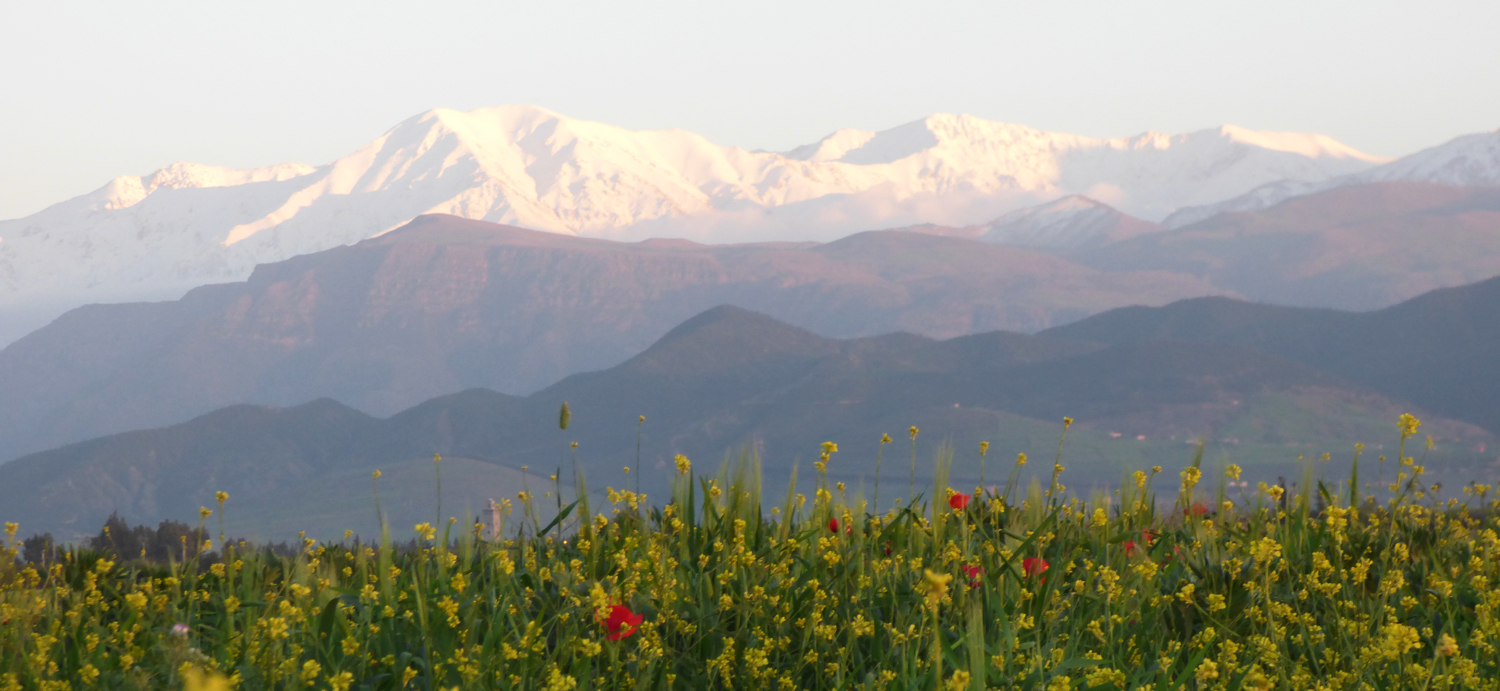
P1140312

High Atlas from Marraquech outskirts. Image by tour leader Carles Oliver.

2 Nightingales (Luscinia megarhynchos) were singing quite deep inside the forest so we didn’t try to have any approach to them. African Chaffinches (Fringilla coelebs africana) were also celebrated as we had close views while feeding on the ground. In the air, a mixed flock of Little Swifts and Red-rumped Swallows (Cecropis daurica) was also popular in the group while Cattle Egrets (Bulbulcus ibis) and White Storks were moving up & down the valley. A bit more of scanning was required to find the main target of this stop but, finally we got really close views on 2 Levaillant’s Green Woodpeckers (Picus vallantii), moving up in the trees and mating just ten metres from us!! To see this tip of behaviour is always a bonus!! Male was calling really close of us but still we could not find it. We moved some metres to the right and got excellent views on the male moving up the tree, just to meet a female in the next branch and go on for some work looking forward the next generation!!!
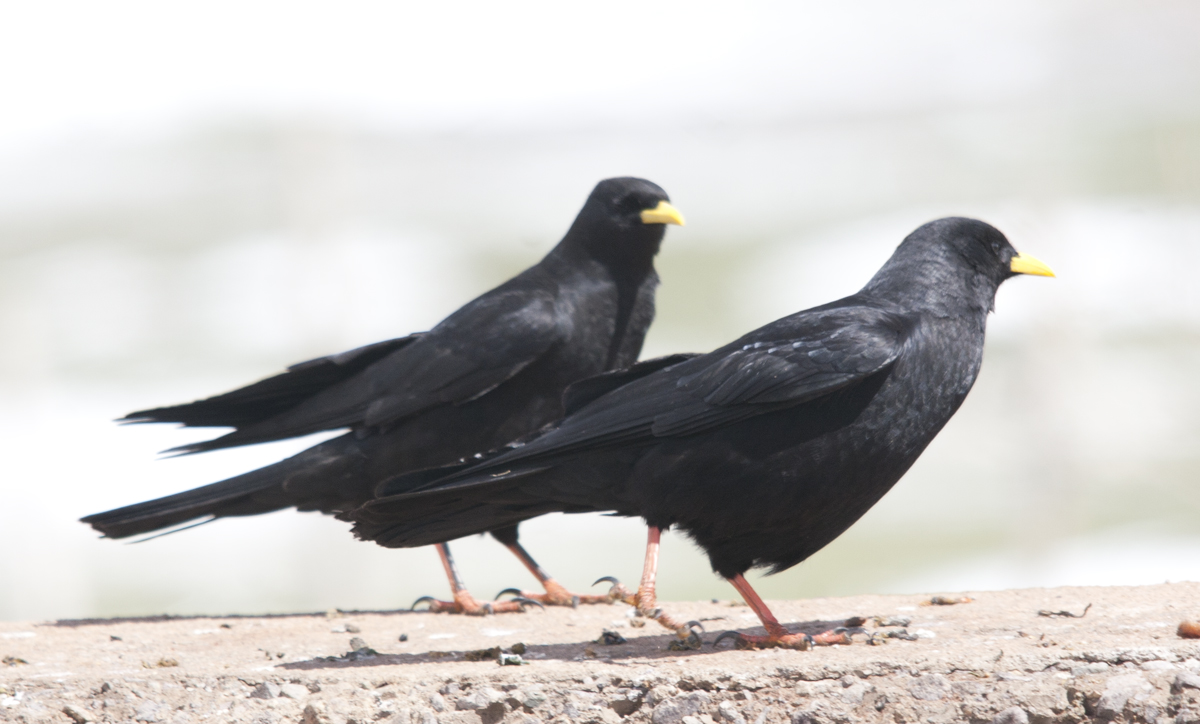
IMG_0886

Alpine Choughs (Pyrrhocorax graculus) are a common view in High Atlas uplands. Image by Carles Oliver

After such a great start we just drove a pair of miles up the same road for a second stop. Even before arriving a road-stop was required since a Short-toed Eagle (Circaetus gallicus) was spotted in the sky. A really low bird, magnificient views. Numbers of Barn Swallows (Hirundo rustica) were moving North in a run to reach their nesting sites in Europe and 1 Willow Warbler (Phylloscopus trochilus) was fastly moving among the juniper trees.

Second stop of the trip to explore some open juniper scrub land. A short walk around the area fastly produced a good number of Blackcaps, the firsts views (of many in the trip) on Moussier’s Redstarts (Phoenicurus moussieri), Sardinian Warblers (Sylvia melanocephala) and very distant Common Cuckoo (Cuculus canorus) calling. No signal of our main target this time but still we flushed a solitary Barbary Partridge (Alectoris barbara) that almost everybody could enjoy. Before coming back to car we still decided to take a second look beyond. Some birds were calling in the distance…

After some minutes of walking we stop to scan the bush land. A shrub full of berries in front of us was having movement inside. Here we had excellent views on the inornata race of Subalpine Warbler (Sylvia cantillans), the race nesting in Morocco. A wonderful male showing really well. More movement inside the scrub, we waited a bit and then a superb male Tristam’s Warbler (Sylvia deserticola) was showing well, alongside with the Subalpine Warbler! It is always a pleasure to have two similar warblers together so everybody can compare differencies in structure and coloration.

We enjoyed the bird for some seconds before flusshed out the scrub… We still waited there some minutes and we got a second Tristam’s, noticiable because of the less contrasted coloration. That was definately a good start with really good views on an often tricky species. We still invested 10 minutes more around, trying to have better views (and photos) in the species but our efforts only produced Eurasian Robin (Erithacus rubecula).

Happy all with such a wonderful encounter, we start moving up the Atlas, enjoying the superb landscapes of endless rocky slopes contrasting with extremelly green crops in the lower, arid slopes. We still had another stop before heading up. A pair of small cliffs are hosting a colony of Lesser Kestrels (Falco naumanni) so we stopped to have good views on them. Unfortunately they seemed to not be all there (yet?) and we only had 1 male Lesser Kestrel flying plus and 3-4 Common Kestrels around. Still, the stop was not bad since we had good views on European Serin (Serinus serinus) and Tomas spotted a female Blue Rock Thrush (Monticola solitarius). Midway up we also had a first close-up to Black Wheatear (Oenanthe leucura), a wonderful bird only living in Iberia & Morocco. Other good birds were enjoyed in the road; Long-legged Buzzard (Buteo rufinus cirtensis), Thekla Lark (Galerida theklae) and Common Raven (Corvus corvus).
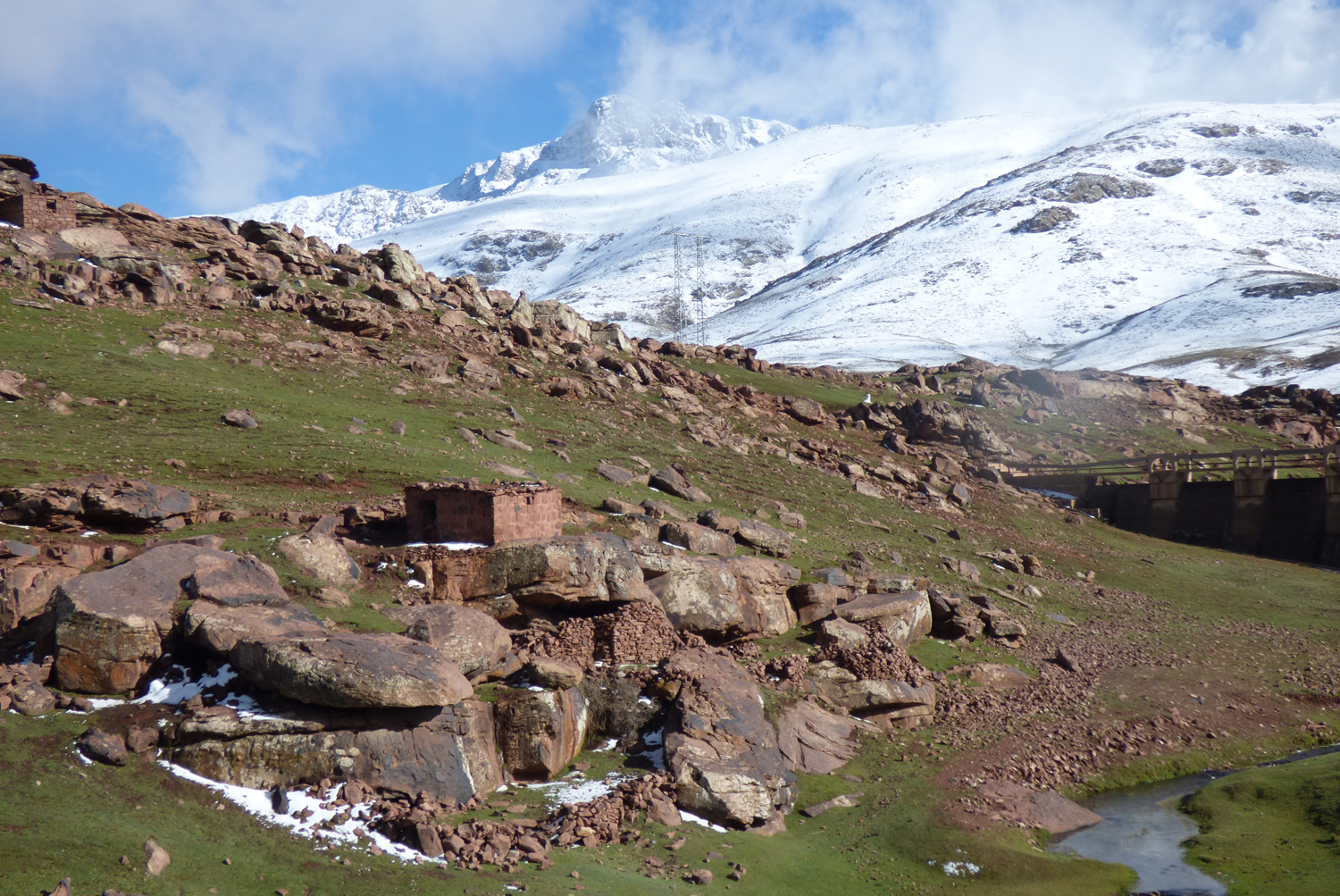
P1140295

Massive high mountain landscape in the Atlas in the transition from alpine meadows to rocky slopes. Image by tour leader Carles Oliver

Once arrived to Oukaïmeden we first enjoyed the flocks of Choughs around. 100+ Alpine Choughs (Pyrrhocorax graculus) were joined by 30+ Red-billed Choughs (Pyrrhocorax pyrrhocorax) and we all had really close views on the birds! A short walk around produced beautiful views on 5 Common Rock Sparrows (Petronia petronia) as well as one of the few European forms of Common Chaffinch (Fringilla coelebs) of the trip! The slopes beyong were hosting several Black Redstarts (Phoenicurus ochruros) providing really good views on both males and type female birds. We still walk a bit more but we had no signal of the main targets of the area… When coming back to the car park we had 1 Atlas Horned Lark (Eremophila alpestris atlas), a race considered by some as a full species. This bird was landing on a slope beyond us and, just when we were about to leave, we got a flock of African Crimson-winged Finch (Rhodopechys alienus) feeding on the ground in that same slope! In half a second they went down the slope and we could have excellent views on, at least, 40 of them!! After some minutes of enjoyment we decided to go for lunch… we all deserve it!

IMG_0948

African crimson-winged Finch (Rhodopechys alienus) is a Maghreb endemic and one of the most wanted species when visiting the Atlas. We enjoy 40+ of them. Image by tour leader Carles Oliver

After a food lunch and some rest we still came to the same spot where we had the finches hoping for a better views on Atlas Horned Larks… this was a not that easy task on a normally easy-to-find bird. Still, after some minutes of scanning, we found a really nice individual feeding on the ground and we all had good views of the bird in the scope. It was just feeding along with several African Crimson-winged Finches, enjoying again majestic views on these birds! Before leaving the high mountains we still had a pair of stops. First stop, by one stream, was producing Dipper (Cinclus cinclus) along with Grey-headed Wagtail (Motacilla flava flava), Blue Rock Thrush male, Black Wheatear and some Black Redstarts. The second stop was even more successful since we had really good views on Coal Tit (Periparus ater), Firecrest (Regulus ignicapillus), Greenfinch, Blackbird and the endemic race of Short-toed Treecreeper (Certhia brachydactyla mauretanica) that was showing really well and let us listen its really different song and calls several times. This race is, again, a good candidate for a future split.

P1140306

Mistle Thrushes (Turdus viscivorus deichleri) are smaller, slimmer and more contrasted than “European” forms and a good candidate for future split. Image by tour leader Carles Oliver

Other good birds here included good views on Mistle Thrushes (Turdus viscivorus deichleri) and 1 Hawfinch (Coccothraustes coccothraustes) that was singing up in the trees but only showed breefly by flying above us and disappear again in the canopies… The road down to Marrakesh only produced Cattle Egrets, White Storks and some more typical road birds until we stopped not far from the city, to enjoy a wonderful view on the mountains in the afternoon light. Here, a fast scanning in the fields produced a gorgeous Black-winged Kite (Elanus caeruleus) flying, hovering and hunting in the open fields!! Some scatered pairs are to be found all along this valley but they are normally difficult to spot. We could all enjoy the bird for over 5 minutes… An amazing view on an amazing bird!! A wonderful end for a really good first day of the trip. If my memory is not bad, that eve we counted 57 sps of birds (not bad for a day in the mountains) including several target birds and some nice bonus birds…

Day 2. Early morning breakfast and direct transfer to Agadir area, having important species to be found there… A first stop by the sea offered us good views on a flock of gulls roosting in the sand. A carefully scan of the flock produced Yellow-legged Gulls (Larus michahellis atlantis), Lesser Black-backed Gulls (Larus fuscus) and 5+ Audouin’s Gulls (Larus audouinii) including a second year bird! This is always a very appreciated gull since it is critically endangered (+60% of world’s population nests in Ebro Delta, Catalonia!). Other good birds around included Algerian Shrike (Lanius elegans algeriensis), Thekla Larks, 2 Common Sandpipers (Actitis hypoleucos) beautifully displaying in the beach (!) and 1 Shag (Phalacrocorax aristotelis) roosting in the cliffs beyond. This was a good spot since it is a very scarce bird in Morocco!

After three hours since we left Marrakech we arrived to Tamri, a well known place to try to have Northern Bald Ibis (Geronthicus eremita). We arrived a bit late in the morning because of the difficult traffic when crossing Agadir (still “enjoying” that city) but still full of energy. Here, sandy dunes are beautifully jewelled by low bush and, in some places, carpeted with incredible grassy areas performing really well as a feeding area for the ibises. Northern Bald Ibis is a critically endangered bird having in both Tamri and Souss-Massa National Park its only viable population all over the world!

Once arrived to the place we just did a short walk and soon had interesting birds around. Several Spectacled Warblers (Sylvia conspicillata) were singing and performing around us and obliging Woodchat Shrikes (Lanius senator) were also seen in the bush land. A bit beyond we enjoyed really good views on a pair of Algerian Shrikes (Lanius elegans algeriensis), a race of Desert Grey Shrike recently split from Northern Grey Shrike (Lanius excubitor). This area is also good for Black-eared Wheatears (Oenanthe leucura) and we also had really good views on some males and, at least, one female. Other good birds around included several Thekla Larks, 2 Moussier’s Redstarts, 2 Subalpine Warblers and the firsts Sardinian Warblers (Sylvia melanocephala) and Northern Wheatears (Oenanthe oenanthe) of the trip.

Northern Bald Ibises were taking long to appear and some members in the group started to become nervous… we still had some walk in the hope of a bird appearing at any momment to feed in the open fields, but nothing happenned… I was honestly thinking about going for lunch when 1 Ibis appeared flying straight to us. It stopped some 300 metres away from us so after having some good views in the scope we decided to come a bit closer… the bird was walking on the sand, looking for preys. Unfortunately for us this ibis was really keen since it got a lizzard really soon and fastly flought back to the cliffs where the colony is placed.

IMG_1007

Northern Bald Ibis (Geronthicus eremita) is the most endangered ibis in the world and a must for anyone visiting Morocco. Image by tour leader Carles Oliver

We decided to wait a bit more and walk a bit beyond in the hope of having better views and our effort had a wonderful success since we soon got 4 Ibises flying close to us in a magnificient view! A small flock of 7 individuals also passed really close to us and we all got really good views right before 1 of them decided to stop less than 50 metres from us. Incredible views of the bird walking up the hill in the  lush vegetation, looking for preys!!! We all enjoyed the birds and valorate the work of the people working there to manage and protect the colony of such as stunning bird!! After such a success we went for a bit of rest and lunch. It had been a good morning so far!

After lunch we went to a small quarry formerly hosting Peregrine Falcon (Falco peregrinus) but after some scanning we got no signal of any falcon at all. Instead, we got a flock of 15+ European Bee-eaters (Merops apiaster) overflying us!

Next stop in the trip was Cape Tamri. Here is a really good seawatching point and I’m always happy to invest some time here!! We enjoyed almost one hour of scanning in the Atlantic. We soon had several Atlantic Gannets (Morus bassanus) moving around, some of them quite close. Sandwich Tern (Sterna sandvicensis) were also spotted moving along the coastline, scanning for fish. I think the best birds were appearing some 10 minutes after our arrival… 4 Common Terns (Sterna hirundo) gave us relativelly close views as migrating North and immediatly after them we spotted 2 Great Shearwaters (Puffinus gravis) moving also North. Most of people in the group got these wonderful birds, but not everybody… Only a pair of minutes after that we all got 1 Great Skua (Stercorarius skua) flying up and diving in the sky while fiercely chasing Gannets! This was a great start but unfortunately we got nothing else as bird migration seemed low that day. Still, this is also a good place to see Euphorbies in detail, a group of plants having several endemic species in this part of Morocco and in the Canary Islands.

Still, before leaving we still added Pallid Swifts flying over us and we still added a pair of species when leaving: 3 Ruddy Turstones (Arenaria interpres) flew off from the rocks and Tomas had 1 Wimbrel (Numenius phaeopus). The transfer along the coast still produced some other good birds as Little Egret (Egretta garzetta) and Great White Egret (Casmerodius albus) were spotted in sea side. When being close to our accommodation, a final stop was made since a Little Owl (Athene noctua) sat by the road in the very last light of the day while Nightingales were singing in the dusk… After enjoying long views on the tiny owl, we just drove to our accommodation in the Souss-Massa National Park for an overnight.

Day 3. After a really good rest we started early that morning. Weather was quiet and sunny so we decided to do a pre-breakfast short walk (10 metres) around our accommodation that produced an excellent list of birds: House Buntings, Cirl Bunting (Emberiza cirlus), really obliging Moussier’s Redstarts, European Serins, Laughing Doves (Streptopelia senegalensis), Sardinian Warblers, European Bee-eaters flying over and Common Quails (Coturnix coturnix) singing in the fields around. We took a look the slopes around since Stone Curlews (Burhinus oedicnemus) are often around (and they were calling during the night) but we had no luck about.

P1140325 copy

Moussier’s Redstart (Phoenicurus moussieri) is probably the most spectacular Maghreb endemic. Image by tour leader Carles Oliver

Main target was surprisingly easy to find since we had two Black-crowned Tchagras (Tchagra senegalus) singing immediately around our accommodation. A bit of scanning and some patience was needed to discover them but finally we all enjoy of long a good views on the birds singing in flight and also moving inside some small trees! Happy with this excellent start of the day we came back to our accommodation for some breakfast.

The very first stop of the trip produced again a good numbre of birds. Greenfinches, Sardinian Warblers, Moussier’s Redstarts, Black-eared Wheatears, Laughing Doves and Subalpine Warblers were all showing well. We stopped just by a small pool in the Souss River, a wonderful place for waterfowl and migratory passerines. Eurasian Coot (Fulica atra), Mallard (Anas platyrhynchos) and Moorhen (Gallinula chloropus) were added to our trip list. Little Egret was showing shortly but well and Grey Heron (Ardea cinerea) overflight us.

Inside the reeds we had good views on Eurasian Reed Warbler (Acrocephalus scirpaceus) and Sedge Warblers (Acrocephalus schoenobaenus) while calling not far from the water. At least 2 Tchagras were calling around but we could not have views on them… Here we got first views on Isabelline Warblers (Iduna opaca), also known as Western Olivaceous Warbler, moving in a small Tamarisks. Under it, a pair of Spanish Terrapins were peacefully having a sun bath. A short stop road onwards produced little out of some Eurasian Reed Warbler and 1 female Little Bittern (Ixobrychus minutus) showing quite well up in the reeds. A third stop was much more productive.

Even before parking we got Willow Warbler & Chiffchaff by the pond. Here a dense forest of small Tamarisk is found so it is a really good place to look for passerines. Soon we had excellent views on Isabelline Warblers along with Eurasian Reed Warblers. In the pool itself, a pair of Little Grebes (Tachybaptus ruficollis) were keen in territorial fights. Subalpine Warblers were also showing in the vegetation around just beside where a flock of 6 Black-crowned Night Herons (Nycticorax nycticorax) were roosting! We were really enjoying that small pond! Suddenly, a flock of 17 Glossy Ibises (Plegadis falcinellus) overflew us moving down the river and their irruption brought us to spot 2 European Kingfishers (Alcedo atthis) down the pool. A small walk was required to scan properly all the area. 1 Black-crowned Tchagra appear just under our feet to gave a second excellent view on such spectacular bush shrike! And then is when we start spotting Little Bitterns. If not wrong there were 4 of them! The most impressive, a male standing up out the reedbeds in full summer plomage. I think it was there for more than 20 minutes while another male was busy chasing females (2?) up and down the reedbeds… impressive for a normally secretive guys!!

P1140338 copy

Cetti’s Warbler (Cettia cetti) is normally an obtrusive species living in riberside vegetation. Not that time. Image by tour leader Carles Oliver

Down the stream a Squacco Heron (Ardeolla ralloides) was also found and, in the fields around, the local form of European Stonechat (Saxicola rubicola), really more contrasted that average continental forms… Corn Bunting (Emberiza calandra), Zitting Cisticolas (Cisticola juncidis), European Goldfinches (Carduelis carduelis) and Crested Larks (Galerida cristata) gave also good views. But probably the best bird in this stop were the 4+ Brown-throated Sand Martins (Riparia paludicola) flying really close to us along with some Barn Swalows and (at least) 1 Sand Martin (Riparia riparia). It seemed that they nesting in the bank by the pool, something I never so before in that pool (I will take a second look in 2018, hopefully…). That was an excellent stop, and it was only 10:20 in the morning! We still explored another corner of the river. Here we got really close views on Spanish Terrapins along with amazing views on Cetti’s Warbler (Cettia cetti) singing 2 metres away from us! Iberian Yellow Wagtails (Motacilla flava iberiae) was also really obliging in this spot. Common Bulbul, Sedge Warbler, Reed Warbler and Moroccan Wagtails were also seen as well as Turtle Dove (Streptopelia turtur) singing from a dead tree. We scanned around for other birds but bird migration seemed to low so we got anything else than 2 Common Sandpipers (Actitis hypoleucos).

Back to our accommodation we enjoyed a really good lunch and, after some rest, we start going back to Marrakech. Still, we had a pair of hours to invest in the Massa estuary, always a wonderful place for birdwatching. The list of birds here was really long and included 1 Oystercatcher (Haematopus ostralegus), 200+ Common Ringed Plovers (Charadrius hiaticula), 100+ Kentish Plovers (Charadrius alexandrinus), 20+ Dunlins (Calidris alpina), 20+ Sanderlings (Calidris alba), 7+ Knots (Calidris canutus), 12+ Ruff (Philomacus pugnax), Common Redshanks (Tringa totanus), Greenshanks (Tringa nebularia), 20+ Bar-tailed Godwits (Limosa lapponica), 1 Black-tailed Godwit (Limosa limosa), 10+ Little Stints (Calidris minuta), +5 Eurasian Curlews (Numenius arquata), 15+ Grey Plovers (Pluvialis squatarola), Common Sandpipers, Ruddy Turnstones and lovely views on the several Pied Avocets (Recurvirostra avosetta) and Black-winged Stilts (Himantopus himantopus) along the mud flats.

A careful scanning on the flocks of gulls roosting along the river mouth produced Yellow-legged Gulls, Lesser Black-backed Gulls, Black-headed Gull (Chroicocephalus ridibundus) and 5+ Mediterranean Gulls (Larus melanocephalus), all of them 2nd years. But the most celebrated gulls were 3 Slender-billed Gulls (Chroicocephalus genei) all of them adults, that were showing the beautiful pinkish buff in their breasts… Several terns were also sleeping, many times mixed along with gulls. Almost 100 Gull-billed Terns (Gelochelidon nilotica) we counted and some Sandwich Terns (Sterna sandvicensis) were also seen, allowing good comparision in structure and size between both species. Beyond the estuary we still had a flock of 25+ Greater Flamingoes (Phoenicopterus ruber) as well as good numbers of Grey Heron, Little Egret and Great White Egret. 60+ White Storks were also roosting  in the mud flats… Some Great Cormorants (Phalacrocorax carbo) were roosting as well in the mud and we were all happy to find a Moroccan Cormorant (Phalacrocorax carbo morocannus) among them! This is a really scarce race (and a good candidate for a future split…) All of this while one confiding Osprey was eating a fish in a post. After enjoying this amazing spot we drave back to Marrakech to enjoy a good dinner and a better sleep!
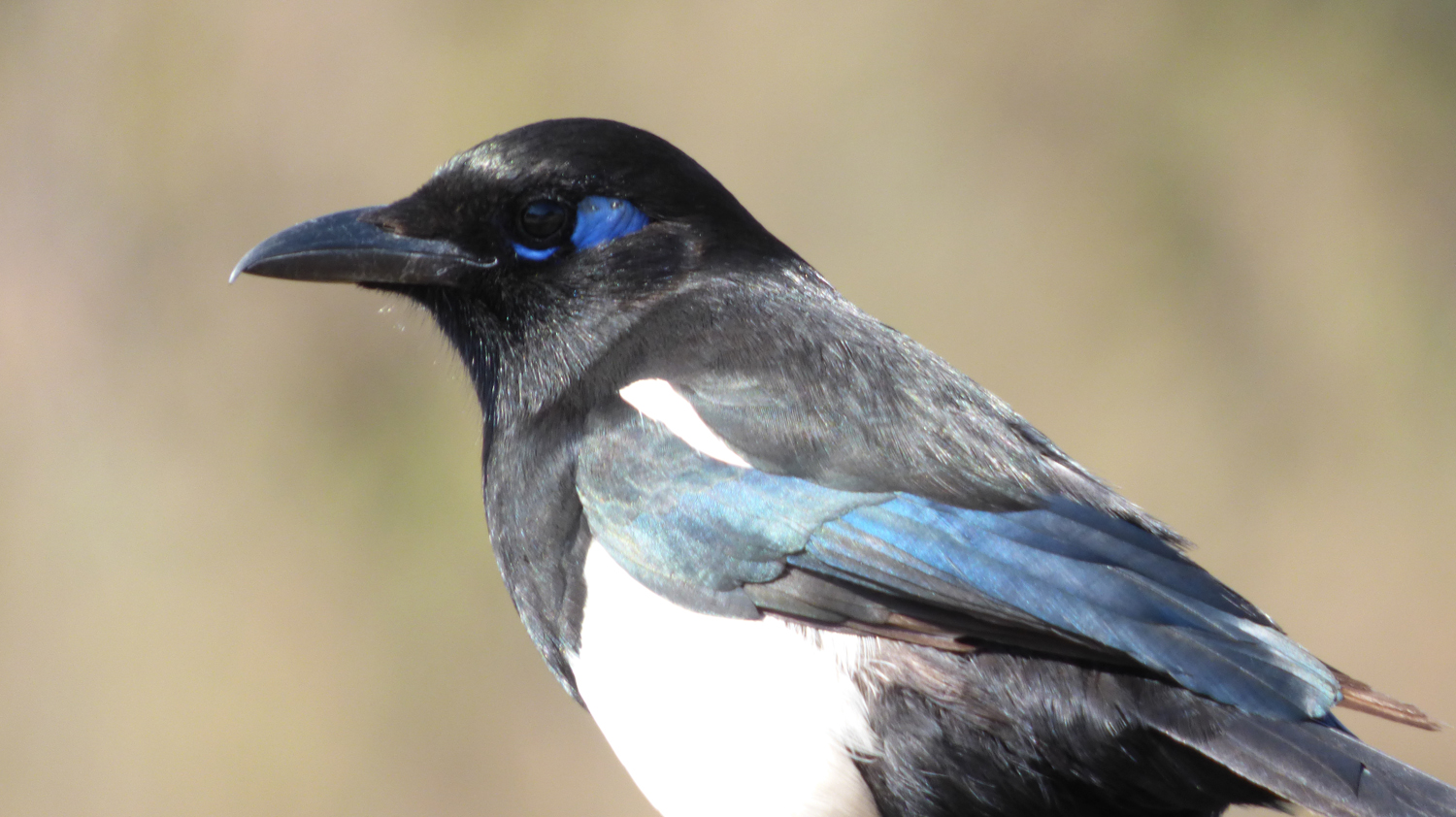
P1140348

Moroccan Magpie (Pica pica mauretanica), a beautiful race likely yoel be recognised as full species in short time. Image by tour leader Carles Oliver

Day 4. This day we crossed the Atlas North to South, enjoying a good variety of landscapes and some of most unforgettable views you can get in this mountain chain. But before going really up we still had a pair of morning stops. First stop along one gorge East of Marrakech. Here we enjoyed some birds along the road including Black-eared Wheatears, Thekla Larks, Crested Larks and Black Wheatears.

We soon did a stop at the top of some cliffs. 1 male Blue Rock Thrush was on a pylon by the van so it was a good start. Two pairs of Common Kestrels were having an argument in the sky but fast our attention was concentrated on a wonderful Lanner Falcon (Falco biarmicus) sitting on the top the cliff! We got stunning views on the bird while preening and overlooking the valley around. After everybody could enjoy the bird we started to scan the river and the valley beyond. We invested about 30 minutes and during the whole time the Lanner Falcon stayed at its place, providing us with good views from differents angles. The scanning of the river soon prodided with up to 7 Ruddy Shelducks (Tadorna ferruginea) that were really wellcome in the group. Brown-throated Sand Martins were also flying along the stream along with at least 1 Western House Martin (Delichon urbicum) and some Crag Martins (Prynoprogne rupestris).

A carefully scanning of the small muddy areas produced 3+ Little Ringed Plovers (Charadrius dubius) & 3 Green Sandpipers (Tringa ochropus). Up in the sky, a flock of 30+ Black Kites (Milvus migrans) suddenly appeared, circling, but they soon kept going North, following their migratory route. We short stop beyond this point still produced anothe good bird, since 15+ Spanish Sparrows (Passer hispanoliensis) were spotted in a small field by some houses. Here we also had House Sparrows, Sardinian Warblers, Woodchat Shrike, Common Bulbuls and close views on 1 Zitting Cisticola. In the wires there were also 2 Common Rock Sparrows, but I think I was the only one to have them, the group was concentrated in enjoying the Spanish ones…

Back to the main road up the Atlas we still had a number of stops in the Southern slope. The lowest one produced typical views on Thekla Lark, European Stonechat, Zitting Cisticola, Woodchat Shrike and Sardinian Warbler but also wonderful views on 1 Barbary Partridge in the middle of one field. This corner is having huge density of them and don’t really know any other place in Morocco where finding this bird is so easy! Here we also had the firsts 2 White Wagtails (Motacilla alba) of the trip and 2 extremely close Little Ringed Plovers. The very last bird before living the area was a wonderful Booted Eagle (Aquila pennata), ligth form, really low over the olive orchads…
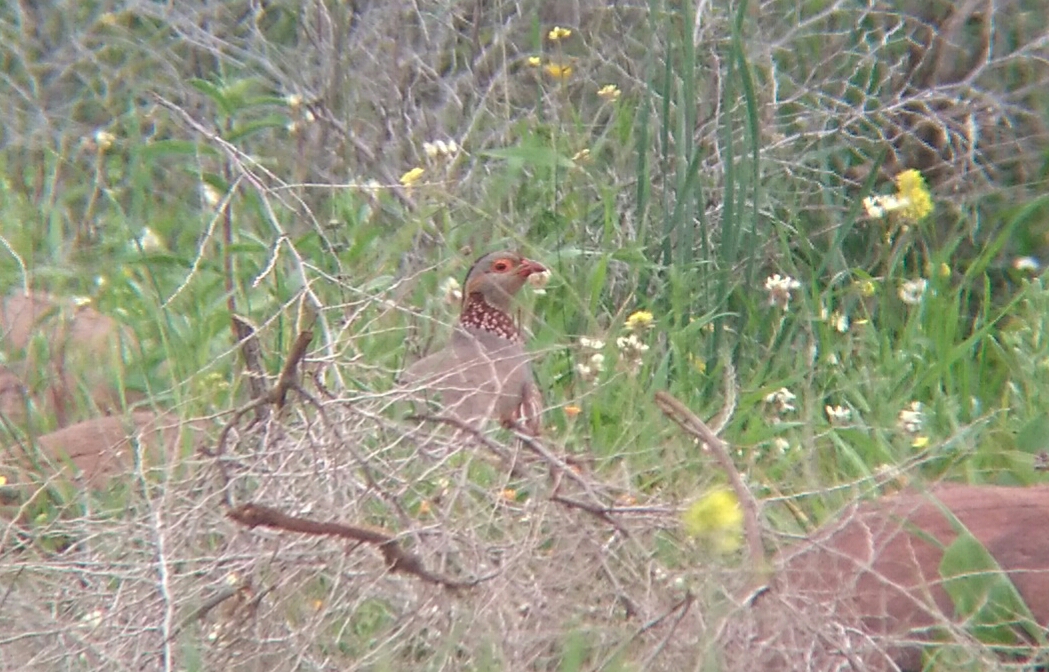
IMG_20170325_064537

Barbary Partridge (Alectoris barbara) can be surprisingly difficult to spot. This year we got excellent views, again! Image by tour leader Carles Oliver

Some more stops along the road were done as raptors were spotted. 4 Booted Eagles, 2 Eurasian Sparrowhawks (Accipiter nisus) and 1 Short-toed Eagle were all seen along the road. Once in the highest area of the road (above 2000 metres!) we still had a pair of stops to admire the landscapes around. Common Raven were around and we were surprised by 1 Peregrine Falcon (Falco peregrinus brookei) flying around us, quite close! At 2200 metres we still had a new stop since 1 male Montagu’s Harrier (Circus pygargus) was spotted just by the car! We enjoyed good views on the bird while flying against the strong wind!!! In the slopes above, a flock of Alpine Choughs was also a good bird appearing!

Once in the Southern slope the temperature started to go up fast, but it was really, really windy. Despite the really strong wind we decided to explore a small valley before going to our accommodation in Ouarzazate. Here we were looking for Maghreb Wheatear (Oenanthe halophila), one of the most difficult birds in Morocco. After more than 90 minutes of scanning we decided to quit and go to rest after a good day. No signal of this Wheatear. Still, we had firsts views on Desert Lark (Ammomanes deserti), White-crowned Black Wheatear (Oenanthe leucopyga), both lifers for everyone in the group, plus good views on Black-eared Wheatear, Northern Wheatear and Moussier’s Redstart.

Day 5. Early morning start. After the difficulties of the last afternoon because of the wind, that morning we were all hoped for a calm day. Weather conditions were much better and after breakfast we confirmed that it was no wind at all. Happy for that we decided to have a second look to the same location we were the afternoon before. Unfortunately this place produced no Maghreb Wheatear since we only had exactly the same species than we had the afternoon before…

Still, a short exploration of some orchads around produced really good birds including 4+ Hoopoes (Upupa epops), +5 Common Redstarts (Phoenicurus phoenicurus), several Subalpine Warblers and 5+ Western Bonelli’s Warblers (Phylloscopus bonelli). The site also produced lovely views on Maghreb Larks (Galerida macrorrhyncha) and we even got some good views on Thekla and Maghreb Larks side by side, a good way to see how different do they are! As “always”, Woodchat Shrikes were also around. A second stop by the road was made to check for Maghreb Wheatear with no signal of any bird… still, we had even more Western Bonelli’s & Subalpine Warblers plus Chiffchaff and 100+ Black Kites (Milvus migrans) that were moving North!! It was a beautiful view to see them flying quite low and everybody enjoy to see them fighting against the wind (it was still windy high up). As there were some raptors all the time around we did a further stop to check around for something different and we got our only 1 Marsh Harrier (Circus aeruginosus) of the trip, and more Black Kites!

P1140822

Western Subalpine Warblers (Sylvia cantillans) can be really common during some weeks in early spring. Image by tour leader Carles Oliver

When coming back to Ouarzazate (not even 10:00am), Tomas spotted a flock of small birds by the road so stop to take a look. After some scanning we found that there were 40+ Greater Short-toed Larks (Calandrella brachydactyla). We got nice views on them! Even inside the city we also had a stop since a field was flooded really close of the road… a good excuse to stop and check. This field was full of Yellow Wagtails (Motacilla flava sps) and some check showed us some Iberian Yellow Wagtails (Motacilla flava iberiae), 1 Scandinavian Yellow Wagtail (Motacilla flava thunbergi) and nominal Grey-headed Wagtails (Motacilla flava flava). Here we also had good views on at least 1 surprising Water Pipit (Anthus spinolleta) and 3+ Meadow Pipits (Anthus pratensis). Green Sanpiper & Little Ringed Plovers were also present here while flocks of swallows and European Bee-eaters were seen around. Here I had one pipit showing some whitish stripes in the back and plane face… still, anybody can had good views in this bird… unfortunately!

After this stop our next stop was the big dump immediatly South & East of Ouarzazate. A short transfer was necessary to arrive to one of the best places for birding in the dump. Here we soon had good views on Kentish Plovers (really common this time), Black-winged Stilts, Northern Shovelers (Anas clypeata), Ruddy Shelducks, Grey Herons, Greenshanks, Little Stints, Great Crested Grebes (Podiceps cristatus), Common Ringed Plovers and Redshanks. Good birds included 5 Curlew Sandpipers (Calidris ferruginea), 2 Spotted Redshanks (Tringa erythropus) and a good flock of 20+ Pied Avocets (Recurvirostra avosetta) spotted by Frumie. Special mention to 4 Collared Pratincoles (Glareola pratincola) roosting in a small mud flat, good spot by Tomas, 1 juvenile Short-toed Eagle, 2 Montagu’s Harriers females (1 of them a superb melanic form) and, after a funny short walk, hundreds of Red-knobbed Coots (Fulica cristata) feeding, preening and fighting in the water along with Ruddy Shelducks! The dump provided also with good views on Isabelline Warbler, Pallid Swifts, Iberian Yellow Wagtail & Maghreb Larks.

After lunch we did our transfer to Boumalne du Dades and, after check-in in our accommodation we spent the afternoon in the famous Taghdild Road. Even before arriving we just did a first small stop since a flock of Greenfinches were feeding by the road when suddenly, a gorgeous Barbary Falcon (Falco peregrinoides) appeared from the sky in a very agressive dive close to the finches. We all jumped out the van and could have really good views on the fast flying, small sized, falcon. Really pointed wings and size and structure a bit resembling to Merlin (Falco columbarius). That was a brilliant start to our afternoon!!

Once in the place several stops were made and we had really lovely views on both Desert (Oenanthe deserti) & Red-rumped Wheatears (Oenanthe moesta) as well as Thekla Larks, Lesser Short-toed Larks (Calandrella rufescens), Greater Short-toed Larks. Special mention to our firsts Temminck’s Horned Larks (Eremophila bilopha) of trip! This lark still ranks as my favourite lark… what a lovely bird! The afternoon was being good and we add 1 female Black-eared Wheatear to our day list plus some Northern Wheatears and White Wagtails. By the rubbish dump we also had a small flock of 4+ Trumpeter Finches (Bucanetes githagineus) but most of the group only had poor views on the birds. There were simply too much inputs around so the people was dispersed!! 2 Long-legged Buzzards were showing well around… We kept moving in the steppes, the endless, ondulate steppe all for us! I just love this place… After some kilometres (2, 5, 10?) we just had 2 Black-bellied Sandgrouses (Pterocles orientalis) flying around us. We had good views on them! Kept moving on and we flew 2 more, quite close! Time to check around… Soon we had really good views on a pair of Black-bellieds moving in the steppe some 50 metres in front of us. We enjoy them really a lot, with a lovely afternoon light! They even decided to cross the road and the male had a sand bath right in front of us!!

A further scan soon produced the top bird of the day, since Tomas spotted a flock of 8+ Cream-coloured Coursers (Cursorius cursor) moving at our right. Once out of the van we got lovely views on the birds in the scopes… doing their small runs while looking for beetles, their favourite prey! Along with them, a pair of wonderful Hoopoe Larks (Alaemon alaudipes) were really showy and, despite they were not really close, we all enjoy their exhibition flights while singing! That had been a wonderful end for a not really bad day! We came to our hotel to have a good dinner and a chat about all the birds we had enjoyed that day!

Day 6. We started the day with bad news on weather. The afternoon before we had quite a lot of cold wind and since it didn’t stop during the night we were facing a cold, windy morning… difficult conditions to spot the birds we needed. Still, we went down the plains full of energy and soon we started having good birds. 3 Long-legged Buzzards gave us really good views as did Red-rumped Wheatears, Temminck’s Horned Lark, Thekla Lark, several Greater Short-toed Larks moving aroung and Little Ringed Plovers, White Wagtails, Iberian Yellow Wagtails and Meadow Pipits! We decided to stop and scan in a place that look like particularly good and we fastly got 2 Stone Curlews (Burhinus oedicnemus) roosting on the ground! It was a lovely view… a further scanning produced really good views on 2 Tawny Pipits (Anthus campestris), a species which is normally not appearing in this trip!! Despite the really good sights wind was still really strong so we decided to come back to the van and scan while driving slowy, expecting for something more…

tmp_P1110650-1067284061

Temminck’s Lark (Eremolauda billopha), a small lark living in highland steppe plateaus. Image by tour leader Carles Oliver

It took some kilometres until Adrianne was having a bird in the road…. 1 male Thick-billed Lark (Rhamphocoris clotbei)!! The bird flew off, but didn’t go far so we came out and walk around, scanning. Unfortunately we could not have it again… We kept driving around and scanning until we got some Thick-billed Larks flying around! They were stopping not far from us so we stopped and jumped out the van… and well, this time we had really good views on a 3+ Thick-billed Larks moving on the ground! This bird was really celebrated by the group, also because it became the easiest lark to identified!! Thick-billed Larks can be quite difficult to spot since their numbers are highly variable depending on the year (normally really low) and become highly nomadic birds when out of the nesting season… Happy after this spot we decided to try a different location.
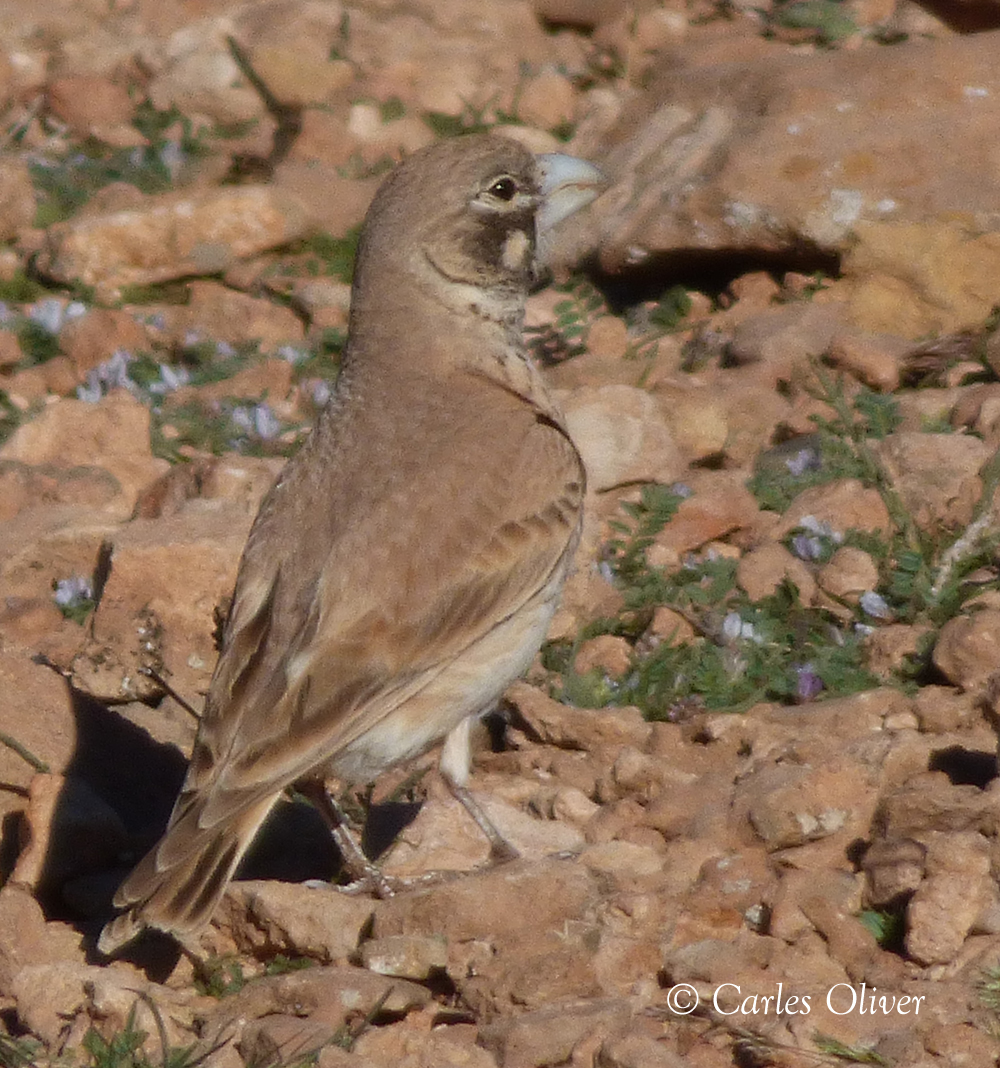
Thick-billed Lark - Ramphocoris clotbei

Thick-billed Lark (Rhamphocoris clotbei) is a highly nomadic bird out of nesting season. Image by tour leader Carles Oliver

A stream beyond the area is normally having water and it is a good place for migratory birds. A really unknown pond not far from there is a really good place as it attracks Sandgrouses in dry years. We checked all places but none of them were having water at all. The place was quite poor in birds this year. Still, we had good views on House Bunting, Woodchat Shrike, Isabelline Warbler, Maghreb Lark and W Bonelli’s Warbler.

Next stop was to explore a small gorge close to Boumalne. We left the van for a short walk, sheltered from the wind. The place was really productive since we had really good views on Desert Larks, 4 Black-eared Wheatears, European Serins, House Buntings and one pair of lovely Trumpeter Finches that were showing really well while feeding on the ground. We just stopped by a view point to scan the gorge and we soon we enjoying excellent views on 1 roosting Pharaon Eagle Owl (Bubo ascalaphus) by its whole!!! What a stunning bird! We spent some 20 minutes enjoying the owl and the finches, the owl calling a pair of times to remind us he was the Sir of that land..

IMG_20170325_151902

Pharaon Eagle Owl (Bubo ascalaphus) delighted us with walk-away views, and some action! Phonoscoped by Carles Oliver

After such a successful start we just went to the famous Gorge du Dades to have some lunch. Still, in the way up we had to do a fast stop since a Short-toed Eagle was cicling in the sky. The bird was fastly dissapearing behind the mountains but it was replaced in the sky by a superb Bonelli’s Eagle (Aquila fasciata)! The bird was in fact chasing the Short-toed!!! We didn’t see the fight properly since it happened out of our view but we had the Bonelli’s going up and diving to where the Short-toed was flying. This first Bonelli’s was soon joined by its pair and then we had excellent views of both birds circling in the sky… impressive! Happy after such a wonderful sight we finally got to the restaurant and enjoyed some rest…

IMG_20170325_165553

Dades Gorges, combines geat birding with ashtonishing scenery. Image by tour leader Carles Oliver

We had a lovely lunch enjoying the sun that was fastly warming up the air. Several Crag Martins were flying around us. African Chaffinch, African Blue Tit & Grey Wagtail (Motacilla cinerea) showed well in the Dades River. 1 Wren (Troglodytes troglodytes) was singing at the other side of the river but, despite our efforts, none of us could see the bird so it could not be add to the trip list. After lunch we did a pair of stops looking for Rock Buntings (Emberiza cia) but we only got a distant bird calling in the gorge… still, we enjoyed good views on Blue Rock Thrushes, Black Wheatears, Sardinian Warblers, Common KestrelCrag Martins and 40+ Red-billed Choughs

P1140362

Black Wheatear (Oenanthe leucura) is having in Atlas mountains its Southernmost population. Image by tour leader Carles Oliver

A further stop was made in a cliff and we were soon enjoying a Barbary Falcon quite close in the very top of the cliff. It was a really good view and I was personally surprised on how fast we found the bird!! Still, this species is having a pair of territories around Boumalne so it is a really good place for them! The very last stop of the afternoon was to explore some orchads that can host a good variety of migratory birds. Here we had W Bonelli’s Warbler and we were surprised by really close and long views on 1 Melodious Warbler (Hippolais polyglotta) and 4+ Common Whitethroats (Sylvia communis). A singing Nightingale (Luscinia megarhynchos) focused our attention and, after a long scanning, we finally managed to find the bird singing from a quite high perch! This view was also quite appreciated in the group. Here we also heard Cetti’s Warbler singing & Great Spotted Woodpecker drumming. After such a successful afternoon we came back to our hotel to enjoy some Moroccan tea and dinner!

Day 7. This day started with a clear rise on the temperatures. After some windy and chilly days we finally left the hotel in a sunny, calm, warm day! During that day we were driving South towards the desert… to meet the Sahara!

In our way South we had some stops, anyway. Our first stop was to explore some proper habitat for Maghreb Wheatear (Oenanthe halophila). A pair of days ago we failed to find any of them so we were all hoping for better luck this time. Once we left the car we had some good birds moving around: House Bunting, a small flock of Trumpeter Finches, Desert Wheatear and 1 female Moussier’s Redstart. We decided to do a small walk, exploring some slopes beyond the road. After few minutes we arrived to a proper place to scan different rocky slopes around. There we had good views on Red-rumped Wheatears, Desert Wheatears, Northern Wheatear, White-crowned Black Wheatear and Desert Larks.

P1140388

Maghreb Wheatear (Oenanthe halophila) is a scarce bird with a very limited range. Image by tour leader Carles Oliver

Suddenly, a Wheatear came to us extremely close… it was so close that we had difficulties in recognise that it actually was a female Maghreb Wheatear! We followed the bird in the slope but it was disappearing really fast! After less than one minute a gorgeous male was also appearing about 15 metres from the group. Then we all had excellent views on the bird. After having a small insect in the poor vegetated plain it flew up to the ondulated terrain. We walked some metres to keep the track of the bird and we again had excellent views on the this craking bird for almost one minute. After that it flew off, going beyond the small hills around… After such a wonderful views we “all came back really happy to the mini bus. In our way back we still had time to pick up a plentiful Spectacled Warbler male and a Booted Eagle soaring over the mini-bus.

P1140375

Maghreb Wheatear (Oenanthe halophila) in black-throated form was showing that well for some time. Image by tour leader Carles Oliver

A final stop was done in our way to the Sahara, this time to explore a place for Scrub Warbler (Scotocerca inquieta). Despite our efforts we could not locate any of them, this time. Instead, we got wonderful views on a pair of Bar-tailed Lark (Ammomanes cinctura) moving in the really open landscape they favour. Our walk along a pair of dry river beds produced also good views on Desert Grey Shrike (Lanius elegans), 3 Woodchat Shrikes, Spectacled Warblers and a good flock of 15+ Greater Short-toed Larks feeding few metres from us.

After this good stop we just went for a rather frugal lunch and drove to our accommodation in the desert, where we could enjoy of some rest and a wonderful sunset in the dunes…

Day 8. Everything ready for our day in the desert. Our local guide punctually came to our accommodation in Merzouga and we started our trip while listening the “tac-tac” calls of the Subalpine Warblers all around the gardens of our hotel. In our aim to find them we had also good looks on some Willow Warblers.

Our first stop that morning was to check a small water pond where Sandgrouses are coming to drink water. Sandgrouses need to drink water almost daily, especially during the nesting season, when they bring water to the chicks using an extremelly especialized feathers in the breast. The severe drought during the winter had left very few water sources left in this part of Morocco so we were expecting to have some flocks moving around.

Even before arriving to the pond we had our first flock of Spotted Sandgrouses (Pterocles senegallus) lying on the stony desert. We had really good views on the birds and we enjoyed taking some photos. Once placed near the pond we had time to scan the large plain around. Soon we spotted several flocks of Sandgrouses, including both Spotted & Crowned Sandgrouses (Pterocles coronata). A Barbary Falcon appeared in a incredible dive in a good trial to pick one of the several Sandgrouses around…

P1140539

Spotted Sandgrouse (Pterocles senegallus) female posing for us in the desert. Image by tour leader Carles Oliver

After 10 minutes of waiting, finally one flock of Crowned Sandgrouses came to the pond. They landed some metres away from the water preening and walking slowly while waiting for the proper moment to drink water. And suddenly the momment arrived. In few seconds tens of Sandgrouses flew to the pond from all around the plain. In few seconds we were surrounded by small flocks of them, all flying around and coming in fast approaches to the water!

P1140528

Flock of Sandgrouses drinking water in the desert. Image by tour leader Carles Oliver

The sound of these hords of Sandgrouses landing and taking off from the pond in different waves is ranking high in my birding memories and something that all participants in the trip will remember for ever!!
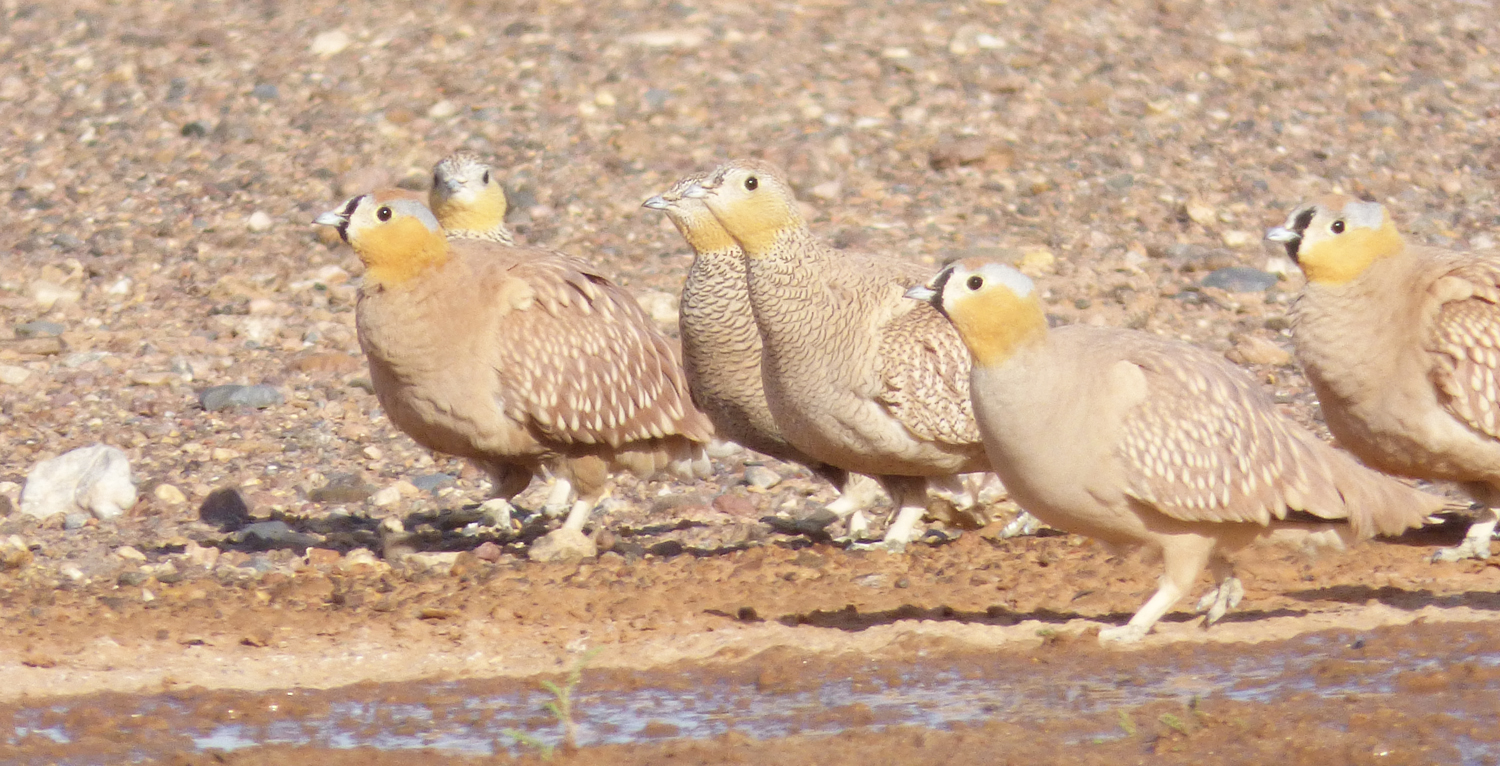
P1140544

Crowned Sandgrouses (Pterocles coronata) is often a scarce species living in semi-arid countryside. Image by tour leader Carles Oliver

After several counts we concluded that a minimum of 48 Crowned and 120+ Spotted Sandgrouses were around us!!!

P1140493

Mixed flock of Sandgrouses coming to drink water in a tiny pond in Merzouga. Image by tour leader Carles Oliver

After enjoying as long as necessary of such a magic momment we moved to explore a nearby oases. Here we soon enjoyed some good birds such as Woodchat Shrike, Common Redstart, Subalpine Warbler and Melodious Warbler while some flocks of European Bee-eaters were moving around. A short scanning around let us locate a wonderful male Desert Sparrow (Passer simplex), our main target in that location! We had a male and one female in walk-away views while preening, feeding along House Sparrows and calling all around. What a beauty!

P1140589


Back to the desert we spent some time in a wadi with some sparse vegetation. Here we were soon enjoying 2 Hoopoe Larks (Alaemon alaudipes) moving in the desert, singing and offering good views in a short display. Brown-necked Ravens (Corvus ruficollis) were flying around and we had our first views on these desert birds. A few metres after we spotted a wonderful African Desert Warbler (Sylvia deserti), a bird that can be quite difficult to locate! In a pair of minutes we were all enjoying of really, really close up views on the bird and photographers in the group were really happy about such a close views!!
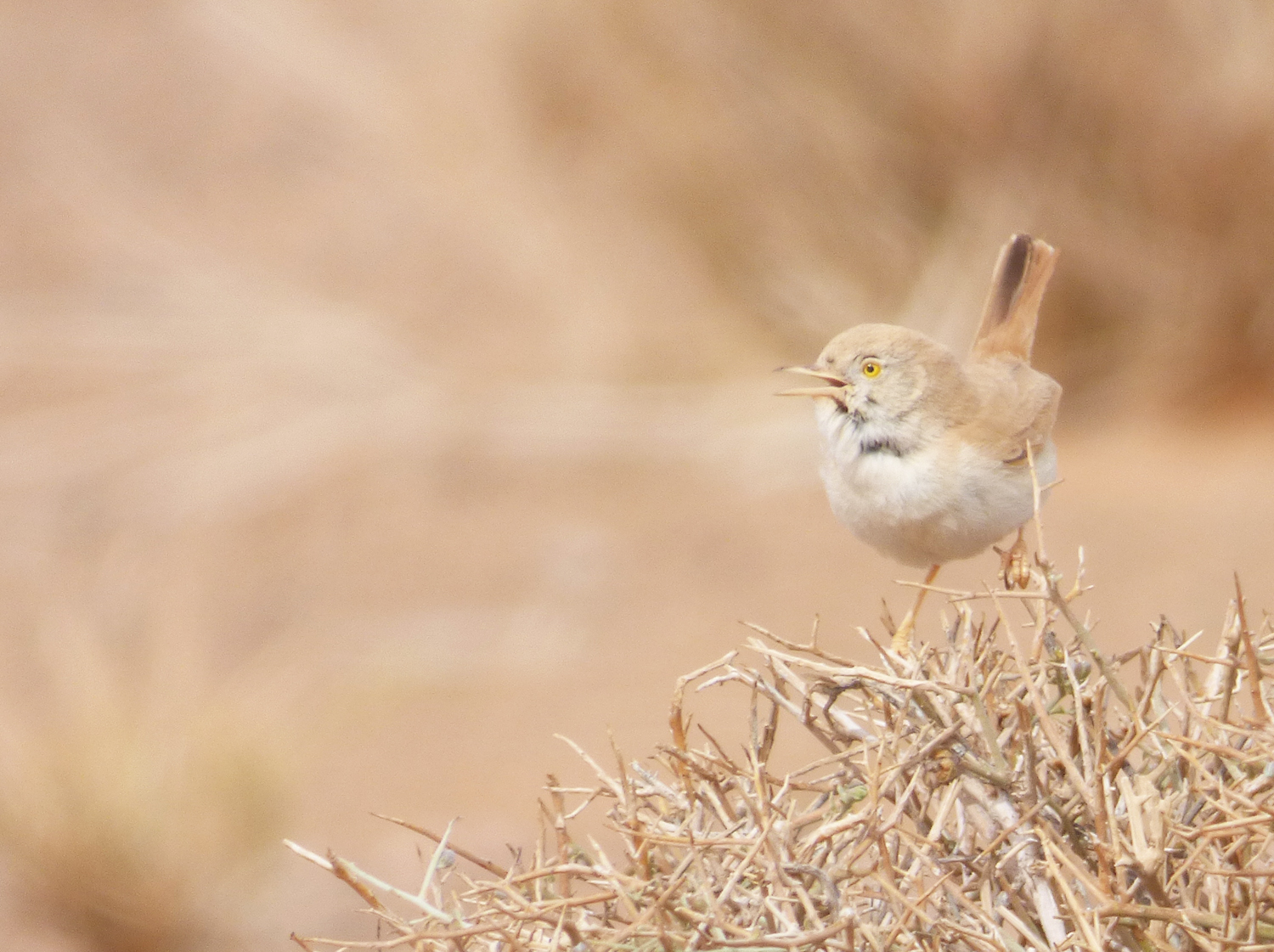
P1140658

The morning was great so far. Our next stop was really deep in the desert where we met our special guide to help us locate the scarce Egyptian Nightjar (Caprimulgus aegyptiacus). Soon, we were amazed about the skills of that nomad, a silent and pleasant old man, that fastly located not one, neither two, but three nightjars roosting in the wadi…
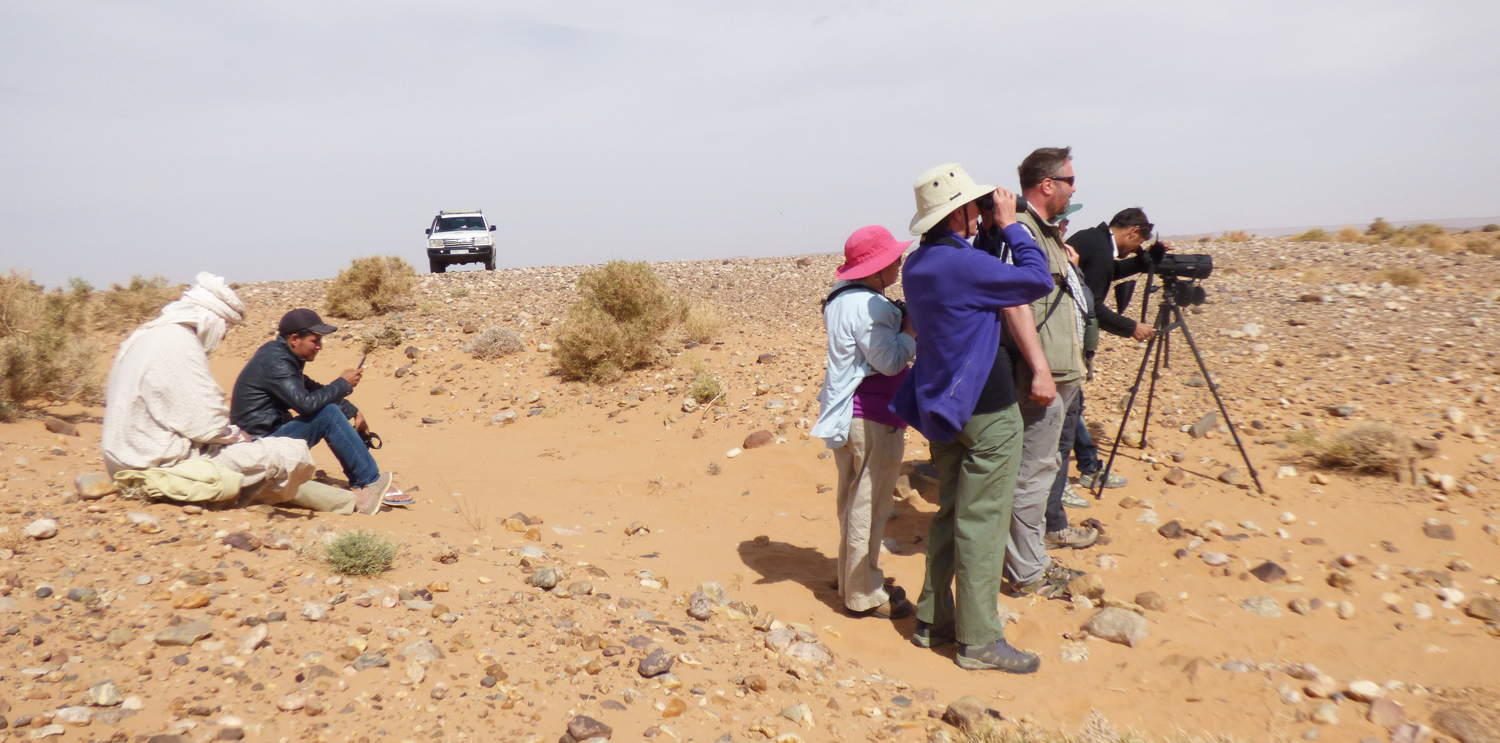
P1140723 copy

Our group enjoying some birding in the desert. Image by tour leader Carles Oliver

We could enjoy incredible views on them in the scopes and had a hard but wonderful time until all members in the group could find the birds with their our bins… Everybody enjoyed to see how such a big birds can be so hard to spot while roosting directly on the ground, out of any vegetation! Because of that, this was the bird of the trip for many of the participants in the trip.

P1140708

After such a successful morning we went for a good lunch and some rest. After our rest we went for a short exploration of some oases around Rissani, where we had excellent views on Maghreb Larks and the firsts Blue-cheeked Bee-eaters (Merops persicus) of the trip. Superb birds that we could enjoy while catching insects in flight around us! Other birds here include also Blackbird and Laughing Dove. Some scanning was required to have the main target of the stop, thought. Despite the strong sun, we had a Fulvous Babbler (Turdoides fulva) sitting low in a palm tree. We fastly all moved to the bird, trying to cut some of the three hundred metres from it and us… After a small running we had good views on the bird, now joined by a second individual, that were flying around us!!! Happy all with the good views on this difficult species we decided to invest some time in a final stop.

P1140703

One of the three Egyptian Nightjars we had during our trip! Image by tour leader Carles Oliver

Our last stop that day was to look for the very scarce and difficult to spot Scrub Warbler. A first walk around the area alowed us to have our only 1 Seebohm’s Wheatear (Oenanthe seebohmii) of the trip, that was really celebrated in the group. Hoopoe Larks were also around there. We had a walk along the wadi, trying to cover as much area as possible to try to have this elusive bird. After more than 40 minutes, we were all about to quit when Tomas had something moving low in the vegetation very close to us… I saw it for 1 second but it was a Scrub Warbler!!!
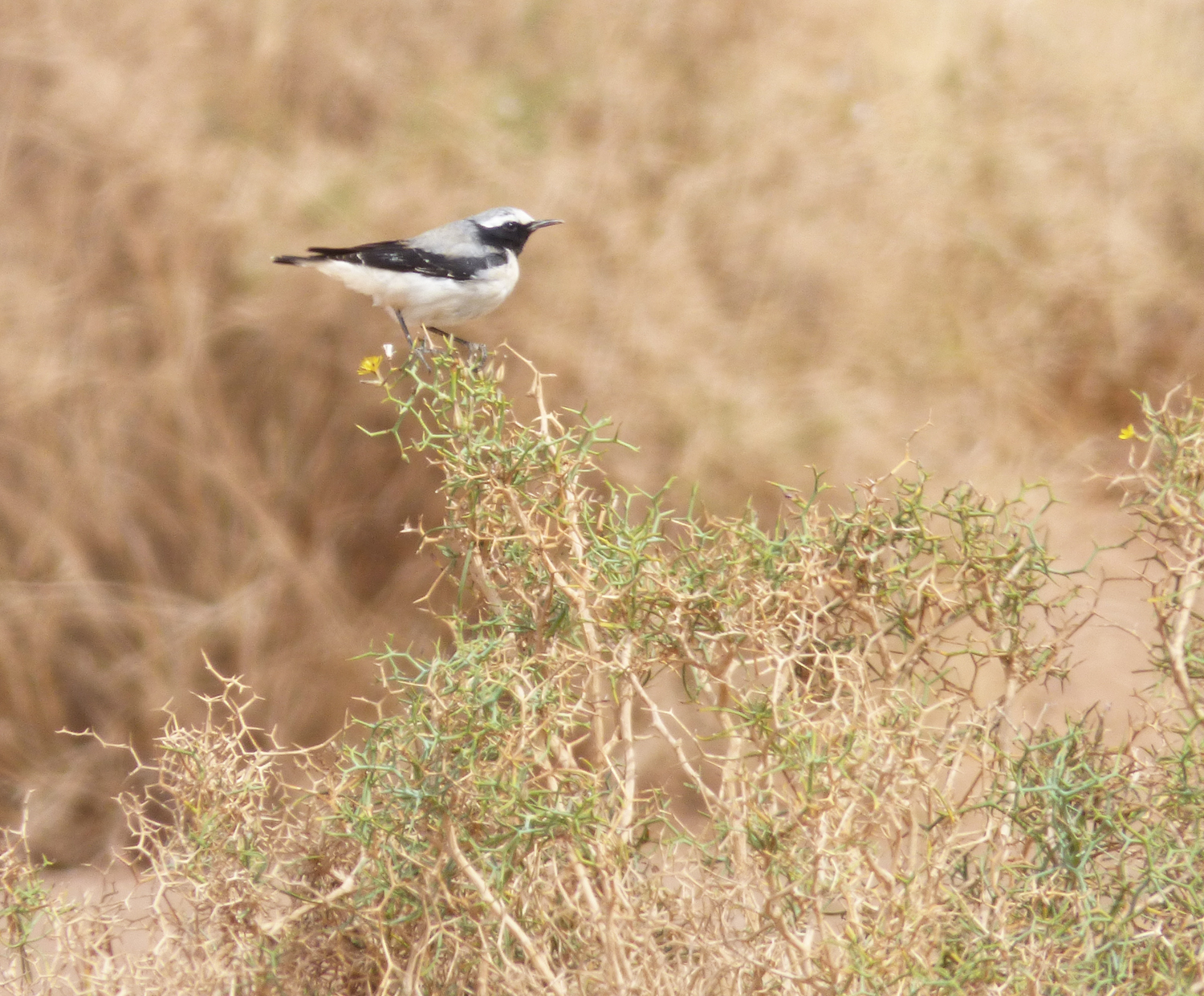
P1140742

Seehbom’s Wheatear (Oenanthe seehbomi) is nesting in high mountain grasslands. Image by tour leader Carles Oliver

Everybody jumped off the mini bus and started scanning the bush immediatly around, but nothing. We spent an extra 20 minutes scanning all around we were uncapable to relocate the bird that looked like being into the sand… A pitty, because only me and one participant could have a really short view on the bird…

Still, the day had been amazing and we all came back for some rest and wonderful dinner in our accommodation!

Day 9. This was our very last day of “birding” of the trip, since the last day was, as usual, basically driving but with a really good surprise in the morning… After breakfast we drove a short distance until one nearby hotel, having really extensive gardens and orchads which are really good for migratory passerines.

The day before had been windy so the sensation when we arrived was quiet. Still, after a short walk, we started to have some good birds. 3 Common Redstarts were spotted in the orchads followed by several Western Bonelli’s Warblers and Subalpine Warblers. Up in one tree it was also a Garden Warbler (Sylvia borin) but I was the only one in having this bird… A carefully scanning produced Willow Warblers and 1 Chiffchaff. Soon our attention was demanded in a medium size bird skulking low in the grass and, after a bit of waiting, we soon were all enjoying of really close views on a group of three Fulvous Babblers! It was phantastic to see them that close as they were looking for food in the rather tall grass while doing really soft contact calls… that was really improving the views we had on this bird the day before!
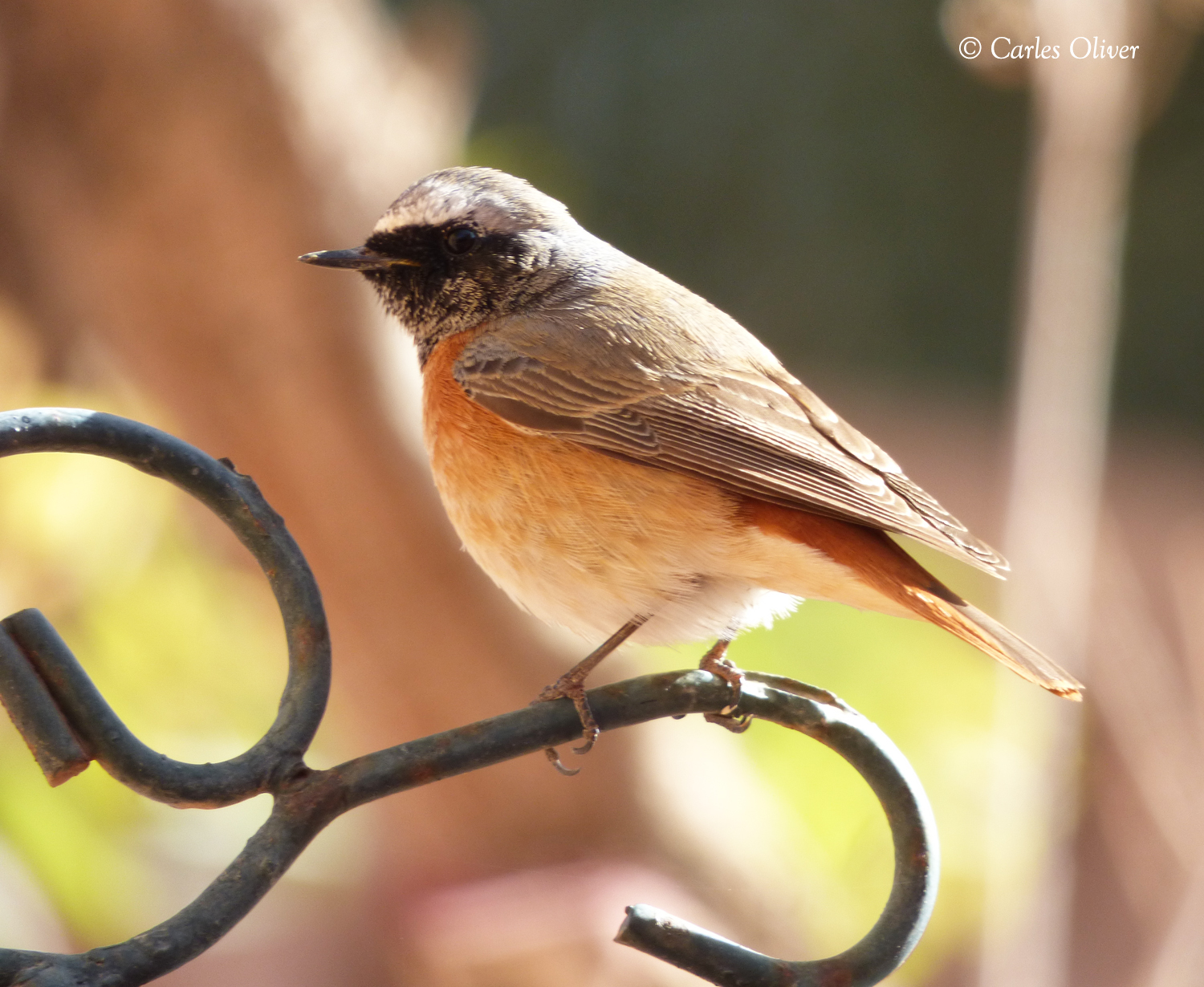
P1140861

Common Redstart (Phoenicurus phoenicurus), a common bird in migration in Morocco. Image by tour leader Carles Oliver

We enjoyed the Babblers long while keep scanning for other birds. White-crowned Black Wheatears were all around as it was a wonderful flock of European Bee-eaters. Here we also had Blackbird, Laughing Dove, European Robin and Sardinian Warbler. It was starting to be windy again so we looked for shelter around the walls of the hotel as some birds did since here we had really close views on one male Common Redstart, Woodchat Shrike and 1 wonderful Western Orphean Warbler (Sylvia hortensis) that was posing for us for more than 5 minutes!!! Great found!!

P1140877 copy

Western Orphean Warbler (Sylvia hortensis) is normally really obtrusive but this year we had walk-away views in the open. Image by tour leader Carles Oliver

Once outside the hotel, we did a final round to try to have something else. In this second walk we had good views on Western Olivaceous Warbler (also known as Isabelline Warbler) and a second W Orphean Warbler but not so much else. Right before leaving Tomas spotted a Pied Flycatcher (Ficedula hypoleuca) in the tamarisk around. We all enjoyed good views on the only one “real” flycatcher we had in the trip!

P1140761

As was already quite windy we decided to change location and try a small stream running in the desert, expecting to have some more migratory birds while being sheltered from the wind. Once we arrived we realised we were sheltered from the wind but the reedbeds were not so it was going to be challenging to find anything down there. Still, we did a walk, and it was great!

Here we enjoyed of really close views on Blue-cheeked Bee-eaters flying around us and catching insects all around! A short walk along the reeds soon produced Eurasian Coot, a pair of Eurasian Reed Warblers singing and Iberian Yellow Wagtails in the move around. Woodchat & Desert Grey Shrikes were seen around. 1 Little Egret was fishing down the river and Sand Martins were seen in small flocks all along the river bed. But the very best bird in this spot was a wonderful pair of Marbled Ducks (Marmaronetta angustirostris) that were flushed from the river and gave us excellent views while flying around!!

This is a really scarce and endangered bird with some good populations in Morocco and South Spain. Due to the drought I was not really expecting to find any so this was a wonderful bonus for the trip! These ducks were really celebrated by the group. We kept scanning but the wind was not really helpful so we decided to go to Rissani for an early lunch.

After lunch we went to a small tamarisk forest expecting to have good views in more migratory and some good specialities… Here we found tones of Western Bonelli’s Warblers that were all around us along with Subalpine Warblers… A pair of Moroccan Wagtails flought along and we had really good views in a nearby pond. There we also had some Black-winged Stilts, 3 Little Ringed Plover, Moorhen and Laughing Dove. A mixed flock of both European & Blue-chekeed Bee-eaters gave us a good comparition of both species and a Turtle Dove was singing from a wire, giving also good views.

Back to tall tamarisk we kept looking for the main target of this stop, to have good views on Saharan Olivaceous Warbler (Iduna pallida reiseri), a race that is considered for some as a different species. Difficult to tell apart from Western Olivaceous Warbler is smaller, less heavy-billed a rather more rounded-headed that Western Olivaceous.

So, we invest quite a lot of time trying to have good views. We had at least two males singing quite close inside the tamarisk but, despite our efforts, we could not have more than glimpses of half-a-secong to one second in the birds… The wind and about 10 Western Bonelli’s Warblers in the same bush were not really helpful… After some long “fight” we finally decided to quit, more or less satisfied with these rather poor views.

After arriving to our lodge, some members in the group decided to stay in the accommodation for a walk in the dunes and those who want to join were coming for a final walk in our first location. In this 30 minutes visit we didn’t add anything different from our morning visit but had really good views again in Western Orphean Warbler, Isabellines Warbler and Fulvous Babbler

P1140829 copy

Dunes textures in Merzouga. A wonderful experience. Image by tour leader Carles Oliver

Day 10. Very last day of the trip and final transfer to Marrakech. But before we still had to do some duty. We came to one of spots were we first were looking for Scrub Warbler as not everybody in the group was enjoying this bird. We didn’t have a lot of time to invest so we had a walk along the wadi, expecting to have any signal of bird activity out of the Hoopoe Larks displaying around and the beautiful Desert Wheatears.

P1140749

Greater Hoopoe Lark (Alaemon alaudipes) is probably the most spectacular lark living in Morocco. Image by tour leader Carles Oliver

We did a long walk, carefully scanning all bush around and listening for any small call coming from anywhere around us but, after half an hour we got nothing. Well, I stopped there, thinking about going back for the car and the many birds we had enjoyed when, suddenly, a extremely low call came to my ears. I looked to my left and I saw a small movement inside one bush and, before my brain could react, a wonderful Scrub Warbler was appearing on the ground, 3 metres from me!

I shout everybody to come (all of them dispersed in the wadi). Some running was happening and soon everybody was close. The bird was still around, skulking and moving. Some seconds of waiting and then we all had excellent views on the bird, that was appearing on the ground for a couple of second before coming back inside the bush. The bird was moving bush by bush, in a bush-ground-bush sequence that gave us really good views and probably the worst ever shots on this species… Excellent! Everybody in the group had enjoyed almost one minute of the movements of such a tricky bird.

We were all happy with the very good views in such amazing bird! After this stop we only had services stops in our way, and some raptor stops… The first raptor stop for a wonderful pair of Bonelli’s Eagles North of Ouarzazate flying really low over the road that gave us amazing views on the birds!
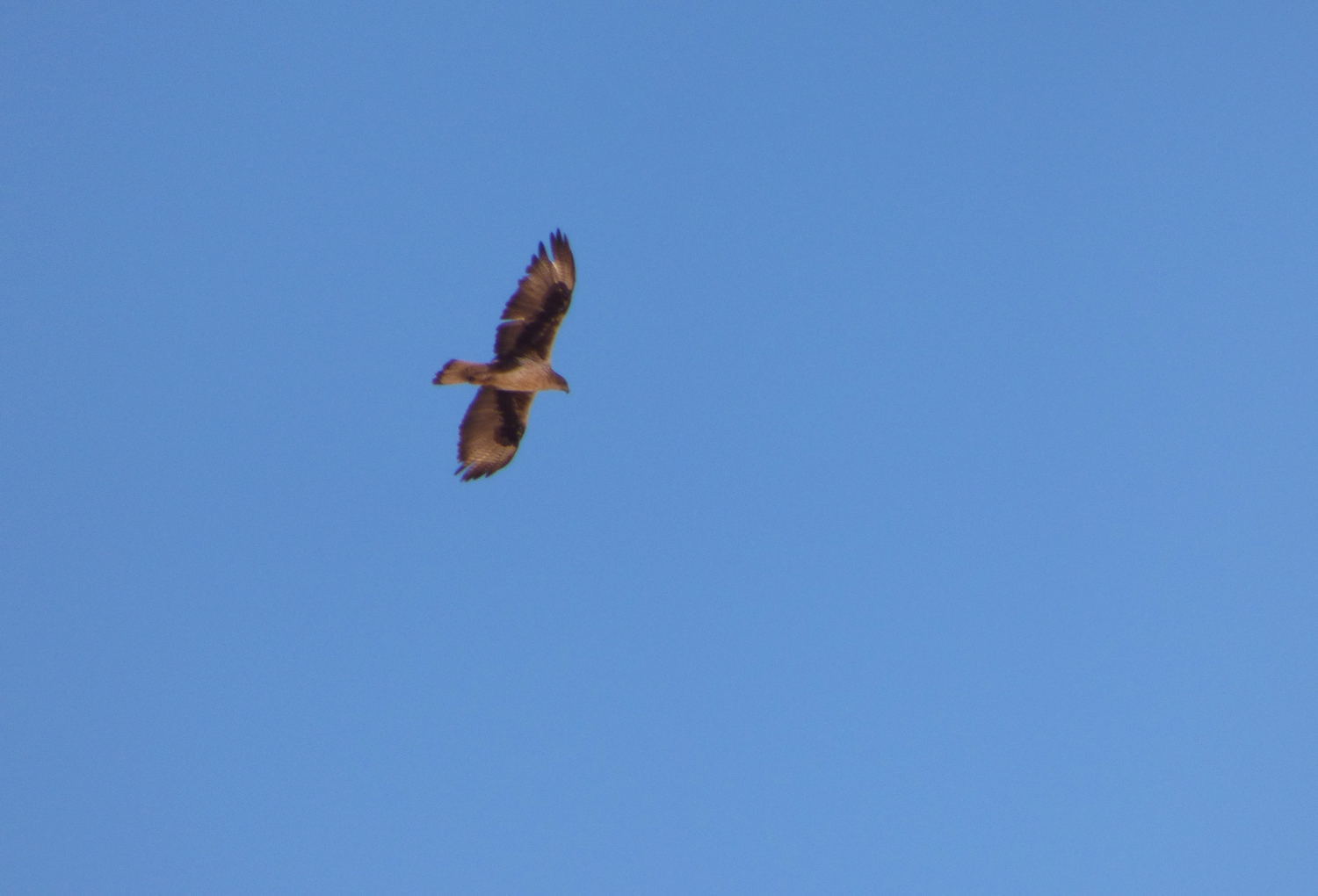
P1140919

Bonelli’s Eagle (Aquila fasciata) is still a quite common raptor in Southern Morocco. Image by tour leader Carles Oliver

In the top of the Atlas we had some road birding with some Northern Wheatears, Mistle Thrushes, Common Kestrel, Common Raven and 5+ Booted Eagles appearing.

After this we celebrated our arrival to Marrakech with a wonderful dinner. That was the end of a wonderful 10 days, 10 nights trip with many, many birds and excellent views on all main targets! 190 species of birds seen and a lot of fun!!!

Also was the momment to pack everything and, for those staying in Marrakech, to start enjoying the city and the amazing cultural
P1140924

Sunset view in Marrakech, a wonderful way to finish our trip. Image by tour leader Carles Oliver

heritage of the whole country!!!

2018 trip is happening March 13th to March 22nd… YOU WANT TO MISS IT?