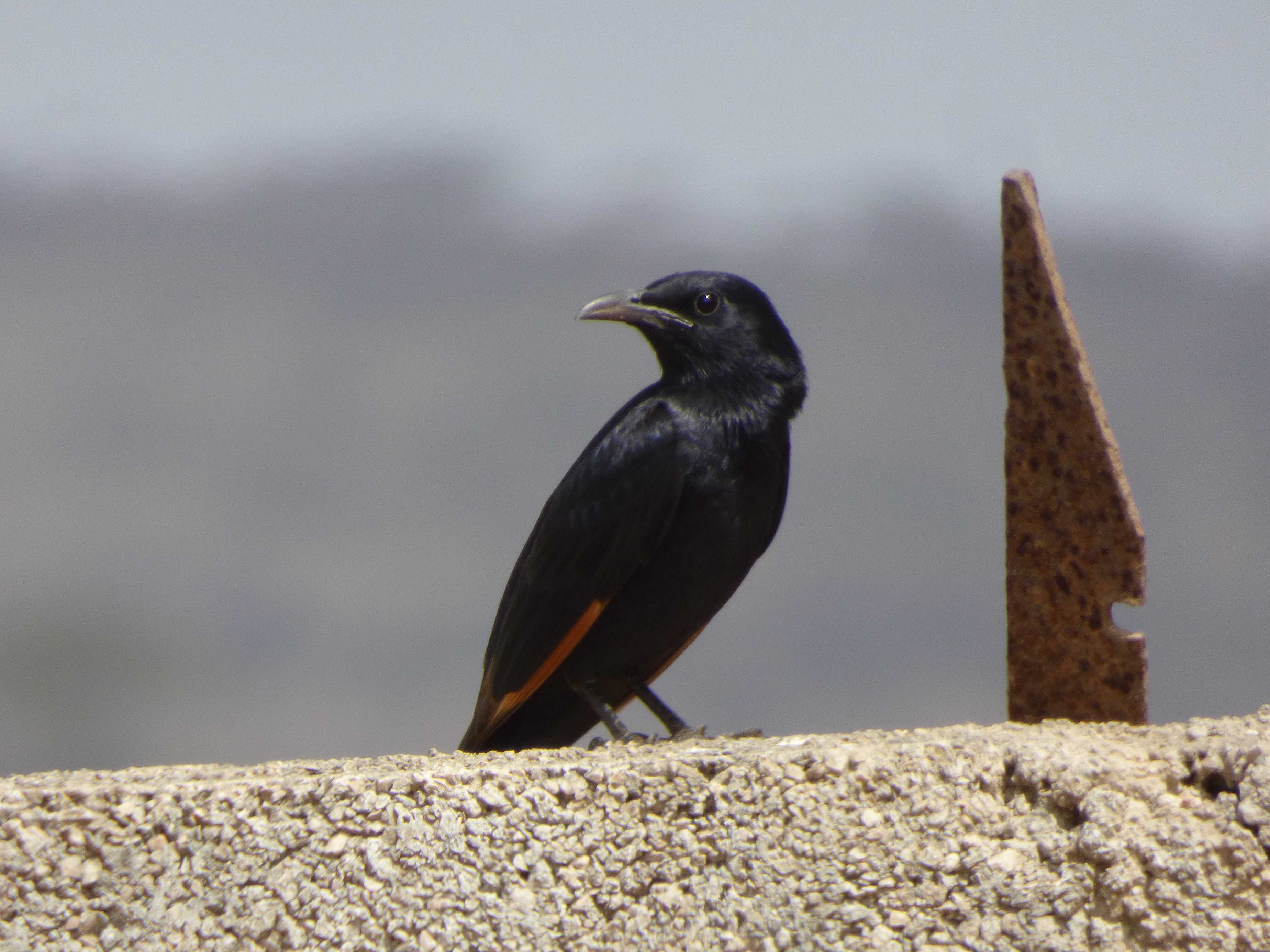
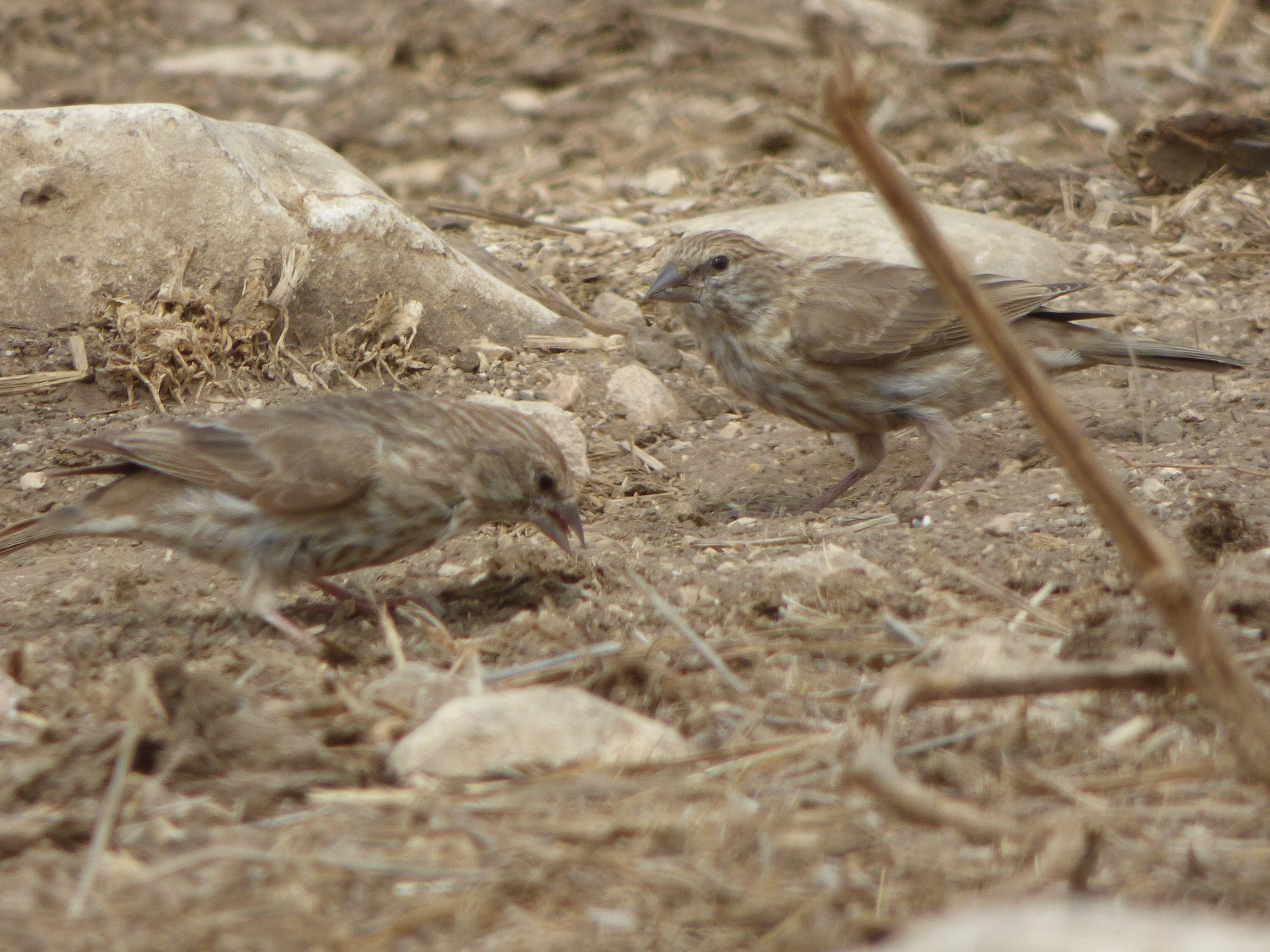
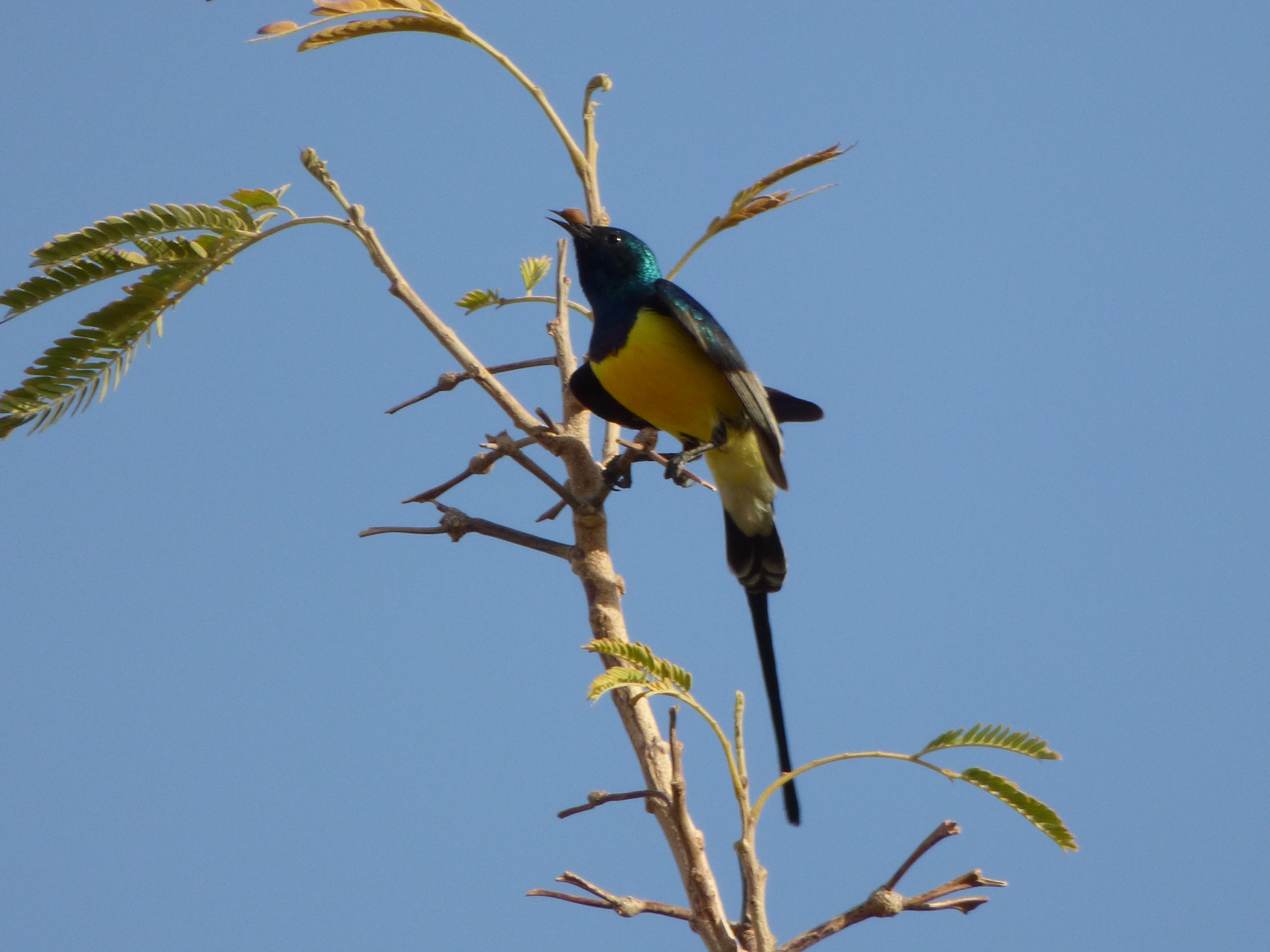
Oman Birding Tour 2019 Trip Report

Dates: 29th January to 7th February, 2019

Tour participants: 5

Seen bird species: 210

Tour Leaders: Sergi Sales & Carles Oliver

After an afternoon flight we arrived to Oman beyond midnight. Passport controls were fast and we arrived to our hotel in Musqat after a comfortable shuttle transport from the aiport.

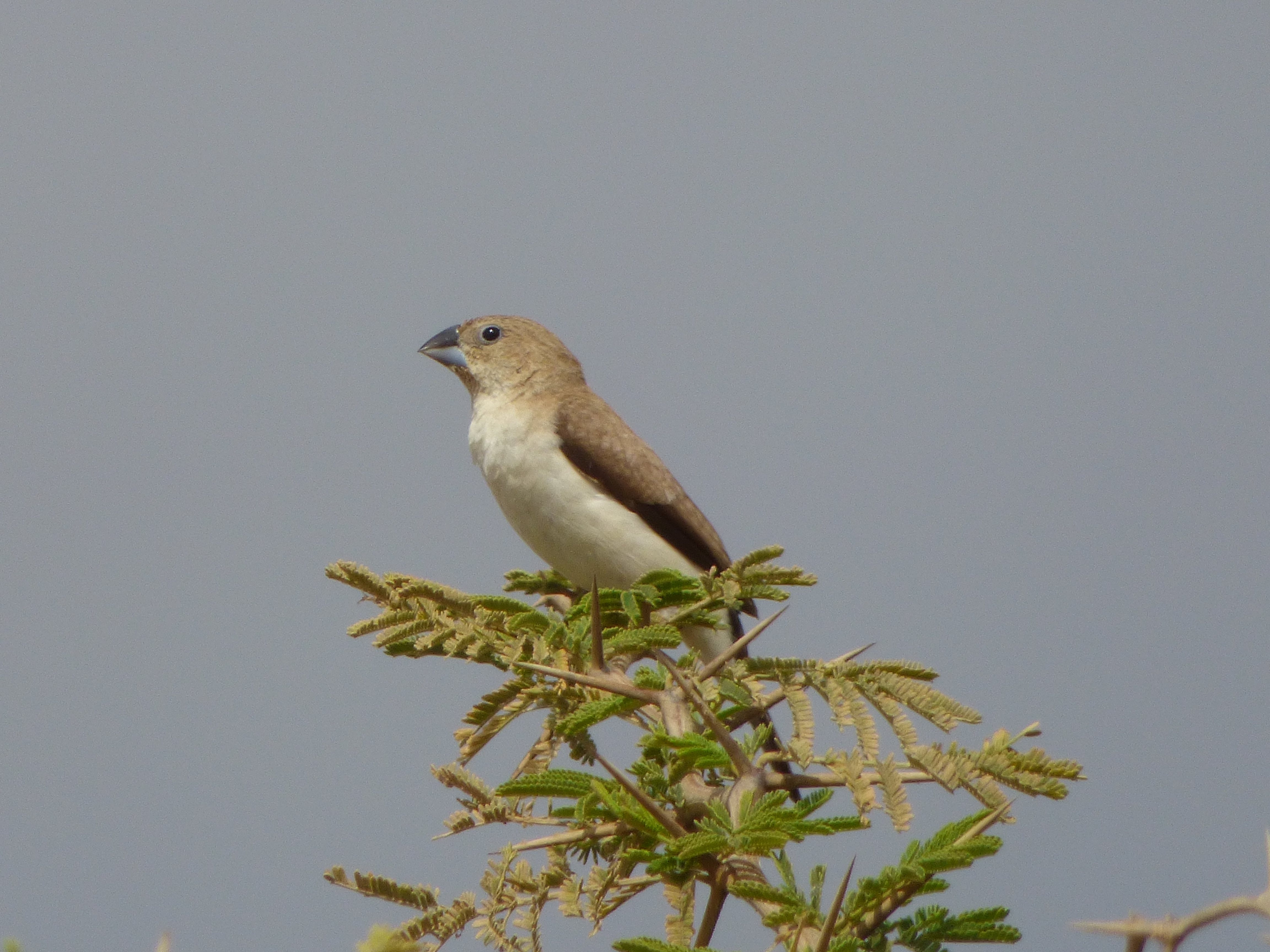
Day 1. After a good rest and a great breakfast in our hotel we went for a short walk in some tree just by our accommodation. It was time to have a first contact with some common species in Northern Oman. Probably the first bird of the tour were 2 Purple Sunbirds, seen feeding in the trees along a small gorge. Just around, a wonderful Indian Roller was hunting from the wires crossing the gorge. Indian Silverbill, Common Myna and several Laughing Doves were also seen and celebrated. We also had the interesting local race of House Sparrow, being smaller, duller and more grey in the upperside than the races we are more used.

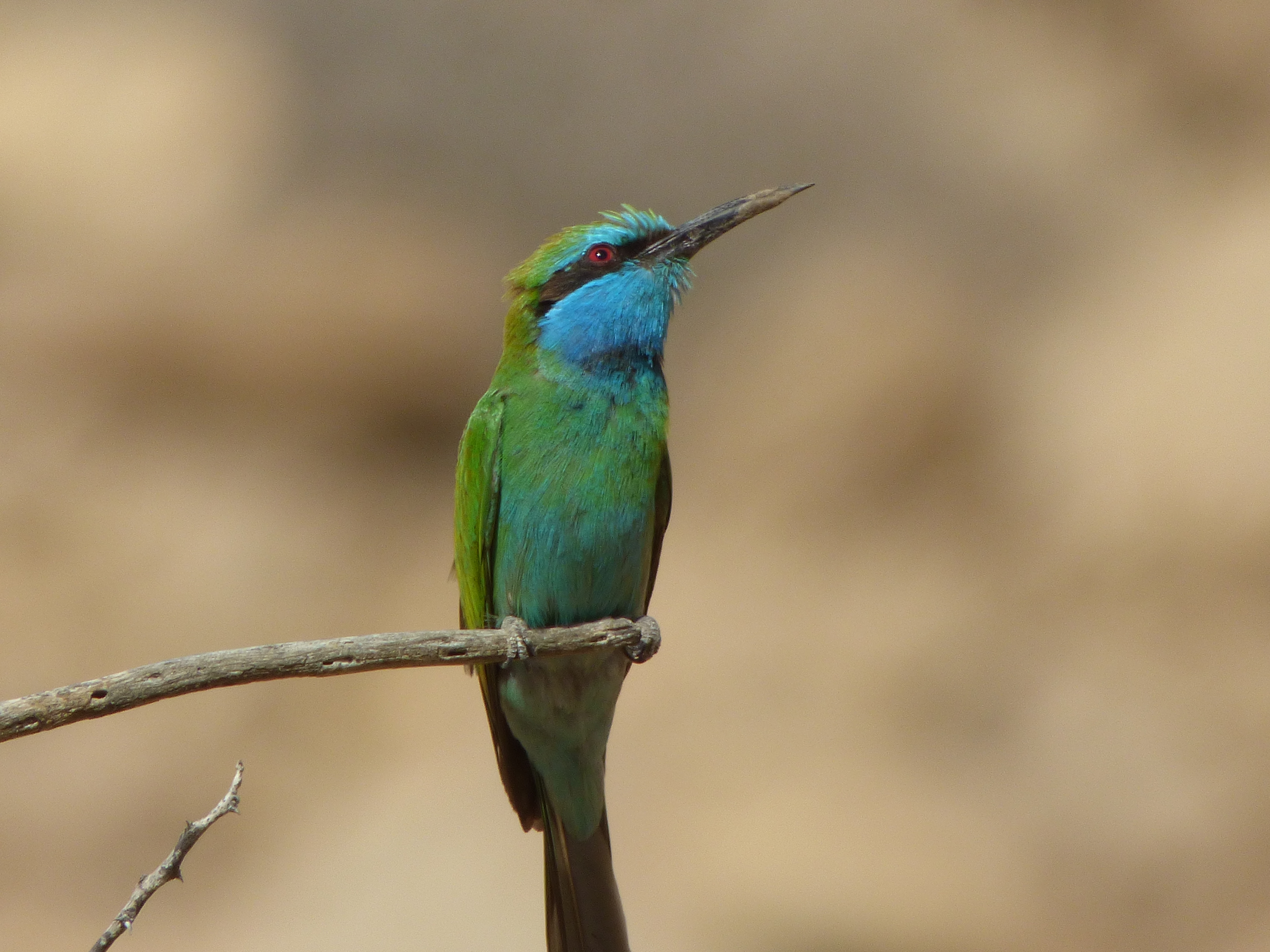
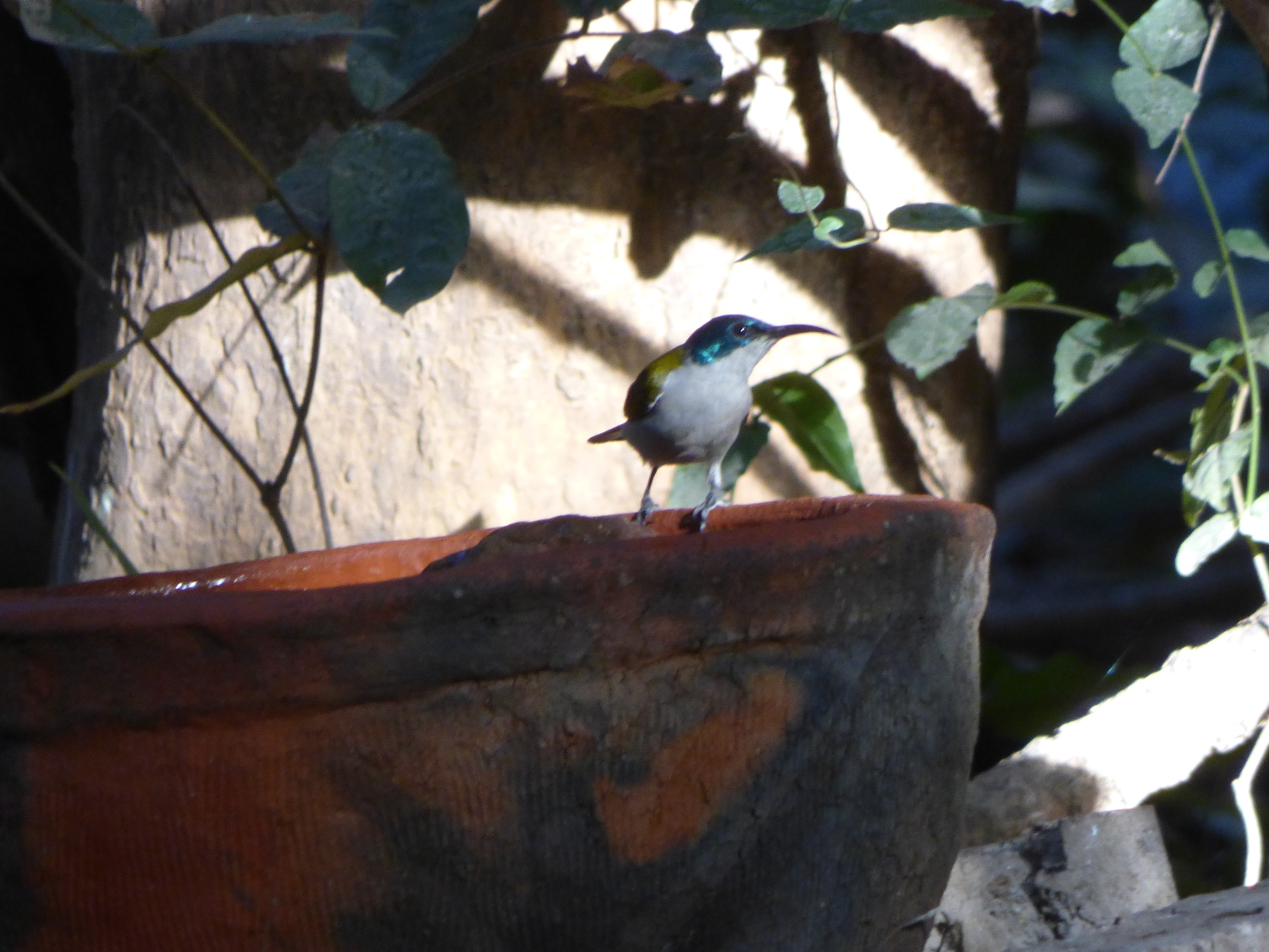
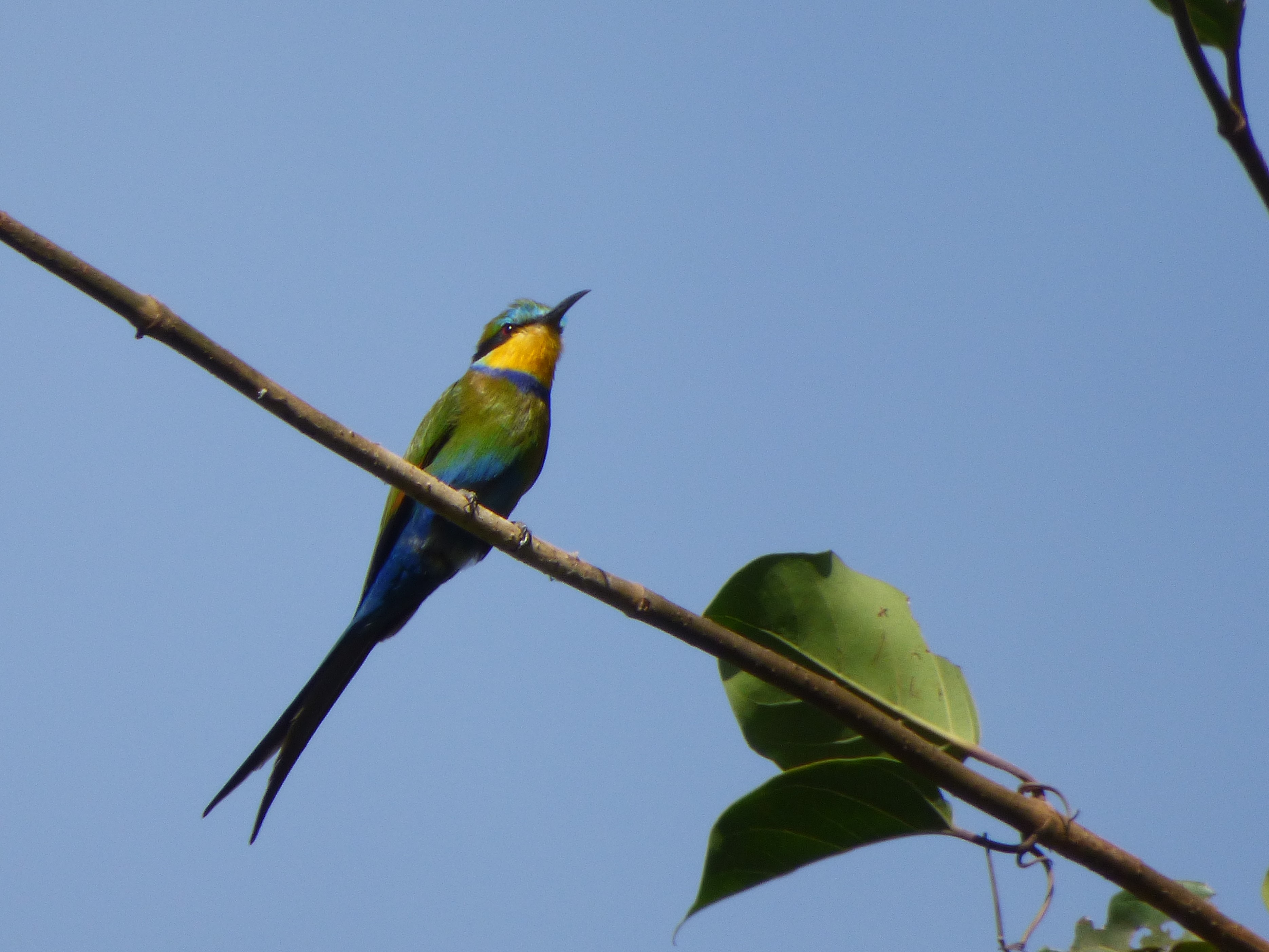
Green Bee-eater (Merops orientalis), a wonderful small bee-eater to be found in Northern Oman. All images in this trip report by tour leader Carles Oliver. All rights reserved.

After this small taste by our hotel we drove a short distance to explore the Al Ansad Wetland. This is a small complex of lagoons with riparian vegetation that can be really productive. A first scanning produced Black-headed Lapwings, Crested Larks, Purple Sunbirds, White-spectacled Bulbuls and 1 White Wagtail. A juvenile Bonelli’s Eagle just passed over us giving excellent views in the morning light.

The firs lagoon was really productive. It hosted a good selection of ducks including Mallards, Gadwalls, Eurasian Wigeons, Pintails, Eurasian Teals, Tufted Ducks and Common Pochards. About 20 Greater Flamingos were roosting in the lagoon joined by 5 Eurasian Spoonbills. Black-winged Stilts, Ruffs and 1 Black-tailed Godwit were feeding inmediatly around. By the reedbeds we found 1 Eurasian Coot along with several Eurasian Moorhens and Little Grebes. Grey Heron, Cattle Egret and Great White Egrets were also present in small numbers.

Temminck’s Stints were common with at least 8 birds feeding along with some Little Stints. At least 3 Marsh Sandpipers were also present along with several Common Sandpipers. The good scanning of the area produced as well 1 Citrine Wagtail and 2 Yellow Wagtail (one of them being a male beema race). Some Common Snipes flought off and the Bonelli’s Eagle came back and had a second flight over the water. Was in that moment that the only White-tailed Lapwing of the trip came up from behind a sand bar and we all could enjoy good views on the bird for a pair of minutes. This was already a good start!

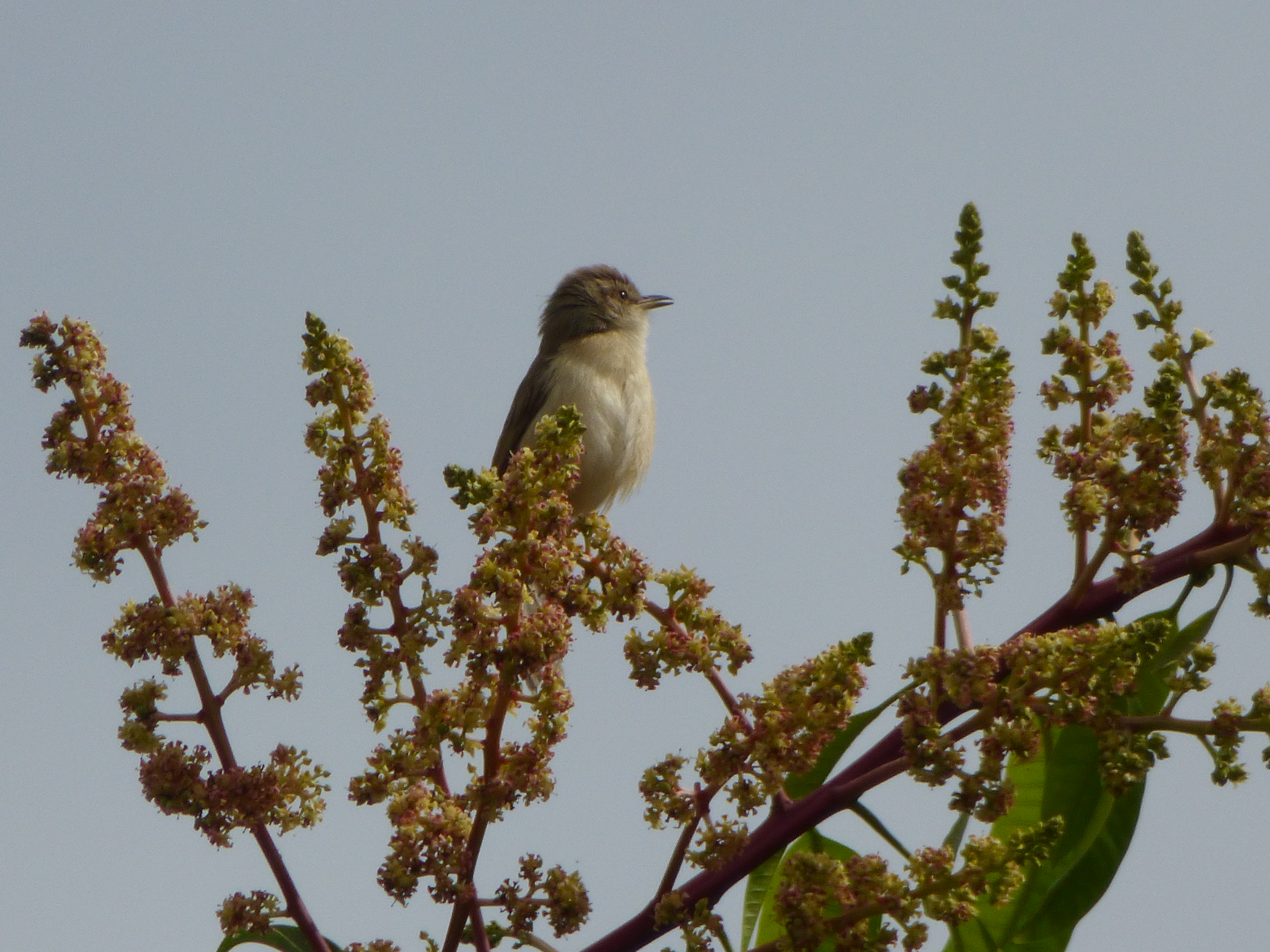
Graceful Prinias (Prinia gracilis) are a common view in a number of grassy habitats in Nortern Oman.

Unfortunably the bird was a bit far and came down again to the opposite side of the bank. We spent several minutes trying to relocate the bird, but was impossible.

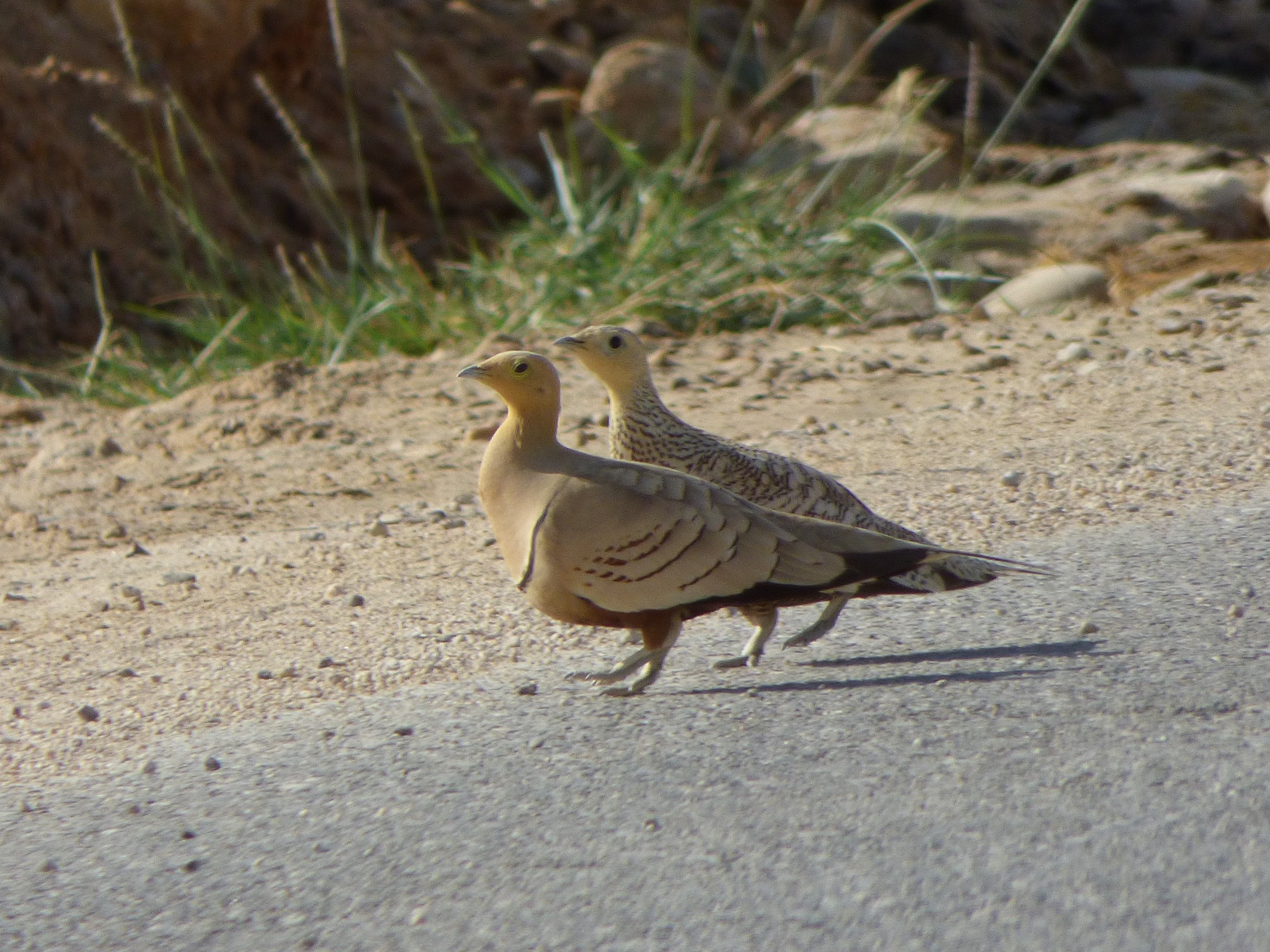
Happy after such a good start we just moved on along the path. Not far from there we were distracted by the first of several Graceful Prinias singing from the top of a bus. A closer view was demanded so we moved on just at the moment than a flock of Sand Partridges flew off from under our feet! After some good shots in the Prinia our attention was concentrated by a very close Little Green Bee-eaters catching insects at short range. Its footage from the minor branches of a small tree was really productive in photographic terms!

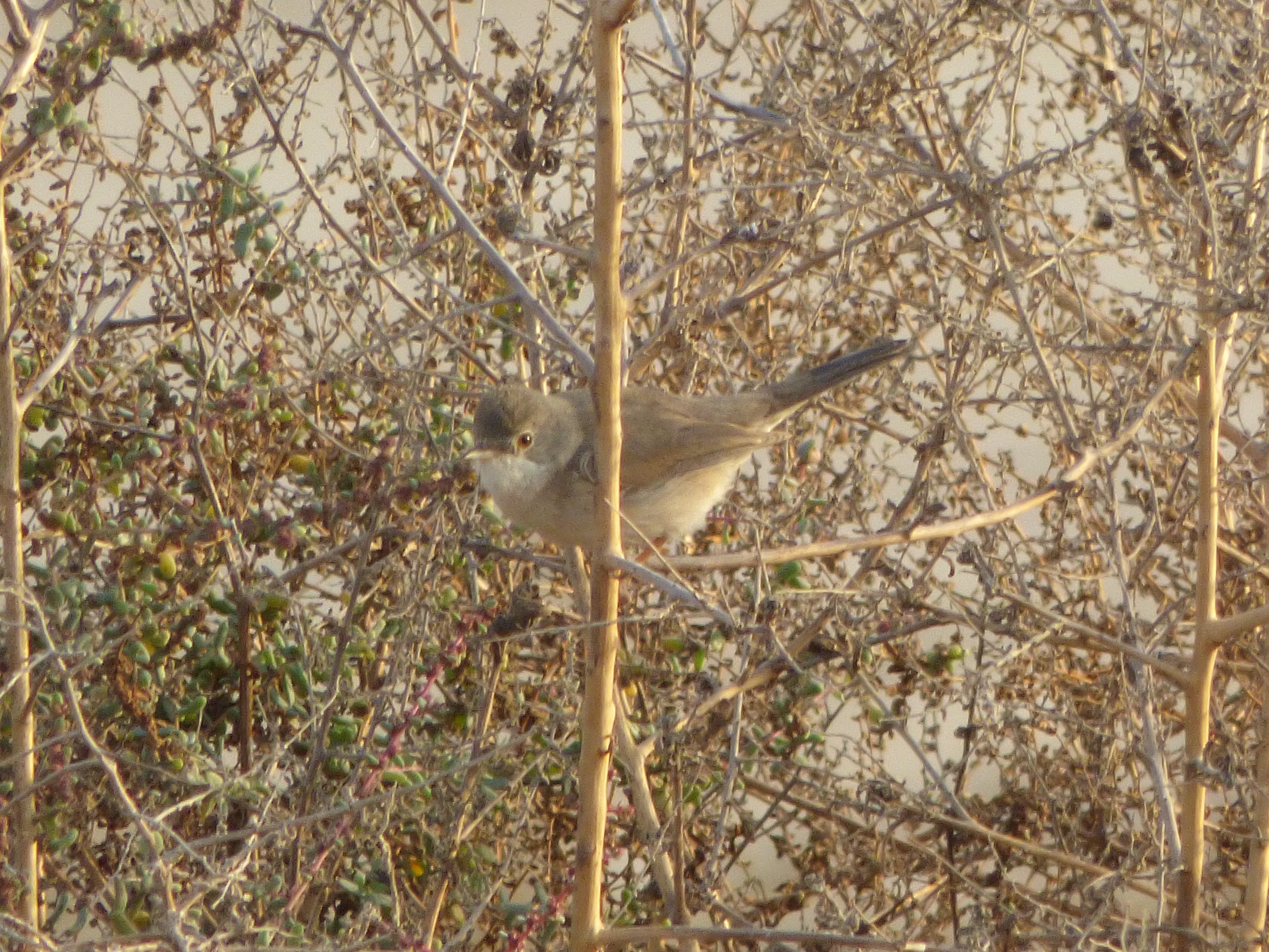
The area was still producing interesting sightings. A group of White cheecked Bulbuls were moving in the bushland and 1 Indian Silverbill was busy while bringing nest material inside a small tree. The same juvenile Bonelli’s Eagle that we saw flying over the lagoon was now sheltered by the shade of a small cliff. A last walk in the area produced some Great Cormorants, the first Greater Spotted Eagle high up in the sky and good views in 1 rather unexpected Eastern Orphean Warbler skulking inside a bush!

Green Bee-eater (Merops orientalis) showed out really well in the firsts days of the tour.

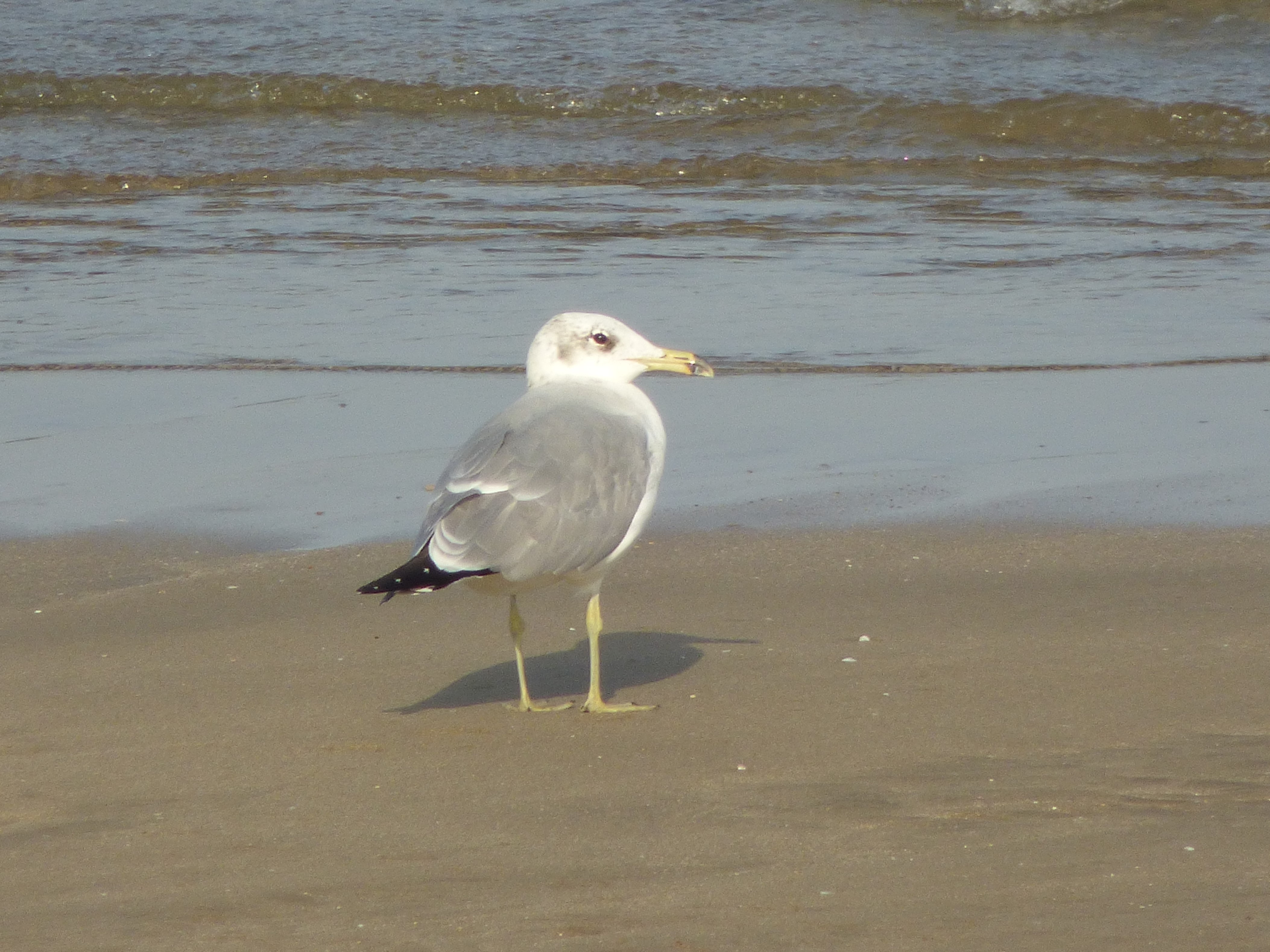
We then went to the coast, where we had some food near the beach while we were scanning around. Here we had several Heuglin’s Gulls moving in the coast along with the commoner Black-headed Gull. Also some Caspian Gulls were seen, mainly adults. 2 Sooty Gulls passed by but unfortunately a bit far away for everybody in the group to enjoy them. At least 2 Great Crested Terns were moving in the coast and we had really good views as one approached the dock where we were scanning from. A tiny wady in our way was also providing good birds, special mention to our first Greater Sand Plover, Pacific Golden Plover along with Common Sandpiper and Common Redshank.

Common Myna (Acridotheres tristis) is a recent arrival to Oman, just arrived to Southern Oman a few years ago, where it is as common as in the North.


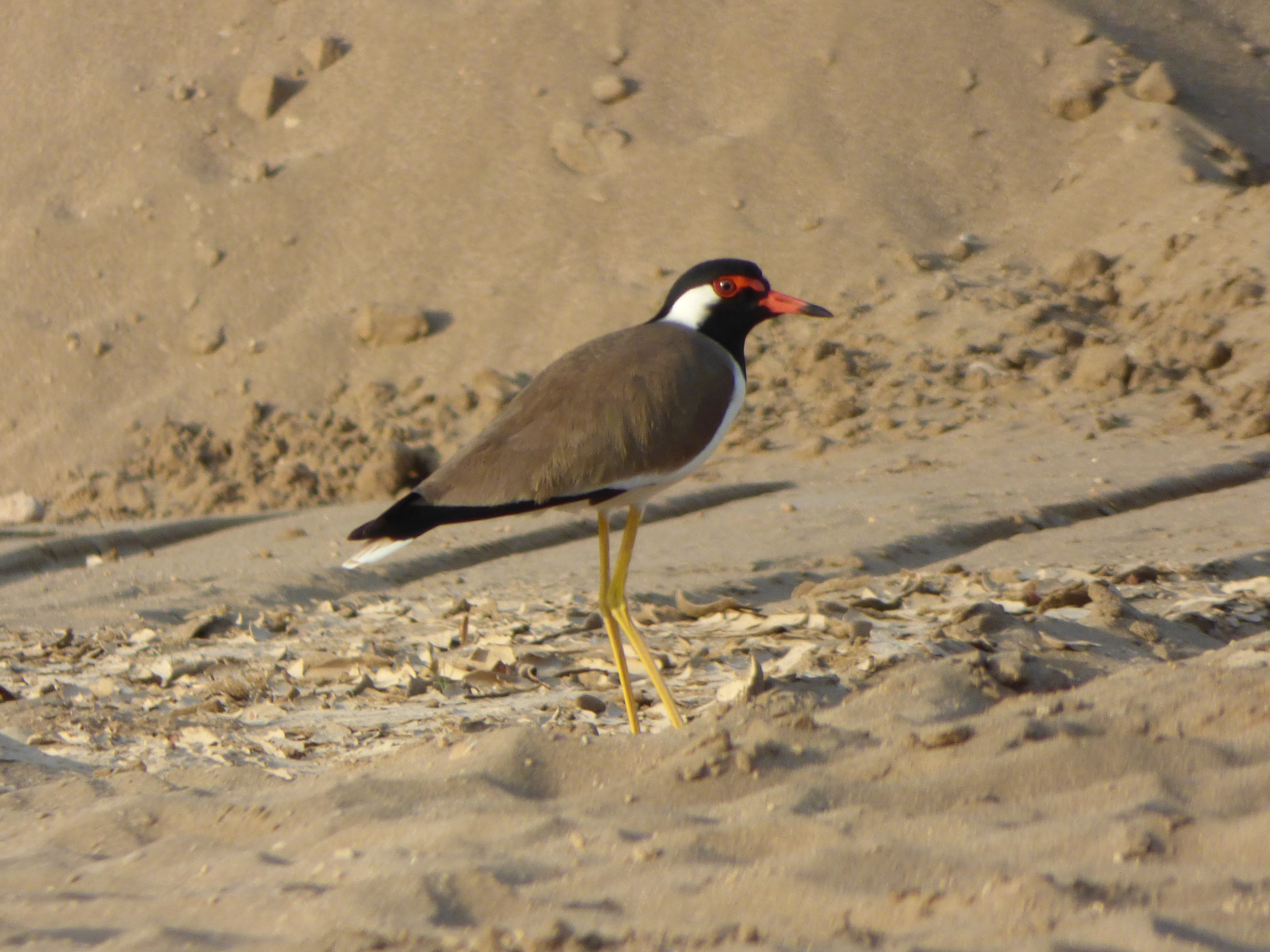
The slender Red-wattled Lapwing (Vanellus indicus) is the commonest Lapwing in the region, by far.

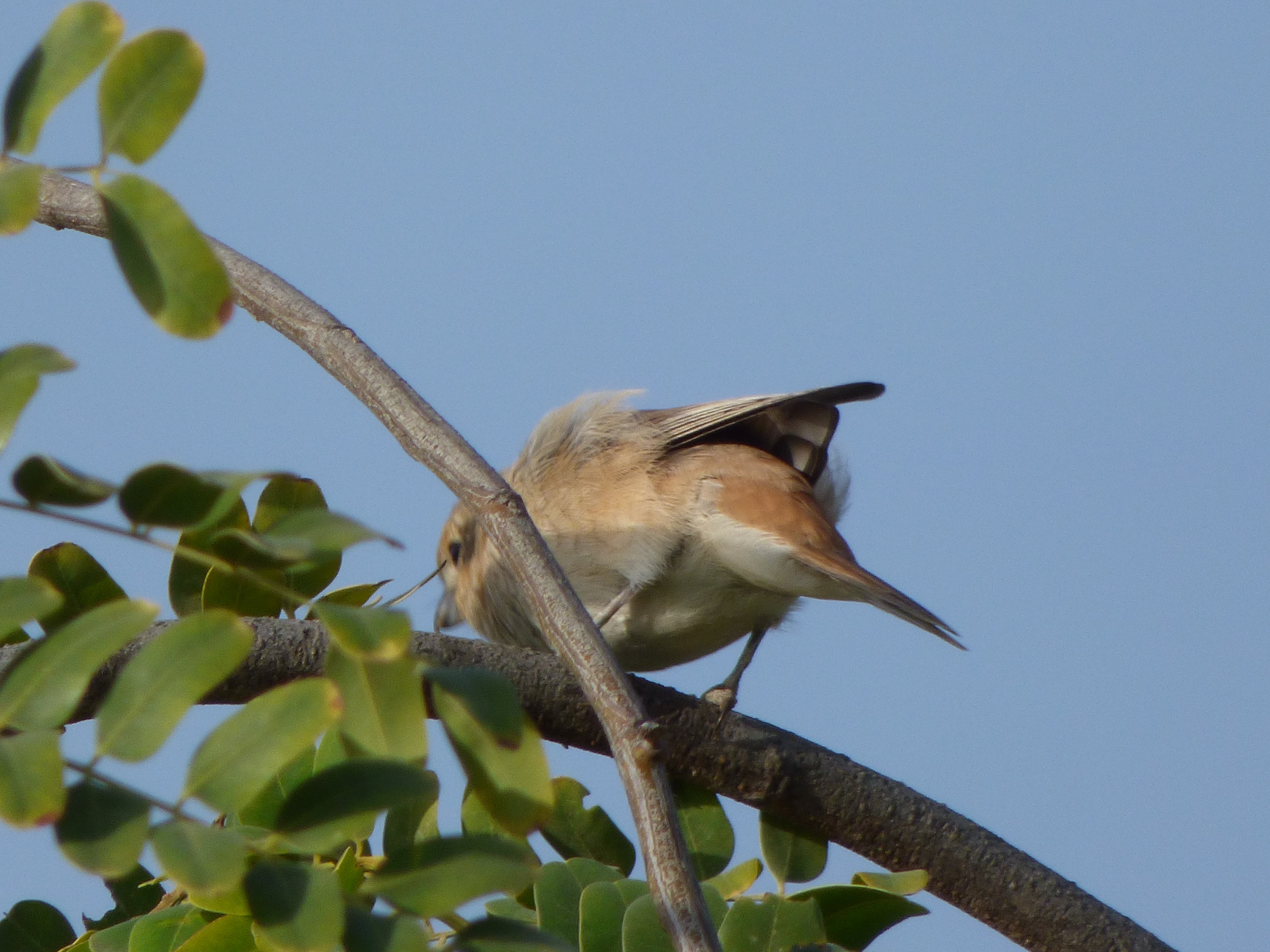
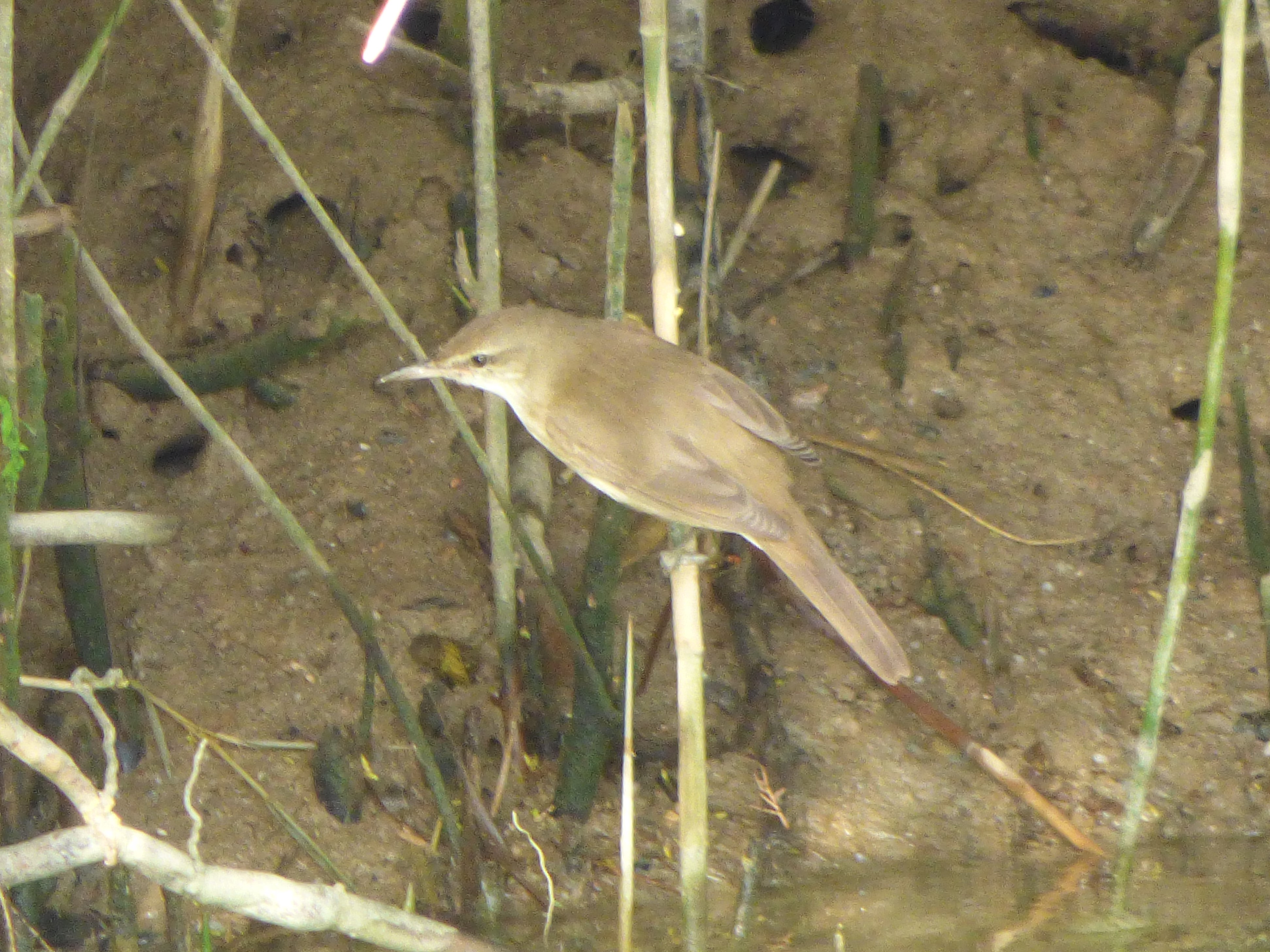
We decided to spend the rest of the day in Al Qurm Park. This is a well known birding spot in Musqat hosting some very interesting specialities. Our arrival to park was really good as 1 Indian Roller was hunting in the parking and only few metres inside the park we had our first Grey Francolin of the trip running up the slope. In the trees, a Common Chiffchaff was seen (here presumably all Chiffchaffs belong to abietinus or tristis races, thought now Siberian Chiffchaff is claimed as a diferent species for some). A small channel of water connects the big central lagoon of the park with the sea. This channel proved to be really productive as we fastly spotted 1 Striolated Heron hidden in the shady bank. Few metres away from it we found 1 Acrocephalus. Silence and check for some seconds before confirming that was a Clamorous Reed Warbler! This was a bird really celebrated by the group. The bird provided really good views in the out for quite long, moving always really low in the vegetation, but clearly in the out. The channel itself was attrackting some Pallid Swifts to drink water and we all enjoyed lovely views on these birds. A Purple Heron flew over and its shade made Common Sandpipers and Black-headed Lapwings move away. Inside the park we enjoy a new Indian Roller until a small shrike was located in the top of the tree. At first it looked like a Isabelline but finally it turned up to be a Red-tailed Shrike, a recent split from the former.

Two images on a 1st winter Red-tailed Shrike (Lanius phoenicuroides). Pair attention in the vermiculated extending all along the flank, with a tawny vental area contrasting with white undertail coverts. Uppertail coverts appear reddish, but not uniform as expected on Isabelline Shrike.


Clamorous Reed Warbler (Acrocephalus stentoreus brunnescens) was spotted a pair feeding in the out along the tour.


Striated Heron (Butorides striata atricapilla) is a scarce resident bird in dense vegetated marshy areas.

The central pond was low of water but as good as always. 1 Whiskered Tern was flying over and 1 Western Reef Egret was fishing along with some Cattle Egrets. Fastly our attention was for “Squacco like” herons around the pond. After some scanning we found the 2 firsts Indian Pond Heron of the tour, feeding along with 4-5 Squacco Herons. Little Grebes and Eurasian Coots were also present in the pond.

Indian Pond Heron (Ardeola grayii) is a scarce winter visitor but we got excellent views on Muscat itself. Image by tour leader Sergi Sales

We still had a further walk around the trees. Rose-winged Parakeets were everywhere and a Alexandrine Parakeet was heard in the air. It was time to go but then we found a wonderful tree full of Common Chiffchaff, Purple Sunbirds and at least two Lesser Whitethroats (Desert Whites?). As the area proved really interesting we decided to spend the rest of the afternoon in around. A short walk from the park allowed us to explore some tidal muds richly vegetated. Here we found some interesting passerines including Isabelline Shrike, 2 Bluethroats and Eurasian Reed Warbler. Some waders were present in the small mudflats including several Eurasian Whimbrel, 1 Eurasian Curlew, 15+ Spotted Redshank, Dunlin, Ruff, Little Ringed Plover and some Common Ringed Plover. 1 Intermediate Egret flew over us in its way to the sea and 1 Garganey took off from a tiny patch of marsh but the best bird in the spot was a Pin-tailed Snipe that took off along with 1 Common Snipe from the flooded areas. Some Snipes were moving around so we carefully checked every single bird leaving the area. At least 15 Common Snipes left in different waves and we got good views in 1 Spin-tailed showing the remarcable blackish uderwings and contrasted belly.

Purple Sunbirds (Cinnyris asiaticus) is one of the most unobtrusive birds in Northern Oman. Image by Carles Oliver

Happy after such a great encounteer we still looked for something else in this corner. Some Eurasian Moorhens were seen feeding in the grassy areas and 1 Grey Heron arrived for a evening meal. The time of our own evening meal was not far any more so we left the area for a good rest in the hotel and a dinner to go throught all the birds of our first day in Oman.

Spotted Redshanks (Tringa erythropus) at Al Qurm Park the first of the tour.


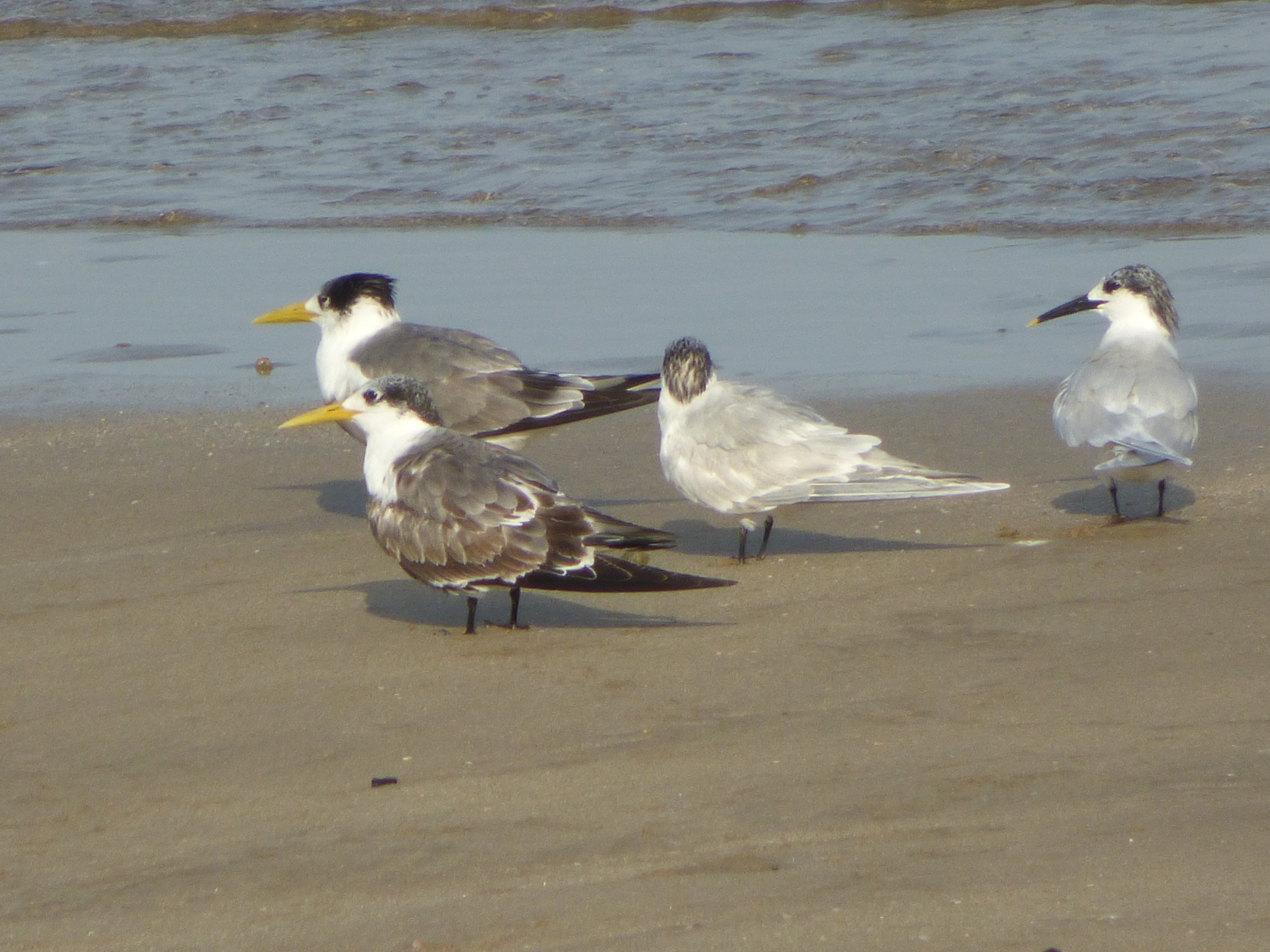
Day 2. After our good buffet breakfast we left our hotel to explore the Western coast of Northern Oman. But, as tyde was low, before going West we came back for a while to Al Qurm beach. Just arriving we found a small flock of gulls in the beach along with some terns. A fast scan revealed some Great Crested Terns along with Sandwich Terns. Most of the gulls were the splitable Steppe Gull (Larus fuscus babarensis) and got good views and comparision of structure with a lovely Caspian Gull adult. Heuglin’s Gulls were also present in the flock, including different ages and intermediate plomages. Not far after we found the first Palla’s Gull, a 3rd year bird. What a incredible gull! Not only the shape of bill but the general structure of the bird was simply massive. Here, all tour participants enjoyed very much with this flock of gulls and having adults of Caspian, Steppe, Heuglin’s and Palla’s all together in a small flock was really celebrated and appreciated for everybody! Small flocks of Slender-billed Gulls were also present at the beach.

Adults Caspian Gull (Larus cachinnans) -left- and 2 Steppe Gulls (Larus fuscus barabensis) -center and right- in Al Qurm.


Palla’s Gull (Ichthyaetus Ichthyaetus) was one of the most celebrated target in the crew and a wonderful bird to watch. Here an adult in winter plomage.

Around the flock of gulls there were some waders and it didn’t take long to spot some Lesser Sand Plovers moving in the sand. There were about 30 individuals in different smalls flocks. Here we also had  Greenshank, Kentish Plover, Whimbrels, Common Redshank, Western Reef Heron in light form (less common in the area) and Lesser Crested Tern. Again, we enjoyed views on Lesser Crested Terns side by side with Great Crested Terns so a good comparision on sizes, structure and colour could be made. Some Sooty Gulls were also flying around but we only had a single bird stopping on the ground. We spend some time enjoying these gulls and terns but also scanning around looking for other specialities. Some scouting inland produced 6 Common Snipe sleeping on the grass, Black-headed Lapwings, Common Kingfisher and Graceful Prinia and 2 Grey Francolins having a sand bath.

Lesser Sand Plover (Charadrius mongolus) in winter plomage. The combination of long legs, relatively thin bill and slightly contrasted lore allows to avoid confusion with Kentish & Greater Sand Plovers.

Back to the sea shore, we had big flocks of Great Cormorants flying around and we enjoyed how fast they moved as the nets of the fishermen were into the water. A nice espectacle to be seen! More plovers were arriving from the East, clearly bigger and heavier than all species around; 8 Great Sand Plovers! Again, a good comparision on size, shape and facial pattern was made with its relative the Lesser Sand Plover

2 Greater Crested Terns (Thalasseus bergii) -left- in an interesting comparative of sizes and structure with 2 Sandwich Terns (Thalasseus sandvicensis) at Al Qurm.

After such a wonderful stop we then drove to the West, towards the Sun Farms. These are water-assisted grassy crops being a magnet for a good number of species. Despite some reports of the explotation being abandoned from some years ago, we decided to approach and take a look. It was an excellent decision, as you will see.

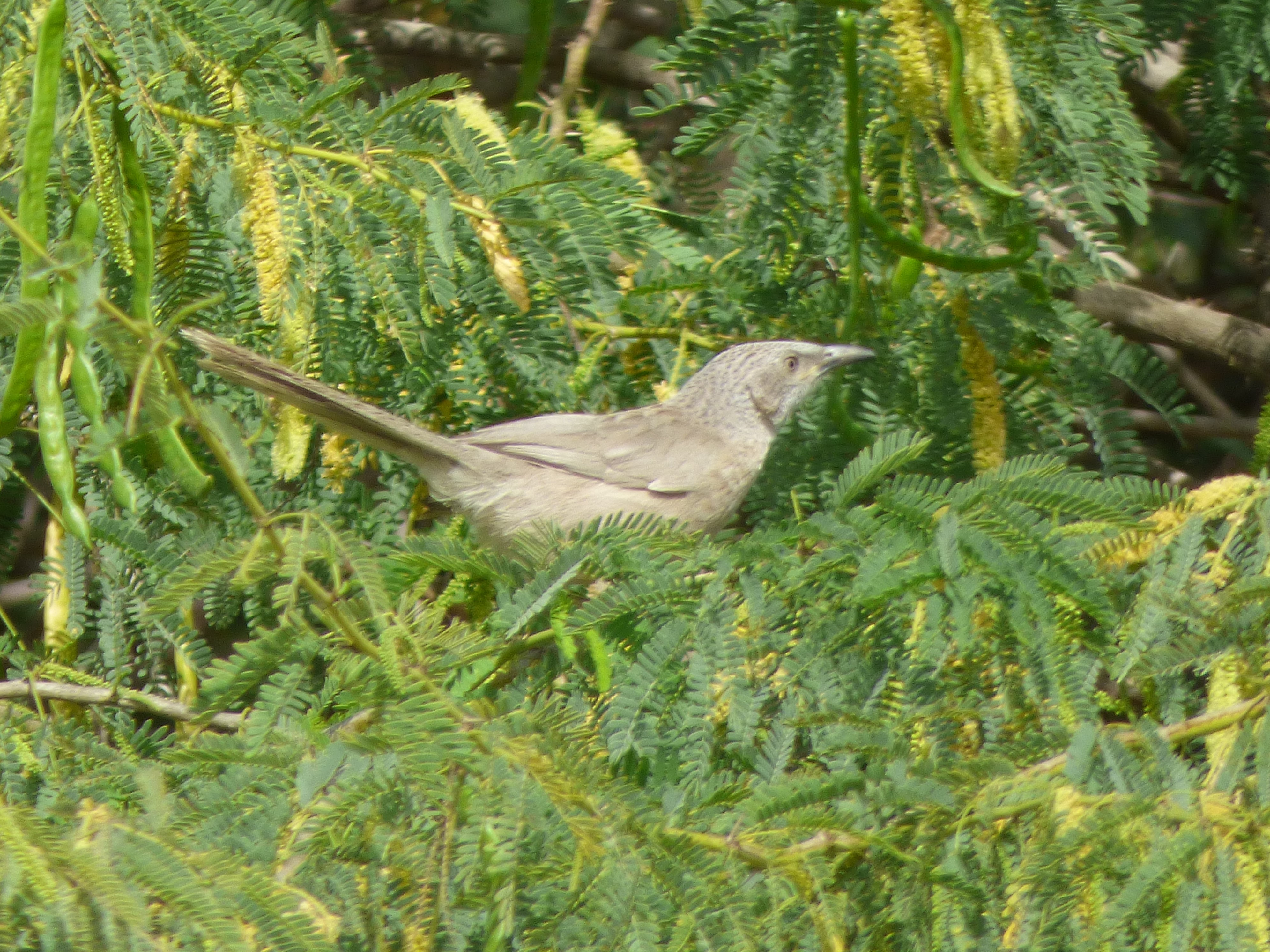
We arrived to the area were the Sun Farms were and well, it was no sign of any grass anywhere. Still, even before arrived to the exact place we were obligated to stop the car and walk around as a family group of Arabian Babblers were moving just by the track. Unfortunately not everybody in the van enjoyed excellent views so we parked the car and walk around looking for this wonderful bird.

Arabian Babblers (Turdoides squamiceps) showed really well along the tour. Please note how coloration change depending on the light in these two images.

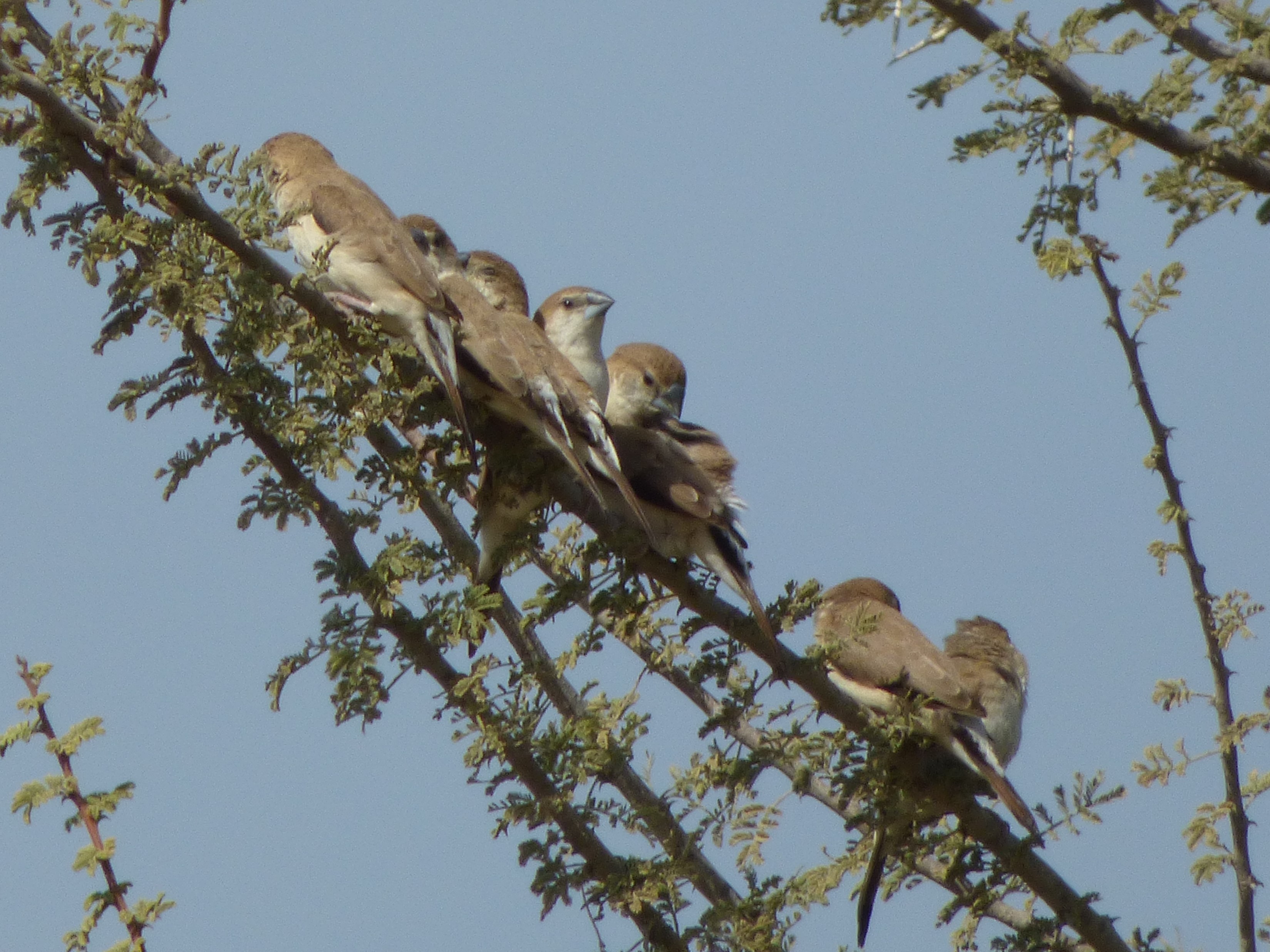
The flock of birds were still moving around in the semi-desert so we decided to do a short walk around expecting to improve our sight. Purple Sunbirds were everywhere and a nice flock of lined Indian Silverbills was welcome by the photographers in the group. A Common Kestrel was circling up in the sky among Pallid Swifts and Crested Larks were singing and moving all around. In a shade, a Tawny Pipit showed really well for a pair of minutes while 1 Hoopoe was diving its bill on the sand looking for warms, but still no signal of the Babblers. While searching for them we had another really good bird appearing. A characteristic “txac” call came from the acacias around us and, after some scanning, we all had excellent views on 2 Hume’s Whitethroat! This is a quite recent Split from Lesser Whitethroat inhabitating juniper formations in Iran and Afghanistan high mountains. They are easy to tell apart by calls but also due to the clearly darker head, auriculars and nape of the Hume’s if compared with Lesser. The back and mantle in Hume’s Whitethroat is also darker than in Lessers, showing really little contrast.

A further scanning in the area still produced a nice male Black Redstart of the Eastern phoenicuroides race and a superb male Pallid Harrier flying around and stopping in the low branches of a distant tree for some minutes. Namaqua Doves were passing over us and we could count up to 8 individuals of this beautiful bird. It was a very productive corner but since no signal of the Babblers around we decided to go on but, just when most of the people was in the car, we had 2 Arabian Babblers coming to us and stopping some 60 metres from us. More and more birds came front he tangles and we arrived to count up to 9 of them!

Indian Silverbills (Eudice malabarica) showing the white rumps in a typical group view.

We had the birds around for some minutes in what was a really unexpected encounteer in one of the most difficult species in the area! We moved but we didn’t really arrived that far away since we fastly found 1 male Black-crowned Sparrow-Lark some 35 metres from us. Not far, an obliging Isabelline Weathear was a good first for the trip.

It was time to go to our next location. A short drive allowed us to arrive to Liwa mangroves. This is home of two of the most wanted species for all birdwatchers coming to Oman: Collared Kingfisher and Sykes Warbler.

Red-vented Bulbul (Pycnonotus cafer) is a common bird in most of coastal Oman. Image by Sergi Sales

Tyde was low and we decided to go on with a short walk along the mangroves. Sooty Gulls were really common as walked in the beach and good numbers of Slender-billed Gulls were also seen flying around. Great Crested Tern was less common, with only few moving along the shore.

In the mangroves it was little movement. A small flock of Eurasian Whimbrels were looking for some food in the mud, joined by 4 Spotted Redshanks. A pair of Common Sandpipers were typically moving up and down along the shores. It was time for a bit of scan and most efforts were placed in the most suitable channel to host a Collared Kingfisher. After 15 minutes of scanning a chunky, white shade emerged from the mangroves to stop in outer skinny branches of a dead mangrove. This was a wonderful views even if not specially close. Things improved really much when the bird turned, showing the typical collar and the beautiful blue-greenish in the upperparts. This view was really celebrated by the group. A Common Kingfisher joined its relative for a better comparision of shape and size.

The bird showed for about 2 minutes and after that came back deep inside the mangrove. We still waited, hoping for a better view and some photo chances that never arrived. Still, the group was really happy to see such a scarce bird! Remember that Collared Kingfishers living at Arabian Peninsula are from “kalbaensis” race, an extremely endangered and more than a probable coming split from the nominal race living in most of Asia!!

Isabelline Shrike (Lanius isabellinus) male in Liwa mangroves.

More than happy about this wonderful sight we kept scanning the area looking for Sykes Warbler. All eyes were to the mangroves when a hard “tchak” came out from the dense vegetation. We scanned for long. First a Isabelline Shrike, after a Graceful Prinia showed nicely, but we didn’t get any other bird from the bush.
We still had some time before sunset so, decided to get somethin different from the area we just drove around the mangroves to the plains placed at the opposite site. A short drive around proved to be quite productive. A first small bush was having 2 White-eared Bulbuls, 2 Common Chiffchaff (not really grey ones) and a third species tha flew off. Not a long scan was necessary to enjoy the female Menétries Warbler. The bird stayed in a low bush for over 2 minutes so we had time enough for looking for the differences from this species and its relative, the Sardinian Warbler (a bird that was more familiar for some members of the group).

This female of Ménétrié’s Warbler (Sylvia mystacea) was the only one membre of its species to appear in the tour.

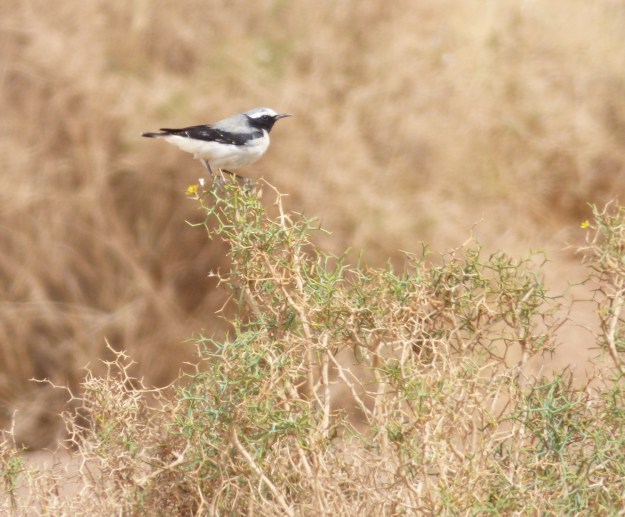
After driving for 5 minutes more we stopped in a different place and scanned around. 3 Isabelline Weathears were found along with the first Desert Wheatear of the trip. Up in a tree, a wonderful Southern Grey Shrike was looking for an evening meal. The last bird of the day turned up to be a Red-tailed Shrike!

Happy for the good birds of the day we just came back to our hotel for a good rest and dinner.

Day 3. Today we were leaving Muscat and starting our way South. Inmediatly beyond the city, an impressive spine of mountains goes up until 3000 metres high. This is area is home of very interesting birds, some of them unique. During that morning we crossed the mountains, spending some time in a key location looking for some of them.

Here the landscape is controlled by towering bare mountains speckled by small elevated plateaus. In the untouched valleys you can see sparse acacias in an semi-desertic ambient. Our first stop was really a random one. As always scanning the sky we finally got a good bird as 1 Egyptian Vulture was spot high up in the sky. It happen that it was a good place where to stop so we did so and, eventually, scanned around. At the other side of the road we got a Red-tailed Wheatear, a really good bird that may not appear in every tour. All the group was delighted with this little wheatear when a small, whitish bird appeared from the right, moving low in the scrubs. It was an Asian Desert Warbler! It was an amazing to see these two really good birds together! The Asian Desert Warbler flew off and, as not everybody in the group had got good views, we decided to do a short walk around. After some 5 minutes of scanning we relocated the bird and everybody had brilliant views on the tiny bird.

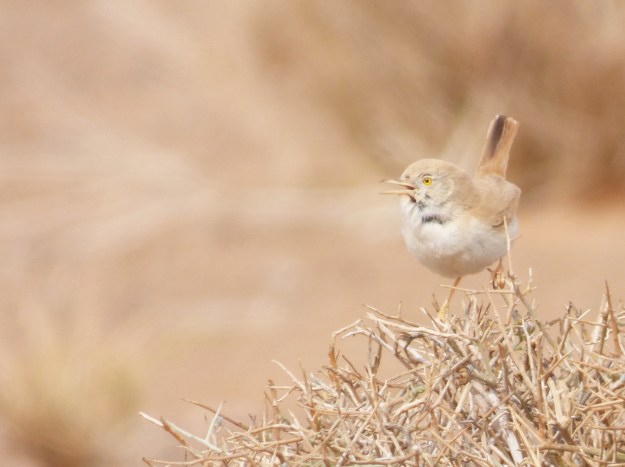
Asian Desert Warbler (Sylvia nana) in a typical view of the species.

Only a small point on the Asian Desert Warbler. I’m personally used to see African Desert Warbler and I was glad to see how different both species are. More than what you can expect from the plates. Asian Desert Warbler is far more grey than its African counterpart and the grey body is having an evident contrast with the orangish tail. In the African Desert Warbler, all body is strong sandy colourated.

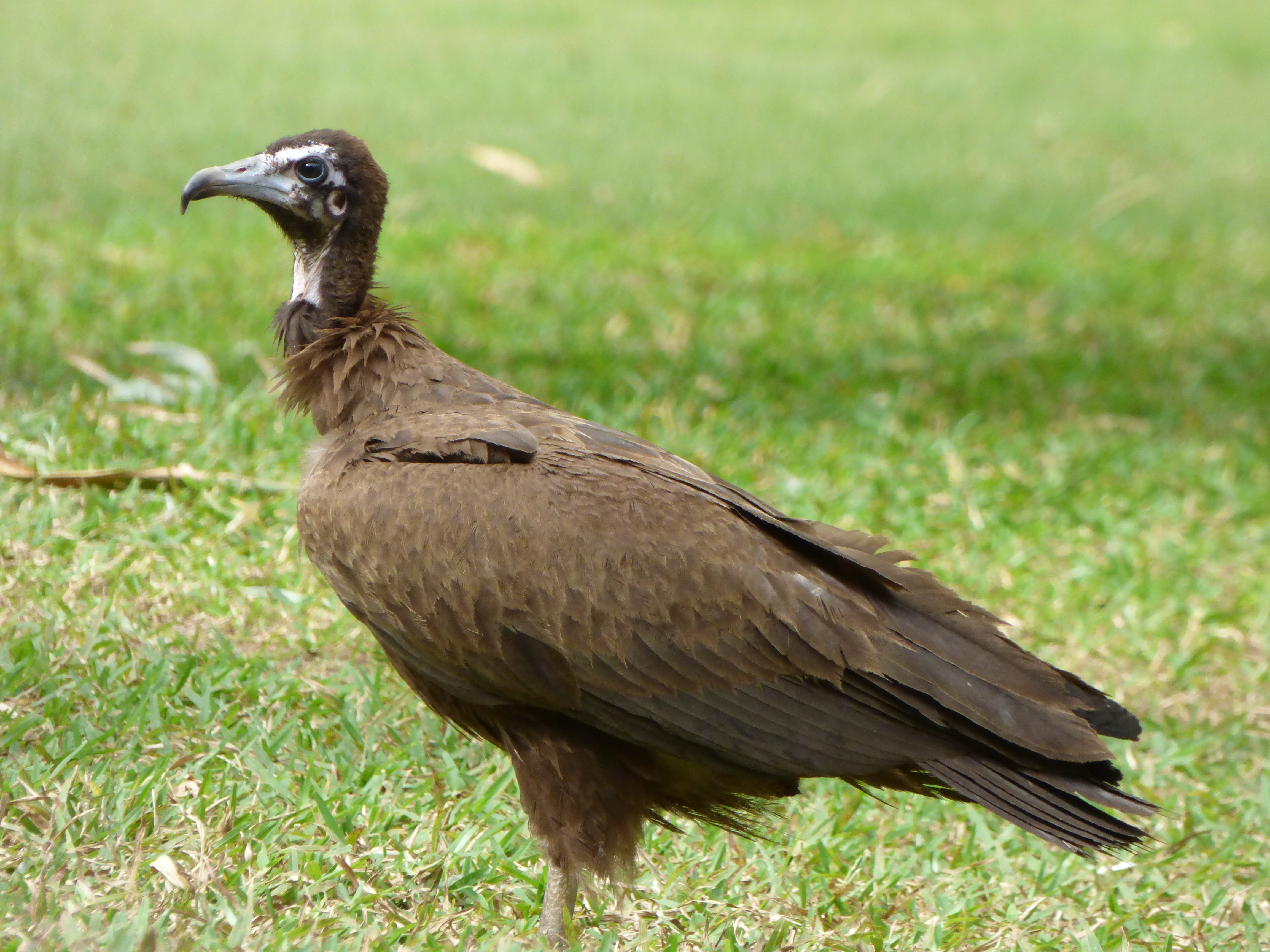
Our road stop also produced Isabelline Shrike and Northern Wheatear. We still drove for about half an hour before arriving to our next stop, a gorgeous gorge with a wadi and a pair of oasis-like corners. This is a well known place for the recently discovered Omani Owl, one of the main targets in the trip. As we got inside the gorge we had several Striolated Buntings singing around as well as Lesser Whitethroats in the scattered trees, Purple Sunbirds, Pale Crag Martins and 4 different Egyptian Vultures. Here we spent several time scanning some roosting places of Omani Owl but with no result. Then we moved up in the wadi until a small oasis. In the way, a Bonelli’s Eagle made us stop and it was a good decision to do so since we had 1 Lappet-faced Vulture appeared high in the slopes and showing really well for half minute! This was a bird really celebrated by the group!!

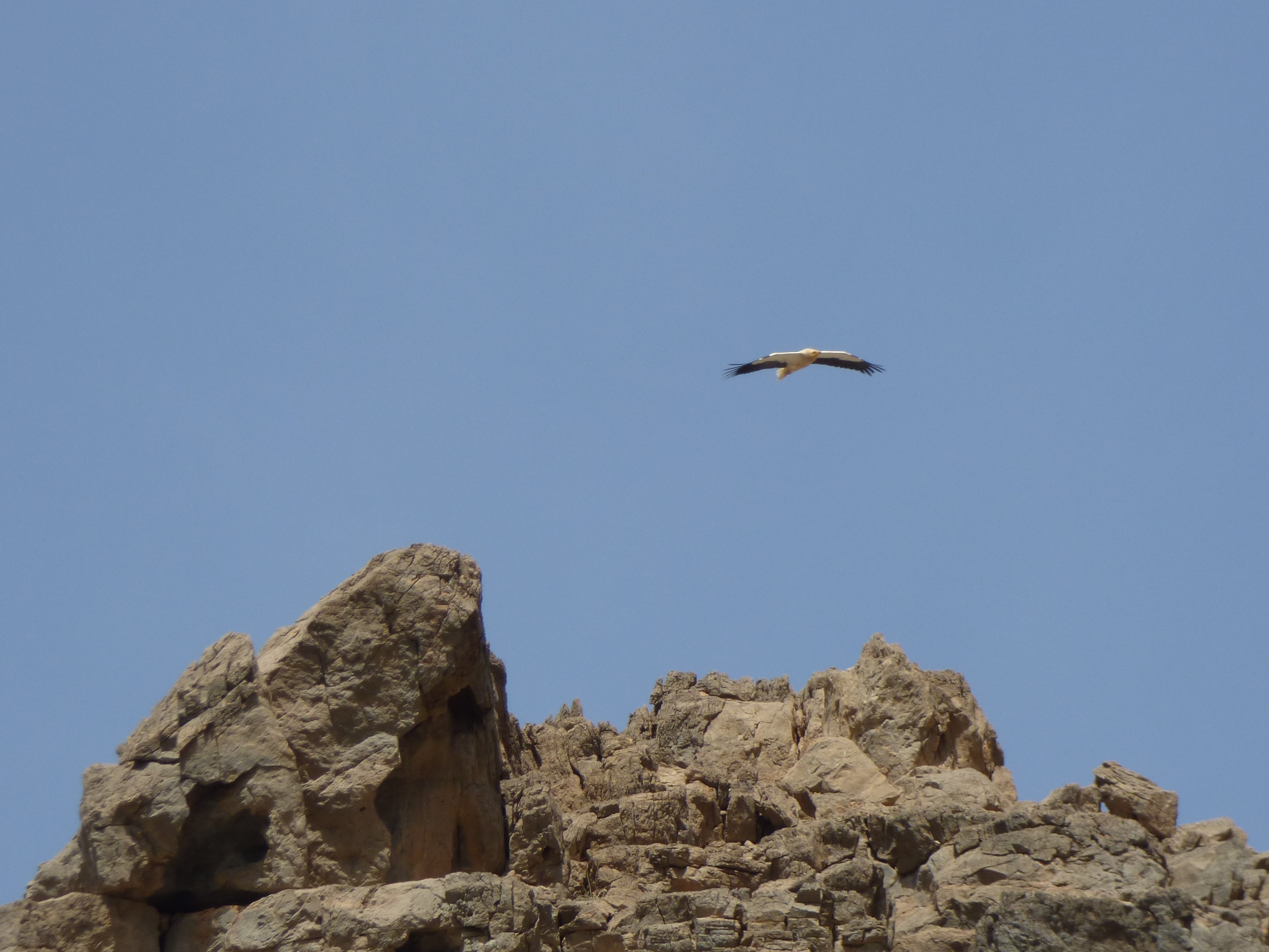
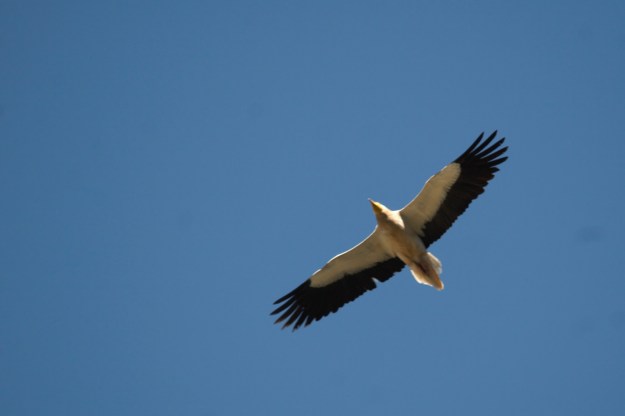
Egyptian Vulture (Neoprhon percnoptreus) flying above a gorge in Northern Oman. Always nice to see that this species is doing well somewhere outside the Pyrenees!

Once arrived we walked a bit around. An obliging Red-tailed Wheatear was a good chance to compare the species with other wheatears while taking some shots. Nearby, 1 female Common Rock Thrush was also showy in the rocks. This is a quite scarce overwintering bird in Oman. A further walk lead us to a small group of trees. Here we easily located the firsts Plain Leaf Warblers and we had a good time enjoying the nervous moviments of this tiny Phylloscopus until the whole group had good views on them. There were al least 5 birds there! Here, a Hume’s Leaf Warbler was also calling in the canopies. We kept scanning but nothing different appeared until 2 Bonelli’s Eagles adults flew over soaring fast and disappearing beyond the gorge.

Rufous-tailed Rock Thrush (Monticola saxatilis) juvenile.


Hume’s Wheatear (Oenanthe albonigra) looked like common in a pair of gorges South of Muscat. Image by Sergi Sales


Red-tailed Wheatear (Oenanthe chrysopygia) was the commonest wheatear in the broken landscape of the Northen Oman mountain chains.

After lunch we left the mountains, crossing the desert in our way to our accommodation inland Oman. Before sunset we did a small stop in a suitable place. Here we got good views on Brown-necked Ravens, Desert Wheatears, 3 Black-crowned Sparrow-Larks (1 male, 2 females) and 1 Asian Desert Warbler.

After such a successful stop we came back to the place where Omani Owl has been seen in recent years. We searched quite long and waited until sunset, but nothing. We were about to leave, already quite dark, when suddenly an owl just appeared from the cliff, diving into the dark, we barely had a view with our torches before the bird disappeared in the dark. We still had 30 minutes more of reseach but unfortunately we could not have any other sight. At some point we decided to move to our next accommodation, with a convenient stop in the way so we could have some dinner.

We arrived to our accommodation, and recharged energy for the coming day.

Day 4. This day was basically a road day in our way to Salalah. After breakfast we headed to Qirbit for some morning birding. Once the oasis by Qirbit we did a walk around expecting some small birds. The desert around was hosting some Desert Wheatears and we got really good views on our 3rd Asian Desert Warbler for the trip. A aucheri race Southern Grey Shrike was calling from the oasis vegetation and several Eurasian Collared Doves were around. We spent about 25 minutes at the oasis and we only got 2 Lesser Whitethroats and 1 Black Redstart.
After such a disapointing numbers we came back to our Qitbit to explore the gardens. These gardens have been really famous for several years and a must for every single birdwatcher exploring inner Oman. Unfortunably the motel in Qitbit is now close and the gardens abandoned so the variety of birds here has collapsed. We didn’t know about we it was evident that the place had once better times. We still had a good surprise in the gardens since a Black-throated Thrush flew off from one of the trees!! The moved into a dense vegetated patch and we decided to follow it. After some wait we had the bird flying to a small pond of water and got good brief but good views on the bird while drinking water.

As Qitbit was disapointing for us in terms of birds we kept driving some more miles South to arrive to a number of farms where irrigation allows a variety of grassy crops. It was midday so quite hot but we still were expecting some good birds. Along the track accessing the farmland we had a number of good birds including several Isabelline Wheatears along with some Desert and Northern. The area was literally full of grasshopers so the presence of 1 Isabelline Shrike was justified. In one of the stops to check around we got 3 Black-crowned Sparrow-larks singing and moving around. Crested Larks were all over. A random stop produced wonderful views on 1 Long-billed Pipit by the car, and everybody enjoyed quiet long. Around, several Tawny Pipits were also seen, some of them performing superbly.

One of the 2 Pied Wheatears (Oenanthe pleschanka) noted in the ferms.

Once by the crops we noticed an even higher density on Wheatears and also Tawny Pipits. 2 Pied Wheatears including a moulting young male were an excellent adding to the tour list. A little walk by the grass produced several Yellow & White Wagtails and we all surprised to listen 2 Quails singing in the field! Several Laughing Doves were in the area, and this was the first place where we noticed the dark form of this beautiful species. The walk was not especially interesting until we got a bird landing in the field. It was a small lark. It was a Skylark actually. It was moving along with a White Wagtail and it looked clearly smaller, thin-billed than the European Skylark. Then a Common Kestrel appeared so all birds flew off to confirm the bird (birds as it was a second one!) to be Oriental Skylarks thanks to the wing patern when flying (mainly the lack of white stripe in the …..

We still spent some more time in the fields. The Oriental Skylarks flew really far away so no chance for a relocalization. After some time without any relevant activity we decided to leave to Salalah.

African Lime Butterfly (Papilio demodocus) were common in the farm land in the desert.

Before living we invested some time on butterflies. Here it was a great variety so we enjoyed some of them, taking good images. After a good driving we finally approached the incredible Jhoffar Mountains. Here, in the road mountain pass, we did a fast stop to enjoy some birds. The firsts of many Fan-tailed Ravens were seen around, offering good chances for photographers in the group. Also Tristam’s Starlings were really showy, with small flocks of about 10 individuals moving around. The short stop turned in a longer one since a small flock of Wagtails included some interesting ones. There were 4 White Wagtails and some Yellow Wagtails including a male Balkan Yellow Wagtail (feldegg). A proper scanning in the White Wagtails produced a Masked Wagtail (personatta) in winter plomage. Beyond the wagtails, an large area of graminea was covering part of the slope. There we saw a small flock of Singing Bush Larks moving around, flying up and down to disappear in the tall grass. Despite our efforts, we couldn’t have a view of the birds on the ground, yet.

Tawny Pipits (Anthus campestris) were common in around the grassy areas in the desert.

There were also some raptors in the area. 1 Common Kestrel was hovering in the area around and 2 wondeful males Montagu’s Harriers passed by the highway with lovely afternoon light. In the distance, 1 Short-toed Snake Eagle was also a good spot!

After such a productive end of the day we arrived to our accommodation in Salalah for a god rest after a long driving day!

Day 5. After a wonderful breakfast in our hotel in Salalah we left towards Raysut, expecting to spend the whole morning in the area. Still, before heading to Raysut we invested 1 hour in a small wetland near our accommodation. Here we got the first views of many of Rüppel’s Weavers, including a wonderful male building a nest. The ambient was clearly warmer than in Muscat. Along with Rüppell’s Weavers we got Graceful Prinias, as common as in the Northern part of the country.

Rüppell’s Weavers (Ploceus galbula) are really common in the Dhofar area. Image by Carles Oliver

The small wetland is in fact a river mouth, known many times as Eastern Salalah Wetland. Here, the floating vegetation was perfect for a number of species and many Eurasian Moorhens were seen taking advantage of it. A Great Reed Warbler appeared from the riverside vegetation while Wood & Green Sandpipers flew around. 7+ Citrine Wagtails were seen feeding, walking and a very obliging stopping really close. In the open water it was a good flock of 15+ Tufted Duck along with Northern Shovelers and Eurasian Teals. But the lagoon was having also one of the most celebrated birds of trip, a small flock of 8 Cotton Pygmy Geese were roosting in the center of the lagoon, providing good views when one of the males put its head up for a pair of minutes! Happy after this happy encounteer we kept scanning around. Both shores were having some Squacco Herons and, at least, 2 Indian Pond Herons were along with them. Some Gull-billed Terns were flying over the lagoon, joined by 1 Whiskered Tern. A further scanning in the right shore, where more floating vegetation was concentrated, produced 1 Pheasant-tailed Jacana swimming along Moorhens!

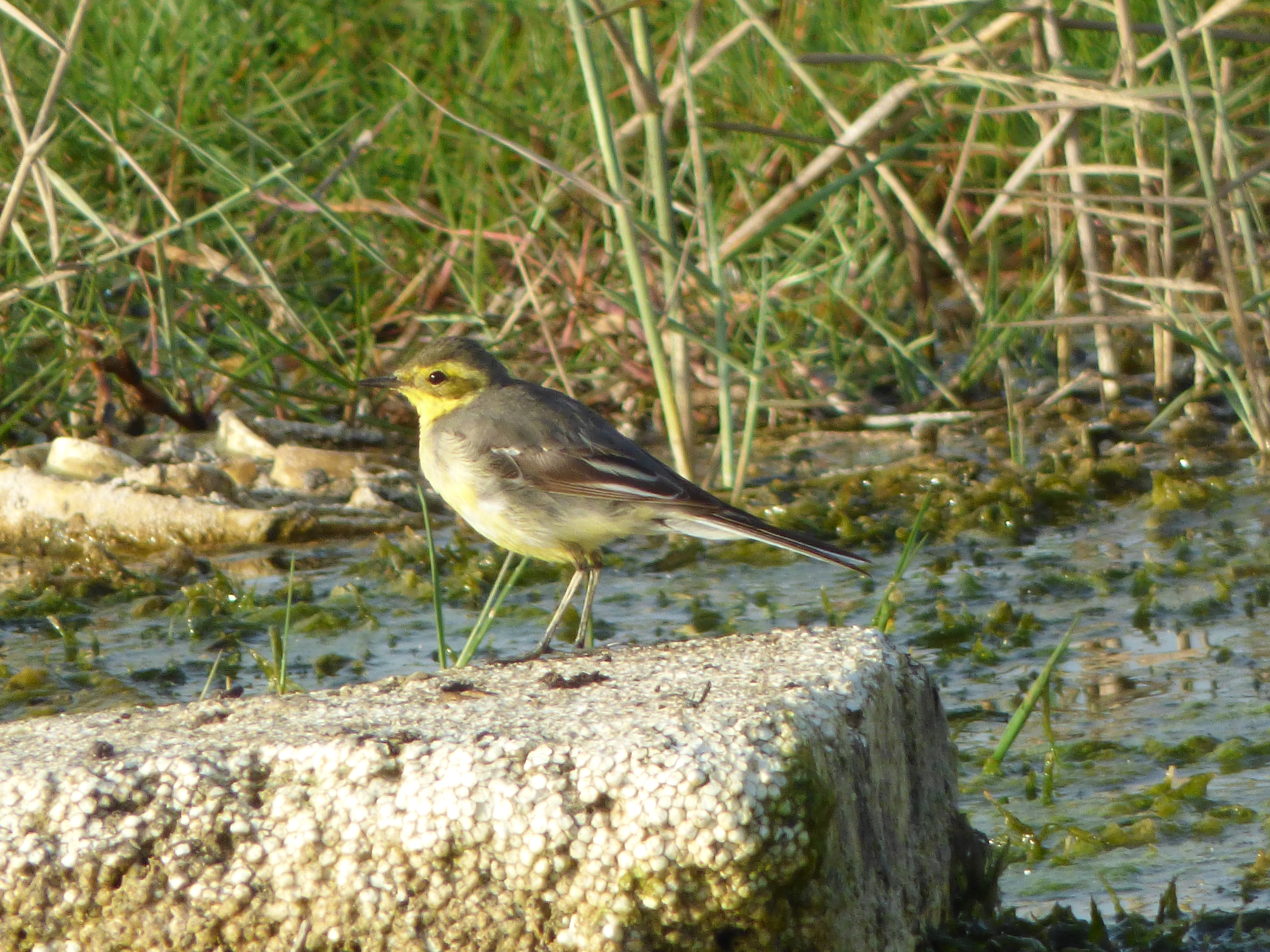
One of the many Citrine Wagtails (Motacilla citreola) seen around Salalah.

The group was really satisfied after these nice findings. In our way back to car a Common Chiffchaff came across our way and stopped in a branch, preening.

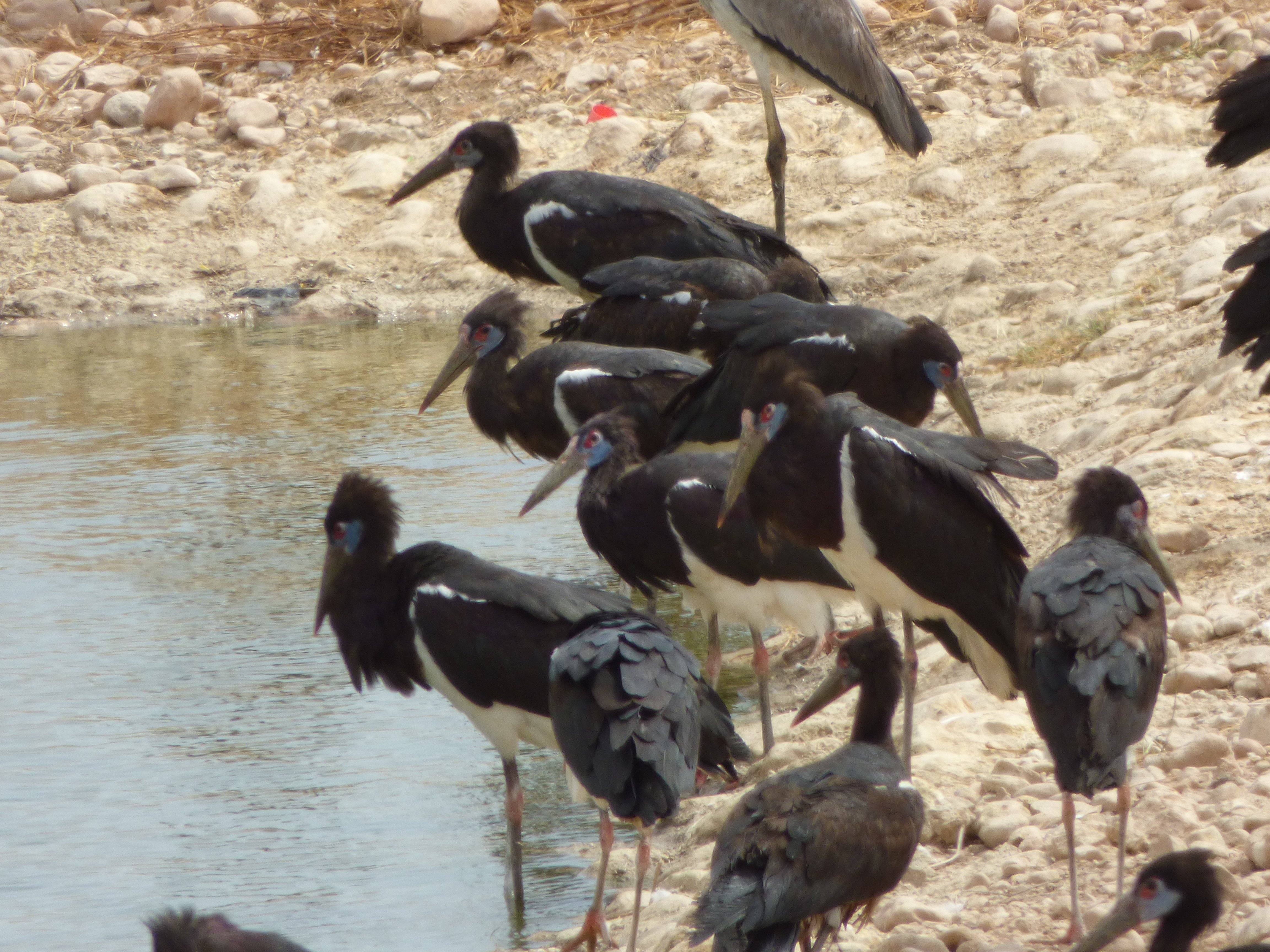
We left the area towards Raysut. The place is well known due to the great concentration of eagles, mainly Steppe Eagles, but also other interesting species. Even before arriving to the rubbish dump we had our firsts Steppe Eagles flying over in a wonderful variety of plomages that will make enjoy every single raptor lover! When being closer we counted hundreds of them circling in the sky, taking advantage of the first thermals. We knew that earlier that week somebody estimated about 500 Steppe Eagles to be in that rubbish dump. Well, they were probably right! Along with the Eagles we also saw a more impressive spectacle: Hundreds of Abdim’s Storks circling in two different flocks! Previous census numbered in about 150…Here there were at least 300 of them!!

Steppe Eagle (Aquila nipalensis) around Raysut, where hundreds of them can easily seen.

Happy about this incredible spectacle we drove a bit expecting to find some raptors on ground. No long drive was required. After some hundreds of metres we got at least 6 Steppe Eagles on the ground in a wonderful set! We took our time studying the plomages and structure of the birds and, after that, we drove to some lagoons SW from the dump. Unfortunately the lagoons seemed to be totally dry and only a handful Tristam’s Starlings and a pair of Desert Wheatears were left in the place.

Juvenile Steppe Eagle (Aquila nipalensis). This individual was flying on a flock of 50+ of them.

We then decided to move towards the coast, to find a different lagoon. Overpassing with the car it was evident that it was having water. A flock of 20+ Greater Flamingoes were there, feeding in the deepest part of the lagoon. At the other side, with small lagoon of shallow water and wide areas of rocks, a party of 150+ of White Storks were roosting, preening or tentativally trying to catch a fish or something from the minor lagoons.
We parked and walked until an apropiated view point. 2 Caspian Terns were flying up and down the river. Lower, 1 Whiskered Tern was doing so, stopping sometimes by a solitary Squacco Heron. Some Grey Herons were also in this part of the river. Tens of Rüppell’s Weavers were in the reeds and their whistles were a constant sound in our ears. In the sky, 2 Western Ospreys were patrolling the lagoon. One of them tried for 4 times to catch a fish but with no luck at all…Finally flew the area toward to sea in a short flight, probably to rest and wait until better times to come. The sky was providing a lot of activity. 4+ Black-eared Kites (race lineata of Black Kite) were also patrolling the sky, probably unhappy after the unsuccessful attemps of the Osprey. Waves of birds of prey were coming down the river from the rubbish dump, located some miles up by the river. They were mainly Steppe Eagles but along with them we spotted our firsts 2 Eastern Imperial Eagles of the trip! An intense scanning of the raptors produced also 8+ Greater Spotted Eagles circling and also stopping in the cliffs by the lagoons. They were clearly coming to take a bath and drink water. One of this Greater Spotted Eagles came down the lagoon and stopped right in front of us! An amazing view of such a incredible bird. Delighted after such a wonderful sights we walked a bit down the lagoons, approaching the area of pools were most of Storks and Herons were. We didn’t cover a long distance before we had to stop again due to 2 magnificent Great White Pelicans flying low over us. This a species considered as a rarity in Oman so we were not really expecting to enjoy them in this tour! The birds passed by us going to the see, joined by a small flock of Barn Swallows.

Greater Flamingoes (Phoenicopterus roseus) in Raysut.


Greater Spotted Eagle (Clanga clanga) near Raysut ponds.


Great White Pelicans (Pelecanus onocratus), a really scarce species in Oman, were another of the main attractions in Raysut.

The ponds were fullfilled with birds. There were 120+ Grey Herons roosting in the roocky river bed, beyond the ponds. Along with them there were some Western Cattle Egrets, 1 Little Egret, some Western Reef Egrets (both white and dark forms) and 1 Intermediate Egret. The ponds were hosting Common, Wood & Green Sandpipers but also Greenshanks, Common Redshanks, 3 Ruffs and some Temminck’s Stints. A wonderful Pheasant-tailed Jacana already developing the typical breeding long tail projection was really showy and allowed some record shots. Here we also had good views on the impressive Pearl Emperor (Charaxes varanes) female, a wonderful large butterfly that flew over our group!

Beyond the ponds, the massive flocks of White Storks and Grey Herons were, for sure, hiding something else so we started scouting them. 1 African Sacred Ibis was found, to turn into 3 individuals later in the day. Also 1 Glossy Ibis was discovered feeding in what we supposed was a tiny pond. Beyond the Herons and the Storks, 1 Greater White-fronted Goose was moving in the scattered rank vegetation.

Beyond this area a small estuary was concealling the stream and the sea. A fast scanning concluded some 1000s of waders but also 4 Western Ospreys and some Greater Spotted Eagles on the beach. We just decided to come closer abd have a good scanning.

The area was simply great. Thousands of waders were feeding in the mudbanks. Many Dunlins, tones of Little Stints but also Common Sandpipers, Common Ringed Plovers, Common Redshanks, Greenshanks, Bar-tailed Godwits and some Kentish Plovers of the witish local race. 4 Eurasian Oystercatchers were counted along with several Eurasian Whimbrels. Here, some Lesser Sand Plovers were seen but the most popular wader were the Terek’s Sandpipers moving around. We counted at least 23 of them, some of them doing their typical short runs in search of food. These birds are authentical runners!

The lower Raysut ponds were hosting a incredible variety of birds!

In the sea, flocks of Socotra Cormorants were moving up and down and we enjoyed a pair of their typical massive flocks. Greater Crested, Lesser Crested & Caspian Terns were all around but the most interesting were two Saunder’s Terns moving South along the coast in what it turned out to be the two only Saunder’s of the tour, a species we were expecting to be commoner.

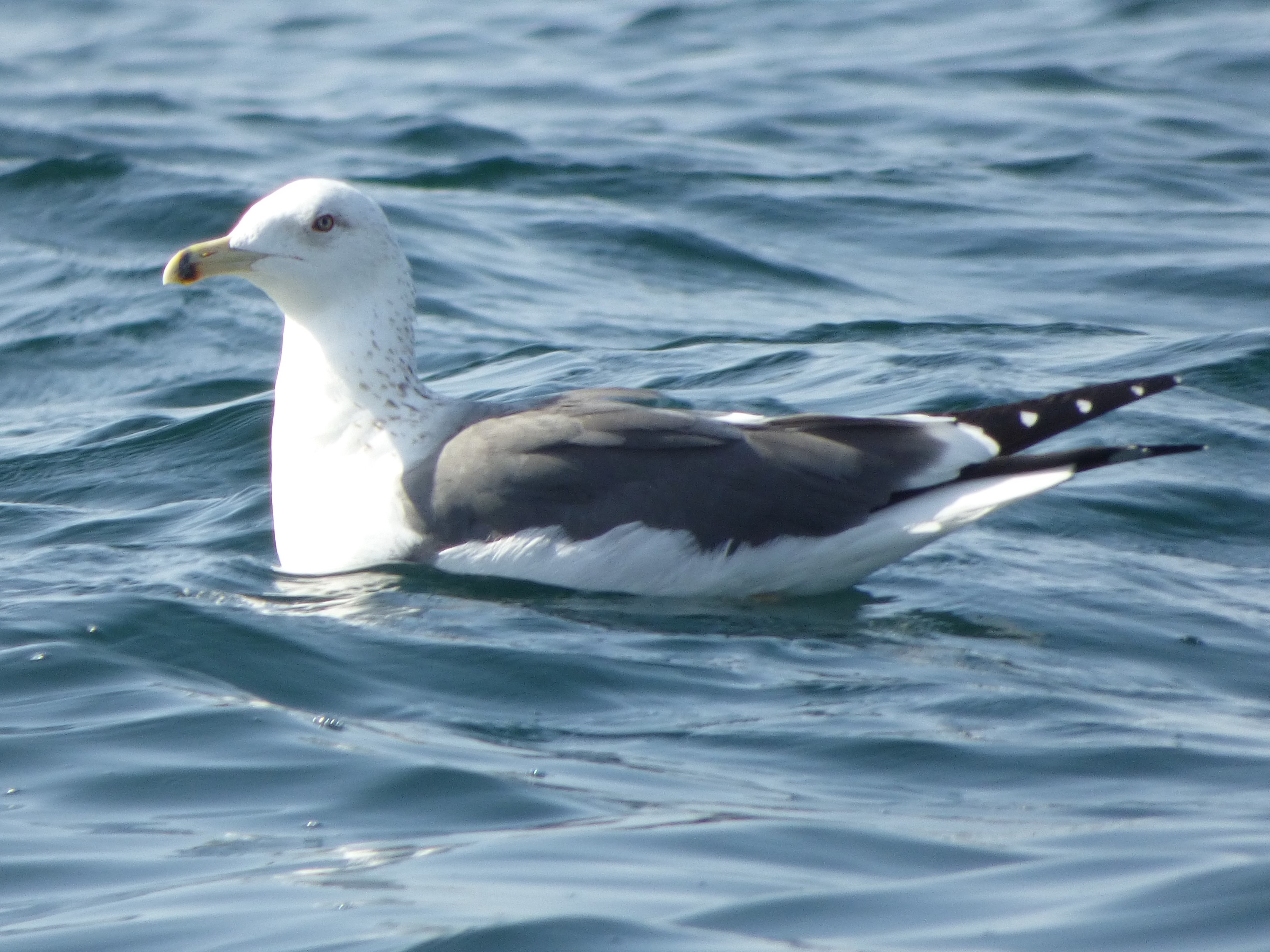
The area was really interesting. Also for gulls. Here we had good views on Heughlin’s, Steppe Gulls and also Caspian Gulls. It was funny to go throught the flock of gull, with some unclear individuals and many other showing typical characters of any of the species. A solitary Palla’s Gull was also noted in the flock.

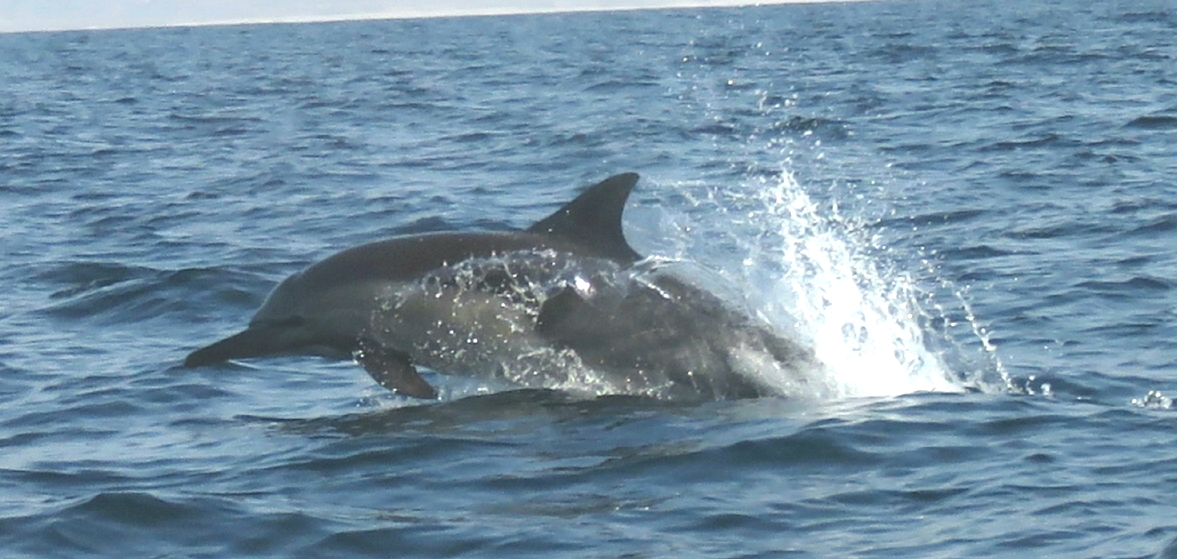
The bay also produced good views on Delphins. In fact we got two different species with a small party of Indo-Pacific Bottlenose Dolphins and at least 1 Indian-Ocean Humpback Dolphin moving close to them.

Pheasant-tailed Jacana (Hydrophaisanus chirurgus), one of the most celebrated birds around Salalah.

After such a wonderful morning we just had a break for lunch. After our break it was time to go up in the hills to look for a number of other species. Now the landscape changed a lot with mild hills covered by a carpet of small decidous trees, with the impressive Dhoffar mountains in the back.

Cinnamon-breasted Bunting (Emberiza tahapisi) enjoy huge densities in the Dhofar region. Image by Carles Oliver

Flocks of Rüppell’s Weavers jeweled the road as we were approaching the location. African Silverbills joined them. Few minutes later the whole group was enjoying wonderful views on Cinnamon-breasted Buntings and Abyssian White-Eyes. Many of them were coming to drink water in a small channel.
A short walk around was soon producing interesting birds including Palestine and Shinning Sunbirds as well as a lovely flock of African Silverbills. White-eyes were extremelly common , moving up in the canopies but also low in the branches, few inches from the ground. One of these flocks brought associated a lovely African Paradise Flycatcher, one of the most celebrated birds in the afternoon. In total, we counted up to 4 individuals, including one showing a full breeding tail in whitish colour!
The walk was being very productive, especially after 2 Blackstarts appeared really close to the path, delighting us with cracking views! The lower vegetation around was also promising so we went a bit out of the bigger trees to take a look. It proved to be a wonderful decision since we soon had 1 Arabian Warbler moving in one of the small trees. The bird showed nicely and its movements reminded us those of an Orphean Warbler. Right side by side from the Arabian Warbler we had another surprise since 1 Black-throated Tchagra pop up from the very dense vegetation to give us poor views. The bird was moving really low in the scrubland so a bit of wait was necessary until the bird decided to “jump” into the open for half a minute!


Abysssian White-ete (Zosterops abyssinicus), another common bird in bushland and forested areas.


Blackstart (Oenanthe melanura), another of the “African” specialities of the Dhofar region. Image by Carles Oliver

The locations was proving to be really productive and the landscape around was dominated by the impressive rock faces of the Dhoffar mountains. Here the cliffs were monitored by a good number of raptors. They were mainly Steppe Eagles but we could also see 3+ Eastern Imperial Eagles, 1-2 Greater Spotted Eagle and 1 Golden Eagle.

Arabian Warbler (Sylvia leucomelaena) showed really well despite the poor image.


African Paradise Flycatchers (Terpsiphone viridis) were not scarce but sometimes difficult to see, often moving associated with White-eyes flocks.


Black-crowned Tchagra (Tchagra senegalensis) appeared briefly in the low scrubland.

Before heading to our accommodation we still had a last spot to try to add something else but we only added 1 male Blue Rock Thrush and several Isabelline Wheatears along with a superb Greater Spotted Eagle overwatching the whole area from a pilon.

Day 6. This day we drove some miles North from Salalah to enjoy our sea trip in search of some of the specialities living in this part of the Indic Ocean. The small harbour from where we depart was full of Sooty Gulls, alowing really close views on this lovely species. Moreover, the harbour was also hosting several Heuglin’s Gulls and some Caspian & Steppe Gulls. Inmediatly after our small boat left the harbour we had the first surprise in the form of a flock of Black-crowned Black Herons roosting on the external deck boulders. There were not alone but joined by several Gulls, some Grey Heron and 2 Western Reef Egrets. As the boat passed by we had really good views on the Herons.

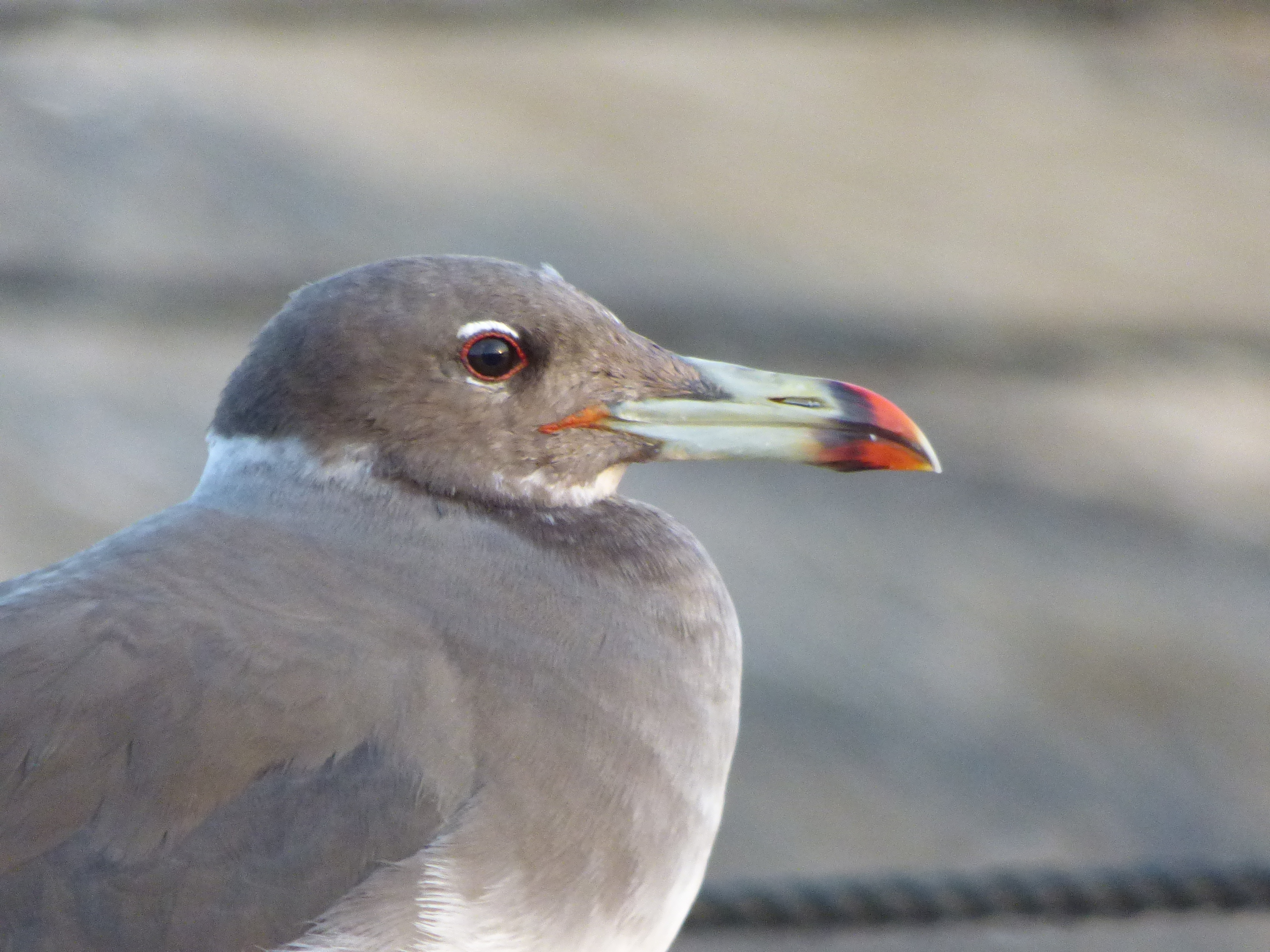
Sooty Gull (Ichthyaetus hemprichii) portrait in the harbour few momments before starting our offshore trip. Image by Carles Oliver

Once in the open sea we started a hard work to attrack the some sea birds. Soon, a number of Sooty Gulls were following the small boat. A few minutes later we had the first target appearing in the way of a small flock of 3 Persian Shearwaters flying above the waves. Unfortunately they appeared as not interested in our small boat and kept flying away. Encouraged after such a good start we kept going off shore. Flocks and flocks of Red-necked Phalaropes were all over on the extremelly plain sea and their pure white bodies were like tiny lighthouses in the deep blue sea.
We enjoyed several close views on them but take good photos on them proved to be more difficult than expected.

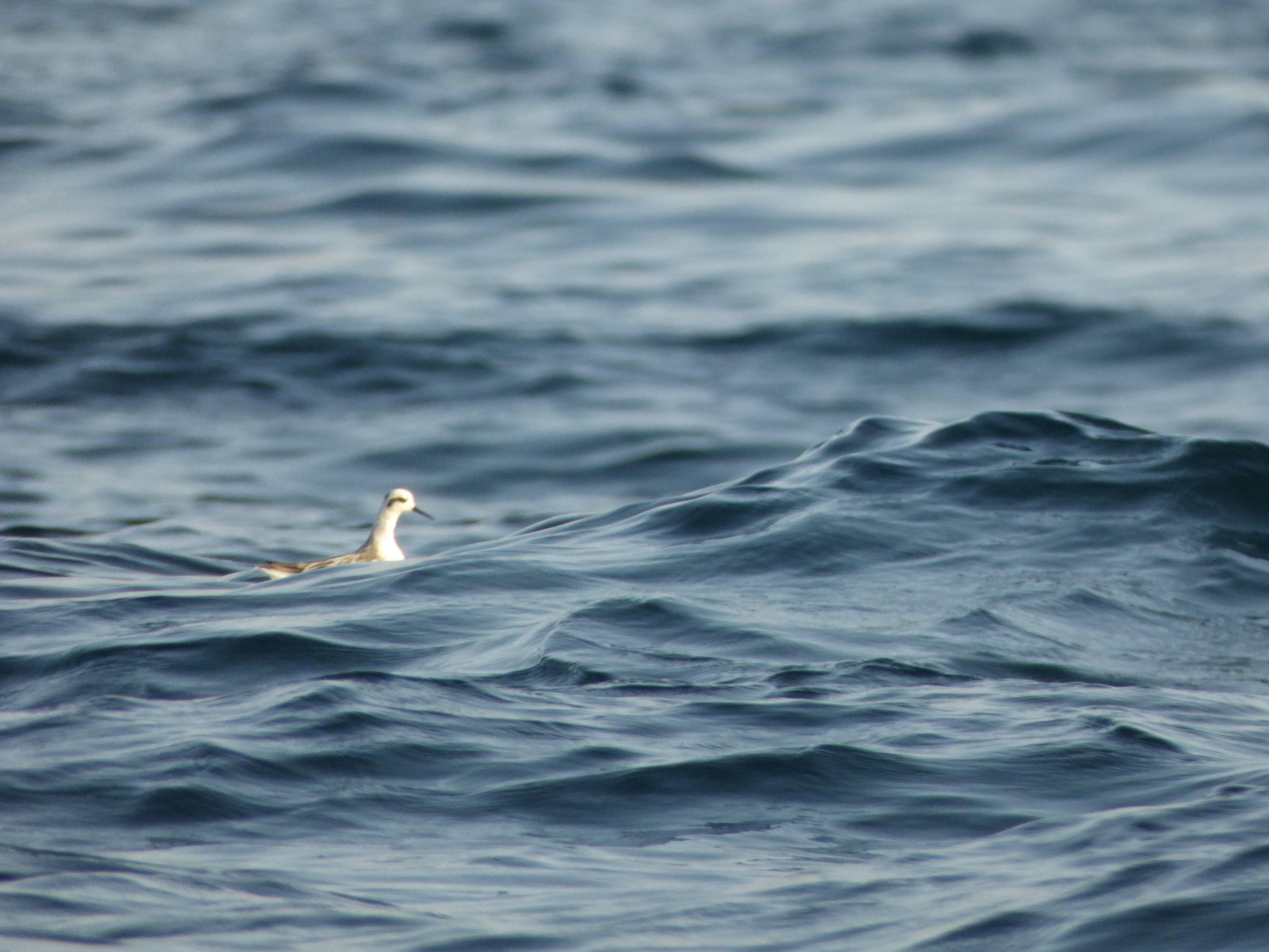
Flocks of Red-necked Phalaropes (Phalaropus lobatus) were moving in the sea offshore Dhofar region. Image by Carles Oliver

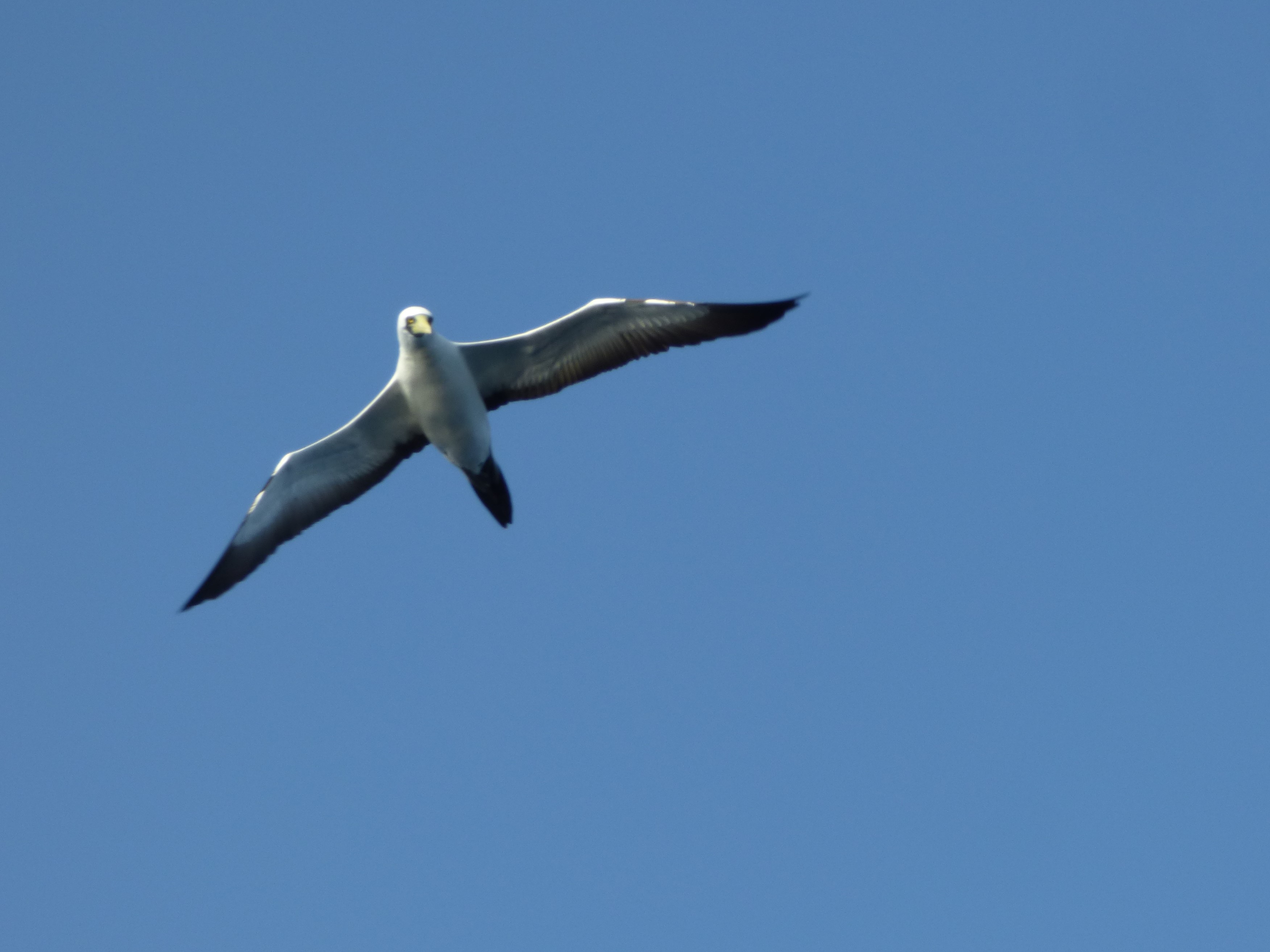
The boat trip was going well but even improved as the 2 Masked Boobies flew over our boat! Great views on a really celebrated bird that, unfortunately seemed to have no interest at all in the food we were offering them. We kept scanning and feeding for long, expecting to attrack a Jouanin’s Petrel, one of the top targets in the offshore trip, but we had no luck in this…
We enjoyed up to 14 Masked Boobies with some great views and a second flock of Persian Shearwaters passed by us but no signal of the Petrel. Midway in the sea trip we got excellent views on Indo-Pacific Bottlenose Dolphins and enjoy some great views on them while jumping in the waves and chasing tunas. A Green Sea Turtle was also a good addition to our list! It was a quite large one (about 1,5 metres) and it was in the surface only for few seconds…

Masked Booby (Sula dactylatra) was one of the most celebrated birds on our offshore trip.


Socotra Cormorants (Phalacrocorax nigrogularis) were moving in large flocks along the coast.


Heuglin’s Gull (Larus heuglini) in winter plomage during our offshore trip.


Indo-Pacific Bottlenose Dolphin during our offshore trip near Salalah. Image by Sergi Sales

Once back on the continent we just went for something to eat. Happy for the relative
good sights during the sea trip we just changed and went to the explore the highest area in the Dhoffar Mountains. A number of lanes go up in the slopes, allowing excellent birding all around. The way up produced excellent views on Long-billed Pipit, Blackstarts and Isabelline Shrikes.

This juvenile Eastern Imperial Eagle (Aquila heliaca) was one of the most iconical image of the tour to Oman. Image by Carles Oliver

Once in the high plateau we were lucky enough to enjoy a nice flock of Cinnamon-breasted Buntings, Long-billed Pipits and wonderful views on Singing Bush Larks. Beyond there, a male Arabian Wheatear Scanning the slopes inmediatly around we found a incredible flock of 20+ Yemen Serins feeding on the ground and showing wonderfully in a rocky area close to the road. We were amazed to have such a great views on this species, being this area the only one place in the world where it is possible to enjoy it!

Singing Bush Lark (Mirafra cantillans) offered lovely views on our exploration of Dhofar Mountains. Image by Carles Oliver


Tristam’s Starling (Onychognathus tristamii) is a scarce urban bird in Salalah and around. Image by Carles Oliver


The group enjoyed long views on a flock of the near-endemic Yemen Serin (Crithagra menachensis) in the Dhofar. Image by Carles Oliver


Female Arabian Wheatear (Oenanthe lugentoides) showing the orangy patch in the ear-coverts and the difusely barred breast. Image by Carles Oliver

Happy after such a good views on many key species we kept moving in the slopes. Inmediatly around a small village we found 1 Eastern Imperial Eagle on a wood pilon. The bird showed nicely and allowed really good shots! Up in the sky, raptor action was increasing. In less than 15 minutes we counted 7 Eurasian Griffons, 10+ Eastern Imperian Eagles, Steppes Eagles, 1 Short-toed Snake Eagle and 1 Bonelli’s Eagle!
Still, the most wanted Eagle was not showing…yet. In our way up we did also a short stop in a pond and got one of the surprises of the trip.

The impressive landscape up in the Dhofar Mountains. Image by Carles Oliver

After such a great found we decided a proper stop in a pond and scan around. Many Abyssian White-eyes were moving around and 2 Shinning Sunbirds delighted us with its incredible colours.
Our last stop that day brought us to a wild scarpment. It was really windy and foggy so we were expecting little that afternoon. Fan-tailed Ravens were moving all around the cliffs and the area around produced wonderful views on Tristam’s Starlings. The scanning around was producing little else and we were already considering to leave when an enormous black and white shape emerged from the fog to fly up in the cliff: it was a Verreaux Eagle! The bird was just playing with wind, moving up and down in the cliffside. Few seconds after a second Verreaux Eagle appeared as well from the fog and we all enjoyed wonderful views in what is one of the most espectacular eagles on Earth! The birds kept appearing and disappearing from the bog for at least 15 minutes, doing incredible acrobatical flights and even stopping in the cliffs for short!!

We got some impressive views on Verreaux’s Eagles (Aquila verreauxii) despite the intense fog! Images by Carles Oliver

Happy after such a successful afternoon we just headed back to Salalah, where a good last stop was waiting for us. Urban birding in Salalah can be really good so we went to one of its urban parks, close to our accommodation, to finish the day. Out of the common Laughing Doves, one of the first birds we got were to Plain Rock Martins resting in one of the buildings of the complex. They offered good views on a bird we could see in flight so far. Beyond the building a small lagoon offered really good views on a flock of Whiskered Terns and also a pair of Caspian Terns. Citrine Wagtails were quite common in the flooting vegetation and 1 Palestine Sunbird showed superbly in low rank vegetation. 2 Indian Pond Herons were also present, catching the afternoon light in a wonderful way. Passing over the lagoon by a small bridge, we explored a palm tree orchad. Here we got one of the main targets of the visit in the way of 2 Bruce’s Green Pigeons showing in a wondeful way, first in a wire, later on a tree while feeding on fruits. This was again a really celebrated bird for everybody in the group.

Bruce’s Green Pigeons (Treron waalia) on a feeding tree in Salalah. Image by Carles Oliver

We kept moving in the area. An open field beyond was hosting waves and waves of Yellow Wagtails, including some nice summer plomaged “feldegg” and “beehma” birds. 1 Isabelline Weathear was also really showy in the area, as it was a Graceful Prinia. The channel around is an interesting roosting place for waders and, at that time, tens of Common Sandpipers were concentrating in the area along with 15+ Greenshanks and several Green Sandpipers. Sun was starting to go down but before we left we still had another top target appearing in the way of 2 Spotted Thick-knees posing for us under one fot he small olive trees in the garden.

Pale Crag Martin (Ptynoprogne obsoleta) is much a urban bird in areas of Muscat and Salalah. Image by Sergi Sales


Citrine Wagtails (Motacilla citreola) were again a major attraction for the tour participants. Image by Carles Oliver


Spotted Thick-knees (Burhinus capensis) resting on an urban park in Salalah. Image by Carles Oliver

After such a great views we just came back to our hotel to enjoy another great buffet dinner.

Day 7. This day we had a very early start with a small tranfer back to the desert, were in a small oasis we were expecting to find Grey Hypocolius as well as other top target birds. After our transfer we enjoyed our packed breakfast while scanning around. Not long at all until we got the first good bird in the way of a gorgeous mal Nile Valley Sunbird just around our car. Not many time for photographs in this wonderful bird because 1 Grey Hypocolius just flew over us (!!) stopping about 200 metres away from us. We just moved on and after some searching in the area we got brief views on a wonderful male up in a palm tree! But was a brief view as the bird pop down and disappear. Spent some time around with little result out of more views on the male Nile Valley Sunbird, joined now by a female!

Nile Valley Sunbird (Hedydipna metallica) showed superbly, including this male singing and displaying. Image by Carles Oliver


Grey Hypocolius (Hypocolius ampelinus) female. A flock of 3 individuals were seen in our day in the desert. Image by Carles Oliver

We walked around hoping to have the Hypocolius appearing again but we got nothing but a pair of glimpses on 3 of them moving around. Blackstarts were singing around as the sun was getting higher.
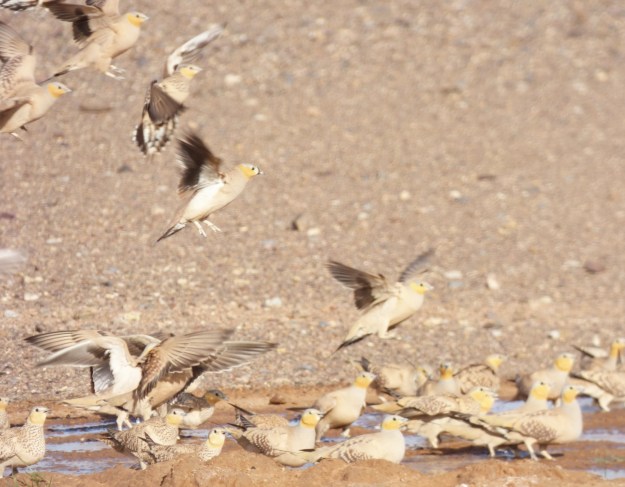
Suddenly, a flock of birds appeared moving in the sky, Sandgrouses! A flock of 30 of them was moving in the distance, apparently moving down to drink water in a small pond beyond the vegetation. We just drove down the area, stopping in a decent distance to the pond. And then it came waves and waves of Sandgrouses, calling and flying extremelly fast around the pond. They were mainly Chestnut-bellied but also Spotted Sandgrouses were mixed with them.
First it was a flock of about 30. But then it came a second flock, and a third, and a fourth. Suddenly the sky look like full of them, with flocks coming in and out, landing, walking, flying fast from few inches to the ground or flying up in the sky while calling. This was propably one of the most remarcable momments of the tour. We estimated about 150 Chestnut-bellied Sandgrouses and 30+ Spotteds! In one the last flocks coming in we also got at least 1 Crowned Sandgrouse! It could not be better. Wrong. It could.
Right when all Sandgrouses were flying around with their noisy call, 2 Grey Hypocolious jumped on the wire just by our car, allowing some great views on them. ! female in particular stayed in the wire for about 5 minutes, allowing great images! We especially enjoyed the female, being there for some minutes while the male was only a little while…

Chestnut-bellied Sandgrouses (Pterocles exustus), the commonest Sandgrouse in Oman in our 2019 tour. Image by Carles Oliver

More and more flocks of Sandgrouses were coming down to drink water. Now not only in this corner of the oasis but also in many other areas around. So we moved a bit to try to get better views on the different flocks and, maybe, something different. But we were already at the end of the spectacle and we only got closer views on a small flock of Chesnut-bellied Sandgrouses walking right in the tarmac. They were there for a pair of minutes and after that they flew off. Very little movement of Sandgrouses were left already…2 Blackstarts were singing in nearby cliffs. Got a nice view on them before heading back to Salalah.

Back in the coast we decided to spend some time in ponds in Raysut. There we were compensated with great views in a big flock of Abdim’s Stork, a species that we had only in flight until that moment. But in the ponds we had a flock of 200+ having a bath or simply resting in the gravel shore. Along with them, a good number of waders including several Temminck’s Stints and some Little Stints. Little Ringed Plover, Greenshanks and Common Sandpipers were also there.

Abdim’s Storks (Ciconia abdimii) at Raysut ponds. Up to 200 were seen! Image by Carles Oliver

After an early lunch we just got back to the hills. This time we went a bit inside the fabulous decidous forests covering much of Dhoffar Mountains Eastern slopes. Here we enjoyed with several flocks of Abyssinian White-eyes and some African Paradise Flycatchers. A pool in the forested areas produced good views on a male Shikra posted in the shade, waiting for potential preys to come. The trees around were hosting good numbers of Cinnamon-breasted Buntings, Blacktarts but also 1 Siberian Chiffchaff that was calling in the canopies, making much easier to identify the bird. A small walk was done in nearby meadow, where we had a Red-throated Pipit flying over us.

This day we waited until dusk, and then we were to explore an interesting point for Arabian Scops Owl. We just waited until dark and after some minutes we got a wonderful Arabian Scops Owl calling really close to us. It was a question of minutes to get excellent views on the bird, and with the help of special lights we got incredible shots in the owl!

Arabian Scops Owl (Otus pamelae) gave us excellent views on our nocturnal trip around Salalah. Image by Carles Oliver

Happy after such a nice views we came back to the hotel for some dinner and rest.

Day 8. That sunny morning we went to try a different place for Arabian Golden-winged Hawfinch. In our way to the little pond were the birds use to come to drink we had a stop as 2 Arabian Partridges were standing by the road in lovely morning sun. Once in the pond, good numbers of Cinnamon-breasted Buntings and African Silverbills were attending the water. We decided to wait a bit. 1 male Namaqua Dove passed by the pond at the same time that a Greater Spotted Eagle was flying over. Few more minutes of waiting and a female Shikra appeared up in the sky, offering good views.We kept scanning around the ponds, were some flocks of Abyssinian White-eyes were also coming. Then, something moved fast around one of the ponds, and a fast scanning produced a Grey-headed Kingfisher! This was a surprising sight since this species is suposed to arrive in Oman during early April (!!). We anyway enjoyed very much this really unexpected bird as was flying around the pond, chasing dragonflies in a really effective way! The bird showed really well for up to 20 minutes, until a big herd of cattle came to drink water.

Grey-headed Kingfisher (Halcyon leucocephala) was an unexpected goodie in our tour. Image by Carles Oliver


African Silverbills (Euodice cantans) came to drink water in a pond at the Dhofar Mountains foothills. Image by Carles Oliver

It was already quite and it was clear that Hawfinches were not coming to drink water, so we decided to move, missing this wonderful bird. This day we were facing a transfer North but before that we were still having some time to check the Salalah farms.
We checked s two of them before driving North. In our first location we got Clamorous Reed Warbler and up to 5 Graceful Prinias. The grasslands were hosting several Singing Bush Larks that were singing and performing around. Up in the sky, 4 Forbes-Whatson Swifts passed over us, offering good views in both the general colour and the white spot in the throat. Out of this, the grasslands were poor in birds so we decided to move to a second farm. A drive around this second place produced Hoopoe, Green & Wood Sandpipers and the only one Yellow-billed Kite of the trip. Still, the area was poor again in birds so we decided to leave the area and start moving North.

Southern Grey Shrike (Lanius meridionalis aucheri), a resident shrike in Omani deserts. Image by Carles Oliver

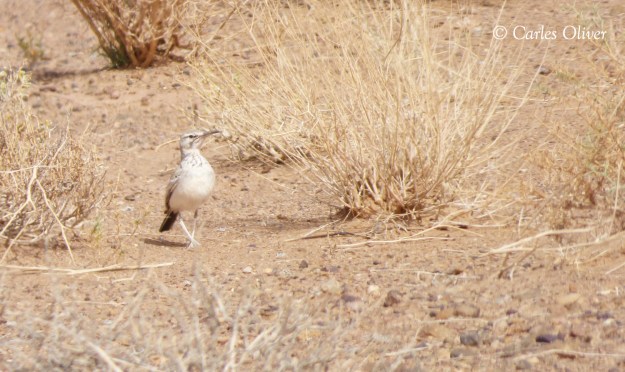
In our way North we did one stop midway. A short walk in the desert produced 1 Chestnut-bellied Sandgrouse, 2 Black-crowned Sparrow-lark and 5+ Greater Hoopoe Larks chasing each other and doing acrobatical flights in a lovely afternoon light. After this good sight we just drive until Duqm, arriving a bit after sunset.

Day 9. This day we ha dan early breakfast and left North to explore the …… Bay. This is huge estuary concentrating hundreds of thousands of waders. When did arrive tide was low and birds very distant. Still, we had good views on several Bar-tailed Godwits, Kentish Plovers, Dunlins, Grey Plovers, Eurasian Curlews and Lesser Sand Plovers. Flocks of Greater Flamingoes were roosting in the water, just few inches inside the Ocean. There were several Caspian Terns flying up and down the area and there were flocks of Sanderlings all along the shore.

Despite this, and after 45 minutes of scanning, we were uncapable to connect with our main target in this point, the Great Knot. So, we finally moved some miles North to keep scanning the estuary but from the Northern side. We drove some 40 minutes scan around the deck where some ferries are connecting with Marisah Island.

Impressive flocks like this of Sooty Gulls but also Steppe & Heuglin’s Gulls were a common view on the estuary around in front of Marisah Island.


Flocks of Crab Plovers (Dromas ardeola) were moving in the inter mareal plateau along with several other waders.

In the beaches around there were literally thousands and thousands of Sooty Gulls. Along with them, huge flocks of Slender-billed Gulls were also a good views. Probably more than 7000 Slender-billeds and number even higher of Sooty Gulls! This wonderful espectacled were complemented by 100s of Caspian and Heuglin’s, being Steppe Gulls the less numerous in the area. A scan along the bridge giving access to the ferries produced a small flock of Common Terns, and not far away from them our only one White-cheeked Tern of the trip! Once in the deck we also enjoyed excellent views on Greater Crested Terns. Back in the mainland it was time for the tide to go down once more. Loads of waders came in. And along with the most common species we had wonderful views in 50+ Crab Plovers feeding in the shore and moving along with Bar-tailed Godwits. They were a bit distant but still this was definately one of the images of the tour for some of the tour participants and for sure a wonderful way to end the trip!

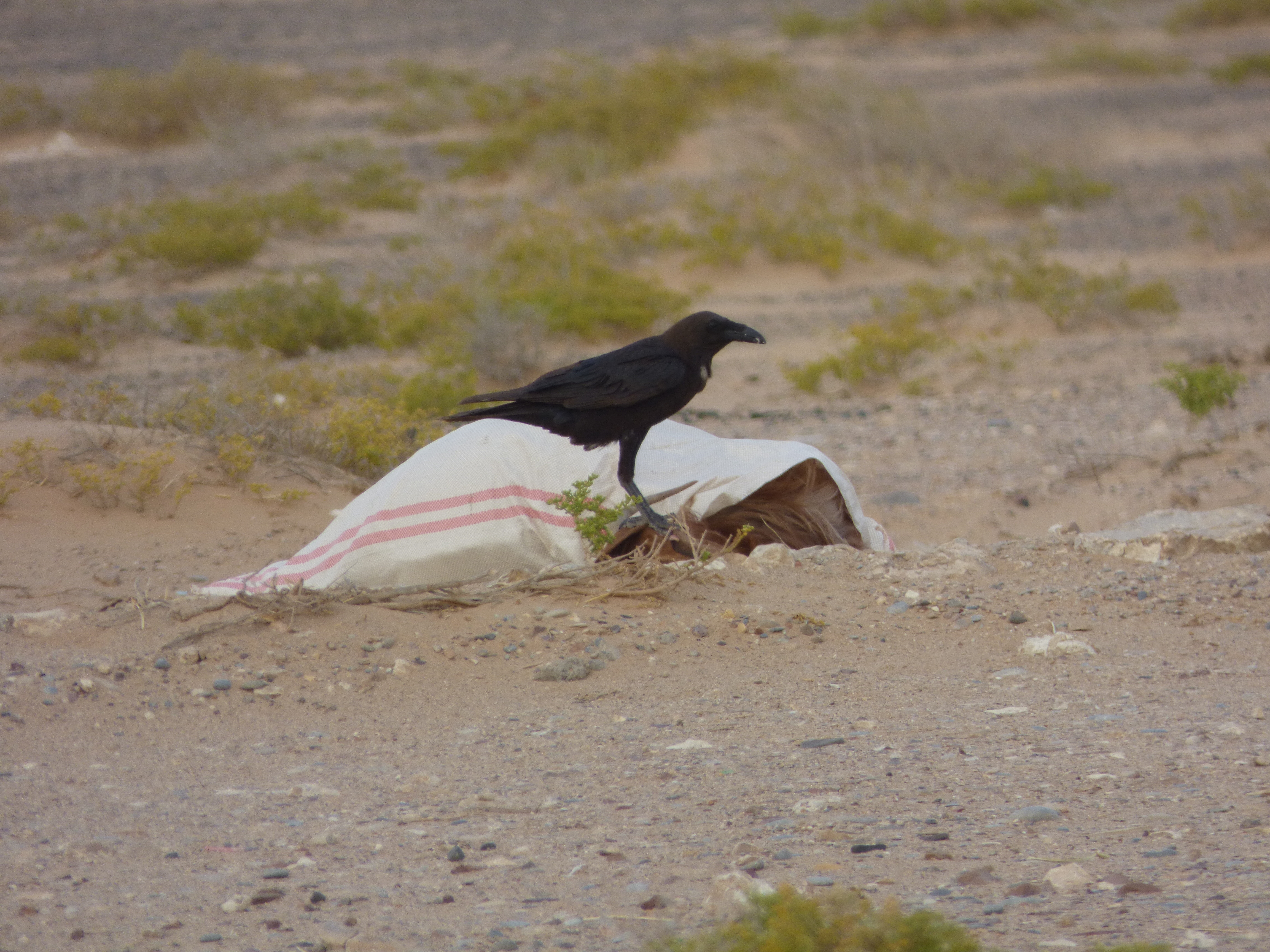
Brown-necked Raven (Corvus ruficollis) were showing really well in our way back to Muscat. Image by Carles Oliver


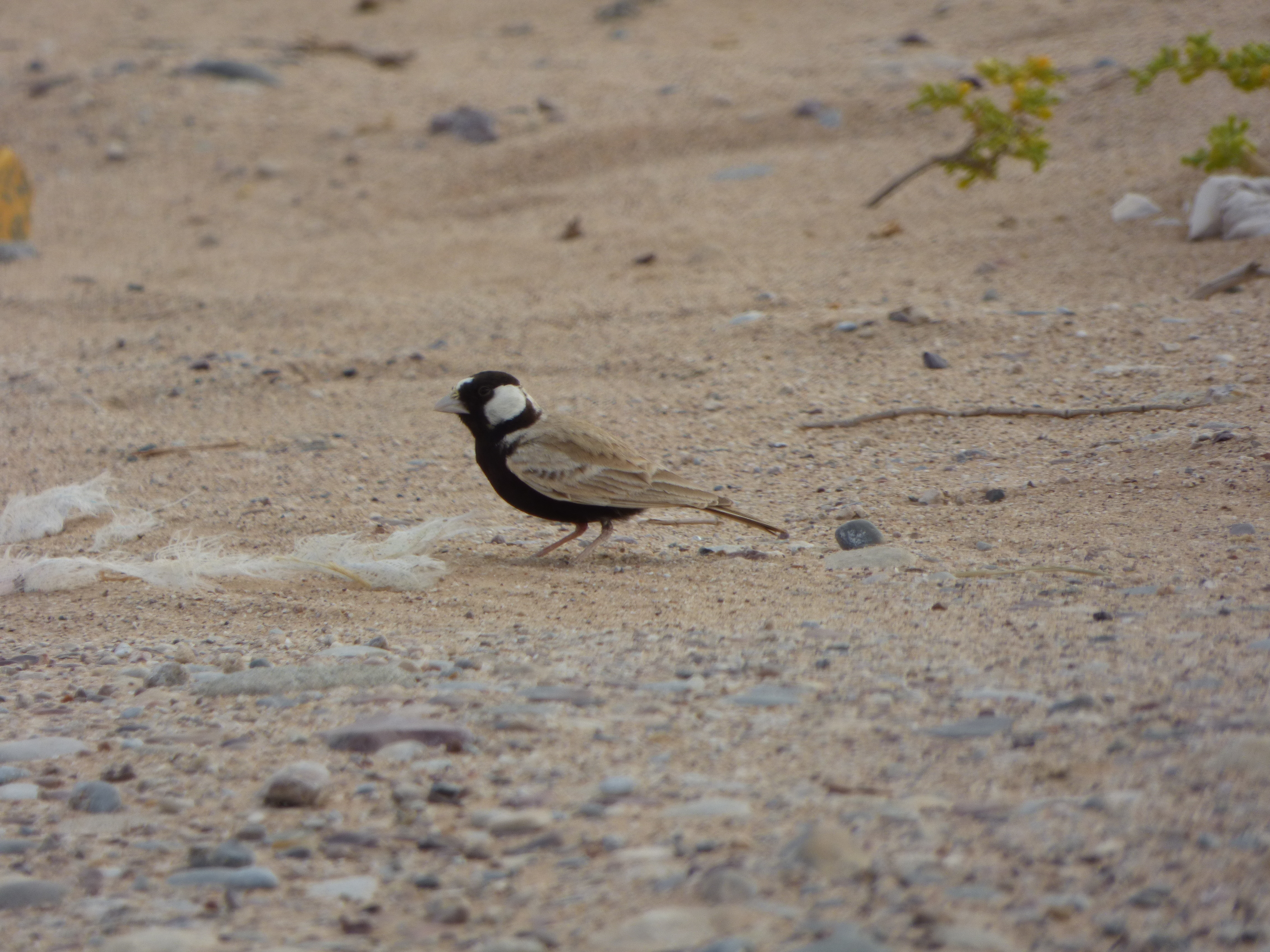
The best views on Black-crowned Sparrow-Larks (Eremopterix nigriceps) came right before heading back to Muscat. Image by Carles Oliver

In our way out of the area we still had a final stop since a really close Brown-necked Raven was offering nice views. Close by, a lovely Black-crowned Sparrow-lark gave us the best views on the trip, joined by a small flock of Tawny Pipits! These were the very last birds of the trip. After this we just drove back to Muscat for a nocturnal flight back home after a wonderful tour in Oman!

Please check our website for the upcoming issues of this trip. If not finding the information, please contact us: info@barcelonabirdingpoint.com

The Gambia Tour January 2019 Trip Report

Dates: 15th to 22nd January, 2019

Tour participants: 7

Seen bird species: 243

Day 1. We wake up on 16th January at our accommodation by the Gambian coastline. We just arrived the day before in an evening flight from Barcelona, where the tour participants had being assembling during the day from different countries.
Our first morning in The Gambia, and as the whole tour, was sunny and calm so we headed to the restaurant of the hotel for a good breakfast. While enjoying the coffee, we also had firsts contacts with some common birds in the area.
Yellow-billed Kites were ovicous in the sky along with Pied Crows. Speckled Pigeons were spotted in the roofs around and some Hooded Vultures were overflying the hotel grounds. Western Cattle Egrets were taking an eye to our tables and at some point they looked like seriously considerin to join us for breakfast… Flocks of Village Weavers were passing along with some Purple Glossy Starlings. The surprise of the morning came along with our second coffee in the form of 3 Royal Terns. A good surprise to get in the terrace of the hotel.

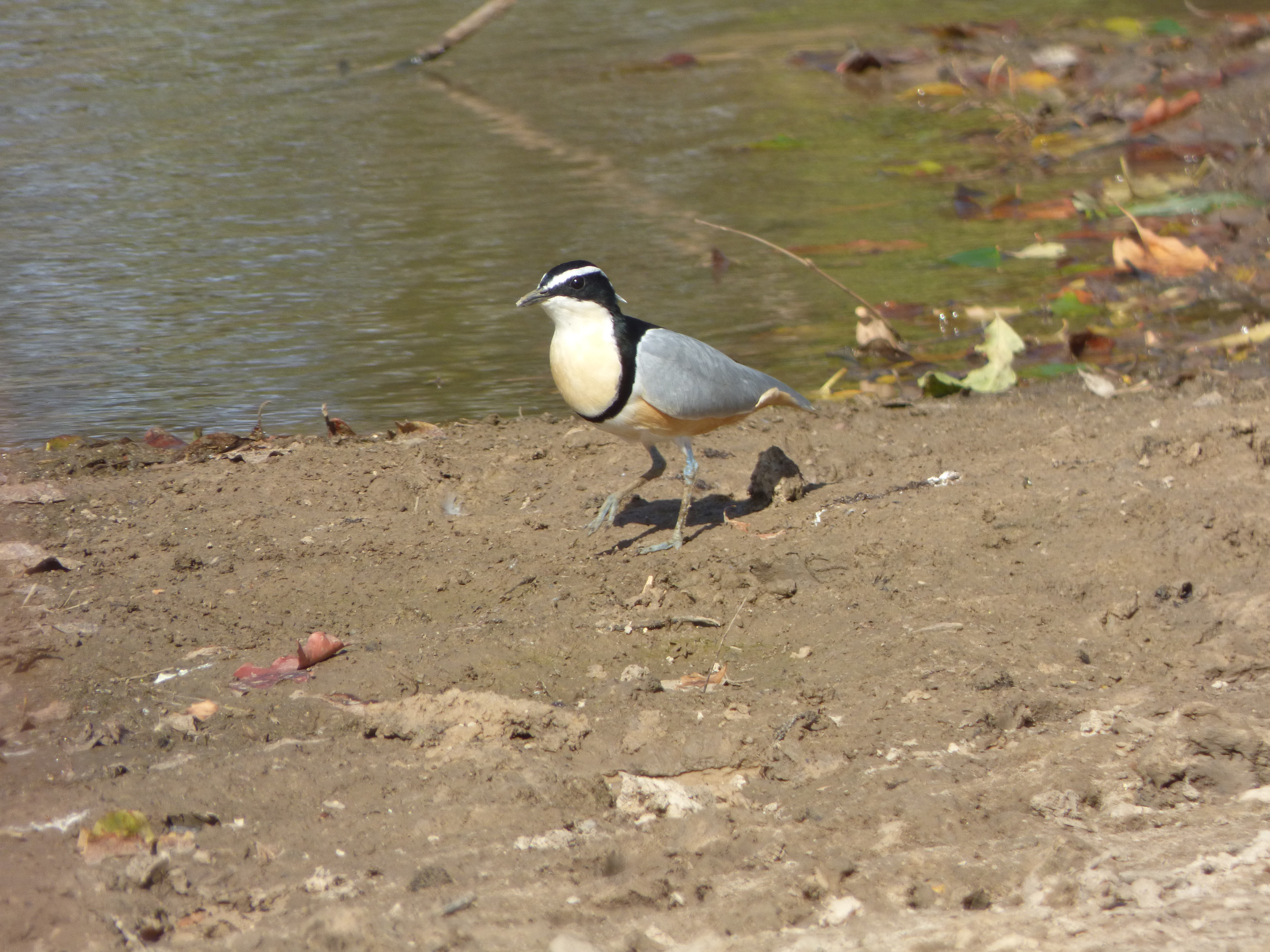
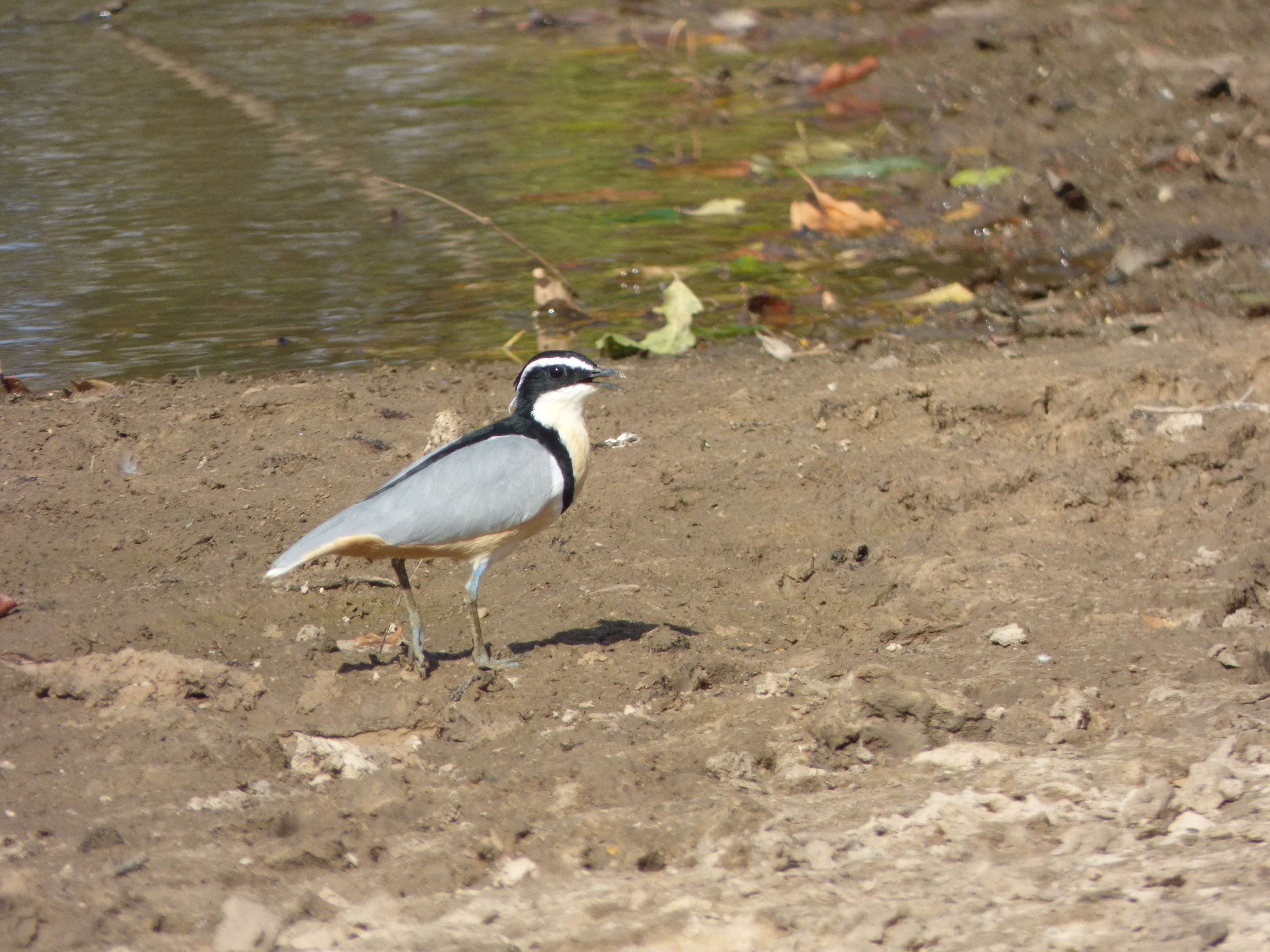
Egyptian Plover (Pluvianus aegyptius) was the most celebrated of all targets appearing in the tour. Image: Philippe Marchessou

After breakfast we moved to the nearby Kotu Bridge. This is one of the main spots in coastal Gambia as it combines mangroves nicely preserved with paddy fields and scrubs. From the bridge we easily went on some common species: Pied Kingfishers were all around along with Long-tailed Cormorants and Pink-backed Pelicans. Several Western Reef Egrets were fishing in the shores along with some Squacco & Grey Herons and a single Great White Egret. In the muddy areas we spotted a flock of 20+ Common Ringed Plovers and 4 Little Ringed Plovers. Spur-winged Plovers were all over, calling and chasing each other. Around the bridge we found a obliging Broad-billed Roller and everybody in the group enjoyed excellent views in wonderful morning light. In the bush around we also had good views on the active Beautiful Sunbirds, including 2 wonderful mails, few inmature males and several female type birds. A proper scanning in the mangroves rapidly produced 1 Striated Heron down the river, joined by 1 Squacco and some wonderful Black Herons, some of them in the darkest area of the river banks.
Up in the sky there were Hooded Vultures and Yellow-billed Kites along with African Palm Swifts. A fast scanning produced also 2 Mottled Spinetails, a rather scarce bird in the area, and some Wire-tailed Swallows that happenned to come to the bridge, where they came down to stop in the wires around.
The bush land around the bridge kept producing good birds: Blackcap Babblers were seen flying over and 2 Long-tailed Glossy Starlings showed in glorious morning light. A pair of minutes after 1 Golden-tailed Woodpecker came out showing in some nearby branches. This was a quite celebrated bird as it was the first important target in the trip to appear. But the bird festival was not out, of course.

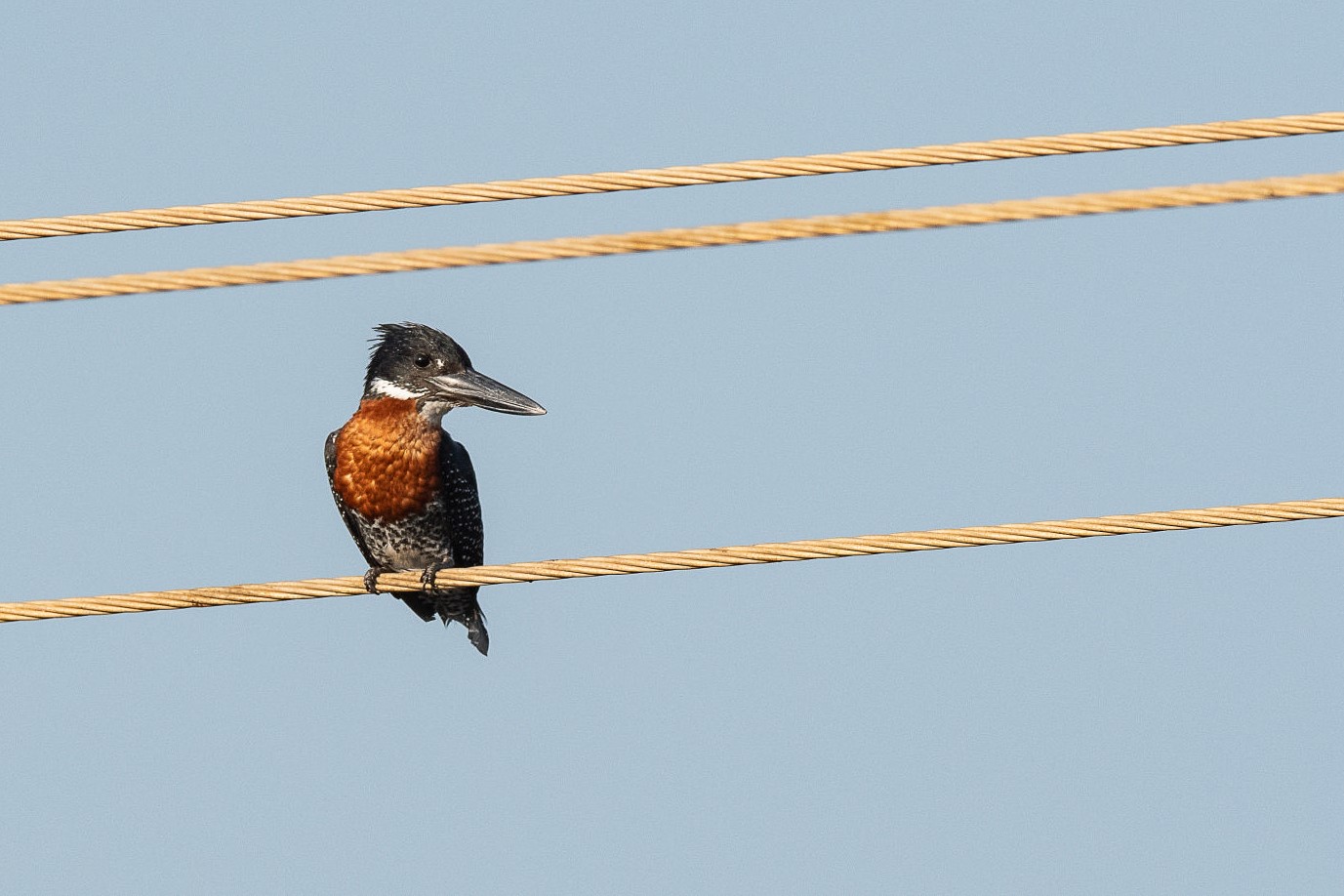
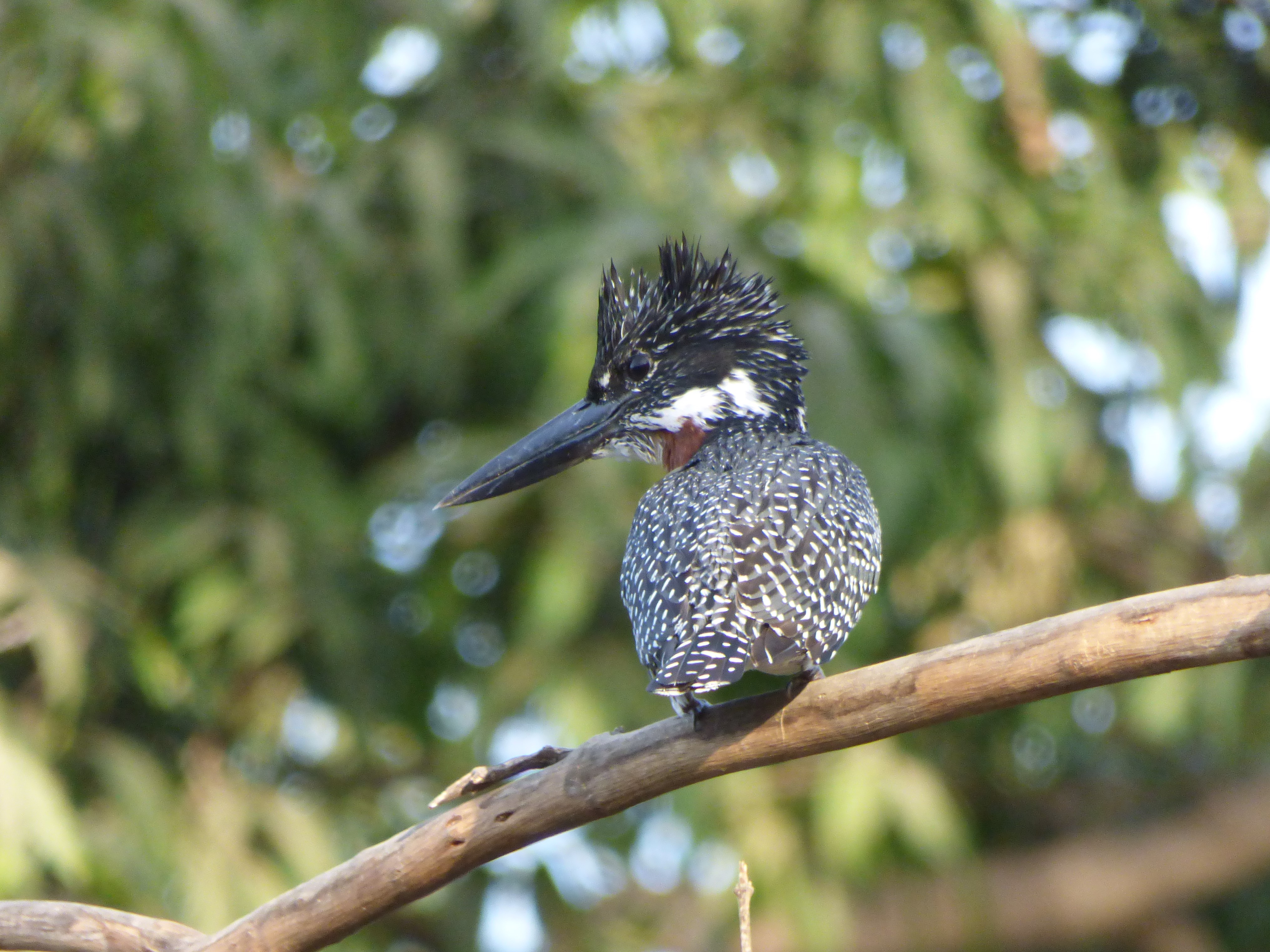
Giant Kingfisher (Megaceryle maxima) is a massive kingfisher not always linked to water coursers. Image by tour participant Philippe Marchessou

A further scanning in the mangroves revealed 30+ Senegal Thick-knees roosting in the shade. Also 2 Malachite Kingfishers were pointed out. It was coming up a wonderful morning and was only to improve as the scanning from the bridge revealed 1 male Subalpine Warbler and close views on African Darter. One of the tour participants listened a Eurasian Reed Warbler so we came to try to have good views in the bird. This was a nice decision as we got the Reed Warbler but also a showy Northern Puffback male scattering inside the bush and finally crossing the small road with a short flight. Lovely views.
We started to scan beyond but before we even got any bird with the scope we had 2 Giant Kingfishers flying over our heads and heading the scrubs beyond the bridge. These massive Kingfishers can be difficult to spot but we were lucky enough to enjoy them for long, as one of the individuals came back to one of the wires of the bridge for a while. At this time we also got 2 stunning Blue-breasted Kingfishers coming out of the mangroves to stop in a low post inside the water, just by the bridge.
Scanning up the river we still got excellent views on Western Grey Plantain-Eater and African Grey Hornbills.
It was time to move and enjoy a walk in the paddy fields but we were again retained in the bridge. This time was a second male Subalpine Warbler showing well in the ranked vegetation and a small group of Red-chested Swallows that arrived to feed around.

This Broad-billed Roller (Eurystomus glaucurus) was the first thw group enjoyed as step down from the van. Image by Carles Oliver

We finally got to move from the bridge and started a short walk around. We inmediatly connected with the first of many Yellow-billed Shrikes while Senegal Coucals seemed to be common around. The followed a thin path getting inside rice fields and crossing a number of small marshy areas. Squacco Heron, Sedge Warbler, Reed Warbler, Yellow Wagtail and Wood Sandpiper we all seen at this point. The place is known as a good spot for Little Bittern. Unfortunately we were uncapable to enjoy any of them. Flocks of Bronze Manninkins were flying around and we soon found ourselves enyoing Little Bee-eaters. They offered wonderful views when stopped in the low branches, sometimes few inches from the ground. The dense scrubland around is good for a variety of birds and we enjoyed more Manninkins, Red-billed Firechin, 2 Little Weavers, 1 Black-headed Weaver building a nest and 1 male Splendid Sunbird. A Common Whitethroat female came out of the dense vegetation and offered good but short views to most tour participants.

Blue-breasted Kingfisher (Halcyon malimbica) -below- and Western Reef Egret (Egretta gularis) are two main targets for anyone visiting The Gambia. Images by tour leader Carles Oliver

Up in the air there were small parties of African Palm Swifts. The air was starting to be worm so more birds of prey were moving. They were all Hooded Vulture, Yellow-billed Kites and 1-2 Black Kites but we also got a Red-necked Falcon that gentlenly perched on the top of a tree, allowing excellent views in the scope. In our way back to the main road  2 African Spoonbills showed up in the sky.

Now we headed to a nearby pond while surrounded by Yellow-billed Shrikes, Senegal Coucals and Blue-checkeed Bee-eaters. Soon after a bright blue flash came from a palm tree and turned out in being a Blue-bellied Roller. This bird was particularly celebrated by the group and we kept enjoying it for some minutes. Belong the palm tree there were some scrubs and here we found out up to 4 Tawny-flanked Prinias that also performed really well.

We just kept going, enjoying Blue-cheeked Bee-eaters and Beautiful Sunbirds. Our next stop was a little pond near Kotu Bridge but before arriving we found a Lizzard Buzzard perched in our way. 2 African Pied Hornbills were trying to disturb it from that place, and they got it! The pond itself restulted a bit disapointed: 3-4 African Jacanas were in the shore but, out of this, we only got Greenshanks, Green Sandpiper and 2 Eurasian Moorhens (the only ones in the tour).

A beautiful dialogue was set up between Lizzard Buzzard (Kaupifalco monogrammicus) and 2 African Pied Hornbills (Tockus fasciatus) as the Hornbills were concentrated in disturbing the small raptors. They succeed. Images by tour participant Philippe Marchessou

Our way back was equally as productive as the way in. A Green Wood-Hopooe appeared in the wire around, allowing some excellent shots. Along with this bird we got a flock of 4 White-billed Buffalo-Weavers. But the most celebrated bird at this point was a pair of Pearl-spotted Owlets found by the path. These small owls, with close relatives in both North America and Europe, were one of the main attractions of the day! Around them, several Senegal Coucals were visible, Blue-bellied Rollers were still up in the palm trees and a delicate Fork-tailed Drongo was scanning the sky from a bush. But probably the most interesting bird of the way back was a lovely Grey-backed Camaroptera showing in excellent way really low in a bush and also moving on the ground while collecting nesting material. All members in the group enjoyed very much (as I did myself) with this wonderful bird and such a good views!

Pearl-spotted Owlet (Glaucidium perlatum) was the first of many species of owls appearing in the tour! Image by tour leader Carles Oliver

Green Wood-hoopoe (Phoeniculus purpureus) is common in a palm trees groves and semi-arid countryside. Image by tour participant Philippe Marchessou.

Back in Toku Bridge we just went to the nearby water point, kept by the Gambian Bird Association staff. This tiny water pond attracks good numbers of birds and it is a really productive. In 15 minutes of wait in the shade we got Vinaceous Dove, Red-chekeed Cordon-bleu, Red-billed Firefinch, and Northern Grey Sparrow. The waiting there was even more productive as we got an Isabelline (formerly Western Olivaceous) Warbler moving in a small tree inmediatly above the pond and a Yellow-fronted Tinkerbird up in a kind of fig tree.

All the group was delighted after such a wonderful morning! But it was lunch time so we moved into a nearby restaurant by the beach. Here we enjoyed some good food and had some rest from midday heat while scanning the sea. The sea watching was more or less productive as we got some Sandwich Terns moving up and down in the coast and 2+ Pomarine Skuas chasing terns far offshore. When about to leave we got the first Lesser Crested Tern of the tour perched on a floating balloon and everybody got nice views in the scope.

One of the 3 males Greater Painted Snipes (Rostratula benghalensis) roosting in the mangroves near Toku Bridge. A rather unexpected sight. Image by tour leader Carles Oliver

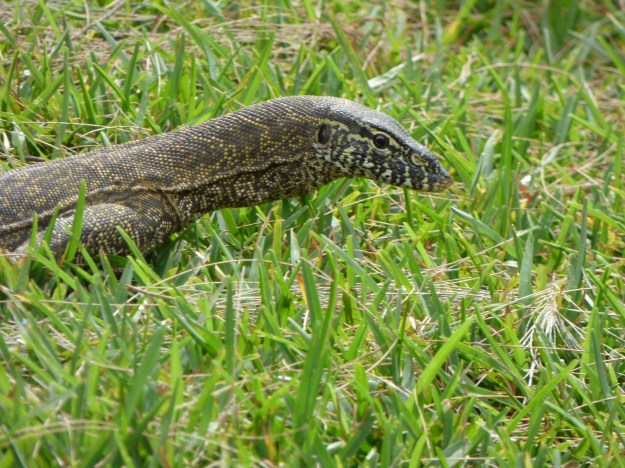
After our lunch we just headed to a new pond. The walk produced first views on the spectaculars Yellow-crowned Gonolek and Red-bellied Paradise Flycatchers along with Village Weavers and African Thrush skulking on the ground. Here we also got good views on a quite remarcable Nile Monitor feeding on some rubbish in the ground. At the pond itself, we scanned hard looking for our main target and we soon could enjoy good views on 3 male Greater Painted Snipes in the scope! They were really hard to see but we were lucky enough as one of them just moved a bit and we catched this movement. A severe scanning of the bank finally produced the three birds. At the same pond we also had Wood Sandpiper and Greenshank.

Little Bee-eaters (Merops pusillus) are a common view in coastal The Gambia. Image by Philippe Marchessou.

Just happy after such a good views on one of the main targets of the trip, we just came back to the small water point we visited earlier in the day. A different set of species were seen there: Red-cheeked Cordon-bleu, Red-billed Firefinches, Yellow-fronted Canary but also White-crowned Robin Chat! A final walk into the palm trees groves produced excellent views on Beautiful Sunbirds as well as the first sight on Senegal Parrot, a wonderful way to end the day.

Senegal Parrots (Poicephalus senegalus) are surprisingly noisy, even for a Parrot. Image by Carles Oliver

After such a great day we just came back to our accommodation for a great dinner and wonderful rest!

Day 2. This day we just headed North from our accommodation, arriving as far as the Northern border with Senegal. Our fist stop was at Kartong Mining Area. This is a former grave mining place, now closed and hosting a great birdlife. Just arrived we started enjoying good birds. Flocks of Piapiacs and Long-tailed Glossy Starlings seemed to be everywhere around, joined by Purple Glossy Starlings. Here we also got or first group of Callythrix Monkeys, a recent split from Grey Monkey. A first scanning around produced up to 3 Senegal Coucals, a common view in this location, as well as several Western Grey Plantain-eaters, Beautiful Sunbirds and 1 stunning Abyssian Roller perched on a fence. A White Wagtail passed by and stoped close by our van. This was moment that a Rufous-crowned Roller just punched the Abyssian Roller from its post! A walk around the area produced Tawny-flanked Prinia but also a Fine-spotted Woodpecker, both Greater and Lesser Blue-eared Glossy Starlings, Isabelline Warbler, 2 Zitting Cisticolas, 2 Black-rumped Waxbills and Woodchat Shrike. The water level in the whole area was really low and bird activity, limited.

You simply cannot get tired of Beautiful Sunbirds (Cinnyris pulchellus). Image by Carles Oliver

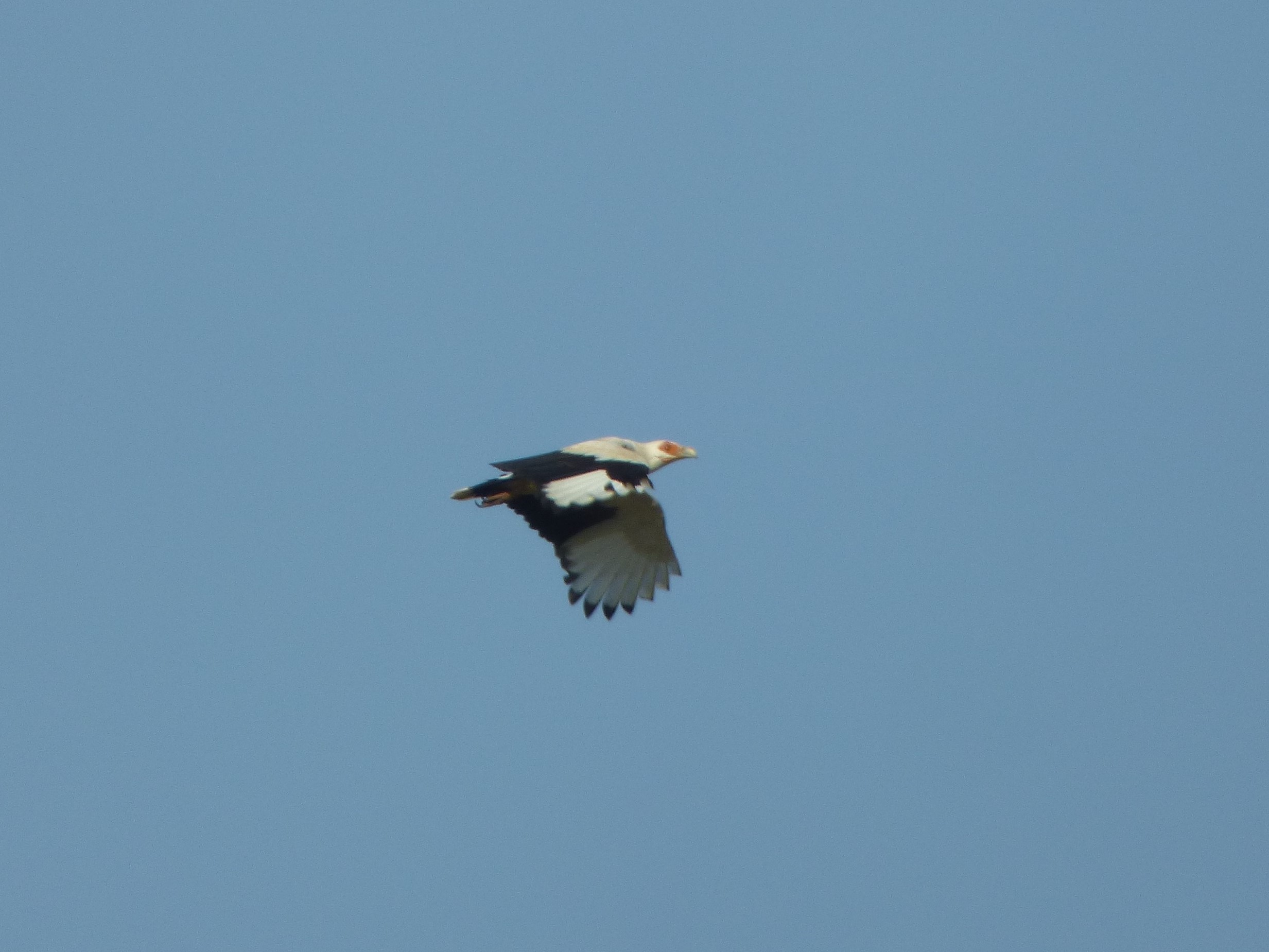
Scanning a second pond we had some African Jacanas, Malachite Kingfisher and 1 African Swamphen (the only one of the tour!) feeding out of the vegetation in a muddy area. Happy with this nice spot we all kept scanning around while taking a look to the skyes. It was already 10:30 and quite warm so it was a nice moment for raptors to move. As always, several Yellow-billed Kites and Hooded Vultures were seen soaring or circling in the sky but a proper scanning of the tree line in the distance revealed a mínimum of 3 Palm-nut Vultures, all of them wonderful adults.

This is a very special bird of prey spending most of the time in forest and palm-tree areas, where they look for palm-nut fruits, the base of their diet. They also scavenger, especially along water bodies and eventually predate on a long list of small animals, from invertebrates to young birds.

Senegal Coucal (Centropus senegalensis) -below- and Eastern Grey Plantain-Eater (Crinifer piscator) performed really well in morning light at Kartong marshes. Images by Carles Oliver

The views on the bird were great, although a bit distant. We also enjoyed two of them flying around and showing their wonderful plumage. While enjoying this raptors I listened both Black-crowned Tchagra and Sulphur-breasted Bush-Shrike singing from the far tall thickets, about 300 metres away. Despite our efforts to locate these birds, it was impossible to find out. Our effort was conpensated by a Grey Kestrel that kindly came to stop in a nearby palm tree. All the group enjoyed great views on this bird!

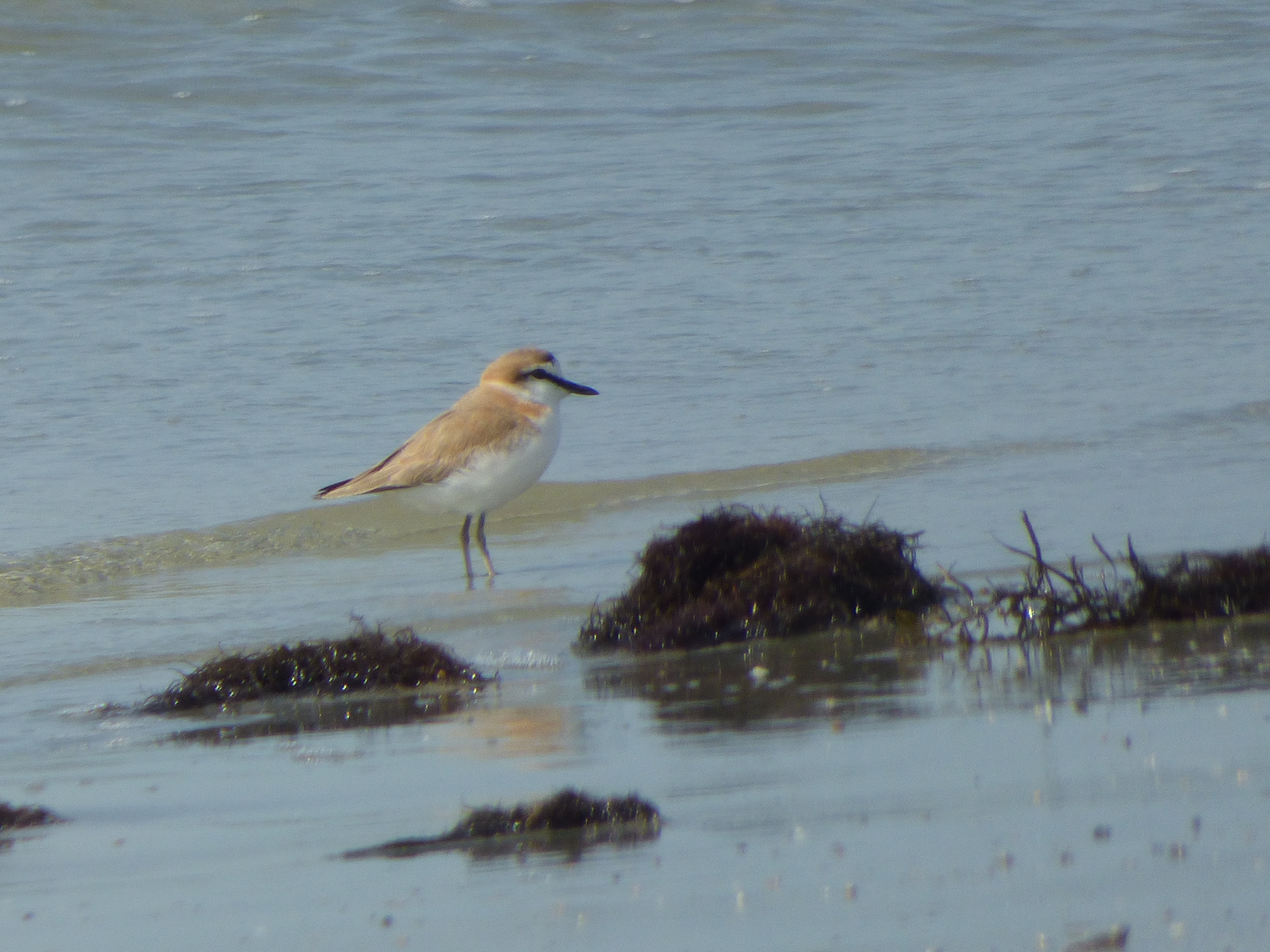
We still spent some time scanning a pair more of pools but with really poor results so we decided to move on and take a look to the nearby beach in search of some major targets. Once parked by the beach we all walked down to the shore, ready for a shortwalk along the beach. A first scanning easily produced several Sanderlings, 2 Eurasian Whimbrel, Ruddy Turnstones and 1 Grey Plover. The sky was full of terns moving up and down. As we walked North it was easy to find out Sancwich’s & Caspian Terns. Small flocks of Grey-headed Gulls were visible roosting on small rocks in the ocean or flying overs. We were fast in locate the first of many Lesser Crested Terns as well as several Caspians. We kept moving North with the wonderful blue of the sky and ocean as an unforgettable frame until we arrived to an area where the beach comes wider. A small scanning easily reveleaded 1 adult White-fronted Plover along with 3 Kentish Plovers. We all enjoyed great views on the tiny plover while moving on the beach. Again scanning the sea we got a female Western Marsh Harrier and the first small flock of Royal Terns moving along with other terns. We counted not less than 17 of them! A good number of birds where moving North in the bay. A Little Tern flying along with some Sandwich’s and Caspians. About 45 Pink-backed Pelicans where resting on the beach and the sea and then is when one of the local bird guides came to us to advice us on a group of Bee-eaters flying above the scrubland beyond the beach.

Eurasian Whimbrel (Numenius phaeopus) is a common overwintering bird in coastal The Gambia. Image by Philippe Marchessou

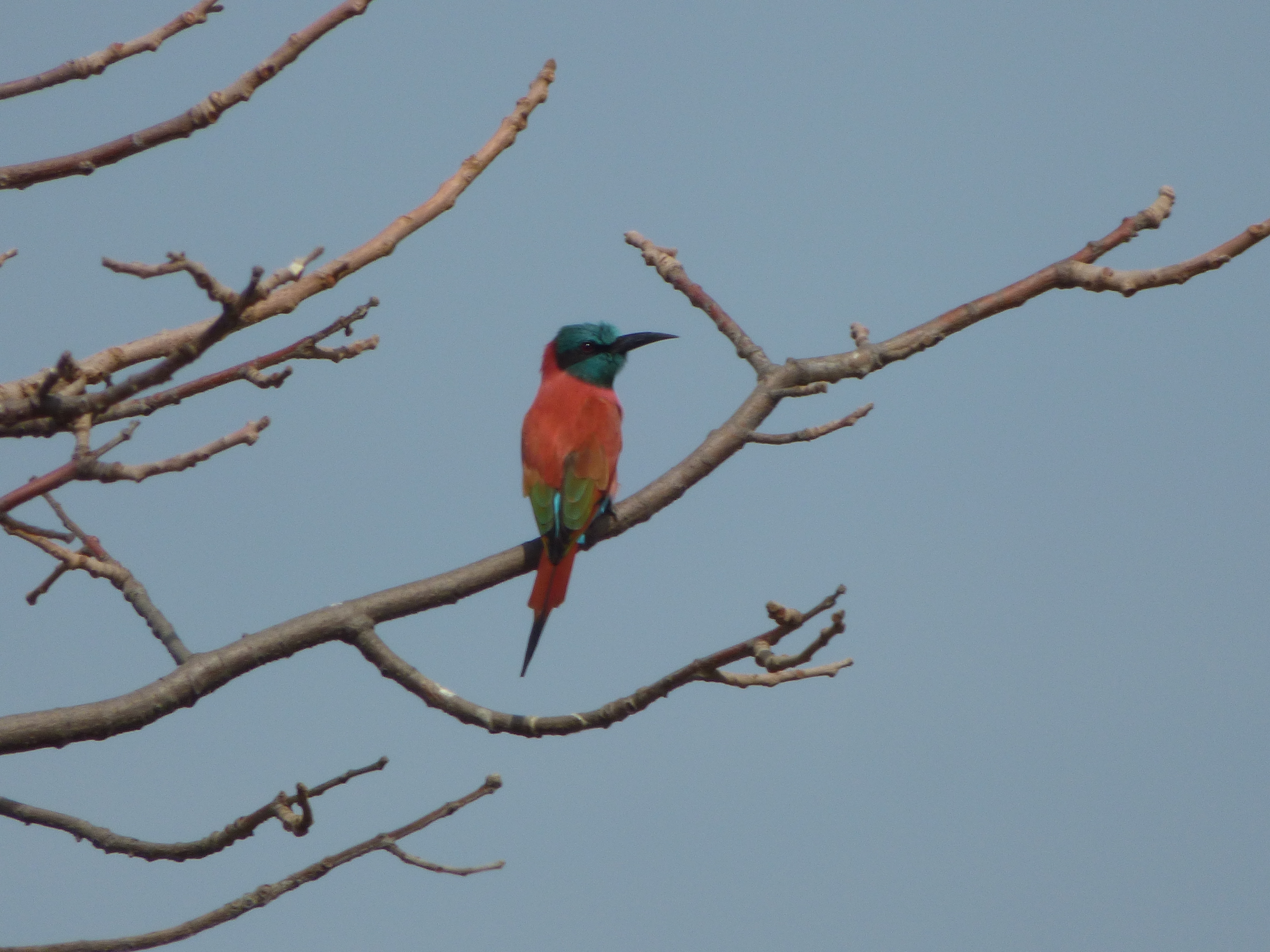
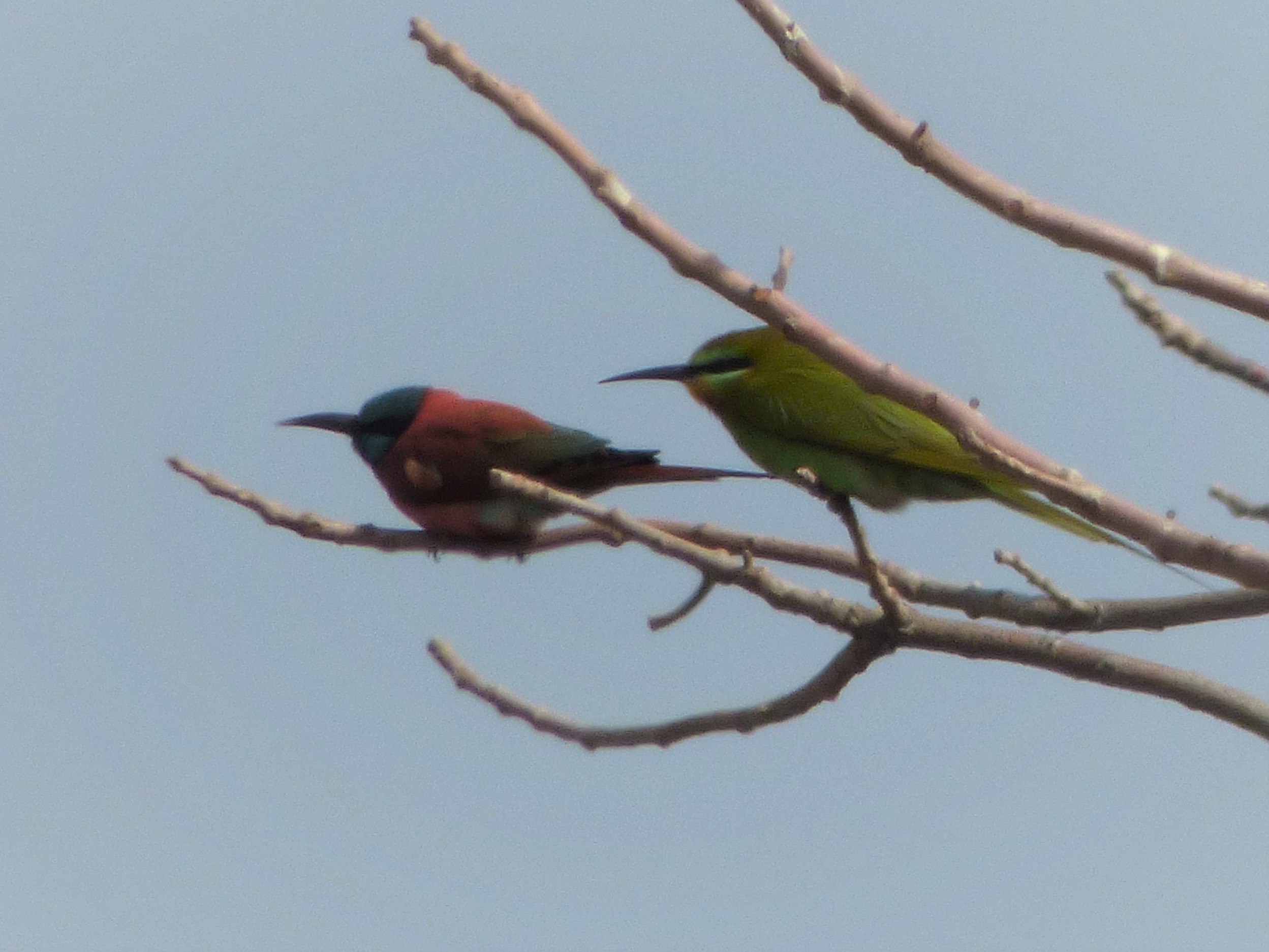
I think I was not the only one to missunderstand “Common Bee-eater” so I thought they were having a small flock of European Bee-eaters. Good spot but I personally kept concentrated in a far flock of gulls including some Audouin’s Gulls and other beauties. The surprise turned out when the “Common Bee-eaters” turned on to be Northern Carmine Bee-eaters so I fastly adviced the guys and moved inside the bushland. Everybody followed us and all the group was enjoying these wonderful birds in a pair of minutes. There were 5 of them, catching insects with fast flights from the thin branches of a 4 metres tall dead tree, A small partie of Blue-checkeed Bee-eaters were moving alongside and allowed excellent comparatives of such incredible species.

A gorgeous flock of Northern Carmine Bee-eaters (Merops nubicus) showed really well during our tour. Image by Carles Oliver

Structural differences between Northern Carmine Bee-eater (left) and Blue-checkeed Bee-eater (Merops persicus) are evident in this imatge. Image by Carles Oliver

Photographers were specially delighted with the views on these species of Bee-eaters and we spend enough time to scan around in a proper way. A good number of Pink-backed Pelicans were resting on the beach and we had good views on them and also a in some Hooded Vultures nearby. A Common Sanpiper, Eurasian Whimbrels and 2 Grey Plovers were around in the small ponds of the tiny estuary but probably the best bird were a pair of Senegal Eremomela moving quite fast in the dense vegetation.

After such as good spot it was time to head back to our van. It was already quite hot and the flock of gulls was not any more in the beach. Still, the walk back provided us with really good views on a juvenile White-fronted Plover and on a small flock of Mosque Swallows that were chasing insects above the scrubs.

White-fronted Plover (Charadrius marginatus) is a scarce coastal Plover in West Africa. Image by Carles Oliver

Once arrived by our we still had time to enjoy a good refreshment. Natural orange juice or some soda before going to our restaurant for lunch! But even in this resting time we got our small piece of good bird since 1 Tawny Eagle was spotted at the beach. Unfortunably the bird just flew off but we still had good views on the bird flying away from us. It turned to be the only one of this species along the trip… Amazed after this lucky encounteer we just finish our drinks and drove for about 20 minutes until a small and lovely restaurant by the river that works as Southern Gambian border. Here we enjoyed the best fish (and probably the best meal) of the trip while having some good birds. At the opposite bank of the river was Senegal so those (me included) working on list per countries were delighted with this!

So, in the Senegalese side of the river we enjoyed 2 Bar-tailed Godwits that were also new for the trip. There were several Pied Kingfishers, Western Reef Egrets, Great White Egrets and 1 Eurasian Oystercatcher (the only one of the trip!). A pair of other good surprises appeared as we spotted 1 Great White Pelican and a really distant Goliath Heron (this one in the Gambian side) walking along the shore.

Western Ospreys were extremelly active at the site and we had several wonderful views in two adults performing and calling around. After lunch we just sat by the river, in a good shade and scan around. 1 Slender-billed Gull appeared in the river (not sure what side) and a small flock of Gull-billed Terns were a non-top show up and down the river. Also Common Ringed Plovers, Spur-winged Plovers and the closest views on an Eurasian Whimbrel I have ever had! From were I was I could listen a call up the trees, behind our position so I went for a small walk and found 1 Isabelline Warbler (formerly Western Olivaceous Warbler) moving up in the riverside vegetation. A second bird moved along with and after some minutes the bird was finally showing well; it was a Brown Sunbird! A fast call and the whole group joined to have an excellent sight on the bird preening and standing for long. And then we realised there were two Brown Sunbirds and not only one.

As most Eremomelas, Senegal Eremomela (Eremomela pusilla) were moving in small parties. Image by Carles Oliver

We left the area really happy after such a good combination of good birds and excellent food. Our next stop was in Tanji Beach. Here we decicated a good walk around the coastal scrub looking for Four-banded Sandgrouses. Unfortunately and despite our efforts we could not find any of them… Still, the area was really rich in birdlife. Senegal Eremomelas looked like being everywhere, including a good flock of 11+ moving in the scrubs. Common Nightingales were calling in the dense thickets but we never got any view on them. One of the first birds in the area was our first Violet Turaco of the trip, that kept moving agaisnt the sun all the time! Black-billed Wood-Doves were also common and got several of them being flushed while looking for Sandgrouses. In the middle of our search a fig tree kept being full of birds, including two wonderful Bearded Barbets moving along with Common Bulbuls (local race called now Upper Guinea Bulbul). It is always a pleasure to enjoy such a wonderful birds!

The wonderful Bearded Barbet (Lybius dubius) occurs in a variety of habitat in The Gambia. Image by tour leader Carles Oliver

The area was also rich in finches, allowing excellent views on Red-billed Firefinches but also in Red-cheeked Cordon-bleu and Orange-cheeked Waxbills. A mixed flock of both species along with Bronze Manninquins was one of the hits of this afternoon. Back to the van we just drove back to the esturary were we scanned the flock of gulls looking for something special. Unfortunately we only got a pair of Black-headed Gull amongst several Grey-headeds’. It was a bit late in the afternoon and some fishermen were coming back to the beach. The Tanji fish market was waiting for them and the treasures they were bringing from the Ocean. It was an excellent decision because we enjoyed very much with the activity and the colours of the fish market but also because many gulls were attackted to the fish market, including 2+ Kept Gulls. We had really good views on the birds and a good comparative with a 1st winter Lesser Black-backed Gull. Well, don’t forget we got our first flock of House Sparrow of the trip!!!

Red-billed Firefinch (Lagonosticta senegala) is the commonest finch in The Gambia. Image by Carles Oliver

The Tanji fish market is a wonderful way to understand how coastal human comunities live in West Africa. Image by Carles Oliver

Happy with this rather last minute addings we came back to our hotel for a good rest and dinner.

Day 3. This day we were going the explore inland Gambia. Despite we didn’t check out of our coastal hotel we were not coming back to sleep there but going to Tendaba Camp, probably the best option to explore inland Gambia while avoiding long transfers. Well, the planning of the day was a bit difficult. Due to the drought most of the Egyptian Plovers were already back far inland or in Senegal but we were still having chances in a small pond at the Northern bank of the country. So we left our accommodation and headed to the main ferry crossing the Gambia River near Banjul. Unfortunately that day it was a meeting between Senegalese and Gambian PM so the ferry was overbooked! The result of this was a long, long wait first to get the tickets and then to cross River Gambia.

In our way to the ferry we had far away views on a flock of Greater Flamingoes and we passed by one of the only 2 Black-headed Herons of the tour.

During our wait we enjoyed views on some Cape (Kept) Gulls in the decks along with absolutely wonderful views on Pomarine Skuas (at least 11 of them!!!) chasing gulls and terns (mostly Lesser Crested Terns) by the beach, many times passing over the fishermen in the beach itself. We enjoyed very much these views but probably not enough to forget about the four hours long wait… To see these Skuas chasing all those terns and stopping right by the beach or on the sea was one of the most unexpected sights for many of our clients, and very appreciated!

Once at the Northern bank we drove up the river and after some miles we did our first stop. The first Dark-Chanting Goshawk was up in a pylon so enough reason to stop and take a look. At the same place we had some Namaqua Doves flying around, a common view in Tendaba area. Another road stop allowed us to connect with the first 4 Black-headed Lapwings of the trip. We kept driving a bit more and got “typical” road birding such as Brown Snake Eagle and Gabar Goshawk.

Dark Chanting Goshawk (Melierax metabates) during our exploration in Gambian Northern Bank. Image by Carles Oliver

A fast stop at Kaur produced flocks of thousands of Red-billed Queleas flying into the reeds that were dramatically chased by a Lanner Falcon. Squacco Heron, Wood Sandpiper and Pied Kingfisher were also showing nicely. Soaring above the reeds and the floodplains we also got 2 Montagu’s Harriers (juvenile and male) and 1 Western Marsh Harrier. Before our main destination we still had another road stop, this time for 4 Black-headed Lapwings posing by the road.

We finally arrived to the small pond where we were specting to have our target. We all jumped out of the car and inmediatly were enjoyed walk-away views on 1 Egyptian Plover!!! It was worth the extra effort, after all! The bird was moving in the shore along with other waders (Common Sandpiper, Spur-winged Plover, Green Sandpiper) and was extremelly tame, allowing all member in the group to enjoy suberp views and not worst images. It was also incredible to see the behaviour of the bird, a mixture between a Plover and a Stone Curlew…

Egyptian Plover (Pluvianus aegyptius) cooperated to get a wonderful series of shots! Images by Carles Oliver


The pond itself was really rich in birdlife. While we were approaching the Plover we had 2 Pale Flycatchers moving low in the rank vegetation. A really short walk around allowed some excellent and unexpected specialities. 1 Brown Snake Eagle showed really well and the dead branched os a pair of trees were a true magnet for a good number of species. 2 Bearded Barbets were showing well, promptly replaced by 2 African Collared Doves! The largest tree was the most interesting small birds (mostly finches) were all the time moving around. A small group of 10+ Cut-throat Finches was moving around, also Red-billed Queleas and Red-billed Firefinches. 3 Exclamatory Paradise Whydahs showed up in the trees, 2 of them showing full lenght tails!! This was a very celebrated bird in the group. Finches were coming and going. A flock of 3 Northern Grey Sparrows came in but something smaller, rather yellowish appeared along with them; it was a female Sudan Golden Sparrow!! Wow, this was quite unexpected and an excellent bird to see, really! Next flock came in, this time lovely Namaquas Doves that were moved by 2 Long-tailed Glossy Starlings. It took a pair of minutes the finches to came back, this time more Cut-throat Finches than before but this time along with 3 White-backed Seedeaters.

Bearded Barbet (Lybius dubius) was one of the many species enjoyed at the tiny pond where the Egyptian Plover was. Image by tour leader Carles Oliver

This was a great spot and I’m just looking forward coming back there next year! But it was time to move. Time to go back to the Southern bank of Gambia. This time the ferry near Tendaba was fast and still allowed us a final stop in the savannah before going to our accommodation. Dark-Chanting Goshawk was showing again superbly so we did a random stop, trying to find something else. I we did it. Nearby it was a small flock of 3 African Wattled Lapwings moving in the semi-arid contryside. Not easy to see and took us some time until everybody in the group enjoyed good views on them. Before going back to our van, 2 Bruce Green Pigeons flew over allowing fast but intense views on these magnificient birds.

Vinaceous Dove (Streptopelia vinacea) -left- and male Namaqua Dove (Oena capensis) in a lovely comparative. Image by Carles Oliver

By the time we arrived to Tendaba it was almost dark but we were happy after enjoying excellent views on the Egyptian Plover and other great birds!

Day 4. Early morning start this time to enjoy the mangroves by Tendaba Camp. The mangroves are part of the large Kiang National Park. Here we enjoyed wonderful views on Western Reef Egret, Striolated Heron, Blue-breasted Kingfisher, African Fish Eagle, African Cormorant (lucida race of Great Cormorant), White-throated Bee-eaters, Wahlberg’s Eagle, Collared Sunbird, hundreds of African Darters and the only one Purple Heron of the trip. The boat trip goes in a laberinth of channels penetrating in the mangroves and it is wonderful way to explore such a incredible habitat.

The group enjoying the mangroves at Kiang National Park. Image by Carles Oliver

A quite hard scan was necessary to discover some of the White-backed Night Herons roosting in the mangroves but after some minutes everybody in the little boat got great views and some shots in the birds. We counted 4 birds in different spots, a number quite low if comparin with other times. Soon before living the mangroves we listened 1 African Blue Flycatcher so we stopped, scanned trying to find out the bird. Unfortunately it was no way and better views on the bird were relicted to a flash of a shadow moving up in the canopy. Back to the river we experienced how strong the wind was. The river at this point is about 1 quilometer wide so it can take some time to cross. It was quite hot and a pair of waves brought a kind of not very wellcome refreshment to some of the tour participants. Fortunalety was only a pair of times and we came back fast to Tendaba, where went to enjoy a walk around.

White-backed Night Heron (Gorsachius leuconotus) showed well despite being really deep inside the mangroves. Image by Carles Oliver

African Darter (Anhinga rufa) is a common view at Kiang National Park. Image by Carles Oliver

The hill beyond Tendaba Camp can be quite good for birding. Despite being quite windy we still had lovely views on Abyssinian Roller, Pygmy Sunbird (male and female), Beautiful Sunbird and European Bee-eaters. A pond equiped with a small hide provided excellent views on both Namaqua Doves and several Black-billeds Wood-Doves. Here we also had Red-billed Queleas, Northern Red Bishop, Black-rumped Waxbills, Red-chekeed Cordon-Bleus, 2 Bush Petronias and Northern Grey Sparrows.

Pygmy Sunbird (Hedydidna platura) ranks among one of the most espectacular Sunbirds in The Gambia. Image by tour leader Carles Oliver

It was quite midday and time to move on. Our next stop was the famous Raptor Bridge, where we stopped for a pic-nic. Here we enjoyed the best raptor action of the trip. Just arrived we had a good troop of Hooded Vultures and Yellow-billed Kites moving over. Also 4+ Rüppell’s Vultures, 10+ White-backed Vultures and 2 Eurasian Griffons were flying over. 3 African Harrier Hawks were also well visible, including 1 juvenile. One pair of Grasshoper Buzzards was also appearing two or three times in the sky. The tree that was offering us its shade had 1 Isabelline Warbler and close to the bridge it was also 1 Black-headed Heron, Squacco Heron, Intermediate Egret and 1 White Stork (!). White Stork is a commonview on passage but really scarce in winter time in The Gambia so always a really good bird to see!! We kept scanning for raptors. Our efforts were compensated with a Wahlberg’s Eagle showing well as well as with 1 Palm-nut Vulture cincling along with White-backeds’.

Palm-nut Vulture (Gypohierax angolensis) is one of many targets of the trip. We enjoyed several views on the bird. Image by Carles Oliver

After our canned pícnic we moved to our last stop of the day, to visit a small patch of untouched native forest. The walk around was really good and produced good views on Swallow-tailed Bee-eaters, a juvenile Greater Honeyguide, Fine-spotted Woodpecker, ruff views on Double-spurred Francolin (one of our client got moret han ruff views), Blue-spotted Wood-Doves, Western Bonelli’s Warbler and wonderful Green-headed Sunbirds attending a small pond.

Green-headed Sunbird (Cyanomitra verticalis) is a scarce resident in a gallery forest and other habitats. Image by Carles Oliver

But these wonderful birds were not the real reason of our visit. When arrived a local guide was waiting for us. The first bird he showed us was a pair of Greyish Eagle Owl roosting low in a tree. 5 minutes more of walk were mandatory to arrive to our next target, and we got excellent views. Both female and male Standard-winged Nightjars gave us amazing views, the male showing the penants in the wings…Unforgettable! Last stop, deep in the forest, allowed us to enjoy 1 African Wood Owl up in the trees. Wow, a think these were the best 90 minutes of the tour for some of our clients!!

Greyish Eagle Owl (Bubo cinerascens) at its roosting place. Image by tour leader Carles Oliver


Standard-winged Nightjar (Macrodipteryx longipennis) female (above) and male (below) was a nice and unexpected finding. Please pair attention in the male wing projections! Images by Carles Oliver

African Wood Owl (Strix woodfordii) was surprinsigly hard to find up in the gallery forest canopy! Image by Carles Oliver

After this wonderful last stop we just headed back to our hotel, where we had a wonderful extra long shower and also extra long dinner!

Day 5. In a new sunny and lovely day we directly went to the famous Abuco Natural Reserve. Several good birds to be discovered. A first scanning from one of the view points allowed to see Broad-billed Roller, Osprey (extremelly close), Giant Kingfisher (even closer), Squacco Heron, African Darter, African Grey Woodpecker, Black-necked Weaver and Heuglin’s Masked Weaver. The place was having a good activity and didn’t take long until one of the tour participants talk about a dark-and-reddish bird skulking on the ground…A fast scan in the area produced great views on 2 Western Bluebills! The small patch of vegetation was having a good activity and we also enjoyed Little Greenbul and Black Crake. 1 juvenile African Harrier-Hawk came into the trees nearby, moving into the water the only one Nile Crocodile that we saw along the tour.

We enjoyed obliging Western Osprey (Pandion halietos) -above- and Giant Kingfisher (Megaceryle maxima) -below- at Abuco Natural Reserve. Images by Carles Oliver

A small walk around proved to be really productive. A tiny pond rich in floating vegetation produced excellent views on a pair of Western Bluebills along with Bronze Manninkin and a gorgeous Oriole Warbler feeding really low in the vegetation. A female Common Wattle-Eyed was also moving along with the Oriole Warbler, allowing good views to all tour participants. Here we also got excellent views on both male and female Grey Woodpecker working on a tree. 1 Snowy-crowned Robin Chat was quite showy for some time, alway on the ground under dense cover. Both African Paradise and Red-bellied Paradise Flycatchers were common in the forest, many times associated with White-eyes. Our walk deep inside produced also 2 Grey-headed Bristlebills moving low in the vegetation. This is a quite shy Babbler that can be quite difficult to see. Blackcap Babblers are not that difficult but always a pleasure to enjoy. A pair of flocks gave us good views. Our walk deep in the forest brought us until a place with really big trees. Was time to scan. Not long until we got a Westen Grey Plantain-Eater flying over…and then appeared the 1st Green (now called Guinea) Turaco. First one, but then more Guinea Turacos were joining the trees. Violet Turacos came also along. The birds were looking for the fruits they typically feed on so were moving slowly in the branches or “jumping” from one branch to the next. That corner was still rich in small birds and we catch up with a nice flock of 5+ Yellow-breasted Apalis moving up in the canopies.

Violet Turaco (Musophaga violacea), always in search of mature fruits, was showing really well in Abuco Natural Reserve. Image by Carles Oliver

Guinea Turaco (Tauraco persa) was always moving high up in the canopies. Image by Carles Oliver

Still time for exploring a pair more of corners so we went on and find an open space with good activity. Here we enjoy great views on Swallow-tailed Bee-eaters, nice views on a Lesser Honeyguide and a small flock of Lavender Waxbills moving in and out in the low branched of a dead tree. Fanti Saw-wings were flying low in the clearing and eventually stopped by the Bee-eaters. A bit beyond we still had time check a last tree. Not less than Bearded Barbets were in the place!

Swallow-tailed Bee-eater (Merops hirundineus) inhabits dense forest edges, normally moving at low level. Image by Carles Oliver

Little Greenbul (Adropapus virens) is common in gallery forest and dense mangroves. Image by Carles Oliver

Western Bluebill (Spermophaga haematina) is one of the most spectacular passerines living in the gallery forest. Image by Carles Oliver

For lunch we went to the nearby mangroves, where a restaurant in the tide area offered a good selection of food and shade plus obliging Callythrix Monkey feeding on the fish and Beer (!) and, in fact, anything they could get.

Mudskipper (Periophtalmus koelreuteri) -above- and Callithrix or Green Monkey (Chlorocebus sabaeus) -below- were two of the main attractions in our last visit to the Gambian mangroves. Images by Carles Oliver

In the afternoon we went to spend some time in Brufut Reserve. Here a local guide was waiting for us to guide us into a special tree. Both Brown and Blackcap Babblers were around, Western Red-billed & African Grey Hornbills appeared and some African Thrush showed briefly in the vegetation. In the tree, a superb pair of Northern White-faced Owls. All tour participants got again wonderful views in this unique owl. Great!

The group enjoyed 2 Northern White-faced Owls (Ptilopsis leucotis) roosting in a tiny tree. Image by Carles Oliver

We then kept scanning around. We got ruff views on Yellow-throated Leaflove and African Pygmy Kingfisher. A Grey Woodpecker didn’t stole the show and, with a perfect light, was the main character of several shots. A short walk around brought us (again) to a huge fig tree. Several sunbirds were feeding there including Beautiful, Variable and 2 Copper Sunbirds showing typical black, rather long undertail. The tree was full of Common Bulbuls, Yellow-fronted Serins and Village Weavers but also had some Western Grey Plantain-Eaters. Finally we got really good views on 2 African Green Pigeons feeding high up in the tree.

Copper Sunbird (Cynniris cupreus) male moulting to breeding plomage. Note the long, black tail. African Green Pigeon (Treron calvus) attended a busy fig tree (below). Images by Carles Oliver

Then we had a small walk around. 1 African Golden Oriole flew over while a obliging flock of Orange-cheeked Waxbill showed up in perfect light. A juvenile Greater Honeyguide also flew over our heads. Our guide brought us to another special corner where, after some reseach, we enjoyed Long-tailed Nightjars male and female. The birds looked like quite nervous so we worked quite hard to not disturb the birds at all. I have to say that the all tour participants did really well on this, despite being a bit challenging since the female was a bit to close to the path! Still not out because a final walk produced Klaa’s Cuckoo, another Copper Sunbird and several Red-chested Swallows. At the end we just sat down by a pond. Several birds came to it. Good numbers of Blue-spotted Wood-Doves, Lavender Waxbills, African Paradise Flycatcher, Guinea Turaco, African Yellow White-eyes, Yellow-throated Leaflove, African Thrush, Little Greenbul and Eurasian Reed Warbler all came our of the dense vegetation!

Yellow-throated Leafloves (Chlorocichla flavicollis) were one of the most celebrated birds from our visit to Brufut. Image by Carles Oliver

Red-cheeked Cordon-bleu (Uraeginthus bengalus) is one of the commonest small finches in The Gambia. Image by Carles Oliver

Black-necked Weaver (Ploceus nigricollis) inhabits well forested habitats in The Gambia. Image by Carles Oliver

Red-bellied Paradise Flycatcher (Terpsiphone rufiventer) at Brufu Natural Reserve. Image by Carles Oliver

Long-tailed Nightjar (Caprimulgus climacurus) was one of the most wanted birds by the group! Image by Carles Oliver

Well, happy all after such a wonderful day, we just came to our accommodation in a short transfer to enjoy the rest of the evening.

Day 6. The las full morning in the trip we went to explore Pirang National Forest. This is one main spot for the always extremely difficult White-spotted Flufftail. Best time for the bird is, probably, October-November. Despite this, we dediced to go and try (in Catalonia we say “let’s throught a stone and see what happens”). Well, this time nothing happened. We wait a long time but unfortunately nothing came out of the jungle. Despite this, Pyrang was giving us some good birds. The first was (finally) proper view on a Double-spurred Francolin when we were arriving to the location. Inside the forest we enjoyed a pair of excellent views Green Hylia and excellent views on African Pygmy Kingfisher on a water pond. A Little Greenbul was also really obliging despite the pond was quite deserted (probably 2 African Harrier Hawks were the responsable on this low activity). Deep in the forest we also got ruff views on a Buff-spotted Woodpecker. Once again we were brought to one of these special places. Deep in the forest, a Chattering Bluebill was listened callin but, despite our efforts, we could never conect with this small cuckoo. A nest of Verreaux’s Eagle Owl, where we could see one adult (probably a female) along with a chick. What a incredible view on such impressive bird.
At this corner of the forest it was a lot of activity. A flock of 30+ African Yellow White-Eyes were moving up in the canopies. Along with them Paraside FLycatchers, Common Wattle-Eyes, Isabelline Warbler and Yellow-breasted Apalis.

Green Hylia (Hylia prasina) was personally one of the birds of the trip. Look at the massive supercilium and the bulky, rather sunbird-like bill. Amazing for a warbler! Image by Carles Oliver


Yellow-fronted Tinkerbird (Pogoliunus chrysoconus) appeared is a common bird in The Gambia, always in low densities. Image by Carles Oliver


A flock of Orange-cheeked Waxbills (Estrilda melpoda) delighted us while searching for African Pygmy Kingfisher. Image by Carles Oliver


Our best views on Palm-nut Vulture were deep inside the Pyrang forest! Image by Carles Oliver


We got intimate views on Verreaux’s Eagle Owl (Bubo lacteus) at its nest. Wonderful and rather unexpected! Image by Carles Oliver

A tiny African Pygmy Kingfisher (Ceyx pictus) was one of the most celebrated birds of the trip. It took as a long search! Image by Carles Oliver

Not a bad end to our visit to Pirang. For lunch we decided to go to another pícnic as this was allowing us to spend more time in interesting spots. A drive brought throught interesting places with some impressive butterflies. This little transfer was having a small and unexpected break since my cap get off my head and actually went off the car so we, of course, had to stop and went back (in a quite busy road) so I was able to get my cap back. Fortunelly I think only a pair of cars went over the cap before I could get it back!!!

Only got ruff views on 1 Guinea Baboon (Papio papio) despite being very vocal at Pyrang Forest. Image by Carles Oliver

Finally arrived to the place, a pair of selected stops produced some good birds, including a pair of views on Beaudouin’s Snake Eagle, one of the main targets of the tour and quite celebrated in the group!

Some road birding was really productive with nice vice on Scarlet-chested Sunbirds, ruff views on Mottle Spinetail & Stone Partridge, Little Weaver and Variable Sunbird.
Once we arrived to the savannah we started adding some new species. A Black-winged Kite was really close to the road, as it was a Long-crested Eagle. Some skinny trees produced excellent birds including Striped Kingfisher, Northern Black Flycatcher, Dark-Chanting Goshawks, White-rumped Seedeaters and a very distant African Hawk Eagle. The final drive to our accommodation was still successful, with Fork-tailed Drongo, Shikra, Rufous-crowned Roller, Yellow-billed Shrike and Gabar Goshawk as road birds!

Dark Chanting Goshawk (Melierax metabates) in typical tree. Image by Carles Oliver

Fine-spotted Woodpecker (Campethera punctuligera) joined a flock a Sunbirds attending the blossom in the savannah. Image by Carles Oliver

Black-winged Kite (Elanus caeruleus) was one of the many raptors appearing in our afternoon in the savannah. Image by Carles Oliver

Striped Kingfisher (Halcyon chelicuti) is one of many species of Kingsfishers living far away from water cousers. Their main prey are grasshopers and dragonflies. Image by Carles Oliver

Long-crested Eagles (Lophaetus occipitalis) are a common view in Sub-Saharan Africa but always a wonderful bird to see. Image by Carles Oliver
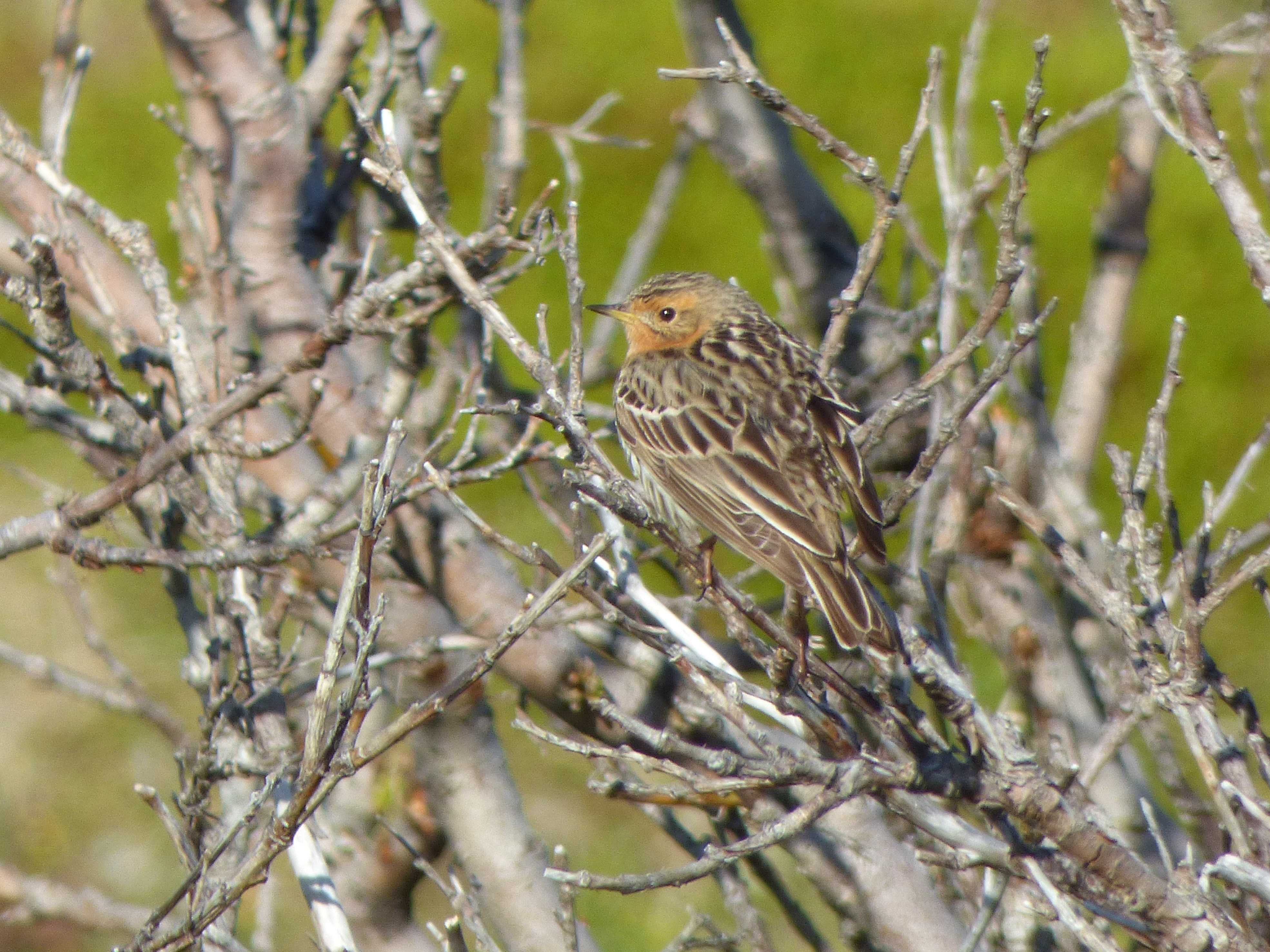
 

This wonderful male Shikra (Accipiter badius) just turned out while enjoying a colony of White-billed Buffalo-weavers close to our accommodation. Image by Carles Oliver

Day 7. Last day of our tour. This day we were concentrated in the grounds of our hotel. After breakfast we just went down to the gardens, where we had really good views on Oriole Warbler, White-crowned Robin-chat, Bronze-tailed Glossy Starling, Grey Woodpecker, Piapiacs, Broad-billed Rollers, a surprising Blue-breasted Kingfisher, Lesser Honeyguide, Village & Black-necked Weavers, Hamercop, Little Swifts, Purple Glossy Starlings and both Blackcap & Brown Babblers. Many of them allowing good photo chances. A short scanning in the sea produced a Great White Pelican, only the second of the trip!

Grey Woodpecker (Dendropicos goertae). Image by Carles Oliver


Western Red Colobus (Piliocolobus badius). Image by Carles Oliver


African Thrush (Turdus pelios). Image by Carles Oliver


Lesser Honeyguide (Indicator minor) was one of the main attraction of our morning in the gardens. Image by Carles Oliver


Oriole Warbler (Hypergerus atriceps) did really well in hiding. Images by Carles Oliver


Bronze Mannikins (Spermestes cucullatus) were really tame in the gardens. Image by Carles Oliver


White-crowned Robin Chats (Cossypha albicapilla), one of the most common and noisy birds in the gardens. Image by Carles Oliver


Long-tailed Glossy Starling (Lamprotornis caudatus). No comments. Image by Carles Oliver


Laughing Dove (Streptopelia senegalensis) are extremelly common, even for this species. Image by Carles Oliver


Long-billed Shrike (Corvinella corvina) was also hunting in our hotel grounds. Image by Carles Oliver


Blue-breasted Kingfisher (Halcyon malimbica) was showing superbly at the grounds. Image by Carles Oliver


Purple Glossy Starlings (Lamprotornis purpureus) are the commonest Lamprotornis in The Gambia. Image by Carles Oliver


Yellow-crowned Gonolek (Laniarius barbarus) is one of the most espectacular bush-shrikes in Africa. Image by Carles Oliver


Tawny-flanked Prinia (Prinia subflava). Image by Carles Oliver


Hooded Vultures (Necrosyrtes monachus) are extremely common in The Gambia. Image by Carles Oliver


Bronze-tailed Starlings (Lamprotornis chalcurus). Please note the short primary projection and the contrast between uppertail, rump and vental area. Image by Carles Oliver

After enjoying the grounds and a good lunch in the beach we just took off to the airport, where our plane back to Barcelona was waiting for the group!

It has been a gorgeous 1st issue for our The Gambia tour.
Remember, in December 2019 we go on with the 2nd issue!! Join us for birds & fun!!!!

The group, happy after some great birding days! Image by Junkung Jadama of Birding Gambia.


List of mammals of the tour:

  1. Guinea or Red Baboon (Papio papio)
  2. West Red Columbus (Piliocolobus badius)
  3. Patas Monkey (Cercopithecus patas)
  4. Callithrix Monkey (Cercopithecus sabaeus)
  5. Gambian Sun Squirrel (Heliosciurus gambianus)
  6. Striped Ground Squirrel (Euxerus erythropus)

List of reptilians of the tour:

  1. Gambia Agama (Agama weidholzi)
  2. Brook’s House Gecko (Hemydactylus brookii brookii)
  3. Nile Monitor (Varanus niloticus)
  4. Nile Crocodile (Crocodylus niloticus)

    One of the three diferent Nile Monitors (Varanus niloticus) that we saw along the tour. Image by Carles Oliver


Maghreb Magpie split from Eurasian Magpie

The population of Magpie living in North Africa and commonly known as Moroccan Magpie has finally been split from Eurasian Magpie (Pica pica) under the name of Maghreb Magpie (Pica mauretanica). Range of the “new” species comprises Morocco, Algeria and Tunisia with a small and isolated population in Western Sahara.

IOC World Bird List, in its paper Version 8.2 (Jun 27, 2018) includes Maghreb Magpie (Pica mauretanica) as a new species from Eurasian Magpie (Pica pica).

Maghreb Magpie (Pica mauretanica) is quite unmistakable bird in the field. Out of the wonderful and evident bare blue skin beyond the eye, the bird is noticeable smaller and shorter winged than Eurasian Magpie. Thus, proportions are similar than the Iberian Magpie (Pica pica melanotos). The typical white patch in the wing coverts is also smaller in the Maghreb Magpie than in Eurasian Magpie.


mauretanica1

Maghreb Magpie (Pica mauretanica) near Agadir in our trip in 2016. Image by Carles Oliver


Habitat selection is also different. Maghreb Magpie prefers open woodlands, gardens, and periurban lands in plain areas, with better densities in some coastal areas, avoiding or appearing in low densities in farm land.

This split comes to join a long list of forms inhabitating Morocco than have been upgraded to full species in the last years: Atlas Flycatcher (Ficedula speculigera), Maghreb Lark (Galerida macrorhyncha), Moroccan Wagtail (Motacilla subpersonata), African Crimson-winged Finch (Rhodopechys alienus) and Maghreb Wheatear (Oenanthe halophila) have been some of the last.

Other races occurring Morocco very likely to become full species in short include African Short-toed Treecreeper (Certhia brachydactyla mauretanica), North-African Tawny Owl (Strix aluco mauretanica) and North-African Hawfinch (Coccothraustes coccothraustes buvryi).


Rhodopechis 2 copy

African Crimson-winged Finch (Rhodopechys alienus) in High Atlas, Morocco, during one of our tour. Image: Carles Oliver


How to see these birds? Barcelona Birding Point offers a trip to Southern Morocco every late March and along the trip you can see all these species out of Atlas Flycatchers which occurs later in the season.

Emberiza & CIA a la Marató Ornitològica 2018

Aquesta és la crònica de la participació de l’equip Emberiza & CIA a la Marató Ornitològica organitzada per SEO/Birdlife. Els integrants del grup enguany van ser en Víctor Sanz, Ramiro Aibar, Antonio Martínez i Carles Oliver. També el fill de l’Antonio, l’Oriol Martínez, que amb només 11 anys va estar sempre alerta i assenyalant rapis al cel!!

Durant tota la jornada vam gaudir de molt bon temps. Tot i la previsió de pluges disperses més o menys generalitzades, vam tenir sol quasi tot el dia, gens de vent i cap gota d’aigua. Condicions idònies, tret de la temperatura un pèl massa alta al migdia. Només una coseta abans de començar, algunes de les localitzacions les mantindrem en secret…secret professional, vaja.

La jornada comença unes hores abans que comenci el termini pròpiament dit per fer la Marató. La nostra data escollida és el dia 6 de Maig i ens trobem a les 21:00 del vespre del dia 5 a Sant Andreu de la Barca. La idea és trobar-nos abans per fer un àpat més o menys en condicions i acabar de perfilar el que serà l’itinerari i els tempos a seguir durant la marató. També és moment d’estrenar l’equipació d’enguany, disseny exclusiu de samarretes by Victor Sanz!

Ens posem en carretera direcció a Lleida i deixem enrere Sant Andreu. Aprofito aquest espai, i crec que parlo en nom de tot el grup, per mostrar tota la nostra solidaritat amb la comunitat educativa d’aquesta vila arran dels vergonyosos atacs patits al llarg de les últimes setmanes. Des d’aquestes línies us diem que no esteu sols!

De camí cap a Lleida toca fer parada per sopar. Tot va amb normalitat, més enllà de que el restaurant escollit inclou Cobaia al Forn com a segon plat del menú…estranyament ningú no escull rosegador com a plat principal de l’àpat nocturn…particularment em quedo amb ganes de veure com la serveixen…

Un cop sopats enfilem cap a la primera localització. Aquesta primera parada és molt important quan fas una cursa com aquesta. La localització nocturna (o les localitzacions nocturnes) han de permetre treure les màximes espècies de nocturnes (mussols i caprimulgus) possibles sense haver de recórrer a les últimes hores del dia per empaitar-los, quan el temps escassejarà, tots anirem molt més cansats i cada espècie pot suposar un sobre esforç.

A les 00:07 arribem a la primera localització, dins territori aragonès. Abans no baixem del cotxe ja sumem la primera espècie: Xot (Otus scops). Perfecte. Aparquem i escoltem al voltant. Un parell de rossinyols (Luscinia megarhynchos) canten a la foscor acompanyats d’un parell de xots. Deu minuts d’escolta no produeixen res més. Hi ha un punt de nerviosisme…Un torlit (Burhinus oedicnemus) reclama en la distància però no alleugera la pressió. De cop, al lluny, un siboc (Caprimulgus ruficollis) canta. Molt bé. Enguany als Caprimulgus els hi ha costat d’arribar des d’Àfrica però a nosaltres amb un ja en tenim prou. Tot seguit una cria de mussol banyut (Asio otus) reclama des d’una taca de pins llunyana. Només ens en falta un. I arriba. Una òliba (Tyto alba) fa el seu reclam característic en passar per sobre nostre. Perfecte!

Ens movem una mica. Fem una mica de prospecció per mirar de trobar uns mussols emigrants (Asio flammeus) que es mouen per la zona, sense sort. No tenim massa temps i toca parar orella en una llacuneta propera. En la distància se senten més rossinyols però també rascló (Rallus aquaticus), cabusset (Tachybaptus ruficollis), polla d’aigua (Gallinula chloropus) i fotja (Fulica atra) reclamant. Però se sent un altre reclam així ens movem una miqueta i escoltem millor per esclarir i si, tenim un rascletó (Porzana parva) a la llacuna. Això és excel·lent perquè és una mica inesperat. Però encara tenim més, perquè un bitó (Botaurus stellaris) canta unes quantes vegades darrera la sorollada de rossinyols que canten des dels tamarius! Anem molt i molt bé, tot i que ens queda molt per patir. Cal perseverar!

Fem un curt recorregut un cotxe per mirar de trobar un dels ducs (Bubo bubo) que viuen a la vora. Voltegem un territori. Els ducs acostumen a estar per aquí però no els podem trobar.. Decidim fer una passejada per la zona, aviam si tenim molta sort i els fem moure. Res. En comptes d’això sentim, des del turó, un altre bitó cantant en un estany diferent de l’anterior!! Plaga de bitons… Tornem tots a la furgo. Amb tot ja són quasi les dues. Toca començar a moure’s cap al Pirineu. Aquí hem fet bo i massa!

De camí cap a la Vall Ferrera fem una paradeta ràpida a prop de Tremp. En un paisatge de màquia i roureda fem una escolta ràpida que ens permet sumar gamarús (Strix aluco). De fet, en sentim 3! L’enganyapastors (Caprimulgus europaeus), l’altre objectiu de la parada, no apareix. Preocupació menor, al vespre. Seguim.


DSC_0325

En Ramiro Aibar i en Víctor Sanz gaudint del primer escorxador (Lanius collurio) de l’any moments abans de marxar cap a Collegats.


Arribem a algun punt de la Vall Ferrera i fem escolta. Són quasi les 5:00. Deu minuts i els ding! de la becada (Scolopax rusticola) anuncia el seu vol al nostre voltant. Les llunes de Júpiter són testimonis del seu vol feixuc mentre continuem sondejant el silenci a la recerca de més espècies. Hi ha una mica de cansament però la temperatura és agradable i la nit està sent profitosa. Tot i així ja queden molt lluny les nits sense dormir de quan érem més joves.

Cap a un quart de sis comencen a cantar els Túrdids. Tord comú (Turdus philomelos), griva (Turdus viscivorus) i merla (Turdus merula) són dels primers. Una mallerenga petita (Periparus ater) molt matinera es deixa sentir i els pit-rojos (Erithacus rubecula) no fan tard a les primeres tonalitats ocres del cel. Cotxa fumada (Phoenicurus ochruros), reietó (Regulus regulus), merla de pit blanc (Turdus torquatus) i mallerenga emplomallada (Lophophanes cristatus) són detectats en un lapse de pocs minuts. Però cap espècie de pes (amb el permís de la merla de pit blanc).

Decidim fer una caminada amunt, aviam què trobem. Hi invertirem massa temps, en part perquè la foscor fa que em desorienti (…) Però tindrà els seus fruits. Caminem vessant amunt en un paisatge dominat per un bosc de pins emmoquetat per nerets i nabius així que a ningú ens estranya quan en la profunditat del bosc sentim els típics sorolls d’un gall fer (Tetrao urogallus). Excel·lent! Caminem molt poquet més i fem una mica més d’escolta. La caminada pren tot el seu sentit quan el reclam d’un mussol pirinenc (Aegolius funereus) arriba a les nostres oïdes! Perfecte! El mussol pirinenc és una de les espècies més difícils per una marató així que poder-lo incloure és sempre un luxe i un orgull.

Decidim començar a baixar i fer una petita volta. Crasso error. Perdem temps. El rellotge corre, ja és dia obert. Pardal de bardissa (Prunella collaris), picot negre (Dryocopus martius), pinsà comú (Fringilla coelebs), gaig (Garrulus glandarius), cucut (Cuculus canorus), sit negre (Emberiza cia), picot garser gros (Dendrocopos major), bruel (Regulus ignacapillus), trencapinyes (Loxia curvirostra), cargolet (Troglodytes troglodytes) i raspinell comú (Certhia brachydactyla) són agradosament afegits a la llista de la nostra marató. Però ens falla el lluer (Spinus spinus). Nidificant escàs i localitzat al Pirineu, aquesta espècie acostuma a ser fàcilment detectable a la localització on som. Però no avui, no ara.


P10501933

Llucareta (Serinus citronella) mascle lluint disseny alar a la Vall Ferrera.


Arribem tardíssim al cotxe. Marxem, marxem, marxem. Són les 7:15 però no cal entrar en pànic. De baixada, quasi a la carrera, hem vist i sentit llucaretes (Serinus citrinella). Hem tret quasi totes les espècies que havíem de treure. Quasi totes. Abans de marxar, però, fem un mos al costat del cotxe. Última oportunitat per lluer i raspinell pirinenc (Certhia familiaris) per unir-se a la festa. No ho faran…Marxem, marxem, marxem!

De baixada per la pista afegim tallarol de casquet (Sylvia atricapilla) i 1 puput (Upupa epops)… una puput en un bosc dens, molt dens de pi roig a uns 1300 metres d’alçària (!!!). Puput en hàbitat de picot negre… Per a mi, l’observació més curiosa de la jornada.

Parades ràpides en diferents prats. Alguna de gens productiva. Entrem a un prat i pam! un pinsà borroner (Pyrrhula pyrrhula) marxa volant de la capçada d’un bedoll. Parem per fer un cop d’ull. El prat ha estat pres per una horda de trencapinyes que sotmeten el prat als seus designis, desfoliant les capçades de bedolls, àlbers i qualsevol arbre que hi hagi. Què fan aquí baix? Repassem el prat. Parella de mallerenga carbonera (Parus major) i alguna mallerenga blava (Cyanistes cyaneus). Res de especial. Però vet aquí que surt un bitxac rogenc (Saxícola rubetra). Serà l’únic del dia! Continuem baixant. Següent prat. Sembla que res, tret d’un fantàstic colltort (Jynx torquilla) que s’arregla el plomatge al sol… De nou, l’únic del dia! Toca paradeta al riu: cuereta torrentera (Motacilla cinerea), picot verd (Picus sharpei), mallerenga cuallarga (Aegithalos caudatus), tudó (Columba palumbus), orenetes cuablanca i vulgar (Delichon urbicum – Hirundo rustica) i també roquerols (Ptynoprogne rupestris). On és la merla d’aigua? És tard. Marxem.

Propera parada, a prop de Sort. De camí cap allà, típiques espècies de carretera. La primera, una merla d’aigua! Tres dels cinc la veiem en una curva. Bé. Garsa (Pica pica), Cornella (Corvus corone), pardal comú (Passer domesticus), colom roquer (Columba livia), falciot comú (Apus apus) i estornell vulgar (Sturnus vulgaris) “cauen” a diferents antenes i similars de Tremp. D’aquí agafem una petita carretera que ens fa guanyar alçada (però perdre temps, Déu meu que llarga que es fa…) i arribem a localització a les 9:00 tocades. S’ensuma el desastre del timing…

Però el lloc val la pena. En 14 minuts contats d’observació sumem: tallarols emmascarat (Sylvia hortensis), de garriga (S. cantillans) i vulgar (S. communis), escorxador (Lanius collurio), còlit gris (Oenanthe oenanthe), bitxac comú (Saxícola rubicola), merla roquera (Monticola saxatilis), cotoliu (Lullula arborea), passerell comú (Carduelis cannabina), Cadernera (Carduelis carduelis), mosquiter pàl·lid (Phylloscopus bonelli), hortolà (Emberiza hortulana), perdiu roja (Alectoris rufa), gralla de bec vermell (Pyrrhocorax pyrrhocorax), capsigrany (Lanius senator) i gratapalles (Emberia cirlus) tot i que els ocells quasi no canten aquest matí. Un escaneig ràpid del cel produeix un trencalòs (Gypaetos barbatus) i un grup d’abellerols (Merops apiaster) en migració ens passen a tocar. Primer rapinyaire del dia! I just en marxar una alosa (Alauda arvensis) ve a aterrar a la nostra esquena. Tot un detall. Agraïts.

Baixem. Encara anem tard. Propera parada; Collegats. Cuereta blanca (Motacilla alba) i Corb (Corvus corax) a la carretera. Voltors comuns (Gyps fulvus) al cel. Dins la furgo discutim si parar o no a Collegats. Guanya que parem, encara bo. De camí (encara no hi som?) una parella d’àguiles calçades (Aquila pennata) ens fa mig parar un moment. Són una fase clara i una fosca. Bé. Una mica més avall un aligot comú (Buteo buteo) es creua al cel amb una àguila marcenca (Circaetus gallicus). Sembla que hi ha moviment de rapinyaires.

Collegats. Tothom fora i mirada a l’infinit. Voltors. Milans negres (Milvus migrans) en migració cap al Nord. Aufrany (Neophron percnopterus) contra els penya-segats. Bon dia maco! Algú veu un falcó peregrí (Falco peregrinus). Poc després un esparver vulgar (Accipiter nisus) remunta amb uns voltors. Una probable àguila daurada (Aquila chrysaetos) se’ns escapa per mil·lèsimes. Qui l’ha vist no pot confirmar. Com la trobarem a faltar! Llàstima! Mallarengues al nostre voltant. Res de l’altre món fins que un picot garser petit (Dendrocopos minor) tamborileja a tocar del grup. 1, 2, 3 vegades. Molt bé! No hi comptàvem. Marxem, que fem tard!

Ja són tres quarts d’once quan enfilem cap al Sud. Destinació; estepes! Tenim una tiradeta…De camí, típiques (i no tant típiques) espècies de carretera. Entre Àger i Balaguer oriol (Oriolus oriolus), tórtora turca (Streptopelia decaocto) i ballester (Apus melba). Entre Balaguer i Àger estornell negre (Sturnus unicolor), cogullada vulgar (Galerida cristata), ànec coll-verd (Anas platyrhynchos), cruixidell (Emberiza calandra), gafarró (Serinus serinus), gralles (Corvus monedula), xoriguer comú (Falco tinnunculus), arpella vulgar (Circus aeruginosus), falcó mostatxut (Falco subbuteo) i aligot vesper (Pernis apivorus). Hi ha força rapinyaire al cel, el que és d’agrair en un dia com avui. Ja a prop de la nostra destinació un fantàstic astor (Accipiter gentilis) vola a prop d’una marcenca aturada en un torre d’electricitat.

Ja passem clarament de les 100 espècies. Arribem a les estepes. Ara l’objectiu és arribar ràpid a la primera localització i, com a mínim per a mi, menjar. La bateria interna està baixa i si volem rendir a la tarda bé hauríem de menjar alguna cosa! A un parell de quilòmetres del lloc a on parem ja entrem en zona molt bona. Seguim sumant. Còlit ros (Oenanthe hispanica), Cogullada fosca (Galerida theklae), Guatlla (Coturnix coturnix), Pardal roquer (Petronia petronia), gaig blau (Coracias garrulus), tòrtora (Streptopelia turtur), trobat (Anthus campestris), calàndria (Melanocorypha calandra) i, just en aparcar, terrerola vulgar (Calandrella brachydactyla).


DSC_0328

Merescut descans de l’equip a Monegros després d’un matí molt intens!


Fa sol i bastanta calor. Estem a uns 24ºC i, tot i que la previsió era de ruixats dispersos, només plou vitamina A. No hi ha massa activitat. Són les 13:20 quan ens aturem, no precisament la millor hora…Durant el quart que estem aturat només sumem milà reial (Milvus milvus). No són bones notícies. Les aloses becudes (Chersophilus duponti) que tenim bastant a prop no es deixaran sentir amb aquesta calor tant sobtada…

Ens movem. Tenim una llarga llista d’espècies i el temps és curt. Tombem i la perseverança ens premia amb increïbles observacions de terrerola rogenca (Calandrella rufescens). Fem unes quantes fotos. Val molt la pena. Seguim tombant però no hi ha quasi activitat. Anem a un raconet a on podem tenir sorpresa i bingo!, dues xurres (Pterocles orientalis) es mouen en un guaret. Seguim al guaret. Terreroles vulgars arreu i 3 xurres més, però sense senyals de les gangues (Pterocles alchata). No tenim més temps per a elles. Una llàstima!


rufescenspetita

Petita llicència fotogràfica el plena marató però és que aquesta terrerola rogenca (Calandrella rufescens) bé s’ho valia!


Ens movem uns quilòmetres. Una prospecció ràpida (molt ràpida) a una zona arbustiva produeix tallarol trencamates (Sylvia conspicillata). Una mica més enllà mussol comú (Athene noctua). Fem un cop d’ull a una colònia de xoriguer petit (Falco naumanni) però sense rastre d’ells. S’olora el pànic dins la furgo! Sense temps per a més baixem a uns tallats vora un riu. Última oportunitat per a un bon grapat d’espècies. El Delta de l’Ebre ens espera, ens crida! Parem al peu dels tallats i seguim afegint noves espècies. Un parell de bosquetes vulgars (Hippolais polyglotta) cantes a les bardisses vora el bosc de ribera. Verdum (Chloris chloris), rossinyol bord (Cettia cetti), tallarol capnegre (Sylvia melanocephala) i sit negre canten al voltant. A dalt del turó una tallareta cuallarga (Sylvia undata) fa un vol curt d’un arbust a un altre. Amb això n’hi ha prou. Als tallats raspem un parell de xixelles (Columba oenas) i un mascle d’esparver cendrós (Circus pygargus) ens passa per sobre. Ja són les 15:00. Hora de marxar!

Pugem a la furgo, 400 metres i hem de parar! 3 xoriguers petits volen als tallats. Així que aquí estàveu! Ara sí, marxem! Poc després un segon mascle d’esparver cendrós vola en paral·lel a la furgo. Silenci mentre tothom mira per les finestres. Quina meravella d’ocell…Anem cap al Sud. Hi ha qui aprofita per dormir. El dia està sent intens i fa estona que tenim la sensació d’anar tard. Ara és el moment de relaxar-se una mica. Uns esplugabous (Bubulcus ibis) en un lloc indeterminat ens marquen el camí a la terra baixa.


DSC_0329

Moral alta en els trajectes. Aquí la comoditat del transport s’agraeix!


Passat Flix fem una paradeta de 3-5 minuts. Només sortir de la furgo una merla blava (Monticola solitarius) ens passa volant per sobre mentre un trist (Cisticola juncidis) va fent al cel. Repassem en busca de rapinyaires. Res. Corb marí gros (Phalacrocorax carbo) al Riu Ebre. Marxem.

-Espera.  Qué pasa?   -Rapaz en la torre de electricidad. Da la vuelta! Da la vuelta!

Tornem carretera amunt uns centenars de metres i sí, una àguila cuabarrada (Aquila fasciata) està aturada en una torre d’electricitat. Bé! De camí entre Flix i el delta no afegirem res de nou tret d’un falciot pàl·lid (Apus pallidus) que es deixa prou bé per ser identificat. Els nostres esforços (anar a 87km/hora en comptes de 95km/hora) per veure una oreneta cua-rogenca són debades…

Són les 17:35 quan arribem al Delta de l’Ebre. Aquí la desfilada d’espècies és ràpida i àmplia. Són a la zona Nord. Hem decidit que ens mourem de Nord a Sud. Martinet comú (Egretta garzetta), gavià argentat (Larus michahellis), pardal xarrec (Passer montanus), bernat pescaire (Ardea cinerea), cames llargues (Himantopus himantopus), gavina riallera (Chroicocephalus ridibundus), cabussó emplomallat (Podiceps cristatus) i capó reial (Plegadis falcinellus) són dels primers a caure.

Anem de camí a El Goleró. El nivell d’aigua està baix i està mig ennuvolat. És una bona combinació. Ens sentim contents i frescs, descansats. Hem arribat prou d’hora al Delta, el que ens garanteix temps per fer un cop d’ull a uns quants hot-spots. Tota la sensació d’estres que hem acumulat al llarg del matí es fon amb la brisa del mar per donar pas a un ritme compassat i natural d’anar sumant. El Goleró es mostra benèvol amb nosaltres però sense escarafalls. Gavines corses (Larus audouinii) i capblanques (Larus genei),  gavians foscos (Larus fuscus) i fumarells carablancs (Chlidonias hybridus) són evidents arreu. Gamba verda (Tringa nebularia), gamba roja vulgar (Tringa totanus), garsa de mar (Haematopus ostralegus), pigre gris (Pluvialis squatarola) i territ menut (Calidris minuta) són els primers limícols afegits a la llista. Al voltant nostre hi han molts xatracs comuns (Sterna hirundo), bastants de bec-llargs (Sterna sandvicensis), 2 de grossos (Hydroprogne caspia) i 1 de menut (Sternula albifrons). Als canyissars de darrera nostre canten balquers (Acrocephalus arundinaceus) i boscarles de canyar (Acrocephalus scirpaceus). Flamencs (Phoenicopterus ruber) i xibecs (Netta rufina) també es deixen veure. Una inspecció més detallada de la zona produeix becut (Numenius arquata), tètol cuabarrat (Limosa lapponica), corriol camanegre (Charadrius alexandrinus) i corriol gros (Charadrius hiaticula). Ens movem cap a l’Est i, en una parada per repassar limícols, ens sorprèn el cant d’un borcarler comú (Luscinia luscinioides). Una mica més enllà la sorpresa és més gran quan un blauet (Alcedo atthis) surt volant d’un pont per perdre’s en un canal. A la última parada aquí gaudirem de remena-rocs (Arenaria interpres) en lluent plomatge nupcial a més de sumar territ gros (Calidris canutus) i agró blanc (Egretta alba).


P1050290

Els últims remena-rocs (Arenaria interpres) en pas són sempre els que llueixen un plomatge més espectacular. Aquest bé es va merèixer una paradeta!


Ha estat un bon començament. Bona part dels camps del Delta comencen a tenir aigua i es poden veure alguns limícols aquí i allà. La temptació de parar cada pocs camps és molt gran i de vegades no tenim més remei que fer-ho. De camí entre Goleró i Alfacada veiem valona (Tringa glareola), xivitona (Actitis hypoleucos), martinet ros (Ardeola ralloides) i curroc (Gelochelidon nilotica).

Un cop arribats a l’Alfacada ens acantonem a la torre, a on corre una brisa que ens va refredant a mesura que passen els minuts. Tots menys els més llestos baixarem gelats…El privilegiat punt d’observació ens permet sumar un bon grapat d’espècies: ànec blanc (Tadorna tadorna), ànec cullerot (Anas clypeata), griset (Anas strepera), batallaire (Philomachus pugnax), bec d’alena (Recurvirostra avosetta), mosquiter de passa (Phylloscopus troquillus), polla blava (Porphyrio porphyrio), martinet menut (Ixobrychus minutus) i martinet de nit (Nycticorax nycticorax). Des de dalt la torre repassem el mar, que se’ns mostra com un fantàstic desert blau amb alguna taqueta bec-llarga que es cabussa i torna a tirar amunt… Una potencial fotja banyuda (Fulica cristata) es deixa estimar durant quasi mig minut a Buda, davant per davant de la torre, però uns tamarius dificulten l’observació i no podem extreure una conclusió definitiva… al llarg de l’estona que estem dalt intentarem relocalitzar-la, debades. En baixar de la torre notem que les cames pesen. Estem cansats. Són més de les 18:30, no ens queda massa temps.


IMG-20180507-WA0000

Últims moments de llum. Moments per comentar el dia, fer bromes, rascar alguna última espècie i menjar alguna cosa a les Salines de Sant Antoni. Feia fresca!


Tirem cap als Eucaliptus. Una ràpida inspecció dins el camping produeix xarrasclet (Anas querquedula), ànec cuallarg (Anas acuta), morell xocolater (Aythya nyroca) i ànec xiulaire (Anas penelope). Un cop fet el tràmit comentem si anar a l’arbreda de la zona d’acampada o a Riet Vell per migrants. Optem per Riet Vell i dóna un gran resultat: Papamosques gris (Muscicapa striata), mastegatatxes (Ficedula hypoleuca) i cotxa cua-roja (Phoenicurus phoenicurus) són tots afegits en 5 minuts junt amb una gavina capnegra (Larus melanocephalus) que reclama en el camp del costat. Bravo!

D’aquí volem a Sant Antoni, la nostra esperança per un grupet de limícols que semblen no voler aparèixer. De camí cap allà, ja amb el sol molt baix, apuntem un grupet de 7 tètols cuanegres (Limosa limosa). En arribats a les salines repassem bé cercant corriol petit (Charadrius dubius) o territ variant (Calidris alpina) però sense ser capaços de trobar cap d’aquestes espècies. Mentre sopem gaudint d’un màgic capvespre a les Salines de Sant Antoni encara sumem perdiu de mar (Glareola pratincola). Ens sentim genial. En part perquè un error al sumar ens fa pensar que hem superat de llarg les 200 espècies… En realitat estem una mica per sota.

Un cop acabats de sopar fem un parell de parades a la sortida del Delta, ja camí de Barcelona, per mirar de sumar l’enganyapastors. Però no surt. Al final decidim (bueno, jo ja estava bastant fora de combat) de provar sort a Sant Andreu de la Barca. Arribem justets, justets de temps. 23:47 comencem escolta…23:53 un enganyapastors canta a la vall que tenim a l’esquerra. Espècie número 196!

Tothom a dormir!


Com a resum crec que puc dir tranquil·lament en nom de tots el membres del grup que estem molt satisfets per aquesta edició, la primera en la que hem inclòs el Pirineu de Lleida en l’itinerari. De ben segur que no serà la última!

El timing se’ns ha anat una mica al Pirineu, en bona part per la passejada una mica massa llarga a primeríssima hora del matí. Això ha fet que no poguéssim tenir tot el temps que haguéssim volgut per explorar les estepes i, el que és pitjor, ens ha fet arribar a una hora que feia molt difícil sumar espècies com el sisó (Tetrax tetrax), especialment amb el sol picant tal i com ho feia al migdia! Però bueno, que consti que ja tenim la clau per superar-nos el 2019. Amb il·lusió!

En defitiva, que una cursa ornitològica pot ser molt divertida. No cal fer-se mala sang amb el que facin els altres equips (fins a cert punt) i és sempre molt millor si vas amb amics! Això sí, requisit indispensable, estar tocat de l’ala…

Com a últim apunt, un reconeixement especial a l’Oriol, un birder de només 11 anys que va gaudir com el que més, que ens va aguantar a tots 4 durant 24 hores i que de ben segur esdevindrà un naturalista de primera! Felicitats Oriol!


HORA INICI: 00:00                 HORA FINALITZACIÓ: 23:59                  INTEGRANTS EQUIP: 5

LLISTAT D’ESPÈCIES CONTACTADES PER L’EQUIP EMBERIZA & CIA EN LA MARATÓ ORNITOLÒGICA 2018

  1. Ànec blanc (Tadorna tadorna)
  2. Ànec xiulaire (Anas penelope)
  3. Ànec griset (Anas strepera)
  4. Xarxet (Anas crecca)
  5. Ànec coll-verd (Anas platyrhynchos)
  6. Ànec cuallarg (Anas acuta)
  7. Xarrasclet (Anas querquedula)
  8. Xibec (Netta furina)
  9. Morell xocolater (Aythya ferina)
  10. Gall fer (Tetrao urogallus)
  11. Guatlla (Coturnix coturnix)
  12. Perdiu roja (Alectoris rufa)
  13. Corb marí gros (Phalacrocorax carbó)
  14. Bitó (Botaurus stellaris)
  15. Martinet menut (Ixobrychus minutus)
  16. Martinet de nit (Nycticorax nycticorax)
  17. Martinet ros (Ardeola ralloides)
  18. Esplugabous (Bubulcus ibis)
  19. Martinet blanc (Egretta garzetta)
  20. Agró blanc (Ardea alba)
  21. Bernat pescaire (Ardea cinerea)
  22. Agró roig (Ardea purpurea)
  23. Cigonya blanca (Ciconia ciconia)
  24. Capó reial (Plegadis falcinellus)
  25. Flamenc (Phoenicopterus roseus)
  26. Cabusset (Tachybaptus ruficollis)
  27. Cabussó emplomallat (Podiceps cristatus)
  28. Aligot vesper (Pernis apivorus)
  29. Milà negre (Milvus migrans)
  30. Milà reial (Milvus milvus)
  31. Trencalòs (Gypaetos barbatus)
  32. llistat en construcció. Us remeto al text per saber més 😉

Is April the best month for birding in North-East Spain?

Every little time we got requests of birdwatchers that, interested about coming to do some birdwatching in Catalonia, ask us about what it is the best time to come.

Well, this is always depending on what do you want to see… But it is not wrong to think on spring as being probably the best time for birdwatching. In the Mediterranean this means a combination of excellent, sunny weather with pleasant temperatures, high activity of the nesting species (resident or not) and tones of migratory birds in their way to Northernmost nesting grounds.

I personally love April. It is just because of the really good general birding. This is probably one of the best moments in the year for Crakes. And not talking about listen them, but talking on seeing them! Migration goes in excellent numbers along Mediterranean wetlands and, along with warblers, waders and raptors, it is always possible to enjoy Spotted Crakes (Porzana porzana) or Little Crakes (Porzana parva). Early April is also a good time to look for Iberian Chiffchaffs (Phylloscopus ibericus) as they hang around in their way to their nesting grounds. Along the month waves of Short-toed Eagles (Circaetus gallicus), Black Kites (Milvus migrans) and Montagu’s Harriers (Circus pygargus) are to arrive to their nesting grounds. Egyptian Vultures (Neophron percnopterus) are already defending their territories as they arrive as early as early-mid February.


P1110197

Spotted Crakes (Porzana porzana) show up all along March and April in all kind of wetlands. Numbers are highly variable depending on the year. Image: Carles Olive


IMG_6153

Egyptian Vultures keep expanding in Catalonia. They arrive as early as February. Image: Carles Oliver


By mid April Woodchat Shrikes (Lanius senator),  Spectacleds (Sylvia conspicillata), Subalpines (Sylvia cantillans) and Orphean Warblers (Sylvia hortensis) will be all at their nesting grounds, but it is mandatory to keep searching for not-that-common birds in migration that can easily include Wood Warbler (Phylloscopus sibilatrix), Garden Warbler (Sylvia borin), Lesser Whitethroat (Sylvia curruca) along with some Balearic Flycatchers (Muscicapa tyrrhenica) to be discovered among the many Spotted Flycatchers (Muscicapa striata).


P1060781

Western Subalpine Warblers (Sylvia cantillans) are a common migratory bird all along April. From 10th onwards they can also be found at their nesting grounds around. Image: Carles Oliver


P1060738

Wood Warblers (Phylloscopus sibilatrix) are exclusivelly migratory birds in Catalonia, an rather scarce! They normally are to be found in mixed migratory warblers flocks. Image: Carles Oliver


But probably the best is that all of that can be done while still enjoying on Wallcreepers (Tichodroma muraria) in the Pyrenees as they still goes up. They are not that “easy” to find as in winter but still is mandatory to check some spots! And now, while looking for them, it is likely yo see superb Common Rock Thrush (Monticola saxatilis) or Rock Buntings (Emberiza cia) singing around!

In the wetlands, Bluethroats (Luscinia svecica) keep going North and more active as never before so it gets easier to locate them, and Iberian Reed Buntings (Emberiza s. whiterby) are also showing well within its tiny range! Small flocks of waders and beautiful ducks such as Garganeys (Anas querquedula) can be seen in every wetland and you can enjoy male Ruffs (Philomachus pugnax) going up with their splendid spring plomages. Few days ago we just got a mixed flock of Black-winged Stilts (Himantopus himantopus) along with Pied Avocets (Recurvirostra avosetta), Ruffs and Black-tailed Godwits (Limosa limosa) only 30 minutes after enjoying a Dupont’s Lark (Chersophilus duponti) singing right in front of us…


P1040474

Garganeys (Anas querquedula) show up in good numbers all along April. Image: Carles Oliver


IMG_5886

Dupont’s Lark (Chersophilus duponti) in flowering steppe vegetation. April at its best. Image: Carles Oliver


No mention to the steppes… they are never as beautiful as are in April. And are really productive! Many areas are carpeted by yellow, red and white flowers and Little Bustards (Tetrax tetrax) sing in the middle of the flowers while flocks of Sandgrouses (Pterocles sp.) and Stone Curlews (Burhinus oedicnemus) feed around. You will listen some 100s of Calandra Larks (Melonacorypha calandra) and Corn Buntings (Emberiza calandra)… you may think; “it would not be 100s!”. Yes, 100s

In the fields, flocks of Yellow Wagtails (Motacilla flava spp.) feed along with Pipits (meadow, tree, red-throated?), Great Spotted Cuckoos (Clamator glandarius) will always be really busy and noisy at this time while small parties of tiny Lesser Kestrels (Falco naumanii) move up and down in the air…


P1040008

Great Spotted Cuckoos (Clamator glandarius) are superb birds! Arriving along March, they are especially active in early April. Image: Carles Oliver


Yes, spring is here and, maybe is not that important whether April is the best moment to enjoy birds in Catalonia or not. It is still a wonderful time to come and enjoy!

Check out our birding trips at barcelonabirdingpoint.com our contact us to design your birding adventure at info@barcelonabirdingpoint.com

Pyrenees Winter Break, 2018 Trip Report

Dates: 13th to 16th February, 2018

Number of participants: 5 

2019 dates: February 19th to 23rd. Join for great birding and good fun!

Day 1. February 13th

We start our tour by picking up the tour participants from their hotel and about 7:45 we were already out of the city. This time the first destination was the farmland plain of Llobregat Delta. This worked really well and it was done to allow some clients to join the trip as they were landing in Barcelona minutes before 9:00.

So, after a fast coffee we went out to have some birds. Temperature was 10ºC with clear sky. We explored a farming area extremely close to the airport combining small fields and patches of decidious forest. We soon had the first flocks of finches of the trip. Mainly Common Chaffinches (Fringilla coelebs), Eurasian Goldfinches (Carduelis carduelis) and Eurasian Greenfinches (Chloris chloris) but also several European Serins (Serinus serinus) feeding on ground. Our quest bird for the site was Iberian Green Woodpecker (Picus sharpei), a recently split species from European Green Woodpecker being endemic of the Iberian Peninsula.


P1040442

European Serin (Serinus serinus) is common bird in Catalan lowlands. Image: Carles Oliver


We soon had some birds calling around and it was not long until we got nice views on one individual perched in a tree for long. That was a really nice view followed for 2 more birds flying around and interacting.

The fields kept producing good birding as there were several Black Redstarts (Phoenicurus ochruros) and some Sardinian Warblers (Sylvia melanocephala) moving around. Also Common Chiffchaffs (Phylloscopus collybita) and the firsts of many Crested Larks (Galerida cristata) of the trip were appearing.

While moving in the area we had a distant male Hawfinch (Coccothraustes coccothraustes) perched in the top of a tree while some Eurasian Siskins (Carduelis spinus) flew over us with no change for a proper view. Was time to go to the airport but we still had time to enjoy 3-4 Hoopoes (Upupa epops) feeding on the ground and we could enjoy how the birds were digging on the sandy soil while looking for warms and small insects.


P1040462

Iberian Green Woodpecker (Picus sharpei) was the first quest bird showing nicely in the tour. Image: Carles Oliver


Hoopoes are mainly summer visitors in Catalonia but in the last 20 years more and more birds are staying all year round. Now, in Llobregat Delta, there are a pair of winter roosting places and they normally move in small flocks at the beggining of the day.

Soon after one of the members of the trip had 2 Red-legged Partridges (Alectoris rufa) and the whole group enjoyed the birds. That was a really good start of the trip but now was time to pick up the rest of participants and go up to the Pyrenees.

After a two hours long transfer from the coast we arrived to Catalan Pyrenees to explore the high mountain slopes. That afternoon we were cofused in a mountain pass about 2000 metres high to look for the main targets of that day; Snow Finch and Alpine Accentor. Weather was still okay but it was broadcasted a huge weather change for the afternoon including heavy snow and Siberian-like temperatures, and the extremely dark cloudes coming from our left were the prove that the broadcast was right, this time. So, we were not having a lot of time, probably 2 hours or so…

After some exploratory stops we just decided to walk a bit along the lonely road. Both species use to move in flocks in winter and the size of the flocks can be really variable, from 2-3 birds to 100 of them! We were lucky this time and didn’t have to wait much until we found some birds moving in the open, grassy slope. It was a small flock of 4 Alpine Accentors (Prunella collaris) feeding in the slope! We walked a bit up, and enjoyed extremelly close views on the birds that produced really good images! Unfortunately it was no signal of Snow Finches, which may be appearing along with Alpine Accentors, sometimes.


P1030306

Alpine Accentors (Prunella collaris) close up. A small flock allowed us really close views at our first attemp in Catalan Pyrenees. Image: Carles Oliver


Back to road we decided to keep exploring up the road. Weather was getting much and much worst and we were having some Snow and wind. A new stop some half a quilometre beyond produced lovely views in a herd of Pyrenean Chamoises (Rupicabra pyrenaica) while enjoying with the calls and moviments of a small flock of Red-billed Choughs (Pyrrhocorax pyrrhocorax). Here we also enjoyed the first raptor of the trip: a juvenile Lammergeier (Gypaetos barbatus)! The bird just appeared at the other side of the valley and we all had its majestic flight for some time before it became difficult to track due to the falling snow…

Lammergeiers are nesting not far from the place and a mininum of two juveniles plus the adults are likely to move in these slopes, and this despite the density of the bird is lower than in other areas of the Catalan Pyrenees!

Out of a pair of small flocks of Mistle Thrush (Turdus viscivorus) and 1 or 2 Fieldfares (Turdus pilaris) there was not much other activity in the mountain pass as the weather was turning really bad so we decided to start going down, always really slow to allow some scan around and try to get something else! And we got something else…. Suddenly, a big flock of about 80 Snow Finches (Montifringilla nivalis) came down from one of the slopes, and extremelly fast passed by the van! What a great view of the birds showing its really long, white-and-black wings and the interesting white pattern in their tails! We stopped and could enjoy the call of the birds in the snowy landscape. We were even luckier since some ten of them stopped in the snow for some seconds, some feeding on the teasels sticking up from the Snow. It took 20 seconds before the birds followed the whole flock moving down the slope. What a magical view!! And just in time!!


P1020833

This Snow Finch (Montifringilla nivalis) posed for about 10 seconds before following the whole flock down the slope! Image: Carles Oliver


Happy about our success we decided to stop in a coffee shop where we had a rather late lunch. This kind of places sometimes attrack high mountain birds and this time we got a Water Pipit (Anthus spinolleta) and 1 White Wagtail (Motacilla alba), nice combination.

After lunch we head down the valley where weather was better so we decided to explore the fields around the village where were going to sleep. One hour of exploring was enough to get a really nice set of species. We were in La Cerdanya, a lovely Pyrenean valley that is many times concentrating large flocks of finches and buntings.

We just visited an area where birds go to roost and found good number of Yellowhammers (Emberiza citrinella), Tree Sparrows (Passer montanus), Corn Buntings (Emberiza calandra) alongside 35+ Rock Buntings (Emberiza cia), a good number of Cirl Buntings (Emberiza cirlus) and 8+ Bramblings (Fringilla montifringilla). What a wonderful combination of birds! The trees nearby were hosting a small flock of 6 Hawfinches and we also listened the distant call of an Iberian Green Woodpecker

That was the end of the day and we just drove 10 minutes more until our accommodation, where we had a good rest and an excellent local cuisine dinner.

Day 2. February 14th

Our second day of the trip started with a massive snowfall in all the area around teh Pyrenees. We were actually lucky to leave our accommodation quite early in the morning since weather conditions kept getting worst and worst in La Cerdanya for the next hours and many people were incomunicated and even the village where we were staying was incomunicated for about 1 day!

But when the worst was coming we were already in the road and all roads we were passing by were clear enough to guarantee a fluent, although slow, traffic. This day we were explorig a diferent valley, called Pallars. The area is considered as the best for raptors in the whole Pyrenees, not only for the massive numbers of vultures but also because it hosts a healthy population of Eurasian Black Vultures.

Our first target bird was the famous and wonderful Wallcreeper (Tichodroma muraria). During previous trips this year we were having a bird showing quite well in a gorge about 11:00 to noon so about 11:00 in the morning we were already scanning the rocks. This is a bird that can be really difficult to find so a carefully scanning of the cliff faces is mandatory if you want to keep your changes on the bird high.

While scanning around we got 4-5 Dippers (Cinclus cinclus) singing and moving in the river crossing the gorge. Some tits were also showing well including Long-tailed Tit (Aegithalos caudatus rosaeus), Firecrest (Regulus ignicapilla) and Short-toed Treecreeper (Certhia brachydactyla). Raptors were not moving so much because of the snowfall and only a few Eurasian Griffons (Gyps fulvus) were showing in short views moving along the cliffs. The ambient was really cold (-6ºC) but, fortunately, with no wind. The scanning kept the same until we got a moviment high up in the cliffs. Only a brief glimpse in a bird moving in and out the rocky slope. We all stick together and scanned around but with no feedback for about 2 minutes, and then a wonderful Wallcreeper showed out, and flew down the cliff the emerge not far away from us!

The bird was moving for a while, getting in and out a pair of wholes and finally stopped in a rock, preening for about one minute. After that the bird just flew and crossed the gorge, getting to the opposite site and flying up the slope so we alll lost the bird. It was a really nice view of about a pair of minutes. Excellent.

Happy about this nice views in such a difficult conditions we decided to go to the closer village, get a coffee and scape the bad weather.

In the afternoon, and after a rest of a pair of hours in our accommodation, where we had our packed lunches, we decided to go out and try something else. Weather conditions were improving. No snowfall any more and small patches of blue sky were a good start to think that afternoon could be good for raptors.

So, about 15:00 we arrived around Boumort Game Reserve, where there was “some” activity. And that “some” activity included about 40 to 50 Griffons circling and try to get higher as well as 7 Red Kites (Milvus milvus) in our way up to the area. We parked around and started scanning the cliff faces and all around.

Soon, we found our first adult Lammergeier (Gypaetos barbatus) soaring along cliff Ridge and this bird was immediatly followed by a second adult, and by a juvenile! More and more Griffons were now in the sky and also 2 Eurasian Black Vultures (Aegypius monachus) joined them. Soon, more Blacks were coming from the far side of the cliff and we counted a mínimum of 8 individuals moving around. Mainly juveniles, showing really black but also some adult, with a dulkier coloration and a wing profile not as extremelly squared as the juveniles.


P1010874

Adult Lammergeier (Gypaetus barbatus), one of the at least 8 individuals we had along the tour. Image: Carles Oliver


The fields around were having a good moviment of birds including Woodlarks (Lullula arborea) singing out in the surprisingly sunny afternoon, Mistle Trush, European Serins, Cirl Buntings, Rock Sparrows, Sparrowhawk (Accipiter nisus), Linnets (Carduelis cannabina), Eurasian Nuthatch (Sitta europaea), Great Spotted Woodpecker (Dendrocopos major) and a fast-flying Citril Finch (Carduelis citrinella). This bird, a main target of the trip, was unfortunately not stopping at all and only a pair of the participants could notice it and get some details on the bird (larger than Serin, longer tailed and showing a clear wing bar). The bird flew pas us up the valley but it was no chance to follow it since the track was closed due to the snowfall…

Back to the cliffs we could still enjoy more and more vultures, with Lammergeiers passing every whiles and Black Vultures and Griffons circling above us. Small flocks of Red-billed Choughs were also moving around and 1 Golden Eagle (Aquila chrysaetos) and 1 male Hen Harrier (Circus cyaneus) were both a good adding right before we started coming back to our accommodation

Day 3. February 15th

Early morning start, this time to explore some high mountains woodlands before going South to Lleida Steppes! Main quest bird of the morning was Black Woodpecker. Never easy! The original plan was to explore a really wonderful place north in the same shire but, due to the Snowfall, the track was probably block…So, we changed the plan and went to a tarmac lane leading to a sky resort that is was for sure clear.

We arrived there a bit before 10:00 with a cloudy but quiet weather (about 0ºC). The area to explore is about 1700 metres high and much warmer than in the valley due to the typical thermical inversion of the high mountains.

Some birds were moving around and we soon had good views on some Crested Tits (Lophophanes cristatus), Coal Tits (Periparus ater), Short-toed Treecreepers, Goldcrests (Regulus regulus) and one Firecrest. A small flock of Common Crossbills (Loxia curvirostra) were showing well in the top of some pines including a long-staying singing male!

We just kept searching for the main goody up the there and did a pair of walks, still having more small birds moving in the canopies but with no new addings to our list, out of some Mistle Thursh. It was taking a bit long with and the rather boring moment was broken by a Lammergeier soaring extremelly low over the slope in what it was propably the closest view we have had in the whole winter on the bird!

The group was still magnetised by the smart raptor when a clear call of a Black Woodpecker (Dryocopus martius) came up from the slope. The bird was quite close, actually. We stood there for a while and the bird came to us and perched some 50 metres away, high up in a tree so everybody had excellent views on the bird. The bird was still calling a pair of times more and then flew to our left and gave us excellent views on it in flight!


IMG_8356

Black Woodpecker (Dryocopus matrius) was showing surprisingly well despite an extremelly windy and snowy previous day! Image: Carles Oliver


We were all satisfied with such a good views on a bird that is famous for being shy and rather unobtrusive so we started moving South, and explore the plains known as Lleida Steppes and located inmediatly South of the Pyrenees. Less than 90 minutes of drive were enough to produce a massive change in the landscape, and to lead us to our accommodation for the last night of the trip.

Along the way we enjoyed of several Griffons and Red Kites flying around and we had a nice to stop to enjoy the two firsts Iberian Grey Shrike (Lanius meridionalis) of the trip. These birds are endemic of the Iberian Peninsula so they are always a must-see bird!

Iberian Grey Shrike are slightly smaller than Northern Grey Shrikes are, and show less powerful, more compact due to a slightly shorter tail, and clearly darker especially in the undersides, where it shows a pinkish buff which is not always easy no notice. It has also a shorter bill, plainer culmen on it and a thin supercillium if compared with Northern Grey. When flying, looks like smaller bird with smaller white patches in the wing coverts.

Our first movement in the steppes was Utxesa, a wetland surrounded by large reedbeds. Far before stopping the car we were having about 10-12 Marsh Harriers (Circus aeruginosus). Main quest birds here were all living in the reedbeds. The afternoon was a bit chilly but with no wind, something really important when exploring these kind of habitats. It didn’t take long until we listened the firsts calls of Western Penduline Tits (Remiz pendulinus) and Cetti’s Warblers (Cettia cetti) and a proper scanning of the reedbeds and riberside vegetation produced good views on them as well as Sardinian Warblers and several Chiffchaffs. A Cirl Bunting was moving in the crops nearby and it was even singing for a pair of times. A small walk in the area showed extremely productive, and a group of 8-10 Bearded Tits (Panurus biarmicus) showed up in the reeds. A further channel produced 1 Water Pipit (Anthus spinolleta) and 1 male Bluethroat (Luscinia svecica), white medal, running in the mud and showing well in the reeds around! That was one of the main targets of the trip and we really good views on this bird! Here we also had a Green Sandpiper (Tringa ochropus), maybe a overwintering bird or maybe an early migratory bird going back to their nesting sites in Northern Europe.


IMG_8195

Male white medal Bluethroat (Luscinia svecica) at Utxesa reservoir. A beautiful sight! Image: Carles Oliver


P1030341

Western Penduline Tit (Remiz pendulinus) at Utxesa reservoir, Lleida. Note this male is still not showing totally in full adult plumage, with not fully contrasted head-neck colours. Image: Carles Oliver


Next movement was to visit a small valley immediatly South of Lleida city. A road stop some kilometers before arriving to the main place was mandatory as we spotted 1 Little Owl (Athene noctua) perched on a tree. We all enjoy with this view and, as being some movement around, we got out the van to have a 5-minutes walk. This produced good views on Crested Larks, 2 lovely Hoopoes (Upupa epops) feeding on ground and 2 Dartford Warblers (Sylvia undata) skilking in the low, sparse vegetation. The only ones of the trip! Few metres beyond, already all back up in the van, we had a second Little Owl really close to the van, producing really good views on the bird!


P1030638

We just had this Little Owl (Athene noctua) in our way so we just had to stop and enjoy. Image: Carles Oliver


P1030633

And we were leaving we just found a 2nd Little Owl 80 metres beyond! Image: Carles Oliver


And we arrived to our main stop in the area! We were in a landscape totally diferent was the morning. Landscape South of Lleida is a dry, semi-arid traditional farming with plenty of wheat fields and almond orchards. Here there are almost no water courses and the few streams have some poplars and riberside vegetation while the slopes around are rocky, dry and covered by low, dense scrublands. It was 16:40 and a lovely light was bathing the valley.

Main quest here is a pair of Eagle Owl (Bubo bubo) nesting around in the cliffs. We carefully scanned the cliffs and finally found one adult sleeping deep inside the vegetation. It was a wonderful view despite the poor images we could get on the bird. We all kept an eye on the owl in the case it was moving while enjoying the birdlife around. The slopes around were full of Blackcaps (Sylvia atricapilla) and Song Thrush (Turdus philomelos) but we also got lovely and extremely close views on 8 Hawfinches (Coccothraustes coccothraustes). 2-3 Redwings were also around and a proper scanning in the slopes around was soon producing 2 wonderful Black Wheatears (Oenanthe leucura), again one of the main targets of the trip! The male was quite active and moving up and down in the slope, stopping the same in rocks but also in the top of well exposed branches. So, we were having at the same time Eagle Owl, Black Wheatears and Hawfinches!


P1020536

White Storks (Ciconia ciconia) are a common view around Lleida, also in winter. Image: Carles Oliver


In this place, a tiny stream is going down the valley so we decided to walk down for 400 metres until a crossroad nearby. Midway down, a small pond was attracting tones of Chaffinches and also more Hawfinches were coming down to drink. A short time there, waiting, produced a wonderful male Brambling but also 2 Cirl Buntings coming to drink water. Blue Tits and Long-tailed Tits were also around. Arrived to the crossroad we had the chance to scan at the other side of the valley. Here some Crag Martins (Ptynoprogne rupestris) were patrolling along the cliffs searching for insects and here we also had excellent views on a male Blue Rock Thrush (Monticola solitarius). An Iberian Green Woodpecker was calling around but we could not get any view on the bird. In the nearby village, loads of Spotless Starlings (Sturnus unicolor) were singing and performing, coming down to tha valley and many times stopping in the banks around so we could have really good views on them. Several Jackdaws (Corvus monedula) and 3 Red-billed Choughs were also present. Back to the cliffs, there were still more surprises since in the top of an old house we got 6 Rock Sparrows (Petronia patronia) in lovely light. Around the cliffs some Thekla Larks (Galerida theklae) were singing and callin and we got also good views on the birds. Still surprised how many birdwatchers consider this bird as being really scarce…In Catalonia and the Iberian Med coast is a common bird as long you look for them in the proper habitat: scrubby slopes and steppe lands.


P1020810

Male Hawfinch (Coccothraustes coccothraustes) in Lleida Steppes. A massive irruption of them has arrive this winter to Western Europe! Image: Carles Oliver


P1030516

Cracking Blue Rock Thrush (Monticola solitarius) in lovely afternoon light in Lleida Steppes. Image: Carles Oliver


Back to car we still had time to take a look on the Eagle Owl, still roosting in the same place so we just decided to start going to our accommodation…

But we still had time a for 5-minutes stop just before arriving to our accommodation in a farming area, where a flock of Little Bustards (Tetrax tetrax) was spending the winter. It didn’t take long to locate them and we could all enjoy great views on the birds while moving in the well-vegetated fields. The group was counting 37 individuals including males, females and juveniles, easy to tell apart by the design in the upperparts and other details.
A five minutes scan around allowed us to have other interesting birds including several White Storks (Ciconia ciconia) moving around, Grey Herons (Ardea cinerea) as well as a flock of Meadow Pipits (Anthus pratensis) and Eurasian Skylarks (Alauda arvensis). That was the end of a gorgeous day and time enjoy a good dinner and drinks!

Day 4. February 16th

Last morning of the this rather short version of our winter trip (normally it should run for 5 days) and time to explore some amazing spots looking for some top target birds. Early morning breakfast and transfer to the West, getting inside Aragón for some miles to explore a lovely patch of steppes. In our way, the highway was always full of Cattle Egrets (Bubulcus ibis), Red Kites and White Storks.

Arrived to the area to explore about 9:00 we just had a first stop in some fields concentrating Sandgrouses in winter. That morning was a bit quiet but our scanning was still producing a flock of 8 Pin-tailed Sandgrouses (Pterocles alchata) forraging on the ground. We all enjoyed of wonderful views on them and listened the typical “ga-ga” in our left so another flock was moving nearby.

The firsts Calandra Larks (Melanocorypha calandra) were starting singing here and there and soon we had several birds flying around, flying, singing and displaying along with Thekla Larks. We just drove 5 minutes to one of the places where Dupont’s Lark (Chersophilus duponti) is still to be found. All the way, Calandra, Thekla and also some Lesser Short-toed Larks (Calandra rufescens) joined with their songs. It was definately a good moment to go for Dupont’s Lark.


P1050842

Thekla Lark (Galerida theklae) in a previous tour. Note the well contrasted face markings, including a kind of “eye ring”. Also the “pure” whitish belly and flanks if compared with Crested Lark. Image: Carles Oliver


This Lark is a bit a mistery. It is reluctant to fly, and when do it, it normally flies short distances. It calls few times and spend most of its time running on the ground where it looks for insects, warms and spiders. Its rather dark coloration make the bird extremely difficult to find.

So, we drove really slowly, listening for any singing bird. As everything was quite we just arrived to one of the typical places and stop and stay inside the car for some minutes. Nothing singing but Calandra, Theklas and Lesser Short-toeds (not bad, anyway). 2 Black-bellied Sandgrouses (Pterocles orientalis) pass by us but unfortunately nobody in the group noticed the birds. 5-10 minutes and nothing. Scanning all around and nothing. Well, went out of the cars and prepared the scopes. Nothing. Plenty of Calandra singing and a distant, really distant Stone Curlew (Burhinus oedicnemus) calling. We just waited for half an hour, in silence and by the car, and nothing. But then a song came to us. Dunpont’s Lark singing. Difficult to listen because of the massive activity in Calandras and so on but still was there, in somewhere. Some more wait and got two males singing. One at our right, another at our left. Good! Everybody scanning and nothing. 2-3-4 minutes of wait and nothing, only Calandras and Theklas in an endless wave of songs and then a Dunpont’s again at our left, closer. Many times they just sing between run and run, every 2-3 minutes scan  really tricky! Again some wait, a really distant bird was singing, as well. More Calandras everywhere and then our Dupont’s started singing really, really close! It looked like being just-in-front-of-us! The bird went on singing of almost one minute, good. And then we found it, standing up quite in the open and singing about 35 metres from us!! What a view!!! Make sure that everybody in the group was having the bird (not easy to find) and try to get some images. Now there were 3-4 males singing but it is always difficult to say due to the Calandra & Thekla songs and, in fact, because the Dunpont’s song itself is designed to make the bird more difficult to spot. We all enjoyed a quite long view on the bird and then the lark was moving in the steppe vegetation so we could track the bird for some metres before it was disappearing…Wonderful!


P1120209

The always elusive Dunpont’s Lark (Chersophilus duponti) was giving superb views few metres away from the car. Image: Carles Oliver


Well, happy all the group for such a successful morning we then invested some time in enjoying good views on Lesser Short-toed Larks and trying to find a flock of Black-bellied Sandgrouse but we had no luck in this second species. We then decided to move to a nearby wetland where have our packed lunches. But before arriving we had a stop in the road, a Marsh Harrier was diving on a juvenile Golden Eagle (Aquila chrysaetos), and attacking it in a really agressive way. We could not figure out was the goldie did to deserve such a treatment but Marsh Harrier was extremely ungry. Maybe starting to defend a nesting territory?

Once in the wetland, inmediatly South of Candasnos, we start having our lunch while scanning the diferent ducks around. Mallards (Anas platyrhynchos) were the most common by far but we also got Gadwalls (Anas strepera), Eurasian Teals (Anas crecca), Northern Shovelers (Anas clypeata) and 8 Common Pochards (Aythya ferina). Still, the best was a flock of 12 Red-crested Pochards (Netta rufina) including some drake ones.

After lunch, a short walk around produced Reed Buntings (Emberiza schoeniclus), 2 Penduline Tits (Remiz pendulinus), and a walk along a channel gave 1 female Bluethroat and 1 Jack Snipe (Lymnocriptes minimus) that flew out and circled us to dive at our back. This was a really nice surprise since is a fairly scarce bird down here! The corn fields around the lagoon where carpeted with Northern Lapwings (Vanellus vanellus) and 1 Merlin (Falco columbarius) came to this area in a really fast Flight when we were scanning around!

Last birding movement of the tour was to drive further West to look for Great Bustards (Otis tarda). A small populations lives in Los Monegros and a proper management is likely to do this population increase number in coming years. Nowadays, less than 80 individuals are left.


P1030429

Part of the flock of Great Bustards (Otis tarda) that we enjoyed in our last afternoon at Los Monegros. Note the central bird already having being “moustached”. Image: Carles Oliver


So, we just drove around a proper place to find them, always joined by Calandra Larks and huge flocks of Linnets (Carduelis cannabina) and Corn Buntings (Emberiza calandra) and we were lucky to find a flock of 14 males quite easily. It is always wonderful to enjoy such a magnificient birds in the endless farmed plains where do they live. Despite what many people thinks about these gorgeous birds, Great Bustards are not really steppe birds, but grassland birds, and their habitat selection is less exigent than Little Bustards or Pin-tailed Sandgrouses so are (technically) capable to live in a wider range of habitats.

We just ended the trip with the wondeful view of these giant birds in the cereal crops, hoping them the best in their fight for surviving and started coming back to Barcelona, where we arrived a bit after sunset!

A wonderful end for a really successful trip despite the extremely challenging weather conditions…

2019 dates: February 19th to 23rd. Join for great birding and good fun!

Do you want to subscribe to our mailings? Contact us info@barcelonabirdingpoint.com


Morocco: from Atlas to Sahara tour. 2017 issue

Dates: from 20th March to 29th March, 2017

Number of participants: 5

Number of seen species: 190 + 6 races

This is the official trip report of the early spring Moroccan tour, 2017 issue, by Barcelona Birding Point and led by Carles Oliver. It has been our 4th edition and, I have to say, probably the most successful so far.

P1140539

Spotted Sandgrouse (Pterocles senegallus). 2017 has been an excellent year for Sandgrouse. We got terrific views in 3 different species. Photo by tour leader Carles Oliver

Day 1. As usual in this trip, all participants assembled in Marraquech during March 19th, arriving from different countries and cities so people had time to arrive tothe designated hotel during the afternoon or the evening.

For those of us arriving March 19th, the weather was not really friendly as a massive rain wellcomed us to a country which is normally having very pleasant weather conditions at this time of the year.

We all had a good breakfast and got a lot of energy to start our trip. Even from the car park, minute 1 of the tour, we had some good birds. Common Bulbul (Pycnonotus barbatus), House Bunting (Emberiza sahari) singing from the balconies of the hotel as well as good numbers of wonderful Pallid Swifts (Apus pallidus) flying around. A careful scanning of the swifts produced our firsts 3 Little Swifts (Apus affinis).

The orchads around produced Blackbird (Turdus merula), Eurasian Collared Dove (Streptopelia decaocto), House Sparrow (Passer domesticus), Common Wood Pigeon (Columba palumbus) and mating Common Kestrels (Falco tinnunculus). Even before we left the parking place we had a first surprise since a overflying Osprey (Pandion halieatos) took us all out of the van. Always nice to see them!

First transfer to Marrakech outskirts while enjoying some close ups to typical “road birds” such as Moroccan Wagtail (Motacilla subpersonata), White Stork (Ciconia ciconia) and Moroccan Magpie (Pica pica mauretanica), an endemic race to NW Maghreb and a good candidate for future splits. Our very first stop brought us to a poplar forest by the road.

Here, soon after leaving the van we were having really good views on the Moroccan race of Great Spotted Woodpecker (Dendrocopos major lucidus), easy to tell apart because of the large red cloud in the vental area, the blackish collar and the rather dirty white underparts. We had close views on two individuals as well as beautiful views on African Blue Tit (Cyanistes teneriffae ultramarinus) while hanging on the branches and chasing each other. Great Tit (Parus major), Greenfinch (Chloris chloris) and firsts Blackcaps (Sylvia atricapilla) and Chiffchaffs (Phylloscopus collybita) of the trip were also around.

P1140312

High Atlas from Marraquech outskirts. Image by tour leader Carles Oliver.

2 Nightingales (Luscinia megarhynchos) were singing quite deep inside the forest so we didn’t try to have any approach to them. African Chaffinches (Fringilla coelebs africana) were also celebrated as we had close views while feeding on the ground. In the air, a mixed flock of Little Swifts and Red-rumped Swallows (Cecropis daurica) was also popular in the group while Cattle Egrets (Bulbulcus ibis) and White Storks were moving up & down the valley. A bit more of scanning was required to find the main target of this stop but, finally we got really close views on 2 Levaillant’s Green Woodpeckers (Picus vallantii), moving up in the trees and mating just ten metres from us!! To see this tip of behaviour is always a bonus!! Male was calling really close of us but still we could not find it. We moved some metres to the right and got excellent views on the male moving up the tree, just to meet a female in the next branch and go on for some work looking forward the next generation!!!

IMG_0886

Alpine Choughs (Pyrrhocorax graculus) are a common view in High Atlas uplands. Image by Carles Oliver

After such a great start we just drove a pair of miles up the same road for a second stop. Even before arriving a road-stop was required since a Short-toed Eagle (Circaetus gallicus) was spotted in the sky. A really low bird, magnificient views. Numbers of Barn Swallows (Hirundo rustica) were moving North in a run to reach their nesting sites in Europe and 1 Willow Warbler (Phylloscopus trochilus) was fastly moving among the juniper trees.

Second stop of the trip to explore some open juniper scrub land. A short walk around the area fastly produced a good number of Blackcaps, the firsts views (of many in the trip) on Moussier’s Redstarts (Phoenicurus moussieri), Sardinian Warblers (Sylvia melanocephala) and very distant Common Cuckoo (Cuculus canorus) calling. No signal of our main target this time but still we flushed a solitary Barbary Partridge (Alectoris barbara) that almost everybody could enjoy. Before coming back to car we still decided to take a second look beyond. Some birds were calling in the distance…

After some minutes of walking we stop to scan the bush land. A shrub full of berries in front of us was having movement inside. Here we had excellent views on the inornata race of Subalpine Warbler (Sylvia cantillans), the race nesting in Morocco. A wonderful male showing really well. More movement inside the scrub, we waited a bit and then a superb male Tristam’s Warbler (Sylvia deserticola) was showing well, alongside with the Subalpine Warbler! It is always a pleasure to have two similar warblers together so everybody can compare differencies in structure and coloration.

We enjoyed the bird for some seconds before flusshed out the scrub… We still waited there some minutes and we got a second Tristam’s, noticiable because of the less contrasted coloration. That was definately a good start with really good views on an often tricky species. We still invested 10 minutes more around, trying to have better views (and photos) in the species but our efforts only produced Eurasian Robin (Erithacus rubecula).

Happy all with such a wonderful encounter, we start moving up the Atlas, enjoying the superb landscapes of endless rocky slopes contrasting with extremelly green crops in the lower, arid slopes. We still had another stop before heading up. A pair of small cliffs are hosting a colony of Lesser Kestrels (Falco naumanni) so we stopped to have good views on them. Unfortunately they seemed to not be all there (yet?) and we only had 1 male Lesser Kestrel flying plus and 3-4 Common Kestrels around. Still, the stop was not bad since we had good views on European Serin (Serinus serinus) and Tomas spotted a female Blue Rock Thrush (Monticola solitarius). Midway up we also had a first close-up to Black Wheatear (Oenanthe leucura), a wonderful bird only living in Iberia & Morocco. Other good birds were enjoyed in the road; Long-legged Buzzard (Buteo rufinus cirtensis), Thekla Lark (Galerida theklae) and Common Raven (Corvus corvus).

P1140295

Massive high mountain landscape in the Atlas in the transition from alpine meadows to rocky slopes. Image by tour leader Carles Oliver

Once arrived to Oukaïmeden we first enjoyed the flocks of Choughs around. 100+ Alpine Choughs (Pyrrhocorax graculus) were joined by 30+ Red-billed Choughs (Pyrrhocorax pyrrhocorax) and we all had really close views on the birds! A short walk around produced beautiful views on 5 Common Rock Sparrows (Petronia petronia) as well as one of the few European forms of Common Chaffinch (Fringilla coelebs) of the trip! The slopes beyong were hosting several Black Redstarts (Phoenicurus ochruros) providing really good views on both males and type female birds. We still walk a bit more but we had no signal of the main targets of the area… When coming back to the car park we had 1 Atlas Horned Lark (Eremophila alpestris atlas), a race considered by some as a full species. This bird was landing on a slope beyond us and, just when we were about to leave, we got a flock of African Crimson-winged Finch (Rhodopechys alienus) feeding on the ground in that same slope! In half a second they went down the slope and we could have excellent views on, at least, 40 of them!! After some minutes of enjoyment we decided to go for lunch… we all deserve it!

IMG_0948

African crimson-winged Finch (Rhodopechys alienus) is a Maghreb endemic and one of the most wanted species when visiting the Atlas. We enjoy 40+ of them. Image by tour leader Carles Oliver

After a food lunch and some rest we still came to the same spot where we had the finches hoping for a better views on Atlas Horned Larks… this was a not that easy task on a normally easy-to-find bird. Still, after some minutes of scanning, we found a really nice individual feeding on the ground and we all had good views of the bird in the scope. It was just feeding along with several African Crimson-winged Finches, enjoying again majestic views on these birds! Before leaving the high mountains we still had a pair of stops. First stop, by one stream, was producing Dipper (Cinclus cinclus) along with Grey-headed Wagtail (Motacilla flava flava), Blue Rock Thrush male, Black Wheatear and some Black Redstarts. The second stop was even more successful since we had really good views on Coal Tit (Periparus ater), Firecrest (Regulus ignicapillus), Greenfinch, Blackbird and the endemic race of Short-toed Treecreeper (Certhia brachydactyla mauretanica) that was showing really well and let us listen its really different song and calls several times. This race is, again, a good candidate for a future split.

P1140306

Mistle Thrushes (Turdus viscivorus deichleri) are smaller, slimmer and more contrasted than “European” forms and a good candidate for future split. Image by tour leader Carles Oliver

Other good birds here included good views on Mistle Thrushes (Turdus viscivorus deichleri) and 1 Hawfinch (Coccothraustes coccothraustes) that was singing up in the trees but only showed breefly by flying above us and disappear again in the canopies… The road down to Marrakesh only produced Cattle Egrets, White Storks and some more typical road birds until we stopped not far from the city, to enjoy a wonderful view on the mountains in the afternoon light. Here, a fast scanning in the fields produced a gorgeous Black-winged Kite (Elanus caeruleus) flying, hovering and hunting in the open fields!! Some scatered pairs are to be found all along this valley but they are normally difficult to spot. We could all enjoy the bird for over 5 minutes… An amazing view on an amazing bird!! A wonderful end for a really good first day of the trip. If my memory is not bad, that eve we counted 57 sps of birds (not bad for a day in the mountains) including several target birds and some nice bonus birds…

Day 2. Early morning breakfast and direct transfer to Agadir area, having important species to be found there… A first stop by the sea offered us good views on a flock of gulls roosting in the sand. A carefully scan of the flock produced Yellow-legged Gulls (Larus michahellis atlantis), Lesser Black-backed Gulls (Larus fuscus) and 5+ Audouin’s Gulls (Larus audouinii) including a second year bird! This is always a very appreciated gull since it is critically endangered (+60% of world’s population nests in Ebro Delta, Catalonia!). Other good birds around included Algerian Shrike (Lanius elegans algeriensis), Thekla Larks, 2 Common Sandpipers (Actitis hypoleucos) beautifully displaying in the beach (!) and 1 Shag (Phalacrocorax aristotelis) roosting in the cliffs beyond. This was a good spot since it is a very scarce bird in Morocco!

After three hours since we left Marrakech we arrived to Tamri, a well known place to try to have Northern Bald Ibis (Geronthicus eremita). We arrived a bit late in the morning because of the difficult traffic when crossing Agadir (still “enjoying” that city) but still full of energy. Here, sandy dunes are beautifully jewelled by low bush and, in some places, carpeted with incredible grassy areas performing really well as a feeding area for the ibises. Northern Bald Ibis is a critically endangered bird having in both Tamri and Souss-Massa National Park its only viable population all over the world!

Once arrived to the place we just did a short walk and soon had interesting birds around. Several Spectacled Warblers (Sylvia conspicillata) were singing and performing around us and obliging Woodchat Shrikes (Lanius senator) were also seen in the bush land. A bit beyond we enjoyed really good views on a pair of Algerian Shrikes (Lanius elegans algeriensis), a race of Desert Grey Shrike recently split from Northern Grey Shrike (Lanius excubitor). This area is also good for Black-eared Wheatears (Oenanthe leucura) and we also had really good views on some males and, at least, one female. Other good birds around included several Thekla Larks, 2 Moussier’s Redstarts, 2 Subalpine Warblers and the firsts Sardinian Warblers (Sylvia melanocephala) and Northern Wheatears (Oenanthe oenanthe) of the trip.

Northern Bald Ibises were taking long to appear and some members in the group started to become nervous… we still had some walk in the hope of a bird appearing at any momment to feed in the open fields, but nothing happenned… I was honestly thinking about going for lunch when 1 Ibis appeared flying straight to us. It stopped some 300 metres away from us so after having some good views in the scope we decided to come a bit closer… the bird was walking on the sand, looking for preys. Unfortunately for us this ibis was really keen since it got a lizzard really soon and fastly flought back to the cliffs where the colony is placed.

IMG_1007

Northern Bald Ibis (Geronthicus eremita) is the most endangered ibis in the world and a must for anyone visiting Morocco. Image by tour leader Carles Oliver

We decided to wait a bit more and walk a bit beyond in the hope of having better views and our effort had a wonderful success since we soon got 4 Ibises flying close to us in a magnificient view! A small flock of 7 individuals also passed really close to us and we all got really good views right before 1 of them decided to stop less than 50 metres from us. Incredible views of the bird walking up the hill in the  lush vegetation, looking for preys!!! We all enjoyed the birds and valorate the work of the people working there to manage and protect the colony of such as stunning bird!! After such a success we went for a bit of rest and lunch. It had been a good morning so far!

After lunch we went to a small quarry formerly hosting Peregrine Falcon (Falco peregrinus) but after some scanning we got no signal of any falcon at all. Instead, we got a flock of 15+ European Bee-eaters (Merops apiaster) overflying us!

Next stop in the trip was Cape Tamri. Here is a really good seawatching point and I’m always happy to invest some time here!! We enjoyed almost one hour of scanning in the Atlantic. We soon had several Atlantic Gannets (Morus bassanus) moving around, some of them quite close. Sandwich Tern (Sterna sandvicensis) were also spotted moving along the coastline, scanning for fish. I think the best birds were appearing some 10 minutes after our arrival… 4 Common Terns (Sterna hirundo) gave us relativelly close views as migrating North and immediatly after them we spotted 2 Great Shearwaters (Puffinus gravis) moving also North. Most of people in the group got these wonderful birds, but not everybody… Only a pair of minutes after that we all got 1 Great Skua (Stercorarius skua) flying up and diving in the sky while fiercely chasing Gannets! This was a great start but unfortunately we got nothing else as bird migration seemed low that day. Still, this is also a good place to see Euphorbies in detail, a group of plants having several endemic species in this part of Morocco and in the Canary Islands.

Still, before leaving we still added Pallid Swifts flying over us and we still added a pair of species when leaving: 3 Ruddy Turstones (Arenaria interpres) flew off from the rocks and Tomas had 1 Wimbrel (Numenius phaeopus). The transfer along the coast still produced some other good birds as Little Egret (Egretta garzetta) and Great White Egret (Casmerodius albus) were spotted in sea side. When being close to our accommodation, a final stop was made since a Little Owl (Athene noctua) sat by the road in the very last light of the day while Nightingales were singing in the dusk… After enjoying long views on the tiny owl, we just drove to our accommodation in the Souss-Massa National Park for an overnight.

Day 3. After a really good rest we started early that morning. Weather was quiet and sunny so we decided to do a pre-breakfast short walk (10 metres) around our accommodation that produced an excellent list of birds: House Buntings, Cirl Bunting (Emberiza cirlus), really obliging Moussier’s Redstarts, European Serins, Laughing Doves (Streptopelia senegalensis), Sardinian Warblers, European Bee-eaters flying over and Common Quails (Coturnix coturnix) singing in the fields around. We took a look the slopes around since Stone Curlews (Burhinus oedicnemus) are often around (and they were calling during the night) but we had no luck about.

P1140325 copy

Moussier’s Redstart (Phoenicurus moussieri) is probably the most spectacular Maghreb endemic. Image by tour leader Carles Oliver

Main target was surprisingly easy to find since we had two Black-crowned Tchagras (Tchagra senegalus) singing immediately around our accommodation. A bit of scanning and some patience was needed to discover them but finally we all enjoy of long a good views on the birds singing in flight and also moving inside some small trees! Happy with this excellent start of the day we came back to our accommodation for some breakfast.

The very first stop of the trip produced again a good numbre of birds. Greenfinches, Sardinian Warblers, Moussier’s Redstarts, Black-eared Wheatears, Laughing Doves and Subalpine Warblers were all showing well. We stopped just by a small pool in the Souss River, a wonderful place for waterfowl and migratory passerines. Eurasian Coot (Fulica atra), Mallard (Anas platyrhynchos) and Moorhen (Gallinula chloropus) were added to our trip list. Little Egret was showing shortly but well and Grey Heron (Ardea cinerea) overflight us.

Inside the reeds we had good views on Eurasian Reed Warbler (Acrocephalus scirpaceus) and Sedge Warblers (Acrocephalus schoenobaenus) while calling not far from the water. At least 2 Tchagras were calling around but we could not have views on them… Here we got first views on Isabelline Warblers (Iduna opaca), also known as Western Olivaceous Warbler, moving in a small Tamarisks. Under it, a pair of Spanish Terrapins were peacefully having a sun bath. A short stop road onwards produced little out of some Eurasian Reed Warbler and 1 female Little Bittern (Ixobrychus minutus) showing quite well up in the reeds. A third stop was much more productive.

Even before parking we got Willow Warbler & Chiffchaff by the pond. Here a dense forest of small Tamarisk is found so it is a really good place to look for passerines. Soon we had excellent views on Isabelline Warblers along with Eurasian Reed Warblers. In the pool itself, a pair of Little Grebes (Tachybaptus ruficollis) were keen in territorial fights. Subalpine Warblers were also showing in the vegetation around just beside where a flock of 6 Black-crowned Night Herons (Nycticorax nycticorax) were roosting! We were really enjoying that small pond! Suddenly, a flock of 17 Glossy Ibises (Plegadis falcinellus) overflew us moving down the river and their irruption brought us to spot 2 European Kingfishers (Alcedo atthis) down the pool. A small walk was required to scan properly all the area. 1 Black-crowned Tchagra appear just under our feet to gave a second excellent view on such spectacular bush shrike! And then is when we start spotting Little Bitterns. If not wrong there were 4 of them! The most impressive, a male standing up out the reedbeds in full summer plomage. I think it was there for more than 20 minutes while another male was busy chasing females (2?) up and down the reedbeds… impressive for a normally secretive guys!!

P1140338 copy

Cetti’s Warbler (Cettia cetti) is normally an obtrusive species living in riberside vegetation. Not that time. Image by tour leader Carles Oliver

Down the stream a Squacco Heron (Ardeolla ralloides) was also found and, in the fields around, the local form of European Stonechat (Saxicola rubicola), really more contrasted that average continental forms… Corn Bunting (Emberiza calandra), Zitting Cisticolas (Cisticola juncidis), European Goldfinches (Carduelis carduelis) and Crested Larks (Galerida cristata) gave also good views. But probably the best bird in this stop were the 4+ Brown-throated Sand Martins (Riparia paludicola) flying really close to us along with some Barn Swalows and (at least) 1 Sand Martin (Riparia riparia). It seemed that they nesting in the bank by the pool, something I never so before in that pool (I will take a second look in 2018, hopefully…). That was an excellent stop, and it was only 10:20 in the morning! We still explored another corner of the river. Here we got really close views on Spanish Terrapins along with amazing views on Cetti’s Warbler (Cettia cetti) singing 2 metres away from us! Iberian Yellow Wagtails (Motacilla flava iberiae) was also really obliging in this spot. Common Bulbul, Sedge Warbler, Reed Warbler and Moroccan Wagtails were also seen as well as Turtle Dove (Streptopelia turtur) singing from a dead tree. We scanned around for other birds but bird migration seemed to low so we got anything else than 2 Common Sandpipers (Actitis hypoleucos).

Back to our accommodation we enjoyed a really good lunch and, after some rest, we start going back to Marrakech. Still, we had a pair of hours to invest in the Massa estuary, always a wonderful place for birdwatching. The list of birds here was really long and included 1 Oystercatcher (Haematopus ostralegus), 200+ Common Ringed Plovers (Charadrius hiaticula), 100+ Kentish Plovers (Charadrius alexandrinus), 20+ Dunlins (Calidris alpina), 20+ Sanderlings (Calidris alba), 7+ Knots (Calidris canutus), 12+ Ruff (Philomacus pugnax), Common Redshanks (Tringa totanus), Greenshanks (Tringa nebularia), 20+ Bar-tailed Godwits (Limosa lapponica), 1 Black-tailed Godwit (Limosa limosa), 10+ Little Stints (Calidris minuta), +5 Eurasian Curlews (Numenius arquata), 15+ Grey Plovers (Pluvialis squatarola), Common Sandpipers, Ruddy Turnstones and lovely views on the several Pied Avocets (Recurvirostra avosetta) and Black-winged Stilts (Himantopus himantopus) along the mud flats.

A careful scanning on the flocks of gulls roosting along the river mouth produced Yellow-legged Gulls, Lesser Black-backed Gulls, Black-headed Gull (Chroicocephalus ridibundus) and 5+ Mediterranean Gulls (Larus melanocephalus), all of them 2nd years. But the most celebrated gulls were 3 Slender-billed Gulls (Chroicocephalus genei) all of them adults, that were showing the beautiful pinkish buff in their breasts… Several terns were also sleeping, many times mixed along with gulls. Almost 100 Gull-billed Terns (Gelochelidon nilotica) we counted and some Sandwich Terns (Sterna sandvicensis) were also seen, allowing good comparision in structure and size between both species. Beyond the estuary we still had a flock of 25+ Greater Flamingoes (Phoenicopterus ruber) as well as good numbers of Grey Heron, Little Egret and Great White Egret. 60+ White Storks were also roosting  in the mud flats… Some Great Cormorants (Phalacrocorax carbo) were roosting as well in the mud and we were all happy to find a Moroccan Cormorant (Phalacrocorax carbo morocannus) among them! This is a really scarce race (and a good candidate for a future split…) All of this while one confiding Osprey was eating a fish in a post. After enjoying this amazing spot we drave back to Marrakech to enjoy a good dinner and a better sleep!

P1140348

Moroccan Magpie (Pica pica mauretanica), a beautiful race likely yoel be recognised as full species in short time. Image by tour leader Carles Oliver

Day 4. This day we crossed the Atlas North to South, enjoying a good variety of landscapes and some of most unforgettable views you can get in this mountain chain. But before going really up we still had a pair of morning stops. First stop along one gorge East of Marrakech. Here we enjoyed some birds along the road including Black-eared Wheatears, Thekla Larks, Crested Larks and Black Wheatears.

We soon did a stop at the top of some cliffs. 1 male Blue Rock Thrush was on a pylon by the van so it was a good start. Two pairs of Common Kestrels were having an argument in the sky but fast our attention was concentrated on a wonderful Lanner Falcon (Falco biarmicus) sitting on the top the cliff! We got stunning views on the bird while preening and overlooking the valley around. After everybody could enjoy the bird we started to scan the river and the valley beyond. We invested about 30 minutes and during the whole time the Lanner Falcon stayed at its place, providing us with good views from differents angles. The scanning of the river soon prodided with up to 7 Ruddy Shelducks (Tadorna ferruginea) that were really wellcome in the group. Brown-throated Sand Martins were also flying along the stream along with at least 1 Western House Martin (Delichon urbicum) and some Crag Martins (Prynoprogne rupestris).

A carefully scanning of the small muddy areas produced 3+ Little Ringed Plovers (Charadrius dubius) & 3 Green Sandpipers (Tringa ochropus). Up in the sky, a flock of 30+ Black Kites (Milvus migrans) suddenly appeared, circling, but they soon kept going North, following their migratory route. We short stop beyond this point still produced anothe good bird, since 15+ Spanish Sparrows (Passer hispanoliensis) were spotted in a small field by some houses. Here we also had House Sparrows, Sardinian Warblers, Woodchat Shrike, Common Bulbuls and close views on 1 Zitting Cisticola. In the wires there were also 2 Common Rock Sparrows, but I think I was the only one to have them, the group was concentrated in enjoying the Spanish ones…

Back to the main road up the Atlas we still had a number of stops in the Southern slope. The lowest one produced typical views on Thekla Lark, European Stonechat, Zitting Cisticola, Woodchat Shrike and Sardinian Warbler but also wonderful views on 1 Barbary Partridge in the middle of one field. This corner is having huge density of them and don’t really know any other place in Morocco where finding this bird is so easy! Here we also had the firsts 2 White Wagtails (Motacilla alba) of the trip and 2 extremely close Little Ringed Plovers. The very last bird before living the area was a wonderful Booted Eagle (Aquila pennata), ligth form, really low over the olive orchads…

IMG_20170325_064537

Barbary Partridge (Alectoris barbara) can be surprisingly difficult to spot. This year we got excellent views, again! Image by tour leader Carles Oliver

Some more stops along the road were done as raptors were spotted. 4 Booted Eagles, 2 Eurasian Sparrowhawks (Accipiter nisus) and 1 Short-toed Eagle were all seen along the road. Once in the highest area of the road (above 2000 metres!) we still had a pair of stops to admire the landscapes around. Common Raven were around and we were surprised by 1 Peregrine Falcon (Falco peregrinus brookei) flying around us, quite close! At 2200 metres we still had a new stop since 1 male Montagu’s Harrier (Circus pygargus) was spotted just by the car! We enjoyed good views on the bird while flying against the strong wind!!! In the slopes above, a flock of Alpine Choughs was also a good bird appearing!

Once in the Southern slope the temperature started to go up fast, but it was really, really windy. Despite the really strong wind we decided to explore a small valley before going to our accommodation in Ouarzazate. Here we were looking for Maghreb Wheatear (Oenanthe halophila), one of the most difficult birds in Morocco. After more than 90 minutes of scanning we decided to quit and go to rest after a good day. No signal of this Wheatear. Still, we had firsts views on Desert Lark (Ammomanes deserti), White-crowned Black Wheatear (Oenanthe leucopyga), both lifers for everyone in the group, plus good views on Black-eared Wheatear, Northern Wheatear and Moussier’s Redstart.

Day 5. Early morning start. After the difficulties of the last afternoon because of the wind, that morning we were all hoped for a calm day. Weather conditions were much better and after breakfast we confirmed that it was no wind at all. Happy for that we decided to have a second look to the same location we were the afternoon before. Unfortunately this place produced no Maghreb Wheatear since we only had exactly the same species than we had the afternoon before…

Still, a short exploration of some orchads around produced really good birds including 4+ Hoopoes (Upupa epops), +5 Common Redstarts (Phoenicurus phoenicurus), several Subalpine Warblers and 5+ Western Bonelli’s Warblers (Phylloscopus bonelli). The site also produced lovely views on Maghreb Larks (Galerida macrorrhyncha) and we even got some good views on Thekla and Maghreb Larks side by side, a good way to see how different do they are! As “always”, Woodchat Shrikes were also around. A second stop by the road was made to check for Maghreb Wheatear with no signal of any bird… still, we had even more Western Bonelli’s & Subalpine Warblers plus Chiffchaff and 100+ Black Kites (Milvus migrans) that were moving North!! It was a beautiful view to see them flying quite low and everybody enjoy to see them fighting against the wind (it was still windy high up). As there were some raptors all the time around we did a further stop to check around for something different and we got our only 1 Marsh Harrier (Circus aeruginosus) of the trip, and more Black Kites!

P1140822

Western Subalpine Warblers (Sylvia cantillans) can be really common during some weeks in early spring. Image by tour leader Carles Oliver

When coming back to Ouarzazate (not even 10:00am), Tomas spotted a flock of small birds by the road so stop to take a look. After some scanning we found that there were 40+ Greater Short-toed Larks (Calandrella brachydactyla). We got nice views on them! Even inside the city we also had a stop since a field was flooded really close of the road… a good excuse to stop and check. This field was full of Yellow Wagtails (Motacilla flava sps) and some check showed us some Iberian Yellow Wagtails (Motacilla flava iberiae), 1 Scandinavian Yellow Wagtail (Motacilla flava thunbergi) and nominal Grey-headed Wagtails (Motacilla flava flava). Here we also had good views on at least 1 surprising Water Pipit (Anthus spinolleta) and 3+ Meadow Pipits (Anthus pratensis). Green Sanpiper & Little Ringed Plovers were also present here while flocks of swallows and European Bee-eaters were seen around. Here I had one pipit showing some whitish stripes in the back and plane face… still, anybody can had good views in this bird… unfortunately!

After this stop our next stop was the big dump immediatly South & East of Ouarzazate. A short transfer was necessary to arrive to one of the best places for birding in the dump. Here we soon had good views on Kentish Plovers (really common this time), Black-winged Stilts, Northern Shovelers (Anas clypeata), Ruddy Shelducks, Grey Herons, Greenshanks, Little Stints, Great Crested Grebes (Podiceps cristatus), Common Ringed Plovers and Redshanks. Good birds included 5 Curlew Sandpipers (Calidris ferruginea), 2 Spotted Redshanks (Tringa erythropus) and a good flock of 20+ Pied Avocets (Recurvirostra avosetta) spotted by Frumie. Special mention to 4 Collared Pratincoles (Glareola pratincola) roosting in a small mud flat, good spot by Tomas, 1 juvenile Short-toed Eagle, 2 Montagu’s Harriers females (1 of them a superb melanic form) and, after a funny short walk, hundreds of Red-knobbed Coots (Fulica cristata) feeding, preening and fighting in the water along with Ruddy Shelducks! The dump provided also with good views on Isabelline Warbler, Pallid Swifts, Iberian Yellow Wagtail & Maghreb Larks.

After lunch we did our transfer to Boumalne du Dades and, after check-in in our accommodation we spent the afternoon in the famous Taghdild Road. Even before arriving we just did a first small stop since a flock of Greenfinches were feeding by the road when suddenly, a gorgeous Barbary Falcon (Falco peregrinoides) appeared from the sky in a very agressive dive close to the finches. We all jumped out the van and could have really good views on the fast flying, small sized, falcon. Really pointed wings and size and structure a bit resembling to Merlin (Falco columbarius). That was a brilliant start to our afternoon!!

Once in the place several stops were made and we had really lovely views on both Desert (Oenanthe deserti) & Red-rumped Wheatears (Oenanthe moesta) as well as Thekla Larks, Lesser Short-toed Larks (Calandrella rufescens), Greater Short-toed Larks. Special mention to our firsts Temminck’s Horned Larks (Eremophila bilopha) of trip! This lark still ranks as my favourite lark… what a lovely bird! The afternoon was being good and we add 1 female Black-eared Wheatear to our day list plus some Northern Wheatears and White Wagtails. By the rubbish dump we also had a small flock of 4+ Trumpeter Finches (Bucanetes githagineus) but most of the group only had poor views on the birds. There were simply too much inputs around so the people was dispersed!! 2 Long-legged Buzzards were showing well around… We kept moving in the steppes, the endless, ondulate steppe all for us! I just love this place… After some kilometres (2, 5, 10?) we just had 2 Black-bellied Sandgrouses (Pterocles orientalis) flying around us. We had good views on them! Kept moving on and we flew 2 more, quite close! Time to check around… Soon we had really good views on a pair of Black-bellieds moving in the steppe some 50 metres in front of us. We enjoy them really a lot, with a lovely afternoon light! They even decided to cross the road and the male had a sand bath right in front of us!!

A further scan soon produced the top bird of the day, since Tomas spotted a flock of 8+ Cream-coloured Coursers (Cursorius cursor) moving at our right. Once out of the van we got lovely views on the birds in the scopes… doing their small runs while looking for beetles, their favourite prey! Along with them, a pair of wonderful Hoopoe Larks (Alaemon alaudipes) were really showy and, despite they were not really close, we all enjoy their exhibition flights while singing! That had been a wonderful end for a not really bad day! We came to our hotel to have a good dinner and a chat about all the birds we had enjoyed that day!

Day 6. We started the day with bad news on weather. The afternoon before we had quite a lot of cold wind and since it didn’t stop during the night we were facing a cold, windy morning… difficult conditions to spot the birds we needed. Still, we went down the plains full of energy and soon we started having good birds. 3 Long-legged Buzzards gave us really good views as did Red-rumped Wheatears, Temminck’s Horned Lark, Thekla Lark, several Greater Short-toed Larks moving aroung and Little Ringed Plovers, White Wagtails, Iberian Yellow Wagtails and Meadow Pipits! We decided to stop and scan in a place that look like particularly good and we fastly got 2 Stone Curlews (Burhinus oedicnemus) roosting on the ground! It was a lovely view… a further scanning produced really good views on 2 Tawny Pipits (Anthus campestris), a species which is normally not appearing in this trip!! Despite the really good sights wind was still really strong so we decided to come back to the van and scan while driving slowy, expecting for something more…

tmp_P1110650-1067284061

Temminck’s Lark (Eremolauda billopha), a small lark living in highland steppe plateaus. Image by tour leader Carles Oliver

It took some kilometres until Adrianne was having a bird in the road…. 1 male Thick-billed Lark (Rhamphocoris clotbei)!! The bird flew off, but didn’t go far so we came out and walk around, scanning. Unfortunately we could not have it again… We kept driving around and scanning until we got some Thick-billed Larks flying around! They were stopping not far from us so we stopped and jumped out the van… and well, this time we had really good views on a 3+ Thick-billed Larks moving on the ground! This bird was really celebrated by the group, also because it became the easiest lark to identified!! Thick-billed Larks can be quite difficult to spot since their numbers are highly variable depending on the year (normally really low) and become highly nomadic birds when out of the nesting season… Happy after this spot we decided to try a different location.

Thick-billed Lark - Ramphocoris clotbei

Thick-billed Lark (Rhamphocoris clotbei) is a highly nomadic bird out of nesting season. Image by tour leader Carles Oliver

A stream beyond the area is normally having water and it is a good place for migratory birds. A really unknown pond not far from there is a really good place as it attracks Sandgrouses in dry years. We checked all places but none of them were having water at all. The place was quite poor in birds this year. Still, we had good views on House Bunting, Woodchat Shrike, Isabelline Warbler, Maghreb Lark and W Bonelli’s Warbler.

Next stop was to explore a small gorge close to Boumalne. We left the van for a short walk, sheltered from the wind. The place was really productive since we had really good views on Desert Larks, 4 Black-eared Wheatears, European Serins, House Buntings and one pair of lovely Trumpeter Finches that were showing really well while feeding on the ground. We just stopped by a view point to scan the gorge and we soon we enjoying excellent views on 1 roosting Pharaon Eagle Owl (Bubo ascalaphus) by its whole!!! What a stunning bird! We spent some 20 minutes enjoying the owl and the finches, the owl calling a pair of times to remind us he was the Sir of that land..

IMG_20170325_151902

Pharaon Eagle Owl (Bubo ascalaphus) delighted us with walk-away views, and some action! Phonoscoped by Carles Oliver

After such a successful start we just went to the famous Gorge du Dades to have some lunch. Still, in the way up we had to do a fast stop since a Short-toed Eagle was cicling in the sky. The bird was fastly dissapearing behind the mountains but it was replaced in the sky by a superb Bonelli’s Eagle (Aquila fasciata)! The bird was in fact chasing the Short-toed!!! We didn’t see the fight properly since it happened out of our view but we had the Bonelli’s going up and diving to where the Short-toed was flying. This first Bonelli’s was soon joined by its pair and then we had excellent views of both birds circling in the sky… impressive! Happy after such a wonderful sight we finally got to the restaurant and enjoyed some rest…

IMG_20170325_165553

Dades Gorges, combines geat birding with ashtonishing scenery. Image by tour leader Carles Oliver

We had a lovely lunch enjoying the sun that was fastly warming up the air. Several Crag Martins were flying around us. African Chaffinch, African Blue Tit & Grey Wagtail (Motacilla cinerea) showed well in the Dades River. 1 Wren (Troglodytes troglodytes) was singing at the other side of the river but, despite our efforts, none of us could see the bird so it could not be add to the trip list. After lunch we did a pair of stops looking for Rock Buntings (Emberiza cia) but we only got a distant bird calling in the gorge… still, we enjoyed good views on Blue Rock Thrushes, Black Wheatears, Sardinian Warblers, Common KestrelCrag Martins and 40+ Red-billed Choughs

P1140362

Black Wheatear (Oenanthe leucura) is having in Atlas mountains its Southernmost population. Image by tour leader Carles Oliver

A further stop was made in a cliff and we were soon enjoying a Barbary Falcon quite close in the very top of the cliff. It was a really good view and I was personally surprised on how fast we found the bird!! Still, this species is having a pair of territories around Boumalne so it is a really good place for them! The very last stop of the afternoon was to explore some orchads that can host a good variety of migratory birds. Here we had W Bonelli’s Warbler and we were surprised by really close and long views on 1 Melodious Warbler (Hippolais polyglotta) and 4+ Common Whitethroats (Sylvia communis). A singing Nightingale (Luscinia megarhynchos) focused our attention and, after a long scanning, we finally managed to find the bird singing from a quite high perch! This view was also quite appreciated in the group. Here we also heard Cetti’s Warbler singing & Great Spotted Woodpecker drumming. After such a successful afternoon we came back to our hotel to enjoy some Moroccan tea and dinner!

Day 7. This day started with a clear rise on the temperatures. After some windy and chilly days we finally left the hotel in a sunny, calm, warm day! During that day we were driving South towards the desert… to meet the Sahara!

In our way South we had some stops, anyway. Our first stop was to explore some proper habitat for Maghreb Wheatear (Oenanthe halophila). A pair of days ago we failed to find any of them so we were all hoping for better luck this time. Once we left the car we had some good birds moving around: House Bunting, a small flock of Trumpeter Finches, Desert Wheatear and 1 female Moussier’s Redstart. We decided to do a small walk, exploring some slopes beyond the road. After few minutes we arrived to a proper place to scan different rocky slopes around. There we had good views on Red-rumped Wheatears, Desert Wheatears, Northern Wheatear, White-crowned Black Wheatear and Desert Larks.

P1140388

Maghreb Wheatear (Oenanthe halophila) is a scarce bird with a very limited range. Image by tour leader Carles Oliver

Suddenly, a Wheatear came to us extremely close… it was so close that we had difficulties in recognise that it actually was a female Maghreb Wheatear! We followed the bird in the slope but it was disappearing really fast! After less than one minute a gorgeous male was also appearing about 15 metres from the group. Then we all had excellent views on the bird. After having a small insect in the poor vegetated plain it flew up to the ondulated terrain. We walked some metres to keep the track of the bird and we again had excellent views on the this craking bird for almost one minute. After that it flew off, going beyond the small hills around… After such a wonderful views we “all came back really happy to the mini bus. In our way back we still had time to pick up a plentiful Spectacled Warbler male and a Booted Eagle soaring over the mini-bus.

P1140375

Maghreb Wheatear (Oenanthe halophila) in black-throated form was showing that well for some time. Image by tour leader Carles Oliver

A final stop was done in our way to the Sahara, this time to explore a place for Scrub Warbler (Scotocerca inquieta). Despite our efforts we could not locate any of them, this time. Instead, we got wonderful views on a pair of Bar-tailed Lark (Ammomanes cinctura) moving in the really open landscape they favour. Our walk along a pair of dry river beds produced also good views on Desert Grey Shrike (Lanius elegans), 3 Woodchat Shrikes, Spectacled Warblers and a good flock of 15+ Greater Short-toed Larks feeding few metres from us.

After this good stop we just went for a rather frugal lunch and drove to our accommodation in the desert, where we could enjoy of some rest and a wonderful sunset in the dunes…

Day 8. Everything ready for our day in the desert. Our local guide punctually came to our accommodation in Merzouga and we started our trip while listening the “tac-tac” calls of the Subalpine Warblers all around the gardens of our hotel. In our aim to find them we had also good looks on some Willow Warblers.

Our first stop that morning was to check a small water pond where Sandgrouses are coming to drink water. Sandgrouses need to drink water almost daily, especially during the nesting season, when they bring water to the chicks using an extremelly especialized feathers in the breast. The severe drought during the winter had left very few water sources left in this part of Morocco so we were expecting to have some flocks moving around.

Even before arriving to the pond we had our first flock of Spotted Sandgrouses (Pterocles senegallus) lying on the stony desert. We had really good views on the birds and we enjoyed taking some photos. Once placed near the pond we had time to scan the large plain around. Soon we spotted several flocks of Sandgrouses, including both Spotted & Crowned Sandgrouses (Pterocles coronata). A Barbary Falcon appeared in a incredible dive in a good trial to pick one of the several Sandgrouses around…

P1140539

Spotted Sandgrouse (Pterocles senegallus) female posing for us in the desert. Image by tour leader Carles Oliver

After 10 minutes of waiting, finally one flock of Crowned Sandgrouses came to the pond. They landed some metres away from the water preening and walking slowly while waiting for the proper moment to drink water. And suddenly the momment arrived. In few seconds tens of Sandgrouses flew to the pond from all around the plain. In few seconds we were surrounded by small flocks of them, all flying around and coming in fast approaches to the water!

P1140528

Flock of Sandgrouses drinking water in the desert. Image by tour leader Carles Oliver

The sound of these hords of Sandgrouses landing and taking off from the pond in different waves is ranking high in my birding memories and something that all participants in the trip will remember for ever!!

P1140544

Crowned Sandgrouses (Pterocles coronata) is often a scarce species living in semi-arid countryside. Image by tour leader Carles Oliver

After several counts we concluded that a minimum of 48 Crowned and 120+ Spotted Sandgrouses were around us!!!
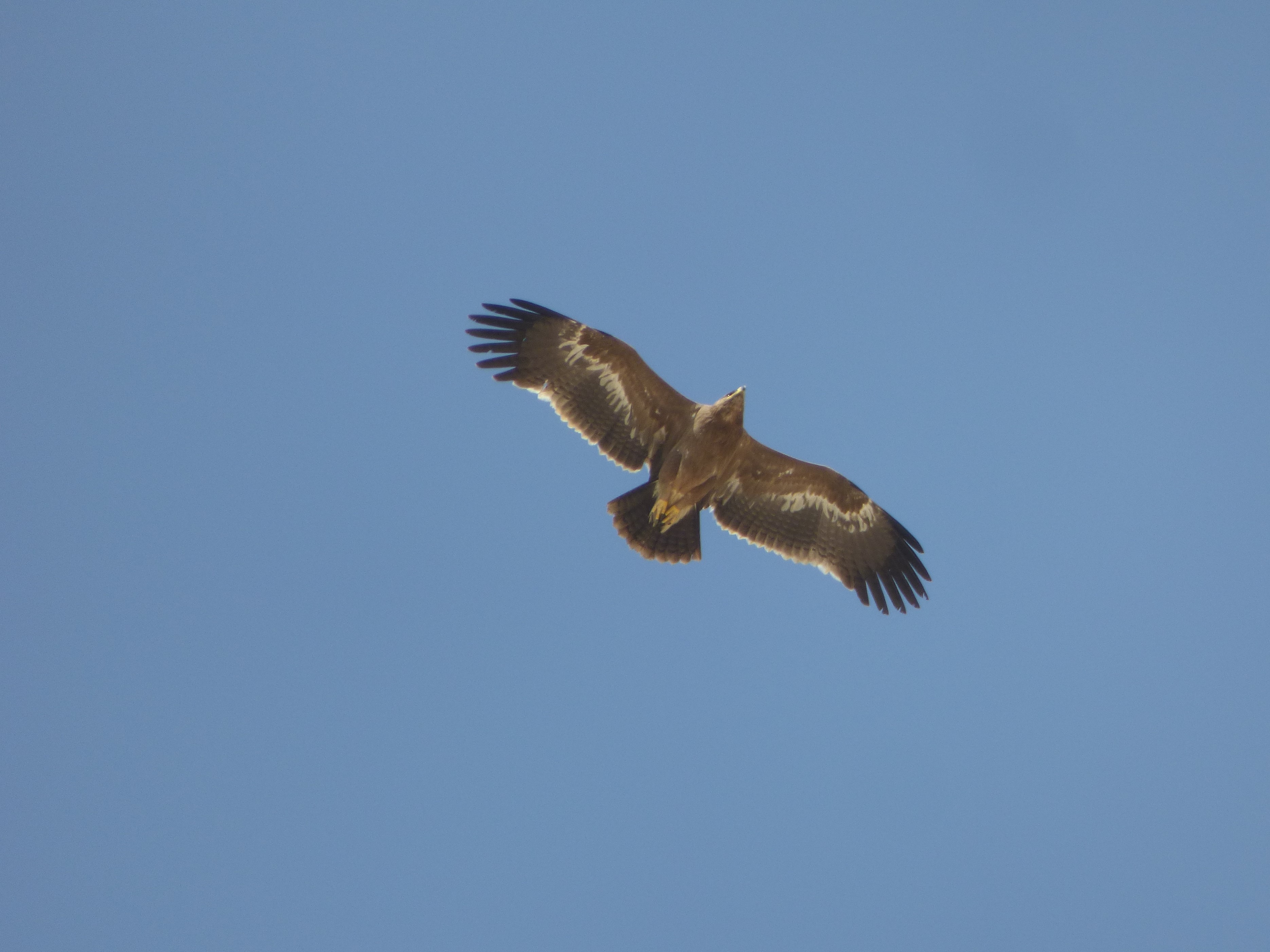
P1140493

Mixed flock of Sandgrouses coming to drink water in a tiny pond in Merzouga. Image by tour leader Carles Oliver

After enjoying as long as necessary of such a magic momment we moved to explore a nearby oases. Here we soon enjoyed some good birds such as Woodchat Shrike, Common Redstart, Subalpine Warbler and Melodious Warbler while some flocks of European Bee-eaters were moving around. A short scanning around let us locate a wonderful male Desert Sparrow (Passer simplex), our main target in that location! We had a male and one female in walk-away views while preening, feeding along House Sparrows and calling all around. What a beauty!

P1140589


Back to the desert we spent some time in a wadi with some sparse vegetation. Here we were soon enjoying 2 Hoopoe Larks (Alaemon alaudipes) moving in the desert, singing and offering good views in a short display. Brown-necked Ravens (Corvus ruficollis) were flying around and we had our first views on these desert birds. A few metres after we spotted a wonderful African Desert Warbler (Sylvia deserti), a bird that can be quite difficult to locate! In a pair of minutes we were all enjoying of really, really close up views on the bird and photographers in the group were really happy about such a close views!!

P1140658

The morning was great so far. Our next stop was really deep in the desert where we met our special guide to help us locate the scarce Egyptian Nightjar (Caprimulgus aegyptiacus). Soon, we were amazed about the skills of that nomad, a silent and pleasant old man, that fastly located not one, neither two, but three nightjars roosting in the wadi…

P1140723 copy

Our group enjoying some birding in the desert. Image by tour leader Carles Oliver

We could enjoy incredible views on them in the scopes and had a hard but wonderful time until all members in the group could find the birds with their our bins… Everybody enjoyed to see how such a big birds can be so hard to spot while roosting directly on the ground, out of any vegetation! Because of that, this was the bird of the trip for many of the participants in the trip.

P1140708

After such a successful morning we went for a good lunch and some rest. After our rest we went for a short exploration of some oases around Rissani, where we had excellent views on Maghreb Larks and the firsts Blue-cheeked Bee-eaters (Merops persicus) of the trip. Superb birds that we could enjoy while catching insects in flight around us! Other birds here include also Blackbird and Laughing Dove. Some scanning was required to have the main target of the stop, thought. Despite the strong sun, we had a Fulvous Babbler (Turdoides fulva) sitting low in a palm tree. We fastly all moved to the bird, trying to cut some of the three hundred metres from it and us… After a small running we had good views on the bird, now joined by a second individual, that were flying around us!!! Happy all with the good views on this difficult species we decided to invest some time in a final stop.

P1140703

One of the three Egyptian Nightjars we had during our trip! Image by tour leader Carles Oliver

Our last stop that day was to look for the very scarce and difficult to spot Scrub Warbler. A first walk around the area alowed us to have our only 1 Seebohm’s Wheatear (Oenanthe seebohmii) of the trip, that was really celebrated in the group. Hoopoe Larks were also around there. We had a walk along the wadi, trying to cover as much area as possible to try to have this elusive bird. After more than 40 minutes, we were all about to quit when Tomas had something moving low in the vegetation very close to us… I saw it for 1 second but it was a Scrub Warbler!!!

P1140742

Seehbom’s Wheatear (Oenanthe seehbomi) is nesting in high mountain grasslands. Image by tour leader Carles Oliver

Everybody jumped off the mini bus and started scanning the bush immediatly around, but nothing. We spent an extra 20 minutes scanning all around we were uncapable to relocate the bird that looked like being into the sand… A pitty, because only me and one participant could have a really short view on the bird…

Still, the day had been amazing and we all came back for some rest and wonderful dinner in our accommodation!

Day 9. This was our very last day of “birding” of the trip, since the last day was, as usual, basically driving but with a really good surprise in the morning… After breakfast we drove a short distance until one nearby hotel, having really extensive gardens and orchads which are really good for migratory passerines.

The day before had been windy so the sensation when we arrived was quiet. Still, after a short walk, we started to have some good birds. 3 Common Redstarts were spotted in the orchads followed by several Western Bonelli’s Warblers and Subalpine Warblers. Up in one tree it was also a Garden Warbler (Sylvia borin) but I was the only one in having this bird… A carefully scanning produced Willow Warblers and 1 Chiffchaff. Soon our attention was demanded in a medium size bird skulking low in the grass and, after a bit of waiting, we soon were all enjoying of really close views on a group of three Fulvous Babblers! It was phantastic to see them that close as they were looking for food in the rather tall grass while doing really soft contact calls… that was really improving the views we had on this bird the day before!

P1140861

Common Redstart (Phoenicurus phoenicurus), a common bird in migration in Morocco. Image by tour leader Carles Oliver

We enjoyed the Babblers long while keep scanning for other birds. White-crowned Black Wheatears were all around as it was a wonderful flock of European Bee-eaters. Here we also had Blackbird, Laughing Dove, European Robin and Sardinian Warbler. It was starting to be windy again so we looked for shelter around the walls of the hotel as some birds did since here we had really close views on one male Common Redstart, Woodchat Shrike and 1 wonderful Western Orphean Warbler (Sylvia hortensis) that was posing for us for more than 5 minutes!!! Great found!!
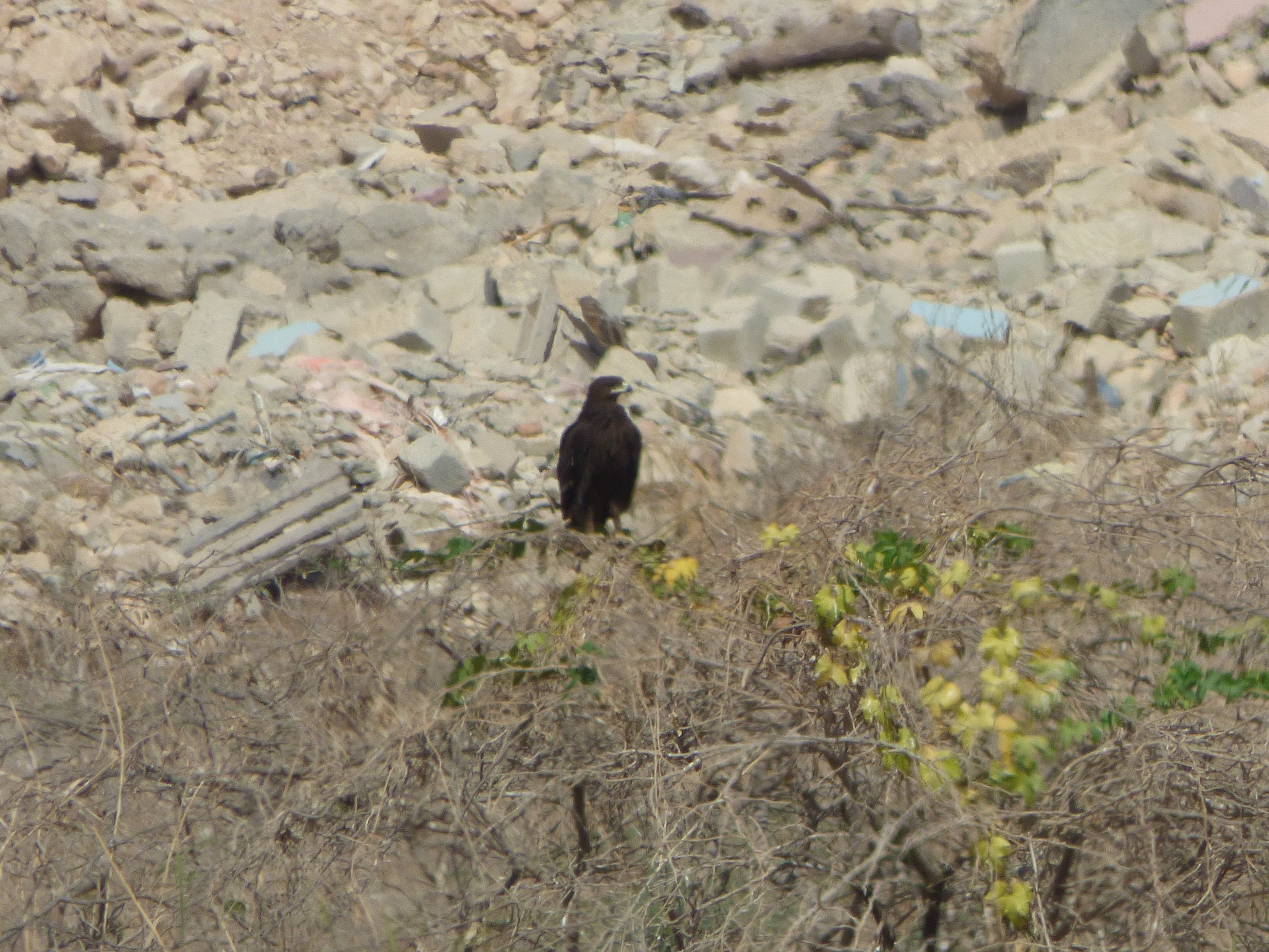
P1140877 copy

Western Orphean Warbler (Sylvia hortensis) is normally really obtrusive but this year we had walk-away views in the open. Image by tour leader Carles Oliver

Once outside the hotel, we did a final round to try to have something else. In this second walk we had good views on Western Olivaceous Warbler (also known as Isabelline Warbler) and a second W Orphean Warbler but not so much else. Right before leaving Tomas spotted a Pied Flycatcher (Ficedula hypoleuca) in the tamarisk around. We all enjoyed good views on the only one “real” flycatcher we had in the trip!

P1140761

As was already quite windy we decided to change location and try a small stream running in the desert, expecting to have some more migratory birds while being sheltered from the wind. Once we arrived we realised we were sheltered from the wind but the reedbeds were not so it was going to be challenging to find anything down there. Still, we did a walk, and it was great!

Here we enjoyed of really close views on Blue-cheeked Bee-eaters flying around us and catching insects all around! A short walk along the reeds soon produced Eurasian Coot, a pair of Eurasian Reed Warblers singing and Iberian Yellow Wagtails in the move around. Woodchat & Desert Grey Shrikes were seen around. 1 Little Egret was fishing down the river and Sand Martins were seen in small flocks all along the river bed. But the very best bird in this spot was a wonderful pair of Marbled Ducks (Marmaronetta angustirostris) that were flushed from the river and gave us excellent views while flying around!!

This is a really scarce and endangered bird with some good populations in Morocco and South Spain. Due to the drought I was not really expecting to find any so this was a wonderful bonus for the trip! These ducks were really celebrated by the group. We kept scanning but the wind was not really helpful so we decided to go to Rissani for an early lunch.

After lunch we went to a small tamarisk forest expecting to have good views in more migratory and some good specialities… Here we found tones of Western Bonelli’s Warblers that were all around us along with Subalpine Warblers… A pair of Moroccan Wagtails flought along and we had really good views in a nearby pond. There we also had some Black-winged Stilts, 3 Little Ringed Plover, Moorhen and Laughing Dove. A mixed flock of both European & Blue-chekeed Bee-eaters gave us a good comparition of both species and a Turtle Dove was singing from a wire, giving also good views.

Back to tall tamarisk we kept looking for the main target of this stop, to have good views on Saharan Olivaceous Warbler (Iduna pallida reiseri), a race that is considered for some as a different species. Difficult to tell apart from Western Olivaceous Warbler is smaller, less heavy-billed a rather more rounded-headed that Western Olivaceous.

So, we invest quite a lot of time trying to have good views. We had at least two males singing quite close inside the tamarisk but, despite our efforts, we could not have more than glimpses of half-a-secong to one second in the birds… The wind and about 10 Western Bonelli’s Warblers in the same bush were not really helpful… After some long “fight” we finally decided to quit, more or less satisfied with these rather poor views.

After arriving to our lodge, some members in the group decided to stay in the accommodation for a walk in the dunes and those who want to join were coming for a final walk in our first location. In this 30 minutes visit we didn’t add anything different from our morning visit but had really good views again in Western Orphean Warbler, Isabellines Warbler and Fulvous Babbler

P1140829 copy

Dunes textures in Merzouga. A wonderful experience. Image by tour leader Carles Oliver

Day 10. Very last day of the trip and final transfer to Marrakech. But before we still had to do some duty. We came to one of spots were we first were looking for Scrub Warbler as not everybody in the group was enjoying this bird. We didn’t have a lot of time to invest so we had a walk along the wadi, expecting to have any signal of bird activity out of the Hoopoe Larks displaying around and the beautiful Desert Wheatears.

P1140749

Greater Hoopoe Lark (Alaemon alaudipes) is probably the most spectacular lark living in Morocco. Image by tour leader Carles Oliver

We did a long walk, carefully scanning all bush around and listening for any small call coming from anywhere around us but, after half an hour we got nothing. Well, I stopped there, thinking about going back for the car and the many birds we had enjoyed when, suddenly, a extremely low call came to my ears. I looked to my left and I saw a small movement inside one bush and, before my brain could react, a wonderful Scrub Warbler was appearing on the ground, 3 metres from me!

I shout everybody to come (all of them dispersed in the wadi). Some running was happening and soon everybody was close. The bird was still around, skulking and moving. Some seconds of waiting and then we all had excellent views on the bird, that was appearing on the ground for a couple of second before coming back inside the bush. The bird was moving bush by bush, in a bush-ground-bush sequence that gave us really good views and probably the worst ever shots on this species… Excellent! Everybody in the group had enjoyed almost one minute of the movements of such a tricky bird.

We were all happy with the very good views in such amazing bird! After this stop we only had services stops in our way, and some raptor stops… The first raptor stop for a wonderful pair of Bonelli’s Eagles North of Ouarzazate flying really low over the road that gave us amazing views on the birds!

P1140919

Bonelli’s Eagle (Aquila fasciata) is still a quite common raptor in Southern Morocco. Image by tour leader Carles Oliver

In the top of the Atlas we had some road birding with some Northern Wheatears, Mistle Thrushes, Common Kestrel, Common Raven and 5+ Booted Eagles appearing.

After this we celebrated our arrival to Marrakech with a wonderful dinner. That was the end of a wonderful 10 days, 10 nights trip with many, many birds and excellent views on all main targets! 190 species of birds seen and a lot of fun!!!

Also was the momment to pack everything and, for those staying in Marrakech, to start enjoying the city and the amazing cultural

P1140924

Sunset view in Marrakech, a wonderful way to finish our trip. Image by tour leader Carles Oliver

heritage of the whole country!!!

2018 trip is happening March 13th to March 22nd… YOU WANT TO MISS IT?


Czech Republic Spring Tour. 2017 issue

Dates: March 8th – 12th, 2017

Number of participants: 3

Number of species: 84

Day 0. After our arrival to Prague and assemble with the rest of the group on March 8th, we started driving South towards Sumava National Park. The transfer is normally of about 120 minutes, but due to some works in the highway, our transfer was a bit longer than expected.

Because to this delay we were arriving during the night to our accommodation and lost the chance of searching for some owls around. We still had a short time around but unfortunately we got nothing of interest.

Day 1. After a very early breakfast we headed directly to look for one of the main target species of the trip: Black Grouse (Lynurus tetrix). After a short driving we arrived to the proper habitat and we started scanning all around looking for some birds already lekking in the meadows.

It didn’t take long to located the first 4 males in the open, standing up and very showing. After enjoying this very successful start we decided to move a bit to have a better view. This movement allowed us to find 2 more males even closer to us. One of them was in full display, showing the beautiful white feathers of the open tail and also heard the calls of the male.

Black Grouses in their leck in Sumava National Park. Image by participant Bauke Kortleve

Records shot showing the complex wing pattern in Black Grouses. Image by participant Bauke Kortleve


It was a quite active morning for birds and these same fields we had the firsts of many Yellowhammers (Emberiza citrinella), Mistle Thrushes (Turdus viscivorus), Skylarks (Alauda arvensis) and Common Buzzards (Buteo buteo). A distant European Green Woodpecker (Picus viridis) called from a lane of poplars.

In the while, 4 Black Grouses were flying over the field, showing their long, lyre-like tail and their wing white band, and stopped near the displaying male, reacting quite agresively…  This was one of the best moments of the trip! Wonderful.

Delighted for such as fast a wonderful sight in one of the main targets of the trip we decided to spend more time scanning some other of the favourite places for this species to display in the Sumava area. After a short drive we scanned different places around for them but we had no other views on the birds. Still, we got white-headeds Long-tailed Tits (Aegithalos caudatus caudatus) showing very well around as well as Marsh Tit (Poecile palustris), Great Tit (Parus major), Chaffinch (Fringilla coelebs), Redwing (Turdus iliacus) and Fieldfare (Turdus pilaris) as well as Mallard (Anas platyrhynchos) and 2 Common Teal (Anas crecca).

This area also produced lovely views on Great Grey Shrike (Lanius excubitor) showing very well in the taller bush while overwatching the open fields for preys. A further exploration of the area only produced some groups of Roe Deers (Capriolus capriolus), a pair of Ravens (Corvus corax) and a lovely flock of Eurasian Bullfinches (Pyrrhula pyrrhula europaea) feeding on ground.

After this we decided to try a pair of places for Hazel Grouse (Bonasia bonasa), a very shy species, very shy and thus many times not appearing. A first trial brought us to a typical habitat of spurce forest with some fir and, of course, hazel trees. Here it was a lot of activity with several Crested (Lophophanes cristatus) and Coal Tits (Periparus ater) moving around as well as Common Treecreeper (Certhia familiaris), European Nuthatch (Sitta europaea), Marsh Tit, Goldcrest (Regulus regulus) and Great Spotted Woodpecker (Dendrocopos major) moving around. Unfortunately we found no grouses in this spot but our effort was not lost since we had good views on 1 Hawfinch (Coccothraustes coccothraustes).

When coming back to the car we listen a Grey-headed Woodpecker (Picus canus) calling by the minor road we came by so we decided to go fast to try this really good bird. Once we arrived the bird was calling really close so we decided to walk a bit inside a field to try have the best view possible. We walked about 200 metres inside the area scanning all around but the bird seemed to move further away, clearly out of patch we were in. We were about to withdraw when a Black Woodpecker (Dryocopus martius) called from really close so we walked few metres towards the area where the huge woodpecker was calling from and, suddenly, two birds flew off from the ground, ten metres in front of us: Mistle Thrush to the left… and Hazel Grouse to the right!

We immediatly concentrated in the Hazel Grouse. The bird typically flew some 20 metres to stop inside a low fir. We decided to envolve the tree and scan very carefully the inner branches… nothing.

We decided we get a bit closer and then the bird flew off rear. We decided to do some waiting… 5 minutes and nothing. We are about to withdraw when, suddenly, the bird started singing from the canopy! It had to be really, really close (less than 20 metres!!). Still some more waiting (and taping) to try to attrack the bird, a main target for anyone in the group! Our waiting proved to be useful since the bird was suddenly appearing flight and stopping deep inside a fir, right in front of us!! We still waited, breathless. Some seconds after the bird flought immediatly above us in a impressive view, showing the very long neck and typical small crest of the males!! The bird stopped for a while in a visible place up in a fir, unfortunately too short for any shot right before it did a second flight over us!!

We had really good views on Hazel Grouse, despite it was really hard to photograph. Image by Bauke Kortleve.

What a view!! We all agreed we would not get a better views on that male as it was quite unlikely to do anything else but fly over us over and over. Very content with such a great (and rather unexpected) sight we headed to our accommodation for a wonderful garlic soup & gulash and some rest before concentrate in woodpeckers during the afternoon.

After lunch & rest we still had some three hours before dinner and we went directly to try to have good views on woodpeckers. After a short drive we arrived to one of the best places for them in Sumava and the place fastly proved its value since immediatly after leaving the car we had a Black Woodpecker calling really close to us. This time we enjoyed of really close views on it! Excellent start!

Black Woodpeckers are common in most of the forest in Bohemia. Here one obliging view in Sumava NP. Image by participant Bauke Kortleve

We kept going on and walked a mile or so, carefully scanning and listening for the main target, Grey-headed Woodpecker. We went into two different territories, trying to locate them, but everything we got was Great Spotted Woods, Nuthatches and a pair of Peregrine Falcons (Falco peregrinus) mating not far from us. Still, a wonderful sight! Landscape here was also impressive, with a mature Beech forest with some impressive Maple trees (Acer sp.) as a secundary tree.

As our scan was being not very successful we decided to come back to car and try somewhere else. But only 200 metres after walking we had a Grey-headed Woodpecker calling really close from the path! After some waiting we had excellent views on both male & female, perched in the trees around!!

Grey-headed Woodpecker has been decreasing in several spots accross Europe but is still having good population in Czech Republic. Image by tour leader Carles Oliver

Everybody was really happy after such a excellent and long views on the bird! But, as it took longer than expected, we decided to directly come to our accommodation in order to have dinner and to enjoy longer time to scan for owls during the sunset and dusk.

After an, again, wonderful dinner (salad & stew, good combination!) the group headed to our first place for owls. We didn’t have to wait long since even after we closed the doors of the car we were hearing a Pygmy Owl (Glaucidium passerinum) some 100 metres from the parking place. We immediatly go for it and, after some minutes of accurately scanning of the canopies we got the male singing from one of the trees! It was a beautiful image kept singing for several minutes, watching us at times but mainly taking an eye around… what a view!

Encouraged for this early success we then moved to an open area around, were Ural Owls (Strix uralensis) are likely to be hunting at dusk… unfortunately we had no luck this time… Still, we had a very close Ural Owl singing from the canopies but, despite we tried to find the bird, our efforts produced nothing. A further exploration of another territory still produced a good listenning in 1 Tengmalm’s Owl (Aegolius funereus), also known as Boreal Owl, singing in the area. Unfortunately, we got no sights in any of them…

Got really good views on Pygmy Olw despite the poor light! Images by tour leader Carles Oliver

Day 2. New very early start this time to scan in the highest areas of the Sumava National Park. After a good breakfast and about 40 minutes of driving we arrived to our first location of the morning. This is an open spurce forest where it Capercaillies are likely to show up in the tree branches during very early morning. Unfortunately, weather didn’t helped us so much, since it was quite foggy at times, windy when not foggy…

Despite our efforts scanning all canopies around we could not have any Capercaillie… only a distant Ring Ouzel (Turdus torquatus) and a overflying Northern Bullfinch (P. pyrrhula pyrrhula) were of interest. But just when thinking about leaving for a coffee, we listened a very, very distant Nutcracker (Nucifraga caryocatactes) calling in the large forest… We then decided to invest some time scanning and taping, and after some efforts, the bird came close and it was briefly located while calling from the top of a spurce tree!!! Excellent! The bird was very showy and turned up the white tail while calling, as normally Nutcrackers do when marking its territory. This sight was really short and, unfortunately, not every one in the group enjoyed the bird… We still invested quite long scanning all canopies around but no new signal of the bird was found…

After a short break for a coffee and warm up we headed to our next location. Our main goal was Three-toad Woodpecker, a really endangered species only living in mature conifer forests. Unfortunately, when arriving to the location was really windy and, during the two hours that we spent walking in the impressive primary forest we had no contact on any woodpecker at all! The best bird here was a pair of Willow Tits (Poecile montanus) quite showy when walking up the trail.

After lunch we started the transfer to Moravia (Eastern Czech Republic) but, before, we had time to visit an enclousure where about 25 Eurasian Bison (Bison bonasus) are living in half-freedom. A free population has been already living not far from Prague during the last years but unfortunately they are inside a military area so they are not possible to visit. Still, we were lucky to see the Bisons so well, as they were out of the forest and allowed good views on them! White Wagtails (Motacilla alba), Fieldfares and Yellowhammers we also all around!

A small herd of Eurasian Bison is visible in some enclousures near Sumava National Park. Unfortunately not released, yet. Image by tour leader Carles Oliver

After this and short stop in Holasovine village (UNESCO site) we drove to Nové Mlyny area for two more overnitghts.

Day 3. After a good rest we soon realised that this was in the way to become a great day. Even before leaving the parking place of the accommodation we had a fast-flying Syrian Woodpecker (Dendrocopos syriacus)!! We searched for the bird, but was lost quite far away…

A pair of minutes later we were enjoying a large flock of some hundreds of Tundra Bean Geese (Anser fabalis rossicus) and White-fronted Geese (Anser albifrons). A carefully scanning of the flock produced at least 2 Taiga Bean Geese (Anser fabalis fabalis)!

Winter Wren (Troglodytes troglodytes), Common Gull (Larus canus), Marsh Tit, Hooded Crow (Corvus cornix), Magpie (Pica pica), Common Kestrel (Falco tinnunculus) and Common Buzzard (Buteo buteo) were also around.

White-tailed Eagles gave us several good views during the lasts days of the trip. Images by participant Bauke Kortleve

After such a wonderful start we decided to take a look to the lake. Just few metres after leaving the car we had a Black Woodpecker overflying us! Wow! Once in the lake, we got even better views on the geese and also Mallard, several Goldeneye (Bucephala clangula) and drake Smews (Mergellus albellus) and Goosander (Mergus merganser). Black-headed Gulls (Chroicocephalus ridibundus) were flying around and, a bit more far away, wonderful Caspian Gulls (Larus cachinnans) were also easily spotted along with Great Cormorant (Phalacrocorax carbo), Great Crested Grebe (Podiceps cristatus), Eurasian Coot (Fulica atra) and a flock of Common Pochards (Aythya ferina). Here Bauke spotted probably the only one Reed Bunting (Emberiza schoeniclus) of the trip, while Eurasian Jays (Garrulus glandarius) were all around…

A second stop along the Nove Mlyny lake produced a wonderful view on thousands of geese that were probably resting in their migration back to the North from their winter grounds in South East Europe. Here we also enjoyed our firsts 14 White-tailed Eagles (Haliaeetus albicilla) of the trip! One of them showing really well while perched on a tree but most of them flying above the lake. What a impressive birds!!

Still with plenty of time that morning we decided to explore a pair of smaller ponds for geese and ducks… Our first stop was really, really impressive since a not very large flock of mainly White-fronted Geese were in front of the hide. A fast scanning produced 4 Shelducks (Tadorna tadorna), 6 Northern Shovelers (Anas clypeata), Great White Egrets (Casmerodius albus) and Grey Herons (Ardea cinerea). A carefully scanning of the geese was promptly reporting the first surprise: one superb Red-breasted Goose (Branta ruficollis) was swimming along with them!! The whole flock was moving quite fast left to right and we soon got blocked by the reedbed. Still, everybody in the group had really good views in this impressive goose!!

Red-breasted Goose is a rarity in Czech Republic. I was told it was one in Nové Mlyny this winter but I didn’t think we could be lucky enough to have the bird, especially after the news informing of massive geese migration flying back to the far North in the previous days before our arrival to Nové Mlyny!!!

Red-breasted Goose among Greater White-fronted Geese in Nove Mlyny. Image by participant Bauke Kortleve

A further scanning of the flock was still even more surprising, since our local guide located what it looked like a Lesser White-fronted Goose (Anser erythropus) sleeping along with White-fronteds!!! He was not totally sure, thought. But we all pointed our scopes and, yes, it was a wonderful Lesser White. What a spot! The bird was actually sleeping but, even when doing so the yellowish ocular ring was obvious and the shape and coloration of the bill were also indicating to a Lesser White-fronted Goose. A bit of patience and finally the bird showed the full neck and head. Excellent views!

Lesser White-fronted Goose (the bird with the head up) is a globally endangered bird and we were really lucky to pick up one in Nové Mlyny. Image by participant Bauke Kortleve.

Especially because only 30 seconds after the whole flock flew out (because of an overflying White-tailed Eagle) and didn’ show any more as we were totally blocked by the reedbeds… The wonderful views of the White-tailed Eagle fishing in the lake and latter being chased by 3 other WT’s didn’t compensate the rather short views on the geese… Still, we had been extremelly lucky. Only five minutes later and would miss these really good birds!

The last stop in this long morning was in a small quarry. And well, I felt as being at home, as our target bird was a Wallcreeper (Tichodroma muraria). We were told one of them was overwintering in this area so, as having time, we decided to invest some time and try to have this wonderful bird. Once again that day we were lucky and even before arriving to the quarry we could easily spot the bird, a male, that was showing very well and even singing!!!

After some minutes enjoying the bird around us and having incredible views with the scope we decided to go for lunch and a bit of rest. It had been a wonderful morning!

We also enjoyed this very showy male Wallcreeper, a really scarce species in Czech Republic. Image by tour leader Carles Oliver

Our short siesta time brought us back to the field full of energy so, before taking the car, we just did a short-walk around our accommodation. 3 Black Redstarts (Phoenicurus ochruros) were feeding in the orchads around and a Meadow Pipit (Anthus pratensis) flew off around us.

Soon after we had a Syrian Woodpecker (Dendrocopus syriacus) flying around a line of poplars. The bird was not really cooperative but we finally got long and excellent views on the bird! After that we decided to spend some time in some large gardens, expecting to have more woodpecker. Surprisingly the gardens were quite busy and we failed to have any woodpecker. Instead of that we enjoyed several views on Hawfinches, some of them really close! Here we also took a look to a Long-eared Owl winter roosting place for but, as expected, was already empty.

After enjoying for a while the magnificient XVIII gardens in Lednice we decided to come back to our accommodation for an early dinner. This was allowing us a better rest and an earlier start in our last morning, when we were having less than two hours of light before heading to the airport!

We got nice views on Syrian Woodpecker not far from our accommodation in Moravia. Image by tour leader Carles Oliver

Day 4. Very last morning! Priority to woodpeckers. We directly headed to an oak forest since our goal was to have good sights on Medium & Lesser Spotted Woodpeckers.

When we arrived to the area several Great Spotted Woodpeckers were drumming around. After some scanning we got nice views on 1 Green Woodpecker (Picus viridis). Black Woodpcker was also calling in the distance. After some scanning we soon had a Medium Spotted Woodpecker (Dendrocopus medius) showing really well and, with a bit of patience, we got excellent views on the bird! Wonderful sight!

Middle Spotted Woodpecker is not scarce in riberside forests as long as having some large oaks. Image by tour leader Carles Oliver

We then moved a pair of miles up the same minor road. Once we went out of the car we enjoyed scoped views of a male Eurasian Sparrowhawk (Accipiter nisus) sitting on a branch deep inside the canopy. After much scanning for LSs we finally managed to have one Lesser Spotted Woodpecker (Dendrocopos minor) in the top of an oak, calling and drumming. Some 3 more males were listenned drumming around!

We still had time to stop for a final view on the lake, with good views on Smew, Goosander, Tufted Ducks (Aythya fuligula) and the only 3 Eurasian Wigeons (Anas penelope) of the trip!

It has been a wonderful birding break! I’m already looking forward our 2018 issue, it will be even better, for sure!

Feel like joining us?


Fuerteventura Birding Tour 2016. Trip report

Dates: December 6th to 10th, 2016

Number of participants: 3

Weather conditions: Sunny all long. We had, as usual, early morning clouds but breaking after 10am. A soft brise was also present most of the days. Temperatures; 18ºC to 24ºC.

Day 1. December 7th. After our late afternoon arrival to Fuerteventura from our Barcelona flight we woke up early in our seaside hotel in El Cotillo to enjoy a good breakfast before starting birding. Still, in the gardens of our hotel a first of many, many Spanish Sparrows (Passer hispanoliensis) was spotted doing its typical call. This is the only one species of Sparrow living in the island being really common in every single garden! After breakfast we did the short transfer to our first location. El Cotillo-La Oliva area is a well known area for steppe birds, hosting most (if not all) the especialities living in the island. In our first stop we soon located some Berthelot’s Pipits (Anthus berthelotii), the first Canary Islands endemic of the trip, along with several very vocal Lesser Short-toed Lark (Calandrella rufescens).

Some scanning around produced 2 Hoopoes (Upupa epops) landing on some rocks, one of them doing its wonderful song. A male European Stonechat (Saxicola rubicola) was spotted in the steppe and broke some hearts as a close relative of it was expected instead… still, this was the only European Stonechat of trip!

img_9530

Berthelot’s Pipit (Anthus berthelotii) is probably the commonest passerine in Fuerteventura.

In our way to our very first important stop we enjoyed views on Canary Islands Ravens (Corvus corax tingitanus), a superb and very different bird from European race due to their shorter tail, more rounded wings, smaller head and very distinctive (rather crow-like) calls. This a good candidate for a future split… In the distance, some Stone Curlews were calling but we could not locate them…

Once we stopped we immediatly spotted a magnificient Houbara Bustard (Chlamidotis undulata) preening about 100 metres away from us. The bird was really concentrated in cleaning its plomage so we could enjoy it as long as necessary to have excellent views. At the same time we kept scouting looking for some females but we had no luck… Instead we had some really confiding Canary Islands Shrikes (Lanius (elegans) koenigi) around. The status of this bird is still controversial. Nowadays there are two main theories; the first arguing to be a different species (Lanius koenigi), the second (and more accepted) arguing to be conspecific with Desert & Algerian Shrikes (Lanius elegans koenigi), and still some other theories. Wherever these birds were really cooperative and photographers appreciated very much really close views on them.

We kept scanning ditches around and our work proved not to be unhelpful since we had 2 Barbary Partridges (Alectoris barbara) feeding in one of the ditches. It was a great spot since this can be a difficult bird to spot so it was great to have so early in the trip!

img_9657

Canary Island Shrike (Lanius (elegans) koenigi) is a splitable endemic easy to find in Fuerteventura.


img_9588

Barbary Partridges (Alectoris barbara) can be difficult to spot but we had several good sights on them.

After such a good start we decided to explore a small canyon (barranco) close by. Several Berthelot’s Pipits were around and here we had very good views on some really confiding Spectacled Warblers (Sylvia conspicillata orbitalis). We decided to walk a bit up the “barranco” and, after only 100 metres of walk we found an extremelly close Fuerteventura Chat (Saxicola dacotiae) male on a Cactus. Soon after we found the beautiful female around and enjoyed of very long and close views on them. This is the only endemic bird of Fuerteventura and one of the main target birds for any single birdwatcher visiting the island…

img_9761

Fuerteventura Chat (Saxicola dacotiae) is restringed to this island and a must for any birdwatcher visiting it!

While enjoying the chats we also had another good encounter since a small flock of about 6 Trumpeter Finches (Bucanetes githagineus) came to stop only 20 metres from us! Again, we could enjoy them quite long while feeding on seeds in tiny bush. A few after a Common Buzzard (Buteo buteo insularum) appeared in the sky. This is again an endemic race of the Canaries, and a bird that looks like quite different from continental forms! In this barranco we also had our firsts Greenish Black-tips (Elphinstonia charlonia) moving around along with Painted Ladys (Vanessa cardui) and 1-2 Red Admirall (Vanessa atalanta).

img_9725

Trumpeter Finch (Bucanetes githagineus) is the commonest finch in Fuerteventura.

After such a wonderful mid-morning we decided to have a change and go to Los Molinos reservoir, the main wetland in the island. In our way to the reservoir we stopped a pair of times to enjoy some flocks of Spanish Sparrows. Linnet (Carduelis cannabina), Eurasian Collared Dove (Streptopelia decaocto) and Robin (Erithacus rubecula) were also seen. Our last stop produced also 2 Laughing Dove (Streptopelia senegalensis) but, unfortunately I was the only one to see them…

Even before arriving to Los Molinos reservoir we started to enjoy the visit. Birding in this location is highly variable depending on water level but this time we were lucky, as water level was high and the whole “barranco” beyond the dump was having water running down. 1 Common Kestrel (Falco tinnunculus dacotiae) was gliding over and allowed us excellent views on this (again) endemic race! Ruddy Shelducks (Tadorna ferruginea) we common this year as we count no less than 60 of them in the lake! When approaching the reservoir we had really close views on them. Some of the birds around included Eurasian Coot (Fulica atra) +70, Common Sandpiper (Actitis hypoleucos) 2, Greenshank (Tringa nebularia) 3, Little Ringed Plover (Charadrius dubius) 1, Black-headed Gull (Chroicocephalus ridibundus) 1, Tufted Duck (Aythya fuligula) 6, Eurasian Teal (Anas crecca) 2, Common Snipe (Gallinago gallinago) 2 and 3 Little Egret (Egretta Garzetta).

img_0133

Lesser Short-toed Larks (Calandrella rufescens) are good imitating other birds. This bird imitated Fuerteventura Chat, Stone Curlew and Berthelot’s Pipit amongst other birds.

The best birds in the wetland this time were +15 Black-winged Stilts (Himantopus himantopus) and one unexpected Garganey (Anas querquedula). Here we also had our only one Northern Wheatear (Oenanthe oenanthe) of trip, perched on a wall along with Canary Islands Shrike & Hoopoe, good combination of birds! It was lunch time so we head to a close place to enjoy some food and, why not, some shade! Before that we had to do an emergency stop since a Egyptian Vulture (Neophron percnopterus majorensis) was spotted perched in one slope. Despite the bird was quite far away, we enjoy good views on the bird while feeding around joined by a pair of Ravens… This was a good spot and, surprisingly, our only Egyptian Vulture in this trip!

img_9835

Spanish Sparrows (Passer hispanoliensis) are the only sparrows in Fuerteventura.

After lunch we came to the semi-desert area around El Cotillo. Here we spent some time scanning some farming areas, where we had 2 Barbary Partridges and our only one Song Thrush (Turdus philomelos) of trip. A short drive around the area produced our main target that afternoon since 3 obliging Cream-coloured Coursers (Cursorior cursor bannermani) were located, doing their typical short runs. They were really cooperative and delighted the whole group! Nevertheless it was considered one of the birds of the trip!! corredor-sahariano-071216-1-copy   img_9876

We hept moving in this area, having always confiding Berthelot’s Pipit around. Not long after we had a flock of 5 Black-bellied Sandgrouses (Pterocles orientalis) flying not far away from us… They stopped in a hill but, as we had not so much light left, we decided to move.

We still had to have a last stop. After a short transfer we arrive to an area were one of the main targets of the trip is normally moving. A short wait was done in late afternoon light and then, with the very last light, it was appearing a wonderful Barbary Falcon (Falco peregrinoides) with a prey, flying fast around the valley! We were lucky as the bird decided to do a pair of rolls in the air so we could have good views on the falcon before desappeared! We were all really happy of having such a view on a bird that many birdwatchers visiting the island are missing!! The population here is tiny, probably only 2-3 pairs!! Happy after such a successful day, we head back to our hotel for some rest (& good food!).
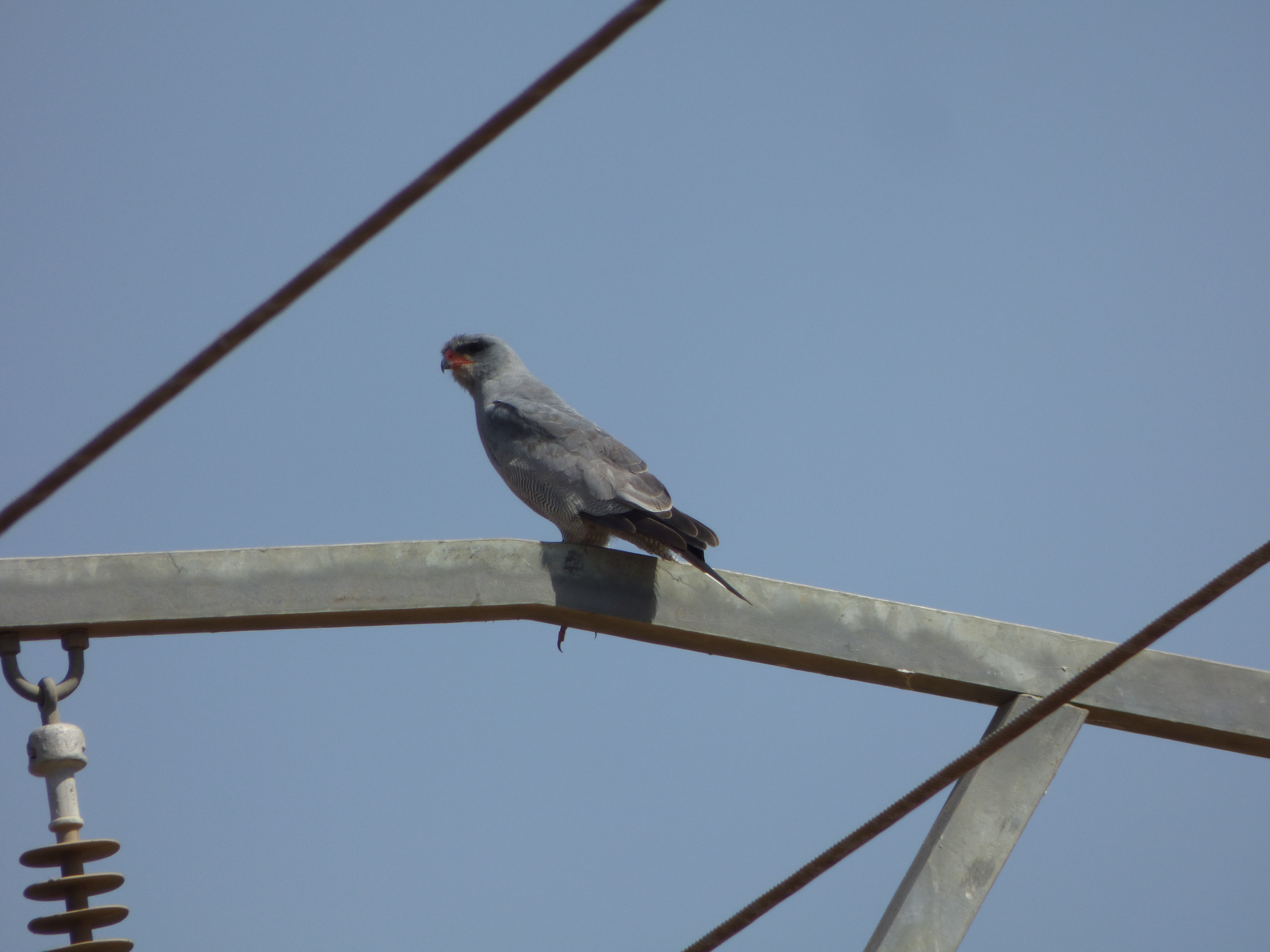
Day 2. December 8th. After the success of the day before, we decided to do a pre-dawn start and go to the same place where we had our first Houbara Bustard the day before. When we arrived to the place the bird was immediatly located and we were delighted to see it in full display! It was evident that that place was his lek this year. Displays of Houbara Bustard are really spectacular and even funny. Males place the head rear on their back and then open and show all white feathers in their breast and along the neck. Once in this position, the bird starts running in small, 5-6 metres of diameter cercles. Like this, the bird looks like having no neck, neither head. It looks like a running snow ball, actually! We enjoyed very much of such a exhibition, that was repeated several times. Unfortunately the bird was a bit far away to take any proper photo… After such a good start in our second day we decided to do some further exploration in the same area, that was soon producing to more distant males displaying in different corners, in the semi-arid countryside. No females were spotted, suprisingly!

When we were about to leave the area we had a wonderful Stone Curlew (Burhinus oedicnemus insularum) sat down some meters away from our car! This was a wonderful spot and photographers in the group (once again) really appreciated it! Stone Curlews living in Canary Islands are, in average, darker and more contrasted than those living in Africa and are good candidates for a future split.

alcaravan-insularum-081216-8

Stone Curlews (Burhinus oedicnemus insularum) are not uncommon in Fuerteventurs, but always challenging to find.

After leaving the semi-desertic area we headed towards maybe the only one reliable spot for Atlantic Canary (Serinus canaria) in Fuerteventura. We arrived quite at midday to the place and soon after parking we had a male Sardinian Warbler (Sylvia melanocephala) singing close by. This sight was followed by our only one seen Blackcap (Sylvia atricapilla) of the trip. After some meters of exploration we listened some Canaries moving up the slope, at the other side of the barranco, so we headed to that area and soon we were enjoying a wonderful, 4-5 metres away male singing and calling from its perch. As an interesting point, this male looked like being imitating the calls of African Blue Tits… never listened thst before. This finch is also an endemic bird but this time shared by Canary Islands, Maderia and Açores.

img_9901

Atlantic Canary (Serinus canaria) is Macaronesian endemic having a tiny population in Fuerteventura.

We counted up to 4 Atlantic Canaries in the slope, not a big number but enough for the small group! Several obliging Spectacled Warblers were also very active in that slope, singing from the bush land but also performing song flights so we invested some time in having even better views than the previous day!  Even before being back to the village we had our last target bird in this location, as 1 African Blue Tit (Cyanistes teneriffae ultramarinus) was seen flying over our heads. We followed this bird to have better views and soon were enjoying really close views on two individuals in a dense tree, joined by 2 Chiffchaffs (Phylloscopus collybita).

img_9974

img_9996

African Blue Tits (Cyanistes teneriffae ultramarinus) are conspecific with those living in Morocco.

We also had some wonderful butterflies here, including the first Plain Tiger (Danaus chrysippus) of the trip, Geranium Bronze (Cacyreus marshallii) and +5 Bath White (Pontia daplidice). A Blue butterfflie was also flying around but couldn’t have proper views on it…

img_9956

Bath White (Pontia daplidice) is probably the commonest butterfly in the mountainous orchads in Fuerteventura.

We leaved Betancuria for our next stop, this time in the South part of the island. After lunch we arrived to the area around Oasis Park Fuerteventura, where so scaped birdlife can be seen. Just a few miles before arriving a new Laughing Dove was spotted crossing the road in flight. Again I was the only one in having the bird our efforts in recolate the bird were useless. Once we arrived to the are around Oasis Park we had some good views on impressive Monarch (Danaus  plexippus) joined by some Plain Tigers (Danaus chrysippus). These butterflies were really celebrated by the group! We did some walks around but only had 3 Chiffchaffs, +2 Blackcaps singing from some bush, 1 Robin and the omnipresent Spanish Sparrows & Collared Doves… A bit more of effort was done and we finally got something as 1 Red-vented Bulbul (Pycnonotus cafer) was appearing and showing well (although distant) in the top of one tree. It looks like there is a small population breeding around this zoo. We still had some more time around but only produced a small Common Waxbill (Estrilda astrild) flock calling inside a fenced area…

img_0011

Red-vented Bubul (Pycnonotus cafer), an scaped that is probably having a tiny self-sustained population.

  img_0017

We decided to change our location and explore the urban “forest” at Costa Calma. We found the place really quiet and for 10-15 minutes we only had 2 Chiffchaffs… and Spanish Sparrows. But when thinking about leaving the area we spotted a wonderful Yellow-browed Warbler (Phylloscopus inornatus). We approached the bird until we could have really good views (and shots) and then is when we realised a second YB was calling deeper inside the canopies! That was a really good bird a quite celebrated. We still had some more time is this spot, hoping for something different but we only got a flock of 7-8 Eurasian Goldfinches (Carduelis carduelis).

img_0053

img_0065

One of the two self-found Yellow-browed Warblers (Phylloscopus inornatus) at Costa Blanca.

It was only one hour left until dark so we decided to explore some semi-desert areas around Costa Calma. Right when arriving to the designated place we had a wonderful flock of 13 Black-bellied Sandgrouses that allowed a long sight while feeding on ground in the afternoon light. A short drive after this encounteer we also had really good views on 2 close Cream-coloured Coursers showing really well! We still had time for a further exploration and got what we were looking for… 2 magnificient females Houbara Bustards feeding close by, in lovely sunset light. This time we really enjoy the way they delicatelly feeding on the bush around and how they were running around in the middle of the steppe land!

img_0105be

hubara-fuerteventura-081216

Houbara Bustard (Chlamidotis undulata) was showing really well almost daily along our trip!

An amazing view to end a wonderful second day of the trip!!

Day 3. December 9th. This day we were supposed to “jump” to Gran Canaria to add some different species and, especially, the really scarce Gran Canaria Blue Chaffinch (Fringilla polatzeki). Unfortunately this option was finally not possible and we had to stay in Fuerteventura. We invested the morning in scan the shore around El Cotillo. Here we spotted Eurasian Whimbrels (Numenius phaeopus) in several spots as well as Common Ringed Plover (Charadrius hiaticula). Along the coast several Yellow-legged Gulls (Larus michahellis atlantis), a slightly smaller and less powerful race if compared with the nominal race living in the Mediterranean. Other birds appearing here include 2 Sandwich Terns (Sterna sandvicensis), 3 Lesser Black-backed Gull (Larus fuscus) and my first ever Trumpeter Finch by the sea! The best birds along the morning, still, were located around El Cotillo, where we had +13 Kentish Plover (Charadrius alexandrinus), 3 Dunlin (Calidris alpina), 1 Little Stint (Calidris minuta) and 1 Grey Plover (Pluvialis squatarola).

img_9056

Kentish Plovers (Charadrius alexandrinus) is a good resident bird along Fuerteventura beaches.

Several stops were done to scan the sea, looking for Shearwaters or other sea birds but, unfortunately, nothing of interest was spotted along the whole morning… After lunch we came back to the semi-desert area, trying to have a second look on Barbary Falcon. We explored the same area where we had the bird a pair of days before but we had no luck. Instead we got a new flock of 4 Black-bellied Sandgrouses, really close views this time, as well as a lovely view on a pair of Barbary Partridges that, this time, was allowing good shots.

img_9591

Barbary Partridge (Alectoris barbara), always a good bird!

Day 4. December 10th. Last morning in the island. We decided to have a last look to the semi-desert specialities. 3 Houbara Bustards were located again easily but the best of that visit was 1 Stone Curlew close by the dart road. After this good start we decided to go for Laughing Dove (Streptopelia senegalensis), a species that had been escaping from us, so far. We stopped in the same area I spotted two individuals a pair of days ago and we were lucky since we had a really good view on a bird perched in a wire even before leaving the car!

tortola-senegalesa-101216-4-copy

Laughing Dove (Streptopelia senegalensis) is a pretty scarce dove in the Canary Islands, and beautiful bird!

As we were close to Los Molinos reservoir we spent some time there, as well. New and excellent views on Fuerteventura Chats and Trumpeter Finches were done and allowed good photos. We also added some new species to the tour list. 5 Mallards (Anas platyrhynchos) were seen along with 2 Pintails (Anas acuta), 2 Eurasian Wigeons (Anas penelope) and 4 Grey Herons (Ardea cinerea) but the best birds in this stop were the flocks of at least 18 Black-bellied Sandgrouses flying really low all around and stopping to drink water around the reservoir! It was a lovely view and quite unexpected, actually! img_0187

img_0198

Female & male Fuerteventura Chats (Saxicola dacotiae), personally the besg bird living in Fuerteventura!

Right before arriving to the airport we still had time to do some exploration in some Golf courses nearby. 2 Ruddy Shelducks were walking along the greens, a very different sight! 2 Common Sandpipers, 3 Common Ringed Plovers and 1 Common Redshank (Tringa totanus) were also seen as well as 2 White Wagtails (Motacilla alba), 2 Grey Wagtails (Motacilla cinerea), 1 Chiffchaff and a pair of Greenfinches (Chloris chloris) flying around…

And this was the end of a really successful trip, expecting to have a even better trip in 2017 or early 2018, when we will look for the very scarce Gran Canaria Blue Chaffinch!

Join us for more fun & birds!!!

img_20161223_105213

Marató Ornitològica 2016. Emberiza & cia Team

Número d’espècies: 162           Observadors: 4

Un any més ens hem animat a participar a la marató ornitològica. Amb un itinerari bastant estudiat i un equip amb molt ambient vam intentar batre el nostre propi rècord de 175 espècies, establert l’any 2015.

Els participants d’aquest any vam ser en Víctor Sanz, en Mike O´Neill, en Ramiro Aibar i un servidor, Carles Oliver. Aquest post en un resum de l’esperiència viscuda al llarg d’aquella jornada.


Els integrants d’Emberiza & cia d’enguany. D’esquerra a dreta: Victor Sanz, Carles Oliver, Mike O´Neill i Ramiro Aibar.

tmp_P1070323-756529189

Vam escollir la data del dia 1 de Maig per a realitzar la marató, bàsicament perquè era la que més s’ajustava amb els nostres respectius calendaris laborals. Per segon any consecutiu visitaríem diferents localitzacions del Pirineu, Delta de l’Ebre i Franja de Ponent per tal d’aconseguir el major número d’espècies possibles.

Malauradament, la metereologia no va estar de part nostra. Al llarg de tota la jornada vam patir vent del Nord entre moderat i fort, que va fer molt incòmode l’observació d’ocells. A més a més, el fort vent va estar acompanyat, de matinada, per una intensa nevada al Pirineu, que va fer pràctimanent impossible assolir els objectius previstos a les localitzacions escollides. La neu també ens va acompanyar al Pirineu i, de fet, al llarg de tot el dia. Les temperatures van oscil·lar entre els -5ºC i els 12ºC, en un ambient més propi del mes de Febrer que no pas de començaments de Maig. 


Aquesta parella de cuabarrades ens va donar un bon espectacle i va merèixer una bona parada en el trajecte Delta de l’Ebre-Franja de Ponent. Imatge: Victor Sanz

tmp_P1070290-1546710323

La jornada la vam començar a la 13:44 a la Ronda de Dalt amb molta il·lusió i molt, molt orgullosos de les nostres samarretes (gràcies Víctor!). Un cop tots reunits i apilats els trastos en un dels vehicles vam fer una primera parada a peu de Ronda. Aquí ja vam poder comprovar les baixes temperatures (només 11ºC!!!) i la baixa activitat d’aus que seria la tònica general de jornada. 

Només vam poder sentir 3 Xots (Otus scops) i 1 Rossinyol comú (Luscinia megarhynchos). Malgrat els nostres esforços per sentir alguna cosa més, enguany l’Enganyapastors (Caprimulgus europaeus) va fallar a la seva cita habitual, sent la primera baixa del dia…

Una mica després de les 4:00 arribem a la nostra segona parada, a l’alt Pirineu. Aquí, sota una important nevada, vam fer diferents parades per escoltar nocturnes, amb un resultat totalment negatiu. Després d’una hora de intents sota la neu i el fort vent vam fer una petita escapada a la vall per intentar el Gamarús (Strix aluco) que sí que vam sentir (tímidament) malgrat el vent. Aquí també va cantar una Cotxa fumada (Phoenicurus ochruros).

De tornada a les alçades vam un últim intent per aquelles nocturnes més altimontanes, sense èxit. A l’albada ens van arribar els primers cants i reclams: Pit-roig (Erithacus rubecula), Griva (Turdus viscivorus), Pardal de bardissa (Prunella modularis), Pinsà comú (Fringilla coelebs), Mallarenga petita (Periparus ater), Tord comú (Turdus philomelos), Mallarenga emplollada (Lophophanes cristatus), Bruel (Regulus ignicapilla) i Raspinell comú (Certhia brachydactyla). 

Una miqueta més avançat el matí s’hi van sumar un segon grup, no tant matiner: Reietó (Regulus regulus), Picot verd (Picus sharpei), Picot garser gros (Dendrocopos major), Pica-soques blau (Sitta europea), Sit negre (Emberiza cia), Cucut (Cuculus canorus), Corb (Corvus corax), Merla (Turdus merula), Mosquiter comú (Phylloscopus collybita), Trencapinyes (Loxia curvirostra) i Llucareta (Carduelis citrinella). Van fallar algunes espècies però, tenint en compte les pèsimes condicions metereològiques, no ens podíem queixar!

De camí a la vall encara vam sumar alguna que altra espècie com la Cuereta blanca (Motacilla alba), el Tudó (Columba palumbus) o la Cornella negra (Corvus corone). Un cop arribats a la vall la nostra primera parada va ser en un petit estany que va ser molt, molt productiu. Aquí en Mike va veure una parella de Morell de plomall (Aythya fuligula) i, a prop seu, també hi havia Cigne mut (Cygnus olor), Ànec coll-verd (Anas platyrhynchos) i Ànec mandarí (Aix galericulata). Al voltant de l’estany hi havia Xivitona (Actitis hypoleucos) i Gamba verda (Tringa nebularia), una espècies gens habitual a la zona! A les arbredes del voltant hi vam afegir Gaig (Garrulus glandarius), Tallarol de casquet (Sylvia atricapilla), Verdum (Chloris chloris), Mastegatatxes (Ficedula hypoleuca), Mosquiter pàl·lid (Phylloscopus bonelli) i Mallarengues blava (Cyanistes caeruleus), carbonera (Parus major) i cuallarga (Aegithalos caudatus). 

La següent parada va ser uns quilòmetres més avall de vall. Aquí vam afegir a la llista Verderola (Emberiza citrinella), Gratapalles (Emberiza cirlus), Tallarol de garriga (Sylvia cantillans), Cargolet (Troglodytes troglodytes), Passerell comú (Carduelis cannabina) i una molt tardana Titella (Anthus pratensis). Aquí també vam veure els primers rapinyaires del dia, en concret Xoriguer comú (Falco tinnunculus), Milà negre (Milvus migrans) i Aligot comú (Buteo buteo). 

La última parada a la vall ens va reportar molts Voltors comuns (Gyps fulvus), Milà reial (Milvus milvus) a més a més de Cuereta torrentera (Motacilla cinerea), Pardal roquer (Petronia petronia), Pardal xarrec (Passer montanus), Cadernera (Carduelis carduelis) i Roquerol (Ptynoprogne rupestris).

Martinet ros (Ardeola ralloides), un dels ardèids més comuns al Delta de l’Ebre

Squacco Heron

Abans d’enfilar fins a un coll de muntanya vam, però, decidir de fer una paradeta als afores d’un poble, en un lloc de petits camps de conreu que acostumen a ser molt productius. Va ser una de les decisions més encertades de la jornada, ja que amb prou feines bufava vent. 

Aquí vam poder afegir a llista Cotoliu (Lullula arborea), Bitxac comú (Saxicola rubicola), Bitxac rogenc (Saxicola rubetra), Garsa (Pica pica) i un molt aclamat Hortolà (Emberiza hortulana); el primer de l’any per a tots nosaltres! 

Un cop guanyada alçada vam comprovar les pèsimes condicions meterològiques, amb cops de vent molt fort que amb prou feines ens permetiren de sortir del cotxe. Malgrat això vam poder sumar alguns dels objectius principals, com Gralla de bec groc (Pyrrhocorax graculus), Gralla de bec vermell (Pyrrhocorax pyrrhocorax), Còlit gris (Oenanthe oenanthe) i Merla roquera (Monticola saxatilis) amb un parell d’exemplars volant increïblement alt malgrat el vent. 

Algunes de les espècies que no van aparèixer i amb les que hi comptaven són, entre d’altres, Merla de pit blanc (Turdus torquatus), Lluer (Spinus spinus), Picot negre (Dryocopus martius), Trencalòs (Gypaetos barbatus), Grasset de muntanya (Anthus spinolleta), Pinsà borroner (Pyrrhula pyrrhula), Alosa (Alauda arvensis) i Guatlla (Coturnix coturnix)…

Les últimes parades al Pirineu, abans de sortir “volant” cap al Delta, ens van reportar Tallarol gros (Sylvia borin), Esparver vulgar (Accipiter nisus) i Merla d’aigua (Cinclus cinclus), una espècie aquesta que només va poder gaudir en Víctor.

Cap al migdia vam arribar al Delta de l’Ebre. En sortir del Pirineu superàvem les 80 espècies, així que la cosa no anava tant malament… De camí cap al Delta vam sumar unes quantes espècies, pescades en vol com el Ballester (Apus melba) i la Cotorreta de pit gris (Myiopsitta monachus) a l’alçada de Sant Cugat o  les Orenetes vulgars (Hirundo rustica) i cuablanques (Delichon urbicum).

En arribar al Delta hi havia una munió de Falciots negres (Apus apus) i Orenetes de ribera (Riparia riparia) per tota la zona. En arribar allà i malgrat el vent, ràpidament vam sumar un bon grapat d’espècies com Martinet ros (Ardeola ralloides), Martinet blanc (Egretta garzetta), Esplugabous (Bubulcus ibis) i Agró roig (Ardea purpurea) així com Cames llargues (Himantopus himantopus), Fumarell carablanc (Chlidonias hybridus), Curroc (Gelochelidon nilotica), Gavià argentat (Larus michahellis), Gavina riallera (Chroicephalus ridibundus) i Gavina corsa (Larus audouinii). 

Un petit passeig al voltant d’un canyissar no va donar els fruits dessitjats però encara i així Boscarla de canyar (Acrocephalus scirpaceus), Polla blava (Porphyrio porphyrio), Polla d’aigua (Gallinula chloropus), Fotja vulgar (Fulica atra), Arpella vulgar (Circus aeruginosus), Xibec (Netta rufina) i Cabusset (Tachybaptus ruficollis) no van fallar a la cita. 

En arribar a El Goleró vam veure un gran estol de +100 Xatrac comú (Sterna hirundo) acompanyats d’alguns Xatracs bec-llargs (Sterna sandvicensis). La zona, com és habitual, era ben plena de larolimícols. Aquí hi havien alguns exemplars de Gavina capblanca (Chroicocephalus genei) i +120 Territs becllargs (Calidris ferruginea) acompanyats de Territs variants (Calidris alpina) i Territs de tres dits (Calidris alba) junt amb alguns Territs menuts (Calidris minuta) i nombrosos Corriols grossos (Charadrius hiaticula). A la llunyania hi havien estols de Flamencs (Phoenicopterus roseus). Aquí també vam poder veure l’únic Trist (Cisticola juncidis) de la jornada a més del primer estol d’Abellerols (Merops apiaster) en migració.

Vam continuar ruta pel Delta apropant-nos a l’Aufacada per tal de mirar de sumar algunes espècies més, sobretot de limícols. Abans d’arribar vam poder veure nombrosos Capons reials (Plegadis falcinellus) i +30 Perdius de mar (Glareola pratincola) i Cueretes grogues (Motacilla flava) junt amb estols d’Estornells negres (Sturnus unicolor) i alguna Cogullada vulgar (Galerida cristata). En arribar a l’Aufacada vam poder sumar Bec d’alena (Recurvirostra avosetta), Ànec blanc (Tadorna tadorna), Papamosques gris (Muscicapa striata), Cotxa cua-roja (Phoenicurus phoenicurus), Ànec griset (Anas strepera) però res més…

Una mica decebuts per la baixa tònica general de la jornada vam fer una última visita al Delta, a les Salines de Sant Antoni. Aquí vam veure les primeres Gambes rojes vulgars (Tringa totanus) de la jornada junt amb Corriol camanegre (Charadrius alexandrinus) i +15 Remena-rocs (Arenaria interpres). Aquí en Mike va localitzar el nostre únic tètol del dia, un cuabarrat (Limosa lapponica) i en Victor va localitzar al seu costat un Gamba roja pintada (Tringa erythropus) i un Xatrac gros (Sterna caspia) una mica més enllà.

Sense més temps per a dedicar-ne al Delta, vam marxar en direcció a Los Monegros. Anàvem una mica moixos ja que, també al Delta, havien fallat moltes, moltes espècies com el Martinet de nit (Nycticorax nycticorax) -tot i que ens vam aturar davant una colònia…-, Martinet menut (Ixobrychus minutus), Xatrac menut (Sternula albifrons) a més de nombroses espècies migratòries comunes com el Batallaire (Philomachus pugnax), la Valona (Tringa glareola) o el Pigre gris (Pluvialis squatarola)…

Així doncs vam enfilar carretera amunt. Durant el trajecte havíem de mirar de sumar dues espècies des del cotxe mateix, i ho vam aconseguir. Primer 1 Oreneta cua-rogenca (Cecropis daurica) ens va passar per sobre i, poc després, en Ramiro va localitzar 2 Àligues cuabarrades (Aquila fasciata) volant molt a prop de la carretera i barallant-se amb una marcena, en el que va ser un dels highlights de la jornada! Una mica més endavant de la carretera ens van passar fins a 3 Oriols (Oriolus oriolus), genial!

La moral va pujar ràpidament i encara ho va fer més quan, als voltants de Lleida, en Ramiro va fer parar el cotxe per un rapinyaire volant sobre els camps… era un Esparver d’espatlles negres (Elanus caeruleus). Fantàstic! Vam poder gaudir una miqueta del bitxo abans no marxés en direcció Sud. Ara la moral la teníem alta!


Esparver d’espatlles negres (Elanus caeruleus), un nidificant escàs a la Plana de Lleida. Imatge: Carles Oliver

Black-winged Kite

En arribar a la zona de Monegros a explorar la moral va tornar a baixar. Aquí també bufava el vent! Malgrat tot algunes espècies van començar a sortir: Cigonya blanca (Ciconia ciconia) i Rossinyol bord (Cettia cettia) van ser els primers a afegir-se a la llista a la zona. 

Una primera parada en uns tallats per cercar Merla blava (Monticola solitarius), Còlit negre (Oenanthe leucura), Tallareta cuallarga (Sylvia undata) i Xixella (Columba oenas) va ser totalment negatiu i només vam poder sumar Cogullada fosca (Galerida theklae) i Còlit ros (Oenanthe hispanica)…

Clarament desanimats vam començar a explorar l’estepa. Aquí la cosa no va estar gens facil però encara vam poder salvar Capsigrany (Lanius senator), Terrerola rogenca (Calandrella rufescens), Terrerola vulgar (Calandrella brachydactyla), Calàndria (Melanocorypha calandra), Guatlla (Coturnix coturnix), Botxí meridional (Lanius meridionalis) i Torlit (Burhinus oedicnemus). Els rapinyaires estaven desaparescuts… En Mike va localitzar un Mussol comú (Athene noctua) i va esclatar l’alegria, fins i tot patíem per aquesta espècie!!

Una mica més d’exploració va afegir Tallarol trencamates (Sylvia conspicillata), Xoriguer petit (Falco naumanii), Sisó (Tetrax tetrax) i Xixella a la nostra llista.


Estols de Capons reials (Plegadis falcinellus) són facilment observables al llarg de la carretera que mena a l’Aufacada. Imatge: Carles Oliver

Morito - Capó reial    

A última hora del vespre ens vam dirigir a un riu proper. Aquí, in extremis, vam afegir Falcó mostatxut (Falco subbuteo), Bosqueta vulgar (Hippolais polyglotta) i Tallarol capnegre (Sylvia melanocephala), del que només vam veure una femella en vol just en el moment de fer-nos la foto de grup!!!

Passat vespre ens vam apropar al mateix lloc que l’any 2015 havia produit Siboc (Caprimulgus ruficollis), Òliba (Tyto alba) i Mussol banyut (Asio otus) amb extrema facilitat però malgrat la nostra espera i esmerçar-hi molta atenció i energia, no vam aconseguir res…

El trajecte final cap a Barcelona va ser com una mena de miratge en el que quatre zombis compartien vehicle i monosíl·labs…

Així que la cursa va acabar amb 162 espècies. La conclusió final és que les dures, molt dures condicions meteorològiques (més pròpies del mes de Febrer que del Maig) van fer que no gaudissim a plaer de cap de les localitzacions i, tot i passar una bona estona, hem de tenir un pla d’emergència per a dies de vent!!

Com a highlights del dia ens queden l’Hortolà, l’Esparver d’espatlles negres i la parella de cuabarrades tenint més que paraules amb la marcenca. 

Esperem que l’any que ve la temperatura pugi fins als 20ºC en algun moment del dia 😉 Sense vent, esperem millorar, de llarg, els resultats d’enguany!!!