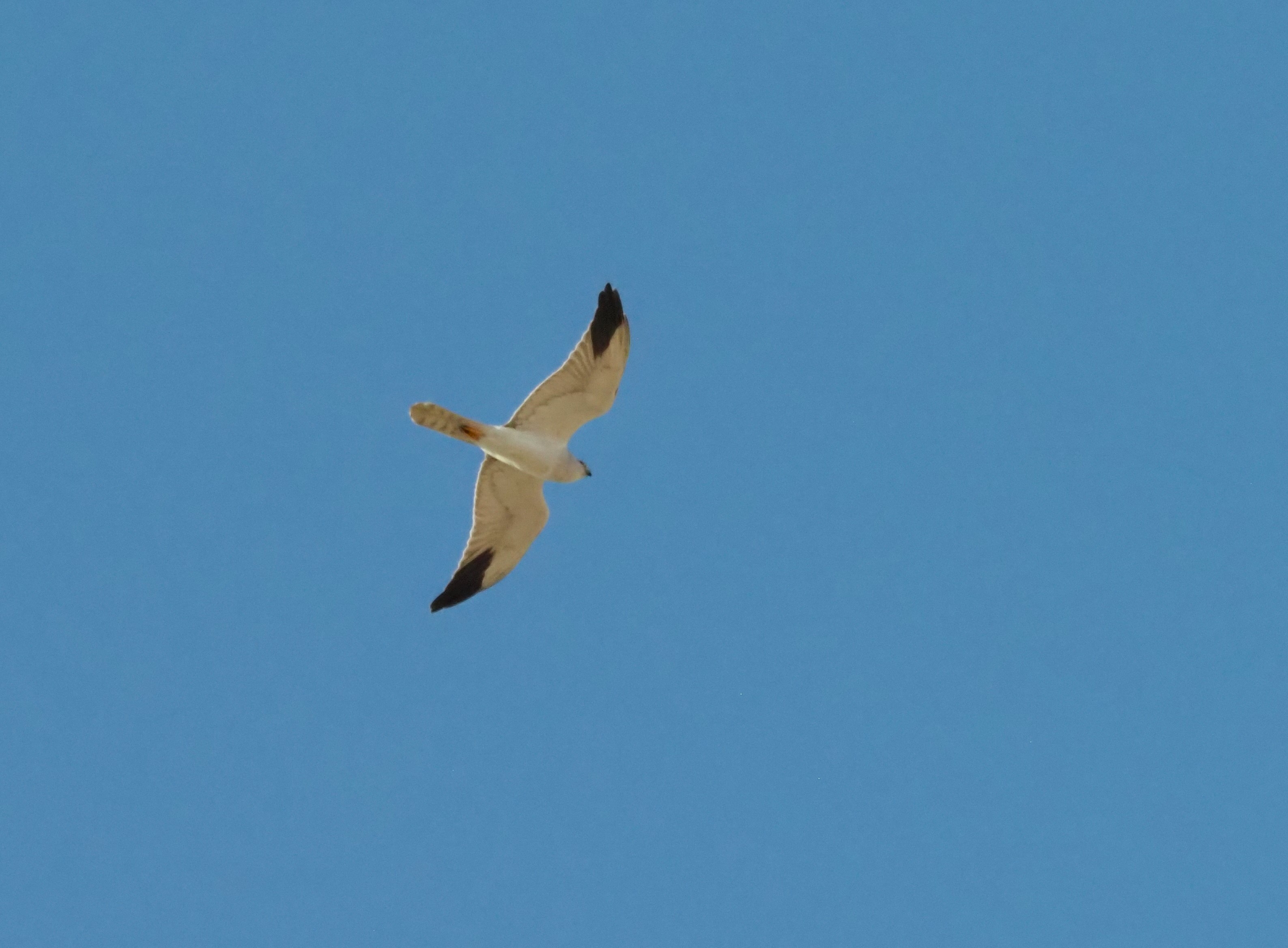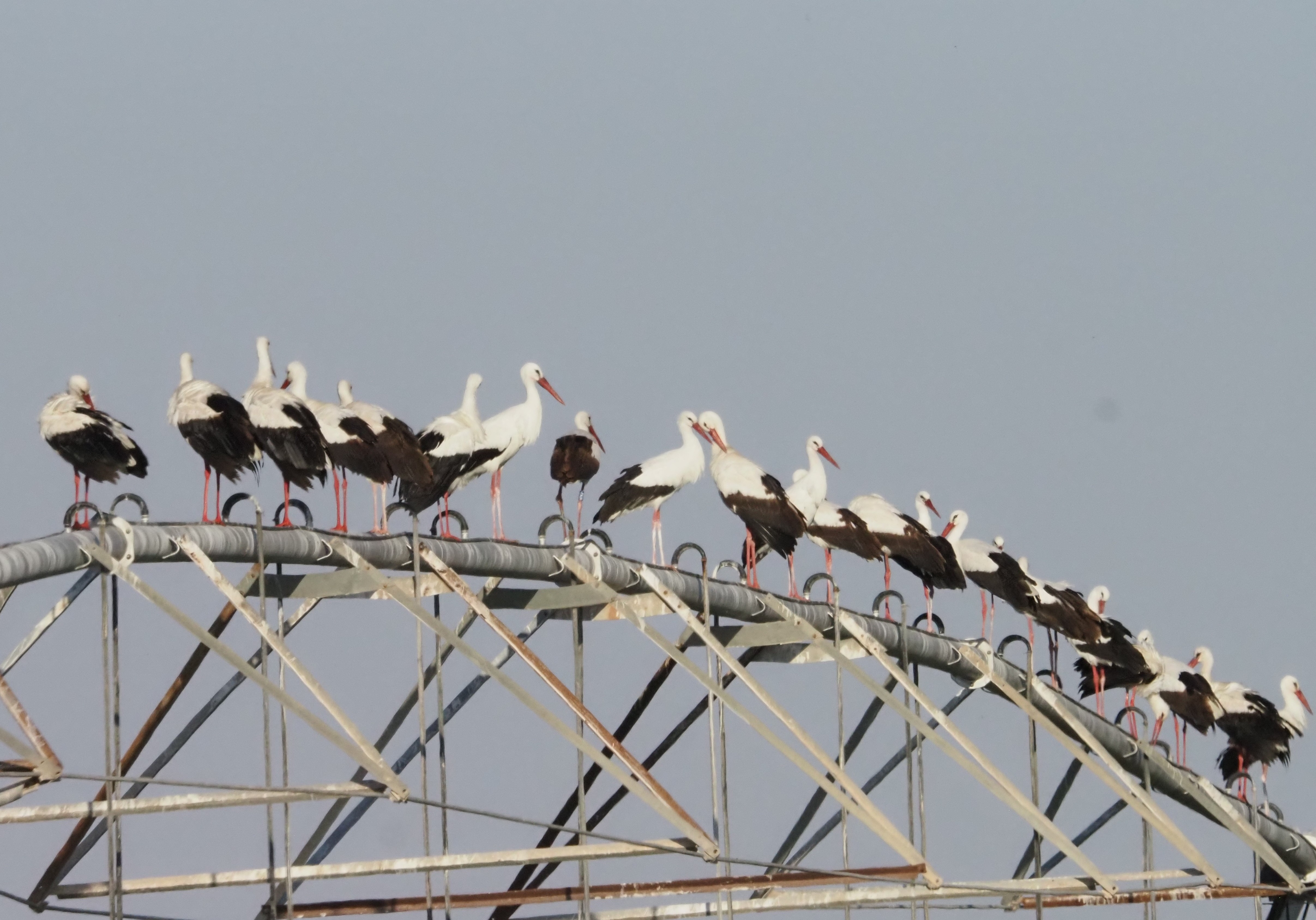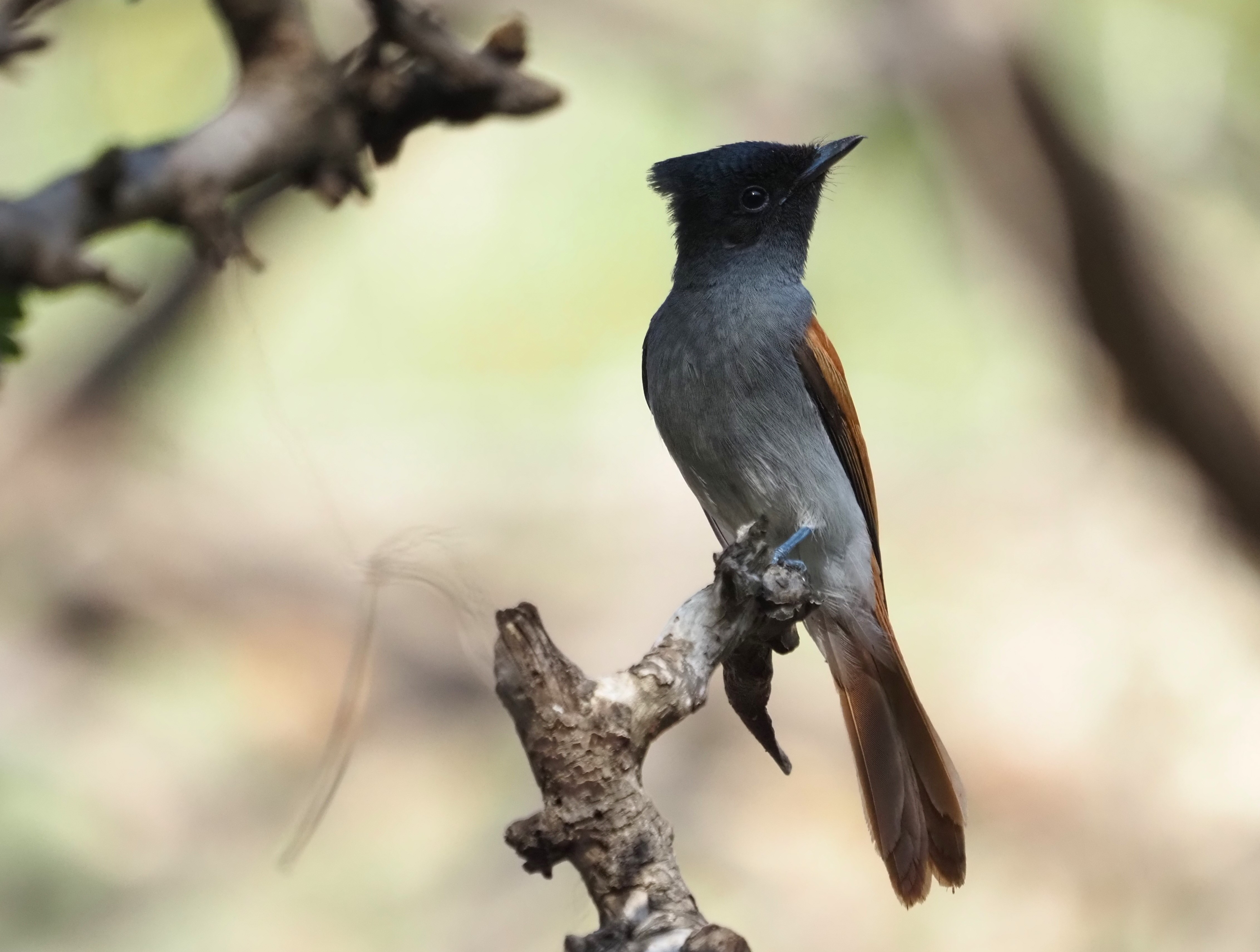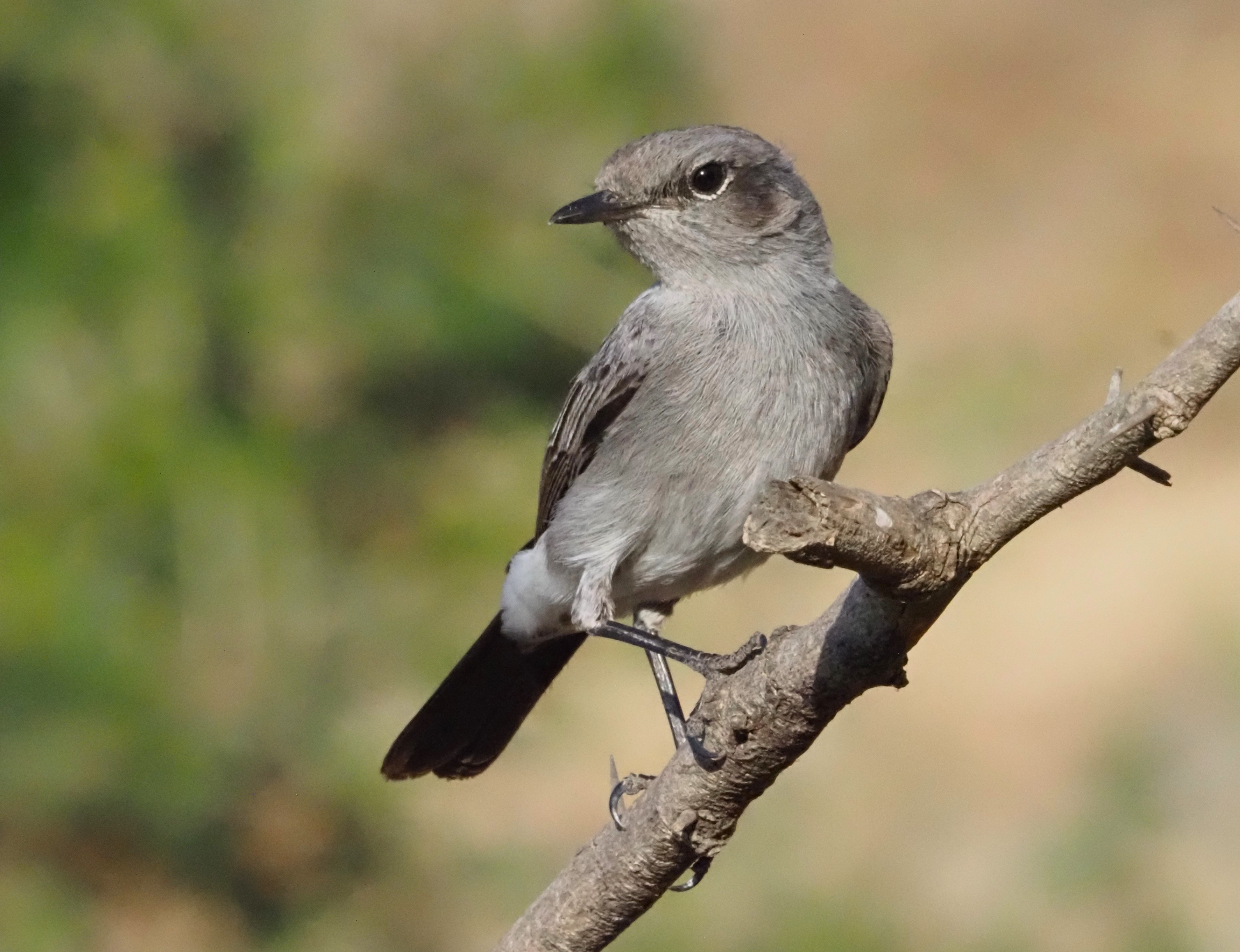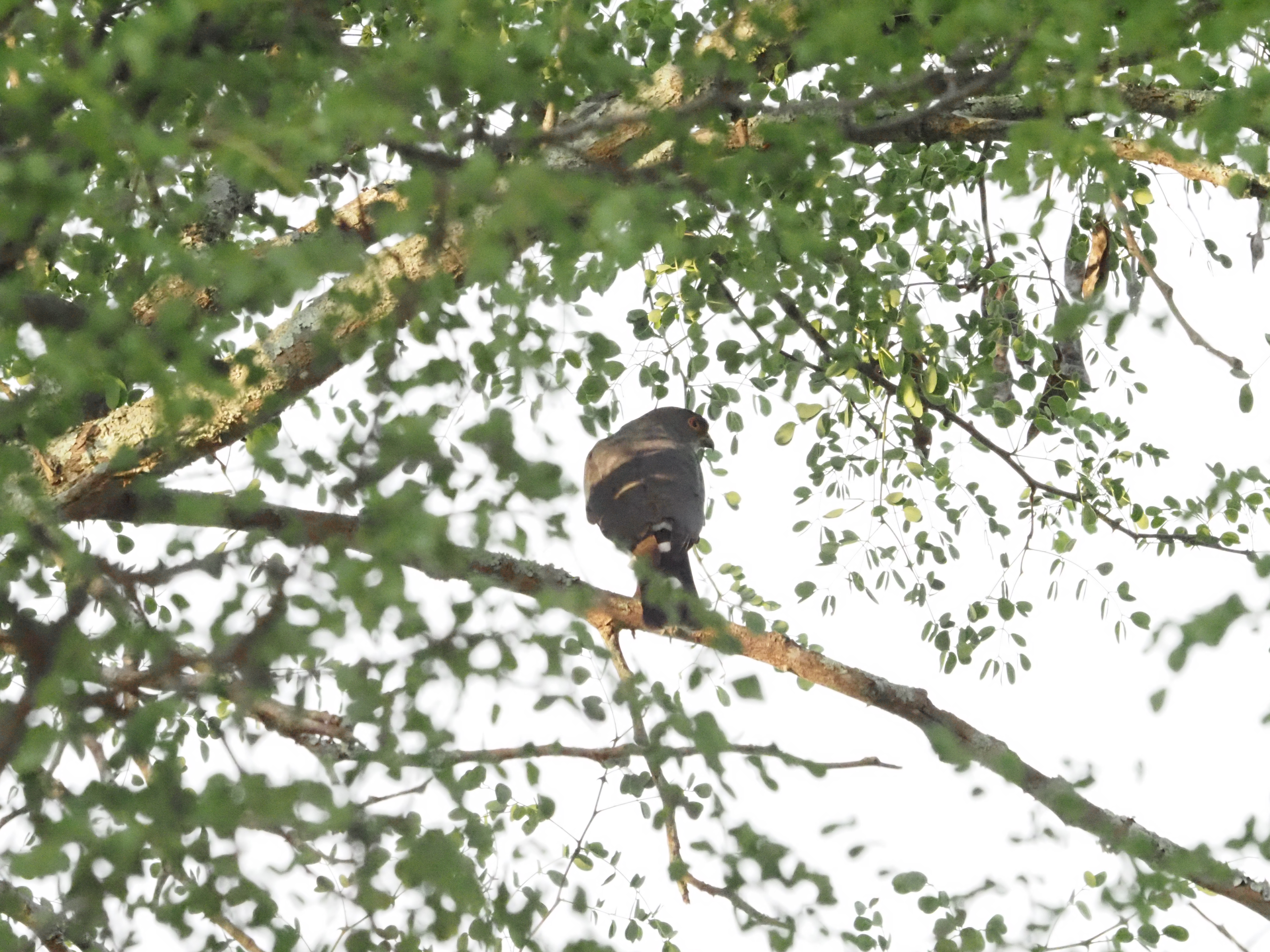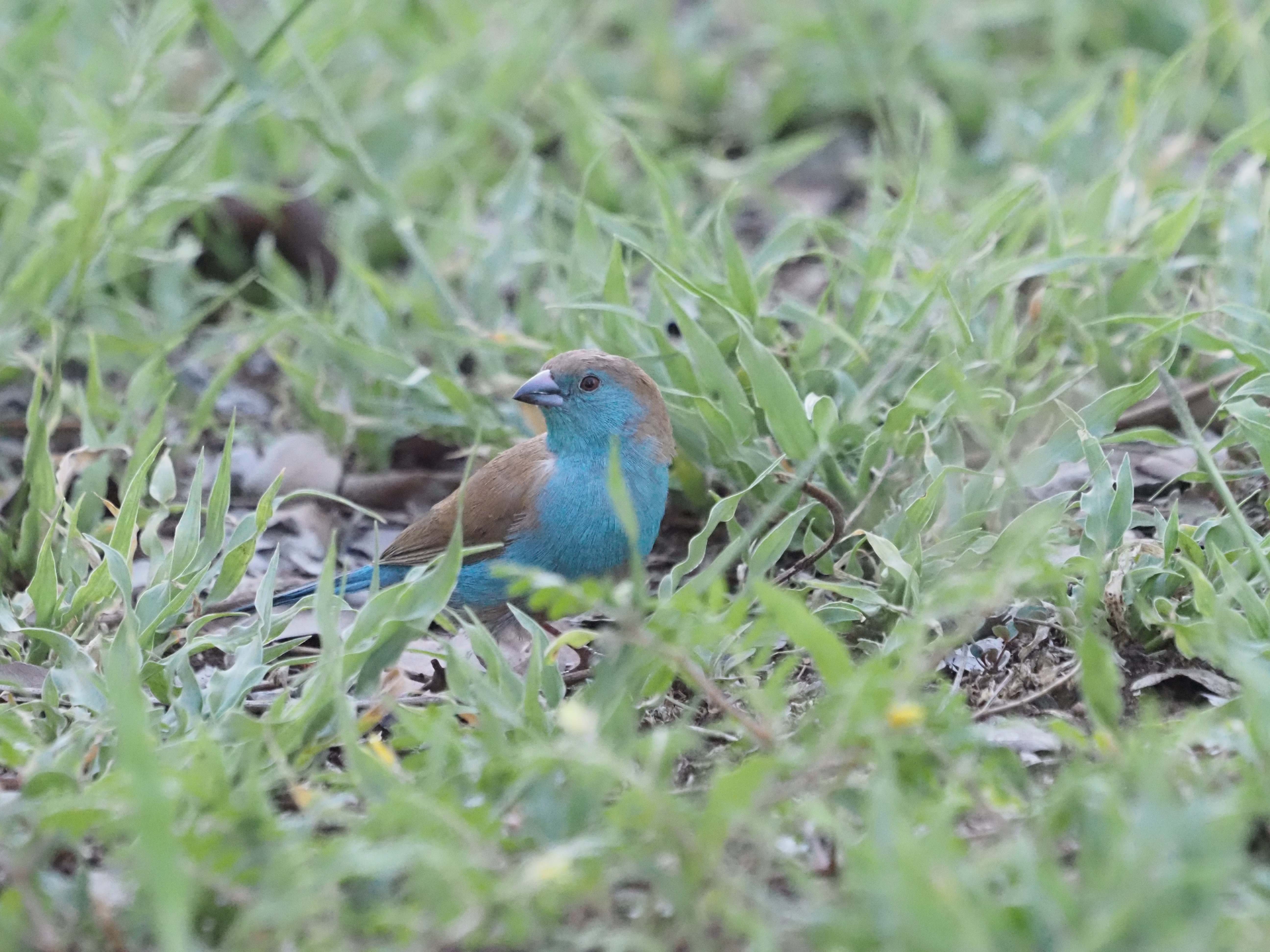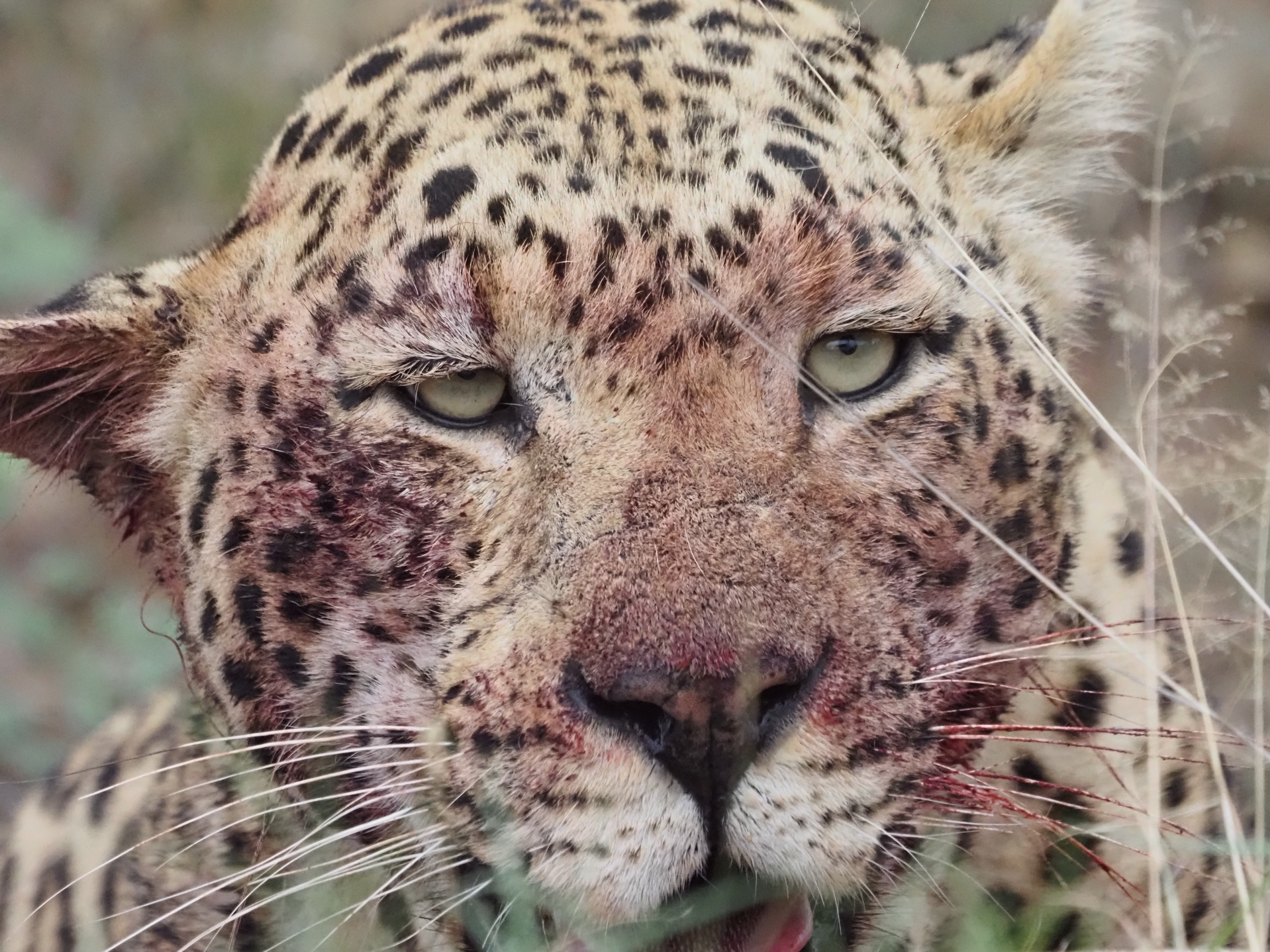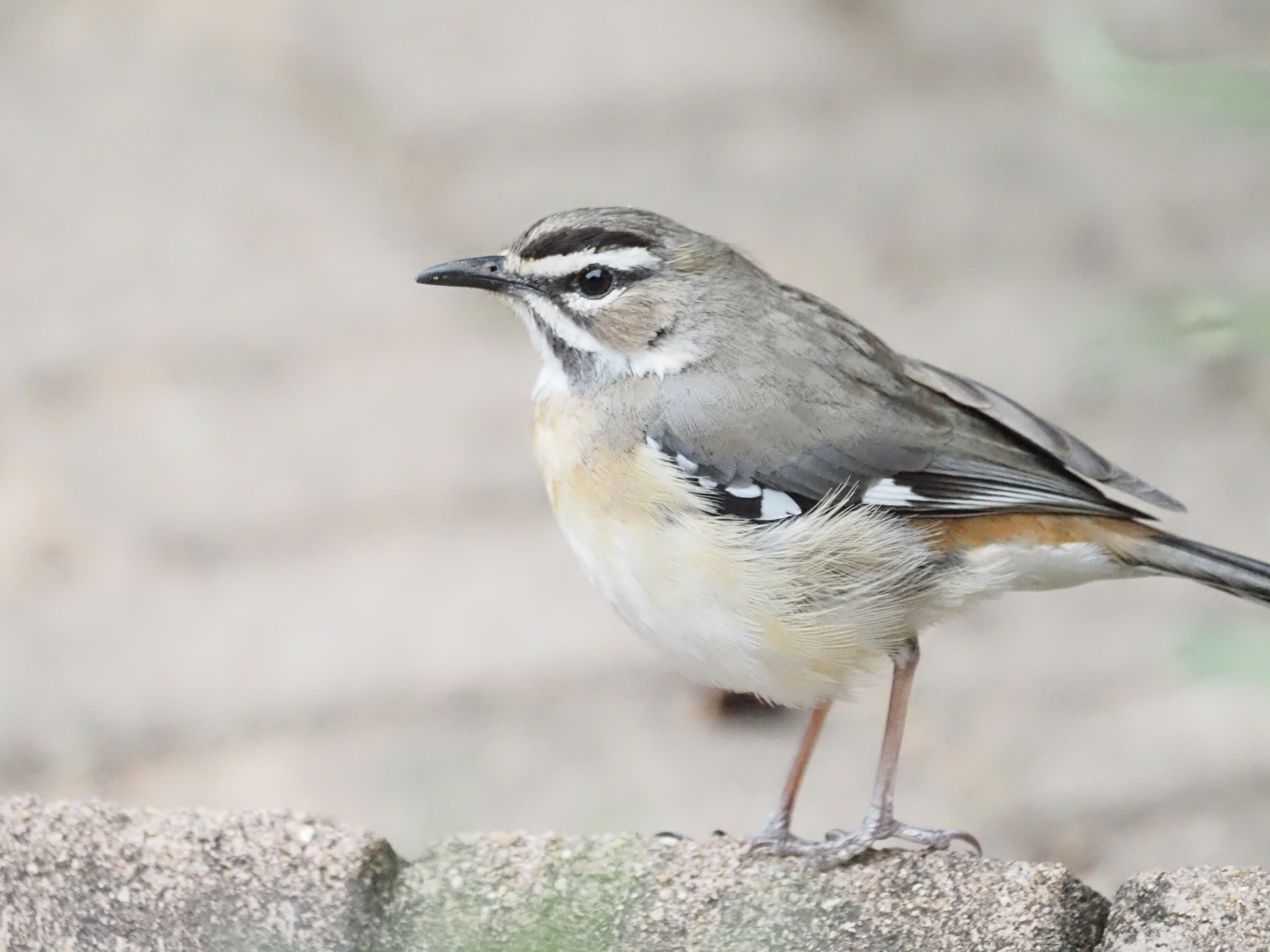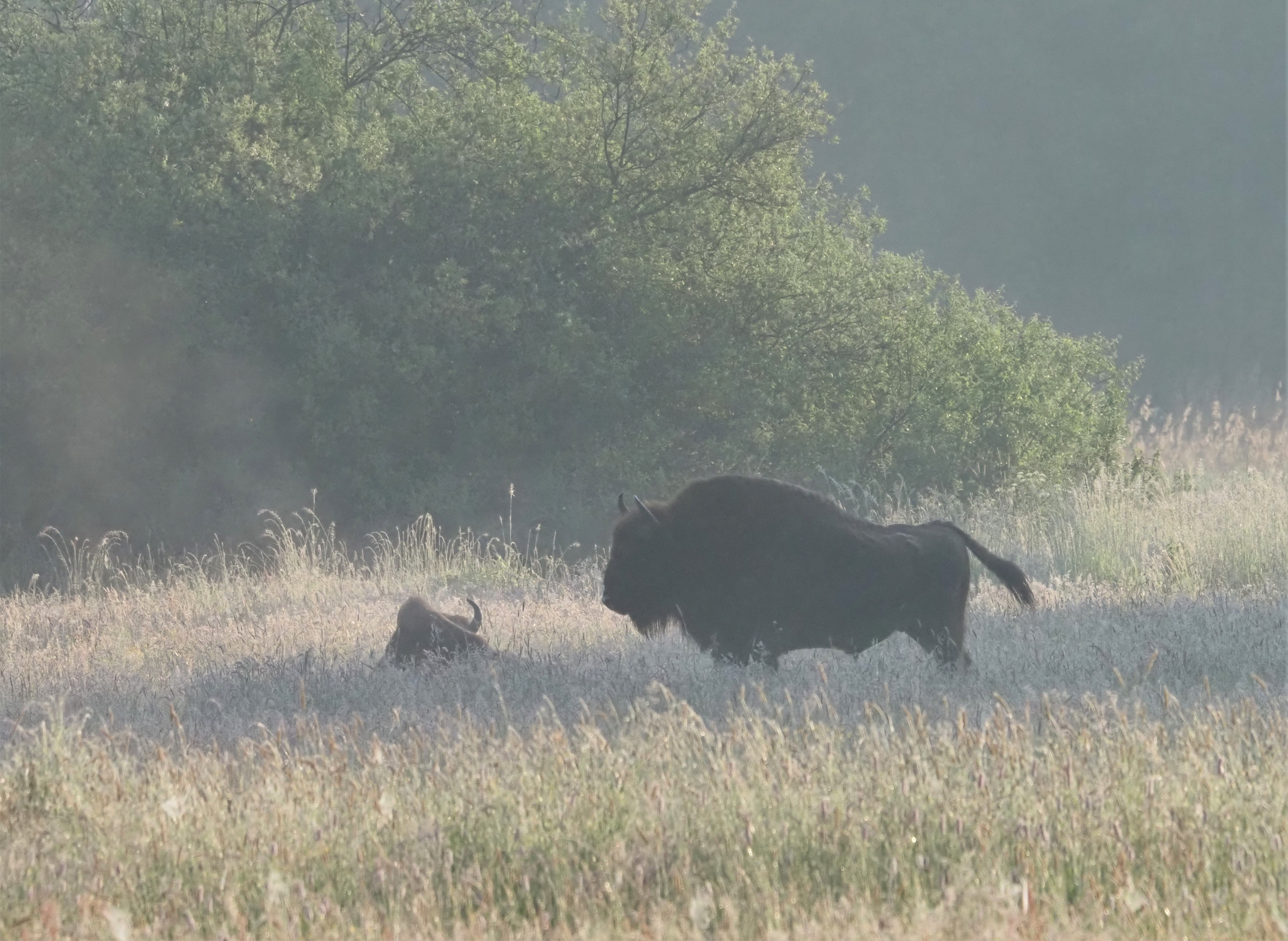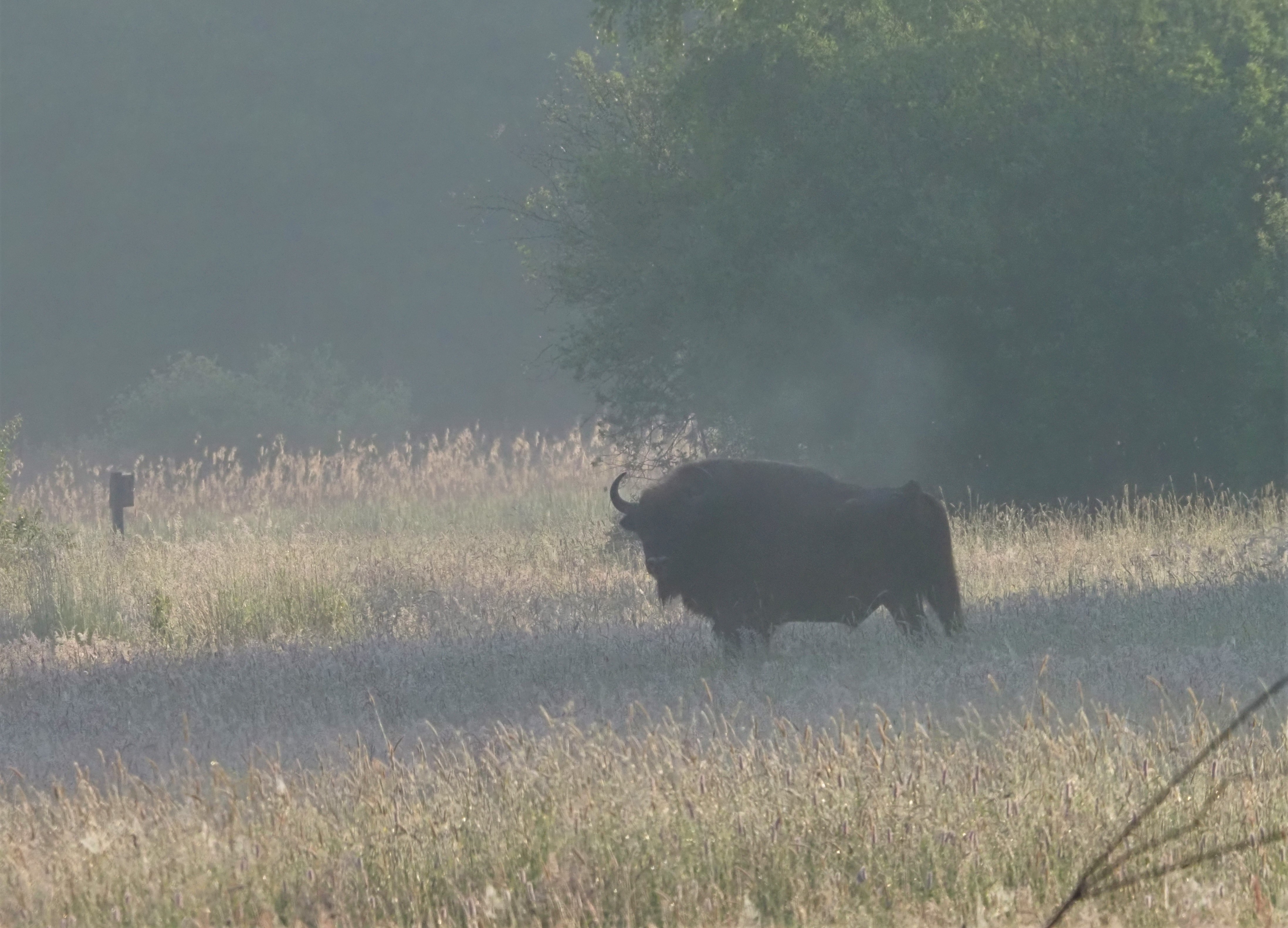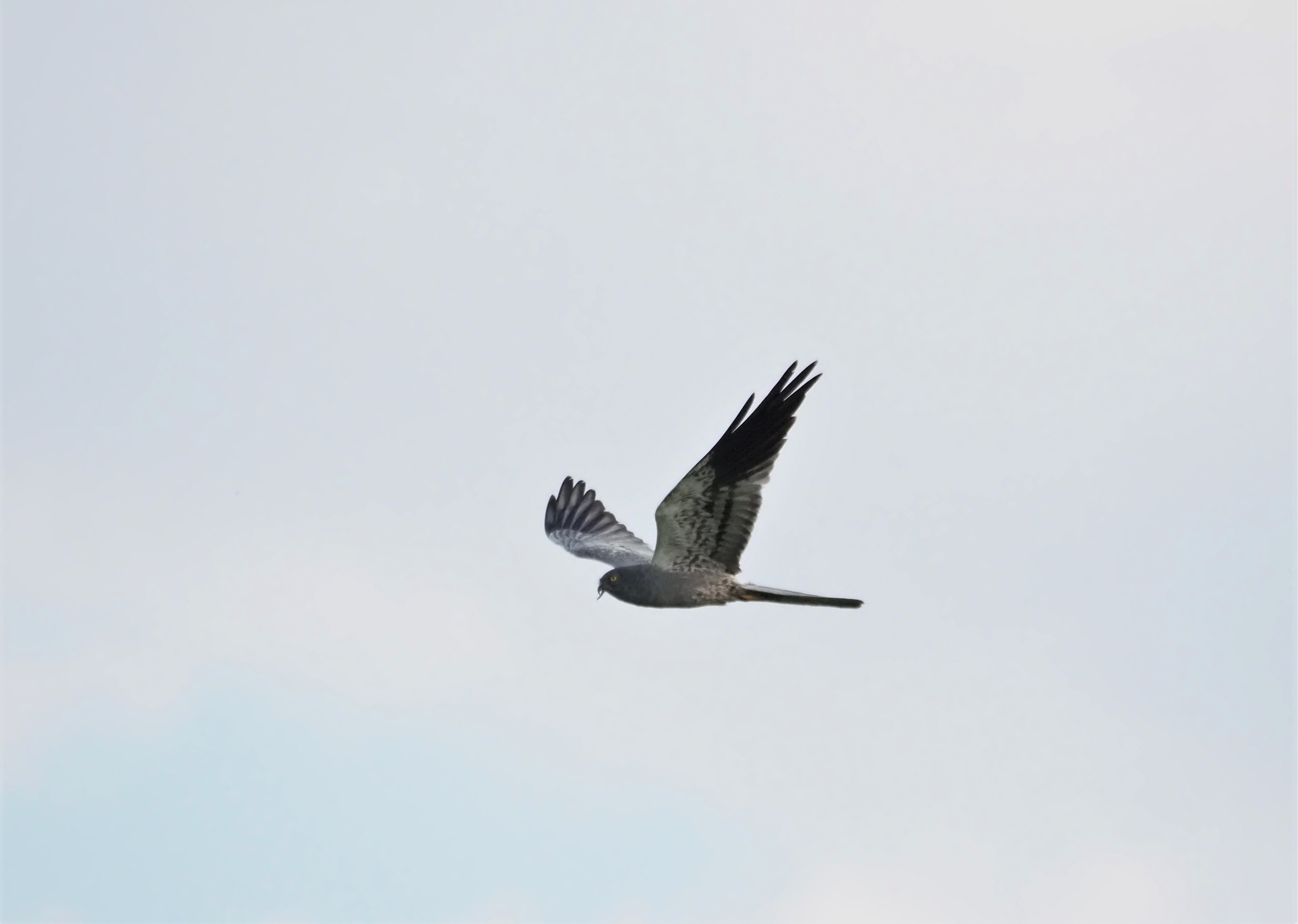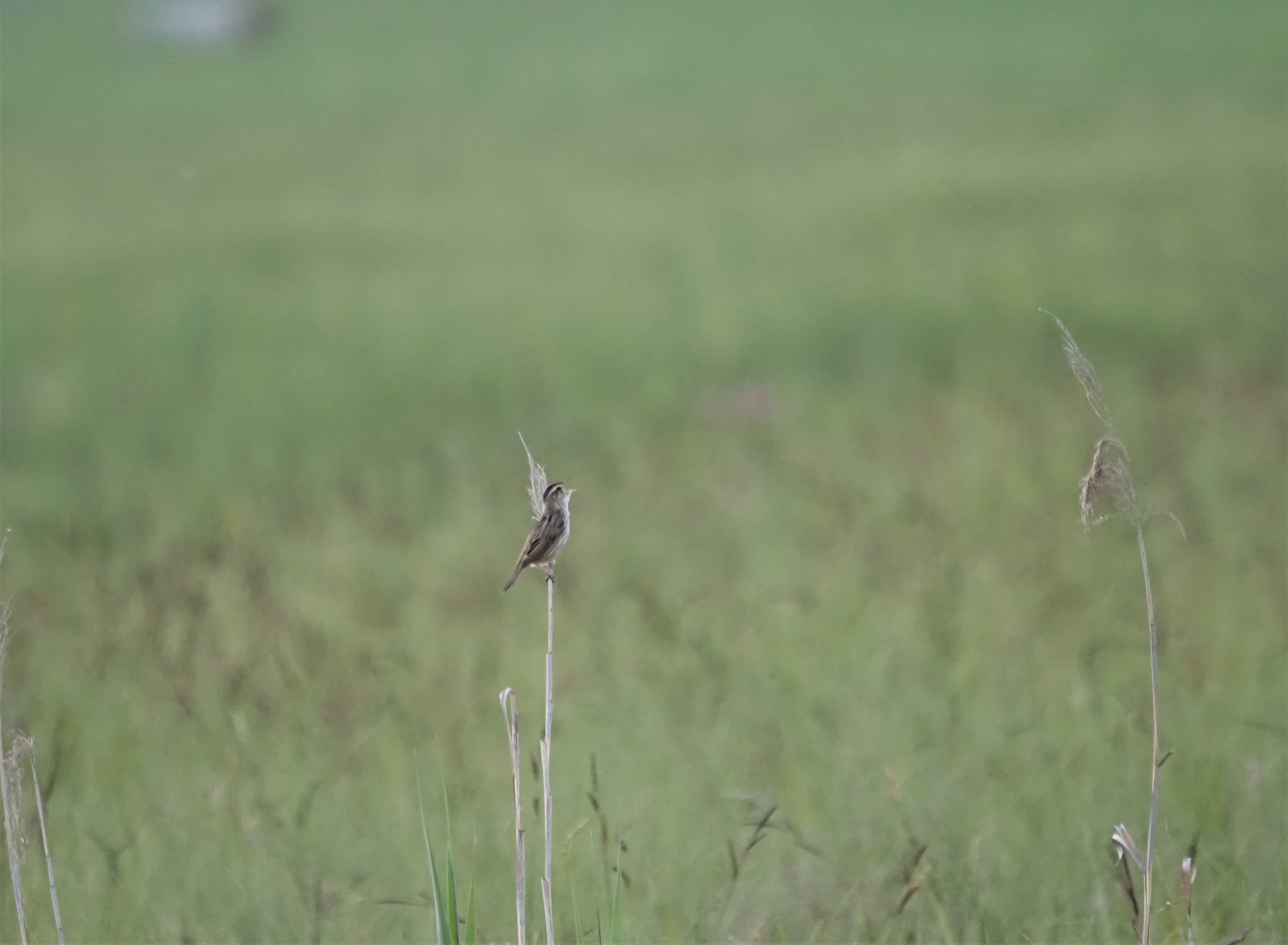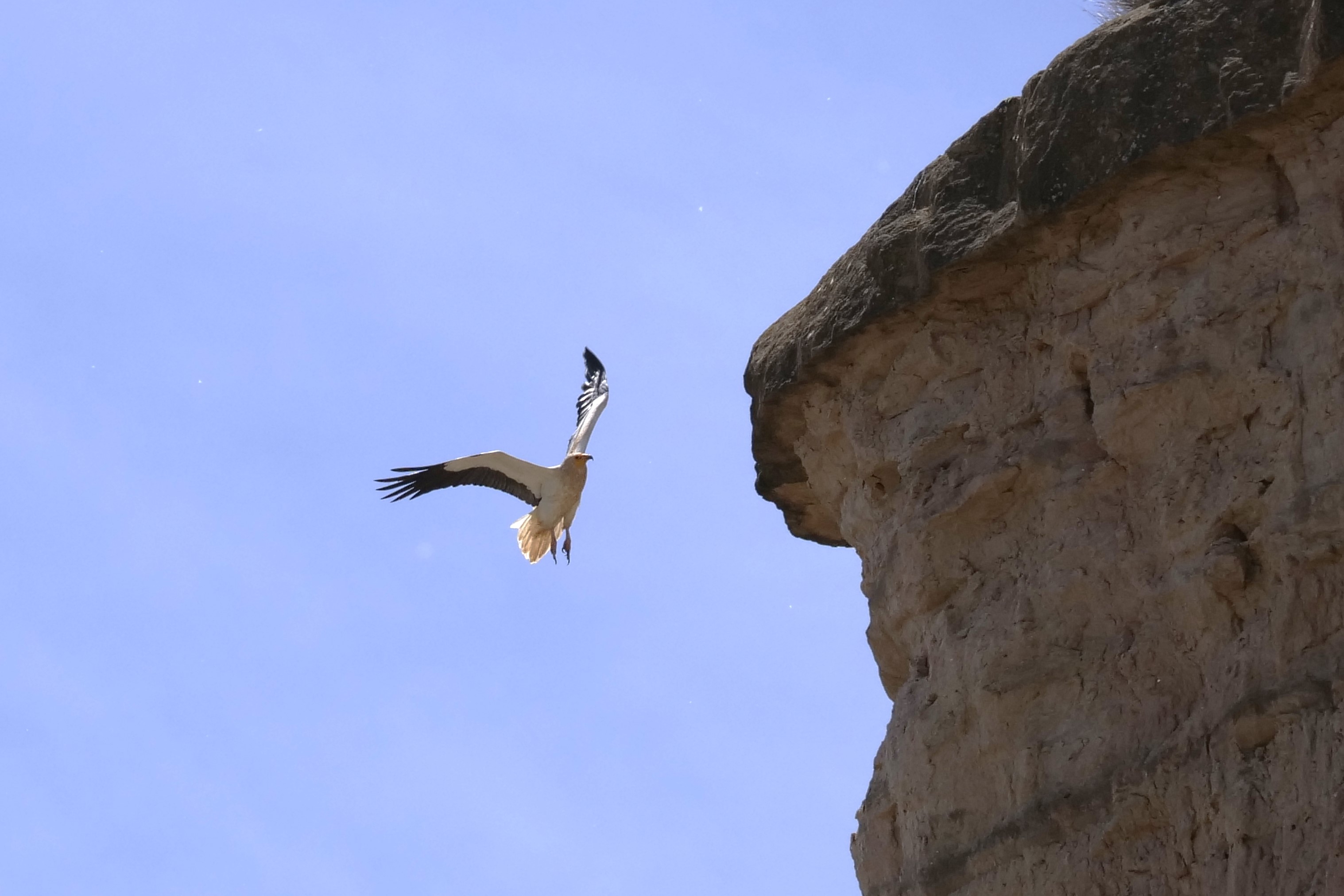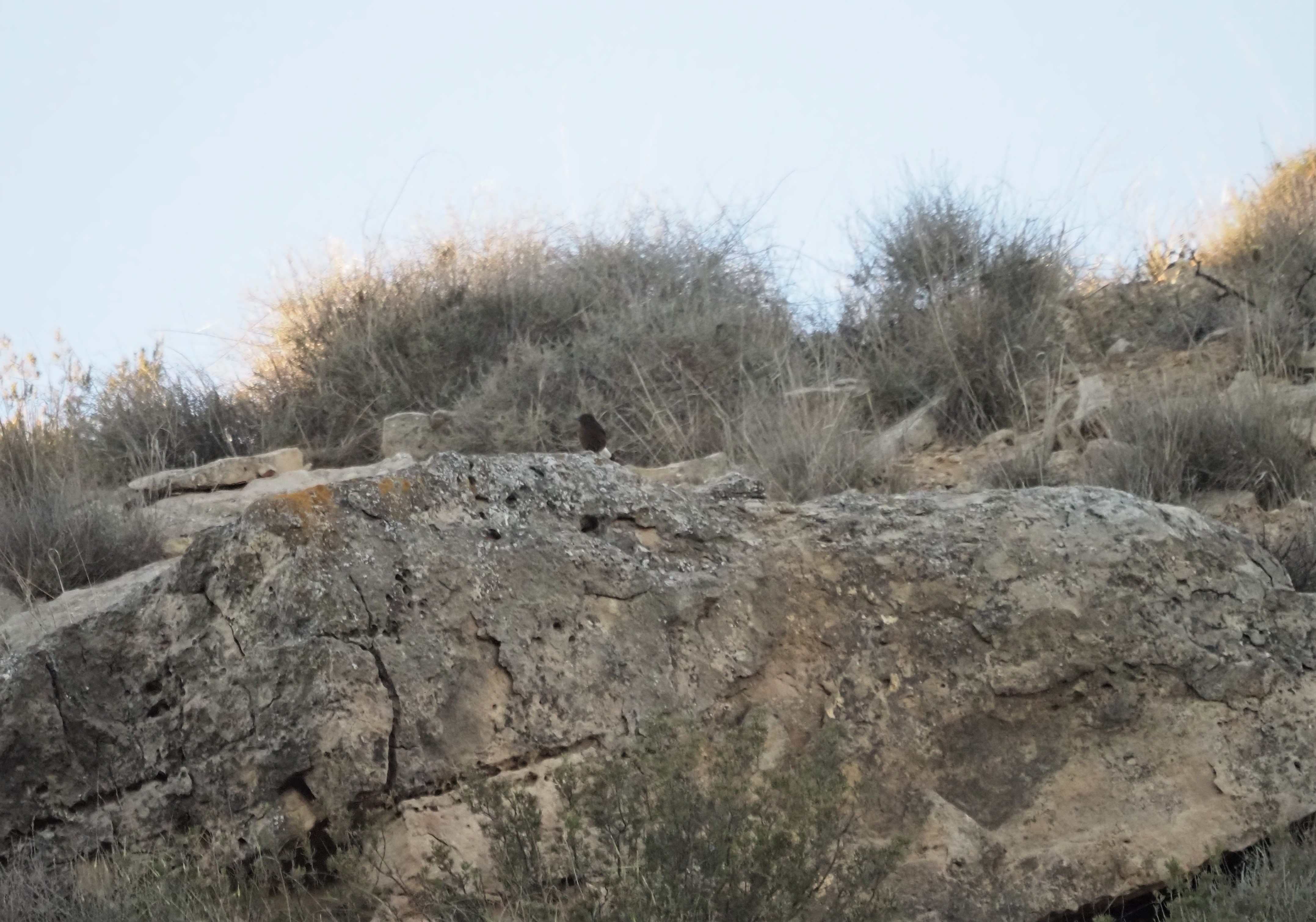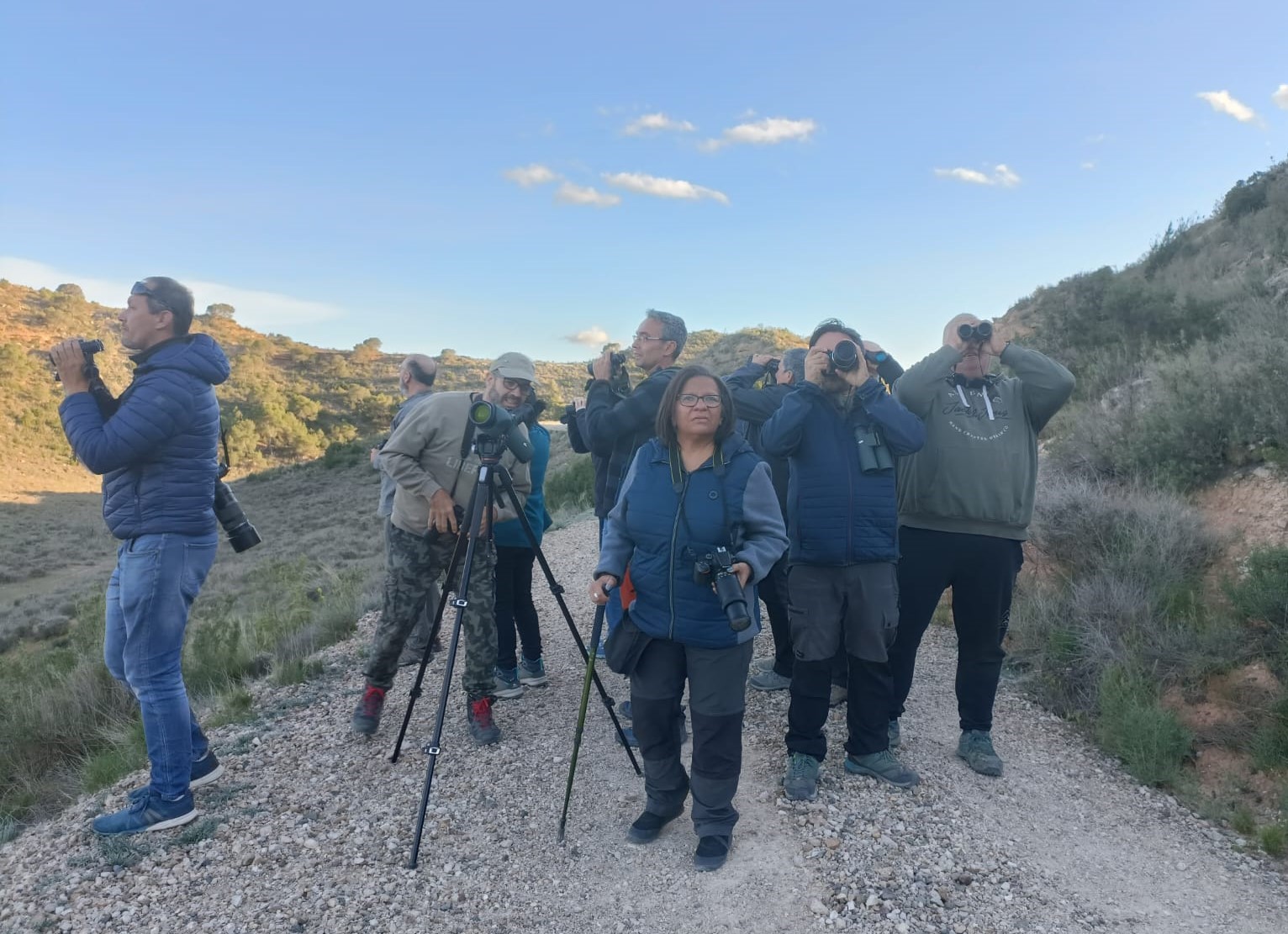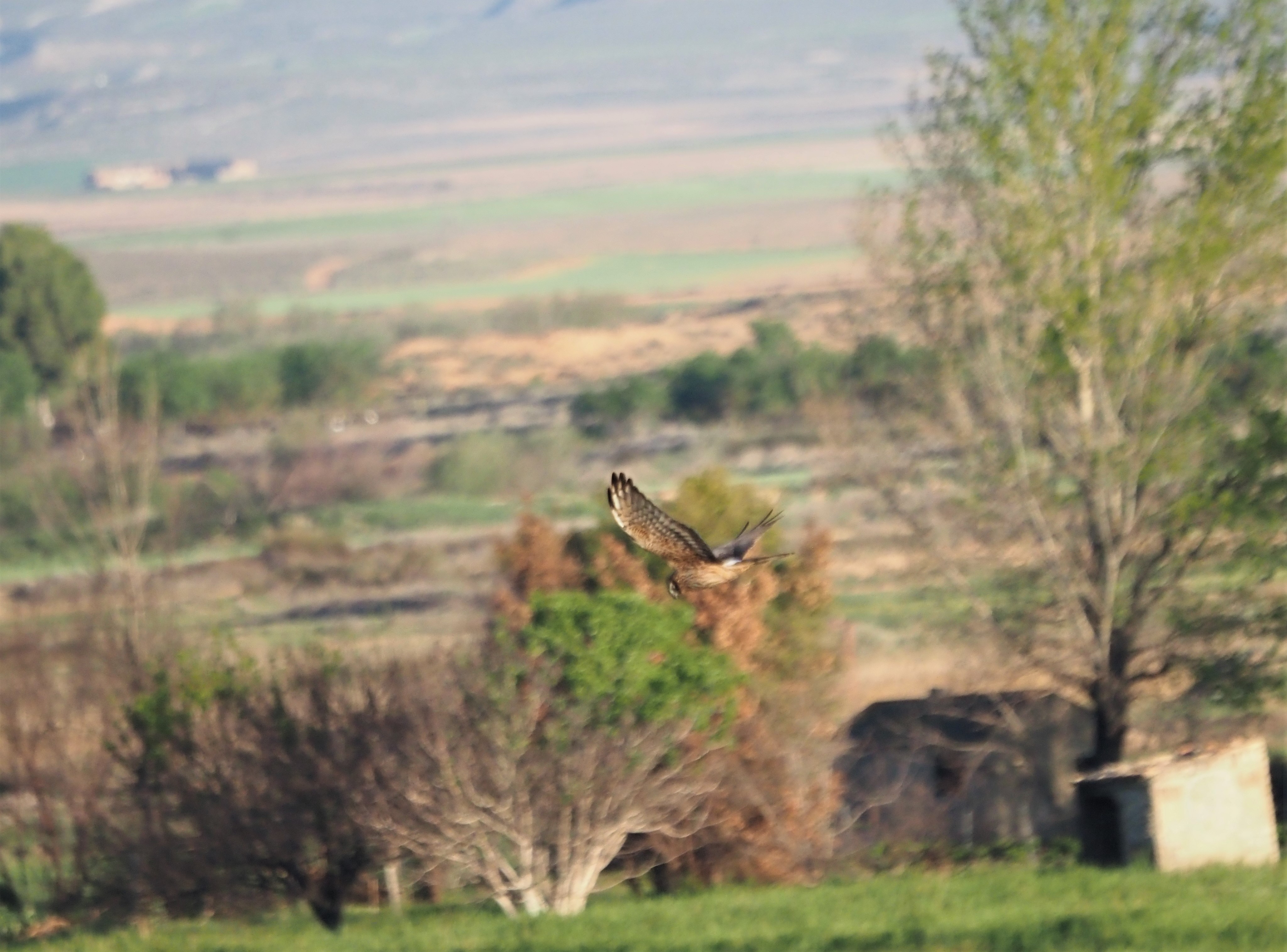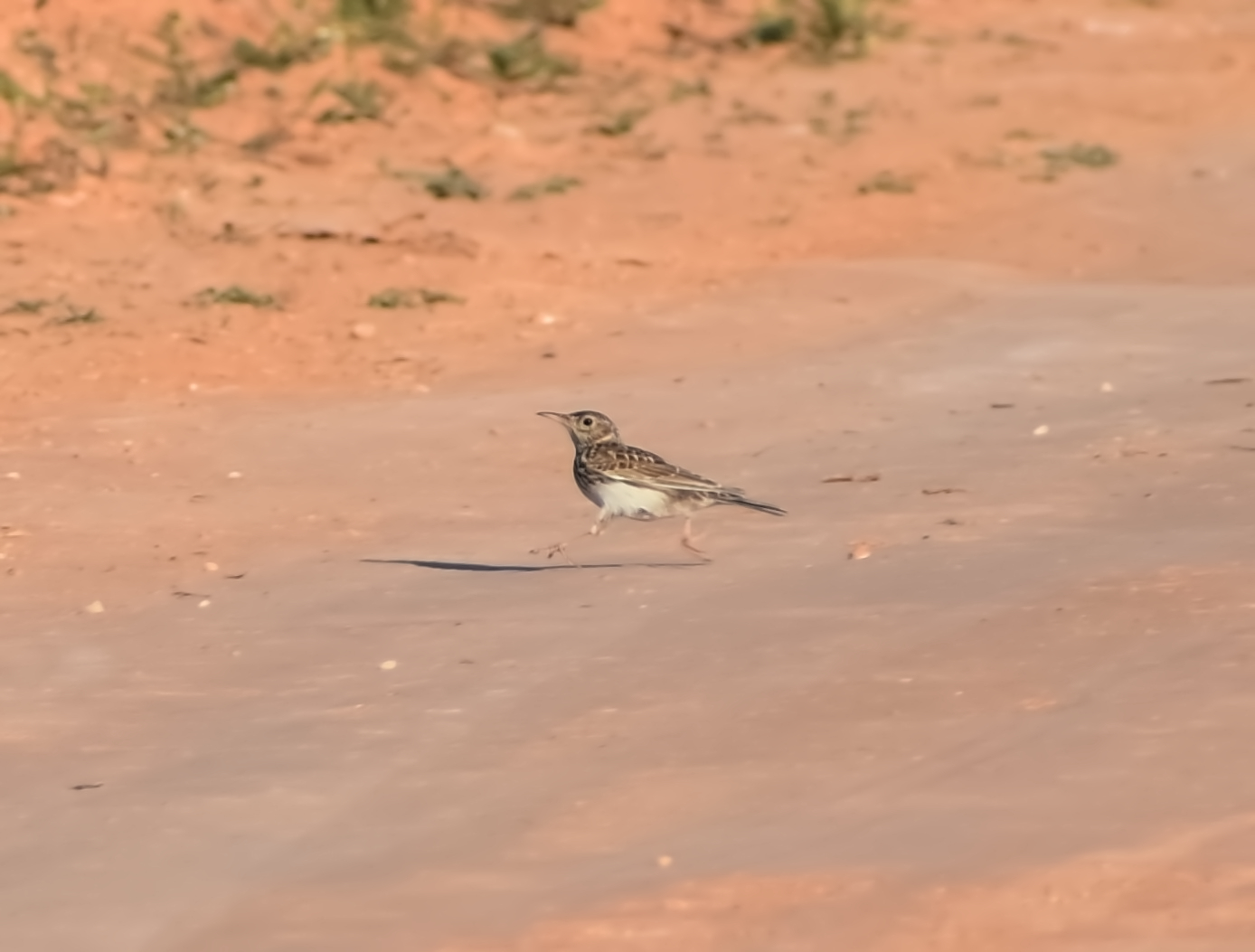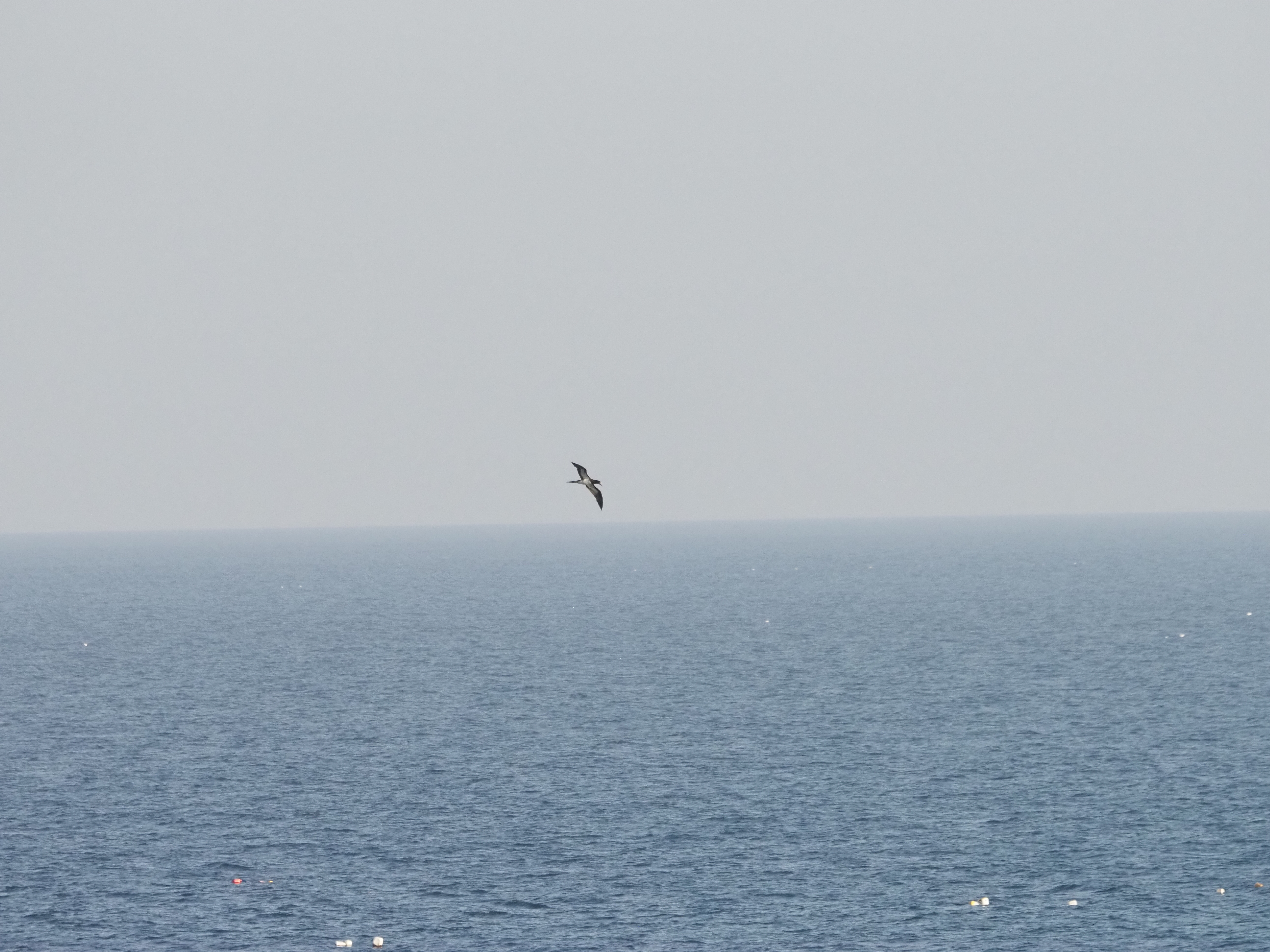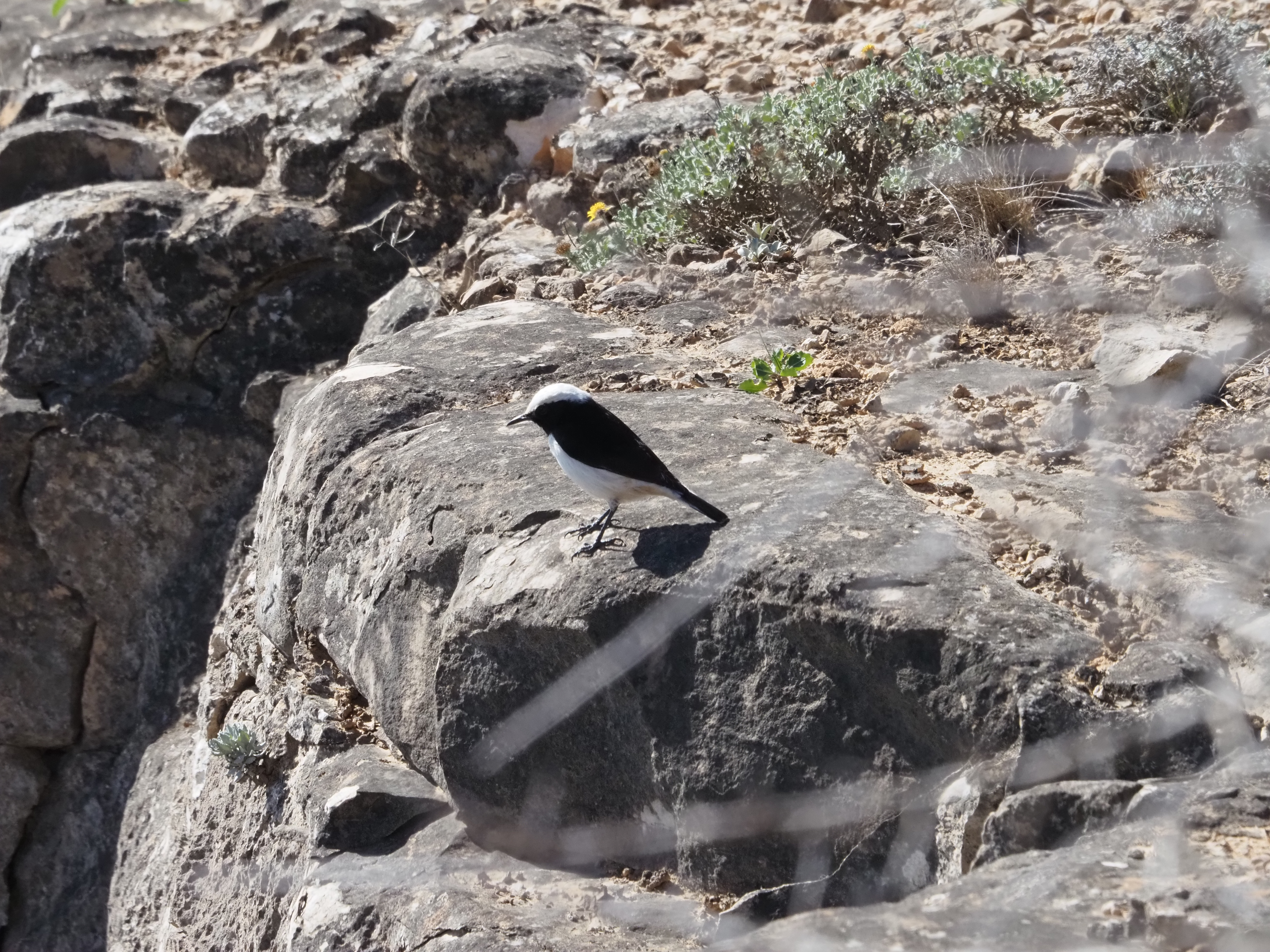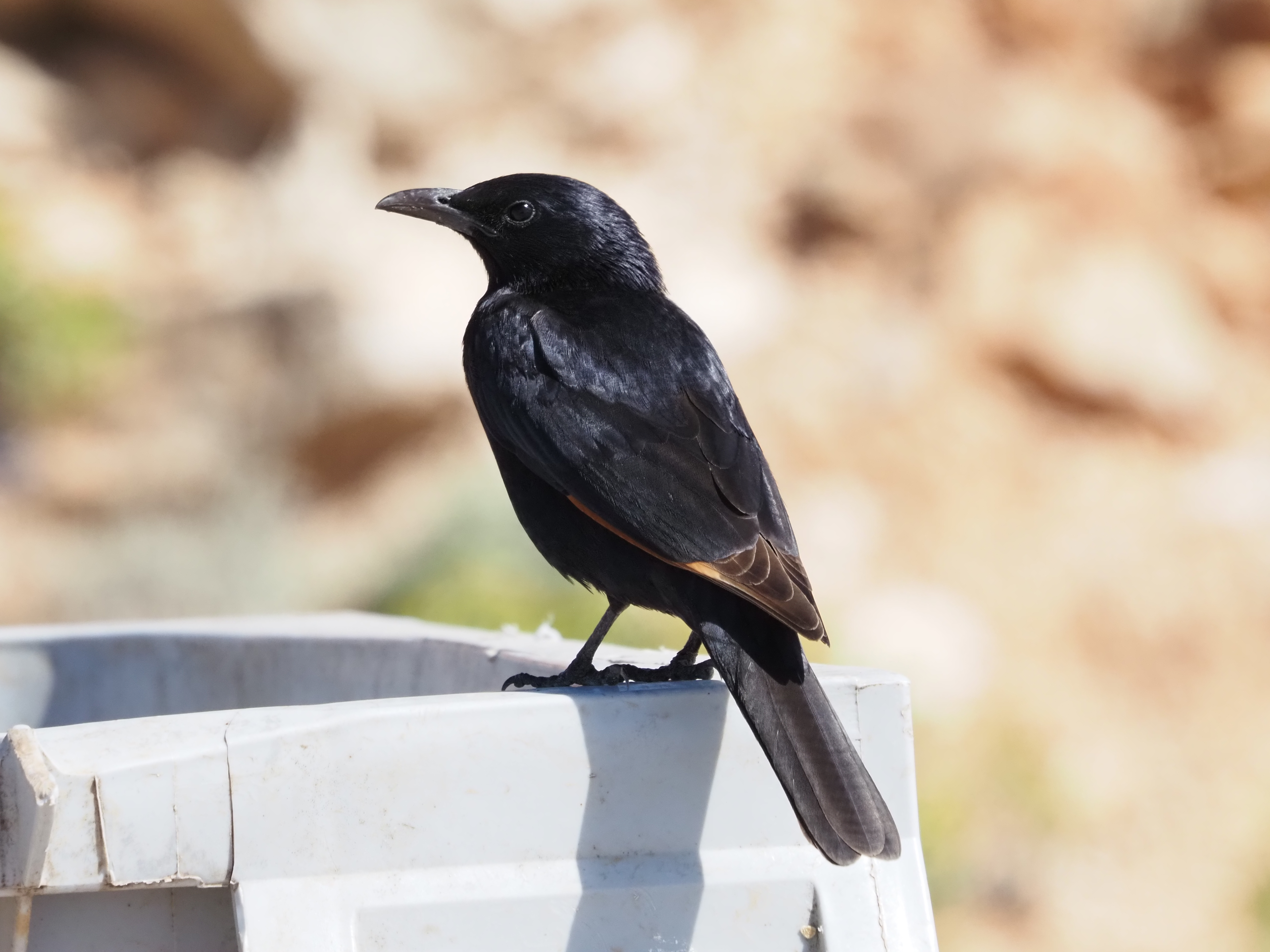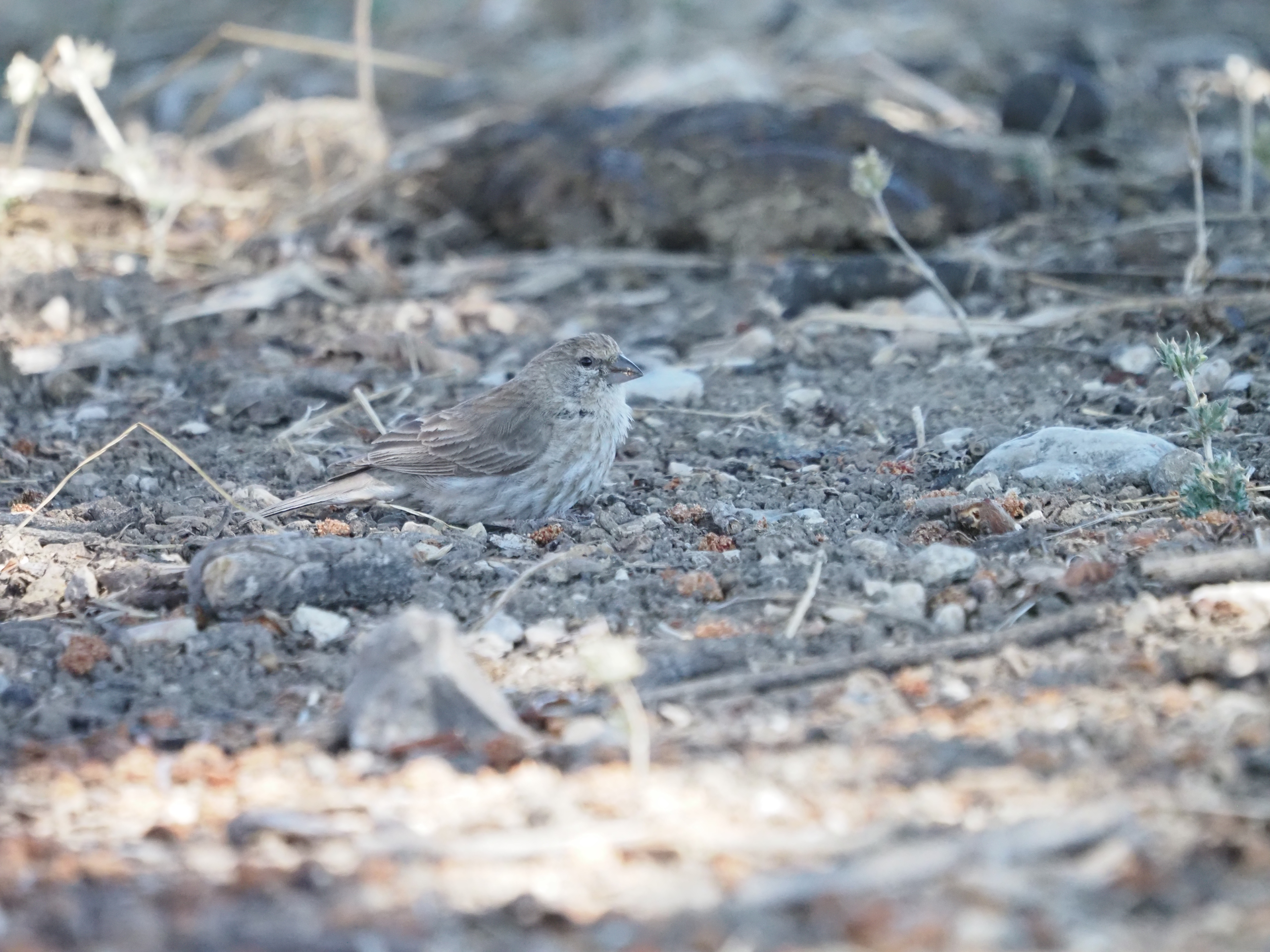
South Africa (Kruger to Durban) Tour 2023

  • Dates: From October 26th to November 8th, 2023
  • Tour participants: 4
  • Number of species seen: 429
  • Tour leader: Carles Oliver

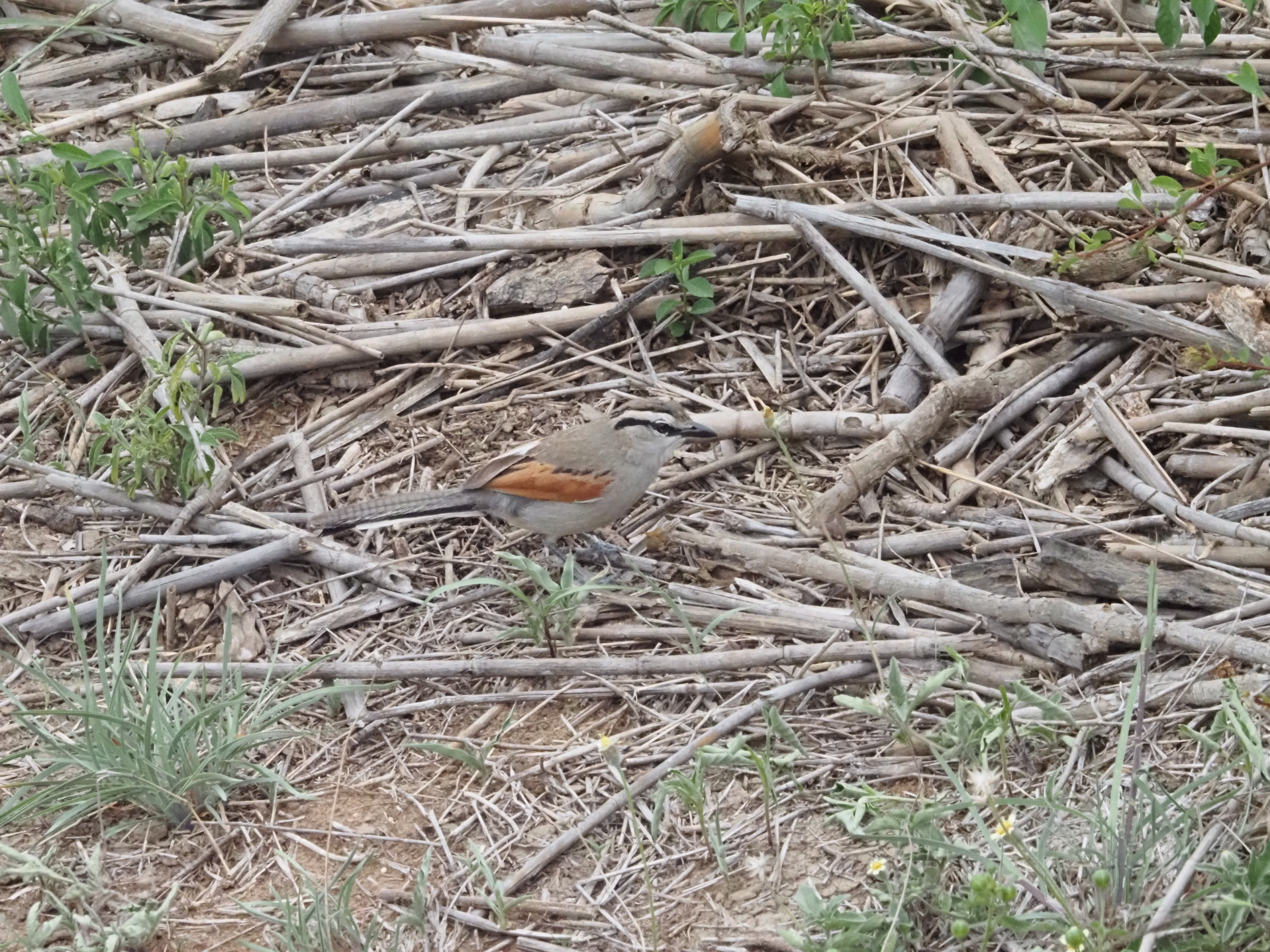
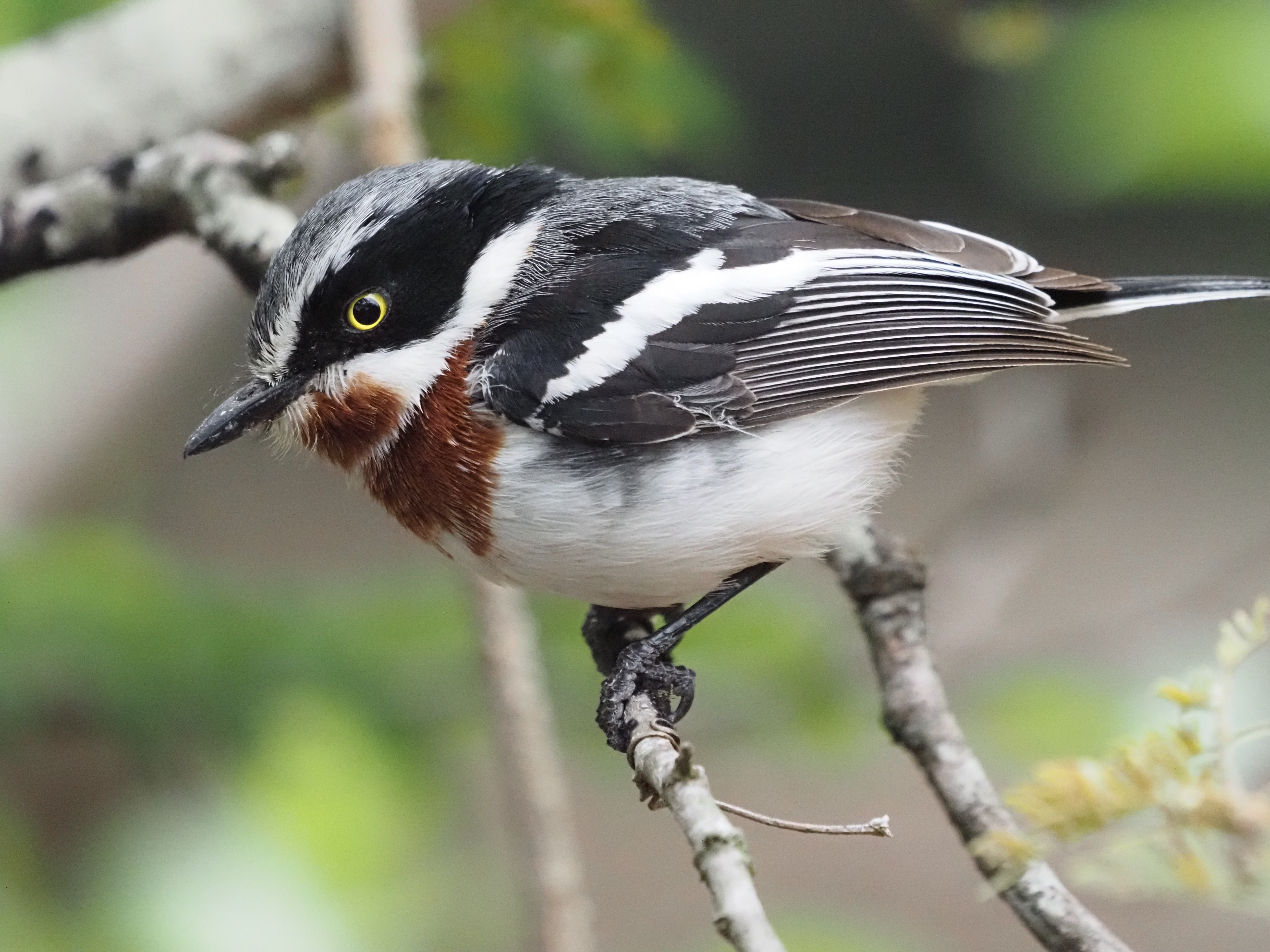
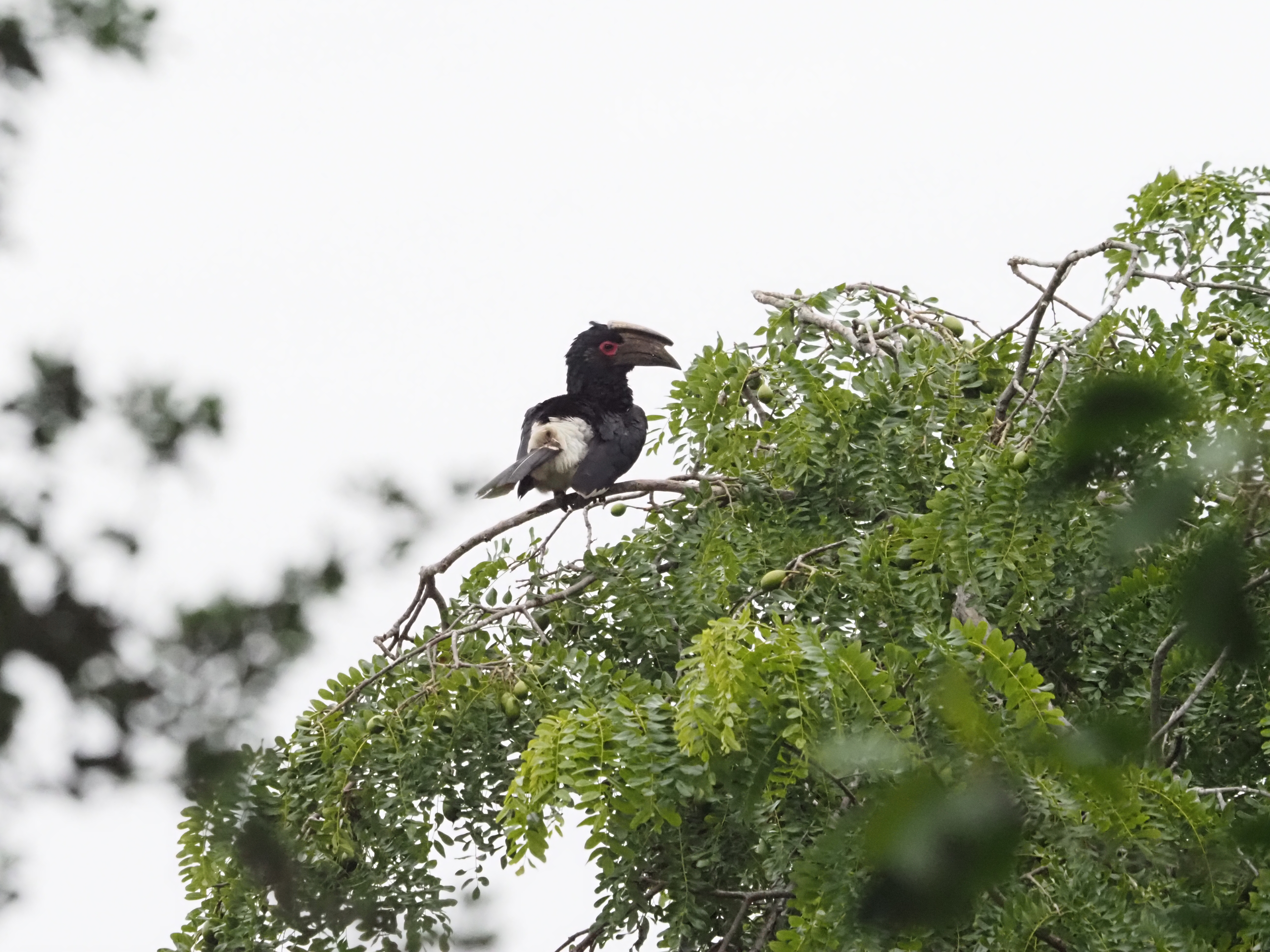
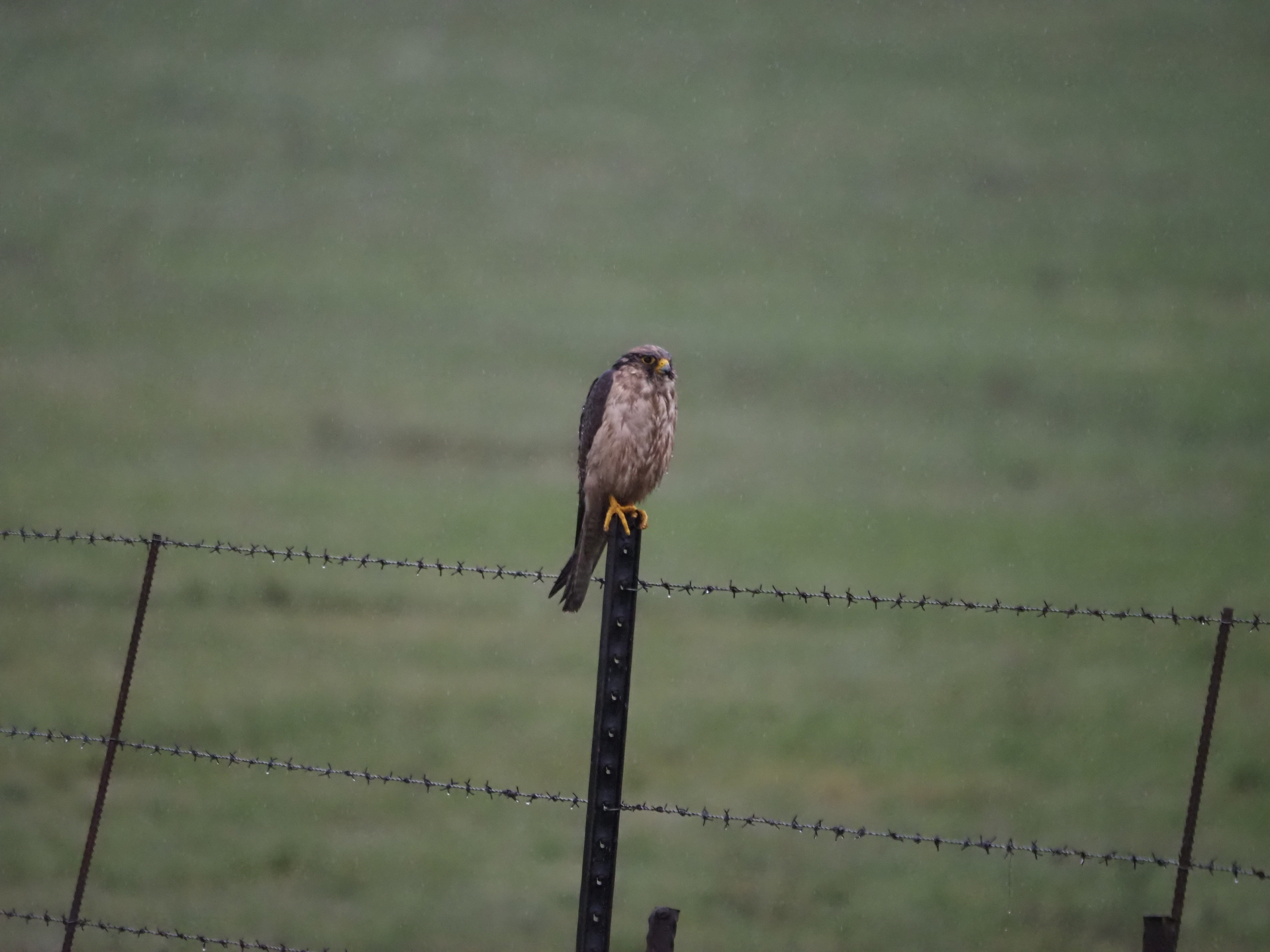
Overview: Our first tour to Eastern South Africa can be defined as a big success. Not only because of the 40+ endemics seen during the trip, with special mention to the extremely scarce Rudd’s Lark. We also scored many sought-after species, including some very tuff birds. Two species of Flufftail were seen, including the very elusive Buff-spotted. The tour enjoyed good weather conditions most of the days, despite an unusually cold episode while transfering from Kruger to Wakkerstroof, with temperatures collapsing as low as only 3ºC. This episode, combining low temperatures and rain, was up to three days long and we noticed dead Bee-eaters and Swallows during our stops. Despite this, the tour excelled in great sights and we also got some interesting mammals, even if we failed to find some top target mammals.

All images in this trip report by tour leader Carles Oliver and Joan Barat. All rights reserved.

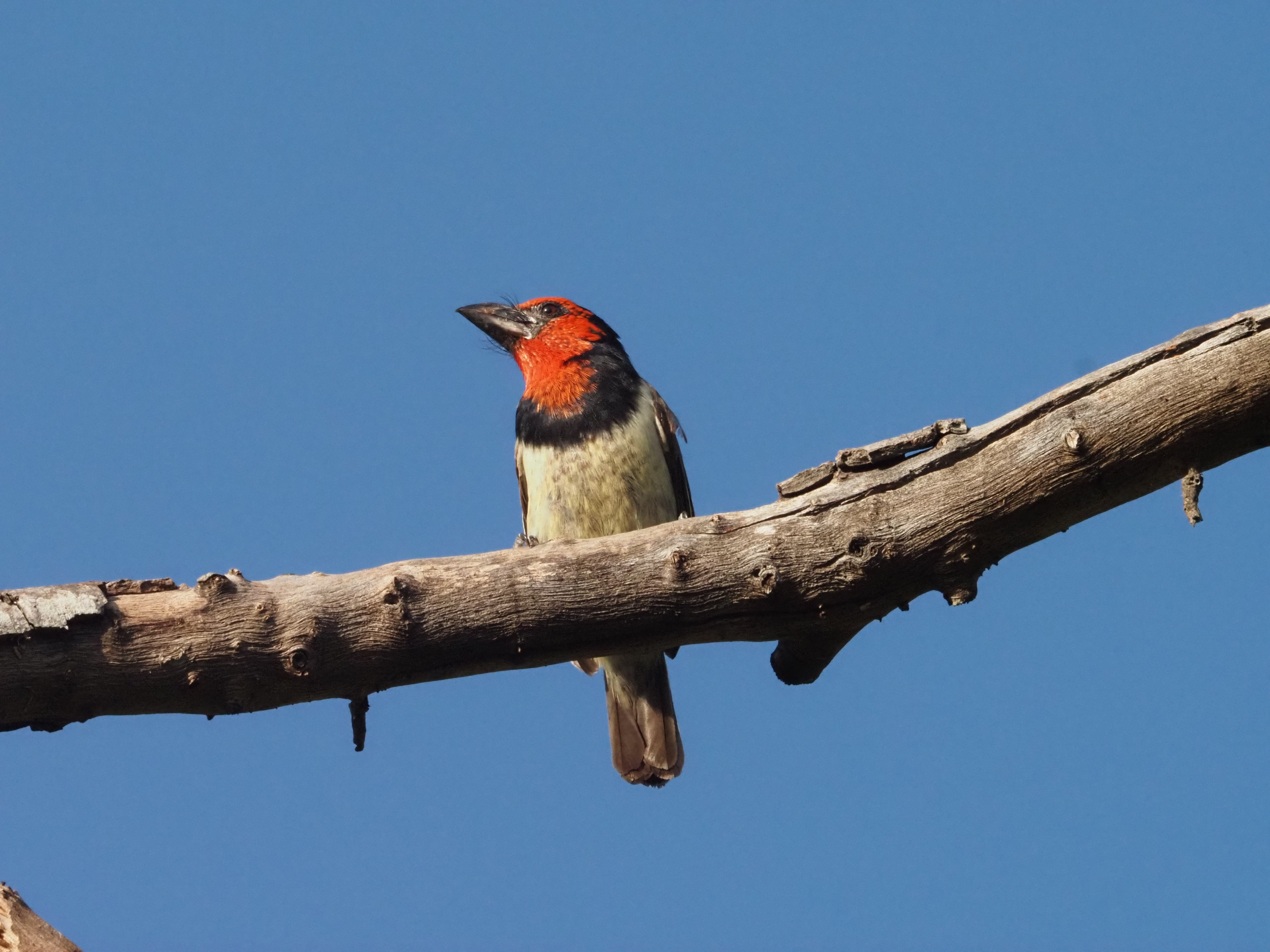
Crested Barbet (Trachyphonus vaillantii) to start the report! Image by tour leader Carles Oliver

Day 1. After our commuter flights coming from different countries, all tour participants assembled in Johannesburg, where our local guide was waiting for us. It was a lovely afternoon, and after negotiating the metropolitan traffic, we put our way North in order to explore some interesting spots.

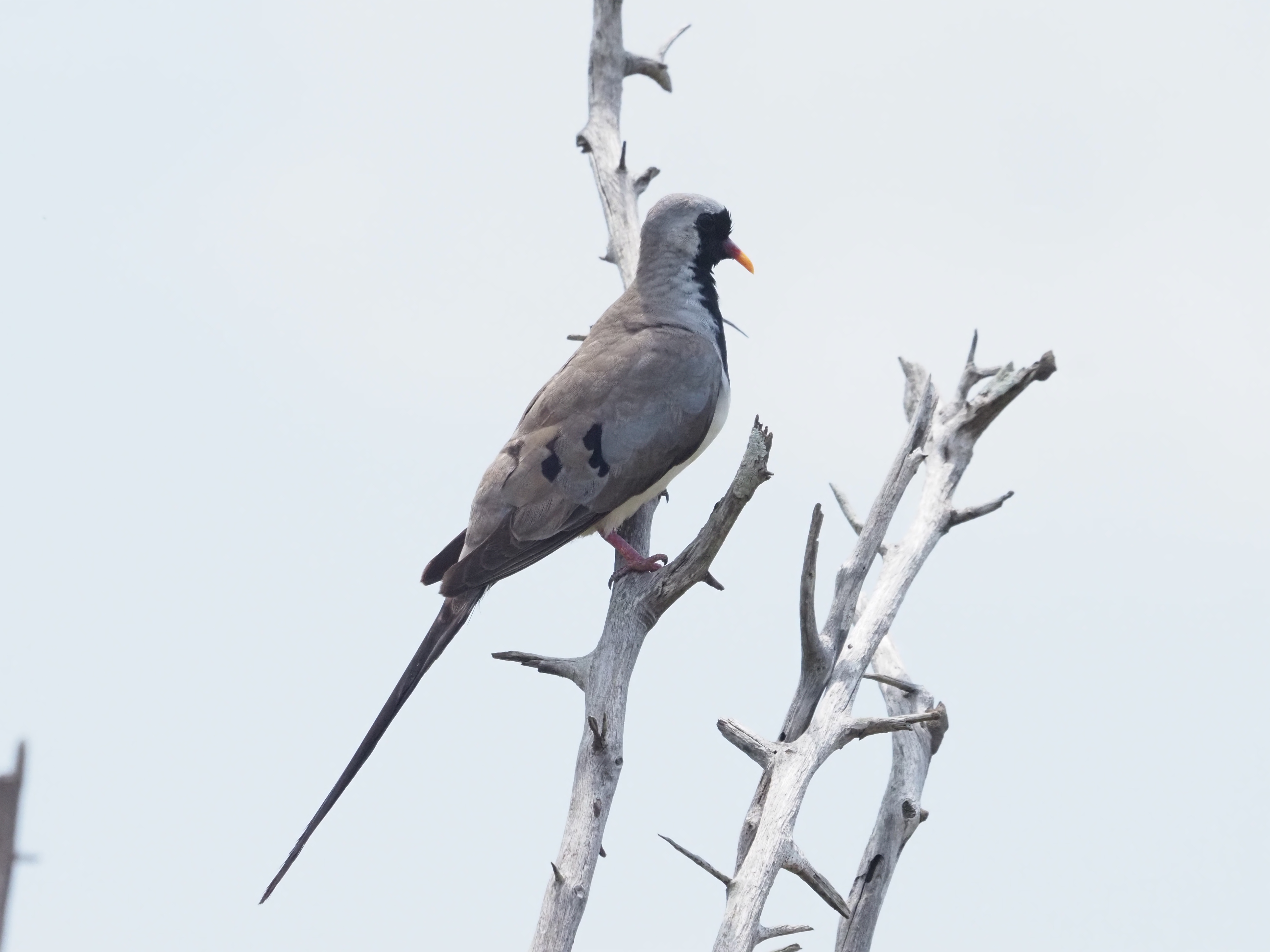
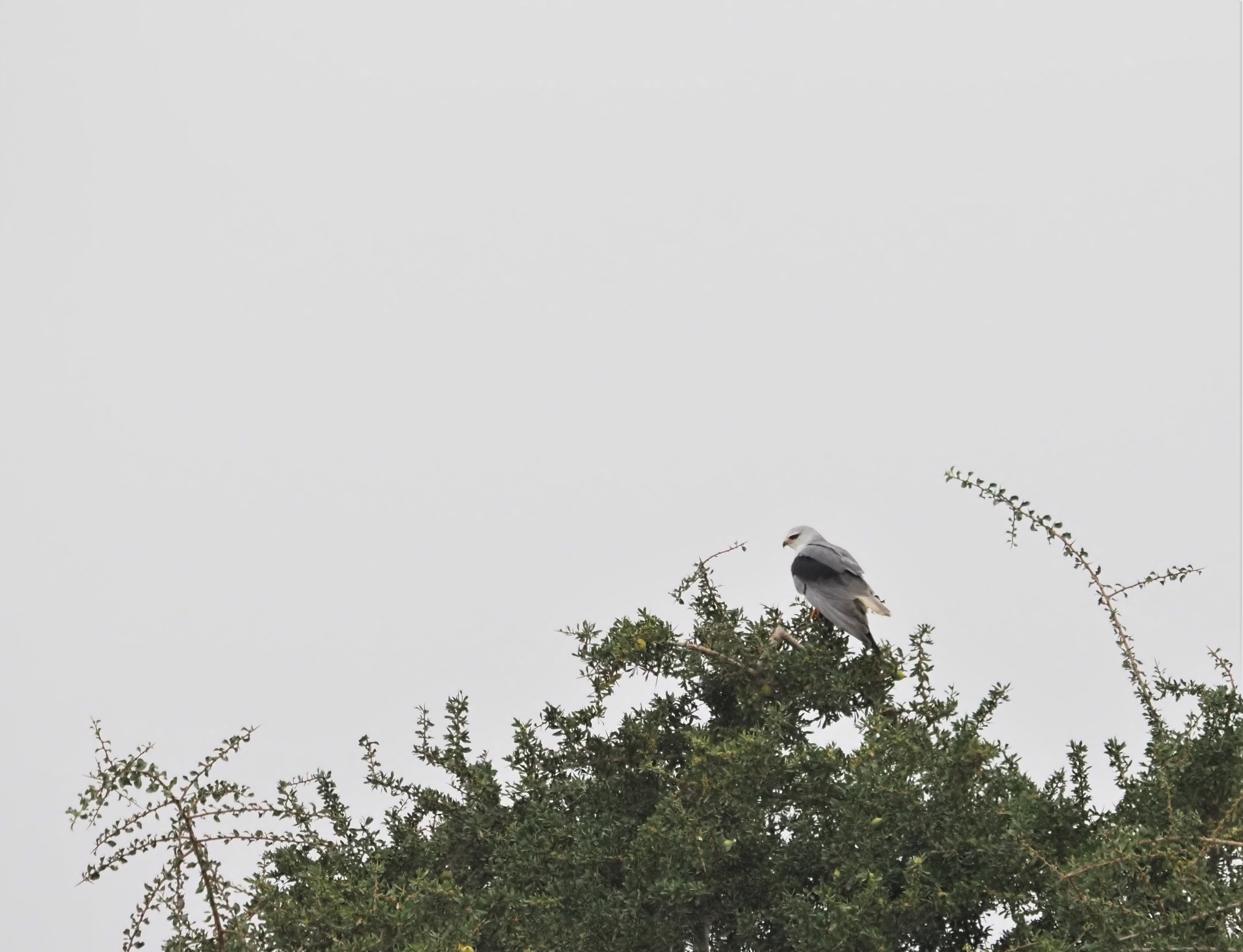
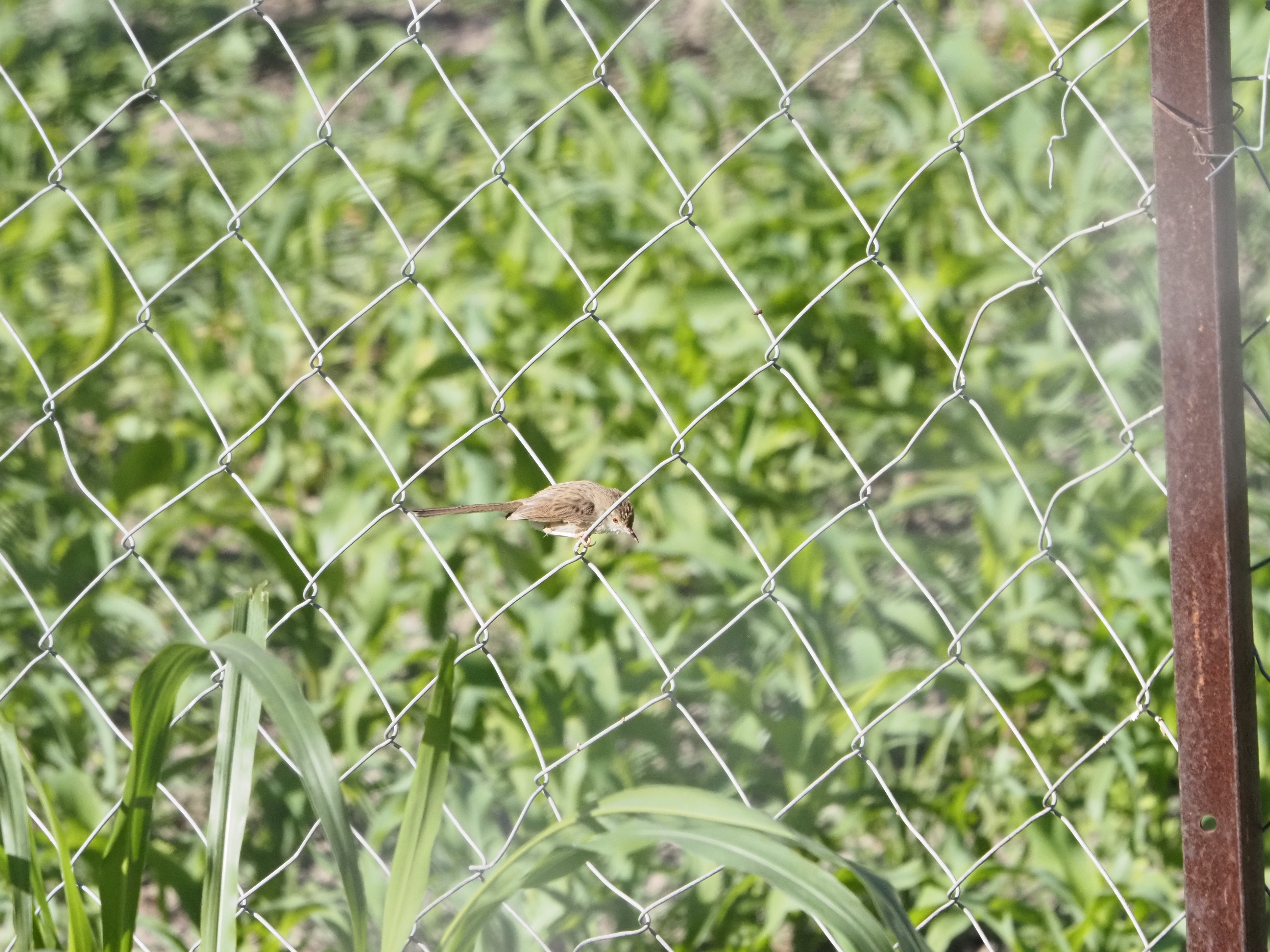
En route, we had some of the common birds in the area, including Long-crested Eagle, Steppe Buzzard, the superb Magpie Shrike, Grey Go-away-bird and some Namaqua Doves in flight. It was a sunny afternoon, and a service stop midway down our destination provided us with the firsts Cape White-eye, Blacksmith Lapwing, Black-winged Kites, Tawny-flanked Prinia and African Palm Swifts of the trip, plus the nice surprise of 2 Horus Swifts flying along with the common Little Swifts. This is a quite scarce bird, and a good adding for the trip!

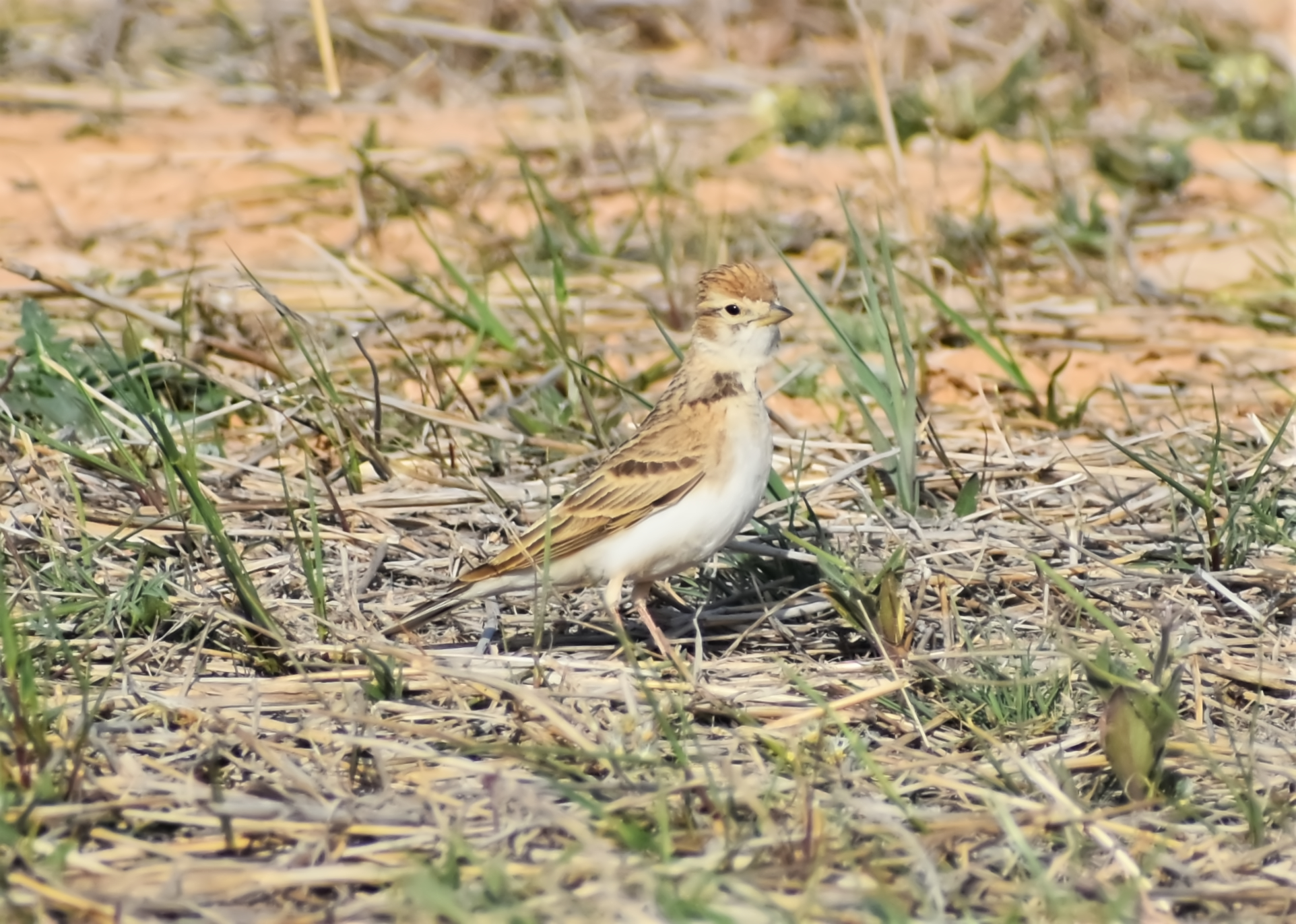
Once arrived to our first proper birding stop, the sightings came as drops in a rainy day, and soon we enjoyed Blue Waxbill, Greater Sparrow, the tame Kalahari Scrub Robin, African Pipit and several lovely Scaly-feathered Weavers. It took us literally 30 seconds to find the first Short-clawed Lark, an obliging bird that offered excellent photo opportunities. The short grass plain where we found it was full of goodies, including Black-faced Waxbills, several Cape Sparrows, 2 Desert Cisticolas, the first of many Yellow-fronted Canary, Black-chested Prinia and 1 Greater Kestrel. We spent some extra time trying to find the often shy Pink-billed Lark, but we were unlucky, and after some time the Crowned Lapwings around became specially noisy, a sign of the sunset to come. Already moving to our accommodation, we had a fast stop to take a look to the first Familiar Chats and White-browed Sparrow-Weavers of the trip.

Our wonderful accommodation embraced the British colonial heritage with the mistery of a Jurassic Park cottage. What a place! After dinner, a fast check to the varanda produced really good looks into 1 African Wood Owl while a Buff-spotted Flufftail was singing along with the chorus of amphibians in the lake beside the lodge. A wonderful first day!

Short-clawed Lark (Certhilauda chuana), an endemic with a limited range. Image by tour leader Carles Oliver
Arriving at sunset to our very lovely first accommodation
African Wood Owl (Strix woodfordii) was next to our accommodation

Day 2. First full day of birding of the trip. It was a sunny, warm morning in the hills around Magoebaskloof. As we headed out of our accommodation, a road stop was mandatory to enjoy some common birds including Cape Robin Chat, Forest Canary, Greater Striped Swallows, Dark-capped Warbler, African Stonechats and Swee Waxbills. It was a sunny morning and soon we were walking under the canopy of one of the few spots where the indigenous forests are still plentiful. Here we enjoyed up to 15 Cape Parrots flying, calling and feeding on some tall tress. Other good birds appearing here included Knysna Turaco, Steppe Buzzard and European Bee-eater. A short walk in the deepest of the jungle produced a very fine selection of forest specialties including Orange Ground Thrush, Narina Trogon, Square-tailed Drongo, and amazing views on Yellow-streaked Babbler along with other good birds such as White Cucckooshrike, Yellow-throated Woodland Warbler, White-starred Robin, Chorister Robin Chat, Barrett’s Warbler and an impressive African Sparrowhawk that was trying to pick up the breakfast in the forest.

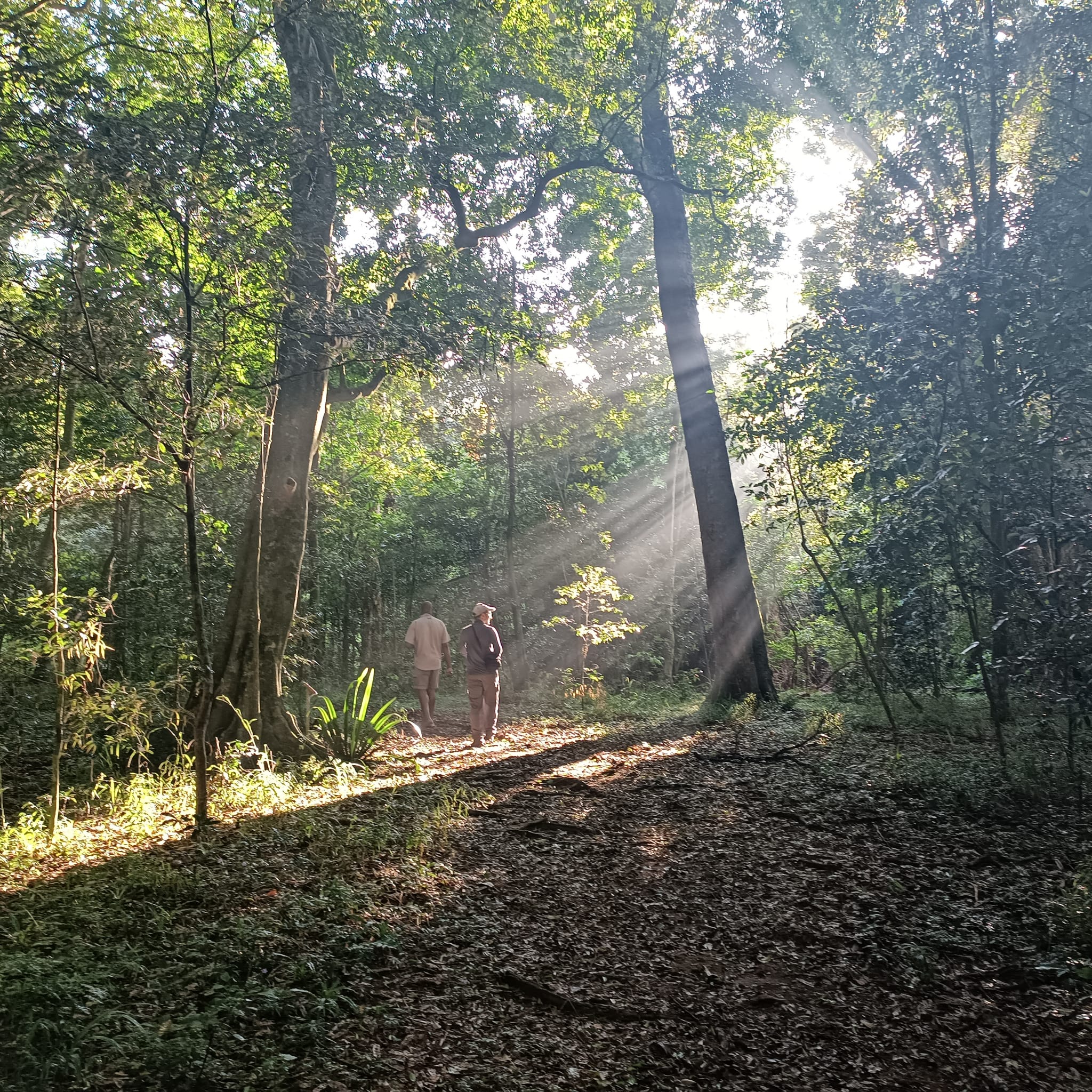
The wonderful original habitat in the Magoebaskloof hillsides.
Cape Parrot (Poicephalus robustus) showing the typical orange markings of the adult.
Dark-capped Warblers (Iduna natalensis)
White-starred Robin (Pogonocichla stellata)

Yellow-streaked Greenbul (Phyllastrephus flavostriatus)
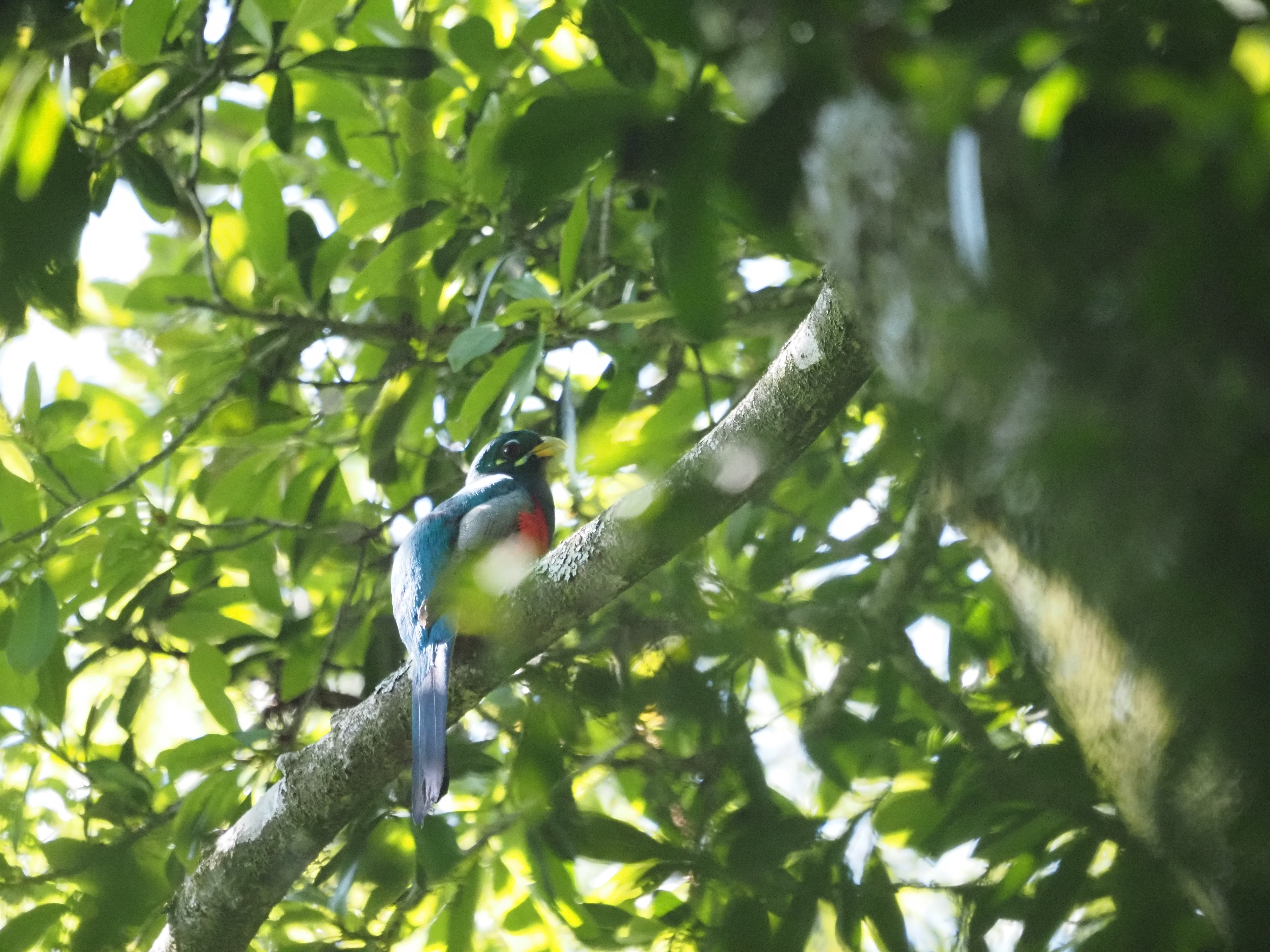
Narina Trogon (Apaloderma narina) nicely posing for our group.

After the forest, we visited one of the few spots for Magpie Mannikin in the area. Just arrived, we got the first of many views on Red-faced Cisticola and Black-collared Barbet, as well as Grey-tit Flycatcher and Red-chested & Amethyst Sunbirds. The Mannikins proved to be way more difficult than expected, but our patience was rewarded not only with great views on this superb bird, but also with the very first Cape Vulture of the trip!

Before lunch, we still had a stop in some open lands, where we enjoyed views on the very scarce Blue-spotted Wood Dove. This is a common bird in most of Eastern Africa, but with extremely slim populations in South Africa! Along with this gem, the place produced also the first of many Golden-breasted Buntings, Cardinal Woodpecker, Brown Snake Eagle and White-fronted Bee-eaters. A bridge nearby produced Mountain Wagtail, African Black Duck but, unfortunately, we couldn’t locate any African Finfoot.

After lunch, we went to check to very special nesting sites. In the first stop, a massive nest of African Crowned Eagle was waiting for us in a line of eucalyptus. After some great scope views on the massive eagle on its nest, we covered the short distance to the nesting area of a pair of Bat Hawks. After a bit of scanning, we got the pair of hawks quietly resting on a branch, waiting for the sunset to come. The perfect moment to catch bats!

After this unforgettable sight, we just headed back to the accommodation, where we made a stop to enjoy a bit more of the swamps beside it. Here we got excellent views on a flock of Cape Canaries, but also Cape Grassbird, Levaillant’s Cisticola, Little Rush Warbler, Little Sparrowhawk and a singing Red-chested Cuckoo singing only a few metres away from us.

Blue-spotted Wood-Dove (Turtur afer) is quite a scarcity in South Africa so we were really pleased to contact with this individual.
Pin-tailed Wydah (Vidua macroura), always a stunner
This pair of Bat Hawks (Macheiraphus alcinus) was considered as one of the best birds of the tour

Day 3. Our transfer day to Kruger happened in a misty morning. We woke up with the accommodation surrounded by thig fog. But not all were bad news. We had a small stroll around, covering the meadows down the accommodation, and at some point a Buff-spotted Flufftail started singing. Not a surprise, since during our first overnight we had at least three birds singing here. But this time the bird looked like singing closer. We went down to a place where we had a minimal view on the stream and the rank vegetation around, and then Carmine had a brief view on the bird moving along the tiny stream. Hearts on! We had a couple of really long minutes of wait (including an Orange Ground Thrush to came to drink water) and finally the bird appeared, at the beggining under the cover of a dead branch, but later we got a full view of the bird (and even a chance for a record shot) as the bird walk totaly in the open by crossing a grassy area! What an amazing sight!!

Buff-spotted Flufftail (Sarothrura elegans). We counted extremely lucky to see such a shy species! Image by tour participant Joan Barat.

With our hearts still beating hard for this incredible sight, we came back to the accommodation for a delicious breakfast before living the area in our way to Kruger National Park. As we left, an African Dusky Flycatcher came to the garden to say goodbye to our group. The short transfer to Kruger was not absent of interest. The weather cleared out as soon as living the mountains. Beyond some Southern Black Flycatchers in fences and gardens, the first of many African Haw-Eagle, we had the only one Booted Eagle of the trip, and a wonderful African Pygmy Kingfisher that briefly came to land beside the group as we were checking raptors in the sky.

Once in Kruger, it didn’t take us long to start enjoying the of the common good birds in the area, including lovely views on Crested Barbet, Diederick Cuckoo, Walhberg’s Eagles, White-bellied Sunbird, Blue Waxbill and Sabota Lark. Among the mammals, we got the firsts of many Impalas, Plains Zebras and African Elephant Bush. A fast stop to enjoy our packed lunch added Moking Cliff Chat, a passby Eurasian Golden Oriole and a pair of Kilsgpringers enjoying their rocky outcrop. Once arrived to our camp we also had excellent views on Golden-tailed Woodpecker, Natal Spurfowl, Arrow-marqued Babbler and Grey Go-away-bird to name a few. After a short break in our comfortable huts, we went out again. During a short game drive we got stunning views on Brown-hooded Kingfishers, Double-banded Sandgrouses, Red-crested Koorhan, Grey-rumped Swallow, Temminck’s Courser, amazing views on a Klaas’s Cuckoo display, and several more! Mammals here included firsts Hartebeest of the trip plus a surprising Honey Badger doing its way in through the woodlands. To end the game drive, we stop by a bridge, where we could see the firsts of may Hypopotamus, but also Saddle-billed Stork, Wood Sandpiper, Greater Painted Snipe and also a Bat Hawk that was waiting the first bats to appear around the river.

Back to the camp we prepare ourselves to go dinner, but the day was not done yet, and a crepuscular walk around our camp produced good views on both African Barred Owlet & African Scops Owl plus the very big surprise of a Greater Galago moving in the palm threes and that was really celebrated by the group.

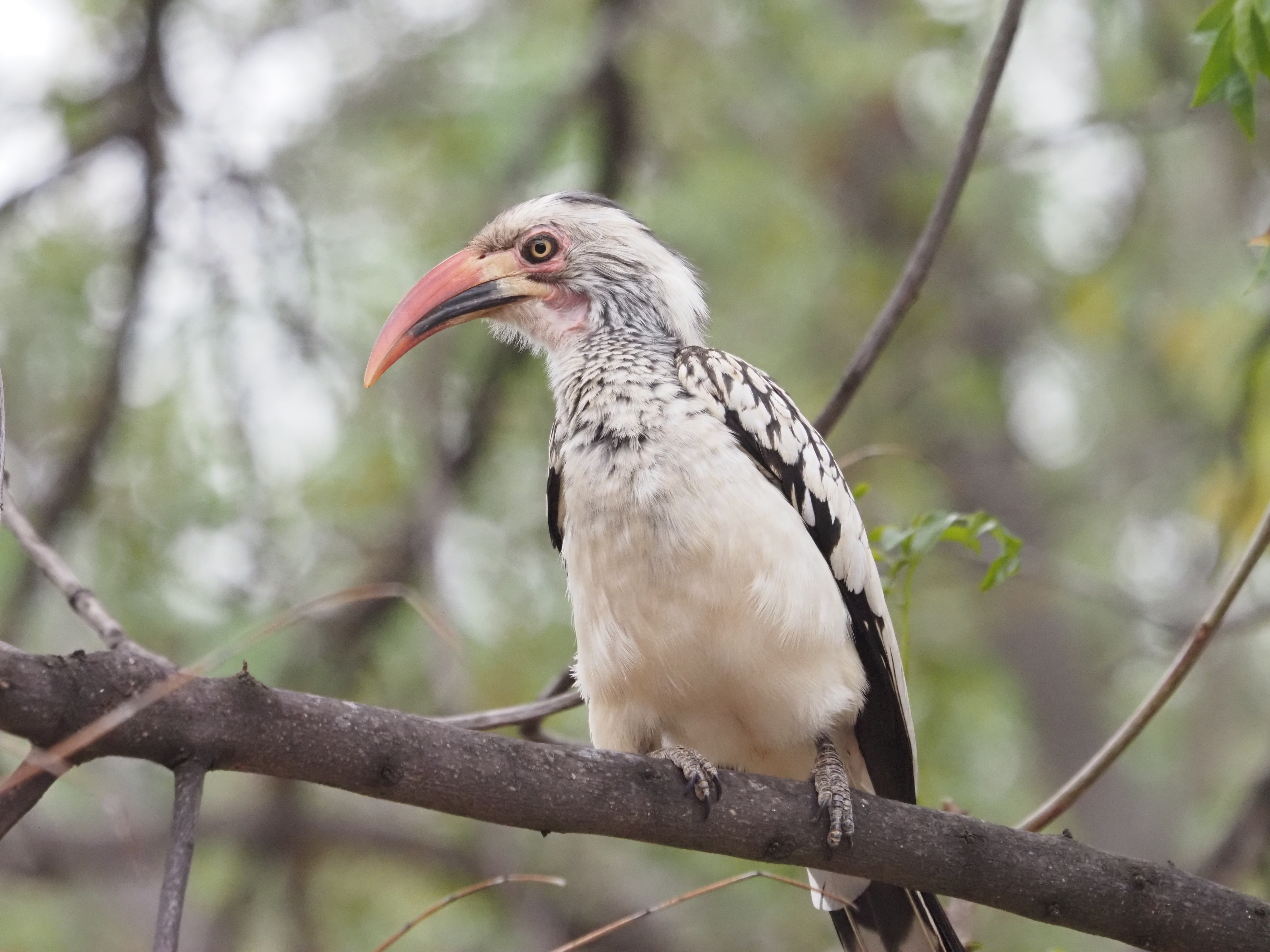
Southern Red-billed Hornbill (Tockus rufirostris), a typical inhabitant of the mopane woodlands
Crested Barbet (Trachyphonus vaillantii), a common views inside Kruger campsites
Green Woodhoopoe (Phoeniculus purpureus) collecting spide webs
A pair of Klipspringers (Oreotragus oreotragus) in one rocky outcrop
Sabota Lark (Mirafra sabota), the commonest lark in most parts of Kruger National Park
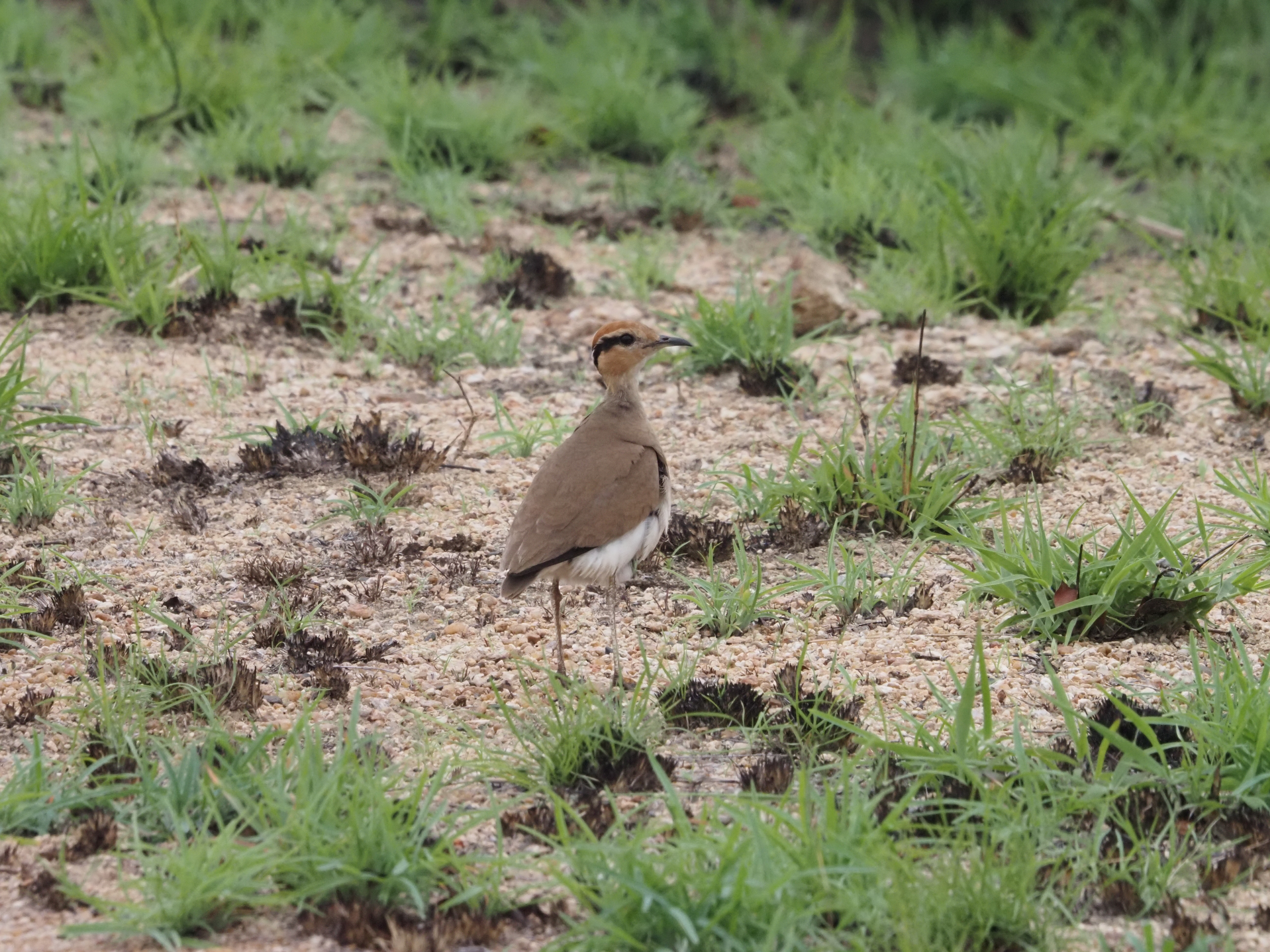
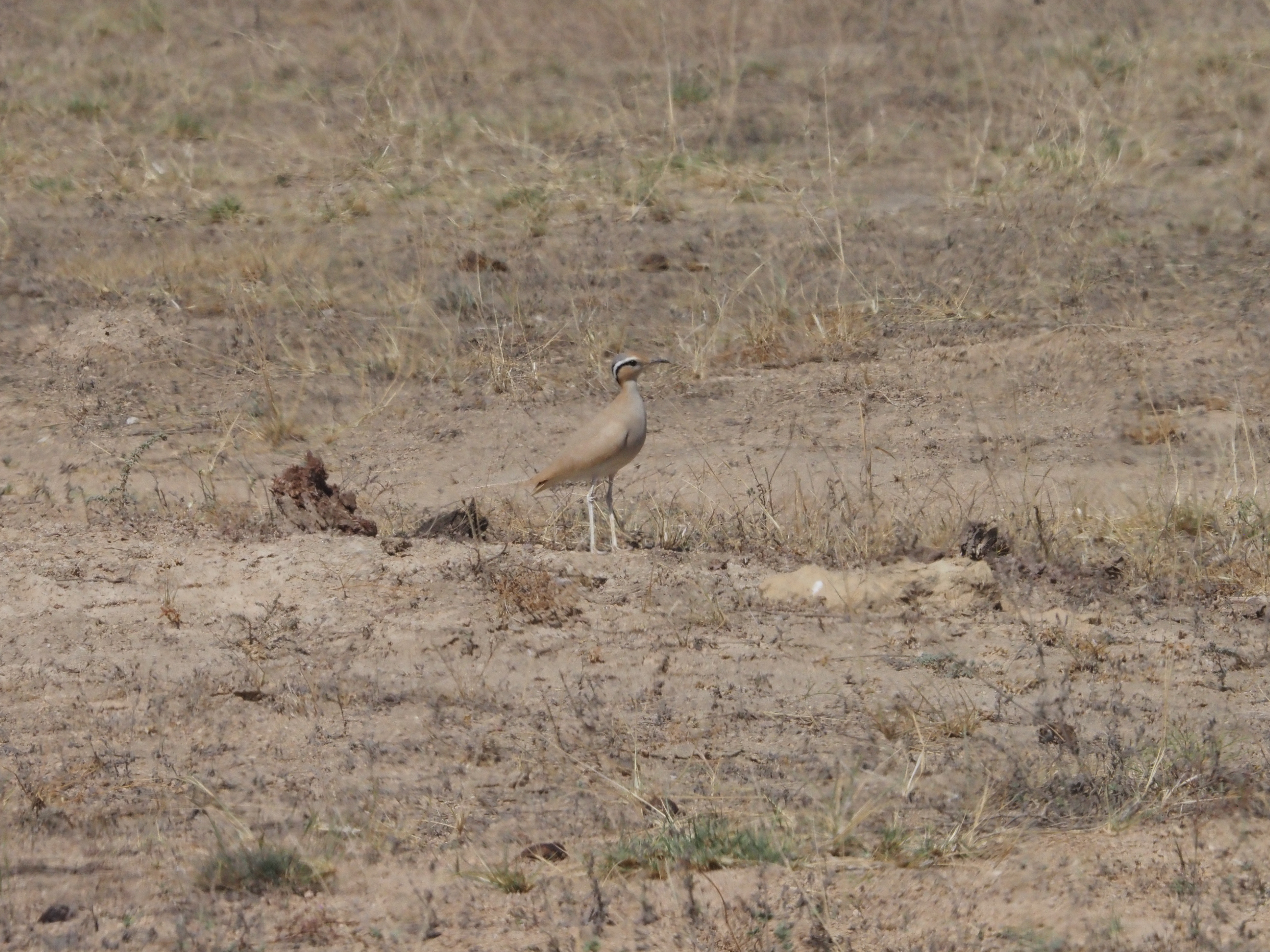
Temminck’s Courser (Cursorior temminckii)
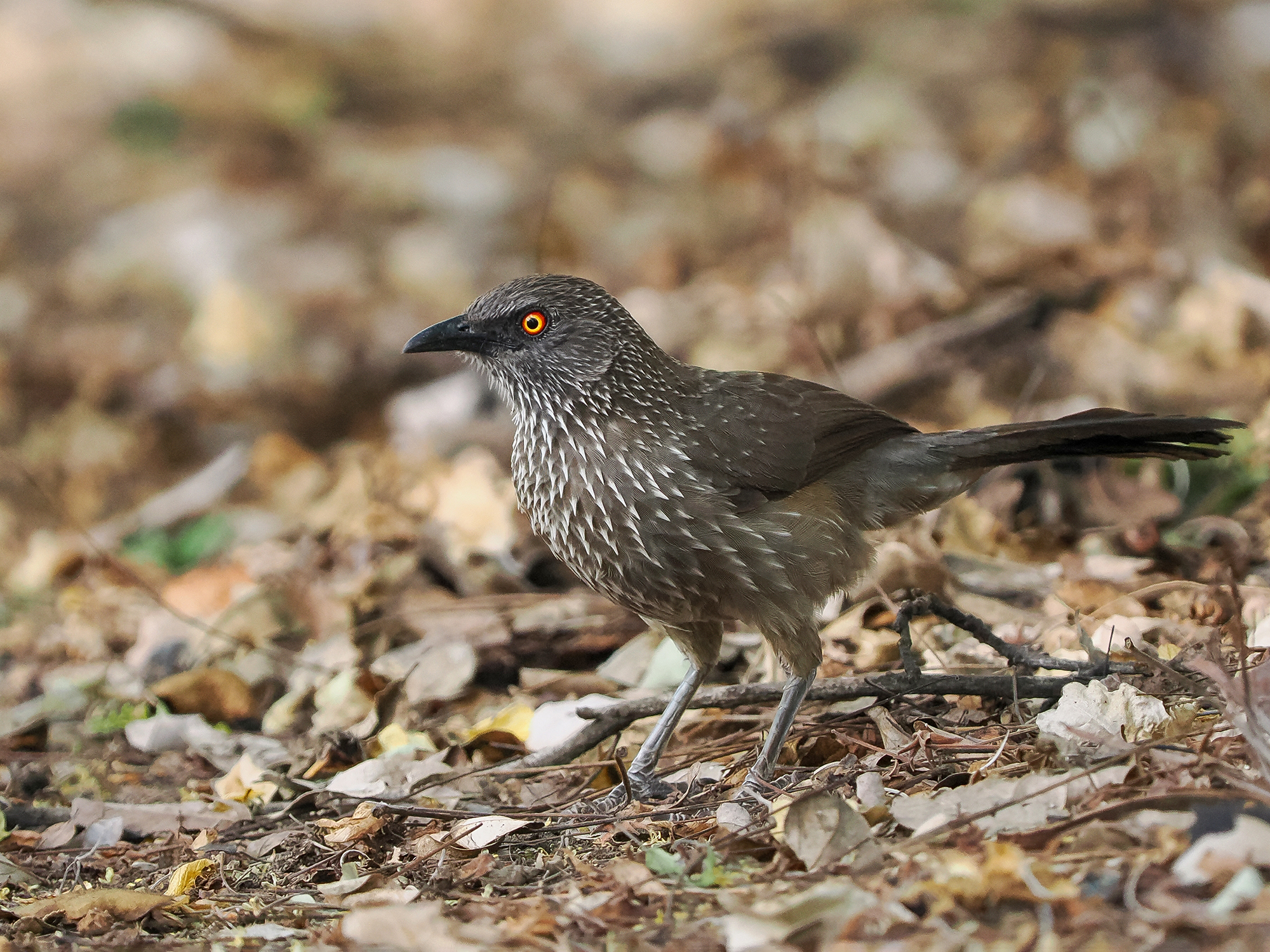
Arrow-marked Babbler (Turdoides jardineii). Image by tour participant Joan Barat.
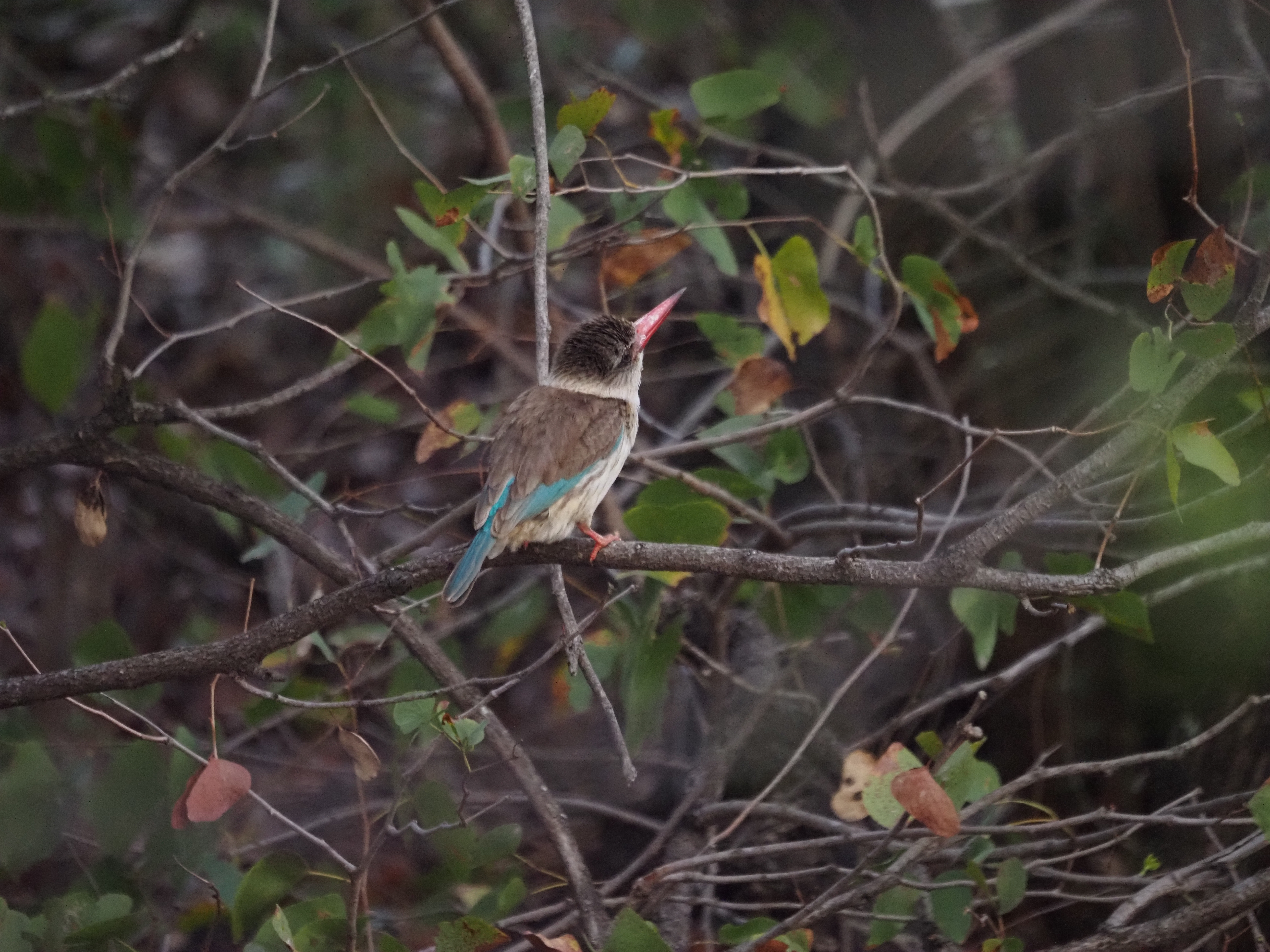
Brown-hooded Kingfisher (Halcyon albiventris)
African Barred Owlet (Glaucidium capense)

Day 4. This morning we enjoyed some birding in the camp, including Marico Flycatcher, Olive Bushshrike, Green-capped Camaroptera and Pearl-spotted Owlet before living South. Our transfer was dominated for the same species that the day before, but adding good views on Yellow-billed Hornbill, both Grey-backed & Chestnut-backed Sparrow Larks plus first views in other species including Green Woodhoopoe and fist views on Red-capped Lark and Kittlitz Plover.

A group of Spotted Hyaenas was lying next to the road, and Southern Giraffes were seen later to complement a good list of mammals. This day we had a brunch in one of the many lodges in Kruger, and the lunch overlooking the lake provide us with wonderful views not only of a 4 Elephants enjoying some water games, but also some interesting bird species inluding Mosque Swallow, Yellow-billed Stork, African Spoonbill, Great Spotted Cuckoo and even a Southern Pochard associated with the large flocks of White-faced Whistling Ducks. Large Nile Crocodiles were lying on the banks, but African Jacanas and Little Stints seem not aware of the danger.

The gardens of the lodges also proved to be extremely productive. We got here 6 Willow Warblers, and solid views on Green-winged Pytilias but also got extremelly close Jacobin and Klaas’s Cuckoos, with special mention to a Diederick Cuckoo perched only 2 metres away from us and the African Paradise Flycatchers attending its nest.

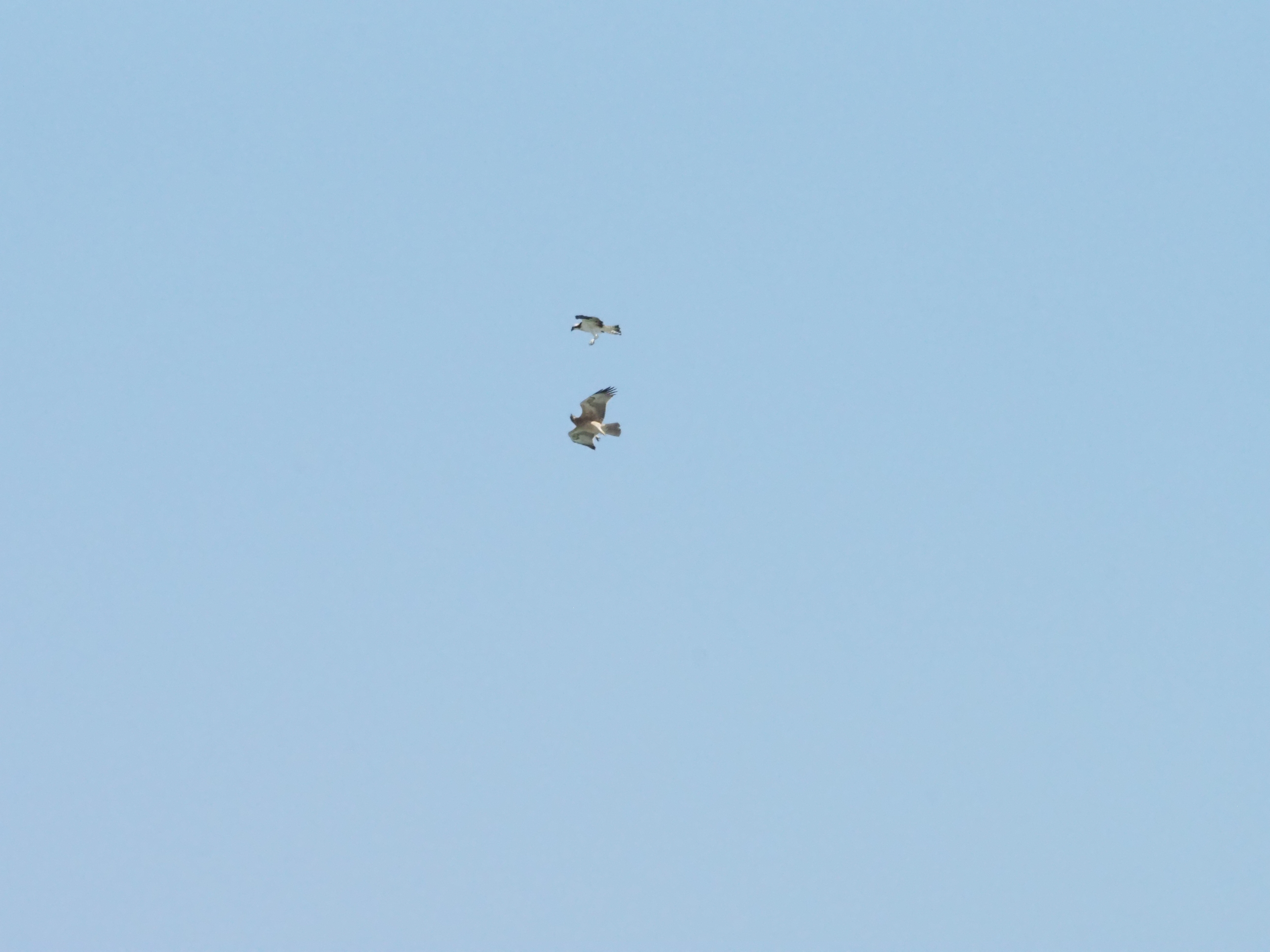
The afternoon was windy, and we checked a pair of bridges around our accommodation, adding more views on African Openbills, Saddle-billed Storks, Great White Egrets and Woolly-necked Storks to our day list, but the best of afternoon was the brilliant views on a Giant Kingfisher by the van, and the only one Osprey of the tour!

Red-crested Korhaan (Lophotis ruficrista)
White-fronted Bee-eater (Merops bullockoides)
Burchell’s Coucal (Centropus burchellii)
Magpie Shrike (Lanius melanoleucos)
Diederik Cuckoo (Chrysococcyx caprius)
Partially leucistic African Scops Owl (Otus senegalensis)
Levaillant’s Cuckoo (Clamator levaillantii)
Southern Giraffe (Giraffa giraffa)

Day 5. Leaving our accommodation, we tranfered through the Mopane woodlands with several Long-billed Crombecs, Chinspot Batises and Black-backed Puffbacks seen but also with a lovely pair of Black Cuckooshrike moving in the woods. Moving South, we crossed a massive landscape of woodlands, with several White-backed Vultures and Bateleurs soaring the sky along with the less common Lappet-faced Vultures. From a outlook point above Olifants River, an endless ondulation of Mopane could be seen, florished with the long necks of the many Giraffes around. Around the river, some Hippopotamus where feeding, and the river itself provided us with the very firsts White-crowned Lapwing of the trip.

While enjoying our generous brunch other interesting species appear including Black Stork, White-throated Robin Chat and a pair of African Hawk-Eagles circling. Our drive South extended still for a pair of hours, enjoying Red-necked Korhaan but also Waterbucks and Nyalas. But the longest stop was devoted to the first pride of Lions of the tour. This time, there at least 3 females and 4 cubs of different ages, so it was easy to guess that these females were in charge of all the cubs in the pride. As expected in the middle of the day, the Lions were not very active, but one of the females gave us a wonderful walk out of the shade.

By lunch time we arrived to our new accommodation, still well inside Kruger National Park. A short walk around the lodge produced excellent views on a flock of Brown-headed Parrots roosting only a few metres above our heads. But the walk produced much more, including Golden-tailed Woodpcker but also Orange-breasted Bushshrike and the first Burnt-necked Eremomela, Grey-backed Camaroptera & Jameson’s Firefinch of the tour.

After some midday break, we left the camp to do some game drive. Amidst the large plains, small parades of Elephants were feeding, with very scenic light. Birding was quiet but still got distant bu nice views on a nesting pair of White-headed Vultures. At sunset, a Black-bellied Bustard stole the show and displayed only a few metres away from our van. What a wonderful way to end the tour!

Southern Yellow-billed Hornbill (Tockus leucomelas)
Double-banded Sandgrouse (Pterocles bicinctus)
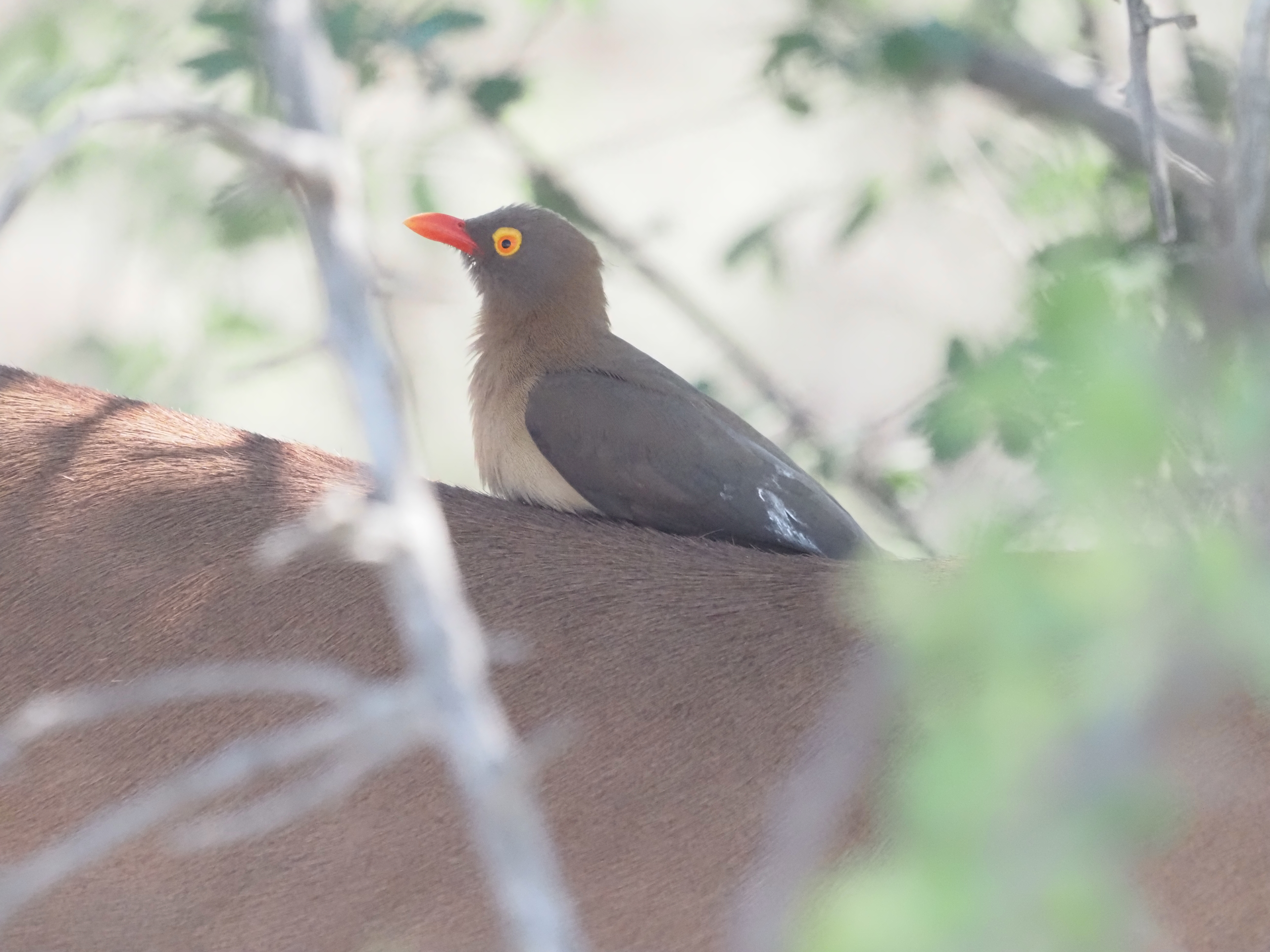
Red-billed Oxpecker (Buphagus erythrorhynchus) on a Cape Buffalo.
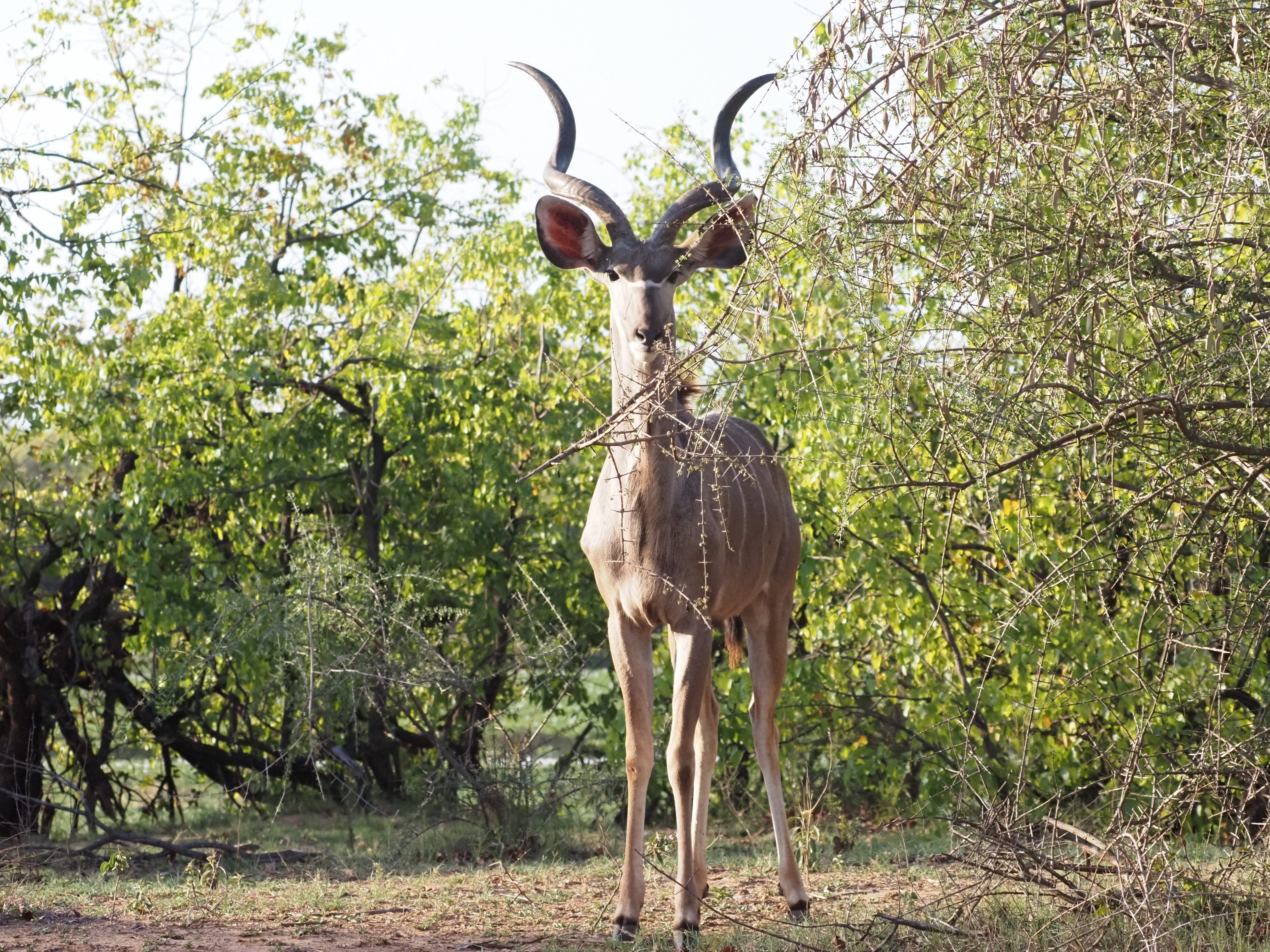
Lovely male Greater Kudu (Tragelaphus strepsiceros)
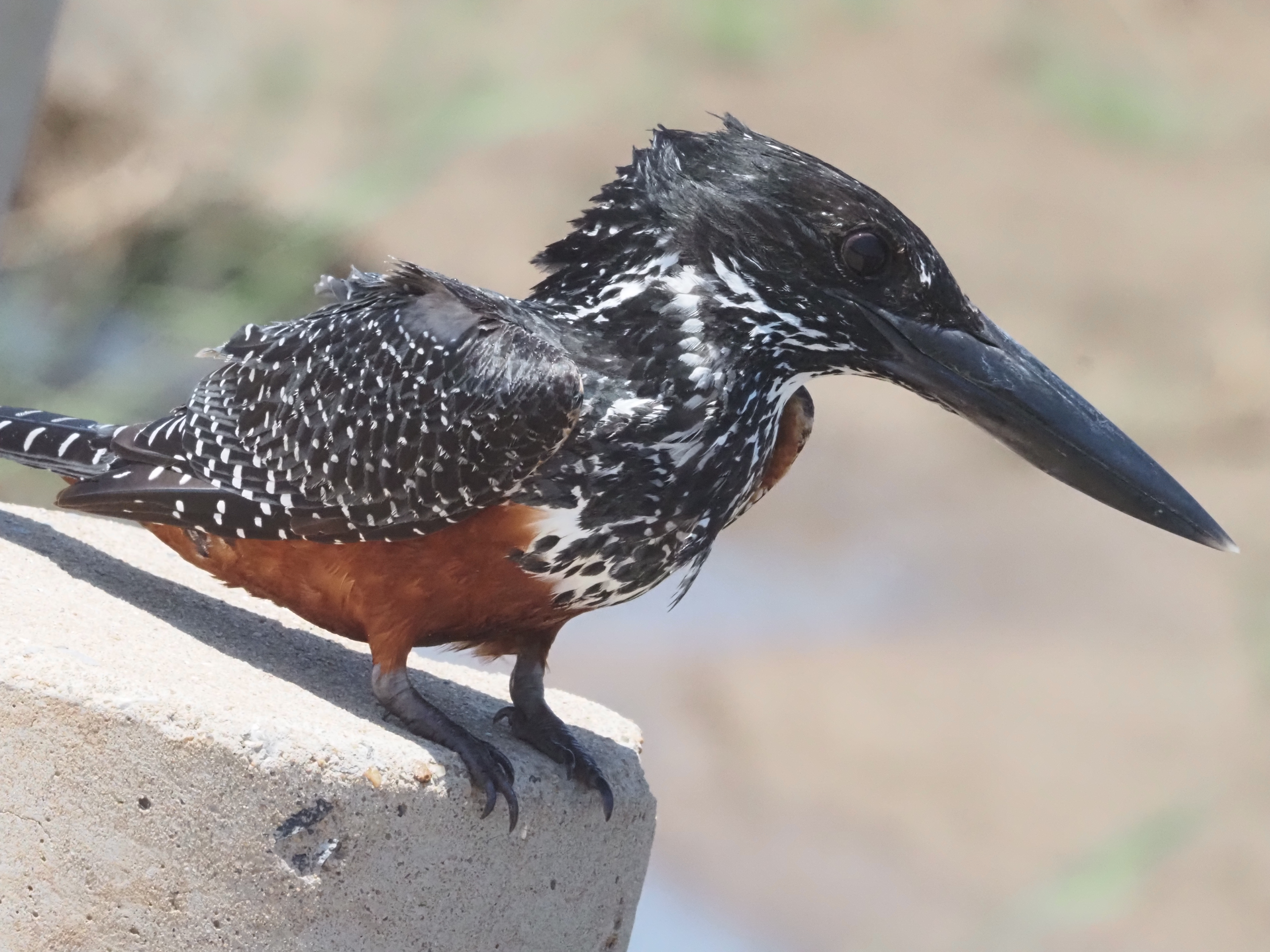
Giant Kingfisher (Megaceryle maxima) posed only 2 meters away from our vehicle!
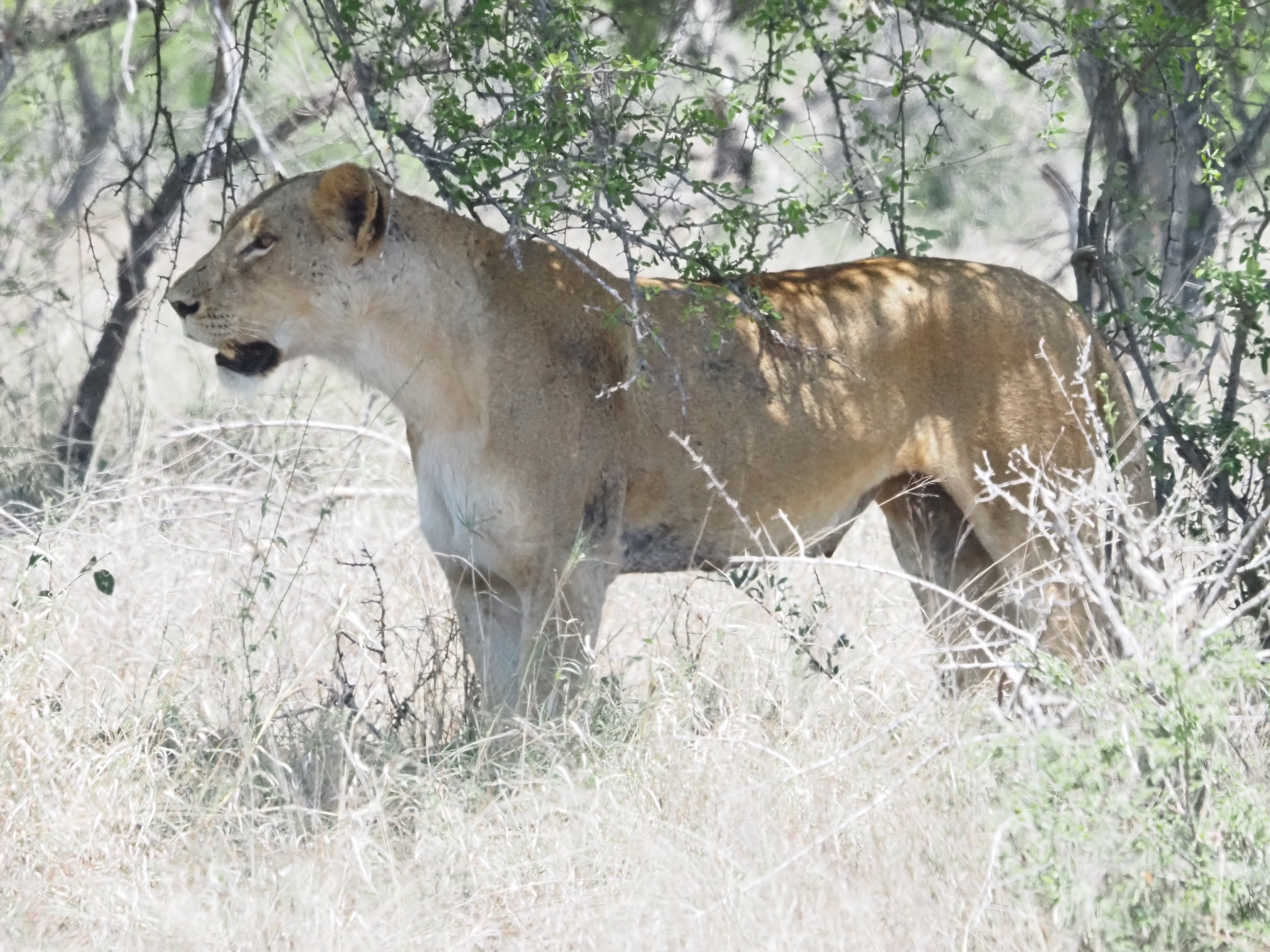
Always special when the first Lions (Panthera leo) of the trip appear!
Brown-headed Parrots (Poicephalus cryptoxanthus) were roosting in low branches!
Golden-tailed Woodpecker (Campethera abingoni)
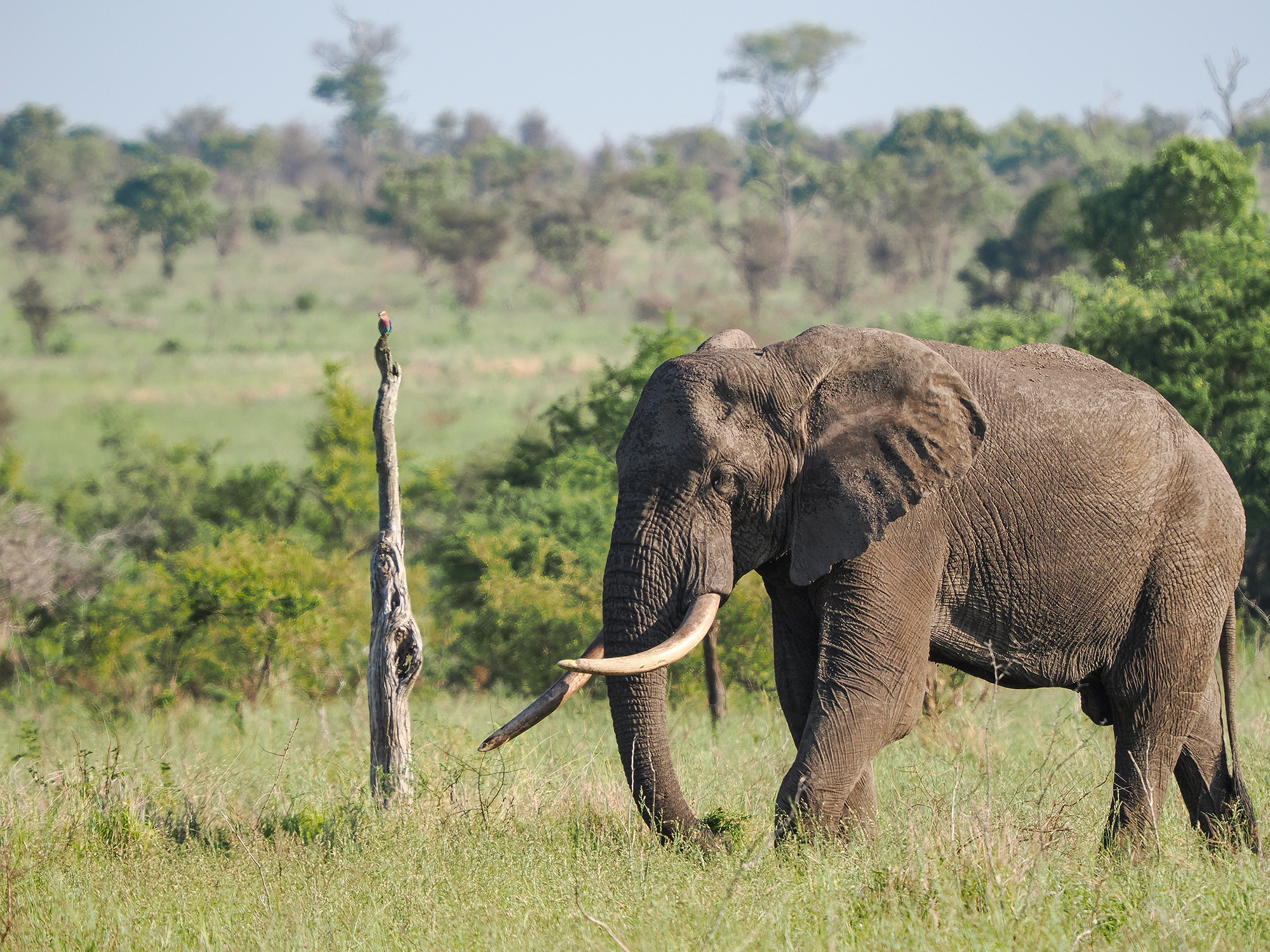
A nice tusker exploring the grasslands. Please note the Lilac-breasted Roller! Image by tour participant Joan Barat.
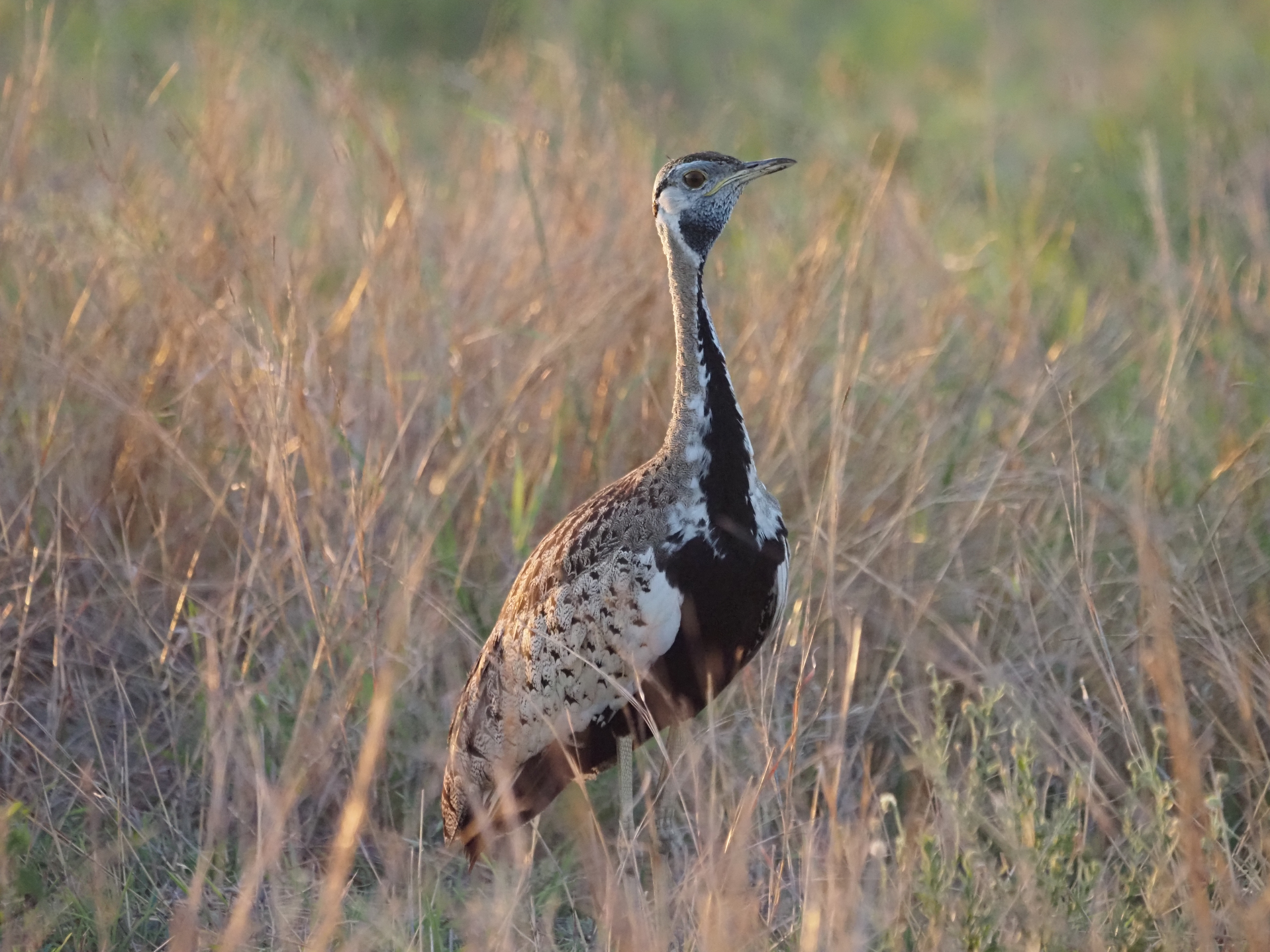
Black-bellied Bustard (Lissotis melanogaster) beside the road to end a wonderful day!

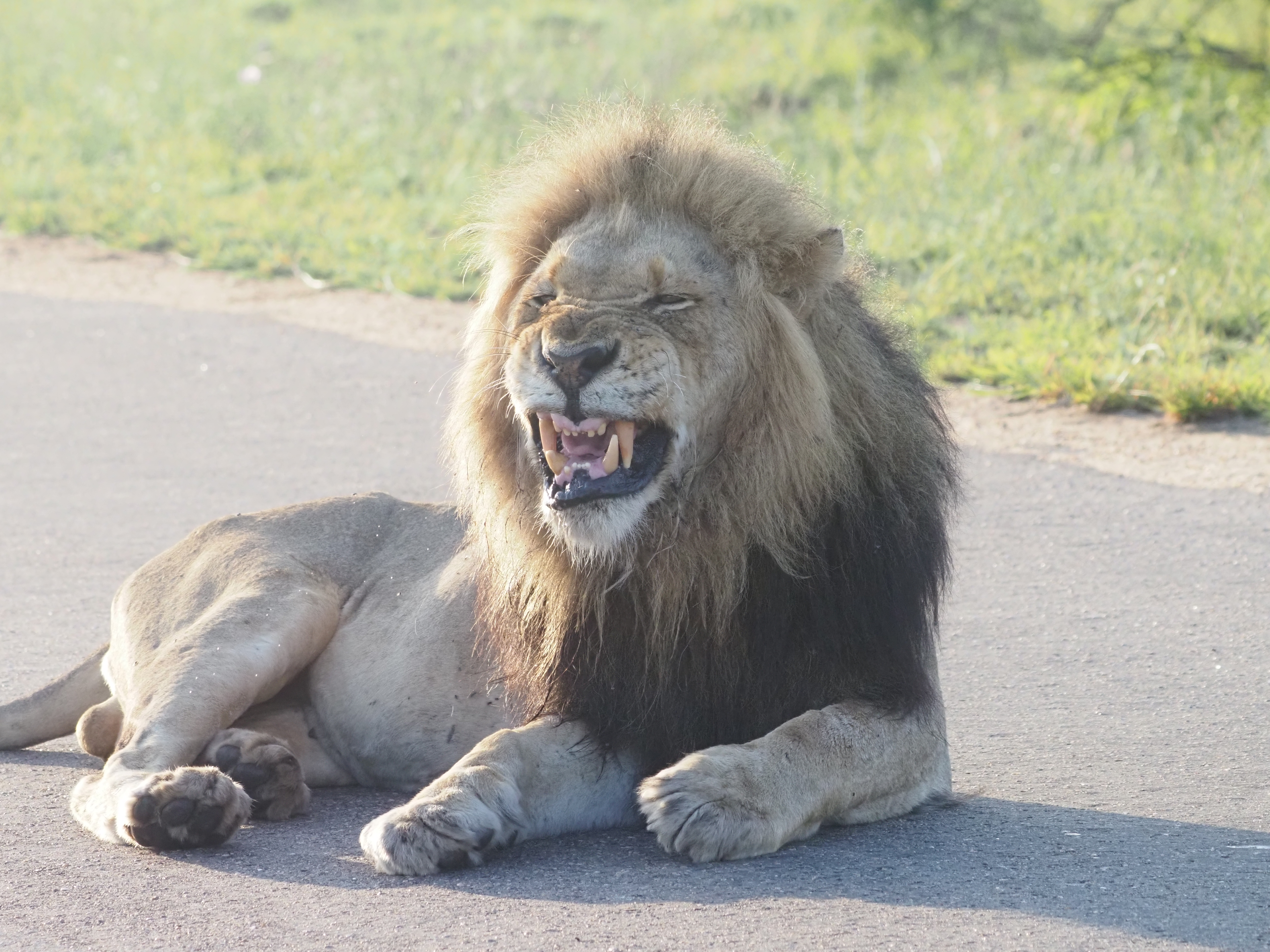
Day 6. Our morning could not start better. An alliance of 3 male Lions lying on the tarmac, giving each other morning salutations and attentions. And roaring. Roaring only 5 metres away from the van, making sure that we were all well awake! We didn’t need any second coffee that day. That was for sure!

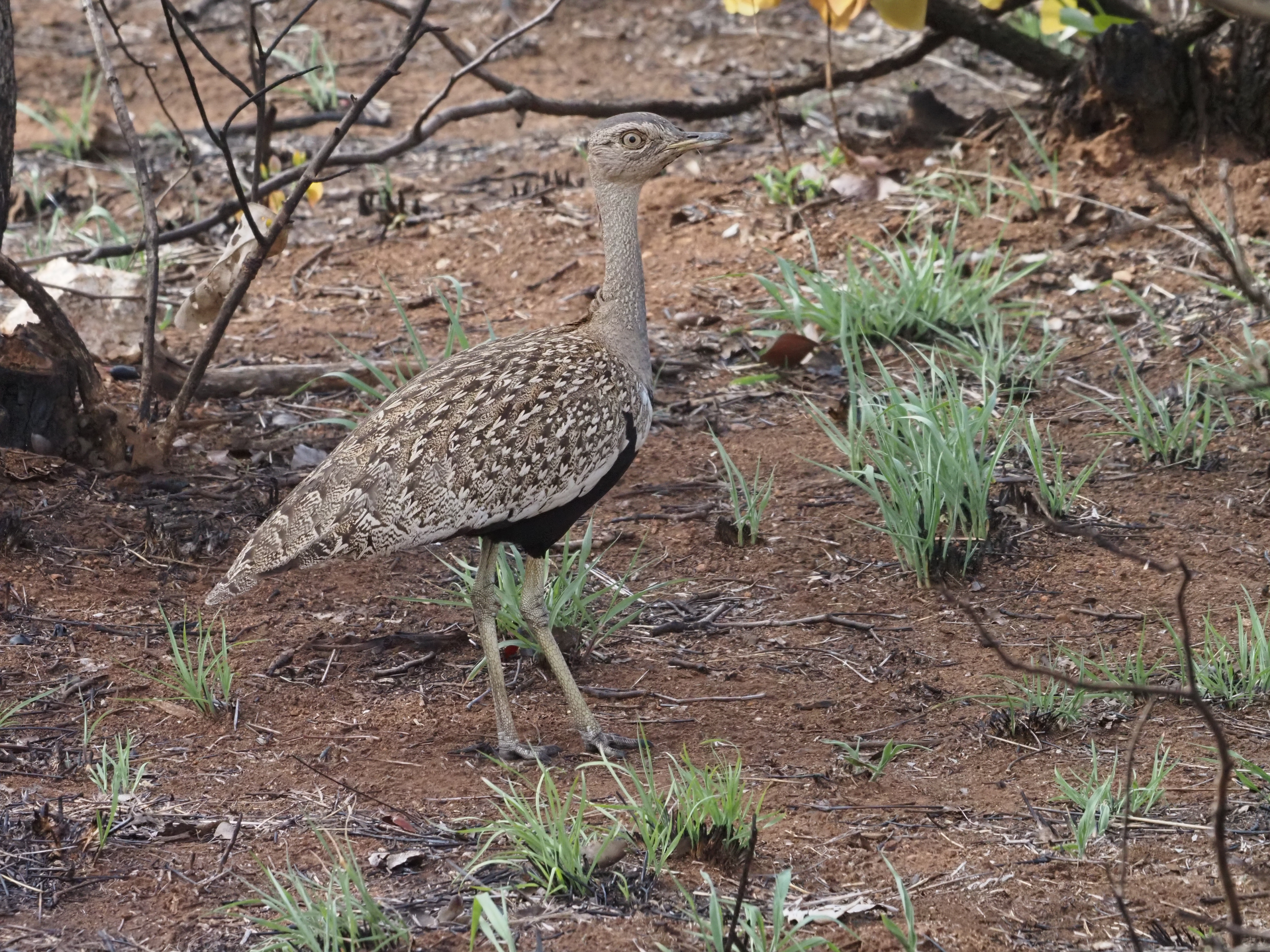
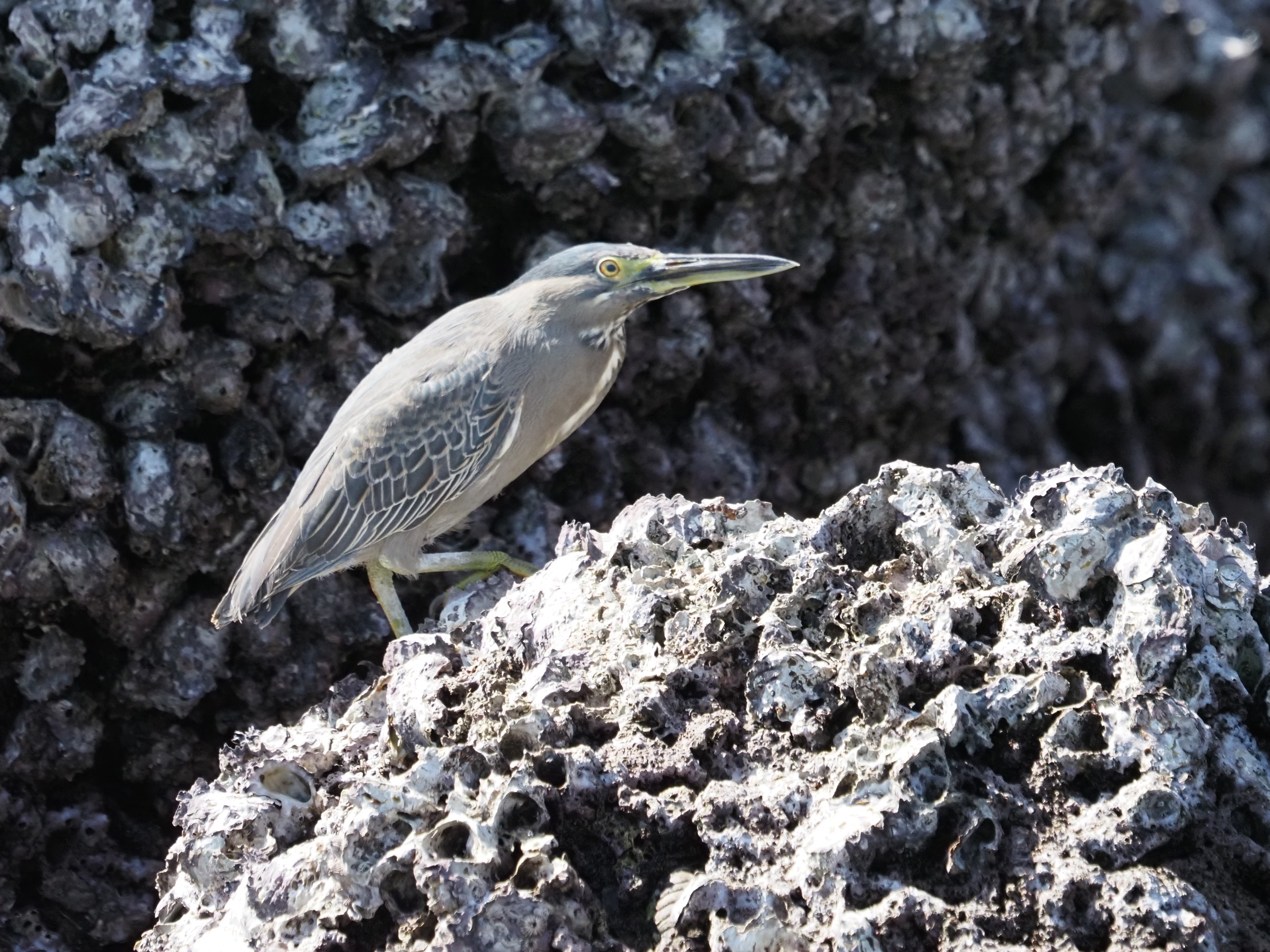
This day was basically devoted to contact with some grassland specialists. The day was calm and sunny, and it looked like full of activity. The first hour of the day produced good views on Kori Bustard, but also on Flappet & Rufous-napped Larks plus several Zitting Cisticolas. But today was one of the longest transfers in the tour, and so we kept moving South, enjoying several of the common birds in the area but also nice views on Southern Ground Hornbills. A lovely bird hide produced good views on Striated Herons but also on the fists Brown-crowned Tchagras and Brubrus of the tour. Black-crowned Night Heron was also a good adding to our list! Another good stop was made to check some raptors in the sky. Beyond the common Walhberg’s Eagles, we got also good views on a Martial Eagle that was unnoticed by the tour leaders as we were checking the many swifts and swallows in the sky.. It was a mistake, and who found the eagle could not resist to remind us about for the next ten days 🙂

Not far from our final destination, a large parade of Elephants gave us the change to contact with the only 2 Bennett’s Woodpeckers of the tour! By the time that we arrived to our accommodation is was windy and cold. But a short walk around the Skukuza Camp still produced some goodies including White-browed Robin Chat, the first Sombre Greenbul of the trip, Black-collared Barbet, Red-faced Mousebirds, Green-backed Camaroptera, and Little Sparrowhawk.

A very impressive way to start any day! Image by tour participant Joan Barat.
One of three males seen before breakfast.
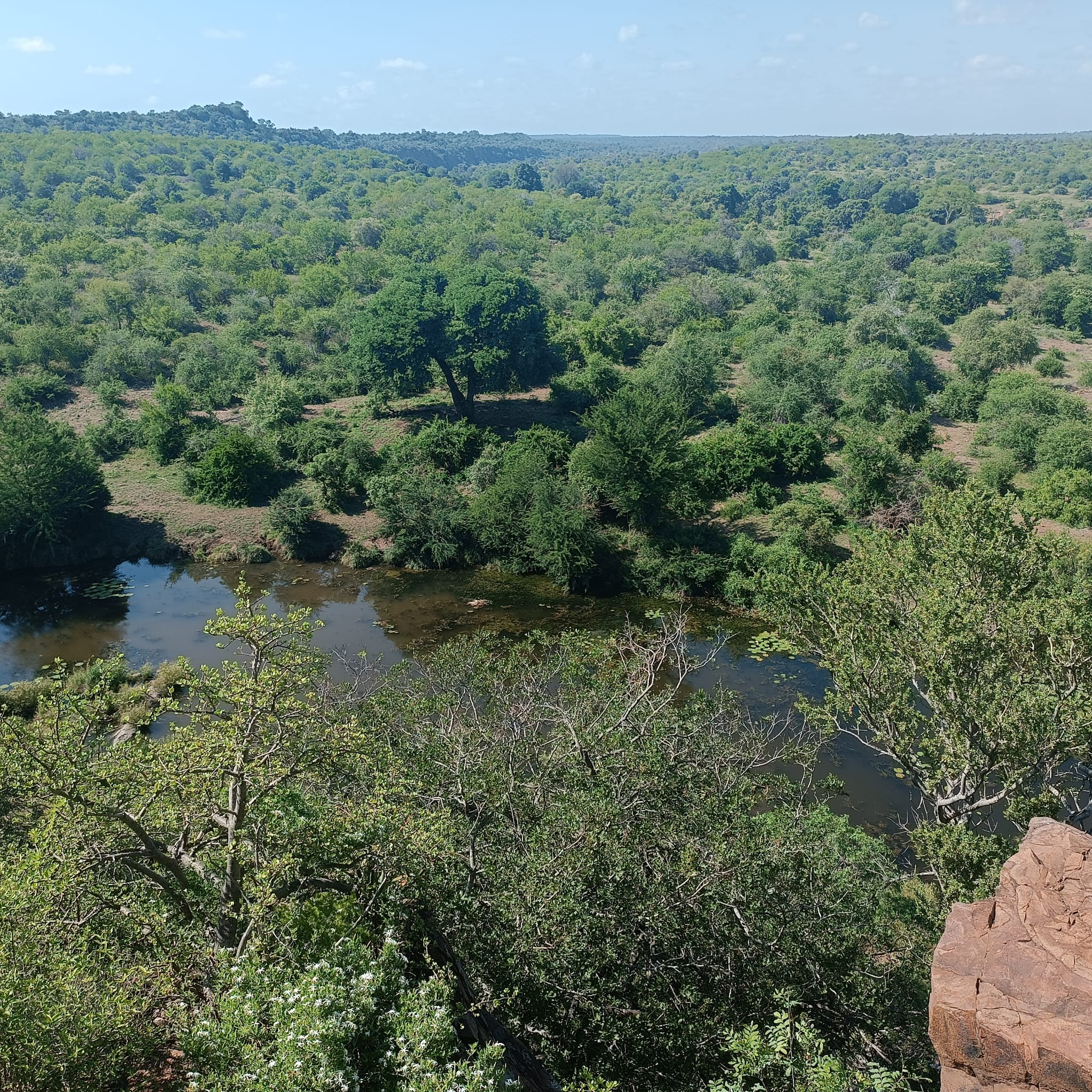
All along Kruger there are a number of wonderful lookouts.
Lilac-breasted Roller (Coracias caudatus), a really common view in the woodlands
Black Scimitarbill (Rhinopomastus aterrimus)
A superb shot on a Hamerkop (Scopus umbretta) about to shallow a small fish. Image by tour participant Joan Barat.
Brubru (Nialus afer)
Secretarybird (Sagittarius serpentarius) patrolling its hunting territory.
Wahlberg’s Eagle (Aquila wahlbergi), the commonest eagle in the area.
Namaqua Dove (Oena capensis)
Southern Black Tit (Melaniparus niger)
Black-collared Barbet (Lybius torquatus)
This Little Sparrowhawk (Accipiter minullus) appeared in our camp almost at dawn.

Day 7. Our morning around Skukuza was marked by the strong wind. Temperatures were low, with a maximum of only 18ºC, but most of the day was below 15ºC. Our morning game drive was not extremely productive, but we still got good views on the always wonderful Violet-eared Waxbill. Black Scimitarbill, Crested Francolin and Brubru were other interesting sight before having one of the top sights of the trip. Along the morning we also got the only large parck of Cape Buffalos that we got inside the Kruger National Park, and we got lucky that they were joined by some Yellow-billed Oxpeckers, a species that has recently colonised the area from the North.

A massive Leopard male was sitting by a track. When we arrived, there 4 other cars enjoying the views on the big cat. It is not surprising to see Leopards right by the road, but we had a quite extraordinary bonus track. Only a few moments after we arrived, two Warthogs were seen running away, tails up only a few metres away from the Leopard. In between, a small collector of rain was under the road. The small pipe was not of major interest, bu suddenly the Leopard when inside the pipe, and screams came out of the pipe. It was clear that a small Warthog was inside. During the next minute we had a full cacophony of screams, slugs and snarls, ending in a complete silence. It was obvious than the fight was off, and Leopard was enjoying the meal inside the pipe. We decided to wait a bit longer, and after 40 minutes of wait only 2 cars were there. At the end, the massive male came out of the pipe full of blood and with evident wounds. For the next 10 minutes, we enjoyed great views on the cat, only 4 metres away from the van. It was exhausted and dirty, but became one of the most extraordinary mammal sights during the tour.

In the afternoon we stayed in the lodge. It was really windy and cold, so we decided to work some specialties in the area. We were lucky and we had great views on Bearded Scrub Robin, Red-chested Cuckoo, African Green Pigeon and African Goshawk, that was new for the trip.

The always impressive Southern Ground Hornbill (Bucorvus leadveateri)
Blue Waxbill (Uraeginthus angolensis)
This massive male Leopard (Panthera pardus) gave us some impressive views right after killing a Warthog.
A very tame Bearded Scrub Robin (Cercotrichas quadrivirgata) right by our vehicle.
Violet-backed Starling (Cinnyricinclus leucogaster)

Day 8. During this day, the temperature started a long collapse, ending the day with only 6ºC, very cloudy sky and poor light. But the morning started sunny and uite warm, and our transfer South produced a long list of goodies. Even before leaving our lodge we enjoyed some Trumpeter Hornbills, and during the morning a number of stops produced great views on a number of goodies. Black Cuckoo but also the often elusive Grey-headed Bushshrike and Bearded Woodpecker were all new for the trip, and Bearded Scrub Robin and Southern Black Tits offered great looks. Our brunch stop offered far away views on 4 African Skimmers but, in addition, we got the first Terrestrial Brownbuls and Southern Boubou of the trip plus obliging Chinspot Batis, Cardinal Woodpecker, Scarlet-chested Sunbird and Grey-tit Flycatcher. As the day advanced, the weather became more colder and windy. A fast stop was made in a lodge in our way to add Crowned Hornbill and Lesser Honeyguide, but after this the bird activity declined and as we approached the limit of the park. It was 15:00 but the light was already limited. Here decided to explore some ponds immediately outside Kruger National Park. In our way out, female Lion and Leopard crossed the road only 300 metres away from each other!

Despite the cloudy weather it became really productive, as we got the first White-backed Ducks and African Swamphens of the trip, the only one Allen’s Gallinule of the tour and a lovely Buffy Pipit walking in front of the van. Other interesting species here included Collared Pratincole (hearts stopped for a while as the bad light conditions made us think on Black-winged Pratincole!), Purple Heron, Grosbeak Weaver and Collared Widowbird.

As we crossed back inside Kruger National Park, a fast final stop was made at the bridge over the Crocodile River. Here we were fascinated by the good variety of birds including Saddle-billed & Holly-necked Storks, Giant Kingfisher, 3 Black-backed Night Herons, 3 Striated Herons but also Wood Sandpipers and Greater Painted Snipe. All of this while Hypopotamus and Bush Elephants were having were hanging around along with some majestic Watterbucks and, of course, Nile Crocodiles.

From here we just covered the short distance to our lodge. In they way, we were lucky to find the first White Rhinoceros of the trip, but unfortunately we only got great views on its but. Once in the lodge, we scanned for some birds, but the very low temperature made not possible and the only interesting bird seen was a Black-headed Oriole and a flock of Red-billed Oxpeckers coming to roost in a dead tree.

Nile Crocodile (Crocodylus niloticus)
Gorgeous Bushshrike (Telophorus viridis) well hidden inside a thicket.
Red-faced Cisticola (Cisticola erythrops) inhabits dense thickets, often near water.
Brown-crowned Tchagra (Tchagra australis).
Southern Boubou (Laniarius ferrugineus), another great endemic for the list of the tour!
Chinspot Batis (Batis molitor)
Trumpeter Hornbill (Bycanistes bucinator).

Day 9. A cold and rainy day. This day we left Kruger behind to start the most exciting part of the tour. Our way to Wakkestroof was cold and rainy, and we had little chances for birding.

Still, the plains around Wakkestroof are always providing good surprises and a number of short stops provided us with the only Greater Flamingoes of the trip along with Red-knobbed Coots and Southern Pochards. Here Red-capped Larks were common, and along with them we had several Southern Ant-eating Chat, Spike-heeled Lark, 2 lovely Blue Korhaans that flew off very close from the road, some distant flocks of Blue Cranes, a memorable Lanner Falcon, and Carmine did again to find the only one Black-winged Lapwing of the trip!

Getting close to Wakkerstroof, the fields start to become smaller and more hilly, and here is where we saw 2 of the very few Springboks of the trip along with Jackal Buzzard under the rain.

Before going to our accommodation to look for shelter of the rain, we had a brief stop in a large lagoon South of Wakkerstroof. Here we had excellent views on African Snipes while feeding in the out along with Squacco & Purple Herons and several African Swamphens.

Black-winged Kite (Elanus caeruleus)
Lanner Falcon (Falco biarmicus)
Long-tailed Widowbird (Euplectes progne), a very common view around Wakketrof

Day 10. A new early start to explore the amazing plains and hillsides around Wakkestroof. The weather was cloudy but not as cold as the day before, and temperatures went up to 16ºC as the clouds were breaking out during the morning. But the most important is that we had no rain at all. Our very first stop was devoted to explore the wetland immediately South of the town. As the they before, the area was filled with Common Moorhens, some African Swamphens and a few herons, including a lovely adult Purple Heron. Among them, we were lucky to find an African Rail, that provided long views as fed in the out along with Black Crake. Leaving the wetland behind, we faced the grassy hills North of Bakkestroof, in search of some specialties living in the bushland. There we were lucky to contact with the often elusive Bush Blackcap along with the also endemics Drakensberg Prinia, Fiscal Flycatcher, Cape Canary, Cape Grassbird and Bokmakeire. Some Southern Bald Ibis were flying around, and their calls were a nice complement to the sight.

Back to the plains we started looking for some grasslands specialities, and soon we had good scope views on Denhman’s Bustards, but also the common Southern Ant-eating Chat. A fast stop was necessary to admire the often secretive Coqui Francolin feeding and walking in the grasslands, and not far from there we had good views with the scarce Orange-bellied Waxbills feeding in the short grass along with the much commoner Cape Longclaws. White-bellied Bustards, with an endemic (an endangered) race in Southern Africa, proved harder to find in the grasslands, but our perseverance was granted with excellent views on 2 males moving together only a few meters away from our vehicle..

We enjoyed our brunch by a bridge hosting a colony of South African Cliff Swallows. Our itinerary through the amazing hillsides around Wakkerstroom went on, and a new stop was made by a rocky outcrop, where we enjoyed really good looks on both African Rock & Nicholson’s Pipits. Only a few hundred of metres beyond we were walking through one of the very last known spots for the very rare Rudd’s Lark. Here, the local knowledge was essential to locate one of this scarcities, and the whole group enjoyed solid views on one bird as it was feeding in the short grass of the hill side. In our way down, we enjoyed good views on both Wing-snapping and the uncommon Pale-crowned Cisticolas along with the commoner Cape Longclaw and Red-capped Lark. A further short walk in the area also produced other interesting specialities such as Sentinel Rock Thrush, Eastern Long-billed Lark and the often elusive Yellow-breasted Pipit.

Coqui Francolin (Peliperdix coqui), a shy inhabitant of heterogenous grasslands.
Southern Anteater Chat (Myrmecocichla formicivora)
Southern Bald Ibis (Geronticus calvus)
Part of our group in their way to the Rudd’s Lark place.
Rudd’s Lark (Heteromirafra ruddi). Excuses the poor quality. We never went close to avoid any disturbance
Spike-heeled Lark (Chersomanes albofasciata)

Leaving the hills, we came down to the plains to spend some time in a number of fields. Again some scanning was required was our dedication was granted with good views on Pink-billed & Eastern Clapper Larks. Here we also had 3 Blue Korhaans and 5 Greater Kestrels that were chasing the very common African Pipits and Widowbirds in the area. The very last short walk of the day was to check a moist corner of the endless plain, and once more our faith was granted with good looks on at least 4 Marsh Owls that were roosting in the rank vegetation!

But our day was not over yet! Back to town, we had a fast stop by a pond and we were all surprised to hear a Red-chested Flufftail calling quite close! So, we decided to try to see the bird, and less than one minute later we were all astonished to see the bird squeaking out of the vegetation!!! It had three small, fast walks in front of our group, right before disappearing in tall grass! An amazing way to end a very special day around Wakkerstroom..

Eastern Clapper Lark (Mirafra fasciolata)
Marsh Owl (Asio capensis)
Blue Korhaans (Eupodotis caerulescens)

Day 11. After enjoying a wonderful home made breakfast in our B&B accommodation, we moved out as the mist started to clear out. A mandatory stop in the Bakkerstroom lake was made, and we were granted not only with great views on African Swamphens, Squacco Herons and Lesser Swamp Warblers to name a few, but also with the only one Red-throated Wryneck of the trip. A short walk along the reed bed produced great views on a group of 4 Clawless Otters playing and fishing inside the water, and our 2 Red-chested Flufftails started singing as we got inside the vehicle. A wonderful way to say goodbye to Bakkerstroom!

The transfer to Mkuze was smooth, but still quite productive in terms of birds. Temperatures were again going above 20ºC, and the clear, blue sky made us all feel happy. A pair of fast stops produced flying African Harrier-Hawk and Secretary Bird (always great to see them in flight!), Wailing Cisticola and a very unexpected Black Stork!

After having a great lunch in our magnificent lodge around Mkuze, we had a gentle walk around for the rest of the afternoon. It was rather windy, but we still pick up a number of new birds for the trip including Purple-breasted Sunbird, Dark-capped (formerly Forest) Weaver, the very smart Black-throated Wattle-Eye & White-eared Barbet plus wonderful views on Striped Kingfisher, Purple-crested Turaco and Burnt-necked Eremomela.

The often elusive African Snipes (Gallinago nigripennis) provided with several sightings!
African Marsh Harrier (Circus ranivorus) patrolling the reedbeds
Levaillant’s Cisticola (Cisticola tinniens)
Red-throated Wryneck (Jynx ruficollis)
Black-throated Wattle-eye (Platysteria peltata)
Purple-crested Turaco (Tauraco porphyreolophus)

Day 12. Full morning birding in Mkuze. The morning started fresh and calm, a perfect weather to enjoy birds. Our very first stop was in the outskirts of the Mkuze Reserve, where the lovely indigenous forest provided good views on White-eared Barbet and Yellow-rumped Tinkerbird, while Red-fronted Tinkerbird was new for the trip. Once inside the park we enjoyed Brown-crowned Tchagra and Crested Guineafowl, and a Lesser Spotted Eagle flying over was also new for the trip. Lovely views on Magpie Shrike were added to the list of the day, and fast-flying flock of White-crested Helmetshrikes was a nice complement to the common herds of Impalas and Nyalas. A few yards beyond, a wonderful African Emerald Cuckoo was singing by the road, and we took advantage of this to enjoy some unforgettable views on such a great bird!

A superb African Emerald Cuckoo (Crysococcyx cupreus) was literally waiting for us in an exposed branch. Image by tour participant Joan Barat.

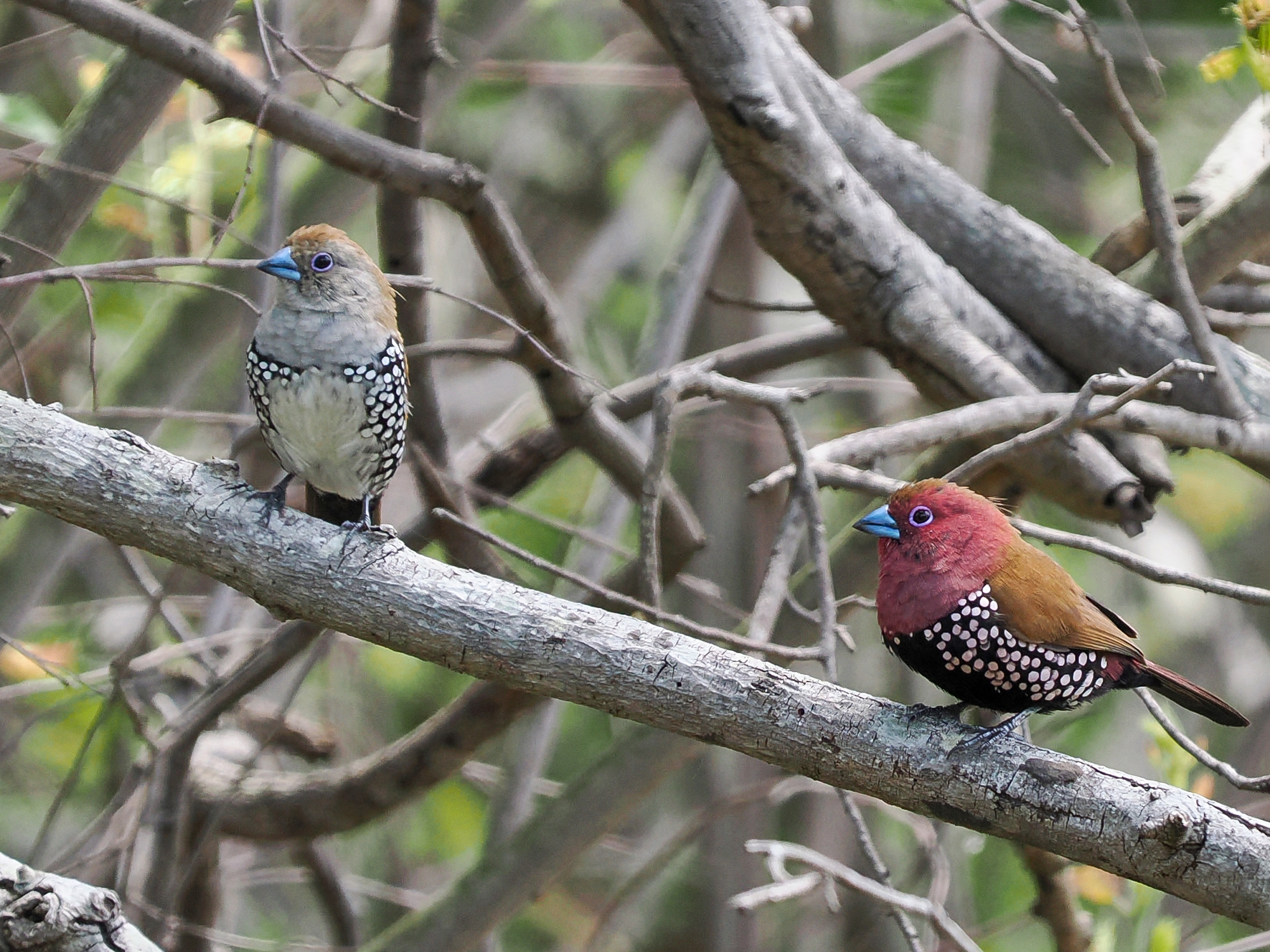
We continued scanning the low vegetation, expecting to find the very elusive Twinspots living here. After very slow driving, a small flock of them started calling in one side of the van. At that point, a massive African Crowned Eagle flew off from a branch only 15 metres away from the van, but our attention was fully concentrated in the dark undergrowth. At our left, an African Broadbill started calling, probably displaying quite close, but our eyes kept looking down in the vegetation. Our perseverance was well rewarded, and only a pair of minutes later a female Pink-throated Twinspot showed out, very low. It was feeding on the ground but, at some point, it jumped up into a branch right in front of our eyes, immediately followed for a wonderful male! The Broadbill looked like singing closer now, but we were still concentrated in these small gems, that were now preening on the branch, only for our eyes (and cameras). This Twinspot is an endemic bird to Southern Africa, with very thin populations, and only found in Southern Mozambique, Eswatini and the North-East of the KwaZulu-Natal province in South Africa. Very happy for this great sight, but the Broadbill was still singing in display, and very close. A short drive of ten metres, and some manoeuvre and a wonderful African Broadbill was displaying right to our window! The bird, that normally displays high in the canopies, was singing and performing only 2 metres high, and probably less than 10 metres from the car! For the next 5 minutes, we all enjoyed a memorable moment of our lives. Some extra manoeuvre was necessary so every side of the van could have a proper view on the bird, and the Broadbill stole the show for some extra minutes!

Pink-throated Twinspot (Hypargus margaritatus) gave our group a superb sight. Image by tour participant Joan Barat.

After such a ecstatic moment, we arrived to our breakfast spot, a lovely pond with a hide. Beyond 2 Leopard Turtles drinking water, really few was on the pond, but the bushland nearby was different. Here we got excellent looks on Rudd’s Apalis, Neergaard’s Sunbird, Acacia Pied Barbet and a rather unexpected Yellow-breasted Bush Petronia, all of them new for the tour! Once our breakfast was enjoyed, we went out of the Nature Reserve to look for some birds living in the riverside forest. It didn’t take long to find a lovely Green Malkoha singing high in the trees, and our walk around produced several Trumpeter Hornbills and the only one Scaly-throated Honeyguide of the trip. But everything came down the frame when a superb Pel’s Fishing Owl came our from the deepest part of the forest, and stop for only a pair of seconds in the canopy, looking at us with its unforgettable eyes! Unfortunately everything happened too fast, and the owl flew off again to be lost in the dense vegetation. We still spend half an hour trying to relocate the bird, but it didn’t happen.. Back to the vehicle, the group celebrated the views on one of the most sought-after targets of the trip!

From here, we were out to explore a number of ponds. It was nice to see good flocks of African Pygmy Geese (probably 50+) but also White-backed Ducks, African Fish Eagle, Malachite Kingfisher, Caspian Tern and a lovely male Greater Painted Snipe (the third of the trip!) along with Curlew Sandpiper, Hottentot Teal, Goliath Heron and several more.

Our last stop before the wind came strong, was to explore a lovely plain of short grass. Here we got great views on several Senegal Lapwings but also African Spoonbills, African Jacanas and the only one Black Egret of the trip!

Nyala (Tragelaphus agasii), always superb!
Southern Crested Guineafowl (Guttera edouardi)
African Broadbill (Smithornis capensis)
Goliath Heron (Ardea goliath)
Senegal Lapwing (Vanellus lugubris)

Day 13. After a short stroll in the gardens of our accommodation, we headed to the coast to spend the morning in iSimangaliso Wetland Park. Here we were surprised by the good number of White-backed Ducks and African Jacanas. The many small ponds along our way had every one its own Long-tailed Cormorant, many times joined by Intermediate Egret (the African form of this heron has been recently renamed as Yellow-billed Heron as the species has been split into 4 different species). A pair of Black-chested Snake Eagle was patrolling the coastal plains, and small flocks of Collared Pratincole were in their way to the bigger ponds. A pair of Red-winged Cisticolas provided us with good views right before we step on a Lesser Moorhen feeding right by the tarmac lane! To find this South African rarity, we were kindly directed by a lovely pair of common birdwatchers. Greetings to them!

A bit beyond, a new South African scarcity was waiting for us: a Rufous-bellied Heron was feeding in a rather distant corner of a pond. We kept driving along the Park with good views on Waterbucks before stopping in one of the many lookouts along the way. Here it is possible to do a short walk, a nice way to stretch our legs that was granted with really close views on the very elusive Brown Scrub Robin and a fast but solid view on 1 Southern Banded Snake Eagle while Narina Trogon and Rudd’s Apalis were calling nearby.

The often shy Brown Scrub Robin (Cercotrichas signata) did a pair of gentle walk on the tarmac for our group! Image by tour participant Joan Barat.

After such a great stop, we just drove out the Park, but before we had a rather unexpected stop, since a White Rhinoceros was feeding 100 metres away from the main lane, and we all enjoyed good views on this peaceful, endangered giant!

A lovely lunch by the beach was an excellent introduction for the last stop of the day. It was already a windy afternoon, but this was not going to stop us. Since September, a Saunder’s Tern had been staying in a river mouth close to Saint Lucia, and we were determined to add such a mega to the list of the tour. Some walk in the beach was required, and once agreed with all the tour participants, we walk down to the beach to look for the bird. Soon, we were contacting with some White-fronted Plovers, Lesser Crested Terns and Grey Plovers. 3 African Oystercatchers were fiding in the beach along with Sanderlings and some Little Terns were resting on the beach along with other species. We scanned once and over, but the bird was not there. The wind peaked up, and the sand was heating us even stronger. But every dot of sand in our shoes was worth it when the Saunder’s Tern appeared flying over the Lesser Crested Terns, and stop next to them, allowing everybody in our small group to have great views on this great rarity for the country!

Happy with this unexpected adding, we came back to our accommodation to enjoy some rest and a very nice dinner.

White-backed Duck (Thalassornis leuconotus)
This unexpected subadult Lesser Moorhen (Paragallinula angulata) was one of the surprises of the day!
We considered ourselves very lucky to connect with the very scarce Southern Banded Snake Eagle (Circaetus fasciolatus)
Yellow-throated Longclaw (Macronyx croceus)
Southern Brown-throated Weaver (Ploceus xanthopterus), a species with a very limited range. Image by tour participant Joan Barat.

Day 14. Early morning walk immediately around our accommodation in Saint Lucia. The wind went off, allowing us a great morning of birding where we enjoyed some of the specialties living in the area including Grey Sunbird, Red-capped Robin Chat and the lovely Woodwart’s Batis. An African Cuckoo-Hawk briefly appeared up in the canopy, allowing us short but good views, and the localised Green Twinspot also appeared for us. But the best surprise of the morning walk was a flock of 5 Grey Waxbills showing right in the path in front of us! We could not believe what we saw!! The last but not the last, Livingstone Turaco proved harder than we thought, and didn’t show properly until the very end of the walk.

After breakfast, we spent the rest of the morning in game drive in iSimangaliso Park, where we got the best views on Cape Buffalo during the trip, plus lovely views on Mountain Reedbucks and 4 White Rhinoceros!

From here we just drove South to our next accommodation, arriving a pair of hours before dinner.

During the day we saw 4 different White Rhinoceros (Ceratotherium simum), including this “horned” male. Image by tour participant Joan Barat.
Often underrate, Cape Buffalos (Syncerus caffer) are wonderful beasts!
Mountain Reedbucks (Redunca fulvorufula) in a serious fight
Disa spp. One of the 224 species of Orchid found in Kwazulu-Nalta province.

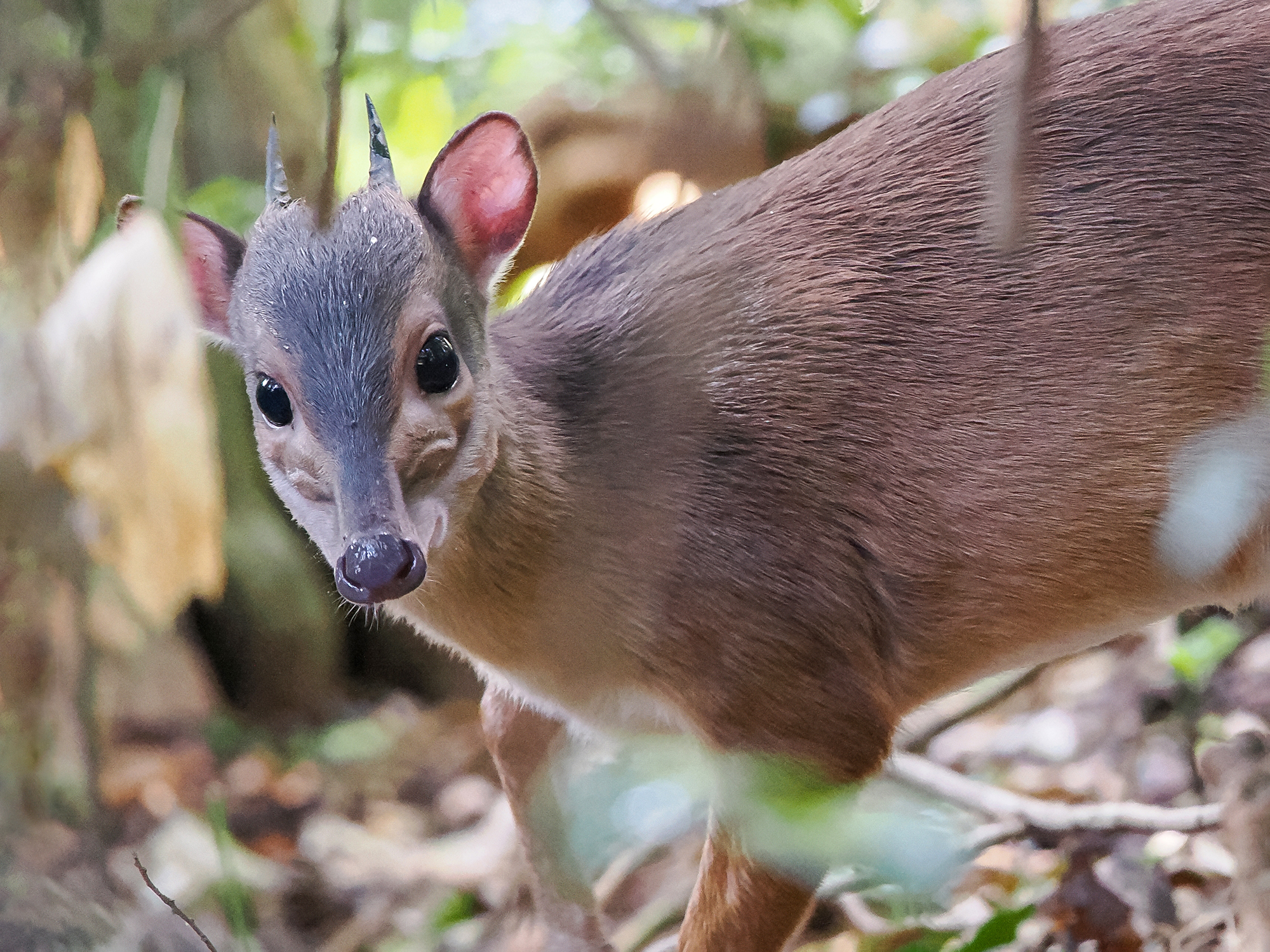
Day 15. Final morning of birding to try to connect with some specialties living around Eshowe. Our first stop was at the Dhinza Forest Parc, a relict area of protected primary forest. Walking along the boardwalk, we were welcomed by some African Olive Pigeons, Little Sparrowhawk and Grey Cuckoochrike catching the first morning light, and as the sun raised we could heard the firsts Eastern Bronze-naped Pigeons singing out of the canopy. It took some minutes, but finally everybody in the group had excellent scope views on the bird. Back to the ground, our local guide fastly connected with one of the very few African Ground Thrushes living in the area. A nervous Lemon Dove showed briefly, but a male Blue Duiker didn’t stole the show and posed for us very long, and only a few metres away, as we were moving out of the reserve.

Sun raising at Dinza Forest Reserve.
Spotted Ground Thrush (Geokichla guttata) captured while feeding in the forest ground. Image by tour participant Joan Barat.
Blue Duiker (Philantomba monticola), a globally threatened species. This male was a nice surprise in our forest walk. Image by tour participant Joan Barat.

From this gorgeous spot, we drove to the very last forest hosting Green Barbet in Southern Africa. In our way, Carmine saw a Buttonquail jumping from the way of the tires, and we took the chance, step out of the car, and everybody in the group had a chance to see the Black-rumped Buttonquail flying away from us.. Great!

Once in the forest, it didn’t take long to see at least 4 of these extremely endangered bird while feeding on figs. We were lucky, since this species can be hard to find!

Back to the prairies, we still had a Martial Eagle flying above the hills, and a pair of Southern Ground Hornbills feeding beside the car. Befores starting heading to the airport, a very last stop allowed us to connect with a Striped Pipit that our local guide kept in the fridge for us. A wonderful way to end the trip!!

The best we could get from the Green Barbets (Stactolaema olivacea) while feeding in the canopy
The amazing primary forest home of the very last Green Barbet population in South Africa.

LIST OF BIRDS SEEN DURING THE TOUR

  1. Common Ostrich (Struthio camelus)
  2. Egyptian Goose (Alopochen aegyptiacus)
  3. Spur-winged Goose (Plectropterus gambensis)
  4. South-african Shelduck (Tadorna cana)
  5. Knob-billed Duck (Sarkidiornis melanotos)
  6. African Pygmy Goose (Nettapus autirus)
  7. White-faced Whistling Duck (Dendrocygna viduata)
  8. Cape Shoveler (Spatula smithii)
  9. Blue-billed Teal (Spatula hottentota)
  10. Yellow-billed Duck (Anas undulata)
  11. African Black Duck (Anas sparsa)
  12. White-backed Duck (Thalassornis leuconotus)
  13. Southern Pochard (Netta erythrophtalma)
  14. Helmeted Guineafowl (Numida meleagris)
  15. Southern Crested Guineafowl (Guttera edouardi)
  16. Crested Francolin (Ortygornis sephaena)
  17. Coqui Francolin (Campocolinus coqui)
  18. Natal Spurfowl (Pternistis natalensis)
  19. Swainson’s Spurfowl (Pternistis afer)
  20. Little Swift (Apus affinis)
  21. White-rumped Swift (Apus caffer)
  22. Horus Swift (Apus horus)
  23. African Black Swift (Apus barbatus)
  24. Alpine Swift (Tachymarptis melba)
  25. African Palm Swift (Cypsiurus parvus)
  26. Grey Go-away-bird (Crinifer concolor)
  27. Purple-crested Turaco (Gallirex porphyreolophus)
  28. Livingstone’s Turaco (Tauraco livingstonii)
  29. Knysna Turaco (Tauraco corythaix)
  30. Kori Bustard (Ardeotis kori)
  31. Denham’s Bustard (Neotis denhami)
  32. White-bellied Bustard (Eupodotis senegalensis)
  33. Blue Korhaan (Eupodotis caerulescens)
  34. Red-crested Korhaan (Lophotis ruficrista)
  35. Black-bellied Bustard (Lissotis melanogaster)
  36. Diederik Cuckoo (Chrysococcyx caprius)
  37. Klaa’s Cuckoo (Chrysococcyx klaas)
  38. African Emerald Cuckoo (Chrysococcyx cupreus)
  39. Green Malkoha (Ceuthmochares australis)
  40. Levaillant’s Cuckoo (Clamator levaillantii)
  41. Jacobin Cuckoo (Clamator jacobinus)
  42. Red-chested Cuckoo (Cuculus solitarius)
  43. Black Cukoo (Cuculus clamosus)
  44. Burchell’s Coucal (Centropus burcherllii)
  45. Double-banded Sandgrouse (Pterocles bicinctus)
  46. Specked Pigeon (Columba guinea)
  47. African Olive Pigeon (Columba arquatrix)
  48. Feral Pigeon (Columba livia sp.)
  49. Eastern Bronze-naped Pigeon (Columba delegorguei)
  50. Lemon Dove (Columba larvata)
  51. Namaqua Dove (Oena capensis)
  52. African Mourning Dove (Streptopelia decipiens)
  53. Ring-necked Dove (Streptopelia capicola)
  54. Red-eye Dove (Streptopelia semitorquata)
  55. Laughing Dove (Streptopelia senegalensis)
  56. Emerald-spotted Wood Dove (Turtur chalcospilos)
  57. Blue-spotted Wood Dove (Turtur afer)
  58. African Green Pigeon (Treron calvus)
  59. Buff-spotted Flufftail (Sarothrura elegans)
  60. Red-chested Flufftail (Sarothrura rufa)
  61. Black Crake (Zapornia flavirostris)
  62. African Swamphen (Porphyrio madagascarensis)
  63. African Rail (Rallus caerulescens)
  64. Red-knobbed Coot (Fulica cristata)
  65. Lesser Moorhen (Paragallinula angulata)
  66. Eurasian Moorhen (Gallinula chloropus)
  67. Grey Crowned Crane (Balearica regulorum)
  68. Blue Crane (Grus paradisea)
  69. Little Grebe (Tachybaptus ruficollis)
  70. Greater Flamingo (Phoenicopterus ruber)
  71. Water Thick-knee (Burhinus vermiculatus)
  72. African Black Oystercatcher (Haematopus moquini)
  73. Black-winged Stilt (Himantopus himantopus)
  74. Grey Plover (Pluvialis squatarola)
  75. Crowned Plover (Vanellus coronatus)
  76. White-crowned Lapwing (Vanellus albiceps)
  77. Blacksmith Lapwing (Vanellus armatus)
  78. Senegal Lapwing (Vanellus lugubris)
  79. Black-winged Lapwing (Vanellus melanopterus)
  80. African Wattled Lapwing (Vanellus senegallus)
  81. White-fronted Plover (Charadrius marginatus)
  82. Kittlitz’s Plover (Charadrius pecuarius)
  83. Three-banded Plover (Charadrius tricollaris)
  84. Common Greenshank (Tringa nebularia)
  85. Mars Sandpiper (Tringla stagnatilis)
  86. Wood Sandpiper (Tringa glareola)
  87. Common Sandpiper (Actitis hypoleucos)
  88. Eurasian Whimbrel (Numenius phaeopus)
  89. Eurasian Curlew (Numenius arquata)
  90. Ruddy Turnstone (Arenaria interpres)
  91. Sanderling (Calidris alba)
  92. Little Stint (Calidris minuta)
  93. Curlew Sandpiper (Calidris ferruginea)
  94. Ruff (Calidris pugnax)
  95. African Jacana (Actophilornis africanus)
  96. Greater Painted Snipe (Rostratula benghalensis)
  97. African Snipe (Gallinago nigripennis)
  98. Temminck’s Courser (Cursorius temminckii)
  99. Collared Pratincole (Glareola pratincola)
  100. Grey-headed Gull (Chroicocephalus cirrocephalus)
  101. Caspian Tern (Hydroprogne caspia)
  102. Greater Crested Tern (Thalasseus bergii)
  103. Lesser Crested Tern (Thalasseus benghalensis)
  104. Little Tern (Sternula albifrons)
  105. Saunder’s Tern (Sternula saundersi)
  106. Whiskered Tern (Chlidonias hybridus)
  107. African Skimmer (Rhynchops flavirostris)
  108. Yellow-billed Stork (Mycteria ibis)
  109. African Openbill (Anastomus lamelligeru)
  110. Woolly-necked Stork (Ciconia episcopus)
  111. Black Stork (Ciconia nigra)
  112. Saddle-billed Stork (Ephippiorhynchus senegalensis)
  113. Marabou Stork (Leptoptilos crumenifer)
  114. African Darter (Anhinga rufa)
  115. Long-tailed Cormorant (Phalacrocorax africanus)
  116. White-breasted Cormorant (Phalacrocorax lucidus)
  117. Great White Pelican (Pelecanus onocratus)
  118. African Sacred Ibis (Theskiornis aethiopicus)
  119. Southern Bald Ibis (Geronticus calvus)
  120. Hadada Ibis (Bostrychia hagedash)
  121. Glossy Ibis (Plegadis falcinellus)
  122. African Spoonbill (Platalea leucorodia)
  123. Brack-crowned Night Heron (Nycticorax nycticorax)
  124. Western Cattle Egret (Bubulcus ibis)
  125. Striated Heron (Butorides striata)
  126. Squacco Heron (Ardeola ralloides)
  127. Rufous-bellied Heron (Ardeola rufoventris)
  128. Little Egret (Egretta garzetta)
  129. Black Heron (Egretta ardesiaca)
  130. Great White Egret (Casmerodius albus)
  131. Intermediate Egret (Ardea intermedia)
  132. Purple Heron (Ardea purpurea)
  133. Grey Heron (Ardea cinerea)
  134. Goliath Heron (Ardea goliath)
  135. Black-headed Heron (Ardea melanocephala)
  136. Harmekop (Scopus umbretta)
  137. Secretary Bird (Sagittarius serpentarius)
  138. Osprey (Pandion haliaetos)
  139. Yellow-billed Kite (Milvus aegyptius)
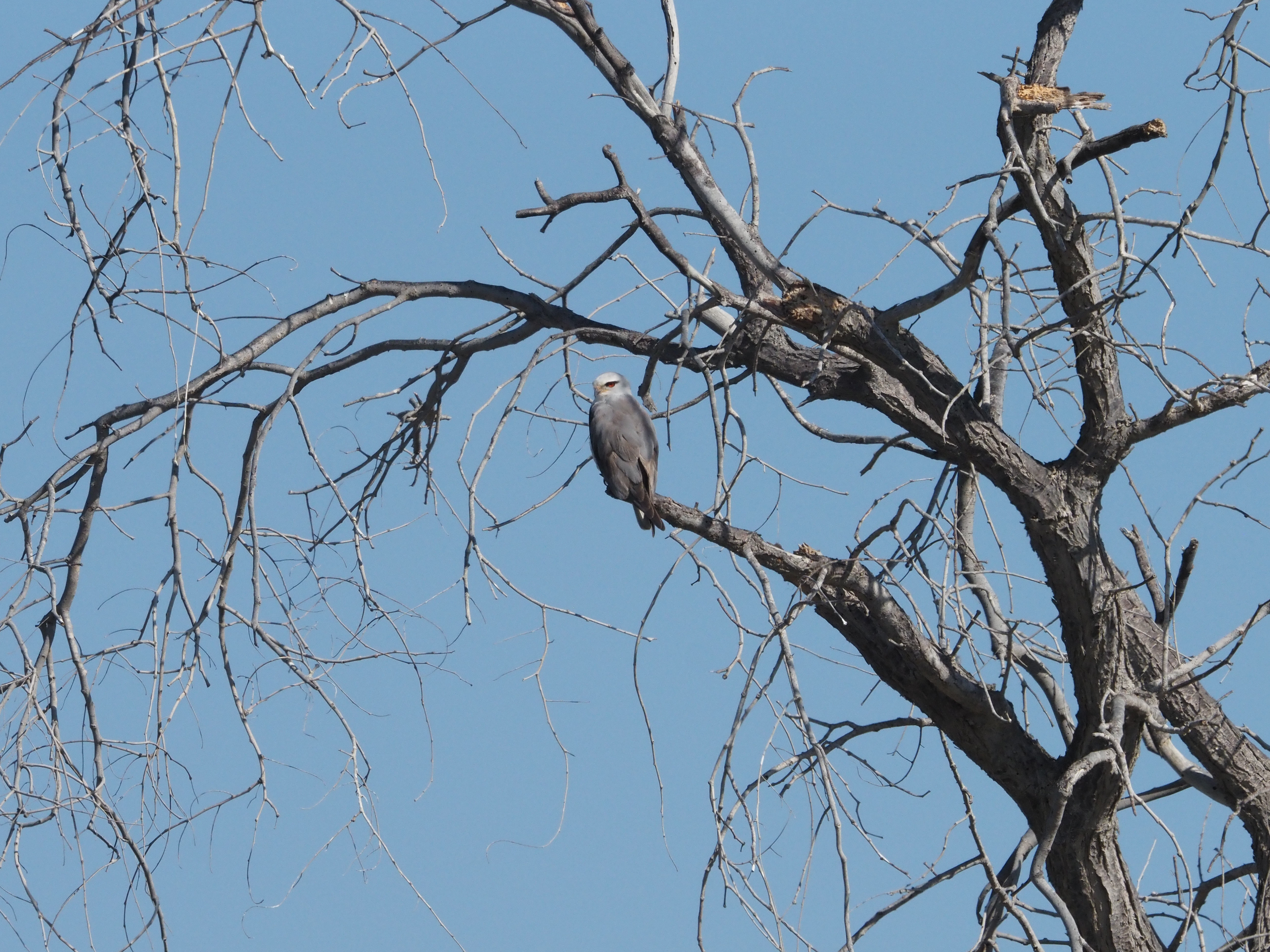
  140. Black-winged Kite (Elanus caeruleus)
  141. African Fish Eagle (Haliaeetus vocifer)
  142. Hooded Vulture (Necrosyrtes monachus)
  143. Cape Vulture (Gyps coprotheres)
  144. White-backed Vulture (Gyps africanus)
  145. White-headed Vulture (Trigonoceps occipitalis)
  146. Lappet-faced Vulture (Torgos tracheliotos)
  147. Black-chested Snake Eagle (Circaetus pectoralis)
  148. Brown Snake Eagle (Circaetus cinereus)
  149. Southern Banded Snake Eagle (Circaetus fasciolatus)
  150. Bateleur (Terathopius ecaudatus)
  151. Bat Hawk (Macheiramphus alcinus)
  152. African Marsh Harrier (Circus ranivorus)
  153. African Cuckoo-Hawk (Aviceda cuculoides)
  154. African Goshawk (Accipiter tachiro)
  155. Black Goshawk (Accipiter melanoleucus)
  156. Little Sparrowhawk (Accipiter minullus)
  157. African Harrier-Hawk (Polyboroides typus)
  158. Steppe Buzzard (Buteo vulpinus)
  159. Jackal Buzzard (Buteo rufofuscus)
  160. Long-crested (Lophaetus occipitalis)
  161. Lesser Spotted Eagle (Clanga pomarina)
  162. Tawny Eagle (Aquila rapax)
  163. Steppe Eagle (Aquila nipalensis)
  164. Wahlberg’s Eagle (Aquila wahlbergi)
  165. Booted Eagle (Aquila pennata)
  166. African Hawk-Eagle (Aquila spilogaster)
  167. Martial Eagle (Polemaetus bellicosus)
  168. Pearl-spotted Owlet (Glaucidium perlatum)
  169. African Barred Owlet (Glaucidium capense)
  170. African Scops Owl (Otus senegalensis)
  171. Marsh Owl (Asio capensis)
  172. African Wood Owl (Strix woodfordii)
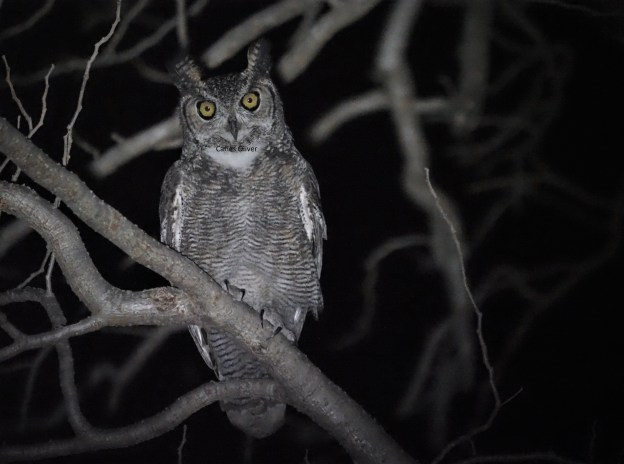
  173. Spotted Eagle Owl (Bubo africanus)
  174. Pel’s Fishing Owl (Scotopelia peli)
  175. Speckled Mousebird (Colius striatus)
  176. Red-faced Mousebird (Urocolius indicus)
  177. Narina Trogon (Apaloderma narina)
  178. African Hoopoe (Upupa africana)
  179. Green Wood Hoopoe (Phoeniculus purpureus)
  180. Common Scimitarbill (Rhinopomastus cyanomelas)
  181. Southern Ground Hornbill (Bucorvus leadbeateri)
  182. Southern Red-billed Hornbill (Tockus rufirostris)
  183. Southern Yellow-billed Hornbill (Tockus leucomelas)
  184. Crowned Hornbill (Lophoceros alboterminatus)
  185. African Grey Hornbill (Lophoceros nasutus)
  186. Trumpeter Hornbill (Bycanistes bucinator)
  187. Purple Roller (Coracias naevia)
  188. Lilac-breasted Roller (Coracias caudatus)
  189. Broad-billed Roller (Eurystomus glaucurus)
  190. Pied Kingfisher (Ceryle rudis)
  191. Giant Kingfisher (Megaceryle maxima)
  192. Brown-hooded Kingfisher (Halcyon albiventris)
  193. Striped Kingfisher (Halcyon chelicuti)
  194. African Pygmy Kingfisher (Ispidina picta)
  195. Malachite Kingfisher (Alcedo cristata)
  196. European Bee-eater (Merops apiaster)
  197. Little Bee-eater (Merops pusillus)
  198. White-fronted Bee-eater (Merops bullockoides)
  199. White-eared Barbet (Stactolaema leucotis)
  200. Green Barbet (Stactolaema olivacea)
  201. Acacia Pied Barbet (Tricholaema leucomela)
  202. Red-fronted Tinkerbird (Pogoniulus pusillus)
  203. Yellow-fronted Tinkerbird (Pogoniulus chrysoconus)
  204. Yellow-rumped Tinkerbird (Pogoniulus bilineatus)
  205. Black-collared Barbet (Lybius torquatus)
  206. Crested Barbet (Trachyphonus vaillantii)
  207. Scaly-throated Honeyguide (Indicator variegatus)
  208. Lesser Honeyguide (Indicator minor)
  209. Red-throated Wryneck (Jynx ruficollis)
  210. Golden-tailed Woodpecker (Campethera abingoni)
  211. Benett’s Woodpecker (Campethera benetti)
  212. Bearded Woodpecker (Chloropicus namaquus)
  213. Cardinal Woodpecker (Dendropicos fuscencens)
  214. Olive Woodpecker (Dendropiccos griseocephalus)
  215. Greater Kestrel (Falco rupicoloides)
  216. Lanner Falcon (Falco biarmicus)
  217. Cape Parrot (Poicephalus robustus)
  218. Brown-headed Parrot (Poicephalus cryptoxanthus)
  219. African Broadbill (Smithornis capensis)
  220. Cape Batis (Batis capensis)
  221. Woodward’s Batis (Batis fratrum)
  222. Chinspot Batis (Batis molitor)
  223. Black-throated Wattle-eye (Platysteira peltata)
  224. Grey-headed Bushshrike (Malaconotus blanchoti)
  225. Black-fronted Bushshrike (Chlorophoneus nigrifons)
  226. Orange-breasted Bushshrike (Chlorophoneus sulfureopectus)
  227. Olive Bushshrike (Telophorus olivaceus)
  228. Bokmakieri (Telophorus zeylonus)
  229. Gorgeous Bushshrike (Telophorus quadricolor)
  230. Brown-crowned Tchagra (Tchagra australis)
  231. Black-crowned Tchagra (Tchagra senegalus)
  232. Black-backed Puffback (Dryoscopus cubla)
  233. Southern Boubou (Laniarius ferrugineus)
  234. Brubru (Nialus afer)
  235. Grey Cuckooshrike (Coracina caesia)
  236. Black Cuckooshrike (Campaphaga flava)
  237. White-crested Helmetshrike (Prionops plumatus)
  238. Magpie Shrike (Urolestes melanoleucus)
  239. Southern Fiscal (Lanius collaris)
  240. Black-headed Oriole (Oriolus larvatus)
  241. Eurasian Golden Oriole (Oriolus oriolus)
  242. Fork-tailed Drongo (Dricurus adsimilis)
  243. Common Square-tailed Drongo (Dricurus ludwigii)
  244. Blue-mantled Crested Flycatcher (Trochocercus cyanomelas)
  245. African Paradise Flycatcher (Tersiphone viridis)
  246. Cape Crow (Corvus capensis)
  247. Pied Crow (Corvus albus)
  248. White-necked Raven (Corvus albicollis)
  249. Southern Black Tit (Melaniparus niger)
  250. Sabota Lark (Calendulauda sabota)
  251. Rudd’s Lark (Heteromirafra ruddi)
  252. Spike-heeled Lark (Chersomanes albofasciata)
  253. Eastern Clapper Lark (Mirafra fasciolata)
  254. Rufous-naped Lark (Mirafra africana)
  255. Flappet Lark (Mirafra rufocinnanomea)
  256. Pink-billed Lark (Spizocorys conirostris)
  257. Short-clawed Lark (Certhilauda chuana)
  258. Eastern Long-billed Lark (Certhilauda semitorquata)
  259. Grey-backed Sparrow Lark (Eremopterix verticalis)
  260. Chestnut-backed Sparrow-Lark (Eremopterix leucotis)
  261. Red-capped Lark (Calandrella cinerea)
  262. Sombre Greenbul (Andropadus importunus)
  263. Yellow-bellied Greenbul (Chlorocichla flaviventris)
  264. Yellow-streaked Greenbul (Phyllastrephus flavostriatus)
  265. Terrestrial Brownbul (Phyllastrephus terrestris)
  266. Dark-capped Bulbul (Pycnonotus tricolor)
  267. Black Saw-wing (Psalidoprogne holomelas)
  268. Plain Martin (Riparia paludicola)
  269. Banded Martin (Riparia cincta)
  270. Sand Martin (Riparia riparia)
  271. Grey-rumped Swallow (Pseudhirundo griseopyga)
  272. Rock Martin (Ptyonoprogne fuligula)
  273. Barn Swallow (Hirundo rustica)
  274. White-throated Swallow (Hirundo albogularis)
  275. Wire-tailed Swallow (Hirundo smithii)
  276. Common House Martin (Delichon urbicum)
  277. Red-breasted Swallow (Cecropis semirufa)
  278. Mosque Swallow (Cecropis senegalensis)
  279. Lesser Striped Swallow (Cecropis abyssinicus)
  280. Greater Striped Swallow (Cecropis cucullata)
  281. South African Cliff Swallow (Petrochelidon spilodera)
  282. Cape Grassbird (Sphenoeacus afer)
  283. Long-billed Crombec (Sylvietta rufescens)
  284. Yellow-throated Woodland Warbler (Phylloscopus ruficapilla)
  285. Willow Warbler (Phylloscopus trochilus)
  286. Common Reed Warbler (Acrocephalus scirpaceus)
  287. Lesser Swamp Warbler (Acrocephalus gracillirostris)
  288. African Yellow Warbler (Iduna natalensis)
  289. Barrat’s Warbler (Bradypterus barratti)
  290. Little Rush-Warbler (Bradypterus baboecala)
  291. Zitting Cisticola (Cisticola juncidis)
  292. Red-faced Cisticola (Cisticola erythrops)
  293. Rattling Cisticola (Cisticola chiniana)
  294. Wailing Cisticola (Cisticola lais)
  295. Rufous-winged Cisticola (Cisticola galactotes)
  296. Levaillant’s Cisticola (Cisticola tinniens)
  297. Neddicky / Piping Cisticola (Cisticola fulvicapilla)
  298. Desert Cisticola (Cisticola aridulus)
  299. Pale-crowned Cisticola (Cisticola cinnamoenus)
  300. Wing-snapping Cisticola (Cisticola ayresii)
  301. Black-chested Prinia (Prinia flavicaps)
  302. Tawny-flanked Prinia (Prinia subflava)
  303. Drakensberg Prinia (Prinia hypoxantha)
  304. Bar-throated Prinia (Prinia thoracica)
  305. Rudd’s Apalis (Apalis ruddi)
  306. Yellow-breasted Apalis (Apalis flavida)
  307. Green-backed Camaroptera (Camaroptera brachyura)
  308. Grey-backed Camaroptera (Camaroptera brevicaudata)
  309. Burnt-necked Eremomela (Eremomela usticollis)
  310. Bush Blackcap (Sylvia nigricapillus)
  311. Cape White-eye (Zosterops virens)
  312. Arrow-marked Babbler (Turdoides jardineii)
  313. Wattled Starting (Creatophora cinerea)
  314. European Starling (Sturnus vulgaris)
  315. Common Myna (Acridotheres tristis)
  316. Black-bellied Starling (Notopholia corusca)
  317. Greater Blue-eared Starling (Lamprotornis chalybaeus)
  318. Cape Glossy Starling (Lamprotornis nitens)
  319. Pied Starling (Lamprotornis bicolor)
  320. Burchell’s Starling (Lamprotornis australis)
  321. Violet-backed Starling (Cinnyricinclus leucogaster)
  322. Red-winged Starling (Onychognatus morio)
  323. Red-billed Oxpecker (Buphagus erythrorhynchus)
  324. Yellow-billed Oxpecker (Buphagus africanus)
  325. Spotted Ground Thrush (Geokichla guttata)
  326. Orange Ground Thrush (Geokighla guenyi)
  327. Groundscraper Thrush (Turdus litsitsirupa)
  328. Olive Thrush (Turdus olivaceus)
  329. Kurrichane Thrush (Turdus libonyanus)
  330. Fiscal Flycatcher (Melaenornis sirens)
  331. Southern Black Flycatcher (Melaernornis pammelaina)
  332. Marico Flycatcher (Melaenornis mariquensis)
  333. African Dusky Flycatcher (Muscicapa adusta)
  334. Spotted Flycatcher (Muscicapa striata)
  335. Ashy Flycatcher (Muscicapa caerulescens)
  336. Bearded Scrub Robin (Cercotrichas quadrivirgata)
  337. Kalahari Scrub Robin (Cercotrichas paena)
  338. White-browed Scrub Robin (Cercotrichas leucophrys)
  339. Brown Scrub Robin (Cercotrichas signata)
  340. Grey-tit Flycatcher (Myioparus plumbeus)
  341. African Stonechat (Saxicola torquatus)
  342. Ant-eating Chat (Myrmecocichla formicivora)
  343. Mountain Wheatear (Myremocichla monticola)
  344. Cape Robin-Chat (Cossypha caffra)
  345. White-throated Robin-Chat (Cossypha humeralis)
  346. White-browed Robin-Chat (Cossypha heuglini)
  347. Red-capped Robin-Chat (Cossypha natalensis)
  348. Chorister Robin-Chat (Cossypha dichroa)
  349. White-starred Robin (Pogonocichla stellata)
  350. Sentinel Rock Thrush (Monticola explorator)
  351. Buff-streaked Chat (Campicoloides bifsciatus)
  352. Mokking Cliff Chat (Thamnolaea cinnamomeiventris)
  353. Familiar Chat (Oenanthe familiaris)
  354. Collared Sunbird (Hedydipna collaris)
  355. Olive Sunbird (Cyanomitra olivacea)
  356. Grey Sunbird (Cyanomitra veroxii)
  357. Amethyst Sunbird (Chalcomitra amethystina)
  358. Scarlet-chested Sunbird (Chalcomitra senegalensis)
  359. Malachite Sunbird (Nectarinia famosa)
  360. Neergaard’s Sunbird (Cinnyris neergaardi)
  361. Southern Double-collared Sunbird (Cinnyris chalybeus)
  362. Greater Double-collared Sunbird (Cinnyris afer)
  363. Marico Sunbird (Cinnyris mariquensis)
  364. Purple-banded Sunbird (Cinnyris bifasciatus)
  365. White-bellied Sunbird (Cinnyris talatala)
  366. Gurney’s Sugarbird (Promerops gurneyi)
  367. Cape Sparrow (Passer melanurus)
  368. Great Sparrow (Passer motitensis)
  369. House Sparrow (Passer domesticus)
  370. Southern Grey-headed Sparrow (Passer diffusus)
  371. Yellow-throated Bush Petronia (Gymnoris superciliaris)
  372. White-browed Sparrow-Weaver (Plocepasser mahali)
  373. Red-billed Buffalo Weaver (Bubalornis niger)
  374. Scaly-feathered Weaver (Sporopipes squamifrons)
  375. Thick-billed Weaver (Amblyospiza albifrons)
  376. Cape Weaver (Ploceus capensis)
  377. Spectacled Weaver (Ploceus ocularis)
  378. Dark-capped Weaver (Ploceus bicolor)
  379. Eastern Golden Weaver (Ploceus subaureus)
  380. Holub’s Golden Weaver (Ploceus xanthops)
  381. Southern Brown-throated Weaver (Ploceus xanthopterus)
  382. Lesser Masked Weaver (Ploceus intermedius)
  383. Southern Masked Weaver (Ploceus velatus)
  384. Village Weaver (Ploceus cucullatus)
  385. Red-headed Weaver (Anaplectes rubriceps)
  386. Red-billed Quelea (Quelea quelea)
  387. Southern Red Bishop (Euplectes orix)
  388. Yellow Bishop (Euplectes capensis)
  389. White-winged Widowbird (Euplectes albonotatus)
  390. Long-tailed Widowbird (Euplectes progne)
  391. Red-collared Widowbird (Euplectes ardens)
  392. Fan-tailed Widowbird (Euplectes axiliaris)
  393. Bronze Mannikin (Spermestes cucullata)
  394. Magpie Mannikin (Spermestes fringilloides)
  395. Swee Waxbill (Coccopygia melanotis)
  396. Green Twinspot (Mandingoa nitidula)
  397. Black-faced Waxbill (Brunhilda erythronotos)
  398. Grey Waxbill (estrilda perreini)
  399. Common Waxbill (Estrilda astrild)
  400. Orange-breasted Waxbill (Amandava subflava)
  401. Violet-eared Waxbill (Granatina granatina)
  402. Blue Waxbill (Uraeginthus angolensis)
  403. Orange-winged Pytilia (Pytilia melba)
  404. Pink-throated Twinspot (Hypargos margaritatus)
  405. Red-billed Firefinch (Lagonosticta senegala)
  406. African Firefinch (Lagonostica rubricata)
  407. Jameson’s Firefinch (Lagonostica rhodopareia)
  408. Durky Indigobird (Vidua funerea)
  409. Village Indigobird (Vidua chalybeata)
  410. Pin-tailed Whydah (Vidua macroura)
  411. Long-tailed Paradise Whydah (Vidua paradisaea)
  412. Cape Wagtail (Motacilla capensis)
  413. African Pied Wagtail (Motacilla aguimp)
  414. Mountain Wagtail (Motacilla clara)
  415. Cape Longclaw (Macronyx capensis)
  416. Yellow-throated Longclaw (Macronyx croceus)
  417. African Pipit (Anthus cinnamomeus)
  418. Plain-backed Pipit (Anthus ceucophrys)
  419. Nicholson’s Pipit (Anthus nicholsoni)
  420. Buffy Pipit (Anthus vaalensis)
  421. Striped Pipit (Anthus lineiventris)
  422. African Rock Pipit (Anthus crenatus)
  423. Yellow-breasted Pipit (Anthus chloris)
  424. Cape Canary (Serinus canicollis)
  425. Yellow-fronted Canary (Crithagra mozambica)
  426. Forest Canary (Crithagra scotops)
  427. Streaky-headed Canary (Crithagra gularis)
  428. Cinnamon-breasted Bunting (Emberiza tahapasi)
  429. Golden-breasted Bunting (Emberiza flaviventris)

LIST OF MAMMALS SEEN DURING THE TOUR

  1. Chacma Baboon (Papio ursinus)
  2. Vervet Monkey (Chlorocebus pygerythrus)
  3. Blue Monkey (Cercopithecus mitis)
  4. Greater Galago (Otolemur crassicaudatus)
  5. Smith’s Ground Squirrel (Paraxenus cepapi)
  6. Scrub Hare (Lepus saxatilis)
  7. Black-backed Jackal (Canis mesomelas)
  8. Honey Badger (Mellivora capensis)
  9. African Clawless Otter (Aonyx capensis)
  10. Common Slender Mongoose (Herpestes sanguinea)
  11. Yellow Mongoose (Cynictis penicillata)
  12. Dwarf Mongoose (Helogale parvula)
  13. Marsh Mongoose (Atilax paludinosus)
  14. Spotted Hyena (Crocuta crocuta)
  15. Leopard (Pathera pardus)
  16. Lion (Panthera leo)
  17. Rock Hyrax (Procavia capensis)
  18. African Bush Elephant (Loxodonta africana)
  19. Plains Zebra (Equus quagga)
  20. White Rhinoceros (Ceratotherium simum)
  21. Common Warthog (Phacochoerus africanus)
  22. Southern Giraffe (Giraffa giraffa)
  23. Impala (Aepyceros melampus)
  24. Springbok (Antidorcas marsupialis)
  25. Natal Red Duiker (Cephalophus natalensis)
  26. Common Wildebeest (Connochaetes taurinus)
  27. Blesbok (Damaliscus pygargus)
  28. Waterbuck (Kobus ellipsiprymmus)
  29. Grey Rhebok (Pelea capreolus)
  30. Blue Duiker (Philantomba monticola)
  31. Steenbok (Raphicerus campestris)
  32. Klipspringer (Oreotragus oreotragus)
  33. Mountain Reedbuck (Redunca fulvorufula)
  34. Common Duiker (Sylvicapra grimmia)
  35. African Buffalo (Syncerus caffer)
  36. Nyala (Tragelaphus angasii)
  37. Bushbuck (Tragelaphus scriptus)
  38. Greater Kudu (Tragelaphus strepsiceros)
  39. Hippopotamus (Hippopotamus amphibius)

LIST OF REPTILIANS SEEN DURING THE TOUR

  1. Nile Crocodile (Crocodylius niloticus)
  2. Leopard Turtle (Stigmochelys pardalis)
  3. Southern Tree Agama (Acanthocercus atricollis)
  4. Rock Monitor (Varanus albigularis)
  5. Nile Monitor (Varanus niloticus)
  6. Serrated Hinged Terrapin (Pelusios sinuatus)

Xipre 2023, crònica del tour

Dates: Del 25 al 30 d’agost, 2023

Número de participants: 8

Número d’espècies: 131

Tour líder: Sergi Sales

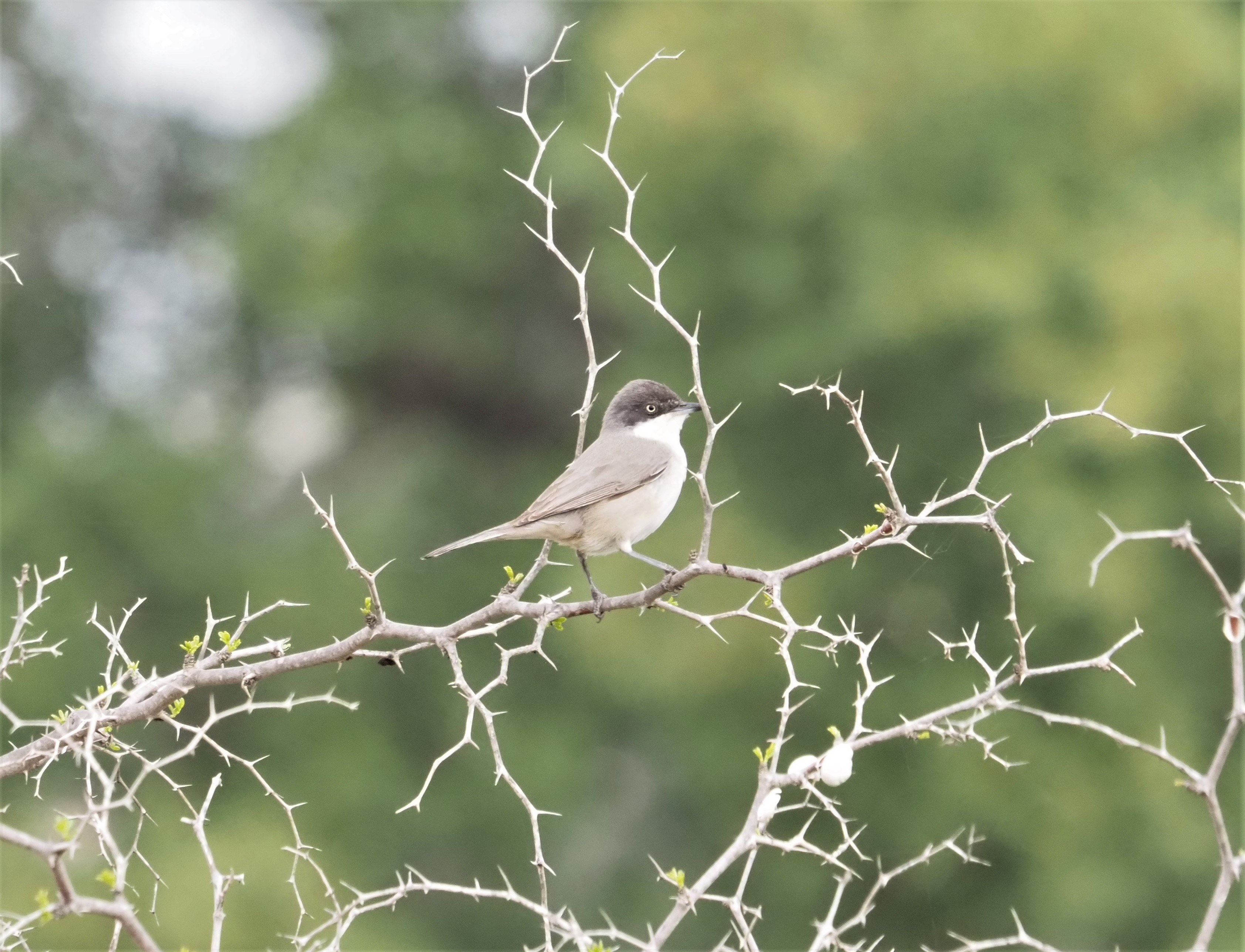
Resum general: El nostre primer tour a la illa de Xipre ha estat organitzat per gaudir dels ocells endèmics de l’illa així com del començament de la migració de tardor pels ocells de l’est del Western paleàrtic. El tour ha estat marcat per la calor, però malgrat les altes temperatures el pardaleig ha estat prou bo, amb bons números d’espècies migradores i bones observacions dels endemismes. Tot amb tot, molt content per com ha anat el viatge, amb els tres principals endèmics: el tallarol de Xipre, el xot de Xipre i el còlit de Xipre. Tots tres s’han observat bé, a més dels futurs possibles nous endèmics. Sumant a la llista d’espècies emblemàtiques com el francolí coll-negre, el corriol de leschenault, territ becadell, hortolà cendrós, tallarol esparverenc o la perdiu de chukar. Fins i tot sumant dues rareses locals com l’estornell rosat i l’alció d’Esmirna. En resum, gran viatge a una meravellosa illa i amb ganes de tornar-hi la propera primavera!

Dia 0 – viatge

El grup arriba ja ben entrada la nit del dia 25 a Larnaca en vol directe des de Barcelona però tot i així ens dona temps a sentir, al pàrquing de l’aeroport, el primer ocell del viatge: un torlit.

Dia 1

Ens aixequem una mica més tard del que tocaria per poder descansar i recuperar energia. A les immediacions de l’hotel i entorn de Larnaka, comencem a contactar amb espècies típiques de l’illa com són la cornella emmatellada (molt abundant), tórtores del Senegal (ocell en clara expansió), el primer aligot rogenc del viatge i una espectacular fredeluga d’esperons aprofitant la verdor de les rotondes de trànsit, cada vegada més urbà.

El plàning del 1er matí és passar la jornada a Cape Greko, famós punt cap a l’est de l’illa on es poden detectar gran nombre de “targets” del viatge però alhora punt de concertació de migrants.

La primera aturada, a un sector amb conreus envoltats de zones de màquia, ja ens aporta escorxadors aturats als cables, trenques (coincidim amb dates de bona entrada d’aquesta espècie a Xipre) a la capçada d’un arbre i els primers capsigranys emmascarats del tour.

Escorxador – Red-backed Shrike (Lanius collurio). Imatge de Salvador Parreu
Capsigrany emmascarat – Masked Shrike (Lanius nubicus). Imatge de Salvador Parreu.

Són abundants les bosquetes pàl·lides orientals i els tallarols xerraires, però no sempre fàcils de veure amb claredat. Però si un ocell és complicat d’observar, és el tallarol de Xipre. Diversos exemplars escoltats a molt curta distancia però que generalment només es poden gaudir fent petits i curts volts entre els arbustos.

Aquí també s’escolten diverses perdius chukars i un llunyà francolí negre.

La temperatura ambiental puja dràsticament i a les zones amb menys vegetació del cap i petits camps del voltant descobrim diversos còlits de Xipre i 3 còlits isabelins, mentre un grup migrant de pelicans comuns passa en migració a poca alçada junt amb alguns rapinyaires com una arpella comuna, un aligot vesper i un milà negre.

Còlit isabelí – Isabelline Wheatear (Oenanthe isabellinus). Imatge de Salvador Parreu.


Pelicans comuns – Great White Pelican (Pelecanus onocrotalus). Imatge del tour líder Sergi Sales.

Després d’un extraordinari dinar iranià fem una visita a l’Oroklini Lake, a on gaudim de la primera zona humida del viatge i a on ràpidament detectem un magnífic territ becadell, una de les espècies més buscades pel grup! També un gran nombre de fredelugues esperonades i altres limícoles i, entre ells, dues sisetes.

Acabem la llarga jornada a unes petites llacunes litorals on no es veu un gran nombre d’ocells.

Territ becadell (Limicola falcinellus) i fedeluga d’esperons (Vanellus spinosus). Imatge de Ramon Grimalt.


Siseta – Marsh Sandpiper (Tringa stagnatilis). Imatge de Ramon Grimalt.

Dia 2

Per intentar aprofitar les hores amb temperatures més moderades, ens aixequem ben aviat i ràpidament estem al camp, visitant en primer lloc unes petites basses, les Bishop Pools, però el fet de que fos diumenge va fer que la zona tingués obert l’accés per visitar l’església però no pas l’espai natural. Finalment accedim caminant observant més tallarols i bosquetes migrants fins arribar a la bassa on hi ha algunes espècies aquàtiques. La sorpresa arriba al moment de tornar a agafar el vehicle, ja que a la capçada d’un arbre mort veiem un jove d’estornell rosat el qual no el podem gaudir massa estona ja que el pas d’un falcó de la reina i diversos tudons el fan volar i malauradament no el podem relocalitzar. Es tracta d’una espècie molt escassa a l’illa, amb observacions només puntuals. Al llarg del pas postnupcial es veu algun exemplar immadur.

Fem una breu aturada per esmorzar desprès de fer un primer intent a la llacuna d’Akrotiri per la grua damisel·la.

Amb forces recuperades gràcies a l’esmorzar, anem cap l’oest i fem una aturada a Kensington Cliffs , escenari espectacular on podem veure diversos falcons marins fent acrobàcies just davant nostre en un entorn fantàstic.

Falcó de la reina – Eleonora’s Falcon (Falco eleonorae). Imatge de Ramon Grimalt.

D’aquí anem a una petita zona humida per gaudir del nostre picnic. A la bassa apareix un rascletó però malauradament només es deixa veure breument. La zona és rica en diversitat ja que a més d’aus aquàtiques també es veuen rapinyaires, trenques…i grans grups de pardals de passa. Aquí també se sent el reclam d’una cuereta citrina que, malauradament no es deixa veure.

Sota un sol de justícia continuem cap a la península de Pafos. L’bjectiu principal és el corriol de Leschenaut però malauradament el passeig marítim en obres al costat de la zona dels corriols està en obres i això ens obliga a entrar al nucli arqueològic annex. Després de 3 hores llarguíssimes de buscar i intentar tindre llocs amb bona visibilitat, aconseguim detectar aquest mític limícol provinent dels llacs salats de Turquia. En concret 2 exemplars adults que fa dies que es veuen per la zona i un 3er exemplar nou, de 1er hivern. Cervesa ben freda per celebrar l’observació.

Corriol de Leschenault – Greater Sand Plover (Charadrius leschenaulti). Imatge de Ramon Grimalt.

Al vespre ens acompanya un ornitòleg local per optimitzar la cerca d’aus nocturnes. El primer que veiem és un parell de mussols comuns. Posteriorment, a un penya-segat, sentim dues òlibes molt actives, però continuem sense rastre de l’espècie més buscada, i no és fins al tercer intent que aconseguim escoltar i veure diversos xots xipriotes. Simultàniament un enganyapastors acaba de completar el paisatge sonor d’aquella màgica nit.

Xot de Xipre – Cyprus Scops Owl (Otus cyprius). Imatge de Ramon Grimalt.

Fem un excel·lent sopar en una taberna grega i cap a dormir que és mitjanit i avui han estat moltes hores seguides de birding!!

Dia 3

Matinada per prospectar la mítica zona de muntanya de Troödos. Allà trobem la fresqueta de la muntanya, ja que en un moment hem pujat a 600m de desnivell, i gaudim d’una temperatura sorprenentment agradable al llarg de tot el matí.

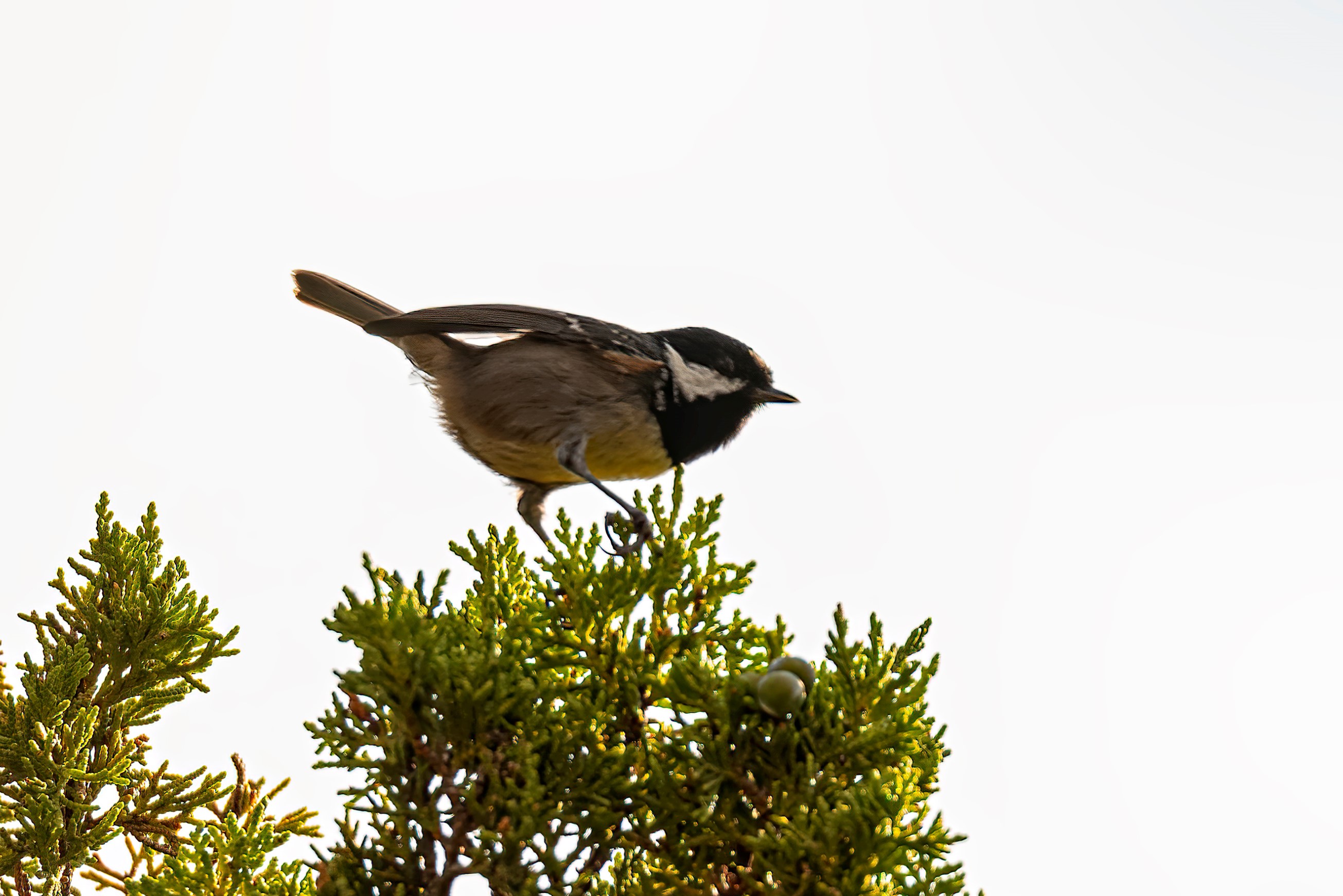
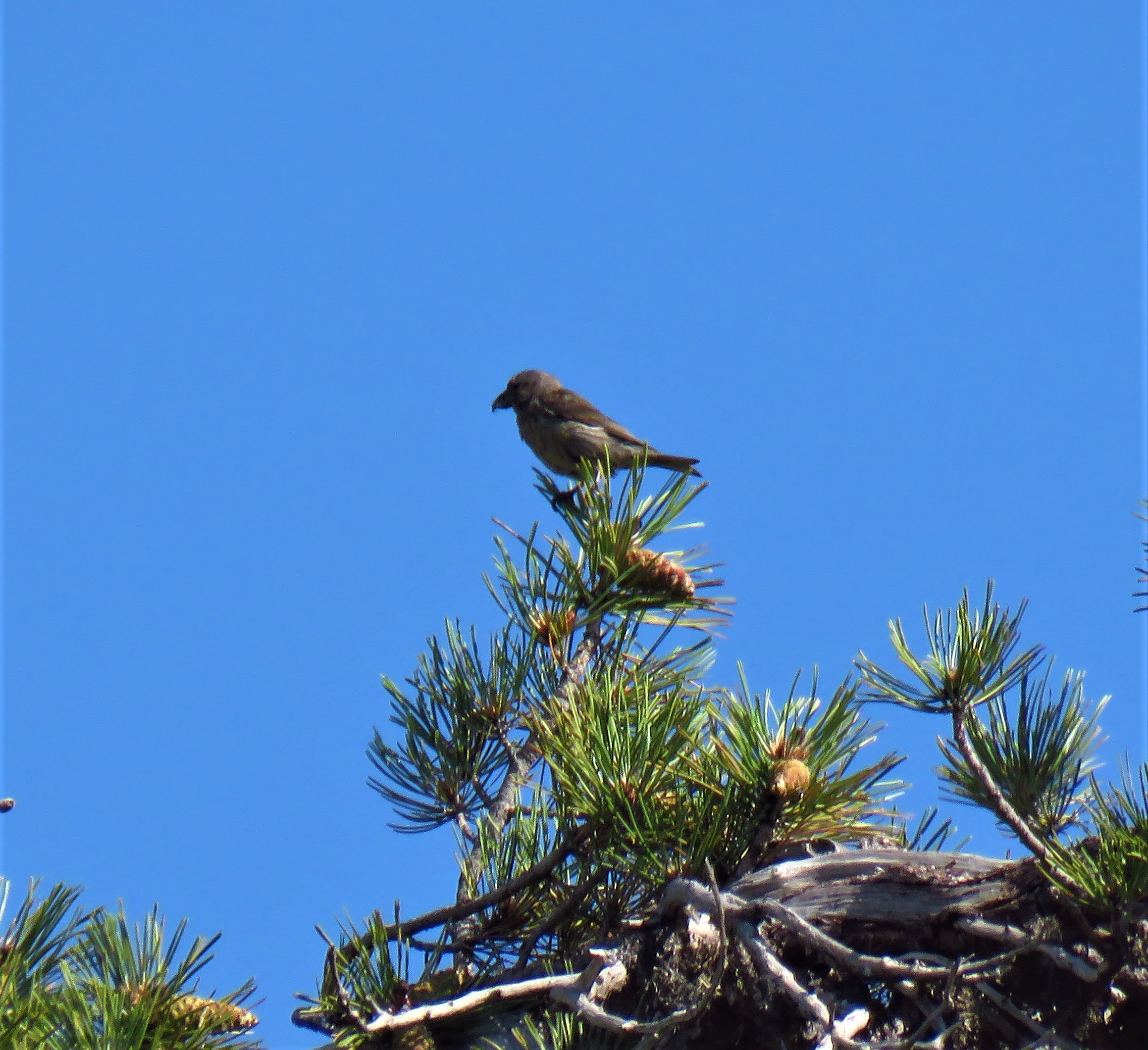
Només baixar del cotxe ens trobem envoltats pels tres dels targets de la zona: la mallerenga petita xipriota, la subespècie local de raspinell comú (totes dues candidates per a esdevenir espècies separades de les formes continentals) i el trencapinyes, ocell que del qual també s’està estudiant la taxonomia. La breu passejada ens permet veure a plaer i fotografiar aquestes espècies alhora que s’escolten contínuament els reclams en vol dels trencapinyes. Sembla que ha estat una molt bona de temporada de cria per a l’espècie. Finalment, s’aconsegueixen fer bones observacions de la quarta espècie objectiu: el gaig de la subespècie xipriota. Un bon ventall de possibles futurs splits! També podem gaudir i retratar a plaer un magnífic exemplar de còlit de Xipre mentre un falciot pàl·lid ens fa acrobàcies en un curiós vol baix entre els pins.

Mallerenga petita xipriota – Cyprus Coal Tit (Periparus ater cypriotes). Imatge de Sanvador Parreu.

Trencapinyes comú (Loxia curvirostra). Imatge de Sergi Sales

Gaig de Xipre – Cyprus Jay (Garrulus glandarius glazneri). Imatge de Salvador Parreu.

Contactem amb el reviewer local d’Ebird, el Colin Richards, que molt amablement s’ofereix a acompanyar-nos al seu local patch, al sector d’Agia Varvara, i després a Anarita Park. Ja havíem prospectats totes dues zones en jornades anteriors però gaudim de millor observacions en algunes espècies i fins it tot en sumem alguna de nova. Després del cafè frappe de rigor (gran descobriment), anem cap a Germasogeia Reservoir, una petita zona humida i de vegetació de garriga molt propera al nostre hotel. La forta ventada dificulta la detecció d’espècies però tot i així trobem algunes de les espècies més comuns en migració d’aquestes dates i, entre mig de innumerables reclams de tallarol de capnegre (cada vegada més abundant a l’illa) sentim diversos tallarols de Xipre dels quals només fem un bona observació d’una femella. I com a colofó final, un parell de magnífics hortolans cendrosos es deixen veure al marge de la carretera.

Dia 4

Una vegada vistos la majoria dels objectius del viatge, intentem cerca noves espècies i millorar les observacions d’alguns ocells, per això matinem per arribar amb les primeres llums al Greek Cape. Des del cotxe detectem un tallarol emmascarat oriental, més contrastat que el nostre tallarol, això ens fa baixar del cotxe per viure un dels moment més màgics del viatge, on desenes de petits ocells migrants semblava que moguessin els matolls on s’alimentaven. Gaudim d’un autèntic festival de tallarols: l’esparverenc que es deixar retratar de forma notable, el xerraire, el capnegre, el de Xipre, l’emmascarat oriental i el trencamates!!  Sumant trenques, capsigranys comuns i emmascarats, gaigs blaus, escorxadors, bosquetes pàl·ides orientals,…

Còlit de Xipre – Cyprus Wheatear (Oenanthe cypriaca). Imatge de Salvador Parreu

Tallarol esparverenc – Barred Warbler (Curruca nisoria). Imatge de Ramon Grimalt.

El fet d’arribar ben aviat ens permet gaudir de diferents estols de perdius de Chukar, alguns d’ells amb més de 20 individus.

Molt satisfets amb aquest inici de matí fem una estona a la zona del voltant de la tanca militar al Greek Cape sense massa noves espècies a afegir, i és que la calor ja apreta. Després del cafè frappe de rigor repetim visita a Oroklini Lake on ja no es veu el territ becadell però si 3 sisetes.

Fem una aturada curta a diverses zones humides al voltant de Larnaka, a on a més d’espècies més habituals, afegim curroc i gavina capblanca a la llista del viatge.

Decidim acabar la jornada fent aturada a les zones humides al sud de Nicosia, a on veiem diversos francolins, espècie aparentment complicada d’observar en aquestes dates però que en aquell espai sembla assolir densitats destacables. Des d’una petita torre d’observació podem veure a plaer un grapat de francolins, la majoria mascles quan, de sobte, apareix un alció d’Esmirna volant davant mateix de la torre d’observació. Mega raresa a l’illa que fa uns dies enrere s’havia observat per la zona però que no s’havia tornat relocalitzar. Gran final d’una inoblidable jornada!

Francolí negre – Black Francolin (Francolinus francolinus). Imatge de Ramon Grimalt.

Dia 5

Últim dia, sortim ben aviat cap al mític a Akrotiri Lake amb l’esperança de trobar alguna grua damisel·la. Però continuem sense sort i és que enguany les observacions es concentren al Nord de l’illa i són de grups en migració activa. Fins i tot amb grups grans però sense aquests quedin sedimentats per l’illa.

D’Akrotiri tornem a visitar el lloc l’alció d’Esmirna però a l’arribar, uns ornitòlegs locals ens comentem que s’ha observat un moment amagant-se dins d’una zona boscosa d’on no ha tornat a sortir. Tornem a gaudir dels francolins i apurem les darreres hores bans de marxar cap a l’aeroport visitant sectors arbustius propers a l’hotel, on a més de diversos còlits de Xipre per fi alguns del grup veiem un tallarol de Xipre amb el típic plomatge adult.

Capó reial – Glossy Ibis (Plegadis falcinellus). Imatge de Salvador Parreu.

Després d’una bona dutxa ens dirigim cap a l’aeroport a on un puntual vol ens torna cap a casa.

Molt contents per com ha anat el viatge, amb els tres principals endèmics: el tallarol de Xipre, el xot de Xipre i el còlit de Xipre. Tots tres s’han observat bé, a més dels futurs possibles nous endèmics. Sumant a la llista d’espècies emblemàtiques com el francolí coll-negre, el corriol de leschenault, territ becadell, hortolà cendrós, tallarol esparverenc o la perdiu de chukar. Fins i tot sumant dues rareses locals com l’estornell rosat i l’alció d’Esmirna, en resum gran viatge a una meravellosa illa.

Llistat d’espècies vistes al llarg del tour (inclou noms vulgars en anglès i català a més del nom científic:

  1. Garganey — Xarrasclet — Spatula querquedula
  2. Northern Shoveler — Ànec cullerot comú — Spatula clypeata
  3. Mallard — Ànec collverd — Anas platyrhynchos
  4. Eurasian Teal — Xarxet comú — Anas crecca
  5. Black Francolin — Francolí negre — Francolinus francolinus
  6. Chukar — Perdiu chukar — Alectoris chukar
  7. Greater Flamingo — Flamenc comú — Phoenicopterus roseus
  8. Little Grebe — Cabusset comú — Tachybaptus ruficollis
  9. Rock Pigeon (feral) — Colom roquer — Columba livia
  10. Common Woodpigeon — Tudó — Columba palumbus
  11. European Turtle Dove — Tórtora eurasiàtica — Streptopelia turtur
  12. Eurasian Collared Dove — Tórtora turca — Streptopelia decaocto
  13. Laughing Dove — Tórtora del Senegal — Spilopelia senegalensis
  14. European Nightjar — Enganyapastors comú — Caprimulgus europaeus (heard only / només sentit)
  15. Common Swift — Falciot negre — Apus apus
  16. Pallid Swift — Falciot pàl·lid — Apus pallidus
  17. Eurasian Moorhen — Polla d’aigua comuna — Gallinula chloropus
  18. Eurasian Coot — Fotja comuna — Fulica atra
  19. Stone Curlew — Torlit comú — Burhinus oedicnemus
  20. Black-winged Stilt — Camallarga comuna — Himantopus himantopus
  21. Spur-winged Lapwing — Fredeluga d’esperons — Vanellus spinosus
  22. Greater Sand Plover — Corriol de Leschenault — Charadrius leschenaultii
  23. Kentish Plover — Corriol camanegre — Charadrius alexandrinus
  24. Little Ringed Plover — Corriol anellat petit — Charadrius dubius
  25. Common Ringed Plover — Corriol anellat gros — Charadrius hiaticula
  26. Ruff — Batallaire — Calidris pugnax
  27. Broad-billed Sandpiper — Territ becadell — Calidris falcinellus
  28. Curlew Sandpiper — Territ bec-llarg — Calidris ferruginea
  29. Little Stint — Territ menut comú — Calidris minuta
  30. Common Sandpiper — Xivitona comuna — Actitis hypoleucos
  31. Green Sandpiper — Xivita comuna — Tringa ochropus
  32. Greenshank — Gamba verda — Tringa nebularia
  33. Marsh Sandpiper — Siseta — Tringa stagnatilis
  34. Wood Sandpiper — Valona — Tringa glareola
  35. Common Redshank — Gamba roja comuna — Tringa totanus
  36. Slender-billed Gull — Gavina capblanca — Chroicocephalus genei
  37. Yellow-legged Gull — Gavià de potes grogues — Larus michahellis
  38. Lesser Black-backed Gull — Gavià fosc — Larus fuscus
  39. Gull-billed Tern — Curroc — Gelochelidon nilotica
  40. Whiskered Tern — Fumarell carablanc — Chlidonias hybridus
  41. Great Cormorant — Corb marí gros — Phalacrocorax carbo
  42. (Mediterranean) Shag — Corb marí emplomallat — Gulosus aristotelis
  43. Great White Pelican — Pelicà blanc comú — Pelecanus onocratus
  44. Little Bittern — Martinet menut comú — Ixobrychus minutus
  45. Grey Heron — Bernat pescaire — Ardea cinerea
  46. Purple Heron — Agró roig — Ardea purpurea
  47. Little Egret — Martinet blanc comú — Egretta garzetta
  48. Western Cattle Egret — Esplugabous — Bubulcus ibis
  49. Squacco Heron — Martinet ros — Ardeola ralloides
  50. Glossy Ibis — Capó reial — Plegadis falcinellus
  51. European Honey Buzzard — Aligot vesper europeu — Pernis apivorus
  52. Western Marsh Harrier — Arpella comuna — Circus aeruginosus
  53. Black Kite — Milà negre — Milvus migrans
  54. Western Barn Owl — Òliba comuna — Tyto alba
  55. Cyprus Scops Owl — Xot de Xipre — Otus cyprius
  56. Eurasian Hoopoe — Puput comuna — Upupa epops
  57. Common Kingfisher — Blauet comú — Alcedo atthis
  58. White-throated Kingfisher — Alció d’Esmirna — Halcyon smirnensis
  59. European Bee-eater — Abellerol comú — Merops apiaster
  60. European Roller — Gaig blau europeu — Coracias garrulus
  61. Common Kestrel — Xoriguer comú — Falco tinnunculus
  62. Eleonora’s Falcon — Falcó de la reina — Falco eleonorae
  63. Eurasian Hobby — Falcó mostatxut eurasiàtic — Falco subbuteo
  64. Peregrine Falcon — Falcó pelegrí — Falco peregrinus
  65. Red-backed Shrike — Escorxador comú — Lanius collurio
  66. Lesser Grey Shrike — Trenca — Lanius minor
  67. Masked Shrike — Capsigrany emmascarat — Lanius nubicus
  68. Woodchat Shrike — Capsigrany comú — Lanius senator niloticus
  69. Eurasian Jay — Gaig eurasiàtic — Garralus glandarius glazneri
  70. Eurasian Magpie — Garsa eurasiàtica — Pica pica
  71. Western Jackdaw — Gralla occidental — Corvus monedula
  72. Hooded Crow — Cornella emmantellada — Corvus cornix
  73. Cyprus Coal Tit — Mallerenga petita — Periparus ater cypriotes
  74. Great Tit — Mallerenga carbonera — Parus major
  75. Crested Lark — Cogullada comuna — Galerida cristata
  76. Zitting Cisticola — Trist — Cisticola juncidis
  77. Eastern Olivaceous Warbler — Busqueta pàl·lida oriental — Iduna pallida
  78. Sedge Warbler — Boscarla dels joncs — Acrocephalus schoenobaenus
  79. Eurasian Reed Warbler — Boscarla de canyar — Acrocephalus scirpaceus
  80. Great Reed Warbler — Balquer — Acrocephalus arundinaceus
  81. Willow Warbler — Mosquiter de passa — Phylloscopus troquilus
  82. Cetti’s Warbler — Rossinyol bord — Cettia cetti
  83. Eurasian Blackcap — Tallarol de casquet — Sylvia atricapilla
  84. Barred Warbler — Tallarol esparverenc — Curruca nisoria
  85. Lesser Whitethroat — Tallarol xerraire — Curruca curruca
  86. Eastern Orphean Warbler — Tallarol emmascarat oriental — Curruca crassirostris
  87. Cyprus Warbler — Tallarol de Xipre — Curruca melanothorax
  88. Sardinian Warbler — Tallarol capnegre — Curruca melanocephala
  89. Spectacled Warbler — Tallarol trencamates — Curruca conspicillata
  90. Sand Martin — Oreneta de ribera comuna — Riparia riparia
  91. Barn Swallow — Oreneta comuna — Hirundo rustica
  92. Red-rumped Swallow — Oreneta cua-rogenca — Cecropis daurica
  93. Western House Martin — Oreneta cuablanca — Delichon urbicum
  94. Short-toed Treecreeper — Raspinell comú — Certhia brachydactyla dorothae
  95. Rosy Starling — Estornell rosat — Pastor roseus
  96. Spotted Flycatcher — Papamosques gris — Muscicapa striata
  97. Common Nightingale — Rossinyol comú — Luscinia megarhynchos
  98. Whinchat — Bitxac rogenc — Saxicola rubetra
  99. Isabelline Wheatear — Còlit pàl·lid — Oenanthe isabellinus
  100. Cyprus Wheatear — Còlit de Xipre — Oenanthe cypriaca
  101. House Sparrow — Pardal comú — Passer domesticus
  102. Spanish Sparrow — Pardal de passa — Passer hispanoliensis
  103. Grey Wagtail — Cuereta torrentera — Motacilla cinerea
  104. Black-headed Wagtail — Cuereta groga balcànica — Motacilla flava feldegg
  105. Common Chaffinch — Pinsà comú — Fringilla coelebs
  106. Eurasian Greenfinch — Verdum eurasiàtic — Chloris chloris
  107. Common Crosbill — Trencapinyes comú — Loxia curvirostra guillemandi
  108. Eurasian Goldfinch — Cadernera comuna — Carduelis carduelis
  109. Cretzschmar’s Bunting — Hortolà cendrós — Emberiza caesia

Llistat de rèptils observats

  1. Cyprus Whip Snake — Serp fuet de Xipre — Dolichophis cypriensis
  2. Cyprus Water Frog — Granota verda de Xipre — Pelophylax cypriensis
  3. Starred Agama — Agama de Xipre — Laudacia cypriaca
  4. Trodos Lizard — Phoenicolacerta troodica
  5. Kotschys’ Geckoo — Medyodactylos kotschyi

Swift Poland Birding Tour 2023

Dates: June 5th to 10th, 2023

Number of participants: 8

Number of species: 131

Tour leader: Carles Oliver

Overview: We are really happy to present you another successful 1st issue in another key birding destination. Our first tour in Poland produced excellent sights in a very good list of specialties living in the amazing forest of Bialowieza and nearby areas. Despite the rather high temperatures, all tour participants enjoyed great views on Pygmy Owl, Aquatic & River Warblers; Three-toed, White-backed & Black Woodpeckers; Collared & Red-breasted Flycatchers and many other key species.

Day 1. The whole group assembled at Warsaw International Airport after arriving from different flights coming from the UK. Once the vehicle was collected and the Warsaw traffic negotiated we had a first stop in a lovely swamp midway between the Polish capital city and our accommodation.

It was very sunny and warm but still plenty of activity. Even before parking we had a first good bird, since a splendid Black Stork was soaring low over the marshes. A short walk around produced several Sedge Warblers and Common Reed Buntings but also the best views on Common Rosefinch of the trip: a lovely male singing only a few metres away from our group. The Aspens around were having Penduline Tits, and we were soon enjoying views on the male as it was moving in the reedbeds. A minimum of 2 Thrush Nightingales were singing around, but we never saw them.

In a nearby forest we had at least 4 Icterine Warblers, even if not everybody in group had them this time. Lesser Whitethroat and Garden Warbler were also noted.

From here we had some drive to our accommodation, with a pair of Golden Orioles and Common Cuckoos flying by the minibus as we were crossing the lovely landscapes in Eastern Poland.

Common Rosefinch (Carpodacus erythrinus) showing nicely in our first stop. Image by tour leader Carles Oliver.
Penduline Tit (Remiz pendulinus) is a rather scarce nesting bird in the area. Image by Carles Oliver
Icterine Warblers (Hippolais icterine) proved as difficult to photograph as always! Image by Carles Oliver

Day 2. Short pre-breakfast walk to enjoy some birds in our hotel grounds. First views on Black Redstart of the trip along with common beauties including Golden Oriole and Lesser Whitethroat before covering the short distance to Bialowieza.

Our first walk in the impressive forests around Bialowieza could not be more productive. Despite the heat, a walk in the forestry was fast in producing the first Collared Flycatcher and Lesser Spotted Eagle of the trip. Hawfinches were all around calling and flying, but always difficult to catch. Both Marsh & Willow Tits were seen before we followed a Red-breasted Flycatcher that was singing inside the forest. We walked 200 metres away from the path, and soon we were surrounded by some impressive 300 years old trees. A Red-breasted Flycatcher was singing really close, and after some search we were all soon enjoying great views on this bird. But right before the Flycatcher showed out, a White-backed Woodpecker called once low around our group, and only a few minutes after the Flycatcher we had good views on two White-backed’s that were calling, drumming and feeding in the canopy around us!

Back to the minibus, we had our packed lunch while enjoying more views on a gorgeous male Collared Flycatcher before moving on to our next stop.

Lesser Spotted Eagle (Clanga pomarina) predating on a frog. Image by Carles Oliver.
Our first Red-breasted Flycatcher (Ficedula parva) was this very handsome male. Image by Carles Oliver.
White-backed Woodpecker (Dendrocopos leucotos) moving in a mature decideous forest. Image by Carles Oliver.
Collared Flycatcher (Ficedula albicollis) flying out from its perch up in an oak. Image by Carles Oliver

Eurasian Pygmy Owls have become quite common around Bialowieza, but they keep being difficult to spot. This time we were lucky, and at the moment of arrival the female was out of the nest, calling. Its calls were being answered by the male nearby in the trees, and after some waiting we saw the female leaving the nest, and joining the male in branch. The male was waiting for her with some food, and he fed her before she went back to its nest. This feeding scene didn’t go unnoticed by the several tits and goldcrests around, and they all tried, unsuccessfully, to disturb the pair of tiny owls.

We could hardly believe our luck. To arrive at the nesting place just in time for one of this feeding ceremonies is quite difficult, but our luck was not over. After feeding, the female took her time in cleaning the nest hole, removing material from former preys out the whole to prevent infections. Time to time, male and female were still calling each other! After almost one hour of sighting we left the place, fully satisfied with the quality of the slight and the impressive details on the behaviour of this enigmatic species.

Some images of the pair of Eurasian Pygmy Owl. We spent almost one hour observing them. Images by Carles Oliver
The female was leaving its hole a pair of times. One of them was fed by the male.
Here the male with a recent prey.

After dinner, we drove until one of the leks of Great Snipes around Bialowieza. It was the evening, a wonderful time to enjoy the bojs. A gorgeous chorus of birds was waiting for us in the place. There were Common Reed Buntings and Segde Warblers but also River & Grasshopper Warblers as well as distant Thrush Nightingale plus Marsh & Icterine Warblers. The sunset was arriving, but before we still had time to see the only one Great Grey Shrike of the trip as well as passing Eurasian Woodcocks and a hunting Short-eared Owl. But the Great Snipes were not playing the game. We gave them a long time but only a male was singing time to time, and only offered a short flight that was only a few in the group could enjoy.

Day 3. Some in the group enjoyed a pre-breakfast walk around our accommodation, resulting in great looks into River Warbler and Thrush Nightingales. After breakfast, we kept our exploration of the forests. Our first stop produced lovely views on Wood Warblers (surprisingly nesting in spruce forests!), Crested Tits, flocks of Common Crossbills and a rather unexpected European Adder in the path.

The heat was already noticeable when we arrived to a small patch of spruce. There, a nest of Eurasian Three-toed Woodpecker was waiting for us. Only a short wait was necessary before one of the adults came to the next, and during the next half and hour we all enjoyed again with the intimate views of the pair of this rather small woodpecker while coming to feed their young and marking the territory around the hole.

For over 45 minutes, we enjoyed amazing views on the pair of Three-toed’s while they were getting in and out the whole and interacting in the trees around. The forest around was full of birds, and here we got Tree Pipits, Willow Tits but also the only Eurasian Siskins of the trip. In the distance, a Black Woodpecker was calling over and over. It was definately time to move away. We took advantage of the calling Black Woodpecker and after a short scanning we had the bird moving in patch of Scotch Pines before we had a magnificent view of the bird flying across the road before stopping a few seconds in a tree nearby.

By midday we went to a lake nearby. Here we had the first views on a number of species including Marsh & Great Reed Warbler but also Black, Common and small numbers of White-winged Black Terns. Several Mute Swans were feeding, and a pair of Whooper Swan was also a nice adding to our list. White-tailed Eagles were flying around along with several White & Black Storks, Marsh Harriers, some distant Leasser Spotted Eagles and the only one Caspian Gull of the trip. Other interesting species here included European Stonechats and Red-backed Shrikes while Savi’s Warbler, Greater Bittern and Corncrake were all listened.

River Warbler (Locustella fluviatilis) showing nicely. Image by Derek Charlton.
Three-toed Woodpecker (Picoides trydactilus). Images by Carles Oliver
Three-toed Woodpecker flanks and underwing pattern Definately not something you can see every day. Image by Carles Oliver

The temperature was high and bird activity not massive, but there were some very promising clouds in the sky.. Our next stop was devoted to explore a small park around Bialowieza. Here we had some very elusive Icterine Warblers, Collared Flycatcher and at least 2 Middle Spotted Woodpeckers.

The marshes around were a paradise for warblers, and soon we had excellent views on a wonderful Barred Warbler moving in the small trees along the walk. Marsh, Reed & Grasshopper Warblers were also noted in the area.

Our last stop of the day was in a nother small corner of marsh. Here there was an impressive density of Sedge Warblers, but also good numbers of Marsh Warblers and we all could enjoy good but short views on River Warbler. Before going back to our accommodation, a European Green Woodpecker was noted nearby.

Middle Spotted Woodpecker (Dendrocopos medius). Image by Carles Oliver
Barred Warbler (Curruca nisoria) showed nicely for our group. Image by Carles Oliver
Savi’s Warbler (Locustella luscinoides) showing nicely during our afternoon walk. Image by Carles Oliver
Wonderful habitat around Bialowieza. Image by Carles Oliver
Sedge Warbler (Acrocephalus schoenobaenus). Image by Carles Oliver

Day 4. Very early start to explore the many meadows around Bialowieza. The main target before having breakfast was to find some of the 500 Eurasian Bisons living in these incredible forests, meaning the main population of this species worldwide.

This time we were very lucky, and soon after leaving the accommodation we were enjoying 3 majestic Bisons: two of them lying on the ground and the third standing up and feeding. To watch in the wild of the most endangered mammals in Europe is always a great experience! The Bisons spent most of the time eating but, as the morning, advanced, they lazily moved into the shade of some large trees, disappearing into the woods.

After breakfast, we went back to the forest, we started looking for some of the specialities that were not yet in our list. A Lesser Spotted Woodpecker flew over the group, partially offering good views to the group. We walked into long into the mature forests, with some stops here and there, until or goal was achieved. A Hazel Grouse came out from the forest, stopping a few metres away from us, up in a tree. Some members of the group had excellent views, but others simply could not locate the bird before it flew down and away from us! We still invested a long time looking & waiting for the bird the show better, but unfortunately this Grouse scaped us..

Eurasian Bisons (Bison bison) enjoying the fresh hours of the morning. Image by Carles Oliver

After this forest short walk we started the transfer to the Biebrza marshes. In our way, we had a mandatory stop to enjoy good views on Ortolan Buntings singing along with Yellowhammers. Around Bialystok we had a new stop, this time to check some fish ponds. Here there are some nesting pairs of Red-necked Grebes, and this time we counted up to 4 pairs of this superb grebes along with Penduline Tit, Great Reed Warbler, Marsh Harriers and a minimum of 2 Little Crakes that kept running and calling in the open reedbeds!

Again was very warm, so after a midday rest, we covered the short distance from our accommodation to the Biebrza marshes. An en route stop here produced more White-winged Black Terns and lovely scope views in the only one Moose of the trip, slowly walking in the marsh before disappearing inside a tall wall of reeds.

To end the day, we visited the famous woodwalk that gives access to some proper Aquatic Warbler habitat. Soon, we heard some of them calling and singing, and the cloudy afternoon provided us with the perfect setting for a good number of excellent views on these extremely scarce passerine, with only about 1000 pairs left in Europe!

We saw them singing but also feeding in the reeds covering the boj, displaying in flight and fighting each other with no mercy to defend their territories against any intruders. Here we also had 2 pairs of Montagu’s Harriers patrolling the open lands, and a good number of displaying Common Snipes, 1 Whinchat and some rather distant Common Redshanks.

Ortolan Bunting (Emberiza hortulana). Image by Carles Oliver
Red-necked Grebe (Podiceps grisegena) in summer plomage. Image by Carles Oliver.
Male Montagu’s Harrier (Circus pygargus) passing by our group. Image by Carles Oliver
Aquatic Warbler (Acrocephalus paludicola) singing at dusk. Image by Carles Oliver

Day 5. During the morning we explored a series of spots to enjoy birds of prey and warblers. Here we saw a minimum of 7 Lesser Spotted Eagles along with Black Storks and Honey Buzzards.

It was again a warm day, and the large fields were fulfilled with dizzing insects and large flocks of Starlings. Some pairs of Common Cranes and Grey Partridges were also seen. A pair of stops produced good views on Thrush Nightingale and some Warblers. Before lunch we tried hard to find Spotted Nutcracker but we didn’t find anything beyond Wood Warblers and Crossbills.

Male Common Crane (Grus grus) displaying. Image Carles Oliver
Thrush Nightingale (Luscinia luscinia). Image by Carles Oliver
Grey Partridges are still common in most Eastern Poland. image by Carles Oliver

After lunch we scanned the wonderful habitat around Biebrza, where after some scanning we got good views on Citrine Wagtails but also Common Rosefinch, Marsh Harrier and a very elusive Bluethroat.

The last stop of the day was devoted to visit one of the few shallow marshes left in the area, and where a few White-winged Black Terns were feeding along with some Black Terns.

Citrine Wagtail (Motacilla citreola). Image by Carles Oliver
White-winged Black Tern (Chlidonias leucopterus)

Day 6. Only 90 minutes of birdwatching before transfering back to Warsaw for our flights back home. We did a short walk in a rather random spot around our accommodation combining some marsh and a isolated mature pinewood. Here, we had a Thrush Nightingale by the path but we were distracted by many noisy Thurshes and Jays. Derek had the idea to check in the case an Owl was around, and a few seconds later a Long-eared Owl flew above our heads stopping up in a pine! Very pleased and surprised by this unexpected beauty we checked the marsh with no relevant sights, but back to the woodland we had a Black Woodpecker moving in the trees, and after it flew off we were delighted to find a nest with 2 fledgings Black Woodpeckers sticking out of the nest. Barely 50 metres before, we had a Northern Goshawk flying out of its nest up the trees and this very short walk finished with a pair of Eurasian Hobbies flying low over the woodland. Maybe also nesting there?

Long-eared Owl (Asio otus) after being moved by Thrushes. Image by Carles Oliver
Black Woodpecker (Dryocopus martius) fledgings waiting for its parents to feed them. Image by Carles Oliver

From here we drove back to Warsaw to end a lovely first tour in Poland, and already thinking in coming back and enjoy the awesome birds and mammals living there!

Birds seen during the tour:

  1. Grey Partridge (Perdix perdix)
  2. Corncrake (Crex crex) – heard only
  3. Hazel Grouse (Tetrastes bonasa)
  4. Whooper Swan (Cygnus cygnus)
  5. Mute Swan (Cygnus olor)
  6. Greylag Goose (Anser anser)
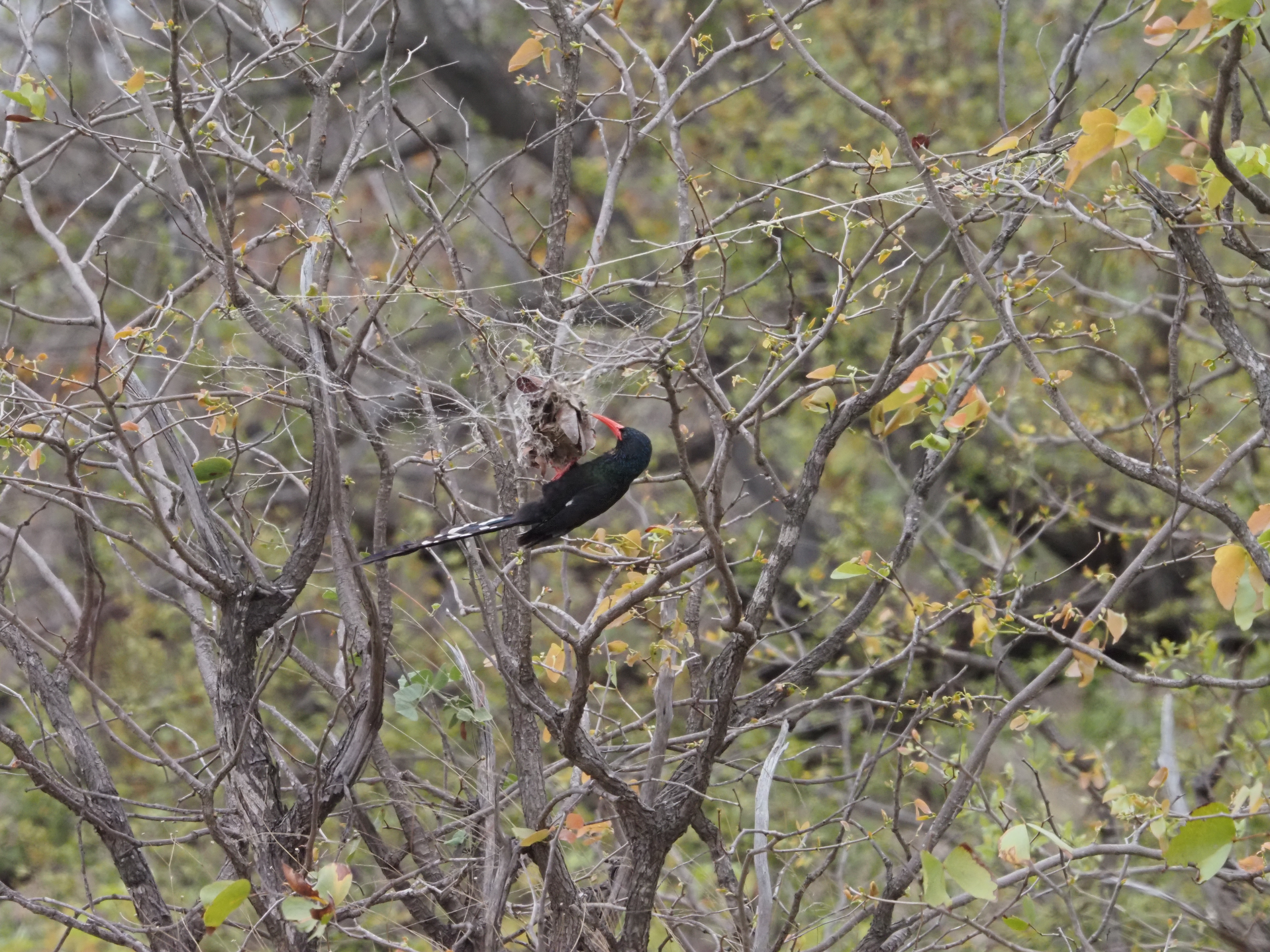
  7. Mallard (Anas platyrhynchos)
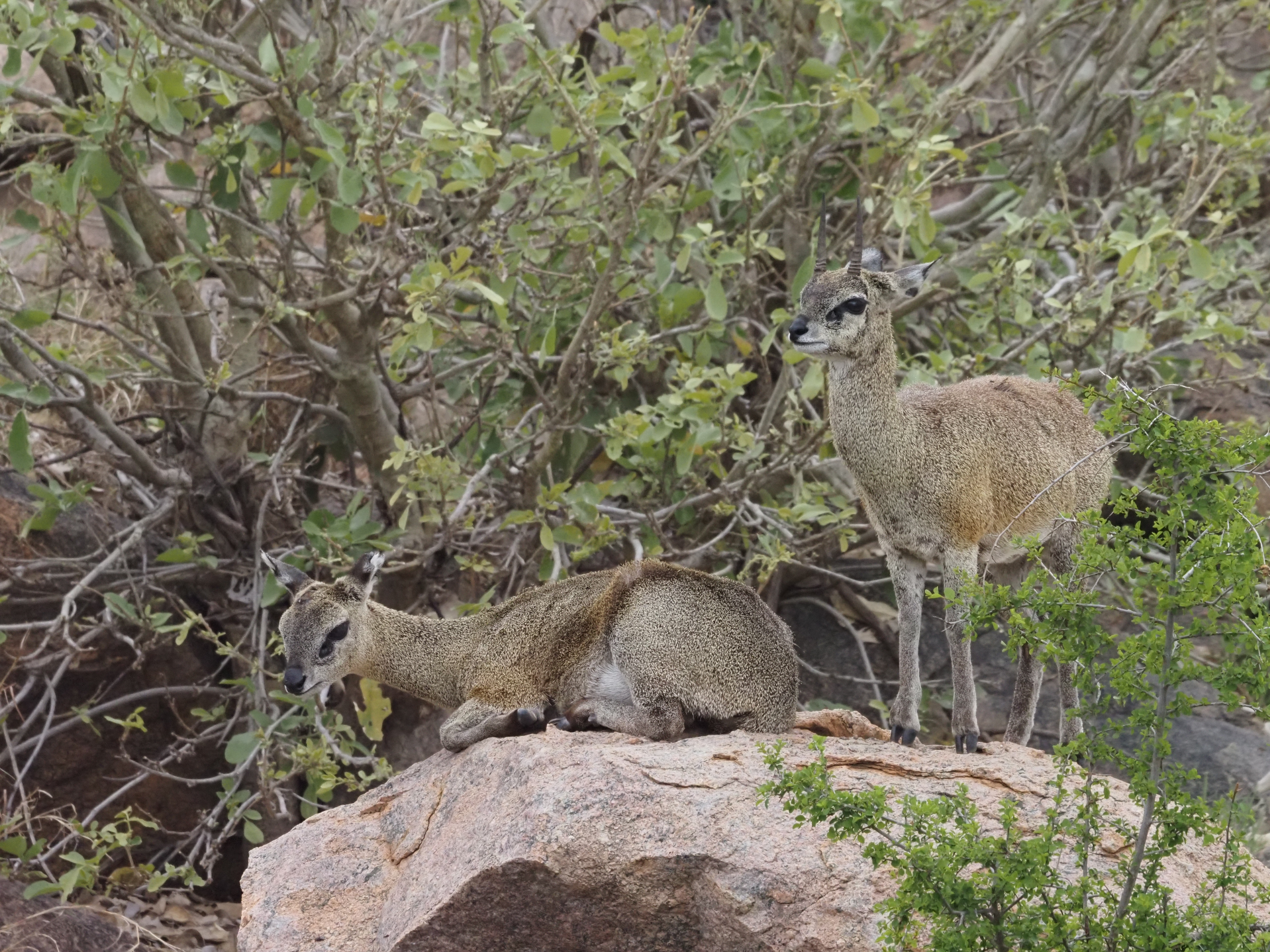
  8. Common Swift (Apus apus)
  9. Common Cuckoo (Cuculus canorus)
  10. Feral Pigeon (Columba livia)
  11. Stock Dove (Columba oenas)
  12. Common Wood Pigeon (Columba palumbus)
  13. Eurasian Collared Dove (Streptopelia decaocto)
  14. Common Crane (Grus grus)
  15. Water Rail (Rallus aquaticus) – heard only
  16. Little Crake (Zapornia parva)
  17. Eurasian Coot (Fulica atra)
  18. Red-necked Grebe (Podiceps grisegena)
  19. Northern Lapwing (Vanellus vanellus)
  20. Eurasian Woodcock (Scolopax rusticola)
  21. Common Snipe (Gallinago gallinago)
  22. Great Snipe (Gallinago media) – heard only
  23. Common Redshank (Tringa totanus)
  24. Green Sandpiper (Tringa ochropus)
  25. Black-headed Gull (Chroicocephalus ridibundus)
  26. Caspian Gull (Larus cachinnans)
  27. Common Tern (Sterna hirundo)
  28. Black Tern (Clidonias niger)
  29. White-winged Black Tern (Chlidonias leucopterus)
  30. White Stork (Ciconia ciconia)
  31. Black Stork (Ciconia nigra)
  32. Greater Bittern (Botaurus stellaris) – heard only
  33. Grey Heron (Ardea cinerea)
  34. Great White Egret (Casmerodius albus)
  35. Red Kite (Milvus milvus)
  36. Common Buzzard (Buteo buteo)
  37. European Honey Buzzard (Pernis apivorus)
  38. Montagu’s Harrier (Circus pygargus)
  39. Western Marsh Harrier (Circus aeruginosus)
  40. Lesser Spotted Eagle (Aquila pom
  41. Northern Goshawk (Accipiter gentilis)
  42. Eurasian Sparrowhawk (Accipiter nisus)
  43. White-tailed Eagle (Haliaaetus albicilla)
  44. Short-eared Owl (Asio flammeus)
  45. Eurasian Pygmy Owl (Glaucidium passerinum)
  46. Long-eared Owl (Asio otus)
  47. Eurasian Hoopoe (Upupa epops)
  48. Great Spotted Woodpecker (Dendrocopos major)
  49. White-backed Woodpecker (Dendrocopos leucotos)
  50. Middle Spotted Woodpecker (Dendrocopos medius)
  51. Three-toed Woodpecker (Picoides tridactylus)
  52. Lesser Spotted Woodpecker (Dryobates minor)
  53. Black Woodpecker (Dryocopus martius)
  54. European Green Woodpecker (Picus viridis) – heard only
  55. Common Kestrel (Falco tinnunculus)
  56. Eurasian Hobby (Falco subbuteo)
  57. Eurasian Skylark (Alauda arvensis)
  58. Woodlark (Lullula arborea)
  59. Sand Martin (Riparia riparia)
  60. Barn Swallow (Hirundo rustica)
  61. Western House Martin (Delichon urbicum)
  62. Tree Pipit (Anthus trivialis)
  63. Meadow Pipit (Anthus pratensis)
  64. White Wagtail (Motacilla alba)
  65. Western Yellow Wagtail (Motacilla flava)
  66. Citrine Wagtail (Motacilla citreola)
  67. Eurasian Robin (Erithacus rubecula)
  68. Thrush Nightingale (Luscinia luscinia)
  69. Common Redstart (Phoenicurus phoenicurus)
  70. Black Redstart (Phoenicurus ochruros)
  71. European Stonechat (Saxicola rubicola)
  72. Whinchat (Saxicola rubetra)
  73. Spotted Flycatcher (Muscicapa striata)
  74. Collared Flycatcher (Ficedula albicollis)
  75. Red-breasted Flycatcher (Ficedula parva)
  76. Song Thrush (Turdus philomelos)
  77. Mistle Thrush (Turdus viscivorus)
  78. Fieldfare (Turdus pilaris)
  79. Eurasian Blackbird (Turdus merula)
  80. Barred Warbler (Curruca nisoria)
  81. Common Whitethroat (Curruca communis)
  82. Lesser Whitethroat (Curruca curruca)
  83. Garden Warbler (Sylvia borin)
  84. Eurasian Blackcap (Sylvia atricapilla)
  85. Sedge Warbler (Acrocephalus schoenobaenus)
  86. Aquatic Warbler (Acrocephalus paludicola)
  87. Common Reed Warbler (Acrocephalus scirpaceus)
  88. Marsh Warbler (Acrocephalus palustris)
  89. Great Reed Warbler (Acrocephalus arundinaceus)
  90. Common Grasshopper Warbler (Locustella naevia)
  91. Savi’s Warbler (Locustella luscinioides)
  92. River Warbler (Locustella fluviatilis)
  93. Icterine Warbler (Hippolais icterina)
  94. Goldcrest (Regulus regulus)
  95. Common Chiffchaff (Phylloscopus collybita)
  96. Willow Warbler (Phylloscopus trochilus)
  97. Wood Warbler (Phylloscopus sibilatrix)
  98. Eurasian Wren (Troglodytes troglodytes)
  99. Red-backed Shrike (Lanius collurio)
  100. Great Grey Shrike (Lanius excubitor)
  101. European Starling (Sturnus vulgaris)
  102. Eurasian Jay (Garrulus glandarius)
  103. Eurasian Magpie (Pica pica)
  104. Western Jackdaw (Corvus monedula)
  105. Hooded Crow (Corvus corone)
  106. Rook (Corvus frugilegus)
  107. Common Raven (Corvus corax)
  108. Eurasian Golden Oriole (Oriolus oriolus)
  109. Eurasian Treecreeper (Certhia brachydactyla)
  110. Eurasian Nuthatch (Sitta europaeus)
  111. House Sparrow (Passer domesticus)
  112. Eurasian Tree Sparrow (Passer montanus)
  113. Marsh Tit (Poecile palustris)
  114. Willow Tit (Poecile montanus)
  115. Coal Tit (Periparus ater)
  116. European Crested Tit (Lophophanes cristatus)
  117. Blue Tit (Cyanistes caeruleus)
  118. Great Tit (Parus major)
  119. Long-tailed Tit (Aegithalos caudatus)
  120. Western Penduline Tit (Remiz pendulinus)
  121. European Serin (Serinus serinus)
  122. Common Rosefinch (Carpoduca erithrinus)
  123. Eurasian Goldfinch (Carduelis carduelis)
  124. Eurasian Greenfinch (Chloris chloris)
  125. Eurasian Siskin (Spinus spinus)
  126. Common Linnet (Linaria cannabina)
  127. Common Chaffinch (Fringilla coelebs)
  128. Common Crossbill (Loxia curvirostra)
  129. Yellowhammer (Emberiza citrinella)
  130. Common Reed Bunting (Emberiza schoeniclus)
  131. Ortolan Bunting (Emberiza hortulana)

List of mammals during the tour

  1. European Hare (Leppus leppus)
  2. European Hedgerog (Erinaceus europaeus)
  3. Roe Deer (Capreolus capreolus)
  4. Eurasian Bison (Bison bison)

Please check our tours at http://www.barcelonabirdingpoint.com

Finland 2023 Birding Trip Report

Dates: From May 23rd to June 1st, 2023

Number of participants: 5

Number of bird species: 177

All images in this trip report taken by: Carmine Grasso, Mark Harper & Mark Newsome (tour participants), and Carles Oliver (tour leader). All rights reserved

Overview: Our 6th tour exploring Northern Finland and Norway (Finnmark) has been one of the best so far. We enjoyed mild weather all trip long, with a single day of rain. Again, we did very in Owls and Grouses, enjoying all 5 possible species of grouses with multiple views on all of them, and 5 species of Owls plus lovely views in rather scarce species including Gyrfalcon, White-billed Diver, Three-toed Woodpecker, Steller’s Eider and Rustic Bunting. Again, the number of Redpolls and Waxwings in the boreal forest was limited, but the numbers of waders and ducks was excellent all along the tour. Once again, it has a lovely experience in the untouched landscapes of the European North Pole. We are already looking for our 2024 issue, starting on May 31st!

Day 1. This day has been basically a travel day, with little birding. Still, some of the tour participants had the time to explore the marshes around our accommodation in Oulu and got very interesting sights including Little Tern, Temmincks Stints, the first Short-eared Owl of the trip and a flock of 10 Broad-billed Sandpipers among other goodies!

Day 2. First of a row of very early starts, this time devoted to explore a number of spots around Oulu. The morning was sunny and without any wind. Even before leaving the accommodation we had views on Common Rosefinch, Reed Bunting and Common Redstart. In our first stop we had a short walk in nice spruce forest. Bird activity was low but we still got the first Black Grouse of the trip that flew off from under our feet, good flocks of Common Crossbills and the only one European Crested Tit of the trip.

Common Rosefinch (Carpodacus erythrinus) nearby our base in Oulu. Image by Mark Harper.
Moose (Alces alces) around Oulu. Image by Carles Oliver
Grey-headed Woodpecker (Picus canus), a very unusual sight as far North as Oulu. Image by Carles Oliver

From here we got a widely known place for Terek’s Sandpiper, but we were not lucky about it and didn’t have anything beyond Common Rosefinch, Arctic Terns, Goldeneyes, a distant calling Little Ringed Plover and a running Stout.

After a coffee break we headed into a different spruce spot around Oulu. Here we were more lucky, and we had a Black Woodpecker flying in front the van just when arriving to the place. A Grey-headed Woodpecker was calling around and we took our chance to have nice views on a bird that was a bit beyond its normal nesting range. The Woodpecker was quietly sitting on the top of a dead tree allowing good and long views to everyone in the group. But after a pair of minutes latter a Hazel Grouse called from inside of one of the spruce pockets around us, so we fastly moved to the place to try to connect with it. It took us some time, as the bird kept moving up and down inside the forest, providing us with good flight views but never conceded a proper perched view.

Beyond this woodlands it is an extensive patch of farmland. Here we had the first Whinchats of the trip along with Skylarks, Eurasian Hobby, Ring-necked Pheasant, Marsh Harriers and a pair of Hen Harriers that were nicely soaring above the fields, searching for boles.

After midday break to recover a bit from the early morning, we did visit a small pond where a pair of Slavonian Grebes where nesting. Here we had intimate views on them before going for a short walk to one of bird towers around Limintahari. Unfortunately it was windy, but still we got a pretty list of birds that included 4+ White-tailed Eagles, several Mute & Whooper Swans, the firsts Little Gulls of the trip, 3 Baltic Gulls, 2 Caspian Terns, 1 Herring Gull and several flocks of ducks that include Garganeys, Teals, Eurasian Wigeon, Goldeneye, Tufted Ducks and Greylag Geese. Distant flocks of Common Cranes were moving up and down while some Sedge Warblers and Reed Buntings were seen singing despite the wind. In the parking place, a pair of Pied Flycatchers were nesting in a nest box. Wader activity was low due to wind, but still got distant views on lekking Ruffs, Common Greenshanks, some Dunlins and Common Snipes.

Stout (Mustela erminea) at the run. Image by Mark Newsome.
Red-necked Grebe (Podiceps auritus) in full summer plomage. Image by Carles Oliver

Day 3. As usual in Finland, it was nice to see a fast change in the weather from the previous day. Our morning developed in a rainy ambient, with temperatures ranking between 8ºC and 12 ºC. During the morning, the main target was to contact with a number of owl species. Our first stop was devoted to check a nest box for Tengmalm’s Owl, and after a short wait we had the female coming out from the hole and showing for some minutes and it was checking that everything was okay around its nest place. From here we moved some miles away, as a next box for Ural Owl was occupied at the moment. Once arrived we were surprised by the first Spotted Flycatcher of the trip, as well as a Coal Tit that was calling around, even if never showed out. We were in a lovely clearing of the forest, and everybody enjoyed great scope views on the Ural Owl inside its nest.

The rain gave us a break, and we moved into a different location. A lovely mature spruce forest was hosting a pair of Eurasian Pygmy Owl. We already tried a place the previous day, with no luck. And this trial had a similar end. Yes, we had one of the birds shortly replaying from up in one of the spruces but, despite our efforts, we were uncapable to bring this bird into sight. It was time for a breakfast break. Around us, Northern Bullfinches were calling and feeding, and that morning we had several sights on them, as many Bullfinches were coming to the dart roads, presumably to swallow some dart. Also in teh dart roads, we had a good number of Eurasian Woodcocks flying off, with a pair of birds standing up for some seconds and allowing short but solid views. We did a short stop in a farming area, not far from the place where we were the day before, and we fastly connected with 3 Ortolan Buntings singing and calling around us. Whinchat, Eurasian Curlew and Yellowhammer were also noted around.

The weather was clearly improving as the day went on so we came back to the forests, leaving the open lands behind. The first Brambling of the trip was seen just by the van, and the only 3 Taiga Bean Geese of the trip flew above us at the moment to get inside a small patch of forest where a gorgeous female Great Grey Owl was sitting on its nest. The Great Grey Owl is not only an impressive beast, but also the largest owl in this part of the world! After several minutes enjoying the bird, we decided to take a look. The male could not be far away, guarding from any potential risk the nest and his partner. And we were sucessful in finding the male, that was about 50 metres away from the nest, up in a dense pine. Again, the group enjoyed amazing scope views and, despite the rather windy weather, the camera men in the group had a wonderful quest to capture the spirit of such an impressive beast. Here we also had Eurasian Treecreeper and the very common Willow Warblers and Goldcrests.

Great Grey Owl (Strix nebulosa) on its massive nest. Image by Carles Oliver
The always very impressive Great Grey Owl (Strix nebulosa). Image by Carles Oliver
Ortolan Bunting (Emberiza hortulana). Image by Carles Oliver
Boreal Owl (Aegolius funereus) on its nest box. Image by Mark Newsome.
Eurasian Treecreeper (Certhia familiaris). Image by Mark Newsome.
Detail of the boreal forest. Image by Carles Oliver

After a pair of minor stops we went for a lunch stop, we hit the road in the direction of Kuusamo. A pair of stops in the way were mandatory as small flocks of Little Gulls were seen quite close, moving along with the nesting Black-headed Gulls. At mid afternoon we were already there, and we have time to explore a spot not far away from the town. Here the Mountain Hares were everywhere, but the area, an open land with small pockets of young willows, was only having Reed Buntings. When we were ready to leave, suddenly a tiny call came from the low branches of a willow, and a male Little Bunting showed up, singing a number of times from different branches. It followed a tiny peak of activity with a minimum of two males singing around and a putative female moving really low in the vegetation. We had to move a pair of times up and down in the track but at the end all the tour participants had excellent views on this little, wonderful patterned, birds.

From here we drove to the accommodation to have some rest and a bit of birding before dinner time, resulting in some Wood Sandpipers in the lake right beside our rooms, Common Cuckoo in the parking place, and Willow Warbler, Common Redstarts and the firsts House Martins of the trip as the most remarkable sights.

Little Bunting (Emberiza pusilla) feeding. Image by Mark Newsome.
Little Bunting (Emberiza pusilla). Image by Carles Oliver
Common Cuckoo (Cuculus canorus) in the hotel grounds in Kuusamo. Image by Carles Oliver
Landscape around Kuusamo by Carles Oliver

Day 4. A full day to enjoy the wonderful birding around the Kuusamo. Early am the weather was stable, but the wind started to blow after 9:00am, making birding a bit more difficult. Leaving our accommodatioin, we had the first Black Grouses of the day, as some females were seen feeding beside some minor tracks. From here we covered the short distance to a nice spot for Willow Grouse, and even before arriving we had to make a small detour as a male was seen in the top of a small rock inside a private garden. It was still a bit dark, but we didn’t miss the chance of some good shots in this wonderful and really tame male. During the next hour we had a minimum of 10 Black Grouses, all of them females, and a second Willow Grouse really close to the van. We crossed by some lakes, and some stops were mandatory to enjoy close views not only on Little Gulls and a drake Smew, but also on 5 Red-necked Grebes, Garganey and a wonderful Black-throated Diver at close range! The variety of ducks was remarkable, including Eurasian Teal, Pintail, Mallard, Tufted Duck, Common Goldeneye, Red-breasted Mergarser and Goosander.

In a different spot of the forest we had one of the typical stops, as a male Western Capercaillie was displaying in the track! Unfortunately, this time didn’t allow time for everybody to get out of the vehicle and take some shots, as the bird flew off inside the forest, followed by a female that was at the edge of the forest. We walked down the track slowly and we could hear the distant song of the Capercaillies, that unfortunately didn’t show again. Standing in this place, Mark had a song in the distance; a Rustic Bunting was singing in a small boj in the forest. We walked all the way down to the boj and carefully scanning around, but could not find any sign of the buntings. Back to the track, we suddenly had a bird calling around, and some seconds after this we had a wonderful male singing around us! The bird was really mobile but we enjoyed great views in this little cracker! Just when coming back to the minibus, 2 Parrot Crossbills flew over us at close range, offering half a second of good views on their large head and very powerful bills! Unfortunately they never stop, and kept their way above the canopy.

Female Black Grouse (Lyrurus tetrix). One of 20+ seen during the trip. Image by Mark Newsome
Little Gull (Hydrocoloeus minutus) in flight. Great shot by Mark Newsome
Smew (Mergellus albellus), a scarce nesting duck in Lapland. Image by Mark Harper.
Whooper Swans (Cygnus cygnus) feeding in farmland. Image by Carles Oliver
Willow Grouse (Lagopus lagopus) showing nicely in our very first “grouse drive”. Image by Carles Oliver
Western Capercaillie (Tetrao urogallus) displaying. Image by Carles Oliver
Lovely Rustic Bunting (Emberiza rustica). A single stop in Kuusamo produced Capercaillie, Rustic Bunting and Parrot Crossbill! Image by Carles Oliver

Back to the minibus we still had more Black Grouses and a pair of female Capercaillies in the road, offering of all them really good views. It was still early morning but we wanted to check a small spot only 10 miles away from the Russian border. There, large areas of dead, broken pines and willows offered an excellent habitat for another of the owls living in the region. We spent over half an hour in the place, but we didn’t get anything beyond Redwings, Tree Pipits, Mealy Redpolls and Whinchats. Finally we decided to move on, and when we were leaving our efforts were greatly granted: a wonderful Northern Hawk Owl was sitting next to the road, in the highest part of a tall willow! We took our chance, park besides and we all enjoyed long views on this wonderful bird while was overwatching its hunting area. A Fieldfare was trying to moob the owl, but the only that got was the owl to open its wings a pair of times, allowing us to see a good detail on the wing design. After nearly 15 minutes enjoying the bird from the road, the Hawk Owl decided to leave the place, flying away and crossing the open land nearby.

Extremelly happy after this extemelly nice sight, we move to Livaara, a wonderful hill that oversees the extensive forests around Kuusamo. But we still had to do another stop in way, since Mark (yes, it was more than one Mark in the tour) found a Hazel Grouse nicely posing beside the road!! From inside the van, we all had incredible views, with the lovely morning sun illuminating the game bird. As it moved, a female appeared beside the male, and both male and female moved for a pair of minutes before getting away, back inside the boreal forest. Very happy after this, we covered the short distance to Livaara. Once arrived, we were surprised by a very intense Woodpecker activity. Firstly, a Great Spotted Woodpecker that was feeding immediatly around the parking place, and secondly a wonderful Black Woodpecker that appeared from the forest, displaying and calling. It was already cloudy and a bit windy so to see these Woodpeckers behaving like this was quite a surprise, especially when the Black Woodpecker decided to gly our way, stopping only 50 metres away from our group, offering another unforgettable sight!

The wind was getting serious, especially in the highest part of the hill. Still, we decided to walk a bit. We never reached the top of the hill (a famous place for Red-flanked Bluetail) as the bird activity was clearly very low. Still, in our short-walk around the parking place we got nice views on a passing by White-tailed Eagle and a second pair of Rustic Buntings as a nice end of a magic morning!

Back to the accommodation, we still had some time for rest before having lunch.

During the afternoon the weather deteriorated fast, with strong winds affecting especially the higher parts of Kuusamo. We invested a pair of hours exploring a pair of spots, but we got nothing of interest beyond the common species living in this part of the world so decided to have an early dinner.

Northern Hawk Owl (Surnia ulula). Image by Carles Oliver
A couple of Hazel Grouses (Tetrastes bonasia) by the minivan was one of the highlights of the day. Image by Carles Oliver
This Black Woodpecker (Dryocopus martius) offered us amazing and really unexpected views when around Limahara. Another great shot by Mark Newsome.
Black Woodpecker (Dryocopus martius). Image by Carles Oliver
Black-throated Diver (Gavia arctica) around Kuusamo. Image by Carles Oliver

Day 5. Another early start to explore some of the hills around Kuusamo. Our first stop was devoted to explore Valatavaara, where it was going on a mountain race. Bird activity was quite low, but when arrived to the summit we had good views on a singing Common Cuckoo + Common Redstart and Dunnock. It didn’t take long before we contacted with the our first Three-toed Woodpecker that gave us excellent views while calling and moving up in a dead tree. Besides, a Great Spotted Woodpecker was also calling, and it was interesting to compare the calls of both species. Our walk kept going, adding lovely views on Tree Pipits and Spotted Flycatchers. A bit more of time was required to find a pair of Siberian Jays that, after moving quite high in the trees for a while, finally decided to come down. At some point, we had only a few meters away! Moving around the area we had a second Three-toed Woodpecker working the wood, but went away quite fast and not everybody in the group saw it. We still listened them drumming and calling several times! After a good pair of hours, it was quite clear that we were not going to have any Bluetail at Valtavaara so we decided to move away from here to try a second spot. After some breakfast, we drove the short distance and went to explore another section of boreal forest. We again enjoyed of the views above the endless forest that covers this region of Finland. And here we had more luck, and we listened a male Red-flanked Bluetail singing from the top of a distant spruce. The effort was worth it, especially when the bird moved into a different spruce where it caught the wonderful morning light! There we had 20 minutes to enjoy the bird, while a second Bluetail was singing around us.

Once everyone was satisfied with the views on these wonderful Bluetails, we came down the hill. Including a pair of stops for lunch and coffee, we had some solid drive North to the area around Ivalo.

Capercaillie (Tetrao urogallus) female showing its wonderful camouflage. Image by Mark Newsome
Three-toed Woodpecker (Picoides tridactylus) posing nicely for our group. Image by Carles Oliver
Siberian Jays (Perisoreus infaustus) were as approachable as always. Image by Mark Newsome
Red-flanked Bluetail (Tarsiger cyanurus). Image by Carles Oliver
The amazing landscape of the boreal forest around Kuusamo. Image by Carles Oliver

We were already inside Lapland and the North Polar Circle. Here, extensive boreal forests can be found all around. Before covering the short distance to our accommodation in the area we spent an hour and so in a lovely corner. In teh way, more Willow Grouses were visible along with Black Grouses. A pair of stops in selected places produced lovely views on obliging Siberian Tit, a highly appreciated speciality in this trip. Along with it we scanned the several Common Crossbill around in search for something different. Three-toed Woodpeckers were also active, and we could listen them drumming and had a glimpse in one of them while moving in the forest.

After this we just drove to our accommodation for some rest and a good evening meal!

Siberian Tit (Poecile cinctus) possed nicely for the group. Image by Mark Harper
Wood Sandpiper (Tringa glareola) in its nesting grounds. Image by Carles Oliver
Pine Grosbeak (Pinicola enucleator) despite the rain. Image by Carles Oliver

Day 6. A rainy day this morning, so an excellent chance to enjoy our the amazing buffet breakfast in our hotel at Ivalo. After breakfast we transfer North, with a mandatory stop in a popular coffee stop to enjoy the amazing Pine Grosbeak that attend the feeding station nearby. Here we also had good views on drake Bramblings but also Common Redpolls, Greenfinches, several Red Squirrels and a Waxwing that showed up just when we were leaving the coffee shop.

The day was wet and cold, but a pair of stops still produced the first Bluethroat of the trip along with Siberian Jay crossing the road. Here is where, stopping by the road, we had one of the best moments of trip. A walk inside a woodland of low willows allowed good views on Arctic Redpolls. It was dropping and the display of two displaying Common Snipes arrived to us from the nearby boj when a call came from inside the forest. A fast scanning in the area revealed not less than a Northern Hawk Owl that was hatching in a nest box, only a few meters away from the path! After some minutes of excitement the call came again from inside the forest, and it was not coming from the nest box. It was obvious that the male was around. A bit of scanning and exploring the forest was necessary before we found the male perched up in a tree. It was extremely quiet, only 15 metres away from us. Actually, it was so chill out that, at some point, it decided to fly down from the tree to stop only 10 metres away from us, in the top of a dead and broken willow. There, under the light rain, we got one of the most amazing sights of all the tours that we have had in Finland! Some were taking photos, while some participants just decided to sit down and enjoy the moment.. After 20 unforgettable minutes we decided to move away, back to minibus. The male still on its trunk, the female hatching. Without doubt one of my best experiences in the taiga, so far!

Northern Hawk Owl (Surnia ulula). Images by Carles Oliver
A pair of Bohemian Waxwing (Bombycilla garrulus) was nesting around our accommodation. Image by Carles Oliver

Back to the van, we all honestly needed some time to recover from this amazing experience, and later on we kept moving North, still with the ecos of the very low calls of the male in our heads. After a lunch stop, we arrived in Varanger by early afternoon. In our way we had several White-tailed Eagles moving along the coast line, and a good number of Rough-legged Buzzards looking for boles all along the road.

The coast along Varanger is a truly paradise for wildlife, and this unspoiled landscape is till preserving good densities of a long list of birds nesting all along its tundra and boj. A fast stop road allowed us to enjoy the first Kittiwakes of the trip, but also Dunlin, Temminck’s Stints, Redshanks, Bar-tailed Godwit and Ruddy Turstone.

The first proper stop in the fjord could no be better. As always there were several Goosanders, Red-breasted Mergansers and tens of Common Eiders along with many waders. We knew that some Steller’s Eiders were around, and Mark found them after a proper scan of the shore! There were two 2nd year males and one female. No bright colours then for the group (not yet) but still Steller’s Eiders!

Walking the short distance until an advantaged point, we enjoyed very long views on the birds as they moved a bit in the shore, being moved sometimes by the much larger Common Eiders. Here we also had the first Purple Sandpiper of the trip and Eurasian Whimbrel.

After we found the most important items of the afternoon, we went to enjoy of the many Phalarope ponds that are in this area to end our day with the amazing experience of 20 of this Nordic gems feeding only a few meters away from us. They arrived to their nesting grounds only a few days before, and they were extremely busy feeding on insects to recover from the long journey. They were all very excited, and we saw at least three different mating during the hour and so that we were there.

Arctic Terns (Sterna paradisaea). Image by Mark Newsome.
Some urban Mountain Hares (Leppus timidus). Image by Mark Newsome
Tundra Bean Geese (Anser serrirostris) by Carles Oliver
Red-necked Phalarope (Phalaropus lobatus) female (up) & male (below) by Carles Oliver

Day 7. A cloudy and fresh day, a nice weather to explore the Arctic landscapes with small windows of sun and with only a few drops of rain during the day. After breakfast we drove North to check one of the many bays along the coast in Varanger. But before we had a stop when crossing Vadso, since 3 Steller’s Eiders (the same three birds of the previous afternoon?) were feeding close to the shore along with Common Eiders. Here really improve the views on them as well as enjoying 30 Purple Sandpipers in the rocks.

Our first proper stop didn’t produce so much. Here there were recent reports of close views on a White-billed Diver, but we couldn’t find it. Still, the spot allowed us to connect with the firsts Long-tailed Ducks, Guillemots, Black Guillemots and Red-throated Divers of the trip, all of them common birds along this coast.

From here we drove to Vardo and wait for the boat connecting with Hornoya. After some waiting, we finally got the boat and cover the short distance out the bay of Vardo before arriving by the massive cliffs of the island.

Hornoya is the Easternmost point in Norway and hosts one of the most amazing seabird colony in Europe. Between March and July, the island concentrates between 150,000 and 180,000 sea birds, depending on the year. About 75,000 pairs of birds nest here including 40,000 pairs of Common Guillemots, 8,000 of Atlantic Puffin and about 5,000 of Brünnich’s Guillemot! Both the ambient of the colony, the extremely loud noise plus the incredible density of birds on its cliffs are not easy to forget for any visitor!

We landed in the island, and it was not long before we had the firsts Brünnich’s nesting up the in cliff. Small pockets of them can be found, always surrounded and outnumbered by Common Guillemots (including several from the smart Bridled form) and Razorbills.

Atlantic Puffins were everywhere in the lowest areas, and Shags and Kittiwakes were taking advantage of every single cavity, terrace or even bank, to nest on. The walk around the island also produced both Meadow & Red-throated Pipit, Bluethroat, Twite Arctic Skua, Barnacle & Greylag Geese, Rock Pipits, Goosanders and, of course, Redwings.

A bit of seawatching produced a few Atlantic Gannets going North and the first of a bunch of whales; a Minke Whale.

White-tailed Eagle (Haliaaetus albicilla). image by Carles Oliver
Common Guillemots (Uria aalge) in Hornoya. Images by Carles Oliver
Brünnich’s Guillemots (Uria lomvia) by Carles Oliver
Atlantic Puffin (Fratercula arctica) by Carles Oliver

From Hornoya we kept moving North, stopping in the tundra to search for some species we fastly connect with some wonderful Lapland Buntings in full summer plomage and the very firsts Ruff lekking in short grass while both European Golden Plovers and Arctic Skuas were also ready to nest around.

Soon, the lane stick to the shore and several flocks of Goosanders start to appear. Here, Mark sharply spotted a number of whales. Most of them turned out to be Fin Whales, but a at least two of them were Humpback Whales! After some good views on them we kept driving North, but soon we had to stop again: a drake White-billed Diver was really close to the coast, offering great looks to all the tour participants. This is a good time of year to try to see them, as they are migrating North (!) to arrive to their nesting sites. Depending on the year, one or two non-breeding birds may stay in the area!

While scanning the harbour, another 2 White-billed Divers (one of them a 2nd year bird) were found, as well as a 6 Red-throated Divers, several flocks of Long-tailed Ducks and 2 Grey Seals. From here, we started a slow way back enjoying some views on Willow Grouse, Twite and more whales!

Back around Vardo, we still had two more stops in the way back to the accommodation. The first as 4 Pink-footed Geese were feeding nearby the road, and the second stop because of 2 wonderful Short-eared Owls that were chasing each other over the farmland next to the road. Here we were specially lucky as one of them just decided to stop next to our minibus, allowing us to capture some incredible image. Definately not a bad way to end our day!

Lapland Bunting (Calcarius lapponicus). Image by Carles Oliver
Ruff (Calidris pugax) ready to lek in the tundra. Image by Carles Oliver
White-billed Diver (Gavia adamsi) in full summer plomage. Image by Mark Newsome.
White-tailed Eagle being moved by a apir of Arctic Skuas. Image by Mark Newsome.
Fin Whale (Balaenoptera physalus). Image by Mark Newsome.
Humpback Whale (Megaptera novaeangliae). Image by Mark Newsome
Short-eared Owl (Asio flammeus). Image by Carles Oliver

Day 8. A pre-dawn walk produced nice views on the typical coastal birds around our accommodation, and Mark Newsome had a full adult Heuglin’s Gull (currently considered as a race of Lesser black-backed Gull), a quite unexpected species in this area!

This day we transfered to the inner Varanger, where the tundra becomes a wonderful carpet that covers the whole plateau, with plenty of rocky outcrops, lakes and deep valleys that mark the distribution of the many goodies nesting here.

But before we had a small stop South of Ekrenoy, where a French gentleman had a drake Steller’s Eider the day before. At the first attemp Carmine had a small flock of 4 Steller’s Eider appearing from behind some rock, and there was our wonderful drake male offering some wonderful views while feeding along with 3 females! The birds kept coming closer and closer, and the rather intimates views paid off the time that we spent waiting for them in the rather cold ambient.

From here we drove all the way to the central plateau in Varanger, where a first stop produced the first views on lovely Long-tailed Skuas, several Arctic Redpolls and good views on the very splendid Bluethroats nesting in the area. From here we went to check a number of spots where the very sought after GyrFalcon is likely to appear. In our second stop, we found a pair of these massive falcons in a small cliff showing clear nesting signs.

We had scope views on both the male and the female while resting in the cliffs. At some point, the male flew off, circling in the sky to powerfully fly into the cliffs, probably in the chase of any potential prey.

Heuglin’s Gull (Larus fuscus heuglini) by Mark Newsome
Awesome views on Steller’s Eiders (Pollysticta stelleri)
Long-tailed Skua (Stercorarius longicaudus) by Mark Newsome.
Bluethroat (Luscinia svecica) singing its heart out. Image by Carles Oliver
Arctic Redpoll (Acanthis hornemanni) by Mark Newsome
Gyrfalcon (Falco rusticolus). Images by Carles Oliver

After this incredible sight we kept exploring the tundra, adding close views on Black-throated & Red-throated Diver to our list. Red-throated Pipits were singing around and a pair of Shore Larks was found feeding along one of the lanes. In the roocky outcrops, we enjoyed up to 4 Rock Ptarmigans showing out its white plomage. We even had some display flights, and their rocky calls contrasted with the happy display songs of both European Golden Plovers and Dunlins that full filled the ambient. Some Snow Buntings were also noted, but only a female provided the group with more or less close views. Just the opposite from Lapland Buntings, that looked like being as common as ever, with some males walking really close to the prominent Long-tailed Skua nests.

At the end of the afternoon, we got a pair of Rough-legged Buzzards hunting by one of the lanes, providing great views and the day ended with some scanning of large gulls in the search of any scarcity, and with some Willow Grouse by the lane before arriving to our accommodation.

Rock Ptarmigan (Lagopus mutus). Image by Carmine Grasso
This afternoon we had splendid views on Rough-legged Buzzards (Buteo lagopus). Image by Mark Newsome
The impressive landscape in the highest area of Varanger. Image by Carles Oliver

Day 9. During the morning we explored a bit further the tundra, adding better views on Snow Finch, Long-tailed Skuas, Red-throated Pipits, as well as enjoying with the display and close views on Red-throated Divers, Ruff and Scaups. We spent some time in a small stream where in previous years we had Dipper, but we failed to find any of the. For instance, the only one Peregrine Falcon of the tour appeared in the gorge. Back to the tundra, we had 2 Bar-tailed Godwits flying low over the area, an interesting sight since they are not supposed to nest here. At midday we started the transfer back South, and we spent the rainy afternoon in our accommodation.

Red-throated Pipit (Anthus cervinus) in flight display. Image by Mark Harper.
Obliging Ruff (Calidris pugnax) by Mark Newsome.
Long-tailed Skua portrait (Stercorarius longicaudatus). Image by Carmine Grasso.
European Golden Plover (Pluvialis apricaria) in nesting grounds. Image by Carmine Grasso.

Day 10. This day we took advantage of our midday flight to have a last am in proper boreal forest. Unfortunately we had a cold morning with a heavy snow fall. It was actually the first snow fall ever in this trip. Still, we had a good pair of hours, and a nice short walk in the forest produced several Common Crossbills, a feeding pair of Bohemian Waxwings and a nice male Parrot Crossbill that showed quite properly in the top of a spruce along with several Bramblings, Mealy Redpolls and Eurasian Siskins.

The drive around this spot South of Ivalo produced also a minimum of 7 Black Grouses, including 6 males moving together and a female Western Caspercaillie nicely flying beside the minibus and showing the lovely peachy patch on its breast.

After a pair of hours of birding we went to enjoy a coffee and some food before heading to airport while the landscape was being covered by a massive snow fall! Without doubt, a great way to end our 2023 trip in Finland!

In 2024 we will be back in Finland. Please check dates and prices at our website: http://www.barcelonabirdingpoint.com

Black Grouse (Lyrurus tetrix). Several males were active in the boreal forest during our last morning. Image by Mark Newsome.
Parrot Crossbill (Loxia pytyopsittacus). Image by Mark Newsome.

List of birds seen during the trip:

  1. Red-throated Diver (Gavia stellata)
  2. Black-throated Diver (Gavia arctica)
  3. Yellow-billed Diver (Gavia adamsii)
  4. Great Crested Grebe (Podiceps cristatus)
  5. Red-necked Grebe (Podiceps grisegena)
  6. Slavonian Grebe (Podiceps auritus)
  7. Atlantic Gannet (Morus bassanus)
  8. Great Cormorant (Phalacrocorax carbo)
  9. Atlantic Shag (Phalacrocorax aristotelis)
  10. Great White Egret (Casmerodius albus)
  11. Whooper Swan (Cygnus cygnus)
  12. Mute Swan (Cygnus olor)
  13. Common Shelduck (Tadorna tadorna)
  14. Greylag Goose (Anser anser)
  15. Tundra Bean Goose (Anser serrirostris)
  16. Taiga Bean Goose (Anser fabalis)
  17. Pink-footed Goose (Anser brachyrhynchus)
  18. Barnacle Goose (Branta leucopsis)
  19. Eurasian Wigeon (Mareca penelope)
  20. Gadwall (Mareca strepera)
  21. Eurasian Teal (Anas crecca)
  22. Mallard (Anas platyrhynchos)
  23. Pintail (Anas acuta)
  24. Northern Shoveler (Spatula clypeata)
  25. Garganey (Spatula querquedula)
  26. Tufted Duck (Aythya fuligula)
  27. Greater Scaup (Aythya marila)
  28. Common Eider (Somateria mollissima)
  29. Steller’s Eider (Polysticta stelleri)
  30. Long-tailed Duck (Clangula hyemalis)
  31. Common Scoter (Melanitta nigra)
  32. Goldeneye (Bucephala clangula)
  33. Smew (Merguellus albellus)
  34. Goosander (Mergus merganser)
  35. Red-breasted Merganser (Mergus serrator)
  36. Black Kite (Milvus migrans)
  37. Hen Harrier (Circus cyaneus)
  38. Western Marsh Harrier (Circus aeruginosus)
  39. Eurasian Sparrowhawk (Accipiter nisus)
  40. Northern Goshawk (Accipiter gentilis) — heard only
  41. Common Buzzard (Buteo buteo)
  42. Rough-legged Buzzard (Buteo lagopus)
  43. Osprey (Pandion haliaetos)
  44. White-tailed Eagle (Haliaeetus albicilla)
  45. Eurasian Kestrel (Falco tinnunculus)
  46. Eurasian Hobby (Falco subbuteo)
  47. Merlin (Falco columbarius)
  48. Peregrine Falcon (Falco peregrinus)
  49. Gyrfalcon (Falco rusticolus)
  50. Hazel Grouse (Tetrastes bonasa)
  51. Willow Grouse (Lagopus lagopus)
  52. Rock Ptarmigan (Lagopus mutus)
  53. Black Grouse (Lyrurus tetrix)
  54. Western Capercaillie (Tetrao urogallus)
  55. Common Crane (Grus grus)
  56. Eurasian Oystercatcher (Haematopus ostralegus)
  57. Common Ringed Plover (Charadrius hiaticula)
  58. Little Ringed Plover (Charadrius dubius) — heard only
  59. Eurasian Golden Plover (Charadrius apricaria)
  60. Northern Lapwing (Vanellus vanellus)
  61. Temminck’s Stint (Calidris temminckii)
  62. Little Stint (Calidris minuta)
  63. Red Knot (Calidris canutus)
  64. Purple Sandpiper (Calidris maritima)
  65. Ruff (Calidris pugnax)
  66. Broad-billed Sandpiper (Limicola falcinellus)
  67. Eurasian Woodcock (Scolopax rusticola)
  68. Common Snipe (Gallinago gallinago)
  69. Bar-tailed Godwit (Limosa lapponica)
  70. Black-tailed Godwit (Limosa limosa)
  71. Eurasian Whimbrel (Numenius phaeopus)
  72. Eurasian Curlew (Numenius arquata)
  73. Common Redshank (Tringa totanus)
  74. Greenshank (Tringa nebularia)
  75. Wood Sandpiper (Tringa glareola)
  76. Green Sandpiper (Tringa ochropus)
  77. Common Sandpiper (Actitis hypoleucos)
  78. Ruddy Turstone (Arenaria interpres)
  79. Red-necked Phalarope (Phalaropus lobatus)
  80. Arctic Skua (Stercorarius parasiticus)
  81. Long-tailed Skua (Stercorarius longicaudus)
  82. Little Gull (Hydrocoloeus minutus)
  83. Black-headed Gull (Chroicocephalus ridibundus)
  84. Common Gull (Larus canus)
  85. Great Black-backed Gull (Larus marinus)
  86. Herring Gull (Larus argentatus)
  87. Lesser Black-backed Gull (Larus fuscus)
  88. Kittiwake (Rissa tridactyla)
  89. Common Tern (Sterna hirundo)
  90. Arctic Tern (Sterna paradisaea)
  91. Little Tern (Sternula albifrons)
  92. Caspian Tern (Hydroprogne caspia)
  93. Guillemot (Uria aalge)
  94. Brünnich’s Guillemot (Uria lomvia)
  95. Razorbill (Alca torda)
  96. Black Guillemot (Cepphus grylle)
  97. Atlantic Puffin (Fratercula arctica)
  98. Feral Pigeon (Columba livia)
  99. Stock Dove (Columba oenas)
  100. Common Wood Pigeon (Columba palumbus)
  101. Common Cuckoo (Cuculus canorus)
  102. Short-eared Owl (Asio flammeus)
  103. Tengmalm’s Owl (Aegolius funereus)
  104. Great Grey Owl (Strix nebulosa)
  105. Ural Owl (Strix uralensis)
  106. Northern Hawk Owl (Surnia ulula)
  107. Common Swift (Apus apus)
  108. Great Spotted Woodpecker (Dendrocopos major)
  109. Three-toed Woodpecker (Picoides tridactylus)
  110. Black Woodpecker (Dryocopus martius)
  111. Grey-headed Woodpecker (Picus canus)
  112. Skylark (Alauda arvensis)
  113. Horned Lark (Eremophila alpestris)
  114. Barn Swallow (Hirundo rustica)
  115. Western House Martin (Delichon urbicum)
  116. Tree Pipit (Anthus trivialis)
  117. Meadow Pipit (Anthus pratensis)
  118. Red-throated Pipit (Anthus cervinus)
  119. Rock Pipit (Anthus petrosus)
  120. White Wagtail (Motacilla alba)
  121. Western Yellow Wagtail (Motacilla flava)
  122. Bohemian Waxwing (Bombycilla garrulus)
  123. Dunnock (Prunella modularis)
  124. Eurasian Robin (Erithacus rubecula)
  125. Bluethroat (Luscinia svecica)
  126. Red-flanked Bluetail (Tarsiger cyanurus)
  127. Common Redstart (Phoenicurus phoenicurus)
  128. Whinchat (Saxicola rubetra)
  129. Spotted Flycatcher (Muscicapa striata)
  130. European Pied Flycatcher (Ficedula hypoleuca)
  131. Northern Wheatear (Oenanthe oenanthe)
  132. Fieldfare (Turdus pilaris)
  133. Song Thrush (Turdus philomelos)
  134. Eurasian Redwing (Turdus iliacus)
  135. Mistle Thrush (Turdus viscivorus)
  136. Eurasian Blackbird (Turdus merula)
  137. Sedge Warbler (Acrocephalus schoenobaenus)
  138. Eurasian Blackcap (Sylvia atricapilla) — heard only
  139. Garden Warbler (Sylvia borin)
  140. Common Chiffchaff (Phylloscopus collybita)
  141. Willow Warbler (Phylloscopus troquillus)
  142. Wood Warbler (Phylloscopus sibilatrix)
  143. Goldcrest (Regulus regulus)
  144. Willow Tit (Poecile montanus)
  145. Siberian Tit (Poecile cinctus)
  146. Coal Tit (Periparus ater) — heard only
  147. Eurasian Crested Tit (Lophophanus cristatus)
  148. Blue Tit (Cyanistes caeruleus)
  149. Great Tit (Parus major)
  150. Eurasian Treecreeper (Certhia familiaris)
  151. Siberian Jay (Perisoreus infaustus)
  152. Eurasian Magpie (Pica pica)
  153. Western Jackdaw (Corvus monedula)
  154. Hooded Crow (Corvus cornix)
  155. Rook (Corvus frugilegus)
  156. Common Raven (Corvus corax)
  157. European Starling (Sturnus vulgaris)
  158. House Sparrow (Passer domesticus)
  159. Eurasian Tree Sparrow (Passer montanus)
  160. Common Chaffinch (Fringilla coelebs)
  161. Brambling (Fringilla montifringilla)
  162. Eurasian Greenfinch (Chloris chloris)
  163. Eurasian Siskin (Spinus spinus)
  164. Linnet (Carduelis cannabina)
  165. Mealy Redpoll (Carduelis flammea)
  166. Arctic Redpoll (Carduelis hornemanni)
  167. Common Crossbill (Loxia curvirostra)
  168. Parrot Crossbill (Loxia pytopsyttacus)
  169. Common Rosefinch (Carpodacus erythrinus)
  170. Eurasian Bullfinch (Pyrrhula pyrrhula)
  171. Pine Grosbeak (Pinicola enucleator)
  172. Yellowhammer (Emberiza citrinella)
  173. Ortolan Bunting (Emberiza hortulana)
  174. Reed Bunting (Emberiza schoeniclus)
  175. Rustic Bunting (Emberiza rustica)
  176. Little Bunting (Emberiza pusilla)
  177. Lapland Bunting (Calcarius lapponicus)

List of mammals seen during the trip:

  1. European Hare (Leppus leppus)
  2. Mountain Hare (Leppus timidus)
  3. Muskrat (Ondatra zibethicus)
  4. Red Squirrel (Sciurus vulgaris)
  5. European Hedgehog (Erinaceus europaeus)
  6. Stout (Mustela erminea)
  7. Red Fox (Vulpes vulpes)
  8. Grey Seal (Halichoerus grypus)
  9. Roe Deer (Capreolus capreolus)
  10. Moose (Alces alces)
  11. Reindeer (Rangifer tarandus)
  12. Fin Whale (Balaenoptera phisalus)
  13. Common Mink Whale (Balaenoptera acutorostrata)
  14. Humpback Whale (Megaptera novaeangliae)
  15. Harbour Porpoise (Phocoena phocoena)

Resum de viatje: OrnitoRepte alosa becuda

Dates: 15 i 16 d’abril, 2023

Número de participants: 11 + 2 tour líders (Carles Oliver & Sergi Sales)

Número d’espècies observades: 88

Prefaci: Els OrnitoReptes són les sortides de descoberta ornitològica que organitzem conjuntament Barcelona Birding Point, Birding Catalunya i la Fundació Plegadis. A continuació us presentem la crònica del nostre OrnitoRepte més agosarat, que va estar força marcat per la meteorologia. El vendaval del dissabte va fer molt difícil i poc comfortable l’observació d’aus, amb unes condicions en les que amb prou feines es podia sortir dels vehicles ni obrir les finestres. Parar un trípode o fer un passeig eren missions pràcticament suïcides! Però, malgrat tot, vam aconseguir trobar i gaudir de les espècies més essencials dels hàbitats que vam explorar. El diumenge, com a compensació, vam gaudir d’unes condicions gairebé ideals a l’estepa i vam poder observar molt bé les diferents espècies que allà hi viuen. Ja de tornada, un seguit de parades ens van proporcionar bones observacions d’un seguit d’espècies que a alguns dels participants se’ls hi havien resistit al llarg de força temps com el colltort o la tallareta cuallarga!

Dia 1. Un cop el grup es va trobar als afores de Barcelona ens vam dirigir cap a Fraga, a on teníem estrablert un segon punt de trobada per a aquells clients que així ho volguessin. Ja que el segon punt de trobada era un restaurant vam aprofitar per esmorzar una mica, només faltaria! A fora, el vent ja bufava de valent, fent preveure una jornada d’allò més complexa.

D’aquí ens vam dirigir a explorar les extenses zones de conreu de secà amb racons d’estepa natural que s’estenen entre Fraga, Candasnos i Alcolea de Cinca. Només arribar a la primera zona a explorar ja vam poder veure algunes terreroles comunes i calàndries. Al llarg del cap de setmana les observacions van anar millorant fins que tothom les va poder veure força bé. Vam provar de fer una parada i explorar la zona a peu, però el fort vent no ho feia gens agradable era poc productiu, així que vam tornar als vehicles amb només un grapat de caderneres i alguna calàndria passa volant.

Terrerola comuna (Calandrela brachydactyla). Imatge de Gerard Sauret.

Tot continuant l’exploració amb els vehicles no vam trigar gaire a observar el primer estol de xurres en vol. Hi volaven 4. Semblaven haver sortit d’un rostoll a prop de nosaltres i tot repassant el camp amb els binocles vam poder trobar una parella alimentat-se al terra que malauradament va sortir volant abans que tothom les pogués gaudir. Com que totes semblaven dirigir-se cap al mateix sector ens vam apropar, amatents de qualsevol moviment.

Un cop a la zona a on semblava que les xurres s’havien aturat, no vam trobar a relocalitzar-les, però novament van tornar a sortir volant, aquest cop oferint bones observacions a tots els membres del grup!

El vent continuava bufant de debó, però com a mínim ja teníem les xurres al sarró. Vam continuar explorant la zona, gaudint de cogullades fosques, milans negres i de la primera d’un bon grapat d’esmerles al llarg dels dos dies del viatge. Una mica més enllà el Robert va trobar el primer tallarol trencamates de la sortida, i tothom al primer vehicle va poder gaudir de molt bones observacions malgrat el vent. Mestrestant, al segon vehicle es conformaven amb un trobat que es deixà fer molt.

Malgrat el vent, el dia semblava bo per a rapinyaires i no vam trigar a tenir-ne la prova quan una àguila daurada va aparèixer sobre un petit turó i va anant perdent alçada fins aturar-se a sotavent d’un petit arbust en un observació força maca en la vam poder gaudir de la bona maniobrabilitat d’aquests ocells en situacions de vent fort com la que estàvem experimentant.

Una mica més enllà ens vam aturar per explorar uns tallats i no vam trigar gaire a gaudir de molt bones observacions d’aufrany però també de ballesters passa volants i cotxa fumada. La sort va fer que un aufrany decidís aturar-se ben a prop nostre, oferint bones oportunitats fotogràfiques.

Xurres (Pterocles orientalis) en vol sobre un guaret. Imatge de Gerard Sauret.
Aufrany (Neophron percnopterus) a punt d’aterrar. Imatge de Joan Oliver Manen.
Aufrany des del quer. Imatge de Joan Oliver Manen

Tot amb tot ja havia passat bona part del matí així que vam decidir de tornar al punt a on havíem aparcat quasi tots els vehicles i vam marxar cap a l’Oest. De camí, nombrosos milans negres i aligot comuns ens observàvem. Vam arribar a la zona de Bujaraloz cap a l’hora de dinar i un cop amb l’estómac ple vam començar a explorar les immenses planes que rodegen aquest peculiar poble.

Només sortir del restaurant es va fer palés que el vent no només no afluixava, sinó que anava a més. A la sortida de Bujaraloz vam poder veure un parell de estols de xoriguers petits alimentant-se als camps del voltant a més de terreroles comunes i rogenques. Vam començar a cercar la petita població de piocs de la zona, amb molta atenció als diferents llocs típics per a l’espècie en aquesta època de l’any. Aquí i allà vam trobar còlits grisos i diferents estols de gralles i gralles de bec vermell que, preferiblement, s’alimentaven als guarets de la zona. Poc després vam localitzar un grup de xurres que s’alimentaven a prou distància per poder observar-les al terra sense molestar-les i tot el grup va poder gaudir de bones observacions, tot i que mantenir el telescopi dret era quasi una proesa i alguns van preferir continuar gaudint de l’escalfor de la furgo.

Però anava passant la tarda i els piocs no apareixien. I quan tot just pensàvem ja en canviar de zona per provar alguna altra cosa vam trobar un pioc alimentant-se en un guaret força alt a quasi un quilòmetre de distància de nosaltres. Després de fer una primera observació des d’aquesta distància ens vam apropar una mica amb els vehicles, fins a tenir una molt bona observació dels dos individus però sempre amb molt de compte de no destorbar-los. Un dels exemplars es va estirar a terra, relaxat, i el seu cap amb prou feines sí es veia per sobre el tall de gramínies. A la seva esquerra, l’altre exemplar continuava picotejant el terra, ja fora del guaret, permetent-nos gaudir d’una fantàstica observació de l’au sencera amb una bonica llum de tarda. Llàstima del vent!

Després d’una bona estona amb els piocs, vam decidir de fer via cap a l’allotjament. I quan sortíem de la zona vam tenir la sort de trobar-nos amb uns altres dos exemplars de pioc quasi a peu de pista! Tant a prop que de fer no vam poder evitar espantar-los… Tots dos van aixecar el vol i es van dirigir pista amunt, cap a la zona a on havíem esta gaudint dels altres dos mascles.

Pioc salvatge (Otis tarda) a les planes. Imatges de Joan Oliver Manen.

De camí a l’allotjament encara vam fer una última parada en un racó arrecerat del vent. Aquí el paisatge ja era totalment diferent. Havíem deixat enrere les eternes planes cobertes de cereal per a endinsar-nos en un paisatge de petits barrancs a on el terra argilós, ben compactat al llarg de mil·lennis, ha format petits tallats horitzontals. És el país del còlit negre, una espècie en regressió al Nord-est peninsular degut a la davallada del sobre-pastoratge en moltes zones i la conseqüent recuperació de la vegetació.

Aquí, a recer del vent, vam poder fer un petit passeig. Per sobre nostre va passar un bernat pescaire, amb evidents dificultats per mantenir el rumb… Aquí també vam veure tallarol capnegre amagant-se bé entre els matolls i un parell de milans negres tot just arribats de terres africanes. I llavors van aparèixer: Una parella de còlits negres que pel que sembla havien estat amagats força a prop nostre tota l’estona. Al llarg dels següents minuts es van anar movent pel vessant costerut, oferint molt bones observacions a tots els participants del tour. La parella anava aturant-se al llarg del tallat horitzontal però en un moment determinat un mascle de còlit ros va arribar a la zona, provocant un conflicte en el que els còlit negres no van parar fins a fer fora del seu territori l’intrús.

Molt contents amb aquestes observacions vam fer cap al nostre allotjament per poder tenir una mica de descans abans de sopar, tot pregant per una metereologia més benèvola al dia següent.

Perdiu roja (Alectoris rufa). Imatge de Gerard Sauret.
Còlit negre (Oenanthe leucura). Imatge de Carles Oliver
Una part del grup gaudint dels còlits negres. Imatge de Susana Gutiérrez.

Dia 2. Després d’un bon esmorzar ens vam dirigir a una de les zones més famoses per a observar aus estepàries del continent europeu. Només arribar ja s’entreveia que podia ser un bon dia. El vent havia calmat i un estol de xoriguers petits acompanyats de gralles de bec vermell i dos fantàstics esparvers cendrosos, torlit i xoriguers petits ens van rebre a l’entrada de la reserva. Una mica més enllà unes xurres van aixecar el vol d’un camp de conreu.

El cel s’emplenava dels cants de terreroles comunes i calàndries a mesura que el matí avançava. Ni tant sols es va caldre baixar del vehicle per observar les sempre fantàstiques aloses becudes. Només arribar amb els vehicles a la zona seleccionada vam ser rebuts per un mascle cantant uns 100 metres de les furgonetes. Aguantant la respiració, una ràpida ullada amb els prismàtics ens va descobrir un mascle cantant força a prop. Nervis dins la furgoneta. L’ocell es movia ràpid entre la vegetació. Apareixia cantant aquí i allà, però sempre escàpol. Finalment va decidir estar-se quiet en un arbust menor i d’allà estant el seu peculiar cant ens arribà diàfan. Dos altres mascles responien tot deixant anar els seus curiosos refilets des de l’altre banda de la pista forestal.

Torlit (Burhinus oedicnemus). Imatge de Gerard Sauret.
Un dels dos esparvers cendrosos (Circus pygargus) que vam enganxar a la carretera. Imatge de Carles Oliver.

A poc poc, tots els participants van anar connectant amb el mascle que, tot variant de postura, s’assegurava que el seu cant arribava a tots els racons de l’estepa. La lluita amb les finestretes de la furgoneta va ser mítica, però al final van cedir i tothom que va voler va capturar una imatge més o menys bona d’un dels ocells més difícils de veure a Europa.

Contents amb aquest espectacle, gaudit per tothom als dos vehicles, poc ens podíem esperar que la funció encara ens havia de donar el seu millor acte. A l’altre banda de la pista un segon mascle cada cop cantava més a prop fins que al final va emergir de l’estepa per cantar a peu de pista! Un altre cop, arraulits dins les furgonetes, vam gaudir d’aquesta observació. En un moment determinat algú va veure un tercer exemplar, aquest movent-se davant per davant del nou mascle. Anava amb una terrerola rogenca i al cap de pocs segons teníem als tres ocells alimentant-se a escassos centímetres els uns dels altres. L’observació es va perllongar en el temps i quasi tothom va poder gaudir de les evolucions d’aquestes dues aloses becudes entre el timó.

Alosa becuda (Chersophilus duponti) mostrant el seu característic perfil. Imatge de Joan Oliver Manen.
Alosa becuda (Chersophilus duponti) a la carrera. Fantàstica imatge de Gerard Sauret.
Calàndria (Melanocorypha calandra). Imatge de Carles Oliver.
Entre alosa becuda i alosa becuda també hi va haver temps per les terreroles rogenques (Alaudala rufescens). Imatge de Carles Oliver.

En un moment determinat el vent tornà. No fort, però contundent. I el descens en l’activitat dels ocells va ser evident. Semblava un bon moment per marxar. A uns centenars de metres d’aquell raconet, ja fora de la zona sensible, vam fer una parada per estirar les cames i comentar les observacions. Eufòria!

Era encara força d’hora així que vam decidir d’explorar un petit racó de bosc de ribera no gaire lluny de la zona a on érem. De camí vam gaudir de bitxac comú, tallareta comuna, capsigranys i algun rapinyaire.

Però no podíem deixar de fer un últim intent per gaudir de gangues, així que ens vam desviar una mica… Malauradament no vam tenir sort amb les gangues, però sí que vam gaudir força de pardals roquers, trobats, terreroles comunes i d’una esmerla que va agafar una presa tot just davant nostre però que, malauradament, no es va deixar retratar.

Sortint ja dels secans, ens vam dirigir a l’Oest de Lécera a on uns quants reductes ben conservats de bosc de ribera que s’alternen amb parcel·les conreades articulen una excel·lent zona per observar ocells. Es tracta d’un dels molts petits nuclis del pardal de passa en aquesta zona de l’Aragó! Només arribar ens van rebre els cruixidells amb el seu cant i un petit passeig ens va permetre descobrir primer un colltort que cantava a tocar del camí i després una cotxa blava que es va esmunyir entre les pastures i la vegetació de ribera. Una àguila calçada va arribar al seu arbre de cria i ens va permetre bones observacions amb el telescopi. Aquí també vam detectar alguns ocells migradors com tallarol de casquet, bitxac rogenc i mosquiter de passa.

Al cel també havia activitat i vam poder veure una parella d’àguiles marcenques quasi a tocar d’una parella d’àguiles daurades!

Capsigrany (Lanius senator). Imatge de Joan Oliver Manen.
Colltort (Jynx torquilla), un bimbo per alguns dels participants. Imatge de Carles Oliver
Una de les múltiples àguiles daurades (Aquila chrysaetos) al llarg del cap de setmana. Imatge de Carles Oliver.

Contents amb el resultat del matí, ens vam començar a dirigir a l’Est. A Bujaraloz una curta parada va servir per observar ànecs blancs, gamba roja comuna, corriols camanegres i algunes boniques cueretes grogues.

Més a l’Est, a Candasnos vam fer una parada per gaudir del nostre picnic mentre fèiem un cop d’ull a la llacuna. Hi dominaven els ànecs coll-verds però encara hi havien alguns morells de cap roig que empal·lidien al costat dels magnífics xibecs en plomatge estival. Aquí també vam sentir rascló, teixidor i balquer mentre que un falcó peregrí va aparèixer del no res per fer una passada només a l’abast d’aquests magnífics animals.

Acabat el picnic vam haver d’enfrontar-nos a l’ocell més difícil de tot el cap de setmana: la tallareta cuallarga! Sí, heu llegit bé!

Les tallaretes cuallargues poden ser una mica incòmodes de veure, però les que vam visitar comptaven amb un aliat d’allò més inesperat: Un pal metàl·lic!

I així és que mentre intentàvem que els participants es concentressin a trobar una de les 6 tallaretes cuallargues que rondaven pel bonic vessant cobert de brolla davant del qual ens havíem aturat, la majoria dels participants es deixaven emmirallar per les maniobres d’un modest pal metàl·lic de poc més de mig metre a la base del vessant. Pocs moments més frustrants deuen haver passat aquelles tallaretes que aquell dia, quan vint persones es van aturar a la carretera per mirar un modest pal metàl·lic.

Al poc temps tota la conversa girava al voltant del pal. Que si a l’esquerra, que si a la dreta, amunt, avall, a dins… Mentrestant, les tallaretes anaven fent, alienes a l’excitació que el pal semblava provocar. Però a poc a poc tothom va anar veient-les mentre s’alimentaven a les ginestes. I no patiu, perquè podem anunciar amb orgull que el pal que ens va destorbar tant ja no existeix, i ja no entorpirà mai més cap grup d’intrèpids ornitòlegs!

Val a dir que els vessants en qüestió també acollien abellerols, cogullades fosques i perdius roges.

Cuereta groga (Motacilla flava). Imatge de Joan Oliver Manen.
En aquesta sortida vam gaudir dels primers abellerols (Merops apiaster) de la temporada. Imatge de Gerard Sauret.
Abellerols al sol. Imatge de Joan Oliver Manen.
Tallarol trencamates (Curruca conspicillata) mascle. Imatge de Carles Oliver.

Després d’aquesta èpica batalla vam decidir fer una segona visita a una zona per a tallarol trencamates, ja que el dia anterior no l’havien vist bé al segon vehicle. Sense masses problemes vam poder veure un bon grapat en un espai de terreny ben petit mentre les terreroles rogenques cantaven al nostre voltant.

D’aquí només teníem temps ja per a una última parada, que va ser per fer una visita a un duc al seu amagatall diürn i gaudir d’una bona observació amb els telescopis. Un cop acabats, vam encetar el trasllat final fins a Barcelona després d’acomiadar-nos dels participants que marxaven en direcció a Tarragona.

En definitiva, va ser un OrnitoRepte força reeixit malgrat el temps. I molt, molt divertit!

Llistat d’espècies observades

  1. Ànec blanc (Tadorna tadorna)
  2. Ànec coll-verd (Anas platythynchos)
  3. Xarxet comú (Anas crecca)
  4. Morell de cap roig (Aythya ferina)
  5. Xibec (Netta rufina)
  6. Cabussó emplomallat (Podiceps cristatus)
  7. Cabusset (Tachybaptus ruficollis)
  8. Bernat pescaire (Ardea cinerea)
  9. Esplugabous (Bubulcus ibis)
  10. Cigonya blanca (Ciconia ciconia)
  11. Voltor comú (Gyps fulvus)
  12. Aufrany (Neophron percnopterus)
  13. Àguila marcenca (Circaerus gallicus)
  14. Àguila calçada (Aquila pennata)
  15. Àguila daurada (Aquila chrysaetos)
  16. Milà negre (Milvus migrans)
  17. Milà reial (Milvus milvus)
  18. Esparver cendrós (Circus pygargus)
  19. Arpella comuna (Circus aeruginosus)
  20. Aligot comú (Buteo buteo)
  21. Xoriguer comú (Falco tinnunculus)
  22. Xoriguer petit (Falco naumanii)
  23. Esmerla (Falco columbarius)
  24. Falcó peregrí (Falco peregrinus)
  25. Perdiu roja (Alectoris rufa)
  26. Rascló eurasiàtic (Rallus aquaticus) — només sentit
  27. Polla d’aigua (Gallinula chloropus)
  28. Fotja eurasiàtica (Fulica atra)
  29. Pioc salvatge (Otis tarda)
  30. Cames llargues (Himantopus himantopus)
  31. Torlit (Burhinus oedicnemus)
  32. Corriol camanegre (Charadrius alexandrinus)
  33. Gamba roja comuna (Tringa totanus)
  34. Gavina riallera (Chroicocephalus ridibundus)
  35. Gavià argentat (Larus michahellis)
  36. Colom roquer (Columba livia)
  37. Tudó (Columba palumbus)
  38. Tòrtora turca (Streptopelia decaocto)
  39. Xurra (Pterocles orientalis)
  40. Falciot negre (Apus apus)
  41. Ballester (Apus melba)
  42. Colltort eurasiàtic (Jynx torquilla)
  43. Puput (Upupa epops)
  44. Abellerol comú (Merops apiaster)
  45. Terrerola comuna (Calandrella brachydactyla)
  46. Terrerola fosca (Alaudala rufescens)
  47. Cogullada comuna (Galerida cristata)
  48. Cogullada fosca (Galerida theklae)
  49. Calàndria (Melanocorypha calandra)
  50. Alosa becuda (Chersophilus duponti)
  51. Roquerol (Ptyonoprogne rupestris)
  52. Oreneta comuna (Hirundo rustica)
  53. Oreneta cuablanca (Delichon urbicum)
  54. Oreneta de ribera (Riparia riparia)
  55. Trobat (Anthus campestris)
  56. Cuereta blanca (Motacilla alba)
  57. Cuereta groga (Motacilla flava)
  58. Rossinyol comú (Luscinia megarhynchos)
  59. Cotxa blava (Luscinia svecica)
  60. Bitxac rogenc (Saxicola rubetra)
  61. Còlit gris (Oenanthe oenanthe)
  62. Còlit ros (Oenanthe hispanica)
  63. Còlit negre (Oenanthe leucura)
  64. Griva (Turdus viscivorus)
  65. Merla comuna (Turdus merula)
  66. Tallarol de casquet (Sylvia atricapilla)
  67. Tallarol capnegre (Curruca melanocephala)
  68. Tallareta cuallarga (Curruca undata)
  69. Tallarol trencamates (Curruca conspicillata)
  70. Tallareta comuna (Curruca communis)
  71. Balquer (Acrocephalus arundinaceus) — només sentit
  72. Rossinyol bord (Cettia cetti)
  73. Mallarenga blava (Cyanistes caeruleus)
  74. Mallarenga carbonera (Parus major)
  75. Capsigrany (Lanius senator)
  76. Garsa comuna (Pica pica)
  77. Gralla comuna (Coloeus monedula)
  78. Cornella negra (Corvus corone)
  79. Corb comú (Corvus corax)
  80. Gralla de bec vermell (Pyrrhocorax pyrrhocorax)
  81. Estornell negre (Sturnus unicolor)
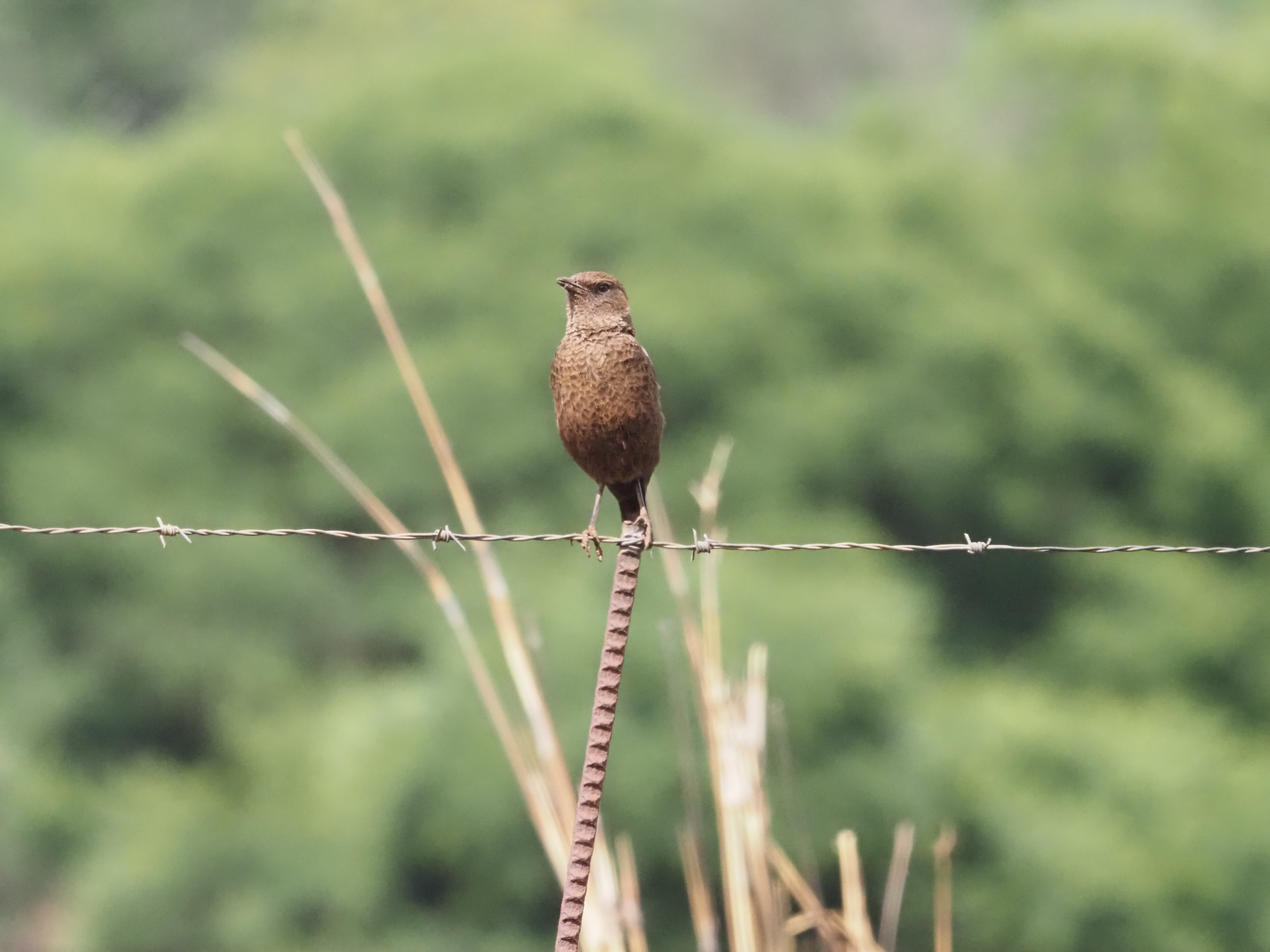
  82. Pardal xarrec (Passer montanus)
  83. Pardal comú (Passer domesticus)
  84. Gafarró (Serinus serinus)
  85. Verdum (Chloris chloris)
  86. Passerell comú (Carduelis cannabina)
  87. Cadernera (Carduelis carduelis)
  88. Cruixidell (Emberiza calandra)

Morocco 2023 birding tour trip report

  • Dates: March 14th to 25th, 2023
  • Number of participants: 9
  • Tour leaders: Carles Oliver & Sergi Sales
  • Species of birds: 196

Overview: 10th issue of our tour exploring Morocco in early spring. Arranged with the group months in advance, the tour was for 1 day in order to look for Dupont’s Lark. Our group enjoyed very stable weather all the tour long, with only an afternoon of strong wind that made difficult to find many birds. Temperatures were mild when not cool, making the birdwatching very pleasant during almost all the days. The severe drought affecting the whole Morocco had, anyway, a strong impact in our tour since most of the wetlands visited during the trip were dry or had a very low level of water. The poor water management along with the severe droughts and the over exploted subsoil waters put in a high risk the survival of most of the wetlands in this part of the world. However, we got excellent numbers of steppe birds during the trip, with more Thick-billed & Desert Larks than in any previous tour! Numbers of migratory birds were acceptable and far better than the tour in 2022, when we had almost none of them for 10 days. The excellent views on Dupont’s Lark rank high in the memories of the trip, along with the very enjoyable sights in most desert specialists.

Day 1. After a coordinated arrival to our accommodation in Marrakech, the whole group met for breakfast early in the morning. After enjoying the coffee, tea and some fruits and eggs, we left to explore the Atlas mountains. It was a very sunny day and warm day in Marrakech and before leaving we enjoyed a stop to see the hundreds of Pallid Swifts around, the fast wing beats of the Little Swifts and some urban birds including Eurasian Blackbird, Common Woodpigeon and Red-rumped Swallow.

After negotiating the traffic in Marrakech, a short transfer led us to the first proper stop of the trip. There, a line of mature trees are the perfect nesting habitat for Woodpeckers. A pair of minutes after the group was enjoying the firsts African Blue Tits of the tour, that were to join an interesting selection of birds seen during the transfer including Cetti’s Warbler, Moroccan & Grey Wagtails, African Chaffinches, European Serins, White Wagtails and Lesser Kestrels. A short walk along the tree line produced also Great Tit, Blackcaps and Little Swifts and soon after a Levaillant’s Green Woodpecker flew off from the trees to feed in the almond orchads around. During the next 15 minutes the group enjoyed non-stop views on the female woodpecker while looking for ants in the red soil. The only one Eurasian Wren of trip was heard around, and a lovely Atlas Great Spotted Woodpecker performed really well for us. Before going back to the van, a Short-toed Treecreeper appeared as well. The form living in Morocco, under the mauretanica race, is always a very interesting bird to see, as it likely to be split and be a species in its own. Other birds here included Song Thrush, Grey Heron and the very first Short-toed Snake Eagle of the tour!

Back to the road, we started the transfer up to the top of the Atlas. Along the way we had a lovely stop to enjoy another Maghreb endemic, the Tristam’s Warbler. Scanning a lovely slope full of junipers, it didn’t take us long to locate some of them, and after some time waiting one male came down the slope and showed really well. Here we also got the very first of many Moussier’s Redstarts and lovely views on Rock Buntings plus a very distant Booted Eagle.

Lesser Kestrel (Falco naumanni) in our way up to the Atlas. Image by tour participant Mark Newsome.

Levaillant’s Woodpecker (Picus vaillantii), the only endemic woodpecker in Northern Africa. Image by tour leader Carles Oliver
African Blue Tit (Cyanistes teneriffeae) favours decideous trees. Image by Carles Oliver
Short-toed Treecreeper (Certhia brachydactyla), the local race is a good candidate to become a full species. Image by Carles Oliver
Tristam’s Warbler (Curruca deserticola), a specialist of mountain scrublands in the Atlas. Image by Carles Oliver

As we were winning altitude, the landscape changed from the junipers to the Spanish Firs first and then to the high mountain grasslands. There, it was already possible to enjoy large flocks of both Alpine & Red-billed Choughs, and the whole Oukaïmeden was flooded with their characteristic calls. Once parked, a stroll aorund produced several Black Redstarts, Common Rock Sparrows and a pair of Grey Wagtails. The area was really full of locals that have come up in the mountains to enjoy the snow, and we had to go a bit away from them to contact with a first flock of African Crimson-winged Finches! First we found 5, then 7, 11, 15 and so on!! Perched in the buildings and feeding on the ground, this endemics bird to the Atlas provided the group with great views!

Happy with this great views we went for dinner in a restaurant nearby, and better views on both Choughs were done while waited to be served. After lunch, a second stroll around produced not only great views on Mistle Thrush, Thekla Lark, Rock Sparrow and obliging Atlas Horned Larks but also a rather unexpected male Seebohm’s Wheatear (also refered as Atlas Wheatear) feeding in the grasslands! This bird was really celebrated in the group, that was well aware that the fenology of the species (arriving to the Atlas by the end of March after spending the winter in the Southern part of the Sahel) makes the species often difficult to find in this tour.

Atlas Wheatear (Oenanthe seebohmi), another specialty living in the the Atlas grasslands. Image by Mark Newsome.
Firecrest (Regulus ignicapilla) on Spanish Fir showing out its name! Image by Mark Newsome.
Red-billed Chough (Pyrrhocorax pyrrhocorax), a common bird around Oukaïmeden. Image by Carles Oliver
The atlas race of Horned Lark (Eremophila alpestris) is only living in the Atlas high mountain grasslands. Image by Carles Oliver
African Crimson-winged Finch (Rhodopechys alienus), another Atlas endemic. Image by Carles Oliver
Here showing the crimson wings. Image by Carles Oliver

Day 2. The day started with a pre dawn walk in the streets of Marrakech. Our goal was to locate the endemic Maghreb Owl, that is having a small population in different gardens of the city. We couldn’t be more lucky when, after only 15 minutes of search, our efforts were granted with a wonderful Maghreb Owl sitting in a small tree! During the next minutes, we all enjoyed great views on it before it flew off, back to the gardens!

After breakfast, transfer to Agadir. Once leaving behind the massive plains around Marrakech, we had a stop near the coast immediately South of Essaouira to enjoy the birds living in the famous Argan trees, a evergreen species that produces a really appreciated seed used in cosmetic industries, lotions and so.

Maghreb Owl (Strix mauretanica) was one of the most celebrated birds of the trip! Image by Carles Oliver

The day was warm but the Atlantic never stop to send fog inland, and during most of the day the ambient was a bit misty. Soon after stopping we had Western Orphean Warblers singing and displaying around, some of them being really obliging! African Chaffinches were common there and with some patience we also found Western Bonelli’s Warbler, European Bee-eater, Common Redstart and Woodchat Shrike. Neil enjoyed the stop so much that decided to stay a bit longer than expected… Nothing serious, only a rather long stroll

From here our next stop was to explore the sandy plains around one largest colony of Northern Bald Ibis. There we has an interesting set of species including some good flocks of Greater Short-toed Larks, Spectacled Warbler, Thekla Lark and a distant Barbary Falcon that was enjoying a prey on the ground. A bit of sea watching was made as we were waiting for the Ibises to appear, adding Audouin’s Gull and Lesser Black-backed Gull to our list. There, Mark was lucky enough to have 1 Atlantic Puffin flying North! Some Northern Bald Ibises were flying up and down but always distant.

After about one hour waiting in the area, we finally were rewarded with a nice flock of 8 Northern Bald Ibis landing in the plains only 200 metres away from us. Our group enjoyed great views on them while they were preening and feeding a bit around. Excellent views that were really celebrated by the group. When leaving, we got a flock of migrating Wheatears feeding next to the road: 1 Western Black-eared male, 1 Seebohm’s male, and 2 Northern Wheatears!

After some lunch rest, we drove the short distance to the small Tamri Estuary, were we had the firsts Ruddy Shelducks of the trip along with 20+ Kentish Plovers, Moroccan Wagtail, Audouin’s Gulls and several Western Yellow Wagtail plus Ringed Plovers, Subalpine Warblers, Red-rumped Swallows, Grey Heron, Little Ringed Plovers, 4 Ruffs and 20+ Northern Bald Ibis in flight!

Western Orphean Warbler (Curruca hortensis) favours orchads and tall, sparse maquis. Image by Carles Oliver
Northern Bald Ibises (Geronthicus eremita) taking care of their plomage. Image by Carles Oliver
Maghreb Magpie (Pica mauretanica), a common endemic along the Moroccan Atlantic coast. Image by Carles Oliver

Going South, we negotiated the always challenging traffic in Agadir to explore the Souss Estuary, one of the best brackish wetlands in this part of Morocco. Here we had a good selection of waders but always with little numbers if compared with previous years. Some noted species included Eurasian Whimbrel, Black-winged Stilts, Osprey, Grey Plovers, Ringed & Kentish Plovers, Common Redshanks, Greenshanks, both Black-tailed & Bar-tailed Godwits, Whimbrel, 6 Red Knots as well as Pied Avocets and Oystercatchers. Here the group also enjoyed close views on the beautiful Maghreb Magpies and flocks of tern including several Sandwich Terns and very vocal Gull-billed Terns along with a solitary Common Tern.

From here we drove a last transfer to our accommodation in the Souss-Massa National Park, where we had a fly over Stone Curlew some miles before arriving to our hotel.

Day 3. The cloudy morning provided us with a very comfortable temperature. This day was devoted to explore the Massa River and nearby areas. After breakfast, we only had to walk a few meters to contact with the first of many Black-crowned Tchagras, wonderful bird that was calling and showing out nearby our van. A short drive of only 5 minutes allowed the group to explore a pair of corners with excellent birding. The numbers of migratory warblers were good all along the river, and in the next 90 minutes we got a good array of warblers including Sardinian, Western Subalpine, Western Orphean, Cetti’s, Zitting Cisticola, Iberian Chiffchaff, Willow Warbler, Western Bonelli’s plus first views on Western Olivaceous Warbler singing and calling in the tamarisks. Moussier’s Redstarts were a common view around while the bush were full of migratory warblers. Flocks of Spanish Sparrows were flying around, and some provided close views along with really obliging Cirl Buntings, African Chaffinches and European Stonechats. Another wonderful spot was a Little Owl perched low in a small bush.

Black-crowned Tchagra (Tchagra senegalensis) holds good densities along the Massa River. Image by Carles Oliver
Sardinian Warbler (Sylvia melanocephala), a common view around Marrakech and the Atlantic coast. Image by Mark Newsome.
Moussier’s Redstart (Phoenicurus moussieri), one of the most atractive birds in the area. Image by Carles Oliver
The African Chaffinch (Fringilla coelebs africana) is a very distinctive form, and an eternal candidate to become a full species. Image by Carles Oliver

Up in the air there were small flocks of Little Swifts but also Common & Pallid Swifts while some European Bee-eaters were flying around. In the ponds, the waterfowl was scarce due to the low level of water, but our first stops still produced Common Kingfisher, Glossy Ibis, a lovely Purple Heron and a roosting flock of Night Herons. Tree Pipits, Common Quail and Melodious Warbler were all heard, and we got some views in all of them, out of the Quail.. In one of this ponds, we had the first Brown-throated Martin of the day, all the whole group enjoyed close views on this tiny swallow while hunting insects around. This is a decreasing species in Morocco, currently with only a few colonies left, mainly in the wetlands along the Atlantic coast.

The very last pond before lunch produced not only warblers also Eurasian Teals, Wood & Green Sandpipers and Little Ringed Plovers.

After lunch the clouds disapeared and the lovely blue sky was back. We went to explore the Massa River mouth. En route, we had Black-winged Kite & Western Marsh Harrier + Tawny Pipit and Greater Short-toed Larks. Once in the area, we were surprised by the few birdlife there. Here we only had distant views Eurasian Spoonbills, Ruddy Shelducks, Northern Shovelers, Kentish Plovers, Greenshanks while the scrublands around had a few migratory warblers and small floks of Common Linnets and European Serins.

Back to our vehicles, the rest of the afternoon was devoted to sea watching in nearby coastal cliffs. Despite the rather misty ambient and the hard light with the sun placed above the sea we got a fine selection of sea birds including several Arctic Skuas moving South (!) as well as small numbers of Balearic, Cory’s & Manx Shearwaters mainly moving North. Large flocks of Oystercatchers were migrating along the coast and, as the afternoon went on, the group was able to catch up with some other sea birds including Pomarine & Great Skuas and some Razorbills, all of them moving back North to their nesting grounds in Europe.

Day 4. This day we left Agadir in a very cloudy ambient that was to be with us until we crossed the Anti Atlas. Beyond there we enjoyed the sun in the Ouarzazate basin, but also the very windy conditions. A first stop was done en route to enjoy a pair of Black-winged Kites by the road. Our group was lucky enough to enjoy some mating, with the mail very nervous and flying all the time from a prominent perch to the female and back. Both individuals were really excited, even with some calls in a species that is really silent in average. The whole scene was ideal to capture some shots of the bird, and it was one of the best raptor experiences along the trip in a country that is having every time less and less birds of prey in its skies due to direct prosecution.

Along with the Black-winged Kites, we also enjoyed here some Crested Larks but also flocks of Spanish Sparrows, Eurasian Blackcaps, Corn Bunting and another singing Melodious Warbler that only gave us partial views..

Western Bonelli’s Warbler (Phylloscopus bonelli), a common migratory bird. Image by Carles Oliver
A mating pair of Black-winged Kites (Elanus caeruleus) was a nice surprise during one of the transfers. Image by Carles Oliver
Black-winged Kite (Elanus caeruleus) ready to land. Image by Carles Oliver
Desert Larks (Ammomanes deserti) were this year as common as ever. Image by Carles Oliver

Back in the road we had a pair of additional stops in the road to enjoy the firsts of many Trumpeter Finches and Desert Larks before arriving to the large barrage immediately South of Ouarzazate. There, we spent a pair of really productive hours before the final drive to Boulmane du Dades, but even before arriving to the wetland, in a stop to buy some cold drinks in Ouarzazate we had a first flock of hundreds of Black Kites with several Booted & Short-toed Eagles moving along with them! It was great to see all these birds moving above the city centre as they were flying South to look for some sheltered place to spend the night around the dump.

The dump around Ouarzazate covers a large area, has several access points, and to explore it is always challenging. Just arriving we founds a flock of 8 Blue-cheeked Bee-eaters feeding by the access road, and their flights and calls delighted the group for quite long. In that same place, the firsts Maghreb Larks of the trip showed up, providing the group with great views with its typical tame behaviour. Sand Martin, Western Black-eared Wheatear, Desert Lark, Willow Warbler and European Bee-eater were all noted as we moved on and lovely migratory flock of Kentish Plovers resting in the desert delighted us with excellent views before we could reach the proper place to scan for waterfowl. Yes, a small detour was necessary to arrive, and some tamarisks still remember the underneath of our van, but we arrived!

Unfortunately was windy, and the waterfowl was inside the reedbeds. Meadow Pipit, Great Crested Grebe, Yellow Wagtail and Eurasian Coots were noted. At least 2 Montagu’s Harrier, including one male, were seen flying above the reeds along with several Marsh Harriers. It was a bit disappointing but after some wait, a Marsh Harrier flew really low over the reeds and a massive flock of 60+ Marbled Teals appeared in the sky, flying along the reeds and giving good scope looks to the group! After such a wonderful sight, we waited some more time, and smaller flocks of Marbled Teals were again seen moving up and down, but after some time it was clear that we were not going to have a better/closer view on the birds, so we decided to leave towards our accommodation for an evening meal and some rest.

Booted Eagle (Aquila pennata) over Ouarzazate. Image by Mark Newsome.
Blue-cheecked Bee-eater (Merops persicus), a wonderful beauty! Image by Mark Newsome.
Maghreb Larks (Galerida macrorhyncha) are common in farmlands around the desert like ambients. Image by Carles Oliver
Kentish Plovers (Charadrius alexandrinus) chose the desert to do a break on their migration. Image by Carles Oliver

Day 5. A bit windy but sunny day in the endless plains inmediatly South of Boulmane du Dades. This day we were concentrated in locating the many goodies living in the wonderful steppe lands East and South from Boulmane du Dades.

The morning was a bit windy but the firsts stops exploring the steppe lands produced soon good birds including Thekla’s & Greater Short-toed Larks, the first Desert Wheatears of the tour along with the much scarcer Red-rumped Wheatear and the always wonderful Temminck’s Lark. A short walk around the rubbish dump produced one of the main targets of the day, 3 wonderful Thick-billed Larks that were feeding around along with Temminck’s. We could enjoy at least two of them for quite long, and the group was really delighted to enjoy such a great birding, even if the habitat around was not as pristine as one could expect, and definately more smelly than an average patch of steppe.. Despite the poor environment, here we also had White & Western Yellow Wagtails, Little Ringed Plover and Meadow & Tawny Pipits.

From here had a pair more of stops where we had Atlas Buzzard (the status of the cirtensis form, formerly treated as a Long-legged Buzzard race, is under discussion), several Black Kites, Marsh Harriers and 1 Montagu’s Harrier. We also enjoyed really close views on Temminck’s Larks and obliging Desert Wheatears.

The temperature raised up, and our jackets were a bit less essential. Beyond the plain, a number of small canyons lead to the mountainous areas South of the Draa River. A stop in one of the many villages there produced close and long views on Trumpeter Finches along with European Serins, Linnets and Algerian Shrike.

Back to the plains, we went to some farm lands. This is a typical place for Larks to concentrate but this time the area looked like empty. Still, a short walk around produced 3 wonderful Thick-billed Larks feeding around. The trees around had also Woodchat Shrike, Tree Pipit, Western Bonelli’s Warbler, Common Whitethroat and Western Subalpine Warbler. From here, a short drive led us to a large, open plain in the middle of the steppes. This is a typical place for Cream-coloured Coursers, and soon we located the first of them. After some cautious approach we all enjoyed wonderful views on them, and finally we counted a minimum of 12 moving around them. When leaving, a pair of Black-bellied Sandgrouses showed up in front of us, and we had enough time to go out and enjoy lovely scope views on both of them!

Female Red-rumped Wheatear (Oenanthe moesta). Image by Carles Oliver
Nothing can compare to the delicate facial & breast pattern on Temminck’s Larks (Eremophila bilopha). Image by Carles Oliver
Even with all that rubbish, Thick-billed Lark (Ramphocorys clotbei) keeps being wonderful! Image by Carles Oliver
Our secret corner worked once more, and this time provided our group with great views on Thick-billed Larks! Image by Carles Oliver
Cream-coloured Coursers (Cursorior cursor) were just arriving to their nesting grounds. Image by Carles Oliver
It took us some time to locate the female Black-bellied Sandgrouse (Pterocles orientalis)! Image by Carles Oliver

Back to our accommodation, we enjoyed a nice lunch and some rest before going to explore a different location. The ondulations around Boulmane produces a number of canyons and we spent some time exploring of them. It didn’t take long before we got the firsts specialties, and Desert Wheatears, Trumpeter Finches and Desert Larks showed really well before enjoying a nice pair of the very scarce and elusive Maghreb Wheatear while moving in the barren slope. This is another Maghreb endemic, only known form a thin stripe crossing Morocco, Algeria & Tunisia and formerly considered conspecific with Mourning Wheatear, a Levant specialty. Atlas Buzzard and Common Kestrels were also noted here, and we also had some views on a roosting Pharaon Eagle Owl that, unfortunately, was really deep inside a hole and never came out enough to provide the group with a full view.

The last stop of the day was quite a change of ambient. Driving up the very scenic Gorge du Dades, with its many wonderful Kashbahs and colourful dressed women, we arrived to a small cliff. Just arrived we had a fast and interesting bird spectacle in front us: 2 Peregrine Falcons being moved by a much smaller, longer tailed, Barbary Falcon! The Peregrines looked like the owners of the cliff at the moment, as we even saw the pair passing food to each other. The Barbary Falcon, higher at all times, disappeared beyond the cliff. We waited for some time to have better views on the Barbary Falcon, and a showy Blue Rock Thrush and some Booted Eagles moving up the valley helped us to have a good entertainment. The Barbary Falcon showed a pair of times more in the sky, and we decided to end the afternoon soon enough to have some rest in the accommodation before dinner.

Spinny-tailed Lizzard (Uromastyx acanthinura). Image by Carles Oliver

Day 6. A transtional day between the high plateaus around Boulmane du Dades and the sandy deserts around Merzouga. The morning was sunny but fresh, with a cold air coming down from the Atlas that made our first stop really comfortable. The first stop in the morning was to look for the rather scarce Saharan Scrub Warbler, an endemic form of the Levant Scrub Warbler living in the sparse bushlands along wadis but also up in the slopes in the Northern slope of the Atlas mountains.

Our short walk produced almost immediately the first Bar-tailed Larks of the trip as well as confiding Mediterranean Short-toed Larks. Walking along the wadi we had a good set of the typical species living in this kind of habitats including Spectacled Warbler, Trumpeter Finches and Deser Wheatear plus migratory species such as Western Subalpine Warbler and Northern Wheatear. After a good while scanning the area we were starting to think about going somewhere else when Rob found 2 Scrub Warblers feeding at close range from us.

The birds, as typical on them, where feeding really low in the base of the small scrubs, making very difficult to see them for longer than a pair of seconds. Jumping from bush to bush, the Scrub Warblers moved really fast along the wadi, covering a lot of ground, flying from bush to bush but also “running” in the sand like tiny Babblers and typically standing by the base of a bush, tail-ups, before disappearing inside the grass.

After enjoying the Scrub Warblers for 20 minutes we started to come to the van, but we still had a pair of sights: First, a Cream-coloured Courser that flew over us while calling and secondly, a pair of Bar-tailed Larks showing quite close, as tame as ever.

Saharan Scrub Warbler (Scotocerca inquieta saharae) frozen in a jump. A great shot by Mark Newsome.
Trumpeter Finch (Bucanetes githagineus) feeding on seeds. Image by Mark Newsome.
Desert Wheatear males (Oenanthe deserti) can be really tame. Image by Carles Oliver

From here we drove into a close restaurant and enjoy some shade. After lunch, we covered the short distance to our next accommodation with a number of stops in the way. Desert Grey Shrike was added to our list, as well as Brown-necked Raven. A longer stop to explore another wadi produced good views on the common list of migratory species including Willow, Western Subalpine & Western Bonelli’s Warblers, but also Black-eared Wheatear & Western Orphean Warbler.

The last stop of the day was devoted to the typical habitat of Greater Hoopoe Lark, and it didn’t take long before having the first sight for trip of this really appreciated species: 2 individuals, one of them singing and displaying in flight. A great sight to end another wonderful day!

Day 7. This day was devoted to explore the desert around Merzouga. This is a quite well known place for the many desert specialties living around. It was a sunny and pleasant day all through, with a fresh brise during most of the day.

Our first stop was around a water hole where we did stop to look for Sandgrouses coming to drink water from several kilometers away. We didn’t have to wait long since even before our arrival some flocks of Crowned Sandgrouses were already on the ground, waiting for the best moment to approach the water. After some waiting, we id enjoy several flocks of both Crowned and Spotted Sandgrouses coming to the plain around the small pond, and soon their calls and wing beats filled up the ambient. This was a wonderful moment, and all the tour participants were really happy to see 80+ Crowned & 40+ Spotted Sandgrouses coming to drink water! We left the area with still more Sandgrouses coming to drink water, but we had to move to our next stop, a nomadic camp nearby where a pair of Desert Sparrow was nesting.

It was time for us to enjoy some tea, and our patience in the camp was rewarded with amazing views on a Desert Sparrow male that was feeding right the tents! The bird was really tame and allowed excellent images. Here, a Greater Hoopoe Lark also appeared, and provided the group with the best views on this species along the trip. White-crowned Black Wheatear, Common Redstart and Brown-necked Raven were also noted here.

Leaving this sandy patch of the desert, we drove North into a large wady where a nomad was waiting for us. His expertise was needed to find the next target of the trip, and after a short walk in the wady he brought directly to one Egyptian Nightjar that was roosting in the wadi. Respecting a good distance from the bird, we all enjoyed a wonderful view in this magnificent bird! A further walk around the dunes was also productive and Greater Hoopoe Larks and Desert Wheatears showed well, but the very best of the walk was to find a nice African Desert Warbler doing its way around the sparse vegetation of the wadi! This is again a desert specialist, and one of the most tricky birds to find in Morocco!

Crowned Sandgrouses (Pterocles coronata) around a water hole. Image by tour leader Carles Oliver
Spotted Sandgrouses (Pterocles senegallus) have been outnumbered by Crowneds in recent years. Image by Carles Oliver
White-crowned Wheatears (Oenanthe leucopygia) are urban birds in the desert. Image by Carles Oliver
Desert Sparrow (Passer ) favoured us with really close views. Image by Mark Newsome
Greater Hoopoe Lark (Alaemon alaudipes), the commoner lark around Merzouga. Image by Carles Oliver
Egyptian Nightjar (Caprimulgus aegyptiacus). Image by Carles Oliver
African Desert Warbler (Curruca deserti) inhabits along the wadi scrublands. Image by Carles Oliver

Happy after such a great views we went for some rest and lunch in a close accommodation. But in our way we had to do another stop: During the morning we had several flocks of Black Kites migrating North over the desert along with some Western Marsh Harriers, but one of these flocks was joined by a lovely Egyptian Vulture, the only one for the trip!

Our picnic was really tasty and, walking around the accommodation we enjoy it not only Western Subalpine Warblers & other common migratory birds but also Woodchat Shrike, Spanish Sparrow, Blue-cheeked Bee-eaters and a really tame Eastern Olivaceous Warbler (Iduna pallida reiseri) that posed really well for all the tour participants!

After lunch we tried to improve our rather scarce list of raptors but we were unlucky and the very last stop of the day was devoted to explore a small crop area with some water. Here we had several Western Yellow Wagtails of different races (nominal, Spanish, Italian & British) but also Maghreb Larks, Eurasian Crag Martin, Red-rumped Swallow, Little Ringed Plover, Wood Sandpiper, Northern Grey Shrike, Meadow Pipit, Greater Short-toed Lark and Ruddy Shelduck to name a few!

Western Yellow Wagtail (Motacilla flava). Image by Mark Newsome
Eastern Olivaceous Warbler (Iduna pallida reiseri), often refered as Saharan Olivaceous Warbler. Image by Mark Newsome.
Ruddy Shelducks (Tadorna ferruginea) nest in good numbers in paddy fields. Image by Carles Oliver

Day 8. Due to the long drought and the terrible water management in the areas, the once famous and extremelly famous Merzouga lake is now gone. With the lake gone, this morning we explored a pair of corners in search of a good migratory action.

Firstly we explored the grounds of a nearby hotel, where we got more common migratory birds plus Western Orphean Warbler, Eastern Olivaceous Warbler, Common Whitethroat, European Bee-eater and Woodchat Shrike. From here we drove the short distance to the major palm grove in the area, where we had double figures of Common Whitethroat and Willow Warblers while Garden Warbler, European Turtle Dove and Bluethroat were added to the list. Here we enjoyed also great views on a family group of Fulvous Babbler, including an aberrant individual! This species, anyway, was already seen for some of the tour participants in a pre-dawn walk around our accommodation and shortly the day before in the desert!

In the afternoon the group agreed to do a good exploration some tens of kilometers South from Merzouga. This area, not really explored by most birdwatchers, provided us with a quite pristine landscapes, as it once was Merzouga, along with excellent numbers of Desert, Bar-tailed & Greater Hoopoe Larks. Here Carmine found a lovely flock of 8 Crowned Sandgrouses that provided the group with gorgeous views and good photo chances!

Western Subalpine Warbler (Curruca iberiae), the commnest bush warbler in migration in Morocco. Image by Mark Newsome.
This year there were excellent numbers of Fulvous Babblers (Turdoides fulva) around Merzouga. Image by Mark Newsome
Migratory Locust (Locusta migratoria). Image by Mark Newsome
Woodchat Shrike (Lanius senator) hunting from a palm shade. Image by Carles Oliver
European Turtle Dove (Streptopelia turtur), a jewel declining all around the continent. Image by Carles Oliver
Bar-tailed Lark (Ammomanes cinctura) was extremelly common South of Merzouga. Image by Carles Oliver
Crowned Sandgrouse shows similar habits to those seen from Lichtenstein’s Sandgrouses. Image by Carles Oliver

Day 9. Transition day from Merzouga to the endless steppe land around Saïda, home of the shy and always challenging Dupont’s Lark! Before leaving the desert, we had a pair of stops. After breakfast we covered a short distance to explore the grounds of another accommodation. Here we didn’t have a lot of time as the owners were not happy with our visit and we were invited to immediatly leave the gardens. A real pity since within 5 minutes we already had enjoyed some good sights including obliging Common Nightingale, Eurasian Hoopoe and Dylan found the 1st Eurasian Wryneck of the trip! Unfortunately it was no chance to try a dialogue with the owners and we left what can be considered as the less welcoming ksar in Southern Morocco!

Around Erfoud we still have a last stop before our long drive North. Our search of a proper pond finally was successful and we found a small pond (we could not consider it as a “proper” one) where we got the only 3 Sedge Warblers of trip along with Eurasian Reed Warbler, Eastern Olivaceous Warbler, Western Bonelli’s Warbler, Bluethroat and, nearby, another Wryneck.

After some driving a lunch stop, we arrive to Zaïda in a windy afternoon. Birding was extremelly poor and we only got some distant Temminck’s Larks, a pair of Desert Wheatears and 1 Black-eared Wheatear. But swords were up for the next morning and try to find the famous “ghost bird”!

Moroccan Wagtail (Motacilla subpersonata), another Maghreb endemic. Image by Carles Oliver
Male Bluethroat (Luscinia svecica) hiding in dry tamarisks. Image by Carles Oliver
Record shot of an Eurasian Wryneck (Jynx torquilla) in the desert dunes. Image by Carles Oliver
Desert Wheatear (Onenanthe deserti). Image by Mark Newsome.

Day 10. After a nice breakfast we covered the few miles from our accommodation to the place where I saw Dupont’s Larks in 2022. We arrived to place, that was free of wind and had a really pleasant temperature. Bird activity was intense and it didn’t take long before we built a good list including several Mediterranean Short-toed Larks, Thekla Larks, Desert & Red-rumped Wheatears, Trumpeter Finches and a good number of Temminck’s Larks. Driving only 150 metres away from where we got the bird in 2022, Mark found a rather large lark running about 50 metres away from the van, not far from a pair of Desert Wheatears. The bird disappeared behind some bush and, after some wait, a lovely Dupont’s Lark appeared in front of us! The bird was quite far away so we all jumped out of the vans to allow everybody to get good views on the bird, that was feeding in the area for some time before climbing in a bush and sing for some time to replay a distant male. After a pair of minutes, the bird flew off, singing in flight, and flying a long distance away, disappearing beyond the small ondulations of the terrain!

All the tour participants were really excited as the confidence about finding this very difficult bird is always low! We the best was still to come. Decided to get better views, we moved a bit away to check another corner. No birds were listened there so we decided to come back to the area where we first seen the Dupont’s Lark. In the way, 2 Cream-coloured Coursers, Thick-billed Larks & some Black-bellied Sandgrouses were all seen! Back to place we were enjoying some Mediterranean Short-toed Larks displaying ten metres away from the van when a gorgeous Dupont’s Lark just appeared only a few metres to our left! The bird was really relaxed and was feeding around the tussocks of grass. The excitement inside the vehicles was huge, hundreds of images were taken and most of the tour participants decided to go out to enjoy this incredible sight from even closer (but never leaving the road!).

Common Whitethroat (Curruca communis) from our pre-dawn walk. Image by tour leader Sergi Sales.

Black-bellied Sandgrouses (Pterocles orientalis) around Saïda. Image by Mark Newsome.

Dupont’s Lark (Chersophilus duponti) offered unforgettable views to all the tour participants! Image by Carles Oliver
Mediterranean Short-toed Lark (Alaudala rufescens) displaying. Image by Carles Oliver

Extremelly happy after such a great views, we started the long transfer to Ouarzazate, where we had the last overnight of the tour. In the way, we still have time to stop and enjoy amazing views on a hatching female Lanner Falcon plus some other goodies including Fat Sand Rat, Desert Larks, Atlas Buzzard and a female Maghreb Wheatear.

At dust, a short stop in a river produced some nice views on Grey Wagtail, Booted Eagle and Cetti’s Warbler before a Barbary Falcon appeared in a fast raid to try to catch one of the Cattle Egrets around. A really nice way to end the day!

The impressive broken terrain South of Boulmane du Dades offers good habitat to a variety of species. Image by Carles Oliver

Day 11. Last day of this tour, one day longer than usual to include Dupont’s Lark in the itinerary. Before driving back to Marrakech by crossing the Atlas, we decided to have another go to the massive barrage South of Boulmane du Dades. This time the weather was clearly better, a calm, sunny and promising morning that was not really productive. A series of stops in the massive dump produced good views on migratory Black Storks and large flocks of Black Kites but little numbers of ducks in the lake.

But, when leaving one of the spots, Carmine found a pair of gorgeous Thick-billed Larks right next to the van that displayed long for us! Leaving the dump behind us, we still enjoyed close views on Little Ringed Plover by the road, and the very last birding stop still produced Little Swift, Common Nightingale, Melodious Warbler, Black-eared Wheatear and a singing Wryneck before we crossed the Atlas back to Marrakech, where we did arrive at mid afternoon, in time for everybody to reach their flights.

Black Kites (Milvus migrans) leaving their roosting place to cross the Atlas. Image by Carles Oliver
The last day we got quite impressive views on Thick-billed Larks. Images by Carles Oliver
Little Ringed Plover (Charadrius dubius) in flight. Image by Mark Newsome.
Black-eared Wheatear (Oenanthe hispanica) in a typical migratory spot. Image by Carles Oliver

List of birds during the tour:

  1. Barbary Partridge (Alectoris barbara)
  2. Common Quail (Coturnix coturnix) – heard only
  3. Helmeted Guineafowl (Numida meleagris)
  4. Ruddy Shelduck (Tadorna ferruginea)
  5. Common Shelduck (Tadorna tadorna)
  6. Northern Shoveler (Spatula clypeata)
  7. Gadwall (Mareca strepera)
  8. Mallard (Anas platythynchos)
  9. Eurasian Teal (Anas crecca)
  10. Marbled Teal (Marmaronetta angustirostris)
  11. Egyptian Nightjar (Caprimulgus aegyptius)
  12. Little Swift (Apus affinis)
  13. Common Swift (Apus apus)
  14. Pallid Swift (Apus pallidus)
  15. Common Cuckoo (Cuculus canorus) -heard only
  16. Black-bellied Sandgrouse (Pterocles orientalis)
  17. Crowned Sandgrouse (Pterocles coronatus)
  18. Spotted Sandgrouse (Pterocles senegallus)
  19. Feral Pigeon (Columba livia sp)
  20. Common Woodpigeon (Columba palumbus)
  21. European Turtle Dove (Streptopelia turtur)
  22. Laughing Dove (Streptopelia senegalensis)
  23. Eurasian Collared Dove (Streptopelia decaocto)
  24. Eurasian Moorhen (Gallinula chloropus)
  25. Euriasian Coot (Fulica atra)
  26. Great Crested Grebe (Podiceps cristatus)
  27. Little Grebe (Tachybaptus ruficollis)
  28. Greater Flamingo (Phoenicopterus roseus)
  29. Eurasian Oystercatcher (Haematopus ostralegus)
  30. Pied Avocet (Recurvirostra avosetta)
  31. Black-winged Stilt (Himantopus himantopus)
  32. Stone Curlew (Burhinus oedicnemus)
  33. Cream-coloured Courser (Cursorior cursor)
  34. Common Ringed Plover (Charadrius hiaticula)
  35. Little Ringed Plover (Charadrius dubius)
  36. Kentish Plover (Charadrius alexandrinus)
  37. Grey Plover (Pluvialis squatarola)
  38. Red Knot (Calidris canutus)
  39. Dunlin (Calidris alpina)
  40. Bar-tailed Godwit (Limosa lapponica)
  41. Black-tailed Godwit (Limosa limosa)
  42. Eurasian Curlew (Numenius arquata)
  43. Eurasian Whimbrel (Numenius phaeopus)
  44. Common Redshank (Tringa totanus)
  45. Spotted Redshank (Tringa erythropus)
  46. Greenshank (Tringa nebularia)
  47. Wood Sandpiper (Tringa glareola)
  48. Green Sandpiper (Tringa ochropus)
  49. Common Sandpiper (Actitis hypoleucos)
  50. Ruff (Philomachus pugnax)
  51. Black-headed Gull (Chroicocephalus ridibundus)
  52. Audouin’s Gull (Ichtyaetus audouinii)
  53. Yellow-legged Gull (Larus michahellis)
  54. Lesser Black-backed Gull (Larus fuscus)
  55. Mediterranean Gull (Larus melanocephalus)
  56. Common Tern (Sterna hirundo)
  57. Sandwich’s Tern (Thalasseus sandvicensis)
  58. Gull-billed Tern (Gelochelidon nilotica)
  59. Arctic Skua (Stercorarius parasiticus)
  60. Pomarine Skua (Stercorarius pomarinus)
  61. Great Skua (Stercorarius skua)
  62. Atlantic Puffin (Fratercula arctica)
  63. Razorbill (Alca torda)
  64. Cory’s Shearwater (Calonectris borealis)
  65. Manx Shearwater (Puffinus puffinus)
  66. Balearic Shearwater (Puffinus mauretanicus)
  67. White Stork (Ciconia ciconia)
  68. Black Stork (Ciconia nigra)
  69. Atlantic Gannet (Morus bassanus)
  70. Great Cormorant (Phalacrocorax carbo)
  71. Black-crowned Night Heron (Nycticorax nycticorax)
  72. Western Cattle Egret (Bubulcus ibis)
  73. Little Egret (Egretta garzetta)
  74. Grey Heron (Ardea cinerea)
  75. Purple Heron (Ardea purpurea)
  76. Glossy Ibis (Plegadis falcinellus)
  77. Northern Bald Ibis (Geronticus eremita)
  78. Eurasian Spoonbill (Platalea leucorodia)
  79. Osprey (Pandion haliaetos)
  80. Egyptian Vulture (Neophron percnopterus)
  81. Short-toed Snake Eagle (Circaetus gallicus)
  82. Booted Eagle (Aquila pennata)
  83. Black Kite (Milvus migrans)
  84. Montagu’s Harrier (Circus pygargus)
  85. Western Marsh Harrier (Circus aeruginosus)
  86. Eurasian Sparrowhawk (Accipiter nisus)
  87. Atlas/North African Buzzard (Buteo buteo cirtensis)
  88. Black-winged Kite (Elanus caeruleus)
  89. Pharaon Eagle Owl (Bubo ascalaphus)
  90. Maghreb Owl (Strix mauritanica)
  91. Little Owl (Athene noctua)
  92. Eurasian Scops Owl (Otus scops) – heard only
  93. Eurasian Hoopoe (Upupa epops)
  94. Blue-checkeed Bee-eater (Merops persicus)
  95. European Bee-eater (Merops apiaster)
  96. Common Kingfisher (Alcedo atthis)
  97. Great Spotted Woodpecker (Dendrocopos major)
  98. Levaillant’s Green Woodpecker (Picus vaillantii)
  99. Eurasian Wryneck (Jynx torquilla)
  100. Greater Short-toed Lark (Calandrella brachydactyla)
  101. Mediterranean Short-toed Lark (Alaudala rufescens)
  102. Crested Lark (Galerida cristata)
  103. Maghreb Lark (Galerida macrorrhyncha)
  104. Thekla Lark (Galerida theklae)
  105. Desert Lark (Ammomanes deserti)
  106. Bar-tailed Lark (Ammomanes cinctura)
  107. Atlas Shore Lark (Eremophila alpestris atlas)
  108. Temmick’s Lark (Eremophila bilopha)
  109. Thick-billed Lark (Rhamphocoris clotbei)
  110. Dupont’s Lark (Chersophilus duponti)
  111. Greater Hoopoe Lark (Alaemon alaudipes)
  112. Eurasian Crag Martin (Ptyonoprogne rupestris)
  113. Sand Martin (Riparia riparia)
  114. Brown-throated Martin (Riparia paludicola)
  115. Barn Swallow (Hirundo rustica)
  116. Red-rumped Swallow (Cecropis daurica)
  117. Western House Martin (Delichon urbicum)
  118. Tree Pipit (Anthus trivialis)
  119. Meadow Pipit (Anthus pratensis)
  120. Tawny Pipit (Anthus campestris)
  121. White Wagtail (Motacilla alba)
  122. Moroccan Wagtail (Motacilla subpersonata)
  123. Grey Wagtail (Motacilla cinerea)
  124. Western Yellow Wagtail (Motacilla flava)
  125. White-throated Dipper (Cinclus cinclus)
  126. Eurasian Robin (Erithacus rubecula)
  127. Common Nightingale (Luscinia megarhynchos)
  128. Bluethroat (Luscinia svecica)
  129. Common Redstart (Phoenicurus phoenicurus)
  130. Black Redstart (Phoenicurus ochruros)
  131. Moussier’s Redstart (Phoenicurus moussieri)
  132. Northern Wheatear (Oenanthe oenanthe)
  133. Seebohm’s Wheatear (Oenanthe seebohmi)
  134. Western Black-eared Wheatear (Oenanthe hispanica)
  135. Maghreb Wheatear (Oenanthe halophila)
  136. Black Wheatear (Oenanthe leucura)
  137. White-crowned Black Wheatear (Oenanthe leucopyga)
  138. Desert Wheatear (Oenanthe deserti)
  139. Red-rumped Wheatear (Oenanthe moesta)
  140. European Stonechat (Saxicola rubicola)
  141. Song Thrush (Turdus philomelos)
  142. Mistle Thrush (Turdus viscivorus)
  143. European Blackbird (Turdus merula)
  144. Blue Rock Thrush (Monticola solitarius)
  145. Saharan Scrub Warbler (Scotocerca inquieta saharae)
  146. Eurasian Blackcap (Sylvia atricapilla)
  147. Garden Warbler (Sylvia borin)
  148. Common Whitethroat (Curruca communis)
  149. Western Orphean Warbler (Curruca hortensis)
  150. Sardinian Warbler (Curruca melanocephala)
  151. Spectacled Warbler (Curruca conspicillata)
  152. Western Subalpine Warbler (Curruca inornata)
  153. Tristam’s Warbler (Curruca deserticola)
  154. African Desert Warbler (Curruca deserti)
  155. Eurasian Reed Warbler (Acrocephalus scirpaceus)
  156. Sedge Warbler (Acrocephalus schoenibaenus)
  157. Zitting Cisticola (Cisticola juncidis)
  158. Cetti’s Warbler (Cettia cetti)
  159. Melodious Warbler (Hyppolais polyglotta)
  160. Isabelline / Western Olivaceous Warbler (Iduna opaca)
  161. Eastern Olivaceous Warbler (Iduna pallida reiseri)
  162. Common Chiffchaff (Phylloscopus collybita)
  163. Iberian Chiffchaff (Phylloscopus ibericus)
  164. Willow Warbler (Phylloscopus trochilus)
  165. Western Bonelli’s Warbler (Phylloscopus bonellis)
  166. Firecrest (Regulus ignicapillus)
  167. Eurasian Wren (Troglodytes troglodytes) – heard only
  168. African Blue Tit (Cyanistes teneriffae)
  169. Great Tit (Parus major)
  170. Coal Tit (Periparus ater atlas)
  171. Short-toed Treecreeper (Certhia brachydactyla mauritanica)
  172. Great Grey Shrike (Lanius excubitor) algeriensis & elegans races
  173. Woodchat Shrike (Lanius senator)
  174. Black-crowned Tchagra (Tchagra senegalensis)
  175. Common Bulbul (Pycnonotus barbatus)
  176. Fulvous Babbler (Turdoides fulva)
  177. African Magpie (Pica mauretanica)
  178. Common Raven (Corvus corax)
  179. Brown-necked Raven (Corvus ruficollis)
  180. Spotless Starling (Sturnus unicolor)
  181. House Sparrow (Passer domesticus)
  182. Spanish Sparrow (Passer hispanoliensis)
  183. Desert Sparrow (Passer simplex)
  184. Common Rock Sparrow (Petronia petronia)
  185. African Chaffinch (Fringilla coelebs africana)
  186. European Serin (Serinus serinus)
  187. Eurasian Greenfinch (Chloris chloris)
  188. Eurasian Goldfinch (Carduelis carduelis)
  189. Eurasian Siskin (Spinus spinus) – heard only
  190. Common Linnet (Liniaria cannabina)
  191. Trumpeter Finch (Bucanetes githagineus)
  192. African Crimson-winged Finch (Rhodopechys alienus)
  193. Cirl Bunting (Emberiza cirlus)
  194. Rock Bunting (Emberiza cia)
  195. House Bunting (Emberiza sahari)
  196. Corn Bunting (Emberiza calandra)

Pyrenees Winter Break 2023 Trip Report

Dates: February 8th to 12th, 2023

Number of participants: 6

Number of species seen: 128

All images by tour leader Carles Oliver. All rights reserved

Overview: Our 9th Pyrenees Winter Break tour started in the Pyrenees right after a strong snow fall. During the tour the weather was sunny and not especially cold in the mountains. In the plains, we had a morning with some fog, but it didn’t stop us to find all main specialties living there.

Day 1: Once all tour participants were collected from the their accommodations around the International Barcelona Airport, a short drive lead us to the Pyrenees. Only 90 minutes away from the city and we were already in a wonderful location, a mountain range hosting all high mountain birds specialties living in the Pyrenees.

It was sunny, but the day before it had been snowing so a pair of high mountain lanes were closed during the morning. Our fist stop was dedicated to explore the meadows around Bagà, where the very first birds of the day and the trip was a Lesser Spotted Woodpecker that was hunging around the parking place. Here we had some common birds in the area including Cirl Bunting, Black Redstart, Eurasian Blue Tit and Eurasian Nuthatch. Here, the terraced landscape is fulfilled with lines of Poplars and a fast scan produced the first Iberian Green Woodpecker of the tour while was moving high in the trees. Several Common Chaffinches were around, and they all moved down to the ground to feed, followed by the Iberian Green Woodpecker.

Other birds in this first stop included European Stonechat, Meadow Pipit, Common Magpie and Eurasian Greenfinch.

After this good start we drove some miles up in a lane. Our goal was to arrive to the limit of the forest (About 1800 metres above the sea level), but we were stopped by a small flock of birds. Here we had the first Mistle Thrushes of the trip along with several Common Crossbills, Coal Tits, and Goldcrests. Still, our guests especially enjoyed the views on both Rock Buntings and European Crested Tits.

Once above the tree limit, we did another non planned stop. A gorgeous Lammergeier (aka Bearded Vulture) was sitting in the top of a rocky outcrop just beside the road, providing the group with incredible views! Common Crossbills were also around, adding with their calls a plus on the mountainous ambients of the sight. After ten minutes of observation, the Lammergeier decided to fly away, passing over the group and providing us with unforgettable memories of that moment.

Wonderful Lammergier (Gypaetos barbatus) during our exploration of the Cadí-Moixeró Natural Park. Images by tour leader Carles Oliver

From here we drove higher. Beyond the tree limit there were mixed flocks of Fieldfares and Mistle Thrushes feeding on the snowed slopes. The weather was stable, with only a brise and some scenic clouds, and many birds were taking advantage of the good weather to feed around. Here we saw more Rock Buntings and a flock of 11 Bramblings flew off from one of the last trees up the lane.

When we arrived to the mountain pass, we found chunky three birds feeding by the tarmac. 3 wonderful Snowfinches were right beside us, but unfortunately decided to flew off and down the slope. From here we decided to go for a short walk. Common Ravens were seen around, and a Peregrine Falcon appeared in a fast, low flight going down the slope in a mission. Up to 10 Eurasian Griffons were also seen exploring the thermals before a large flock of 60+ Snowfinches suddenly appeared in a small hillside some 150 metres away from us, and started feeding on the ground. We all enjoyed very much the finch spectacle with several calls, short flights and even fights. We waited a bit, not moving, and we were rewarded with the birds coming down the hillside just beside the tarmac. After 10 minutes of observation, the birds simply decided to go up the slope again, and disappeared beyond some large boulders!

Alpine Accentor (Prunella collaris) showing nicely in our first day in the mountains
SnowFinches (Montifringilla nivalis) feeding on the slopes. Image by Carles Oliver
Rock Bunting (Emberiza cia) is a common bird in the broken slopes around the Pyrenees.

Really happy after such a great sight, the group came back to the van, decided to explore that lane a bit more. Only a few miles away, a stop was made. Our short walk was again successful, as we found a lovely, obliging Alpine Accentor feeding really close to the road and, with some patience, we got some great shots on it. The views on the Accentor were perturbed by a large flock of 73 Alpine Choughs that suddenly appeared in the valley, offering good but rather distant views while a Lammergeier appeared again, crossing the valley in some seconds.

Really happy after this really successful start we went all the way down and did our way for the last stop of the day in a scrub hillside not far from our accommodation. It was already early afternoon, offering a calid light for the sightings to come. Our short walk up the hill produced some interesting sights including a large flock of Cirl Buntings feeding on the ground along with 2 Woodlarks, 4 Rock Buntings, 2 Redwings, 14 Rock Sparrows and the firsts Iberian Grey Shrike of the trip. In the skies, several Red Kites were moving around and we counted 3 Griffons Vultures and 1 adult Lammergeier. Here we also had the only Citril Finch of the trip, unfortunately a flying bird that provided poor views.

After this stop we just drove the short distance to our accommodation.

Day 2. After enjoying a lovely breakfast we left our accommodation. The first stop of the day was devoted to explore a lovely corner of the Segre River that crosses the beautiful Cerdanya valley. Here we enjoyed White-throated Dippers, Cirl Buntings, many Redwings and 2 Bramblings among several Chaffinches. Here we also had an Eurasian Woodcock that flew off from a nearby meadow, an uncommon bird to have here in day light!

From here we went up in the forested slopes, to spend some time in a boreal forest. As usual, the area was quite full of activity and it didn’t take us long to enjoy good views on Short-toed Treecreeper, Goldcrest, European Crested Tit, Firecrest and Coal Tit but also Common Crossbill, Goldfinch and Greenfinches. But the most celebrated sight here was a Black Woodpecker moving really low in a pine tree that offered us lovely scope views.

Happy after this lovely views we drove up to Andorra. During the hour long drive, a pair of stops were necessary to enjoy both Lammergeier and Golden Eagle. Once in Pas de la Casa we had a stop for a coffee while enjoying the urban Alpine Choughs that live around the sky resort. By the time of our arrival it was snowing a bit, providing the sight with a wonderful alpine setting!

Cirl Bunting (Emberiza cirlus) showed very well around the accommodation
Alpine Chough (Pyrrhocorax graculus) under the snow fall in Andorra. Image by tour leader Carles Oliver

From here we drove back to Catalonia to have a final stop in the large fields that are the core of the Cerdanya Valley. There we enjoyed large flocks of Eurasian Skylarks, several flocks of Cirl & Rock Buntings, Meadow Pipits, Linnets and Corn Buntings but also the only 2 Hen Harriers of the tour, including a lovely male.

Day 3. Transfer to a different section of the Pyrenees. We drove West for about 90 minutes before to arrive into a small gorge in a secondary road. This was our first attempt to find a Wallcreeper, and we didn’t have to wait long! We waited for the bird in a small, old bridge, and only a few minutes after we got out of the vehicle, a wonderful Wallcreeper right in front us, providing excellent views for some minutes. The bird, always in search of insects that look for shelter in the rocky crevices, started to climb up the wall and we could follow its itinerary for several minutes. It kept doing short flights, and flickering its wings to show out its wonderful red panels (a way to keep other Wallcreepers away from that cliff).

Here we also had other interesting birds living in the cliffs including Blue Rock Thrush and Crag Martin. The Wallcreeper, after showing out for about 15 minutes, finally disappeared behind a rock, and this was the time for us to move to our next stop.

Wallcreeper (Tichodroma muraria), without doubt the most sought-after bird in the mountains!

Leaving the hills behind, we drove to one of the few corners around Lleida where traditional wheat farming is still dominant. These areas host an abundant birdlife, and the number and variety of birds of prey is quite stunning. It didn’t take long before we had several views on Western Marsh Harriers, Red Kites and also Common Buzzards, some Griffons, Eurasian Sparrowhawk and even 2 Goshawks. All of this before the real goal of this stop appeared in one of its preferred trees: the long-staying Long-legged Buzzard! This bird of prey, nesting from Bulgaria to the East until the Arabian Peninsula, is a huge rarity in Catalonia and always worth a visit! This time we had excellent scope views, and also the chance to compare the size of this large Buzzard with a much smaller Western Marsh Harrier that was perched in a tree next to the Buteo hawk.

A small flock of Little Bustards had been some weeks feeding in a field nearby, and we covered the short distance to enjoy lovely scope views of 7 of this endangered bird, another victim of the farming intensification in Europe.

From this place we drove East to explore some of the dry canyons immediately South of Lleida. A pair of stops here allowed us to enjoy not only Stock Doves, Red-billed Choughs and Little Owl, but also on the scarce Black Wheatear. Here, between the abandoned terraces and the small cliffs of these canyons we were lucky enough to find a female Eurasian Eagle Owl hatching on its nest! A wonderful sight to end the third day of the tour!

Iberian Grey Shrike (Lanius meridionalis), a lovely Iberian endemic!
Distant to don’t disturb the female Eurasian Eagle Owl (Bubo bubo) on its nest.

Day 4. Early start to explore the massive steppe lands South & West of Lleida. On the contrary of the previous day, the morning was foggy around the city so we decided to go up to the highlands West of Lleida to try to scape the fog. And we did it, partially.

As soon as arriving to the steppes we enjoyed large flocks of Corn Buntings but also Calandra & Mediterranean Short-toed Larks. They were feeding on the ground along with Common Linnets, Meadow Pipits and Goldfinches. It was sunny, but the fog was not far away and it was moving our way, so we didn’t have a lot of time!

We were lucky and 4 Black-bellied Sandgrouses flew off from a nearby field, allowing great flight views and nice photo opportunities. We scanned in different fields looking for Pin-tailed Sandgrouse, but we were unsuccessful. Finally, we decided to move to lower area to keep scanning. A pair of stops were necessary to enjoy Iberian Grey Shrikes and Thekla’s Larks and by we arrived to the new location the fog started catching us up. It was a pity because at soon as we arrived a flock of 14 Black-bellied Sandgrouse flew off from the field, but 8 more remained. A fast scan in the place allowed us to find 12 Pin-tailed Sandgrouses, some of them really close to us and the fog allowed great scope views despite it ruined the photo chances of the moment.

Dartford Warbler (Curruca undata) can be especially common in the steppes during winter
Calandra Lark (Melanocorypha calandra) favours both extensive crops and steppe lands.
Suddenly the fog appeared in our views on Pin-tailed Sandgrouses, even if close, were not shining.

Decided to escape the fog, we drove East to check another place in Los Monegros. There, around Bujaraloz, we went in the search of the small population of Great Bustards that subsists in the area. Here it was sunny and it only took us 5 minutes to find a lovely flock of 17 males walking around in a wonderful field full of flowers. After enjoying this great birds we took our time to check a pair of corners around, where we found more Pin-tailed Sandgrouses but also Merlin and 1 Golden Eagle.

It was already lunch time so we covered the short distance to a small lagoon. From its view point we had a good selection of waterfowl that included Little & Great Crested Grebes, Gadwall, Eurasian Teals, Common Pochards, Shovelers, 5 Red-crested Pochards and 1 male Pintails. The reedbeds around were having some Great White Egrets and Grey Herons and a short walk by reed produced Penduline Tits, ruff views on an elusive Cetti’s Warblers, several Reed Buntings and a shy Bluethroat that not allowed any photo. The fields around were having large flocks of Chaffinches and we were happy to pick up a Brambling from there as well!

From here we had a final stop in a different wetland very close to Lleida, where the fog was still persistent. Here we had short walk along the reeds. It was little movement, but finally our perseverance was rewarded with good views on 2 Bearded Tits that appeared really close in the reeds. They were really celebrated by the tour participants, and the afternoon ended with 2 Common Kingfishers chasing each other in the fog!

Great Bustards (Otis tarda) has only two small populations left in Aragon, and they can be harder than expected to find!

Day 5. Last morning of the trip before heading back to Barcelona Airport. This morning was devoted to explore the wonderful habitat of low, sparse scrubland where the poor understood Dupont’s Lark lives. This species is to be found in poor soils with a rich gradient of salt on it, resulting a landscape of low, scattered scrubs. The songs of both Calandra & Mediterranean Short-toed Larks were constant in the air. The morning was sunny, and the temperature was higher than the day before. We spend some time exploring the area by combining short walks and slow drives, and after less than hour we were enjoying a Dupont’s Lark while feeding on the ground. It was interesting to see the bird excavating the soil with powerful movements of its whole body, pushing its long bill into the soft soil to get a small prey before starting its short, fast runs between the tussocks of grass.

Dupont’s Larks (Chersophilus duponti) favour the poor soils around the Ebro basin.
Many White Storks (Ciconia ciconia) don’t nest any more so to see them in the nest in February is not rare!

This was quite a phenomenal way of ending our tour. After this we just drove back to Barcelona, where we had a final stop around the airport to enjoy Iberian Green Woodpeckers, Eurasian Hoopoes, Zitting Cisticola and a rather unexpected light form Booted Eagle!

List of birds seen:

  1. Mute Swan (Cygnus olor)
  2. Northern Shoveler (Spatula clypeata)
  3. Gadwall (Mareca strepera)
  4. Mallard (Anas platyrhynchos)
  5. Northern Pintail (Anas acuta)
  6. Eurasian Teal (Anas crecca)
  7. Red-crested Pochard (Netta rufina)
  8. Common Pochard (Aythya ferina)
  9. Tufted Duck (Aythya fuligula)
  10. Red-legged Partridge (Alectoris rufa)
  11. Little Grebe (Tachybaptus ruficollis)
  12. Great Crested Grebe (Podiceps cristatus)
  13. Feral Pigeon (Columba livia sp)
  14. Stock Dove (Columba oenas)
  15. Common Woodpigeon (Columba palumbus)
  16. Eurasian Collared Dove (Streptopelia decaocto)
  17. Pin-tailed Sandgrouse (Pterocles alchata)
  18. Black-bellied Sandgrouse (Pterocles orientalis)
  19. Great Bustard (Otis tarda)
  20. Little Bustard (Tetrax tetrax)
  21. Water Rail (Rallus aquaticus) – heard only
  22. Eurasian Moorhen (Gallinula chloropus)
  23. Eurasian Coot (Fulica atra)
  24. Stone Curlew (Burhinus oedicnemus)
  25. European Golden Plover (Pluvialis apricaria)
  26. Northern Lapwing (Vanellus vanellus)
  27. Common Snipe (Gallinago gallinago)
  28. Green Sandpiper (Tringa ochropus)
  29. Black-headed Gull (Chroicocephalus ridibundus)
  30. Yellow-legged Gull (Larus michahellis)
  31. White Stork (Ciconia ciconia)
  32. Great Cormorant (Phalacrocorax carbo)
  33. Grey Heron (Ardea cinerea)
  34. Great White Egret (Ardea alba)
  35. Little Egret (Egretta garzetta)
  36. Western Cattle Egret (Bubulbus ibis)
  37. Bearded Vulture – Lammergeier (Gypaetos barbatus)
  38. Eurasian Griffon (Gyps fulvus)
  39. Golden Eagle (Aquila chrysaetos)
  40. Booted Eagle (Aquila pennata)
  41. Western Marsh Harrier (Circus aeruginosus)
  42. Hen Harrier (Circus cyaneus)
  43. Eurasian Sparrowhawk (Accipiter nisus)
  44. Northern Goshawk (Accipiter gentilis)
  45. Red Kite (Milvus milvus)
  46. Common Buzzard (Buteo buteo)
  47. Long-legged Buzzard (Buteo rufinus)
  48. Eurasian Woodcock (Scolopax rusticola)
  49. Eurasian Eagle Owl (Bubo bubo)
  50. Little Owl (Athene noctua)
  51. Eurasian Hoopoe (Upupa epops)
  52. Common Kingfisher (Alcedo atthis)
  53. Black Woodpecker (Dryocopus martius)
  54. Great Spotted Woodpecker (Dendrocopos major)
  55. Lesser Spotted Woodpecker (Dendrocopos minor)
  56. Iberian Green Woodpecker (Picus sharpei)
  57. Common Kestrel (Falco tinnunculus)
  58. Merlin (Falco columbarius)
  59. Peregrine Falcon (Falco peregrinus)
  60. Iberian Grey Shrike (Lanius meridionalis)
  61. Eurasian Jay (Garrulus glandarius)
  62. Common Magpie (Upupa epops)
  63. Red-billed Chough (Pyrrhocorax pyrrhocorax)
  64. Alpine Chough (Pyrrhocorax graculus)
  65. Western Jackdaw (Corvus monedula)
  66. Carrion Crow (Corvus corone)
  67. Common Raven (Corvus corax)
  68. Calandra Lark (Melanocorypha calandra)
  69. Dupont’s Lark (Chersophilus duponti)
  70. Mediterranean Short-toed Lark (Alaudala rufescens)
  71. Woodlark (Lullula arborea)
  72. Eurasian Skylark (Alauda arvensis)
  73. Thekla’s Lark (Galerida theklae)
  74. Crested Lark (Galerida cristata)
  75. Eurasian Crag Martin (Ptynoprogne rupestris)
  76. Coal Tit (Periparus ater)
  77. European Crested Tit (Lophophanes cristatus)
  78. Eurasian Blue Tit (Cyanistes caeruleus)
  79. Great Tit (Parus major)
  80. Eurasian Penduline Tit (Remiz pendulinus)
  81. Long-tailed Tit (Aegithalos caudatus)
  82. Eurasian Nuthatch (Sitta europaeus)
  83. Wallcreeper (Tichodroma muraria)
  84. Short-toed Treecreeper (Certhia brachydactyla)
  85. Eurasian Wren (Troglodytes troglodytes)
  86. White-throated Dipper (Cinclus cinclus)
  87. Goldcrest (Regulus regulus)
  88. Firecrest (Regulus ignicapillus)
  89. Cetti’s Warbler (Cettia cetti)
  90. Zitting Cisticola (Cisticola juncidis)
  91. Common Chiffchaff (Phylloscopus collybita)
  92. Eurasian Blackcap (Sylvia atricapilla)
  93. Sardinian Warbler (Curruca melanocephala)
  94. Dartford Warbler (Curruca undata)
  95. European Robin (Erithacus rubecula)
  96. Bluethroat (Luscinia svecica)
  97. Black Redstart (Phoenicurus ochruros)
  98. Blue Rock Thrush (Monticola solitarius)
  99. European Stonechat (Saxicola rubicola)
  100. Black Wheatear (Oenanthe leucura)
  101. Mistle Thrush (Turdus viscivorus)
  102. Song Thrush (Turdus philomelos)
  103. Redwing (Turdus iliacus)
  104. Fieldfare (Turdus pilaris)
  105. Common Starling (Sturnus vulgaris)
  106. Spotless Starling (Sturnus unicolor)
  107. Alpine Accentor (Prunella collaris)
  108. Grey Wagtail (Motacilla cinerea)
  109. White Wagtail (Motacilla alba)
  110. Meadow Pipit (Anthus pratensis)
  111. Common Chaffinch (Fringilla coelebs)
  112. Brambling (Fringilla montifringilla)
  113. Hawfinch (Coccothraustes coccothraustes)
  114. Eurasian Greefinch (Chloris chloris)
  115. Common Linnet (Linaria cannabina)
  116. Common Crossbill (Loxia curvirostra)
  117. Eurosasian Goldfinch (Carduelis carduelis)
  118. Citril Finch (Carduelis citrinella)
  119. European Serin (Serinus serinus)
  120. Eurasian Siskin (Spinus spinus)
  121. Corn Bunting (Emberiza calandra)
  122. Rock Bunting (Emberiza cia)
  123. Cirl Bunting (Emberiza cirlus)
  124. Yellowhammer (Emberiza citrinella)
  125. House Sparrow (Passer domesticus)
  126. Eurasian Tree Sparrow (Passer montanus)
  127. Rock Sparrow (Petronia petronia)
  128. Snowfinch (Montifringilla nivalis)

Oman Birding Tour 2023 Trip Report

Dates: From January 15th to 25th, 2023

Number of participants: 4

Number of species seen: 203

All images in this trip report by tour leader Carles Oliver except by the especifically signed under a different name. All rights reserved.

Overview: 7th tour exploring Oman, a country that seems to hold countless surprises for any birdwatcher. In the crossroad between the Horn of Africa, the Western Palearctic and the Indian subcontinent, Oman shows a wonderful variety of winter and passage birds.

Some birds living in the coastal Dhofar hills, isolated by the sea but also by the massive sand desert that goes on for over 1000 miles well inside Saudi Arabia, have walked down an interesting speciation process, producing a number of endemics. At the same time, this area keeps being colonised by a number of African species, arriving from Yemen via the Aden Strait.

The weather during the tour was sunny and pleasant, always between 20ºC to 25ºC, out of a pair of days of stronger heat in the North of the country. In the South, we had a pair of windy days, but the wind didn’t destroy any of our birding options, and we kept enjoying an excellent birding in the Dhofar. On birds, it is interesting to note that this winter was poor in Harriers. Normally, one can expect double figures of Montagu’s or even Pallids during the tour, but this time we only got one of each! Numbers of Steppe Eagles were also low, and looks like the main overwintering spot for the bird has been definately re-establised inside Saudi Arabia.

In the same way, both numbers of Ducks and Shrikes were low, especially in the wetlands in the Dhofar, where Ducks can be very common depending on the year. Still, it was a good variety of ducks, and we got good views on both Turkestan & Isabelline Shrikes.

It is also worrying how rare the Arabian Grosbeak is getting during the last years. By the other hand, happy to see more Sandgrouses than ever before in the trip, with hundreds & hundreds of Chestnut-bellieds’s, and really good numbers of both Spotted & Crowned.

Day 1. After an afternoon flight we landed in Muscat International Airport. Once the whole group was assembled there, we moved to our accommodation placed only a few miles away from the airport.

The next morning we had a lovely breakfast and the group enjoyed the very first Common Mynas, Pale Crag Martins and House Crows of the trip. It was a sunny and rather warm morning in Muscat. Our first stop was devoted to explore Al Ansab lagoons. This small wetland has been closed due to maintenance works. Unfortunately one of the works have consisted in a new pavilion next to the main view point over the best lagoon for waders and ducks. Hopefully this will not affect the variety of birds that the area is normally holding.

In Al Ansab we got the very first views on some common birds in the north of the country including Grey Francolin, Indian Silverbill, Red-wattled Lapwing, Delicate Prinia, White-cheeked Bulbul and Purple Sunbird. Beside this, the lagoon offered a good array of waterfowl and waders including Black-winged Stilts, Greater Flamingo, Eurasian Teal, Common Snipe, Kentish Plover, Pintail, Whiskered Tern, Eurasian Moorhen, Crested Lark, Common Ringed Plover and the first of some Marsh Sandpipers. The grass around had 3 Citrine Wagtails, 1 White Wagtail, Desert Wheatear and 1 Western Yellow Wagtail.

Grey Francolin (Ortygornis pondicerianus) around our accommodation. Image by tour leader Carles Oliver

From Al Ansab we went to Muscat River, where we were delighted by hundreds of waders. Dunlin, Little Stint and Greenshank were propably the commonest species but we also got good views on several Lesser Sand Plovers, Temminck’s Stints, Western Reef Egrets, 4 Black-tailed Godwits and 2 Marsh Sandpipers. The area was also nice for terns and in two different mixed flocks we counted 4 Common Terns + 2 Whiskered & 1 White-winged Black Tern. In the way to the beach we were surprised by tens of Chestnut-bellied Sandgrouses in the way to their drinking ponds.

Once in the beach, we noted 2 Greater Crested Terns along with several Slender-billed Gulls, Sandwich Terns and the beautiful Lesser Crested Terns. Here we also had the chance to see together Greater Sand & Lesser Sand Plovers, and it was useful to see how different the birds are in attitude, size and coloration. The small sand bar at the end of the river was also having several Heuglin’s & Steppe Gulls (both now considered Lesser Black-back Gull races) and the always gorgeous Sooty Gull.

One of the many flocks of Chestnut-bellied Sandgrouses (Pterocles exustus) flying around the water ponds. Image by Carles Oliver

From here we drove some miles away to look for the tiny population of Black-winged Kites living in Oman. It didn’t take long before we found two adults, probably the same birds that we found nesting in the area back in November 2022. We really enjoyed this wonderful bird, and the stop was also granted with the firsts Arabian Bee-eaters of the trip, and the first Indian Roller! Back to the coast, we scanned some flocks of gulls in search of Palla’s Gull, and again didn’t take long before we found 7 of them, with some individuals showing a wonderful black head. What a beast! A further scanning of the flock revealed not only some Black-headed Gulls but also 2 Caspian Gulls. Beyond, the beach was also having Eurasian Whimbrel and Oystercatcher.

After a nice lunch we explored some parks around Muscat. Unfortunately Al Qurm was closed, and the only accessible point was the coastal promenade so we turned around and went to Al Wustah, where we got good views on 2 Alexandrine Parakeets, Red-vented Bulbuls, White-spectacled Bulbuls and a flyover Bonelli’s Eagle. Late in the afternoon we went back to the Al Qurm promenade, where we enjoyed with the many Pallid Swifts passing by, and good (but distant) views on Pacific Golden Plover, Eurasian Curlew and Bar-tailed Godwit to end the day.

Black-winged Kite (Elanus caeruleus), still a big rarity in Northern Oman.

The impressive Palla’s Gull (Ichthyaetus ichthyaetus) along with Steppe Gulls (Larus fuscus barabensis)

Red-wattled Lapwing (Vanellus indicus), a really common bird in Northern Oman.

Indian Roller (Coracias benghalensis), another common view in Northern Oman.

The impressive Alexandrine Parakeet (Psittacula eupatria) around Al Wustah

Day 2. Driving South from Muscat, we went to explore the very impressive mountain landscape of the Al Harar Mounts. These peaks, reaching 3000+ meters above the sea level, extend for over 700 kilometres in Northern Oman and neighbouring Emirates. We spent the morning in a small valley immediately below the mountains.

Here we chose to explore a small plain that leads into a gorge. We did a number of stops along the tracks of the plain. Persian Wheatear was the very first specialty to be noted. Up in a wire, we had good views on the first of many Levant Grey Shrike, now considered to be inside the Great Grey Shrike complex. A bit beyond, 2 Desert Larks were seen so we decided to go for a small walk, and we were glad to see that the Desert Larks were actually moving along with 2 Striolated Buntings. Suprisingly, these were the only Striolateds of the tour!

Further inside the plain, we had a stop in the dry river bed (called wadi in Arabic). Here we saw some Lesser Whitethroats, Black Redstart and several White-cheeked Bulbuls. An Eastern Orphean Warbler showed briefly while a pair of Indian Rollers were moving in the rocks nearby. When coming back to the vehicle we got the first Plain Leaf Warbler of the tour, and a wonderful Hume’s Wheatear was perched nearby, providing good photo opportunities.

There were certainly some good birds in the area so we decided to go further on in the valley, but the upper walk didn’t produce anything beyong Purple Sunbirds, Plain Leaf Warblers and Lesser Whitethroats. Back the vehicle, we were granted with a Lappet-faced Vulture appearing up in the sky! Always a wonderful bird to have!!

The acacia thornbush in Al Harar Mountains

The recently split Arabian Bee-eater (Merops cyanophrys)

The very smart Hume’s Wheatear (Oenanthe albonigra), a specialty from Northern Oman living in gorges, gallies and broken terrain.

Persian Wheatear (Oenanthe chrysopygia) in the plains.

Plain Leaf Warbler (Phylloscopus neglectus) prefers large, dense evergreen canopies along wadis

After lunch we drove into a massive gorge. This breathtaking corner of the world is one of the very few sites where Omani Owl is known to exist! It was early in the afternoon, and in our way in we had more Hume’s Wheatears and Indian Rollers. We also explored a small corner with oasis-like vegetation, and we got some Siberian Chiffchaffs calling and performing well and the first Grey Wagtail of the trip. In the distance, two Egyptian Vultures were noted in the top of the cliffs. We did wait until dusk, expecting to get something from one of the most unknown Owls in the planet, and our efforts were well granted. First with really distant houls, but even before dusk we got 1 Omani Owl calling up in the cliffs while flying and, later in the evening, a male was heard singing at least twice not really far away.

Of course, we did look for this closer bird for some time, but we absolutely failed to get anything else from such an enygmatic bird. After this we drove down the gorge and covered the short distance to our accommodation, where we had the chance to taste the local cuisine.

Delicate Prinia (Prinia lepida), a common bird in Northern Oman.

Day 3. Early morning start to transfer South to Salalah. Despite the big distance, we did once again very well. After breakfast, we drove South some miles and, taking advantage of the wonderful morning light, we had some birding. We didn’t have to walk far from our vehicle to get a Ménétrie’s Warbler feeding on the lush vegetation. We followed the bird tree to tree and got good views, but we were distracted by an Asian Desert Warbler that popped up from a bush only a pair of metres away from us. Indian Rollers were flying around, as there were the first Brown-necked Ravens of the trip. We kept walking the area and only 5 minutes later we found some Arabian Babblers calling in the distance. We had to move fast to catch them up but finally got good views on this specialist of desert scrublands and oasis-like places. When following the Babblers a wonderful party of Lichtenstein’s Sandgrouses flew off from the bare soil, leaving the group wanting more from them! When scouting the area in search of the Babblers we got 2 juvenile Tawny Pipits.

Arabian Babblers (Turdoides squamiceps) were a bit elusive this time. Image by tour participant Moisés Zozaya.

Ménétriés’s Warbler (Curruca mystacea) showed really well while looking for food in the wady srcubalnd. Image by tour participant Moisés Zozaya.

After such a great stop we had some driving, and our next real birding stop didn’t come until the afternoon. Our typical picnic place was this time empty of birds, and only 1 Isabelline Shrike & 1 Western Marsh Harrier were noted. But in the afternoon we had plenty of time to explore the famous desert farms in the way to Salalah. Here we had soon several Isabelline & Desert Wheatears along with a Northern Wheatear. We drove around looking for anything moving, and we were granted with a lovely male Pallid Harrier that the tour participant Otger was fast to catch up when flying low. We enjoyed this beuatiful bird of prey when he was really busy, flying into the green fields, where it was hunting boles, and moving later to the bare ground around to feed on them. The Pallid Harrier repeated the operation three times, and our group was delighted to see this uncommon behaviour once and over.

A further drive in the area brought us to an open fleld beyond the farms. This is a place that normally concentrates a large number of Sandgrouses, and this time was not different. Soon, we had tens of Chestnut-bellied Sandgrouses moving around, and we got good scope views on them and also in Spotted Sandgrouses, far more scarce here. A Marsh Harrier was patrolling the area, moving flocks of tens of Sandgrouses once and over as he was patrolling the area. Back to the farm, a large flock of Namaqua Doves provided good looks, with some obliging individuals. In the distance, a large flock of 80+ White Storks were circling up in the sky. We decided a do some walk in the area, and we were lucky to find 2 Pied Wheatears (one adult male, and one putative 1st winter female) feeding around along with a male Siberian Stonechat and the only one Greater Short-toed Lark of the trip!

From here we drove to our accommodation in Salalah, even if we had to go into a lay-by due to a Short-toed Snake Eagle that was standing by the road.

Pied Wheatear (Oenanthe pleschanka) moulting to adult male.

Isabelline Wheatear (Onenathe isabellinus) , the commonest Wheatear in Southern Oman.

Namaqua Doves (Oena capensis) were fairly common this year in the desert.

Pallid Harrier (Circus macrourus) male

Day 4. Early morning start to explore the gorgeous South of Oman. Our first morning stop was devoted to go to Ayn Hamran, a plentiful birding location and one of the corner of wonders in the country. Here went fast through a number of common species in the South. African Silverbills, Rüppell’s Weavers, Cinnamon-breasted Buntings, Abyssinian White-eyes, Arabian Sunbirds, African Paradise Flycatchers and Tristam’s Starlings were fastly seen. A female Eurasian Sparrowhawk was quite a surprise, considering that they are really scarce so far South. A 1st year Imperial Eagle just passed over us but it did it in a wrong moment since we were tracking a secretive Arabian Warbler moving inside the canopy. We had excellent views on it, and while searching for this bird we just found the first Eastern Olivaceous Warbler of the morning. We then moved around the stream, and we were lucky to be fast in finding a gorgeous & obliging Arabian Grosbeak! This is one of the most scarce and difficult to find specialties in the area. The bird showed up for at least 15 minutes and we could register its song, take videos and really enjoy this wonderful bird. A second bird was noted to be calling around, but we never found it.

Close by, a Black-crowned Tchagra was feeding on the ground, and the group again had excellent views in the rather small and delicate Arabian race of this common species in Africa.

The morning was already wonderful, and it was only 9:00! We kept walking around. Delicate Prinias were also showy, but they could not compete with the Grosbeak! A Turkestan Shrike was seen at close range but in a difficult angle, and Clamorous Reed Warblers were heart, but never seen. A Red-breasted Flycatcher were heard around, and after some scanning we found the bird catching flies low in the fig trees. For our surprise, a second individual was also calling in the area.

This year we got really wonderful views on the always challenging Arabian Warbler (Curruca leucomelaena)

This was the first of out of four Red-breasted Flycatchers (Ficedula parva) seen during the tour!

Eastern Olivaceous Warbler (Iduna pallida)

The very scarce Arabian Grosbeak (Rhynchostruthus percivali) keeps being one of the most sought-after birds in Oman!

Black-crowned Tchagra (Tchagra senegallus percivali), often a difficult species.

Bruce’s Green Pigeons (Treron waalia) trust on their plomage to avoid being located.

From here we walked to the large fig trees. This is a place attacting several birds. There were plenty of Bulbuls, White-eyes, a 2nd Eastern Olivaceous Warbler and, after several scanning and some walk, we got to have close views on a beautiful male Bruce’s Green Pigeon. The blue of its eyes is something that many birdwatchers dream to see once in their lives! 3 more Bruce’s flew out the same tree while several African Paradise Flycatchers were hunting around.

After such a great start we came back to the coast, not without a stop in the desert-like plain to see the firsts Black-crowned Sparrow-Lark of the trip, and a lovely flock of 6 Chestnut-bellied Sandgrouses that the tour participant Magda saw when we were only a few feet away! In the coast was windy, but not that much. While enjoying our picnic in East Khawar, we had a view on the wildfowl around. Here we had the firsts Squacco & Indian Pond Herons of the trip, and some Citrine Wagtails were walking in the patches of tall grass around. 3 Eurasian Spoonbills were roosting in an island. Waders in the area included Black-tailed Godwit, Little Stint & Wood Sandpiper but also Marsh Sandpiper, Ruff and Temminck’s Stint. 1 Greater Spotted Eagle came to provide close views while taking an eye on the several Gulls and Terns roosting around. Here we had 4 Gull-billed Terns, Caspian Tern, Common Tern and 1 White-winged Black Tern. The gulls were all Steppe, Sooty, Heuglin’s and Slender-billeds, with only 4 Black-headed Gulls in the large flocks. In the water there were small parties of Garganeys and a single 1st winter Purple Heron was also seen moving in a close patch of vegetation.

Slender-billed Gulls (Chroicocephalus genei)

Citrine Wagtail (Motacilla citreola)

The afternoon was still young so we drove South of Salalah to check a major wetland. In the way, Booted & Greater Spotted Eagles were noted. Once South of the city, it didn’t take long before we got the first Terek’s Sandpipers feeding in the mudflats along with Lesser Sand Plovers, Dunlins, Common Redshanks, Ruddy Turnstones and a couple of Bar-tailed Godwits. Out in the sea, Moises located the first Brown Bobby fishing close to the coast, followed by 3 more and 1 Masked Boobby. Socotra Cormorants were also present, fishing in small parties or alone, and allowed lovely scope views. Back in the shoreline, we found the African Openbill that has been in the area since the last fall. It spent a lot of time feeding in shallow water, surrounded by several Western Reef Egrets and Grey Herons. On the beach, 13 Ospreys and 2 Greater Spotted Eagles were counted sitting on rocks or directly on the bare sand. There were also some terns, including some Lesser & Greater Crested Terns.

Far South, we still had another stop in a wetland, this time a bit twitch the Lesser White-fronted Goose that had been there during the last weeks. Twitch is not something you can do really often in Oman, and it is always welcome! It didn’t take long to locate it feeding in the grassy patches at the river mouth along with some Pintails and Grey Plovers. Here we also got 8 Red-knobbed Coots, several Garganeys, a distant Indian Pond Heron, and close views on Pacific Golden Plover. A further exploration of the place produced 2 lovely Pheasant-tailed Jacanas, one of them showing a little bit of its majestic nesting plomage. A bit of sea watching nearby produced little of interest out of 10+ Brown Boobies and a small party of Socotra Cormorants feeding around.

While vesperting we drove some kilometers in a nearby wady. Even if the access was difficult, it was worth it when a Desert Owl started calling in the area despite the wind! It took us some time and some walk around, but we finally got breathtaking views on this amazing and poorly known owl!

Lesser White-fronted Geese (Anser erythropus), only the 5th record for Oman!

One of the two Pheasant-tailed Jacanas (Hydrophaisanus chirurgus) seen during the tour.

Brown Booby (Sula leucogaster)

The Desert Owl (Strix hadorami) was discovered in Oman only 10 years ago!

Day 5. After the amazing day before, we could not expect much more, but the day proved us wrong! An early morning stop in a reedbed produced little out of a Crested Honey Buzzard that Moises saw in our way back to the vehicles and that turned out to be the only one of the trip!

From the coast we decided to climb up to the Dhofar highlands, probably the most remarkable place for birds of prey in Oman. The area was filled up with Imperial Eagles, and we counted at least 12 of them! 1 Short-toed Snake Eagle was also seen before stopping forced by a running flock of the endemic Arabian Partridges in one side of the van. Arrived to the top of the mountain, we could enjoy the gorgeous cliffs that are facing the Arabian Sea. Here we enjoyed several Fan-tailed Ravens but also Pale Crag Martins, Common Kestrels, and a lovely pair of Arabian Wheatears. Verreaux’s Eagles proved harder, as it could not be in another way, and required some scanning from different places but finally we got a nice adult soaring around that, even if distant, were one of the highlights of the day!

Imperial Eagle (Aquila helicaca) during our day in the Dhofar highlands.

Arabian Wheatear (Oenanthe lugentoides), another Arabian endemic, formerly considered to be conspecific with Mourning Wheatear.

Verreaux’s Eagle (Aquila verreauxii) showed well but briefly.

Tristam’s Starling (Onychognathus tristamii)

Fan-tailed Raven (Corvus rhidipurus) riding Bactrians in the highlands.

Eurasian Griffon (Gyps fulvus). The origin of these Griffons is unknown.

Some Rock Hyrax were feeding around, or hiding in the shades from the very powerful eagle that is always looking for them! The Hyraxes led us to two lovely Red-legged Buzzards that were patrolling the area. When leaving, a Long-billed Pipit was also seen moving in the rocky slopes. When moving in the Dhofar one should always have an eye in the sky, and once again proved correct, since we got both Lappet-faced Vulture & Eurasian Griffon moving around, both being scarce species in Southern Oman.

From here we drove to a proper place for picnic, and after enjoying our packed lunches we moved in search of some specialties. Both Palestine & Arabian Sunbirds were seen, although not at close range. Cinnamon-breasted Buntings were virtually everywhere along with African Silverbills, and we were lucky to picked up some Yemen Serins feeding on the ground along with them! At the beggining we saw only 3 but a further scanning produced at least 10, some of them providing really close looks. Here we also got 4 Tree Pipits. But the most surprinsing was to see a large flock of nearly 50 Bruce’s Green Pigeon leaving a tiny tree next to our group. We had been in this area, enjoying the Yemen Serins, for almost 15 minutes and nobody notice any single of the 50 Bruce’s

Back to the vehicles we drove down to the coast, with a nice stop to enjoy the small population of Baobabs that subsists in the Dhofar. Here we got Arabian Warbler, Common Chiffchaff and a lovely African Paradise Flycatcher in shining nesting plumage and showing out its 2 long tail feathers. What a cracker!

Baobabs up in the Dhofar hillsides.

African Paradise Flycatcher (Tersiphone viridis) in full nesting plomage. A cracker!

Yemen Serin (Cithragra menachensis), a scarce and elusive species.

Juvenie Bonelli’s Eagle (Aquila fasciata) vs Osprey (Pandion haliaetos). Not a great shot but something not to be seen every day.

“fulvescens” Greater Spotted Eagle (Clanga clanga)

Once in the coast, we take a look into a pair of small corners but we got little, and probably the most interesting sights in both places was a “fulvescens” form of Greater Spotted Eagle, and a juvenile Bonelli’s being moved by an Osprey; definately not a common combination to see in the sky!

After a coffee stop, we did drove back to the hills to explore a wonderful corner: A stream that runs down the mountains and that is covered with lotus and floating vegetation, small reedbeds and mangrove-like bushes. What a great place! Here we did a walk along the stream, and soon we got the first Bluethroat of the trip; a female. Grey Herons, Wood Sandpipers and Little Egrets were around in good numbers, and a low scanning produced great views into 2 White-breasted Waterhens. This bird, often really elusive, was another of the highlights that day. Two Snipes flew off, and one of them really sounded like a Pin-tailed Snipe but unfortunately we could not relocate the bird, neither hear it again… Here we also got 4 Black-crowned Night Herons, Indian Pond & Squacco Herons, 3 Citrine Wagtails at close range in lovely afternoon light, a showy male Bluethroat and a calling Diederick Cuckoo that called 3 times from a large tree but never showed out.

Female type Bluethroat (Luscinia svecica)

We were lucky to catch up good views on the elusive White-breasted Waterhen (Amaurornis phoenicurus)

Indian Pond Heron (Ardeola grayii)

Yet another Citrine Wagtail (Motacilla citreola)

Day 6. Early morning start. This was the morning of our offshore. But before arriving to the harbour we had a stop in a small river mouth. Here, in previous tours we have counted tens of Rose-coloured Starlings living the reedbeds where do they roost, but this time we only got one along with several Common Mynas, some Western Marsh Harriers, Rüppell’s Weavers, 2 Yellow Wagtails and 1 adult Purple Heron. Once in the boat, we sailed out and fastly discovered that it was a quiet day, with very little movement in the sea. Despite this, we got excellent views on a number of Persian Shearwaters passing by the boat, some at close range. Small flocks of Red-necked Phalaropes were flying around, as there were some Masked Bookies, including some great views inmediatly above the boat and on the sea. Both Green & Loggerhead Turtles were seen a number of times, again quite close. But the clymax came when a Jouanin’s Petrel showed up in front of the boat! It was quite distant but still possible to see its typical shape and jizz and the long body. Unfortunately, not eveyone in the group catched up with the bird…

Back on the harbour, we got some close views on Striated Herons before living for our next stop. In the way back to Salalah, we scouted a large plain and our efforts were rewarded with a flock of 10 Cream-coloured Coursers that showed really well along with Isabelline Wheatears. After lunch, we revisited a pair of river mouths but we didn’t get that much different from our previous visits so we moved to check one of the typical places for Spotted Thick-knees to be roosting. They were there, and we enjoyed lovely views on 12 of them before moving for our last stop.

Persian Shearwater (Puffinus persicus)

Masked Booby (Sula dactylatra)

Striated Heron (Butorides striata)

Cream-coloured Courser (Cursorior cursor) is quite uncommon in Southern Oman.
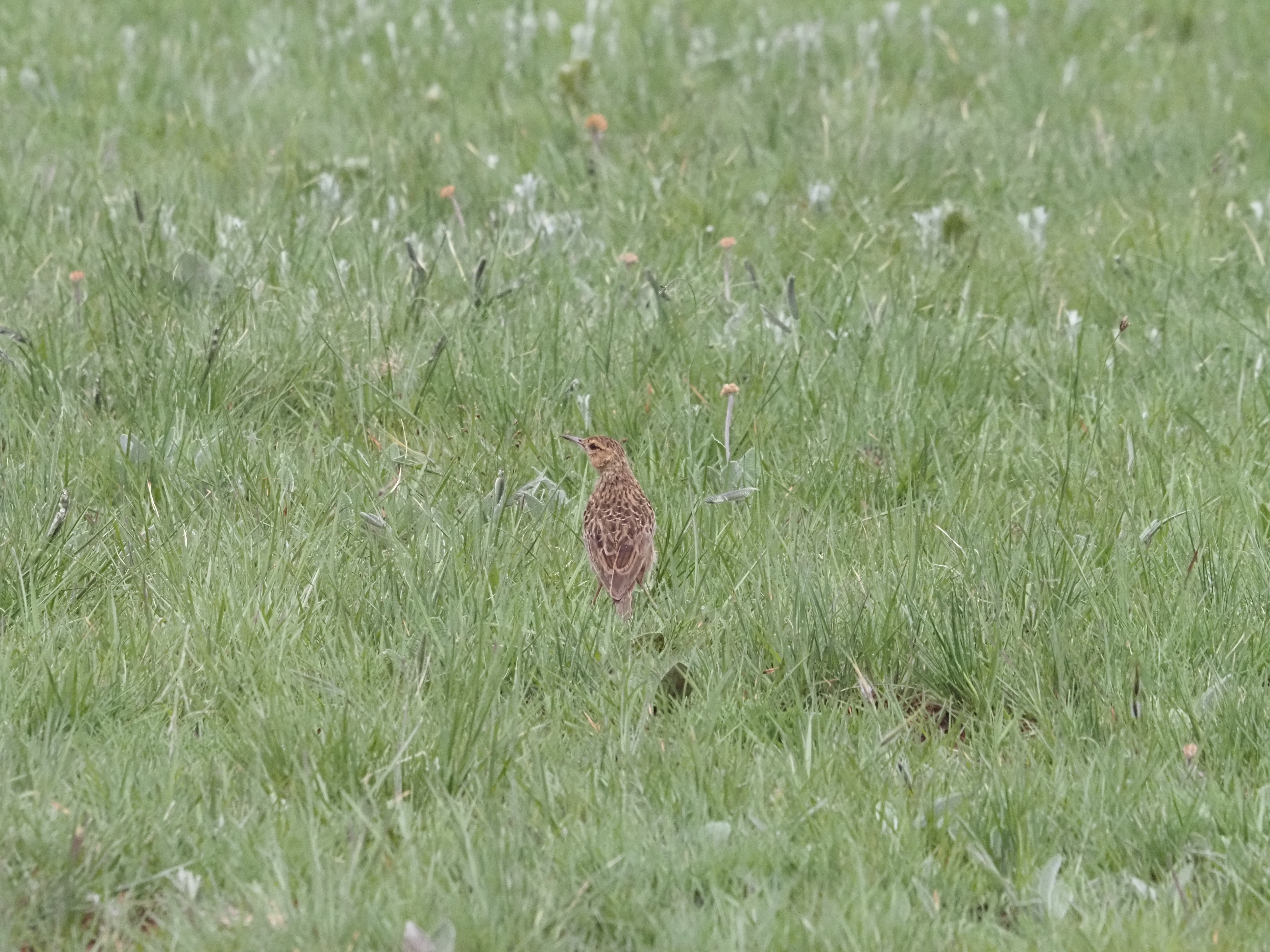
Juvenile Imperial Eagle (Aquila heliaca)

Greater Spotted Eagle (Clanga clanga)

Spotted Thick-knee (Burhinus capensis)

Back to the forested valleys, we explored a small stream, where we were surprised to find another Red-breasted Flycatcher having a bath along with Citrine & Grey Wagtails and 2 African Paradise Flycatchers. We enjoyed long views on the Flycatcher while searching for other goodies to appear, but everything we could find was a Hottetotta genus Scorpion. Here we waited until sunset, and with the very last lights of the day we were surprised to hear a Rufous-scrub Robin calling from the bush land. We scanned a bit but the last light of the day didn’t help and we never got a visual on this always wonderful ground flycatcher. Only a few minutes after the Robin was calling, we got the first call of an Arabian Eagle Owl coming from the opposite slope. During the next half an hour we struggled to find and approach the bird but every second of it was worth it when we finally got this endemic owl only a few meters away in a really unforgettable experience for all of us!

Not a day whithout a portrait on a Citrine Wagtail!

Blackstart (Oenanthe melanura), currently considered to be a Wheatear.

This time we enjoyed really intimate views on an Arabian Eagle Owl (Bubo milesi) while moving in the woodlands. Image by tour leader Carles Oliver

Day 7. The morning of this day was devoted to explore the oases at Mudday. This is the only reliable place for Grey Hypocolius in Oman, and there were only 2 birds reported at the end of December (in our trip on early December 2022 we were lucky to see 4 of them!). The Hypocolius proved to be as hard as ever, and it really took us an extra effort and patiente to finally connect with one of them, even if shortly! In the meanwhile we had time to enjoy at least 4 Nile Valley Sunbirds, 3 Blackstarts (they were suprisingly scarce this time in all the places we went!), several Sand Partridges including some birds drinking from a water hole, my first African Collared Dove in the place for some years, an Imperial Eagle, a lovely male Caucasian Bluethroat, the only Montagu’s Harrier of the trip, 1 Arabian Bee-eater and a lovely Hooded Wheatear!

A part from all of this was the experience to see 60+ Crowned Sandgrouses coming down to drink water in different flocks. Their calls, the very shy movements and behaviour and the very special beauty of the Sandgrouses on the ground at close range keep being for me one of the most wonderful birding experiences on Earth!

The very first glympse of the male Hypocolius was when it was feeding in a bush, only a few meters from us. The bird flew off before everyone in the group could have something of it, but it looked like not being far. We accurately scanned all the bushes and palm trees around, but we didn’t have a clue. From there we moved to check other corners around, getting our range of search bigger and bigger. Finally we dediced to come back to the exact place where we first saw the bird and scanned around for several minutes. Finally, right was I was about to give up, the bird appeared right in the same bush as it was the first time! Didn’t stay long there, though, and we still had to follow the bird up in the palm trees where it was hidden and, after a slowy scan, finally got excellent views on this amazing species, and eveyone had really good looks on it.

Sand Partridge (Ammoperdix heyi) in lovely morning light

Hooded Wheatear (Oenanthe monacha) overseeing the wadi.

Nile Valley Sunbird (Hedidypna metalltica) showing its amazing array of colours!

African Collared Dove (Streptopelia roseogrisea)

Hundreds of Crowned Sandgrouses (Pterocles coronata) were attending the water holes.

Grey Hypocolius (Hypocolius ampelinus) male hiding in the palm trees.

Really glad for this amazing view we went back to Salalah to have some lunch and rest. In the afternoon, we went to check the well known Raysut ponds. It was cloudy when we arrived, even about to rain! But of course, it didn’t rain at all. Here we counted 120 Abdim’s Storks, double figures of Whites‘, and 9 Red-wattled Lapwings (including one of the spur-winged x Red-wattled hybrids that live in the area). Other interesting species here included several Little Grebes, 1 Marsh Sandpiper, 1 Common Snipe (little numbers of Snipes this year) and Temminck’s Stints.
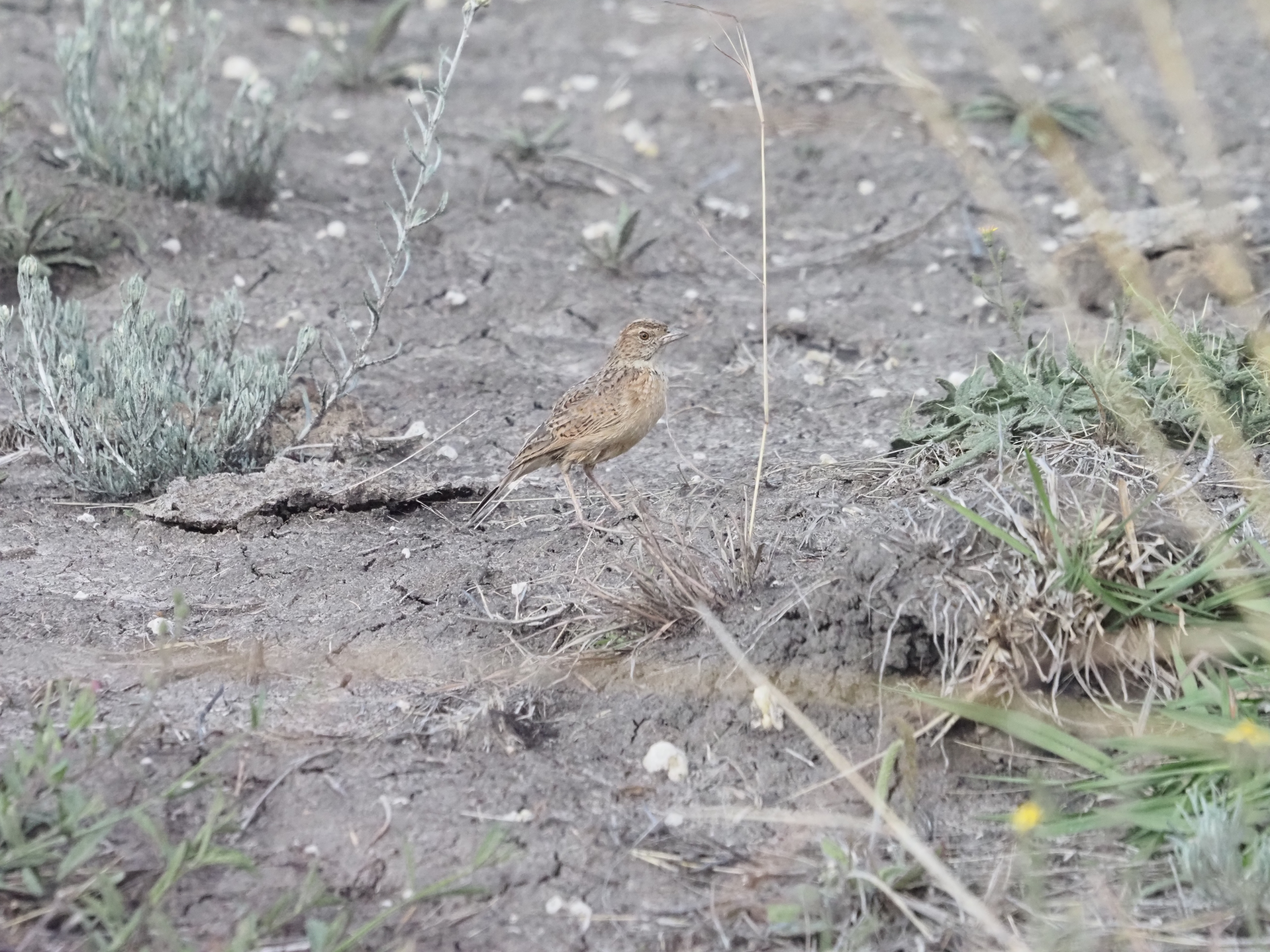
Abdim’s Stork (Ciconia abdimii) in the Raysut ponds. Image by tour leader Carles Oliver
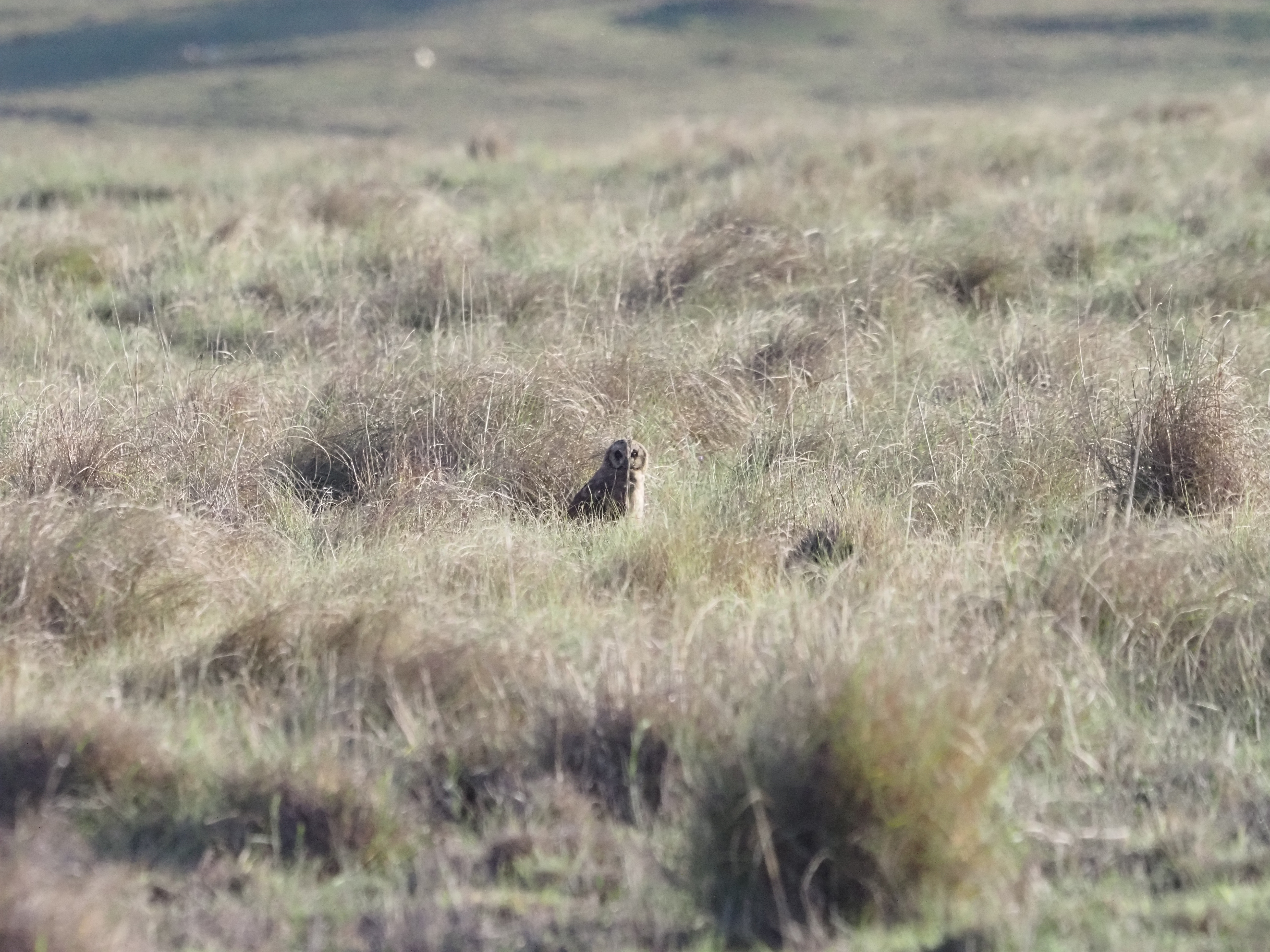
Red-wattled x Spur-winged Lapwing hybrid (Vanellus indicus x spinosus). Image by tour participant Moises Zozaya.

Back to the coast, we headed to West Kawhar, a place that very few people check (because normally is very little there). But we were lucky, not only because of the flocks of Pacific Golden Plovers at close range that provided great views but especially because we were lucky to find a Long-tailed Cormorant! Checking the dead trees around I was surprised to find this juvenile, small Cormorant with a long tail and a vivid red eye. The bird was extremely small (for a Cormorant) with a humbed head and whitish underparts. It may not be very exciting for those that have visited tropical Africa, but it happens to be a first for Oman! Very happy for our luck, we did some photos of the bird and pair attention to all main details with the scopes before leaving to our last wetland stop in a in the Dhofar.

Our last river mouth produced little out of a lovely flock of 5 Cotton Pygmy Goose. This is actually one of the best corners for ducks but it was almost empty…

Another point that is well worth checking in Salalah are the several farms around. You can choose any of them, for sure you will get excellent birds. Our farm was close to the beach, and just arriving to the place we found a tiny pond with some reeds. Here, a Clamorous Reed Warbler eluded us again, but we were happy to enjoy some Citrine Wagtails, Bluethroat and Green Sandpiper. Once in the fields, we soon had a large flock of Rosy Starlings flying around, that eventually stopped in the top of a thicket allowing really good scope views. Here we got another large flock (200+) of Pacific Golden Plovers, one of them showing what it look to be a complete summer plomage. Another surprise was to find 2 Common Cranes here, and we enjoyed them while some Red-throated Pipits and Yellow Wagtails were flying above us. The visit ended with brief views on a Siberian Stonechat.

To end the day, we chose another visit to wooded valley, and here we got really nice views on 1 Arabian Scops Owl. At least 3 more were heard singing around before going back to our accommodation for a very deserved rest.

Long-tailed Cormorant (Microcarbo africanus), a putative 1st for Oman was a big surprise for all of us! Images by tour leader Carles Oliver

Pacific Golden Plover (Pluvialis fulva), a common overwintering bird in Oman

Cotton Pygmy Goose (Nettapus coromandelianus), a very scarce winter visitor to Oman.

West Khawar in Salalah, a wonderful birding location.

Arabian Scops Owl (Otus pamelae), another Arabian endemic

Day 8. After breakfast we went back to explore farms. This time we had a first stop in a different one. Surprisingly we didn’t have any Harrier at all, but the place was literally fullfilled with Yellow Wagtails. Hundreds, thousands of them were moving around, following the tractors but, in fact, everywhere. Both feldegg & beema races were noted, with some thunbergi probably also there. Large flocks of Ruffs were in the move along with Glossy Ibises. On the ground, we got some lovely views on Red-throated Pipits including some salmon-breasted ones. But the most celebrated bird here was an Oriental Skylark that landed only a few meters away from us, and after some accurate scanning of the soil, showed well for some seconds before leaving.

The visit had been so great so we decided to do a fast stop to the farm where we had been birdwatcher the previous afternoon. There, we got lucky to find the Rose-coloured Starlings bathing in a small pond only a few meters away from us. Besides, 4 Little Ringed Plovers were also seen at close range. Back to the proper farms, we listened some Red-throated Pipits before a wonderful Richard’s Pipit appeared and stop only some 20 meters away from us. All the group enjoyed wonderful views on the bird both with the scope and with the bins before the bird moved to a taller grass corner.

Red-throated Pipit (Anthus cervinus)

Rose-coloured Starling (Pastor roseus)

Richard’s Pipit (Anthus richardi), another uncommon winter visitor in Oman.

From here we drove back to the desert. In this day we faced a transfer North for an overnight in Duqm, but we still didn’t give up of birding! After a pair of hours of car we stopped in a new farm. Just driving the road we got some flocks of Sandgrouses flying in the distance so we decided to explore the fields around. Here we were granted with 12 Cream-coloured Coursers, Isabelline Shrike, tens of Chesnut-bellied Sandgrouses, Black-crowned Sparrow-Larks and some Levant Grey Shrikes.

Back to desert, we kept driving North. To cross the desert is always wonderful and not absent of birding opportunities, and after some miles we got a pair of Greater Hoopoe Larks nicely moving in the bare soil. We got even lucky to listen its beautiful song, a long whistle that is often (like this time) joined by a short displaying flight. Really happy with these great views we went back to hit the road until the afternoon, when we did a last stop to enjoy the lovely light. There, not far from Duqm, we did a stroll around and we got really good views on 1 Asian Desert Warbler doing its way while following a male Desert Wheatear.

Soon after that we arrived to our nice accommodation in Duqm, where we enjoyed a well deserved rest before dinner.

A bit of off-road was required but we finally got excellent views on Greater Hoopoe Lark (Alaemon alaudipes).

Asian Desert Warbler (Curruca nana)

Day 9. After breakfast, our day started by doing a short walk to the small garden of our accommodation. Here we found a Red-breasted Flycatcher during our last visit in early December and, suprinsingly, the bird was still moving in this tiny garden! Purple Sunbirds were also seen here. A short drive led us then to a small canal with a rich reedbed where we saw 3 Wood Sandpipers, some Eurasian Teals, a Green Sandpiper and the very firsts Mallards of the tour (a flock of 6).

From here we transfered North to the massive mudflats around Masirah Island. There is an estimation of 1 million waders overwintering here, and once you visit the area you may consider this estimation as conservative. Soon, we had some Kentish & Lesser Sand Plovers along with Dunlins, Curlew Sandpipers and Little Stints. We took some time to check some of the several flocks of Gulls around, but nothing different appeared despite the good photo opportunities.

Greater Crested Tern (Thalasseus bergii).

3rdw Heuglin’s Gull (Larus fuscus heuglini).

Back to the mudflats we enjoyed with the arrival of thousands of waders to the feeding areas. Bar-tailed Godwits were really common, as there were Dunlins, Common Redshanks, Grey Plovers, Eurasian Curlews and Greater Sand Plovers, some of them showing already a promising summer coloration. The scan around produced the very first Broad-billed Sandpiper, that was celebrated in the group. At the same time, a Clamorous Reed Warbler showed out from the mangrove vegetation, and we all finally got some views on a species that had been eluding us for all the tour long. A small flock of 7 Spotted Sandpipers were also seen, and when we were checking this gorgeous waders the very first Crab Plover appeared right in front of us! Always a gorgeous bird, almost the size of a Little Egret, the Crab Plovers move often here in pairs that consist in an adult with a juvenile that constantly beg for food. Little by little, more and more Crab Plovers were arriving, and we were able to see some birds catching and feeding on crabs. In only 30 minutes we counted up to 70 birds. Other species also appeared here including Caspian & Gull-billed Terns. We hoped for some Little/Saunder’s Terns to appear, but we didn’t have luck on this.

Our final stop of the day was to check a different corner of this massive mudflats. Here we had barely the same birds than in our previous stop out of Crab Plovers. Still, we got at least four more Broad-billed Sandpipers, 1 Striated Heron in the mangroves and some Eurasian Whimbrels for our day list.

From here we transfered to our accommodation, arriving there a bit after sunset.

Crab Plovers (Dromas ardeola) feeding surrounded by ither waders.

Broad-billed Sandpiper (Limicola falcinellus).

Greater Sand Plovers (Charadrius leschenaultii). Image by Moises Zozaya.

Day 10. Last morning in Oman. We drove the distance between our accommodation from Muscat with some stops in the way to take a look on some raptors. First a lienatus-like Black Kite, but later 3 Lappet-faced Vultures joined by 1 Imperial Eagle and some Egyptian Vultures were a good entertaiment for the very last miles before arriving to Muscat. Our last serious birding stop was devoted to explore the famous Al Mouj Golf Courser in search of the White-tailed Lapwing that had been seen during the last weeks. We were not lucky on the lapwing, but we still had some nice addings to our list including Ferruginous Duck (1 male), Eurasian Wigeon and 3 Greater White-fronted Geese. Along with them, we also had several Red-wattled Lapwings, Indian Rollers, Ruffs, Western Yellow Wagtails and Little Grebes in the ponds.

From here we just drove the very short distance to the airport, and got ready for our flights back to Europe!

And this is how we ended our 7th tour to Oman. Already looking forward our trip in 2024 to have more incredible sights in this awesome birding country!

Lappet-faced Vultures (Torgos trachilaetos) are surprisingly common in Northern Oman.

Indian Roller (Coracias benghalensis) in a cloudy day to end the tour!

Species of birds seen during the tour:

  1. Arabian Partridge (Alectoris melanocephala)
  2. Sand Partridge (Ammoperdix heyi)
  3. Grey Francolin (Ortygornis pondicerianus)
  4. Greater White-fronted Goose (Anser albifrons)
  5. Lesser White-fronted Goose (Anser erythropus)
  6. Cotton Pygmy Goose (Nettapus coromandelianus)
  7. Mallard (Anas platyrhynchus)
  8. Gadwall (Anas strepera)
  9. Eurasian Wigeon (Anas penelope)
  10. Pintail (Anas acuta)
  11. Eurasian Teal (Anas crecca)
  12. Garganey (Spatula querquedula)
  13. Northern Shoveler (Spatula clypeata)
  14. Ferruginous Duck (Aythya nyroca)
  15. Pallid Swift (Apus pallidus)
  16. Chestnut-bellied Sandgrouse (Pterocles exustus)
  17. Crowned Sandgrouse (Pterocles coronatus)
  18. Spotted Sandgrouse (Pterocles senegallus)
  19. Lichtenstein’s Sandgrouse (Pterocles lichtensteinii)
  20. Feral Pigeon (Columba livia sp.)
  21. Eurasian Collared Dove (Streptopelia decaocto)
  22. African Collared Dove (Streptopelia roseogrisea)
  23. Laughing Dove (Streptopelia senegalensis)
  24. Namaqua Dove (Oenas capensis)
  25. Bruce’s Green Pigeon (Treron waalia)
  26. Common Crane (Grus grus)
  27. White-breasted Waterhen (Amaurornis phoenicurus)
  28. Eurasian Moorhen (Gallinula chloropus)
  29. Eurasian Coot (Fulica atra)
  30. Red-knobbed Coot (Fulica cristata)
  31. Little Grebe (Tachybaptus ruficollius)
  32. Greater Flamingo (Phoenicopterus roseus)
  33. Spotted Thick-knee (Burhinus capensis)
  34. Eurasian Oystercatcher (Haematopus ostralegus)
  35. Crab Plover (Dromas ardeola)
  36. Black-winged Stilt (Himantopus himantopus)
  37. Pheasant-tailed Jacana (Hydrophaisanus chirurgus)
  38. Red-wattled Lapwing (Vanellus indicus)
  39. Pacific Golden Plover (Pluvialis fulva)
  40. Grey Plover (Pluvialis squatarola)
  41. Little Ringed Plover (Charadrius dubius)
  42. Common Ringed Plover (Charadrius hiaticula)
  43. Kentish Plover (Charadrius alexandrinus)
  44. Lesser Sand Plover (Charadrius mongolus)
  45. Greater Sand Plover (Charadrius leschenaultii)
  46. Common Snipe (Gallinago gallinago)
  47. Black-tailed Godwit (Limosa limosa)
  48. Bar-tailed Godwit (Limosa lapponica)
  49. Eurasian Whimbrel (Numenius phaeopus)
  50. Eurasian Curlew (Numenius arquata)
  51. Spotted Redshank (Tringa erythropus)
  52. Common Redshank (Tringa totanus)
  53. Marsh Sandpiper (Tringa stagnatilis)
  54. Common Greenshank (Tringa nebularia)
  55. Green Sandpiper (Tringa ochropus)
  56. Wood Sandpiper (Tringa glareola)
  57. Terek Sandpiper (Xenus cinereus)
  58. Common Sandpiper (Actitis hypoleucos)
  59. Ruddy Turstone (Arenaria interpres)
  60. Little Stint (Calidris minuta)
  61. Temminck’s Stint (Calidris temminckii)
  62. Dunlin (Calidris alpina)
  63. Curlew Sandpiper (Calidris ferruginea)
  64. Broad-billed Sandpiper (Limicola falcinellus)
  65. Ruff (Philomachus pugnax)
  66. Red-necked Phalarope (Phalaropus lobatus)
  67. Slender-billed Gull (Chroicocephalus genei)
  68. Black-headed Gull (Chroicocephalus ridibundus)
  69. Heuglin’s Gull (Larus fuscus heuglini) / Steppe Gull (Larus fuscus barabensis)
  70. Caspian Gull (Larus cachinnans)
  71. Palla’s Gull (Larus ichthyaetus)
  72. Sooty Gull (Larus hemprichii)
  73. Caspian Tern (Hydroprogne caspia)
  74. Greater Crested Tern (Thalasseus bergii)
  75. Lesser Crested Tern (Thalasseus bengalensis)
  76. Sandwich Tern (Thalasseus sandvicensis)
  77. Common Tern (Sterna hirundo)
  78. Gull-billed Tern (Gelochelidon nilotica)
  79. Little Tern (Sternula albifrons)
  80. Whiskered Tern (Chlidonias hybridus)
  81. White-winged Black Tern (Chlidonias leucopterus)
  82. Persian Shearwater (Puffinus persicus)
  83. Jouanin’s Petrel (Bulweria fallax)
  84. Abdim’s Stork (Ciconia abdimii)
  85. White Stork (Ciconia ciconia)
  86. African Openbill (Anastomus lamelligerus)
  87. Masked Booby (Sula dactylatra)
  88. Brown Bobby (Sula leucogaster)
  89. Great Cormorant (Phalacrocorax carbo)
  90. Socotra Cormorant (Phalacrocorax nigrogularis)
  91. Long-tailed Cormorant (Microcarbo africanus)
  92. Glossy Ibis (Plegadis falcinellus)
  93. Eurasian Spoonbill (Platalea leucorodia)
  94. Striated Heron (Butorides striata)
  95. Squacco Heron (Ardeola ralloides)
  96. Indian Pond Heron (Ardeola grayii)
  97. Western Cattle Egret (Bubulcus ibis)
  98. Black-crowned Night Heron (Nycticorax nycticorax)
  99. Purple Heron (Ardea purpurea)
  100. Grey Heron (Ardea cinerea)
  101. Western Reed Egret (Egretta gularis)
  102. Little Egret (Egretta garzetta)
  103. Great White Egret (Casmerodius albus)
  104. Egyptian Vulture (Neophron percnopterus)
  105. Griffon Vulture (Gyps fulvus)
  106. Lappet-faced Vulture (Torgos trachelietos)
  107. Osprey (Pandion haliaetos)
  108. Crested Honey Buzzard (Pernis ptilorhynchus)
  109. Black Kite (Milvus migrans)
  110. Greater Spotted Eagle (Clanga clanga)
  111. Steppe Eagle (Aquila nipalensis)
  112. Eastern Imperial Eagle (Aquila heliaca)
  113. Verreaux’s Eagle (Aquila verreauxii)
  114. Bonelli’s Eagle (Aquila fasciata)
  115. Booted Eagle (Hieraaetus pennatus)
  116. Short-toed Snake Eagle (Circaetus gallicus)
  117. Eurasian Sparrowhawk (Accipiter nisus)
  118. Black-winged Kite (Elanus caeruleus)
  119. Western Marsh Harrier (Circus aeruginosus)
  120. Pallid Harrier (Circus macrourus)
  121. Montagu’s Harrier (Circus pygargus)
  122. Long-legged Buzzard (Buteo rufius)
  123. Arabian Scops Owl (Otus pamelae)
  124. Desert Owl (Strix hadorami)
  125. Omani Owl (Strix butleri)
  126. Arabian Eagle Owl (Bubo milesis)
  127. Eurasian Hoopoe (Upupa epops)
  128. Indian Roller (Coracias benghalensis)
  129. Arabian Bee-eater (Merops cyanophrys)
  130. Common Kestrel (Falco tinnunculus)
  131. Alexandrine Parakeet (Psittacula eupatria)
  132. Ring-necked Parakeet (Psittacula krameri)
  133. Black-crowned Tchagra (Tchagra senegallus)
  134. Isabelline Shrike (Lanius isabellinus)
  135. Turkestan Shrike (Lanius phoenicuroides)
  136. Levant Grey Shrike (Lanius excubitor aucheri)
  137. Arabian Babbler (Turdoides squamiceps)
  138. African Paradise Flycatcher (Tersiphone viridis)
  139. Grey Hypocolius (Hypocolius ampelinus)
  140. White-eared Bulbul (Pycnonotus leucotis)
  141. Red-vented Bulbul (Pycnonotus cafer)
  142. White-spectacled Bulbul (Pycnonotus xanthopygos)
  143. House Crow (Corvus splendens)
  144. Brown-necked Raven (Corvus ruficollis)
  145. Fan-tailed Raven (Corvus rhidipurus)
  146. Greater Hoopoe-Lark (Alaemon alaudipes)
  147. Desert Lark (Ammomanes deserti)
  148. Greater Short-toed Lark (Calandrela brachydactyla)
  149. Black-crowned Sparrow-Lark (Eremopterix nigriceps)
  150. Oriental Skylark (Alauda gulgula)
  151. Crested Lark (Galerida cristata)
  152. Pale Crag Marting (Ptyonoprogne obsoleta)
  153. Barn Swallow (Hirundo rustica)
  154. Graceful Prinia (Prinia gracilis)
  155. Delicate Prinia (Prinia lepida)
  156. Common Chiffchaff (Phylloscopus collybita)
  157. Siberian Chiffchaff (Phylloscopus trists)
  158. Plain Leaf Warbler (Phylloscopus neglectus)
  159. Clamorous Reed Warbler (Acrocephalus stentoreus)
  160. Asian Desert Warbler (Curruca nana)
  161. Lesser Whitethroat (Curruca curruca)
  162. Eastern Orphean Warbler (Curruca crassirostris)
  163. Arabian Warbler (Curruca leucomelaena)
  164. Ménétries’ Warbler (Curruca mystacea)
  165. Eastern Olivaceous Warbler (Iduna pallida)
  166. Abyssinian White-eye (Zosterops abyssinicus)
  167. Common Myna (Acridothere tristis)
  168. Rose-coloured Starling (Pastor roseus)
  169. Tristam’s Starling (Onychognathus tristamii)
  170. Bluethroat (Luscinia svecica)
  171. Black Redstart (Phoenicurus ochruros)
  172. Siberian Stonechat (Saxicola maurus)
  173. Isabelline Wheatear (Oenanthe isabellina)
  174. Northern Wheatear (Oenanthe oenanthe)
  175. Desert Wheatear (Oenanthe deserti)
  176. Pied Wheatear (Oenanthe pleschanka)
  177. Arabian Wheatear (Oenanthe lugentoides)
  178. Hume’s Wheatear (Oenanthe albonigra)
  179. Hooded Wheatear (Oenanthe monacha)
  180. Persian Wheatear (Oenanthe chrysopygia)
  181. Blackstart (Oenanthe melanura)
  182. Red-breasted Flycatcher (Ficedula parva)
  183. Nile Valley Sunbird (Hedydipna metallica)
  184. Palestine Sunbird (Cinnyris osea)
  185. Arabian Sunbird (Cinnyris hellmayrii)
  186. Purple Sunbird (Cinnyris asiaticus)
  187. House Sparrow (Passer domesticus)
  188. Rüppell’s Weaver (Ploceus galbula)
  189. African Silverbill (Euodice cantans)
  190. Indian Silverbill (Euodice malabarica)
  191. Citrine Wagtail (Motacilla citreola)
  192. White Wagtail (Motacilla alba)
  193. Grey Wagtail (Motacilla cinerea)
  194. Western Yellow Wagtail (Motacilla flava)
  195. Richard’s Pipit (Anthus richardi)
  196. Tawny Pipit (Anthus campestris)
  197. Long-billed Pipit (Anthus similis)
  198. Tree Pipit (Anthus trivialis)
  199. Red-throated Pipit (Anthus cervinus)
  200. Yemen Serin (Cithraga menachensis)
  201. Arabian Grosbeak (Rhynchostruthus percivali)
  202. Striolated Bunting (Emberiza striolata)
  203. Cinnamon-breasted Bunting (Emberiza tahapisi)
A lovely Blackstart (Oenanthe melanura) to end another wonderful tour in Oman!

Tailor-made tour to Texas

  • Dates: From October 16th, 2022
  • Number of tour participants: 3
  • Number of species seen: 235

All images by Carles Oliver. All rights reserved.

Overview: With a delayof two years due to the pandemia, out tailor-made tour to Texas went on finally in October 2022 with 3 tour participants. Originally the idea was to start to the tour at the beggining of November, but part of the clients wanted to be moved to late October so finally the starting date was decided to be Otober 15th. During the tour we thinly explored the large woodlands North of Houston and the desert-like areas around Del Rio but the main effort was to enjoy birding in the many hotspots along the Mexican border between Hidalgo and the Golf as well as around Corpus Christi.

Weather in average was stable, with a couple of days of light rain and low temperatutes for the season. In Corpus Christi we had some days of strong winds, making birding a big uncomfortable and sometimes frustating. The last day of the tour was also marked by strong winds and rains.

Really looking forward to be back in Texas. This time in November, as originally planned!

Day 1. Our guests attented the tour from differents countries so we met at Houston International Aiport. It was the afternoon but we could still have almost a pair of hours of birding. We fastly moved to a corner nearby to enjoy the first bird in the Americas. Here, a short walk produced 5 Scissor-tailed Flyatcher, American Kestrel and Cooper’s Hawk but also common birds like Carolina Chickadee and Blue-grey Gnatcatcher. A small pond was full of Killdeers as well as some Greater Yellowlegs, Wilson’s Snipe and 3 Baird’s Sandpipers. Here we also had a flock of 4 Westerm Kinbirds, that turned out to be the only sight of this species nesting from the mid-West to the Pacific Ocean.

Blue-grey Gnatcatcher (Polioptila caerulea), a typical inhabitant of tall thickets and woodlands.
Flock of Western Kingbirds (Tyrannus verticalis) along with a Mourning Dove (Zenaida macroura)

Day 2. After a good rest we left our accommodation to explore Sam Houston National Forest. Before that, a 10 minutes short walk around the parking lot produced a good summary of the garden birds living in the area. Here we got some really common birds like Northern Cardinal, House Finch, Downy Woodpecker, Blue Jay, Red-bellied Woodpecker, Carolina Wren, Orange-crowned Warbler and Ruby-crowned Kinglet.

After a short transfer we did have a first stop inside Sam Houstol NF. Soon, we connected with some of the many Pine Warblers around and Brown-headed Nuthatches showed up very well but high. We certainly didn’t have to wait long for the very especialty of the area to appear, and after some minutes, a mixed flock of Woodpeckers revealed to not Red-bellieds but also 3+ Red-cockaded’s and even a rather unexpected Hairy Woodpecker! It took some time but everybody in the group had excellent views on the Red-cockaded Woodpecker, a quite endangered species linked to long-leave pine savannas. A further walk into the area produced several Carolina Chickadees but also the first White-eyed Vireo, Tufted Titmouses and Eastern Phoebe of the trip.

Red-cockaded Woodpecker (Leuconotopicus borealis), a specialist of pine jungles
Downy Woodpecker (Dryobates pubescens)
Red-bellied Woodpecker (Melanerpes carolinus)
Red-shouldered Hawk (Buteo lineatus)

After such a great start, we started moving East. While driving the area both Red-shouldered and Red-tailed Hawks were noted. It was a sunny and calm day and by midday temperatures went high up.

We arrived around San Antonio by the early afternoon, and even if it was still warm we stop around Crescent Bend Nature Park for some birds. A nice flock of Eastern Meadowlarks provided good looks in the yellowish prairies and we were surprised by the presence of 5+ Crested Caracaras, some of them providing close up views. Once arrived to Betsen????? we had a short walk around. Here we got our first Ruby-throated Hummingbird of the trip but also Lincoln’s Sparrow, Rose-breasted Grosbeak, Ladder-backed Woodpecker, Lesser Goldfinch and Nashbille Warbler. At sunset, we were surprised byt the wholoes of a Barred Owl that, despite our efforts, was reluctant to show out.

Scissor-tailed Flycatchers (Tyrannus forficatus) can be surprinsingly common
Northern Cardinal (Cardinalis cardinalis) male
Ruby-throated Hummingbird (Archilochus colubris)
Nashville Warbler (Leiothlypis ruficapilla)

Day 3. This day started with a massive rain and very low temperatures. Theoretically, the morning was devoted to explore one of the main wetlands south of San Antonio, but due to the bad weather we just went directly with the transfer West right beside the Mexican border at Del Río.

En route we had a first stop when the rain stop to explore some open lands and farming. Here we were surprised by a number of good birds including Western Meadowlarks, Golden-fronted Woodpecker, Dickcissel, Vesper & Lark Sparrows and the first Vermilion Flycatcher that was extremely welcome by the group.

Golden-fronted Woodpecker (Melanerpes aurifrons)
Vesper Sparrow (Pooecetes gramineus)
Red-tailed Hawk (Buteo jamaicensis)

The transfer to Del Rio was fast and easy, and marked by a Ferruginous Hawk spotted by the highway. The weather was still really fresh and temperatures clearly lower than average, even fresh! Just arrived to Del Rio we went to explore some corners around the city. Our first stop was to explore the Cementrey ______ and here we found 12+ Eastern Bluebirds, 10+ Vermilion Flycatchers, small flocks of Lark Sparrows feeding along with Lincoln’s and House Finches, several Scissor-tailed Flycatchers and a dark form Red-shouldered Hawk. Following the border between Mexico and USA we also had our first of mane Great Kiskadee. The area is rich in lake and ponds, and in one of the them we got Ringed Kingfisher but also first views on Common Yellowthroat, Northern Rough-winged Swallow, a lovely male Northern Harrier and Neotropical Cormorant before going for dinner and rest at our comfortable accommodation.

Female (up) & male (down) Eastern Bluetail (Sialia sialis) in a mixed migratory flock
Lark Sparrow (Chondestes grammacus)
Couch’s Kingbird (Tyrannus couchii)
Vermilion Flycatchers (Pyrocephalus obscurus) were really common at Del Rio

A great combination of birds in a single tree!
Turkey Vulture (Cathartes aura) close up

Day 4. The day started as cloudy as the day before, and with temperatures 10ºC below the average of the season! A great weather to explore the desert. Our first visit to Seminole Canyon State Park was concentrated into exploring its plains and bushland, famous for its rich birdlife. A short walk throught the plains fastly produced a good number of species. After only a few minutes a calling came from the bushlands, and after checking we all glad to find a wonderful Pyrrhuloxia sitting near the top of the bush, calling. The excitation came to the group, the bird flew off and despite all our efforts we were uncapable to relocate the bird. Sparrows seem to be everywhere, with small flocks constantly moving in the grassland. Here we enjoyed great views on Cassin’s, Vesper, Lincoln’s, White-crowned, Clay-coloured and Lark Sparrows. Black-throated Sparrows looked like specially common in this dry ambient, and after checking several flocks we were surprised by a Harri’s Sparrow sitting along with Lark Sparrows! That’s a good bird, with really thin records in the area.

Turkey Vultures were pratolling the sky while a massive number of Monarch Butterflies were doing its way South to their winter. There were thousands of them, many times gathering in small “flocks”. Their number was so numerous than we drove over tens of them while approaching the area. Not possible to skip them all in the road, and the tarmac showed tens of them dead or badly injured in a very sad view.

After enjoying the plains we finally decided to go down to the rocky areas. In our way to the rock scarpments, a Black-tailed Gnatcatcher left the group wanting more of it. Once if the rocks, we were lucky to find out a lovely pair of Rock Wrens doing its thing along the cliff edge in a wonderful sight. In our way back the clouds cleared for a while, and we could only see a flock of Eastern Meadowlarks and some Scissor-tailed Flycatchers.

Black-throated Sparrow (Amphispiza bilineata)
Small flocks of Clay-colored Sparrows (Spizella pallida) were seen in different semi-arid countryside around Del Río.
Monarch Butterfly (Danaus plexippus)

After lunch we moved North, amid to explore some more desert-like ambients. During the next 3 hours we explored different valleys and plains. The sky was again cloudy and we could enjoy a good selection of the birds living in the scrublands. The fast moving Black-tailed Gnatcatcher gave us a hard time but finally everybody in the group could connect with it. While searching for the Gnatcatcher we were surprised by a fly over flock of Woodhouse Scrub-Jays! Along the afternoon we had three flocks of this restless species but never got any shot! Canyon Towhee was another great adding to our list, providing excellent sights as Common Ground Doves did along the tracks of the area as well as at least 3 Chihuahuan Ravens along the roads.

Canyon Towhee (Pipilo fuscus)
White-crowned Sparrow (Zonotrichia leucophrys)

Day 5. Early morning morning start to explore another corner in the Seminole State Park. This time we went into a very impressive gorge in search of the sought-after Canyon Wren, a specialist on rock faces that spend a lot of time in crevices and ravines and thus, difficult to locate. In our short walk in the ravine we got the first Black-crested Titmouse of the trip as well as Golden-crowned Warbler and Common Raven. It didn’t took long before we located the first Canyon Wren, moving in fast, almost mouse-like runs along the crags. Investing some time, we got more than decent views in this awesome bird and we even had a second individual in another corner of the canyon. Back to the vehicle we decided to drive back to the same place we were the morning before, expecting to find a Roadrunner in the area. Another walk was required to explore the place, and even if we didn’t find any Roadrunner, we were regarded with a fine selection of birds. The flocks of Sparrows were as active as they previous day, and we had the same species as the day before but adding a Lark Bunting and, the most unexpected, 2 Green-tailed Towhees that showed up at two different places! ere we also hot the only Say’s Phoebe of the trip along with a pair of Scaly Francolins flying out of the bushland.

Canyon Wren (Catherpes mexicanus) singing his heart out
Say’s Phoebe (Sayornis saya)
Green-tailed Towhee (Pipilo chlorurus). Up to 4 individuals were seen
The impressive Seminole Canyon

After such a great morning at Seminole we still had a last stop at Del Rio to explore one of the urban parks. Here we got a nice selection of birds including the first House Wren of the trip but also both Ringed & Velted Kingfishers, Yellow-rumped Warblers, Common Yellowthroats and Lesser Goldfinches to name a few.

we drove South in search of the birding hotspots along the Rio Grande. Along the way, we enoyed several Harri’s Hawks in the posts, and also several Crested Caracaras. A stop in some small ponds near Freer provided the first Blue-winged & Green-winged Teals of the tour along with a minimum of 2 Cinnamon Teals. When approaching the our accommodation, a Broad-winged Hawk just passed over our van, giving a great end to this day!

Vesper Sparrow (Pooceetes gramineus)
Crested Caracara (Caracara plancus)
Harri’s Hawk (Parabuteo unicinctus)

Day 6. Our first day exploring Rio Grande was devoted to the Santa Anna State Park. This large natural reserve protects an extensive patch of indigineous evergreen forest. Once upon the time, this valley had been covered with this lush vegetation, but nowadays only small number of locations remain. Black-crested Titmouses, Golden-fronted Woodpeckers, White-eyed Vireos and Grey-backed Gnatcatchers fullfilled the parking place with its song and calls, and the group enjoyed very much taking images of all of them. Green Jays appeared also almost inmediately, with their harsh calls announcing their arrival and 3 Inca Doves were feeding on the ground.

Walking into the habitats in Santa Anna is like transporting yourself into a different era, which majestic trees covered by !!!!!!!!. Once inside the park, we were surprised by the first Clay-colored Thrush perched in a low branch. Curve-billed Thraser was calling a bit beyond and we had to wait a bit until the bird showed up. The time invested was worth it not only because of the good looks on the Thraser but also because a Red-eyed Vireo decided to walk into view! The calls of the Great Kiskadees were constant and they were easily found in the top the trees along our way. At some point we saw a Kisadee chasing a smaller, colourful bird and we were all surprised to see that it an Altamira Oriole that decided to stop in the out at the top a dead tree! Couch’s Kingbirds were also around in a wonderful combination of birds. But the Altamira Oriole was not alone and we count not 2 but 5 of these great birds moving tree to tree, sometimes perching in the out and vocalising.

Santa Anna is preserving some remants of the rather pensive native habitats along the Rio Grande
Long-billed Thraser (Toxostoma longirostre)
Altamira Oriole (Icterus gularis)
Plain Chachalaca (Ortalis vetula) close up
White-eyed Vireo (Vireo griseus). One of the three species of Vireos seen during the tour.
Great Kiskadee (Pitangus sulphuratus)

This had been a great start of our day! Approaching the first basins we added some species to our list including both Pied-billed & Least Grebes, Lesser Yellowlegs, Snowy Egret, Long-billed Thraser & some Cave Swallows moving along with Northern Rough & Barn Swallows. In our way out, a wonderful Blue-headed Vireo jumped out from the vegetation, but only for a few second before flying bak up to the canopies. When arriving to the parking place, the first flock of Plain Chachalacas appeared in our way, providing great looks.

After a short midday break we went to explore the farming around the border wall between the USA and Mexico. Certainly not an easy place to do birding due to the several border patrols, but with great birds and gentle police officers all the way long. Our first stop could not be better as we got 1 Swainson’s, 2 White-tailed and 2 Red-tailed Hawks that seemed to be hunting the area along with 1 Northern Harrier. Here we also found 2 obliging Burrowing Owls that were extremely well appreciated by the group. The area was full of Scissor-tailed Flycatcher and back to a woodland we enjoyed 1 Tropical Kingbird before has one of the surprises of the day, a wonderful Eastern Screeching Owl that was half way out of its nesting box and provided amazing scope views!

Back to the open lands, some paddy fiels around were full of Western Cattle Egrets but also White Ibis and one of the very few White-faced Ibis along the tour! A bit more of drive in such a great area allowed us to find a Grey Hawk hunting just by the road, and we could see how this very elegant small bird of prey captured a water snake a few meters away from us! Beyond this point we had a short-walk in a patch with dense scrubs allowed us to see the first Tenneesse Warbler of the trip and the second Clay-colored Thrush of the day.

Burrowing Owl (Athene cunicularia)
Tropical Kingbird (Tyrannus melancholicus)
White-tailed Kite (Elanus leucurus)
We were lucky to find this Easter Screech Owl (Megascops asio) out of its nestbox in day light!
Gray Hawk (Buteo plagiatus) feeding a Snake deep in the woods

Day 7. Bentsen State Park is often related as a birding heaven due to the massive number of species noted here. Its extensive mesquite habitats, combined with woodlands, thickets and water bodies allows a wonderful birding all year round and it is specially noted for birds of prey both resident and migratory. Soon after getting inside the natural area we got a family group of Chachalacas feeding on the ground and a small flock of warblers including Nashville, Tennesse and 3+ Black-and-White’s, a wonderful start under any circumstance. The mesquite ambients were great and beyond Eastern Phoebes and Orange-fronted Woodpeckers we got excellent views on Verdin, Eastern Poo-weet and White-tipped Dove. A Lazuli Bunting flew over and briefly stop in a tree, but not everybody connected with the bird before flew off. A bit beyond, a pair of Grey Hawk flew low over the path, allowing again excellent views on the birds! The air was steadily warming up and by 10:20 we saw 2 Cooper’s Hawks circling. Red-railed Hawks were also noted right before an endless stream of Turkey Vultures appeared in the sky. With their characterystic flight, balancing their body and the wings up, hundreds of them were flying quite low. All the county is famous for being a natural corridor for birds of prey in migration, and in the half an hour that we spent at the Bentsen Hawk Torrer we enjoyed impressive raptor action involving not only hundreds and hundreds of Turkey Vultures but also some Swainson’s, 3 Broad-winged, some Red-shouldered’s, 3 Sharp-chinned’s, 1 Merlin, tens of American White Pelicans and the only 2 Wood Storks of the trip circling along with some Black Vultures. In our way back, we were delighted to find a flock of 15+ Wild Turkeys in the road itself.

Back to the thickets around the headquarters of the park, we got a nice flock of birds feeding on thickets around. New species for the trip inside the flock icluded: 3 Yellow-throated Warblers, 2 Wilson’s Warbler, Baltimore Oriole and Black-chinned Hummingbird.

Bentsen State Park
Flying Plain Chachalaca (Ortalis vetula)
Verdin (Auriparus flaviceps), the only North American bird in the Penduline Tit family.
Common Ground Dove (Columbina passerina) in mesquite ambient
Wild Turkey (Meleagris gallopavo)
Black-and-white Warbler (Mniotilta varia)
Wilson’s Warbler (Wilsonia pusilla)

In the afternoon went to explore a small natural reserve not far away from Bentsen and we got excellent views on Green Kingfisher, Wilson’s Warbler, Buff-bellied Hummingbird. Other interesting species here included Rufous Hummingbird, Spotted Sandpipers, Least Grebe and the only one Green Heron of the trip!

An evening stop was added in a small pond between roads. Here, the small lagoon produced Black-necked Stilts, Long-billed Dowitchers, Greater Yellowlegs and Blue-winged Teals but everything vanished when 2 Cooper’s Hawk launched themselves in a king of coordinated attack to the waterfowl! The lagoon went empty, but only for a pair of minutes when 4 Mexican Ducks arrived, allowing great scope views before leaving. This is a great species to have. Formerly considered conespecific with Mallard, nowadays is treated as a different one, with small (but maybe overlooked) populations in the American side of the Rio Grande Valley.
In the fields around 3 Nothern Harriers were hunting along with a White-tailed Hawk. A walk in a small area of mesquite produced little songbirds but we were surprised to find a Common Parauque roosting on the ground! Delighted to find this speciality of the mesquite, we enjoyed walk-away views on the bird. Later in the evening we came back to the open fields, and with the very last light of the day we had a Common Whir-Pool flying around us. Some Burrowing Owls were calling around and in our nocturnal drive out of the area a Coyote appeared in front of the van allowing great views!

Back (up) and frontal (below) views on Buff-bellied Hummingbird (Amazilia yucatanensis)
Green Kingfisher (Chloroceryle americana)
Least Grebe (Tachybaptus dominicus)
Clay-colored Thrush (Turdus grayi)
Cooper’s Hawk (Accipiter cooperii)
Common Pauraque (Nyctidromus albicollis) in the mesquite

Day 8. A very early start of the day was necessary to accomplish the intense program for that day! First stop at Estero Llano State Park, where we were delighted with the image of tens and tens of Black-bellied Wistling Ducks early in main lagoon early in the morning. Bird activity was nice and the reedbeds around not only provided good views on Common Yellowthroat but also on Sora, Yellow-crowned Night Heron, American Moorhen and Solitary Sandpiper. The lagoons had good number of ducks including Gadwalls and Mottled Ducks. A walk around also produced Wilson’s Warbler, Lincon’s Sparrows, the first Bronze Cowbirds of trip as well as Great Kiskadees and Ruby-crowned Kinglets.

A second stop in another nature reserve nearby produced our best views on Green Jays along with some Yellow-throated Warblers, the only one Northern Parula of the trip and close up views on Ladder-backed Woodpecker.

The very vocal Black-bellied Wistling Ducks (Dendrocygna autumnalis)
Killdeer (Charadrius vociferus)
Lesser Yellowlegs (Tringa flavipes)
Bronze Cowbirds (Molothrus aeneu)
A rather punk Green Jay (Cyanocorax yncas)
Northern Parula (Parula americana)
Ladder-backed Woodpecker (Dryobates scalaris)

In the afternoon we drove inside the massive Atascosa Wildlife National Refuge. Soon we got the first White-tailed Hawks of the trip along with several Ospreys, Loggerhead Shrikes and American Kestrels in the posts and wires. Once in the main laggoon, an enormous flock of ducks and American Coots was waiting for us. There were hundreds of American Wigeons along with 200+ Redheads, several Pied-billed Grebes, 7 Canvasbacks, 5+ Ruddy Ducks and 2 Ring-necked Ducks. In the shores of the lake we got the first Willet of the trip. Tricolorated Heron, Snowy Egret and Little Blue Heron were feeding along the shores, short distance from each, allowing good us to compare them with each other. In our way out of the Atascosa we were surprised to find the first Greater Roadrunner of the trip, gentlenly stopped by the road. It allowed wonderful views and some great shots. In the coming 3 miles we got another 3 Roadrunners, allowing all great views including a small hunting scene of the particular terrestrial cuckoo. But this was not the only surprise of the road, and some minutes a random stop in the road allowed us to find 3 Long-billed Curlews feeding in the farmland. Clouds of Red-winged Blackbirds and Brown-headed Cowbirds covered the area, and a good scanning in the distance produced 2 Aplomado Falcons in an aerial fight. This is an endangered species with tiny populations in the grasslands and dunes in Southern Texas.

This massive flock of Coots and Wigeons was also having Northern Shovelers, Redheads, Pied Grebes, Ruddy Ducks and Canvasbacks
Little Blue Heron (Egretta caerulea)
Greater Roadrunner (Geococcyx californianus)

Day 9. Parcs + Port Aransas Nature Preserve. Morning deserved to explore some urban parcs and small corners around Corpus Christi. Our first stop was at Pollywog Wildlife Sanctuary, where birding was a bit low but we still managed to enjoy good views in some migratory birds such as Yellow Warbler, Least Flycatcher and Audubon Oriole plus some interesting regular species including Marsh Wren, Sharp-chinned Hawk , Common Yellowthroat, House Wren and Grey Catbird. Our second stop, at Bucher Park, produced the best views on Blue Grosbeak of the trip along with and Ruby-throated Hummingbird and some warblers.

Least Flycatcher (Empidonax minimus)
Baltimore Oriole (Icterus galbula)
Blue Grosbeak (Passerina caerulea)

The shoreline around Corpus Christi is really interesting and a short stop in a marshy area produced excellent views on American Avocet, Western & Stilt Sandpipers, Sanderling, Ruddy Turstone, Marbled Godwit, Long-billed Curlew and some commoner species including Grey Plover, Black-necked Stilts and Brown Pelicans. A carefully scanning in the tidal plains produced not only Caspian & Foster’s Terns but also Snowy, Semipalmated & Piping Plovers, and Cabot’s and Royal Terns.

From here, we drove to the Port Aransas Nature Reserve to end our day exploring the reedbeds and freshwater ponds of these lovely corner. Here we were welcomed by a extremely tame Sora. The broadwalk along the marshes allowed us great views on Tricolorated Herons, white form Reddish Egret and lovely American White Pelicans & Short-billed Dowitchers in lovely afternoon light while a few Lesser Black-backed Gulls were flying over. A careful scanning of the reeds soon revealed an American Bittern appearing and disappearing, and a second Sora was seen walking along the edge of the reeds. There were some ducks, with the American Wigeons already back to show their lovely coloration and some Blue-winged Teals walking that path down. But our scanning of the reeds was abruptly broken by a Least Bittern that crossed the lagoon and landed really close to us, merging into the vegetion in a pair of seconds! Still enjoying this sight, a Clapper Rail just appeared from under our feet to do a short flight and land really close from where the Least Bittern blinded itself. After such a great afternoon we came to the hotel to enjoy a lovely dinner!

Least Sandpiper (Calidris minutilla) was really common all the way
Western Sandpiper (Calidris mauri)
Stilt Sandpiper (Calidris himantopus)
Long-billed Curlew (Numenius americanus) close up
American White Pelicans (Pelecanus erythrorhynchos)
American Bittern (Botaurus lentiginosus)
Blue-winged Teal (Spatula discors)
Sora (Porzana carolina)

Day 10. Goose Island State Park + Skimmer. Early morning start to explore the Goose Island State Park, a first go for trying to connect with the Whooping Crane population overwintering in the area. A first walk in the forested areas produced the best views on Rose-breasted Grosbeak of the trip along with Grey Catbirds and White-eyed Vireos. From here, we went down to the island, where a few terns and waders were feeding. Here we were lucky enough to find a Wilson’s Plover feeding along with a Semipalmated Plover, and we all had goos scope views on both species feeding side by side. Walking in the marshes around we were also lucky, and a Clapper Rail just flew to us to land a few feet away from us. We could track the bird for over a minute allowing great views and photos on it! After a while and with no sign of any Crane we went to explore a close pond, where we found the first Anhinga of the trip plus 3 Indigo Buntings feeding in the grass around. and the only one Tree Swallow of the tour flying along with Barn Swallows

Rose-breasted Grosbeak (Pheuticus ludovicianus)
Indigo Bunting (Passerina cyanea)
Clapper Rail (Rallus crepitans)

After a midday break we went to another corner combining reedbeds and tidal plains. Soon after our arrival, a Grove-billed Ani called from the thickets around and after soe efforts we got short but solid views on it. Common Yellowthroats were really active, and when arrived to the tidal area we saw a lovely flock of Black Skimmers resting along with many Laughing Gulls, 1 Ring-billed Gull, Avocets, Sanderlings, 2 Western Sandpipers, Marbled Godwits and Foster’s Terns. While scanning around a short call came from the reeds, and a pair of seconds later a lovely Nelson’s Sparrow appeared in the top of a bush beside our platform, showing its wonderful orange/pumcacke face with a lovely, well defined grey auricular patch. Apparently this is a scarcity around Corpus Christi, and a really good adding to our list!

Short-billed Dowitcher (Limnodromus griseus)

Day 11. Morning start to explore a bit more the Bucher Park where we got a good selection of birds. Just parking, a Summer Tanager showed out by the van, and soon we contacted with some Warblers including Orange-crowned and Tennessee. Great Kiskadees were active as ever, and while scanning the trees we got an Ash-throated Flycatcher, another scarcity in the area in these dates. Still not recovered from this finding, a 1st winter Yellow-bellied Sapsucker just landed by our small group, allowing excellent (but short) views on the bird. When leaving the park, a female American Redstart just appeared in the low branches of a small tree, giving us a great end to our hour-long walk!

Our second stop of the day was to explore Oso Bay Wetlands. Here we were welcomed by flocks of Sandhill Cranes, just arriving from their nesting grounds to spend the winter in Corpus. Several Lincoln’s Sparrows were moving around along with some Savannah Sparrows, and another Ani was calling in the thickets. Crested Caracaras were in the move around and while enjoying the Thrasers and Grey Catbirds around a Firecrest-like call came to us, and we fastly discovered a Golden-crowned Kinglet feeding in the mesquites by the track. A bit beyond a superb Yellow-throated Warbler allowed some good shots and our visit to this location ended with a Sprague’s Pipit appearing from under our feet to show briefly before flying away!

Sandhill Cranes (Grus canadensis)
Savannah Sparrow (Passerculus sandvicensis)
Yellow-throated Warbler (Setophaga dominica)
Giant Walkingstick (Megaphasma denticrus)

After lunch, we went to the South Texas Botanical Gardens. Here we enjoyed the several ducks in the lagoons. American Pigeons and Blue-winged Teals were the most common but we also located 4 Mottled Ducks, 27+ Ruddy Ducks, 6 Ring-necked Ducks and 2 Lesser Scaups. 2 Black-necked Grebes were also noted, and Northern Harriers and Cooper’s Hawks were flying around to check the capabilities and reactions of the ducks. From here we moved North to end the day in __. There we got a Zone-tailed Hawk flying over being moved by a Red-shouldered Hawk, a really scarce species and fabulous adding for the trip! In the marshes it was little movement but we still got really close views on 2 Sedge Warblers that unfortunately didn’t allow any photo.

Day 12. Aransas Wildlife National Refuge is the very well known place where Whooping Cranes come to overwinter. Unfortunately we arrived a bit too early and the Whooping Cranes were not there yet. The exploration of the area started with a short-walk around the information center. It was a cloudy and windy day but we still got some small birds. Along with the typical species for the area, we enjoyed good views on a Yellow-breasted Chat, one of the largest warblers in North America, that appeared from a thicket along with Thrasers and Catbirds.

The marshes beyond produced good views on Herons and Egrets plus 2 Virginia Rails (one of them literally walking our path in front of us), 1 Clapper Rail, Common Terns, Gull-billed Terns, Reddish Egrets and the good views on Alligators. The main pond for ducks in Aransas didn’t produce so much, and a solitary Cinnamon Teal was the most interesting of a lagoon dominated by American Wigeons and Blue-winged Teals. We spent quite a long time looking for Whooping Cranes in the main watch tomer for them, but we didn’t get anything out a of a single Sandhill Crane moving in the marshes.

Back to the wood trails crossing the swamps we were lucky enough to find another American Bittern only 20 metres away from us. We waited quite long hoping for the bird to come out of the reeds, but never happened. In the meanwhile, another Sora walked around us providing, once more, great looks.

Wonderful habitat in Aransa Wildlife Refuge
Yellow-breasted Chat (Icteria virens)
American Alligator (Alligator mississipiensis)

Day 13. Early morning stop in the marshes checking for something new to appear. The morning was warm and windy, and massive clouds in the horizon suggested the rain to come. In the tidal planes, Black Skimmers were again the main characters along with 2 distant Piping Plovers and Stint Sandpipers. 4 Frankling Gulls were noticed roosting along with Laughing Gulls, and a full adult American Herring Gull was a nice adding for the list of the trip.

Living Corpus, we transfered to Bolivar Peninsula via Houston. In our way we had a number of intense showers. We arrived to Houston with a windy and extremely cloudy ambient. A small park in the South West of the city was the place to explore. We only had 20 minutes before a massive rain started to come down. But we did have luck! The first bird we saw inside the park was an impressive Pileated Woodpecker doing its way in the woods. It called several times before flying away. Only a pair of minutes after that 3 American Robins showed out and 1 Downy Woodpecker came to feed around us. No time for more. A extremely intense rain started. We moved for lunch around the park, hoping for the weather to clear out in the meanwhile, but did the opposite. The rest of the transfer and afternoon we faced intese rains and winds and by the time we did arrive to the Bolivar Peninsula it was almost dark.

But right before going for dinner we had a short walk around our accommodation. The weather was surprisingly calm and clear, and in only five minutes of scanning we got a Great Horned Owl owling in the trees around and eventually it did fly over us, allowing a short but really intense sight!

Pileated Woodpecker (Dryocopus pyleatus)

Day 14. Our last morning in Texas was devoted to explore the marshy flatlands in the Bolivar Peninsula. After the strong storm and the heavy rain of the last afternoon, we faced a calm, cloudy morning. We had only a pair of hours, but it was worth to explore the Bolivar flat lands, specially after we had to cancel any birding in the previous afternoon due to rough weather.

In only a pair hours the group enjoyed the very last views on Crested Caracara, Northern Harrier, White Ibis, Loggerhead Shrike, Snowy & Reddish Egrets, Willets and Least Sandpipers. Clappers Rails were active in the marsh and we had a glimpse in a pair of them, and we were lucky enough to see a King Rail shortly flying above the vegetation, to land in the middle of the marsh and disappear but no before showing the nice contrast in the upperwings.. Here we also had excellent views on some Segde Wrens moving in the low vegetation, while a Nelson’s Sparrow showed shortly in the grass. After some checking, we finally connected with two Swamp Sparrows, and one of them allowed decent views while calling from the grasslands. Cabot’s & Fosters Terns were noted and in our way out of the peninsula we got a group of 4 Boat-tailed Grackles, another nice adding to the tour list.

From here we drove back to Houston with some juvelines Red-tailed Hawks and Blue Jays crossing the road, and two Bald Eagles cicling in the sky while refuelling was a magical way to end up our tour!

Eastern Meadowlark (Sturnella magna)
Reddish Egret (Egretta rufescens)
White Ibis (Eudocimus albus)
Tricolored Heron (Egretta tricolor)
Roseate Spoonbill (Platalea ajaja)

List of species of birds seen during the tour:

  1. Black-bellied Whistling Duck (Dendrocygna autumnalis)
  2. Muscovy Duck (Cairina moschata)
  3. Mottle Duck (Anas fulvigula)
  4. Mexican Duck (Anas diazi)
  5. Gadwall (Anas strepera)
  6. Northern Pintail (Anas acuta)
  7. American Wigeon (Anas americana)
  8. Green-winged Teal (Anas caroliensis)
  9. Blue-winged Teal (Spatula discors)
  10. Cinnamon Teal (Spatula cyanoptera)
  11. Northern Shoveler (Spatula clypeata)
  12. Canvasback (Aythya valisineria)
  13. Redhead (Aythya americana)
  14. Lesser Scaup (Aythya affinis)
  15. Ring-necked Duck (Aythya collaris)
  16. Ruddy Duck (Oxyura jamaicensis)
  17. Plain Chachalaca (Ortalis vetula)
  18. Scaled Quail (Callipepla squamata)
  19. Wild Turkey (Meleagris gallopavo)
  20. Common Pauraque (Nyctidromus albicollis)
  21. Common Poor-will (Phalaenoptilus nuttallii)
  22. Ruby-throated Hummingbird (Archilochus colubris)
  23. Black-chinned Hummingbird (Archilochus alexandri)
  24. Rufous Hummingbird (Selasphorus rufus)
  25. Buff-bellied Hummingbird (Crotophaga sulcirostris)
  26. Feral Pigeon (Columba livia sp)
  27. White-winged Dove (Zenaida asiatica)
  28. Mourning Dove (Zenaida macroura)
  29. Inca Dove (Columbina inca)
  30. Eurasian Collared Dove (Streptopelia decaocto)
  31. White-tipped Dove (Leptotila verreauxi)
  32. Clapper Rail (Rallus longirostris)
  33. King Rail (Rallus elegans)
  34. Virginia Rail (Rallus limicola)
  35. Sora (Porzana carolina)
  36. American Coot (Fulica americana)
  37. American Moorhen (Gallinula galeata)
  38. Sandhill Crane (Grus canadensis)
  39. Pied-billed Grebe (Podylimbus podiceps)
  40. Least Grebe (Tachybaptus dominicus)
  41. Black-necked Grebe (Podiceps nigricollis)
  42. American Oystercatcher (Haematopus palliatus)
  43. Black-necked Stilt (Himantopus mexicanus)
  44. American Avocet (Recurvirostra americana)
  45. Grey Plover (Pluvialis squatarola)
  46. American Golden Plover (Pluvialis !!!!!)
  47. Killdeer (Charadrius vociderus)
  48. Semipalmated Plover (Charadrius semipalmatus)
  49. Piping Plover (Charadrius melodus)
  50. Snowy Plover (Charadrius nivosus)
  51. Wilson’s Plover (Charadrius wilsonia)
  52. Greater Yellowlegs (Tringa melanoleuca)
  53. Lesser Yellowlegs (Triga flavipes)
  54. Solitary Sandpiper (Tringa solitaria)
  55. Spotted Sandpiper (Actitis macularia)
  56. Willet (Catoptrophorus semipalmatus)
  57. Marbled Godwit (Limosa fedoa)
  58. Hudsonian Whimbrel (Numernius hudsonicus)
  59. Long-billed Curlew (Numenius americanus)
  60. Ruddy Turnstone (Arenaria interpres)
  61. Sanderling (Calidris alba)
  62. Dunlin (Calidris alpina)
  63. Western Sandpiper (Calidris mauri)
  64. Least Sandpiper (Calidris minutilla)
  65. Stilt Sandpiper (Calidris himantopus)
  66. Long-billed Dowitcher (Limnodromus scolopaceus)
  67. Short-billed Dowitcher (Limnodromus griseus)
  68. Laughing Gull (Larus atricilla)
  69. Franklin’s Gull (Larus pipixcan)
  70. Ring-billed Gull (Larus delawarensis)
  71. American Herring Gull (Larus smithsonianus)
  72. Lesser Black-backed Gull (Larus fuscus)
  73. Caspian Tern (Hydroprogne caspia)
  74. Gull-billed Tern (Gelochelidon nilotica)
  75. Royal Tern (Thalasseus maximus)
  76. Cabot’s/Sandwich Tern (Thalasseus acuflavidus)
  77. Foster’s Tern (Sterna fosteri)
  78. Common Tern (Sterna hirundo)
  79. Black Skimmer (Rhynchos niger)
  80. Wood Stork (Mycteria americana)
  81. Anhinga (Anhinga anhinga)
  82. Double-crested Cormorant (Phalacrocorax auritus)
  83. Neotropic Cormorant (Phalacrocorax brasilianus)
  84. White-faced Ibis (Plegadis chihi)
  85. White Ibis (Eudocimus albus)
  86. Roseate Spoonbill (Platalea ajaja)
  87. American Bittern (Botaurus lentiginosus)
  88. Least Bittern (Ixobrychus exilis)
  89. Great Blue Heron (Ardea herodias)
  90. Agró blanc (Agrodiaetus albus)
  91. Snowy Egret (Egretta thula)
  92. Reddish Egret (Egretta rufescens)
  93. Little Blue Heron (Egretta caerulea)
  94. Tricolored Heron (Egretta tricolor)
  95. Western Cattle Egret (Bubulcus ibis)
  96. Black-crowned Night Heron (Nycticorax nycticorax)
  97. Yellow-crowned Night Heron (Nycticorax violacea)
  98. American White Pelican (Pelecanus erythrorhynchos)
  99. Brown Pelican (Pelecanus occidentalis)
  100. Black Vulture (Coragyps atratus)
  101. Turkey Vulture (Cathartes aura)
  102. Osprey (Pandion haliaetos)
  103. White-tailed Kite (Elanus leucurus)
  104. Sharp-chinned Hawk (Accipiter striatus)
  105. Cooper’s Hawk (Accipiter cooperi)
  106. Northern Harrier (Circus hudsonius)
  107. Harri’s Hawk (Parabuteo unicinctus)
  108. Red-shouldered Hawk (Buteo lineatus)
  109. Red-tailed Hawk (Buteo jamaicensis)
  110. Ferruginous Hawk (Buteo regalis)
  111. Zone-tailed Hawk (Buteo albonotatus)
  112. Swainson’s Hawk (Buteo swainsoni)
  113. Broad-winged Hawk (Buteo platypterus)
  114. Bald Eagle (Hieraaetus leucocephalus)
  115. Eastern Screech Owl (Otus asio)
  116. Barred Owl (Strix varia)
  117. Burrowing Owl (Athene cunilaria)
  118. Belted Kingfisher (Ceryle alcyon)
  119. Ringed Kingfisher (Ceryle torquata)
  120. Green Kingfisher (Chloroceryle americana)
  121. Yellow-bellied Sapsucker (Sphyapicus verius)
  122. Red-bellied Woodpecker (Melanerpes carolinus)
  123. Golden-fronted Woodpecker (Melanerpes aurifrons)
  124. Downy Woodpecker (Picoides pubescens)
  125. Hairy Woodpecker (Picoides villosus)
  126. Ladder-backed Woodpecker (Picoides scalaris)
  127. Red-cockaded Woodpecker (Picoides borealis)
  128. Pileated Woodpecker (Dryocopus pileatus)
  129. Crested Caracara (Caracara cheriway)
  130. Aplomado Falcon (Falco femoralis)
  131. American Kestrel (Falco sparverius)
  132. Esmerla (Falco columbarius)
  133. Peregrine Falcon (Falco peregrinus)
  134. Monk Parakeet (Myiopsitta monachus)
  135. Eastern Phoebe (Sayornis phoebe)
  136. Say’s Phoebe (Sayornis saya)
  137. Vermilion Flycatcher (Pyrocephalus rubinus)
  138. Least Flycatcher (Empidonax minimus)
  139. Eastern Wood-Pewee (Contopus virens)
  140. Ash-throated Flycatcher (Myiarchus cinerascens)
  141. Western Kingbird (Tyrannus verticalis)
  142. Tropical Kingbird (Tyrannus melancholicus)
  143. Couch’s Kingbird (Tyrannus couchii)
  144. Scissor-tailed Flycatcher (Tyrannus forficatus)
  145. Great Kiskadee (Pitangus sulphuratus)
  146. Loggerhead Shrike (Lanius ludovicianus)
  147. White-eyed Vireo (Vireo griseus)
  148. Red-eyed Vireo (Vireo olivaceus)
  149. Blue-headed Vireo (Vireo solitarius)
  150. Blue Jay (Cyanocitta cristata)
  151. Green Jay (Cyanocitta yncax)
  152. Woodhouse Scrub-Jay (Aphelocoma woodhouseii)
  153. American Crow (Corvus brachyrhynchos)
  154. Common Raven (Corvus corax)
  155. Chihuahuan Raven (Corvus cryptoleucus)
  156. Carolina Chickadee (Poecile caroliensis)
  157. Tufted Titmouse (Baeolophus bicolor)
  158. Black-crested Titmouse (Baeolophus atricristatus)
  159. Verdin (Auriparus flaviceps)
  160. Barn Swallow (Hirundo rustica)
  161. Cave Swallow (Petrochelidon fulva)
  162. Tree Swallow (Tachycineta bicolor)
  163. Northern Rough-winged Swallow (Stelgidopteryx serripenis)
  164. Sand Martin (Riparia riparia)
  165. Golden-crowned Kinglet (Regulus satrapa)
  166. Ruby-crowned Kinglet (Regulus caledula)
  167. Marsh Wren (Cistothorus palustris)
  168. Sedge Wren (CIstothorus plantensis)
  169. Rock Wren (Salpinctes obsoletus)
  170. Canyon Wren (Catherpes mexicanus)
  171. Carolina Wren (Thryothorus ludovicianus)
  172. Bewick’s Wren (Thryomanes bewickii)
  173. House Wren (Troglodytes aedon)
  174. Black-tailed Gnatcatcher (Polioptila melanura)
  175. Blue-gray Gnatcatcher (Polioptila caerulea)
  176. Brown-headed Nuthatch (Sitta pusilla)
  177. Gray Catbird (Dumetella caroliensis)
  178. Northern Mockingbird (Mimus polyglottos)
  179. Brown Thrasher (Toxostoma rufum)
  180. Long-billed Thrasher (Toxostoma longirostre)
  181. Curve-billed Thrasher (Toxostoma curvirostre)
  182. Common Starling (Sturnus vulgaris)
  183. American Robin (Turdus migratorius)
  184. Clay-colored Robin (Turdus grayi)
  185. Eastern Bluebird (Sialias sialis)
  186. House Sparrow (Passer domesticus)
  187. America/Buff-bellied Pipit (Anthus rubescens)
  188. Sprague’s Pipit (Anthus spragueii)
  189. Lesser Goldfinch (Carduelis psaltria)
  190. House Finch (Carpodacus mexicanus)
  191. Canyon Towhee (Pipilo fuscus)
  192. Green-tailed Towhee (Pipilo chlorurus)
  193. Olive Sparrow (Arremonops rufivirgatus)
  194. Lark Bunting (Calamospiza melanocorys)
  195. Black-throated Sparrow (Amphispiza bilineata)
  196. Rufous-crowned Sparrow (Aimophila ruficeps)
  197. Cassin’s Sparrow (Aimophila cassinii)
  198. Clay-colored Sparrow (Spizella pallida)
  199. Nelson’s Sparrow (Ammodramus nelsoni)
  200. Brewer’s Sparrow (Spizella breweri)
  201. Vesper Sparrow (Pooectes gramineus)
  202. Lark Sparrow (Chondestes grammacus)
  203. Savannah Sparrow (Passerculus sandvichensis)
  204. Lincoln’s Sparrow (Melospiza lincolnii)
  205. Swamp Sparrow (Melospiza georgiana)
  206. Harri’s Sparrow (Zonotrichia querula)
  207. White-crowned Sparrow (Zonotrichia leucophrys)
  208. White-throated Sparrow (Zonotrichia albicollis)
  209. Altamira Oriole (Icterus gularis)
  210. Audubon’s Oriole (Icterus graduacauda)
  211. Eastern Meadowlark (Sturnella magna)
  212. Western Meadowlark (Sturnella neglecta)
  213. Red-winged Blackbird (Agelaius phoeniceus)
  214. Common Grackle (Quiscalus quiscula)
  215. Great-tailed Grackle (Quiscalus mexicanus)
  216. Boat-tiled Grackle (Quiscalus major)
  217. Brown-headed Cowbird (Molothrus ater)
  218. Bronzed Cowbird (Molothrus aeneus)
  219. Summer Tanager (Piranga rubra)
  220. Nashville Warbler (Vermivora ruficapilla)
  221. Orange-crowned Warbler (Vermivora celata)
  222. Tennessee Warbler (Leiothlypis peregrina)
  223. Yellow-rumped Warbler (Dendroica coronata)
  224. Black-and-White Warbler (Mniotilta varia)
  225. Common Yellowthroat (Geothlypis trichas)
  226. American Yellow Warbler (Setophaga petechia)
  227. Yellow-throated Wabler (Setophaga dominica)
  228. Wilson’s Warbler (Wilsonia pusilla)
  229. American Redstart (Setophaga ruticilla)
  230. Yellow Throated Chat (Icteria virens)
  231. Northern Cardinal (Cardinalis cardinalis)
  232. Pyrrhuloxia (Cardinalis sinuatus)
  233. Blue Grosbeak (Passerina caerulea)
  234. Rose-breasted Grosbeak (Pheucticus ludovica)
  235. Indigo Bunting (Passerina cyanea)

Uganda 2022 Trip Report

Dates: From July 15th to 30th, 2022

Number of participants: 3

Number of bird species seen: 454

All images in this trip report by tour leader Carles Oliver and tour participant Mike O’Neill. All rights reserved

Oveview: After a long delay due to the well known global pandemia, we finally went on with our first tour to Uganda. And it was great. Not only due to the well known quality of the birdwatching in the country, but also because of the very rich mammal life living there, the quality of the lodges along the whole trip, the amazing landscapes all along the tour, the charming local people all along, and the very pleasant temperatures, with an average of 23ºC, and many sunny days that were only broken by a pair of showers in the first and the last day of the tour.

This tour was planned for some years, but the pandemia emerged in our lifes, and it had to be cancelled a pair of times. At the end, the many hours of talks with our local partners produced a tour with the perfect tone, focused in the many endemics, but not only, in an effort that at the end crystallized in 454 species of birds and 40 species of mammals! Indeed we not only enjoyed Shoebill Stork once, but three times! All in three different places. It is also to be noted in our list species such as the endemics Rwenzori Nightjar and Grauer’s Warbler as well as the rarely seen Dusky Long-tailed Cuckoo and Yellow-footed Flycather. At the end of the tour we have enjoyed up to 6 African Finfoots! and had remarkable views on Chocolate-backed Kingfishers, Ituri Batis, Papyrus Gonolek, Black Bee-eater, Rwenzori Hill Babbler and Archer’s Robin Chat to name a few along with several African goodies including African Crowned Eagle, Yellow-billed Barbet, Blue Malkoha, Short-tailed Pipit, African Emerald Cuckoo or Dusky Crimsonwing getting in our list.

The massive Great Blue Turaco (Corythaeola cristata) was one of the highlights in the first morning of the tour
Long-crested Eagle (Lophaetus occipitalis). Probably the easiest raptor to see in Uganda

Day 1. Lake Victoria

After an evening flight from Europe, our group landed in Entebbe afer midnight, and in a magical start of the trip, only 10 minutes after leaving the airport we were crossing a small arm of the Lake Victoria in a small boat. It was there, in the calm waters of the lake, enjoying the fresh night with the ecos of the firsts Ugandans going to work arriving from the city, that we had the first unforgettable footprint of Uganda in our travel book!

In a few minutes we arrived to our accommodation at the opposite shore, where we enjoyed a well deserved rest before going out for breakfast.
Our first birding of the tour was in the gardens of the accommodation, where we had good views on several species including the firsts of many Pied Kingfisher, Village Weaver, Red-chested Sunbird, Broad-billed Roller and Yellow-billed Stork. Here we also had a selection of Weavers including Slender-billed, Golden-backed and Yellow-baked. Long-crested Eagle was hunting in the hotel grounds, and Black-and-White Shrike Flycather and Lesser Honeyguide were seen around the cottages. The area around the lodge is basically a farming area, but there are still interesting remants of the original forest, so we were not surprised when a gorgeous, enormous Great Blue Turaco appeared right in front our eyes to give us one of the first unforgettable momments of the trip.

From this lodge we headed to marshes around the Victoria Lake. The area opposed to Entebbe is still preserving a large complex of swamps and wetlands, and right after arriving we were enjoying not only common birds such as African Pied Wagtail but also Swamp Flycatcher, Widding Cisticola, Brown-headed Batis and the always breath-taking African Blue Flycatcher. Once in our boat, we started moving the swamp, and soon Squacco and Purple Herons flew from both sides of the channels, rich in lotus and other floating plants. Widding Cisticolas were singing everywhere, and were soon joined by Marsh Black Widowbirds. A White-faced Whistling Duck showed really well while a flock of White-winged Black Terns was a nice adding. Back to the swamps, Long-toed Lapwings were feeding in the marshes, some pairs already with chicks around, and Malachite Kingfishers were a common view along the channels.

A Little Egret caught our attention for a few seconds, but we soon forgot about as a massive figure was revealed about 30 metres away from us. A grey-blueyish, statue-like massive bird with penetrating eyes made us forget about the world. A Shoebill Stork. No movements. No calls. Just the iconical, imposing figure with its massive, prehistorical-like bill. We enjoyed of this incredible bird for about 20 minutes, and during all this time the bird moved only a pair of steps.

Northern Brown-throated Weaver (Ploceus castanops), one of the Weavers linked to water corpses
African Swamphen (Porphyrio madagascarensis), note the delicate greenish back
The massive Shoebill Stork (Balaeniceps rex) feeds mainly in fish, but young coccodriles, small mammals and birds. Image by Mike O’Neill
No way to describe what it comes to your mind when a Shoebill looks at you that way…
White-faced Whistling Duck (Dendrocygna viduata)
African Jacanas (Actophilornis africanus), so common and so smart!

We still had some time more in the swamps, and we enjoyed the very common African Jacanas, the flight of some African Marsh Harriers, the delicate dance of the Northern Brown-throated Weavers on the lotuses and the rather unexpected view of 3 Plain Martins passing over our little boat.

From here we went to a nearby restaurant for lunch and rest. After lunch we transfer North of Kampala, moving the Rhino Sanctuary, where we had a first contact with many of the birds leaving in the woodlands. Our arrival to this Sanctuary, devoted to protect an increase the thin population of this giant in Uganda, was precided by a strong storm. Once the rain passed away, we were scorted by a ranger to track some White Rhinos, and soon after we were enjoying of impressive views on 4 individuals feeding on the refreshing grass, and interacting nicely. At the same time that enjoying the Rhinos, we could move a bit in the bushland, and some birds were noted: Saddle-billed Stork, Hadada Ibis, Vinaceous Dove, Black-headed Gonolek, Grey Woodpecker, Northern Black Flycather and Bronze Mannikin were all noted. The short walk around produced also a Short-tailed Pipit, a really scarce species in the area, and a gorgeous White-headed Turaco that was feeding in the trees around. From here we just headed to our accommodation for a good dinner and rest.

The always impressive White Rhinos (Ceratotherium simum) is recovering in Uganda. Please, note the Piapiac (Ptilostomus afer). Images by Mike O’Neill and Carles Oliver
Yellow-throated Longclaw (Macronyx croceus) is suprisingly common in moisty grasslands

Day 2. Royal Mile – Murchinson Falls

After the rains during the previous evening, our day started with a fresh and clean atmosphere. This day was devoted to explore the famous Royal Mile, a wonderful track crossing a one of the largest areas of lowland primary forest in Uganda. Here, we explored both open lands and the forest, and in our first stop of the morning we had already a massive number of birds. Here, exploring a gentle slope mixing moisty grasslands and crops, we had a really nice collection of birds living in this habitat including Marsh Tchagra, African Moustached Warbler, Red-faced Cisticola, Fawny-coloured Waxbill, Dusky Twinspot, Lizzard Buzzard, Vielliot’s Black & Baglafecht Weavers to name some of them. Here we also got first views on other common species to appear several times later in the trip such Senegal Coucal, Copper Sunbird and Brown Babbler.

Once in the forest, the firsts of many Saw-wings & White-rumped Swifts of the trip were a wonderful setting for a flock of Black-and-white Casquet & White-thighed Hornbills, the last being a speciality of the Royal Mile, and having a really limited range within Uganda. While enjoying these incredible Hornbills and going throught the differences we got an African Grey Parrot flying above us at low range, providing with excellent views. From here we started our short-walk in the Royal Mile, and we didn’t have to wait long for the first African Pygmy Kingfisher to appear nicely. Chestnut-capped Flycatchers looked like very common that day, and in our first hour within the forest we got a wonderful list of birds that included good looks at Yellow-throated Tinkenbird, Western Black-headed Oriole, the rather scarce Honeyguide Greenbul, along with Tambourine Dove, Red-chested Cuckoo, Blue-throated Roller, White-breasted Nigrita, Lemon-bellied Crombec, Yellow-crested Woodpecker, the always interesting Green Hylia and African Shrike Flycather. Greenbuls were really well represented as got Little, Little Grey and Slender-billed Greenbuls.

But the Royale Mile is famous because of the number species living here which are difficult to find anywhere else. The Ituri Batis is one of them, and we had to chances to follow the nervous movements of a pair up in the canopies. African Dwarf Kingfisher was reluctant to show but by the end of the morning we tresoured excellent looks at them. A pair of Gree-backed Twinspots provided also great looks moving in tall grassland of some clearings. Blue-breasted Kingfisher, often shy in Uganda, showed really well, and Forest Flycatcher, Rufous-crowed Eremomela, Narina Trogon, Buff-breasted Apalis and Little Green & Green Sunbirds were also added to the tour list.

Further on in the forest, a visit to a clearing allowed us to get good views on both Sabine’s and Cassin’s Spinetails, both with a very limited range. When coming back to our van, another stop was mandatory as Dusky Long-tailed Cuckoo was calling in the forest. After a long waiting, we finally got some views on the bird as it crossed to track, and the sight had a warm welcome in the group as this is exremely shy bird that normally is reluctant to show out. Already close to our vehicle, a wonderful Chocolate-backed Kingsfisher was our very last discovery in the forest, giving a wonderful end an excellent morning.

The impressive primary forest at Royal Mile
White-thighed Hornbill (Bycanistes cylindricus), is a scarce resident in primary forest
African Pygmy Kingfisher (Ispidina picta) provided the group with several views, and in different locations along the tour
Chestnut Wattle-eye (Platysteria castanea) female shining its wonderful contrast
The very handsome Chocolate-backed Kingfisher (Halcyon badia) was one of the most celebrated birds of the day!
The elusive Fraser’s Forest Flycatcher (Fraseria ocretata) showed up in the Royal Mile

Leaving behind the Royal Mile in our way to the Murchinson Falls National Park we still had a last stop in the primary forest, and we were lucky enough to enjoy a Forest Robin moving in the undergrowth. Scanning the sky, a massive, bulky African Crowned Eagle showed up in the sky, in a magnificent aerial display that let us enjoy many of its wing markings. Extremely happy after this great morning, we definately started our transfer to the Murchinson Falls National Park.

One in the park, birds were momentanely eclipsed by a wonderful array of game moving around us. Not the Mosque Swallows, neither the Pink-backed Pelicans nor White-headed Saw-wing could compete with the herds of Uganda Kobs and the lovely Oribis while family groups of African Elephants fed along the tracks a few feet away from our vehicles. Cape Buffalos appeared to a bit more scarce, but the magnificent silhouettes of the first Giraffes emerging in the sunset light with a chorus of Black-headed Gonoleks and Black-crowned Tchagras is something that will remain in our memories for long!

The firsts African Bush Elephants (Loxodonta africana) of every trip are always very special! Image by Mike O’Neill
African Harrier-Hawk (Polyboroides typus) is often found aroud towns, and many times inside hotel grounds. Image by Mike O’Neill

Day 3 – Murchinson Falls game drive & Rock Pratincoles

During the morning we enjoyed a mixed of game and birding drive in the Murchinson Falls National Park. Here we enjoyed a good variety of birds including the firsts Martial Eagles of the trip along with Rüppell’s Vultures, Black-winged Kites, Short-winged & Zitting Cisticolas, Speckled-fronted Weavers, Black-bellied Bustards, Spotted Palm Thrush, Crowned Lapwings and Black-rumped Waxbills. Here we also got the only 3 Brown-chested Lapwings of the trip, a very scarce species that many trips fail to find!

Endless herds of Uganda Kobs were covering the plains along with small packs of the very handsome Oribis. The slender silouhette of the Giraffes were also a common view in the park, and small herds of them were crossing here and there, sometimes not far from the much less common Hartebeest. It did’nt take us long before we located the first pack of Lions lying on the shade of the bushland. Two individuals, one of them a male, were out of the bushes and resting in the dry grass, providing a much better view.

Far away from this plain, we had a very short walk in an open bushland to cath up with some birds, and here we enjoyed Nubian Woodpecker, Red-chested Bee-eaters, Mariqua Sunbird and Spot-flanked Barbets. In our way back to the accommodation, we still enjoyed wonderful views on a flock of Banded Martins that soon were eclypsed by a flock of Northern Carmine Bee-eaters that delighted our group with extremelly close views!

Nubian Giraffes (Giraffa c. camelopardalis) taking advantage of the recent rain. Image by tour participant Mike O’Neill
Black-bellied Bustard (Lissotis melanogaster) favours rather moisty grasslands, and its range has been reduced in Uganda in recent years due to farming. Image by Mike O’Neill
Abyssinian Ground Hornbills (Bucorvus abyssinicus). We enjoyed up to four family groups of these impressive birds!
Greater Honeyguide (Idicator indicator)
Saddle-billed Stork ((Ephippiorhynchus senegalensis), another African classic
Northern Carmine Be-eater (Merops nubicus)
Jacobin Cuckoo (Clamator jacobinus)

After a nice lunch and some rest we went for more birding in the afternoon. Exploring some corners we enjoyed with good views on Red-shouldered Cuckoo-shrike, Brown Babblers, Yellow-throated Greenbuls but also Black-billed Wood-Dove and Jacobin Cuckoo. Later in the afternoon we visited the impressive waterfalls kwon as Murchinson Falls. Here, the White Nile jumps down a rocky scarpment in their way to South Sudan, and this incredible natural spectacle is even improved with the wonderful flights of the Rock Pratincoles living here. Yes, not far from the waterfalls we enjoyed several of this little jewels while busy trying to catch insects in flight over the waves of the Nile!

After enjoying this incredible site, we walked back to the van, having a Brown-headed Batis in our way back. This is again a quite scarce species, and the only one of the trip! Back to the woodlands, we tried to have some more birding, but we only got nice views on some Red-breasted Bee-eaters before a massive storm came to our way. After some driving trying to scape the rain, we finally decided to go back to our lodge for an early dinner.

Grey-headed Kingfisher (Halcyon leucocephala)
Rock Pratincoles (Glareola nuchalis) at the White Nile rapids
Red-throated Bee-eater (Merops bulocki)
Oribis (Ourebia ourebi) at Murchinson Falls National Park

Day 4. Murchinson Fall – Kibale National Park

Morning birding in the Murchinson Falls National Park is always a wonderful experience. A short drive from our accommodation produced not only lovely views on the only Woolly-necked Stork of the trip but also Heuglin’s Francolin, African Wattled Lapwings, lovely views on Foxy Cisticolas, a lovely flock of Red-winged Grey Warblers, Lesser Striped & Wire-tailed Swallows while flocks of Violet-backed Starlings were moving all around.

Further on but still inside the National Park, we could enjoy a flock of the rather scarce White-crested Helmeted-Shrikes, and while tracking them in the woodlands, and wonderful Pennant-winged Nightjar simply appeared from under our feet to stop in a branch 60 metres away from us. Everybody in the group enjoyed great scope views on this amazing bird and took several images before ending our stay in the park with a family flock of Buff-bellied Warblers, great views on Northern Chanting Goshawk, several Red-headed Weavers and the first Barn Swallow of the trip.

Papyrus Gonolek (Laniurus mufumbiri), one of the first endemics appearing in the tour
African Bush Elephants foraging in the morning
Wolly-necked Stork (Ciconia episcopus)
Heuglin’s Francolin (Ptermistis icterorhynchus)
Yellow-winged Bat (Lavia frons)
Nubian Giraffes in a power quest
Dark Chanting Goshawk (Melierax metabates)
Foxy Cisticola (Cisticola troglodytes)
Pennant-winged Nightjar (Caprimulgus vexillarius)
Lizard Buzzard (Kaupifalco monogrammicus)

From this area, we drove South for the longest transfer of the tour (5h 30′) to arrive in the evening to the massive primary forest in the Kibale National Park. Midway down, we enjoyed the very tasty local food in a buffet restaurant, and we were surprised to see a small flock of Horus Swift flying above us for a pair of minutes!

From here still had a brief stop in a nice patch of forest, where we had 2 Blue-cheeked Bee-eaters flying above the canopy, while inside we spotted Honeyguide Greenbul, Little Green & Olive Sunbirds and Yellow-fronted Tinkerbird. Our very last stop of the day was not far from our accommodation in Kibale, and we enjoyed good views on 2 Highland Rush Warblers, another endemic of this very rich plateaus.

Day 5. Kibale National Park

Our day in Kibale started really early. Before daylight we arrived to the National Park headquarters, and while waiting for our armed scort we spend some time with a pair of African Wood Owls that were houling around. Even if we never enjoyed the bird perched, a pair of fly overs were a good entertaiment for our group before starting the walk in the jungle. Our first and most important target that day was the Green-breasted Pita, a scarce breeder in South West Uganda.

It is always a nice experience to be inside the jungle at dawn, listening the calls of Greenbuls, Sunbirds and Flycatchers. During the next two hours we enjoyed good views on a good variety of species, being Purple-headed Starling, Fraser’s Rufous Thrush and Red-tailed Ant Thrush the most interesting. But despite our efforts, we failed to have a proper view on the Green-breasted Pita.

At mid morning we walked away the area to focus in a family group of Chimpanzees nearby. Their noisy behaviour was a clear indication of their presence, and after many hours in the forest we were granted with a really close encounteer with a the Chimps. Females and small ones were really approachable, with the apes only a few inches away from us! The males seemed to be away, hunting or locating potential preys. We enjoyed the Chimps for about half an hour, enjoying several interactions of adults with the young members of the family. The group was mainly on the ground, but probably the most exciting moment was to see a pair of pursuits in the branches, mid way up in the trees with a lot of screaming and violent behaviour. Chimpanzees groups are highly hierarchical societies, and tensions can speed up when a member of the group sees its position threatened.

Always a prvilege to spend time with wild Chimpanzees (Pan troglodytes). Image by Mike O’Neill
Fraser’s Rufous Thrush (Neocossyphus fraseri) showed very well during our morning in Kibale

Once out of the jungle, we enjoyed a number of stops in key corners, enjoying the good variety of birds living in this area. In the way out of our accommodation, we were lucky to find a Marsh Tchagra feeding a Black Cuckoo in a small pond! Little Grey & Yellow-throated Greenbuls were noted, and an African Emerald Cuckoo catched all the attention while a small flock of Dusky Tits were moving high in the canopies. Here we also got the first Buff-throated Apalis of the trip, along with Chestnut-winged Starling and African Blue Flycatcher. The area was great for Sunbirds, and we got 7 species quite easily, including Grey-headed, Blue-throated Brown, Green-throated, Green-headed and Bronze!

Grey-headed Sunbird (Deleornis axilaris)
Uganda Mangabeys (Lophocebus ugandae) showed out in our way out of Kibale
African Blue Flycatcher (Elminia longicauda)

From Kibale we moved to the Semliki National Park. This sublime patch of Congolese jungle inside Uganda hosts some of the most scarce and difficult birds in the region. Unfortunately, to explore the area is not always easy due to the difficult terrain and umpredictable weather conditions.

In our way to Semliki, we had a pair of stops to add some interesting birds including Lead-coloured Flycatcher, Plain-backed Pipit, Piping Hornbill, Black Cuckooshrike, Grey-headed Nigrita, Sooty Flycatcher and a brief but intense view on a Scaly Francolin.

After this last stop, we walked inside our accommodation for a cold drink and a good rest!

Black Cuckooshrike (Campephaga flava)
Crowned Hornbill (Lophocerus alboterminatus). Image by Mike O’Neill

Day 6. Semliki National Park

Early morning start to explore a patch of jungle that connects with one of the largest patches of continous forest in Africa, getting well inside Congo. During the morning we contacted with a number of interesting species, adding to the tour list Crested Malimbe, Xavier’s Greenbul, Blue Malkoha, the very impressive Black-casqued Wattled Horbill, the small Red-billed Dwarf Hornbill, Black-billed Barbet, Jameson’s Wattle-eye, Black-bellied Seedcracker, Yellow-whiskered Greenbul. A fast glimpse on a Fire-crested Alethe that left the group wanting more of it, and trakking a group of Red-tailed Monkeys led us to find a always wonderful Western Nicator.

Here we also got excellent views on our second Narina Trogon, and a nice swampy area we had excellent views on both Yellow-footed Flycatcher and African Green Pigeon. Almost back to the lodge, we still had great views on Great Blue Turaco and a nervous Dusky Crested Flycatcher.

In the afternoon we drove back to Fort Portal, but adding a stop in our way in a nice habitat where we finally found a wonderful Cabani’s Bunting in full song! Here we also had the only one African Citril of the tour!

Yellow-footed Flycatcher (Muscicapa sethsmithi). Image by Mike O’Neill
African Green Pigeon (Treron calvus)
Black-bellied Seedcracker (Pyrenestes ostrinus)
Chocolate-backed Kingfisher (Halcyon badia)
Cabani’s Bunting (Emberiza cabanisi)

Day 7. Fort Portal – Queen Elizabeth National Park

Our overnight in Fort Portal allowed us to enjoy the good variety of ambients and birds. In another bright morning, along with the enchanting atmosphere of the volcanoes covered with dense forests and the deep blue of their lakes, we ejoyed anoher great birding day. A short walk in the forest beside our accommodation allowed excellent views on Green Crombec, White-chinned Prinia, Giant Kingfisher Joyful Greeful and African Goshawk. In the lake, Yellow-billed Ducks and Little Grebes were both feeding youngs while Palm-nut Vultures were still roosting in the trees arond the lake.

From here, two minutes inside te van were enough to reach a meadow rich in lush vegetation and papyrus. Here we got nice views on Black-capped Waxbills while getting the first of many Common Fiscals for the group while smalls flocks of Western Violet-back Starlings were passing by. An African Marsh Harrier was patrolling the area and several Tambourine Doves were in the move around, but after some minutes in the area we were hit by the wind, and or expectations to get some good from the papyrus vanished.

Back to the accommodation we went on with a short walk that explores an interesting mature forest. Here we got a number of interesting birds including Yellow-spotted Barbet, Joyful Greenbul, Little Greenbul, Buff-throated Apalis and Sooty Flycatcher while both Black-necked & Black-billed Weavers were new for the list. Here we also enjoyed wonderful views on Ashy Flycatcher & Lowland Masked Apalis, the last a top target bird for many birdwatchers visiting Uganda. Lühder’s Bush-shrike allowed good views even if never left the wines! Here we also got our first African Paradise Flycatcher for the trip, and Cassin’s Honeybird appeared shortly, leaving the group wanting more of it! During the walk we also tried to see White-spotted Flufftail, but despite our efforts and having the bird only a few meters away from us, we never contacted with it and the observation was reduced to a “good listening”. Here we still got to see some Cinnamon-breasted Bee-eaters in our way back to the accommodation, and when being really close to the cottages we were stopped by 8 Red Colobus hanging in the trees, joined by two Crowned Hornbills.

The wonderful secundary forest around Fort Portal
Hairy-breasted Barbet (Tricholaema hirsuta)
Joyful Greenbuls (Chlorocichla laetissima)
Red Colobus (Cercopithecus badius)
Lowland Masked Apalis (Apalis binotata)
Black and White Colobus (Colobus guereza)

After a light lunch we left our accommodation. In our way to Queen Eizabeth National Park we had a number of stops, and Red-faced Cisticola, Olive Sunbird, Olive-bellied Sunbird, Dusky Flycatcher and Dusky-blue Flycatcher were added to the tour list. A further stop allowed us to explore some wooded hills. In these gentle hills covered with grass and scattered bush we got good views on Cinnamon-breasted Buntings, Northern Crombec, Red-cheecked Cordon-bleu, Chestnut-crowned Sparrow-Weaver, Beautiful Sunbird and the very handsome White-shouldered Tit.

After a pair of hours of driving we arrived to the Queen Elisabeth National Park, crossing the Equador line that separates the Northern Hermisphere from the Southern. Only a few miles beyond, an impresive Martial Eagle perched by the road was the unforgettable welcome to the Southern Hemisphere!

A bit later we arrived to our accommodation, but before we still had time to enjoy some Sooty Chats and Striped Kingfishers. Once in our accommodarion, and taking advantage of its amazing terrace overlooking the National Park, we enjoyed in the evening a good selection of specialities such as Double-Toothed & White-headed Barbets, Copper Sunbird, and scope views on a Peregrine Falcon perched on a tree and feeding on a prey.

Arriving to our accommodation around the Queen Elizabeth, we enjoyed Uganda Kobs, Warthogs, Elephants and Cape Buffalos. Once in our accommodation we enjoyed some local birding, and the baranda of the dinner area, overlooking the grasslands and woodlands beyond, offered us good looks.

Red-faced Cisticola (Cisticola erythrops)
Black-winged Red Bishop (Euplectes hordeaceus). Image by Mike O’Neill
Northern Crombec (Sylvietta brachyura)
Martial Eagle (Polemaetus bellicosus)
White-headed Barbet (Lybius leucocephalus)

Day 8 . Queen Elizabeth

Our full day in the Northern area of the Queen Elizabeth National Park was a wonderful mix of bird & mammalwatching. After the rains during the last night, we woke up in a fresh ambient, and went inside the park with our packed breakfasts, ready for action. As soon as getting inside the National Park, Red-necked Francolins appeared to be everywhere. The firsts Black-lored Babblers appeared soon after, and our attention was soon jumping from herds of Elephants to Yellow-throated Longclaws, and from them to Cape Buffalos when a lovely flock of Water Thick-knees made us come back to birds!

Rufous-naped Larks seemed common in the area this year, as were Grassland Pipits. A pair of Black-bellied Bustards were noted, and the scanning of small ponds finally produced an African Crake running above the back of a huge Hippopotamus that was almost totally inside a muddy corner.

While enjoying our take away breakfast, we had a locely views on a salty lagoon, and here we got about 20 Lesser Flamingoes feeding along with Pied Avocets and Black-winged Stilts. Back to the grasslands, both Western Banded Snake Eagle and Common Wood-Hoopoe were really interesting addings before concentrating in Big Cats.

Our first goal to have more or less close views on Lions, and this quite easy to get as soon we were enjoying great views on a pack of 8 individuals that were enjoying some rest. But Lions are mostly active at the end of the day, so it means our pack was mostly resting (when not sleeping). Still, the impressive views of this huge predators is always impressing, no matter how far they are!

Our second target for the end of the morning was a it more difficult. Leopards are always tricky to get, but after some scanning around (and a bit of help) we finally enjoyed absolutely great views in one of this iconical predators. Leopards spend most of the daylight up in trees, where they are safe from attacks coming from Spotted Hyenas and Lions. And we can say that we were very lucky, not only because of the close views on the Leopard, but also because after 5 minutes enjoying the cat, it decided to go for a walk, and came down the tree to cross a patch of open terrain right beside us, providing once again in our tour an unforgettable moment!

Ugandan Kob (Kobus kob thomasi)
Bateleur (Terathopius ecaudatus)
Water Thick-knee (Burhinus vermiculatus)
African Crake (Crex gregaria)
Hippopotamus (Hippopotamus amphibius) close up
Young male Lion (Panthera leo)
You can never get enough of Leopards (Panthera pardus)

After such a great morning, we came back to our accommodation for some lunch and rest. The afternoon was devoted to explore the inner bank of the park. Here we were surprised by an old male Elephant that was blocking the traffic in a local road! We spend some time around a pair of lakes, where we found the first Golden-breasted Bunting and the only one Goliath Heron of the trip! The rest of the afternoon we searched for Common Buttonquail, but without success. Still, we enjoyed good views on Flappet Larks, Stout Cisticolas obliging views on a Palm-nut Vulture and, at sunset, we had gorgeous views on 2 Pennant-winged Nightjars displaying around us before a pack of Spotted Hyenas appeared a pair of metres away in front our vehicle!

Impressive male Bush Elephant. Please note the colony of White-breasted Cormorants above the paquyderm
Palm-nut Vulture (Gypohierax angolensis)

Dia 9 .Queen Elizabeth to Inshasha

This day crossed this massive National Park to explore its Southernmost part. Still, in the morning we had 3 hours of impressive birding around our accommodation. There, taking advantage of the good combination of moist grasslands and Acacia woodland, we enjoyed species such as Brown-backed Srub Robin, Brown Snake Eagle, Crimson-rumped Waxbill, Nubian Woodpecker, Moustached Grass Warbler and White-chinned Prinia. In the thickets the group got good views on Sulphur-breasted Bush-shrike, Black-headed Batis, Northern Black Flycatcher and Double-toothed Barbet while Spotted-flanked & White-headed Barbets and Great Scimitarbills remained always up in the trees. Holub’s Golden Weaver was added to the list, and the rich bird activity in the grasslands not only allowed us good views on Red-faced, Stout and Croaking Cisticolas but also favoured us with excellent scope views on both Dark-capped and Grey-capped Warblers!
All of this while flocks of Madagascar Bee-eaters and Lesser Striped Swallows were around us, and the very last Palm-nut Vultures were leaving their roosting sites.

Leaving behind the grasslands, we did a short visit to a papyrus swamp. Here, we were granted with good views on Lesser Swamp Warbler and Papyrus Gonolek, even if the location was more calm than expected. A fast check to the area around also produced good looks on Swamp Flycatcher and the firsts Striolated Herons of the trip. Indeed, here we also got the best views of the tour on Slender-billed & Yellow-backed Weavers!

Forest Hog (Hylochoerus meinertzhageni)
Yellow-throated Greenbul (Atismastillas flavicollis)
Pied Kingfisher (Ceryle rudis)
White-browed Robin Chat (Cossypha heuglini)
Slender-billed Weaver (Ploceus pelzelni)
Red-chested Sunbird (Cinnyris eryrhocercus). Image by Mike O’Neill

It was already mid-morning, so we started our way to the Southern banks of the Queen Elizabeth National Park. Before going, the group enjoyed really close looks on 1 Forest Hog feeding by the road! Our transfer to the South didn’t produce much, but a pair of stops in the way allowed us to connect with the first Cameroon Sombre Greenbul, Speckled Barbet & Dusky Tits of the trip, but also more chances to compare Little & White-rumped Swifts at close range. Still, the most wonderful moment of the stops along our way was when 3 Chimpanzees decided to cross the road right beside us while we having a break to eat something light.

Once in our accomodation, we could enjoy some of the good birds of the garden, that included Tropical Boubou, African Paradise Flycatcher and Arrow-marked Babblers. After a good rest we came back to birding, this time to explore the National Park on its Southern part. A few minutes after leaving the accommodation, we had a wonderful moment when 3 Green Wood-hoopoes decided to stop close to our vehicle while a Grey Woodpecker was seen working a lower branch nearby.

Contuining our driving among Uganda Kobs and Elephants we did get inside the National Park, exploring a small patch of grass which is great for larks. Soon we had good views on both Rufous-naped and Flappet Larks, but the best was still to common, as a White-tailed Lark just flew right to side of the van, providing excellent views to all the participants.

After this wonderful spot, we drove a bit beyond to a water wole. There we enjoyed a large concentration of Uganda Kobs, but also African Sacred Ibis, Black Crakes, 1 Intermediate Egret, 1 Saddle-billed Stork and, the most impressive, a Shoebill Stork that, even if rather far if compared with the view that we all enjoyed the first day of the tour, it was still great!

We were moving fast to the sunset so we moved to our last spot, arriving once it was dark. There we tried to see African Scops Owls, as we had up to three individuals singing around us. Unfortunately and despite our efforts, we never got to see them!

Grey-throated Barbet (Gymnobucco bonapartei)
African Paradise Flycatcher (Tersiphone viridis)
Tropical Boubou (Laniarius aethiopicus)
Arrow-marked Babbler (Turdoides jardineii)
Green Wood Hoopoe (Phoeniculus purpureus)
Sooty Chat (Myrmecocichla nigra)
Topi (Damaliscus lunatus)
The woolands around Inshasha

Day 10 – Queen Elizabeth – Mwindi

Transfer day between the lowland woodlands and the impressive mountain jungle in the Bwindi Impenetrable Forest. During the day we had a number of stops to enjoy the good variety of birds leaving as we went the slopes up. Near our accommodation we got really close views on Double-tooth Barbets and 2 gorgeous Thick-billed Seeadeaters. From here we crossed a number of cropped valleys, with remants of the natural forest at the bottom of them. Here, the tea is again the dominant crop in the best slopes, while the most steep are reserved to other crops.

Further on, a new stop became mandatory when we found a small flock of Black Bee-eaters feeding about 100 metres away from the road. Once out of the car, all the tour participants enjoyed great views on this really sought-after species! Along with them, a flock of Dusky Tits was also present while some African Green Pigeons were also in the move.

Early in the afternoon we were already in the Impenetrable Forest, and we had a pair of walks trying to find some of the goodies living there. We were lucky to find some endemics including Red-faced Woodland Warbler, Mountain Masked Apalis and an obliging Rwenzori Apalis, but the very best bird of these two stops was to find wonderful Black-faced Rufous Warbler, a species normally heard but not that easy to see! Extremely elusive, it took several minutes to get everyone to have at least some views in this impressive bird. A bit beyond, a Cassin’s Flycatcher was waiting for us in a river, its flauting song emerging from the crystalline water and spreading out into the jungle! A scoped Fine-banded Woopecker was also an excellent adding to our list, but was less celebrated than the Sharpe’s Starling that appeared right by the car!

This road keeps going up the slopes for several miles, and a flock of Dusky Tits was a milestone for another stop. Here we didn’ have that much out of some lovely Brown-capped Weavers, the first Grey-throated Barbets of the trip and an impressive African Crowned Eagle perched in a distant branch! This sight was among the top 3 moments of the tour according to our guests. The views on the scope of this massive bird of prey made us think about all the Black-and-White guezera Monkeys in the area, and we counted ourselves lucky to be big enough to not be in its menu…

Double-toothed Barbets (Lybius bidentatus) with Vieillot’s Black Weaver (Ploceus nigerrimus)
Black Bee-eater (Merops gularis), without doubt, one of the top birds of the trip
African Crowned Eagle (Stephanoaetus coronatus) taking an eye on some big Apes…
Red-faced Woodland Warbler (Phylloscopus laetus)
Cassin’s Flycatcher (Muscicapa casssini)
Sharpe’s Starling (Pholia sharpii)

Day 11 – Bwindi Gorilla Trekking

The Impenetrable Forest in Southern Uganda is an impressive 330 square kilometers area of ancient mountain cloudy forest. This jungle, survivor of the last glaciations, is one of the oldest forests in Africa. Its density is proverbial, and its dark slopes not only are home for over 300 species of birds including several endemics, but also for Eastern (Mountain) Gorillas and Chimpanzees. Indeed is the only natural spot in the world where you can find two apes. Besides, this beautiful landscapes of steep slopes and narrow valleys is also home for the very last Pygmy Humans in Uganda. Communities extremely threatened by habitat loss and contact with economic activities, including tourism.

After enjoying breakfast in our accommodations, we were back to our cabins deep in the forest to prepare ourselves for a intensive Gorilla trekking. This morning will be devoted to get in conctact with our closer relatives inside the mountain jungle. Before the march, we were conveniently adviced about all the security details to be considered for the safety of both Humans and Gorillas. Our group was lead by two rangers and one tracker that was able to follow the apes deep in the forestry.

During the walk we enjoy few birds, but we still had good views on Montane Oriole, White-eye Slaty Flycatcher and Northern Double-banded Sunbird. After 90 minutes of walk our traker was informed that a family group of Gorillas was nearby. In silence, we approach them and we were all soon having excellent views on a group of 1 individuals resting on the forest floor. Even if the most notiable was the sice of the massive “silverback”, the presence of the babies in the group provided us with unforgettable images of them playing, running and interacting with other members of the group.

The experience to have these massive animals, so close related to ourselves, is simply beyond any word!

The jungle at Impenetrable Forest National Park
Present and future of the Mountain Gorillas (Gorilla beringei beringei). Image by Mike O’Neill
Some Gorilla’s close up

Back to road, we went back to our accommodation for some rest before coming back to birding bussiness in the afternoon. The birding after lunch was devoted to explore some forest patches inmediatly around our accommodation. There, we enjoyed excellent views on both Mountain and Yellow-striped Greenbuls and first but incomplete views on Rwenzori Hill Babblers and Rwenzori Batis. Regal Sunbirds showed really well, and we were lucky enough to enjoy a small flock of Tuftet-chested Sunbirds feeding, including a full mounted male! This sighting is specially nice since this species tends to be scarce, and many times difficult to find! Other good birds along our walk included White-tailed Blue Flycatcher, and Streaked Canary and Mountain Buzzard were also added to our tour list.

The last stop in the evening was reserved to look for one fo the most special endemics in the Rwenzori Mountains. With the very last lights of the night a Rwenzori Nightjar emerged from the shadows of the forest to fly around us, and after a pair of pass-byes, to stop a few meters away from the group, allowing everyone to have great views! This was one of the best moments in the tour, as this Nightjar, formerly considered to be conspecific with Montane Nightjar but no considered a different species based on DNA analysis, morphological assets and calls.

Olive Pigeon (Columba arquatix)
Rwenzori Apalis (Oreolais rwenzori)

Day 12. Bwindi Birding

After the long Gorilla trekking, much longer than expected, today we were suposed to climb up the hills in search of the poorly known Grauer’s Broadbill. But the evening before we all arrived to the consensus to swich the long walk for a relaxed birding in search of the long list of endemics living and other good birds living in these mountains.

So, after a not-that-early breakfast, we moved by food to nearby open slope. But even before leaving our accommodation we had a new adding to our list, as a wonderful Brown-crowned Tchagra popped out in the hotel gardens. This is a scarce species up the hills, and a great addition to the group list. Once beyond the hotel facilities, we explored a slope with remants of the former natural grasslands combined with different crops. Here we enjoyed the strong, unmistakable Chubb’s Cisticolas song, and the flauty sounds of the Cape Robin Chats. A pair of African Stonechats were catching insects from the tea bushes, and a flock of Yellow-bellied Waxbills were feeding on the ground. But the best bird of the stop was the pair of Dusky Twinspots feeding along with the Waxbills. Another endemic in the bag! From here we turned to the forest, and a short walk around the impenetrable tangles allowed us to enjoy close ups to Rwenzori Apalis & Batis. Some Red-faced Woodland Warblers were also feeding around, and Banded Prinia was appearing shortly but left a great impression in our group! As much as the bizarre bird was considered for some the bird of the day! The general birding was also great, adding Grey Cuckooshrike and Black-billed Turaco to our list. A bit beyond, a Mountain Buzzard was spotted sitting in a dead branch, at the same time that some Black-throated Apalis showed up in a superb way, and only a pair of minutes after a Grauer’s Warbler started to sing in the tangles. It took several minutes and some effort but at the end everyone in the group had at least some views in this enygmatic and really difficult to spot bird. A few meters beyond a pair of Western Canaries were also a good character for the photographers in the group. This species, recently split from the African Citril, is probably the very last endemic to the Rwenzori, so far! When coming back to our accommodation for a good lunch, we still had to White-naped Ravens flying above us.

Brown-rumped Bunting (Emberiza affinis)
Dusky Twinspot (Euschistospiza cinereovinacea)
Rwenzori Batis (Batis diops)
Mountain Greenbul (Arizelocichla nigriceps)
Black-throated Apalis (Apalis jacksoni)

After a nice lunch and some rest we went back to the forest, where we had a short but nice selection of birds. A Dusky Turtle Dove showed up just when living our accommodation, allowing some shots. Beyond, we had our first Stülhmann’s Starling, and a few meters beyond we were lucky enough to enjoy a mixed flock of this rather scarce species along with 4 Shaper’s Starlings. A long fight was necessary in order to bring a Archer’s Robin Chat into the light, but even if we had good views on the bird, it left us wanting more of it! Another great bird appeared only a few minutes later, as three White-headed Wood-hoopoes came in flight to stop right beside us, with lot of loud calls, flikering and social activity between individuals, that soon disappeared back in the jungle. We still searched for more specialities, but the weather was quite cold and cloudy, and bird activity collapsed after 18:00. After some more time we decided to come to our accommodation, but not without an expected view of a male Purple-breasted Sunbird at close range was one of the highlights of the afternoon.

The many times elusive Purple-breasted Sunbird (Nectarinia purpureiventris) performed really well for our group
Dusky Turtle Dove (Streptopelia lugens)

Day 13. Bwindi to Nburo National Park.
Transfer day between the high mountain in the Albertine Ridge to the dry woodlands in Nburo National Park. An early start was necessary to try to catch with more endemics in the highland forest. Despite that the morning was not that productive as expected, we still got excellent views on Chestnut-throated Apalis, Yellow-streaked Greenbuls and we added Yellow-eyed Black Flycatcher and a lovely Handsome Francolin to our already long trip list. Here we also got the best views on Regal Sunbird in the trip, as this wonderful endemic stopped right in front of us to show itself for a pair of minutes while singing his heart out! Several Mountain Illadopsis were also calling around, and after some work we did get a glimpse in this shy underworth specialits than, despite our efforts, was not enough for most of the tour participants.

Regal Sunbird (Cinnyris regius), a Rwenzori endemics, and one of the most awesome Sunbirds in Uganda!
Handsome Francolin (Ptermistis nobilis)
Grey-crowned Crane (Balearica regulorum). Image by Mike O’Neill

From the mountains, we had a transfer to East, arriving to the Nburo National Park in the afternoon. Here we were welcomed by herds of Plain Zebras and Impalas, but our goal for the afternoon was our boat trip exploring the Nburo Lake. A family group of Giraffes in the track was about to ruin our plans… Finally on board, we were soon enjoying the first of 6 (!!) African Finfoots feeding along the lake shore along with Water Thick-knees, African Wattled Lapwings and 3 Wood Sandpipers. African Finfoots can be a really challenging bird, and we were all delighted to see so many of them. During the boat trip we had the chance to see them feeding, but also walking out of the water, interacting with Striated Herons, and we even enjoyed an individual roosting 2 metres high in a branch. The lake was full of Hypos, and some large Nile Crocodiles were also a main attraction along with the many African Fish Eagles around. Some Yellow-throated Greenbuls were also noted, but probably the most remarkable sight of the boat trip (apart from the Finfoots) was the unexpected sighting of a (distant) Great Painted Snipe having a word with 2 Wood Sandpipers.

Back to the ground, we were back to the main birding spots in the park, and we were soon delighted by some Bared-faced Go-away-birds when our van had a breakdown. The engine failed and the efforst of our driver didn’t work at all. Fortunately, we were really close to our accommodation, and we were “gentlely” rescued and transported to our lodge. In the way, a magnificent Leopard was a phenomenal reward for the hour of good light that we lost because of our van breakdown…

African Finfoot (Podica senegalensis)
African Fish Eagle (Haliaeetus vocifer)
Nile Cocodrile (Cocodrylus niluticus)

Day 14. Nburo National Park – Entebbe.
Early morning start to catch up with the very first light and recover a part of the hour lost with the breakdown of our previous van, and enjoy the new car sent from Entebbe during the night. The day was fresh and partly cloudy, a wonderful weather to enjoy the good variety of birds living in the area. After a short walk around our accommodation we fastly connected with a good number of goodies including several Trilling Cisticolas, Grey-backed Fiscals and Bare-faced Go-away-birds. Here we also got the only one African Hoopoe of the trip, as well as wonderful views on Cardinal Woodpecker, Red-faced Crombec and Spot-flanked Barbets. Here we also added the majestic Meyer’s Parrot to trip list, and a pair of skulkers: Yellow-breasted Apalis and Red-faced Barbet. Despite all of this, the very best sight of the short walk was probably the great views on the Red-faced Lovebird that showed out in excellent light, but shortly!

Once inside the National Park, we kept enjoying the variety of mammals there, including several herds of Plain Zebras and Impalas, but also the always enchanting Giraffes moving around. A pair of Impalas were being attented by some Yellow-billed Oxpeckers but, even if having good views on them, we never managed a proper close up. The ambient of sparce thornbush woodlands and dense scrub is excellent for a number of species, and here we got the only Brubru of our trip along with a lovely White-winged Black Tit. The acacia woodland also produced the firs of many Lilac-breasted Roller, and excellent views on the always elusive Bearded Woodpecker. But birding in this corner can be really intense, and at the same of the Roller and Woodpecker, a small flocks of Vultures just passed over us, and could enjoy 3 Lappet-faced Vultures, 1 Rüppell’s & 1 White-backed in a good comparition of shapes, sizes and colours.

The area surrounding the National Park is now having a large number of cattle, depriving wildlife from an excellent habitat. Still, birdlife keeps being good here, and in our way out we enjoyed not only Black-crowned Tchagra, but also Crested Francolin and Green-winged Pytilia while small floks of Wattled Starlings were moving all arond the area!

Plains Zebra (Equus quagga)
Yellow-breasted Apalis (Apalis flavida)
Bearded Woodpecker (Dendropicos namaquus). Image by Mike O’Neill
Spot-flanked Barbet (Tricholaema lacrymosa)
Red-faced Lovebird (Agapornis pullarius)
Trilling Cisticola (Cisticola woosnami)
Cardinal Woodpecker (Dendropicos fuscescens)
Lapped-faced Vulture (Torgos trachilaetos)
Bare-faced Go-away-bird (Crinifer personatus)

Moving North in the way to Entebbe, we had a stop in the __ Marshes, were we enjoyed the best wetland of trip. Here we enyojed large flocks of Grey-backed Cranes, Yellow-billed Storks, Yellow-billed Ducks, Long-toed Lapwings and White-faced Whistling Ducks along with 12 Hottentot Teals, several Black Egrets, and lovely views on at least 8 Rufous-bellied Herons. Other species noted in this wonderful corner included 5 Spur-winged Geese, Grassland (aka African) Pipits, White-browed Coucal, Fan-tailed Widowbird, Squacco Herons, African Swamphens and the only Three-banded Plovers of the trip.

Good variety of waterfowls including Yellow-billed Ducks, Long-toed Lapwings and White-faced Whistling Ducks
Hottentot Teals (Spatula hottentota)

After such a great stop, we drove further North for a lunch stop by the Ecuator Line, and we were welcome back to the Northern Hemisphere by some light rains. Taking advantage of the end of the rain, we stopped in a papyrus swamp. No sign of any of the many papyrus specialists, but our efforts were regarded with another wonderful sight on a Shoebill Stork; the third of the trip! And this time the bird was moving in the moisty grassland in a disturbant slow motion while looking for food. The rain came back while enjoying this wonderful, always extremely impressive bird, so we decided to keep our way North to Entebbe.

Once in Entebbe, we still had time for a crepuscular stop around our accommodation, and once again we were lucky enough to enjoy close views on Meyer’s Parrot while the noisy Plantain-eaters were choosing its roosting place. A rather distant African Grey Parrot was a nice add to the day list, and right before sunset we got our first views on the fast flying African Hooby, busy in catching African Palm Swifts. Another crepuscular specialist, the Bat Hawk appeared as well, but left the group wanting more of it! Once it was dark, we were regarded with a wonderful close view on a Southern White-faced Scops Owl posing for us in a wire right beside our accommodation. This was the very last adding to our list, and a great way to end our first tour to Uganda!

From here only drove the short distance to our accommodation, where we had a nice dinner (and cold beer!) before taking our nocturnal flight back to Europe!

Lilac-breasted Roller (Coracias caudatus)
A privilege to end the tour with another Shoebill!
Southern White-faced Scops Owl (Ptilopsis granti). Image by Mike O’Neill
Raising at Mburo National Park. Please note the African Hoopoe! Image by Carles Oliver

List of bird seen during the tour:

  1. Egyptian Goose (Alopochen aegyptiacus)
  2. Spur-winged Goose (Plectropterus gambensis)
  3. Knob-billed Duck (Sarkidiornis melanotos)
  4. White-faced Whistling Duck (Dendrocygna viduata)
  5. Hottentot Teal (Spatula hottentota)
  6. Yellow-billed Duck (Anas undulata)
  7. Helmeted Guineafowl (Numida meleagris)
  8. Handsome Francolin (Ptermistis nobilis)
  9. Heuglin’s Francolin (Ptermistis icterorhynchus)
  10. Red-necked Francolin (Ptermistis afer)
  11. Crested Francolin (Dendroperdix sephaena)
  12. Little Grebe (Tachybaptus ruficollis)
  13. Lesser Flamingo (Phoenicopterus minor)
  14. Yellow-billed Stork (Mycteria ibis)
  15. Woolly-necked Stork (Ciconia episcopus)
  16. African Open-billed Stork (Anastomus lamelligerus)
  17. Saddle-billed Stork (Ephippiorhynchus senegalensis)
  18. Marabou Stork (Leptoptilos crumeniferus)
  19. African Sacred Ibis (Threskiornis aethiopicus)
  20. Hadada Ibis (Bostrychia hagedash)
  21. Glossy Ibis (Plegadis falcinellus)
  22. African Spoonbill (Platalea alba)
  23. Black-crowned Night Heron (Nycticorax nycticorax)
  24. Western Cattle Egret (Bubulcus ibis)
  25. Squacco Heron (Ardeola ralloides)
  26. Rufous-bellied Heron (Ardeola rufiventris)
  27. Striated Heron (Butorides striatus)
  28. Little Egret (Egretta garzetta)
  29. Black Egret (Egretta ardesiaca)
  30. Great White Egret (Casmedorius albus)
  31. Intermediate Egret (Ardea intermedia)
  32. Goliath Heron (Ardea goliath)
  33. Grey Heron (Ardea cinerea)
  34. Purple Heron (Ardea purpurea)
  35. Black-headed Heron (Ardea melanocephala)
  36. Hamerkop (Scopus umbretta)
  37. Shoebill Stork (Balaeniceps rexs)
  38. Pink-backed Pelican (Pelecanus rufescens)
  39. White-breasted Pelican (Phalacrocorax lucidus)
  40. Long-tailed Cormorant (Phalacrocorax africanus)
  41. African Darter (Anhinga rufa)
  42. Yellow-billed Kite (Milvus aegyptius)
  43. Black-shouldered Kite (Elanus caeruleus)
  44. African Fish Eagle (Haliaeetus vocifer)
  45. Palm-nut Vulture (Gypohierax angolensis)
  46. Hooded Vulture (Neophron monachus)
  47. White-backed Vulture (Gyps africanus)
  48. Rüppell’s Vulture (Gyps ruepellii)
  49. Lapped-faced Vulture (Torgos tracheliotus)
  50. Brown Snake Eagle (Circaetus cinereus)
  51. Western Banded Snake Eagle (Circaetus cinarescens)
  52. African Marsh Harrier (Circus ranivorus)
  53. Dark Chanting Goshawk (Melierax metabates)
  54. Lizzard Buzzard (Kaupifalco monogrammicus)
  55. African Sparrowhawk (Accipiter tachiro)
  56. Great Sparrowhawk (Accipiter melanoleucos)
  57. African Harrier-Hawk (Polyboroides typus)
  58. Augur Buzzard (Buteo augur)
  59. Mountain Buzzard (Buteo oreophilus)
  60. Tawny Eagle (Aquila rapax)
  61. Wahlberg’s Eagle (Aquila wahlbergi)
  62. Bateleur (Terathopius ecaudatus)
  63. Long-crested Eagle (Lophaetus occipitalis)ç
  64. Martial Eagle (Polemaetus bellicosus)
  65. African Crowned Eagle (Stephanoaetus coronatus)
  66. Black-bellied Bustard (Eupodotis melanogaster)
  67. White-spotted Flufftail (Sarothura pulchra) – heard only
  68. African Finfoot (Podica senegalensis)
  69. African Crake (Crex egregia)
  70. Black Crake (Amaurornis flavirostris)
  71. African Swamphen (Porphyrio madagascariensis)
  72. Grey-crowned Crane (Balearica regulorum)
  73. Water Thick-knee (Burhinus vermiculatus)
  74. Senegal Thick-knee (Burhinus senegalensis)
  75. Black-winged Stilt (Himantopus himantopus)
  76. Pied Avocet (Recurvirostra avosetta)
  77. Spur-winged Plover (Vanellus spinosus)
  78. Long-toed Plover (Vanellus crassirostris)
  79. African Wattled Lapwing (Vanellus senegallus)
  80. Crowned Lapwing (Vanellus coronatus)
  81. Black-headed Lapwing (Vanellus tectus)
  82. Senegal Lapwing (Vanellus lugubris)
  83. Brown-chested Lapwing (Vanellus superciliosus)
  84. Three-banded Plover (Charadrius tricollaris)
  85. Greater Painted Snipe (Rostratula benglahensis)
  86. African Jacana (Actophilornis afrivanus)
  87. Common Sandpiper (Actitis hypoleucos)
  88. Wood Sandpiper (Tringa glareola)
  89. Green Sandpiper (Tringa sttagnatilus)
  90. Collared Pratincole (Glareola pratincola)
  91. Rock Pratincole (Glareola nuchalis)
  92. Grey-headed Gull (Chroicocephalus cirrocephalus)
  93. Gull-billed Tern (Chlidonias nilotica)
  94. White-winged Black Tern (Chlidonias hybridus)
  95. Whiskered Tern (Chlidonias hybridus)
  96. African Green Pigeon (Treron calva)
  97. Speckled Pigeon (Columba guinea)
  98. Feral Pigeon (Columba livia)
  99. Olive Pigeon (Columba arquatrix)
  100. Blue-spotted Wood-Dove (Turtur afer)
  101. Black-billed Wood Dove (Turtur abyssinicus)
  102. Tambourine Dove (Turtur tympanistria)
  103. Ring-necked Dover (Streptopelia capicola)
  104. Red-eye Dove (Streptopelia semitorquata)
  105. African Mourning Dove (Streptopelia decipiens)
  106. Vinaceous Fove (Streptopelia vinacea)
  107. Laughing Dove (Streptopelia senegalensis)
  108. Dusky Turtle Dove (Streptopelis lugens)
  109. Great Bllue Turaco (Corythaeola cristata)
  110. Ross’s Turaco (Musophaga rossae)
  111. White-crested Turaco (Tauraco leucolophus)
  112. Black-billed Turaco (Tauraco schuetti)
  113. Bared-faced Eastern Grey Plantain-eater (Corythaixodes personata))
  114. Eastern Grey Plantain-eater (Cinifer zonorus)
  115. Jacobin Cuckoo (Oxylophus jacobinus)
  116. Red-chested Cuckoo (Cuculus solitairius)
  117. Black Cuckoo (Cuculus clamosus)
  118. Dusky Long-tailed Cuckoo (Cercococcyx mechowi)
  119. Klaas’s Cuckoo (Chrysococcyx klaas)
  120. African Emerald Cuckoo (Chrysococcyx cupreus)
  121. Blue Malkoha (Ceuthmochares aereus)
  122. White-browed Coucal (Centropus superciliosus)
  123. Blue-headed Coucal (Centropus monachus)
  124. Senegal Coucal (Centropus senegalessis)
  125. African Wood Owl (Strix woodfordii)
  126. Greyish Eagle Owl (Bubo cinerascens)
  127. African Scops Owl (Otus senegalensis)
  128. Southern White-faced (Strix woodforsii)
  129. Rwenzori Nightjar (Caprimulgus ruwenzori)
  130. Pennant-winged Nightjar (Macrodipteryx vexillarius)
  131. Little Swift (Appus affinis)
  132. White-rumped Swight (Apus caffer)
  133. Horus Swift (Apus horus)
  134. African Palm Swift (Cypsiurus parvus)
  135. Sabine’s Spinetail (Rhaphidura sabini)
  136. Cassin’s Spinetail (Neafragus cassini)
  137. Speckled Mousebird (Colius striatus)
  138. Blue-naped Mousebird (Urocolius macrourus)
  139. Narina Trogon (Apaloderma narina)
  140. Broad-billed Roller (Eurystomus glaucurus)
  141. Blue-throated Roller (Eurystomus gularis)
  142. Lilac-breasted Roller (Coracias caudata)
  143. Pied Kingfisher (Ceryle rudis)
  144. Striped Kingfisher (Halcyon chelicuti)
  145. Grey-headed Kingfisher (Halcyon leucocephala)
  146. Woodland Kingfisher (Halcyon senegalensis)
  147. Blue-breasted Kingfisher (Halcyon malimbica)
  148. Chocolate-backed Kingfisher (Halcyon badia)
  149. Giant Kingfisher (Megaceryle maxima)
  150. Malachite Kingfisher (Alcedo cristata)
  151. African Pygmy Kingfisher (Ispidina picta)
  152. African Dwarf Kingfisher (Ispidina lecontei)
  153. Little Bee-eater (Merops pusillus)
  154. Cinnamon-chested Bee-eater (Merops oreobates)
  155. Blue-breasted Bee-eater (Merops variegatus)
  156. White-thoated Bee-eater (Merops albicollis)
  157. Swallow-tailed Bee-eater (Merops hirundineus)
  158. Blue-cheeked Bee-eater (Merops persicus)
  159. Black Bee-eater (Merops gularis)
  160. Madagascar Bee-eater (Merops superciliosus)
  161. Red-throated Bee-eater (Merops bulocki)
  162. Northern Carmine Bee-eater (Merops nubicus)
  163. African Hoopoe (Upupa africana)
  164. Green Wood-hoopoe (Phoeniculus purpureus)
  165. White-headed Wood-hoopoe (Phoeniculus bollei)
  166. Greater Scimitarbill (Rhinopomastus cyanomelas)
  167. Abyssinian Ground-hornbill (Bucorvus abyssinicus)
  168. African Grey Hornbill (Tockus nasutus)
  169. Crowned Hornbill (Tockus alboterminatus)
  170. African Pied Hornbill (Tockus fasciatus)
  171. Red-billed Dwarf Hornbill (Tockus camurus)
  172. Piping Hornbill (Bycanistes fistulator)
  173. Black-and-White Casqued Hornbill (Bycanistes subcylindricus)
  174. White-thighed Hornbill (Bycanistes cylindricus)
  175. Black-casquet Wattled Hornbill (Ceratogymna atrata)
  176. Yellow-rumped Tinkerbird (Pogoniulus bilineatus)
  177. Yellow-throated Tinkerbird (Pogoniulus subsulfureus)
  178. Western Green Tinkerbird (Pogoniulus coryphaeus)
  179. Speckled Tinkerbird (Pogoniulus scolopaceus)
  180. Yellow-fronted Tinkerbird (Pogoniulus chrysoconus)
  181. Grey-throated Tinkerbird (Gymnobucco bonapartei)
  182. Spot-flanked Tinkerbird (Tricholaema lacrymosa)
  183. Hairy-breasted Tinkerbird (Tricholaema hirsuta)
  184. Yellow-spotted Barbet (Buccanodon duchaillui)
  185. White-headed Barbet (Lybius leucocephalus)
  186. Black-billed Barbet (Lybius guifsofalito)
  187. Red-faced Barbet (Lybius rufrifacies)
  188. Doubled-toothed Barbet (Lybius bidentatus)
  189. Greater Honeyguide (Indicator indicator)
  190. Lesser Honeyguide (Indicator minor)
  191. Cassin’s Honeybird (Prodotiscus insignis)
  192. Fine-banded Woodpecker (Campethera thaelionaema)
  193. Nubian Woodpecker (Campethera nubica)
  194. Cardinal Woodpecker (Dendropicos fuscencens)
  195. Bearded Woodpecker (Dendropicos namaquus)
  196. Yellow-crested Woodpecker (Dendropicos xantholophus)
  197. Grey Woodpecker (Dendropicos goertae)
  198. Rock Kestrel (Falco rupicolus)
  199. Grey Kestrel (Falco ardosiacus)
  200. African Hobby (Falco cucieri)
  201. Red-necked Falcon (Falco chicquera)
  202. Peregrine Falcon (Falco peregrinus)
  203. Grey Parrot (Psittacus erithacus)
  204. Meyer’s Parrot (Poicephalus meyeri)
  205. Red-headed Lovebird (Agapornis pullarius)
  206. Chin-spot Batis (Batis molitor)
  207. Black-headed Batis (Batis minor)
  208. Rwenzori Batis (Batis diops)
  209. Ituri Batis (Batis iturensis)
  210. Brown-throated Wattle-eye (Platysteira cyanea)
  211. Black-throated Wattle-eye (Platysteira peltata)
  212. Chestnut Wattle-eye (Dyaphorophyia castanea)
  213. Jameson’s Wattle-eye (Dyaphorophyia jamesoni)
  214. Tropical Boubou (Laniarius aethiopicus)
  215. Lüdher’s Bush-shrike (Laniarius luehderi)
  216. Black-headed Gonolek (Laniarius erythrogaster)
  217. Papyrus Gonolek (Laniarius mufumbiri)
  218. Northern Puffback (Dryoscopus gambensis)
  219. Brubru (Nilaus afer)
  220. Black-crowned Tchagra (Tchagra senegallus)
  221. Brown-crowned Tchagra (Tchagra australis)
  222. Marsh Tchagra (Tchagra minuta)
  223. Sulphur-breasted Bush-shrike (Malaconotus sulfureopectus)
  224. Doherty’s Bush-shrike (Malaconotus dohertyi)
  225. Bocage’s Bush-shrike (Malaconotus bocagei)
  226. African Shrike-flycatcher (Megabias flammulatus)
  227. Black-and-white Shrike-flycatcher (Bias musicus)
  228. White-crested Helmet-shrike (Prionops plumatus)
  229. Black Cuckoo-shrike (Campephaga flava)
  230. Red-shouldered Cuckoo-shrike (Campephaga phoenicea)
  231. Common Fiscal (Lanius collaris)
  232. Grey-backed Fiscal (Lanius excubitoroides)
  233. Mackinnon’s Fiscal (Lanius mackinnoni)
  234. Montane Oriole (Oriolus percivali)
  235. Western Black-headed Oriole (Oriolus brachyrhynchus)
  236. Fork-tailed Drongo (Dricurus adsimilis)
  237. African Paradise Flycatcher (Tersiphone viridis)
  238. Red-bellied Paradise Flycatcher (Tersiphone rufiventer)
  239. Piapiac (Ptilostomus afer)
  240. Pied Crow (Corvus albus)
  241. White-necked Raven (Corvus albicollis)
  242. African Blue Flycatcher (Elminia longicauda)
  243. White-tailed Blue Flycatcher (Elminia albicaudata)
  244. Dusky Crested Flycatcher (Elminia nigromitratus)
  245. Dusky Tit (Parus funereus)
  246. White-winged (Parus leucomelas)
  247. White-shouldered Tit (Parus guineensis)
  248. Western Nicator (Nicator chloris)
  249. Rufous-naped Lark (Mirafra africana)
  250. Flappet Lark (Mirafra rufoninnamomea)
  251. White-tailed Lark (Mirafra albicauda)
  252. Common Bulbul (Pycnonotus barbatus tricolor)
  253. Yellow-whiskered Greenbul (Andropadus latirostris)
  254. Little Grey Greenbul (Andropadus ansorgei)
  255. Little Greenbul (Eurillas virens)
  256. Plain Greenbul (Eurillas curvirostris)
  257. Mountain Greenbul (Arizelocihla nigriceps kikuyuensis)
  258. Slender-billed Greenbul (Stelgidillas gracilirostris)
  259. Yellow-throated Greenbul (Atismastillas flavicollis)
  260. Joyful Greenbul (Chlorocichla laetissima)
  261. Honeyguide Greenbul (Baeopogon indicator)
  262. Yellow-streaked Greenbul (Phyllastrephus flavostriatus)
  263. Xavier’s Greenbul (Phyllastrephus xavieri)
  264. Red-tailed Bristlebill (Bleda syndactyla)
  265. Red-tailed Greenbul (Criniger calurus)
  266. White-headed Saw-wing (Psalidoprogne albiceps)
  267. Black Saw-wing (Psalidoprogne holomelas)
  268. Plain Martin (Riparia paludicola)
  269. Banded Martin (Riparia cincta)
  270. Rock Martin (Ptynoprogne fuligula)
  271. Barn Swallow (Hirundo rustica)
  272. Angolan Swallow (Hirundo angolensis)
  273. Wire-tailed Swallow (Hirundo smithii)
  274. Red-rumped Swallow (Cecropis daurica)
  275. Mosque Swallow (Cecropis senegalensis)
  276. Red-breasted Swallow (Cecropis semirufa)
  277. Lesser Striped Swallow (Cecropis abyssinica)
  278. Moustached Grass Warbler (Melocichla mentalis)
  279. Green Crombec (Sylvietta virens)
  280. Lemon-bellied Crombec (Sylvietta denti)
  281. Northern Crombec (Sylvietta brachyura)
  282. Red-faced Crombec (Sylvietta whytii)
  283. Black-faced Rufous Warbler (Bathmocercus rufus)
  284. Chestnut-capped Flycatcher (Erythrocercus mccallii)
  285. Green Hylia (Hylia prasina)
  286. Red-faced Woodland Warbler (Phylloscopus laetus)
  287. Lesser Swamp Warbler (Acrocephalus gracilirostris)
  288. Dark-capped Warbler (Iduna natalensis)
  289. Highland Rush Warbler (Bradypterus centralis)
  290. Zitting Cisticola (Cisticola juncidis)
  291. Wing-snapping Cisticola (Cisticola ayresii)
  292. Stout Cisticola (Cisticola robustus)
  293. Croacking Cisticola (Cisticola natalensis)
  294. Rattling Cisticola (Cisticola chiniana)
  295. Rufous-winged Cisticola (Cisticola galactotes)
  296. Red-faced Cisticola (Cisticola erythrops)
  297. Chubb’s Cisticola (Cisticola chubbi)
  298. Trilling Cisticola (Cisticola woosnami)
  299. Foxy Cisticola (Cisticola troglodytes)
  300. Short-winged Cisticola (Cisticola brachypterus)
  301. Tawny-flanked Prinia (Prinia subflava)
  302. White-chinned Prinia (Prinia leucopogon)
  303. Black-faced Prinia (Prinia melanops)
  304. Banded Prinia (Prinia bairdii)
  305. Yellow-breasted Apalis (Apalis flacida)
  306. Chestnut-throated Apalis (Apalis porphyrolaema)
  307. Buff-throated Apalis (Apalis rufogularis)
  308. Black-throated Apalis (Apalis jacksoni)
  309. Lowland Masked Apalis (Apalis bonitata)
  310. Mountain Masked Apalis (Apalis personata)
  311. Rwenzori Apalis (Oreolais ruwenzorii)
  312. Buff-bellied Warbler (Phyllolais pulchella)
  313. Red-winged Grey Warbler (Drymocichla incana)
  314. Grey-backed Camaroptera (Camaroptera brevicaudata)
  315. Green-backed Eremomela (Eremomela canescens)
  316. Rufous-crowned Eremomela (Eremomela badiceps)
  317. Rwenzori Hill Babbler (Sylvia atriceps)
  318. Green White-eye (Zosterops stuhlmanni)
  319. Mountain Illadopsis (Illadopsis pyrrhoptera)
  320. Arrow-marked Babbler (Turdoides jardineii)
  321. Brown Babbler (Turdoides plebejus)
  322. Black-lored Babbler (Turdoides sharpei)
  323. Wattled Starling (Creatophora cinerea)
  324. Purple-headed Starling (Hylopsar purpureiceps)
  325. Greater Blue-eared Starling (Lamprotornis chalybaeus)
  326. Lesser Blue-eared Starling (Lamprotornis chloropterus)
  327. Rüppell’s Long-tailed Starling (Lamprotornis purpuropterus)
  328. Splendid Starling (Lamprotornis splendidus)
  329. Violet-backed Starling (Cinnyricincus leucogaster)
  330. Chestnut-winged Starling (Onychognatus fulgidus)
  331. Slender-billed Starling (Onychognatus tenuirostris)
  332. Sharpe’s Starling (Peoptera sharpii)
  333. Stuhmann’s Starling (Peoptera stuhlmanni)
  334. Yellow-billed Oxpecker (Buphagus africanus)
  335. Red-tailed Ant Thrush (Neocossyphus rufus)
  336. Fraser’s Rufous Thrush (Stizorhina fraseri)
  337. African Thrush (Turdus pelios)
  338. Fire-crested Alethe (Alethe diademata)
  339. Brown-backed Scrub Robin (Cercotrichas hartlaubi)
  340. White-browed Scrub Robin (Cercotrichas leucophrys)
  341. Lead-coloured Flycatcher (Myioparus plumbeus)
  342. White-eyed Slaty Flycatcher (Melaenornis fischeri)
  343. Northern Black Flycatcher (Melaenornis edolioides)
  344. Yellow-eyed Black Flycatcher (Melaenornis ardesiacus)
  345. Pale Flycatcher (Melaenornis pallidus)
  346. Silverbird (Empidornis semipartitus)
  347. Ashy Flycatcher (Muscicapa caerulescens)
  348. Swamp Flycatcher (Muscicapa aquatica)
  349. Cassin’s Flycatcher (Muscicapa cassini)
  350. Yellow-footed Flycatcher (Muscicapa sethsmithi)
  351. African Dusky Flycatcher (Muscicapa adusta)
  352. Dusky-blue Flycatcher (Muscicapa comitata)
  353. Sooty Flycatcher (Muscicapa infuscata)
  354. Forest Flycatcher (Fraseria ocreata)
  355. Cape Robin-Chat (Cossypha afra)
  356. White-browed Robin-Chat (Cossypha heuglini)
  357. Archer’s Robin-Chat (Cossypha archeri)
  358. Forest Robin (Stiphornis erythrotorax)
  359. Spotted Palm-Thrush (Cichladusa gutatta)
  360. African Stonechat (Saxicola torquata)
  361. Moking Cliff Chat (Thamnolaea cinnamomeiventris)
  362. Sooty Chat (Myrmecocichla nigra)
  363. Grey-headed Sunbird (Deleornis axiliaris)
  364. Little Green Sunbird (Anthrepes seimundi)
  365. Collared Sunbird (Hedydipna collaris)
  366. Green-headed Sunbird (Cyanomitra verticalis)
  367. Blue-throated Brown Sunbird (Cyanomitra cyanolaema)
  368. Blue-headed Sunbird (Cyanomitra aliane)
  369. Olive Sunbird (Cyanomitra olivacea)
  370. Green-throated Sunbird (Chalcomitra rubescens)
  371. Scarlet-chested Sunbird (Chalcomitra senegalensis)
  372. Bronze Sunbird (Nectarinia kilimensis)
  373. Purple-breasted Sunbird (Nectarinia purpureiventris)
  374. Northern Double-collared Sunbird (Cinnyris preusi)
  375. Olive-bellied Sunbird (Cinnyris chloropygia)
  376. Tiny Sunbird (Cinnyris minulla)
  377. Regal Sunbird (Cinnyris regia)
  378. Copper Sunbird (Cinnyris cuprea)
  379. Variable Sunbird (Cinnyris venusta)
  380. Mariqua Sunbird (Cinnyris mariquensis)
  381. Beautiful Sunbird (Cinnyris pulchella)
  382. Red-chested Sunbird (Cinnyris erythrocerca)
  383. House Sparrow (Passer domesticus)
  384. Grey-headed Sparrow (Passer griseus)
  385. Chestnut-crowned Sparrow-Weaver (Plocepasser superciliosus)
  386. Speckle-fronted Weaver (Sporopipes frontalis)
  387. Thick-billed Weaver (Amblyospiza albifrons)
  388. Village Weaver (Ploceus cucullatus)
  389. Lesser Masked Weaver (Ploceus intermedius)
  390. Vitelline Masked Weaver (Ploceus velatus)
  391. Spectacled Weaver (Ploceus ocularis)
  392. Black-necked Weaver (Ploceus nigricollis)
  393. Baglafecht Weaver (Ploceus baglafecht)
  394. Little Weaver (Ploceus luteolus)
  395. Slender-billed Weaver (Ploceus pelzelni)
  396. Golden-backed Weaver (Ploceus jacksoni)
  397. Yellow-backed Weaver (Ploceus melanocephalus)
  398. Northern Brown-throated Weaver (Ploceus castanops)
  399. Compact Weaver (Ploceus superciliosus)
  400. Holub’s Golden Weaver (Ploceus xanthops)
  401. Brown-capped Weaver (Ploceus insignis)
  402. Black-billed Weaver (Ploceus melanogaster)
  403. Vieillot’s Black Weaver (Ploceus nigerrimus)
  404. Crested Malimbe (Malimbus malimbicus)
  405. Red-headed Weaver (Anaplectes rubriceps)
  406. Red-billed Quelea (Quelea quelea)
  407. Fan-tailed Widowbird (Euplectes axilaris)
  408. Marsh Widowbird (Euplectes hartlaubi)
  409. Black Bishop (Euplectes gierowii)
  410. Yellow-mantled Widowbird (Euplectes macrourus)
  411. Southern Red Bishop (Euplectes orix)
  412. Northern Red Bishop (Euplectes franciscanus)
  413. Black-winged Red Bishop (Euplectes hordeaceus)
  414. Bronze Mannikin (Spermestes cucullata)
  415. Black-and-White Mannikin (Spermestes bicolor)
  416. Yellow-bellied Waxbill (Coccopygia quartinia)
  417. Green Twinspot (Mandingoa nitidula)
  418. Dusky Crimsonwing (Cryptospiza jacksoni)
  419. Grey-headed Nigrita (Nigrita canicapilla)
  420. White-breasted Nigrita (Nigrita fusconota)
  421. Black-crowned Waxbill (Estrilda nonnula)
  422. Fawn-breasted Waxbill (Estrilda paludicola)
  423. Common Waxbill (Estrilda astrild)
  424. Black-rumped Waxbill (Estrilda troglodytes)
  425. Orange-cheeked Waxbill (Estrilda melpoda)
  426. Crimson-rumped Waxbill (Estrilda rhogopyga)
  427. Orange-breasted Waxbill (Amandava subflava)
  428. Red-cheeked Cordon-bleu (Uraeginthus bengalus)
  429. Black-bellied Seedcracker (Pyrenestes ostrinus)
  430. Green-winged Pytilia (Pytilia melba)
  431. Red-winged Pytilia (Pytilia phoenicoptera)
  432. Dusky Twinspot (Euschistospiza cinereovinacea)
  433. Brown Twinspot (Clytospiza monteirei)
  434. Red-billed Firefinch (Lagonosticta senegala)
  435. African Firefinch (Lagonosticta rubricata)
  436. Bar-breasted Firefinch (Lagonosticta rufopicta)
  437. Village Indigobird (Vidua chalybeata)
  438. Pin-tailed Whydah (Vidua macroura)
  439. African Pied Wagtail (Motacilla aguimp)
  440. Cape Wagtail (Motacilla capensis)
  441. Yellow-throated Longclaw (Macronyx croceus)
  442. African Pipit (Anthus cinnamomeus)
  443. Plain-backed Pipit (Anthus leucophrys)
  444. Short-tailed Pipit (Anthus brachyurus)
  445. Brimstone Canary (Crithagra sulphuratus)
  446. Yellow-fronted Canary (Crithagra mozambicus)
  447. Thick-billed Seedeater (Crithagra burtoni)
  448. African Citril (Crithagra citrinelloides)
  449. Western Citril (Crithagra frontalis)
  450. Papyrus Canary (Crithagra koniensis)
  451. Streaky Canary Seeadeater (Crithagra striolatus)
  452. Cinnamon-breasted Bunting (Emberiza tahapisi)
  453. Golden-breasted Bunting (Emberiza flaviventris)
  454. Cabani’s Bunting (Emberiza cabanisi)

List of species of mammals appeared in the tour:

  1. African Bush Elephant (Loxodonta africana)
  2. Stripped Ground Squirrel (Euxerus erythropus)
  3. Isabelline Sun Squirrel (Heliosciurus rufobrachium)
  4. Alexander Bush Squirrel (Paraxeus alexandri)
  5. Boehm’s Bush Squirrel (Paraxeus boehmi)
  6. Olive Baboon (Papio anubis)
  7. Patas Monkey (Erythrocebus patas)
  8. Vervet Monkey (Chlorocebus pygerythrus)
  9. L’Hoest’s Monkey (Allochrocebus lhoesti)
  10. Red-tailed Monkey (Cercopithecus ascanius)
  11. Blue Monkey (Cercopithecus mitis)
  12. Red Colobus (Cercopithecus badius)
  13. Uganda Mangabey (Lophocebus ugandae)
  14. Black and White Colobus (Colobus guereza)
  15. Eastern Gorilla (Gorilla beringei)
  16. Chimpanzee (Pan troglodytes)
  17. African Straw-coloured Fruit-Bat (Eidolon helvum)
  18. Yellow-winged Bat (Lavia frons)
  19. Lion (Panthera leo)
  20. Leopard (Panthera pardus)
  21. Spotted Hyaena (Crocuta crocuta)
  22. Side-striped Jackal (Lupulella adusta)
  23. Slender Mongoose (Herpestes sanguinea)
  24. Common Dwarf Mongoose (Helogale parvula)
  25. Plains Zebra (Equus quagga)
  26. White Rhinocero (Ceratotherium simum)
  27. Common Warthog (Phacochoerus africanus)
  28. Forest Hog (Hylochoerus meinertzahageni)
  29. Hyppopotamus (Hippotamus amphibius)
  30. African Buffalo (Synverus caffer)
  31. Bushbuck (Tragelaphus scriptus)
  32. Impala (Aepycerus melampus)
  33. Oribi (Ourebia ourebi)
  34. Waterbuck (Kobus ellipsiprymnus)
  35. Uganda Kob (Kobus kob)
  36. Hartebeest (Alcephalus busephalus)
  37. Topi (Damaliscus lutanus)
  38. Common Duiker (Sylvicapra grimmia)
  39. Rwenzori Duiker (Cephalophus rubidus)
  40. Giraffe (Giraffa camelopardalis)