At the end of the XX century the French Goverment started a program to save the last Brown Bear population in the Pyrenees. It is almost 15 years since the first brown bear coming from Slovenia was liberated in the Pyrenees, joining the tiny population (2-5 individuals) these mountains had at this time. There was controversial in French and Catalan media and also some local people were opposite to brown bears.
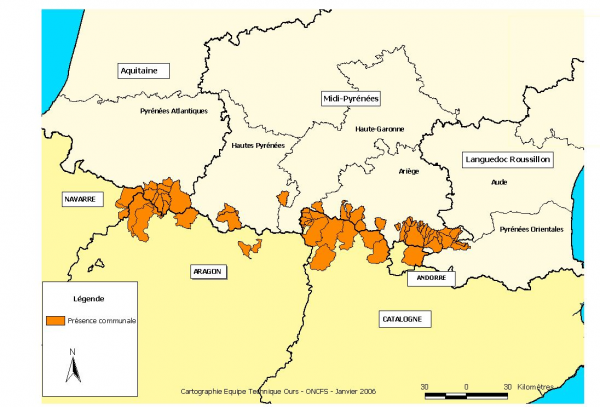
2005 Brown bear (Ursus arctos) distribution map in Pyrenees. http://www.depana.org
Despite these initial problems, today the brown bear population is well established in Central Pyrenees, mainly around Val d’Aran, in Catalonia. There are about 30 brown bears in the whole of the Pyrenees, and about 25 living in Val d’Aran and areas around (mainly north Pallars). It is a nice new to say local people have changed their opinions about bears since most of them are proud to have this impressive mammal living in their forests.
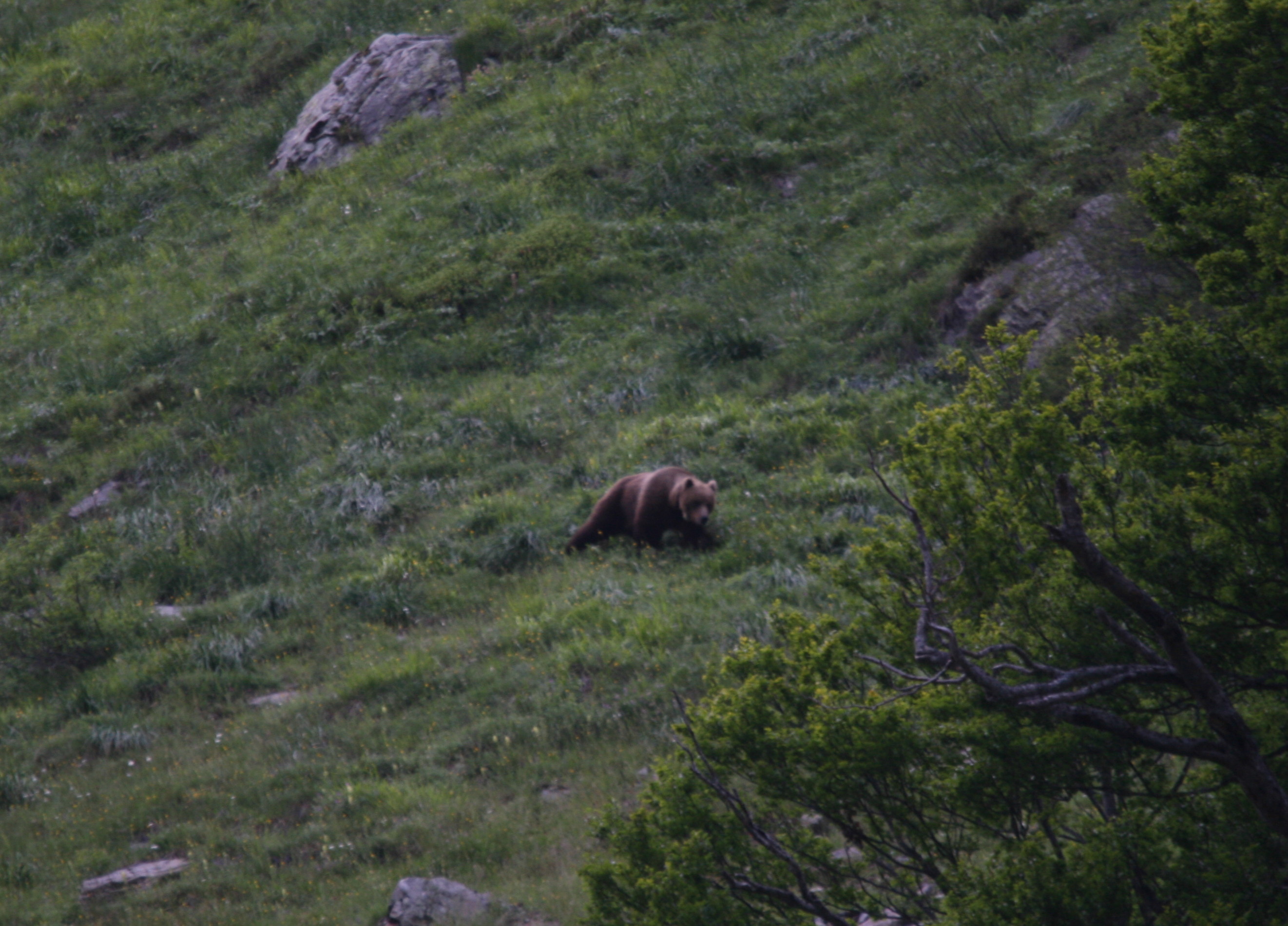
Brown Bear in the Pyrenees. Photo; Carles Oliver
2011/12 winter is gonna see a big number of puppies because of until there are 6 females to reproduce. Since XXth 80’s that there are not so many females to reproduce in one spring in the Pyrenees!! This is an astonishing change in thirty years, when the species was almost erradicated from these mountains and this change is thanks to French and Catalan Goverments as well as DEPANA, ADET, Fiep and other NGO’s.