Arxiu d'etiquetes: White-backed Woodpecker

Hongria Birding Tour, 2024

  • Dates: Del 3 al 8 d’agost, 2024
  • Participants: 5
  • Número d’espècies vistes: 143
  • Tour leader: Sergi Sales

Resum: Hongria presenta una combinació entre increïbles boscos, zones d’aiguamoll i grans planures de secà, anomenades putsza. Aquest país és un dels pocs llocs on pots veure tots els picots d’Europa, excepte el tridàctil, alhora que bones poblacions de piocs salvatges amb un bon assortit de rapinyaires.

Dia 1

Fent escala a Viena, arribem al petit aeroport de Budapest al migdia amb temps per poder fer una primera visita a les zones de putsza al Sud de la capital.

Tot just trepitjar les primeres planúries no ens és gens difícil, als marges dels camins, veure un bon nombre d’escorxadors i trenques. Els primers encara alimentant pollets volanders.

Estols d’oques comunes comencen a desplaçar-se a les zones de joca al igual que grans grups de cornelles emmantellades barrejades amb graules.

En aquesta zona son freqüents els grups familiars de gaig blau. No tardem gaire en veure el majestuós vol de l’au més pesada amb capacitat per poder volar; el pioc salvatge, i tot voltant per la zona veiem altres grups que com per art de màgia desapareixen de l’horitzó de forma miraculosa. Entre les escenes màgiques que restaran a la nostra memòria està la del vol d’un nombrós grup de piocs sobre la nostra posició amb el seu majestuós vol.                                                       

D’aquí ens desplacem al nostre allotjament per acabar aquesta llarga jornada degustant les primeres viandes de la famosa cuina hongaresa.
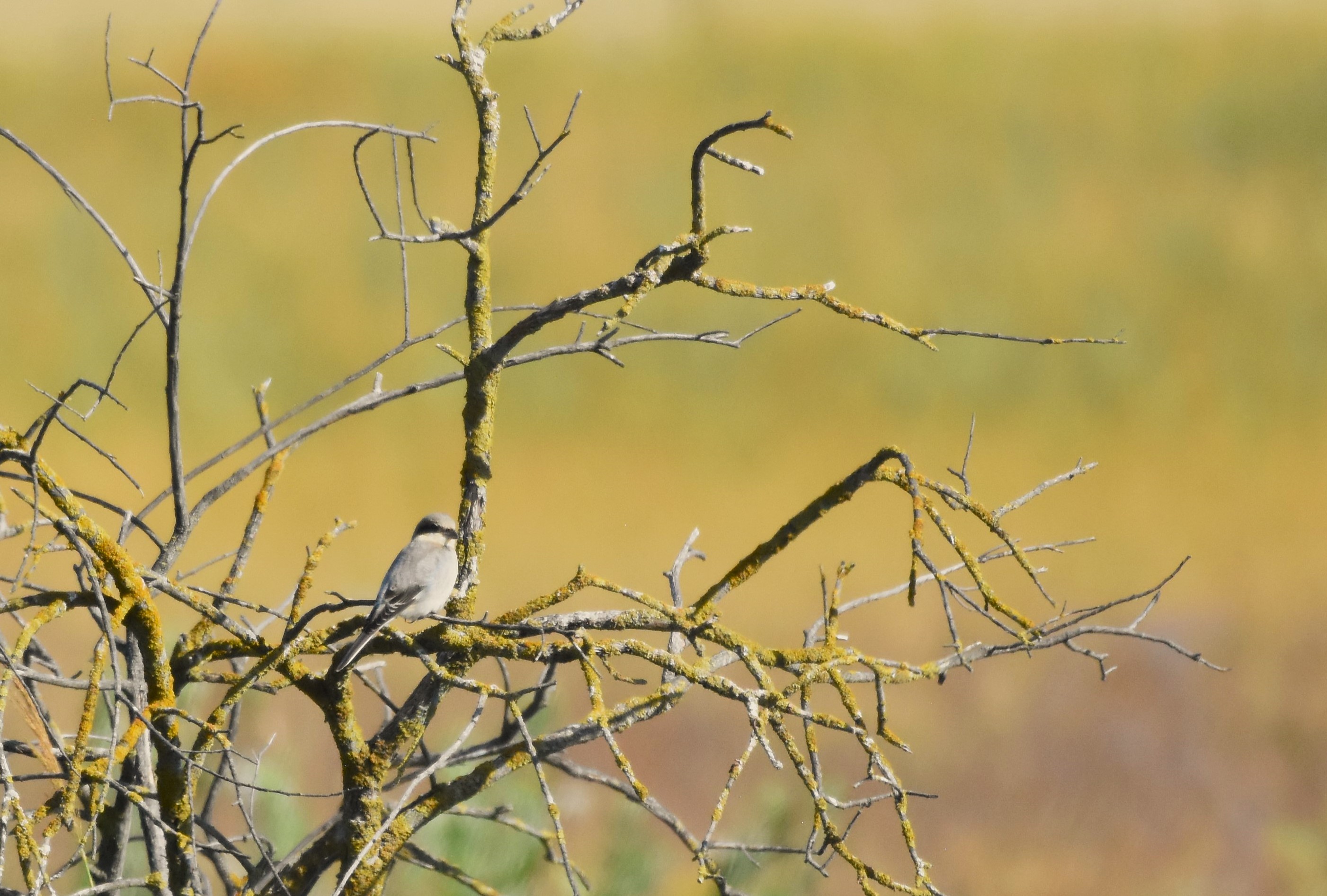
Trenca (Lanius minor), espècie molt comú a les estepes hongareses. Lesser Grey Shrike.

Escorxador (Lanius collurio), una espècie encara més comú que l’anterior. Red-backed Shrike.

Pioc salvatge (Otis tarda) en vol al vespre. Great Bustard.

Dia 2

Acompanyats de bons amics hongaresos visitem la famosa reserva de putsza al Sud de la capital. Una vegada près el cafè recuperador fem un tomb pel poble a la cerca del picot garser siriac, ocell que sovint es veu en zones humanitzades. No triguem a detectar les veus d’aquest ocell i finalment una parella es deixa veure al voltant d’una zona enjardinada. La migració dels petits ocells ja és present, com a confirma la visualització en el mateix jardí d’un mosquiter xiulaire i les veus de diversos tallarols xerraires.  

Travessem zones obertes tot esperant que l’augment de la temperatura activi als gran rapinyaires. Repetim forces espècies vistes el dia anterior, amb les primeres observacions de llunyanes d’àguiles imperials orientals. Finalment es fan tèrmiques on s’agrupen diverses àguiles imperials i les primeres majestuoses àguiles marines.

Sobrevolen els espais pasturats pels búfals alliberats dins el marc dels projectes de gestió d’hàbitats per les espècies estepàries, cigonyes blanques i negres. Ens dirigim ara a un racó diferent, a on fem espera d’un dels gran targets del viatge, el falcó sacre. Tot veient una de les seves preses favorites, els suslic, esperem fins que un exemplar de falcó apareix tot lluitant amb un dels omnipresents xoriguers comuns.  Posteriorment, un altre exemplar en del·laïta amb vols de cacera a més curta distància.    

Una vegada assolits els principals objectius de la regió, visitem alguna de les grans zones humides bàsicament emprades com a piscifactories de peix d’aigua dolça, sobretot carpa i peix gat. Aquí hi trobem un bon ventall d’aus aquàtiques alhora que els primers corbs marins pigmeus del viatge i morell xocolaters, alguns encara en grups familiars. Dos exemplars de les escasses perdius de mar en aquesta zona es llueixen davant nostre i alhora que tafaners joves de mallerengues de bigotis es deixen veure en els canyissars que envolten les basses.

Arribat al migdia visitem un restaurant especialitzat en cuina local, una gran cloenda per un agran jornada.

Posteriorment marxem cap el nord-est ja que ens espera un llarg trànsfert on van sortint noves espècies pel tour com un grapat de falcons cama-rojos.
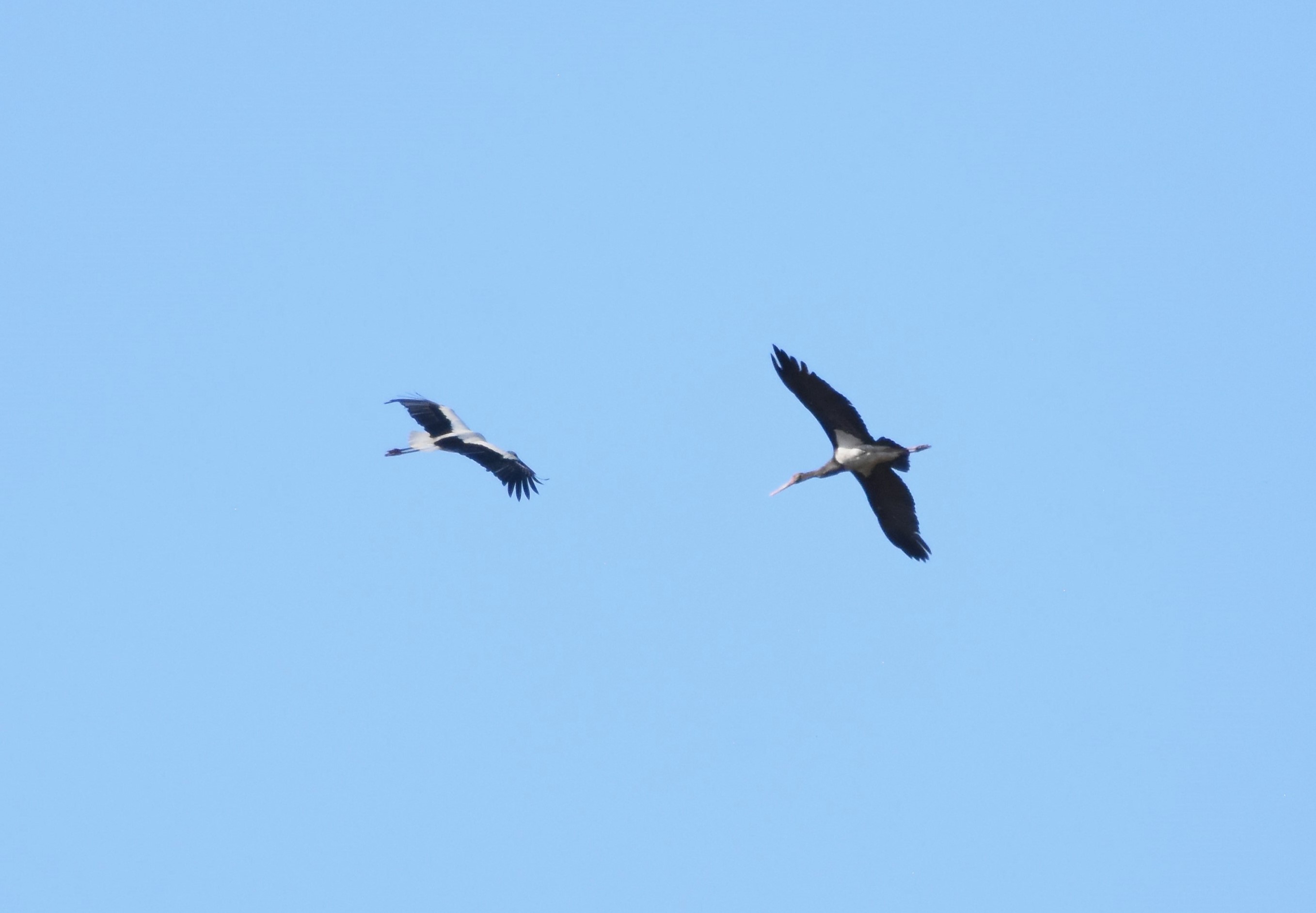
Cigonyes blanca i negra (dreta) sobrevolant les estepes hongareses. White and Black Storks.
Àguila marina (Hieraaetus albicilla). White-tailed Eagle
Falcó sagrat (Falco cherrug), un dels rapinyaires més amenaçats a Europa. Saker Falcon.
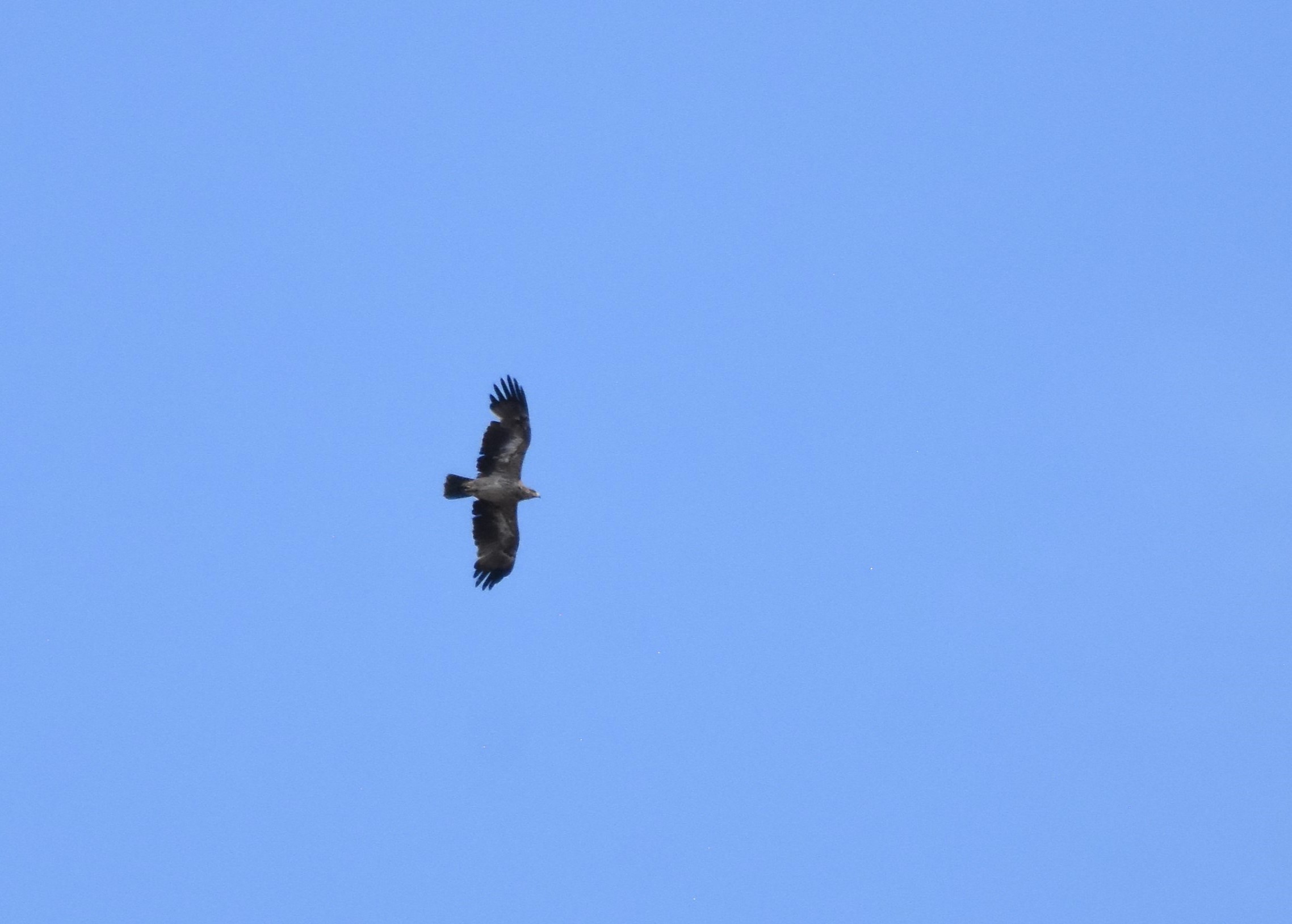
Àguila imperial oriental (Aquila heliaca). Eastern Imperial Eagle

Dia 3

Avui l’objectiu és visitar el mític conjunt de zones humides i putsza de la regió d’Hortobagy. Un organitzat sistema de piscifactories de peix d’aigua dolça permet visitar caminant diverses basses amb diferents cobertures de canyissar on per exemple són abundants un seguit de passeriformes de canyissar com els boscarlers comuns, les boscarles de canyar o les mallerengues de bigotis.  En aquestes dates les zones més somes estan pràcticament seques però allà on resta una mica d’aigua, es concentren un bon nombre d’ardèids, bec-planers i limícoles. Des d’una de les torres d’observació es veu l’increïble paisatge que genera una gran zona humida envaïda per florits nenúfars grocs. Entre ells s’amaguen morells xocolaters, cabussons i centenars de corb marins pigmeus.

Després d’un excel·lent dinar en un clàssic restaurant d’Hortobagy, visitem zones inundades on centenars d’oques es concentraven en les pastures properes. En una d’ells, entre grups de fumarells carablancs, vam poder trobar alguns fumarells alablancs.

Decidim acabar la jornada visitant zones d’estepes on gaudim d’una espectacular tarda amb grups familiars de gaig blau, falcons cama-rojos, piocs salvatges, trenques i escorxadors alhora que rapinyaires com àguila imperial oriental o arpella cendrosa.

Corb marí pigmeu (Micracarbo pygameus), una espècie habitual a Hongria. Pygmy Cormorant.
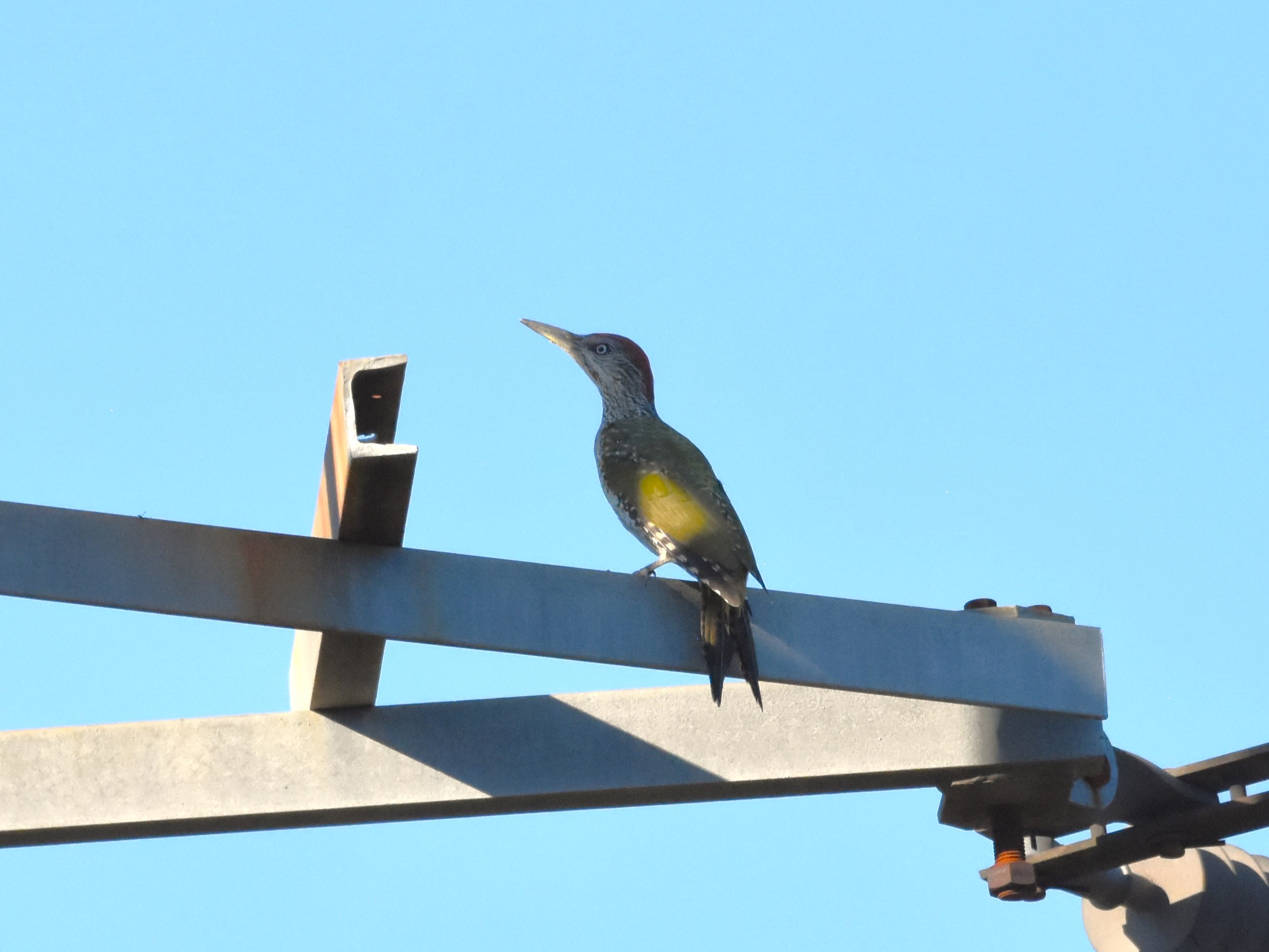
Picot verd europeu (Picus viridis) jove. European Green Woodpecker
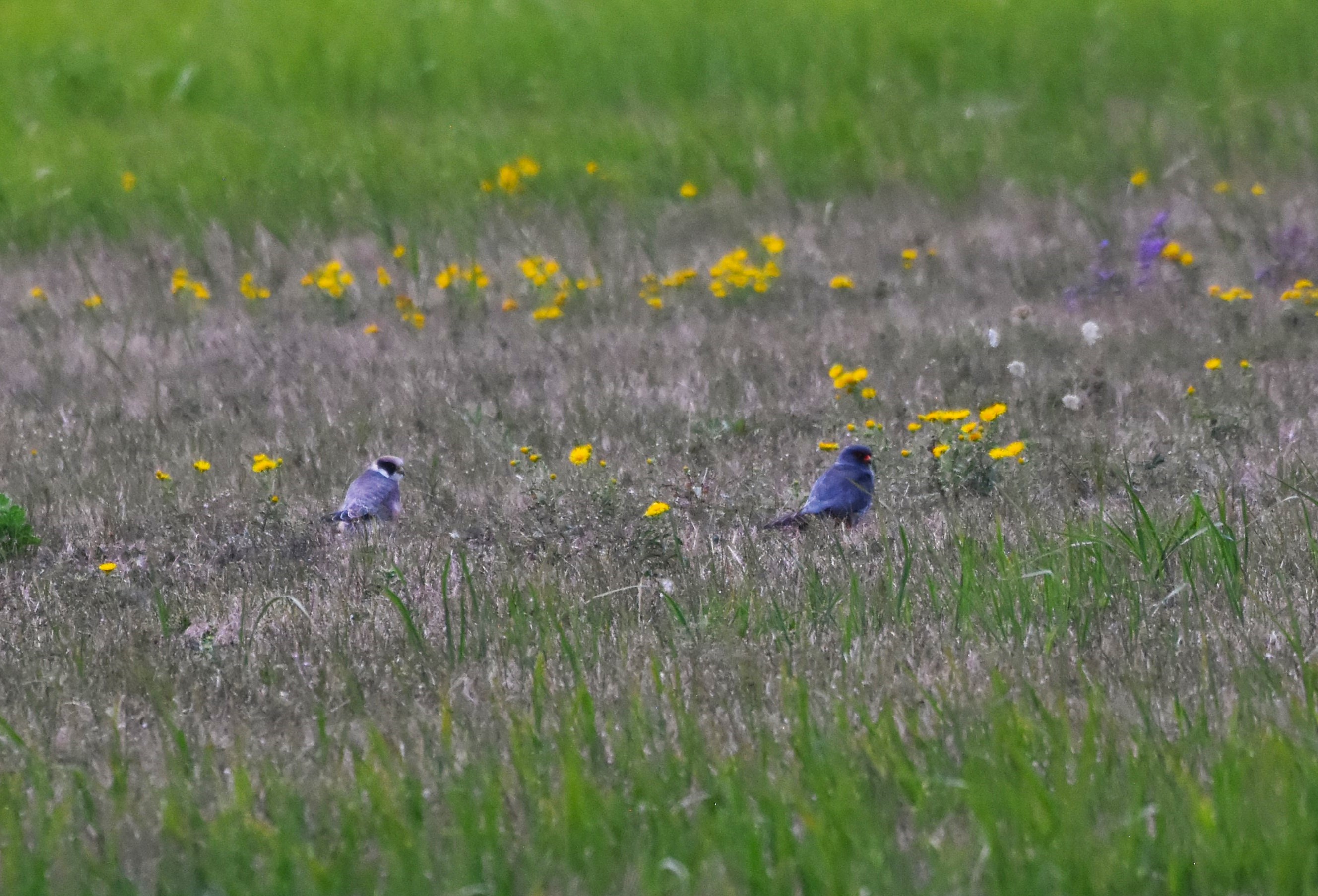
Femella (esq) i mascle (dreta) de falcó cama-roig (Falco vespertinus). Red-footed Falcon

Dia 4

Avui l’objectiu serà visitar els majestuosos boscos caduficolis per intentar sumar un bon nombre de picots i altres ocells forestals

Comencem a la cerca d’una de les espècies que interessen al tour: les mallerengues capnegres. Un cop ens endinsem en zones de coníferes no triguem en detectar, dins de grans grups mixtes (reietons, mallerengues, raspinell pirinenc..), els primers exemplars d’aquesta espècie.

Un excitat picot negre eurosiberià ens acomiada de la zona. D’aquí conduim fins a un altre bosc a la cerca del més localitzat dels picots, el picot garser dorsblanc.

Als pocs minuts s’escolta el típic reclam del picot cendrós, finalment deixant-se veure després d’una breu disputa amb un picot verd europeu. Sembla que li agrada recuperar energia al sol, ja que resta immòbil una bona estona a la capçada d’un arbre per fortuna per nosaltres.

Arbres madurs fan que el picoteig de picot sigui constant i ens fa amena l’espera fins que surti l’estrella del dia. Picots garsers mitjans, grossos i petits són abundants alhora que grups mixtes de passeriformes on apareixen grups nombrosos de mallerengues cuallargues de les races de cap blanc, un ocell d’aspecte tant delicat com espectacular. Finalment dues no massa llunyanes parelles de picot garser dorsblanc es van deixar veure i escoltar a plaer.

En una breu passejada pel mateix bosc, 8 espècies de picots! no està gens malament.

Visitem zones obertes a la cerca de petits migrants on a més de durbecs, cotxes fumades….apareix un inquieta busqueta icterina.

Dinem a peu de rierol on ens visita una família de cueretes torrenteres i al refugi d’una bona ombra.

Posteriorment visitem un espai obert, un mosaic de pastures, camps i fruiters. Els arbres i arbustos estaven plens de fruites i baies fet que atreia petits migrants, especialment tallarols de casquet, xerraires, verderoles… Vista fugaç i veus de tallarol esparverenc, el qual no es deixa veure de forma òptima. Escanejant el cel va sorprendre una fase pàl·lida d’àguila calçada, espècie rara en aquesta àrea.

Picot cendrós (Picus canus). Grey-headed Woodpecker.
Mallarenga cuallarga capblanca (Aegithalos caudatus). Long-tailed Tit (Eastern)
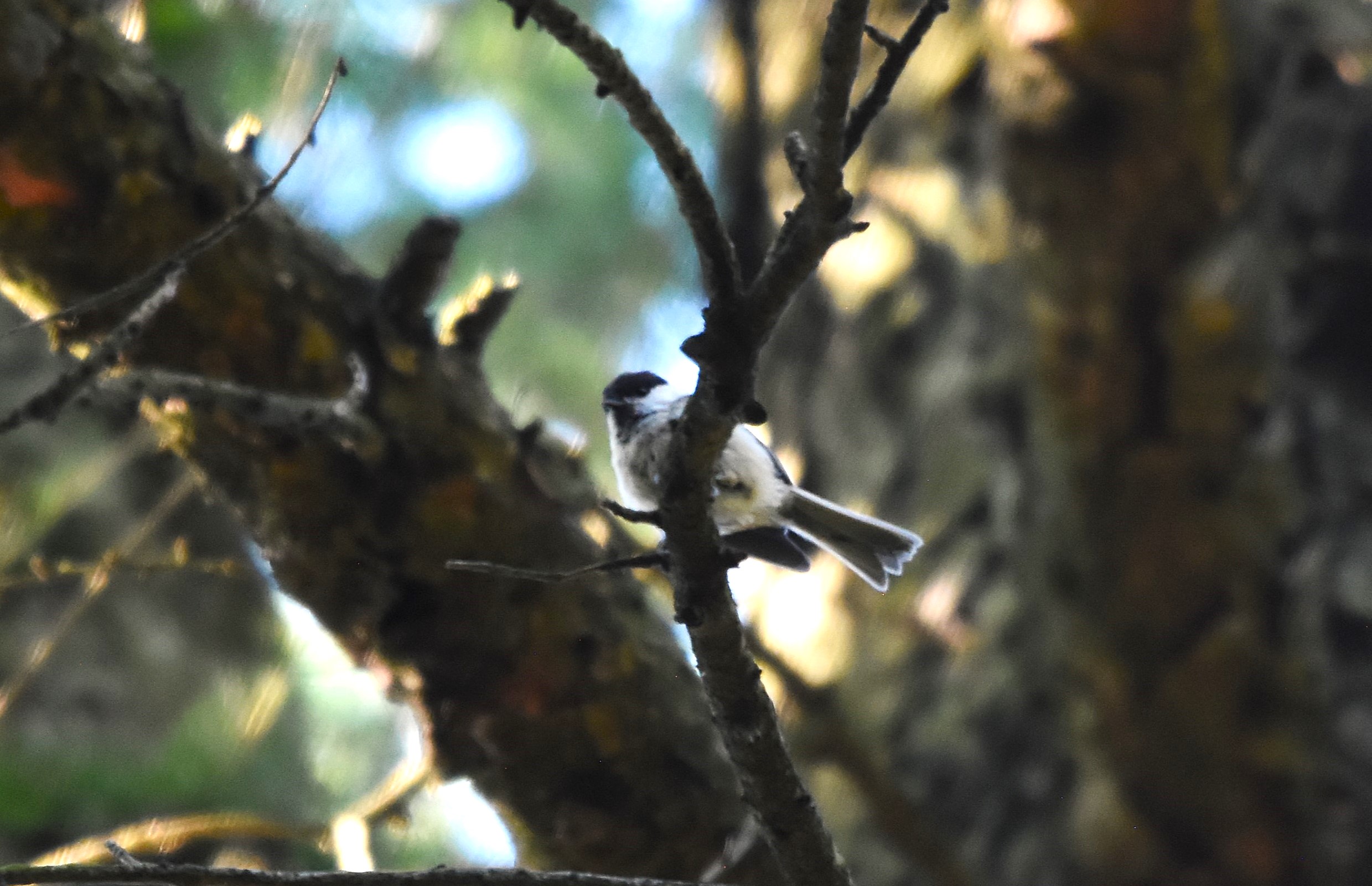
Mallerenga capnegre (Poecile montanus) a un bosc de coníferes. Willow Tit.
Picot garser dorsblanc (Dendrocopos leucotos). White-backed Woodpecker
Bosqueta icterina (Hippolais icterina). Icterine Warbler.

Dia 5

Afortunadament a hores d’ara ja hem assolit els principals objectius del tour, per tant, el que fem és intentar millorar observacions d’algunes de les espècies i/o fotografiar-les.

Comencem visitant zones periurbanes a la cerca de picot garser siríac i sobretot picot verd europeu, dels quals no tardem en detectar, especialment el picot verd dels quals un jove s’acaba aturant a un pal de formigó donant observacions a plaer. Aquest mosaic d’hàbitats fa que siguin abundants els fringíl·lids i migrants com el tallarol gros.

Una vegada comencen a pujar les temperatures ens desplacem cap als sectors on nidifiquen les àguiles pomerànies, el darrer dels targets que ens quedava per assolir. Als pocs minuts es deixa veure un exemplar que veiem aturar a una vall arbrada. Posteriorment es veuen altres vegades fins dos exemplars. La zona sembla bona per rapinyaires ja que també es deixen veure aligots vespers i altres aus planejadores.

Amb les temperatures de mig matí decidim visitar zones boscoses on segur que es manté més activitat que en zones obertes. Una passejada per un madur bosc caducifoli ens permet gaudir de bones observacions de varis picots garsers mitjans, grossos, petits i grups mixtes de mallerengues.

Nou dinar en restaurants de cuina típica hongaresa per tancar una altre gran matí ornitològic.

Decidim visitar zones boscoses amb arbres grans per cercar el picot negre, el pícid que pitjor havíem observat en aquest viatge.  Vàrem escollir bé el lloc de prospecció perquè en pocs minuts ja escoltàvem un picot a curta distancia, el qual ens va acompanyar una bona estona fent volades ràpides a curs distància, mostrant la gran habilitat que tenen per aturar-se a la banda “equivocada dels arbres”.

Una bones copes de casolana palinka per tancar el darrer sopar del viatge.

Picot garser mitjà (Dendrocopos medius). Middle Spotted Woodpecker.

Dia 6

Aquest matí només disposem d’un parell d’hores de birding abans de desplaçar-nos cap a l’aeroport. Per això decidim de fer un tomb tot resseguint un torrent a tocar de l’hospedatge per tal de mirar algun picot més.

Cercant entre els grans arbres veiem un bon ventall d’espècies forestals, entre elles diversos grups mixten a on destaquen mallerengues cuallargues de cap blanc i 4 espècies de pícids destacant uns quants picots verds europeus; a les zones obertes veiem cotxes fumades i papamosques grisos, però sobretot destaca el nombre de mosquiters xiulaires que veiem en aquesta passejada.

Un relaxat i gran final per un extraordinari tour a un país molt recomanable per viatjar per qualsevol ornitòleg.

Llista d’aus observades al llarg del tour:

  1. Faisà — Phaisanus colchinus — Common Pheasant
  2. Cigne mut — Cygnus olor — Mute Swan
  3. Oca comuna — Anser anser — Greylag Goose
  4. Ànec griset — Marecca strepera — Gadwall
  5. Xarxet comú — Anas crecca — Eurasian Teal
  6. Ànec coll-verd — Anas platyrhynchos — Mallard
  7. Xarrasclet — Spatula querquedula — Garganey
  8. Xibec — Netta rufina — Red-crested Pochard
  9. Morell de cap roig — Aythya ferina — Common Pochard
  10. Morell xocolater — Aythya nyroca — Ferruginous Duck
  11. Colom roquer — Columba livia — Feral Pigeon
  12. Xixella — Columba oenas — Stock Dove
  13. Tudó — Columba palumbus — Common Wood Pigeon
  14. Tòrtora europea — Streptopelia turtur — European Turtle Dove
  15. Tòrtora turca — Streptopelia decaocto — Eurasian Collared Dove
  16. Falciot negre — Apus apus — Common Swift
  17. Polla d’aigua — Gallinula chloropus — Eurasian Moorhen
  18. Fotja eurasiàtica — Fulica atra — Eurasian Coot
  19. Pioc salvatge — Otis tarda — Great Bustard
  20. Cabusset — Tachybaptus ruficollis — Little Grebe
  21. Cabussó coll-negre — Podiceps nigricollis — Black-necked Grebe
  22. Cabussó emplomallat — Podiceps cristatus — Great Crested Grebe
  23. Cames llargues — Himantopus himantopus — Black-necked Stilt
  24. Fredeluga comuna — Vanellus vanellus — Northern Lapwing
  25. Becut eurasiàtic — Numenius arquata — Eurasian Curlew
  26. Becadell comú — Gallinago gallinago — Common Snipe
  27. Gamba roja comuna — Tringa totanus — Common Redshank
  28. Gamba roja pintada — Tringa erythropus — Spotted Redshank
  29. Valona — Tringa glareola — Wood Sandpiper
  30. Xivita — Tringa ochropus — Green Sandpiper
  31. Xivitona — Actitis hypoleucos — Common Sandpiper
  32. Gavina riallera — Chroicocephalus ridibundus — Black-headed Gull
  33. Gavià del Caspi –Larus cachinnans — Caspian Gull
  34. Gavià argentat — Larus michahellis — Yellow-legged Gull
  35. Xatrac comú — Sterna hirundo — Common Tern
  36. Fumarell negre — Chlidonias niger — Black Tern
  37. Fumarell alablanc — Chlidonias leucopterus — White-winged Black Tern
  38. Fumarell carablanc — Chlidonias hybridus — Whiskered Tern
  39. Cigonya blanca — Ciconia ciconia — White Stork
  40. Black Stork — Ciconia nigra — Black Stork
  41. Corb marí pigmeu — Phalacrocorax pigmaeus — Pygmy Cormorant
  42. Corb marí gros — Phalacrocorax carbo — Great Cormorant
  43. Bernat pescaire — Ardea cinerea — Grey Heron
  44. Agró roig — Ardea purpurea — Purple Heron
  45. Martinet menut — Botaurus minutus — Little Bittern
  46. Martinet ros — Ardeola ralloides — Squacco Heron
  47. Esplugabous — Bubulcus ibis — Western Cattle Egret
  48. Martinet blanc — Egretta garzetta — Little Egret
  49. Martinet de nit — Nycticorax nycticorax — Black-crowned Night Heron
  50. Agró blanc — Ardea alba — Great White Egret
  51. Bec-planer eurasiàtic — Platalea leucorodia — Eurasian Spoonbill
  52. Capó reial — Plegadis falcinellus — Glossy Ibis
  53. Aligot vesper europeu — Pernis apivorus — European Honey Buzzard
  54. Aligot comú — Buteo buteo — Common Buzzard
  55. Esparver cendrós — Circus pygargus — Montagu’s Harrier
  56. Arpella comuna — Circus aeruginosus — Western Marsh Harrier
  57. Àguila pomerània — Clanga pomarina — Lesser Spotted Eagle
  58. Àguila marcenca — Circaetus gallicus — Short-toed Eagle
  59. Àguila imperial oriental — Aquila heliaca — Eastern Imperial Eagle
  60. Àguila calçada — Aquila pennata — Booted Eagle
  61. Esparver comú — Accipiter nisus — Eurasian Sparrowhawk
  62. Àguila marina — Haliaaetus albicilla — White-tailed Eagle
  63. Putput eurasiàtica — Upupa epops — Eurasian Hoopoe
  64. Gaig blau — Coracias garrulus — European Roller
  65. Abellerol europeu — Merops apiaster — European Bee-eater
  66. Blauet comú — Alcedo atthis — Common Kingfisher
  67. Colltort comú — Jynx torquilla — Eurasian Wryneck
  68. Picot garser mitjà — Dendrocopos medius — Middle Spotted Woodpecker
  69. Picot garser dors-blanc — Dendrocopos leucotos — White-backed Woodpecker
  70. Picot garser gros — Dendrocopos major — Great Spotted Woodpecker
  71. Picot garser siriac — Dendropocos syriacus — Syrian Woodpecker
  72. Picot garser petit — Dryobates minor — Lesser Spotted Woodpecker
  73. Picot cendrós — Picus canus — Grey-headed Woodpecker
  74. Picot verd europeu — Picos viridis — European Green Woodpecker
  75. Picot negre — Dryocopus martius — Black Woodpecker
  76. Xoriguer comú — Falco tinnunculus — Common Kestrel
  77. Falcó cama-roig — Falco vespertinus — Red-footed Falcon
  78. Falcó sacre — Falco cherrug –Saker Falcon
  79. Falcó mostatxut — Falco subbuteo — Eurasian Hobby
  80. Cogullada comuna — Galerida cristata — Crested Lark
  81. Alosa comna — Alauda arvensis — European Skylark
  82. Oreneta de ribera — Riparia riparia — Sand Martin
  83. Oreneta comuna — Hirundo rustica — Barn Swallow
  84. Oreneta cuablanca — Delichon urbicum — Common House Martin
  85. Cuereta blanca — Motacilla alba — White Wagtail
  86. Cuereta groga — Motacilla flava — Western Yellow Wagtail
  87. Cuereta torrentera — Motacilla cinerea – Grey Wagtail
  88. Pit-roig — Erithacus rubecula — European Robin
  89. Rossinyol comú — Luscinia megarhynchos — Common Nightingale
  90. Cotxa fumada — Phoenicurus ochruros — Black Redstart
  91. Bitxac comú — Saxicola rubicola — European Stonechat
  92. Còlit gris — Oenanthe oenanthe — Northern Wheatear
  93. Tord comú — Turdus philomelos — Song Thrush
  94. Griva comuna — Turdus viscivorus — Mistle Thrush
  95. Merla comuna — Turdus merula — Eurasian Blackbird
  96. Tallarol esparverenc — Curruca nisoria — Barred Warbler
  97. Tallareta comuna — Curruca communis — Common Whitethroat
  98. Tallarol xerraire — Curruca curruca — Lesser Whitethroat
  99. Tallarol gros — Sylvia borin — Garden Warbler
  100. Tallarol de casquet — Sylvia atricapilla — Eurasian Blackcap
  101. Boscarla dels joncs — Acrocephalus schoenobaenus — Sedge Warbler
  102. Boscarla de canyar — Acrocephalus scirpaceus — Common Reed Warbler
  103. Balquer — Acrocephalus arundinaceus — Great Reed Warbler
  104. Boscarler comú — Locustella luscinioides — Savi’s Warbler
  105. Bosqueta icterina — Hippolais icterina — Icterine Warbler
  106. Mosquiter comú — Phylloscopus collybita — Common Chiffchaff
  107. Mosquiter de passa — Phylloscopus troquilus — Willow Warbler
  108. Mosquiter xiulaire — Phylloscopus sibilatrix — Wood Warbler
  109. Cargolet — Troglodytes troglodytes — Eurasian Wren
  110. Papamosques gris — Muscicapa striata — Spotted Flycatcher
  111. Mallerenga carbonera — Parus major — Great Tit
  112. Mallerenga blava — Cyanistes caeruleus — Eurasian Blue Tit
  113. Mallerenga petita — Periparus ater — Coal Tit
  114. Mallerenga d’aigua — Poecile palustris — Marsh Tit
  115. Mallerenga capnegra — Poecile montanus — Willow Tit
  116. Teixidor — Remiz pendulinus — Eurasian Penduline Tit
  117. Mallerenga de bigotis — Panurus biarmicus — Bearded Tit
  118. Mallerenga cuallarga — Aegithalos caudatus — Long-tailed Tit
  119. Raspinell comú — Certhia brachydactyla — Short-toed Treecreeper
  120. Raspinell pirinenc — Certhia familiaris — Eurasian Treecreeper
  121. Pica-soques blau — Sitta europaea — Eurasian Nuthatch
  122. Reietó — Regulus regulus — Goldcrest
  123. Trenca — Lanius minor — Lesser Grey Shrike
  124. Escarxador — Lanius collurio — Red-backed Shrike
  125. Oriol europeu — Oriolus oriolus — Eurasian Golden Oriole
  126. Gaig eurasiàtic — Garrulus glandarius — Eurasian Jay
  127. Garsa eurasiàtica — Pica pica — Eurasian Magpie
  128. Gralla occidental — Corvus monedula — Western Jackdaw
  129. Cornella emmantellada — Corvus cornix — Hooded Crow
  130. Graula — Corvus frugilegus — Rook
  131. Corb comú — Corvus corax — Corb comú
  132. Estornell comú — Sturnus vulgaris — Common Starling
  133. Pardal comú — Passer domesticus — House Sparrow
  134. Pardal xarrec — Passer montanus — Eurasian Tree Sparrow
  135. Pinsà comú — Fringilla coelebs — Common Chaffinch
  136. Durbec — Coccothraustes coccothraustes — Hawfinch
  137. Cadernera comuna — Carduelis carduelis — Eurasian Goldfinch
  138. Verdum eurasiàtic — Chloris chloris — Eurasian Greenfinch
  139. Gafarrí europeu — Serinus serinus — European Serin
  140. Passerell comú — Lanaria cannabina — Common Linnet
  141. Verderola –Emberiza citrinella — Yellowhammer
  142. Repicatalons — Emberiza schoeniclus — Common Reed Bunting
  143. Cruixidell — Emberiza calandra — Corn Bunting

Llista de mamífers observats al llarg del tour:

  1. Llebre europea — Leppus europaeus — European Hare
  2. Cabirol — Capreolus capreolus — Roe Deer
  3. Souslik — Spermophilus citellus — Suslik
  4. Daina — Dama dama — Fallow Deer
  5. Rata de camp — Rattus norvegicus — Brown Rat
  6. Esquirol — Sciurus vulgaris — Red Squirrel
  7. Guineu — Vulpes vulpes — Red Fox

Swift Poland Birding Tour 2023

Dates: June 5th to 10th, 2023

Number of participants: 8

Number of species: 131

Tour leader: Carles Oliver

Overview: We are really happy to present you another successful 1st issue in another key birding destination. Our first tour in Poland produced excellent sights in a very good list of specialties living in the amazing forest of Bialowieza and nearby areas. Despite the rather high temperatures, all tour participants enjoyed great views on Pygmy Owl, Aquatic & River Warblers; Three-toed, White-backed & Black Woodpeckers; Collared & Red-breasted Flycatchers and many other key species.

Day 1. The whole group assembled at Warsaw International Airport after arriving from different flights coming from the UK. Once the vehicle was collected and the Warsaw traffic negotiated we had a first stop in a lovely swamp midway between the Polish capital city and our accommodation.

It was very sunny and warm but still plenty of activity. Even before parking we had a first good bird, since a splendid Black Stork was soaring low over the marshes. A short walk around produced several Sedge Warblers and Common Reed Buntings but also the best views on Common Rosefinch of the trip: a lovely male singing only a few metres away from our group. The Aspens around were having Penduline Tits, and we were soon enjoying views on the male as it was moving in the reedbeds. A minimum of 2 Thrush Nightingales were singing around, but we never saw them.

In a nearby forest we had at least 4 Icterine Warblers, even if not everybody in group had them this time. Lesser Whitethroat and Garden Warbler were also noted.

From here we had some drive to our accommodation, with a pair of Golden Orioles and Common Cuckoos flying by the minibus as we were crossing the lovely landscapes in Eastern Poland.

Common Rosefinch (Carpodacus erythrinus) showing nicely in our first stop. Image by tour leader Carles Oliver.
Penduline Tit (Remiz pendulinus) is a rather scarce nesting bird in the area. Image by Carles Oliver
Icterine Warblers (Hippolais icterine) proved as difficult to photograph as always! Image by Carles Oliver

Day 2. Short pre-breakfast walk to enjoy some birds in our hotel grounds. First views on Black Redstart of the trip along with common beauties including Golden Oriole and Lesser Whitethroat before covering the short distance to Bialowieza.

Our first walk in the impressive forests around Bialowieza could not be more productive. Despite the heat, a walk in the forestry was fast in producing the first Collared Flycatcher and Lesser Spotted Eagle of the trip. Hawfinches were all around calling and flying, but always difficult to catch. Both Marsh & Willow Tits were seen before we followed a Red-breasted Flycatcher that was singing inside the forest. We walked 200 metres away from the path, and soon we were surrounded by some impressive 300 years old trees. A Red-breasted Flycatcher was singing really close, and after some search we were all soon enjoying great views on this bird. But right before the Flycatcher showed out, a White-backed Woodpecker called once low around our group, and only a few minutes after the Flycatcher we had good views on two White-backed’s that were calling, drumming and feeding in the canopy around us!

Back to the minibus, we had our packed lunch while enjoying more views on a gorgeous male Collared Flycatcher before moving on to our next stop.

Lesser Spotted Eagle (Clanga pomarina) predating on a frog. Image by Carles Oliver.
Our first Red-breasted Flycatcher (Ficedula parva) was this very handsome male. Image by Carles Oliver.
White-backed Woodpecker (Dendrocopos leucotos) moving in a mature decideous forest. Image by Carles Oliver.
Collared Flycatcher (Ficedula albicollis) flying out from its perch up in an oak. Image by Carles Oliver

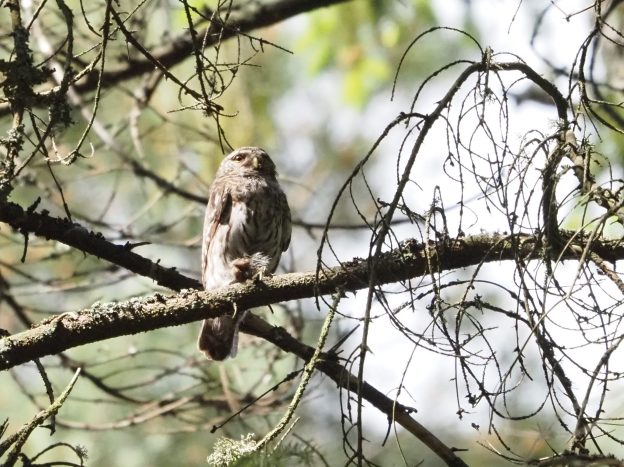
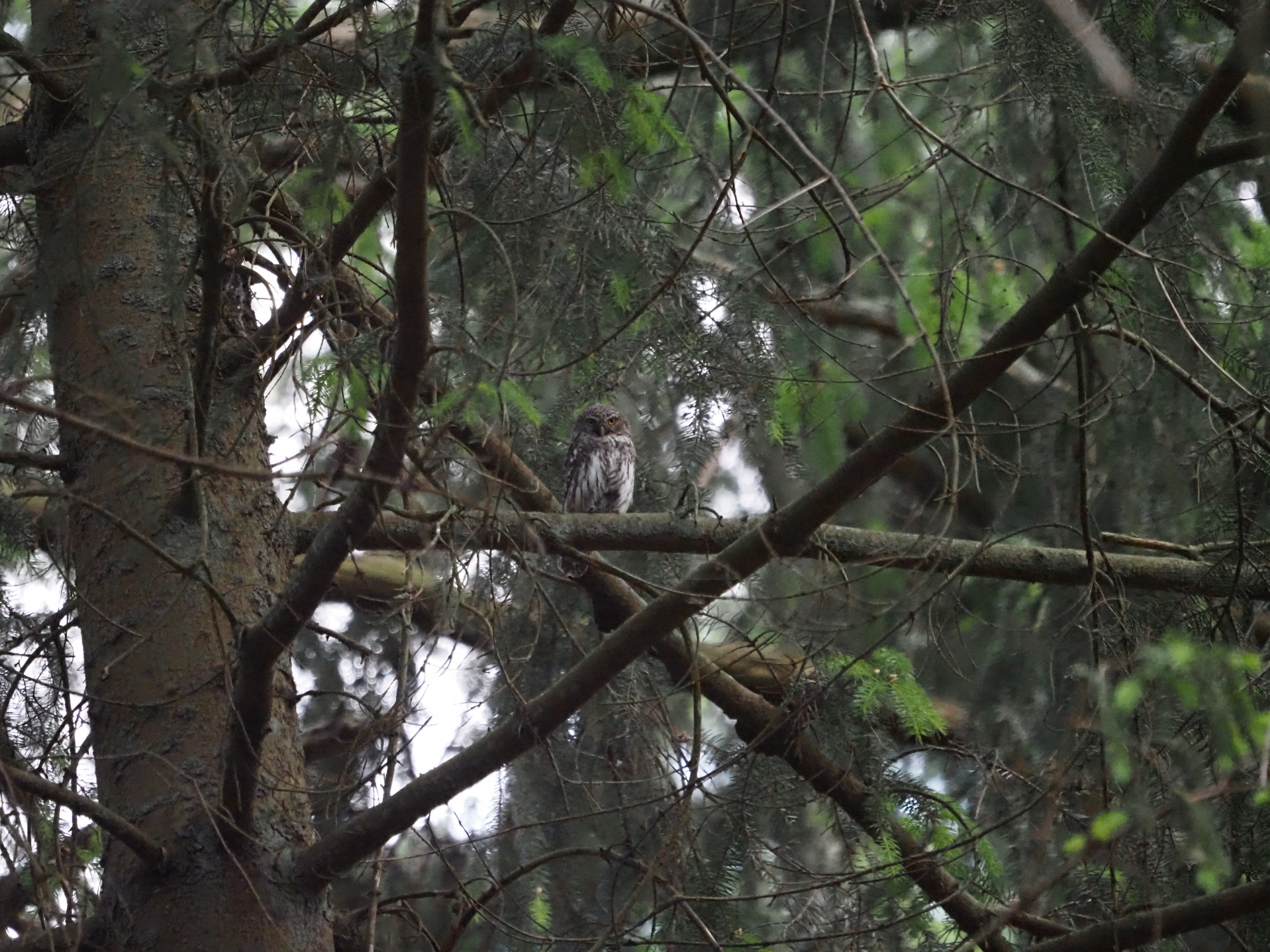
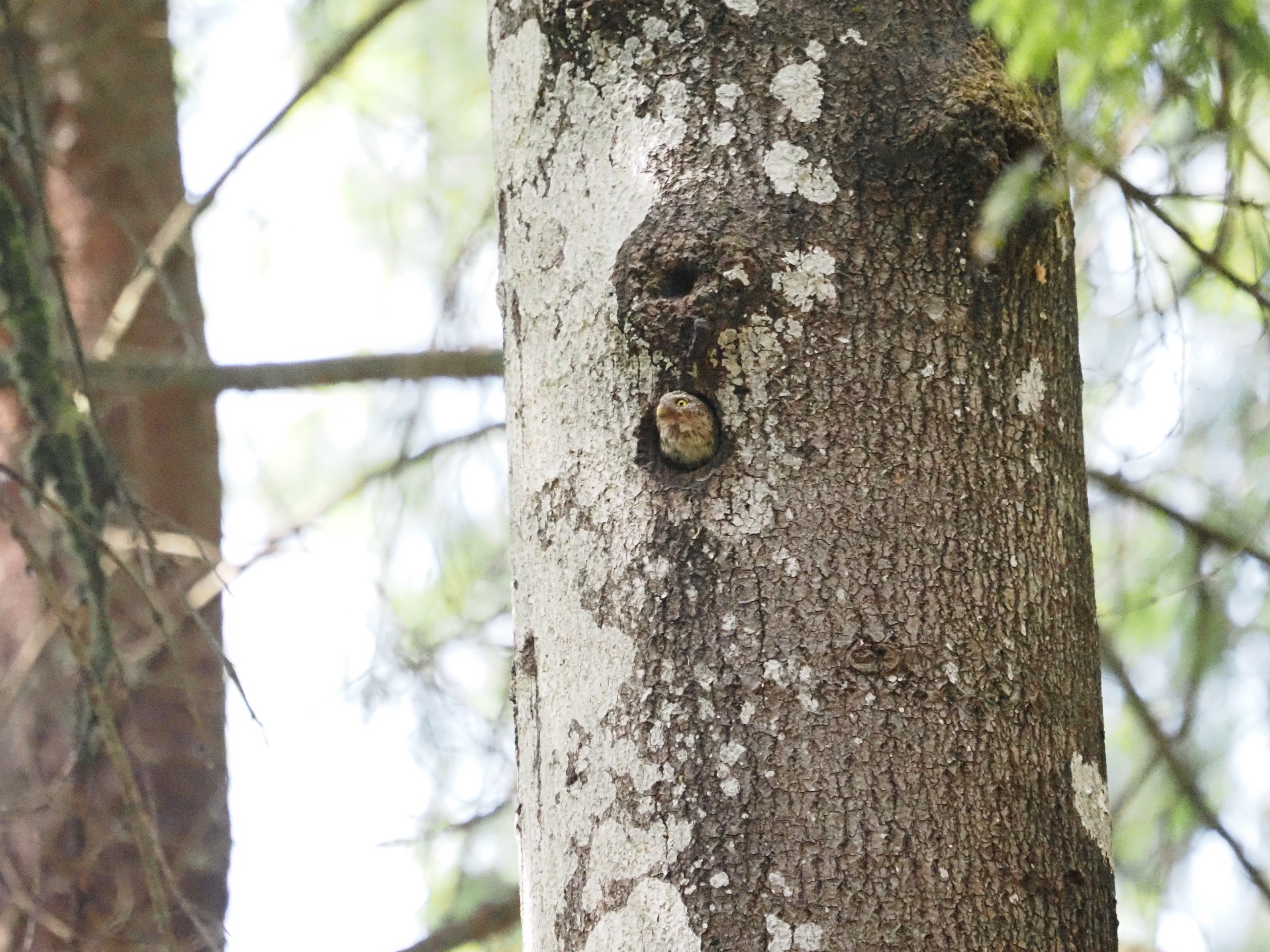
Eurasian Pygmy Owls have become quite common around Bialowieza, but they keep being difficult to spot. This time we were lucky, and at the moment of arrival the female was out of the nest, calling. Its calls were being answered by the male nearby in the trees, and after some waiting we saw the female leaving the nest, and joining the male in branch. The male was waiting for her with some food, and he fed her before she went back to its nest. This feeding scene didn’t go unnoticed by the several tits and goldcrests around, and they all tried, unsuccessfully, to disturb the pair of tiny owls.

We could hardly believe our luck. To arrive at the nesting place just in time for one of this feeding ceremonies is quite difficult, but our luck was not over. After feeding, the female took her time in cleaning the nest hole, removing material from former preys out the whole to prevent infections. Time to time, male and female were still calling each other! After almost one hour of sighting we left the place, fully satisfied with the quality of the slight and the impressive details on the behaviour of this enigmatic species.

Some images of the pair of Eurasian Pygmy Owl. We spent almost one hour observing them. Images by Carles Oliver
The female was leaving its hole a pair of times. One of them was fed by the male.
Here the male with a recent prey.

After dinner, we drove until one of the leks of Great Snipes around Bialowieza. It was the evening, a wonderful time to enjoy the bojs. A gorgeous chorus of birds was waiting for us in the place. There were Common Reed Buntings and Segde Warblers but also River & Grasshopper Warblers as well as distant Thrush Nightingale plus Marsh & Icterine Warblers. The sunset was arriving, but before we still had time to see the only one Great Grey Shrike of the trip as well as passing Eurasian Woodcocks and a hunting Short-eared Owl. But the Great Snipes were not playing the game. We gave them a long time but only a male was singing time to time, and only offered a short flight that was only a few in the group could enjoy.

Day 3. Some in the group enjoyed a pre-breakfast walk around our accommodation, resulting in great looks into River Warbler and Thrush Nightingales. After breakfast, we kept our exploration of the forests. Our first stop produced lovely views on Wood Warblers (surprisingly nesting in spruce forests!), Crested Tits, flocks of Common Crossbills and a rather unexpected European Adder in the path.

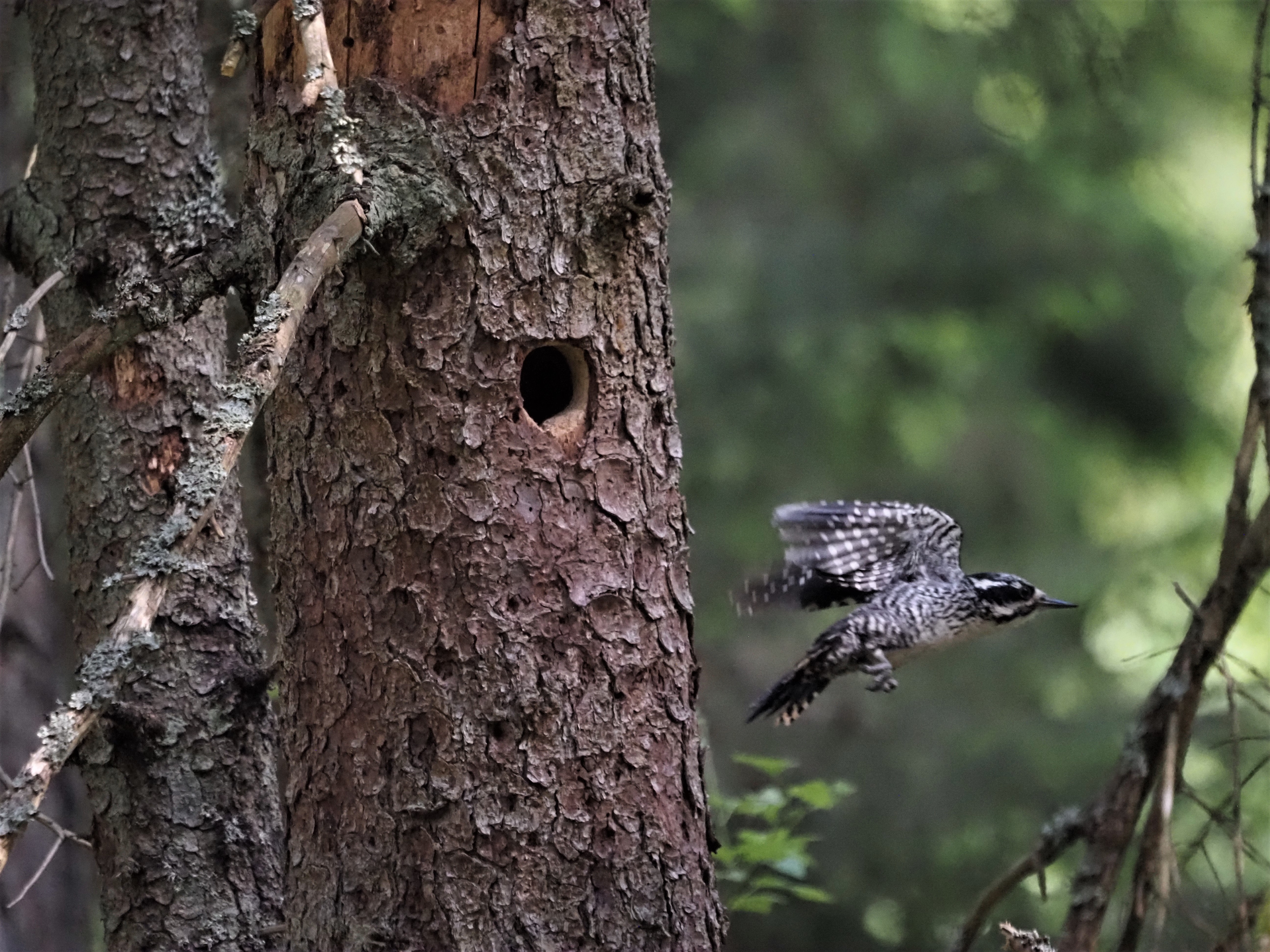
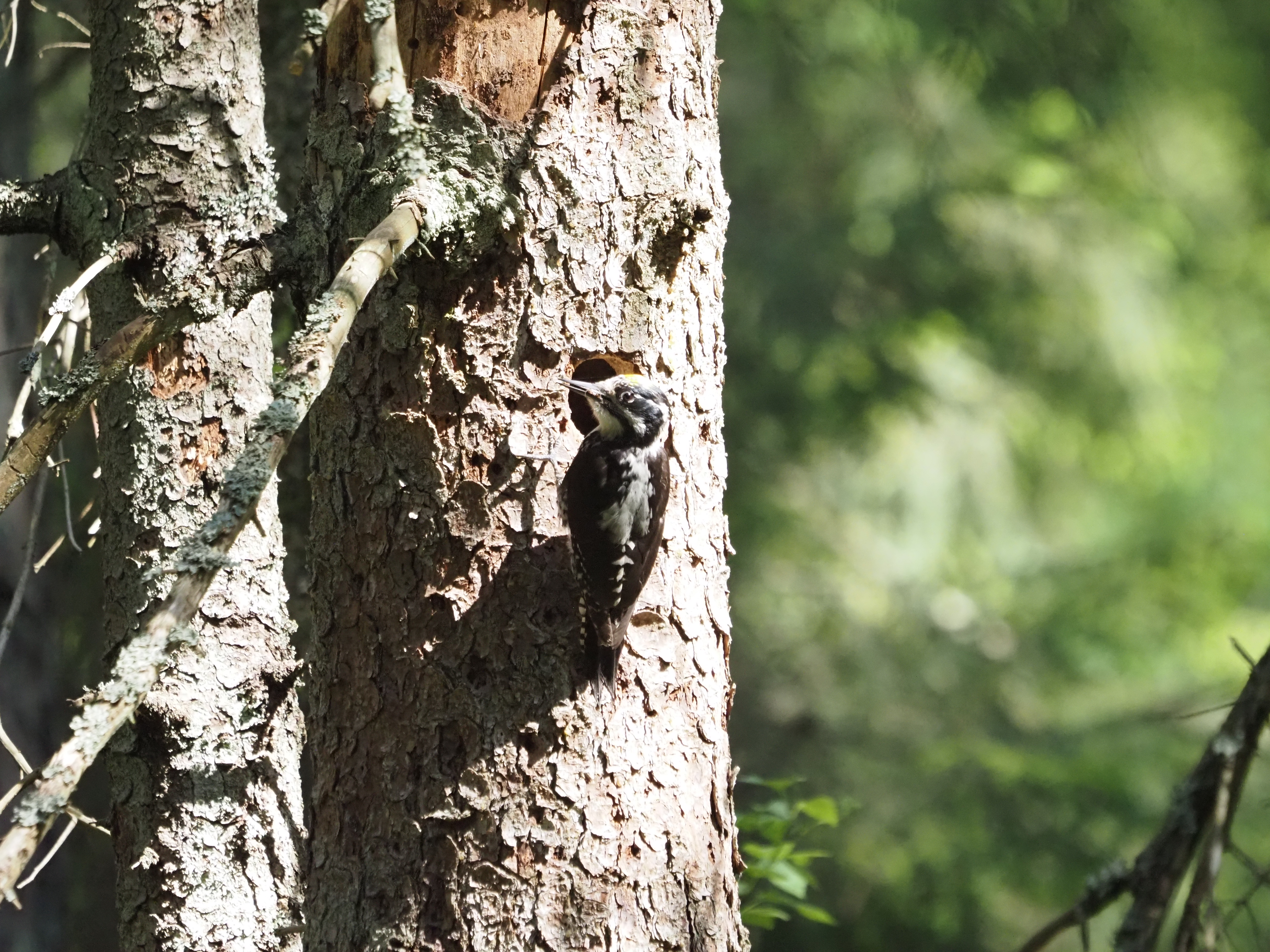
The heat was already noticeable when we arrived to a small patch of spruce. There, a nest of Eurasian Three-toed Woodpecker was waiting for us. Only a short wait was necessary before one of the adults came to the next, and during the next half and hour we all enjoyed again with the intimate views of the pair of this rather small woodpecker while coming to feed their young and marking the territory around the hole.

For over 45 minutes, we enjoyed amazing views on the pair of Three-toed’s while they were getting in and out the whole and interacting in the trees around. The forest around was full of birds, and here we got Tree Pipits, Willow Tits but also the only Eurasian Siskins of the trip. In the distance, a Black Woodpecker was calling over and over. It was definately time to move away. We took advantage of the calling Black Woodpecker and after a short scanning we had the bird moving in patch of Scotch Pines before we had a magnificent view of the bird flying across the road before stopping a few seconds in a tree nearby.

By midday we went to a lake nearby. Here we had the first views on a number of species including Marsh & Great Reed Warbler but also Black, Common and small numbers of White-winged Black Terns. Several Mute Swans were feeding, and a pair of Whooper Swan was also a nice adding to our list. White-tailed Eagles were flying around along with several White & Black Storks, Marsh Harriers, some distant Leasser Spotted Eagles and the only one Caspian Gull of the trip. Other interesting species here included European Stonechats and Red-backed Shrikes while Savi’s Warbler, Greater Bittern and Corncrake were all listened.

River Warbler (Locustella fluviatilis) showing nicely. Image by Derek Charlton.
Three-toed Woodpecker (Picoides trydactilus). Images by Carles Oliver
Three-toed Woodpecker flanks and underwing pattern Definately not something you can see every day. Image by Carles Oliver

The temperature was high and bird activity not massive, but there were some very promising clouds in the sky.. Our next stop was devoted to explore a small park around Bialowieza. Here we had some very elusive Icterine Warblers, Collared Flycatcher and at least 2 Middle Spotted Woodpeckers.

The marshes around were a paradise for warblers, and soon we had excellent views on a wonderful Barred Warbler moving in the small trees along the walk. Marsh, Reed & Grasshopper Warblers were also noted in the area.

Our last stop of the day was in a nother small corner of marsh. Here there was an impressive density of Sedge Warblers, but also good numbers of Marsh Warblers and we all could enjoy good but short views on River Warbler. Before going back to our accommodation, a European Green Woodpecker was noted nearby.

Middle Spotted Woodpecker (Dendrocopos medius). Image by Carles Oliver
Barred Warbler (Curruca nisoria) showed nicely for our group. Image by Carles Oliver
Savi’s Warbler (Locustella luscinoides) showing nicely during our afternoon walk. Image by Carles Oliver
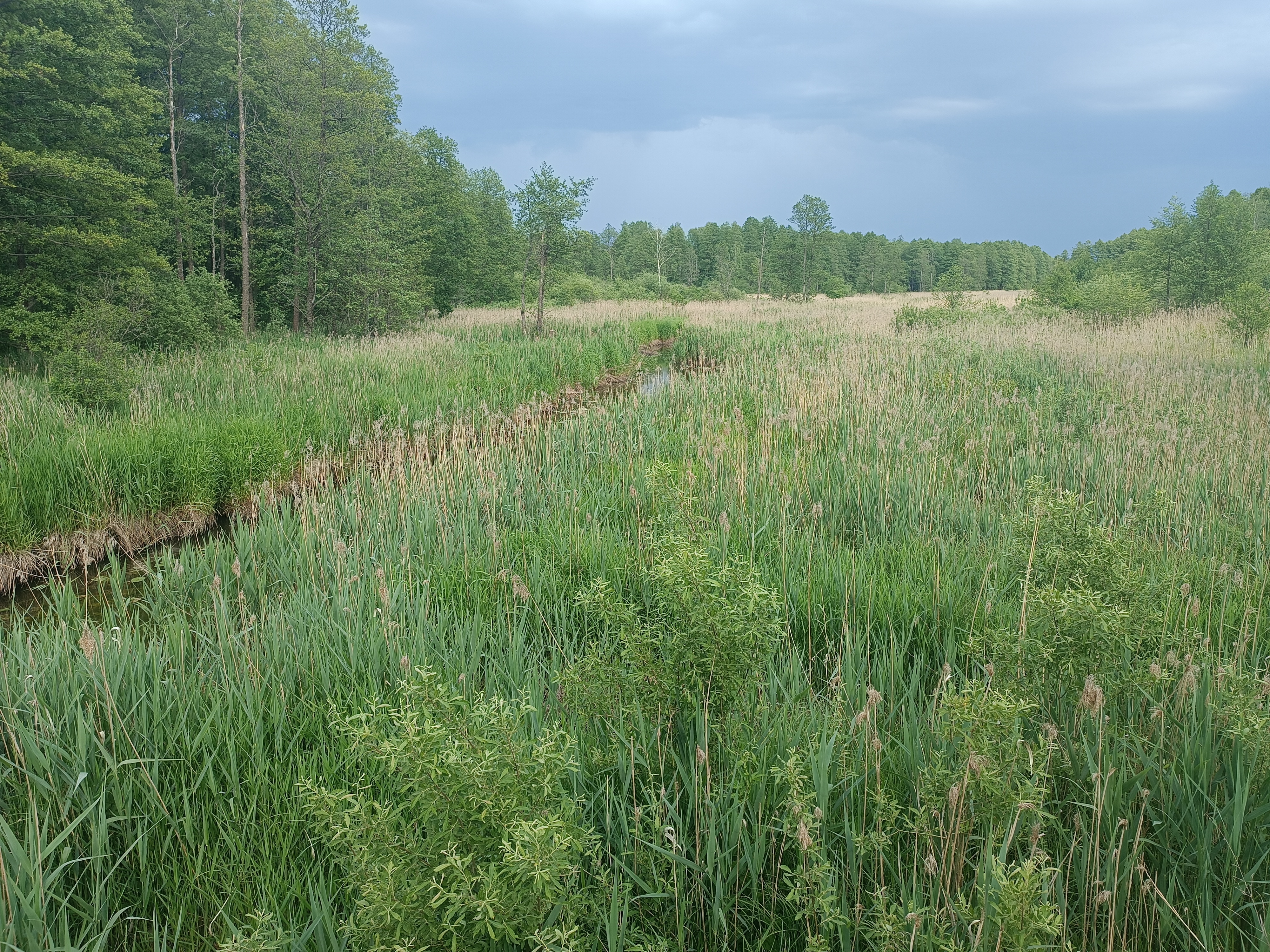
Wonderful habitat around Bialowieza. Image by Carles Oliver
Sedge Warbler (Acrocephalus schoenobaenus). Image by Carles Oliver

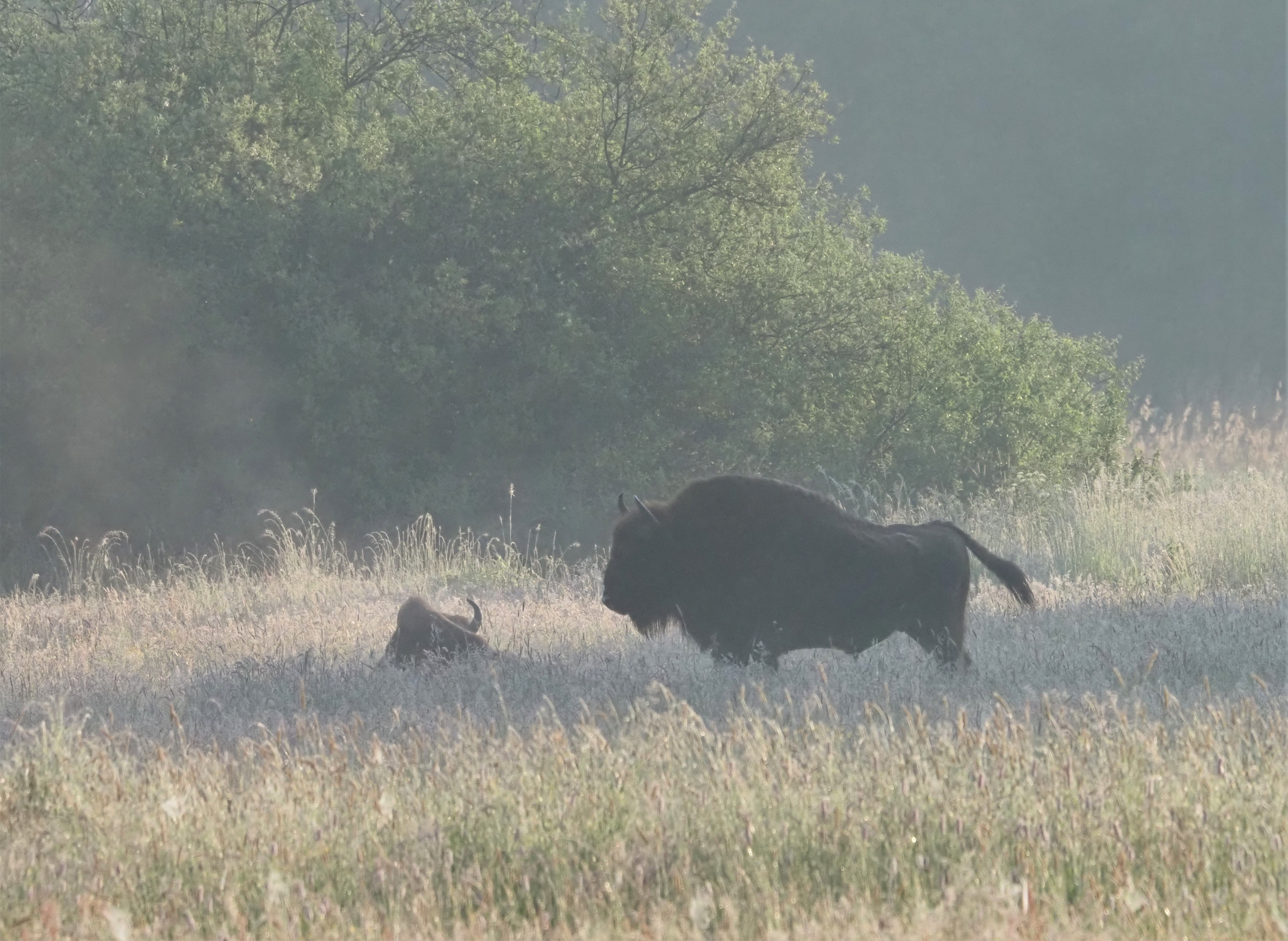
Day 4. Very early start to explore the many meadows around Bialowieza. The main target before having breakfast was to find some of the 500 Eurasian Bisons living in these incredible forests, meaning the main population of this species worldwide.

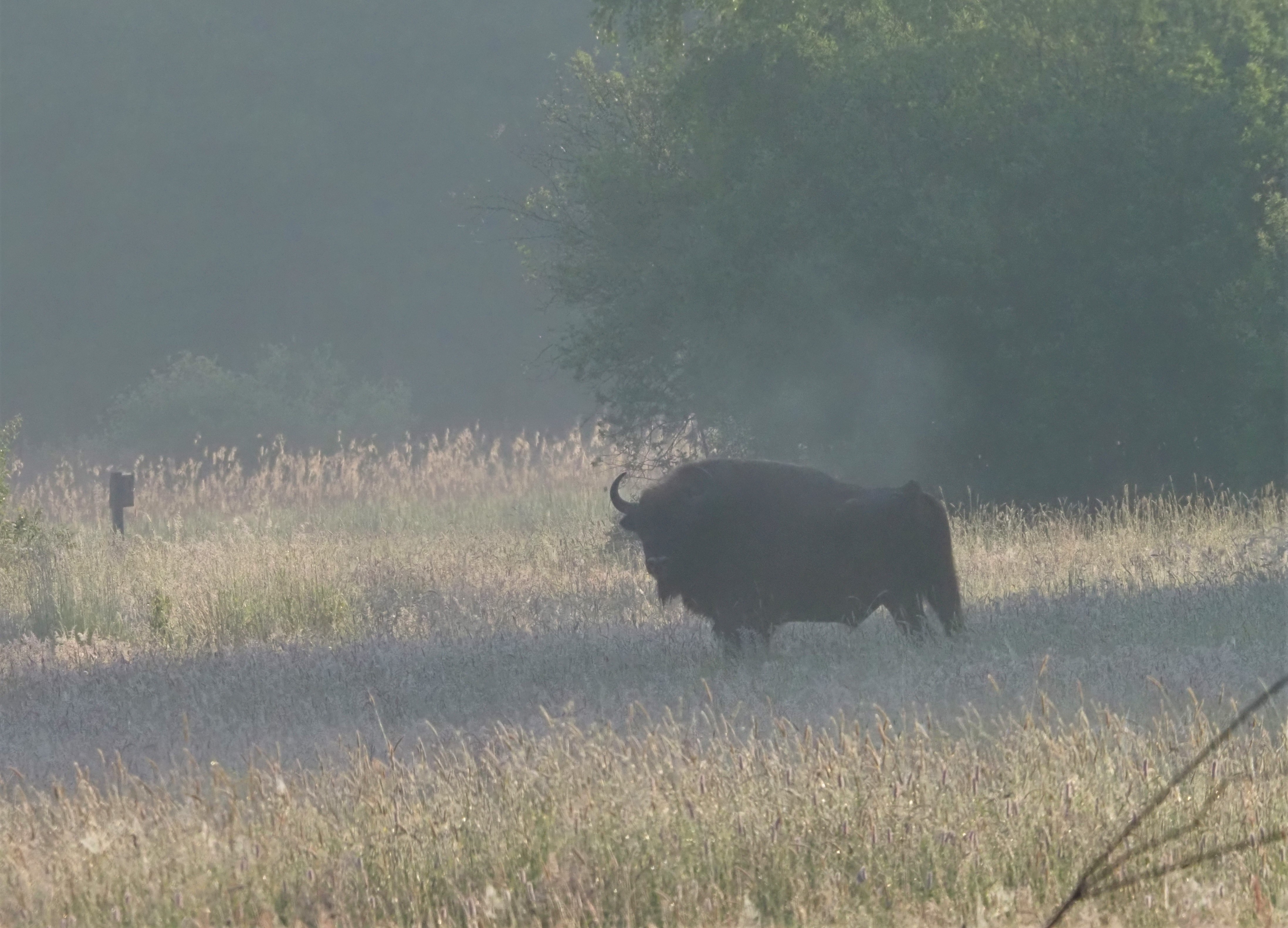
This time we were very lucky, and soon after leaving the accommodation we were enjoying 3 majestic Bisons: two of them lying on the ground and the third standing up and feeding. To watch in the wild of the most endangered mammals in Europe is always a great experience! The Bisons spent most of the time eating but, as the morning, advanced, they lazily moved into the shade of some large trees, disappearing into the woods.

After breakfast, we went back to the forest, we started looking for some of the specialities that were not yet in our list. A Lesser Spotted Woodpecker flew over the group, partially offering good views to the group. We walked into long into the mature forests, with some stops here and there, until or goal was achieved. A Hazel Grouse came out from the forest, stopping a few metres away from us, up in a tree. Some members of the group had excellent views, but others simply could not locate the bird before it flew down and away from us! We still invested a long time looking & waiting for the bird the show better, but unfortunately this Grouse scaped us..

Eurasian Bisons (Bison bison) enjoying the fresh hours of the morning. Image by Carles Oliver

After this forest short walk we started the transfer to the Biebrza marshes. In our way, we had a mandatory stop to enjoy good views on Ortolan Buntings singing along with Yellowhammers. Around Bialystok we had a new stop, this time to check some fish ponds. Here there are some nesting pairs of Red-necked Grebes, and this time we counted up to 4 pairs of this superb grebes along with Penduline Tit, Great Reed Warbler, Marsh Harriers and a minimum of 2 Little Crakes that kept running and calling in the open reedbeds!

Again was very warm, so after a midday rest, we covered the short distance from our accommodation to the Biebrza marshes. An en route stop here produced more White-winged Black Terns and lovely scope views in the only one Moose of the trip, slowly walking in the marsh before disappearing inside a tall wall of reeds.

To end the day, we visited the famous woodwalk that gives access to some proper Aquatic Warbler habitat. Soon, we heard some of them calling and singing, and the cloudy afternoon provided us with the perfect setting for a good number of excellent views on these extremely scarce passerine, with only about 1000 pairs left in Europe!

We saw them singing but also feeding in the reeds covering the boj, displaying in flight and fighting each other with no mercy to defend their territories against any intruders. Here we also had 2 pairs of Montagu’s Harriers patrolling the open lands, and a good number of displaying Common Snipes, 1 Whinchat and some rather distant Common Redshanks.

Ortolan Bunting (Emberiza hortulana). Image by Carles Oliver
Red-necked Grebe (Podiceps grisegena) in summer plomage. Image by Carles Oliver.
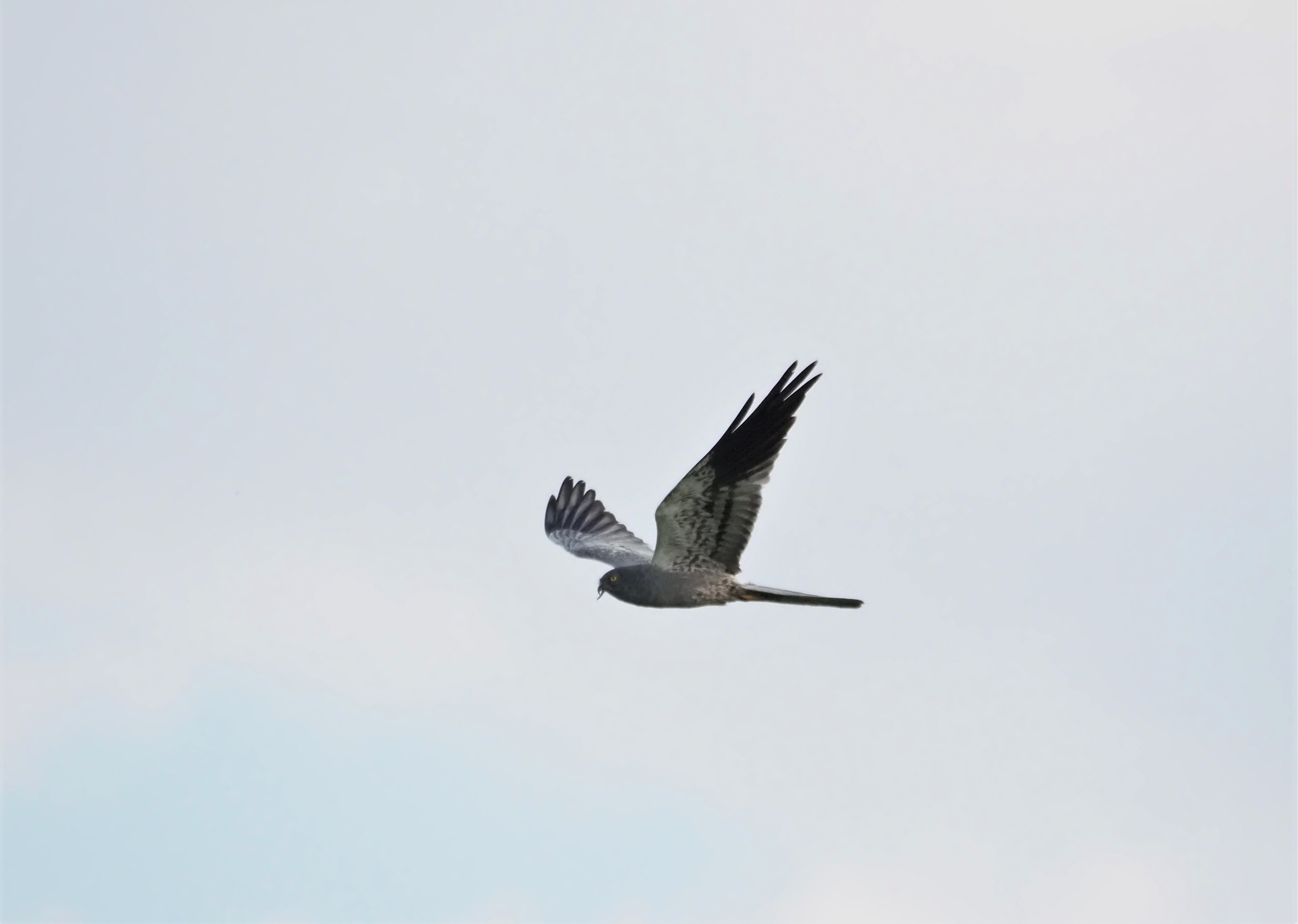
Male Montagu’s Harrier (Circus pygargus) passing by our group. Image by Carles Oliver
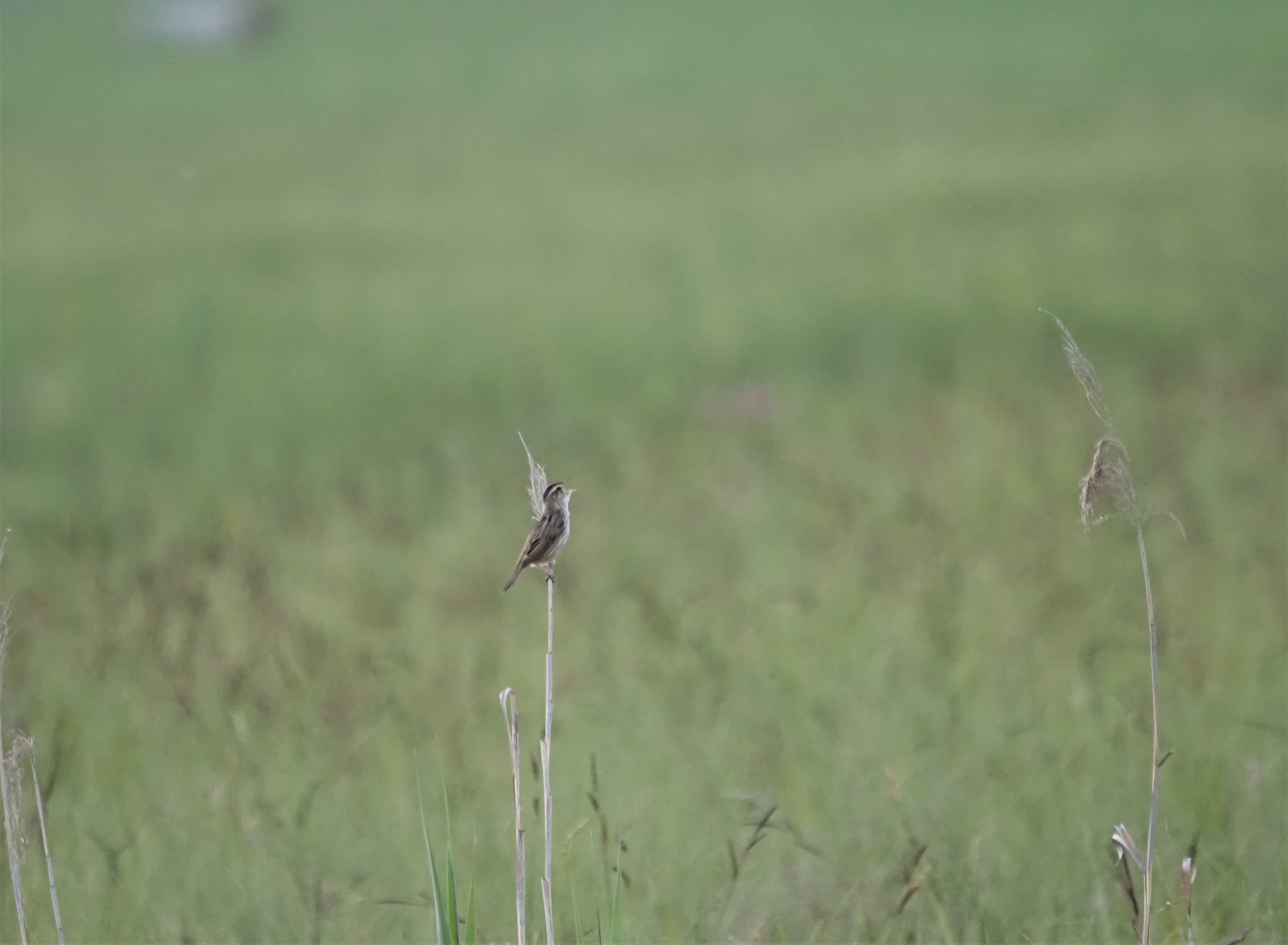
Aquatic Warbler (Acrocephalus paludicola) singing at dusk. Image by Carles Oliver

Day 5. During the morning we explored a series of spots to enjoy birds of prey and warblers. Here we saw a minimum of 7 Lesser Spotted Eagles along with Black Storks and Honey Buzzards.

It was again a warm day, and the large fields were fulfilled with dizzing insects and large flocks of Starlings. Some pairs of Common Cranes and Grey Partridges were also seen. A pair of stops produced good views on Thrush Nightingale and some Warblers. Before lunch we tried hard to find Spotted Nutcracker but we didn’t find anything beyond Wood Warblers and Crossbills.

Male Common Crane (Grus grus) displaying. Image Carles Oliver
Thrush Nightingale (Luscinia luscinia). Image by Carles Oliver
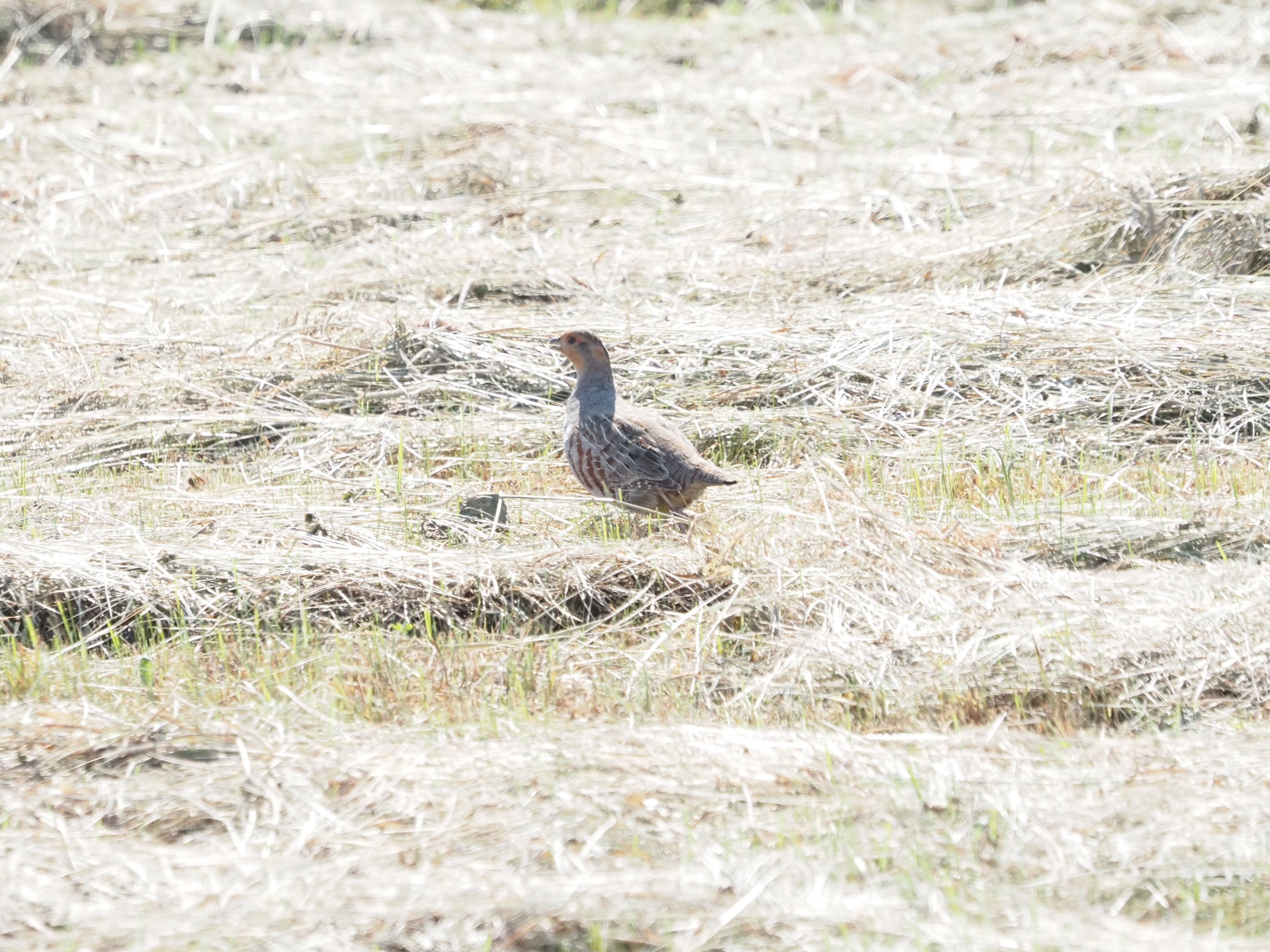
Grey Partridges are still common in most Eastern Poland. image by Carles Oliver

After lunch we scanned the wonderful habitat around Biebrza, where after some scanning we got good views on Citrine Wagtails but also Common Rosefinch, Marsh Harrier and a very elusive Bluethroat.

The last stop of the day was devoted to visit one of the few shallow marshes left in the area, and where a few White-winged Black Terns were feeding along with some Black Terns.

Citrine Wagtail (Motacilla citreola). Image by Carles Oliver
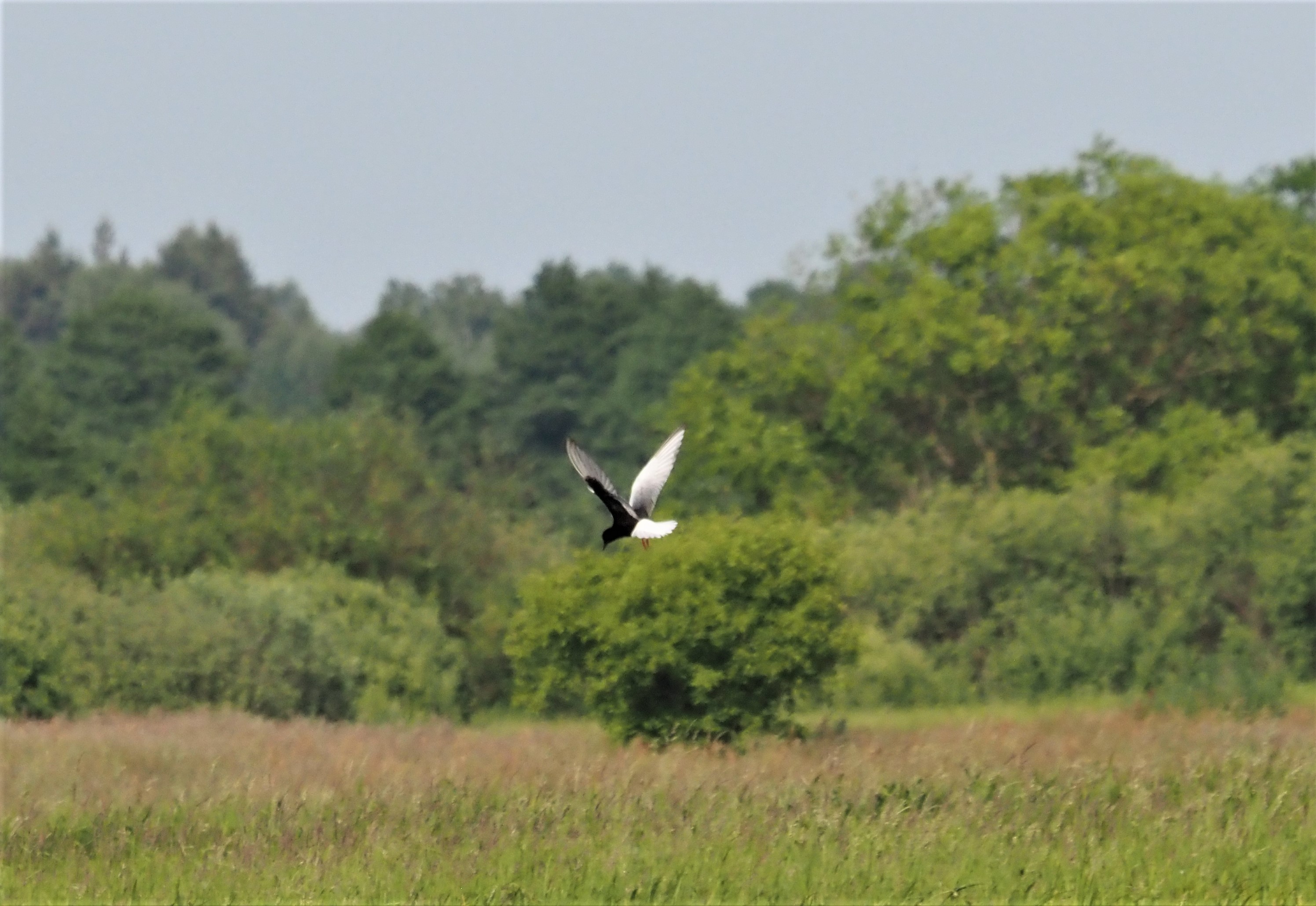
White-winged Black Tern (Chlidonias leucopterus)

Day 6. Only 90 minutes of birdwatching before transfering back to Warsaw for our flights back home. We did a short walk in a rather random spot around our accommodation combining some marsh and a isolated mature pinewood. Here, we had a Thrush Nightingale by the path but we were distracted by many noisy Thurshes and Jays. Derek had the idea to check in the case an Owl was around, and a few seconds later a Long-eared Owl flew above our heads stopping up in a pine! Very pleased and surprised by this unexpected beauty we checked the marsh with no relevant sights, but back to the woodland we had a Black Woodpecker moving in the trees, and after it flew off we were delighted to find a nest with 2 fledgings Black Woodpeckers sticking out of the nest. Barely 50 metres before, we had a Northern Goshawk flying out of its nest up the trees and this very short walk finished with a pair of Eurasian Hobbies flying low over the woodland. Maybe also nesting there?

Long-eared Owl (Asio otus) after being moved by Thrushes. Image by Carles Oliver
Black Woodpecker (Dryocopus martius) fledgings waiting for its parents to feed them. Image by Carles Oliver

From here we drove back to Warsaw to end a lovely first tour in Poland, and already thinking in coming back and enjoy the awesome birds and mammals living there!

Birds seen during the tour:

  1. Grey Partridge (Perdix perdix)
  2. Corncrake (Crex crex) – heard only
  3. Hazel Grouse (Tetrastes bonasa)
  4. Whooper Swan (Cygnus cygnus)
  5. Mute Swan (Cygnus olor)
  6. Greylag Goose (Anser anser)
  7. Mallard (Anas platyrhynchos)
  8. Common Swift (Apus apus)
  9. Common Cuckoo (Cuculus canorus)
  10. Feral Pigeon (Columba livia)
  11. Stock Dove (Columba oenas)
  12. Common Wood Pigeon (Columba palumbus)
  13. Eurasian Collared Dove (Streptopelia decaocto)
  14. Common Crane (Grus grus)
  15. Water Rail (Rallus aquaticus) – heard only
  16. Little Crake (Zapornia parva)
  17. Eurasian Coot (Fulica atra)
  18. Red-necked Grebe (Podiceps grisegena)
  19. Northern Lapwing (Vanellus vanellus)
  20. Eurasian Woodcock (Scolopax rusticola)
  21. Common Snipe (Gallinago gallinago)
  22. Great Snipe (Gallinago media) – heard only
  23. Common Redshank (Tringa totanus)
  24. Green Sandpiper (Tringa ochropus)
  25. Black-headed Gull (Chroicocephalus ridibundus)
  26. Caspian Gull (Larus cachinnans)
  27. Common Tern (Sterna hirundo)
  28. Black Tern (Clidonias niger)
  29. White-winged Black Tern (Chlidonias leucopterus)
  30. White Stork (Ciconia ciconia)
  31. Black Stork (Ciconia nigra)
  32. Greater Bittern (Botaurus stellaris) – heard only
  33. Grey Heron (Ardea cinerea)
  34. Great White Egret (Casmerodius albus)
  35. Red Kite (Milvus milvus)
  36. Common Buzzard (Buteo buteo)
  37. European Honey Buzzard (Pernis apivorus)
  38. Montagu’s Harrier (Circus pygargus)
  39. Western Marsh Harrier (Circus aeruginosus)
  40. Lesser Spotted Eagle (Aquila pom
  41. Northern Goshawk (Accipiter gentilis)
  42. Eurasian Sparrowhawk (Accipiter nisus)
  43. White-tailed Eagle (Haliaaetus albicilla)
  44. Short-eared Owl (Asio flammeus)
  45. Eurasian Pygmy Owl (Glaucidium passerinum)
  46. Long-eared Owl (Asio otus)
  47. Eurasian Hoopoe (Upupa epops)
  48. Great Spotted Woodpecker (Dendrocopos major)
  49. White-backed Woodpecker (Dendrocopos leucotos)
  50. Middle Spotted Woodpecker (Dendrocopos medius)
  51. Three-toed Woodpecker (Picoides tridactylus)
  52. Lesser Spotted Woodpecker (Dryobates minor)
  53. Black Woodpecker (Dryocopus martius)
  54. European Green Woodpecker (Picus viridis) – heard only
  55. Common Kestrel (Falco tinnunculus)
  56. Eurasian Hobby (Falco subbuteo)
  57. Eurasian Skylark (Alauda arvensis)
  58. Woodlark (Lullula arborea)
  59. Sand Martin (Riparia riparia)
  60. Barn Swallow (Hirundo rustica)
  61. Western House Martin (Delichon urbicum)
  62. Tree Pipit (Anthus trivialis)
  63. Meadow Pipit (Anthus pratensis)
  64. White Wagtail (Motacilla alba)
  65. Western Yellow Wagtail (Motacilla flava)
  66. Citrine Wagtail (Motacilla citreola)
  67. Eurasian Robin (Erithacus rubecula)
  68. Thrush Nightingale (Luscinia luscinia)
  69. Common Redstart (Phoenicurus phoenicurus)
  70. Black Redstart (Phoenicurus ochruros)
  71. European Stonechat (Saxicola rubicola)
  72. Whinchat (Saxicola rubetra)
  73. Spotted Flycatcher (Muscicapa striata)
  74. Collared Flycatcher (Ficedula albicollis)
  75. Red-breasted Flycatcher (Ficedula parva)
  76. Song Thrush (Turdus philomelos)
  77. Mistle Thrush (Turdus viscivorus)
  78. Fieldfare (Turdus pilaris)
  79. Eurasian Blackbird (Turdus merula)
  80. Barred Warbler (Curruca nisoria)
  81. Common Whitethroat (Curruca communis)
  82. Lesser Whitethroat (Curruca curruca)
  83. Garden Warbler (Sylvia borin)
  84. Eurasian Blackcap (Sylvia atricapilla)
  85. Sedge Warbler (Acrocephalus schoenobaenus)
  86. Aquatic Warbler (Acrocephalus paludicola)
  87. Common Reed Warbler (Acrocephalus scirpaceus)
  88. Marsh Warbler (Acrocephalus palustris)
  89. Great Reed Warbler (Acrocephalus arundinaceus)
  90. Common Grasshopper Warbler (Locustella naevia)
  91. Savi’s Warbler (Locustella luscinioides)
  92. River Warbler (Locustella fluviatilis)
  93. Icterine Warbler (Hippolais icterina)
  94. Goldcrest (Regulus regulus)
  95. Common Chiffchaff (Phylloscopus collybita)
  96. Willow Warbler (Phylloscopus trochilus)
  97. Wood Warbler (Phylloscopus sibilatrix)
  98. Eurasian Wren (Troglodytes troglodytes)
  99. Red-backed Shrike (Lanius collurio)
  100. Great Grey Shrike (Lanius excubitor)
  101. European Starling (Sturnus vulgaris)
  102. Eurasian Jay (Garrulus glandarius)
  103. Eurasian Magpie (Pica pica)
  104. Western Jackdaw (Corvus monedula)
  105. Hooded Crow (Corvus corone)
  106. Rook (Corvus frugilegus)
  107. Common Raven (Corvus corax)
  108. Eurasian Golden Oriole (Oriolus oriolus)
  109. Eurasian Treecreeper (Certhia brachydactyla)
  110. Eurasian Nuthatch (Sitta europaeus)
  111. House Sparrow (Passer domesticus)
  112. Eurasian Tree Sparrow (Passer montanus)
  113. Marsh Tit (Poecile palustris)
  114. Willow Tit (Poecile montanus)
  115. Coal Tit (Periparus ater)
  116. European Crested Tit (Lophophanes cristatus)
  117. Blue Tit (Cyanistes caeruleus)
  118. Great Tit (Parus major)
  119. Long-tailed Tit (Aegithalos caudatus)
  120. Western Penduline Tit (Remiz pendulinus)
  121. European Serin (Serinus serinus)
  122. Common Rosefinch (Carpoduca erithrinus)
  123. Eurasian Goldfinch (Carduelis carduelis)
  124. Eurasian Greenfinch (Chloris chloris)
  125. Eurasian Siskin (Spinus spinus)
  126. Common Linnet (Linaria cannabina)
  127. Common Chaffinch (Fringilla coelebs)
  128. Common Crossbill (Loxia curvirostra)
  129. Yellowhammer (Emberiza citrinella)
  130. Common Reed Bunting (Emberiza schoeniclus)
  131. Ortolan Bunting (Emberiza hortulana)

List of mammals during the tour

  1. European Hare (Leppus leppus)
  2. European Hedgerog (Erinaceus europaeus)
  3. Roe Deer (Capreolus capreolus)
  4. Eurasian Bison (Bison bison)

Please check our tours at http://www.barcelonabirdingpoint.com