

- Dates: March 13th to 22nd, 2025
- Tour Participants: 8
- Number of species seen: 188
- Tour leader: Sergi Sales
Overview: 11th issue for the birding tour company Barcelona Birding Point exploring Southern Morocco. The first days of this issue have been conditioned by a heavy snowfall in the High Atlas. There, our group had to invest longer than usual in order to connect with the main specialties living in the highest part of this massive mountain range. This meant less time to explore wetlands, meaning a shorter list of birds. Despite this, the group got a couple of scarcities for the country; Blue-winged Teal (vagrant from North America) & Spotted Crake (a pretty scarce migratory species in Morocco). The desert and the mountain steppes were as wonderful as always! Despite the fast development, Morocco keeps the whole of its exotims, and remains as one of the main birding destinations in the Western Palearctic due to its landscapes, cultural richness and a wide selection of specialties just beside Europe!
All images in this trip report from Sergi Sales. All rights reserved
Day 1
The tour participants meet for breakfast at our accommodation in Marrakech. Some of them arrived just after breakfast, coming from a different accommodation. After this delicious meet and greet we are ready to start the tour!
As usual, several House Buntings are singing in the gardens of the accommodation, joined by some very noisy Common Bulbuls and by the fast flights of the Pallid Swifts living around.
From here we drove a few miles, into a wooded valley. Here we had our first White Storks, Spotless Starlings, European Red-rumped Swallows & Western Cattle Egrets of the trip, but also the Moroccan race of White Wagtail (until recently still considered as a full species, so something interesting to take a look at it..). After a few minutes we found the first speciality of the tour, as a Levaillant’s Green Woodpecker is moving in some large trees. Up to 4 birds are seen during this stop. Here there are several African Chaffinches (a 2024 split from Common Chaffinch), African Blue Tits and the very contrasted race of Great Spotted Woodpecker.
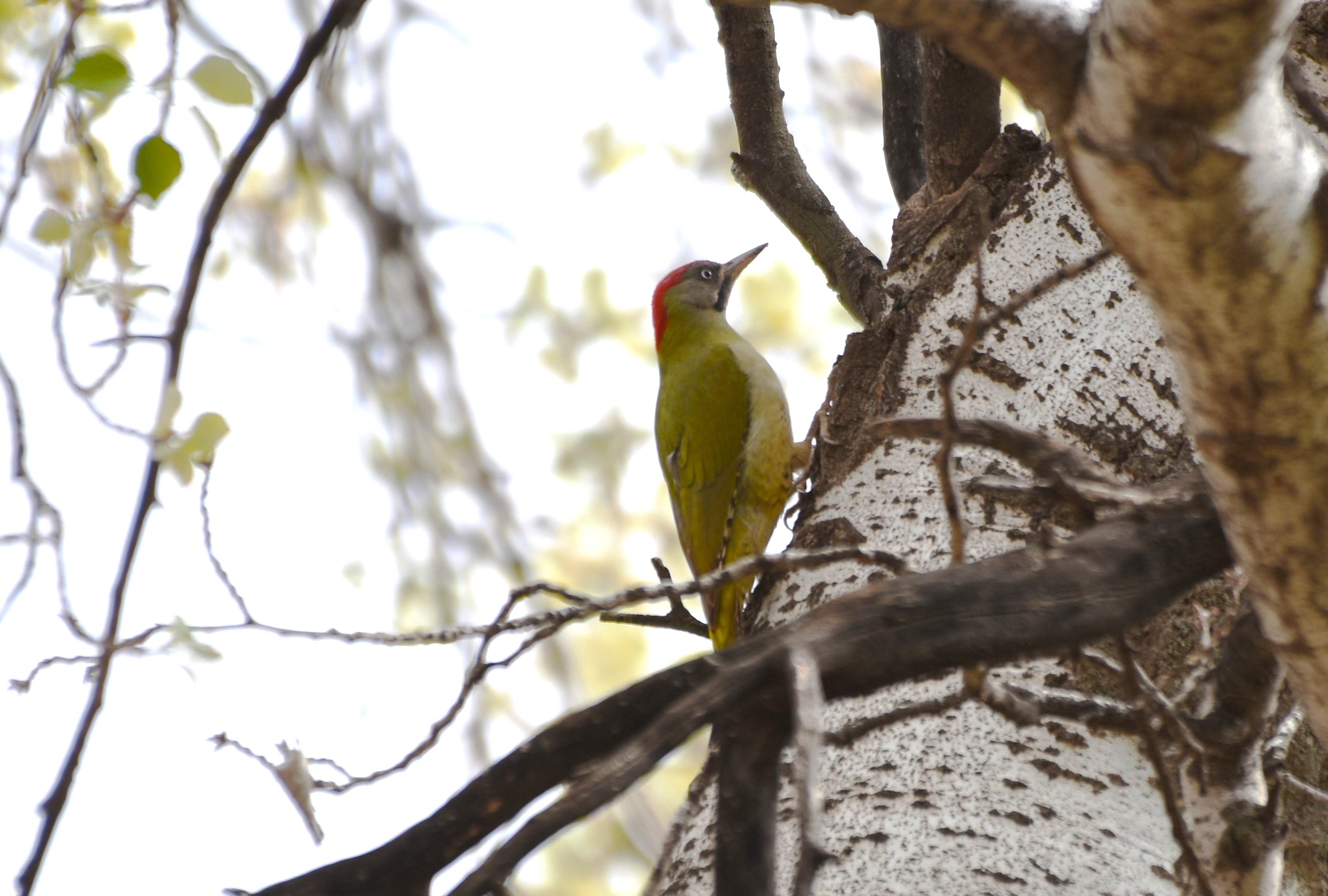

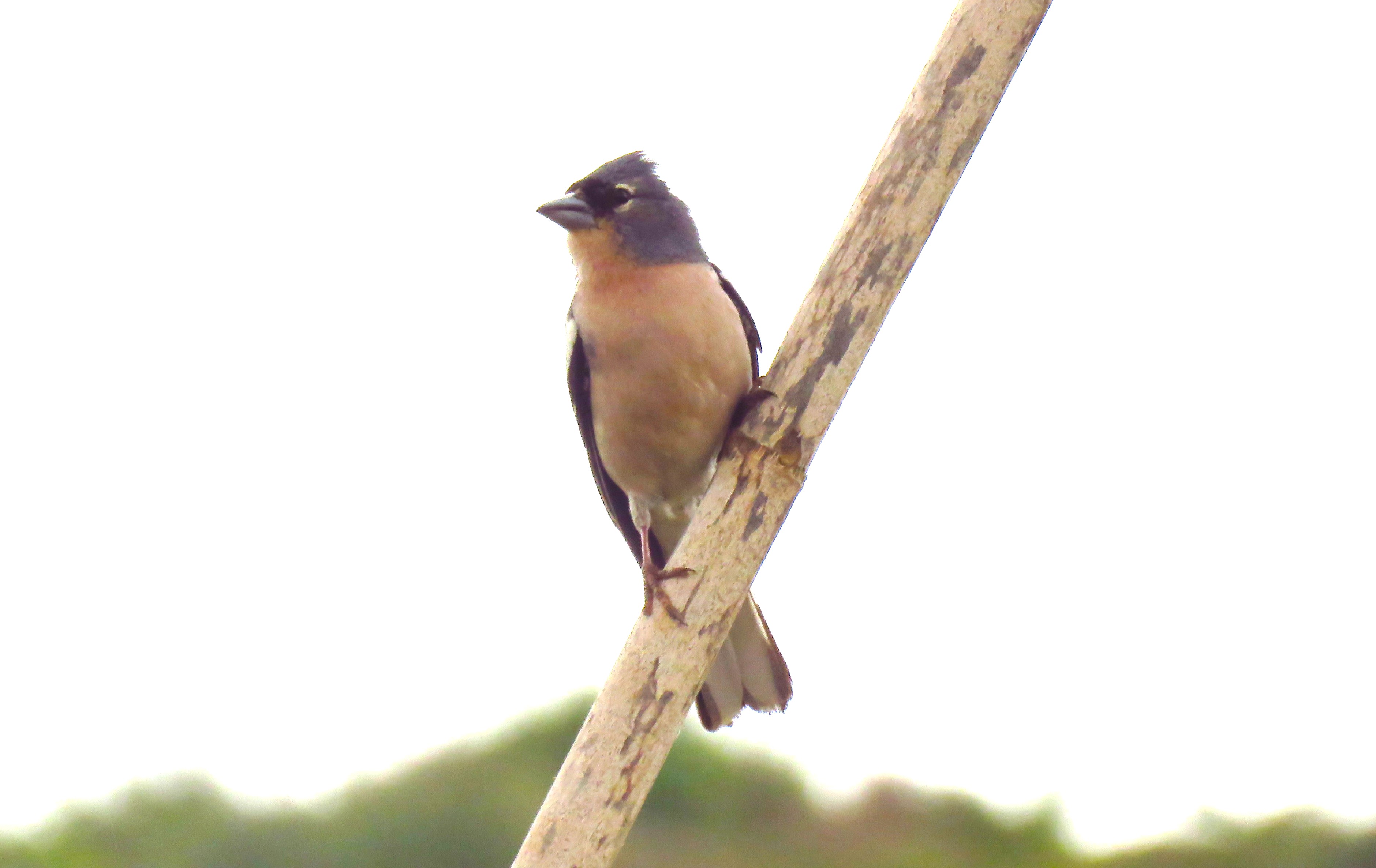
After this very nice first stop, we headed up into the hillsides. But our route became harder than expected. Our track was damaged during the earthquake in late 2023 but now we are also facing some strong rain. As we keep gaining in altitude, the rain becomes icy rain and, later on, snow. Halfway we made a stop in a typical place for Tristam’s Warbler but the weather conditions are far from average.. Still, a small patch of blue sky allows some birding activity, and this is translated in a showy male Blue Rock Thrush, joined by the first Moussier’s Redstart of the trip and a wonderful Rock Bunting. 3 species within a few inches from each other! This very nice sight aims us to follow up the road. There are only 5 miles left to Oukaimeden ski resort, but this is when the snow becomes very strong, reducing the visibility both on the tarmac and in the air. We took advantage of this horrible weather conditions to taste our first tajin of the trip in a road restaurant, and since the weather keep getting worst we decided to quit the upper part of the road and go down to the valley.
The ends in the plains around Marrakech, where despite the cold temperatures (+5ºC) we got the first Moroccan Magpies, Long-legged Buzzards and Greater Short-toed Larks of the trip plus one obliging Stone Curlew.
Day 2
Due to the bad weather the first day we decided a change in the original planning and to go back to the road leading to Oukaïmeden early in the morning, expecting the road to be open. The weather looks very good and we managed to arrive to the ski resort despite the snow and the low temperatures.
Lower than expected we found a nice flock of Atlas Horned Larks, and while enjoying this species we also discovered one pair of Black Wheatears and a couple of shy Ring Ouzels. At the lake of the ski resort we got Eurasian Coots but also the nesting pair of White-bellied Dippers (this is one of the Southernmost territories of this species!). Around there were more Atlas Horned Larks along with Thekla Larks and the large flocks of Red-billed Choughs that were wondering around all along the morning started to be joined by Alpine Choughs. Around the buildings there were also a good number of Common Rock Sparrows. But no sign of the Crimson-winged Finches. Other small groups of birdwatchers from different nationalities were (British, Belgians, Dutchs,..) also looking for these buggers. We kept looking for them and at the end a small flock of this sought-after species flew right in front of us. Wonderful!
More than satisfied after this in extremis sight we started the long transfer to the Souss Massa National Park. En route, while crossing the breathtaking landscapes of the Atlas mountains, we enjoyed species such as Alpine & Little Swifts and the first Spanish Sparrows of the trip in a mixed colony in the motorway. Once the night arrived, already close to our accommodation, we got Stone Curlews and Little Owls crossing the road plus one very fast Long-eared Owl that not everybody could see.

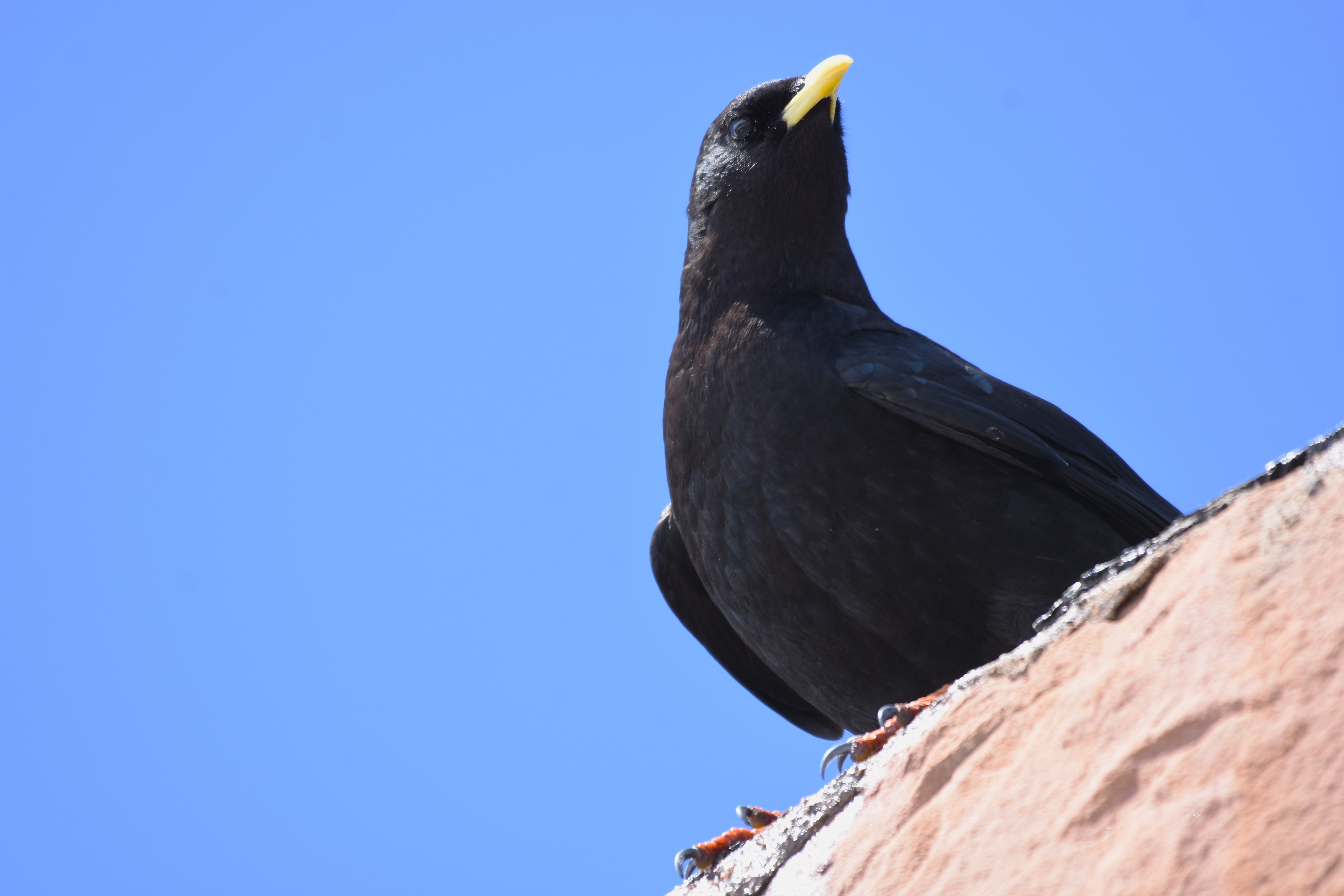

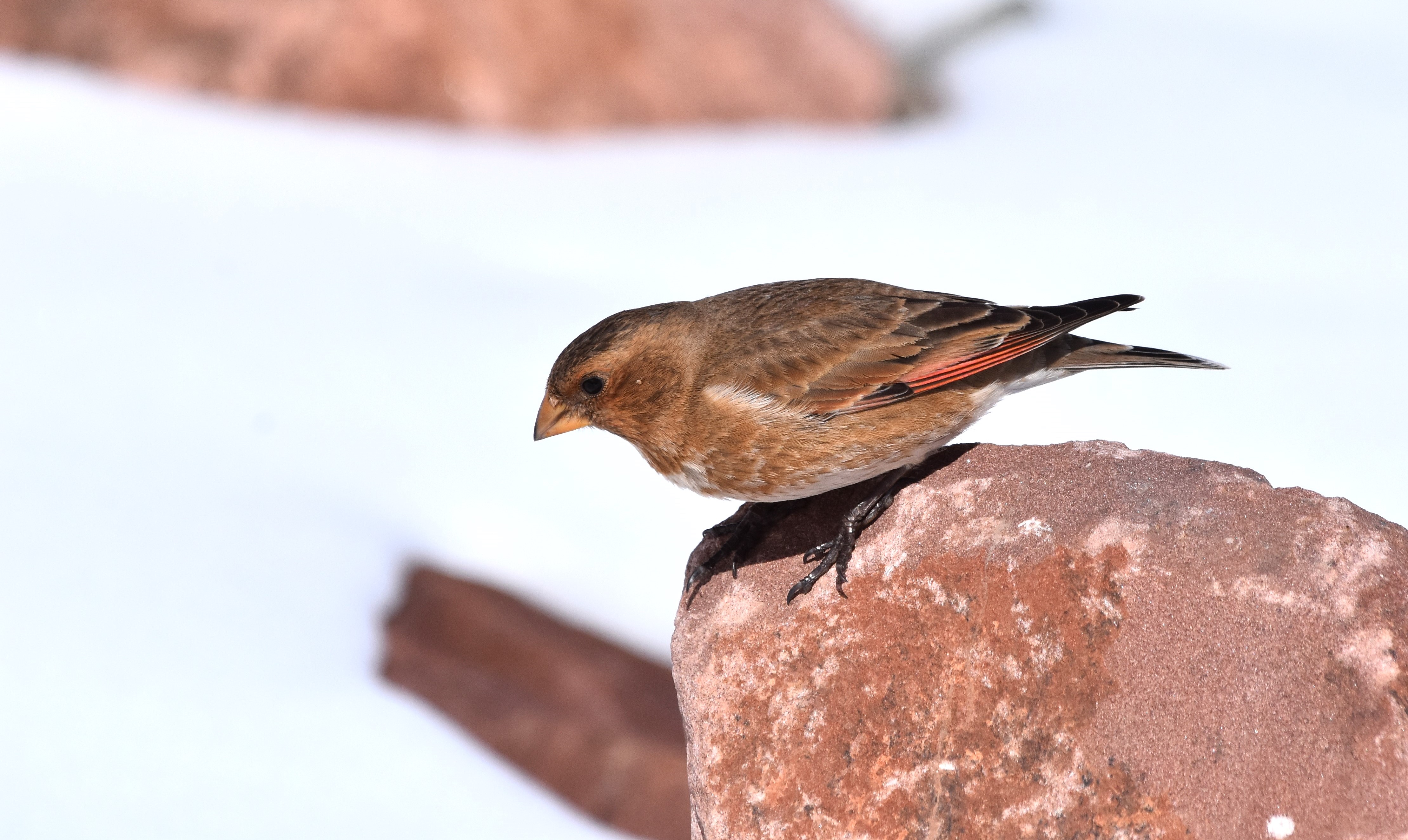
There are several reasons to visit the Souss-Massa area, but there is always something special when it comes to try to connect with Black-crowned Tchagras, since this is one of their Northernmost spots in the African continent! So we leave our accommodation for a pre-breakfast walk to explore the mixture of farming and bushland surrounding our privileged location. It didn’t take long to listen the first Tchagra and also a good number of Western Olivaceous Warblers plus a good variety of migratory passerines. Common Quails are singing in the fields around but they are as secretive and shy as usual, and they keep into hide despite our efforts. Moussier’s Redstarts, on the contrary, stand at the opposite side of the spectrum, and show themselves on terrific views!
Happy after this nice stat of the day, we came back to the accommodation to enjoy a wonderful breakfast.


Back to the fields, we contact with a showy Black-winged Kite in our way to one of the several water ponds along the river. This time we are lucky, and the Kite goes on with great display show. Here, the plentiful crops around are thriving with passage birds including Willow, Western Subalpine & Western Orphean Warblers but also Tree Pipits and Woodchat Shrikes.
Our first pond produces a good array of waders and ducks, and our growing list is complemented with the first flock of Brown-throated Martins flying over the ranking vegetation along with other species of Swallows & Martins.
From here we walk along the Massa River following the way down to its estuary. Along the way we find a number of ducks and waders as well as Greater Flamingoes and Glossy Ibises. We also meet other birdwatchers that have seen the long staying Green-winged Teals. After a long scanning, we finally found them resting along with Northern Shovelers and our efforts were rewarded with good views on the male as it came out of the vegetation for a swim.
At noon, we went to enjoy our picnic boxes in one of the impressive beaches next to the estuary. Here it is possible to enjoy a good seawatching, and we are lucky enough to have a good passage of Atlantic Gannets that they. Along with them we also get a few Great & Arctic Skuas. Migration was intense at that moment, and we got flocks of Eurasian Spoonbills and Grey Plovers moving North along the coastline. Still, our main goal here was to find the critically endangered Northern Bald Ibis, that has along this coast their only three self-sustained colonies in the world. We were about to give up when suddenly 3 Bald Ibis emerged, moving towards the sea cliffs where they would spend that night!
Day 4
Our pre-breakfast outing produces nice views on Barbary Partridges but also on Little Owl and several Moroccan Magpies. After breakfast we started transfering to Boulmane du Dades; a rather long drive crossing the impressive Anti Atlas landscapes. This is normally a good drive for birds of prey, but this time was rather low. Still, we got the first Bonelli’s Eagles of the trip. Right before crossing Ouarzazate we made a stop in a little pond that had been very good in previous trips, and it didn’t disappoint us neither this year. Here we got Little Ringed Plover, Black Wheatears and Ruddy Shelducks, but also the first Maghreb Larks & Desert Larks of the trip. Still, the best bird in this stop was a Spotted Crake that came out of the rank vegetation giving excellent views to the group.
After this stop we covered the last miles until our accommodation, arriving there about sunset. Tomorrow we will head to the famous Tagdilt Track!


Day 5
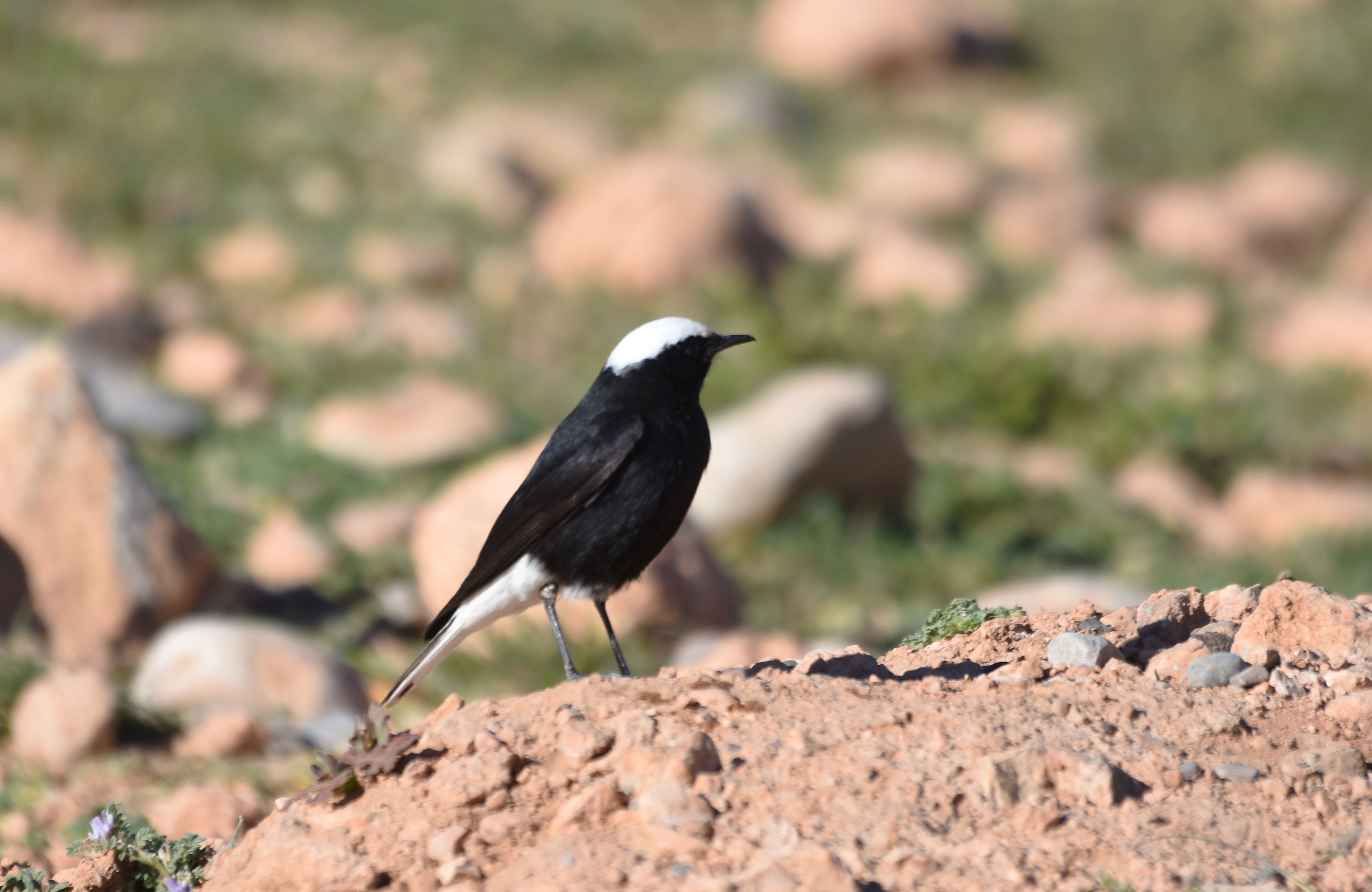
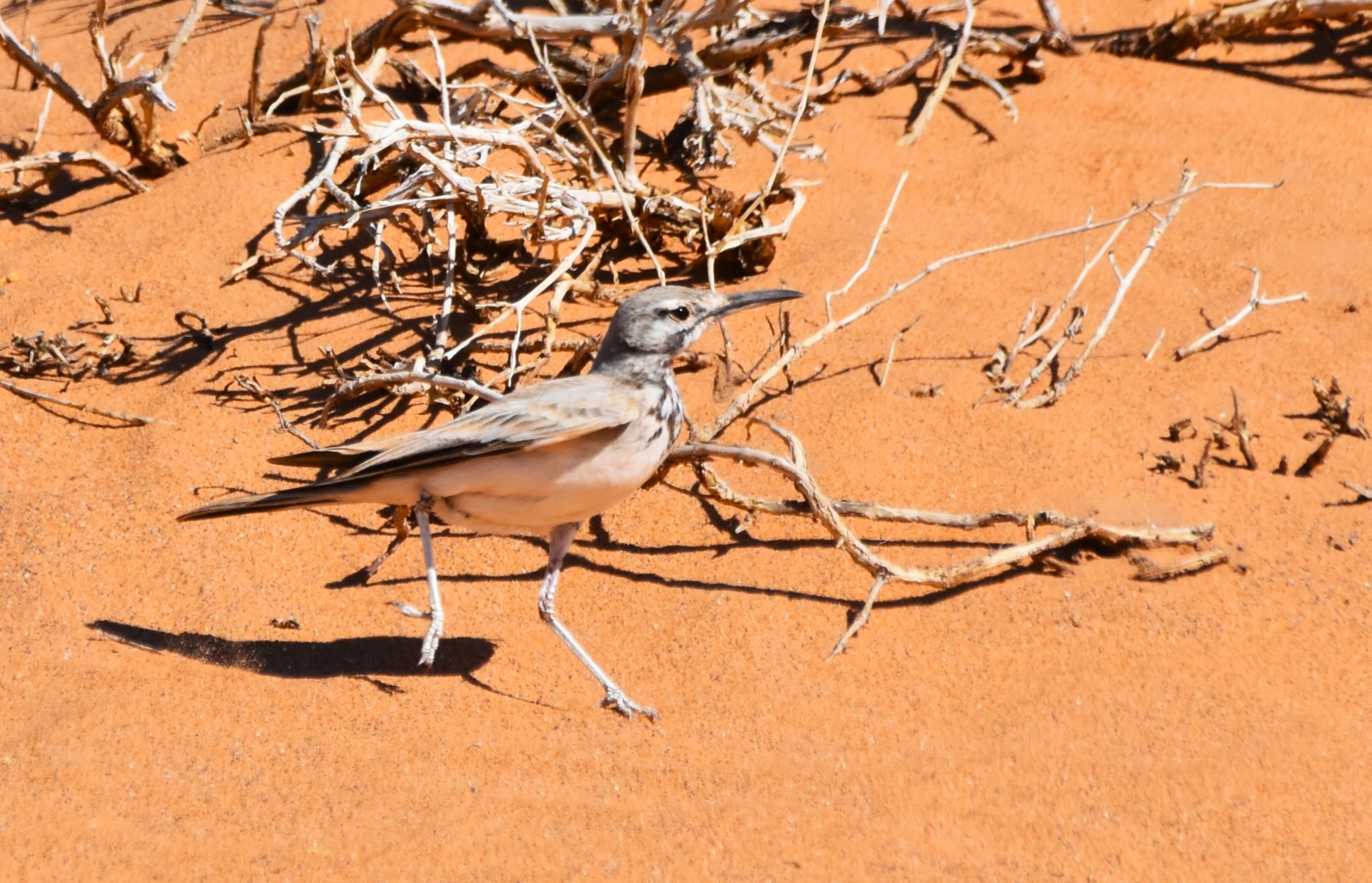
We headed to explore the large seme desert plain known as Tagdilt Track, probably the best location for Larks and Wheatears in the Western Palearctic. It didn’t take long to find the first of many White-crowned Black Wheatear, always a wonderful bird to admire! The area is fulfilled with birds, despite the many plastics around. Here there several pairs of Red-rumped Wheatears, some of them already with their chicks running around. Still, the commoner of the Wheatears around is the Desert Wheatear. Here there are also some migratory species, including both Northern & Western Black-eared Wheatears! It doesn’t look like a good year for Thick-billed Larks, and during the morning we fail to find any of them. Going away from the “rubbish dump” we soon find several Desert Larks and Bar-tailed Larks (usually uncommon here). Among the many Thekla Larks here we found the first Greater Hoopoe Lark of the trip and, while enjoying this beauty a flock of Cream-coloured Courser crosses the track providing great looks! Back to the rubbish dump we found also a small flock of Temminck’s Lark, similar to Horned Lark but smaller and living in dry ambients.


The temperature climbs up and we go to explore to the gorges around expecting to find also some shade. Just after arriving a Lanner Falcon flew at short distance above the group, trying to catch a Desert Lark.
After a short walk we arrived in front of a small cave and the local guide there showed us a Pharaon Eagle Owl with 3 small chicks. Close by we also get Long-legged Buzzards, that look like nesting around. Trumpeter Finches are flying around and a bit beyond we got a distant Maghreb Wheatear. Unfortunately it is shy and we need an extra walk to get nice views on the pair nesting around. More than satisfied with this stop, we went back to the plains and soon we contact with a Thick-billed Lark that shows out before disappearing in the vegetation..


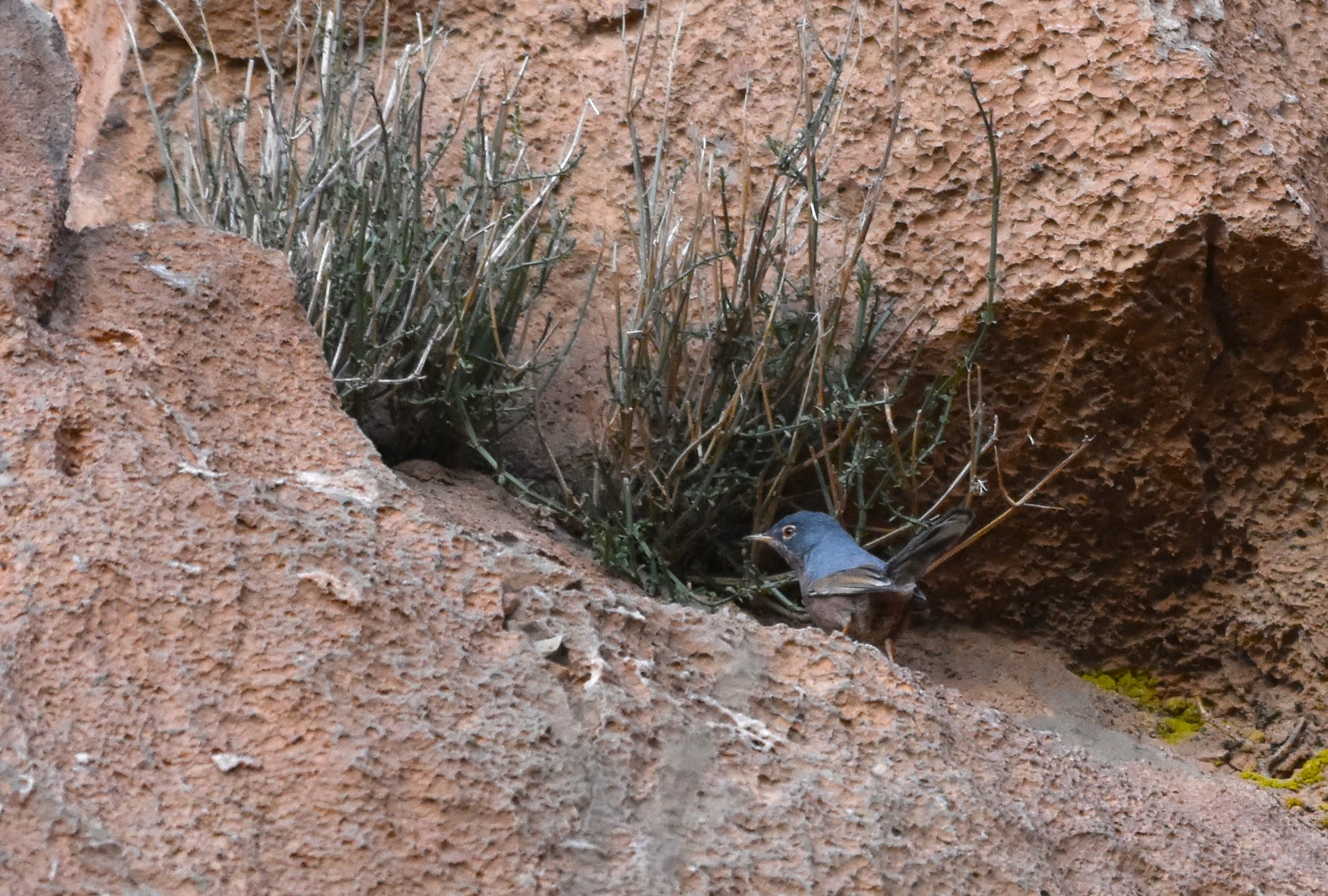
Late in the afternoon we went up into the Dades Gorge to look for Tristam’s Warbler, a species that we couldn’t find during the first day because of the bad weather. A few minutes after arriving to the spot, a male was heart singing and shortly we found the bird, that provided very good looks. Back to the accommodation we still had a final chapter for the day as a Bonelli’s Eagle flew over us at close range bringing a massive branch at the peak to land in the cliffs beyond right by the nest! This is normally a good place for Barbary Falcon, but there is no luck for this bird this year.. We get inside our accommodation, still hearing the songs of Blue Rock Thrushes and Black Wheatears arond it!
Dia 6
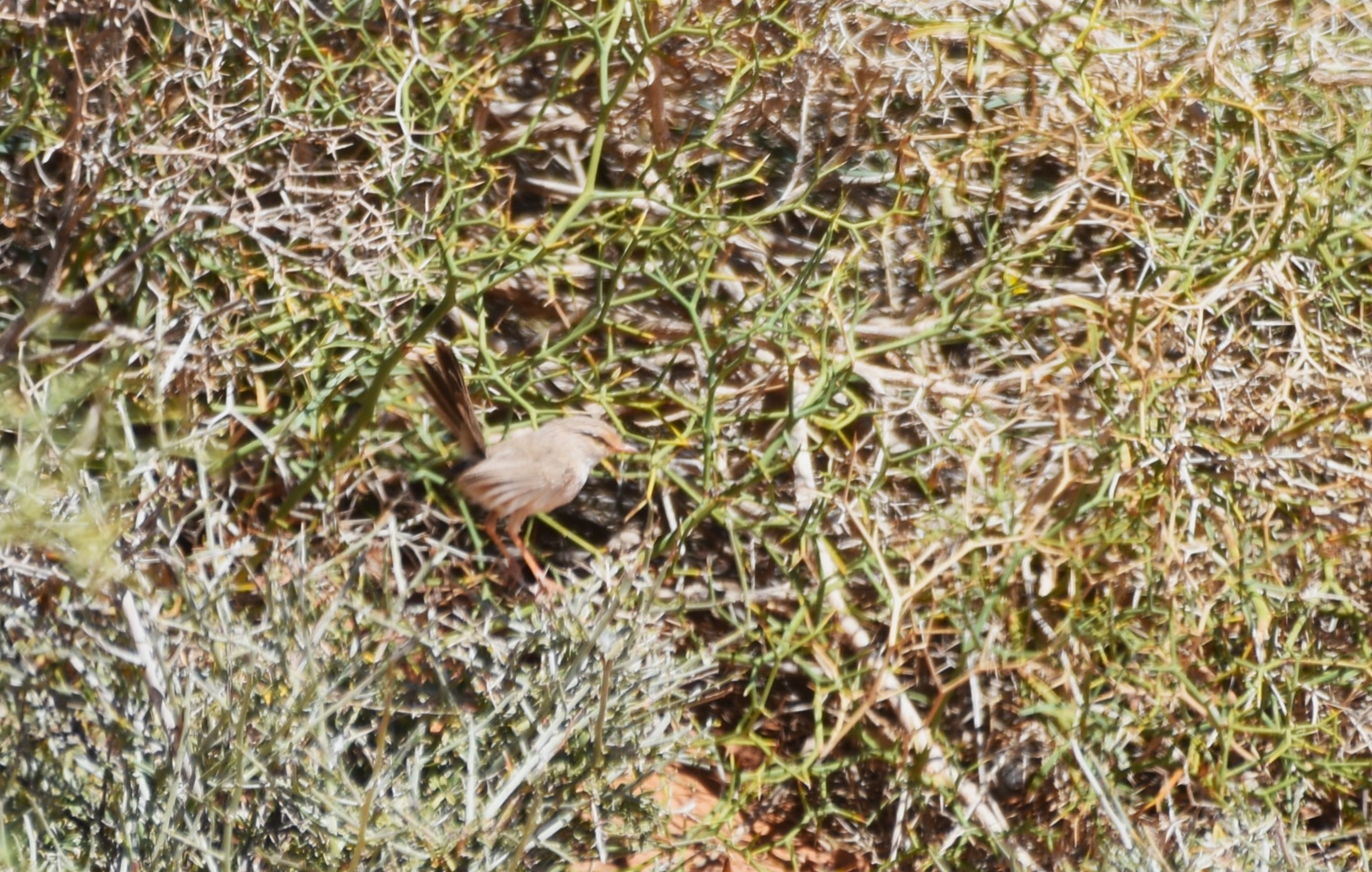
Long trasfer to the first dunes of the Sahara. En route, we went for a stop looking for the often secretive Streaked Bush Warbler (often referred in this area as Saharan Scrub Warbler and a full species regarding some lists). We had some walk in the sandy terrain surrounded by goats and enjoying several Great Grey Shrikes, when we heard the call of the birds and after some running we all got good views on a family group as there were moving on the ground or inside the tiny, spiny bush.
It is almost lunch time so we went into a nearby restaurant to enjoy a very nice set menu lunch. It is Ramadah, but it is not hard to find places like along our way. After lunch we kept moving to Merzouga and after a couple of less productive stops we arrived to the impressive lagoon nearby Merzouga. The lagoon had been dry for 5 years, but the generous rains during the last winter made it happen, and the lagoon looked like amazing. Here we got the typical image of Flamingoes framed with sand dunes that made this place became famous worldwide, but we also enjoyed the good array of nesting birds around: Ruddy Shelducks, Black-winged Stilts + Little Ringed & Kentish Plovers. The lagoon also hosted scarce migratory birds including Black-necked Grebe and Osprey and, most importantly, a shy and very distant flock of Marbled Ducks!
Day 7
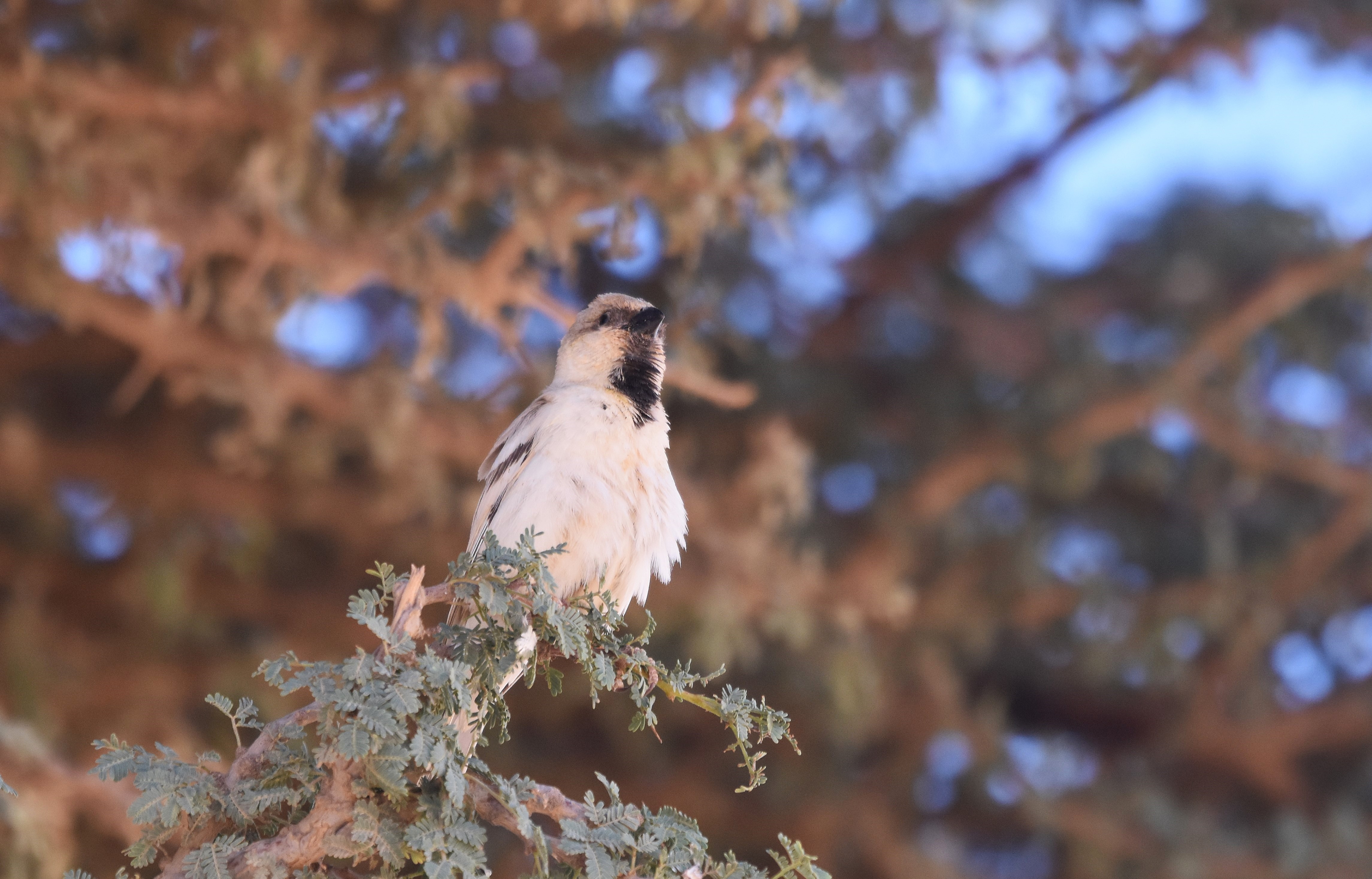
Very early in the morning we met our local guides coming with its full-equiped 4x4s. First stop was to check a drinking pond where Sandgrouses come to drink water early in the morning. Soon, we were enjoying good numbers of both Spotted & Crowned Sandgrouses. For the first time in years, Crowned Sandgrouses were outnumbering the Spotted ones. After enjoy the Sandgrouse spectacle and no majoy delay we moved to our next spot, this time to check a pair of Desert Sparrows nesting nearby. Unfortunately we have no luck with them so, taking advantage of this we decided to move deeper in the desert, where a nomad is waiting for us as he found a Egyptian Nightjar roosting in the desert. After a short walk we arrived where the Nightjar is and we all spent a few minutes watching this absolute treat, always at a safe distance.
Leaving this amazing spot, we went back to the Desert Sparrow territory, and this time we immediately got the eyes on the birds as they were hanging around very close to their nest. We actually saw one male and two females building the nest.
From here we have a bit of a drive as we are going now in search of the African Desert Warbler. After some walk in the dunes we got to see one, but not everybody in the group got to see the bird.. We were decided to be there longer, but a strong wind started to blow in and we decided to give up, so far. A pity, since the place was fulfilled with migratory birds (Common Redstarts, Booted Eagles, W Bonelli’s & W Subalpine Warblers, Woodchat Shrikes,..).
After lunch weather conditions kept degrading so we decided to call it a day and have some spare time in the afternoon, aiming to have better luck the next day.


Day 8
Early in the morning we went for a stroll around the accommodation, a typical place for Fulvous Blabbler. Soon, we got to see one of them, providing really good looks. From here, we moved into a typical place for African Desert Warbler but we failed again. Anyway, this could be the best fail ever, since a Fennec just came out from nowhere, crossing in front of the car and letting us decent views! We could count ourselves lucky to see it, even without trying it!
Still shocked after the last desert jewel, we went for a last go on the Desert Warbler, trying to improve the views that we got the day before. Again, we failed to find the bird but our tenacity is rewarded by finding a nest of Greater Hoopoe Lark, built up in a tussock so they can watch out for predators.
Our way to the famous Cafe Yasmina (where the Catalan Bird Society has a ringing station) is a bit difficult, since the winter rains have made the are become a small lake. Taking advantage of these unusual conditions, tens of migratory birds are feeding around. Here we found the only flock of Collared Pratincoles for the trip, while Sedge Warblers are especially common in the tamarisk around, where they are joined by Western Olivaceous Warblers. En route we also have a few Cream-coloured Coursers and the first Seebohm’s Wheatears of the trip.
The last stop of the day is to have a second visit in the Merzouga lake. Beside the species that we saw in our previous visit, we added Little Stint, Dunlin, Common Redshank, Common Greenshank and Wood Sandpiper along with a rather unexpected Water Pipit. Close by, in a palm orchard, we got some passerines but also a mixed flock of European & Blue-cheeked Bee-eaters.


Day 9
Transfer day with stops in our way to Ouarzazate. In our stops exploring different wadis (dry desert-like streams) we found a good variety of Wheatears but also Spectacled Warbler along with the commoner Western Subalpine Warbler. We also found a small nesting colony of Blue-cheeked Bee-eaters.
Before arriving to our accommodation in Ouarzazate we went for a visit into the Al-Mansour Barrage, a massive reservoir South of the city. Here we added Gull-billed Tern and Sand Martin to our list before the strong winds made us withdraw back to our accommodation.
Day 10
Last day of the trip. The birding starts early, as the birds join us while having breakfast. The gardens of the accommodation are hosting some Western Olivaceous Warblers, but also Hoopoes, Tree Pipits and Warblers while several Red-rumped Swallows are flying above us.
En route we made a stop in a stream. The weather was clearly better than in previous days, as the wind was totally stopped. And this spot was fulfilled with migratory passerines. Here we got 10+ birds of 7 species in a single tree: W Subalpines & W Orphean Warblers; Common Whitethroat; Willow & W Bonelli’s Warblers; Common Chiffchaffs and some very tame Iberian Chiffchaffs. The rank vegetation was having tens of Sedge & Common Reed Warblers moving around. Pied Flycatcher was a new species for the tour.
While crossing the Atlas mountains we nice views on Red-billed Choughs, and the last stop of the trip was to explore a conifer woodland. Here we got Coal Tit and Eurasian Sparrowhawk while Common Crossbills are heard calling around. As a final sight, a Eurasian Goshawk was seen displaying above the slopes!
This is the last stop of the trip before arriving to our accommodation back in Marrakech, ending a pretty nice tour despite the challenging weather conditions, with far less birds of prey than in previous editions but enjoying excellent numbers of migratory passerines, especially in those areas still having ponds from the generous winter rains.
List of bird species of the tour:
- Ruddy Shelduck (Tadorna ferruginea)
- Common Shelduck (Tadorna tadorna)
- Blue-winged Teal (Spatula discors)
- Northern Shoveler (Spatula clypeata)
- Mallard (Anas platyrhynchos)
- Pintail (Anas acuta)
- Eurasian Teal (Anas crecca)
- Marbled Duck (Marmaronetta angustirostris)
- Common Quail (Coturnix coturnix) — only heard
- Barbary Partridge (Alectoris barbara)
- Feral Pigeon (Columba livia)
- Common Wood-pigeon (Columba palumbus)
- European Turtle Dove (Streptopelia turtur)
- Eurasian Collared Dove (Streptopelia decaocto)
- Laughing Dove (Spilopelia senegalensis)
- Spotted Sandgrouse (Pterocles senegallus)
- Crowned Sandgrouse (Pterocles coronatus)
- Red-necked Nightjar (Caprimulgus ruficollis) — heard only
- Egyptian Nightjar (Caprimulgus aegyptius)
- Alpine Swift (Tachymarptis melba)
- Common Swift (Apus apus)
- Pallid Swift (Apus pallidus)
- Little Swift (Apus affinis)
- Spotted Crake (Porzana porzana)
- Eurasian Moorhen (Gallinula chloropus)
- Eurasian Coot (Fulica atra)
- Stone Curlew (Burhinus oedicnemus)
- Black-winged Stilt (Himantopus himantopus)
- Pied Avocet (Recurvirostra avosetta)
- Grey Plover (Pluvialis squatarola)
- Common Ringed Plover (Charadrius hiaticula)
- Little Ringed Plover (Charadrius dubius)
- Kentish Plover (Charadrius alexandrinus)
- Whimbrel (Numenius phaeopus)
- Bar-tailed Godwit (Limosa lapponica)
- Black-tailed Godwit (Limosa limosa)
- Common Snipe (Gallinago gallinago)
- Common Sandpiper (Actitis hypoleucos)
- Green Sandpiper (Tringa ochropus)
- Wood Sandpiper (Tringa glareola)
- Common Redshank (Tringa totanus)
- Common Greenshank (Tringa nebularia)
- Ruff (Calidris pugnax)
- Curlew Sandpiper (Calidris ferruginea)
- Sanderling (Calidris alba)
- Dunlin (Calidris alpina)
- Little Stint (Calidris minuta)
- Cream-coloured Courser (Cursorior cursor)
- Collared Pratincole (Glareola pratincola)
- Arctic Skua (Stercorarius parasiticus)
- Great Skua (Stercorarius skua)
- Slender-billed Gull (Chroicocephalus genei)
- Black-headed Gull (Chroicocephalus ridibundus)
- Yellow-legged Gull (Larus michahellis)
- Lesser Black-backed Gull (Larus fuscus)
- Gull-billed Tern (Gelochelidon nilotica)
- Sandwich Tern (Thalasseus sandvicensis)
- Greater Flamingo (Phoenicopterus roseus)
- Little Grebe (Tachybaptus ruficollis)
- Great Crested Grebe (Podiceps cristatus)
- Black-necked Grebe (Podiceps nigricollis)
- White Stork (Ciconia ciconia)
- Atlantic Gannet (Morus bassanus)
- Great Cormorant (Phalacrocorax carbo)
- Glossy Ibis (Plegadis falcinellus)
- Northern Bald Ibis (Geronticus eremita)
- Eurasian Spoobill (Platalea leucorodia)
- Little Egret (Egretta garzetta)
- Squacco Heron (Ardeola ralloides)
- Western Cattle Egret (Bubulcus ibis)
- Great White Egret (Ardea alba)
- Grey Heron (Ardea cinerea)
- Osprey (Pandion haliaetos)
- Black-winged Kite (Elanus caeruleus)
- Short-toed Eagle (Circaetus gallicus)
- Booted Eagle (Aquila pennata)
- Bonelli’s Eagle (Aquila fasciata)
- Eurasian Sparrowhawk (Accipiter nisus)
- Eurasian Goshawk (Accipiter gentilis)
- Western Marsh Harrier (Circus aeruginosus)
- Montagu’s Harrier (Circus pygargus)
- Black Kite (Milvus migrans)
- Long-legged Buzzard (Buteo rufinus cirtensis)
- Pharaon Eagle Owl (Bubo ascalaphus)
- Little Owl (Athene noctua)
- Hoopoe (Upupa epops)
- Blue-cheecked Bee-eater (Merops persicus)
- Eurasian Bee-eater (Merops apiaster)
- Great Spotted Woodpecker (Dendrocopos major)
- Levaillant’s Woodpecker (Picus vailantii)
- Lesser Kestrel (Falco naumanii)
- Eurasian Kestrel (Falco tinnunculus)
- Lanner Falcon (Falco biarmicus)
- Black-crowned Tchagra (Tchagra senegalus)
- Great Grey Shrike (Lanius excubitor) — Algerian Shrike; Desert Grey Shrike
- Woodchat Shrike (Lanius senator)
- Moroccan Magpie (Pica mauretanica)
- Red-billed Chough (Pyrrhocorax pyrrhocorax)
- Alpine Chough (Pyrrhocorax graculus)
- Brown-necked Raven (Corvus ruficollis)
- Common Raven (Corvus corax)
- Coal Tit (Periparus ater atlas)
- Great Tit (Parus major)
- African Blue Tit (Cyanistes teneriffae)
- Greater Hoopoe Lark (Alaemon alaudipes)
- Thick-billed Lark (Ramphocoris clotbey)
- Bar-tailed Lark (Ammomanes cinctura)
- Desert Lark (Ammomanes deserti)
- Thekla Lark (Galerida theklae)
- Maghreb Lark (Galerida macrorhyncha)
- Crested Lark (Galerida cristata)
- Horned Lark (Eremophila alpestris)
- Temminck’s Lark (Eremophila bilopha)
- Greater Short-toed Lark (Calandrella brachydactyla)
- Mediterranean Short-toed Lark (Alaudala rufescens)
- Zitting Cisticola (Cisticola juncidis)
- Western Olivaceous Warbler (Iduna opaca)
- Sedge Warbler (Acrocephalus schoenobaenus)
- Common Reed Warbler (Acrocephalus scirpaceus)
- Brown-throated Martin (Riparia paludicola)
- Oreneta de ribera comuna (Riparia riparia)
- European Crag Martin (Ptyonoprogne rupestris)
- Barn Swallow (Hirundo rustica)
- Western House Martin (Delichon urbicum)
- European Red-rumped Swallow (Cecropis rufula)
- Common Bulbul (Pycnonotus barbatus)
- Western Bonelli’s Warbler (Phylloscopus bonelli)
- Willow Warbler (Phylloscopus troquilus)
- Common Chiffchaff (Phylloscopus collybita)
- Iberian Chiffchaff (Phylloscopus ibericus)
- Streaked Scrub Warbler (Scotocerca inquieta)
- Cetti’s Warbler (Cettia cetti)
- Eurasian Blackcap (Sylvia atricapilla)
- Western Orphean Warbler (Curruca hortensis)
- African Desert Warbler (Curruca deserti)
- Western Subalpine Warbler (Curruca iberiae)
- Tristam’s Warbler (Curruca deserticola)
- Sardinian Warbler (Curruca melanocephala)
- Spectacled Warbler (Curruca conspicillata)
- Common Whitethroat (Curruca communis)
- Rufous Babbler (Argya fulva)
- Eurasian Wren (Troglodytes troglodytes)
- White-throated Dipper (Cinclus cinclus)
- Spotless Starling (Sturnus unicolor)
- Mistle Thrush (Turdus viscivorus)
- Eurasian Blackbird (Turdus merula)
- Ring Ouzel (Turdus torquatus)
- Eurasian Robin (Erithacus rubecula)
- Common Nightingale (Luscinia megarhynchos)
- Pied Flycatcher (Ficedula hypoleuca)
- Moussier’s Redstart (Phoenicurus moussieri)
- Common Redstart (Phoenicurus phoenicurus)
- Black Redstart (Phoenicurus ochruros)
- Blue Rock Thrush (Monticola solitarius)
- European Stonechat (Saxicola rubicola)
- Northern Wheatear (Oenanthe oenanthe)
- Seebohm’s Wheatear (Oenanthe seebohmi)
- Desert Wheatear (Oenanthe deserti)
- Western Black-eared Wheatear (Oenanthe hispanica)
- Red-rumped Wheatear (Oenanthe moesta)
- Black Wheatear (Oenanthe leucura)
- White-crowned Black Wheatear (Oenanthe leucopyga)
- Maghreb Wheatear (Oenanthe lugens)
- House Sparrow (Passer domesticus)
- Spanish Sparrow (Passer hispanoliensis)
- Desert Sparrow (Passer simplex)
- Common Rock Sparrow (Petronia petronia)
- Grey Wagtail (Motacilla cinerea)
- Western Yellow Wagtail (Motacilla flava)
- White Wagtail (Motacilla alba) — 168a. Moroccan Wagtail (Motacilla alba subpersonata)
- Tawny Pipit (Anthus campestris)
- Meadow Pipit (Anthus pratensis)
- Tree Pipit (Anthus trivialis)
- Red-throated Pipit (Anthus cervinus)
- Water Pipit (Anthus spinolleta)
- African Chaffinch (Fringilla spodiogenys)
- Crimson-winged Finch (Rhodopechys sanguineus alienus)
- Trumpeter Finch (Bucanetes githagineus)
- Eurasian Greenfinch (Chloris chloris)
- Common Linnet (Linaria cannabina)
- Common Crossbill (Loxia curvirostra) — heard only
- Eurasian Goldfinch (Carduelis carduelis)
- European Serin (Serinus serinus)
- Eurasian Siskin (Spinus spinus)
- Corn Bunting (Emberiza calandra)
- Rock Bunting (Emberiza cia)
- Cirl Bunting (Emberiza cirlus)
- House Bunting (Emberiza sahari)
 Barcelona Birding Point Blog