Arxiu d'etiquetes: lammergeier pyrenees

Pyrenees Winter Break 2025

  • Dates: From February 8th to 12th, 2025
  • Tour participants: 6
  • Number of species: 143
  • Tour leader: Carles Oliver

Overview.

The tour started in the Pyrenees with the first morning hampered by snow, low cloud and mist at higher altitudes before clearing to much clearer and milder weather. The weather in the lowlands/plains was very kind with warmer conditions and only very light winds. The bad weather in the first day affected a bit the tour, with a couple of locations performing clearly below average, especially those involving boreal forests. The lack of snow in the top of the mountains during January and February meant no chances for us to connect with Snow Finches. In the steppes, Dupont’s Larks performed very well for us, and once we connected with the major targets in the plains we even had time for a couple of hours of birdwatching at Ebro Delta, a coastal heaven of birds that is normally out of bounds in this itinerary..

DAY 1.

After collecting all 6 tour participants from around the airport in Barcelona we headed through drizzly rain towards the Pyrenees. After 90 minutes of drive, we arrived to the area to explore, and we had a short coffee stop before attempting to drive a lane higher into the mountains through increasingly heavy snow. Around 1500m the road had become quite difficult, so we parked safely and explored the area.

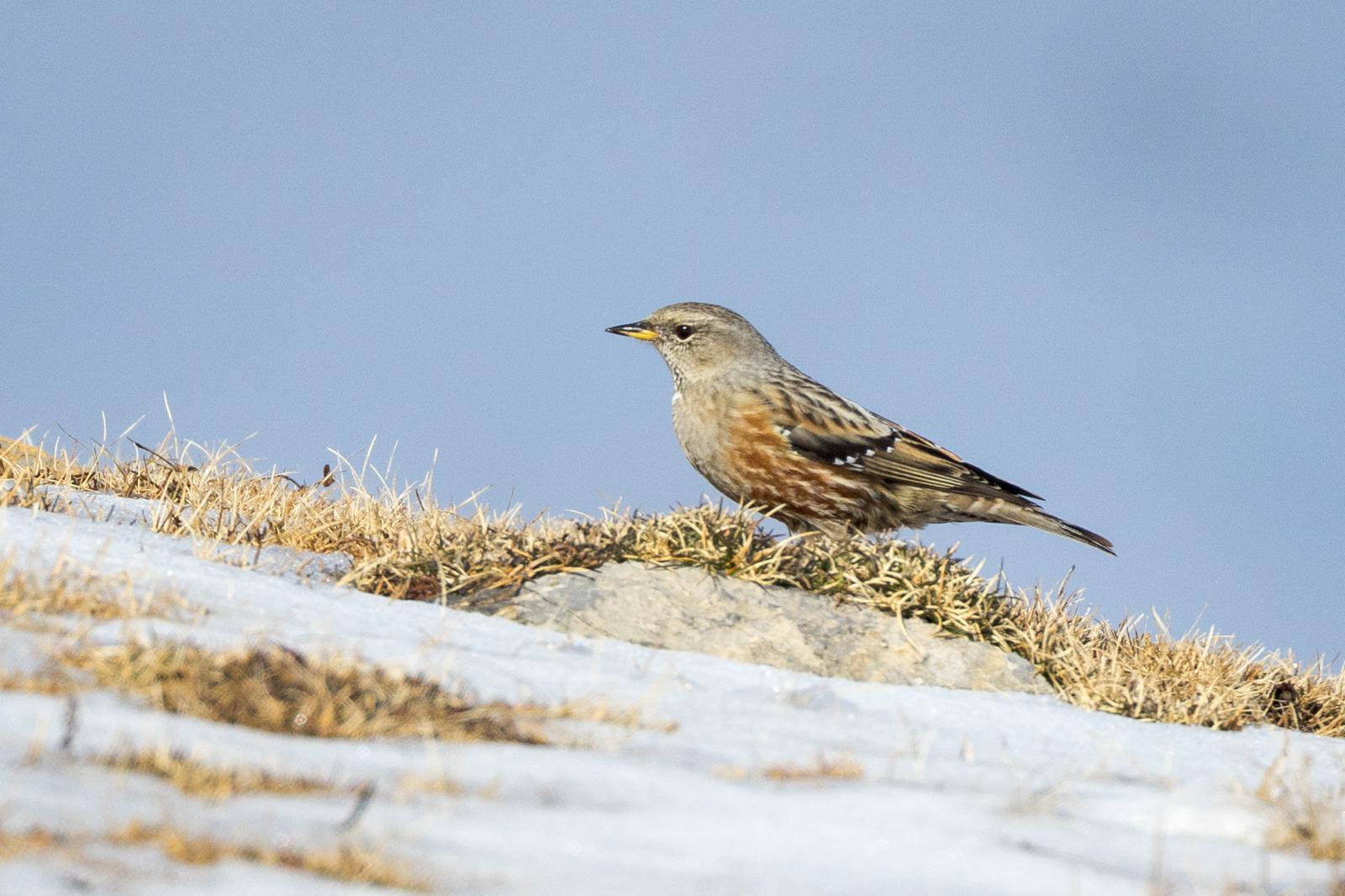
Almost immediately the group found an Alpine Accentor sheltering and feeding on the screen by the roadside! Everyone enjoyed good views despite the weather, before it moved off further up the slope, here we also saw and heard our first European Crested Tits, Coal Tit, Firecrest, and Mistle Thrush of the trip along with several Red-billed Chough.

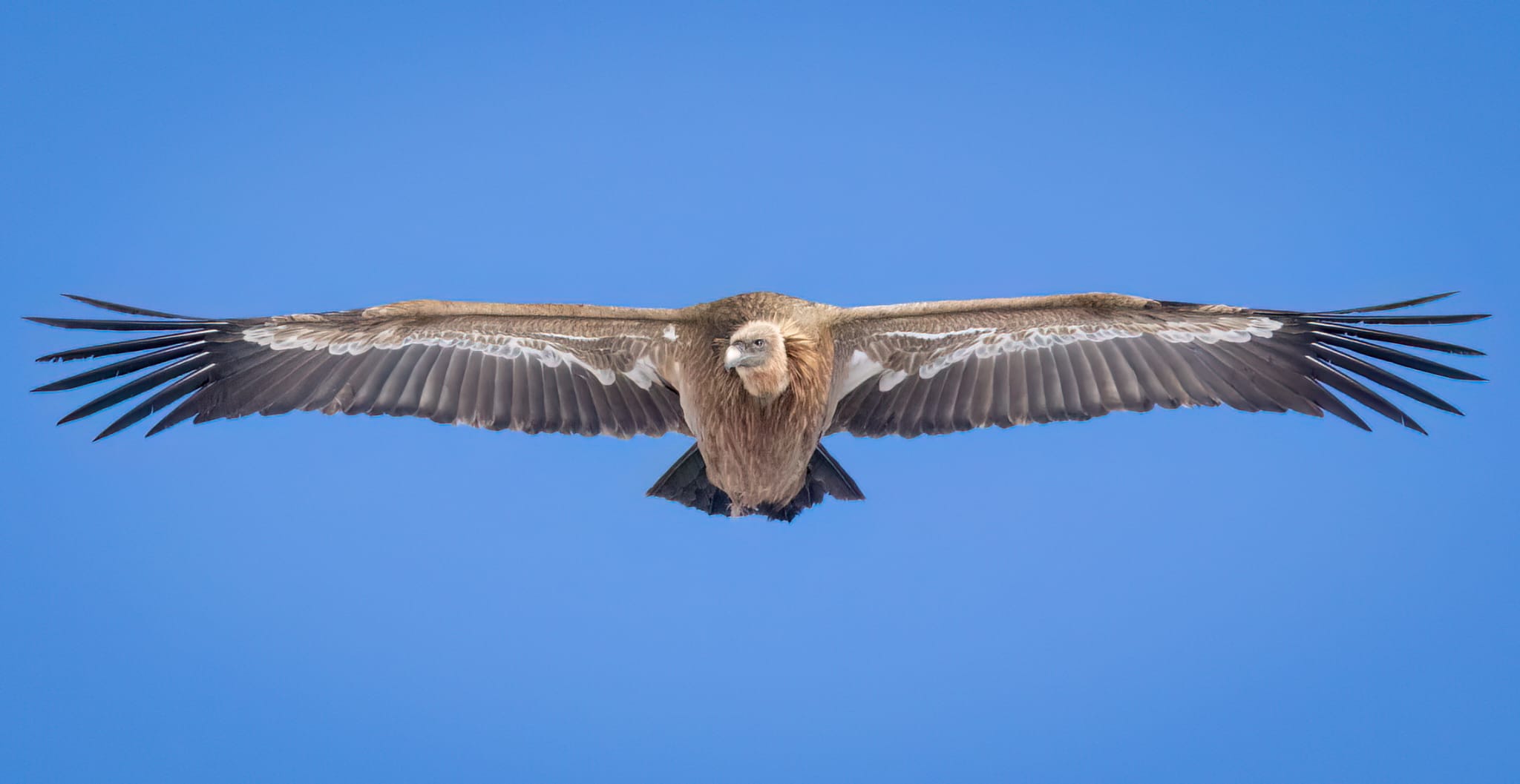
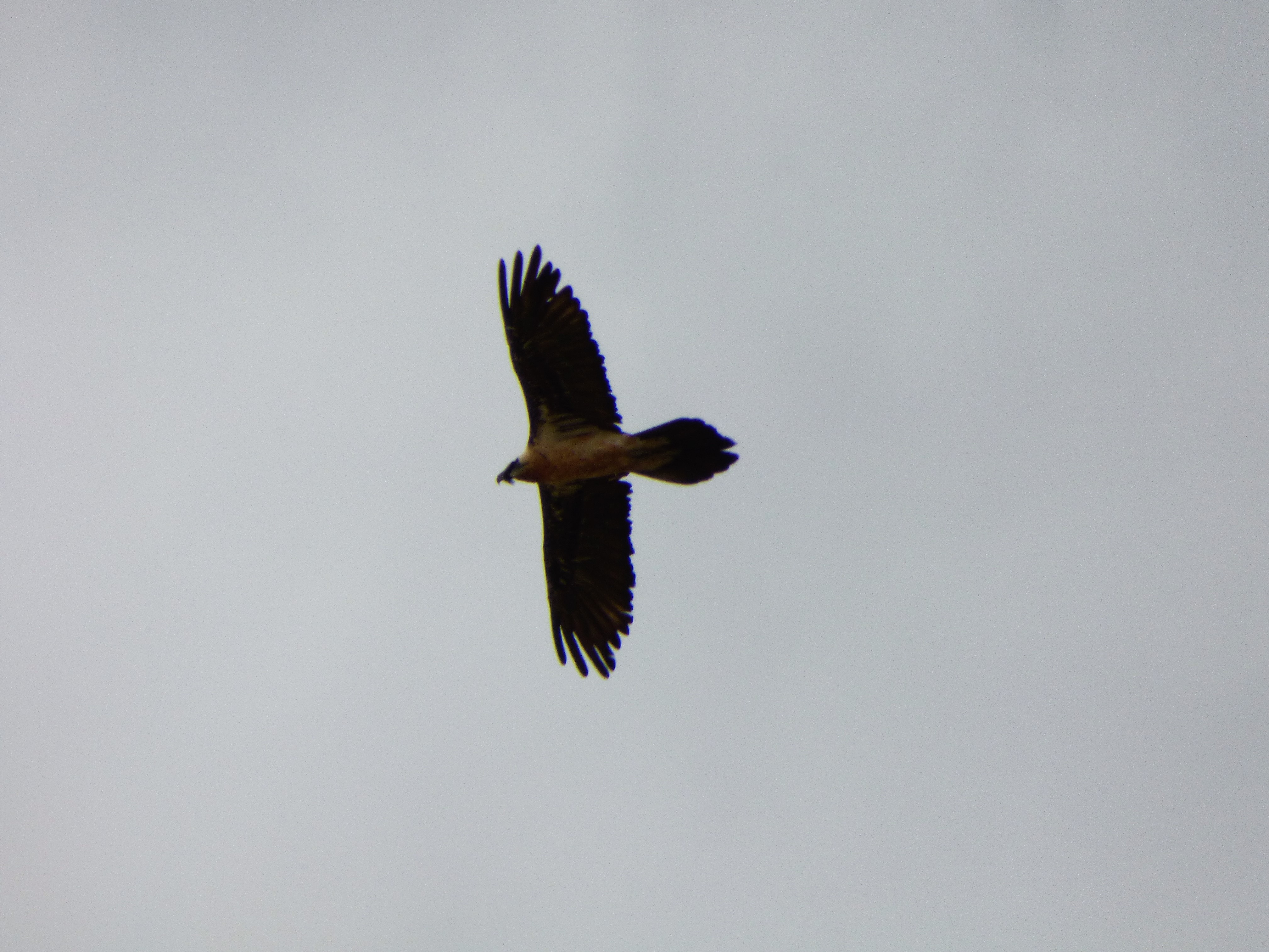
After a walk up the road a few hundred metres the weather began to improve, and as we headed back to the minibus the first of several Eurasian Griffon Vulture began to appear overhead. Whilst enjoying views of these one of the group (Jonny R) shouted out….. ”LAMMERGEIER!!” and an adult bird passed directly overhead giving great views as it glided down across the valley – what a start to the trip!

Alpine Accentor (Prunella collaris) feeding in the slope. Image by Carles Oliver.
Full adult Lammergeier (Gypaetos barbatus). Image by Carles Oliver

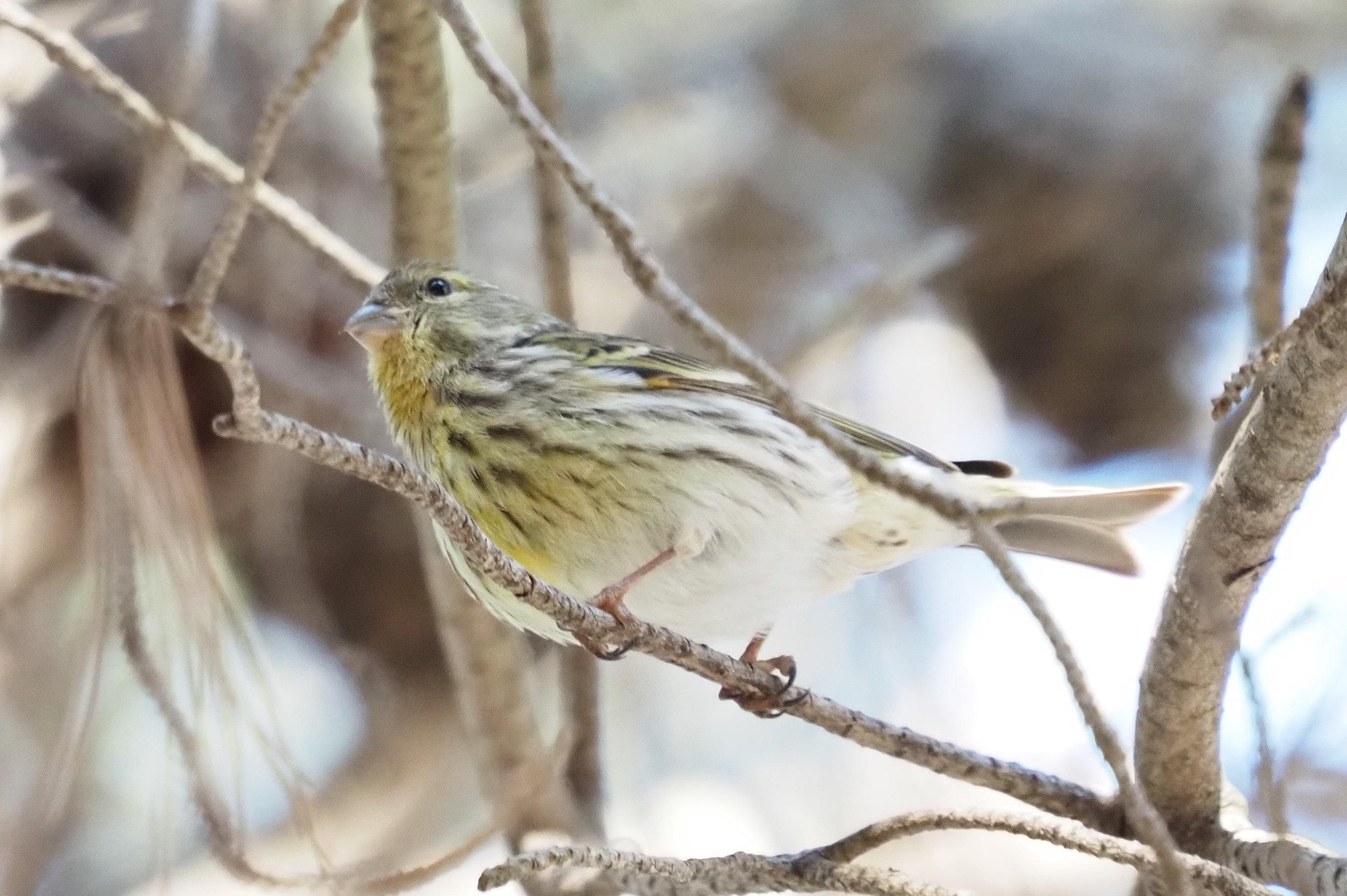
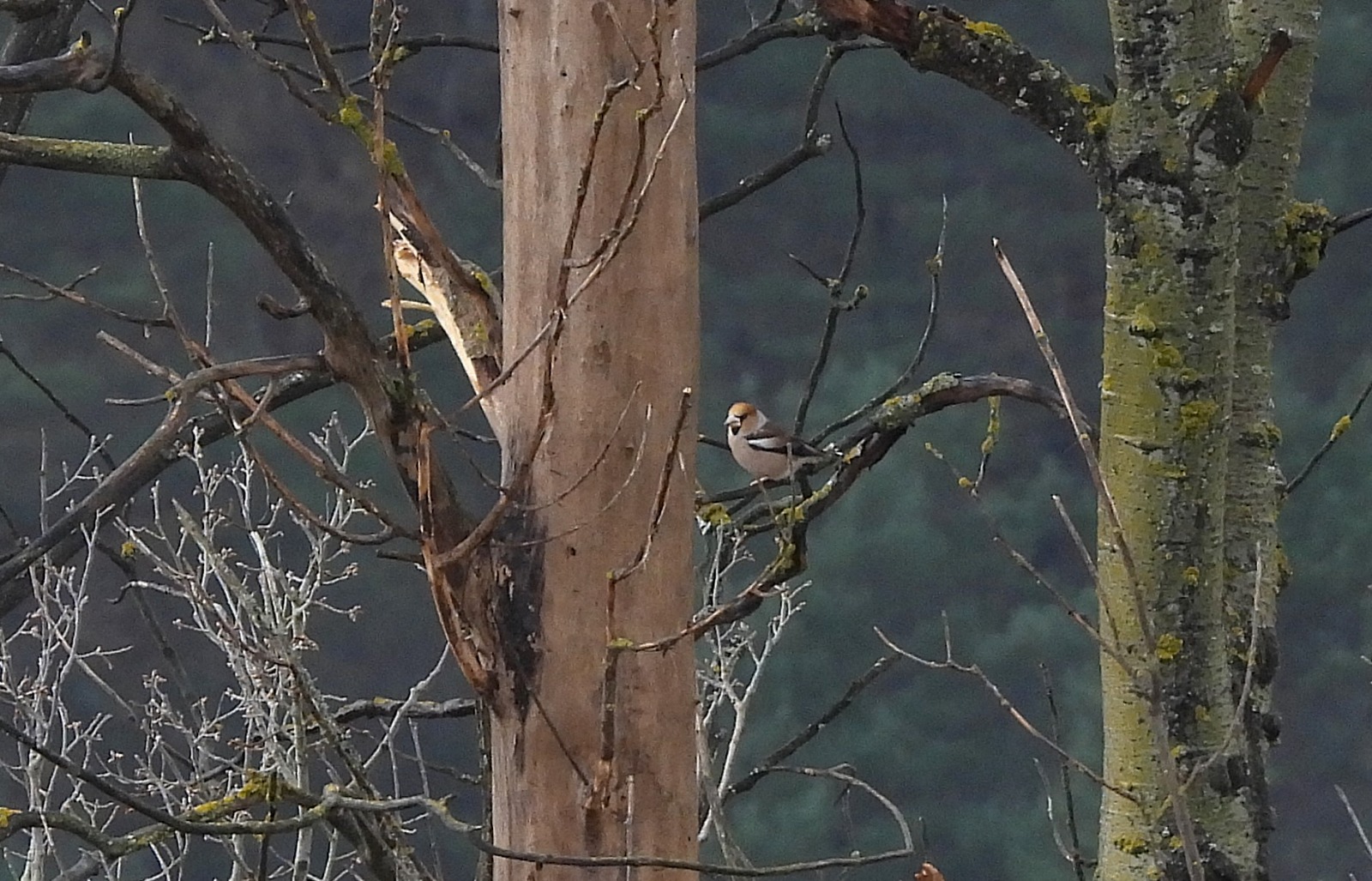
After this excitement we decided to slowly head down the mountain, the weather continued to improve and before we had travelled far we had to stop – 2 Lammergeier were circling and showing well above us! An adult-type bird and a younger 3rd year type bird gave a superb show before drifting away. We then stopped around in the valley where the terraced fields and trees provided lots of birds including Rock Bunting, Hawfinch, Black Redstart, European Stonechat, European Serin, Meadow Pipit and some of the commoner Finches and Tits as well as an unexpected Cattle Egret – not something normally seen at this altitude! We could also hear Iberian Green Woodpecker calling here.

During our urban lunch stop and whilst there saw White-throated Dipper, Common Chiffchaff and Grey Wagtail on the stream through the village and a Common Buzzard passed overhead.

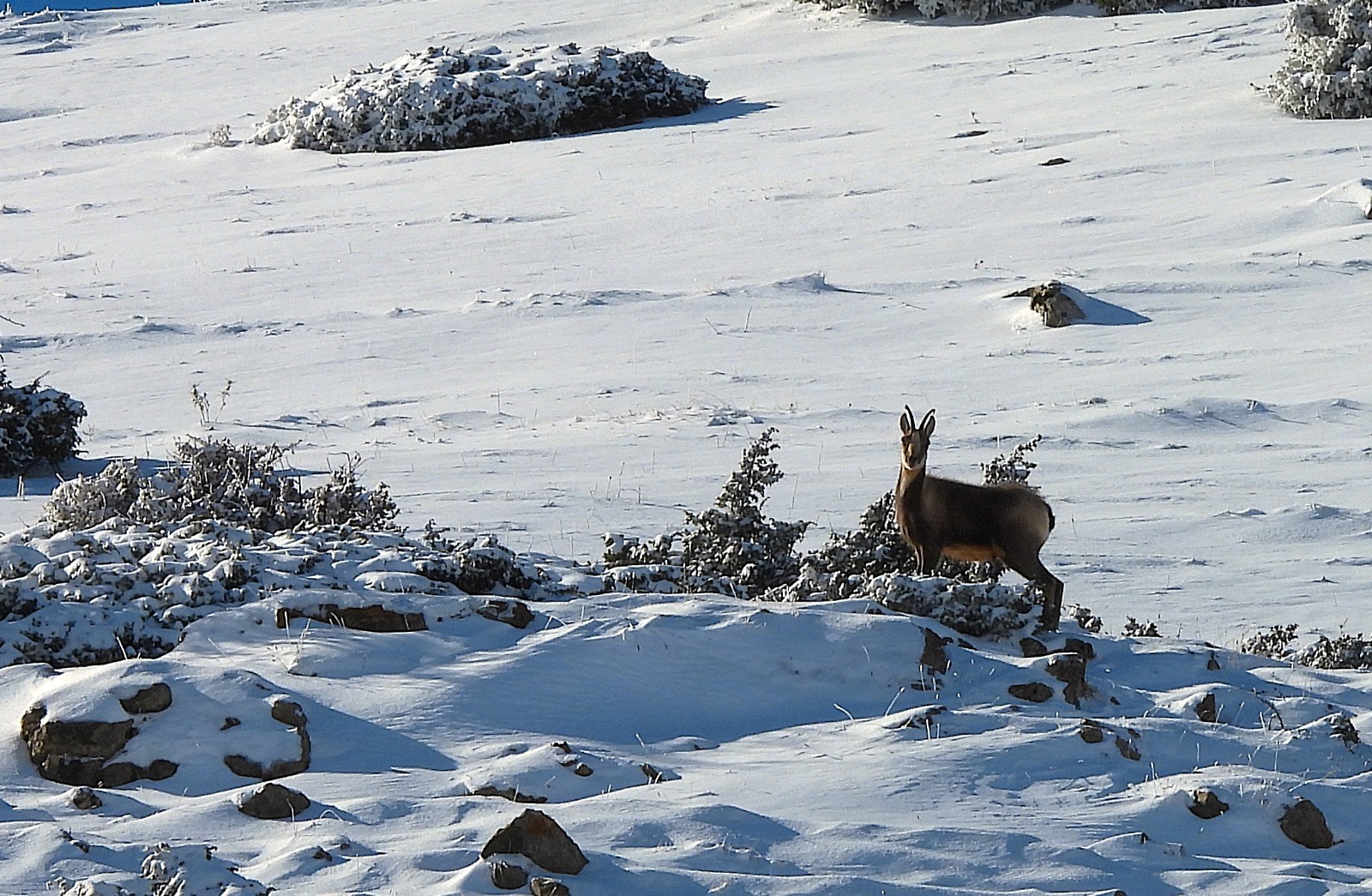
In the afternoon we drove another scenic lane up into the mountains where we enjoyed more fantastic views of 20+ Eurasian Griffons as well as 2 Golden Eagles, Red-billed Choughs and even Magpie which seemed out of place at this altitude. A small group of feeding birds included Fieldfare, Yellowhammer, Chaffinch and Goldfinch. This site also produced our first Pyrenean Chamois of the trip. We again descended into lower meadows and fields and walked a small hill that provided our first Iberian Grey Shrike as well as Eurasian Tree Sparrows, Crested Lark, Firecrests, Crested Tits, Black Redstarts, Yellowhammer, Goldcrest and Corn Buntings. Our last stop before reaching the accommodation for the evening produced lovely views of 8 Rock Sparrows on wires by the roadside – but the day was not finished there because our fabulous accommodation and host has a feeding station in the garden, and as the light faded we were treated to amazing views of up to 3 Beech Martins!! A quite amazing end to fantastic first day.
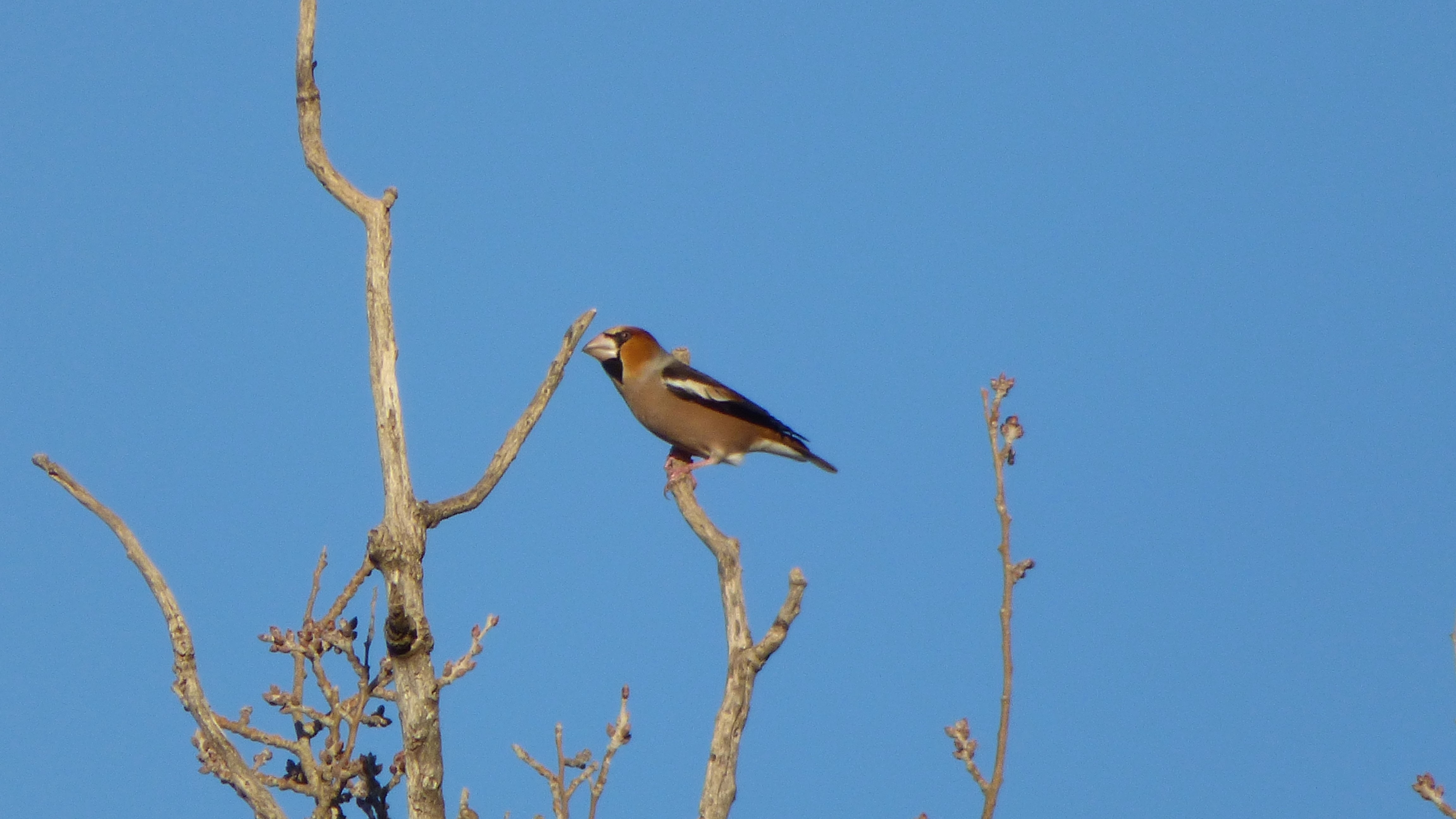
Hawfinch (Coccothraustes coccothraustes). Image by Justin Williams.
Rock Bunting (Emberiza cia). Image by Carles Oliver.
European Crested Tit (Lophophanes cristatus). Image by Jo Simon.
Eurasian Griffon (Gyps fulvus). Image by Jo Simon.
Beech Martin (Martes foina). Image by Stephen Davis.

Day 2.

In some ways a slightly frustrating day with numerous stops and effort failing to locate any Citril Finch, Black Woodpecker or White-winged Snowfinch, but this aside we enjoyed a fantastic variety of birds as we tried several areas including trips into France and then Andorra!

In the lower altitudes we came across a fantastic mixed flock of finch and other small birds including Common Crossbills, (c20) giving great views along the road, as well as Brambling, Siskin, Bullfinch, Short-toed Treecreeper, Great Spotted Woodpecker, Long-tailed Tit, Rock Bunting and Chaffinch, again we could hear Iberian Green Woodpecker calling but they remained invisible…..also in these areas Red Kites became more frequent. Here we also came across our only Red Squirrel of the trip.

In the high mountain passes we enjoyed yet more incredible views of Eurasian Griffons and Common Raven, and as we entered Andorra, our first stop around the town produced a decent number of Alpine Chough hanging about around the shops and houses.

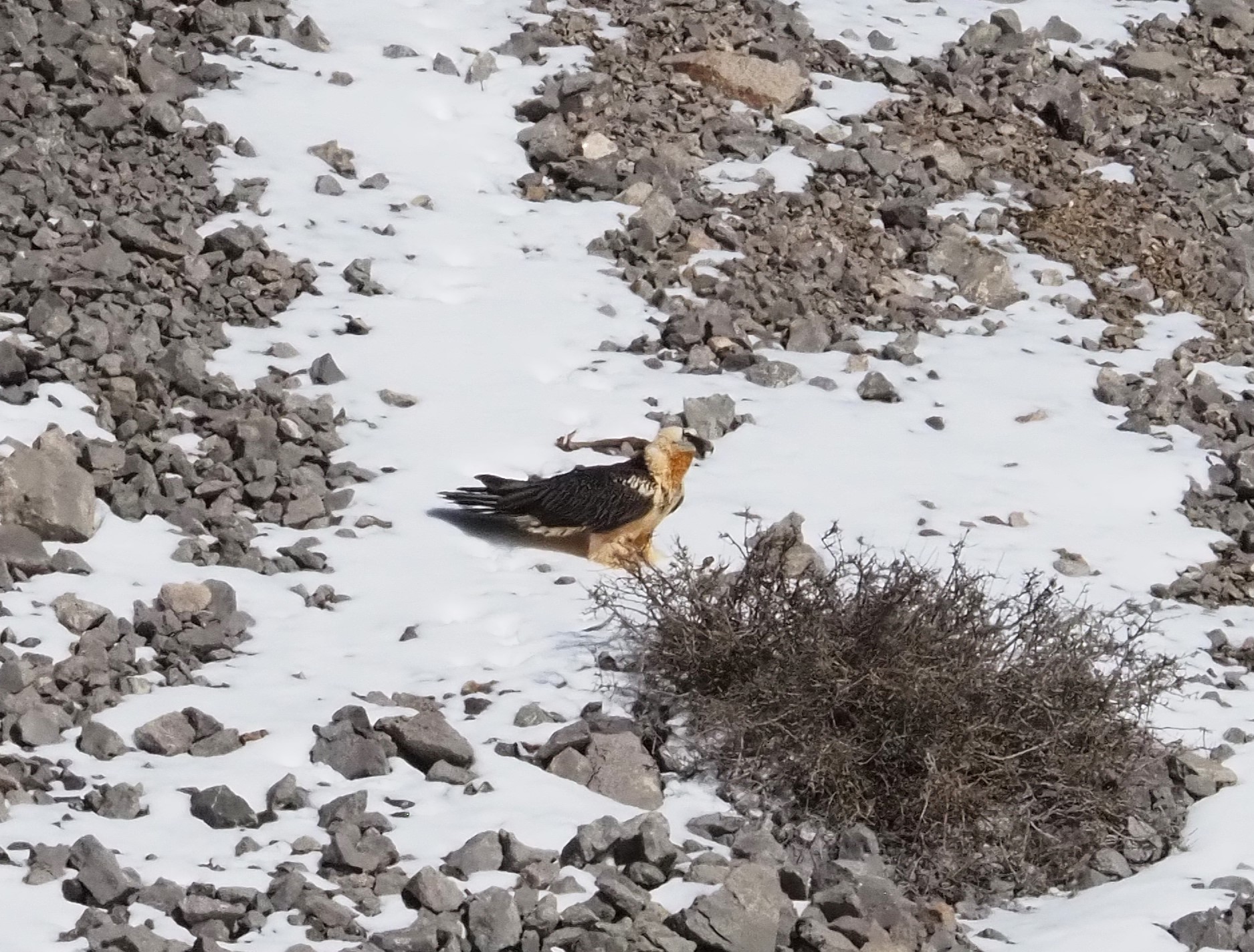
As we had time left in the day, we retraced our steps and returned to summit the lane at Coll de Pal – we had to stop quite soon on the way up due to an adult Lammergeier showing incredibly well by the van!! This bird gave us our best views yet and even landed on the scree a few hundred yards away – a definite highlight of the whole trip!!

Onwards to the summit of the pass in bright sunshine, and we were rewarded at the top when we located a group of 4 Alpine Accentors feeding down to a few metres away, scuttling and shuffling in the snow and short turf – superb!

We then took the 90 min transfer to Lleida where we would be based for 2 nights.

Common Crossbill (Loxia curvirostra). Image by Jonathan Kennedy.
Alpine Choughs (Pyrrhocora graculus) in Andorra. Image by Justin Williams.
That afternoon we got impressive views on Lammergeier. Image by Carles Oliver.
Lammergeier about to land for us. Image by Carles Oliver.
Lammergeier on the ground. Image by Carles Oliver.
Pyrenean Chamois (Rupicabra pyrenaica). Image by Justin Williams.
Alpine Accentor (Prunella collaris). Image by Stephen Davis.

Day 3.

The day began with a short trip to our first site and roadside White Storks but even this was interrupted by one of the group skilfully spotting a Stone Curlew by the road!

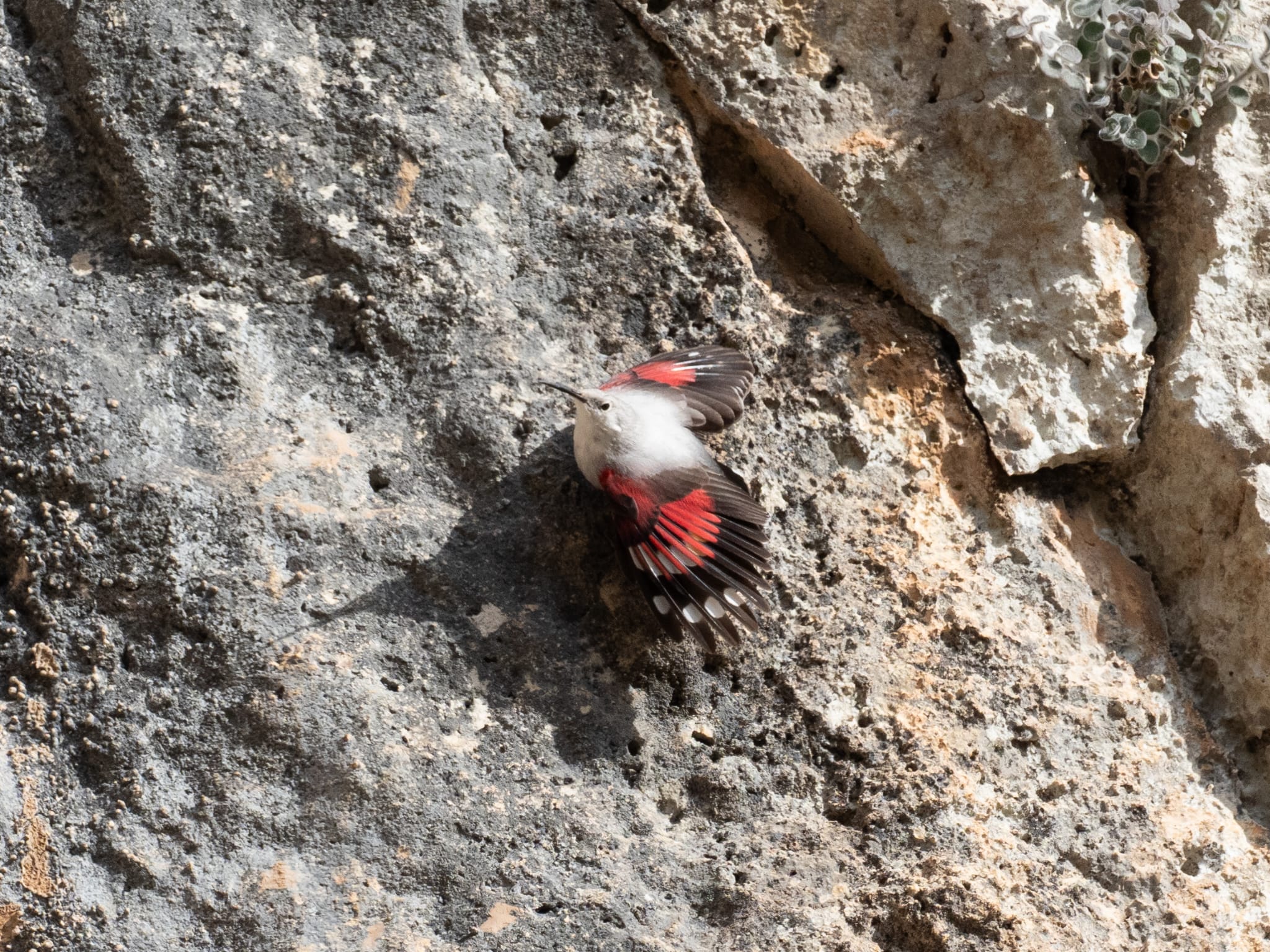
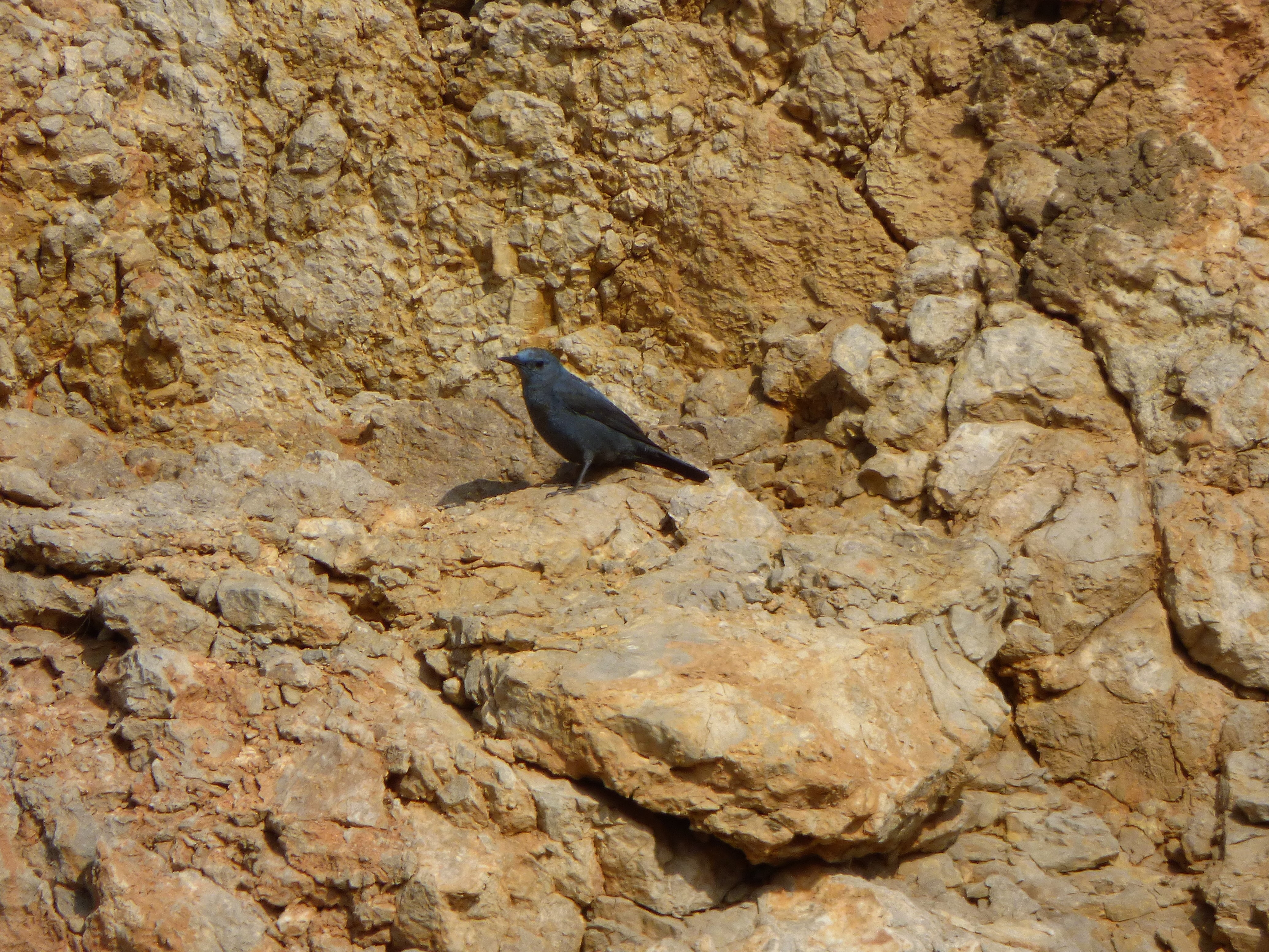
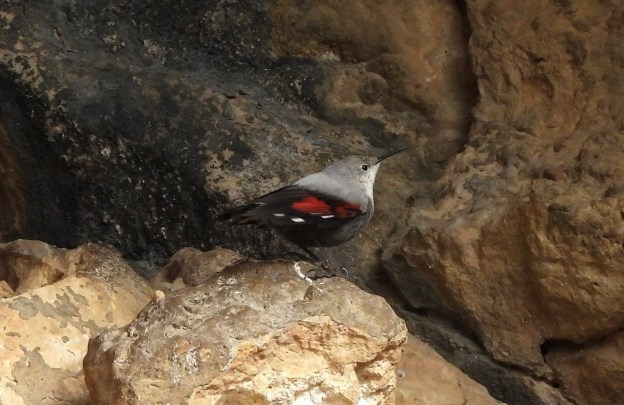
We were shortly at our first stop, a spectacular dam and gorge with a river and mixed scrub, we quickly began adding birds such as Rock Sparrow, Blue Rock Thrush, Crag Martins (which breed in the tunnel), Blackcap, Kestrel, Song Thrush, Short-toed Treecreeper, Common Kingfisher, Cettis and Sardinian Warblers, Firecrest, Rock Buntings and several Eurasian Griffons. Around 2 hours had now passed and things were starting to get a bit tense…..and then WALLCREEPER!! A bird was located towards the dam and 3 of the group were in the right spot to see it straight away, whilst the rest hurried towards the bird, they found a second Wallcreeper! This bird gave everyone much better views for a few minutes, and everyone could relax, especially Carles!

As we left the gorge a short stop provided Cirl Buntings, 2 Peregrines, Hawfinch and a large flock of Corn Bunting, and as we stopped for coffee, Spotless Starlings.

Stone Curlew (Burhinus oedicnemus). Image by Stephen Davis.
Wallcreeper (Tichodroma muraria). Image by Justin Williams.
Wallcreeper (Tichodroma muraria). Image by Jonathan Kennedy.
Wallcreeper (Tichodroma muraria). Image by Justin Williams.
Wallcreeper Argonauts! Image by Jo Symon.

We then moved on towards our next site with a couple of stops, the first providing many Cattle Egrets, White Storks and our first Great Egret, the second 2 Golden Eagles, Lapwing, Raven, Thekla Larks and a ringtail Hen Harrier as well as a roadside Little Owl.

We then stopped beside a spectacular roadside cliff face for our lunchtime picnic and immediately located our 3rd Wallcreeper of the day!! Although a little more distant this bird gave good telescope views, but we were distracted from this by 2-3 Black Wheatears which were also showing well here along with a Blue Rock Thrush!

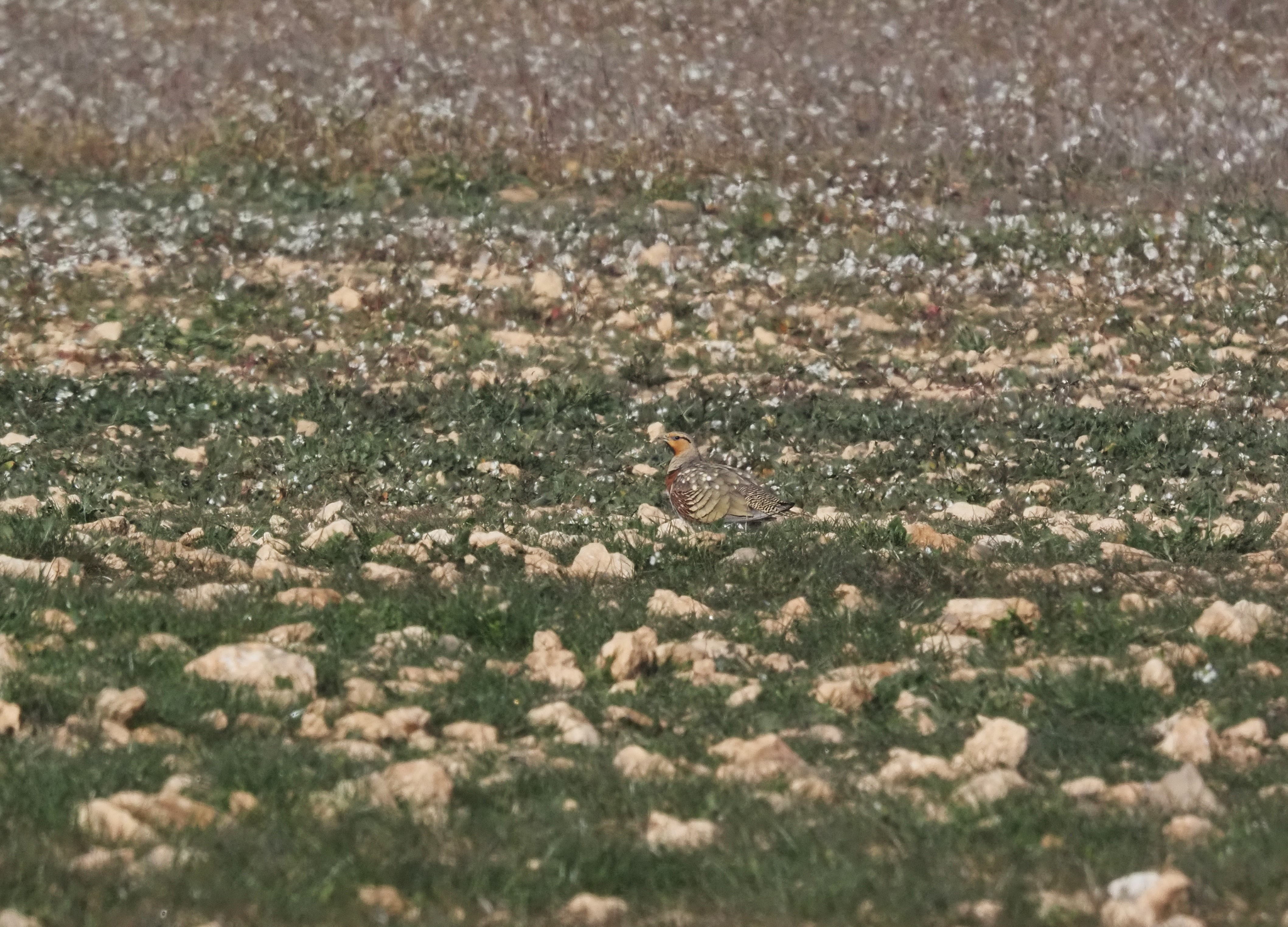
We were now into an area of plains and mixed arable land that is rapidly changing due to increased irrigation, but some areas still held many birds and we were quickly seeing Calandra Larks along with Thekla and Crested Larks and after walking a while we saw a distant Iberian Grey Shrike, Peregrine, and then located a single summer plumaged Pin-tailed Sandgrouse, a little distant, but again telescope views were good. As we left the site, we had excellent views of another Iberian Grey Shrike which really showed the difference between this and its northern counterpart.

We then called at a small roadside wetland and began adding a few species such as Coot Shoveler, Common Pochard, Common Snipe, Reed Bunting and Great Egret, as well as a rather unexpected, and slightly questionable, African Sacred Ibis! This bird has been in the area a while, and presumably originates from a ‘feral’ population in nearby France, Italy or Germany… Either way it made at least one of the group very happy!

Our last stop was to close by, and before we had even parked the van our main target was located – a male Eagle Owl! Perched in the ruins of an huge ancient building, this guy sat and watched us as we quietly watched him before starting to sing….amazing!

Whilst Serins and Sardinian Warblers twittered and scratched nearby, the Eagle Owl sat watch, his deep hoot echoing occasionally, until he finally flew low across to a nearby rock face….what an end to a truly fantastic days birding!!

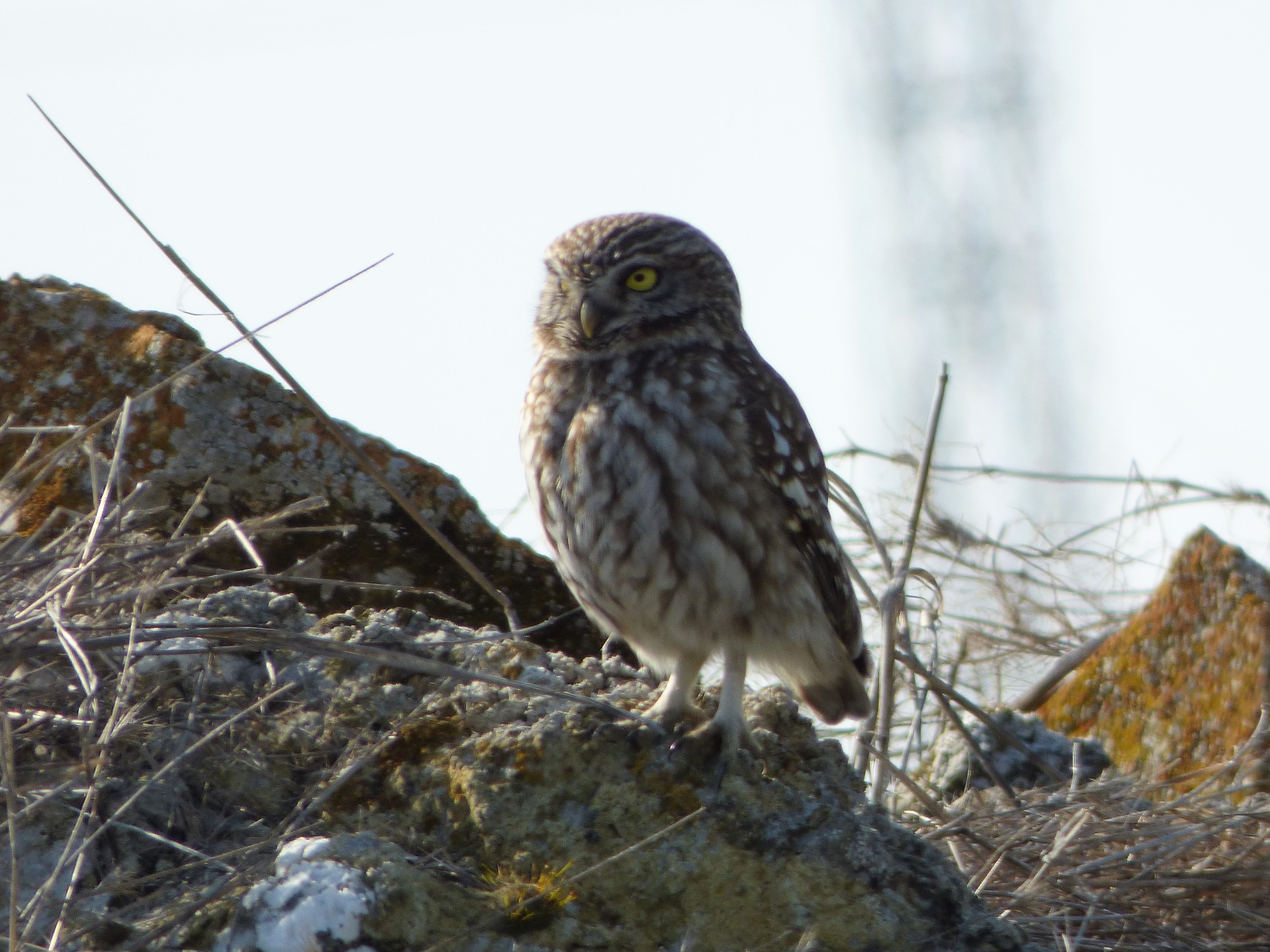
Little Owl (Athene noctua) on its roof. Image by Justing Williams.
Spotless Starling (Sturnus unicolor). Image by Justin Williams.
Pin-tailed Sandgrouse (Pterocles alchata) male. Image by Carles Oliver.
Iberian Grey Shrike (Lanius meridionalis) posed nicely for the group. Image by Carles Oliver.
African Sacred Ibis (Therskiornis aethiopicus) moving along with Western Cattle Egrets. Image by Carles Oliver.
Eurasian Eagle Owl (Bubo bubo) watching us. Image by Carles Oliver.

Day 4.

The day began with a short transfer after breakfast, interrupted by a large flock of migrating Common Cranes. These birds had presumably roosted nearby in the large open arable fields and were continuing their northward journey. We then entered an area of mixed arable/farmed/wild fields with big skies and tremendous views, misty fog didn’t help our search, but we quite quickly located 5 Great Bustards, all males, slowly wandering across their chosen field. Views were not brilliant, but very atmospheric! Here we were surrounded by Calandra Larks, Corn Buntings and our first Lesser Short-toed Larks as well as a Zitting Cisticola, Stonechats and Sardinian Warbler.

We then took a short coffee stop as the mist cleared and visited a small wetland with more Larks and many Linnets, Corn Buntings and Chaffinch before having second, clearer but distant views of the Great Bustards. With this under our belts we collected lunch and moved on.

We soon arrived at Lomaza (only briefly distracted by a large flock of migrating White Storks) and began to look at various larks…. A lot! A landscape of low spiky grass, thistle and huge skies stretched all around us. Quickly we were seeing many Calandra, Thekla and Lesser Short-toed (or ‘Mediterranean’) Larks, with their songs all around us, including much mimicry from the Calandra – quite a soundscape!

After c45mins, suddenly, the song we were searching for, and quickly some views of our quarry…DUPONT’S LARK! At least 2 birds, a pair, were making short, darting runs between bits of spiky tussocks grass until, amazingly, the male climbed a short way into a tussock and sat in full view singing…..a fantastic bit of good fortune and handshakes all round!

With the pressure off we all enjoyed the experience and incredible scenery of this beautiful, wild landscape.

The weather was warm now, and we stopped near Belchite to admire some ruins complete with Crag Martins, Serins and Black Redstart before moving onto a high plateau.

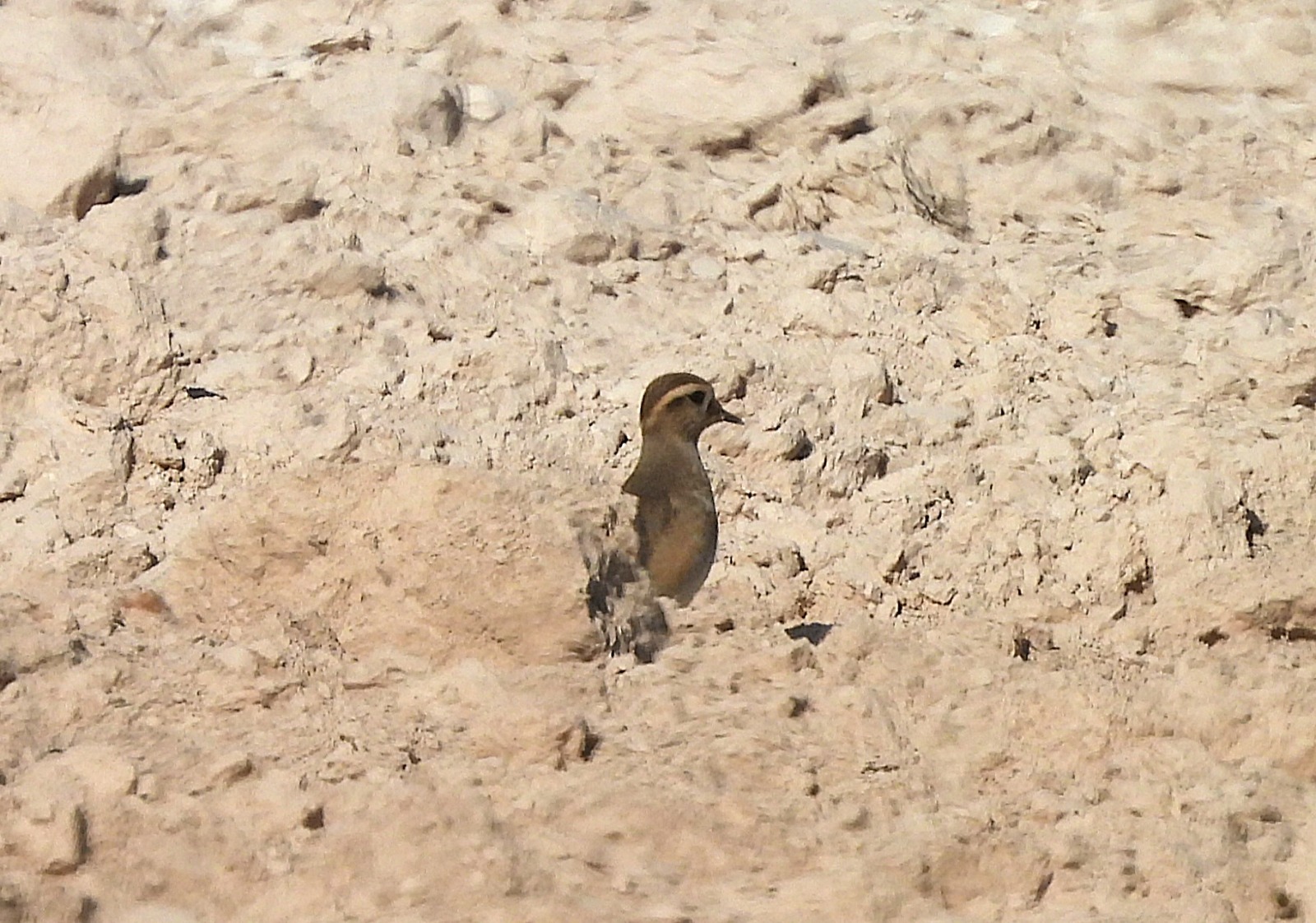
Slowly driving and scanning the fields we came across an unexpected flock of Dotterel, with around 25-30 birds present and showing well, whilst above a Golden eagle soared past. Again we were seeing lots of Calandra Lark with birds still in large winter flocks, Stonechats by the road, Red-legged Partridge, 2 Red Fox, but no sandgrouse….much scanning and scoping eventually led to one of the group picking out a small flock in the far distance, we drove nearer and saw up to 16 Black-Bellied Sandgrouse, good scope views of the birds moving about their chosen field as well as in flight when they are really impressive, a fantastic end to another brilliant day!

Great Bustards (Otis tarda) in dense fog. Image by Carles Oliver.
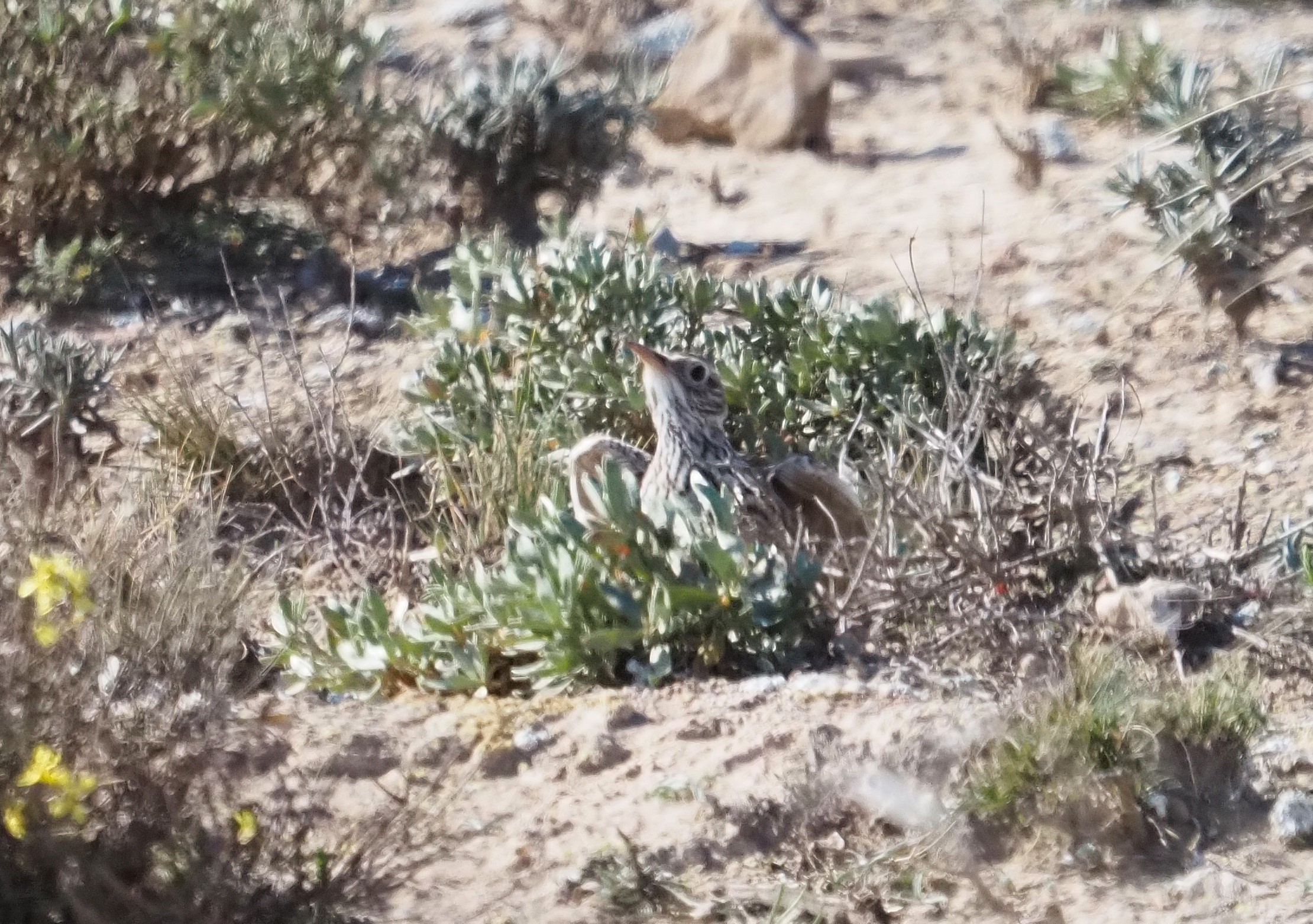
Dupont’s Lark (Chersophilus duponti): shaking wings as preparing to leave its resting site (up), male singing from to top of a tussock (below). Image by Carles Oliver.
Eurasian Dotterel (Charadrius morinellus), one of 25+ birds resting in a plugged field. Image by Justin Williams.
European Serin (Serinus serinus) female in a short stop around Belchite. Image by Carles Oliver.
Golden Eagle (Aquila chrysaetos), one of many seen during the trip. Image by Carles Oliver
Corn Bunting (Emberiza calandra) acting like being spring. The area around Lleida has the largest density in Europe. Image by Carles Oliver.

Day 5.

We awoke to fairly torrential constant rain, and with the forecast not looking good we made the decision to change our plans and head for the Ebro Delta.

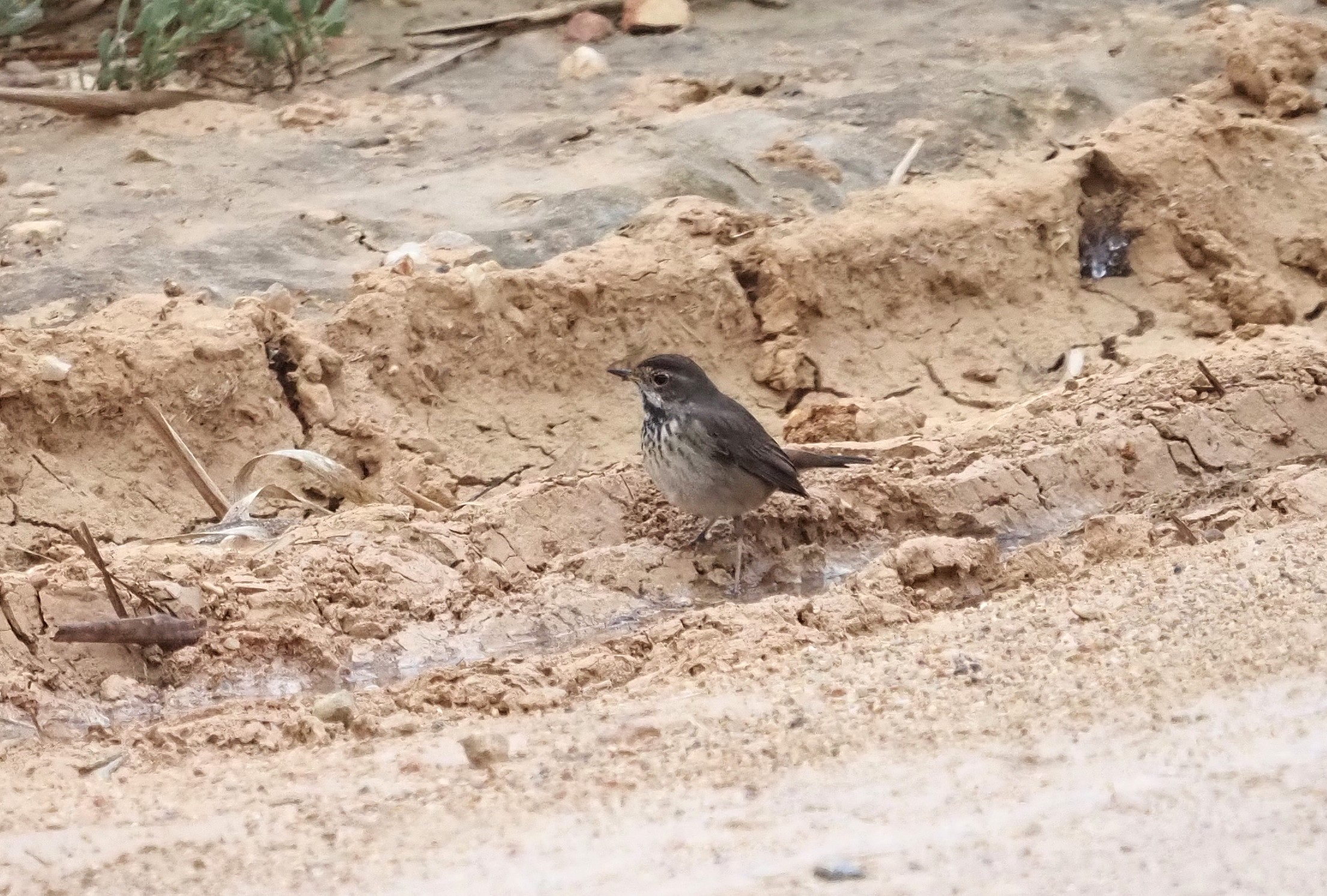
This journey was briefly interrupted with a stop when we spotted 4 Spanish Ibex on a high hill beside the road. Once we arrived at the Ebro we rapidly began adding birds to the trip list, the total change in habitat was exciting and we added many species during the morning including exciting birds such as Moustached Warbler which showed quite well a few times, Penduline Tit, Western Swamphen, Bluethroat, Greater Flamingo, Glossy Ibis, Slender-billed Gull, Caspian Tern, Black-necked Grebe, Red-crested Pochard, and Osprey as well a variety of waders and other wetland birds.

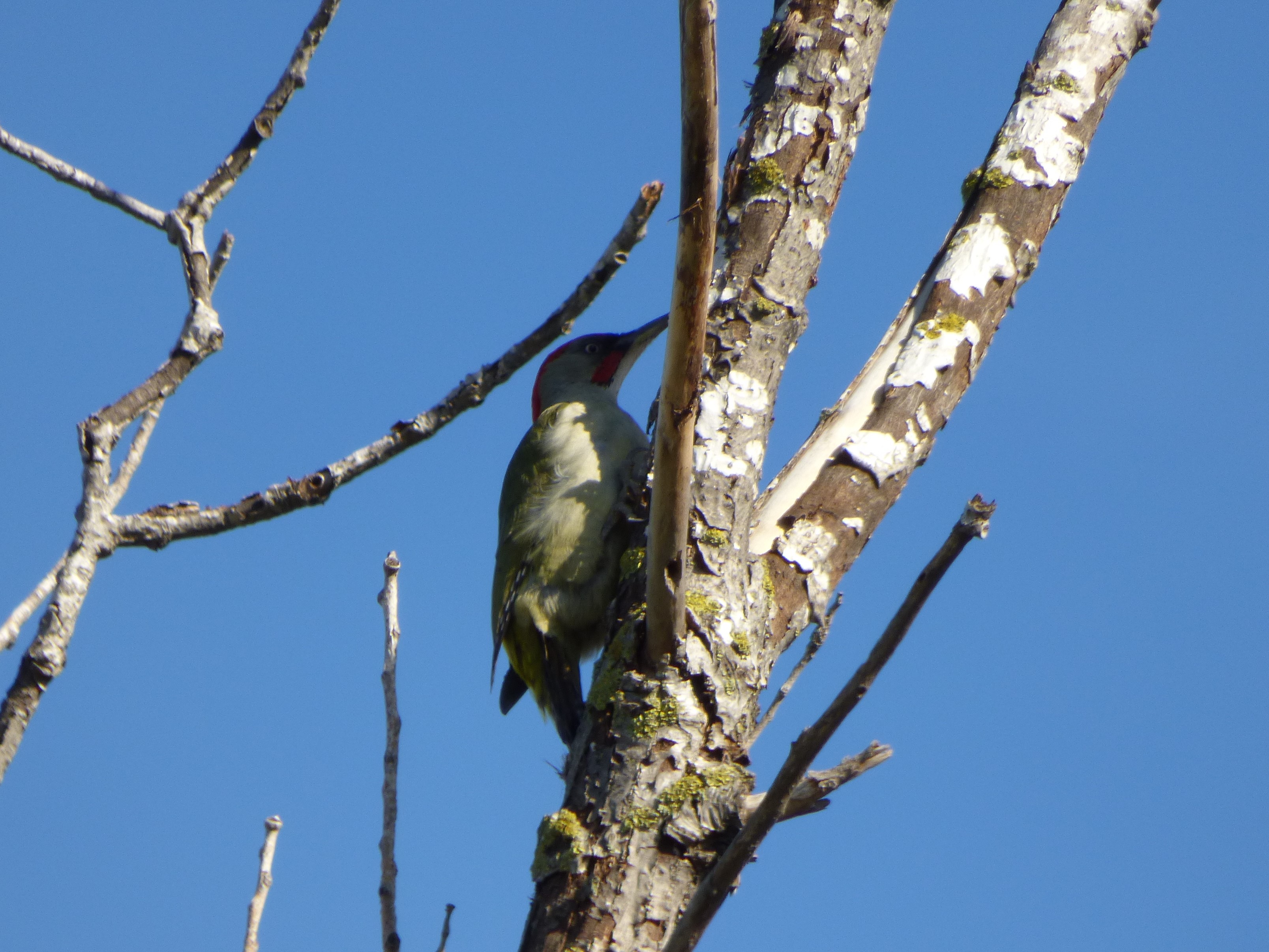
Too soon we had to leave and head for Barcelona, and the airport, but still we made time for 2 quick stops – the first giving us great views of Iberian Green Woodpecker (finally!) and Monk Parakeets. The second stop was at the beach right by the airport where we had fantastic views of Audouins Gull and also passing Atlantic Gannets and Sandwich Terns….a fitting end to a really enjoyable trip with a great group!

Western Swamphen (Porphyrio porphyrio) under the rain. Image by Carles Oliver.
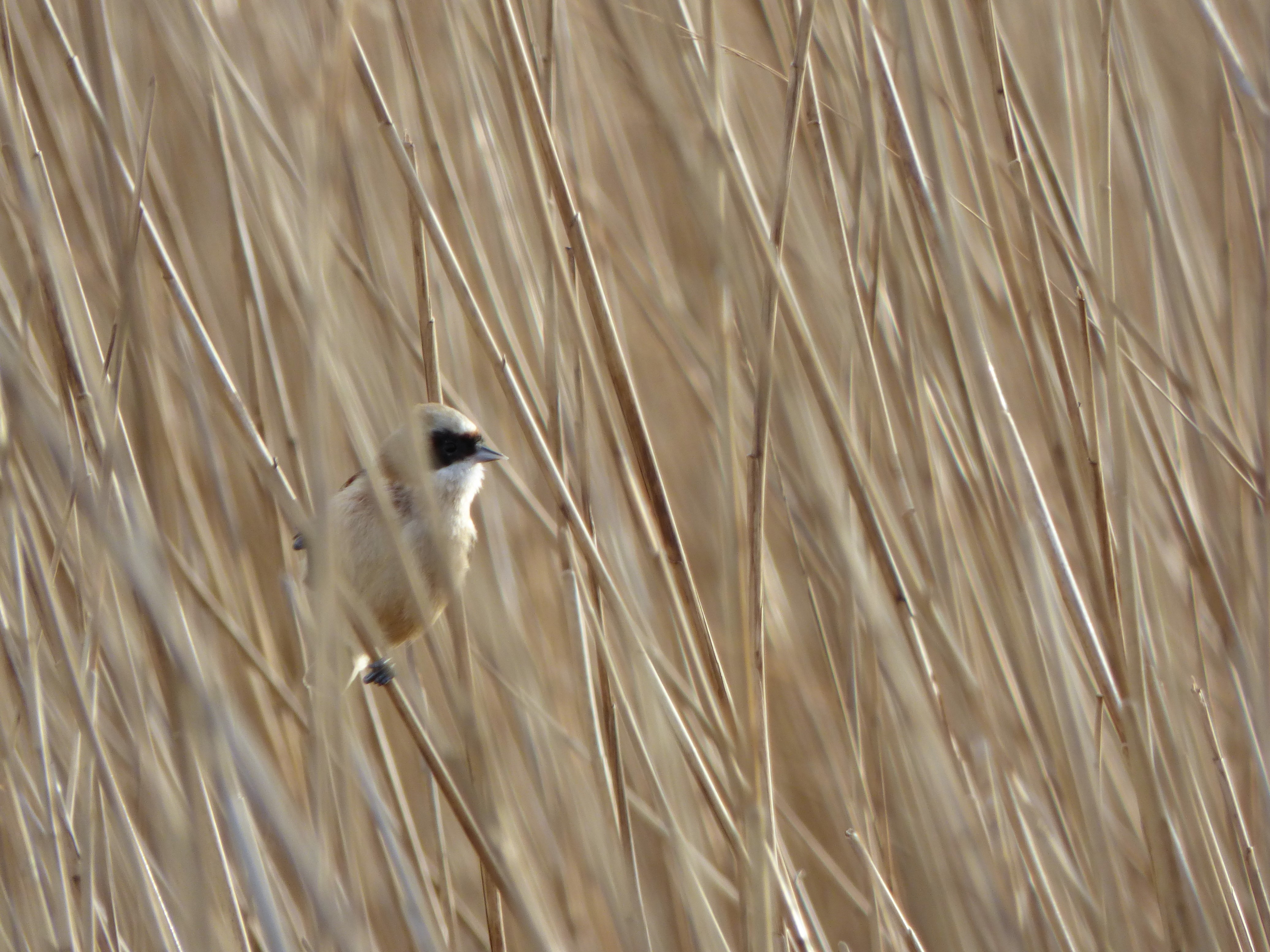
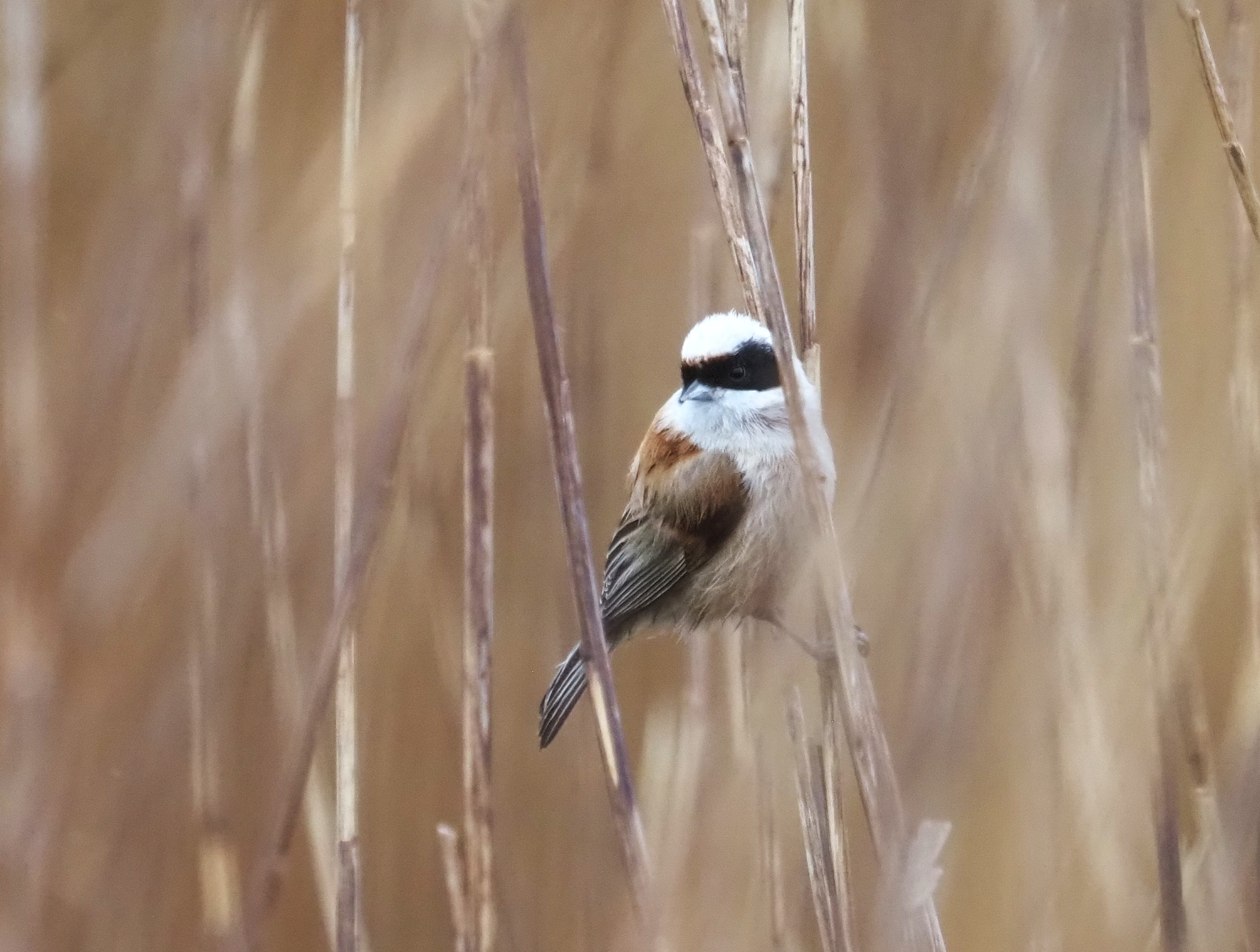
Penduline Tit (Remiz pendulinus) showed well under the rain. Image by Carles Oliver.
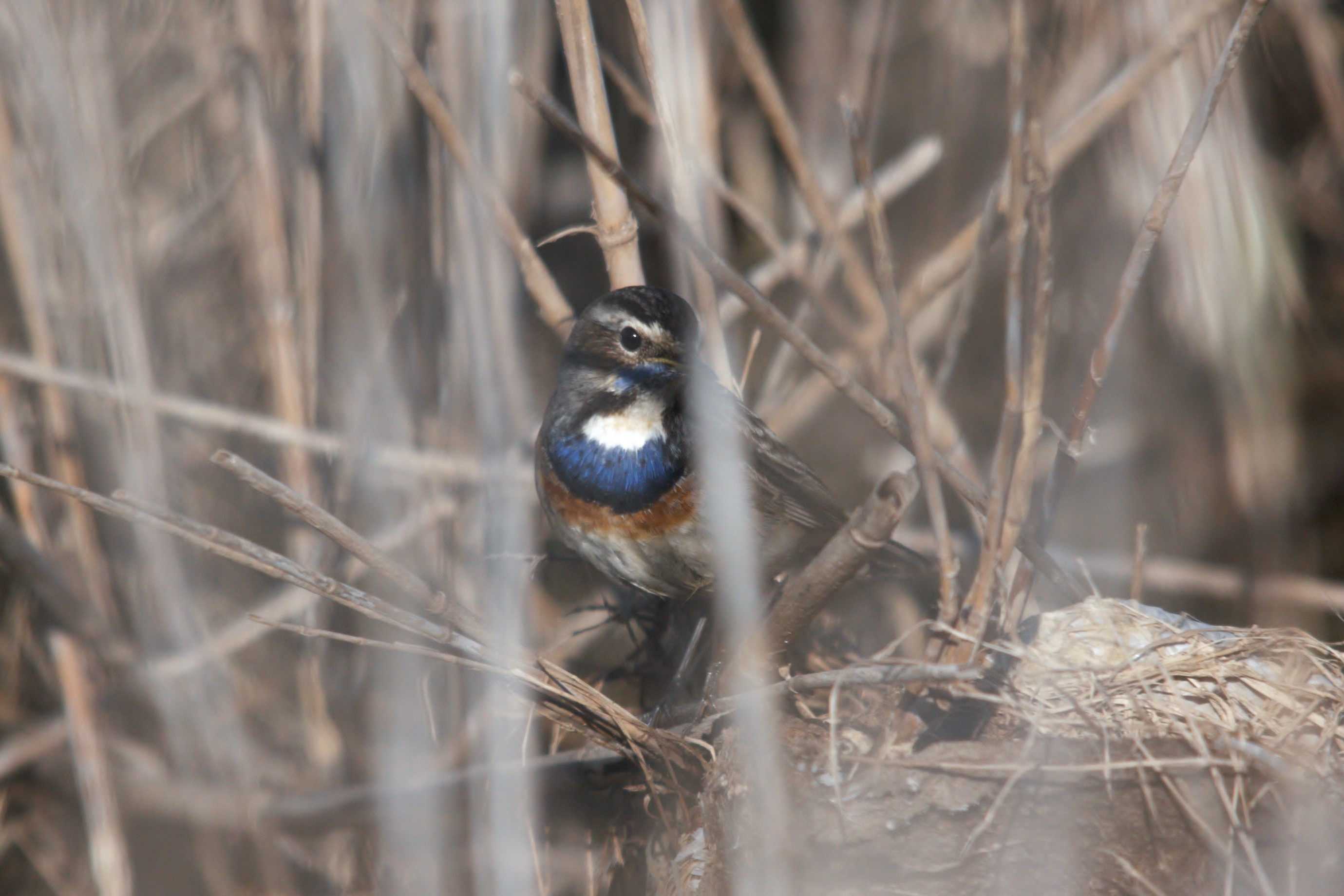
Bluethroat (Luscinia svecica) in the path for us. Image by Carles Oliver.
Iberian Green Woodpeckers (Picus sharpei). Image by Jo Symon.
Another shot on Iberian Green Woodpecker. Image by Justin Williams.
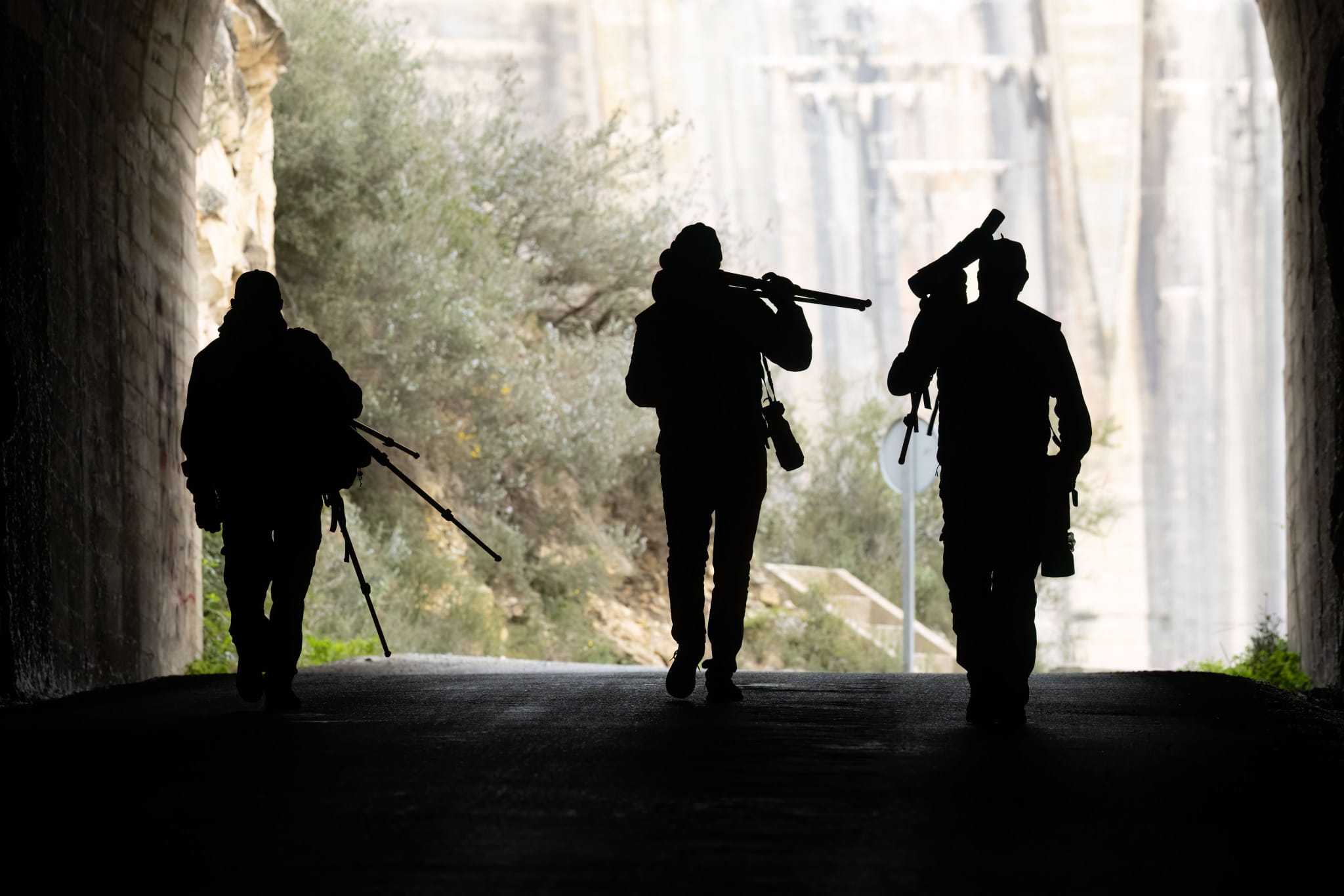
Our group almost complete. Image by Daf Edwards.

List of birds seen during the tour

  1. Red-legged Partridge (Alectoris rufa)
  2. Common Shelduck (Tadorna tadorna)
  3. Mallard (Anas platyrhynchos)
  4. Eurasian Teal (Anas crecca)
  5. Northern Shoveler (Spatula clypeata)
  6. Common Pochard (Aythya ferina)
  7. Red-crested Pochard (Netta rufina)
  8. Great Bustard (Otis tarda)
  9. Black-bellied Sandgrouse (Pterocles orientalis)
  10. Pin-tailed Sandgrouse (Pterocles alchata)
  11. Feral Pigeon (Columba livia domestica)
  12. Common Woodpigeon (Columba palumbus)
  13. Eurasian Collared Dove (Streptopelia decaocto)
  14. Water Rail (Rallus aquaticus) — heard only
  15. Eurasian Moorhen (Gallinula chloropus)
  16. Eurasian Coot (Fulica atra)
  17. Western Swamphen (Porphyrio porphyrio)
  18. Common Crane (Grus grus)
  19. Great Crested Grebe (Podiceps cristatus)
  20. Black-necked Grebe (Podiceps nigricollis)
  21. Little Grebe (Tachybaptus ruficollis)
  22. Atlantic Gannet (Morus bassanus)
  23. Greater Flamingo (Phoenicopterus ruber)
  24. Black-winged Stilt (Himantopus himantopus)
  25. Stone Curlew (Burhinus oedicnemus)
  26. Eurasian Dotterel (Eudromias morinellus)
  27. Grey Plover (Pluvialis squatarola)
  28. Northern Lapwing (Vanellus vanellus)
  29. Ruddy Turnstone (Arenaria interpress)
  30. Dunlin (Calidris alpina)
  31. Sanderling (Calidris alba)
  32. Common Snipe (Gallinago gallinago)
  33. Common Redshank (Tringa totanus)
  34. Greenshank (Tringa nebularia)
  35. Green Sandpiper (Tringa ochropus)
  36. Eurasian Curlew (Numenius arquata)
  37. Common Sandpiper (Actitis hypoleuca)
  38. Slender-billed Gull (Chroicocephalus geneni)
  39. Black-headed Gull (Chroicocephalus ridibundus)
  40. Mediterranean Gull (Ichthyaetus melanocephalus)
  41. Audouin’s Gull (Ichthyaetus audouinii)
  42. Yellow-legged Gull (Larus michahellis)
  43. Lesser Black-backed Gull (Larus fuscus)
  44. Caspian Tern (Hydroprogne caspia)
  45. Sandwich Tern (Thalasseus sandvicensis)
  46. White Stork (Ciconia ciconia)
  47. Great Cormorant (Phalacrocorax carbo)
  48. Glossy Ibis (Plegadis falcinellus)
  49. African Sacred Ibis (Threskiornis aethiopica)
  50. Little Egret (Egretta garzetta)
  51. Western Cattle Egret (Ardea ibis)
  52. Great White Egret (Ardea alba)
  53. Grey Heron (Ardea cinerea)
  54. Lammergeier (Gypaetus barbatus)
  55. Eurasian Griffon (Gyps fulvus)
  56. Golden Eagle (Aquila chrysaetos)
  57. Red Kite (Milvus milvus)
  58. Hen Harrier (CIrcus cyaneus)
  59. Western Marsh Harrier (Circus aeruginosus)
  60. Eurasian Sparrowhawk (Accipiter nisus)
  61. Common Buzzard (Buteo buteo)
  62. Osprey (Pandion haliaetos)
  63. Eurasian Eagle Owl (Bubo bubo)
  64. Little Owl (Athene noctua)
  65. Eurasian Hoopoe (Upupa epops)
  66. Common Kingfisher (Alcedo atthis)
  67. Great Spotted Woodpecker (Dendrocopos major)
  68. Iberian Green Woodpecker (Picus sharpei)
  69. Eurasian Kestrel (Falco tinnunculus)
  70. Peregrine Falcon (Falco peregrinus)
  71. Monk Parakeet (Myiopsitta monachus)
  72. Mediterranean Short-toed Lark (Alaudala rufescens)
  73. Eurasian Skylark (Alauda arvensis)
  74. Crested Lark (Galerida cristata)
  75. Thekla’s Lark (Galerida theklae)
  76. Calandra Lark (Melanocorypha calandra)
  77. Dupont’s Lark (Chersophilus duponti)
  78. Crag Martin (Ptyonoprogne rupestris)
  79. Meadow Pipit (Anthus pratensis)
  80. Water Pipit (Anthus spinolleta) — heard only
  81. White Wagtail (Motacilla alba)
  82. Grey Wagtail (Motacilla cinerea)
  83. White-bellied Dipper (Cinclus cinclus)
  84. Dunnock (Prunella modularis) — heard only
  85. Alpine Accentor (Prunella collaris)
  86. European Robin (Erithacus rubecula)
  87. Bluethroat (Luscinia svecica)
  88. Black Redstart (Phoenicurus ochruros)
  89. Black Wheatear (Oenanthe leucura)
  90. European Stonechat (Saxicola rubicola)
  91. Blue Rock Thrush (Monticola solitarius)
  92. Song Thrush (Turdus philomelos)
  93. Redwing (Turdus iliacus) — heard only
  94. Mistle Thrush (Turdus viscivorus)
  95. Fieldfare (Turdus pilaris)
  96. European Blackbird (Turdus merula)
  97. Eurasian Blackcap (Sylvia atricapilla)
  98. Sardinian Warbler (Curruca melanocephala)
  99. Moustached Warbler (Acrocephalus melanopogon)
  100. Zitting Cisticola (Cisticola juncidis)
  101. Cetti’s Warbler (Cettia cetti)
  102. Common Chiffchaff (Phylloscopus collybita)
  103. Goldcrest (Regulus regulus)
  104. Firecrest (Regulus ignicapillus)
  105. Eurasian Wren (Troglodytes troglodytes) — heard only
  106. Eurasian Blue Tit (Cyanistes caeruleus)
  107. European Crested Tit (Lophophanes cristatus)
  108. Great Tit (Parus majors)
  109. Coal Tit (Periparus ater)
  110. Long-tailed Tit (Aegithalos caudatus)
  111. Western Penduline Tit (Remiz pendulinus)
  112. Eurasian Nuthatch (Sitta europaea)
  113. Short-toed Treecreeper (Certhia brachydactyla)
  114. Wallcreeper (Tichodroma muraria)
  115. Iberian Grey Shrike (Lanius meridionalis)
  116. Eurasian Magpie (Pica pica)
  117. Eurasian Jay (Garrulus glandarius)
  118. Western Jackdaw (Coloeus monedula)
  119. Carrion Crow (Corvus corone)
  120. Hooded Crow (Corvus cornix)
  121. Common Raven (Corvus corax)
  122. Alpine Chough (Pyrrhocorax graculus)
  123. Red-billed Chough (Pyrrhocorax pyrrhocorax)
  124. European Starling (Sturnus unicolor)
  125. Spotless Starling (Sturnus vulgaris)
  126. Eurasian Tree Sparrow (Passer montanus)
  127. House Sparrow (Passer domesticus)
  128. Common Rock Sparrow (Petronia petronia)
  129. Common Chaffinch (Fringilla coelebs)
  130. Brambling (Fringilla montifringilla)
  131. European Serin (Serinus serinus)
  132. Eurasian Goldfinch (Carduelis carduelis)
  133. Eurasian Greenfinch (Chloris chloris)
  134. Eurasian Siskin (Spinus spinus)
  135. Linnet (Acanthis cannabina)
  136. Eurasian Bullfinch (Pyrrhula pyrrhula)
  137. Common Crossbill (Loxia curvirostra)
  138. Hawfinch (Coccothraustes coccothraustes)
  139. Yellowhammer (Emberiza citrinella)
  140. Cirl Bunting (Emberiza cirlus)
  141. Rock Bunting (Emberiza cia)
  142. Common Reed Bunting (Emberiza schoneiclus)
  143. Corn Bunting (Emberiza calandra)

List of mammals seen during the tour

  1. Red Squirrel (Sciurus vulgaris)
  2. European Rabbit (Oryctolagus cuniculus)
  3. Roe Deer (Capriolus capriolus)
  4. Pyrenean Chamois (Rupricabra rupricabra)
  5. Spanish Ibex (Cabra hispanica)
  6. Beech Marten (Martes foina)
  7. Red Fox (Vulpes vulpes)

Pyrenees Winter Break, 2018 Trip Report

Dates: 13th to 16th February, 2018

Number of participants: 5 

2019 dates: February 19th to 23rd. Join for great birding and good fun!

Day 1. February 13th

We start our tour by picking up the tour participants from their hotel and about 7:45 we were already out of the city. This time the first destination was the farmland plain of Llobregat Delta. This worked really well and it was done to allow some clients to join the trip as they were landing in Barcelona minutes before 9:00.

So, after a fast coffee we went out to have some birds. Temperature was 10ºC with clear sky. We explored a farming area extremely close to the airport combining small fields and patches of decidious forest. We soon had the first flocks of finches of the trip. Mainly Common Chaffinches (Fringilla coelebs), Eurasian Goldfinches (Carduelis carduelis) and Eurasian Greenfinches (Chloris chloris) but also several European Serins (Serinus serinus) feeding on ground. Our quest bird for the site was Iberian Green Woodpecker (Picus sharpei), a recently split species from European Green Woodpecker being endemic of the Iberian Peninsula.


P1040442

European Serin (Serinus serinus) is common bird in Catalan lowlands. Image: Carles Oliver


We soon had some birds calling around and it was not long until we got nice views on one individual perched in a tree for long. That was a really nice view followed for 2 more birds flying around and interacting.

The fields kept producing good birding as there were several Black Redstarts (Phoenicurus ochruros) and some Sardinian Warblers (Sylvia melanocephala) moving around. Also Common Chiffchaffs (Phylloscopus collybita) and the firsts of many Crested Larks (Galerida cristata) of the trip were appearing.

While moving in the area we had a distant male Hawfinch (Coccothraustes coccothraustes) perched in the top of a tree while some Eurasian Siskins (Carduelis spinus) flew over us with no change for a proper view. Was time to go to the airport but we still had time to enjoy 3-4 Hoopoes (Upupa epops) feeding on the ground and we could enjoy how the birds were digging on the sandy soil while looking for warms and small insects.


P1040462

Iberian Green Woodpecker (Picus sharpei) was the first quest bird showing nicely in the tour. Image: Carles Oliver


Hoopoes are mainly summer visitors in Catalonia but in the last 20 years more and more birds are staying all year round. Now, in Llobregat Delta, there are a pair of winter roosting places and they normally move in small flocks at the beggining of the day.

Soon after one of the members of the trip had 2 Red-legged Partridges (Alectoris rufa) and the whole group enjoyed the birds. That was a really good start of the trip but now was time to pick up the rest of participants and go up to the Pyrenees.

After a two hours long transfer from the coast we arrived to Catalan Pyrenees to explore the high mountain slopes. That afternoon we were cofused in a mountain pass about 2000 metres high to look for the main targets of that day; Snow Finch and Alpine Accentor. Weather was still okay but it was broadcasted a huge weather change for the afternoon including heavy snow and Siberian-like temperatures, and the extremely dark cloudes coming from our left were the prove that the broadcast was right, this time. So, we were not having a lot of time, probably 2 hours or so…

After some exploratory stops we just decided to walk a bit along the lonely road. Both species use to move in flocks in winter and the size of the flocks can be really variable, from 2-3 birds to 100 of them! We were lucky this time and didn’t have to wait much until we found some birds moving in the open, grassy slope. It was a small flock of 4 Alpine Accentors (Prunella collaris) feeding in the slope! We walked a bit up, and enjoyed extremelly close views on the birds that produced really good images! Unfortunately it was no signal of Snow Finches, which may be appearing along with Alpine Accentors, sometimes.


P1030306

Alpine Accentors (Prunella collaris) close up. A small flock allowed us really close views at our first attemp in Catalan Pyrenees. Image: Carles Oliver


Back to road we decided to keep exploring up the road. Weather was getting much and much worst and we were having some Snow and wind. A new stop some half a quilometre beyond produced lovely views in a herd of Pyrenean Chamoises (Rupicabra pyrenaica) while enjoying with the calls and moviments of a small flock of Red-billed Choughs (Pyrrhocorax pyrrhocorax). Here we also enjoyed the first raptor of the trip: a juvenile Lammergeier (Gypaetos barbatus)! The bird just appeared at the other side of the valley and we all had its majestic flight for some time before it became difficult to track due to the falling snow…

Lammergeiers are nesting not far from the place and a mininum of two juveniles plus the adults are likely to move in these slopes, and this despite the density of the bird is lower than in other areas of the Catalan Pyrenees!

Out of a pair of small flocks of Mistle Thrush (Turdus viscivorus) and 1 or 2 Fieldfares (Turdus pilaris) there was not much other activity in the mountain pass as the weather was turning really bad so we decided to start going down, always really slow to allow some scan around and try to get something else! And we got something else…. Suddenly, a big flock of about 80 Snow Finches (Montifringilla nivalis) came down from one of the slopes, and extremelly fast passed by the van! What a great view of the birds showing its really long, white-and-black wings and the interesting white pattern in their tails! We stopped and could enjoy the call of the birds in the snowy landscape. We were even luckier since some ten of them stopped in the snow for some seconds, some feeding on the teasels sticking up from the Snow. It took 20 seconds before the birds followed the whole flock moving down the slope. What a magical view!! And just in time!!


P1020833

This Snow Finch (Montifringilla nivalis) posed for about 10 seconds before following the whole flock down the slope! Image: Carles Oliver


Happy about our success we decided to stop in a coffee shop where we had a rather late lunch. This kind of places sometimes attrack high mountain birds and this time we got a Water Pipit (Anthus spinolleta) and 1 White Wagtail (Motacilla alba), nice combination.

After lunch we head down the valley where weather was better so we decided to explore the fields around the village where were going to sleep. One hour of exploring was enough to get a really nice set of species. We were in La Cerdanya, a lovely Pyrenean valley that is many times concentrating large flocks of finches and buntings.

We just visited an area where birds go to roost and found good number of Yellowhammers (Emberiza citrinella), Tree Sparrows (Passer montanus), Corn Buntings (Emberiza calandra) alongside 35+ Rock Buntings (Emberiza cia), a good number of Cirl Buntings (Emberiza cirlus) and 8+ Bramblings (Fringilla montifringilla). What a wonderful combination of birds! The trees nearby were hosting a small flock of 6 Hawfinches and we also listened the distant call of an Iberian Green Woodpecker

That was the end of the day and we just drove 10 minutes more until our accommodation, where we had a good rest and an excellent local cuisine dinner.

Day 2. February 14th

Our second day of the trip started with a massive snowfall in all the area around teh Pyrenees. We were actually lucky to leave our accommodation quite early in the morning since weather conditions kept getting worst and worst in La Cerdanya for the next hours and many people were incomunicated and even the village where we were staying was incomunicated for about 1 day!

But when the worst was coming we were already in the road and all roads we were passing by were clear enough to guarantee a fluent, although slow, traffic. This day we were explorig a diferent valley, called Pallars. The area is considered as the best for raptors in the whole Pyrenees, not only for the massive numbers of vultures but also because it hosts a healthy population of Eurasian Black Vultures.

Our first target bird was the famous and wonderful Wallcreeper (Tichodroma muraria). During previous trips this year we were having a bird showing quite well in a gorge about 11:00 to noon so about 11:00 in the morning we were already scanning the rocks. This is a bird that can be really difficult to find so a carefully scanning of the cliff faces is mandatory if you want to keep your changes on the bird high.

While scanning around we got 4-5 Dippers (Cinclus cinclus) singing and moving in the river crossing the gorge. Some tits were also showing well including Long-tailed Tit (Aegithalos caudatus rosaeus), Firecrest (Regulus ignicapilla) and Short-toed Treecreeper (Certhia brachydactyla). Raptors were not moving so much because of the snowfall and only a few Eurasian Griffons (Gyps fulvus) were showing in short views moving along the cliffs. The ambient was really cold (-6ºC) but, fortunately, with no wind. The scanning kept the same until we got a moviment high up in the cliffs. Only a brief glimpse in a bird moving in and out the rocky slope. We all stick together and scanned around but with no feedback for about 2 minutes, and then a wonderful Wallcreeper showed out, and flew down the cliff the emerge not far away from us!

The bird was moving for a while, getting in and out a pair of wholes and finally stopped in a rock, preening for about one minute. After that the bird just flew and crossed the gorge, getting to the opposite site and flying up the slope so we alll lost the bird. It was a really nice view of about a pair of minutes. Excellent.

Happy about this nice views in such a difficult conditions we decided to go to the closer village, get a coffee and scape the bad weather.

In the afternoon, and after a rest of a pair of hours in our accommodation, where we had our packed lunches, we decided to go out and try something else. Weather conditions were improving. No snowfall any more and small patches of blue sky were a good start to think that afternoon could be good for raptors.

So, about 15:00 we arrived around Boumort Game Reserve, where there was “some” activity. And that “some” activity included about 40 to 50 Griffons circling and try to get higher as well as 7 Red Kites (Milvus milvus) in our way up to the area. We parked around and started scanning the cliff faces and all around.

Soon, we found our first adult Lammergeier (Gypaetos barbatus) soaring along cliff Ridge and this bird was immediatly followed by a second adult, and by a juvenile! More and more Griffons were now in the sky and also 2 Eurasian Black Vultures (Aegypius monachus) joined them. Soon, more Blacks were coming from the far side of the cliff and we counted a mínimum of 8 individuals moving around. Mainly juveniles, showing really black but also some adult, with a dulkier coloration and a wing profile not as extremelly squared as the juveniles.


P1010874

Adult Lammergeier (Gypaetus barbatus), one of the at least 8 individuals we had along the tour. Image: Carles Oliver


The fields around were having a good moviment of birds including Woodlarks (Lullula arborea) singing out in the surprisingly sunny afternoon, Mistle Trush, European Serins, Cirl Buntings, Rock Sparrows, Sparrowhawk (Accipiter nisus), Linnets (Carduelis cannabina), Eurasian Nuthatch (Sitta europaea), Great Spotted Woodpecker (Dendrocopos major) and a fast-flying Citril Finch (Carduelis citrinella). This bird, a main target of the trip, was unfortunately not stopping at all and only a pair of the participants could notice it and get some details on the bird (larger than Serin, longer tailed and showing a clear wing bar). The bird flew pas us up the valley but it was no chance to follow it since the track was closed due to the snowfall…

Back to the cliffs we could still enjoy more and more vultures, with Lammergeiers passing every whiles and Black Vultures and Griffons circling above us. Small flocks of Red-billed Choughs were also moving around and 1 Golden Eagle (Aquila chrysaetos) and 1 male Hen Harrier (Circus cyaneus) were both a good adding right before we started coming back to our accommodation

Day 3. February 15th

Early morning start, this time to explore some high mountains woodlands before going South to Lleida Steppes! Main quest bird of the morning was Black Woodpecker. Never easy! The original plan was to explore a really wonderful place north in the same shire but, due to the Snowfall, the track was probably block…So, we changed the plan and went to a tarmac lane leading to a sky resort that is was for sure clear.

We arrived there a bit before 10:00 with a cloudy but quiet weather (about 0ºC). The area to explore is about 1700 metres high and much warmer than in the valley due to the typical thermical inversion of the high mountains.

Some birds were moving around and we soon had good views on some Crested Tits (Lophophanes cristatus), Coal Tits (Periparus ater), Short-toed Treecreepers, Goldcrests (Regulus regulus) and one Firecrest. A small flock of Common Crossbills (Loxia curvirostra) were showing well in the top of some pines including a long-staying singing male!

We just kept searching for the main goody up the there and did a pair of walks, still having more small birds moving in the canopies but with no new addings to our list, out of some Mistle Thursh. It was taking a bit long with and the rather boring moment was broken by a Lammergeier soaring extremelly low over the slope in what it was propably the closest view we have had in the whole winter on the bird!

The group was still magnetised by the smart raptor when a clear call of a Black Woodpecker (Dryocopus martius) came up from the slope. The bird was quite close, actually. We stood there for a while and the bird came to us and perched some 50 metres away, high up in a tree so everybody had excellent views on the bird. The bird was still calling a pair of times more and then flew to our left and gave us excellent views on it in flight!


IMG_8356

Black Woodpecker (Dryocopus matrius) was showing surprisingly well despite an extremelly windy and snowy previous day! Image: Carles Oliver


We were all satisfied with such a good views on a bird that is famous for being shy and rather unobtrusive so we started moving South, and explore the plains known as Lleida Steppes and located inmediatly South of the Pyrenees. Less than 90 minutes of drive were enough to produce a massive change in the landscape, and to lead us to our accommodation for the last night of the trip.

Along the way we enjoyed of several Griffons and Red Kites flying around and we had a nice to stop to enjoy the two firsts Iberian Grey Shrike (Lanius meridionalis) of the trip. These birds are endemic of the Iberian Peninsula so they are always a must-see bird!

Iberian Grey Shrike are slightly smaller than Northern Grey Shrikes are, and show less powerful, more compact due to a slightly shorter tail, and clearly darker especially in the undersides, where it shows a pinkish buff which is not always easy no notice. It has also a shorter bill, plainer culmen on it and a thin supercillium if compared with Northern Grey. When flying, looks like smaller bird with smaller white patches in the wing coverts.

Our first movement in the steppes was Utxesa, a wetland surrounded by large reedbeds. Far before stopping the car we were having about 10-12 Marsh Harriers (Circus aeruginosus). Main quest birds here were all living in the reedbeds. The afternoon was a bit chilly but with no wind, something really important when exploring these kind of habitats. It didn’t take long until we listened the firsts calls of Western Penduline Tits (Remiz pendulinus) and Cetti’s Warblers (Cettia cetti) and a proper scanning of the reedbeds and riberside vegetation produced good views on them as well as Sardinian Warblers and several Chiffchaffs. A Cirl Bunting was moving in the crops nearby and it was even singing for a pair of times. A small walk in the area showed extremely productive, and a group of 8-10 Bearded Tits (Panurus biarmicus) showed up in the reeds. A further channel produced 1 Water Pipit (Anthus spinolleta) and 1 male Bluethroat (Luscinia svecica), white medal, running in the mud and showing well in the reeds around! That was one of the main targets of the trip and we really good views on this bird! Here we also had a Green Sandpiper (Tringa ochropus), maybe a overwintering bird or maybe an early migratory bird going back to their nesting sites in Northern Europe.


IMG_8195

Male white medal Bluethroat (Luscinia svecica) at Utxesa reservoir. A beautiful sight! Image: Carles Oliver


P1030341

Western Penduline Tit (Remiz pendulinus) at Utxesa reservoir, Lleida. Note this male is still not showing totally in full adult plumage, with not fully contrasted head-neck colours. Image: Carles Oliver


Next movement was to visit a small valley immediatly South of Lleida city. A road stop some kilometers before arriving to the main place was mandatory as we spotted 1 Little Owl (Athene noctua) perched on a tree. We all enjoy with this view and, as being some movement around, we got out the van to have a 5-minutes walk. This produced good views on Crested Larks, 2 lovely Hoopoes (Upupa epops) feeding on ground and 2 Dartford Warblers (Sylvia undata) skilking in the low, sparse vegetation. The only ones of the trip! Few metres beyond, already all back up in the van, we had a second Little Owl really close to the van, producing really good views on the bird!


P1030638

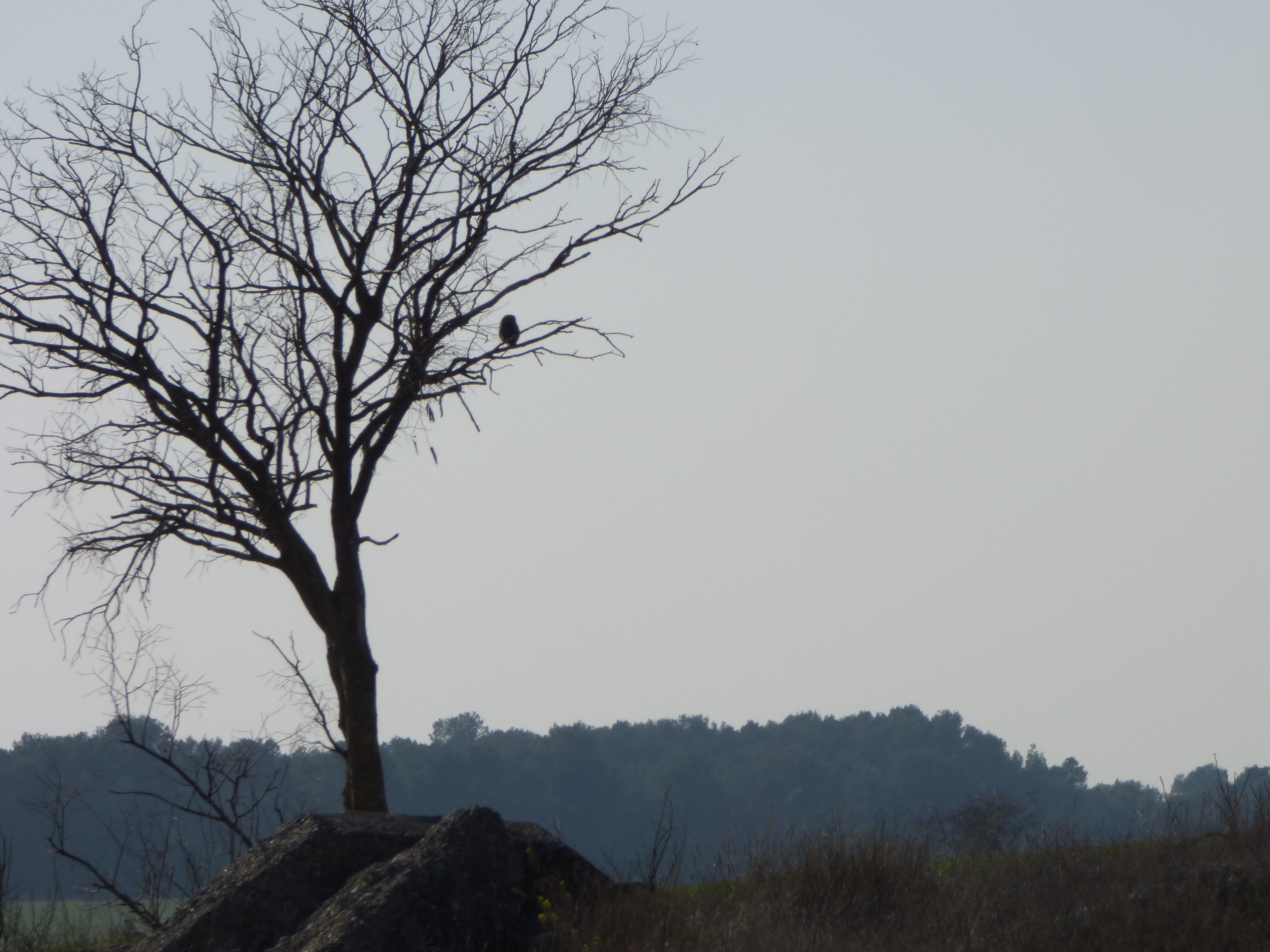
We just had this Little Owl (Athene noctua) in our way so we just had to stop and enjoy. Image: Carles Oliver


P1030633

And we were leaving we just found a 2nd Little Owl 80 metres beyond! Image: Carles Oliver


And we arrived to our main stop in the area! We were in a landscape totally diferent was the morning. Landscape South of Lleida is a dry, semi-arid traditional farming with plenty of wheat fields and almond orchards. Here there are almost no water courses and the few streams have some poplars and riberside vegetation while the slopes around are rocky, dry and covered by low, dense scrublands. It was 16:40 and a lovely light was bathing the valley.

Main quest here is a pair of Eagle Owl (Bubo bubo) nesting around in the cliffs. We carefully scanned the cliffs and finally found one adult sleeping deep inside the vegetation. It was a wonderful view despite the poor images we could get on the bird. We all kept an eye on the owl in the case it was moving while enjoying the birdlife around. The slopes around were full of Blackcaps (Sylvia atricapilla) and Song Thrush (Turdus philomelos) but we also got lovely and extremely close views on 8 Hawfinches (Coccothraustes coccothraustes). 2-3 Redwings were also around and a proper scanning in the slopes around was soon producing 2 wonderful Black Wheatears (Oenanthe leucura), again one of the main targets of the trip! The male was quite active and moving up and down in the slope, stopping the same in rocks but also in the top of well exposed branches. So, we were having at the same time Eagle Owl, Black Wheatears and Hawfinches!


P1020536

White Storks (Ciconia ciconia) are a common view around Lleida, also in winter. Image: Carles Oliver


In this place, a tiny stream is going down the valley so we decided to walk down for 400 metres until a crossroad nearby. Midway down, a small pond was attracting tones of Chaffinches and also more Hawfinches were coming down to drink. A short time there, waiting, produced a wonderful male Brambling but also 2 Cirl Buntings coming to drink water. Blue Tits and Long-tailed Tits were also around. Arrived to the crossroad we had the chance to scan at the other side of the valley. Here some Crag Martins (Ptynoprogne rupestris) were patrolling along the cliffs searching for insects and here we also had excellent views on a male Blue Rock Thrush (Monticola solitarius). An Iberian Green Woodpecker was calling around but we could not get any view on the bird. In the nearby village, loads of Spotless Starlings (Sturnus unicolor) were singing and performing, coming down to tha valley and many times stopping in the banks around so we could have really good views on them. Several Jackdaws (Corvus monedula) and 3 Red-billed Choughs were also present. Back to the cliffs, there were still more surprises since in the top of an old house we got 6 Rock Sparrows (Petronia patronia) in lovely light. Around the cliffs some Thekla Larks (Galerida theklae) were singing and callin and we got also good views on the birds. Still surprised how many birdwatchers consider this bird as being really scarce…In Catalonia and the Iberian Med coast is a common bird as long you look for them in the proper habitat: scrubby slopes and steppe lands.


P1020810

Male Hawfinch (Coccothraustes coccothraustes) in Lleida Steppes. A massive irruption of them has arrive this winter to Western Europe! Image: Carles Oliver


P1030516

Cracking Blue Rock Thrush (Monticola solitarius) in lovely afternoon light in Lleida Steppes. Image: Carles Oliver


Back to car we still had time to take a look on the Eagle Owl, still roosting in the same place so we just decided to start going to our accommodation…

But we still had time a for 5-minutes stop just before arriving to our accommodation in a farming area, where a flock of Little Bustards (Tetrax tetrax) was spending the winter. It didn’t take long to locate them and we could all enjoy great views on the birds while moving in the well-vegetated fields. The group was counting 37 individuals including males, females and juveniles, easy to tell apart by the design in the upperparts and other details.
A five minutes scan around allowed us to have other interesting birds including several White Storks (Ciconia ciconia) moving around, Grey Herons (Ardea cinerea) as well as a flock of Meadow Pipits (Anthus pratensis) and Eurasian Skylarks (Alauda arvensis). That was the end of a gorgeous day and time enjoy a good dinner and drinks!

Day 4. February 16th

Last morning of the this rather short version of our winter trip (normally it should run for 5 days) and time to explore some amazing spots looking for some top target birds. Early morning breakfast and transfer to the West, getting inside Aragón for some miles to explore a lovely patch of steppes. In our way, the highway was always full of Cattle Egrets (Bubulcus ibis), Red Kites and White Storks.

Arrived to the area to explore about 9:00 we just had a first stop in some fields concentrating Sandgrouses in winter. That morning was a bit quiet but our scanning was still producing a flock of 8 Pin-tailed Sandgrouses (Pterocles alchata) forraging on the ground. We all enjoyed of wonderful views on them and listened the typical “ga-ga” in our left so another flock was moving nearby.

The firsts Calandra Larks (Melanocorypha calandra) were starting singing here and there and soon we had several birds flying around, flying, singing and displaying along with Thekla Larks. We just drove 5 minutes to one of the places where Dupont’s Lark (Chersophilus duponti) is still to be found. All the way, Calandra, Thekla and also some Lesser Short-toed Larks (Calandra rufescens) joined with their songs. It was definately a good moment to go for Dupont’s Lark.


P1050842

Thekla Lark (Galerida theklae) in a previous tour. Note the well contrasted face markings, including a kind of “eye ring”. Also the “pure” whitish belly and flanks if compared with Crested Lark. Image: Carles Oliver


This Lark is a bit a mistery. It is reluctant to fly, and when do it, it normally flies short distances. It calls few times and spend most of its time running on the ground where it looks for insects, warms and spiders. Its rather dark coloration make the bird extremely difficult to find.

So, we drove really slowly, listening for any singing bird. As everything was quite we just arrived to one of the typical places and stop and stay inside the car for some minutes. Nothing singing but Calandra, Theklas and Lesser Short-toeds (not bad, anyway). 2 Black-bellied Sandgrouses (Pterocles orientalis) pass by us but unfortunately nobody in the group noticed the birds. 5-10 minutes and nothing. Scanning all around and nothing. Well, went out of the cars and prepared the scopes. Nothing. Plenty of Calandra singing and a distant, really distant Stone Curlew (Burhinus oedicnemus) calling. We just waited for half an hour, in silence and by the car, and nothing. But then a song came to us. Dunpont’s Lark singing. Difficult to listen because of the massive activity in Calandras and so on but still was there, in somewhere. Some more wait and got two males singing. One at our right, another at our left. Good! Everybody scanning and nothing. 2-3-4 minutes of wait and nothing, only Calandras and Theklas in an endless wave of songs and then a Dunpont’s again at our left, closer. Many times they just sing between run and run, every 2-3 minutes scan  really tricky! Again some wait, a really distant bird was singing, as well. More Calandras everywhere and then our Dupont’s started singing really, really close! It looked like being just-in-front-of-us! The bird went on singing of almost one minute, good. And then we found it, standing up quite in the open and singing about 35 metres from us!! What a view!!! Make sure that everybody in the group was having the bird (not easy to find) and try to get some images. Now there were 3-4 males singing but it is always difficult to say due to the Calandra & Thekla songs and, in fact, because the Dunpont’s song itself is designed to make the bird more difficult to spot. We all enjoyed a quite long view on the bird and then the lark was moving in the steppe vegetation so we could track the bird for some metres before it was disappearing…Wonderful!


P1120209

The always elusive Dunpont’s Lark (Chersophilus duponti) was giving superb views few metres away from the car. Image: Carles Oliver


Well, happy all the group for such a successful morning we then invested some time in enjoying good views on Lesser Short-toed Larks and trying to find a flock of Black-bellied Sandgrouse but we had no luck in this second species. We then decided to move to a nearby wetland where have our packed lunches. But before arriving we had a stop in the road, a Marsh Harrier was diving on a juvenile Golden Eagle (Aquila chrysaetos), and attacking it in a really agressive way. We could not figure out was the goldie did to deserve such a treatment but Marsh Harrier was extremely ungry. Maybe starting to defend a nesting territory?

Once in the wetland, inmediatly South of Candasnos, we start having our lunch while scanning the diferent ducks around. Mallards (Anas platyrhynchos) were the most common by far but we also got Gadwalls (Anas strepera), Eurasian Teals (Anas crecca), Northern Shovelers (Anas clypeata) and 8 Common Pochards (Aythya ferina). Still, the best was a flock of 12 Red-crested Pochards (Netta rufina) including some drake ones.

After lunch, a short walk around produced Reed Buntings (Emberiza schoeniclus), 2 Penduline Tits (Remiz pendulinus), and a walk along a channel gave 1 female Bluethroat and 1 Jack Snipe (Lymnocriptes minimus) that flew out and circled us to dive at our back. This was a really nice surprise since is a fairly scarce bird down here! The corn fields around the lagoon where carpeted with Northern Lapwings (Vanellus vanellus) and 1 Merlin (Falco columbarius) came to this area in a really fast Flight when we were scanning around!

Last birding movement of the tour was to drive further West to look for Great Bustards (Otis tarda). A small populations lives in Los Monegros and a proper management is likely to do this population increase number in coming years. Nowadays, less than 80 individuals are left.


P1030429

Part of the flock of Great Bustards (Otis tarda) that we enjoyed in our last afternoon at Los Monegros. Note the central bird already having being “moustached”. Image: Carles Oliver


So, we just drove around a proper place to find them, always joined by Calandra Larks and huge flocks of Linnets (Carduelis cannabina) and Corn Buntings (Emberiza calandra) and we were lucky to find a flock of 14 males quite easily. It is always wonderful to enjoy such a magnificient birds in the endless farmed plains where do they live. Despite what many people thinks about these gorgeous birds, Great Bustards are not really steppe birds, but grassland birds, and their habitat selection is less exigent than Little Bustards or Pin-tailed Sandgrouses so are (technically) capable to live in a wider range of habitats.

We just ended the trip with the wondeful view of these giant birds in the cereal crops, hoping them the best in their fight for surviving and started coming back to Barcelona, where we arrived a bit after sunset!

A wonderful end for a really successful trip despite the extremely challenging weather conditions…

2019 dates: February 19th to 23rd. Join for great birding and good fun!

Do you want to subscribe to our mailings? Contact us info@barcelonabirdingpoint.com