
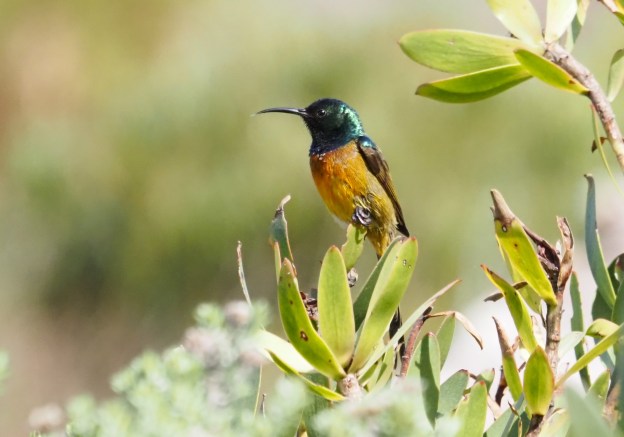
- Dates: From October 11th to 19th, 2024
- Tour participants: 3
- Number of species: 240
- Tour leader: Carles Oliver
All images in this trip report by Carles Oliver. All rights reserved.
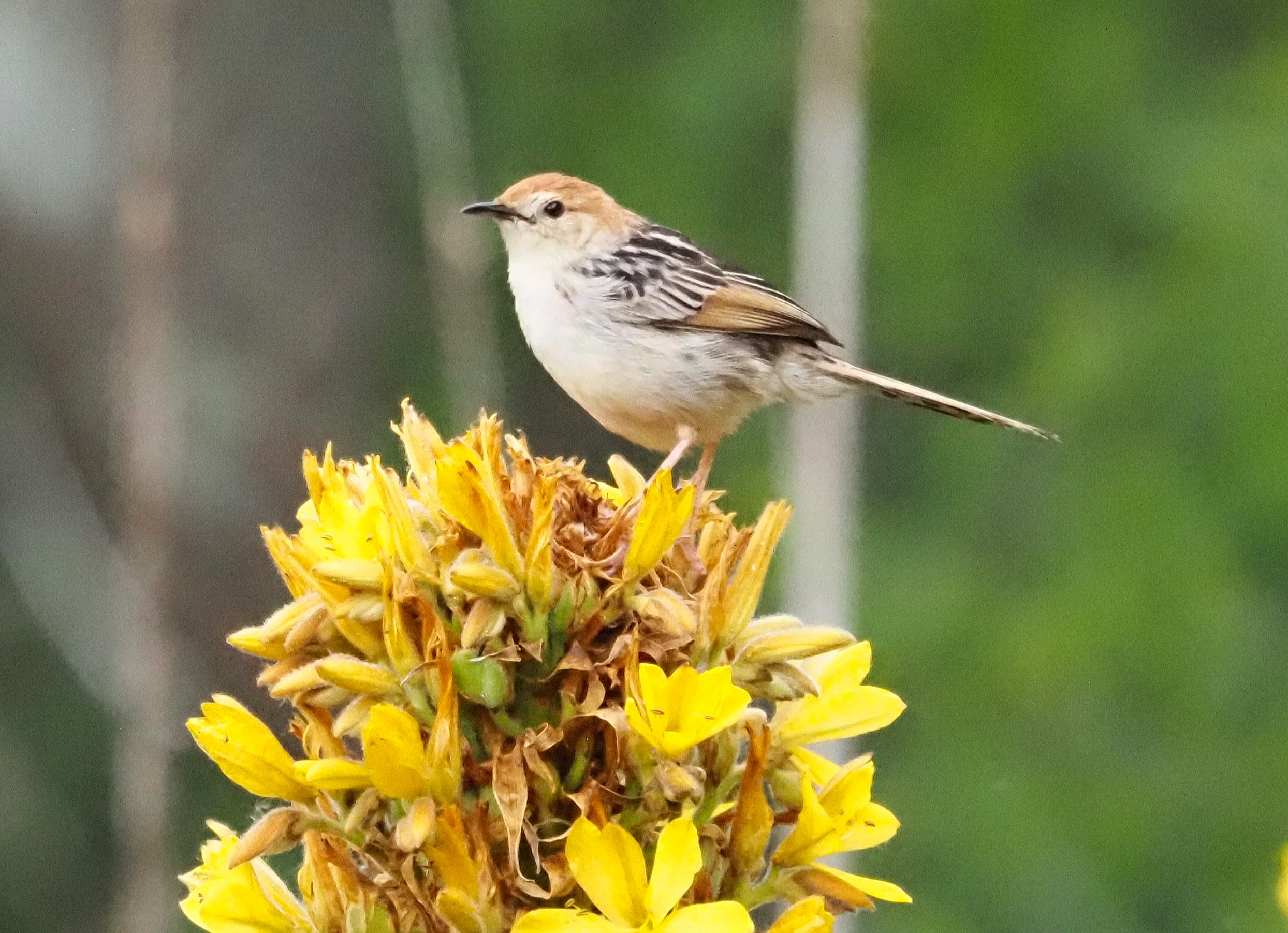
Overview: This tour explores the Western Cape province, a very interesting part of South Africa hosting very interesting endemics, including some only living in this small area of the country and are not to be found anywhere else. This was our 3rd tour exploring the Cape Town province, and despite the weather was not as good as it could be, we got a wonderful array of species including good views not only in the very sought-after endemics but also in some very interesting species at the continent level including Buff-spotted Flufftail, Marsh Owl, Quailfinch, Spectacled Petrel, Secretary Bird and Verreaux’s Eagle. Yes, the weather was a bit challenging, with a couple of days of very low temperatures and extremely strong winds. The weather conditions were neither in our side during the offshore, and we had an extremely quiet day, with nearly no wind. Still, we got a very long list of species, even if some major road works made impossible to explore one of the largest wetlands along the itinerary.
Day 1. Arrived to Cape Town from our connexion flight via Dubai, and we got our first birds of the trip in the parking lot of the airport, where we had both Cape Canary & Cape White-eye in the very first bush that we saw.
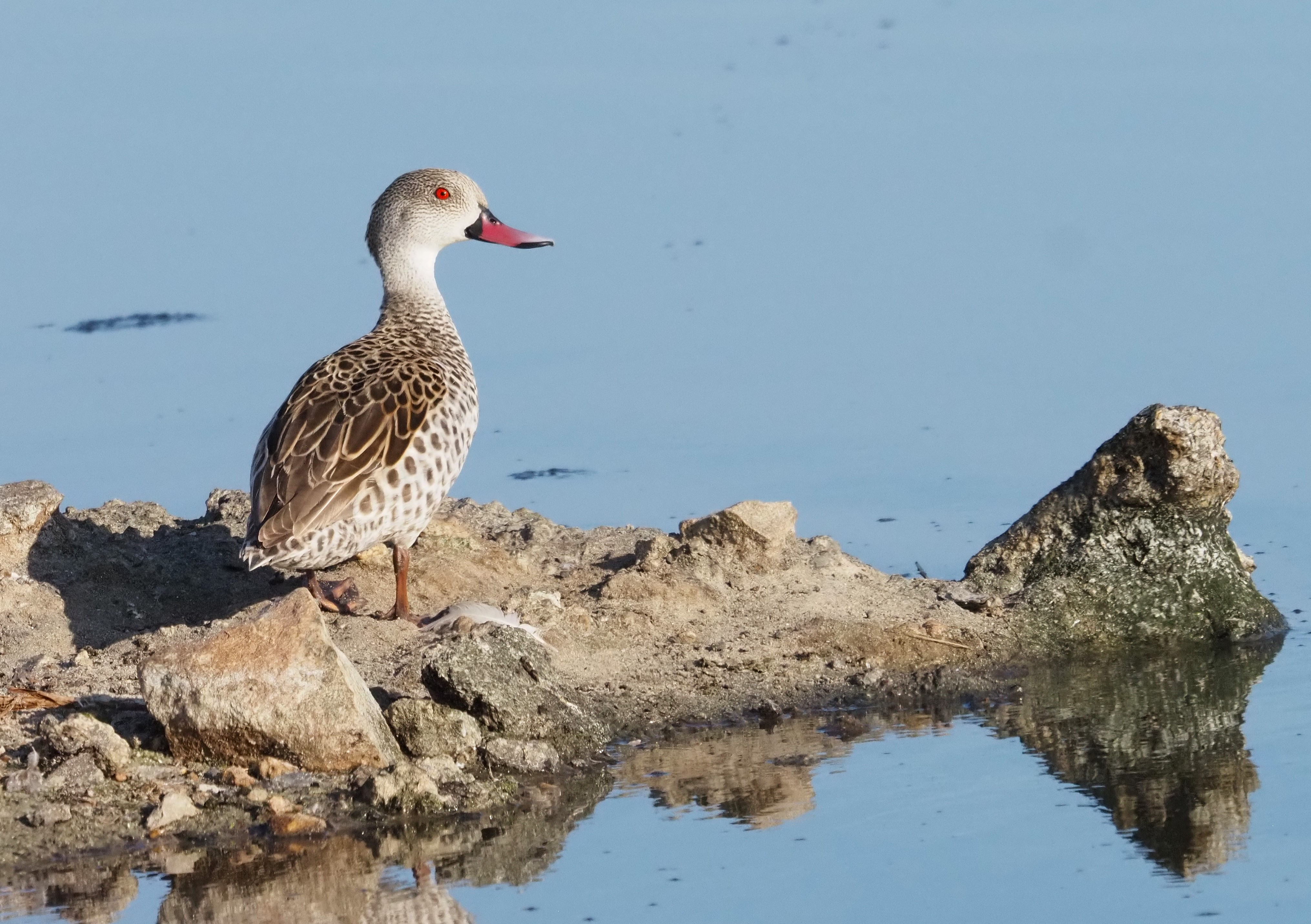
It was a lovely evening, and the short transfer to the our accommodation not only provided the group with the first views on the majestic Table Mountain NP, but also with flocks of Western Cattle Egrets and Hadada Ibises. We even got a House Crow, a very uncommon bird in the area! Once in our lodge, we still had a few minutes of birding overlooking a close estuary. There, we got several Egyptian Geese, Brown-hooded & Hartlaub’s Gulls but also Black-necked Stilts, Pied Kingfishers, Common Greenshanks, some magnificent Blacksmith Plovers and the first African Spoonbills, Cape Teals & African Oystercatchers of the tour, plus the only one Black-crowned Night Heron of the trip!
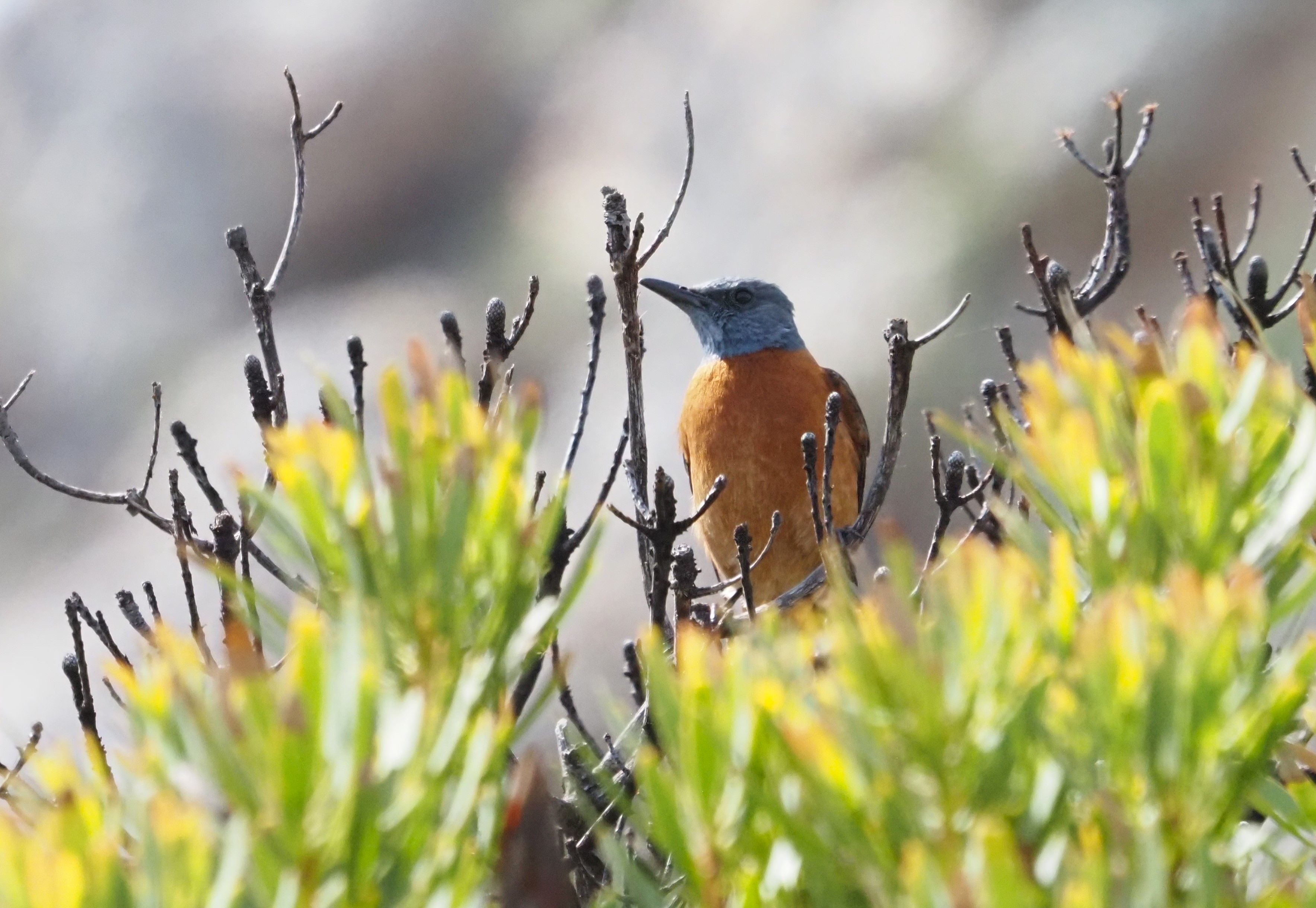
Day 2. After a nice breakfast, we left the accommodation, ready to have the first serious birding of the trip. This first day was devoted to explore a small area of the coast East of Cape Town. A 45 minutes transfer was necessary to reach the first location of the day. There, in a very impressive coastal fynbos (South African Mediterranean scrub land) we had a lovely short walk with a long and interesting list of species including several endemics. White-necked Ravens were flying over the closer houses along with a couple of Rock Kestrels. Down in the scrubs, the explosive song of Cape Grassbirds was the opening for a very interesting list of species. Soon, we had our first family groups of Piping & Red-headed Cisticolas along with Cape Buntings, Cape Wagtail, Cape Robin Chats, Cape Canaries, Olive Thrushes, Yellow Bishop and the extemelly common Southern Double-banded Sunbird and the firsts Rock Martins of the trip. Only a few metres of walk were necessary to have the first Cape Sugarbird, with a very impressive male singing only a few yards away from us. Its rather weird song didn’t distracted us from scanning from new species, and we found a very close Cape Rock Thrush looking for preys in a nearby meadow.
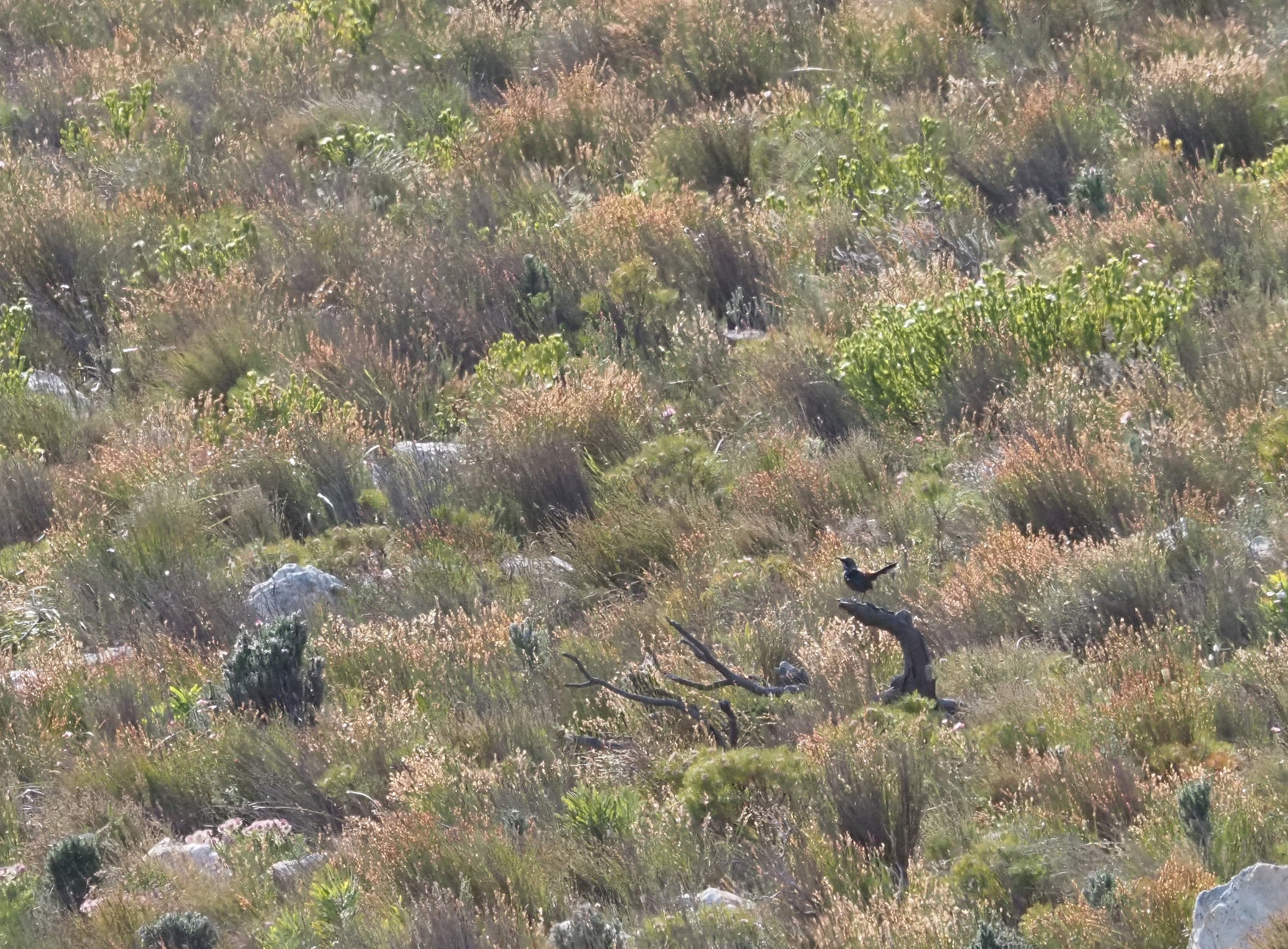
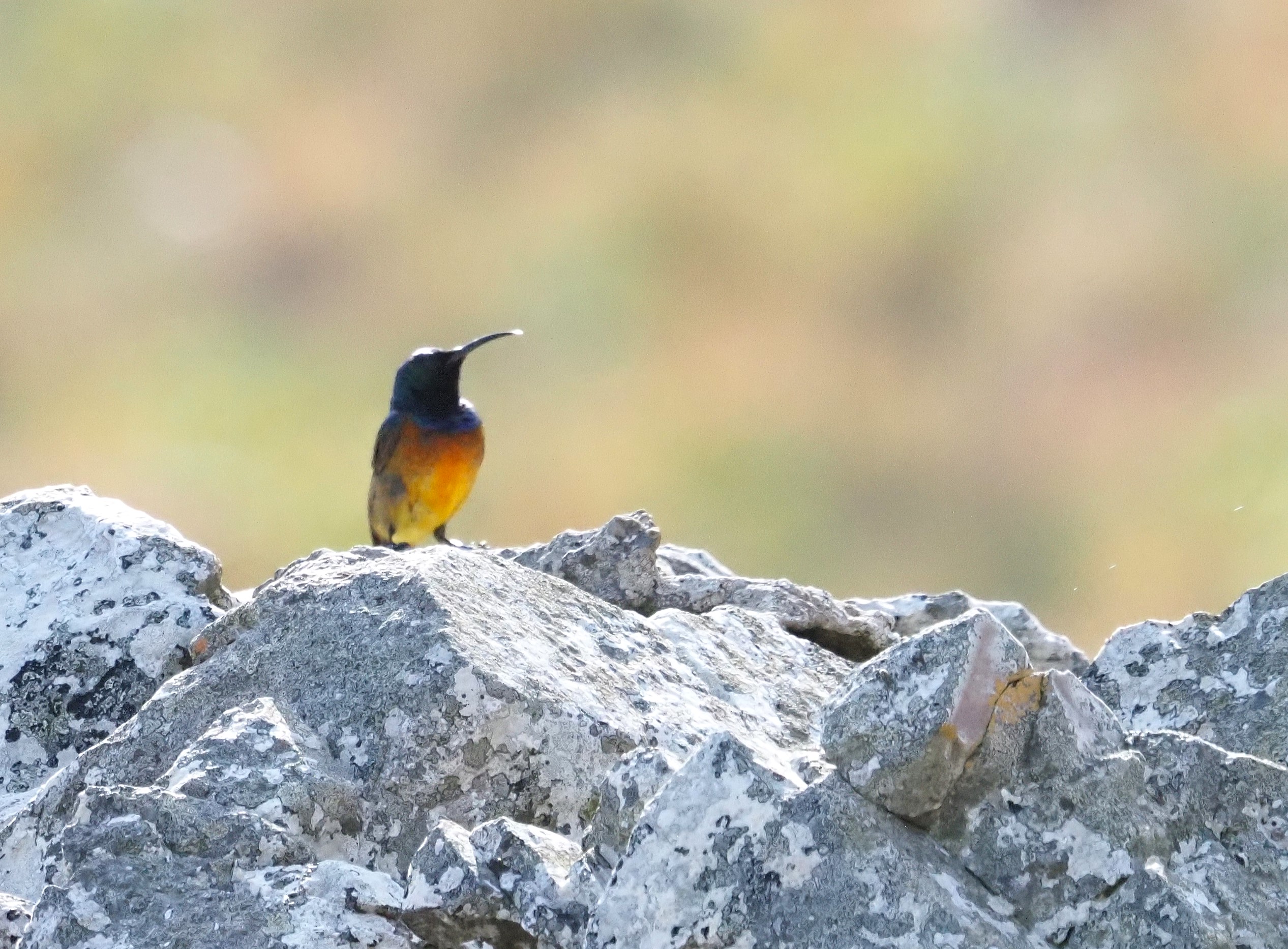
A bit more of walk was required to find the first Orange-breasted Sunbirds of the trip. Here the slope becomes steeper, and impressive rocky outcrops emerge to create a number of solid rock walls higher in the slope. Those fingers and the rocky tongues between them are the habitat for a very special species, and the main reason for us to visit this location. We had some hard scanning in the slopes, trying to locate this very sought-after species. After some minutes, we got nothing but suddenly Ann got a bird. A kind of “dark Mistle Thrush with its tail up” she came to described. No doubt, she had a Cape Rockjumper! Following her indications, it only took us half minute to point the scope on the bird: A wonderful male Cape Rockjumper only for ous eyes! It was mid way up the slope, but it provided long and excellent views on the scope as it kept exploring the rocky, low vegetated mountain. At some point the bird moved down the slope, and our hearts beated hard, facing the perspective of a close view. But it never happened. Soon, the Rockjumper went back up and we kept enjoying the bird whilst scanning for a possible female that never showed out. A couple of Cape Siskins flew higher in the slopes, providing a first (although poor) view for our guests. This small beauty is an endemic species of the coastal scrubland East of Cape Town, and a very important species for the trip! Other very interesting species here included the rarely seen Victorin’s Warbler and the first of many Karoo Prinias, White-rumped Swifts and Familiar Chats.

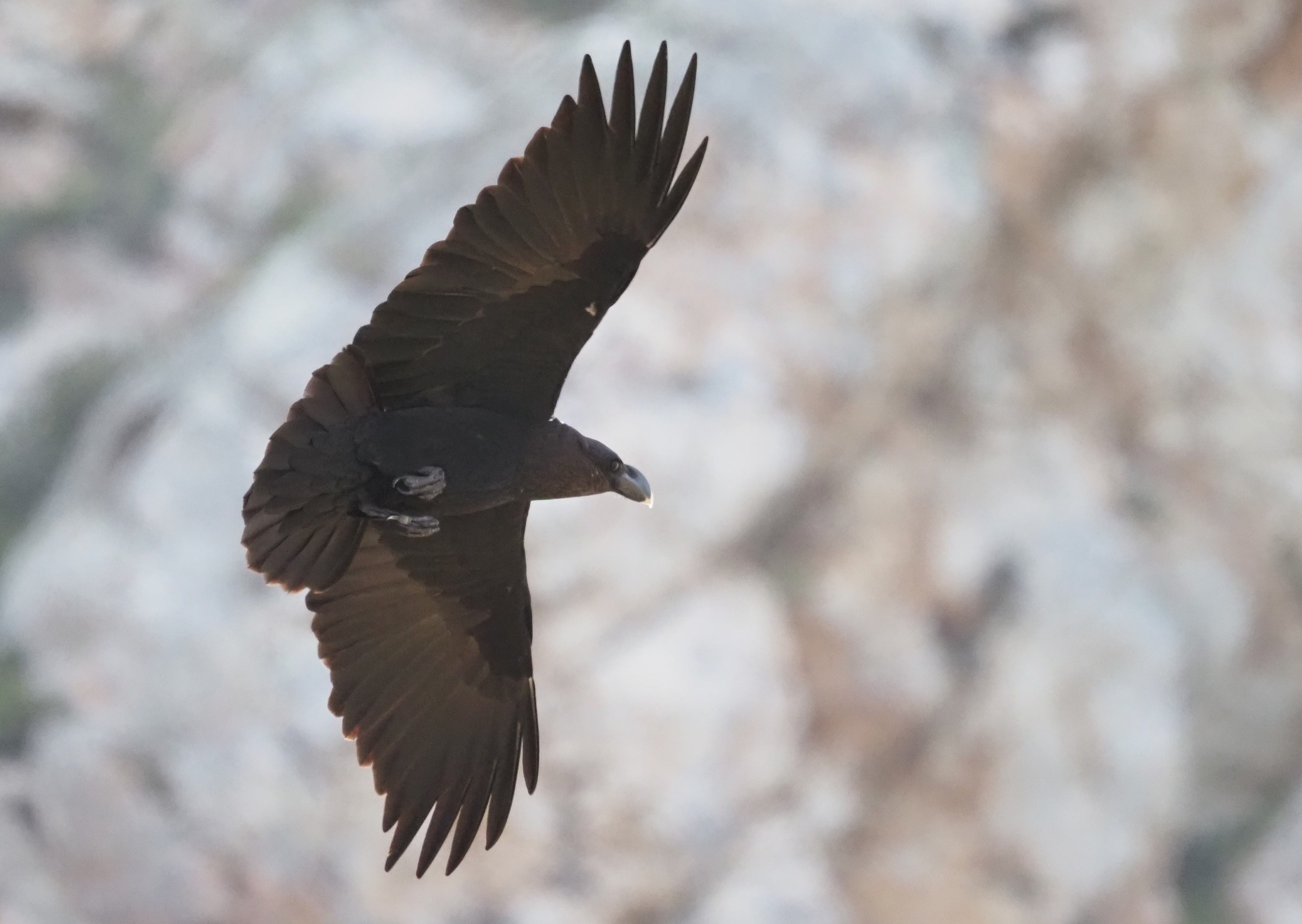



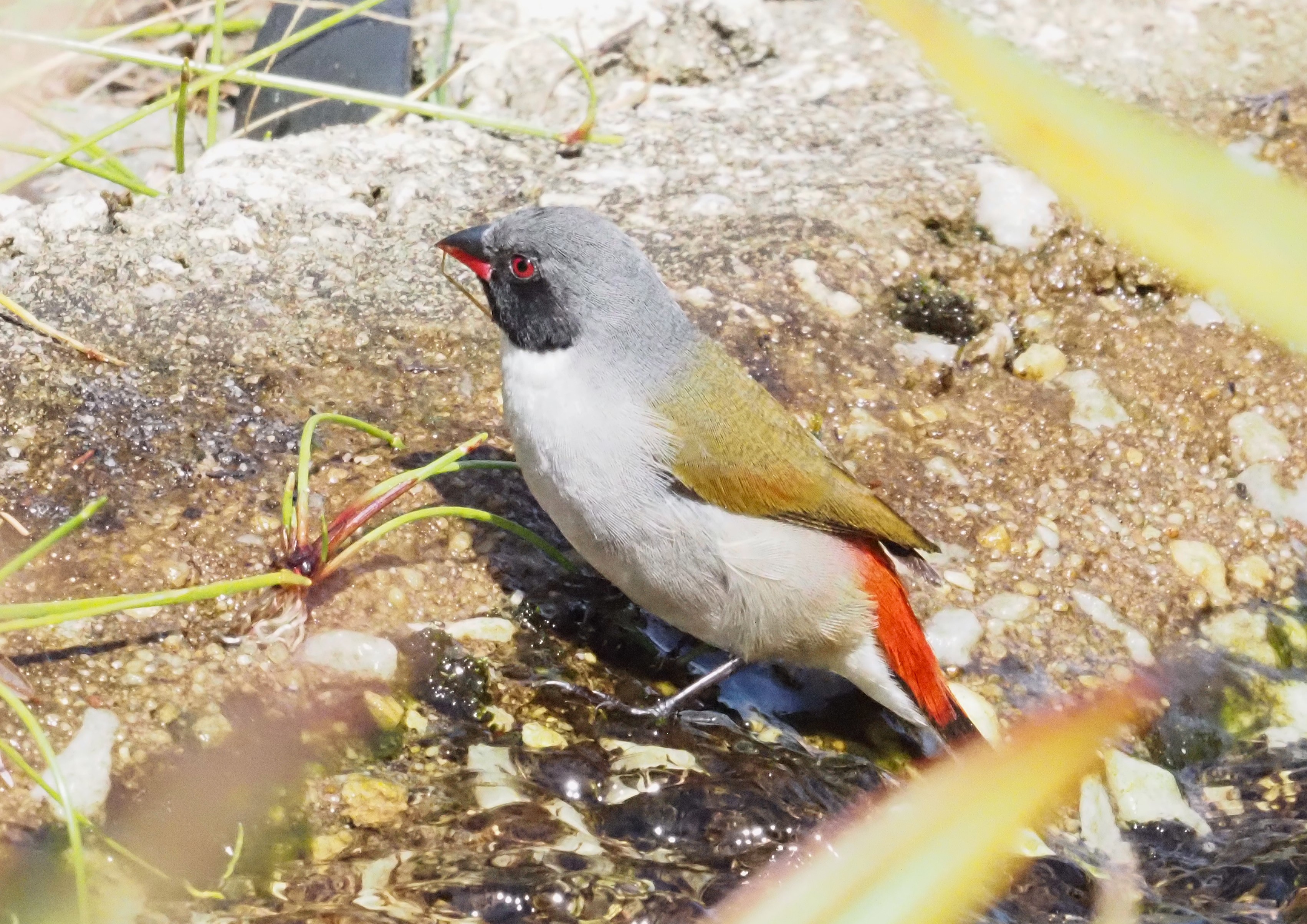
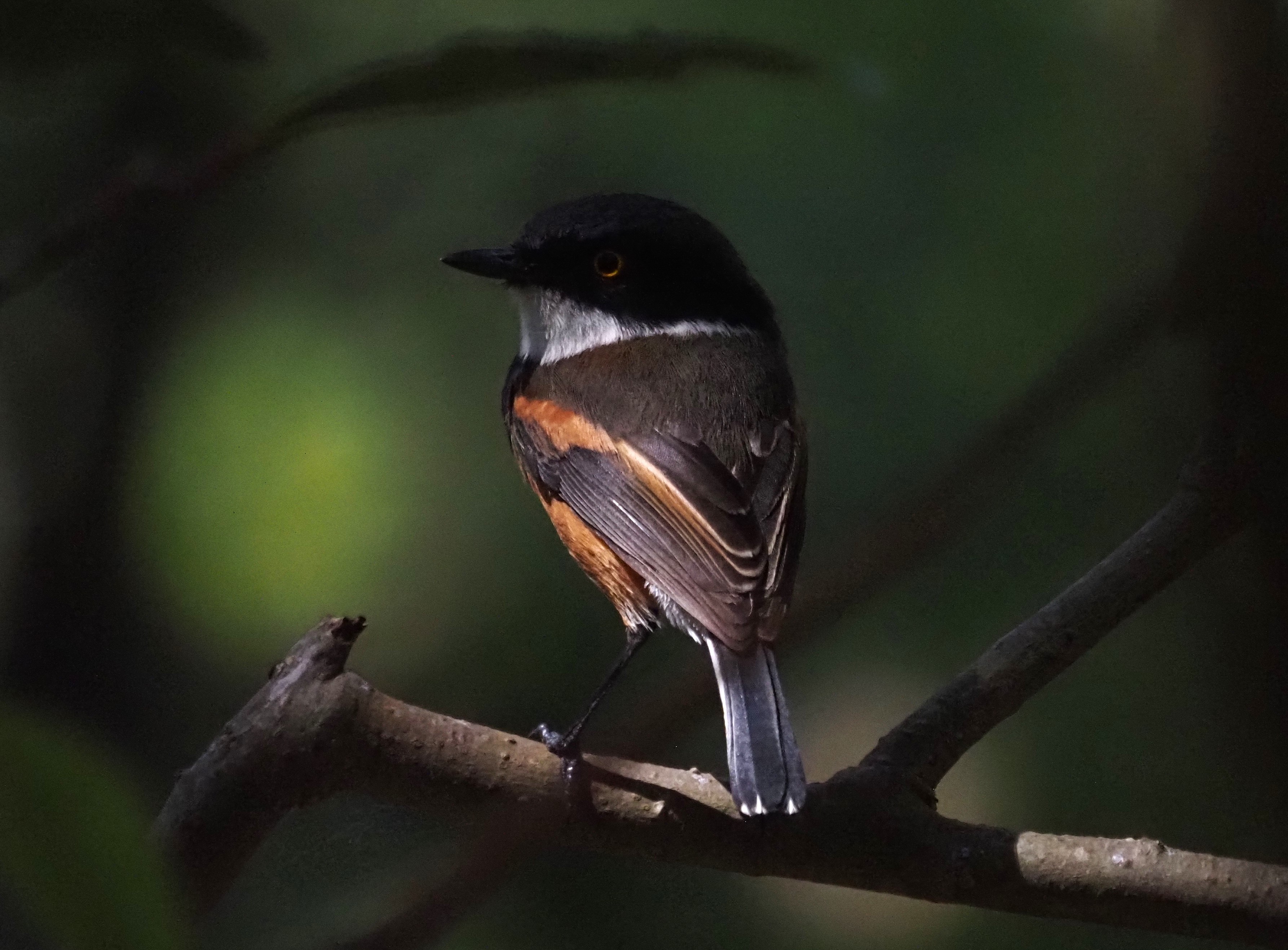
After such a phenomenal first stop of our trip, we drove down from the mountains to enjoy a very nice coffee stop and (probably) the most beautiful muffins in the area! Close by, a very attractive botanical garden was waiting for us. A 30′ short walk around there was enough to discover a very nice selection of birds. Swee Waxbills were probably the most sought-after species at this spot. One pair of this little jewels were having a bath as we arrived, and we got amazing views on them. Along with this tiny birds, the walk around the garden offered us very nice looks in Fiscal Flycatchers, Amethyst Sunbirds, obliging Cape Batis and Forest Canary. Cape Bulbuls were everywhere and we had the first glimpse on Sombre Greenbuls. Here we also got the first Streaky-headed Seedeasters, Brimstone Canaries & Pin-tailed Whydahs of the trip, and a couple of Black Sawwings. Soaring higher in the sky, we got Greater Striped Swallows and White-rumped Swifts but also the first 3 Jackal Buzzard of the trip and 1 African Black Swift.
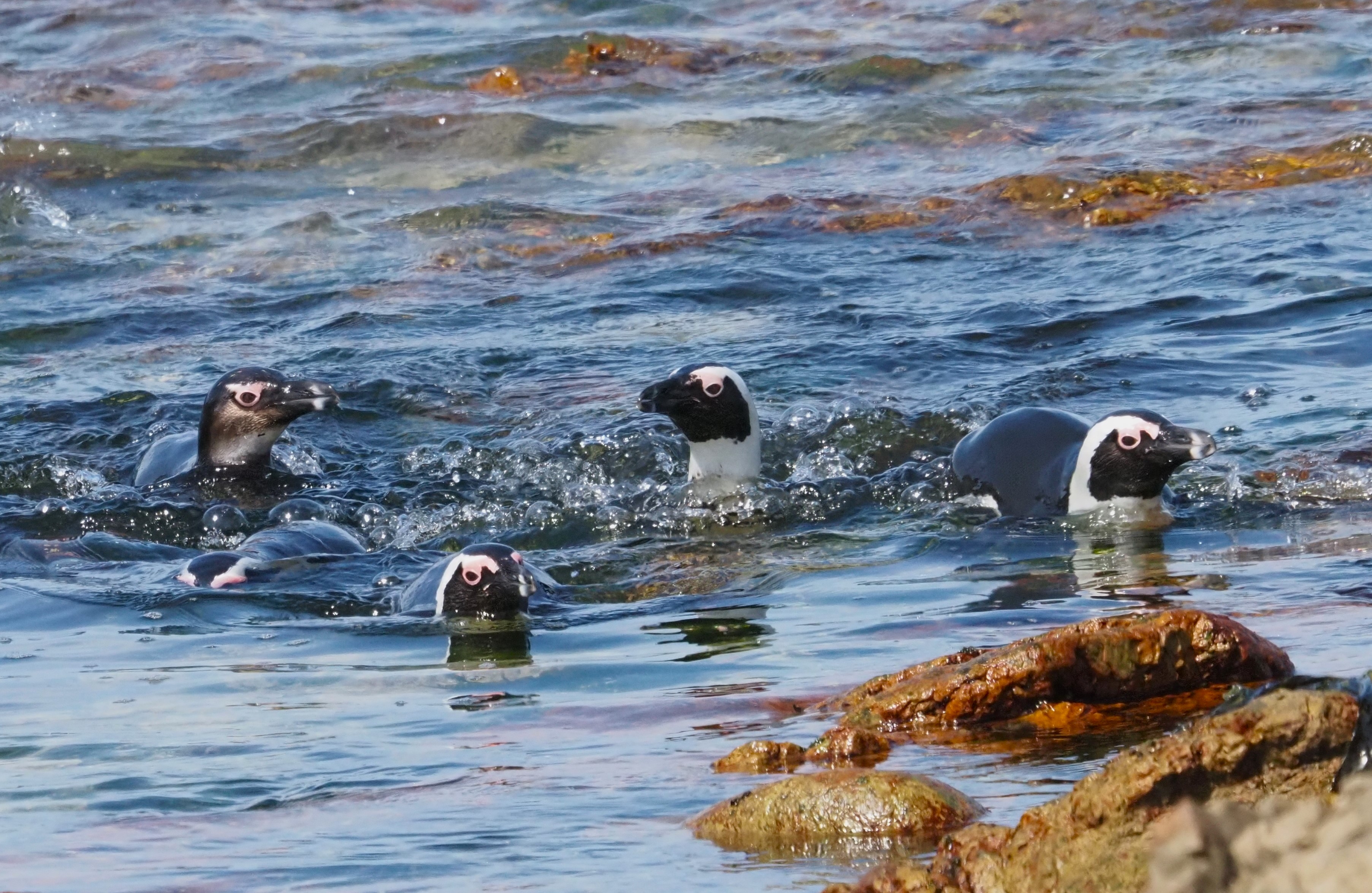
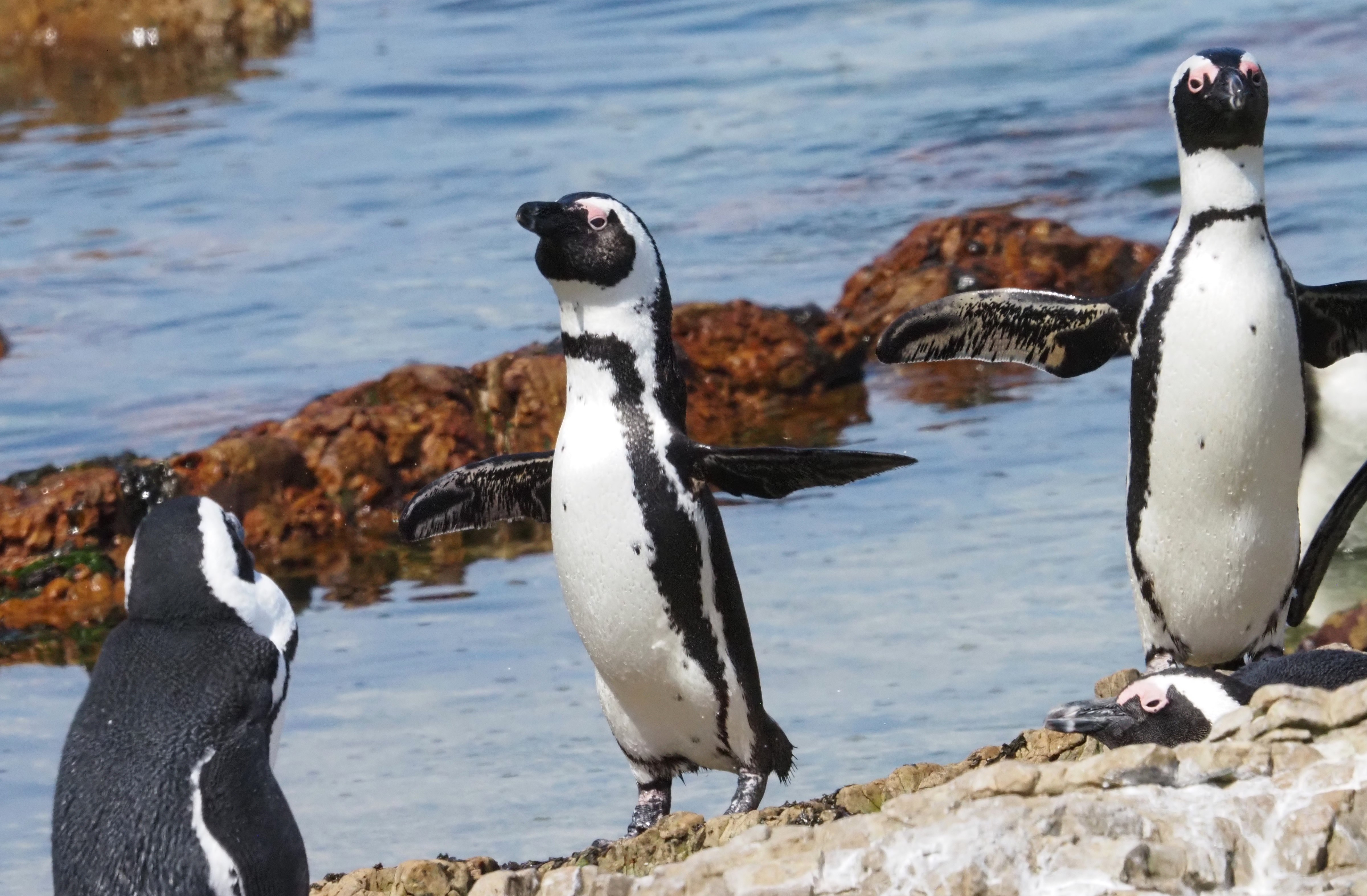
From here, a very short drive lead us to a colony of African Penguins. It is always surprising to see these wonderful birds evolving in the shallow water or simply resting in the white sand. This colony is right in the middle of a town. Do you imagine to have a short walk along the coast right next to your house when a dozen of penguins just get out of the wader to colonise that beach? This is exactly what it happened in this place, and I would pay to see the faces of the neighbours back in those days! So, now the colony has dozens of nests and a healthy population of this endangered species. We got amazing views, and also got good views on African Oystercatcher, Greater Crested Tern and a surprisingly close Bank Cormorant.



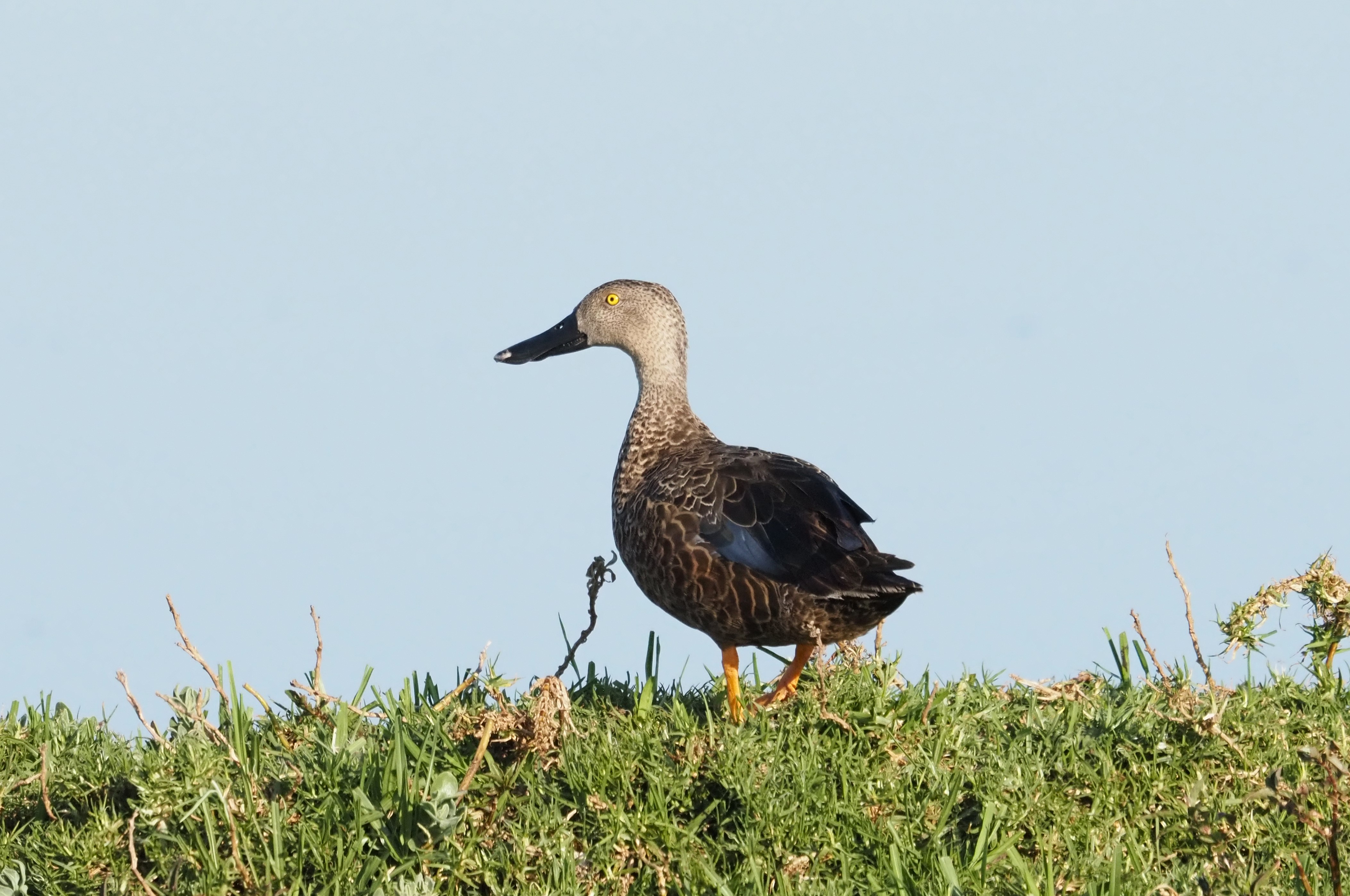
From here, we drove back to Cape Town to have some time in the famous Strandfrontein Wetlands. This is a large wetland with a number of large lagoons and interesting channels. The area was not as fulfilled with waterfowl as in previous trips, but still produced a nice list of birds. Along with interesting flocks of Greater & Lesser Flamingoes and Cape Teals, we also had the firsts flocks of Spur-winged Geese. Cape Shovelers and Red-billed Ducks were also common. A single Southern Pochard was seen in flight, and a few Black-necked & Little Grebes were seen in one of the larger ponds. A small flock of 7 Fulvous Whistling Ducks had been in the place for weeks (a local rarity) and was spending the afternoon feeding along with Red-knobbed. Here we also got the first Cape Sparrows of the trip, just when a Black Crake crossed the road as a ghost!
In the channels we got good views on both Little Rush and Lesser Swamp Warblers and Levaillant’s Cisticola showed well despite the strong wind. An African Marsh Harrier was crossing the sky just went a Burchell’s Coucal was heard calling in a thicket nearby. In our way out, we had a short stop to watch the first Cape Spurfowls of the trip.
From here we went back to our accommodation to enjoy a nice evening meal before having a nice rest.


Day 3. An early start was necessary to connect with our boat, leaving the harbour right after sunset. Whilst waiting for the boat to be ready, we got nice views on a Black-headed Heron roosting in the harbour and a Peregrine Falcon flying high over the bay.
It was a sunny and quiet day. Unfortunately we had a day with almost no wind, and this affected seriously the amount and diversity of sea birds during the offshore. Still, got a number of goodies, and we were really lucky to see 4 Humpback Whales in a superb manner. They jumped out of the sea several times not far from us, and one of them was splashing its fin against the water, creating a impressive sound all around the bay.
While enjoying the whales we also got the first parties of African Penguins and Brown Fur Seals leaving the security of their colonies to explore their hunting areas. Several flocks of Common Terns and Greater Crested Terns were also seen here.
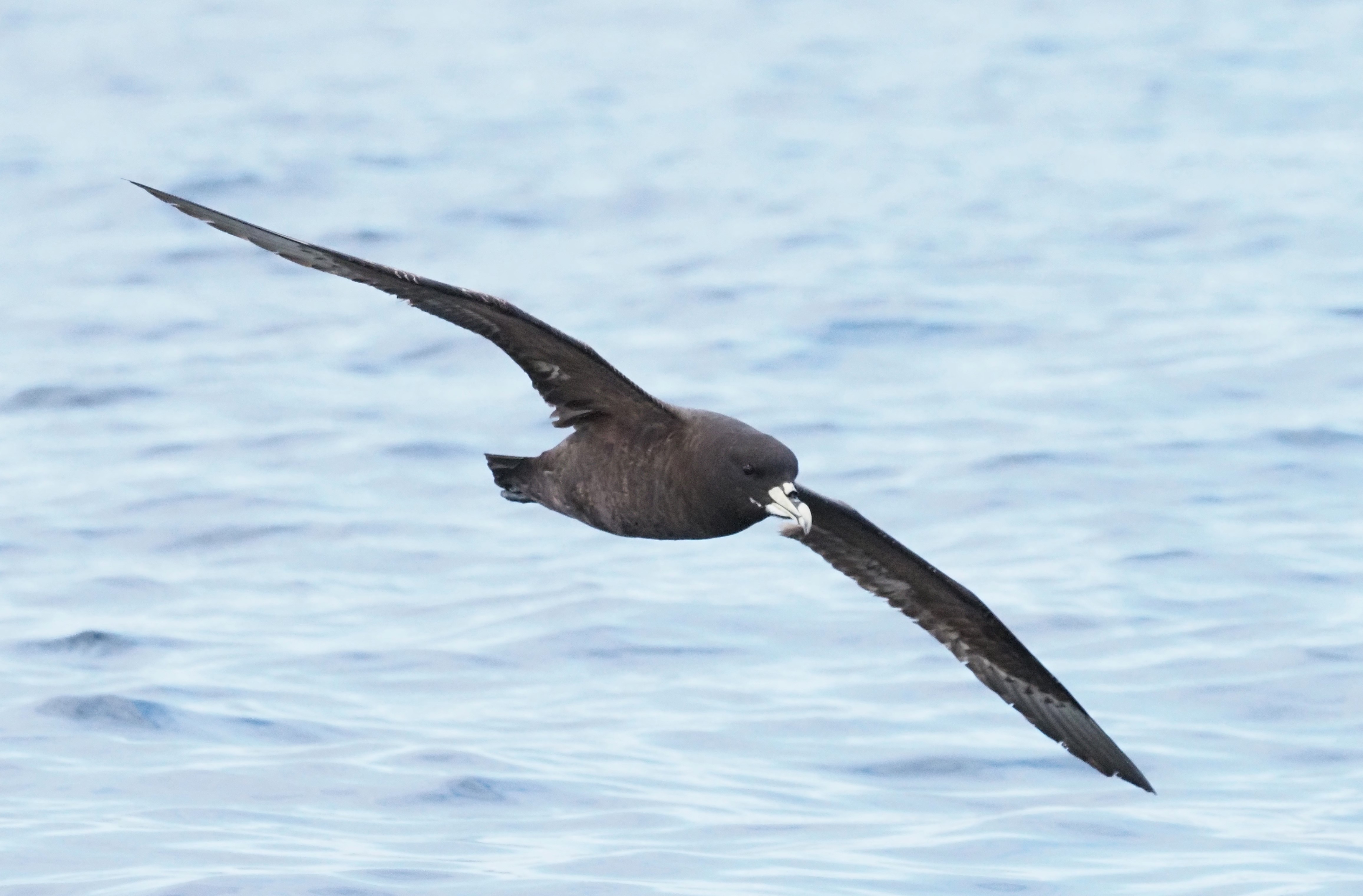
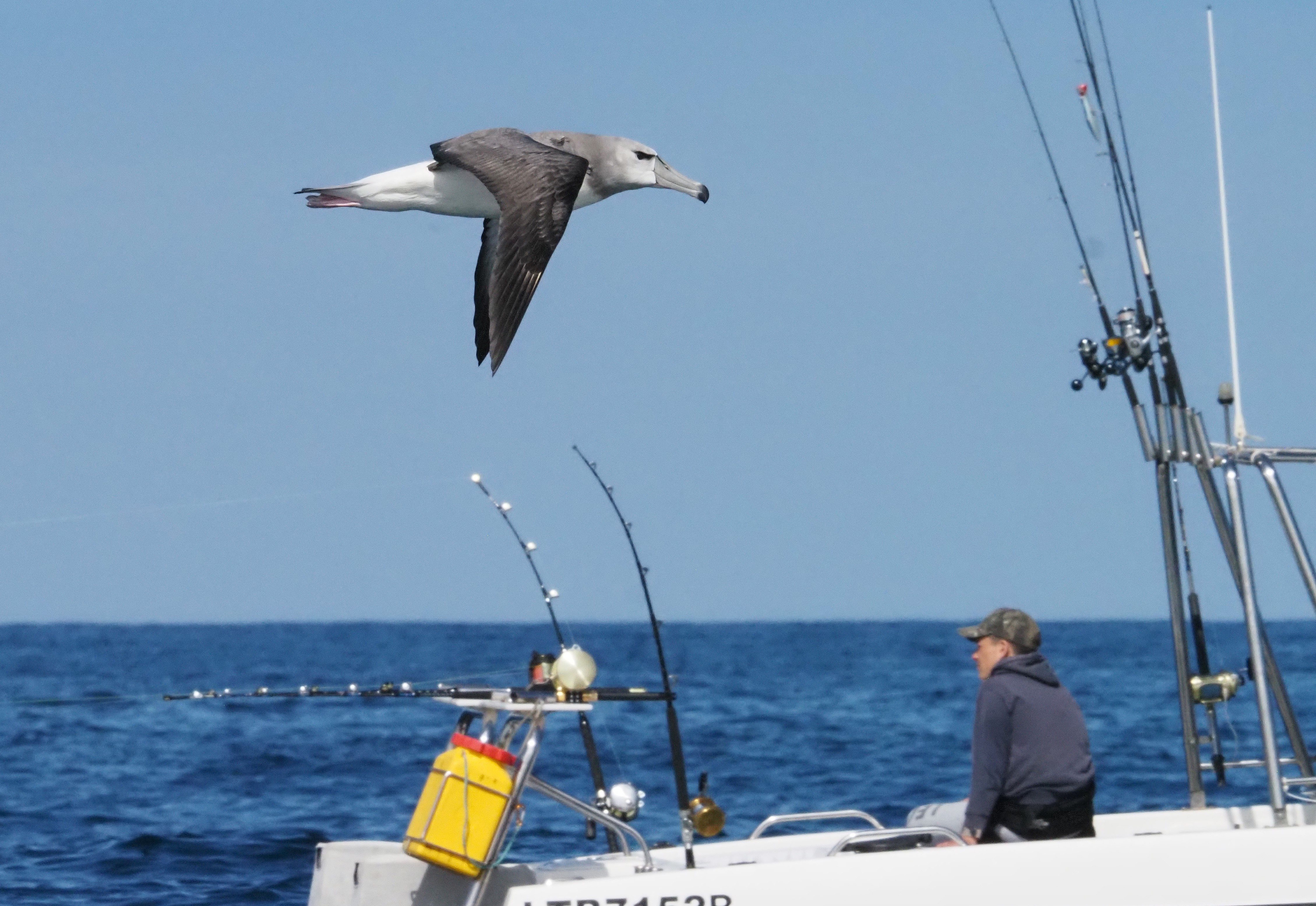
Soon, we were outside the bay, and after enjoying a stop right by the Cape of Good Hope, we kept going South. Soon, we got the first Shy Albatrosses of the trip, along with some White-chinned Petrels and Subantarctic Skuas.
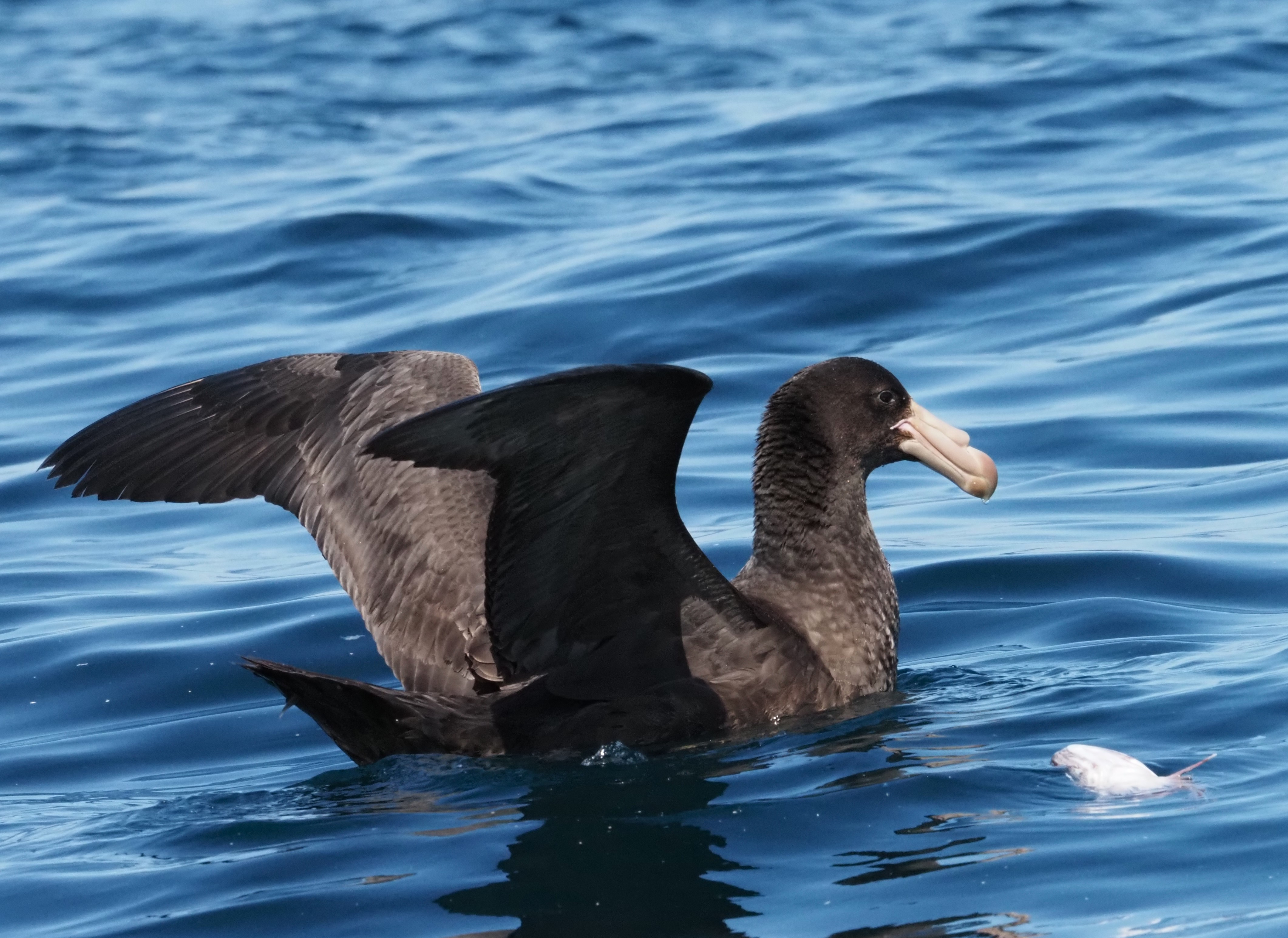
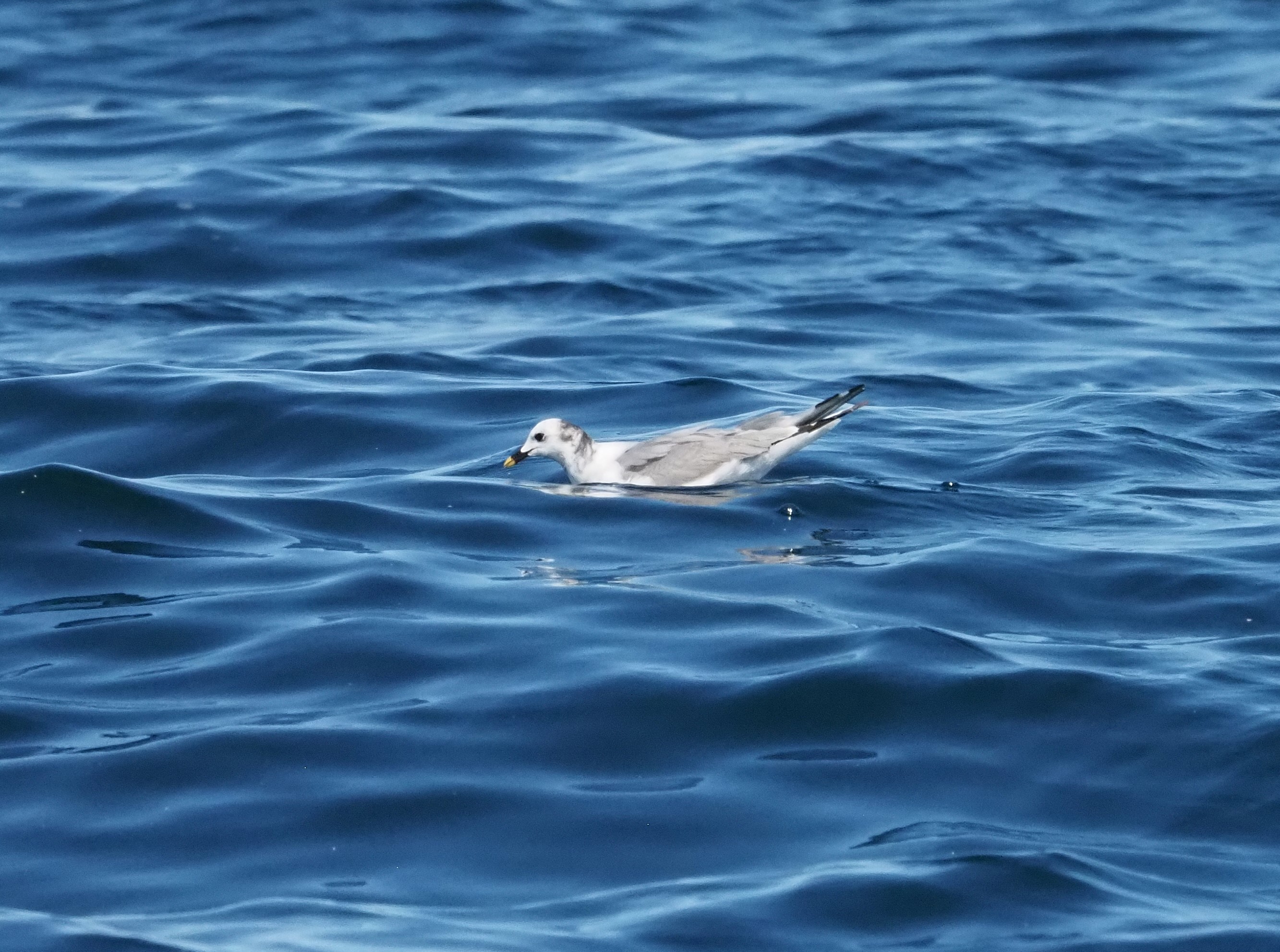
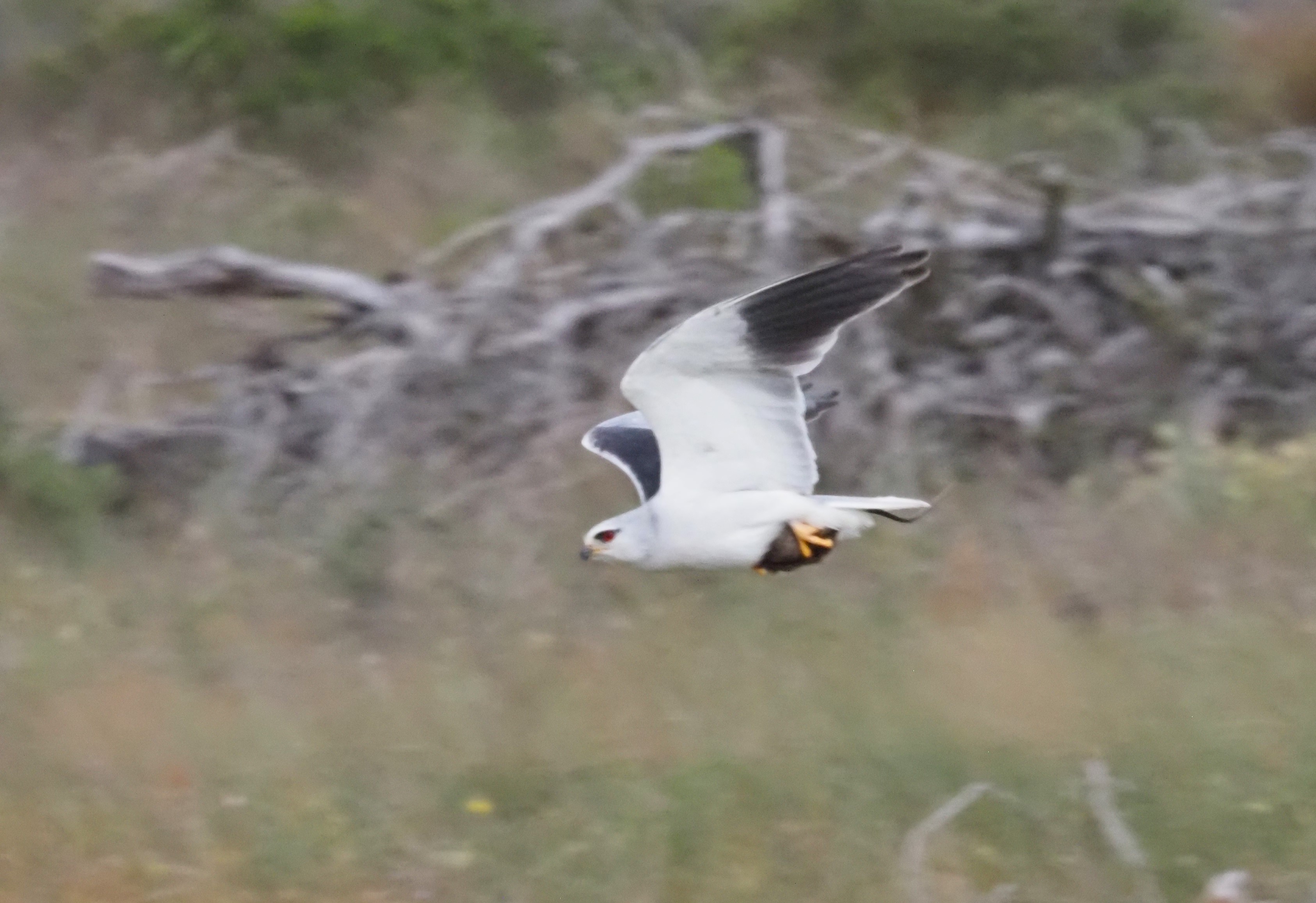
The sea was extremely plain and we only got the first flocks of seabirds around a large trawler. Here we got tens of Sooty Shearwaters but also Black-browed Albatrosses and we were also lucky to find a few Great Shearwaters,1 Sabine’s Gull flying quite high and a superb Northern Giant Petrel that was following the ship. Here, the only Arctic Tern of the trip was seen as well. A second trawler was not far away from us, and it was mandatory to take a look. We approached this second vessel from the back, and we were lucky find some good birds there. First it was the only one Indian Yellow-nosed Albatross of the day, this is a quite common species, but the conditions were probably too calm for them to move. A few minutes later we also found a nice Spectacled Petrel moving along with the many White-chinned’s, and at least 4 Cape Petrels. A few Cape Gannets were fishing here, providing good views to the group. Several Shy & Black-broweds Albatrosses were sitting on the water, and we enjoyed long views on these amazing beasts. We still had some time here, but we only had a small flock of 4 Sabine’s Gulls as an interesting sighting.
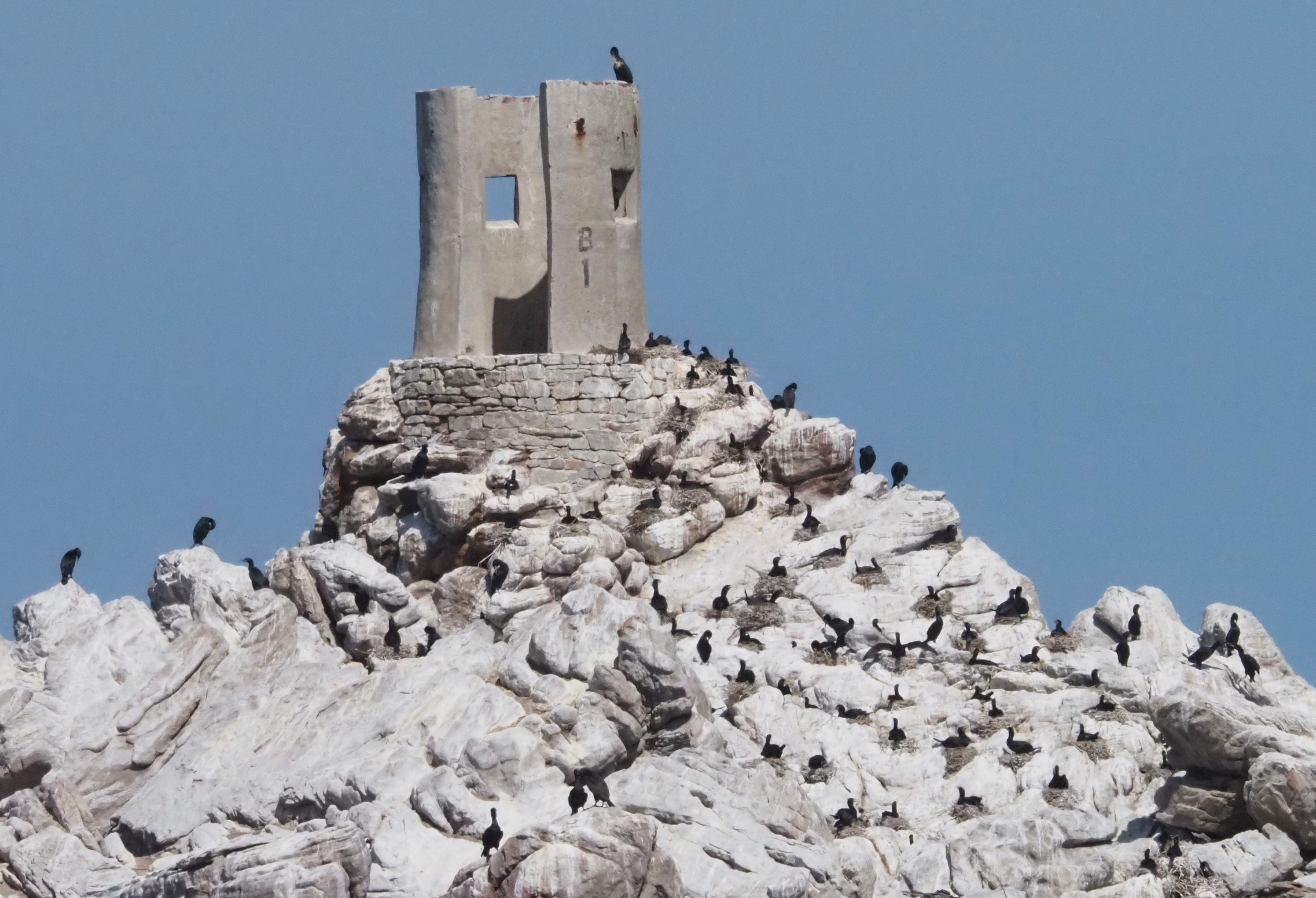
In the way back to the harbour we still had time to enjoy on a variety of Cormorants, including Crowned Cormorants, large flocks of Cape Cormorants and also a small colony of the critically endangered Bank Cormorant that was sharing a large granite outcrop with a Brown Fur Seals colony.






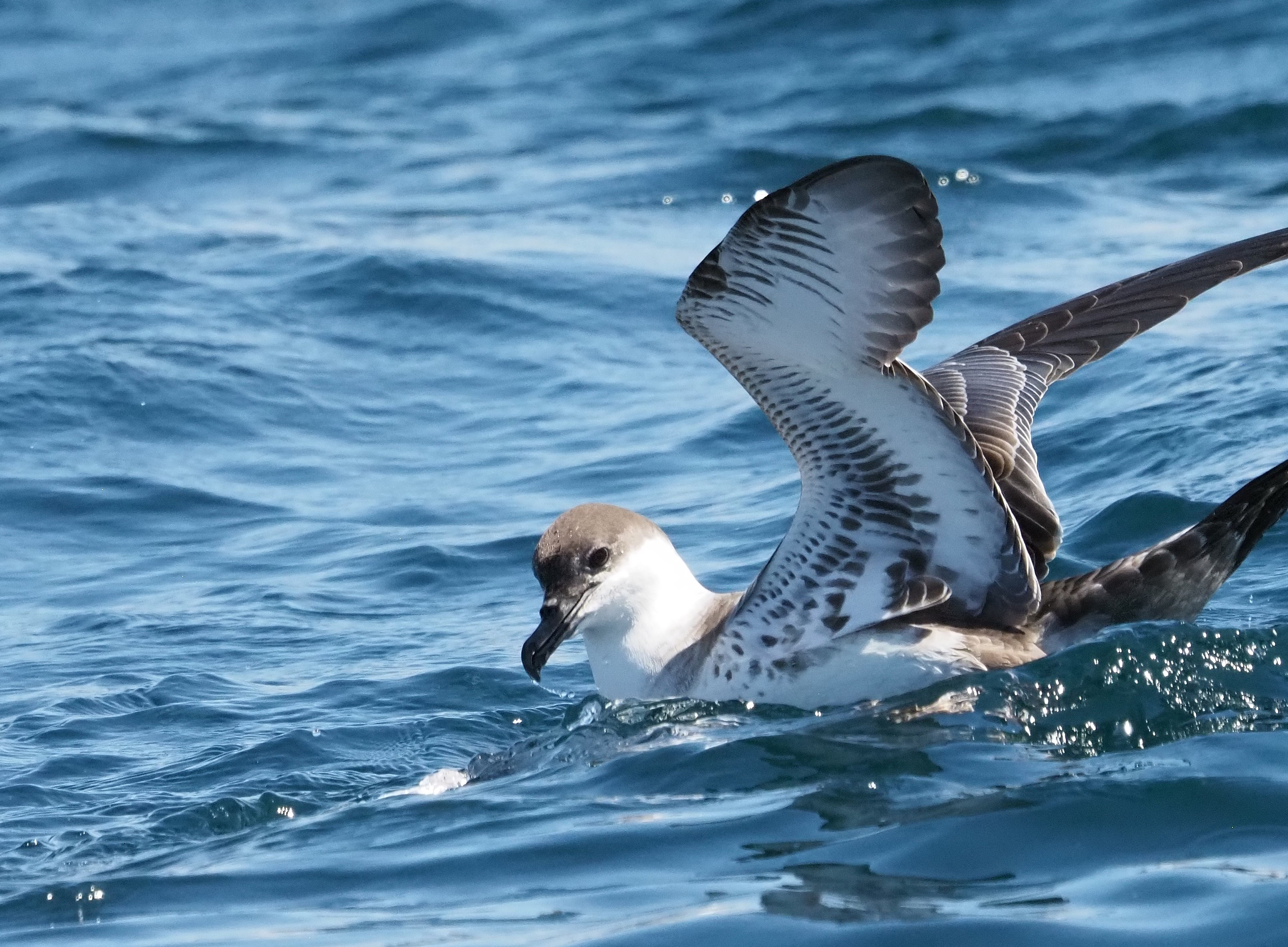


After a nice lunch in the bay, we drove to a nearby lagoon. A short walk there produced Red-knobbed Coots but also Little Grebes and the first views of Black-winged Kite, Fork-tailed Drongo, African Darter, Whiskered Tern, White-throated Swallow and Alpine Swift. From here we just when back to our accommodation for an early end of the day.
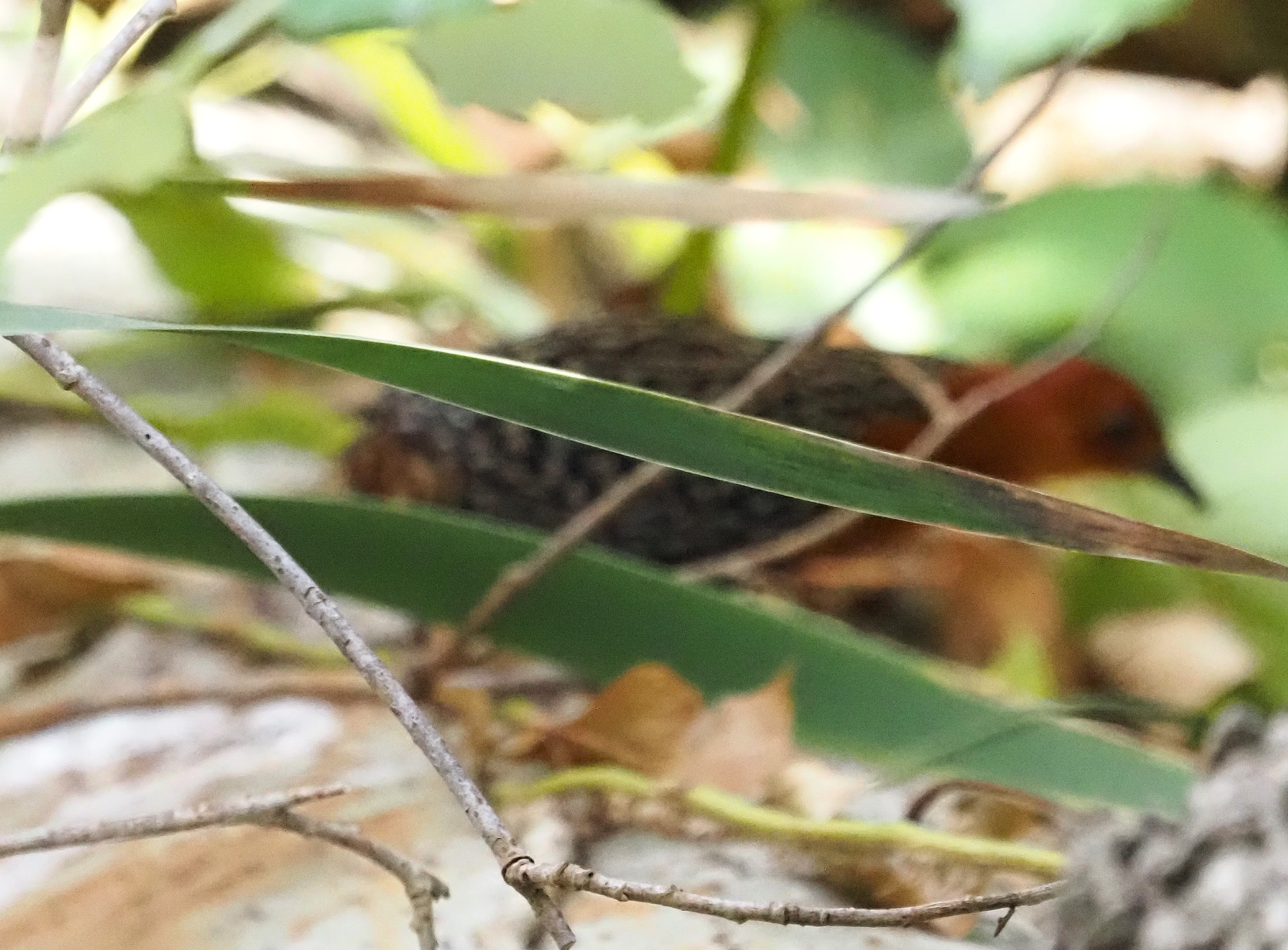
Day 4. Leaving our accommodation, we went to the Table Mountain slopes before leaving Cape Town. Our first stop of the day was devoted to explore a small stream surrounded by interesting woodlands. Just leaving the vehicle we got a couple of Black Goshawks flying over area. A short walk here produced really good looks on scaped Bronze Mannikins, Sombre Greenbuls, Rameron Pigeons and Levaillant’s Cisticolas. Here we also got really good views on Little Rush Warblers but the main target of the stop was living low in the rank vegetation. After some wait in a quiet spot, a wonderful Buff-spotted Flufftail came out of the dense vegetation a walk right in front of me, only a couple of metres away from us! Unfortunately, not everybody in the group got to see the bird so we decided to go for a walk and, after a while, we came back to same spot to try the bird again. And we were double lucky that day since the Flufftail came out again for another short walk and this time we all enjoyed great views on the bird walking on the mud and even jumping on a log!
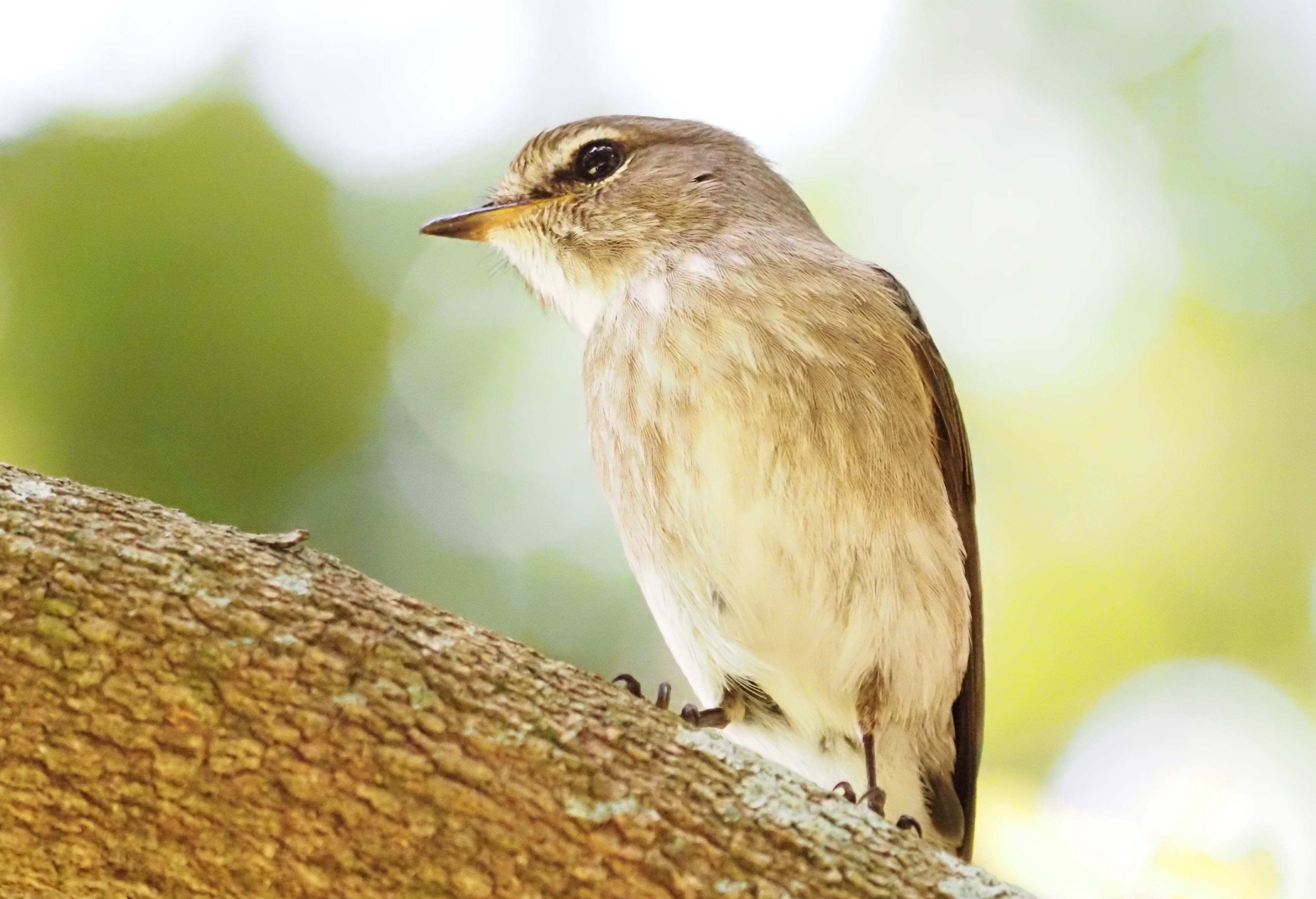
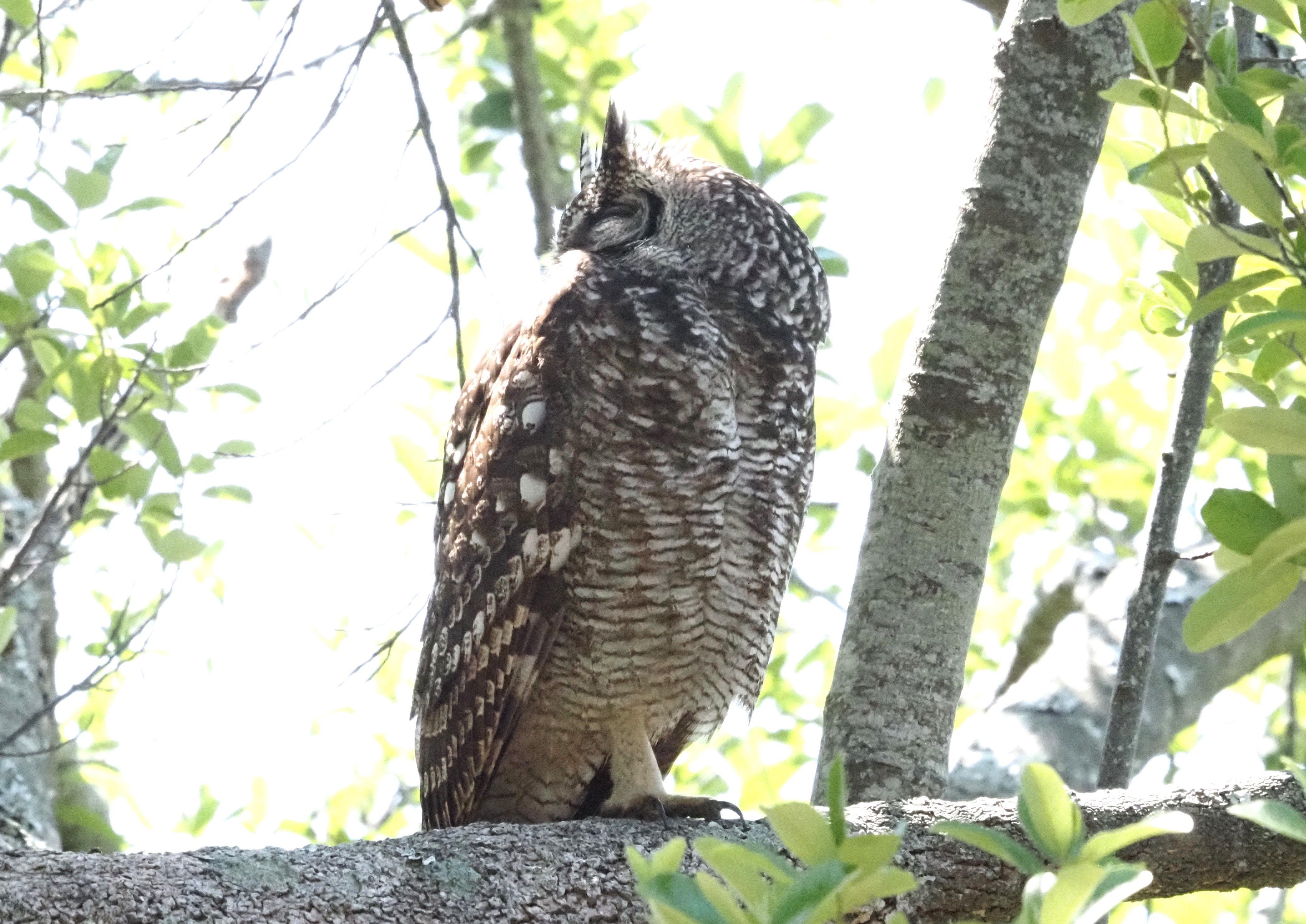
From here we went to the famous Kristenbosch National Botanical Garden. This is a well known birding spot in Cape Town and host a good variety of birdlife along with an impressive selection of the rich flora of the region. Unfortunately we went to visit the place on Sunday, mid morning, and the garden was really crowd. Still, we got a nice set of species including Cape Batis, Forest Canary & Forest Buzzard. The more dense areas were good to see species of the tangles including Lemon Dove, African Dusky Flycatcher, Cardinal Woodpecker and African Paradise Flycatcher. Here we also got good views on Southern Boubou and we heard some of the few Common Chaffinches still living the area after they were introduced by the British 150 years ago. Our walk around produced also good views on Cape White-eyes, African Harrier-Hawk and really good views on a roosting Spotted Eagle Owl.



After leaving the botanical garden it was time to leave the city and go North. Before having a short stop for lunch we had a stop on Birkenhead Drive Wetland. By then the weather was turning, and the sunny day was already becoming cloudy, and windy. Here we got 2 Maccoa Ducks and 1 White-backed Duck but also Common Greenshanks along with commoner species including a couple of Yellow-billed Kites, Southern Fiscals and the firsts Southern Masked Weaver & Southern Red Bishops of trip nesting in the reedbeds.
We kept moving North in our way to the West Coast National Park. But before arriving we had a stop by the highway. Here we got a gorgeous Black-winged Kite hunting really close to us, the first views on Southern Grey Sparrows, 3 Bokmakierie, Grey-backed Cisticolas, 4 Pied Starlings, 1 Jackal Buzzard and a wonderful Grey-winged Francolin showing in the top of some rocks. Here, we also got a singing Common Quail. Once inside the West Coast National Park the weather deteriorated really fast, and fastly became a windy, cold afternoon. We also got some rain and birding was really low. We had a short walk exploring the fabulous coastal scrub lands typical of this protected site, but bird activity was poor and we only got 1 Chestnut-vented Warbler, 1 Karoo Larks, a distant Black Harrier, 2 White-backed Mousebirds 1 Cape Longclaw deep inside the thickets. A bit disappointed for the low bird activity we decided to have a short drive. We got lucky with close views in a couple of Grey-winged Francolins. It was becoming really windy, and the light was not good to try to spot small birds in the thickets, so we tried a walk through the marshes to one of the outlooks. Despite the bad weather here we got good views on Kittlitz’s Plovers, Little Stints, Black-winged Stilts, Curlew Sandpipers, 1 Marsh Sandpiper and the bell ringed for us and we got to see the White-rumped Sandpiper that had been hanging around the area!
Once in the outlook, we got a nice selection of waders including Bar-tailed Godwits, Grey Plovers, Sanderlings, Lesser Flamingoes, African Oystercatchers, Common Ringed Plovers, 1 Sandwitch Tern and several Black-headed Herons. The weather became really bad at some point, and we decided to go to our accommodation to have some rest and a good dinner.


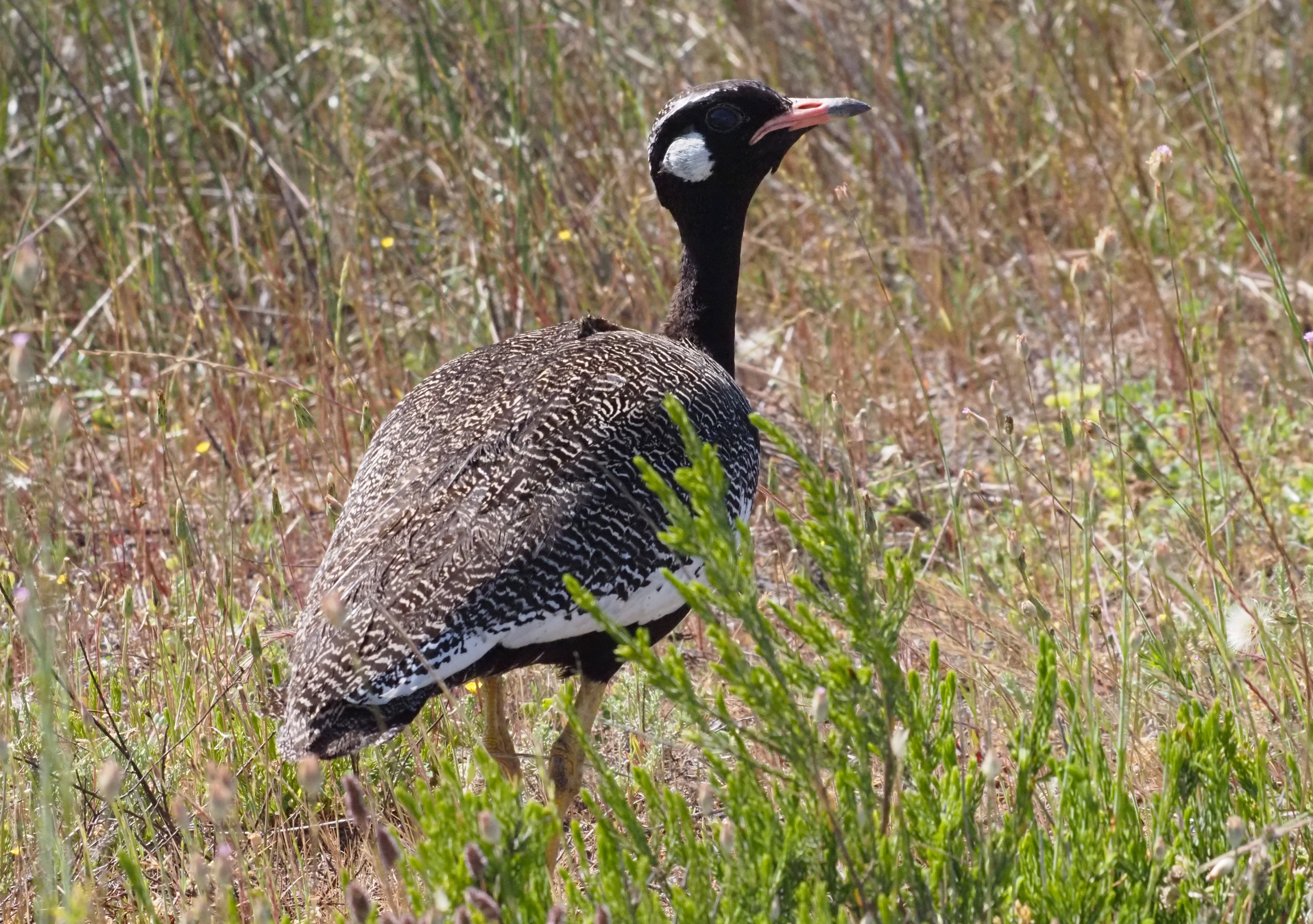
Day 5. This morning as windy as it was the evening before, but we had a promising sun shining in the sky. Windy. In the morning we went back to the West Coast National Park, but the wing was so strong that we had difficulties to get out of the vehicle. Our first drive produced nice views on a Southern Black Korhaan displaying. We got long views son the bird, and while enjoying the view we were surprised by two other males flying around. A bit further, another gorgeous Black Korhaan was standing right in the lane, providing stunning views! It was sunny, but windy, and the Cape Berg Adders felt comfortable in this weather. During the morning we 4 of them crossing the road or taking advantage of the warm tarmac.
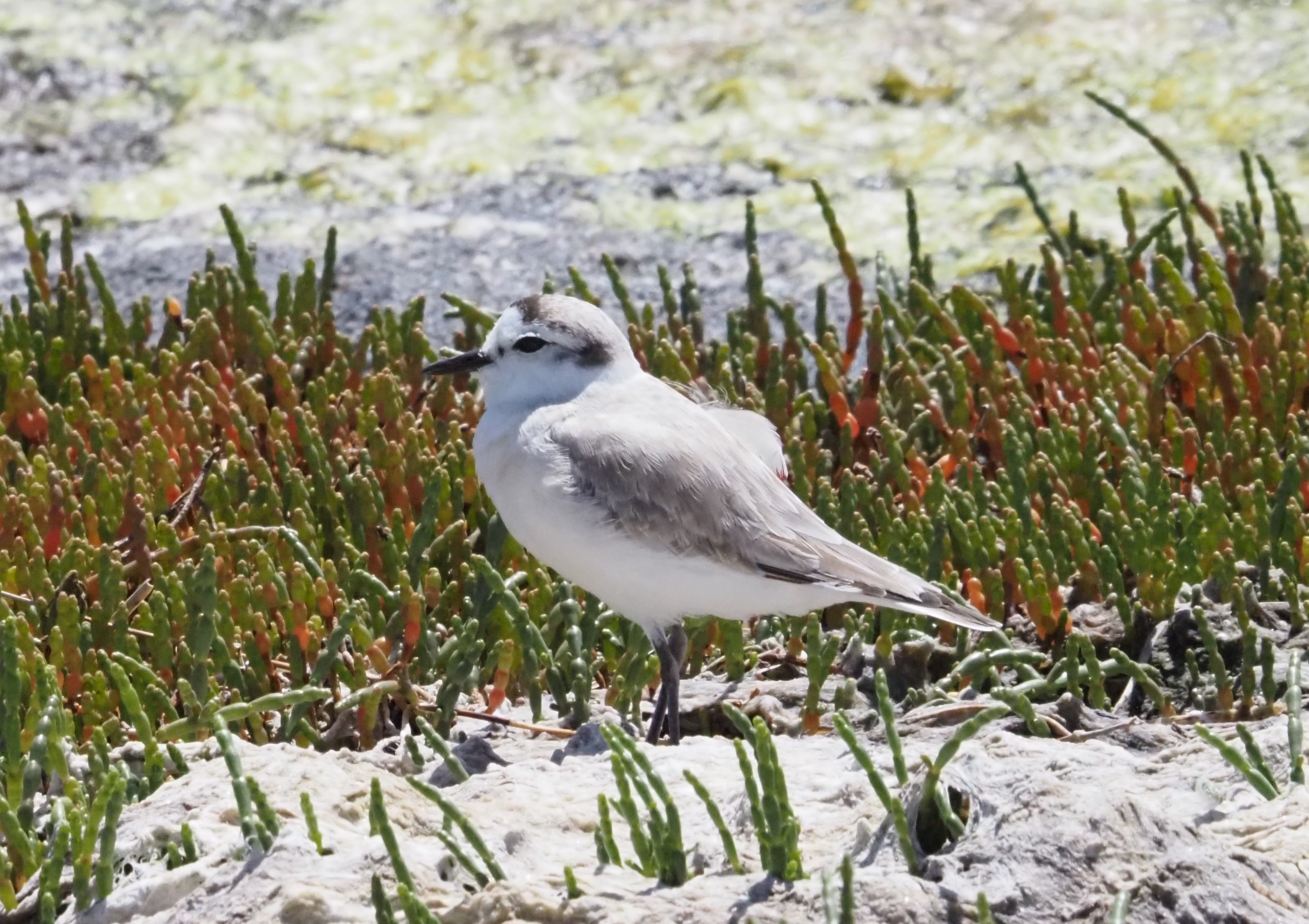
We drove to the Northern area of the parc, hoping for some shelter against the wind. And we were lucky. In that area we had a nice walk in an nice area of scrubs. Here, Karoo Bush Robins and Karoo Prinias looked like being everywhere, and we also had really good views on one singing White-throated Canary and some restless Malachite Sunbirds. Walking down to an outlook dominating the bay, we also got great views on some White-fronted Plovers. Unfortunately, the outlook was not sheltered against the wind, and birdwatching from there was a bit uncomfortable. Still, we managed a good selection of bird including a couple of Caspian Terns and 1 Subantarctic Tern in summer plumage along with several Common Terns, always a treat!
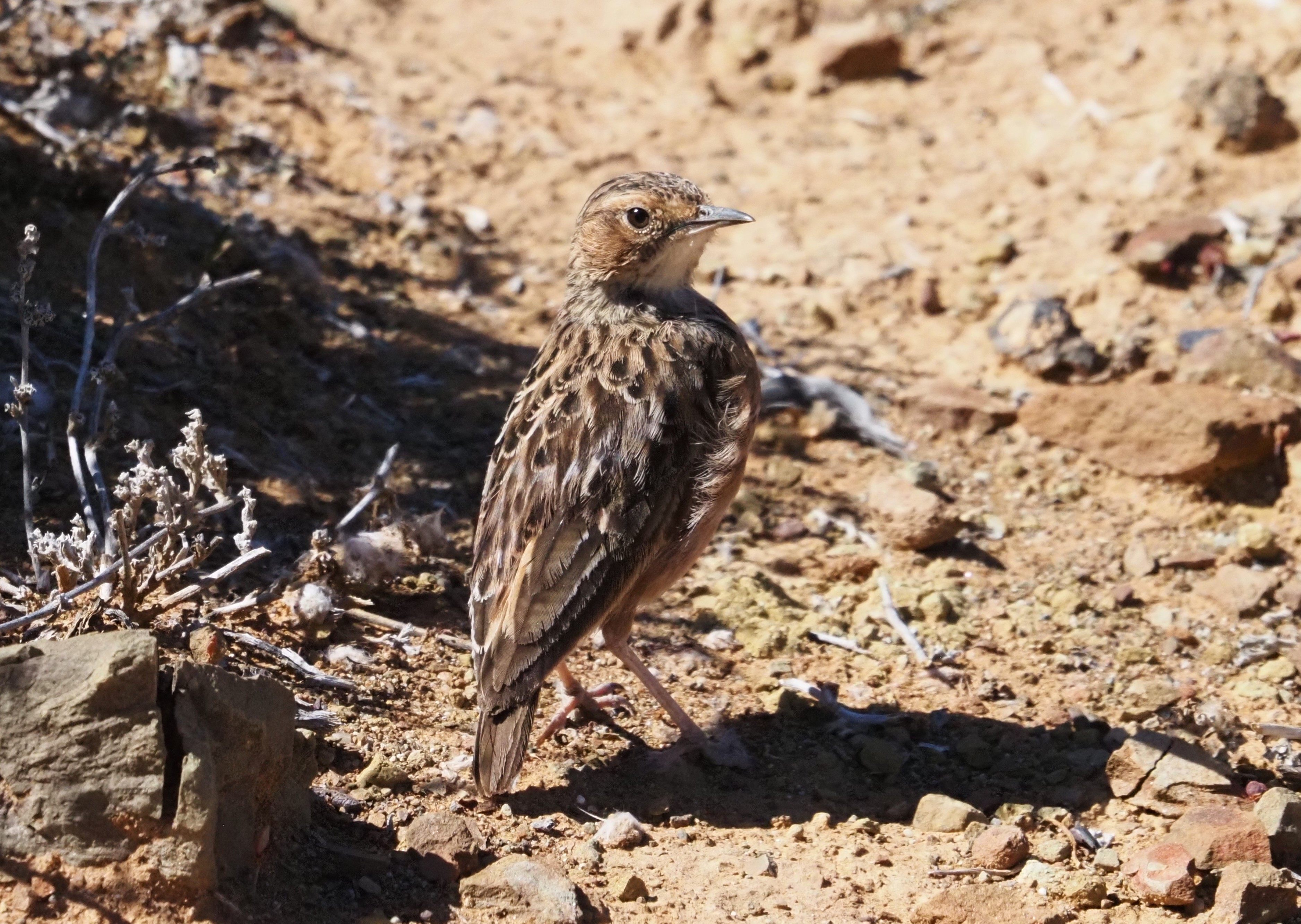
Back to the vehicle, the wind became even stronger, making any birding quite hard. A couple of Black Harriers scouting the scrubs was the best sight in our way out to the West Coast National Park. The wind kept extremely strong all along the afternoon. Still, our transfer to Ceres produced a number of interesting birds, including the first Red-capped Larks, Capped Wheatears & African Pipits for the trip.
A few miles inland, we stopped in the highway itself. In the distance, a pair of Blue Cranes were walking in a field. Along with them, a very young Blue Crane was walking with them, picking on the ground and the grass, and struggling to follow their parents as they were looking for food in the meadow. This was a wonderful and highly unexpected view and in fact it came to end our day. When arriving to our accommodation the wind was still really strong, and we decided to spare the rest of the afternoon resting a bit.


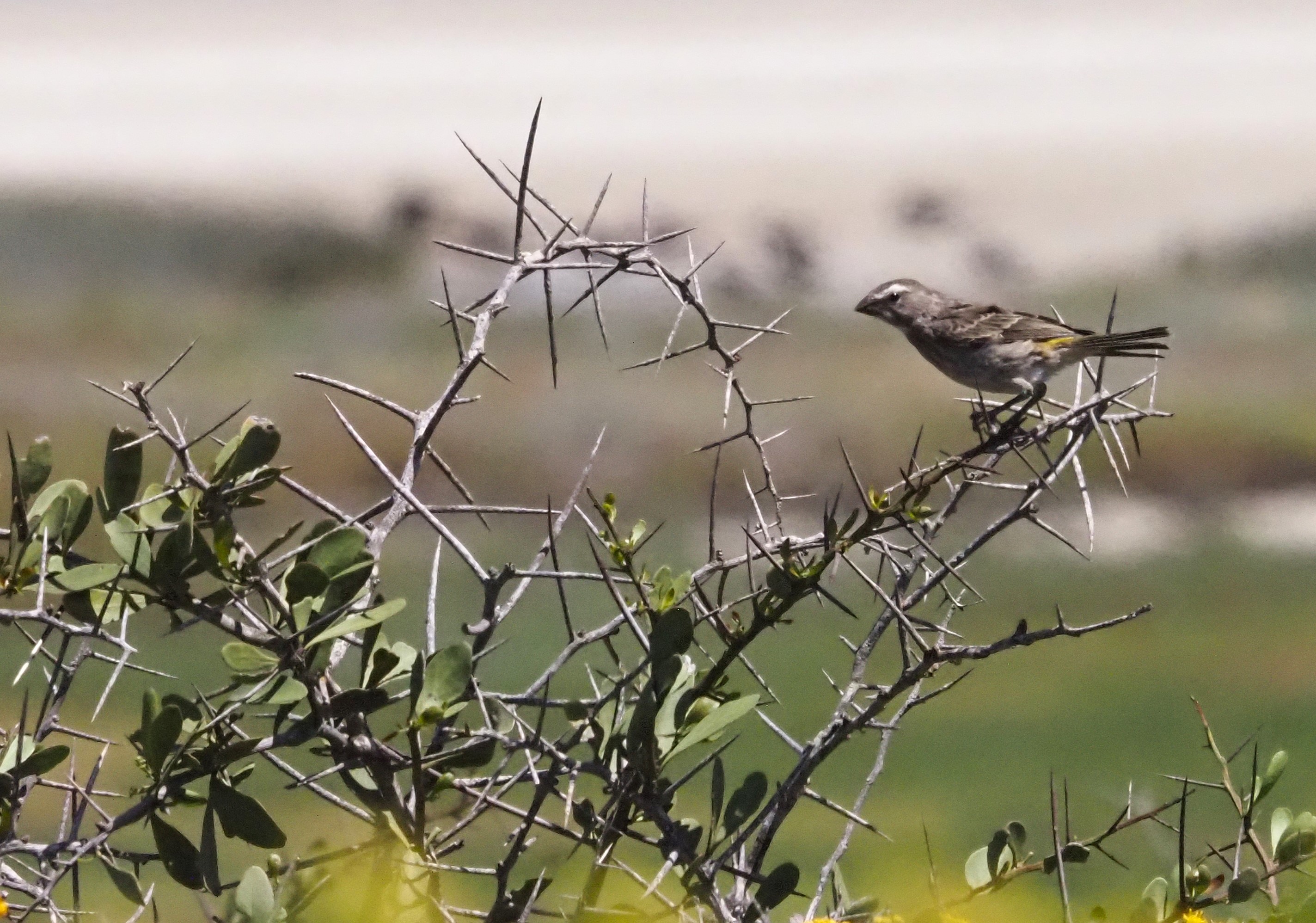


Day 6. After a couple of days with strong winds and sparse rain, the sun raised in a quiet ambient. When we left our accommodation it was a splendid morning with a mild temperature. We covered the short distance to the karoo enjoying the voluptuous landscape along the road, but also some good birds including the first White-faced Whistling Ducks of the tour, Red-billed Ducks and the only small flock of Blue-billed Teals of the trip! A small herd of Red Hartebeests crossed the road, followed soon after by a couple of Steenboks and a Cape Grey Mongoose.
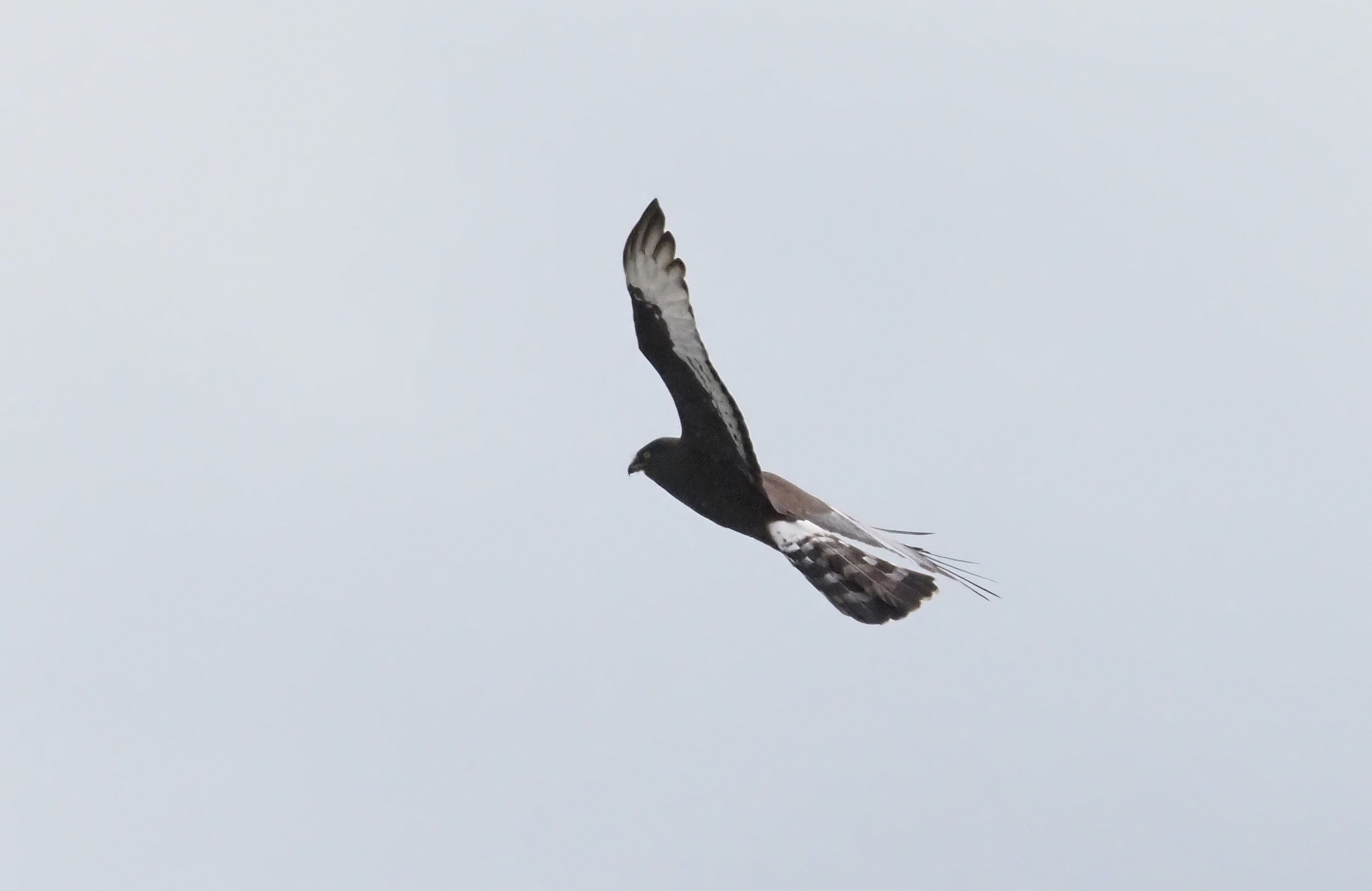
Our first proper stop was just by road. Even if we had some traffic (and its associated dust), the birding was superb. Here, a rocky outcrop is broken by a small stream, being the perfect place to get a good array of species. Small parties of Lark-like Buntings were moving everywhere and in only 5 minutes we got a fabulous list of birds including Layard’s Warbler, Common (African) Reed Warbler, Common Waxbills, Cape Penduline Tit singing from the top of small bush along the stream but also Long-billed Crombec (also referred as Cape Crombec), the first Hamerkop of the trip, several Karoo Prinias and Grey-backed Cisticolas, 2 Mountain Chats, 7 Black-headed Canaries moving on the ground and in the lower flowers, and even a Karoo Thrush. But the very best was probably a nice Verreaux’s Eagle showing up in the sky for a couple of minutes. Even if it was not really close, it was a wonderful sight!
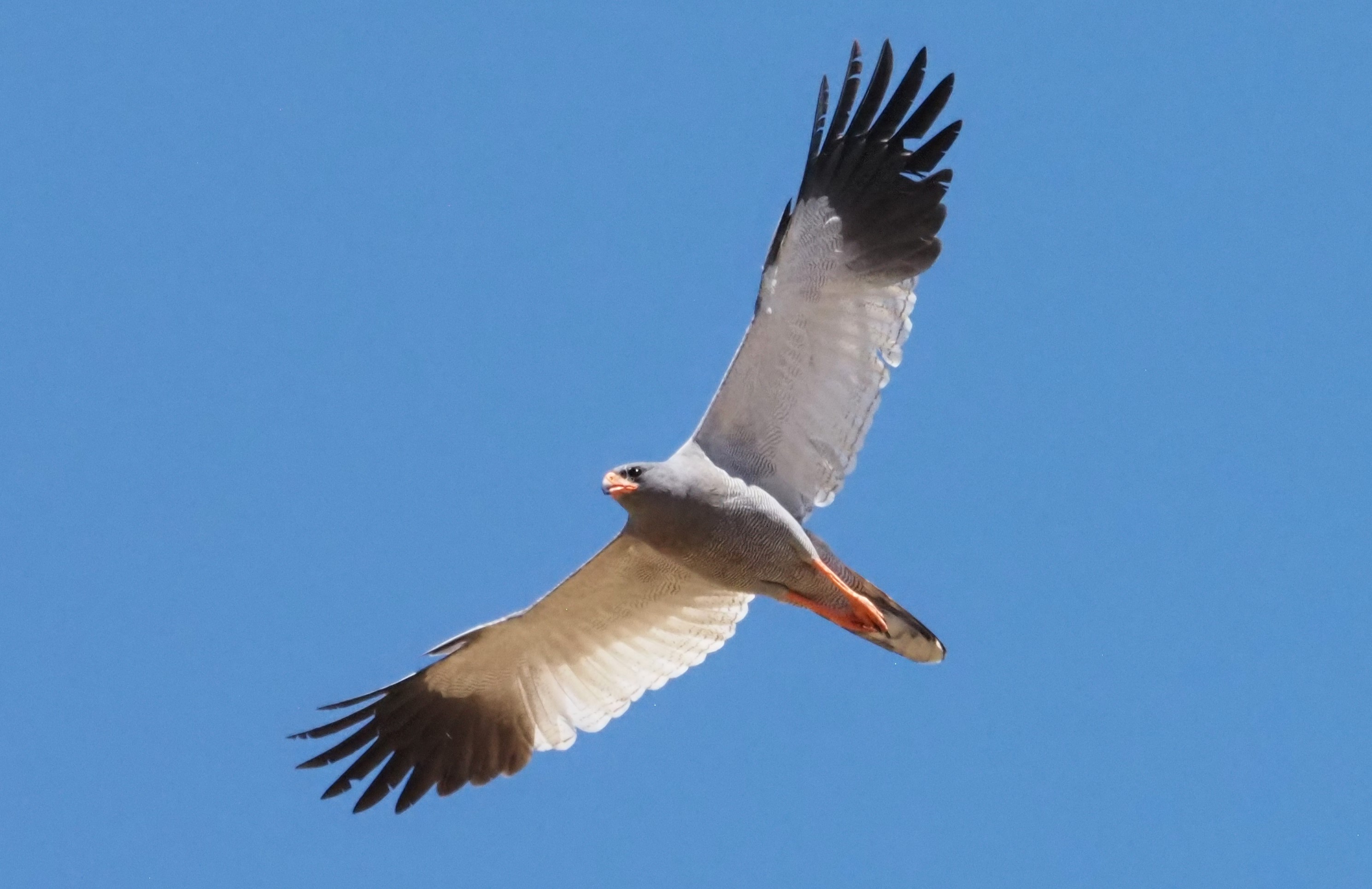
From here we drove deeper in the karoo and a second stop produced an even longer list, with really good looks on Fairy Flycatchers, Karoo Emeromela, Nicholson’s Pipit, 1 Fiscal Flycatcher, Sickle-winged Chats, the first Pale-Chanting Goshawk of the trip, 1 Booted Eagle, 1 Karoo Chat, restless Malachite Sunbirds, several Cape Buntings and Karoo Scrub Robins, 1 singing African Hoopoe and the only 2 Dusky Sunbirds of the trip! Still, and despite our efforts, we failed to find any Cinnamon-breasted Warbler..
From here we had some drive through the wonderful karoo landscape, with stops to enjoy both Karoo & Sickle-winged Chats but also Thick-billed & Karoo Larks. We arrived to an outlook from where we a large lagoon could be seen. Several Southern Shelducks were feeding there along with other waterfowl but also Greater Flamingoes, Whiskered Terns, 4 Marsh Sandpipers, Ruffs and other waders. A small flock of European Bee-eaters move on, calling around us, even if we never saw them. The bush around was also well alive, with several chats moving around and also our only one Karoo Long-billed Lark and 1 Common Ostrich. Suddenly, a Greater Kestrel showed up in the sky, moving a couple of Yellow Canaries and 1 Barn Swallow.
Our final stop in the karoo was devoted to new rocky outcrop. Here we got excellent views on both Namaqua & Rufous-eared Warblers as they were very active in the scrubs but also our first Mountain Wheatear (also referred as Mountain Chat), 1 Ant-eating Chat and 4 very approachable Spike-heeled Larks. In the way back, 4 Pale-chanting Goshawks had been working in a remarkable spectacle just for us. A young bird was trying to compete for the hunting territory of a pair of these birds of prey, and along 15 minutes we had very close views on an air battle, with these acrobats fighting hard to keep their opponents out of its territory. It was a great way to end our morning exploration!
Back to our accommodation and after enjoying a midday break, we went to explore a nearby open lands. Very little was seen out of some Little Swifts, African Stonechats Banded Martins and passing Purple Heron. But right before dinner we had superb views on 2 Spotted Eagle Owls singing from the top of our own accommodation! What a way to end our day!





Day 7. After a succulent breakfast, we kept exploring the area around Ceres, but this time we headed to the slopes. Here, we walked up a famous lane in the hope to contact with another endemic; the Ground Woodpecker. The short walk was great and we managed to have good views on Cape Siskins, Orange-breasted Sunbirds and Booted Eagles. Still, we only heard a distant Ground Woodpecker and we failed to see this key species.
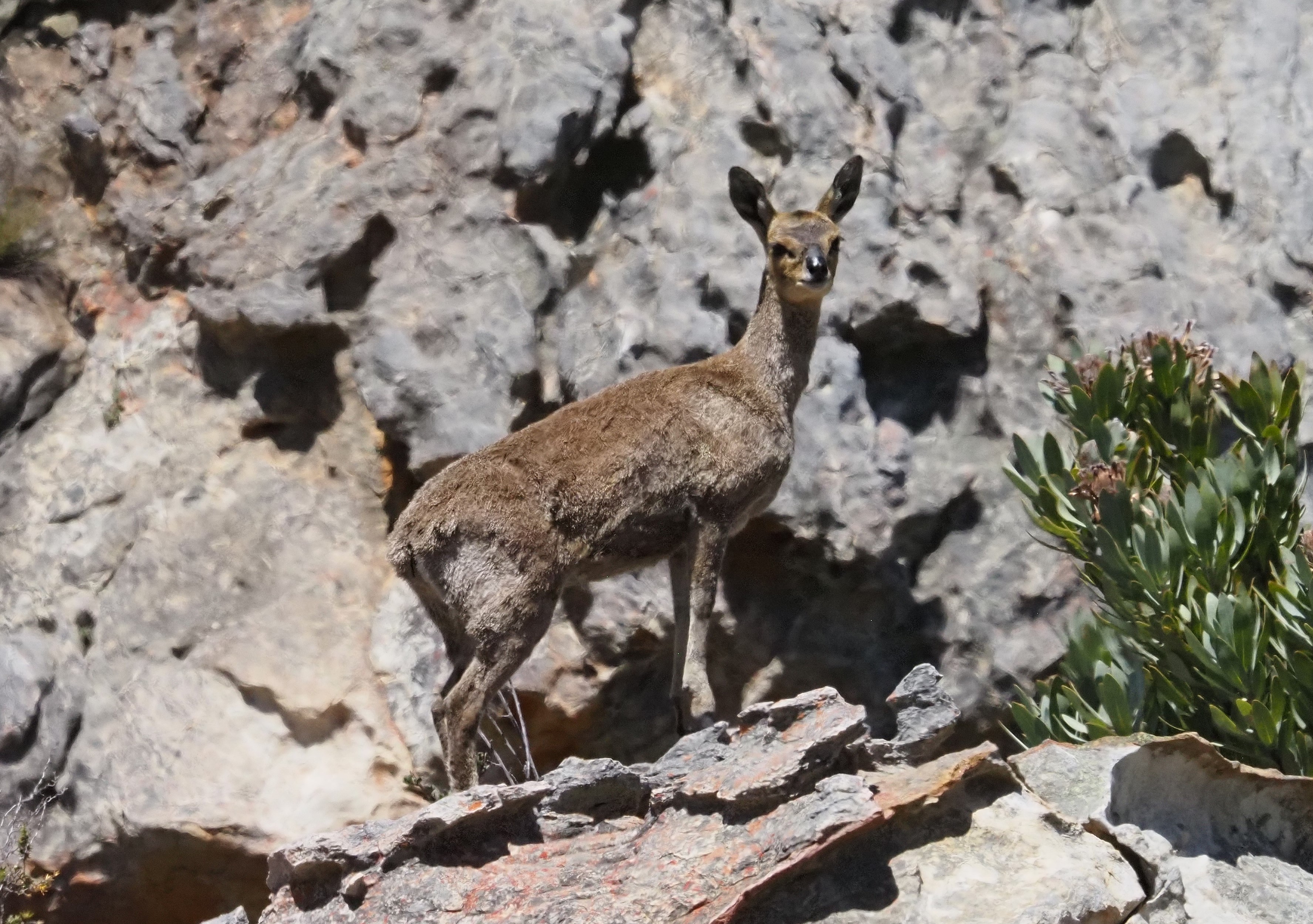
A second stop was made in a mountain pass West of Ceres. Here we did have a number of minor stops, hoping to find the rather scarce Protea Seedeater (or Protea Canary), after a number of non productive stops we finally found one of them perched close to other Canaries! It was already midday and quite warm, and this final victory came along with really good views on a pair of Klipspringers resting on the boulders close to the lane.
From here we started the transfer to Bontebok National Park. In our way, apart from a lovely lunch, we enjoyed with the several Common Ostriches and crossing some nice habitat we picked up small concentrations of Blue Cranes and also a nice Common Buzzard (from the vulpinus race and often referred as a separate species; Steppe Buzzard).

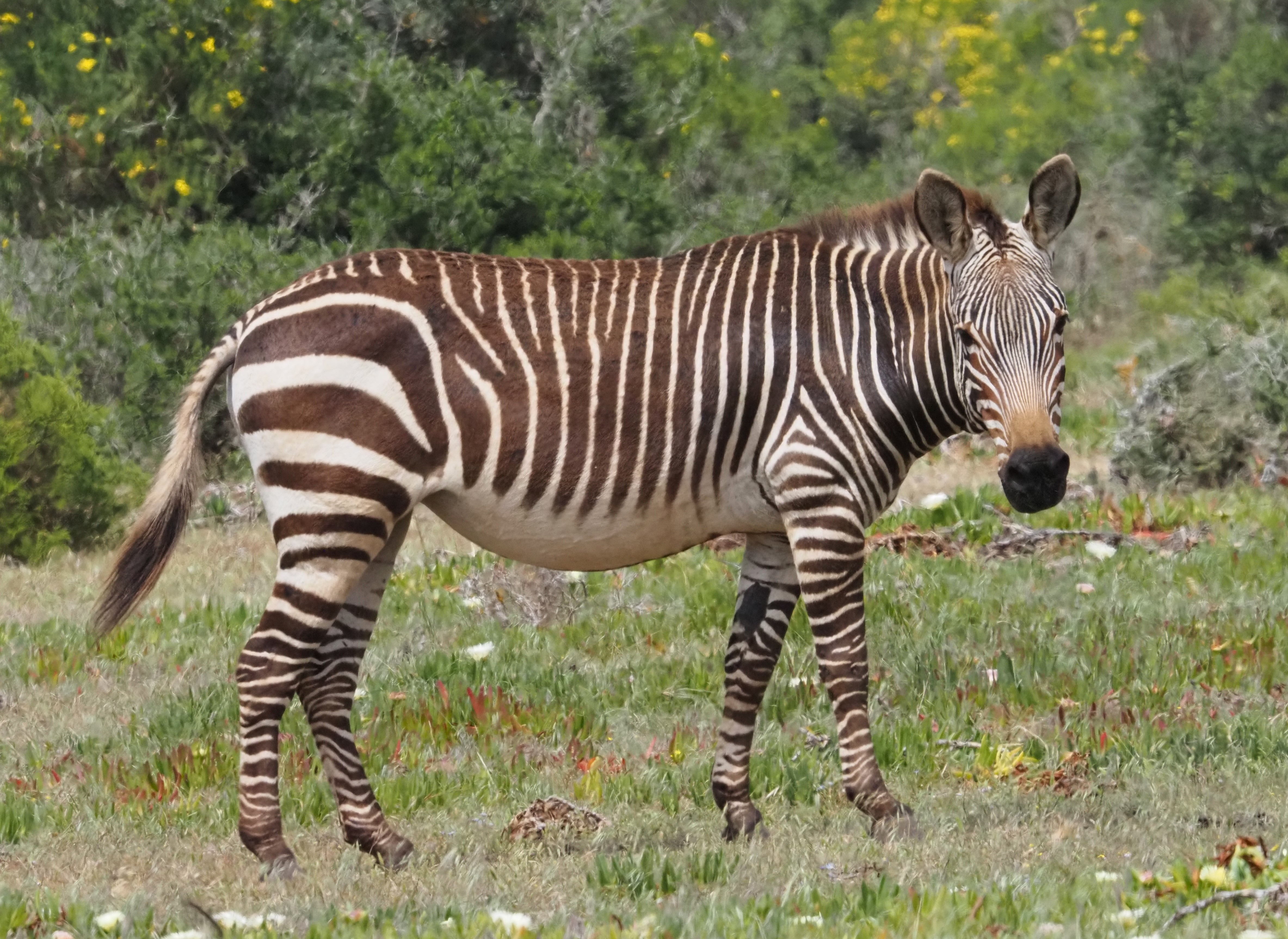
We arrived to Bontebok National Park during the afternoon, a good couple of hours before sunset. Almost immediately we got Crowned Lapwings and Cape Crows, two species that were escaping from us during the previous days. A game drive around the park produced soon small herds of stunning Bonteboks but also some scarce Mountain Zebras and Red Hartebeest. Bokmakieries looked like being everywhere in the thickets, but the very first amazing sight of the afternoon was an obliging juvenile Montagu’s Harrier that we found only a few meters away from our van! Personally, it has been the closer views on this species ever and one of the highlights of the tour!
As the afternoon advanced, Cape Clapper Larks started showing off and displaying all around us. Here we also picked up the first Cloud Cisticolas of the trip. The extensive grasslands of the park host a thriving population of Denham’s Bustards, and soon we enjoyed excellent views in these giants, with one male displaying and up to 5 birds flying at close range. In one of these nice stops to enjoy the Bustards, we got 2 Quailfinches moving out from the lane. As always with this species, it was a fast view, but soon after we got 2 more Qualfinches flying really close to us, providing proper looks! Same birds? Hard to know. We started moving out, but we had to stop because of the many Cape Robin-Chats, White-backed Mousebirds and Pin-tailed Whydahs along the way. Here, a couple of Spotted Thick-knees crossed the lane, and a bit beyond two Black Harriers provided good looks as well. But the best was still to come, in our way back, a Black-winged Kite was harassing a bird, and what was our surprise when we saw that the Kite was actually harassing a Marsh Owl! We were lucky, and a minor track lead us right by where the action was going on. And yes, a pair of amazing Marsh Owls were patrolling its territory right in front us. Unfortunately they were not as close as they were only one minute ago, but we all still had a great views in these incredible creatures. Marsh Owls are extremely scarce in Western Cape, with only a handful of known territories, and they are actually a description species for the area!
Back to the vehicles, we just drove to the gate of the National Park, but before leaving we found a nest of Black-winged Kites. The nest was so close and low that it was possible to see the chicks on the nest even without bins. Cleverly, we decided to keep going immediately and to do not disturb them. From here we just went to our accommodation to enjoy a wonderful dinner and rest.

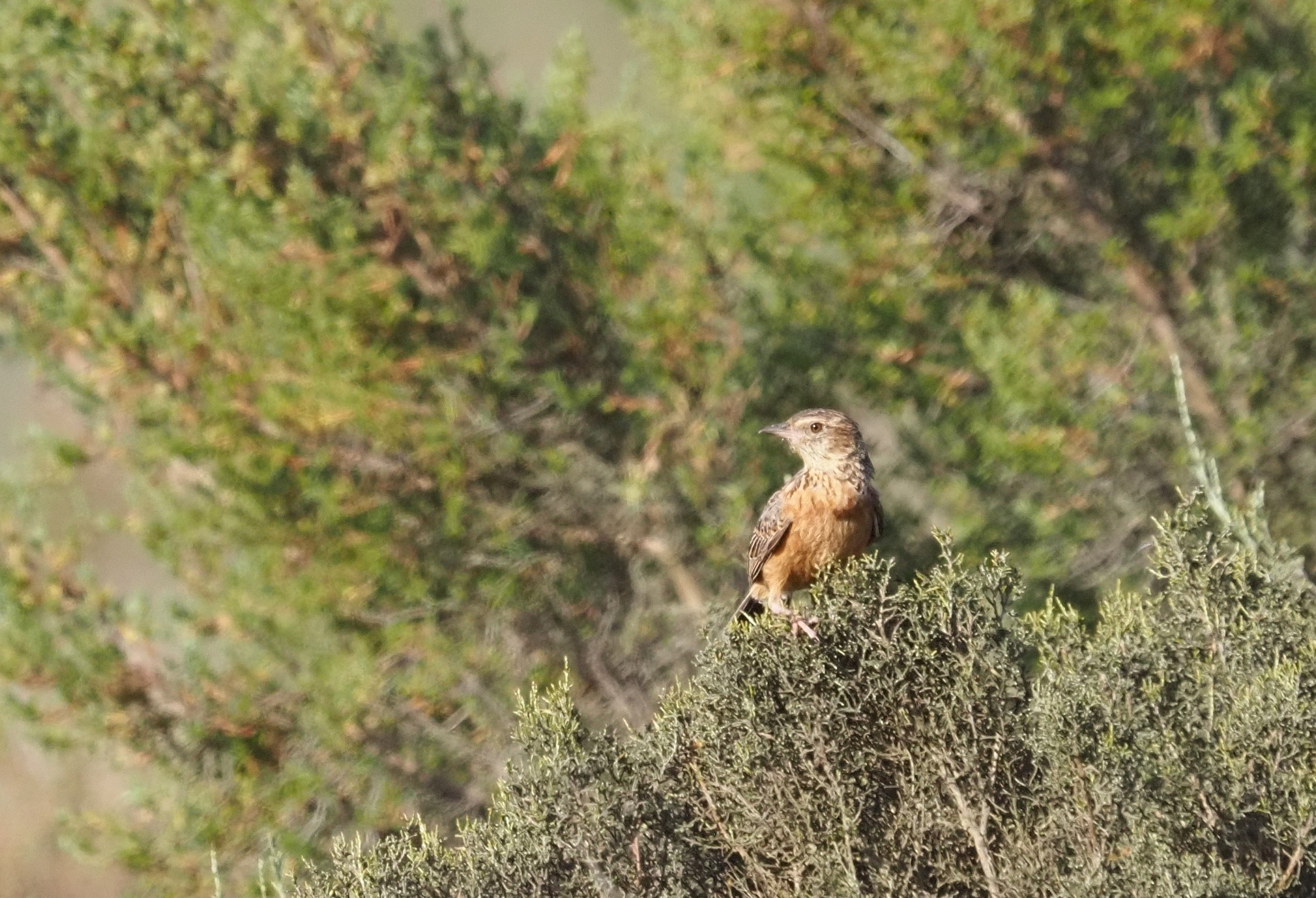

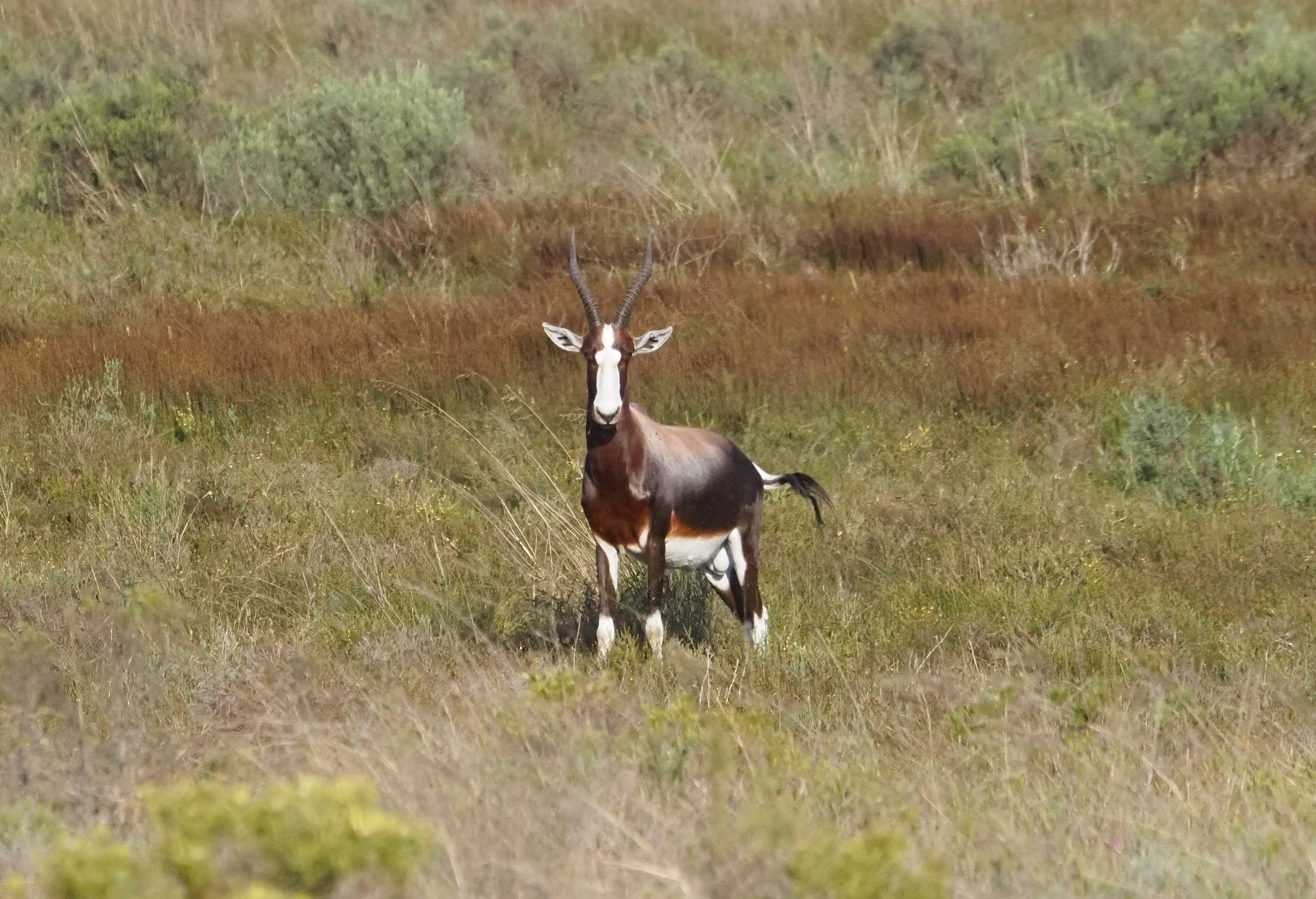
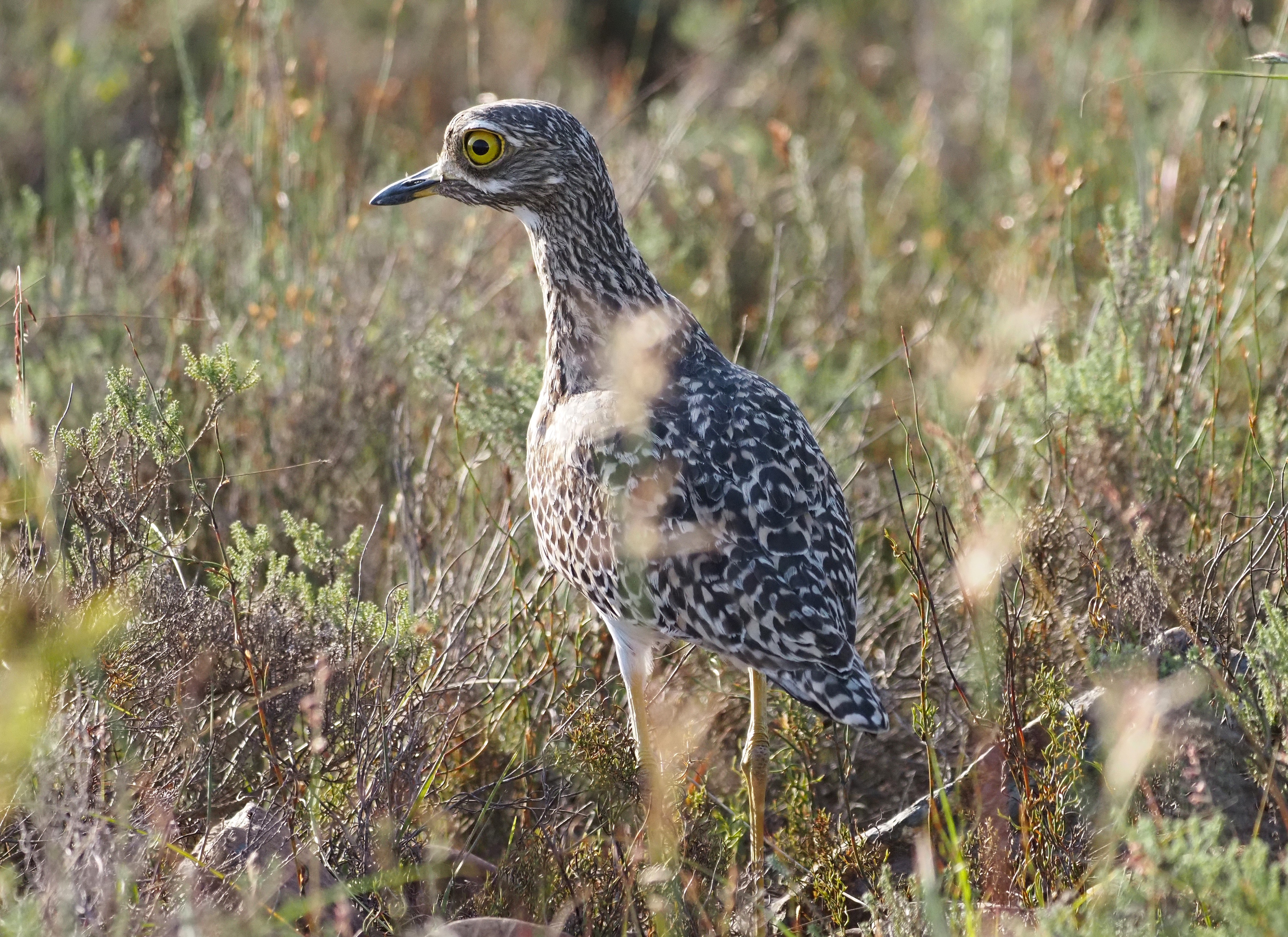


Day 8. The day started foggy and rainy in our accommodation, and our pre-breakfast walk produced little out of a distant Red-chested Cuckoo, 1 Tambourine Dove, Bar-throated Apalises and Rameron Pigeons. After breakfast, we drove South in the way to have some birding in the well known Agulhas Plains, half way down to De Hoop Nature Reseve.
Agulhas Plains was as great as always. The rain vanished and with the sun and the mild temperatures came the birds. The area was full of Red-capped Larks, African Pipits, Capped Wheatears, African Stonechats and Red-billed Queleas. Large-billed Larks were singing along the fences. We were also lucky to get at least 3 Agulhas Long-billed Larks and a minimum of 5 Cape Vultures, an endangered species with only a couple of colonies in the Western Cape. Here we also got good numbers of Blue Cranes feeding in the harvested areas along with the firsts Zitting Cisticolas of the trip. Pearl-breasted Swallows were patrolling the streams, and small flocks of the tiny Grey-backed Sparrow Larks were also enjoyed. Once closer to the nature reserve we started enjoying the first mammals, with small herds of Springboks and Elands roaming the slopes while the first Denham’s Bustards of the day became evident.


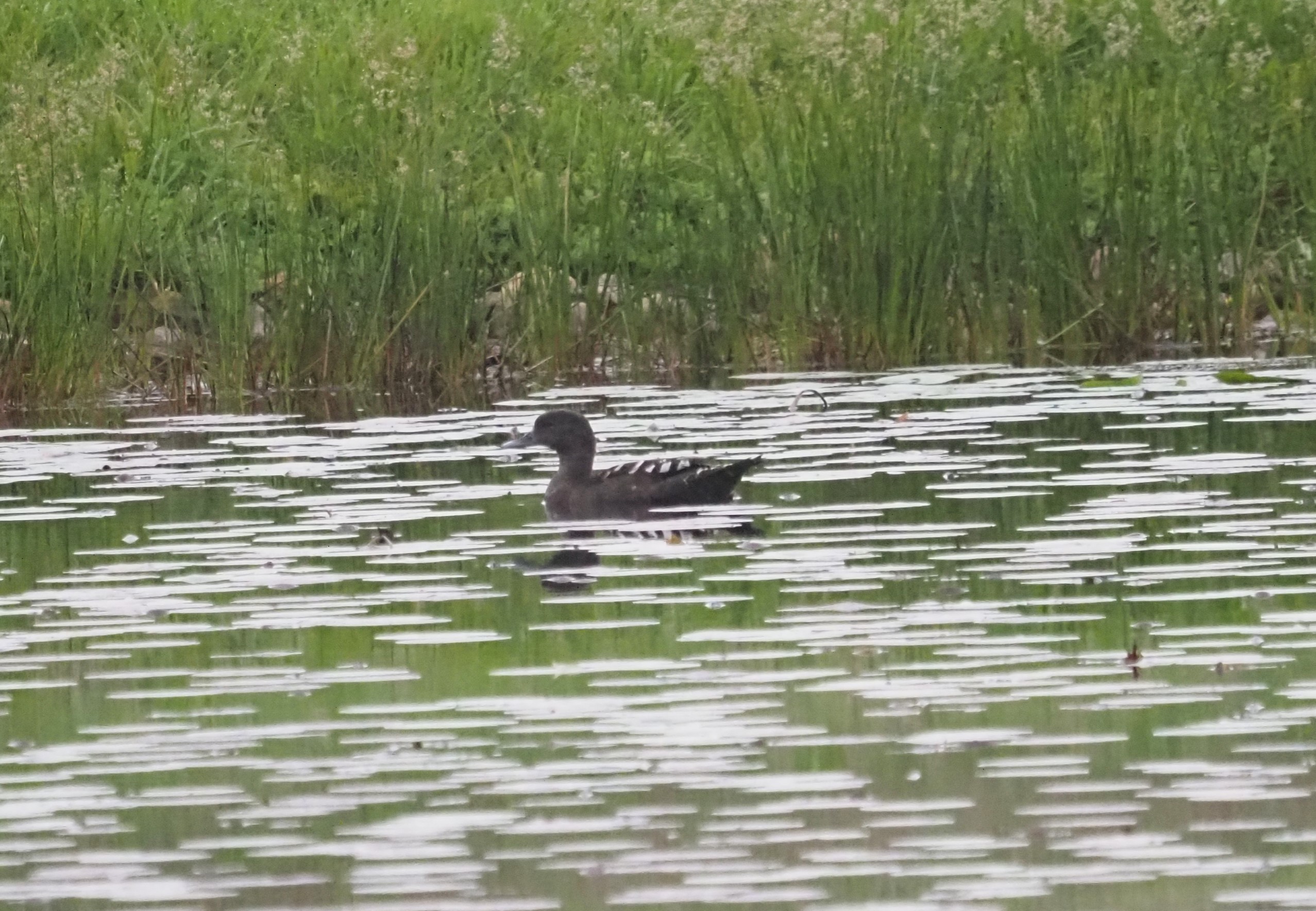
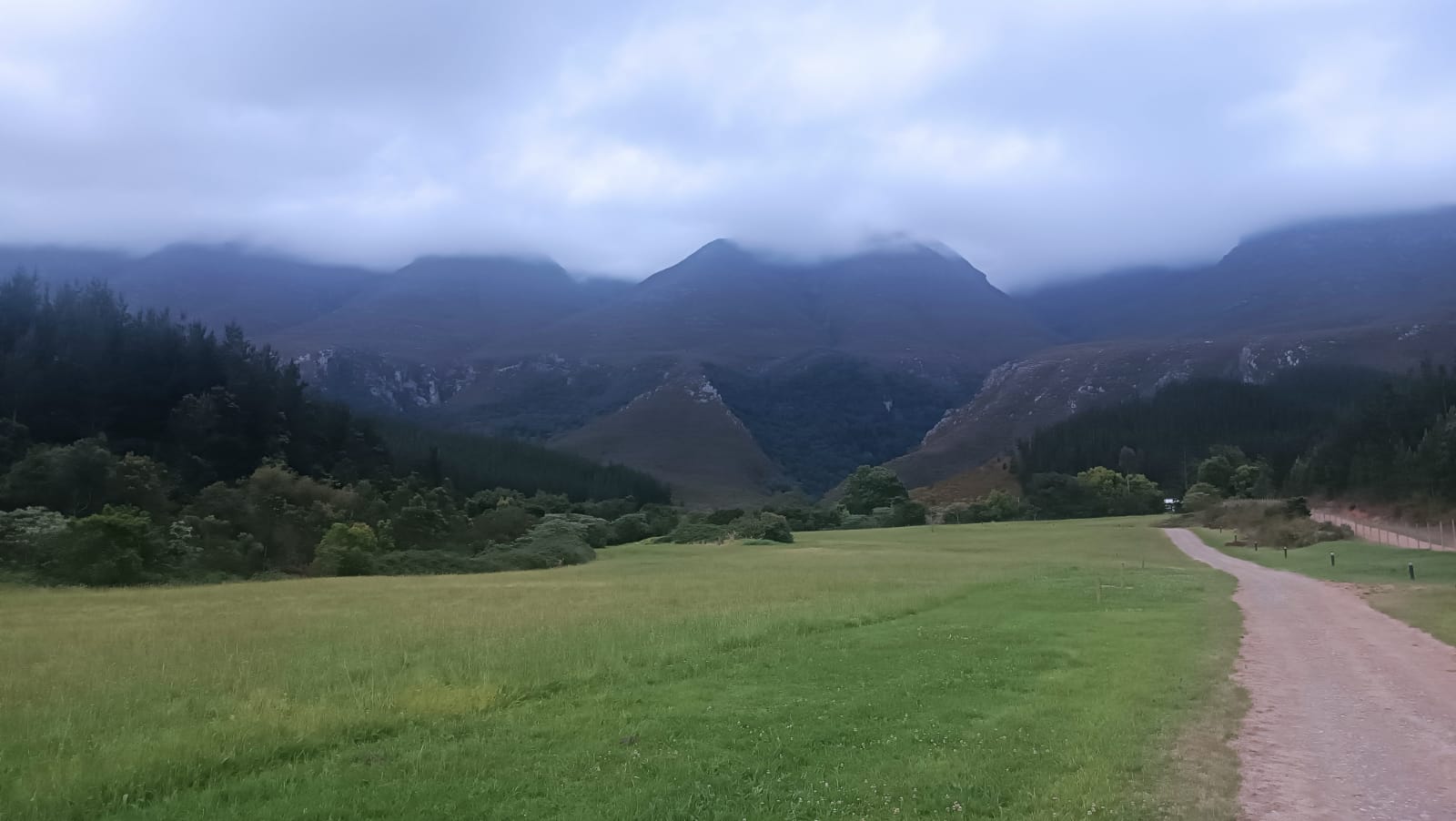
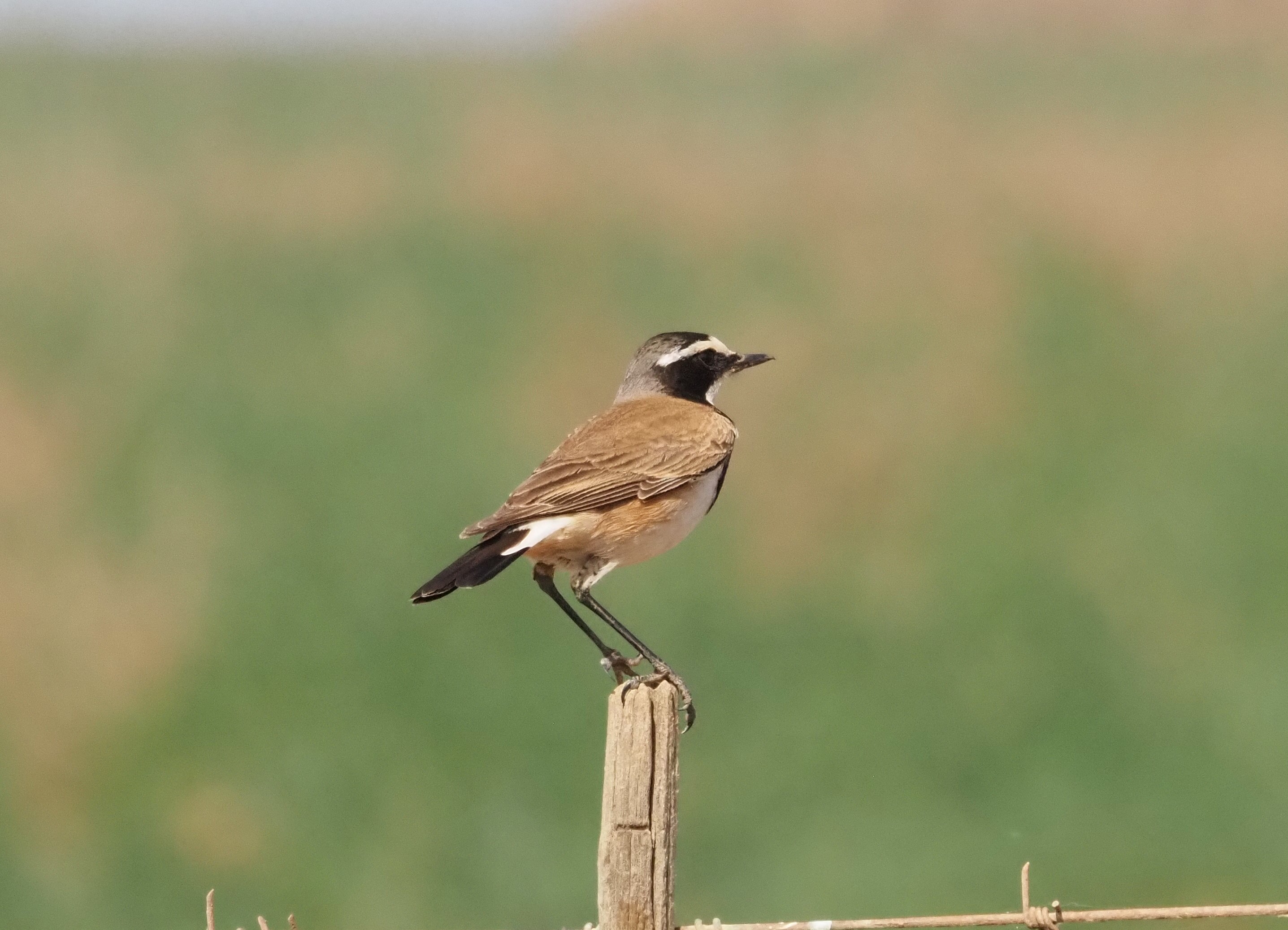


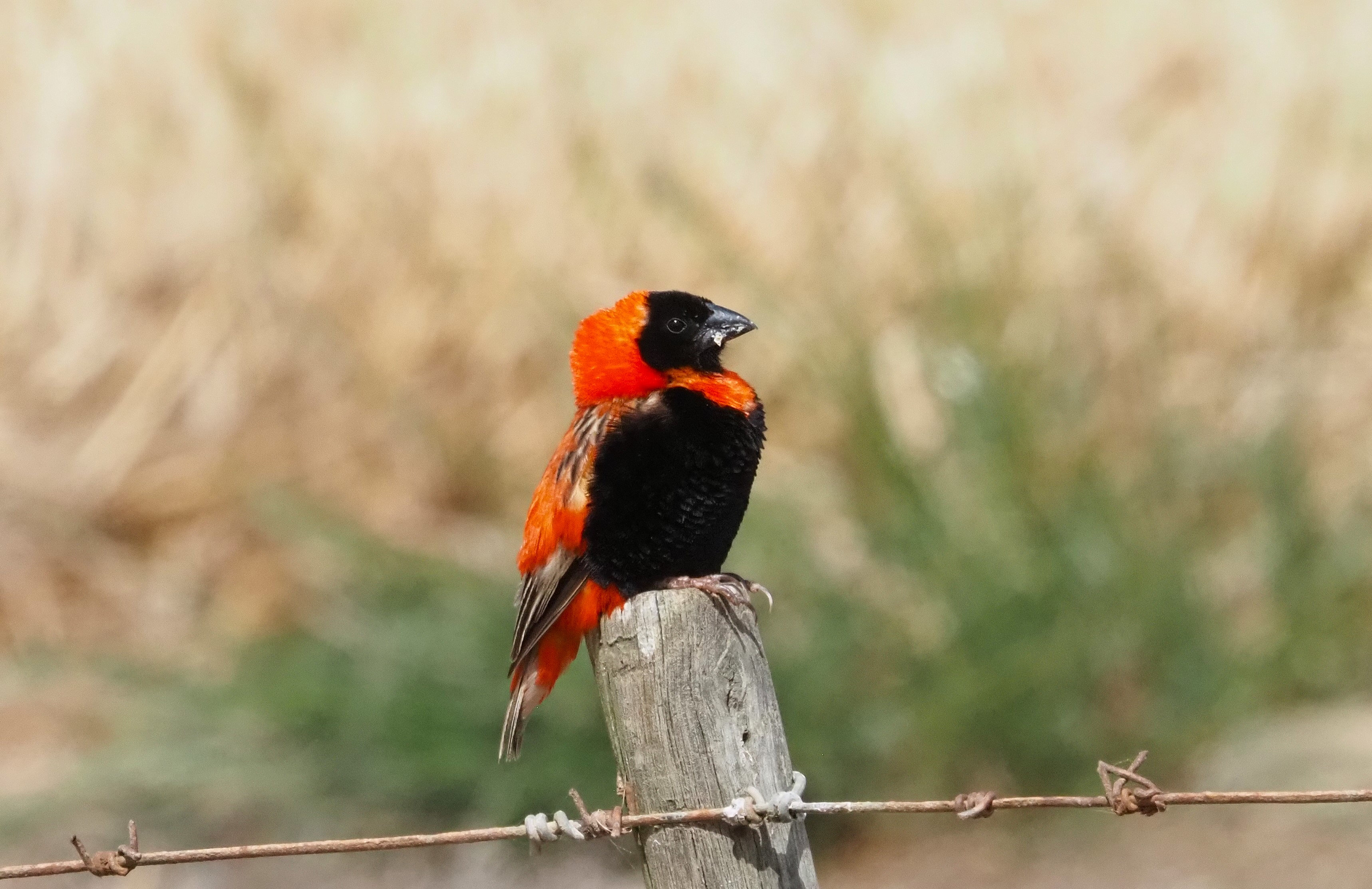
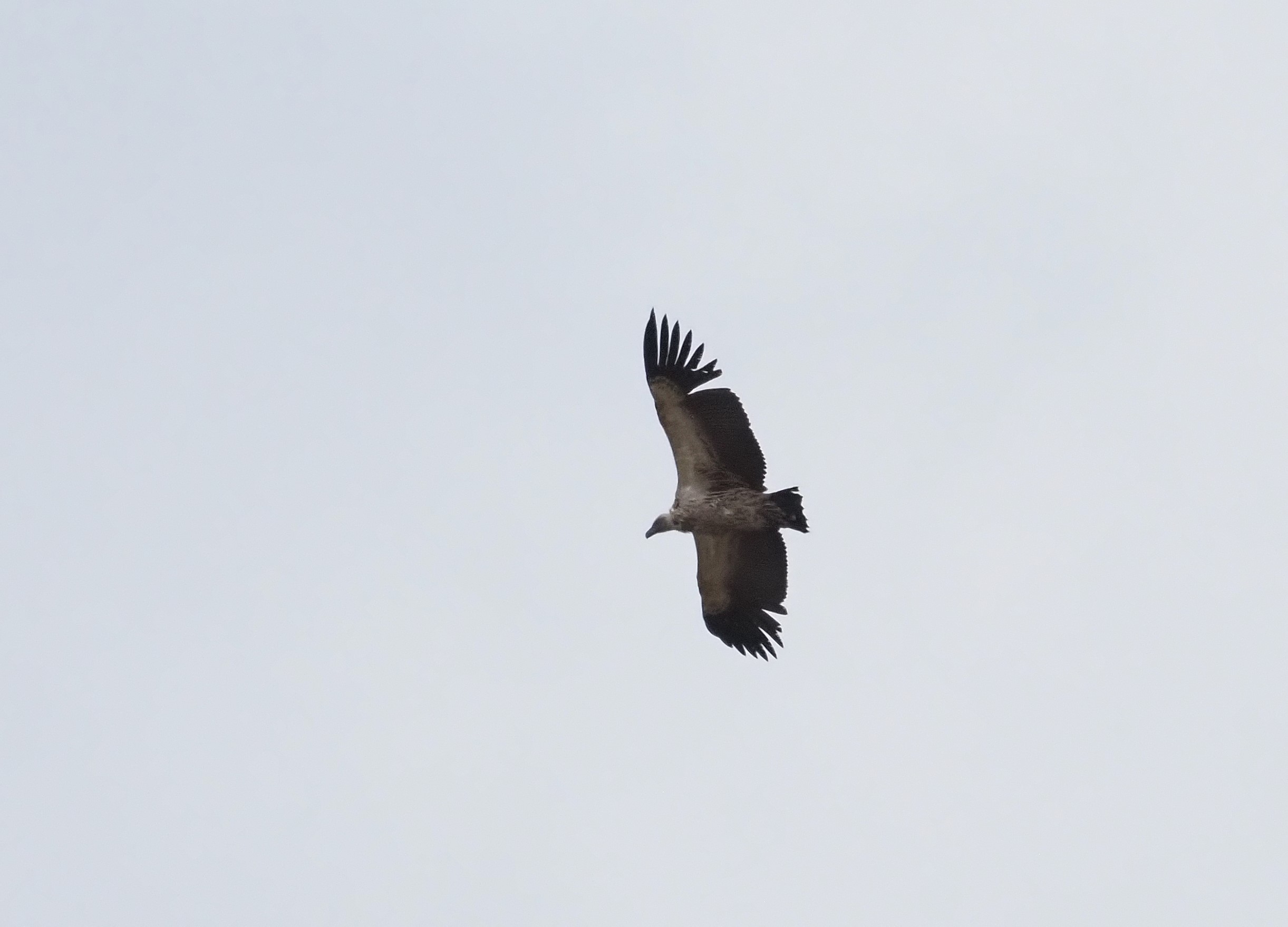
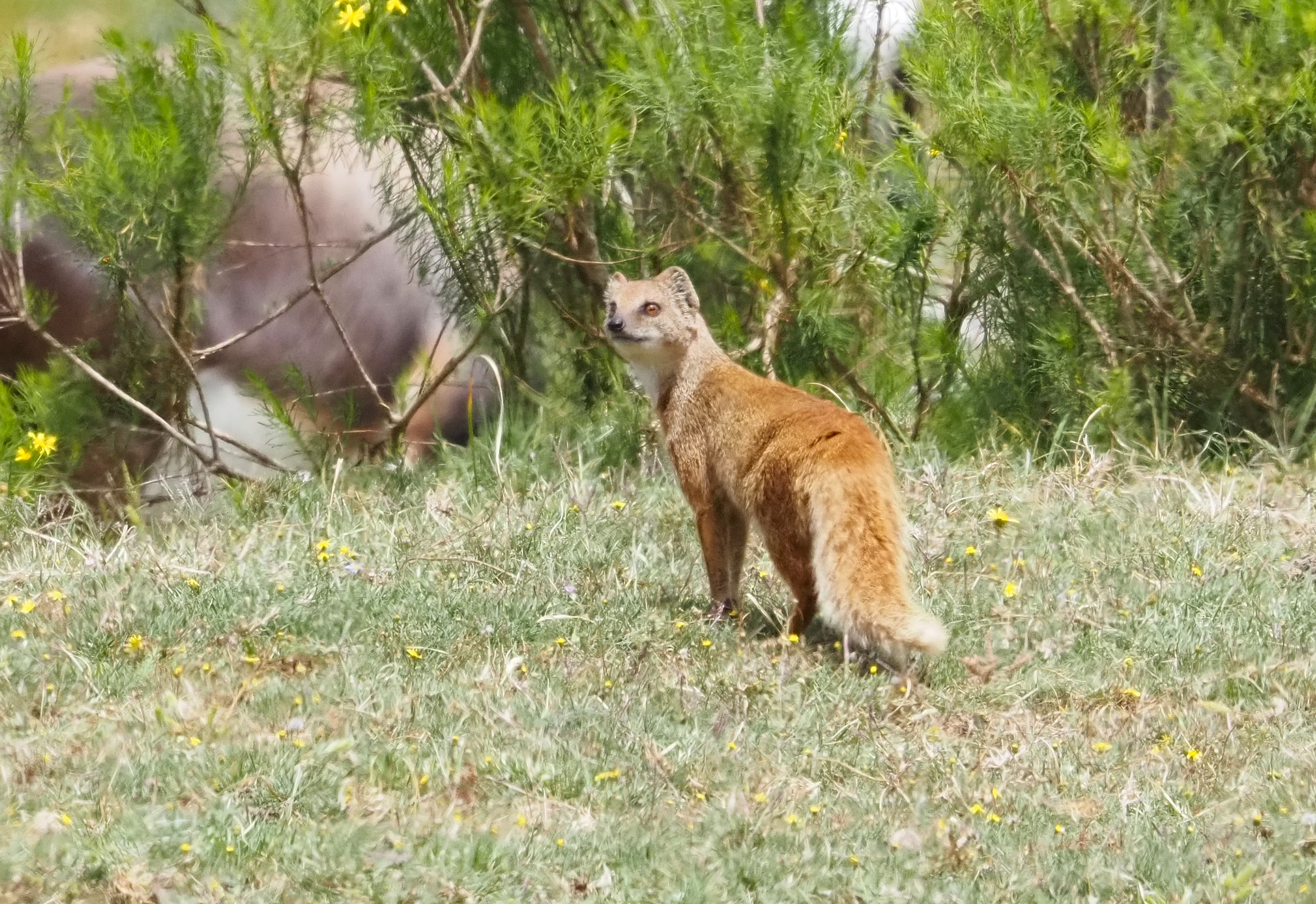
The Hoop Nature Reserve is an excellent place to enjoy wildlife, and our time in the reserve included close views on Bonteboks, Mountain Zebras, Grey Rheboks and Yellow Mongoose. In terms of birdlife, African Fish Eagle, Plain-backed Pipit, Speckled Mousebird and Great Crested Grebe were all new for the trip,
Back to the plains, we had further and closer views on Denham’s Bustard (yes, I love them!) and we were surprised to see a Common Quail running the lane right in front off our van! A bit beyond, a small pond and the meadows around produced Grey-winged Francolin, Three-banded Plover, 2 Spotted Thick-knee and, of course, Blacksmith Plovers.
Back to the accommodation, we got a Fiery-necked Nightjar in the way to dinner. The bird was sitting on the dart road. After dinner, we tried to relocate the bird but, despite at least two males were singing around, we never saw it again..


Day 9. Last day of the trip. During the night we got some rain, and our pre-breakfast walk was a bit muddy, but productive. In the garden of the accommodation we got nice views on the only Grey-hooded Kingfisher of the trip. Greater Double-collared Sunbirds were common around the accommodation, along with commoner species including Sombre Greenbuls, Bar-throated Apalis, Cape Sugarbird, Jackal Buzzard and Cape Batis. To find the singing Klaa’s Cuckoo was a bit more difficult, but at end everybody in the group enjoyed good views.
After breakfast we decided a last minute visit to the Bontebok National Park. We only had one hour but we were regarded not only with the best views on Grey-winged Francolins of the trip but also with a very nice Secretary Bird hunting in the grasslands. Even if the bird was never close, it was a great way to end the trip. This was one of the main targets for some of our guests, and until that moment it was escaping from us!
In our way back to Cape Town, our planning still included a visit into a coastal tidal plain, but some major works in the highway 2 produced long queues and we finally decided to head directly to the airport, ending a wonderful 3rd issue of our special birding trip around Cape Town.
Very, very looking forward coming back in 2025! Join us. Please contact us info@barcelonabirdingpoint.com


List of birds seen during the trip
- Common Ostrich (Struthio camelus)
- Egyptian Goose (Alopochen aegyptiacus)
- Spur-winged Goose (Plectropterus gambensis)
- South African Shelduck (Tadorna cana)
- White-faced Whistling Duck (Dendrocygna viduata)
- Fulvous Whistling Duck (Dendrocygna tricolor)
- Maccoa Duck (Oxyura maccoa)
- Cape Shoveler (Spatula smithii)
- Blue-billed Teal (Spatula hottentota)
- Red-billed Duck (Anas erythrorhyncha)
- African Black Duck (Anas sparsa)
- Yellow-billed Duck (Anas undulata)
- Cape Teal (Anas capensis)
- White-backed Duck (Thalassornis leuconotus)
- Southern Pochard (Aythya erythrophthalma)
- Helmeted Guineafowl (Numida meleagris)
- Cape Spurfowl (Ptermistis capensis)
- Grey-winged Francolin (Scleroptila afra)
- Common Quail (Coturnix coturnix)
- Fiery-necked Nightjar (Caprimulgus pectoralis)
- Little Swift (Apus affinis)
- White-rumped Swift (Apus caffer)
- African Black Swift (Apus barbatus)
- Alpine Swift (Apus melba)
- Denham’s Bustard (Neotis denhami)
- Southern Black Korhaan (Eupodotis vigorsii)
- Burchell’s Coucal (Centropus burchellii) — heard only
- Red-chested Cuckoo (Cuculus solitarius)
- Klaas’s Cuckoo (Chrysococcyx caprius)
- Speckled Pigeon (Colunba guinea)
- Rameron Pigeon (Columba arquatix)
- Feral Pigeon (Columba livia spp)
- Namaqua Dove (Oena capensis)
- Ring-necked Dove (Streptopelia capicola)
- Red-eyed Dove (Streptopelia semitorquata)
- Laughing Dove (Streptopelia senegalensis)
- Lemon Dove (Aplopelia larvata)
- Buff-spotted Flufftail (Sarothrura elegans)
- Black Crake (Amaurornis flavirostris)
- Red-knobbed Coot (Fulica cristata)
- Eurasian Moorhen (Gallinula chloropus)
- Blue Crane (Anthropoides paradisea)
- Little Grebe (Tachybaptus ruficollis)
- Black-necked Grebe (Podiceps nigricollis)
- Great Crested Grebe (Podiceps cristatus)
- Greater Flamingo (Phoenicopterus ruber)
- Lesser Flamingo (Phoeniconaias minor)
- Spotted Thick-knee (Burhinus capensis)
- African Black Oystercatcher (Haematopus moquini)
- Black-winged Stilt (Himantopus himantopus)
- Pied Avocet (Recurvirostra avosetta)
- Grey Plover (Pluvialis squatarola)
- Crowned Lapwing (Vanellus coronatus)
- Blacksmith Lapwing (Vanellus arnatus)
- Common Ringed Plover (Charadrius hiaticula)
- White-fronted Plover (Charadrius marginatus)
- Kittlitz’s Plover (Charadrius pecuarius)
- Three-banded Plover (Charadrius tricollaris)
- Common Greenshank (Tringa nebularia)
- Marsh Sandpiper (Tringa stagnatilis)
- Bar-tailed Godwit (Limosa lapponica)
- Common Whimbrel (Numenius phaeopus)
- Eurasian Curlew (Numenius arquata)
- Ruddy Turnstone (Arenaria interpres)
- Sanderling (Calidris alba)
- Little Stint (Calidris minuta)
- Curlew Sandpiper (Calidris ferruginea)
- White-rumped Sandpiper (Calidris fuscicollis)
- Grey-headed Gull (Chroicocephalus cirrocephalus)
- Hartlaub’s Gull (Chroicocephalus hartlaubii)
- Cape Gull (Larus dominicanus vetula)
- Sabine’s Gull (Xenus sabini)
- Caspian Tern (Hyproprogne caspia)
- Great Crested Tern (Thalasseus bergii)
- Sandwich Tern (Thalasseus sandvicensis)
- Arctic Tern (Sterna paradisaea)
- Common Tern (Sterna hirundo)
- Antarctic Tern (Sterna vitatta)
- Whiskered Tern (Chlidonias hybridus)
- Subantarctic Skua (Stercorarius antarcticus)
- African Penguin (Spheniscus demersus)
- Shy Albatross (Thalassarche cauta)
- Black-browed Albatross (Thalassarche melanorphys)
- Indian Yellow-nosed Albatross (Thalassarche carteri)
- Northern Giant Petrel (Macronetes galli)
- Cape Petrel (Daption capense)
- White-chinned Petrel (Procellaria aequinoctialis)
- Spectacled Petrel (Procellaria conspicillata)
- Great Shearwater (Ardenna gravis)
- Sooty Shearwater (Ardenna grisea)
- Cape Gannet (Morus capensis)
- African Darter (Anhinga rufa)
- Long-tailed Cormorant (Microcarbo africanus)
- Crowned Cormorant (Microcarbo coronatus)
- White-breasted Cormorant (Phalacrocorax lucidus)
- Bank Cormorant (Phalacrocorax neglectus)
- Cape Cormorant (Phalacrocorax capensis)
- Great White Pelican (Pelecanus onocratus)
- African Sacred Ibis (Threskiornis aethiopicus)
- Hadada Ibis (Bostrychia hagedash)
- Glossy Ibis (Plegadis falcinellus)
- African Spoonbill (Platalea alba)
- Black-crowned Night Heron (Nycticorax nycticorax)
- Western Cattle Egret (Bubulcus)
- Little Egret (Egretta garzetta)
- Purple Heron (Ardea purpurea)
- Grey Heron (Ardea cinerea)
- Black-headed Heron (Ardea melanocephala)
- Hamerkop (Scopus umbretta)
- Secretary Bird (Sagittarius serpentarius)
- Yellow-billed Kite (Milvus aegyptius)
- Black-shouldered Kite (Elanus caeruleus)
- African Fish Eagle (Haliaeetus vocifer)
- Cape Vulture (Gyps coprotheres)
- African Marsh Harrier (Circus ranivorus)
- Black Harrier (Circus maurus)
- Montagu’s Harrier (Circus pygargus)
- Southern Pale Chanting Goshawk (Melierax canorus)
- Black Goshawk (Accipiter melanoleucus)
- African Harrier-Hawk (Polyboroides typus)
- Common (Steppe) Buzzard (Buteo buteo vulpinus)
- Forest Buzzard (Buteo trizonatus)
- Jackal Buzzard (Buteo rufofuscus)
- Verreaux’s Eagle (Aquila verreauxii)
- Booted Eagle (Aquila pennata)
- Marsh Owl (Asio capensis)
- Spotted Eagle Owl (Bubo africanus)
- Speckled Mousebird (Colius striatus)
- White-backed Mousebird (Colius colius)
- African Hoopoe (Upupa africana) — heard only
- Pied Kingfisher (Ceryle rudis)
- Brown-hooded Kingfisher (Halcyon albiventris)
- Ground Woodpecker (Geocolaptes olivaceus) — heard only
- Olive Woodpecker (Dendropicos griseocephalus)
- Rock Kestrel (Falco rupicolus)
- Greater Kestrel (Falco rupicoloides)
- Peregrine Falcon (Falco peregrinus)
- Cape Batis (Batis capensis)
- Southern Boubou (Laniarius ferrugineus)
- Bokmakierie (Telophorus zeylonus)
- Southern Fiscal (Lanius collaris)
- Fork-tailed Drongo (Dricurus adsimilis)
- African Paradise Flycatcher (Tersiphone viridis)
- House Crow (Corvus splendens)
- Cape Crow (Corvus capensis)
- Pied Crow (Corvus albus)
- White-necked Raven (Corvus albicollis)
- Cape Rockjumper (Chaetops frenatus)
- Cape Penduline Tit (Anthoscopus minutus)
- Cape Clapper Lark (Mirafra africana)
- Large-billed Lark (Mirafra albicauda)
- Karoo Lark (Calendulauda albescens)
- Spike-heeled Lark (Chersomanes albofasciata)
- Karoo Long-billed Lark (Certhilauda brevirostris)
- Agulhas Long-billed Lark (Certhilauda subcoronata)
- Grey-backed Sparrow Lark (Eremopterix verticalis)
- Red-capped Lark (Calandrella cinerea)
- Cape Bulbul (Pycnonotus capensis)
- Sombre Greenbul (Andropadus importunus)
- Black Saw-wing (Psalidoprogne holomelas)
- Plain Martin (Riparia paludicola)
- Banded Martin (Riparia cincta)
- Rock Martin (Ptyonoprogne fuligula)
- Barn Swallow (Hirundo rustica)
- White-throated Swallow (Hirundo albigularis)
- Pearl-breasted Swallow (Hirundo dimidiata)
- Greater Striped Swallow (Cecropis cucullata)
- Cape Grassbird (Sphenoeacus afer)
- Long-billed Crombec (Sylvietta rufescens)
- Victorin’s Warbler (Cryptillas victorini)
- Common Reed Warbler (Acrocephalus scirpaceus)
- Lesser Swamp Warbler (Acrocephalus gracilirostris)
- Little Rush Warbler (Bradypterus baboecala)
- Grey-backed Cisticola (Cisticola subruficapilla)
- Levaillant’s Cisticola (Cisticola tinniens)
- Cloud Cisticola (Cisticola textrix)
- Zitting Cisticola (Cisticola juncidis)
- Piping Cisticola (Cisticola fulvicapilla)
- Karoo Prinia (Prinia maculosa)
- Rufous-eared Warbler (Malcorus pectoralis)
- Bar-throated Apalis (Apalis thoracica)
- Karoo Eremomela (Eremomela gregalis)
- Layard’s Warbler (Curruca layardi)
- Chestnut-vented Warbler (Curruca subcoerulea)
- Cape White-eye (Zosterops virens)
- Common Starling (Sturnus vulgaris)
- Pied Starling (Lamprotornis bicolor)
- Red-winged Starling (Onychognathus morio)
- Olive Thrush (Turdus olivaceus)
- Karoo Thrush (Turdus smithi)
- Fiscal Flycatcher (Melaenornis sirens)
- African Dusky Flycatcher (Muscicapa adusta)
- Karoo Scrub-Robin (Cercotrichas coryphoeus)
- African Stonechat (Saxicola torquatus)
- Sickle-winged Chat (Emarginata sinuata)
- Karoo Chat (Emarginata schlegelii)
- Ant-eating Chat (Myrmecocichla formicivora)
- Mountain Wheatear (Myrmecocichla monticola)
- Cape Robin-Chat (Cossypha caffra)
- Cape Rock Thrush (Monticola rupestris)
- Familiar Chat (Oenanthe familiaris)
- Capped Wheatear (Oenanthe pileata)
- Orange-breasted Sunbird (Anthobaphes violacea)
- Amethyst Sunbird (Chalcomitra amethystina)
- Malachite Sunbird (Nectarinia famosa)
- Southern Double-collared Sunbird (Cinnyris chalybeus)
- Greater Double-collared Sunbird (Cinnyris afer)
- Dusky Sunbird (Cinnyris fuscus)
- Cape Sugarbird (Promerops cafer)
- Cape Sparrow (Passer melanurus)
- House Sparrow (Passer domesticus)
- Southern Grey-headed Sparrow (Passer diffusus)
- Cape Weaver (Ploceus capensis)
- Southern-Masked Weaver (Ploceus velatus)
- Village Weaver (Ploceus cucullatus)
- Red-billed Quelea (Quelea quelea)
- Southern Red Bishop (Amblyospiza albifrons)
- Yellow Bishop (Euplectes capensis)
- Bronze Mannikin (Lonchura cucullata)
- Swee Waxbill (Coccopygia melanotis)
- Common Waxbill (Estrilda astrild)
- Qualfinch (Ortygospiza atricollis)
- Pin-tailed Whydah (Vidua macroura)
- Cape Wagtail (Motacilla capensis)
- Cape Longclaw (Macronyx capensis)
- African Pipit (Anthus cinnamomeus)
- Plain-backed Pipit (Anthus leucophrys)
- Nicholson’s Pipit (Anthus nicholsoni)
- Cape Canary (Serinus canicollis)
- Black-headed Canary (Serinus alario)
- Forest Canary (Crithagra scotops)
- Yellow Canary (Crithagra flaviventris)
- Brimstone Canary (Crithagra sulfurata)
- White-throated Canary (Crithagra leucoptera)
- Protea Seedeater (Crithagra leucoptera)
- Streaky-headed Canary (Crithagra gularis)
- Cape Siskin (Crithagra totta)
- Common Chaffinch (Fringilla coelebs) — heard only
- Lark-like Bunting (Emberiza impetuani)
- Cape Bunting (Emberiza capensis)
List of mammals seen during the tour
- Chacma Baboon (Papio ursinus)
- Bush Karoo Rat (Otomys unisulcatus)
- Cape Grey Mongoose (Herpestes pulverulenta)
- Yellow Mongoose (Cynictis penicillata)
- Brown Fur Seal (Arctocephalus pusillus)
- Rock Hyrax (Procavia capensis)
- Mountain Zebra (Equus zebra)
- Red Hartebeest (Alcephalus buselaphus)
- Eland (Taurotragus scriptus)
- Greater Kudu (Tragelaphus strepsiceros)
- Springbok (Antidorcas marsupialis)
- Steenbok (Raphicerus campestris)
- Klipspringer (Oreotragus oreotragus)
- Grey Rhebok (Pelea capreolus)
- Bontebok (Damaliscus dorcas)
- Humpback Whale (Megaptera novaeangliae)
- Southern Right Whale (Eubalaena australis)
List of reptilians seen during the tour
- Angulate Tortoise (Chersina angulata)
- Cape Berg Adder (Bitis atropos)
- Cape Boomslang (Dispholidus typus)
- Southern Rock Agama (Agama atra)
 Barcelona Birding Point Blog