Welcome to the official blog site of Barcelona Birding Point, your new birding & wildwatching travel agency. Here you will find trip reports, detailed information about some of our tours, tips on conservation and more.
Totes les imatges en aquesta crònica de viatge són obra d’en Joan Barat a menys no s’especifiqui el contrari. Tots els drets estan reservat / All images in this trip report by tour participant Joan Barat unless otherwise specified. All rights reserved.
Resum: Segon tour ornitològic a la província del Western Cape, amb tota la experiència acumulada del nostre primer tour. En aquesta ocasió cal destacar una molt bona diversitat d’Anàtides i d’altres espècies de zones humida. Sembla que la relativa sequera que hi havia a la zona va fer que moltes petites zones humides fossin seques, concentrant les aus en les grans zones humides costaneres. La sortida pelàgica, una experiència gairebé única, va proporcionar una llista més que destacable i sempre és un moment excitant el passar a tocar del Cap de Bona Esparança escortat per estols de pingüins africans i mascarells del Cap per adentrar-se a l’Oceà, a on esperen els albatros i els petrells gegants…
A terra, el tour va aconseguir observacions fantàstiques d’espècies tant destacables com arpella negra o sisó del Cap, però els moments viscuts a tocar d’una parella de saltarroques del Cap van ser, potser, els més intensos. Només els que han provat de trobar aquests esquerps animals saben de la dificultat de connectar amb aquesta espècie quasi llegendària…
Sud-àfrica és la regió d’Àfrica amb major nombre d’espècies endèmiques en part per l’exclusivitat dels hàbitats que allà es troben, ambients àrids, els fynbos i karoo , tots ells els varen poder visitar, observant la majoria d’especialitats a més en l’època més espectacular amb el màxim de floració per a moltes espècies vegetals, tot i no ser un any especialment humit. Això encara es manifesta més amb les diverses visites als majestuosos parcs botànics de la zona on hi ha una gran diversitat d’espècies d’ocells.
El resultat ens reafirma en que el Western Cape és un lloc de visita obligada en aquestes dates per qualsevol ornitòleg interessat en l’ornitofauna africana i les aus pelàgiques.
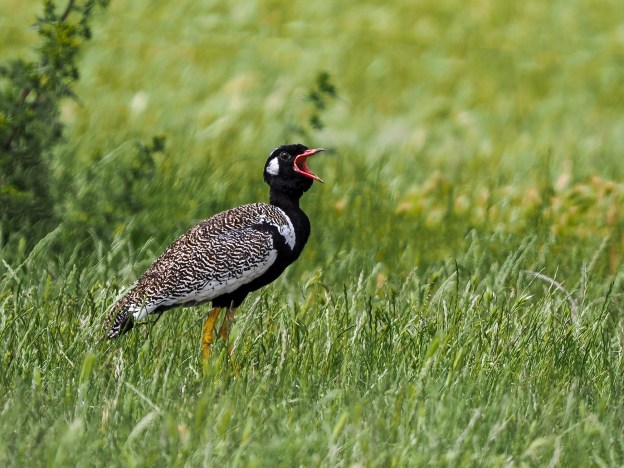
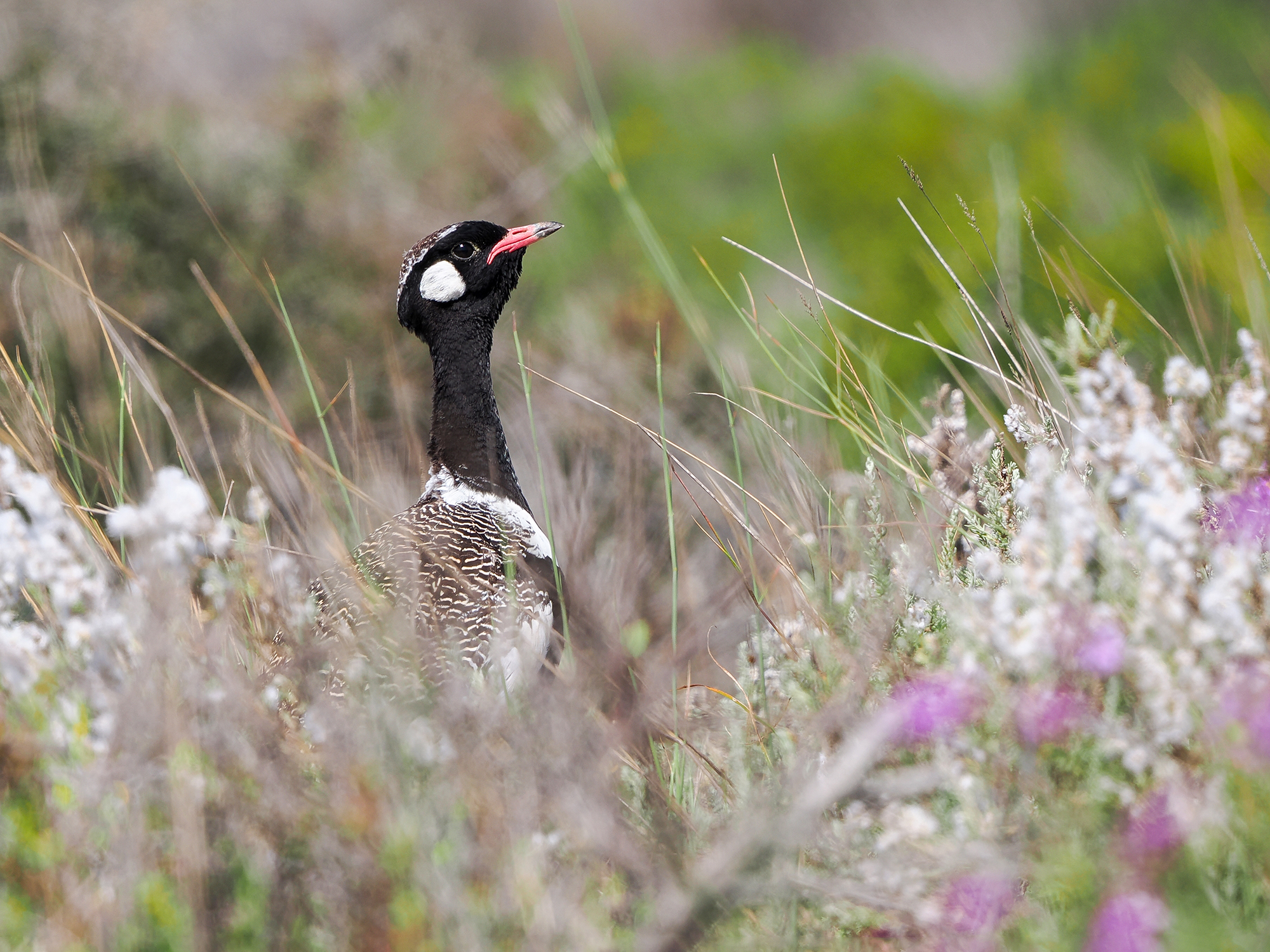
Sisó negre meridional / Southern Black Korhaan (Afrotis afra)
Abstract: Second tour to Cape Town, with all the experience acquired from the first tour. This tour enjoyed a wonderful weather all the week long, and very good densities of waterfowl. The province was in the middle of a short drought, and this favoured the ducks and other waterfowl to concentrate along the major coastal wetlands. The offshore, an unique experience, ended with a great list. It is always a formidable moment to overpass the Good Hope Cape escorted by dozens of African Penguins, Cormorants different species and Cape Gannets, while in the open Ocean a good array of Albatrosses and Giant Petrels are awaiting..
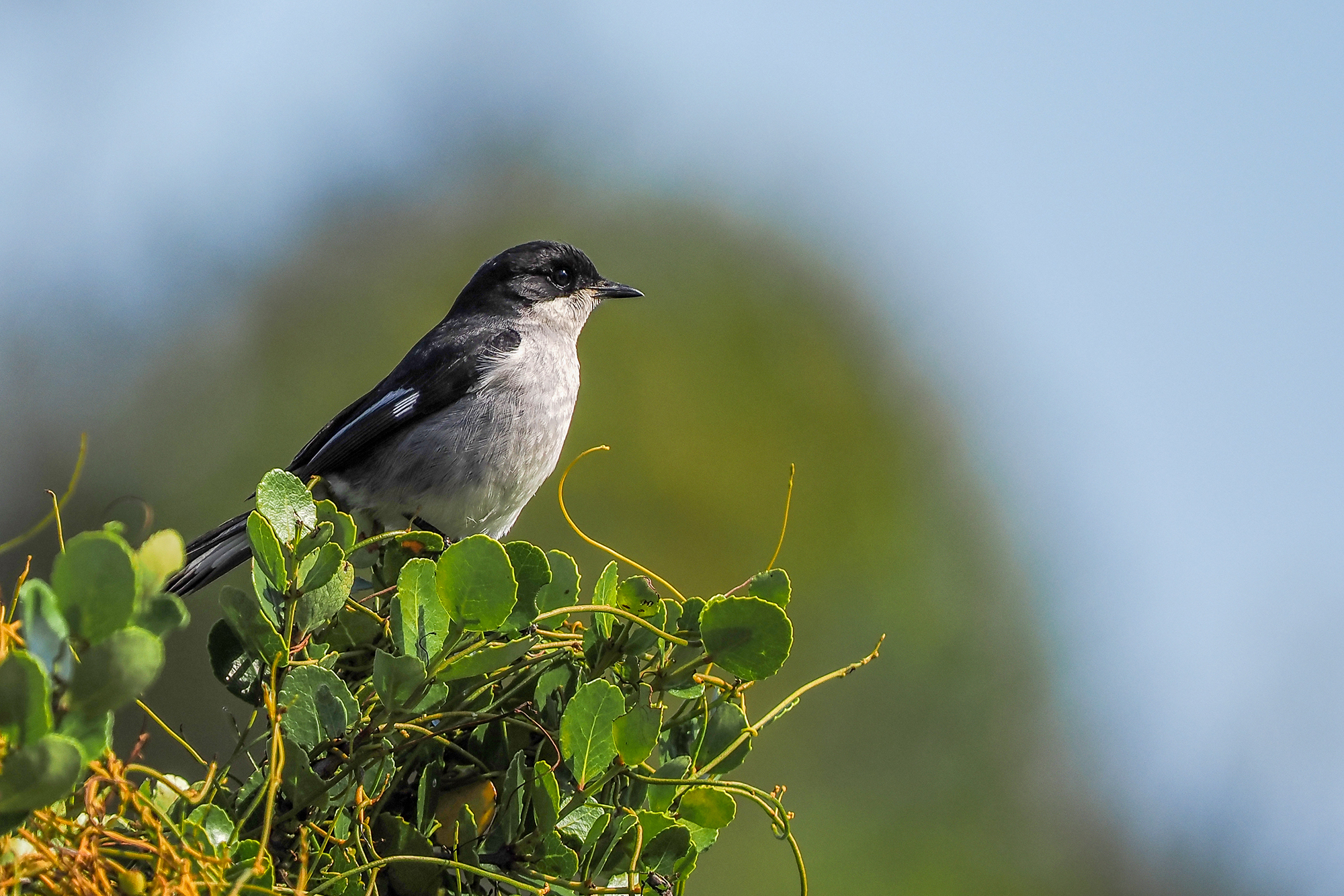
On land, our group enjoyed great views on 40+ endemics or near-endemics, being especially great those on Southern Black Korhaan, Blue Crane, Cape Siskin, Black Harrier, Agulhas Long-billed Lark, the striking Orange-breasted Sunbird, the magnificent Cape Sugarbird ,and especially ,the enigmatic and often difficult to find Cape Rockjumper.
Once more, we were delighted by the blossom in Western Cape. Here, a gorgeous variety of unique flora was waiting for us. Both fynbos (mediterranean style scrubland) and karoo (desert-like areas) were full of wonderful proteas and aloes! An spectacle by its own not only in the wild, but also in the many and superb Botanical Gardens around.
Dia 1. El grup surt des de l’aeroport de Barcelona i, després d’una escala a Àmsterdam, arribem a Ciutat del Cap poc abans de mitjanit. Al poc temps d’aterrar ens confirmen que la sortida pelàgica, prevista per l’endemà al matí, s’ajorna en previsió de forts vents i onatge sever. No és una eventualitat estranya, tenint el compte la meteorologia complexe de la zona. Naturalment, teníem un plà alternatiu.
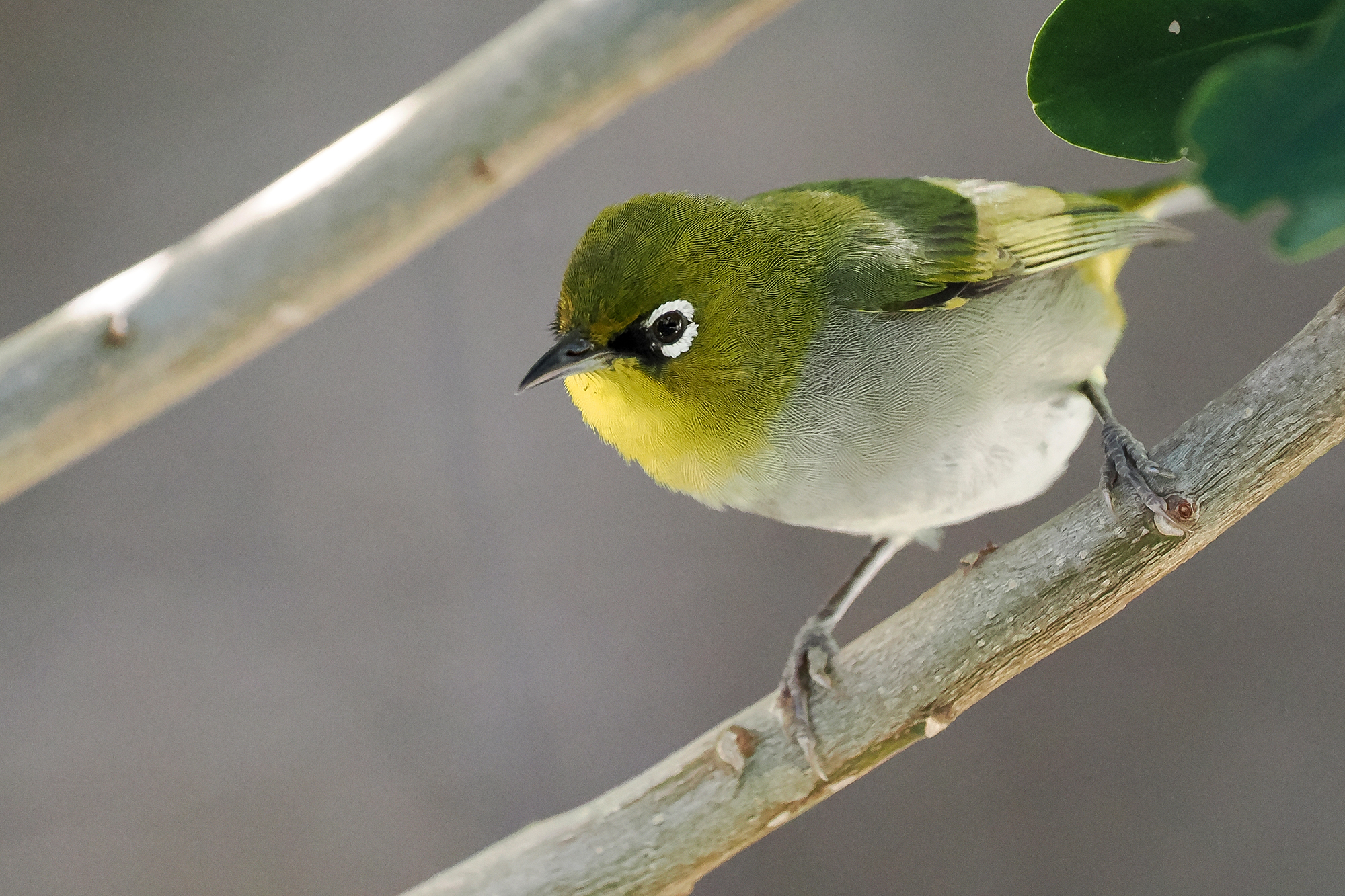
Dia 2. Al matí següent, després d’un bon esmorzar, aprofitem per fer una primera passejada a l’entorn de l’hotel on veiem les primeres especialitat com el pardal del Cap, la cuereta del Cap i zosterop del Cap .
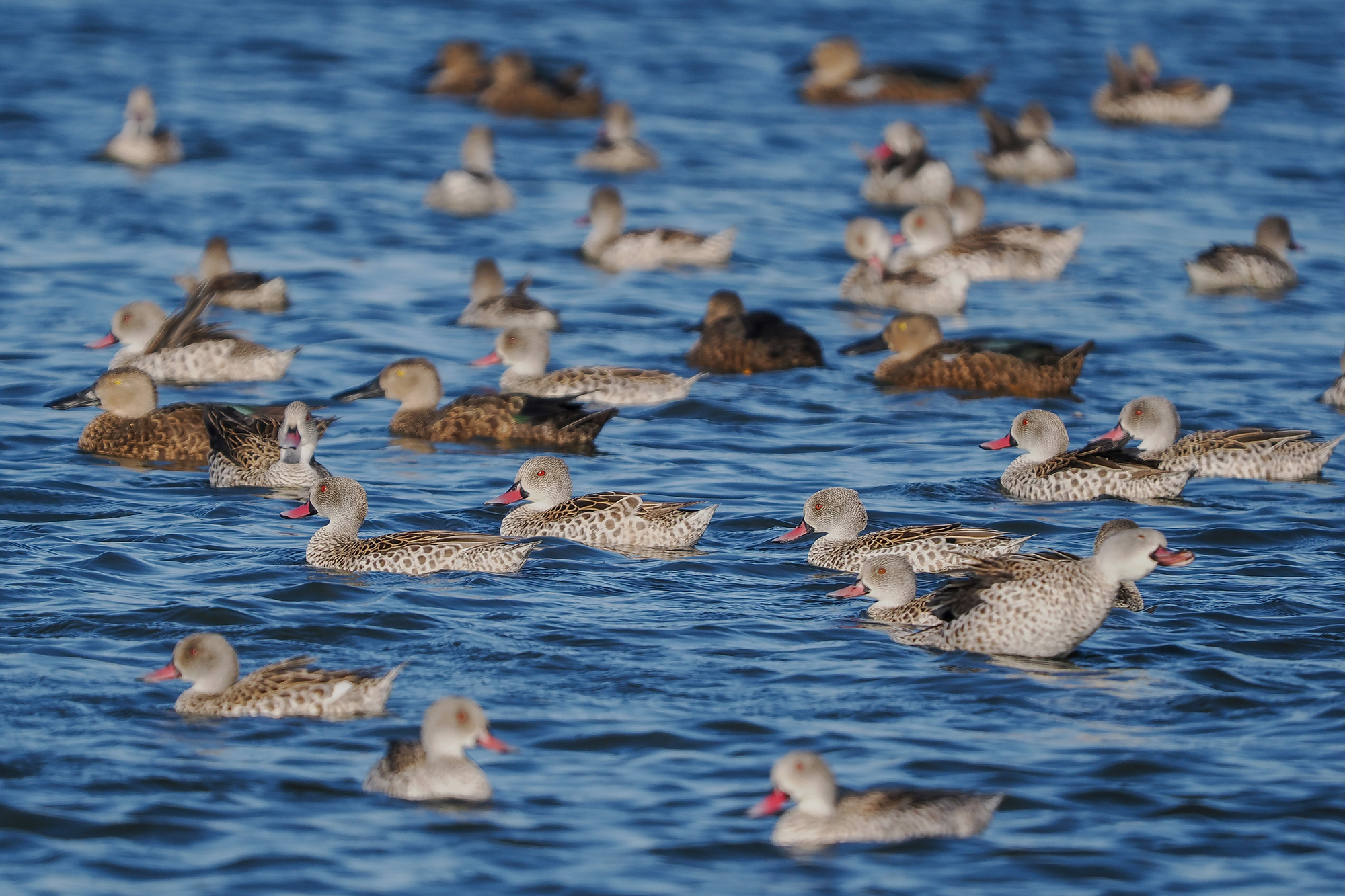
Una petita zona humida propera acull grups familiars de fotges banyudes i colònies actives de teixidors social del Cap i emmascarat . Una petita illa es converteix es zona de descans pels petits corbs marins africans, alhora que centenars de gavines de Harlaub, de cap-gris i gavià de Liechstentein . Sortejant el tranquil trànsit de Ciutat del Cap, arribem a un complexe d’aiguamolls al Sud de la ciutat on la densitat i diversitat d’ànecs és impressionant. Hi han centenars de xarxets del Cap , amb Ànec cullerot sud-africà però també ànecs bec-groc, bec-vermell i el més escàs Xibec bru. Als pals dins l’aigua descansen grups de Xatrac reial bec-groc . També hi han grans estols de Flamencs amb més d’una quarantena de Flamencs menuts. Un escanejat dels grups d’ànecs ens permet trobar un Ànec arborí bicolor, una espècie rara a Ciutat del Cap que sembla que enguany ha tingut una inusual irrupció en aquest espai.
Encara sense deixar la ciutat, canviem dràsticament d’hàbitat i visitem el Jardí Botànic de Kirstenbosch, impressionant espai amb una bona representació de les comunitats d’ocells presents als Fynbos. Per la gespa ens sorprenen grups familiars de Francolí del Cap acompanyats de Merla olivàcia i Còssifa del Cap .
Fins a 5 espècies de suimangues aprofiten el gran nombre de flors, acompanyats de Llèpols del Cap . Una parella de Duc africà nidifica en un zona pública i alhora que la femella esta covant els ous de la nova niuada, els joves de l’anterior posta estan en plena emancipació. Acabem la jornada gaudint de l’únic Colom ull groc del viatge.
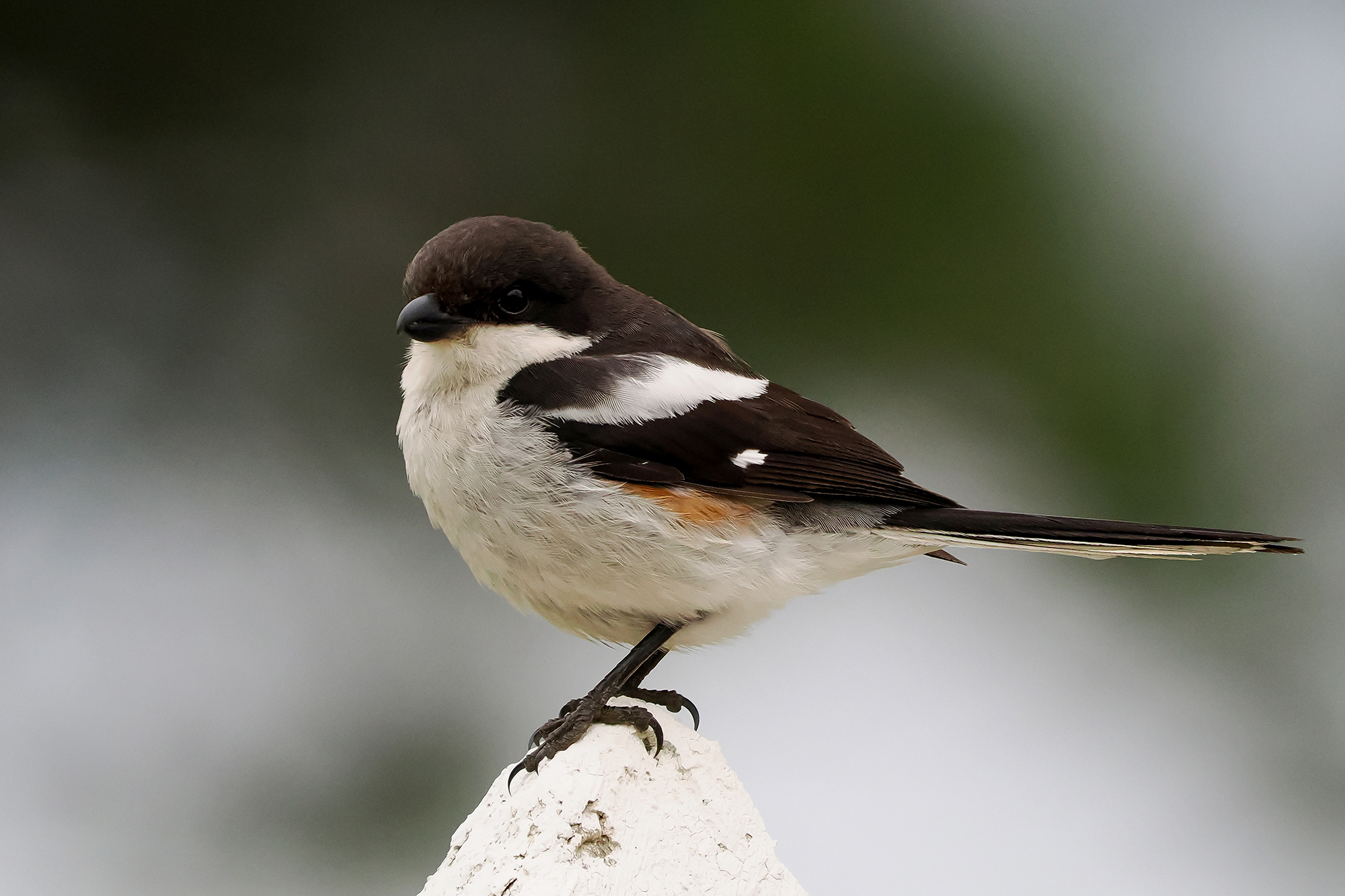
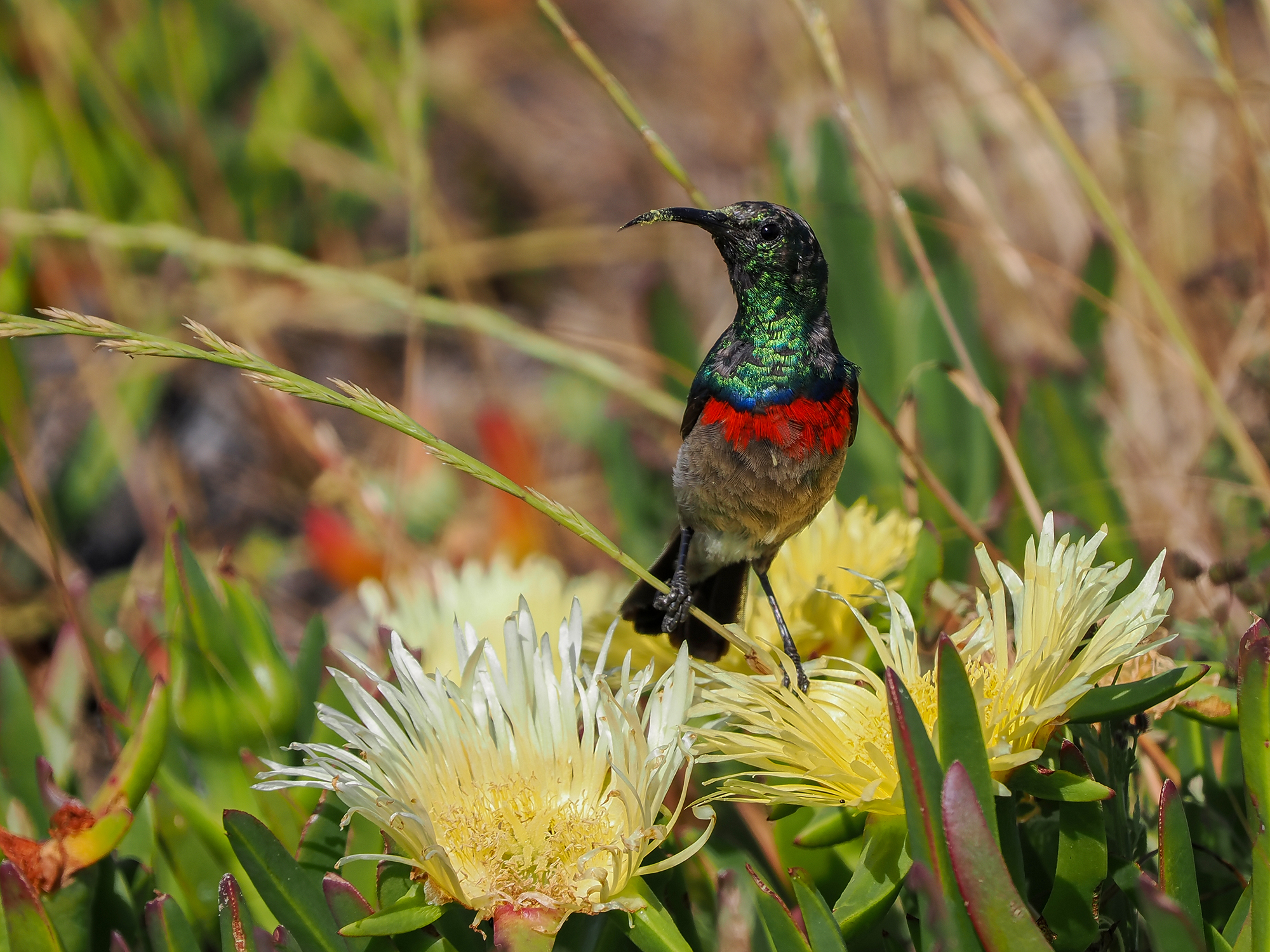
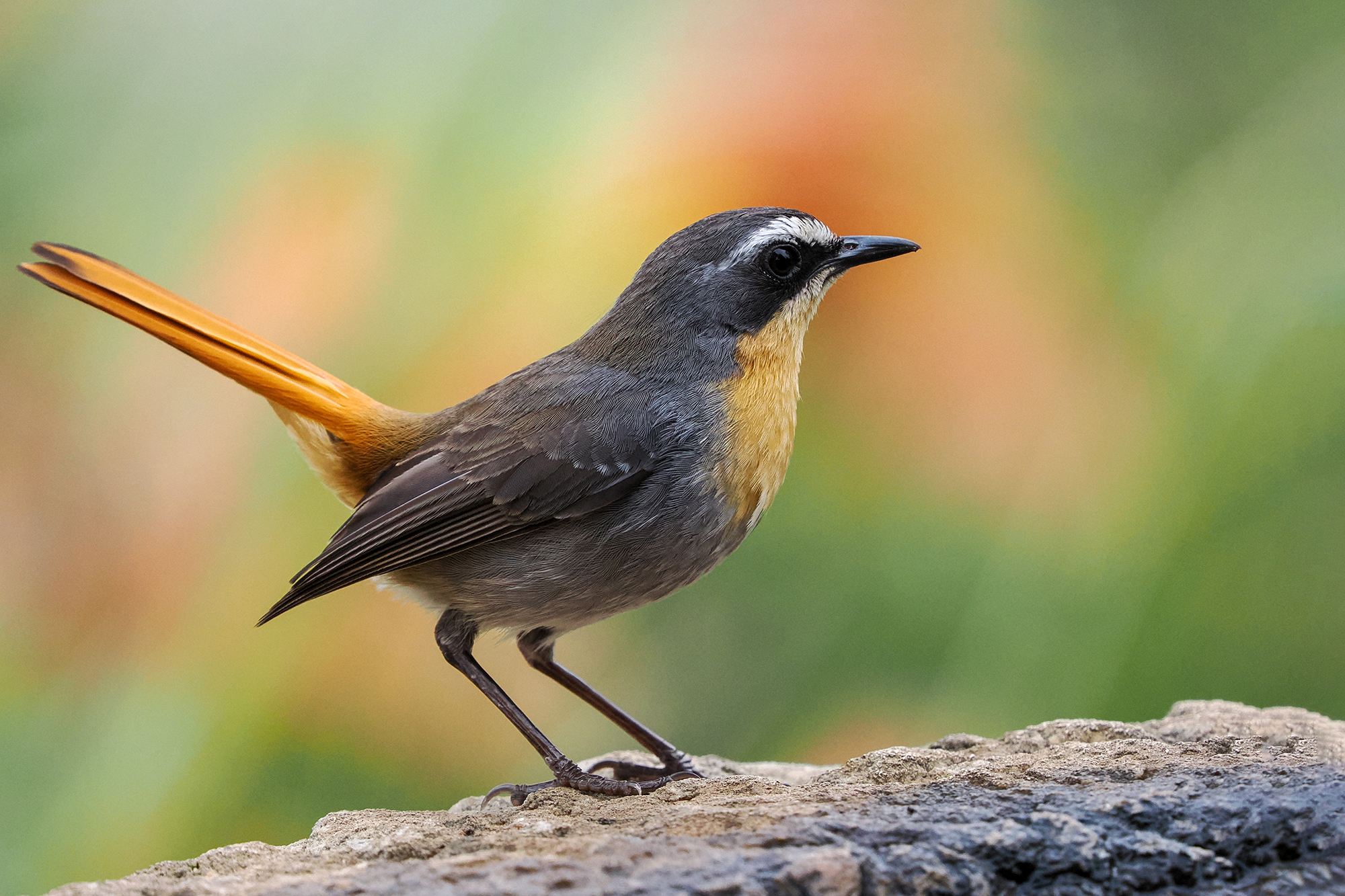
Cape Teals & Cape Shovelers. Dues espècies força comunes a la província del Western Cape.Xibec bru / Southern Pochard Netta erythrophthalma), una de les espècies més elegants dins del gènere Aythya.La fotxa banyuda / Red-knobbed Coot (Fulica cristata), una espècie habitual a Ciutat del Cap.Flamenc nan / Lesser Flamingo (Phoeniconaias minor) en volFredeguga armada / Blacksmith Lapwing (Vanellus armata)Batis del Cap / Cape Batis (Batis capensis)Duc africà / Spotted Eagle Owl (Bubo africanus), a common species around the city.Zosterops del Cap / Cape White-eye (Zosterops virens)Botxí fiscal meridional / Southern Fiscal (Lanius collaris) Suimange d’acer / Southern Double-collared Sunbird (Cynniris chalybeus) Còssifa del Cap / Cape Robin Chat (Cossipha caffra)
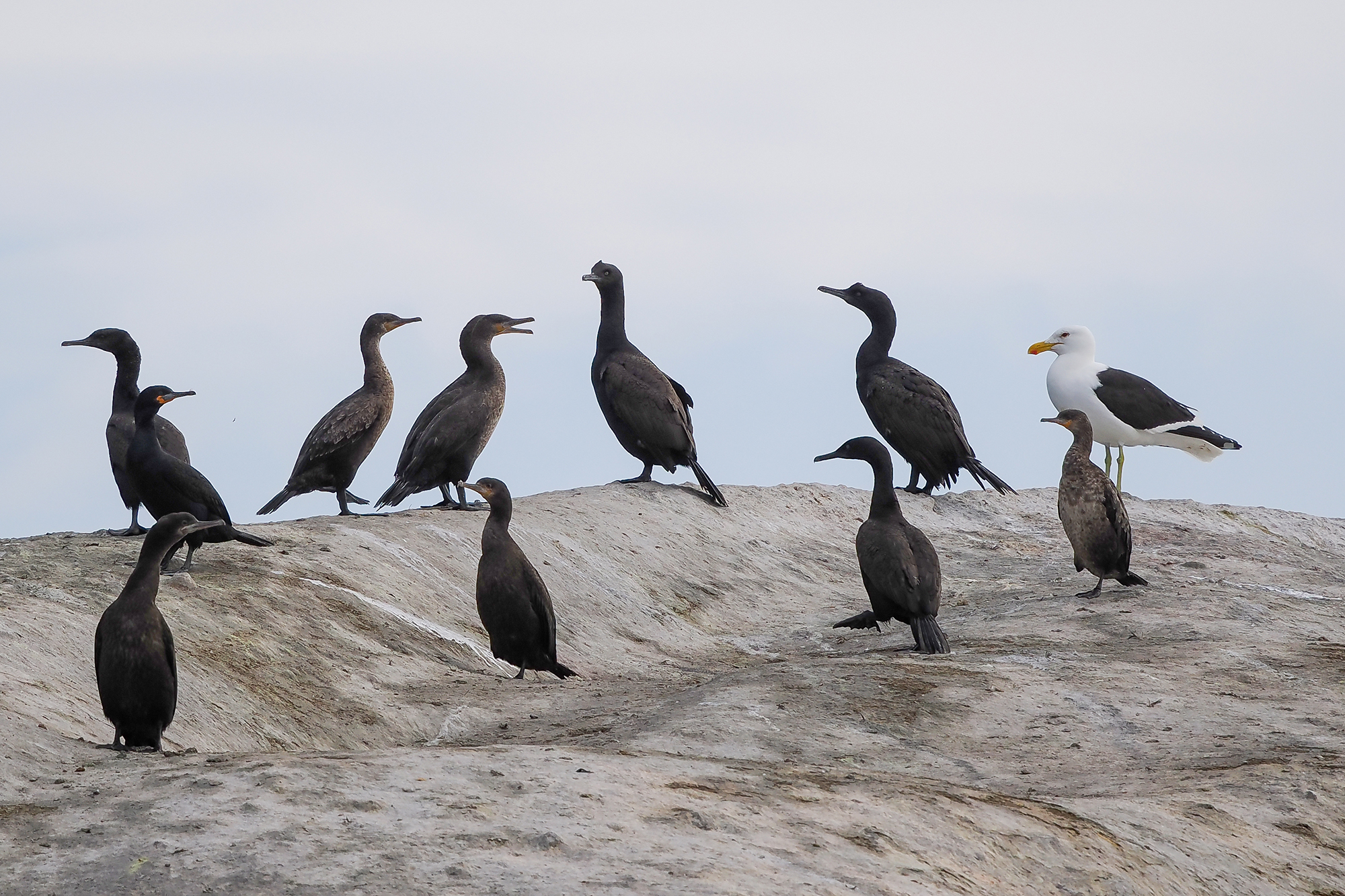
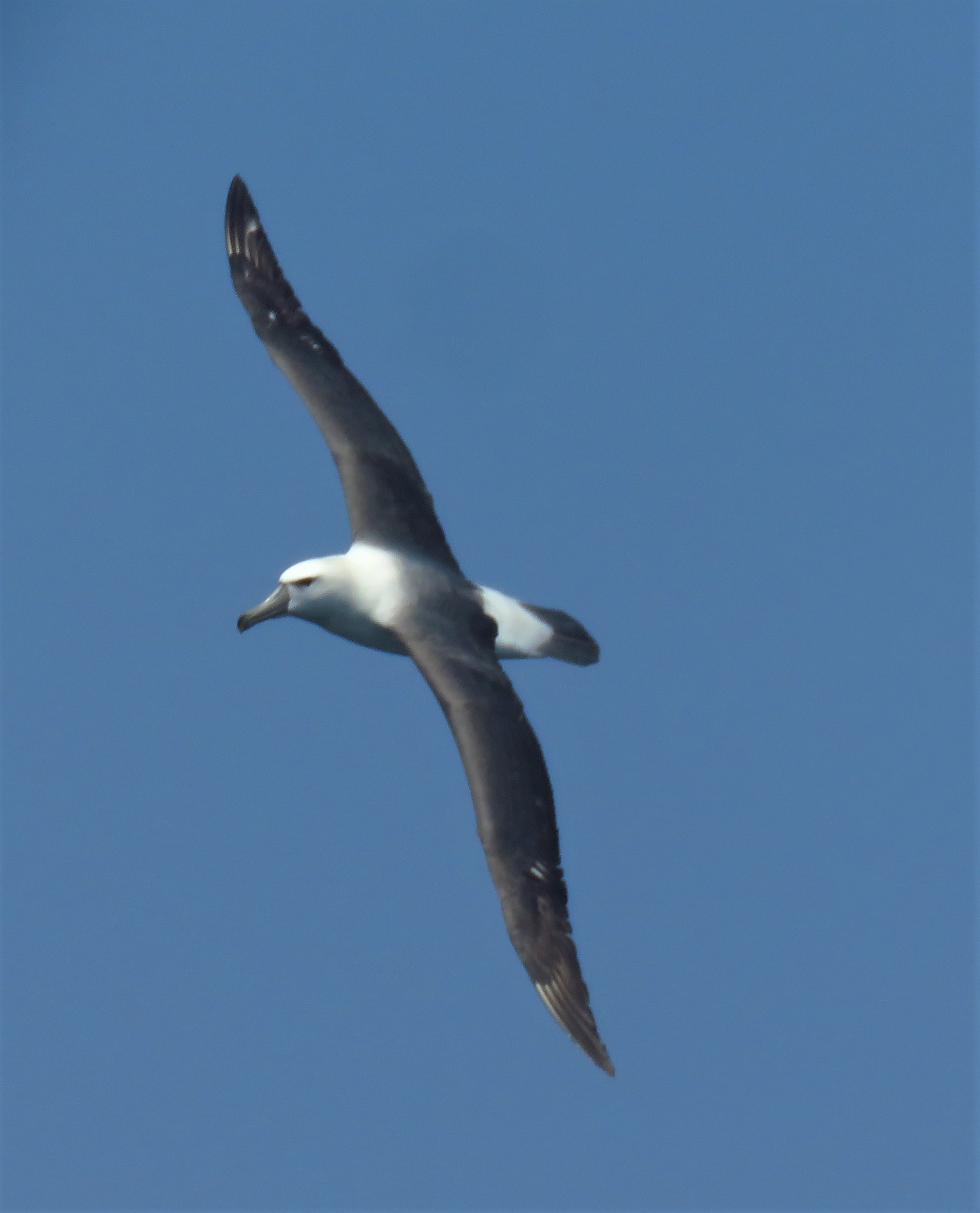
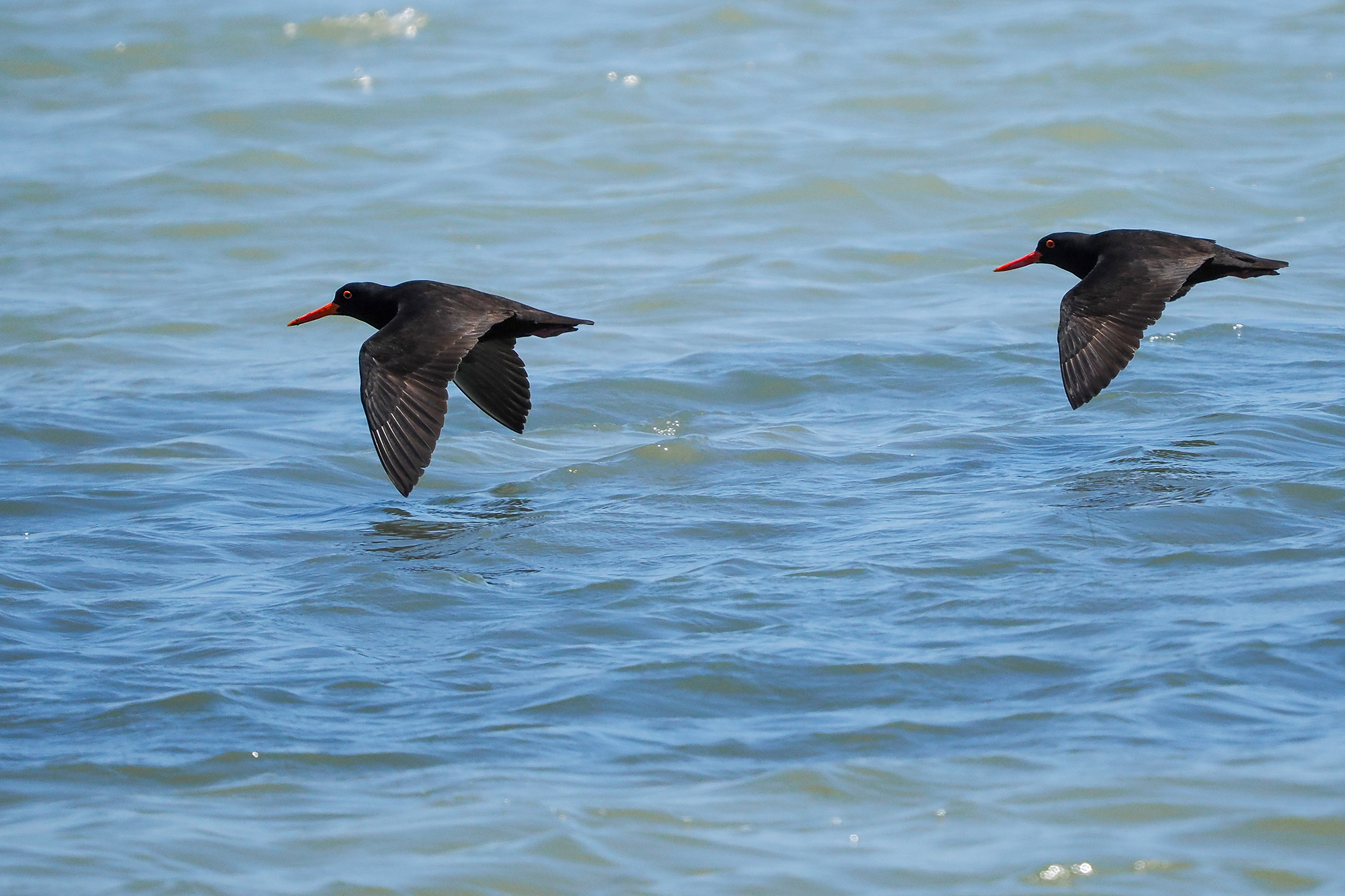
Dia 3. Confirmat que podrem fer un dels millors moments del tour, la sortida pelàgica!! Però comencem amb un ensurt ja que el nostres hotel està encerclat per la marató de Cape Town que es celebra aquell mateix dia. Afortunadament vàrem sortir amb molta antelació i finalment vàrem trobar la sortida cap al sud. Entre tant de temps d’espera vam detectar un pinsà comú, espècie introduïda pels britànics. Desprès de les corresponents explicacions pugem a la barca, al propi port es veuen 3 espècies de corbs marins: el corb marí del Cap, el coronat i el gorja blanc, compartint espai amb garses de mar negres africanes. Abans de sortir d’una badia amb la mar ben plana, passem prop de roques on es veuen ossos marins Afro-australians i una petita colònia de corbs marins d’ull groc. A l’aigua hi ha petits grups de pingüins del Cap pescant activament. Una vegada passat l’espectacular Cap de Bona Esperança veiem barques locals pescant barracudes i les primeres aus pelàgiques, en concret ràpides baldrigues de barbeta blanca, estols d’adults de mascarells del Cap i un petit estol de gavinetes de cua-forcada. Arribats a mar obert no es fa esperar el 1er albatros, en concret un parell d’albatros tímids. També ens acompanyen paràsits subantàrtics intentant piratejar els grups de gavines i xatracs.
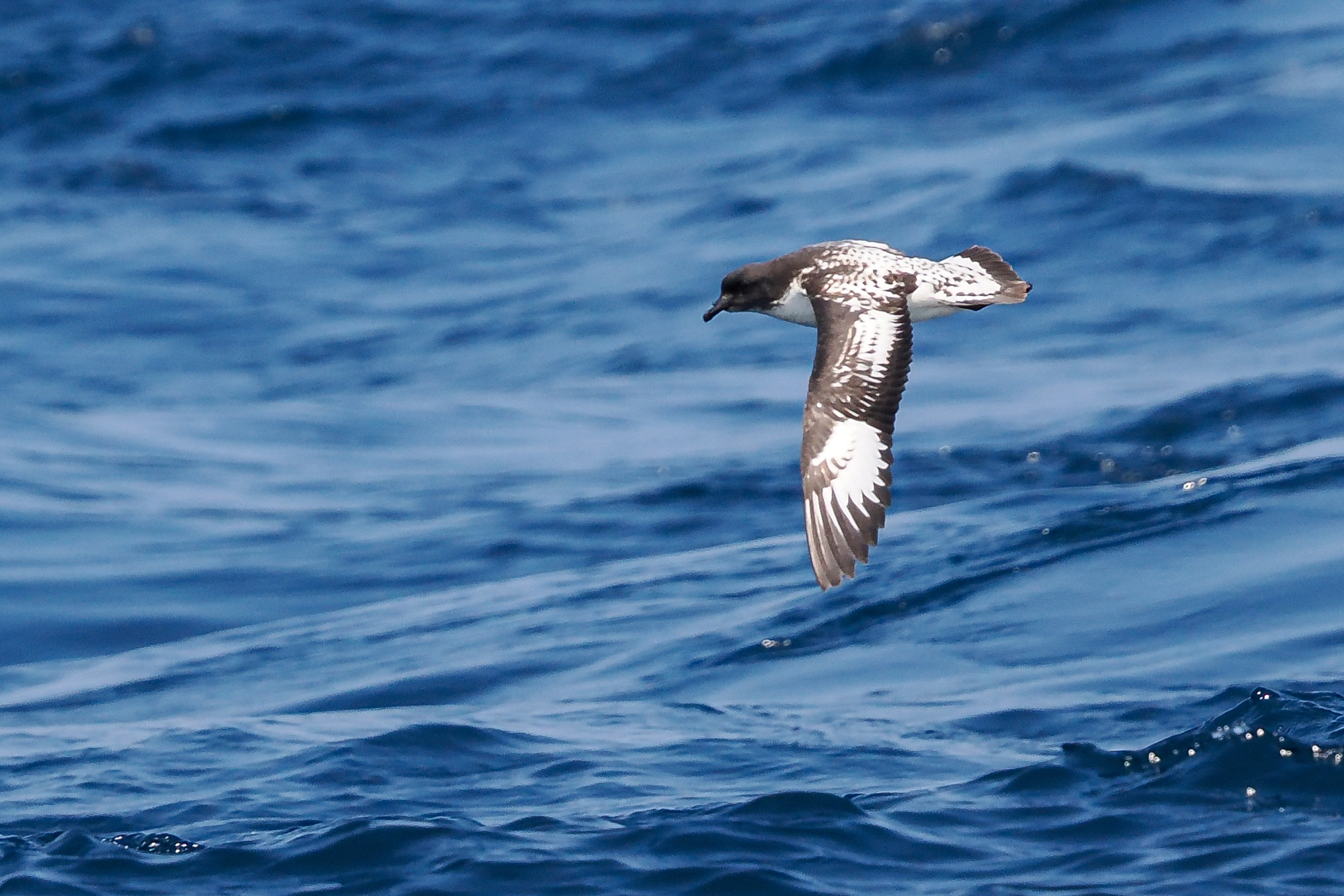
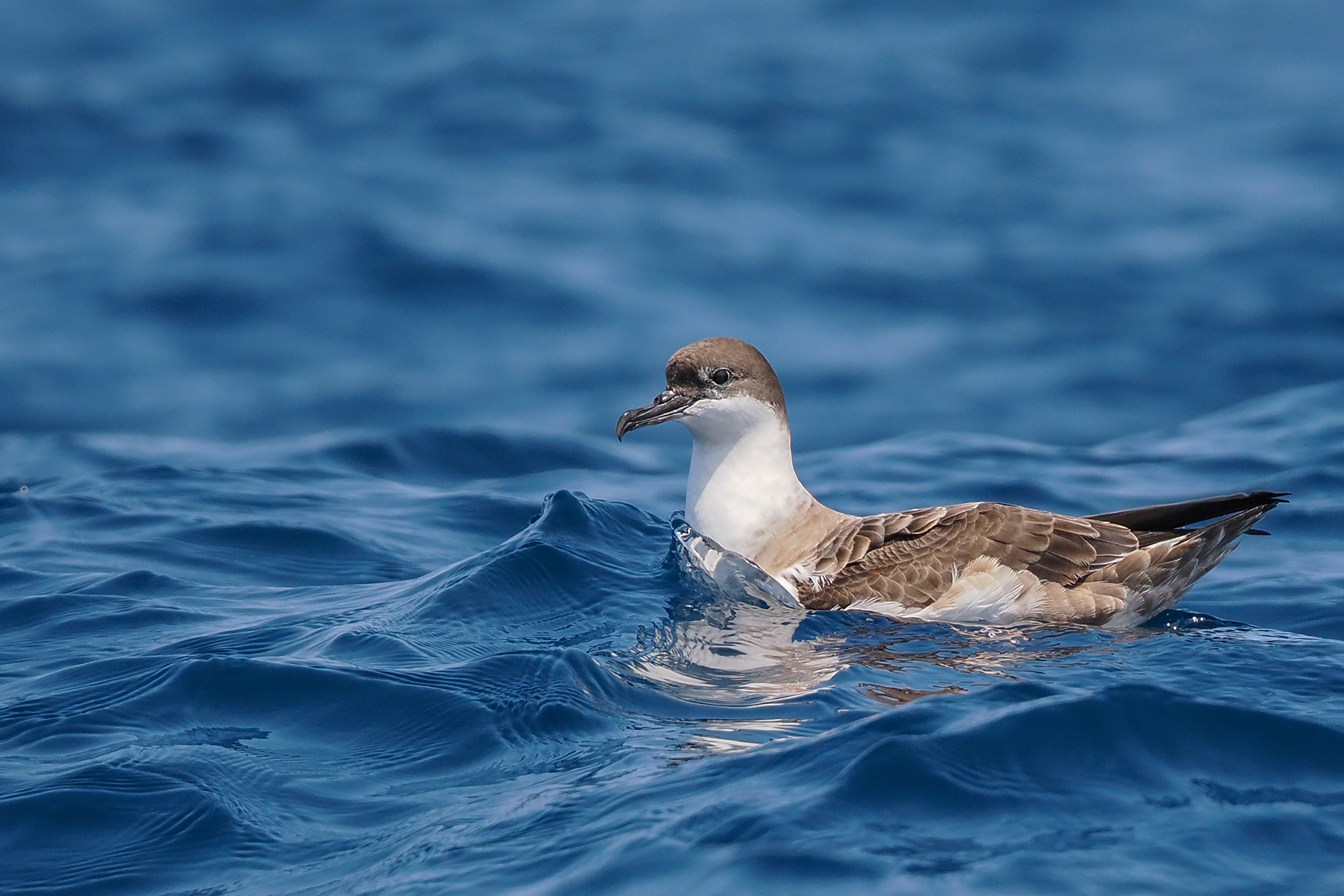
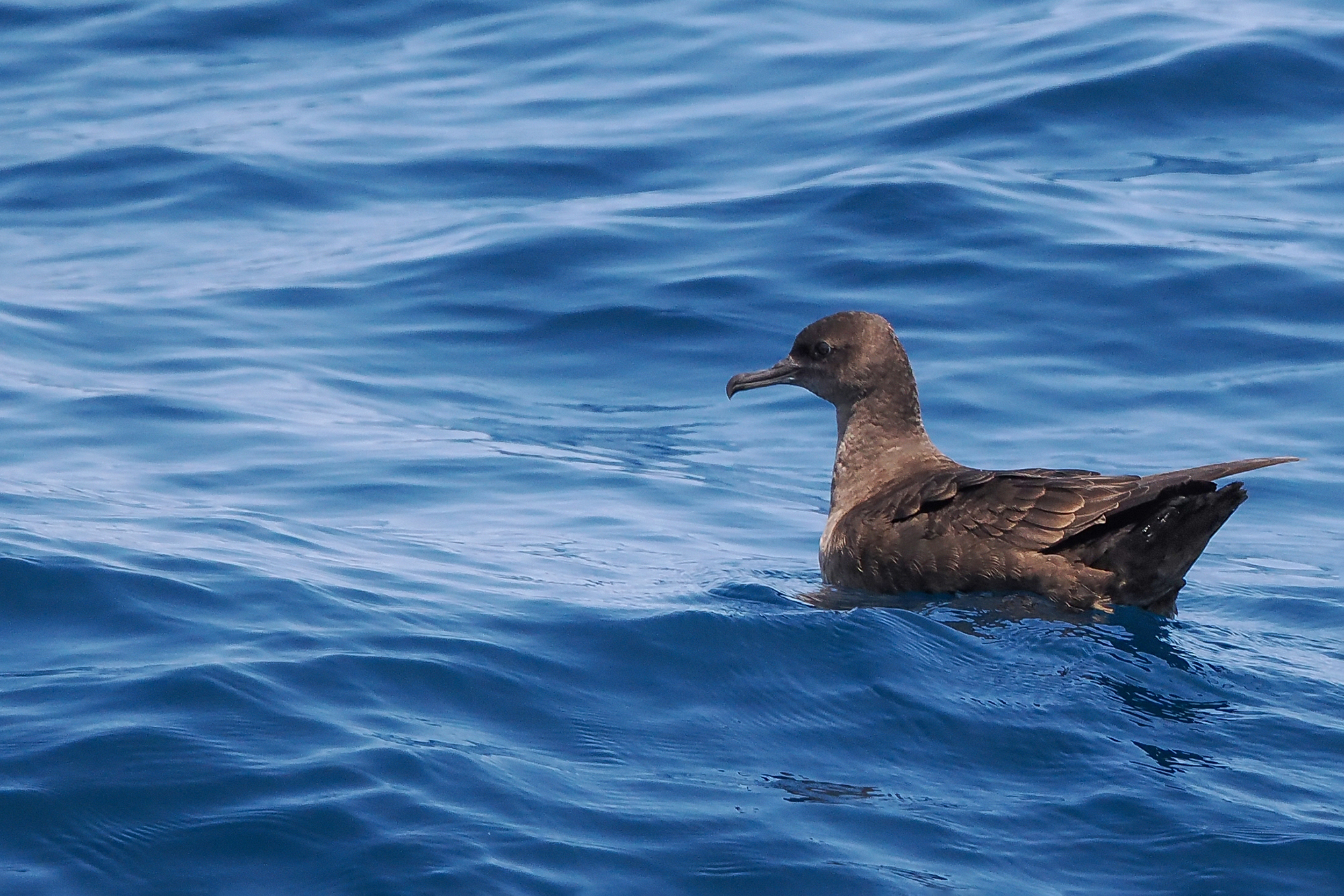
A partir d’aquí l’objectiu es intentar detectar els gran vaixells pesquers que treballen per la zona, on estols de centenars d’aus marines aprofiten els descart de la pesquera. La presencia de grups d’Albatros, Baldrigues, petrells…ens confirmen que ens estem apropant a un d’ells. Un bon nombre de baldrigues grises i cap-negres acompanyen la barca a curta distancia. També comencen a aparèixer els 1ers ocells de tempesta de Wilson i Europeus. Als Albatros tímids se li sumen un bon nombre d’albatros cellanegre, bec-groc Atlantic i del Pacífic. Els Petrells gegants, tant el del Nord com el del Sud fan varies incursions en els estols d’aus, però sens dubte un dels ocells més espectaculars de la sortida van ser els diversos petrell del Cap.
Bank & Cape Cormorants (PhalacrocoraxPetrell del Cap / Cape Petrel Baldriga capnegre / Great Shearwater (Puffinus gravis)Mascarell del Cap / Cape Gannet (Morus capensis)Baldriga cendrosa / Sooty Shearwater (Puffinus griseus)Albatros tímid / Shy Albatross (Thalassarche cauta). Imatge del tour líder Sergi Sales.White-chinned Petrel
Desprès de menjar uns excel·lents sandvitxos i fer les darreres fotografies, tornem cap a port, amb la sorpresa final del salt d’una Iubarta a curtíssima distancia de l’embarcació. Una vegada desembarcats una confiada Llúdriga del Cap fa les delícies dels observadors.
Aprofitem la curta distancia per visitar la colònia de Pingüins on també trobem els 1ers ocells ratolins comuns, prinia del Karoo i suimanga d’acer. La darrera aturada d’aquest tant excitant dia la fem a uns espectaculars turons des d’on tenim grans vistes de Ciutat del Cap i veiem els 1ers còlits familiars del tour.
Llúdria del Cap / Cape Clowless Otter (Aonyx capensis) passejant-se per les barques de pesca. Imatge del tour líder Sergi Sales.Pingüí africà / African Penguin Còlit familiar / Familiar Chat
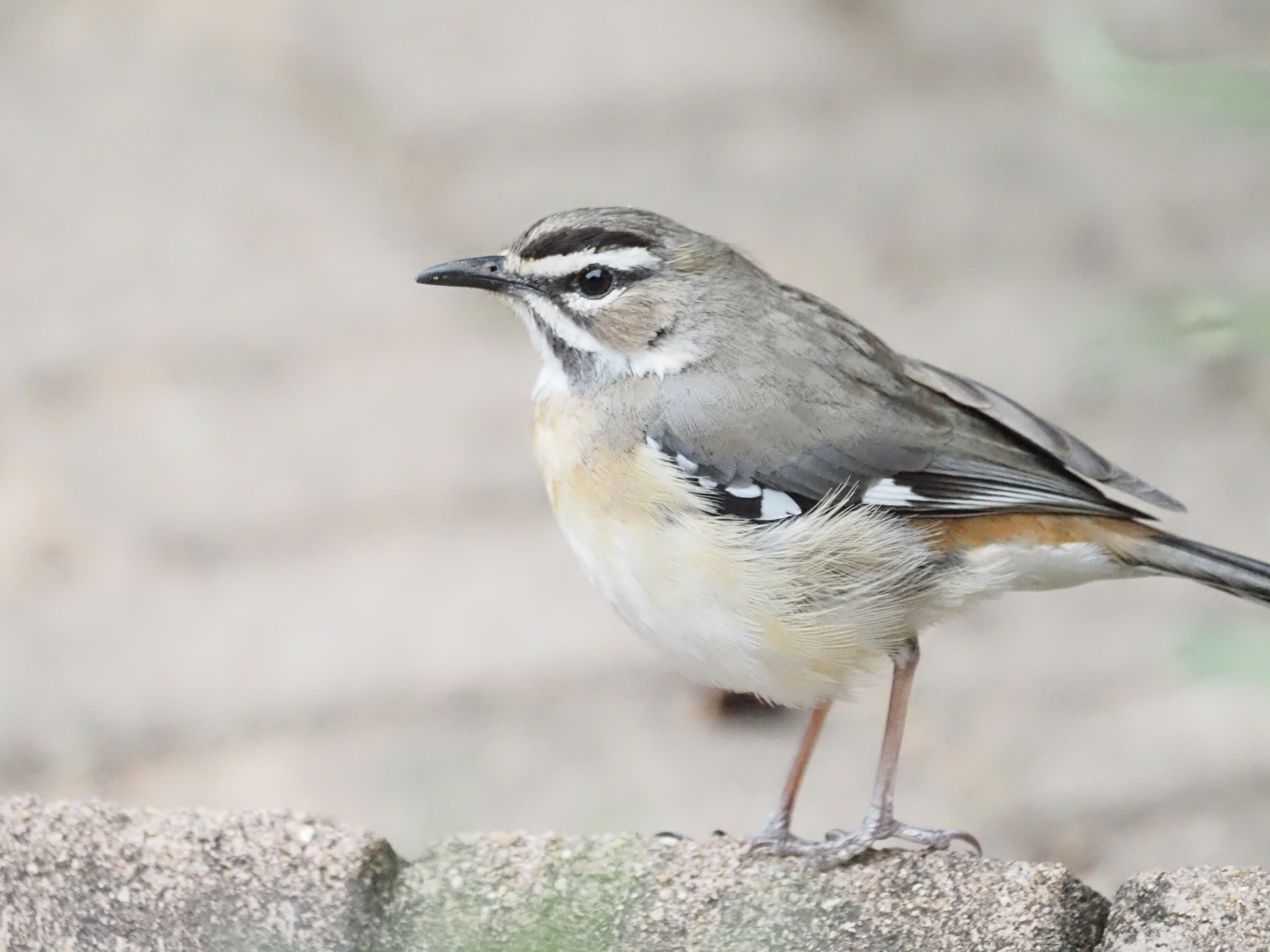
Dia 4 . Durant aquesta assoleiada jornada, l’objectiu prioritari va ser el saltaroques del Cap, ocell endèmic i emblemàtic de la zona. Els saltaroques són ocells rupícoles força peculiars. Només existeixen dues espècies en aquest gènere, totes dues endèmiques de Sud-àfrica i que viuen en vessants pedregossos amb més o menys cobertura vegetal. El matí ventós i la coincidència amb varis grups d’ornitòlegs que ens anem trobant sense que hagin pogut trobar-ne cap ens fa témer el pitjor, però finalment vam aconseguir el premi a la perseverança quan una parella d’aquest vistós ocell apareix ben a prop del camí recollint material per fer el niu. L’observació va ser a plaer i, a molt curta distància, amb el mascle sovint atansant-se a només 3 o 4 metres de distància.
Tot i el vent aquesta localització va tornar a ser esplèndida i vàrem anar sumant espècies a la llista destacant-ne el corb becgròs de clatell blanc, la suimanga de pit taronja o el sit del Cap.
Saltarroques del Cap / Cape Rockjumper (Chaetops frenatus) female. Saltarroques del Cap / Cape Rockjumper (Chaetos frenatus) male. A gorgeous and often elusive bird!Sit del Cap / Cape Bunting (Emberiza capensis)Gafarró del Cap / Cape Canary (Serinus canicollis)
Més arrecerats vàrem visitar un petit jardí botànic però en el qual hi havien una gran quantitat i diversitat d’ocells. Bones observacions de batis del Cap, papamosques fosc i fiscal, gafarró gris i estrilda de galta negra i els espectaculars monarques del paradís africà.
A la tarda petit trànsfer fins al West Coast National Park canviant de paisatges mentre travessem grans extensions amb bones densitat de rapinyaires i alàudids. Una espectacular òliba ens va acomiadar la jornada.
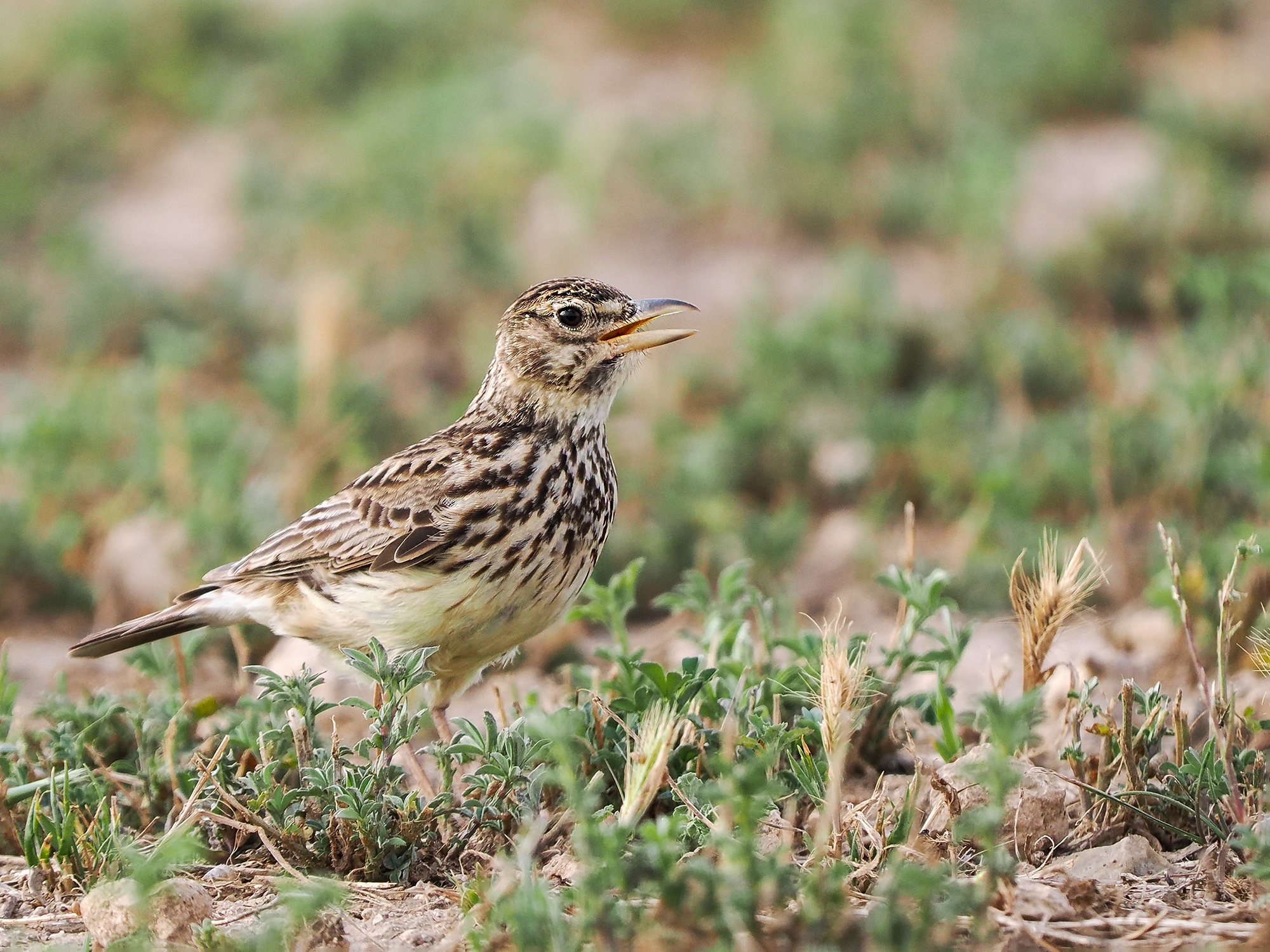
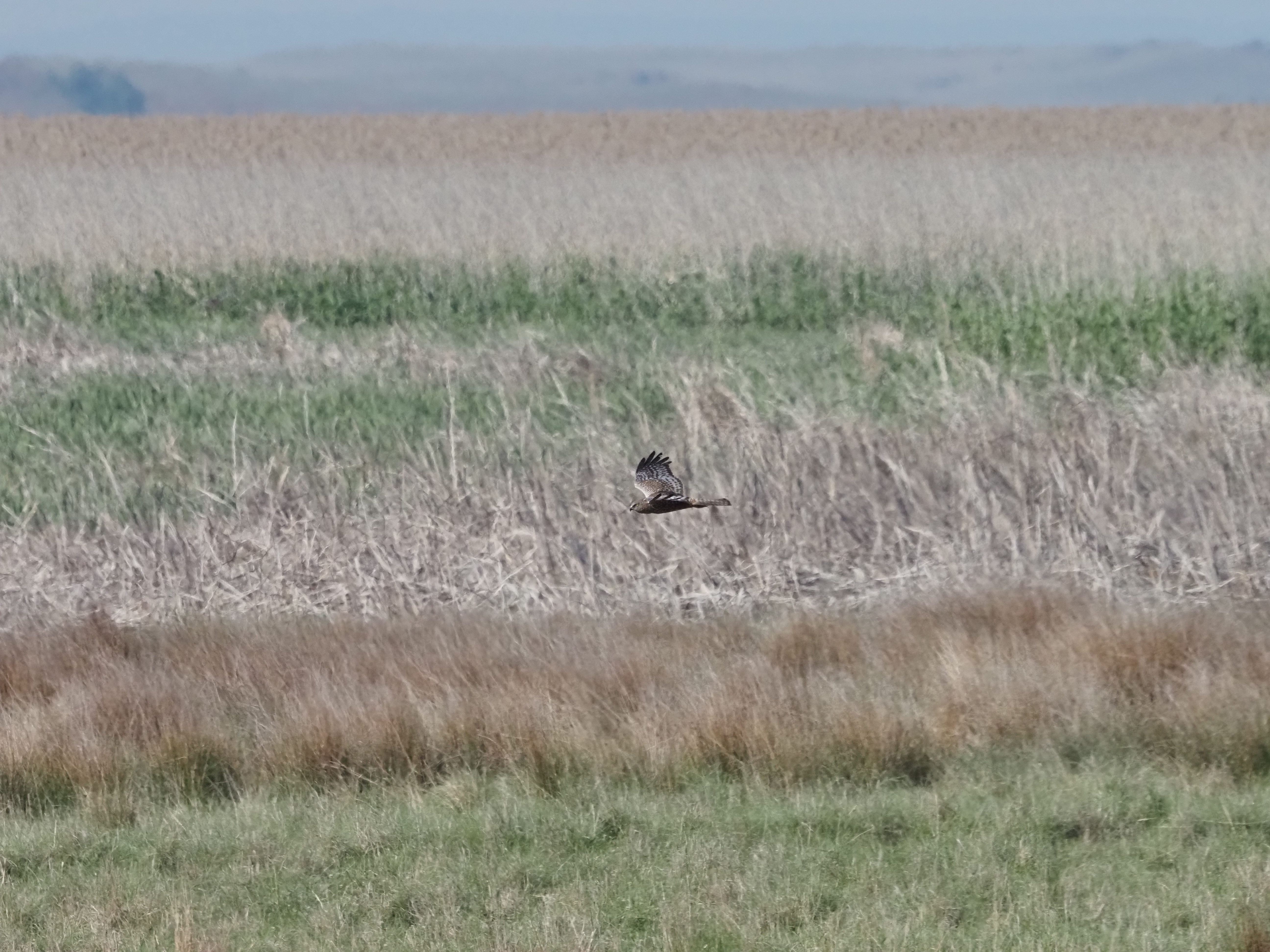
Dia 4. Des de la pròpia porta de l’hospedatge podem veure una zona inundada ben plena de limícols, gavines i xatracs. Entre ells corriols front-blanc i pàl-lid. Conduint per les pistes ens creuen els 1ers francolins jugulars, les 3 espècies d’ocells ratolí: l’ocell ratolí cara roig, el comú i el de dors blanc. El parc es visita per una xarxa de pistes en molt bon estat on no es pot córrer entre d’altres coses per evitar atropellaments de fauna. Magnífics estruços sembla que ens donen la benvinguda al parc. Travessant la zona de Fynbos veiem espècies com l’oreneta perlada, cistícola d’esquena grisa, apalis de collar, terrerola dorsigrisa o la cogullada becgrossa . A les zones amb arbres es deixen veure el gladiador xiulador, la mallerenga bruna i l’estornell bicolor. Increïbles arpelles negres rastregen la zona a baixa alçada però sense dubte el moment més màgic el generen les parades nupcials dels mascles del sisó negre meridional, alguns d’ells observats a distàncies ridículament curtes.
Arpella negra / Black Harrier (Circus maurus), a superb bird of prey!Sisó negre meridional / Southern Black Korhaan Prínia del Karoo / Karoo Prinia (Prinia flavicans)Terrerola de cap rogenc / Red-capped Lark (Calandrella cinerea)Suimanga malaquita / Malachite Sunbird (Nectarinia famosa)Estruç comuna / Common Ostrich (Struthio camelis)Cogullada bec-grossa / Large-billed Lark (Galerida magnirostris)Puput africana / African Hoopoe (Upupa africana)Bar-throated Apalis (Apalis thoracica)
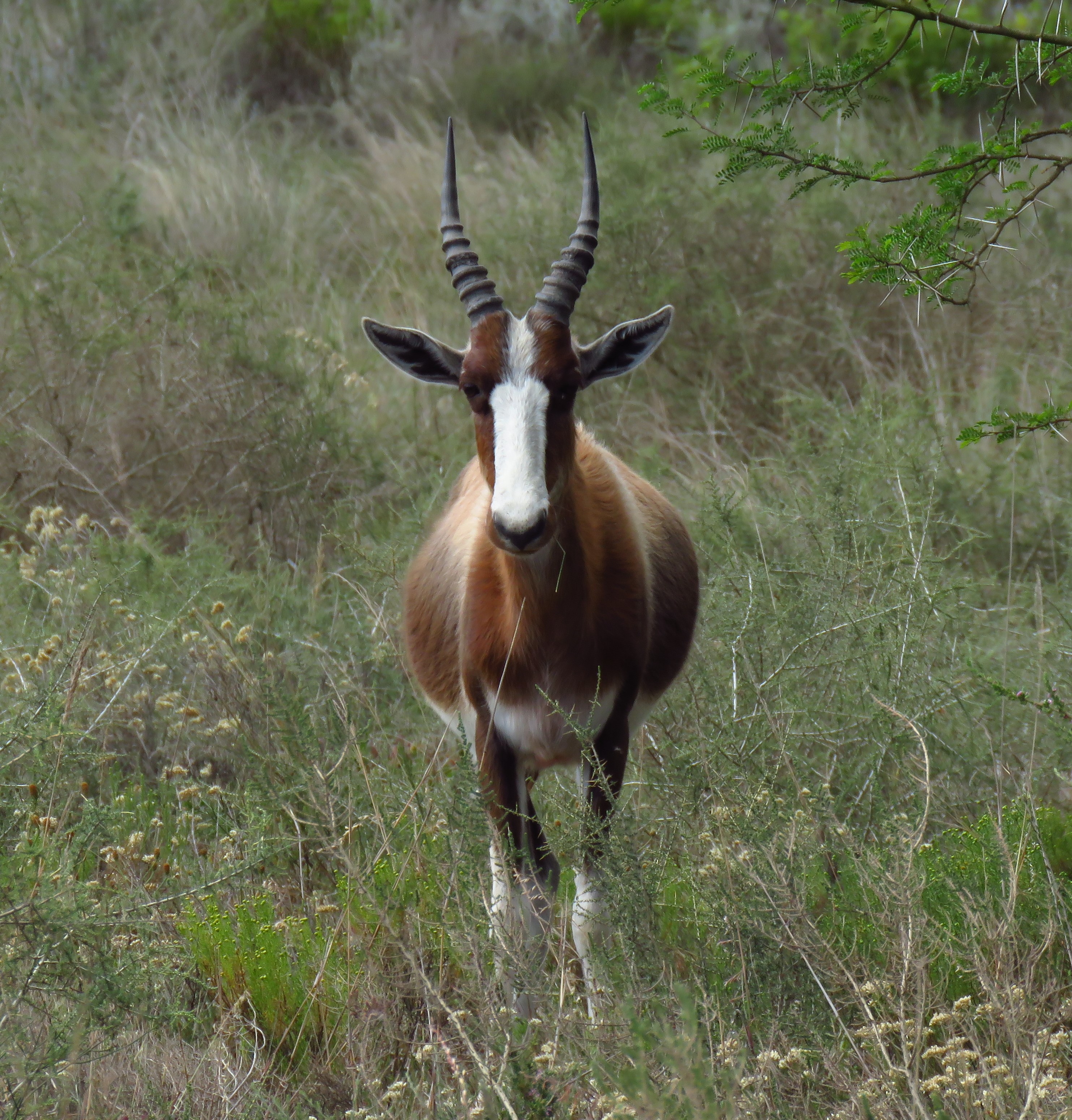
Els Damaliscs es comencen a fer presents però una de les grans sorpreses va ser una rata-talp del Cap creuant amb total tranquil·litat la pista i construint en pocs minuts un cau a la sorra tot ajudants de la seva peculiar cua. Poc després ens trobem un espectacular escurçó bufador, una de les sorpreses més benvingudes del tour!
Posteriorment ens desplacem cap a l’Est creuant immenses extensions de cereal amb un bon ventall de basses on hi ha estols gegants d’oques egípcies i d’Esperons junts amb les primeres grues del Paradís i corriol de triple collar africà. Augmentem la llista d’alàudids sumant la terrerola de cap rogenc i confiats còlits variables.
Dia 5
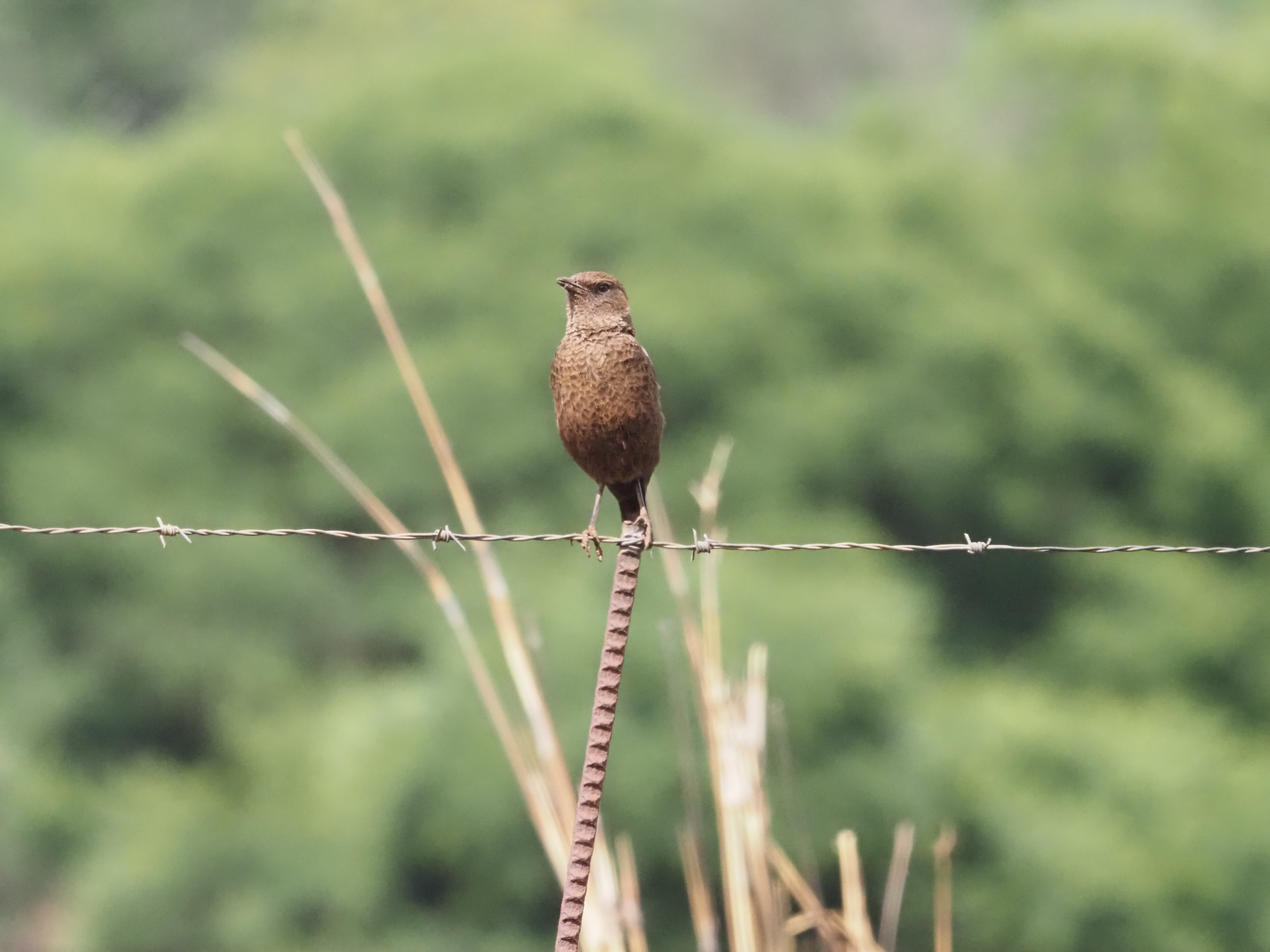
Des d’un luxós allotjament iniciem una nova jornada per visitar un hàbitat nou, el “karoo”, zones semiàrides per un gran nombre d´endemismes i espècies interessants. Una aturada prop del riu aporta bones observacions d’ànec negre africà, camperol del cap i varies espècies d´orenetes. Fem una breu aturada en zones de rocalloses per cerca amb èxit merla roquera del Cap, gafarró totta i observacions increïblement bones de estrilda de galta negra .
Posteriorment comencem la ruta que ens endinsa cap les zones de karoo on a pesar del vent i calor veiem espècies tant interessants com la prínia del karoo (karoo prinia), còlit formiguer muntanyenc (Mountain wheater), la prínia de Namaqua (Namaqua warbler) i papamosques follet (Fairy flycatcher).
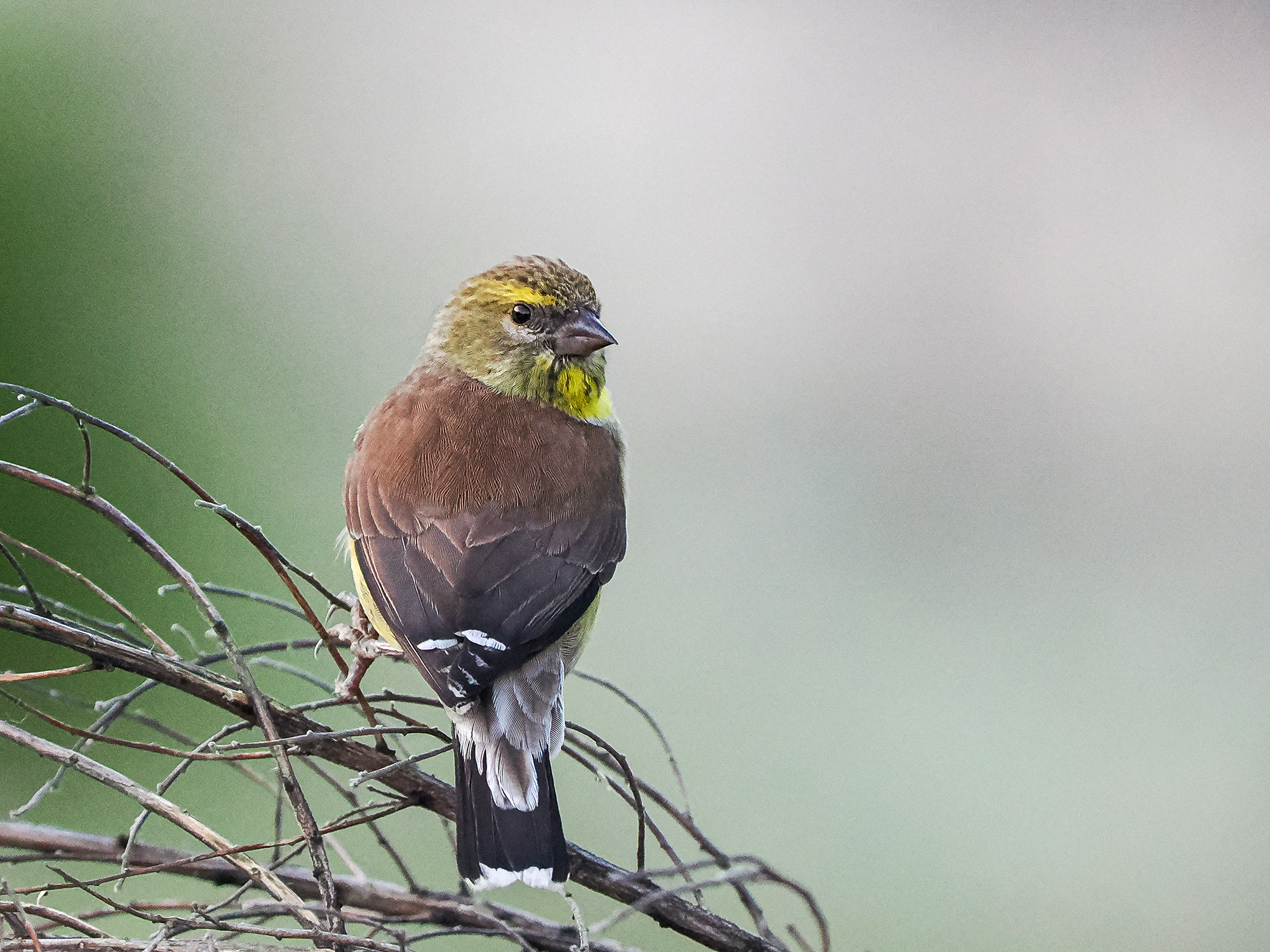
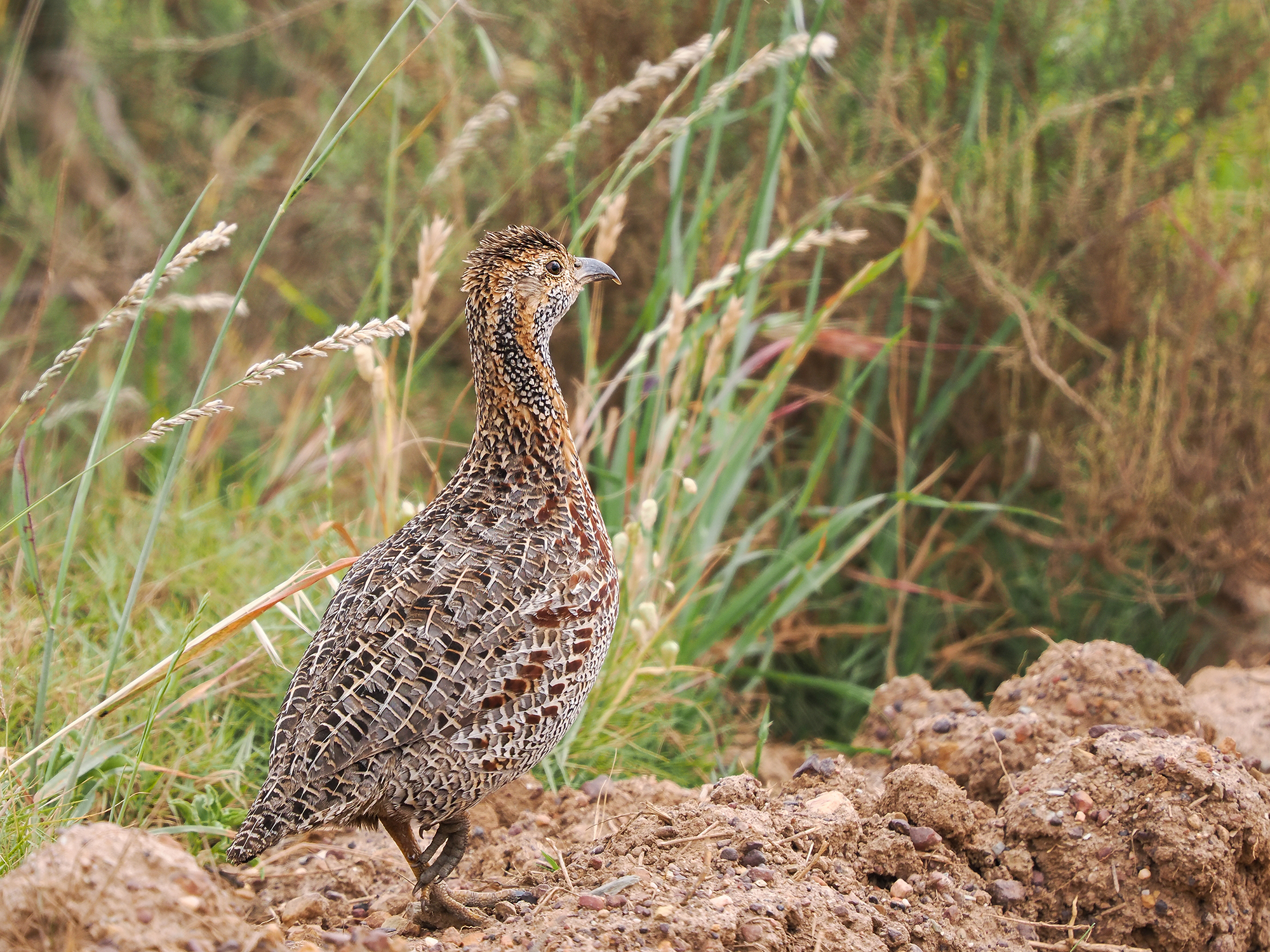
Gafarró Totta / Cape Siskin (Crithagra totta)Merla roquera del Cap / Cape Rock Thrush (Monticola rupestris)Francolí jugular / Grey-winged Francolin (Scleroptila afra)
Cada vegada l’ambient és més sec i amb vegetació més baixa, on van sortint les diverses especialitats de l’espai: còlit alafalçat, còlit del karoo, còlit tractrac, còlit formiguer meriodinal i la prínia cararoja i un bon ventall d’alàudids com: l’alosa d’esperons, l’alosa becllarga de Namaqua , la cogullada bec-grossa i l’alosa del karoo . En un dels arbres veiem 3 impressionants astors cantaires pàl·lids i una majestuós àguila marcial. Acabem una gran jornada amb vistes d’una parella de ducs africans.
Dia 6
El primer objectiu del dia és visitar unes petites zones humides molt interessants per la quantitat i diversitat d’espècies que es poden observar. Dins el bon ventall d’ànec destaquen grups de xarxets hotentots i ànecs arboris carablancs. Als canyissars estan en plena activitat de construcció de nius els teixidors i als arbres propers ens sorprèn la presencia d’un astor blanc i negre .
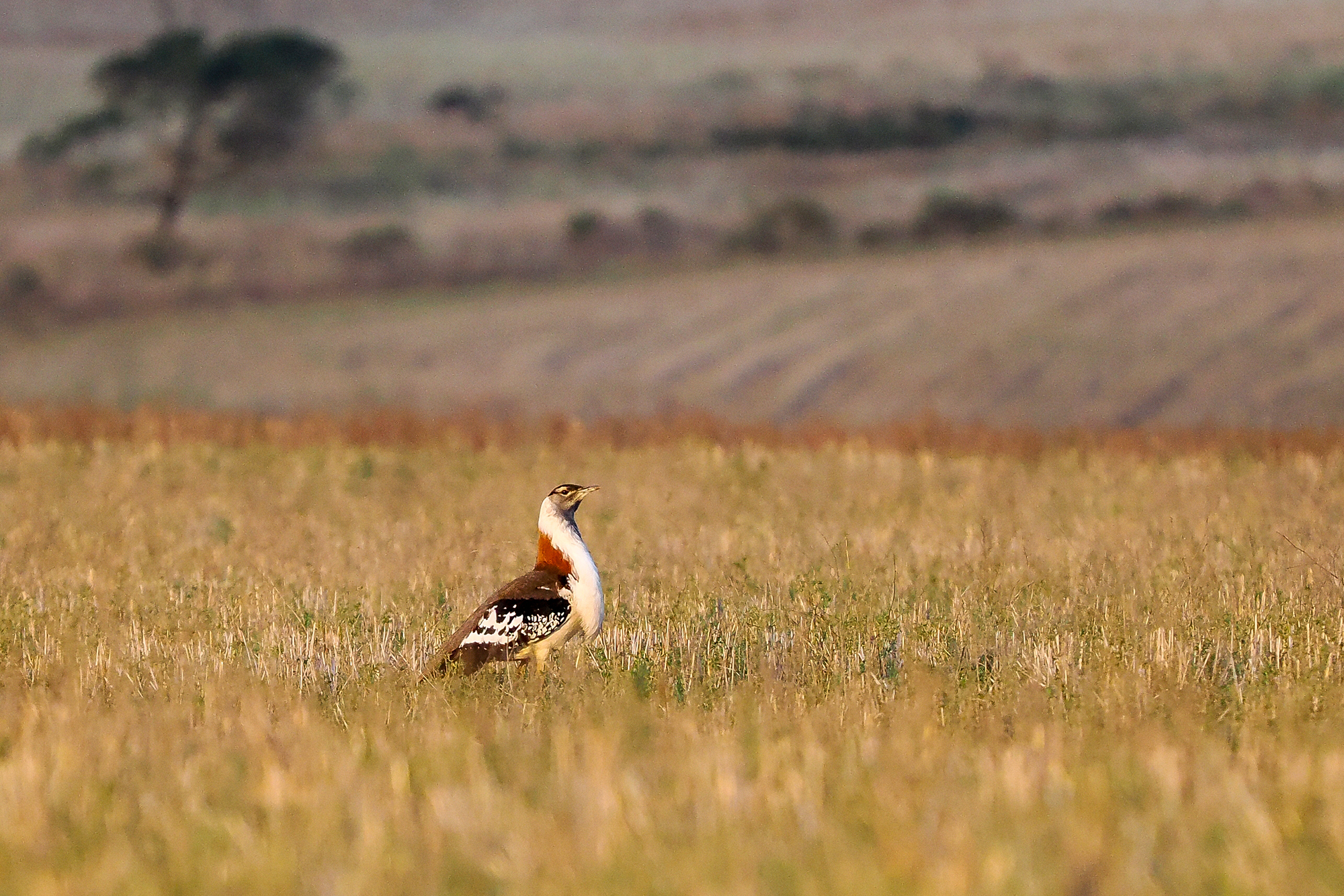
Comencem el transit cap el proper espai a visitar, al Parc Nacional de Bontebok, famós no només per la diversitat d’ocells sinó que també per la població del mamífer que li dóna nom, alhora que manté una petita població de zebra de muntanya. En les primeres visualitzacions des dels punts d’observació ja veiem els primers piocs de Denham. Som a les dates en les que els mascles estan exhibint-se als leks de cria, i podem observar en directe la lenta aproximació d’una femella generant un augment de l’excitació i lluïment del mascle.
Un agradable pic-nic al marge del riu en permet fer l’única observació del viatge d’alció capbrú i queleas de bec vermell. Les concentracions d’esparver d’espatlles negres soón elevades, guadint d’excel·lent observacions d’aquests rapinyaires. Les zones amb arbres i matolls permeten cercar un bon nombre d’ocells entre els que destaquen els sorollosos apalis gorja negres, acabant la jornada amb noves observacions crepusculars de ducs africans.
Pioc de Denham / Denham’s Bustard (Neotis denhami)Xarxet hotentot / Blue-billed Teal (Spatula hottentota)Bisbe vermell meridional / Southern Red Bishop (Euplectes orix)Grua del paradís / Blue Crane (Anthropoides paradiseus)Damalisc / Bontebok (Damaliscus pygargus dorcas). Image by tour leader Sergi SalesZebra de muntanya / Mountain Zebra (Equus zebra). Image by tour leader Sergi SalesBubú rovellat / Southern Boubou (Laniarius ferrugineus)Esparver d’espatlles negres / Black-winged Kite (Elanius caeruleus)Ocell secretari / Secretary Bird (Sagittarius serpentarius)
Dia 7
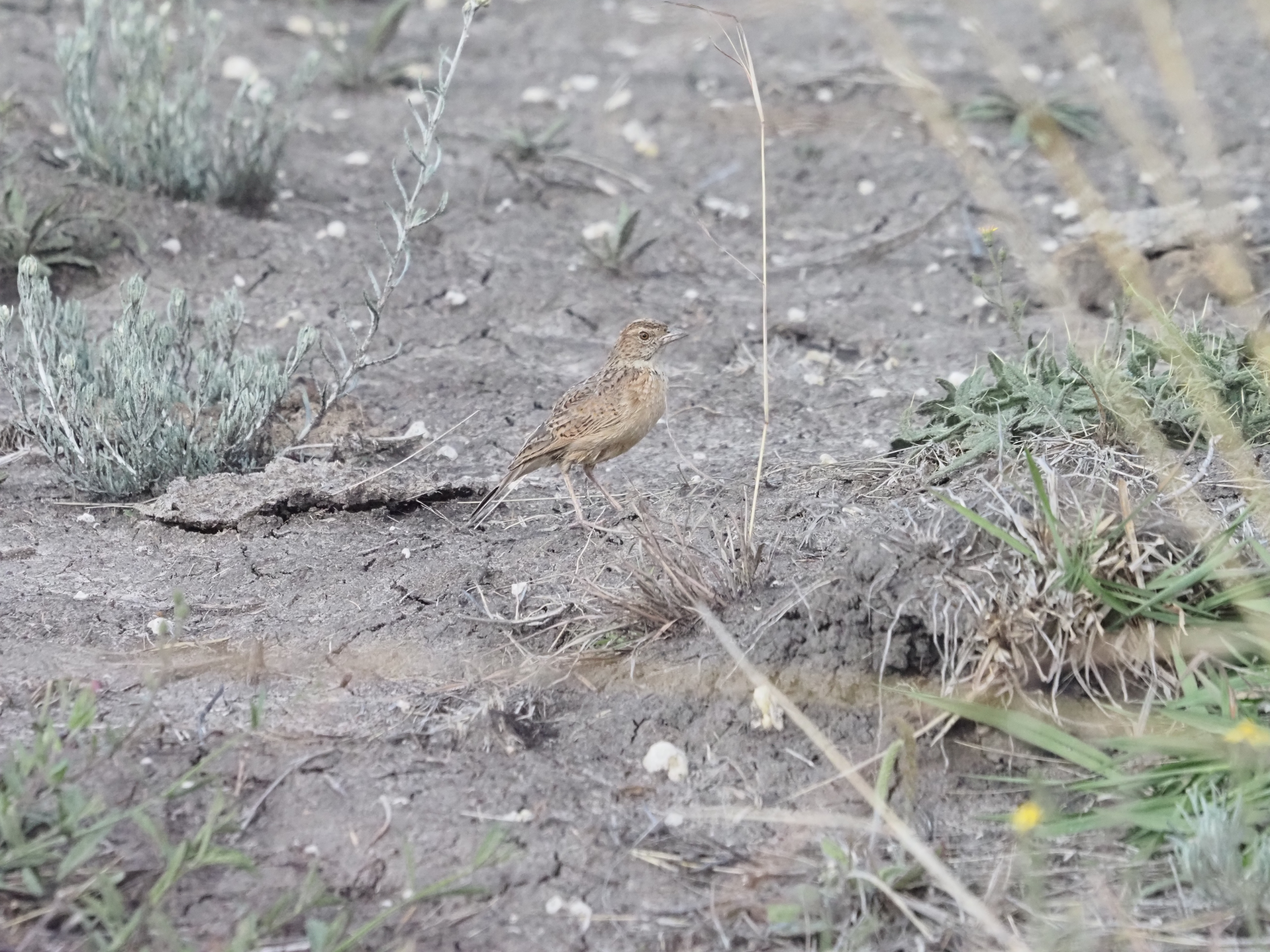
El camí d’accés des de l’allotjament fins al Reserva De Hoop travessa camps amb gran quantitat d’ocells, amb bones observacions d’alàudids, corriols, grues i fredelugues. Destaquen les bones visualitzacions d’alosa bec-llarga d’Aguhlas, terrerola de capell vermell i corriol pecuari.
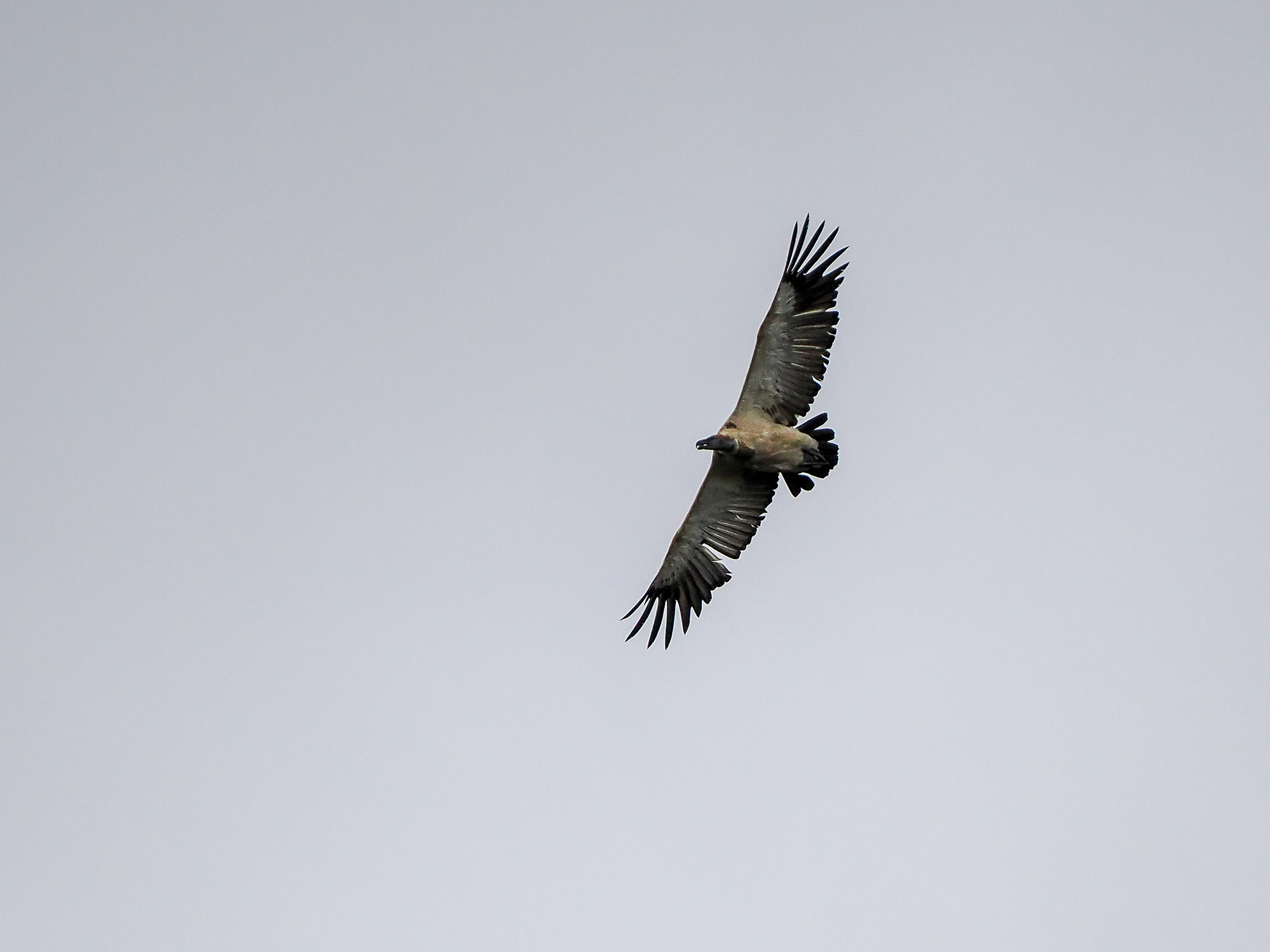
Un dels majors atractius d’aquest fantàstic espai natural és la colònia de l’endèmic voltor del cap els quals a pesar de la boira matinera no van tardar en fer acte de presencia. Després de rastrejar les zones boscoses on vàrem detectar espècie com el papamosques fiscal, bulbul verdós costaner, batis del cap o bubú ferruginós, ens apropem a les zones obertes i dunars.
En aquests espais oberts a mes de bones observacions dels impressionants Eland surten especies noves com les piules africanes i llise). Un espectacular escurço bufador va creuar parsimoniosament la pista davant la nostra atònita mirada.
Escurçó bufador / Puff Adder (Bitis arietans). Image by tour leader Sergi Sales
L’arribada al sistema dunar es va convertir en un dels moment màgics del tour, ja es podien veure i escoltar els cops d’aleta de les Iubartes alhora que els bufits de les properes balenes franques.
Però el llarg dia encara ens guardava un altre sorpresa, a una llarga recta s’observa una llarga silueta estesa sobre l’asfalt, després de moments de dubte al apropar-nos descobrim que un caracal estirat al terra menjant un ocell atropellat. Finalment el felí va amargar-se al marge de la carretera d’on durant poc segons va mostrar la seva cara convertint-se en un dels moment inoblidables del viatge.
Alosa bec-llarga d’Agulhas / Agulhas Long-billed Lark (Certhilauda brevides)Astor blanc-i-negre / Black Sparrowhawk (Accipiter melanoleucos)Papamosques fiscal / Fiscal Flycatcher (Sigelus sigens) Voltor del Cap / Cape Vulture (Gyps coprotheres)Cuaenlairat del Karoo / Karoo Scrub Robin (Cercotrichas coryphoeus)
Dia 8
Darrer dia de viatge que es planteja com a darrera possibilitat per poder cercar alguns dels ocells que ens havien fallat o dels que volem obtindre millors observacions. Però sobretot, matí pensat per observar una de les espècies per escasses, el xatrac de Damara. Per veure’l ens desplacem cap a una zona humida litoral on la gran sorpresa va ser la quantitat i diversitat d’espècies que ens van sortir en la carretera d’accés. Estols de grues del paradís amb sisó negre meridional exhibint-se, sumant un falcó llaner cruspint-se una presa al terra i el sempre espectacular secretari. Acabant-t’ho de rematar dos mascles de vídua de cua d’agulla intentant impressionar amb les danses a una discreta femella.
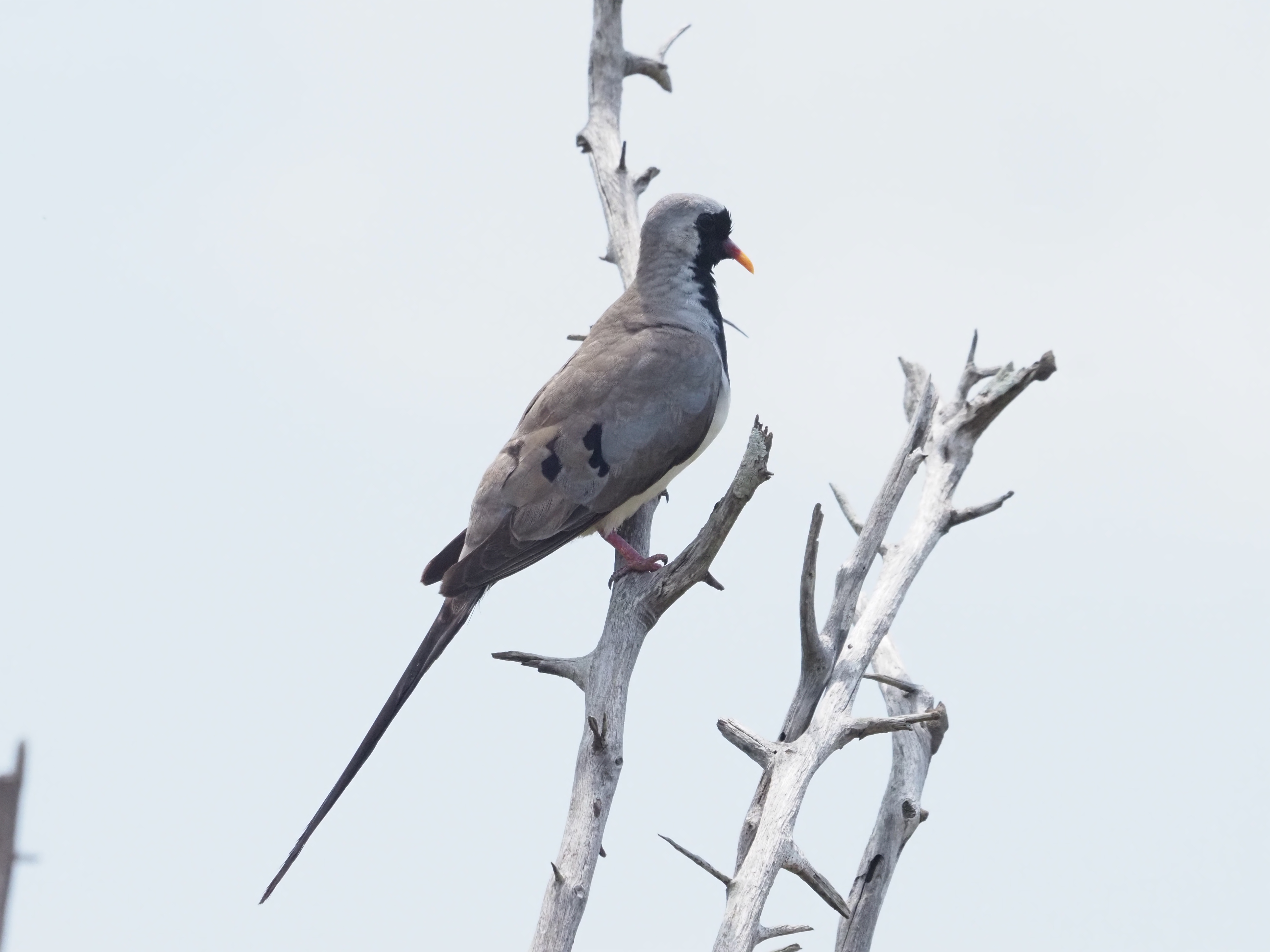
Vídua de cua d’agulla / Pin-tailed Whydah (Vidua macroura)Garsa de mar negrea africana / African Oystercatcher (Haematopus moquini)Tortoreta cuallarga / Namaqua Dove (Oena capensis)Corriol frontblanc / White-fronted Plover (Charadrius marginatus).Falciot cuablanc africà / White-rumped Swift (Apus caffer)
La visita a l’estuari es converteix es una bona oportunitat per anar farcint el checklist del tour amb varies espècies de limícoles entre les que destaca l’observació de dues sisetes cendroses i l’oportunitat de veure simultàniament els corriols grossos, pecuaris i frontblanc.
El rastreig dels grups de gavines i xatracs finalment dona el seu fruit poden observar 4 xatracs de Damara entre xatracs grossos .
Satisfacció per l’enèsim objectiu complert, ara comencem la tornada cap l’aeroport fent aturades a petits zones humides on fem el darrer intent per detectar l’única espècie que se`ns resistia, la malvasia africana, finalment un lluent mascle es va deixar veure per acabar de la millor manera possible un gran tour per la regió de Ciutat del Cap.
El comptatge final va ser de 233 espècies d’ocells vistes, entre elles 46 endèmics i 17 propers a endèmics.
Overview: Our first tour to Eastern South Africa can be defined as a big success. Not only because of the 40+ endemics seen during the trip, with special mention to the extremely scarce Rudd’s Lark. We also scored many sought-after species, including some very tuff birds. Two species of Flufftail were seen, including the very elusive Buff-spotted. The tour enjoyed good weather conditions most of the days, despite an unusually cold episode while transfering from Kruger to Wakkerstroof, with temperatures collapsing as low as only 3ºC. This episode, combining low temperatures and rain, was up to three days long and we noticed dead Bee-eaters and Swallows during our stops. Despite this, the tour excelled in great sights and we also got some interesting mammals, even if we failed to find some top target mammals.
All images in this trip report by tour leader Carles Oliver and Joan Barat. All rights reserved.
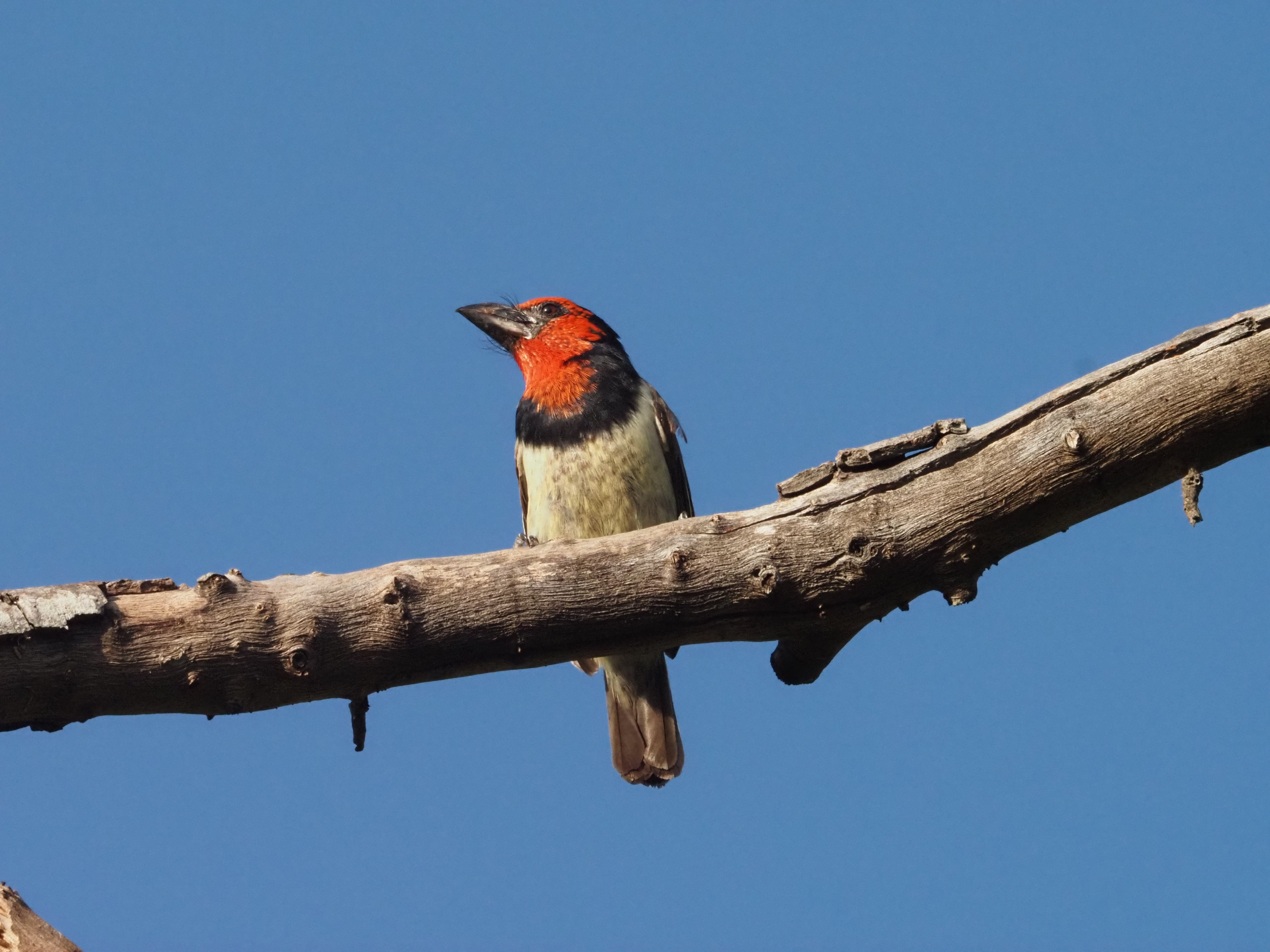
Crested Barbet (Trachyphonus vaillantii) to start the report! Image by tour leader Carles Oliver
Day 1. After our commuter flights coming from different countries, all tour participants assembled in Johannesburg, where our local guide was waiting for us. It was a lovely afternoon, and after negotiating the metropolitan traffic, we put our way North in order to explore some interesting spots.
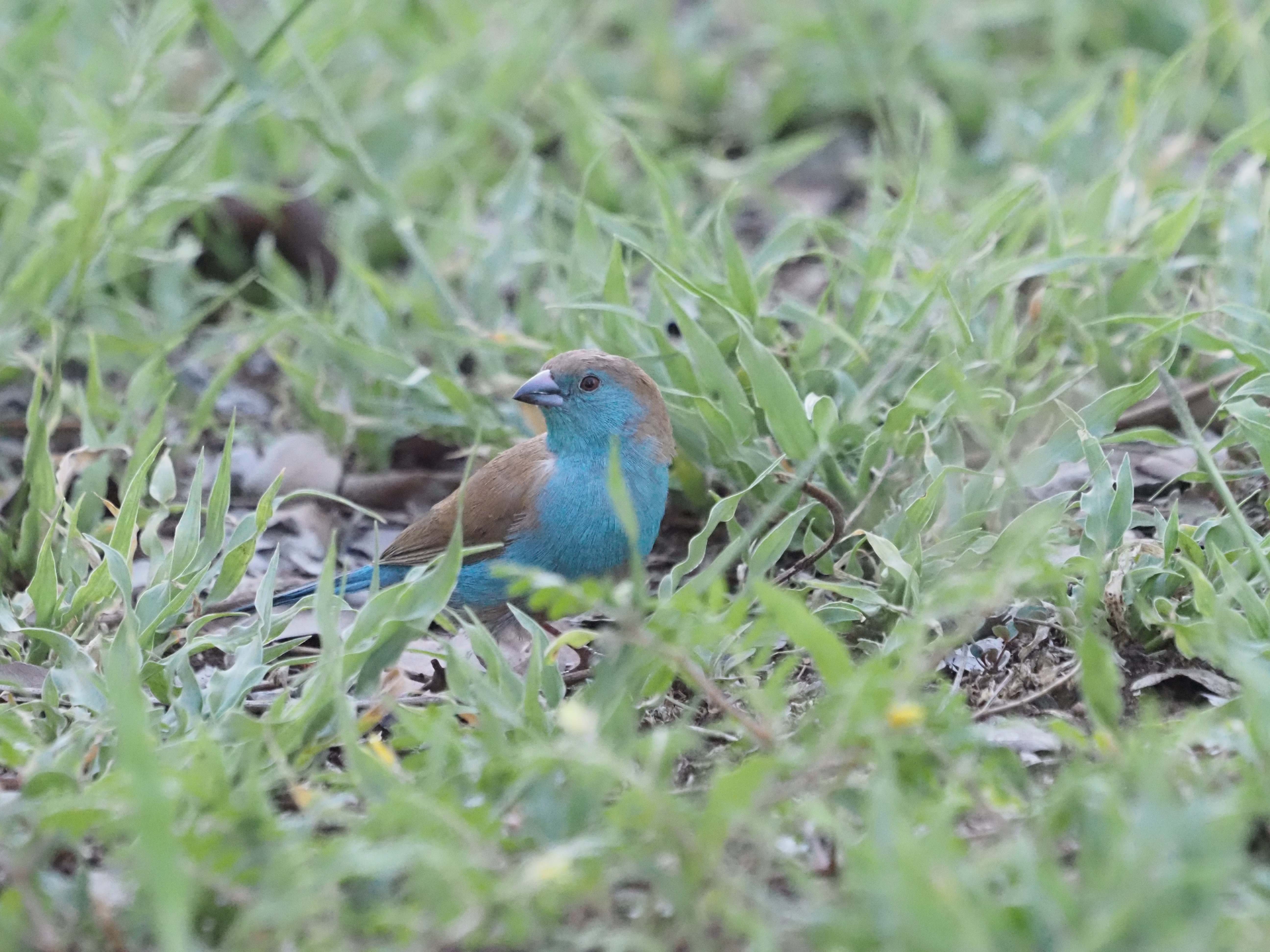
En route, we had some of the common birds in the area, including Long-crested Eagle, Steppe Buzzard, the superb Magpie Shrike, Grey Go-away-bird and some Namaqua Doves in flight. It was a sunny afternoon, and a service stop midway down our destination provided us with the firsts Cape White-eye, Blacksmith Lapwing, Black-winged Kites, Tawny-flanked Prinia and African Palm Swifts of the trip, plus the nice surprise of 2 Horus Swifts flying along with the common Little Swifts. This is a quite scarce bird, and a good adding for the trip!
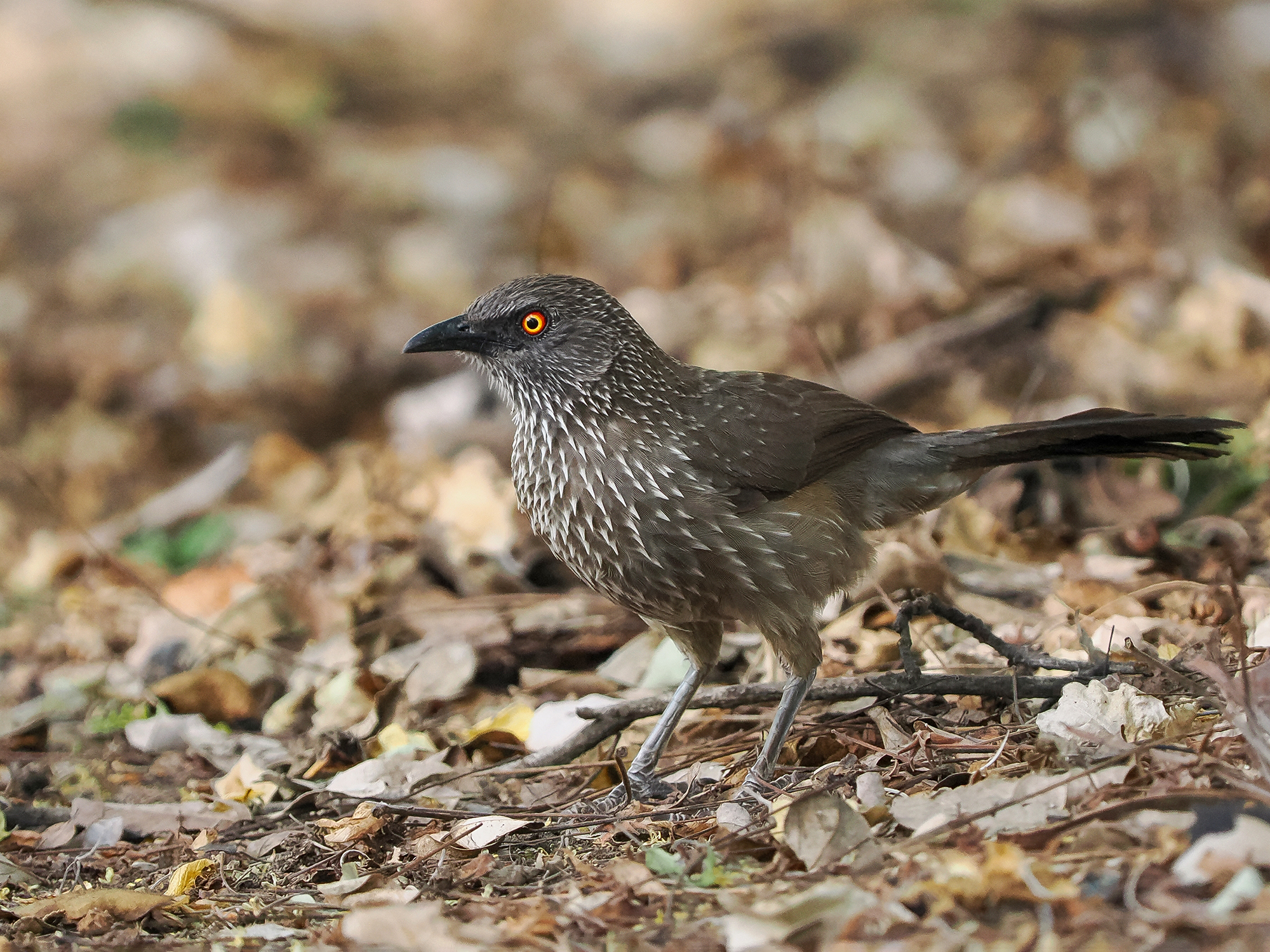
Once arrived to our first proper birding stop, the sightings came as drops in a rainy day, and soon we enjoyed Blue Waxbill, Greater Sparrow, the tame Kalahari Scrub Robin, African Pipit and several lovely Scaly-feathered Weavers. It took us literally 30 seconds to find the first Short-clawed Lark, an obliging bird that offered excellent photo opportunities. The short grass plain where we found it was full of goodies, including Black-faced Waxbills, several Cape Sparrows, 2 Desert Cisticolas, the first of many Yellow-fronted Canary, Black-chested Prinia and 1 Greater Kestrel. We spent some extra time trying to find the often shy Pink-billed Lark, but we were unlucky, and after some time the Crowned Lapwings around became specially noisy, a sign of the sunset to come. Already moving to our accommodation, we had a fast stop to take a look to the first Familiar Chats and White-browed Sparrow-Weavers of the trip.
Our wonderful accommodation embraced the British colonial heritage with the mistery of a Jurassic Park cottage. What a place! After dinner, a fast check to the varanda produced really good looks into 1 African Wood Owl while a Buff-spotted Flufftail was singing along with the chorus of amphibians in the lake beside the lodge. A wonderful first day!
Short-clawed Lark (Certhilauda chuana), an endemic with a limited range. Image by tour leader Carles OliverArriving at sunset to our very lovely first accommodationAfrican Wood Owl (Strix woodfordii) was next to our accommodation
Day 2. First full day of birding of the trip. It was a sunny, warm morning in the hills around Magoebaskloof. As we headed out of our accommodation, a road stop was mandatory to enjoy some common birds including Cape Robin Chat, Forest Canary, Greater Striped Swallows, Dark-capped Warbler, African Stonechats and Swee Waxbills. It was a sunny morning and soon we were walking under the canopy of one of the few spots where the indigenous forests are still plentiful. Here we enjoyed up to 15 Cape Parrots flying, calling and feeding on some tall tress. Other good birds appearing here included Knysna Turaco, Steppe Buzzard and European Bee-eater. A short walk in the deepest of the jungle produced a very fine selection of forest specialties including Orange Ground Thrush, Narina Trogon, Square-tailed Drongo, and amazing views on Yellow-streaked Babbler along with other good birds such as White Cucckooshrike, Yellow-throated Woodland Warbler, White-starred Robin, Chorister Robin Chat, Barrett’s Warbler and an impressive African Sparrowhawk that was trying to pick up the breakfast in the forest.
The wonderful original habitat in the Magoebaskloof hillsides. Cape Parrot (Poicephalus robustus) showing the typical orange markings of the adult.Dark-capped Warblers (Iduna natalensis)White-starred Robin (Pogonocichla stellata)
After the forest, we visited one of the few spots for Magpie Mannikin in the area. Just arrived, we got the first of many views on Red-faced Cisticola and Black-collared Barbet, as well as Grey-tit Flycatcher and Red-chested & Amethyst Sunbirds. The Mannikins proved to be way more difficult than expected, but our patience was rewarded not only with great views on this superb bird, but also with the very first Cape Vulture of the trip!
Before lunch, we still had a stop in some open lands, where we enjoyed views on the very scarce Blue-spotted Wood Dove. This is a common bird in most of Eastern Africa, but with extremely slim populations in South Africa! Along with this gem, the place produced also the first of many Golden-breasted Buntings, Cardinal Woodpecker, Brown Snake Eagle and White-fronted Bee-eaters. A bridge nearby produced Mountain Wagtail, African Black Duck but, unfortunately, we couldn’t locate any African Finfoot.
After lunch, we went to check to very special nesting sites. In the first stop, a massive nest of African Crowned Eagle was waiting for us in a line of eucalyptus. After some great scope views on the massive eagle on its nest, we covered the short distance to the nesting area of a pair of Bat Hawks. After a bit of scanning, we got the pair of hawks quietly resting on a branch, waiting for the sunset to come. The perfect moment to catch bats!
After this unforgettable sight, we just headed back to the accommodation, where we made a stop to enjoy a bit more of the swamps beside it. Here we got excellent views on a flock of Cape Canaries, but also Cape Grassbird, Levaillant’s Cisticola, Little Rush Warbler, Little Sparrowhawk and a singing Red-chested Cuckoo singing only a few metres away from us.
Blue-spotted Wood-Dove (Turtur afer) is quite a scarcity in South Africa so we were really pleased to contact with this individual.Pin-tailed Wydah (Vidua macroura), always a stunnerThis pair of Bat Hawks (Macheiraphus alcinus) was considered as one of the best birds of the tour
Day 3. Our transfer day to Kruger happened in a misty morning. We woke up with the accommodation surrounded by thig fog. But not all were bad news. We had a small stroll around, covering the meadows down the accommodation, and at some point a Buff-spotted Flufftail started singing. Not a surprise, since during our first overnight we had at least three birds singing here. But this time the bird looked like singing closer. We went down to a place where we had a minimal view on the stream and the rank vegetation around, and then Carmine had a brief view on the bird moving along the tiny stream. Hearts on! We had a couple of really long minutes of wait (including an Orange Ground Thrush to came to drink water) and finally the bird appeared, at the beggining under the cover of a dead branch, but later we got a full view of the bird (and even a chance for a record shot) as the bird walk totaly in the open by crossing a grassy area! What an amazing sight!!
Buff-spotted Flufftail (Sarothrura elegans). We counted extremely lucky to see such a shy species! Image by tour participant Joan Barat.
With our hearts still beating hard for this incredible sight, we came back to the accommodation for a delicious breakfast before living the area in our way to Kruger National Park. As we left, an African Dusky Flycatcher came to the garden to say goodbye to our group. The short transfer to Kruger was not absent of interest. The weather cleared out as soon as living the mountains. Beyond some Southern Black Flycatchers in fences and gardens, the first of many African Haw-Eagle, we had the only one Booted Eagle of the trip, and a wonderful African Pygmy Kingfisher that briefly came to land beside the group as we were checking raptors in the sky.
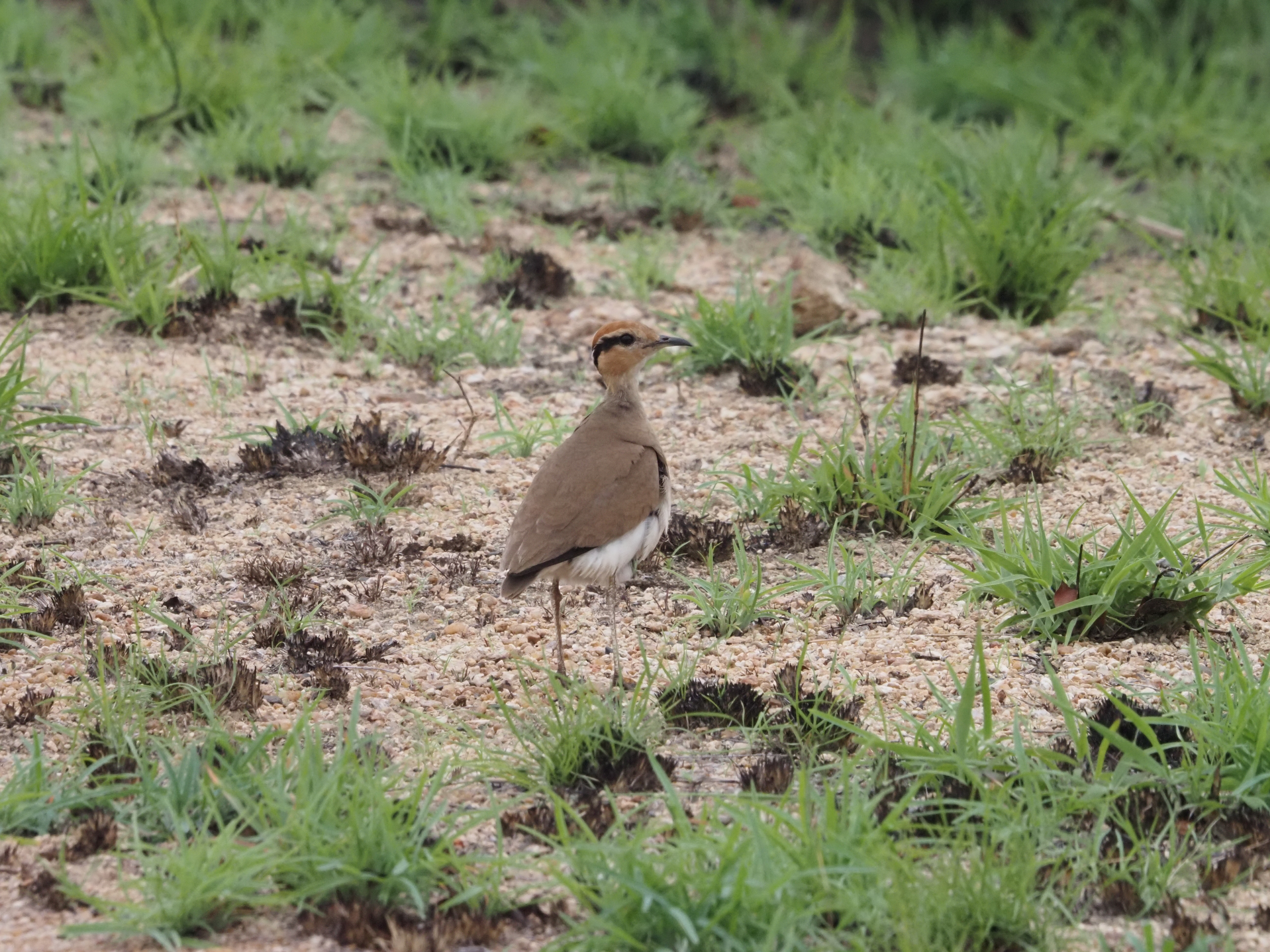
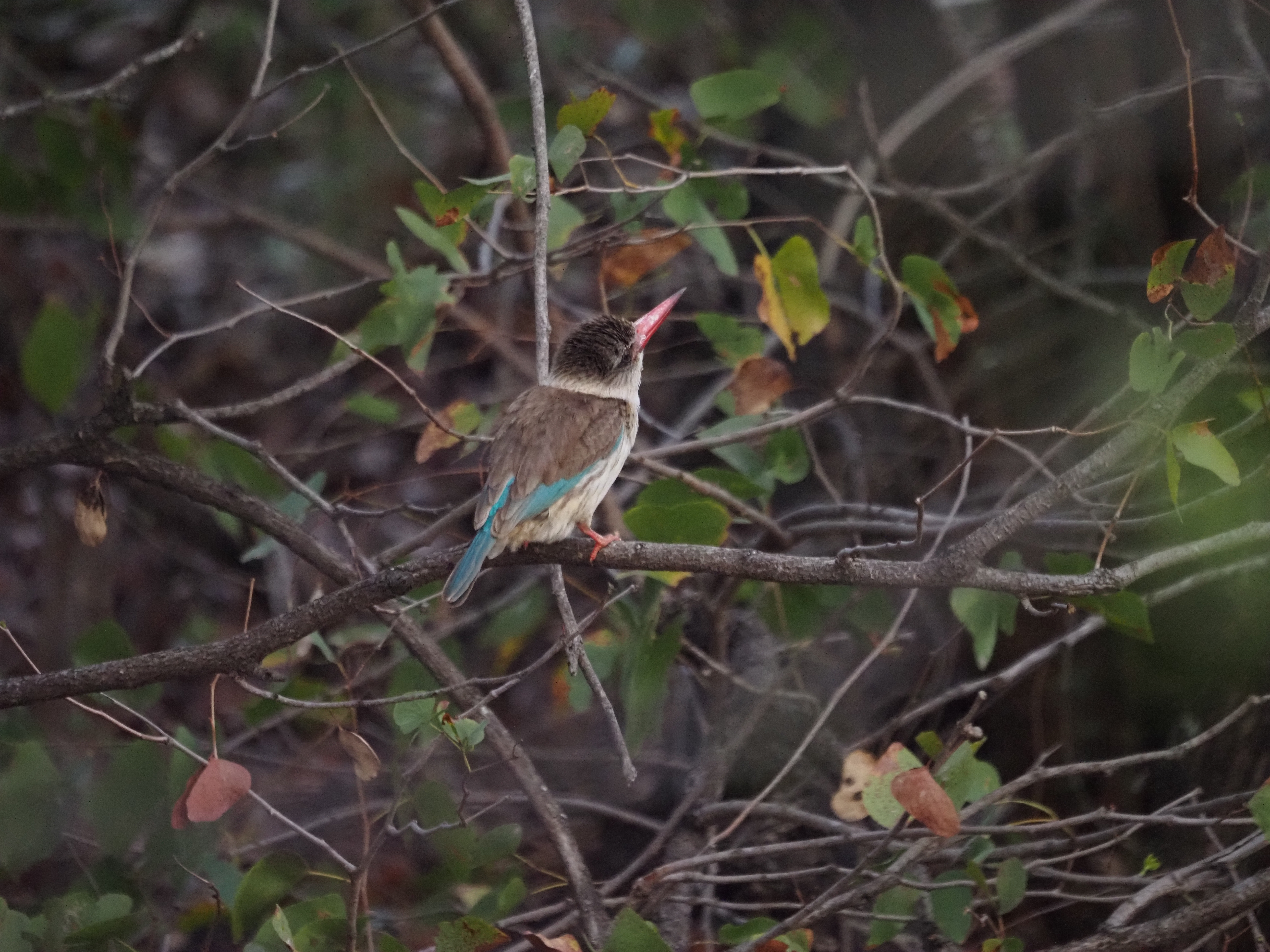
Once in Kruger, it didn’t take us long to start enjoying the of the common good birds in the area, including lovely views on Crested Barbet, Diederick Cuckoo, Walhberg’s Eagles, White-bellied Sunbird, Blue Waxbill and Sabota Lark. Among the mammals, we got the firsts of many Impalas, Plains Zebras and African Elephant Bush. A fast stop to enjoy our packed lunch added Moking Cliff Chat, a passby Eurasian Golden Oriole and a pair of Kilsgpringers enjoying their rocky outcrop. Once arrived to our camp we also had excellent views on Golden-tailed Woodpecker, Natal Spurfowl, Arrow-marqued Babbler and Grey Go-away-bird to name a few. After a short break in our comfortable huts, we went out again. During a short game drive we got stunning views on Brown-hooded Kingfishers, Double-banded Sandgrouses, Red-crested Koorhan, Grey-rumped Swallow, Temminck’s Courser, amazing views on a Klaas’s Cuckoo display, and several more! Mammals here included firsts Hartebeest of the trip plus a surprising Honey Badger doing its way in through the woodlands. To end the game drive, we stop by a bridge, where we could see the firsts of may Hypopotamus, but also Saddle-billed Stork, Wood Sandpiper, Greater Painted Snipe and also a Bat Hawk that was waiting the first bats to appear around the river.
Back to the camp we prepare ourselves to go dinner, but the day was not done yet, and a crepuscular walk around our camp produced good views on both African Barred Owlet & African Scops Owl plus the very big surprise of a Greater Galago moving in the palm threes and that was really celebrated by the group.
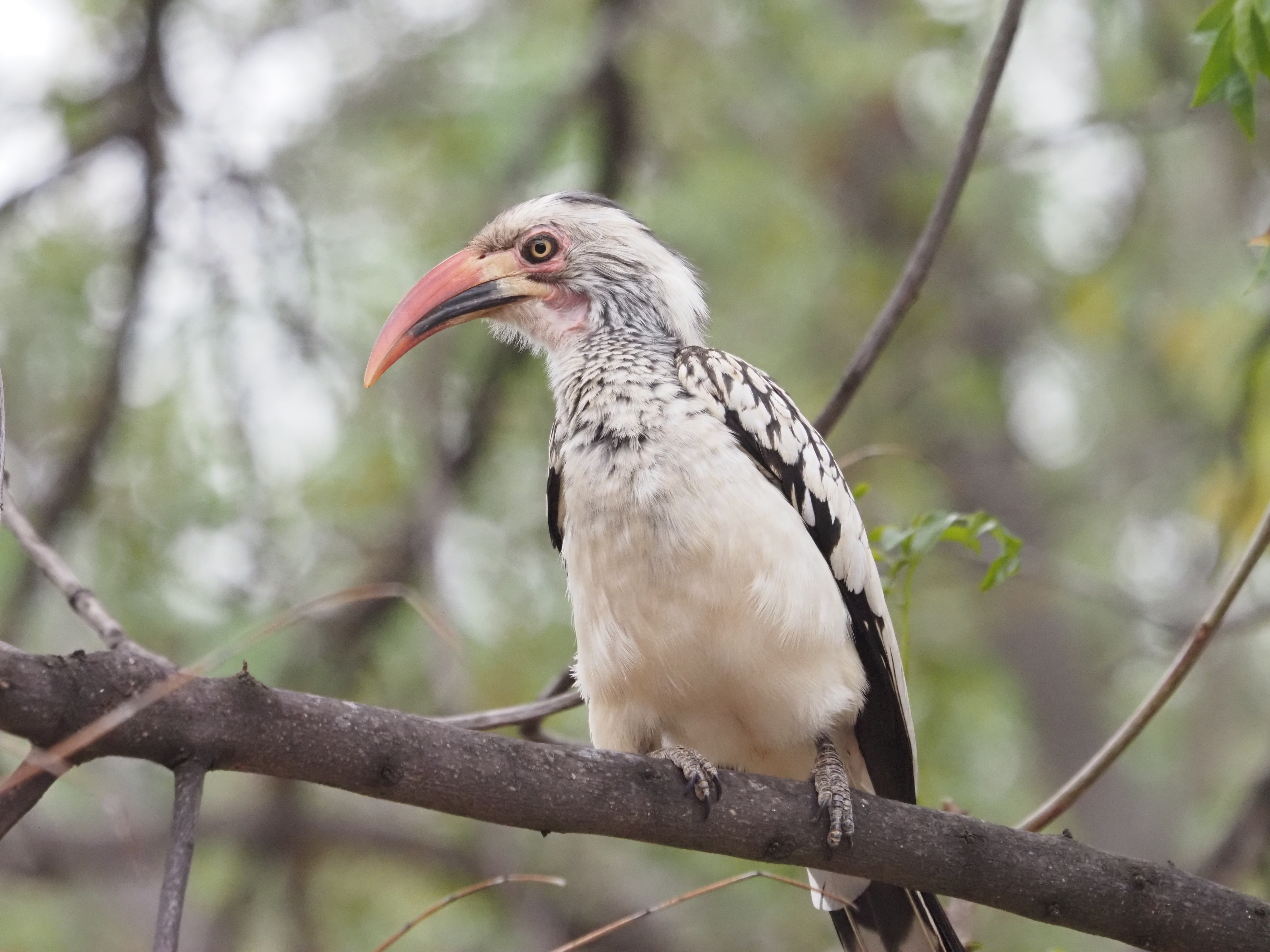
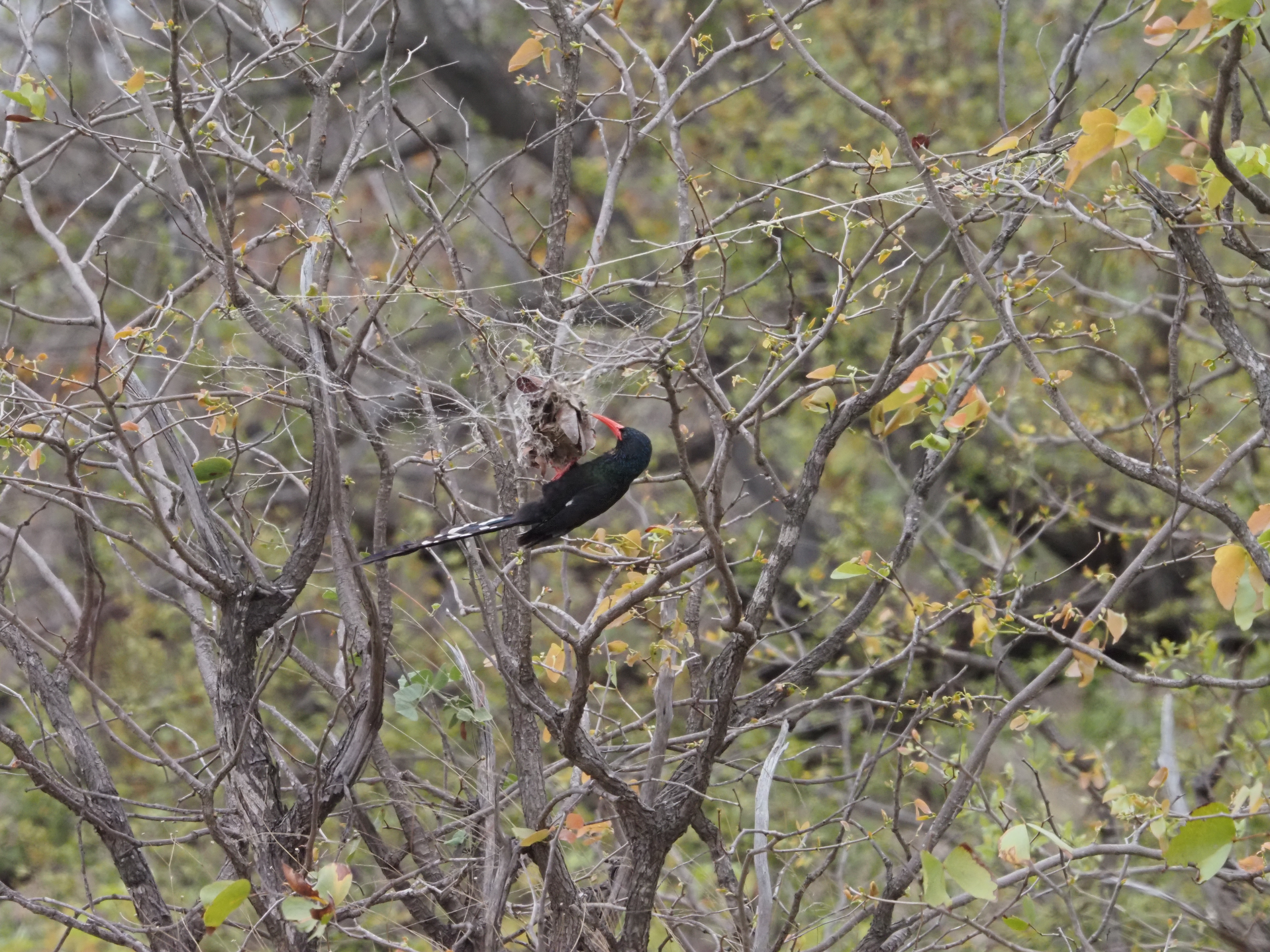
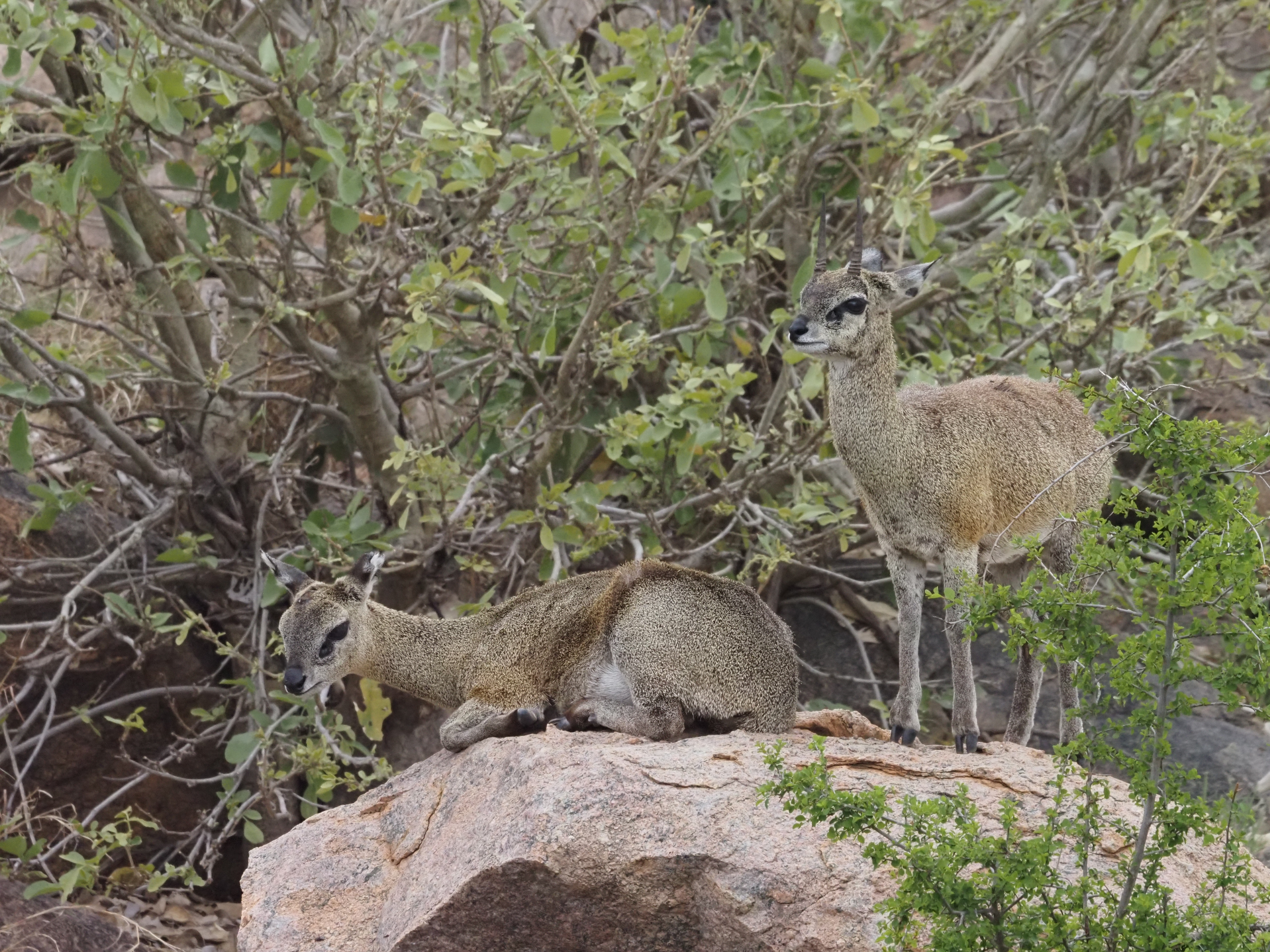
Southern Red-billed Hornbill (Tockus rufirostris), a typical inhabitant of the mopane woodlandsCrested Barbet (Trachyphonus vaillantii), a common views inside Kruger campsitesGreen Woodhoopoe (Phoeniculus purpureus) collecting spide websA pair of Klipspringers (Oreotragus oreotragus) in one rocky outcropSabota Lark (Mirafra sabota), the commonest lark in most parts of Kruger National ParkTemminck’s Courser (Cursorior temminckii)Arrow-marked Babbler (Turdoides jardineii). Image by tour participant Joan Barat.Brown-hooded Kingfisher (Halcyon albiventris)African Barred Owlet (Glaucidium capense)
Day 4. This morning we enjoyed some birding in the camp, including Marico Flycatcher, Olive Bushshrike, Green-capped Camaroptera and Pearl-spotted Owlet before living South. Our transfer was dominated for the same species that the day before, but adding good views on Yellow-billed Hornbill, both Grey-backed & Chestnut-backed Sparrow Larks plus first views in other species including Green Woodhoopoe and fist views on Red-capped Lark and Kittlitz Plover.
A group of Spotted Hyaenas was lying next to the road, and Southern Giraffes were seen later to complement a good list of mammals. This day we had a brunch in one of the many lodges in Kruger, and the lunch overlooking the lake provide us with wonderful views not only of a 4 Elephants enjoying some water games, but also some interesting bird species inluding Mosque Swallow, Yellow-billed Stork, African Spoonbill, Great Spotted Cuckoo and even a Southern Pochard associated with the large flocks of White-faced Whistling Ducks. Large Nile Crocodiles were lying on the banks, but African Jacanas and Little Stints seem not aware of the danger.
The gardens of the lodges also proved to be extremely productive. We got here 6 Willow Warblers, and solid views on Green-winged Pytilias but also got extremelly close Jacobin and Klaas’s Cuckoos, with special mention to a Diederick Cuckoo perched only 2 metres away from us and the African Paradise Flycatchers attending its nest.
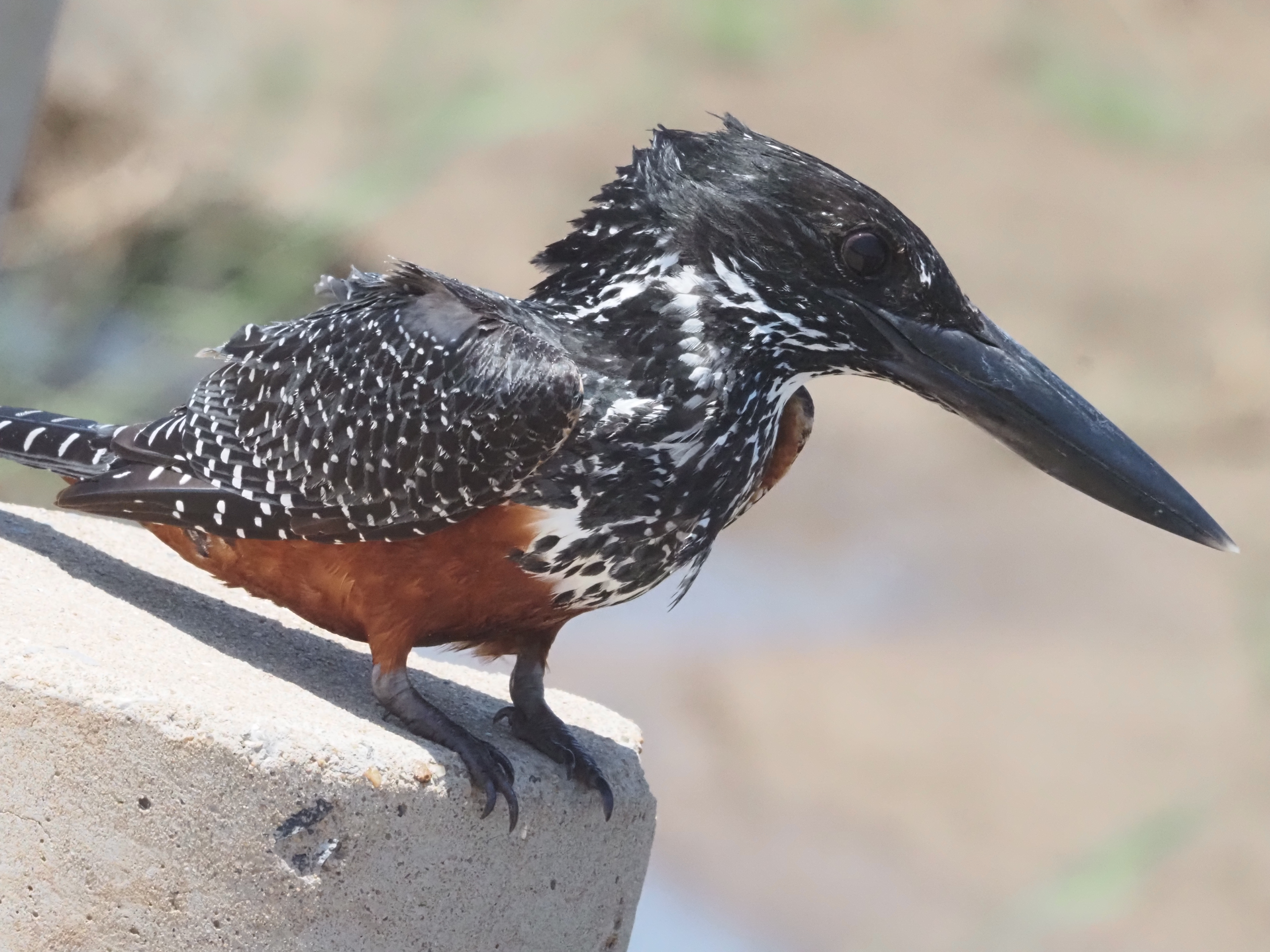
The afternoon was windy, and we checked a pair of bridges around our accommodation, adding more views on African Openbills, Saddle-billed Storks, Great White Egrets and Woolly-necked Storks to our day list, but the best of afternoon was the brilliant views on a Giant Kingfisher by the van, and the only one Osprey of the tour!
Red-crested Korhaan (Lophotis ruficrista)Little Bee-eater (Merops pusillus), a common view on the Mopane woodlands. Image by tour participant Joan Barat.White-fronted Bee-eater (Merops bullockoides)Burchell’s Coucal (Centropus burchellii)Magpie Shrike (Lanius melanoleucos)Diederik Cuckoo (Chrysococcyx caprius)Partially leucistic African Scops Owl (Otus senegalensis)Levaillant’s Cuckoo (Clamator levaillantii)Southern Giraffe (Giraffa giraffa)
Day 5. Leaving our accommodation, we tranfered through the Mopane woodlands with several Long-billed Crombecs, Chinspot Batises and Black-backed Puffbacks seen but also with a lovely pair of Black Cuckooshrike moving in the woods. Moving South, we crossed a massive landscape of woodlands, with several White-backed Vultures and Bateleurs soaring the sky along with the less common Lappet-faced Vultures. From a outlook point above Olifants River, an endless ondulation of Mopane could be seen, florished with the long necks of the many Giraffes around. Around the river, some Hippopotamus where feeding, and the river itself provided us with the very firsts White-crowned Lapwing of the trip.
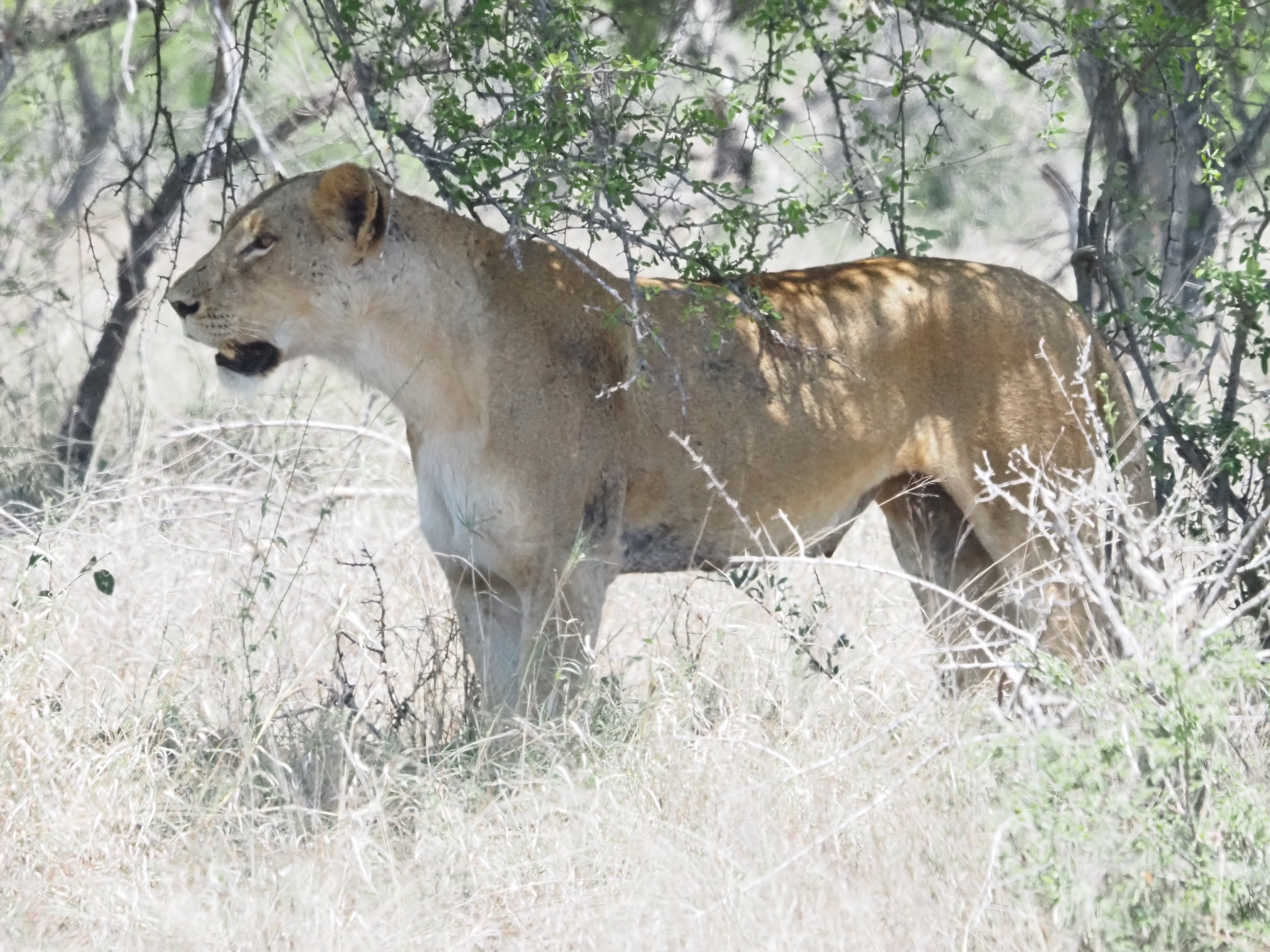
While enjoying our generous brunch other interesting species appear including Black Stork, White-throated Robin Chat and a pair of African Hawk-Eagles circling. Our drive South extended still for a pair of hours, enjoying Red-necked Korhaan but also Waterbucks and Nyalas. But the longest stop was devoted to the first pride of Lions of the tour. This time, there at least 3 females and 4 cubs of different ages, so it was easy to guess that these females were in charge of all the cubs in the pride. As expected in the middle of the day, the Lions were not very active, but one of the females gave us a wonderful walk out of the shade.
By lunch time we arrived to our new accommodation, still well inside Kruger National Park. A short walk around the lodge produced excellent views on a flock of Brown-headed Parrots roosting only a few metres above our heads. But the walk produced much more, including Golden-tailed Woodpcker but also Orange-breasted Bushshrike and the first Burnt-necked Eremomela, Grey-backed Camaroptera & Jameson’s Firefinch of the tour.
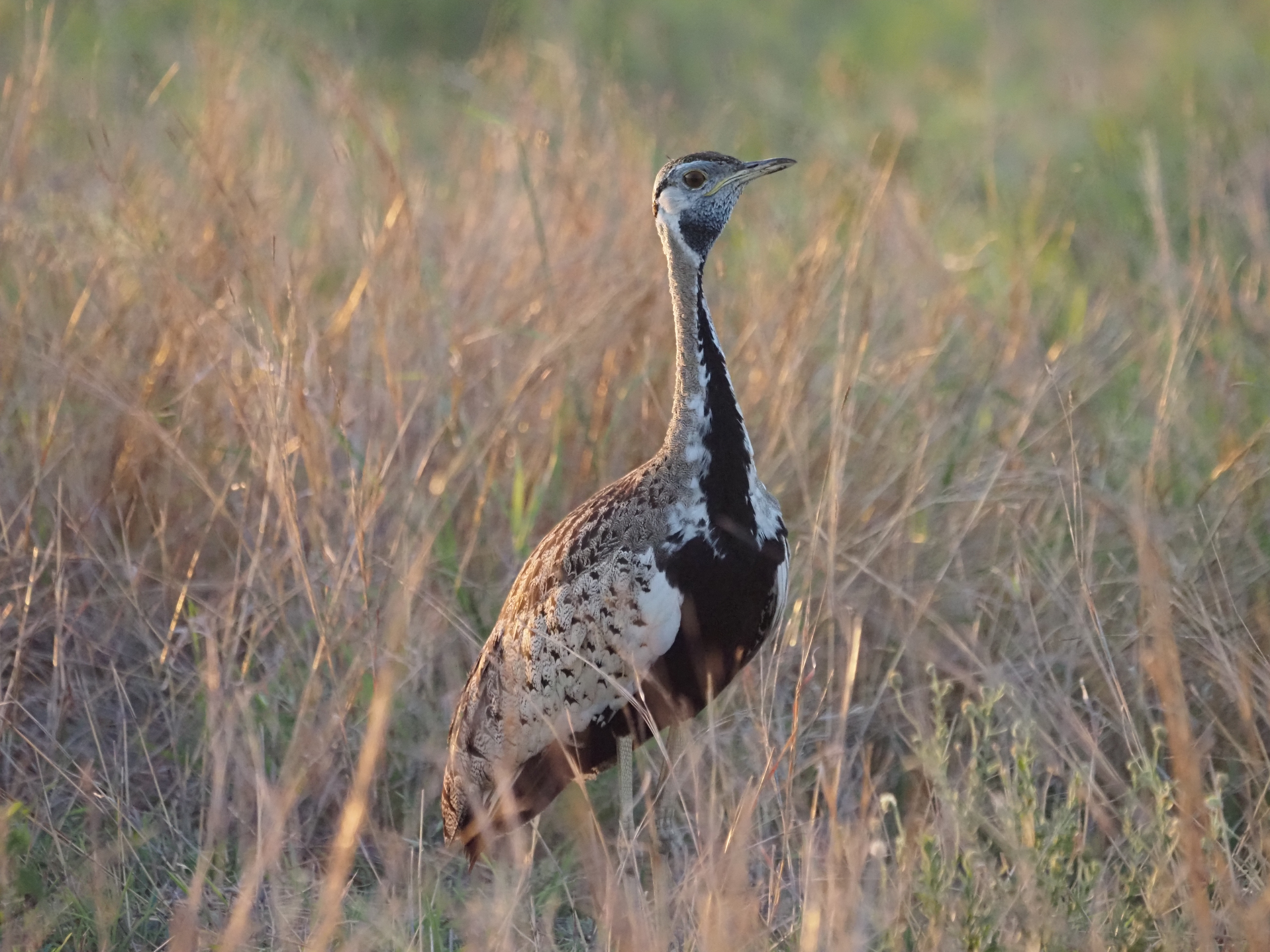
After some midday break, we left the camp to do some game drive. Amidst the large plains, small parades of Elephants were feeding, with very scenic light. Birding was quiet but still got distant bu nice views on a nesting pair of White-headed Vultures. At sunset, a Black-bellied Bustard stole the show and displayed only a few metres away from our van. What a wonderful way to end the tour!
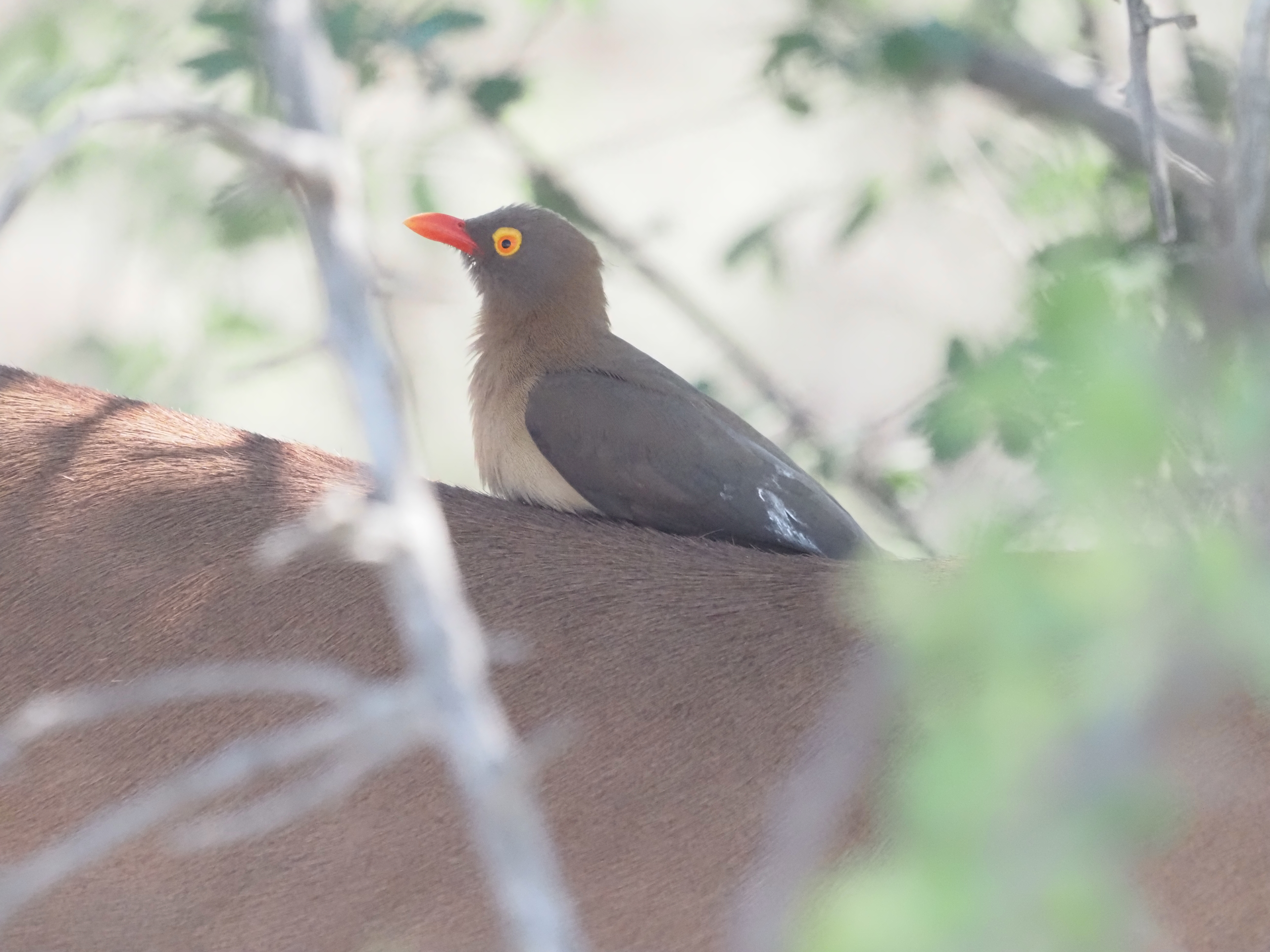
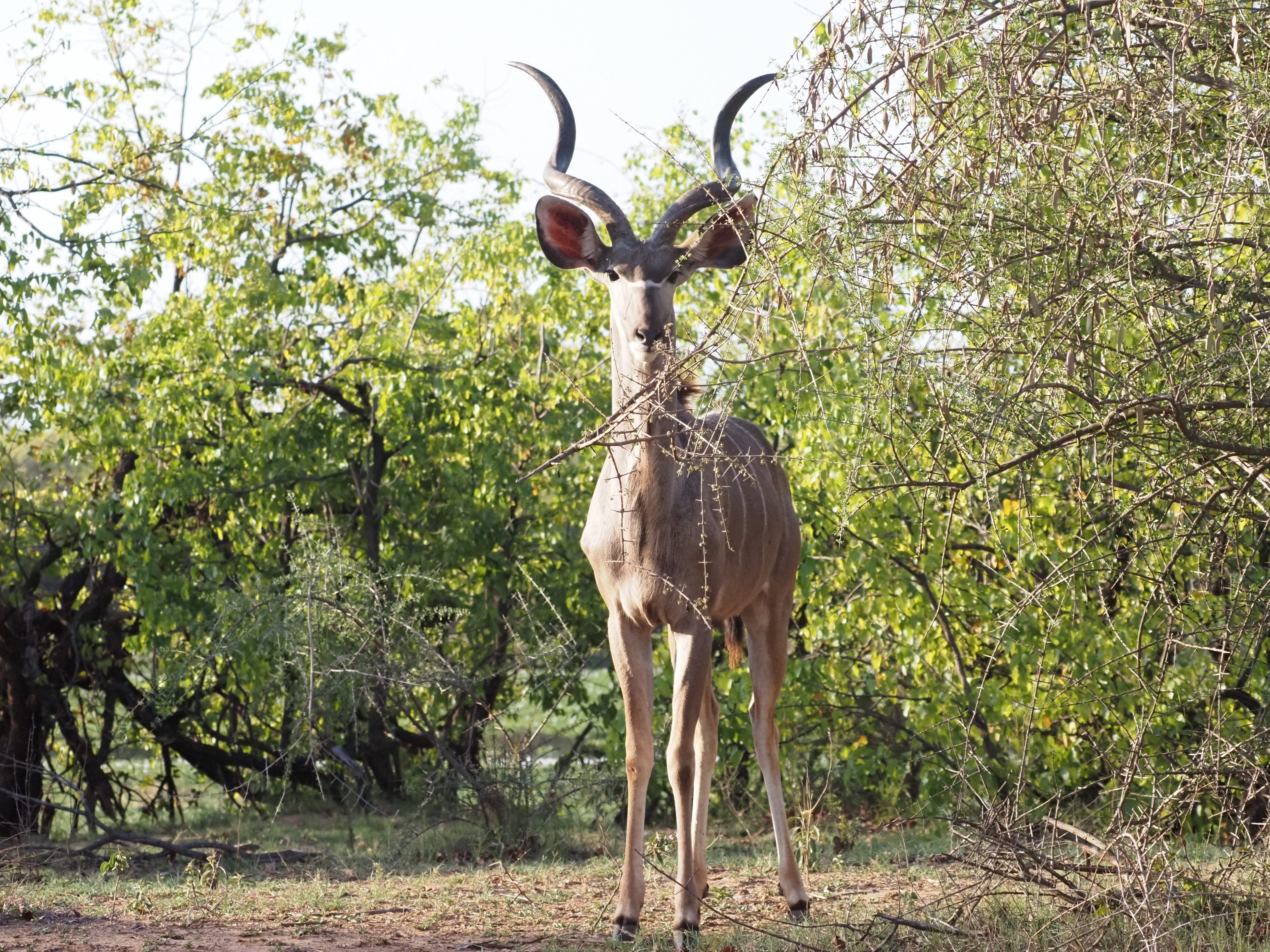
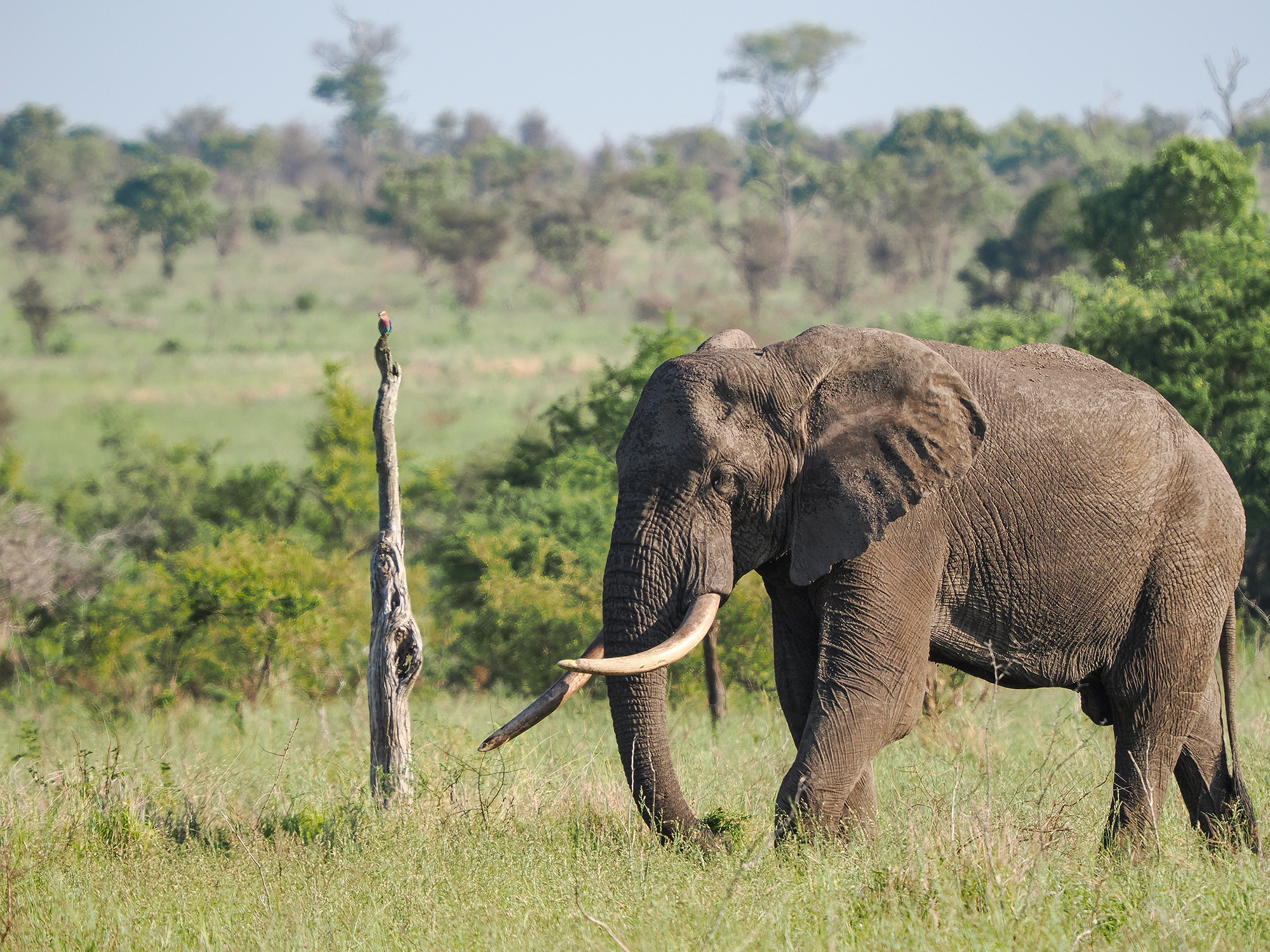
Southern Yellow-billed Hornbill (Tockus leucomelas)Double-banded Sandgrouse (Pterocles bicinctus)Red-billed Oxpecker (Buphagus erythrorhynchus) on a Cape Buffalo.Lovely male Greater Kudu (Tragelaphus strepsiceros)Giant Kingfisher (Megaceryle maxima) posed only 2 meters away from our vehicle!Always special when the first Lions (Panthera leo) of the trip appear!Brown-headed Parrots (Poicephalus cryptoxanthus) were roosting in low branches!Golden-tailed Woodpecker (Campethera abingoni)A nice tusker exploring the grasslands. Please note the Lilac-breasted Roller! Image by tour participant Joan Barat.Black-bellied Bustard (Lissotis melanogaster) beside the road to end a wonderful day!
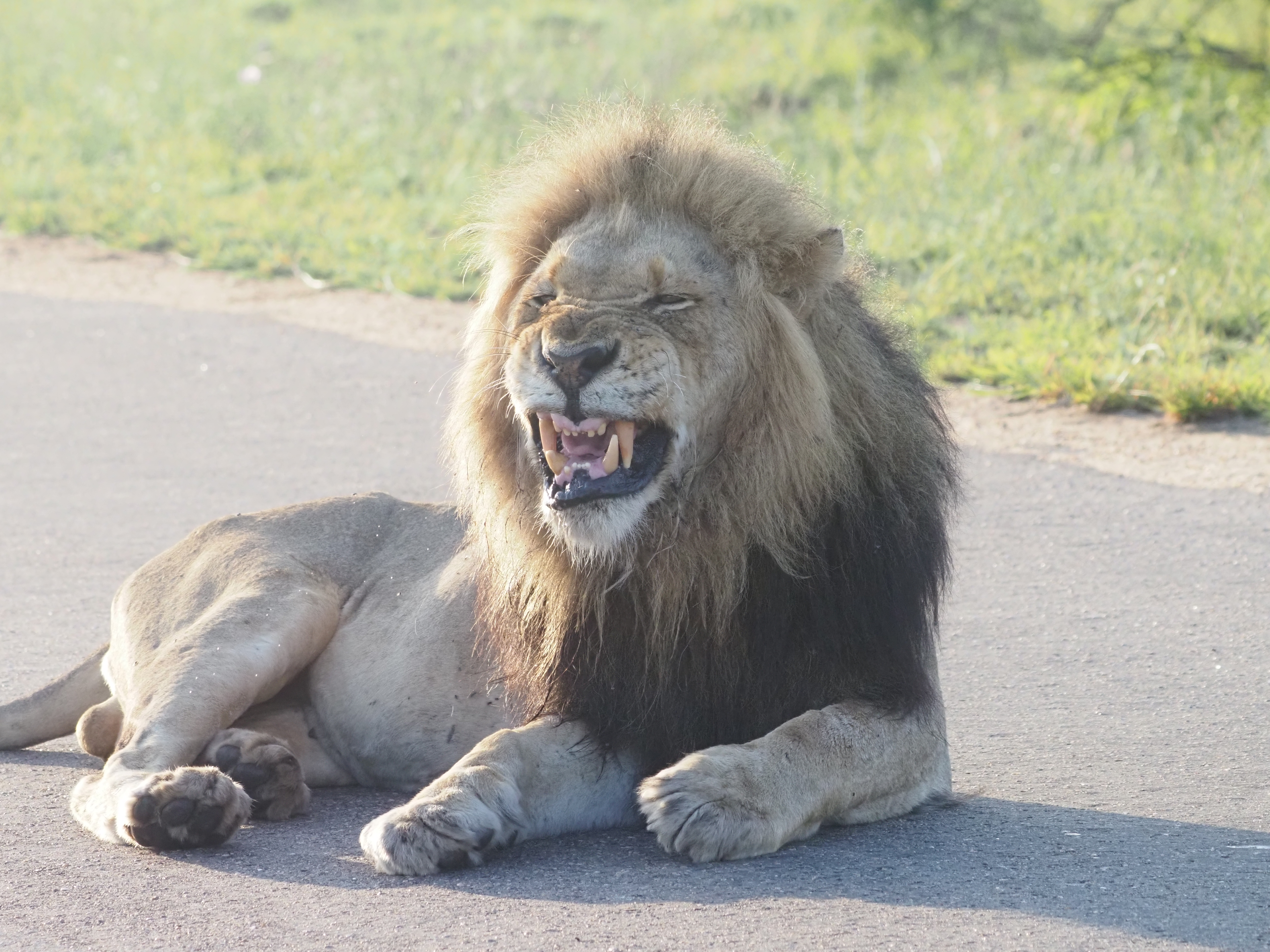
Day 6. Our morning could not start better. An alliance of 3 male Lions lying on the tarmac, giving each other morning salutations and attentions. And roaring. Roaring only 5 metres away from the van, making sure that we were all well awake! We didn’t need any second coffee that day. That was for sure!
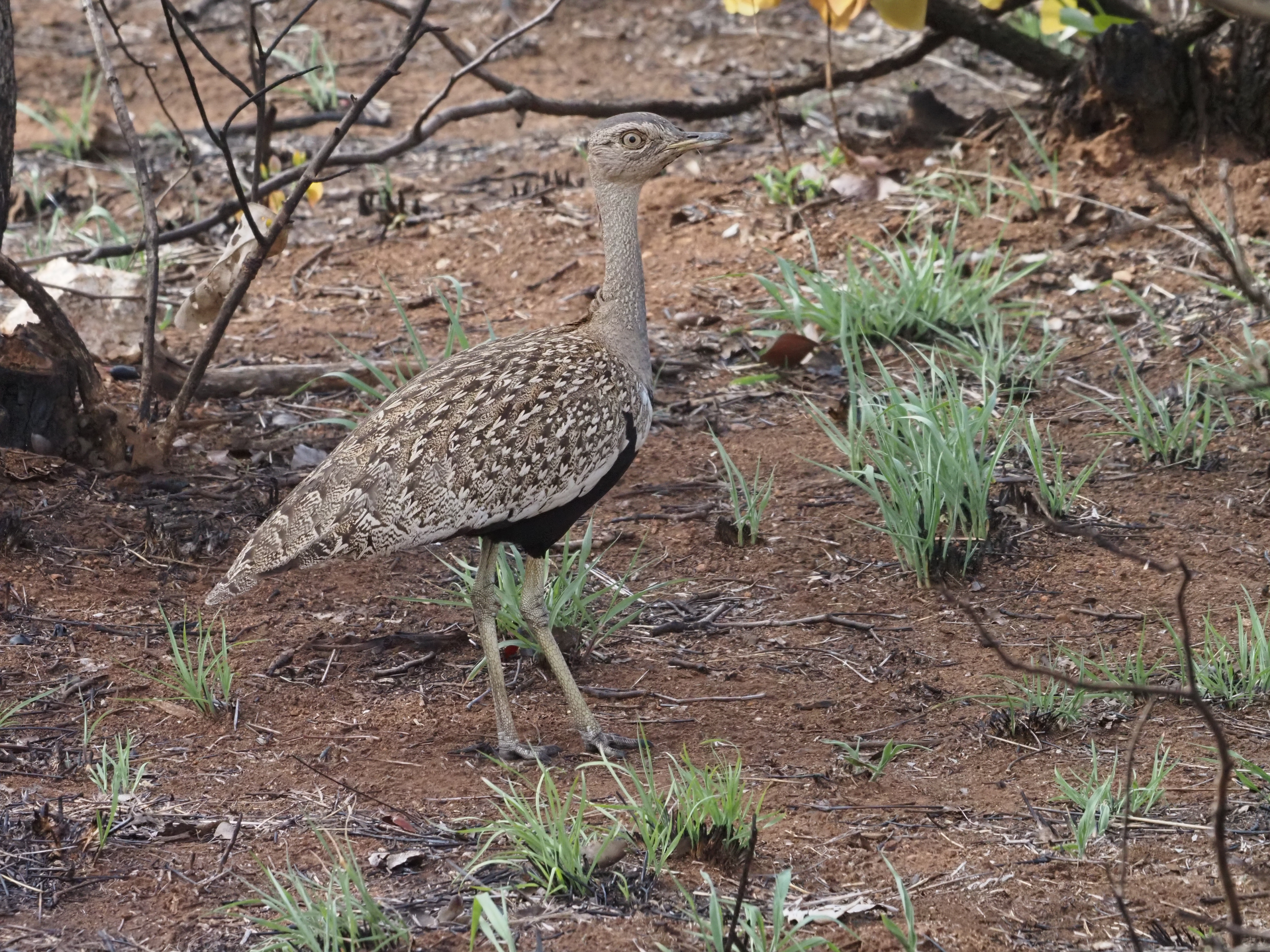
This day was basically devoted to contact with some grassland specialists. The day was calm and sunny, and it looked like full of activity. The first hour of the day produced good views on Kori Bustard, but also on Flappet & Rufous-napped Larks plus several Zitting Cisticolas. But today was one of the longest transfers in the tour, and so we kept moving South, enjoying several of the common birds in the area but also nice views on Southern Ground Hornbills. A lovely bird hide produced good views on Striated Herons but also on the fists Brown-crowned Tchagras and Brubrus of the tour. Black-crowned Night Heron was also a good adding to our list! Another good stop was made to check some raptors in the sky. Beyond the common Walhberg’s Eagles, we got also good views on a Martial Eagle that was unnoticed by the tour leaders as we were checking the many swifts and swallows in the sky.. It was a mistake, and who found the eagle could not resist to remind us about for the next ten days 🙂
Not far from our final destination, a large parade of Elephants gave us the change to contact with the only 2 Bennett’s Woodpeckers of the tour! By the time that we arrived to our accommodation is was windy and cold. But a short walk around the Skukuza Camp still produced some goodies including White-browed Robin Chat, the first Sombre Greenbul of the trip, Black-collared Barbet, Red-faced Mousebirds, Green-backed Camaroptera, and Little Sparrowhawk.
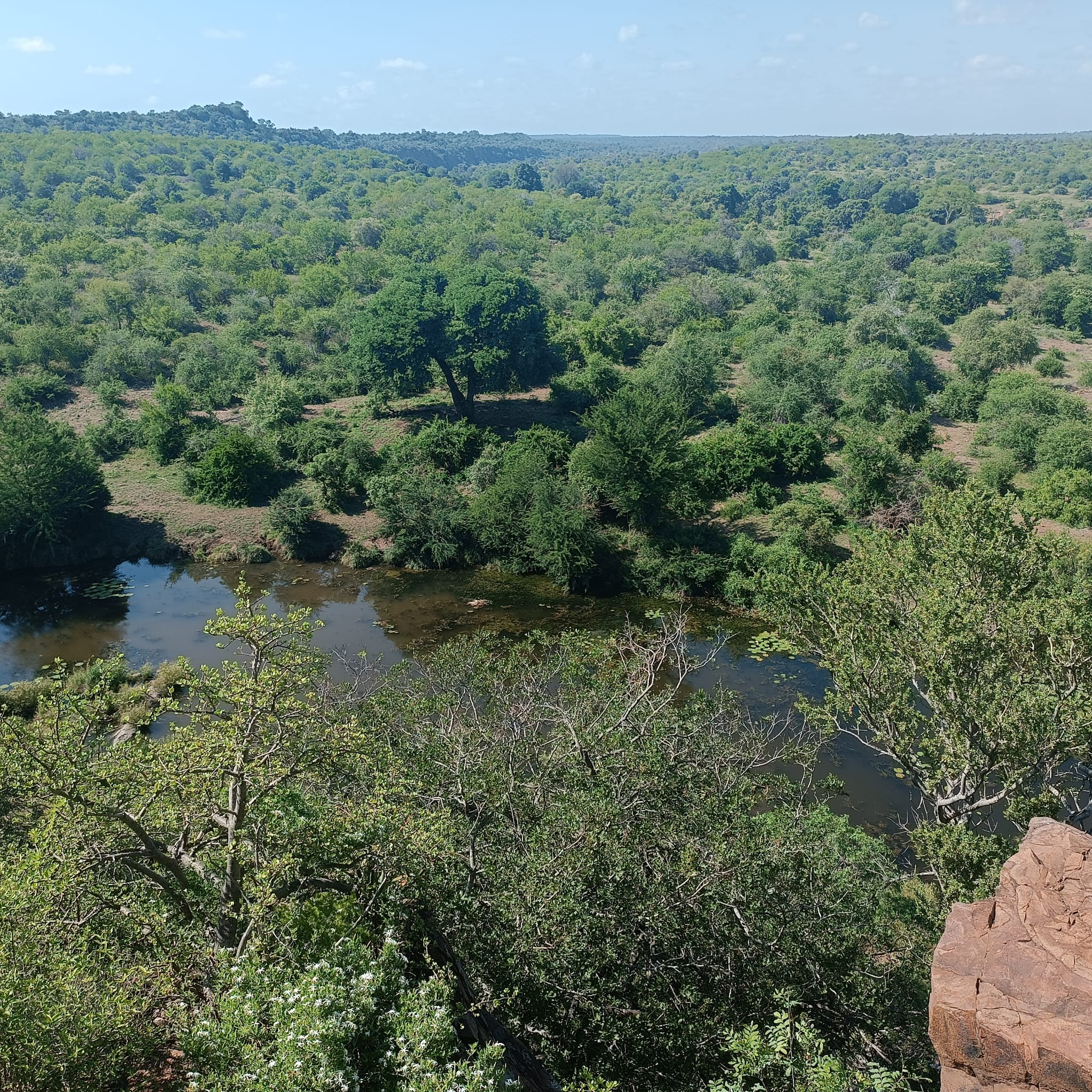
A very impressive way to start any day! Image by tour participant Joan Barat.One of three males seen before breakfast.All along Kruger there are a number of wonderful lookouts. Lilac-breasted Roller (Coracias caudatus), a really common view in the woodlandsBlack Scimitarbill (Rhinopomastus aterrimus)A superb shot on a Hamerkop (Scopus umbretta) about to shallow a small fish. Image by tour participant Joan Barat.Brubru (Nialus afer)Secretarybird (Sagittarius serpentarius) patrolling its hunting territory.Wahlberg’s Eagle (Aquila wahlbergi), the commonest eagle in the area.Namaqua Dove (Oena capensis) Southern Black Tit (Melaniparus niger)Black-collared Barbet (Lybius torquatus)This Little Sparrowhawk (Accipiter minullus) appeared in our camp almost at dawn.
Day 7. Our morning around Skukuza was marked by the strong wind. Temperatures were low, with a maximum of only 18ºC, but most of the day was below 15ºC. Our morning game drive was not extremely productive, but we still got good views on the always wonderful Violet-eared Waxbill. Black Scimitarbill, Crested Francolin and Brubru were other interesting sight before having one of the top sights of the trip. Along the morning we also got the only large parck of Cape Buffalos that we got inside the Kruger National Park, and we got lucky that they were joined by some Yellow-billed Oxpeckers, a species that has recently colonised the area from the North.
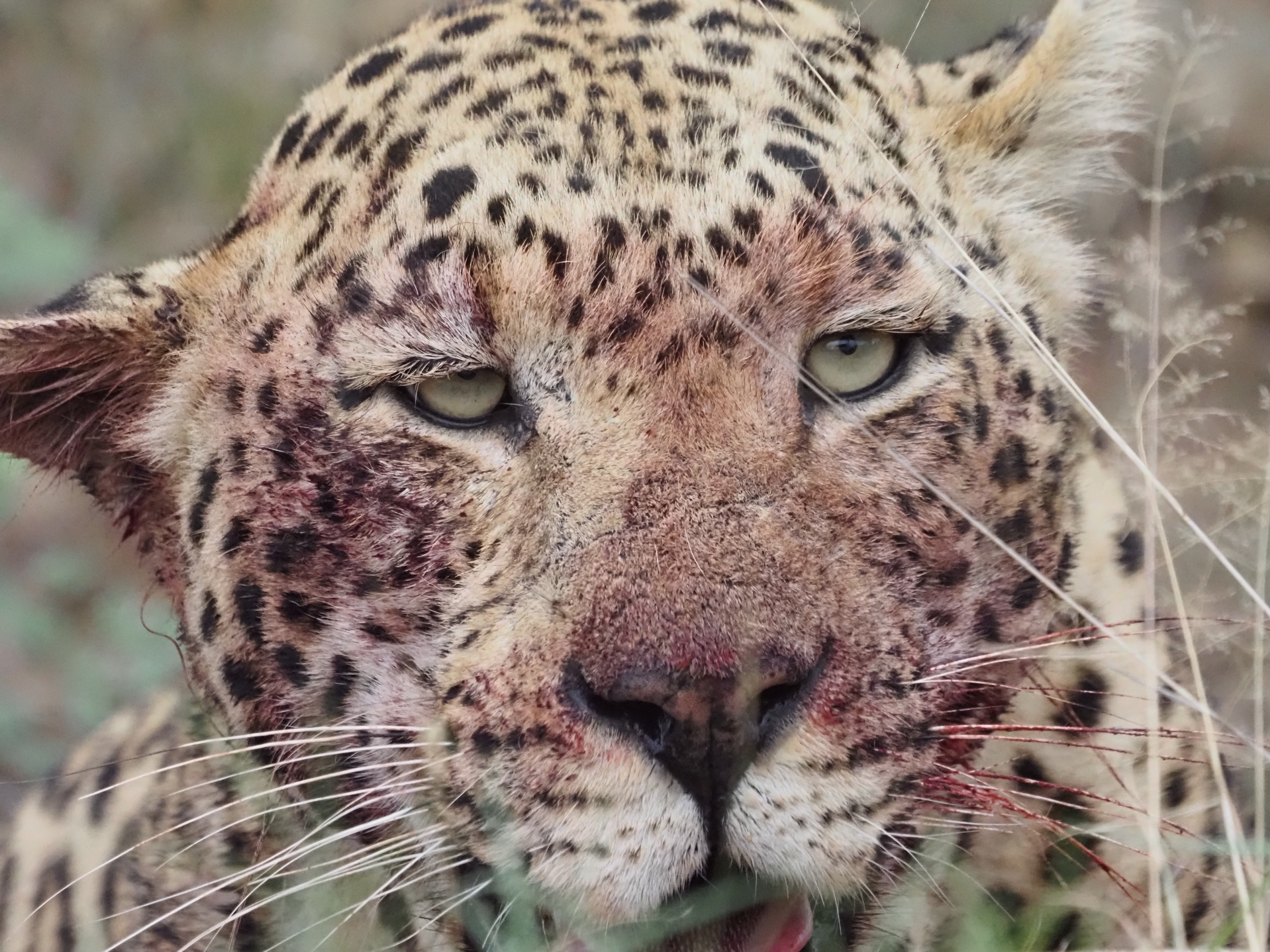
A massive Leopard male was sitting by a track. When we arrived, there 4 other cars enjoying the views on the big cat. It is not surprising to see Leopards right by the road, but we had a quite extraordinary bonus track. Only a few moments after we arrived, two Warthogs were seen running away, tails up only a few metres away from the Leopard. In between, a small collector of rain was under the road. The small pipe was not of major interest, bu suddenly the Leopard when inside the pipe, and screams came out of the pipe. It was clear that a small Warthog was inside. During the next minute we had a full cacophony of screams, slugs and snarls, ending in a complete silence. It was obvious than the fight was off, and Leopard was enjoying the meal inside the pipe. We decided to wait a bit longer, and after 40 minutes of wait only 2 cars were there. At the end, the massive male came out of the pipe full of blood and with evident wounds. For the next 10 minutes, we enjoyed great views on the cat, only 4 metres away from the van. It was exhausted and dirty, but became one of the most extraordinary mammal sights during the tour.
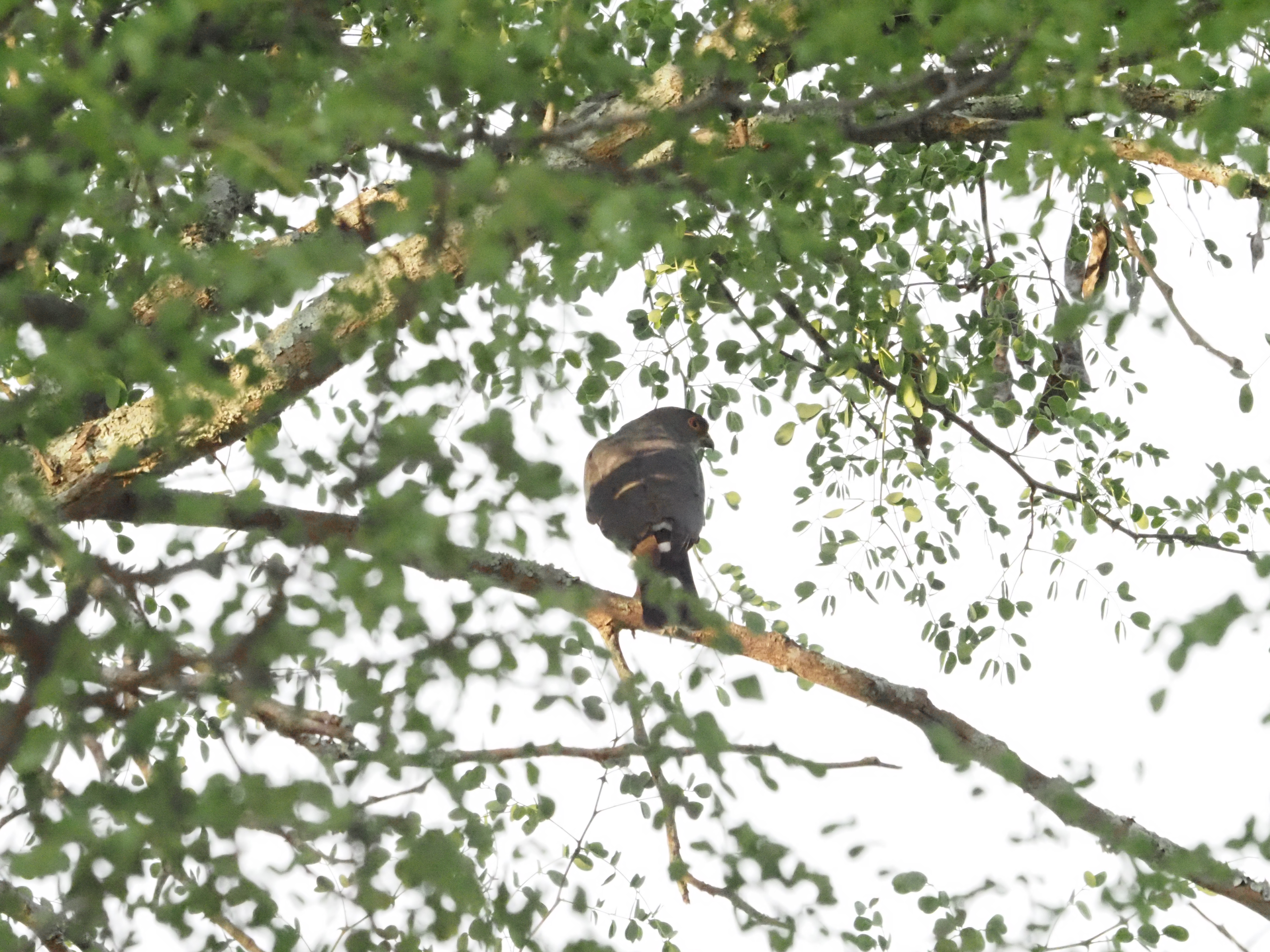
In the afternoon we stayed in the lodge. It was really windy and cold, so we decided to work some specialties in the area. We were lucky and we had great views on Bearded Scrub Robin, Red-chested Cuckoo, African Green Pigeon and African Goshawk, that was new for the trip.
The always impressive Southern Ground Hornbill (Bucorvus leadveateri)Blue Waxbill (Uraeginthus angolensis)This massive male Leopard (Panthera pardus) gave us some impressive views right after killing a Warthog. A very tame Bearded Scrub Robin (Cercotrichas quadrivirgata) right by our vehicle.Violet-backed Starling (Cinnyricinclus leucogaster)
Day 8. During this day, the temperature started a long collapse, ending the day with only 6ºC, very cloudy sky and poor light. But the morning started sunny and uite warm, and our transfer South produced a long list of goodies. Even before leaving our lodge we enjoyed some Trumpeter Hornbills, and during the morning a number of stops produced great views on a number of goodies. Black Cuckoo but also the often elusive Grey-headed Bushshrike and Bearded Woodpecker were all new for the trip, and Bearded Scrub Robin and Southern Black Tits offered great looks. Our brunch stop offered far away views on 4 African Skimmers but, in addition, we got the first Terrestrial Brownbuls and Southern Boubou of the trip plus obliging Chinspot Batis, Cardinal Woodpecker, Scarlet-chested Sunbird and Grey-tit Flycatcher. As the day advanced, the weather became more colder and windy. A fast stop was made in a lodge in our way to add Crowned Hornbill and Lesser Honeyguide, but after this the bird activity declined and as we approached the limit of the park. It was 15:00 but the light was already limited. Here decided to explore some ponds immediately outside Kruger National Park. In our way out, female Lion and Leopard crossed the road only 300 metres away from each other!
Despite the cloudy weather it became really productive, as we got the first White-backed Ducks and African Swamphens of the trip, the only one Allen’s Gallinule of the tour and a lovely Buffy Pipit walking in front of the van. Other interesting species here included Collared Pratincole (hearts stopped for a while as the bad light conditions made us think on Black-winged Pratincole!), Purple Heron, Grosbeak Weaver and Collared Widowbird.
As we crossed back inside Kruger National Park, a fast final stop was made at the bridge over the Crocodile River. Here we were fascinated by the good variety of birds including Saddle-billed & Holly-necked Storks, Giant Kingfisher, 3 Black-backed Night Herons, 3 Striated Herons but also Wood Sandpipers and Greater Painted Snipe. All of this while Hypopotamus and Bush Elephants were having were hanging around along with some majestic Watterbucks and, of course, Nile Crocodiles.
From here we just covered the short distance to our lodge. In they way, we were lucky to find the first White Rhinoceros of the trip, but unfortunately we only got great views on its but. Once in the lodge, we scanned for some birds, but the very low temperature made not possible and the only interesting bird seen was a Black-headed Oriole and a flock of Red-billed Oxpeckers coming to roost in a dead tree.
Nile Crocodile (Crocodylus niloticus)Gorgeous Bushshrike (Telophorus viridis) well hidden inside a thicket.Red-faced Cisticola (Cisticola erythrops) inhabits dense thickets, often near water.Brown-crowned Tchagra (Tchagra australis).Southern Boubou (Laniarius ferrugineus), another great endemic for the list of the tour!Chinspot Batis (Batis molitor)Trumpeter Hornbill (Bycanistes bucinator).
Day 9. A cold and rainy day. This day we left Kruger behind to start the most exciting part of the tour. Our way to Wakkestroof was cold and rainy, and we had little chances for birding.
Still, the plains around Wakkestroof are always providing good surprises and a number of short stops provided us with the only Greater Flamingoes of the trip along with Red-knobbed Coots and Southern Pochards. Here Red-capped Larks were common, and along with them we had several Southern Ant-eating Chat, Spike-heeled Lark, 2 lovely Blue Korhaans that flew off very close from the road, some distant flocks of Blue Cranes, a memorable Lanner Falcon, and Carmine did again to find the only one Black-winged Lapwing of the trip!
Getting close to Wakkerstroof, the fields start to become smaller and more hilly, and here is where we saw 2 of the very few Springboks of the trip along with Jackal Buzzard under the rain.
Before going to our accommodation to look for shelter of the rain, we had a brief stop in a large lagoon South of Wakkerstroof. Here we had excellent views on African Snipes while feeding in the out along with Squacco & Purple Herons and several African Swamphens.
Black-winged Kite (Elanus caeruleus)Lanner Falcon (Falco biarmicus)Long-tailed Widowbird (Euplectes progne), a very common view around Wakketrof
Day 10. A new early start to explore the amazing plains and hillsides around Wakkestroof. The weather was cloudy but not as cold as the day before, and temperatures went up to 16ºC as the clouds were breaking out during the morning. But the most important is that we had no rain at all. Our very first stop was devoted to explore the wetland immediately South of the town. As the they before, the area was filled with Common Moorhens, some African Swamphens and a few herons, including a lovely adult Purple Heron. Among them, we were lucky to find an African Rail, that provided long views as fed in the out along with Black Crake. Leaving the wetland behind, we faced the grassy hills North of Bakkestroof, in search of some specialties living in the bushland. There we were lucky to contact with the often elusive Bush Blackcap along with the also endemics Drakensberg Prinia, Fiscal Flycatcher, Cape Canary, Cape Grassbird and Bokmakeire. Some Southern Bald Ibis were flying around, and their calls were a nice complement to the sight.
Back to the plains we started looking for some grasslands specialities, and soon we had good scope views on Denhman’s Bustards, but also the common Southern Ant-eating Chat. A fast stop was necessary to admire the often secretive Coqui Francolin feeding and walking in the grasslands, and not far from there we had good views with the scarce Orange-bellied Waxbills feeding in the short grass along with the much commoner Cape Longclaws. White-bellied Bustards, with an endemic (an endangered) race in Southern Africa, proved harder to find in the grasslands, but our perseverance was granted with excellent views on 2 males moving together only a few meters away from our vehicle..
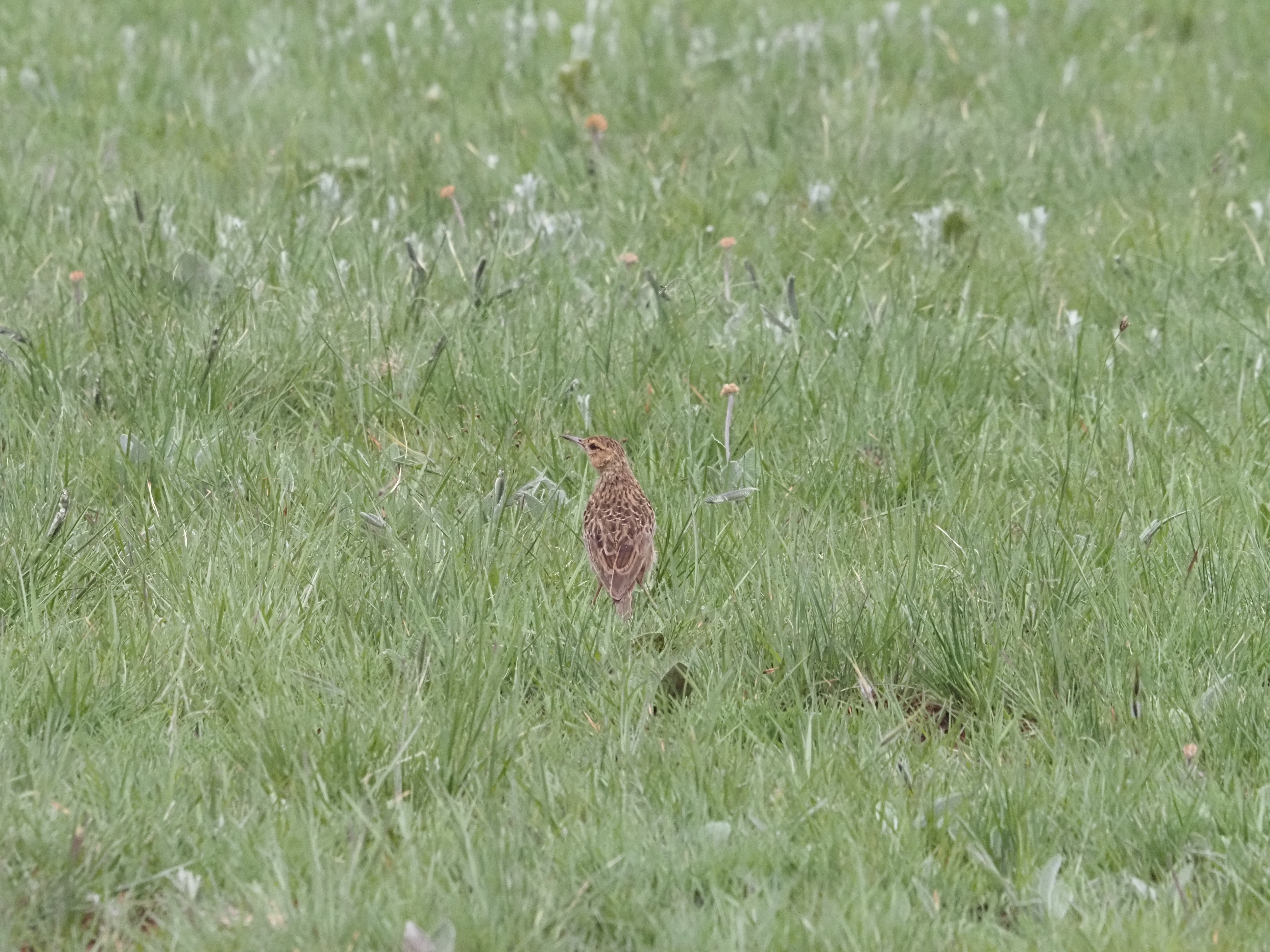
We enjoyed our brunch by a bridge hosting a colony of South African Cliff Swallows. Our itinerary through the amazing hillsides around Wakkerstroom went on, and a new stop was made by a rocky outcrop, where we enjoyed really good looks on both African Rock & Nicholson’s Pipits. Only a few hundred of metres beyond we were walking through one of the very last known spots for the very rare Rudd’s Lark. Here, the local knowledge was essential to locate one of this scarcities, and the whole group enjoyed solid views on one bird as it was feeding in the short grass of the hill side. In our way down, we enjoyed good views on both Wing-snapping and the uncommon Pale-crowned Cisticolas along with the commoner Cape Longclaw and Red-capped Lark. A further short walk in the area also produced other interesting specialities such as Sentinel Rock Thrush, Eastern Long-billed Lark and the often elusive Yellow-breasted Pipit.
Coqui Francolin (Peliperdix coqui), a shy inhabitant of heterogenous grasslands.Southern Anteater Chat (Myrmecocichla formicivora)Southern Bald Ibis (Geronticus calvus)Part of our group in their way to the Rudd’s Lark place.Rudd’s Lark (Heteromirafra ruddi). Excuses the poor quality. We never went close to avoid any disturbanceSpike-heeled Lark (Chersomanes albofasciata)
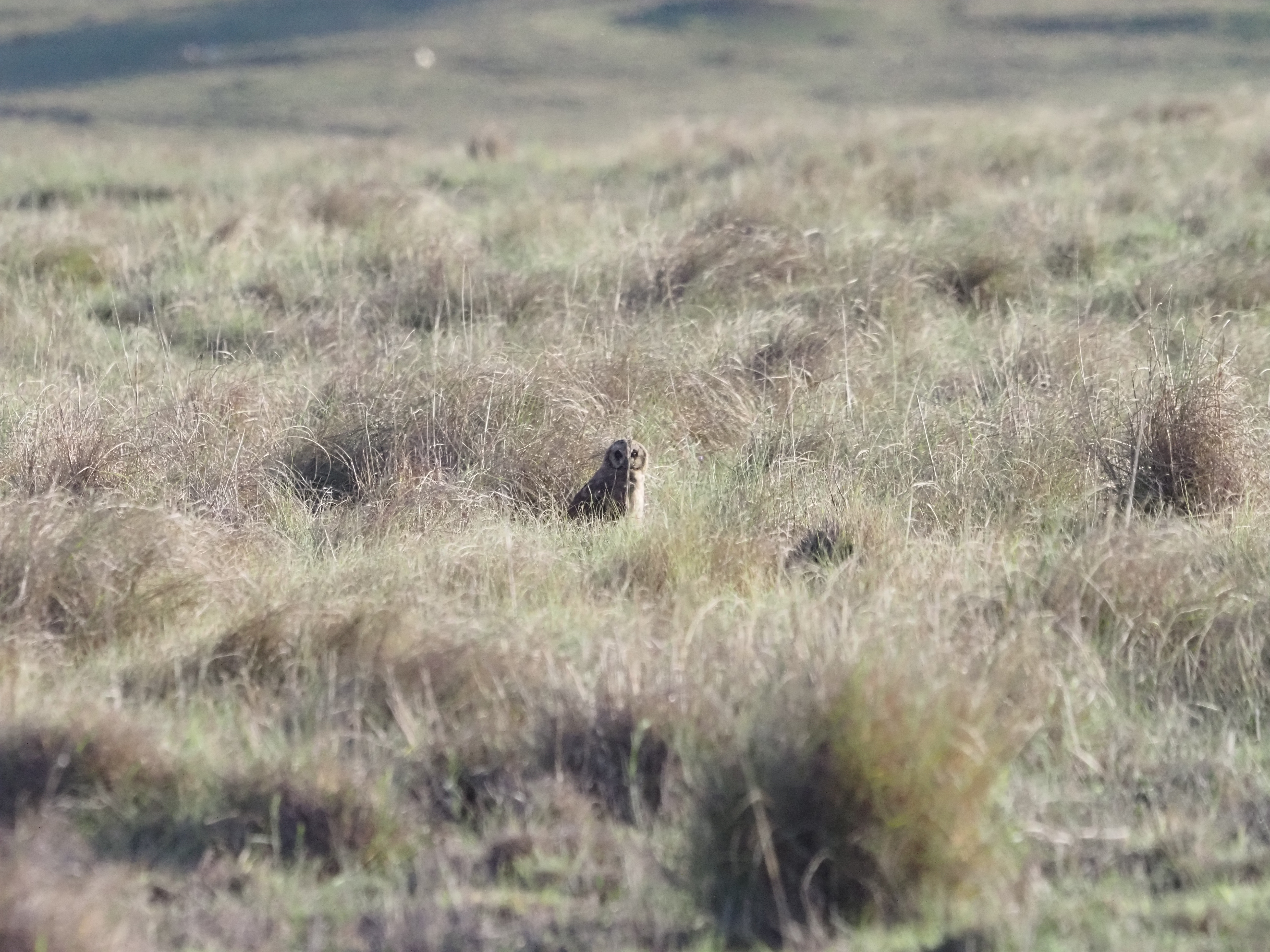
Leaving the hills, we came down to the plains to spend some time in a number of fields. Again some scanning was required was our dedication was granted with good views on Pink-billed & Eastern Clapper Larks. Here we also had 3 Blue Korhaans and 5 Greater Kestrels that were chasing the very common African Pipits and Widowbirds in the area. The very last short walk of the day was to check a moist corner of the endless plain, and once more our faith was granted with good looks on at least 4 Marsh Owls that were roosting in the rank vegetation!
But our day was not over yet! Back to town, we had a fast stop by a pond and we were all surprised to hear a Red-chested Flufftail calling quite close! So, we decided to try to see the bird, and less than one minute later we were all astonished to see the bird squeaking out of the vegetation!!! It had three small, fast walks in front of our group, right before disappearing in tall grass! An amazing way to end a very special day around Wakkerstroom..
Day 11. After enjoying a wonderful home made breakfast in our B&B accommodation, we moved out as the mist started to clear out. A mandatory stop in the Bakkerstroom lake was made, and we were granted not only with great views on African Swamphens, Squacco Herons and Lesser Swamp Warblers to name a few, but also with the only one Red-throated Wryneck of the trip. A short walk along the reed bed produced great views on a group of 4 Clawless Otters playing and fishing inside the water, and our 2 Red-chested Flufftails started singing as we got inside the vehicle. A wonderful way to say goodbye to Bakkerstroom!
The transfer to Mkuze was smooth, but still quite productive in terms of birds. Temperatures were again going above 20ºC, and the clear, blue sky made us all feel happy. A pair of fast stops produced flying African Harrier-Hawk and Secretary Bird (always great to see them in flight!), Wailing Cisticola and a very unexpected Black Stork!
After having a great lunch in our magnificent lodge around Mkuze, we had a gentle walk around for the rest of the afternoon. It was rather windy, but we still pick up a number of new birds for the trip including Purple-breasted Sunbird, Dark-capped (formerly Forest) Weaver, the very smart Black-throated Wattle-Eye & White-eared Barbet plus wonderful views on Striped Kingfisher, Purple-crested Turaco and Burnt-necked Eremomela.
The often elusive African Snipes (Gallinago nigripennis) provided with several sightings!African Marsh Harrier (Circus ranivorus) patrolling the reedbedsLevaillant’s Cisticola (Cisticola tinniens)Red-throated Wryneck (Jynx ruficollis)Black-throated Wattle-eye (Platysteria peltata)Purple-crested Turaco (Tauraco porphyreolophus)
Day 12. Full morning birding in Mkuze. The morning started fresh and calm, a perfect weather to enjoy birds. Our very first stop was in the outskirts of the Mkuze Reserve, where the lovely indigenous forest provided good views on White-eared Barbet and Yellow-rumped Tinkerbird, while Red-fronted Tinkerbird was new for the trip. Once inside the park we enjoyed Brown-crowned Tchagra and Crested Guineafowl, and a Lesser Spotted Eagle flying over was also new for the trip. Lovely views on Magpie Shrike were added to the list of the day, and fast-flying flock of White-crested Helmetshrikes was a nice complement to the common herds of Impalas and Nyalas. A few yards beyond, a wonderful African Emerald Cuckoo was singing by the road, and we took advantage of this to enjoy some unforgettable views on such a great bird!
A superb African Emerald Cuckoo (Crysococcyx cupreus) was literally waiting for us in an exposed branch. Image by tour participant Joan Barat.
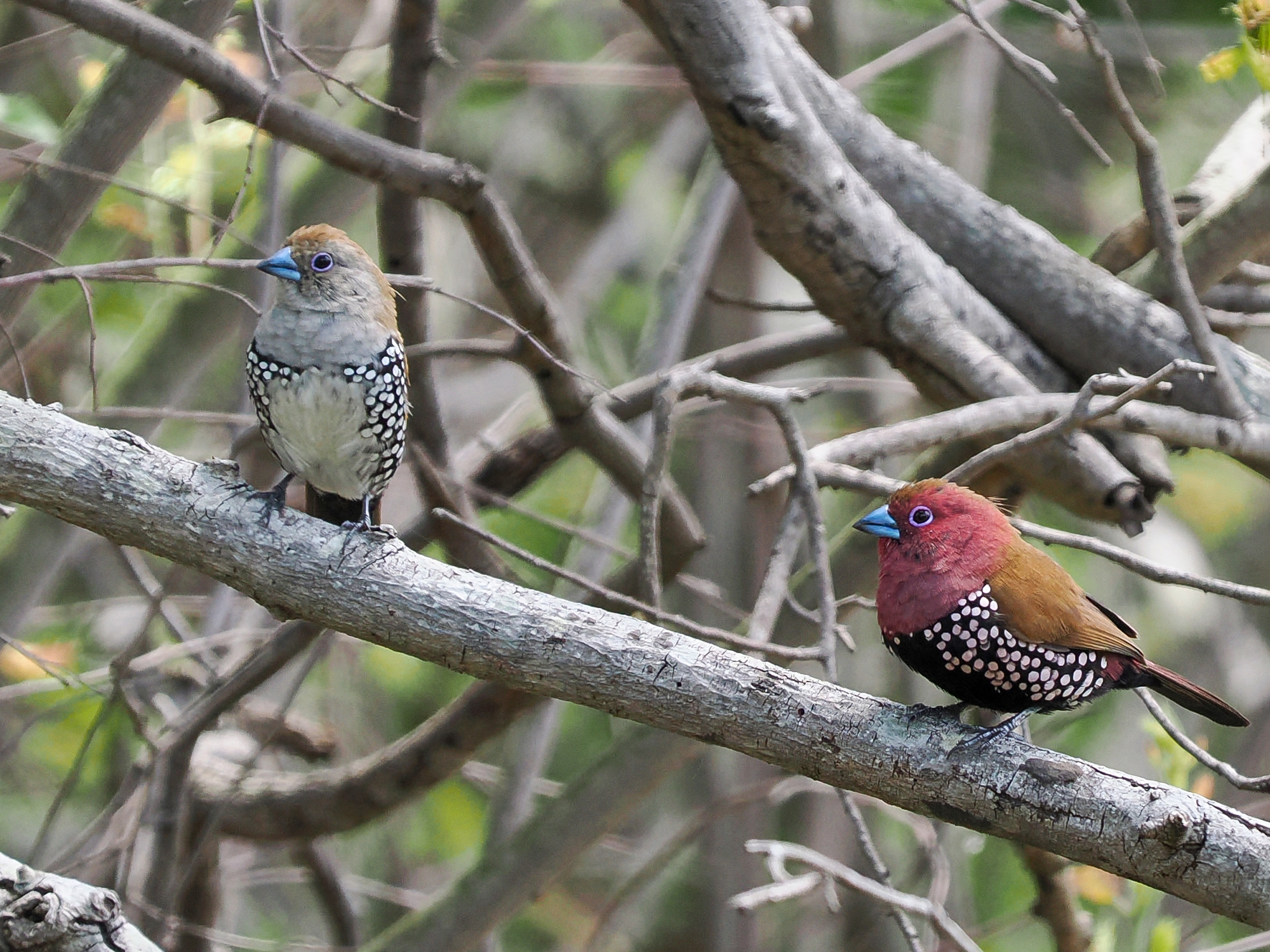
We continued scanning the low vegetation, expecting to find the very elusive Twinspots living here. After very slow driving, a small flock of them started calling in one side of the van. At that point, a massive African Crowned Eagle flew off from a branch only 15 metres away from the van, but our attention was fully concentrated in the dark undergrowth. At our left, an African Broadbill started calling, probably displaying quite close, but our eyes kept looking down in the vegetation. Our perseverance was well rewarded, and only a pair of minutes later a female Pink-throated Twinspot showed out, very low. It was feeding on the ground but, at some point, it jumped up into a branch right in front of our eyes, immediately followed for a wonderful male! The Broadbill looked like singing closer now, but we were still concentrated in these small gems, that were now preening on the branch, only for our eyes (and cameras). This Twinspot is an endemic bird to Southern Africa, with very thin populations, and only found in Southern Mozambique, Eswatini and the North-East of the KwaZulu-Natal province in South Africa. Very happy for this great sight, but the Broadbill was still singing in display, and very close. A short drive of ten metres, and some manoeuvre and a wonderful African Broadbill was displaying right to our window! The bird, that normally displays high in the canopies, was singing and performing only 2 metres high, and probably less than 10 metres from the car! For the next 5 minutes, we all enjoyed a memorable moment of our lives. Some extra manoeuvre was necessary so every side of the van could have a proper view on the bird, and the Broadbill stole the show for some extra minutes!
Pink-throated Twinspot (Hypargus margaritatus) gave our group a superb sight. Image by tour participant Joan Barat.
After such a ecstatic moment, we arrived to our breakfast spot, a lovely pond with a hide. Beyond 2 Leopard Turtles drinking water, really few was on the pond, but the bushland nearby was different. Here we got excellent looks on Rudd’s Apalis, Neergaard’s Sunbird, Acacia Pied Barbet and a rather unexpected Yellow-breasted Bush Petronia, all of them new for the tour! Once our breakfast was enjoyed, we went out of the Nature Reserve to look for some birds living in the riverside forest. It didn’t take long to find a lovely Green Malkoha singing high in the trees, and our walk around produced several Trumpeter Hornbills and the only one Scaly-throated Honeyguide of the trip. But everything came down the frame when a superb Pel’s Fishing Owl came our from the deepest part of the forest, and stop for only a pair of seconds in the canopy, looking at us with its unforgettable eyes! Unfortunately everything happened too fast, and the owl flew off again to be lost in the dense vegetation. We still spend half an hour trying to relocate the bird, but it didn’t happen.. Back to the vehicle, the group celebrated the views on one of the most sought-after targets of the trip!
From here, we were out to explore a number of ponds. It was nice to see good flocks of African Pygmy Geese (probably 50+) but also White-backed Ducks, African Fish Eagle, Malachite Kingfisher,Caspian Tern and a lovely male Greater Painted Snipe (the third of the trip!) along with Curlew Sandpiper, Hottentot Teal, Goliath Heron and several more.
Our last stop before the wind came strong, was to explore a lovely plain of short grass. Here we got great views on several Senegal Lapwings but also African Spoonbills, African Jacanas and the only one Black Egret of the trip!
Day 13. After a short stroll in the gardens of our accommodation, we headed to the coast to spend the morning in iSimangaliso Wetland Park. Here we were surprised by the good number of White-backed Ducks and African Jacanas. The many small ponds along our way had every one its own Long-tailed Cormorant, many times joined by Intermediate Egret (the African form of this heron has been recently renamed as Yellow-billed Heron as the species has been split into 4 different species). A pair of Black-chested Snake Eagle was patrolling the coastal plains, and small flocks of Collared Pratincole were in their way to the bigger ponds. A pair of Red-winged Cisticolas provided us with good views right before we step on a Lesser Moorhen feeding right by the tarmac lane! To find this South African rarity, we were kindly directed by a lovely pair of common birdwatchers. Greetings to them!
A bit beyond, a new South African scarcity was waiting for us: a Rufous-bellied Heron was feeding in a rather distant corner of a pond. We kept driving along the Park with good views on Waterbucks before stopping in one of the many lookouts along the way. Here it is possible to do a short walk, a nice way to stretch our legs that was granted with really close views on the very elusive Brown Scrub Robin and a fast but solid view on 1 Southern Banded Snake Eagle while Narina Trogon and Rudd’s Apalis were calling nearby.
The often shy Brown Scrub Robin (Cercotrichas signata) did a pair of gentle walk on the tarmac for our group! Image by tour participant Joan Barat.
After such a great stop, we just drove out the Park, but before we had a rather unexpected stop, since a White Rhinoceros was feeding 100 metres away from the main lane, and we all enjoyed good views on this peaceful, endangered giant!
A lovely lunch by the beach was an excellent introduction for the last stop of the day. It was already a windy afternoon, but this was not going to stop us. Since September, a Saunder’s Tern had been staying in a river mouth close to Saint Lucia, and we were determined to add such a mega to the list of the tour. Some walk in the beach was required, and once agreed with all the tour participants, we walk down to the beach to look for the bird. Soon, we were contacting with some White-fronted Plovers, LesserCrested Terns and Grey Plovers. 3 African Oystercatchers were fiding in the beach along with Sanderlings and some Little Terns were resting on the beach along with other species. We scanned once and over, but the bird was not there. The wind peaked up, and the sand was heating us even stronger. But every dot of sand in our shoes was worth it when the Saunder’s Tern appeared flying over the Lesser Crested Terns, and stop next to them, allowing everybody in our small group to have great views on this great rarity for the country!
Happy with this unexpected adding, we came back to our accommodation to enjoy some rest and a very nice dinner.
White-backed Duck (Thalassornis leuconotus)This unexpected subadult Lesser Moorhen (Paragallinula angulata) was one of the surprises of the day!We considered ourselves very lucky to connect with the very scarce Southern Banded Snake Eagle (Circaetus fasciolatus)Yellow-throated Longclaw (Macronyx croceus)Southern Brown-throated Weaver (Ploceus xanthopterus), a species with a very limited range. Image by tour participant Joan Barat.
Day 14. Early morning walk immediately around our accommodation in Saint Lucia. The wind went off, allowing us a great morning of birding where we enjoyed some of the specialties living in the area including Grey Sunbird, Red-capped Robin Chat and the lovely Woodwart’s Batis. An African Cuckoo-Hawk briefly appeared up in the canopy, allowing us short but good views, and the localised Green Twinspot also appeared for us. But the best surprise of the morning walk was a flock of 5 Grey Waxbills showing right in the path in front of us! We could not believe what we saw!! The last but not the last, Livingstone Turaco proved harder than we thought, and didn’t show properly until the very end of the walk.
After breakfast, we spent the rest of the morning in game drive in iSimangaliso Park, where we got the best views on Cape Buffalo during the trip, plus lovely views on Mountain Reedbucks and 4 White Rhinoceros!
From here we just drove South to our next accommodation, arriving a pair of hours before dinner.
During the day we saw 4 different White Rhinoceros (Ceratotherium simum), including this “horned” male. Image by tour participant Joan Barat.Often underrate, Cape Buffalos (Syncerus caffer) are wonderful beasts!Mountain Reedbucks (Redunca fulvorufula) in a serious fightDisa spp. One of the 224 species of Orchid found in Kwazulu-Nalta province.
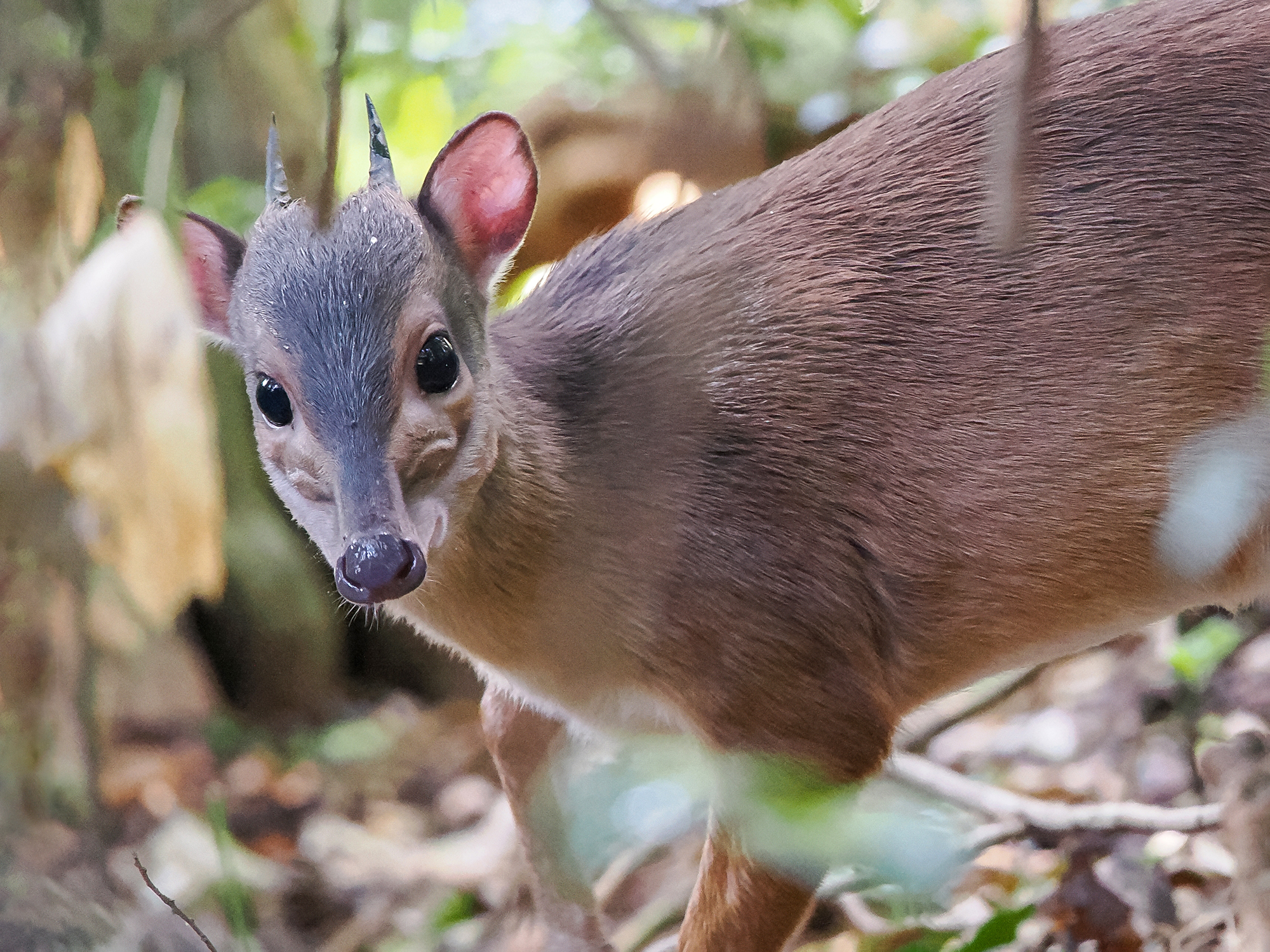
Day 15. Final morning of birding to try to connect with some specialties living around Eshowe. Our first stop was at the Dhinza Forest Parc, a relict area of protected primary forest. Walking along the boardwalk, we were welcomed by some African Olive Pigeons, Little Sparrowhawk and Grey Cuckoochrike catching the first morning light, and as the sun raised we could heard the firsts Eastern Bronze-naped Pigeons singing out of the canopy. It took some minutes, but finally everybody in the group had excellent scope views on the bird. Back to the ground, our local guide fastly connected with one of the very few African Ground Thrushes living in the area. A nervous Lemon Dove showed briefly, but a male Blue Duiker didn’t stole the show and posed for us very long, and only a few metres away, as we were moving out of the reserve.
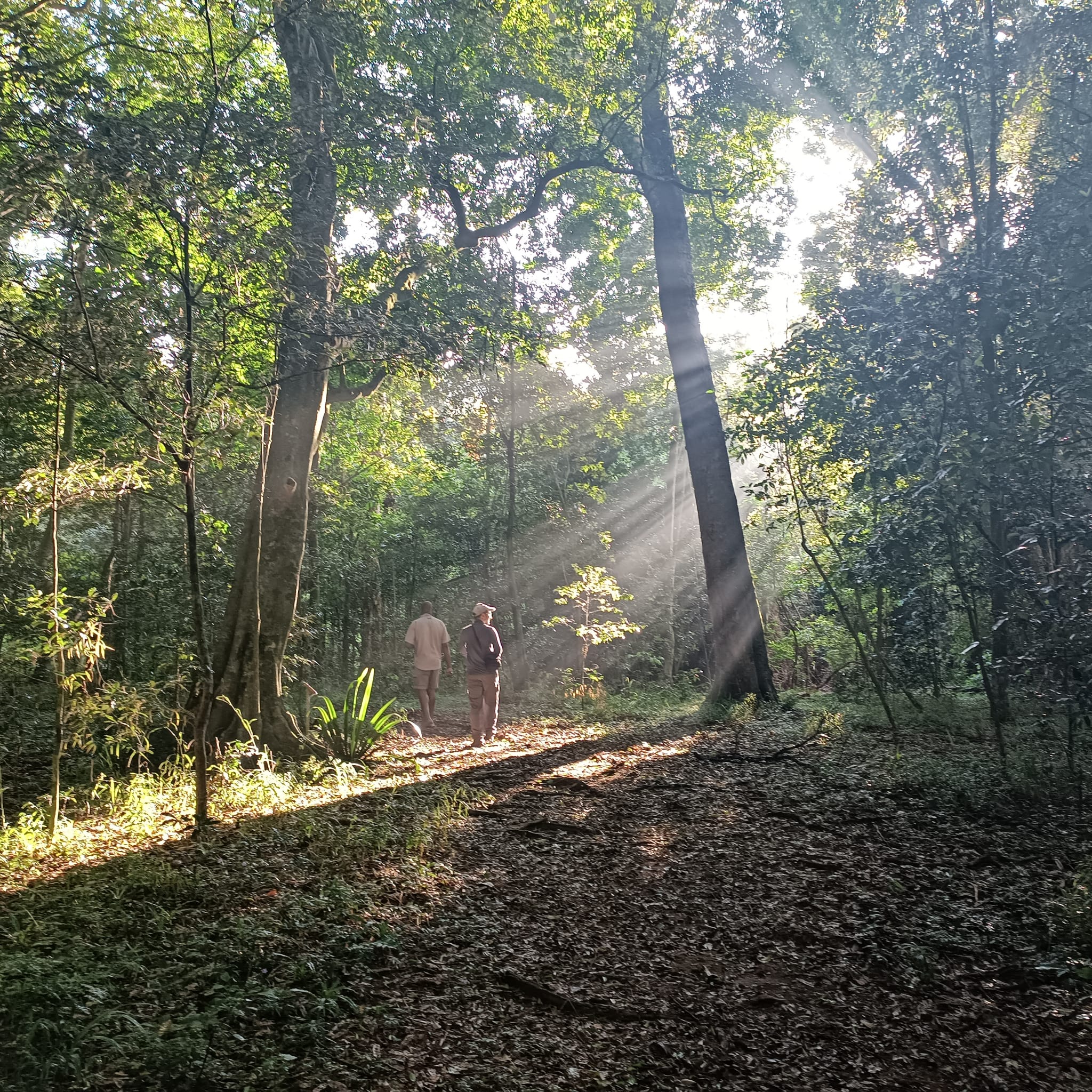
Sun raising at Dinza Forest Reserve. Spotted Ground Thrush (Geokichla guttata) captured while feeding in the forest ground. Image by tour participant Joan Barat.Blue Duiker (Philantomba monticola), a globally threatened species. This male was a nice surprise in our forest walk. Image by tour participant Joan Barat.
From this gorgeous spot, we drove to the very last forest hosting Green Barbet in Southern Africa. In our way, Carmine saw a Buttonquail jumping from the way of the tires, and we took the chance, step out of the car, and everybody in the group had a chance to see the Black-rumped Buttonquail flying away from us.. Great!
Once in the forest, it didn’t take long to see at least 4 of these extremely endangered bird while feeding on figs. We were lucky, since this species can be hard to find!
Back to the prairies, we still had a Martial Eagle flying above the hills, and a pair of Southern Ground Hornbills feeding beside the car. Befores starting heading to the airport, a very last stop allowed us to connect with a Striped Pipit that our local guide kept in the fridge for us. A wonderful way to end the trip!!
The best we could get from the Green Barbets (Stactolaema olivacea) while feeding in the canopyThe amazing primary forest home of the very last Green Barbet population in South Africa.































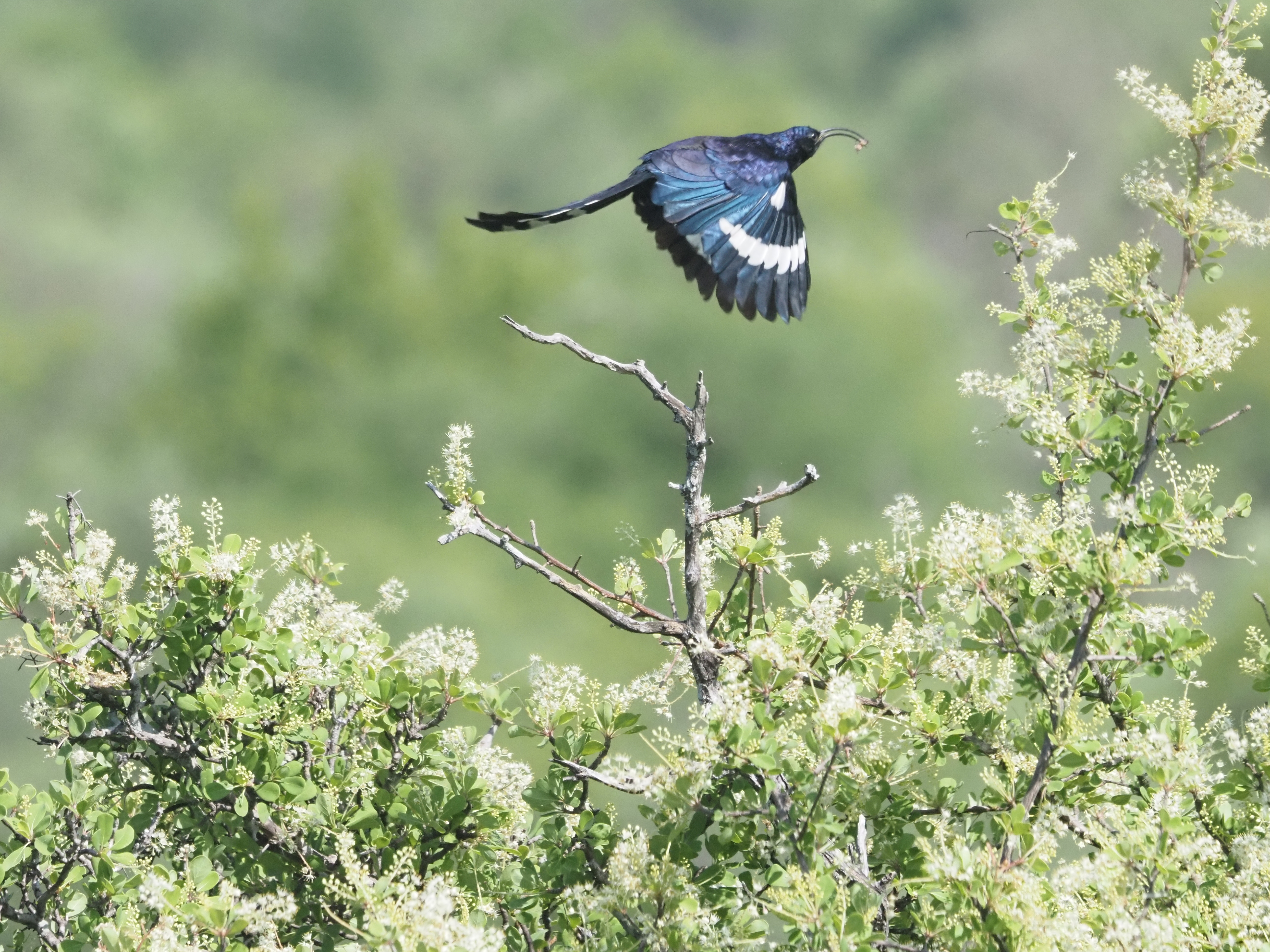


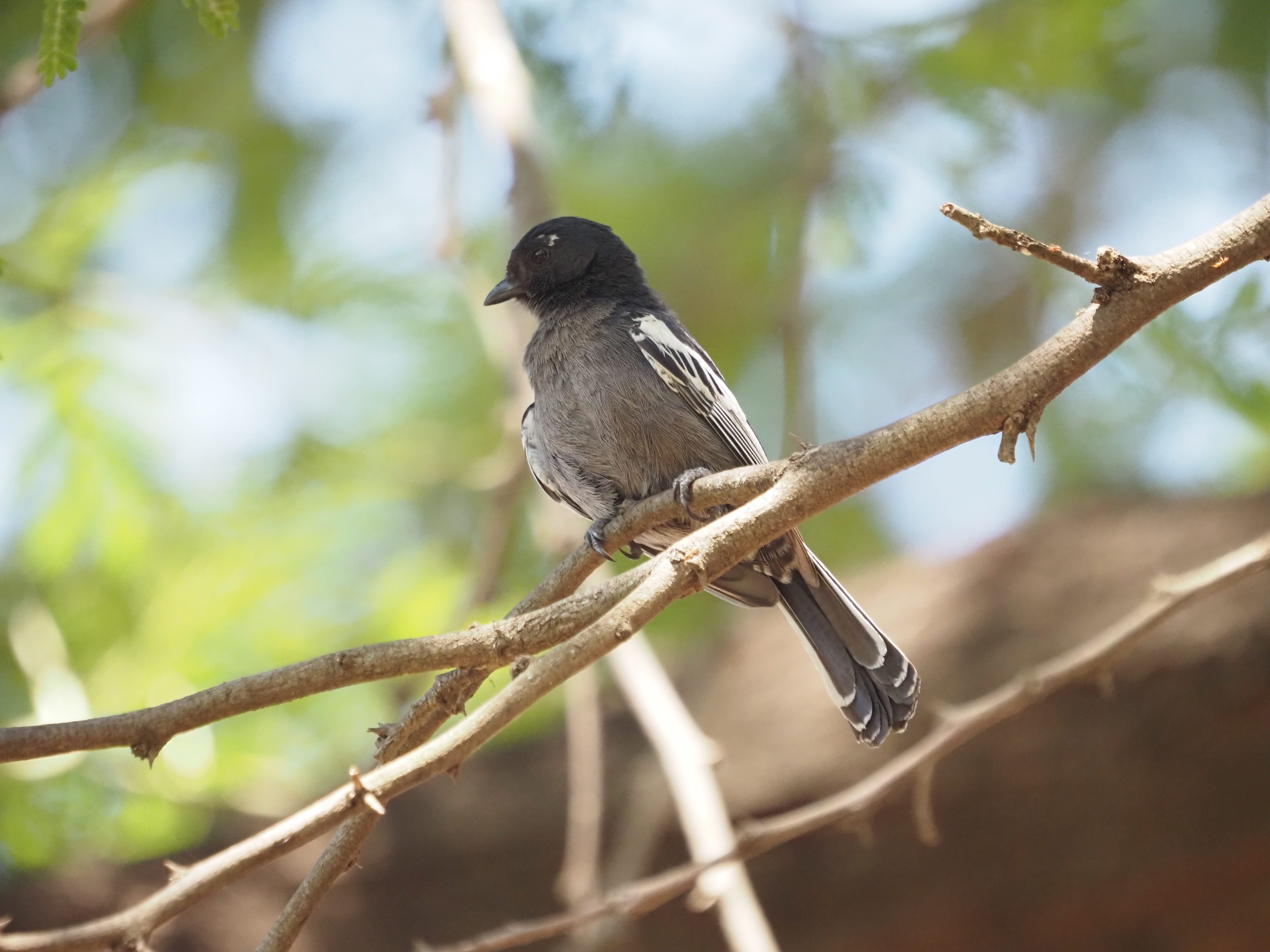



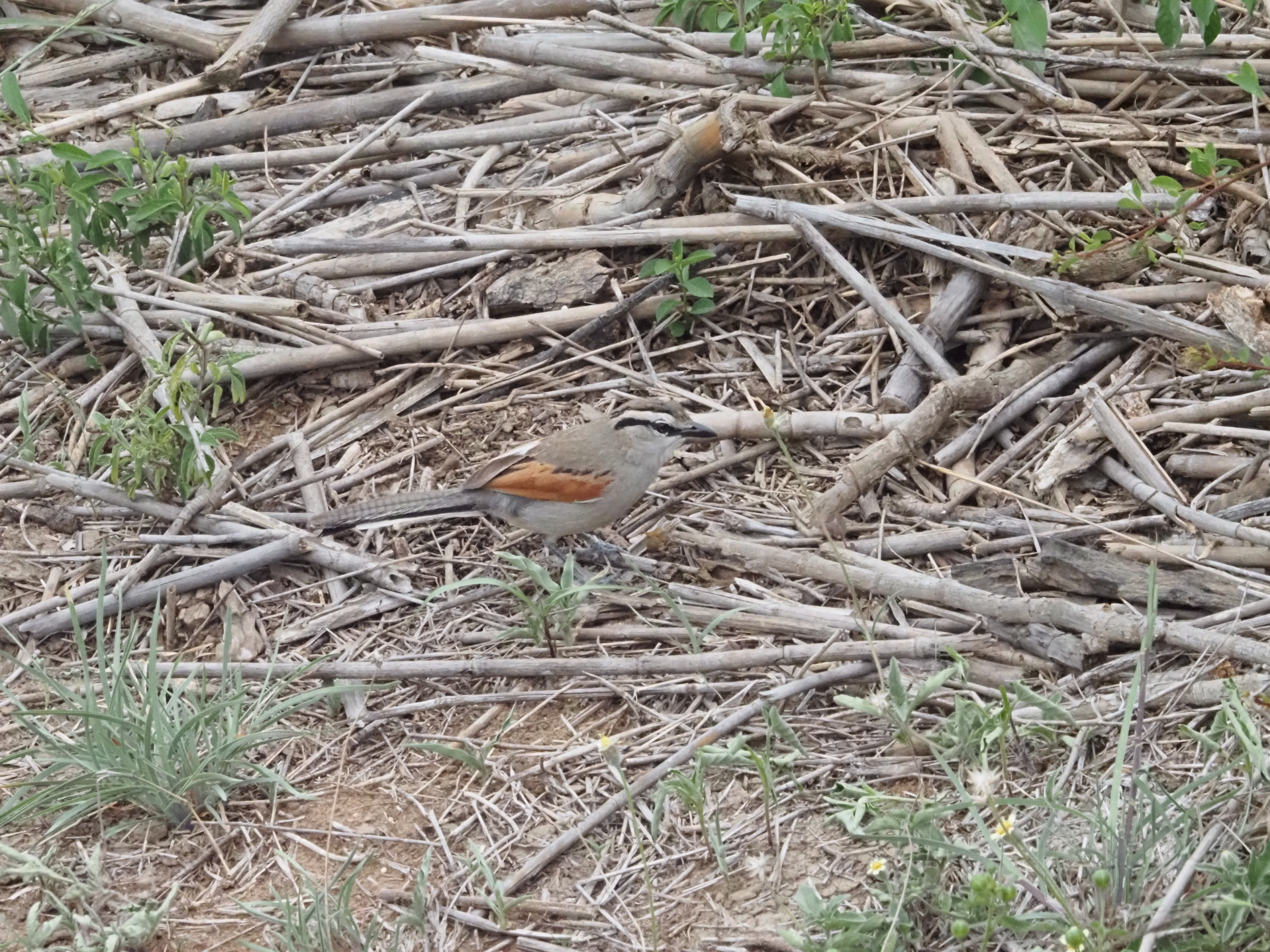

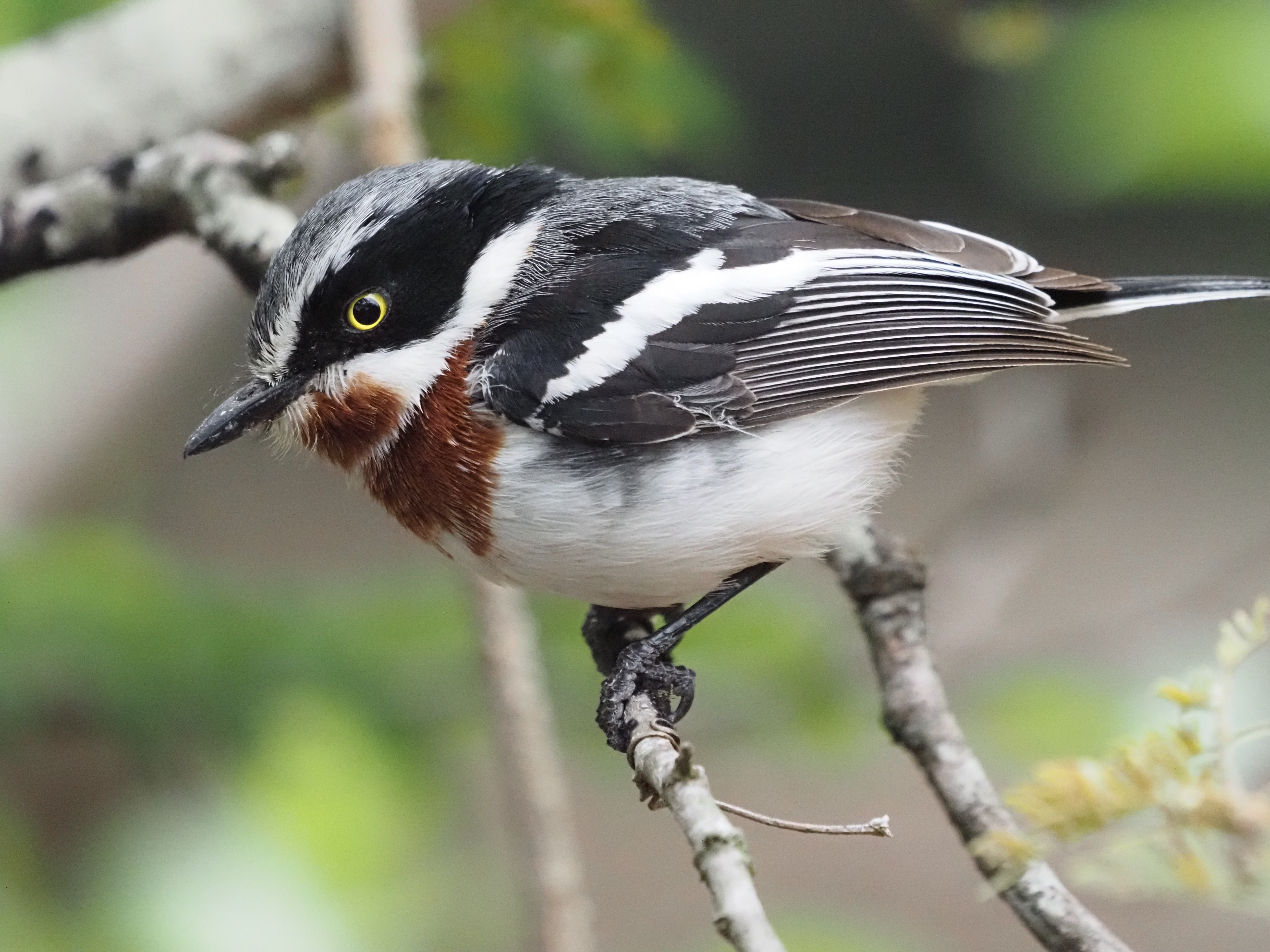
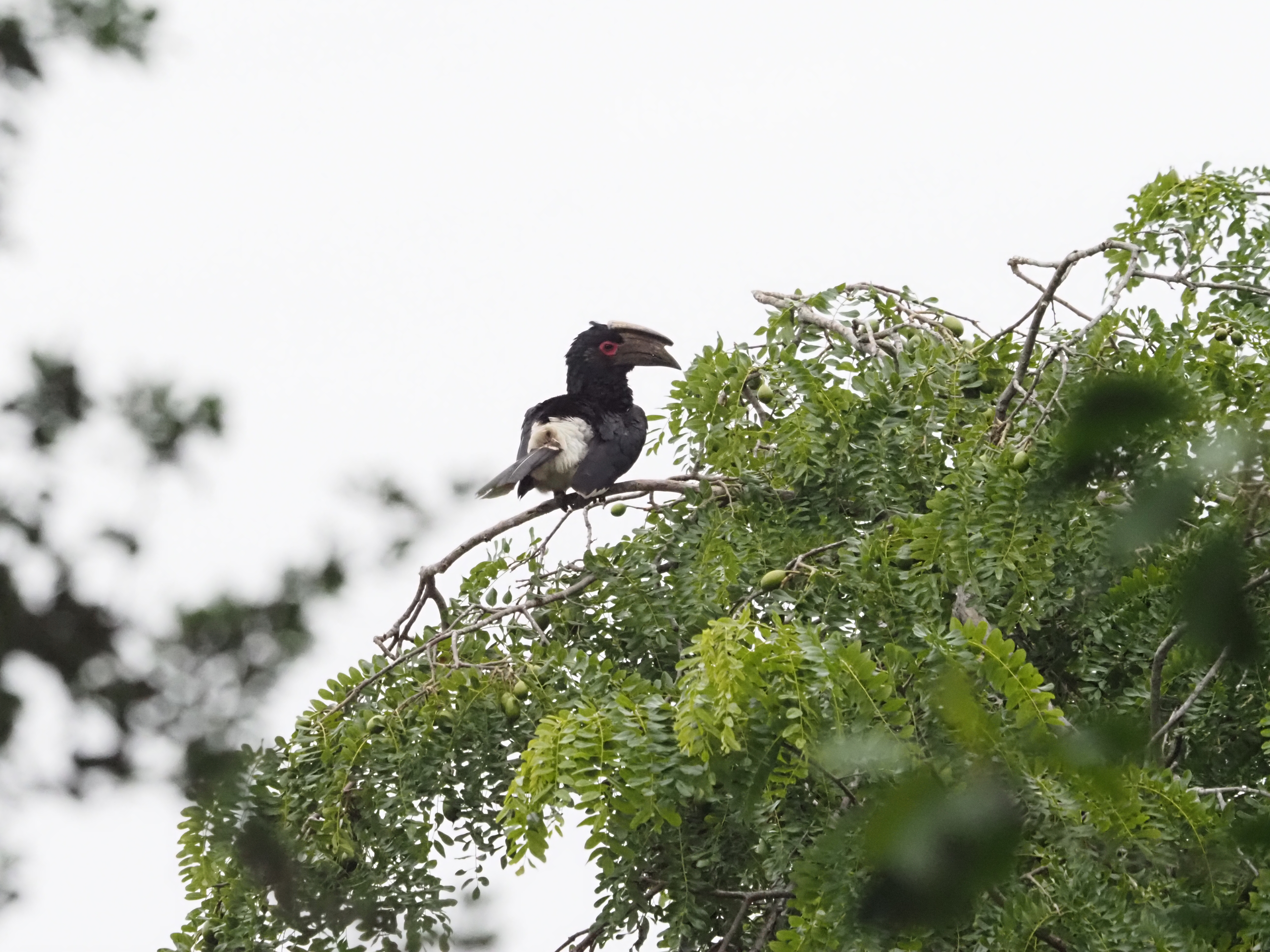

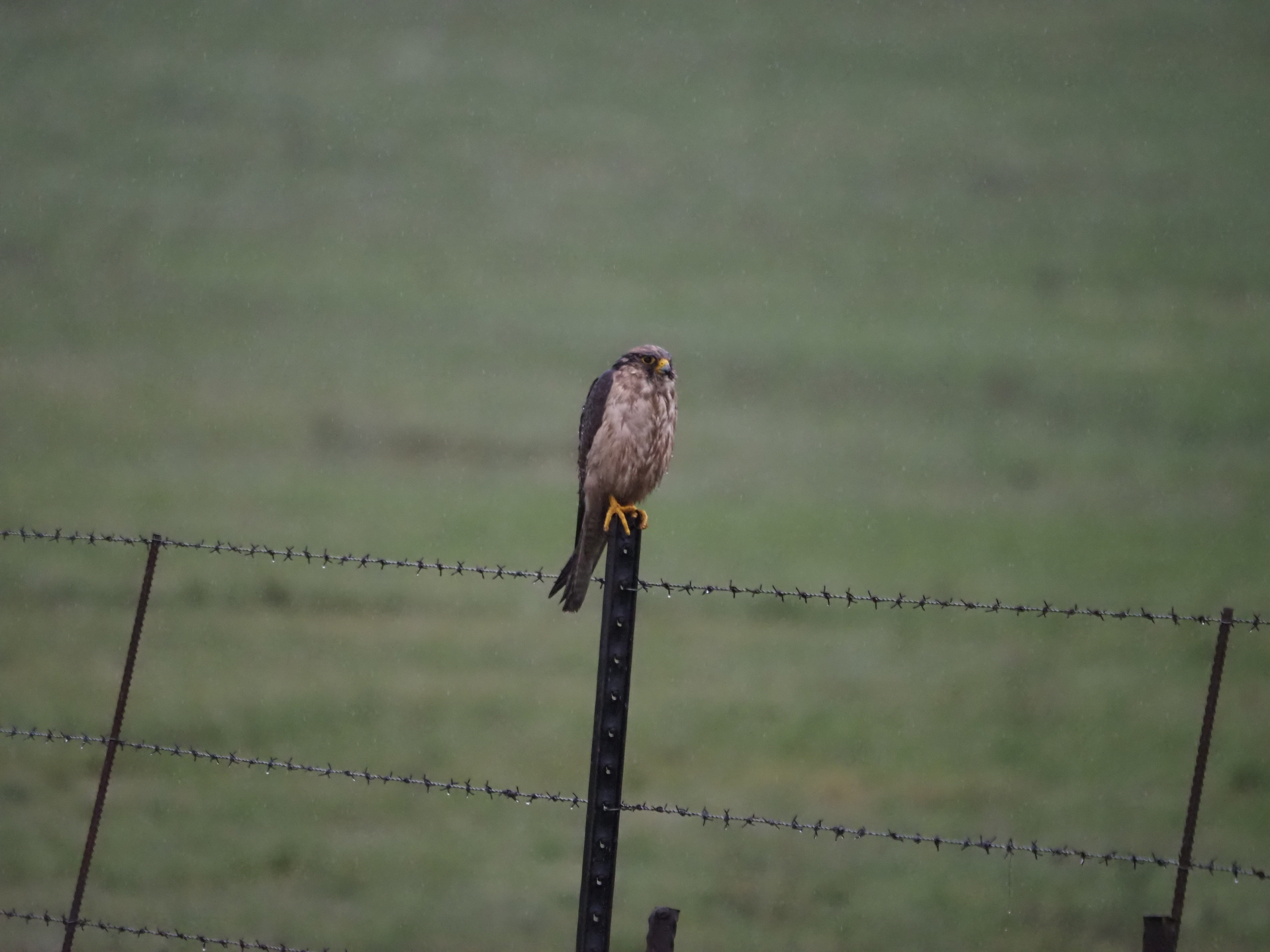















 Barcelona Birding Point Blog