Arxiu d'etiquetes: Birding in Varanger

Finland & Finnmark 2025 Birding Tour Trip Report

  • Dates: May 25th to June 3rd, 2025
  • Tour Participants: 7
  • Number of species seen: 181
  • Tour leader: Carles Oliver

Overview: Our 8th issue exploring Northern Finland & Finnmark was another successful trip. The tour enjoyed mild weather during the first days of the trip, but the last days were cloudy and windy, with temperatures clearly lower than average. The last two days of the trip we got some light rain. In this trip we got nice views on all the species of Grouses and 5 species of Owls. The North of the itinerary was empty of rodents, and this explains the absence of Northern Hawk Owls and Rough-legged Buzzards (only 2 seen). On raptors, this was partially compensated by the occurrence of a male Pallid Harrier the first days of the trip. It was also a low year for Redpolls, and both Mealy and Arctic (now lumped in a single species) were showing in modest numbers.

All images in this trip report by tour leader Carles Oliver. All rights reserved.

Day 1. During the afternoon, all the tour participants are assembling at the Oulu Airport. Meet and greet at the terminal, and once the vehicle is collected we directly drive to our accommodation. After dinner we still have time for some birding, and taking advantage of the good light we had a walk to check in the bay beside our hotel. Here we got the first views on Common Rosefinch of the trip, but also other species including Red-breasted Merganser, Great Crested Grebe, Greenshank, Sedge Warbler and a distant flock of Common Cranes feeding in the bay. A drake Garganey is also very nice pick up, and our list also includes a distant Lesser Black-backed Gull (nominal race) and Common Snipes displaying in the air. After a few more minutes we called a day and come back to our rooms for a short sleep.

Day 2. Very early morning start. After leaving the accommodation with our local guide we go to the woodlands. Here we get a first stop to see a Eurasian Eagle Owl that is roosting along one lane. The Owl didn’t enjoy our company so it went deeper in the forest, we all got very nice scope views. Always a treat!

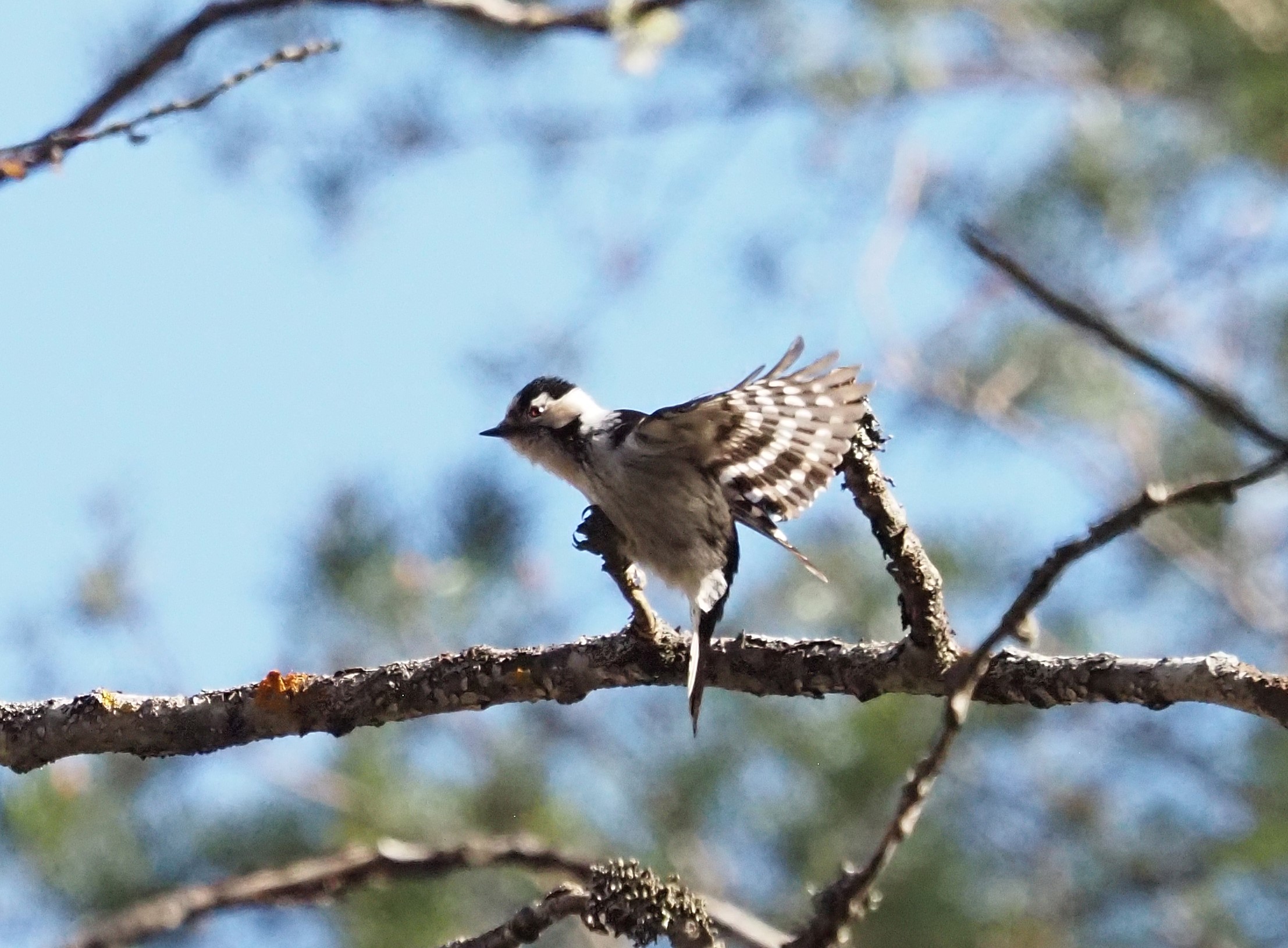
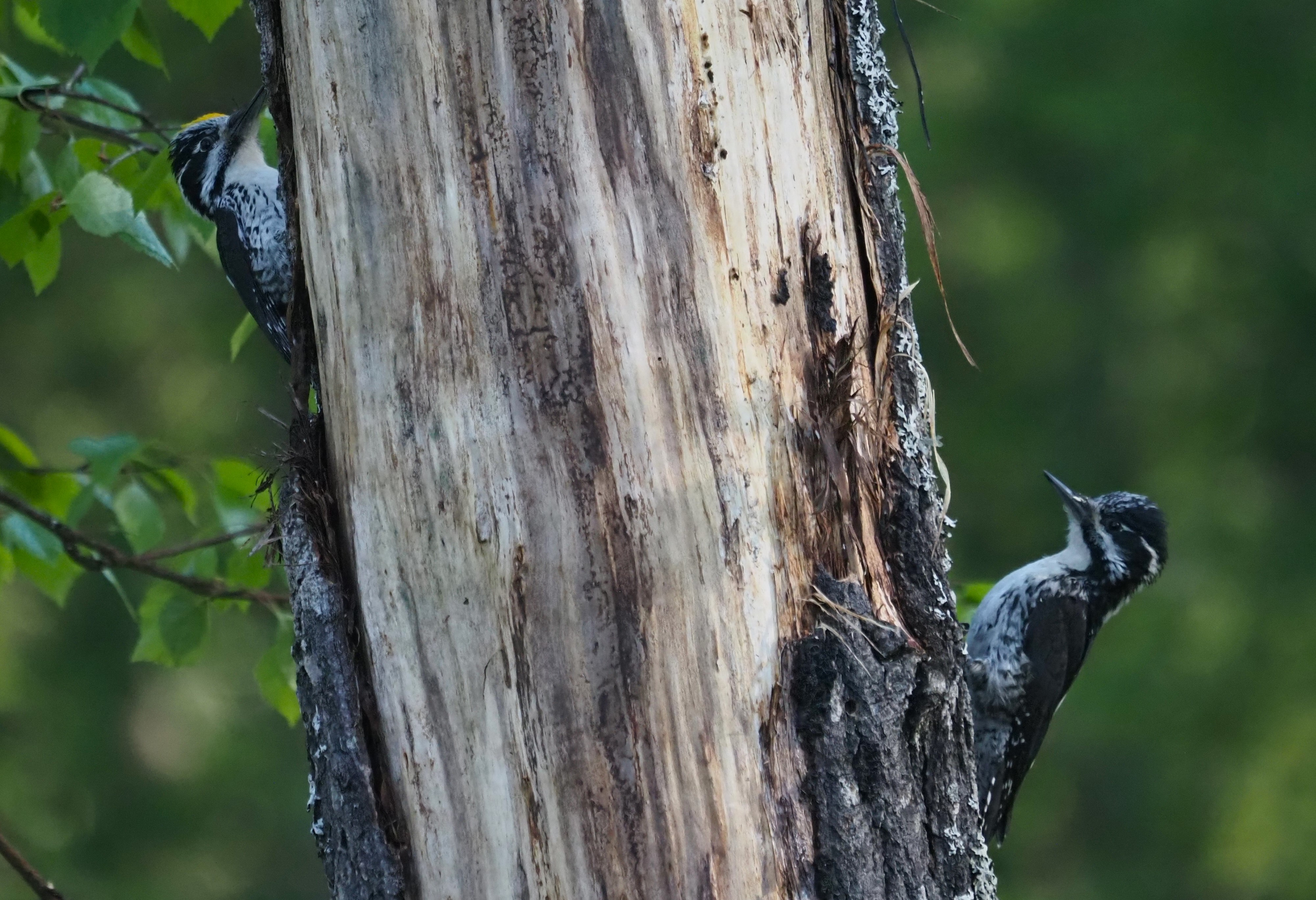
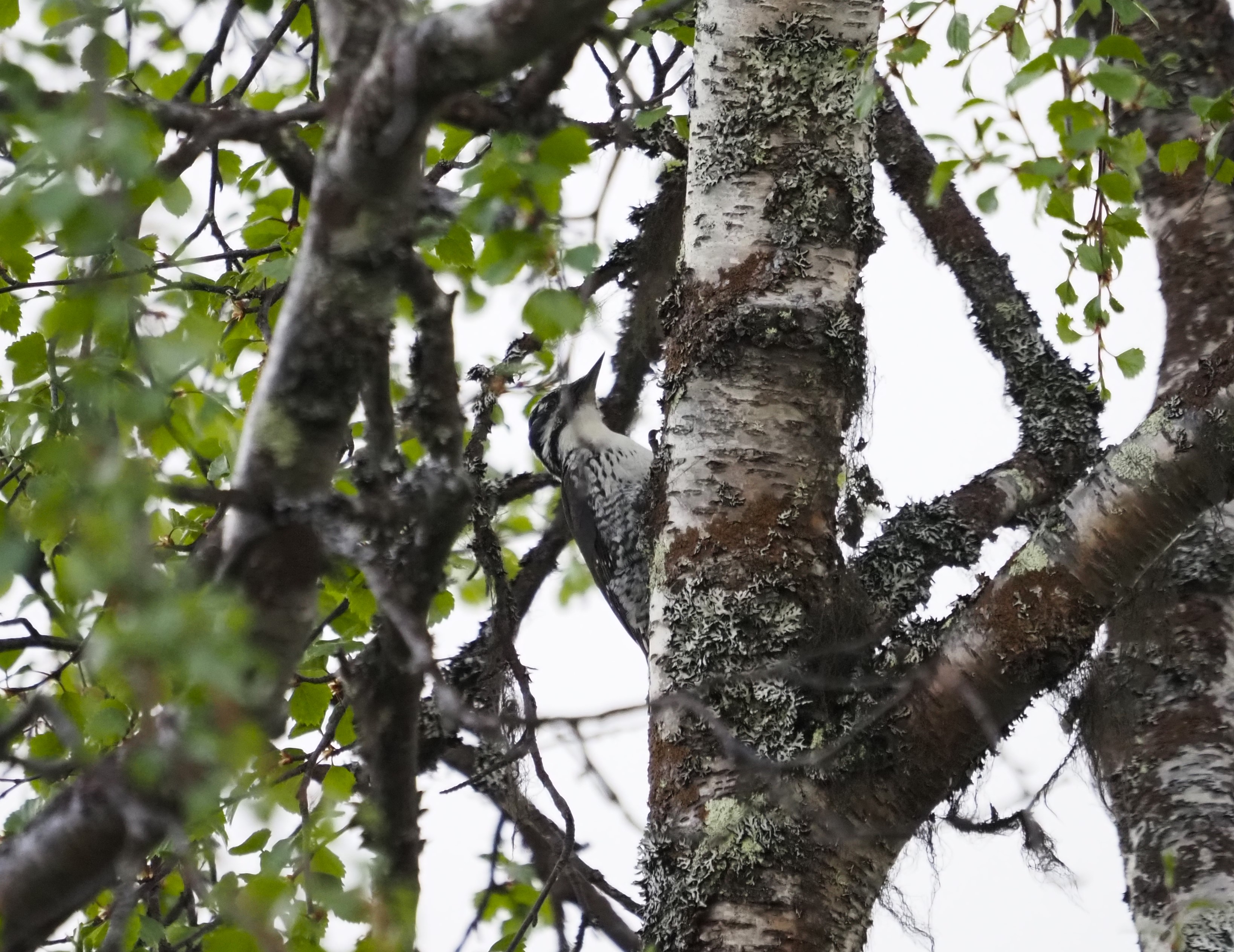
A second stop was made way inside the forest. This time to visit a nest of Great Grey Owl. After a short walk in the forest we enjoyed great views of the female on a massive nest of Northern Goshawk. Definitely a wonderful sight! Around it, we had both Spotted & Pied Flycatchers and, in the way to our van a distant, familiar call caught our attention, and the time proved us right when a wonderful Eurasian three-toed Woodpecker just emerged from the woods to stop right by the road, working in one of the oldest trees around. Jackpot! We were not expecting this species to show here!

From here we drove a short distance into a small backyard. As we arrive, a family group of Scandinavian Bullfinches (a very distinctive race both in size and in voice) were very showy in the trees around. Here we also got nice views on Goldcrest and our first Greenfinch was singing from high up in the tree. Soon, the first reason of our visit here was audible in the distance, and it didn’t take long to show up: a wonderful Black Woodpecker that landed a few meters away from us, in their way to attend its nest in the backyard. Very happy with this sight we only had to move slightly around the same tree to face a second whole. This time was a Tengmalm’s Owl that was on the nest! Amazing! It is always great to see this super cute creatures, especially when it comes to owl chicks.. After a few minutes enjoying this amazing bird and a couple of other small passerines, we went back to minibus.

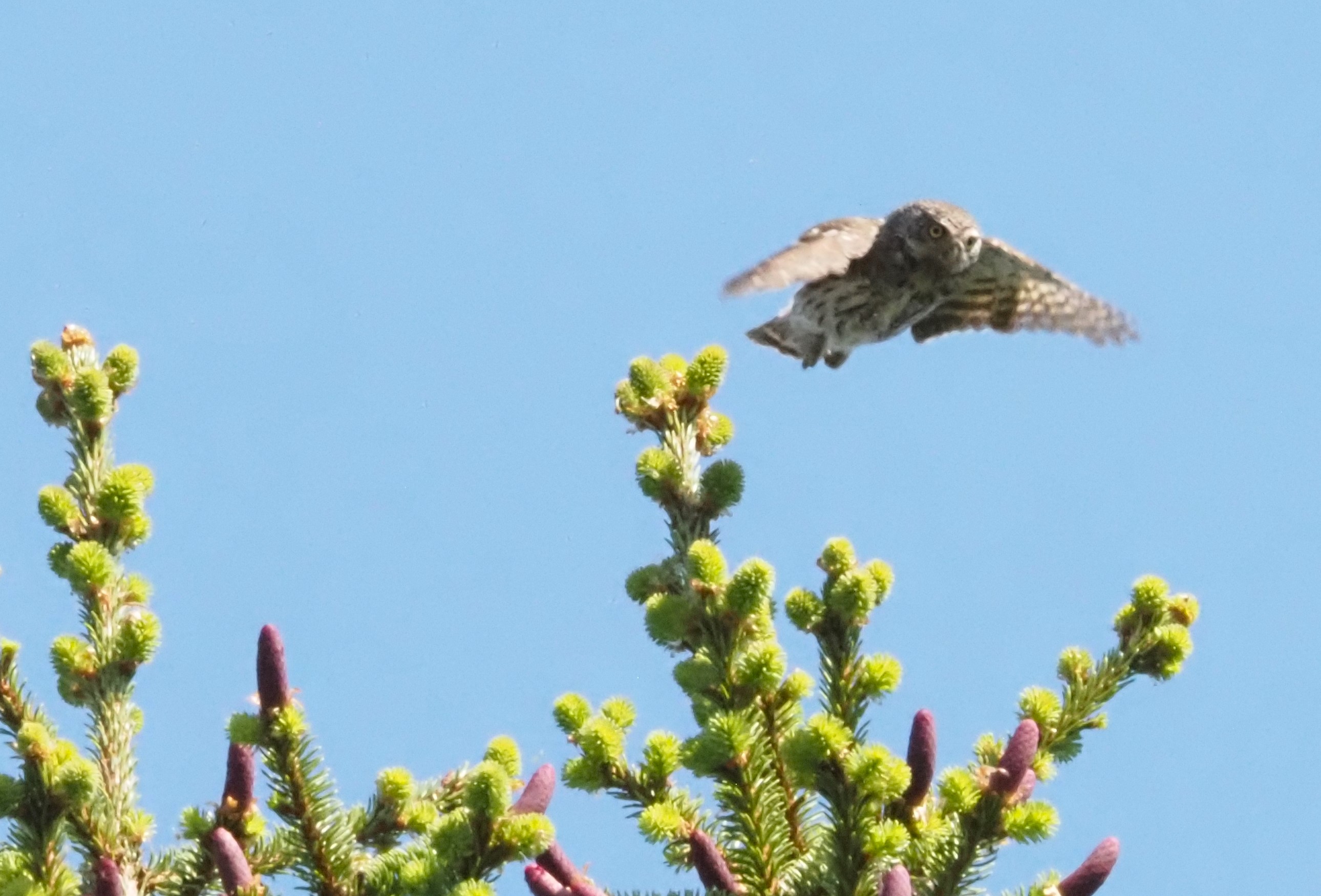
Our last stop of the morning was to get deep into the boreal forest. a ten minutes walk into the habitat was mandatory to reach our goals there. This is normally a nice place for woodpeckers, but after we already nealed the Three-toed Woodpecker we focused in smaller species. In our we heard 1 Wood Warbler singing and we saw Tree Pipit, Eurasian Treecreeper, Lesser Whitethroat and a few Robins. Suddenly we arrived into a place where many birds were singing. There were Siskins but also Great & Blue Tits and Common Chaffinches. Not surprisingly, an Eurasian Pygmy Owl was the cause of all that mess. The owl was high up in the tree and we were lucky to find it! During the next minutes, we were enjoying the Owl, trying different angles to have better views/shots. While exploring the forest we also found a Lesser Spotted Woodpecker that showed out very well before we arrive to a Grey-headed Woodpecker nesting hole! The male performed very well of us, showing out for at least 10 minutes!

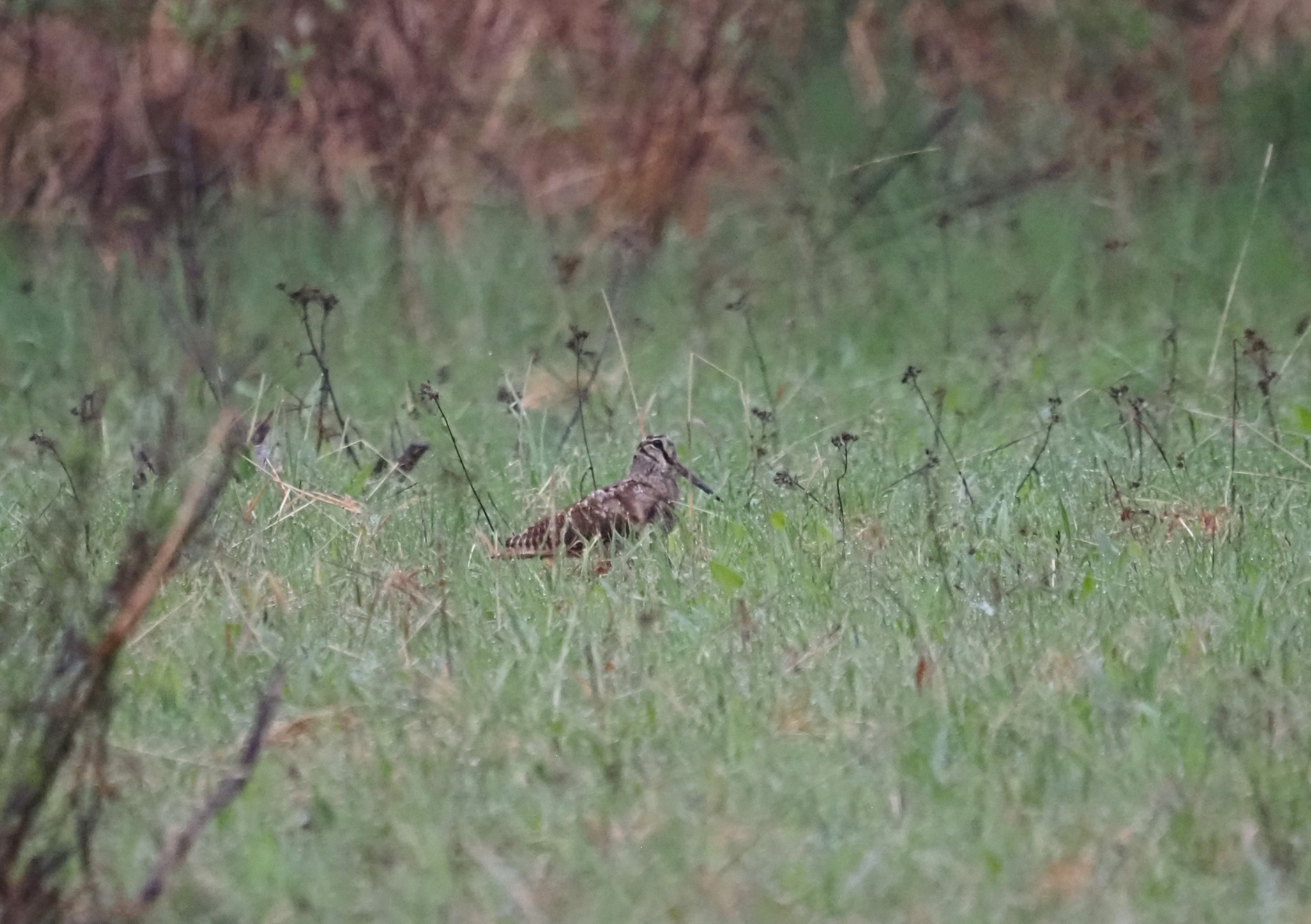
Back to the road, we had to a couple of stops because of Eurasian Woodcocks moving really close to the tarmac before arriving to the last stop of the morning. Here we visited a nesting pair of Ural Owls. When we arrived, it was quite cloudy and the female Ural Owl was inside the nesting box, providing really good scope views.

Great Grey Owl sitting on its nest. A wonderful sight!
This Three-toed Woodpecker popped out from the forest. A really unexpected sight!
Black Woodpecker showed really well around its nesting hole.
Tengmalm’s Owl inside its nest hole in a private garden
We were very lucky to pick up this Eurasian Pygmy Owl up in the trees.
Here a closer look!
Lesser Spotted Woodpecker
Grey-headed Woodpecker showing very nicely

Very excited after this wonderful morning, we went for an early lunch followed by a resting time in our accommodation. The after was sunny, and we kept going with the planning, going to check a massive bog area South of Oulu. As we went inside the place, we got nice views on some common species here including Eurasian Tree Sparrow, Yellowhammer, Pied Flycatcher, Lesser Whitethroat, Yellow Wagtail and Spotted Flycatcher. The path crosses and large area of bog, and here we got some Marsh Harriers flying around, and excitement rocked up when a wonderful male Pallid Harrier just came to us crossing the bog. Even if never came really close, this was one of the birds of the week for some of us! Beyond, we got the first (far) views on Ruff and White-tailed Eagle. The only one Caspian Tern of the trip was seen here, and the list was also including Garganey and 1 Taiga Bean Goose that flew over our group.

After dinner we still had energy to check a nesting place of Terek’s Sandpiper. Unfortunately, with no luck..
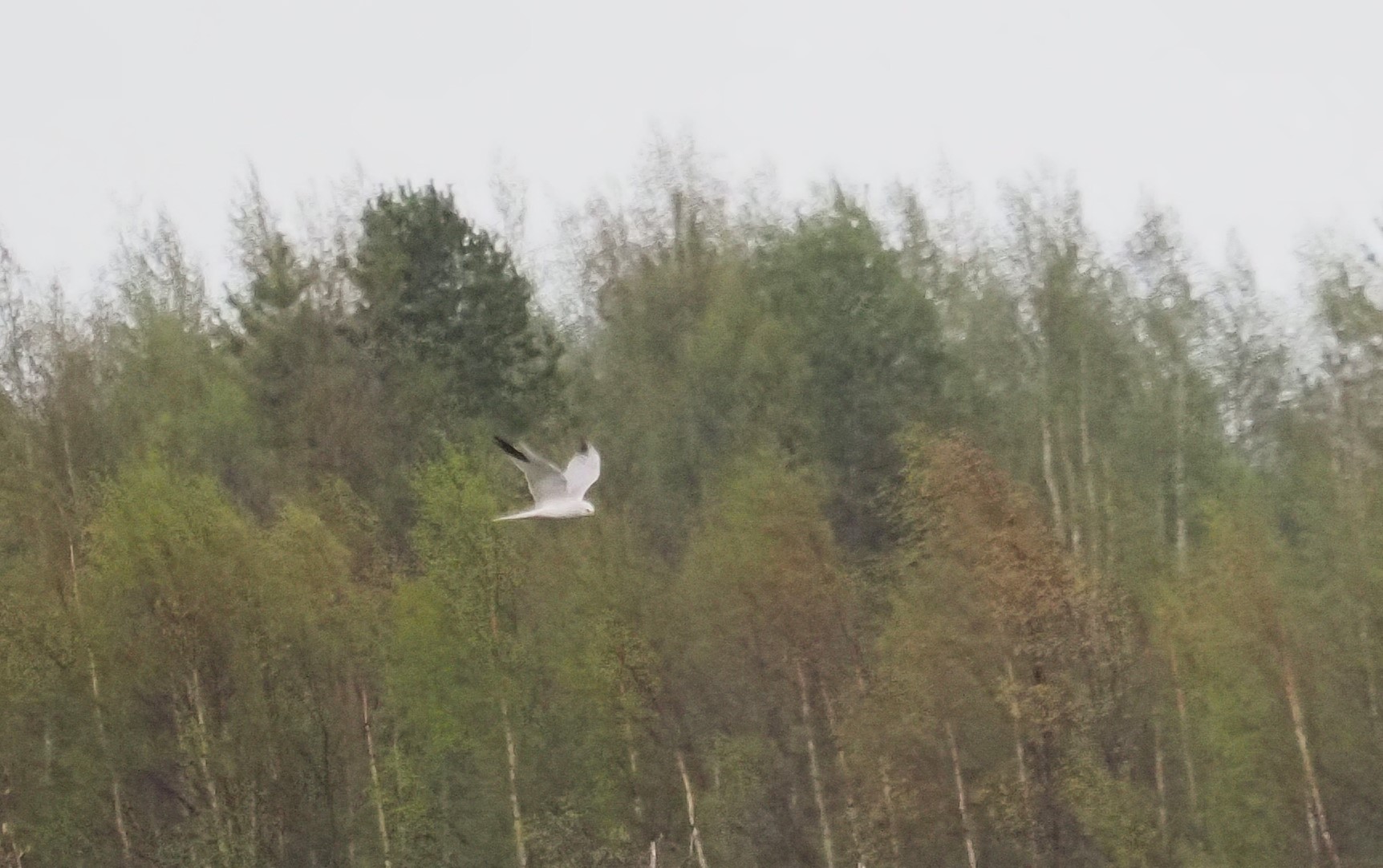
This male Pallid Harrier was one of the surprises of our first day!

Day 3. After enjoying a very good breakfast we left our accommodation and start heading East. Our first stop that morning was to check a couple of places looking for Ortolan Bunting. Our first stop produced Common Whitethroat, Curlews, Rooks, Green Sandpiper and close views on a pair of Grey Partridges. Following the lovely lanes that cross the farming around Oulu we soon arrived into a second interesting spot. Here, we soon heard at least 3 Ortolan Buntings singing around. Yellowhammers & Reed Bunting were both common here and it was not easy to connect with the Ortolans in the misty ambient. Still, after a few minutes, we got some proper views. From here we drove a few mile into a nice area of forest where we got really nice looks on both Garden Warbler and a very showy Common Rosefinch. A male European Honey Buzzard flew over us, clapping its winds up head in a phenomenal display that, for me, was one of the best behavioural tips of the trip! In this same spot we got our first Hazel Grouse singing around. This is normally a nice place to try to see it, and the bird did a couple of crossings at close range. Unfortunately not everybody in the group connected with the bird, and after a time trying to have better views we finally decided to leaving for another day and go to check a nearby pond where a drake Slavonian Grebe was waiting for us! After enjoying close views on this little gems we kept driving East, and after having an en route lunch we arrived to Kuusamo.

Grey Partridge was a nice adding to our list
Common Rosefinch singing his heart out from the top of a small pine
Lovely Slavonian Grebe showing its puffs up!

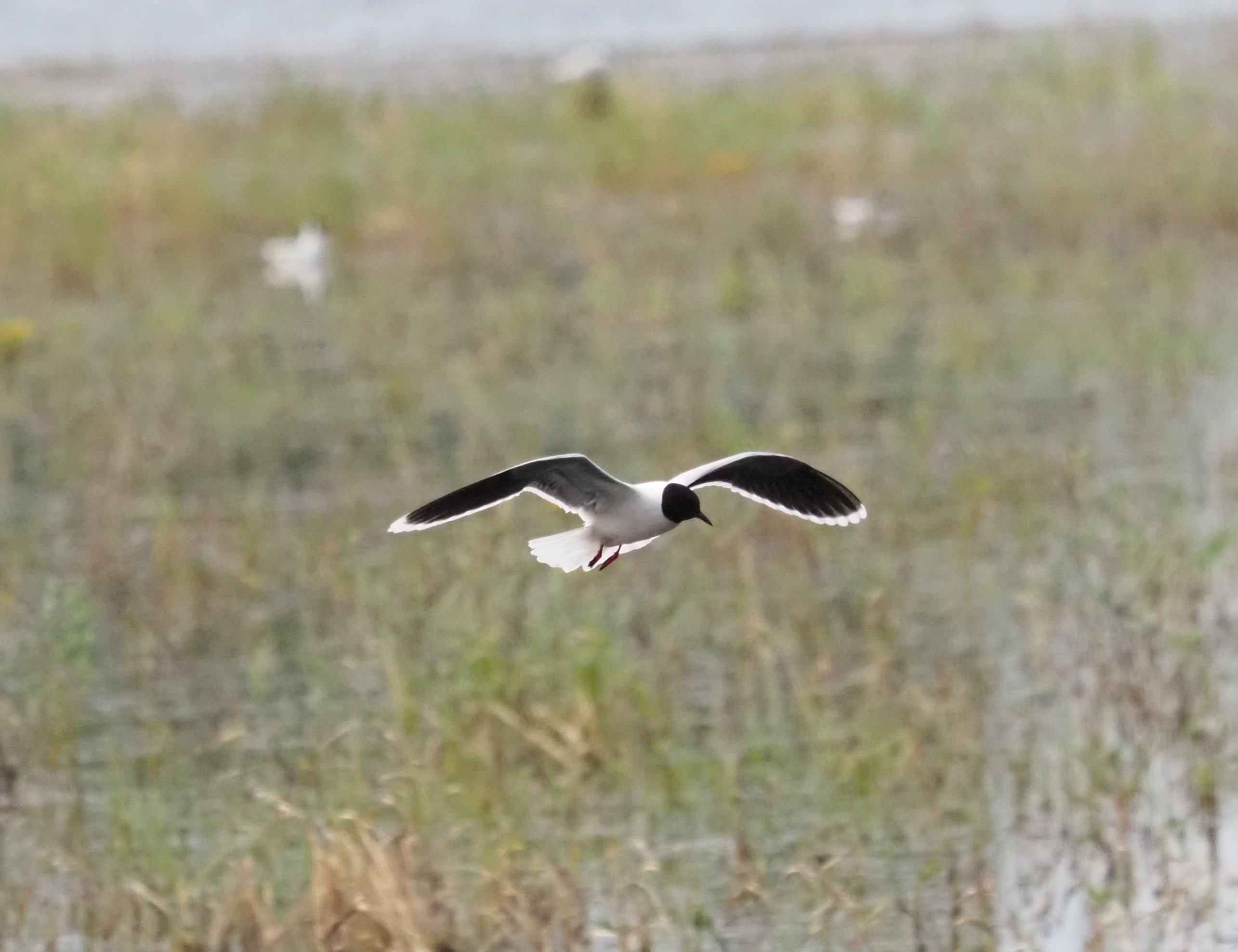
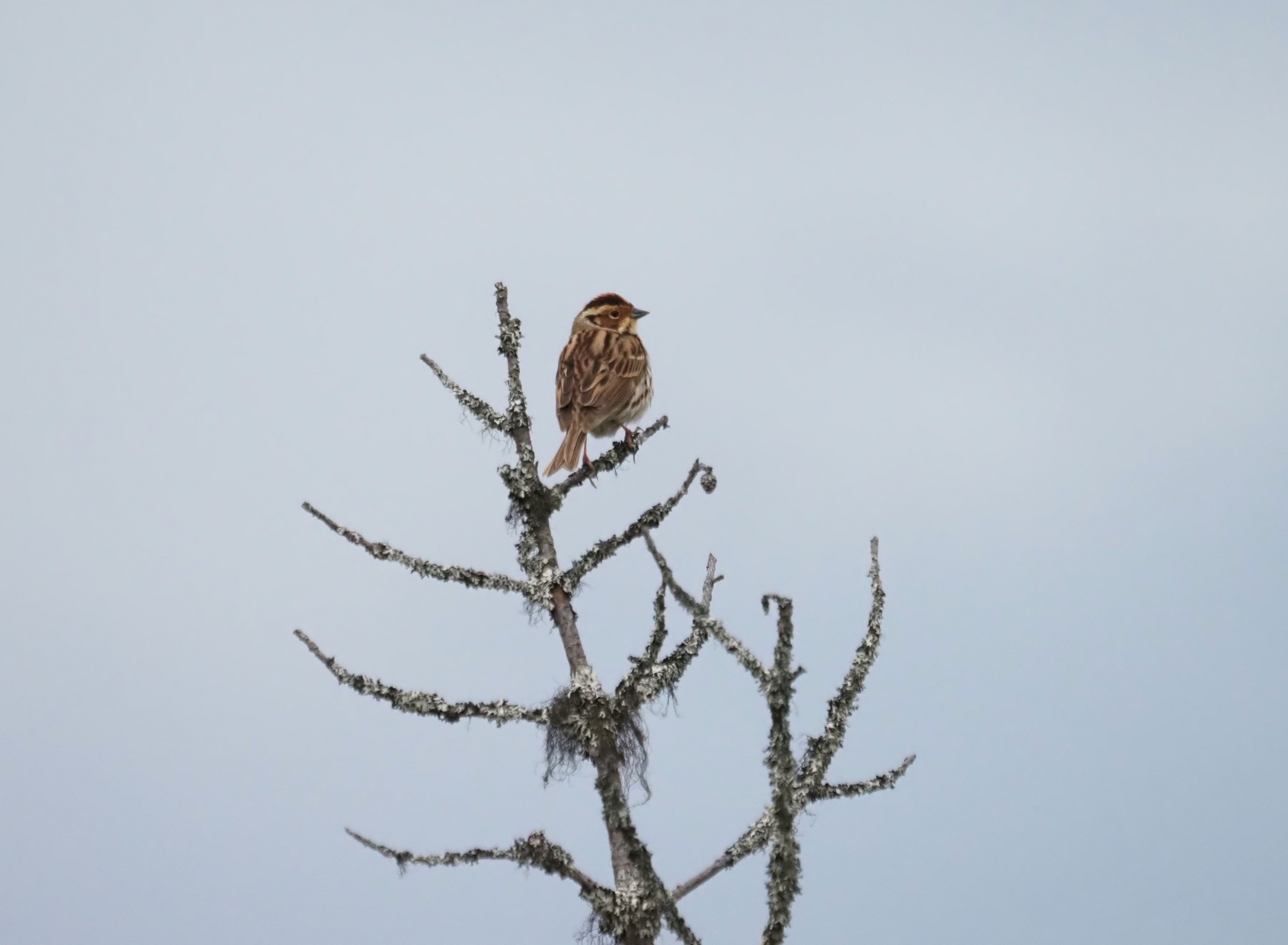
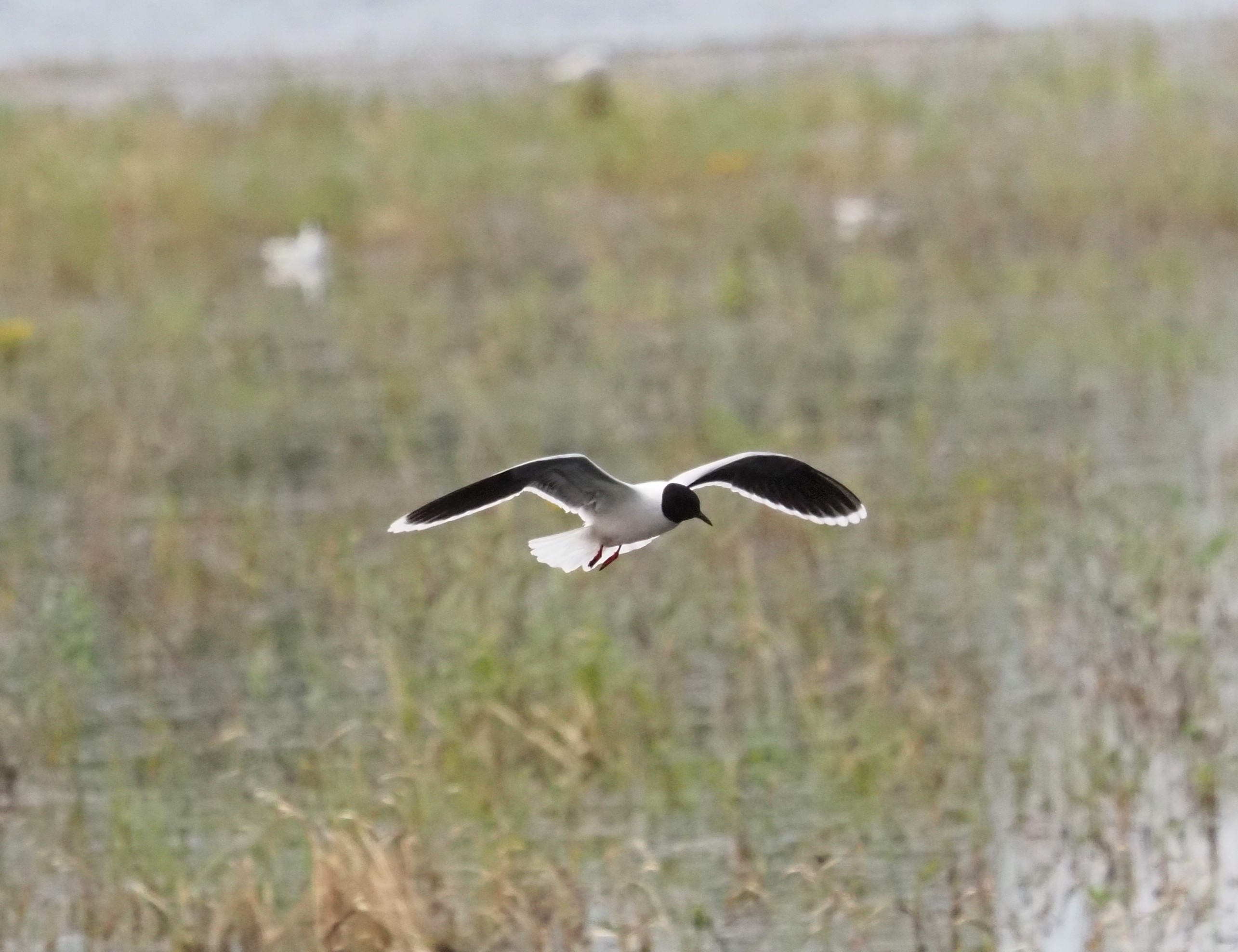
It was a cloudy afternoon in Kuusamo. Our first movement in this new area was to check a couple of places for Little Bunting, with little reward out of distant Little Gulls, Sand Martins (new for the trip) and the nice sand rather distinctive song of the “abietinus” race of Willow Warbler. The last stop before arriving to visit a colony of Little Gulls. Here we got excellent views on the smallest gull, but also on the nesting Red-necked Grebes and Whooper Swans distant 5 Black-throated Divers and Goldeneyes and the first Brambling of the trip!

Redwings became even more obvious around Kuusamo
Wood Sandpiper is a common breeder in marshes of all sizes in Northern Finland
Little Gull around one colony

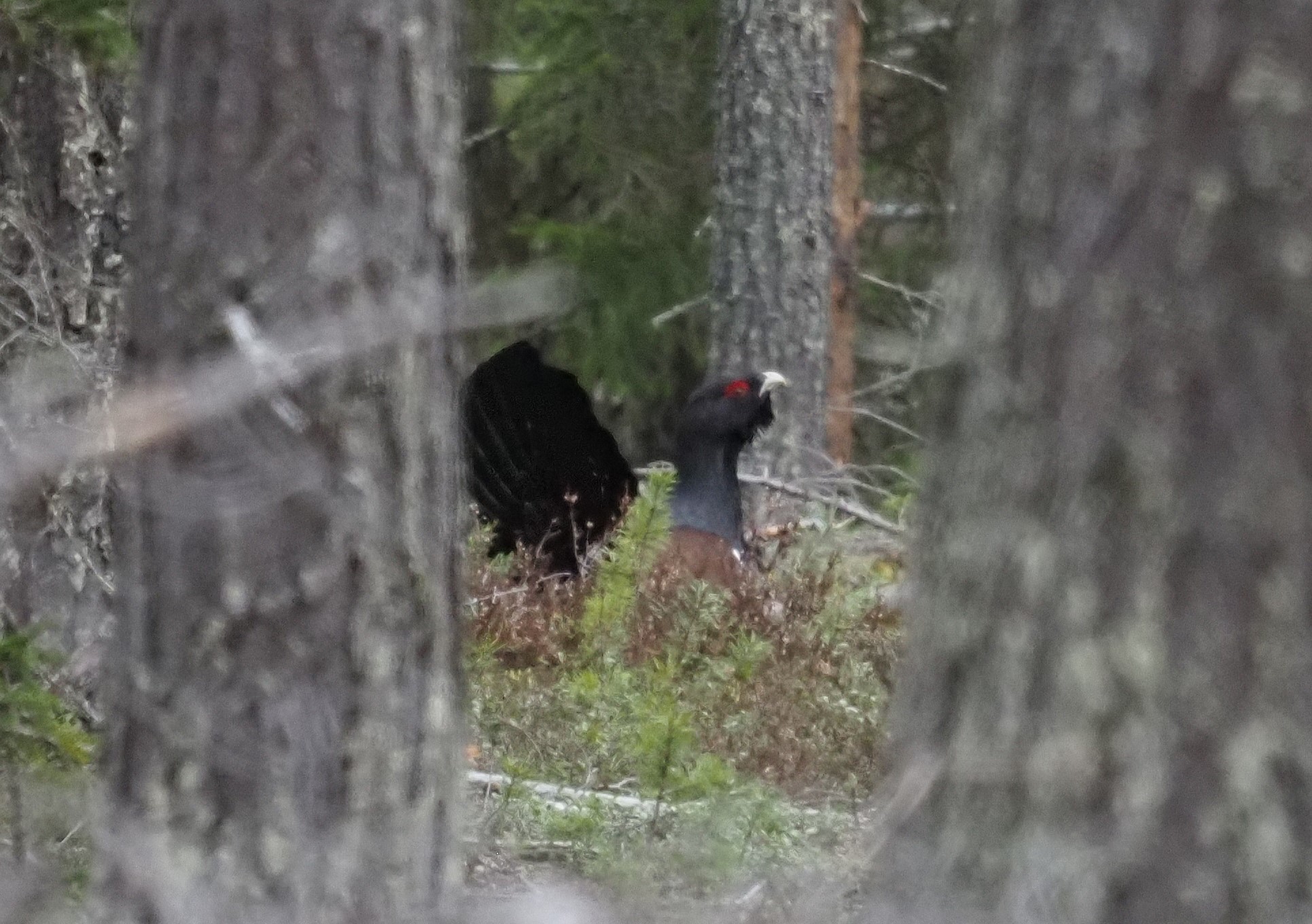
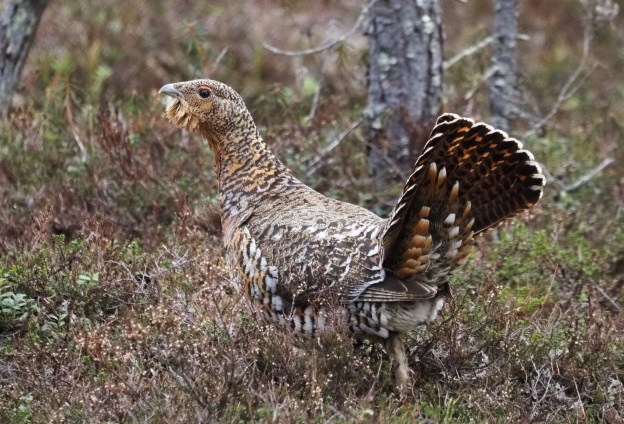
Day 4. As usual in this areas, we had a very early start of the day before going to the forest. En route, we had a first en route stop. Here we got ruff views on a couple of Rustic Buntings that we heard as we were driving. A bit beyond, we got a small flock of Common Crossbills. The first Grouse drive of the trip was not totally successful. Still, we got nice views on the 1st Willow Grouse of the trip before arriving in a lek of Capercaillies. Here, Mark got a bird moving behind a bush, and this is how we got our first male Capercaillie lekking in the forest! We all got good views but we couldn’t get pictures, the bird went into a small ditch and went away from us.

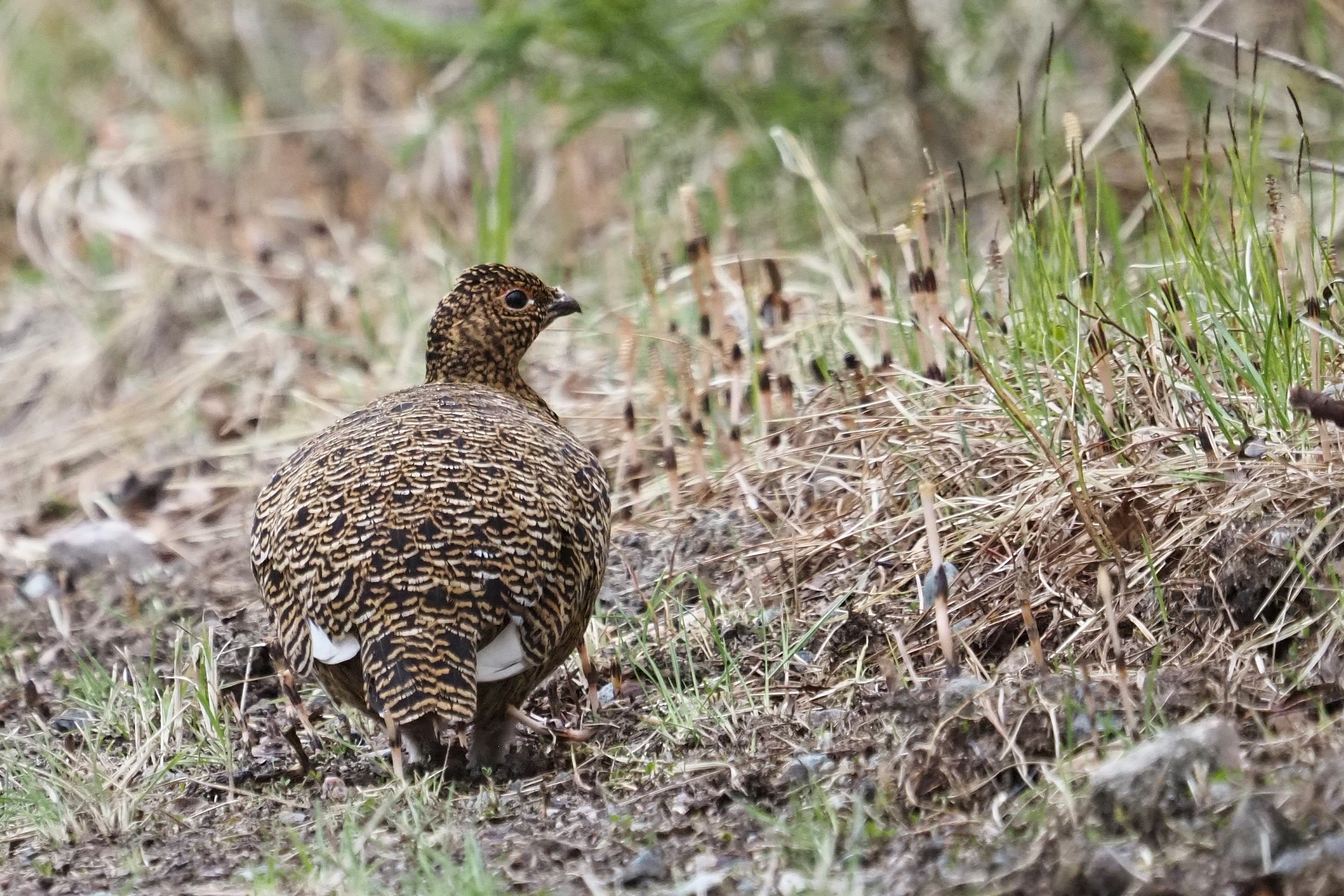
After a shortwalk in the forest, we enjoyed our take away breakfast. Here we got a good number of forest passerines including Golcrests, Siskins, Redstarts, Pied Flycatchers, Willow Warblers, Treecreepers, all of them at close range. Back to the van, we did a bit more of Grouse drive, and we got a second lekking Capercaillie that provided way better views than the first views. After some coffee we tried a different place for Rustic Bunting with a nice male appearing in front of us and singing for long, and our efforts got rewarded with good views on Tree Pipits and, especially, some amazing views on an extremely obliging pair of Willow Grouses! They were so close that we could hear the noise of their long claws when classing the tiny rocks of the lane..

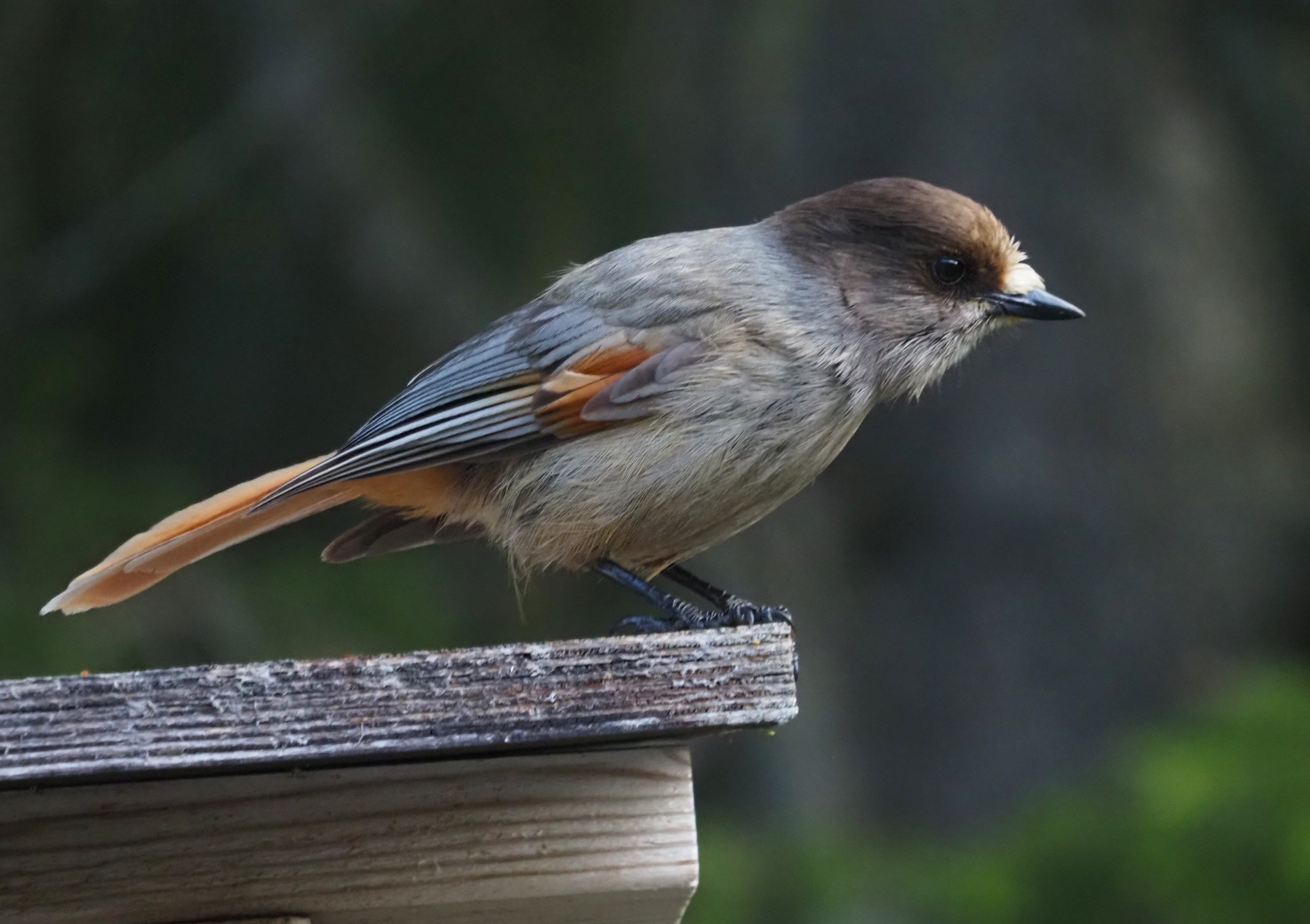
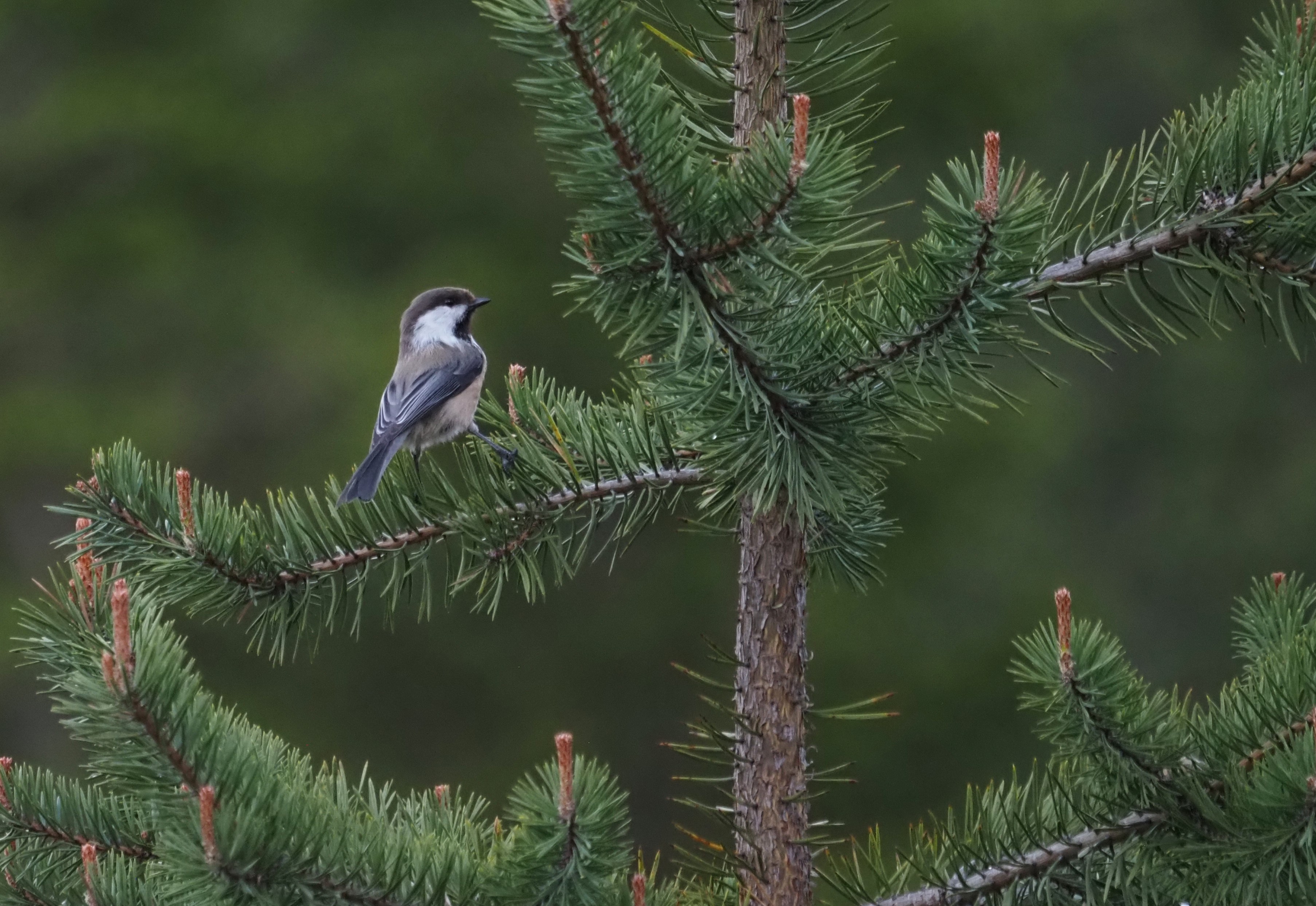
From here we drove to one of the most famous hills around Kuusamo. Walking up the hill, we got nice views on Bullfinches and Willow Tits, and once we arrived to the top we got views into 2 elusive Siberian Jays. It was a sunny morning, and soon we were hearing a lovely Red-flanked Bluetail singing from the top of the canopy. It didn’t take long to us to locate the bird, that a few minutes later came down to the ground to feed around, providing excellent views and photo chances! From the top of the hill we still got scope views on a second Red-flanked Bluetail and a Merlin flying at full speed on its way North!

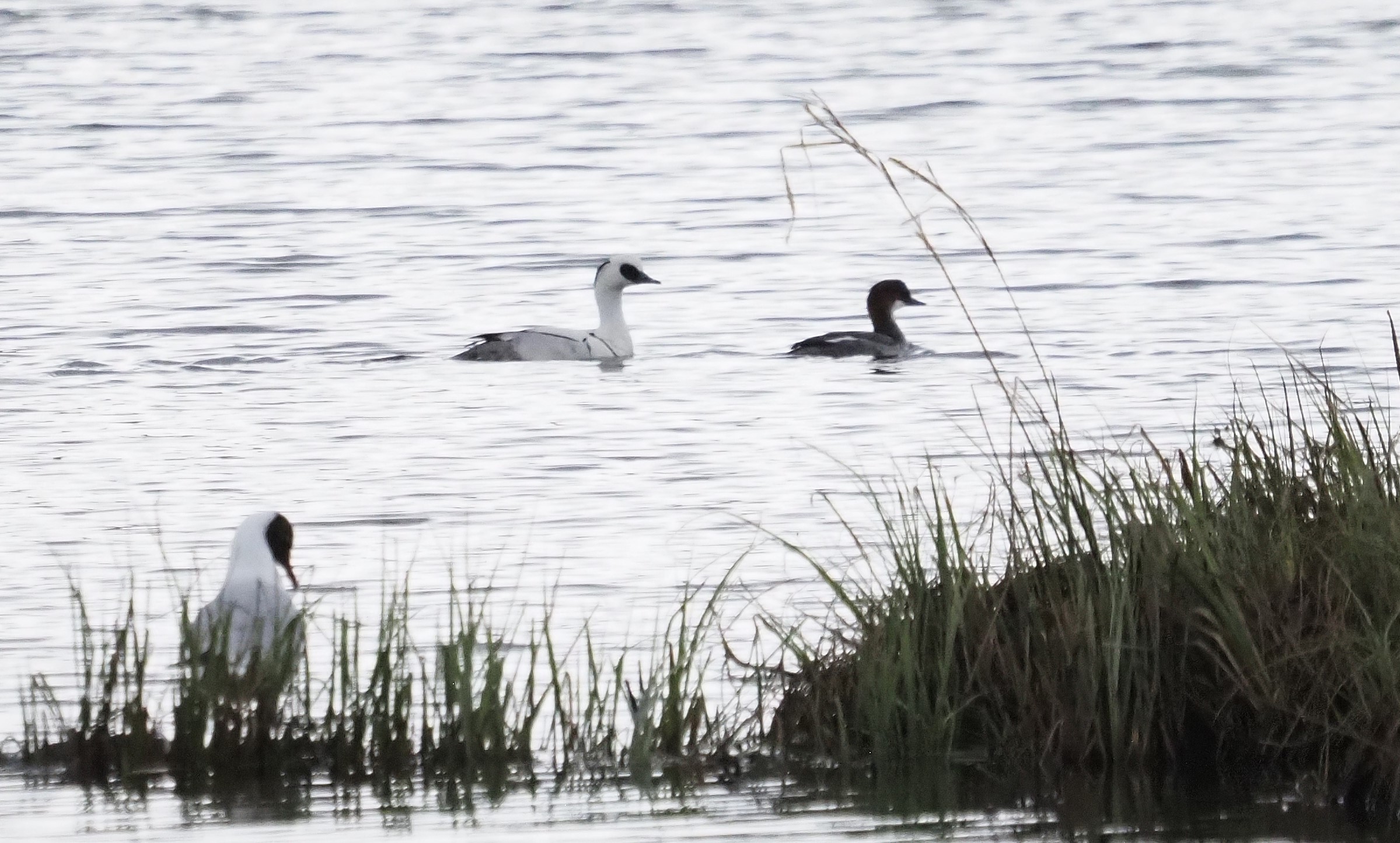
To end the morning, we had a stop in a couple of ponds. Here we got Wigeons, Eurasian Teals, Tufted Ducks, Little Gulls and Goldeneyes. Common Sandpiper was new for the trip and other waders here included Common Snipe, Greenshank and Wood Sandpiper. Still, the best bird in this stop was the drake Smew that was swimming along with Goldeneyes.

After lunch, we went into a different place looking for Rustic Bunting, and this time we got very nice views on a singing male. A Hazel Grouse was singing around, but again we only got a male flying around the group, and with the tip of a Black Kite as we were enjoying the landscape at our accommodation.
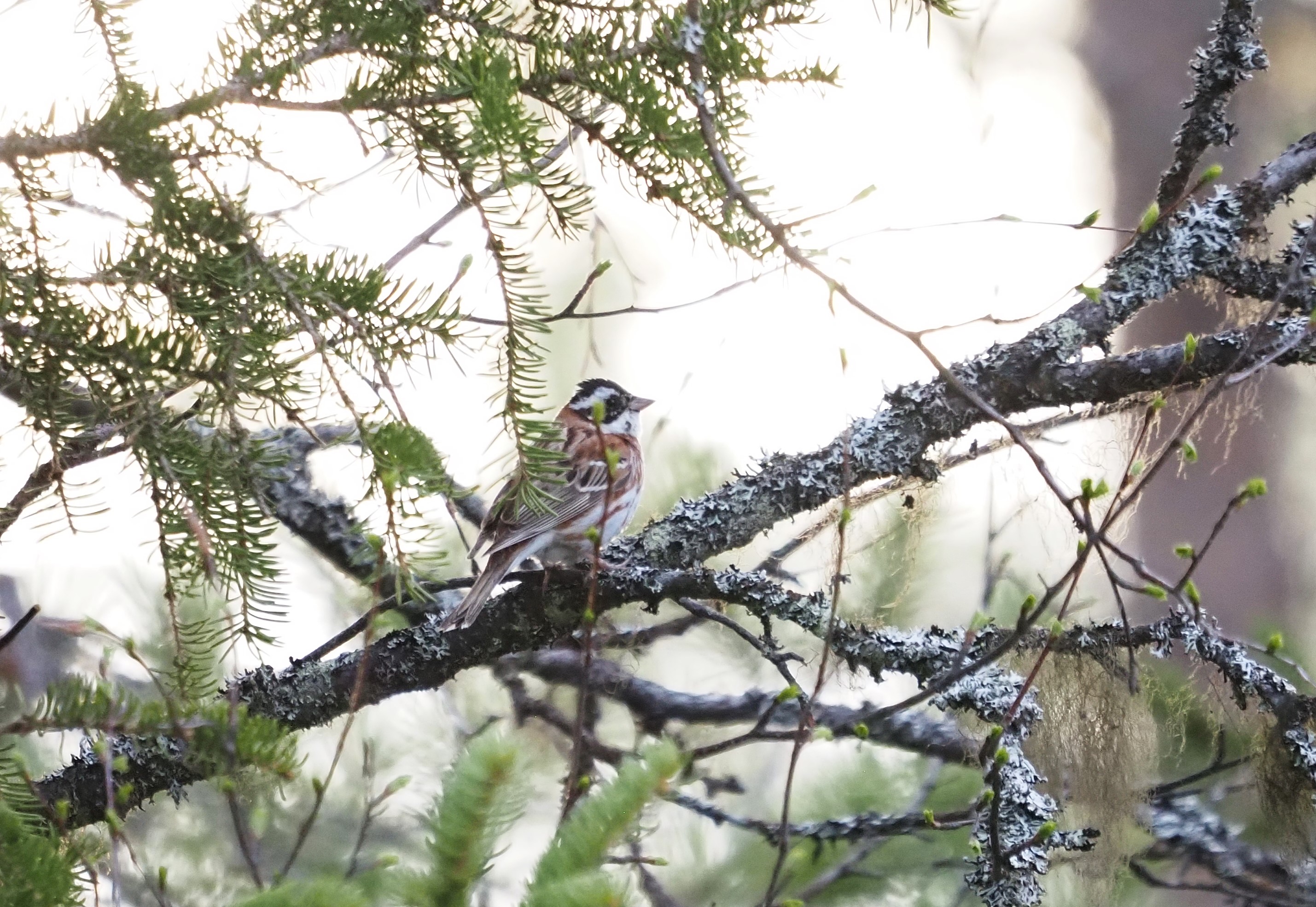
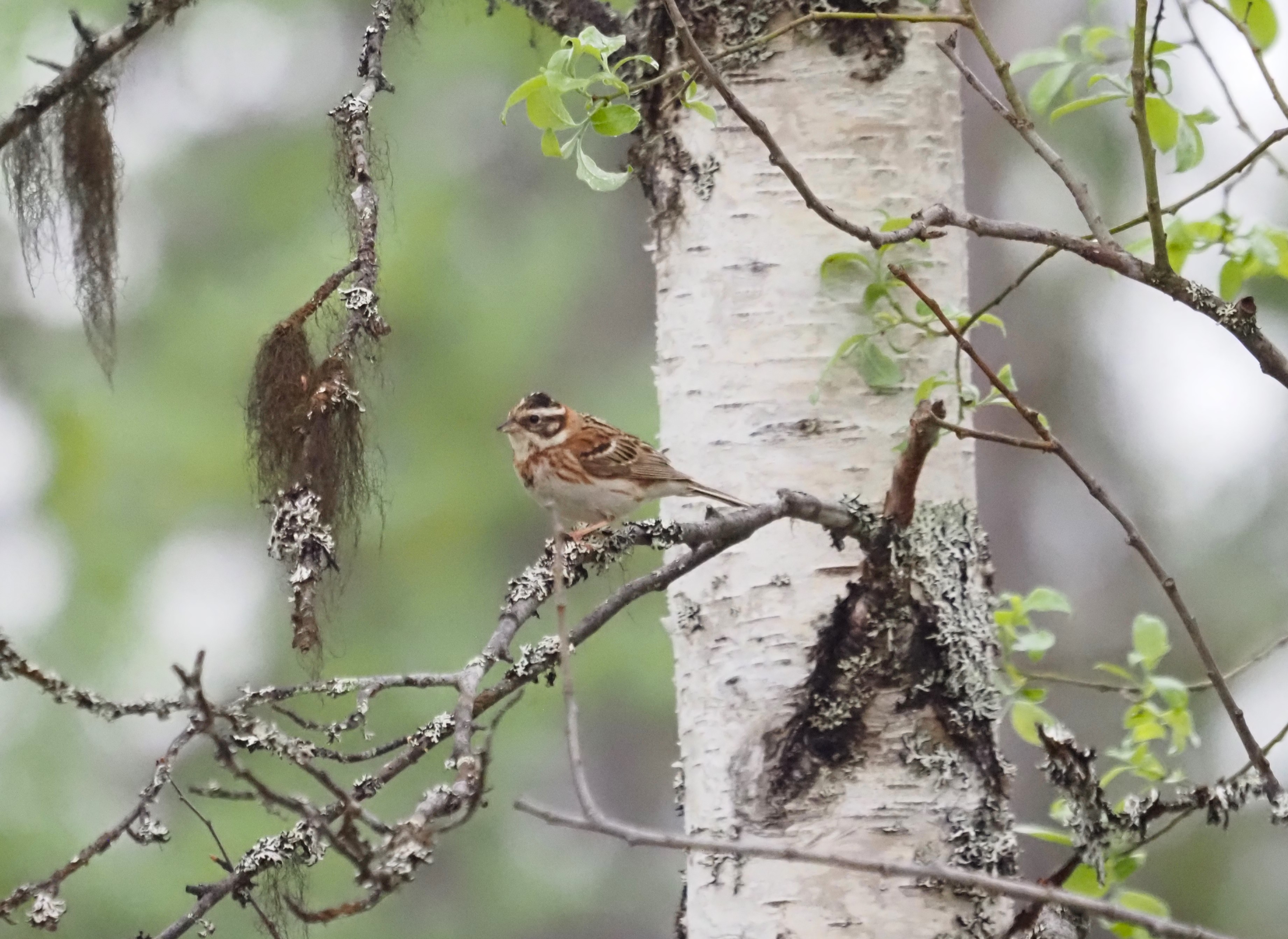
The first bird of the morning was this shy Rustic Bunting
Male Capercaillie moving in the woods
Amazing close up to female Willow Grouse
And here, the male. It was so close that the all were about to touch it!
Rather distant, but solid views on Rustic Bunting!
A nice flock of drake Goldeneyes
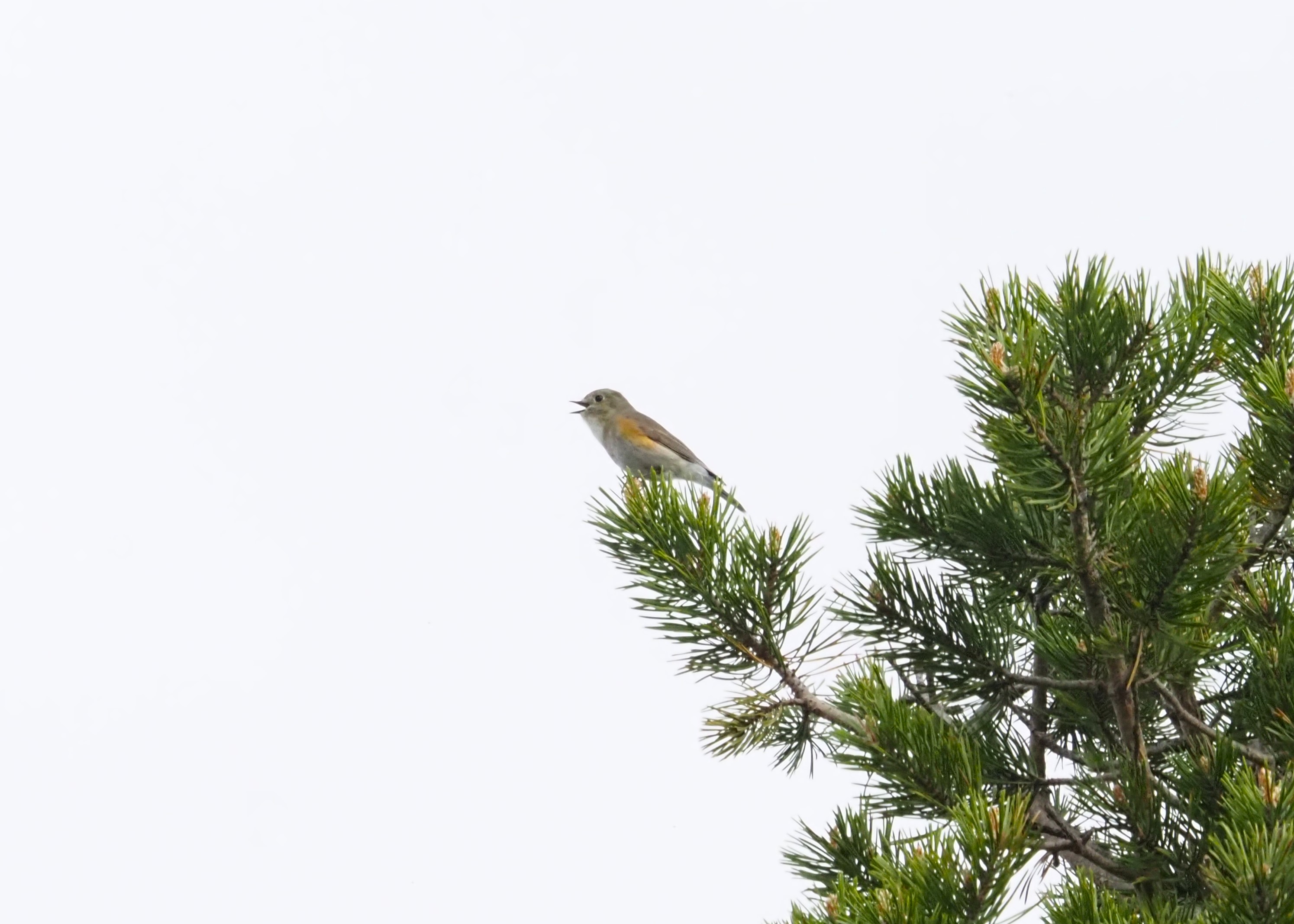
Red-flanked Bluetail showed very nicely to our group!
A very attractive pair of Smews to end the morning!

Day 5. After enjoying breakfast at our accommodation, we drove back to some good areas for Grouses. Here we got nice views into a female Black Grouse before going for a short walk in the boreal forest. Our main goal was to contact with Hazel Grouse, but we had no luck. In the walk we had Willow Tit and an flock of unidentified Crossbills before transfering North. It was a poor year for Northern Hawk Owl, but we information of a recent sight midway between Kuusamo and Ivalo. We drove there and invested a couple of hours exploring the massive fogs around. Unfortunately we got no Owls, but 2 very showy Siberian Jays while Bohemian Waxwing, European Golden Plover and Mealy Redpolls were new for the trip. Other species here included Wood Sandpiper, Eurasian Sparrowhawk and a couple of flocks of Common Cranes.

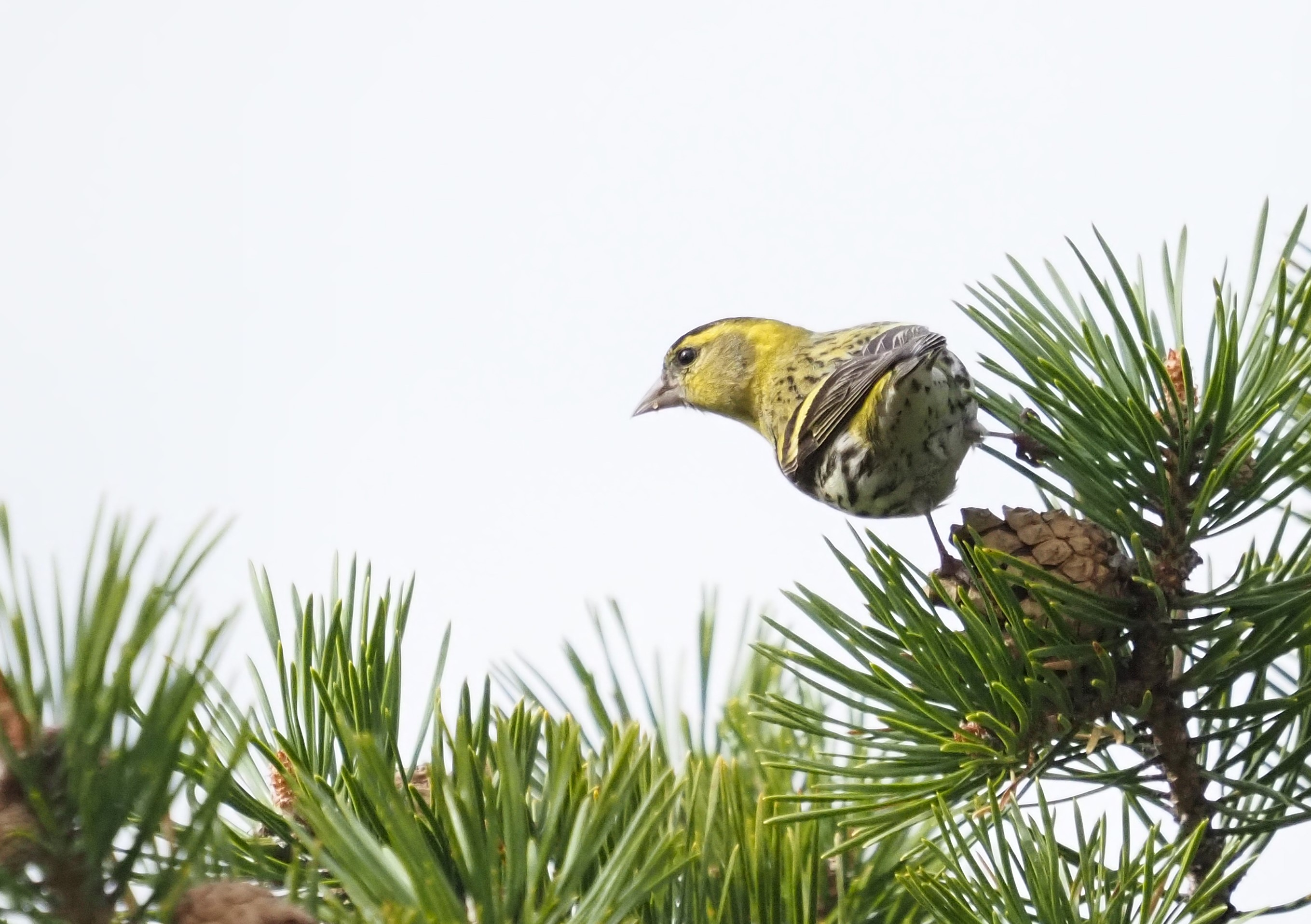
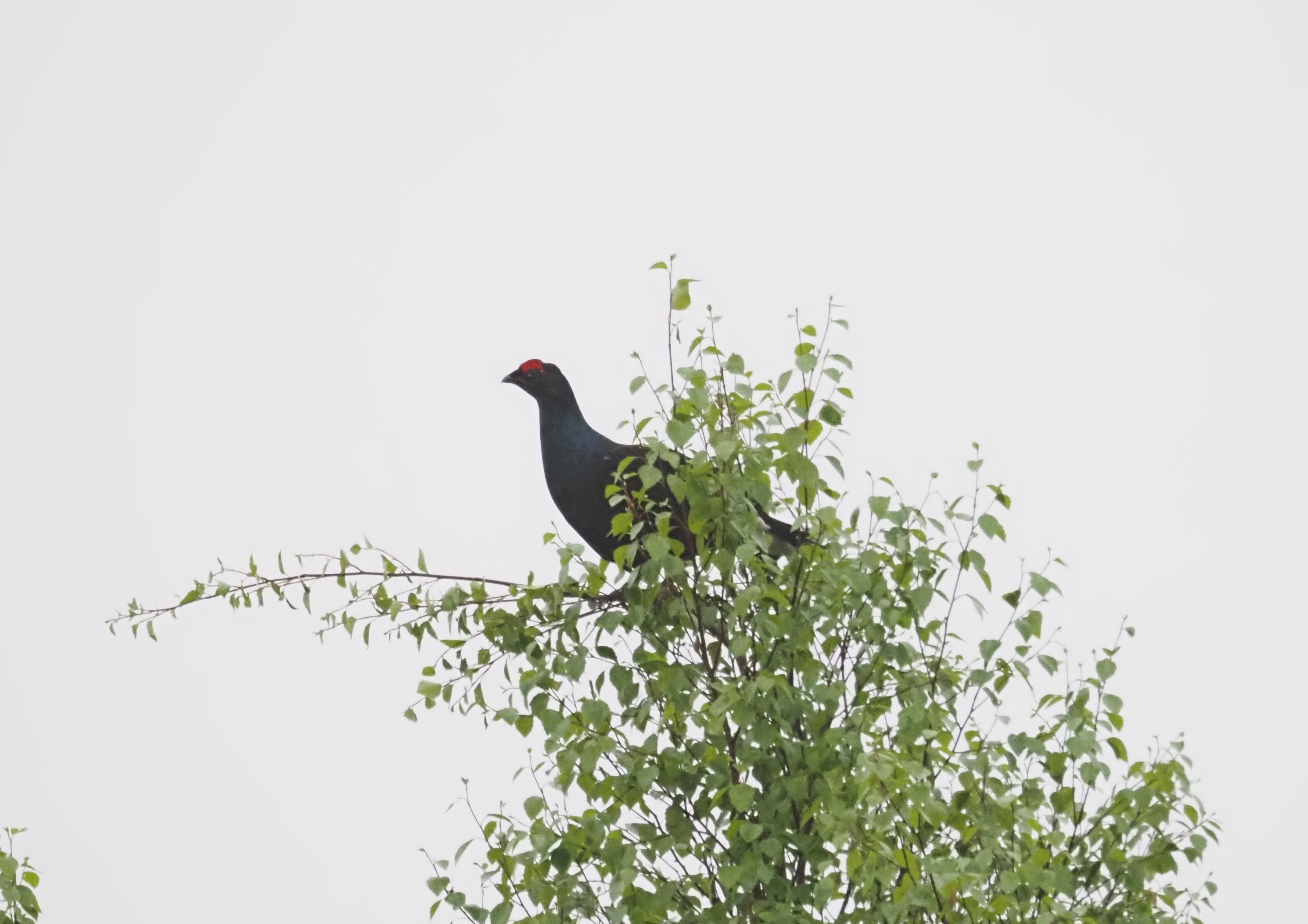
Black Grouse up in a tree as we were about to start our short walk
Lovely Eurasian Siskin, a fairly common bird in the boreal forest

After some lunch, we arrived around Ivalo, where we invested some time exploring one of the many lanes around the town. It was a sunny afternoon with temperatures of 22ºC so, rather warm for this latitude. Along the lane we amazing and very close views on different females of Black Grouses, and a couple of Siberian Tits emerged from the boreal forest for the enjoyment of the photographers in the group. Along the afternoon we also got 2 Willow Grouses at short range, Redpolls, 3 Bohemian Waxwings and a few Mistle Thrushes (rather scarce this year along our itinerary) and 2 very showy Siberian Jays, but the best was the 4 different female Western Capercaillies that gave us quite a show, with their fan-like tails up and their amazing gorges down in an extremely interesting behaviour! Without doubt, one of the best sights on female Capercaillie for me after so many years!!

Very glad after such a great afternoon, we just covered the short distance to our accommodation before enjoying a very tasty dinner!

During the afternoon we got some amazing views on three species of Grouses. Here a female Black Grouse.
Siberian Tit, a must for any birdwatcher exploring this region
Our afternoon in the boreal forest included very good looks on Siberian Jays
No words for this stunning sight on female Capercaillie!

Day 6. After having breakfast in our accommodation we drove a couple of miles to stop in a quite famous place for Little Bunting. Even if far away, we soon had nice scope views in this little fella while 2 more of them were singing around. It was again a sunny, and since we had not visited any bird tower for the last days we decided to go into a close one to have a fast look around. Here we got the first Whimbrel of the trip plus distant views on Goosander, Yellow Wagtail and Common Crane. Back to the road, we had to do an emergency stop because it was a male Parrot Crossbill feeding on the tarmac, but unfortunately I was the only to see them. With the van in the middle of the lane, we all realised that we were having a gorgeous female of Capercaillie right in front of us, watching us and deciding whether it was a good moment to cross the road, or not.

From here we went into a different spot, a nice boreal forest. Again, our main goal was Hazel Grouse, the only forest Grouse that was somehow scaping good views.. This area is normally good for forest birds, but this year was very low. Still, soon we got a male Hazel Grouse singing deep in the forest. We moved slowly, tracking him along the lanes. It sounded close and it seemed like singing from the ground, which is always better to try to locale this species. I was walking side by side with Mike, when he suddenly pointed out to the ground, only about 10 metres away from us: He had found the male Hazel Grouse! He was extremely happy. For him, it was the end of a long pursuit. Even if being a big lister with several thousands of birds on it, he had been missing this bird for years, even if he was trying in a few countries! I was very happy, especially to know that he self-found the bird!!

After the male, we also got the female deep in the forest. Both birds walked away a bit from us, getting inside a forest landscape puzzled with boulders and dead trees. It took us about 20 minutes to get everybody on the birds, as they were moving slowly down, and the work became easier once Núria settled down that the male was jumping up into a specific boulder to sing from there every few minutes. Scoping that rock, everybody enjoyed a bit of these Grouses!
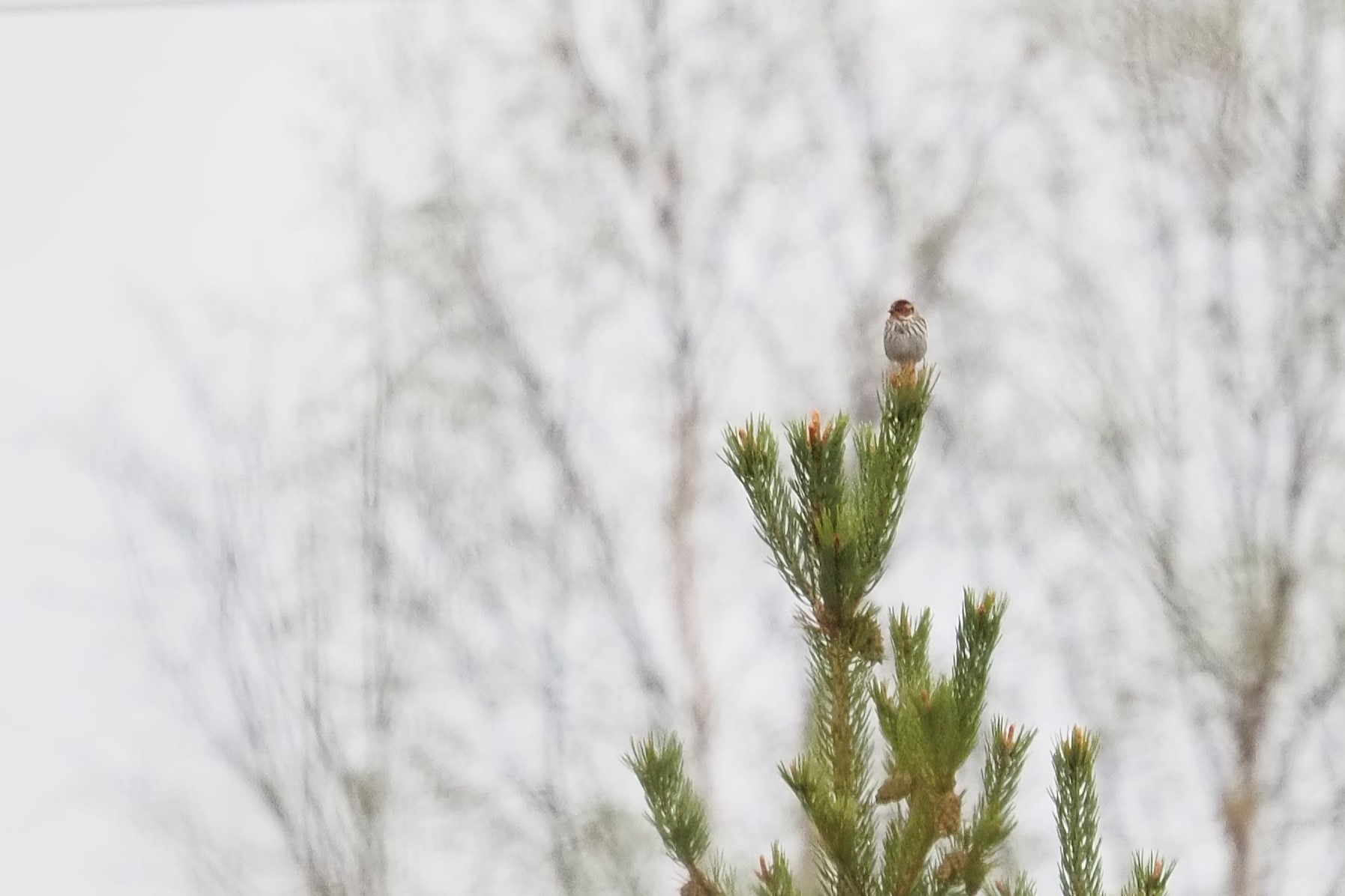
In this issue we only got scope views on Little Bunting. Here a record shot.
Hazel Grouse showed very well after a long search. A great spot by Peter!

After this we just started the transfer to Norway, with a lunch stop in one of the famous feeding stations for Pine Grosbeak that, this time, produced nothing.

From here we had some solid drive North, but with stops that allow us nice views on Smew, Red-breasted Merganser, Velvet Scoter, Bluethroat and one of the very few Rough-legged Buzzards of the trip along with commoner species.

I was enjoying the drive inside Norway when suddenly a “Moooooooooossse” came from the last raw of seats of the van! Yes, Mike got a Moose in a small field beside the road. After a safe stop in the lane, we all enjoyed a very nice views on the Moose, before it vanished inside the dense and low birches.

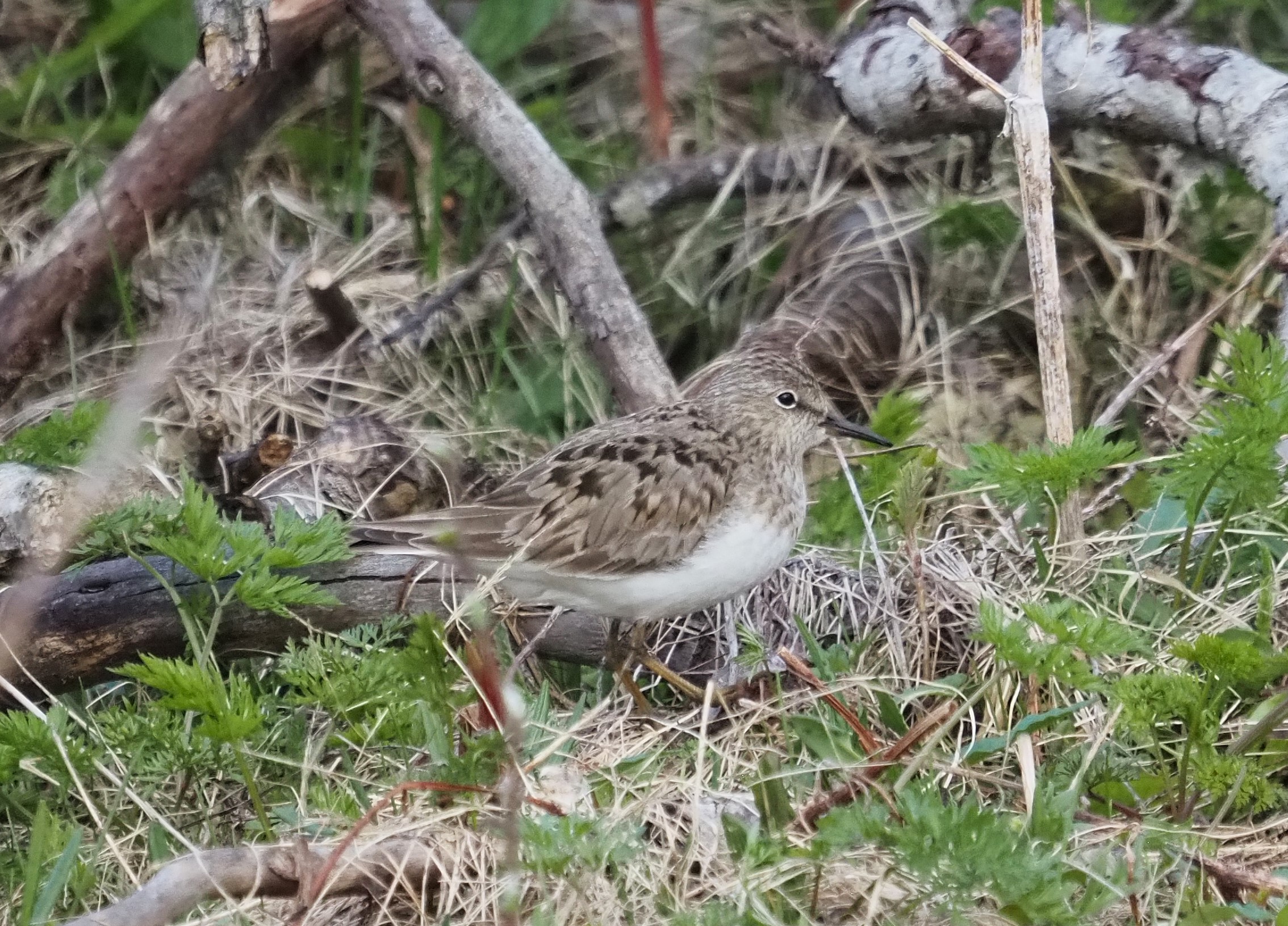
A first stop in Varanger produced scope views on Temminck’s Stints along with Redshanks & Oystercatchers and many, many Common Ringed Plover. A bit further, we did a second stop to enjoy the first White-tailed Eagles of the trip, and here we got lucky and we found a nice flock of 80+ Red Knots in full summer plumage! Along with them, Bar-tailed Godwits, Dunlins and other species!

The bird feeders are a nice place to enjoy some common species. Here a Great Spotted Woodpecker showing its tongue.
The first Moose of the trip always creates a big wave of happiness in our groups. The image is a bit blurry, but it deserves to be here

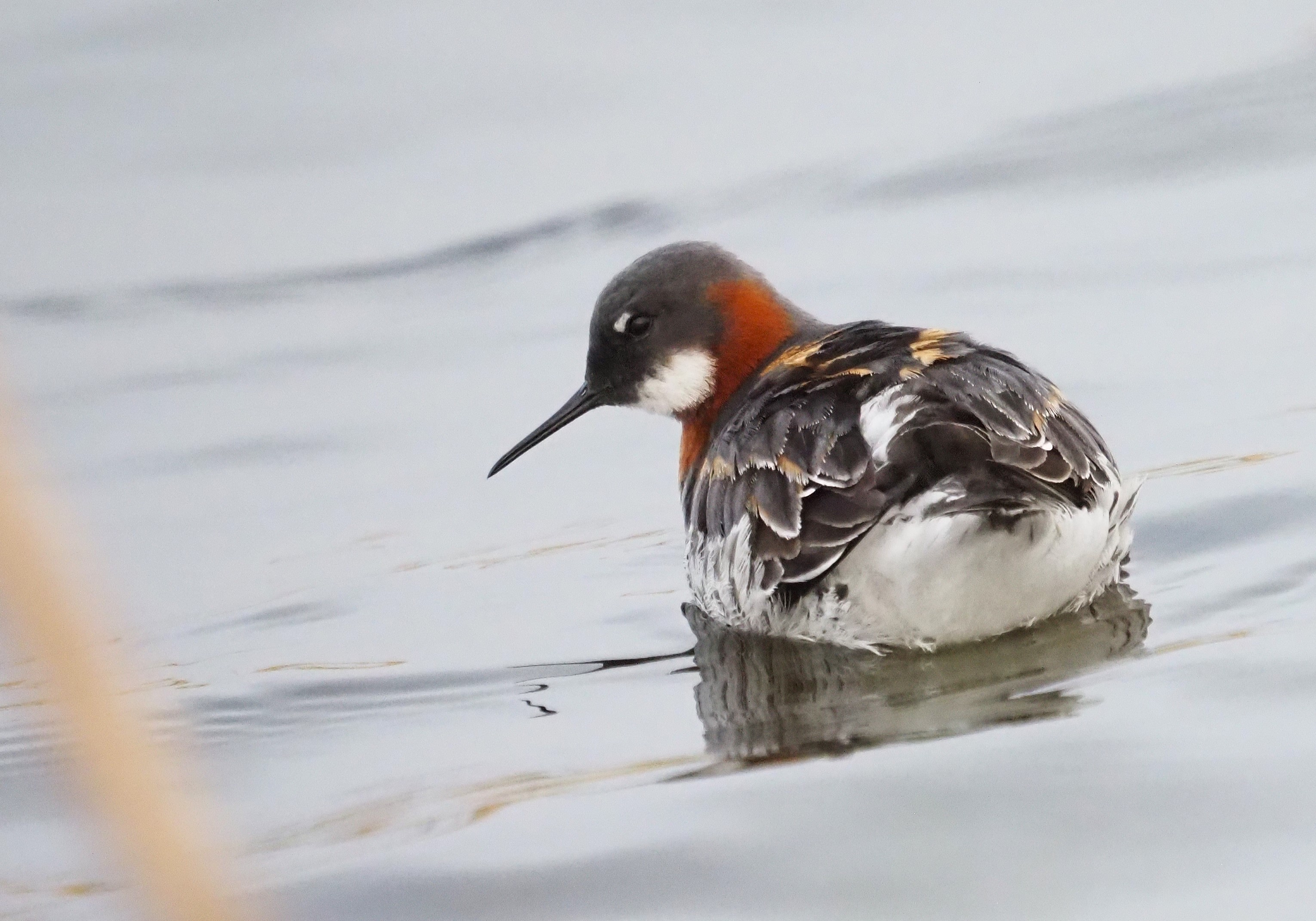
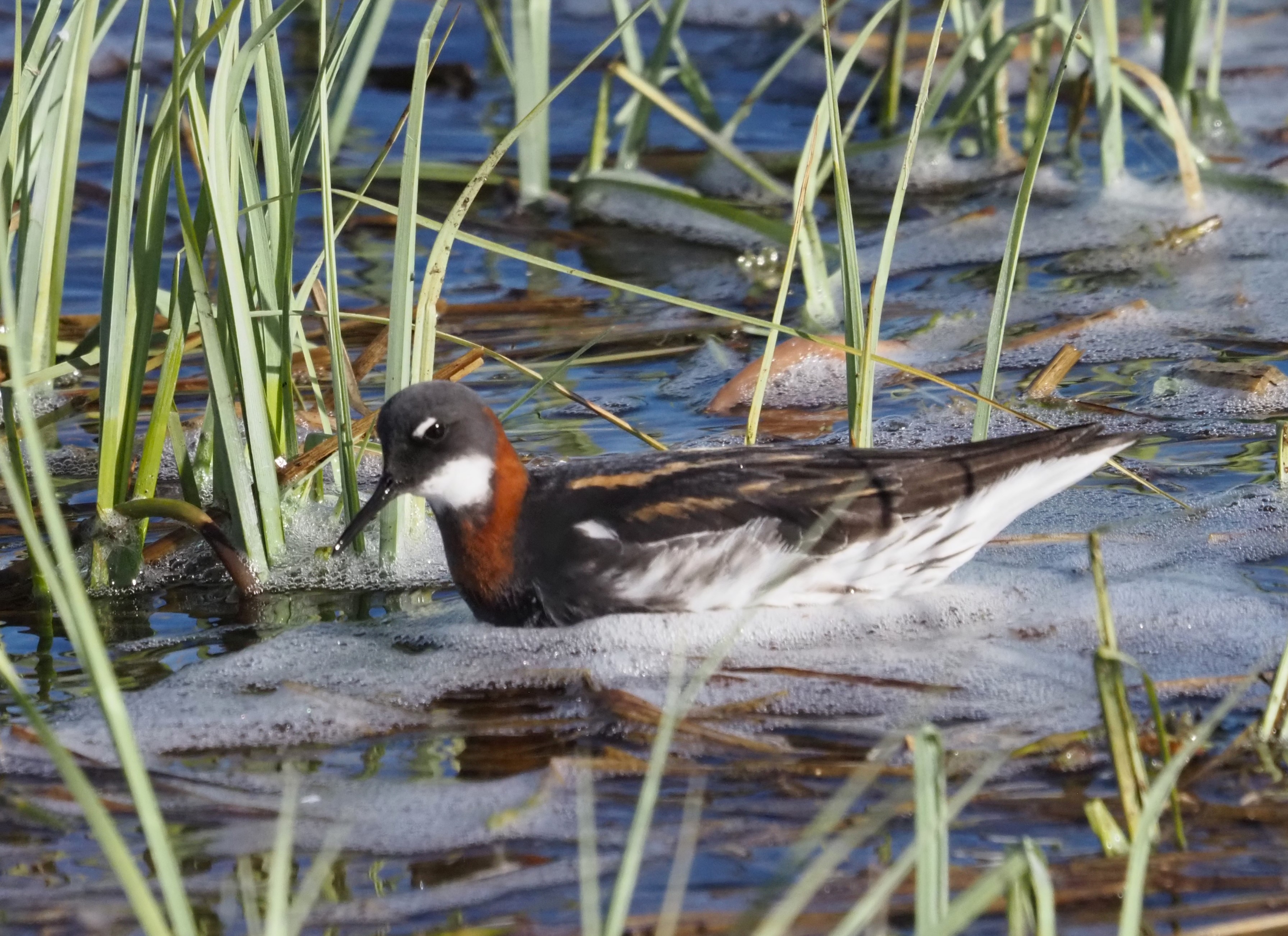
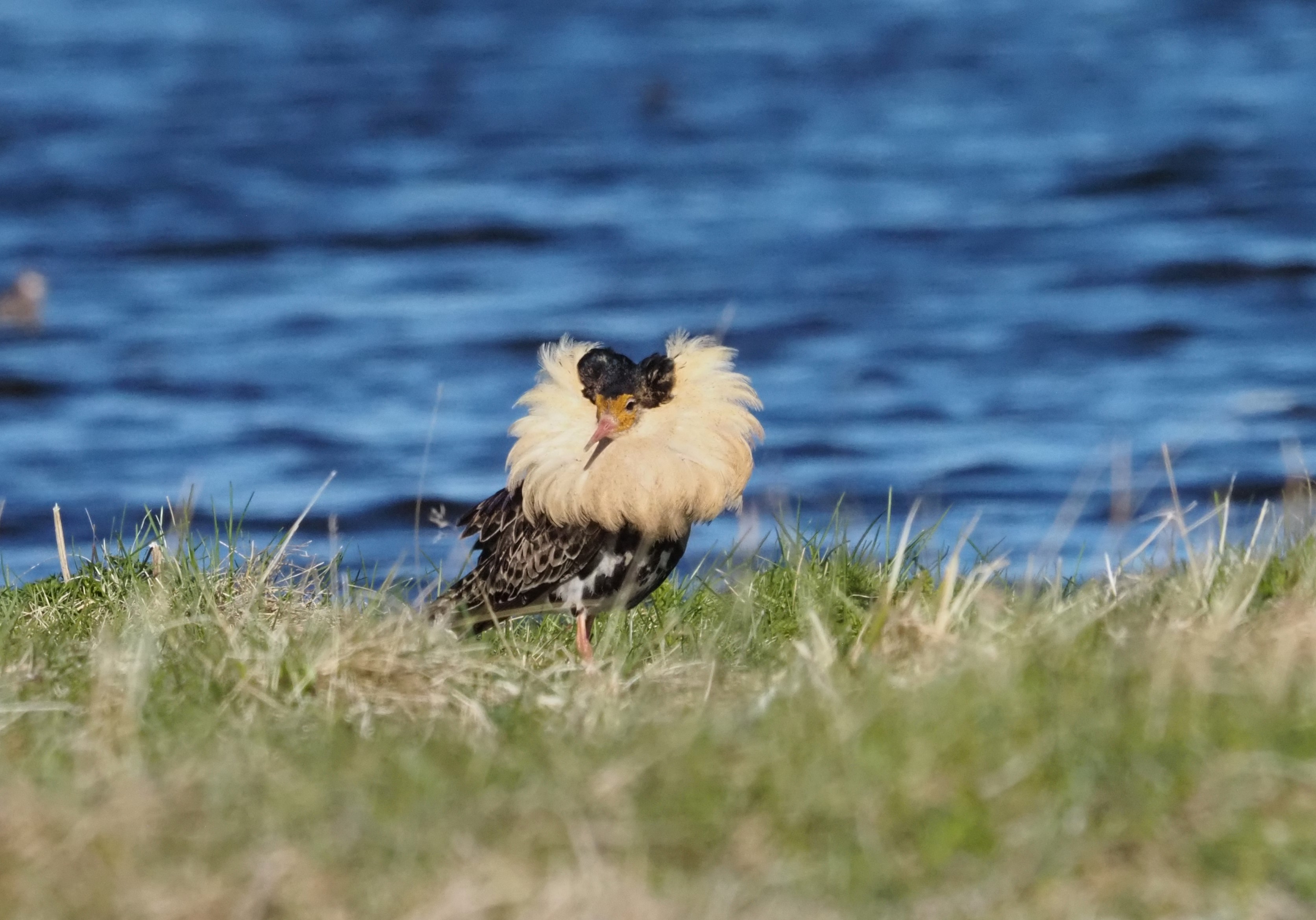
After checking in at our accommodation in Varanger we still had plenty of time to enjoy some top locations. In Vadso we spent some lovely time in one of its famous “Pharalope ponds”. Here we got to see this small creatures very close as they were feeding and courtshipping in the water. The afternoon was lovely but not very sunny. Still, we had great views on these wonderful birds, in a moment that normally is one of the highlights of our time in Norway. Along with them, some gorgeous Ruffs were also lekking, and yet this was another very special moment. There were males of the different colours that fighted for the attention of a couple of females moving in the grass. But these were not the only birds around. A pair of Temminck’s Stints were feeding at close range, and we also got a Bluethroat moving in the vegetation as well as a couple of Red-throated Pipits. Both Arctic Skuas and Arctic Terns were flying over the small lagoon and the bay beyond was full of Common Eiders & Goosanders. Unfortunately no Steller’s Eiders this year, as the seemed to be vanished from the area weeks ago.

After such a great stop, we still had some time to check a small corner that it is very nice for waders. Here we got excellent views on a large flock of drake Dunlins but also 2 Temminck’s Stints and Bar-tailed Godwit to end another wonderful day!

During our first drive in Varanger we got some very close views on White-tailed Eagles
Temminck’s Stint on its nesting site
This wonderful Ruff was taking a break on the fights..
A couple Red-necked Phalarope female close ups

Day 7. After enjoying a gorgeous breakfast at our accommodation we transferred North to Vadso. The main goal of the day was to visit Hornoya and its massive see bird colony. Our drive North had some stops to see Golden Plovers but also White-tailed Eagles, Arctic Skuas and a couple of Willow Ptarmigans standing up in the tundra. The drive also produced a small flock of Tundra Bean Geese in some fields next to the road.

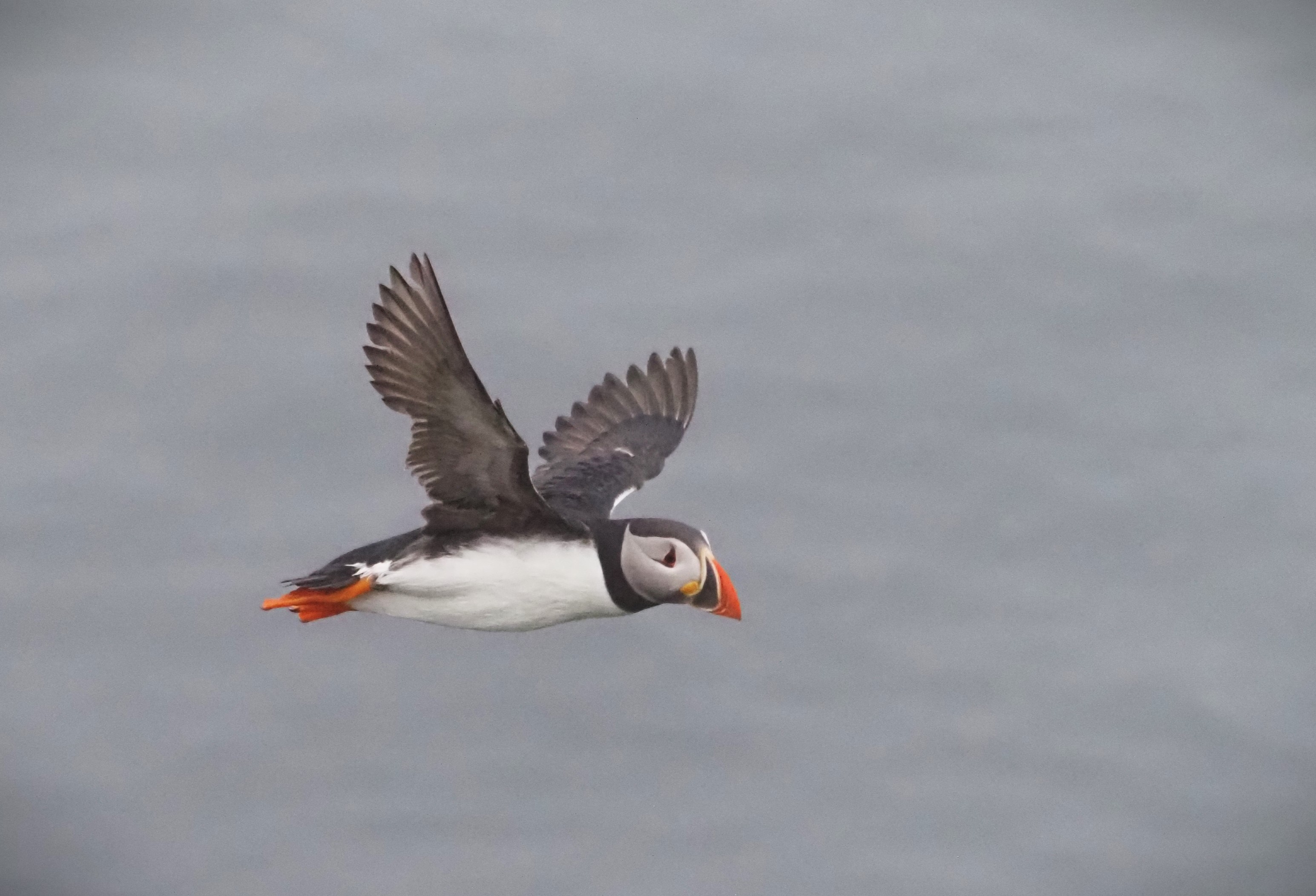
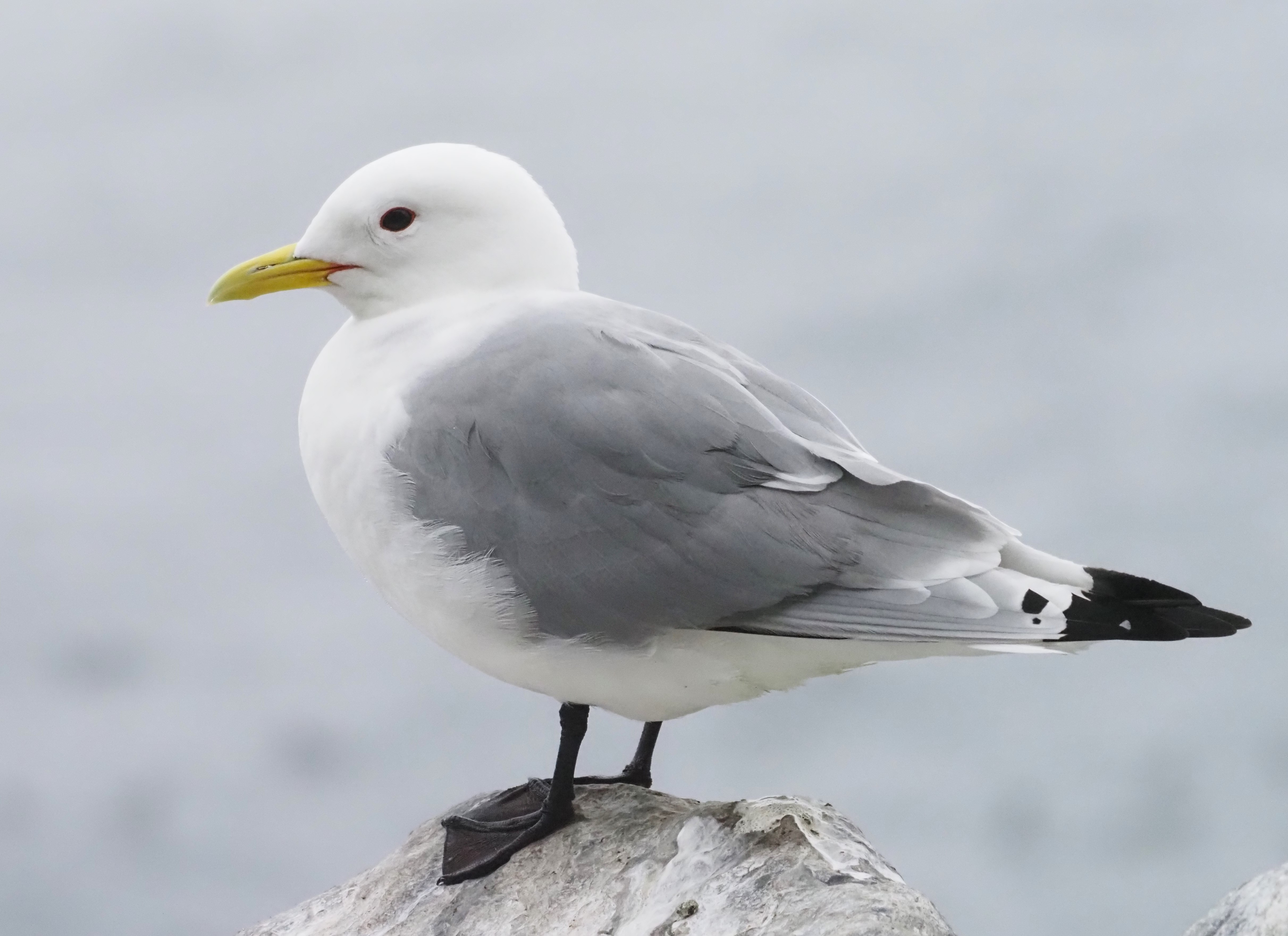
After a short boat trip, we arrived to Hornoya. The boat trip produced little beyond a couple of distants Grey Seals, Black Guillemots and flocks and flocks of Auks as we were approaching the island. Hornoya hosts a massive number of seabirds. Here there about 100.000 sea birds, with Kittiwake being the commoner followed by Common Guillemots, both with tens of thousands of pairs. Along with them there a few thousand of pairs of Razorbills and Atlantic Puffins. Shags, Brünnich’s Guillemots and Fulmars are also nesting here, the last with only a few pairs.

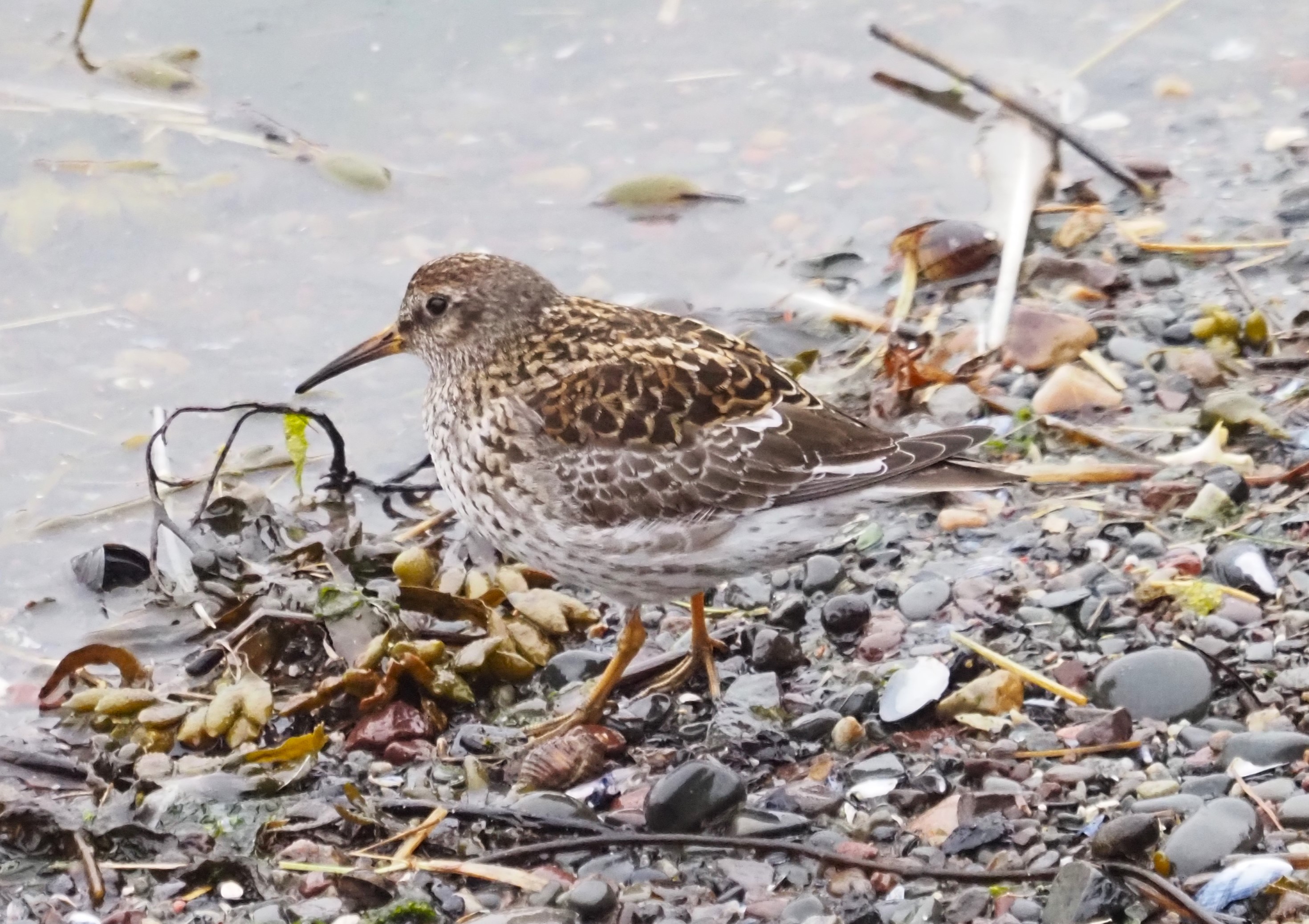
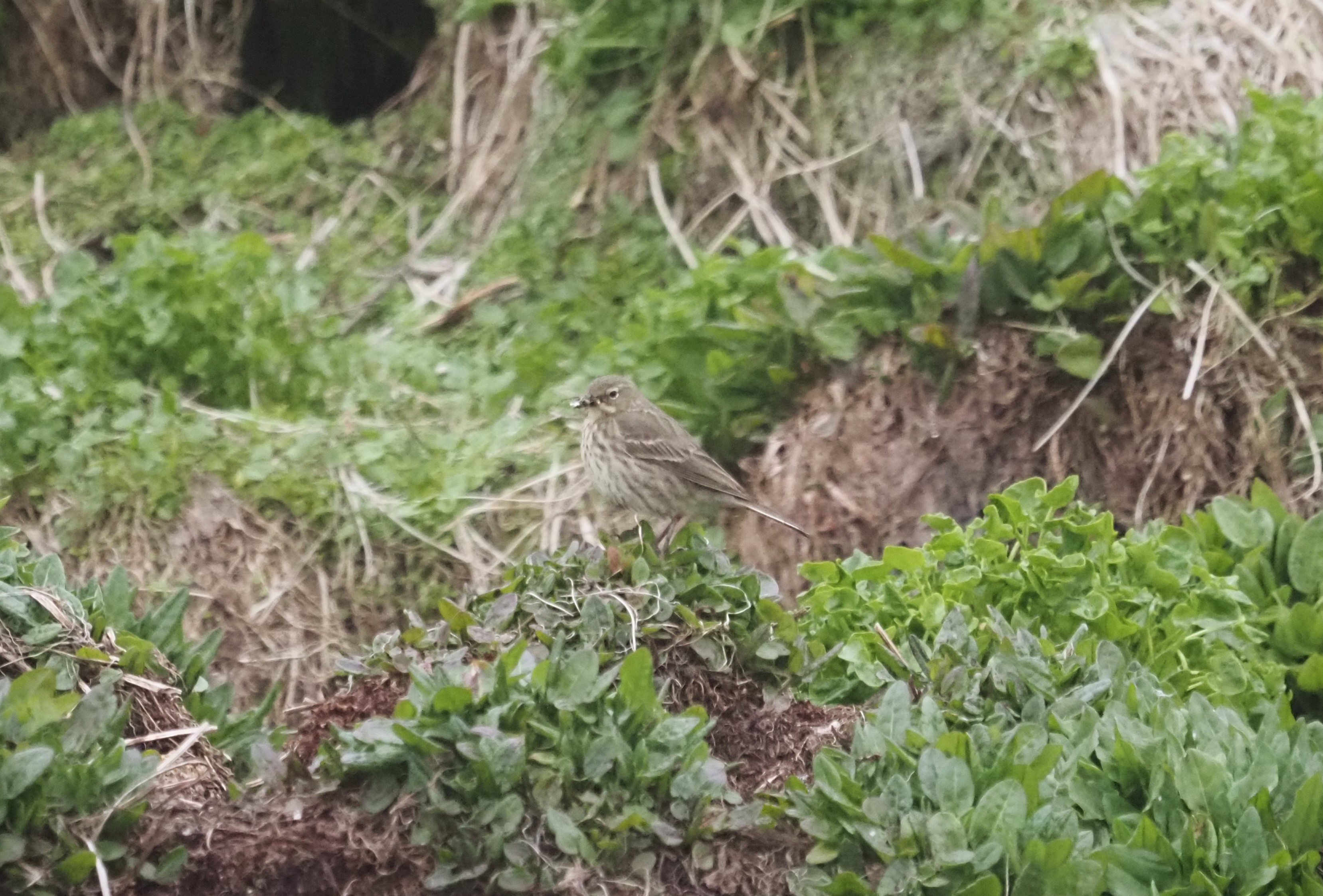
It didn’t take long for us to find some pairs of Brünnich’s Guillemots nesting in the cliffs, normally about 20 to 40 metres high, in all nests of Kittiwakes. Along the following hours, we enjoyed the breathtaking ambient of the colony. Those in the group that wanted to explore the upper part of the island had nice views on Red-throated Pipits and Barnacle Geese, and those who prefered to stay lower had good views on Purple Sandpipers and Water Pipits.

Black Guillemot in Vardo
Brünnich’s Guillemots on their nesting cornise
Guillemots only a few inches away
Atlantic Puffins were very tame, as usual
Face to face with Atlantic Puffin
This year there weren’t many

Back to the continent, we did a picnic stop in a nice tundra patch. It was our first stop in a proper tundra, but unfortunately the weather was misty and cold, and we had only a few birds around. It became windy, but during our drive North from Vardo, we had a number of stops in sheltered bays that allowed to connect with some good birds. Here we had large flocks of Long-tailed Ducks but also several Red-throated Diver and a nice mixed flock of Common & Velvet Scoters. Black Guillemots and Goosanders were everywhere. But the best bird in these bays was a drake White-billed Diver that, even if a bit far, produced nice scope views. A bit beyond, we had a couple of Minke Whales swimming really close to the coast, and we stopped a couple of minutes to check around. It was time enough for Mark to find a White-billed Diver in the sea, right out from where were. Second for the afternoon!

We still drove beyond, eventually arriving to the end of the lane. This is a nice place to check the sea. We are actually out of the Varanger fjord, and facing North into the Arctic Ocean, it will be nothing between us and the Svalbard archipelago, about 1000 miles North! This is also nice place for seabirds to migrate. It is still migration, and birds keep moving East along this coast, in their way to their nesting grounds in Central Siberia. Here we had the first Atlantic Gannets of the trip, but also several Auks, 2 Fulmars (blue form), at least 1 Pomarine Skua and a wonderful Great Northern Diver still in winter plumage and quite close to the coast. From here we just drove South, and this last transfer didn’t produce any new species out of a flock of 6 Pink-footed Geese close to Vadso.
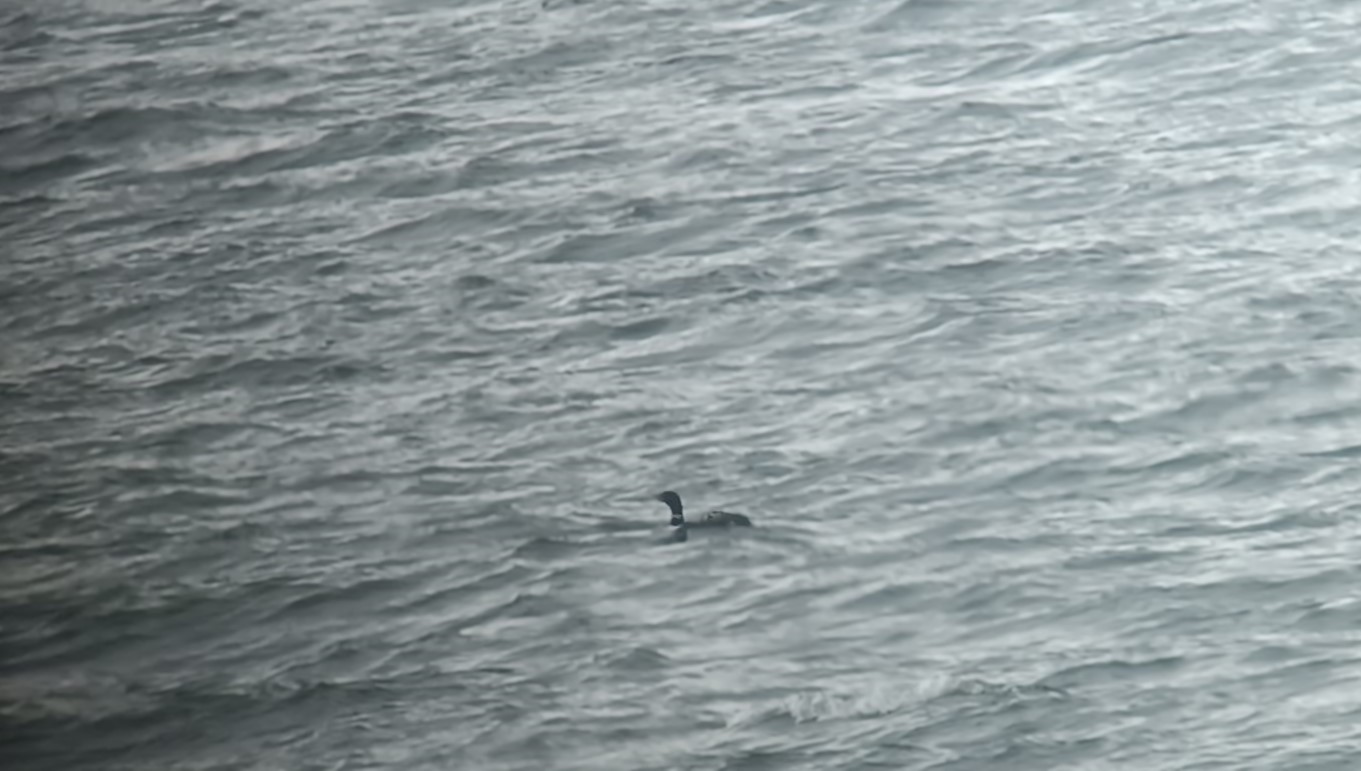
This is best image that we could get on White-billed Diver

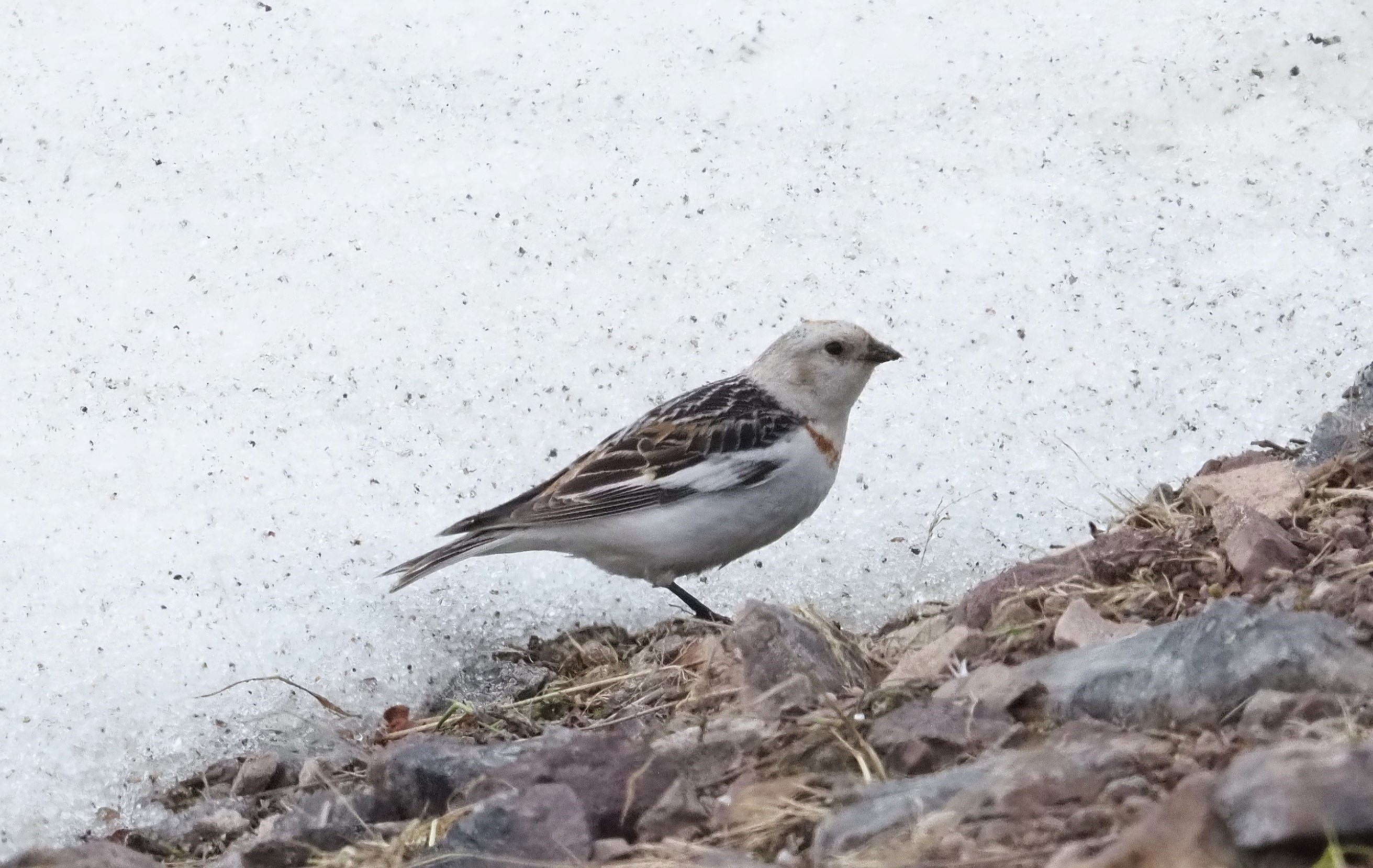
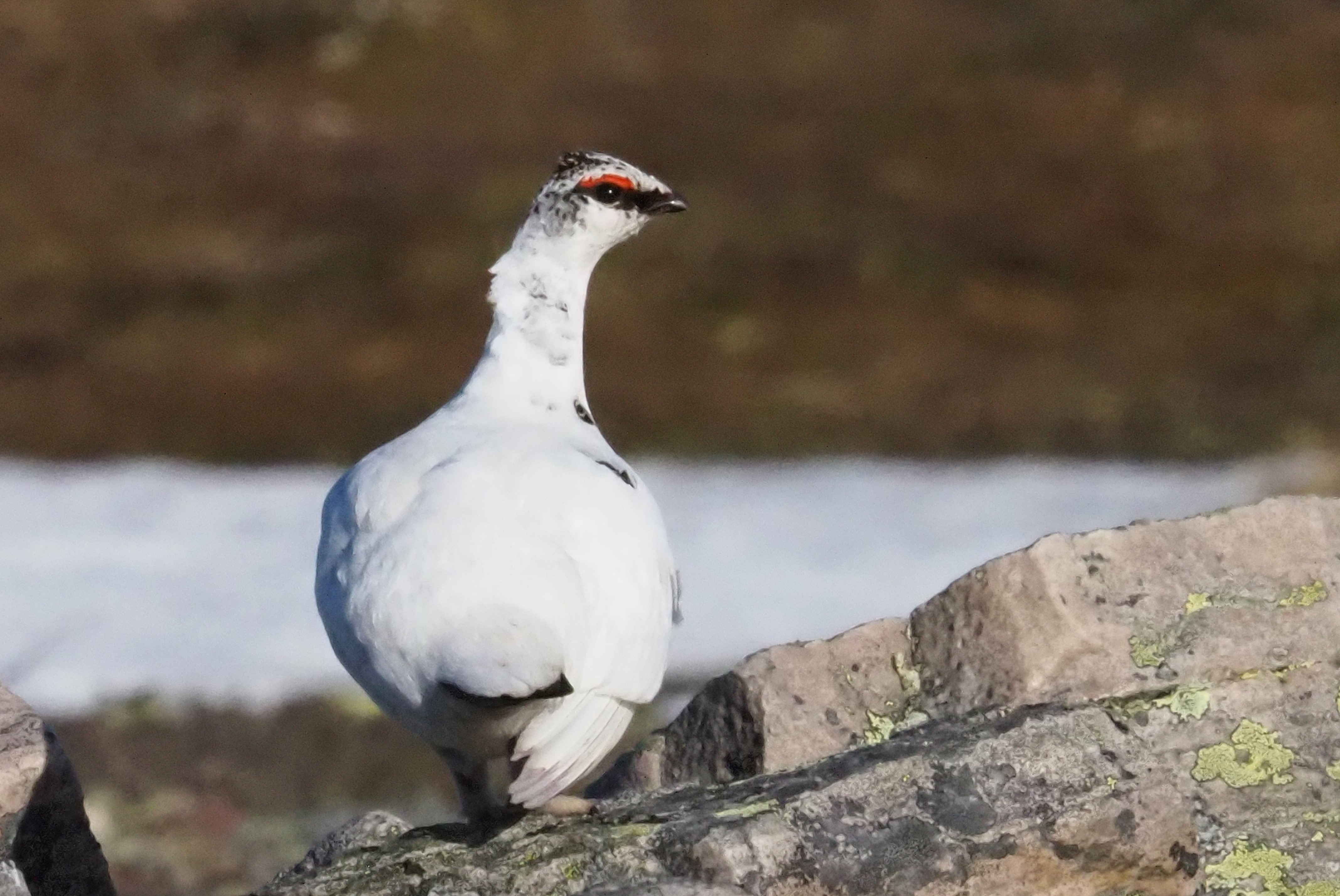
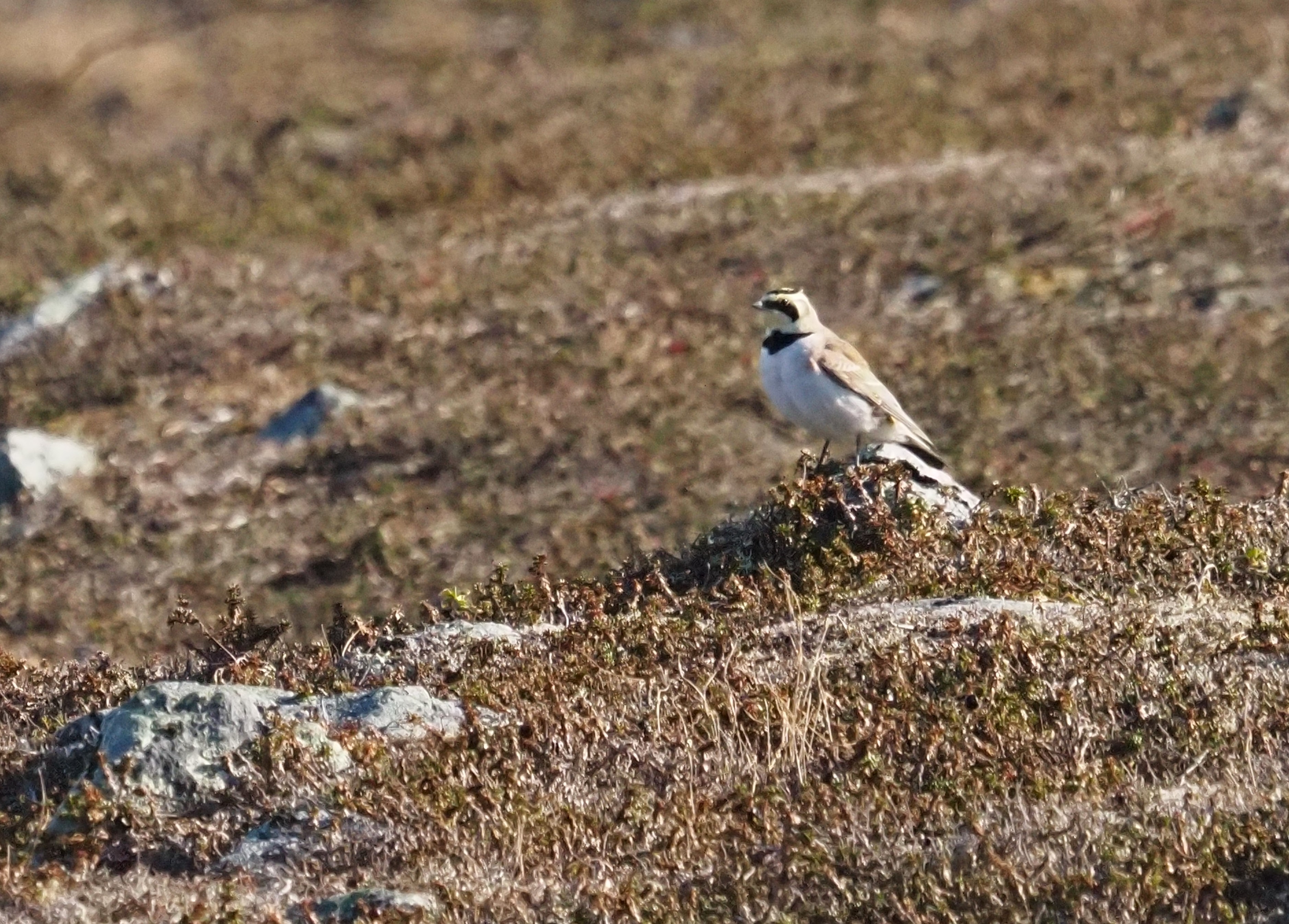
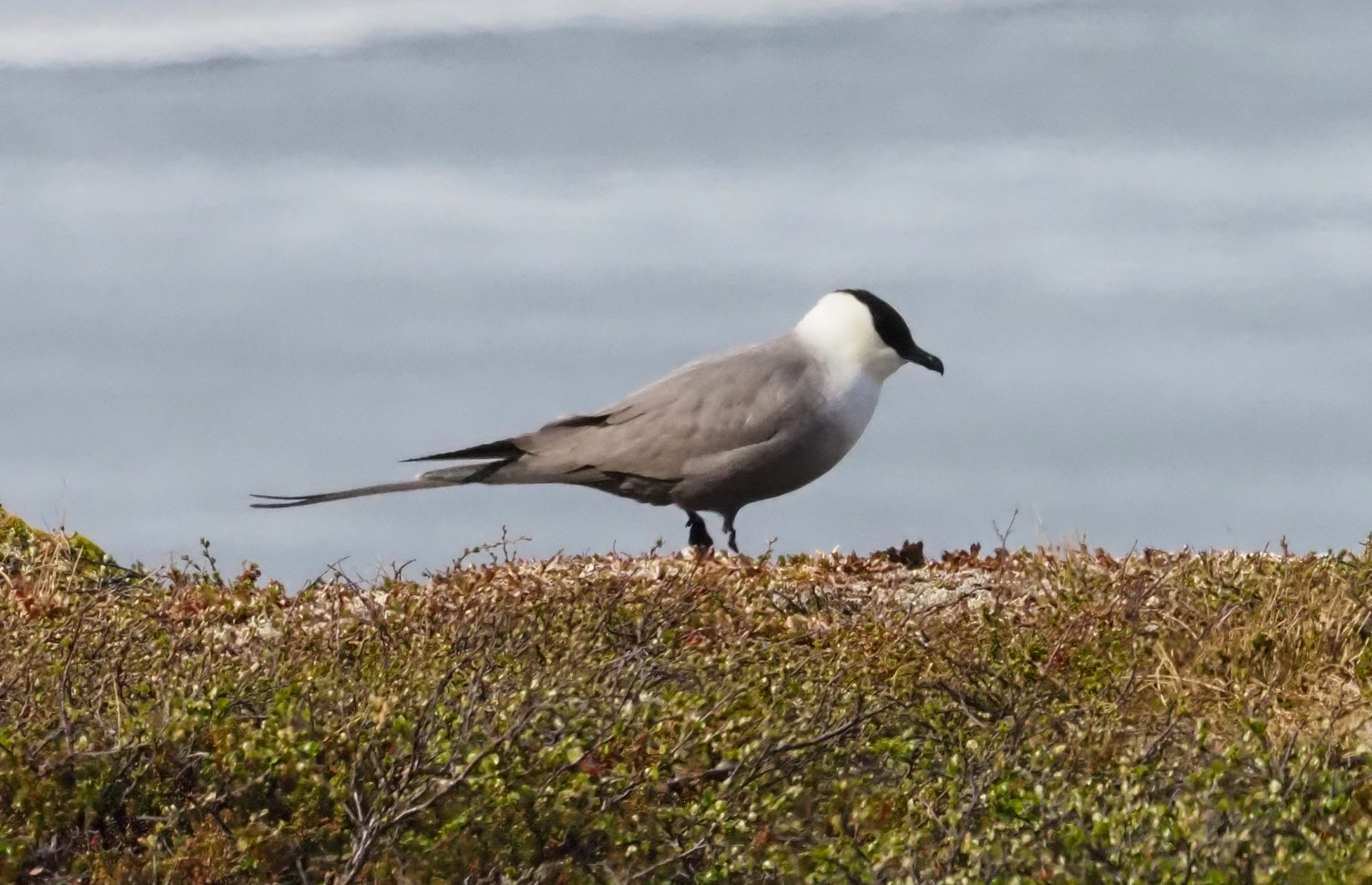
Day 8. This day was devoted to explore the central plateau of Varanger. This is one of the most spectacular places to be along our itinerary. After breakfast, we drove up the plateau. Once arrived to the high tundra, our way was always joined by several Willow Grouses and the majestic Long-tailed Skuas nesting around. A first stop produced Bluethroat and a shy pair of Arctic Redpoll. Temminck’s Stints were flying around along with Red-necked Phalaropes. Here and there there were small flocks of busy Ruffs lekking in the tundra. Most of the tundra was covered with snow and the birds were concentrated in the few patches of grass, and conveniently along both sides of the lane. Here we saw 4 Shore Larks but also several Lapland Buntings displaying and feeding on the ground, one of them moving along a female Snow Bunting. Cannot remember of this was before or after having the first of many Rock Ptarmigans. On Rock Ptarmigans, a first highlight was to see a pair displaying, with a second highlight including a male Rock Ptarmigan & male Willow Grouse standing next to each other! Here we also had several waders including Golden Plover, Little Stint, Whimbrel, Curlew, Temminck’s Stint, Wood Sandpiper, Common Snipe, Bar-tailed Godwit and 2 Turnstones flying in the hills covered with snow. Quite a sight!

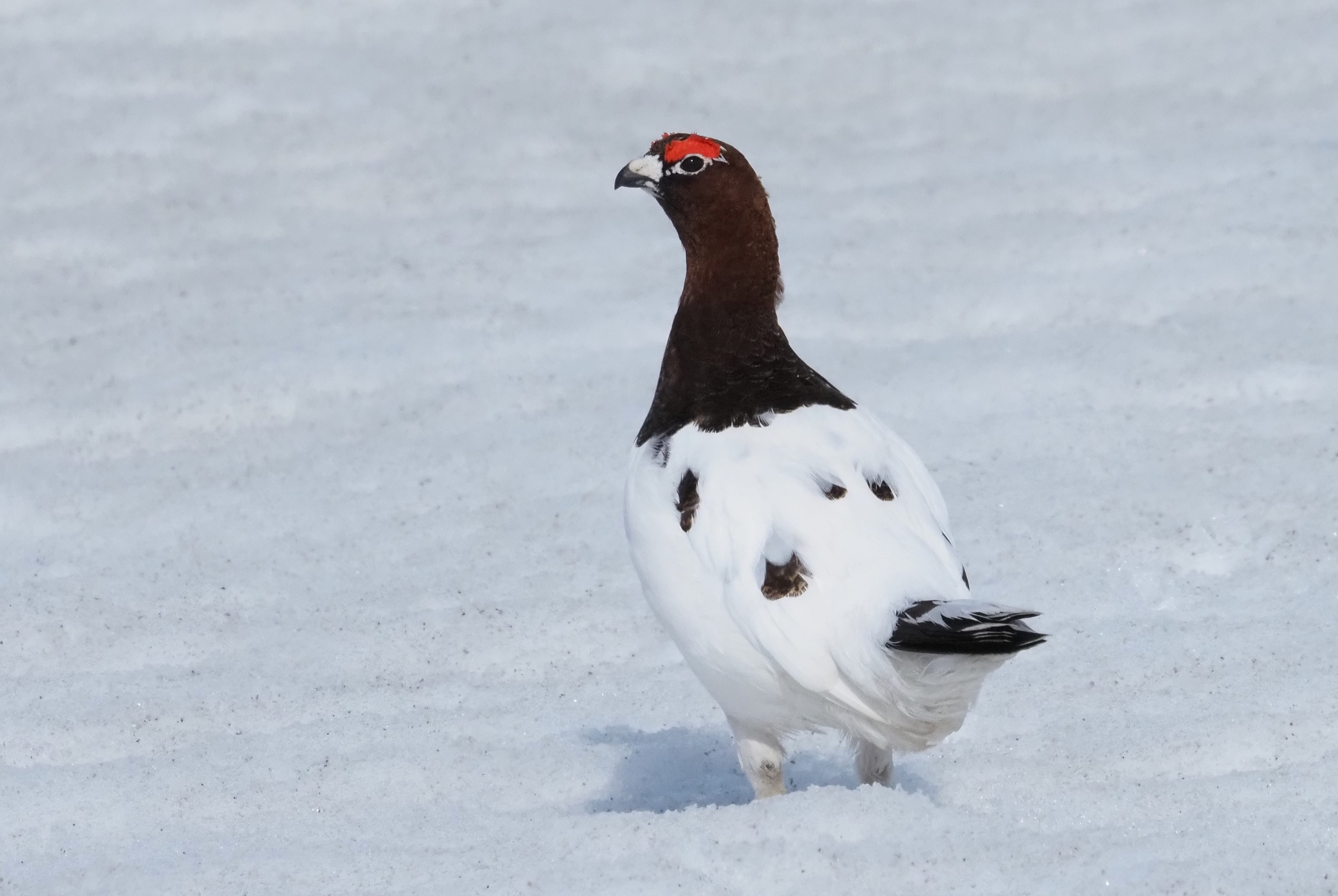
We had close views on Bluethroat on our first stop in the morning
Willow Grouse showed superbly, once more!
Long-tailed Skua
Dunlin in full summer plumage
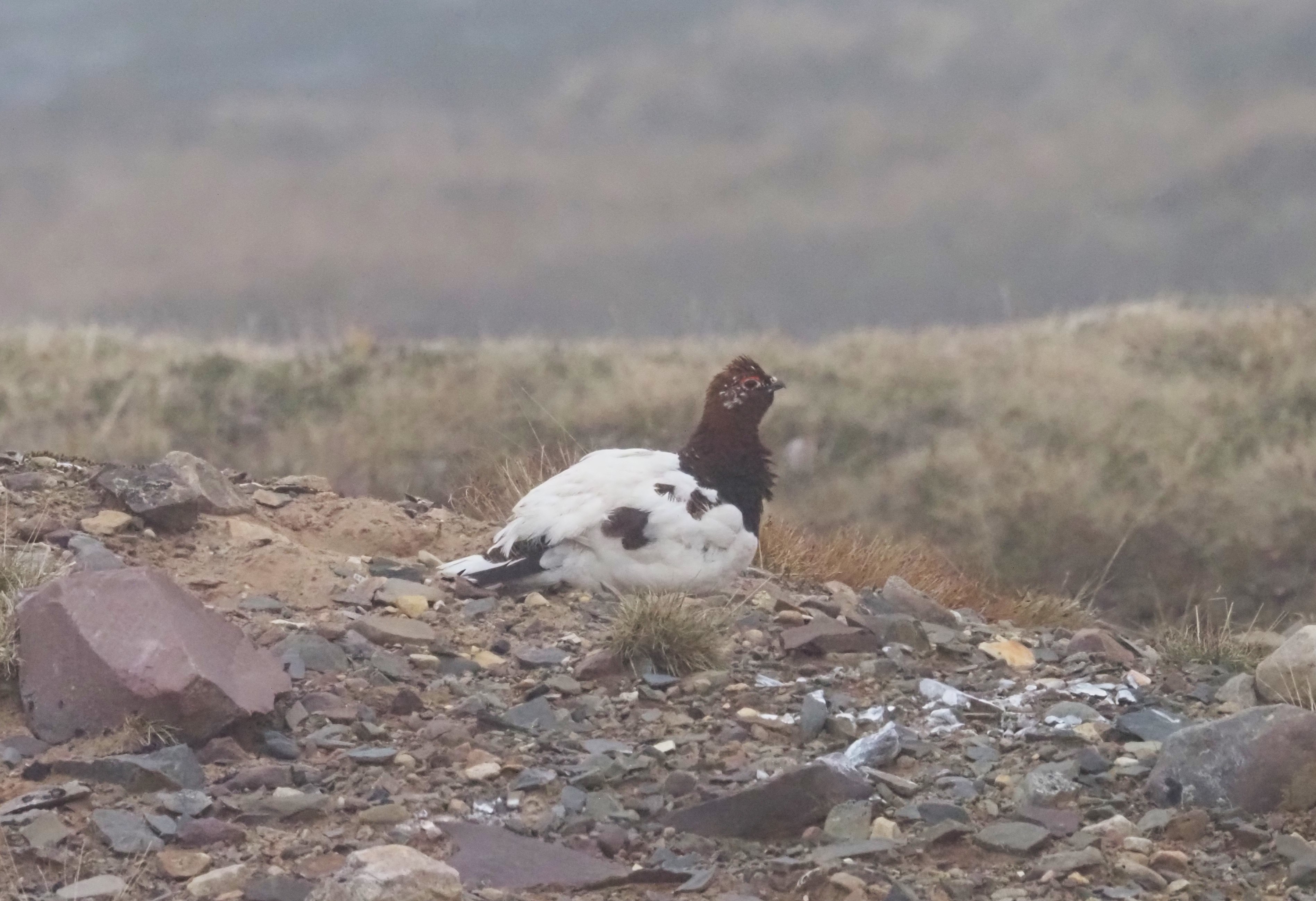
Rock Ptarmigan hiding as the weather became really cloudy
Snow Bunting feeding along a minor lane
Tundra Bean Goose & Red-necked Phalarope. A nice combination!

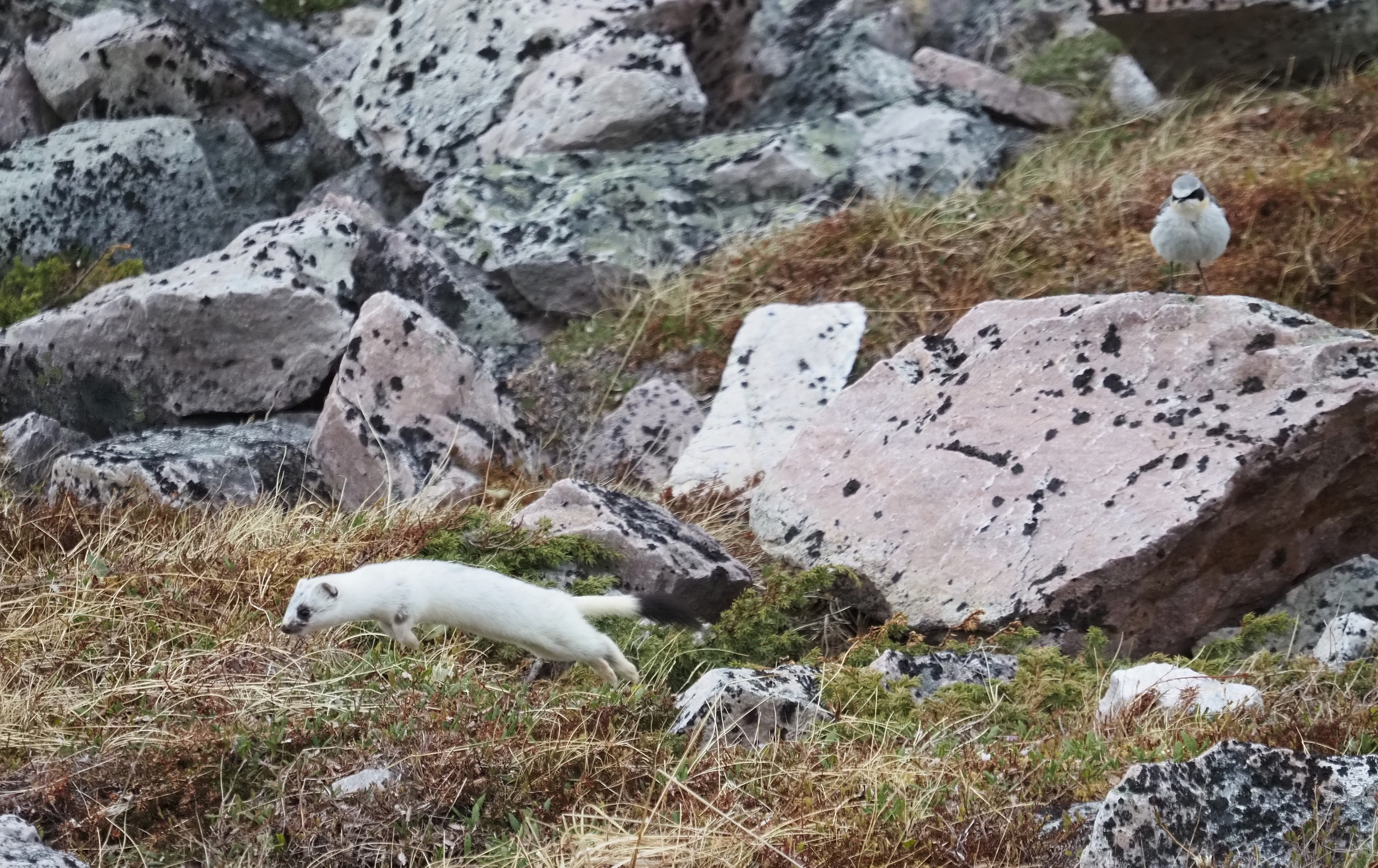
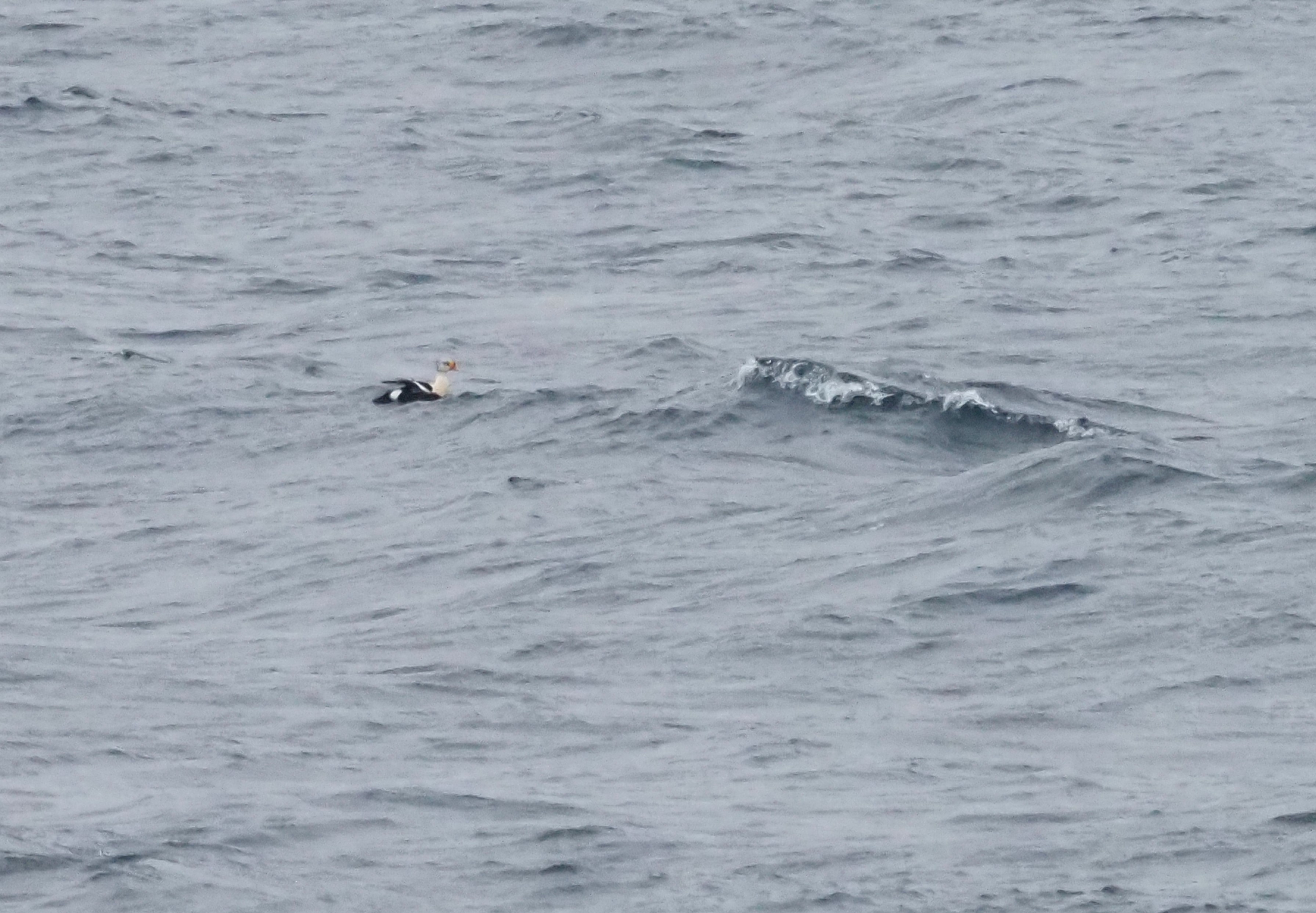
Exploring the Northern coast of Varanger, we had a rather poor afternoon. The day was very quiet with no wind and probably that explained the absence of migration in the sea. The last movement of the day was to check the bays around Bervelag. Here we got 4 King Eiders, including 2 bizarre-looking second summer males. In our way back, the most interesting sight was a female Merlin, some Black-throated Divers and a very attractive Stout that Paddy found in a typical place for Gyrfalcon that produced no falcons.

King Eiders showing their “gentle” faces.
This Stout was a funny way to end the afternoon. The Wheatear saw it in a different way..

Day 9. Going back to Finland we had a stop in a small nature reserve at the very beginning of the Varanger fjord. Here we got Tree Sparrow (very scarce here), 2 Sand Martins (rare) and still 2 Little Gulls in summer plumage. It was windy and cloudy so a good day for birds to move and to find birds out of their normal spots. The tide was high, with only some yards of tidal marsh out of the water right in front of the two small hides of the nature reserve. Even if nothing very spectacular, here we got lovely views on summer plumaged Little and Temminck’s Stints feeding side to side along with other common species.

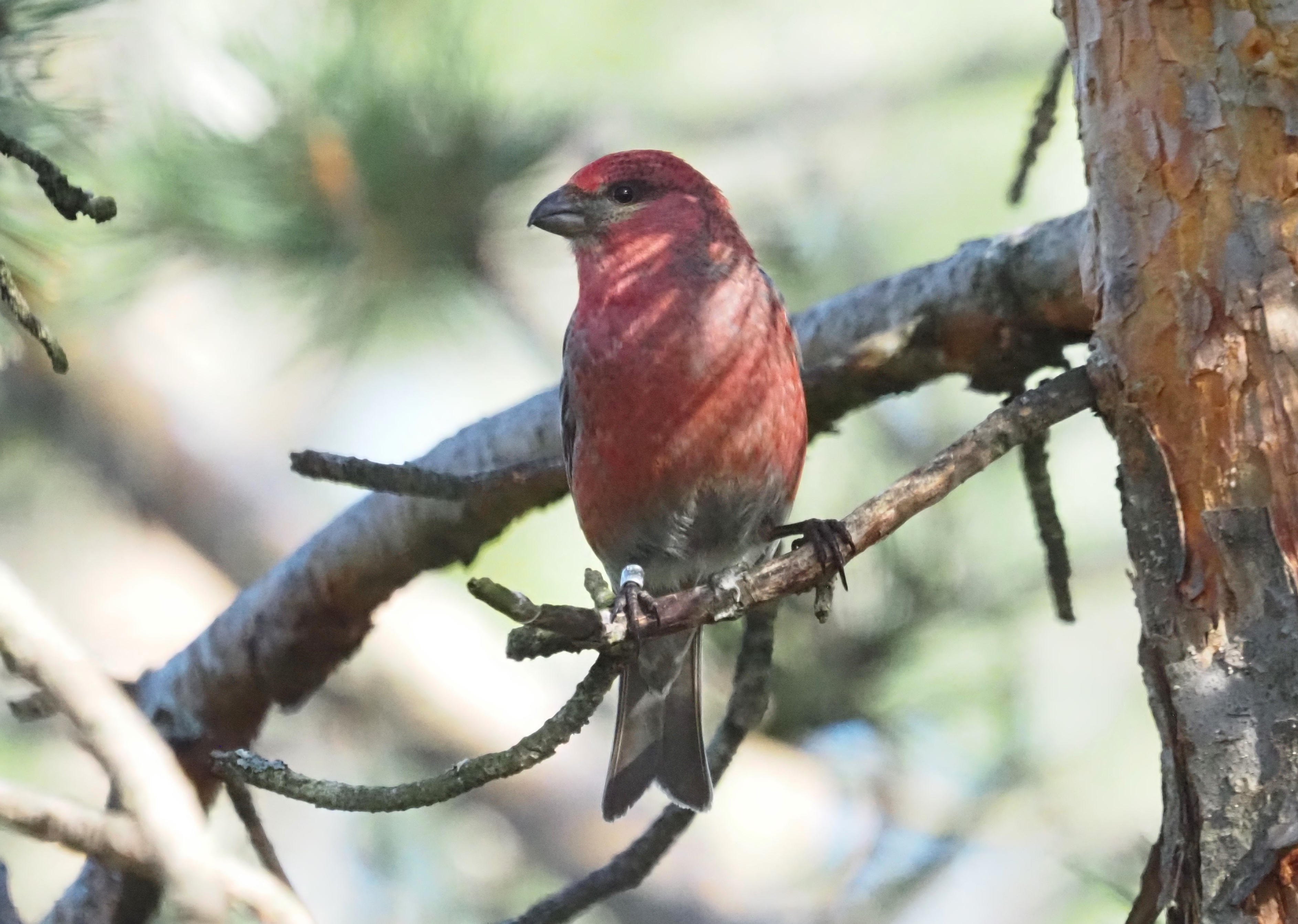
Back to Finland, we had a pair of stops under the (already) solid rain. Here we got nice views on a drake Spotted Redshank, a few Bohemian Waxwings and 2 close Taiga Bean Geese. The rain was making difficult to scan for waders in the bojs, but the rain had been really nice for us. The ambient so fresh and cloudy in the border between Norway and Finland that we saw up to 7 Moose, including some extremely close views providing us with great photo opportunities! Arrived to our accommodation in the afternoon, we had plenty of time to enjoy up to 4 Pine Grosbeaks at the feeding station to end our last full day!
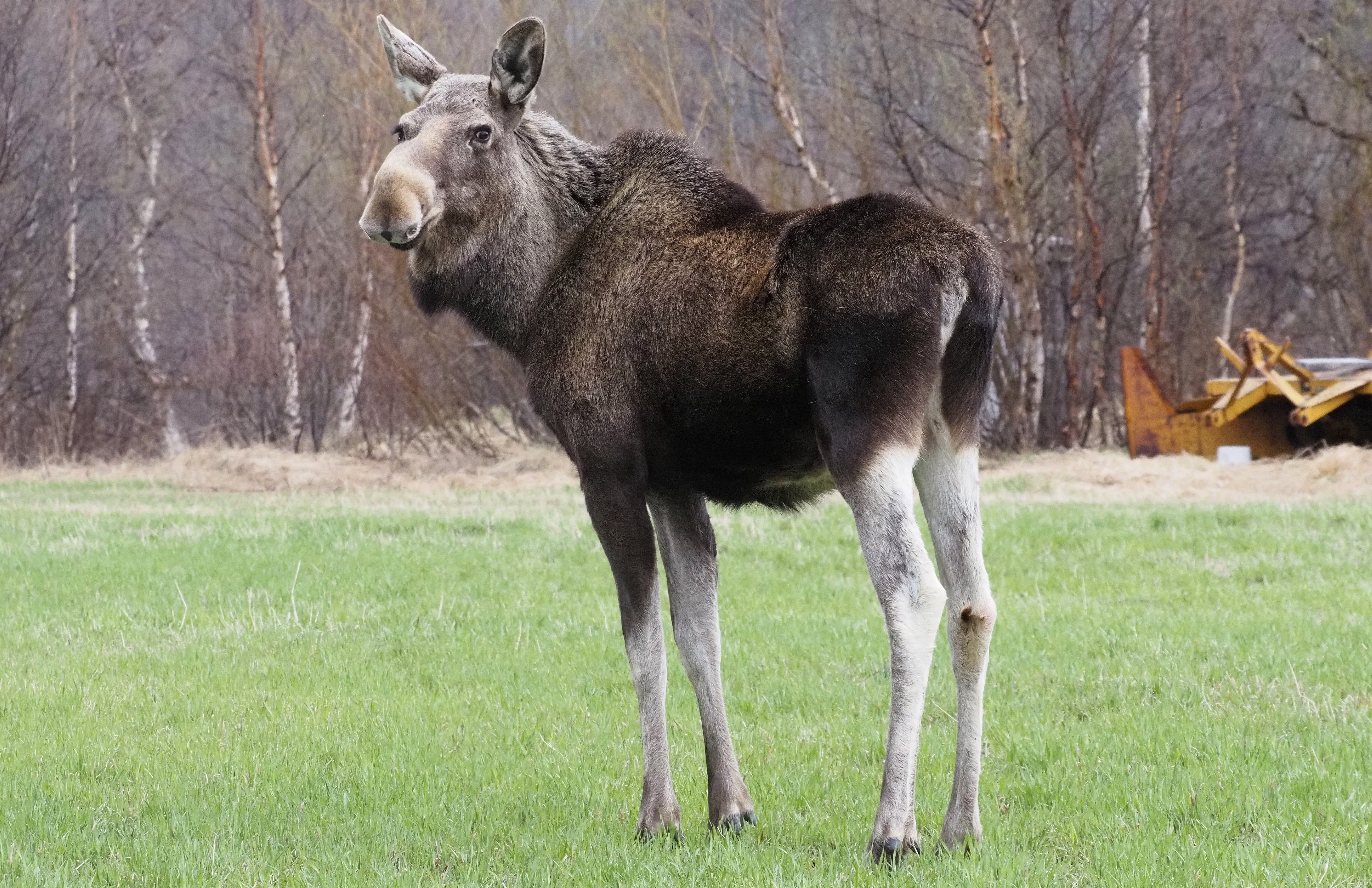
Legendary views on Moose..
We were lucky to pick up this Arctic Redpoll. There really few this year!
Bohemian Waxwing along the road as we were crossing large boreal forests
Despite the rainy afternoon, the day ended with superb views on Pine Grosbeaks

Day 10. This day we agreed an early start to try to catch up with a couple of species that we were still missing. Our first movement was to check a nesting place for Broad-billed Sandpiper, and we had extremely good views on a bird singing, displaying and feeding on the ground. Always a pleasure to see how their plumage matches so well with the landscape where they belong! Here we also got 3 drake Spotted Redshanks, Red-necked Phalaropes and Ruffs about to lek in the cloudy ambient.

From here we moved into a forest, with the hope to connect with Parrot Crossbill. We got more Willow Grouses, Rough-legged Buzzard and a couple of Smews in the way, but our efforts to put down the Parrot Crossbill in the list of trip had no reward.

From here we just drove to the airport to end another great trip in Northern Finland and Finnmark. Very looking forward to be back there in 2026! Impossible to get enough of this place!!!

This Broad-billed Sandpiper gave us a show in the last morning of the tour!

Looking forward going back in 2026. Please check our website to get all the details: https://barcelonabirdingpoint.com/tour-por-pais/finland-finnmark-the-wild-arctic/

List of the birds of the trip:

  1. Whooper Swan (Cygnus cygnus)
  2. Mute Swan (Cygnus olor)
  3. Common Shelduck (Tadorna tadorna)
  4. Greylag Goose (Anser anser)
  5. Tundra Bean Goose (Anser serrirostris)
  6. Taiga Bean Goose (Anser fabalis)
  7. Pink-footed Goose (Anser brachyrhynchus)
  8. Barnacle Goose (Branta leucopsis)
  9. Eurasian Wigeon (Marecca penelope)
  10. Gadwall (Marecca strepera)
  11. Eurasian Teal (Anas crecca)
  12. Mallard (Anas platythynchos)
  13. Northern Pintail (Anas acuta)
  14. Garganey (Spatula querquedula)
  15. Northern Shoveler (Spatula clypeata)
  16. Tufted Duck (Aythya fuligula)
  17. Common Eider (Somateria mollissima)
  18. King Eider (Somateria spectabilis)
  19. Long-tailed Duck (Clangula hyemalis)
  20. Common Scoter (Melanitta nigra)
  21. Velvet Scoter (Melanitta fusca)
  22. Goldeneye (Bucephala clangula)
  23. Smew (Merguellus albellus)
  24. Goosander (Mergus merganser)
  25. Red-breasted Merganser (Mergus serrator)
  26. Common Pheasant (Phaisanus colchinus) — heard only
  27. Grey Partridge (Perdix perdix)
  28. Hazel Grouse (Bonasa bonasia)
  29. Willow Grouse (Lagopus lagopus)
  30. Rock Ptarmigan (Lagopus mutus)
  31. Black Grouse (Lyrurus tetrix)
  32. Western Capercaillie (Tetrao urogallus)
  33. Common Swift (Apus apus)
  34. Common Cuckoo (Cuculus canorus)
  35. Feral Pigeon (Columba livia)
  36. Common Woodpigeon (Columba palumbus)
  37. Eurasian Collared Dove (Streptopelia decaocto)
  38. Common Crane (Grus grus)
  39. Great Crested Grebe (Podiceps cristatus)
  40. Red-necked Grebe (Podiceps grisegena)
  41. Slavonian Grebe (Podiceps auritus)
  42. Eurasian Oystercatcher (Haematopus ostralegus)
  43. Common Ringed Plover (Charadrius hiaticula)
  44. Eurasian Golden Plover (Pluvialis apricaria)
  45. Northern Lapwing (Vanellus vanellus)
  46. Temminck’s Stint (Calidris temminckii)
  47. Dunlin (Calidris alpina)
  48. Purple Sandpiper (Calidris maritima)
  49. Little Stint (Calidris minuta)
  50. Red Knot (Calidris canutus)
  51. Ruff (Calidris pugnax)
  52. Broad-billed Sandpiper (Calidris falcinellus)
  53. Eurasian Woodcock (Scolopax rusticola)
  54. Common Snipe (Gallinago gallinago)
  55. Bar-tailed Godwit (Limosa lapponica)
  56. Black-tailed Godwit (Limosa limosa)
  57. Eurasian Whimbrel (Numenius phaeopus)
  58. Eurasian Curlew (Numenius arquata)
  59. Spotted Redshank (Tringa erythropus)
  60. Common Redshank (Tringa totanus)
  61. Greenshank (Tringa nebularia)
  62. Green Sandpiper (Tringa ochropus)
  63. Wood Sandpiper (Tringa glareola)
  64. Common Sandpiper (Actitis hypoleucos)
  65. Ruddy Turnstone (Arenaria interpres)
  66. Red-necked Phalarope (Phalaropus lobatus)
  67. Little Gull (Hydrocoloeus minutus)
  68. Black-headed Gull (Chroicocephalus ridibundus)
  69. Common Gull (Larus canus)
  70. Great Black-backed Gull (Larus marinus)
  71. Herring Gull (Larus argentatus)
  72. Lesser Black-backed Gull (Larus fuscus)
  73. Glaucous Gull (Larus hyperboreus)
  74. Kittiwake (Rissa trydactyla)
  75. Common Tern (Sterna hirundo)
  76. Arctic Tern (Sterna paradisaea)
  77. Little Tern (Sternula albifrons)
  78. Caspian Tern (Hydroprogne caspia)
  79. Arctic Skua (Stercorarius parasiticus)
  80. Pomarine Skua (Stercorarius pomarinus)
  81. Long-tailed Skua (Stercorarius logicaudus)
  82. Guillemot (Uria aalge)
  83. Brünnich’s Guillemot (Uria lomvia)
  84. Razorbill (Alca torda)
  85. Black Guillemot (Cepphus grylle)
  86. Atlantic Puffin (Fratercula arctica)
  87. Red-throated Diver (Gavia stellata)
  88. Black-throated Diver (Gavia arctica)
  89. White-billed Diver (Gavia adamsii)
  90. Great Northern Diver (Gavia immer)
  91. Atlantic Gannet (Morus bassanus)
  92. Northern Fulmar (Fulmarus glaciaris)
  93. Great Cormorant (Phalacrocorax carbo)
  94. Atlantic Shag (Gulosus aristotelis)
  95. Osprey (Pandion haliaetos)
  96. Hen Harrier (Circus cyaneus)
  97. Pallid Harrier (Circus macrourus)
  98. Western Masrh Harrier (Circus aeruginosus)
  99. Eurasian Goshawk (Accipiter gentilis)
  100. Eurasian Sparrowhawk (Accipiter nisus)
  101. European Honey Buzzard (Pernis apivorus)
  102. Black Kite (Milvus migrans)
  103. Common Buzzard (Buteo buteo)
  104. Rough-legged Buzzard (Buteo lagopus)
  105. White-tailed Eagle (Haliaeetus albicilla)
  106. Eurasian Eagle Owl (Bubo bubo)
  107. Tengmalm’s Owl (Aegolius funereus)
  108. Great Grey Owl (Strix nebulosa)
  109. Ural Owl (Strix uralensis)
  110. Eurasian Pygmy Owl (Glaucidium passerinum)
  111. Great Spotted Woodpecker (Dendrocopos major)
  112. Lesser Spotted Woodpecker (Dryobates minor)
  113. Three-toed Woodpecker (Picoides tridactylus)
  114. Black Woodpecker (Dryocopus martius)
  115. Grey-headed Woodpecker (Picus canus)
  116. Common Kestrel (Falco tinnunculus)
  117. Merlin (Falco columbarius)
  118. Eurasian Jay (Garrulus glandarius)
  119. Siberian Jay (Perisoreus infaustus)
  120. Eurasian Magpie (Pica pica)
  121. Jackdaw (Coloeus monedula)
  122. Hooded Crow (Corvus cornix)
  123. Rook (Corvus frugilegus)
  124. Common Raven (Corvus corax)
  125. Bohemian Waxwing (Bombycilla garrulus)
  126. Willow Tit (Poecile montanus)
  127. Siberian Tit (Poecile cinctus)
  128. Eurasian Blue Tit (Cyanistes caeruleus)
  129. Great Tit (Parus major)
  130. Eurasian Skylark (Alauda arvensis)
  131. Shore Lark (Eremophila alpestris)
  132. Sand Martin (Riparia riparia)
  133. Barn Swallow (Hirundo rustica)
  134. Western House Martin (Delichon urbicum)
  135. Common Chiffchaff (Phylloscopus collybita) — heard only
  136. Willow Warbler (Phylloscopus trochilus)
  137. Sedge Warbler (Acrocephalus schoenobaenus)
  138. Garden Warbler (Sylvia borin) — heard only
  139. Common Whitethroat (Curruca communis)
  140. Lesser Whitethroat (Curruca curruca)
  141. Goldcrest (Regulus regulus)
  142. Eurasian Wren (Troglodytes troglodytes) — heard only
  143. Common Starling (Sturnus vulgaris)
  144. Fieldfare (Turdus pilaris)
  145. Song Thrush (Turdus philomelos)
  146. Eurasian Redwing (Turdus iliacus)
  147. Mistle Thrush (Turdus viscivorus)
  148. Eurasian Blackbird (Turdus merula)
  149. Eurasian Robin (Erithacus rubecula) — heard only
  150. Bluethroat (Luscinia svecica)
  151. Red-flanked Bluetail (Tarsiger cyanurus)
  152. Common Redstart (Phoenicurus phoenicurus)
  153. Whinchat (Saxicola rubetra)
  154. Northern Wheatear (Oenanthe oenanthe)
  155. Spotted Flycatcher (Muscicapa striata)
  156. Pied Flycatcher (Ficedula hypoleuca)
  157. House Sparrow (Passer domesticus)
  158. Eurasian Tree Sparrow (Passer montanus)
  159. Meadow Pipit (Anthus pratensis)
  160. Tree Pipit (Anthus trivialis)
  161. Red-throated Pipit (Anthus cervinus)
  162. White Wagtail (Motacilla alba)
  163. Yellow Wagtail (Motacilla flava)
  164. Common Chaffinch (Fringilla coelebs)
  165. Brambling (Fringilla montifringilla)
  166. Eurasian Greenfinch (Chloris chloris)
  167. Eurasian Goldfinch (Carduelis carduelis)
  168. Eurasian Siskin (Spinus spinus)
  169. Linnet (Carduelis cannabina)
  170. Mealy Redpoll (Carduelis flammea) / Arctic Redpoll (Carduelis flamema hornemanni)
  171. Common Rosefinch (Carpodacus erythrinus)
  172. Eurasian Bullfinch (Pyrrhula pyrrhula)
  173. Pine Grosbeak (Pinicola enucleator)
  174. Common Crossbill (Loxia curvirostra)
  175. Lapland Bunting (Calcarius lapponicus)
  176. Snow Bunting (Pletrophenax nivalis)
  177. Yellowhammer (Emberiza citrinella)
  178. Ortolan Bunting (Emberiza hortulana)
  179. Reed Bunting (Emberiza schoeniclus)
  180. Rustic Bunting (Emberiza rustica)
  181. Little Bunting (Emberiza pusilla)

List of mammals seen during the trip:

  1. European Hare (Leppus leppus)
  2. Mountain Hare (Leppus timidus)
  3. Red Squirrel (Sciurus vulgaris)
  4. Stout (Mustela erminea)
  5. Grey Seal (Halichoerus grypus)
  6. Roe Deer (Capreolus capreolus)
  7. Moose (Alces alces)
  8. Reindeer (Rangifer tarandus)
  9. Northern Minke Whale (Balaenoptera acurostrata)

Finland 2024 Birding Trip Report

  • Dates: From May 31st to June 9th, 2024
  • Tour participants: 10
  • Number of species seen: 170
  • Tour leader: Carles Oliver & Ramiro Aibar

All images in this trip report by Carles Oliver. All rights reserved.

Overview: Our 7th tour in Northern Finland & Finnmark was again a very successful adventure, despite some notorious absences. One of the most noticeable things during the trip was the almost total absence of Crossbills, with extremely few contacts and only a couple of proper sights. Parrot Crossbills seemed disappeared, with no records at all in the area. We got excellent views on all the Grouses during the trip, plus 5 species of Owls despite the low density of them both around Oulu and in Varanger. On the contrary, both Rustic & Little Buntings seemed to be everywhere in some parts of the trip, and Red-flanked Bluetail & Three-toed Woodpecker performed for our group in a very straightforward way.

Day 1. Part of group landed in Oulu with a small delay due to the heavy traffic at Barcelona Airport. We met some of the clients at Oulu Airport, where we got delayed again due to a problem with the delivery of one of the vans. We normally have a small window of birding in this first afternoon of the trip, but those delays smashed that window and the first birding of the tour was done after dinner.

We met the rest of the tour participants at the dinner, and taking advantage of the very late sunset, we had a small walk immediately around the hotel. Here we had a first contact with some common birds in this part of Finland, including Redwing, Pied & Spotted Flycatchers, Sedge Warbler, Red-breasted Merganser, Common & Arctic Terns, Common Redshank, Oystercatcher, Eurasian Teal, Gadwall, Northern Shoveler, Pintails but also other species a bit more scarce in this area such as Common Rosefinch, White-tailed Eagle, Black-tailed Godwits and the very first drake Garganeys of the tour.

Day 2. This day we went out for some owling. As always, a very early start is required so we left our accommodation ready to enjoy the first birding day of the trip, and our packed breakfasts! Small flocks of the distinctive Baltic race of the Western Jackdaw were everywhere, along with some Rooks. Our first stop was to check a nesting hole that was being used by Ural Owl, and we were lucky enough to be there when the female was on the nest. Even if the angle was not easy, everybody had good views on the bird including scope views on the face and the eyes of the bird. Walking in the boreal forest we heard the first Black Grouse of the trip as well as Common Redstart and the first of many Scandinavian Willow Tit.

A second stop in the boreal forest was to check a nesting area of Tengmalm’s Owl. Again, we were very lucky and even from the edge of the woods we saw a lovely chick of Tengmalm’s with its head blocking the aperture of the nest. The next ten minutes were simply magnificent. With the group sitting down on the boreal forest, we had excellent views on this chick while moving its head side to side, observing the trees around. At some point, it became clearly excited, almost about to jump from the nest! Suddenly, a call came from the forest but before we searched for the bird, Nick pointed out second chick of Tengmalm’s Owl that was perched only 3 metres away from us! The views on this 2nd bird were simply amazing, and after a couple of minutes we decided to step back. We found ourselves to be too close!

We still had some minutes to keep enjoying the Tengmalm’s Owls before moving to a different spot. In the way, we got 2 Red-backed Shrikes moving in the road, the only ones of the tour! Our next stop was close by in one of the several farming areas hosting Ortolan Buntings around Oulu. It didn’t take us long before finding the first male singing, followed by at least 2 other males and 2 more birds feeding on the ground. Other interesting birds here included Yellowhammer, Reed Bunting, some drake Whinchats singing in the edges of the fields and Common Whitethroat while Common Rosefinch was singing around.

Back to the forest, we explored a suitable spot for Three-toed Woodpecker. Here, we got nice views on Wood Warblers but also on Lesser Whitethroats and Pied Flycatchers. Still, all of this goes to a second frame, because the main character of the stop were the obliging pair of Eurasian Three-toed Woodpecker attending its nest only a few metres away from us! It was a real privilege to see the often considered as the most difficult species of woodpecker in Europe so close and for so long!

After such a great moment we decided to change a bit of ambient and a fast stop in a small lake produced two nesting pairs of Slavonian Grebes. Unfortunately they were not as close as in previous trips, but offered us good views anyway. Our next stop was to check a proper spot for Eurasian Pygmy Owl. Back in spot with dense spruce forest, it didn’t take long before we got a bird calling deep in the woods, and a couple of minutes later we got the bird moving around us! It was late in the morning, and the Pygmy Owl was followed by a cohort of forest birds including several Siskins but also 2 Chaffinches, 1 Great Tit, 1 Common Redstart and 1 Yellowhammer. The Owl was constantly moving around, being disturbed and moved by the smaller birds and the best way to try to locate it was to follow the flock of small birds calling and moving in the canopy.

This was actually the last birding stop of the morning. It was time for an early lunch and a very well deserved break. Since we had some small problems with one of the vans, no serious birding was programmed until after dinner.

Eurasian Three-toed Woodpecker (Picoides tridactylus) provide the group with unforgettable views, and three different sights during the trip!
Female (down) & male (up) three-toed Woodpecker around their nesting hole.
Ortolan Bunting (Emberiza hortulana) is a scarce nesting species in Finland that keeps some strong spots around Oulu.
Tengmalm’s Owl (Aegolius funereus) showing out of the nest.
We enjoyed 5 unforgettable minutes with very close views on this Tengmalm’s fledging.
Eurasian Pygmy Owl (Glaucidium passerinum) performed really well for our group!
Flying Pygmy Owl. Something not that easy to catch!
Part of our group enjoying the Tengmalm’s Owl.

After dinner we covered the short distance to the very last spot for nesting Terek’s Sandpipers in Finland. After parking our vans, we had a small walk around enjoying Common Rosefinch, Eurasian Curlew, Common Ringed Plover and the only 2 Little Ringed Plovers of the trip. A Terek’s Sandpiper was singing around but we were unable to connect with the bird. Finally, it was Aonghus who found the bird singing from the top of a distant lamp post. We walked down to the bird, but still took us 10 or 15 minutes to finally enjoy wonderful views, with the bird displaying around us and stopping in the lamp posts around us. In the walk, I got Caspian Tern and Northern Wheatear but I was the only one to notice them. Unfortunately, that was the only Caspian Tern to show out in the whole tour..

Very happy after these great views on Terek’s Sandpipers, we went back to the accommodation to have a very well deserved rest after a wonderful first day of the trip!

This year there were decent numbers of Common Rosefinches during the first days of the trip. Here a lovely female.
Terek’s Sandpiper (Xenus cinereus) gave us excellent views after a funny circular walk all around its territory..

Day 3. Before breakfast we visited a birding tower around Oulu. This is a really well known spot for general birding in the area, and in former trips we have got amazing lists here! This time the number of birds was more reduced but still we got good views on Common Snipe, distant Spotted Redshanks (6), but also Ruffs, White-tailed Eagles, the only 2 Mute Swans of the tour, singing Reed Buntings and Arctic Terns. Here we also listened the only Greater Bittern of the tour.

After checking out from our accommodation we started to transfer to Oulu. In the way, we had a stop in the forest to try to get other species of Woodpeckers. It was already late morning, and the temperature (believe or not) was close to 30ºC in the warmest ever day for me in Finland! We got signs of Grey-headed Woodpecker but our efforts were regarded with excellent views on Black Woodpecker superbly perched on the top of a spruce tree. Here we also got nice views on Eurasian Bullfinches (Scandinavian) and Great Spotted Woodpecker.

In we had the best views on Common Snipe of the whole trip.
Despite the unusual 30ºC we enjoyed great views on Black Woodpecker!

We had lunch in the way and arrived into Kuusamo in the early afternoon. The weather was clearly different than in the Baltic coast, with temperatures not exceeding the 20ºC and scattered rains in the area. Our first stop in Kuusamo was a very short trail to enjoy one of the most beautiful buntings in the country. Even from the car park it was possible to listen them singing. We were lucky so it was a question of not wasting time, and only a pair of minute after we were having excellent views on 2 Little Buntings singing really close to us and showing superbly for the whole group! We were not far away from a lake, and a number of Little Gulls were flying above us, most of them quite high up. Not a big deal, because from the Bunting place it only took us five minutes to arrive into a Little Gull colony. Here we enjoy these little gems but also got excellent views on two pairs of Red-necked Grebes, and the first drake Black-throated Divers of the trip. A few minutes from this watching point also produced a flying Short-eared Owl, and lovely views on Baltic Gulls (Larus fuscus fuscus). Other species here included Wigeon, Pintail, Eurasian Teal, Redwing and a wonderful Eurasian Woodcock singing in flight and crossing in the sky with a displaying Common Snipe!

After this great stop we just drove back to the accommodation for some dinner and rest.

Some of the gorgeous views on Little Bunting during the trip. What a cracker!
To see a bunch of Little Gulls (Hydrocolaeus minimus) at a nesting site is always a beautiful experience!
One of the very few Baltic Gulls (Larus fuscus fuscus) of the trip!
Part of the group enjoying Little Bunting.

Day 4. Very early start to check some interesting locations around our accommodation. This morning our goal was to connect with some of the very good birds living in the boreal forest. Only 300 metres away from the accommodation we had a first flock of Rustic Buntings, with three individuals showing nicely on the dart road despite the poor light. A bit of driving soon produced a nice male Western Capercaillie, that was only enjoyed by the second vehicle. Along the next hour we had some drive with little reward in terms on Grouses, and we only got a lovely male Black Grouse showing itself at the top of a spruce and a Willow Grouse that was only seen from the second vehicle. During the drive we also got very nice looks on a pair of Eurasian Woodcocks feeding in a meadow.

After a nice coffee stop we drove to one of the many hills in the area, and only arriving to the spot we had a stop to enjoy a pair of Hazel Grouses that were moving along the road. We walked around as the grouses were very active. A male was chasing a female and both were doing flights all around the place. After some fight, everyone in thegroup had good views on the birds moving on the ground. At the same spot, we also got one Rustic Bunting and a couple of Siberian Jays moving in the canopy. A bit further in the road, we also had our first attempt for Northern Hawk Owl, but the stop “only” produced a couple of Rustic Buntings, Willow Tit, Tree Pipit and even a Three-toed Woodpecker that was only seen by me..

Finally, we arrived to the Livaara, one of the most typical places for boreal species in Finland. The sun was already well high, and unfortunately was a bit warm. We walked up to the top, and it didn’t take long before we got our first Red-flanked Bluetail singing from the top of one of the spruces. A second male (2nd year old birds in both cases) were seen further beyond, but the area was quiet and we only got Tree Pipit and Spotted Flycatcher as other species of interest.

Our short afternoon was free so the group could explore the very nice habitat around our accommodation. Wood Sandpiper, Common Cuckoo, Greenshank and Black-throated Diver were some of the species seen by the group.

This Black Grouse (Lyrurus tetrix) was the best Grouse for the group around Kuusamo in the worst morning in that area for years!
Scandinavian Willow Tit (Poecile montanus) spruce and pine forest in Northern Finland.
Eurasian Woodcock (Scolopax rusticola), a common bird in Northern Finland.
Rustic Buntings (Emberiza rustica) seemed to be everywhere this time, but we never got extra close views on them..
Normally a difficult species to contact with, this year we got really good looks on Red-flanked Bluetail (Tarsiger cyanurus) at our first attempt.
Some of the amazing spruce habitat around Kuusamo.

Day 5. A new day and a new early start. The first stop of the morning was to explore a nice spot for Willow Grouses. In previous trips we have always had very nice looks on them here, but this time we only got flight views as one male was singing around the area. Here we also got two of the very few Common Crossbills of the trip (no records of Parrot Crossbill this spring at all in the whole Northern Finland) and very nice views on Eurasian Treecreeper. When coming back to the vans, we also got 2 Elks (a female and young animal) crossing the road 200 metres away from us. It was a rather foggy morning in the hills so we decided to do some grouse drive, again with very little reward and the only species of interest were some Bohemian Waxwings in flight. Our last stop of the morning was at a well known spot for Siberian Jay. Here we got excellent views on this gorgeous bird as well as nice Scandinavian Willow Tit, Scandinavian Bullfinch and Goldcrest. At least 3 Red-flanked Bluetails were singing around but we never tried to connect with them after the nice views from the day before.

We started our transfer North, and our typical coffee stop was a bit ruined by a plain tire that made us spend one hour and so. After buying a new tire, we kept moving North, enjoying some nice creps as en route lunch. Here, from the lovely cabin by a large lake that serves crep house, we also got the only one Osprey of the trip and 2 Black-throated Divers, surprisingly still in winter plomage.

Eurasian Treecreeper (Certhia familiaris)
Moose (Alces alces) out of the woods.
That morning we had amazing views on Siberian Jays (Perisoreus infaustus)

Arrived to Ivalo, we still had time for some birding in a great boreal forest location. At our very first stop in the forest, we got excellent and long views on Siberian Tits plus the first proper views on Common Redpolls of the trip. A tiny walk around also produced nice views on a pair of Bohemian Waxwings that were feeding in the spruce, and our second contact with a Three-toed Woodpecker feeding in the forest and showing very well for the whole group! Other good birds here included Common Redstart and Pied Flycatcher. A wonderful reward for one hour of birdwatching. Unfortunately, this spot, normally great for Crossbills, was surprisingly low on them..

Back to the vehicles, we had a small drive around and in only 45 minutes we discovered that this area was having more activity of Grouses that down in Kuusamo. It was a pleasant afternoon with only 15ºC, and we were surprised by a nice fock of 8 Black Grouses moving in the forest and 2 amazing female Western Capercaillies, one of them feeding around and a second one lying on the undergrowth, a fantastic find by Alba!

Some of the nice & long views on Siberian Tit (Poecile cinctus), one of the main targets for everyone in the group!
Eurasian Three-toed Woodpecker (Picoides tridactylus) only a few metres away form Siberiant Tit and Bohemian Waxwing.
Bohemian Waxwing (Bombycilla graculus) had good densities in Northern Lapland.
Black Grouse (Lyrurus tetrix) around Ivalo.
It is difficult to imagine a better sight on a female Capercaillie (Tetrao urogallus). A wonderful spot by tour participant Alba.

Day 6. After enjoying a nice breakfast in our accommodation we had a short walk around. Here we enjoy nice views on Pine Grosbeaks, but in the lake beside we also got 3 Smews including 2 drake males and a lovely pair of Velvet Scoters that were nesting close by.

From here we drove North to the Norwegian border with several stops in the nice lakes and the many marshes around. Red-breasted Merganser was common here along with Whooper Swan and Goldeneye. Wood Sandpiper and Common Redpoll were also noted but the first Bluethroat of the trip was probably the most appreciated bird along these stops. Further North, our last stop before the border produced the first Rough-legged Buzzards of the trip (4) and the only one White-throated Dipper of the trip.

Before getting into Norway, we got the most pintoresc lunch of the trip. Hey there, how many of you have tasted Elk stew in the Sami way?

Pine Grosbeak (Pinicola enucleator) is always one of the most sought-after birds of the trip. Male above; female below.
Record shot of Velvet Scoter (Melanitta fusca)

Well, once inside Norway we drove North along the coast. A first proper stop produced the typical gulls in the area along with some summer plomaged Ruffs but also Eurasian Oystercatchers, Dunlins and 1 Little Stint. Escorted all the way by Rough-legged Buzzards, Parasitic Skuas and White-tailed Eagles, but also nice views on our first flocks of Tundra Bean Geese, we did our way North to arrive into a first lovely bay close by Vadso. Here we started scanning the many Common Eiders, and found the firsts Bar-tailed Godwits of the trip along with Common Redshanks and Dunlins. But the best surprise was to find 4 King Eiders, including two bizarre 1st summer males, that gave nice scope views despite the long way.

Nearby, a lovely pond was hosting 87 Red-necked Phalaropes that were feeding and displaying in a lovely afternoon light. There is simply no words to describe the beauty of these tiny waders in full summer plumage spinning in the water or simply chasing each other in the quiet and pristine ambient of that small Arctic pond. And that day we were even luckier! Along with the Phalaropes, the pond was hosting a minimum of 40 Ruffs, with some of the males in full display, battling, jumping and fighting in a scene that gave us excellent memories for the years to come!

A last walk around that pond still produced more species including Eurasian Curlew and Turnstones, and we had a short scan on the sea. Here, as the afternoon was passing by, thousands of Kittiwakes were moving back to their colonies after some hours of fish, closely followed by Parasitic Skuas and Great Black-backed Gulls. A detailed scan in the water produced another pair of Red-throated Divers feeding in the sea. In our way to the vans, we still had time to enjoy the first Red-throated Pipit of the trip.

Back to the cars we went for a comfort stop, but behind the petrol station is always a typical place for waders to be feeding in the afternoon, so I was directly to check and I was very pleased and surprised to find a Terek’s Sandpiper feeding along with a flock of Dunlins!!! This is quite a rarity for Norway and a great self found species for the group!

Tundra Bean Geese (Anser serrirostris) and Ruff lekking in our way to Vadso.
We had some quality time in a wonderful Phalarope pond. Female above; male below.
Drake Common Eider (Somateria mollissima). Without doubt one of the most attractive ducks in our region!
Ruffs (Calidris pugnax) lekking.
We were lucky to enjoy some nice Ruff action!
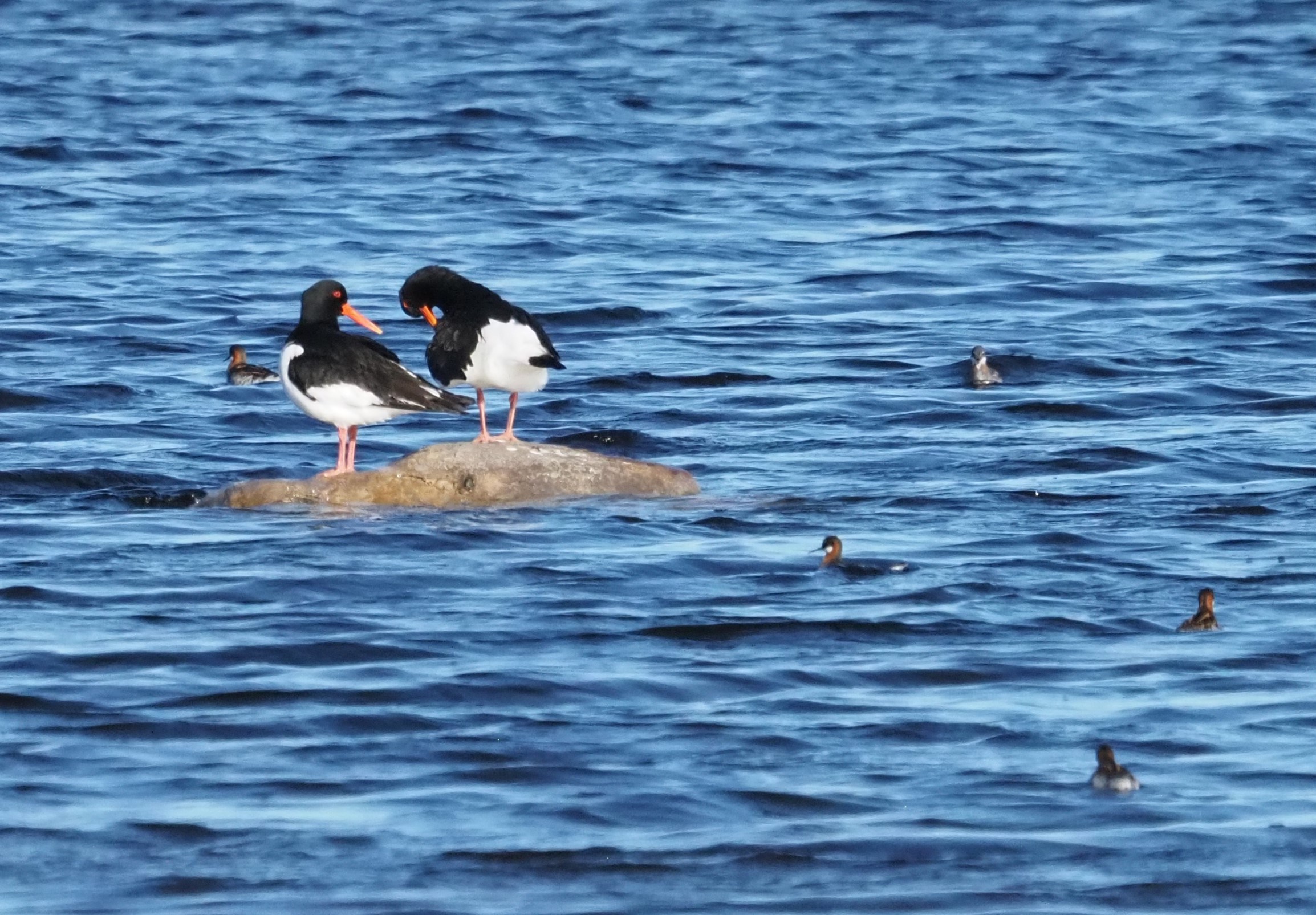
A pair of Eurasian Oystercatchers surrounded by Red-necked Phalaropes.
Here we enjoyed the first of many Red-throated Pipits (Anthus cervinus).
We were lucky to find this Terek’s Sandpiper (Xenus cinereus) feeding along with Dunlins (Calidris alpina)!
White-tailed Eagle (Hieraaetus albicilla) posing for us in lovely light. Amazing to see this icon of the Arctic like this!

Day 7. After enjoying a very nice breakfast based on the fish specialties of the Arctic Ocean, we walked the short distance to Vardo harbour. There, several Kittiwakes were moving in and out from the many colonies in buildings and along the docks. Along with them, there were also Arctic & Common Terns. The boat to Hornoya is only a 10 minutes ride but it was enough to give us a nice surprise, as 4 Northern Fulmars flew over the boat. These are the wonderful Arctic variety of the species, famous because of its bluish coloration. Unfortunately not everybody caught them in flight!

One of the most impressive views of Hornoya happens even before your arrive to the island. The last hundreds metres of sea before arriving are literally carpeted with hundreds, thousands of Guillemots and Razorbills. It is simply amazing to see that sea of Guillemots, something that I have never seen in any other seabird colony, not at least in the Northern Atlantic.

Hornoya hosts about 50,000 pairs of Guillemots, about a 15% of them are of the delicate “Bridled” variety. Along with them, 30,000 pairs of Kittiwakes, thousands of Razorbills, about 3,000 Atlantic Puffins, hundreds of Shags and smaller numbers of Northern Fulmars that combines with scattered colonies of Brünnich’s Guillemots (>300 pairs).

After a small walk in the island, we all enjoyed wonderful views not only in all the sea birds, but also on other wonderful side dishes including Red-throated & Scandinavian Rock Pipits, Barnacle Geese, a lovely although distant couple of Temminck’s Stints and Bluethroat. Our path up to the lighthouse also produced a very nice Twite, a very nice pick up by Roser and Joan.

Lovely views on Pectoral Sandpipers (Calidris matitima) in the fog next to our accommodation.
Arctic Tern (Sterna paradisaea)
Razorbill (Alca torda) close-up. Classiest auk in the continent!
A friendly Bridled Guillemot in the colony.
Guillemot (Uria aalge) waking up in the fog
Atlantic Puffin (Fratercula arctica) close up.
Brünnich’s Guillemot (Uria lomvia) -right- and Common Guillemot -left.
Atlantic Puffin (Fratercula arctica) coming back to their nest after some fishing.
A very handsome Black-legged Kittiwake (Rissa tridactyla).
Rock Pipits (Anthus petrosus litoralis) were nesting in the lowest part of the island.

Back to the continent we headed North through a dense fog. Where the fog allowed, we did some stops along the bays, enjoying several flocks of Goosanders, Long-tailed Ducks and Black Scoters along with some Divers and Velvet Scoters. The fog was still intense, and wherever we had an open window, we had a stop to enjoy some birds, normally producing ruff views on Arctic Redpolls, Bluethroats and Redwings. In our way back to our accommodation we had a stop to check some Common Eiders and we were surprised to find a very nice White-billed Diver out in the sea. After leaving the cars out of the lane, we got to the beach to have closer views and everyone in the group got excellent views on this very sought-after species!

Very happy after this great spot, we drove back to the accommodation. Still, right before arriving we had a last stop. A White-billed Diver had been seen in inner bay in Vardo so we stop to check. The bird was still there, but it was sleeping and the fog was very thick so it was difficult to see anything.. Along with the Diver, we also had 3 Black Guillemots and some Purple Sandpipers feeding in the shore.

We found this Willow Grouse (Lagopus lagopus) just finishing a sand bath. Please note the sand hollow left hand of the Grouse.
Black Scoter (Melanitta nigra) “pod” in a bay.
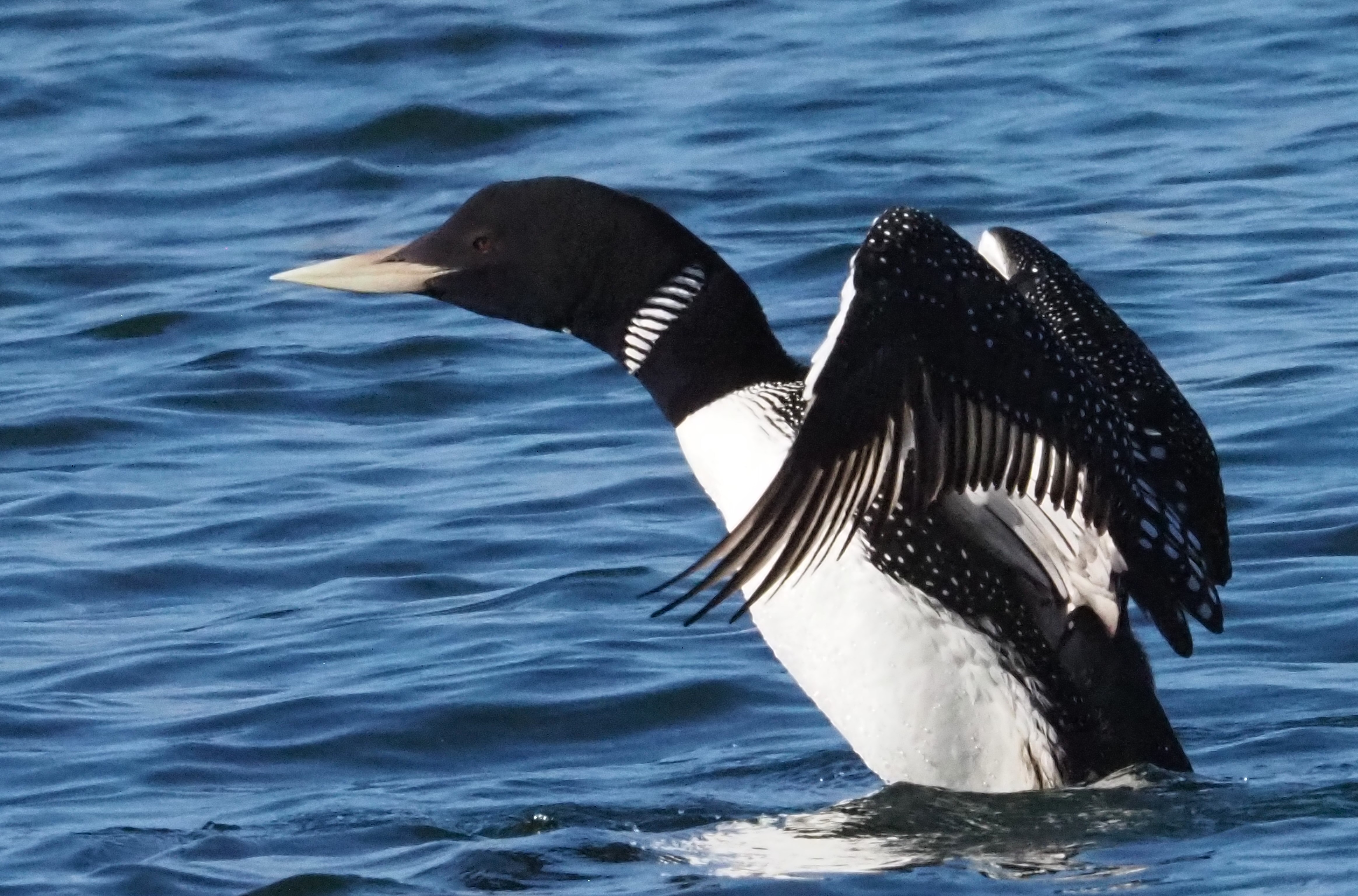
The first Yellow-billed Diver (Gavia adamsii) of the trip was this distant bird. A wonderful view in the Arctic Ocean with the fog surrounding us.
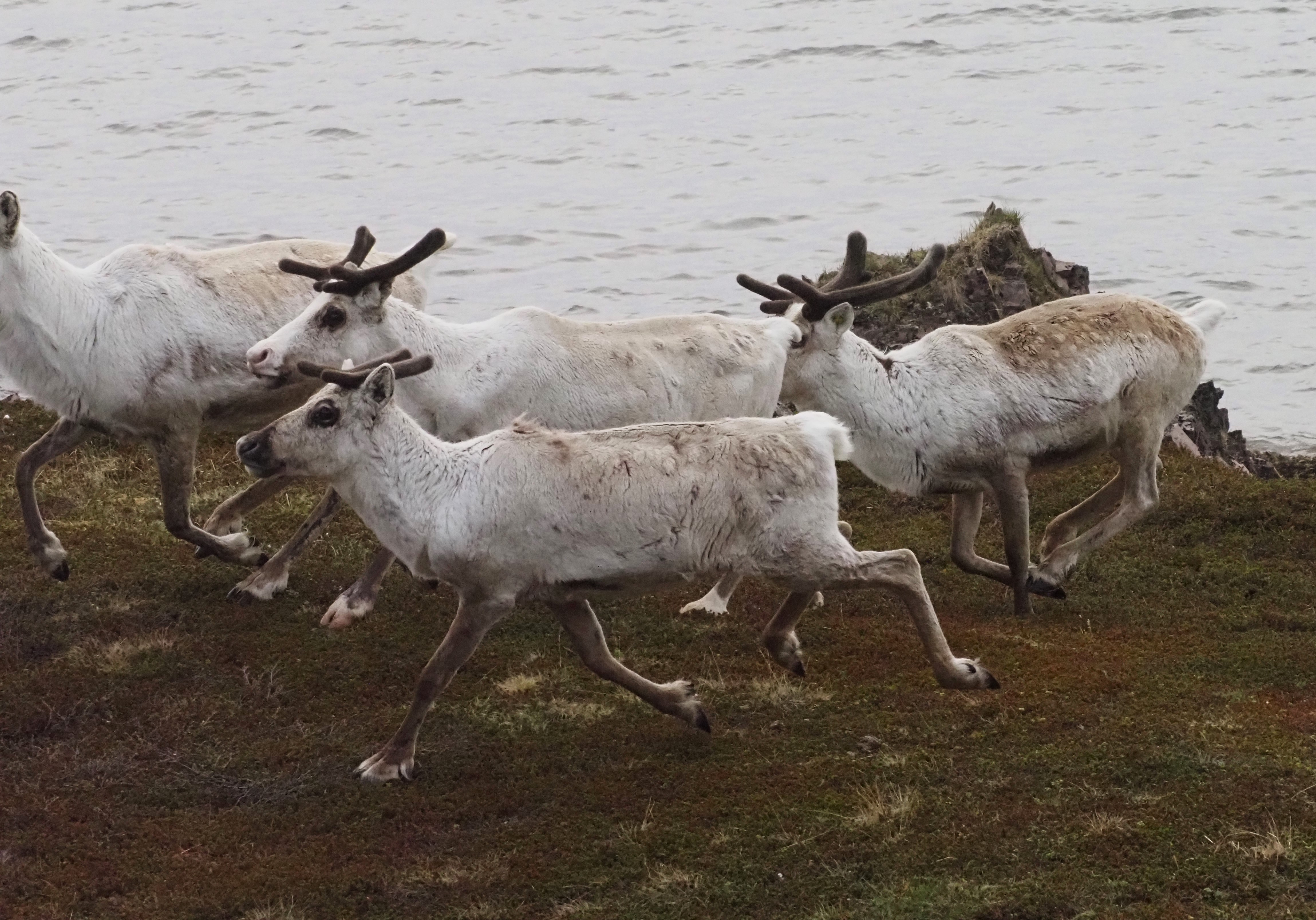
Very nice looking Reindeers (Rangifer tarandus) next-to-sea.

Day 8. This day we moved back North, to explore the uplands in Varanger. But before hitting to road we had a new stop in the bay inside Vardo. Here, without fog, we had amazing views on a wonderful drake White-billed Diver. The bird was just waking up and we could enjoy the bird only 40 metres away from us. The views on this amazing bird were again complemented with 3 Purple Sandpipers, again at very close range.

Back to the continent, we took advantage of the pristine ambient to enjoy the tundra. There we got excellent views on Lapland Buntings & Bluethroats but also lekking Ruffs, several Parasitic Skuas, White-tailed Eagles, Dunlins and European Golden Plovers. Moving North we were caught by the fog, and when crossing the uplands we were surprised by 2 wonderful and very close Willow Grouses that allowed very close views. En route, we had a flock of 6 Pink-footed Geese, the only sight of this species during the trip.

The delicious views on this White-billed Diver ranked high as bird of trip, exceeding the expectations of all our guests!
WOW!
Probably the most iconic passerine in the tundra, the very attractive Lapland Bunting (Calcarius lapponicus)
Bluethroat (Luscinia svecica) showing out

Arrived to the uplands, we had a first stop to enjoy our packed lunches. Here, we found a nest of Arctic Redpolls in the bushy willows around a pond. The same pond was hosting a wonderful pair of Long-tailed Duck and Wood Sandpiper and Meadow Pipit were coming to feed in. Far away, some Long-tailed Skuas were flying here and there.

Driving throught the tundra, we had several Willow Grouses and a second pond produced great views on a nesting pair of Red-throated Divers but also on Ruffs, Red-necked Phalaropes, Teals, Pintails, the only 2 Scaups of the tour, Red-throated Pipits, Bar-tailed Godwit (very scarce nesting bird in the area) and several more.

Back to the coast, we visited a proper place for Gyrfalcon, but we had no luck with them this time. Instead, we got good views on White-tailed Eagles, Rough-legged Buzzards and a nesting colony of Great Cormorants. It was already late in the afternoon, a proper moment to go back to the tundra. In the way up we had a couple of stops to enjoy Willow Grouse and the only one Merlin of the tour, a lovely male perched for us in a small rock!

A few minutes later we were already in the proper habitat for the alpine species living in Varanger. It didn’t take long to find the first of a good number of Rock Ptarmigan nicely showing in the rocky landscapes. After long views despite the strong wind, we also located a couple of females feeding around. The very last of the Grouses to show out in the tour lead us also to contact with the first Horned Larks of the trip! This bird is getting scarcer and scarcer in the area, and becoming a treat to find them. A few more miles in the road produced more Temminck’s Stints but also lovely views on Horned Larks, even closer views on Ptarmigans and the cherry on cake; a wonderful pair of Snow Buntings singing and showing out for the group! In a memorable moment, we had Ptarmigan, Horned Lark and Snow Bunting all of them displaying for us at the same time in the same gorge!

From this wonderful scenery we just drove back to our accommodation to enjoy some nice meal and some rest in one of the very few hotels in the area.

Long-tailed Duck (Clangula hyemalis) still migrating North.
Arctic Redpoll (Acanthis hornemanni) around its nest.
Drake Black-throated Diver (Gavia arctica), the most elegant bird in the Arctic?
Black Guillemot (Cepphus grylle) next to their nest box
Once again we got excellent views on Rock Ptarmigan (Lagopus mutus). Here a wonderful male.
Horned Lark (Eremophila alpestris) overlooking its territory.
Another stunner! Male Snow Bunting (Plectrophenax nivalis) only a few metres away from our group!

Day 9. Another sunny day in the Arctic tundra, and our group was out of the hotel very early in the morning. The breakfast was quite not as good as the rest of the days, but we had a good lunch to compensate the rather simple breakfast.

Back to the tundra, we had a stop in the way to enjoy close views on Long-tailed Skuas. Some walk was required, but we got excellent views on a pair of this always amazing birds! This year, the number of LT Skuas was reduced if comparing with previous trips. After checking the ponds we headed to the Northern coast, where we had some quality time on a wonderful seawatching point.

Here, we were delighted to see hundreds of “Blue” Fulmars feeding around a trawler. The ambient was grey and cold but the birding was excellent. Flocks and flocks of Goosanders were moving East. Here, migration still goes on for thousands of birds that will keep moving North East, going to nest in Siberia. A large flock of Long-tailed Ducks was feeding in the sea, and Mark found a magnificent drake King Eider feeding along with them. Out in the sea, we had some Divers moving East. they were mainly Red-throated, but we also got nice views on at least one White-billed Diver; the third for the trip! Other interesting species here included Black Guillemots along with Red-breasted Merganser, Common Eider and Atlantic Puffin. But the very best bird from this very advantage place was a wonderful Gyrfalcon that crossed right in front of our group, moving West. A great spot by Aonghus that almost everybody in the group could see even if it was moving really fast!

Before lunch, we made a stop in a pair of bays. There, along with the typical gulls and ducks for the area, we got a nice juvenile Little Gull. Checking flocks of Common Eiders, we counted a minimum of 4 King Eiders, all of them females-type birds. This time, despite the foggy ambient, everybody had excellent views on the birds.

After enjoying some very nice pizzas from a local pub, we just drove South, back into Finland with no remarkable birding stops during the afternoon.

Long-tailed Skuas (Stercorarius longicaudus) were scarce this year.
Red-throated Diver (Gavia stellata) is a common nesting species in Varanger.
During this morning we got some impressive views on White-tailed Eagle (Hieraaetus albicilla).
Male King Eider (Somateria spectabilis) in the Arctic Ocean.
King Eider female & two Common Eiders.
1st summer female King Eider
Female King Eider (center) and 4 Common Eiders.

Day 10. Basically a transfer morning. With the group divided due to the different plane timetables, most of the group started the transfer South including an early stop for a very last go on Northern Hawk Owl. Soon after living the van, we heard a Northern Hawk Owl calling inside the forest, and during the next minutes we got excellent views into a pair of this very iconic species of the boreal forest, including the male coming with a mole to feed the female!

Seen the bird, we contacted with the tour participants that stayed longer at the accommodation (they had a flight later in the day) and they also could come to the place and see the bird!

Along with the Owl, a pair of Siberian Tits was moving also in the area. We even got lucky enough to contact with the Wilson’s Snipe that had been courtship in the boj nearby. Not great views anyway but the bird past by twice while singing. Besides, the very last stop of the trip only produced Eurasian Whimbrel.

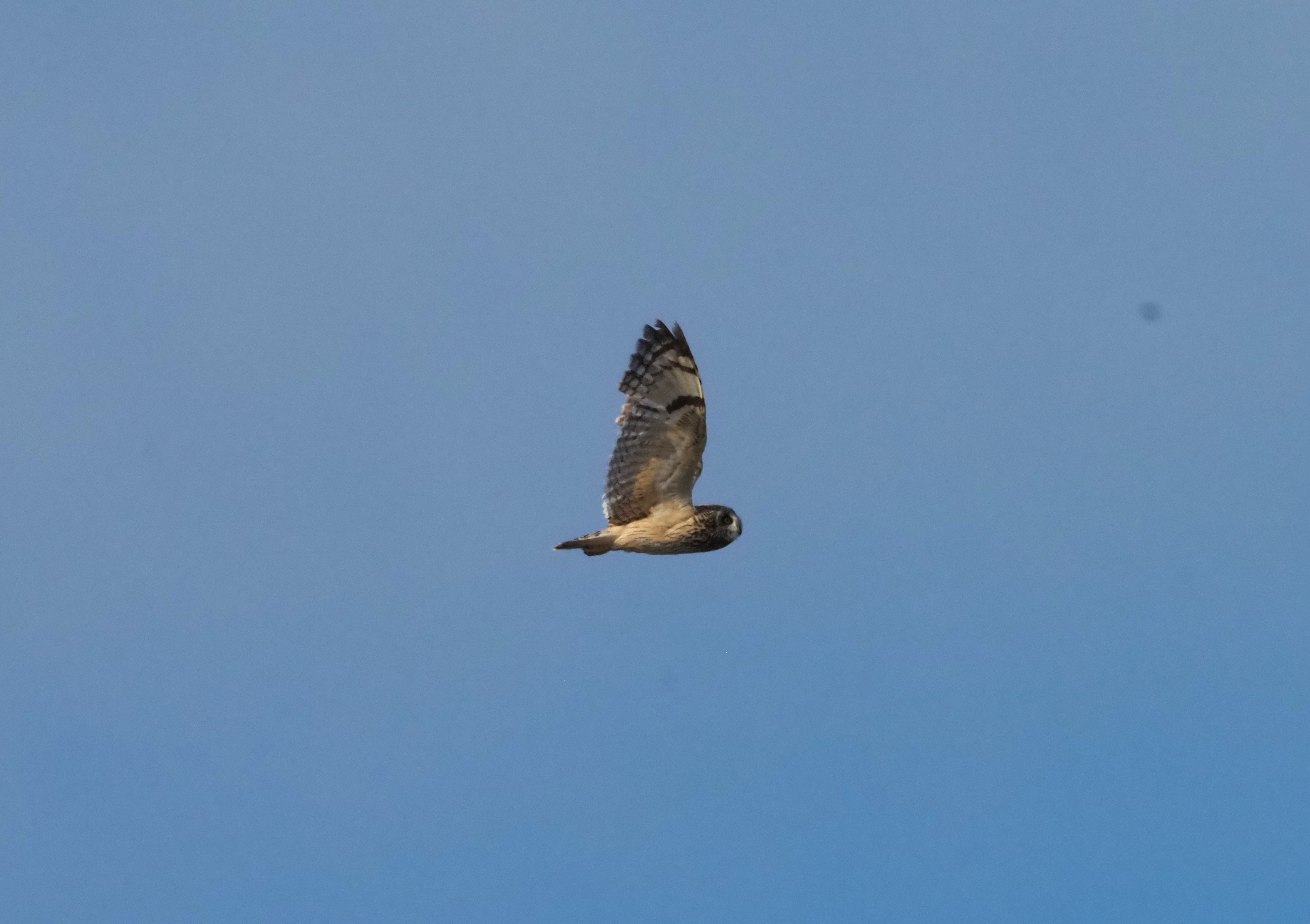
Back to the van, we had a final transfer including a fight for a morning coffee. It was Sunday morning, and a early morning coffee in Lapland proved to be more difficult to find that most of the boreal specialties! Finally, we got our very well deserved coffee and we arrived to the airport with nice views on a Short-eared Owl as a bonus!

And to here arrives the chronicle of our 7th tour in Northern Finland and Finnmark. Really looking forward to our 2025 issue. Pretty sure that it will be as good as always is!

Finally, we got well deserved views on this amazing owl!
Northern Hawk Owl ready to hawk!
Short-eared Owl (Asio flammeus) was the very last speciality to show up in the trip.

List of birds seen during the tour

  1. Whooper Swan (Cygnus cygnus)
  2. Mute Swan (Cygnus olor)
  3. Common Shelduck (Tadorna tadorna)
  4. Greylag Goose (Anser anser)
  5. Tundra Bean Goose (Anser serrirostris)
  6. Pink-footed Goose (Anser brachyrhynchus)
  7. Barnacle Goose (Branta leucopsis)
  8. Eurasian Wigeon (Marecca penelope)
  9. Gadwall (Marecca strepera)
  10. Eurasial Teal (Anas crecca)
  11. Mallard (Anas platyrhynchos)
  12. Northern Pintail (Anas acuta)
  13. Northern Shoveler (Spatula clypeata)
  14. Garganey (Spatula querquedula)
  15. Tufted Duck (Aythya fuligula)
  16. Scaup (Aythya marila)
  17. Common Eider (Somateria mollissima)
  18. King Eider (Somateria spectabilis)
  19. Long-tailed Duck (Clangula hyemalis)
  20. Common Scoter (Melanitta nigra)
  21. Velvet Scoter (Melanitta fusca)
  22. Goldeneye (Bucephala clangula)
  23. Smew (Mergellus albellus)
  24. Goosander (Mergus merganser)
  25. Red-breasted Merganser (Mergus serratus)
  26. Common Pheasant (Phaisanus colchinus)
  27. Hazel Grouse (Bonasa bonasia)
  28. Willow Grouse (Lagopus lagopus)
  29. Rock Ptarmigan (Lagopus mutus)
  30. Black Grouse (Lyrurus tetrix)
  31. Western Capercaillie (Tetrao urogallus)
  32. Common Swift (Apus apus)
  33. Common Cuckoo (Cuculus canorus)
  34. Feral Pigeon (Columba livia)
  35. Common Woodpigeon (Columba palumbus)
  36. Common Crane (Grus grus)
  37. Great Crested Grebe (Podiceps cristatus)
  38. Red-necked Grebe (Podiceps grisegena)
  39. Slavonian Grebe (Podiceps auritus)
  40. Corncrake (Crex crex) ———————————– heard only
  41. Eurasian Oystercatcher (Haematopus ostralegus)
  42. Common Ringed Plover (Charadrius hiaticula)
  43. Little Ringed Plover (Charadrius dubius)
  44. European Golden Plover (Pluvialis apricaria)
  45. Northern Lapwing (Vanellus vanellus)
  46. Temminck’s Stint (Calidris temminckii)
  47. Dunlin (Calidris alpina)
  48. Little Stint (Calidris minuta)
  49. Purple Sandpiper (Calidris maritima)
  50. Ruff (Calidris pugnax)
  51. Eurasian Woodcock (Scolopax rusticola)
  52. Common Snipe (Gallinago gallinago)
  53. Wilson’s Snipe (Gallinago delicata) —————— heard only
  54. Bar-tailed Godwit (Limosa lapponica)
  55. Black-tailed Godwit (Limosa limosa)
  56. Eurasian Curlew (Numenius arquata)
  57. Whimbrel (Numenius phaeopus)
  58. Spotted Redshank (Tringa erythropus)
  59. Common Redshank (Tringa totanus)
  60. Greenshank (Tringa nebularia)
  61. Wood Sandpiper (Tringa glareola)
  62. Green Sandpiper (Tringa ochropus)
  63. Terek’s Sandpiper (Xenus cinereus)
  64. Common Sandpiper (Actitis hypoleucos)
  65. Ruddy Turnstone (Arenaria interpres)
  66. Red-necked Phalarope (Phalaropus lobatus)
  67. Little Gull (Hydrocoloeus minutus)
  68. Black-headed Gull (Chroicocephalus ridibundus)
  69. Common Gull (Larus canus)
  70. Great Black-backed Gull (Larus marinus)
  71. Herring Gull (Larus argentatus)
  72. Kittiwake (Rissa trydactyla)
  73. Common Tern (Sterna hirundo)
  74. Arctic Tern (Sterna paradisaea)
  75. Arctic Skua (Stercorarius parasiticus)
  76. Long-tailed Skua (Stercorarius longicaudus)
  77. Guillemot (Uria aalge)
  78. Brünnich’s Guillemot (Uria lomvia)
  79. Razorbill (Alca torda)
  80. Black Guillemot (Cepphus grylie)
  81. Atlantic Puffin (Fratercula arctica)
  82. Red-throated Diver (Gavia stellata)
  83. Black-throated Diver (Gavia arctica)
  84. White-billed Diver (Gavia adamsii)
  85. Northern Fulmar (Fulmarus glaciallis)
  86. Great Cormorant (Phalacrocorax carbo)
  87. Shag (Gulosus aristotelis)
  88. Greater Bittern (Botaurus stellaris) ————- heard only
  89. Osprey (Pandion haliaetos)
  90. Western Marsh Harrier (Circus aeruginosus)
  91. Rough-legged Buzzard (Buteo lagopus)
  92. European Honey Buzzard (Pernis apivorus)
  93. White-tailed Eagle (Haliaetus albicilla)
  94. Short-eared Owl (Asio flammeus)
  95. Tengmalm’s Owl (Aegolius funereus)
  96. Ural Owl (Strix uralensis)
  97. Northern Hawk Owl (Surnia ulula)
  98. Eurasian Pygmy Owl (Glaucidium passerinum)
  99. Great Spotted Woodpecker (Dendrocopos major)
  100. Lesser Spotted Woodpecker (Dryobates minor)
  101. Three-toed Woodpecker (Picoides tridactylus)
  102. Black Woodpecker (Dryocopus martius)
  103. Common Kestrel (Falco tinnunculus)
  104. Merlin (Falco columbarius)
  105. Gyrfalcon (Falco rusticolus)
  106. Red-backed Shrike (Lanius excubitor)
  107. Siberian Jay (Perisoreus infaustus)
  108. Eurasian Magpie (Pica pica)
  109. Western Jackdaw (Coloeus monedula)
  110. Hooded Crow (Corvus cornix)
  111. Common Raven (Corvus corax)
  112. Bohemian Waxbill (Bombycilla garrulus)
  113. Willow Tit (Poecile montanus)
  114. Siberian Tit (Poecile cinctus)
  115. Eurasian Blue Tit (Cyanistes caeruleus)
  116. Great Tit (Parus major)
  117. Eurasian Skylark (Alauda arvensis)
  118. Horned Lark (Eremophila alpestris)
  119. Sand Martin (Riparia riparia)
  120. Barn Swallow (Hirundo rustica)
  121. Western House Martin (Delichon urbicum)
  122. Common Chiffchaff (Phylloscopus collybita)
  123. Willow Warbler (Phylloscopus trochilus)
  124. Wood Warbler (Phylloscopus sibilatrix)
  125. Sedge Warbler (Acrocephalus schoenobaenus)
  126. Garden Warbler (Sylvia borin)
  127. Common Whitethroat (Curruca communis)
  128. Lesser Whitethroat (Curruca curruca)
  129. Goldcrest (Regulus regulus)
  130. Eurasian Wren (Troglodytes troglodytes)
  131. Eurasian Treecreeper (Certhia familiaris)
  132. Common Starling (Sturnus vulgaris)
  133. Fieldfare (Turdus pilaris)
  134. Song Thrush (Turdus philomelos)
  135. Eurasian Redwing (Turdus iliacus)
  136. Mistle Thrush (Turdus viscivorus)
  137. Eurasian Blackbird (Turdus merula)
  138. Eurasian Robin (Erithacus rubecula) —————- heard only
  139. Bluethroat (Luscinia svecica)
  140. Red-flanked Bluetail (Tarsiger cyanurus)
  141. Common Redstart (Phoenicurus phoenicurus)
  142. Whinchat (Saxicola rubetra)
  143. Northern Wheatear (Oenanthe oenanthe)
  144. Spotted Flycatcher (Muscicapa striata)
  145. Pied Flycatcher (Ficedula hypoleuca)
  146. Black-bellied Dipper (Cinclus cinclus)
  147. House Sparrow (Passer domesticus)
  148. Eurasian Tree Sparrow (Passer montanus)
  149. Dunnock (Prunella modularis)
  150. Meadow Pipit (Anthus pratensis)
  151. Tree Pipit (Anthus trivialis)
  152. Red-throated Pipit (Anthus cervinus)
  153. Rock Pipit (Anthus petrosus)
  154. White Wagtail (Motacilla alba)
  155. Yellow Wagtail (Motacilla flava)
  156. Common Chaffinch (Fringilla coelebs)
  157. Brambling (Fringilla montifringilla)
  158. Eurasian Greenfinch (Chloris chloris)
  159. Eurasian Siskin (Spinus spinus)
  160. Linnet (Carduelis cannabina)
  161. Common Redpoll (Carduelis flammea)
  162. Arctic Redpoll (Carduelis hornemanni)
  163. Twite (Carduelis flavirostris)
  164. Common Crossbill (Loxia curvirostra)
  165. Common Rosefinch (Carpodacus erythrinus)
  166. Eurasian Bullfinch (Pyrrhula pyrrhula)
  167. Pine Grosbeak (Pinicola enucleator)
  168. Lapland Bunting (Calcarius lapponicus)
  169. Snow Bunting (Plectrophenax nivalis)
  170. Yellowhammer (Emberiza citrinella)
  171. Ortolan Bunting (Emberiza hortulana)
  172. Reed Bunting (Emberiza schoeniclus)
  173. Rustic Bunting (Emberiza rustica)
  174. Little Bunting (Emberiza pusilla)

List of mammals seen during the tour

  1. European Hare (Leppus leppus)
  2. Mountain Hare (Leppus timidus)
  3. Red Squirrel (Sciurus vulgaris)
  4. Stout (Mustela arminea)
  5. Red Fox (Vulpes vulpes)
  6. Grey Seal (Halichoerus grypus)
  7. Moose (Alces alces)
  8. Reindeer (Rangifer tarandus)*
  9. Fin Whale (Balaenoptera phisalus)
  10. Northern Minke Whale (Balaenoptera acurostrata)

*Feral