Arxiu de la categoria: Species

New species in winter time in Ebro Delta

Due to climate change or to local features it is a reality that every time more species of birds, formerly though as a summer visitors, are spending winter time in some areas of South Europe.

I have been absolutely surprised by the view of a Yellow Wagtail (Motacilla flava) in Ebro Delta. It was on Sunday November 4 and I was spending the day with a couple just arrived from Switzerland. We had nice views of many birds but we saw five different species that until few years ago were summer visitors and now are becoming more common during the winter.

First was the Yellow Wagtail (Motacilla flava) leaving the reedbeds at raisang with tens of White Wagtails (Motacilla alba alba). Later a group of Barn Swallow (Hirundo rustica) (5 of them) flying over the fields with some Crag Martin (Ptyonoprogne rupestris). Barn Swallow is coming up in numbers every winter and its presence is considered “not rare” in Ebro and Llobregat deltas. We counted 6 Hoopoe (Upupa epops) in different areas. Hoopoe is a quite common summer-but-also-winter bird in Catalonia, specially along the coast. In the paddy fields we saw one White Stork (Ciconia ciconia), though this species is specially common in winter in Lleida Steppes. Finally a number of  Squacco Heron (Ardeola ralloides) were spending the day alongside channels, reedbeds and on paddy fields.

Wallcreeper, 10 Alpine Accentor, 2 Lammergeier, 5 Citril Finch & more in Pyrenees in Winter Itinerary

BarcelonaBirdingPoint: It has been a great start this autumn season. On Sunday November 13 th, we set up the season with two costumers from Norway. We went to Pyrenees and we all had a great day of nature and birds.

Alpine Accentor (Prunella collaris) in the Catalan Pyrenees. Photo: Carles Oliver

At 6:45am we leaved Barcelona and had some breakfast en route. About 8:00am we arrived to the first location, a fields with some trees beside a small river. There were many small birds like Chaffinchs, Goldfinchs and small Siskin flocks. In this area we also locate White Wagtail, Dunnock and Robin. We walk along a small stream and a 15 Long-tailed Tit and some Blue and Great Tits flew over our heads. At the end of the path some 3 or 4 Cirl Bunting were feeding on ground.

At 9:30am we went to next location, a gorgeous rocky area in the middle of the road. The cliffs are surronding the road and fall over tens of meters from it. In a quarter we found out 1 Wallcreeper, a first 5 Alpine Accentor flock and 2 Rock Bunting. All of us got some nice photos of Alpine Accentor. Photos of Wallcreeper were not so good, after all.

Ring Ouzel (Turdus torquatus) in the Catalan Pyrenees. Photo: Carles Oliver

Around 11:00am we make another stop to visit a coniferous forest up in the mountains. It is a nice place to look for Citril Finch. Unfortunately we only got them in flight, we count until 5 of them leaving a grassland beside the forestry. We spent some time in the forest. There were flocks of Common Crosbill and large flocks (over 50) of Coal Tit with some Crested Tit, Goldcrest and Short-toed Treecreeper among them. We also found out two Red Squirrel in the forest. All around was full of Mistle Thrush and Blackbird.

Around 13:00am explored another location. A high mountain grasslands we I hoped to find Snowfinch. Unfortunately there were no snow yet, so there were no Snowfinch. We found some interested birds instead. Walking a track we had incredible views of Alpine Accentor (a second 5 accentor flock), 2 Alpine Chough and 2 Lammergeier flying over our heads with a group of 8 Griffon Vulture. Both Lammergeier were about 2-3 years old with light yellow breast and belly. We also had good views of a group of 7 Chamois. After this we decided to move down, bad weather was coming from South side of Pyrenees. We stop about 1.700 of altitude, in an open forest with grasslands. This area was full of birds. A large flock of Mistle Thrush (more than 150) and also some Song Thrush, not least than 5 Redwings and 4 Hawfinch. Other birds in this point; 1 Yellowhammer, 1 Sparrowhawk and a couple of Raven that wanted to become friends of us because they were coming closer and closer as we were eating some fruits. But the more nice was a Ring Ouzel male singing on the top of a pine. It is normal to find large flocks of Thrush in areas like this tones of them are moving South by this time and crossing the Pyrenees by lower areas.

After have lunch we prospected other areas in the forest. Great Spotted Woodpecker, Nuthatch, Wren, Jay and Crow were common in this location.

In the way back to Barcelona we stopped in the Llobregat River to watch Dipper, Grey Wagtail, Firecrest and Common Buzzard.

About 17:30 we arrived to Barcelona. We were all really glad of the experience, were viewed until 49 species in one day visiting high mountain habitats and the valley beside.

More than 300 pairs of Audouin’s Gull breeding in Llobregat Delta

Audouin’s Gull (Larus audouinii) nesting colony is increasing year after year in Llobregat Delta, a small marshy area only 5 quilometers South of Barcelona. In 2011, 380 pairs were breeding in an artificial island in this wetland. The figure is very important since it is numbering more than whole population in countries such as France, Turkey, Croatia, Portugal or Cyprus (2008 World Audouin’s Gull Population Census).


IMG_4665

Audouin’s Gull (Ichtiaetus audouinii) is a typical coastal bird. Here an adult in flight along with a YL Gull (Larus michahellis). Image: Carles Oliver


Nowadays, and now talking on 2018, the bird can be easily seen from March to September along Barcelona coast line, often stopping at the town beaches few metres away from the people. Moreover, a overwintering population is to be found along the coast in the Northern Metropolitan Area.

First breeding record in Llobregat Delta is dated in 2009, when four pairs nested inside one of the Natural Reserve. In 2010 the colony moved to the current placement and 140 pairs breeded there. In 2011 their number have increased until 380 pairs with a rate of survival since over 300 young Audouin’s flew from the colony.

This is already one of the largest Audouin’s Gull colonies in the world. Ebro Delta (15.000 pairs in 2008) keeps being, by far, the largest one. Second largest colony is located in  Torrevieja (Alacant, Spain), where up to 3.823 were counted in 2008. The colony at Llobregat Delta had surpassed one of the most traditional nesting places for the species, the one located at Illes Columbretes (120 pairs in 2010).

Red-rumped Swallow expanding North

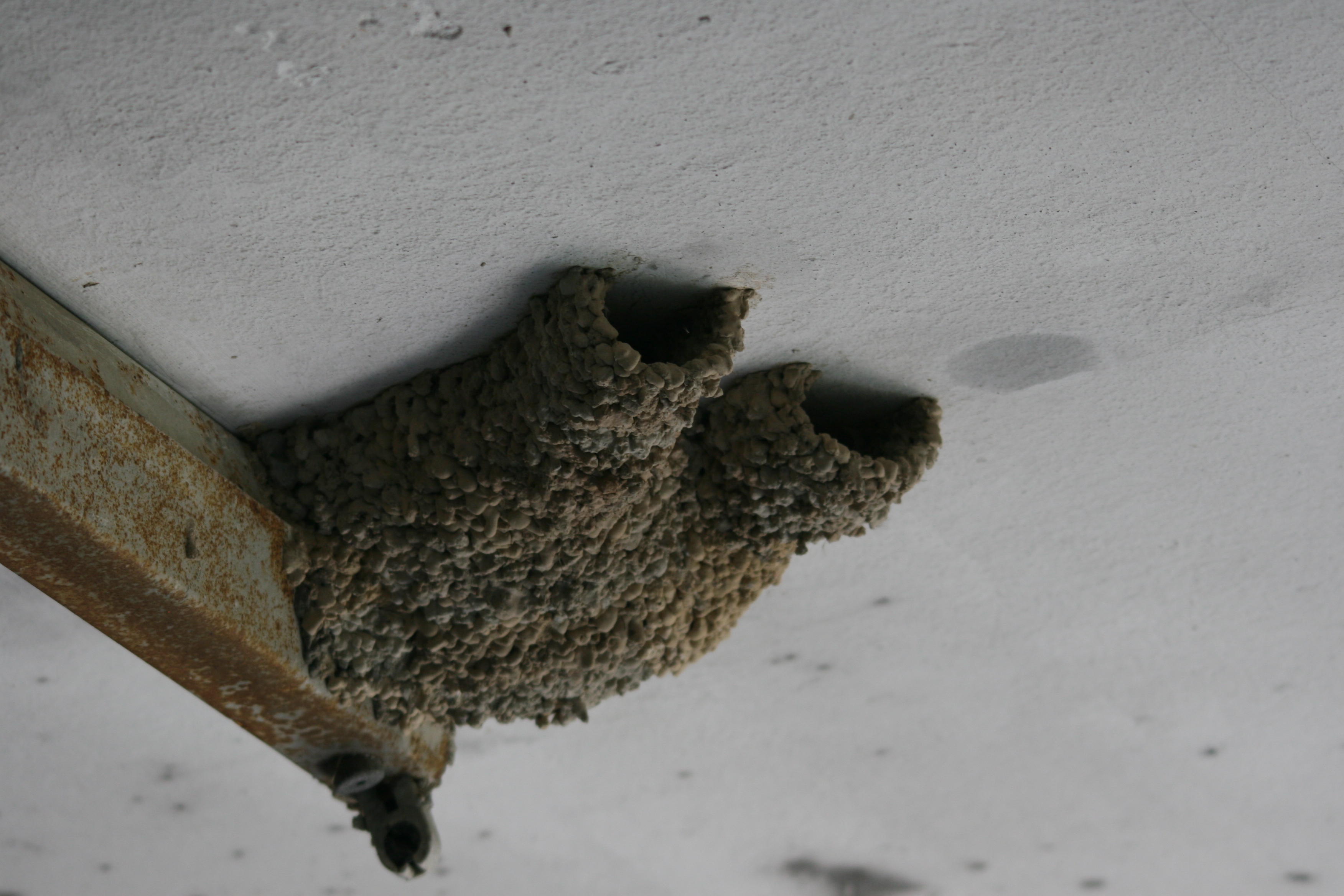
The Red-rumped Swallow (Cecropis daurica) is going North its breeding territory in Western Europe. The numbers of this swallow in Catalonia are also growing up. There are two main breeding populations, one is at North beside the French border but the biggest one is at South and inland in both Lleida and Tarragona provinces. Is in this bigger population where I’ve found this spring some couples breeding in new sites.

Typical Red-rumped Swallow nest inside a non-used building. Photo; Carles Oliver

Red-rumped Swallow (Cecropis daurica) is breeding in new places in a 50 kilometers North of Balaguer town, an area immediatly situated South of Pyrenees. I’ve found until tree nesting couples in different non-used farm houses near the village of Camarasa. The swallows are in an area with no breeding records for this species before.

Red-rumped Swallows use to nest inside small or medium size non-used human constructions as well as under bridges and other structures. It prefers to have near the nest some small river or other fresh water.

It seems clear that this species is gonna be commoner in Catalonia in next years and is even possible that is gonna arrive as a nesting bird to some Pyrenees valleys as a natural process due its strong expansion in Western Europe.