Welcome to the official blog site of Barcelona Birding Point, your new birding & wildwatching travel agency. Here you will find trip reports, detailed information about some of our tours, tips on conservation and more.
Resum: Segona edició de la nostra escapada hivernal als Països Baixos. Aquesta és, Juntament amb el Sud d’Anglaterra, la destinació per antonomàsia per tal de gaudir d’oques i d’altres espècies d’ambients circumpolars al llarg de l’hivern. El tour va estar marcat per la presència d’un èider de les ulleres, que era, amb escreix, el principal objectiu del tour. El fet que tots al grup haguessin gaudit del nostre tour a Finlàndia la mateixa primavera ens va permetre ser força més selectius amb les espècies que volíem observar. Considerant la latitud, vam tenir molt bon temps, amb un parell de vespres amb una llum fantàstica, boires primes un parell de matins i, en general, un fred relatiu que ens va permetre gaudir d’allò més de les espècies i els paisatges.
Dia 1. El grup aterra als Països Baixos i, després de gaudir d’un primer contacte amb la cuina local a l’aeroport de d’Àmsterdam-Schiphol, ens dirigim al nostre vehicle. Ens endinsem a l’intens trànsit d’aquesta gran ciutat (no, no tothom va en bici) i ens aturem, amb la última llum del dia, a uns petits pòlders.
Aquí veiem els primers morells buixots del viatge però també una femella de bec de serra petit, uns quants de bec de serra mitjans i un estols de becs de serra grossos mascles. Aquí també sentim un rossinyol bord reclamant al canyissar (aquesta és la població més septentrional del continent) i tot això mentre repassem un immens estol d’un miler de morells de plomall. Aquí havíem vingut a la cerca del morell capblanc que s’hi està de fa mesos, però no els pocs minuts de llum no ens han permès de trobar-la. Toca anar cap a l’allotjament a gaudir d’un bon sopar.
Dia 2. Un cop esmorzats i sortits de l’allotjament ens dirigim a un petit canal vora l’hotel a on s’ha anat veient un mosquiter fosc. Fa una setmana que ningú no el cita i, després de visitar el lloc, quedem convençuts de que l’ocell ja no hi és. Els únics ocells al lloc són cargolets i un parell de mosquiters comuns. En ambient núvol i amb plugims dispersos ens dirigim cap al ferry que ens portarà a l’illa de Texel. De camí, gaudim dels primers estols d’oques rialleres grosses. Mentre esperem el ferry, tenim temps d’anar al lavabo i gaudir d’uns remena-rocs que es deixen fer prou bé. Des del ferry, un territ fosc a l’escullera del port és una bona sorpres. També aquí veiem les primeres de moltes garses de mar. Un cop arribats a Texel comencem un autèntic bany d’oques de galta blanca, però també d’oques rialleres i oques de collar. Amb una llum de tarda espectacular, gaudim dels seus estols en vol i al terra. De vegades no sabem a on mirar. A uns camps llaurats hi ha una petita concentració de tords ala-rojos i grives cerdanes i les llacunes vora la carretera estan infestades amb centenars d’ànecs xiuladors, cullerots i xarxets però també gambes roges vulgars, centenars de garses de mar i un inesperat bec d’alena. Aquí ens hi estem una bona estona però abans la llum encara hem de provar una cosa més.
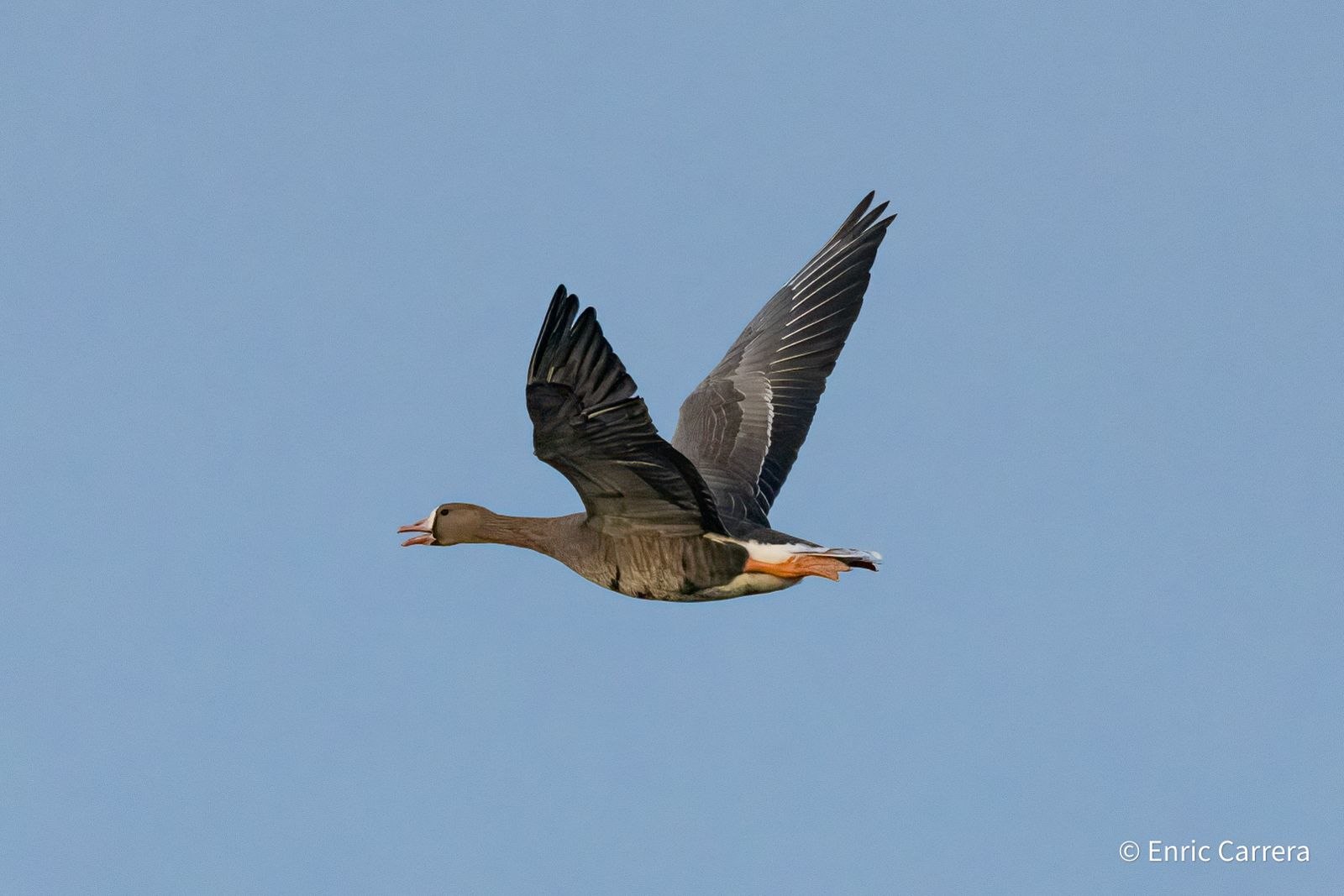
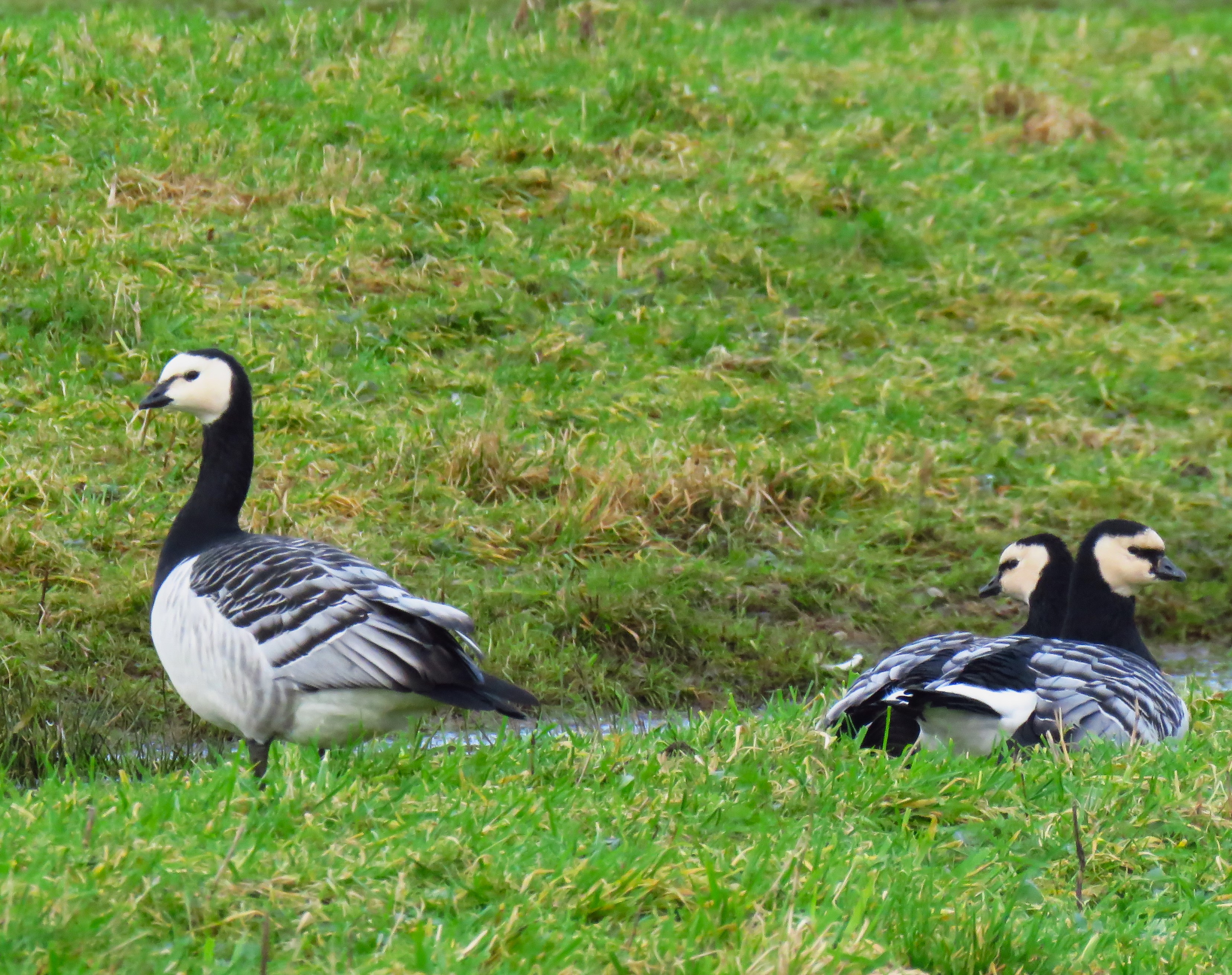
Remena-rocs (Arenaria interpres) a tocar del ferry a Texel. Imatge, tour líder Carles Oliver.Oques de galta blanca (Branta leucopsis) en vol. Imatge de l’Oriol MuntanéPetit estol d’oques de galta blanca (Branta leucopsis). Imatge, Carles Oliver.Oca riallera grossa (Anser albifrons) en vol. Imatge de l’Enric Carrera.
Efectivament, provem una zona a on s’ha anat veient l‘èider de Fischer (de les ulleres) sense èxit però la caminada val la pena. Aquí veiem els primers cignes cantaires del viatge i un petit estol de sits blancs que es deixen estimar malgrat els desnivells del mur d’abric de l’illa. Aquí també gaudim d’estols inmensos (milers) de becuts però també de batallaires i territs variants en una península d’ocells que s’endinsa més d’un quilòmetre dins el mar!
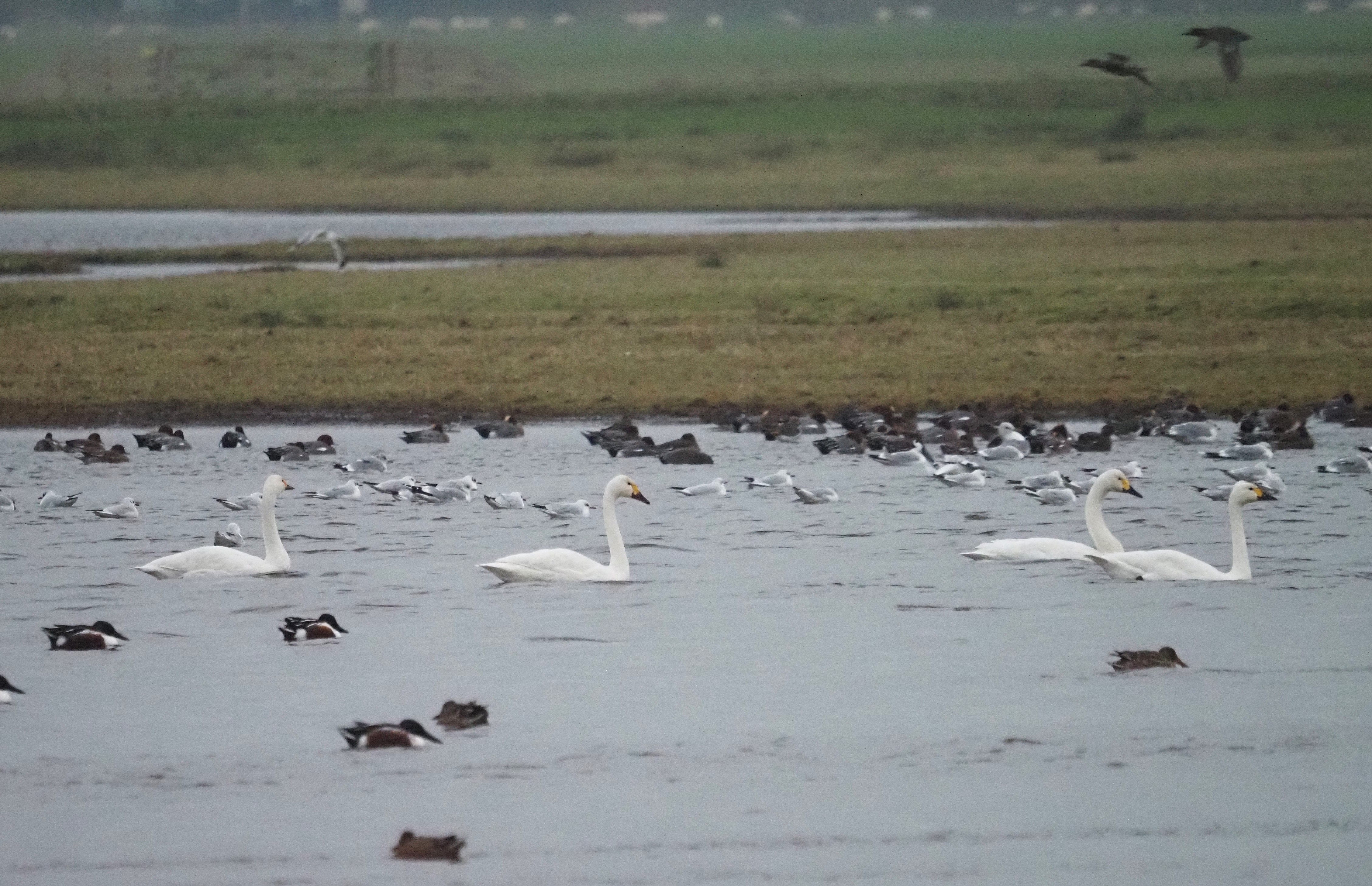
Per acabar la jornada, creuem una espectacular zona de petites llacunes vorejades de pastures. Aquí, amb la última llum del dia, veiem un petit grup de 4 cignes petits alimentant-se al terra mentre estols inmensos d’oques, fredelugues i daurades grosses ens envolten…
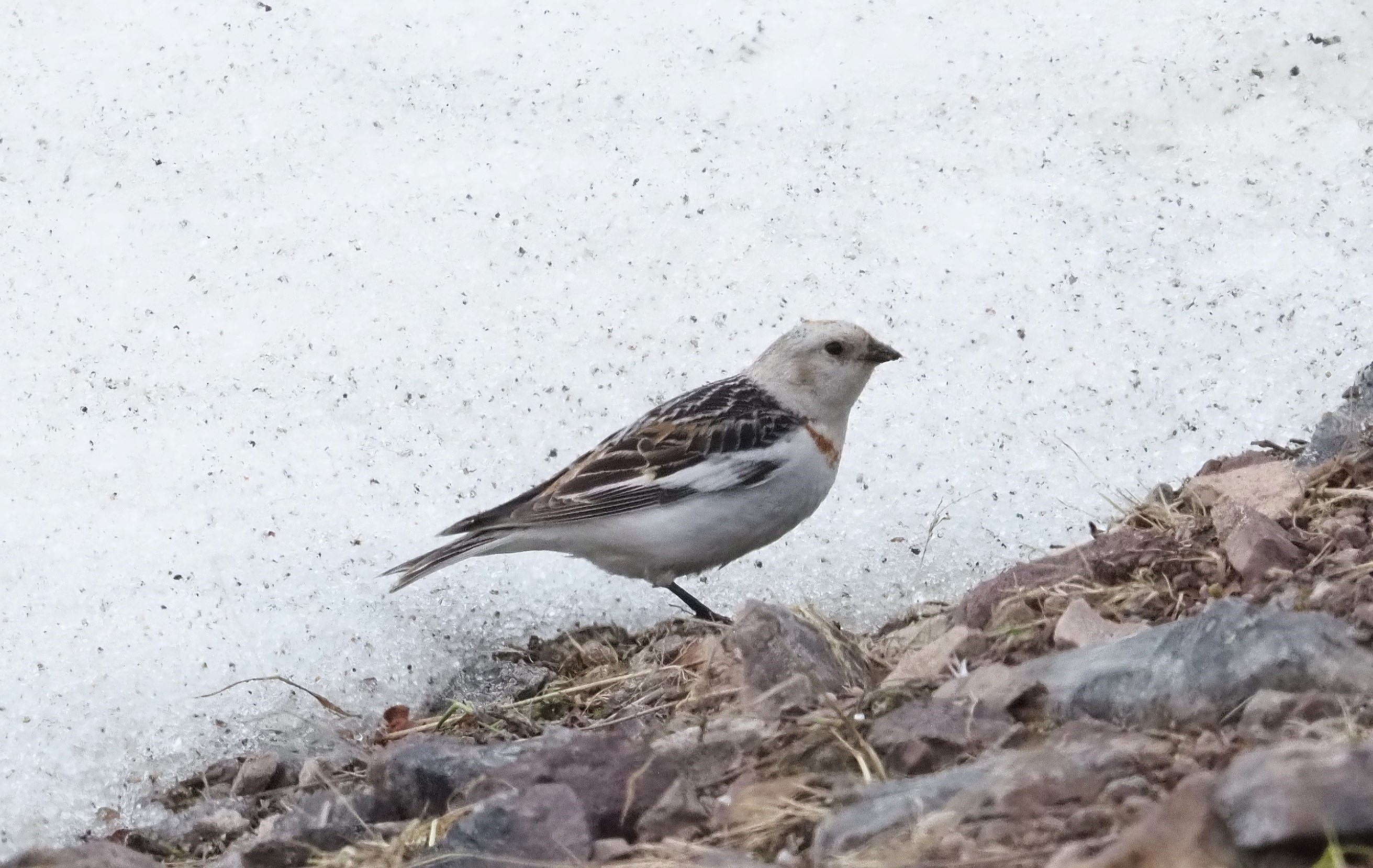
Sit blanc (Plectrophenax nivalis), un habitual de les platges atlàntiques. Imatges, Carles OliverEls molins són un element indestriable del paisatge holandès. Imatge de l’Enric Carrera.
Dia 3. Comencem el dia a on el vam acabar la tarda anterior. La zona avui es troba buida d’ocell, però un cigne petit ens passa volant força a prop! El dia és molt gris, boirós i amb vent fred. Malgrat les condicions, caminem una mica per una zona idònia per a mallarenga de bigotis sense èxit. No tenim èxit, però aquí veiem el primer martinet blanc del viatge, una xivita, batallaires de ben aprop i l’Antoni troba un parell de gambes roges pintades. Aquí també veiem un falcó peregrí empaitant una cornella negra.
Des d’aquí resseguim una carretera que creua la zona més agrícola de Texel. Aquí veiem un gran estol de +100 xixelles, grives cerdanes a tocar de pista a alguns Fringílids (no gaires). Una mica més endavant hi trobem un estol de +300 oques de la tundra i les repassem amb cura, no fos cas que hi hagués alguna de diferent! I quan ja estem a punt d’arribar a la botiga a on farem el cafè, ens trobem amb un cignes cantaires i oques de collar força a prop!
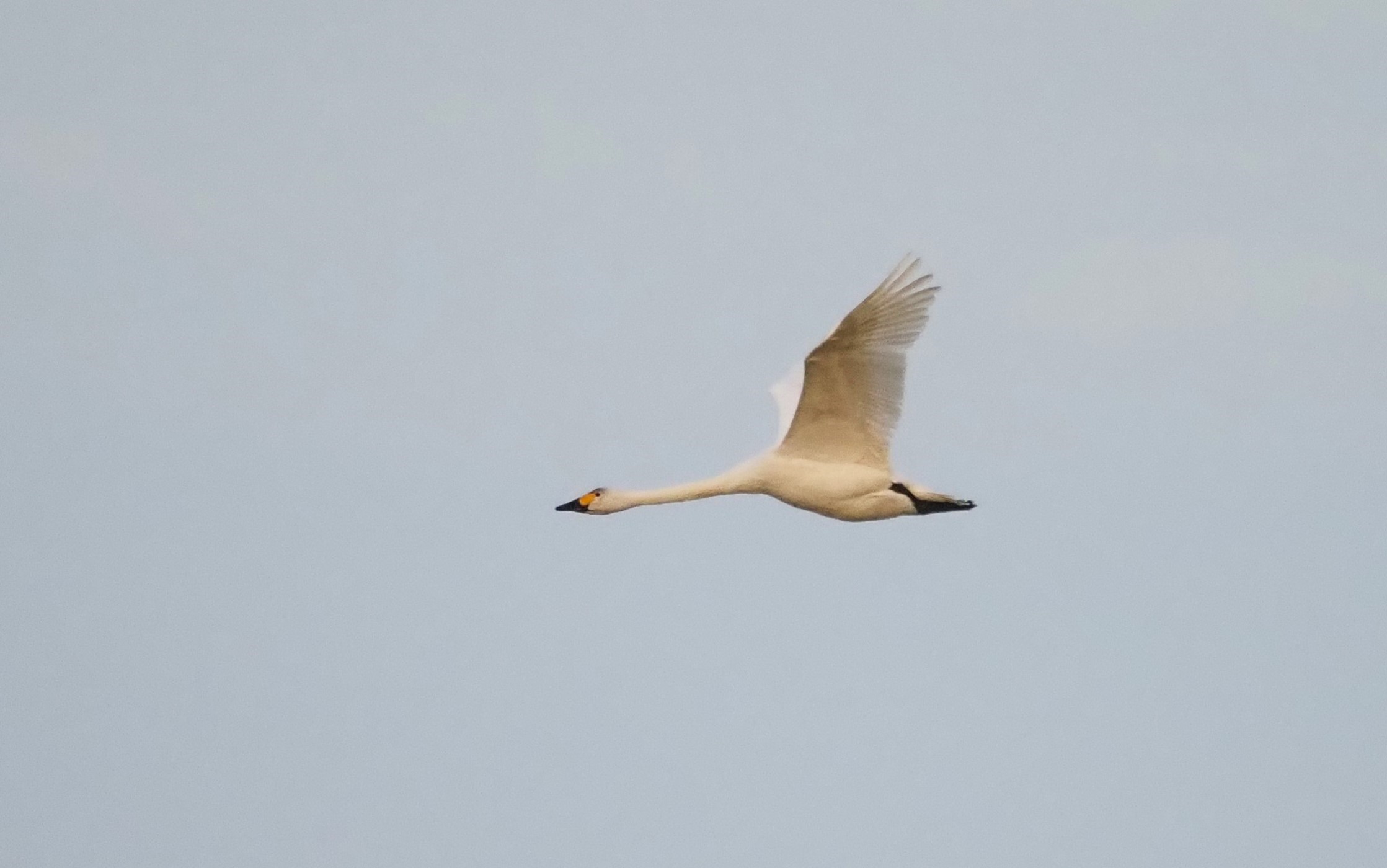
Cigne petit (Cygnus columbianus) , un hivernant escàs als Països Baixos. Imatge, Carles Oliver.Oques de la tundra (Anser serrirostris) alimentant-se en un camp de conreu. Imatge, Carles Oliver.
Quan sortim de la impressionant botiga ornitològica a on fem hem fet el cafè, el dia ha millorat una mica, però no gaire. Ens dirigim ara a una zona de dunes costaneres. Aquí, després de dinar, caminem una mica per dunes. Des de la distància, repassem l’estuari per descobrir un falcó peregrí, 3 bec-planers mentre una femella d’arpella pàl·lida ens passa volant per sobre. Una oca de collar de la subespècie hrota apareix del no-res, volant davant nostre i s’atura a l’herba alta. D’aquí en surten 3 aloses banyudes que volen estuaria enllà just en el moment que l’Antoni ens adverteix que ha trobat una oca diferent. Després de mirar-nos-la força estona, arribem a la conclusió que és una oca de les neus hibridada amb alguna altra espècie i, efectivament, a l’hora de sopar arriba la confirmació: oca de les neus x oca reial.
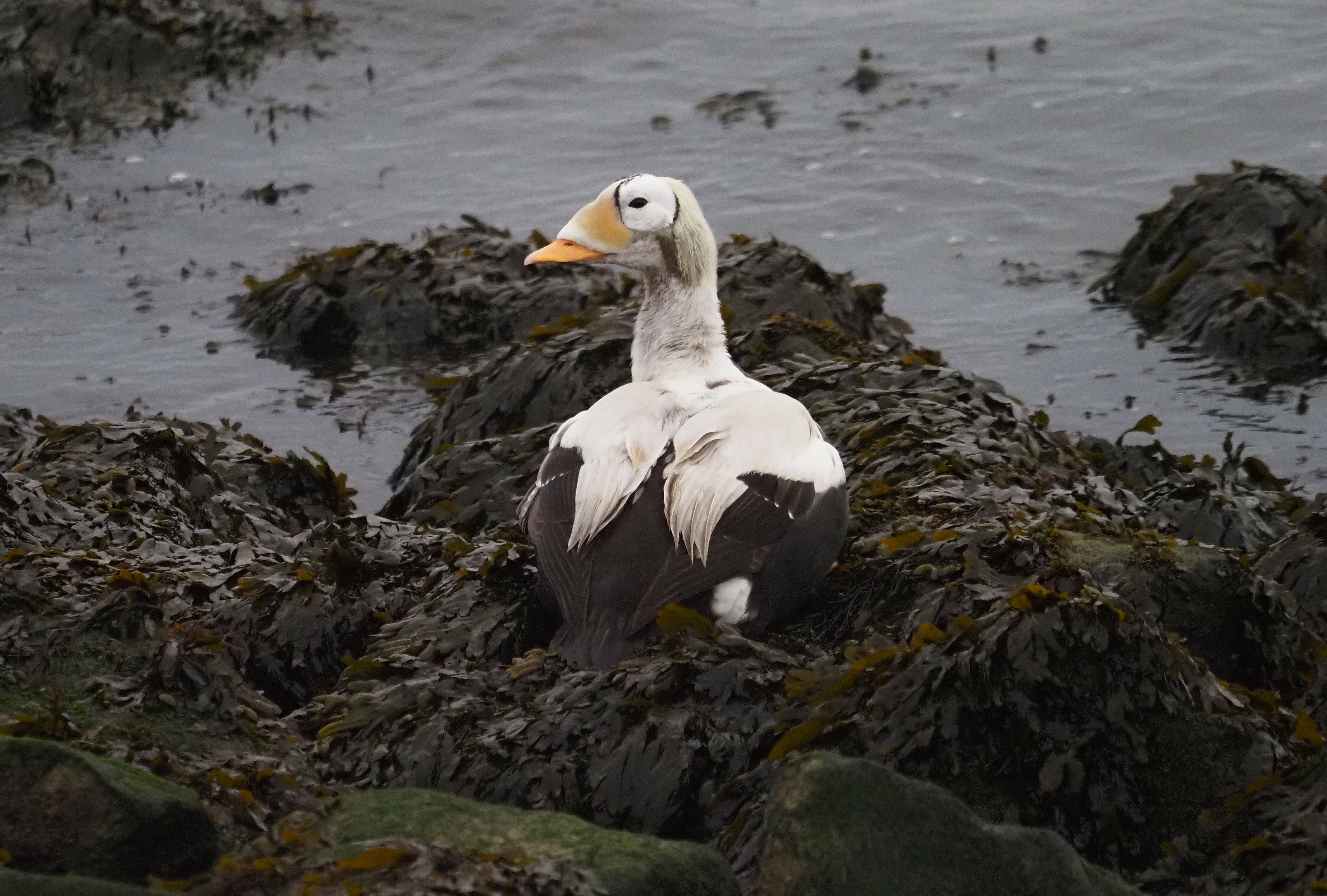
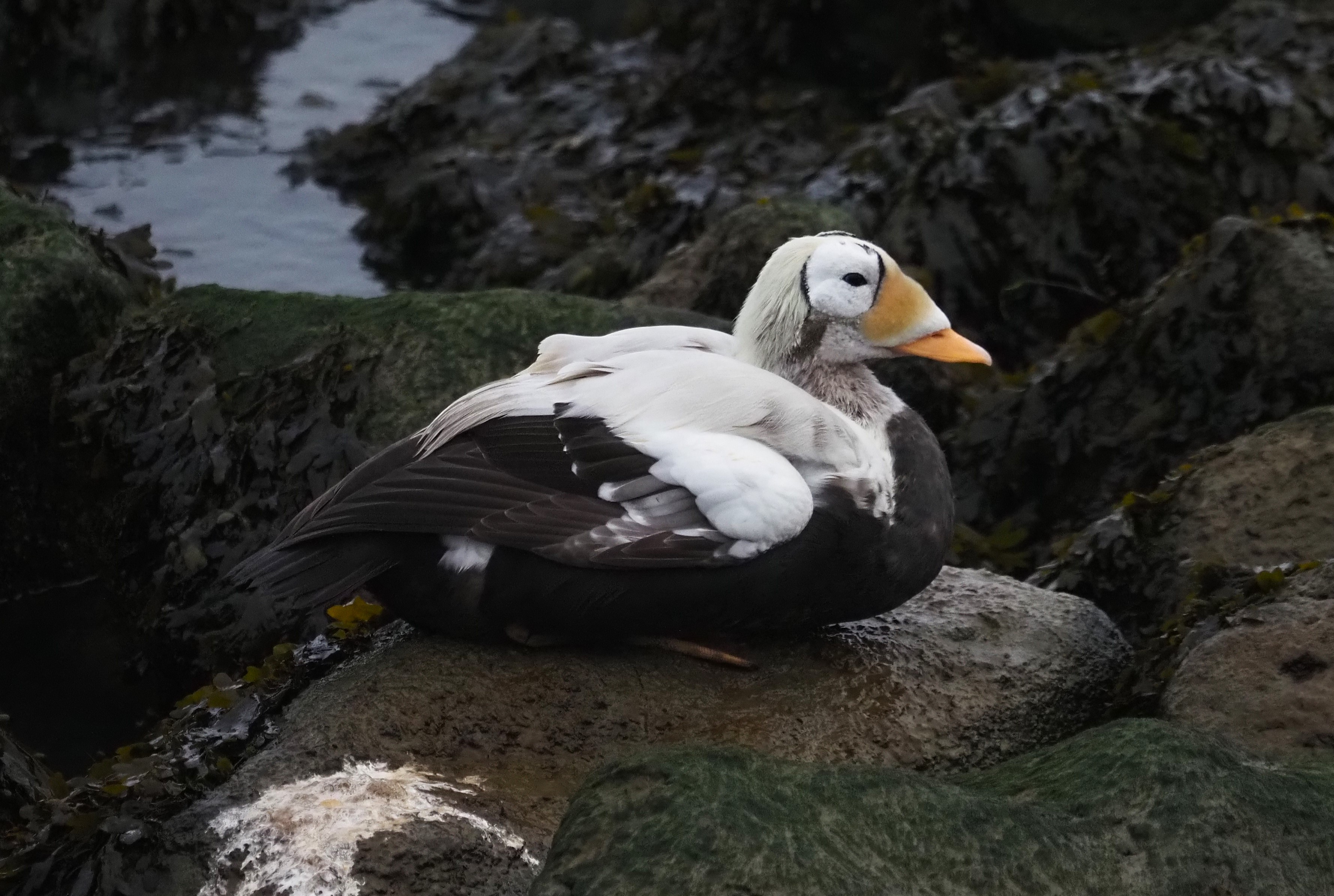
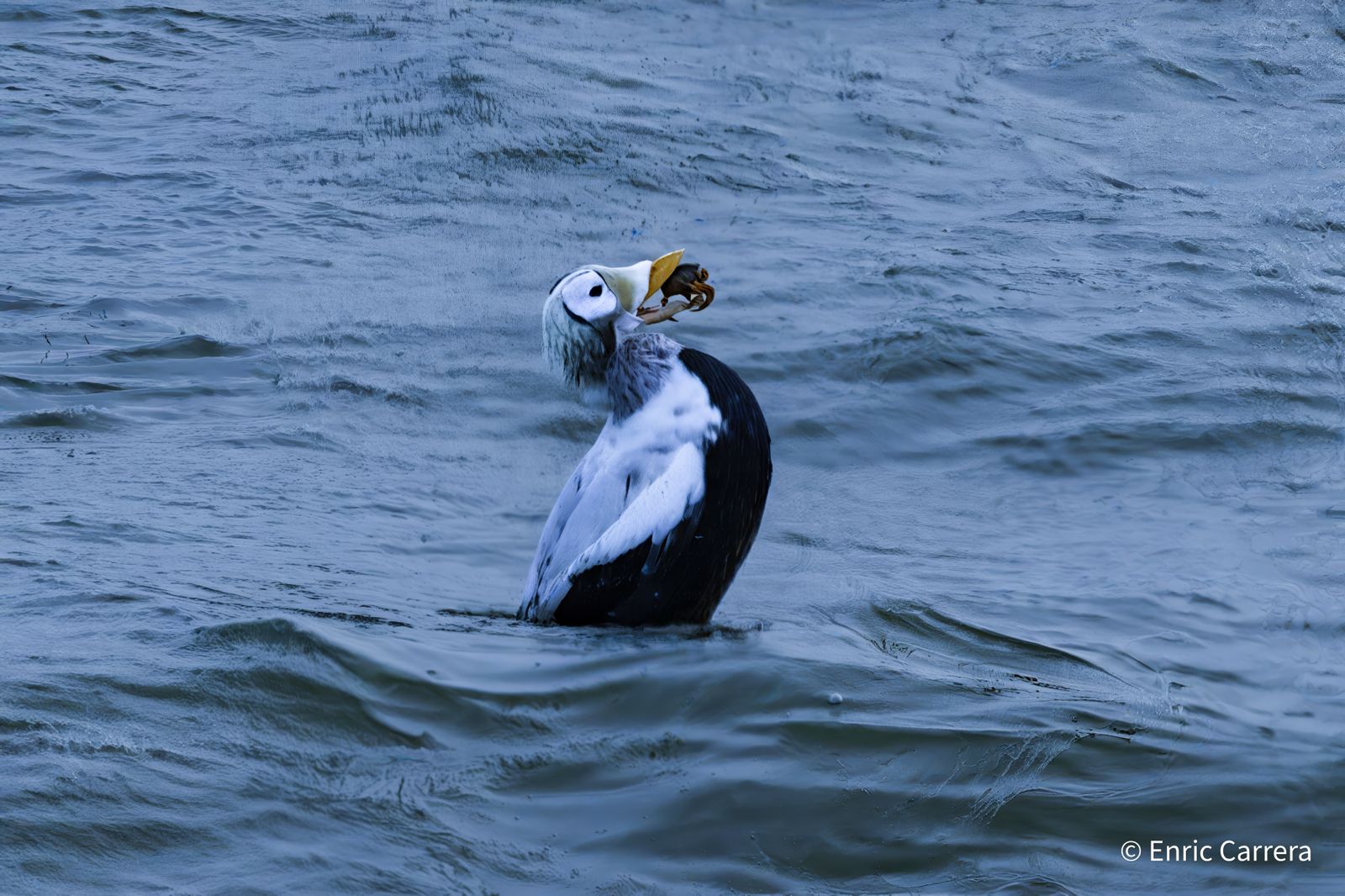
Però ara ja és hora de tornar a la zona de l’èider de les ulleres. Camimem pel dic d’abric de l’illa. Al mar, trobem un bonic èider comú mascle i, uns minuts més tard estem tots gaudint com nens petits davant l’impressionant èider de les ulleres (aka de Fischer). S’està tot sol a les roques de l’escullera però no triga ni deu minuts en ficar-se a l’aigua i, amb tota la tranquilitat, va nedant al llarg del dic i fins i tot captura un cranc de mida generosa i se’l menja davant de nosaltres… Espectacular! Aquesta és una espècie que només es pot veure a Alaska i, encara així, has de tenir molta sort, perquè viu a una de les zones més remotes de la costa d’aquella península!
Al mar, aquí també gaudim de força becs de serra mitjans, 7 morells d’ulls grocs (6 mascles i una femella), un altre mascle d’èider comú, corb marí emplomallat, 3 cabussons emplomallats i, a la tornada, una fantàstica foca comuna que passa a pocs metres del dic a on ens trobem, regalant-nos una gran observació.
Per acabar la jornada, tornem a la zona a on vam començar el dia. Aquí, 9 cignes petits ens esperen a poca distància i, ara sí, tothom pot veure bé els principals trets identificatius de l’espècie amb els seus propis binocles i amb els diferents telescopis que copen el nostre grup. En mig d’un fantàstic marasme de fredelugues, ànecs xiuladors i estornells, els cignes ens regalen una petita simfonia de reclams, just abans de sortir volant per alimentar-se als camps de més enllà mentre els estols d’oques rialleres i oques de galta blanca comencen a arribar en grans estols a la zona. Una forma formidable d’acabar la jornada malgrat l’ambient fred!
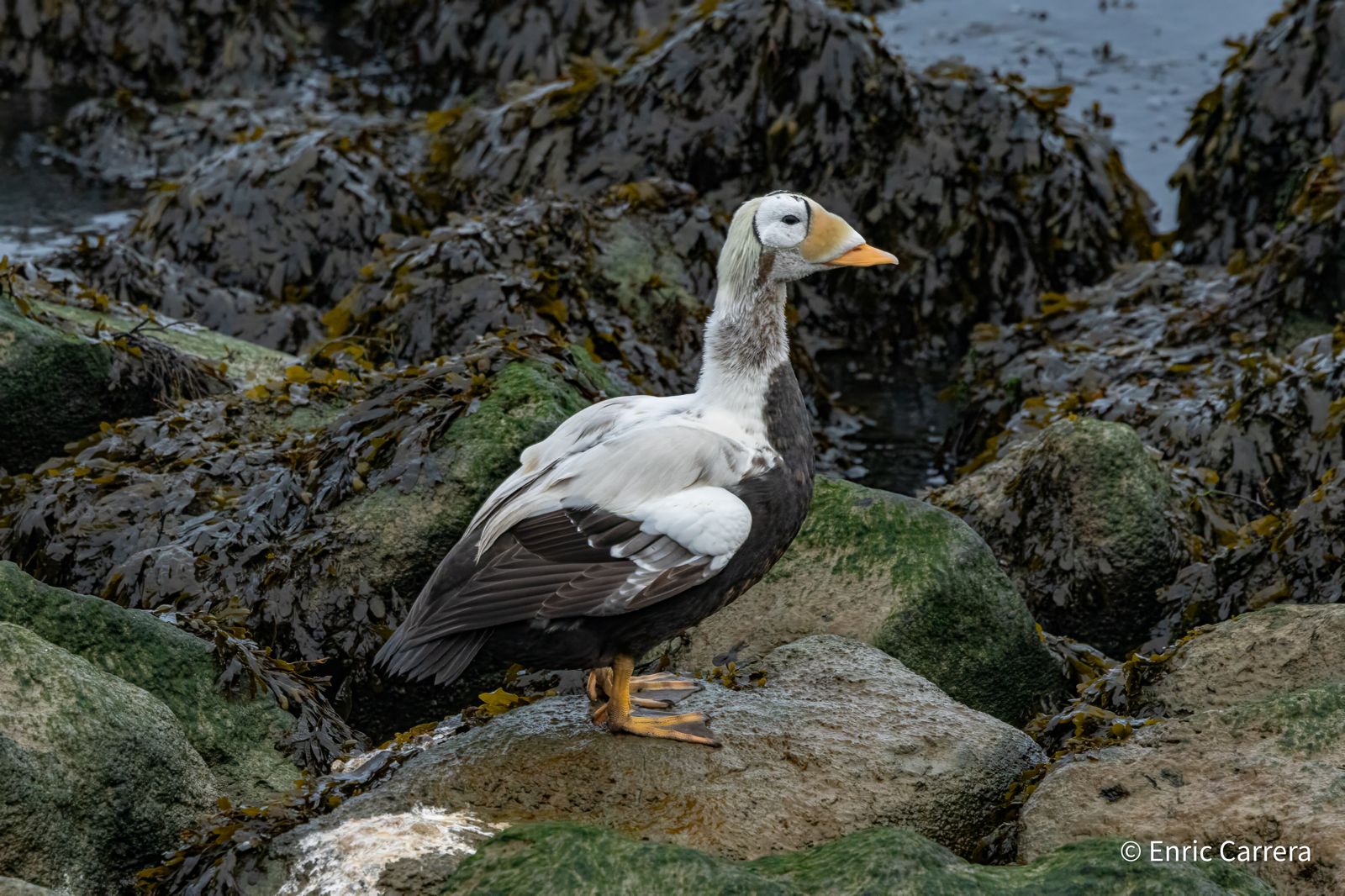
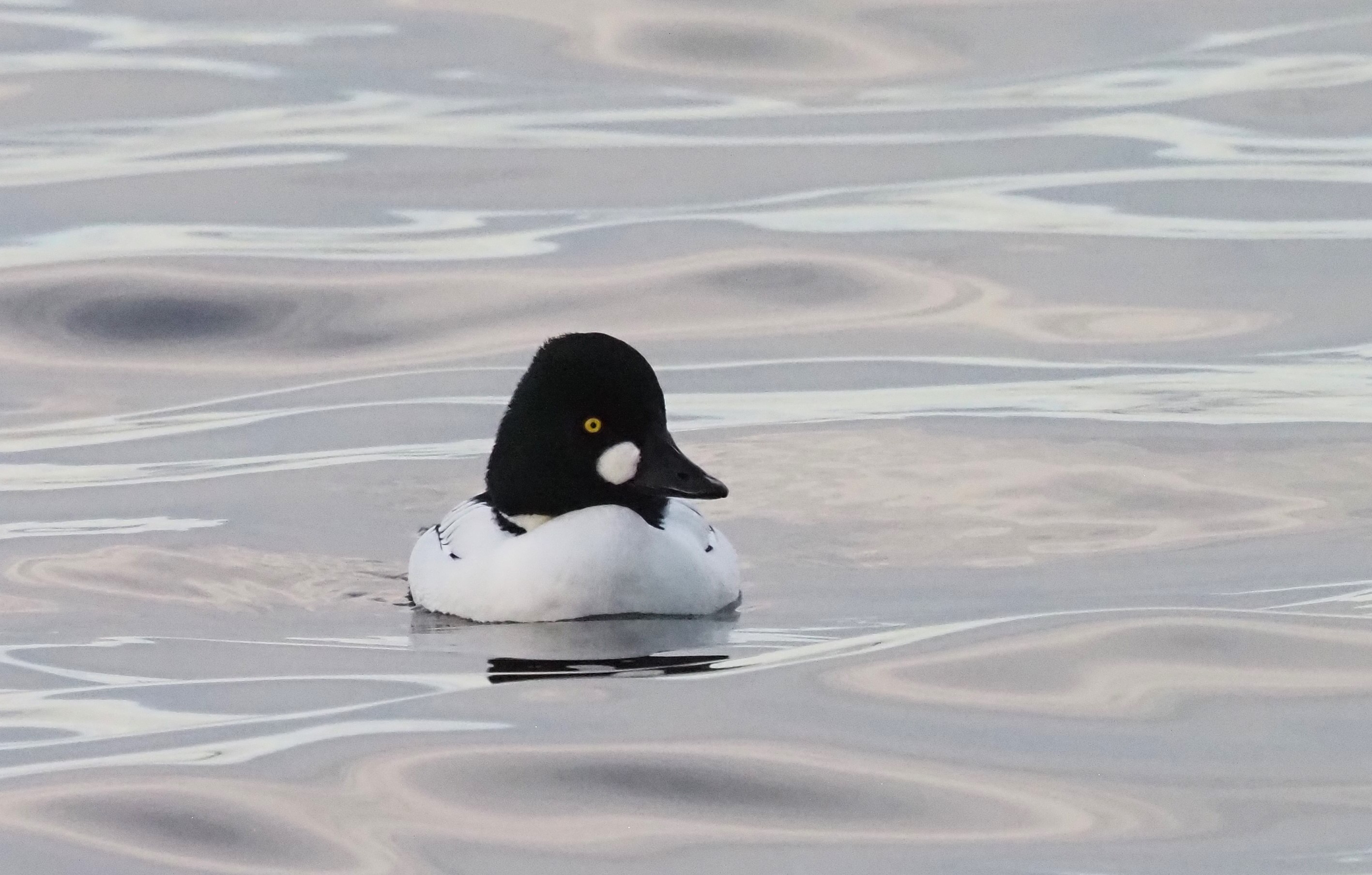
Èider de les ulleres (Somateria fischeri). Imatge de l’Enric Carrera.L’espectacular èider de les ulleres (Somateria fischeri), un dels ocells més rars al continent europeu el 2025. Imatge, Carles Oliver.Aquí l’èider sopant cranc. Imatge de l’Enric Carrera.Aquesta foca comuna (Phoca vitulina) ens va passar ben a prop! Imatge, Carles Oliver.Cignes petits (Cygnus columbianus). Imatge, Carles OliverDaurades grosses (Pluvialis apricaria) en vol al vespre. Imatge de l’Enric Carrera.
Dia 4. De bon matí ens dirigim cap al ferry. De camí, però ens creuem amb un impressionant estol de ben bé 500 pinsans mecs acompanyats d’alguns pinsans comuns i tord ala-rojos. També tenim temps per explorar una petita zona de dunes. Aquí, un estol de 8 passerells becgrocs apareixen del no res però, malauradament, no decideixen aturar-se a la vista i, quan l’estol decideix enlairar-se un altre cop, ho fa per marxar a força distància de nosaltres.
Una badia a tocar d’aquest punt està carregada d’ocells. Aquí, a banda de veure desenes i desenes de daurades grosses, becuts i fredelugues, també veiem 8 territs grossos, força tètols cuanegres, els primers pigres grisos del viatge i, en la llunyania, morells d’ulls grocs alimentant-se al mar. En una petita banda de canyissar, sentim les mallerengues de bigotis reclamant, però en cap moment vam ser capaços de veure-les.
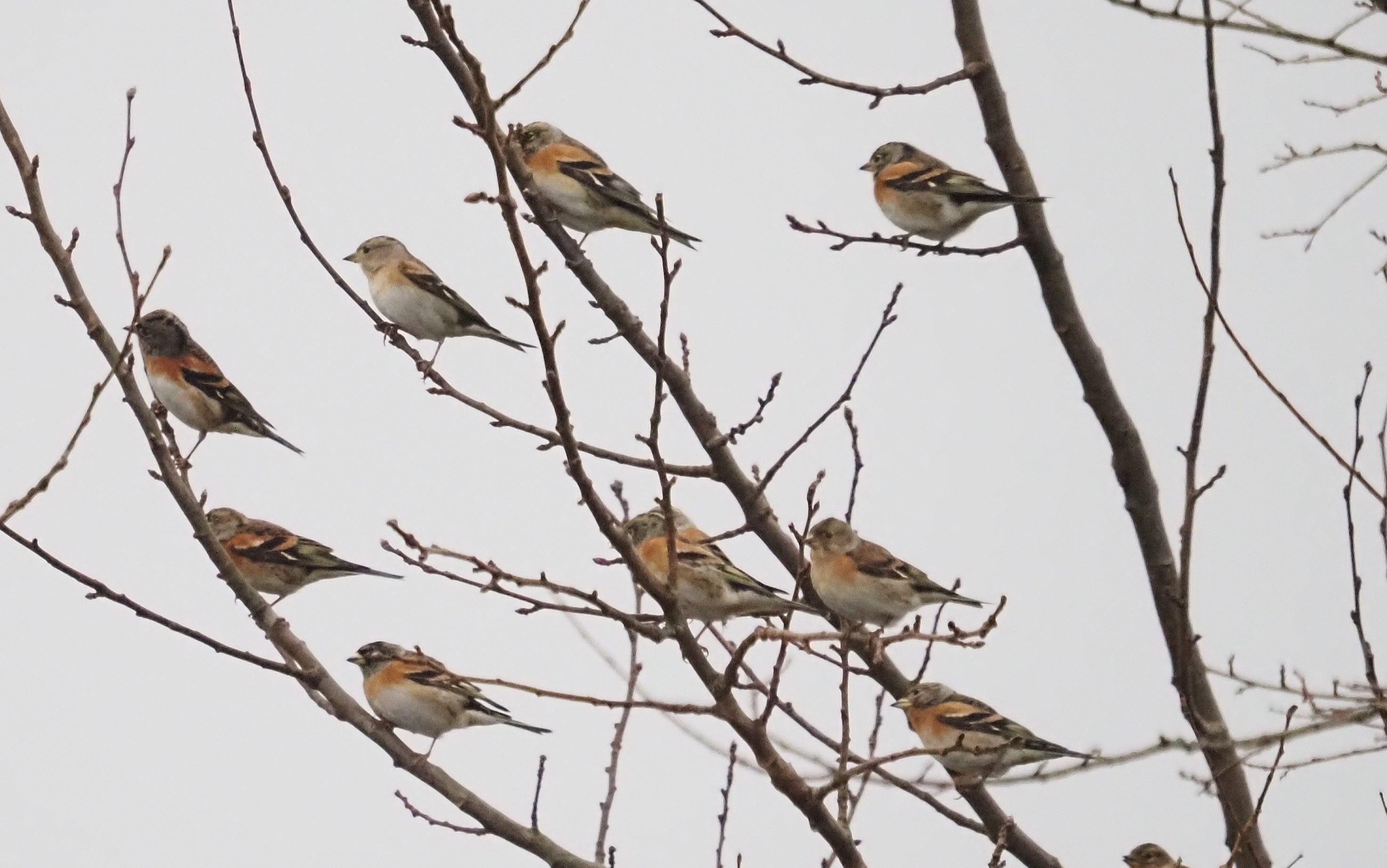
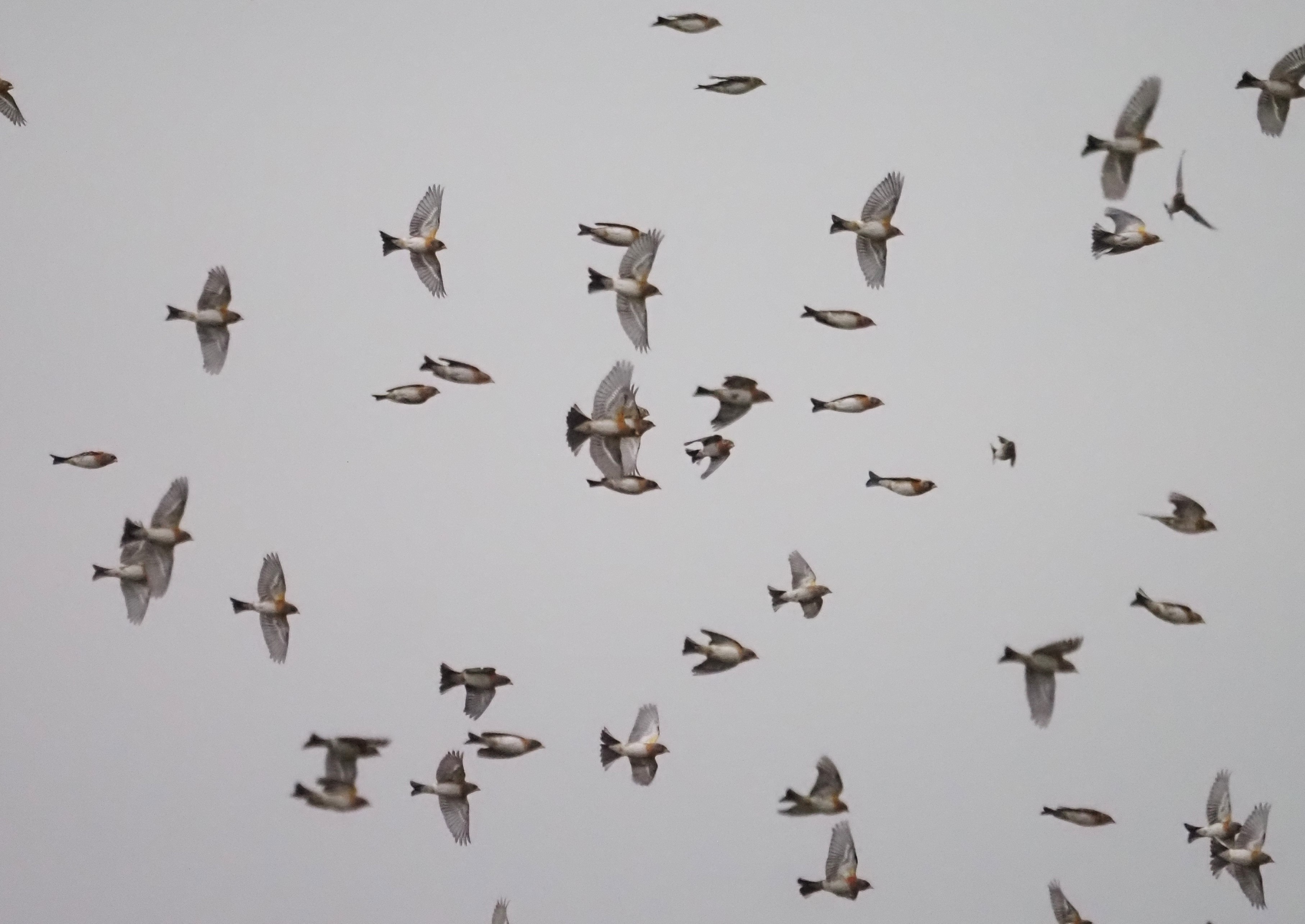
Part de l’espectacular estol de pinsans mecs al centre de Texel. Imatges, Carles Oliver
De tornada al continent, ens vam dirigir a la zona a on s’ha anat veient el morell capblanc. De camí, anem passant enormes estols d’Anàtides. Milers i milers d’ocells que dormen a tocar de les vies ràpides. En arribar a la nostra destinació no triguem en tornar a gaudir dels morells buixots i aquest cop comptem 11 d’ells entre centenars i centenars de morells de plomall. Ens cal caminar una mica per anar revisant els centenars d’ocells, però no triguem a trobar el morell capblanc nedant davant nostre i, que al llarg d’un petit lapse de temps, és l’ocell més proper a nosaltres! L’ocell, però, es van allunyant ràpidament, barrejant-se amb els morells de plomall, abans de refugiar-se a la vora del pòlder, a on suposem que torna a ficar-se a dormir.
Aquesta és una altra de les espècies del viatge. Un ocell que nia bàsicament al Canadà i Alaska i que hiverna en bons números al Nord i Centre dels Estats Units!
Encara amb una mica de temps per fer alguna parada extra, decidim d’anar a veure les àguiles marines que viuen a la zona. També hi ha un corb marí pigmeu a prop, però les àguiles marines fan més gràcia. Ens dirigim cap allà i gaudim d’un bon cafè des d’un dels observatoris del famòs Oostvaardersplassen, una gran reserva natural a l’Est d’Àmsterdam. Aquí veiem un parell d’àguiles marines descansant al terra. Les llacunes tenen les espècies d’Anàtides habituals però també un bonic 2n any de gavià del Caspi. Una observació més detallada revela 6 àguiles marines més i uns quants grups de cèrvols comuns de mida considerable!
Amb les últimes hores del dia, ja ens dirigim cap al nostre allotjament, a tocar d’una gran massa d’aigua.
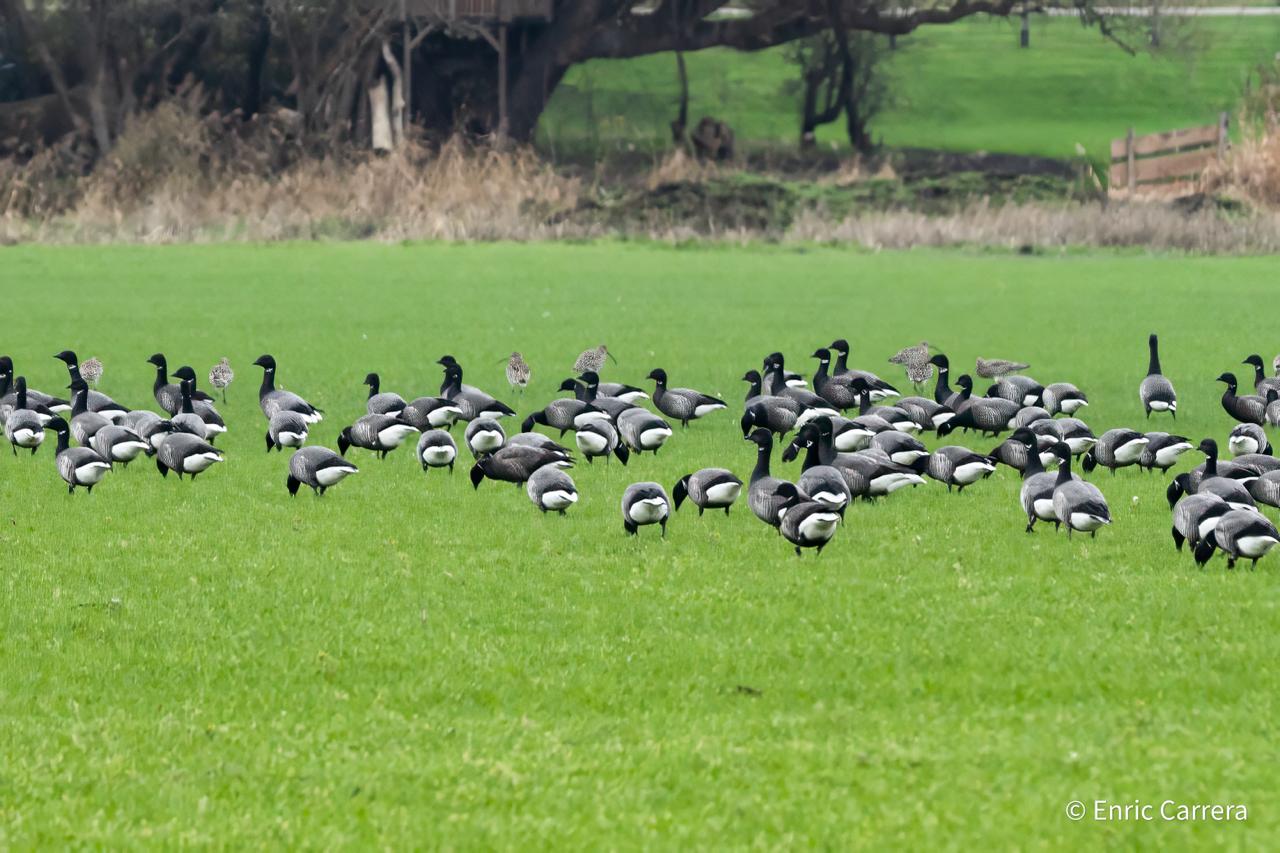
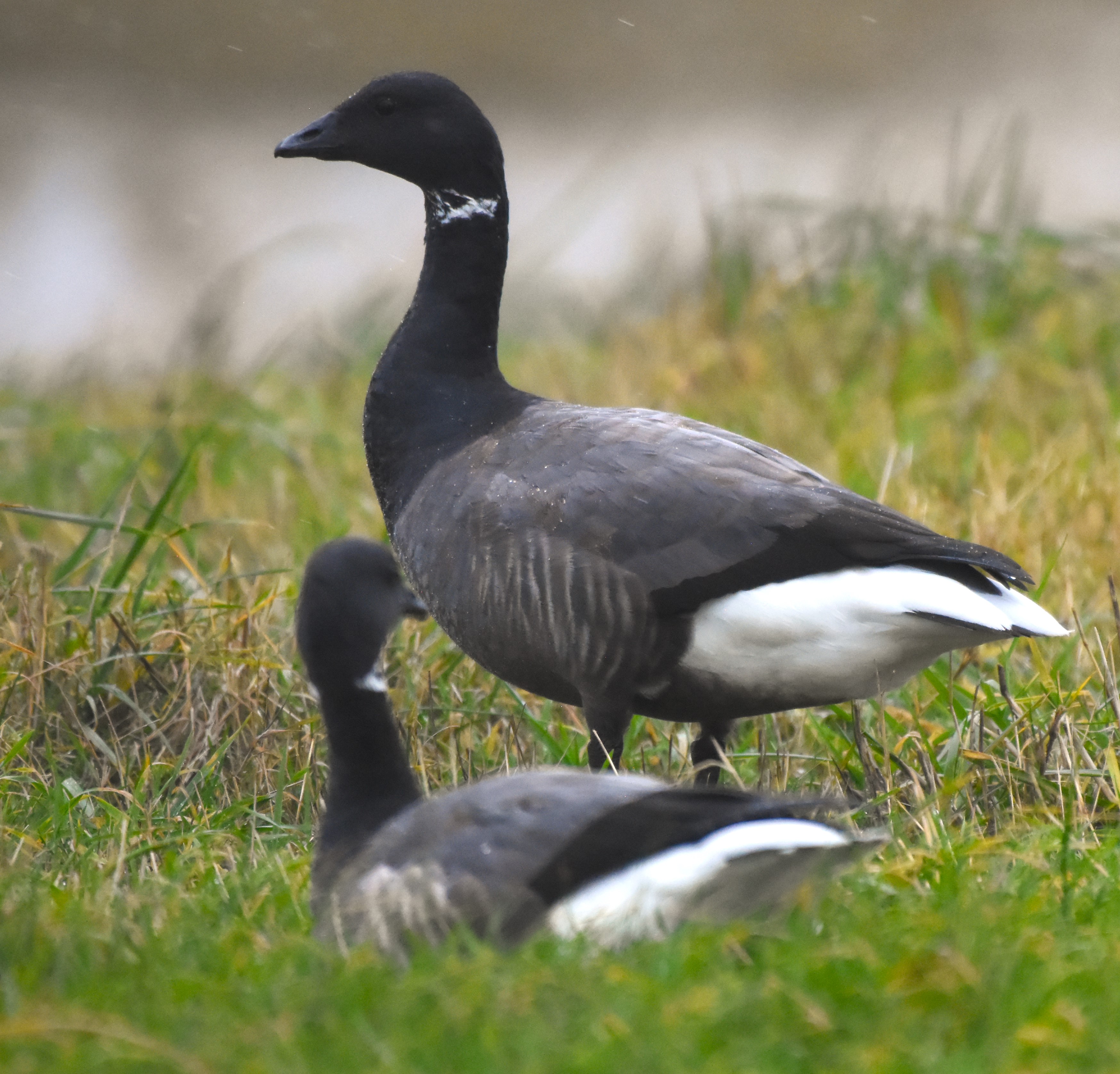
Oques de collar (Brenta bernicla) descansant a toca d’Àmsterdam. Imatge de l’Enric Carrera.Morell capblanc (Bucephala albeola) prenent distància del grup. Imatge, Carles Oliver
Dia 5. Al pàrquing mateix de l’hotel veiem +80 oques rialleres grosses i un durbec que reclama per sobre la nostra furgoneta. D’aquí, cobrim la curta distància que ens separa d’una zona a on la tarda abans s’havia vist una oca coll-roja. Hi anem de pet. Aquí, amb una llum de matí molt bona, ens esperen grans estols d’oca de galta blanca i força Anàtides, però cap oca coll-roja. A tocar, en un pòlder proper, hi contem 19 becs de serra petits i 6 morells buixots però segurament hi devien haver força més entre els centenars de morells cap-rojos i de plomall de la zona.
D’aquí conduïm fins a un petit llac a on s’ha anat veient un morell de collar, una espècie americana de morell. Arribem i hi tenim 15 minuts. Prou temps per trobar un bonic mascle de morell xocolater dormint entre els centenars de morells de cap-roig. I només tenim 15 minuts perquè ens arriba que una oca coll-roja es deixa veure des d’un observatori a on vam estar el dia abans. Tothom està d’acord en anar-hi, així que tornem a la furgoneta i conduïm els 20 minuts que ens separen del lloc.
Malauradament, quan arribem l’estol d’oques s’ha mogut i l’oca coll-roja fa una estona que no es veu. Ens hi quedem una hora remirant i esperant. Aquí veiem més àguiles marines en la distància i, tot repassant les nombroses oques rialleres grosses, ens trobem amb una oca de bec curt! Una espècie escassa a la zona.
Després d’aquesta troballa encara tenim una estona més abans d’anar cap a l’aeroport, però és debades. Les oques marxen lluny, empaïtades per les àguiles marines i nosaltres ens dirigim a l’aeroport, només a mig hora de distància del lloc a on trobàvem.
En definitiva, una escapada molt satisfactòria i molt reeixida. Amb moltes ganes de tornar al 2026!
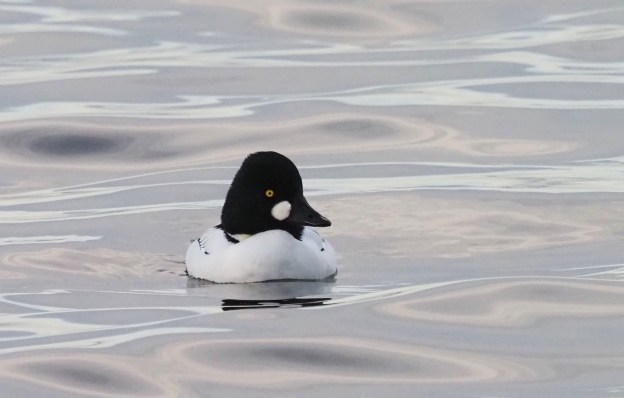
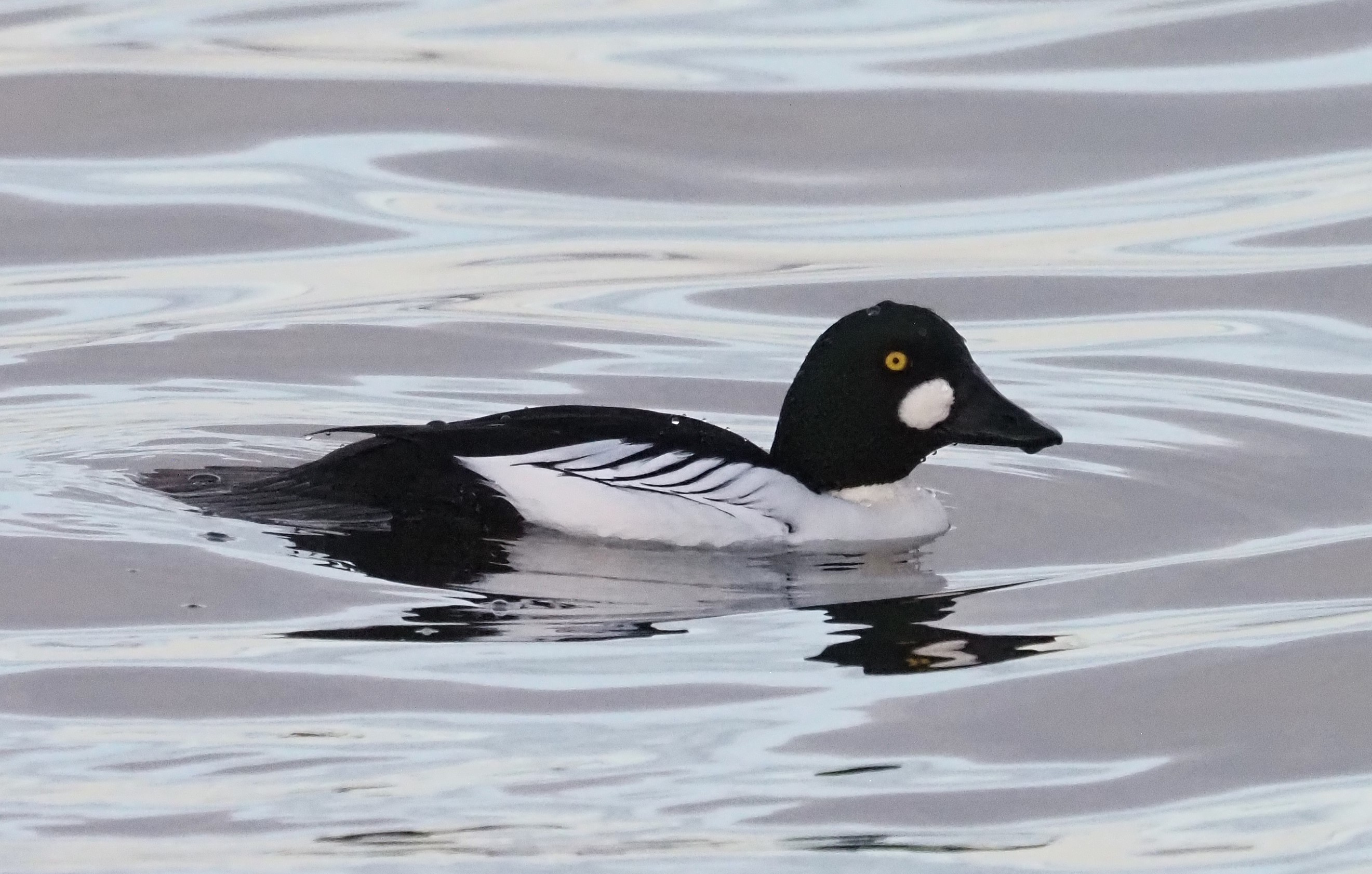
Morell d’ulls grocs (Bucephala clangula). Imatge, Carles Oliver.Morell d’ulls grocs (Bucephala clangula), un ocell menys comú a l’hivern als Països Baixos que al Sud d’Anglaterra. Imatges, Carles OliverMorell xocolater (Aythya nyroca) dormint entre morells caprojos (Aythya ferina). Imatge, Carles OliverEstol de morells dormint. Imatge, Carles Oliver.
I en temps afegit…
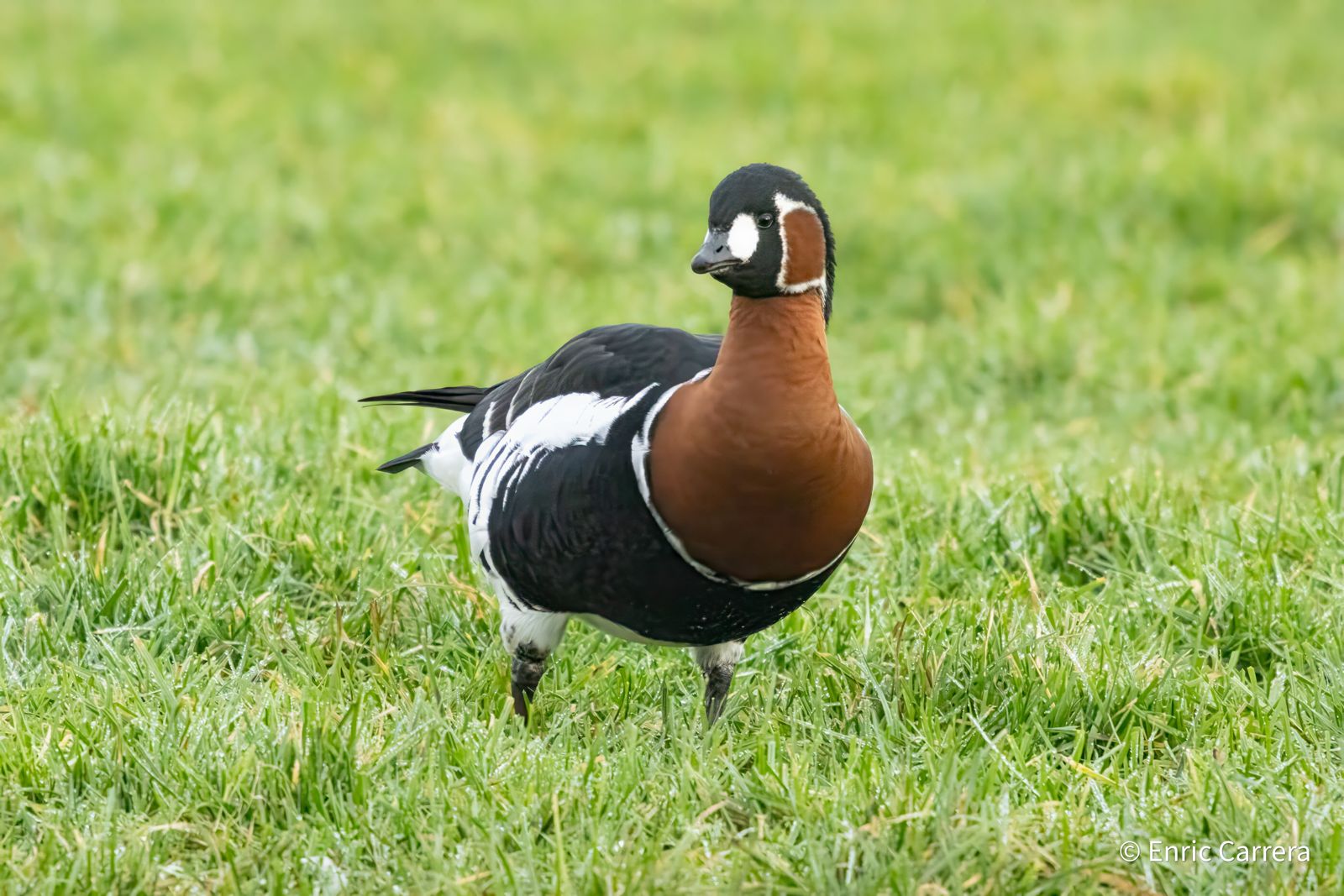
Oca coll-roja (Branta ruficollis). Imatge de l’Enric Carrera.
Llistat d’espècies observades al llarg del tour:
Cigne mut (Cygnus olor)
Cigne cantaire (Cygnus cygnus)
Cigne petit (Cygnus columbianus)
Oca egípcia (Alopochen aegyptiacus)
Ànec blanc (Tadorna tadorna)
Oca comuna (Anser anser)
Oca riallera grossa (Anser albifrons)
Oca de bec curt (Anser brachyrhynchus)
Oca de la tundra (Anser serrirostris)
Oca de collar (Branta bernicla)
Oca de galta blanca (Branta leucopsis)
Ànec xiulador (Anas penelope)
Xarxet comú (Anas crecca)
Ànec coll-verd (Anas platythynchos)
Ànec cuallarg (Anas acuta)
Ànec griset (Marecca strepera)
Ànec cullerot (Spatula clypeata)
Morell de plomall (Aythya fuligula)
Morell buixot (Aythya marila)
Morell xocolater (Aythya nyroca)
Èider (Somateria mollissima)
Èider de les ulleres (Somateria fischeri)
Morell d’ulls grocs (Bucephala clangula)
Morell capblanc (Bucephala albeola)
Bec de serra petit (Merguellus albellus)
Bec de serra gros (Mergus merganser)
Bec de serra mitjà (Mergus serrator)
Faisà comú (Phaisanus colchinus)
Xixella (Columba oenas)
Colom roquer (Columba livia)
Tudó (Columba palumbus)
Cabussó emplomallat (Podiceps cristatus)
Garsa de mar (Haematopus ostralegus)
Corriol anellat gros (Charadrius hiaticula)
Daurada grossa (Pluvialis apricaria)
Fredeluga comuna (Vanellus vanellus)
Territ variant (Calidris alpina)
Territ menut (Calidris minuta)
Batallaire (Calidris pugnax)
Becadell comú (Gallinago gallinago)
Tètol cuabarrat (Limosa lapponica)
Becut (Numenius arquata)
Gamba roja comuna (Tringa totanus)
Gamba roja pintada (Tringa erythropus)
Xivita (Tringa ochropus)
Xivitona (Actitis hypoleucos)
Remena-rocs (Arenaria interpres)
Gavina menuda (Hydrocoloeus minutus)
Gavina riallera (Chroicocephalus ridibundus)
Gavina cendrosa (Larus canus)
Gavinot (Larus marinus)
Gavià de potes roses (Larus argentatus)
Corb marí gros (Phalacrocorax carbo)
Corb marí emplomallat (Gulosus aristotelis)
Aligot comú (Buteo buteo)
Arpella pàl·lida (Circus cyaneus)
Arpella comuna (Circus aeruginosus)
Àguila marina (Haliaeetus albicilla)
Picot garser gros (Dendrocopos major)
Xoriguer comú (Falco tinnunculus)
Gaig eurasiàtic (Garrulus glandarius)
Garsa eurasiàtica (Pica pica)
Gralla occidental (Coloeus monedula)
Cornella emmantellada (Corvus cornix)
Corb comú (Corvus corax)
Mallerenga blava (Cyanistes caeruleus)
Mallerenga carbonera (Parus major)
Mallerenga de bigotis (Panurus biarmicus)
Alosa euroasiàtica (Alauda arvensis)
Alosa banyuda europea (Eremophila alpestris)
Mosquiter comú (Phylloscopus collybita)
Reietó (Regulus regulus)
Cargolet eurasiàtic (Troglodytes troglodytes) — només sentit
Overview: Our 8th issue exploring Northern Finland & Finnmark was another successful trip. The tour enjoyed mild weather during the first days of the trip, but the last days were cloudy and windy, with temperatures clearly lower than average. The last two days of the trip we got some light rain. In this trip we got nice views on all the species of Grouses and 5 species of Owls. The North of the itinerary was empty of rodents, and this explains the absence of Northern Hawk Owls and Rough-legged Buzzards (only 2 seen). On raptors, this was partially compensated by the occurrence of a male Pallid Harrier the first days of the trip. It was also a low year for Redpolls, and both Mealy and Arctic (now lumped in a single species) were showing in modest numbers.
All images in this trip report by tour leader Carles Oliver. All rights reserved.
Day 1. During the afternoon, all the tour participants are assembling at the Oulu Airport. Meet and greet at the terminal, and once the vehicle is collected we directly drive to our accommodation. After dinner we still have time for some birding, and taking advantage of the good light we had a walk to check in the bay beside our hotel. Here we got the first views on Common Rosefinch of the trip, but also other species including Red-breasted Merganser, Great Crested Grebe, Greenshank, Sedge Warbler and a distant flock of Common Cranes feeding in the bay. A drake Garganey is also very nice pick up, and our list also includes a distant Lesser Black-backed Gull (nominal race) and Common Snipes displaying in the air. After a few more minutes we called a day and come back to our rooms for a short sleep.
Day 2. Very early morning start. After leaving the accommodation with our local guide we go to the woodlands. Here we get a first stop to see a Eurasian Eagle Owl that is roosting along one lane. The Owl didn’t enjoy our company so it went deeper in the forest, we all got very nice scope views. Always a treat!
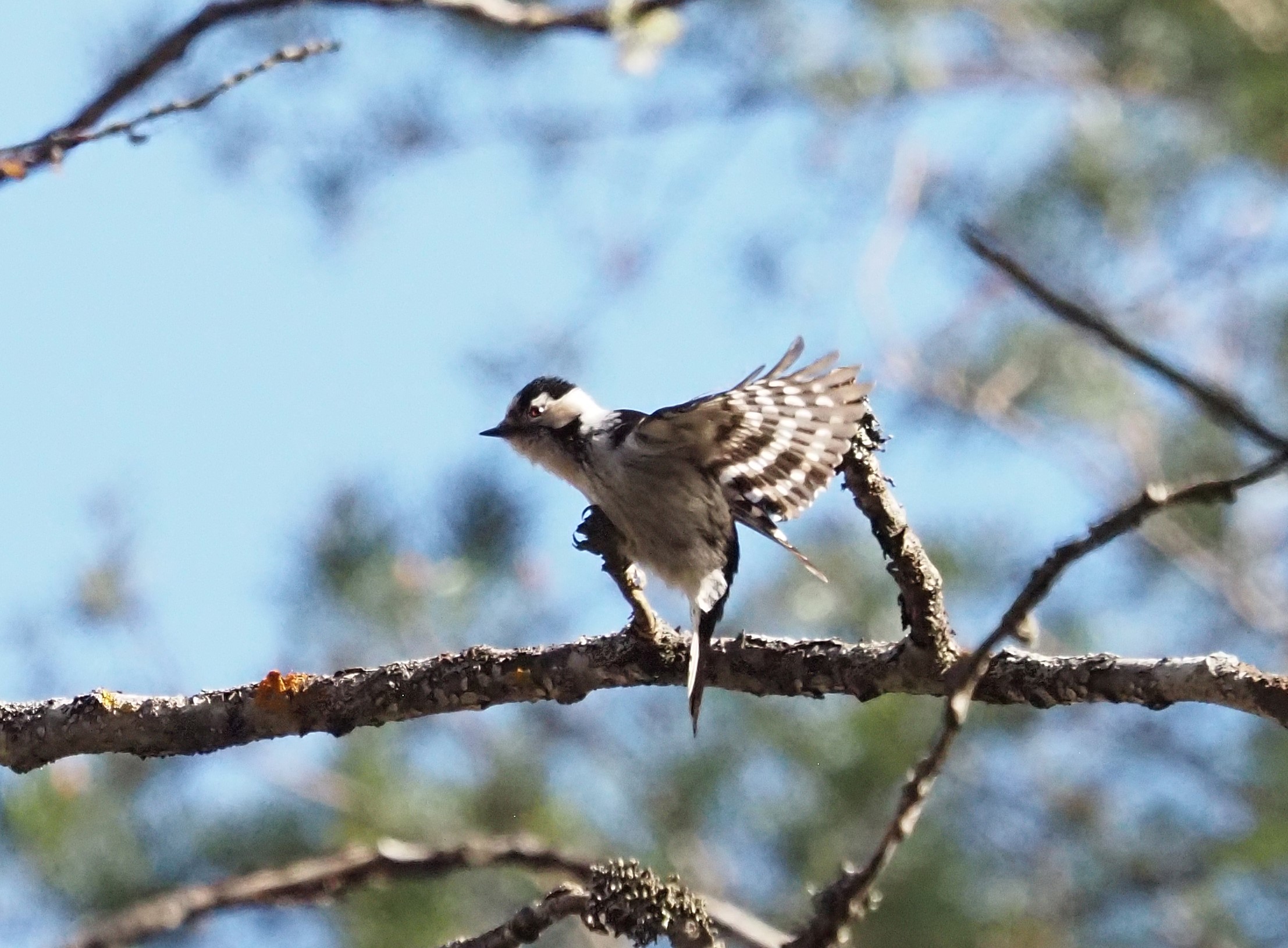
A second stop was made way inside the forest. This time to visit a nest of Great Grey Owl. After a short walk in the forest we enjoyed great views of the female on a massive nest of Northern Goshawk. Definitely a wonderful sight! Around it, we had both Spotted & Pied Flycatchers and, in the way to our van a distant, familiar call caught our attention, and the time proved us right when a wonderful Eurasian three-toed Woodpecker just emerged from the woods to stop right by the road, working in one of the oldest trees around. Jackpot! We were not expecting this species to show here!
From here we drove a short distance into a small backyard. As we arrive, a family group of Scandinavian Bullfinches (a very distinctive race both in size and in voice) were very showy in the trees around. Here we also got nice views on Goldcrest and our first Greenfinch was singing from high up in the tree. Soon, the first reason of our visit here was audible in the distance, and it didn’t take long to show up: a wonderful Black Woodpecker that landed a few meters away from us, in their way to attend its nest in the backyard. Very happy with this sight we only had to move slightly around the same tree to face a second whole. This time was a Tengmalm’s Owl that was on the nest! Amazing! It is always great to see this super cute creatures, especially when it comes to owl chicks.. After a few minutes enjoying this amazing bird and a couple of other small passerines, we went back to minibus.
Our last stop of the morning was to get deep into the boreal forest. a ten minutes walk into the habitat was mandatory to reach our goals there. This is normally a nice place for woodpeckers, but after we already nealed the Three-toed Woodpecker we focused in smaller species. In our we heard 1 Wood Warbler singing and we saw Tree Pipit, Eurasian Treecreeper, Lesser Whitethroat and a few Robins. Suddenly we arrived into a place where many birds were singing. There were Siskins but also Great & Blue Tits and Common Chaffinches. Not surprisingly, an Eurasian Pygmy Owl was the cause of all that mess. The owl was high up in the tree and we were lucky to find it! During the next minutes, we were enjoying the Owl, trying different angles to have better views/shots. While exploring the forest we also found a Lesser Spotted Woodpecker that showed out very well before we arrive to a Grey-headed Woodpecker nesting hole! The male performed very well of us, showing out for at least 10 minutes!
Back to the road, we had to a couple of stops because of Eurasian Woodcocks moving really close to the tarmac before arriving to the last stop of the morning. Here we visited a nesting pair of Ural Owls. When we arrived, it was quite cloudy and the female Ural Owl was inside the nesting box, providing really good scope views.
Great Grey Owl sitting on its nest. A wonderful sight!This Three-toed Woodpecker popped out from the forest. A really unexpected sight!Black Woodpecker showed really well around its nesting hole.Tengmalm’s Owl inside its nest hole in a private gardenWe were very lucky to pick up this Eurasian Pygmy Owl up in the trees. Here a closer look!Lesser Spotted WoodpeckerGrey-headed Woodpecker showing very nicely
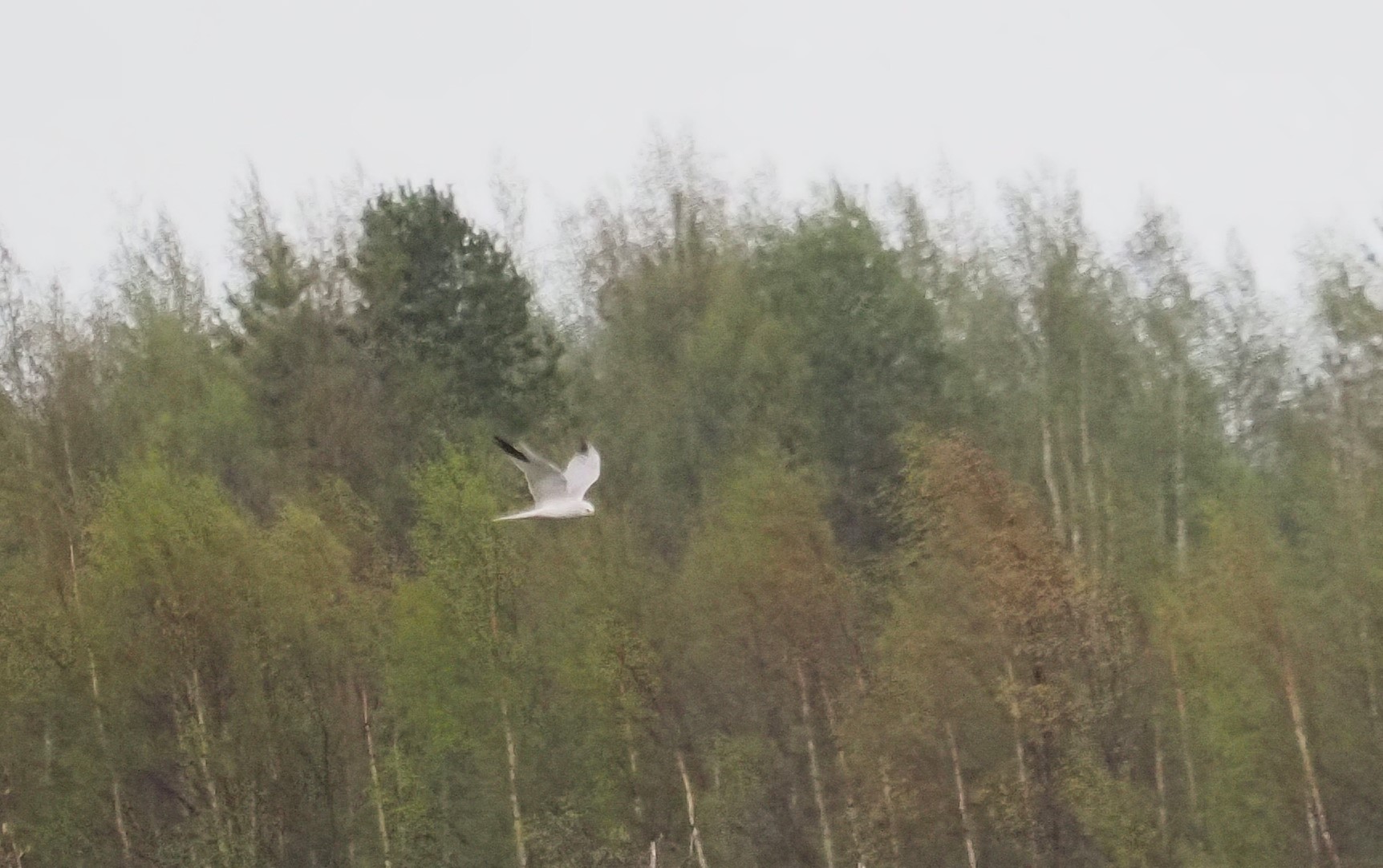
Very excited after this wonderful morning, we went for an early lunch followed by a resting time in our accommodation. The after was sunny, and we kept going with the planning, going to check a massive bog area South of Oulu. As we went inside the place, we got nice views on some common species here including Eurasian Tree Sparrow, Yellowhammer, Pied Flycatcher, Lesser Whitethroat, Yellow Wagtail and Spotted Flycatcher. The path crosses and large area of bog, and here we got some Marsh Harriers flying around, and excitement rocked up when a wonderful male Pallid Harrier just came to us crossing the bog. Even if never came really close, this was one of the birds of the week for some of us! Beyond, we got the first (far) views on Ruff and White-tailed Eagle. The only one Caspian Tern of the trip was seen here, and the list was also including Garganey and 1 Taiga Bean Goose that flew over our group.
After dinner we still had energy to check a nesting place of Terek’s Sandpiper. Unfortunately, with no luck..
This male Pallid Harrier was one of the surprises of our first day!
Day 3. After enjoying a very good breakfast we left our accommodation and start heading East. Our first stop that morning was to check a couple of places looking for Ortolan Bunting. Our first stop produced Common Whitethroat, Curlews, Rooks, Green Sandpiper and close views on a pair of Grey Partridges. Following the lovely lanes that cross the farming around Oulu we soon arrived into a second interesting spot. Here, we soon heard at least 3 Ortolan Buntings singing around. Yellowhammers & Reed Bunting were both common here and it was not easy to connect with the Ortolans in the misty ambient. Still, after a few minutes, we got some proper views. From here we drove a few mile into a nice area of forest where we got really nice looks on both Garden Warbler and a very showy Common Rosefinch. A male European Honey Buzzard flew over us, clapping its winds up head in a phenomenal display that, for me, was one of the best behavioural tips of the trip! In this same spot we got our first Hazel Grouse singing around. This is normally a nice place to try to see it, and the bird did a couple of crossings at close range. Unfortunately not everybody in the group connected with the bird, and after a time trying to have better views we finally decided to leaving for another day and go to check a nearby pond where a drake Slavonian Grebe was waiting for us! After enjoying close views on this little gems we kept driving East, and after having an en route lunch we arrived to Kuusamo.
Grey Partridge was a nice adding to our listCommon Rosefinch singing his heart out from the top of a small pineLovely Slavonian Grebe showing its puffs up!
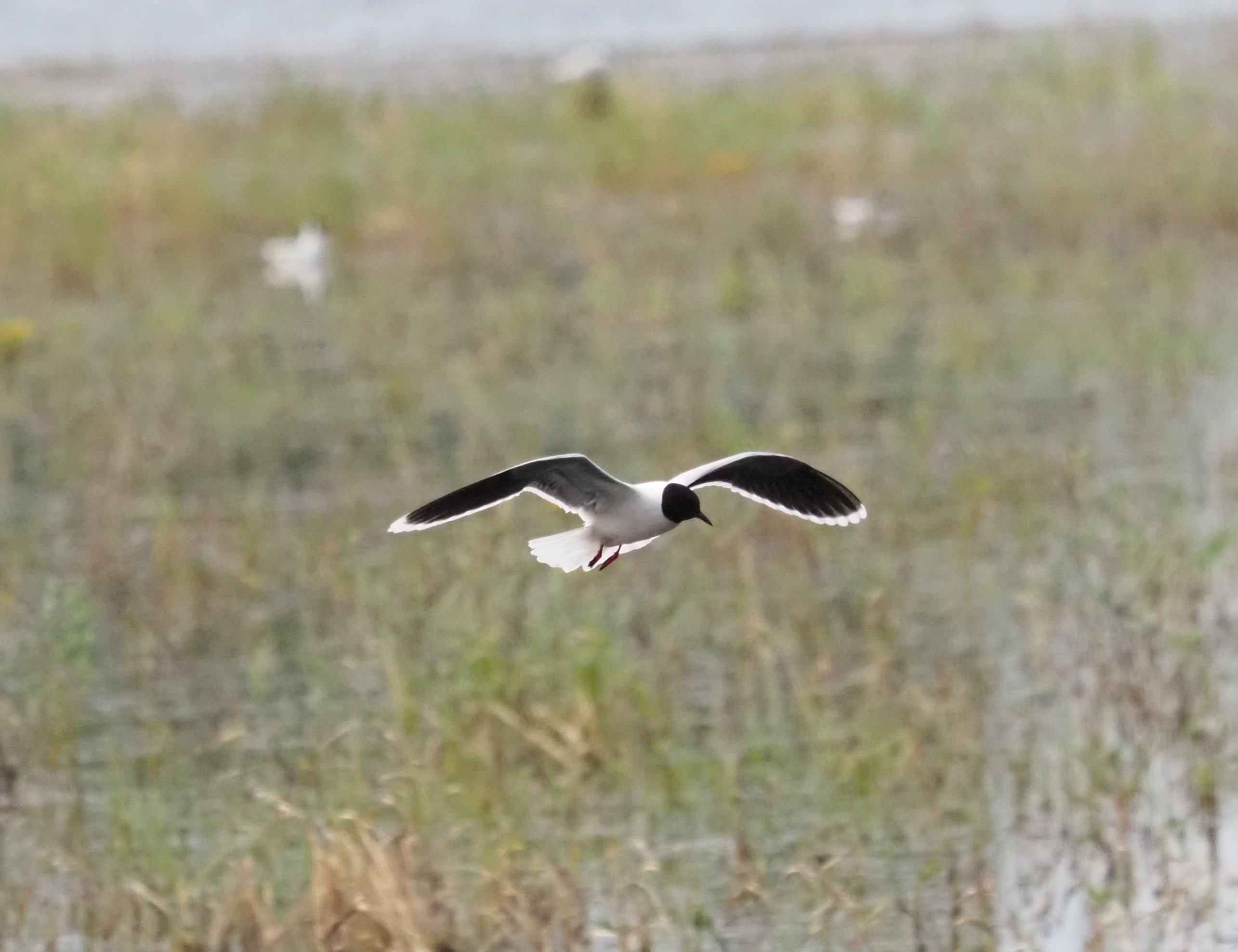
It was a cloudy afternoon in Kuusamo. Our first movement in this new area was to check a couple of places for Little Bunting, with little reward out of distant Little Gulls, Sand Martins (new for the trip) and the nice sand rather distinctive song of the “abietinus” race of Willow Warbler. The last stop before arriving to visit a colony of Little Gulls. Here we got excellent views on the smallest gull, but also on the nesting Red-necked Grebes and Whooper Swans distant 5 Black-throated Divers and Goldeneyes and the first Brambling of the trip!
Redwings became even more obvious around KuusamoWood Sandpiper is a common breeder in marshes of all sizes in Northern FinlandLittle Gull around one colony
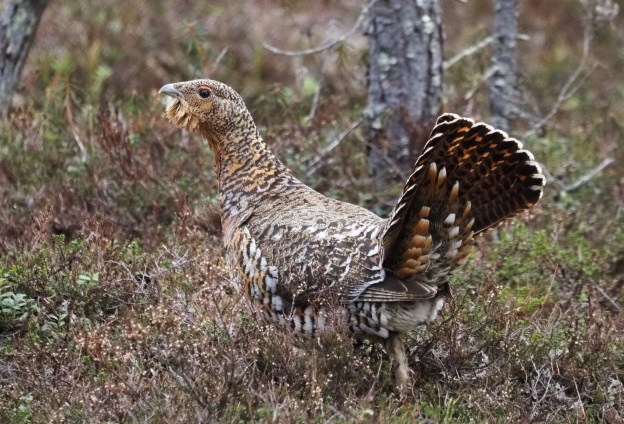
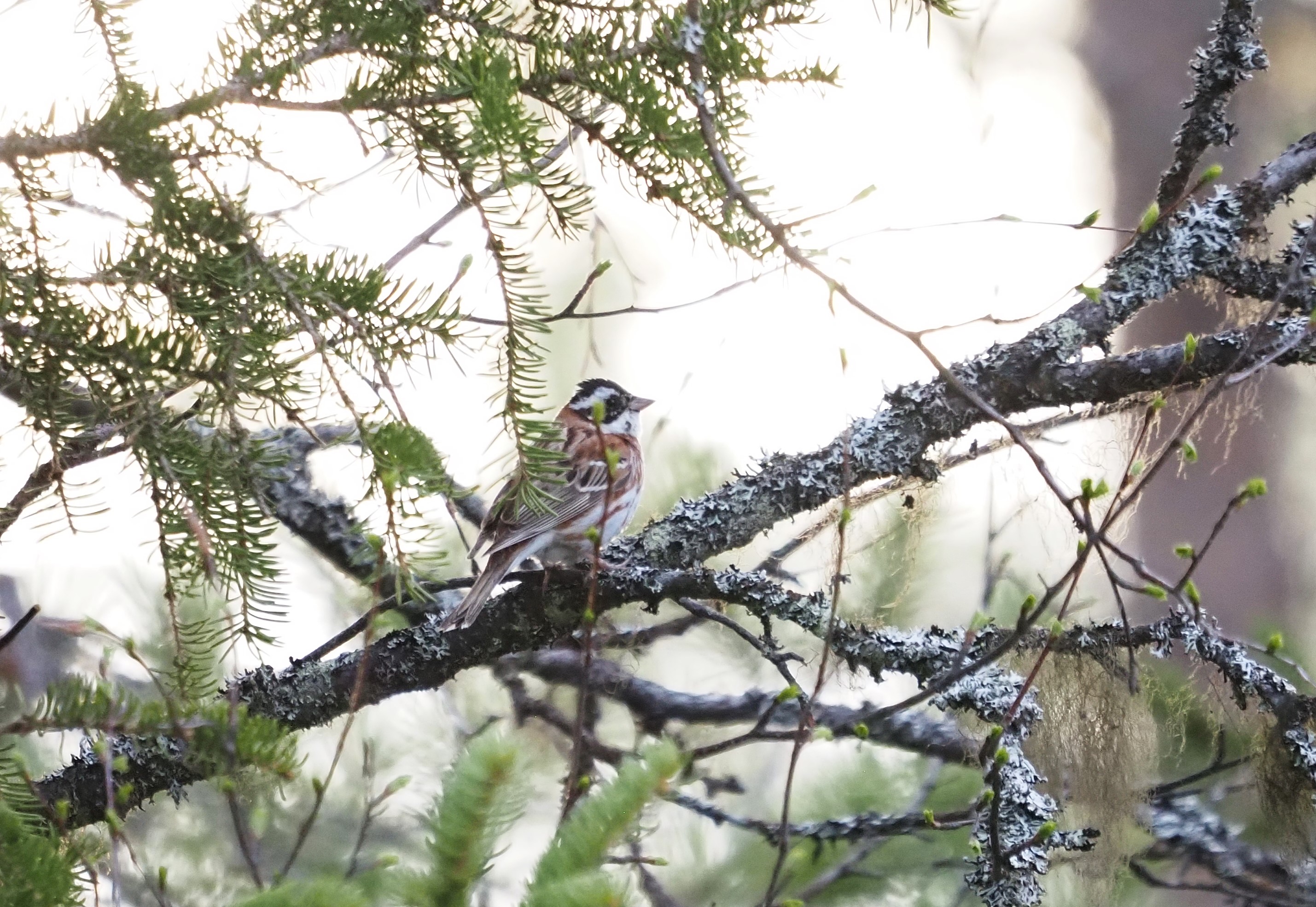
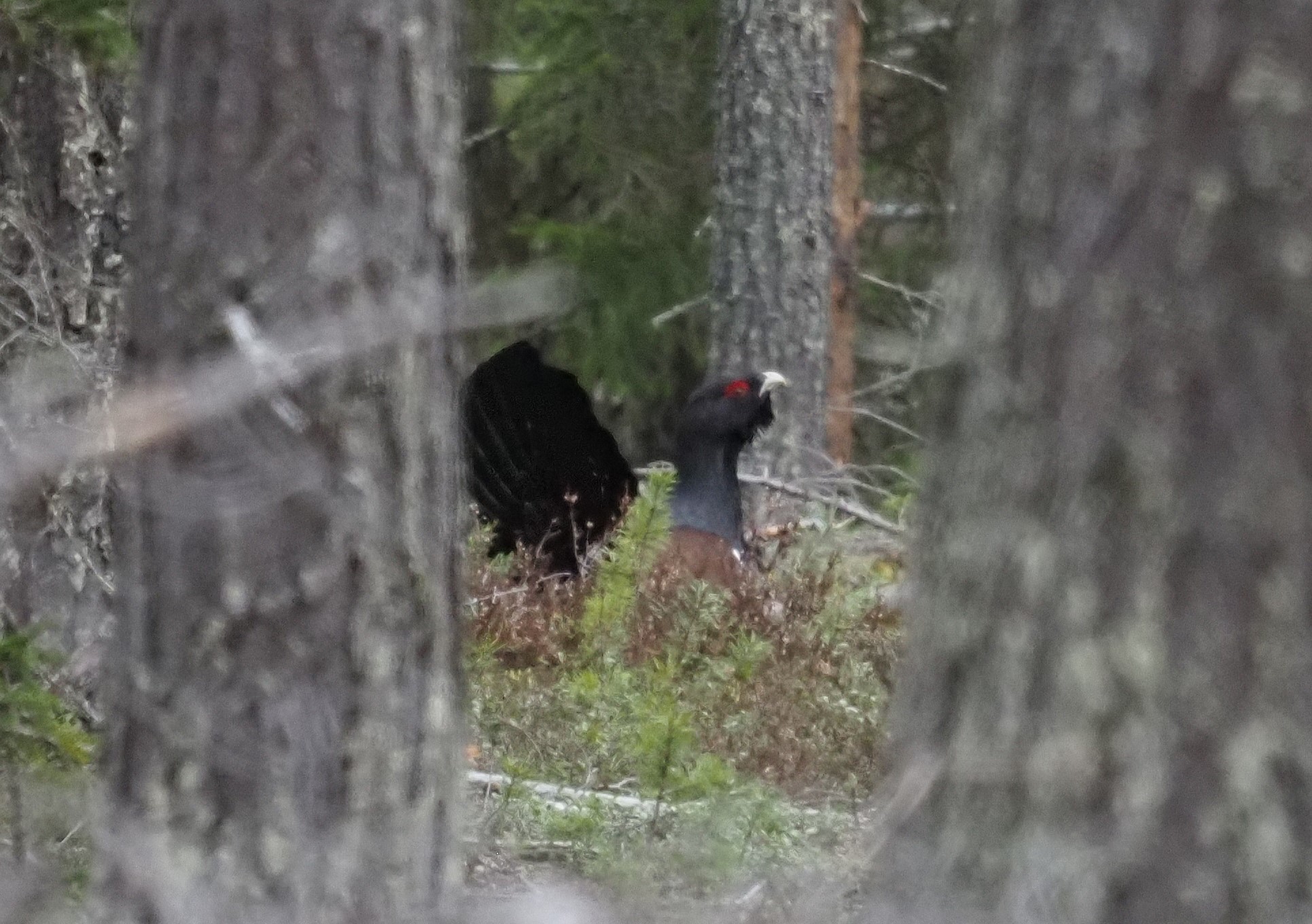
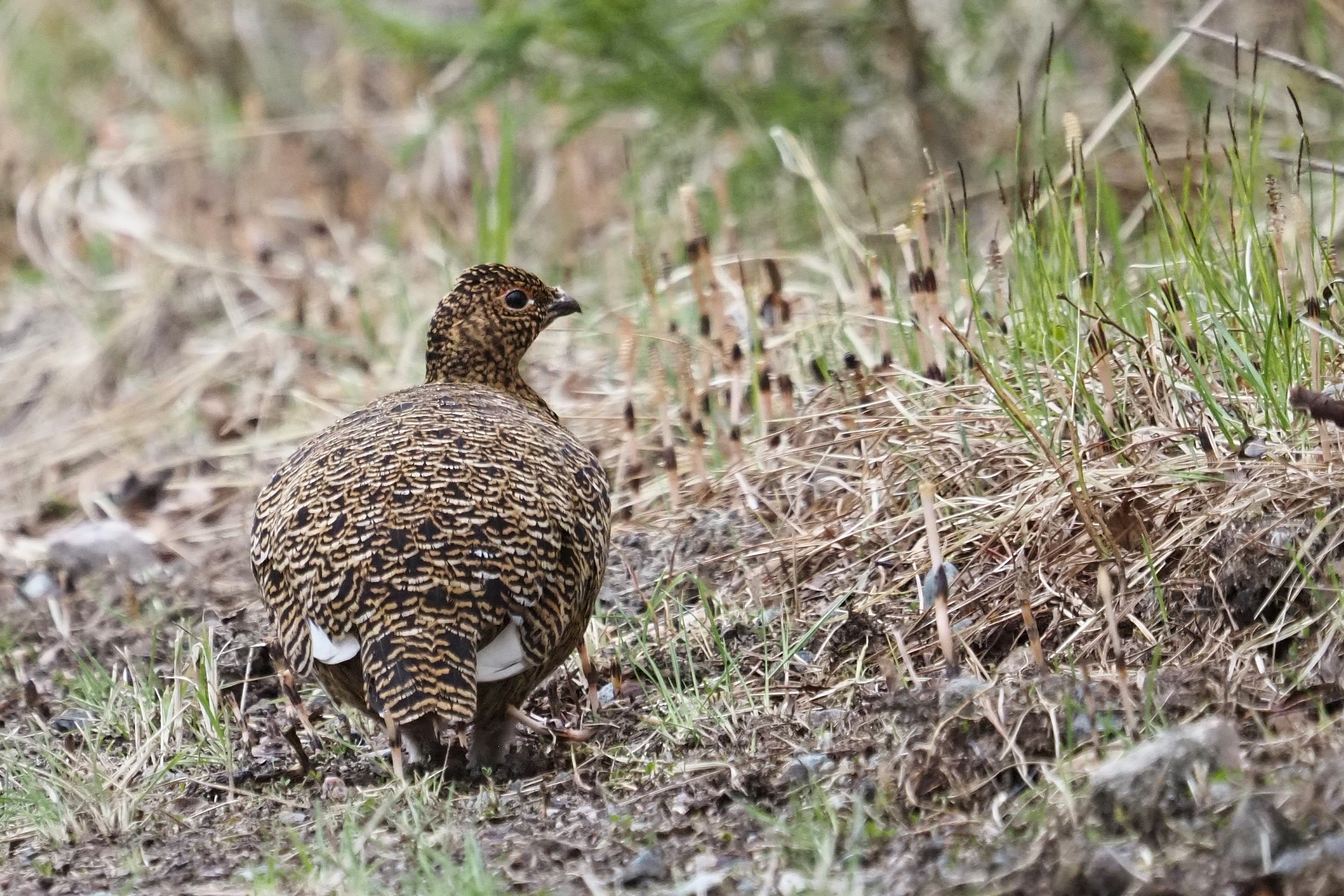
Day 4. As usual in this areas, we had a very early start of the day before going to the forest. En route, we had a first en route stop. Here we got ruff views on a couple of Rustic Buntings that we heard as we were driving. A bit beyond, we got a small flock of Common Crossbills. The first Grouse drive of the trip was not totally successful. Still, we got nice views on the 1st Willow Grouse of the trip before arriving in a lek of Capercaillies. Here, Mark got a bird moving behind a bush, and this is how we got our first male Capercaillie lekking in the forest! We all got good views but we couldn’t get pictures, the bird went into a small ditch and went away from us.
After a shortwalk in the forest, we enjoyed our take away breakfast. Here we got a good number of forest passerines including Golcrests, Siskins, Redstarts, Pied Flycatchers, Willow Warblers, Treecreepers, all of them at close range. Back to the van, we did a bit more of Grouse drive, and we got a second lekking Capercaillie that provided way better views than the first views. After some coffee we tried a different place for Rustic Bunting with a nice male appearing in front of us and singing for long, and our efforts got rewarded with good views on Tree Pipits and, especially, some amazing views on an extremely obliging pair of Willow Grouses! They were so close that we could hear the noise of their long claws when classing the tiny rocks of the lane..
From here we drove to one of the most famous hills around Kuusamo. Walking up the hill, we got nice views on Bullfinches and Willow Tits, and once we arrived to the top we got views into 2 elusive Siberian Jays. It was a sunny morning, and soon we were hearing a lovely Red-flanked Bluetail singing from the top of the canopy. It didn’t take long to us to locate the bird, that a few minutes later came down to the ground to feed around, providing excellent views and photo chances! From the top of the hill we still got scope views on a second Red-flanked Bluetail and a Merlin flying at full speed on its way North!
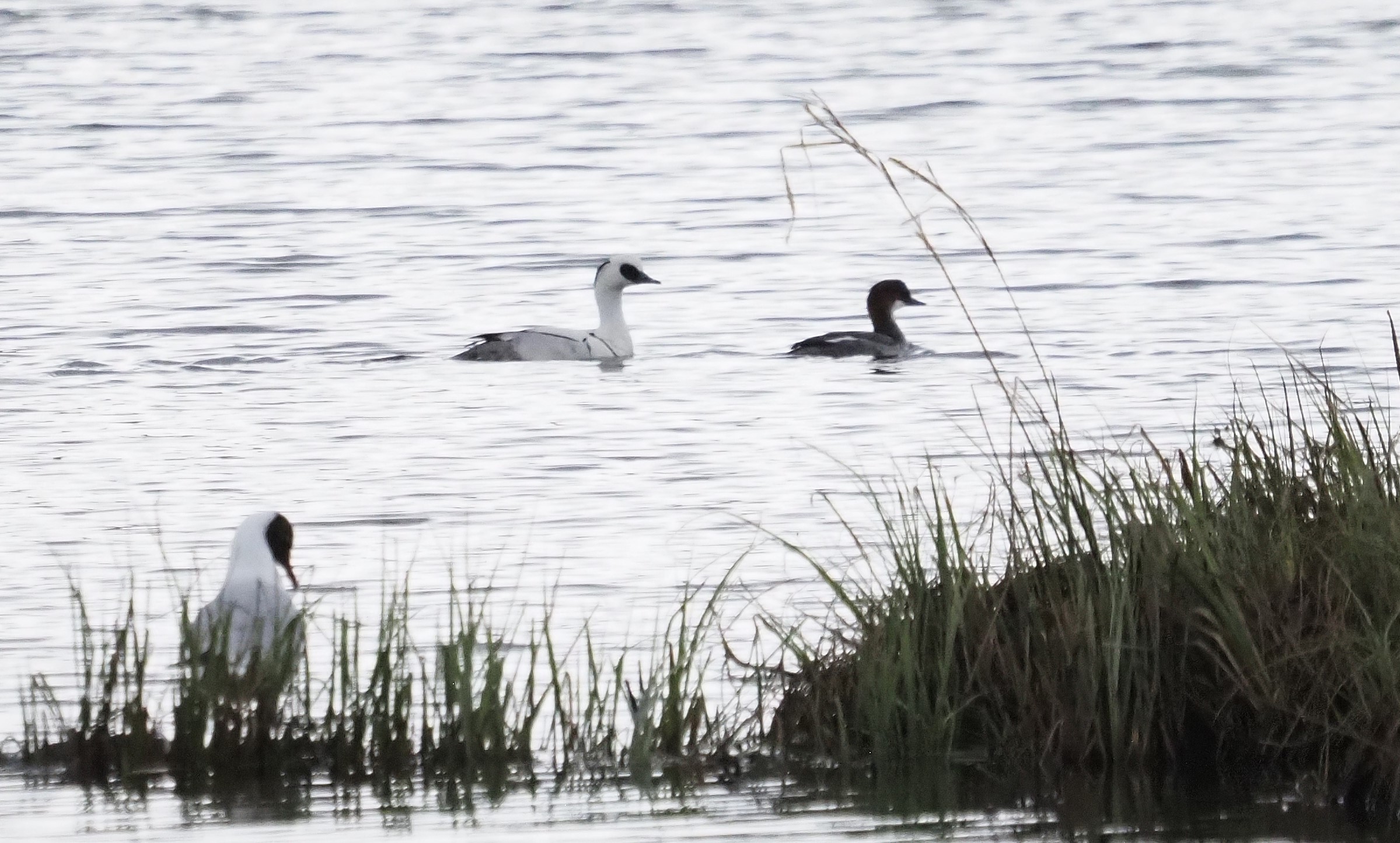
To end the morning, we had a stop in a couple of ponds. Here we got Wigeons, Eurasian Teals, Tufted Ducks, Little Gulls and Goldeneyes. Common Sandpiper was new for the trip and other waders here included Common Snipe, Greenshank and Wood Sandpiper. Still, the best bird in this stop was the drake Smew that was swimming along with Goldeneyes.
After lunch, we went into a different place looking for Rustic Bunting, and this time we got very nice views on a singing male. A Hazel Grouse was singing around, but again we only got a male flying around the group, and with the tip of a Black Kite as we were enjoying the landscape at our accommodation.
The first bird of the morning was this shy Rustic BuntingMale Capercaillie moving in the woodsAmazing close up to female Willow GrouseAnd here, the male. It was so close that the all were about to touch it!Rather distant, but solid views on Rustic Bunting!A nice flock of drake GoldeneyesRed-flanked Bluetail showed very nicely to our group!A very attractive pair of Smews to end the morning!
Day 5. After enjoying breakfast at our accommodation, we drove back to some good areas for Grouses. Here we got nice views into a female Black Grouse before going for a short walk in the boreal forest. Our main goal was to contact with Hazel Grouse, but we had no luck. In the walk we had Willow Tit and an flock of unidentified Crossbills before transfering North. It was a poor year for Northern Hawk Owl, but we information of a recent sight midway between Kuusamo and Ivalo. We drove there and invested a couple of hours exploring the massive fogs around. Unfortunately we got no Owls, but 2 very showy Siberian Jays while Bohemian Waxwing, European Golden Plover and Mealy Redpolls were new for the trip. Other species here included Wood Sandpiper, Eurasian Sparrowhawk and a couple of flocks of Common Cranes.
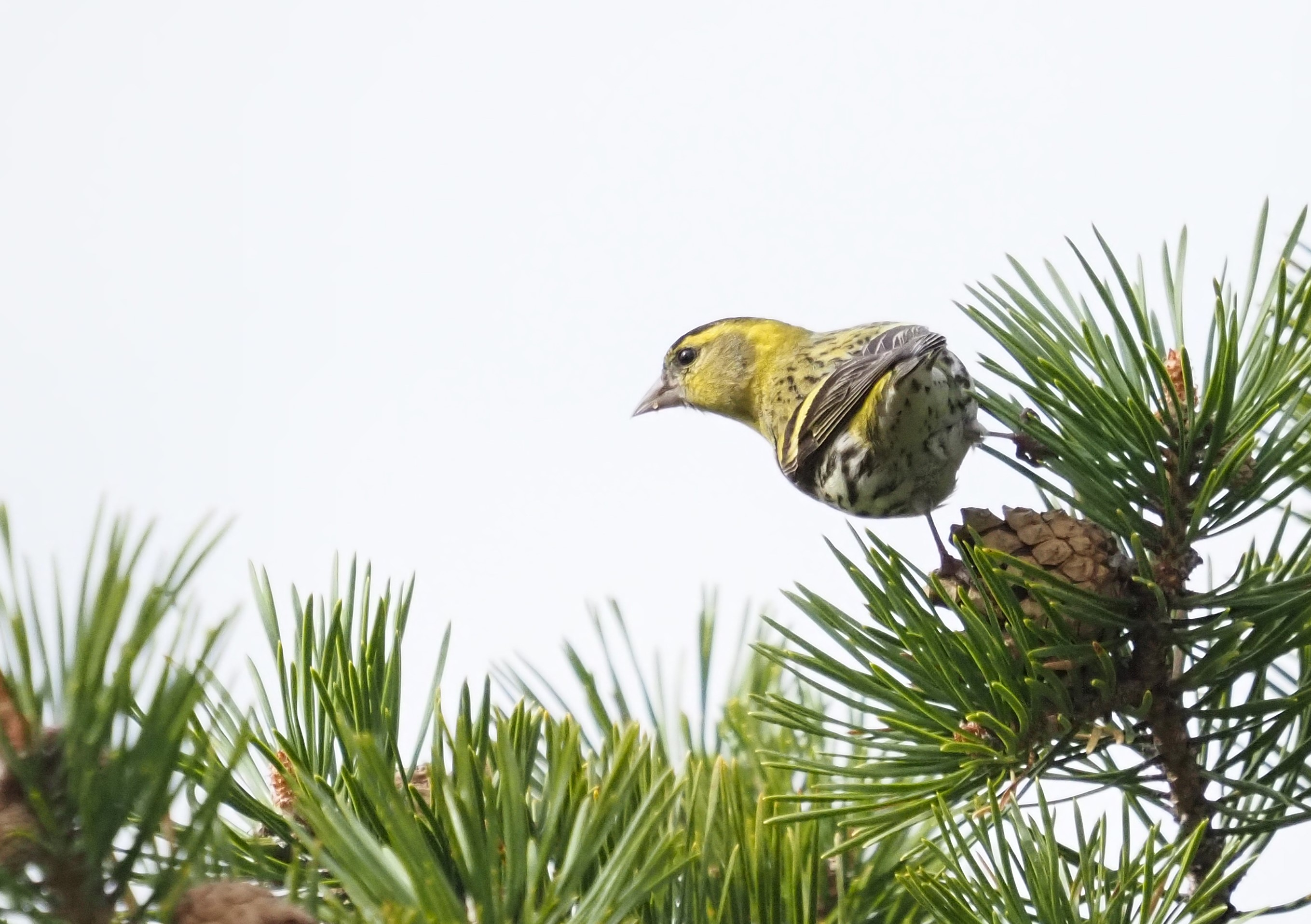
Black Grouse up in a tree as we were about to start our short walkLovely Eurasian Siskin, a fairly common bird in the boreal forest
After some lunch, we arrived around Ivalo, where we invested some time exploring one of the many lanes around the town. It was a sunny afternoon with temperatures of 22ºC so, rather warm for this latitude. Along the lane we amazing and very close views on different females of Black Grouses, and a couple of Siberian Tits emerged from the boreal forest for the enjoyment of the photographers in the group. Along the afternoon we also got 2 Willow Grouses at short range, Redpolls, 3 Bohemian Waxwings and a few Mistle Thrushes (rather scarce this year along our itinerary) and 2 very showy Siberian Jays, but the best was the 4 different female Western Capercaillies that gave us quite a show, with their fan-like tails up and their amazing gorges down in an extremely interesting behaviour! Without doubt, one of the best sights on female Capercaillie for me after so many years!!
Very glad after such a great afternoon, we just covered the short distance to our accommodation before enjoying a very tasty dinner!
During the afternoon we got some amazing views on three species of Grouses. Here a female Black Grouse.Siberian Tit, a must for any birdwatcher exploring this regionOur afternoon in the boreal forest included very good looks on Siberian JaysNo words for this stunning sight on female Capercaillie!
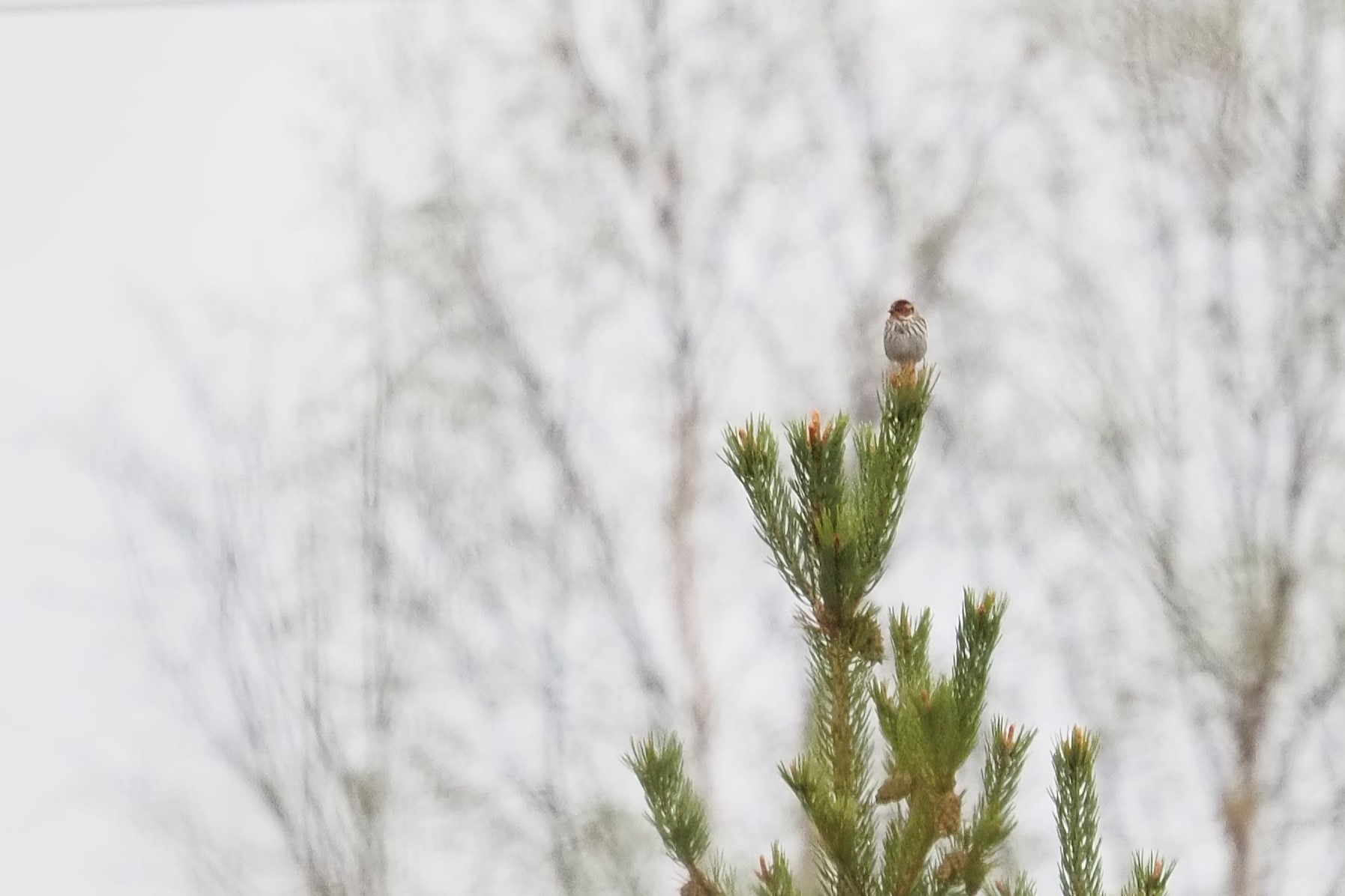
Day 6. After having breakfast in our accommodation we drove a couple of miles to stop in a quite famous place for Little Bunting. Even if far away, we soon had nice scope views in this little fella while 2 more of them were singing around. It was again a sunny, and since we had not visited any bird tower for the last days we decided to go into a close one to have a fast look around. Here we got the first Whimbrel of the trip plus distant views on Goosander, Yellow Wagtail and Common Crane. Back to the road, we had to do an emergency stop because it was a male Parrot Crossbill feeding on the tarmac, but unfortunately I was the only to see them. With the van in the middle of the lane, we all realised that we were having a gorgeous female of Capercaillie right in front of us, watching us and deciding whether it was a good moment to cross the road, or not.
From here we went into a different spot, a nice boreal forest. Again, our main goal was Hazel Grouse, the only forest Grouse that was somehow scaping good views.. This area is normally good for forest birds, but this year was very low. Still, soon we got a male Hazel Grouse singing deep in the forest. We moved slowly, tracking him along the lanes. It sounded close and it seemed like singing from the ground, which is always better to try to locale this species. I was walking side by side with Mike, when he suddenly pointed out to the ground, only about 10 metres away from us: He had found the male Hazel Grouse! He was extremely happy. For him, it was the end of a long pursuit. Even if being a big lister with several thousands of birds on it, he had been missing this bird for years, even if he was trying in a few countries! I was very happy, especially to know that he self-found the bird!!
After the male, we also got the female deep in the forest. Both birds walked away a bit from us, getting inside a forest landscape puzzled with boulders and dead trees. It took us about 20 minutes to get everybody on the birds, as they were moving slowly down, and the work became easier once Núria settled down that the male was jumping up into a specific boulder to sing from there every few minutes. Scoping that rock, everybody enjoyed a bit of these Grouses!
In this issue we only got scope views on Little Bunting. Here a record shot.Hazel Grouse showed very well after a long search. A great spot by Peter!
After this we just started the transfer to Norway, with a lunch stop in one of the famous feeding stations for Pine Grosbeak that, this time, produced nothing.
From here we had some solid drive North, but with stops that allow us nice views on Smew, Red-breasted Merganser, Velvet Scoter, Bluethroat and one of the very few Rough-legged Buzzards of the trip along with commoner species.
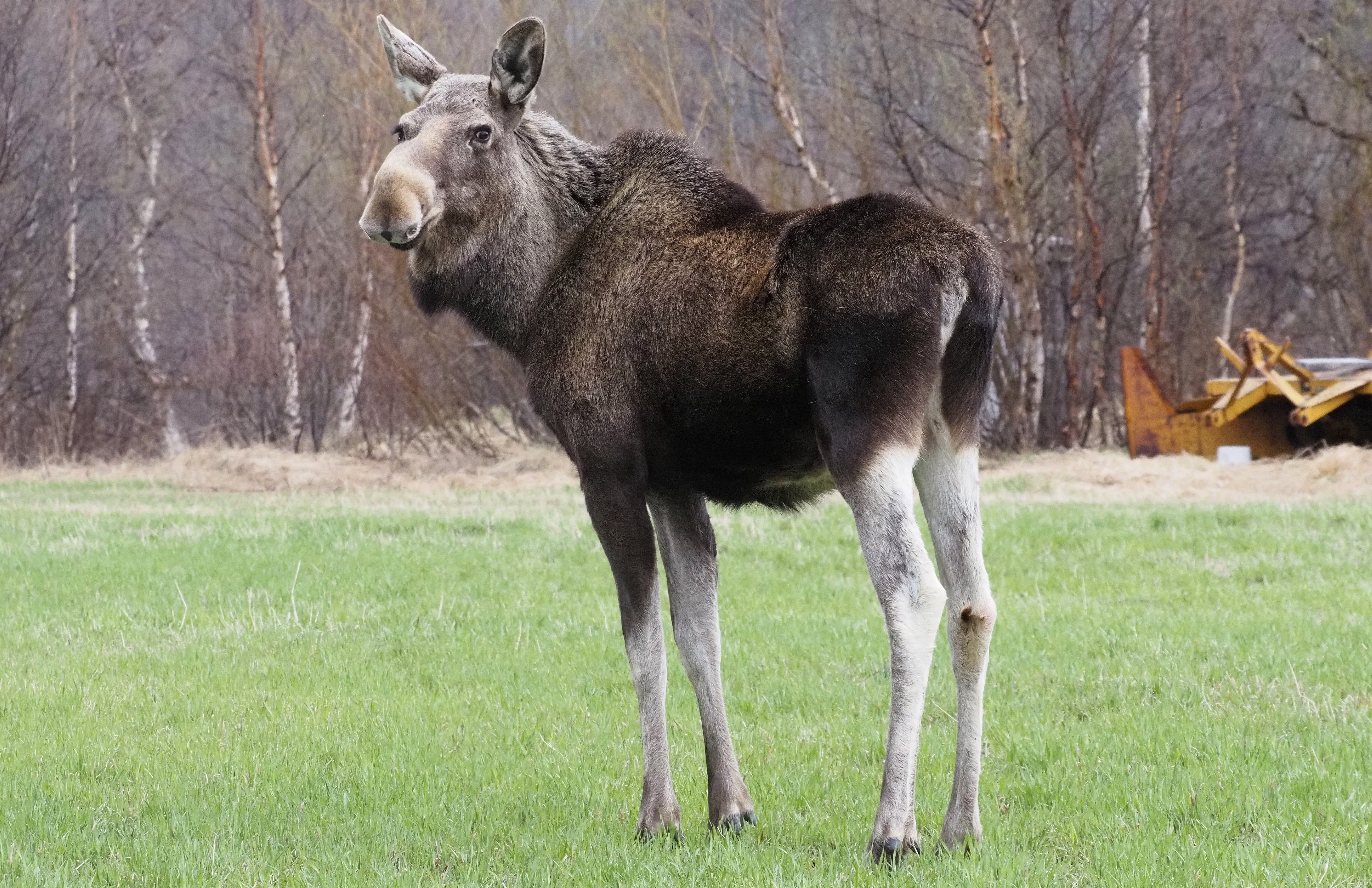
I was enjoying the drive inside Norway when suddenly a “Moooooooooossse” came from the last raw of seats of the van! Yes, Mike got a Moose in a small field beside the road. After a safe stop in the lane, we all enjoyed a very nice views on the Moose, before it vanished inside the dense and low birches.
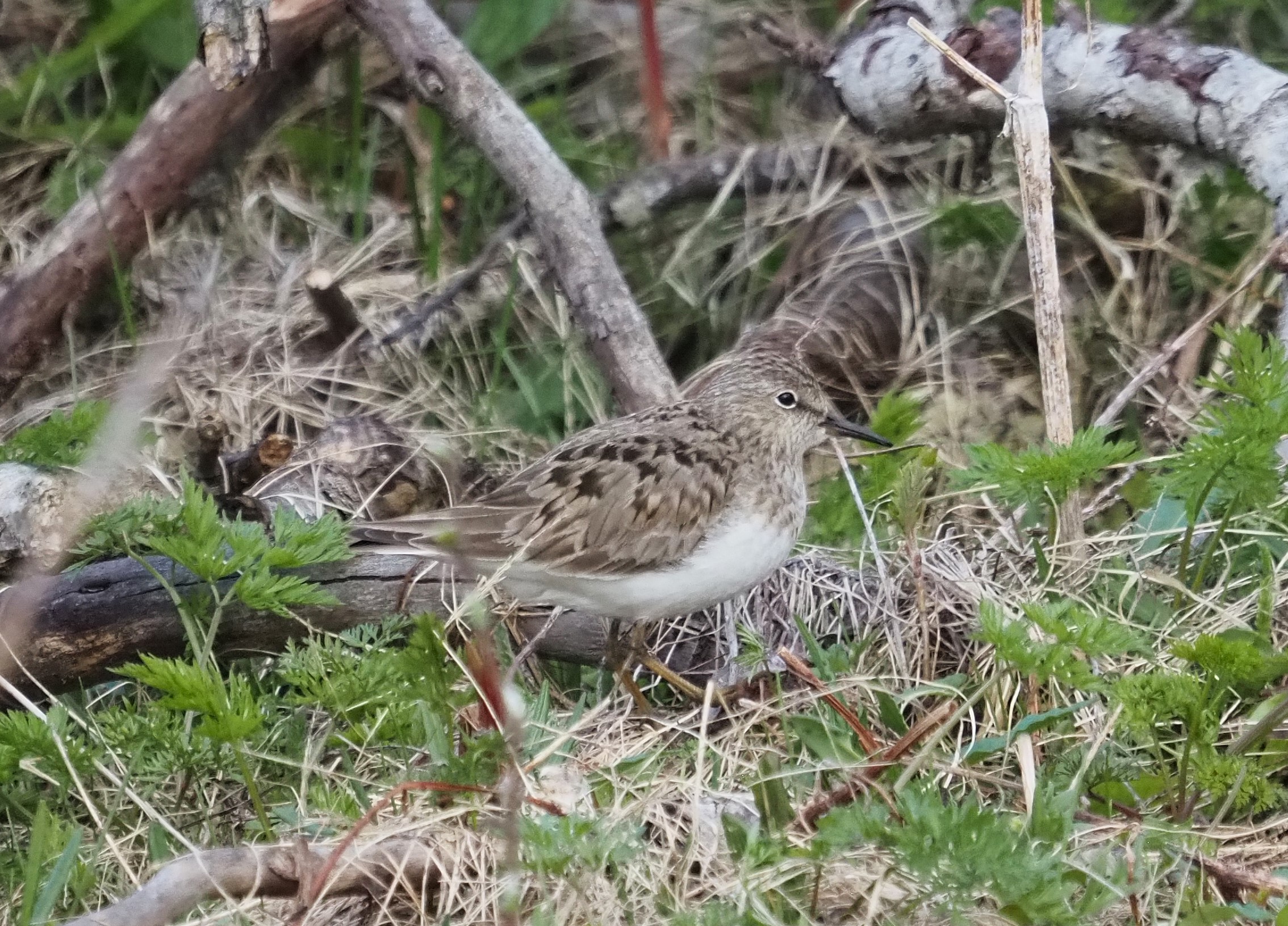
A first stop in Varanger produced scope views on Temminck’s Stints along with Redshanks & Oystercatchers and many, many Common Ringed Plover. A bit further, we did a second stop to enjoy the first White-tailed Eagles of the trip, and here we got lucky and we found a nice flock of 80+ Red Knots in full summer plumage! Along with them, Bar-tailed Godwits, Dunlins and other species!
The bird feeders are a nice place to enjoy some common species. Here a Great Spotted Woodpecker showing its tongue.The first Moose of the trip always creates a big wave of happiness in our groups. The image is a bit blurry, but it deserves to be here
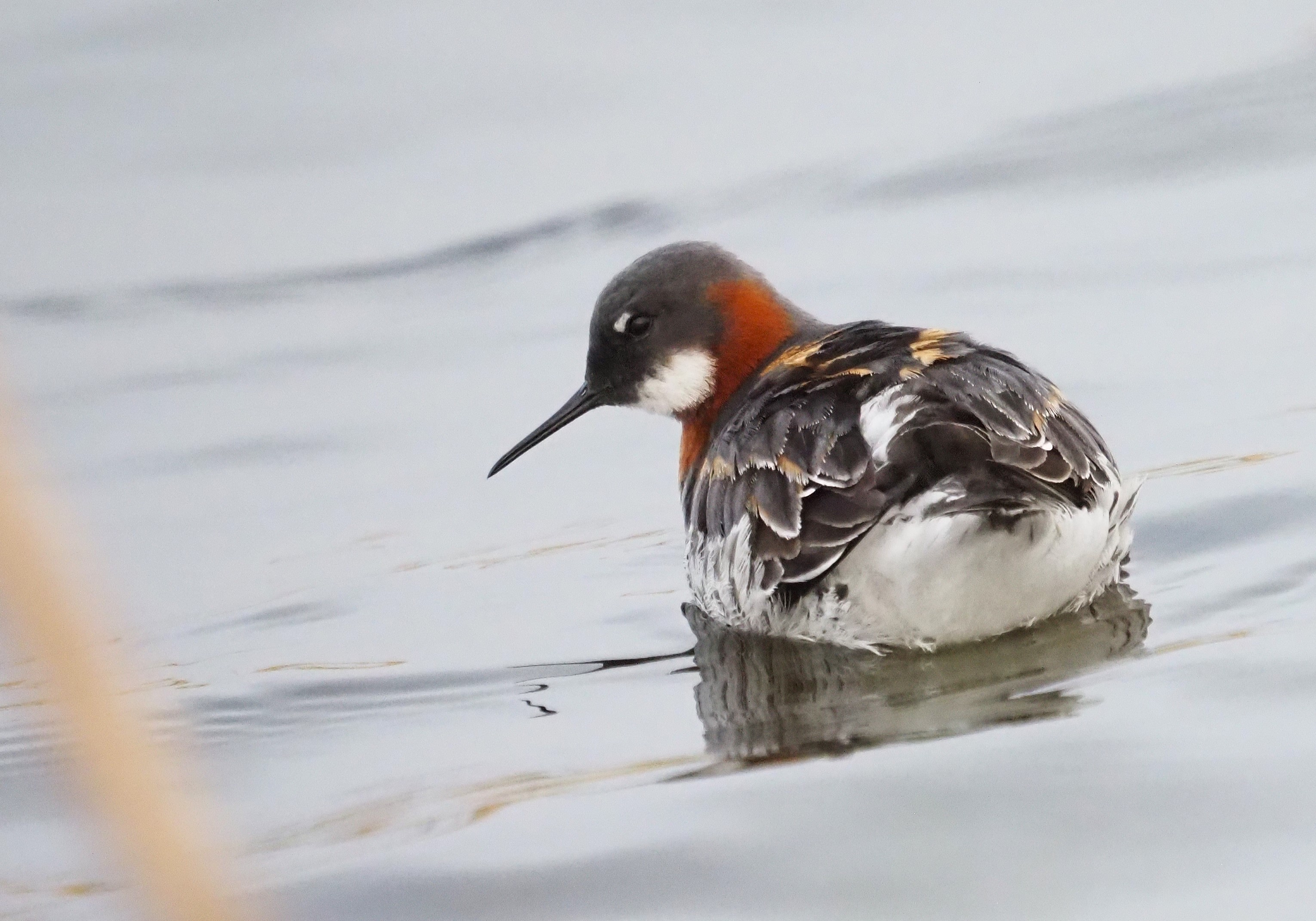
After checking in at our accommodation in Varanger we still had plenty of time to enjoy some top locations. In Vadso we spent some lovely time in one of its famous “Pharalope ponds”. Here we got to see this small creatures very close as they were feeding and courtshipping in the water. The afternoon was lovely but not very sunny. Still, we had great views on these wonderful birds, in a moment that normally is one of the highlights of our time in Norway. Along with them, some gorgeous Ruffs were also lekking, and yet this was another very special moment. There were males of the different colours that fighted for the attention of a couple of females moving in the grass. But these were not the only birds around. A pair of Temminck’s Stints were feeding at close range, and we also got a Bluethroat moving in the vegetation as well as a couple of Red-throated Pipits. Both Arctic Skuas and Arctic Terns were flying over the small lagoon and the bay beyond was full of Common Eiders & Goosanders. Unfortunately no Steller’s Eiders this year, as the seemed to be vanished from the area weeks ago.
After such a great stop, we still had some time to check a small corner that it is very nice for waders. Here we got excellent views on a large flock of drake Dunlins but also 2 Temminck’s Stints and Bar-tailed Godwit to end another wonderful day!
During our first drive in Varanger we got some very close views on White-tailed EaglesTemminck’s Stint on its nesting siteThis wonderful Ruff was taking a break on the fights..A couple Red-necked Phalarope female close ups
Day 7. After enjoying a gorgeous breakfast at our accommodation we transferred North to Vadso. The main goal of the day was to visit Hornoya and its massive see bird colony. Our drive North had some stops to see Golden Plovers but also White-tailed Eagles, Arctic Skuas and a couple of Willow Ptarmigans standing up in the tundra. The drive also produced a small flock of Tundra Bean Geese in some fields next to the road.
After a short boat trip, we arrived to Hornoya. The boat trip produced little beyond a couple of distants Grey Seals, Black Guillemots and flocks and flocks of Auks as we were approaching the island. Hornoya hosts a massive number of seabirds. Here there about 100.000 sea birds, with Kittiwake being the commoner followed by Common Guillemots, both with tens of thousands of pairs. Along with them there a few thousand of pairs of Razorbills and Atlantic Puffins. Shags, Brünnich’s Guillemots and Fulmars are also nesting here, the last with only a few pairs.
It didn’t take long for us to find some pairs of Brünnich’s Guillemots nesting in the cliffs, normally about 20 to 40 metres high, in all nests of Kittiwakes. Along the following hours, we enjoyed the breathtaking ambient of the colony. Those in the group that wanted to explore the upper part of the island had nice views on Red-throated Pipits and Barnacle Geese, and those who prefered to stay lower had good views on Purple Sandpipers and Water Pipits.
Black Guillemot in VardoBrünnich’s Guillemots on their nesting corniseGuillemots only a few inches awayAtlantic Puffins were very tame, as usualFace to face with Atlantic PuffinThis year there weren’t many
Back to the continent, we did a picnic stop in a nice tundra patch. It was our first stop in a proper tundra, but unfortunately the weather was misty and cold, and we had only a few birds around. It became windy, but during our drive North from Vardo, we had a number of stops in sheltered bays that allowed to connect with some good birds. Here we had large flocks of Long-tailed Ducks but also several Red-throated Diver and a nice mixed flock of Common & Velvet Scoters. Black Guillemots and Goosanders were everywhere. But the best bird in these bays was a drake White-billed Diver that, even if a bit far, produced nice scope views. A bit beyond, we had a couple of Minke Whales swimming really close to the coast, and we stopped a couple of minutes to check around. It was time enough for Mark to find a White-billed Diver in the sea, right out from where were. Second for the afternoon!
We still drove beyond, eventually arriving to the end of the lane. This is a nice place to check the sea. We are actually out of the Varanger fjord, and facing North into the Arctic Ocean, it will be nothing between us and the Svalbard archipelago, about 1000 miles North! This is also nice place for seabirds to migrate. It is still migration, and birds keep moving East along this coast, in their way to their nesting grounds in Central Siberia. Here we had the first Atlantic Gannets of the trip, but also several Auks, 2 Fulmars (blue form), at least 1 Pomarine Skua and a wonderful Great Northern Diver still in winter plumage and quite close to the coast. From here we just drove South, and this last transfer didn’t produce any new species out of a flock of 6 Pink-footed Geese close to Vadso.
This is best image that we could get on White-billed Diver
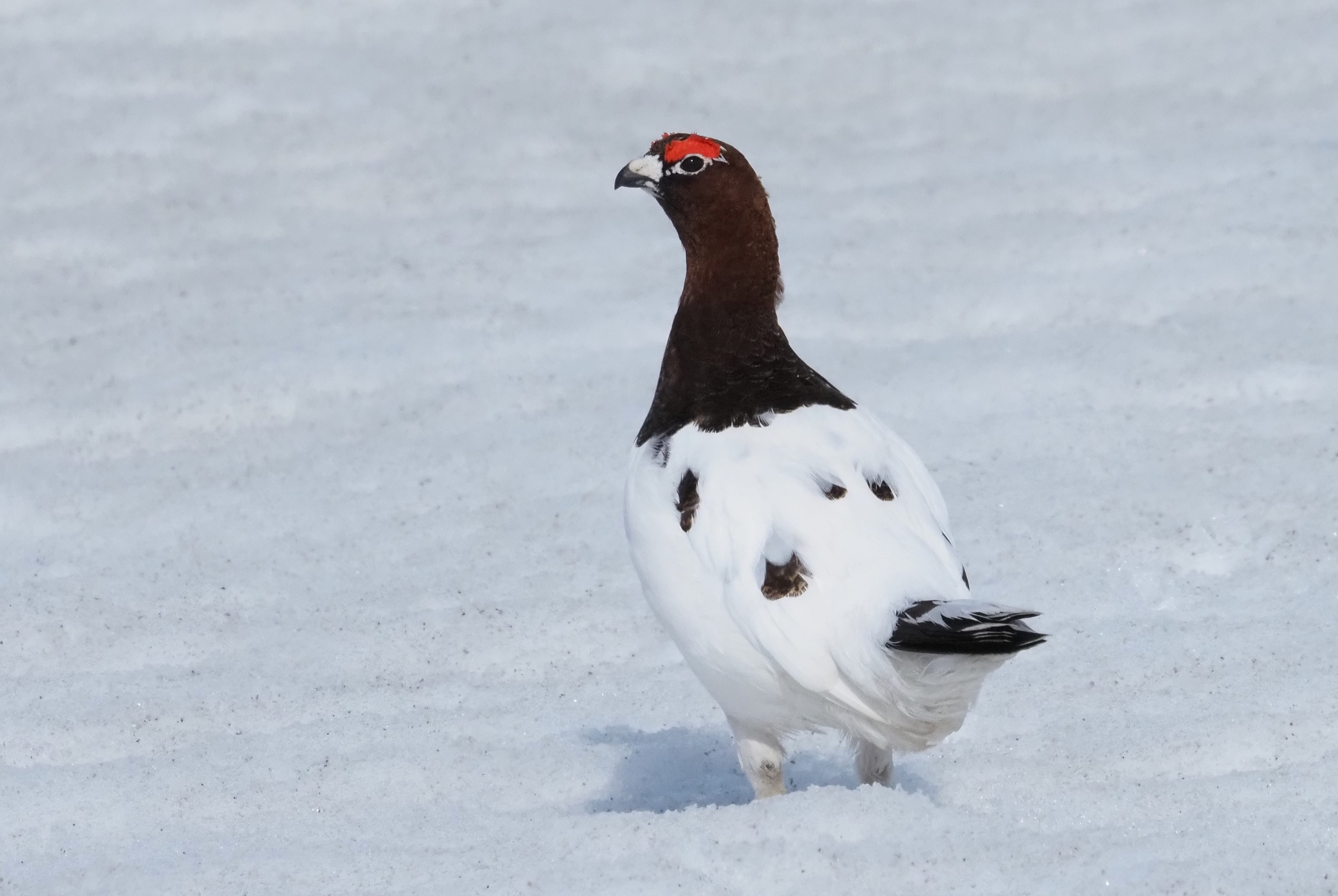
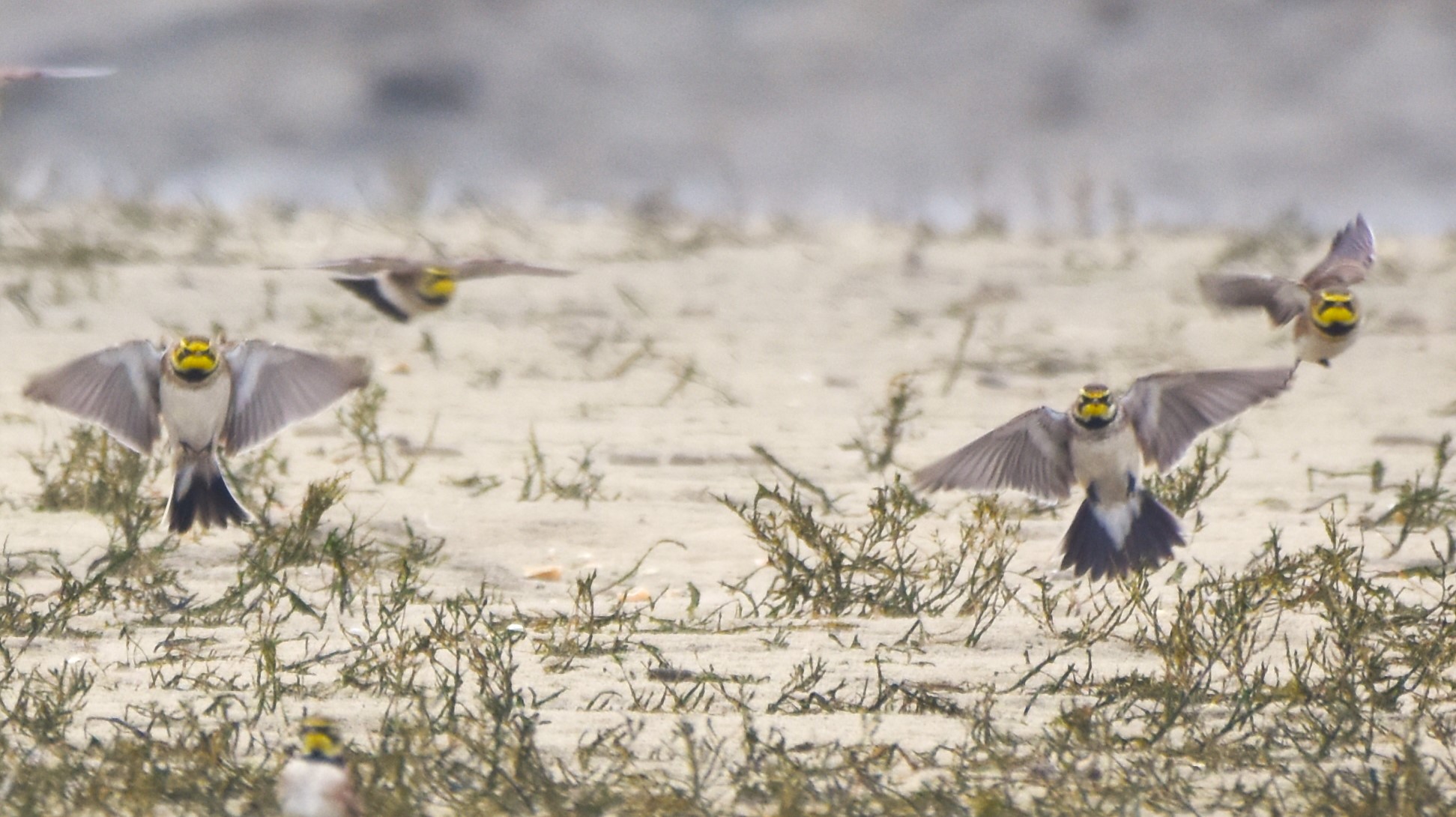
Day 8. This day was devoted to explore the central plateau of Varanger. This is one of the most spectacular places to be along our itinerary. After breakfast, we drove up the plateau. Once arrived to the high tundra, our way was always joined by several Willow Grouses and the majestic Long-tailed Skuas nesting around. A first stop produced Bluethroat and a shy pair of Arctic Redpoll. Temminck’s Stints were flying around along with Red-necked Phalaropes. Here and there there were small flocks of busy Ruffs lekking in the tundra. Most of the tundra was covered with snow and the birds were concentrated in the few patches of grass, and conveniently along both sides of the lane. Here we saw 4 Shore Larks but also several Lapland Buntings displaying and feeding on the ground, one of them moving along a female Snow Bunting. Cannot remember of this was before or after having the first of many Rock Ptarmigans. On Rock Ptarmigans, a first highlight was to see a pair displaying, with a second highlight including a male Rock Ptarmigan & male Willow Grouse standing next to each other! Here we also had several waders including Golden Plover, Little Stint, Whimbrel, Curlew, Temminck’s Stint, Wood Sandpiper, Common Snipe, Bar-tailed Godwit and 2 Turnstones flying in the hills covered with snow. Quite a sight!
We had close views on Bluethroat on our first stop in the morningWillow Grouse showed superbly, once more!Long-tailed SkuaDunlin in full summer plumageRock Ptarmigan hiding as the weather became really cloudySnow Bunting feeding along a minor laneTundra Bean Goose & Red-necked Phalarope. A nice combination!
Exploring the Northern coast of Varanger, we had a rather poor afternoon. The day was very quiet with no wind and probably that explained the absence of migration in the sea. The last movement of the day was to check the bays around Bervelag. Here we got 4 King Eiders, including 2 bizarre-looking second summer males. In our way back, the most interesting sight was a female Merlin, some Black-throated Divers and a very attractive Stout that Paddy found in a typical place for Gyrfalcon that produced no falcons.
King Eiders showing their “gentle” faces.This Stout was a funny way to end the afternoon. The Wheatear saw it in a different way..
Day 9. Going back to Finland we had a stop in a small nature reserve at the very beginning of the Varanger fjord. Here we got Tree Sparrow (very scarce here), 2 Sand Martins (rare) and still 2 Little Gulls in summer plumage. It was windy and cloudy so a good day for birds to move and to find birds out of their normal spots. The tide was high, with only some yards of tidal marsh out of the water right in front of the two small hides of the nature reserve. Even if nothing very spectacular, here we got lovely views on summer plumaged Little and Temminck’s Stints feeding side to side along with other common species.
Back to Finland, we had a pair of stops under the (already) solid rain. Here we got nice views on a drake Spotted Redshank, a few Bohemian Waxwings and 2 close Taiga Bean Geese. The rain was making difficult to scan for waders in the bojs, but the rain had been really nice for us. The ambient so fresh and cloudy in the border between Norway and Finland that we saw up to 7 Moose, including some extremely close views providing us with great photo opportunities! Arrived to our accommodation in the afternoon, we had plenty of time to enjoy up to 4 Pine Grosbeaks at the feeding station to end our last full day!
Legendary views on Moose..We were lucky to pick up this Arctic Redpoll. There really few this year!Bohemian Waxwing along the road as we were crossing large boreal forestsDespite the rainy afternoon, the day ended with superb views on Pine Grosbeaks
Day 10. This day we agreed an early start to try to catch up with a couple of species that we were still missing. Our first movement was to check a nesting place for Broad-billed Sandpiper, and we had extremely good views on a bird singing, displaying and feeding on the ground. Always a pleasure to see how their plumage matches so well with the landscape where they belong! Here we also got 3 drake Spotted Redshanks, Red-necked Phalaropes and Ruffs about to lek in the cloudy ambient.
From here we moved into a forest, with the hope to connect with Parrot Crossbill. We got more Willow Grouses, Rough-legged Buzzard and a couple of Smews in the way, but our efforts to put down the Parrot Crossbill in the list of trip had no reward.
From here we just drove to the airport to end another great trip in Northern Finland and Finnmark. Very looking forward to be back there in 2026! Impossible to get enough of this place!!!
This Broad-billed Sandpiper gave us a show in the last morning of the tour!
Totes les fotos en aquest resum són obra del tour líder Sergi Sales. Tots els drets reservats.
Introducció: Un dels grans espectacles de l’ornitologia europea es la hivernada d’oques i altres ocells aquàtics als Països Baixos. Es tracta d’una gran oportunitat per gaudir i aprendre de la gran diversitat d’oques, cignes, becs de serra i ànecs que es concentren en aquestes dates en aquest meravellós país. Visita obligada per qualsevol ornitòleg/a mediterrani.
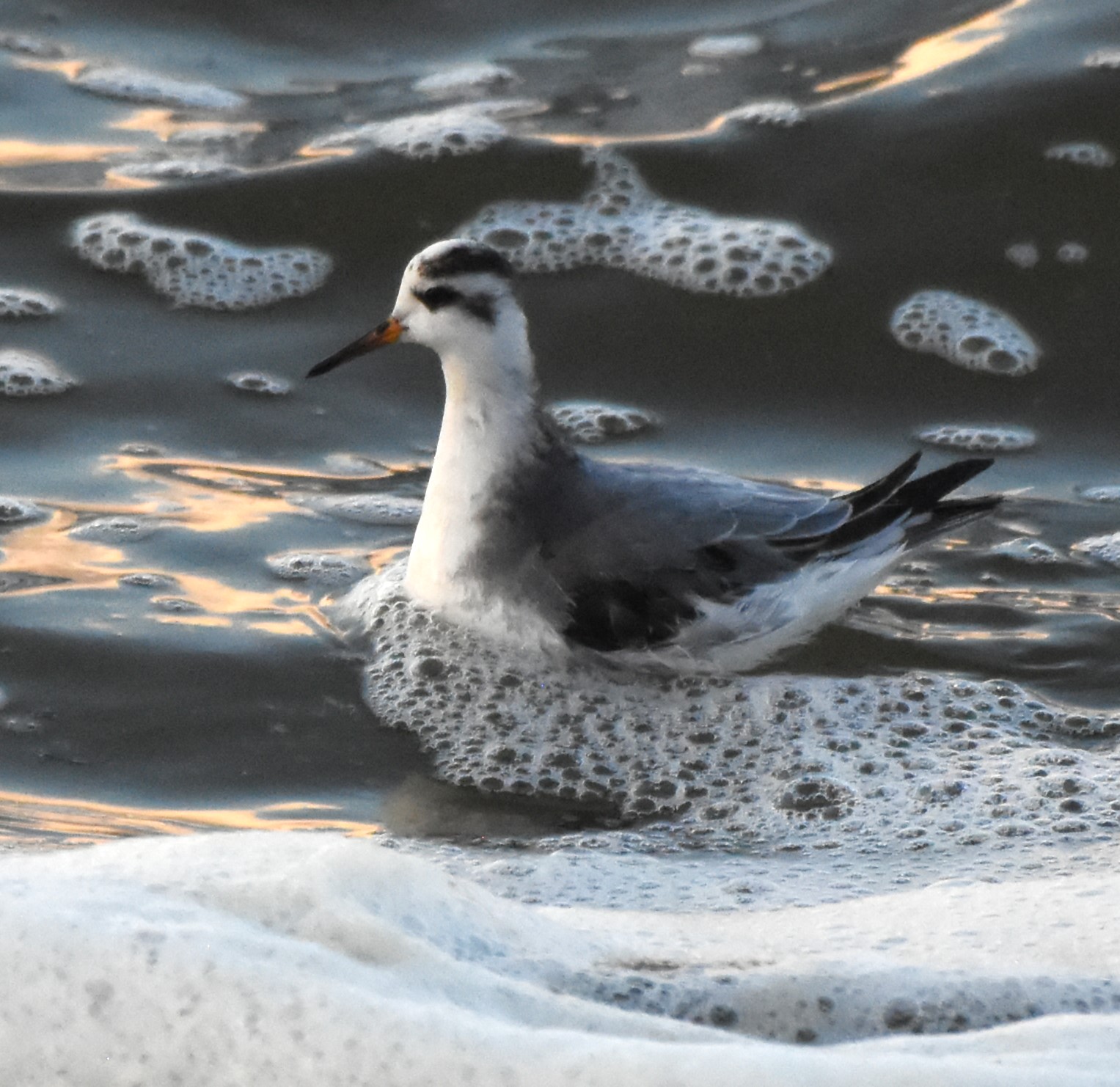
Dia 1 Vol d’anada sense incidències i amb arribada puntual a Àmsterdam. Una vegada dins el vehicle de lloguer afrofitem les darreres hores de llum del dia per gaudir de les primeres espècies d’interès. Ens dirigim a un espigó prop de la capital famós per l’observació d’aus marines i on als darrers dies s’havien estat observant ànecs glacials a refugi de les dures condicions del Mar del Nord. Ràpidament veiem un a la zona interna del port alhora que dos més a mar obert. Per sorpresa i a molt curta distancia, cercant menjar a la bromera del mar, trobem un escuraflascons bec-gros! Simultàniament veiem un dels escassos corb marins emplomallats de la zona, territs foscos i un desconfiat grasset de costa.
Entre els abundants gavians de potes roses es veuen un bon nombre de gavines cendroses i els primers gavinots del viatge. Dues hores de llum molt ben aprofitades!
Ànec glacial (Clangula hyemalis), un hivernant escàs als Països Baixos.Grasset de costa (Anthus petrosus) Escuraflascons bec-grós (Phalaropus fulicarius), un dels molts exemplars que van “inundat” Europa a finals de la tardor.
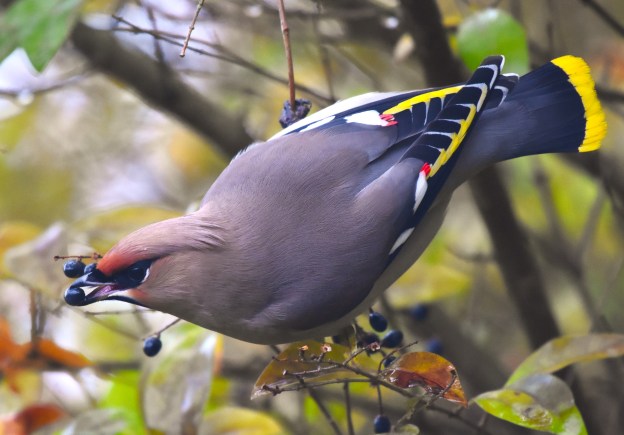
Dia 2 Matí fred però sense vent on el primer objectiu és cercar un mascle de morell de collar que es veu a una zona propera a l’hotel a on fem nit. Després de gaudir de grans observacions de morells de plomall, cap-roig i altres espècies d’ànecs, cau la boira i desistim de buscar aquest morell americà que no es torna a retrobar en les següents jornades. Aquí ja fem les primeres observacions de morells d’ulls grocs i tords ala-rojos. Ens dirigim cap al Sud, a on per cercar ocells sedosos. Després d’un hivern amb cert flux d’entrada d’aquest meravellós ocell, sembla que s’han anat desplaçat i els darrers dies només es veien uns pocs exemplars. La sort va estar del nostre costat, ja que vàrem trigar menys d’un minut en detectar un dels exemplars entrant a uns arbustos a menjar baies. El grup va gaudir de més de 40 minuts gaudint de 2 exemplars a menys de cinc metres de distància alimentant-se sense aturador de baies i drupes. Moments màgics!!
Després de gaudir d’un cafè ben calent per recuperar-nos de l’excitació del moment ens dirigim cap a uns pòlders ben recarregats d’energia. Tornant cap al Nord visitem fins a fer-se fosc un seguit de pòlders on ja entrem al món de la hivernada de grans grups d’aus aquàtiques. Aquí trobem grans estols d’oques de diverses espècies: oques comunes, canadenques, egípcies i, sobretot, oques de galta blanca i riallera grossa. Des del mateix punt, pero canviant l’orientació veiem masses d’aigua on hi ha números descomunals d’ànecs xiulaires barrejats amb morells d’ulls grocs. Aquí ens sorprèn l’alt nombre de becs de serra petits, dels que comptem més de 20 exemplars repartits per la zona barrejats amb els primers becs de serra grossos del viatge.
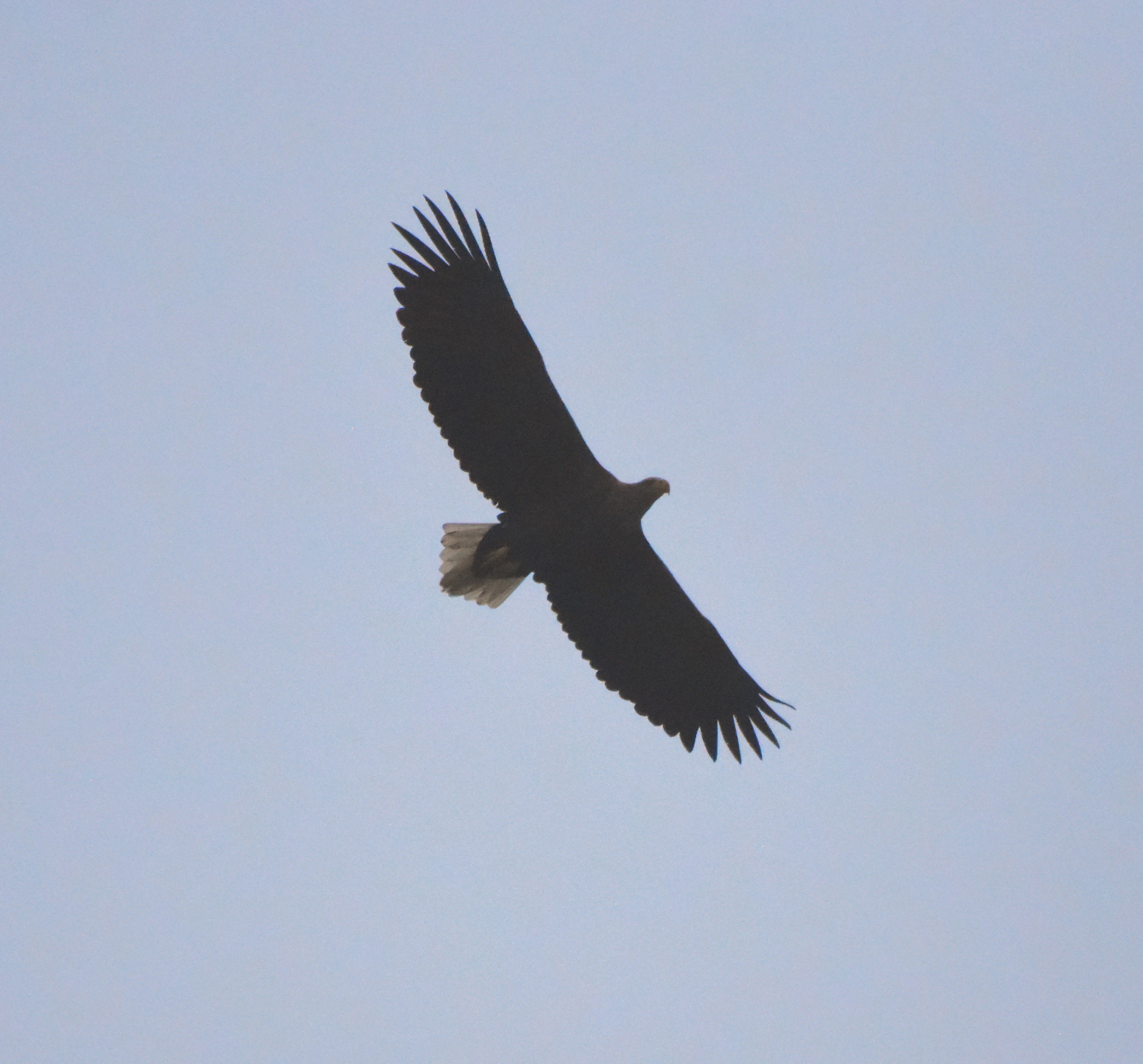
Més que satisfets de la jornada ens dirigim cap al cotxe quan de sobte entre la boira apareixen dos adults majestuosos d’àguila marina. Gran final!
Primer plànol d’un dels magnífics ocells sedosos (Bombycilla garrulus)Oca de galta blanca (Branta leucopsis). La població Bàltica hiverna cada cop més als Països Baixos.Bec de serra petit (Mergellus albellus), potser l’Anàtida més celebrada del viatge.Bec de serra gros (Mergus merganser).Àguila marina (Hieraatus albicilla)
Dia 3 Avui l’objectiu és visitar la famosa illa de Texel. Per 1 minut perdem el primer Ferry del que disposaven. Per un i únic moment no ens va agradar l’excelsa puntualitat holandesa! A les aigües properes al port es veuen morells d’ulls groc i diverses espècies de limícoles a les vores més sorrenques. Al pocs kilòmetres d’entrar a l’illa ens adonem de la màgia ornitològica d’aquest espai, a on es veuen grans grups d’oques de moltes espècies arreu, juntament amb estols mixtes de tords ala-rojos i grives cerdanes, a més d’incomptables grups de fredelugues.
En un dels prats localitzem un grup de més d’un centenar de cignes petits descansant plàcidament. Escanejant el grans grups d’oques podem veure grans estols d’oques rialleres grosses i oques de la tundra, mentre que les zones més properes al mar abunden les oques de collar i les oques de galta blanca, entre les quals apareix alguna oca de bec curt.
El mosaic de prats i aiguamolls, decorat amb les famoses ovelles de Texel fa que ja es puguin observar diferents espècies de limícoles i Anàtides. Després d’un regenerador cafè ens dirigim als famosos sistemes dunars a la cerca dels passeriformes típics d’aquests ambients. Una caminada per aquesta zona ens permet comparar la veu dels grassets de costa amb els de muntanya, fins que arribem a un estuari on passen volant un grupet de sit blancs poc abans de detectar un estol d’una trentena d’aloses banyudes alimentant-se de petites llavors. Amb elles passem una estona increïble veient com s’alimenten i van movent-se entre les dunes mentre gaudim d’uns agradables 12ºC.
La tarda comença a avançar i un bon plat de pasta ens serveix per recuperar energia i encarar el llarg transfer cap l’hotel que serà la referència per prospectar les regions de Zeeland i Nord Brabant.
Oca de collar (Branta bernicla), una de les oques més comuns a Texel.Oca de la tundra (Anser serrirostris) amb oques comunes (Anser anser).Oca de bec curt (Anser brachyrhynchus) amb oques rialleres grosses (Anser albifrons).Aloses banyudes (Eremophila alpestris)
Dia 4 La primera parada la fem per visitar els pòlders a on, de forma més o menys regular, hiverna una de les darreres espècies d’oques que ens manquen per veure al viatge: les oques rialleres petites. Desprès de prospectar els grans grups d’oques localitzem força amagats en grupet amb exemplars immadurs. En aquestes zones predominen els grups d’oques del Canadà, de galta blanca i les rialleres grosses.
Després d’observar aquesta espècie tant escassa ens dirigim cap les zones amb pòlders on es més fàcil cercar aus de caràcter més marí. Una continuada pluja ens acompanyarà la resta de la jornada, per això decidim prospectar zones visitables des del cotxe. Passem zones amb bons estols de garses de mar i becuts a peu de carretera i grups molt confiats d’oques de collar entre les quals detectem un exemplar molt fosc amb flancs blancs, una oca de collar de la subespècie nigricans, un divagant provinent de terres canadenques i resta del Nord del continent Nord-americà.
Passem per una zona on està l’únic grup de flamencs present en aquest país, i probablement provenen d’escapaments de zoològics centreeuropeus. Arribem a les famoses badies de Zeeland on hi ha grans grups de becs de serra mitjans molt actius pescant els abundants peixos de la zona, però mirant amb més detall els ocells a mitjana distància també veiem cabussons orelluts, un preciós mascle d’èider i ànecs negres. A les zones de roques de l’espigó es veuen bons grups de territs tres-dits i remena-rocs entre els quals es troben diversos territs foscos.
On trenquen les onades apareix de sobte un gran cap de mamífer, una foca grisa, posteriorment veiem un altre fins que al final detectem 3 exemplars a tocar de les roques, tot cercant refugi de les braves onades del mar. Amb aquests simpàtics mamífers arriba el capvespre i terminem una altra jornada ben profitosa.
Bec de serra mitjà (Mergus serrator)Foca grisa (Halychoerus gripus)Cabussó orellut (Podiceps auritus) al mar.
Dia 5.
El darrer matí del viatge el dediquem a cercar espècies que fins se’ns havien resistit, tot visitant zones rurals amb grans planes on aconseguim veure un grup de més de 100 cignes cantaires, aconseguint així veure totes les espècies de cignes del Paleàrtic Occidental amb l’afegitó del cigne negre provinent de poblacions asilvestrades que nien en certs punts de centre Europa.
Els mateixos camps també tenen grans densitat de llebres de gran mida, faisans i alguns rapinyaires com aligots comuns (alguns molt pàl·lids), xoriguers, esparvers, astors i arpelles pàl·lides comunes. Tornem a visitar zones del dia anterior amb millors condicions de llum on trobem una femella de morell buixot, una espècie cada cop més escassa als Països Baixos.
Els xisclets d’uns rasclons marquen el comiat a un gran viatge a on hem pogut observar 10 espècies diferents d’oques, els 3 becs de serra i els 3 cignes junt amb altres especialitats com els morells d’ulls grocs, buixots, ànecs glacials, àguiles marines, aloses banyudes, grassets de costa i territs foscos, amb el gran premi dels confiats ocells sedosos. Ja friso per tornar!!!











































 Barcelona Birding Point Blog