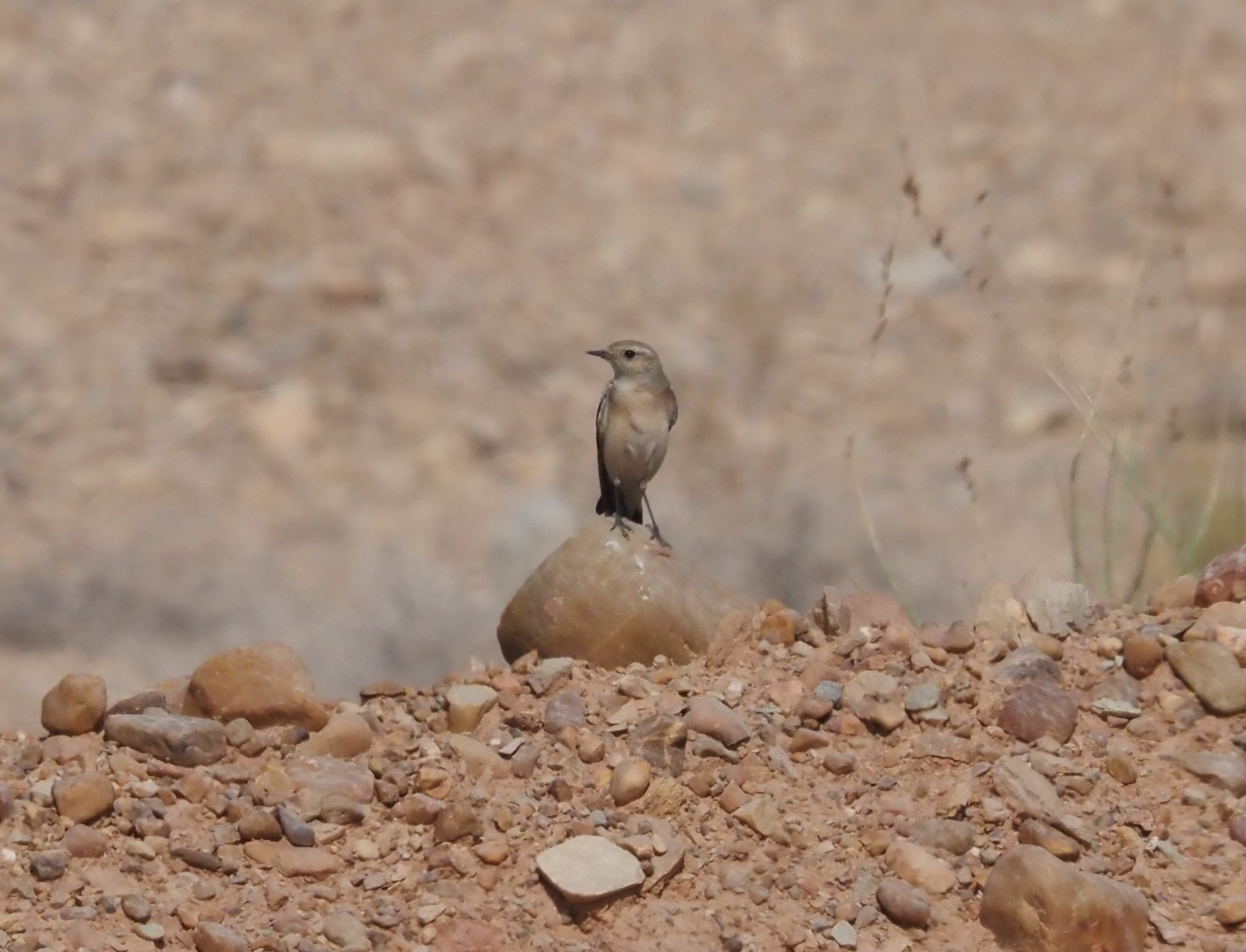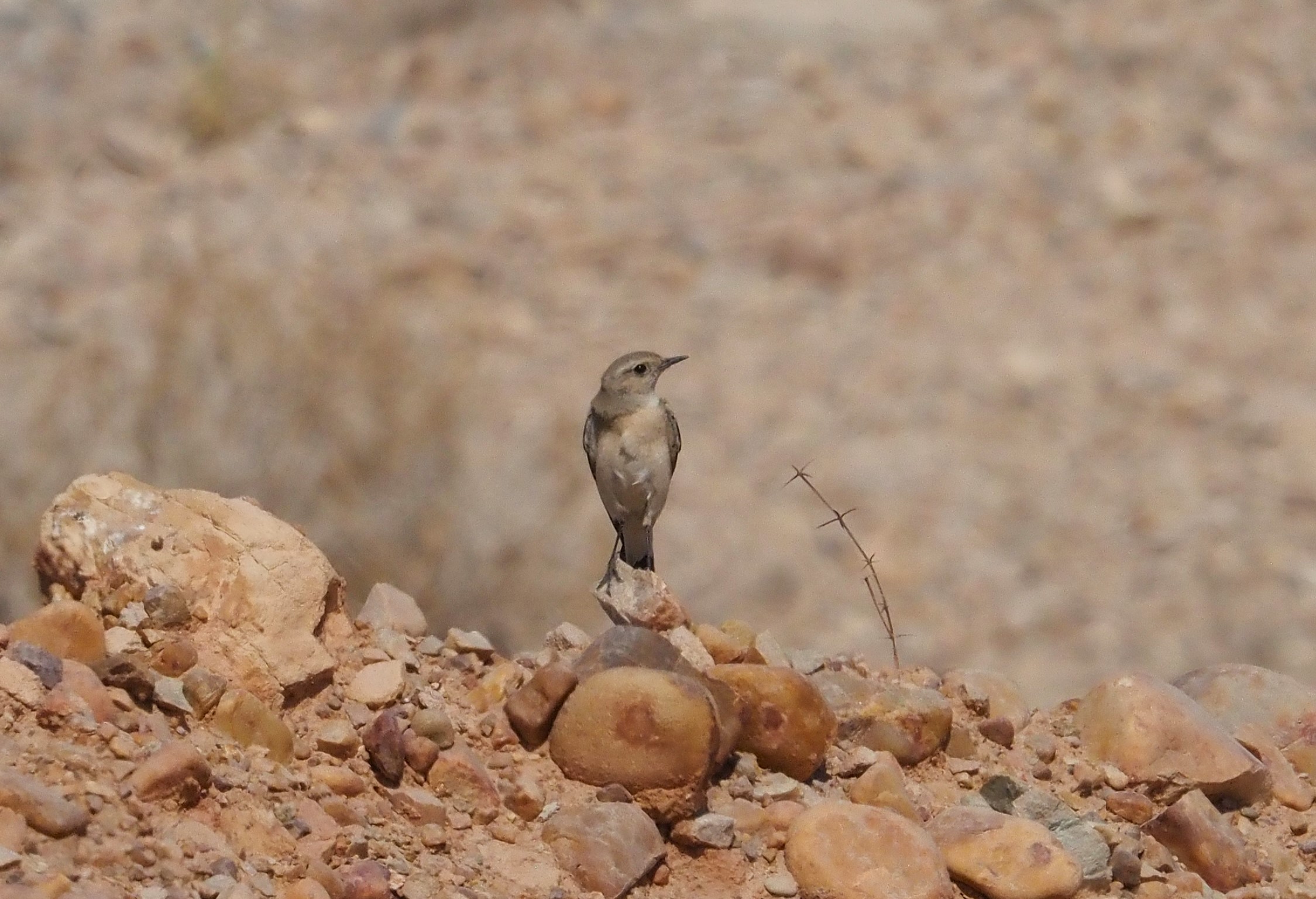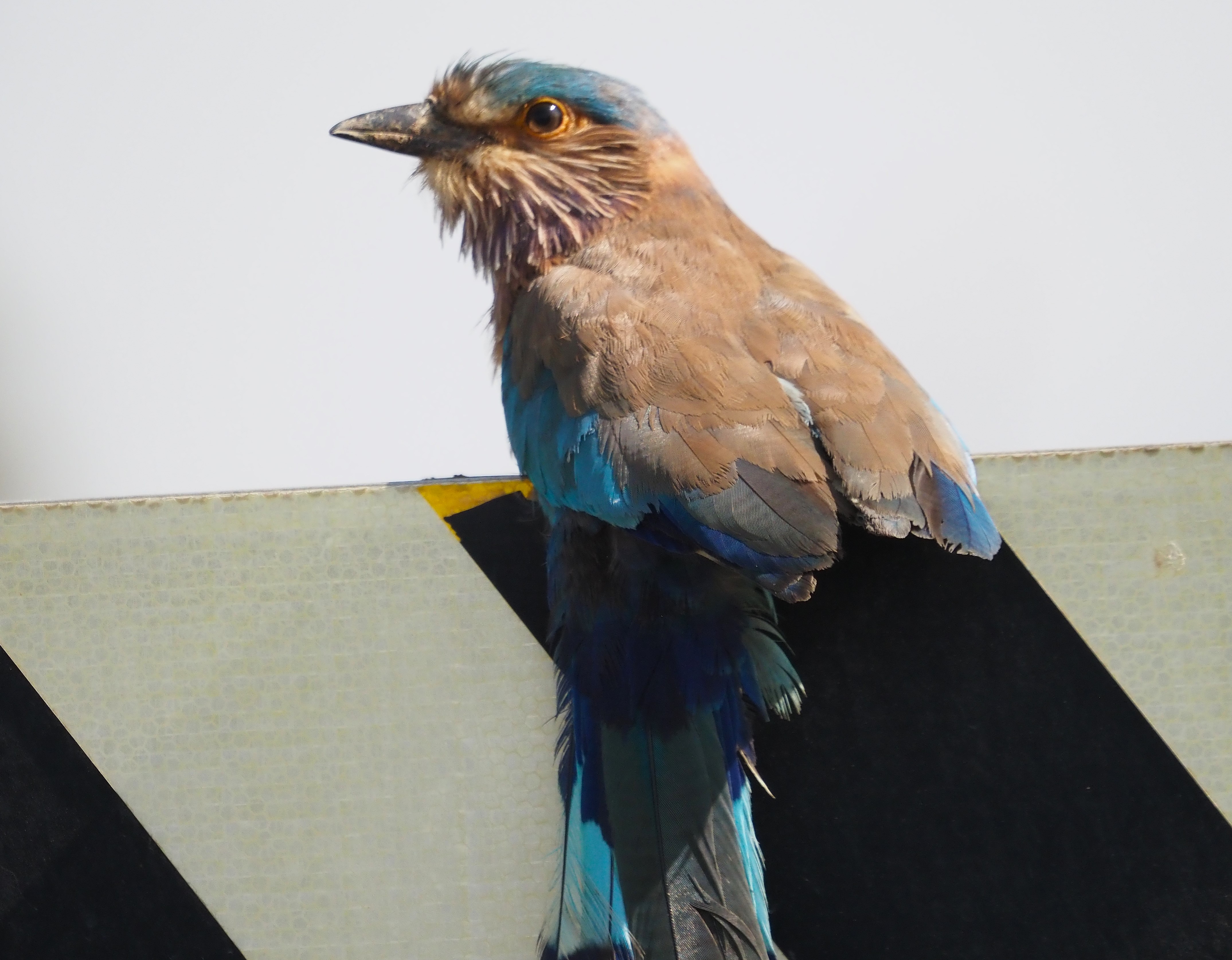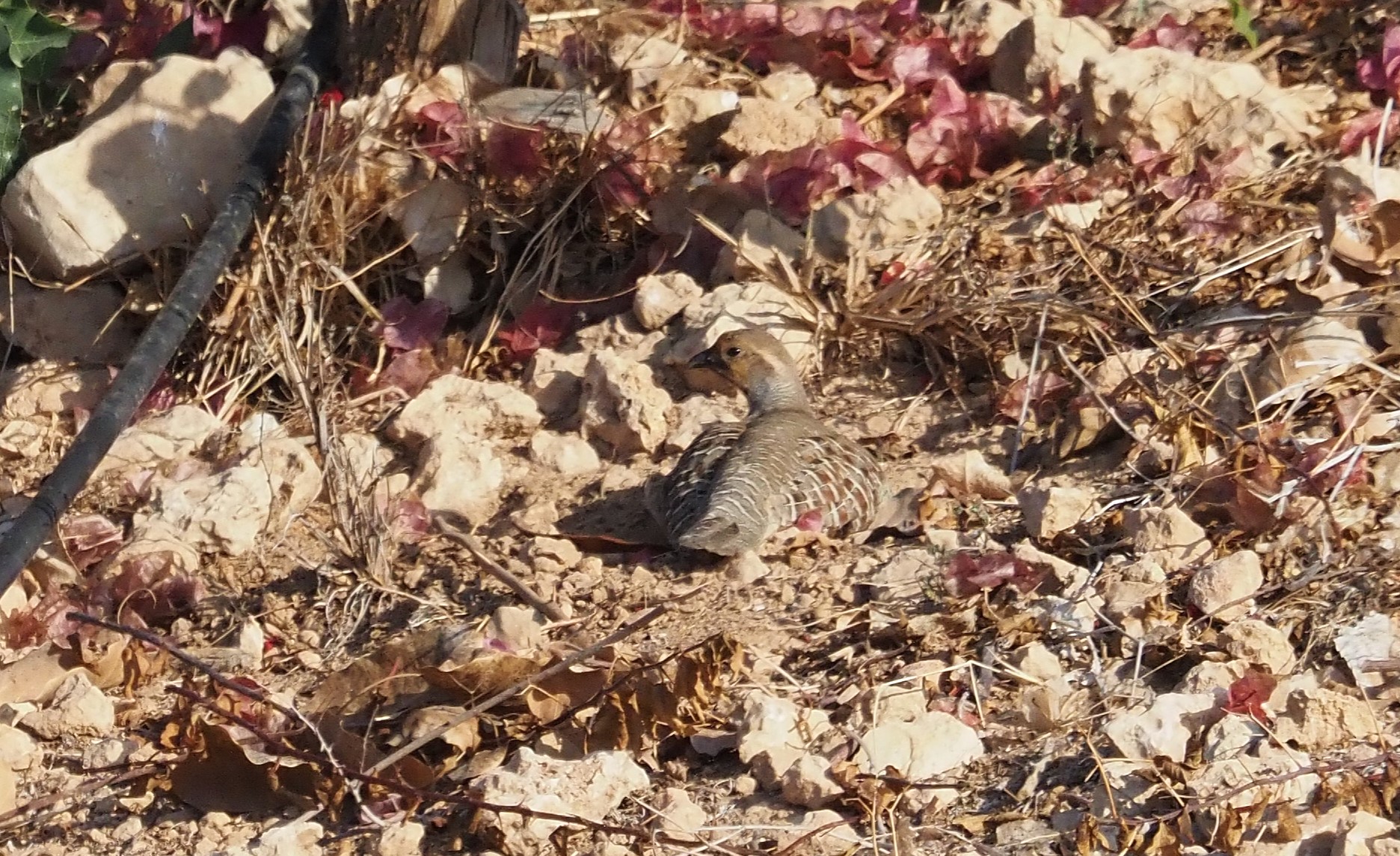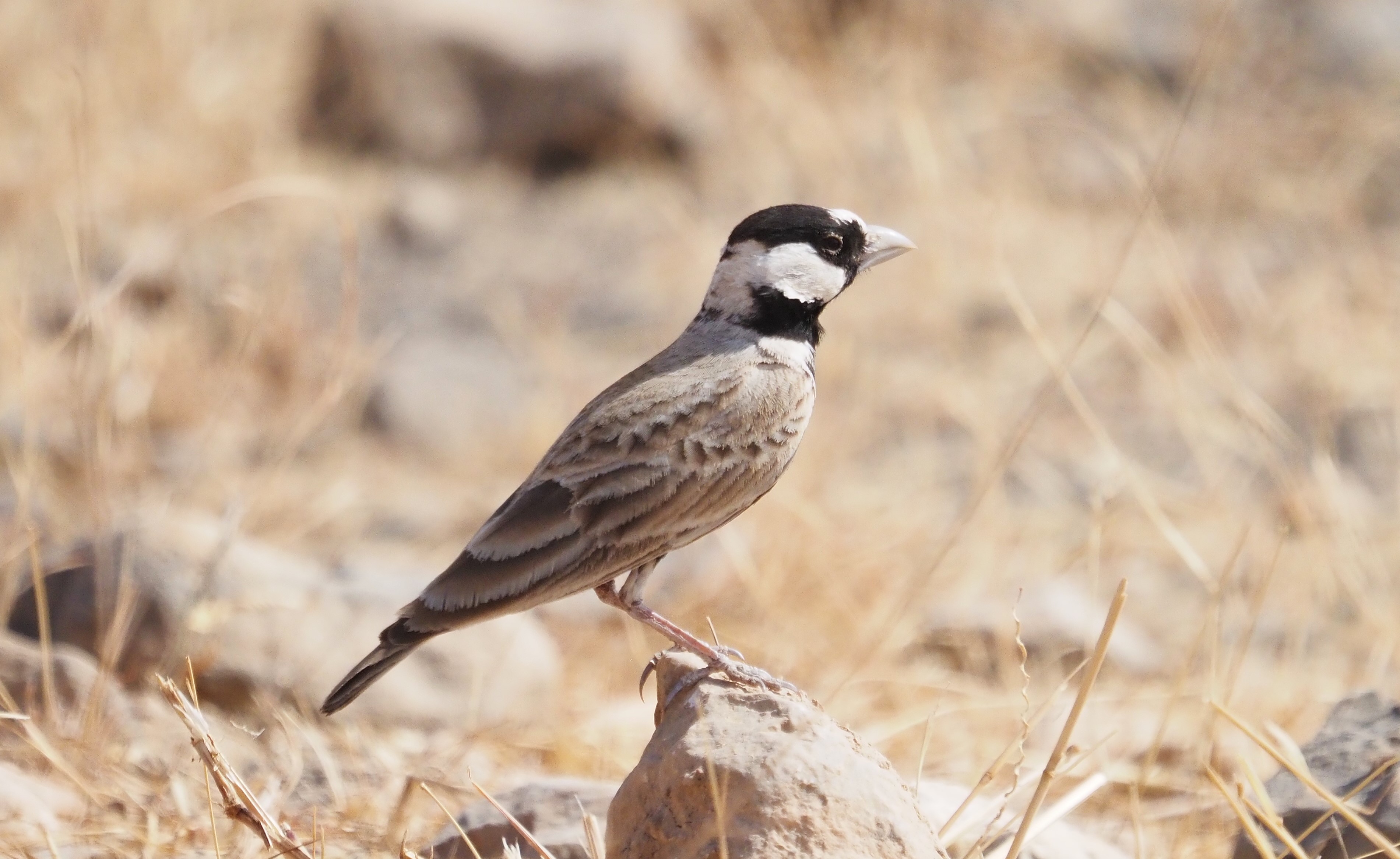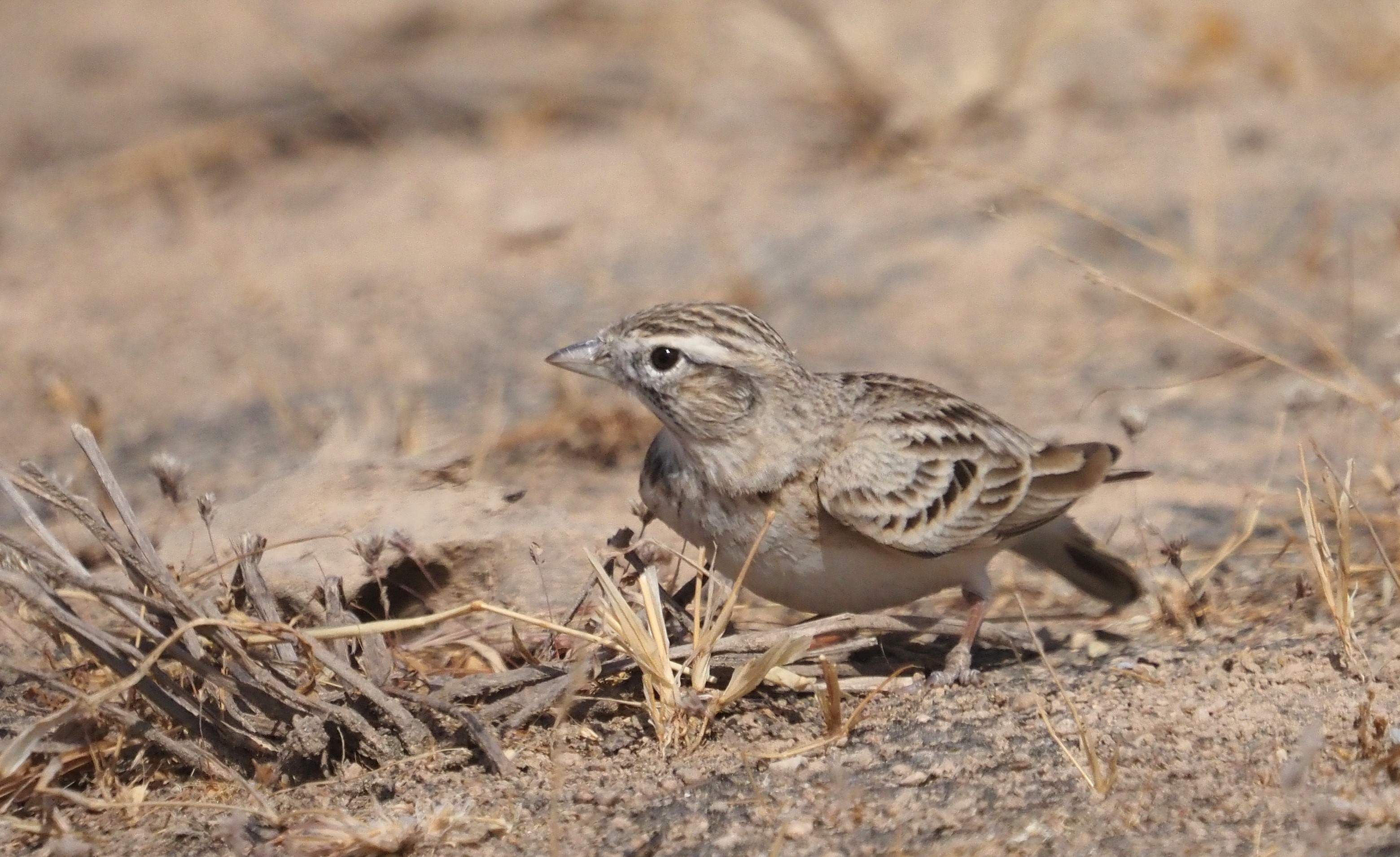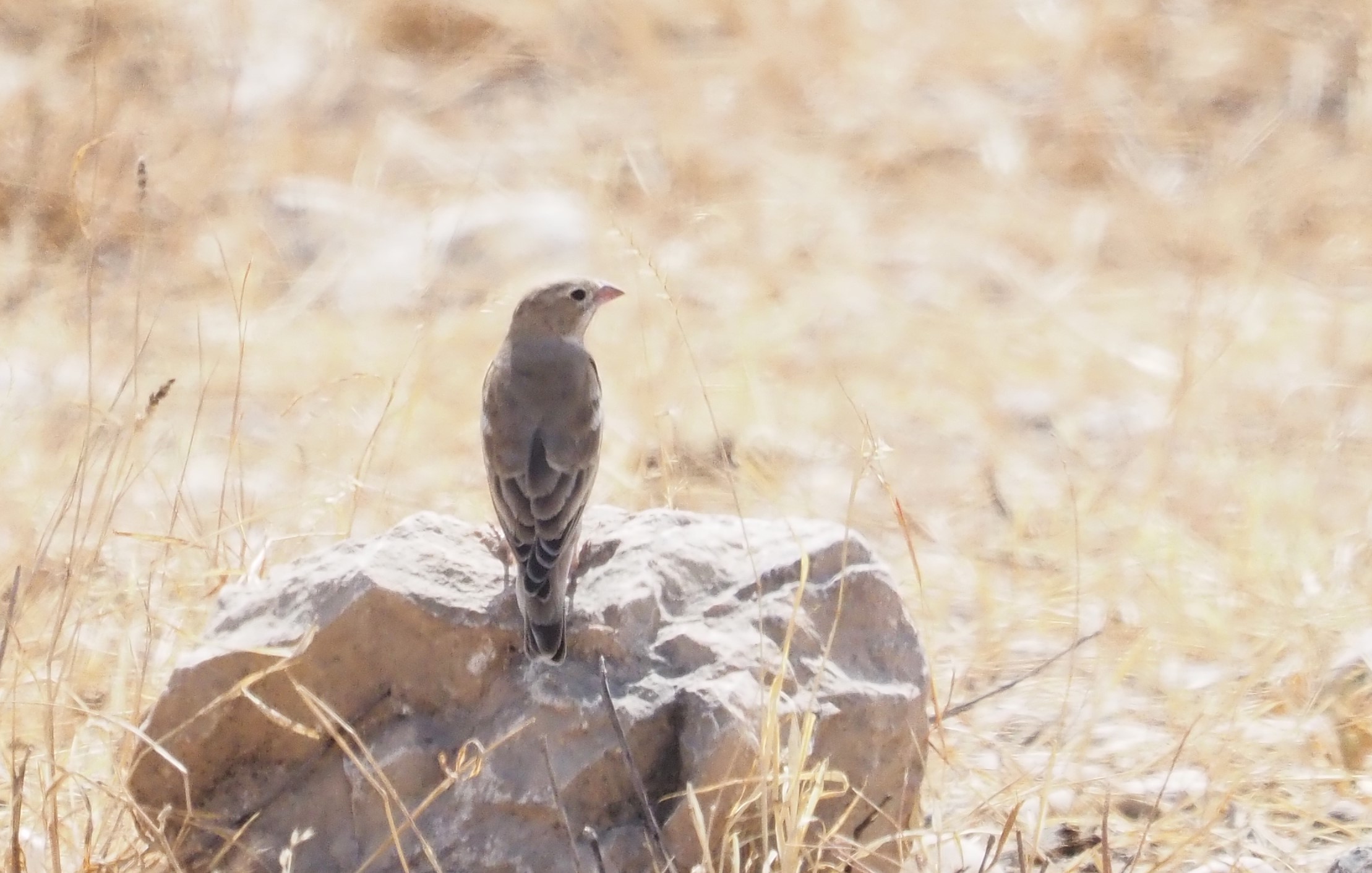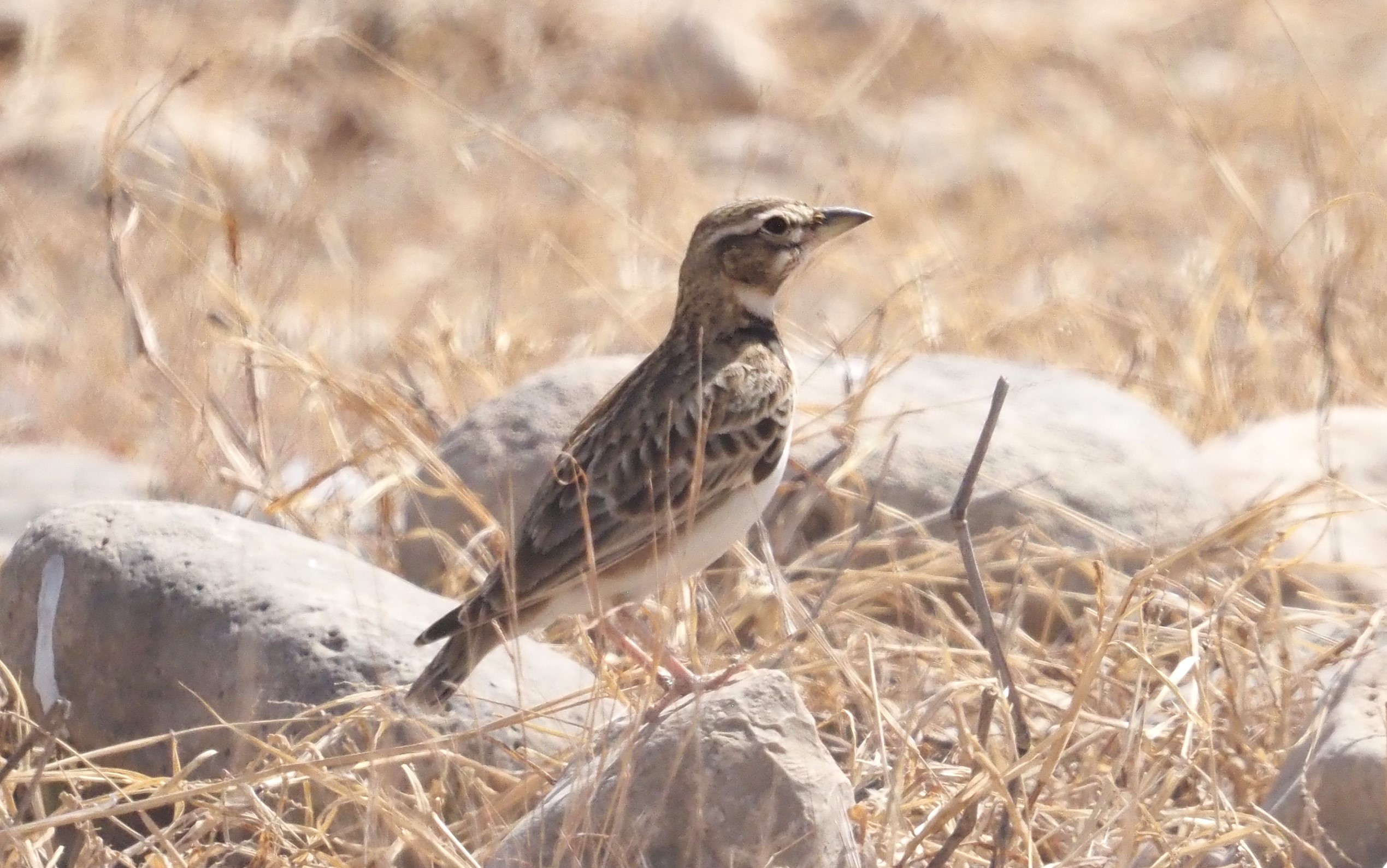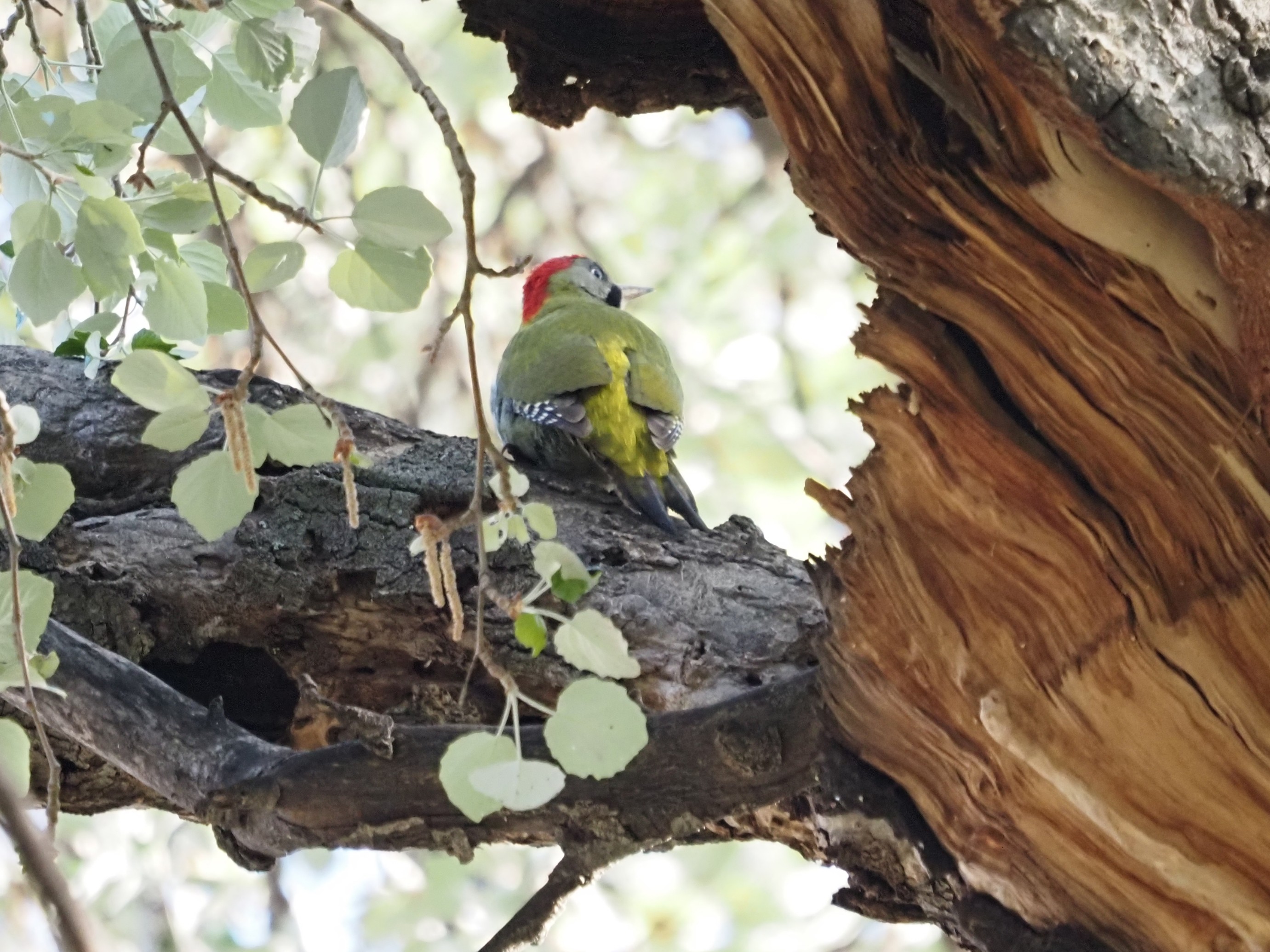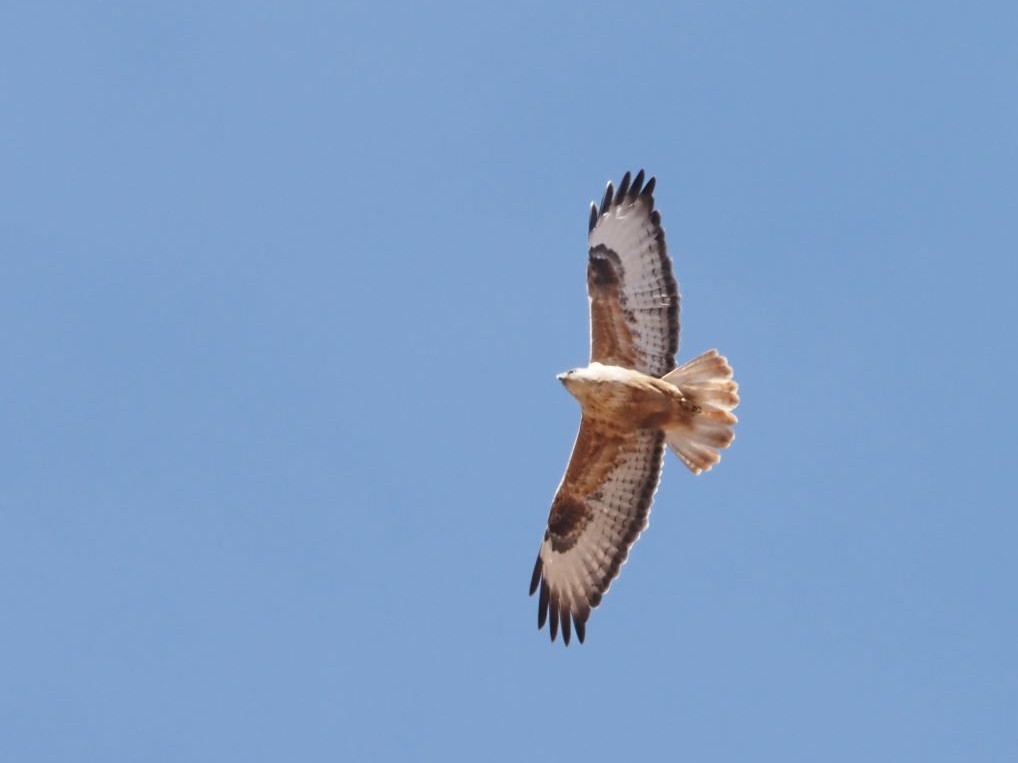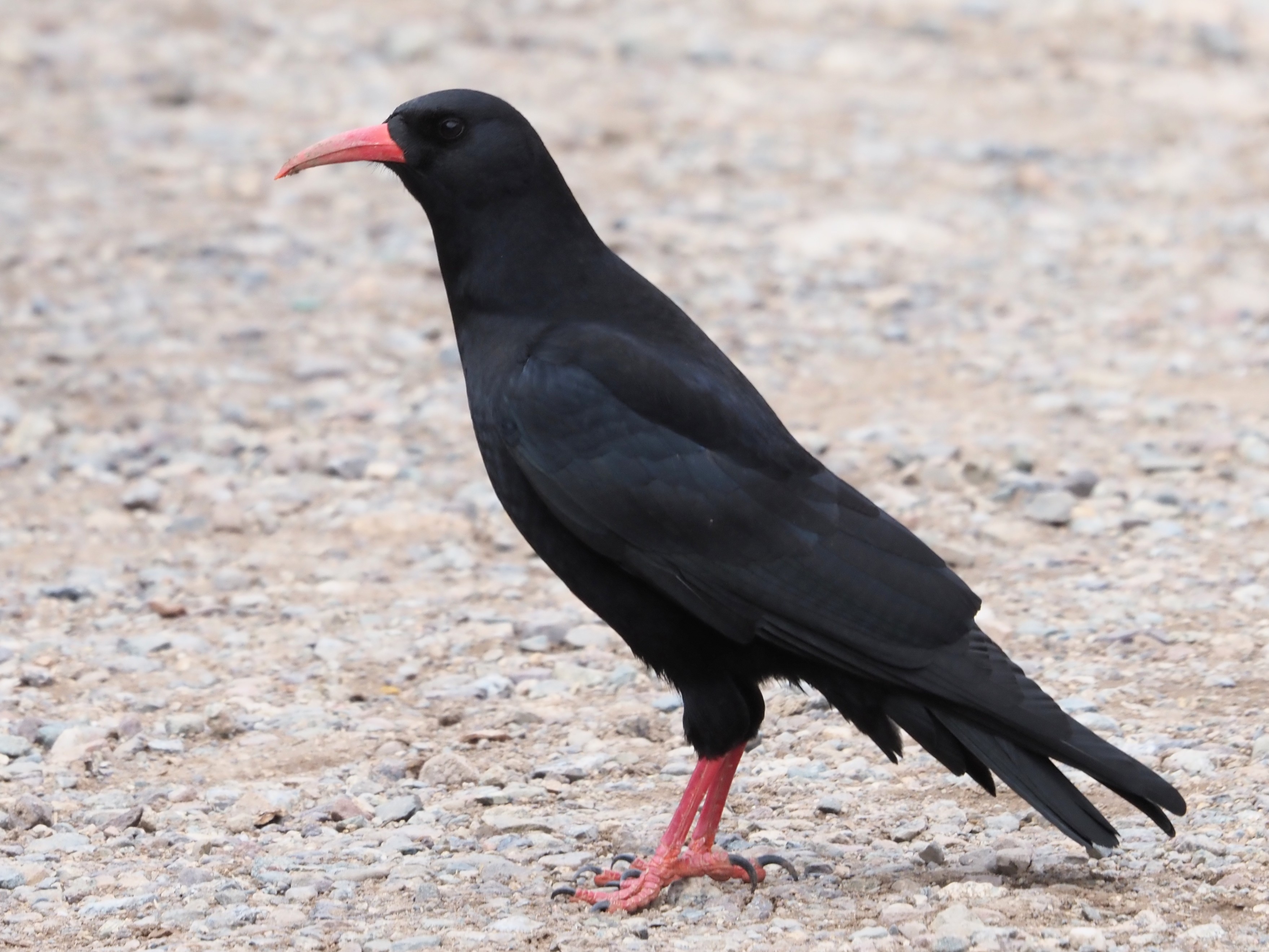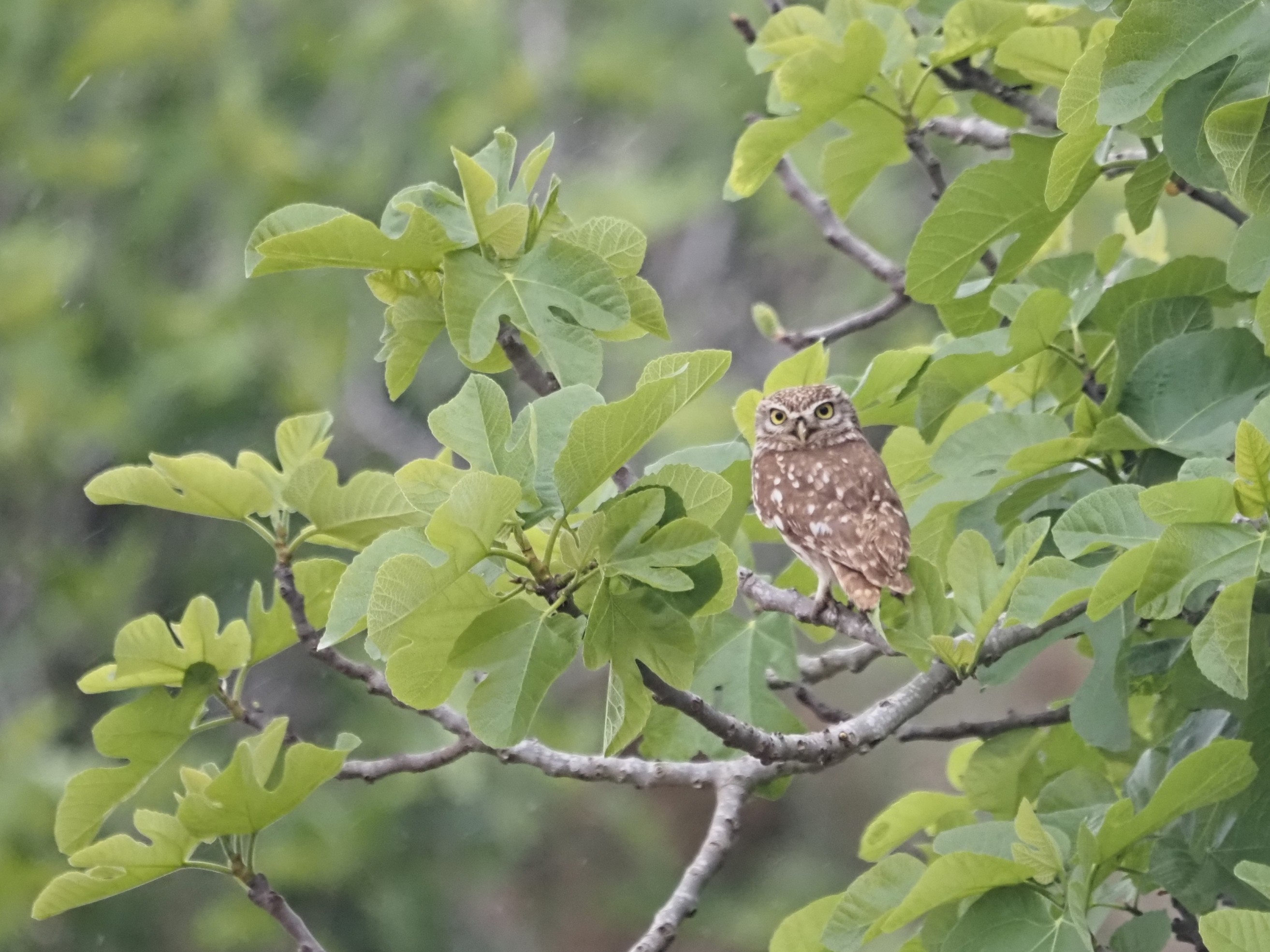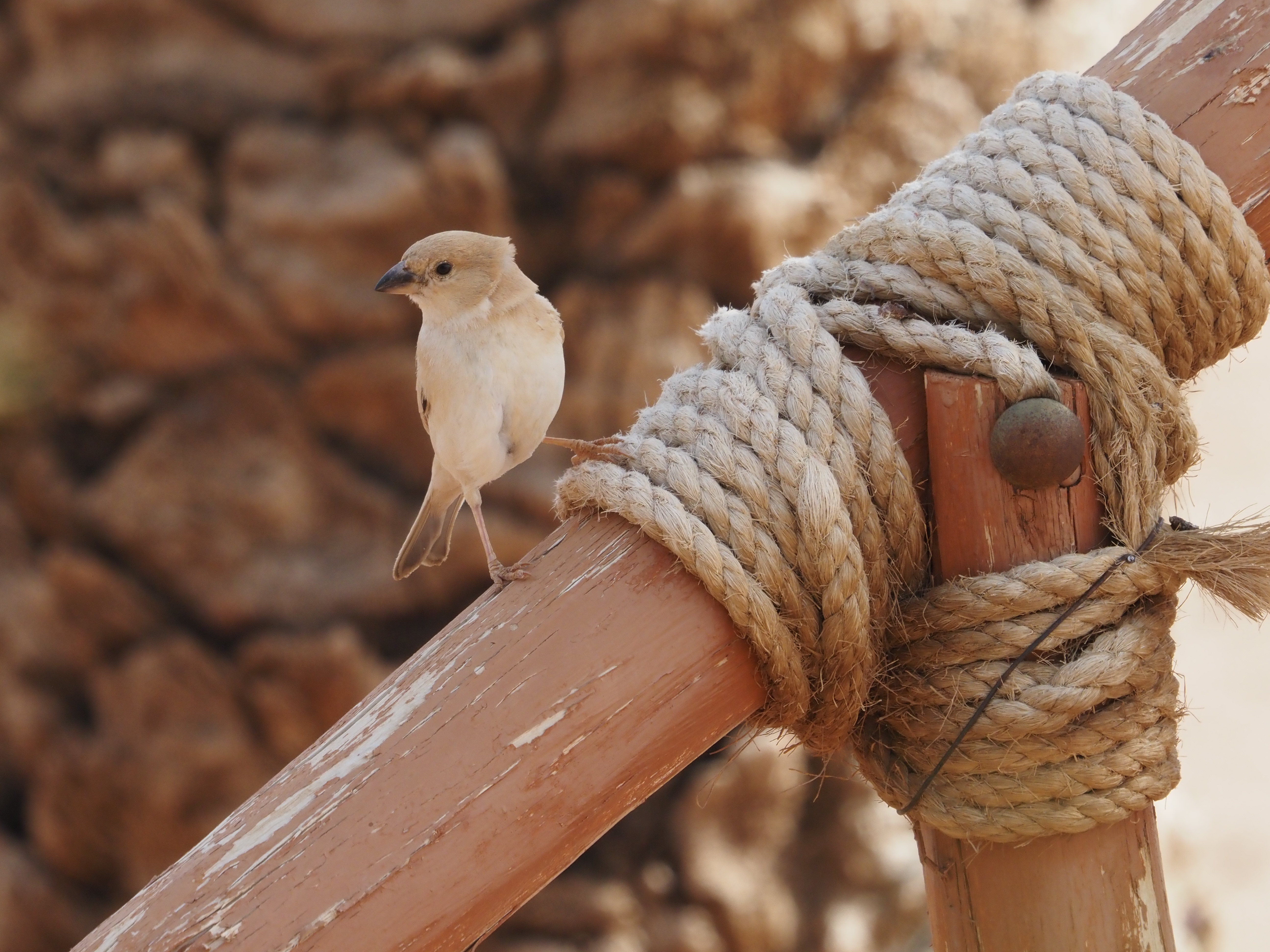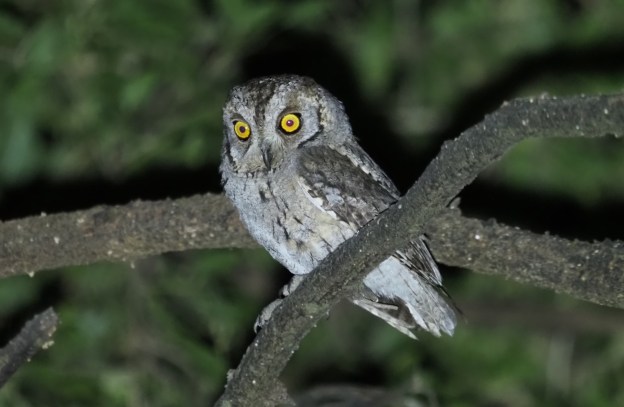
Arxiu de la categoria: greater hoopoe lark

Oman Birding Tour 2025 Trip Report

  • Dates: From January 11th to 21st, 2025
  • Tour participants: 14
  • Number of species: 226
  • Tour leader: Carles Oliver, Sergi Sales, Ramiro Aibar & Daniel Rey

Images by Pete Sutton (tour participant) and Carles Oliver & Sergi Sales (tour leaders). All rights reserved.

Overview: 9th issue of our classic itinerary in Oman. This year we were surprised with the many sights on Hypocolius, one of the main targets for many birdwatchers visiting the region and normally very restricted. This time, we saw a minimum of 5 birds in 4 different locations! We also scored an amazing number of 6 species of Owls in this issue (Desert, Arabian Eagle, Pallid Scops, Arabian Scops, Little and Omani!). But also had shades as we were not lucky with Socotra Cormorants, and this time we couldn’t contact with this very restricted bird. Beyond the regular specialties it was very satisfying to self-find rarities within the tour, as we found Brown Shrike and (Joe) found Pacific Swift. We also had time to tick Eyebrowed Thrush and even nice views on Syke’s Nightjars! Here we have to thank our clients for their wonderful flexibility, that allowed a slight modification in our average route in order to catch up with the last species and even allowed us to add one day more to the itinerary!

Day 0. Due to the flight combination and other, this issue has been one day longer. Eventually, this extra time gave us more time to explore some spots in the North, with interesting results.

Most of the group assembled at Muscat Airport after a nocturnal flight. Once living the airport, we went to our accommodation, where another guest was waiting for us and where enjoyed a wonderful breakfast. A last client landed a few hours later and join us one hour after we ended the breakfast. After our nocturnal flight, a good amount of coffee was necessary to face the day.

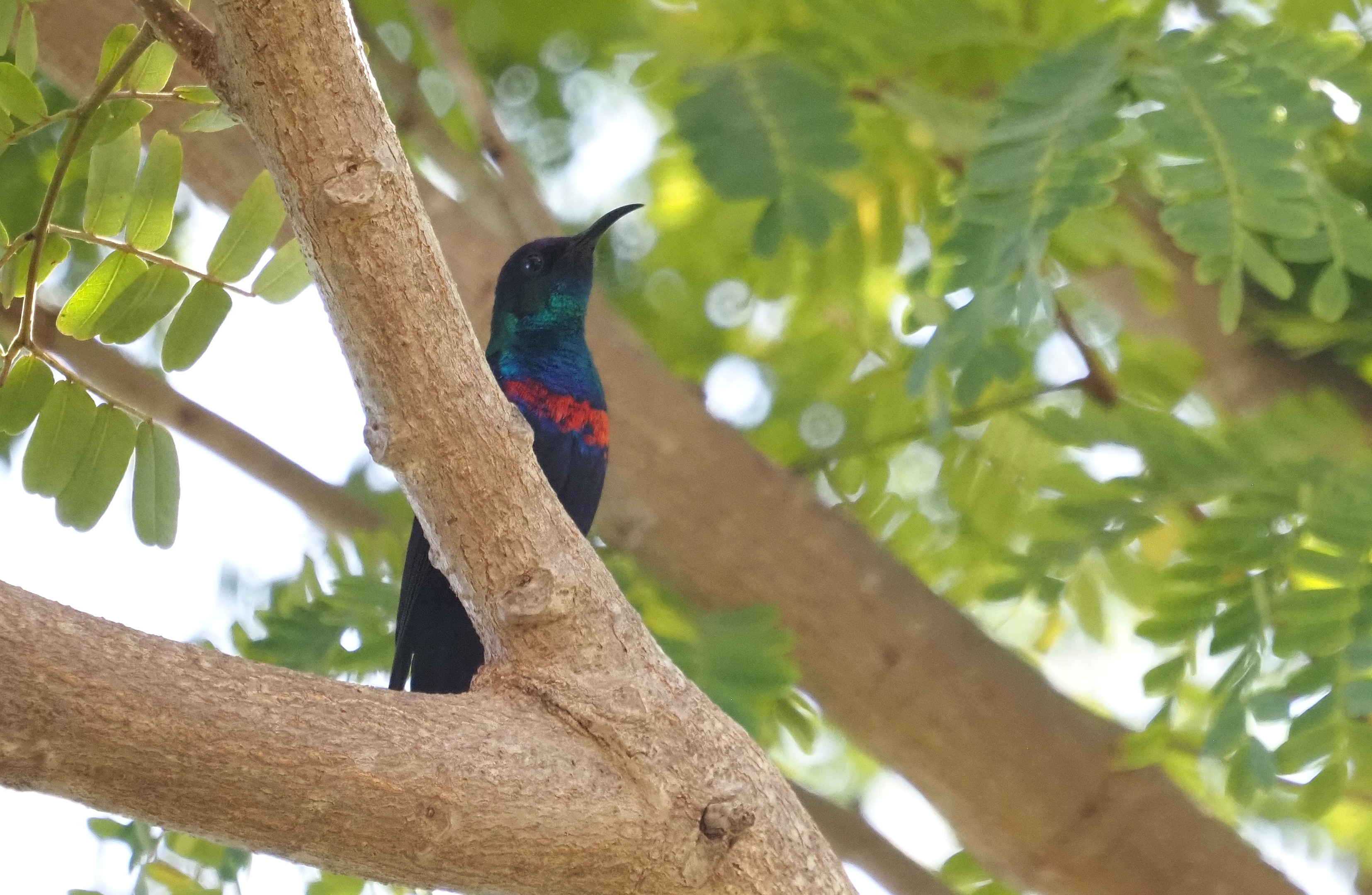
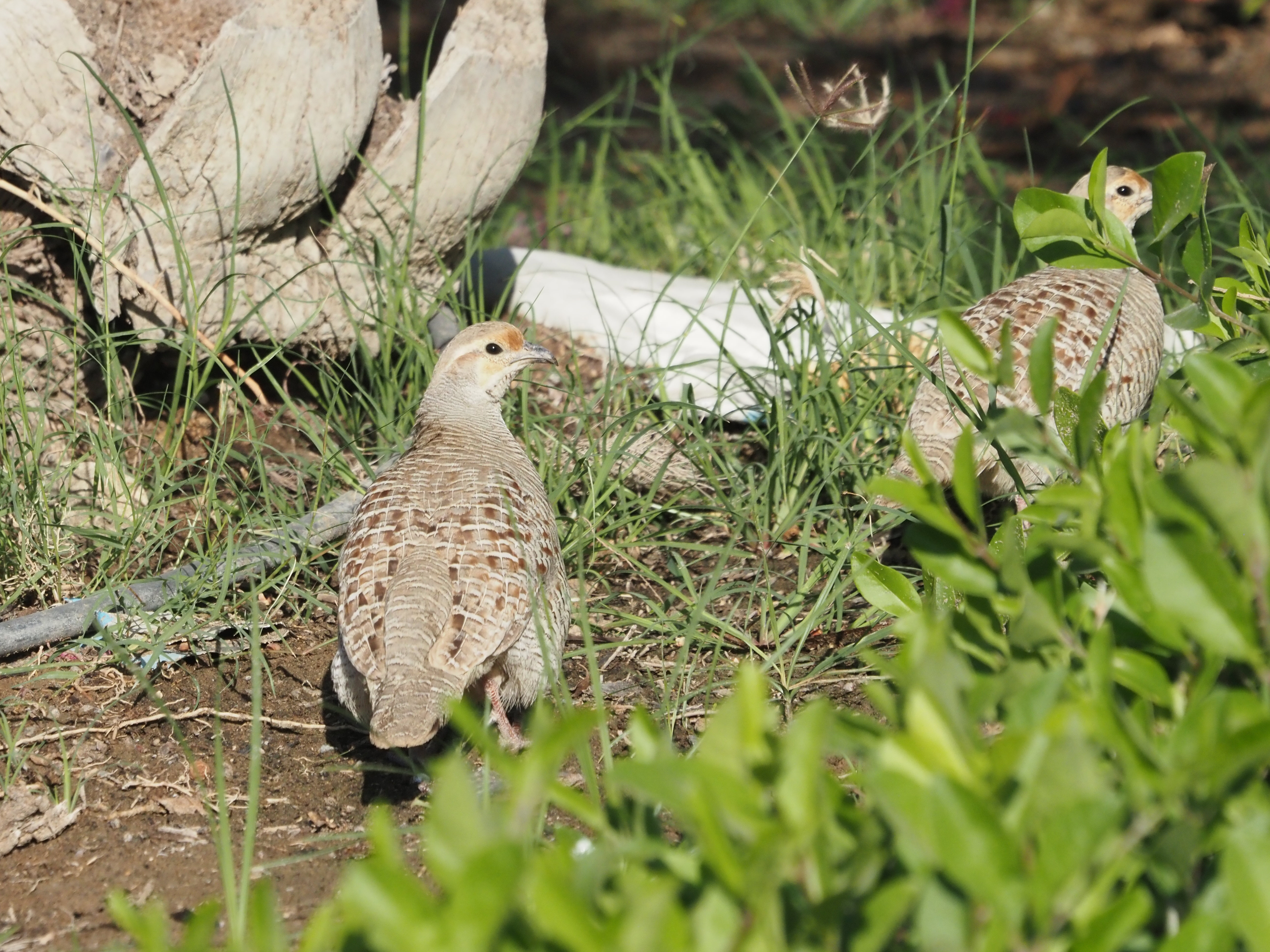
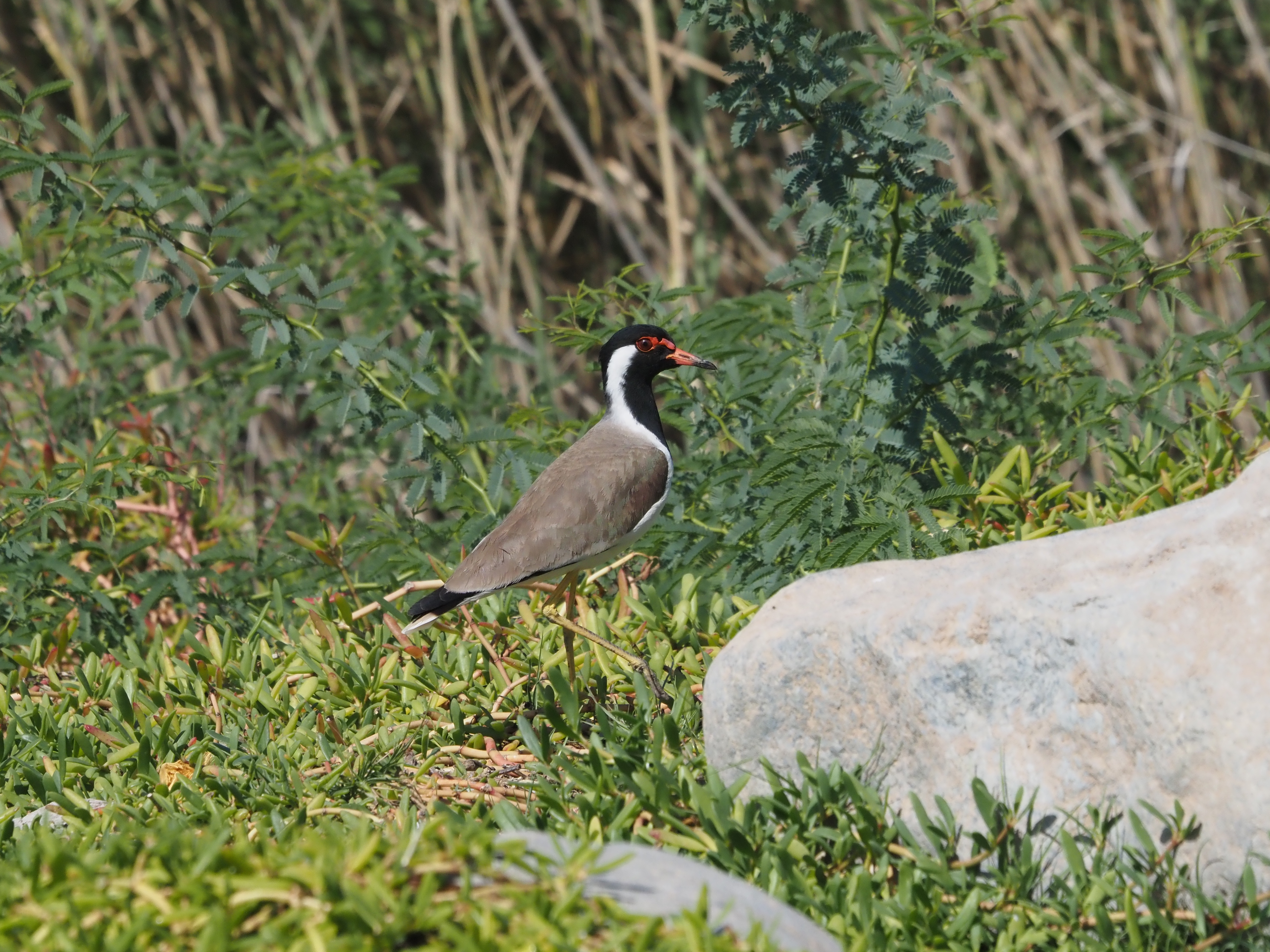
This time, the first contact with the Omani birdlife was a few meters away from the accommodation. We got Red-wattled Lapwings, Great & Little Egrets, Indian Silverbills and Purple Sunbirds but also the first Citrine Wagtail & Little Stint of the trip and really good looks on Clamorous Reed Warblers. A couple of Place Crag Martins were flying around and several Pallid Swifts were hunting further away. Derek had a distant Osprey being harassed by several House Crows. Much closer, a small flock of Grey Francolins came out the vegetation for our enjoyment. Still, the main attraction of this very first stop was a pair of Arabian Bee-eaters and 1 Daurian Shrike.

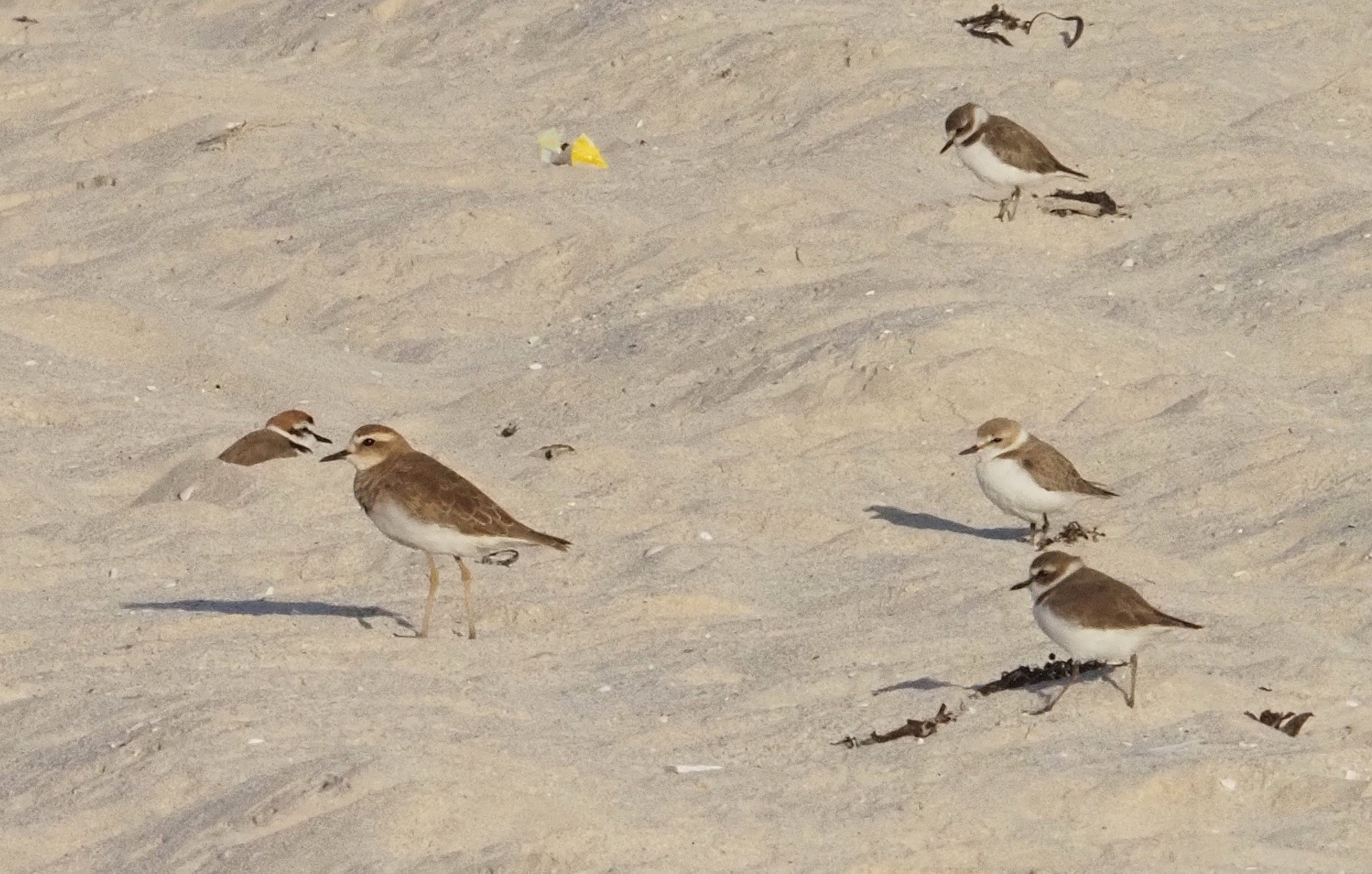
Living the accommodation, we drove a short distance to the Muscat River. Here we a very large array of waders, gulls and terns. Of course, most eyes concentrated firs in working the differences between Tibetan Sand Plovers and Greater Sand Plovers. A nie flock of Tibetan Sand Plovers were feeding along with Kentish Plovers, providing very good looks, while at least 2 Greater Sand Plovers were moving not far from some 1st winter Eurasian Oystercatchers. Sooty Gulls were roosting on the beach and, well inside the sea, tens and tens and tens of Red-necked Phalaropes were feeding and caught the eye of Miquel, who pointed them out.

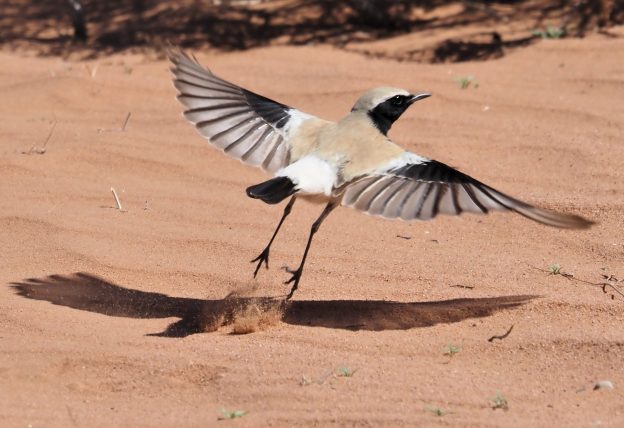
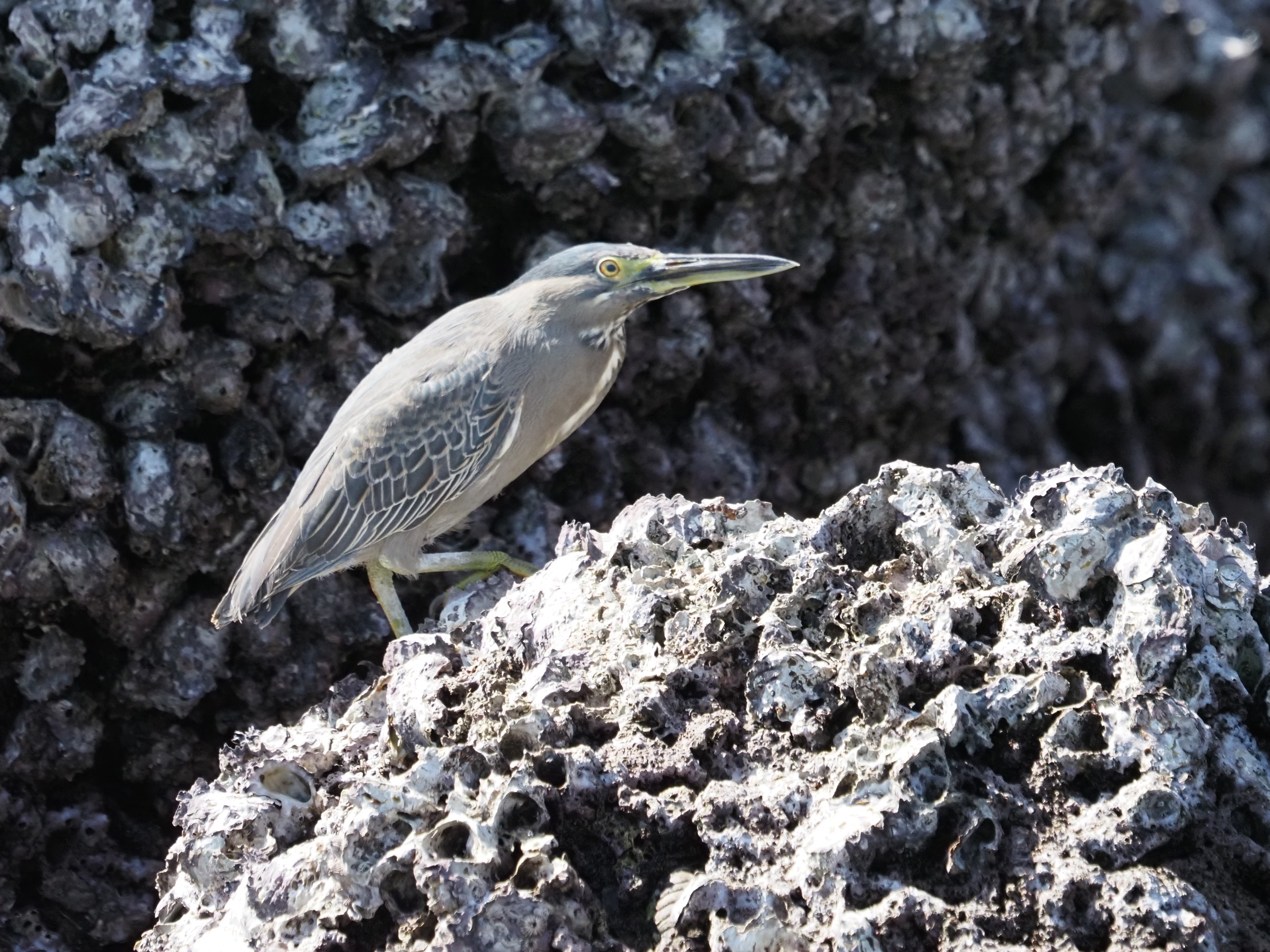
A couple of Marsh Sandpipers were feeding in the river bed, and their typical short runs mixed with the movements of the many Dunlins, Common Ringed Plovers, Ruffs, Greenshanks, Eurasian Curlews and Common Redshanks. A small flock of gulls were resting in the river, and saw some Black-headed Gulls along with the more common Slender-billed’s. A few Little Terns were also resting, and along with them we saw many Sandwich Terns, 1 Caspian Tern, 3 Whiskered Terns plus 1 Gull-billed. A few Western Reed Egrets were also seen, but when it comes to Herons we only had eyes for a very close Striated Heron fishing only a few meters away from the group, at least until we found the first Indian Pond Heron for the trip! Some Eurasian Teals were also feeding here and we were surprised to find a Eurasian Wigeon feeding along with them. A large flock of Black-tailed Godwits and a nice Desert Wheatear was feeding along the river bank. Systematically checking the Snipes we were lucky to find a Pin-tailed Snipe, and everybody in the group enjoyed great views in the scope while comparing the bird with the Common Snipes around.

But all was interrupted by a flock of Chestnut-bellied Sandgrouses that landed 150 metres away from the river bed. We fastly approach them, getting nice views on the birds while moving on the ground!

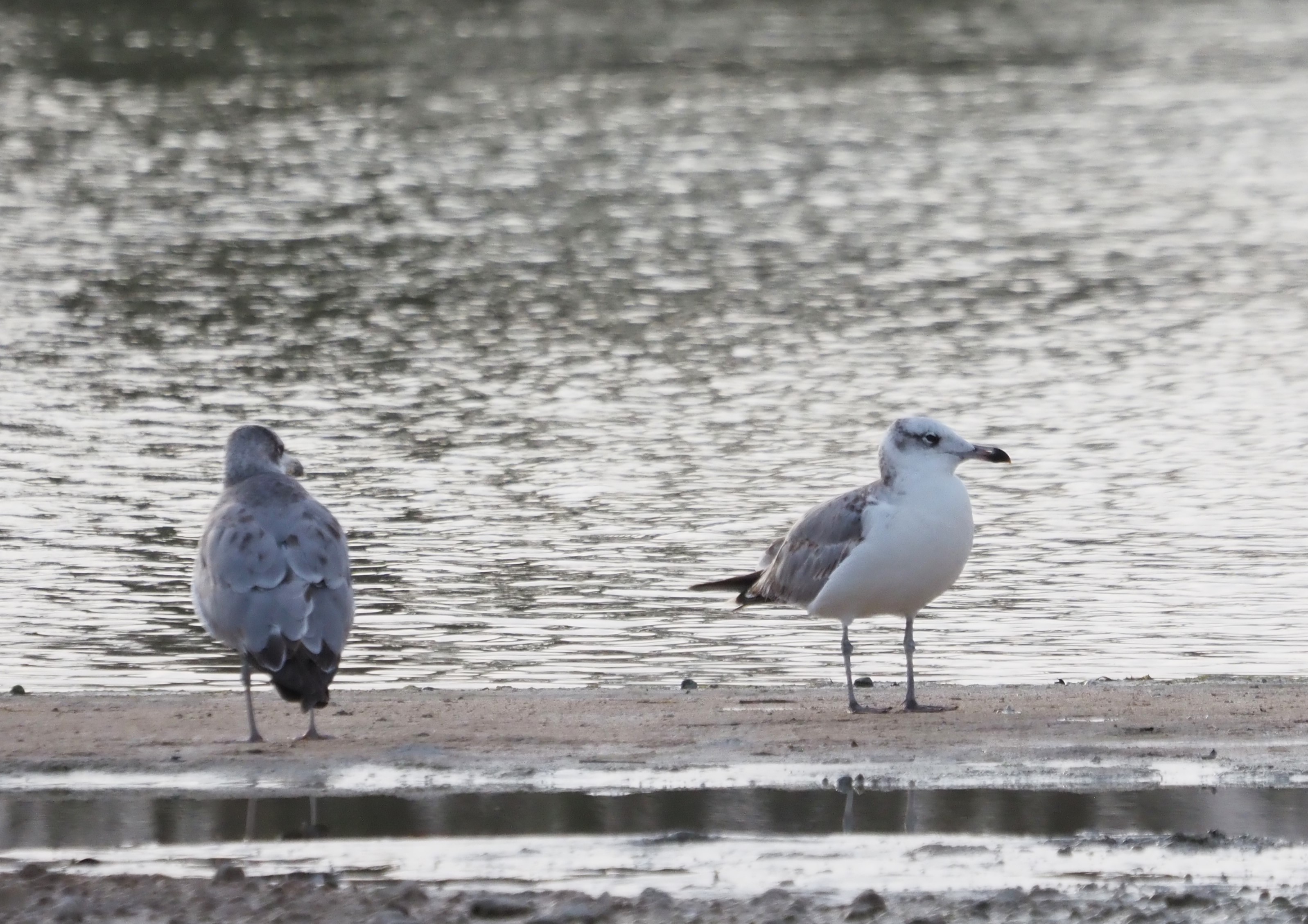
After a coffee stop we moved to a couple of beaches were gulls tend to accumulate. We were lucky at the first spot, and we found 2 gorgeous Palla’s Gulls standing up in the middle of a flock of Steppe, Heuglin’s and a few Caspian Gulls. Closeby, a couple of small river mouths provided some birding including further views on Temminck’s Stints and the first Little Grebe for the trip.

After lunch we went to Al Qurm Park. This is a phenomenal spot for a number of birds, and here we got nice views on White-eared & Red-vented Bulbuls but also Marsh Harrier, Citrine Wagtail, Arabian Green Bee-eaters, Daurian Shrike and a flock of Pacific Golden Plovers including a lovely bird in summer plumage. At dusk, hundreds of people gathered to attend a local festival and it made impossible to see any birds.

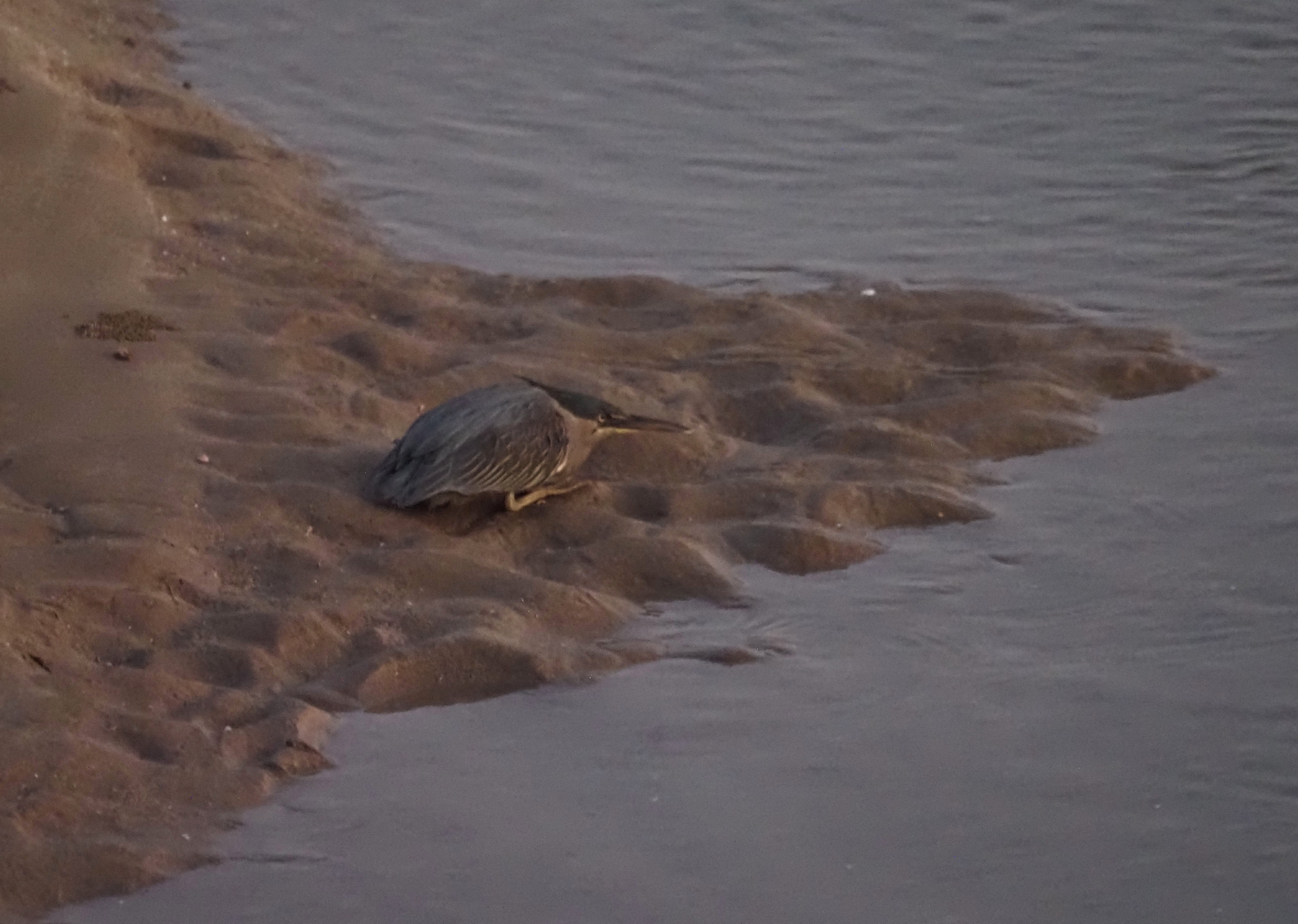
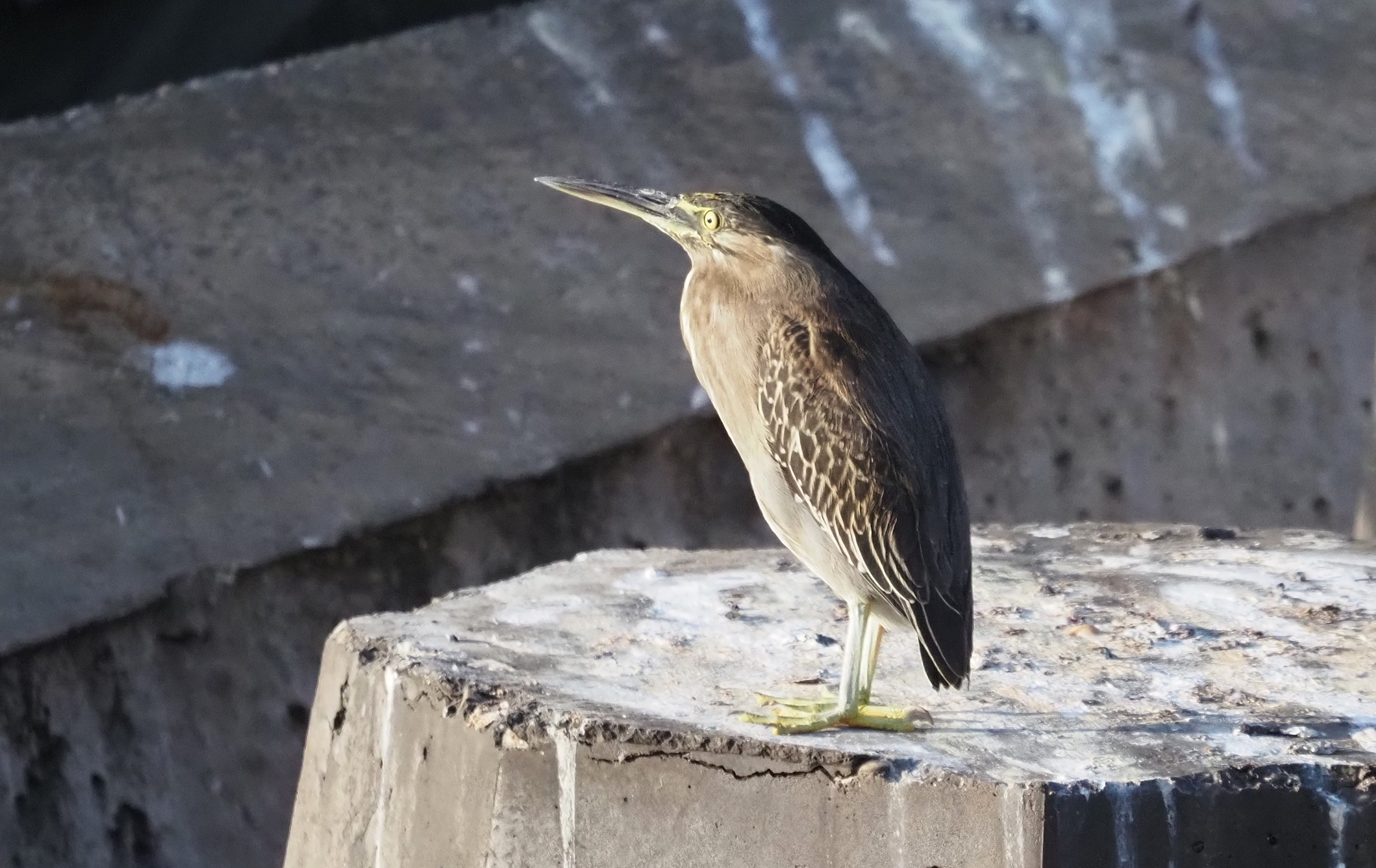
Striated Heron (Butorides striata) at Muscat River. Image by Pete Sutton.
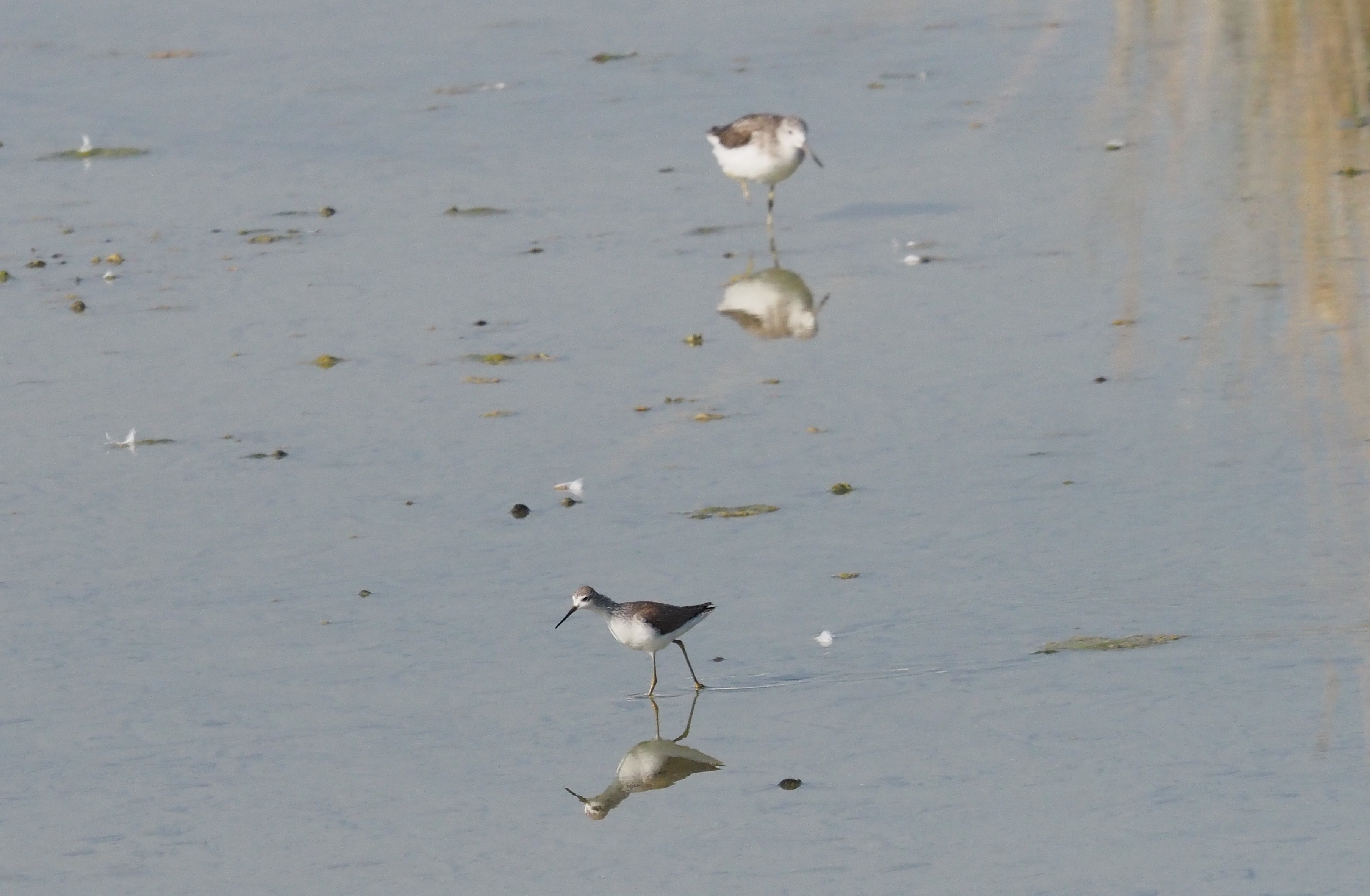
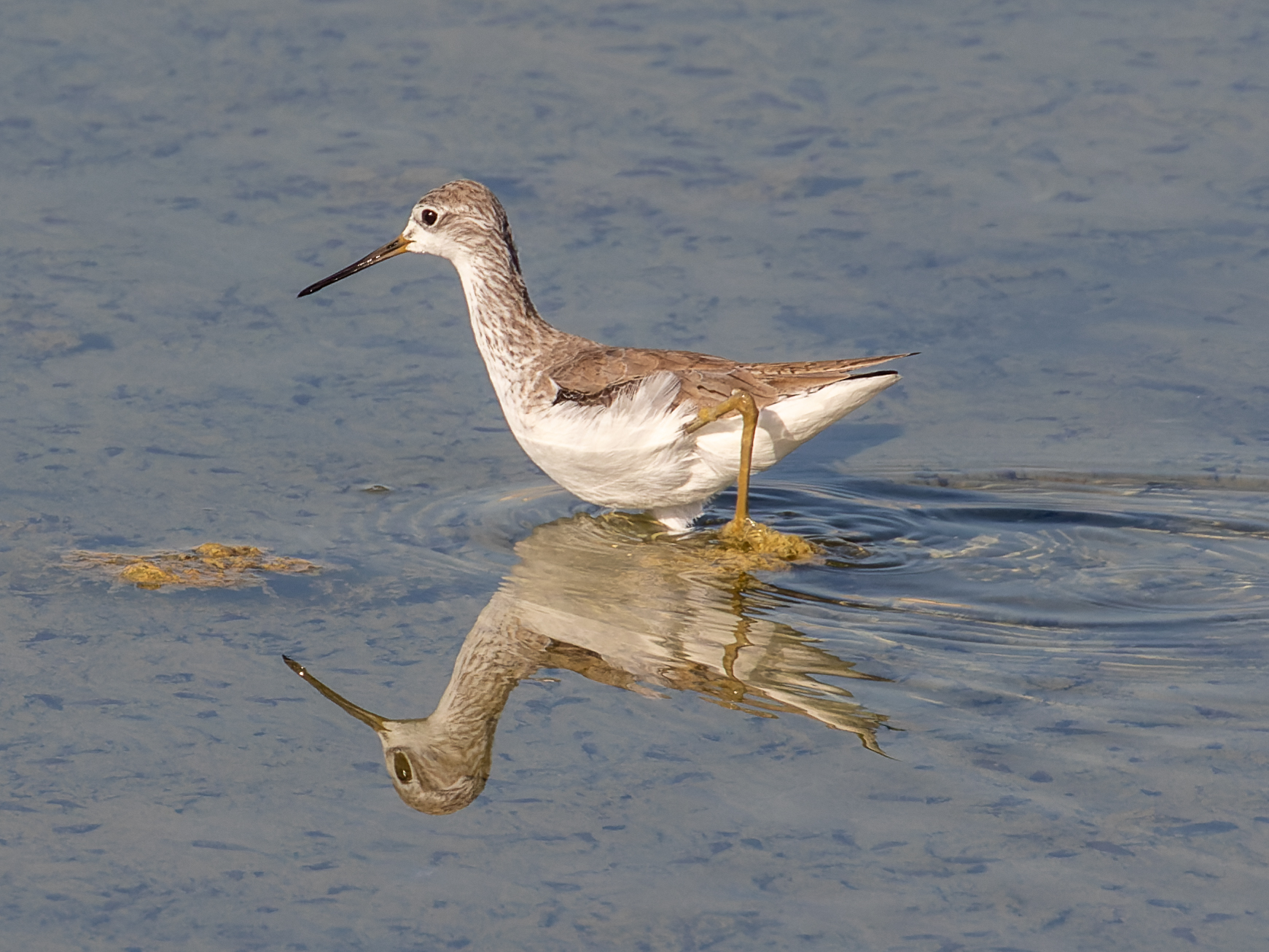
Marsh Sandpiper (Tringa stagnatilis). Image by Pete Sutton.
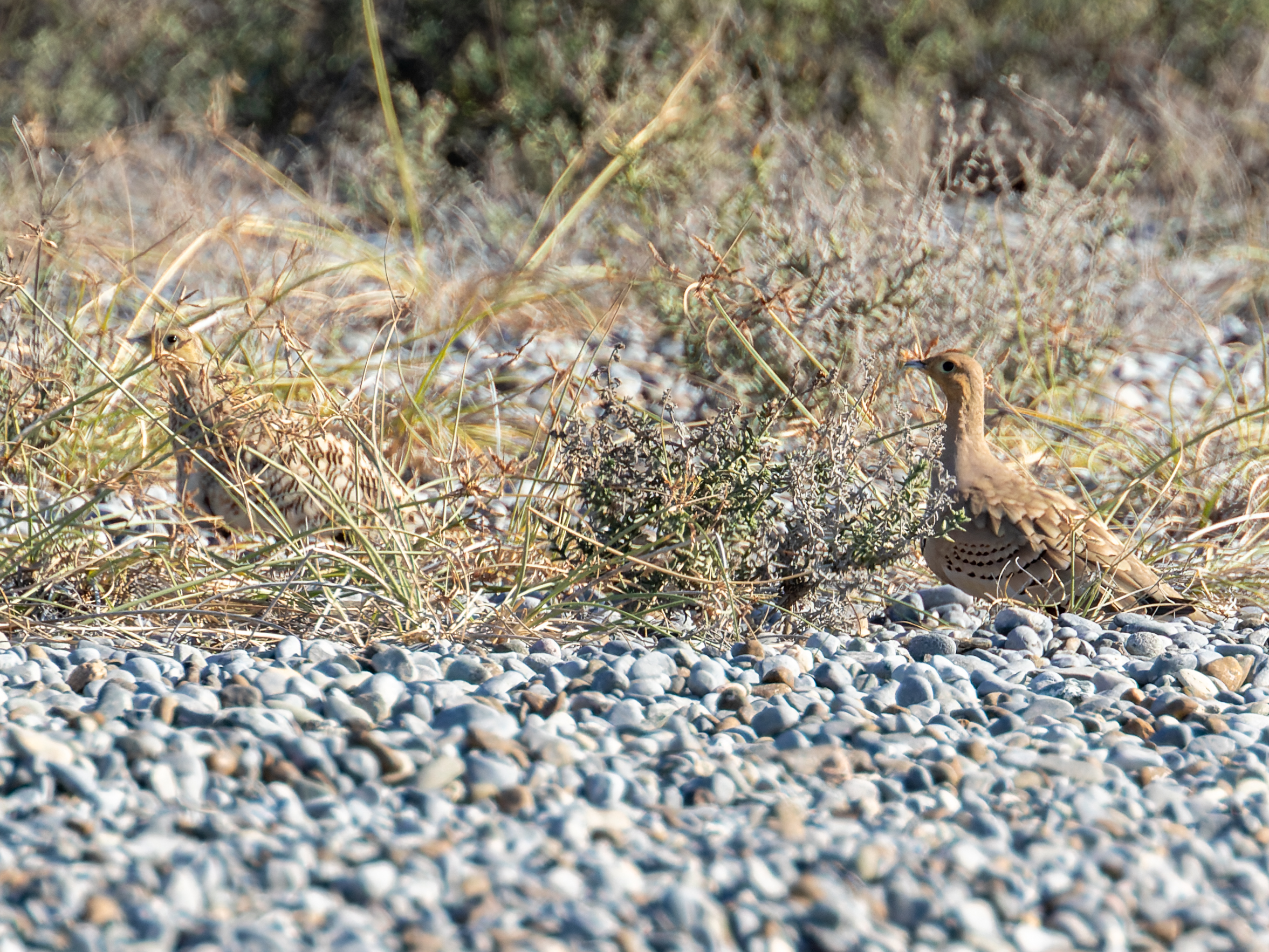
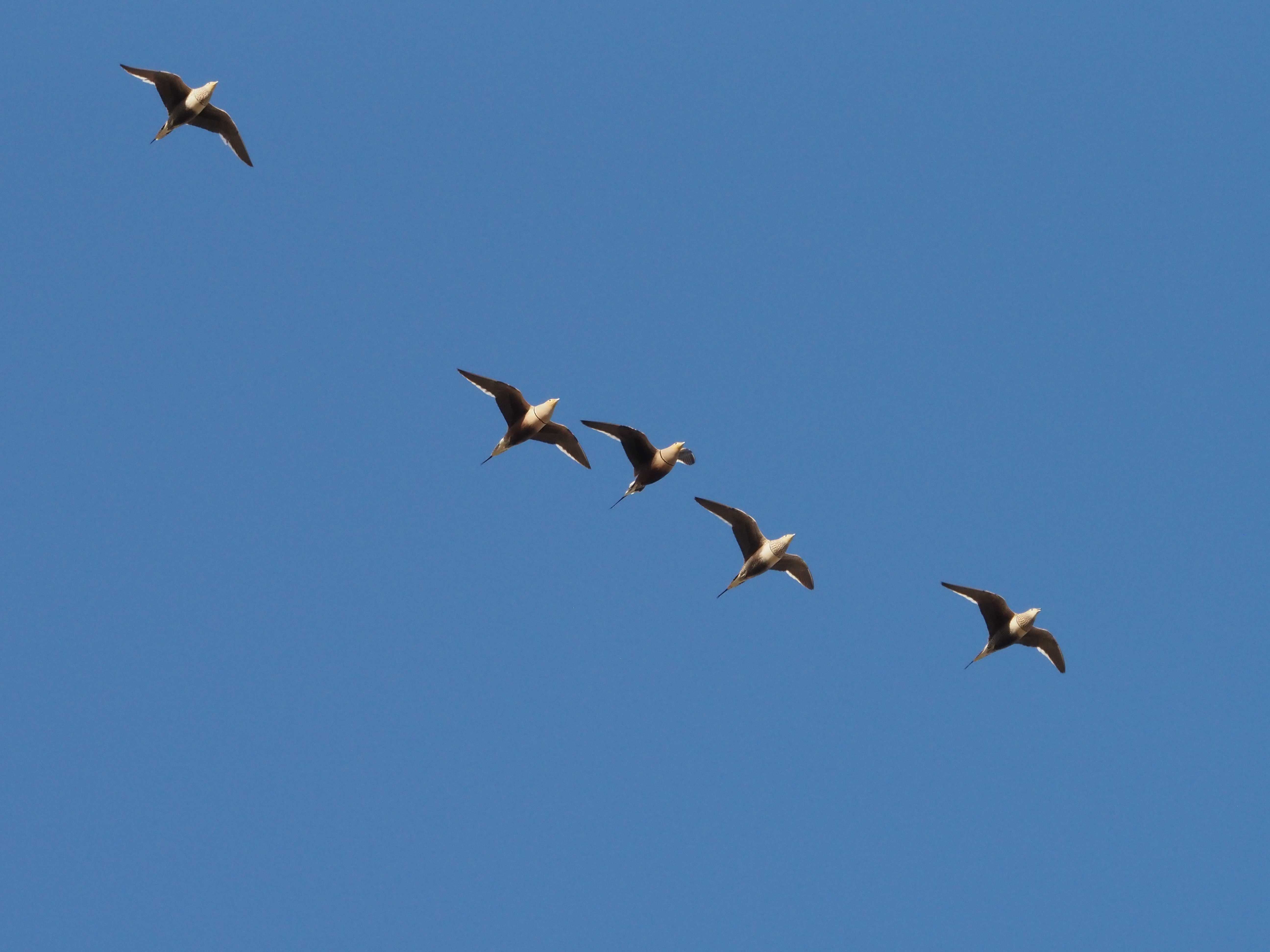
Chestnut-bellied Sandgrouses (Pterocles exustus) in Muscat. Image by Pete Sutton.
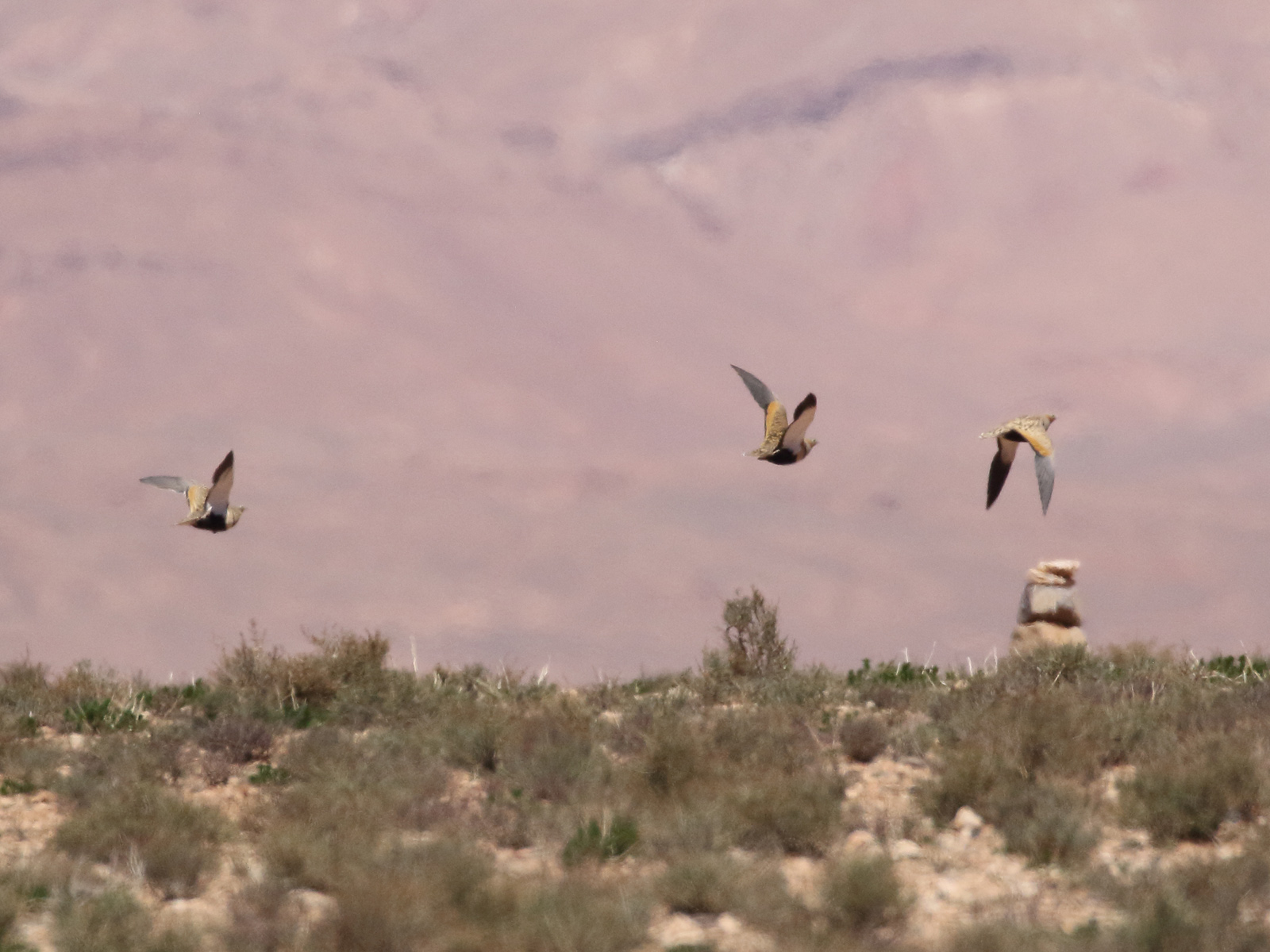
Chestnut-bellied Sandgrouse (Pterocles exustus) in flight. Image by tour leader Carles Oliver.
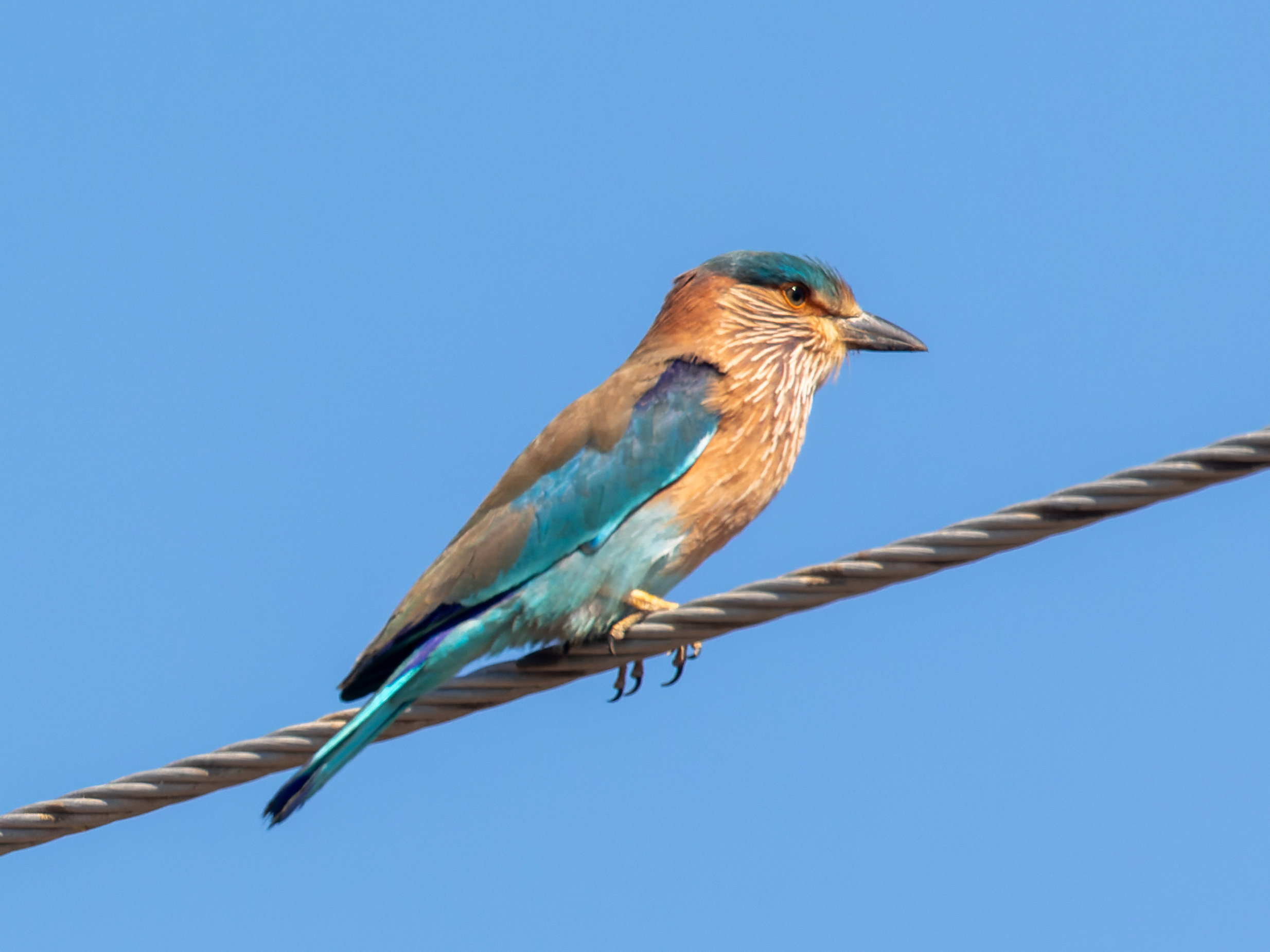
Indian Roller (Coracias benghalensis) in Muscat. Image by Pete Sutton.
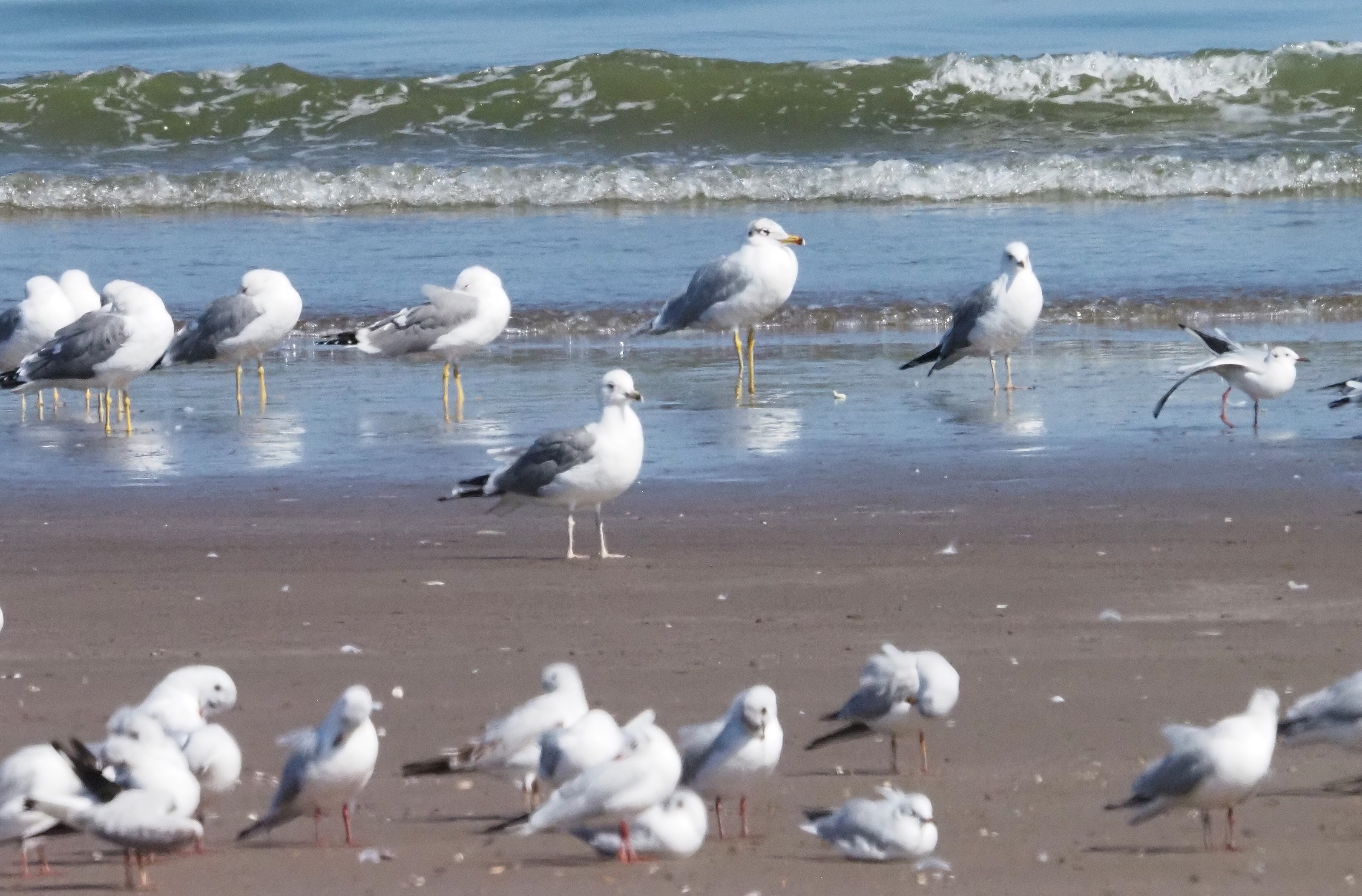
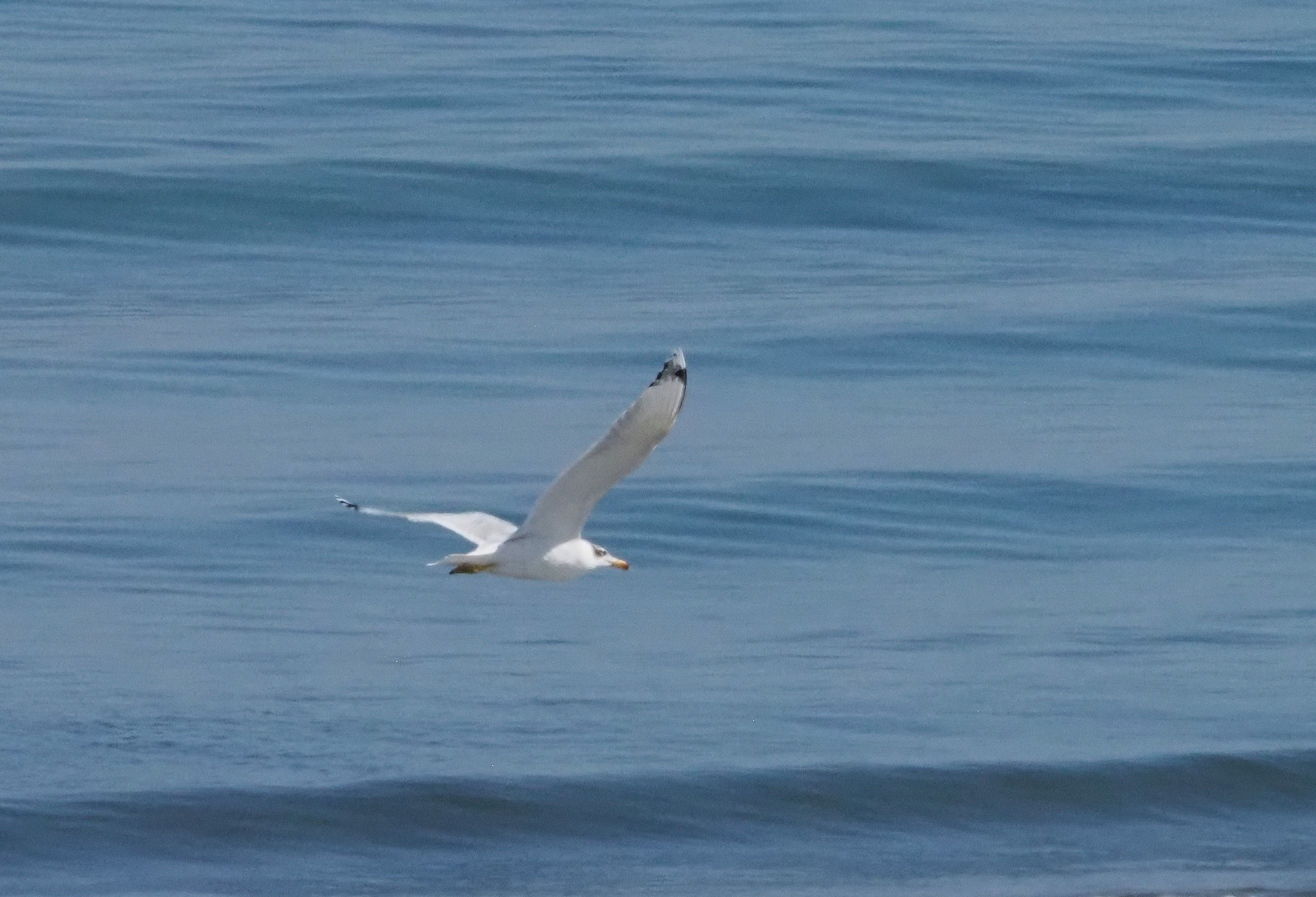
Palla’s Gull (Ichthyaetus ichthyaetus) -centre top- along with Heughlin’s, Steppe & Slender-billed Gulls in Muscat.
Palla’s Gull in flight. Please pair attention to the wing tip. Unmistakable! Image by Carles Oliver
Lovely flock of Pacific Golden Plovers (Pluvialis fulva) including a wonderful summer plumage bird! Image by tour leader Carles Oliver.
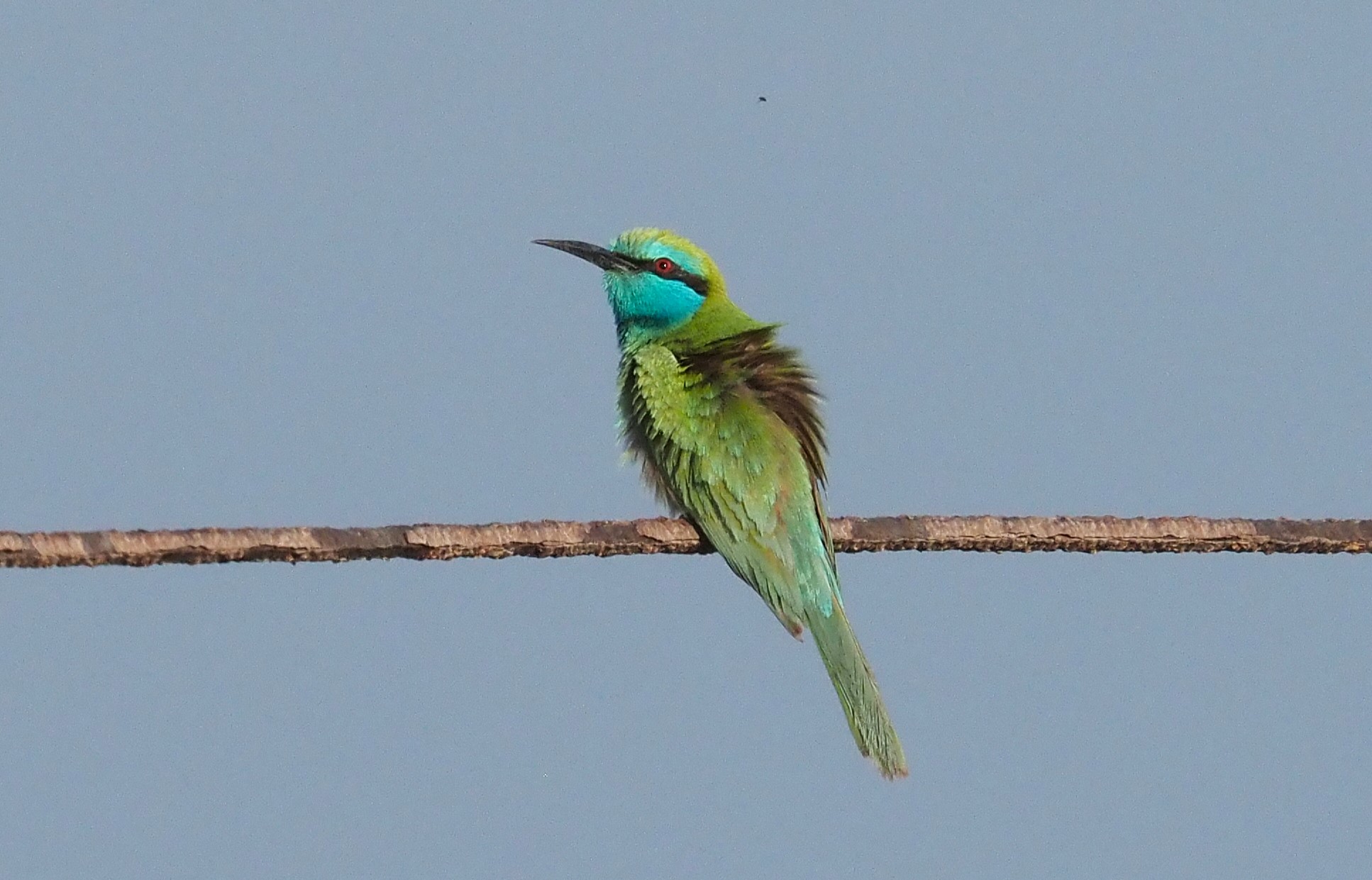
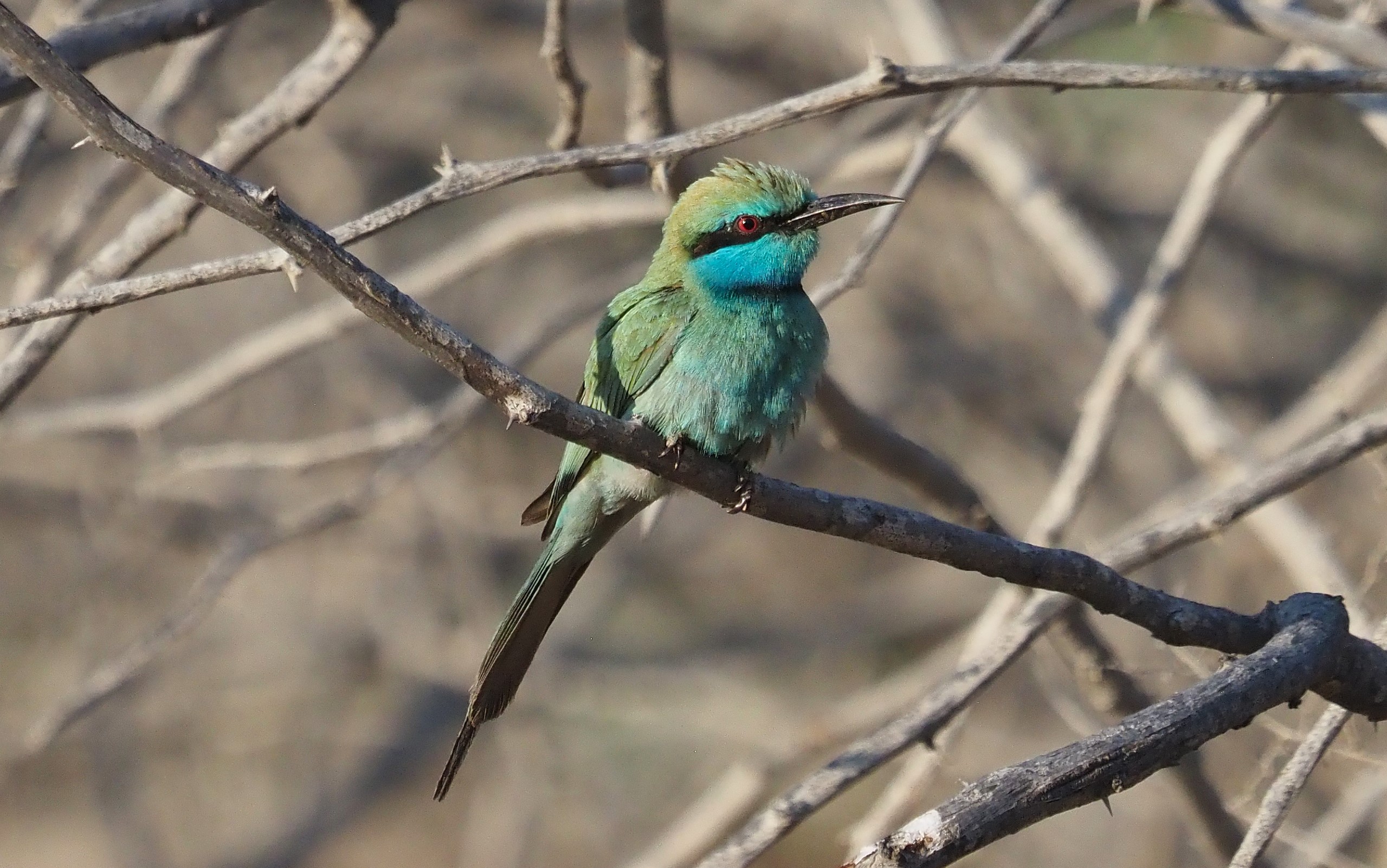
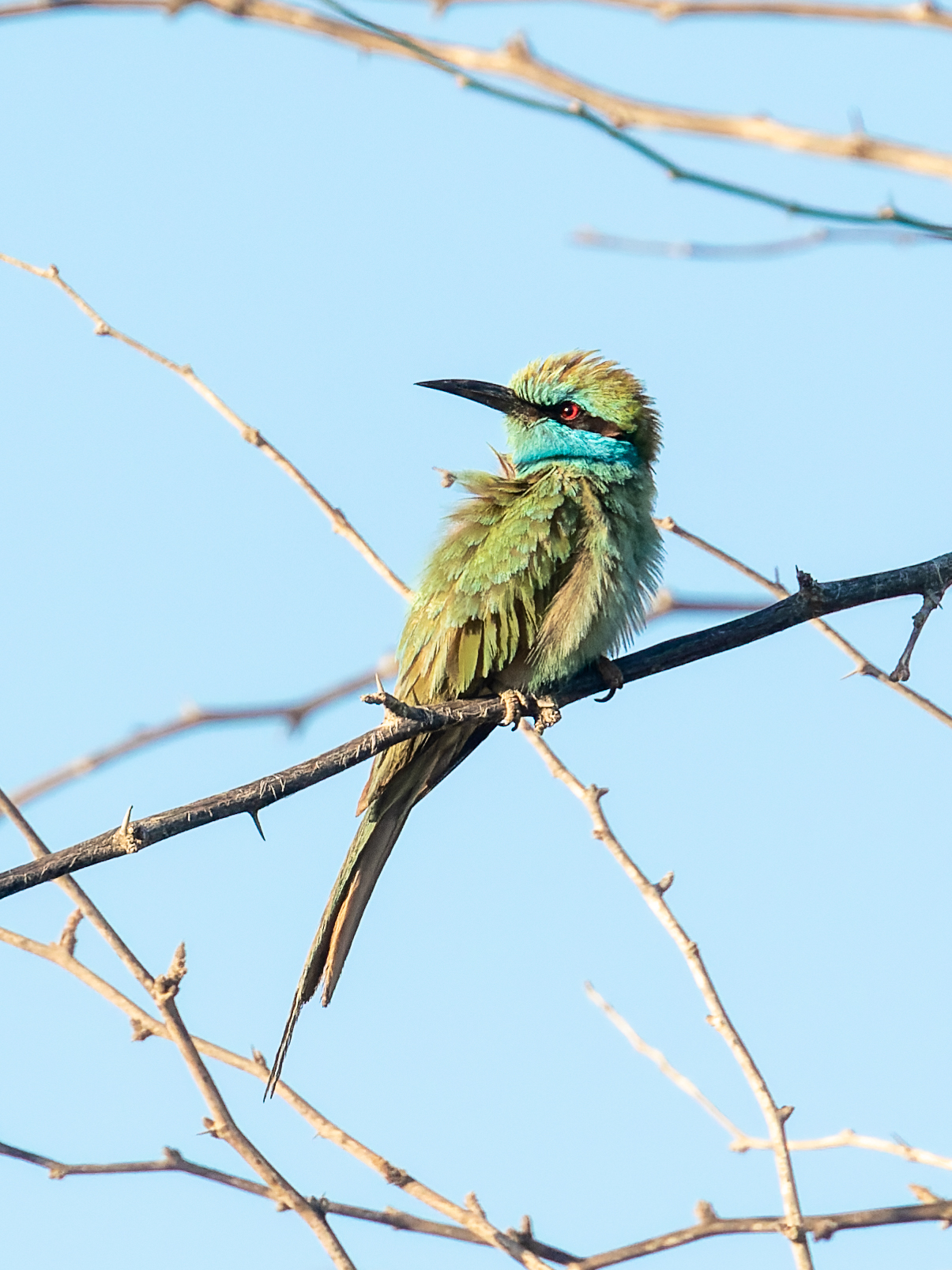
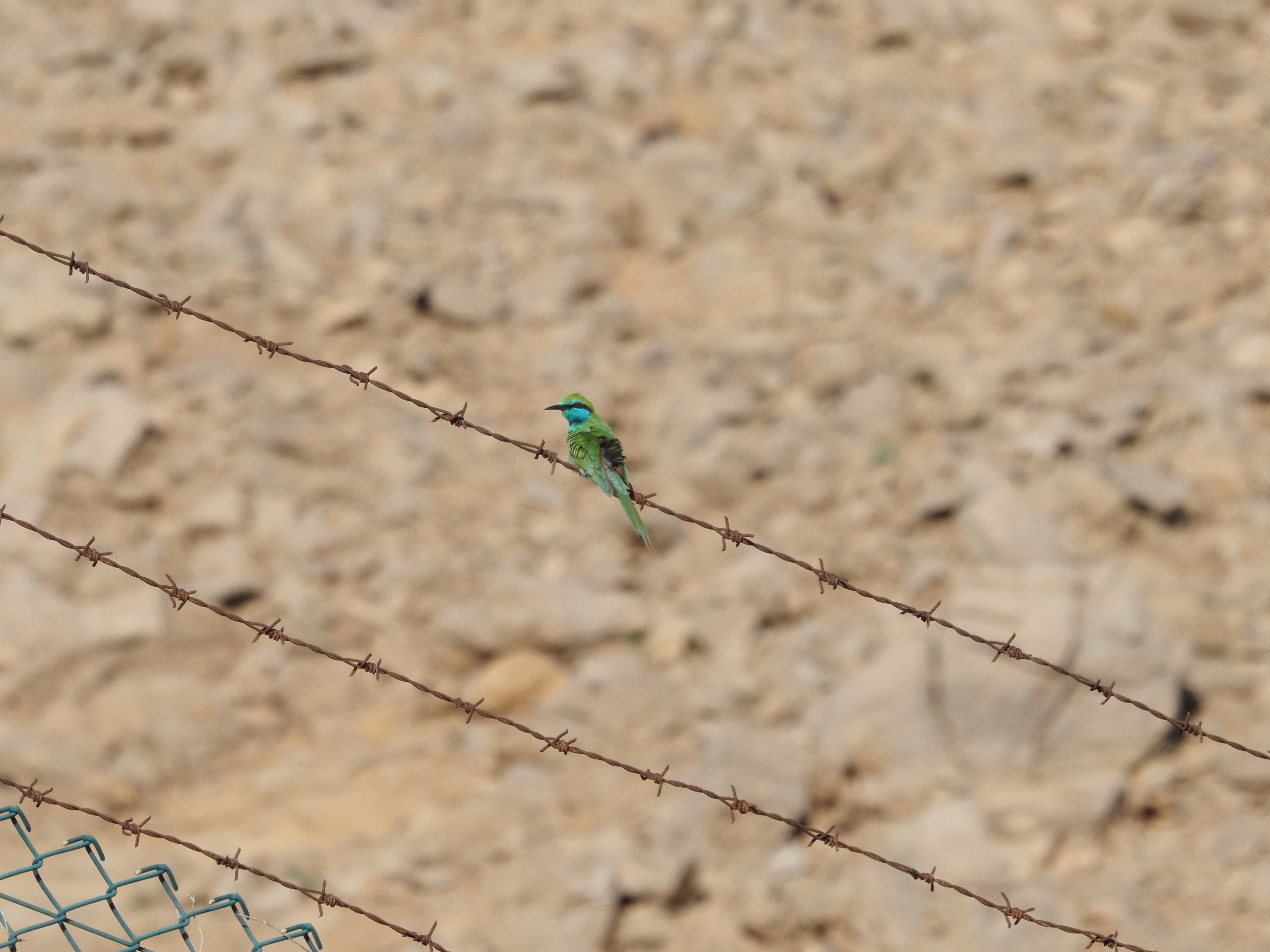
Arabian Green Bee-eater (Merops cyanophrys). Image by Pete Sutton.

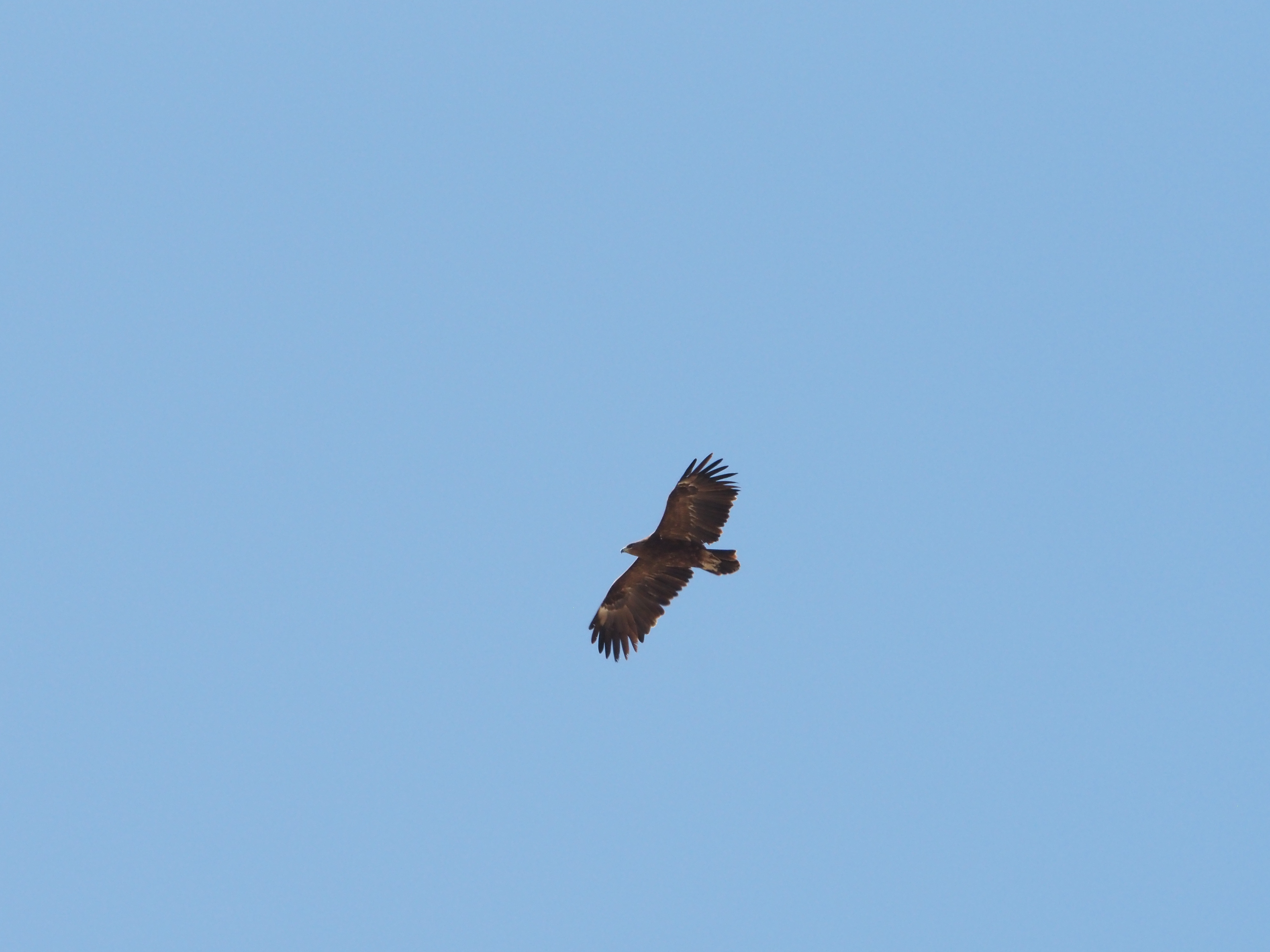
Day 1. After enjoying the breakfast at our accommodation in Muscat, we drove the short distance from the coast to one of our very nice locations in the upper thorn bush. But before arriving we had a fast stop in the road. There, the sky was showing us not only the first Eastern Imperial Eagles of the trip, but also several Steppe Eagles that, even if far away, were very welcome by the group. Once arrived to the proper place, it looked like clearly lower than in many previous visits. No sign of the normally common Purple Sunbirds and small flocks of Indian Silverbills were the only evident birdlife. We had a walk around the area, and we fastly had the first Lesser Whitethroats of the trip. Flying above our heads, we had he first Egyptian Vultures of the trip.

Despite being a large group, we kept together, and this was essential when a flock of 7 Lichtenstein’s Sandgrouses flew off right in front of us, calling and moving away from us really fast in search of a more quiet place where to keep feeding. Happy with this nice encounter we kept searching the area. A few minutes later, Sergi called us as he and William had an owl moving in the trees. It was clear that had to be a Pallid Scops Owl. We place everybody in one place, and for the surprise of everybody, the Owl just came out of a bush and flew in the middle of the people, providing really nice flight views. We tried to find the bird once perched in the trees, but was not possible.

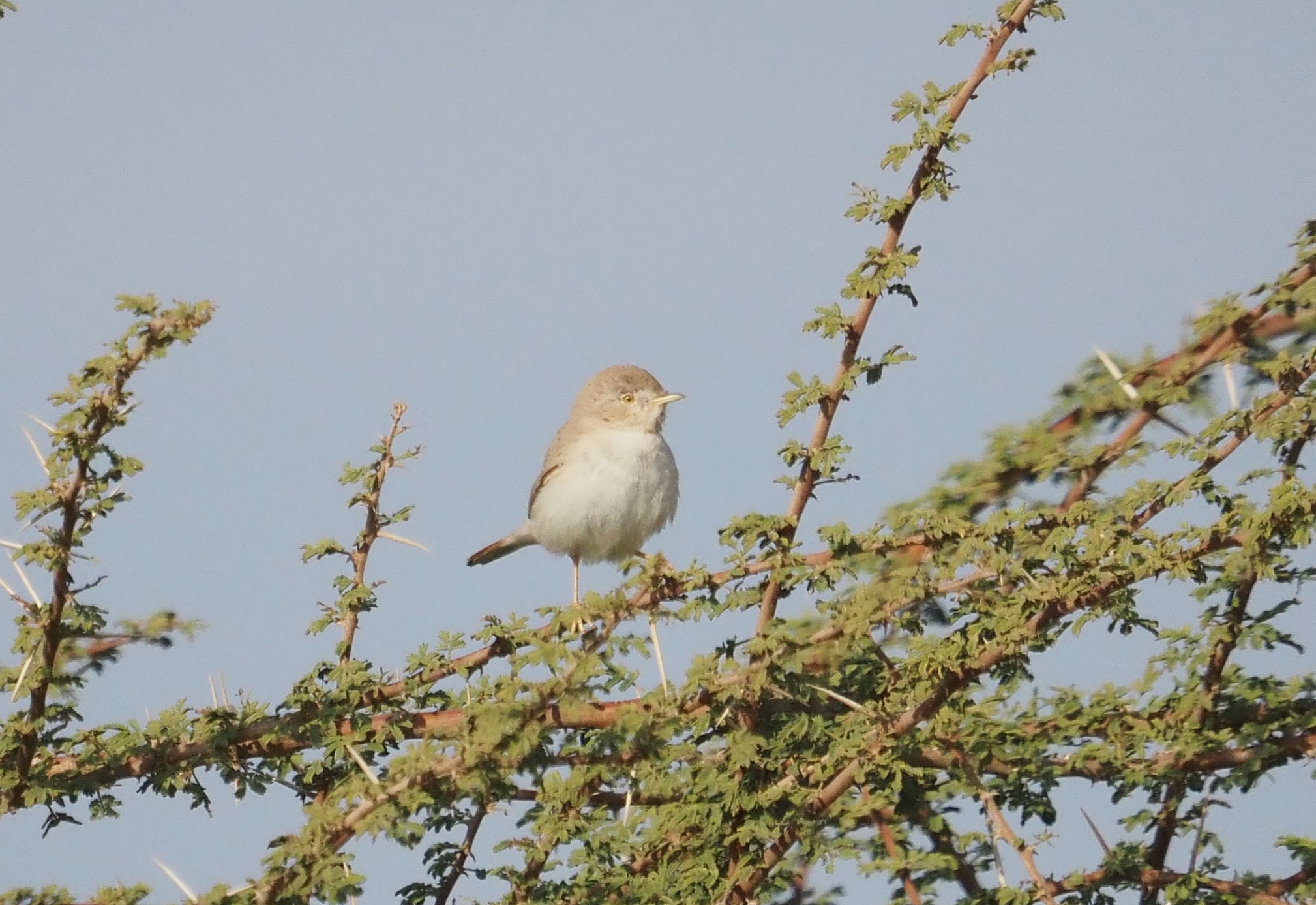
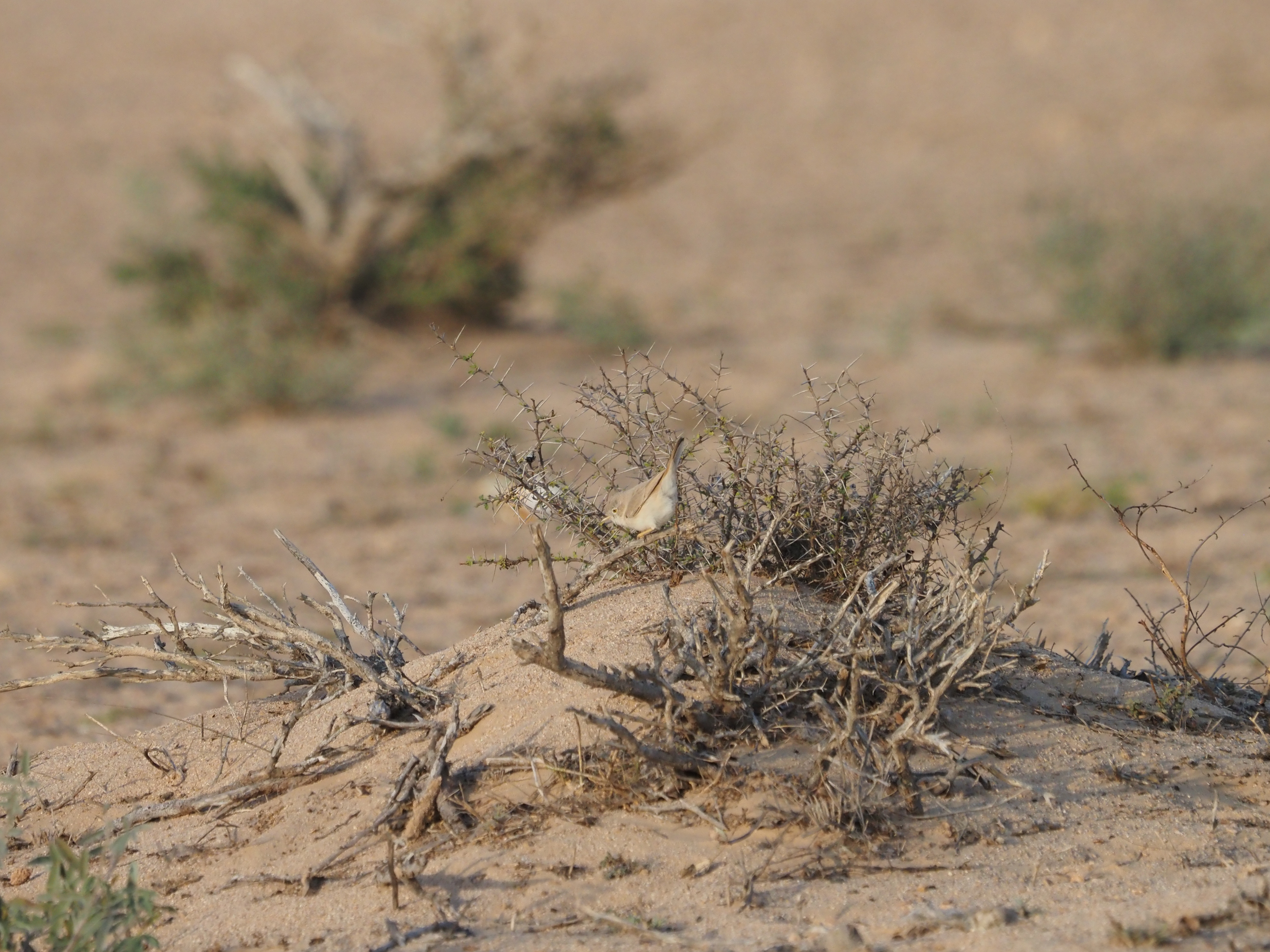
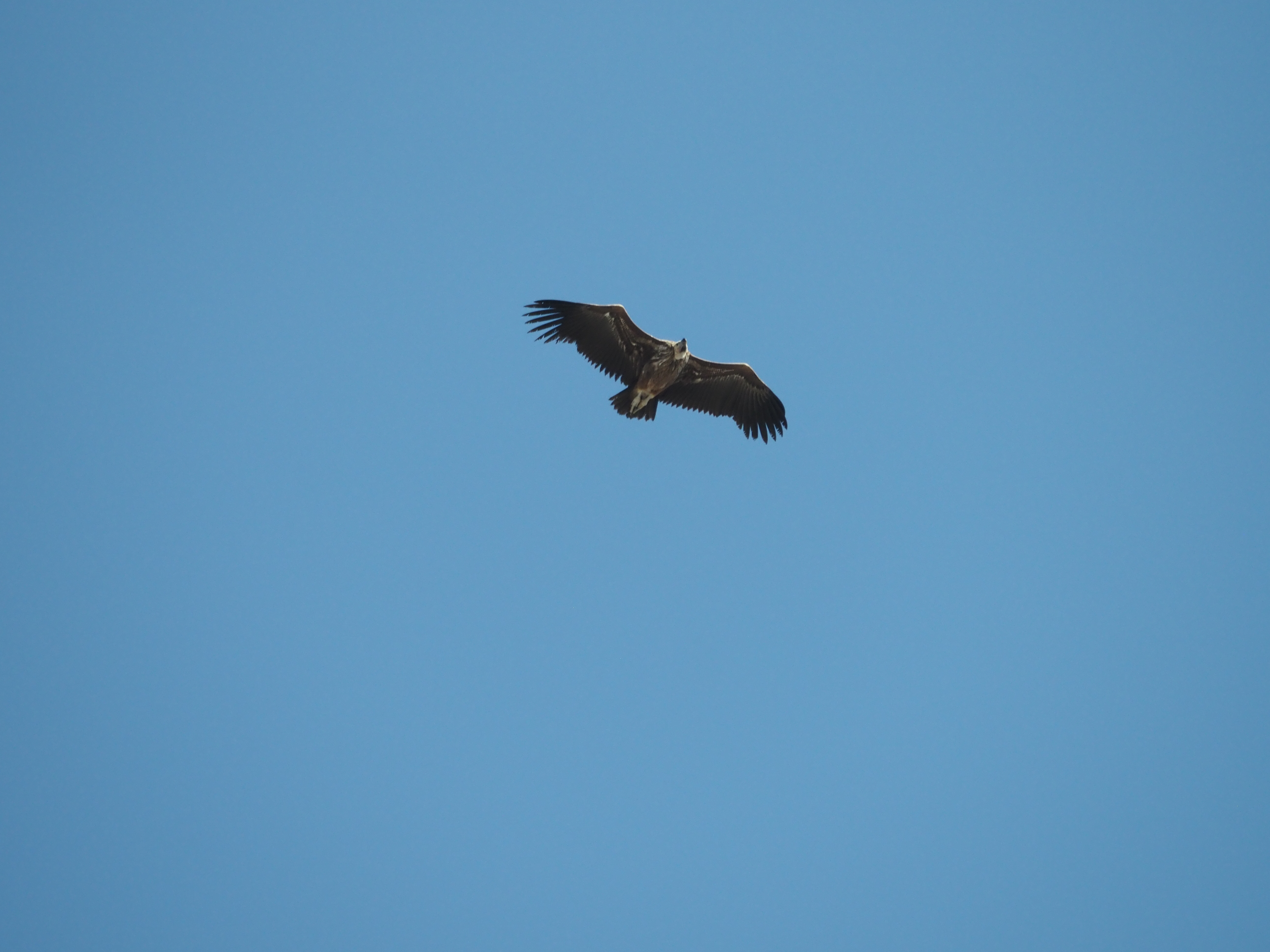
A few meters away we found the firsts Asian Desert Warblers of the trip, and as it is usual in this species, it allowed very nice shots. A bit beyond, a Persian Wheatear produced nice views before we decided to come back. After this we decided to go back to the vehicles, but at the moment to get inside Joe told me that we a Babbler-like bird moving down the valley. We took the cars and drove a bit down, and guess what, after a short walk we had a nice flock of 4 Arabian Babblers moving in front of us. In the bush beside, a nice Menétriés’s Warbler was showing well and in the way back to our vehicles we still had a wonderful Lappet-faced Vulture flying really low above us!

From here we just covered a short distance to arrive into a local restaurant where we had a very nice meal and 1 Lanner Falcon moving around the town!

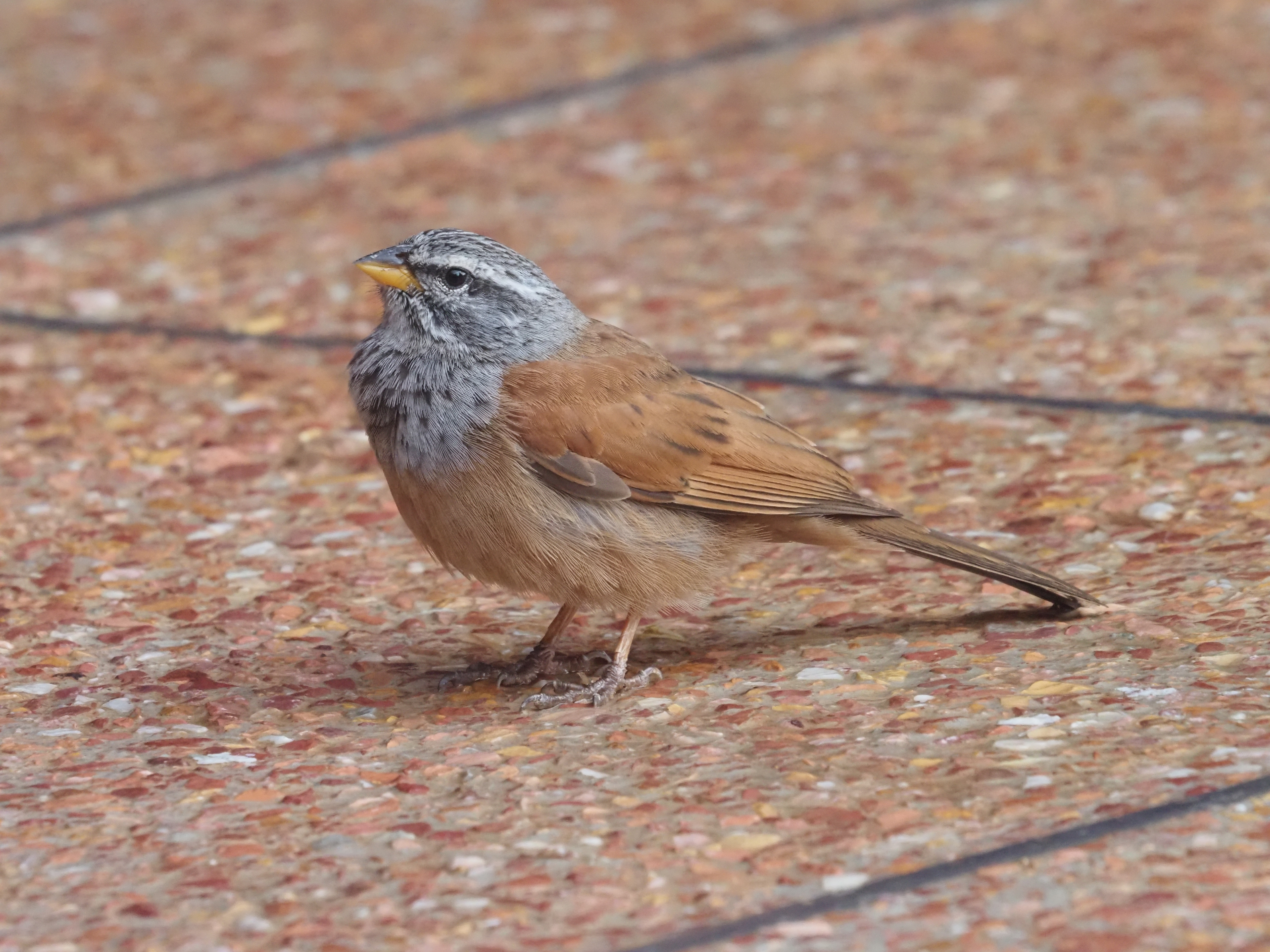
In the afternoon we moved to a place for Omani Owl. Getting in the gorge we had nice views on Hume’s Wheatears and Long-billed Pipit + a couple of Striolated Buntings singing in the gorge and that proved to be as hard to see as usual! We waited until dark and moved a bit along the gorge, but our first chance for Omani Owl was totally unsuccessful, and only a Little Owl came out of the shadows.. After a couple of hours we came down to the accommodation.

Lappet-faced Vulture (Torgos tracheliotos). Image by Pete Sutton.
Arabian Babbler (Argya squamiceps). Image by Pete Sutton.
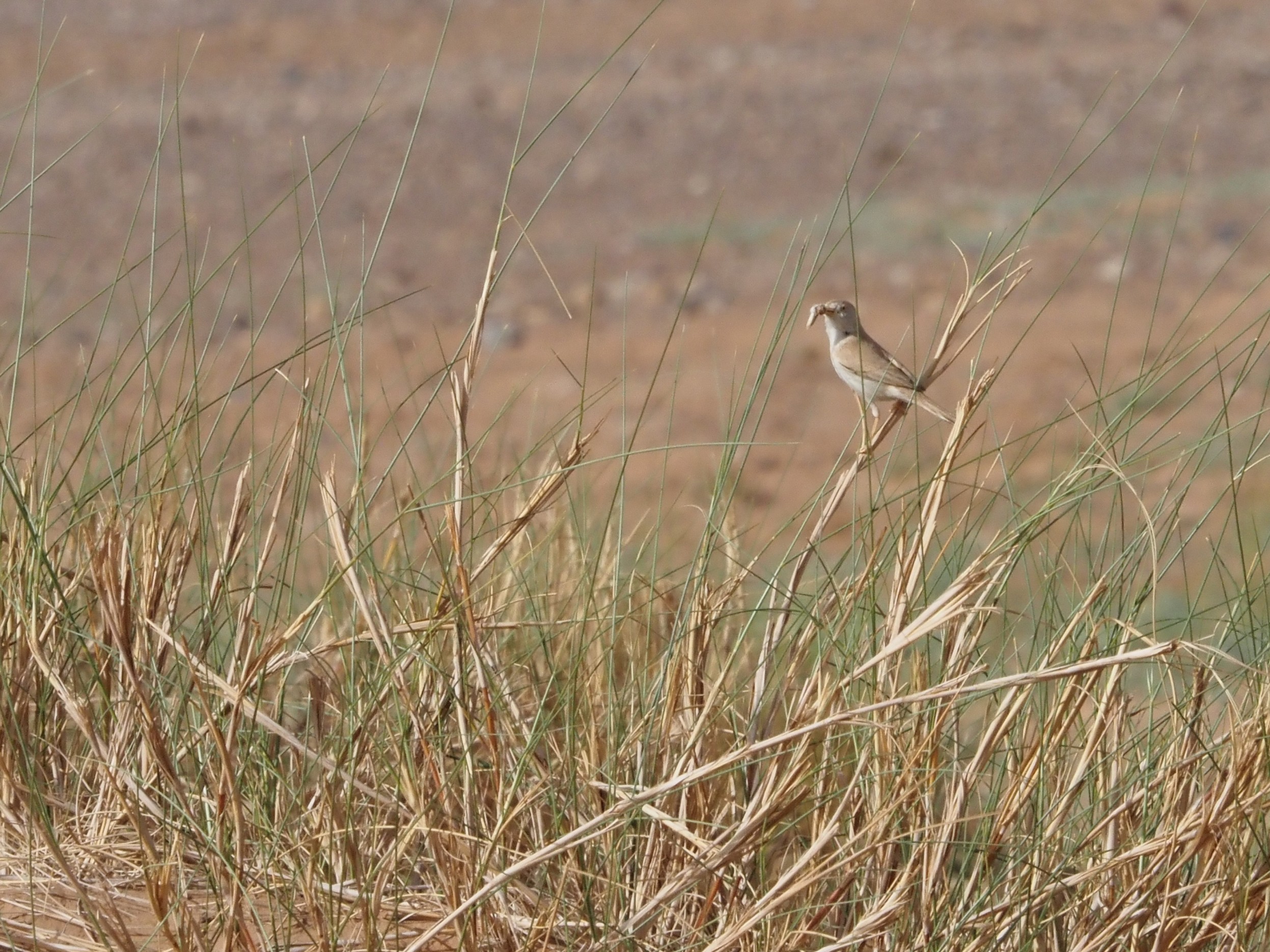
Asian Desert Warbler (Curruca nana). Image by Pete Sutton.
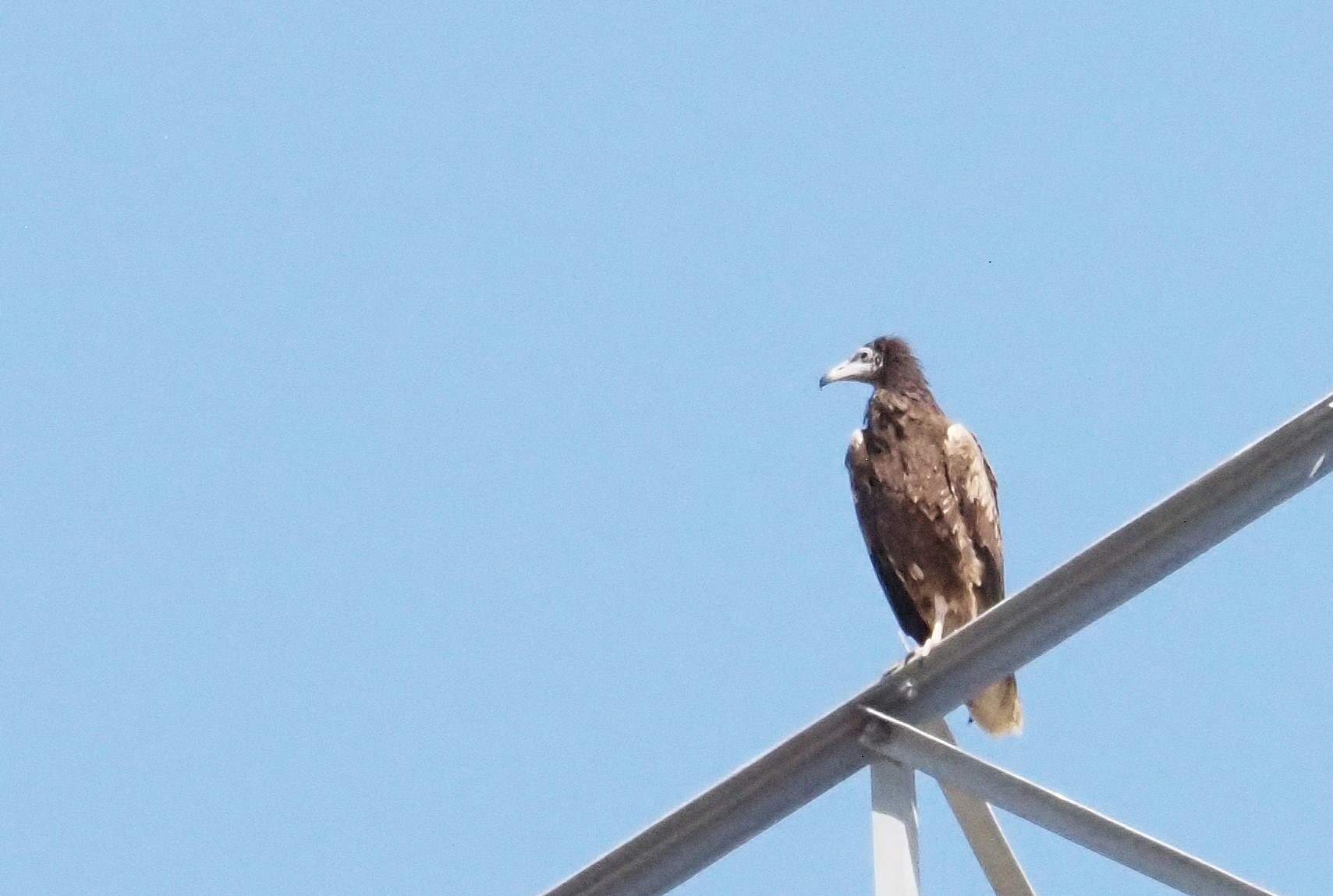
Egyptian Vulture (Neophron percnopterus). Image by Carles Oliver
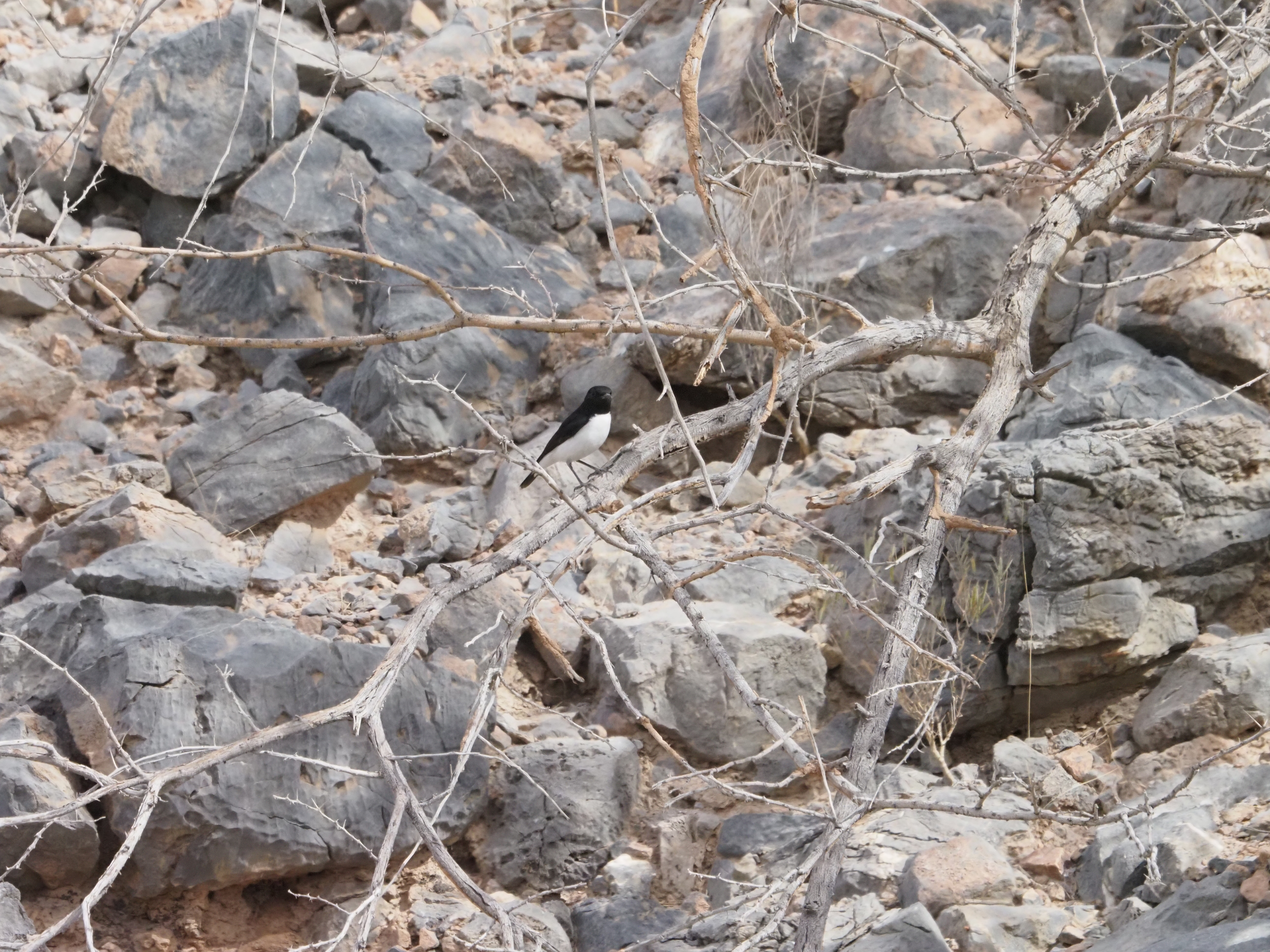
Hume’s Wheatear (Oenanthe albonigra). Image by Pete Sutton.

Day 2. After breakfast we went to the Alsab Lagoons, a nice wetland around the International Muscat Airport. Here, we had a nice walk and enjoyed a good variety of birds including Tufted Ducks, 2 Purple Herons, Arabian Bee-eaters, Grey Francolins and the only 1 Ferruginous Duck of the trip. Here we were surprised to find 3 Arabian Babblers that provided very good views.

Beyond a nice variety of waders and ducks, we had a couple of Grey-headed Swamphens sights, one of them providing amazing views as it was feeding totally out of cover and only a few metres away from us. In the same place we also got nice looks on Bluethroat, Clamorous Reed Warbler and Temminck’s Stints.

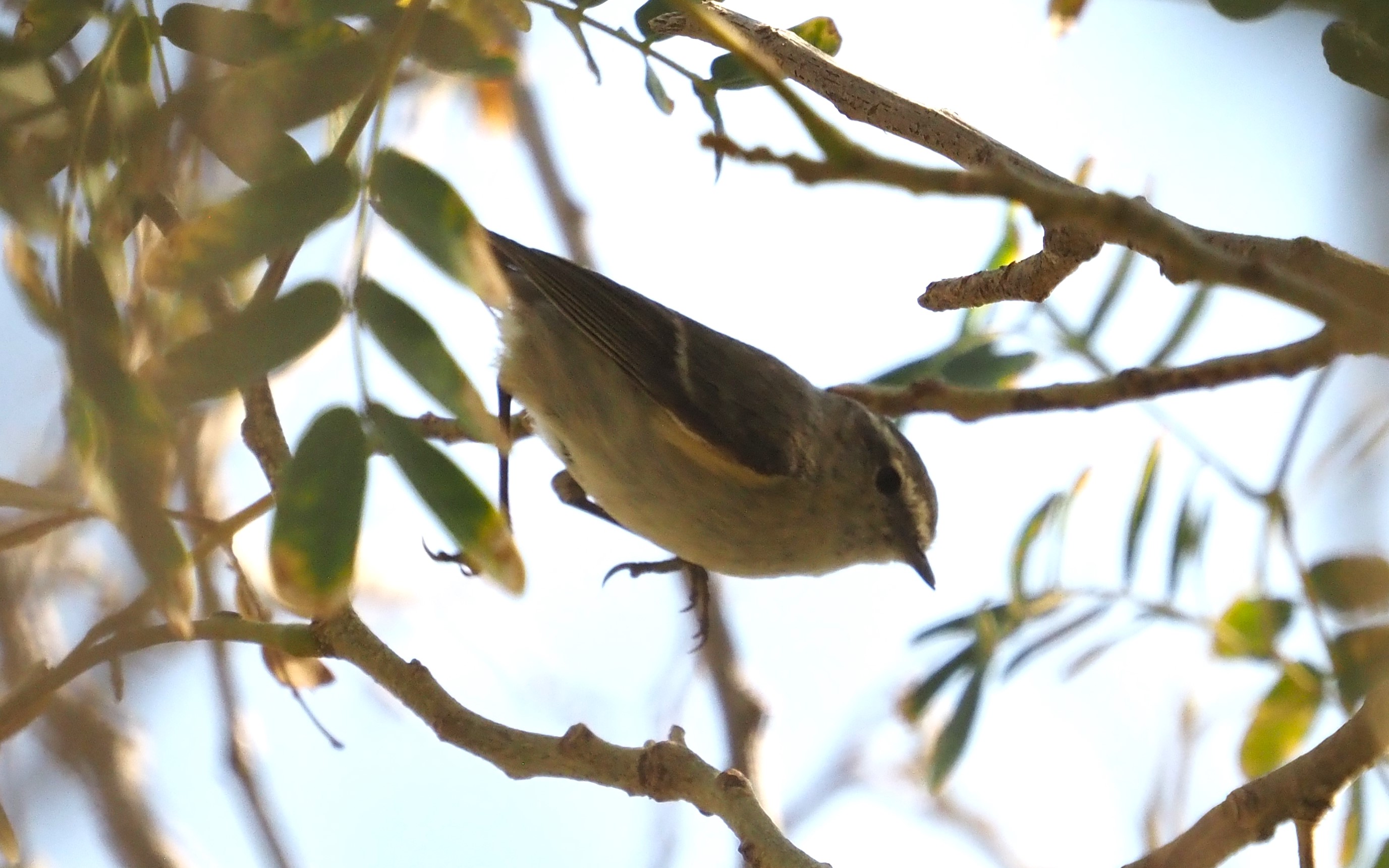
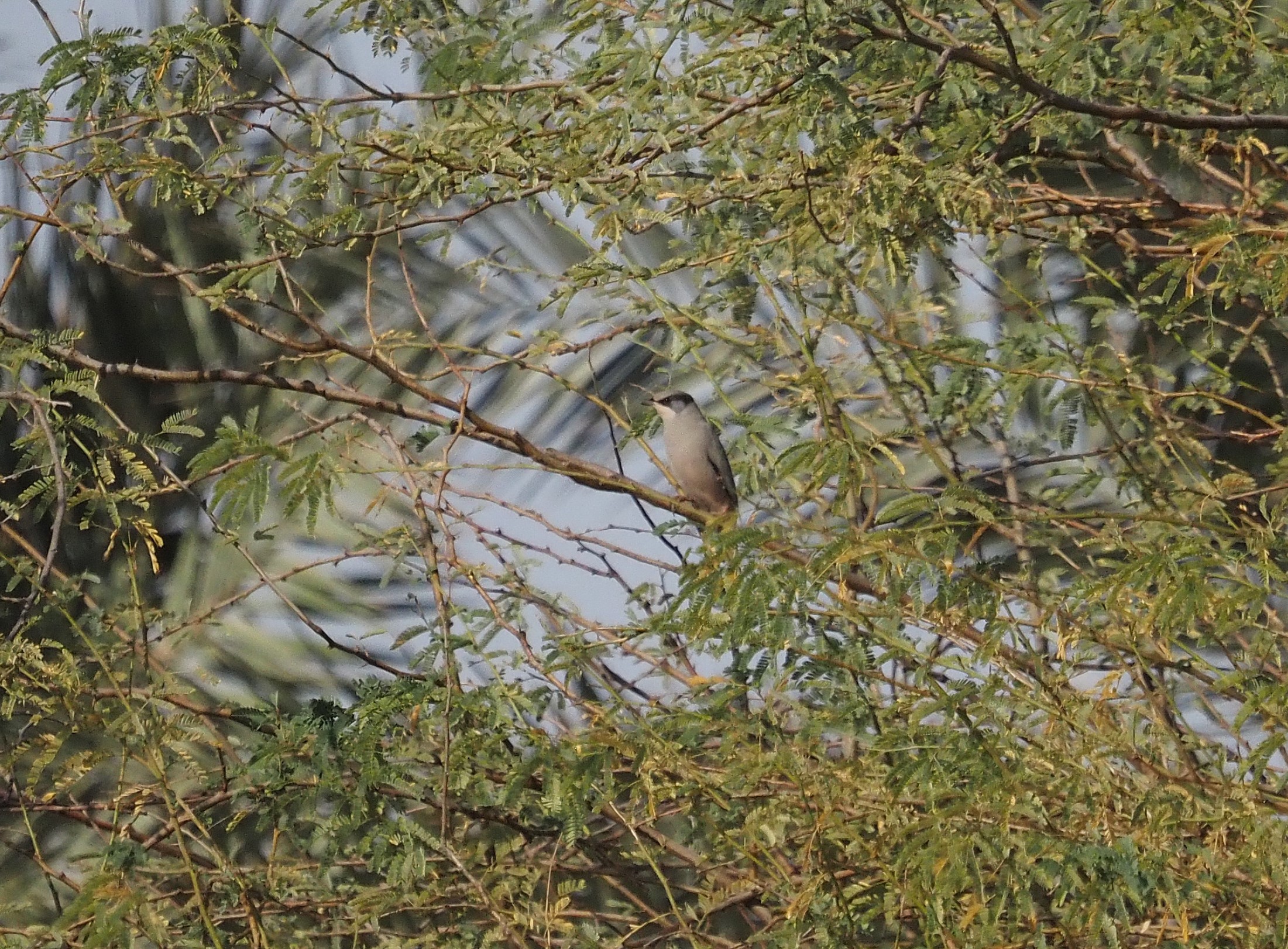
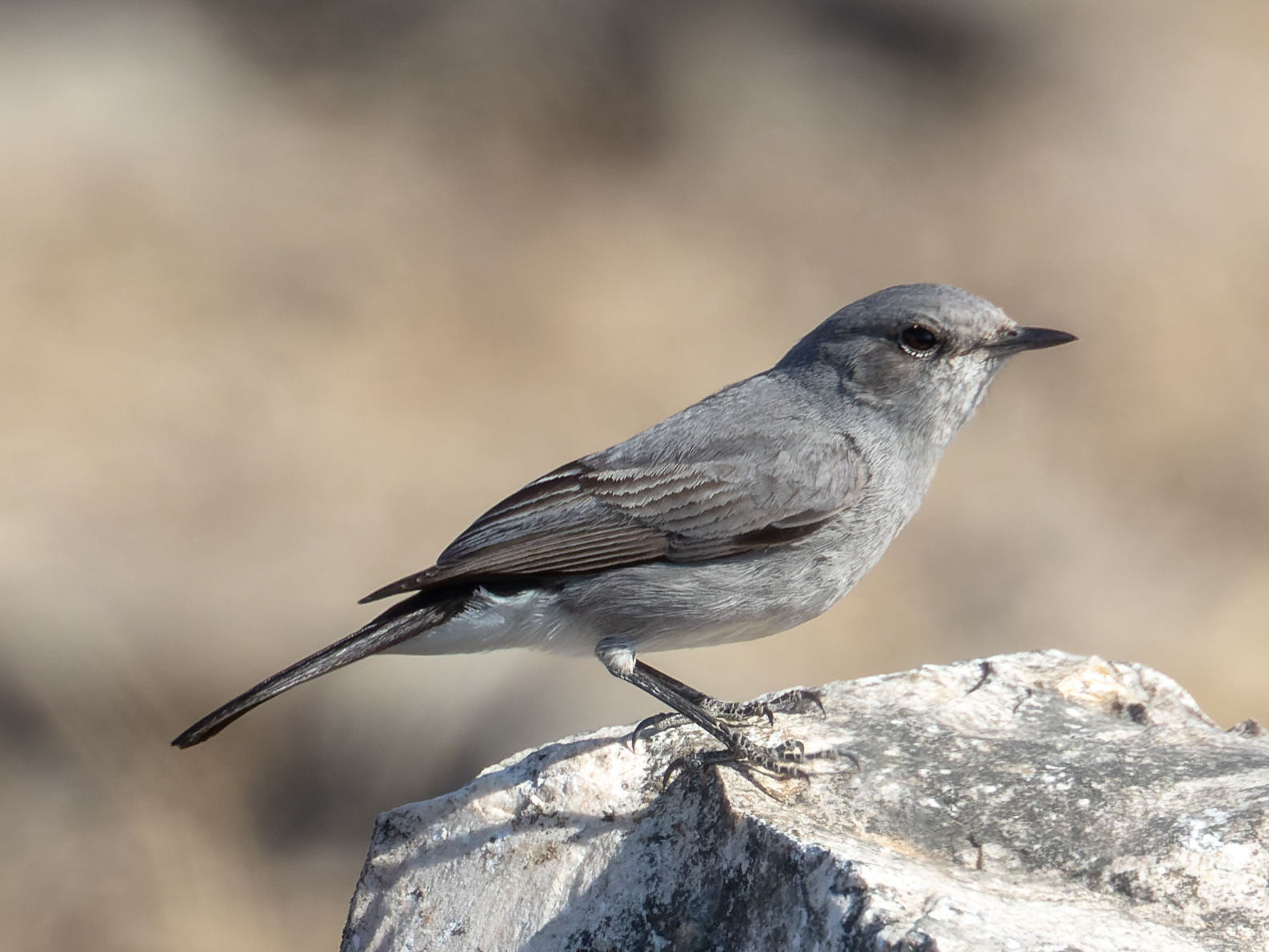
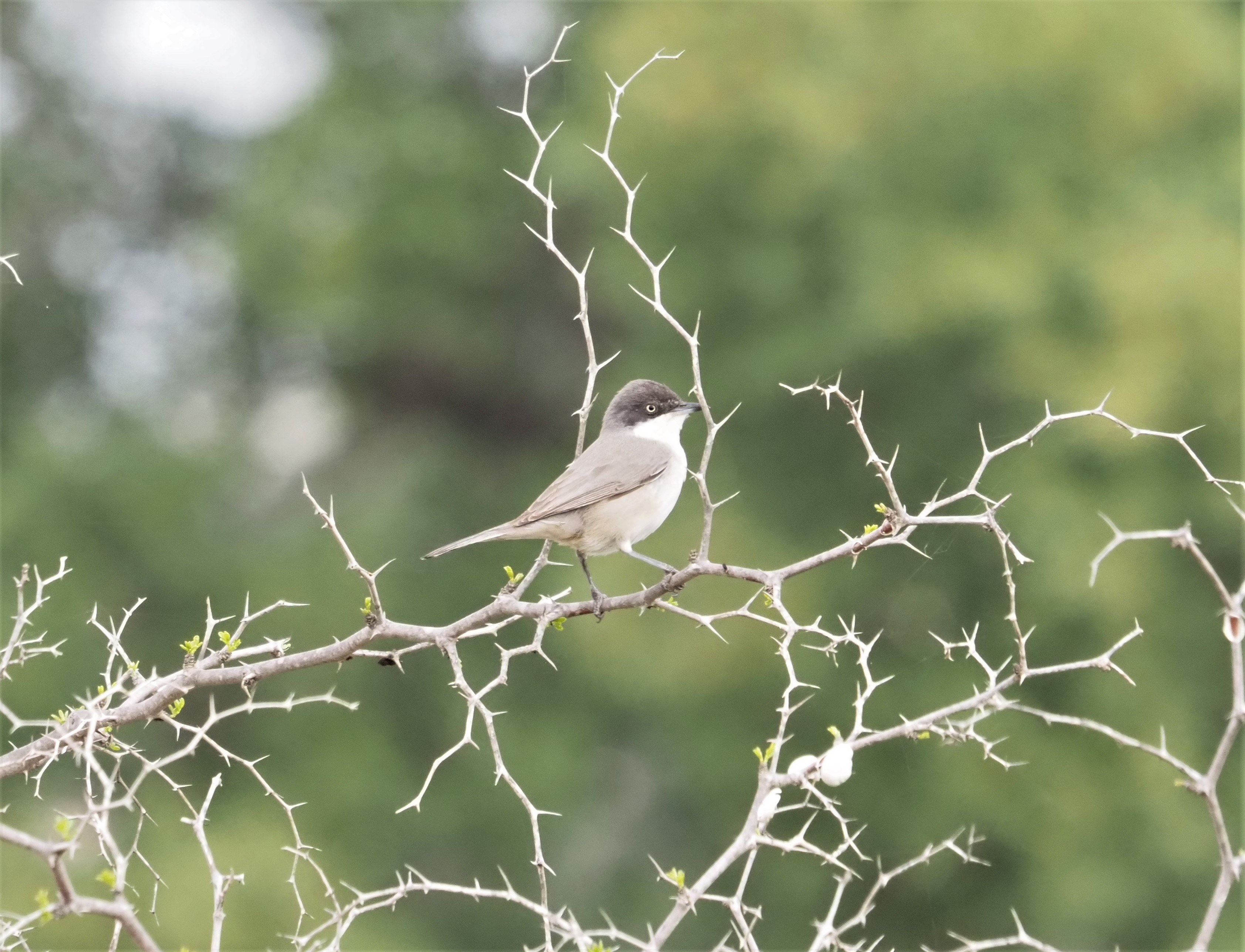
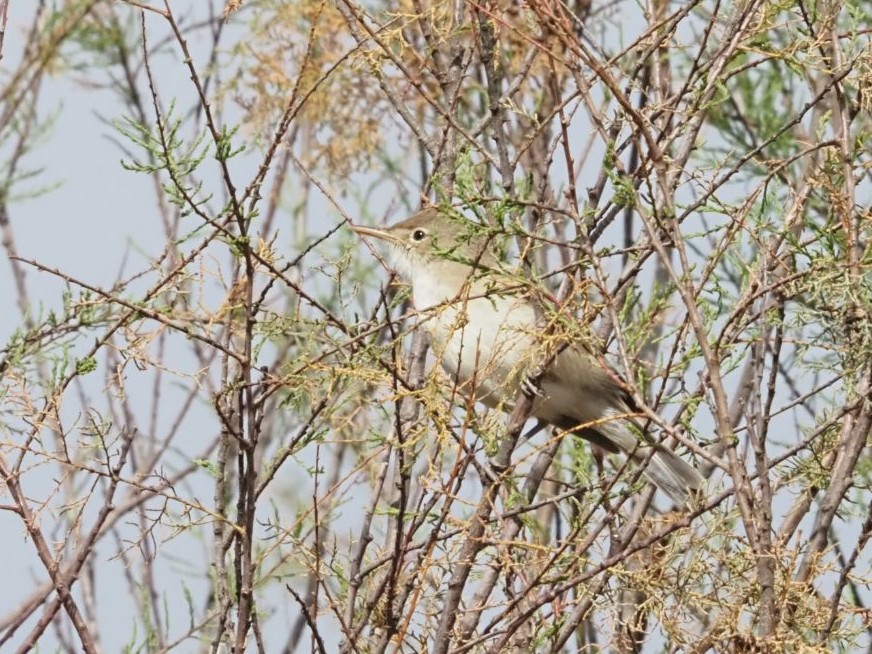
Back to the vehicles, we went inland, and after about 50 minutes of driving we arrived into to a small plain with some large trees. Here we parked, and only a few seconds later we were enjoying the first Plain Leaf Warbler of the trip. Scanning the trees around we also got good views on Lesser Whitethroat, Black Redstarts and at least 2 showy Eastern Orphean Warblers. A bit beyond, we got Persian Wheatear and the rocky slopes around had at least 3 Hume’s Wheatear and 1 Blue Rock Thrush.

Happy with this set of birds we went to a restaurant nearby and after lunch we went to check in at our accommodation. In the evening we moved again into the mountains, but this time our goal was one of the most impressive gorges in the country. Here, we still had a couple of hours of light to enjoy Egyptian Vultures and more Blue Rock Thrushes, Hume’s Wheatears and Plain Leaf Warblers before the night arrived.

It was already dark and when we listened an Omani Owl singing at the opposite side of the gorge. We scanned long and at the end we found a medium size Owl perched in the rocks. Unfortunately it was very far and we couldn’t be certain.. Only a few minutes later an Owl flew over the group, and a couple of us had nice views on what it looked to be an Omani Owl!!

We still searched around, also using the thermal technology that Bud was bringing with him. Still, we could not relocate the bird, and the mystery of that Owl flying above us will probably never been disclosed..

Grey-headed Swamphen (Porphyrio poliocephalus). Image by Pete Sutton.
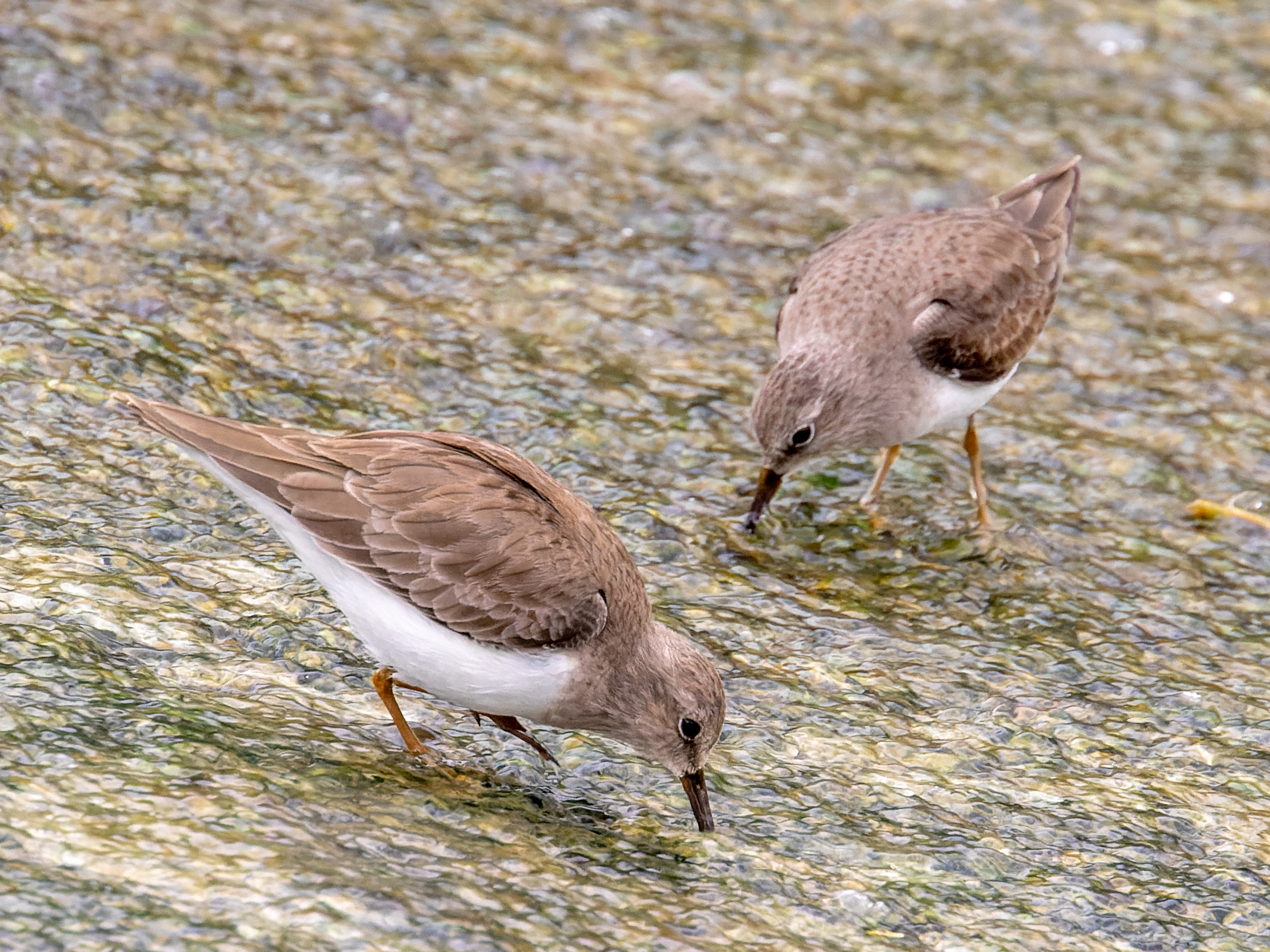
Extremelly obliging Temminck’s Stint (Calidris temminckii) in Muscat. Images by Pete Sutton.
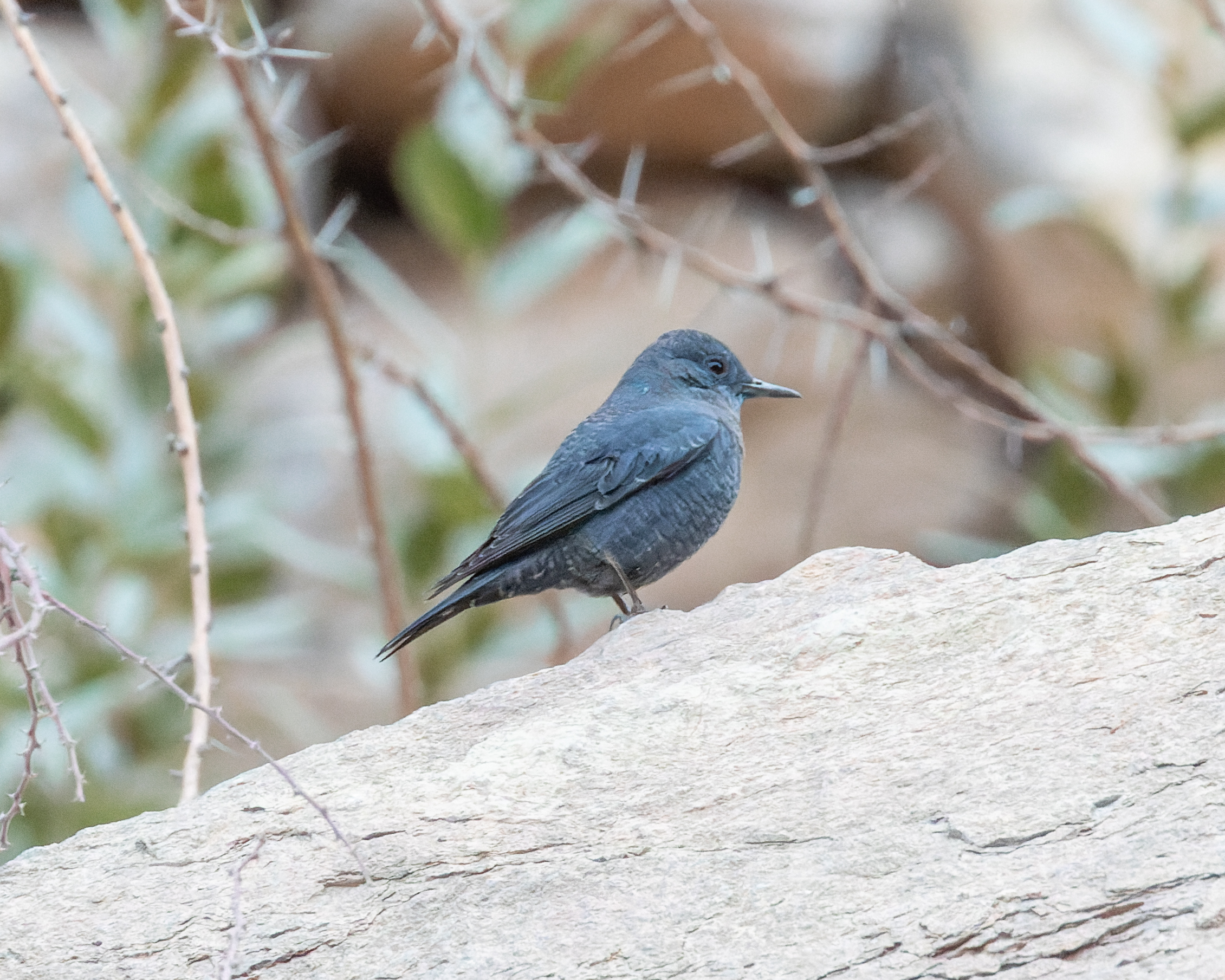
Blue Rock Thrush (Monticola solitarius). Image by Pete Sutton
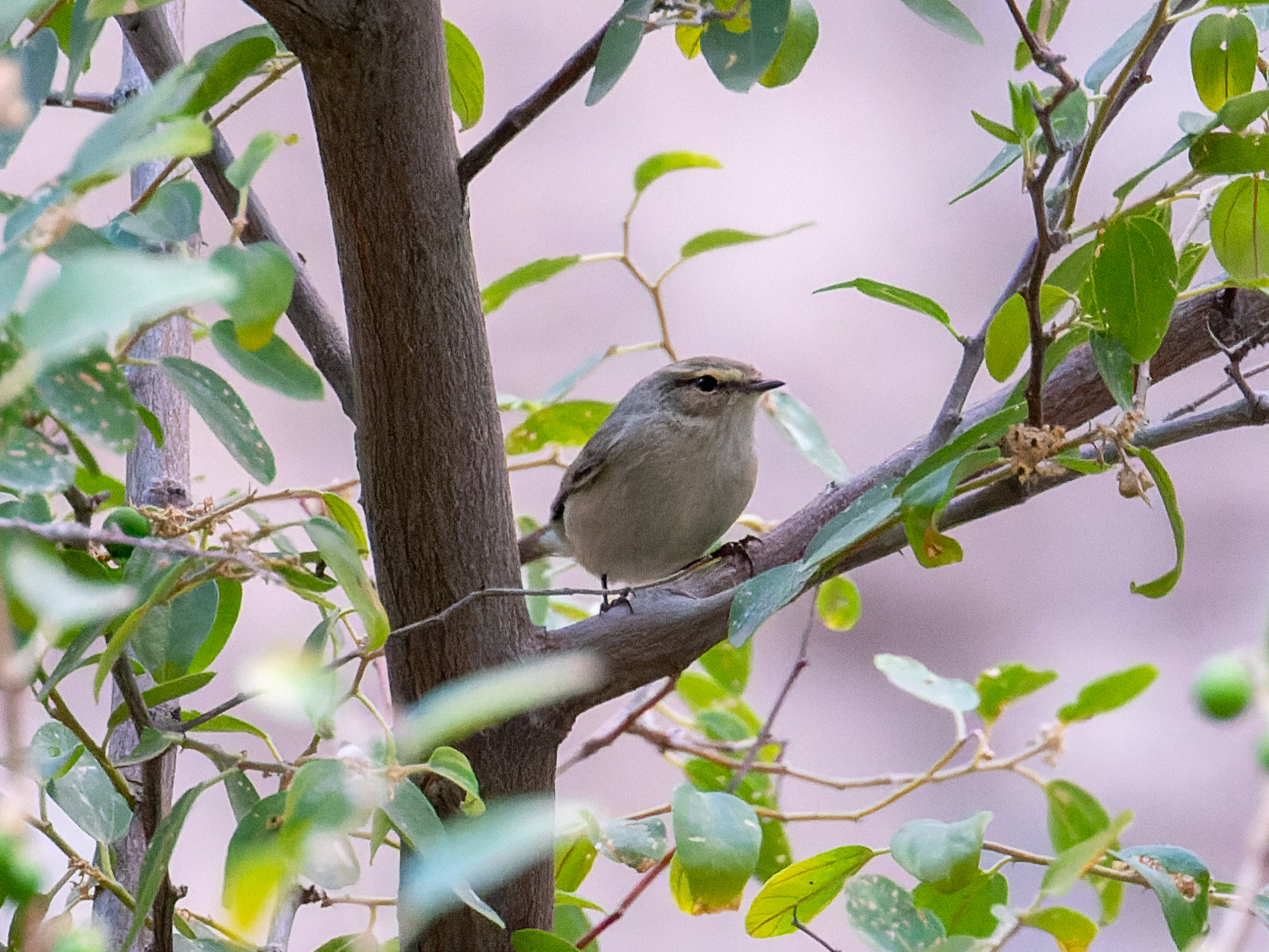
Plain Leaf Warbler (Phylloscopus neglectus). Image by Pete Sutton.

Day 3. After a not very sophisticated breakfast we moved South. This day we faced a massive, 800+ km long transfer! It looks like crazy, but the transfer was way faster than one can imagine!!

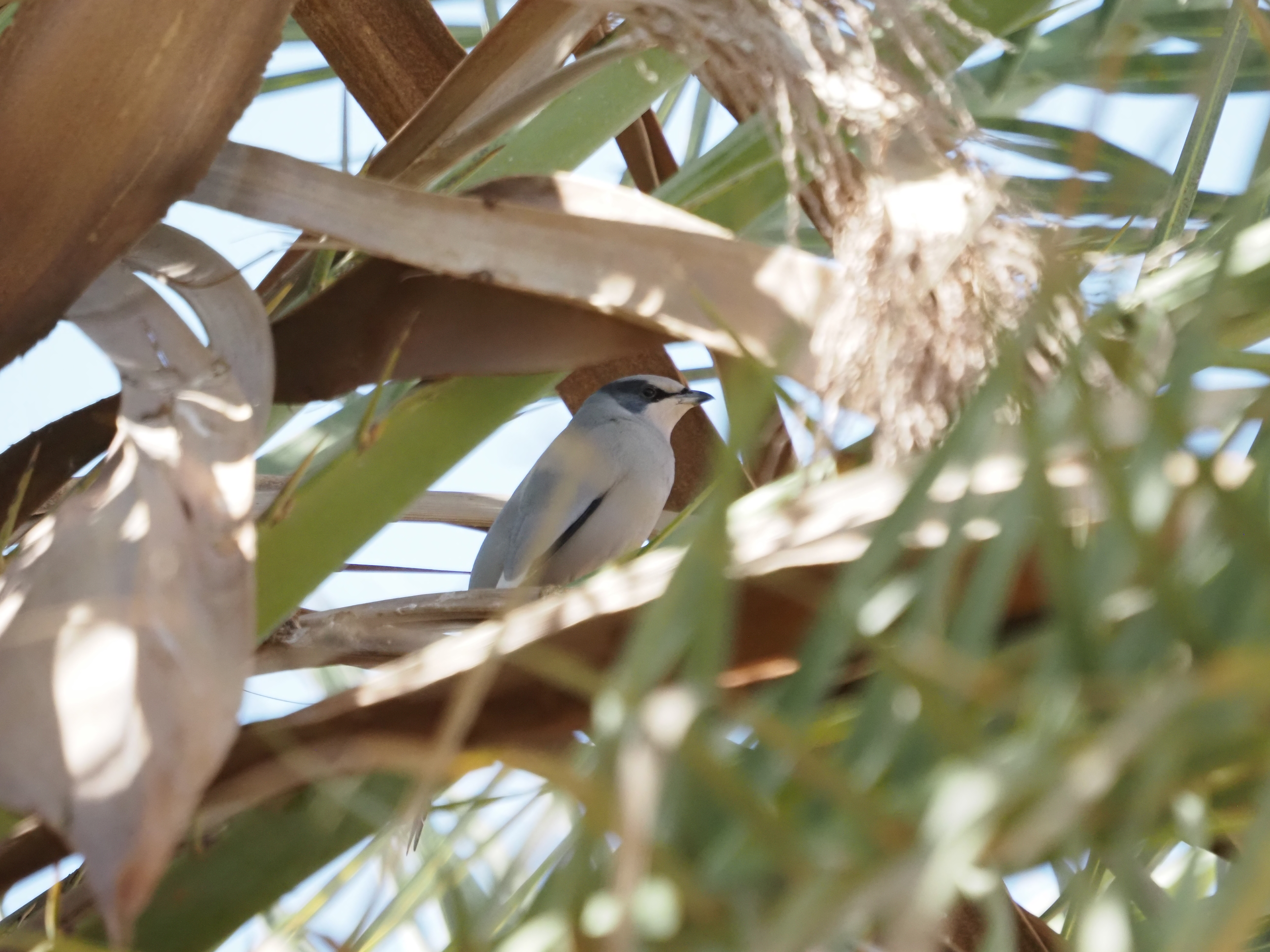
Our first about midday, already mid way down the way to Salalah. There, in small oasis, we had the first of many sights on Hypocolius during the trip. A nice female that was a bit reluctant to show but still provided good views.

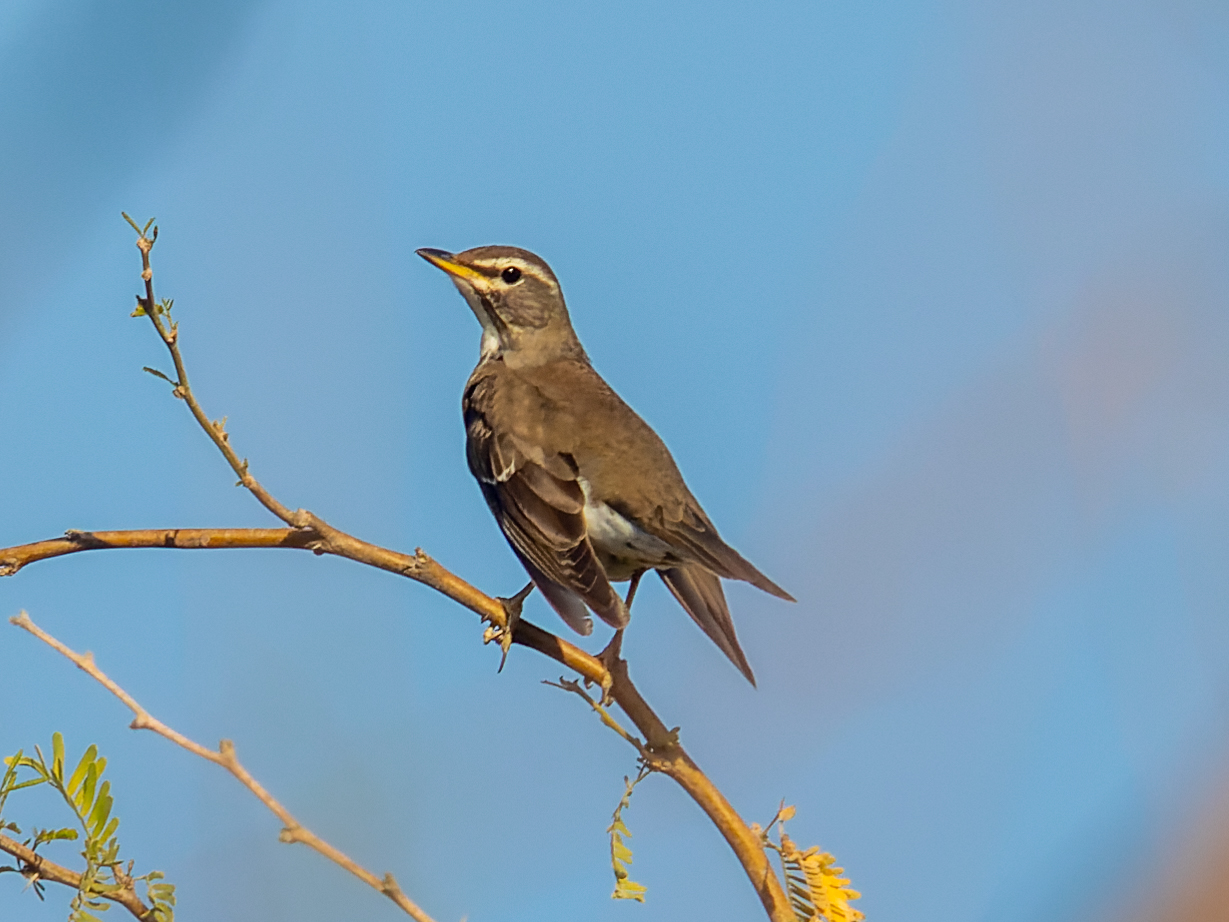
Our second stop was further South, in Qitbit. There, while having lunch, we had a fast walk around to try to find some of the specialities that had been reported in the area during the last weeks, and our efforts had a wonderful reward in the way of 2 Eyebrowed Thrushes popping up in front of us. Ramiro put us in the way to them but we discovered that the Thrushes were highly restless. After a couple of runs, everybody had very nice views on them. Beyond them, here we only got 1 Ménétries’s Warbler, some Siberian Chiffchaffs and Brown-necked Ravens.

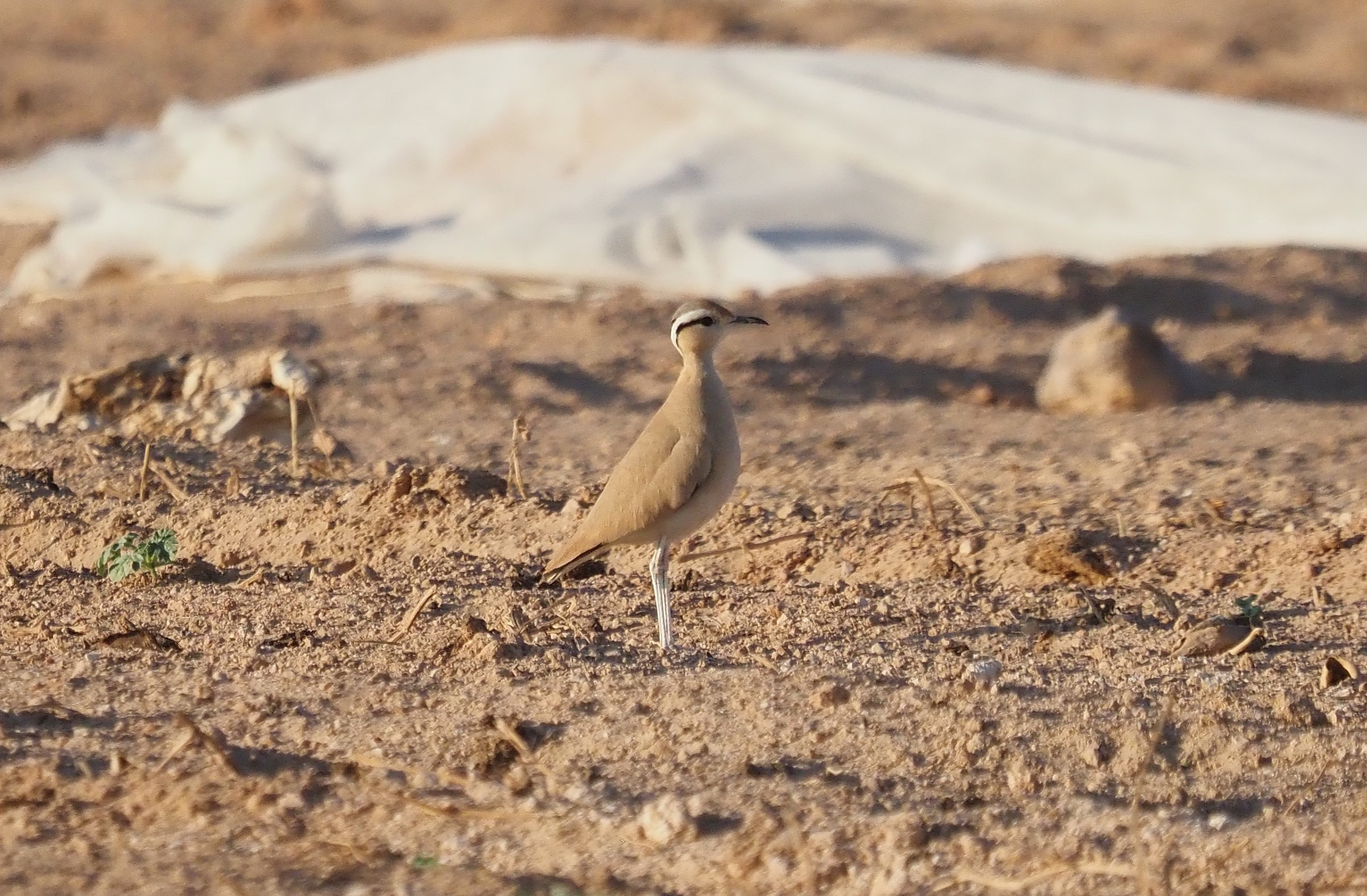
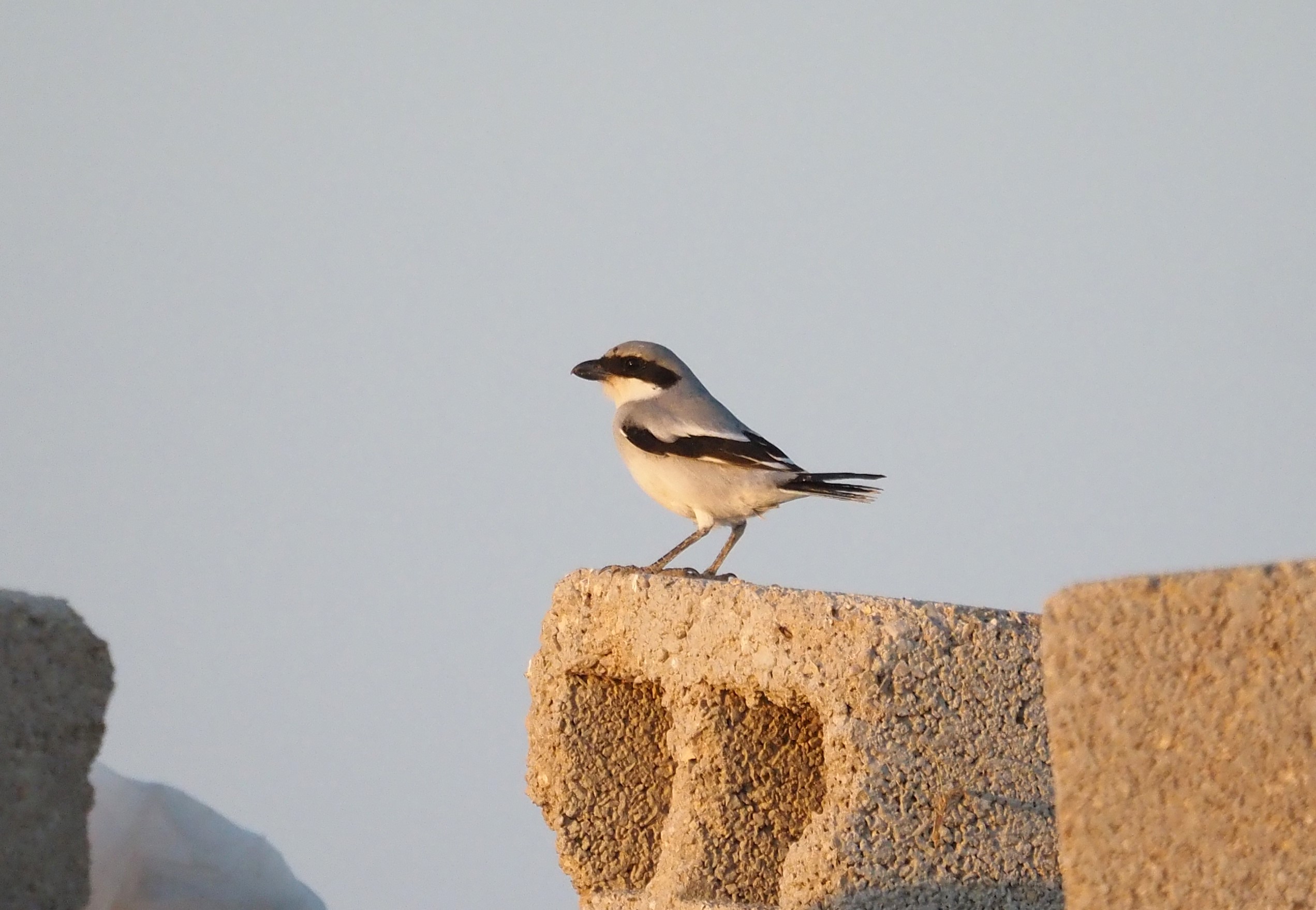
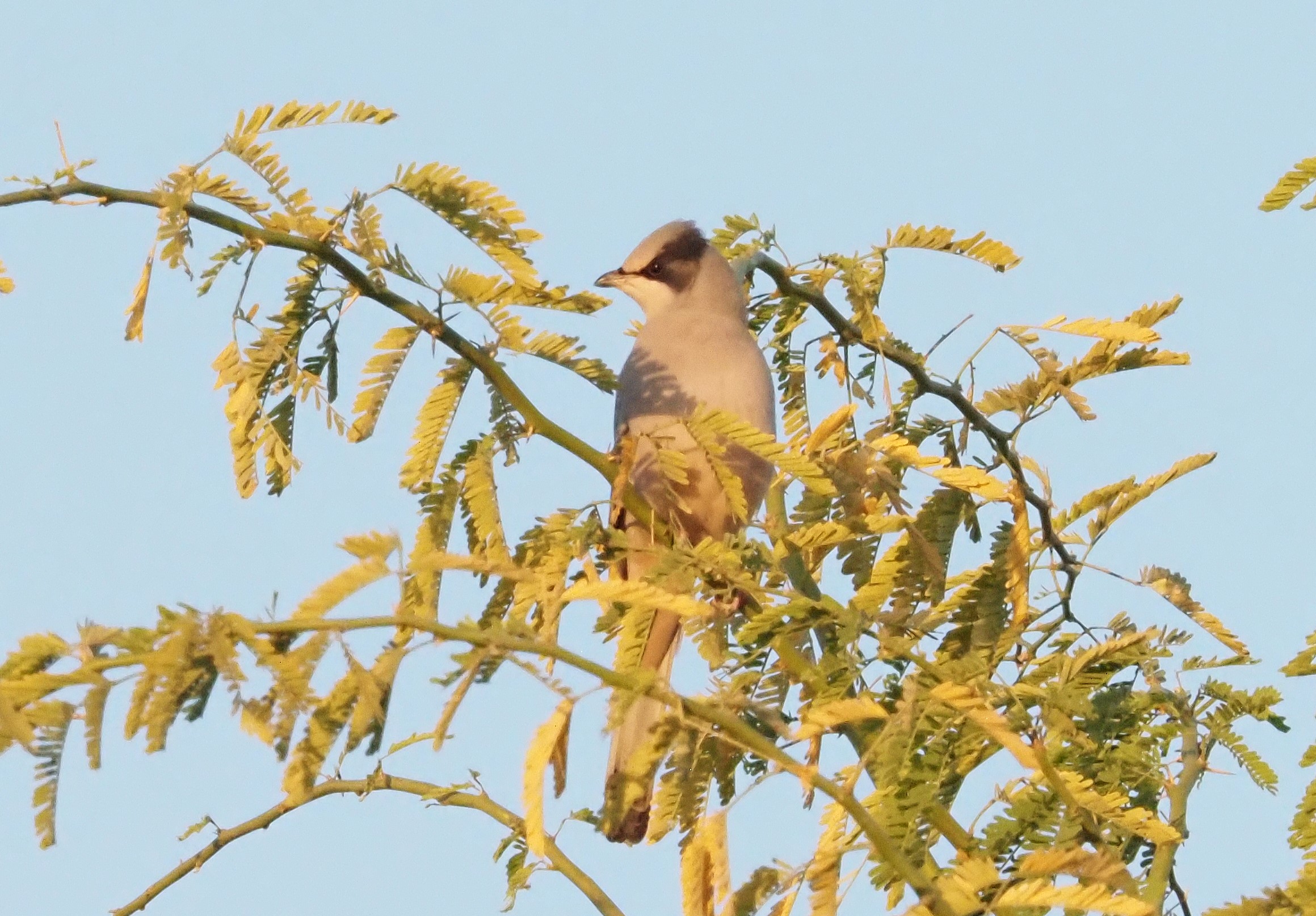
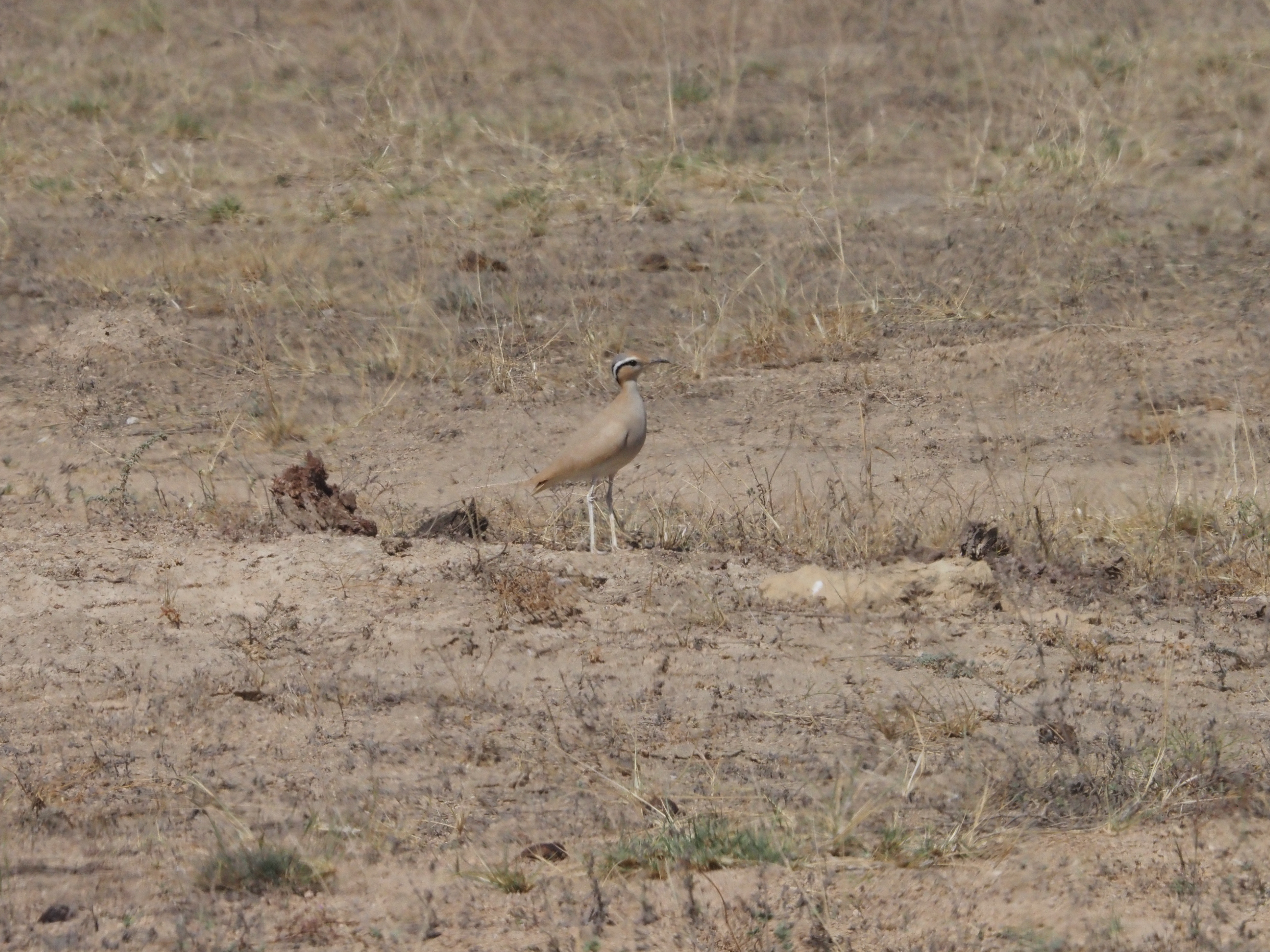
From here we drove some miles South to the main birding stop of the day, some extensive farms in the middle of the desert. These locations are famous due to the quality of its birdlife, and because they can attract any single bird moving tens of miles around them. A fast scout in the very first field produced tens of Cream-coloured Coursers and Greater Hoopoe Larks. Along with them, small flocks of Crested and Black-crowned Sparrow Larks. All together along with several Isabelline & Desert Wheatears. At least 5 Marsh Harriers were patrolling the area, and here we also got the only one Montagu’s Harrier of the whole trip. Here and there we found small contingents of Tawny Pipits, and a couple of Levant Grey Shrikes kept an eye in what it was moving around.

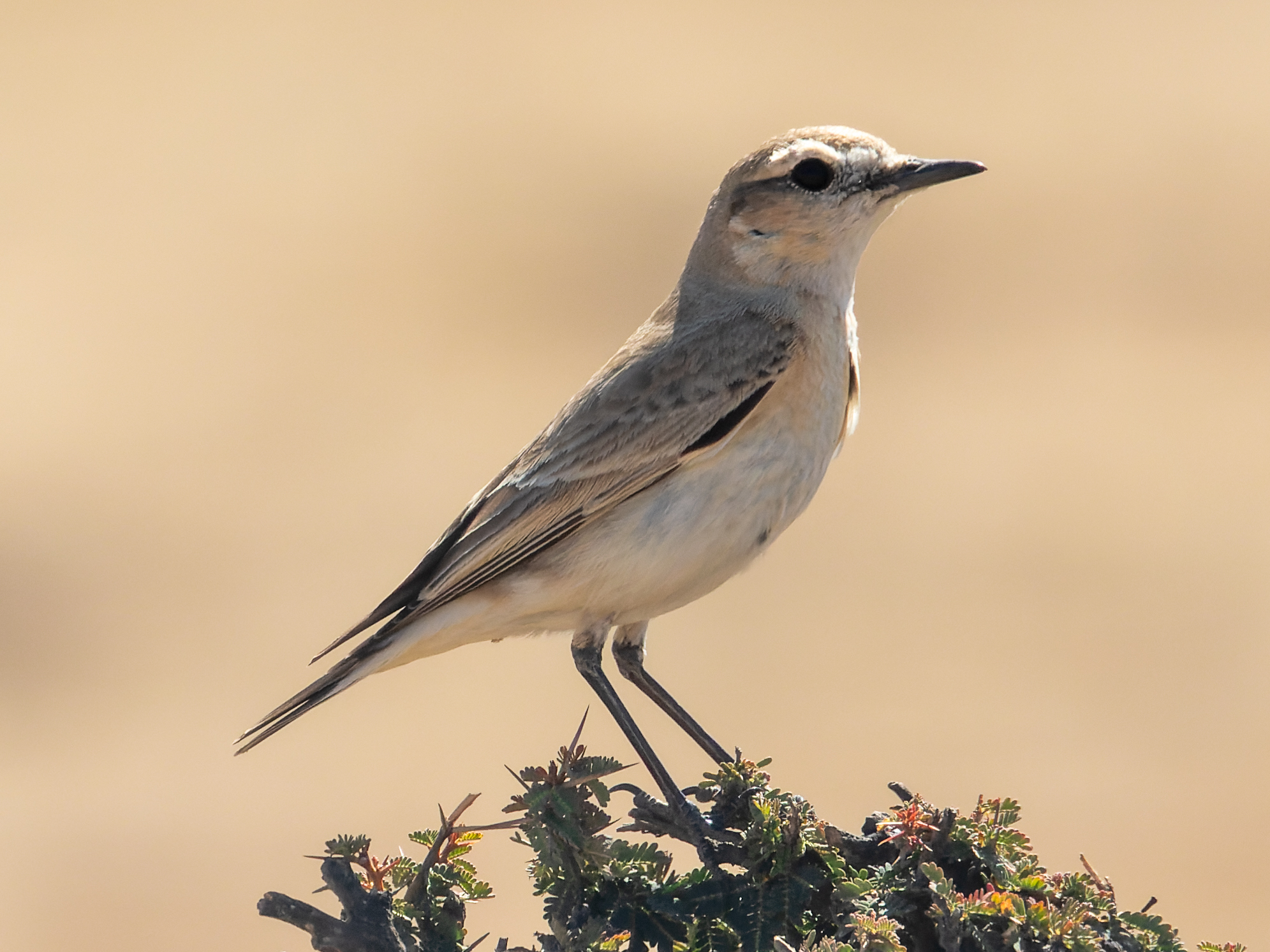
Far inside there is another wonderful place where we found several Common Kestrels but also 1 Northern Wheatear (first and last of the trip), a Persian Wheatear (first ever for me in this location), and a bunch of Namaqua Doves. A small flock of Chestnut-bellied Sandgrouses flew from one of the sides of the main field, but unfortunately not everybody saw them.

Back to the main road, we still had time for a coffee stop before driving the last part of our long transfer and arrive to our accommodation for before dinner.


Grey Hycopolius (Hypocolius ampelinus). The first of many contacts with this interesting species was this lovely female type. Image by Pete Sutton.
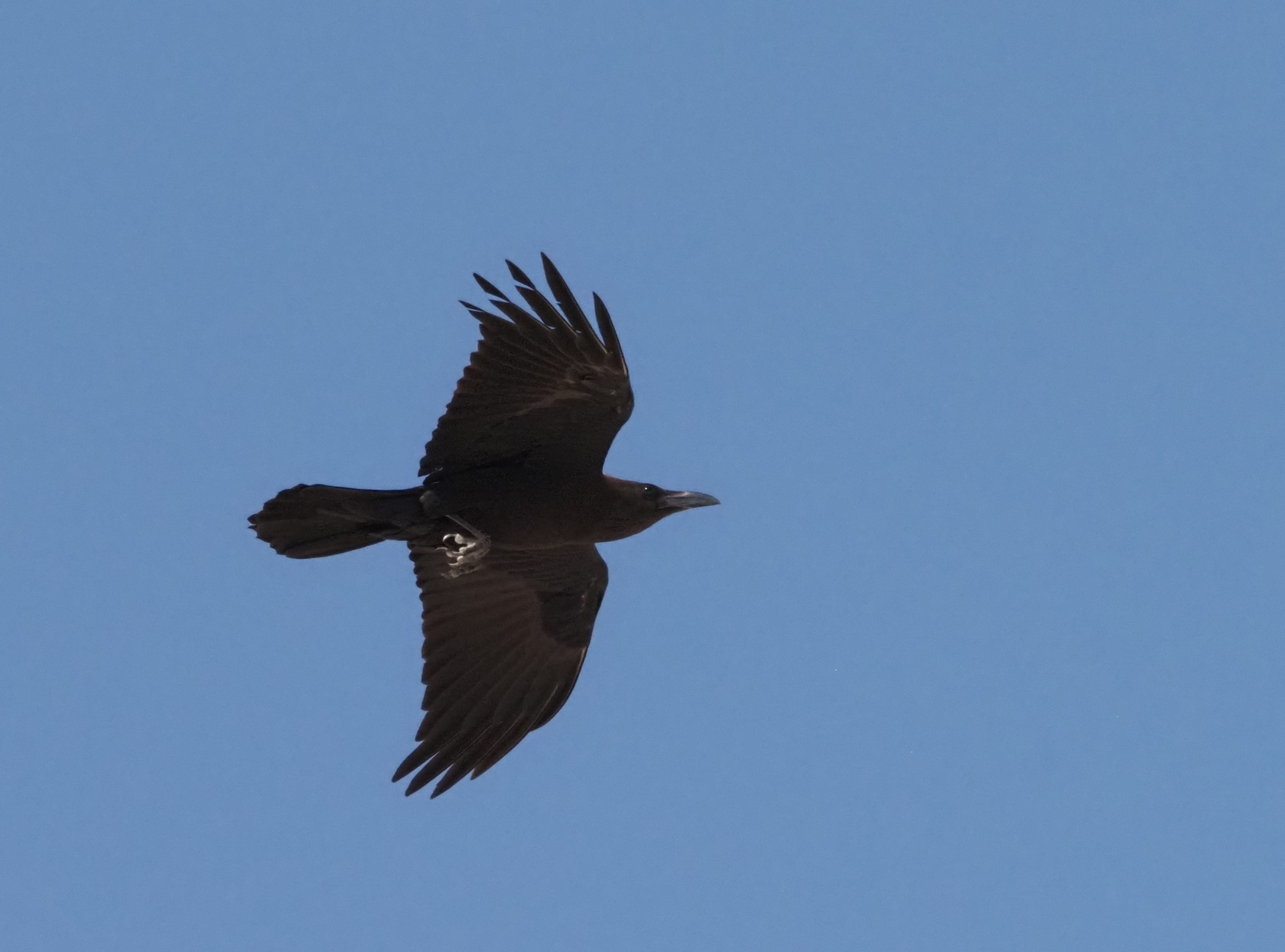
Brown-necked Ravens (Corvus ruficollis). Image by Carles Oliver.
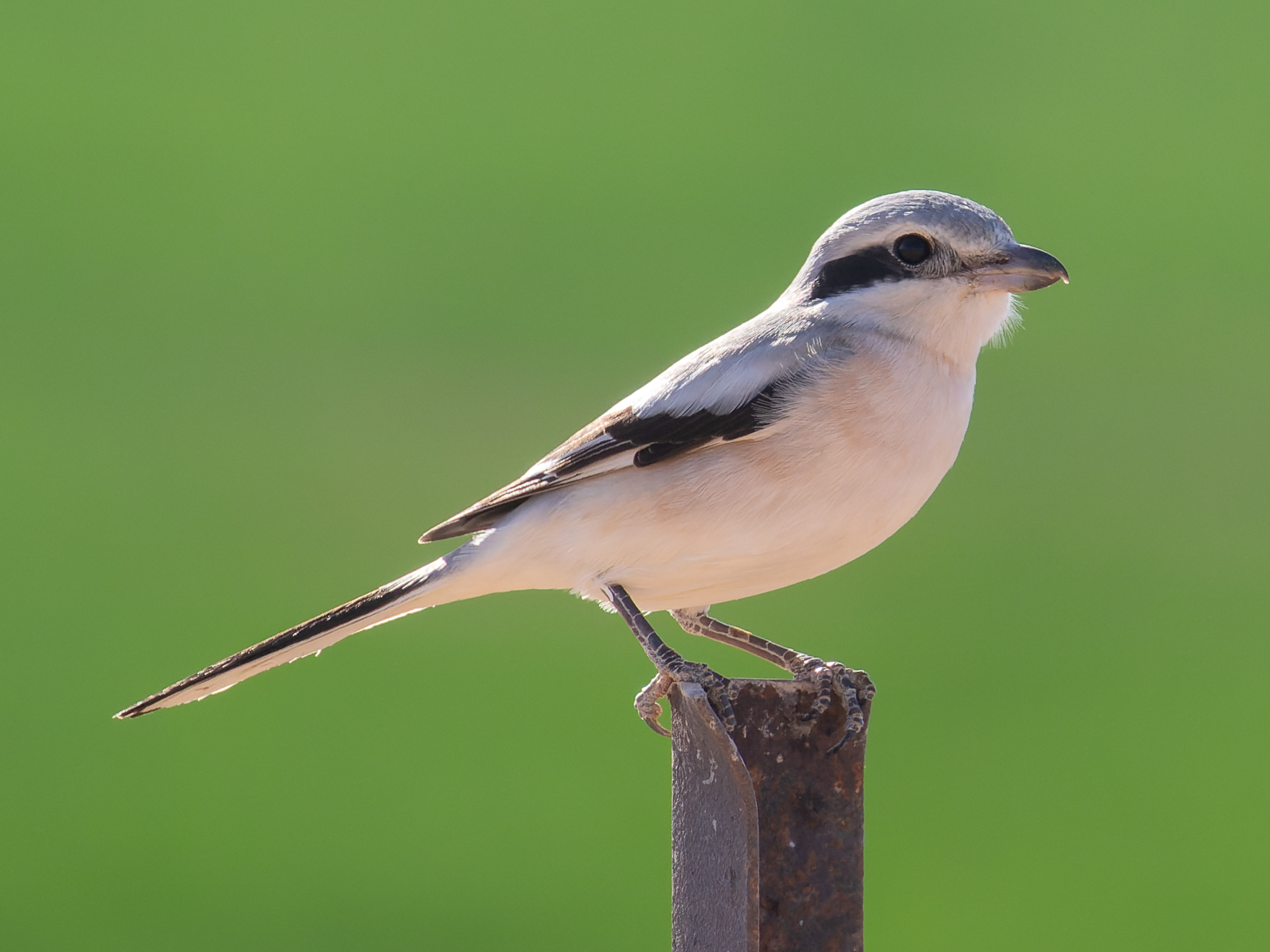
Steppe Grey Shrike (Lanius excubitor pallidirostris). Image by Pete Sutton.
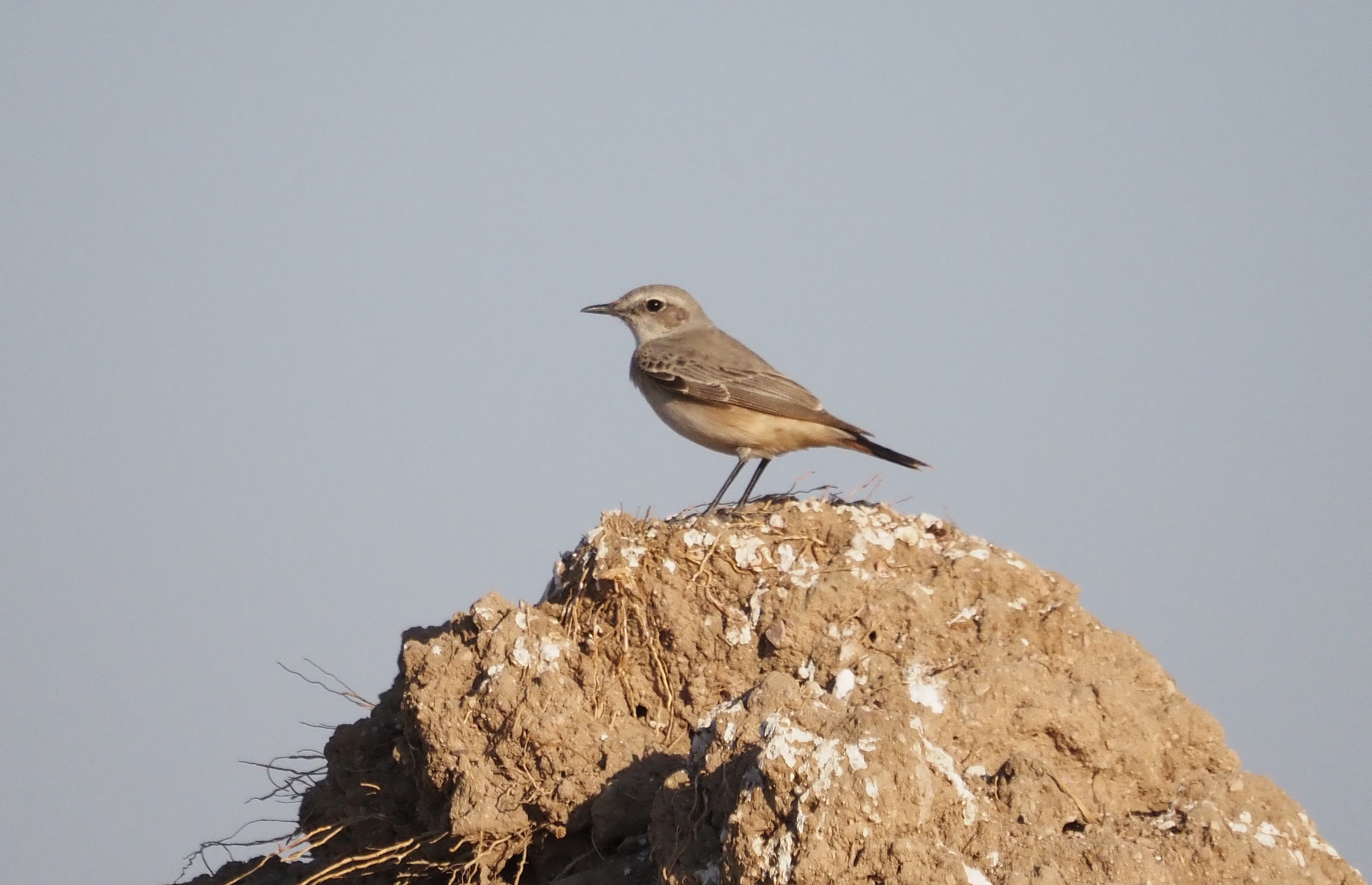
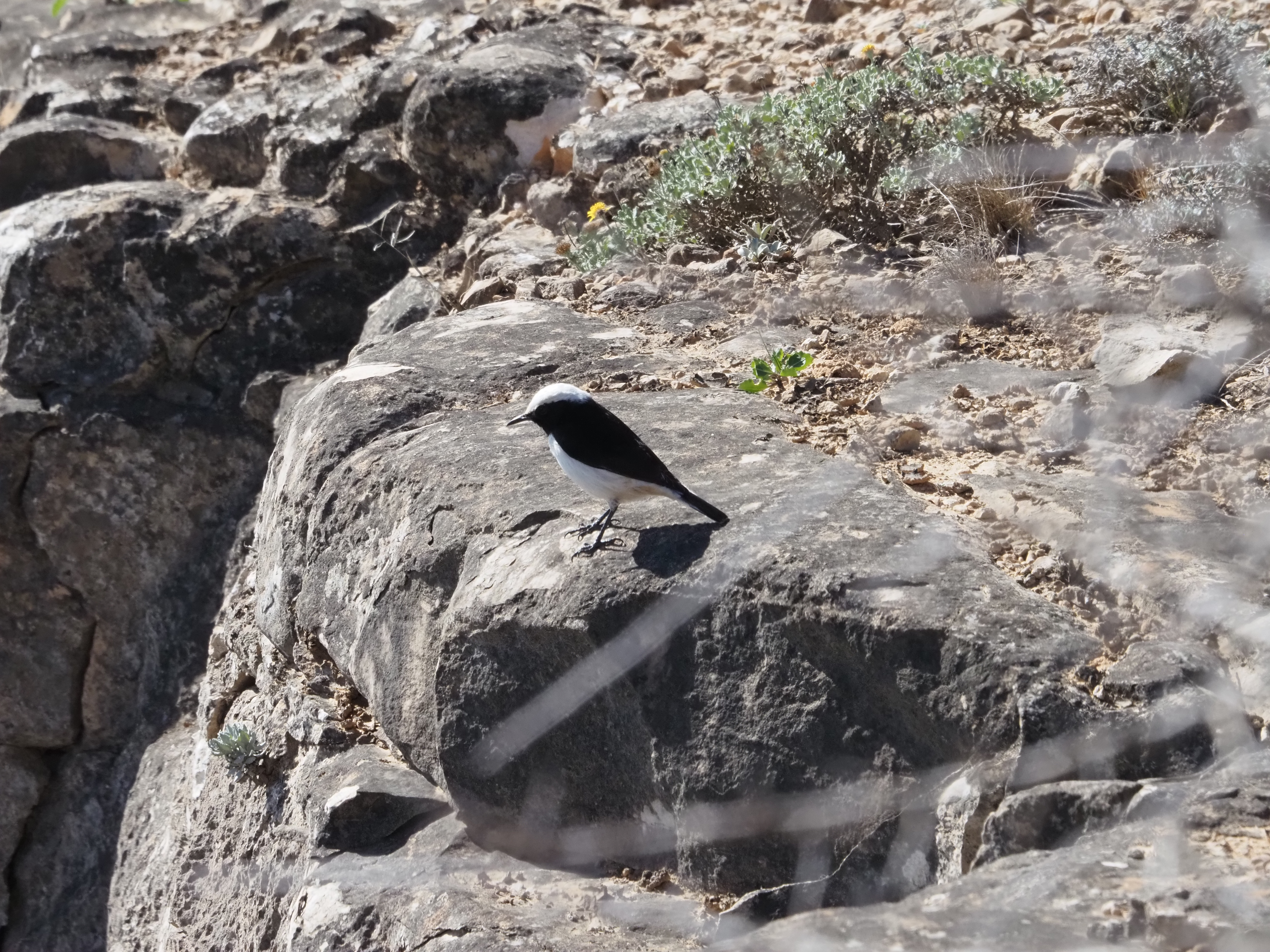
Desert Wheatear (Oenanthe deserti) always a superb bird. Image by Pete Sutton.
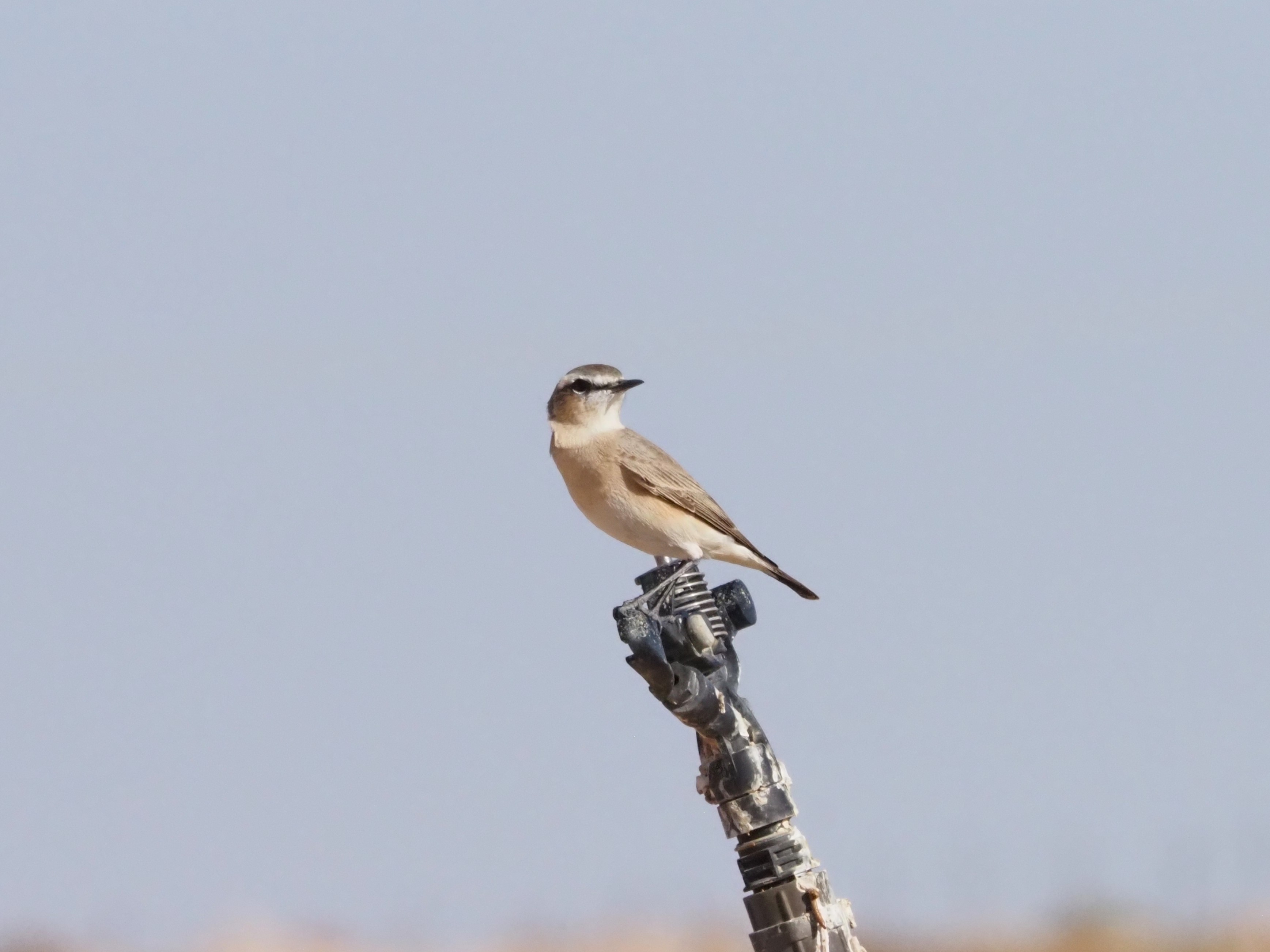
Persian Wheatear (Oenanthe chrysopygia), a scarce species South of the Empty Quarte. Image by Carles Oliver.
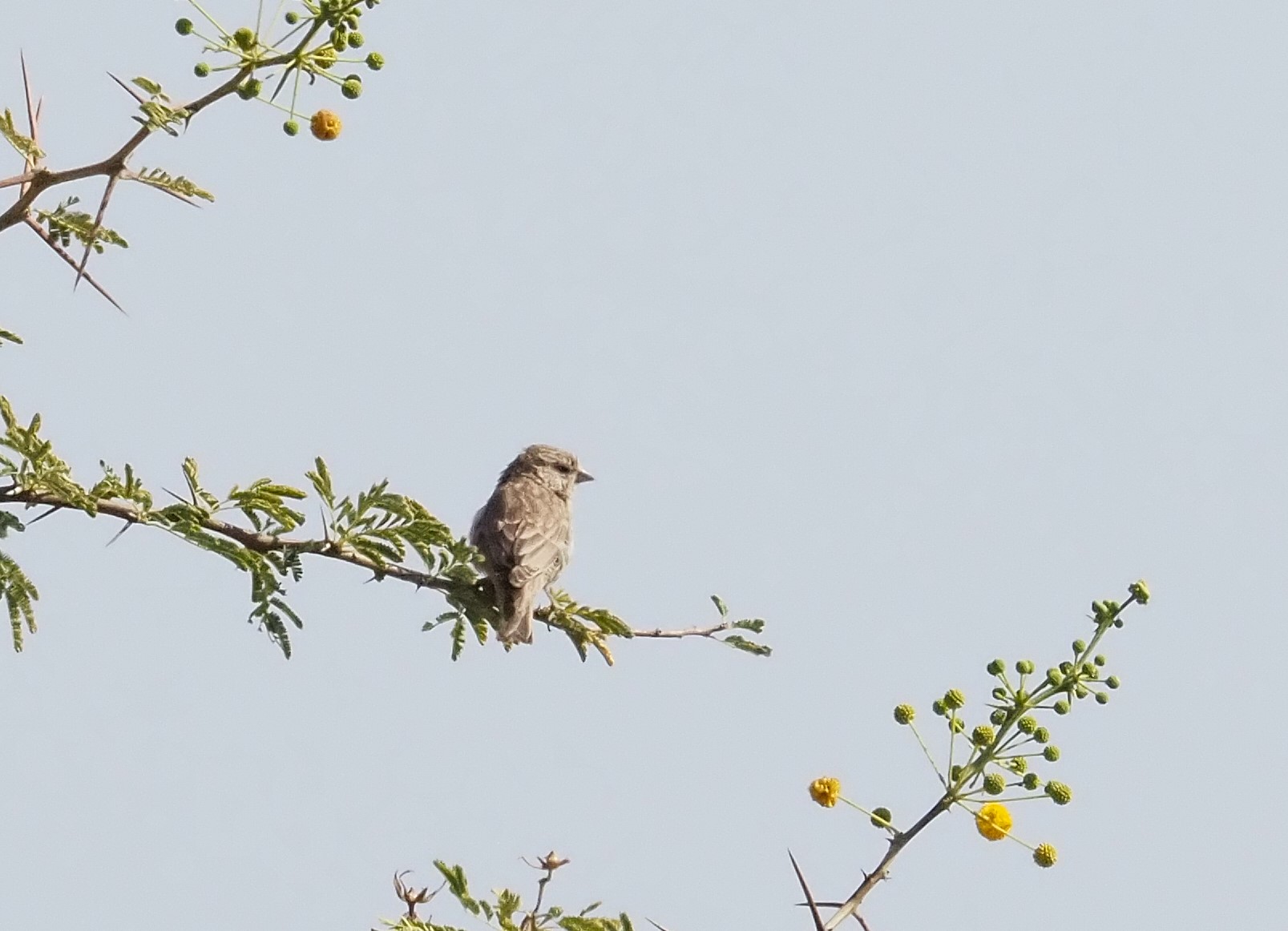
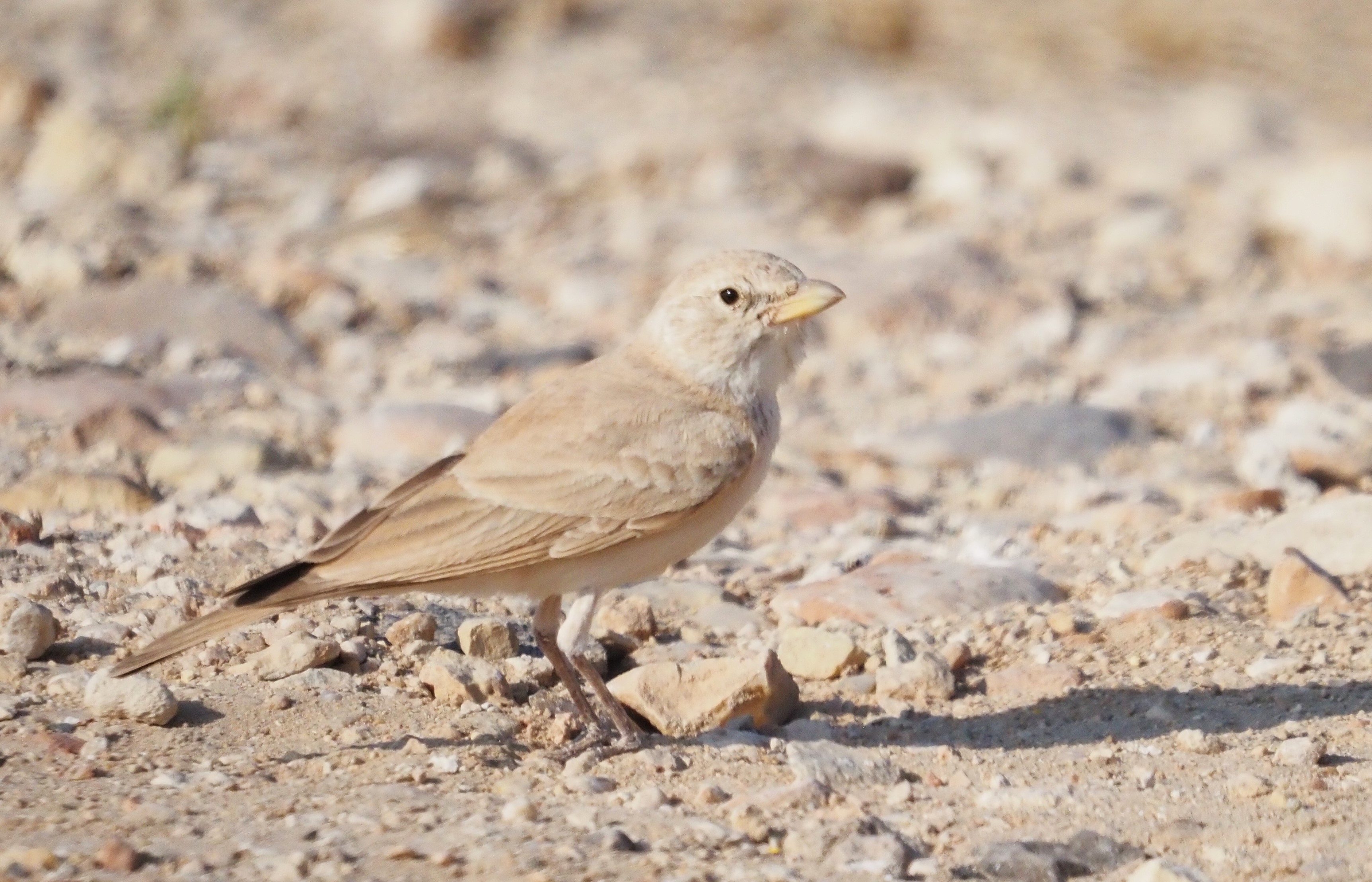
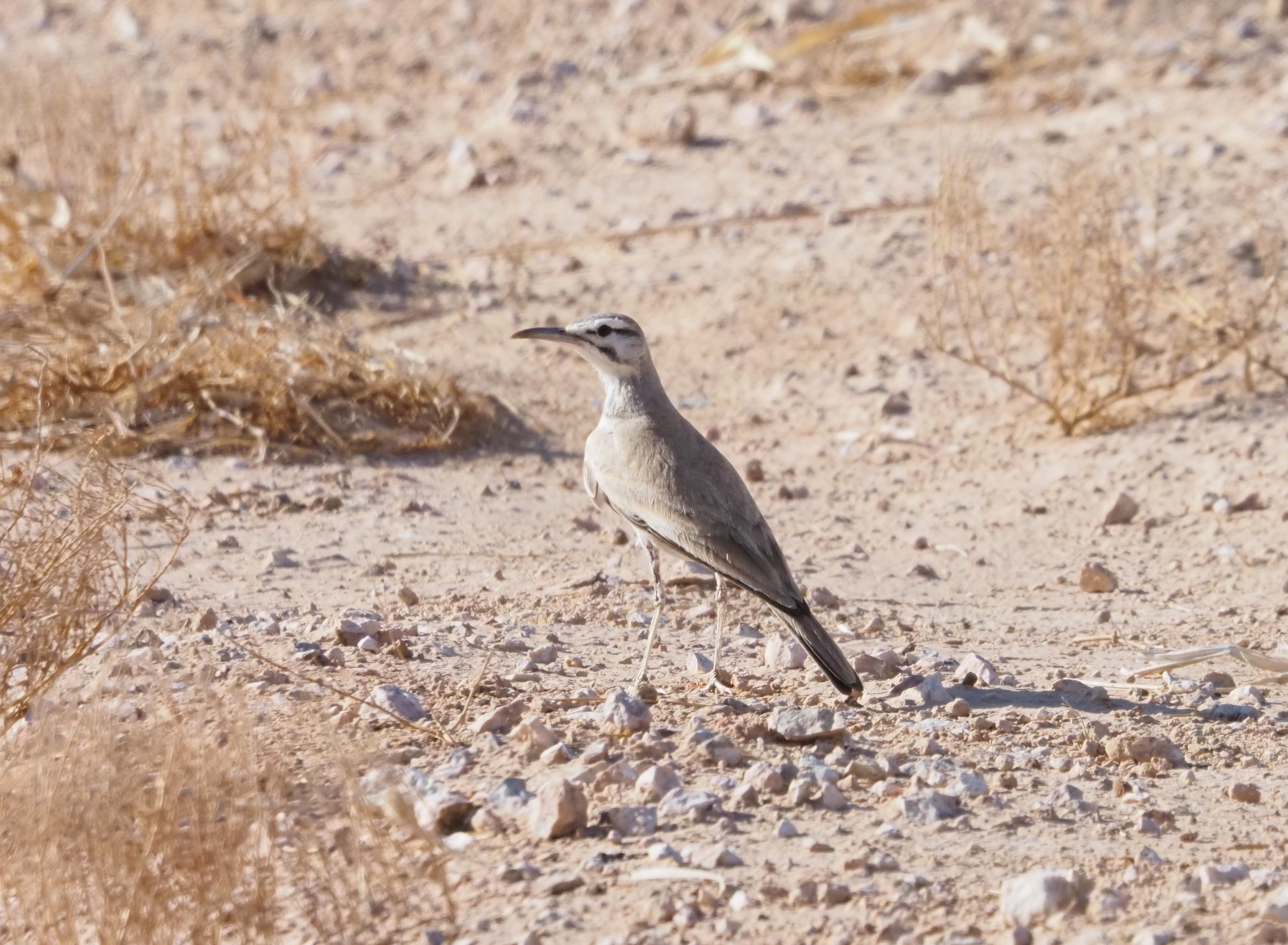
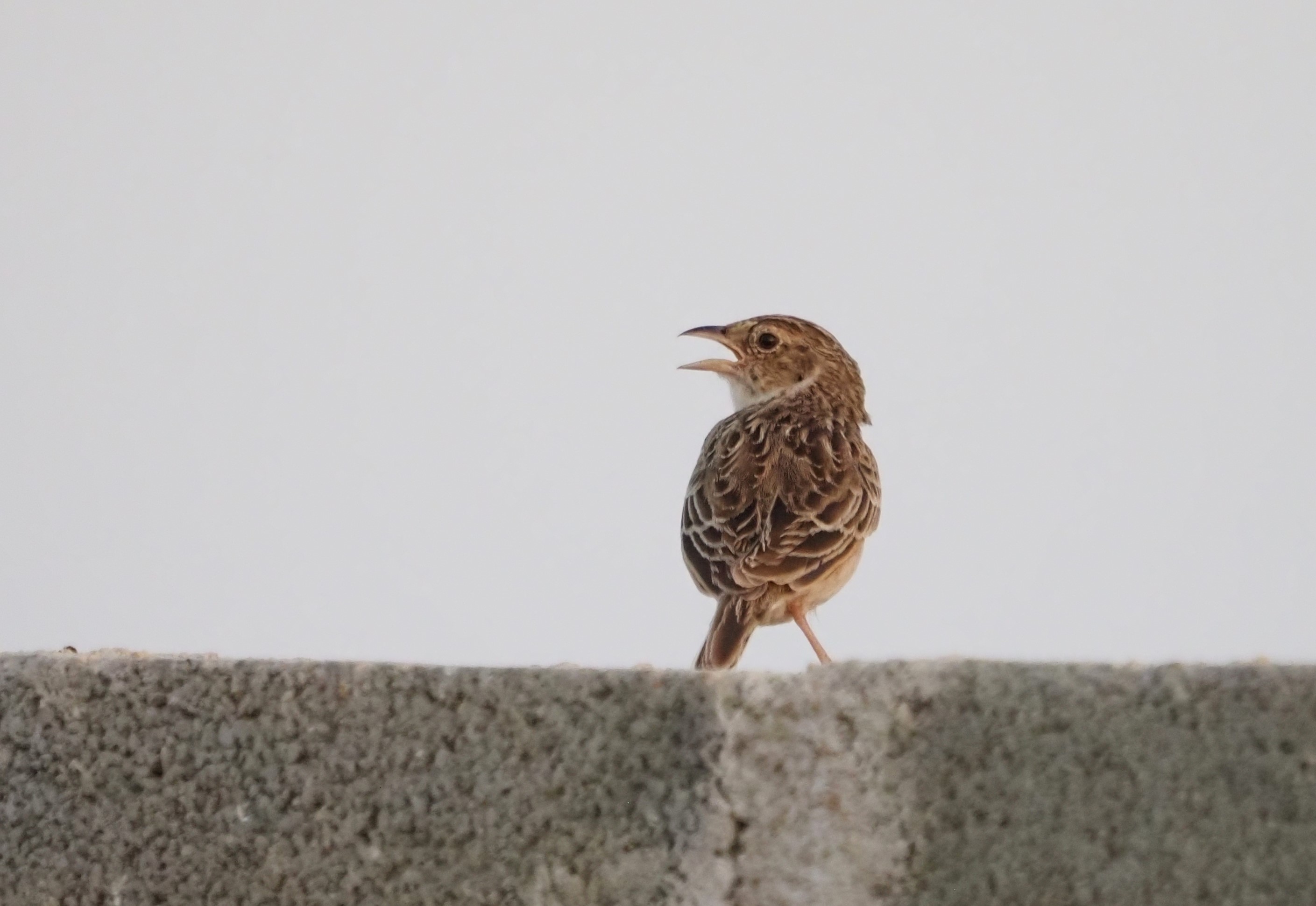
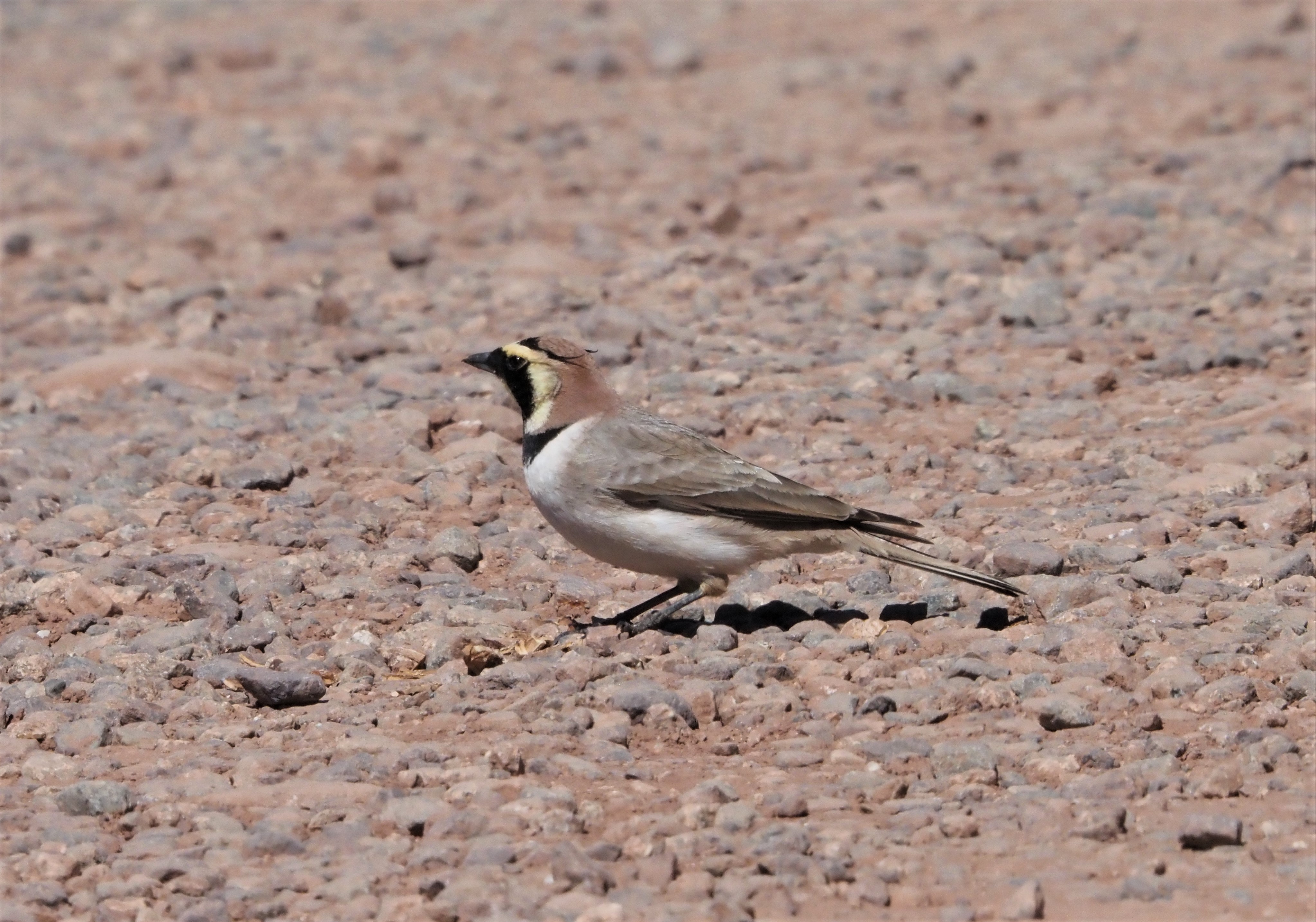
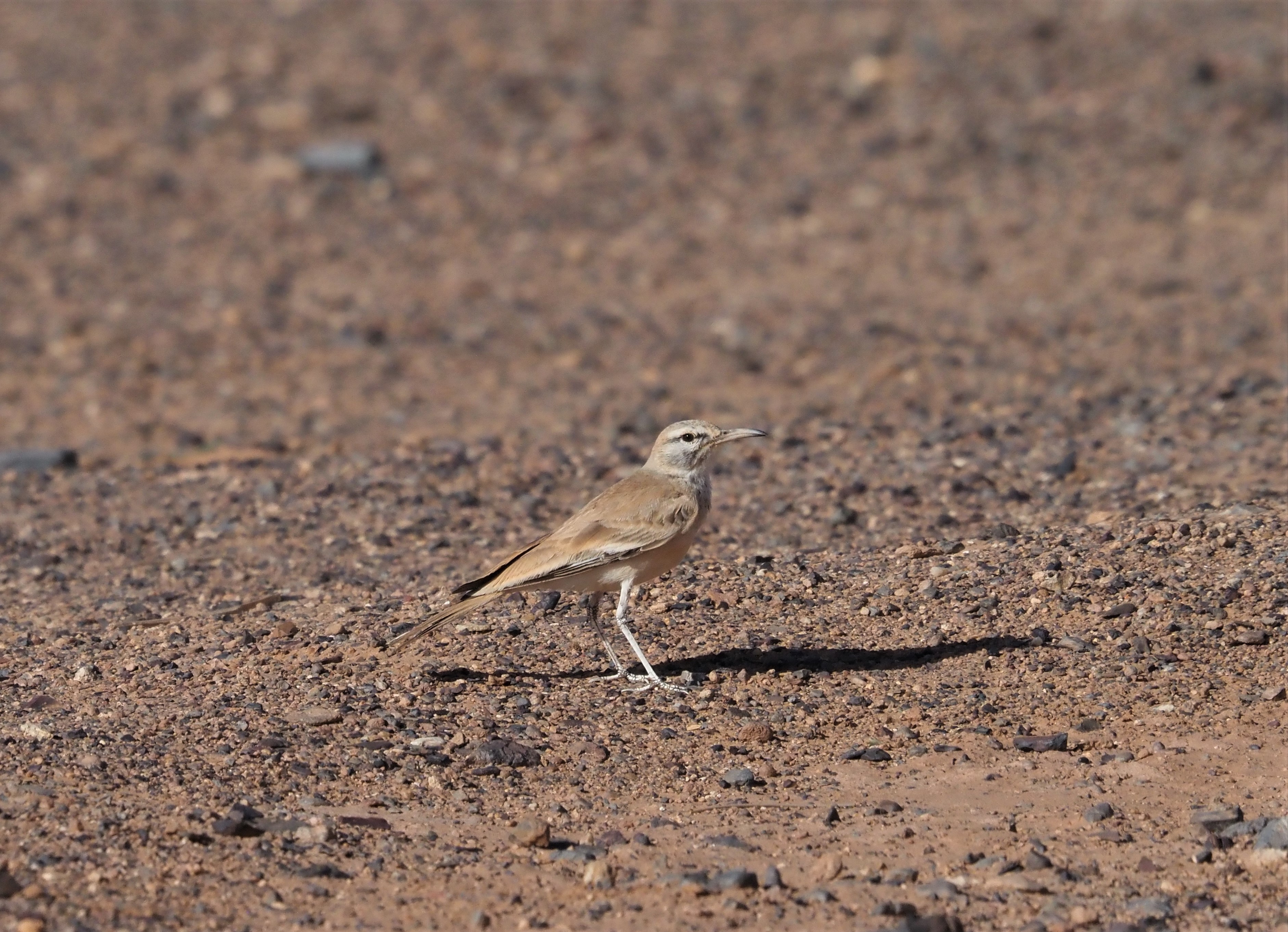
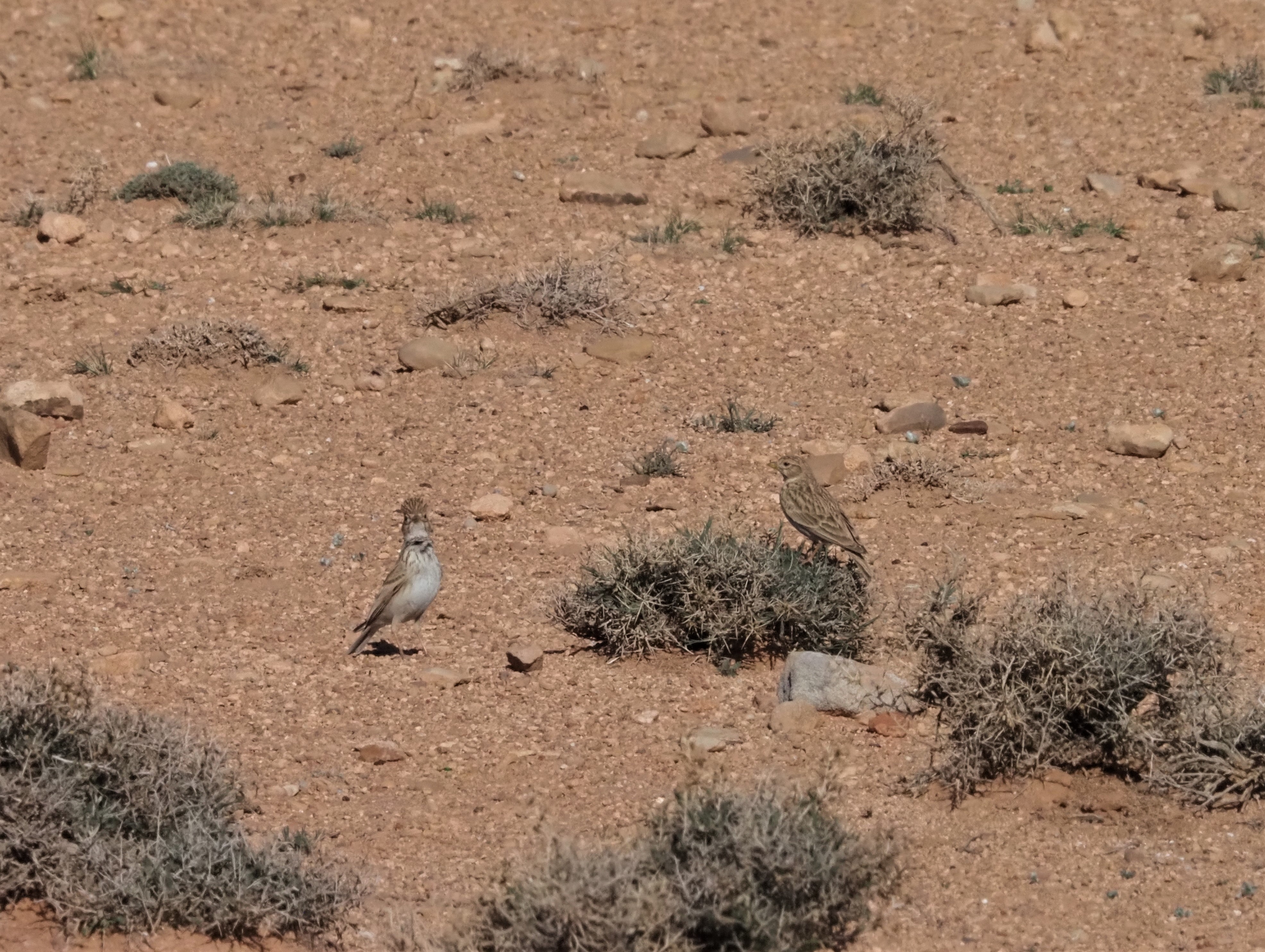
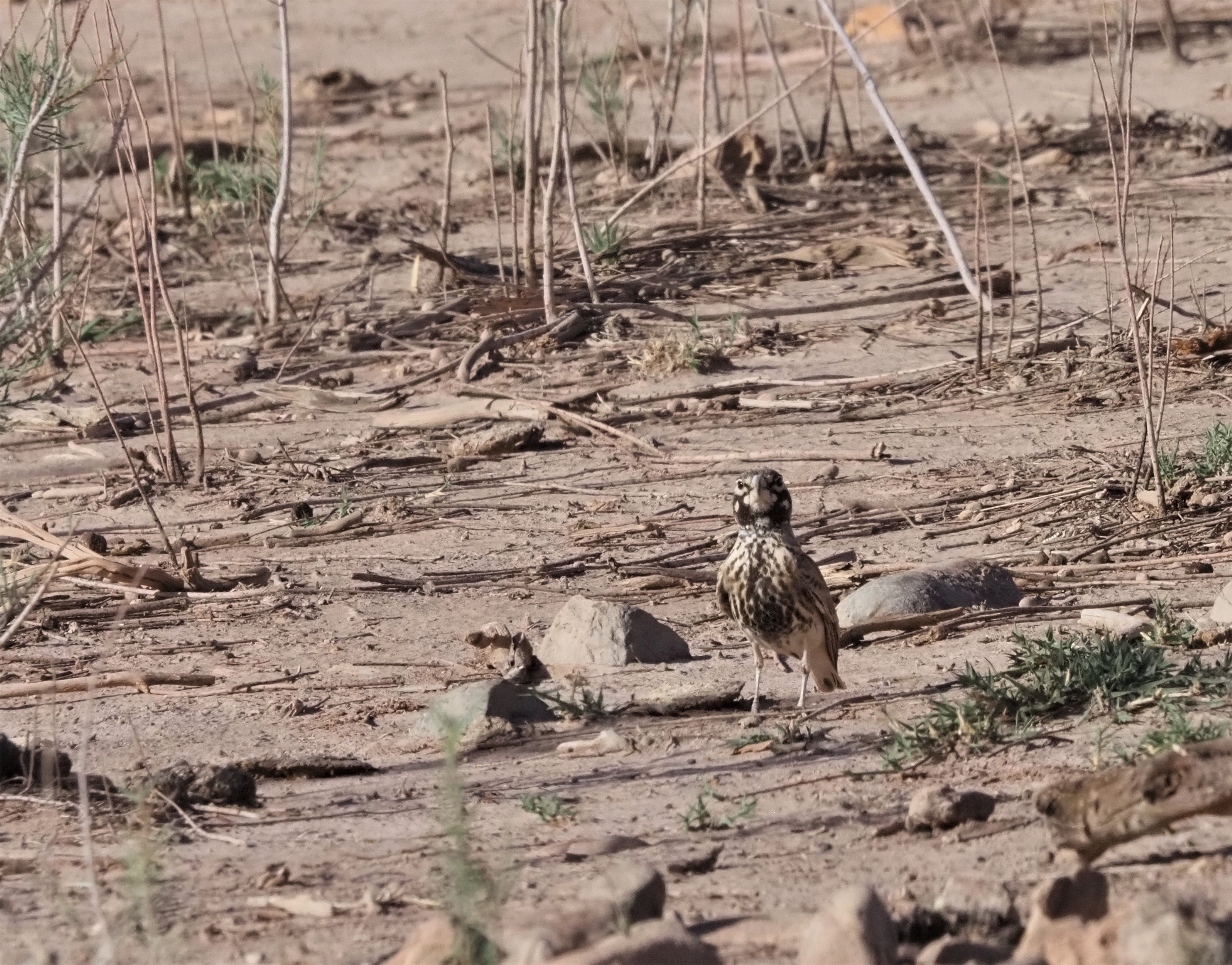
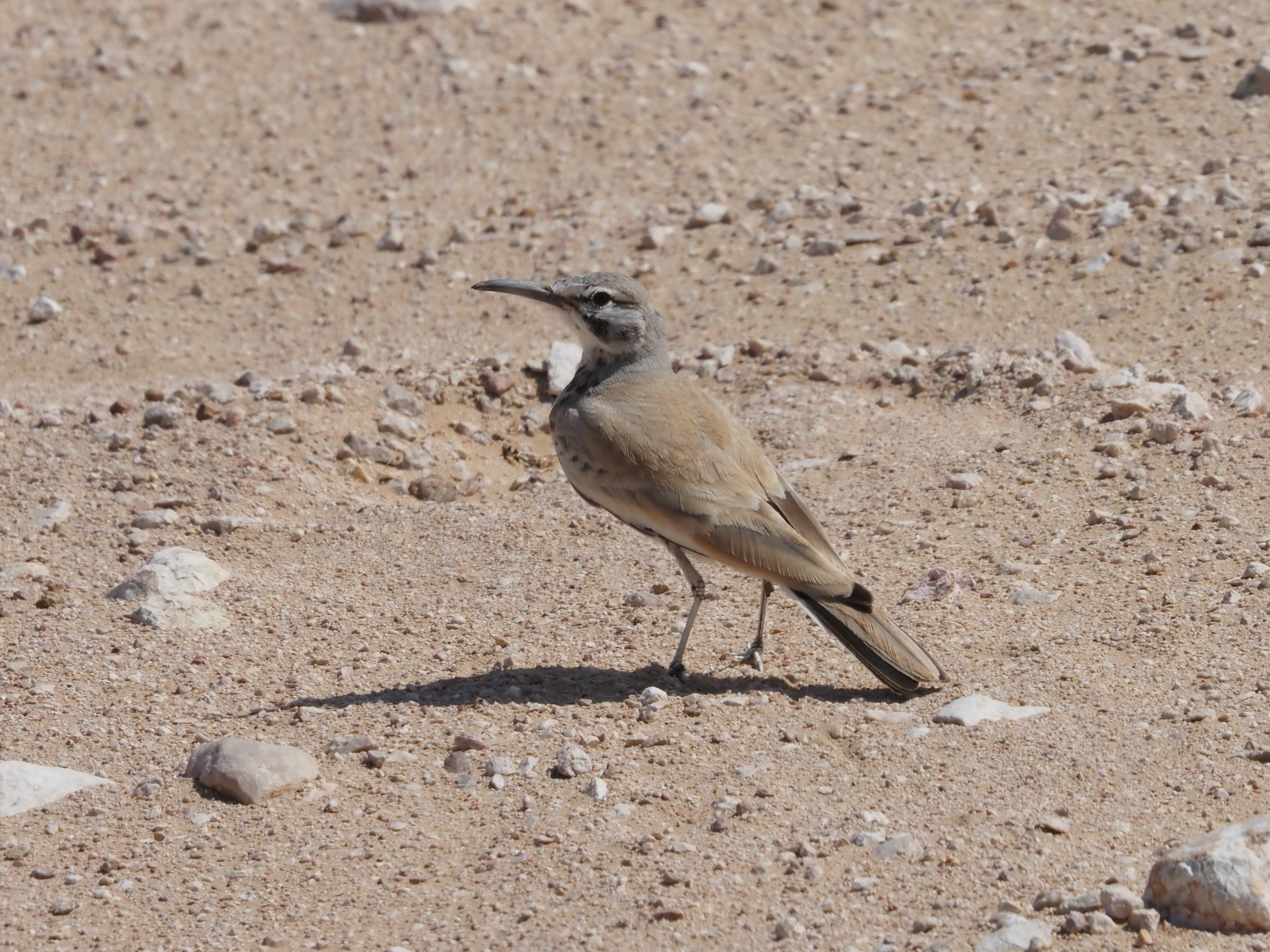
Greater Hoopoe Lark (Alaemon alaudipes) was seen in numbers along the tour. Image by Carles Oliver.
Cream-coloured Courser (Cursorius cursor). At least 50 of them were seen! Image by Carles Oliver

Day 4. While having breakfast nobody thought that we were about the experienced what some of the clients defined as “one of the best wildlife days in my life”. Yes, it was an intense day.

The first stop of the day was to explore Aïn Hamran. This is probably one of the best locations in Oman, and it is always amazing to birdwatch in this open woodland following a small stream (aïn). This is the lowest part of the wooded slopes that, on its highest end, connects with large cliffs.

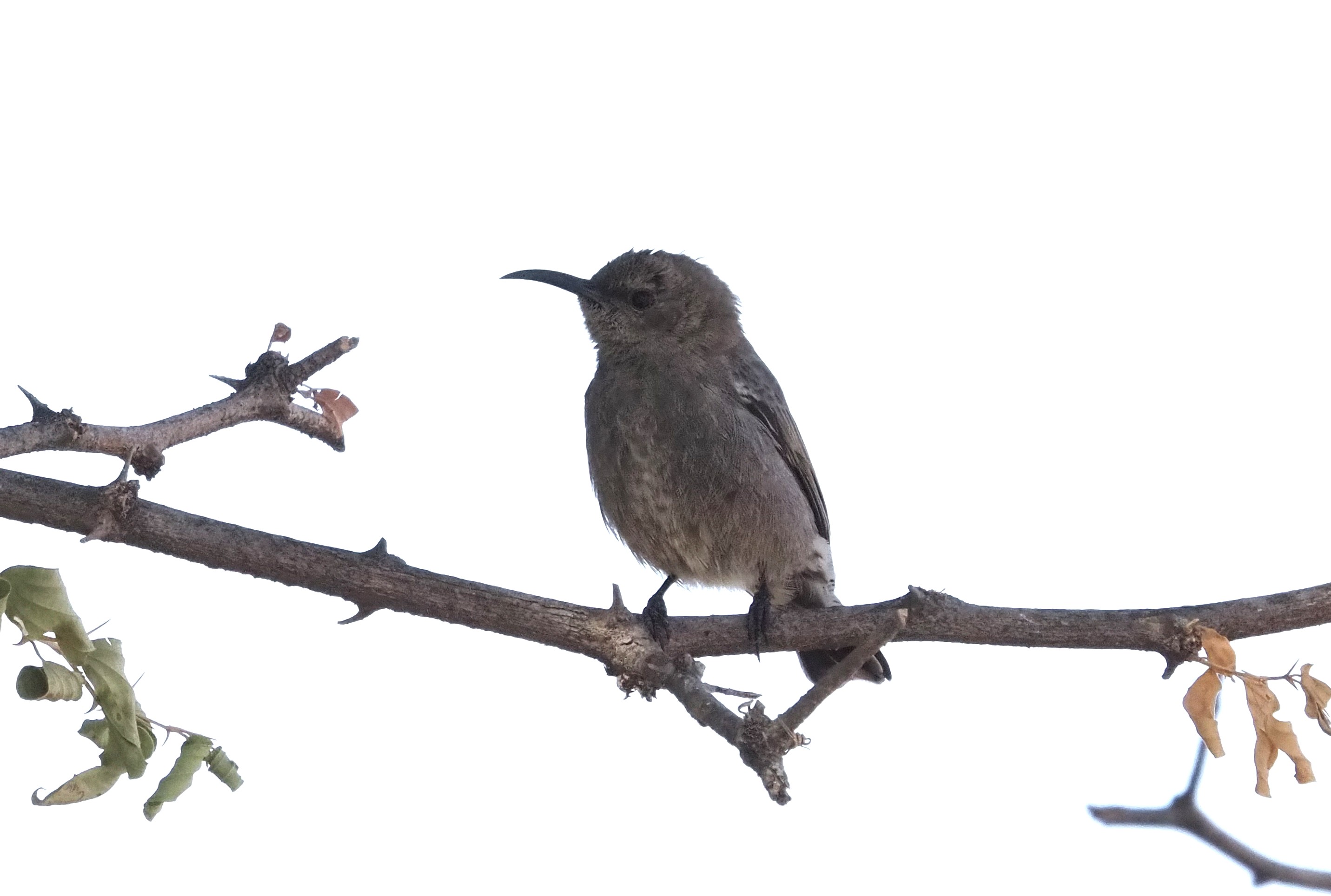
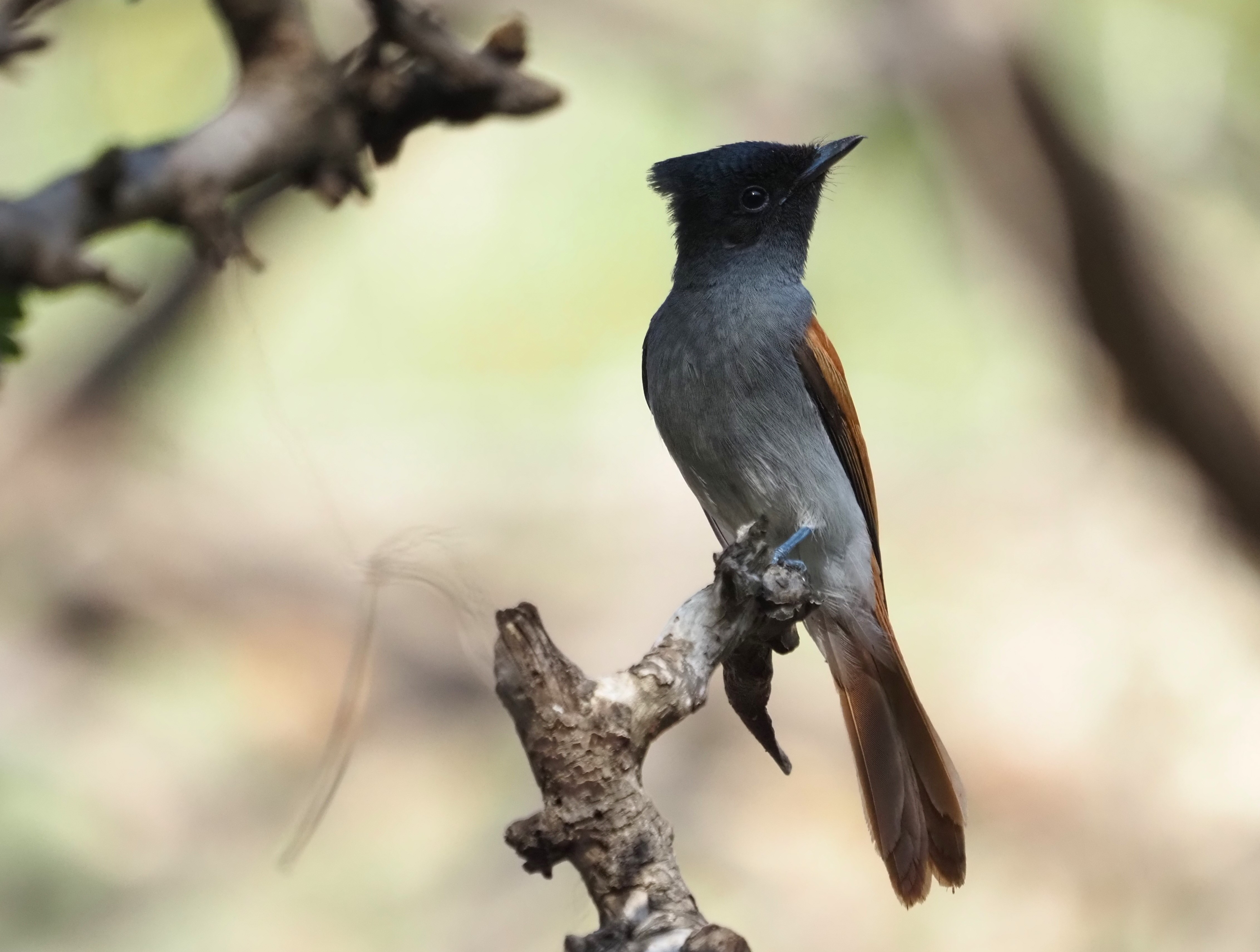
Even from the car park we connected with the first species living in the area: Palestine Sunbird, African Silverbills and the very common Cinnamon-breasted Bunting were all seen here. A short walk around produced the first of many Arabian Warbler and Black-crowned Tchagra along with the first Turkestan Shrike of the trip. Rüppell’s Weavers, Abyssian White-eyes and African Paradise Flycatchers seemed to be everywhere, and among the waves of Laughing Doves singing we could heard Arabian Partridges calling in the slopes.

We walked down the aïn to scan some proper trees for the main target in the area. Suddenly, two Arabian Grosbeaks appeared in the top of one of the trees just to disappear as fast as they came! Virtually nobody saw the birds so we started scanning the trees when suddenly the pair of Grosbeaks flew off the trees. We followed the birds, distracted by the many Arabian Warblers and the Tchagras. We found just at the moment that Short-toed Eagle was flying above us. A few tour participants connected with the birds, but for our desperation they flew off again. After 10 eternal minutes it was Ramiro who found one of the Grosbeaks in the top of a dead tree, but very far away. And again, they flew off!

At this point almost everybody have had something in these little fellas, but no everybody. We dispersed around, Blackstart and Long-billed Pipits were enjoyed but the Grosbeaks were gone. Finally we went back to the place where we first saw the birds, and this time it was Dani who found them in the top of a tree. A very nice view for everyone, finally!

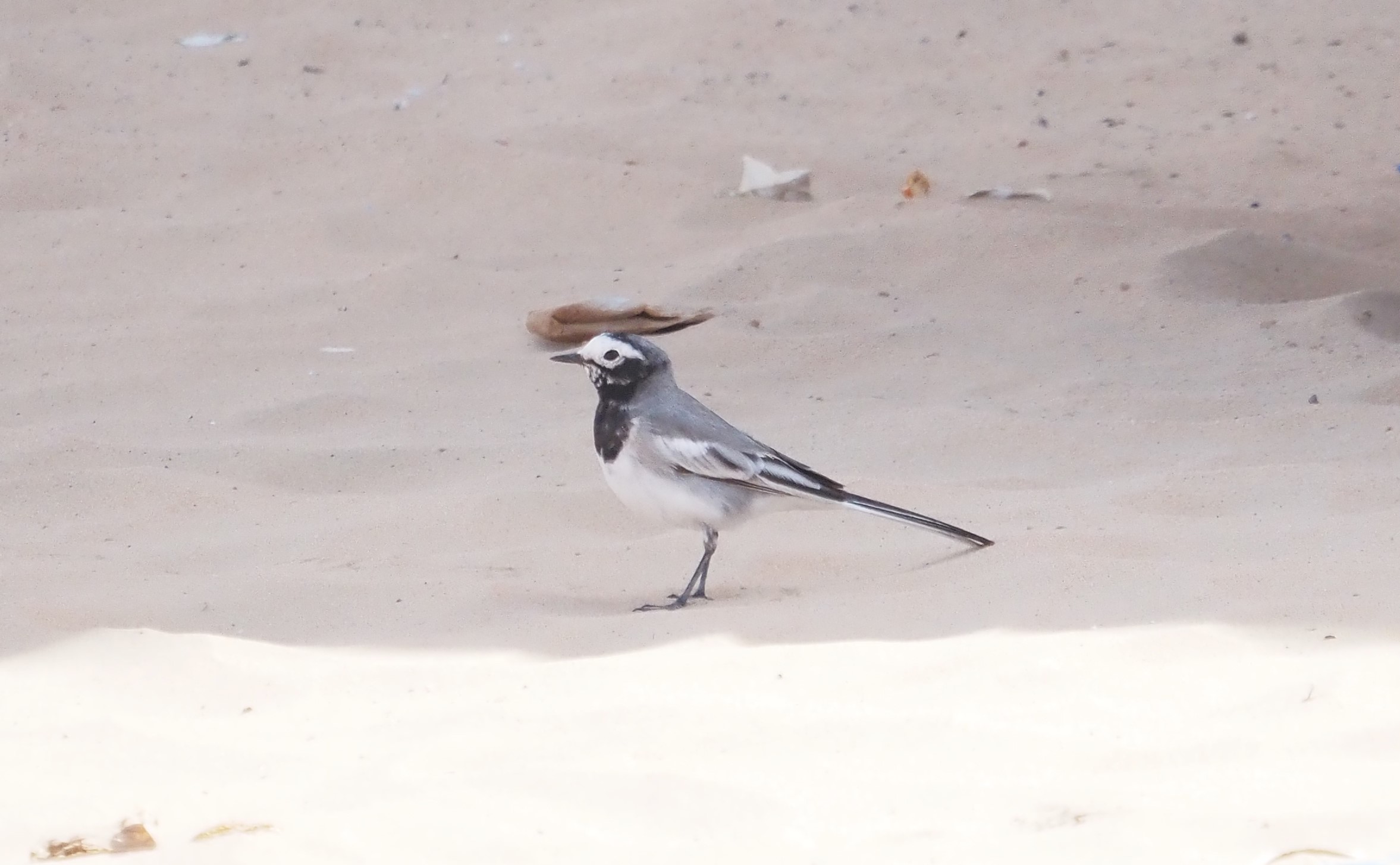
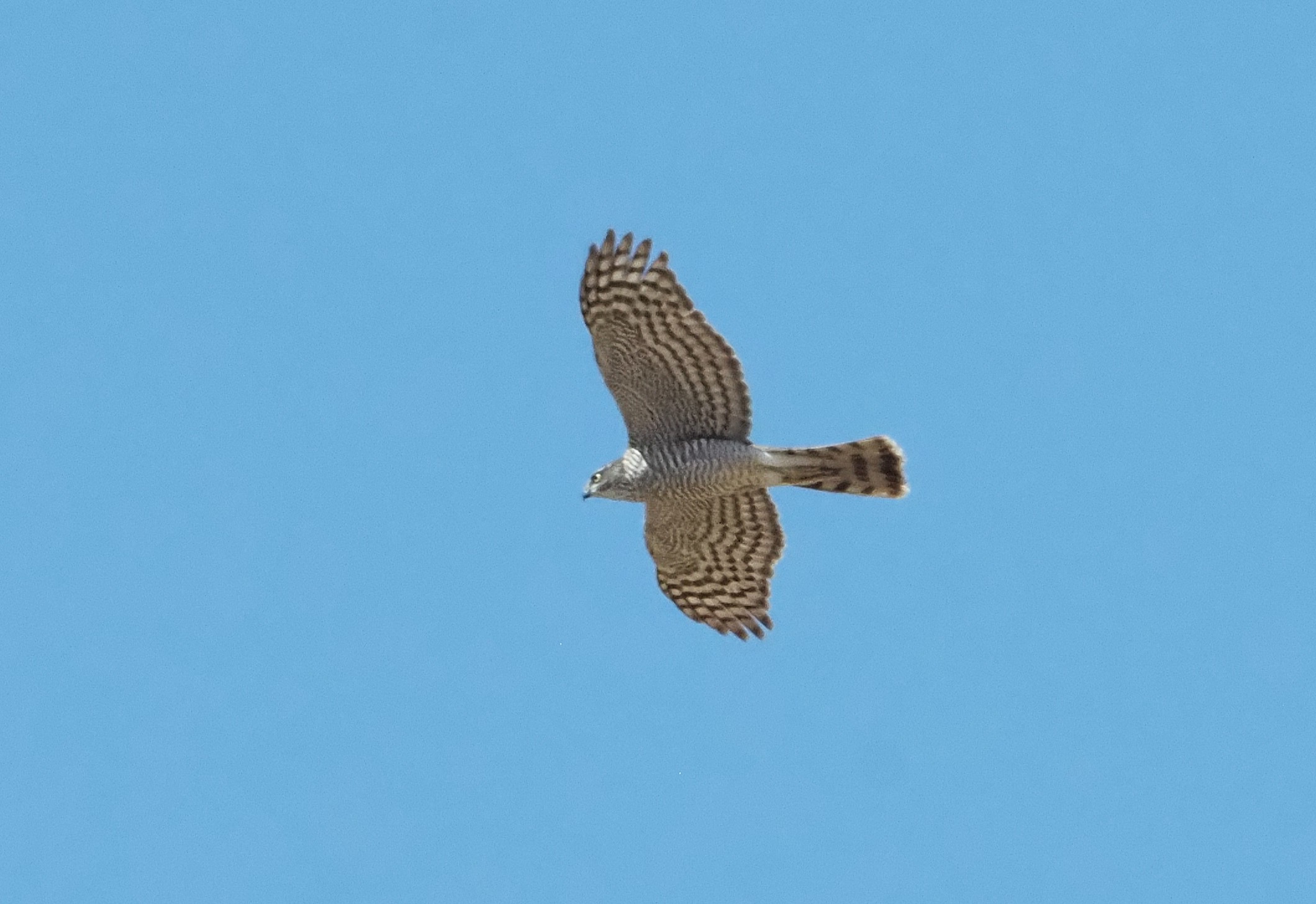
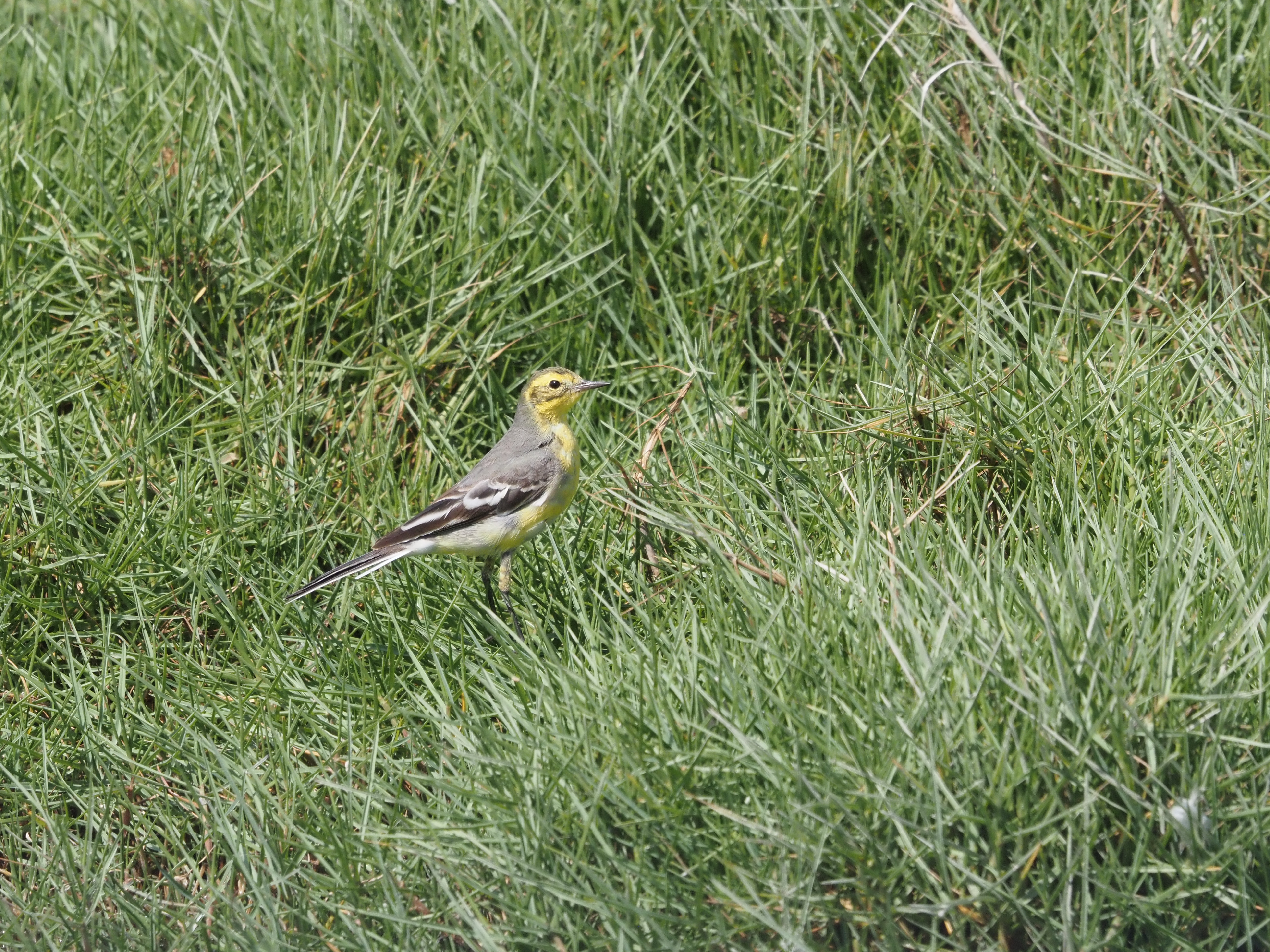
Exploring around the stream we got excellent views on Citrine, Grey, Yellow & White Wagtails, Common & Green Sandpipers, Temminck’s Stint and Moorhen. A Eurasian Sparrowhawk flew over just at the moment that a Namaqua Dove came to drink water. Flocks of Tristam’s Starlings were now more present that early in the morning and they were mixing in the fig trees with the very common White-spectacled Bulbuls and small flocks of White-eyes and Palestine Sunbirds. A detailed scan of the tangles allowed us to get some Clamorous Reed Warblers but also Eastern Olivaceous Warbler and Graceful Prinias. A pair of Arabian Bee-eaters were also very welcome by the group.

We decided to have an early lunch at Aïn Hanram, and this extra time allowed to enjoy very close views on the African Paradise Flycatchers and finally got good views on the Red-breasted Flycatcher that had been calling around us..

Turkestan Shrike (Lanius phoenicuroides). Image by Pete Sutton.
Arabian Warbler (Curruca leucomelaena). Image by Pete Sutton.
Arabian Black-crowned Tchagra (Tchagra senegalus percivali). Image by Pete Sutton.
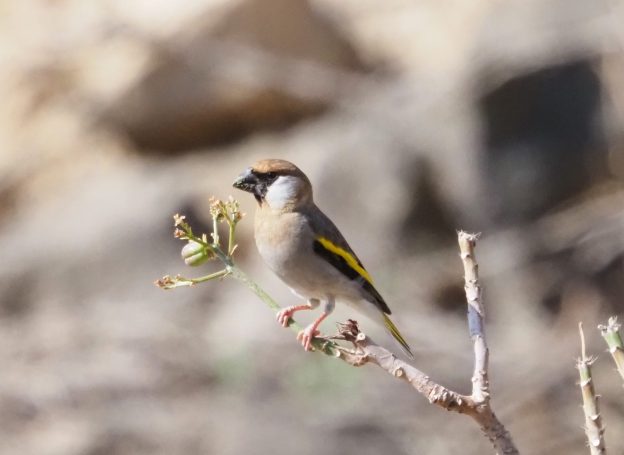
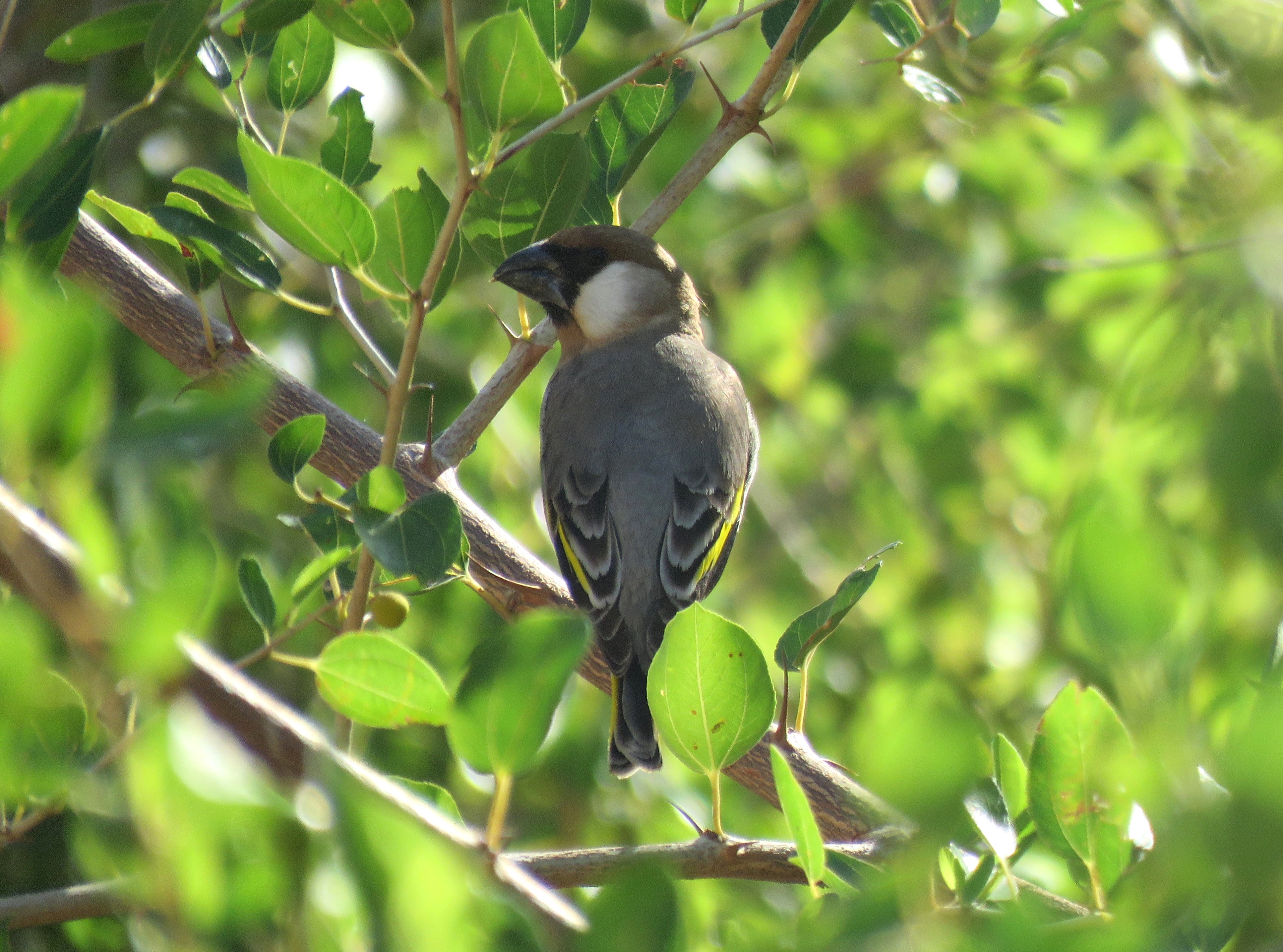
A couple of images on Arabian Grosbeak (Rhynchostruthus percivali), a must for anyone birding in Oman. Images by Carles Oliver.
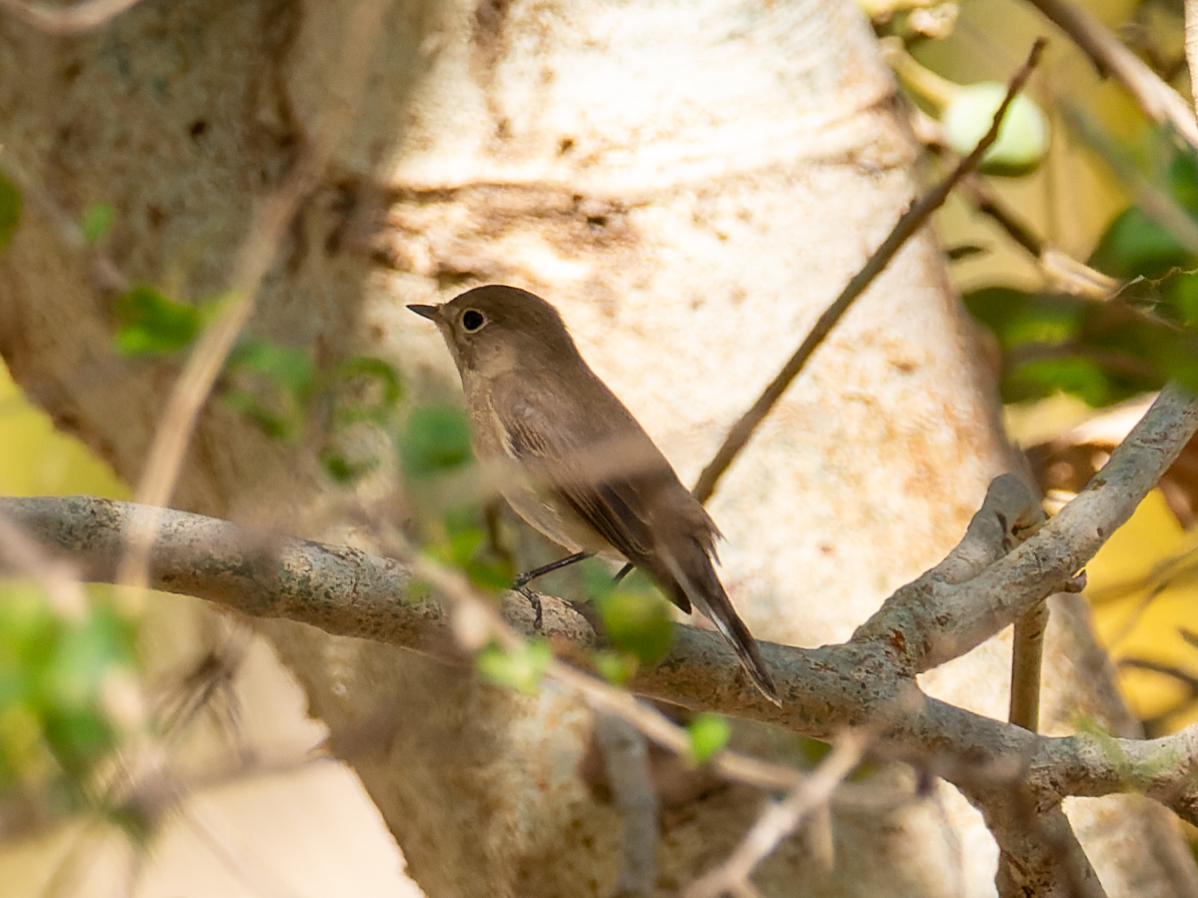
This Red-breasted Flycatcher (Ficedula parva) was very skulky! Image by Pete Sutton.
African Silverbill (Euodice cantans)
Graceful Prinia (Prinia gracilis). Image Pete Sutton.
The delicate beauty of Namaqua Doves (Oena capensis). Image by Carles Oliver
A very spectacular white-tailed African Paradise Flycatcher (Tersiphone viridis). Image by Pete Sutton.
Citrine Wagtail (Motacilla citreola) supershot! Image by Pete Sutton.
Grey Wagtails (Motacilla cinerea) nest along the Omani streams. Image by Pete Sutton.

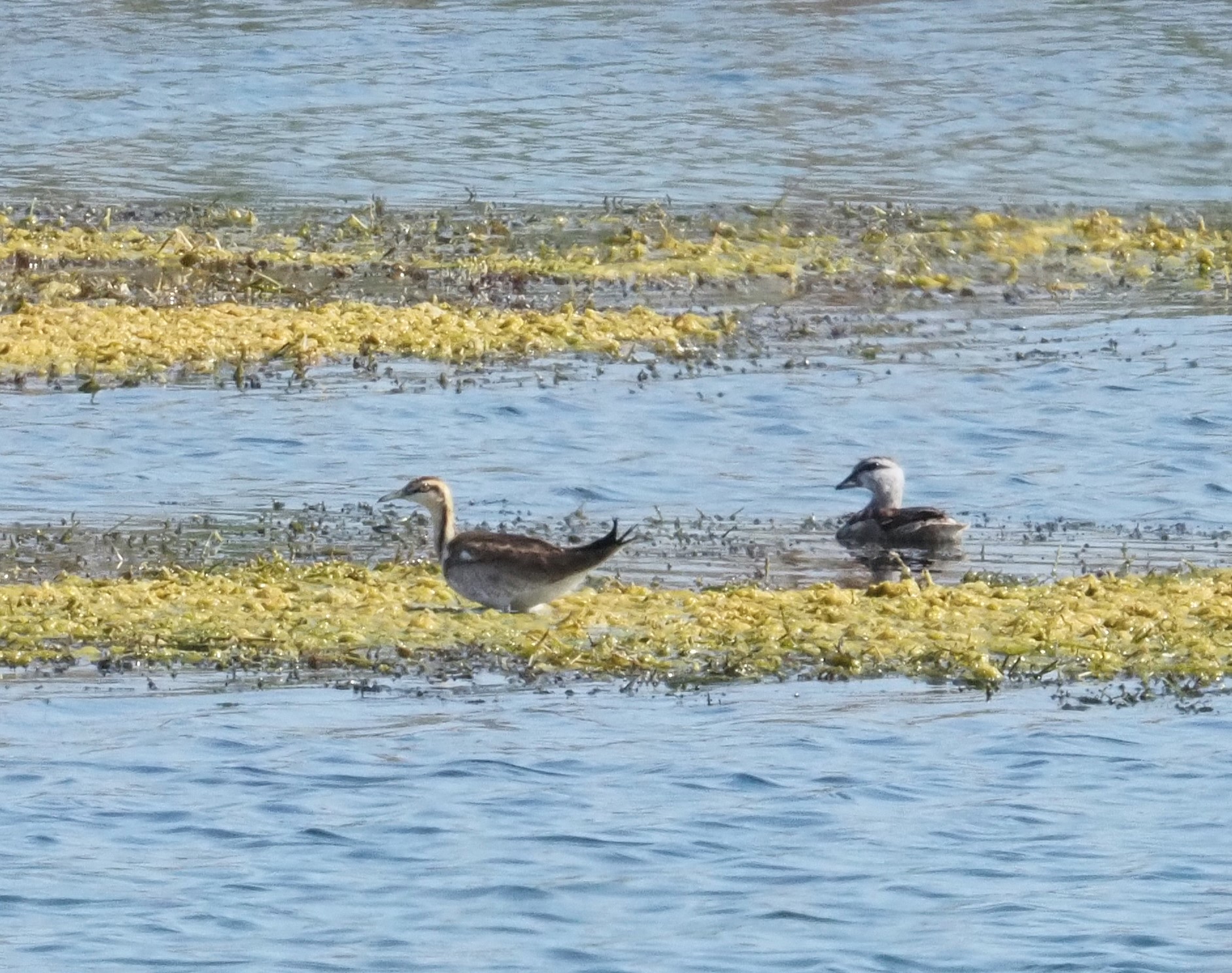
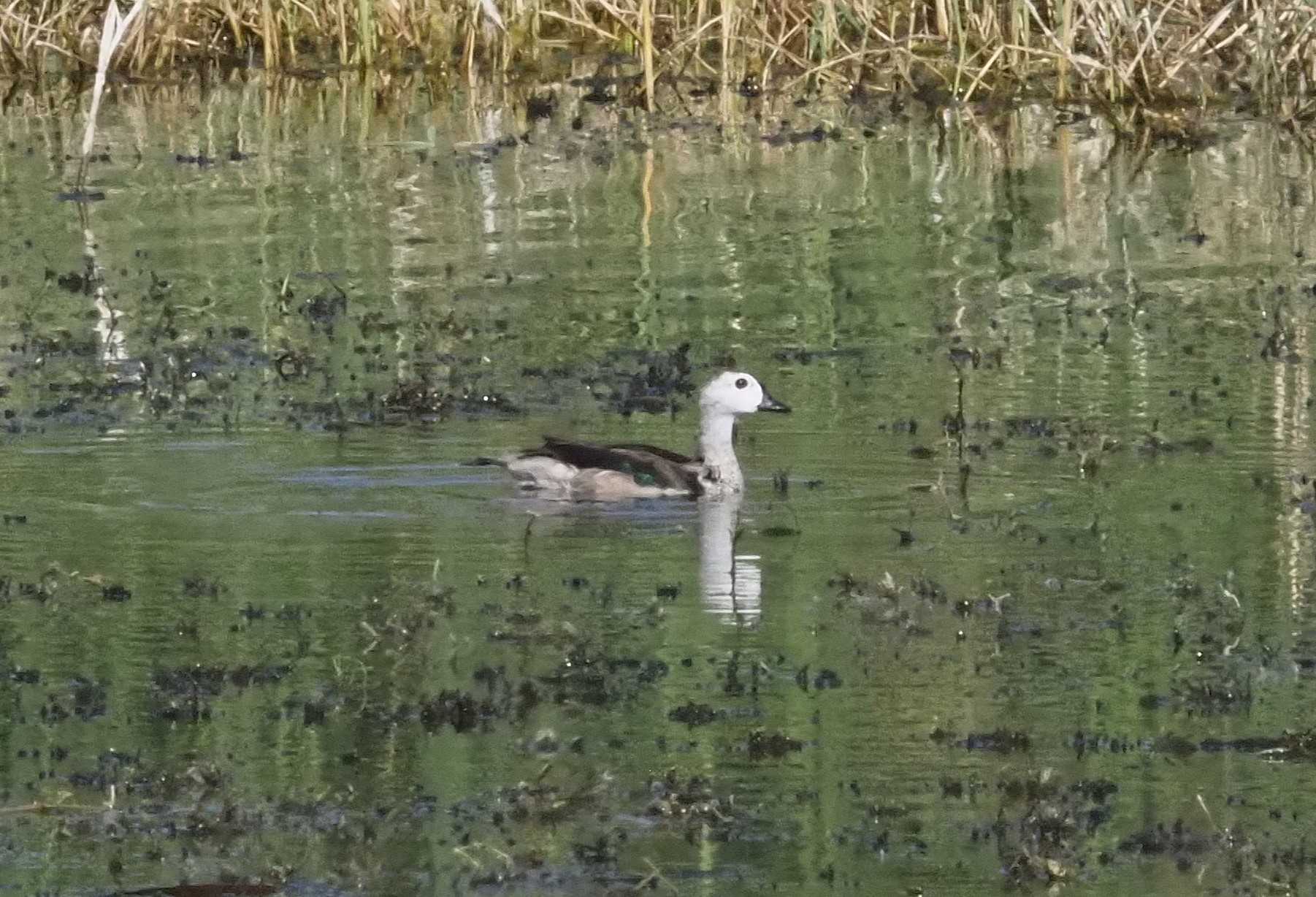
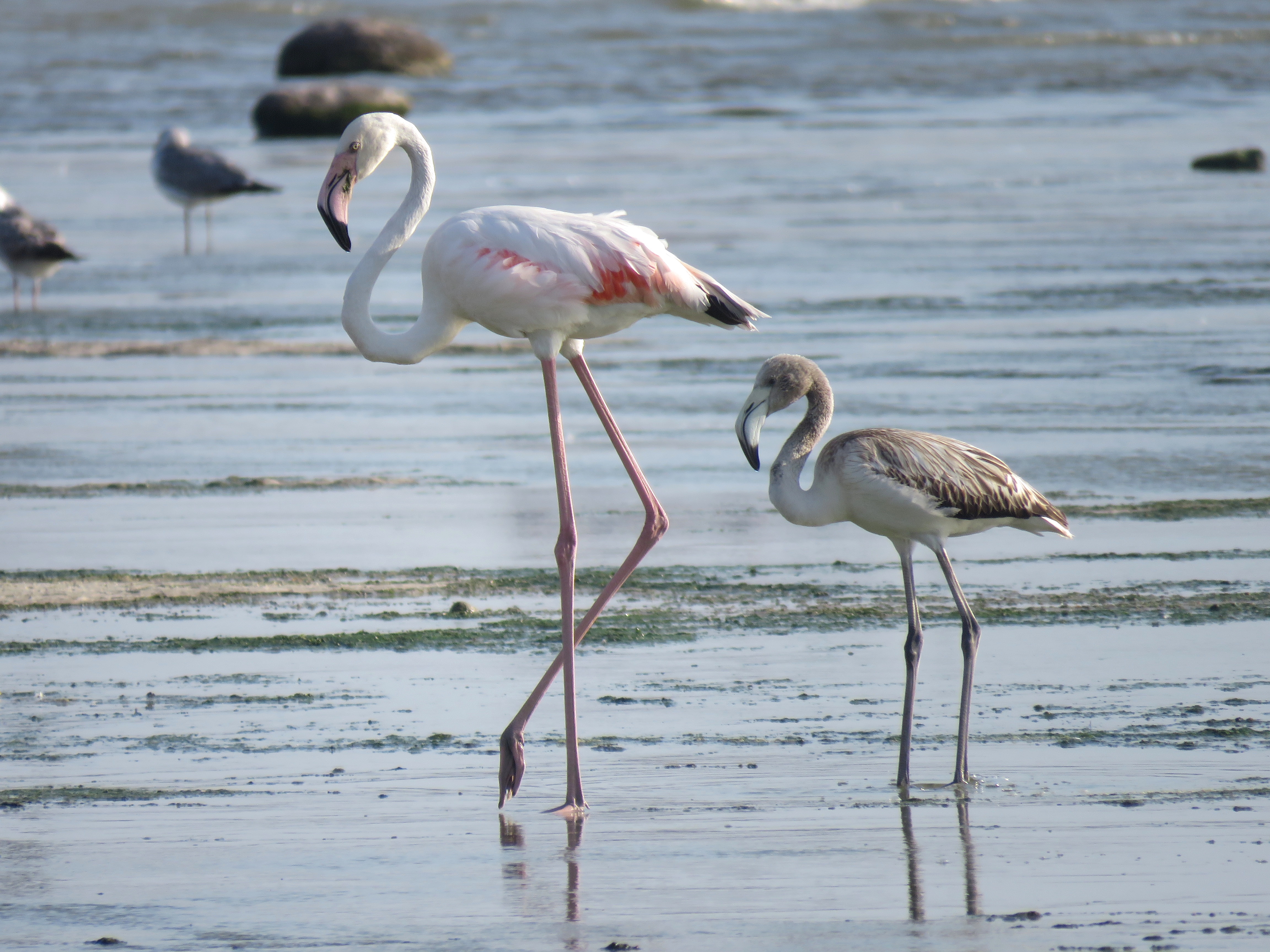
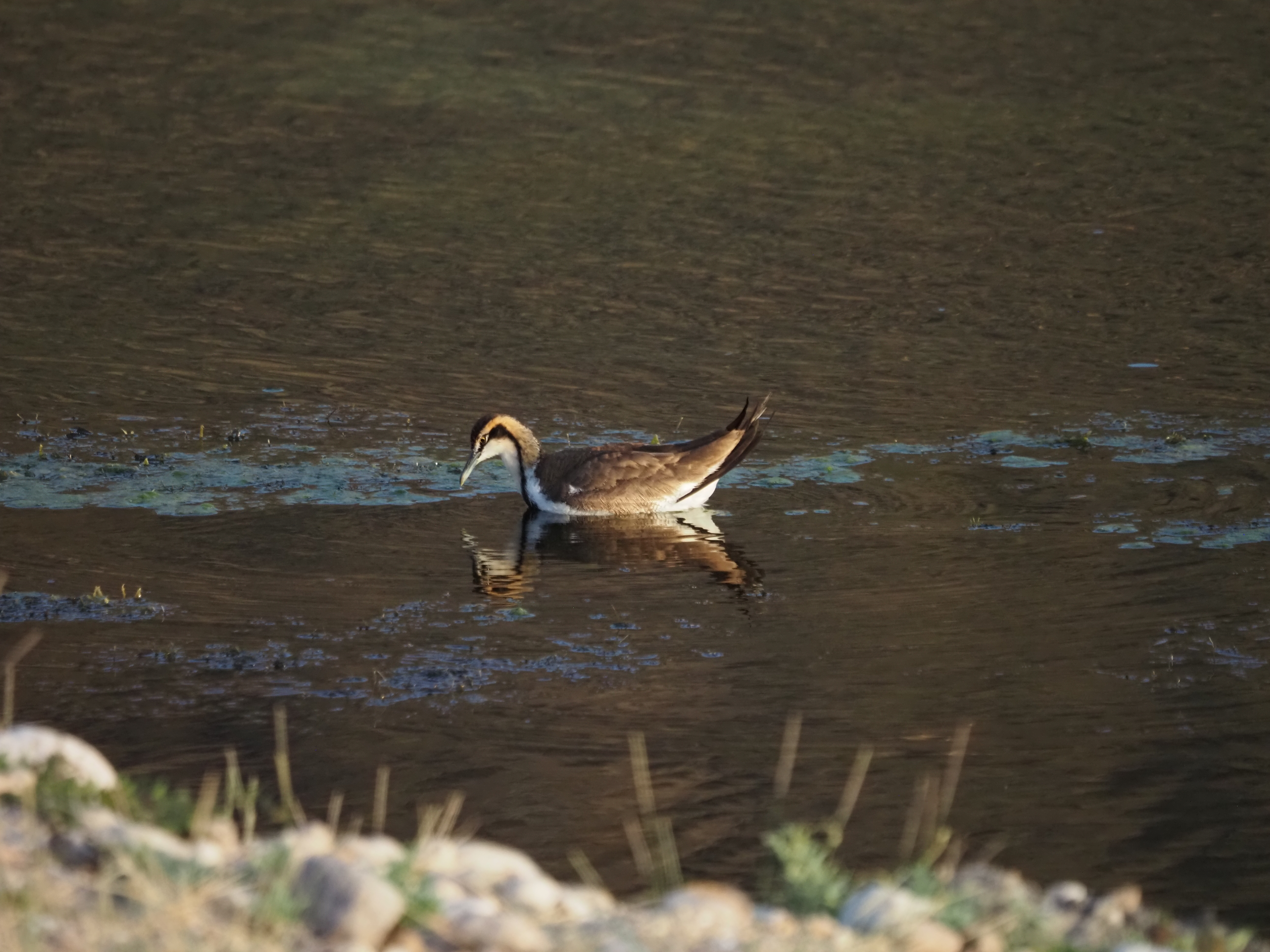
Well, what a place! But it was time to leave. We drove down to the coast to explore a one of the many river mouths around Salalah. After a very short drive, we were birdwatching for a while at East Khawr. Here, we were glad to see large flocks of hundreds of Glossy Ibises but also good numbers of Tufted Ducks (for the Omani starndards), Greater Flamingoes, Whiskered Terns, Black-tailed Godwits, Indian Pond Herons and Citrine Wagtails. Pheasant-tailed Jacana, Middle Egret, Spotted Redshank (3), Little Ringed Plover and Cotton Pygmy Goose were all three new for the trip, and all they three provided good scope views. A couple of distant Greater Spotted Eagles & 1 Booted Eagle were guarding the area. In the beach, we enjoyed a large flock of Heuglin’s Gulls with some Steppe Gulls in the middle. This flock allowed close views on all of them, but also on Sooty Gulls, Greater Crested, Sandwich, Gull-billed and Lesser Crested Terns and a few Black-headed Gulls were also noted along with the much common Slender-billeds’. Sleeping along with Little Stints, Ruff and Dunlins there was a small flock of White-winged Black Terns that flew a couple of times around us.

From here we drove South to another river mouth. The afternoon was still sunny and ir our way had a couple of Steppe Eagles soaring above the highway. Once arrived to this second river mouth, we enjoyed a good number of both Tibetan & Greater Sand Plovers along with 70 Cattle Egrets, 1 Turkestan Shrike in the dunes, 1 Osprey having a prey in the reedbeds and a myriad of waders including Little Stint, Bar-tailed Godwit, Kentish & Common Ringed Plovers, Dunlins and 1 Citrine Wagtail. Not happy with this we still decided to visit a third place. It was still early afternoon so we got lots of time. Getting in this 3rd river mouth was a nice experience. At first, we were delighted with the many Black-crowned Sparrow Larks along with a couple of flocks of Richard’s Pipits along with other species. But suddenly something crossed the road in front first vehicle: a large snake!

After a fast acceleration we stopped just by the snake, that seeked for shelter under a medium size concrete block. It was a large, dark snake. It couldn’t be many options. We saw that the snake was actually under the block, not far from the surface, and in a rather risky movement we decided to move the block up. Our hope was to make move the snake so everybody in the group could see it and, hopefully, identify it!

We moved out the block, with everybody standing behind it so the snake had plenty of room to run and escape. As expected, it took the snake some seconds before it moved. Unfortunately Dani could not wait that long and stood almost in the way out, so when the large snake (2+ meters long) came out, Dani had to perform an Olympic jump to get out of its way!! After a couple of seconds we could all see that we were actually facing a Cobra, an Arabian Cobra to be clear. The Cobra run around, and a couple of times stood up in the typical way of, well, how Cobras do. It almost opened the collar before disappearing in the grass. We are all really impressed about how fast this snake was able to move. Amazing!!

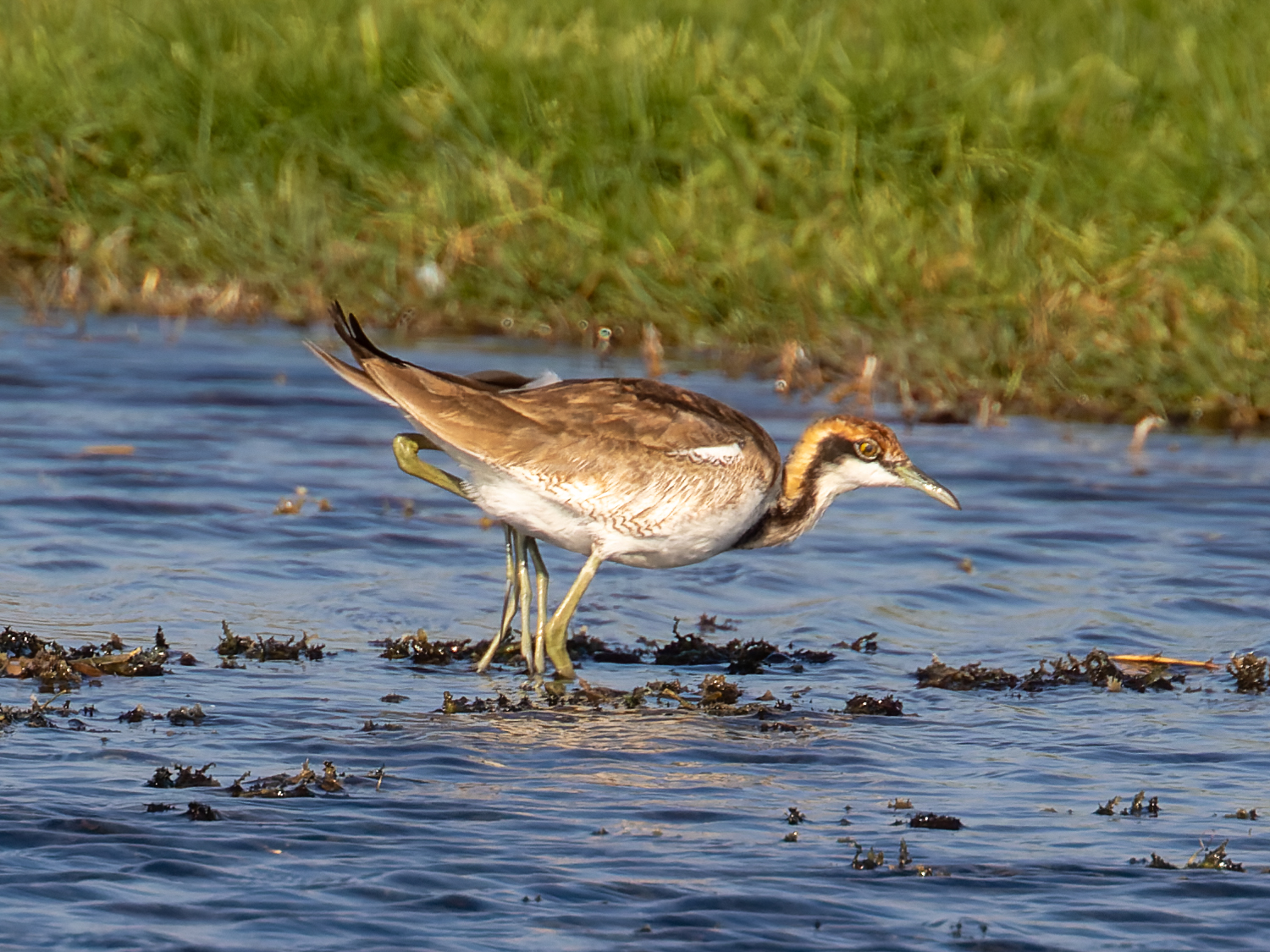
Pheasant-tailed Jacana (Hydrophasianus chirurgus). Image by Pete Sutton.
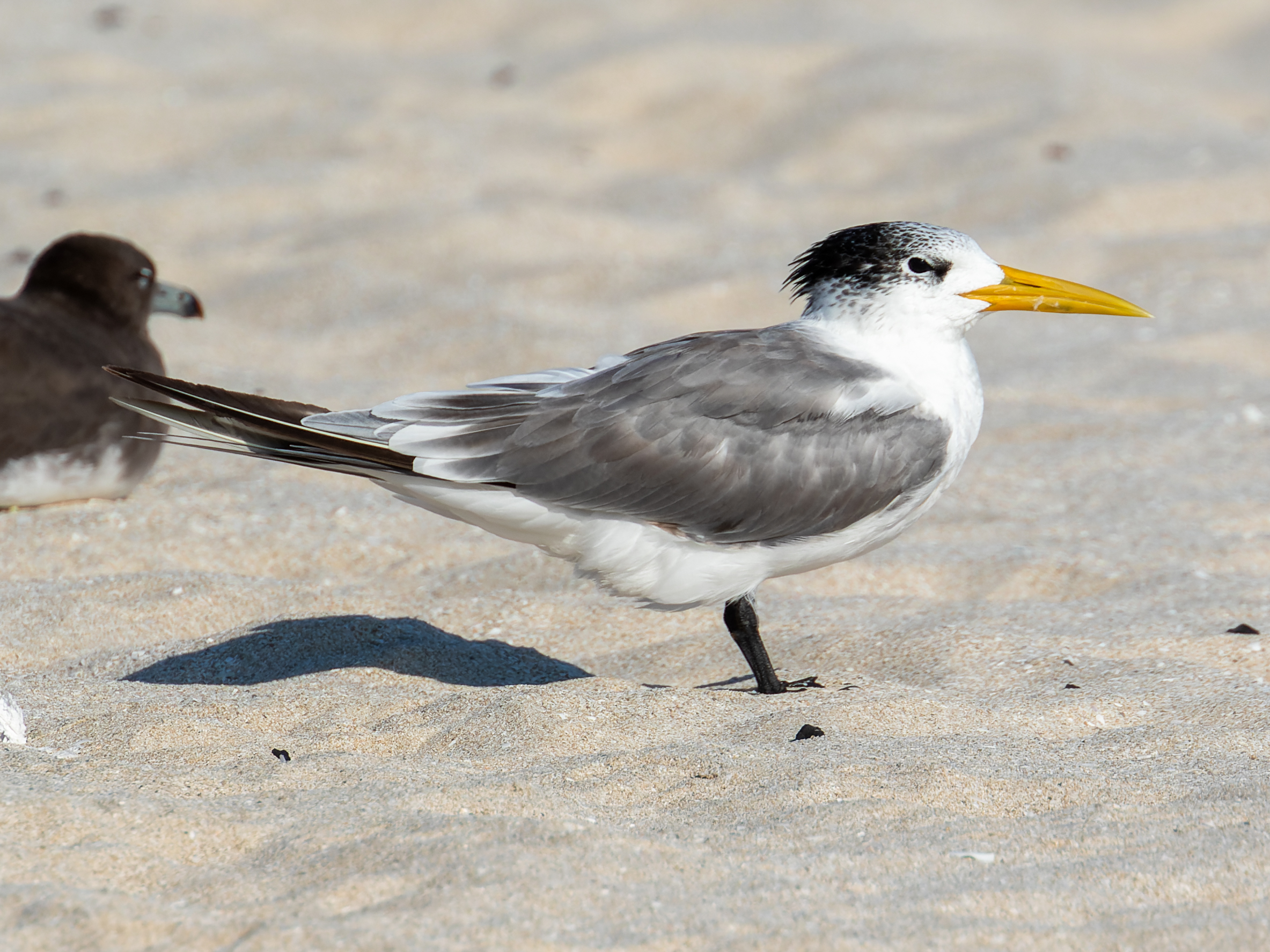
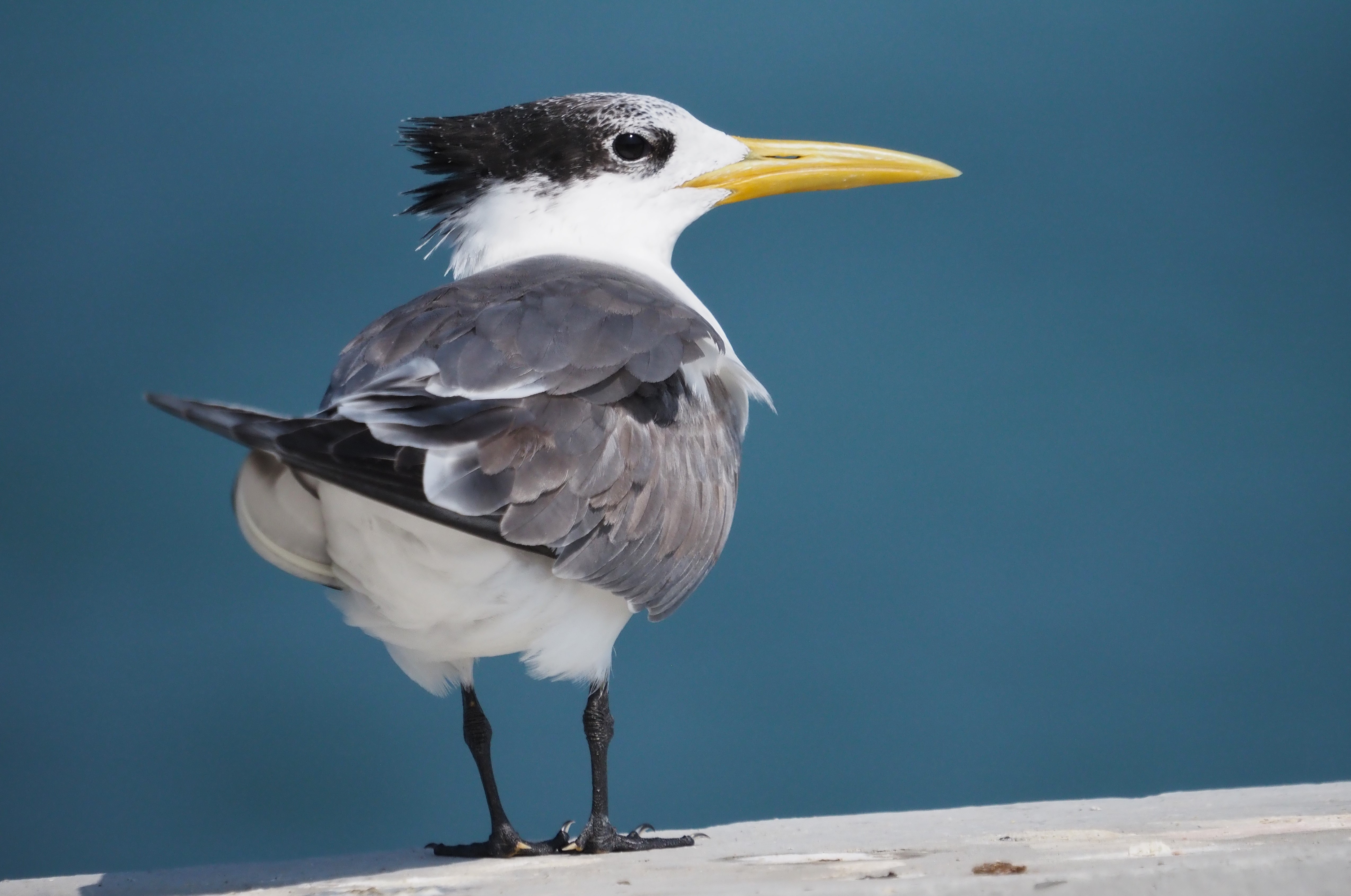
Great Crested Tern (Thalasseus bergii). Image by Pete Sutton.
Glossy Ibises (Plegadis falcinellus). Image by Pete Sutton.
Black-crowned Sparrow-Lark (Eremopterix nigriceps). Image by Pete Sutton.
Arabian Cobra (Naja arabica) by Pete Sutton.

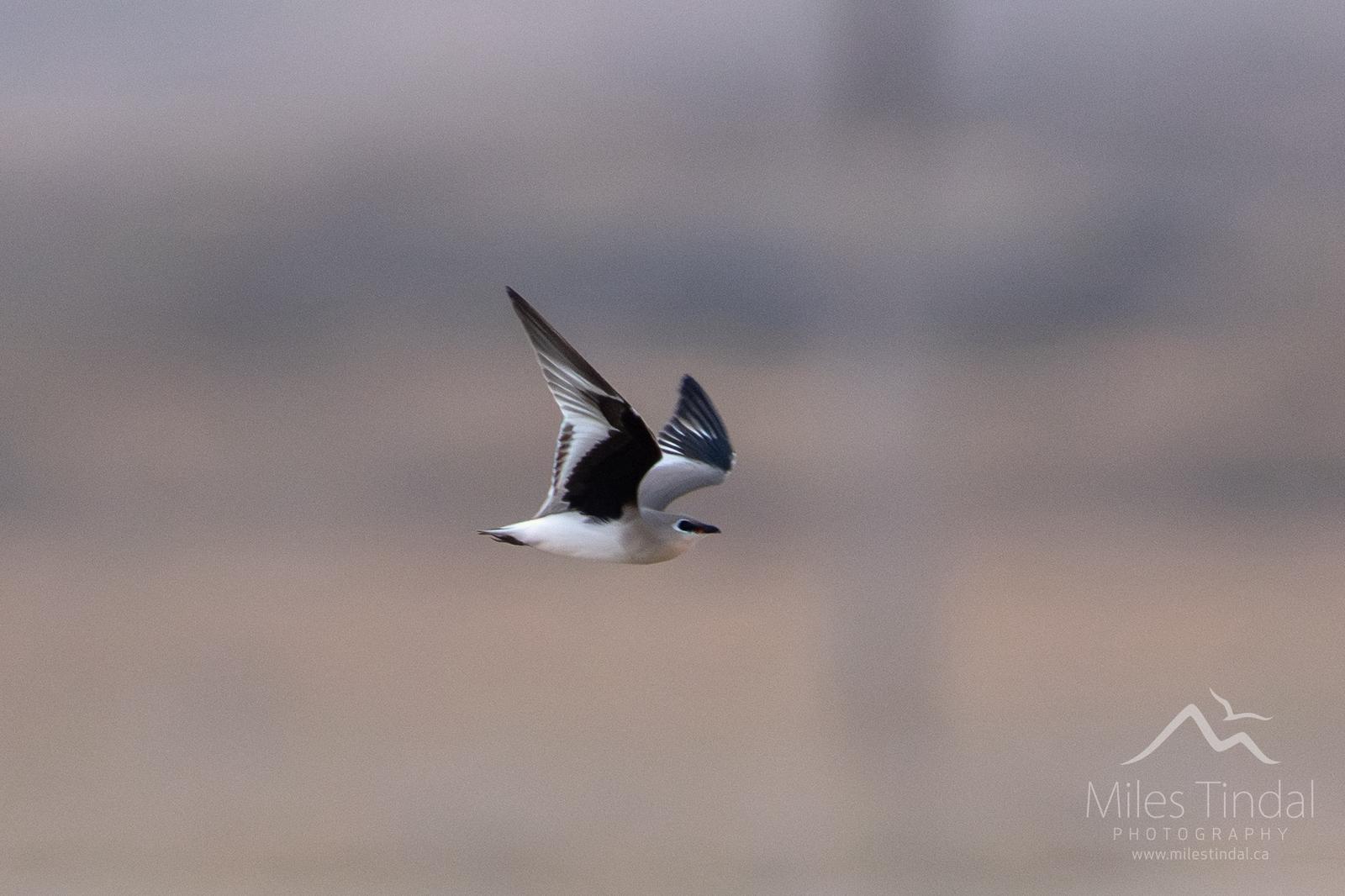
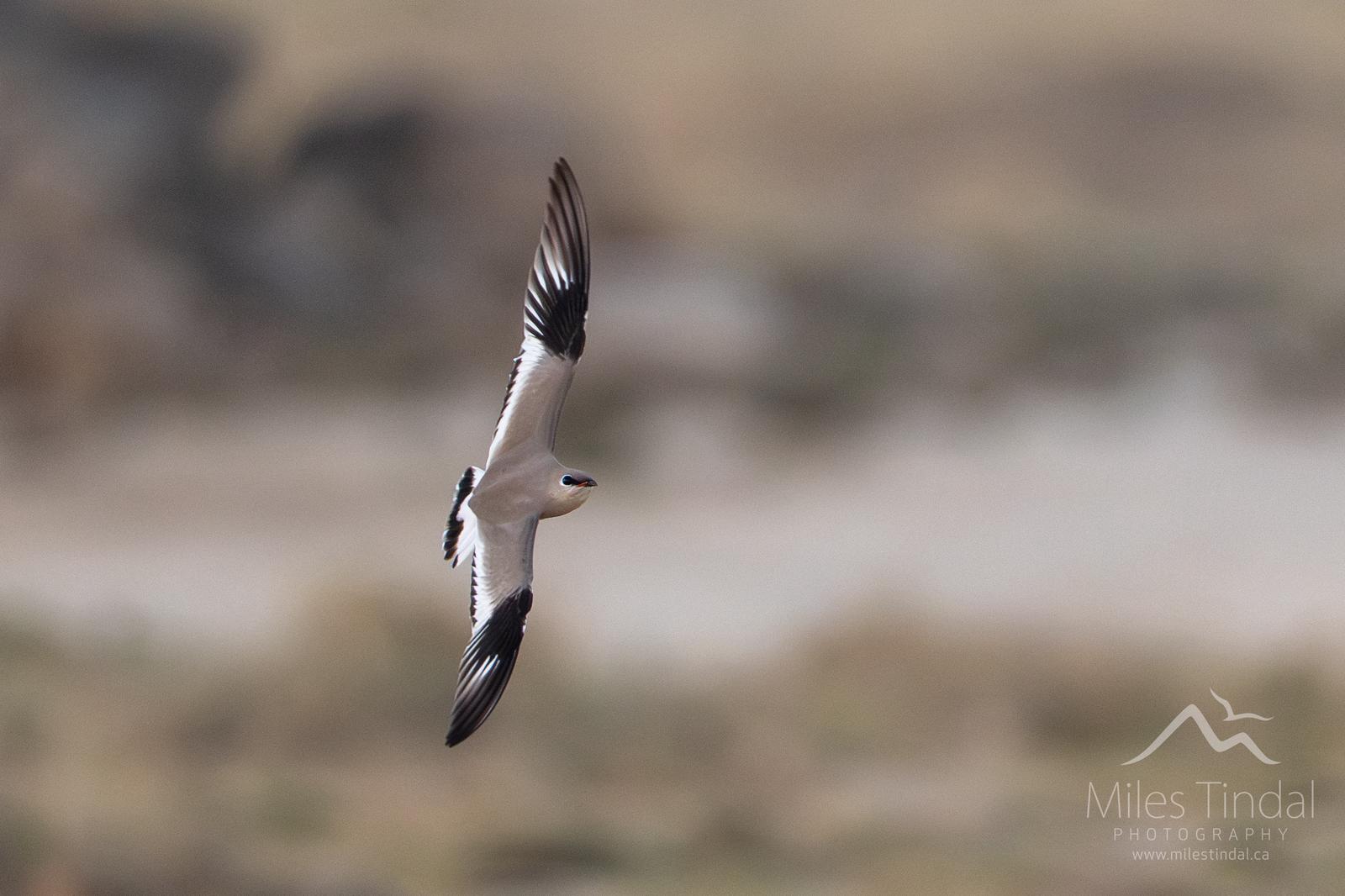
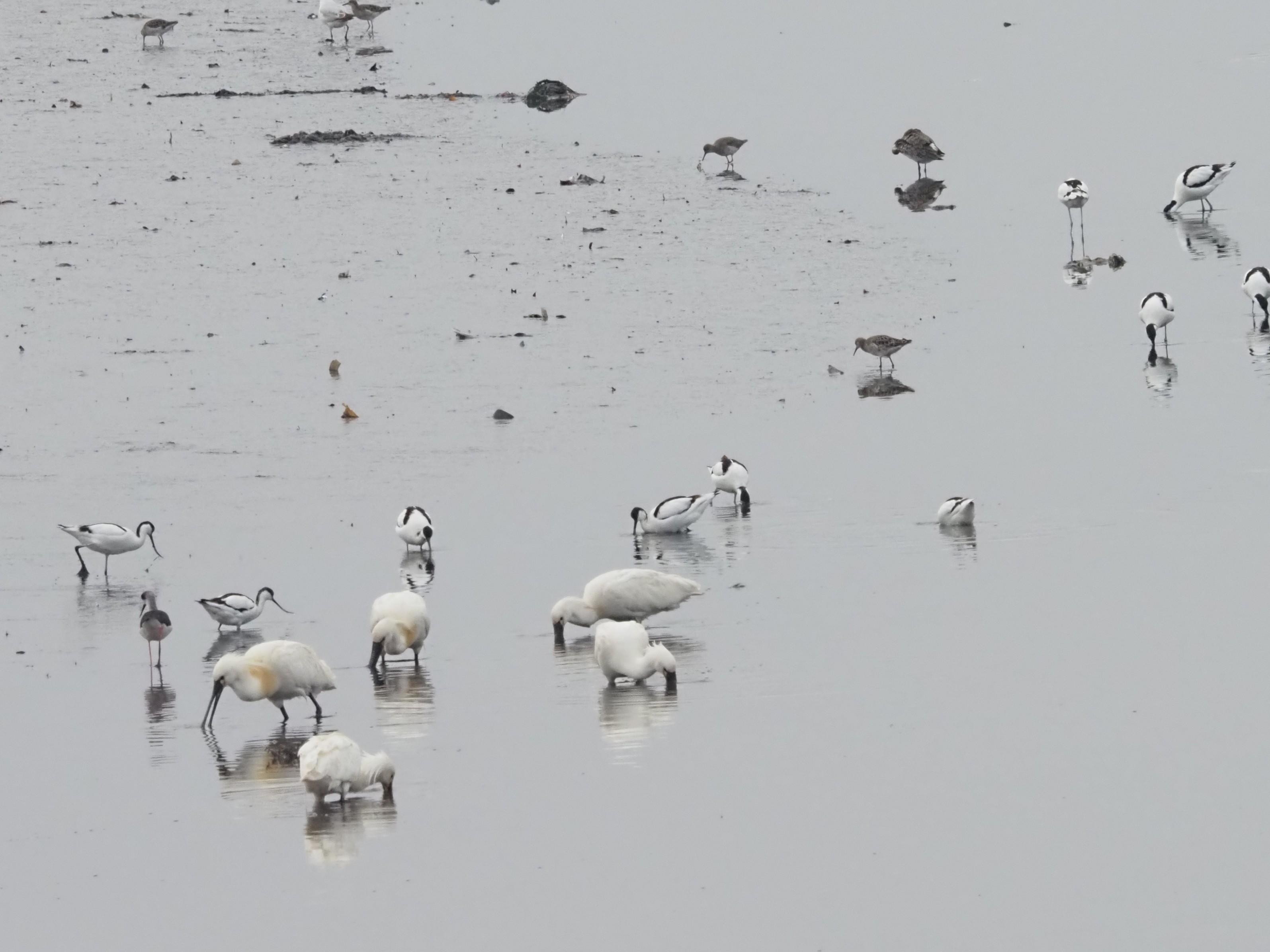
Well, still over excited about the Cobra, we finally arrived to the our third river mouth that afternoon. We were close to the sunset, and the river mouth full of activity with 12 Spoonbills, Clamorous Reed Warbler, White-winged Black & Gull-billed Terns and a nice variety of other birds. Here Sergi found a nice Yellow Bittern and we all enjoyed this tiny beauty before a small flock of Rose-coloured Starling emerged to stop at the top of a dead tree. As the Golden Hour was getting pass to sunset, a large flock of Swallows arrived to the reedbed. We counted about a dozen Barn Swallows along with 6 Pale Crack Martins and 1 Sand Martin. We kept an eye around and, suddenly, a lovely Small Pratincole just emerged from the nothing. We got amazing views on it, but at some point there two Small Pratincoles, and later three of them that were flying even among us!! This was an amazing moment, and it was ranked as one of the birds of trip. Tiny contingents of Rose-coloured Starlings were still flying around, moving along with Common Mynas to their roosting places, and we were about to leave when Joe just found an European Red-rumped Swallow! It was actually a new bird for our trips in Oman. Amazing tick!!

The light was almost gone but the day was not done yet! Back to the vehicles, still in magic after the Pratincoles and so and on, we moved into the hillsides. Our goal was to explore a large Aïn during the night, hoping for some Owls..

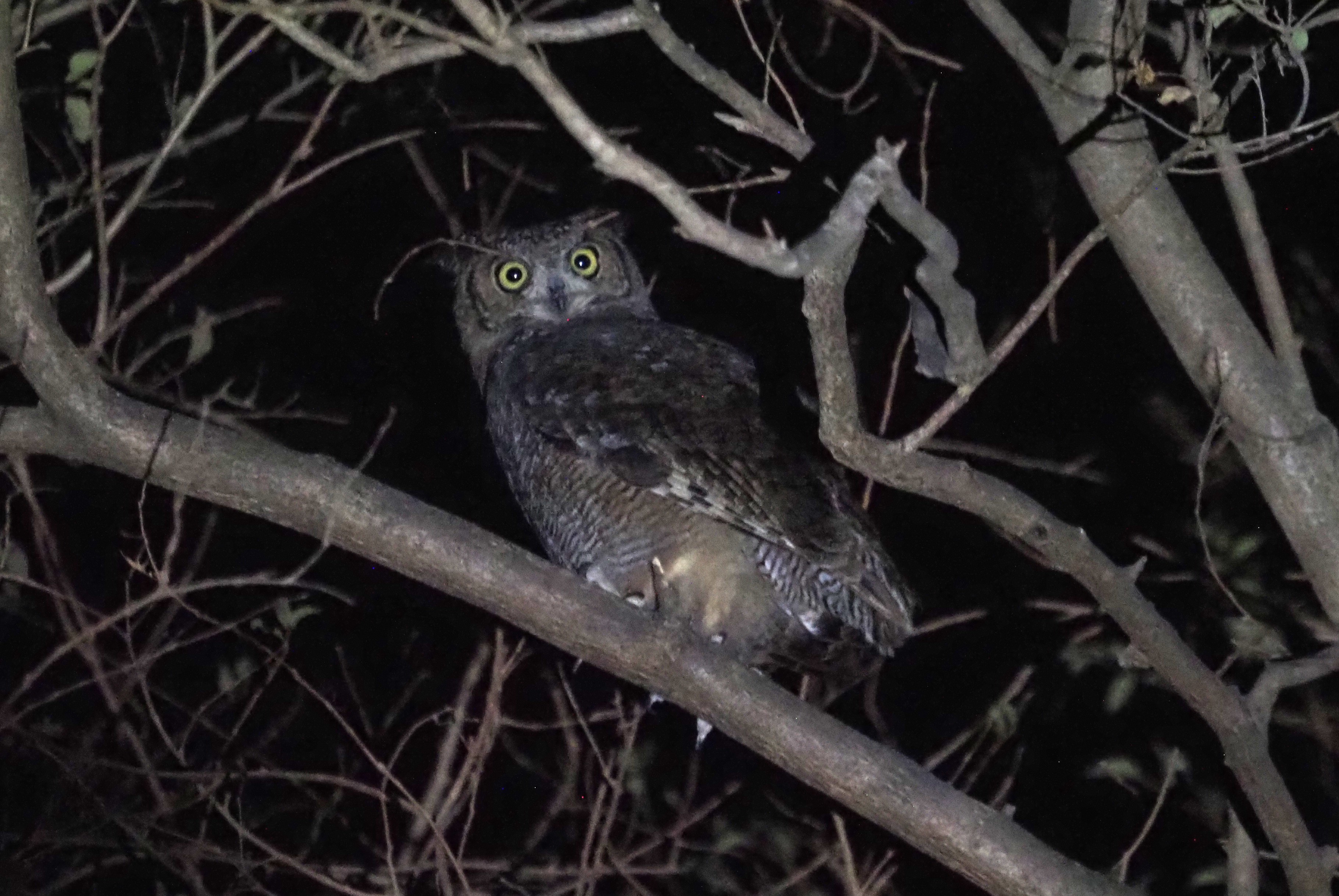
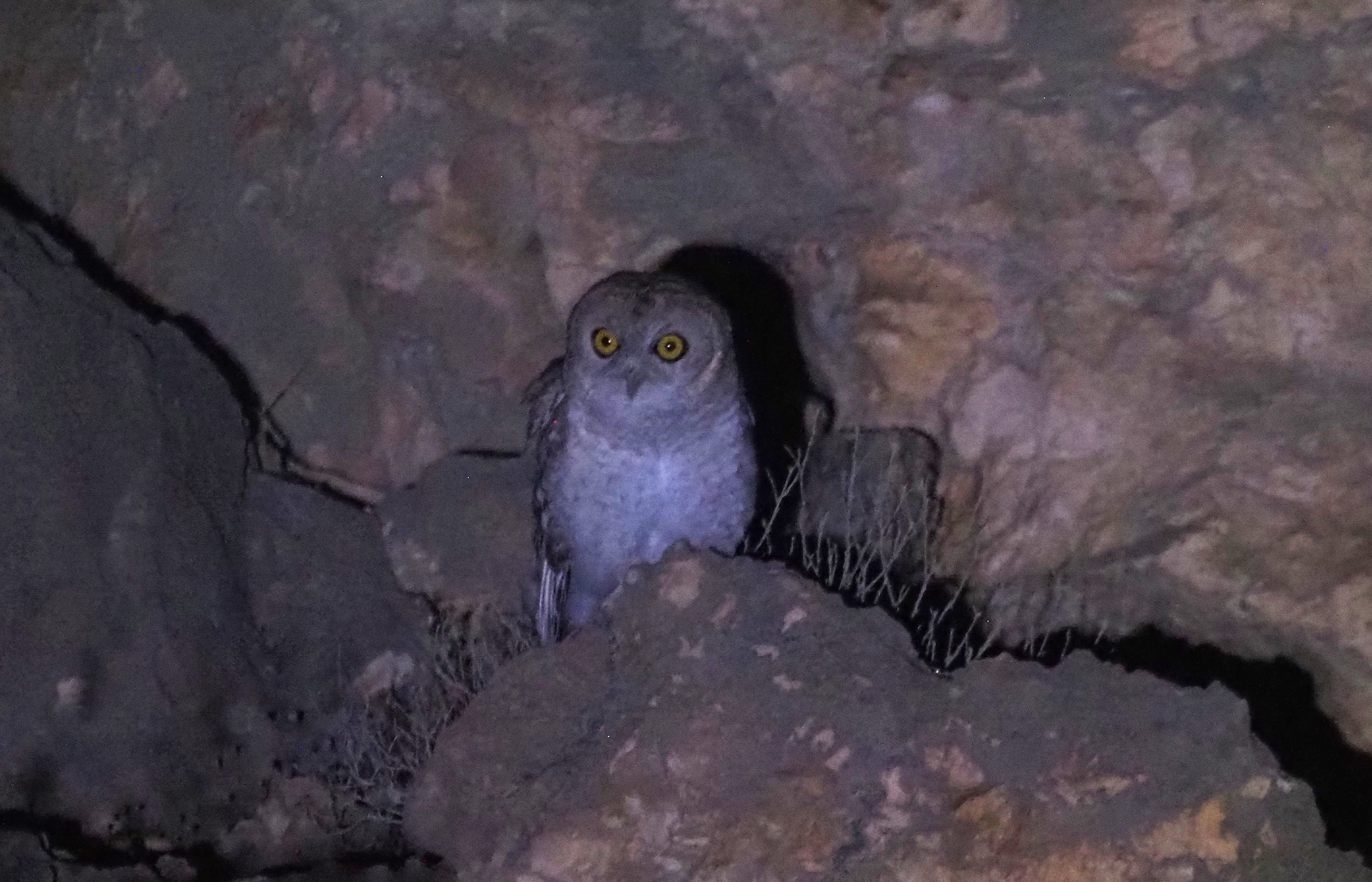
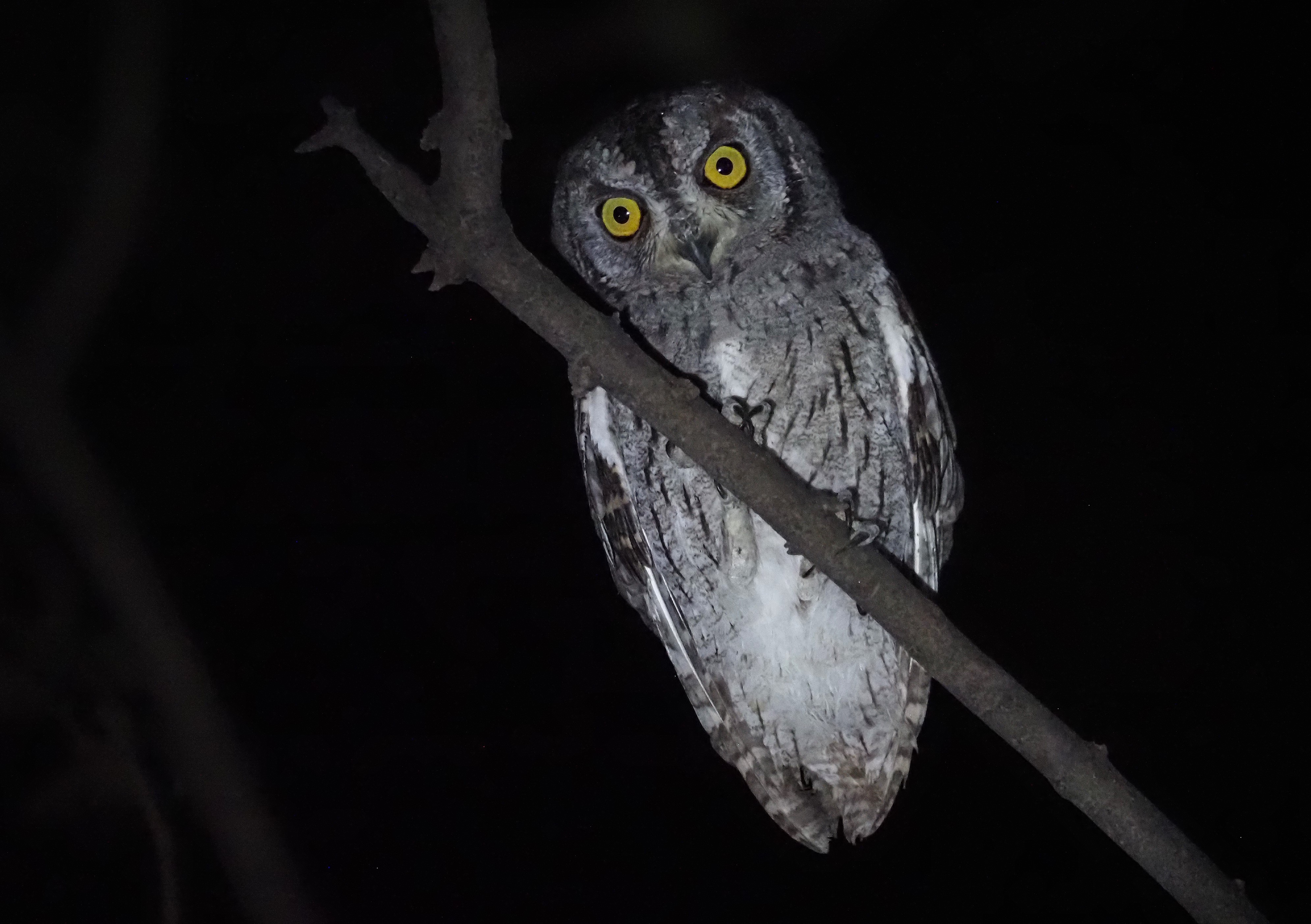
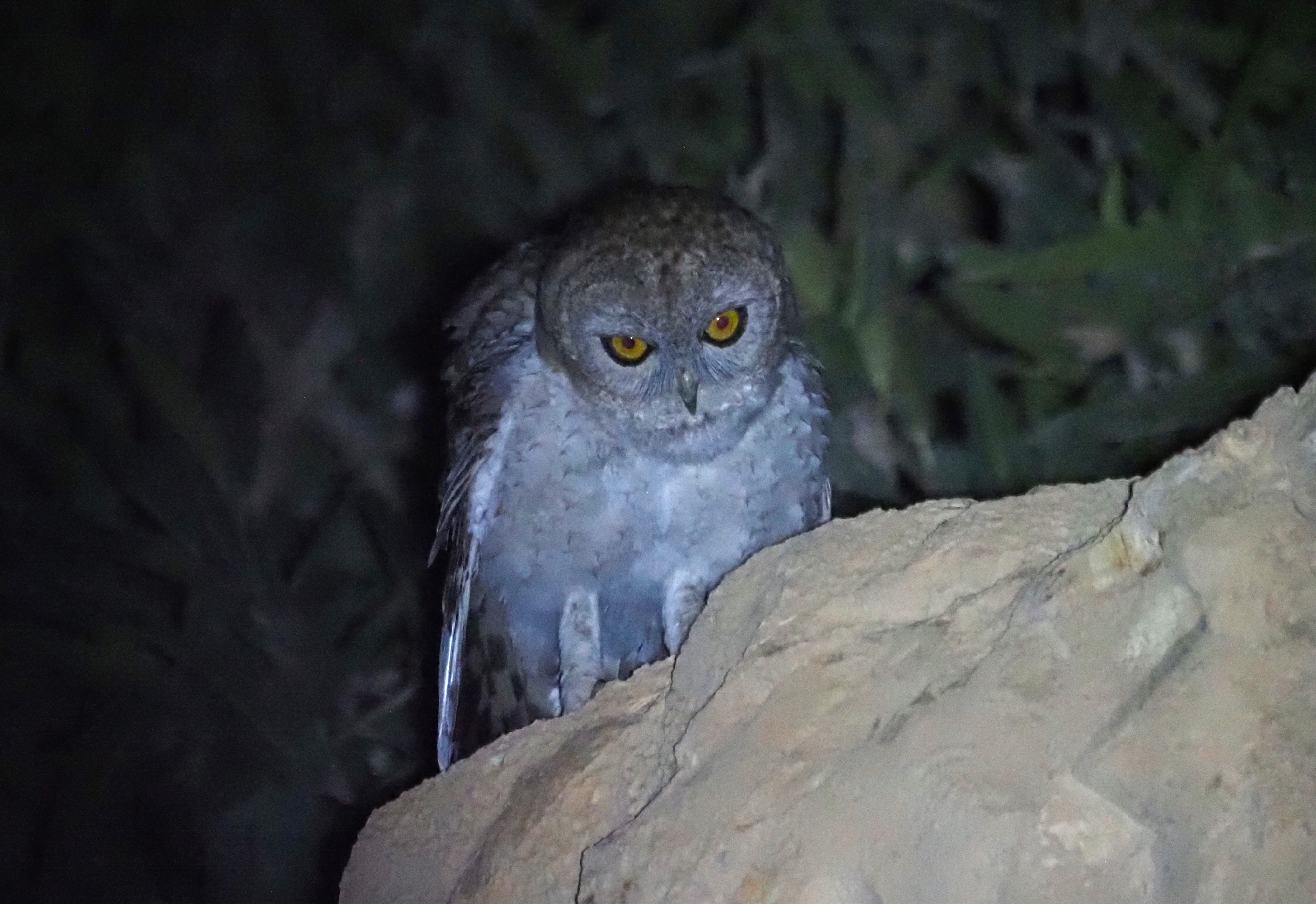
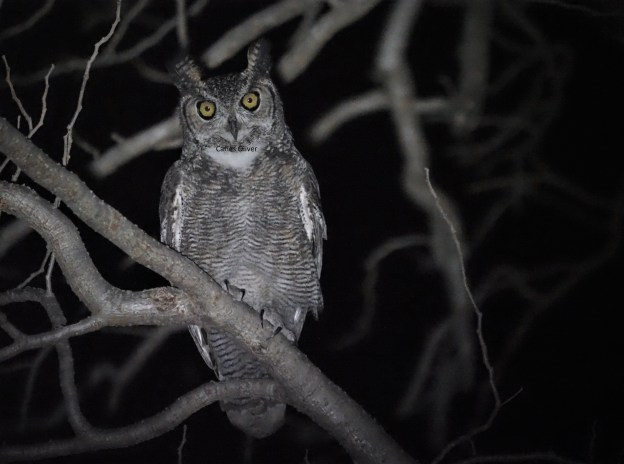
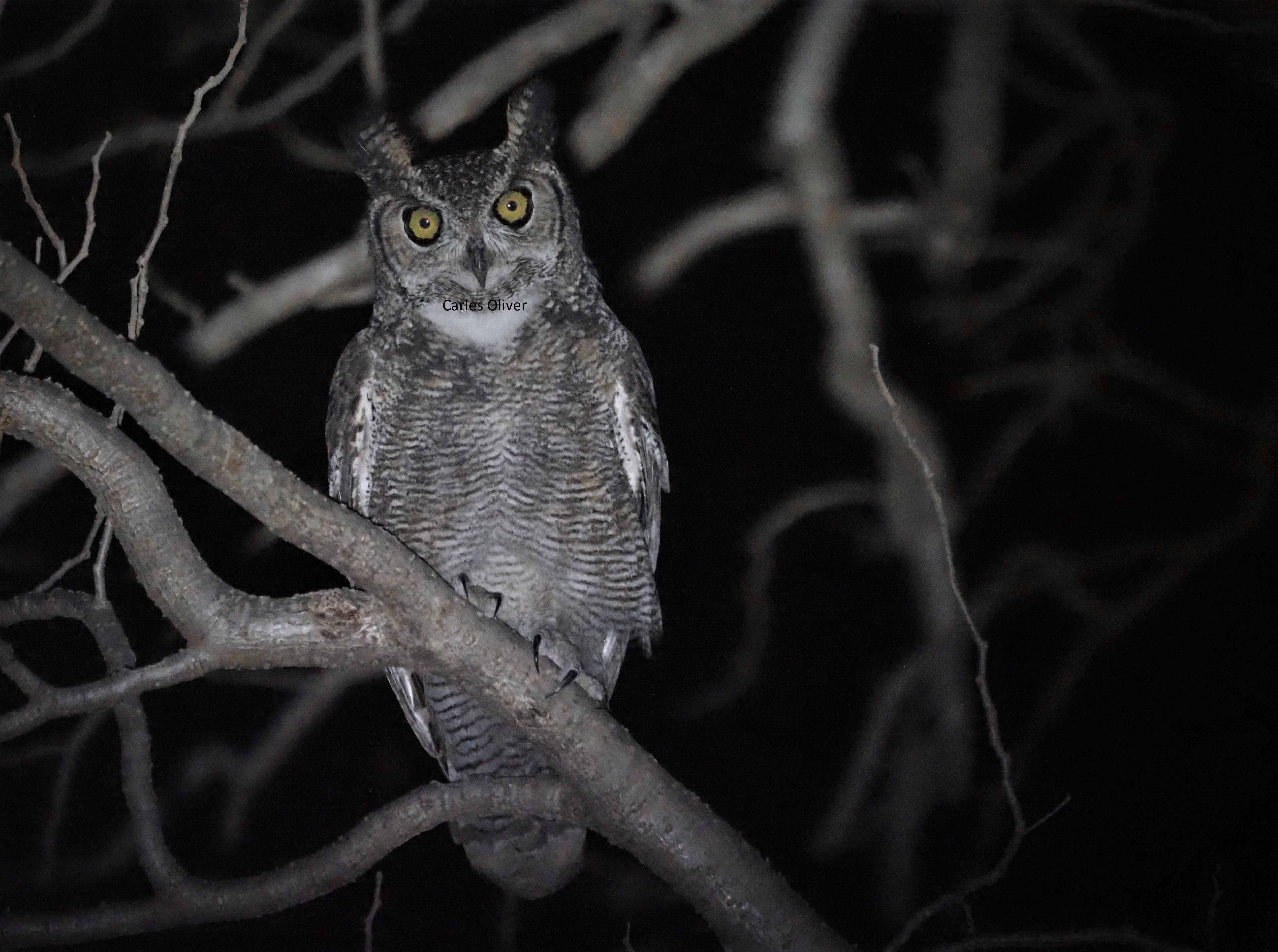
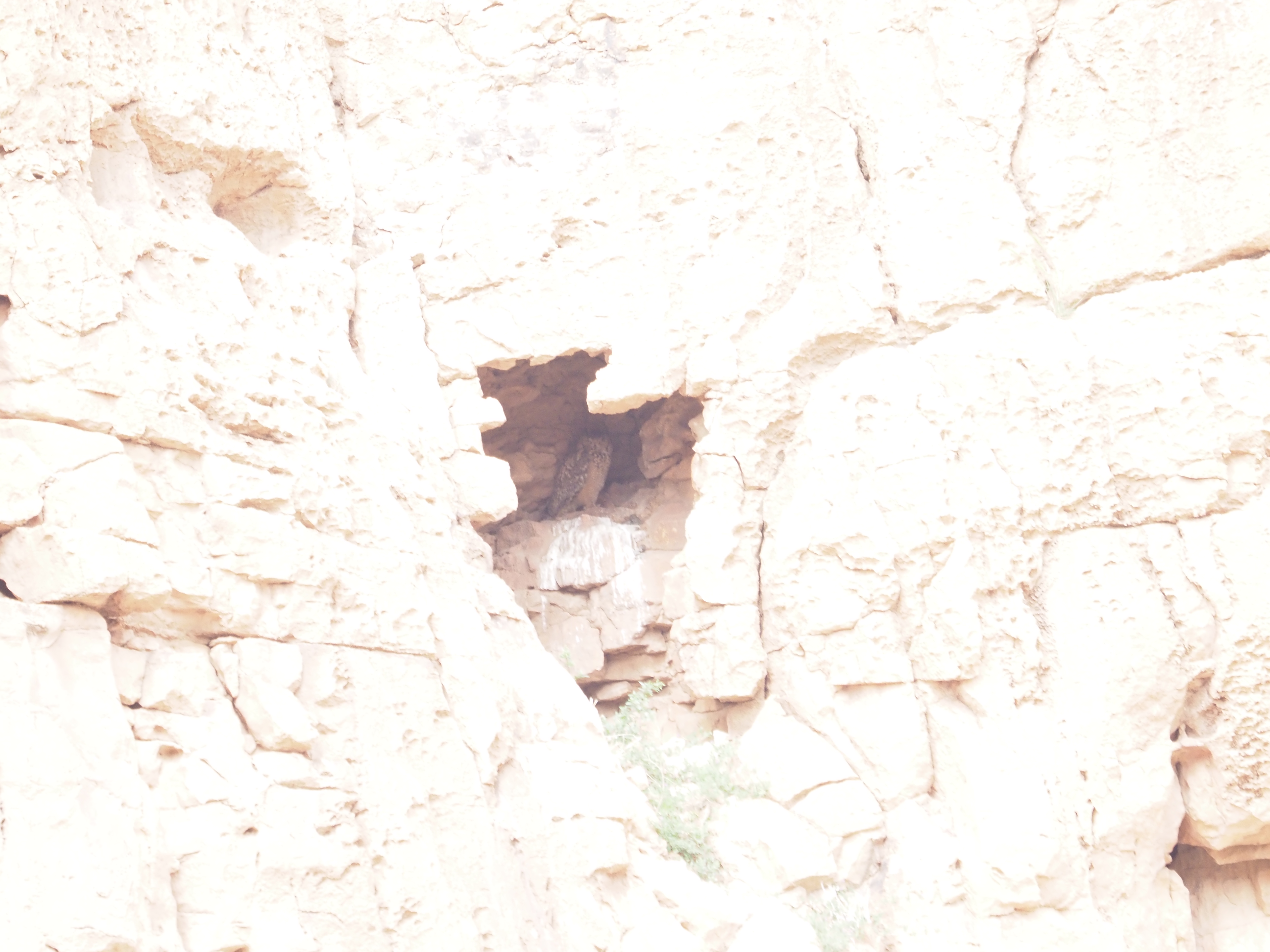
We arrived to the selected place just after dark. It didn’t take long before we heard some Arabian Scops Owls singing in the slopes. Here we also heard a Night Heron. After a couple of trials, we finally got close enough to one of them, and in a few minutes the whole group was enjoying amazing views on 1 Arabian Scops Owl. Not happy only with this we moved a bit into not a very promising place, but after a couple of minutes we could heard 1 Arabian Eagle Owl singing up in the slope. It took us some effort, but we finally got very nice scope views on Arabian Eagle Owl, singing its heart out while a second bird was replaying it at the other side of a small quarry-like place.

The group could not be more happy, and after enjoying such a good views we decided to go back to the accommodation. We were all just commented the many, many wonderful species of the day when suddenly a pack of 7 Arabian Wolves just crossed the road in front of us. Again, a bit of speed was necessary to catch up with us, but only 10 seconds after they crossed we were out with the lights, and everyone in the group had very nice views on these rather small Wolves as they were moving around and jumping the vegetation. A couple of them stood longer than the rest, looking at us only 100 metres away, and this is for sure of the most incredible sights of the trip!

Still not believing how well we saw these Wolves, we just came back to the accommodation. What-a-day!!

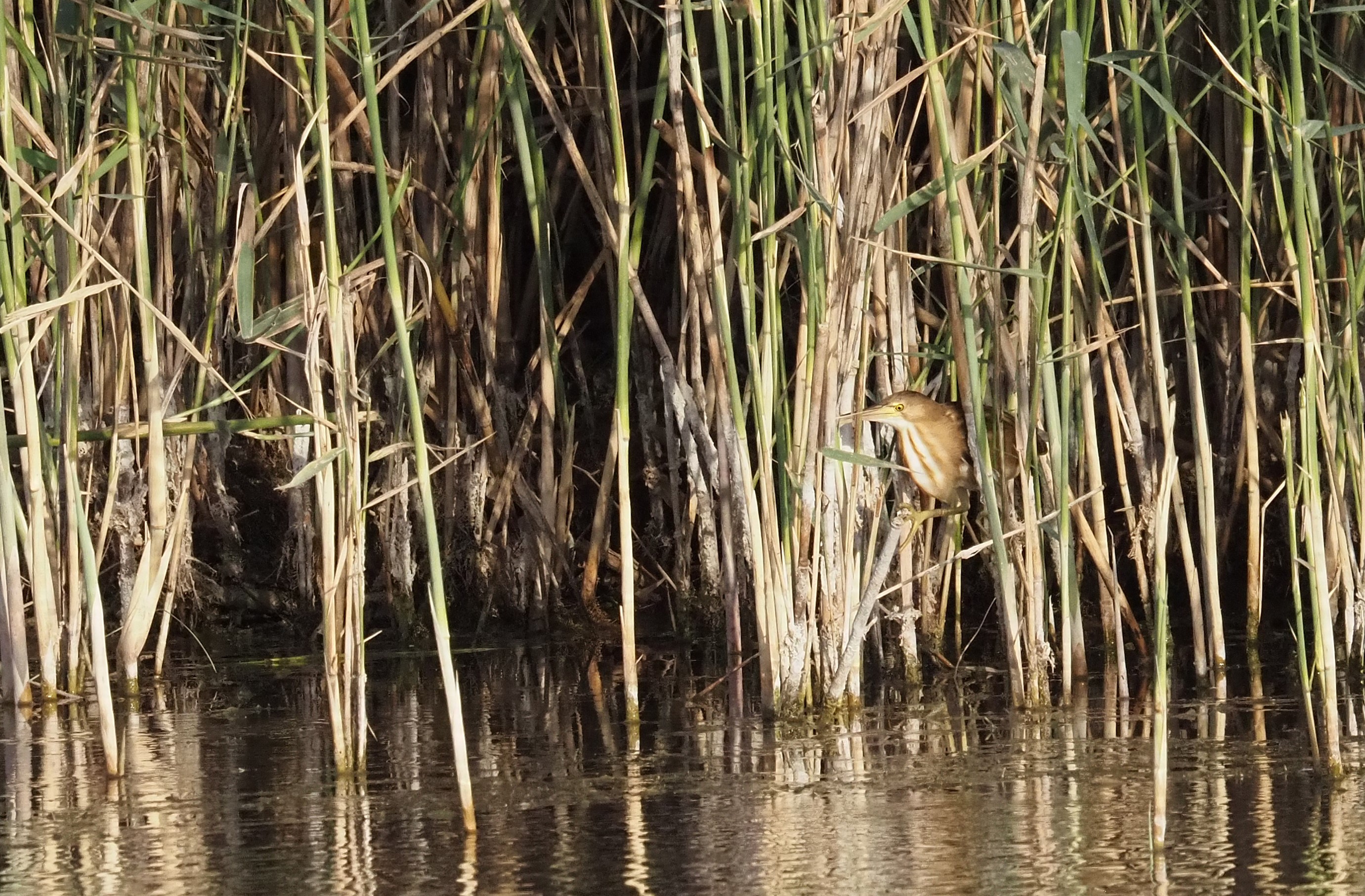
Yellow Bittern (Botaurus sinensis). Image by Pete Sutton.
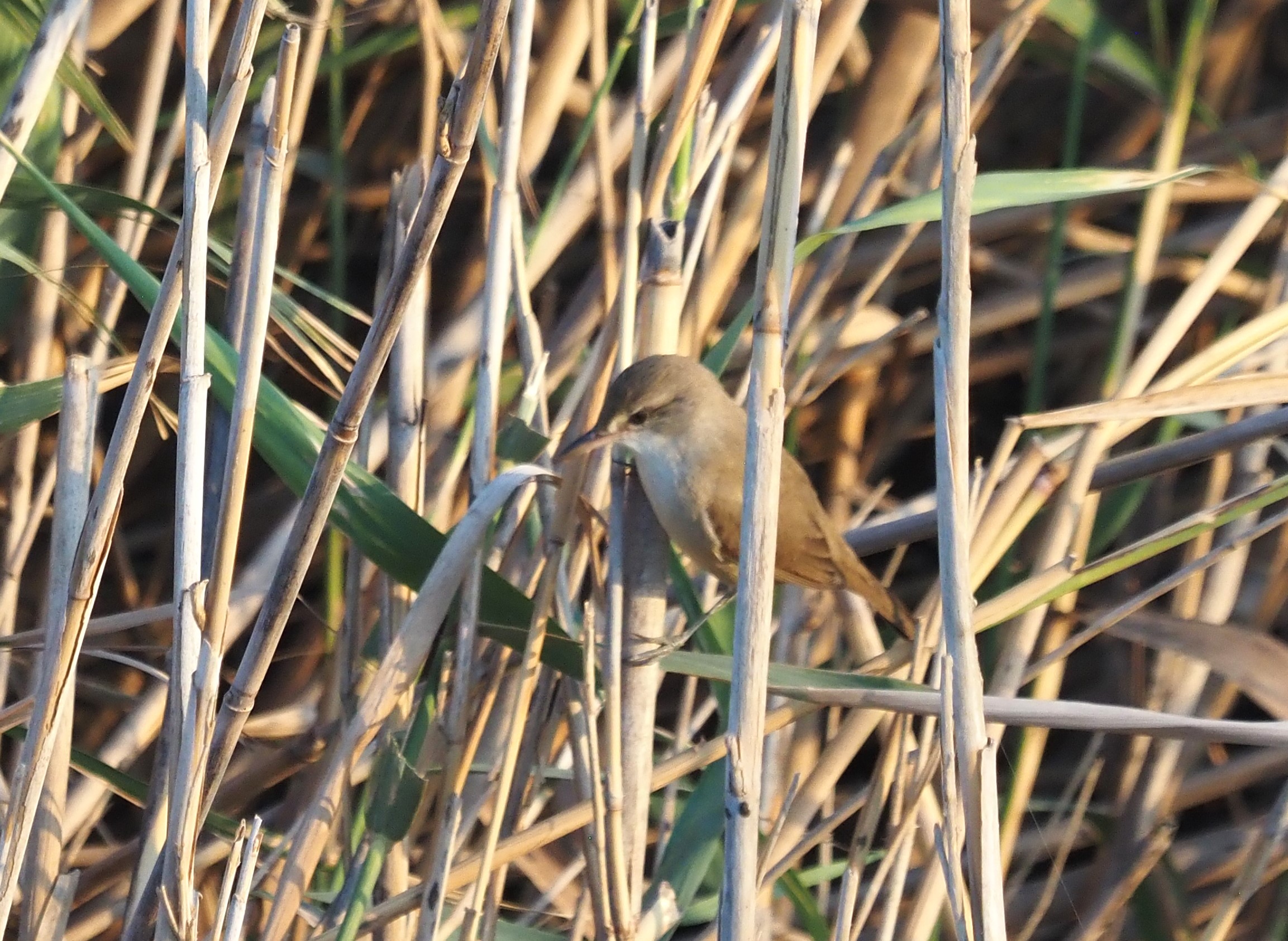
Clamorous Reed Warbler (Acrocephalus stentoreous). Image by Carles Oliver.
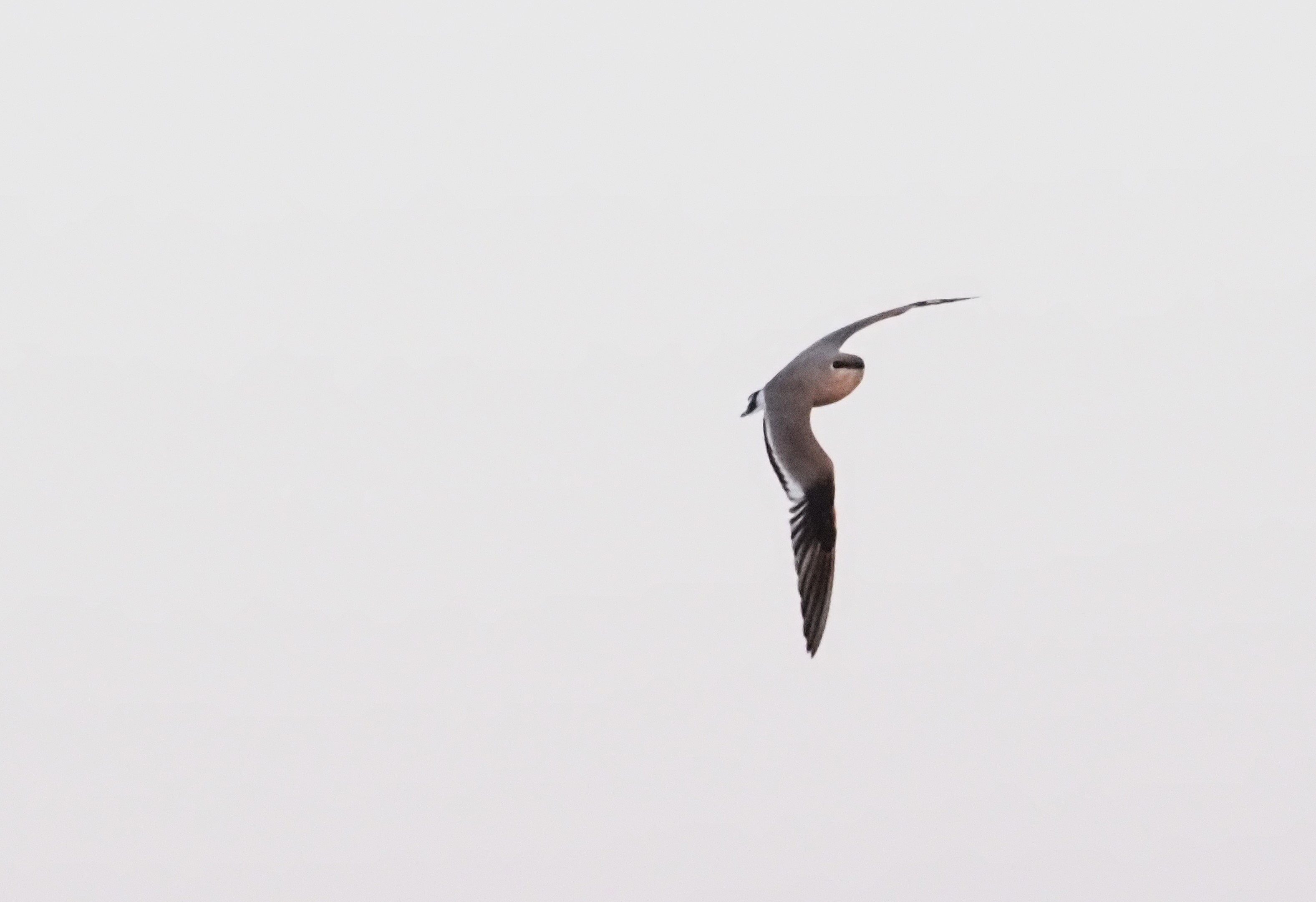
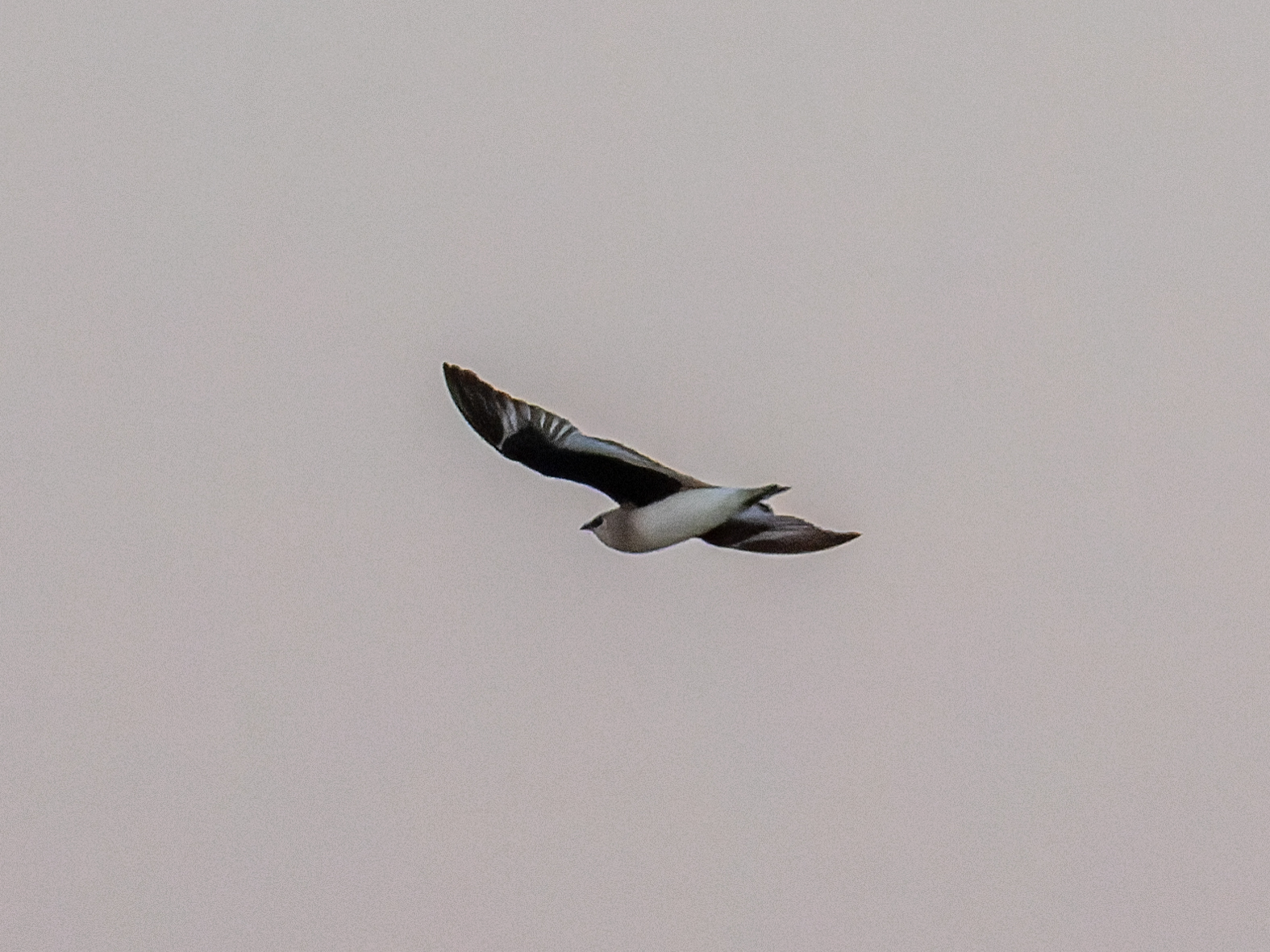
Small Pratincole (Glareola lacteus), frontal image by Carles Oliver.
More on the Small Pratincoles (Glareola lacteus) at sunset. It was delicious to see them flying around us. Image by Pete Sutton.
Small Pratincole in a hard vent with the last light. Image Carles Oliver
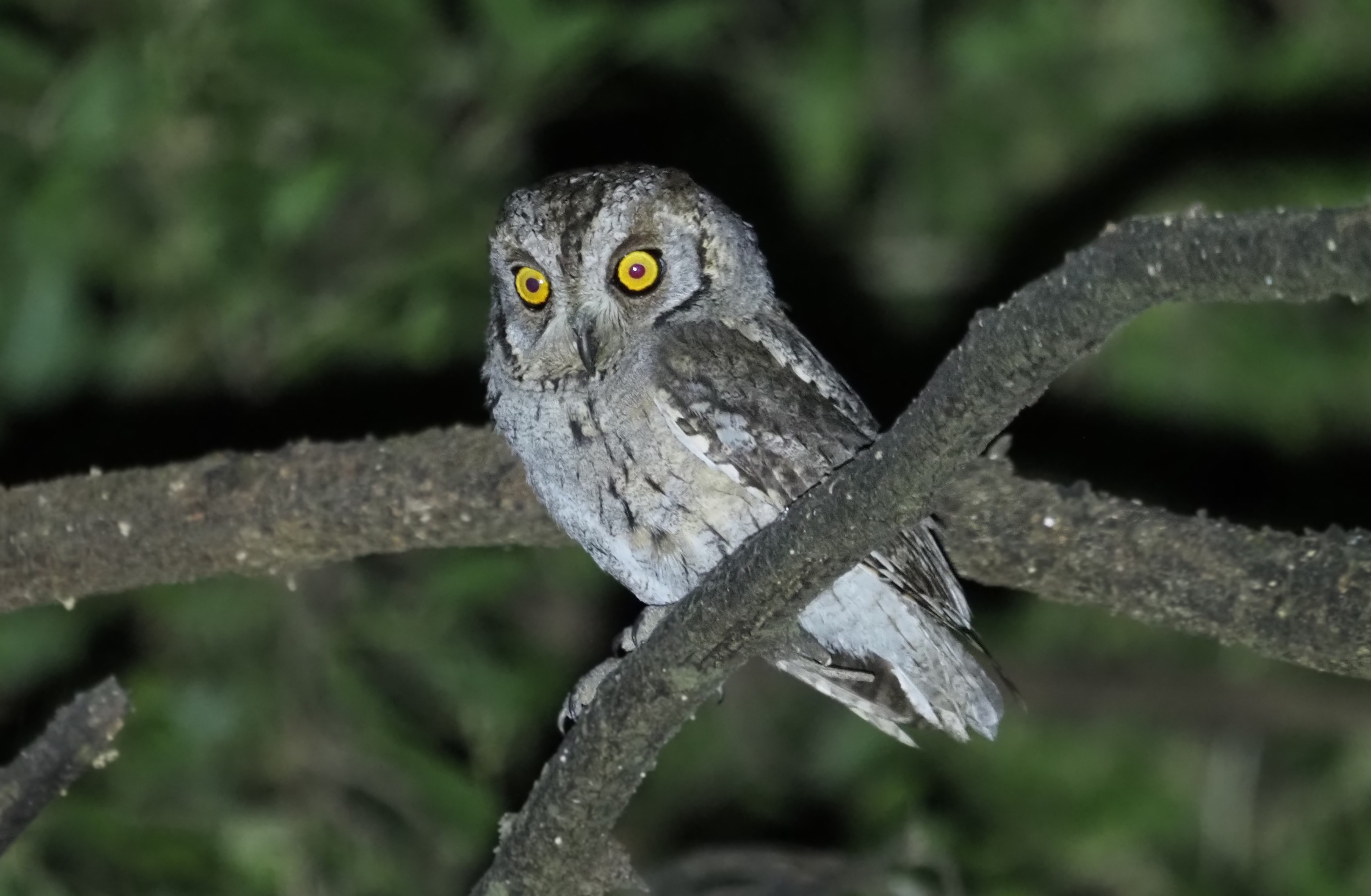
Arabian Scops Owls(Otus pamelae) were as wonderful as always! Image by Carles Oliver.

Day 5. About to start another day, and we were all intriguing about what was Oman having for us that day? After breakfast we drove up in the high plateau, where a number of goodies were waiting for us. But even before leaving Salalah we got a nice surprise; a flock of Alpine Swifts flying low above the motorway!

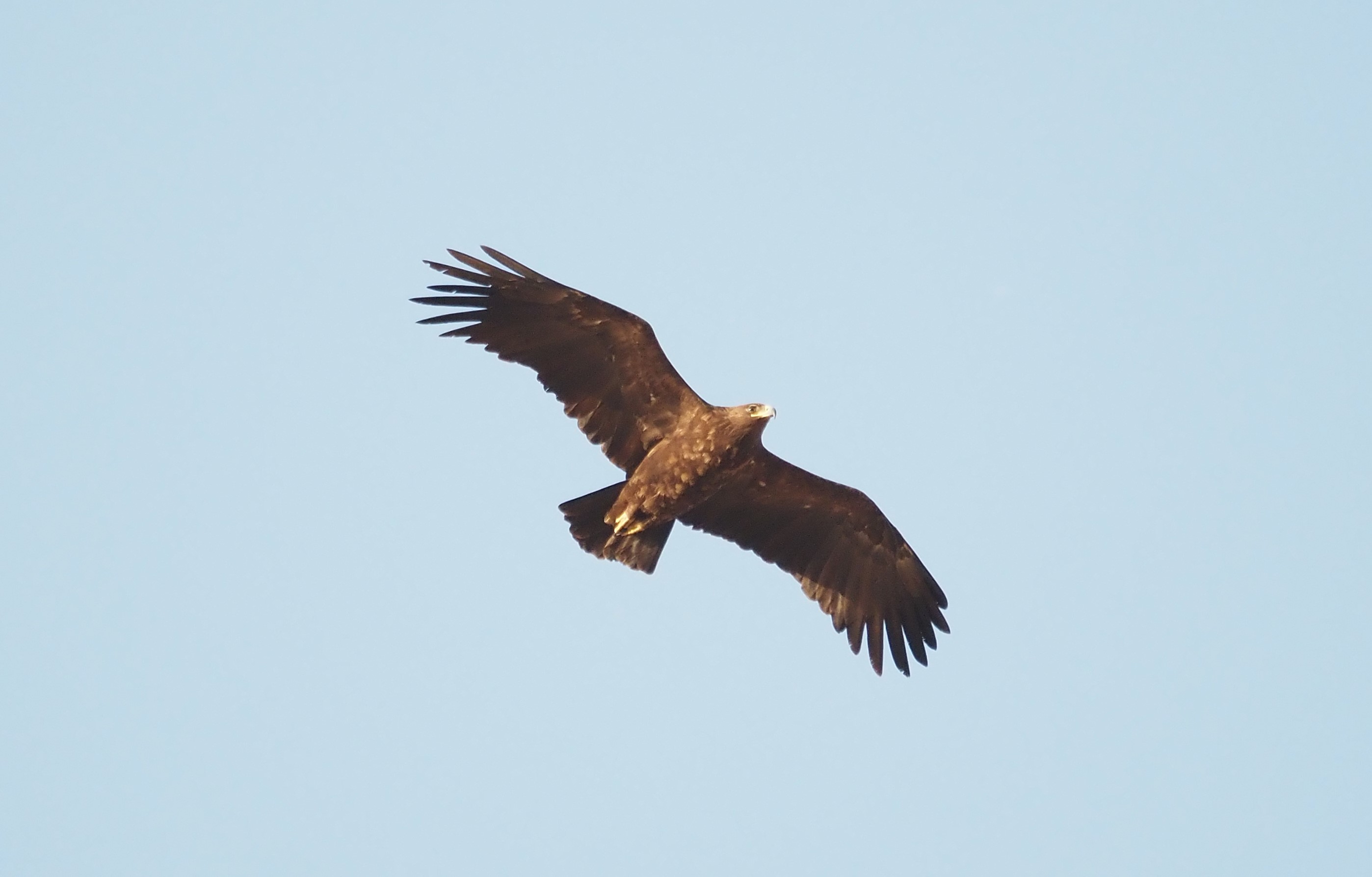
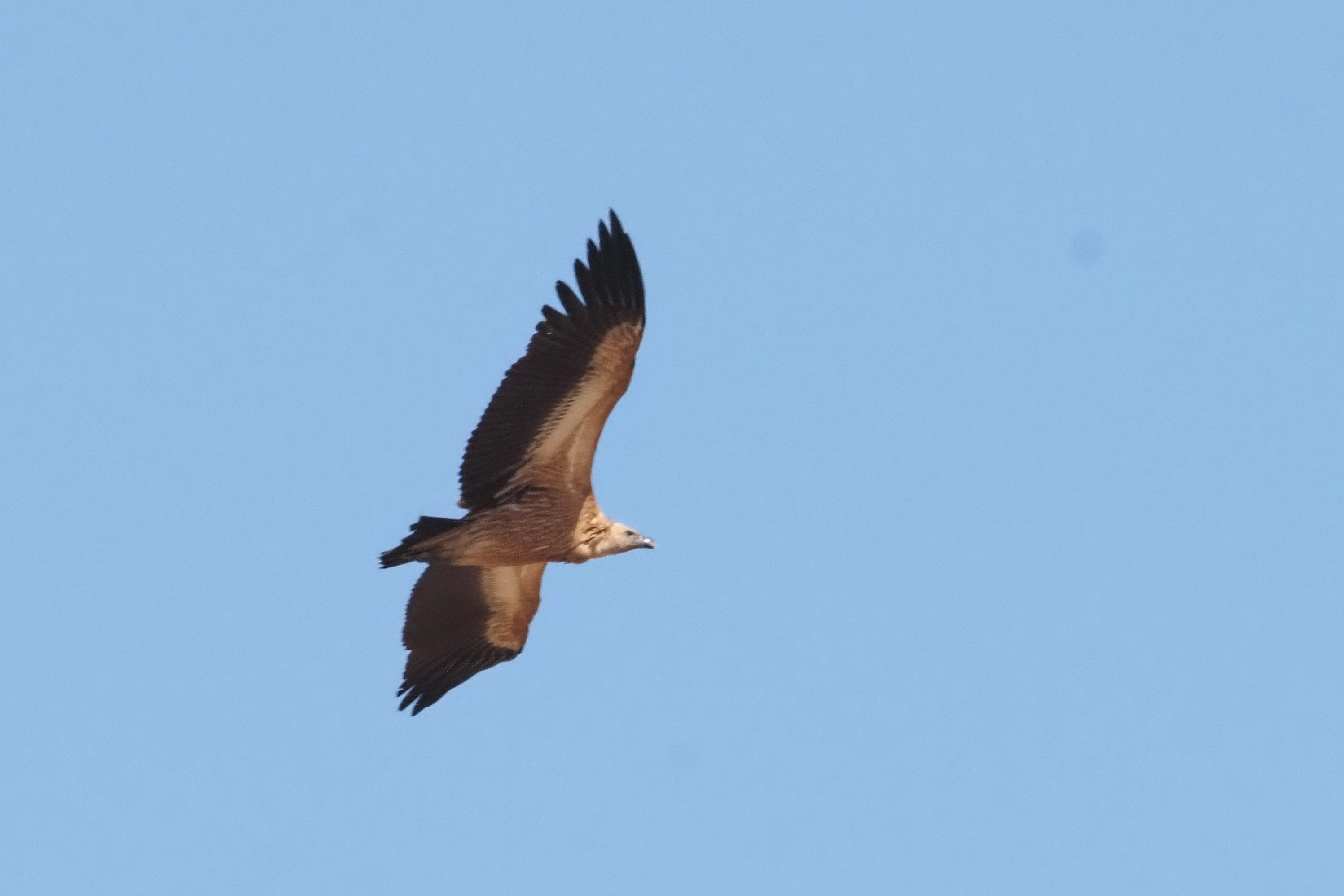
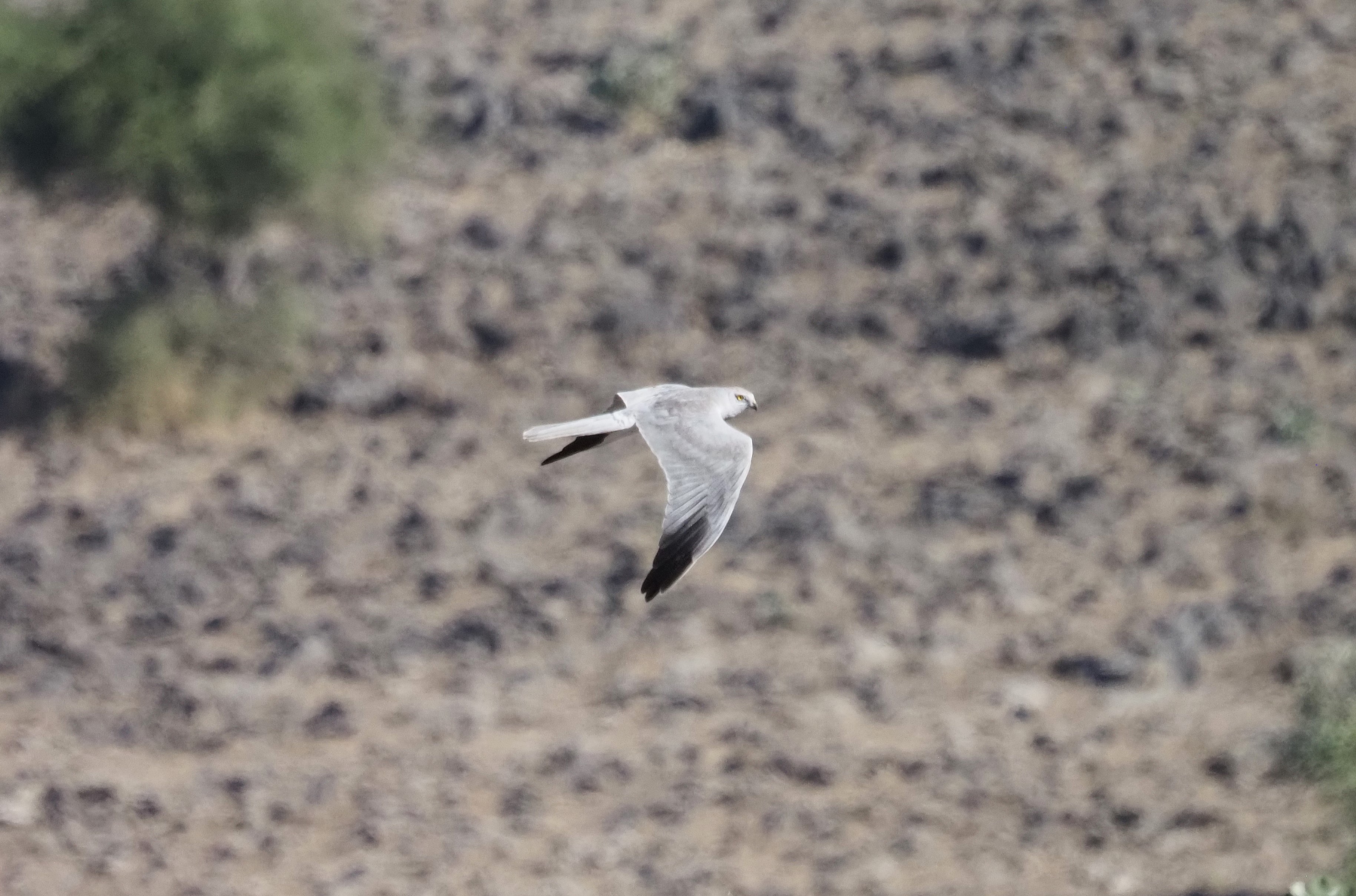
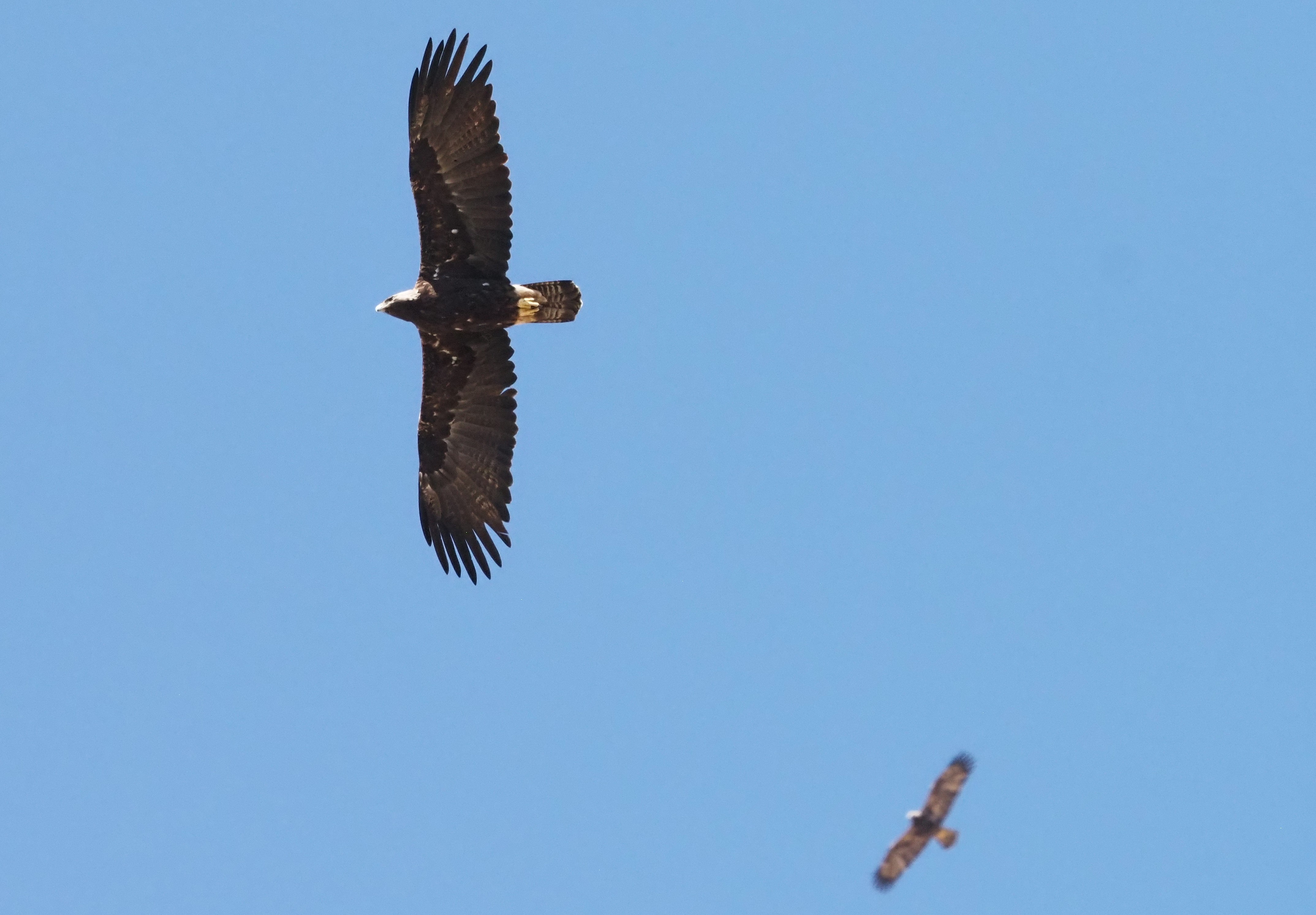
This plateau stands between 700 and 900 metres above sea level, and runs parallel to the Dhofar coast. As soon as arrived to the highlands, we started to have nice birds. Tree Pipits and Cinnamon-breasted Buntings were moving in small flocks and Fan-tailed Ravens were all around the sky, often joined by Tristam’s Starlings. Up in the sky, we got nice views on Steppe Eagles, and a few Eastern Imperial Eagles were not high up but on the posts along the road or even feeding on the ground! They provided great views that everybody enjoyed very much. A nice Siberian Stonechat was also a nice pick up, and again provided really close views for the enjoyment of the photographers in the group. Following the lane, we noted a couple of Booted Eagles circling right before a superb male Pallid Harrier showed up flying really low on the slopes. A Short-toed Eagle took over, providing good views. Now, there were 3 Eastern Imperial Eagles going West, and a small flock of Steppe Eagles was circling. At this point, 4 Eurasian Griffons appeared soaring low above our convoy.. We were not even arrived to the first proper stop of the morning when another Pallid Harrier was noted hunting in the plateau. We enjoyed good views again, and could compare this bird with a close Steppe Eagle.

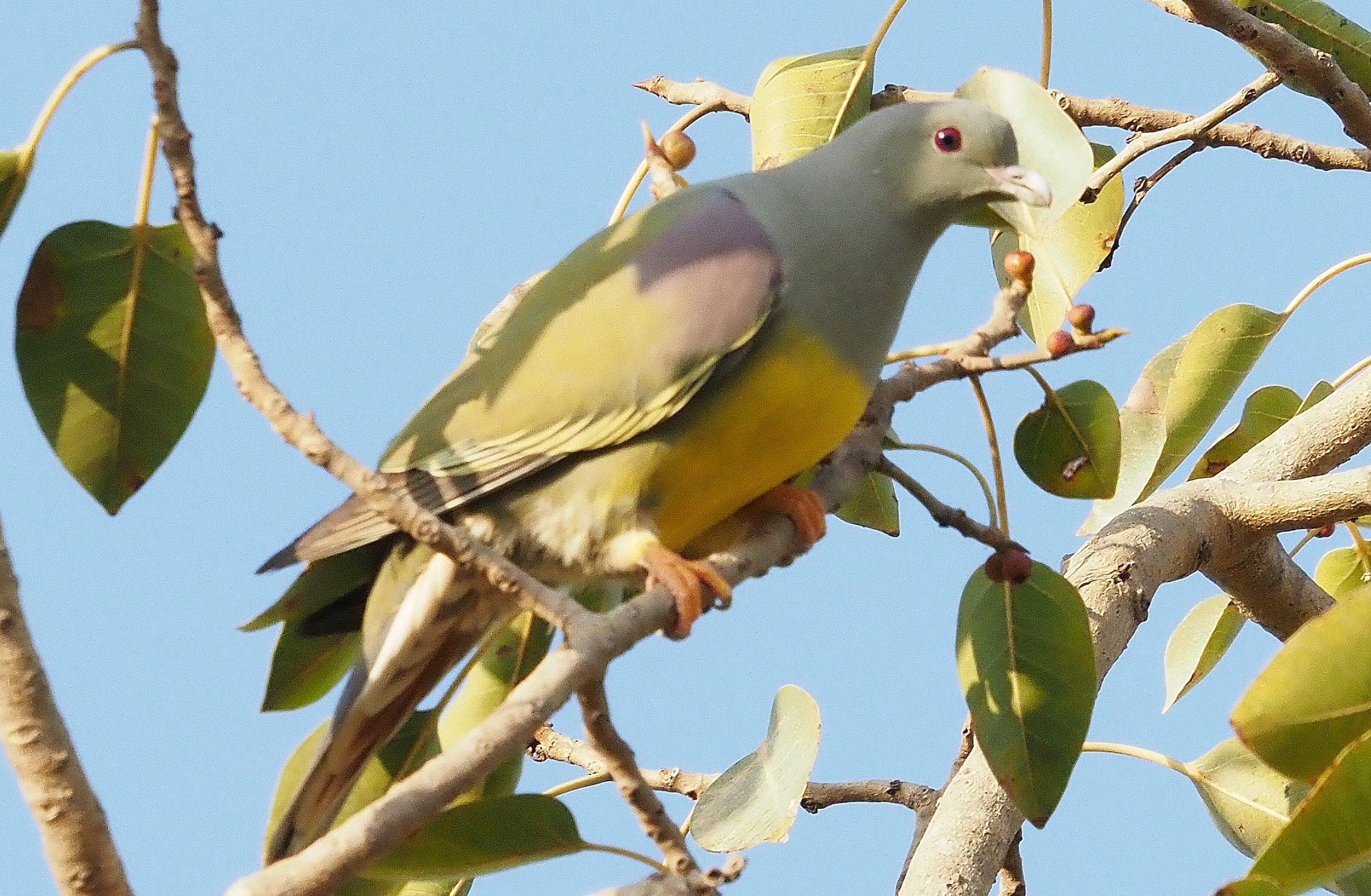
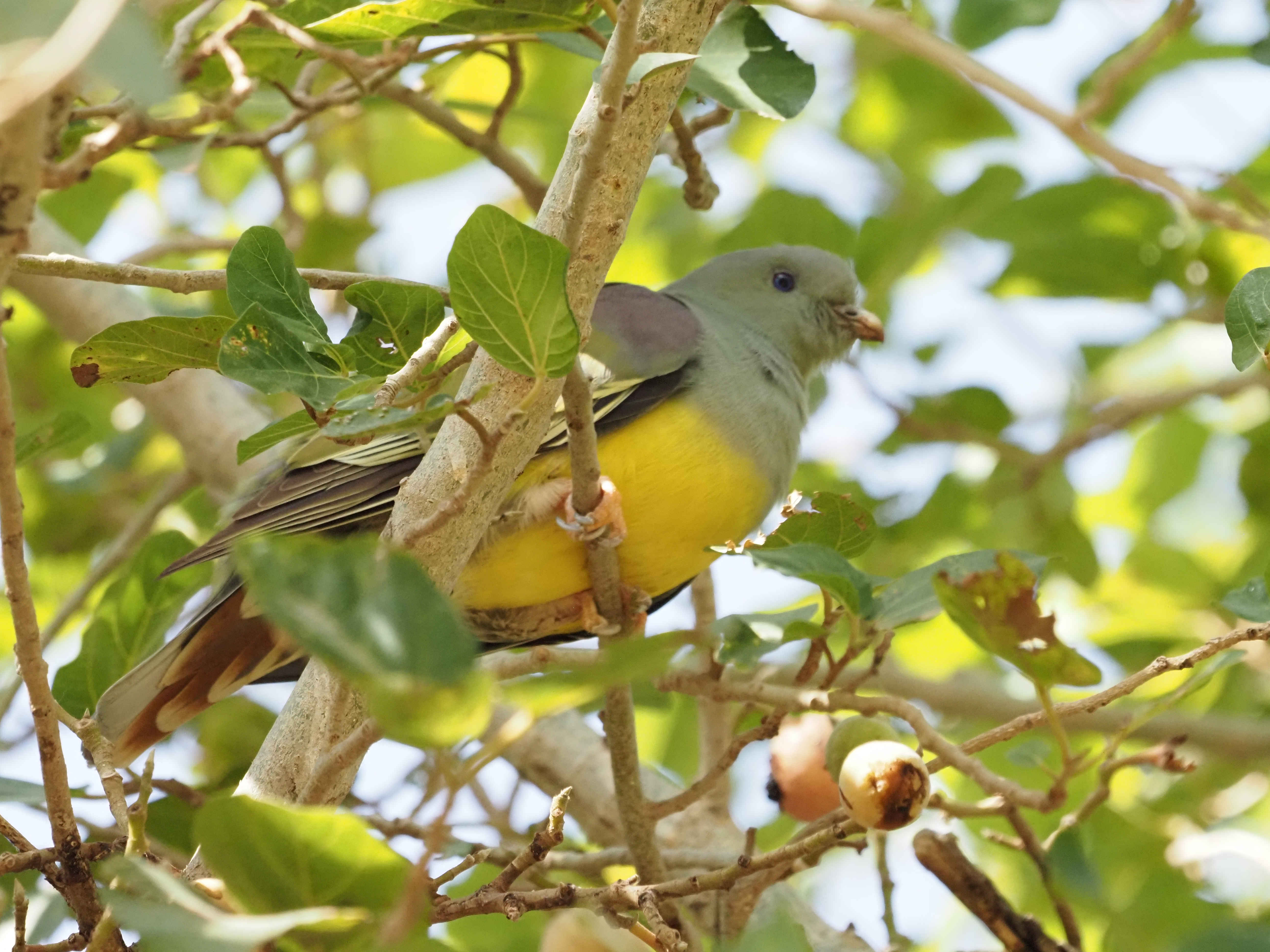
Still amazed, we got out of the cars to scan a proper place for Yemen Serin. This location can look like not very interesting at first glance, but it is a very interesting spot! Blackstarts and Crested Larks are easy to see along the access lane, and as soon as we walked around we got a small flock of Tree Pipits moving away from us. 4 Bruce’s Green Pigeons flew off from a large fig tree, providing good flight views. We walked around. Both Richard’s and Long-billed Pipits were noticed, and we were pointing a typical bufh for Yemen Serins when Sergi called out two of these scarce finches coming to that same bush! After a short stop in the bush, the birds came down to feed on the ground along with the very common Cinnamon-breasted Buntings. It didn’t take long before everyone in the group was enjoying these small birds. A small walk around came after this. A Namaqua Dove was displaying in the sky, a gorgeous Bonelli’s Eagle was coming out from a sinkhole and we were all enjoying the bird when Joe found a Swift in the sky that turned out to be a Pacific Swift flying high up along with Pale Crack Martins.. Couldn’t not believe my eyes! The bird was high and was not easy to track, but most of the group got its eyes on the bird, even if shortly, before it vanished in the blue sky! Cracking spot! There are less than 10 records of Pacific Swift in Oman!!!

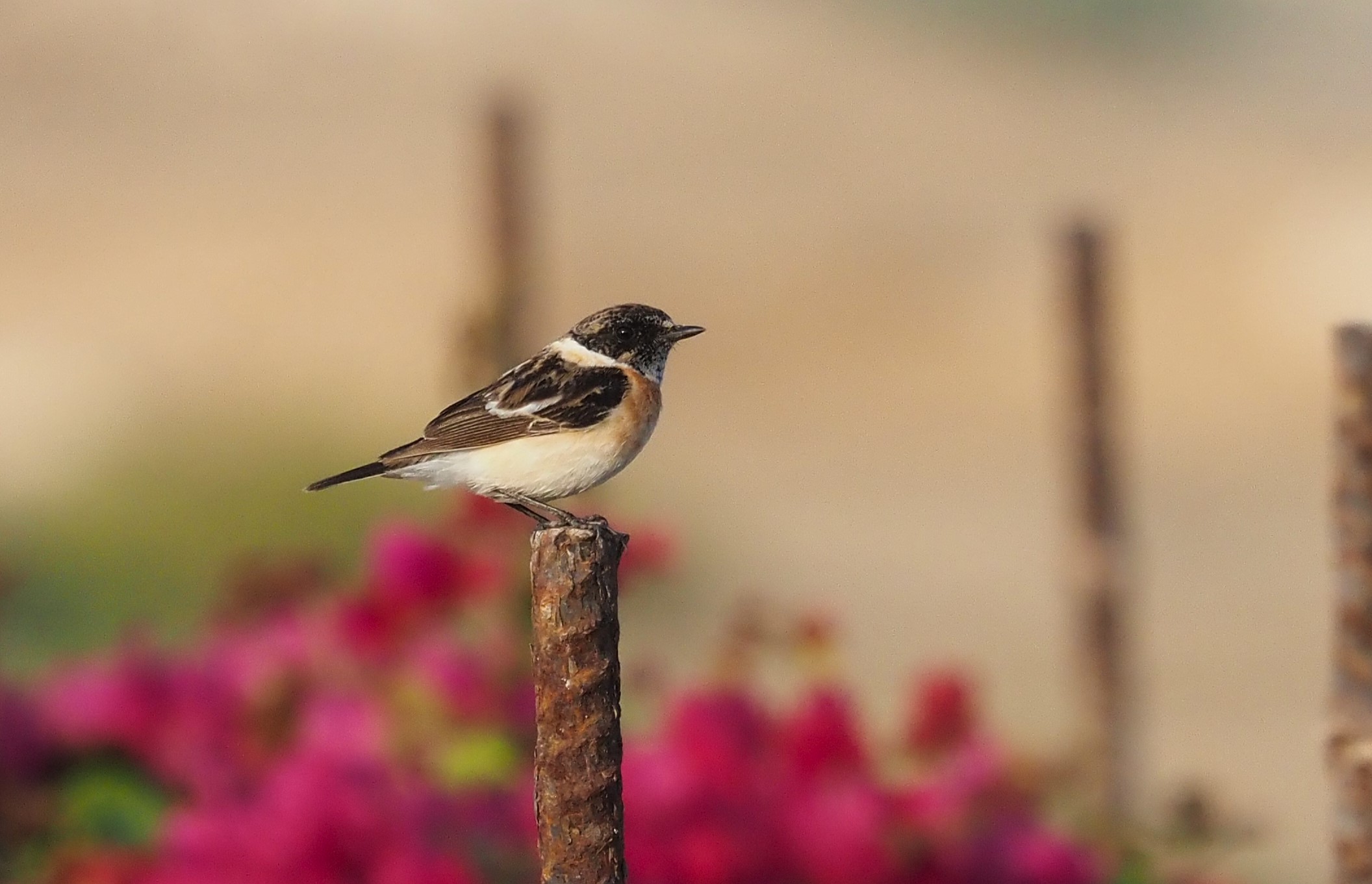
Siberian Stonechat (Saxicola maurus). Image by Pete Sutton.
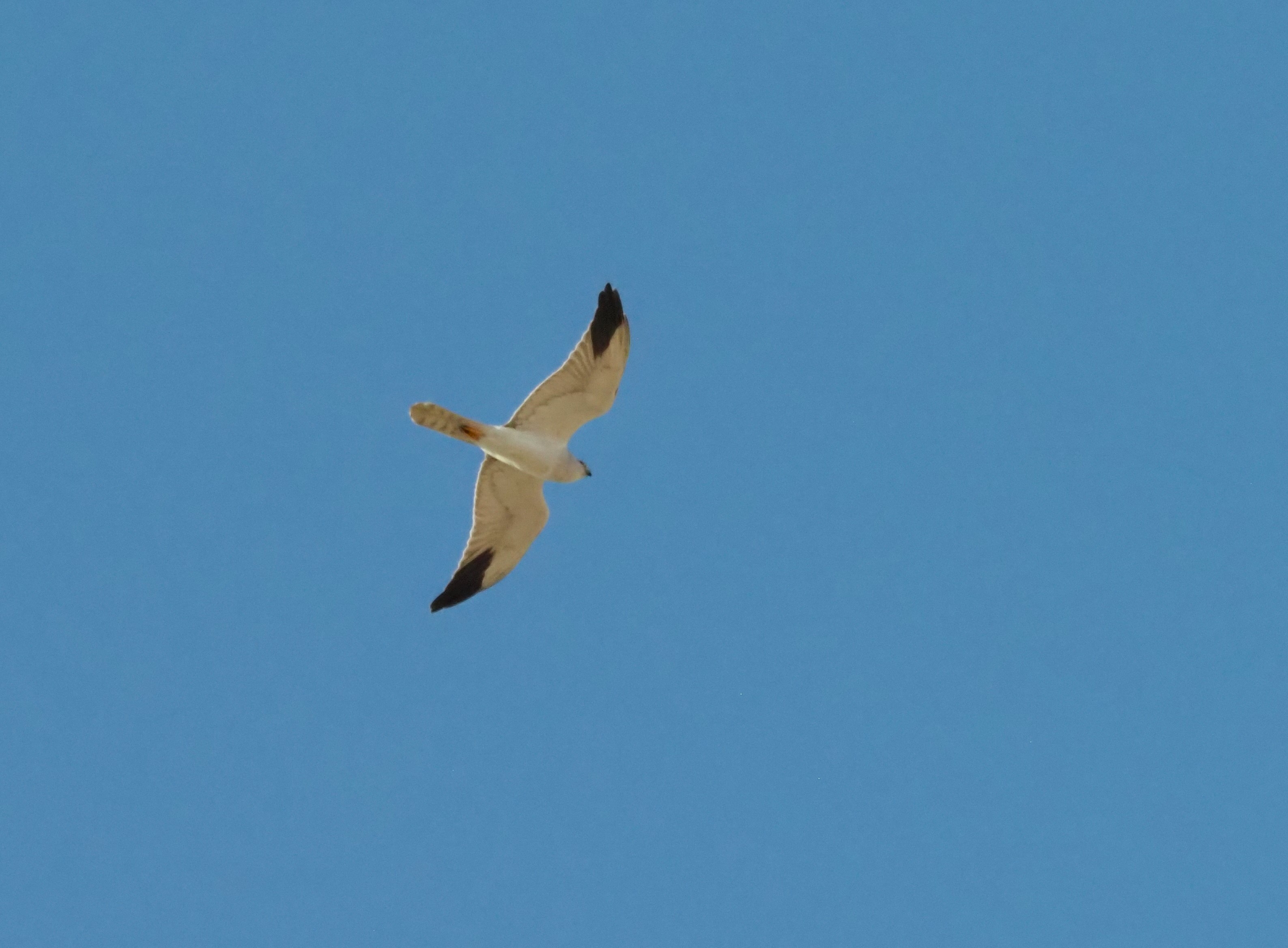
Pallid Harrier (Circus macrourus) flying parallel to our convoi. Image by Carles Oliver
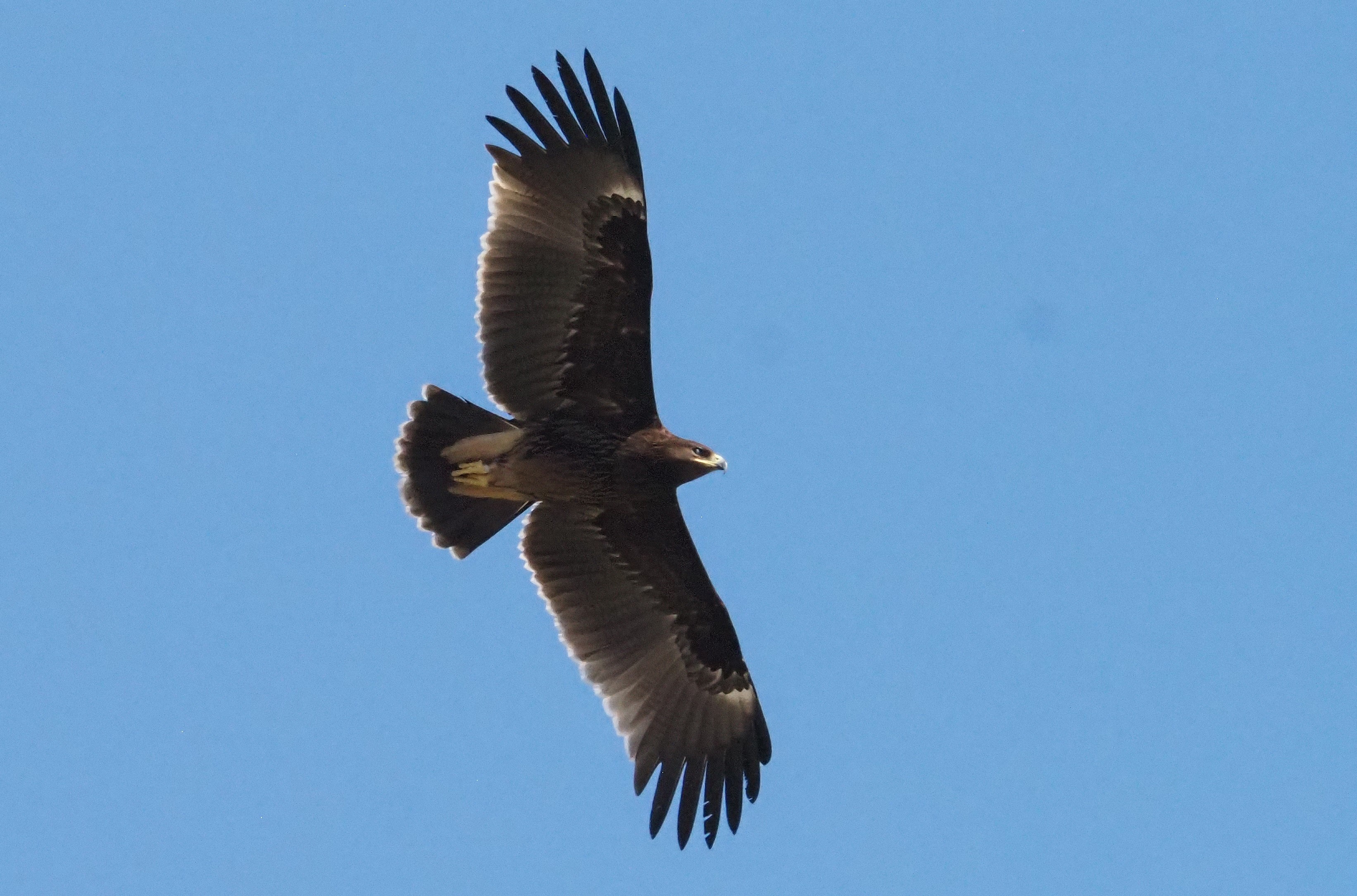
Lovely young Steppe Eagle (Aquila nipalensis). Image by Pete Sutton.
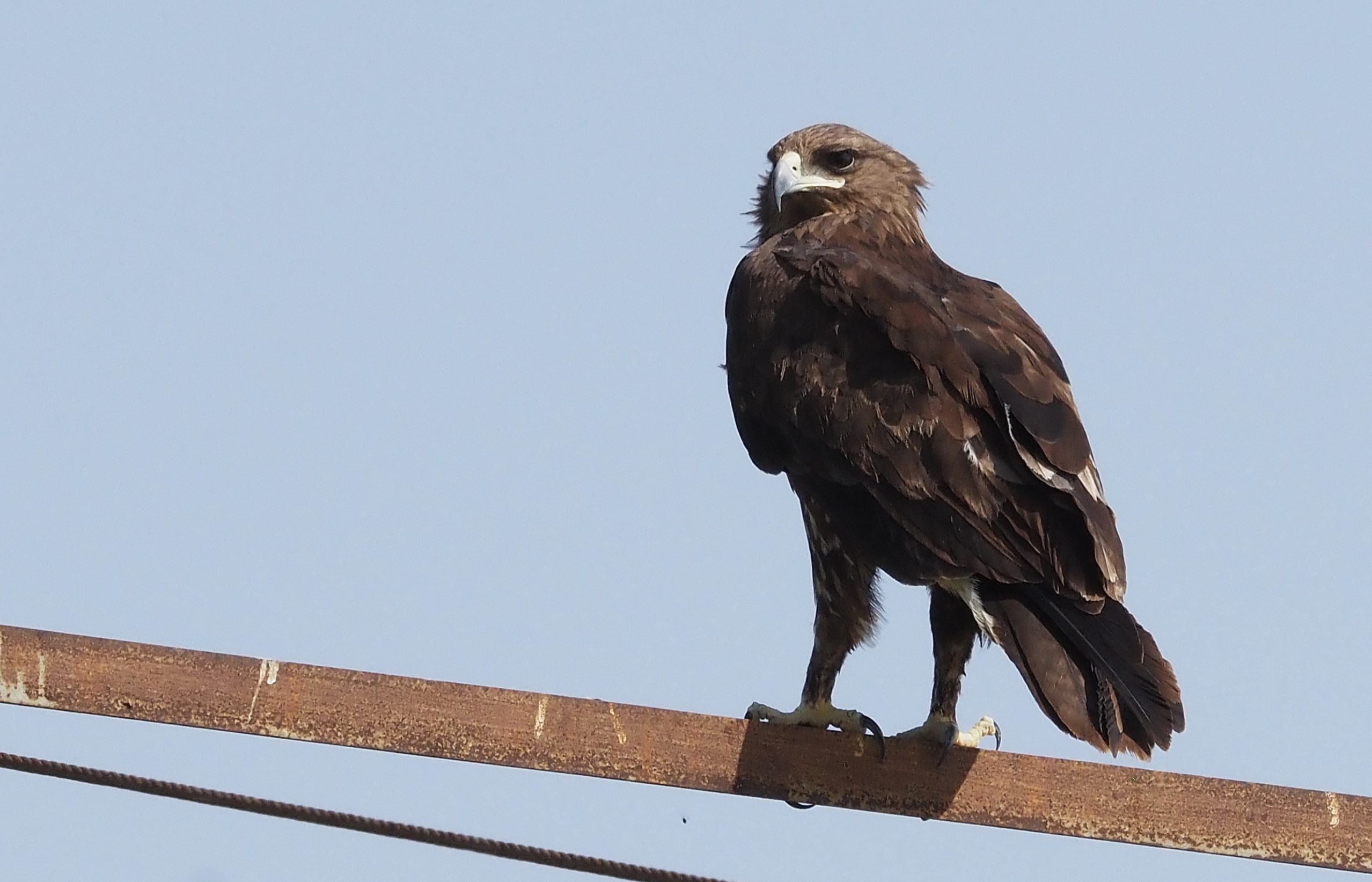
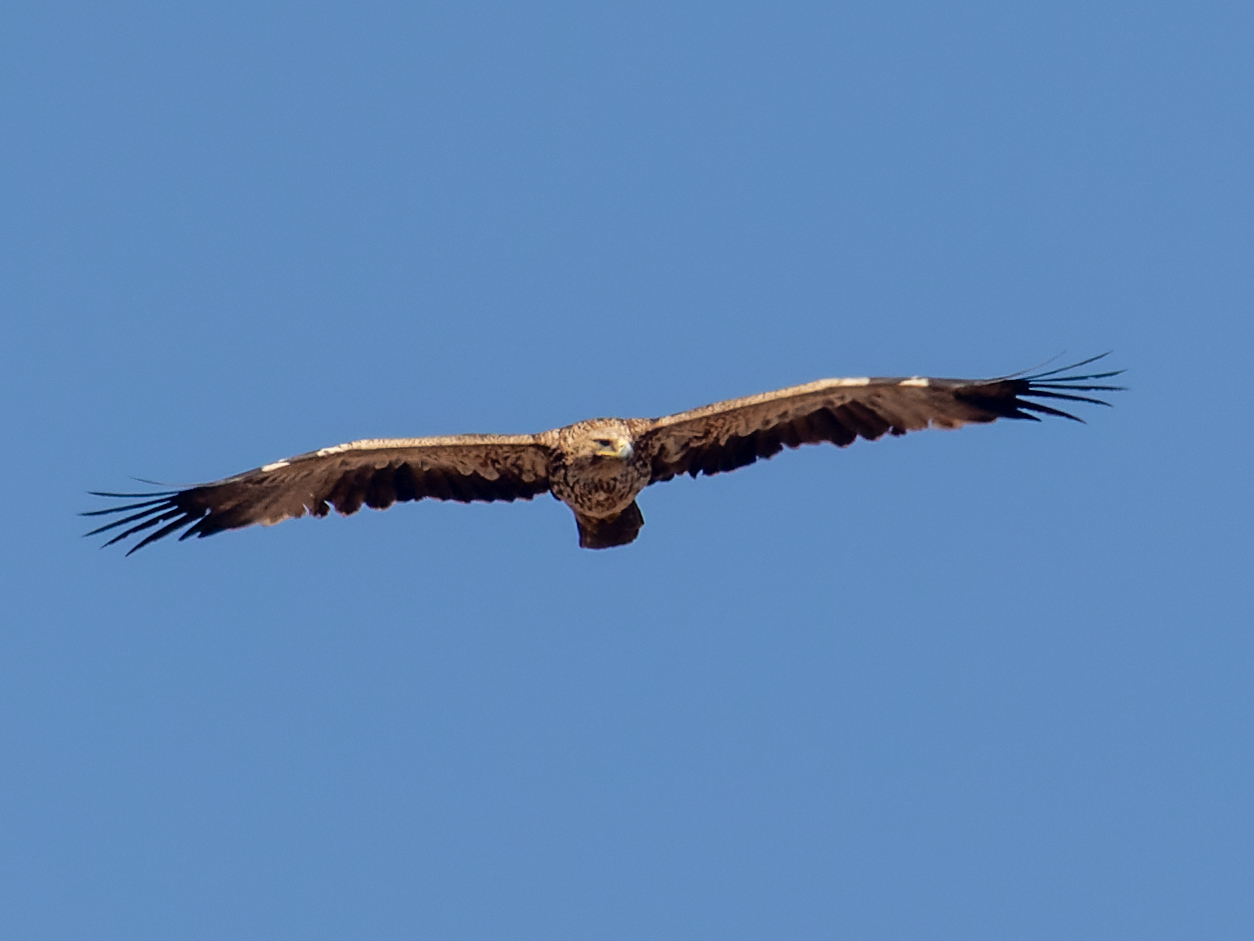
Eastern Imperial Eagle (Aquila heliaca). Image by Carles Oliver
Obliging Blackstart (Oenanthe melanura). Image by Pete Sutton.
Yemen Serins (Crithagra menachensis) showed very well. Image by Carles Oliver.
Few places on Earth can provide views on Bonelli’s Eagles (Aquila fasciata) as Dhofar does. Image by Carles Oliver.
Probably not the best image on a Pacific Swift (Apus pacifica) ever, but it works. Image by Carles Oliver.

From here we kept going higher. The vegetation becomes slightly thicker and soon we were enjoying the first of many Arabian Wheatears along with the commoner Isabelline and Desert Wheatears. After some nice shots, we drove to one of the impressive locations along our itinerary. Here, the plateau abruptly ends in a massive cliffs that goes down for over some hundreds of metres before in transforms into a complex myriad of valleys that led to the close Arabian Sea. It only took us a couple of minutes to have a pair of Verreaux’s Eagles passing by, providing great views. The Eagles stop in the top of some distant rocks, but not for long. Fan-tailed Ravens were not happy with its new neighbours so they moved them out the cliffs. During the next minutes, we got a number of sights on the Eagle moving always along the edge of the cliffs. The cliffs were also having a some Arabian Wheatears and we were also pleased to add Rock Hyrax to the trip list as we had some nice scope views. Before leaving the area, we had long scope views on the pair of Verreaux’s Eagles on the top of the cliffs, and a light form Booted Eagle soared above them as we started moving back to the vehicles.

Moving a bit lower, we had a stop in an open area where enjoyed our succulent packed lunches. Here, we had a full adult Eastern Imperial Eagle, a couple of Long-billed Pipits, a flock of White Storks moving in the distance, the first Arabian Sunbird of the trip and a Eurasian Wryneck that, unfortunately we could not add to the list trip as it was only seen by 1 of the tour leaders..

Arabian Wheatear (Oenanthe lugentoides). A cracker! Image by Pete Sutton.
Isabelline Wheatear (Oenanthe isabellina). Image by Pete Sutton.
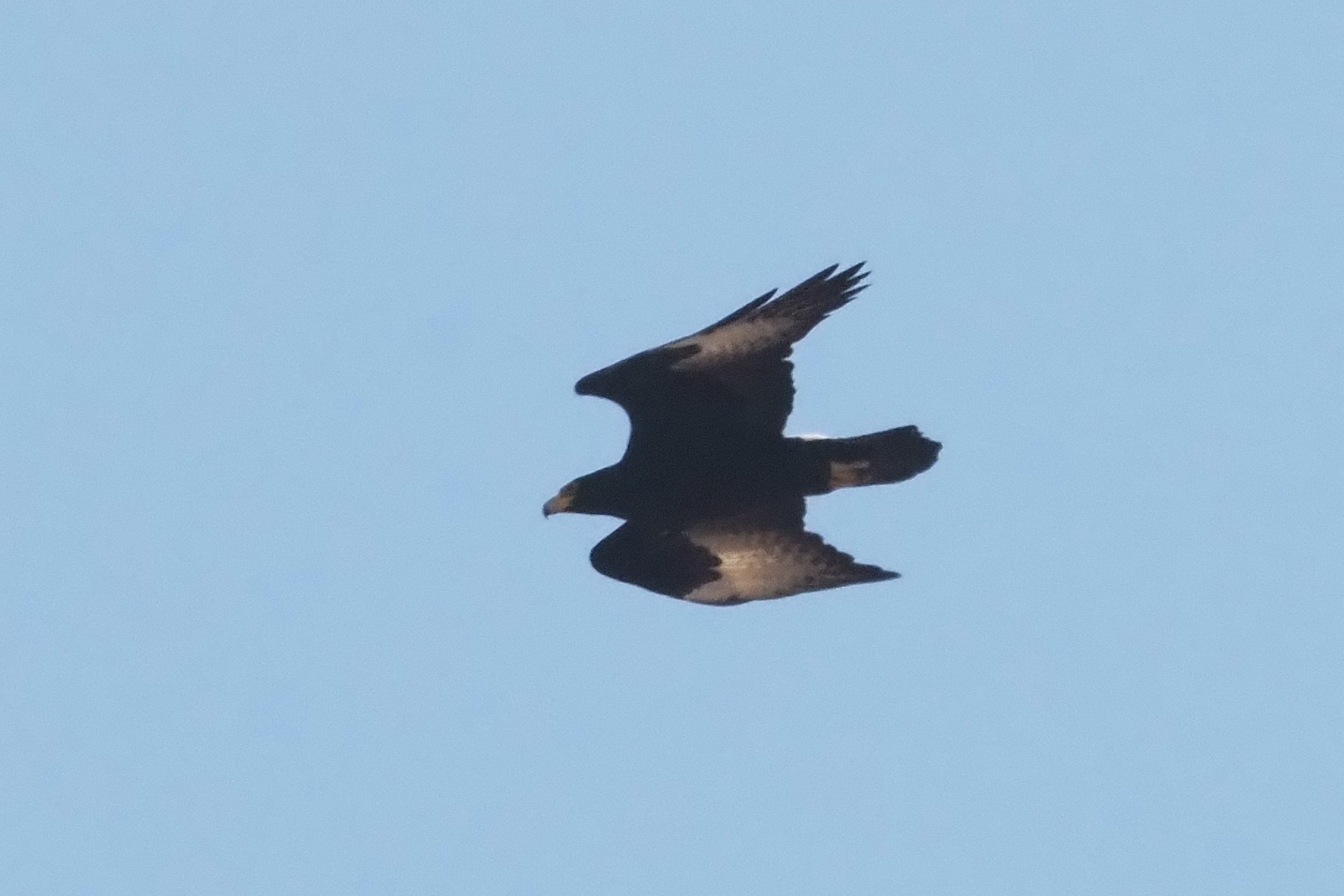
Verreaux’s Eagles (Aquila verreauxii) provided us with a full set of acrobatic flights! Image by Pete Sutton.
This impressive Eastern Imperial Eagle (Aquila heliaca) was soaring above our lunch spot. Image by Pete Sutton.
A drake Palestine Sunbird (Cinnyris osea). Image by Pete Sutton.

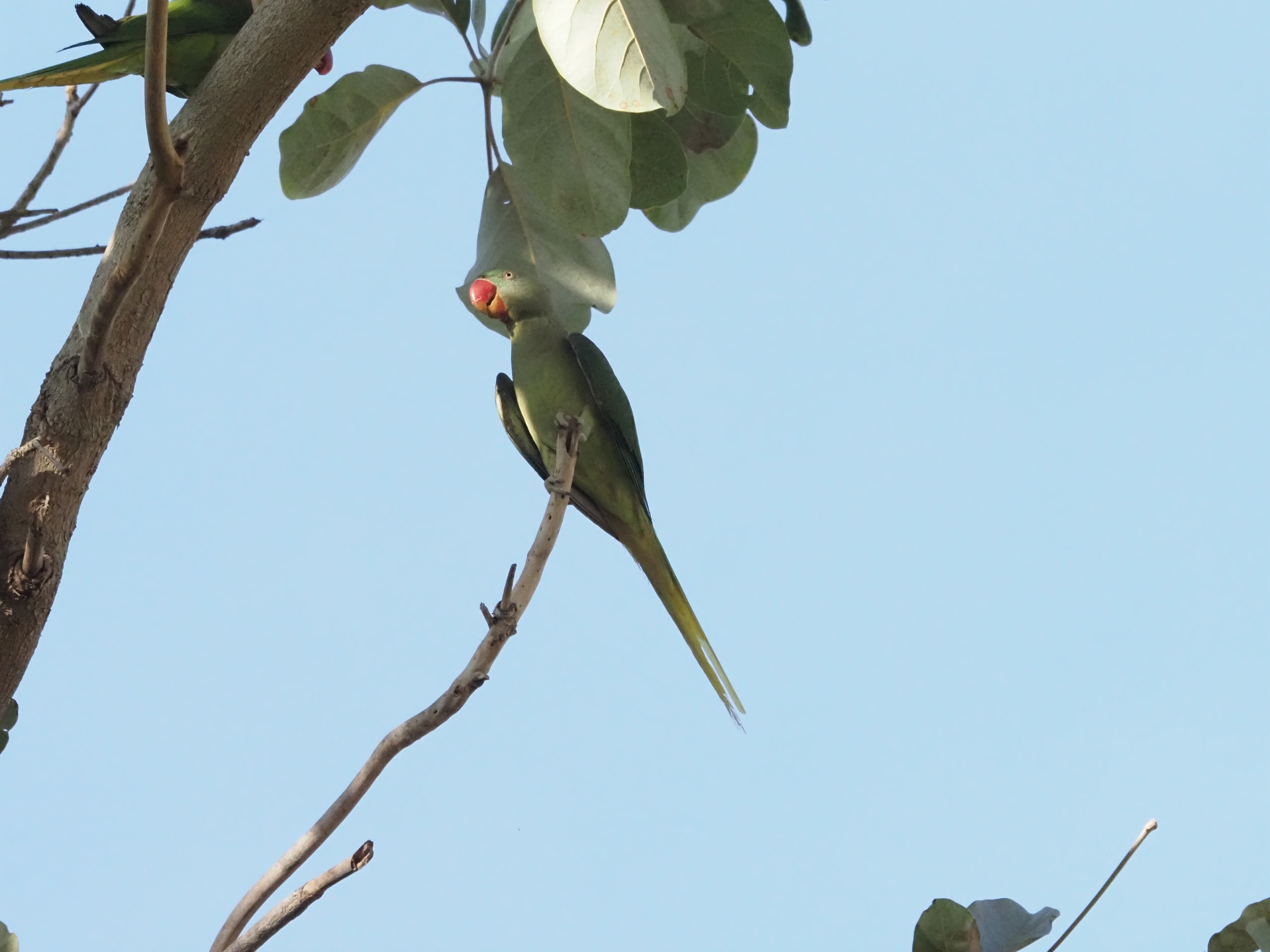
Back to the coast, we had a fast stop to look for Spotted Thick-knee. It didn’t take long before we got 1 bird, but it was hard to direct everybody on it. Meanwhile, we were distracted by the Arabian Sunbirds feeding around, and also by the Alexandrine Parakeets moving in the palm trees, with some individuals showing really well. A Whiskered Tern and more Booted Eagles were noted here.

Our next stop was to explore one of the largest urban parks in Salalah. Here, the main attraction was to have good views on the large flock of Yellow-throated Sparrows overwintering in the gardens. About 35 of these birds were resting on the trees or feeding on the ground and, along with them, some very attractive Scaly-breasted Munias were also noted. This a scaped species, but was celebrated for some in the group. The park also provided good views on Rüppell’s Weavers, Yellow Wagtails and Tree Pipits, but also on some Arabian Sunbirds and on 1 Eastern Orphean Warbler.

We still had time to scan a proper wetland. This time we went to West Kwar, where we had a very good array of Gulls, Terns and Ducks. 7 Ospreys were on the beach along with Whimbrels, Oystercatchers, Greater Sand Plovers and so on. This is a hot spot for Terek’s Sandpipers, and we saw well above a dozen of them feeding in the tidal plains. Garganey and African Sacred Ibis were new for the trip, and we also had distant views on Citrine Wagtails, Marsh Sandpipers and Palla’s Gull.

The last stop of the day was to explore one of the urban farms in Salalah. These large crops, mainly devoted to the production of cereals, can host large numbers of birds. Unfortunately we were a bit late and our list was not very long. We briefly saw a couple of Singing Bush Larks but never got great views. Isabelline Shrike and Crested Larks were seen, and Wood Sandpiper (3) was new for the trip, but out of that we only got regular species. From here we just went to the accommodation for dinner.

Palestine Sunbird (Cinnyris osea) close up. Image by Carlest Oliver.
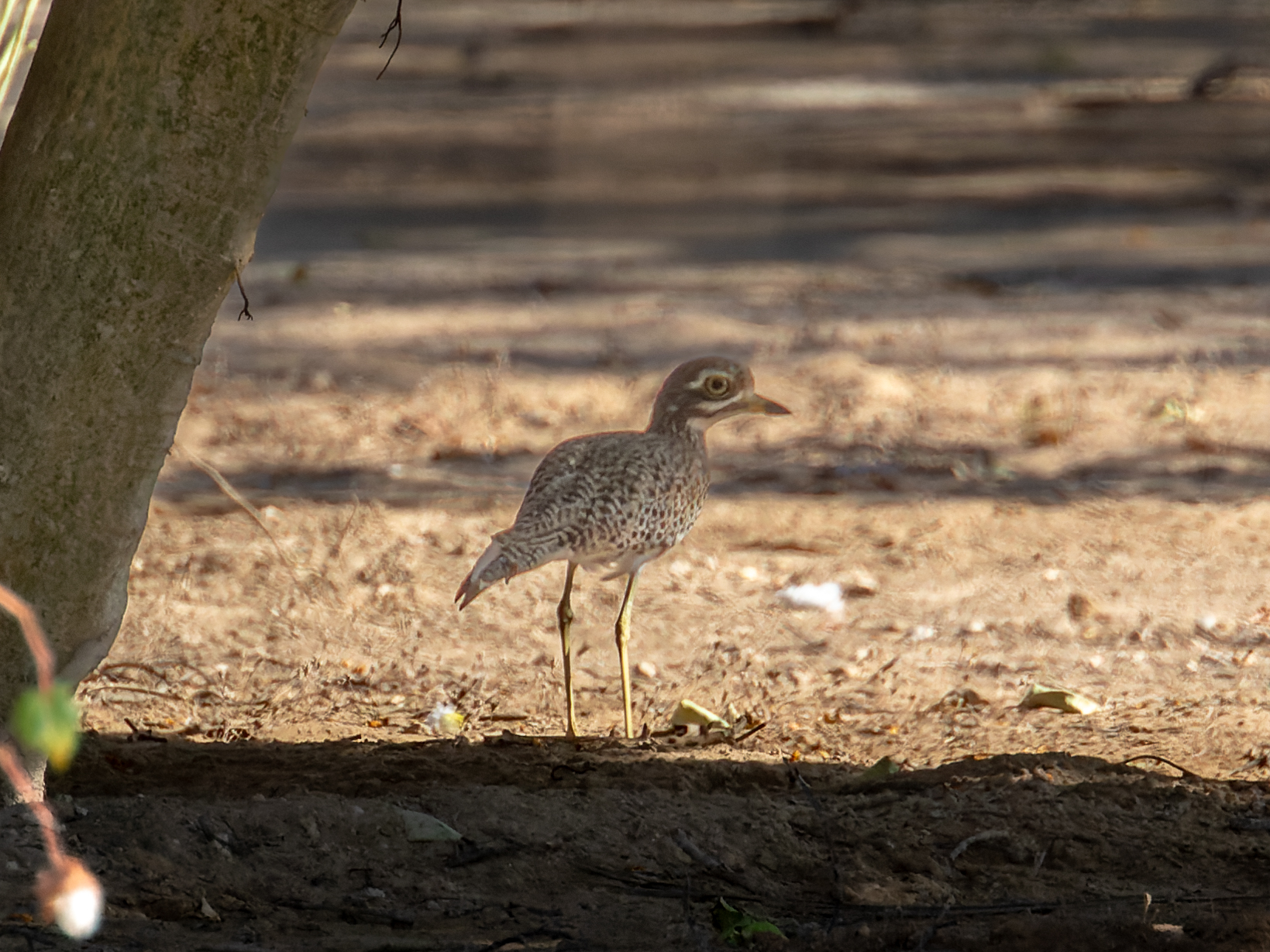
Spotted Thick-knee (Burhinus capensis). Image by Pete Sutton.
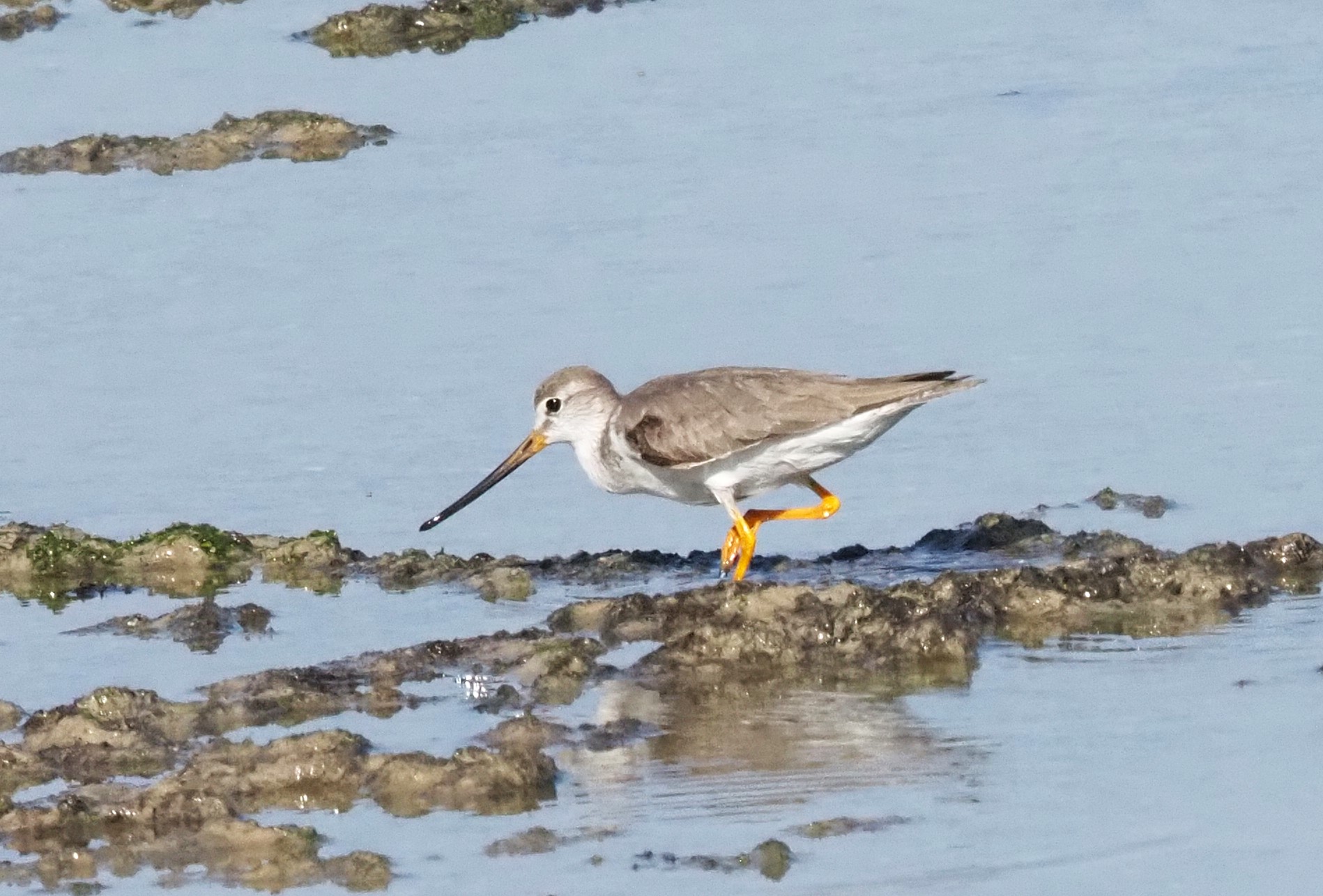
Terek’s Sandpiper (Xenus cinereus) feeding around Salalah. Image by Carles Oliver.
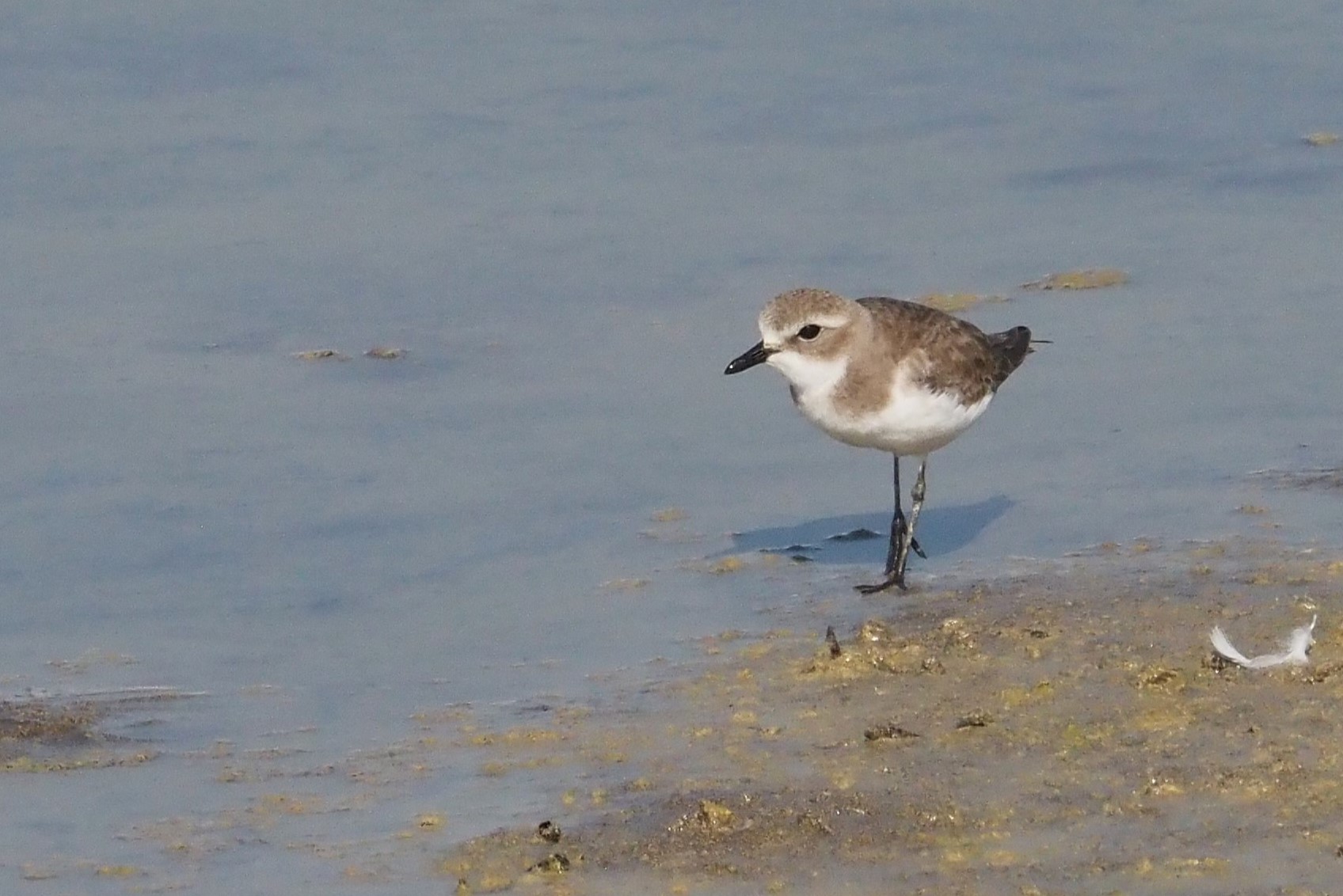
Tibetan Sand Plover (Anarhynchus atrifrons). Image by Pete Sutton.
Scaly-breasted Munia (Lonchura punctulata) in Salalah. Image by Pete Sutton.
Yellow-throated Sparrow (Gymnoris xanthocollis). Image by Carles Oliver.

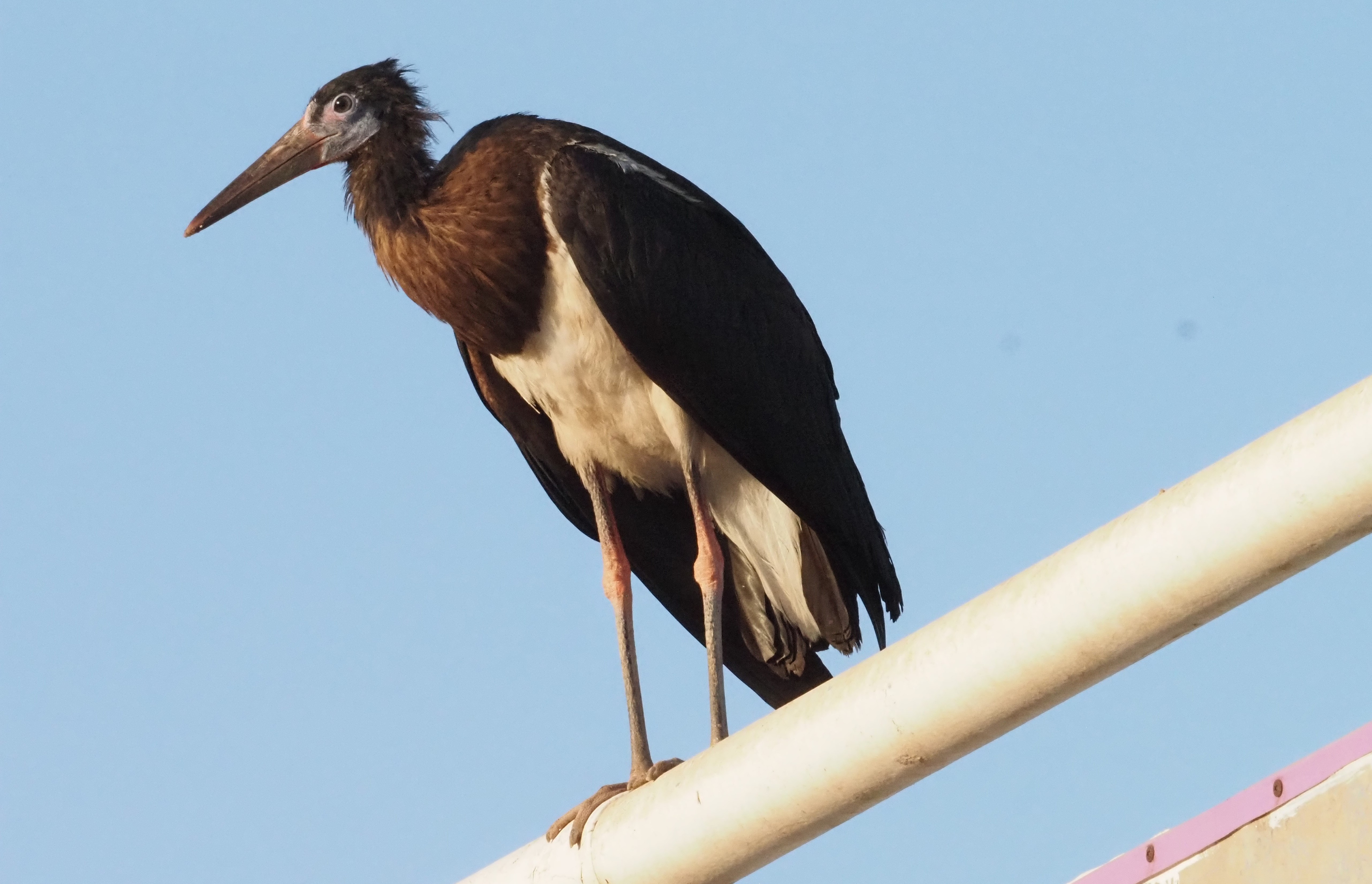
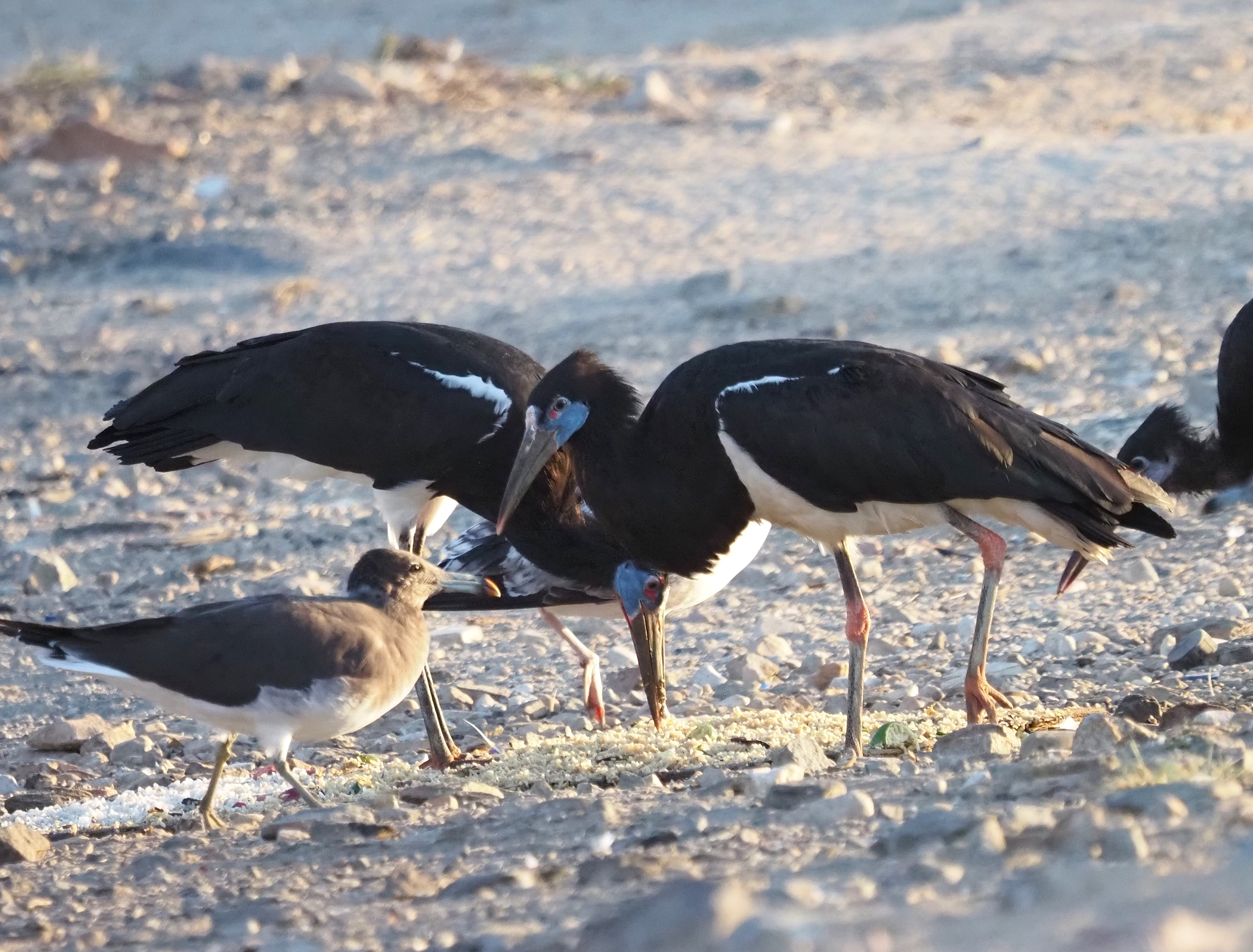
Day 6. After an early breakfast and we drove North to the harbour where our boat was waiting for us. Even before arriving to the harbour, we started enjoying good birds. A small flock of Abdim’s Storks were feeding along with Heuglin’s Gulls, providing really close views.

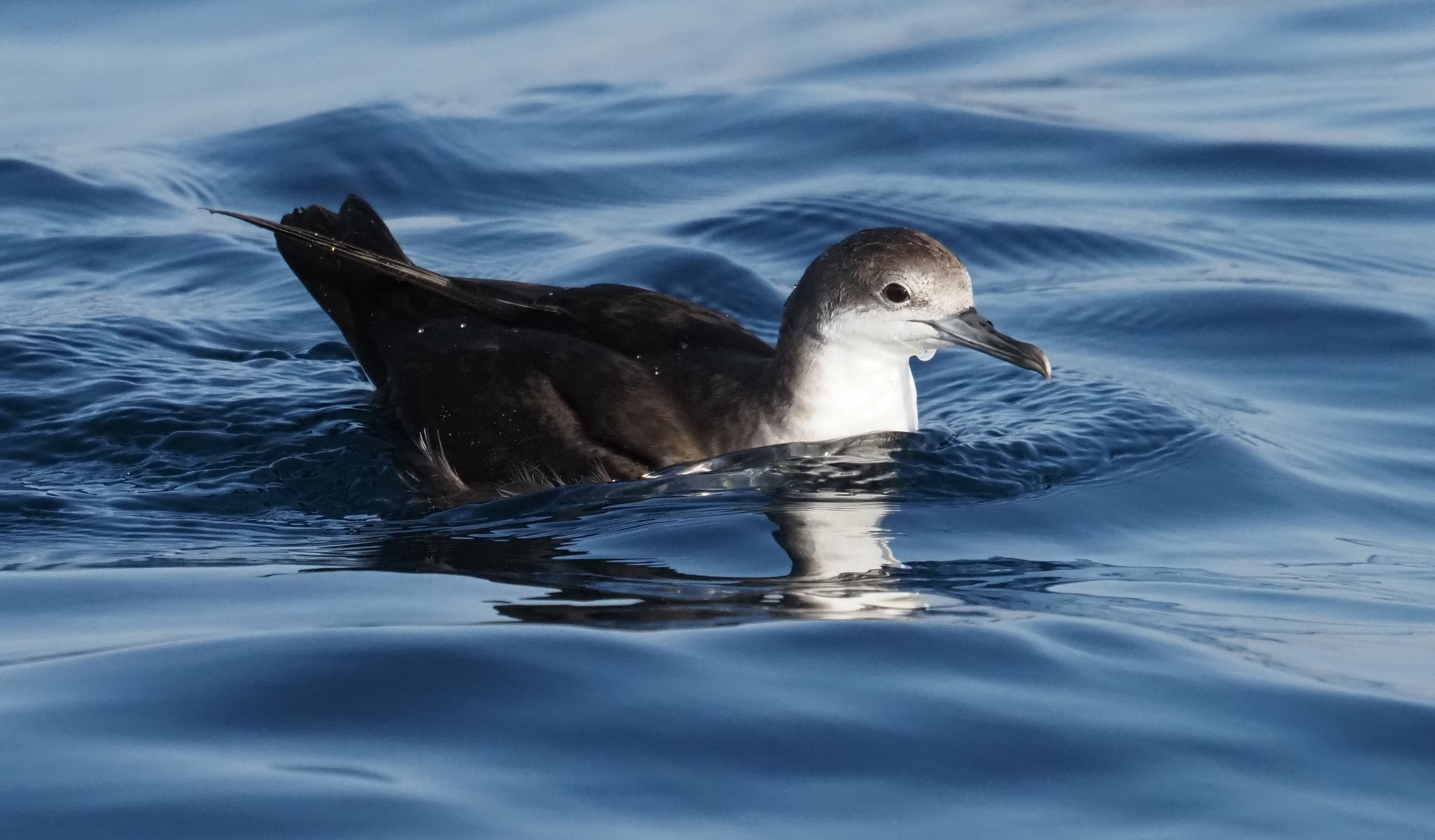
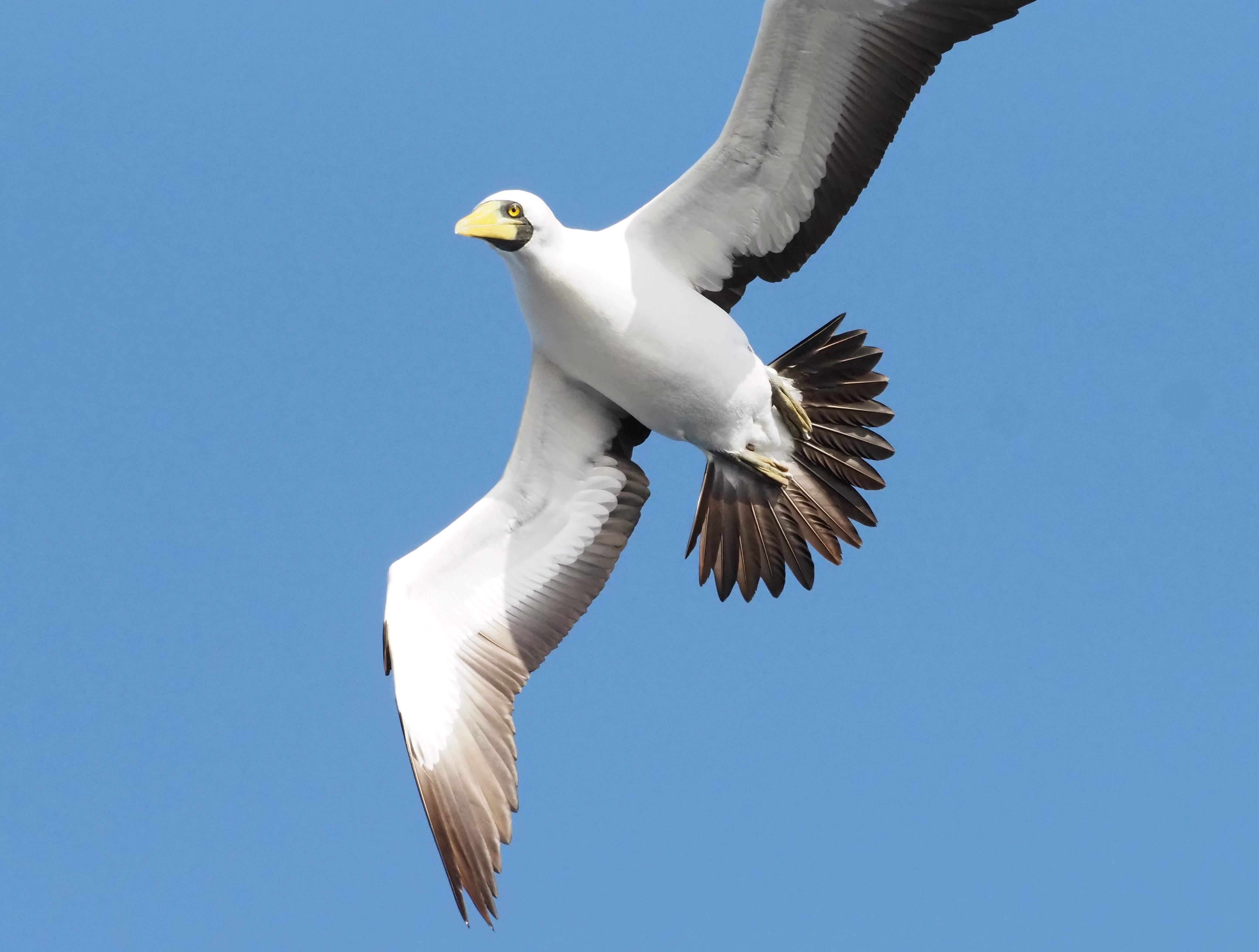
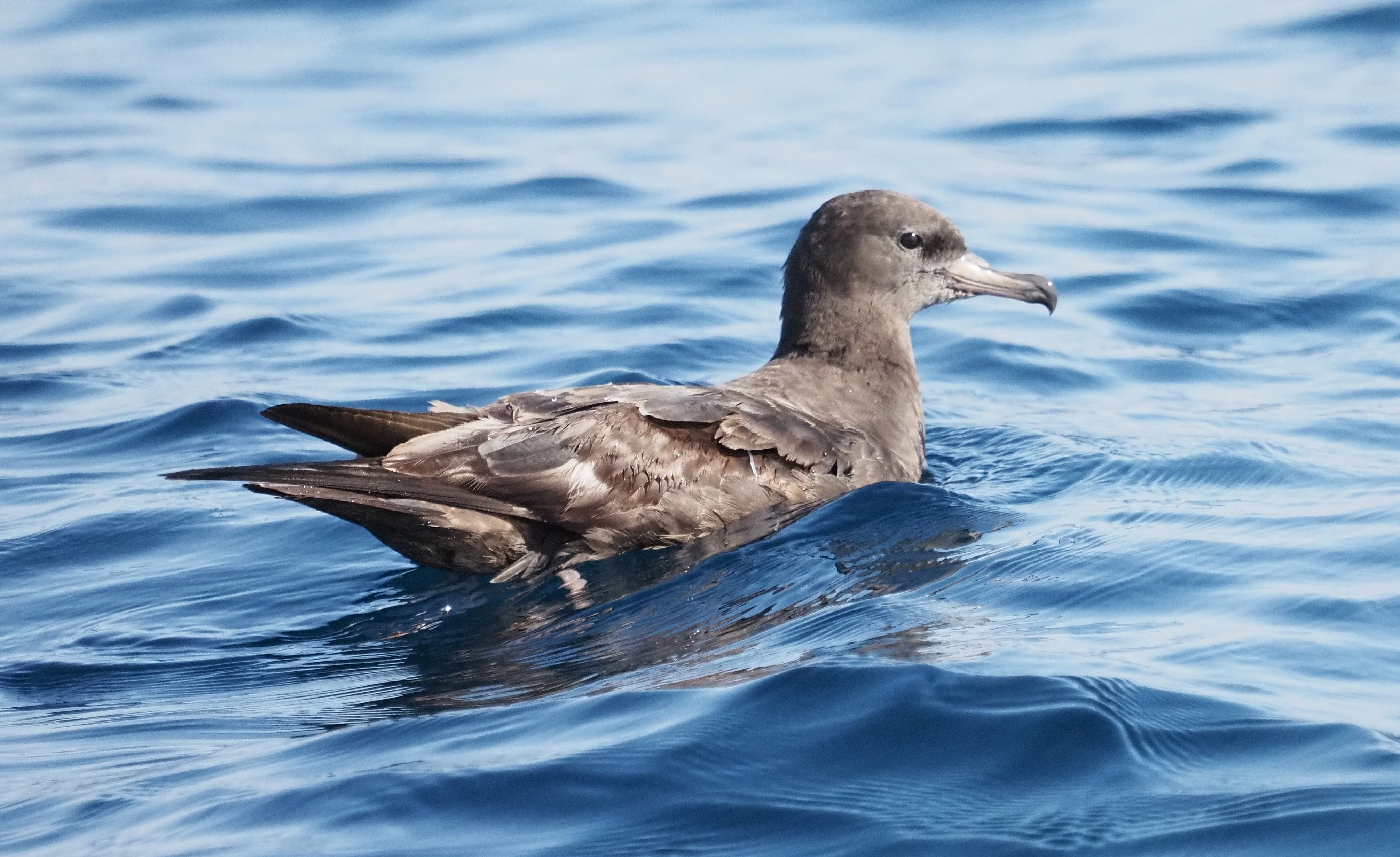
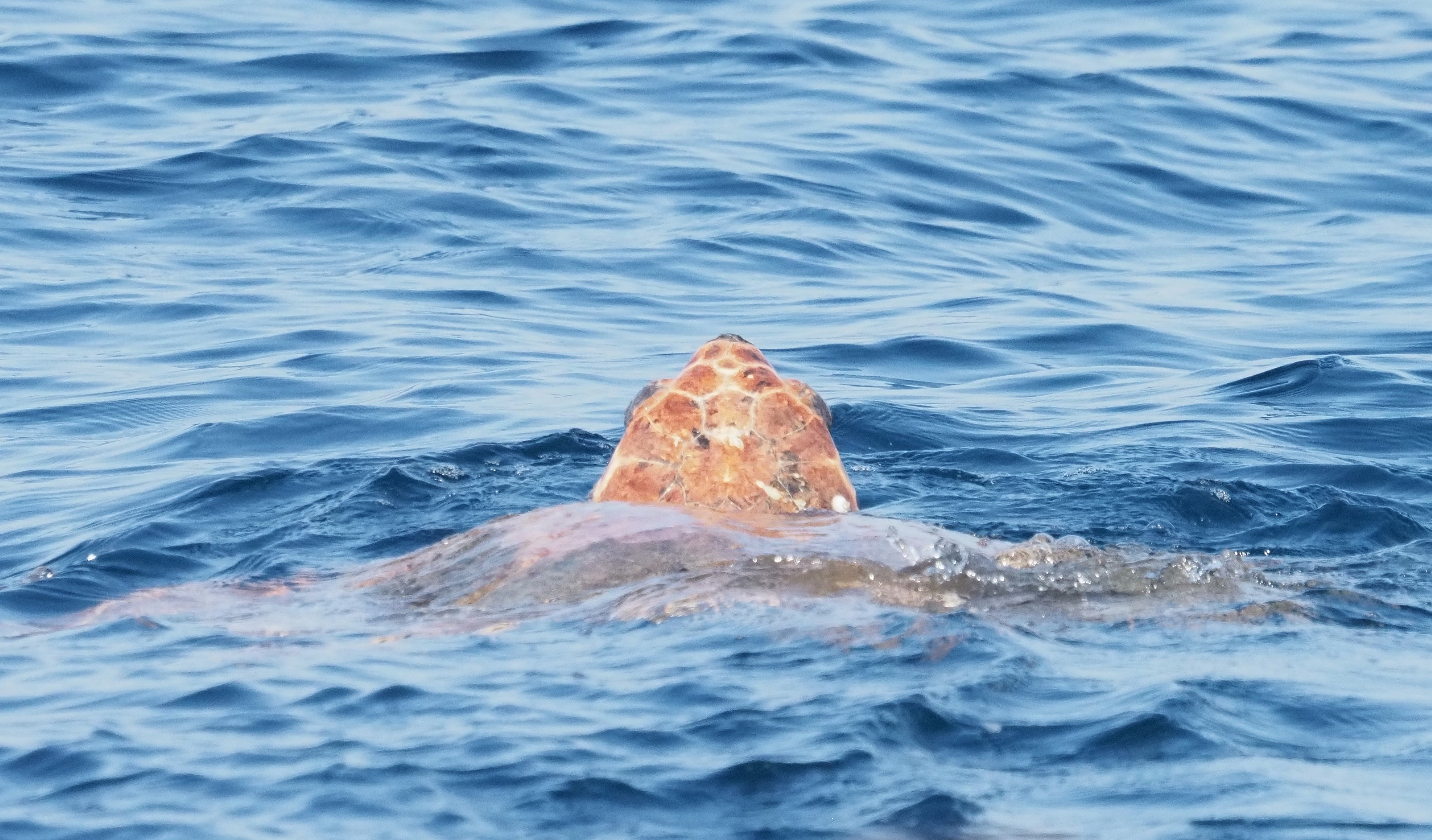
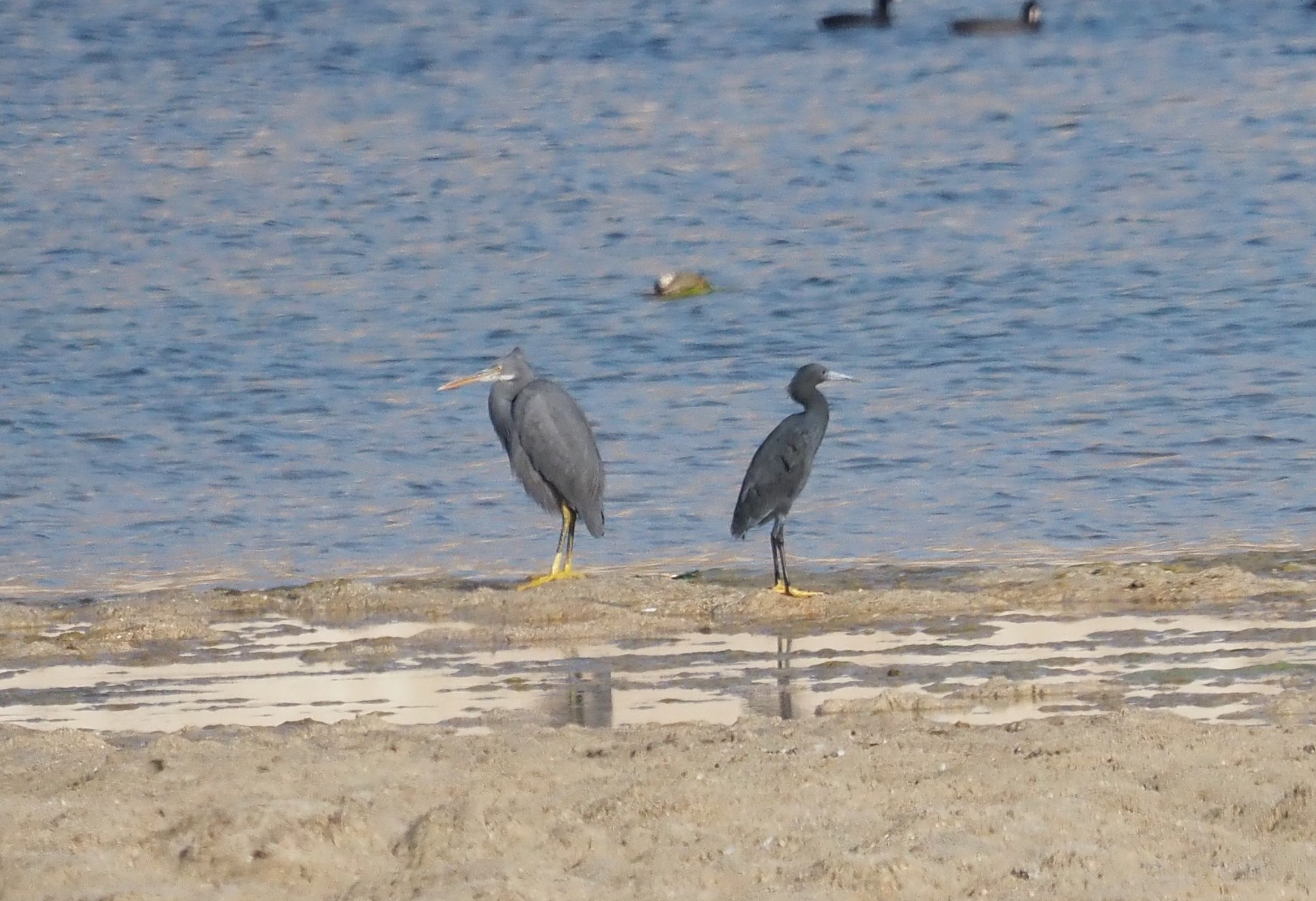
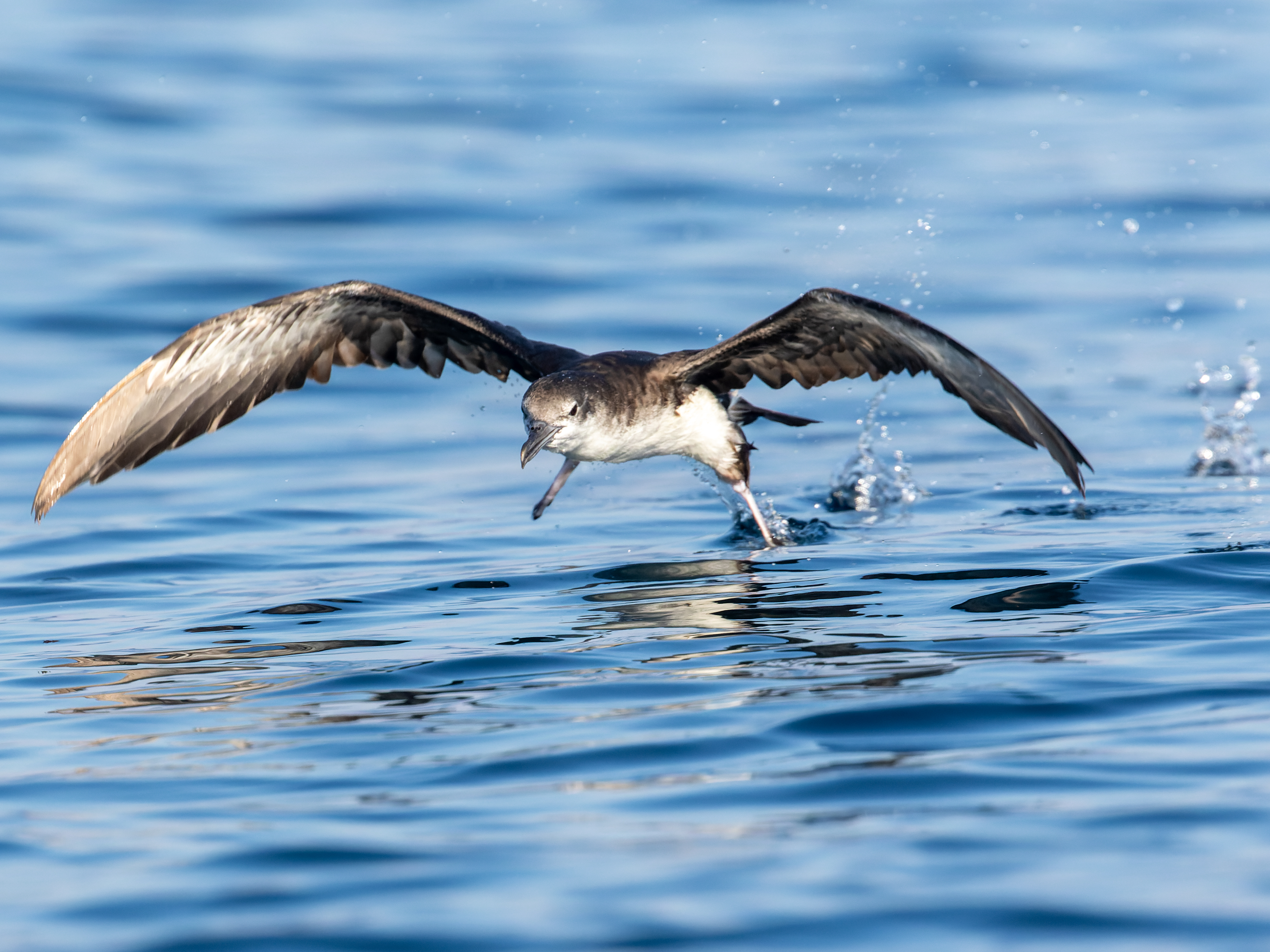
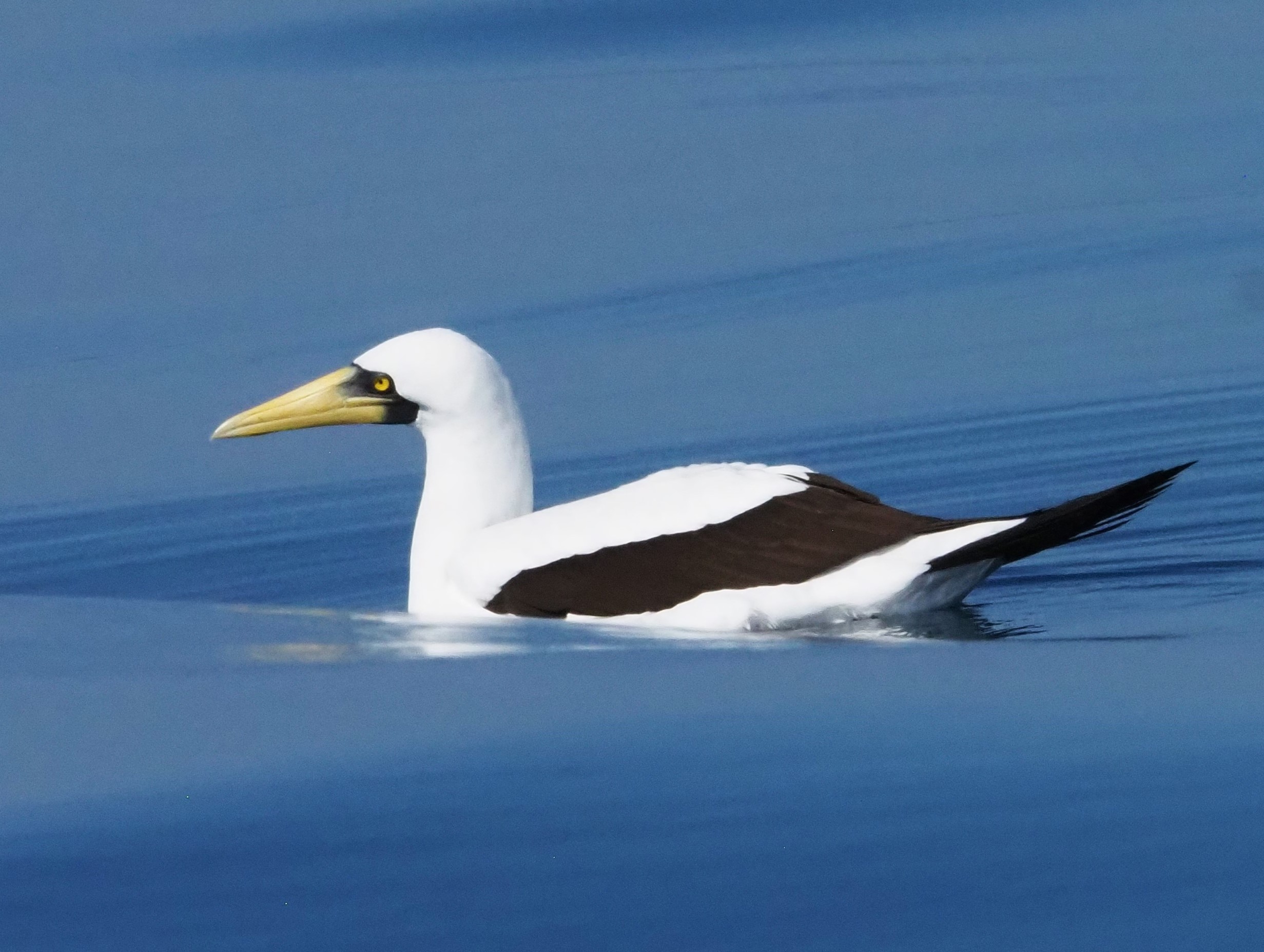
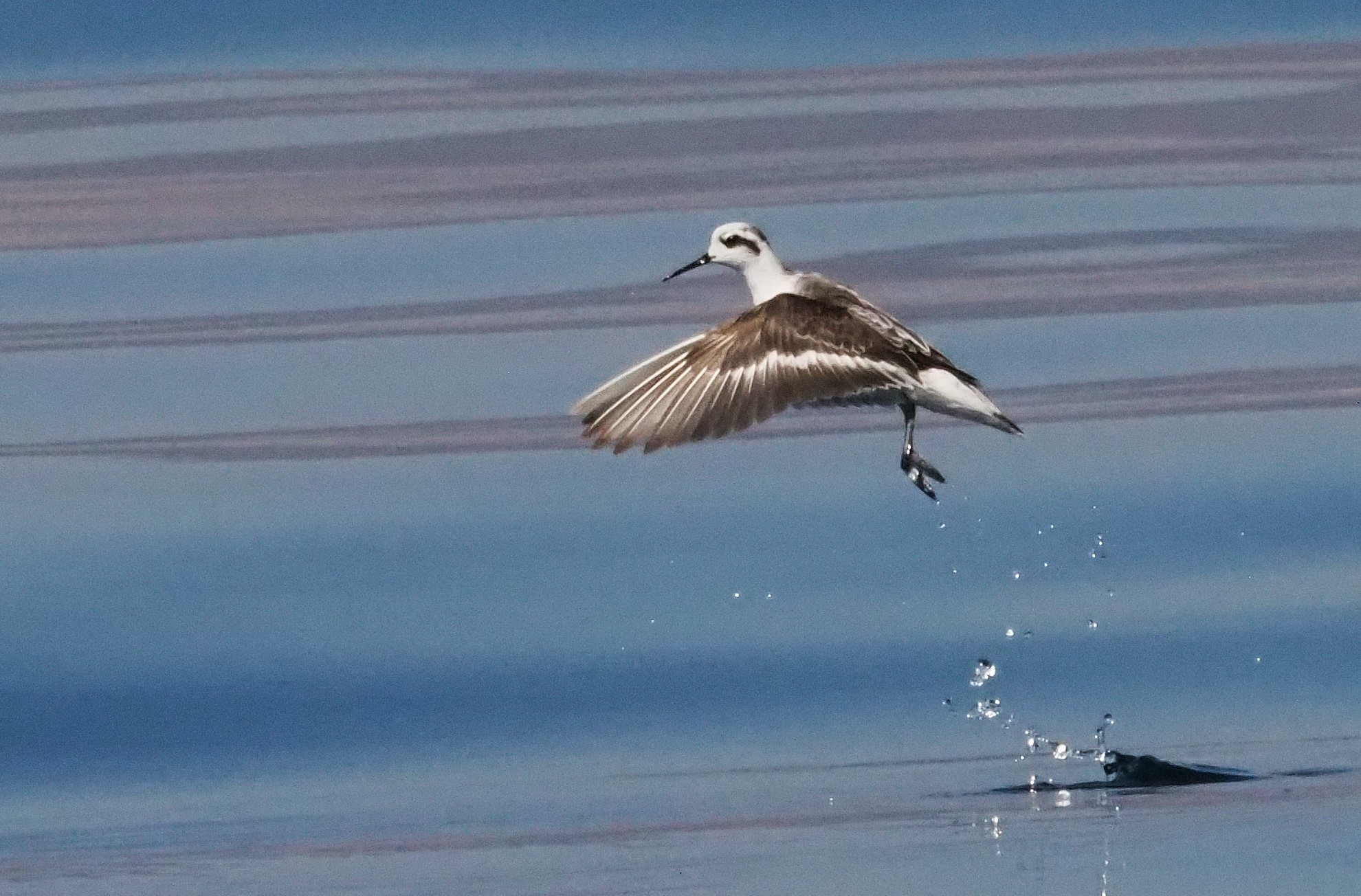
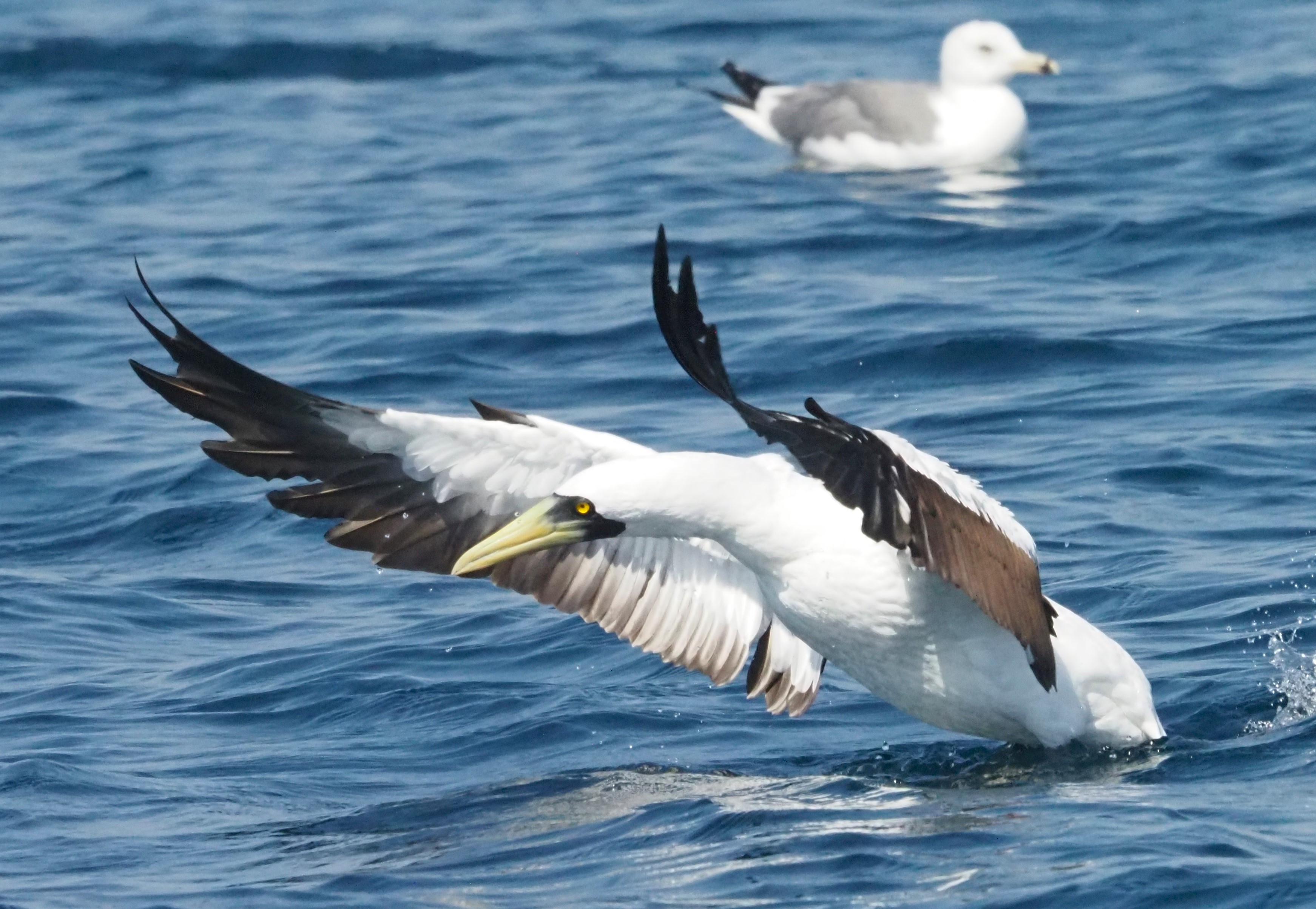
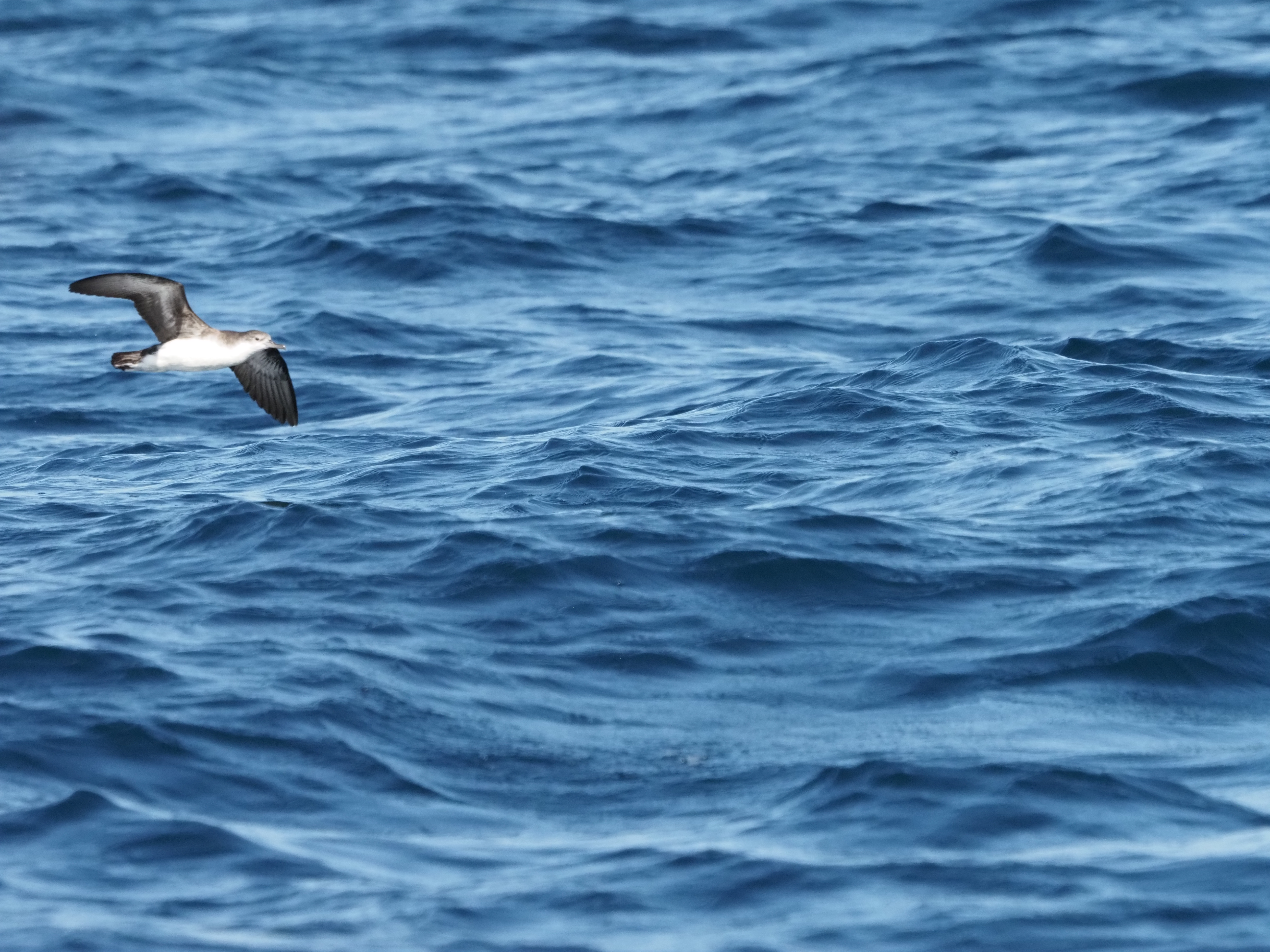
Once in the sea, we had to come back (believe or not, but the main guide forgot both the bins and the camera.. Well, back to the boat we left the harbour surrounded by Olive See Turtles. Around the docks we got Western Reef Egrets but also Striolated & Night Herons. Once on the sea, we started having good birds. A few Persian Shearwaters were soon flying around our boat, and after a few miles a couple of them stopped on the water, at close range, allowing really nice shots. Some Common Terns were moving around, and we were checking them when a very distant Jouanin’s Petrel just showed out, moving South to North and showing its unmistakable shape and flight pattern. Fastly, we tried to put everybody on the bird, that was distant. We moved a bit faster, trying to get closer to the bird, but we lost it before we could be close enough. Despite this, most of the tour participants got the bird, even if only provided distant views. We were still trying to find another Jouanin’s Petrel when Sean found a very nice Flesh-footed Shearwater approaching us from behind. This bird, that is becoming more and more common in Southern Oman, landed around our boat, joined by a couple of Persian Shearwaters. Small parties of Red-necked Phalaropes were moving around us, but was not until we started moving back to the continent when we got some of them close on the water. While enjoying them, Ramiro noticed a Masked Booby moving low above the sea surface. During the coming minutes, we got a few of them, ending with a superb bird landed on the water and allowing us close views and very good shots. This was it, or it was supposed to be it. But it was not, because when we were almost arriving to the coast, a superb Swinhoe’s Storm Petrel just appeared from our right, moving South at full speed. With a bit of effort, we got everybody on the bird and we got some record shots before the bird went away. What a phenomenal way to end our pelagic!

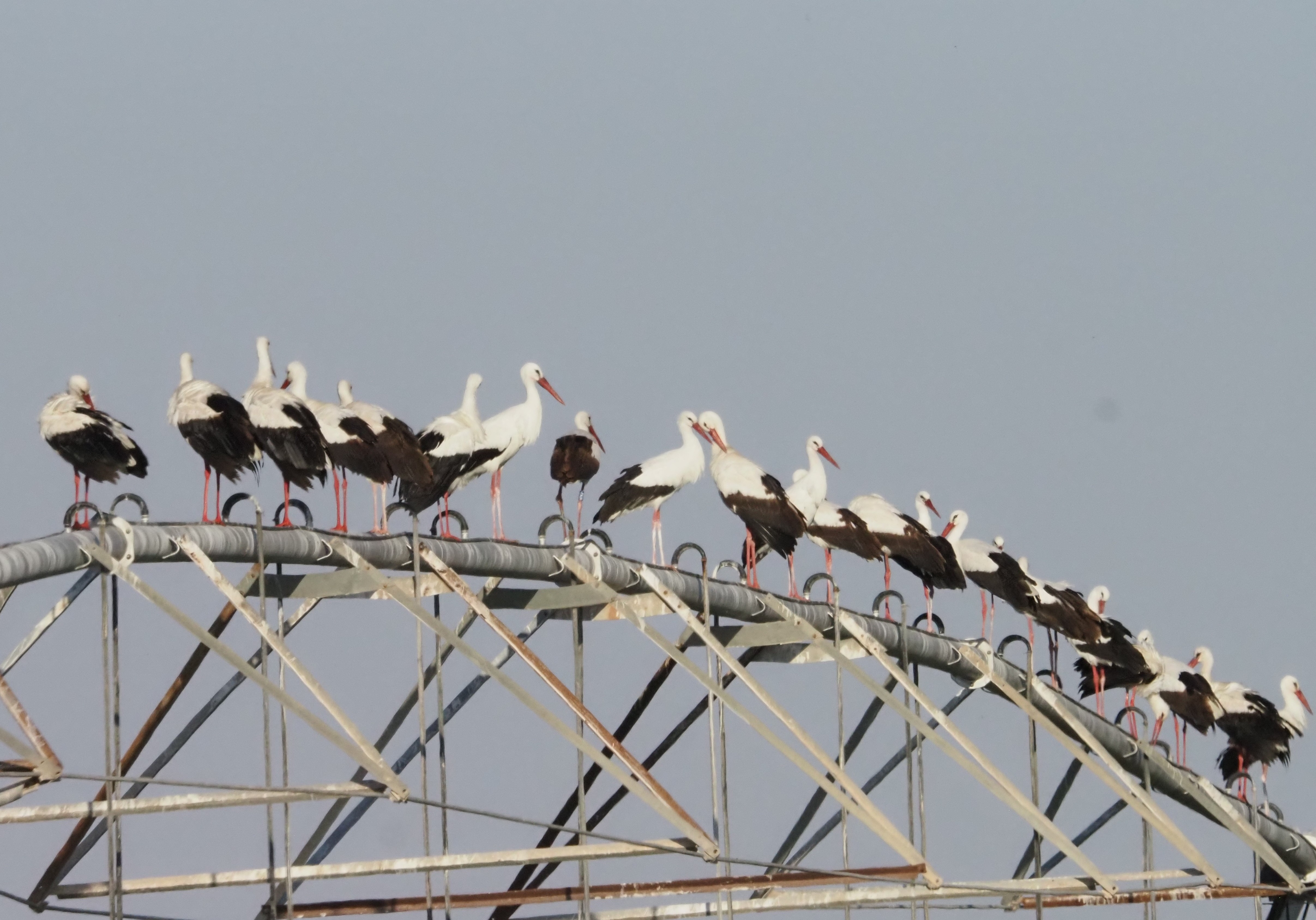
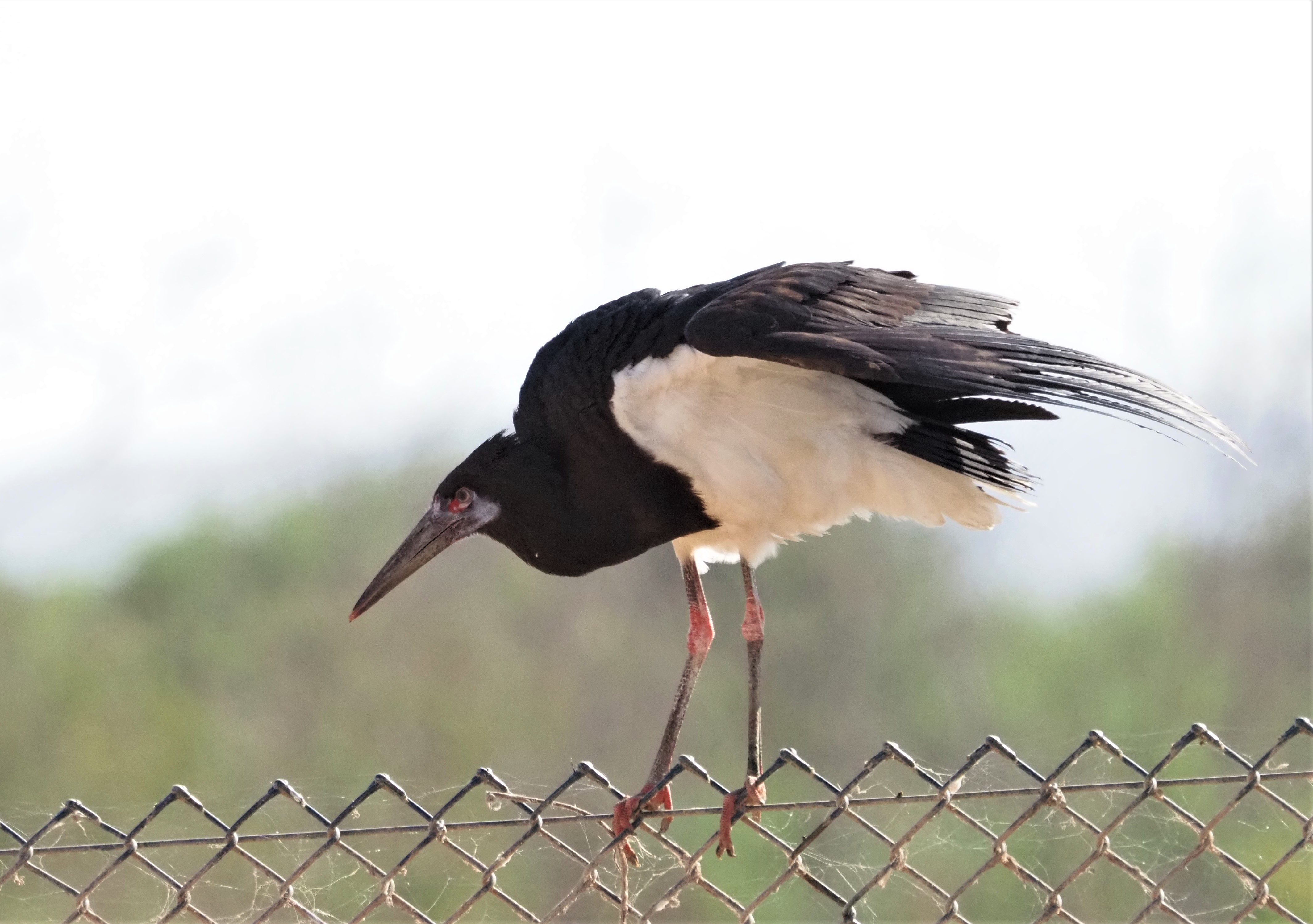
Abdim’s Storks (Ciconia abdimii). Image by Carles Oliver.
Persian Shearwater (Puffinus persicus) taking off. Image by Pete Sutton.
Persian Shearwater (Puffinus persicus) beside us. Image by Carles Oliver.
Flesh-footed Shearwater (Ardenna carneipes). Image by Carles Oliver,
Masked Booby (Sula dactylatra). Image by Carles Oliver.
Red-necked Phalarope (Phalaropus lobatus) taking off close to our boat. Image by Carles Oliver.
Swimhoe’s Storm Petrel (Hydrobates monorhis). Image by Sergi Sales.

Back on the ground, we had a coffee stop to recover from the emotions of the sea, and once recovered we went a nearby urban park. The plan was to enjoy our sandwiches and to have a couple of birds. But it turned up to be a bit more than that.. Just getting inside we got one European Roller perched in the large bush along the main path. The park had some large trees and several lines of smaller trees and bush, with extensive grass in the middle. In the grass, we had a putative Eastern Yellow Wagtail calling and showing really well. Walking around, we found not only Isabelline & Turkestan Shrikes, Lesser Whitethroats and Arabian Sunbirds, and Asian Koel was new for the trip. Soaring above the park we had Osprey, Eastern Imperial Eagle and a few Abdim’s Storks..

From here we drove back to our accommodation to have a midday break and, once fresh, we met again to keep exploring the Dhofar. But our convoy was stop by Joe, who found a wonderful Grey-headed Kingfisher in a scaffolding nearby the accommodation. Once we all saw the bird, we moved out the accommodation but we had to another stop before leaving the city due to a small flock of Rose-coloured Starling that, appearing from nowhere, lined in a wire for us!

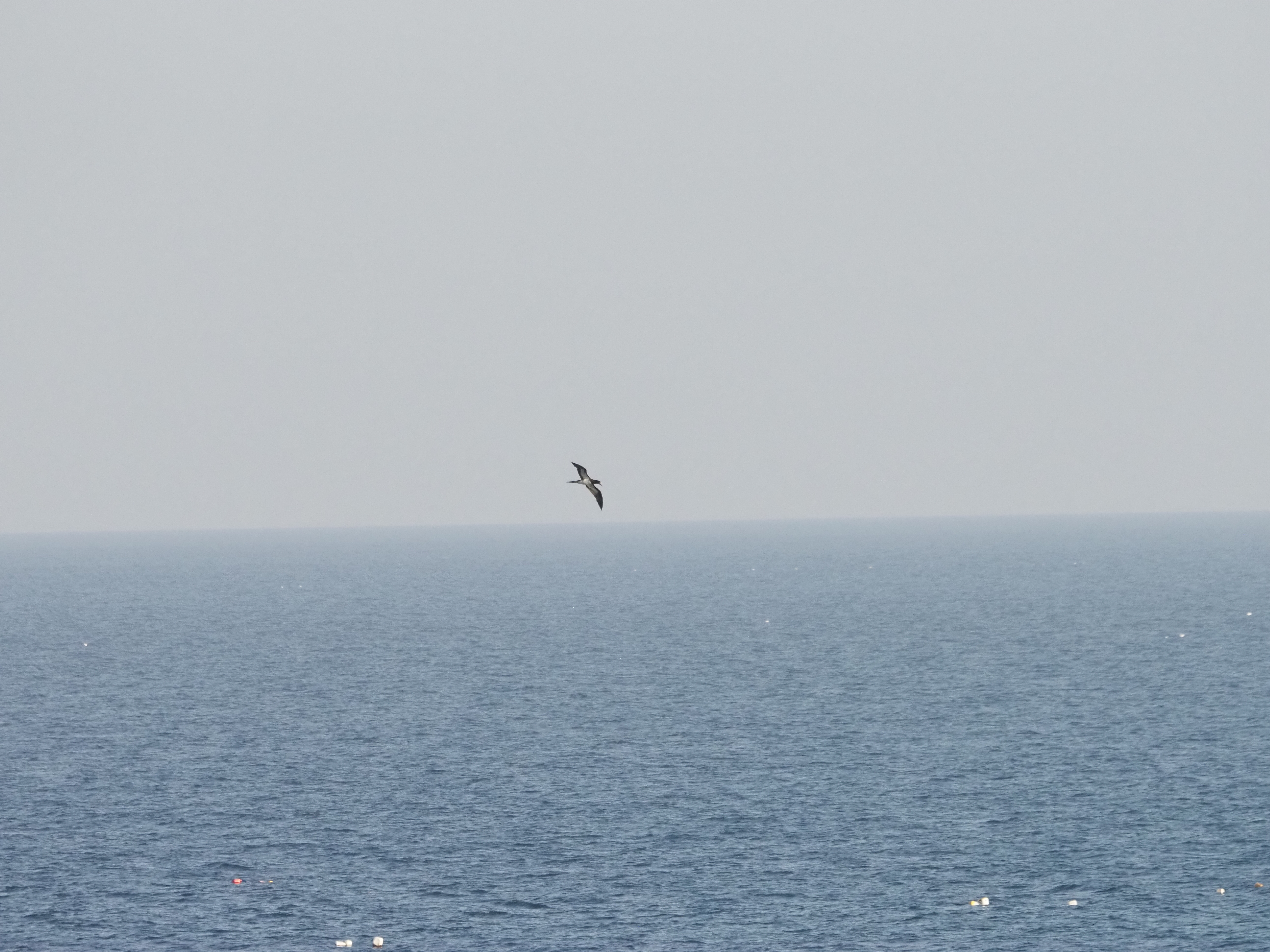
From here we drove South. Our transfer was interrupted by the first Brown Bobby of the trip, that was flying North not far from the shore. It was evident that it was a nice movement of seabirds so we directly went up into a lookout for these birds. Soon we had a number of Brown Bobbies flying around but also perched on the boies. Common, Lesser Crested & Greater Crested Terns were on their tens and in one of these mixed flocks we got at least 6 White-cheeked Terns fishing and showing well their grey rumps and a well defined underwing dark frame. This was our last ballot for Socotra Cormorant and, unfortunately, we were unable to find any single of these small Cormorants..

A last scan into a small pond produced at least 4 Red-knobbed Coots feeding along with Eurasian Coots, and its beautiful blueish-tipped bills were admired while some Whiskered Terns and 1 Purple Heron were fishing in the pond along with the much commoner Western Reef Egrets.

When the dark was to come, we had a short drive into a wady, and when the light went off the calls of the legendary Desert Owl came from the end of the wady. It didn’t take long to us to enjoy amazing views on the bird as it was moving and singing in a nearby slope. We could enjoy the bird as long as we wanted and when the tour participants started to pair more attention to the amazing sky than to the owl we realized that it was time to go back to the hotel. An absolute marvel and a great way to end another superb day!

Eastern Imperial Eagles (Aquila heliaca) soaring above Mirbat. Image by Carles Oliver.
This very urban Grey-headed Kingfisher (Halcyon leucocephala) was a very nice pick up! Image by Carles Oliver.
Rose-coloured Starling (Pastor roseus). Image by Pete Sutton.
Desert Owl (Strix hadorami). Image by Carles Oliver

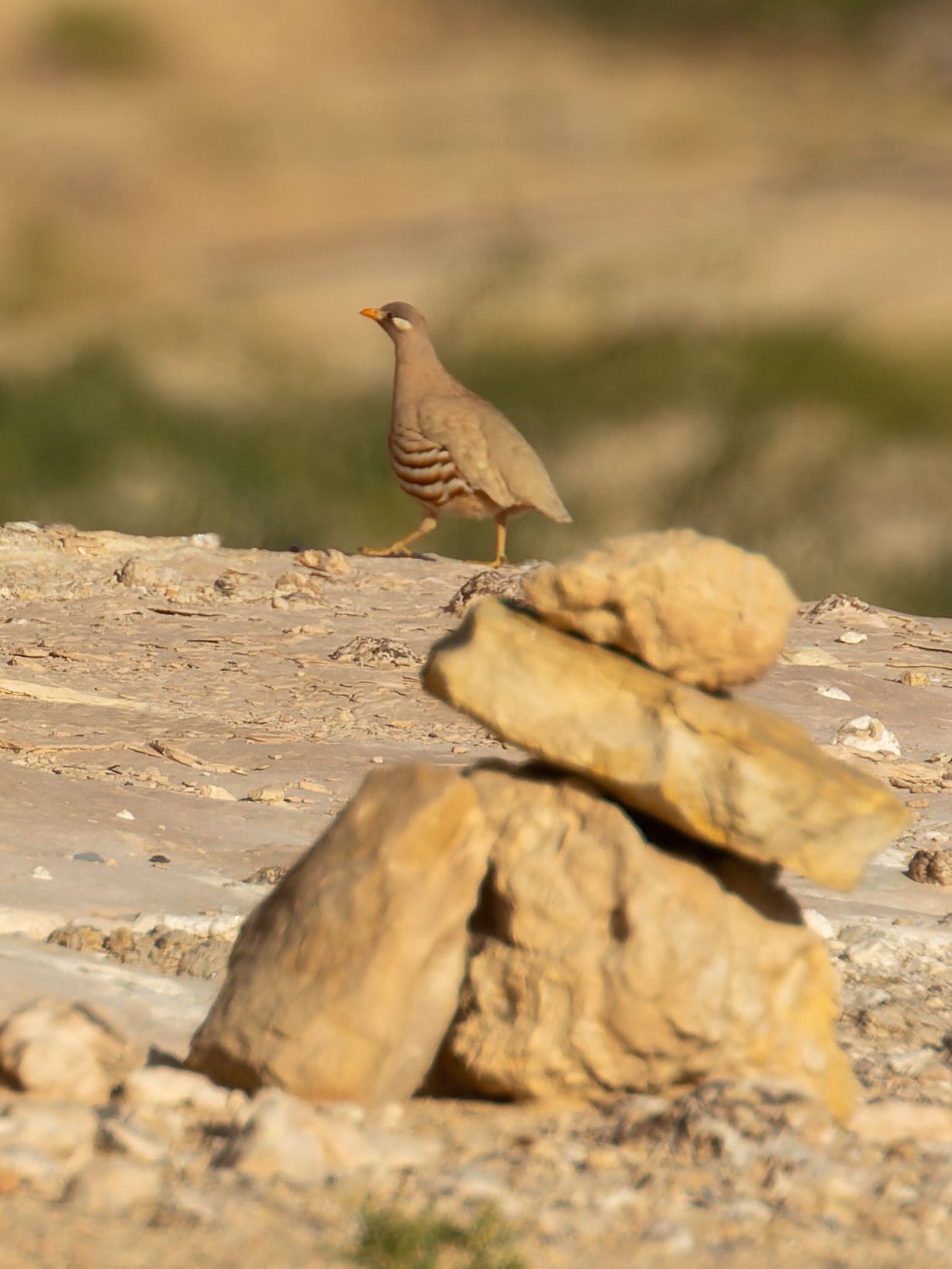
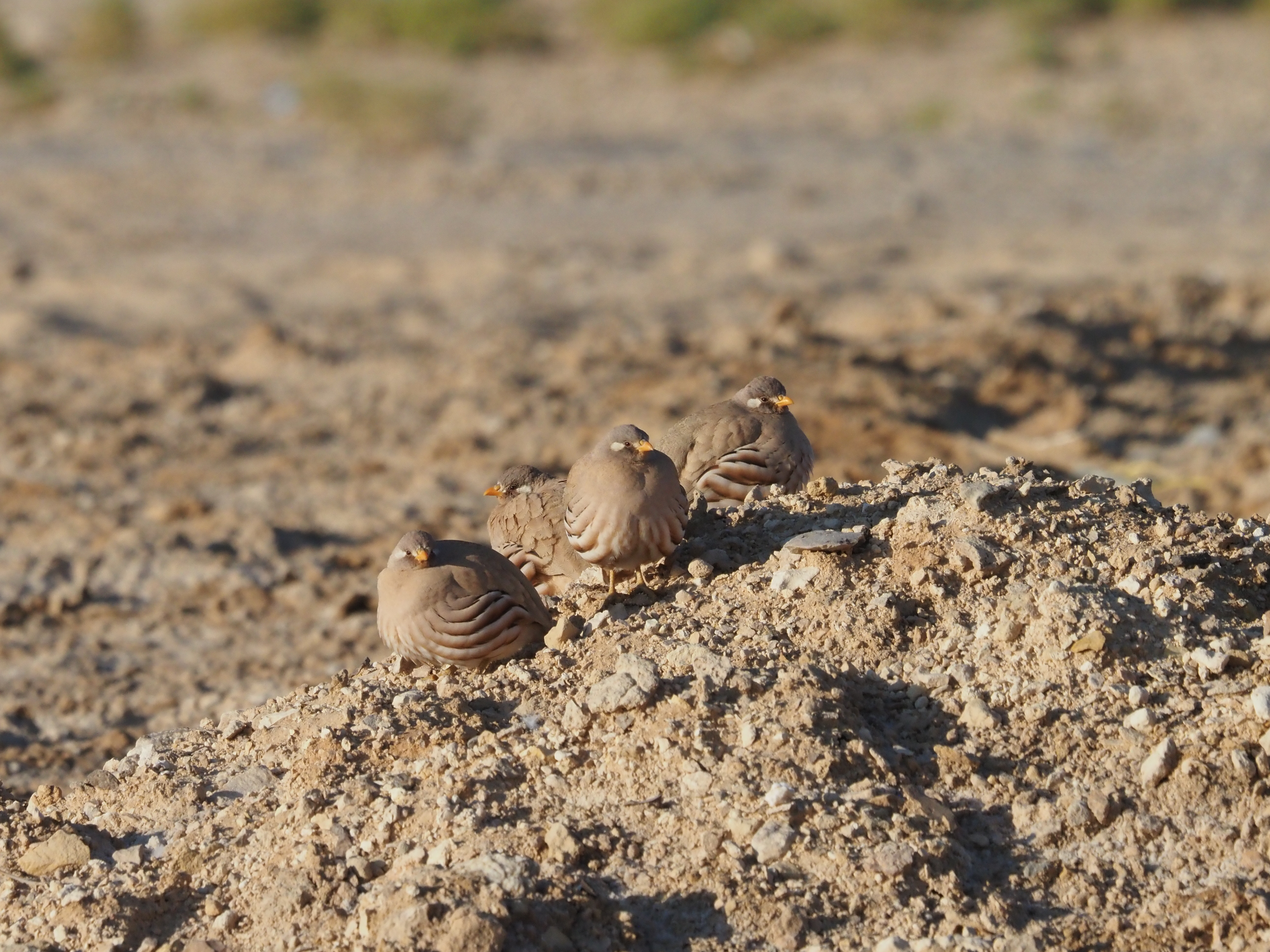
Day 7. Leaving Salalah behind, we headed to the desert, where we were planning to spend the day. Our first stop was at Mudday, a very well known place for Hypocolius in Oman. Just arrived, we got nice views on 2 Nile Valley Sunbirds feeding in the palm trees and a very short walk around produced a nice male Hypocolius in flight. It was early in the morning, and the ambient was still pretty fresh. Walking around the area, Dani found a couple of Sand Partridges moving along a small cliff, and the whole group had nice views on both the male and the female.

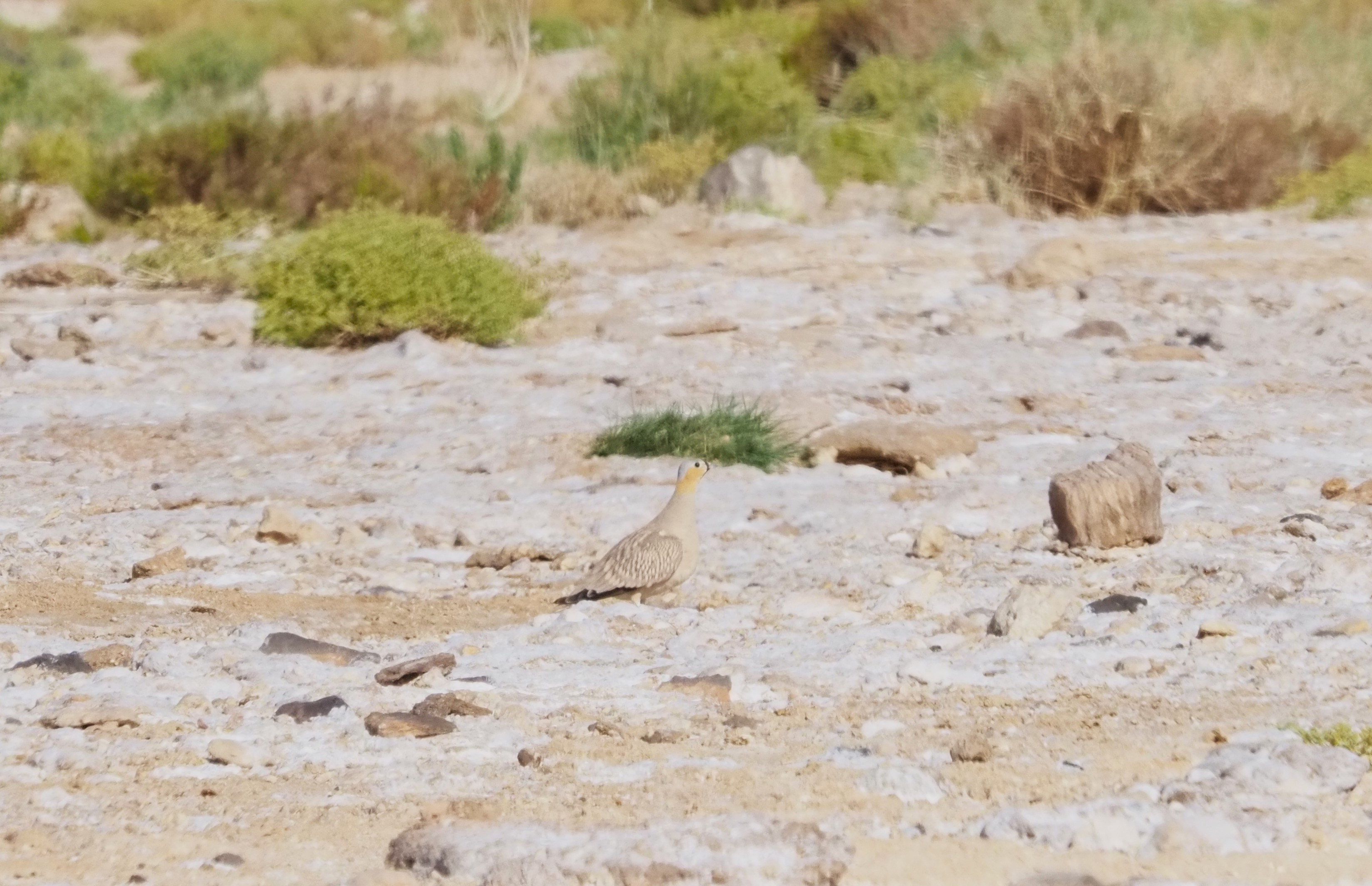
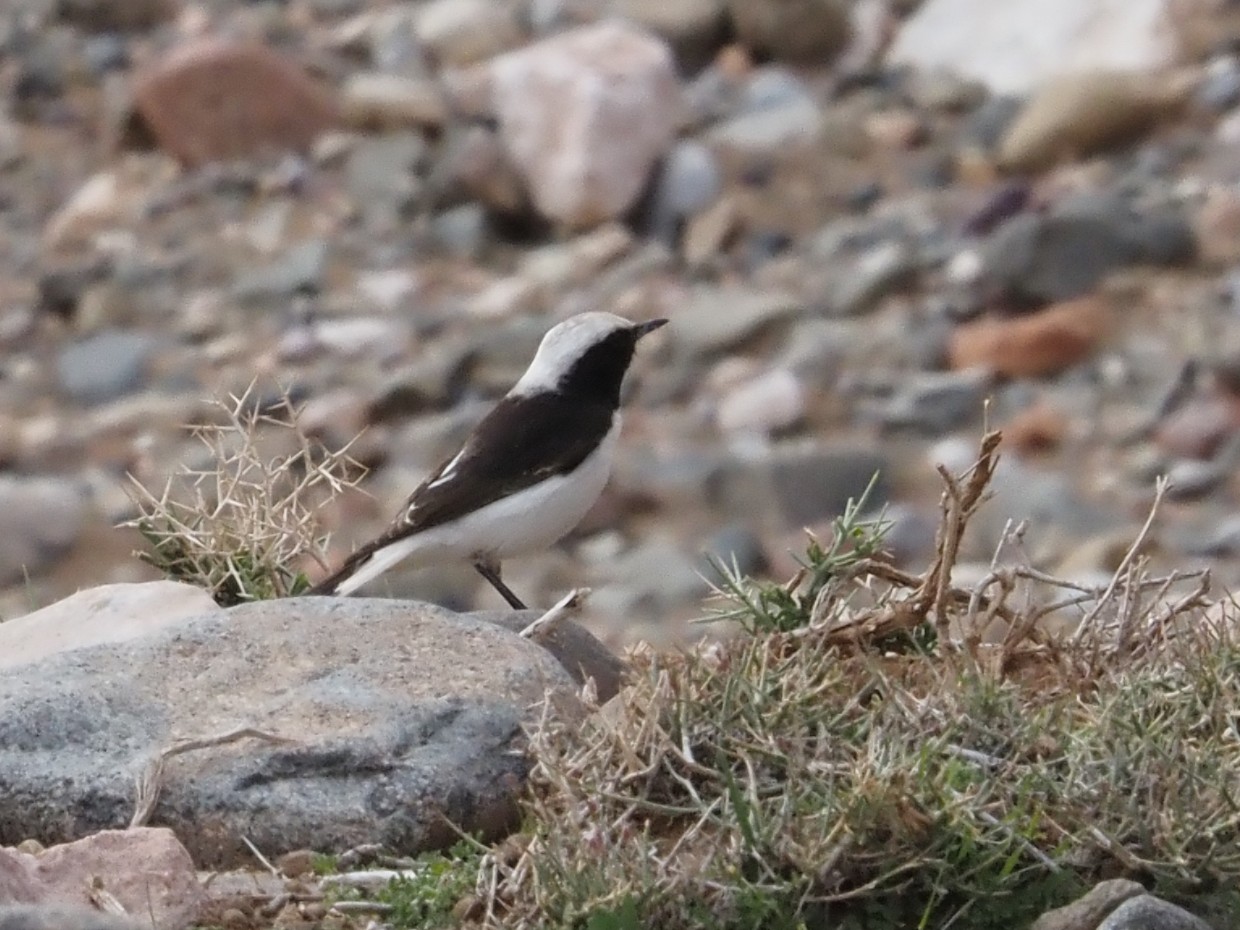
Glad with this small introduction to the place, we came back to the vehicles and went the road back to go to one of the places where the Sandgrouses come to drink water. Once arrived, we had problems to access (it was too much water and we decided not to risk the cars!), and we finally approach the place by foot. We wait for long, but we got very little action. At the end, we were almost to leave when 2 Chestnut-bellied Sandgrouses flew above our group. Our attention was then diverted by a 2 birds fighting in the sky; a male Hooded Wheatear and 1 Arabian Bee-eater were having a dog fight right behind us! At the end, we had very nice looks on both birds. Happy with this, we were about to leave when suddenly a flock of Crowned Sandgrouses appeared in front of us, and stopped only 100 metres away from the group. We had very looks on the birds, that finally decided to fly away.. In the way back to the vehicles we still had 2 more Hypocolius (!), Bluethroat and Green Sandpiper.
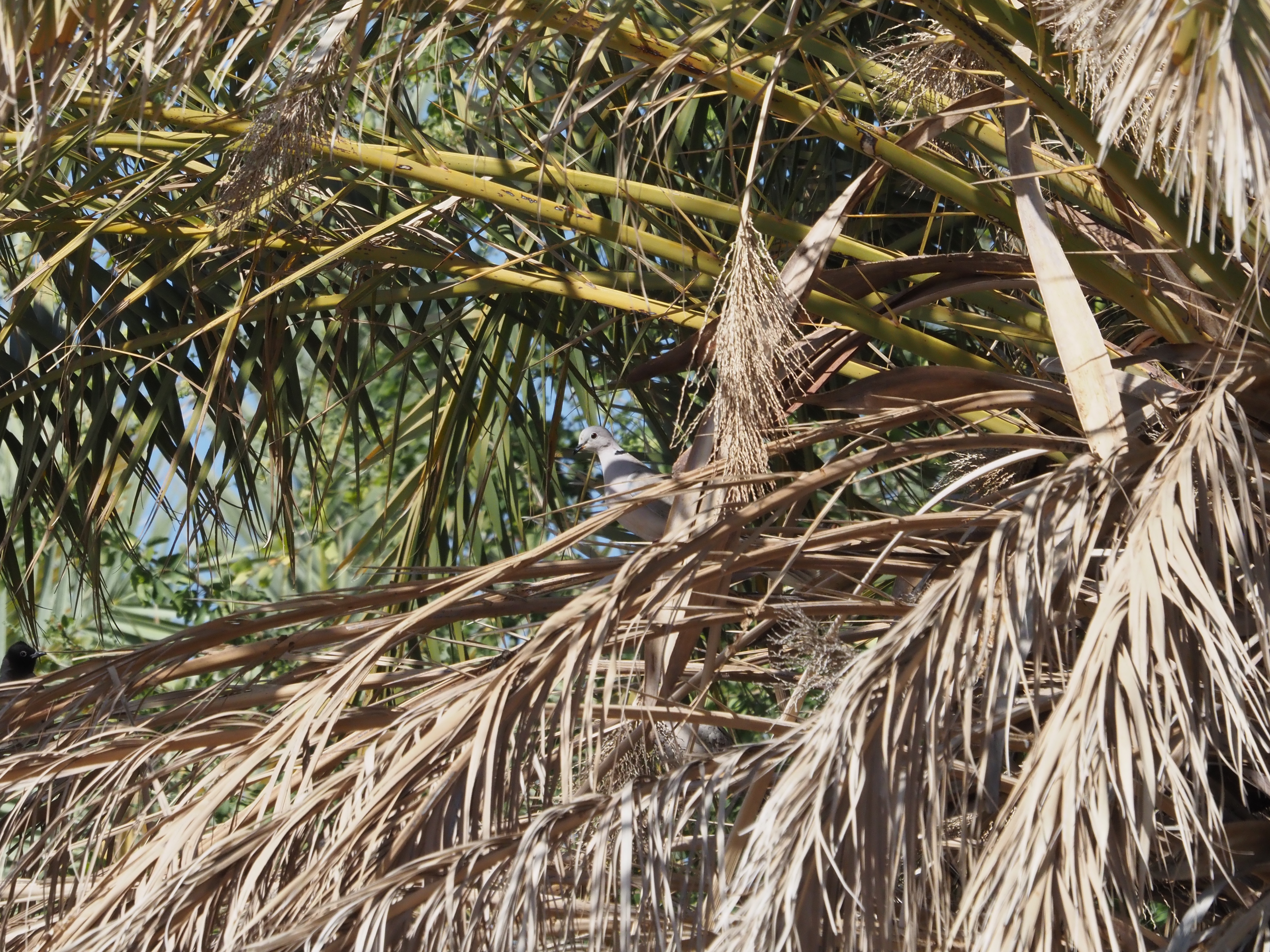
Back to Mudday, we had some extra time enjoying more Hypocolius but also African Silverbills, Nile Valley Sunbird, Isabelline Shrike, Blackstarts and our only confirmed African Collared Dove of the trip!

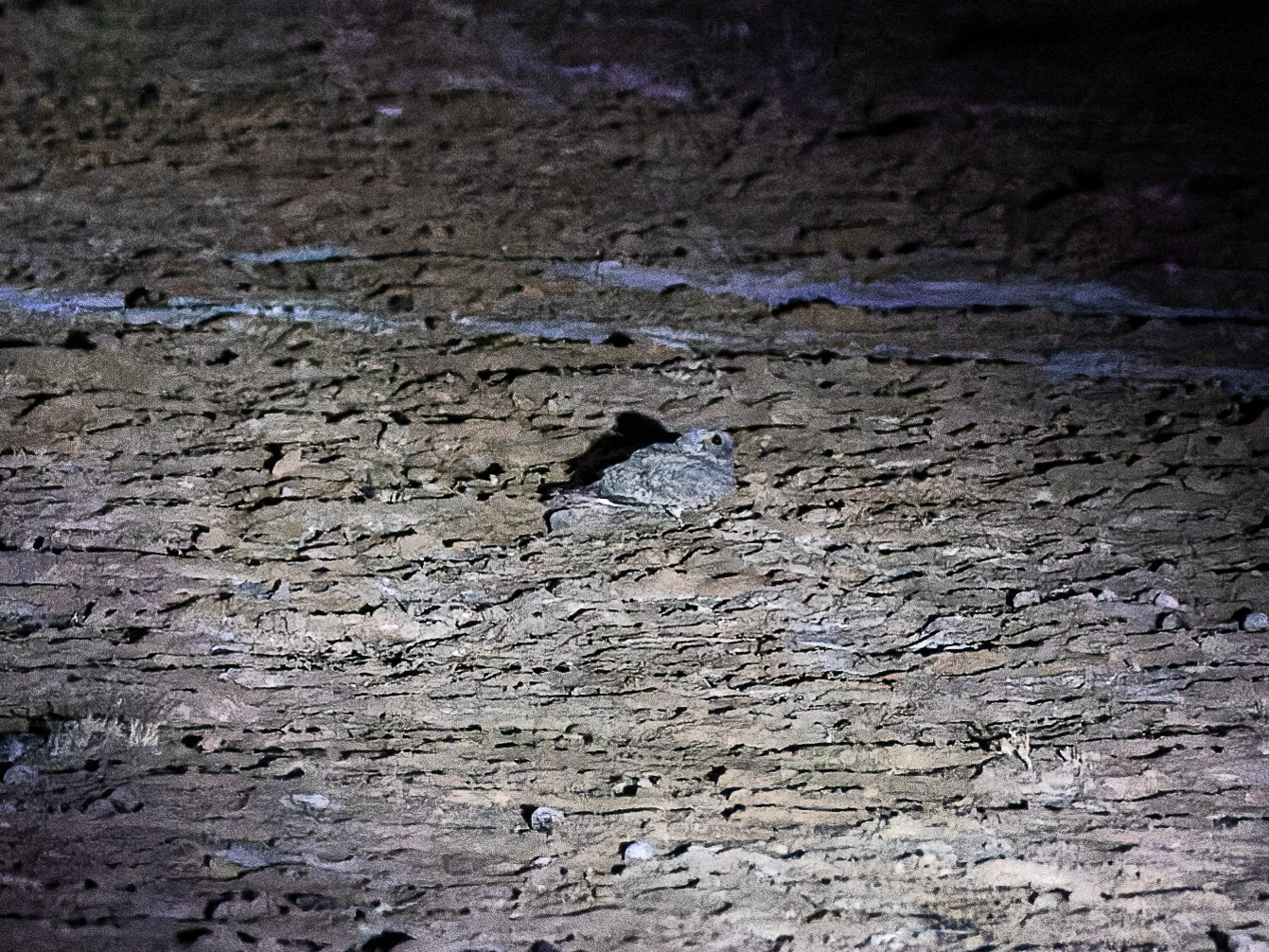
From here we drove North, and arrived to Qitbit in mid afternoon. After a break, we meet again to go North. It had been reports of Syke’s Nightjars in an oasis close by and we drove there in a lovely late afternoon light, arriving to the place about sunset. A short walk around produced a Red-throated Pipits and 2 Water Pipits (not in the list as they only flew off and we only got poor flight views). We only had to wait a few minutes to dark mantle to cover desert and see the first Nightjar moving around. For our surprise, it was a Syke’s Nightjar! Yes, we had excellent, long views on the bird flying around and suddenly a second Syke’s joined the first! Behind, a Egyptian Nightjar was also moving, and we could compare the sizes, coloration marks and behaviour of both species. Syke’s appeared always clearly smaller and more compact than the Egyptain, with shorter wings and tail, and showing (the male) the nice white pannels at the end of the undertail. What a sight! One of the Syke’s Nightjars sat down in front of us a couple of times, producing a big excitement in our group! After several minutes of observation, we decided to go back to our modest accommodation, where we enjoyed a surprisingly good dinner! A really good day, again!

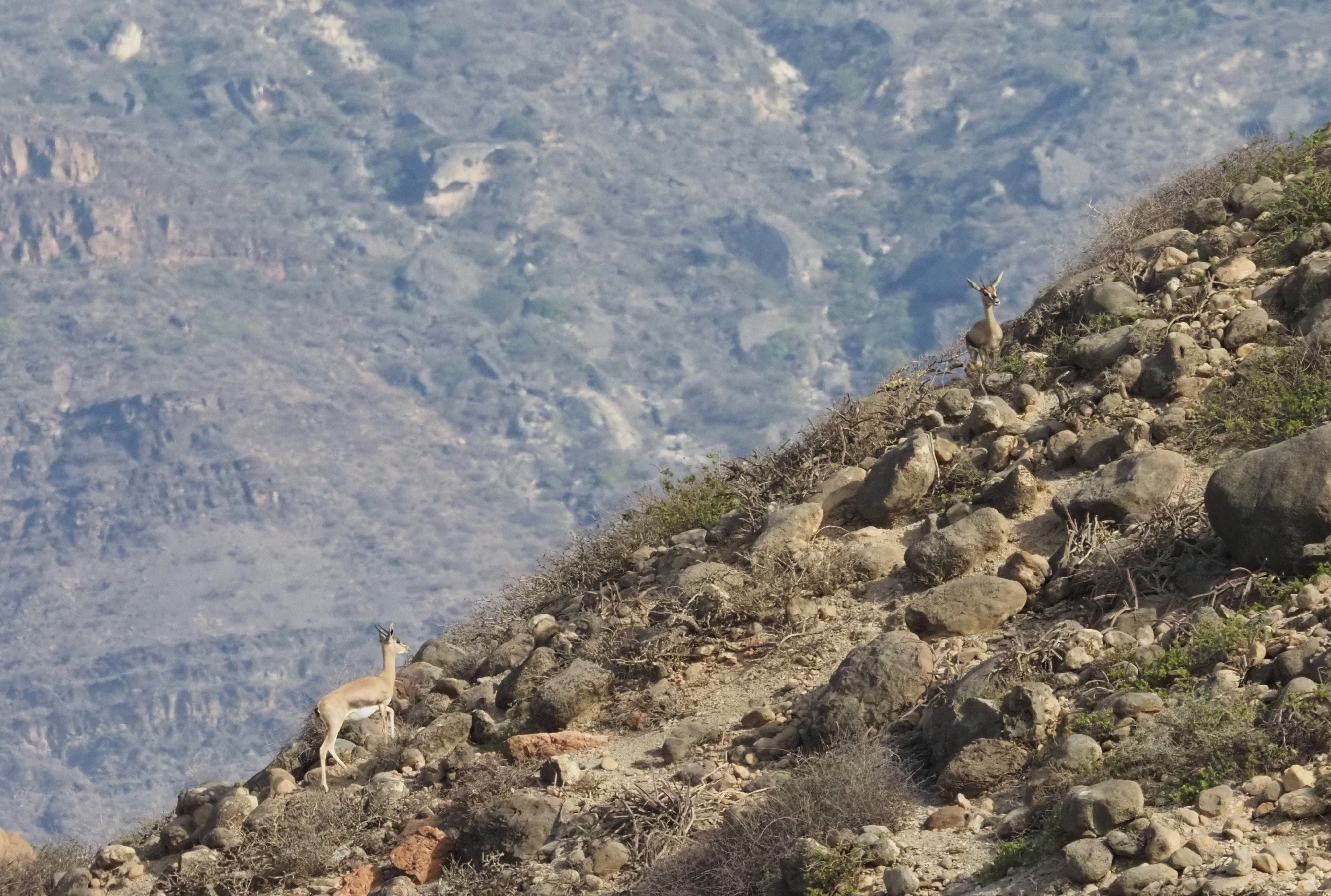
Arabian Gazelle (Gazella arabica). Image by Pete Sutton.
Sand Partridge (Ammoperdix heyi). Image by Pete Sutton.
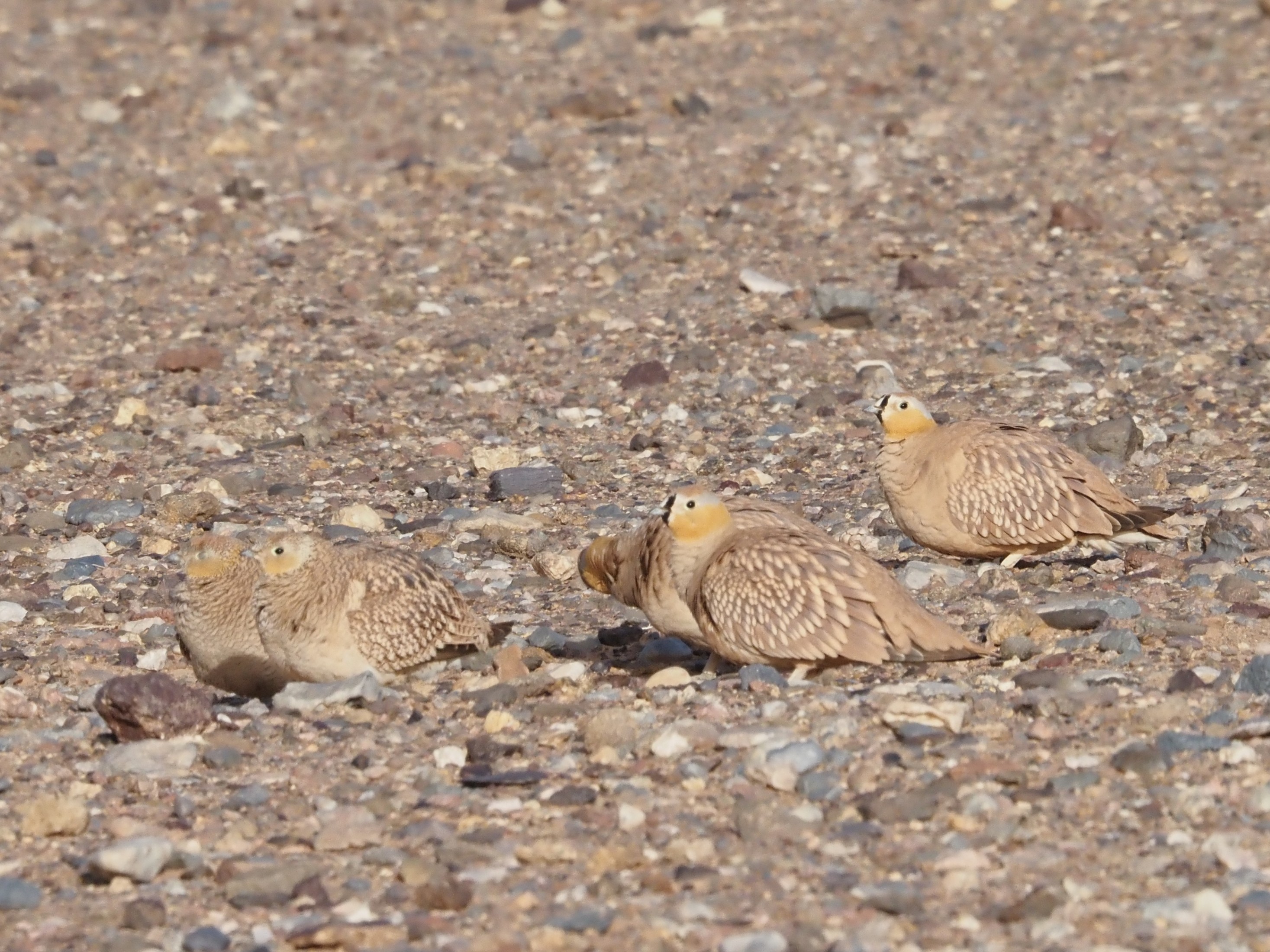
Crowned Sandgrouses (Pterocles coronata) attending a water hole. Image be Carles Oliver.
Hypocolius (Hypocolius ampelinus) at Qitbit. Image by Carles Oliver.
Eyebrowed Thrush (Turdus obscurus). Image by Pete Sutton.
Syke’s Nightjar (Caprimulgus mahrattensis). Image by Pete Sutton.

Day 8. Early morning start, and we had a walk in the garden around our accommodation, where Eyebrowed Thrush & Hypocolius were, again, seen and photographed. After a surprisingly good breakfast we moved to an oasis close by. Here, we were hoping for some Sandgrouse action. And yes, we had to wait a bit but finally a couple of small flocks of Chestnut-bellied Sandgrouses flew above the small puddle in the middle of the desert. But there were only a few Sandgrouses.. A old female Western Marsh Harrier didn’t help us as it was flying around the puddle.. Finally, our patience paid off and 2 small flocks of Spotted Sandgrouses appeared from nowhere and flew really close from our group. Only a pair minutes later, a small flock of Chestnut-bellieds landed around the puddle, but our presence was a bit too much for them, and seemed very reluctant to come to drink. Happy after the sightings, we decided to go away and to allow the Sandgrouses to drink water in peace..

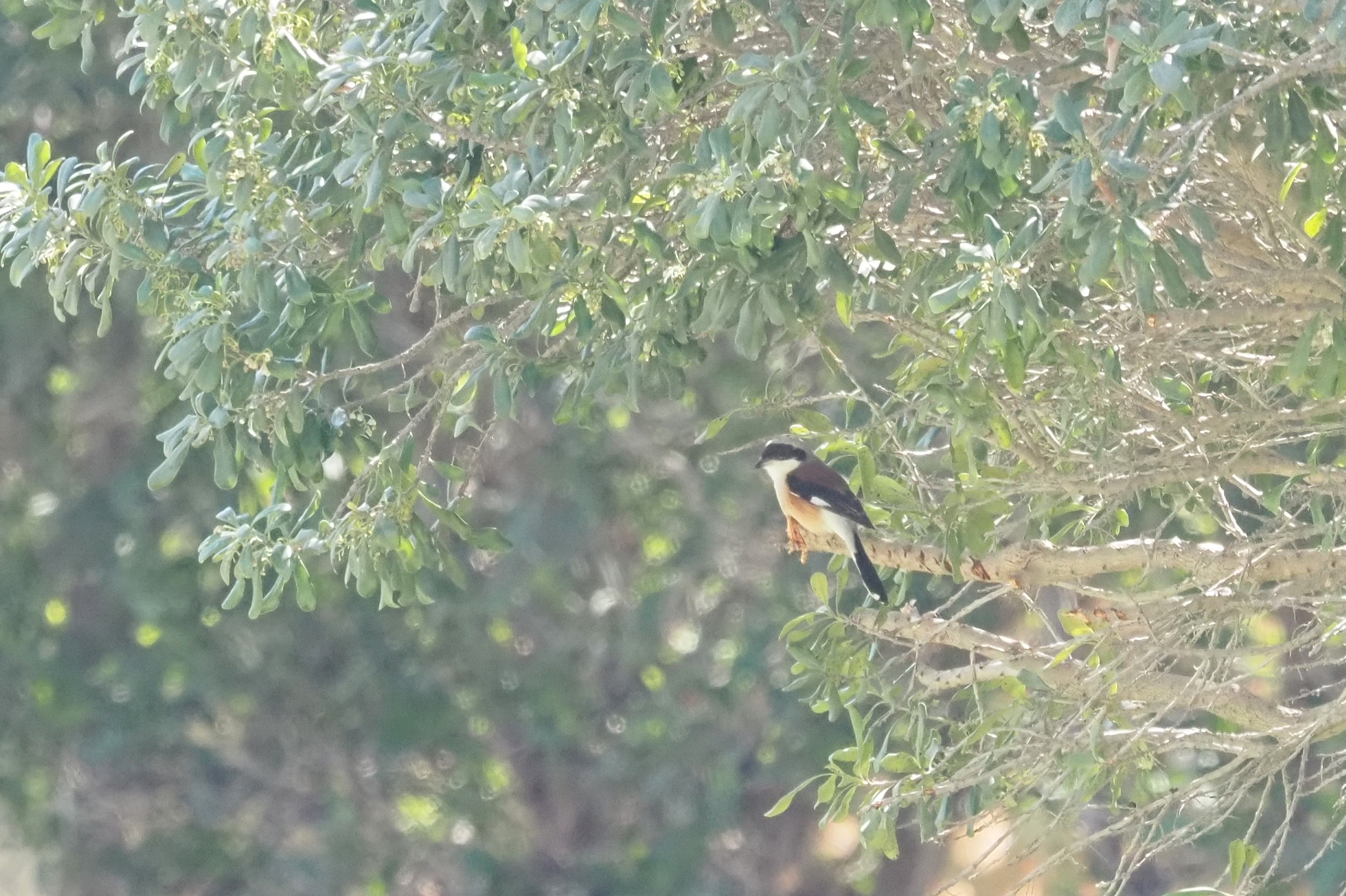
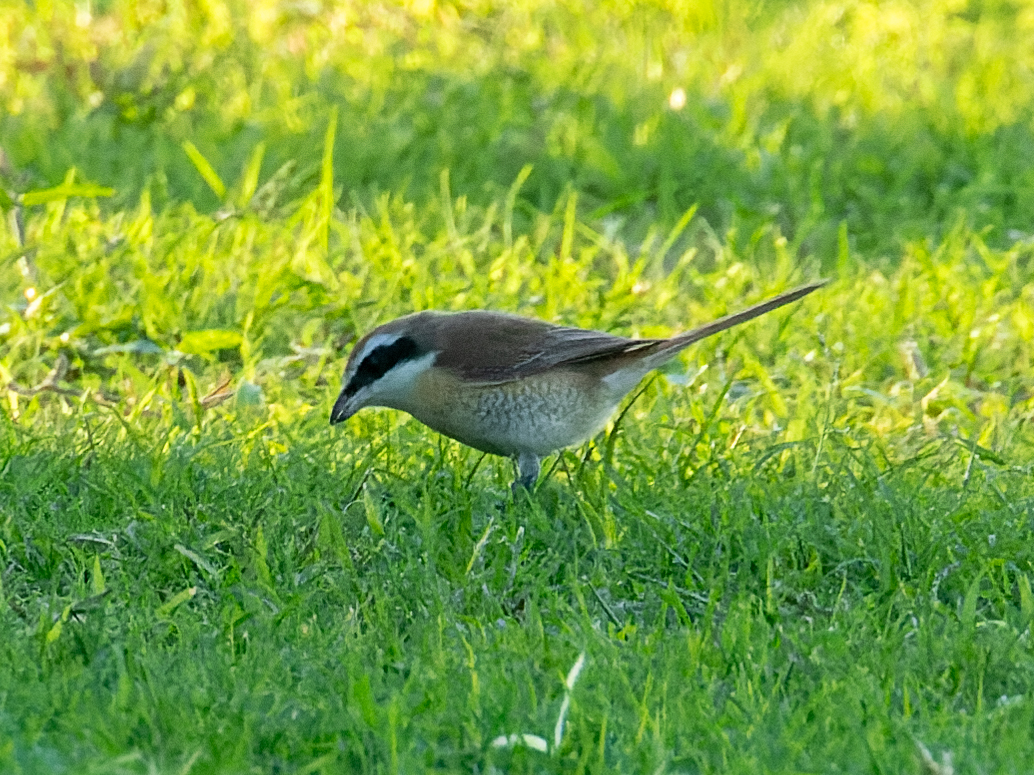
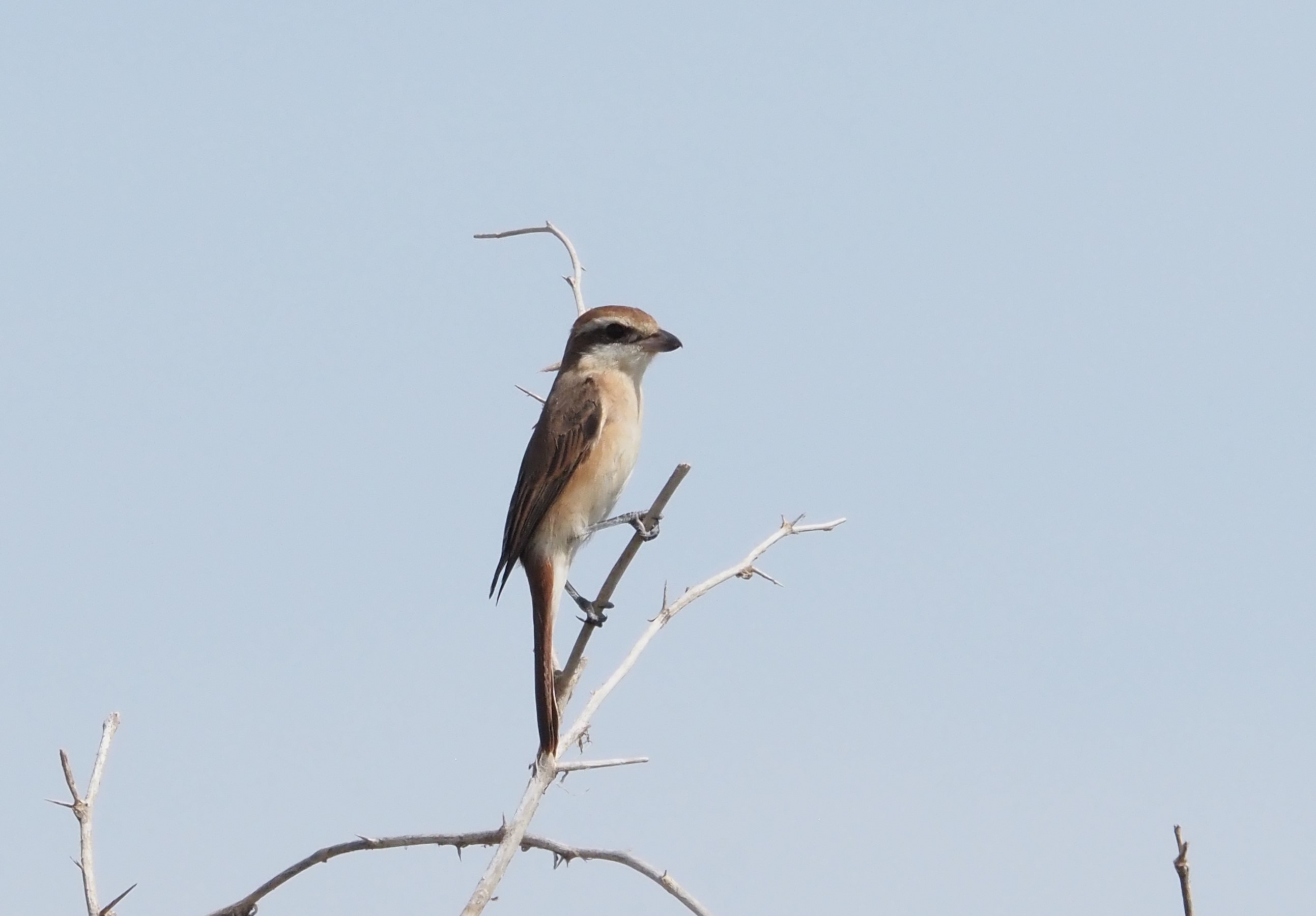
From here we drove North, with no remarkable birding stops out of a Desert Lark. The plan was to arrive at our destination right at the Golden Hour so we could have some birding in the “gardens” around our accommodation. And it worked. As we arrived to the tiny garden, an interesting Shrike moved down from a palm tree. Once the cars were parked, we had a stroll with very poor action out of a Clamorous Reed Warbler and Common Sandpiper. The interesting Shrike was moving around.. Finally we re found the Shrike up again in a palm tree. It was a bit distant but at first glance it looked like a very dark Shrike. Unfortunately it flew off. With clear suspects of what bird was, we followed the bird, tracking it through the different patches of trees into a large, walled garden. There, we finally had a nice view of a beautiful Brown Shrike. A very good bird for our list! Everybody enjoyed the bird in different sites, including wonderful views on the grass along with a Eurasian Hoopoe.

From here we just went to our accommodation.

Desert Lark (Ammomanes deserti). Image by Pete Sutton.
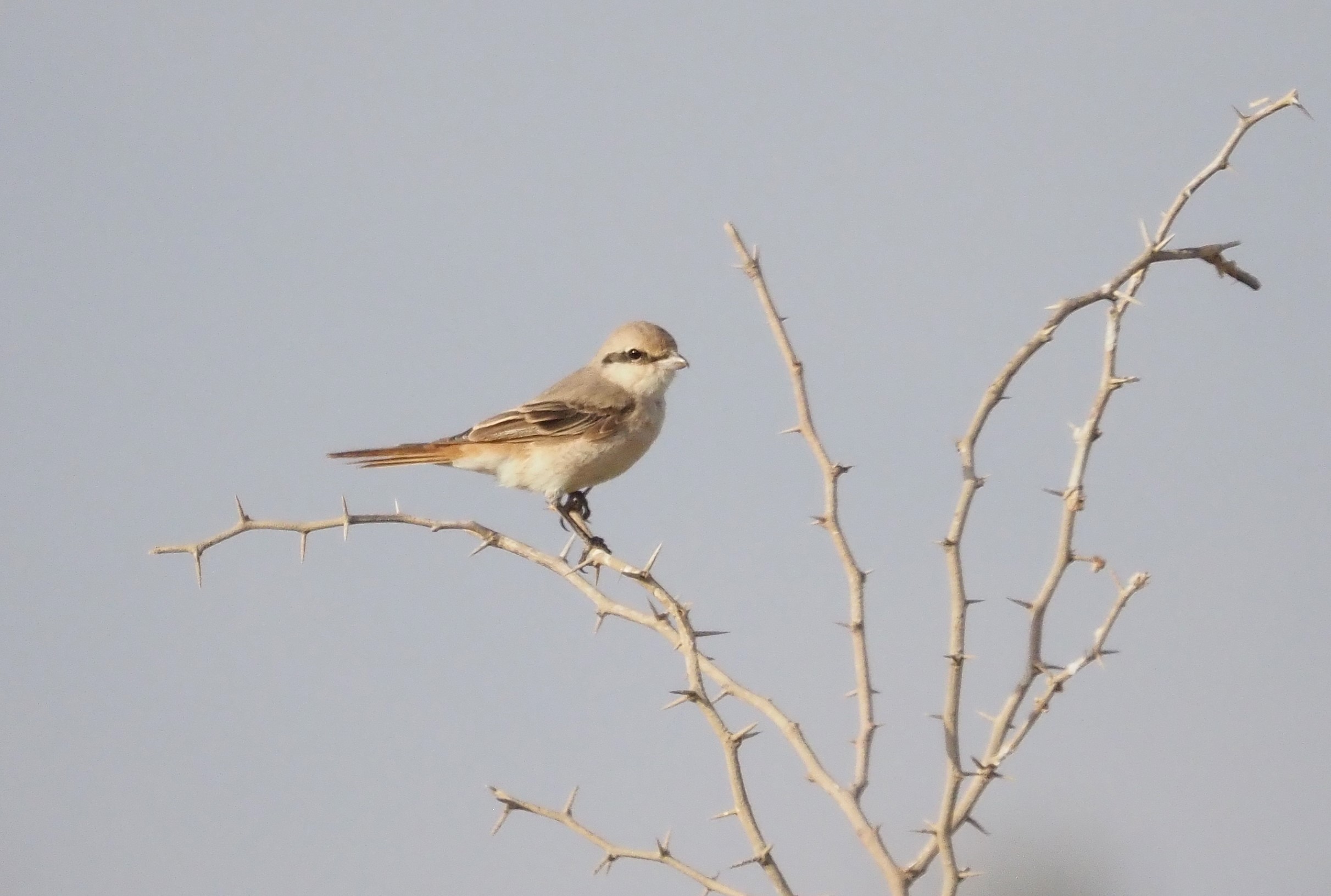
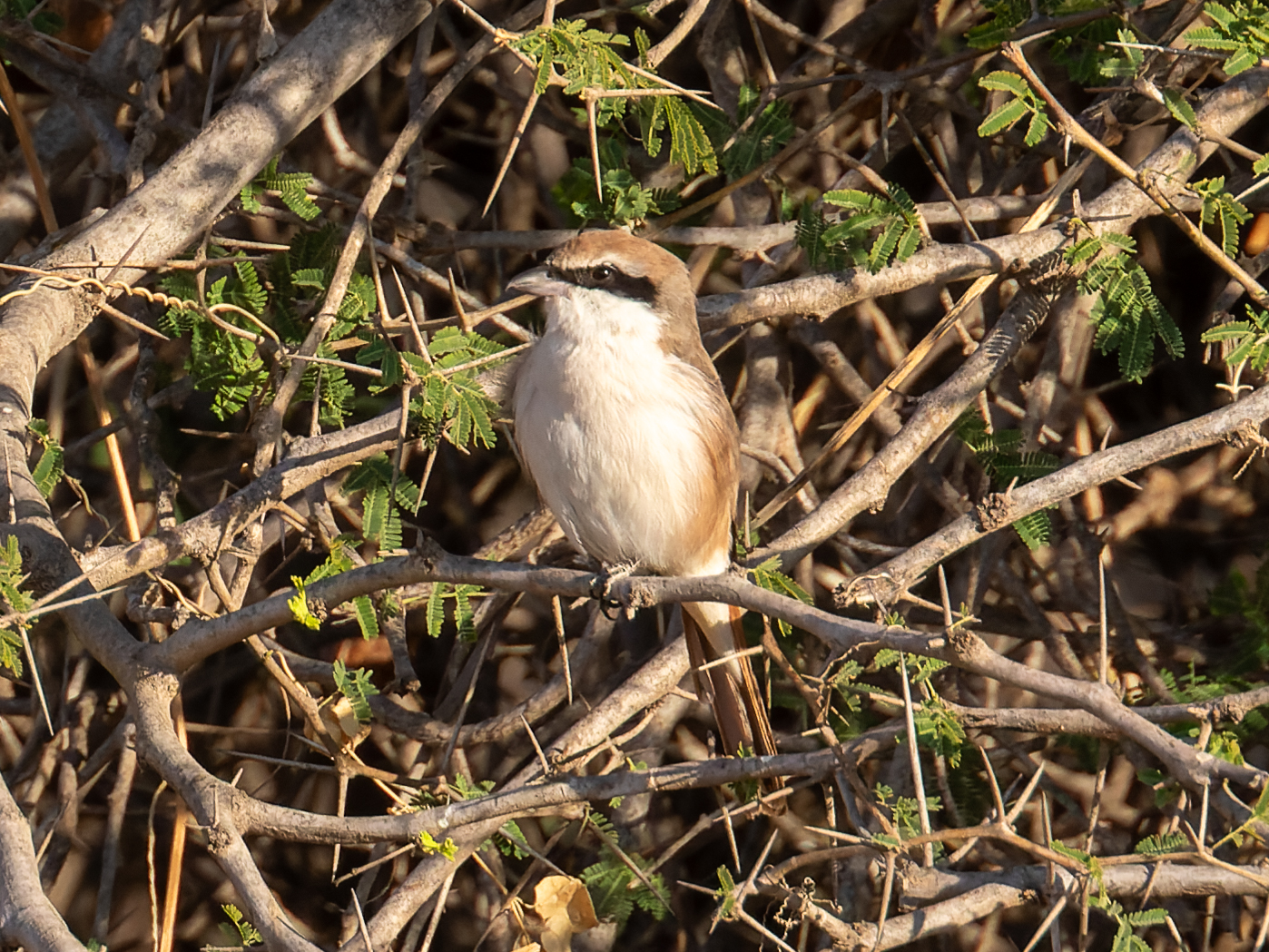
Brown Shrike (Lanius cristatus). There are only 6 accepted records of the species in the country. Image by Pete Sutton.

Day 9. We arrived to the first stop of the morning at about nice in the morning, after having a nice breakfast and some drive. Here, an immense tidal plain was full of waders. Both Tibetan & Greater Sand Plovers were common, and along with them we saw several Dunlins, Little Stints, Grey Plovers, Bar-tailed Godwits, Eurasian Curlews, Eurasian Oystercatchers, Common Redshanks, Greenshanks and Ruddy Turnstones but also good numbers of Gull-billed Terns and Western Reef Egrets. Terek’s Sandpipers were also common, and they were easy to pick running up and down the mud.
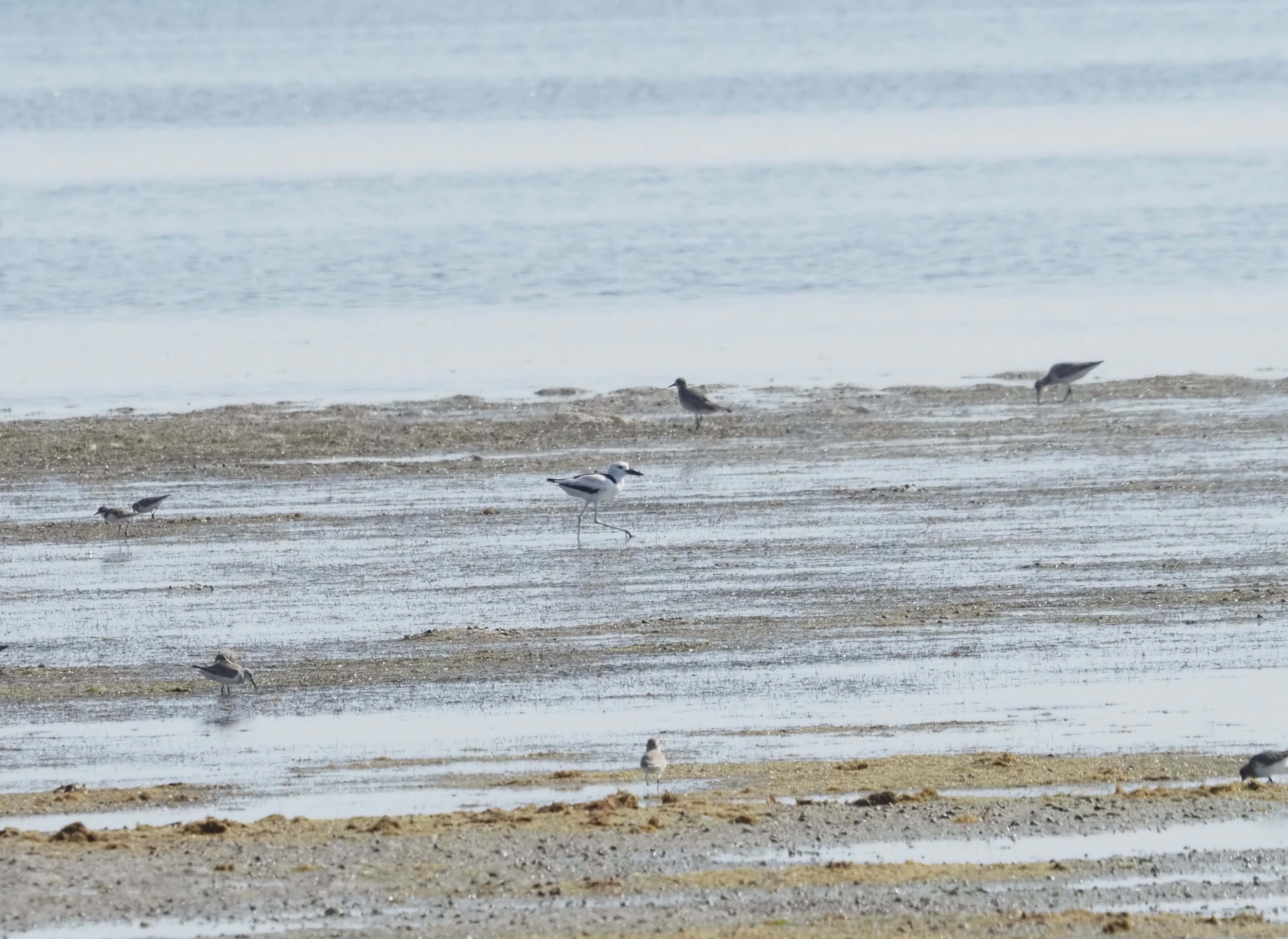
The first Crab Plovers of the trip were seen here, but unfortunately they were really far away.

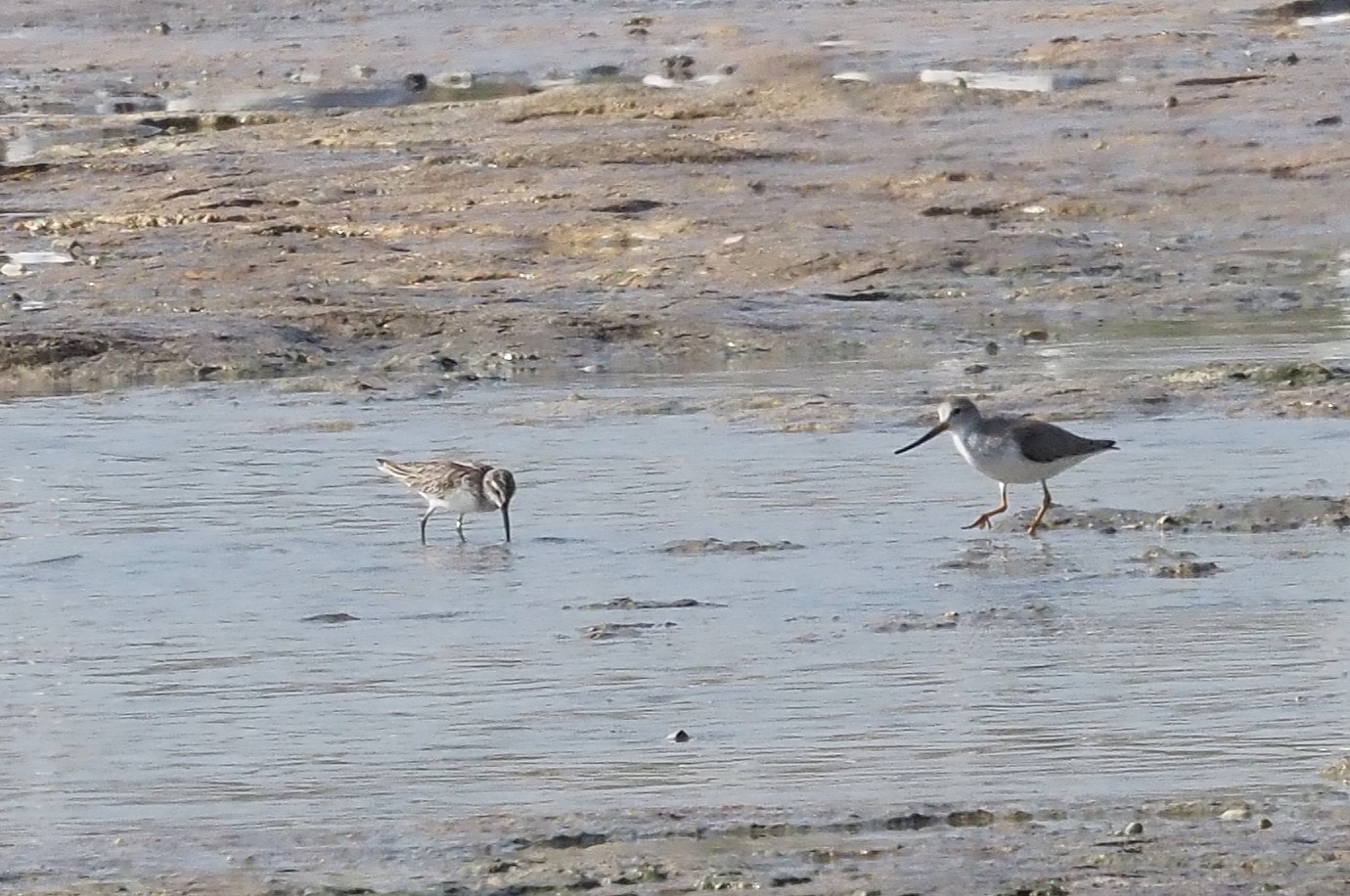
A carefully scanning of the muddy flat land provided soon scarcer species, including Sanderling but also 5 Broad-billed Sandpipers. Even if far away, we all had good scope views before at least 2 birds moved closer and allowed some shots and a detailed views of their plomages. As Broad-billed’s moved we also did so, and we placed outselves right in front a patch of mangroves. Here we had nice views in Common Kingfisher, Striated Herons and Clamorous Reed Warbler. A Marsh Harrier and a Caspian Tern were patrolling the area, trying to get some preys. Suddenly, a small flock of Indian White-eyes appeared in the outer branched of the mangroves. There were at least 3 birds, and everybody in the group enjoyed good scope views on them, showing its electric yellow upperparts, the large white eye ring and the very contrasted, grey underneath.

Very happy for these sightings, we moved to a second location. Only arrived, we saw several Crab Plover far closer that in the previous place. In here, the tidal flatlands are narrower, allowing closer views on these magnificent waders. Some of them were moving alone, but many times we saw the typical couple of birds; a youngster begging for food to an adult. A few Curlew Sandpipers were feeding around among the far more numerous Dunlins, and Kentish Plover were seen in numbers. We spent some time scanning the waders until Sergi found a Great Knot feeding mid way out in the flat lands. Almost everybody in the group had nice scope views, but unfortunately something happened and hundreds of waders decided to move, flying away in large flocks. We never relocated the Great Knot, that looked like moving really far away from its original location.

From here we moved to a different place to enjoy our packed lunch. Once over, the sandwiches were surprising, and while having lunch we had really close views on Great Crested Terns, Western Reef Egrets, Heuglin’s Gulls, Black-headed Gull and a couple of Caspian Gulls. In the sea, large flocks of Slender-billed Gulls were feeding, very excited with the small fishing boats around, and Lesser Crested, Sandwich and Little Terns were all noted.

This was the very of the trip. From here, we drove back to Muscat, where we enjoyed a very nice last dinner and group disolved as we all had different flights, but hoping to meet again in the future to have another birding adventure.

From our side, only to say that it has been (another) great trip in Oman, and we are already looking forward the 2026 issue. Very last vacancies available!

Broad-billed Sandpiper (Calidris falcinellus). Image by Pete Sutton.
Crab Plovers (Dromas ardeola) showed well, but a bit far away. Image by Carles Oliver.
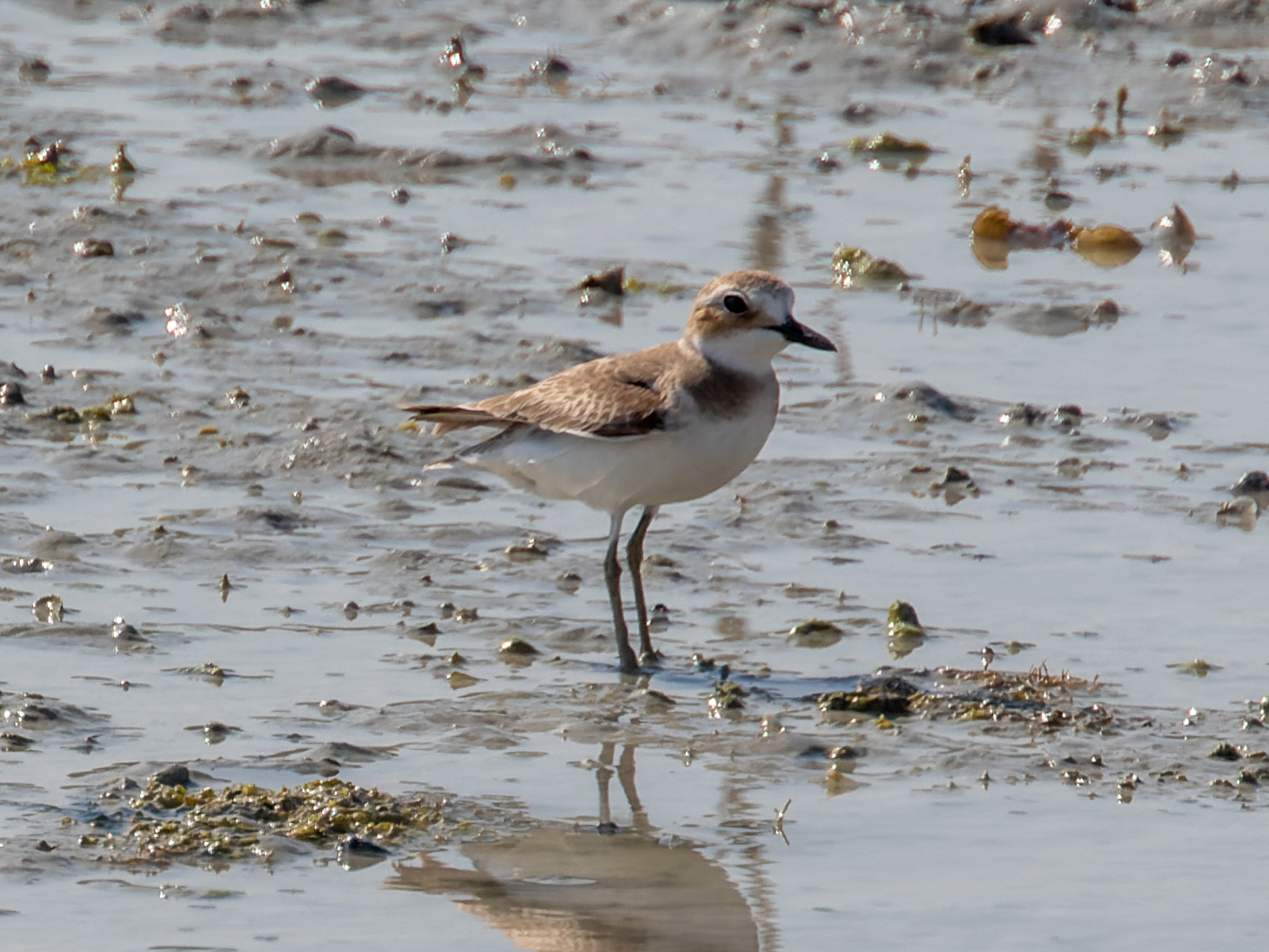
Greater Sand Plover (Anarhynchus leschenaultii). Image by Pete Sutton.
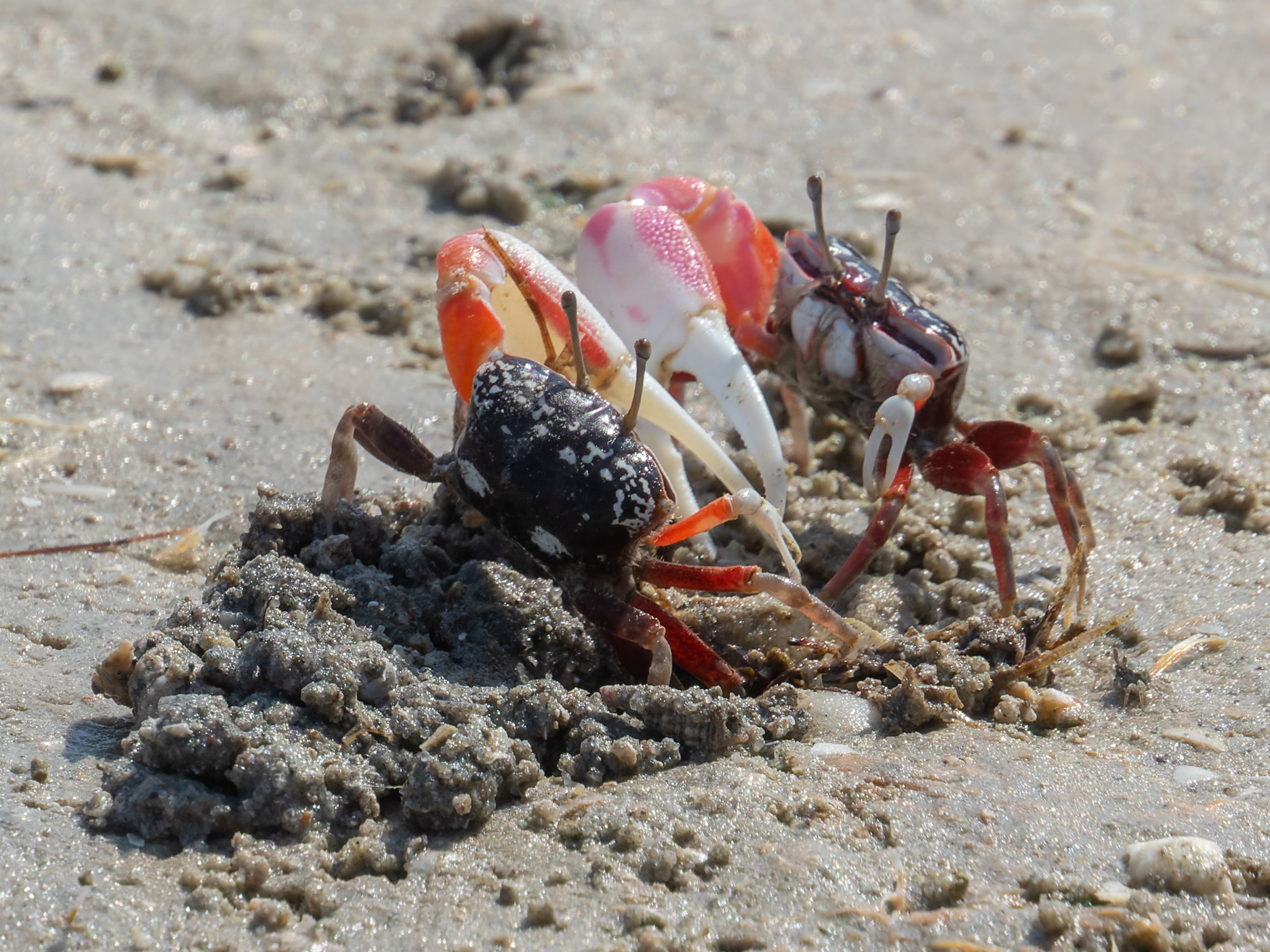
Fiddler Crabs (Minuca sp.). Image by Pete Sutton.
Great Crested Tern (Thalasseus bergii). Image by Carles Oliver.
Western Reef Egret (Egretta gularis). Image by Carles Oliver.
Great time, tons of laughs & great birds despite being the largest group ever in this destination for us. Image by Dani Rey.

List of birds seen during the trip:

  1. Sand Partridge (Ammoperdix heyi)
  2. Grey Francolin (Francolinus pondicerianus)
  3. Cotton Pygmy Goose (Nettapus coromandelianus)
  4. Mallard (Anas platyrhynchos)
  5. Eurasian Wigeon (Anas penelope)
  6. Pintail (Anas acuta)
  7. Eurasian Teal (Anas crecca)
  8. Gadwall (Mareca strepera)
  9. Garganey (Spatula querquedula)
  10. Northern Shoveler (Spatura clypeata)
  11. Common Pochard (Aythya ferina)
  12. Ferruginous Duck (Aythya nyroca)
  13. Tufted Duck (Aythya fuligula)
  14. Egyptian Nightjar (Caprimulgus aegyptius)
  15. Syke’s Nightjar (Caprimulgus mahrattensis)
  16. Pallid Swift (Apus pallidus)
  17. Pacific Swift (Apus pacificus)
  18. Alpine Swift (Apus melba)
  19. Asian Koel (Eudynamys scolopaceus)
  20. Chestnut-bellied Sandgrouse (Pterocles exustus)
  21. Crowned Sandgrouse (Pterocles coronata)
  22. Spotted Sandgrouse (Pterocles senegallus)
  23. Lichtenstein’s Sandgrouse (Pterocles lichtensteinii)
  24. Feral Dove (Columba livia)
  25. Bruce’s Green Pigeon (Treron waalia)
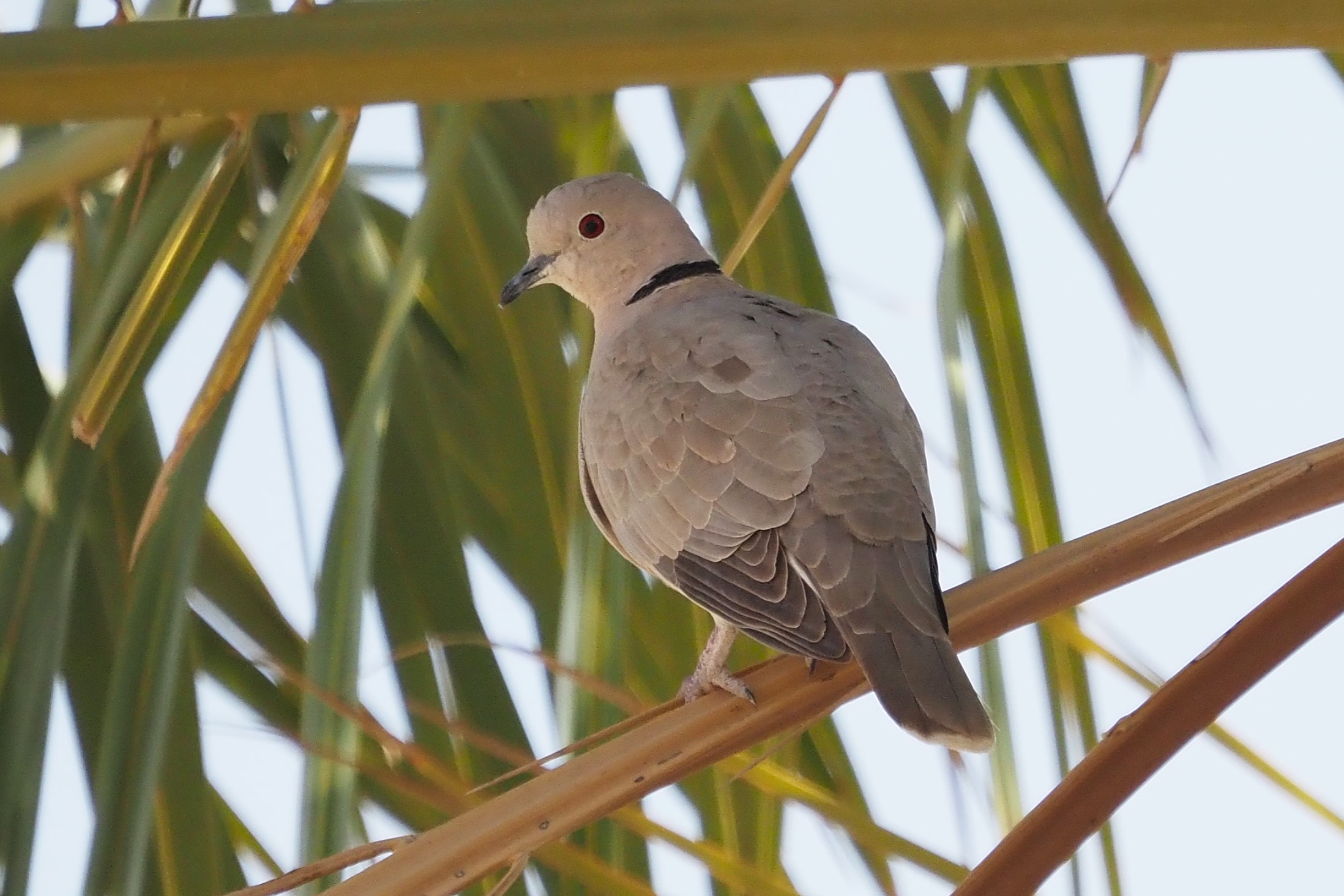
  26. Eurasian Collared Dove (Streptopelia decaocto)
  27. African Collared Dove (Streptopelia roseogrisea)
  28. Laughing Dove (Spilopelia senegalensis)
  29. Namaqua Dove (Oena capensis)
  30. Grey-headed Swamphen (Porphyrio poliocephalus)
  31. Eurasian Moorhen (Gallinula chloropus)
  32. Eurasian Coot – Fotja comuna (Fulica atra)
  33. Red-knobbed Coot – Fotja banyuda (Fulica cristata)
  34. Little Grebe (Tachybaptus ruficollis)
  35. Greater Flamingo (Phoenicopterus roseus)
  36. Spotted Thick-knee (Burhinus capensis)
  37. Cream-coloured Courser (Cursorior cursor)
  38. Eurasian Oystercatcher (Haematopus ostralegus)
  39. Crab Plover (Droma ardeola)
  40. Black-winged Stilt (Himantopus himantopus)
  41. Pied Avocet (Recurvirostra avosetta)
  42. Pheasant-tailed Jacana (Hydrophaisanus chirurgus)
  43. Red-wattled Lapwing (Vanellus indicus)
  44. Pacific Golden Plover (Pluvialis fulva)
  45. Grey Plover (Pluvialis aquatarola)
  46. Common Ringed Plover (Charadrius hiaticula)
  47. Little Ringed Plover (Charadrius dubius)
  48. Kentish Plover (Charadrius alexandrinus)
  49. Greater Sand Plover (Charadrius leschenaultii)
  50. Tibetan Sand Plover (Anarhynchos atrifons)
  51. Common Snipe (Gallinago gallinago)
  52. Pin-tailed Snipe (Gallinago stenura)
  53. Bar-tailed Godwit (Limosa lapponica)
  54. Black-tailed Godwit (Limosa limosa)
  55. Eurasian Whimbrel (Numenius phaeopus)
  56. Eurasian Curlew (Numenius arquata)
  57. Spotted Redshank (Tringa erythropus)
  58. Common Redshank (Tringa totanus)
  59. Marsh Sandpiper (Tringa stagnatilis)
  60. Greenshank (Tringa nebularia)
  61. Green Sandpiper (Tringa ochropus)
  62. Wood Sandpiper (Tringa glareola)
  63. Terek’s Sandpiper (Xenus cinereus)
  64. Common Sandpiper (Actitis hypoleucos)
  65. Ruddy Turnstone (Arenaria interpres)
  66. Sanderling (Calidris alba)
  67. Little Stint (Calidris minuta)
  68. Temminck’s Stint (Calidris temminckii)
  69. Dunlin (Calidris alpina)
  70. Broad-billed Sandpiper (Calidris falcinellus)
  71. Curlew Sandpiper (Calidris ferruginea)
  72. Great Knot (Calidris tenuirostris)
  73. Ruff (Calidris pugnax)
  74. Red-necked Phalarope (Phalaropus lobatus)
  75. Small Pratincole (Glareola lacteus)
  76. Slender-billed Gull (Chroicocephalus genei)
  77. Black-headed Gull (Chroicocephalus ridibundus)
  78. Lesser Black-backed Gull (Larus fuscus): 2 races; Heuglin’s Gull (heuglini) & Steppe Gull (barabensis)
  79. Caspian Gull (Larus cachinnans)
  80. Palla’s Gull (Ichthyaetus ichthyaetus)
  81. Sooty Gull (Ichthyaetus hemprichii)
  82. Caspian Tern (Hydroprogne caspia)
  83. Greater Crested Tern (Thalasseus bergii)
  84. Lesser Crested Tern (Thalasseus bengalensis)
  85. Sandwich Tern (Thalasseus sandvicensis)
  86. White-cheeked Tern (Sterna repressa)
  87. Common Tern (Sterna hirundo)
  88. Gull-billed Tern (Gelochelidon nilotica)
  89. Little Tern (Sternula albifrons)
  90. Whiskered Tern (Chlidonias hybridus)
  91. White-winged Black Tern (Chlidonias leucopterus)
  92. Persian Shearwater (Puffinus persicus)
  93. Flesh-footed Shearwater (Ardenna carneipes)
  94. Swinhoe’s Storm Petrel (Hydrobates monorhis)
  95. Jouanin’s Petrel (Bulweria fallax)
  96. Abdim’s Stork (Ciconia abdimii)
  97. White Stork (Ciconia ciconia)
  98. Masked Bobby (Sula dactylara)
  99. Brown Bobby (Sula leucogaster)
  100. Great Cormorant (Phalacrocorax carbo)
  101. African Sacred Ibis (Threskiornis aethiopicus)
  102. Glossy Ibis (Plegadis falcinellus)
  103. Eurasian Spoonbill (Platalea leucorodia)
  104. Yellow Bittern (Botaurus sinensis)
  105. Striated Heron (Butorides striata)
  106. Squacco Heron (Ardeola ralloides)
  107. Indian Pond Heron (Ardeolla grayii)
  108. Western Cattle Egret (Bubulcus ibis)
  109. Black-crowned Night Heron (Nycticorax nycticorax)
  110. Purple Heron (Ardea purpurea)
  111. Grey Heron (Ardea cinerea)
  112. Great Egret (Ardea alba)
  113. Intermediate Egret (Ardea intermedia)
  114. Little Egret (Egretta garzetta)
  115. Western Reef Egret (Egretta gularis)
  116. Egyptian Vulture (Neophron percnopterus)
  117. Lappet-faced Vulture – Voltor orellut (Torgos tracheliotos)
  118. Osprey (Pandion haliaetos)
  119. Greater Spotted Eagle (Clanga clanga)
  120. Steppe Eagle (Aquila nipalensis)
  121. Eastern Imperial Eagle (Aquila heliaca)
  122. Verreaux’s Eagle (Aquila verreauxii)
  123. Bonelli’s Eagle (Aquila fasciata)
  124. Booted Eagle (Aquila pennata)
  125. Short-toed Snake Eagle (Circaetus gallicus)
  126. Eurasian Sparrowhawk (Accipiter nisus)
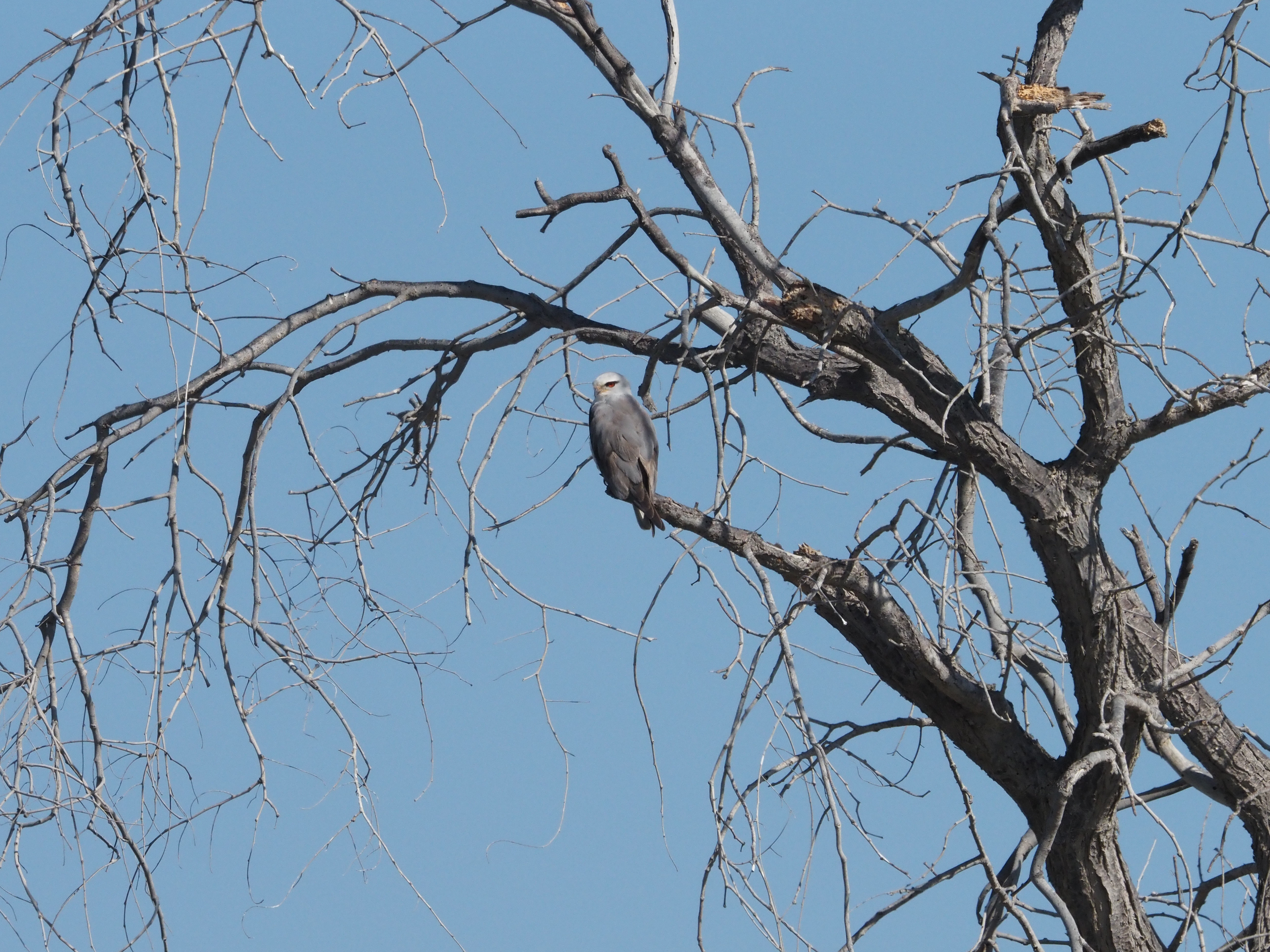
  127. Black-winged Kite (Elanus caeruleus)
  128. Western Marsh Harrier (Circus aeruginosus)
  129. Pallid Harrier (Circus macrourus)
  130. Montagu’s Harrier (Circus pygargus)
  131. Pallid Scops Owl (Otus brucei)
  132. Arabian Scops Owl (Otus pamelae)
  133. Little Owl (Athene noctua)
  134. Desert Owl (Strix hadorami)
  135. Omani Owl (Strix butleri) — heard only
  136. Western Barn Owl (Tyto alba) — heard only
  137. Arabian Eagle Owl (Bubo milesi)
  138. Eurasian Hoopoe (Upupa epops)
  139. Indian Roller (Coracias benghalensis)
  140. European Roller (Coracias garrulus)
  141. Grey-headed Kingfisher (Halcyon leucocephala)
  142. Common Kingfisher (Alcedo atthis)
  143. Arabian Bee-eater (Merops cyanophrys)
  144. Common Kestrel (Falco tinnunculus)
  145. Peregrine Falcon (Falco peregrinus)
  146. Lanner Falcon (Falco biarmicus)
  147. Alexandrine Parakeet (Psittacula eupatria)
  148. Rose-winged Parakeet (Psittacula krameri)
  149. Black-crowned Tchagra (Tchagra senegalus)
  150. Brown Shrike (Lanius cristatus)
  151. Daurian Shrike (Lanius isabellinus)
  152. Turkestan Shrike (Lanius phoenicuroides)
  153. Levant Grey Shrike (Lanius excubitor aucheri) / Steppe Grey Shrike (Lanius excubitor pallidirostris)
  154. Arabian Babbler (Turdoides squamiceps)
  155. African Paradise Flycatcher (Tersiphone viridis)
  156. Grey Hypocolius (Hypocolius ampelinus)
  157. White-eared Bulbul (Pycnonotus leucotis)
  158. Red-vented Bulbul (Pycnonotus cafer)
  159. White-spectacled Bulbul (Pycnonotus xanthopygos)
  160. House Crow (Corvus splendens)
  161. Brown-necked Raven (Corvus ruficollis)
  162. Fan-tailed Raven (Corvus rhidipurus)
  163. Greater Hoopoe-Lark (Alaemon alaudipes)
  164. Desert Lark (Ammomanes deserti)
  165. Greater Short-toed Lark (Calandrella brachydactyla)
  166. Black-crowned Sparrow-Lark (Eremopterix nigriceps)
  167. Arabian Lark (Eremolauda eremodites)
  168. Crested Lark (Galerida cristata)
  169. Sand Martin (Riparia riparia)
  170. Pale Crag Martin (Ptyonoprogne obsoleta)
  171. Barn Swallow (Hirundo rustica)
  172. Red-rumped Swallow (Cecropis daurica)
  173. Graceful Prinia (Prinia gracilis)
  174. Delicate Prinia (Prinia lepida)
  175. Common Chiffchaff – Mosquiter comú (Phylloscopus collybita)
  176. Plain Leaf Warbler (Phylloscopus neglectus)
  177. Clamorous Reed Warbler (Acrocephalus stentoreus)
  178. Asian Desert Warbler (Curruca nana)
  179. Lesser Whitethroat (Curruca curruca)
  180. Eastern Orphean Warbler (Curruca crassirostris)
  181. Arabian Warbler (Curruca leucomelaena)
  182. Ménétriés’s Warbler (Curruca mystacea)
  183. Eastern Olivaceous Warbler (Iduna pallida)
  184. Indian White-eye (Zosterops palpebrosus)
  185. Abyssian White-eye (Zosterops abyssinicus)
  186. Common Myna (Acridotheres tristis)
  187. Rose-coloured Starling (Pastor roseus)
  188. Tristam’s Starling (Onychognatus tristamii)
  189. Eyebrowed Thrush (Turdus obscurus)
  190. Blue Rock Thrush (Monticola solitarius)
  191. Bluethroat (Luscinia svecica)
  192. Common Redstart (Phoenicurus phoenicurus)
  193. Black Redstart (Phoenicurus ochruros)
  194. Siberian Stonechat (Saxicola maurus)
  195. Red-breasted Flycatcher (Ficedula parva)
  196. Northern Wheatear (Oenanthe oenanthe)
  197. Isabelline Wheatear (Oenanthe isabellina)
  198. Desert Wheatear (Oenanthe deserti)
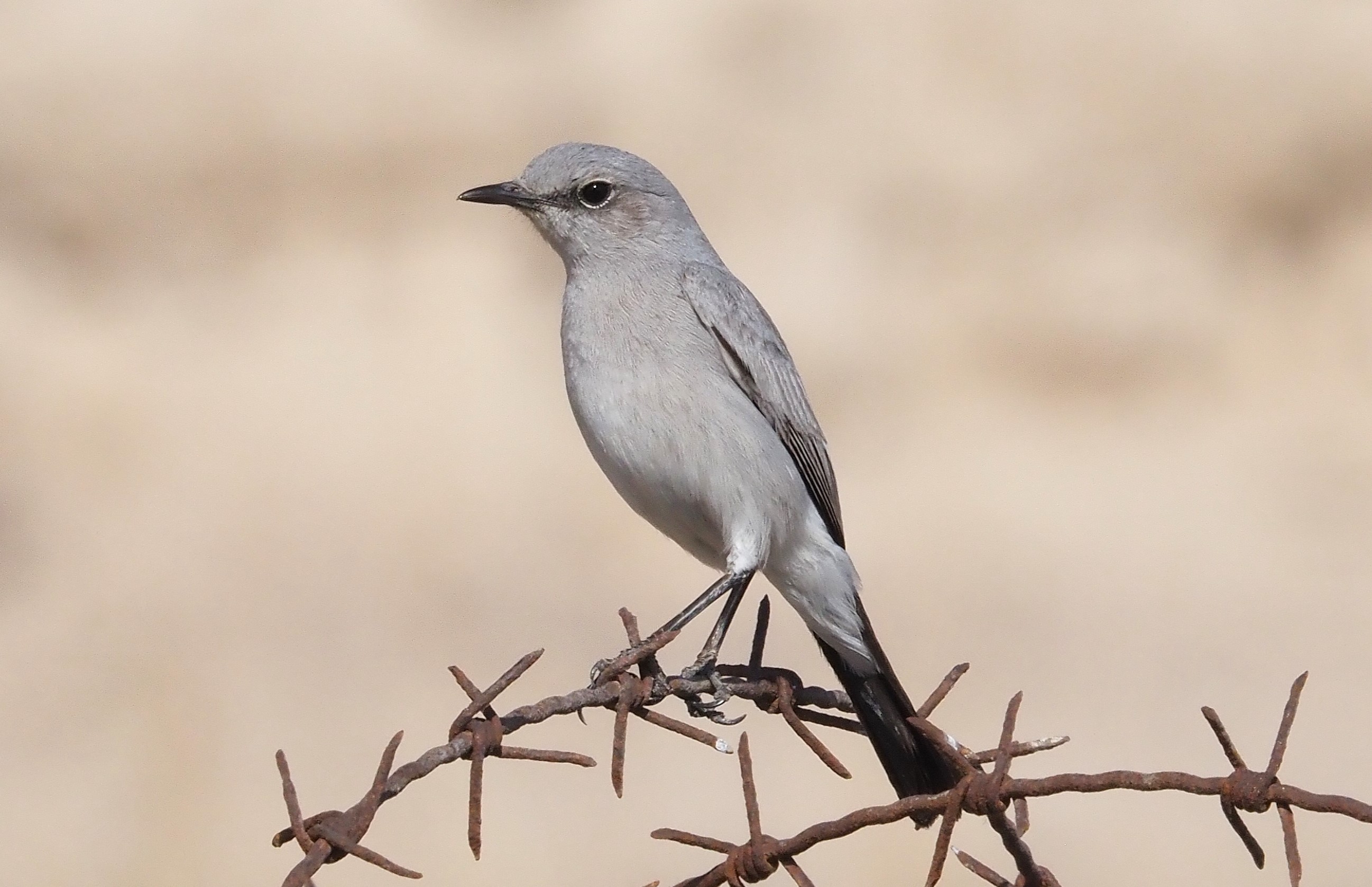
  199. Blackstart (Oenanthe melanura)
  200. Arabian Wheatear (Oenanthe lugentoides)
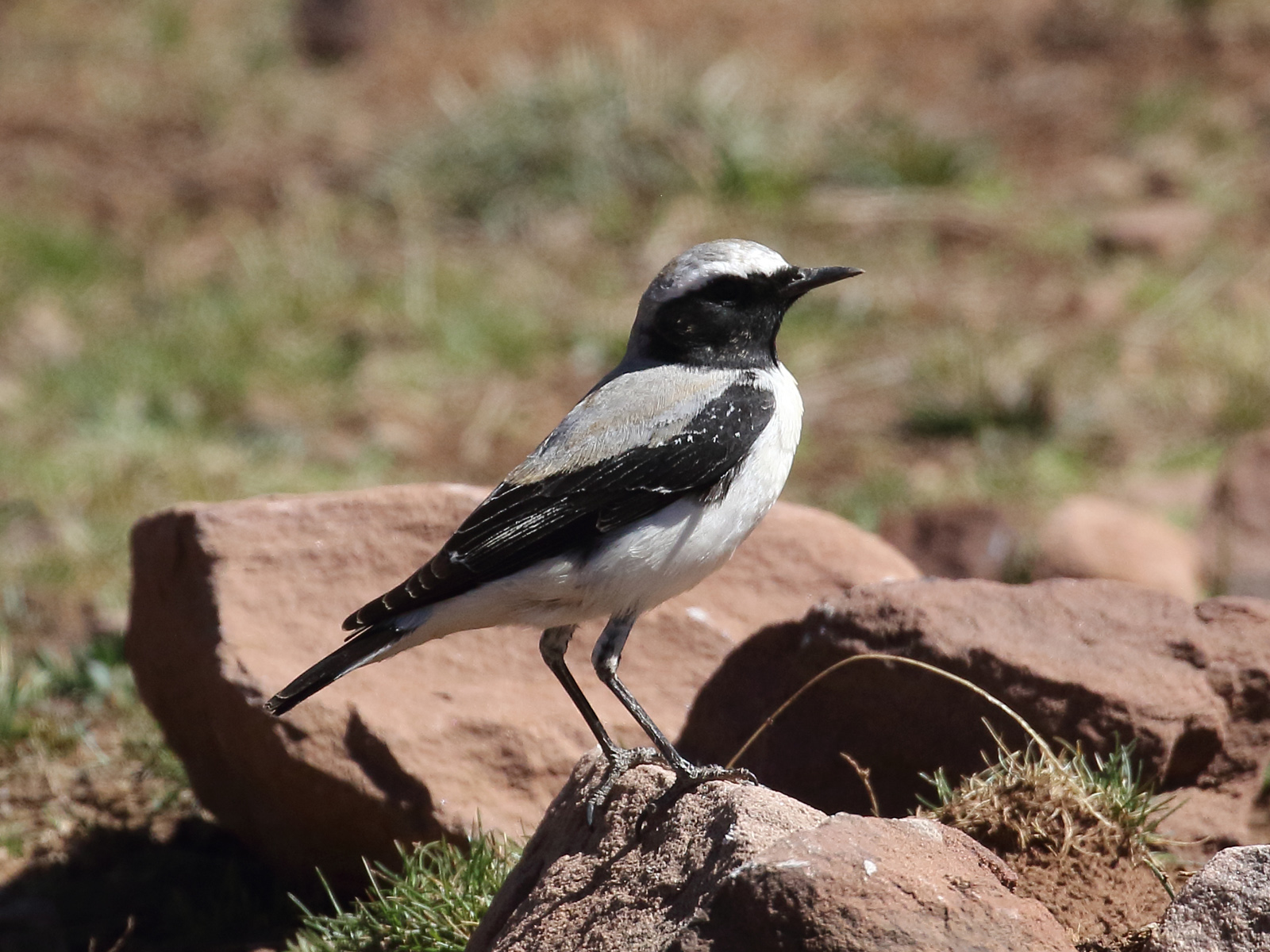
  201. Hume’s Wheatear (Oenanthe albonigra)
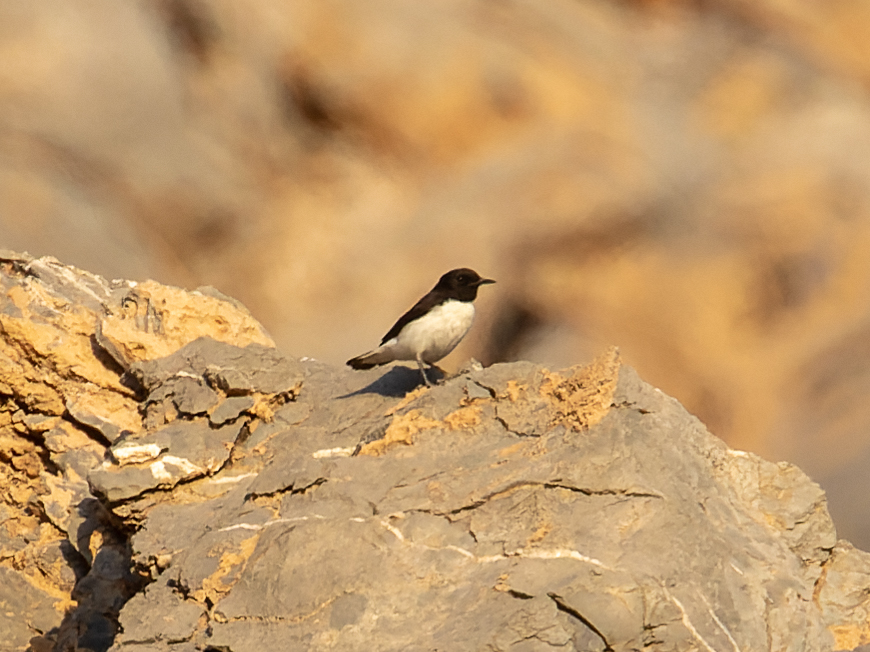
  202. Hooded Wheatear (Oenanthe monacha)
  203. Persian Wheatear (Oenanthe chrysopygia)
  204. Nile Valley Sunbird (Hedydipna metallica)
  205. Palestine Sunbird (Cinnyris osea)
  206. Arabian Sunbird (Cinnyris hellmayri)
  207. Purple Sunbird (Cinnyris asiaticus)
  208. House Sparrow (Passer domesticus)
  209. Yellow-throated Sparrow (Gymnoris xanthocollis)
  210. Rüppell’s Weaver (Ploceus galbula)
  211. Scaly-breasted Munia (Lonchura punctulata)
  212. African Silverbill (Euodice cantans)
  213. Indian Silverbill (Euodice malabarica)
  214. Citrine Wagtail (Motacilla citreola)
  215. White Wagtail (Motacilla alba)
  216. Grey Wagtail (Motacilla cinerea)
  217. Western Yellow Wagtail (Motacilla flava)
  218. Eastern Yellow Wagtail (Motacilla tschutschensis)
  219. Richard’s Pipit (Anthus ricardi)
  220. Tawny Pipit (Anthus campestris)
  221. Long-billed Pipit (Anthus similis)
  222. Water Pipit (Anthus spinolleta)
  223. Red-throated Pipit (Anthus cervinus)
  224. Tree Pipit (Anthus trivialis)
  225. Yemen Serin (Crithagra menachensis)
  226. Arabian Grosbeak (Rhynchostruthus percivali)
  227. Striolated Bunting (Emberiza striolata) — heard only
  228. Cinnamon-breasted Bunting (Emberiza tahapisi)

List of mammals seen during the trip

  1. Egyptian Fruit Bat (Rousettus aegyptiacus)
  2. Arabian Wolf (Canis lupus arabs)
  3. Arabian Red Fox (Vulpes vulpes arabica)
  4. Indo-Pacific Humpback Dolphin (Soussa chinensis)
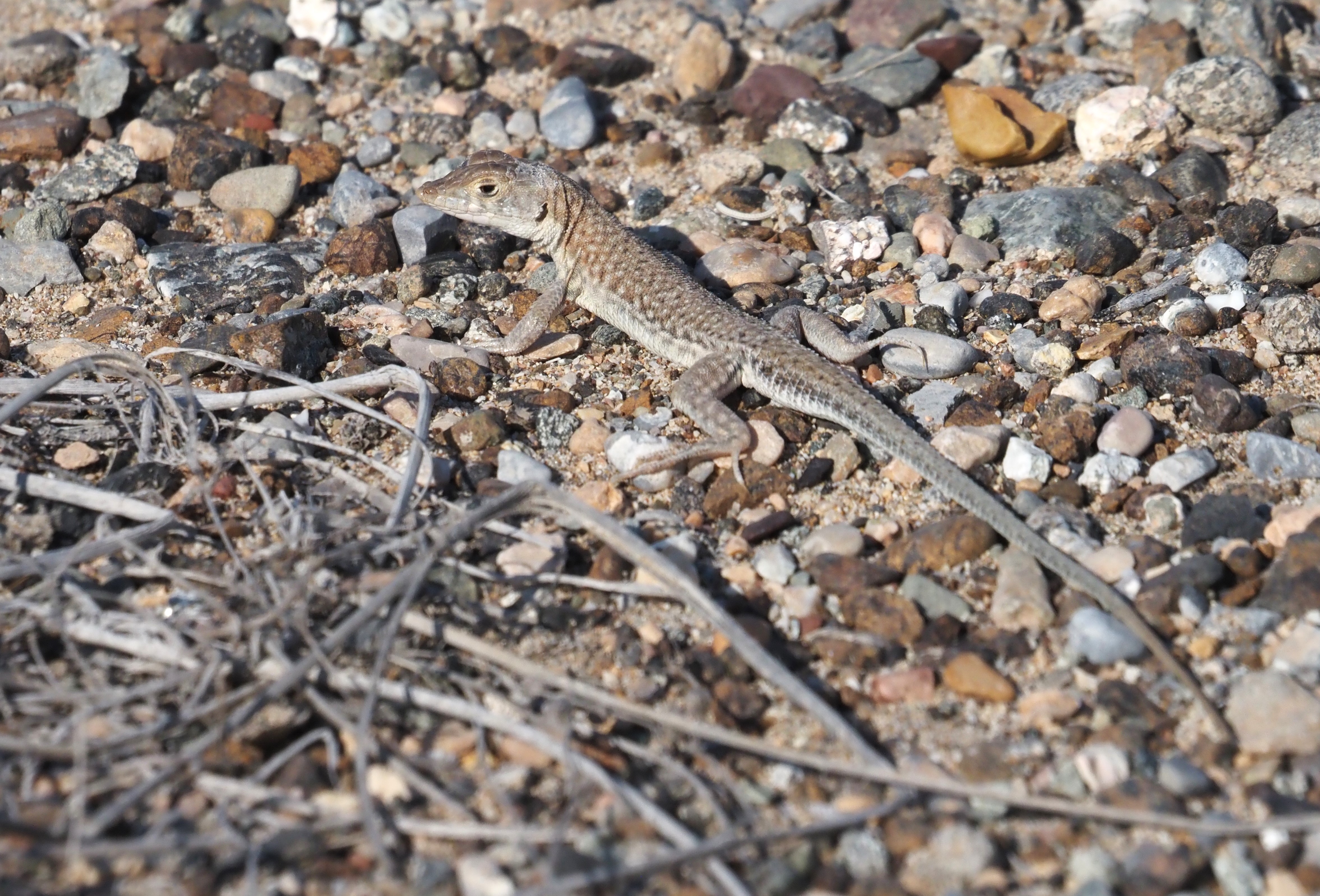
  5. Rock Hyrax (Procavia capensis)
  6. Arabian Gazelle (Gazella arabica)

List of reptilians seen during the trip

  1. Loggerhead Turtle (Caretta caretta)
  2. Olive Ridley Sea Turtle (Lepidochelys olivacea)
  3. Dhoffar Agama (Pseudotrapelus dhofarensis)
  4. Oriental Garden Lizzard (Calotes versicolor)
  5. Arabian Cobra (Naja arabica)

List of butterflies seen during the trip

  1. African Lime Butterfly (Papilio demodocus)
  2. Painted Lady (Cynthia cardui)
  3. Plain Tiger (Danaus chrissipus)
  4. Lang’s Short-tailed Blue (Leptotes pirithous)
  5. Blue Pansy (Juninia orythia)
  6. Yellow Pansy (Junonia hierta)

Oman Birding Tour 2024 Tour Report

  • Dates: From January 14th to 24th, 2024
  • Tour participants: 4
  • Number of species seen: 217
  • Tour leader: Carles Oliver

All images in this trip report by Carles Oliver unless otherwise specified. All rights reserved.

Overview: 8th issue of our tour in Oman! Step by step, this wonderful country is becoming one of our classic destinations. Once more, our guests have enjoyed excellent views in all main targets including the near-endemics Arabian Grosbeak, Jouanin’s Petrel, Yemen Serin, Socotra Cormorant and Arabian Eagle Owl along with a long list of specialties including Crab Plover, Hypocolius, Arabian Warbler, Persian Shearwater, Palla’s Gull, Cotton Pygmy Goose, Hume’s Wheatear, Desert Owl, Rose-coloured Starling and Steppe Eagle. The weather has been stable and slightly warmer than in previous trips. We had a couple of windy days in the South, but with no major disturbance in our birding time. The number of ducks this year was high and well assorted, but the number of raptors was not as bright as in other years. Once more, the tour was fullfilled with scarcities and rarities. Beyond Blyth’s Reed Warbler & Lesser Whistling Ducks, we had to emphasise the self found Grey-headed Swamphen, Semicollared Flycatcher, Amur Wagtail (3rd for Oman) and Ashy Drongo (4th for Oman).

Day 1. During this day all tour participants had nocturnal flights to Muscat arriving in Oman early in the morning. This is a bit unusual, since there is normally a flight combination that allow us to arrive to Oman during the evening. This time, however, it was not possible.

Day 2. After assembling in the airport we enjoyed a small briefing while collecting the car. From there, we covered the short distance from the airport and the first birding spot of the trip. We invested 40 minutes in a lovely wetland in the sea side. Here we had a number of common waders but also some scarce species including Tibetan (formerly Lesser) Sand Plovers, 3 Marsh Sandpipers, Ruffs and several Little Stints. Here we also got the first Citrine Wagtails of the tour as well as Isabelline Shrike, Arabian Bee-eater, 7 Chestnut-bellied Sandgrouses flying over, Osprey and the only one Black-winged Kite of the trip.

From here we went to visit the small but always productive Al Ansab Lagoons, where we enjoyed Northern Shovelers, White-cheeked Bulbuls, Delicate Prinia, Grey Francolin and close views on Temminck’s Stint including extremely close views on this species and Little Stint while feeding side by side, allowing to go through the details that allow to tell them apart. The very first Indian Pond Heron of the trip showed up also here, and a few minutes later we also connected with 1 Clamorous Reed Warbler while it was climbing the reeds. A small channel beside the lagoons provided the first surprise of the trip, a wonderful Grey-headed Swamphen, a truly scarcity in the country!

Before our lunch stop, we still had time to check a last location. This time we chose a river mouth, where we had a good selection of waders, gulls and terns. While driving, a pair of laybys allowed us great shots on the very common Red-wattled Lapwings. Once at place, we had both Greater & Lesser Sand Plovers, Ruddy Turnstones, Sanderlings, Whimbrels and Bar-tailed Godwits but also the first of many Sooty Gulls & Greater Crested Terns along with Common, Caspian, Whiskered and Little Terns. As interesting, here we got a nice flock of 4 Common Gulls, a scarce wintering species in Oman.

After lunch, we still had time to check another river mouth, where we were delighted with great views on Delicate Prinia, Indian Rollers, Common Kingfisher and the 7 Squacco Herons.

We went to end the day in Al Qurm Park, where we had great views on all 3 species of Bulbuls living in the area: White-spectacled, White-cheeked and the alien Red-vented. Here we also had some Citrine Wagtails, although always mobile, and a wonderful Jack Snipe that provided great views in low, short flights as it was moving along with 3 Common Snipes and, at least, 2 Pin-tailed Snipes.

Many other species were seen here, including Clamorous Reed Warbler, Common Chiffchaff, Osprey, Eurasian Teals and a juvenile Purple Heron.

Back to the beach, we were lucky to connect again with several Steppe & Heuglin’s Gulls as well as some Caspian Gulls, and we were delighted to see a Palla’s Gull walking on its own on the beach. Unfortunately, we bird was moved before we could arrive close enough to take good pictures..

Red-wattled Lapwing (Vanellus indicus), a fairly common wader in Northern Oman.
Clamorous Reed Warbler (Acrocephalus stentoreous) in Al Ansab Lagoons.
Arabian Bee-eater (Merops cyanophrys), lives in small numbers along the coast in Oman.
Left to right: Whimbrel (Numenius phaeopus), Greater Sand Plover (Charadrius leschenaultii) & Ruddy Turnstone (Arenaria interpres) around Muscat.
Grey Francolin (Ortygornis pondicerianus) in a lovely setting.
Indian Roller (Coracias benghalensis), a common specialty in the Omani winters.

Day 3. Leaving Muscat behind us, this day we drove up to the Al Harar Mountains in search of some specialties. Unfortunately, it was a very windy day and our time there was decimated by the weather conditions. Still, a pair of morning walks in the top of the mountains allowed us to enjoy 1 Arabian Red Fox, a very attractive Eastern Black Redstart, 4 Hume’s Wheatears and 2 Persian Wheatears. But beyond this, we got very little. By the end of the morning we came down to the valley and, once sheltered from the wind, we scanned some large trees. It was almost before getting out of the car that we connected with a “not-that-elusive” Eastern Orphean Warbler and a further exploration of the trees around produced good views on 3 Plain Leaf Warblers and 1 female Blue Rock Thrush feeding on the ground.

After a glorious lunch in a Turkish restaurant we explored some of the wonderful gorges nearby Nizwa. Here we had more views on Plain Leaf Warblers and Hume’s Wheatears but also 2 Desert Larks feeding on the wady plus the only Lapped-faced Vulture of the trip, that unfortunately was too fast for a proper photo. Our evening exploring the gorge extended clearly beyond sunset, hoping to connect with the extremely rare Omani Owl. But the wind was not in our side and a very light sunset brise soon became a quite strong wind that made nearly impossible any proper owling.

Back to the accommodation, we ended the day with a great dinner by the swimming pool of our hotel.

The very attractive Hume’s Wheatear (Oenanthe albonigra) on its habitat.
Lesser Whitethroat (Curruca curruca), the commonest bush warbler in Oman.
The impressive landscape of the Al Harar Mounts.

Day 4. Our fabolous transfer to Salalah started with an early breakfast in our accommodation. Once the car was packed we started moving, and we had our first birding stop only 20 minutes away from the accommodation. Here, in a lovely plain rich in scrubs and thornbush, we went for a stroll and we were soon contacting with a flock of 6 Arabian Babblers that showed really well, allowing us to taking multiple images as they were moving along the stream. The ambient was fresh, and despite the sun a thin jacket was welcome. Taking advantage of this, it was a nice birding activity, and the Babblers were very restless and moving fast so we had to be light in order to follow them!

Once everybody in the group was happy with the views, we kept walking through the plain. Purple Sunbirds and Lesser Whitethroats were common, and we also got good views on Persian Wheatears. 2 Tawny Pipits showed very well but, after all, the area looked like a bit empty when compared with other visits, and the most remarkable bird beyond the Babblers was a very showy Common Whitethroat of the very dark icterops race.

Back to the cars, we faced some hours of solid driving with some service stops in our way. Brown-necked Ravens and random Greater Hoopoe Larks crossing the road were the only distractions while crossing the always impressive Empty Quarter.

For lunch, we stopped in one of the most traditional stops in this way: the abandoned gardens of the Qitbit Hotel. We did not have much time, but once more this stop proved to be very productive. As soon as we step out of the car, a nice Pied Wheatear appeared in front of us, allowing us wonderful views. Promising! We ate our packed lunches and had a small stroll around, the sun was hitting hard and it was little movement, but we were lucky enough to find a nice Red-breasted Flycatcher feeding around a dense thicket. Happy with the views on both birds, we went back to the car only distracted with the calls of a couple of Siberian Chiffchaffs and Abyssinian White-eyes. From here, we drove the short distance between our lunch spot and some sewage farms in the middle of the desert.

Arabian Babblers (Turdoides squamiceps), in the typical acacia woodland that favours.
Persian Wheatear (formerly Red-tailed Wheatear) is, in my opinion, the most elegant bird within its family.
Brown-necked Raven (Corvus ruficollis) is a common sight in most of Oman.
Pied Wheatear (Oenanthe pleschanka), an uncommon winter visitor in Oman.

When we arrived it was already mid afternoon, and the fields were filled with insectivores. We had several Isabelline & Desert Wheatears, but also good looks on Crested Larks. Even before getting inside the fields, a majestic male 2nd year Pallid Harrier flew right in front of our vehicle, providing the group with incredible views. Moreover, the bird decided to stop really close to us, and we all enjoyed the bird manoeuvring against the brise. At the same time, up to 5 Greater Hoopoe Larks were feeding around us, some of them even doing small display-like flights! It is always wonderful to see this large Larks and go through the details of their delicate plomage, often difficult to see with the very strong light of the desert.

Only a minute later, 4 Cream-coloured Coursers came to land close to us. Not happy with that, some of them started feeding around, moving closer and closer as they looked for invertebrates in the hard desert soil.

The stop was already a big success, but we decided to move a bit to the East to explore a particular spot that has been really productive several times before. There, we had the firsts Levant Grey Shrike (the aucheri race of Great Grey Shrike) and Namaqua Doves of the trip, plus a female Montagu’s Harrier circling in the sky while hundreds of White Storks were feeding on the recently harvested fields. Tens of Common Kestrels were feeding there, and we were surprised to pick up a Lesser Kestrel flying and hunting in the middle of such a mess of small falcons! Lesser Kestrel is not a particularly common Falcon in Oman during winter, and it was a real bonus for the trip!

At some point, small flocks of Chestnut-bellied Sandgrouses started moving from the desert around the fields, and a small flock was about to stop right in front of us. Unfortunately, a Kestrel moved them away. A bit more of scanning produced a lovely Steppe Grey Shrike and two more Pallid Harriers before living the farms and drive the very last hour of the transfer, arriving to our accommodation a bit after sunset.

Greater Hoopoe-Lark (Alaemon alaudipes) was the very first bird that we saw when arrived to the farms!
Male 1st winter Pallid Harrier (Circus macrourus) that came to say hello to our group!
Isabelline Wheatear (Onenathe isabellinus) is the probably the commonest Wheatear in Southern Oman.
Cream-coloured Coursers (Cursorior cursor) have become commoner in the last years.
Male 2nd year Pallid Harrier (Circus macrourus). One of the 5 Pallid Harriers seen during the trip.
There were hundreds of Black-crowned Sparrow-Larks (Eremopterix nigriceps) in the desert farms.
White Stork (Ciconia ciconia) has moved from a big rarity to a common view in Southern Oman in only 3 years!

Day 5. Our first morning in Dhofar was devoted to explore one of the most productive spots in the country. Ayn Hamran is a shining, delightful place where to enjoy a number of the most look-after specialties in Oman, and we were directly there after enjoying a very nice breakfast in our accommodation. The morning was a bit windy, and the bird activity looked like low. Still, a few metres of walk was enough to contact with the first of many Cinnamon-breasted Buntings, African Silverbills, Abyssian White-eyes, Arabian Sunbirds, Rüppell’s Weavers and African Paradise Flycatchers. It didn’t take long before we found our first Arabian Warbler. It was the tour participant Francesc who pointed out the bird, that was feeding in a medium size thornbush. All the group enjoyed great views. Graceful Prinias were also evident, and a Turkestan Shrike catching a good morning light was also a nice adding to our list. A few yards away, a pair of showy Blackstarts were waiting for us, and a superb Black-crowned Tchagra was having a sunbath next to them. Meantime, a pair of Palestine Sunbirds were feeding nearby, and a Long-billed Pipit was doing its thing, walking only a few metres in front of our group.

We headed towards the vehicles to explore the plain before having lunch, but in the way a Chinese (Amur) White Wagtail showed up, moving along with a White Wagtail. I looked behind me but I was alone! No one of the clients followed me, as they were all distracted by the many attractive birds along the Ayn. Unfortunately, the bird moved away and all our efforts to relocate the bird were unsuccessful. It was a great sight, the 3rd record for Oman!

We combined the area with the surrounding plane, where we only found 2 Greater Short-toed Larks, several Black-crowneds Sparrow-Larks and the first Bonelli’s Eagle of the trip.

Back to Ayn Hamran we still had some more exploration, and our efforts were granted with lovely views on 2 Red-breasted Flycatchers, 1 Semicollared Flycatcher, 4 gorgeous Bruce’s Green Pigeons and good views on a very restless Blyth’s Reed Wabler, another rarity for the country that has been appearing in the same tree during the last 3 years!!

Finally we left Ayn Hamran after enjoying 7+ Arabian Warblers and 5+ Black-crowned Tchagras. Still, there were few birds of prey moving, and we only had 1 Short-toed Snake Eagle during our time there. After some relax and a coffee stop we drove down to the coast to spend some time in a lovely wetland. But first, we had a fast stop to enjoy some of the Spotted Thick-knees that live inside Salalah. As always, this tame thick-knees provided the group with excellent views and our stop was completed by a lovely sight on 5 Crested Honey Buzzards, 1 Greater Spotted Eagle and 1 Booted Eagle.

Arabian Warbler (Curruca leucomelaena) is likely to provide views like this! Note the tiny spider web in the auricular of the bird.
African Silverbill (Euodice cantans), a common sight in Southern Oman.
Cinnamon-breasted Bunting (Emberiza tahapisi) is the commonest passerine around the Dhofar.
Long-billed Pipit (Anthus similis) provided also really close views to the group!
No matter how many you have seen, an African Paradise Flycatcher (Tersphone viridis) is always a wonderful thing to watch!
The always tame Blackstart (Oenanthe melanura) is also a very sought-after species for all the tour participants!
Amur (Chinese) Wagtail (Motacilla alba leucopsis) was one of the surprises of the tour. 3rd record for Oman, if accepted.
Red-breasted Flycatcher (Ficedula parva)
Spotted Thick-knee (Buthinus capensis) close-up. A urban delicatessen in Salalah. Image by tour participant Carmine Grasso.
Crested Honey Buzzard (Pernis ptilorhynchus) has a small overwintering population in palm groves around Salalah.

Once in the wetland, we had a very variety of waterfowl including 3 Intermediate Egrets (recently split into 3 different species. The wintering population ocuring in Arabia is considered to be Middle Egret), 1 Purple Heron, several Squacco Heron, 1 Indian Pond Heron, Little Egrets along with Shovelers, Wigeons, 2 Garganeys, Eurasian Teals, Pintails and Common Pochards but the most interesting ducks in this stop were 7 Greater White-fronted Geese but, especially, the flock of 6 Cotton Pygmy Geese feeding in the open water along with Eurasian Moorhens + Red-knobbed & Eurasian Coots. This is one of the few places where to find this Asian species in Arabia, and this winter this was the only flock in the whole of Oman. This time there were not many waders, but along with the 400+ Glossy Ibises we had 3 Wood Sandpipers, 1 Marsh Sandpiper, Little Stints, Common Snipes, a single Black-tailed Godwit, some Ruffs, Temmincks Stint and the very common Black-necked Stilts. In the reeds we were surprised to find a Great Reed Warbler, an uncommon winter visitor and a new scarcity to add to our growing list.

We were next to the sea, and several Gulls and Terns were resting on the sand, some of them allowing extremely close views. Heuglin’s Gulls were dominant among the large gulls, with only a few Steppe Gulls here, while Slender-billed Gull was, as in most of the country, the commonest small gull. Some Sooty & Black-headed Gulls were also present. Caspian Terns were evident and offered magnificent views, and the presence of some Lesser Crested & Greater Crested Terns, an excellent way to compare shapes and colours between all of them. Beyond, we still had Whiskered & Little Terns + the very first Gull-billed & White-winged Black Terns of the trip.

The very last stop of this magical day was devoted to explore a different Ayn (the local name for the uphilled, streamed valleys). It was already a bit late in the evening, and we had little birding action beyond a couple of Greenshanks. But right after sunset everything changed and several Arabian Scops Owls started singing around us. It took us 15 minutes to get into one of them, but we got excellent views! But, even as we were enjoying the tiny scops owl, a bigger owl was already singing really close. We moved only 200 metres away, and only 2 minutes later a majestic Arabian Eagle Owl landed in the top of a tree to offered us a gorgeous view that lasted for 5 minutes! Finally, a second Arabian Eagle Owl called up in the slope, and our Owl decided to go further up in search of its partner. Still excited about this great sight, when the call of a Barn Owl just came from the valley mixing with the calls of a small flock of Night Herons. It was obvious that the night was good for owls, so we tried a improved view on Arabian Scops Owl and less than five minutes later we got a second bird singing from inside a tree!

Very happy after such a great success, we went down to our accommodation, where another excellent dinner was waiting for us!

Common Sandpiper (Actitis hypoleuca) by a swamp. Image by tour participant Carmine Grasso.
Caspian Tern (Hydroprogne caspia) in the superb afternoon light typical in Oman. Image by tour participant Carmine Grasso.
Arabian Scops Owl (Otus pamelae) singing high from a tree.
Arabian Eagle Owl (Bubo milesi), once again great views in this recent split. Image by tour participant Carmine Grasso.

Dia 6. Still recovering from the excellent previous day, we spent the first hour of the day exploring one of the best streams in the Dhofar. Here, lovely nenufars create the perfect conditions for a number of secretive species living in the reedbeds. The place was as great as always, and within 1 hour we got 7 Bluethroats, 2 Eastern Olivaceous Warblers, 7 Bruce’s Green Pigeons, heard White-breasted Waterhen, and had some raptors including Lanner Falcon, Short-toed Snake Eagle, Greater Spotted Eagle circling with a wonderful male Pallid Harrier, plus lovely adult Night Heron feeding on a very large fish (probably too big) , the only Eurasian Reed Warbler of the trip, 4 Citrine Wagtails and heard Yellow/Little Bittern.

From here we covered the short distance to a different Ayn, and even before arriving to the place, a gorgeous male Arabian Grosbeak was waiting for us, singing from the top of a small Acacia tree. During the next half an hour we got a number of different sights as we followed the bird, that was feeding in the trees along the Ayn. It was, once again, a wonderful experience to find and watch for so long such a scarce bird, and all the group enjoyed walk-away views before being distracted by close Isabelline Shrikes, Arabian Warblers and Blackstarts.

Arabian Grosbeak (Rhynchostruthus percivali), a very scarce inhabitant of the Dhoffar deciduous woodlands. Image by tour participant Carmine Grasso.
Our 20 minutes long sight allowed us to see some interesting details, like when came down to feed on this euphorbia.

From here, we started climbing up to explore the Dhoffar uplands. It is always a magnificent experience to be up there, and our way to the top was constantly interrumped by Eastern Imperian & Steppe Eagles but also by Short-toed Snake Eagles and Peregrine Falcon and the locally common Arabian Wheatears, Fan-tailed Raven and Arabian Sunbirds (a recent split from Shining Sunbird). For lunch, we chose a typical stop with some seats and shade (no fancy places this time), and after our packed lunches a short walk allowed to connect with 4 Yemen Serins that were feeding on the ground along with Cinnamon-breasted Buntings. They were, once again, really easy to find (especially when it is a bird that can be very hard to find out!). A further walk didn’t produce much beyond several Pale Rock Martins and distant views on Tristam’s Starlings and Bonelli’s Eagle.

Even higher, we arrived to an area of massive cliffs. This is one of the best places to enjoy Arabian Wheatears, and they were all around, even nesting in the hotel located right in the top. From here we were in search of the Verreaux’s Eagles nesting in the area, but they reluctant to show this time. For instance, we got 3 Long-legged Buzzards, Blue Rock Thrush and several Tristam’s Starlings. But the best were the 4 Arabian Partridges that Tanit found in the cliffs! A great spot in a species that has proof to be difficult to find in my last visits to this country.

Yemen Serin (Crithagra menachensis), a very shy near-endemic, that showed up superbly. Image by tour participant Carmine Grasso.
The rather small Arabian Wheatear (Oenanthe lugentoides) was really common this winter in the highlands. Image by tour participant Carmine Grasso.
Female Palestine Sunbird (Cinnyris osea) close up in the Dhofar highlands.
Arabian Partridge (Alectoris melanocephala) overwatching the desert.
Bonelli’s Eagle (Aquila fasciata) patrolling its territory.
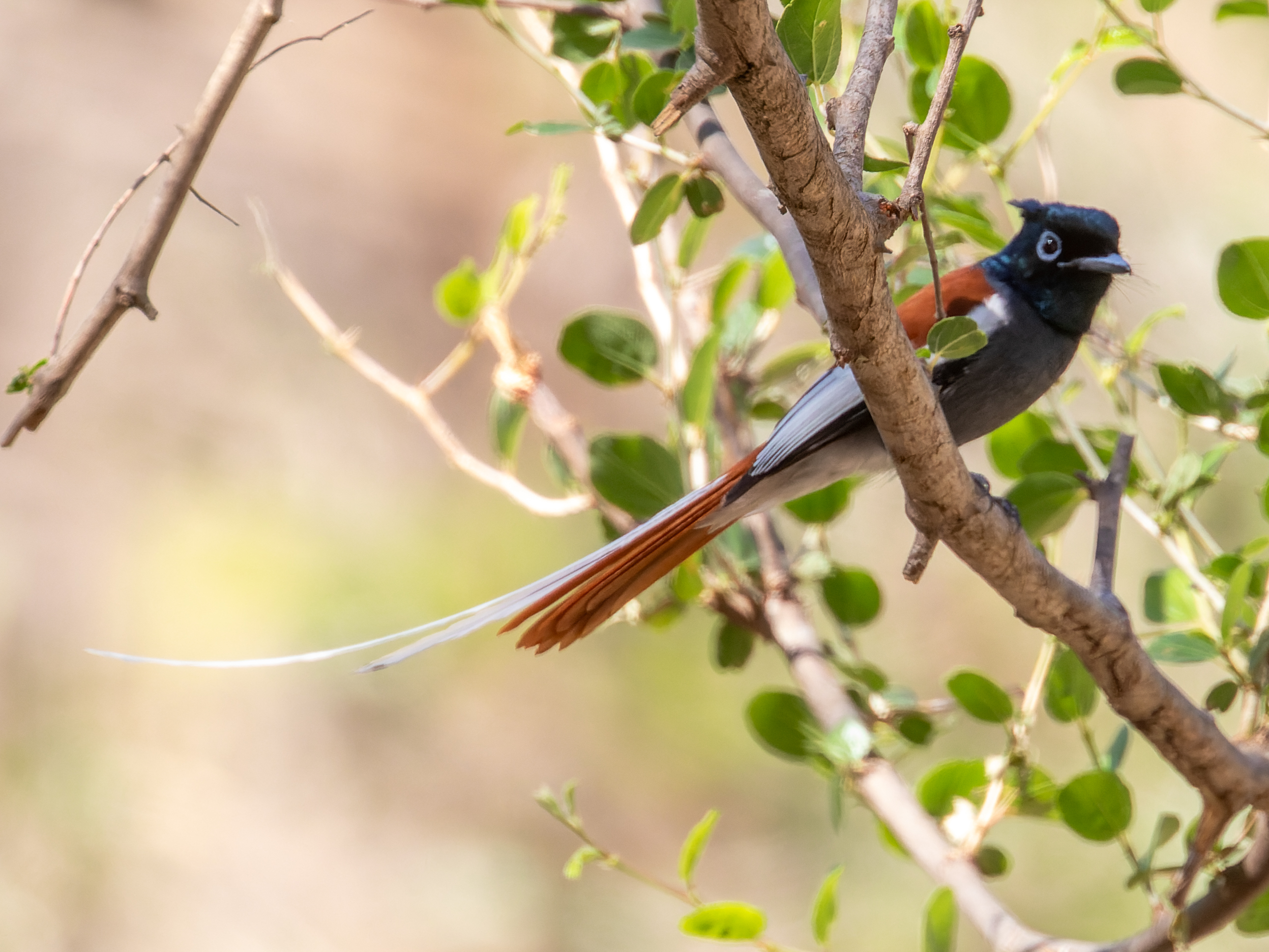
Short-toed Snake Eagle (Circaetus gallicus), one of the very superb sights during the trip.
Steppe Eagle (Aquila nipalensis), full adult. Note the distinctive “joker” smile.
Eastern Imperial Eagle (Aquila heliaca).

By the time we left to highlands it was mid afternoon, and the very last stop of the day was for some farms around Salalah. Here, Crested Larks looked all around but also a number of Singing Bush Larks, first singing high up but later providing the group with wonderful views as they were singing from the walls around. Here we also had Booted Eagle, 2 Siberian Stonechats, 2 Marsh Harriers, several Prinias and 17 Whiskered Tern in a lovely feeding flock. There were tens of Western Yellow Wagtails, but it looked like little else. But suddenly 2 adults Rose-coloured Starlings flew over our group, going to stop in a distant farm. We all jumped into the vehicles and drove there, and in the next 10 minutes we enjoyed great views on the Starlings but also 2 Bluethroats and 1 Red-throated Pipit calling in flight! At sunset, we counted 17 Little Ringed Plovers feeding in the plain around us.

This very tame Singing Bush Lark (Mirafra cantillans) allowed us amazing views.
Rose-coloured Starling (Pastor roseus) was a rather unexpected bird in our trip!
A very interesting male Siberian Stonechat (Saxicola maurus)

Dia 7. This day we went for an offshore South of Salalah. After a pair of days with strong winds, today the sea was really plain, almost like an endless lake. As soon as leaving the small harbour we had the first of many Persian Shearwaters moving North in small flocks of 2-3 birds. Both Sooty and Heuglin’s Gull were common, and their acrobatic flight was often the sign for a Loggerhead or an Olive Ridley Sea Turtle to be breathing in the surface. Moving a few miles away from the coast, we got a small flock of Terns feeding, and were lucky to discover a 1st winter Bridled Tern feeding along with 3 Common Terns. Masked Boobies were commoner than in other offshores, including a wonderful bird that allowed us great images both in flight and on the surface of the sea. Persian Shearwater came in and out as we were chumming, and a surprising Pomarine Skua appeared as well to try to steal some fish from the common Sooty Gulls! But the main character was still to show, and it took us longer than expected, but we finally got decent views on 1 Jouanin’s Petrel that was flying mid way out from our boat!

Back to the harbour we still had another encounteer with the a mixed pod of Spinner & Indo-Pacific Bottlenose Dophins. Back to the harbour, a Hawksbill Sea Turtle came to the surface for a short period of time, a nice adding to the much common Green Sea Turtles around. In the shore, tens of Abdim’s Storks were resting along with a large concentration of Gulls.

One of many Red-necked Phalaropes (Phalaropus lobatus) seen during our offshore
Always amazing, Masked Boobies (Sula dactylara) stole the show for us!
One of the many Persian Shearwater (Puffinus persicus) see in our offshore.
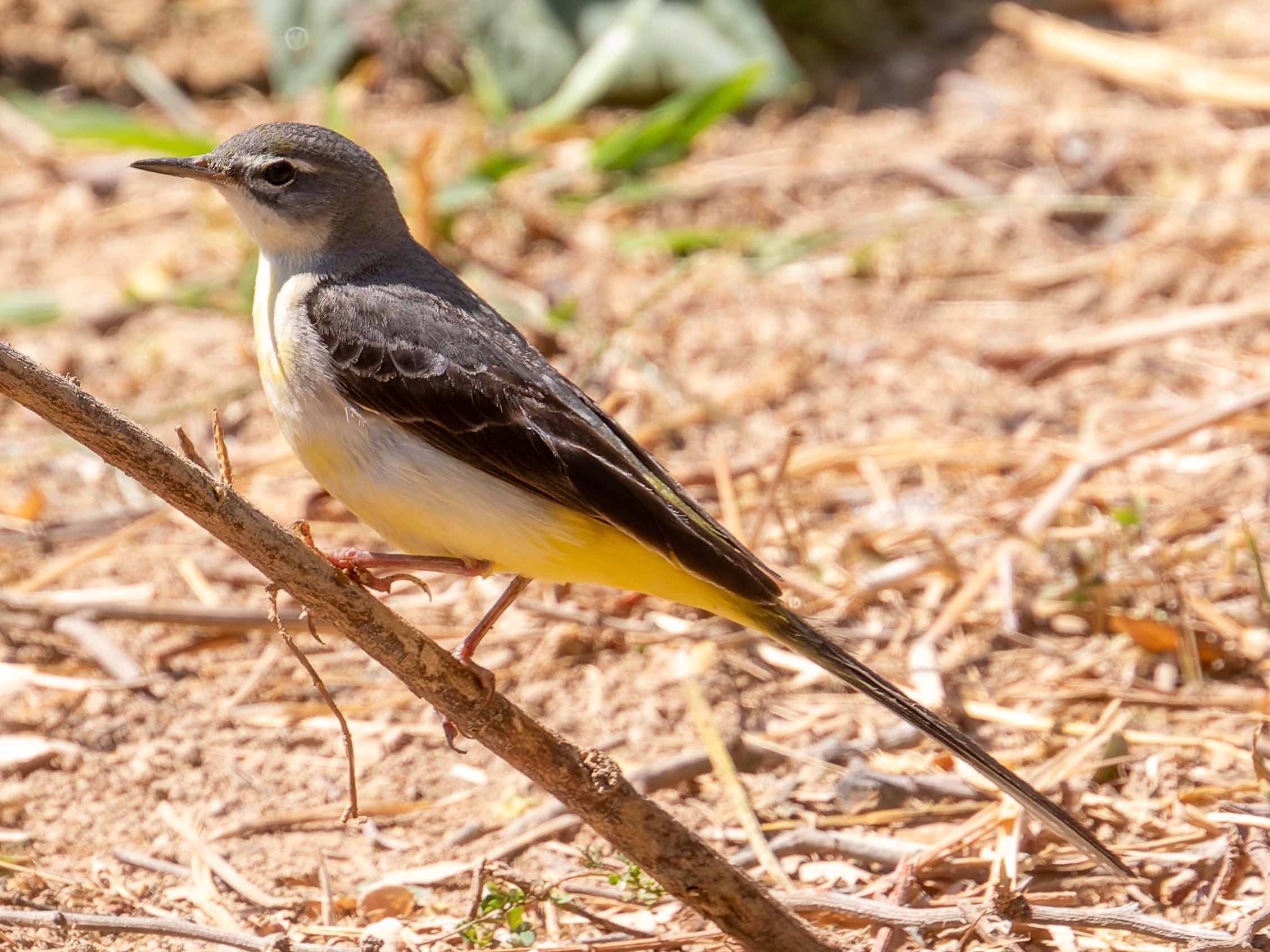
1st winter Sooty Gull (Ichthyaetus hemprichii), the commonest gull around.
Abdim’s Storks (Ciconia abdimii) in lovely morning light with Sooty Gulls.

After enjoying a good coffee & tea stop, we drove back to the Dhofar highlands, to have our picnic lunches in the impressive cliffs of the areas, including a short stop to see the always impressive Baobabs of the Dhofar, the Northernmost baobabs in the world!

Our lunch time in the wonderful cliffs of the Dhofar provided us great views on a Striolated Bunting, a species that had escaped from us in the northern Al Harar Mounts.

From the highlands we were back to the Southern part of the city, where a stop on the Raysut River mouth is always mandatory. Here, we counted 17 Terek’s Sandpiper just arrived to the place! Surprisingly, the number of plovers was low, but we got 1 Steppe Eagle on the ground along with 8 Ospreys, several Gulls (including a superb Palla’s Gull), 1 Pin-tailed Snipe moving along 4 Common Snipes, 14 Eurasian Spoonbills, 2 Citrine Wagtails, the only 2 Gadwalls of the trip (male and female), Garganeys, Wigeons, Pintails and a single Greater White-fronted Goose. Here we also got the first Socotra Cormorants of the trip and a good array of waders including Temminck’s & Little Stints, Grey Plovers, Black & Bar-tailed Godwits, the always impressive Siberian race of Eurasian Curlew + Whimbrels, Ruffs, Sanderlings, Greenshanks, Oystercatchers, 3 Curlew Sandpipers and the only Great Knot of the trip.

Checking the Terns resting on the beach we found 7 species: Common, Little, Caspian, Lesser Crested, Greater Crested Tern, Gull-billed & Whiskered. A funny Pheasant-tailed Jacana feeding in beach was an interesting and rather unexpected adding!

From here, a second stop was made to explore a different wetland, and the most interesting birds there were 6 Red-knobbed Coots, 2 Pheasant-tailed Jacana and some flocks of Socotra Cormorants moving South.

The very last of the day was devoted to Desert Owl, a very scarce and still unknown species, especially in Oman, where it was discovered for the first time only in 2014. Our wait until sunset was fast rewarded with 2 Desert Owls calling not far from our position, and a bit more of wait was necessary until 1 of them decided to come to its usual song rock, offering the group an unforgettable sight with the male singing only 20 metres away from us while the female was still singing higher in the slope. At the end, we saw both individuals singing in a phenomenal chorus that lasted as one of the most superb sights of the trip!!

Part of the group admiring the baobabs.
Small flock of Eurasian Spoonbills (Platalea leucorodia) with some waders.
Palla’s Gull (Ichthyaetus ichthyaetus) along with House Crows, Steppe Gulls, Flamingoes and Black-necked Stilt.
Pheasant-tailed Jacanas (Hydrophaisanus chirurgus) were stating to develop their long, pheasant-like tails.
We were extremely lucky with Desert Owls (Strix hadorami) this year. The male landed a few metres away from us, while the female was singing higher in the small cliff.

Carles Oliver

Dia 8. Today was a day to enjoy the desert and some nice wetlands. After the glorious end of the previous day, we left the coastal plain to get into the desert. After a short transfer, we arrived to the small oasis that hosts the only Hypocolius overwintering population in Oman. A first walk around the area revealed some Nile Valley Sunbirds, including a nice male, were feeding along with Common Chiffchaffs and Lesser Whitethroats (hadorami race) A lovely flock of Sand Partridges running up and down in the oasis was a lovely entertainment for us, as was a pair of confiding Desert Larks. Beyond this, the area was quiet, and it took us some time to find the first Hypocolius. A distant call put us in the way, and Carmine found a male resting low in a bush. During the next 15 minutes we watched the bird alternatively resting and feeding in a tiny bush, but we always respected the distance. Another 20 minutes were necessary for the bird to move, just in time for a small group of Polish birdwatchers to arrive to the oasis and directly connect with the bird thanks to our indications.

Finally we left, with the bird still resting inside the bush. But we didn’t go far before large flocks of Chestnut-bellied Sandgrouses flew above us in search of water. The bush around had to very nice Asian Desert Warblers that were very welcome by the group, and Levant Grey Shrike, Desert Wheatear and very tame pair of Blackstarts completed the list of passerines around. Scanning the ground was not difficult to find a nice flock of 27 Crowned Sandgrouses that came to drink water in a tiny pond. As always, a couple of Eastern Imperial Eagles were closely watching the flocks of Sandgrouses..

Hypocolius (Hypocolius ampelinus). This year we found two separate flocks at the typical place. Image by tour participant Carmine Grasso.
After 9 trips to Oman, this has been the first time to see a Hypocolius feeding on the ground!
Nile Valley Sunbird (Hedydipna metallica) male catching the morning light.
Desert Lark (Ammomanes deserti), always showing its satin-like plomage!
Crowned Sandgrouse (Pterocles coronata) ready to drink water.

After such a good morning, we headed back to Salalah for a good meal and a short midday rest before spending the afternoon in a number of close locations. Out first stop after lunch was in a public park in Salalah. There, we had several Western Yellow Wagtail (including one individual with some characters of Eastern Yellow Wagtail..), 2 Bruce’s Green Pigeon, several Tree Pipits and Hoopoes. From here we drove to Raysut, the location where until a few years ago a massive number of Steppe Eagle used to overwinter. Once in Raysut, we scanned around and we could only find 1 Steppe Eagle, but hundreds of Abdim’s Storks along with White Storks, Red-wattled Lapwings, 2 Spur-winged Lapwings one of the funny hybrid between both species!

Further South, a final stop was made to enjoy a huge flock of hundreds of Socotra Cormorants gathering in the water. Here, we also got nice views on 2 Pheasant-tailed Jacana and 1 European Roller on a road light post.

Socotra Cormorants (Phalacrocorax nigrogularis) gather in large flocks.

Dia 9. This day we felt the wonderful Dhofar area behind to concentrate a bit in other regions of Oman. But before leaving, we still had time to check some farms in the it self, where we saw hundreds of Western Yellow Wagtails and Skylarks we could not specify which species along with Singing Bush Lars, 1 female Western Marsh Harrier and 1 Greater Spotted Eagle. Our next stop to explore some plains with a good population of Arabian Gazelles, and we didn’t have wait long before we found a small herb of 3 followed by two more of this kinda small and endangered gazelle. Here, we also got nice views on both Bonelli’s & Easterm Imperial Eagles and 3 Cape Thick-knees resting by the road. A layby stop produced nice scope views on 2 Striolated Bunting before having some solid driving until our next stop, a small coastal wetland right in the border between Dhofar and Al-Wusta regions.

Here we enjoyed our packed lunches and had nice views on the 4 shy Lesser Whistling Ducks that were found a few days earlier by another group of birdwatchers. Along with the whistling ducks we also got other interesting birds here including 1 Masked Booby, Ruff, Turkestan Shrike, 2 drake Tufted Ducks, small numbers of Wigeons and Garganeys, 1 Osprey and 2 Wood Sandpipers.

We kept driving North during the and had a final stop in another small river mouth. Here, a short walk around proved to be productive again and we had 2 Siberian Chiffchaffs, 2 Tawny Pipits, 2 Palla’s Gulls, 3 Eurasian Spoonbills,1 female Eurasian Sparrowhawk, 1 Sand Martin, Pintails, Wigeons and 7 Greater Flamingoes.

From here we just drove the last miles before arriving to our wonderful accommodation.

Arabian Gazelles (Gazella arabica) climbing up the Dhofar hillsides.
One of many Eastern Imperial Eagles (Aquila heliaca) seen during the trip. There were mostly young birds (like the one in the image), but also some superb adults and 1 very interesting 3rd year bird.
The Frankiscense Trees (Boswellis sp.) dominates the landscape high up in the dry slopes of the Dhofar.
Turkestan (aka Red-tailed) Shrike (Lanius phonicuroides).
Palla’s Gulls (Ichthyaetus ichthyaetus), as superb as always!

Dia 10. After having a nice breakfast in our hotel, we just started moving out of Duqm. A first stop walking around a bushland produced nothing out of a Great Grey Shrike (auchery race) but, before living the city, we decided to check some small gardens. We were just approaching when a Drongo just flew over the van. A Drongo! A Drongo! We park the right there, in a 4 lane road (please note that in Duqm there is no traffic at all!) and jumped out to try to relocate our Drongo. It didn’t take too long as the Drongo was nicely sitting in the top of a small building right in the center of the garden. After several images and trying to have the bird from different angles, it came out clear to be an Ashy Drongo! Only the 4th record for Oman!

Delighted with this bird, we invested some extra 10 minutes in checking other gardens around, and we found Common Sandpiper, 2 Bluethroats (including a very obliging male), Yellow Wagtails and a very tame Little Ringed Plover.

Ashy Drongo (Dicrurus leucophaeus), nice surprise for our group!
Obliging Bluethroat (Luscinia svecica) just by the tarmac.
Little Ringed Plover (Charadrius dubius).

From here we moved around Masirah island, were we had hours to check the tydal plains. Unfortunately for us, the tide was stronger than average and the birds were more far away than usual. Still we got nice scope views on 12 Crab Plovers and checking the 1000s of waders we found 2 Marsh Sandpipers along with hundreds of Dunlins, Curlew Sandpipers, Bar-tailed Godwits, some Terek’s Sandpipers, nice Greater Sand Plovers moulting to summer plomage, Gull-billed Terns, Spoonbills, Oystercatchers, Greenshanks, Redshanks, Lesser Sand Plovers, Sanderlings and Kentish Plovers along with Eurasian Curlews, Flamingoes and Western Reef Egrets to name only a few. The area is also excellent to have very close views on some common species including Greater Crested Tern, Caspian Gull and others. This time was not different, and the photographers in the group enjoyed the most!

From one of the view point over the tidal plains, we got the second Pied Wheatear of the trip (a female), but nothing else of interest.

During the afternoon we kept going North with only 2 extra stops. The very first of them was to check a typical place for Asian Koels, and we were lucky to find at least 3 of this very scarce species in Oman. They were a bit active and allowed nice images while resting into the small acacias of a tiny suburb.

The very last stop of the day was devoted to a tiny scrubland in the middle of the dunes. Some years ago we discovered this to be a nice place for Ménétriés’s Warblers, and this time was not different. This is a very skulking species, but only after walking some 100 metres we got a nice male flying away from us. Some patience was required, but at the end the male came out of the vegetation (for some seconds), allowing everybody in the group to have good views on its beautiful salmon breast

A lovely way to end a very surprising day!

Greater Crested Tern (Thalasseus bergii) close up. Image by tour participant Carmine Grasso.
One of the Crab Plovers (Droma ardeola) during the tour. Unfortunately they were more far away than average.
Greater Flamingoes (Phoenicopterus roseus). Image by tour participant Carmine Grasso.
Pied Wheatear (Oenanthe pleschanka)
It was warm, but not for this Sinai Agama (Pseudotrapelus siniatus).
One of 3 Asian Koels (Eudynamys scolopaceus) seen during the afternoon.

Dia 11. Very last transfer of the trip. This day we had only time for a breakfast and transfer to the airport. In our way, we still could enjoy 18 Indian Rollers along the first 50 kilometres of transfer, along with Eurasian Hoopoe and 2 Arabian Bee-eaters. Around the airport we had the very last (and short) stop of the trip, and we had the change for a last view on Red-wattled Lapwings, Lesser Sand Plovers, Little Stints, Dunlins and Curlew Sandpiper.

LIST OF BIRDS SEEN DURING THE TRIP

The list includes the common English and Catalan names + scientific name of all the species:

  1. Arabian Partridge – Perdiu d’Aràbia (Alectoris melanocephala)
  2. Sand Partridge – Perdiu del desert (Ammoperdix heyi)
  3. Grey Francolin – Francolí gris (Francolinus pondicerianus)
  4. Greater White-fronted Goose – Oca riallera grossa (Anser albifrons)
  5. Cotton Pygmy Goose – Oca pigmea asiàtica (Nettapus coromandelianus)
  6. Lesser Whistling Duck – Ànec arbori menut (Dendrocygna javanica)
  7. Mallard – Ànec coll-verd (Anas platyrhynchos)
  8. Eurasian Wigeon – Ànec xiulador (Anas penelope)
  9. Pintail – Ànec cuallarg (Anas acuta)
  10. Eurasian Teal – Xarxet comú (Anas crecca)
  11. Gadwall – Ànec griset (Mareca strepera)
  12. Garganey – Xarrasclet (Spatula querquedula)
  13. Northern Shoveler – Ànec cullerot (Spatura clypeata)
  14. Common Pochard – Morell cap-roig (Aythya ferina)
  15. Tufted Duck – Morell de plomall (Aythya fuligula)
  16. Pallid Swift (Apus pallidus)
  17. Forbes-Watson’s Swift (Apus berliozi)
  18. Asian Koel (Eudyamys scolopaceus)
  19. Chestnut-bellied Sandgrouse (Pterocles exustus)
  20. Crowned Sandgrouse (Pterocles coronata)
  21. Feral Dove (Columba livia)
  22. Bruce’s Green Pigeon (Treron waalia)
  23. Eurasian Collared Dove (Streptopelia decaocto)
  24. Laughing Dove (Spilopelia senegalensis)
  25. Namaqua Dove (Oena capensis)
  26. White-breasted Waterhen – Polla pitblanca (Amaurornis phoenicurus) – heard only
  27. Grey-headed Swamphen – Polla blava capgrís (Porphyrio poliocephalus)
  28. Eurasian Moorhen – Polla d’aigua (Gallinula chloropus)
  29. Eurasian Coot – Fotja comuna (Fulica atra)
  30. Red-knobbed Coot – Fotja banyuda (Fulica cristata)
  31. Little Grebe – Cabusset comú (Tachybaptus ruficollis)
  32. Greater Flamingo – Flamenc comú (Phoenicopterus roseus)
  33. Spotted Thick-knee – Torlit pigallat (Burhinus capensis)
  34. Cream-coloured Courser – Corredor saharià (Cursorior cursor)
  35. Eurasian Oystercatcher – Garsa de mar (Haematopus ostralegus)
  36. Crab Plover – Droma (Droma ardeola)
  37. Black-winged Stilt – Cames-llargues (Himantopus himantopus)
  38. Pheasant-tailed Jacana – Jacana cua de faisà (Hydrophaisanus chirurgus)
  39. Red-wattled Lapwing – Fredeluga índia (Vanellus indicus)
  40. Spur-winged Lapwing – Fredeluga d’esperons (Vanellus spinosus)
  41. Grey Plover – Pigre gris (Pluvialis aquatarola)
  42. Common Ringed Plover – Corriol anellat gros (Charadrius hiaticula)
  43. Little Ringed Plover – Corriol anellat petit (Charadrius dubius)
  44. Kentish Plover – Corriol camanegre (Charadrius alexandrinus)
  45. Greater Sand Plover – Corriol de Leschenault (Charadrius leschenaultii)
  46. Tibetan Sand Plover – Corriol de Mongòlia (Anarhynchos atrifons)
  47. Common Snipe – Becadell comú (Gallinago gallinago)
  48. Pin-tailed Snipe – Becadell cua-punxegut (Gallinago stenura)
  49. Jack Snipe – Becadell sord (Lymnocriptes minimus)
  50. Bar-tailed Godwit – Tètol cuabarrat (Limosa lapponica)
  51. Black-tailed Godwit – Tètol cuanegre (Limosa limosa)
  52. Eurasian Whimbrel – Pòlit cantaire (Numenius phaeopus)
  53. Eurasian Curlew – Becut eurasiàtic (Numenius arquata)
  54. Spotted Redshank – Gamba roja pintada (Tringa erythropus)
  55. Common Redshank – Gamba roja comuna (Tringa totanus)
  56. Marsh Sandpiper – Siseta (Tringa stagnatilis)
  57. Greenshank – Gamba verda (Tringa nebularia)
  58. Green Sandpiper – Xivita (Tringa ochropus)
  59. Wood Sandpiper – Valona (Tringa glareola)
  60. Terek’s Sandpiper – Siseta cendrosa (Xenus cinereus)
  61. Common Sandpiper – Xivitona (Actitis hypoleucos)
  62. Ruddy Turnstone – Remena-rocs (Arenaria interpres)
  63. Sanderling – Territ tres-dits (Calidris alba)
  64. Little Stint – Territ menut (Calidris minuta)
  65. Temminck’s Stint – Territ de Temminck (Calidris temminckii)
  66. Dunlin – Territ variant (Calidris alpina)
  67. Curlew Sandpiper – Territ bec-llarg (Calidris ferruginea)
  68. Great Knot – Territ gros siberià (Calidris tenuirostris)
  69. Ruff – Batallaire (Calidris pugnax)
  70. Red-necked Phalarope – Escuraflascons bec-fí (Phalaropus lobatus)
  71. Pomarine Skua – Paràsit cuaample (Stercorarius pomarinus)
  72. Slender-billed Gull – Gavina capblanca (Chroicocephalus genei)
  73. Black-headed Gull – Gavina riallera (Chroicocephalus ridibundus)
  74. Heuglin’s Gull (heuglini) & Steppe Gull (barabensis) – Gavià fosc (Larus fuscus)
  75. Caspian Gull – Gavià del Capi (Larus cachinnans)
  76. Common Gull – Gavina cendrosa (Larus canus)
  77. Palla’s Gull – Gavinot capnegre (Ichthyaetus ichthyaetus)
  78. Sooty Gull – Gavià de Hemprich (Ichthyaetus hemprichii)
  79. Caspian Tern – Xatrac gros (Hydroprogne caspia)
  80. Greater Crested Tern – Xatrac reial becgroc (Thalasseus bergii)
  81. Lesser Crested Tern – Xatrac bengalí (Thalasseus bengalensis)
  82. Sandwich Tern – Xatrac bec-llarg (Thalasseus sandvicensis)
  83. Common Tern – Xatrac comú (Sterna hirundo)
  84. Gull-billed Tern – Curroc (Gelochelidon nilotica)
  85. Little Tern – Xatrac menut (Sternula albifrons)
  86. Bridled Tern – Xatrac embridat (Onychoprion anaethetus)
  87. Whiskered Tern – Fumarell carablanc (Chlidonias hybridus)
  88. White-winged Black Tern – Fumarell alablanc (Chlidonias leucopterus)
  89. Persian Shearwater – Baldriga persa (Puffinus persicus)
  90. Jouanin’s Petrel – Petrell de Jouanin (Bulweria fallax)
  91. Abdim’s Stork – Cigonya d’Abdim (Ciconia abdimii)
  92. White Stork – Cigonya blanca (Ciconia ciconia)
  93. Masked Booby – Mascarell enmascarat (Sula dactylara)
  94. Great Cormorant – Corb marí gros (Phalacrocorax carbo)
  95. Socotra Cormorant – Corb marí de Socotra (Phalacrocorax nigrogularis)
  96. Glossy Ibis – Capó reial (Plegadis falcinellus)
  97. Eurasian Spoonbill – Bec-planer eurasiàtic (Platalea leucorodia)
  98. Striated Heron – Martinet estriat (Butorides striata)
  99. Squacco Heron – Martinet ros (Ardeola ralloides)
  100. Indian Pond Heron – Martinet ros de l’Índia (Ardeolla grayii)
  101. Western Cattle Egret – Esplugabous (Bubulcus ibis)
  102. Black-crowned Night Heron – Martinet de nit (Nycticorax nycticorax)
  103. Purple Heron – Agró roig (Ardea purpurea)
  104. Grey Heron – Bernat pescaire (Ardea cinerea)
  105. Great Egret – Agró blanc (Ardea alba)
  106. Intermediate Egret – Martinet intermedi (Ardea intermedia)
  107. Little Egret – Martinet blanc (Egretta garzetta)
  108. Western Reef Egret – Martinet dels esculls (Egretta gularis)
  109. Egyptain Vulture – Aufrany (Neophron percnopterus)
  110. Lappet-faced Vulture – Voltor orellut (Torgos tracheliotos)
  111. Osprey – Àguila pescadora (Pandion haliaetos)
  112. Crested Honey Buzzard – Aligot vesper oriental (Pernis ptilorhynchus)
  113. Greater Spotted Eagle – Àguila cridanera (Clanga clanga)
  114. Steppe Eagle – Àguila d’estepa (Aquila nipalensis)
  115. Eastern Imperial Eagle – Àguila imperial (Aquila heliaca)
  116. Bonelli’s Eagle – Àguila cuabarrada (Aquila fasciata)
  117. Booted Eagle – Àguila calçada (Aquila pennata)
  118. Short-toed Snake Eagle – Àguila marcenca (Circaetus gallicus)
  119. Eurasian Sparrowhawk – Esparver comú (Accipiter nisus)
  120. Black-winged Kite – Elani comú (Elanus caeruleus)
  121. Western Marsh Harrier – Arpella comuna (Circus aeruginosus)
  122. Pallid Harrier – Arpella pàl·lida russa (Circus macrourus)
  123. Montagu’s Harrier – Arpella cendrosa (Circus pygargus)
  124. Long-legged Buzzard – Aligot rogenc (Buteo rufinus)
  125. Arabian Scops Owl – Xot d’Aràbia (Otus pamelae)
  126. Desert Owl – Gamarús del desert (Strix hadorami)
  127. Western Barn Owl – Òliba (Tyto alba) heard only
  128. Arabian Eagle Owl – Duc d’Aràbia (Bubo milesi)
  129. Eurasian Hoopoe – Puput eurasiàtica (Upupa epops)
  130. Indian Roller – Gaig blau de l’Índia (Coracias benghalensis)
  131. European Roller – Gaig blau (Coracias garrulus)
  132. Common Kingfisher – Blauet (Alcedo atthis)
  133. Arabian Bee-eater – Abellerol d’Aràbia (Merops cyanophrys)
  134. Common Kestrel – Xoriguer comú (Falco tinnunculus)
  135. Lesser Kestrel – Xoriguer petit (Falco naumanni)
  136. Peregrine Falcon – Falcó peregrí (Falco peregrinus)
  137. Lanner Falcon – Falcó llaner (Falco biarmicus)
  138. Alexandrine Parakeet – Cotorra alexandrina (Psittacula eupatria)
  139. Rose-winged Parakeet – Cotorra de Kramer (Psittacula krameri)
  140. Black-crowned Tchagra – Txagra de coroneta negra (Tchagra senegalus)
  141. Daurian Shrike – Capsigrany pàl·lid (Lanius isabellinus)
  142. Turkestan Shrike – Capsigrany cua-roig (Lanius phoenicuroides)
  143. Steppe Grey Shrike (pallidirostris) & Levant Grey Shrike (aucheri) – Botxí septentrional (Lanius excubitor)
  144. Arabian Babbler – Tordenc d’Aràbia (Turdoides squamiceps)
  145. Ashy Drongo – Drongo cendrós (Dicrurus leucophaeus)
  146. African Paradise Flycatcher – Monarca del paradís africà (Tersiphone viridis)
  147. Grey Hypocolius – Hipocoli (Hypocolius ampelinus)
  148. White-eared Bulbul – Bulbul d’orelles blanques (Pycnonotus leucotis)
  149. Red-vented Bulbul – Bulbul cul-roig (Pycnonotus cafer)
  150. White-spectacled Bulbul – Bulbul d’ulleres blanques (Pycnonotus xanthopygos)
  151. House Crow – Corb de l’Índia (Corvus splendens)
  152. Brown-necked Raven – Corb del desert (Corvus ruficollis)
  153. Fan-tailed Raven – Corb cuacurt (Corvus rhidipurus)
  154. Greater Hoopoe-Lark – Alosa puput (Alaemon alaudipes)
  155. Desert Lark – Terrerola del desert (Ammomanes deserti)
  156. Greater Short-toed Lark – Terrerola comuna (Calandrella brachydactyla)
  157. Black-crowned Sparrow-Lark – Terrerola frontblanca (Eremopterix nigriceps)
  158. Singing Bush Lark – Alosa cantaire (Mirafra cantillans)
  159. Crested Lark – Cogullada comuna (Galerida cristata)
  160. Sand Martin – Oreneta de ribera (Riparia riparia)
  161. Pale Crag Martin – Roquerol pàl·lid (Ptyonoprogne obsoleta)
  162. Barn Swallow – Oreneta comuna (Hirundo rustica)
  163. Graceful Prinia – Prínia gràcil (Prinia gracilis)
  164. Delicate Prinia – Prínia delicada (Prinia lepida)
  165. Common Chiffchaff – Mosquiter comú (Phylloscopus collybita)
  166. Siberian Chiffchaff – Mosquiter siberià (Phylloscopus tristis)
  167. Plain Leaf Warbler – Mosquiter sencill (Phylloscopus neglectus)
  168. Great Reed Warbler – Balquer (Acrocephalus arundinaceus)
  169. Clamorous Reed Warbler – Boscarla cridanera (Acrocephalus stentoreus)
  170. Common Reed Warbler – Boscarla de canyar (Acrocephalus scirpaceus)
  171. Blyth Reed Warbler – Boscarla dels matolls (Acrocephalus dumetorum)
  172. Asian Desert Warbler – Tallareta del desert asiàtica (Curruca nana)
  173. Common Whitethroat – Tallareta comuna (Curruca communis)
  174. Lesser Whitethroat – Tallarol xerraire (Curruca curruca)
  175. Eastern Orphean Warbler – Tallarol enmascarat oriental (Curruca crassirostris)
  176. Arabian Warbler – Tallarol d’Aràbia (Curruca leucomelaena)
  177. Ménétriés’s Warbler – Tallarol de Ménétries (Curruca mystacea)
  178. Eastern Olivaceous Warbler – Busqueta pàl·lida oriental (Iduna pallida)
  179. Abyssian White-eye – Zosterops d’Abissínia (Zosterops abyssinicus)
  180. Common Myna – Mina comú (Acridotheres tristis)
  181. Rose-coloured Starling – Estornell rosat (Pastor roseus)
  182. Tristam’s Starling – Estornell de Tristam (Onychognatus tristamii)
  183. Song Thrush – Tord comú (Turdus philomelos)
  184. Blue Rock Thrush – Merla blava (Monticola solitarius)
  185. Bluethroat – Cotxa blava (Luscinia svecica)
  186. Black Redstart – Cotxa fumada (Phoenicurus ochruros)
  187. Siberian Stonechat – Bitxac oriental (Saxicola maurus)
  188. Semicollared Flycatcher – Papamosques de mig collar (Ficedula semitorquata)
  189. Red-breasted Flycatcher – Papamosques menut (Ficedula parva)
  190. Isabelline Wheatear – Còlit isabel·lí (Oenanthe isabellina)
  191. Desert Wheatear – Còlit del desert (Oenanthe deserti)
  192. Pied Wheatear – Còlit pitnegre (Oenanthe pleschanka)
  193. Blackstart – Còlit cuanegre (Oenanthe melanura)
  194. Arabian Wheatear – Còlit d’Aràbia (Oenanthe lugentoides)
  195. Hume’s Wheatear – Còlit de Hume (Oenanthe albonigra)
  196. Persian Wheatear – Còlit cua-roig (Oenanthe chrysopygia)
  197. Nile Valley Sunbird – Suimanga del Nil (Hedydipna metallica)
  198. Palestine Sunbird – Suimanga palestina (Cinnyris osea)
  199. Arabian Sunbird – Suimanga d’Aràbia (Cinnyris hellmayri)
  200. Purple Sunbird – Suimanga porpra (Cinnyris asiaticus)
  201. House Sparrow – Pardal comú (Passer domesticus)
  202. Rüppell’s Weaver – Teixidor de Rüppell (Ploceus galbula)
  203. Scaly-breasted Munia – Maniquí escatós (Lonchura punctulata)
  204. African Silverbill – Bec d’argent africà (Euodice cantans)
  205. Indian Silverbill – Bec d’argent indi (Euodice malabarica)
  206. Citrine Wagtail – Cuereta citrina (Motacilla citreola)
  207. White Wagtail – Cuereta blanca (Motacilla alba)
  208. Grey Wagtail – Cuereta torrentera (Motacilla cinerea)
  209. Yellow Wagtail – Cuereta groga (Motacilla flava)
  210. Tawny Pipit – Trobat (Anthus campestris)
  211. Long-billed Pipit – Piula becllarga (Anthus similis)
  212. Red-throated Pipit – Piula gola-roja (Anthus cervinus)
  213. Tree Pipit – Piula dels arbres (Anthus trivialis)
  214. Yemen Serin – Gafarró del Iemen (Crithagra menachensis)
  215. Arabian Grosbeak – Durbec d’Aràbia (Rhynchostruthus percivali)
  216. Striolated Bunting – Sit estriat (Emberiza striolata)
  217. Cinnamon-breasted Bunting – Sit canyella (Emberiza tahapisi)

LIST OF MAMMALS SEEN DURING THE TRIP

  1. Egyptian Fruit Bat (Rousettus aegyptiacus)
  2. Arabian Red Fox (Vulpes vulpes arabica)
  3. Spinner Dolphin (Stenella longirostris)
  4. Indo-Pacific Bottlenose Dolphin (Tursiops aduncus)
  5. Arabian Gazelle (Gazella arabica)

LIST OF REPTILIAN SEEN DURING THE TRIP

  1. Green Sea Turtle (Chelonia mydas)
  2. Loggerhead Turtle (Caretta caretta)
  3. Hawksbill Sea Turtle (Eretmochelys imbricata)
  4. Sinai Agama (Pseudotrapelus sinaitus)
  5. Asian Garden Lizzard (Calotes versicolor)
Blue Pansi (Junonia orithya), one of the commo butterflies in Oman.

Morocco 2023 birding tour trip report

  • Dates: March 14th to 25th, 2023
  • Number of participants: 9
  • Tour leaders: Carles Oliver & Sergi Sales
  • Species of birds: 196

Overview: 10th issue of our tour exploring Morocco in early spring. Arranged with the group months in advance, the tour was for 1 day in order to look for Dupont’s Lark. Our group enjoyed very stable weather all the tour long, with only an afternoon of strong wind that made difficult to find many birds. Temperatures were mild when not cool, making the birdwatching very pleasant during almost all the days. The severe drought affecting the whole Morocco had, anyway, a strong impact in our tour since most of the wetlands visited during the trip were dry or had a very low level of water. The poor water management along with the severe droughts and the over exploted subsoil waters put in a high risk the survival of most of the wetlands in this part of the world. However, we got excellent numbers of steppe birds during the trip, with more Thick-billed & Desert Larks than in any previous tour! Numbers of migratory birds were acceptable and far better than the tour in 2022, when we had almost none of them for 10 days. The excellent views on Dupont’s Lark rank high in the memories of the trip, along with the very enjoyable sights in most desert specialists.

Day 1. After a coordinated arrival to our accommodation in Marrakech, the whole group met for breakfast early in the morning. After enjoying the coffee, tea and some fruits and eggs, we left to explore the Atlas mountains. It was a very sunny day and warm day in Marrakech and before leaving we enjoyed a stop to see the hundreds of Pallid Swifts around, the fast wing beats of the Little Swifts and some urban birds including Eurasian Blackbird, Common Woodpigeon and Red-rumped Swallow.

After negotiating the traffic in Marrakech, a short transfer led us to the first proper stop of the trip. There, a line of mature trees are the perfect nesting habitat for Woodpeckers. A pair of minutes after the group was enjoying the firsts African Blue Tits of the tour, that were to join an interesting selection of birds seen during the transfer including Cetti’s Warbler, Moroccan & Grey Wagtails, African Chaffinches, European Serins, White Wagtails and Lesser Kestrels. A short walk along the tree line produced also Great Tit, Blackcaps and Little Swifts and soon after a Levaillant’s Green Woodpecker flew off from the trees to feed in the almond orchads around. During the next 15 minutes the group enjoyed non-stop views on the female woodpecker while looking for ants in the red soil. The only one Eurasian Wren of trip was heard around, and a lovely Atlas Great Spotted Woodpecker performed really well for us. Before going back to the van, a Short-toed Treecreeper appeared as well. The form living in Morocco, under the mauretanica race, is always a very interesting bird to see, as it likely to be split and be a species in its own. Other birds here included Song Thrush, Grey Heron and the very first Short-toed Snake Eagle of the tour!

Back to the road, we started the transfer up to the top of the Atlas. Along the way we had a lovely stop to enjoy another Maghreb endemic, the Tristam’s Warbler. Scanning a lovely slope full of junipers, it didn’t take us long to locate some of them, and after some time waiting one male came down the slope and showed really well. Here we also got the very first of many Moussier’s Redstarts and lovely views on Rock Buntings plus a very distant Booted Eagle.

Lesser Kestrel (Falco naumanni) in our way up to the Atlas. Image by tour participant Mark Newsome.

Levaillant’s Woodpecker (Picus vaillantii), the only endemic woodpecker in Northern Africa. Image by tour leader Carles Oliver
African Blue Tit (Cyanistes teneriffeae) favours decideous trees. Image by Carles Oliver
Short-toed Treecreeper (Certhia brachydactyla), the local race is a good candidate to become a full species. Image by Carles Oliver
Tristam’s Warbler (Curruca deserticola), a specialist of mountain scrublands in the Atlas. Image by Carles Oliver

As we were winning altitude, the landscape changed from the junipers to the Spanish Firs first and then to the high mountain grasslands. There, it was already possible to enjoy large flocks of both Alpine & Red-billed Choughs, and the whole Oukaïmeden was flooded with their characteristic calls. Once parked, a stroll aorund produced several Black Redstarts, Common Rock Sparrows and a pair of Grey Wagtails. The area was really full of locals that have come up in the mountains to enjoy the snow, and we had to go a bit away from them to contact with a first flock of African Crimson-winged Finches! First we found 5, then 7, 11, 15 and so on!! Perched in the buildings and feeding on the ground, this endemics bird to the Atlas provided the group with great views!

Happy with this great views we went for dinner in a restaurant nearby, and better views on both Choughs were done while waited to be served. After lunch, a second stroll around produced not only great views on Mistle Thrush, Thekla Lark, Rock Sparrow and obliging Atlas Horned Larks but also a rather unexpected male Seebohm’s Wheatear (also refered as Atlas Wheatear) feeding in the grasslands! This bird was really celebrated in the group, that was well aware that the fenology of the species (arriving to the Atlas by the end of March after spending the winter in the Southern part of the Sahel) makes the species often difficult to find in this tour.

Atlas Wheatear (Oenanthe seebohmi), another specialty living in the the Atlas grasslands. Image by Mark Newsome.
Firecrest (Regulus ignicapilla) on Spanish Fir showing out its name! Image by Mark Newsome.
Red-billed Chough (Pyrrhocorax pyrrhocorax), a common bird around Oukaïmeden. Image by Carles Oliver
The atlas race of Horned Lark (Eremophila alpestris) is only living in the Atlas high mountain grasslands. Image by Carles Oliver
African Crimson-winged Finch (Rhodopechys alienus), another Atlas endemic. Image by Carles Oliver
Here showing the crimson wings. Image by Carles Oliver

Day 2. The day started with a pre dawn walk in the streets of Marrakech. Our goal was to locate the endemic Maghreb Owl, that is having a small population in different gardens of the city. We couldn’t be more lucky when, after only 15 minutes of search, our efforts were granted with a wonderful Maghreb Owl sitting in a small tree! During the next minutes, we all enjoyed great views on it before it flew off, back to the gardens!

After breakfast, transfer to Agadir. Once leaving behind the massive plains around Marrakech, we had a stop near the coast immediately South of Essaouira to enjoy the birds living in the famous Argan trees, a evergreen species that produces a really appreciated seed used in cosmetic industries, lotions and so.

Maghreb Owl (Strix mauretanica) was one of the most celebrated birds of the trip! Image by Carles Oliver

The day was warm but the Atlantic never stop to send fog inland, and during most of the day the ambient was a bit misty. Soon after stopping we had Western Orphean Warblers singing and displaying around, some of them being really obliging! African Chaffinches were common there and with some patience we also found Western Bonelli’s Warbler, European Bee-eater, Common Redstart and Woodchat Shrike. Neil enjoyed the stop so much that decided to stay a bit longer than expected… Nothing serious, only a rather long stroll

From here our next stop was to explore the sandy plains around one largest colony of Northern Bald Ibis. There we has an interesting set of species including some good flocks of Greater Short-toed Larks, Spectacled Warbler, Thekla Lark and a distant Barbary Falcon that was enjoying a prey on the ground. A bit of sea watching was made as we were waiting for the Ibises to appear, adding Audouin’s Gull and Lesser Black-backed Gull to our list. There, Mark was lucky enough to have 1 Atlantic Puffin flying North! Some Northern Bald Ibises were flying up and down but always distant.

After about one hour waiting in the area, we finally were rewarded with a nice flock of 8 Northern Bald Ibis landing in the plains only 200 metres away from us. Our group enjoyed great views on them while they were preening and feeding a bit around. Excellent views that were really celebrated by the group. When leaving, we got a flock of migrating Wheatears feeding next to the road: 1 Western Black-eared male, 1 Seebohm’s male, and 2 Northern Wheatears!

After some lunch rest, we drove the short distance to the small Tamri Estuary, were we had the firsts Ruddy Shelducks of the trip along with 20+ Kentish Plovers, Moroccan Wagtail, Audouin’s Gulls and several Western Yellow Wagtail plus Ringed Plovers, Subalpine Warblers, Red-rumped Swallows, Grey Heron, Little Ringed Plovers, 4 Ruffs and 20+ Northern Bald Ibis in flight!

Western Orphean Warbler (Curruca hortensis) favours orchads and tall, sparse maquis. Image by Carles Oliver
Northern Bald Ibises (Geronthicus eremita) taking care of their plomage. Image by Carles Oliver
Maghreb Magpie (Pica mauretanica), a common endemic along the Moroccan Atlantic coast. Image by Carles Oliver

Going South, we negotiated the always challenging traffic in Agadir to explore the Souss Estuary, one of the best brackish wetlands in this part of Morocco. Here we had a good selection of waders but always with little numbers if compared with previous years. Some noted species included Eurasian Whimbrel, Black-winged Stilts, Osprey, Grey Plovers, Ringed & Kentish Plovers, Common Redshanks, Greenshanks, both Black-tailed & Bar-tailed Godwits, Whimbrel, 6 Red Knots as well as Pied Avocets and Oystercatchers. Here the group also enjoyed close views on the beautiful Maghreb Magpies and flocks of tern including several Sandwich Terns and very vocal Gull-billed Terns along with a solitary Common Tern.

From here we drove a last transfer to our accommodation in the Souss-Massa National Park, where we had a fly over Stone Curlew some miles before arriving to our hotel.

Day 3. The cloudy morning provided us with a very comfortable temperature. This day was devoted to explore the Massa River and nearby areas. After breakfast, we only had to walk a few meters to contact with the first of many Black-crowned Tchagras, wonderful bird that was calling and showing out nearby our van. A short drive of only 5 minutes allowed the group to explore a pair of corners with excellent birding. The numbers of migratory warblers were good all along the river, and in the next 90 minutes we got a good array of warblers including Sardinian, Western Subalpine, Western Orphean, Cetti’s, Zitting Cisticola, Iberian Chiffchaff, Willow Warbler, Western Bonelli’s plus first views on Western Olivaceous Warbler singing and calling in the tamarisks. Moussier’s Redstarts were a common view around while the bush were full of migratory warblers. Flocks of Spanish Sparrows were flying around, and some provided close views along with really obliging Cirl Buntings, African Chaffinches and European Stonechats. Another wonderful spot was a Little Owl perched low in a small bush.

Black-crowned Tchagra (Tchagra senegalensis) holds good densities along the Massa River. Image by Carles Oliver
Sardinian Warbler (Sylvia melanocephala), a common view around Marrakech and the Atlantic coast. Image by Mark Newsome.
Moussier’s Redstart (Phoenicurus moussieri), one of the most atractive birds in the area. Image by Carles Oliver
The African Chaffinch (Fringilla coelebs africana) is a very distinctive form, and an eternal candidate to become a full species. Image by Carles Oliver

Up in the air there were small flocks of Little Swifts but also Common & Pallid Swifts while some European Bee-eaters were flying around. In the ponds, the waterfowl was scarce due to the low level of water, but our first stops still produced Common Kingfisher, Glossy Ibis, a lovely Purple Heron and a roosting flock of Night Herons. Tree Pipits, Common Quail and Melodious Warbler were all heard, and we got some views in all of them, out of the Quail.. In one of this ponds, we had the first Brown-throated Martin of the day, all the whole group enjoyed close views on this tiny swallow while hunting insects around. This is a decreasing species in Morocco, currently with only a few colonies left, mainly in the wetlands along the Atlantic coast.

The very last pond before lunch produced not only warblers also Eurasian Teals, Wood & Green Sandpipers and Little Ringed Plovers.

After lunch the clouds disapeared and the lovely blue sky was back. We went to explore the Massa River mouth. En route, we had Black-winged Kite & Western Marsh Harrier + Tawny Pipit and Greater Short-toed Larks. Once in the area, we were surprised by the few birdlife there. Here we only had distant views Eurasian Spoonbills, Ruddy Shelducks, Northern Shovelers, Kentish Plovers, Greenshanks while the scrublands around had a few migratory warblers and small floks of Common Linnets and European Serins.

Back to our vehicles, the rest of the afternoon was devoted to sea watching in nearby coastal cliffs. Despite the rather misty ambient and the hard light with the sun placed above the sea we got a fine selection of sea birds including several Arctic Skuas moving South (!) as well as small numbers of Balearic, Cory’s & Manx Shearwaters mainly moving North. Large flocks of Oystercatchers were migrating along the coast and, as the afternoon went on, the group was able to catch up with some other sea birds including Pomarine & Great Skuas and some Razorbills, all of them moving back North to their nesting grounds in Europe.

Day 4. This day we left Agadir in a very cloudy ambient that was to be with us until we crossed the Anti Atlas. Beyond there we enjoyed the sun in the Ouarzazate basin, but also the very windy conditions. A first stop was done en route to enjoy a pair of Black-winged Kites by the road. Our group was lucky enough to enjoy some mating, with the mail very nervous and flying all the time from a prominent perch to the female and back. Both individuals were really excited, even with some calls in a species that is really silent in average. The whole scene was ideal to capture some shots of the bird, and it was one of the best raptor experiences along the trip in a country that is having every time less and less birds of prey in its skies due to direct prosecution.

Along with the Black-winged Kites, we also enjoyed here some Crested Larks but also flocks of Spanish Sparrows, Eurasian Blackcaps, Corn Bunting and another singing Melodious Warbler that only gave us partial views..

Western Bonelli’s Warbler (Phylloscopus bonelli), a common migratory bird. Image by Carles Oliver
A mating pair of Black-winged Kites (Elanus caeruleus) was a nice surprise during one of the transfers. Image by Carles Oliver
Black-winged Kite (Elanus caeruleus) ready to land. Image by Carles Oliver
Desert Larks (Ammomanes deserti) were this year as common as ever. Image by Carles Oliver

Back in the road we had a pair of additional stops in the road to enjoy the firsts of many Trumpeter Finches and Desert Larks before arriving to the large barrage immediately South of Ouarzazate. There, we spent a pair of really productive hours before the final drive to Boulmane du Dades, but even before arriving to the wetland, in a stop to buy some cold drinks in Ouarzazate we had a first flock of hundreds of Black Kites with several Booted & Short-toed Eagles moving along with them! It was great to see all these birds moving above the city centre as they were flying South to look for some sheltered place to spend the night around the dump.

The dump around Ouarzazate covers a large area, has several access points, and to explore it is always challenging. Just arriving we founds a flock of 8 Blue-cheeked Bee-eaters feeding by the access road, and their flights and calls delighted the group for quite long. In that same place, the firsts Maghreb Larks of the trip showed up, providing the group with great views with its typical tame behaviour. Sand Martin, Western Black-eared Wheatear, Desert Lark, Willow Warbler and European Bee-eater were all noted as we moved on and lovely migratory flock of Kentish Plovers resting in the desert delighted us with excellent views before we could reach the proper place to scan for waterfowl. Yes, a small detour was necessary to arrive, and some tamarisks still remember the underneath of our van, but we arrived!

Unfortunately was windy, and the waterfowl was inside the reedbeds. Meadow Pipit, Great Crested Grebe, Yellow Wagtail and Eurasian Coots were noted. At least 2 Montagu’s Harrier, including one male, were seen flying above the reeds along with several Marsh Harriers. It was a bit disappointing but after some wait, a Marsh Harrier flew really low over the reeds and a massive flock of 60+ Marbled Teals appeared in the sky, flying along the reeds and giving good scope looks to the group! After such a wonderful sight, we waited some more time, and smaller flocks of Marbled Teals were again seen moving up and down, but after some time it was clear that we were not going to have a better/closer view on the birds, so we decided to leave towards our accommodation for an evening meal and some rest.

Booted Eagle (Aquila pennata) over Ouarzazate. Image by Mark Newsome.
Blue-cheecked Bee-eater (Merops persicus), a wonderful beauty! Image by Mark Newsome.
Maghreb Larks (Galerida macrorhyncha) are common in farmlands around the desert like ambients. Image by Carles Oliver
Kentish Plovers (Charadrius alexandrinus) chose the desert to do a break on their migration. Image by Carles Oliver

Day 5. A bit windy but sunny day in the endless plains inmediatly South of Boulmane du Dades. This day we were concentrated in locating the many goodies living in the wonderful steppe lands East and South from Boulmane du Dades.

The morning was a bit windy but the firsts stops exploring the steppe lands produced soon good birds including Thekla’s & Greater Short-toed Larks, the first Desert Wheatears of the tour along with the much scarcer Red-rumped Wheatear and the always wonderful Temminck’s Lark. A short walk around the rubbish dump produced one of the main targets of the day, 3 wonderful Thick-billed Larks that were feeding around along with Temminck’s. We could enjoy at least two of them for quite long, and the group was really delighted to enjoy such a great birding, even if the habitat around was not as pristine as one could expect, and definately more smelly than an average patch of steppe.. Despite the poor environment, here we also had White & Western Yellow Wagtails, Little Ringed Plover and Meadow & Tawny Pipits.

From here had a pair more of stops where we had Atlas Buzzard (the status of the cirtensis form, formerly treated as a Long-legged Buzzard race, is under discussion), several Black Kites, Marsh Harriers and 1 Montagu’s Harrier. We also enjoyed really close views on Temminck’s Larks and obliging Desert Wheatears.

The temperature raised up, and our jackets were a bit less essential. Beyond the plain, a number of small canyons lead to the mountainous areas South of the Draa River. A stop in one of the many villages there produced close and long views on Trumpeter Finches along with European Serins, Linnets and Algerian Shrike.

Back to the plains, we went to some farm lands. This is a typical place for Larks to concentrate but this time the area looked like empty. Still, a short walk around produced 3 wonderful Thick-billed Larks feeding around. The trees around had also Woodchat Shrike, Tree Pipit, Western Bonelli’s Warbler, Common Whitethroat and Western Subalpine Warbler. From here, a short drive led us to a large, open plain in the middle of the steppes. This is a typical place for Cream-coloured Coursers, and soon we located the first of them. After some cautious approach we all enjoyed wonderful views on them, and finally we counted a minimum of 12 moving around them. When leaving, a pair of Black-bellied Sandgrouses showed up in front of us, and we had enough time to go out and enjoy lovely scope views on both of them!

Female Red-rumped Wheatear (Oenanthe moesta). Image by Carles Oliver
Nothing can compare to the delicate facial & breast pattern on Temminck’s Larks (Eremophila bilopha). Image by Carles Oliver
Even with all that rubbish, Thick-billed Lark (Ramphocorys clotbei) keeps being wonderful! Image by Carles Oliver
Our secret corner worked once more, and this time provided our group with great views on Thick-billed Larks! Image by Carles Oliver
Cream-coloured Coursers (Cursorior cursor) were just arriving to their nesting grounds. Image by Carles Oliver
It took us some time to locate the female Black-bellied Sandgrouse (Pterocles orientalis)! Image by Carles Oliver

Back to our accommodation, we enjoyed a nice lunch and some rest before going to explore a different location. The ondulations around Boulmane produces a number of canyons and we spent some time exploring of them. It didn’t take long before we got the firsts specialties, and Desert Wheatears, Trumpeter Finches and Desert Larks showed really well before enjoying a nice pair of the very scarce and elusive Maghreb Wheatear while moving in the barren slope. This is another Maghreb endemic, only known form a thin stripe crossing Morocco, Algeria & Tunisia and formerly considered conspecific with Mourning Wheatear, a Levant specialty. Atlas Buzzard and Common Kestrels were also noted here, and we also had some views on a roosting Pharaon Eagle Owl that, unfortunately, was really deep inside a hole and never came out enough to provide the group with a full view.

The last stop of the day was quite a change of ambient. Driving up the very scenic Gorge du Dades, with its many wonderful Kashbahs and colourful dressed women, we arrived to a small cliff. Just arrived we had a fast and interesting bird spectacle in front us: 2 Peregrine Falcons being moved by a much smaller, longer tailed, Barbary Falcon! The Peregrines looked like the owners of the cliff at the moment, as we even saw the pair passing food to each other. The Barbary Falcon, higher at all times, disappeared beyond the cliff. We waited for some time to have better views on the Barbary Falcon, and a showy Blue Rock Thrush and some Booted Eagles moving up the valley helped us to have a good entertainment. The Barbary Falcon showed a pair of times more in the sky, and we decided to end the afternoon soon enough to have some rest in the accommodation before dinner.

Spinny-tailed Lizzard (Uromastyx acanthinura). Image by Carles Oliver

Day 6. A transtional day between the high plateaus around Boulmane du Dades and the sandy deserts around Merzouga. The morning was sunny but fresh, with a cold air coming down from the Atlas that made our first stop really comfortable. The first stop in the morning was to look for the rather scarce Saharan Scrub Warbler, an endemic form of the Levant Scrub Warbler living in the sparse bushlands along wadis but also up in the slopes in the Northern slope of the Atlas mountains.

Our short walk produced almost immediately the first Bar-tailed Larks of the trip as well as confiding Mediterranean Short-toed Larks. Walking along the wadi we had a good set of the typical species living in this kind of habitats including Spectacled Warbler, Trumpeter Finches and Deser Wheatear plus migratory species such as Western Subalpine Warbler and Northern Wheatear. After a good while scanning the area we were starting to think about going somewhere else when Rob found 2 Scrub Warblers feeding at close range from us.

The birds, as typical on them, where feeding really low in the base of the small scrubs, making very difficult to see them for longer than a pair of seconds. Jumping from bush to bush, the Scrub Warblers moved really fast along the wadi, covering a lot of ground, flying from bush to bush but also “running” in the sand like tiny Babblers and typically standing by the base of a bush, tail-ups, before disappearing inside the grass.

After enjoying the Scrub Warblers for 20 minutes we started to come to the van, but we still had a pair of sights: First, a Cream-coloured Courser that flew over us while calling and secondly, a pair of Bar-tailed Larks showing quite close, as tame as ever.

Saharan Scrub Warbler (Scotocerca inquieta saharae) frozen in a jump. A great shot by Mark Newsome.
Trumpeter Finch (Bucanetes githagineus) feeding on seeds. Image by Mark Newsome.
Desert Wheatear males (Oenanthe deserti) can be really tame. Image by Carles Oliver

From here we drove into a close restaurant and enjoy some shade. After lunch, we covered the short distance to our next accommodation with a number of stops in the way. Desert Grey Shrike was added to our list, as well as Brown-necked Raven. A longer stop to explore another wadi produced good views on the common list of migratory species including Willow, Western Subalpine & Western Bonelli’s Warblers, but also Black-eared Wheatear & Western Orphean Warbler.

The last stop of the day was devoted to the typical habitat of Greater Hoopoe Lark, and it didn’t take long before having the first sight for trip of this really appreciated species: 2 individuals, one of them singing and displaying in flight. A great sight to end another wonderful day!

Day 7. This day was devoted to explore the desert around Merzouga. This is a quite well known place for the many desert specialties living around. It was a sunny and pleasant day all through, with a fresh brise during most of the day.

Our first stop was around a water hole where we did stop to look for Sandgrouses coming to drink water from several kilometers away. We didn’t have to wait long since even before our arrival some flocks of Crowned Sandgrouses were already on the ground, waiting for the best moment to approach the water. After some waiting, we id enjoy several flocks of both Crowned and Spotted Sandgrouses coming to the plain around the small pond, and soon their calls and wing beats filled up the ambient. This was a wonderful moment, and all the tour participants were really happy to see 80+ Crowned & 40+ Spotted Sandgrouses coming to drink water! We left the area with still more Sandgrouses coming to drink water, but we had to move to our next stop, a nomadic camp nearby where a pair of Desert Sparrow was nesting.

It was time for us to enjoy some tea, and our patience in the camp was rewarded with amazing views on a Desert Sparrow male that was feeding right the tents! The bird was really tame and allowed excellent images. Here, a Greater Hoopoe Lark also appeared, and provided the group with the best views on this species along the trip. White-crowned Black Wheatear, Common Redstart and Brown-necked Raven were also noted here.

Leaving this sandy patch of the desert, we drove North into a large wady where a nomad was waiting for us. His expertise was needed to find the next target of the trip, and after a short walk in the wady he brought directly to one Egyptian Nightjar that was roosting in the wadi. Respecting a good distance from the bird, we all enjoyed a wonderful view in this magnificent bird! A further walk around the dunes was also productive and Greater Hoopoe Larks and Desert Wheatears showed well, but the very best of the walk was to find a nice African Desert Warbler doing its way around the sparse vegetation of the wadi! This is again a desert specialist, and one of the most tricky birds to find in Morocco!

Crowned Sandgrouses (Pterocles coronata) around a water hole. Image by tour leader Carles Oliver
Spotted Sandgrouses (Pterocles senegallus) have been outnumbered by Crowneds in recent years. Image by Carles Oliver
White-crowned Wheatears (Oenanthe leucopygia) are urban birds in the desert. Image by Carles Oliver
Desert Sparrow (Passer ) favoured us with really close views. Image by Mark Newsome
Greater Hoopoe Lark (Alaemon alaudipes), the commoner lark around Merzouga. Image by Carles Oliver
Egyptian Nightjar (Caprimulgus aegyptiacus). Image by Carles Oliver
African Desert Warbler (Curruca deserti) inhabits along the wadi scrublands. Image by Carles Oliver

Happy after such a great views we went for some rest and lunch in a close accommodation. But in our way we had to do another stop: During the morning we had several flocks of Black Kites migrating North over the desert along with some Western Marsh Harriers, but one of these flocks was joined by a lovely Egyptian Vulture, the only one for the trip!

Our picnic was really tasty and, walking around the accommodation we enjoy it not only Western Subalpine Warblers & other common migratory birds but also Woodchat Shrike, Spanish Sparrow, Blue-cheeked Bee-eaters and a really tame Eastern Olivaceous Warbler (Iduna pallida reiseri) that posed really well for all the tour participants!

After lunch we tried to improve our rather scarce list of raptors but we were unlucky and the very last stop of the day was devoted to explore a small crop area with some water. Here we had several Western Yellow Wagtails of different races (nominal, Spanish, Italian & British) but also Maghreb Larks, Eurasian Crag Martin, Red-rumped Swallow, Little Ringed Plover, Wood Sandpiper, Northern Grey Shrike, Meadow Pipit, Greater Short-toed Lark and Ruddy Shelduck to name a few!

Western Yellow Wagtail (Motacilla flava). Image by Mark Newsome
Eastern Olivaceous Warbler (Iduna pallida reiseri), often refered as Saharan Olivaceous Warbler. Image by Mark Newsome.
Ruddy Shelducks (Tadorna ferruginea) nest in good numbers in paddy fields. Image by Carles Oliver

Day 8. Due to the long drought and the terrible water management in the areas, the once famous and extremelly famous Merzouga lake is now gone. With the lake gone, this morning we explored a pair of corners in search of a good migratory action.

Firstly we explored the grounds of a nearby hotel, where we got more common migratory birds plus Western Orphean Warbler, Eastern Olivaceous Warbler, Common Whitethroat, European Bee-eater and Woodchat Shrike. From here we drove the short distance to the major palm grove in the area, where we had double figures of Common Whitethroat and Willow Warblers while Garden Warbler, European Turtle Dove and Bluethroat were added to the list. Here we enjoyed also great views on a family group of Fulvous Babbler, including an aberrant individual! This species, anyway, was already seen for some of the tour participants in a pre-dawn walk around our accommodation and shortly the day before in the desert!

In the afternoon the group agreed to do a good exploration some tens of kilometers South from Merzouga. This area, not really explored by most birdwatchers, provided us with a quite pristine landscapes, as it once was Merzouga, along with excellent numbers of Desert, Bar-tailed & Greater Hoopoe Larks. Here Carmine found a lovely flock of 8 Crowned Sandgrouses that provided the group with gorgeous views and good photo chances!

Western Subalpine Warbler (Curruca iberiae), the commnest bush warbler in migration in Morocco. Image by Mark Newsome.
This year there were excellent numbers of Fulvous Babblers (Turdoides fulva) around Merzouga. Image by Mark Newsome
Migratory Locust (Locusta migratoria). Image by Mark Newsome
Woodchat Shrike (Lanius senator) hunting from a palm shade. Image by Carles Oliver
European Turtle Dove (Streptopelia turtur), a jewel declining all around the continent. Image by Carles Oliver
Bar-tailed Lark (Ammomanes cinctura) was extremelly common South of Merzouga. Image by Carles Oliver
Crowned Sandgrouse shows similar habits to those seen from Lichtenstein’s Sandgrouses. Image by Carles Oliver

Day 9. Transition day from Merzouga to the endless steppe land around Saïda, home of the shy and always challenging Dupont’s Lark! Before leaving the desert, we had a pair of stops. After breakfast we covered a short distance to explore the grounds of another accommodation. Here we didn’t have a lot of time as the owners were not happy with our visit and we were invited to immediatly leave the gardens. A real pity since within 5 minutes we already had enjoyed some good sights including obliging Common Nightingale, Eurasian Hoopoe and Dylan found the 1st Eurasian Wryneck of the trip! Unfortunately it was no chance to try a dialogue with the owners and we left what can be considered as the less welcoming ksar in Southern Morocco!

Around Erfoud we still have a last stop before our long drive North. Our search of a proper pond finally was successful and we found a small pond (we could not consider it as a “proper” one) where we got the only 3 Sedge Warblers of trip along with Eurasian Reed Warbler, Eastern Olivaceous Warbler, Western Bonelli’s Warbler, Bluethroat and, nearby, another Wryneck.

After some driving a lunch stop, we arrive to Zaïda in a windy afternoon. Birding was extremelly poor and we only got some distant Temminck’s Larks, a pair of Desert Wheatears and 1 Black-eared Wheatear. But swords were up for the next morning and try to find the famous “ghost bird”!

Moroccan Wagtail (Motacilla subpersonata), another Maghreb endemic. Image by Carles Oliver
Male Bluethroat (Luscinia svecica) hiding in dry tamarisks. Image by Carles Oliver
Record shot of an Eurasian Wryneck (Jynx torquilla) in the desert dunes. Image by Carles Oliver
Desert Wheatear (Onenanthe deserti). Image by Mark Newsome.

Day 10. After a nice breakfast we covered the few miles from our accommodation to the place where I saw Dupont’s Larks in 2022. We arrived to place, that was free of wind and had a really pleasant temperature. Bird activity was intense and it didn’t take long before we built a good list including several Mediterranean Short-toed Larks, Thekla Larks, Desert & Red-rumped Wheatears, Trumpeter Finches and a good number of Temminck’s Larks. Driving only 150 metres away from where we got the bird in 2022, Mark found a rather large lark running about 50 metres away from the van, not far from a pair of Desert Wheatears. The bird disappeared behind some bush and, after some wait, a lovely Dupont’s Lark appeared in front of us! The bird was quite far away so we all jumped out of the vans to allow everybody to get good views on the bird, that was feeding in the area for some time before climbing in a bush and sing for some time to replay a distant male. After a pair of minutes, the bird flew off, singing in flight, and flying a long distance away, disappearing beyond the small ondulations of the terrain!

All the tour participants were really excited as the confidence about finding this very difficult bird is always low! We the best was still to come. Decided to get better views, we moved a bit away to check another corner. No birds were listened there so we decided to come back to the area where we first seen the Dupont’s Lark. In the way, 2 Cream-coloured Coursers, Thick-billed Larks & some Black-bellied Sandgrouses were all seen! Back to place we were enjoying some Mediterranean Short-toed Larks displaying ten metres away from the van when a gorgeous Dupont’s Lark just appeared only a few metres to our left! The bird was really relaxed and was feeding around the tussocks of grass. The excitement inside the vehicles was huge, hundreds of images were taken and most of the tour participants decided to go out to enjoy this incredible sight from even closer (but never leaving the road!).

Common Whitethroat (Curruca communis) from our pre-dawn walk. Image by tour leader Sergi Sales.

Black-bellied Sandgrouses (Pterocles orientalis) around Saïda. Image by Mark Newsome.

Dupont’s Lark (Chersophilus duponti) offered unforgettable views to all the tour participants! Image by Carles Oliver
Mediterranean Short-toed Lark (Alaudala rufescens) displaying. Image by Carles Oliver

Extremelly happy after such a great views, we started the long transfer to Ouarzazate, where we had the last overnight of the tour. In the way, we still have time to stop and enjoy amazing views on a hatching female Lanner Falcon plus some other goodies including Fat Sand Rat, Desert Larks, Atlas Buzzard and a female Maghreb Wheatear.

At dust, a short stop in a river produced some nice views on Grey Wagtail, Booted Eagle and Cetti’s Warbler before a Barbary Falcon appeared in a fast raid to try to catch one of the Cattle Egrets around. A really nice way to end the day!

The impressive broken terrain South of Boulmane du Dades offers good habitat to a variety of species. Image by Carles Oliver

Day 11. Last day of this tour, one day longer than usual to include Dupont’s Lark in the itinerary. Before driving back to Marrakech by crossing the Atlas, we decided to have another go to the massive barrage South of Boulmane du Dades. This time the weather was clearly better, a calm, sunny and promising morning that was not really productive. A series of stops in the massive dump produced good views on migratory Black Storks and large flocks of Black Kites but little numbers of ducks in the lake.

But, when leaving one of the spots, Carmine found a pair of gorgeous Thick-billed Larks right next to the van that displayed long for us! Leaving the dump behind us, we still enjoyed close views on Little Ringed Plover by the road, and the very last birding stop still produced Little Swift, Common Nightingale, Melodious Warbler, Black-eared Wheatear and a singing Wryneck before we crossed the Atlas back to Marrakech, where we did arrive at mid afternoon, in time for everybody to reach their flights.

Black Kites (Milvus migrans) leaving their roosting place to cross the Atlas. Image by Carles Oliver
The last day we got quite impressive views on Thick-billed Larks. Images by Carles Oliver
Little Ringed Plover (Charadrius dubius) in flight. Image by Mark Newsome.
Black-eared Wheatear (Oenanthe hispanica) in a typical migratory spot. Image by Carles Oliver

List of birds during the tour:

  1. Barbary Partridge (Alectoris barbara)
  2. Common Quail (Coturnix coturnix) – heard only
  3. Helmeted Guineafowl (Numida meleagris)
  4. Ruddy Shelduck (Tadorna ferruginea)
  5. Common Shelduck (Tadorna tadorna)
  6. Northern Shoveler (Spatula clypeata)
  7. Gadwall (Mareca strepera)
  8. Mallard (Anas platythynchos)
  9. Eurasian Teal (Anas crecca)
  10. Marbled Teal (Marmaronetta angustirostris)
  11. Egyptian Nightjar (Caprimulgus aegyptius)
  12. Little Swift (Apus affinis)
  13. Common Swift (Apus apus)
  14. Pallid Swift (Apus pallidus)
  15. Common Cuckoo (Cuculus canorus) -heard only
  16. Black-bellied Sandgrouse (Pterocles orientalis)
  17. Crowned Sandgrouse (Pterocles coronatus)
  18. Spotted Sandgrouse (Pterocles senegallus)
  19. Feral Pigeon (Columba livia sp)
  20. Common Woodpigeon (Columba palumbus)
  21. European Turtle Dove (Streptopelia turtur)
  22. Laughing Dove (Streptopelia senegalensis)
  23. Eurasian Collared Dove (Streptopelia decaocto)
  24. Eurasian Moorhen (Gallinula chloropus)
  25. Euriasian Coot (Fulica atra)
  26. Great Crested Grebe (Podiceps cristatus)
  27. Little Grebe (Tachybaptus ruficollis)
  28. Greater Flamingo (Phoenicopterus roseus)
  29. Eurasian Oystercatcher (Haematopus ostralegus)
  30. Pied Avocet (Recurvirostra avosetta)
  31. Black-winged Stilt (Himantopus himantopus)
  32. Stone Curlew (Burhinus oedicnemus)
  33. Cream-coloured Courser (Cursorior cursor)
  34. Common Ringed Plover (Charadrius hiaticula)
  35. Little Ringed Plover (Charadrius dubius)
  36. Kentish Plover (Charadrius alexandrinus)
  37. Grey Plover (Pluvialis squatarola)
  38. Red Knot (Calidris canutus)
  39. Dunlin (Calidris alpina)
  40. Bar-tailed Godwit (Limosa lapponica)
  41. Black-tailed Godwit (Limosa limosa)
  42. Eurasian Curlew (Numenius arquata)
  43. Eurasian Whimbrel (Numenius phaeopus)
  44. Common Redshank (Tringa totanus)
  45. Spotted Redshank (Tringa erythropus)
  46. Greenshank (Tringa nebularia)
  47. Wood Sandpiper (Tringa glareola)
  48. Green Sandpiper (Tringa ochropus)
  49. Common Sandpiper (Actitis hypoleucos)
  50. Ruff (Philomachus pugnax)
  51. Black-headed Gull (Chroicocephalus ridibundus)
  52. Audouin’s Gull (Ichtyaetus audouinii)
  53. Yellow-legged Gull (Larus michahellis)
  54. Lesser Black-backed Gull (Larus fuscus)
  55. Mediterranean Gull (Larus melanocephalus)
  56. Common Tern (Sterna hirundo)
  57. Sandwich’s Tern (Thalasseus sandvicensis)
  58. Gull-billed Tern (Gelochelidon nilotica)
  59. Arctic Skua (Stercorarius parasiticus)
  60. Pomarine Skua (Stercorarius pomarinus)
  61. Great Skua (Stercorarius skua)
  62. Atlantic Puffin (Fratercula arctica)
  63. Razorbill (Alca torda)
  64. Cory’s Shearwater (Calonectris borealis)
  65. Manx Shearwater (Puffinus puffinus)
  66. Balearic Shearwater (Puffinus mauretanicus)
  67. White Stork (Ciconia ciconia)
  68. Black Stork (Ciconia nigra)
  69. Atlantic Gannet (Morus bassanus)
  70. Great Cormorant (Phalacrocorax carbo)
  71. Black-crowned Night Heron (Nycticorax nycticorax)
  72. Western Cattle Egret (Bubulcus ibis)
  73. Little Egret (Egretta garzetta)
  74. Grey Heron (Ardea cinerea)
  75. Purple Heron (Ardea purpurea)
  76. Glossy Ibis (Plegadis falcinellus)
  77. Northern Bald Ibis (Geronticus eremita)
  78. Eurasian Spoonbill (Platalea leucorodia)
  79. Osprey (Pandion haliaetos)
  80. Egyptian Vulture (Neophron percnopterus)
  81. Short-toed Snake Eagle (Circaetus gallicus)
  82. Booted Eagle (Aquila pennata)
  83. Black Kite (Milvus migrans)
  84. Montagu’s Harrier (Circus pygargus)
  85. Western Marsh Harrier (Circus aeruginosus)
  86. Eurasian Sparrowhawk (Accipiter nisus)
  87. Atlas/North African Buzzard (Buteo buteo cirtensis)
  88. Black-winged Kite (Elanus caeruleus)
  89. Pharaon Eagle Owl (Bubo ascalaphus)
  90. Maghreb Owl (Strix mauritanica)
  91. Little Owl (Athene noctua)
  92. Eurasian Scops Owl (Otus scops) – heard only
  93. Eurasian Hoopoe (Upupa epops)
  94. Blue-checkeed Bee-eater (Merops persicus)
  95. European Bee-eater (Merops apiaster)
  96. Common Kingfisher (Alcedo atthis)
  97. Great Spotted Woodpecker (Dendrocopos major)
  98. Levaillant’s Green Woodpecker (Picus vaillantii)
  99. Eurasian Wryneck (Jynx torquilla)
  100. Greater Short-toed Lark (Calandrella brachydactyla)
  101. Mediterranean Short-toed Lark (Alaudala rufescens)
  102. Crested Lark (Galerida cristata)
  103. Maghreb Lark (Galerida macrorrhyncha)
  104. Thekla Lark (Galerida theklae)
  105. Desert Lark (Ammomanes deserti)
  106. Bar-tailed Lark (Ammomanes cinctura)
  107. Atlas Shore Lark (Eremophila alpestris atlas)
  108. Temmick’s Lark (Eremophila bilopha)
  109. Thick-billed Lark (Rhamphocoris clotbei)
  110. Dupont’s Lark (Chersophilus duponti)
  111. Greater Hoopoe Lark (Alaemon alaudipes)
  112. Eurasian Crag Martin (Ptyonoprogne rupestris)
  113. Sand Martin (Riparia riparia)
  114. Brown-throated Martin (Riparia paludicola)
  115. Barn Swallow (Hirundo rustica)
  116. Red-rumped Swallow (Cecropis daurica)
  117. Western House Martin (Delichon urbicum)
  118. Tree Pipit (Anthus trivialis)
  119. Meadow Pipit (Anthus pratensis)
  120. Tawny Pipit (Anthus campestris)
  121. White Wagtail (Motacilla alba)
  122. Moroccan Wagtail (Motacilla subpersonata)
  123. Grey Wagtail (Motacilla cinerea)
  124. Western Yellow Wagtail (Motacilla flava)
  125. White-throated Dipper (Cinclus cinclus)
  126. Eurasian Robin (Erithacus rubecula)
  127. Common Nightingale (Luscinia megarhynchos)
  128. Bluethroat (Luscinia svecica)
  129. Common Redstart (Phoenicurus phoenicurus)
  130. Black Redstart (Phoenicurus ochruros)
  131. Moussier’s Redstart (Phoenicurus moussieri)
  132. Northern Wheatear (Oenanthe oenanthe)
  133. Seebohm’s Wheatear (Oenanthe seebohmi)
  134. Western Black-eared Wheatear (Oenanthe hispanica)
  135. Maghreb Wheatear (Oenanthe halophila)
  136. Black Wheatear (Oenanthe leucura)
  137. White-crowned Black Wheatear (Oenanthe leucopyga)
  138. Desert Wheatear (Oenanthe deserti)
  139. Red-rumped Wheatear (Oenanthe moesta)
  140. European Stonechat (Saxicola rubicola)
  141. Song Thrush (Turdus philomelos)
  142. Mistle Thrush (Turdus viscivorus)
  143. European Blackbird (Turdus merula)
  144. Blue Rock Thrush (Monticola solitarius)
  145. Saharan Scrub Warbler (Scotocerca inquieta saharae)
  146. Eurasian Blackcap (Sylvia atricapilla)
  147. Garden Warbler (Sylvia borin)
  148. Common Whitethroat (Curruca communis)
  149. Western Orphean Warbler (Curruca hortensis)
  150. Sardinian Warbler (Curruca melanocephala)
  151. Spectacled Warbler (Curruca conspicillata)
  152. Western Subalpine Warbler (Curruca inornata)
  153. Tristam’s Warbler (Curruca deserticola)
  154. African Desert Warbler (Curruca deserti)
  155. Eurasian Reed Warbler (Acrocephalus scirpaceus)
  156. Sedge Warbler (Acrocephalus schoenibaenus)
  157. Zitting Cisticola (Cisticola juncidis)
  158. Cetti’s Warbler (Cettia cetti)
  159. Melodious Warbler (Hyppolais polyglotta)
  160. Isabelline / Western Olivaceous Warbler (Iduna opaca)
  161. Eastern Olivaceous Warbler (Iduna pallida reiseri)
  162. Common Chiffchaff (Phylloscopus collybita)
  163. Iberian Chiffchaff (Phylloscopus ibericus)
  164. Willow Warbler (Phylloscopus trochilus)
  165. Western Bonelli’s Warbler (Phylloscopus bonellis)
  166. Firecrest (Regulus ignicapillus)
  167. Eurasian Wren (Troglodytes troglodytes) – heard only
  168. African Blue Tit (Cyanistes teneriffae)
  169. Great Tit (Parus major)
  170. Coal Tit (Periparus ater atlas)
  171. Short-toed Treecreeper (Certhia brachydactyla mauritanica)
  172. Great Grey Shrike (Lanius excubitor) algeriensis & elegans races
  173. Woodchat Shrike (Lanius senator)
  174. Black-crowned Tchagra (Tchagra senegalensis)
  175. Common Bulbul (Pycnonotus barbatus)
  176. Fulvous Babbler (Turdoides fulva)
  177. African Magpie (Pica mauretanica)
  178. Common Raven (Corvus corax)
  179. Brown-necked Raven (Corvus ruficollis)
  180. Spotless Starling (Sturnus unicolor)
  181. House Sparrow (Passer domesticus)
  182. Spanish Sparrow (Passer hispanoliensis)
  183. Desert Sparrow (Passer simplex)
  184. Common Rock Sparrow (Petronia petronia)
  185. African Chaffinch (Fringilla coelebs africana)
  186. European Serin (Serinus serinus)
  187. Eurasian Greenfinch (Chloris chloris)
  188. Eurasian Goldfinch (Carduelis carduelis)
  189. Eurasian Siskin (Spinus spinus) – heard only
  190. Common Linnet (Liniaria cannabina)
  191. Trumpeter Finch (Bucanetes githagineus)
  192. African Crimson-winged Finch (Rhodopechys alienus)
  193. Cirl Bunting (Emberiza cirlus)
  194. Rock Bunting (Emberiza cia)
  195. House Bunting (Emberiza sahari)
  196. Corn Bunting (Emberiza calandra)

Oman Birding Tour 2023 Trip Report

Dates: From January 15th to 25th, 2023

Number of participants: 4

Number of species seen: 203

All images in this trip report by tour leader Carles Oliver except by the especifically signed under a different name. All rights reserved.

Overview: 7th tour exploring Oman, a country that seems to hold countless surprises for any birdwatcher. In the crossroad between the Horn of Africa, the Western Palearctic and the Indian subcontinent, Oman shows a wonderful variety of winter and passage birds.

Some birds living in the coastal Dhofar hills, isolated by the sea but also by the massive sand desert that goes on for over 1000 miles well inside Saudi Arabia, have walked down an interesting speciation process, producing a number of endemics. At the same time, this area keeps being colonised by a number of African species, arriving from Yemen via the Aden Strait.

The weather during the tour was sunny and pleasant, always between 20ºC to 25ºC, out of a pair of days of stronger heat in the North of the country. In the South, we had a pair of windy days, but the wind didn’t destroy any of our birding options, and we kept enjoying an excellent birding in the Dhofar. On birds, it is interesting to note that this winter was poor in Harriers. Normally, one can expect double figures of Montagu’s or even Pallids during the tour, but this time we only got one of each! Numbers of Steppe Eagles were also low, and looks like the main overwintering spot for the bird has been definately re-establised inside Saudi Arabia.

In the same way, both numbers of Ducks and Shrikes were low, especially in the wetlands in the Dhofar, where Ducks can be very common depending on the year. Still, it was a good variety of ducks, and we got good views on both Turkestan & Isabelline Shrikes.

It is also worrying how rare the Arabian Grosbeak is getting during the last years. By the other hand, happy to see more Sandgrouses than ever before in the trip, with hundreds & hundreds of Chestnut-bellieds’s, and really good numbers of both Spotted & Crowned.

Day 1. After an afternoon flight we landed in Muscat International Airport. Once the whole group was assembled there, we moved to our accommodation placed only a few miles away from the airport.

The next morning we had a lovely breakfast and the group enjoyed the very first Common Mynas, Pale Crag Martins and House Crows of the trip. It was a sunny and rather warm morning in Muscat. Our first stop was devoted to explore Al Ansab lagoons. This small wetland has been closed due to maintenance works. Unfortunately one of the works have consisted in a new pavilion next to the main view point over the best lagoon for waders and ducks. Hopefully this will not affect the variety of birds that the area is normally holding.

In Al Ansab we got the very first views on some common birds in the north of the country including Grey Francolin, Indian Silverbill, Red-wattled Lapwing, Delicate Prinia, White-cheeked Bulbul and Purple Sunbird. Beside this, the lagoon offered a good array of waterfowl and waders including Black-winged Stilts, Greater Flamingo, Eurasian Teal, Common Snipe, Kentish Plover, Pintail, Whiskered Tern, Eurasian Moorhen, Crested Lark, Common Ringed Plover and the first of some Marsh Sandpipers. The grass around had 3 Citrine Wagtails, 1 White Wagtail, Desert Wheatear and 1 Western Yellow Wagtail.

Grey Francolin (Ortygornis pondicerianus) around our accommodation. Image by tour leader Carles Oliver

From Al Ansab we went to Muscat River, where we were delighted by hundreds of waders. Dunlin, Little Stint and Greenshank were propably the commonest species but we also got good views on several Lesser Sand Plovers, Temminck’s Stints, Western Reef Egrets, 4 Black-tailed Godwits and 2 Marsh Sandpipers. The area was also nice for terns and in two different mixed flocks we counted 4 Common Terns + 2 Whiskered & 1 White-winged Black Tern. In the way to the beach we were surprised by tens of Chestnut-bellied Sandgrouses in the way to their drinking ponds.

Once in the beach, we noted 2 Greater Crested Terns along with several Slender-billed Gulls, Sandwich Terns and the beautiful Lesser Crested Terns. Here we also had the chance to see together Greater Sand & Lesser Sand Plovers, and it was useful to see how different the birds are in attitude, size and coloration. The small sand bar at the end of the river was also having several Heuglin’s & Steppe Gulls (both now considered Lesser Black-back Gull races) and the always gorgeous Sooty Gull.

One of the many flocks of Chestnut-bellied Sandgrouses (Pterocles exustus) flying around the water ponds. Image by Carles Oliver

From here we drove some miles away to look for the tiny population of Black-winged Kites living in Oman. It didn’t take long before we found two adults, probably the same birds that we found nesting in the area back in November 2022. We really enjoyed this wonderful bird, and the stop was also granted with the firsts Arabian Bee-eaters of the trip, and the first Indian Roller! Back to the coast, we scanned some flocks of gulls in search of Palla’s Gull, and again didn’t take long before we found 7 of them, with some individuals showing a wonderful black head. What a beast! A further scanning of the flock revealed not only some Black-headed Gulls but also 2 Caspian Gulls. Beyond, the beach was also having Eurasian Whimbrel and Oystercatcher.

After a nice lunch we explored some parks around Muscat. Unfortunately Al Qurm was closed, and the only accessible point was the coastal promenade so we turned around and went to Al Wustah, where we got good views on 2 Alexandrine Parakeets, Red-vented Bulbuls, White-spectacled Bulbuls and a flyover Bonelli’s Eagle. Late in the afternoon we went back to the Al Qurm promenade, where we enjoyed with the many Pallid Swifts passing by, and good (but distant) views on Pacific Golden Plover, Eurasian Curlew and Bar-tailed Godwit to end the day.

Black-winged Kite (Elanus caeruleus), still a big rarity in Northern Oman.

The impressive Palla’s Gull (Ichthyaetus ichthyaetus) along with Steppe Gulls (Larus fuscus barabensis)

Red-wattled Lapwing (Vanellus indicus), a really common bird in Northern Oman.

Indian Roller (Coracias benghalensis), another common view in Northern Oman.

The impressive Alexandrine Parakeet (Psittacula eupatria) around Al Wustah

Day 2. Driving South from Muscat, we went to explore the very impressive mountain landscape of the Al Harar Mounts. These peaks, reaching 3000+ meters above the sea level, extend for over 700 kilometres in Northern Oman and neighbouring Emirates. We spent the morning in a small valley immediately below the mountains.

Here we chose to explore a small plain that leads into a gorge. We did a number of stops along the tracks of the plain. Persian Wheatear was the very first specialty to be noted. Up in a wire, we had good views on the first of many Levant Grey Shrike, now considered to be inside the Great Grey Shrike complex. A bit beyond, 2 Desert Larks were seen so we decided to go for a small walk, and we were glad to see that the Desert Larks were actually moving along with 2 Striolated Buntings. Suprisingly, these were the only Striolateds of the tour!

Further inside the plain, we had a stop in the dry river bed (called wadi in Arabic). Here we saw some Lesser Whitethroats, Black Redstart and several White-cheeked Bulbuls. An Eastern Orphean Warbler showed briefly while a pair of Indian Rollers were moving in the rocks nearby. When coming back to the vehicle we got the first Plain Leaf Warbler of the tour, and a wonderful Hume’s Wheatear was perched nearby, providing good photo opportunities.

There were certainly some good birds in the area so we decided to go further on in the valley, but the upper walk didn’t produce anything beyong Purple Sunbirds, Plain Leaf Warblers and Lesser Whitethroats. Back the vehicle, we were granted with a Lappet-faced Vulture appearing up in the sky! Always a wonderful bird to have!!

The acacia thornbush in Al Harar Mountains

The recently split Arabian Bee-eater (Merops cyanophrys)

The very smart Hume’s Wheatear (Oenanthe albonigra), a specialty from Northern Oman living in gorges, gallies and broken terrain.

Persian Wheatear (Oenanthe chrysopygia) in the plains.

Plain Leaf Warbler (Phylloscopus neglectus) prefers large, dense evergreen canopies along wadis

After lunch we drove into a massive gorge. This breathtaking corner of the world is one of the very few sites where Omani Owl is known to exist! It was early in the afternoon, and in our way in we had more Hume’s Wheatears and Indian Rollers. We also explored a small corner with oasis-like vegetation, and we got some Siberian Chiffchaffs calling and performing well and the first Grey Wagtail of the trip. In the distance, two Egyptian Vultures were noted in the top of the cliffs. We did wait until dusk, expecting to get something from one of the most unknown Owls in the planet, and our efforts were well granted. First with really distant houls, but even before dusk we got 1 Omani Owl calling up in the cliffs while flying and, later in the evening, a male was heard singing at least twice not really far away.

Of course, we did look for this closer bird for some time, but we absolutely failed to get anything else from such an enygmatic bird. After this we drove down the gorge and covered the short distance to our accommodation, where we had the chance to taste the local cuisine.

Delicate Prinia (Prinia lepida), a common bird in Northern Oman.

Day 3. Early morning start to transfer South to Salalah. Despite the big distance, we did once again very well. After breakfast, we drove South some miles and, taking advantage of the wonderful morning light, we had some birding. We didn’t have to walk far from our vehicle to get a Ménétrie’s Warbler feeding on the lush vegetation. We followed the bird tree to tree and got good views, but we were distracted by an Asian Desert Warbler that popped up from a bush only a pair of metres away from us. Indian Rollers were flying around, as there were the first Brown-necked Ravens of the trip. We kept walking the area and only 5 minutes later we found some Arabian Babblers calling in the distance. We had to move fast to catch them up but finally got good views on this specialist of desert scrublands and oasis-like places. When following the Babblers a wonderful party of Lichtenstein’s Sandgrouses flew off from the bare soil, leaving the group wanting more from them! When scouting the area in search of the Babblers we got 2 juvenile Tawny Pipits.

Arabian Babblers (Turdoides squamiceps) were a bit elusive this time. Image by tour participant Moisés Zozaya.

Ménétriés’s Warbler (Curruca mystacea) showed really well while looking for food in the wady srcubalnd. Image by tour participant Moisés Zozaya.

After such a great stop we had some driving, and our next real birding stop didn’t come until the afternoon. Our typical picnic place was this time empty of birds, and only 1 Isabelline Shrike & 1 Western Marsh Harrier were noted. But in the afternoon we had plenty of time to explore the famous desert farms in the way to Salalah. Here we had soon several Isabelline & Desert Wheatears along with a Northern Wheatear. We drove around looking for anything moving, and we were granted with a lovely male Pallid Harrier that the tour participant Otger was fast to catch up when flying low. We enjoyed this beuatiful bird of prey when he was really busy, flying into the green fields, where it was hunting boles, and moving later to the bare ground around to feed on them. The Pallid Harrier repeated the operation three times, and our group was delighted to see this uncommon behaviour once and over.

A further drive in the area brought us to an open fleld beyond the farms. This is a place that normally concentrates a large number of Sandgrouses, and this time was not different. Soon, we had tens of Chestnut-bellied Sandgrouses moving around, and we got good scope views on them and also in Spotted Sandgrouses, far more scarce here. A Marsh Harrier was patrolling the area, moving flocks of tens of Sandgrouses once and over as he was patrolling the area. Back to the farm, a large flock of Namaqua Doves provided good looks, with some obliging individuals. In the distance, a large flock of 80+ White Storks were circling up in the sky. We decided a do some walk in the area, and we were lucky to find 2 Pied Wheatears (one adult male, and one putative 1st winter female) feeding around along with a male Siberian Stonechat and the only one Greater Short-toed Lark of the trip!

From here we drove to our accommodation in Salalah, even if we had to go into a lay-by due to a Short-toed Snake Eagle that was standing by the road.

Pied Wheatear (Oenanthe pleschanka) moulting to adult male.

Isabelline Wheatear (Onenathe isabellinus) , the commonest Wheatear in Southern Oman.

Namaqua Doves (Oena capensis) were fairly common this year in the desert.

Pallid Harrier (Circus macrourus) male

Day 4. Early morning start to explore the gorgeous South of Oman. Our first morning stop was devoted to go to Ayn Hamran, a plentiful birding location and one of the corner of wonders in the country. Here went fast through a number of common species in the South. African Silverbills, Rüppell’s Weavers, Cinnamon-breasted Buntings, Abyssinian White-eyes, Arabian Sunbirds, African Paradise Flycatchers and Tristam’s Starlings were fastly seen. A female Eurasian Sparrowhawk was quite a surprise, considering that they are really scarce so far South. A 1st year Imperial Eagle just passed over us but it did it in a wrong moment since we were tracking a secretive Arabian Warbler moving inside the canopy. We had excellent views on it, and while searching for this bird we just found the first Eastern Olivaceous Warbler of the morning. We then moved around the stream, and we were lucky to be fast in finding a gorgeous & obliging Arabian Grosbeak! This is one of the most scarce and difficult to find specialties in the area. The bird showed up for at least 15 minutes and we could register its song, take videos and really enjoy this wonderful bird. A second bird was noted to be calling around, but we never found it.

Close by, a Black-crowned Tchagra was feeding on the ground, and the group again had excellent views in the rather small and delicate Arabian race of this common species in Africa.

The morning was already wonderful, and it was only 9:00! We kept walking around. Delicate Prinias were also showy, but they could not compete with the Grosbeak! A Turkestan Shrike was seen at close range but in a difficult angle, and Clamorous Reed Warblers were heart, but never seen. A Red-breasted Flycatcher were heard around, and after some scanning we found the bird catching flies low in the fig trees. For our surprise, a second individual was also calling in the area.

This year we got really wonderful views on the always challenging Arabian Warbler (Curruca leucomelaena)

This was the first of out of four Red-breasted Flycatchers (Ficedula parva) seen during the tour!

Eastern Olivaceous Warbler (Iduna pallida)

The very scarce Arabian Grosbeak (Rhynchostruthus percivali) keeps being one of the most sought-after birds in Oman!

Black-crowned Tchagra (Tchagra senegallus percivali), often a difficult species.

Bruce’s Green Pigeons (Treron waalia) trust on their plomage to avoid being located.

From here we walked to the large fig trees. This is a place attacting several birds. There were plenty of Bulbuls, White-eyes, a 2nd Eastern Olivaceous Warbler and, after several scanning and some walk, we got to have close views on a beautiful male Bruce’s Green Pigeon. The blue of its eyes is something that many birdwatchers dream to see once in their lives! 3 more Bruce’s flew out the same tree while several African Paradise Flycatchers were hunting around.

After such a great start we came back to the coast, not without a stop in the desert-like plain to see the firsts Black-crowned Sparrow-Lark of the trip, and a lovely flock of 6 Chestnut-bellied Sandgrouses that the tour participant Magda saw when we were only a few feet away! In the coast was windy, but not that much. While enjoying our picnic in East Khawar, we had a view on the wildfowl around. Here we had the firsts Squacco & Indian Pond Herons of the trip, and some Citrine Wagtails were walking in the patches of tall grass around. 3 Eurasian Spoonbills were roosting in an island. Waders in the area included Black-tailed Godwit, Little Stint & Wood Sandpiper but also Marsh Sandpiper, Ruff and Temminck’s Stint. 1 Greater Spotted Eagle came to provide close views while taking an eye on the several Gulls and Terns roosting around. Here we had 4 Gull-billed Terns, Caspian Tern, Common Tern and 1 White-winged Black Tern. The gulls were all Steppe, Sooty, Heuglin’s and Slender-billeds, with only 4 Black-headed Gulls in the large flocks. In the water there were small parties of Garganeys and a single 1st winter Purple Heron was also seen moving in a close patch of vegetation.

Slender-billed Gulls (Chroicocephalus genei)

Citrine Wagtail (Motacilla citreola)

The afternoon was still young so we drove South of Salalah to check a major wetland. In the way, Booted & Greater Spotted Eagles were noted. Once South of the city, it didn’t take long before we got the first Terek’s Sandpipers feeding in the mudflats along with Lesser Sand Plovers, Dunlins, Common Redshanks, Ruddy Turnstones and a couple of Bar-tailed Godwits. Out in the sea, Moises located the first Brown Bobby fishing close to the coast, followed by 3 more and 1 Masked Boobby. Socotra Cormorants were also present, fishing in small parties or alone, and allowed lovely scope views. Back in the shoreline, we found the African Openbill that has been in the area since the last fall. It spent a lot of time feeding in shallow water, surrounded by several Western Reef Egrets and Grey Herons. On the beach, 13 Ospreys and 2 Greater Spotted Eagles were counted sitting on rocks or directly on the bare sand. There were also some terns, including some Lesser & Greater Crested Terns.

Far South, we still had another stop in a wetland, this time a bit twitch the Lesser White-fronted Goose that had been there during the last weeks. Twitch is not something you can do really often in Oman, and it is always welcome! It didn’t take long to locate it feeding in the grassy patches at the river mouth along with some Pintails and Grey Plovers. Here we also got 8 Red-knobbed Coots, several Garganeys, a distant Indian Pond Heron, and close views on Pacific Golden Plover. A further exploration of the place produced 2 lovely Pheasant-tailed Jacanas, one of them showing a little bit of its majestic nesting plomage. A bit of sea watching nearby produced little of interest out of 10+ Brown Boobies and a small party of Socotra Cormorants feeding around.

While vesperting we drove some kilometers in a nearby wady. Even if the access was difficult, it was worth it when a Desert Owl started calling in the area despite the wind! It took us some time and some walk around, but we finally got breathtaking views on this amazing and poorly known owl!

Lesser White-fronted Geese (Anser erythropus), only the 5th record for Oman!

One of the two Pheasant-tailed Jacanas (Hydrophaisanus chirurgus) seen during the tour.

Brown Booby (Sula leucogaster)

The Desert Owl (Strix hadorami) was discovered in Oman only 10 years ago!

Day 5. After the amazing day before, we could not expect much more, but the day proved us wrong! An early morning stop in a reedbed produced little out of a Crested Honey Buzzard that Moises saw in our way back to the vehicles and that turned out to be the only one of the trip!

From the coast we decided to climb up to the Dhofar highlands, probably the most remarkable place for birds of prey in Oman. The area was filled up with Imperial Eagles, and we counted at least 12 of them! 1 Short-toed Snake Eagle was also seen before stopping forced by a running flock of the endemic Arabian Partridges in one side of the van. Arrived to the top of the mountain, we could enjoy the gorgeous cliffs that are facing the Arabian Sea. Here we enjoyed several Fan-tailed Ravens but also Pale Crag Martins, Common Kestrels, and a lovely pair of Arabian Wheatears. Verreaux’s Eagles proved harder, as it could not be in another way, and required some scanning from different places but finally we got a nice adult soaring around that, even if distant, were one of the highlights of the day!

Imperial Eagle (Aquila helicaca) during our day in the Dhofar highlands.

Arabian Wheatear (Oenanthe lugentoides), another Arabian endemic, formerly considered to be conspecific with Mourning Wheatear.

Verreaux’s Eagle (Aquila verreauxii) showed well but briefly.

Tristam’s Starling (Onychognathus tristamii)

Fan-tailed Raven (Corvus rhidipurus) riding Bactrians in the highlands.

Eurasian Griffon (Gyps fulvus). The origin of these Griffons is unknown.

Some Rock Hyrax were feeding around, or hiding in the shades from the very powerful eagle that is always looking for them! The Hyraxes led us to two lovely Red-legged Buzzards that were patrolling the area. When leaving, a Long-billed Pipit was also seen moving in the rocky slopes. When moving in the Dhofar one should always have an eye in the sky, and once again proved correct, since we got both Lappet-faced Vulture & Eurasian Griffon moving around, both being scarce species in Southern Oman.

From here we drove to a proper place for picnic, and after enjoying our packed lunches we moved in search of some specialties. Both Palestine & Arabian Sunbirds were seen, although not at close range. Cinnamon-breasted Buntings were virtually everywhere along with African Silverbills, and we were lucky to picked up some Yemen Serins feeding on the ground along with them! At the beggining we saw only 3 but a further scanning produced at least 10, some of them providing really close looks. Here we also got 4 Tree Pipits. But the most surprinsing was to see a large flock of nearly 50 Bruce’s Green Pigeon leaving a tiny tree next to our group. We had been in this area, enjoying the Yemen Serins, for almost 15 minutes and nobody notice any single of the 50 Bruce’s

Back to the vehicles we drove down to the coast, with a nice stop to enjoy the small population of Baobabs that subsists in the Dhofar. Here we got Arabian Warbler, Common Chiffchaff and a lovely African Paradise Flycatcher in shining nesting plumage and showing out its 2 long tail feathers. What a cracker!

Baobabs up in the Dhofar hillsides.

African Paradise Flycatcher (Tersiphone viridis) in full nesting plomage. A cracker!

Yemen Serin (Cithragra menachensis), a scarce and elusive species.

Juvenie Bonelli’s Eagle (Aquila fasciata) vs Osprey (Pandion haliaetos). Not a great shot but something not to be seen every day.

“fulvescens” Greater Spotted Eagle (Clanga clanga)

Once in the coast, we take a look into a pair of small corners but we got little, and probably the most interesting sights in both places was a “fulvescens” form of Greater Spotted Eagle, and a juvenile Bonelli’s being moved by an Osprey; definately not a common combination to see in the sky!

After a coffee stop, we did drove back to the hills to explore a wonderful corner: A stream that runs down the mountains and that is covered with lotus and floating vegetation, small reedbeds and mangrove-like bushes. What a great place! Here we did a walk along the stream, and soon we got the first Bluethroat of the trip; a female. Grey Herons, Wood Sandpipers and Little Egrets were around in good numbers, and a low scanning produced great views into 2 White-breasted Waterhens. This bird, often really elusive, was another of the highlights that day. Two Snipes flew off, and one of them really sounded like a Pin-tailed Snipe but unfortunately we could not relocate the bird, neither hear it again… Here we also got 4 Black-crowned Night Herons, Indian Pond & Squacco Herons, 3 Citrine Wagtails at close range in lovely afternoon light, a showy male Bluethroat and a calling Diederick Cuckoo that called 3 times from a large tree but never showed out.

Female type Bluethroat (Luscinia svecica)

We were lucky to catch up good views on the elusive White-breasted Waterhen (Amaurornis phoenicurus)

Indian Pond Heron (Ardeola grayii)

Yet another Citrine Wagtail (Motacilla citreola)

Day 6. Early morning start. This was the morning of our offshore. But before arriving to the harbour we had a stop in a small river mouth. Here, in previous tours we have counted tens of Rose-coloured Starlings living the reedbeds where do they roost, but this time we only got one along with several Common Mynas, some Western Marsh Harriers, Rüppell’s Weavers, 2 Yellow Wagtails and 1 adult Purple Heron. Once in the boat, we sailed out and fastly discovered that it was a quiet day, with very little movement in the sea. Despite this, we got excellent views on a number of Persian Shearwaters passing by the boat, some at close range. Small flocks of Red-necked Phalaropes were flying around, as there were some Masked Bookies, including some great views inmediatly above the boat and on the sea. Both Green & Loggerhead Turtles were seen a number of times, again quite close. But the clymax came when a Jouanin’s Petrel showed up in front of the boat! It was quite distant but still possible to see its typical shape and jizz and the long body. Unfortunately, not eveyone in the group catched up with the bird…

Back on the harbour, we got some close views on Striated Herons before living for our next stop. In the way back to Salalah, we scouted a large plain and our efforts were rewarded with a flock of 10 Cream-coloured Coursers that showed really well along with Isabelline Wheatears. After lunch, we revisited a pair of river mouths but we didn’t get that much different from our previous visits so we moved to check one of the typical places for Spotted Thick-knees to be roosting. They were there, and we enjoyed lovely views on 12 of them before moving for our last stop.

Persian Shearwater (Puffinus persicus)

Masked Booby (Sula dactylatra)

Striated Heron (Butorides striata)

Cream-coloured Courser (Cursorior cursor) is quite uncommon in Southern Oman.

Juvenile Imperial Eagle (Aquila heliaca)

Greater Spotted Eagle (Clanga clanga)

Spotted Thick-knee (Burhinus capensis)

Back to the forested valleys, we explored a small stream, where we were surprised to find another Red-breasted Flycatcher having a bath along with Citrine & Grey Wagtails and 2 African Paradise Flycatchers. We enjoyed long views on the Flycatcher while searching for other goodies to appear, but everything we could find was a Hottetotta genus Scorpion. Here we waited until sunset, and with the very last lights of the day we were surprised to hear a Rufous-scrub Robin calling from the bush land. We scanned a bit but the last light of the day didn’t help and we never got a visual on this always wonderful ground flycatcher. Only a few minutes after the Robin was calling, we got the first call of an Arabian Eagle Owl coming from the opposite slope. During the next half an hour we struggled to find and approach the bird but every second of it was worth it when we finally got this endemic owl only a few meters away in a really unforgettable experience for all of us!

Not a day whithout a portrait on a Citrine Wagtail!

Blackstart (Oenanthe melanura), currently considered to be a Wheatear.

This time we enjoyed really intimate views on an Arabian Eagle Owl (Bubo milesi) while moving in the woodlands. Image by tour leader Carles Oliver

Day 7. The morning of this day was devoted to explore the oases at Mudday. This is the only reliable place for Grey Hypocolius in Oman, and there were only 2 birds reported at the end of December (in our trip on early December 2022 we were lucky to see 4 of them!). The Hypocolius proved to be as hard as ever, and it really took us an extra effort and patiente to finally connect with one of them, even if shortly! In the meanwhile we had time to enjoy at least 4 Nile Valley Sunbirds, 3 Blackstarts (they were suprisingly scarce this time in all the places we went!), several Sand Partridges including some birds drinking from a water hole, my first African Collared Dove in the place for some years, an Imperial Eagle, a lovely male Caucasian Bluethroat, the only Montagu’s Harrier of the trip, 1 Arabian Bee-eater and a lovely Hooded Wheatear!

A part from all of this was the experience to see 60+ Crowned Sandgrouses coming down to drink water in different flocks. Their calls, the very shy movements and behaviour and the very special beauty of the Sandgrouses on the ground at close range keep being for me one of the most wonderful birding experiences on Earth!

The very first glympse of the male Hypocolius was when it was feeding in a bush, only a few meters from us. The bird flew off before everyone in the group could have something of it, but it looked like not being far. We accurately scanned all the bushes and palm trees around, but we didn’t have a clue. From there we moved to check other corners around, getting our range of search bigger and bigger. Finally we dediced to come back to the exact place where we first saw the bird and scanned around for several minutes. Finally, right was I was about to give up, the bird appeared right in the same bush as it was the first time! Didn’t stay long there, though, and we still had to follow the bird up in the palm trees where it was hidden and, after a slowy scan, finally got excellent views on this amazing species, and eveyone had really good looks on it.

Sand Partridge (Ammoperdix heyi) in lovely morning light

Hooded Wheatear (Oenanthe monacha) overseeing the wadi.

Nile Valley Sunbird (Hedidypna metalltica) showing its amazing array of colours!

African Collared Dove (Streptopelia roseogrisea)

Hundreds of Crowned Sandgrouses (Pterocles coronata) were attending the water holes.

Grey Hypocolius (Hypocolius ampelinus) male hiding in the palm trees.

Really glad for this amazing view we went back to Salalah to have some lunch and rest. In the afternoon, we went to check the well known Raysut ponds. It was cloudy when we arrived, even about to rain! But of course, it didn’t rain at all. Here we counted 120 Abdim’s Storks, double figures of Whites‘, and 9 Red-wattled Lapwings (including one of the spur-winged x Red-wattled hybrids that live in the area). Other interesting species here included several Little Grebes, 1 Marsh Sandpiper, 1 Common Snipe (little numbers of Snipes this year) and Temminck’s Stints.

Abdim’s Stork (Ciconia abdimii) in the Raysut ponds. Image by tour leader Carles Oliver

Red-wattled x Spur-winged Lapwing hybrid (Vanellus indicus x spinosus). Image by tour participant Moises Zozaya.

Back to the coast, we headed to West Kawhar, a place that very few people check (because normally is very little there). But we were lucky, not only because of the flocks of Pacific Golden Plovers at close range that provided great views but especially because we were lucky to find a Long-tailed Cormorant! Checking the dead trees around I was surprised to find this juvenile, small Cormorant with a long tail and a vivid red eye. The bird was extremely small (for a Cormorant) with a humbed head and whitish underparts. It may not be very exciting for those that have visited tropical Africa, but it happens to be a first for Oman! Very happy for our luck, we did some photos of the bird and pair attention to all main details with the scopes before leaving to our last wetland stop in a in the Dhofar.

Our last river mouth produced little out of a lovely flock of 5 Cotton Pygmy Goose. This is actually one of the best corners for ducks but it was almost empty…

Another point that is well worth checking in Salalah are the several farms around. You can choose any of them, for sure you will get excellent birds. Our farm was close to the beach, and just arriving to the place we found a tiny pond with some reeds. Here, a Clamorous Reed Warbler eluded us again, but we were happy to enjoy some Citrine Wagtails, Bluethroat and Green Sandpiper. Once in the fields, we soon had a large flock of Rosy Starlings flying around, that eventually stopped in the top of a thicket allowing really good scope views. Here we got another large flock (200+) of Pacific Golden Plovers, one of them showing what it look to be a complete summer plomage. Another surprise was to find 2 Common Cranes here, and we enjoyed them while some Red-throated Pipits and Yellow Wagtails were flying above us. The visit ended with brief views on a Siberian Stonechat.

To end the day, we chose another visit to wooded valley, and here we got really nice views on 1 Arabian Scops Owl. At least 3 more were heard singing around before going back to our accommodation for a very deserved rest.

Long-tailed Cormorant (Microcarbo africanus), a putative 1st for Oman was a big surprise for all of us! Images by tour leader Carles Oliver

Pacific Golden Plover (Pluvialis fulva), a common overwintering bird in Oman

Cotton Pygmy Goose (Nettapus coromandelianus), a very scarce winter visitor to Oman.

West Khawar in Salalah, a wonderful birding location.

Arabian Scops Owl (Otus pamelae), another Arabian endemic

Day 8. After breakfast we went back to explore farms. This time we had a first stop in a different one. Surprisingly we didn’t have any Harrier at all, but the place was literally fullfilled with Yellow Wagtails. Hundreds, thousands of them were moving around, following the tractors but, in fact, everywhere. Both feldegg & beema races were noted, with some thunbergi probably also there. Large flocks of Ruffs were in the move along with Glossy Ibises. On the ground, we got some lovely views on Red-throated Pipits including some salmon-breasted ones. But the most celebrated bird here was an Oriental Skylark that landed only a few meters away from us, and after some accurate scanning of the soil, showed well for some seconds before leaving.

The visit had been so great so we decided to do a fast stop to the farm where we had been birdwatcher the previous afternoon. There, we got lucky to find the Rose-coloured Starlings bathing in a small pond only a few meters away from us. Besides, 4 Little Ringed Plovers were also seen at close range. Back to the proper farms, we listened some Red-throated Pipits before a wonderful Richard’s Pipit appeared and stop only some 20 meters away from us. All the group enjoyed wonderful views on the bird both with the scope and with the bins before the bird moved to a taller grass corner.

Red-throated Pipit (Anthus cervinus)

Rose-coloured Starling (Pastor roseus)

Richard’s Pipit (Anthus richardi), another uncommon winter visitor in Oman.

From here we drove back to the desert. In this day we faced a transfer North for an overnight in Duqm, but we still didn’t give up of birding! After a pair of hours of car we stopped in a new farm. Just driving the road we got some flocks of Sandgrouses flying in the distance so we decided to explore the fields around. Here we were granted with 12 Cream-coloured Coursers, Isabelline Shrike, tens of Chesnut-bellied Sandgrouses, Black-crowned Sparrow-Larks and some Levant Grey Shrikes.

Back to desert, we kept driving North. To cross the desert is always wonderful and not absent of birding opportunities, and after some miles we got a pair of Greater Hoopoe Larks nicely moving in the bare soil. We got even lucky to listen its beautiful song, a long whistle that is often (like this time) joined by a short displaying flight. Really happy with these great views we went back to hit the road until the afternoon, when we did a last stop to enjoy the lovely light. There, not far from Duqm, we did a stroll around and we got really good views on 1 Asian Desert Warbler doing its way while following a male Desert Wheatear.

Soon after that we arrived to our nice accommodation in Duqm, where we enjoyed a well deserved rest before dinner.

A bit of off-road was required but we finally got excellent views on Greater Hoopoe Lark (Alaemon alaudipes).

Asian Desert Warbler (Curruca nana)

Day 9. After breakfast, our day started by doing a short walk to the small garden of our accommodation. Here we found a Red-breasted Flycatcher during our last visit in early December and, suprinsingly, the bird was still moving in this tiny garden! Purple Sunbirds were also seen here. A short drive led us then to a small canal with a rich reedbed where we saw 3 Wood Sandpipers, some Eurasian Teals, a Green Sandpiper and the very firsts Mallards of the tour (a flock of 6).

From here we transfered North to the massive mudflats around Masirah Island. There is an estimation of 1 million waders overwintering here, and once you visit the area you may consider this estimation as conservative. Soon, we had some Kentish & Lesser Sand Plovers along with Dunlins, Curlew Sandpipers and Little Stints. We took some time to check some of the several flocks of Gulls around, but nothing different appeared despite the good photo opportunities.

Greater Crested Tern (Thalasseus bergii).

3rdw Heuglin’s Gull (Larus fuscus heuglini).

Back to the mudflats we enjoyed with the arrival of thousands of waders to the feeding areas. Bar-tailed Godwits were really common, as there were Dunlins, Common Redshanks, Grey Plovers, Eurasian Curlews and Greater Sand Plovers, some of them showing already a promising summer coloration. The scan around produced the very first Broad-billed Sandpiper, that was celebrated in the group. At the same time, a Clamorous Reed Warbler showed out from the mangrove vegetation, and we all finally got some views on a species that had been eluding us for all the tour long. A small flock of 7 Spotted Sandpipers were also seen, and when we were checking this gorgeous waders the very first Crab Plover appeared right in front of us! Always a gorgeous bird, almost the size of a Little Egret, the Crab Plovers move often here in pairs that consist in an adult with a juvenile that constantly beg for food. Little by little, more and more Crab Plovers were arriving, and we were able to see some birds catching and feeding on crabs. In only 30 minutes we counted up to 70 birds. Other species also appeared here including Caspian & Gull-billed Terns. We hoped for some Little/Saunder’s Terns to appear, but we didn’t have luck on this.

Our final stop of the day was to check a different corner of this massive mudflats. Here we had barely the same birds than in our previous stop out of Crab Plovers. Still, we got at least four more Broad-billed Sandpipers, 1 Striated Heron in the mangroves and some Eurasian Whimbrels for our day list.

From here we transfered to our accommodation, arriving there a bit after sunset.

Crab Plovers (Dromas ardeola) feeding surrounded by ither waders.

Broad-billed Sandpiper (Limicola falcinellus).

Greater Sand Plovers (Charadrius leschenaultii). Image by Moises Zozaya.

Day 10. Last morning in Oman. We drove the distance between our accommodation from Muscat with some stops in the way to take a look on some raptors. First a lienatus-like Black Kite, but later 3 Lappet-faced Vultures joined by 1 Imperial Eagle and some Egyptian Vultures were a good entertaiment for the very last miles before arriving to Muscat. Our last serious birding stop was devoted to explore the famous Al Mouj Golf Courser in search of the White-tailed Lapwing that had been seen during the last weeks. We were not lucky on the lapwing, but we still had some nice addings to our list including Ferruginous Duck (1 male), Eurasian Wigeon and 3 Greater White-fronted Geese. Along with them, we also had several Red-wattled Lapwings, Indian Rollers, Ruffs, Western Yellow Wagtails and Little Grebes in the ponds.

From here we just drove the very short distance to the airport, and got ready for our flights back to Europe!

And this is how we ended our 7th tour to Oman. Already looking forward our trip in 2024 to have more incredible sights in this awesome birding country!

Lappet-faced Vultures (Torgos trachilaetos) are surprisingly common in Northern Oman.

Indian Roller (Coracias benghalensis) in a cloudy day to end the tour!

Species of birds seen during the tour:

  1. Arabian Partridge (Alectoris melanocephala)
  2. Sand Partridge (Ammoperdix heyi)
  3. Grey Francolin (Ortygornis pondicerianus)
  4. Greater White-fronted Goose (Anser albifrons)
  5. Lesser White-fronted Goose (Anser erythropus)
  6. Cotton Pygmy Goose (Nettapus coromandelianus)
  7. Mallard (Anas platyrhynchus)
  8. Gadwall (Anas strepera)
  9. Eurasian Wigeon (Anas penelope)
  10. Pintail (Anas acuta)
  11. Eurasian Teal (Anas crecca)
  12. Garganey (Spatula querquedula)
  13. Northern Shoveler (Spatula clypeata)
  14. Ferruginous Duck (Aythya nyroca)
  15. Pallid Swift (Apus pallidus)
  16. Chestnut-bellied Sandgrouse (Pterocles exustus)
  17. Crowned Sandgrouse (Pterocles coronatus)
  18. Spotted Sandgrouse (Pterocles senegallus)
  19. Lichtenstein’s Sandgrouse (Pterocles lichtensteinii)
  20. Feral Pigeon (Columba livia sp.)
  21. Eurasian Collared Dove (Streptopelia decaocto)
  22. African Collared Dove (Streptopelia roseogrisea)
  23. Laughing Dove (Streptopelia senegalensis)
  24. Namaqua Dove (Oenas capensis)
  25. Bruce’s Green Pigeon (Treron waalia)
  26. Common Crane (Grus grus)
  27. White-breasted Waterhen (Amaurornis phoenicurus)
  28. Eurasian Moorhen (Gallinula chloropus)
  29. Eurasian Coot (Fulica atra)
  30. Red-knobbed Coot (Fulica cristata)
  31. Little Grebe (Tachybaptus ruficollius)
  32. Greater Flamingo (Phoenicopterus roseus)
  33. Spotted Thick-knee (Burhinus capensis)
  34. Eurasian Oystercatcher (Haematopus ostralegus)
  35. Crab Plover (Dromas ardeola)
  36. Black-winged Stilt (Himantopus himantopus)
  37. Pheasant-tailed Jacana (Hydrophaisanus chirurgus)
  38. Red-wattled Lapwing (Vanellus indicus)
  39. Pacific Golden Plover (Pluvialis fulva)
  40. Grey Plover (Pluvialis squatarola)
  41. Little Ringed Plover (Charadrius dubius)
  42. Common Ringed Plover (Charadrius hiaticula)
  43. Kentish Plover (Charadrius alexandrinus)
  44. Lesser Sand Plover (Charadrius mongolus)
  45. Greater Sand Plover (Charadrius leschenaultii)
  46. Common Snipe (Gallinago gallinago)
  47. Black-tailed Godwit (Limosa limosa)
  48. Bar-tailed Godwit (Limosa lapponica)
  49. Eurasian Whimbrel (Numenius phaeopus)
  50. Eurasian Curlew (Numenius arquata)
  51. Spotted Redshank (Tringa erythropus)
  52. Common Redshank (Tringa totanus)
  53. Marsh Sandpiper (Tringa stagnatilis)
  54. Common Greenshank (Tringa nebularia)
  55. Green Sandpiper (Tringa ochropus)
  56. Wood Sandpiper (Tringa glareola)
  57. Terek Sandpiper (Xenus cinereus)
  58. Common Sandpiper (Actitis hypoleucos)
  59. Ruddy Turstone (Arenaria interpres)
  60. Little Stint (Calidris minuta)
  61. Temminck’s Stint (Calidris temminckii)
  62. Dunlin (Calidris alpina)
  63. Curlew Sandpiper (Calidris ferruginea)
  64. Broad-billed Sandpiper (Limicola falcinellus)
  65. Ruff (Philomachus pugnax)
  66. Red-necked Phalarope (Phalaropus lobatus)
  67. Slender-billed Gull (Chroicocephalus genei)
  68. Black-headed Gull (Chroicocephalus ridibundus)
  69. Heuglin’s Gull (Larus fuscus heuglini) / Steppe Gull (Larus fuscus barabensis)
  70. Caspian Gull (Larus cachinnans)
  71. Palla’s Gull (Larus ichthyaetus)
  72. Sooty Gull (Larus hemprichii)
  73. Caspian Tern (Hydroprogne caspia)
  74. Greater Crested Tern (Thalasseus bergii)
  75. Lesser Crested Tern (Thalasseus bengalensis)
  76. Sandwich Tern (Thalasseus sandvicensis)
  77. Common Tern (Sterna hirundo)
  78. Gull-billed Tern (Gelochelidon nilotica)
  79. Little Tern (Sternula albifrons)
  80. Whiskered Tern (Chlidonias hybridus)
  81. White-winged Black Tern (Chlidonias leucopterus)
  82. Persian Shearwater (Puffinus persicus)
  83. Jouanin’s Petrel (Bulweria fallax)
  84. Abdim’s Stork (Ciconia abdimii)
  85. White Stork (Ciconia ciconia)
  86. African Openbill (Anastomus lamelligerus)
  87. Masked Booby (Sula dactylatra)
  88. Brown Bobby (Sula leucogaster)
  89. Great Cormorant (Phalacrocorax carbo)
  90. Socotra Cormorant (Phalacrocorax nigrogularis)
  91. Long-tailed Cormorant (Microcarbo africanus)
  92. Glossy Ibis (Plegadis falcinellus)
  93. Eurasian Spoonbill (Platalea leucorodia)
  94. Striated Heron (Butorides striata)
  95. Squacco Heron (Ardeola ralloides)
  96. Indian Pond Heron (Ardeola grayii)
  97. Western Cattle Egret (Bubulcus ibis)
  98. Black-crowned Night Heron (Nycticorax nycticorax)
  99. Purple Heron (Ardea purpurea)
  100. Grey Heron (Ardea cinerea)
  101. Western Reed Egret (Egretta gularis)
  102. Little Egret (Egretta garzetta)
  103. Great White Egret (Casmerodius albus)
  104. Egyptian Vulture (Neophron percnopterus)
  105. Griffon Vulture (Gyps fulvus)
  106. Lappet-faced Vulture (Torgos trachelietos)
  107. Osprey (Pandion haliaetos)
  108. Crested Honey Buzzard (Pernis ptilorhynchus)
  109. Black Kite (Milvus migrans)
  110. Greater Spotted Eagle (Clanga clanga)
  111. Steppe Eagle (Aquila nipalensis)
  112. Eastern Imperial Eagle (Aquila heliaca)
  113. Verreaux’s Eagle (Aquila verreauxii)
  114. Bonelli’s Eagle (Aquila fasciata)
  115. Booted Eagle (Hieraaetus pennatus)
  116. Short-toed Snake Eagle (Circaetus gallicus)
  117. Eurasian Sparrowhawk (Accipiter nisus)
  118. Black-winged Kite (Elanus caeruleus)
  119. Western Marsh Harrier (Circus aeruginosus)
  120. Pallid Harrier (Circus macrourus)
  121. Montagu’s Harrier (Circus pygargus)
  122. Long-legged Buzzard (Buteo rufius)
  123. Arabian Scops Owl (Otus pamelae)
  124. Desert Owl (Strix hadorami)
  125. Omani Owl (Strix butleri)
  126. Arabian Eagle Owl (Bubo milesis)
  127. Eurasian Hoopoe (Upupa epops)
  128. Indian Roller (Coracias benghalensis)
  129. Arabian Bee-eater (Merops cyanophrys)
  130. Common Kestrel (Falco tinnunculus)
  131. Alexandrine Parakeet (Psittacula eupatria)
  132. Ring-necked Parakeet (Psittacula krameri)
  133. Black-crowned Tchagra (Tchagra senegallus)
  134. Isabelline Shrike (Lanius isabellinus)
  135. Turkestan Shrike (Lanius phoenicuroides)
  136. Levant Grey Shrike (Lanius excubitor aucheri)
  137. Arabian Babbler (Turdoides squamiceps)
  138. African Paradise Flycatcher (Tersiphone viridis)
  139. Grey Hypocolius (Hypocolius ampelinus)
  140. White-eared Bulbul (Pycnonotus leucotis)
  141. Red-vented Bulbul (Pycnonotus cafer)
  142. White-spectacled Bulbul (Pycnonotus xanthopygos)
  143. House Crow (Corvus splendens)
  144. Brown-necked Raven (Corvus ruficollis)
  145. Fan-tailed Raven (Corvus rhidipurus)
  146. Greater Hoopoe-Lark (Alaemon alaudipes)
  147. Desert Lark (Ammomanes deserti)
  148. Greater Short-toed Lark (Calandrela brachydactyla)
  149. Black-crowned Sparrow-Lark (Eremopterix nigriceps)
  150. Oriental Skylark (Alauda gulgula)
  151. Crested Lark (Galerida cristata)
  152. Pale Crag Marting (Ptyonoprogne obsoleta)
  153. Barn Swallow (Hirundo rustica)
  154. Graceful Prinia (Prinia gracilis)
  155. Delicate Prinia (Prinia lepida)
  156. Common Chiffchaff (Phylloscopus collybita)
  157. Siberian Chiffchaff (Phylloscopus trists)
  158. Plain Leaf Warbler (Phylloscopus neglectus)
  159. Clamorous Reed Warbler (Acrocephalus stentoreus)
  160. Asian Desert Warbler (Curruca nana)
  161. Lesser Whitethroat (Curruca curruca)
  162. Eastern Orphean Warbler (Curruca crassirostris)
  163. Arabian Warbler (Curruca leucomelaena)
  164. Ménétries’ Warbler (Curruca mystacea)
  165. Eastern Olivaceous Warbler (Iduna pallida)
  166. Abyssinian White-eye (Zosterops abyssinicus)
  167. Common Myna (Acridothere tristis)
  168. Rose-coloured Starling (Pastor roseus)
  169. Tristam’s Starling (Onychognathus tristamii)
  170. Bluethroat (Luscinia svecica)
  171. Black Redstart (Phoenicurus ochruros)
  172. Siberian Stonechat (Saxicola maurus)
  173. Isabelline Wheatear (Oenanthe isabellina)
  174. Northern Wheatear (Oenanthe oenanthe)
  175. Desert Wheatear (Oenanthe deserti)
  176. Pied Wheatear (Oenanthe pleschanka)
  177. Arabian Wheatear (Oenanthe lugentoides)
  178. Hume’s Wheatear (Oenanthe albonigra)
  179. Hooded Wheatear (Oenanthe monacha)
  180. Persian Wheatear (Oenanthe chrysopygia)
  181. Blackstart (Oenanthe melanura)
  182. Red-breasted Flycatcher (Ficedula parva)
  183. Nile Valley Sunbird (Hedydipna metallica)
  184. Palestine Sunbird (Cinnyris osea)
  185. Arabian Sunbird (Cinnyris hellmayrii)
  186. Purple Sunbird (Cinnyris asiaticus)
  187. House Sparrow (Passer domesticus)
  188. Rüppell’s Weaver (Ploceus galbula)
  189. African Silverbill (Euodice cantans)
  190. Indian Silverbill (Euodice malabarica)
  191. Citrine Wagtail (Motacilla citreola)
  192. White Wagtail (Motacilla alba)
  193. Grey Wagtail (Motacilla cinerea)
  194. Western Yellow Wagtail (Motacilla flava)
  195. Richard’s Pipit (Anthus richardi)
  196. Tawny Pipit (Anthus campestris)
  197. Long-billed Pipit (Anthus similis)
  198. Tree Pipit (Anthus trivialis)
  199. Red-throated Pipit (Anthus cervinus)
  200. Yemen Serin (Cithraga menachensis)
  201. Arabian Grosbeak (Rhynchostruthus percivali)
  202. Striolated Bunting (Emberiza striolata)
  203. Cinnamon-breasted Bunting (Emberiza tahapisi)
A lovely Blackstart (Oenanthe melanura) to end another wonderful tour in Oman!

Morocco Birding Tour 2022 Trip Report

  • Dates: March 12th to March 25th, 2022
  • Number of participants: 6
  • Species seen: 190

All images in this trip report by Carles Oliver. All rights reserved.

Overview. Our 8th tour to Morocco explored again one of the most popular routes in Southern Morocco. Combining excellent mountain birding in the Atlas with the stunning variety of birdlife living in the transitional plains between the mountains and the Sahara, this tour embraces a good array of habitats that provides excellent chances for all the main specialties living in the area. This year, the tour was marked by an unusual cloudy weather and very cold temperatures. During our stay in Agadir, we had general rains in the area, and the snow was appearing a pair of times during the tour. This situation was translated in a poor bird migration, with several trans-Saharan migratory species showing very thin numbers, when not being totally absent from our trip list. Despite the general unusual weather, we got excellent views on all specialties out of Thick-billed Lark. The tour had also a pair of very interesting birds, as males Little Crake and Pallid Harrier were seen both around Ouarzazate.

Day 1: Early breakfast in our hotel in Marrakech before going out and enjoy a sunny but rather fresh day. All tour participants were arriving along the day before in a number of afternoon flights, and we all met for an evening meal.

Before getting to the van we had some nice looks to the Marrakech urban birdlife. A number of Pallid Swifts were flying low, and we got good views on the colour and structure. On the same hotel, two House Buntings were singing their heart out while Sardinian Warblers, Common Bulbuls, Spotless Starlings and Eurasian Greenfinches were also noted.

Maghreb Magpie (Pica mauretanica) showing out its smart blue facial markings

In our way out of Marrakech we had first views on Maghreb Magpies, a recent split from Eurasian Magpies, on the wires or feeding on the ground, often along with Cattle Egrets. Our first stop was to explore a lovely valley in the Atlas. Here, small patches of riverside forests are surrounded by the wallnut orchards while the slopes around are fittered with Juniper srublands. Soon after living the van we had our first Levaillant’s Woodpecker (aka Atlas Green Woodpecker) nicely showing. We could all have excellent views while the bird was slowy moving in the branches of tree, in an interesting warbler-like behaviour. 2 African Blue Tits appeared as well in the same place, and a showy Eurasian Wren was a nice adding. Great Tit was calling in the distance, and European Serins were moving all around. A bit more of time in this wonderful location allowed us to have 3 Little Swifts, our first Moroccan Wagtail, Great Spotted Woodpecker and lovely views on a male Cirl Bunting.

The North African race of Great Spotted Woodpeckers are quite disctintive, showing a darkish tint in the breast and extensive red in the vental area
Levaillant’s Green Woodpecker, the first of many specialities showing in the tour
African Chaffinches are close to the races living in the Canaries but still considered conspecific with the European races

We move on from this wonderful corner to go up in the hillsides. As normal, we had some good roadside birding, and Lesser Kestrels and Eurasian Sparrowhawk were noted while moving up. Once arrived to a typical habitat we had a second stop, successful again. Soon after we got out of the van a wonderful Tristam’s Warbler was moving really close while feeding in the Junipers. Another bird was singing up in the slope and provided good looks while showing on the top of a bush. Around the area we also had two Atlas Coal Tits (a potential split) and a wonderful Rock Bunting calling while doing its way in a barren slope. However, the suprise of the stop was to see 3+ Ring Ouzels (torquatus race) moving in the scrublands and on the ground while looking for berries.

Back to the lane, we kept doing our way up until a large flock of Red-billed Choughs came to us in a wonderful aerial spectacle. The birds were not only playing with the wind in the slopes, but also harrasing an Atlas Buzzard (still considered a race of Long-legged Buzzard, but who knows for how long). A fast stop by the road was required, and happily all the tour participants could connect with this amazing bird of prey, clearly smaller and short-winged than nominals Long-leggeds. But we were still luckier when a Barbary Falcon joined the show for a while, and offered nice views while flying quite lower than the Choughs themselves!

Tristam’s Warblers look for slopes rich in junipers to nest
In our way to Oukaimeden we had the chance to enjoy superb views on cirtensis Long-legged Buzzard (aka Atlas Buzzard)

Happy after such a wonderful road side stop, we kept our way to arrive to Oukaïmeden. Once in the area, we did a short walk in the plain and we fast had a flock of 6 Rock Sparrows that gave us nice views. Black Redstarts and Black Wheatears were around, and we were lucky enough to see White-throated Dipper in the stream and 1 Alpine Accentor that flew along right in front of us, but the main attractions of the place kept elusive for us.

We decided to do a lunch stop, and enjoy the good food up in the mountains. After lunch we went for a second shot in the plains and we were definately luckier, since a female African Crimson-winged Finch appeared sitting on a wire and, after a bit of walk, we all enjoyed excellent views on the bird! It was certainly strange to have a single individual here, contrasting with flocks that we normally find but never mind. We really took that!

A last stop was required before stating going down to Marrakech. In a small corner of the plain (a typical place for them to be) we found 12+ Atlas Horned Lark, a very distictive, resident race of Horned Larks, and again a good candidate for a future split.

Out of mountains, we still decided to go for a final stop before going back to our accommodation. The Southern part of Marrakech has lovely fields and a good array of birdlife living on them. Here we had a stop to and we were granted with a lovely flock of European Serins, Spanish Sparrows, Corn Buntings, Crested Larks, Zitting Cisticolas, European Stonechats plus the views on species such as Moussier’s Redstart and Woodchat Shrike. But the main character and the authentical reason of our stop was to look for Barbary Partridges, and we were lucky enough to find 3+ of them doing their way in the fields, and trying to disapear in the open terrain.

Atlas Horned Laks are endemic of the Atlas high plateaus and slopes, overwintering in the same mountains but at lower altitudes
This year we struggled to find this female African Crimson-winged Finch!
While searching for the high mountain species we had the chance to enjoy some obliging Red-billed Choughs

Day 2. Transfer day from Marrakech to the Agadir area. A transfer was more complicated due to the difficult traffic around Agadir. Our first stop was in Essaouira, where we enjoined some good birds South of the city. Here we had first views on Ruddy Shelducks but also Pied Avocets, Black-winged Stilts, 2 Green Sandpipers, Wood Sandpiper, 1 Ruff, 14 Eurasian Spoonbills, Greater Flamingoes, Common Redshanks, 3 Little Ringed Plovers and 1 Common Snipe. Some other species, although more distant, included 3 Audouin’s Gulls + 1 Mediterranean Gull and 3 Sandwich Terns roosting along with large numbers of Yellow-legged Gulls (probably coming from the Mogador Island colony) and a single Lesser Black-backed Gull.

Our journey kept to the South, following the wonderful coastal route that, crossing slopes fittered with Argan trees, arrives to the Tamri Estuary. Here we had a walk and soon we had good views on Northern Bald Ibis flying above us. The walk goes along the coastal dunes, with many Lesser Black-backed Gulls moving up in down along the coast. A scan into a flock of gulls roosting in the beach produced to less than 40 Audouin’s Gulls and some nice-looking Kentish Plovers. But the main attraction was still to come when a Northern Bald Ibis just landed a few metres away from us, and started to look for food in the sand. Digging its bill in the dunes, the bird showed really suggessful and got warms and some small insects. After 20 minutes of wonderful sighting, joined by two pairs of Moussier’s Redstart, we did a last stop further South, in the Cape Tamri.

Northern Bald Ibis, with only three colonies in Morocco, is one of the most endangered birds in the region

This location proved in other issues to be excellent for seawatching, but this time all the birds were seen really far away, and the counts were not above 25 Northern Gannets moving North and some Sandwich Terns moving around. The stop was complemented with great views on tame Thekla Larks moving around the rocky outcrops and 2 Algerian Shrikes (the race of Great Grey Shrike living in Northern Morocco and along the Atlantic coast).

We started moving to our accommodation, with a last stop in mind, but our changes of this last birding stop vanished into a large traffic jump due to road works.

Day 3. Our day in the Souss-Massa National Park started with a pair of short walks to catch up with some specialties around. The weather was clearly changing, with a massive low pressure system coming from the Atlantic Ocean and threatening with strong rains and lower temperatures. Still, we managed a pair of successful stops in the morning.

Our first stop was to explore a small corner of the Massa River. In the past, this area showed a wonderful variety of birdlife, including several migratory birds. But this year the water level (like in many other corners along the Massa River) was really low, and the migratory birds almost absent. A short stroll rapidly produced good views on Cetti’s Warbler and African Chaffinches. Several Common Chiffchaffs were moving around, and a obliging pair of Moussier’s Redstart provided great views. In the distance, a Black-winged Kite was whovering above the farming around the river. After some scanning, we were able to locate a wonderful Black-crowned Tchagra moving in the lash vegetation, and with some patience we all enjoyed great and close views on it!

Black-winged Kite next to our accommodation!
This issue again provided excellent views on Black-crowned Tchagra, despite the weather
Little Owl in a fig tree was a rather unexpected sight

The clouds were already coming, and temperature was getting down (collapsing!), but we managed a second stop before the heavy rain arrived. In a small patch of reeds and tamarisks we found the first Western Olivaceous Warbler (aka Isabelline Warbler) of the trip moving in the vegetation and going on with what it sounded like a subsong. 3 Eurasian Spoonbills were feeding in a small pond along with 1 Common Sandpiper and 1 Little Ringed Plover. Some Little & Pallid Swifts flew above us, providing good looks while we moving away from the river to have a short exploration of the fields around. A flock of 35 Eurasian Siskins was quite a surprise so far South, but little more could be added out of 1 Meadow Pipit and Moussier’s Redstarts. It started to rain heavily so we decided to go back to our accommodation. In our way back, a Little Owl was a nice find!

The heavy rain tied us to ous hotel until mid-afternoon, when the rain stopped and we could go out. There were still some clouds, but had to move! Another potentially good corner in the river Massa was also rather quiet, but we still had 4 Plain Martins flying around, brief views on 1 Bluethroat, Maghreb Magpies, a distant Western Swamphen, 1 Purple Heron and a small flock of Pied Avocets feeding nearby the bridge. Beyond this point, the area become more bushy, with formidable formations of euphorbias. Here we did a second stop, and we were granted with 3 Western Black-eared Wheatears, European Bee-eaters, Sardinian Warblers, 2 Eurasian Hoopoes, 2 Cirl Buntings at close range and 1 Great Spotted Cuckoo! We were all quite satisfied with this, and we drove back to the hotel for an early dinner. After dinner, more birds!

A short walk from our accommodation, and a bit of luck, provided great views on 1 Red-necked Nightjar calling, flying and briefly stopping around us in a great sight that, for our clients, ranked among one of the 10 better birds of the trip!!!

This stunning and wet male Moussier’s Redstart was extremely tame with our group
Western Olivaceous Warblers nest along the River Massa
Female Cirl Bunting around our accommodation
Superb Spanish Sparrows were feeding at the hotel grounds

Day 4. Transfer day between Agadir and Ouarzazate. The morning was again really cold (only 10ºC!!) and with some rain. Despite the bad weather we did stop in the Massa River, and we had a good hearing on 3 Black-crowned Tchagras singing while a flock of Glossy Ibis was feeding around. A second morning stop in the Souss River estuary was way more productive. Here we got a really good selection of waders feeding in the mudflats along with several Eurasian Spoonbills, some Greater Flamingoes, Mediterranean Gulls and a Lesser Kestrel hunting dragonflies!

It was quite a surprise the good number of Black-tailed Godwits in the estuary feeding along with several Black-winged Stilts and Pied Avocets. A minimum of 48 Ruffs were also counted, and 27 Curlew Sandpipers. 3 Spotted Redshanks were also noted along with many Common Redshanks, Grey Plovers, Eurasian Whimbrels and some Wood Sandpipers. A careful scanning revealed also 1 Temminck’s Stint, 2 Red Knots, 4 Eurasian Curlews, 4 Bar-tailed Godwits and a flock of 7 Little Stints. Surprisingly we only counted 4 Common Ringed Plovers in the whole estuary!

Stilts, Black-tailed Godwits, Ruffs + Common & Spotted Redshanks feeding in Souss River
A lovely view of the Souss River

A short walk along the more vegetated areas produced some Yellow Wagtails and short views on a (white-spotted) Bluethroat.

After this pleasant stop we went on with our transfer along the Anti Atlas. The roads between Agadir & Ouarzazate goes along one of the best areas for birds of prey in Morocco. With the Tawny Eagle and Chanting Goshawks both gone for long, the area remains as an interesting hot-spot for birds of prey such as Black-winged Kite. Along the road, we counted up to 4 Black-winged Kites, but also Black Kites, our first Short-toed Snake Eagle and 1 Barbary Falcon.

House Bunting in a terrace

One of the best stops on this road birding provided excellent views on a Great Spotted Cuckoo singing from the top of an Argan Tree. Some tens of miles away from the cuckoo, another stop was mandatory when we found 4 obliging Cream-coloured Coursers and 2 Desert Larks just by the tarmac!

This was the 2nd Great Spotted Cuckoo of the tour. Just by the highway
This year Cream-coloured Coursers seem to be everywhere!

In the afternoon we were already close to Ouarzazate, when we crossed one of the many streams coming down from the Atlas. There, roosting in the reedbeds, there were several Little Egrets and 4 Black-crowneds Night Herons. A stop was, obviously, mandatory!

The vegetation along the stream was full of Sedge Warblers that were feeding along with 1 or 2 Eurasian Reed Warblers while the first Willow Warbler of the trip was moving in a tall grass right beyond. We were really enjoying the views on these little fellas just when 1 male Little Crake decided to walk out of the vegetation, showing himself in a superb afternoon light! The bird was there for 10 minutes, in what it was a lifer bird of more than the half of the group! Then somebody advaced about a bird of prey coming from the right, and we all had the time enjoy a superb Bonelli’s Eagle diving right beyonf the stream, tallons in the front of, probably trying to catch a prey!

Everybody was really excited, and the Little Crake was still in the out, but a Eurasian Wryneck just called in our back. Time to move to the small Almond plantation and try to find the Wryneck. We moved slowly in the fields with scatered large Almond trees, when a small bird just flew off from the grass and landed low in small bush: 1 Common Grasshoper Warbler! It took me 10 minutes to put everyone in the bird, but we did it!!!

Back to the Wryneck operation, we moved around the area and found a lovely European Turtle Dove sitting on a tree. A tour participant found a Woodchat Shrike in a large shrub and we all admired it but, by the time my bins came back to the tree where the Turtle Dove was, it was turned into the Wryneck that we had been looking for!! What a wonderful stop!!

And this is how a road birding day can turn out in a absolutely great birding day!

Male Little Crake in a small stream around Ouarzazate
Surprisingly, this was our only European Turtle Dove of the tour!

Day 5. Early morning start to explore the massive reservoir inmediatly South of Ouarzazate. Weather was still cloudy, and temperatures were far lower than expected. Still, we enjoyed another great day. Instead of heading directly to the reservoir, we drove a bit around the semi desert to try to find some specialties. There we had first views on Desert & White-crowned Black Wheatears but also a pair of Trumpeter Finches and 1 Spectacled Warbler. It was clear that it was some migration, since it was a flock after a flock of Greater Short-toed Larks moving North, and we got 17 Black Storks that seemed to be roosting in a distant plateau East of the reservoir.

Once in the lake, we had good views on both Maghreb & Thekla’s Larks. The shores were full with Ruddy Shelducks and the songs of migratory Sedge Warblers were all over. A distant Water Rail was also noted, while a large flock og 400+ White Storks were roosting in the reeds. On waders, it was low. We only had some Little Ringed Plovers, some Ruffs, Green Sandpipers, 2 Greenshanks and 3 Black-tailed Godwits.

Maghreb Lark (Galerida macrorrhyncha), a recent split from Crested Lark
One of the only 3 Alpine Swifts during the tour

A bit beyond we reached a view point over the reservoir and we soon had excellent but distant views over the many Marbled Teals around. We counted a minimum of 80 of them and, along with this really scarce duck, we enjoyed a good array of other ducks including Gadwalls, Northern Shovelers and Eurasian Teals, but also 1 female Eurasian Wigeon, 2 Tufted Ducks, 12 Common Pochards, 5 Garganeys and 2 Northern Pintails. In the lagoon we also got the only Great Crested Grebes of the trip while 2 Alpine Swifts flew over.

After some time scanning the lagoon we started to move. It was still cold and cloudy but it was evident that a good raptor migration was going on. Hundreds of distant Black Kites were cincling and moving North, 1 female Western Marsh Harrier was seen flying low and inmediatly after we got one of the surprises of the trip, a male Pallid Harrier that showed briefly while flying towards the Atlas! Unfotunately not everyone in the group got a proper view on this very scarce bird of prey!!

It was already late in the morning so we started moving East to arrive to our accommodation in Boulmane du Dades for an early lunch. The ambient here was even colder that it was in the morning, and we had lunch by the fire!

During the afternoon we had a first contact with the extensive steppe land inmediatly South of Boulmane. The light was poor and the temperature was only 6ºC, extremelly low for Morocco in this season. Still, it didn’t take long to have first views on Temminck’s Larks, and a proper stroll around produced a pair of Greater Hoopoe Larks, 1 Long-legged Buzzard, 1 Barbary Falcon a flock of 6 Cream-coloured Coursers and some Desert Wheatears.

Part of our group enjoying the plains!
Barbary Falcon in its scouting point
There were still few numbers of Desert Wheatears in Boulmane and nearby areas

Day 6. Full day enjoying the steppes and gorges around Boulmane. In the morning we had some stops in the plains, adding great views on Trumpeter Finches and Red-rumped Wheatears to our list. We were only 3ºC but the birding was still great, with several Temminck’s Larks around and migratory Greater Short-toed Larks feeding around. A short visit to proper fields around produced 8 Black-bellied Sansgrouses and, for our surprised, they were joined by 1 Pin-tailed Sandgrouse!

We were in a small lowland in the way to the Atlas, and a further exploration of the areas produced excellent views on Little Owls!

Our last stop of the morning was even better. A small corner in the plains that is normally a good place for Larks was having more than ever: 15+ Cream-coloured Coursers, 10+ Greater Hoopoe Larks, Mediterranean Short-toed Larks, Thekla’s Larks and Greater Short-toed Larks were all seen and enjoyed. A Tawny Pipit showed briefly and some bush around produced 2 Willow Warblers, 1 Tree Pipit, Linnets and 4 species of Wheatears (Northern, White-crowned Black, Red-rumped & Desert!).

Trumpeter Finch is, un many locations, the only one Finch around
Temminck’s Lark, always a treat
Little Owl in the plains South of Boulmane. Please note the light brown coloration

In the afternoon the sun finally appeared, and temperature rose. We basically spent the afternoon in a pretty gorge close to Boulmane. There, we enjoyed great views on a roosting Pharaon Eagle Owl, but also a pair of Lanner Falcons, Black Wheatear, Desert Larks, a flyby Red-rumped Swallow and stunning views on a Maghreb Wheatear, one of the most sought-after birds of the country!

We enjoyed great views on a pair of Lanner Falcons
Pharaon Eagle Owl inside its daytime hollow
Maghreb Wheatear, one of two endèmic Wheatears in the region
An old Kashba, the Southern Morocco fancy castles made on clay

Day 7. In the morning we had another walk to explore a different corner in the plains, hoping to connect with Thick-billed Lark. It was no way to find this species but we enjoyed good views on Black-bellied Sandgrouses feeding on the ground and a good set of other larks.

After our en-route lunch we spent some time in a well-known spot in the desert, where we looked for the scarce and unobtrusive Saharan Scrub Warbler. The walk produced Woodchat Shrike, Tawny Pipit, Thekla Lark, Spectacled Warbler and the first Bar-tailed Lark of the trip. After some time looking for the famous Scotocerca, we were about to quit from our day quesy when one of the tour participants advaced us about a bird moving low in the scrubs. It took us about 25 minutes to put everybody in the bird but eventually there they were: A handsome pair of Saharan Scrub Warbler!

Saharan Scrub Warbler lives in low density in desert Scrub lands and barren slopes
Black-bellied Sandgrouses blind perfectly with the stony plains
This year Greater Hoopoe Larks were really common around Boulmane du Dades

After this great sight we just drove to our accommodation down in the desert, with some road birding sights including Booted Eagle and Brown-necked Raven.

Day 8. Our day started in the desert by checking some great places for migratory song birds. Unfortunately, the extremely low temperatures of the last days was affecting the bird migration. Along the morning the number and variety of birds was extremely low. We still had good views on Western Subalpine Warblers, Western Bonelli’s Warblers, Common Redstarts, Eurasian Hoopoes, Willow Warblers and 3 Woodchat Shrikes. 1 Western Black-eared Wheatear was an unexpected sight, and we also enjoyed good views on Bar-tailed & Maghreb Larks.

But the bird of the day was the African Desert Warbler that we found nesting close to one of the main roads in the area, and that was providing really good looks!

Western Bonelli’s Warblers are a common view along the tour
African Desert Warbler in typical nesting site

Day 9. Early morning start to enjoy the birds of the desert. Our first stop was to visit a water hole in the dunes, and our efforts here were granted with great views on 80+ Crowned Sandgrouses and 40+ Spotted Sandgrouses that came down to drink water early in the morning. The images of these Sandgrouses drinking water is something that our clients will never forget!

A short drive for a coffee stop gave us access to one of the few Desert Sparrows left in the area, and we all again enjoyed really good views on a species that is becoming more and more scarce due to the concurrence of House Sparrows in the area. The morning ended with a last stop, this time to see 2 Egyptian Nightjars roosting in the dunes! Another amazing sight!!

During the afternoon, our clients had a free time to explore by their own the dunes and the bushland around the accommodation.

This year Crowned Sandgrouses were surprisingly common in Merzouga
Spotted Sandgrouses on their to the water hole
Egyptian Nightjar blinding in a wady
The impressive sand dunes around Merzouga
Once and again we got amazing views on Desert Sparrows

Day 10. Transfer day from the desert to Marrakech. But in the morning we still had time to explore the extensive palm groves near Merzouga. There we were lucky enough to find a gorgeous Fulvous Babbler! Other good birds in the area included Common Redstart and Maghreb Lark.

Fulvous Babbler, a typical bird of palm groves
Atlas Wheatear inhabits the Atlas high mountain grasslands

The roads in Morocco have improved a lot and only some hours after we were already in the Atlas alpine meadows, were we had another productive stop, adding Atlas Wheatear (a recent split from Northern Wheatear, a short-migratoy species that nests in the Atlas high plateaus and overwinters in the Sahel plains). Here, we also got 3 Booted Eagles migrating North and the only Water Pipit of the trip!

A pair of hours later we were arriving to Marrakech after crossing the Atlas, and a rather massive snowfall that was ending our 8th tour to Morocco, and the one with the most weird weather!!!

In 2023 we will come, same dates. Join for excellent birding and good fun!!

List of bird seen during the tour:

  • 1. Barbary Partridge (Alectoris barbara)
  • 2. Mallard (Anas platyrhynchos)
  • 3. Gadwall (Anas strepera)
  • 4. Eurasian Wigeon (Anas penelope)
  • 5. Pintail (Anas acuta)
  • 6. Eurasian Teal (Anas crecca)
  • 7. Garganey (Spatula querquedula)
  • 8. Marbled Teal (Marmaronetta angustirostris)
  • 9. Northern Shoverler (Spatula clypeata)
  • 10. Common Pochard (Aythya ferina)
  • 11. Tutfed Duck (Aythya fuligula)
  • 12. Common Swift (Apus apus)
  • 13. Pallid Swift (Apus pallidus)
  • 14. Little Swift (Apus affinis)
  • 15. Pin-tailed Sandgrouse (Pterocles alchata)
  • 16. Black-bellied Sandgrouse (Pterocles orientalis)
  • 17. Crowned Sandgrouse (Pterocles coronata)
  • 18. Spotted Sandgrouse (Pterocles senegallus)
  • 19. Feral Dove (Columba livia)
  • 20. Common Wood Pigeon (Columba palumbus)
  • 21. Stock Dove (Columba oenas)
  • 22. Eurasian Collared Dove (Streptopelia decaocto)
  • 23. Laughing Dove (Streptopelia senegalensis)
  • 24. European Turtle Dove (Streptopelia turtur)
  • 25. Western Swamphen (Porphyrio porphyrio)
  • 26. Common Moorhen (Gallinula chloropus)
  • 27. Eurasian Coot (Fulica atra)
  • 28. Little Crake (Zapornia parva)
  • 29. Little Grebe (Tachybaptus ruficollis)
  • 30. Great Crested Grebe (Podiceps cristatus)
  • 31. Greater Flamingo (Phoenicopterus roseus)
  • 32. Eurasian Stone Curlew (Burhinus oedicnemus)
  • 33. Cream-coloured Courser (Cursorior cursor)
  • 34. Eurasian Oystercatcher (Haematopus ostralegus)
  • 35. Black-winged Stilt (Himantopus himantopus)
  • 36. Pied Avocet (Revurvirostra avosetta)
  • 37. Grey Plover (Pluvialis squatarola)
  • 38. Common Ringed Plover (Charadrius hiaticula)
  • 39. Little Ringed Plover (Charadrius dubius)
  • 40. Kentish Plover (Charadrius alexandrinus)
  • 41. Black-tailed Godwit (Limosa limosa)
  • 42. Bar-tailed Godwit (Limosa lapponica)
  • 43. Eurasian Whimbrel (Numenius phaeopus)
  • 44. Eurasian Curlew (Numenius arquata)
  • 45. Spotted Redshank (Tringa erythropus)
  • 46. Common Redshank (Tringa totanus)
  • 47. Greenshank (Tringa nebularia)
  • 48. Green Sandpiper (Tringa ochropus)
  • 49. Wood Sandpiper (Tringa glareola)
  • 50. Common Sandpiper (Actitis hypoleucos)
  • 51. Ruddy Turnstone (Arenaria interpres)
  • 52. Sanderling (Calidris alba)
  • 53. Little Stint (Calidris minuta)
  • 54. Temminck’s Stint (Calidris temminckii)
  • 55. Dunlin (Calidris alpina)
  • 56. Curlew Sandpiper (Calidris ferruginea)
  • 57. Red Knot (Calidris canutus)
  • 58. Ruff (Calidris pugnax)
  • 59. Black-headed Gull (Chroicocephalus ridibundus)
  • 60. Lesser Black-backed Gull (Larus fuscus)
  • 61. Yellow-legged Gull (Larus michahellis)
  • 62. Mediterranean Gull (Larus melanocephalus)
  • 63. Audouin’s Gull (Ichthyaetus audouinii)
  • 64. Sandwich Tern (Thalasseus sandvicensis)
  • 65. Gull-billed Tern (Gelochelidon nilotica)
  • 66. Cory’s Shearwater (Calonectris diomedea)
  • 67. White Stork (Ciconia ciconia)
  • 68. Black Stork (Ciconia nigra)
  • 69. Atlantic Gannet (Morus bassanus)
  • 70. Great Cormorant (Phalacrocorax carbo)
  • 71. Glossy Ibis (Plegadis falcinellus)
  • 72. Eurasian Spoonbill (Platalea leucorodia)
  • 73. Little Bittern (Ixobrychus minutus)
  • 74. Western Cattle Egret (Bubulcus ibis)
  • 75. Black-crowned Night Heron (Nycticorax nycticorax)
  • 76. Purple Heron (Ardea purpurea)
  • 77. Grey Heron (Ardea cinerea)
  • 78. Little Egret (Egretta garzetta)
  • 79. Great White Heron (Agrodiaetus albus)
  • 80. Western Osprey (Pandion haliaetos)
  • 81. Bonelli’s Eagle (Aquila fasciata)
  • 82. Booted Eagle (Aquila pennata)
  • 83. Short-toed Snake Eagle (Circaetus gallicus)
  • 84. Western Marsh Harrier (Circus aeruginosus)
  • 85. Pallid Harrier (Circus macrourus)
  • 86. Long-legged Buzzard, aka Atlas Buzzard (Buteo rufinus cirtensis)
  • 87. Eurasian Sparrowhawk (Accipiter nisus)
  • 88. Little Owl (Athene noctua)
  • 89. Pharaon Eagle Owl (Bubo ascalaphus)
  • 90. Egyptian Nightjar (Caprimulgus aegiptius)
  • 91. Red-necked Nightjar (Caprimulgus ruficollis)
  • 92. Eurasian Hoopoe (Upupa epops)
  • 93. Common Kingfisher (Alcedo atthis)
  • 94. European Bee-eater (Merops apiaster)
  • 95. Atlas Woodpecker (Picus vallantii)
  • 96. Great Spotted Woodpecker (Dendrocopos major)
  • 97. Eurasian Wryneck (Jynx torquilla)
  • 98. Common Kestrel (Falco tinnunculus)
  • 99. Lesser Kestrel (Falco naumanii)
  • 100. Barbary Falcon (Falco peregrinoides)
  • 101. Lanner Falcon (Falco biarmicus)
  • 102. Black-crowned Tchagra (Tchagra senegalensis)
  • 103. Algerian Shrike (Lanius excubitor algeriensis)
  • 103b. Desert Grey Shrike (Lanius excubitor elegans)
  • 104. Woodchat Shrike (Lanius senator)
  • 105. Brown-necked Raven (Corvus ruficollis)
  • 106. Common Raven (Corvus corax)
  • 107. Red-billed Chough (Pyrrhocorax pyrrhocorax)
  • 108. Magherb Magpie (Pica mauretanica)
  • 109. Eurasian Jay (Garrulus glandarius)
  • 110. Fulvous Babbler (Argya fulva)
  • 111. Greater Hoopoe-Lark (Alaemon alaudipes)
  • 112. Crested Lark (Galerida cristata)
  • 113. Maghreb Lark (Galerida macrorrhyncha)
  • 114. Thekla’s Lark (Galerida theklae)
  • 115. Temminck’s Lark (Eremolauda temminckii)
  • 116. Atlas Horned Lark (Eremophila alpestris atlas)
  • 117. Mediterranean Short-toed Lark (Alaudala rufescens)
  • 118. Greater Short-toed Lark (Calandrella brachydactyla)
  • 119. Desert Lark (Ammomanes deserti)
  • 120. Bar-tailed Lark (Ammomanes cinctura)
  • 121. Barn Swallow (Hirundo rustica)
  • 122. Western House Martin (Delichon urbicum)
  • 123. Red-rumped Swallow (Cecropis daurica)
  • 124. Sand Martin (Riparia riparia)
  • 125. Plain Martin (Riparia paludicola)
  • 126. Eurasian Crag Martin (Ptrynoprogne rupestris)
  • 127. Zitting Cisticola (Cisticola juncidis)
  • 128. Common Chiffchaff (Phylloscopus collybita)
  • 129. Willow Warbler (Phylloscopus troquilus)
  • 130. Western Bonelli’s Warbler (Phylloscopus bonelli)
  • 131. Firecrest (Regulus ignacapilla)
  • 131. Western Olivaceous Warbler (Iduna opaca)
  • 133. Eurasian Reed Warbler (Acrocephalus scirpaceus)
  • 134. Sedge Warbler (Acrocephalus schoenibaenus)
  • 135. Saharan Scrub Warbler (Scotocerca saharae)
  • 136. African Desert Warbler (Curruca deserti)
  • 137. Western Orphean Warbler (Curruca hortensis)
  • 138. Sardinian Warbler (Curruca melanocephala)
  • 139. Western Subalpine Warbler (Curruca iberiae)
  • 140. Tristam’s Warbler (Curruca deserticola)
  • 141. Song Thrush (Turdus philomelos)
  • 142. Mistle Thrush (Turdus viscivorus)
  • 143. Eurasian Blackbird (Turdus merula)
  • 144. Ring Ouzel (Turdus torquatus)
  • 145. Blue Rock Thrush (Monticola solitarius)
  • 146. Bluethroat (Luscinia svecica)
  • 147. European Robin (Erithacus rubecula)
  • 148. Black Redstart (Phoenicurus ochruros)
  • 149. Common Redstart (Phoenicurus phoenicurus)
  • 150. Moussier’s Redstart (Phoenicurus moussieri)
  • 151. European Stonechat (Saxicola torquatus)
  • 152. Northern Wheatear (Oenanthe oenanthe)
  • 153. Atlas Wheatear (Oenanthe seebohmi)
  • 154. Desert Wheatear (Onenanthe deserti)
  • 155. Maghreb Wheatear (Oenanthe halophila)
  • 156. Western Black-eared Wheatear (Oenanthe hispanica)
  • 157. Red-rumped Wheatear (Oenanthe moesta)
  • 158. Black Wheatear (Oenanthe leucura)
  • 159. White-crowned Black Wheatear (Oenanthe leucopyga)
  • 160. House Sparrow (Passer domesticus)
  • 161. Spanish Sparrow (Passer hispanoliensis)
  • 162. Common Rock Sparrow (Petronia petronia)
  • 163. Dipper (Cinclus cinclus)
  • 164. Spotless Starling (Sturnus unicolor)
  • 165. Eurasian Wren (Troglodytes troglodytes)
  • 166. Alpine Accentor (Prunella collaris)
  • 167. Great Tit (Parus major)
  • 168. African Blue Tit (Cyanistes teneriffae)
  • 169. Atlas Coal Tit (Periparus ater atlas)
  • 170. Short-toed Treecreeper (Certhia brachydactyla mauretanica)
  • 171. Eurasian Nuthatch (Sitta europaeus)
  • 172. Gray Wagtail (Motacilla cinerea)
  • 173. White Wagtail (Motacilla alba)
  • 174. Moroccan Wagtail (Motacilla subpersonata)
  • 175. Yellow Wagtail (Motacilla flava)
  • 176. Tawny Pipit (Anthus campestris)
  • 177. Meadow Pipit (Anthus pratensis)
  • 178. Tree Pipit (Anthus trivialis)
  • 179. Water Pipit (Anthus spinolleta)
  • 180. Eurasian Goldfinch (Carduelis carduelis)
  • 181. Eurasian Siskin (Carduelis spinus)
  • 182. Eurasian Greenfinch (Chloris chloris)
  • 183. Linnet (Liniaria cannabina)
  • 184. African Chaffinch (Fringilla coelebs africana)
  • 184b. Common Chaffinch (Fringilla coelebs)
  • 185. European Serin (Serinus serinus)
  • 186. African Crimson-winged Finch (Rhodopechys alienus)
  • 187. Corn Bunting (Emberiza calandra)
  • 188. Rock Bunting (Emberiza cia)
  • 189. House Bunting (Emberiza sahari)
  • 190. Cirl Bunting (Emberiza cirlus)

List of mammals seen during the tour:

  • 1. Barbary Ground Squirrel (Atlantoxerus getulus)
  • 2. Fat Sand Rat (Psammomys obesus)
Female Desert Sparrow

Thanks for arriving until down here! And, remember, in 2023 we will be back to enjoy the Moroccan birdlife!