Arxiu de la categoria: Birding in Poland

Polònia Oriental 2025, crònica del viatge

  • Dates: Del 12 al 17 de maig 2025
  • Participants: 8
  • Número d’espècies observades: 163
  • Tour líder: Sergi Sales

Resum general: Un viatge a l’est de Polònia permet visitar els darrers boscos primaris que ens queden a Europa amb els ocells típics d’aquests boscos madurs i poc transformats. Alhora que es converteix en un dels pocs llocs on hi ha bones opcions per veure un dels mítics mamífers europeus: el bisó. Enguany el tour s’ha caracteritzat per unes temperatures més baixes del que és habitual per la zona, el que ha permès gaudir d’una millor activitat ornitològica al llarg de la majoria de les jornades.

Totes les imatges en aquest article són obra del Sergi Sales. Tots els drets reservats.

Dia 1

Arribada sense incidències a l’aeroport de Varsòvia on ens trobem procedents de diferents vols i comencem el transfer cap l’hospedatge al propi poble de Bialowieza on restarem les properes jornades.

En ruta travessem mosaics agrícola-forestals rics en diferents especies d’ocells com faisans, grues, diversos rapinyaires amb les 1eres àguiles marines del viatge i també inmensos grups de còrvids que inclouen graules sobretot prop de zones habitades. Una aturada logística ens permet escolta el 1er rossinyol rus amb grives cerdanes i verderoles a l’entorn de la benzinera.

Arribem a Bialowieza just amb mig hora de temps per poder fer un tastet dels ocells que anirem detectant al llarg del tour. Una breu caminada al costat de l’hotel ens permet escoltar a 2 mts de nosaltres les invisibles guatlles mareses. Amb l’acompanyament sonor de 3 membres de la família Locustella (boscarlers fluvial, pintat gros i comú) simultàniament, bona oportunitat per poder comparar-les i aprendre.
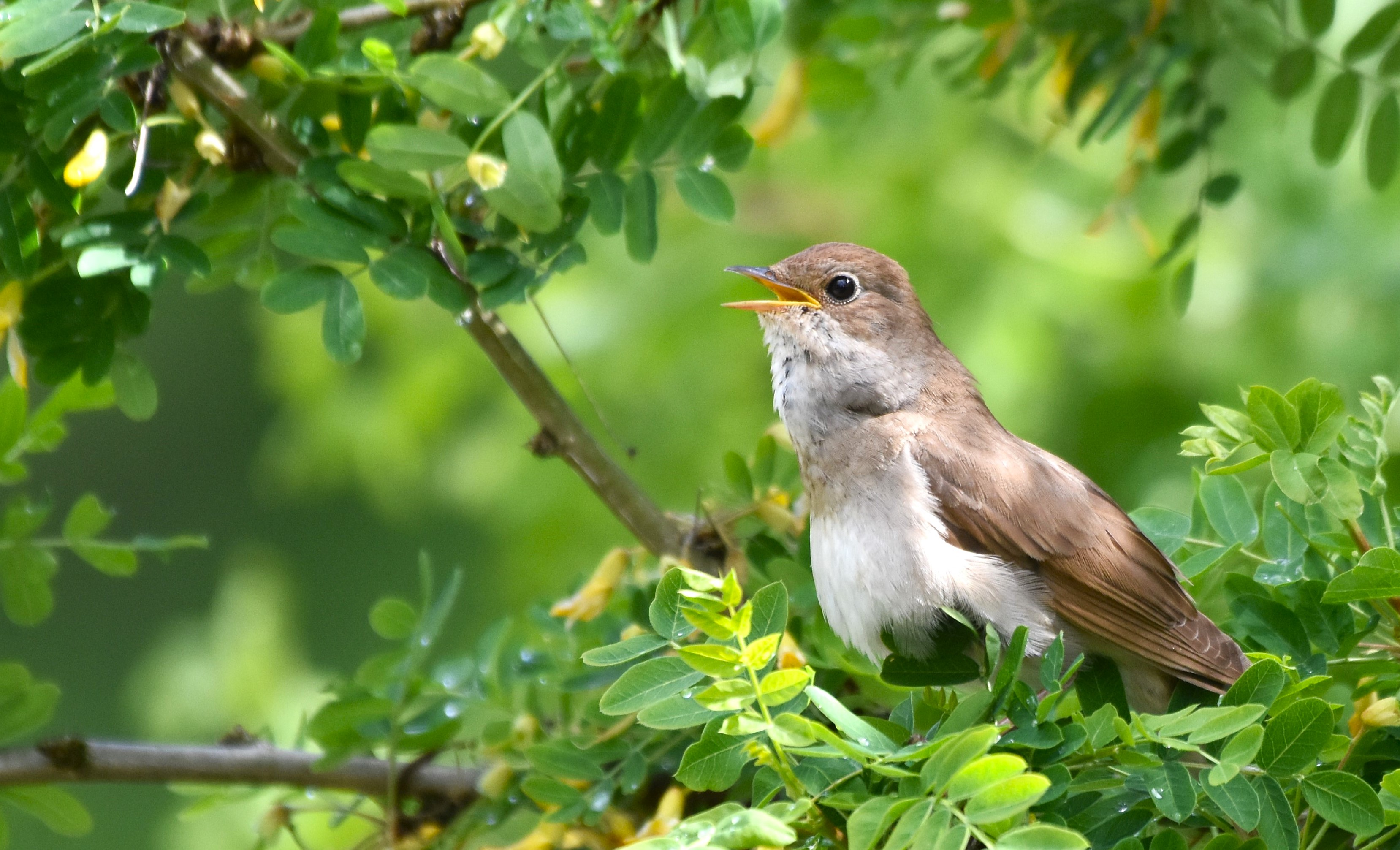
Rossinyol rus (Luscinia luscinia) ben a prop de l’allotjament. Imatge del Sergi Sales.

Dia 2

Visitar Polònia al mes de maig implica bones matinades per poder optimitzar el temps i la qualitat de les observacions. Per tal d’assegurar un dels gran al·licients del viatge, en 1er terme anem a la cerca del bisons europeus abans de no s’endinsin a l’impenetrable zona boscosa.

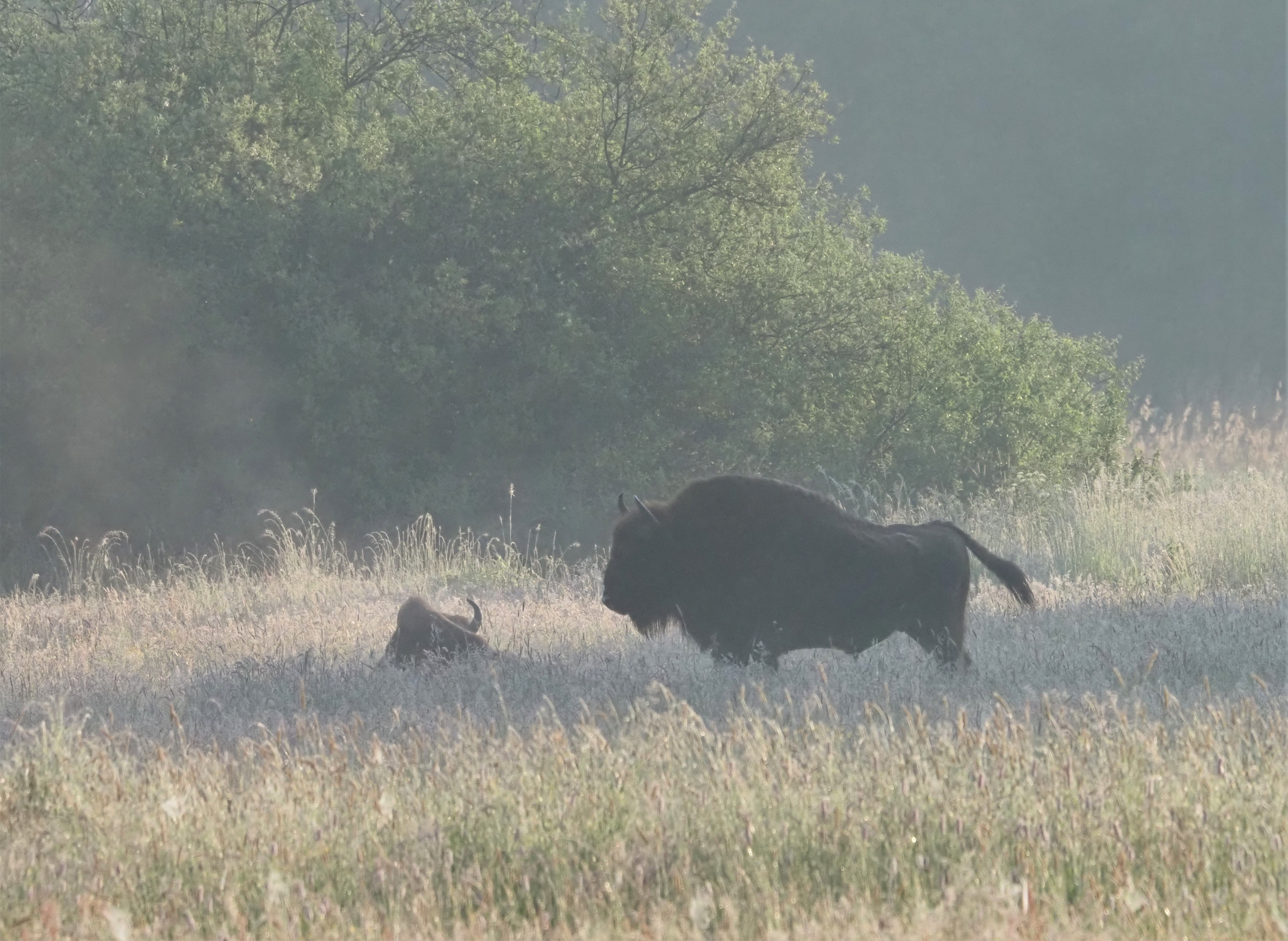
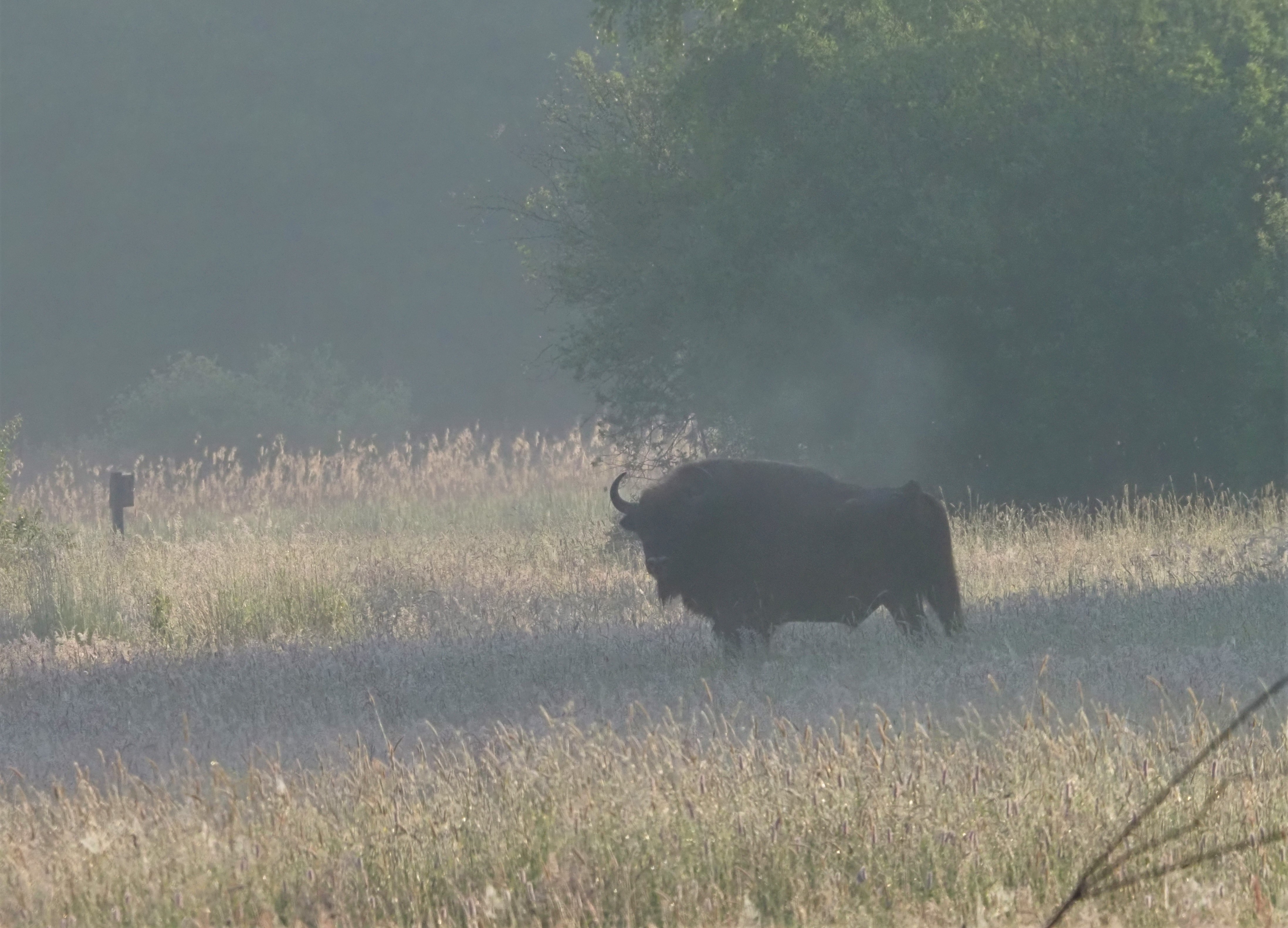
No tardem en detectar un grup a una zona de pastures amb idíl·liques observacions amb les boires matinals. A la poca estona i amb ritme pausat, aquests gran bòvids s’encaminen cap el bosc on acaben desapareixent.

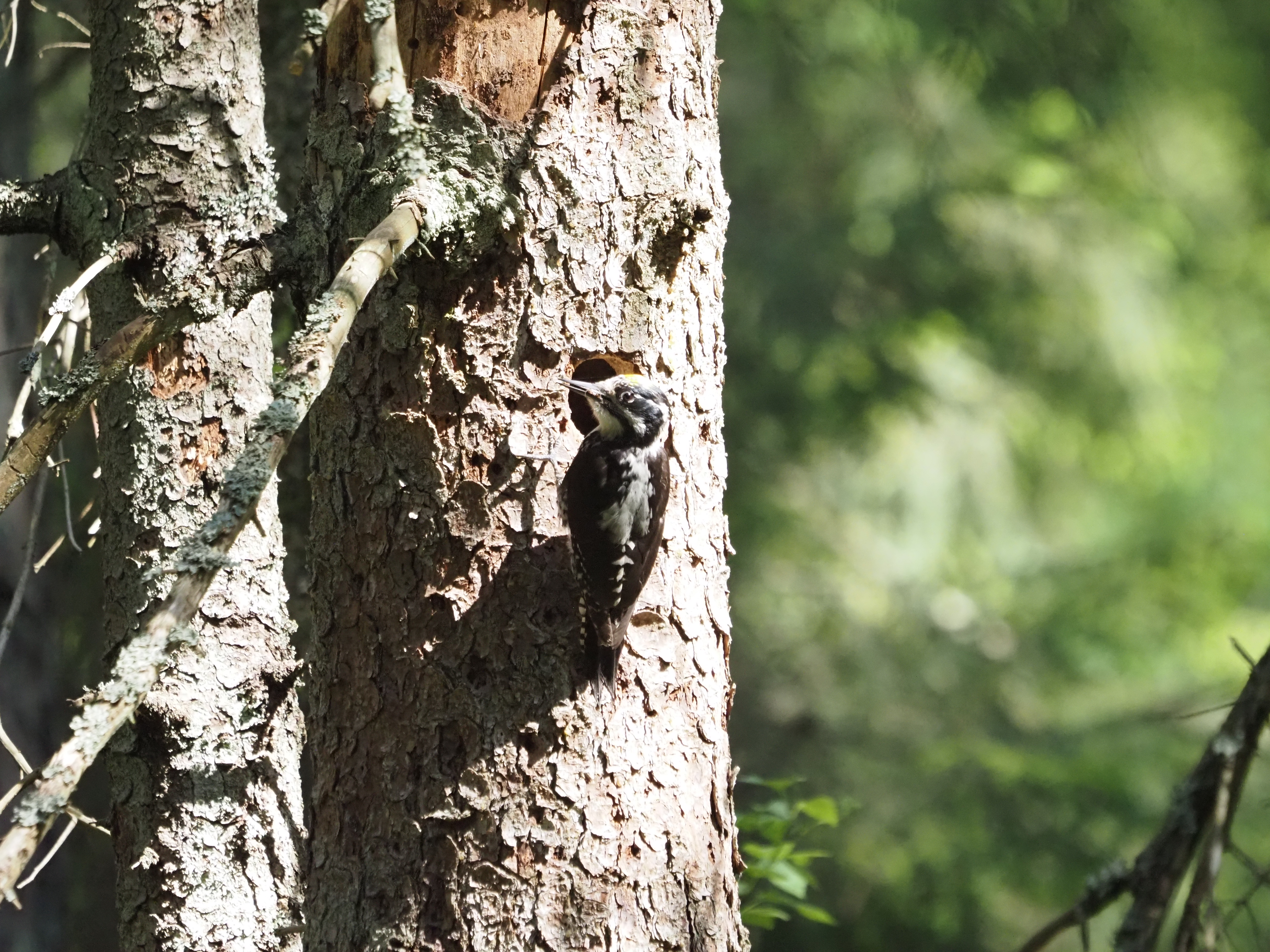
Embriagats pels bisons, ens dirigim cap a una de les zones típiques per picots on ràpidament s’escolta i finalment es deixar observar molt bé un picot cendrós. Posteriorment s’apropa al mateix arbre un menut picot garser menut.

Bisó europeu (Bison bonasus) a la sortida del sol. Imatge del Sergi Sales.
Picot cendrós (Picus canus).

Tornem a l’hotel per gaudir d’un bon esmorzar i agafar forces per fer visita a la zona on esperem poder trobar dos dels grans objectius del viatge: el papamosques menut i el papamosques de collar. Als pocs minuts de caminar per un dels interminables caminets que travessen certes parts del bosc, guiats per un ornitòleg local, sentim els cants del mascle del vistós papamosques de collar. Mosquiters comuns i xiulaires, tallarols grossos, mallerengues d’aigua i boscarles dels joncs sóns alguns dels ocells que es van detectant per la zona. Finalment, en una zona ombrívola, sentim el típic cant del mascle de papamosques menut, el qual després d’uns minuts d’espera, es deixar veure per satisfacció de tot el grup.

Dinar amb pícnic amb taules on mig del bosc, on poden veure un grapat de durbecs, cotxa cua-roja amb la veu de fons d’un parell de picots negres.

Abans de l’aturada per sopar, visitem la llera del riu a tocar del poble on gaudim del curiós cant de les busquetes icterines i els espectaculars mascles de tallarol esparverenc. Totes dues espècies es poden veure a curta distància tot i que són ocells especialment esmunyedissos.
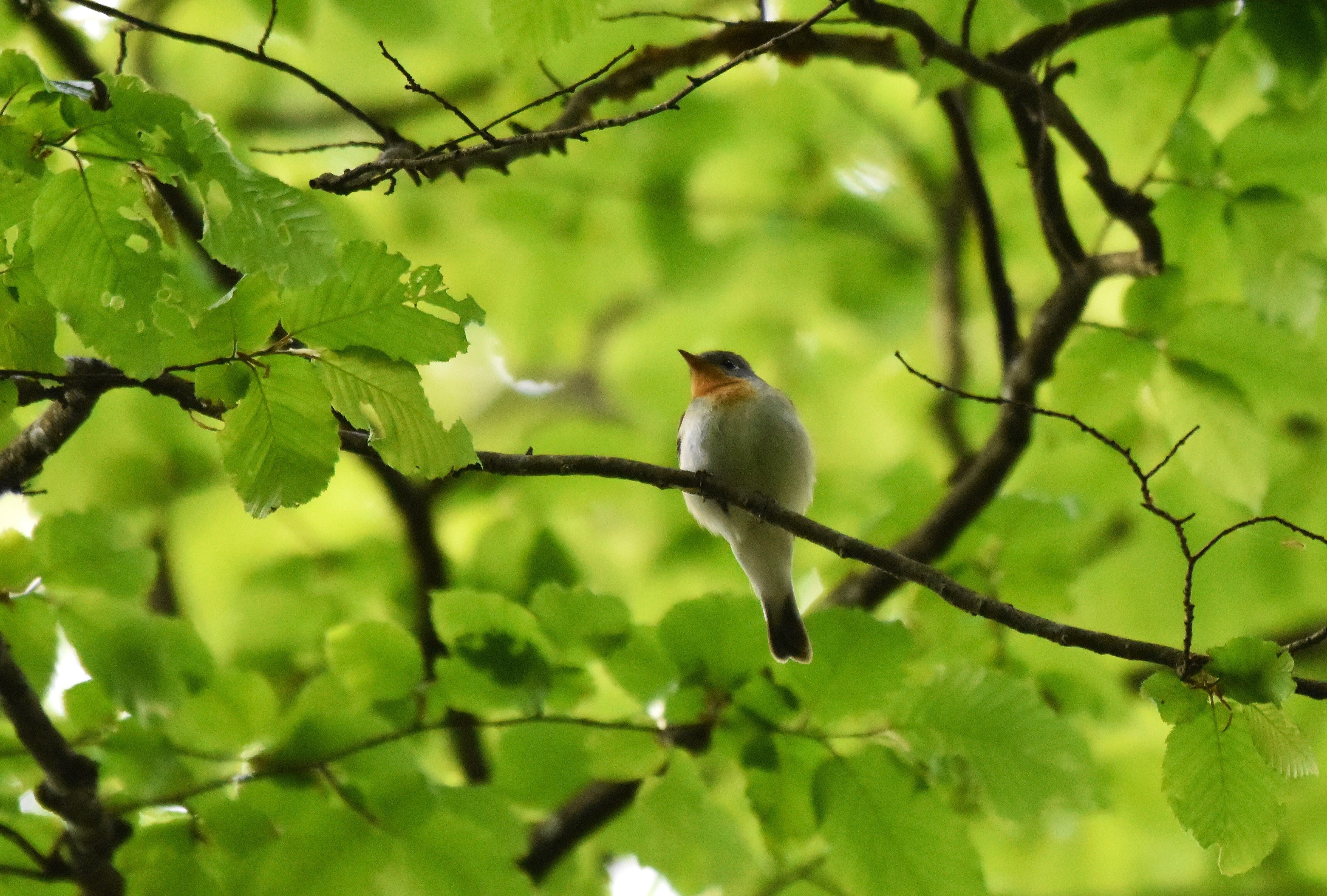
Papamosques menut (Ficedula parva).
Papamosques de collar (Ficedulla albicollis).
Busqueta icterina (Hyppolais icterina).
Tallarol esparverenc (Curruca nisoria).

Després de sopar provem un dels espectacles que a pocs més llocs es poder observar, els leks de nidificació dels becadells grossos. Seguint al guia local, arribem a un punt enmig del no res, zona de parts mig inundats amb petits i suaus turonets. Desprès d’una bona espera gaudint de cérvols i cabirols, s’escolta breument un becadell gros, amb l’ajut de càmeres tèrmiques s’acaben localitzant i ens veuen els típics salts obrin la cua per fer efectes flash per tal de seduïr a les femelles, tot això, amenitzat pels vols nupcials de becades i becadells comuns, moments absolutament màgics. Cansats però ben satisfets ens dirigim cap l’hotel i poder dormir algunes hores.

Dia 3

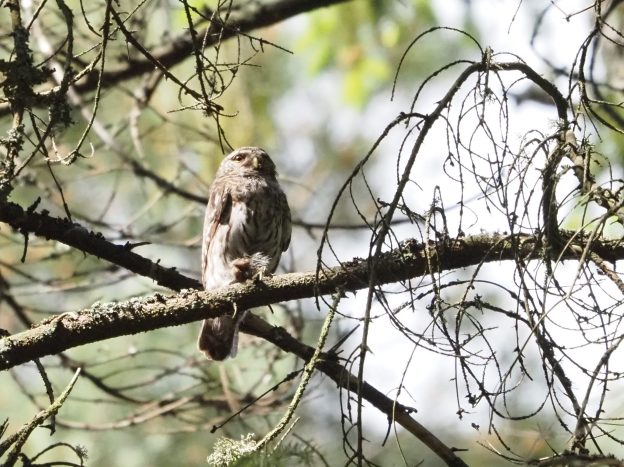
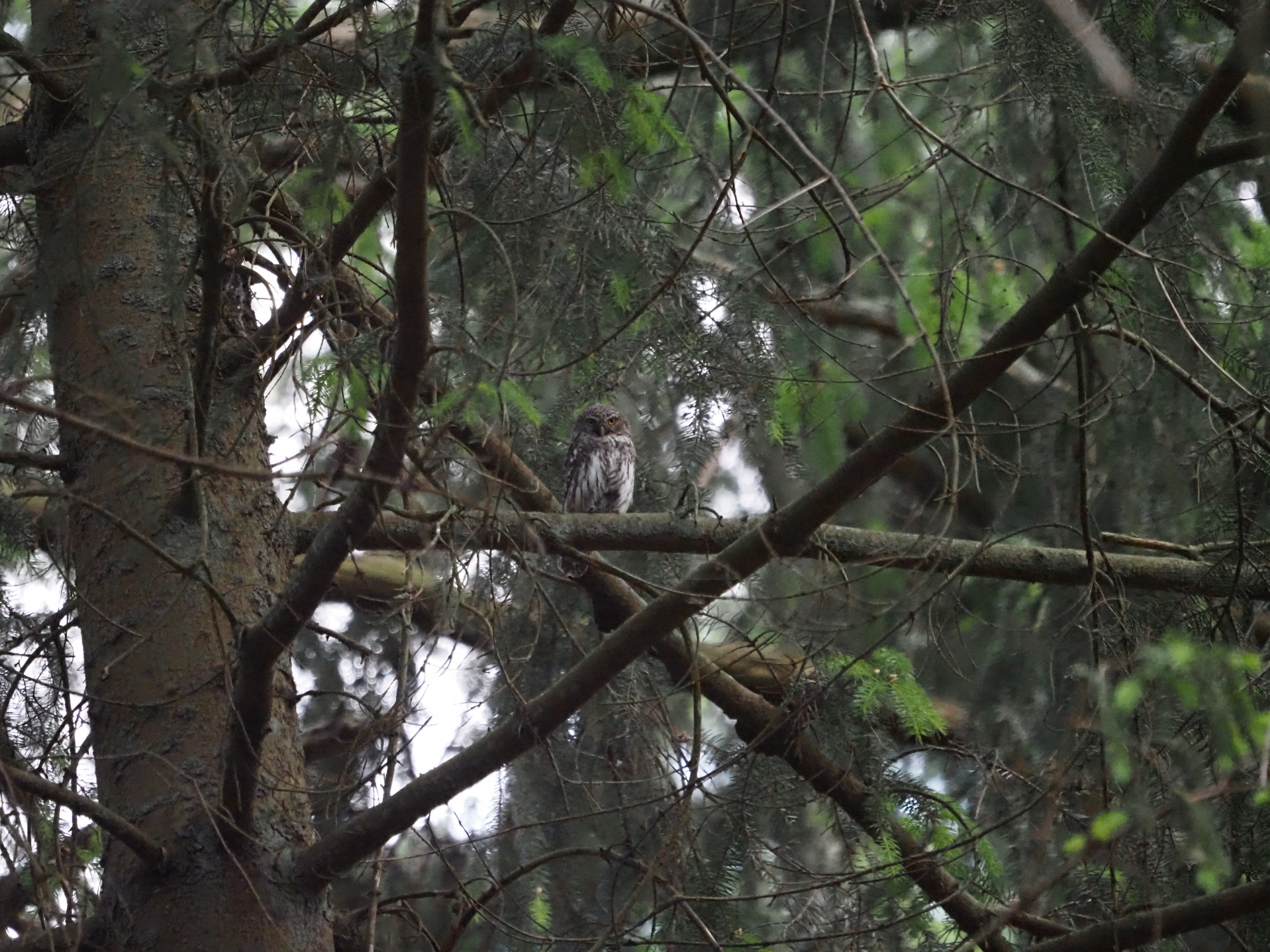
Avui el gran objectiu de la matinada es intentar detectar un dels rapinyaires nocturnes més característiques d’aquestes boscos, el mussolet eurasiàtic. No tardem un veure un exemplar, que com passa habitualment amb aquests ocells, genera situació d’excitació entre els petit ocells de l’entorn, desenes de mallerengues, tallarols i inclús picots surten per cridar i intentar foragitar els petit mussol.

Posteriorment continuem passejat pels passadissos d’aquests impressionants boscos, on van sortint diverses espècies de picots entre els que destaquen uns picots garsers mitjans i dorsblancs. Alhora que grups mixtes de mallerengues barrejades les mallerengues d’aigua, blaves, carboneres, petites, emplomallades i les úniques mallerengues capnegres del tour. Sempre es encisador l’observació de les mallerengues cuallargues del grup de cap blanc.

Mussolet eurasiàtic (Glaucidium passerinum) en una posició privilegiada per a guaitar el seu territori.
Picot dorsblanc (Dendrocopos leucotos).
Picot garser mitjà (Dendrocopos medius).
La fantàstica raça oriental de Mallerenga cuallarga (Aegithalos caudatus).

Canviem d’hàbitat per tal de cercar noves especies. El mosaic de bosc amb petites zones entollades ens fa gaudir de ocells forestals però també d’altres targets com boscarles menjamosquits, pinsans carminats, tallarols xerraires, papamosques de collar i un boscaler fluvial del que vàrem necessitar moltes estona per veure’l a pesar de continuat i proper cant que emetia, finalment es deixa veure a plaer.

Boscarla menjamosquits (Acrocephalus palustris).
Boscarler fluvial (Locustella fluviatilis).

La tarda es complica el temps i arriba la esperada pluja que necessita aquest sector de Polònia després d’una històrica sequera. En el fons això ens permet recuperar energies per tornar a fer noves matinades i caminades pels boscos polonesos.

Dia 4

Tornem a visitar sectors i hàbitats que ja em trepitjat, en especial per buscar una espècie que fins al moment se’ns esta resistint, el trencanous. Aquesta vegada ajudats per l’experiència del guia local, no tardem gens en veure a plaer un exemplar amb el seu típic comportament i veus. Una parella de picots negres ens acaben mostrant el niu on estaven criant.

Nou esmorzar al hospedatge i ens dirigim cap una zona humida propera, deixant els boscos que durant aquests dies ens han estat acompanyant.

Canvi radical de paisatge i en aquestes basses apareixen gavines, xatracs, fumarells, ànecs, cignes i limícoles. Però el més destacable van ser els rapinyaires, aligot vesper, arpelles volaven contínuament per la zona amb bones observacions d’àguiles pomerànies i pigargs cuablancs en varies fases de plomatge.
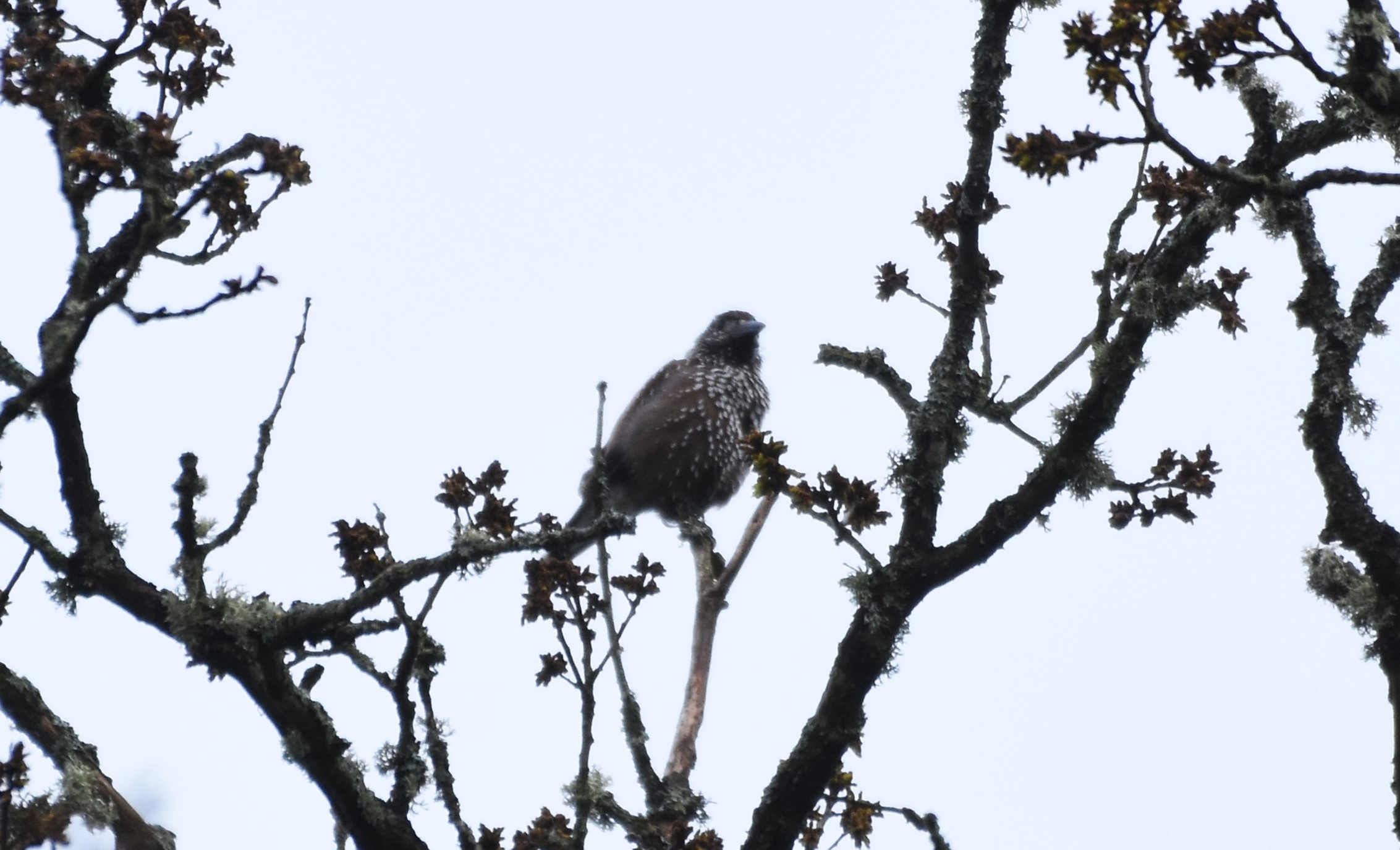
Trencaous eurasiàtic (Nucifraga caryocatactes).
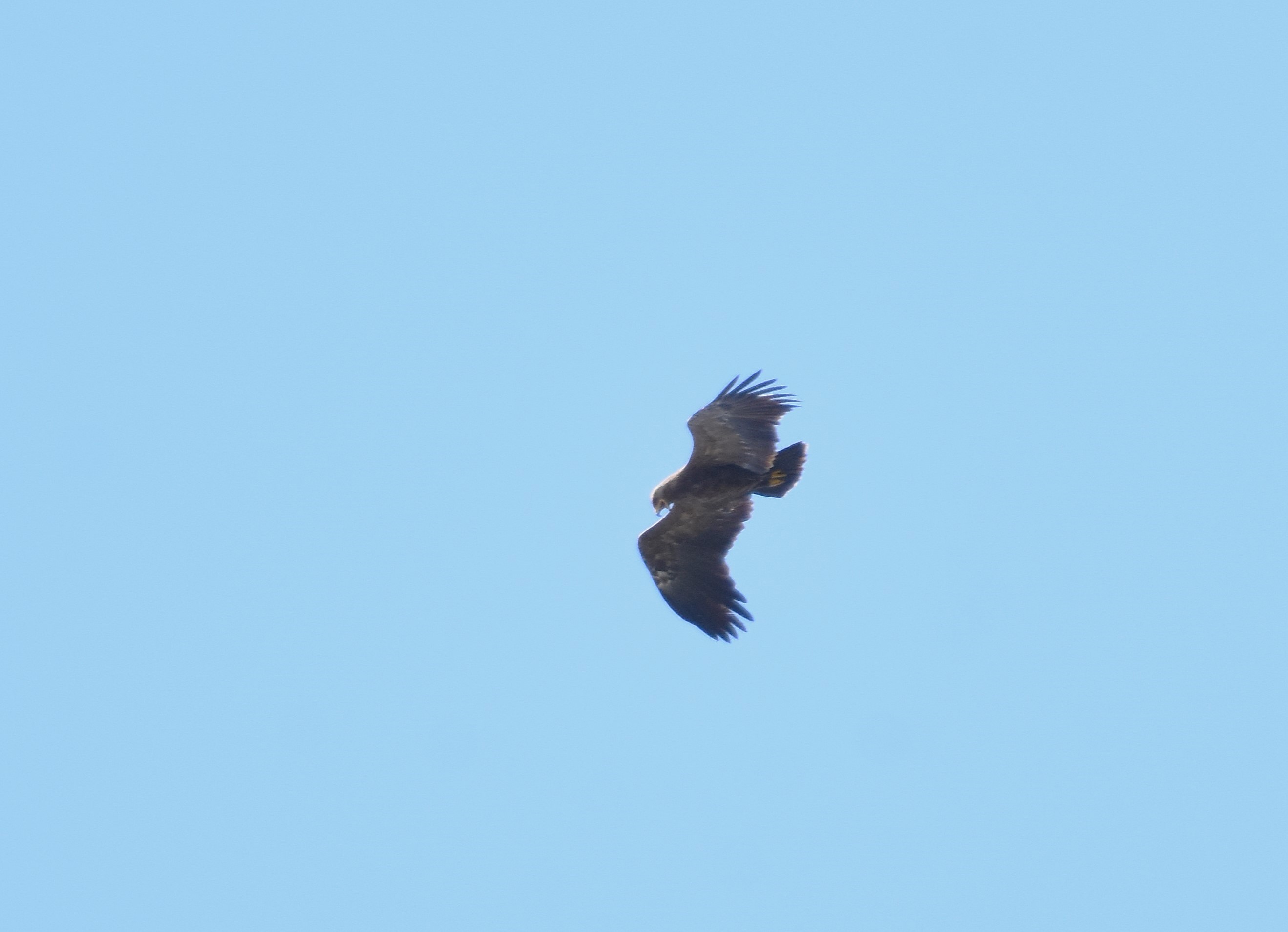
Àguila marina (Haliaaetus albicilla).
Àguila pomerània (Clanga pomarina)

Continuem voltant per la zona, tot visitant altres estanyats, piscifactories de peixos d’aigua dolça i prats que malauradament amb la sequera greu que esta patint aquesta zona del país, no estan inundats com anys anteriors, això fa que féssim breus observacions de cuereta citrina entre mig d’estols de cueretes grogues. Grups d’oques, grues i limícoles s’escolten i veuen per l’entorn.

La pluja i vent tornen a fer acte de presencia i fa que escurcem la visita i anem tornant cap l’hotel.

Després de sopar tornem als boscos tot aprofitant les darreres llums i les becades sobrevolen l’espai en els seus vols nupcials. Finalment caminem a la cerca del mussol pirinenc. Nius ocupats la setmana anterior ara estan abandonats probablement fracassats, possiblement pel seu principal depredador, la marta, mamífer del qual veiem a curta distancia i a ple dia un espectacular exemplar. Només arribar a la millor zona per l’espècie, s’escolta la veu del mussol, a curta distancia però malauradament en una zona de bosc molt tancat i atapeït, breus observacions molt amagades fins que decideix desplaçar-se fins a unes coníferes més llunyanes on els deixem cantant a ple pulmó. Cansats però satisfets marxem a fer la darrera nit a l’hotel abans d’iniciar el retorn cap la capital.

Dia 5

Ben aviat marxem cap l’oest per anar reculant cap l’aeroport. A mig matí arribem a unes espectaculars piscifactories que conformem un dels millors llocs del país per espècies com el rascletó i el cabussó gris.  A pesar de l’amenaçant pluja decidim fer la volta sencera a l’espai i ja a la 1era llacuna veiem una parella d’espectaculars cabussons grisos al niu. L’entorn presenta bones masses de canyissar on canten i es deixen veure balquers, boscarles de canyar, teixidors, repicatalons i mallerengues de bigotis. A les lleres amb més sotabosc destaquen les sorolloses boscarles menjamosquits, dels joncs, oriols, pinsans carminats i rossinyols russos. A la darrera bassa escoltem el cant d’un rascletó, que ràpidament té resposta d’altres exemplars, tant mascles com femelles. Distàncies increïblement curtes però directament proporcionals a la dificultat de poder-los observar en una estona perllongada. Però el temps empitjora ràpidament, arriba un temporal de pluges que ens fa acabar la volta de forma ràpida.  

Rascletó (Zapornia parva) mascle ben amagat a la vegetació.

Malauradament enguany els típics territoris de boscarla d’aigua d’aquesta zona no estan ocupades ja que estan absolutament seques. Ens desplacem a un altra localització que és simplement espectacular: becadells, fredelugues, tètols cuanegres, batallaires…en plenes tasques reproductives. Zones tant planes proporcionen bones opcions per detectar rapinyaires i àguiles pomerànies, aligots i esparvers no van faltar a la cita, afegint a la llista una llunyana àguila cridanera. En el moment que veiem lluents fumarells negres en plomatge nupcial, els membres del grup descobreixen un rapinyaire nocturn aturat, el qual confirmem que es tracta d’un mussol banyut! Aquest exemplar s’exhibeix davant nostre tot fent vols rassants de cacera i posteriorment s’hi afegeix un altre exemplar adult. Finalment, detectem un poll el qual alimenten els adults, una manera immillorable d’acabar la jornada.

El desitjat sopar al gran hotel on estàvem se’ns va anar a norris al tindre la mala sort de coincidir amb casament polonès, probablement encara més lluent i sorollós dels que fem a casa nostra.

Dia 6

Darrer dia del viatge que iniciem amb sortida voluntària sota l’amenaça de més pluges a la piscifactoria que ahir vàrem visitar. Repetim espècies però amb millors observacions sobretot dels rascletons i mallerengues de bigotis. Veiem els únic cignes cantaires del viatge. Aquesta vegada els pinsans carminats i boscarles menjamosquits col·laboren més i es deixen veure i escoltar a plaer.  

Desprès d’un copiós esmorzar, iniciem el transfer de tornada cap l’aeroport. Creuant grans extensions de camps agrícoles esquitxades per densos boscos. Veiem una gran nombre d’espècies d’aquests hàbitats alhora que mamífers com cabirols.

Sense cap mena d’incidència arribem a l’aeroport donant per finalitzat un gran viatge a un privilegiat sector de Polònia on encara resten alguns del tresors que antigament deurien ser més comuns i abundants en altres zones.              

Llistat d’espècies observades al llarg del tour:       

  1. Faisà comú – Common Pheasant (Phaisanus colchinus)
  2. Cigne cantaire – Whooper Swan (Cygnus cygnus)
  3. Cigne mut – Mute Swan (Cygnus olor)
  4. Oca comuna – Greylag Goose (Anser anser)
  5. Ànec blanc – Common Shelduck (Tadorna tadorna)
  6. Ànec xiulaire – Eurasian Wigeon (Marecca penelope)
  7. Ànec griset – Gadwall (Marecca strepera)
  8. Ànec coll-verd – Mallard (Anas platyrhynchos)
  9. Ànec cullerot – Northern Shoveler (Spatula clypeata)
  10. Morell cap-roig – Common Pochard (Aythya ferina)
  11. Enganyapastors – European Nightjar (Caprimulgus europaeus) – només sentit
  12. Falciot negre – Common Swift (Apus apus)
  13. Cucut – Common Cuckoo (Cuculus canorus)
  14. Colom roquer – Feral Pigeon (Columba livia)
  15. Xixella – Stock Dove (Columba oenas)
  16. Tudó – Common Woodpigeon (Columba palumbus)
  17. Tórtora turca – Eurasian Collared Dove (Streptopelia decaocto)
  18. Grua comuna – Common Crane (Grus grus)
  19. Rascló – Water Rail (Rallus aquaticus)
  20. Guatlla maresa eurasiàtica – Corncrake (Crex crex) – només sentit
  21. Rascletó – Little Cracke (Zapornia parva)
  22. Polla d’aigua – Eurasian Moorhen (Gallinula chloropus)
  23. Fotja comuna – Eurasian Coot (Fulica atra)
  24. Cabusset – Little Grebe (Tachybaptus ruficollis)
  25. Cabussó gris – Red-necked Grebe (Podiceps grisigena)
  26. Corriol anellat petit – Little Ringed Plover (Charadrius dubius)
  27. Pigre gris – Grey Plover (Pluvialis squatarola)
  28. Fredeluga – Northern Lapwing (Vanellus vanellus)
  29. Becada – Eurasian Woodcock (Scolopax rusticola)
  30. Becadell comú – Common Snipe (Gallinago gallinago)
  31. Becadell gros – Great Snipe (Gallinago media)
  32. Batallaire – Ruff (Calidris pugnax)
  33. Tètol cuanegre (Limosa limosa)
  34. Gamba roja comuna – Common Redshank (Tringa totanus)
  35. Valona – Wood Sandpiper (Tringa glareola)
  36. Xivita – Green Sandpiper (Tringa ochropus)
  37. Xivitona – Common Sandpiper (Actitis hypoleucos)
  38. Gavina riallera – Black-headed Gull (Chroicocephalus ridibundus)
  39. Caspian Gull – Gavià caspi (Larus cachinnans)
  40. Xatrac comú – Common Tern (Sterna hirundo)
  41. Fumarell negre – Black Tern (Chlidonias niger)
  42. Fumarell carablanc – Whiskered Tern (Chlidonias hybridus)
  43. Cigonya blanca – White Stork (Ciconia ciconia)
  44. Corb marí gros – Great Cormorant (Phalacrocorax carbo)
  45. Bernat pescaire – Grey Heron (Ardea cinerea)
  46. Agró blanc – Great White Egret (Ardea alba)
  47. Aligot comú – Common Buzzard (Buteo buteo)
  48. Aligot vesper – European Honey Buzzard (Pernis apivorus)
  49. Arpella cendrosa – Montagu’s Harrier (Circus pygargus)
  50. Arpella comuna – Western Marsh Harrier (Circus aeruginosus)
  51. Àguila pomerània – Lesser Spotted Eagle (Clanga pomarina)
  52. Àguila cridanera – Greater Spotted Eagle (Clanga clanga)
  53. Esparver comú – Eurasian Sparrowhawl (Accipiter nisus)
  54. Àguila pescadora – Osprey (Pandion haliaetos)
  55. Pigarg cuablanc – White-tailed Eagle (Haliaaetos albicilla)
  56. Mussol banyut – Long-eared Owl (Asio otus)
  57. Mussol pirinenc – Tengmalm’s Owl (Aegolius funereus) – només sentit
  58. Gamarús europeu – Tawny Owl (Strix aluco) – només sentit
  59. Mussolet eurasiàtic – Eurasian Pygmy Owl (Glaucidium passerinum)
  60. Puput – Common Hoopoe (Upupa epops)
  61. Abellerol europeu – European Bee-eater (Merops apiaster)
  62. Blauet – Common Kingfisher (Alcedo atthis)
  63. Colltort – Eurasian Wryneck (Jynx torquilla)
  64. Picot garser gros – Great Spotted Woodpecker (Dendrocopos major)
  65. Picot garser dorsiblanc – White-backed Woodpecker (Dendrocopos leucotos)
  66. Picot garser mitjà – Middle Spotted Woodpecker (Dendrocopos medius)
  67. Picot garser petit – Lesser Spotted Woodpecker (Dryobates minor)
  68. Picot negre – Black Woodpecker (Dryocopus martius)
  69. Picot cendrós – Grey-headed Woodpecker (Picus canus)
  70. Xoriguer comú – Common Kestrel (Falco tinnunculus)
  71. Falcó mostatxut – Eurasian Hobby (Falco subbuteo)
  72. Alosa eurasiàtica – Skylark (Alauda arvensis)
  73. Cogullada comuna – Crested Lark (Galerida cristata)
  74. Cotoliu – Woodlark (Lullula arborea)
  75. Oreneta de ribera – Sand Martin (Riparia riparia)
  76. Oreneta comuna – Barn Swallow (Hirundo rustica)
  77. Oreneta cuablanca – Western House Martin (Delichon urbicum)
  78. Piula dels arbres – Tree Pipit (Anthus trivialis)
  79. Titella – Meadow Pipit (Anthus pratensis)
  80. Cuereta blanca – White Wagtail (Motacilla alba)
  81. Cuereta groga – Western Yellow Wagtail (Motacilla flava)
  82. Cuereta citrina – Citrine Wagtail (Motacilla citreola)
  83. Cuereta torrentera – Grey Wagtail (Motacilla cinerea)
  84. Pit-roig – Eurasian Robin (Erithacus rubecula)
  85. Rossinyol rus – Thrush Nightingale (Luscinia luscinia)
  86. Cotxa cua-roja – Common Redstart (Phoenicurus phoenicurus)
  87. Cotxa fumada – Black Redstart (Phoenicurus ochruros)
  88. Bitxac comú – European Stonechat (Saxicola rubicola)
  89. Bitxac rogenc – Whinchat (Saxicola rubetra)
  90. Papamosques gris – Spotted Flycatcher (Muscicapa striata)
  91. Mastegatatxes – European Pied Flycatcher (Ficedula hypoleuca)
  92. Papamosques de collar – Collared Flycatcher (Ficedula albicollis)
  93. Papamosques menut – Red-breasted Flycatcher (Ficedula parva)
  94. Tord comú – Song Thrush (Turdus philomelos)
  95. Griva – Mistle Thrush (Turdus viscivorus)
  96. Griva cerdana – Fieldfare (Turdus pilaris)
  97. Merla comuna – Eurasian Blackbird (Turdus merula)
  98. Tallarol esparverenc – Barred Warbler (Curruca nisoria)
  99. Tallareta comuna – Common Whitethroat (Curruca communis)
  100. Tallarol xerraire – Lesser Whitethroat (Curruca curruca)
  101. Tallarol gros – Garden Warbler (Sylvia borin)
  102. Tallarol de casquet – Eurasian Blackcap (Sylvia atricapilla)
  103. Boscarla dels joncs – Sedge Warbler (Acrocephalus schoenobaenus)
  104. Boscarla de canyar – Common Reed Warbler (Acrocephalus scirpaceus)
  105. Boscarla menjamosquits – Marsh Warbler (Acrocephalus palustris)
  106. Balquer – Great Reed Warbler (Acrocephalus arundinaceus)
  107. Boscarler pintat gros – Common Grasshopper Warbler (Locustella naevia)
  108. Boscarler fluvial – River Warbler (Locustella fluviatilis)
  109. Boscarler comú – Savi’s Warbler (Loscutella luscinioides)
  110. Busqueta icterina – Icterine Warbler (Hyppolais icterina)
  111. Mosquiter de passa – Willow Warbler (Phylloscopus trochilus)
  112. Mosquiter comú – Common Chiffchaff (Phylloscopus collybita)
  113. Mosquiter xiulaire – Wood Warbler (Phylloscopus sibilatrix)
  114. Reietó – Goldcrest (Regulus regulus)
  115. Bruel – Firecrest (Regulus ignicapillus)
  116. Cargolet – Eurasian Wren (Troglodytes troglodytes)
  117. Mallerenga d’aigua – Marsh Tit (Poecile palustris)
  118. Mallerenga capnegre – Willow Tit (Poecile montanus)
  119. Mallerenga petita – Coal Tit (Periparus ater)
  120. Mallerenga emplomallada – European Crested Tit (Lophophanus cristatus)
  121. Mallerenga blava – Eurasian Blue Tit (Cyanistes caeruleus)
  122. Mallerenga carbonera – Great Tit (Parus major)
  123. Mallerenga de bigotis – Bearded Tit (Panurus biarmicus)
  124. Teixidor – Eurasian Penduline Tit (Remiz pendulinus)
  125. Raspinell pirinenc – Eurasian Treecreeper (Certhia brachydactyla)
  126. Pica-soques blau – Eurasian Nuthatch (Sitta europaeus)
  127. Botxí septentrional – Great Grey Shrike (Lanius excubitor)
  128. Escorxador – Red-backed Shrike (Lanius collurio)
  129. Gaig eurasiàtic – Eurasian Jay (Garrulus glandarius)
  130. Trencanous – Spotted Nutcracker (Nucifraga caryocatactes)
  131. Garsa eurasiàtica – Eurasian Magpie (Pica pica)
  132. Gralla – Western Jackdaw (Corvus monedula)
  133. Cornella emmantellada – Hooded Crow (Corvus cornix)
  134. Graula – Rook (Corvus frugilegus)
  135. Corb comú – Common Raven (Corvus corax)
  136. Estornell comú – Common Starling (Sturnus vulgaris)
  137. Oriol eurasiàtic – Eurasian Golden Oriole (Oriolus oriolus)
  138. Pardal comú – House Sparrow (Passer domesticus)
  139. Pardal xarrec – Eurasian Tree Sparrow (Passer montanus)
  140. Pinsà comú – Common Chaffinch (Fringilla coelebs)
  141. Verdum eurasiàtic – Eurasian Greenfinch (Chloris chloris)
  142. Cardenera – Eurasian Goldfinch (Carduelis carduelis)
  143. Gafarró europeu – European Serin (Serinus serinus)
  144. Lluer eurasiàtic – Eurasian Siskin (Spinus spinus)
  145. Passerell comú – Linnet (Linaria cannabina)
  146. Pinsà carminat – Common Rosefinch (Carpodacus erythrinus)
  147. Pinsà borroner – Eurasian Bullfinch (Pyrrhula pyrrhula)
  148. Durbec – Hawfinch (Coccothraustes coccothraustes)
  149. Verderola – Yellowhammer (Emberiza citrinella)
  150. Repicatalons – Common Reed Bunting (Emberiza schoneiclus)
  151. Cruixidell – Corn Bunting (Emberiza calandra)

Llista de mamífers observats al llarg del tour:

  1. Bisó europeu (Bison bonasus)
  2. Cabirol (Capreolus capreolus)
  3. Cèrvol (Cervus elaphus)
  4. Eriçó comú (Erinaceus europaeus)
  5. Esquirol (Sciurus vulgaris)
  6. Guineu (Vulpes vulpes)
  7. Llebre europea (Leppus leppus)
  8. Marta (Martes martes)
  9. Porc senglar (Sus scrofa)
Swift Poland Birding Tour 2023

Dates: June 5th to 10th, 2023

Number of participants: 8

Number of species: 131

Tour leader: Carles Oliver

Overview: We are really happy to present you another successful 1st issue in another key birding destination. Our first tour in Poland produced excellent sights in a very good list of specialties living in the amazing forest of Bialowieza and nearby areas. Despite the rather high temperatures, all tour participants enjoyed great views on Pygmy Owl, Aquatic & River Warblers; Three-toed, White-backed & Black Woodpeckers; Collared & Red-breasted Flycatchers and many other key species.

Day 1. The whole group assembled at Warsaw International Airport after arriving from different flights coming from the UK. Once the vehicle was collected and the Warsaw traffic negotiated we had a first stop in a lovely swamp midway between the Polish capital city and our accommodation.

It was very sunny and warm but still plenty of activity. Even before parking we had a first good bird, since a splendid Black Stork was soaring low over the marshes. A short walk around produced several Sedge Warblers and Common Reed Buntings but also the best views on Common Rosefinch of the trip: a lovely male singing only a few metres away from our group. The Aspens around were having Penduline Tits, and we were soon enjoying views on the male as it was moving in the reedbeds. A minimum of 2 Thrush Nightingales were singing around, but we never saw them.

In a nearby forest we had at least 4 Icterine Warblers, even if not everybody in group had them this time. Lesser Whitethroat and Garden Warbler were also noted.

From here we had some drive to our accommodation, with a pair of Golden Orioles and Common Cuckoos flying by the minibus as we were crossing the lovely landscapes in Eastern Poland.

Common Rosefinch (Carpodacus erythrinus) showing nicely in our first stop. Image by tour leader Carles Oliver.
Penduline Tit (Remiz pendulinus) is a rather scarce nesting bird in the area. Image by Carles Oliver
Icterine Warblers (Hippolais icterine) proved as difficult to photograph as always! Image by Carles Oliver

Day 2. Short pre-breakfast walk to enjoy some birds in our hotel grounds. First views on Black Redstart of the trip along with common beauties including Golden Oriole and Lesser Whitethroat before covering the short distance to Bialowieza.

Our first walk in the impressive forests around Bialowieza could not be more productive. Despite the heat, a walk in the forestry was fast in producing the first Collared Flycatcher and Lesser Spotted Eagle of the trip. Hawfinches were all around calling and flying, but always difficult to catch. Both Marsh & Willow Tits were seen before we followed a Red-breasted Flycatcher that was singing inside the forest. We walked 200 metres away from the path, and soon we were surrounded by some impressive 300 years old trees. A Red-breasted Flycatcher was singing really close, and after some search we were all soon enjoying great views on this bird. But right before the Flycatcher showed out, a White-backed Woodpecker called once low around our group, and only a few minutes after the Flycatcher we had good views on two White-backed’s that were calling, drumming and feeding in the canopy around us!

Back to the minibus, we had our packed lunch while enjoying more views on a gorgeous male Collared Flycatcher before moving on to our next stop.

Lesser Spotted Eagle (Clanga pomarina) predating on a frog. Image by Carles Oliver.
Our first Red-breasted Flycatcher (Ficedula parva) was this very handsome male. Image by Carles Oliver.
White-backed Woodpecker (Dendrocopos leucotos) moving in a mature decideous forest. Image by Carles Oliver.
Collared Flycatcher (Ficedula albicollis) flying out from its perch up in an oak. Image by Carles Oliver

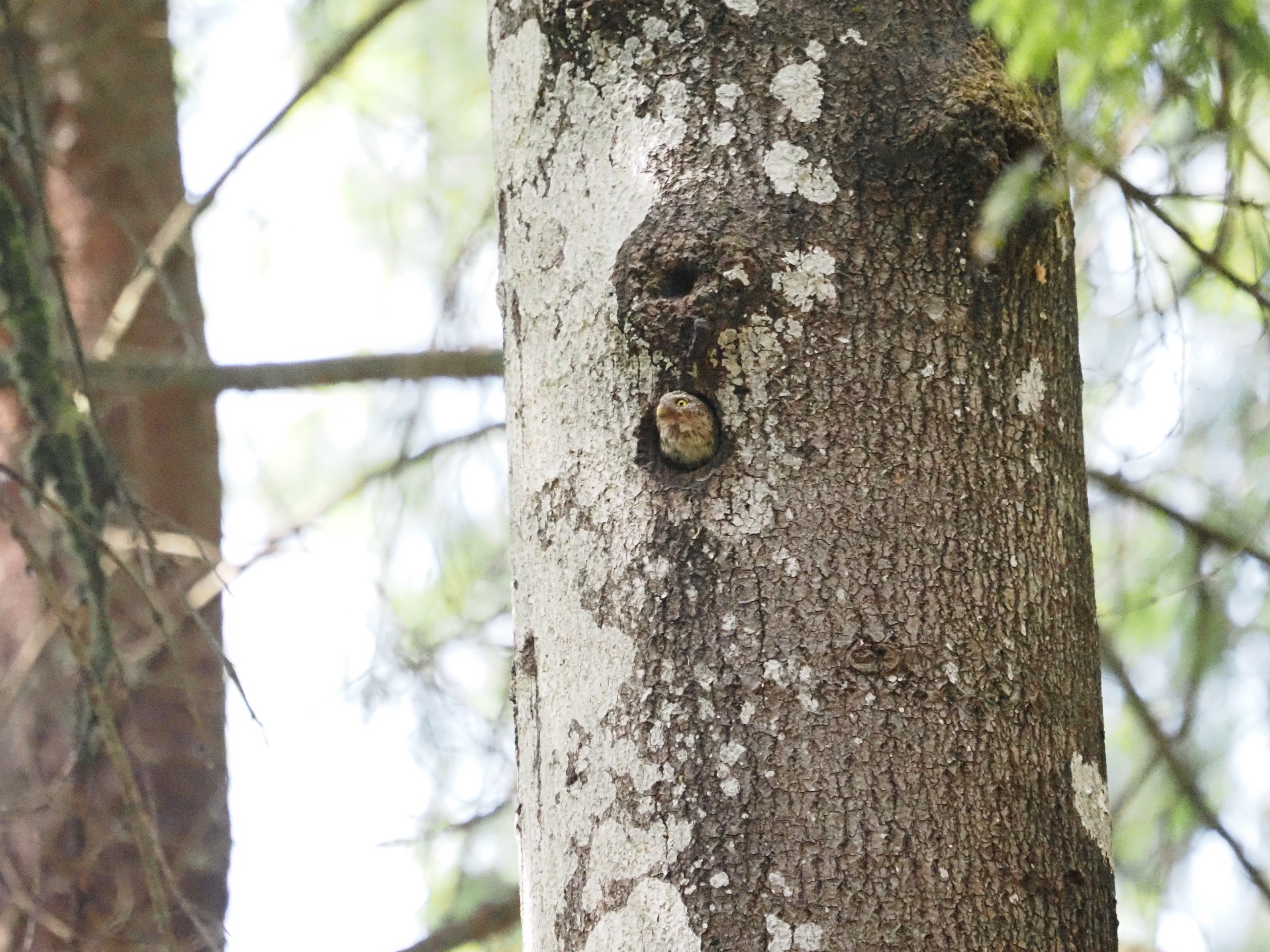
Eurasian Pygmy Owls have become quite common around Bialowieza, but they keep being difficult to spot. This time we were lucky, and at the moment of arrival the female was out of the nest, calling. Its calls were being answered by the male nearby in the trees, and after some waiting we saw the female leaving the nest, and joining the male in branch. The male was waiting for her with some food, and he fed her before she went back to its nest. This feeding scene didn’t go unnoticed by the several tits and goldcrests around, and they all tried, unsuccessfully, to disturb the pair of tiny owls.

We could hardly believe our luck. To arrive at the nesting place just in time for one of this feeding ceremonies is quite difficult, but our luck was not over. After feeding, the female took her time in cleaning the nest hole, removing material from former preys out the whole to prevent infections. Time to time, male and female were still calling each other! After almost one hour of sighting we left the place, fully satisfied with the quality of the slight and the impressive details on the behaviour of this enigmatic species.

Some images of the pair of Eurasian Pygmy Owl. We spent almost one hour observing them. Images by Carles Oliver
The female was leaving its hole a pair of times. One of them was fed by the male.
Here the male with a recent prey.

After dinner, we drove until one of the leks of Great Snipes around Bialowieza. It was the evening, a wonderful time to enjoy the bojs. A gorgeous chorus of birds was waiting for us in the place. There were Common Reed Buntings and Segde Warblers but also River & Grasshopper Warblers as well as distant Thrush Nightingale plus Marsh & Icterine Warblers. The sunset was arriving, but before we still had time to see the only one Great Grey Shrike of the trip as well as passing Eurasian Woodcocks and a hunting Short-eared Owl. But the Great Snipes were not playing the game. We gave them a long time but only a male was singing time to time, and only offered a short flight that was only a few in the group could enjoy.

Day 3. Some in the group enjoyed a pre-breakfast walk around our accommodation, resulting in great looks into River Warbler and Thrush Nightingales. After breakfast, we kept our exploration of the forests. Our first stop produced lovely views on Wood Warblers (surprisingly nesting in spruce forests!), Crested Tits, flocks of Common Crossbills and a rather unexpected European Adder in the path.

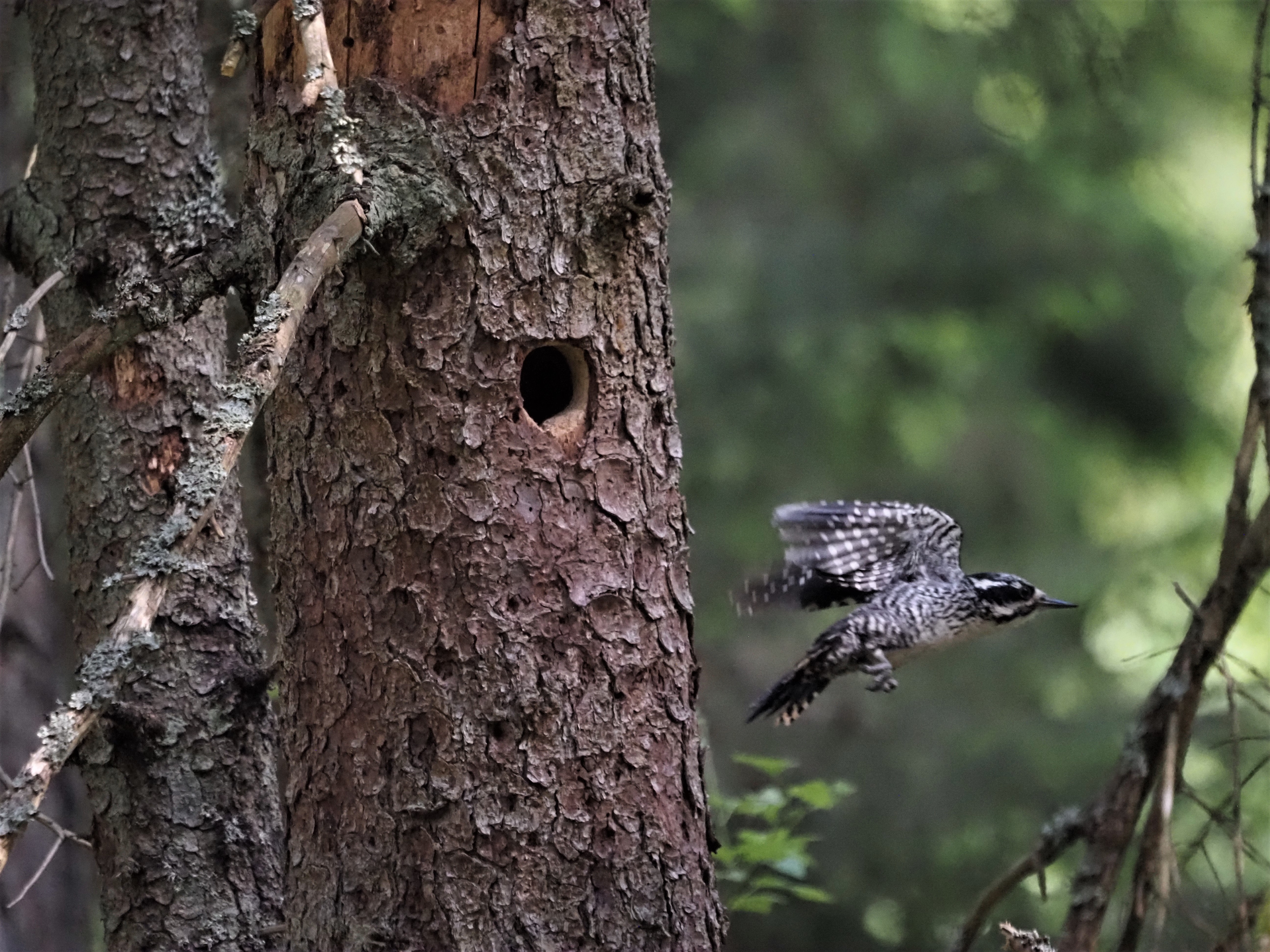
The heat was already noticeable when we arrived to a small patch of spruce. There, a nest of Eurasian Three-toed Woodpecker was waiting for us. Only a short wait was necessary before one of the adults came to the next, and during the next half and hour we all enjoyed again with the intimate views of the pair of this rather small woodpecker while coming to feed their young and marking the territory around the hole.

For over 45 minutes, we enjoyed amazing views on the pair of Three-toed’s while they were getting in and out the whole and interacting in the trees around. The forest around was full of birds, and here we got Tree Pipits, Willow Tits but also the only Eurasian Siskins of the trip. In the distance, a Black Woodpecker was calling over and over. It was definately time to move away. We took advantage of the calling Black Woodpecker and after a short scanning we had the bird moving in patch of Scotch Pines before we had a magnificent view of the bird flying across the road before stopping a few seconds in a tree nearby.

By midday we went to a lake nearby. Here we had the first views on a number of species including Marsh & Great Reed Warbler but also Black, Common and small numbers of White-winged Black Terns. Several Mute Swans were feeding, and a pair of Whooper Swan was also a nice adding to our list. White-tailed Eagles were flying around along with several White & Black Storks, Marsh Harriers, some distant Leasser Spotted Eagles and the only one Caspian Gull of the trip. Other interesting species here included European Stonechats and Red-backed Shrikes while Savi’s Warbler, Greater Bittern and Corncrake were all listened.

River Warbler (Locustella fluviatilis) showing nicely. Image by Derek Charlton.
Three-toed Woodpecker (Picoides trydactilus). Images by Carles Oliver
Three-toed Woodpecker flanks and underwing pattern Definately not something you can see every day. Image by Carles Oliver

The temperature was high and bird activity not massive, but there were some very promising clouds in the sky.. Our next stop was devoted to explore a small park around Bialowieza. Here we had some very elusive Icterine Warblers, Collared Flycatcher and at least 2 Middle Spotted Woodpeckers.

The marshes around were a paradise for warblers, and soon we had excellent views on a wonderful Barred Warbler moving in the small trees along the walk. Marsh, Reed & Grasshopper Warblers were also noted in the area.

Our last stop of the day was in a nother small corner of marsh. Here there was an impressive density of Sedge Warblers, but also good numbers of Marsh Warblers and we all could enjoy good but short views on River Warbler. Before going back to our accommodation, a European Green Woodpecker was noted nearby.

Middle Spotted Woodpecker (Dendrocopos medius). Image by Carles Oliver
Barred Warbler (Curruca nisoria) showed nicely for our group. Image by Carles Oliver
Savi’s Warbler (Locustella luscinoides) showing nicely during our afternoon walk. Image by Carles Oliver
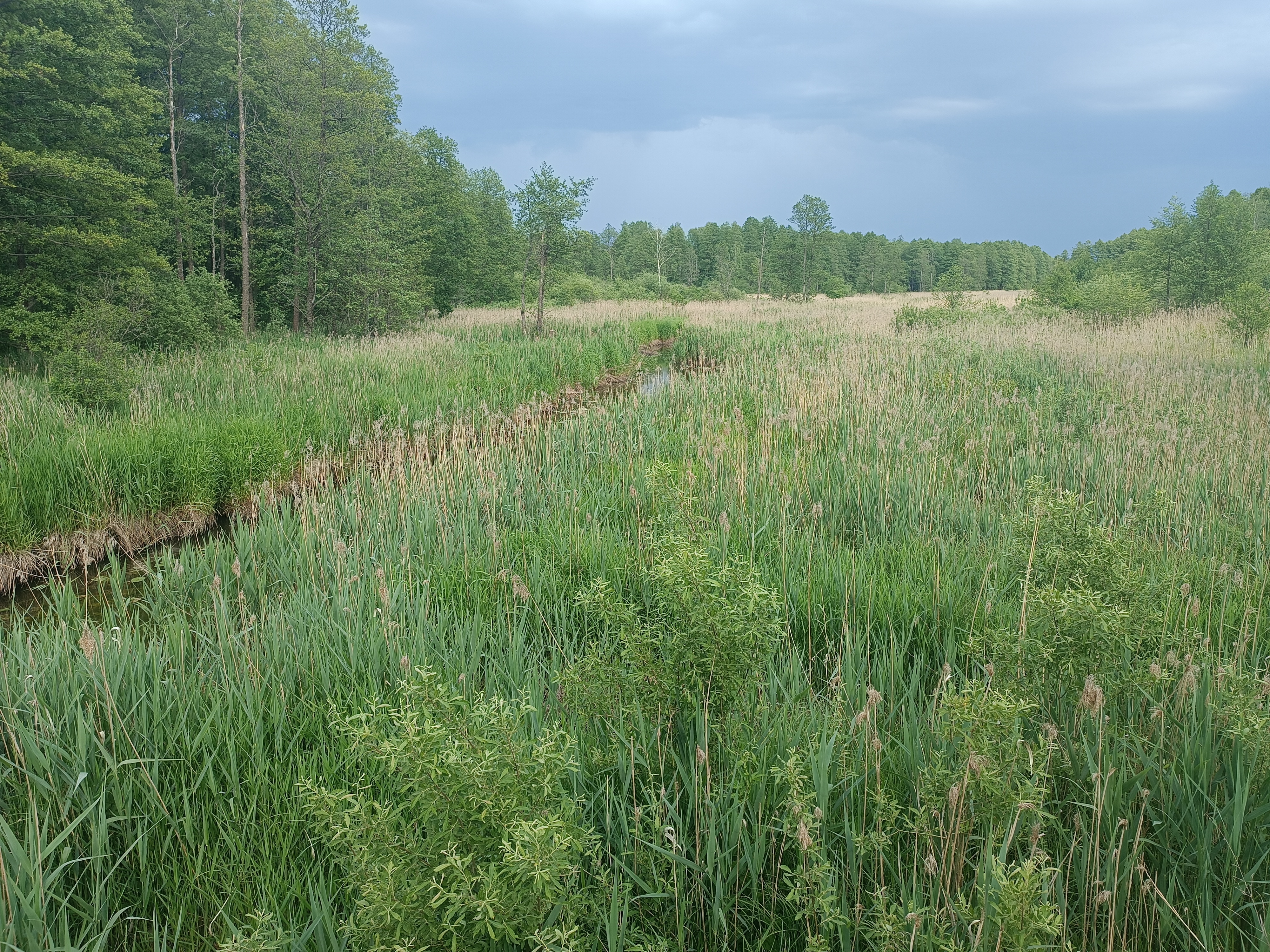
Wonderful habitat around Bialowieza. Image by Carles Oliver
Sedge Warbler (Acrocephalus schoenobaenus). Image by Carles Oliver

Day 4. Very early start to explore the many meadows around Bialowieza. The main target before having breakfast was to find some of the 500 Eurasian Bisons living in these incredible forests, meaning the main population of this species worldwide.

This time we were very lucky, and soon after leaving the accommodation we were enjoying 3 majestic Bisons: two of them lying on the ground and the third standing up and feeding. To watch in the wild of the most endangered mammals in Europe is always a great experience! The Bisons spent most of the time eating but, as the morning, advanced, they lazily moved into the shade of some large trees, disappearing into the woods.

After breakfast, we went back to the forest, we started looking for some of the specialities that were not yet in our list. A Lesser Spotted Woodpecker flew over the group, partially offering good views to the group. We walked into long into the mature forests, with some stops here and there, until or goal was achieved. A Hazel Grouse came out from the forest, stopping a few metres away from us, up in a tree. Some members of the group had excellent views, but others simply could not locate the bird before it flew down and away from us! We still invested a long time looking & waiting for the bird the show better, but unfortunately this Grouse scaped us..

Eurasian Bisons (Bison bison) enjoying the fresh hours of the morning. Image by Carles Oliver

After this forest short walk we started the transfer to the Biebrza marshes. In our way, we had a mandatory stop to enjoy good views on Ortolan Buntings singing along with Yellowhammers. Around Bialystok we had a new stop, this time to check some fish ponds. Here there are some nesting pairs of Red-necked Grebes, and this time we counted up to 4 pairs of this superb grebes along with Penduline Tit, Great Reed Warbler, Marsh Harriers and a minimum of 2 Little Crakes that kept running and calling in the open reedbeds!

Again was very warm, so after a midday rest, we covered the short distance from our accommodation to the Biebrza marshes. An en route stop here produced more White-winged Black Terns and lovely scope views in the only one Moose of the trip, slowly walking in the marsh before disappearing inside a tall wall of reeds.

To end the day, we visited the famous woodwalk that gives access to some proper Aquatic Warbler habitat. Soon, we heard some of them calling and singing, and the cloudy afternoon provided us with the perfect setting for a good number of excellent views on these extremely scarce passerine, with only about 1000 pairs left in Europe!

We saw them singing but also feeding in the reeds covering the boj, displaying in flight and fighting each other with no mercy to defend their territories against any intruders. Here we also had 2 pairs of Montagu’s Harriers patrolling the open lands, and a good number of displaying Common Snipes, 1 Whinchat and some rather distant Common Redshanks.

Ortolan Bunting (Emberiza hortulana). Image by Carles Oliver
Red-necked Grebe (Podiceps grisegena) in summer plomage. Image by Carles Oliver.
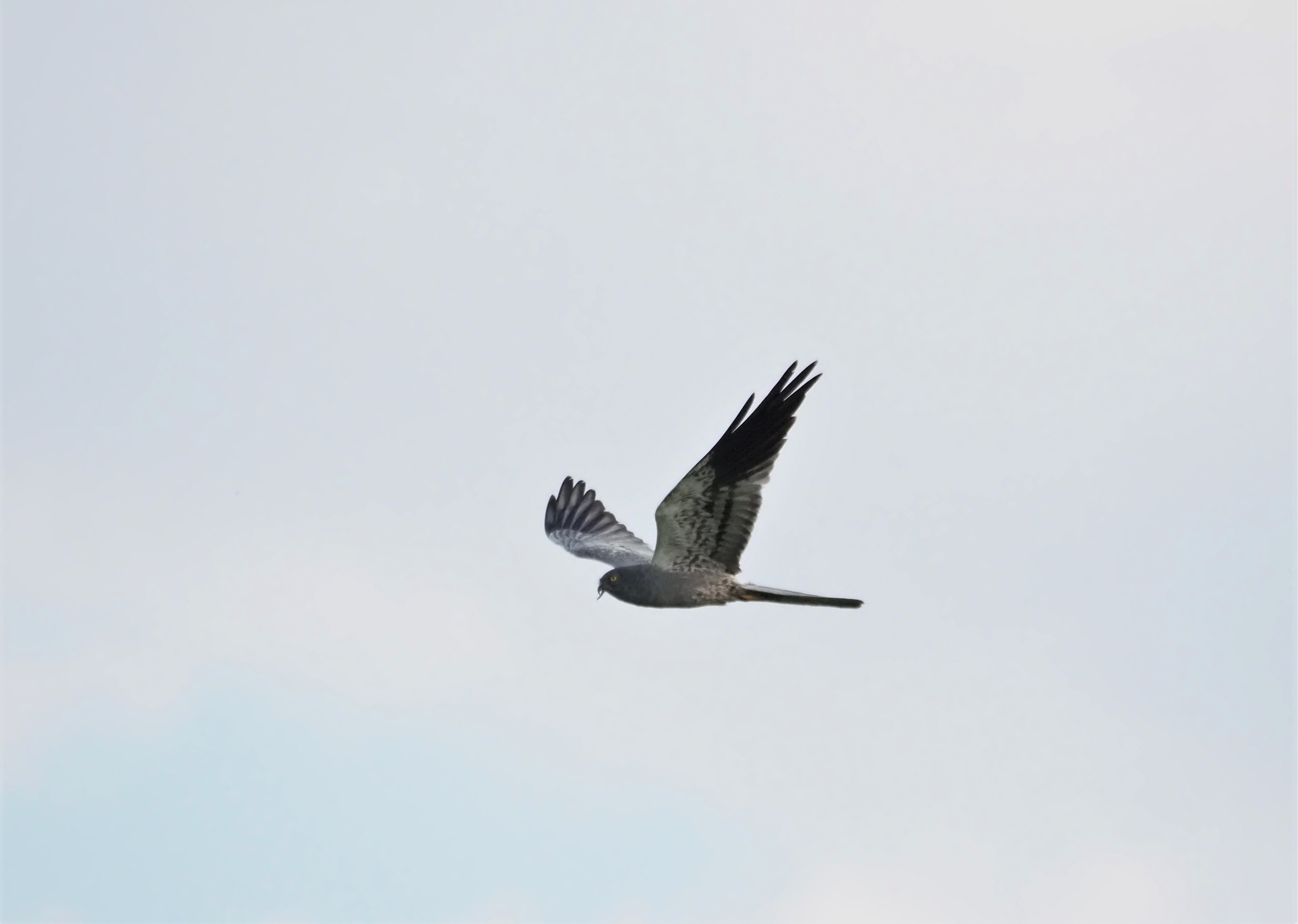
Male Montagu’s Harrier (Circus pygargus) passing by our group. Image by Carles Oliver
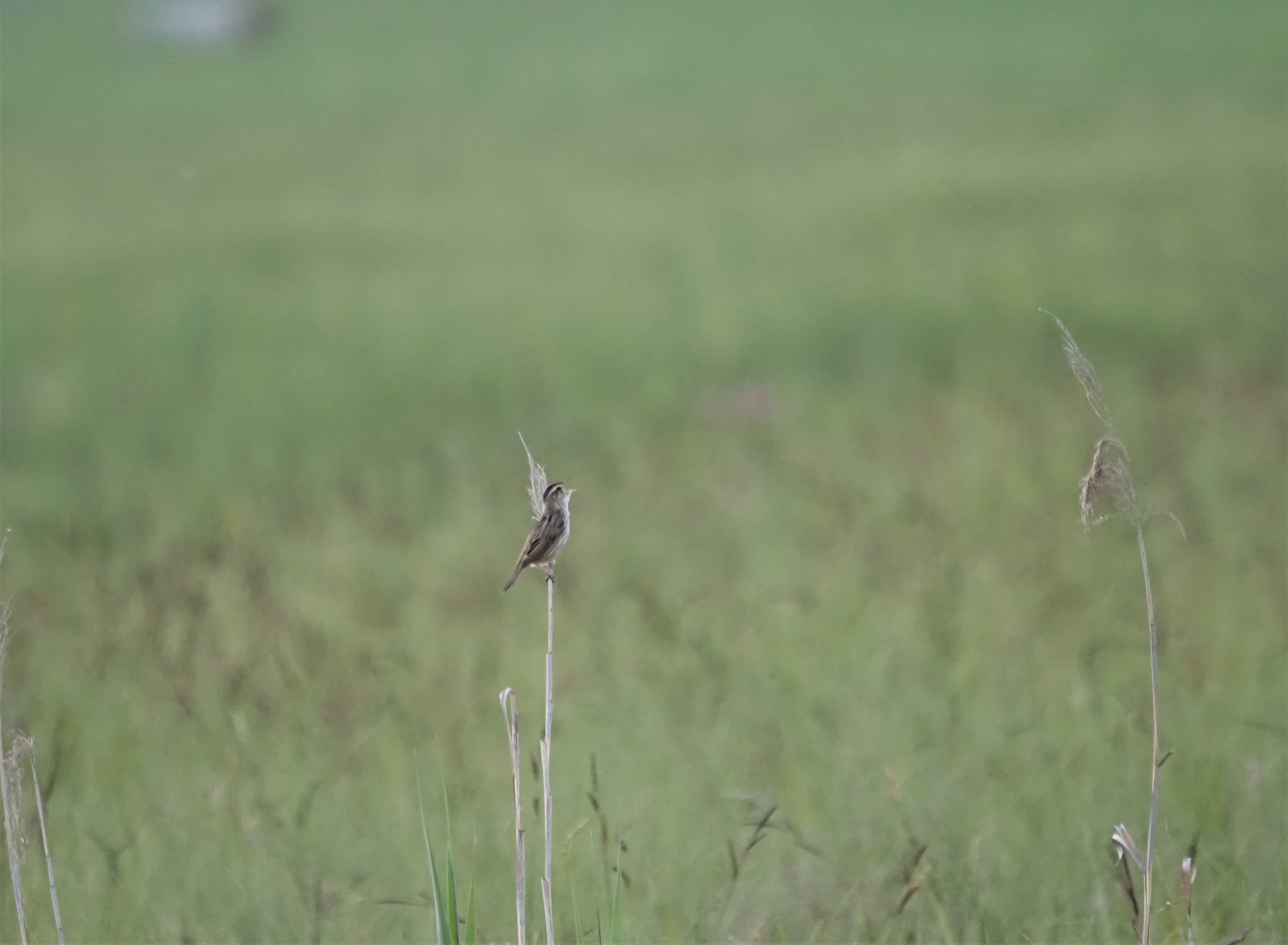
Aquatic Warbler (Acrocephalus paludicola) singing at dusk. Image by Carles Oliver

Day 5. During the morning we explored a series of spots to enjoy birds of prey and warblers. Here we saw a minimum of 7 Lesser Spotted Eagles along with Black Storks and Honey Buzzards.

It was again a warm day, and the large fields were fulfilled with dizzing insects and large flocks of Starlings. Some pairs of Common Cranes and Grey Partridges were also seen. A pair of stops produced good views on Thrush Nightingale and some Warblers. Before lunch we tried hard to find Spotted Nutcracker but we didn’t find anything beyond Wood Warblers and Crossbills.

Male Common Crane (Grus grus) displaying. Image Carles Oliver
Thrush Nightingale (Luscinia luscinia). Image by Carles Oliver
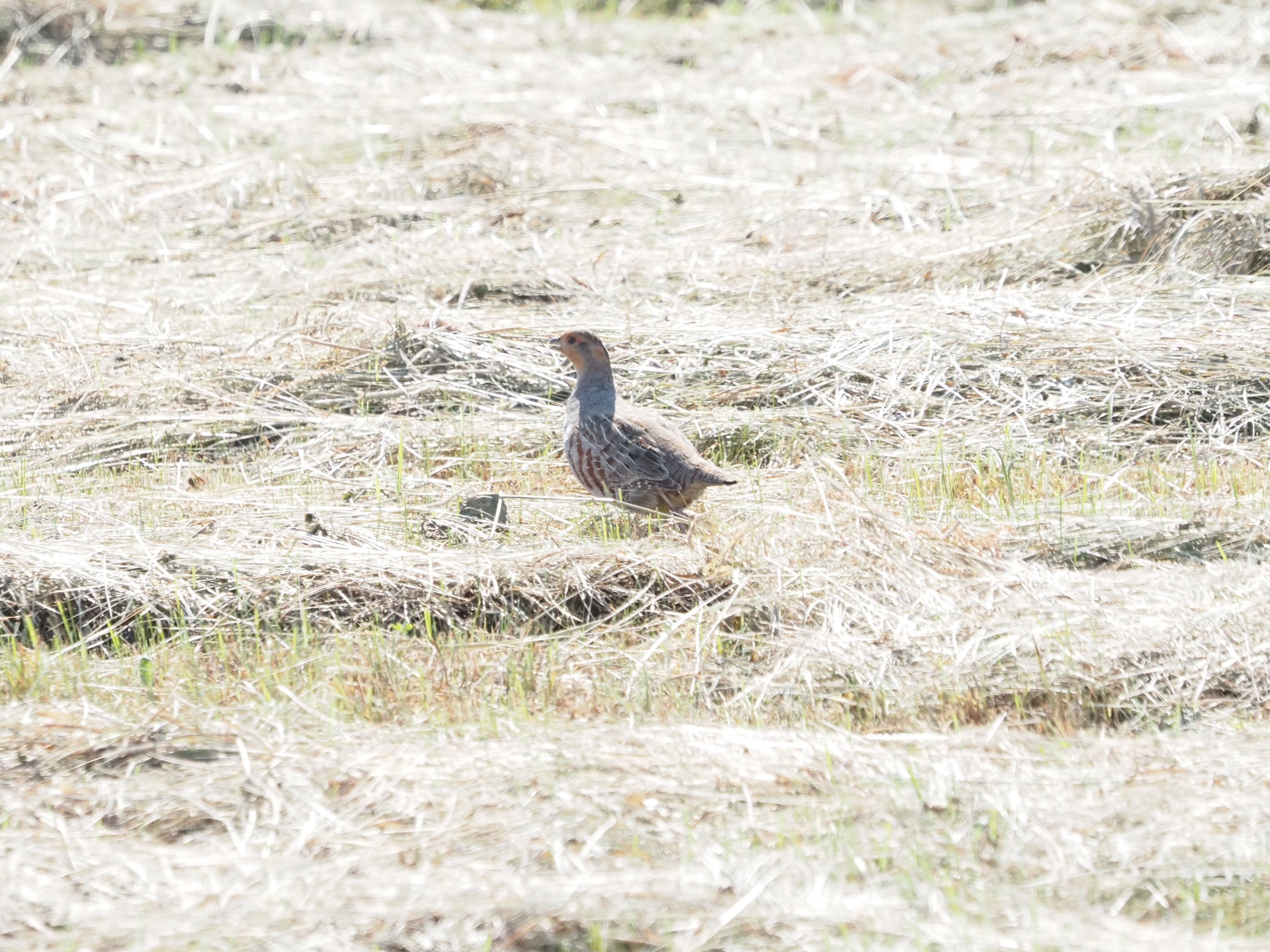
Grey Partridges are still common in most Eastern Poland. image by Carles Oliver

After lunch we scanned the wonderful habitat around Biebrza, where after some scanning we got good views on Citrine Wagtails but also Common Rosefinch, Marsh Harrier and a very elusive Bluethroat.

The last stop of the day was devoted to visit one of the few shallow marshes left in the area, and where a few White-winged Black Terns were feeding along with some Black Terns.

Citrine Wagtail (Motacilla citreola). Image by Carles Oliver
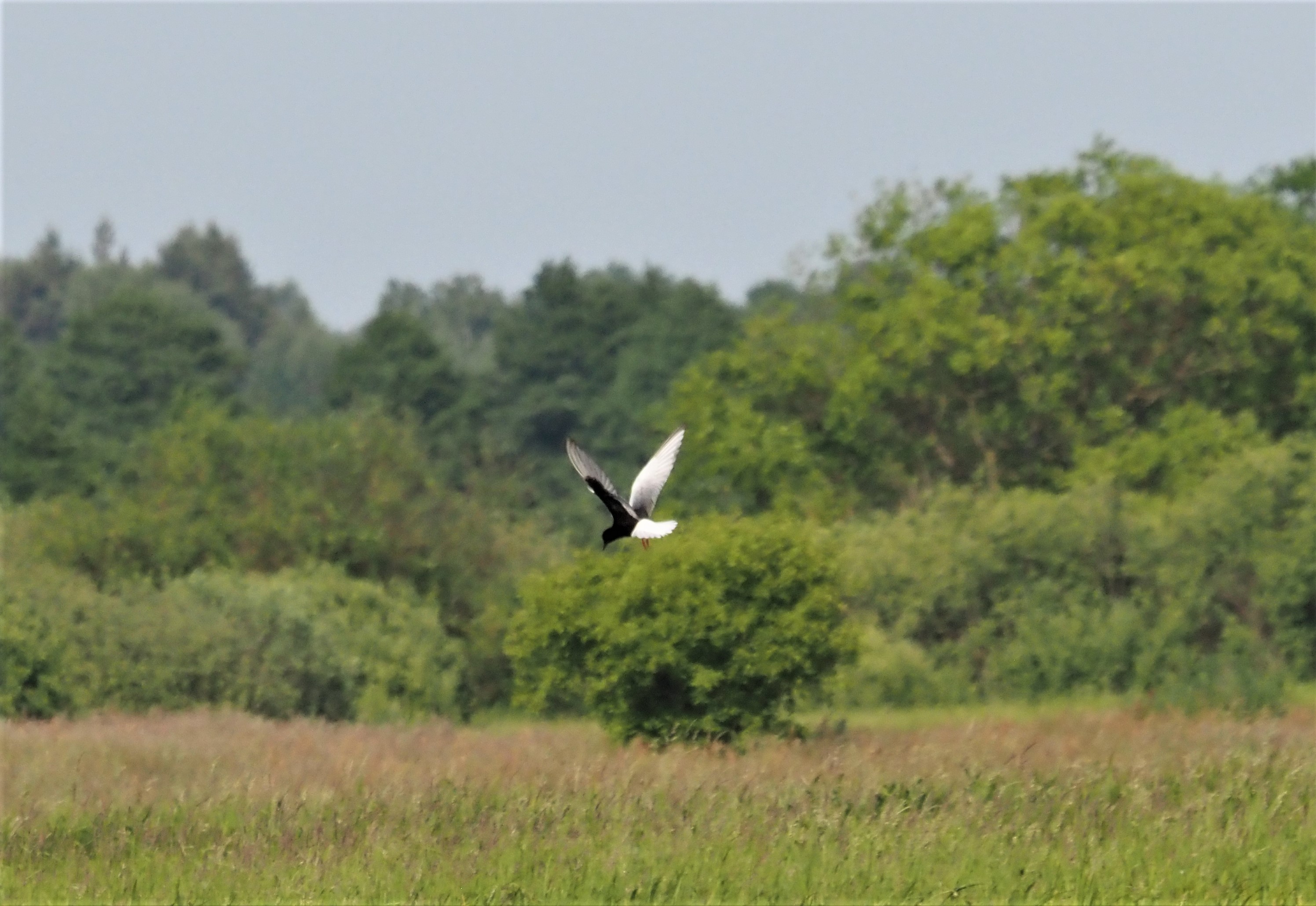
White-winged Black Tern (Chlidonias leucopterus)

Day 6. Only 90 minutes of birdwatching before transfering back to Warsaw for our flights back home. We did a short walk in a rather random spot around our accommodation combining some marsh and a isolated mature pinewood. Here, we had a Thrush Nightingale by the path but we were distracted by many noisy Thurshes and Jays. Derek had the idea to check in the case an Owl was around, and a few seconds later a Long-eared Owl flew above our heads stopping up in a pine! Very pleased and surprised by this unexpected beauty we checked the marsh with no relevant sights, but back to the woodland we had a Black Woodpecker moving in the trees, and after it flew off we were delighted to find a nest with 2 fledgings Black Woodpeckers sticking out of the nest. Barely 50 metres before, we had a Northern Goshawk flying out of its nest up the trees and this very short walk finished with a pair of Eurasian Hobbies flying low over the woodland. Maybe also nesting there?

Long-eared Owl (Asio otus) after being moved by Thrushes. Image by Carles Oliver
Black Woodpecker (Dryocopus martius) fledgings waiting for its parents to feed them. Image by Carles Oliver

From here we drove back to Warsaw to end a lovely first tour in Poland, and already thinking in coming back and enjoy the awesome birds and mammals living there!

Birds seen during the tour:

  1. Grey Partridge (Perdix perdix)
  2. Corncrake (Crex crex) – heard only
  3. Hazel Grouse (Tetrastes bonasa)
  4. Whooper Swan (Cygnus cygnus)
  5. Mute Swan (Cygnus olor)
  6. Greylag Goose (Anser anser)
  7. Mallard (Anas platyrhynchos)
  8. Common Swift (Apus apus)
  9. Common Cuckoo (Cuculus canorus)
  10. Feral Pigeon (Columba livia)
  11. Stock Dove (Columba oenas)
  12. Common Wood Pigeon (Columba palumbus)
  13. Eurasian Collared Dove (Streptopelia decaocto)
  14. Common Crane (Grus grus)
  15. Water Rail (Rallus aquaticus) – heard only
  16. Little Crake (Zapornia parva)
  17. Eurasian Coot (Fulica atra)
  18. Red-necked Grebe (Podiceps grisegena)
  19. Northern Lapwing (Vanellus vanellus)
  20. Eurasian Woodcock (Scolopax rusticola)
  21. Common Snipe (Gallinago gallinago)
  22. Great Snipe (Gallinago media) – heard only
  23. Common Redshank (Tringa totanus)
  24. Green Sandpiper (Tringa ochropus)
  25. Black-headed Gull (Chroicocephalus ridibundus)
  26. Caspian Gull (Larus cachinnans)
  27. Common Tern (Sterna hirundo)
  28. Black Tern (Clidonias niger)
  29. White-winged Black Tern (Chlidonias leucopterus)
  30. White Stork (Ciconia ciconia)
  31. Black Stork (Ciconia nigra)
  32. Greater Bittern (Botaurus stellaris) – heard only
  33. Grey Heron (Ardea cinerea)
  34. Great White Egret (Casmerodius albus)
  35. Red Kite (Milvus milvus)
  36. Common Buzzard (Buteo buteo)
  37. European Honey Buzzard (Pernis apivorus)
  38. Montagu’s Harrier (Circus pygargus)
  39. Western Marsh Harrier (Circus aeruginosus)
  40. Lesser Spotted Eagle (Aquila pom
  41. Northern Goshawk (Accipiter gentilis)
  42. Eurasian Sparrowhawk (Accipiter nisus)
  43. White-tailed Eagle (Haliaaetus albicilla)
  44. Short-eared Owl (Asio flammeus)
  45. Eurasian Pygmy Owl (Glaucidium passerinum)
  46. Long-eared Owl (Asio otus)
  47. Eurasian Hoopoe (Upupa epops)
  48. Great Spotted Woodpecker (Dendrocopos major)
  49. White-backed Woodpecker (Dendrocopos leucotos)
  50. Middle Spotted Woodpecker (Dendrocopos medius)
  51. Three-toed Woodpecker (Picoides tridactylus)
  52. Lesser Spotted Woodpecker (Dryobates minor)
  53. Black Woodpecker (Dryocopus martius)
  54. European Green Woodpecker (Picus viridis) – heard only
  55. Common Kestrel (Falco tinnunculus)
  56. Eurasian Hobby (Falco subbuteo)
  57. Eurasian Skylark (Alauda arvensis)
  58. Woodlark (Lullula arborea)
  59. Sand Martin (Riparia riparia)
  60. Barn Swallow (Hirundo rustica)
  61. Western House Martin (Delichon urbicum)
  62. Tree Pipit (Anthus trivialis)
  63. Meadow Pipit (Anthus pratensis)
  64. White Wagtail (Motacilla alba)
  65. Western Yellow Wagtail (Motacilla flava)
  66. Citrine Wagtail (Motacilla citreola)
  67. Eurasian Robin (Erithacus rubecula)
  68. Thrush Nightingale (Luscinia luscinia)
  69. Common Redstart (Phoenicurus phoenicurus)
  70. Black Redstart (Phoenicurus ochruros)
  71. European Stonechat (Saxicola rubicola)
  72. Whinchat (Saxicola rubetra)
  73. Spotted Flycatcher (Muscicapa striata)
  74. Collared Flycatcher (Ficedula albicollis)
  75. Red-breasted Flycatcher (Ficedula parva)
  76. Song Thrush (Turdus philomelos)
  77. Mistle Thrush (Turdus viscivorus)
  78. Fieldfare (Turdus pilaris)
  79. Eurasian Blackbird (Turdus merula)
  80. Barred Warbler (Curruca nisoria)
  81. Common Whitethroat (Curruca communis)
  82. Lesser Whitethroat (Curruca curruca)
  83. Garden Warbler (Sylvia borin)
  84. Eurasian Blackcap (Sylvia atricapilla)
  85. Sedge Warbler (Acrocephalus schoenobaenus)
  86. Aquatic Warbler (Acrocephalus paludicola)
  87. Common Reed Warbler (Acrocephalus scirpaceus)
  88. Marsh Warbler (Acrocephalus palustris)
  89. Great Reed Warbler (Acrocephalus arundinaceus)
  90. Common Grasshopper Warbler (Locustella naevia)
  91. Savi’s Warbler (Locustella luscinioides)
  92. River Warbler (Locustella fluviatilis)
  93. Icterine Warbler (Hippolais icterina)
  94. Goldcrest (Regulus regulus)
  95. Common Chiffchaff (Phylloscopus collybita)
  96. Willow Warbler (Phylloscopus trochilus)
  97. Wood Warbler (Phylloscopus sibilatrix)
  98. Eurasian Wren (Troglodytes troglodytes)
  99. Red-backed Shrike (Lanius collurio)
  100. Great Grey Shrike (Lanius excubitor)
  101. European Starling (Sturnus vulgaris)
  102. Eurasian Jay (Garrulus glandarius)
  103. Eurasian Magpie (Pica pica)
  104. Western Jackdaw (Corvus monedula)
  105. Hooded Crow (Corvus corone)
  106. Rook (Corvus frugilegus)
  107. Common Raven (Corvus corax)
  108. Eurasian Golden Oriole (Oriolus oriolus)
  109. Eurasian Treecreeper (Certhia brachydactyla)
  110. Eurasian Nuthatch (Sitta europaeus)
  111. House Sparrow (Passer domesticus)
  112. Eurasian Tree Sparrow (Passer montanus)
  113. Marsh Tit (Poecile palustris)
  114. Willow Tit (Poecile montanus)
  115. Coal Tit (Periparus ater)
  116. European Crested Tit (Lophophanes cristatus)
  117. Blue Tit (Cyanistes caeruleus)
  118. Great Tit (Parus major)
  119. Long-tailed Tit (Aegithalos caudatus)
  120. Western Penduline Tit (Remiz pendulinus)
  121. European Serin (Serinus serinus)
  122. Common Rosefinch (Carpoduca erithrinus)
  123. Eurasian Goldfinch (Carduelis carduelis)
  124. Eurasian Greenfinch (Chloris chloris)
  125. Eurasian Siskin (Spinus spinus)
  126. Common Linnet (Linaria cannabina)
  127. Common Chaffinch (Fringilla coelebs)
  128. Common Crossbill (Loxia curvirostra)
  129. Yellowhammer (Emberiza citrinella)
  130. Common Reed Bunting (Emberiza schoeniclus)
  131. Ortolan Bunting (Emberiza hortulana)

List of mammals during the tour

  1. European Hare (Leppus leppus)
  2. European Hedgerog (Erinaceus europaeus)
  3. Roe Deer (Capreolus capreolus)
  4. Eurasian Bison (Bison bison)

Please check our tours at http://www.barcelonabirdingpoint.com