Arxiu de l'autor: Carles Oliver

Desconegut's avatar

Quant a Carles Oliver

When I was a child I was already fascinated by nature. I was a teenager begun my passion for birds and later for reptilians, mammals and butterflies. Is for many years I'm an active member in different bird reseach and monitoring activities. I had not enough and that's why I decided to become a bird guide. Des de ben petit que he sentit fascinació per la natura. Als setze anys va començar la meva passió pels ocells, que s'ha anat ampliant progressivament a rèptils i amfibis, mamífers i papallones. Des de fa anys que participo en múltiples activitats relacionades amb la recerca i l'estudi de les aus. Fa temps que vull descobrir per altre gent la natura de casa nostra i és per això que vaig esdevenir guia ornitològic.

Winter birding weekend in Ebro Delta

Sunday Desember, 4th, 2011. We arrive early in the morning to the main Delta lagoon, l’Encanyissada. It has been a one an a half long way by motorway from Barcelona. The landscape is calm and quite. Many different twits come to us from the reedbeds as many passerines have slept there and they have not left yet. We get many Reed Buntings (Emberiza schoneiclus) coming out the reeds. Paddy fields around are plenty of White Wagtail (Motacilla alba), Meadow Pipit (Anthus pratensis), Chiffchaff (Phylloscopus collybita), Water Pipit (Anthus spinolleta), Robin (Erithacus rubecula) and Black Redstart (Phoenicurus ochruros). In the channels beside the lagoon there is also movement as Grey Heron (Ardea cinerea), Little Egret (Egretta garzetta) and Kingfisher (Alcedo atthis) are fishing, or trying to do so. We search over the reeds looking for Purple Swamphen (Porpyrhio porpyrhio). There is no luck at this point, but we get nice views of Water Rail (Rallus aquaticus), Moorhen (Gallinula chloropus), Little Grebe (Tachybaptus ruficollis) and Cetti’s Warbler (Cettia cetti).

It is 9 in the morning and there is many movement around. A variety of ducks are in the lagoon out of the vegetation: Teal (Anas crecca), Mallard (Anas platyrhynchos), Gadwall (Anas strepera), Shoveler (Anas clypeata), Red-crested Pochard (Netta rufina), Pochard (Aythya ferina) are all common. A seven Pintail (Anas acuta) group is moving among Gadwalls and several Tufted Ducks (Aythya fuligula) join the Pochard main flock. Some Great Crested Grebe (Podiceps cristatus) and Coots (Fulica atra), thousands of them, complete the scene while Great Cormorants (Phalacrocorax carbo) and Great Egrets (Egretta alba) fly in every way to everywhere else in the immense Delta landscape. Flocks of Flamingos (Phoenicopterus roseus) are leaving the lagoon every few minutes and their in-flight calls create an incredible atmosphere.

In the middle of this duck-mass a special shape is taking our attention… It is amazing but we have got White-headed Duck (Oxyura leucocephala), one of the seven ducks flock that are in the delta since the end of November!! Our duck was sleeping for a time and then fishing beside a flock of Pochards. We spend several time comparing the characters of this species with its relative; the Ruddy Duck (Oxyura jamaicensis). Incredible but also a lifer for me… although only a lifer in Catalonia, of course!!

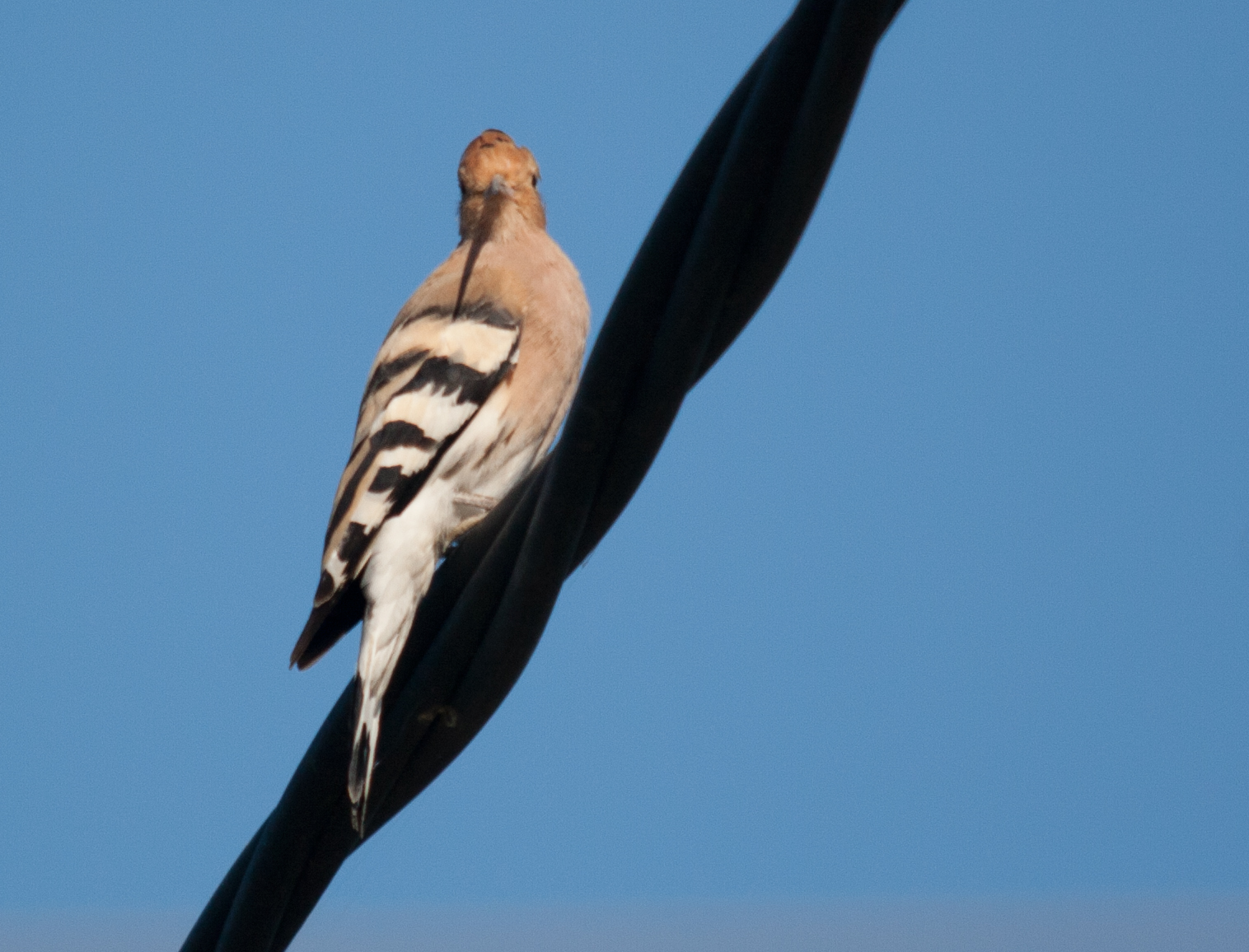
We got 6 Hoopoes in paddy fields. Photo: Carles Oliver

This location is giving us still more surprises… Beside the observation tower there is a channel and many wagtails move along it. Among White Wagtails we find one adult winter Yellow Wagtail (Motacilla flava). This is a common species in summer, but is passing over the Sahara to spend the winter down there. Beyond the channel there is an arable land where some Lapwings (Vanellus vanellus) are resting. Further a 13 Eurasian Marsh Harrier (Circus aeruginosus) flock are also resting on ground. In the middle of the group a Sparrowhawk (Accipiter nisus) is appearing!

After so many surprises we leave “l’Encanyissada” lagoon to visit the next location I propose to explore. It is a salty steppe next-the-sea which is a gorgeous area for Larks. In the way we stop several times because of some Squacco Herons (Ardeola ralloides) small flocks feeding on paddy fields; Curlews (Numenius arquata), Lapwings, Spotless Starlings (Sturnus unicolor) and Hoopoes (Upupa epops) are also appearing. Special mention is done to a mixed Swallow flock flying over the main street of Poblenou del Delta; 3 Barn Swallow (Hirundo rustica) joining at least 10 Crag Martin (Ptyonoprogne rupestris).

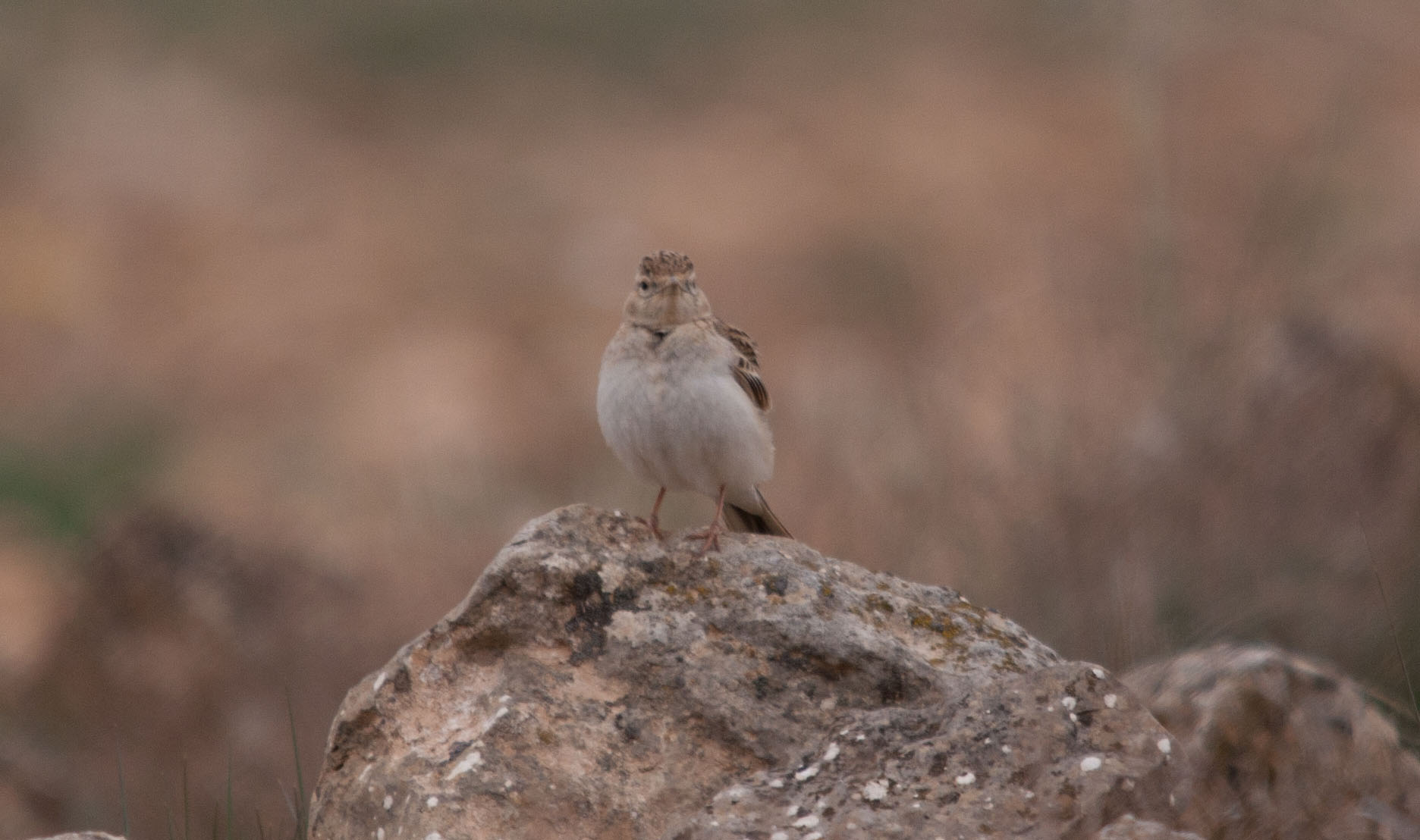
At our small steppe stop we get Woodlark (Lullula arborea), Skylark (Alauda arvensis) -tones of them- and not less than 7 Lesser Short-toed Lark (Calandrella rufescens). Zitting Zisticola (Cisticola juncidis) were everywhere, as Black Redstart (Phoenicurus ochruros), Linnet (Carduelis cannabina), Meadow Pipit and White Wagtail. Some raptors flew over our heads, Common Kestrel (Falco tinnunculus), Booted Eagle (Hiearaaetus pennatus) -2-, Marsh Harrier and 1 Peregrine Falcon (Falco peregrinus) female that was actually perched on a tree line two hundred meters away from us.

As we were next-the-sea we explored a couple of interesting points to search sea birds. We were quite lucky as we got several gulls flying over the sea or resting on the beach: Black-headed Gull (Larus ridibundus), Mediterranean Gull (Larus melanocephalus), Yellow-legged Gull (Larus michahellis), Lesser Black-backed Gull (Larus fuscus) and a small Audouin’s Gull (Larus audouinii) 7 individuals flock. No more Audouin’s Gulls were seen as most of them move the South Spain in winter. We saw other sea birds: Sandwich Tern (Sterna sandvichensis) and Gannet (Sula bassana) were both common over the sea, while some Great Crested Grebe (Podiceps cristatus) and Razorbill (Alca torda) were on the sea’s surface. But the most interesting sight off sea were the different Shearwater flocks flying towards South. They were mainly Yelkouan Shearwater (Puffinus puffinus) -about 30- but when we were about to leave we got a small 5 individuals Balearic Shearwater (Puffinus mauretanicus) flock.

American Flamingo (Phoenicopterus ruber) -left- with some Greater Flamingo (Phoenicopterus roseus) in La Tancada, Ebro Delta. Photo: Carles Oliver

After so many interesting sights we went to our small accommodation, a lovely and peaceful bed&breakfast in Poblenou del Delta. It was midday so we left the package and we enjoyed and incredible paella in our accommodation’s garden. In Ebro Delta you taste some of the best paellas in Catalonia as they are specialist about rices, that they cook in many different ways. As we have some time left we even could sleep for half-an-hour in order to get back some energy before going out for waders and many other birds.

Around two in the afternoon we left the bed&breakfast and directly drove to La Tancada salty area. An incredible area with different salty lagoons and plains where hundreds of waders use to feed. We got an incredible number of waders: Avocet (Recurvirostra avosetta) -20-, Oystercatcher (Haematopus ostralegus) -3-, Ringed Plover (Charadrius hiaticula) -8-, Grey Plover (Pluvialis squatarola) -1-, Knot (Calidris canutus) -+5-, Sanderling (Calidris alba) -a flock of 14 individuals-, Turnstone (Arenaria interpress) -6-, Dunlin (Calidris alpina) -a +60 big flock-, Little Stint (Calidris minuta) -+25-, Wood Sandpiper (Tringa glareola) -2-, Green Sandpiper (Tringa ochropus), Common Sandpiper (Actitis hypoleucos), Redshank (Tringa totanus), Spotted

Grey Heron is a common resident species in Ebro Delta. Photo by: Carles Oliver

Redshank (Tringa erythropus)-4-, Greenshank (Tringa nebularia) -+10- and Curlew. A quite complete list of waders that were mainly feeding on the muddy plains. Other birds in the area included Shelduck (Tadorna tadorna) and Slender-billed Gull (Larus genei) -+20-.

As the area was so interesting we decided to spend some time in one of the hides beside the road. Our choice was really clever as we got from this point the very best sight of the weekend. The lagoon was full of Greater Flamingo but in the middle of one of those flocks there was an amazing American Flamingo (Phoenicopterus ruber). The bird was mainly sleeping and cleaning its plumage (as the rest of the flock) but its incredible rose plumage made it unmistakeable!!! It was 14:57 when we located it and we spend more than a quarter watching how was cleaning and cleaning its feathers. It was a lifer for all three of us!!!

In the lagoon there were many other birds, mainly waders and ducks: Shelduck, Mallard, Gadwall, Wigeon (Anas penelope), Teal, Pochard, Red-crested Pochard, Avocet, Oystercatcher or Snipe (Gallinago gallinago) and many others. We finally left the lagoon, the all felt winners as we were having an incredible birding experience that day. I was bringing them to our last location that day, the Illa de Buda tower. In the way we stop several times. Once because of a flock of Golden Plovers (Pluvialis apricaria), later because a White Stork (Ciconia ciconia) feeding on paddy fields and once again to take some photos of different herons and egrets.

Grey Heron, Great and Little Egret feeding on salt lagoons. Herons are common in Ebro Delta all year round. Photo: Carles Oliver

We arrived to Illa de Buda about 16:15h. Immediately we located a large (up to 100) flock of Glossy Ibis (Plegadis falcinellus) feeding on the marshes around. They flew in small groups to settle back again tens of meters away. In the same area there were Purple Swamphen (up to 20) and some Greylag Goose (Anser anser) roosting in the reed beds and meadows around. We spend the rest of the afternoon enjoying the flocks of Flamingos, Great Cormorant or Yellow-legged Gull moving in and out of the Illa de Buda. We got a small Penduline Tit (Remiz pendulinus) flock moving in the redbeeds, but sun was almost gone so we move back to our hotel. Tomorrow was waiting for us…

The morning started with a breakfeast as I cooked some fried eggs, bacon, beans, orange juice, nice Iberian ham and the Catalan incredible “pà amb tomàquet” (spreaded fresh red tomato on bread slices) and, of course, coffee.

Yet we had had a complete breakfast it was time for a deep explore of Ebro Delta. It was 7:30 in the morning and sun was about to raise. Rush hour in l’Encanyissada, the main lagoon in the delta. Flamingo, Red-crested Pochard, Purple Swamphen, Little Grebe and many other birds were easily seen. A flock of 17 Marsh Harrier passed over our head. They came from the western reed beds were they use to sleep and were crossing the lagoon towards some paddy fields to look for their own breakfast. The more interesting from the tower were the big (about 40-50 birds) Glossy Ibis flocks flying over the bridge, just few meters from us. About eight we passed to explore the reed beds. First we had nice sights of Penduline Tit and Serin (Serinus serinus). This was not the speciliaty I was searching for. It took us ten minutes until we had our first Moustached Warbler (Acrocephalus melanopogon) just beside the road!! A few minutes later we got another two of them at the opposite side of the road, full of reed beds as well. Cetti’s Warbler (Cettia cetti) was common all the way. I decided to change location to look for the other speciality of the morning. At the end of the road there is an incredible paddy field with some water. In one side of the field there are some scattered bushes, a suitable location to find out Bluethroat (Luscinia svecica). There were lots of Meadow Pipit, White Wagtail, Spotted Starling, Robin and others around. Behind one of the bushes we found two different Bluethroats. They has a exclusive war against one Robin that pretended all the area was of its property. Hundred meters away other birds were located; Squacco Heron, Spotted Redshank, Dunlin, Curlew, Black-headed Gull, Mediterranean Gull…

Cetti's Warbler, a common bird in Catalan wetlands. Photo: Carles Oliver

It was a nice final “shot” in Ebro Delta. It was the moment to take the car and explore a totally different landscape! We moved about twenty kilometres inland. At this distance the landscape quickly change from paddy fields and marshes to olive groves and scrubs at the same time we face at the first slopes of the Tortosa-Beseit range of mountains. Our first short-walk in scrubs and olive groves gave us tones of Blackcap (Sylvia atricapilla), Song Thrush (Turdus philomelos), Mistle Thrush (Turdus viscivorus). Sardinian Warbler (Sylvia melanocephala) all of them feed on the many olives they find on the ground or in the trees. This short-walk allowed us to see Black Redstart as well as some Redwings (Turdus iliacus), Dunnock (Prunella modularis), Wren (Troglodytes troglodytes), Great Tit (Parus major), Blue Tit (Parus caeruleus), Long-tailed Tit (Aegithalos caudatus) and Cirl Bunting (Emberiza cirlus). In the ravine we had nice sights of the couples of Blue Rock Thrush (Monticola solitarius), Crag Martin and some Spanish Ibex (Capra pyrenaica) including two big males and 4 females that were locking at us from the opposite side of the ravine.

Some kilometres ahead we arrived to a perfect place to look for Alpine Accentor. Two minutes after stopping the car we saw three Alpine Accentor (Prunella collaris) moving in a rocky, open slope. We got some nice photos and we followed the road. At this

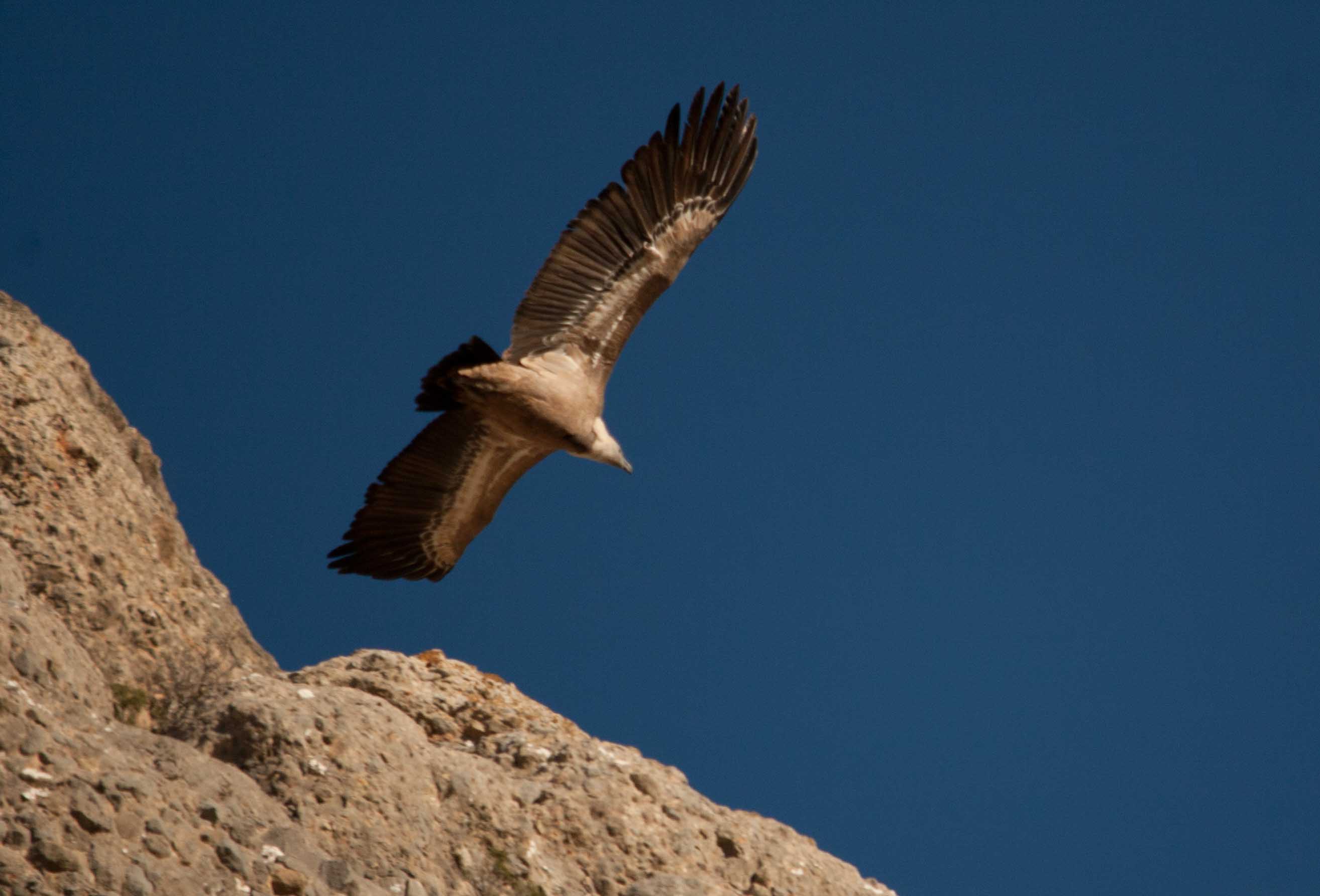
There are some pairs of Griffon Vulture nesting in Tortosa-Beseit mountains. Photo: Carles Oliver

point there is an amazing area to search for Wallcreeper. We spent some minutes trying to find it but we decided to leave as it was too windy and I found it was risk for us to stay up there. Five minutes in the woodlands around gave us Jay (Garrulus glandarius), Common Wood Pigeon (Columba palumbus), Firecrest (Regulus ignacapilla), Short-toed Treecreeper (Certhia brachydactyla)

Eleven in the morning. It is a nice moment to explore the ravines and cliffs as raptors are already moving around. We arrived there at eleven thirty. Eight Griffon Vulture (Gyps fulvus), two Common Buzzard (Buteo buteo) and one Bonelli`s Eagle (Hieraaetus fasciatus) as well as Rock Bunting (Emberiza cia) and Blue Rock Thrush were the main records in these ravines.

We had no more time left. We went to have a nice meal in Tortosa and, after that, I drove back to Barcelona.

Anyway it has been a really nice birding weekend as we got over 120 species of birds in less than 2 days!!!!

If you want to experience a birding trip like this contact with Barcelona Birding Point.

New species in winter time in Ebro Delta

Due to climate change or to local features it is a reality that every time more species of birds, formerly though as a summer visitors, are spending winter time in some areas of South Europe.

I have been absolutely surprised by the view of a Yellow Wagtail (Motacilla flava) in Ebro Delta. It was on Sunday November 4 and I was spending the day with a couple just arrived from Switzerland. We had nice views of many birds but we saw five different species that until few years ago were summer visitors and now are becoming more common during the winter.

First was the Yellow Wagtail (Motacilla flava) leaving the reedbeds at raisang with tens of White Wagtails (Motacilla alba alba). Later a group of Barn Swallow (Hirundo rustica) (5 of them) flying over the fields with some Crag Martin (Ptyonoprogne rupestris). Barn Swallow is coming up in numbers every winter and its presence is considered “not rare” in Ebro and Llobregat deltas. We counted 6 Hoopoe (Upupa epops) in different areas. Hoopoe is a quite common summer-but-also-winter bird in Catalonia, specially along the coast. In the paddy fields we saw one White Stork (Ciconia ciconia), though this species is specially common in winter in Lleida Steppes. Finally a number of  Squacco Heron (Ardeola ralloides) were spending the day alongside channels, reedbeds and on paddy fields.

60.000 finches to be captured in Catalonia

The Catalan Government has approved a new edict that is allowing to hunt over 60.000 finches in Catalonia next winter. All green associations in the country have protested against this crazy law but was approved in the Parliament by the three main political parties. This appointment arrives three years after the abolition of hunting this kind of birds in Catalonia.

The species to be hunt includes Goldfinch (6.504), Greenfinch (3.490) and Linnet (3.367) but are Chaffinch who is gonna take bigger piece of all since 46.800 of them will be killed. The populations of some of these birds are growing last years (overall Chaffinch) but Linnet is a more scarce species every time.

This hunt is related about old southern Spain tradition to hunt singing birds and make sing contests with these birds. It is a deep-roots tradition in many areas of southern Europe. Different green associations in the country have started different actions to protest agaisnt this edict.

http://www.elperiodico.cat/ca/noticias/societat/generalitat-permet-agafar-60000-aus-fringillides-1245869

Wallcreeper, 10 Alpine Accentor, 2 Lammergeier, 5 Citril Finch & more in Pyrenees in Winter Itinerary

BarcelonaBirdingPoint: It has been a great start this autumn season. On Sunday November 13 th, we set up the season with two costumers from Norway. We went to Pyrenees and we all had a great day of nature and birds.

Alpine Accentor (Prunella collaris) in the Catalan Pyrenees. Photo: Carles Oliver

At 6:45am we leaved Barcelona and had some breakfast en route. About 8:00am we arrived to the first location, a fields with some trees beside a small river. There were many small birds like Chaffinchs, Goldfinchs and small Siskin flocks. In this area we also locate White Wagtail, Dunnock and Robin. We walk along a small stream and a 15 Long-tailed Tit and some Blue and Great Tits flew over our heads. At the end of the path some 3 or 4 Cirl Bunting were feeding on ground.

At 9:30am we went to next location, a gorgeous rocky area in the middle of the road. The cliffs are surronding the road and fall over tens of meters from it. In a quarter we found out 1 Wallcreeper, a first 5 Alpine Accentor flock and 2 Rock Bunting. All of us got some nice photos of Alpine Accentor. Photos of Wallcreeper were not so good, after all.

Ring Ouzel (Turdus torquatus) in the Catalan Pyrenees. Photo: Carles Oliver

Around 11:00am we make another stop to visit a coniferous forest up in the mountains. It is a nice place to look for Citril Finch. Unfortunately we only got them in flight, we count until 5 of them leaving a grassland beside the forestry. We spent some time in the forest. There were flocks of Common Crosbill and large flocks (over 50) of Coal Tit with some Crested Tit, Goldcrest and Short-toed Treecreeper among them. We also found out two Red Squirrel in the forest. All around was full of Mistle Thrush and Blackbird.

Around 13:00am explored another location. A high mountain grasslands we I hoped to find Snowfinch. Unfortunately there were no snow yet, so there were no Snowfinch. We found some interested birds instead. Walking a track we had incredible views of Alpine Accentor (a second 5 accentor flock), 2 Alpine Chough and 2 Lammergeier flying over our heads with a group of 8 Griffon Vulture. Both Lammergeier were about 2-3 years old with light yellow breast and belly. We also had good views of a group of 7 Chamois. After this we decided to move down, bad weather was coming from South side of Pyrenees. We stop about 1.700 of altitude, in an open forest with grasslands. This area was full of birds. A large flock of Mistle Thrush (more than 150) and also some Song Thrush, not least than 5 Redwings and 4 Hawfinch. Other birds in this point; 1 Yellowhammer, 1 Sparrowhawk and a couple of Raven that wanted to become friends of us because they were coming closer and closer as we were eating some fruits. But the more nice was a Ring Ouzel male singing on the top of a pine. It is normal to find large flocks of Thrush in areas like this tones of them are moving South by this time and crossing the Pyrenees by lower areas.

After have lunch we prospected other areas in the forest. Great Spotted Woodpecker, Nuthatch, Wren, Jay and Crow were common in this location.

In the way back to Barcelona we stopped in the Llobregat River to watch Dipper, Grey Wagtail, Firecrest and Common Buzzard.

About 17:30 we arrived to Barcelona. We were all really glad of the experience, were viewed until 49 species in one day visiting high mountain habitats and the valley beside.

Chicks of Flamingo ringed in Ebro Delta

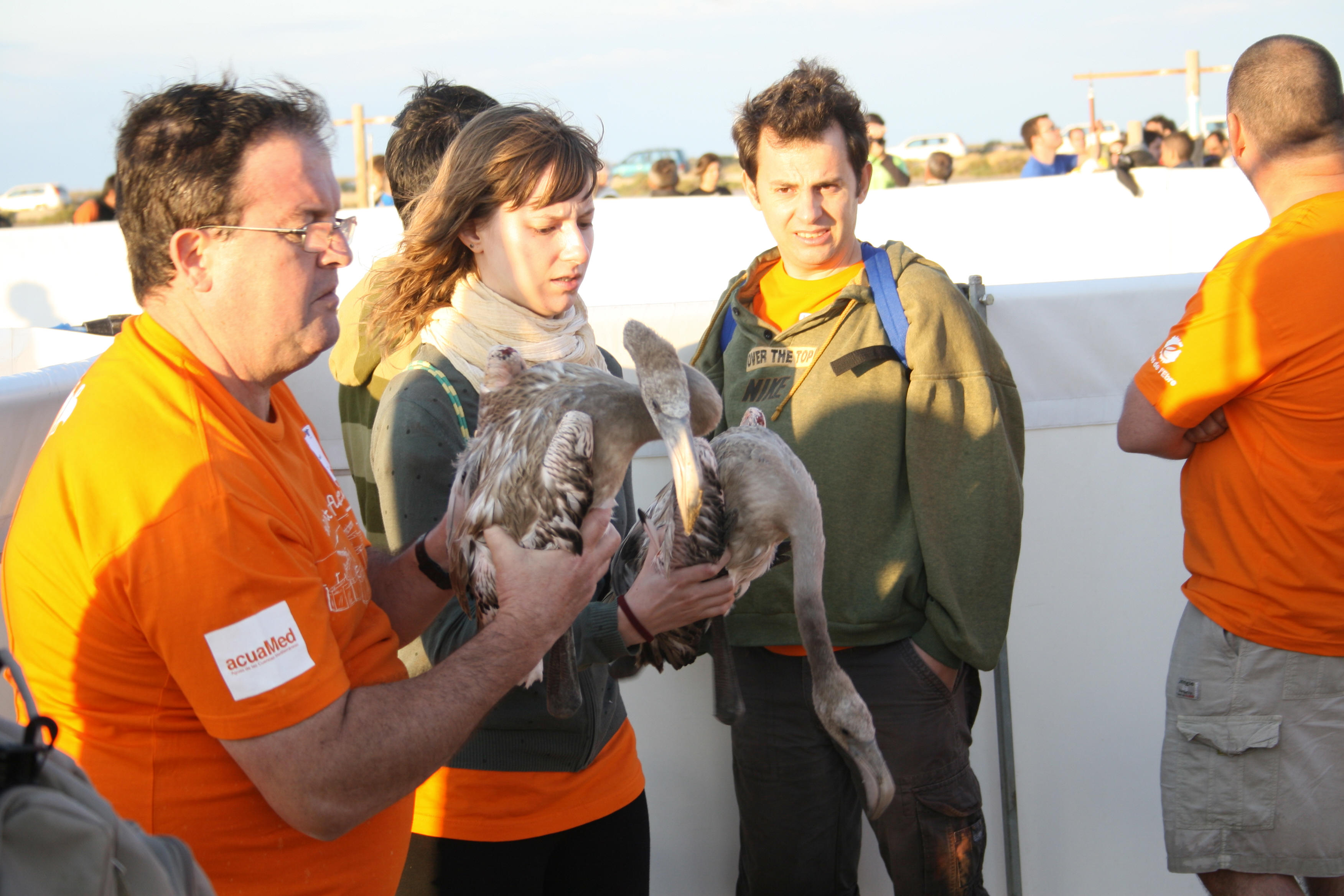
On Sunday July 24th were ringed 400 chicks of Flamingo (Phoenicopterus ruber) in Ebro Delta. This is the sixth summer that chicks of Flamingo are ringed in this Natural Park. About 200 people participated in an operation that started at 4:00 am and ended about 10:00 am. The chicks were ringed with a PVC ring in its right leg and with a metallic ring in its left one. After this they were brought to be weigh and finally they were retorned to the salt marshes.

In Ebro Delta the numbers of Flamingo have been increasing for years, since in early 80’s there were about 50 and more than 11.000 have

been recorded in 2011 census. The first breeding was in 1992 when 251 pairs breed in the South salty area. The population fastly grew until 1500 pairs in mid-90’s. In 2011 there

are about 3.000 pairs breeding in Ebro Delta.

More than 300 pairs of Audouin’s Gull breeding in Llobregat Delta

Audouin’s Gull (Larus audouinii) nesting colony is increasing year after year in Llobregat Delta, a small marshy area only 5 quilometers South of Barcelona. In 2011, 380 pairs were breeding in an artificial island in this wetland. The figure is very important since it is numbering more than whole population in countries such as France, Turkey, Croatia, Portugal or Cyprus (2008 World Audouin’s Gull Population Census).


IMG_4665

Audouin’s Gull (Ichtiaetus audouinii) is a typical coastal bird. Here an adult in flight along with a YL Gull (Larus michahellis). Image: Carles Oliver


Nowadays, and now talking on 2018, the bird can be easily seen from March to September along Barcelona coast line, often stopping at the town beaches few metres away from the people. Moreover, a overwintering population is to be found along the coast in the Northern Metropolitan Area.

First breeding record in Llobregat Delta is dated in 2009, when four pairs nested inside one of the Natural Reserve. In 2010 the colony moved to the current placement and 140 pairs breeded there. In 2011 their number have increased until 380 pairs with a rate of survival since over 300 young Audouin’s flew from the colony.

This is already one of the largest Audouin’s Gull colonies in the world. Ebro Delta (15.000 pairs in 2008) keeps being, by far, the largest one. Second largest colony is located in  Torrevieja (Alacant, Spain), where up to 3.823 were counted in 2008. The colony at Llobregat Delta had surpassed one of the most traditional nesting places for the species, the one located at Illes Columbretes (120 pairs in 2010).

Brown Bear population increasing in Pyrenees

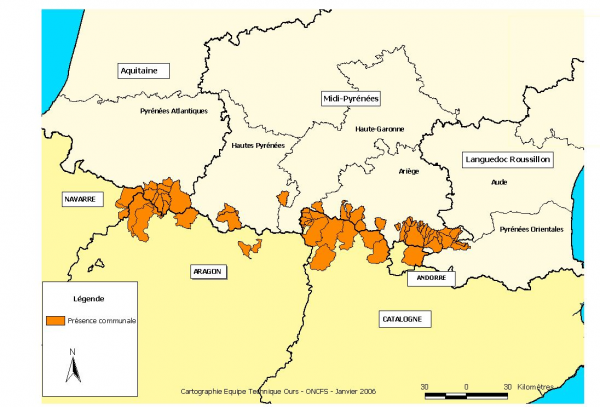
At the end of the XX century the French Goverment started a program to save the last Brown Bear population in the Pyrenees. It is almost 15 years since the first brown bear coming from Slovenia was liberated in the Pyrenees, joining the tiny population (2-5 individuals) these mountains had at this time. There was controversial in French and Catalan media and also some local people were opposite to brown bears.

2005 Brown bear (Ursus arctos) distribution map in Pyrenees. http://www.depana.org

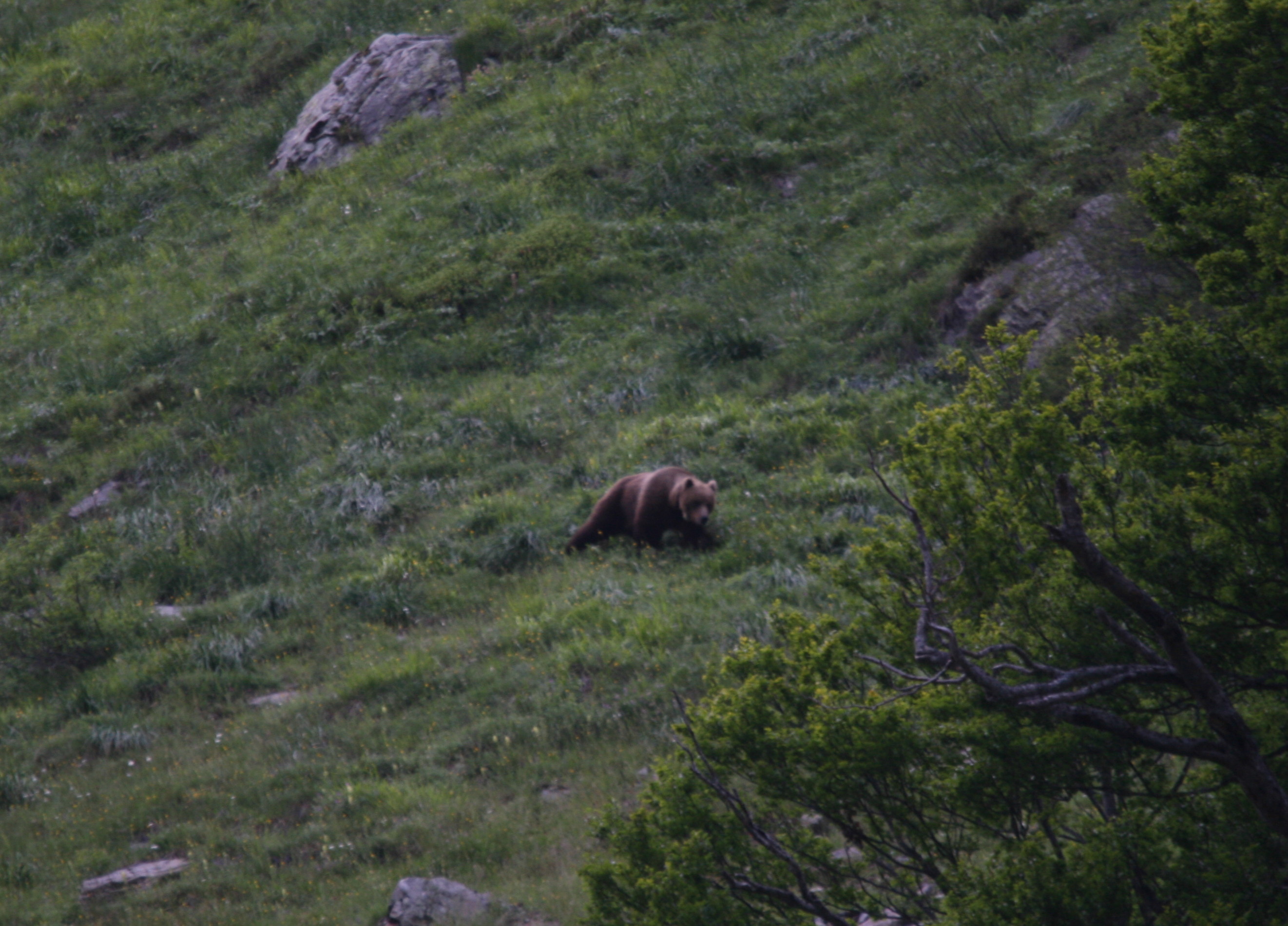
Despite these initial problems, today the brown bear population is well established in Central Pyrenees, mainly around Val d’Aran, in Catalonia. There are about 30 brown bears in the whole of the Pyrenees, and about 25 living in Val d’Aran and areas around (mainly north Pallars). It is a nice new to say local people have changed their opinions about bears since most of them are proud to have this impressive mammal living in their forests.

Brown Bear in the Pyrenees. Photo; Carles Oliver

2011/12 winter is gonna see a big number of puppies because of until there are 6 females to reproduce. Since XXth 80’s that there are not so many females to reproduce in one spring in the Pyrenees!! This is an astonishing change in thirty years, when the species was almost erradicated from these mountains and this change is thanks to French and Catalan Goverments as well as DEPANA, ADET, Fiep and other NGO’s.

Red-rumped Swallow expanding North

The Red-rumped Swallow (Cecropis daurica) is going North its breeding territory in Western Europe. The numbers of this swallow in Catalonia are also growing up. There are two main breeding populations, one is at North beside the French border but the biggest one is at South and inland in both Lleida and Tarragona provinces. Is in this bigger population where I’ve found this spring some couples breeding in new sites.

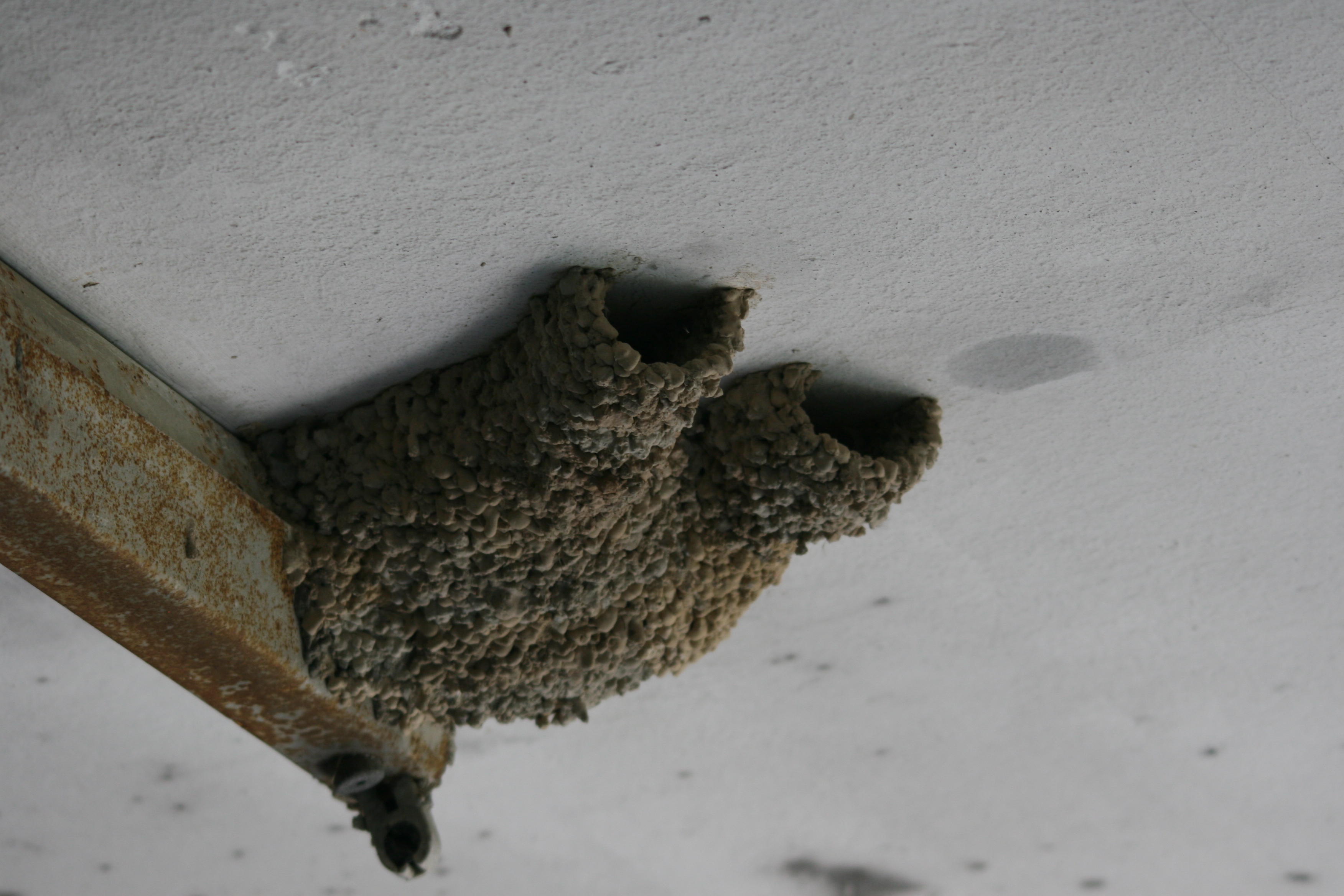
Typical Red-rumped Swallow nest inside a non-used building. Photo; Carles Oliver

Red-rumped Swallow (Cecropis daurica) is breeding in new places in a 50 kilometers North of Balaguer town, an area immediatly situated South of Pyrenees. I’ve found until tree nesting couples in different non-used farm houses near the village of Camarasa. The swallows are in an area with no breeding records for this species before.

Red-rumped Swallows use to nest inside small or medium size non-used human constructions as well as under bridges and other structures. It prefers to have near the nest some small river or other fresh water.

It seems clear that this species is gonna be commoner in Catalonia in next years and is even possible that is gonna arrive as a nesting bird to some Pyrenees valleys as a natural process due its strong expansion in Western Europe.